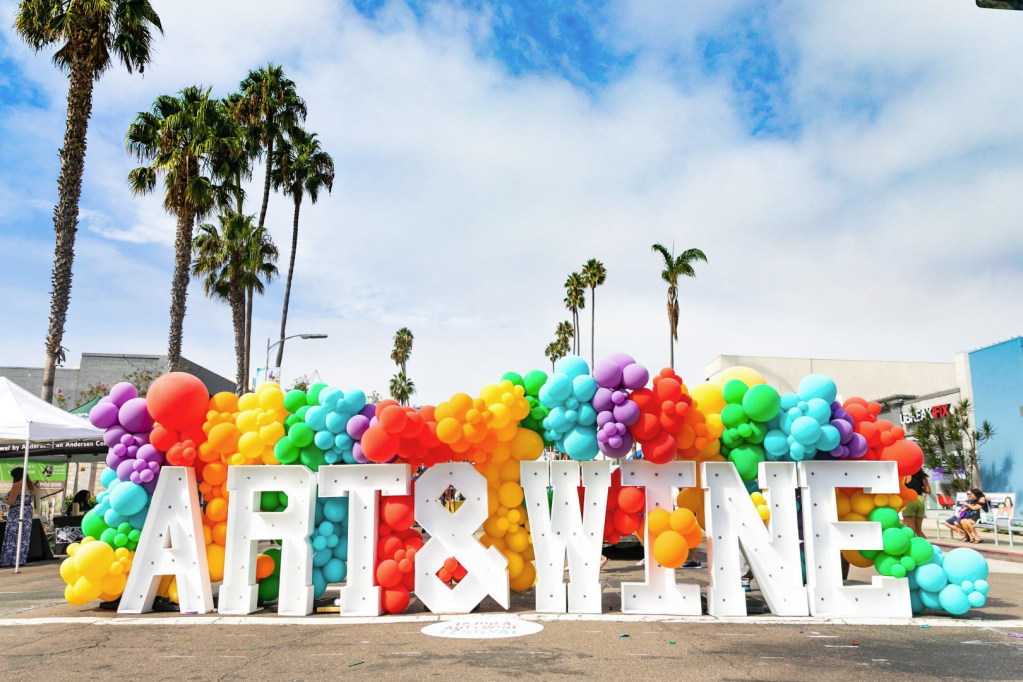
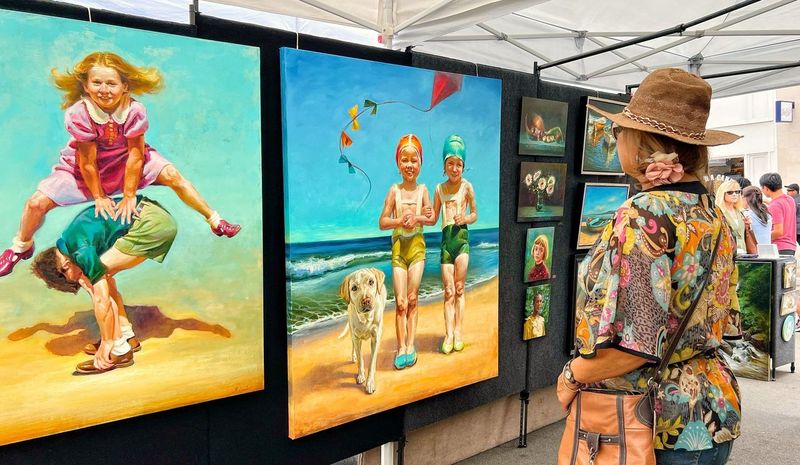
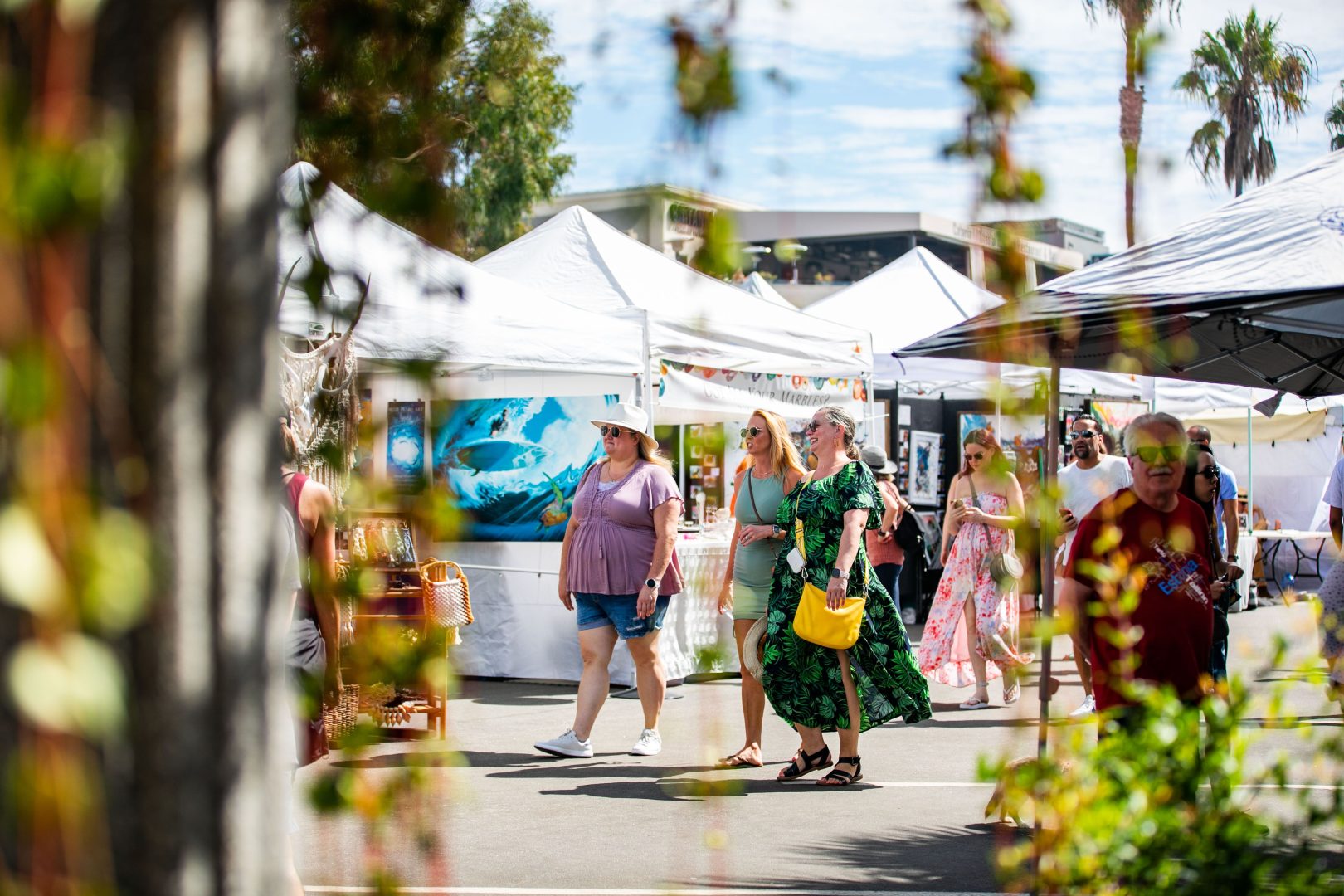
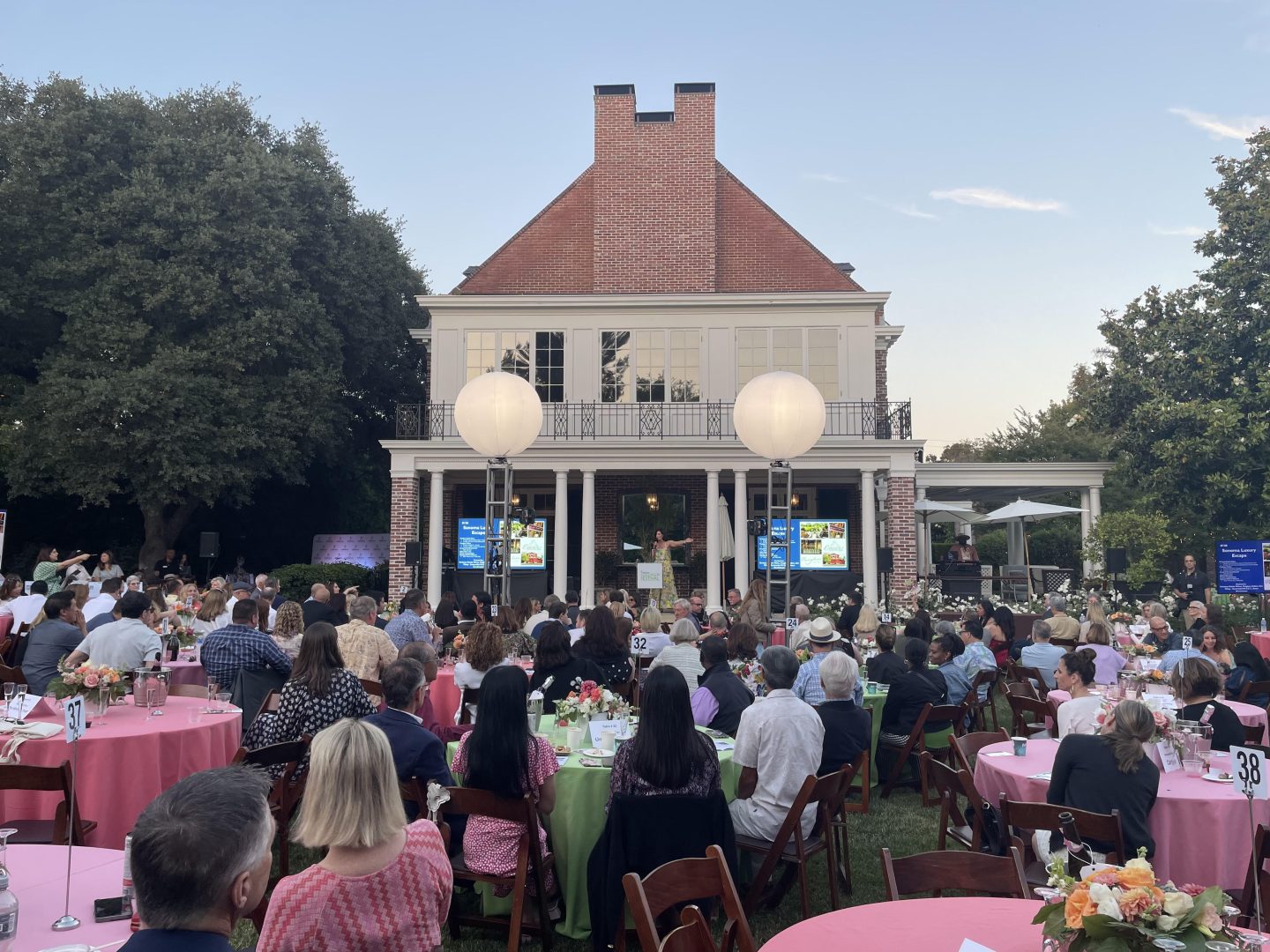
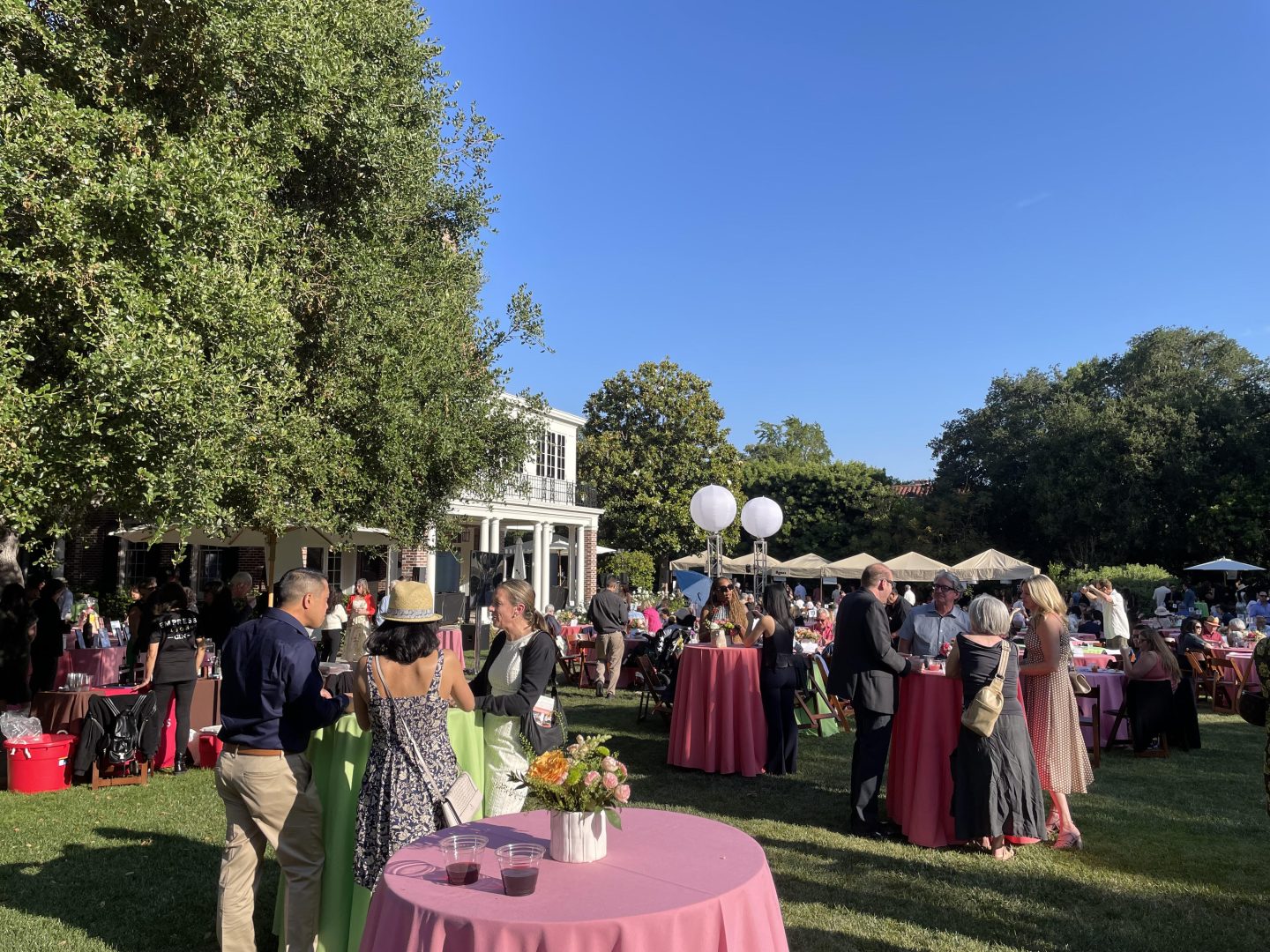
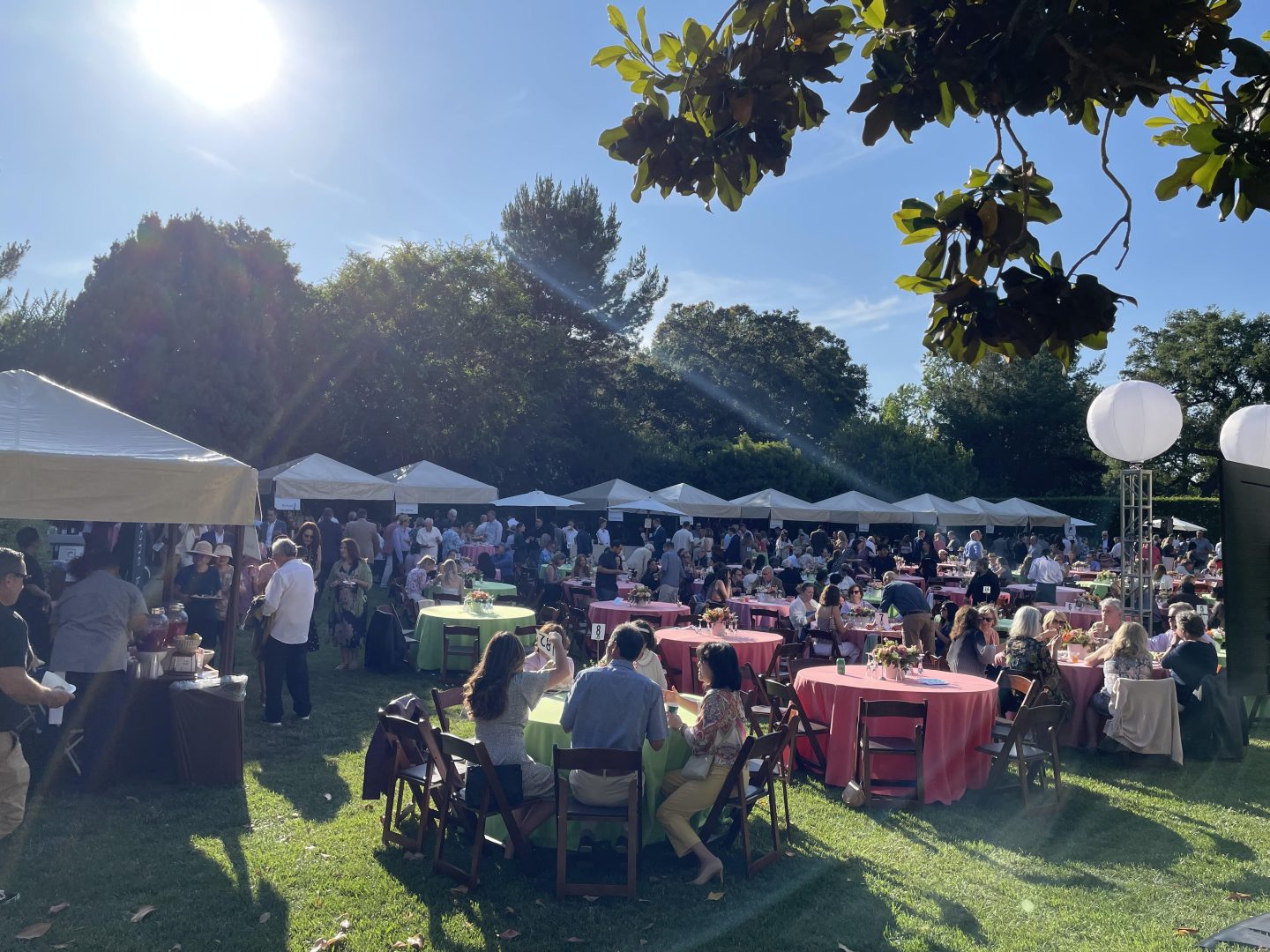
Back for its 16th year, the La Jolla Art & Wine Festival will be held on September 28 and 29 for a weekend of live entertainment, family-friendly activities, and more. This much anticipated event, which draws visitors from across the region to the beautiful La Jolla Village, showcases over 160 artists, and a ticketed Wine & Beer Garden featuring more than 35 international wineries and local craft breweries.
“We are thrilled to bring together such a diverse and talented group of artists, as well as the region’s finest wineries, distilleries, and breweries, in a grand open-air celebration in the village every year,” states Brenda Chand, Executive Director of the La Jolla Art & Wine Festival. “We look forward to welcoming everyone to this year’s festival and supporting the arts and education in San Diego.”
Photo courtesy of La Jolla Art & Wine Festival
The La Jolla Art & Wine Festival was founded in 2008 by Sherry Ahern in the wake of the financial crash to help people who had been adversely affected by the financial crash. A non-profit organization, its mission is to bring needed funds to the city’s public schools, art to the community, and promote La Jolla and its merchants. An astounding 10,000 came to the first festival which was held on upper Girard, where the farmers market is; it has since relocated on Girard between Torrey Pines and Prospect.
Ahern also wanted to help promote Via de Guadaloupe – Mexico’s wine country – which was then a newcomer to the industry, according to Chand. So she invited them to participate in the beer and wine garden alongside local wineries. Occupancy at the garden was limited to 450 people so there was a queue around the block during the entire weekend; the garden can now seat hundreds. They also charged attendees during the first few festivals, which is a free event today.
Photo courtesy of La Jolla Art & Wine Festival
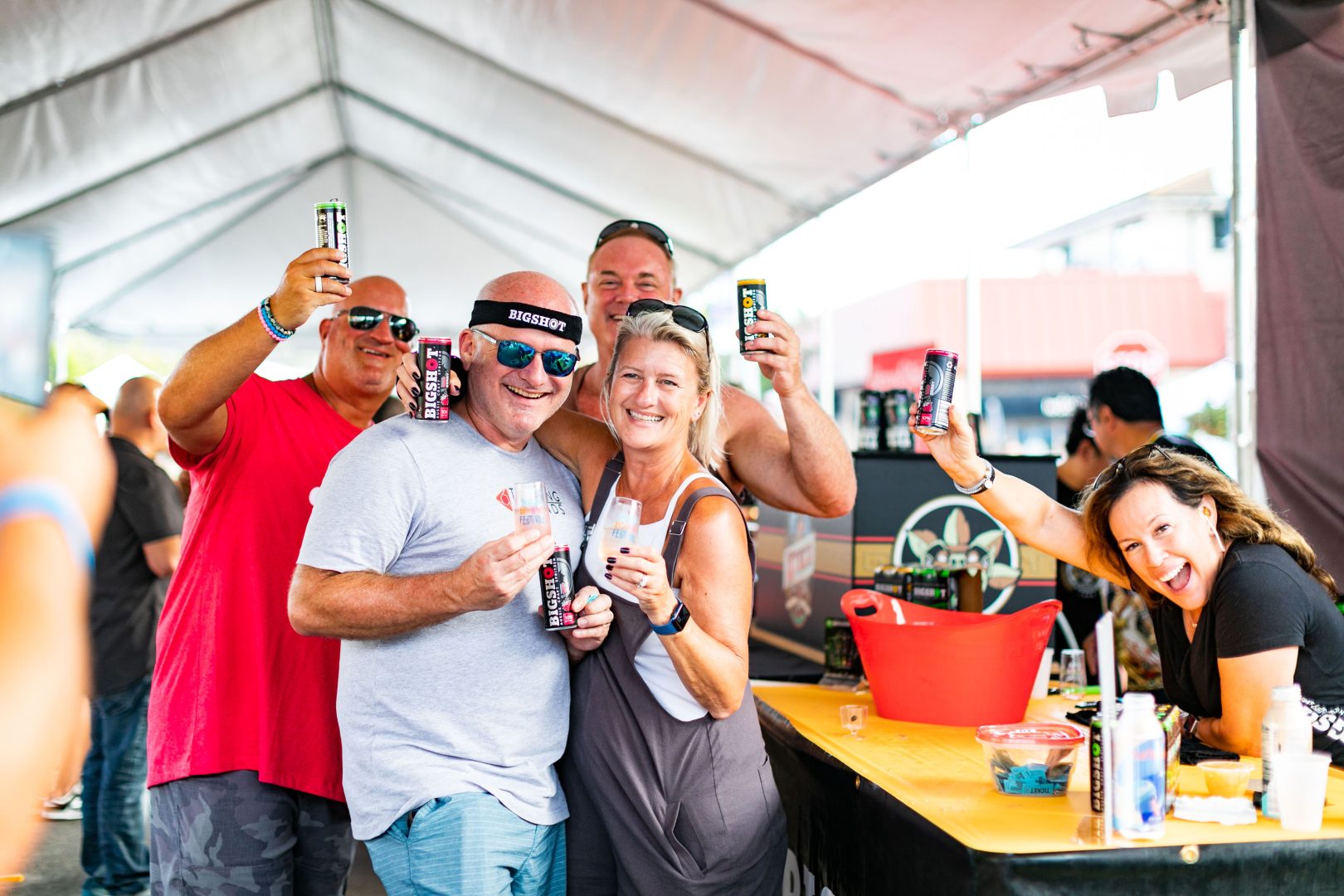
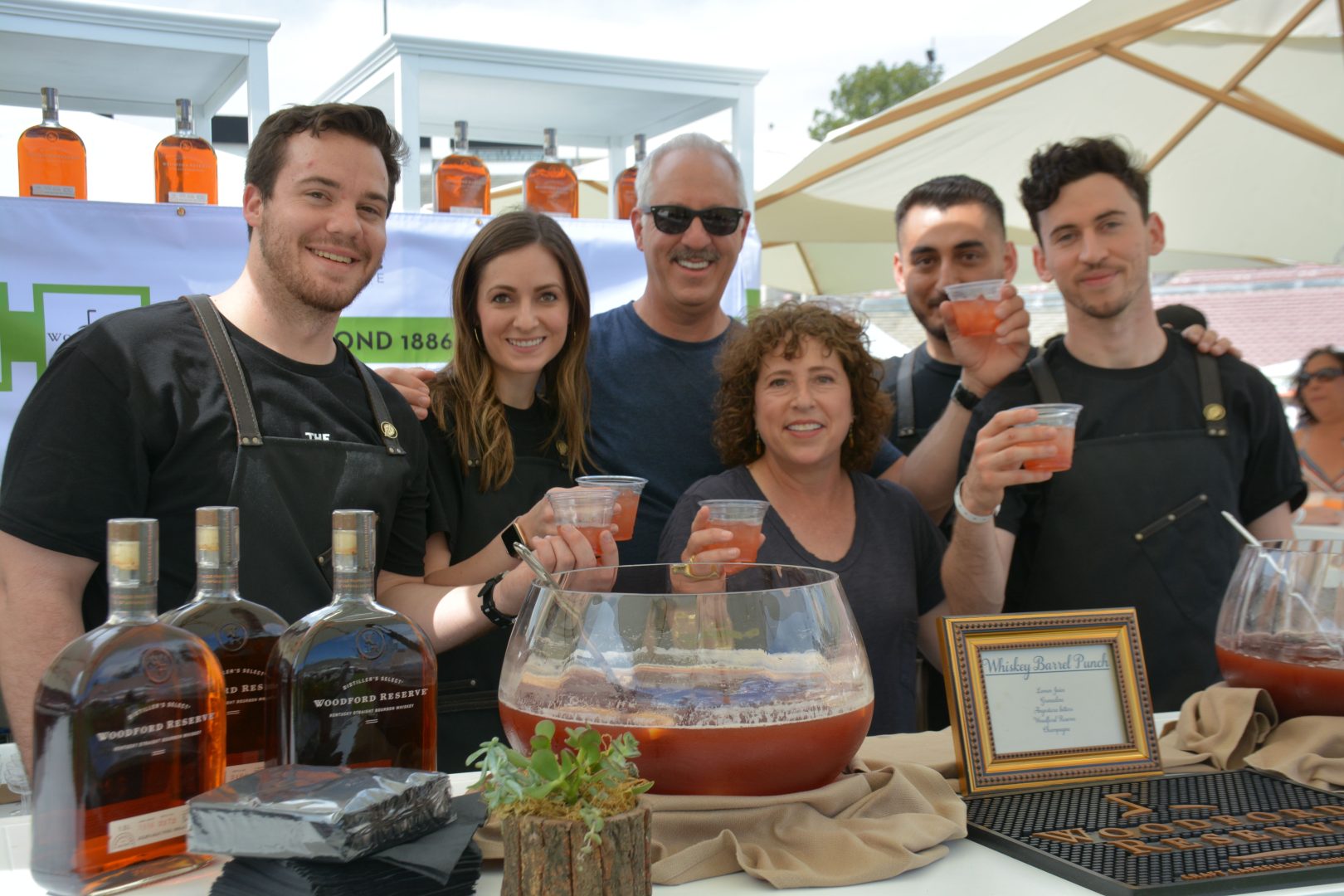
This year, the iconic Wine & Beer Garden will feature more than 35 international wineries, local craft breweries, and distilleries, and local food vendors, offering a delightful array of tastes and experiences. Whether you are a seasoned connoisseur or simply looking to enjoy a refreshing beverage, the wine and beer garden will provide a welcoming atmosphere to savor and enjoy the festival. Participants include local favorites Pali Wine Co., Bird Rock Fine Wine, Puesto, Boochcraft, IZO Spirits, Solento Tequila, and more.
“Geppetto’s in La Jolla has been a sponsor and huge supporter of the event since day one,” continues Chand. “The owners – Brian and Danielle Miller – live in La Jolla and had kids at the schools. They helped us start the family art center because we wanted a place where families and kids could do fun projects and learn about art.”
Photo courtesy of La Jolla Art & Wine Festival
For this year’s festival, the Geppetto’s Family Art Center will offer engaging activities for children of all ages provided by the La Jolla Youth Robotics, The Living Coast Discovery Center, Seaside Arts Center, and Science Guys of San Diego. Activities will range from face painting and balloon twisting to interactive visual arts projects and exciting robotics demonstrations, ensuring that young festival-goers have an unforgettable experience.
Chand enthuses, “The event has tripled or quadrupled since its inception 16 years ago. Everyone looks forward to it because every year we add new things to make the event enjoyable and exciting. We strive to be inclusive and we like to promote up-and-coming artists so we involve artists and vendors of diverse backgrounds. Many careers have been launched at our event due to the special opportunities it brings for new vendors.”
Photo courtesy of La Jolla Art & Wine Festival
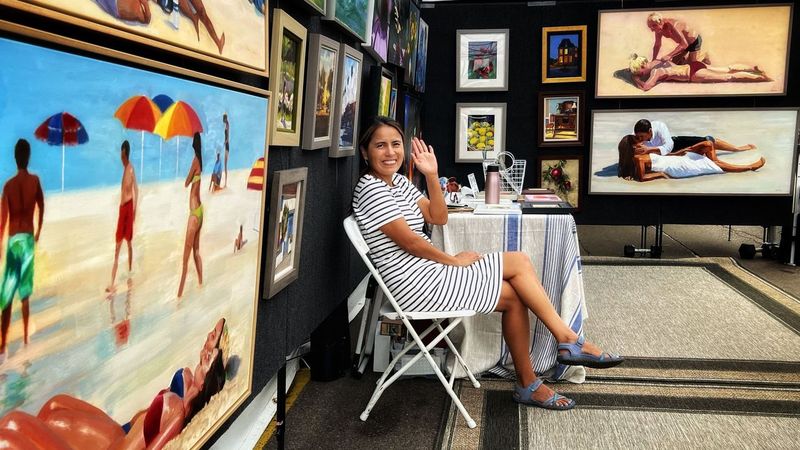
“We are juried fine art show, so all artists that want to participate must apply via Zapplications – an international artist platform. A jury selects the final participating artists. We sell the exhibit space (booths) to artists and then the artists sell their art to attendees. This year, hundreds of artists applied and we sold out of 160+ artist booths in a week.”
Art enthusiasts will have the opportunity to explore and acquire new masterpieces from artists hailing from across the United States, Mexico, and beyond. Artists will present their works in a diverse array of mediums, including painting, sculpture, jewelry design, fine glass, ceramics, woodwork, mixed media, and photography, at the open-air festival. This year’s featured artist is Roy Kerckhoffs, a renowned photographer and mixed media artist whose work conveys a story of a place with a history, highlighting the beauty that exists in human-made wooden, concrete, and steel structures contrasting with soft organic forms from nature.
Photo courtesy of La Jolla Art & Wine Festival
“The La Jolla Art & Wine Festival is one of the biggest art festivals in California and we expect over 45,000 people to attend over the course of two days,” declares Chand. “We will have 160+ fine artists, 40+ vendors in the wine and beer garden (breweries, wineries, distilleries, and restaurants), numerous sponsors, 20+ vendors in the Geppetto’s Family Art Center (where everything is free for kids), a gourmet food court, a silent auction (this is online and the link is on our website), live entertainment, live art, roving entertainment (by Rosin Box Project and stilt walkers) and pet adoptions. The festival is FREE but tickets are required for entry into the wine and beer garden. We have valet parking available and many parking lots in the area.”
While this is Chand’s third year as executive director, she has been involved with the festival as the art director since 2017. She says, “Every year brings something new and special – from the unique cool artists, to the fun entertainment, there is something happening everywhere you look. I love my job and I love getting to see my team’s hard work come together for such a special cause. Our event helps support art, science, technology and other programs that are underfunded in these public schools. To date, we have raised $1.2 million for the education benefit of 5,000 kids each year.”
So this fall, plan to drive to La Jolla Village for an art and wine weekend adventure and contribute to a worthwhile cause.
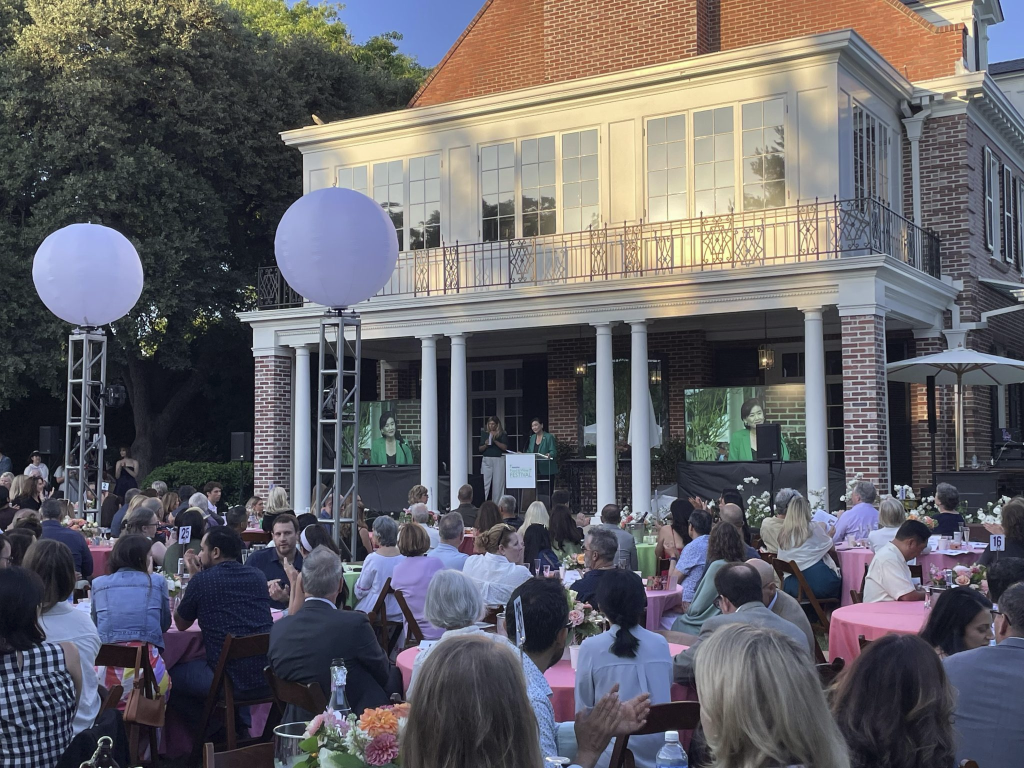
Congresswoman Judy Chu at the Food and Wine Festival | Photo by Brianna Chu/HeySoCal.com
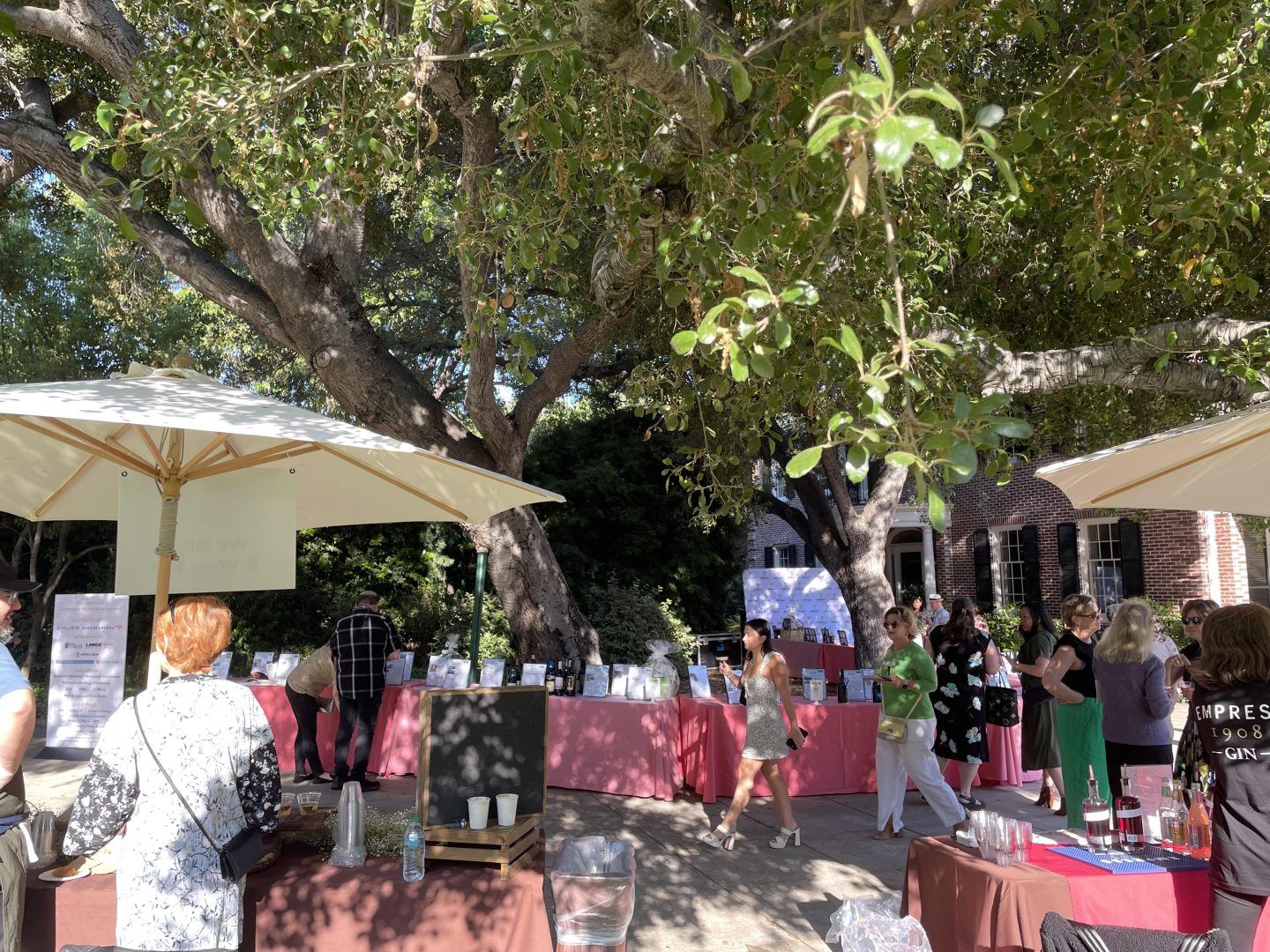
AbilityFirst’s renowned Food and Wine Festival celebrated its 50th anniversary in grand style on Sunday, June 9 from 5 to 8 pm at the Urquhart residence in South Pasadena. Approximately 400 guests attended this milestone year and enjoyed the culinary and beverage offerings from more than 30 top restaurants, cocktail bars, wineries and breweries.
Some of this year’s participating restaurants and dessert shops were Agnes Restaurant & Cheesery, Alexander’s Steakhouse, Beard Papa’s, Bone Kettle, El Cholo Cafe, Gale’s Restaurant, Kensington Caterers, Lord Empanada, Marina, Mi Piace, Nothing Bundt Cake, Pocha LA, Porto’s Bakery, Stems: Cheese, Charcuterie & Catering, Tam O’Shanter, The George, and more.
Beverages featured cocktails and spirit tastings from 1886 at The Raymond, Dulce Vida Tequila, Empress 1908 Gin, Knox & Dobson, Old Hillside Bourbon Company, and We Olive & Wine Bar; craft beer from Golden Road Brewing, San Gabriel’s Ogopogo Brewing, along with specially curated Wines from Caymus Vineyards, Navarro Vineyards, and Riboli Family of San Antonio Winery. Nonalcoholic beverages were provided by Celsius and PepsiCo.
Attendees peruse auction items. | Photo by Brianna Chu/HeySoCal.com
According to Mary Urquhart, she got involved with AbilityFirst when she was the president of the San Marino chapter of the National Charity League and this is the third time that her family has hosted this outdoor event.
A few days before the Food and Wine Festival, Urquhart said, “We should be very proud that we have such a wonderful institution for 98 years in our community. It serves so many people with special needs and we’re lucky to have it … and hopefully many will support it this Sunday.”
Indeed AbilityFirst has transformed the lives of children with special needs and their families. Established in 1926 as the Crippled Children’s Society of Southern California by members of the Los Angeles Rotary Club, it aimed to assist kids with polio.
In 2000, the organization adopted the name AbilityFirst to better reflect its broader mission of helping children and adults with physical and developmental disabilities reach their full potential by providing recreational and socialization programs, employment, accessible housing and camping.
Lawrence L. Frank, of Lawry’s Restaurants fame, was one of the original founders of the organization, and 52 years ago AbilityFirst opened the Lawrence L. Frank Center in Pasadena and Long Beach. From 2016 to 2017, the number of children and adults with developmental disabilities in these communities grew by 1,000 people, 66 percent of whom are between the ages of 6 and 51 years old — the target age for AbilityFirst’s programs.
Food and Wine Festival auction | Photo by Brianna Chu/HeySoCal.com
Introduced a few years ago was College to Career, a community-based program for students who want to go to college and gain the skills, training and education they need to achieve their academic and career goals. Additionally, the program emphasizes independence and personal choice in using community resources for daily living and future employment.
This multi-year program begins with a self-discovery and community exploration component to help students to identify and develop a plan to achieve goals. Upon completion of the academic component, individuals may transition to community jobs, internships, or volunteer programs as they launch their career paths. The Lawrence L. Frank Center, AbilityFirst’s flagship location in Pasadena, houses the expanding College to Career program.
AbilityFirst has six community centers offering several new adult programs including ExploreAbility, DiscoverAbility and PossAbility. After school enrichment program includes homework support, outdoor activities, arts and crafts, cooking and more!”
ExploreAbility is an adult day and community integration program currently being offered at the AbilityFirst Joan and Harry A. Mier Center in Inglewood and the AbilityFirst Lawrence L. Frank Center in Pasadena. A licensed program, its objective is to identify what is important to each individual, to develop the skills necessary to achieve their goals and to be involved in their communities through volunteering and community activities. Individual support and small-group activities promote interaction and learning.
The program is designed to help individuals access their communities in their daily lives, work, recreational and leisure activities. It incorporates volunteering, community activities, independent living and skill-building, using a small group model.
Guests chat, eat, and drink at the Food and Wine Festival | Photo by Brianna Chu/HeySoCal.com
PossAbility, offered in Pasadena and Los Angeles, is intended for adults who want to enhance their skills and independence, and to participate in their communities. Individuals in the program are empowered to set and pursue personal goals with an emphasis on employment readiness and increased community connections, including volunteering.
Rounding out AbilityFirst’s programs is Camp Paivika, a Native American word meaning “Dawn,” in the San Bernardino Mountains. It was begun in 1946 by the Rotary Club as one of the first full-accessible camps in the United States and has been in active operation since. It is maintained through endowments from donors and fund-raising efforts by community members.
Going to summer camps helps children develop social and communications skills as they participate in activities with other kids. It helps individuals build character and gain self-respect as they become responsible for their own safety and survival in a setting outside their comfort zone.
Camp Paivika offers this same independence and self-reliance for children, teens and adults with physical and developmental disabilities. Specially-trained members of AbilityFirst staff provide assistance and guidance as campers enjoy all the fun activities available to them — archery, arts and crafts, campfires and cookouts, nature hikes, horseback riding, swimming. It is fully accredited by the American Camp Association.
Attendees enjoy the food and beverage offerings | Photo by Brianna Chu/HeySoCal.com
All these life-changing programs are made possible through AbilityFirst’s Food and Wine Festival. How it evolved into the spectacular event that it is today is quite an inspiring story.
A support group called Crown Guild held the first food and wine festival in 1953 with a wine tasting at The Langham Huntington Pasadena, then known as the Huntington Hotel. Each Crown Guild member would invite ten to twelve friends and they would all be responsible for bringing a bottle of wine for the tasting.
It branched out to Crown Guild members homes, and then onto friends of members’ homes, until they got local restaurateurs and beverage companies involved. It lent a casual outdoor environment where guests could mingle and chat over food and drinks. Over the years, AbilityFirst built strong relationships with restaurants, wineries, and breweries.
With the Food and Wine Festival’s 50th anniversary celebration, AbilityFirst continues the founding Rotarians’ legacy. Ninety-eight years after it was first created, AbilityFirst
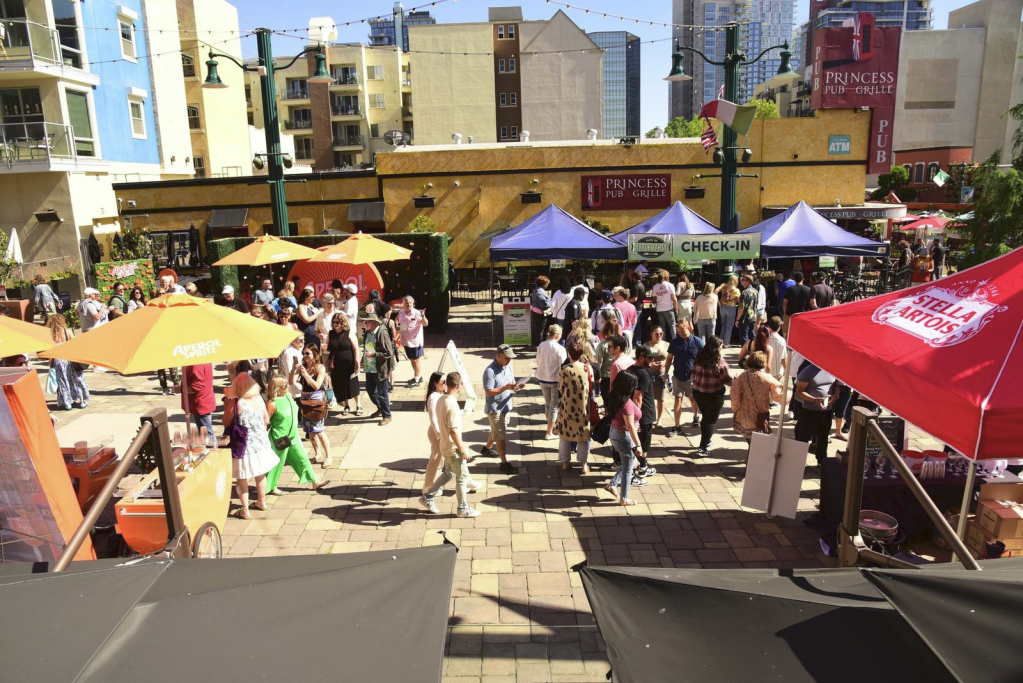
Thinking of traveling to San Diego this summer? Make sure you schedule your trip to include the Taste of Italy event which returns for two nights of delicious bites on June 18 and 19, 2024. First held in 2018, this famous foodie experience features restaurant exploration, live music, and memorable dishes.
From 4:00 to 8:00 pm on Tuesday, June 18, and Wednesday, June 19, visitors to Little Italy can immerse themselves in a gastronomic journey that spans 40 square blocks. Each day of the event brings a new culinary adventure, with different selections available from 20+ restaurants in the neighborhood. From classic pizza and pasta to gourmet burgers and sushi, this dynamic approach guarantees a fresh and exciting experience for both loyal patrons and newcomers.
Photo courtesy of Little Italy Association
While other Little Italies in the United States have declined because of the growth of other adjacent ethnic neighborhoods, San Diego’s Little Italy has remained a vibrant symbol of the remarkable contributions Italians have made to this country. Since the 1920s, it has been a stable ethnic business and residential community; it represents Downtown San Diego’s oldest continuous-neighborhood business district.
However, the area’s history is not without its dark period. At one time, more than 6,000 Italian families lived in Little Italy and toiled to build San Diego into the global hub of the tuna industry. When the tuna industry on the West Coast waned and 35% of Little Italy was torn down during the construction of Interstate-5 freeway, the neighborhood suffered nearly thirty years of neglect. Then, in the early 1990s established property owners and family-run business proprietors decided to take their fate into their own hands.
New Italian American and non-Italian business owners opened retail and professional spaces while creative builders and architects constructed beautiful developments. That it is today a model urban neighborhood not just in San Diego but also for the handful of Little Italies remaining throughout the country is a lesson in a community’s resilience.
Photo courtesy of Little Italy Association
This remarkable accomplishment can be credited mostly to the Little Italy Association (LIA), which was established in 1996 during the time of the revitalization of the Downtown area. The only district management corporation of its kind for any Little Italy neighborhood in the United States, it is run by a board of directors comprising 29 individual who represent property owners, residents, businesses, and the community at large. It advocates on behalf of its members’ best interests in matters of public safety, beautification, promotion, and economic development, while preserving the unique cultural resources of the area. Since its inception, it has been re-energizing this neighborhood while telling the story of Little Italy to its visitors through public art displays and amazing piazzas.
Visitors to Little Italy for the event will check in at the vibrant Piazza della Famiglia, where they will receive their exclusive Taste Passport. With this passport, attendees will embark on a culinary adventure, visiting a wide range of restaurants, checking off as they stop, to savor their curated “tastes” while they stroll through the neighborhood. For those who prefer a more leisurely experience, ample seating will be available at the Piazza della Famiglia, complemented by live music at Piazza della Famiglia and Piazza Basilone.
Photo courtesy of Little Italy Association
Curt Brooker of FUSE Events, which partners with the association to make this a successful endeavor, tells the origins of Taste of Little Italy. “There are many neighborhoods that hold ‘Taste of’ events, but Little Italy quickly started to showcase a growing number of restaurants that were being recognized throughout San Diego. The Little Italy Association decided to create an event that brought people into the neighborhood so they can sample the variety of restaurant options old and new.”
“Taste of Little Italy began as a one day event and featured a handful of restaurants,” Brooker explains. “As the restaurant numbers grew, two routes were created on the same day with about 15 restaurants each. We were getting feedback from attendees that they just couldn’t eat so much food in one night. Now, Taste is a two day event that features approximately 20 restaurants each day. Tickets are $55 each day – it’s a great value for being able to try that many restaurants in a night.”
“The number of restaurants have increased over the years and we continue to add new concepts as they come into Little Italy,” continues Brooker. “The restaurants are a true partner in this event and we make it a priority to not make it a burden on the restaurant or staff. We limit the number of tickets sold each day to 750. Over the two-day event, a total of 1500 tickets are sold.”
Pizza della Familia at night / Photo courtesy of Little Italy Association
Brooker says they are constantly making changes and adjustments to improve the event throughout its existence. “The Piazza della Familia has been the biggest change over the years. We now have this wonderful space to hold the registration area and have sponsor activations to enhance the attendee experience.”
Food and drinks aren’t the only things visitors can enjoy at Taste of Italy. Brooker clarifies, “We want to make each night an experience. So along with the food and drinks that are offered on the routes, we have live music placed throughout the neighborhood to give it that fun foodie vibe. Of course, we have a lot of the same restaurants participate each year, but there are new options that change year to year. Also, our sponsors bring new experiences each year. We’ve had a full ‘beer garden’ one year thanks to Birra Moretti and last year we had fun photo opportunities courtesy of Campari. We’ll again have new and fun activities for attendees this year in the Piazza.”
The community spirit which has made this little corner of San Diego flourish in spite of the economic downturn and global catastrophe was on full display a few years ago. Recalls Brooker, “One of the most memorable Taste of Little Italy events was during COVID. The neighborhood was quiet and the restaurants had obviously slowed down. We came up with a very unique idea that allowed people to enjoy the restaurants with a ‘Take Home Edition’ Taste concept. We had four nights where we curated a four course meal from four different restaurants. One restaurant provided an appetizer, another the main course, dessert and a paired drink. It was a fun way during COVID to still enjoy Little Italy’s restaurants by taking home a variety of options from multiple restaurants.”
Photo courtesy of Little Italy Association
Planning Taste of Little Italy is year-round. Brooker states, “Once the event ends, we are taking surveys and brainstorming how to make it a little better. Then it’s back to communicating with the restaurants on what to expect next year. There’s no Master Chef that leads the event; restaurant and bar owners have to secure their spot by February and our team works with them to try and bring as much variety as possible and highlight what each restaurant does best.”
There’s no fee for restaurants to participate and all the funds raised during the event go the Little Italy Association. The money is then used to help keep the streets clean, maintain the beautiful flowers and trees, and support the businesses with marketing and promotions.
Taste of Little Italy is hugely popular and it’s a big attraction in San Diego. Says Brooker. “People try to walk up on the day of the event to buy tickets and are disappointed that we are sold out. I would recommend buying tickets as early as possible.”
So don’t miss out! Purchase your Taste of Italy ticket now and take a leisurely two-and-a-half-hour drive to San Diego for an unforgettable culinary experience.
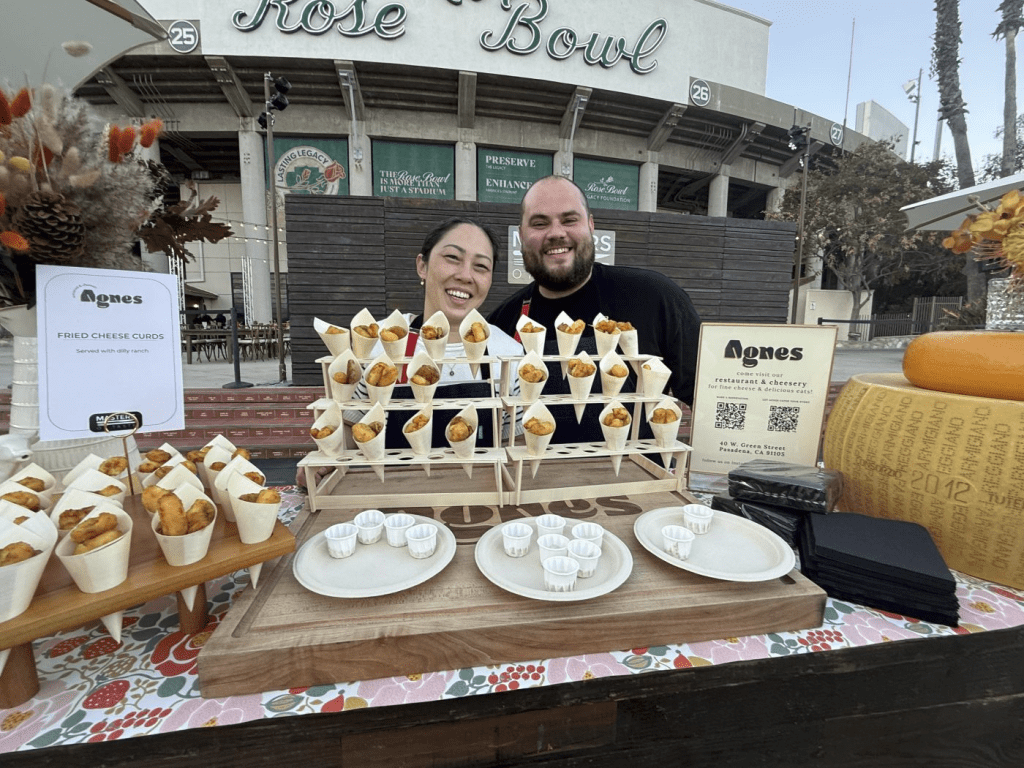
Masters of Taste Media Night in the locker room of the Rose Bowl. | Photo by May S. Ruiz / Hey SoCal
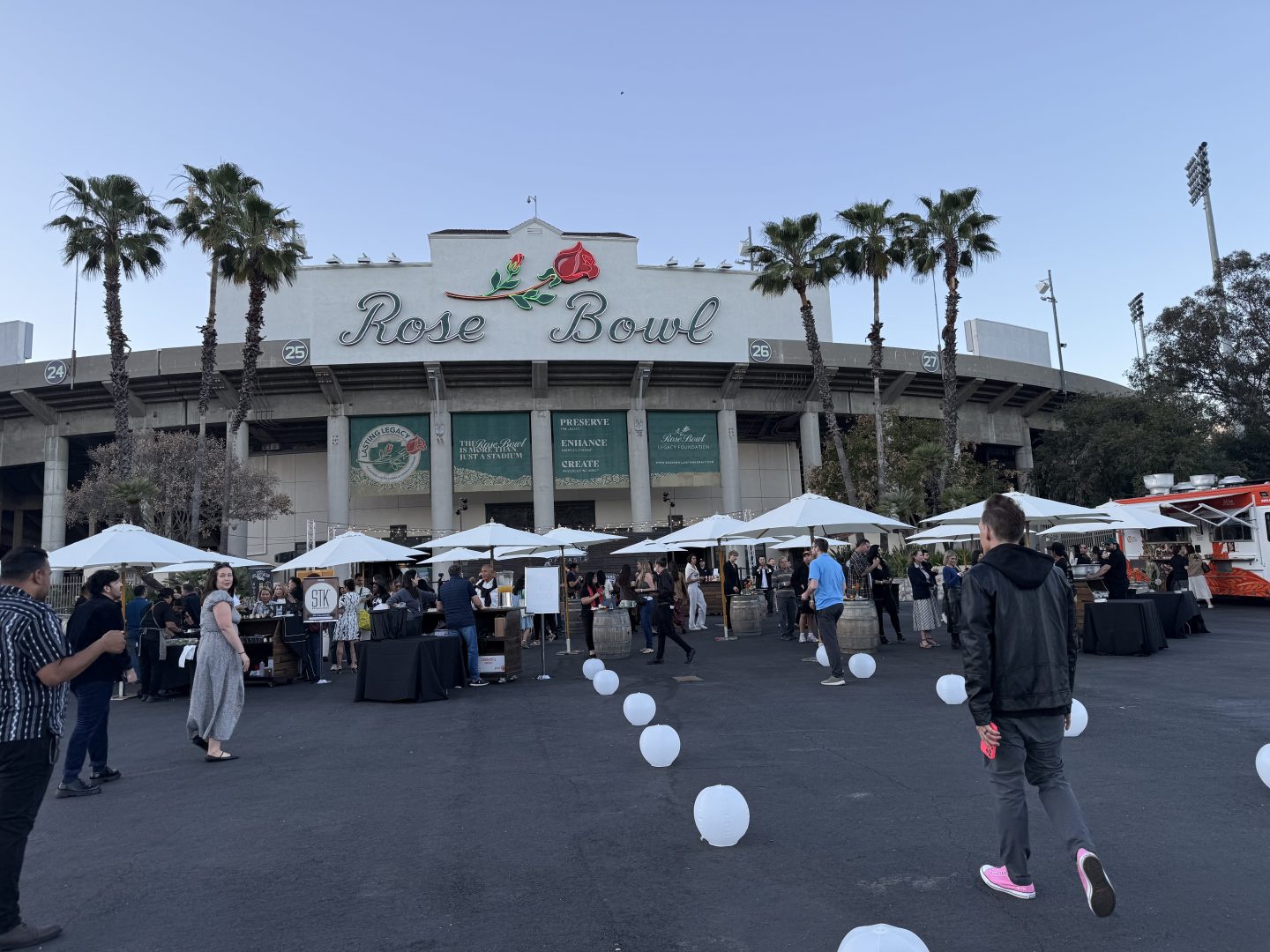
Masters of Taste (MoT), L.A.’s premier food and beverage festival, returns at the 50-yard line of Pasadena’s Rose Bowl on Sunday, April 7, 2024 from 3 to 7 pm. Celebrating its seventh year raising funds for Union Station Homeless Services (Union Station), the event brings together 100 restaurateurs and beverage company owners to serve food and drinks to approximately 3,000 attendees.
The brainchild of Rob and Leslie Levy, owners of The Raymond 1886 and Knox & Dobson in Pasadena, Masters of Taste was a concept Rob adapted from a childhood friend’s organization in Chicago called “Inspiration Café” which delivers sandwiches to the homeless. When the former CEO of Union Station asked him to be on the board, he set out to find a better way to raise funds than asking people to get all dressed up to attend a gala they only felt obligated to attend. Leslie came up with the idea of having chefs gather for an event that was so amazing it didn’t feel like it was a charity affair.
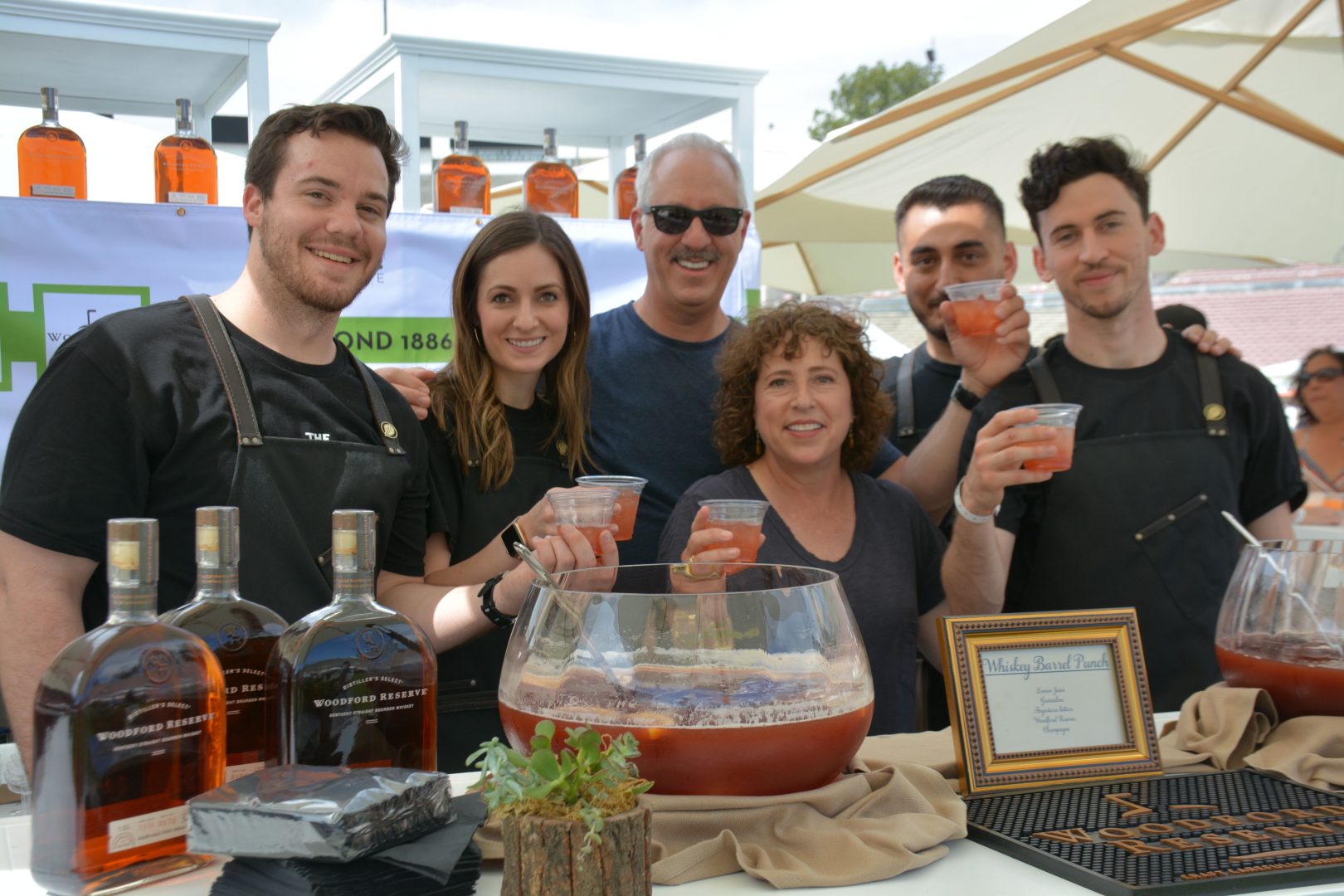
Rob and Leslie Levy (third and fourth from left) at their Raymond 1886 Masters of Taste booth. / Photo courtesy of Masters of Taste
On their first year at the Rose Bowl, a spontaneous line dancing broke out on the field – a delightful occurrence that was totally unanticipated. It was when they knew they had stumbled upon a successful endeavor. There was another year when it rained which, incredibly, made it an even better event. Nobody left – 3,000 people on the field stayed through the rain; Levy said it was the most memorable year they’ve had.
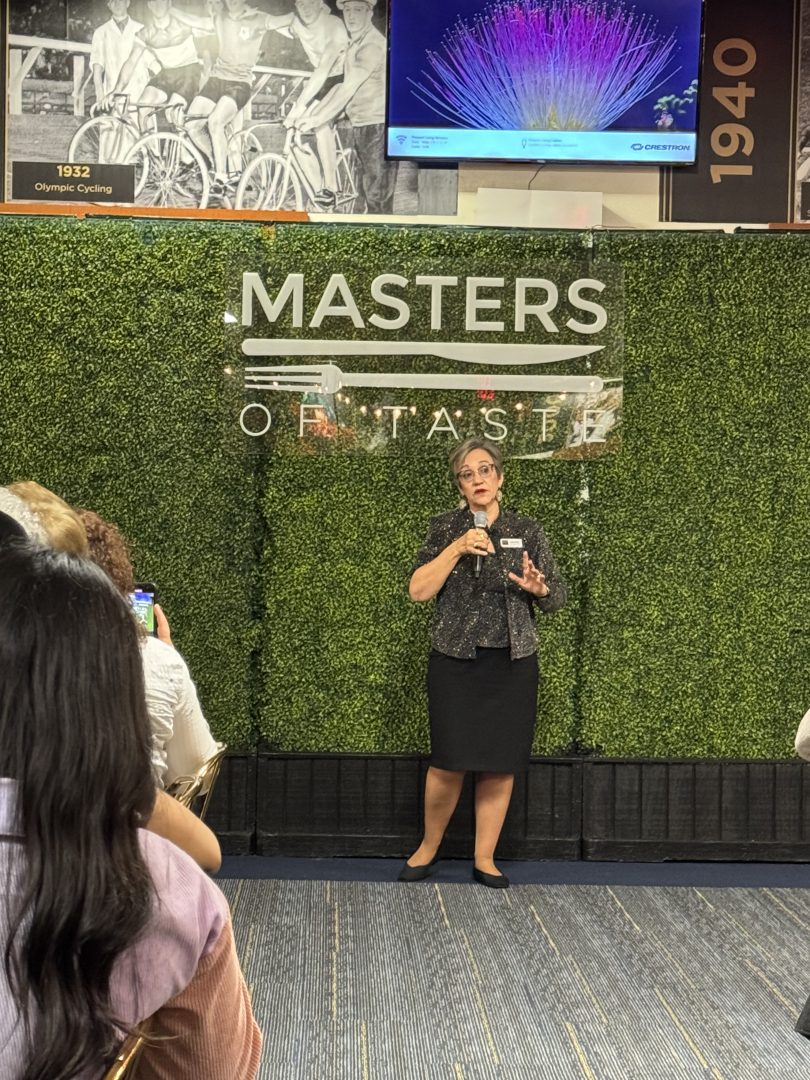
As the organizers had previously done, Masters of Taste held its media night in the locker room of the Rose Bowl. On February 28, 2024, we arrived at the venue and were pleasantly surprised to see twice the number of chairs and tables from last year’s media preview. Media attendance and sponsorship had increased dramatically since we first attended it. And as always, there was excitement among the individuals behind this annual event and the people covering it.
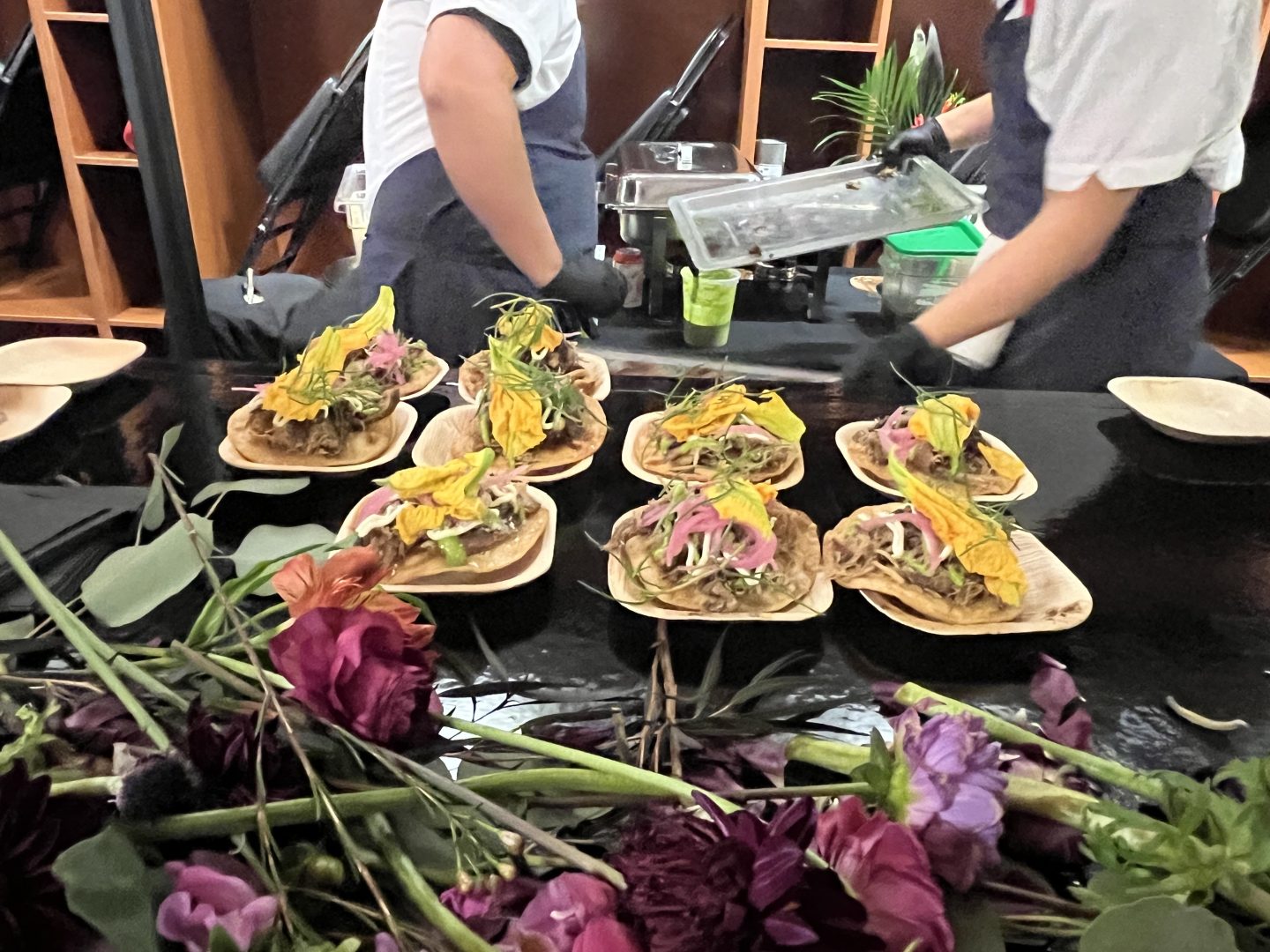
City Club in Los Angeles served hors d’oeuvres at Masters of Taste media night. | Photo by May S. Ruiz / Hey SoCal
After we had enjoyed a few drinks and hors d’oeuvres, the program began with a reminder of why we were there. Benjamin Turkle of Boomtown Brewery declared, “We’ve been working with homeless causes in L.A. for almost nine years now, helping on Skid Row. My wife’s partnership with Brilliant Corners to work with Union Station Homeless Services is just another foundation stone.”
Turkle went on to say, “We’ve always been told that we need to pick ourselves up by our bootstraps. But that’s very challenging when we don’t have bootstraps to pick ourselves up by. It takes a community and each individual citizen – whether or not you’re an entrepreneur in the service industry or in the thousands of other positions in our city – to lend threads to others so they can make their own bootstraps, to lend hands so others can pick themselves up as well. We’re all in it together and our rising tide will raise all ships. Thanks to Masters of Taste for doing this, for involving all of us in keeping this issue forefront.”
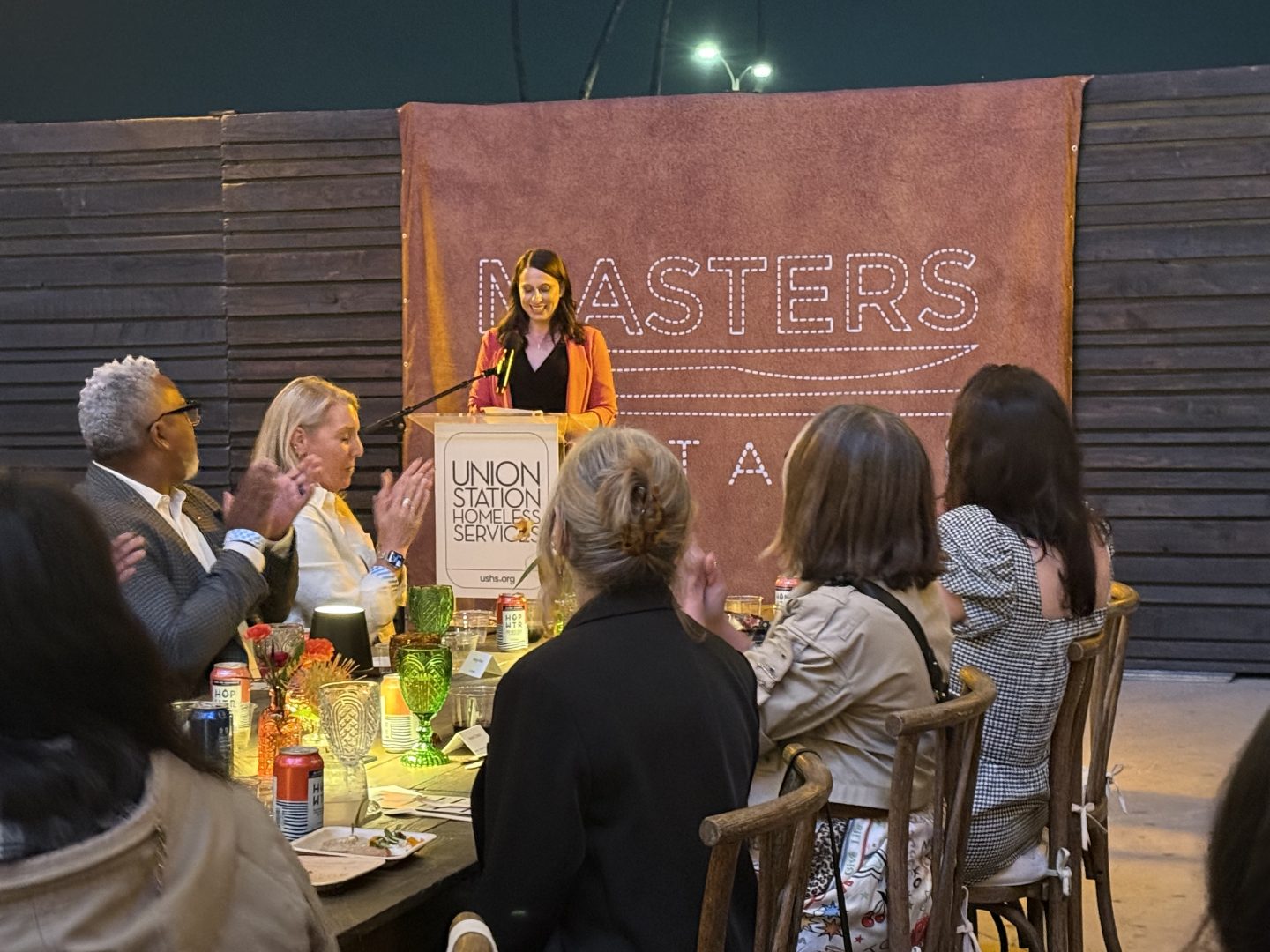
Anne Miskey, CEO of Union Station Homeless Services. | Photo by Margaret Gifford / Hey SoCal
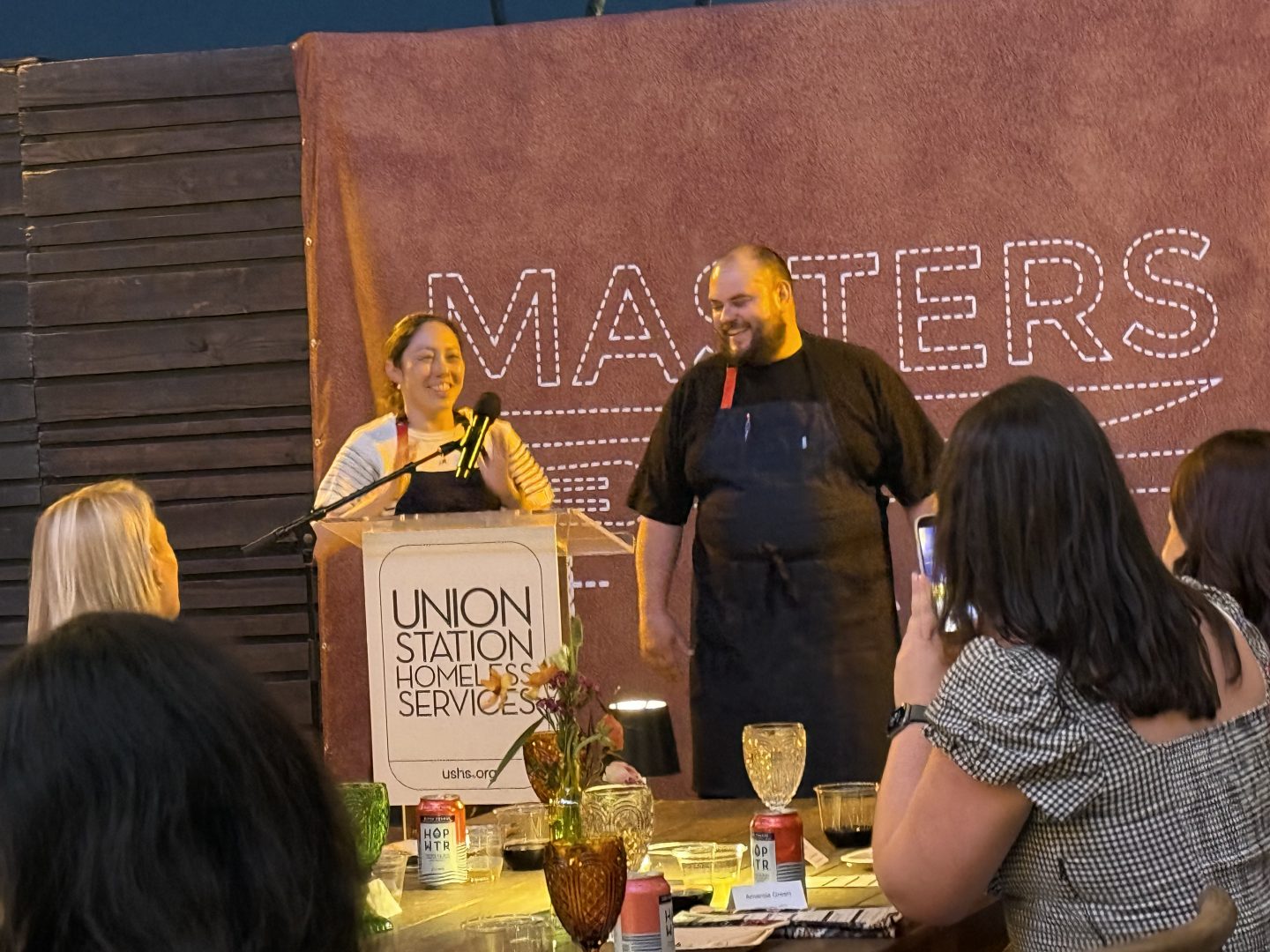
Anne Miskey, CEO of Union Station, then stood up to welcome everyone. She said, “You’re more than friends, you’re now part of our Union Station family. We’re here for a fun night to enjoy great food and drinks but they’re all for a great cause. Every bite of food and sip of drink at Master of Taste helps the homeless in Los Angeles – could there be a better way to spend your evening?!”
Joking that she used to be thin, Miskey then thanked all the chefs and beverage masters for making Masters of Taste a possibility. She added, “Thank you to the media. It’s because of you that we’re able to get the word out … and year after year, we sell out. Union Station works with all sorts of people – those living in tents and whose lives have fallen apart. It is through the support of people like you that we’re able to walk alongside homeless people in their journey. We don’t just see people housed and get work; what we see is the return of hope and the ability for them to once again have dreams.”
In a bow to tradition, 2023 MoT host chefs Michael and Kwini Reed of Poppy + Rose and Poppy & Seed passed the baton to this year’s chef hosts Bret Thompson and Lucy Thompson-Ramirez, owners of Pez Cantina and Pez Coastal Kitchen. The husband and wife team has made a significant impact in the hospitality industry. With their passion for culinary excellence and warm hospitality, they have made a distinctive mark in the Los Angeles dining scene and beyond.
Kwini and Michael Reed (third and fourth from the left) passed the baton to Lucy Thompson-Ramirez and Bret Thompson (first and second from left). | Photo by Brianna Chu / Hey SoCal
Bret Thompson’s culinary journey began at the renowned California Culinary Academy in San Francisco. He honed his skills at esteemed establishments such as Aqua in San Francisco, Roy’s in Hawaii, and Pinot Blanc in St. Helena, California. Seeking international inspiration, he traveled to Spain to study under Chef Martin Berasategui at Restaurante Martin Berasategui, a Michelin 2-star establishment in Lasarte, Spain. He further expanded his culinary repertoire in Lebanon at Atlas Café, then studied under Chef Bernard Loiseau at La Cote d’Or – his Michelin 3-star restaurant in Saulieu, France – and then at L’Arpege, Chef Alain Passard’s Michelin 2-star restaurant in Paris.
Throughout his career, Thompson also had an extensive tenure with The Patina Group, working at multiple restaurants, running catering operations, and ultimately becoming the Corporate Executive Chef overseeing all restaurant operations for the entire chain. While there he garnered accolades – including being named “Chef of the Year 2002” by the Orange County Business Journal during his time as Executive Chef at Catal Restaurant in Anaheim.
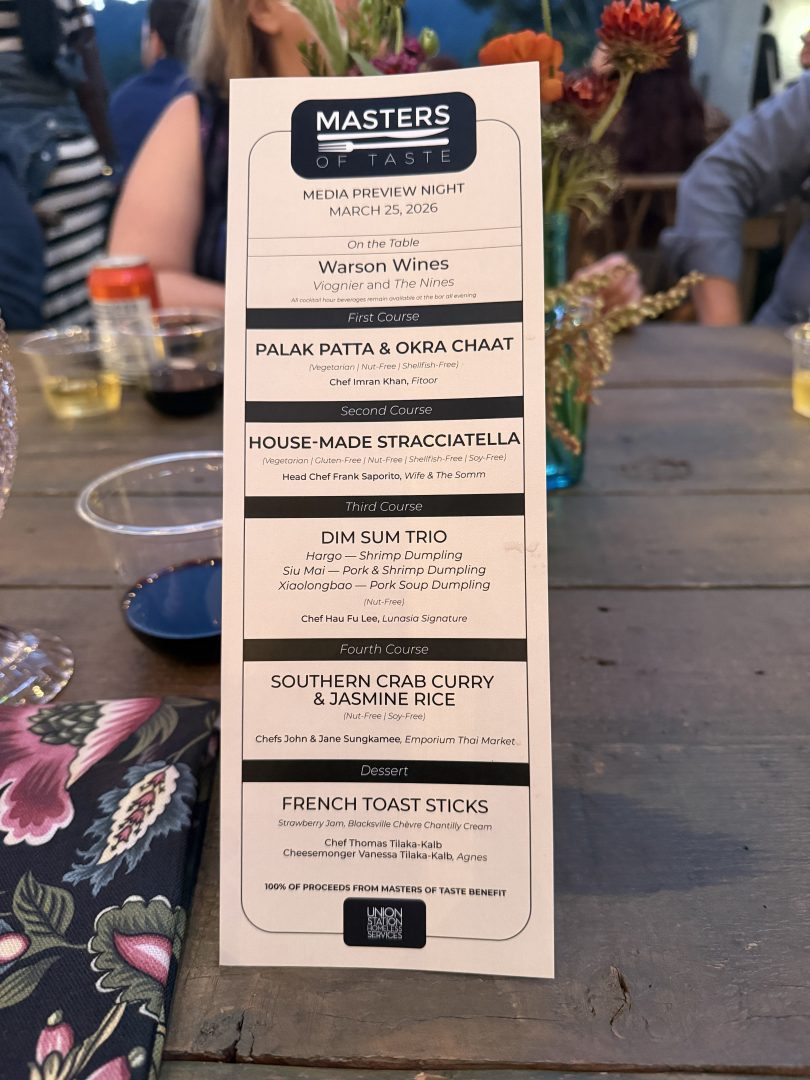
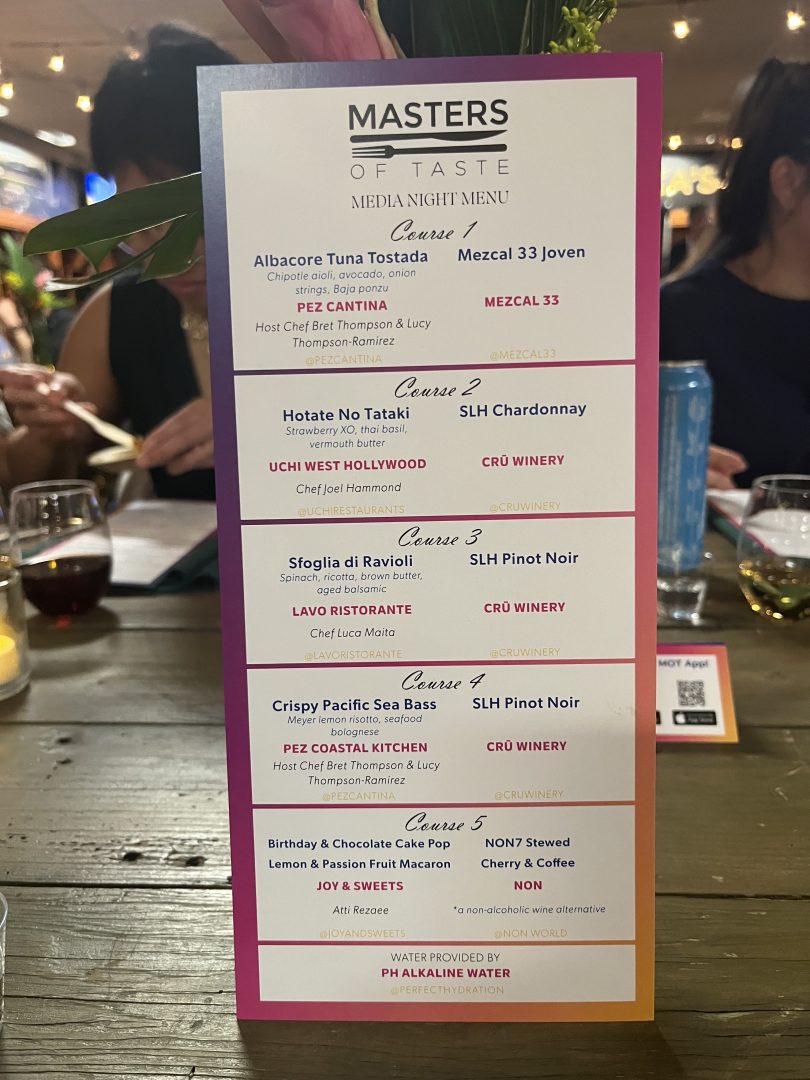
The menu during media night. | Photo by May S. Ruiz / Hey SoCal
Thompson eventually moved on and co-founded and became a partner at the iconic MILK Ice Cream Parlor & Bakeshop in Los Angeles. He also opened his own Market Restaurant and Catering, which he successfully sold in 2014. In 2015, he joined forces with his wife to embark on a new culinary adventure as the proud owners of Pez Cantina. This seasonal, modern, coastal-inspired Mexican restaurant and bar in downtown Los Angeles quickly became a beloved dining destination. In October 2021, they expanded with a new location LA Burrito in Montebello, California.
Lucy Thompson-Ramirez brings her unique perspective and expertise to the front of the house at Pez Cantina. Born in Guanajuato, Mexico, she migrated to the United States with her family at a young age. She pursued her education at the University of Santa Barbara, majoring in Sociology and minoring in Spanish. Her first career path led her into the fashion industry, where she excelled in sales and later established her own showroom with her brother called Siblings Showroom.
After a successful 18-year tenure in fashion, Thompson-Ramirez made a seamless transition into the hospitality industry alongside her husband. At Pez Cantina, her warm and welcoming demeanor shines as she personally greets regulars by name and fosters new connections. Her dedication to providing a home-like atmosphere has made Pez Cantina feel like an extension of their own family. In recognition of her leadership and contribution to the industry, she was appointed as President of the Latino Restaurant Association in 2023 and serves on the Los Angeles Tourism and Convention Board.
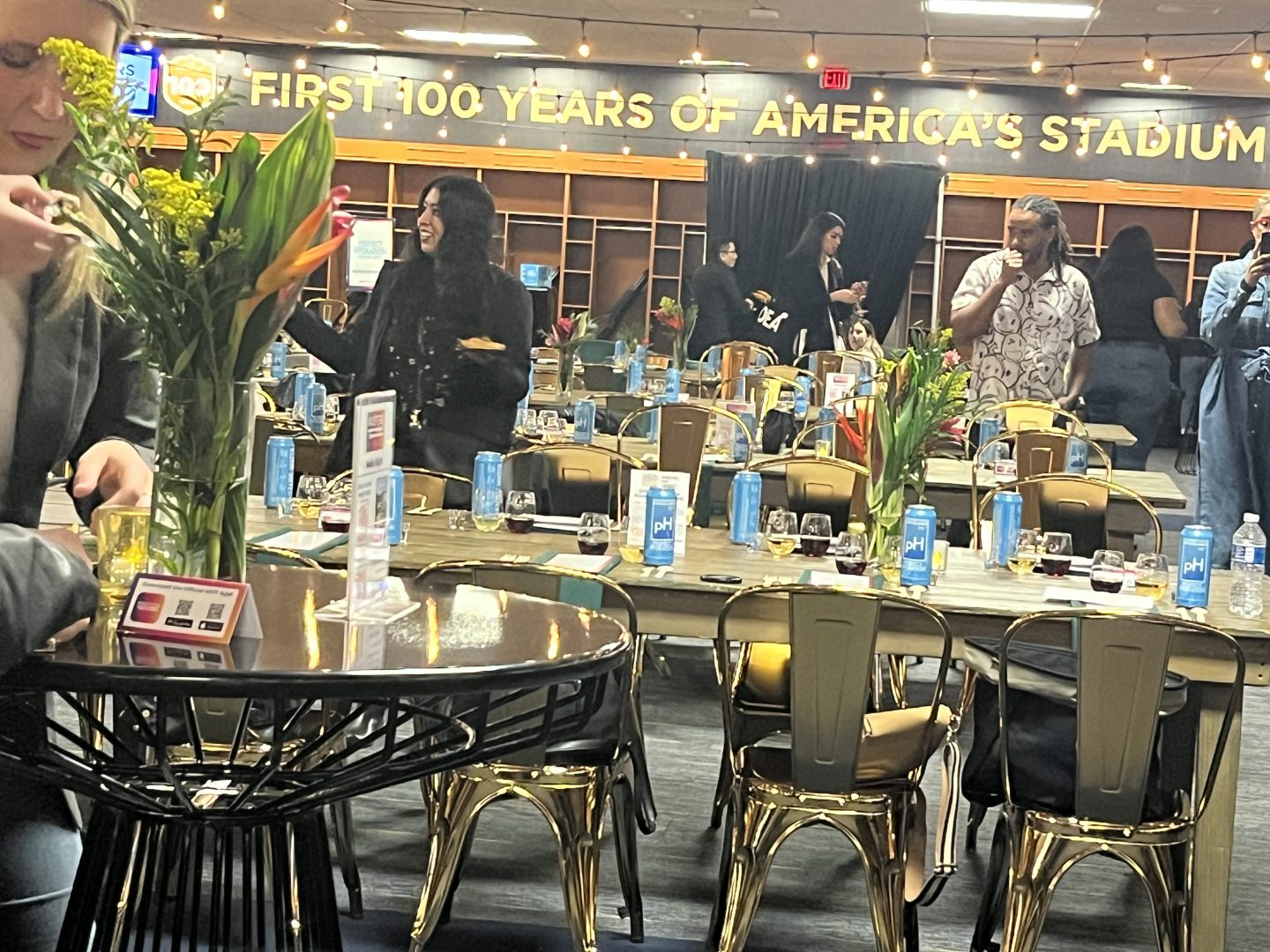
Seating during media night at Masters of Taste. | Photo by May S. Ruiz / Hey SoCal
Two weeks ago, Thompson and Thompson-Ramirez opened Pez Coastal Kitchen in Pasadena which offers a diverse menu featuring sea-to-table and farm-to-table cuisine – showcasing the best of seasonal California flavors. The restaurant highlights their expertise in curing, smoking and dry-aging meats and seafood, as well as their partnerships with local farmers and specialty producers. With a focus on creating a modern coastal dining experience, they aim to contribute to Pasadena’s thriving culinary scene and bring a fresh new concept to the city.
As the evening wound down, Shawn Morrissey, Senior Director of Advocacy and Community Engagement at Union Station as well as head of the Lived Experience Advisory Panel at the organization, county and state level, shared his moving experience as someone who was once an unhoused individual. He related, “In 2002, when I was almost 40, I arrived at Union Station with two black eyes, a gash on my forehead, and practically naked. Besides being homeless, I was also trying to get help overcoming a decades-long drug addiction due to trauma. And for the first time in my life, I was met with unconditional regard and I was nurtured. I was brought into a community where people wanted an authentic relationship with me. These were the things that made a difference.”
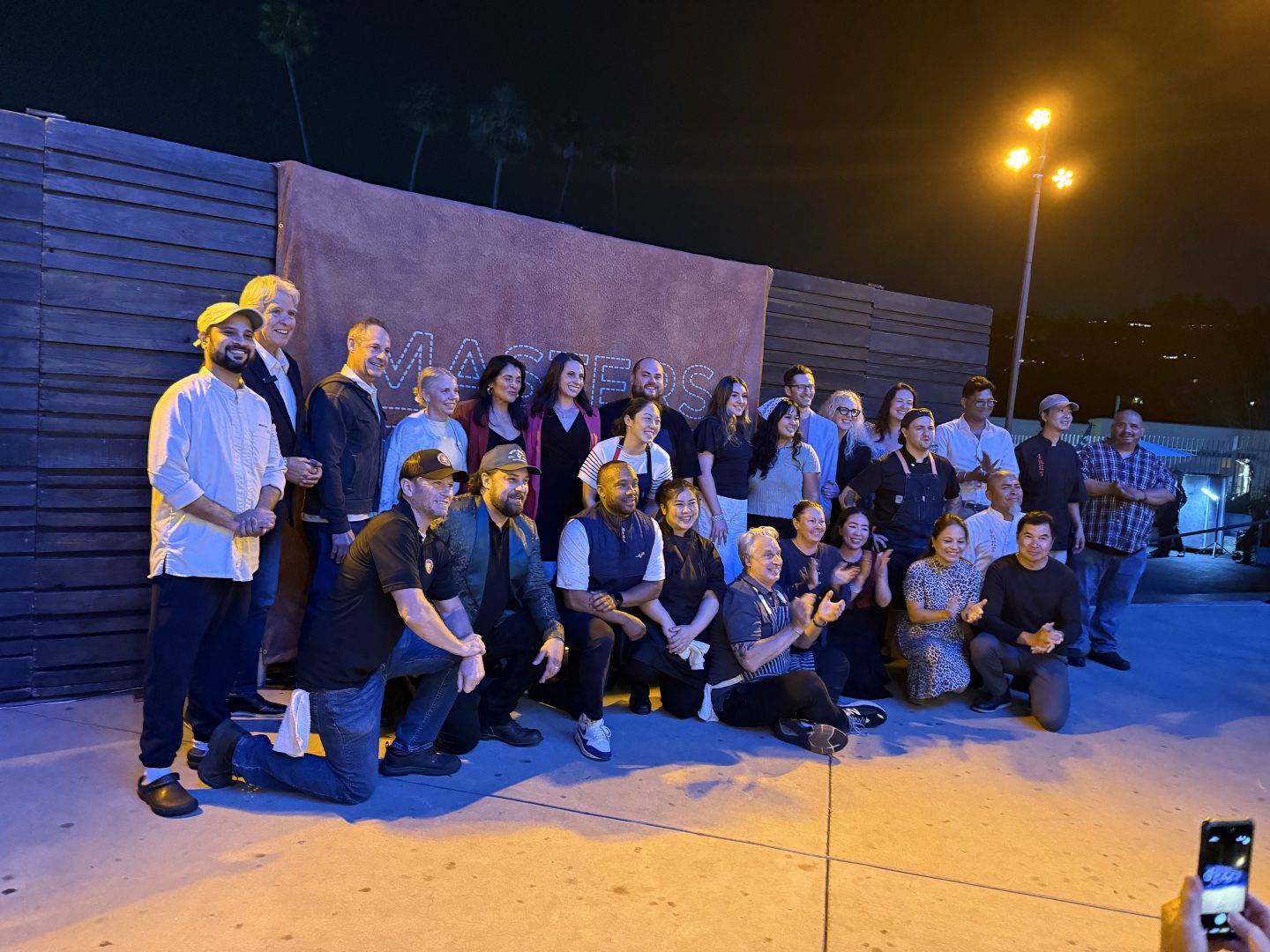
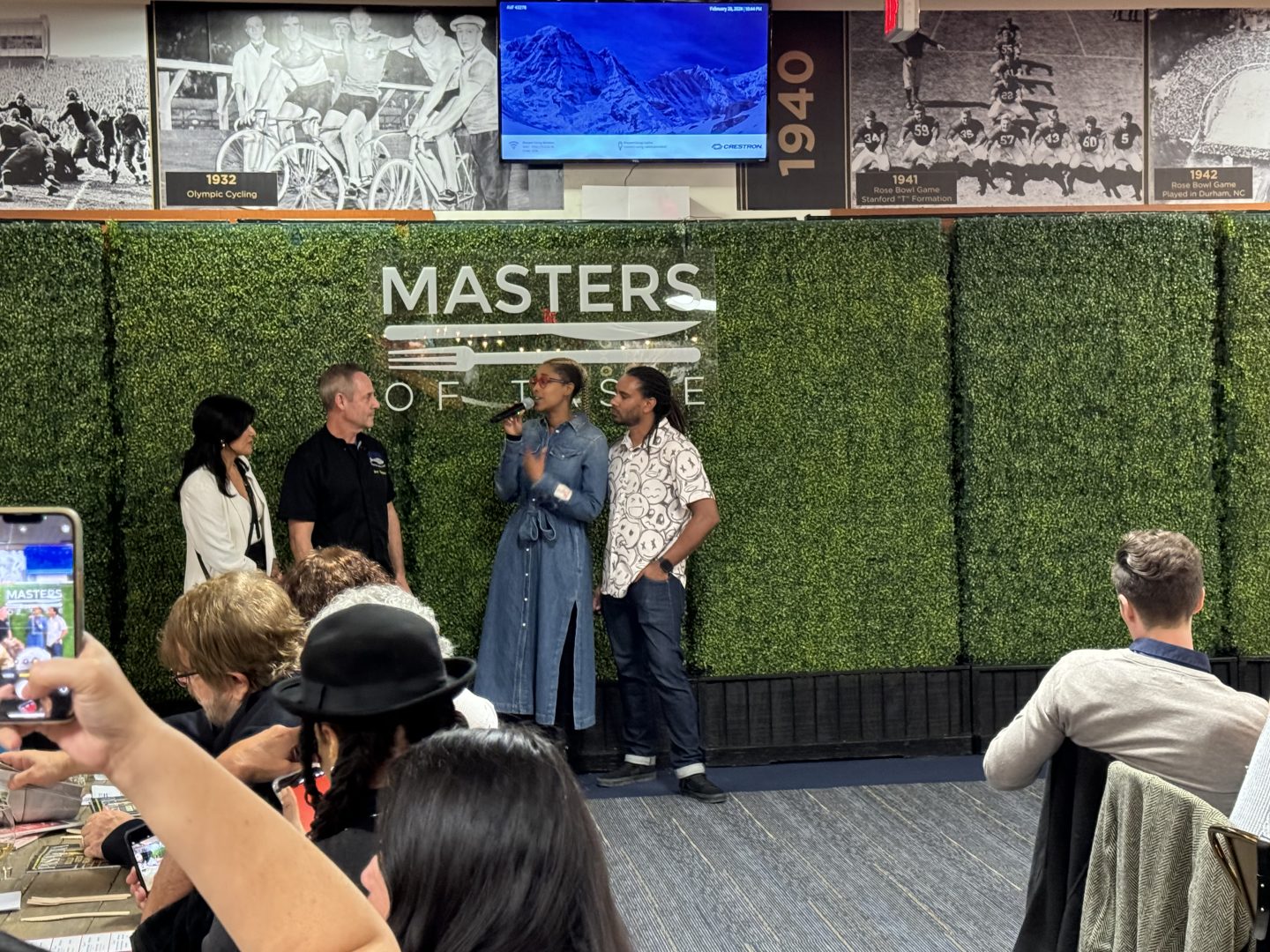
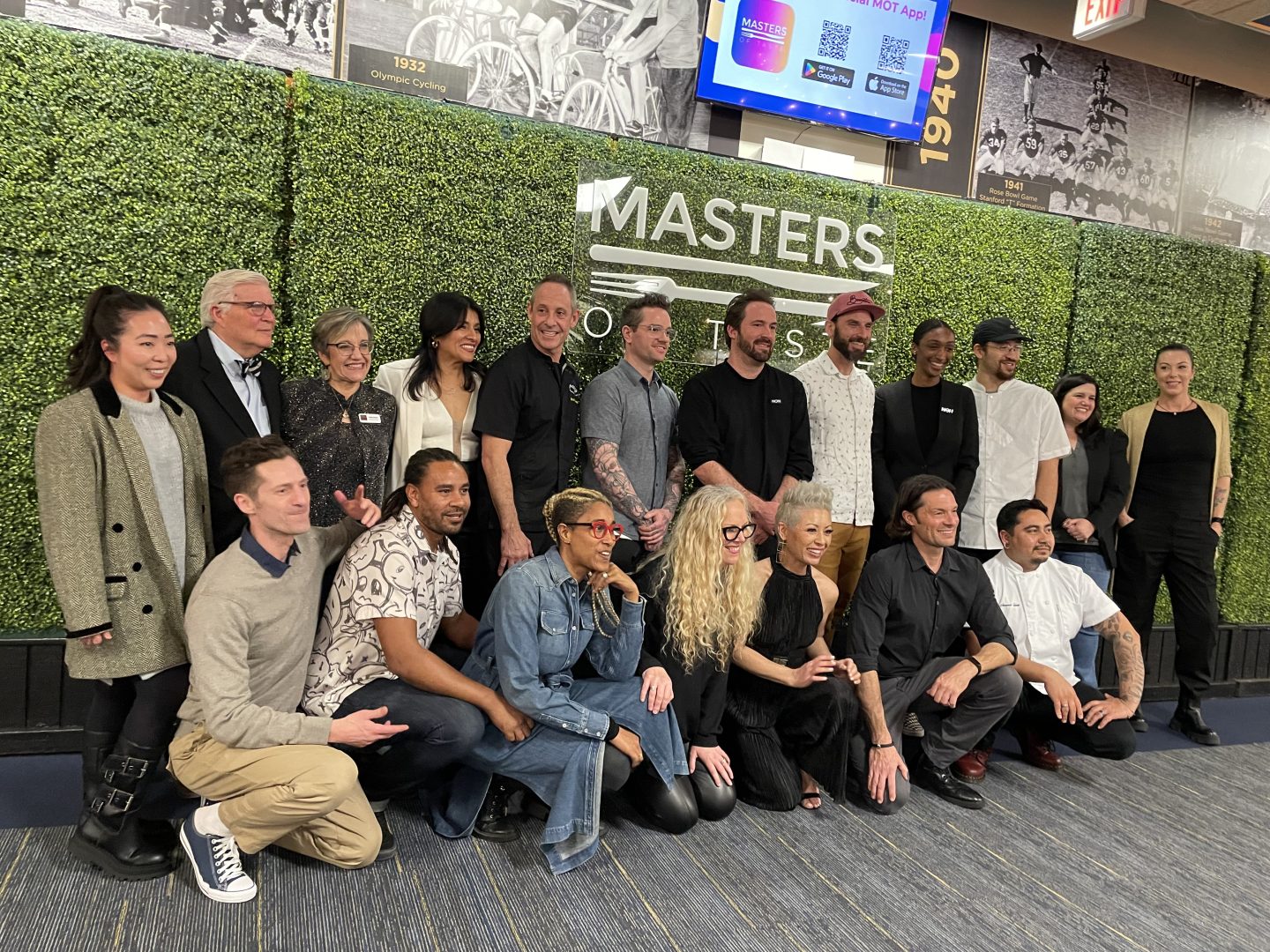
Masters of Taste organizers and participants during media night at the Rose Bowl locker room. | Photo by Brianna Chu / Hey SoCal
“We used to make homeless individuals jump through hoops and blame them for the situation they’re in, make them earn their way into housing or their way out of the streets,” continued Sean. “All that did was make the homeless problem worse. We know today there are best practice models – housing first, harm reduction, post-trauma care, etc. – which make us healthy.”
“I want to end with two thoughts – people are not broken; systems are. One of the things we hear a lot is that drug addiction drives people to homelessness but what we really know is that it’s a symptom of larger systemic and structural issues. In the 16 years that I’ve worked on the streets with people, I have yet to meet someone who chose not being sober over getting housing,” Sean concluded.
Masters of Taste at the Rose Bowl. / Photo courtesy of Masters of taste
Union Station has grown to be one of the best homeless services agencies in Los Angeles and is the lead County agency for Service Planning Area 3 (SPA 3). For over 50 years, it has been coordinating homeless services in 38 communities spanning from Eagle Rock to Pomona. It has seen a 97% success rate in permanently housing people since adopting the Housing First model. But its mission transcends providing temporary shelters; it is committed to creating lasting solutions for homelessness through housing, supportive services, and connection to the community.
Every dollar raised at Masters of Taste benefits the work of Union Station to end homelessness. Over the last six years, MoT has donated close to $3 Million to help countless families and individuals find a secure and welcoming place to call home.
So purchase your tickets to the 2024 Masters of Taste for a really fun Sunday afternoon hanging out with other foodies while doing your share in helping solve the homelessness crisis.
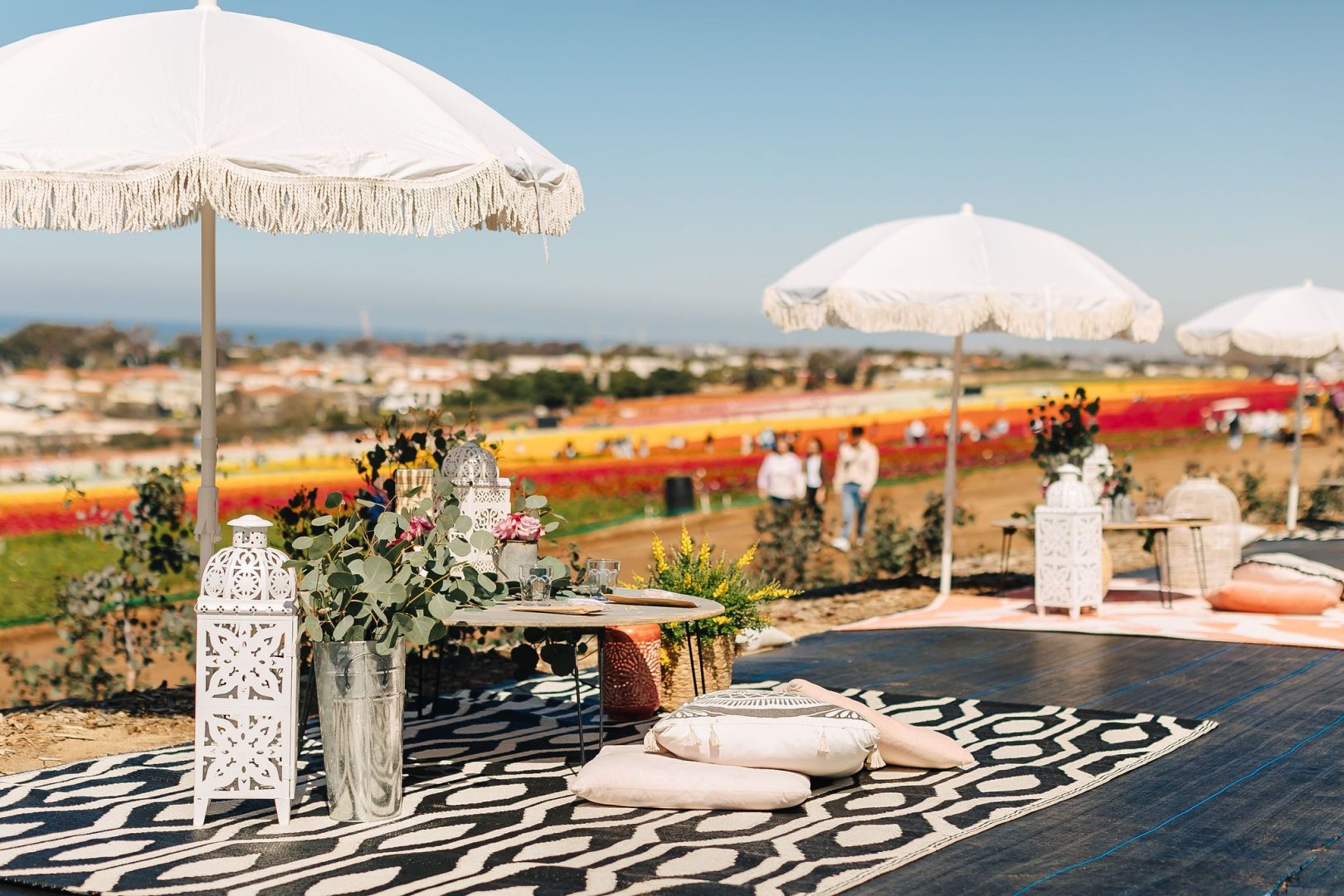
The Flower Fields in Carlsbad | Photo courtesy of Diana Rose Photography
After the cold weather and rain we’ve had, one can’t help but wish for spring to arrive. And what could be a lovelier way to bask in the mild Southern California sunshine than with a picnic and a walk on a field of vibrant blooms?
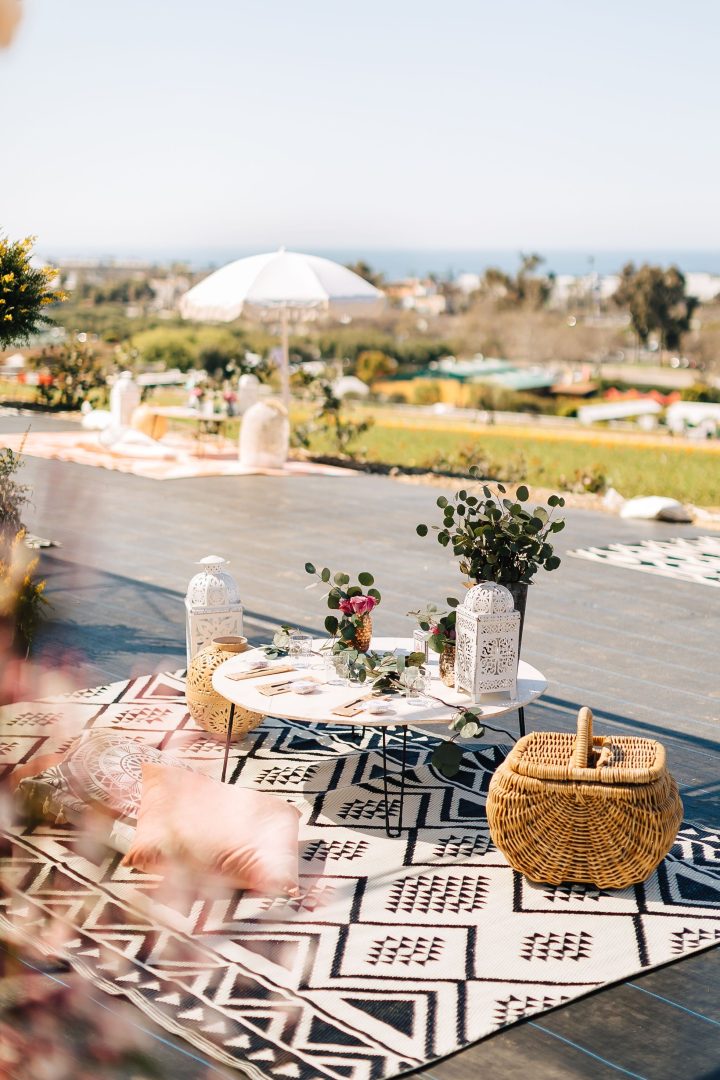
Pop Up Picnic Co. provides just that with their PICNIC + FLOWERS event when they return this year from March 23 to May 12, 2024. Against a backdrop of The Flower Fields in Carlsbad and the San Diego coastline beyond, picnickers will enjoy an elevated outdoors experience with curated bites, live music, and stunning views. The event will take place every Saturday and Sunday with seatings available between 11am and 2pm.
While several other picnic pop up companies have appeared in recent years, Lauren Kimmons is proud to have founded the original. She talks by phone about the origins of this popular event, “I created Pop Up Picnic as a promotional idea for Valentine’s Day 2012 to create buzz for the wedding + design business that I owned at that time. People loved it! We did them on request for several years and even when I sold that business in 2016, I never stopped getting requests for Pop Up Picnics. In 2018, I relaunched the service as Pop Up Picnic Co and we’ve been helping people get together ever since.”
Photo courtesy of Diana Rose Photography
Successful endeavors are usually products of an inventive mind, an entrepreneurial spirit, and serendipity, as PICNIC + FLOWERS proves. Kimmons explains, “PICNIC + FLOWERS was a nebulous dream of mine and it all came to fruition because of a great networking opportunity and a gracious, creative, fearless lady: Joni Miringoff of The Flower Fields. Joni happened to see my company included in press for the San Diego Tourism Authority Accelerator (Pop Up Picnic Co was an inaugural cohort member) and we just hit it off! That meeting set my business on a completely novel direction. I am forever grateful to SDTA and Joni for setting me on this new path.”
Kimmons says 1,195 people booked the weekend event in 2023, which encouraged her to return this year. And as she has always done, she does a lot of planning and prep work to ensure the event runs smoothly. She describes “I’m a big believer in systems. There are lots of details and logistics that go into planning an event like this and the biggest thing is staying organized and starting early. There are a few key areas where we focus in the months leading up to P+F: logistics, guest experience, supplies, marketing, and staffing. Luckily, we have the blueprint from last year so we have the added benefit of seeing what works (and what doesn’t) and making adjustments from there. We’re a tiny but mighty team of just three full-time staff members. As the event comes closer we’ll add about five more team members.”
That’s not to say it was easy from the get-go. She says, “The biggest challenge was believing I could do it. But like anything, it’s just one foot in front of the other. That’s where my background in weddings really honed my talent for logistics and planning. We just take everything one step at a time. This year, I just hope it lives up to the success of last year! We’re adding new features and amenities for the guests like more shaded areas, increasing the menu, adding dessert, and including private parking. All these features come with new challenges but we’re up for the task!”
Photo courtesy of Diana Rose Photography
This pop up picnic isn’t only offered in Carlsbad. Kimmons clarifies, “We have picnics in several locations! Pop Up Picnic Co’s main service is picnics for parties of 2-25 guests throughout San Diego. We call them Pop Up Picnics, a term we coined way back in 2012. We have two styles – BOHO with low seating and ORIGINAL with farm tables and bistro chairs. We can pop-up at the beach, a park, your home and lots of other places.”
“We would love to have our guests come back again in 2024 and we’re offering a couple bonuses for our previous guests which will all go out to our email subscribers,” says Kimmons. “We’re adding some enhancements this year including a private entrance and dedicated PICNICS + FLOWERS parking which means more time enjoying the fields! PICNICS + FLOWERS guests will also receive free wagon rides, expanded shade structures, a family-fun zone with lawn games, and expanded pre-fixe menu with picnic-inspired tea sandwiches, an assortment of seasonal salads, charcuterie for the table and mini fruit pies for dessert. Moreover, we’re making the experience more inviting for families, on top of giving discounted kids tickets, we’ve created a really fun, picnic-themed kids menu with cheese sandwiches, fruit + kid-friendly, nut-free snacks. We also have custom PICNICS + FLOWERS activity packs with coloring pages and a scavenger hunt and lawn games in our family-friendly play area.”
Photo courtesy of Diana Rose Photography
The culinary offerings at this year’s event are set to delight attendees. Guests will receive an individual box containing a tasting menu with a variety of options to choose from, including cucumber chive sandwiches, chickpea smash sandwiches, ham and tomato sandwiches, three seasonal side salad choices, mini charcuterie, and delightful fruit pies on a stick for dessert. Refreshing beverages will accompany the delectable bites such as hibiscus-lemon aguas frescas and mint-infused water. Children will be served a child-friendly meal comprising cheese sandwiches, fruit, and dessert.
While the charming picnics have limited seating times of one hour, guests are encouraged to linger and explore The Flower Fields at their leisure and enjoy their complimentary wagon rides. Games at the tables add to the entertainment, allowing attendees to savor the experience with family and friends. For those bringing their children, a family-fun zone will be open for play.
It’s never too early to plan for fun things to do and new places to visit this spring. Make PICNIC + FLOWERS one of your exciting new adventures!
The 32nd Japanese Food & Restaurant Expo was held at the Pasadena Convention Center on September 23 | Photo by May S. Ruiz / Hey SoCal
Most American diners and food enthusiasts know that Wagyu beef makes the best steaks and other meat dishes. After sushi and ramen, it is latest Japanese food to gain popularity in the U.S. Unlike sushi and ramen, though, it can be found on every American steakhouse’s menu and not just at Japanese restaurants. And we value Kobe – Wagyu beef from black cattle raised in Japan’s Hyogo Prefecture – for its flavor, tenderness, and perfectly-marbled texture. It can be prepared as steak, sukiyaki, shabu-shabu, sashimi, and teppanyaki.
The company behind the Japanese cuisine that largely changed the American culinary landscape is Mutual Trading Co., Inc. It was founded in 1926 as a co-op by several Little Tokyo businessmen to import commodities from Japan, including kitchenware for home use and foods – mostly dried and canned. Though the company ceased operations during the war, recovery afterwards was quick and it flourishes to this day.
In 1989 Mutual Trading held its first Japanese Restaurant show as a modest chinaware sale held at their warehouse area and parking lot. Their staff designed and produced the event – from the theme that changed yearly, to product selection, to seminar highlights – and even procured special items aimed at filling customers’ needs. It was so successful that in 2013 they had to find a larger venue. (Read related story about the company’s growth and its role in the evolution of Japanese cuisine)
After a four-year absence because of the pandemic and post-Covid health and safety concerns, Mutual Trading returned to the Pasadena Convention Center on September 23 for the 32nd annual Japanese Food and Restaurant Expo. About 3,000 pre-registered for the expo, with 146 suppliers participating. Attendees were business owners, managers, buyers, and chefs representing various trades – restaurateurs, retailers, and wholesalers. There was a significant increase in the number of wholesalers and Thai business operators.
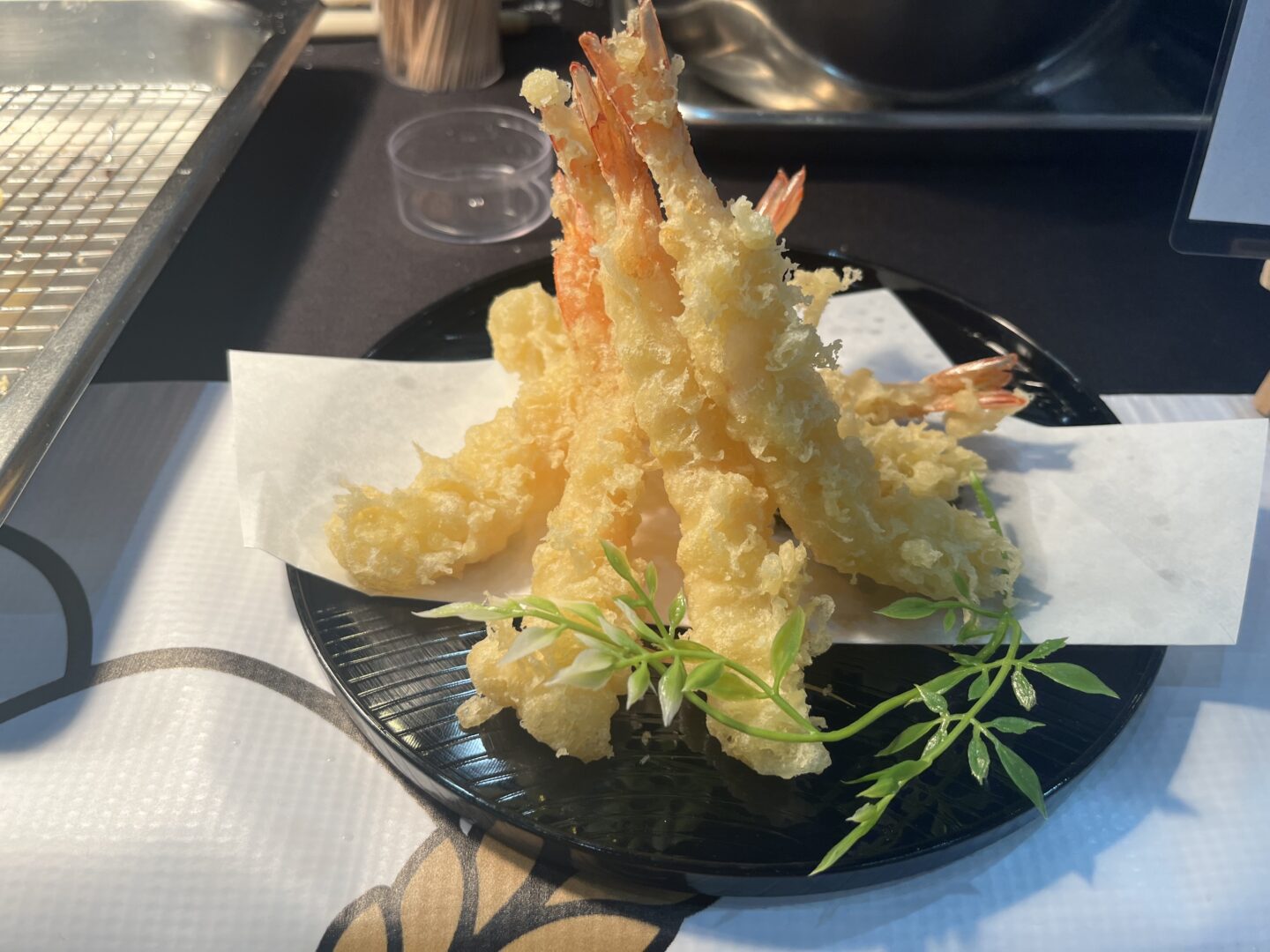
Shrimp tempura sample at the Japanese Food and Restaurant Expo | Photo by May S. Ruiz / Hey SoCal
Atsuko Kanai, Mutual Trading’s executive vice-president, talks about the challenges they navigated and still face today, what this year’s event had to offer, and the future of the food industry.
“Our clients know that we hold the show every year around fall,” Kanai begins. “Obviously, no one asked during the pandemic. But they started asking last year if we were going to have the event. However, it takes months for us and the suppliers to prepare for this so we need the reservation from them about six months prior to the expo. Additionally, Japan was very conservative; a lot of companies were not sending employees here because of health and safety concerns. And without our suppliers – many of whom are from Japan – we have no show or customers won’t have fun. We decided to hold it this year when we were certain about safety and we knew Japanese suppliers would come.”
“Chefs want this show so we try to bring in things that they would appreciate,” clarifies Kanai. “There are 146 suppliers participating from Japan, China, Southeast Asia, Canada, Mexico, the U.S., and other places. They carry dry items and ingredients like tempura flour and rice; chilled, frozen, and super frozen grocery items like beef and other meats; a line of kitchenware for the chefs; alcohol like beer, wine, hard liquor, and so forth. The school that trains the chefs joins the show as well.”
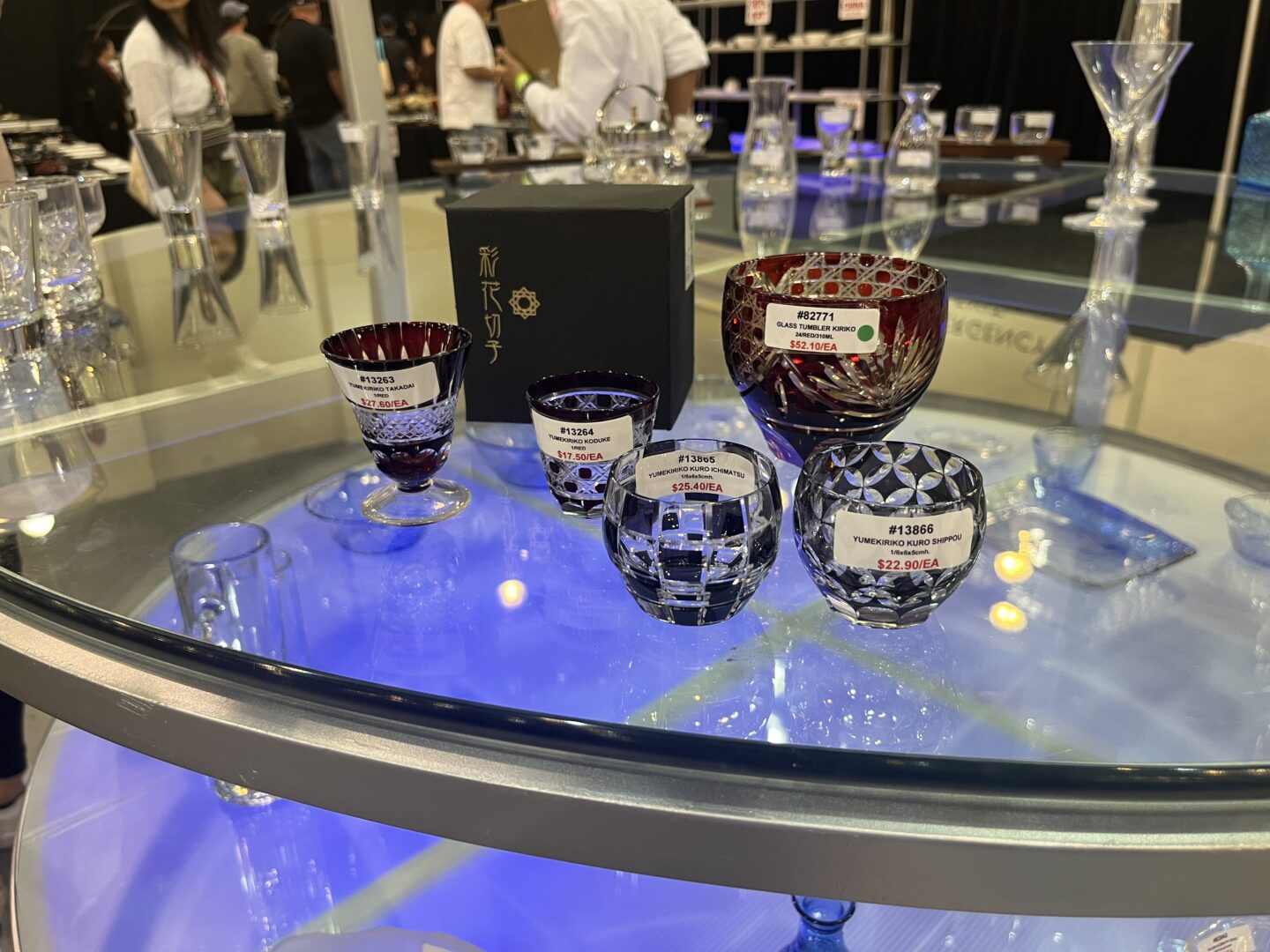
Glassware suppliers’ various items and wares | Photo by May S. Ruiz / Hey SoCal
“However, Japanese food isn’t just for the Japanese anymore – it’s for everyone,” Kanai points out. “So we have an obligation to grow the industry for our business and our customers’ business. We also believe that food is a gateway to cultural understanding, much the same way as sports, fashion, and the arts unify us and transcend wars and politics.”
Kanai has been with the company for several decades and has witnessed how people’s perception of Japanese food has advanced through the years. She recounts, “Thirty years ago, Americans who came to our booth would say, ‘I love Japanese food.’ And when I asked why, they would say, ‘Because it’s healthy and good for the mind.’ But recently, the answer I get the most is, ‘It’s fun.’ People who grew up during the depression and war wanted something bright and positive while those in their 20s and 30s experience a new flavor and it feeds into their knowledge. I’m looking forward to hearing what people say 30 years from now.”
The pandemic upended everyone’s life and altered what we thought of as normal day-to-day existence. The food business, in particular, was severely affected and Mutual Trading quickly reacted to mitigate the anxiety and pressure caused by the crisis.
“No one was able to go grocery-shopping, especially the elderly. So we started a food delivery service,” states Kanai. “Depending on where the customers are, they would order online and, with a minimum order, we would deliver certain products to their home. People didn’t mind the large quantities because they were able to buy products that supermarkets don’t carry. We offered the service for a couple of years and discontinued it only this past spring.”
Ingredients for Japanese cooking available for purchase at the expo | Photo by May S. Ruiz / Hey SoCal
“On the restaurant and wholesale side, we couldn’t in good conscience send our reps on sales calls,” Kanai continues, “We asked them, though, to make sure they kept in touch with their customers – who were themselves going through hardship and were having to cut back service hours and staff – by Zoom or phone calls. All our suppliers in Japan were also worried because Mutual Trading wasn’t ordering from them. First of all, there was a supply chain breakdown. And when that stabilized, our Japanese suppliers were disgruntled that we didn’t buy more. But that’s because we couldn’t turn around to sell them to restaurants. The bigger issue was that they had lost faith in Mutual Trading. So we made sure we kept our suppliers’ confidence by sending out newsletters as a means of direct contact. We let them know that the slowdown wasn’t just in the Japanese restaurants but was also happening in the fast food and take-out business.”
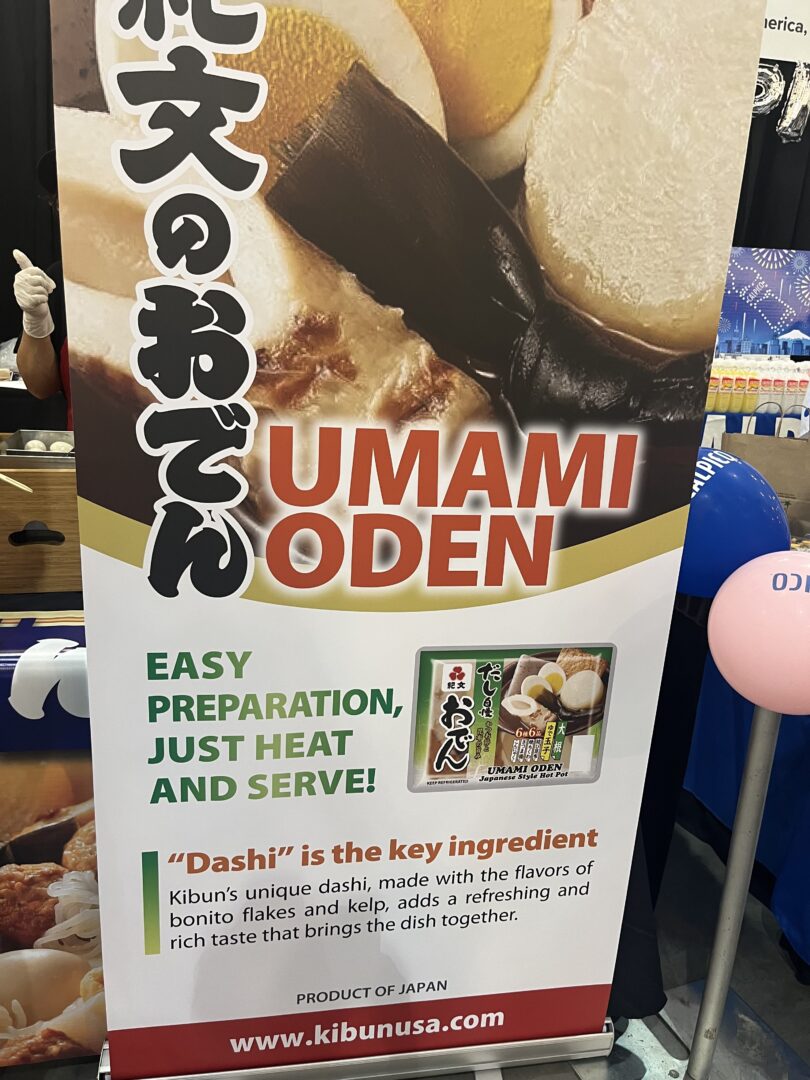
Kanai says, “Having been through a pandemic, we’ve learned to be flexible. We can pivot when needed while ensuring our employees’ safety. We still face a few challenges post-pandemic. The first of which is less-trained staff, like chefs; they can’t learn on the cuff. So we’re teaching them to use items they don’t have to prepare from scratch when they cook. Some of the sauces will already have seven out of the ten ingredients and they will only need to add to the base. That eliminates the hard part, like making the dashi or umami.
“Another challenge is meeting the demands of customers on extreme price points. While some like turnkey volume priced items, there are others who want to have a rare food experience like the omakase – $300 to $500 dinners. So we have to give something different for that market. We thought Kobe beef was hot but then we discovered that Miyazake beef (the four-consecutive winner of the Wagyu Olympics Championship) was better. And now we’ve found another category of beef that’s even better. We constantly look for, and try to achieve something different to distinguish from the other.”
Mutual Trading is training chefs in the art of sake and food pairing | Photo by May S. Ruiz / Hey SoCal
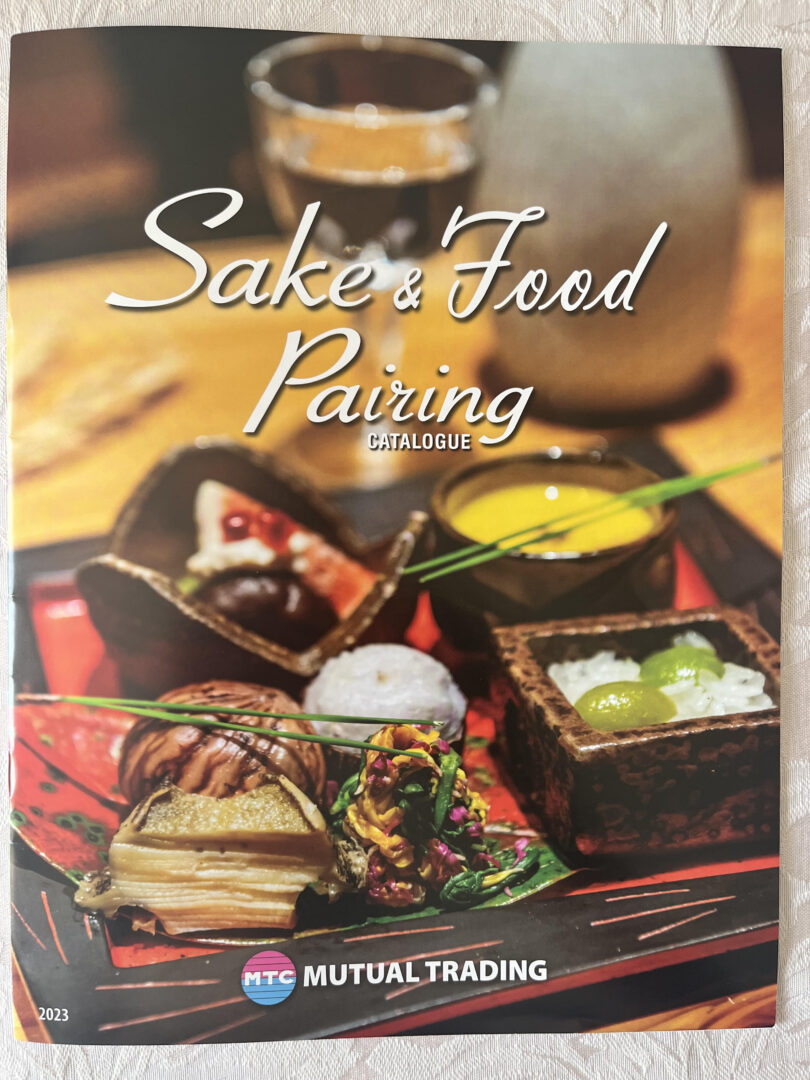
With that in mind, Mutual Trading brought in several new products and suppliers to this year’s show. They also shined a light on Japanese liquors and wines. Kanai explains, “We’re trying to start a trend showing that sake isn’t just a beverage – it should go with food. We’re pushing the gastronomic way of enjoying liquor like the Europeans do. Californians like to guzzle, as they do with beer. That’s fine too, but we’re striving to educate diners how to have a more pleasant meal. People are familiar with wine pairings, but wine is very different from sake. It’s not to say that it’s better or worse. We’re trying to compare the two and point out where the differences are and what’s good for one or the other.”
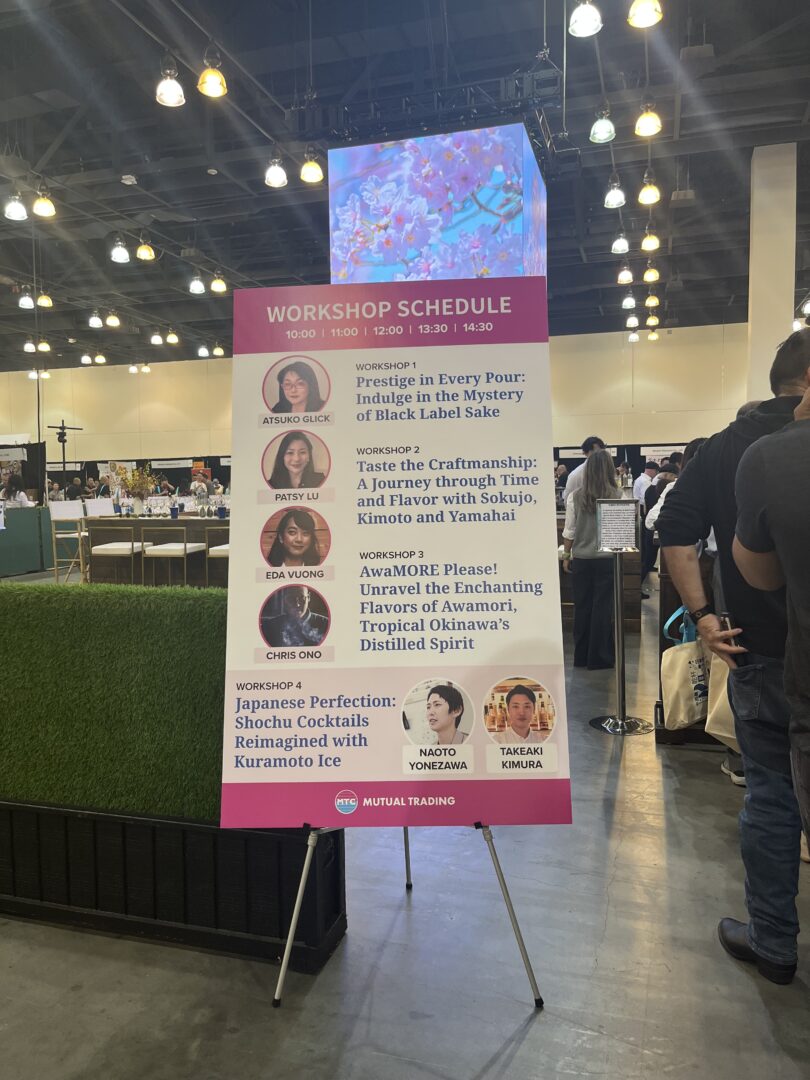
This year’s expo highlighted the four workshops presented by chefs, bartenders, and master sommeliers to achieve that goal.
The first workshop, called ‘Prestige in Every Pour: Indulge in the Mystery of Black Label Sake,’ featured three premium sakes and a demonstration on how they elevate an understanding of sake service, perfect food companions, and beyond.
Workshop 2 – ‘Taste the Craftsmanship: A Journey through Time and Flavor with Sokujo, Kimoto, and Yamahai’ – unveiled the artistry behind sake flavors shaped by diverse brewing methods and showed how to harmonize the three distinct brews with culinary pairings to create a sensory symphony.
The third workshop, whimsically named ‘AwaMORE Please! Unravel the Enchanting Flavors of Awamori, Tropical Okinawa’s Distilled Spirit,’ took participants on a tasting odyssey into Okinawan culture and a discovery of the perfect food companions.
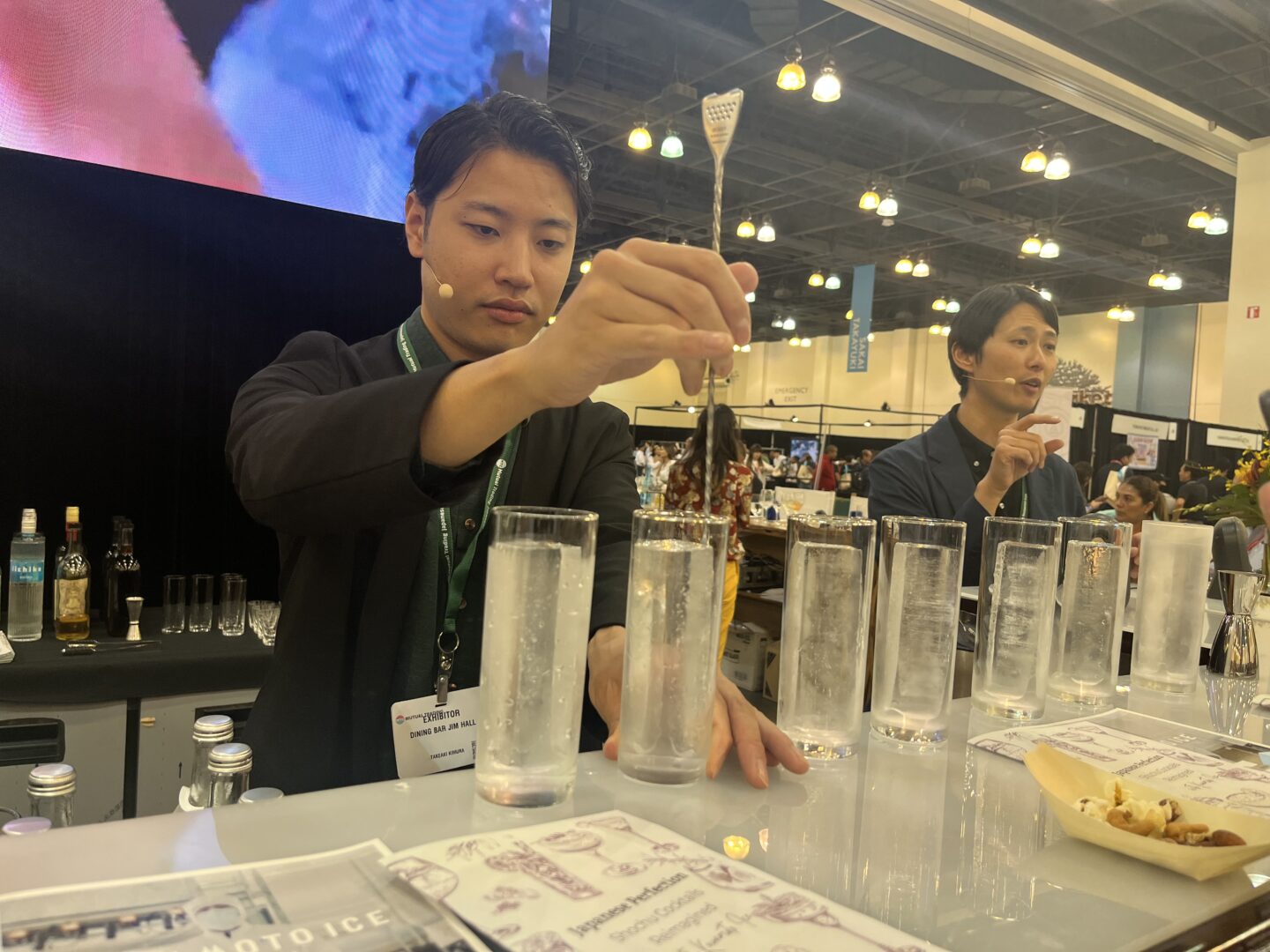
In Workshop 4: ‘Japanese Perfection: Shochu Cocktails Reimagined with Kuramoto Ice,’ Naoto Yonezawa, founder of Kuramoto Ice USA himself, served as translator for Takaeaki Kimura – manager and bartender of dining bar JIMHALL, in Kanazawa, Japan, and influential mixologist – who showed his signature cocktails blending rum, coffee, and vermouth.
Master bartender Takeaki Kimura showing how to stir water in ice | Photo by May S. Ruiz / Hey SoCal
Japanese cuisine has come a long way from its early introduction into the American dining culture. Going to a Japanese restaurant for lunch or dinner is now a common, everyday choice. Almost everyone is tech savvy and is on social media posting photos of their meals. And that helps all restaurants, not just those serving Japanese food.
Kanai confirms, “On the surface, consumers today know a lot more than they did 50 or 30 years ago because of things they find online. Perhaps, and maybe more importantly, travel is the biggest factor in furthering the restaurant business. When people travel, it’s all about sight-seeing, experiencing new places, and trying out food. People don’t just go to Japan to look at temples, bridges, and palaces; they want to eat. Them going abroad and coming back is feeding into our business.”
That said, the pandemic has left a trail of problems that continues to beset the Japanese food business – staff shortage. Those who used to work in restaurant service didn’t come back after Covid. It’s a statewide problem and not limited to Japanese restaurants. However bleak that might sound, Kanai believes that the future is sunny.
Workshop presenters and schedule at the expo | Photo by May S. Ruiz / Hey SoCal
“Southern Californians are looking for different food experiences, and it isn’t exclusively Japanese food. The Michelin people keep skipping us, thinking that Northern California has the monopoly on exciting, innovative food. But the chefs are changing; I don’t see too many traditional Japanese food being successful. Nobu is a favorite among diners but it isn’t serving Japanese food, it’s fusion. And I think it’s happening with Chinese food too – the restaurants aren’t just Cantonese, or Taiwanese – chefs are modernizing their offerings and are creating the new wave.”
The Western San Gabriel Valley, Pasadena specifically, is a foodie heaven. It’s every gourmet’s paradise! There are, in fact, over 2,000 restaurants dotting the area, from Duarte to Alhambra – from fast food chains, to hole-in-the wall mom and pop cafés, to Michelin-recognized restaurants – offering a global cuisine.
Eating places that cater to the taste of this largely Asian market are enjoying a booming business. Omakase is not just being offered in Japanese restaurants, but at American steakhouses as well. It wouldn’t be too far-fetched to imagine that chefs and restaurateurs could take their cue from the expo’s workshops and put on sake and food pairings as a mainstay
Originally published on 10 March 2023 on Hey SoCal
Masters of Taste returns to the Rose Bowl on April 2, 2023, commemorating its sixth year raising funds for Union Station Homeless Services. About 100 restaurateurs and beverage company owners come together for this event, and from 3 to 7 p.m. they serve food and drinks to approximately 3,000 attendees.
Homelessness has always been heartbreaking. But it becomes deadly when severe weather adds to homeless people’s plight. During winter, there’s a race to make sure they are housed before temperatures dip to near freezing. From November through March 1. Pasadena had over 27 inches of rain, rendering the homeless population in worse circumstances.
An L.A. Times article published on Feb. 23, 2023, reported that “Homeless services providers were struggling with shortages of shelter space Thursday as a rare winter storm raised the danger level for thousands of people living outdoors, with a forecast of three days of rain, freezing temperatures, blizzard-strength wind and low-elevation snow.”
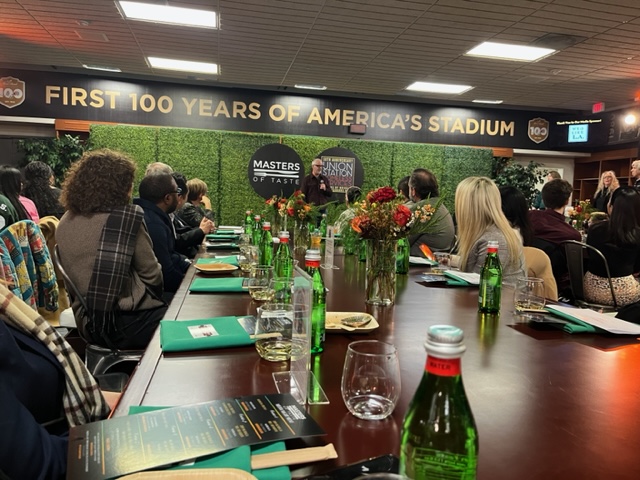
On March 1, 2023, Masters of Taste held its media night (read Brianna Chu’s article about what to expect at the event) in the locker room of the Rose Bowl. As always, there’s excitement among the individuals behind this annual event and the people covering it. But there’s also a sense of great urgency to support Union Station in their relentless work of providing shelter for the homeless population who are now, more than ever, in dire need.
Masters of Taste founder Rob Levy | Photo by May S. Ruiz / Hey SoCal
Masters of Taste is the brainchild of Rob and Leslie Levy, owners of The Raymond 1886 in Pasadena and Knox & Dobson. He recalls what drew him to this endeavor, “This goes way back in my childhood. My oldest friend in the world started an organization in Chicago called ‘Inspiration Café,’ delivering sandwiches to the homeless when she was working as a cop. Then she ended up opening a restaurant for the homeless where they could come in, order off the menu, be served with dignity, and leave with no check to pay. If they were a good client, they were invited to work there and learn a trade. That grew into something huge, with multiple restaurants and cafes, cookbooks, and job training. She did this for 20 years and never took a paycheck — she did it for the love of it. She worked as a massage therapist to pay the bills while she grew this multimillion-dollar organization. It gives me shivers just thinking about her and what she has accomplished — she’s quite a remarkable individual and the most positive person you could ever meet in your life.”
“When the former CEO of Union Station asked me to be on the board, I immediately agreed,” continues Levy. “Then we thought we had to change the way we raise funds — we had been to one too many galas where nobody wanted to go, but got dressed up and went anyway because we felt obligated to. We figured we needed to create an amazing event where people aren’t thinking it’s a charity affair and Leslie came up with this idea of getting other chefs to gather for a cause. And what better place to do it than on the field of the Rose Bowl. Thus, Masters of Taste was born.
“We reached out to other chefs that we had done events with over the years and also through Lawrence Moore, of Lawrence Moore and Associates (one of the original founders, Moore is the person responsible for getting media coverage for Masters of Taste). When we explained what we were trying to accomplish, everyone agreed to participate. And they were absolutely thrilled when they learned that it was going to be at the Rose Bowl field. The first year that we did Masters of Taste, participants were incredulous when we told them to be on the field for the load-in because events are usually held only at the perimeter. One guy serving for a brewery had played football in college and played on the Rose Bowl field; it was his first time back there since. He actually got teary-eyed at the recollection because now he was there for a reason other than football.
“That same year, a spontaneous line dancing broke out on the field — DJs played music and in the middle of everything, there must have been 100 people line dancing. It was a delightful occurrence that was totally unanticipated. That was when we knew we were on to something.
“Then we had one year when it rained which, unbelievably, made it an even better event. Nobody left — 3,000 people on the field and they all stayed through the rain. It was the most memorable year we had. We set out to create an event that was like having a great Sunday afternoon out and it has taken on a life of its own. People want to do good — helping other people is now a movement.”
Ann Miskey, Union Station CEO | Photo by Meg Gifford / Hey SoCal
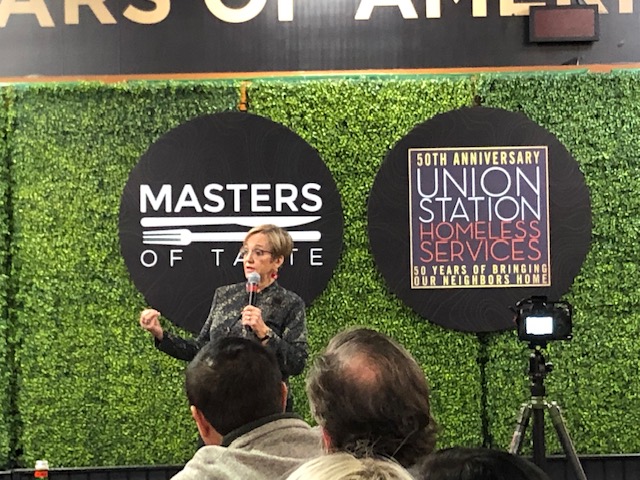
Anne Miskey, CEO of Union Station, reminds that while this annual spring festival at the Rose Bowl is the foremost food event in L.A., it serves a more important role — Masters of Taste celebrates the heart that’s in Los Angeles.
“The work we do is hard; we know homelessness is a major crisis here — there are so many vulnerable people on our streets and we work tirelessly at Union Station,” Miskey states during the media preview. “But we truly could not do it alone. And what you are doing by being here and supporting Masters of Taste is incredibly inspiring and helps us keep going because it shows that people do care, that people do want to make a difference. And I cannot tell you how much of a difference you make. We’re all enjoying the food and the wine but at the heart of that is giving back.”
“We work with thousands of people every year and sometimes it becomes this massive homelessness issue,” Miskey says further. “But it makes a difference if we put names and faces to it. So I want to tell you a little bit about Jose. He is a 74-year old gentleman from Puerto Rico. He had a job and was just living a normal life there and then he got very ill with heart problems during the major hurricane. Puerto Rico was in shambles; he was desperately ill and he couldn’t get help, so he came to Los Angeles for medical services. After his heart surgery, he was told that the hospital didn’t take his insurance and he left the hospital with a huge debt. He then lived in his car and struggled to survive. And then COVID hit. During that time everyone was being told to stay home to stay safe — and he didn’t have a home. Union Station stepped in with Project Room Key; we took some hotels where we were able to put people in.”
“My staff happened to meet Jose in his car and brought him into a warm hotel room, with his own bathroom, and three healthy meals a day,” adds Miskey. “But more than just a room, a bathroom, and food, he had people surrounding him who cared and wanted to make a difference in his life. After we worked with him and got to know him, we got him an apartment. He now lives in his own apartment — he has a living room, a kitchen, and a bedroom.”
One of the things Union Station staff does is to pay a visit to the people they’ve helped house to interview them and capture some of their stories. Miskey relates, “Jose went out and bought a gift for our staff because he said, ‘My mama taught me to never have someone come to your home without giving them something to take back with them.’ So here’s a man who had nothing and he’s making sure that he’s giving back to us. If you see Jose now, you see a man with smiles on his face and his life is back together again.”
Miskey concludes, “As you eat these amazing food and drink these amazing beverages, remember what you’re doing. You’re helping people like Jose, Quintana, and Mary — people who have lives and families but who, for health reasons and other circumstances, had ended up on the street. It’s a fun event and we all enjoy it, but behind it is saving people’s lives. And for that, I thank each and every one of you. I want you to leave tonight knowing that your heart and compassion are making a huge, huge difference.”
Host chefs Michael and Kwini Reed of Poppy + Rose and Poppy & Seed will continue the Masters of Taste’s tradition of making a difference through successful fundraising for Union Station.
Preview of what attendees will enjoy at Masters of Taste 2023 | Photo by May S. Ruiz / Hey SoCal
Michael is a classically trained chef and restaurateur, who has spent 19 years as a chef for restaurants across New York and Los Angeles. Born and raised in Oxnard, California, Michael grew up around the barbecue and the smell of fresh, home-made pies. His family cooked every day, pulling ingredients straight from the garden which went on to inspire his passion for food and hospitality.
Kwini is a Southern California native, wife, mother, and entrepreneur. She comes from a large family that values community, generosity, and a strong work ethic – traits that have helped her succeed in her career and personal endeavors. A graduate of California State University, Fullerton with a Bachelor of Science in marketing, she has over a decade of experience in business, finance, and human resource management, having worked at companies throughout LA, including The Standard Hotel, Band of Gypsies, and Brandy Melville USA.
The Reeds are the co-owners of two Los Angeles restaurants, Poppy + Rose of Downtown and Anaheim’s Poppy & Seed. Additionally, they run an upscale catering company, Root of All Food. As if their culinary accomplishments aren’t enough, they’re also in the process of developing a nonprofit to help convey the importance and potential of food to younger generations by coordinating lessons with local chefs, internship programs, and more.
Attendees at this year’s Masters of Taste are assured of having a fantastic time. As Vanda Asapahu, last year’s Masters of Taste host chef, declares “Kwini and Michael are inspiring human beings and together they make a dynamic team.”
So put on your party hat and get ready to eat and drink to your heart’s content as you help Union Station celebrate its 50th anniversary at the 50-yard line at the Rose for Bowl for Masters of Taste 2023! See you there!
Originally published on 19 September 2022 on Hey SoCal
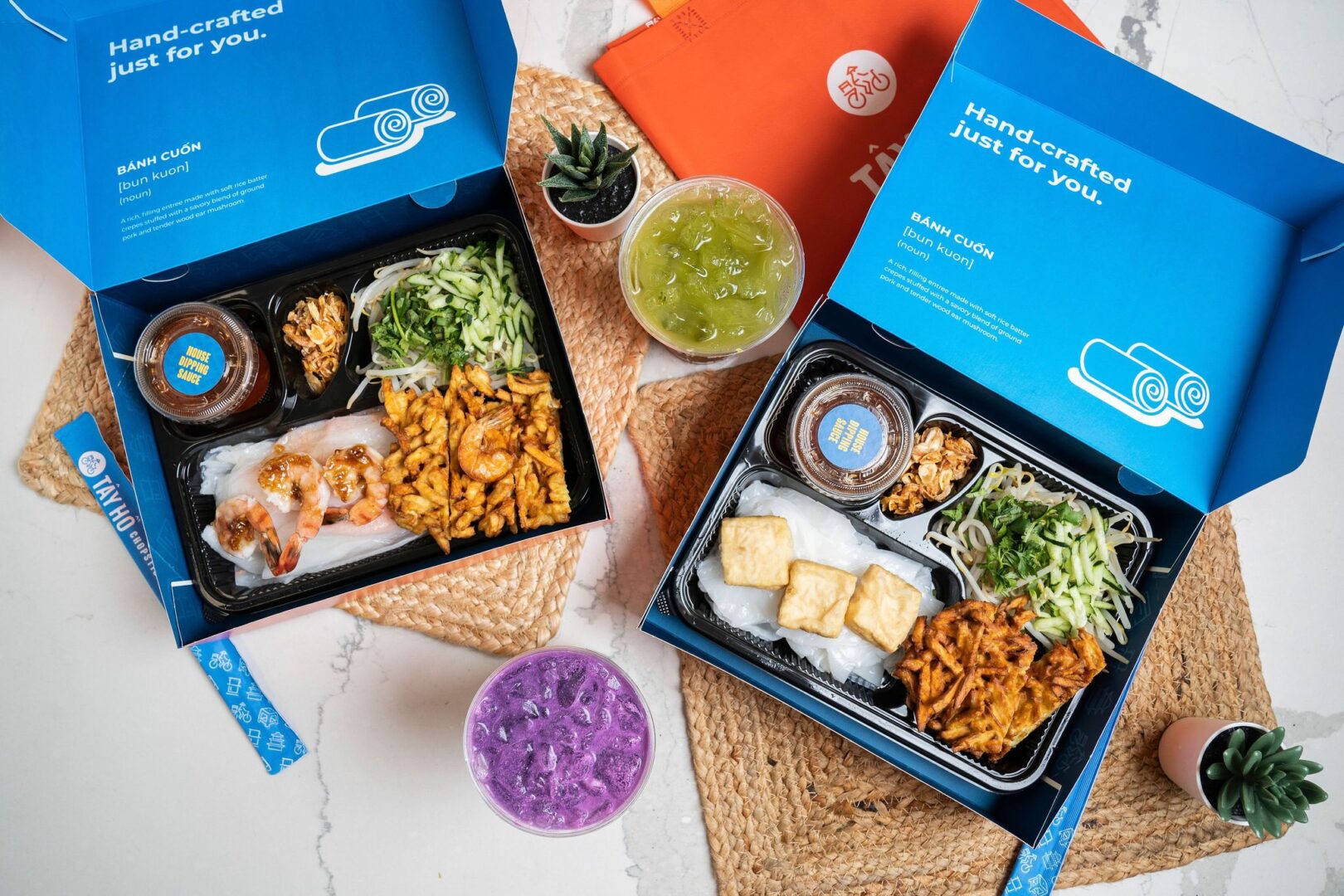
Tay Ho restaurants’ signature dish, bánh cuốn | Photo by Slique Media / Tay Ho Restaurants
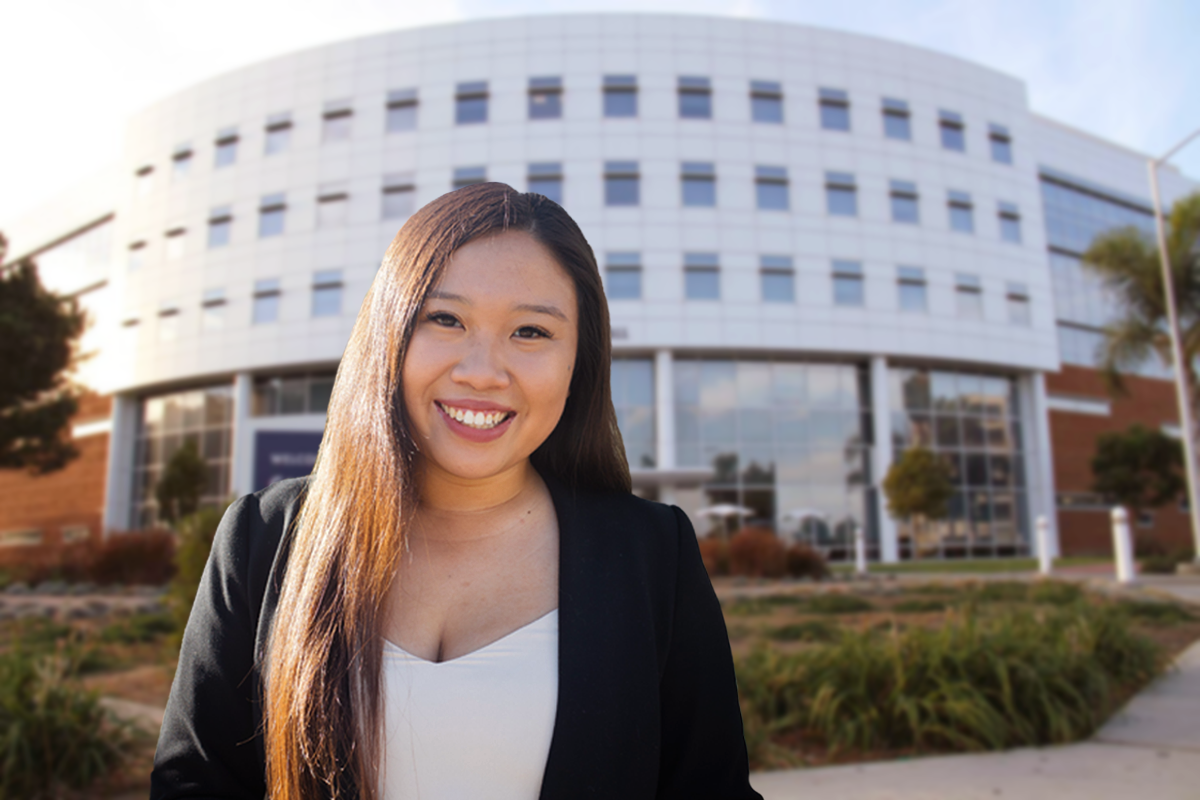
Vivian Yenson, who was born and raised in Fountain Valley in Orange County, isn’t your average 21-year-old college graduate. In fact, there’s nothing average about this young woman who earlier this year opened her brainchild restaurant in San Gabriel – Tây Hố Takeout Restaurant. (read Brianna Chu’s food review here) And that was before she graduated from Cal State Fullerton this past May. As if that wasn’t impressive enough, a month ago she inaugurated her second restaurant in Chino Hills.
Interviewed by phone, Yenson talks about the history of the Tây Hố food family enterprise, Tây Hố Takeout Restaurants, and some of her plans to grow the business.
“My grandparents immigrated to the United States in 1980 when my dad was 10 years old. They went to Illinois when they first moved here – I don’t know why they chose Illinois – but they found the weather too cold. Besides, they were looking to settle down where there was a Vietnamese population. So they headed west to California.”
Vivian Yenson | Photo by Slique Media / Tây Hố Restaurants
In 1986, the family opened their first Tây Hố Restaurant in Westminster – home to the largest Vietnamese population outside Vietnam. Yenson is quick to point out that at that time the Asian Garden Mall had yet to finish construction (it opened in 1987) and the Vietnamese community called Little Saigon was still in its infancy. Originating in Westminster, on Bolsa and Brookhurst, Little Saigon later spread into the adjacent city of Garden Grove.
Recognizing the needs of the flourishing Vietnamese community, her father Jayce Yenson established the Tây Hố Food Company. Today, he is the CEO of Tây Hố Restaurants and Tây Hố Food Company (West Lake Food Corporation) in Santa Ana. The food company makes cold meats – like ham – and some basic ingredients, including canned broth, and are sold to Vietnamese restaurants. Tây Hố means West Lake and it’s located in Hanoi, the capital of Vietnam. Tây Hố restaurants’ signature dish, bánh cuốn, originated in that area.
Yenson explains the rationale for taking the Tây Hố brand outside Orange County, “We currently already have a few locations in Westminster that my grandparents started and which continue to be run by my great- aunt and uncle. There’s no point opening another one in Orange County so close to where there are already existing Tây Hố restaurants – although we will revisit that sometime soon. We decided to focus on places farther away where people aren’t likely to find bánh cuốn.
“This new version is my own that’s remodel-led and rebranded with a totally new look and feel – it’s a lot more modern. Instead of staying in the Little Saigon area of Orange County, we wanted to branch out. So our first step was going to 626, the area code of the San Gabriel Valley, which has a large Vietnamese population. We then went to Chino Hills, an up-and-coming Asian community that’s growing so rapidly. Chino Hills is such a warm and welcoming community with people of all races and backgrounds that want to try new things, whereas San Gabriel is populated more by an older generation who already knows what Tây Hố is. There used to be a Tây Hố sit-down restaurant down the street from where our current location is. It was run by my great-uncle, but he recently passed away so it closed. That was also the reason I opened the first Tây Hố takeout restaurant in San Gabriel.”
Tây Hố’s dishes come beautifully packaged in bright red orange boxes with blue inside flaps | Photo by Slique Media / Tây Hố Restaurants
A surprising revelation is that Yenson never envisioned being in this business; it was fate that intervened. She discloses, “I always thought I was going to be in the corporate world. Having grown up around my family and relatives who are in the restaurant business, I know all the stress and pressure. You go to work and you take that work home with you. I was supposed to study abroad the summer that COVID hit, but because of the worldwide lockdown, I didn’t end up doing that. Instead, I worked at West Lake Food Corporation when my dad had a corporate position available and I assumed the title Family Business Director. I helped in various projects, like restaurant franchising which I got curious about. The first thing I did on the project was R&D (research and development), specifically Vietnamese coffee.
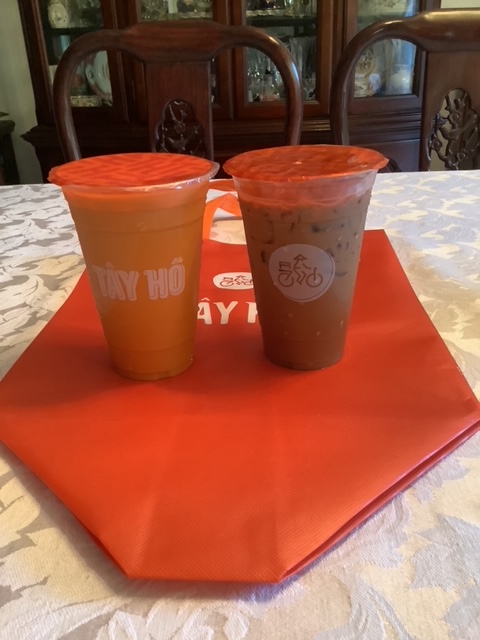
“It was after I completed that first project that I got involved. I had a free weekend and I spent it reading about the Vietnamese coffee drink and what makes it special. I love coffee, and Tây Hố Restaurants use a very good coffee brand – Trung Nguyen – which has a slight chocolate flavor. We blend it with condensed milk and hazelnut creamer. It’s creamy and sweet with chocolate flavor, without being too sweet or bitter.”
Asked what part of her business degree she’s able to use in the Tây Hố restaurants, Yenson replies, “The most important skill I learned was project management. I worked at my dad’s company part-time while I was in college, and he wanted me to be fully involved. So I got to know people and networked with people my age. I was the president of my business fraternity and the entire College of Business and Economics. That taught me how to handle multiple projects, including marketing. While it was on a much smaller scale, I had to make sure I didn’t make mistakes. I learned how to manage my time and prioritize, in general, which I use now in the restaurant industry.”
A key decision Yenson made was adopting a takeout business model. She explains, “We launched during COVID, so we were very careful because you never know if restaurants will remain open or if another pandemic or variant will cause closures again. Even with our sit-down restaurants, though, a good portion of it is takeout business. Concentrating on takeout makes it easier for us to scale and open more since it doesn’t require much staff. Right now, staffing is so hard; takeout also reduces the amount of space and labor necessary to keep operational.”
Yenson is cognizant of the inherent challenges in the takeout business. “I understand that people enjoy a restaurant dining experience. But our main goal is to put Vietnamese food forefront in American culture, no matter how that’s accomplished. Bánh cuốn is an easy dish to eat, whether it’s takeout or sit-down. Having said that though, we’re integrating phð into our fall menu. We’re teaching our staff how to prepare it and getting all the materials ready for it. We’ll have a phð kit that includes a reusable bowl, broth, noodles, and vegetables. We’ll provide a sturdy bowl, utensils, and small containers for the sauce and chilies. There will be a small removable tray on top for the meats and the noodles so they don’t get soggy. It will be the same as eating in a restaurant even if it’s a takeout. There are limitations, but you can always evolve and adapt, and find solutions.”
Tây Hố Restaurants’ Vietnamese coffee, at right, sits on a folded tote | Photo by May S. Ruiz / Beacon Media News
Reviews about Tây Hố Takeout restaurants have been very good and mostly positive, reports Yenson. “A comment among the older generation involves the fancy packaging. However, I’m catering to a new generation of people. I use the same recipe that my grandma had used; I just made it look nicer with the packaging. I’ve read some comments that they don’t need the extra packaging and, at the same time, I’ve gotten great reviews from people who said they had never seen or heard about bánh cuốn packaged that way.
“The orange red color in our packages comes from the color of our old logo” Yenson continues. “I insisted that even if we have a new logo, I want to have the same color and look. The boxes are packed in a reusable tote that is custom-fitted for the containers – there is one inch of space between the boxes and the bag. After you take out all the boxes, the tote folds in a very different way from other restaurant takeout bags. An amazing marketing team helped design the packaging that’s distinct to Tây Hố Takeout; the sit-down restaurants have their own.”
Yenson has two younger siblings, although it’s doubtful they’ll be joining the family business. She says, “My younger sister, who’s starting college this week at UC Riverside, helped with the restaurant from time to time. But she plans to be a bio major and not stepping into the family business. My brother is much younger – he’s only 16 and still in high school, and he doesn’t know yet what he wants to do.
“There are about 20 people at the store itself and I have my cooking team members. At the corporate level, there are my dad, my COO, my Operations Manager, and myself. While I’m keeping to our family business core values, I’m not limiting the company as a strictly family operation. I want my team to know they don’t have to be blood related to be family. I see them on a daily basis and I hope they feel like they are part of my family; they are my Tây Hố family.”
Family and tradition are paramount to Asians. And it is in that vein that Yenson honors the timeless practice of preparing authentic and delicious Vietnamese street food that her grandparents and parents grew up with. She hopes that through Tây Hố restaurants’ distinctive food offerings, a new generation of food enthusiasts will make Vietnamese food a regular dining choice.
Originally published on 19 August 2022 on Hey SoCal
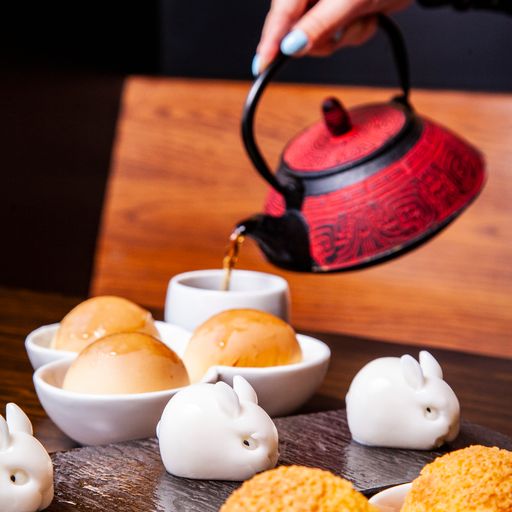
Chef Tony restaurants feature upscale, beautifully plated dishes | Photo by Slique Media / Chef Tony Dim Sum
Chinese food is one of the most popular cuisines the world over. Almost everyone has eaten fried rice or chow mein with orange chicken or sweet and sour pork. It’s not very often, though, that people think of dim sum when they hear Chinese food. And that’s a pity because anyone who has eaten these bite size delicacies would most probably say they’re addictively scrumptious.
A Wikipedia entry informs that the origins of dim sum date back to the 10th century when commercial travel increased in the city of Guangzhou (formerly Canton). These travelers went to teahouses which served two pieces of delicately made food items – sweet or savory – to go with their tea; the second is dim sum, the term used for the small food portions. Teahouse owners later added a variety of snack pieces to their dim sum offering.
It was during the latter part of the 19th century that this practice of having tea with dim sum evolved into what’s called yum cha, or brunch. Originally based on locally available food, chefs introduced influences from regions outside the Canton province and the dim sum culture flourished.
There are over a thousand dim sum dishes which are usually eaten as breakfast or brunch. Over time, however, restaurants started serving them for dinner as well. A big part of the experience is seeing and smelling the food. Traditionally, dim sum dining involves servers pushing rolling carts of small steaming baskets and tempting diners with the aroma of the delicious offerings. And it has been done that way for centuries – until Chef Tony He set the concept on its (tree) ear.
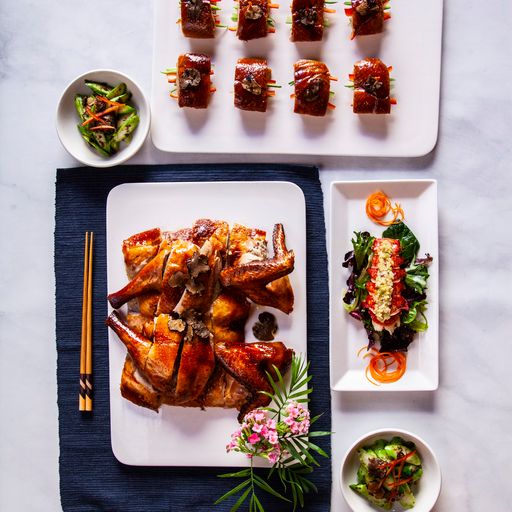
Photo by Slique Media / Chef Tony Dim Sum
In February 2020, Tony He introduced upscale dim sum when he opened Chef Tony Dim Sum in Old Town Pasadena. Moreover, he eliminated the mainstay of dim sum restaurants – rolling carts. Instead, dishes are served á la carte (which, in the past, was only done for take-out orders) and include ingredients such as freshly shaved black truffles and gold leaf touches.
The restaurant had to close shortly after that, however, because everything went on lockdown when the coronavirus reached American shores. But last year, Chef Tony Dim Sum Arcadia opened on Baldwin Avenue in the space that another Chinese restaurant vacated. And a month ago, Chef Tony Dim Sum Pasadena finally reopened (read Brianna Chu’s food review here).
Tony He began his cooking career at the age of 15, apprenticing with some of the greatest chefs in Guangdong Province, China (formerly known as Canton Province). He later moved to Hong Kong where he further developed his culinary techniques, including training under ‘Abalone King,’ Yeung Koon-yat.
In 1992, Tony He opened his first Sea Harbour Seafood Restaurant in Zhongshan City in southern China. When he immigrated to Canada, he launched Sea Harbour Seafood Restaurant in Richmond, BC. It was such a huge success that he expanded his business southward, opening Sea Harbour Seafood Restaurant in Rosemead, in the Western San Gabriel Valley. Los Angeles Magazine ranked it as #1 in the Top Ten Best Chinese Restaurant in Los Angeles in 2011 and 2012.
Tea and dim sum | Photo by Slique Media / Chef Tony Dim Sum
Given that Tony He owns several restaurants, anyone will naturally assume that he comes from a family of restaurateurs. It’s surprising, therefore, to find out that isn’t the case. Answering our questions via email, he discloses cryptically, “No, I learned it myself, since I had no choice at that time.”
“I immigrated to Canada in 1996, and started my business in 1998,” Tony He states. “The first restaurant I opened is a traditional Cantonese restaurant. The taste of the dishes made by the restaurant is very authentic, so it is loved by everyone. It was wildly successful and led to the opening of another one in the L.A. area. While they pretty much have the same menu, I make some adjustments to the offerings based on diners’ taste as well. I am always about innovation – I create more products based on customers’ feedback and suggestions.”
With the thought of delivering high-end fusion dining experience to a diverse clientele, Tony He founded Yi Dong Seafood Restaurant, also known as Chef Tony Seafood Restaurant, in British Columbia in 2013. Occupying an area 6,700 square feet, the restaurant won many awards over its three years of operation, including Gold Award for Best Dim Sum 2015 and Silver Award for Best Chinese Upscale 2015 by Vancouver Magazine (26th Annual Restaurant Awards). The Restaurant has also won Critics’ Choice of Chinese Restaurant Awards for three consecutive years (2014-2016) and Top 10 new Vancouver restaurant of 2014 by the Globe and Mail.
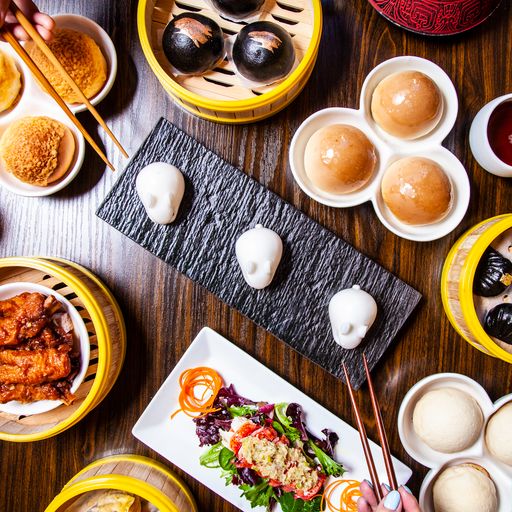
A selection of dim sum items | Photo by Slique Media / Chef Tony Dim Sum
There are three Chef Tony restaurants in Canada. The dim sum dishes on the menu are a reflection of Guangdong Cantonese cuisine layered with refined touches and high-quality ingredients, aimed at elevating traditional dim sum.
In 2016, Tony He and George Pang established the first Chef Tony Dim Sum, a unique dim sum fast food operation in the food court of Metrotown. It was their first step in building an international fast-food chain that specializes in bite-size Chinese dim sum.
British Columbia is like a test market for Tony He – it’s where he introduces his culinary concepts, expanding only when the reception is highly favorable. Furthermore, some dishes find their way onto the menu of his various restaurants. He explains, “I integrated some diner favorites at Sea Harbour Seafood Restaurant, such as squid ink shrimp dumpling with gold leaf, French baked BBQ pork bun, black truffle chicken with cilantro and onion, to Chef Tony Dim Sum. If I can offer something that everyone agrees with, from children to the elderly, then that’s my motivation. Our attraction is our new products.”
The restaurant business is notoriously tough and fickle. There are over 2,000 restaurants offering various cuisines in the Western San Gabriel Valley and staying in business – much less standing out among the competition – could be a daunting task. But Tony He rises to the challenge, “Independent innovation, leading and being at the forefront of this industry are utmost. The customer agrees and we succeed by the customer approbate. The secret to having diners coming back regularly and keeping their loyalty are fair price, new products, customer happiness, and customer satisfaction after dining.”
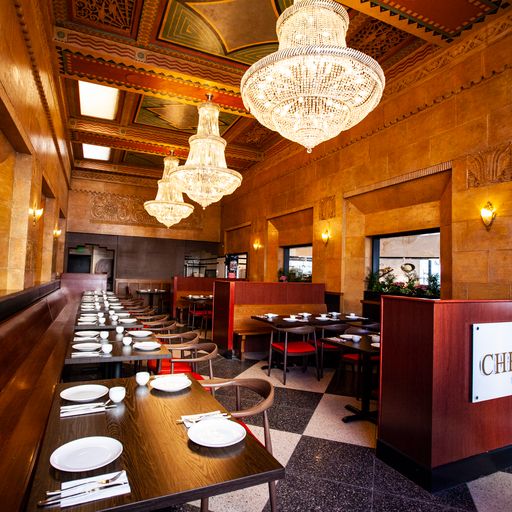
Chef Tony Dim Sum Pasadena | Photo by Slique Media / Chef Tony Dim Sum
It also helps to have a prime location, an impressive building, and warm ambiance. Chef Tony Dim Sum Pasadena is housed in the historic Bear Building built in 1929 on Colorado Boulevard. This stunning 1,260 square foot restaurant showcases historic art deco walls and features red accented booths and chairs; original opulent chandeliers beam in the main dining room. A separate cocktail area that seats six guests at the bar and 10 guests at the counter offers extra accommodation and drink options.
“The goal for our Pasadena location is to create a memorable dining experience, serving modern dim sum to a new generation of diners,” says Tony He. “Guests are welcome to sit solo at the bar, order a cocktail and try a special house dim sum platter, or celebrate with a group of friends or family in our private dining room downstairs.”
Currently, there are two Chef Tony restaurants in this area and Tony He declares, “People love them; however, we keep improving based on customers’ needs and tastes. I plan to open more high-end restaurants like Chef Tony Dim Sum.”
Tony He has restaurants in British Columbia and the Los Angeles area but he calls LA home. His family isn’t in the food industry business, though. He says, “I have my team that continues pushing innovation and creating with me. My children have their own dreams and I respect their decisions.”
Enticing dishes at Chef Tony Dim Sum | Photo by Slique Media / Chef Tony Dim Sum
The Chef Tony Dim Sum menu offers something for everyone, featuring twelve delectable selections. These include: starters of steamed dim sum; rice noodle roll; baked and fried dim sum; main dishes of seafood and meat; soup; congee; noodle; rice; and vegetables; and a variety of desserts. There are signature dishes like: sliced Chinese broccoli with black truffle sauce; squid ink shrimp dumplings with gold leaf; sticky rice ball with lava salted egg yolk. Also on the menu are uniquely elevated dishes such as Chef Tony house special lobster salad; savory deep fried Chinese donut; deep fried crispy king prawn; eggplant stuffed with shrimp paste; BBQ pork puff pastry tart; pan fried shrimp and pork pandan bun; roast duck and minced duck lettuce wrap (prepared two ways and must order in advance); and roasted crispy chicken with black truffle (must order in advance).
With an array of meticulously prepared and beautifully plated dishes, diners are guaranteed to have an amazing dim sum experience! Chef Tony may have upset the apple – in this case rolling – cart, but for an extraordinary outcome.
The Laurabelle A. Robinson house | Photo courtesy of AbilityFirst Food and Wine Festival
This Sunday, June 5, AbilityFirst’s famed Food and Wine Festival returns at the historic Laurabelle A. Robinson House in Pasadena from 5 to 8 pm. Sponsored by CHUBB, it marks the first time the outdoor gourmet food and drink event will be held in person since the pandemic began.
Nearly 400 guests are expected at this year’s event, which features more than 20 restaurants, cocktail bars, wineries, and breweries. The restaurants and dessert shops include Alexander’s Steakhouse, El Cholo Café, Gale’s Restaurant, Mi Piace, Porto’s Bakery, Ruth Chris Steak House, Tam O’Shanter, We Olive, Lark Cake Shop, Poppy Cake Bakery Company, Nothing Bundt Cakes, among others. Beverages featured include Cocktails and Spirit Tastings from 1886 at The Raymond, Dulce Vida Tequila, Krafted Spirits, JuneShine, and Golden Road Brewing, along with specially curated Wines. Pasadena’s very own Cerveceria Del Pueblo will also be pouring their distinctive beers showcasing flavors and aromas from South America; Califia Farms and PepsiCo will be serving non-alcoholic beverages.
Proceeds from this year’s Food & Wine Festival will directly benefit AbilityFirst which has targeted programming to help an individual successfully transition from childhood to adult life; providing employment preparation, training, and experience; building social connections and independence; and offering both their participants and their caregivers an opportunity to refresh and recharge through various recreational activities.
Guests at AbilityFirst Food and Wine Festival | Photo courtesy of AbilityFirst Food and Wine Festival
How the food and wine festival evolved into the spectacular event that it is today is quite a heartening story. Rebecca Haussling, Senior Director of Communications, relates. “A support group called Crown Guild created the first food and wine festival in 1953 with a wine tasting at the Langham Huntington, Pasadena (then known as the Huntington Hotel). Each Crown Guild member would invite ten to twelve friends and they would all be responsible for bringing a bottle of wine for the tasting. It branched out to Crown Guild members homes, and then onto friends of members’ homes, until they got local restaurateurs and beverage companies involved. It lent a casual outdoor environment where our guests could mingle and chat over food and drinks. Through the years, AbilityFirst has built strong relationships with restaurants, wineries, and breweries as we enthusiastically encouraged our guests to support these establishments.”
“It grew to its largest event in 2018 and 2019 with over 500 guests and raised more than $300,000,” Haussling says with great pride. “The pandemic brought with it several challenges, but we quickly adjusted. During 2020 and 2021, we held a virtual program with small private dinner parties with catered dinners in more than a dozen homes in Pasadena and the Los Angeles areas. We are delighted to be back ‘in real life’ for 2022 and return at the Laurabelle A. Robinson home, where homeowners Phaedra and Mark Ledbetter have hosted this unique food and wine tasting off and on for more than a decade.”
AbilityFirst was established as the Crippled Children’s Society of Southern California in 1926 by members of the Los Angeles Rotary Club, to assist kids with polio. In 2000, it adopted the name AbilityFirst to better reflect their broader mission of helping children and adults with physical and developmental disabilities reach their full potential by providing recreational and socialization programs, employment, accessible housing, and camping.
Fifty years ago, AbilltyFirst opened the Lawrence L. Frank Center in Pasadena and Long Beach; it is named after Lawrence L. Frank, of Lawry’s Restaurants fame, one of the original founders. From 2016 to 2017, the number of children and adults with developmental disabilities in these communities grew by 1,000 people, 66 percent of whom are between the ages of 6 and 51 years old – the target age for AbilityFirst’s programs.
His grandson, Richard Frank, continues to preserve his grandfather’s legacy by being on AbilityFirst’s board of directors. He co-chaired the Capital Campaign to help raise over $6M to initiate several programs to fit the burgeoning needs of the individuals they serve. And mindful of carrying on with their regular activities during the pandemic, AbilityFirst immediately responded to the lockdown restrictions.
(Shown left to right): Teresa, Maya, and Coach are participants in AbilityFirst’s College to Career program
Haussling discloses, “We were quick to pivot to remote and virtual programming for all of our programs and centers. Within less than two weeks AbilityFirst programs were able to get back up and running on Zoom with daily programs for our participants that included everything from exercise and yoga to arts and crafts, drawing classes, movie nights, book clubs, and much more. This helped lessen the feelings of isolation our participants felt during the pandemic and created space for social interaction – and FUN.”
“By August 2021 we were continuing with our remote programming and alternate programs where we were able to offer services out in the community and at local community venues such as parks, libraries and other safe, outdoor venues,” adds Haussling. “And by the end of 2021 we were safely delivering most services in person while utilizing our person-centered approach to maintain remote services as needed. Our person-centered approach (person-first) showcases and values diversity, inclusion and belonging.”
“Today, we are devoting our resources to providing the best services to those who are referred to us and actively seeking out those who have historically experienced barriers to receiving our services,” Haussling states.
Introduced a few years ago is College to Career, a community-based program for students who want to go to college and gain the skills, training, and education they need to achieve their academic and career goals. Additionally, the program emphasizes independence and personal choice in using community resources for daily living and future employment. This multi-year program begins with a self-discovery and community exploration component to help students to identify and develop a plan to achieve goals. Upon completion of the academic component, individuals may transition to community jobs, internships, or volunteer programs as they launch their career paths. The Lawrence L. Frank Center, AbilityFirst’s flagship location in Pasadena, houses the expanding College to Career program.
“AbilityFirst has six community centers offering several new adult programs including ExploreAbility, DiscoverAbility and PossAbility,” informs Haussling. “Our after school enrichment program includes homework support, outdoor activities, arts and crafts, cooking and more!”
Darreyon, in PossAbility Los Angeles, is prepping food for the Dream Center | Photo courtesy of AbilityFirst
ExploreAbility is an adult day and community integration program currently being offered at the AbilityFirst Joan and Harry A. Mier Center in Inglewood and the AbilityFirst Lawrence L. Frank Center in Pasadena. A licensed program, its objective is to identify what is important to each individual, to develop the skills necessary to achieve their goals, and to be involved in their communities through volunteering and community activities. Individual support and small-group activities promote interaction and learning. The program is designed to help individuals access their communities in their daily lives, work, recreational and leisure activities. It incorporates volunteering, community activities, independent living and skill-building, using a small group model.
PossAbility, offered in Pasadena and Los Angeles, is intended for adults who want to enhance their skills and independence, and to participate in their communities. Individuals in the program are empowered to set and pursue personal goals with an emphasis on employment readiness and increased community connections, including volunteering.
AbilityFirst has two group homes in Pasadena for adults and seniors – Crown House and Sierra Rose.
Debbie baking at Camp Paivika | Photo courtesy of AbilityFirst
According to Haussling, Ability First closed their work centers in December 2019. “We have since launched several new adults programs (mentioned above) and we have an expanding Supported Employment Program. In 2021 we completed a merger with FVO Solutions and we now run their manufacturing program as part of the acquisition.”
This merger gave AbilityFirst the capability to provide equipment and material storage, and to service a wide variety of assembly needs with a dedicated work-force, including: kit assembly; prototype to high volume runs; finished products and sub-assemblies; re-work; mechanical assembly; point-of-purchase displays; gluing and heat sealing; metal frames; and parts salvaging. They work with customers across many markets including government, commercial, consumer and industrial.
Rounding out AbilityFirst’s programs is Camp Paivika (a Native American word meaning “Dawn”) in the san Bernardino Mountains. It was begun in 1946 by the Rotary Club as one of the first full-accessible camps in the United States and has been in active operation since. It is maintained through endowments from donors and fund-raising efforts by community members.
Going to summer camps helps children develop social and communications skills as they participate in activities with other kids. It helps individuals build character and gain self-respect as they become responsible for their own safety and survival in a setting outside their comfort zone.
Camp Paivika offers this same independence and self-reliance for children, teens and adults with physical and developmental disabilities. Specially-trained members of AbilityFirst staff provide assistance and guidance as campers enjoy all the fun activities available to them – archery, arts & crafts, campfires and cookouts, nature hikes, horseback-riding, swimming. It is fully accredited by the American Camp Association.
Kelly (second from left) at City of Hope | Photo courtesy of AbilityFirst
In its 96 years of existence, AbilityFirst has touched thousands of lives and has made it possible for people with disabilities become productive, participating members of society. One successful ‘alum’ is Kelly who was in AbilityFirst’s College to Career program. On May 16 this year, she joined four other interns in the first Project SEARCH internship program, an AbilityFirst partnership with City of Hope and the San Gabriel Pomona Regional Center. An internationally known training model, it is designed to provide vocational training in a natural work setting to individuals with disabilities. It involves an extensive period of skills training and career exploration, innovative adaptations, long-term job support, and continuous feedback from on-site supervisor and trainers. The goal for each program is competitive employment.
What a supremely gratifying outcome! The founding Rotarians would have been so pleased to see how their foundation has grown to become ever more responsive to people’s needs. And with this year’s return of the AbilityFirst Food and Wine Festival, the organization is certain to reach its centennial with an impressive array of programs to help individuals with disabilities enjoy fulfilling lives.