Masters of Taste 2023 Celebrates Union Station Homeless Services’ 50th Anniversary

Originally published on 10 March 2023 on Hey SoCal

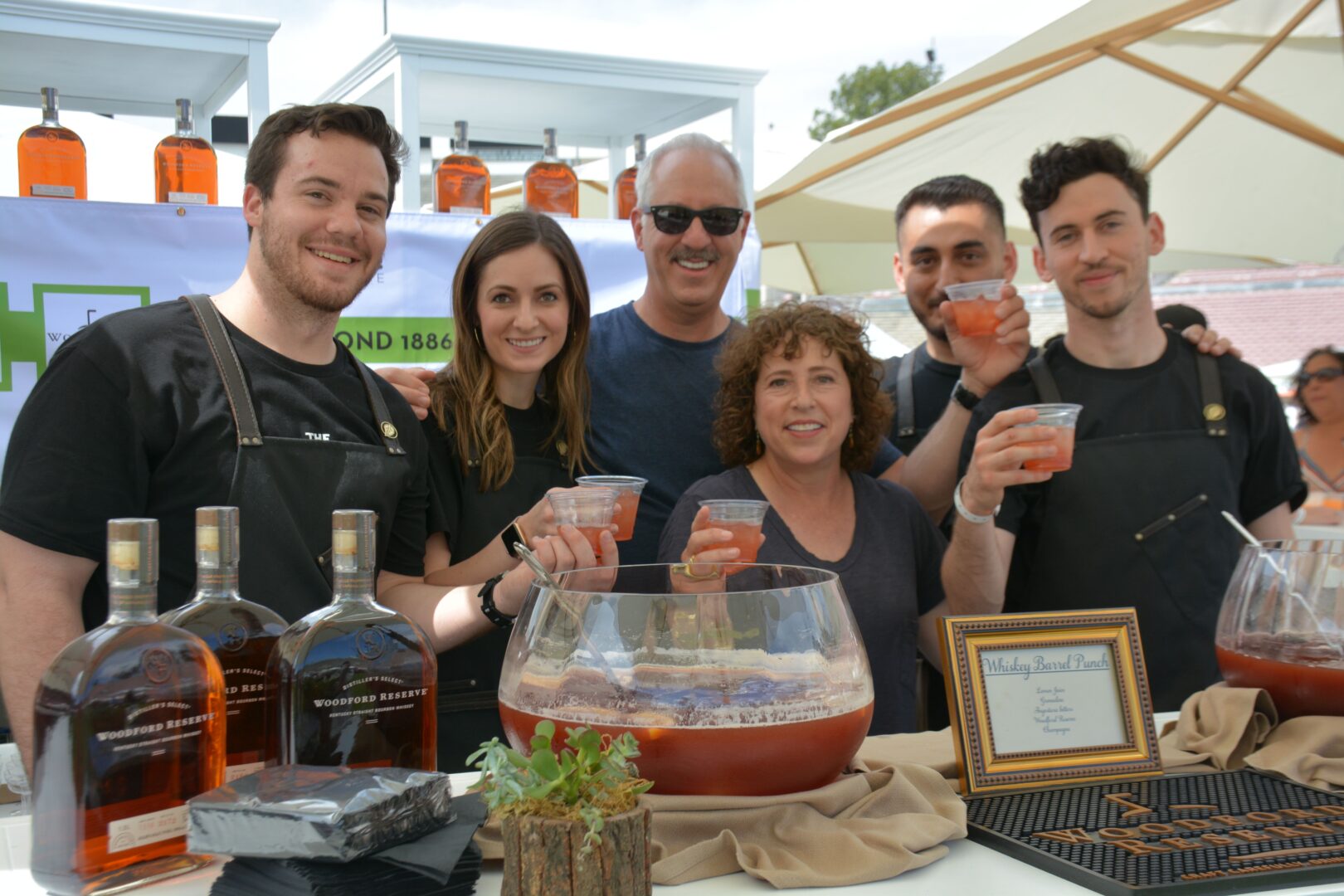
Masters of Taste returns to the Rose Bowl on April 2, 2023, commemorating its sixth year raising funds for Union Station Homeless Services. About 100 restaurateurs and beverage company owners come together for this event, and from 3 to 7 p.m. they serve food and drinks to approximately 3,000 attendees.      

Homelessness has always been heartbreaking. But it becomes deadly when severe weather adds to homeless people’s plight. During winter, there’s a race to make sure they are housed before temperatures dip to near freezing. From November through March 1. Pasadena had over 27 inches of rain, rendering the homeless population in worse circumstances.

An L.A. Times article published on Feb. 23, 2023, reported that “Homeless services providers were struggling with shortages of shelter space Thursday as a rare winter storm raised the danger level for thousands of people living outdoors, with a forecast of three days of rain, freezing temperatures, blizzard-strength wind and low-elevation snow.”

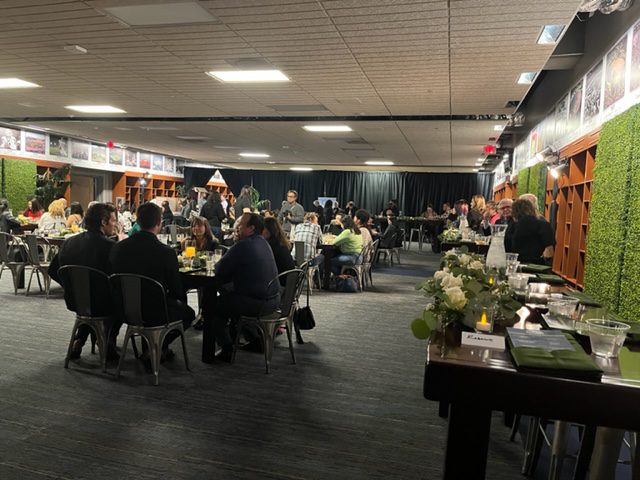
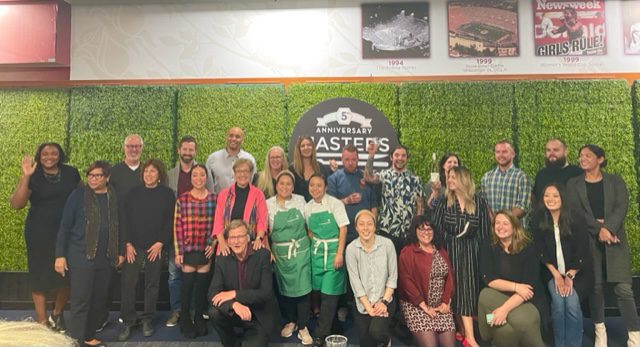
On March 1, 2023, Masters of Taste held its media night (read Brianna Chu’s article about what to expect at the event) in the locker room of the Rose Bowl. As always, there’s excitement among the individuals behind this annual event and the people covering it. But there’s also a sense of great urgency to support Union Station in their relentless work of providing shelter for the homeless population who are now, more than ever, in dire need.
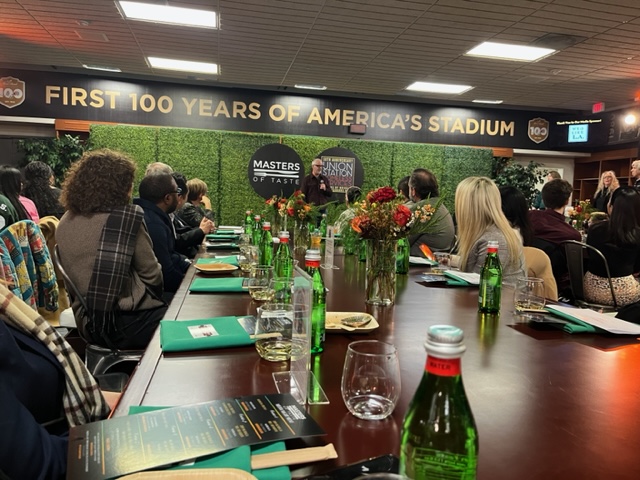
Masters of Taste founder Rob Levy | Photo by May S. Ruiz / Hey SoCal

Masters of Taste is the brainchild of Rob and Leslie Levy, owners of The Raymond 1886 in Pasadena and Knox & Dobson. He recalls what drew him to this endeavor, “This goes way back in my childhood. My oldest friend in the world started an organization in Chicago called ‘Inspiration Café,’ delivering sandwiches to the homeless when she was working as a cop. Then she ended up opening a restaurant for the homeless where they could come in, order off the menu, be served with dignity, and leave with no check to pay. If they were a good client, they were invited to work there and learn a trade. That grew into something huge, with multiple restaurants and cafes, cookbooks, and job training. She did this for 20 years and never took a paycheck — she did it for the love of it. She worked as a massage therapist to pay the bills while she grew this multimillion-dollar organization. It gives me shivers just thinking about her and what she has accomplished — she’s quite a remarkable individual and the most positive person you could ever meet in your life.”

“When the former CEO of Union Station asked me to be on the board, I immediately agreed,” continues Levy. “Then we thought we had to change the way we raise funds — we had been to one too many galas where nobody wanted to go, but got dressed up and went anyway because we felt obligated to. We figured we needed to create an amazing event where people aren’t thinking it’s a charity affair and Leslie came up with this idea of getting other chefs to gather for a cause. And what better place to do it than on the field of the Rose Bowl. Thus, Masters of Taste was born.

“We reached out to other chefs that we had done events with over the years and also through Lawrence Moore, of Lawrence Moore and Associates (one of the original founders, Moore is the person responsible for getting media coverage for Masters of Taste). When we explained what we were trying to accomplish, everyone agreed to participate. And they were absolutely thrilled when they learned that it was going to be at the Rose Bowl field. The first year that we did Masters of Taste, participants were incredulous when we told them to be on the field for the load-in because events are usually held only at the perimeter. One guy serving for a brewery had played football in college and played on the Rose Bowl field; it was his first time back there since. He actually got teary-eyed at the recollection because now he was there for a reason other than football.

“That same year, a spontaneous line dancing broke out on the field — DJs played music and in the middle of everything, there must have been 100 people line dancing. It was a delightful occurrence that was totally unanticipated. That was when we knew we were on to something.       

“Then we had one year when it rained which, unbelievably, made it an even better event. Nobody left — 3,000 people on the field and they all stayed through the rain. It was the most memorable year we had. We set out to create an event that was like having a great Sunday afternoon out and it has taken on a life of its own. People want to do good — helping other people is now a movement.”
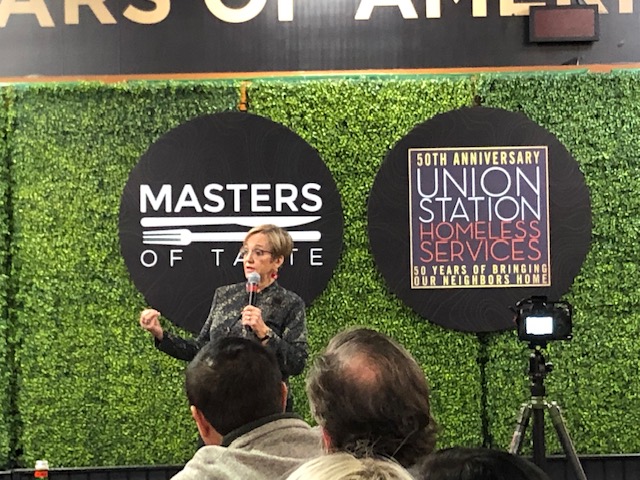
Ann Miskey, Union Station CEO | Photo by Meg Gifford / Hey SoCal

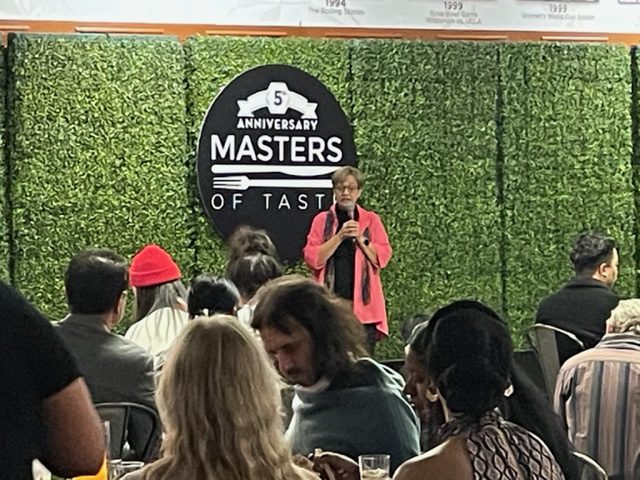
Anne Miskey, CEO of Union Station, reminds that while this annual spring festival at the Rose Bowl is the foremost food event in L.A., it serves a more important role — Masters of Taste celebrates the heart that’s in Los Angeles.                                            

“The work we do is hard; we know homelessness is a major crisis here — there are so many vulnerable people on our streets and we work tirelessly at Union Station,” Miskey states during the media preview. “But we truly could not do it alone. And what you are doing by being here and supporting Masters of Taste is incredibly inspiring and helps us keep going because it shows that people do care, that people do want to make a difference. And I cannot tell you how much of a difference you make. We’re all enjoying the food and the wine but at the heart of that is giving back.”

“We work with thousands of people every year and sometimes it becomes this massive homelessness issue,” Miskey says further. “But it makes a difference if we put names and faces to it. So I want to tell you a little bit about Jose. He is a 74-year old gentleman from Puerto Rico. He had a job and was just living a normal life there and then he got very ill with heart problems during the major hurricane. Puerto Rico was in shambles; he was desperately ill and he couldn’t get help, so he came to Los Angeles for medical services. After his heart surgery, he was told that the hospital didn’t take his insurance and he left the hospital with a huge debt. He then lived in his car and struggled to survive. And then COVID hit. During that time everyone was being told to stay home to stay safe — and he didn’t have a home. Union Station stepped in with Project Room Key; we took some hotels where we were able to put people in.”

“My staff happened to meet Jose in his car and brought him into a warm hotel room, with his own bathroom, and three healthy meals a day,” adds Miskey. “But more than just a room, a bathroom, and food, he had people surrounding him who cared and wanted to make a difference in his life. After we worked with him and got to know him, we got him an apartment. He now lives in his own apartment — he has a living room, a kitchen, and a bedroom.”

One of the things Union Station staff does is to pay a visit to the people they’ve helped house to interview them and capture some of their stories. Miskey relates, “Jose went out and bought a gift for our staff because he said, ‘My mama taught me to never have someone come to your home without giving them something to take back with them.’ So here’s a man who had nothing and he’s making sure that he’s giving back to us. If you see Jose now, you see a man with smiles on his face and his life is back together again.”

Miskey concludes, “As you eat these amazing food and drink these amazing beverages, remember what you’re doing. You’re helping people like Jose, Quintana, and Mary — people who have lives and families but who, for health reasons and other circumstances, had ended up on the street. It’s a fun event and we all enjoy it, but behind it is saving people’s lives. And for that, I thank each and every one of you. I want you to leave tonight knowing that your heart and compassion are making a huge, huge difference.”

Host chefs Michael and Kwini Reed of Poppy + Rose and Poppy & Seed will continue the Masters of Taste’s tradition of making a difference through successful fundraising for Union Station.    

Preview of what attendees will enjoy at Masters of Taste 2023 | Photo by May S. Ruiz / Hey SoCal

Michael is a classically trained chef and restaurateur, who has spent 19 years as a chef for restaurants across New York and Los Angeles. Born and raised in Oxnard, California, Michael grew up around the barbecue and the smell of fresh, home-made pies. His family cooked every day, pulling ingredients straight from the garden which went on to inspire his passion for food and hospitality.

Kwini is a Southern California native, wife, mother, and entrepreneur. She comes from a large family that values community, generosity, and a strong work ethic – traits that have helped her succeed in her career and personal endeavors. A graduate of California State University, Fullerton with a Bachelor of Science in marketing, she has over a decade of experience in business, finance, and human resource management, having worked at companies throughout LA, including The Standard Hotel, Band of Gypsies, and Brandy Melville USA.

The Reeds are the co-owners of two Los Angeles restaurants, Poppy + Rose of Downtown and Anaheim’s Poppy & Seed. Additionally, they run an upscale catering company, Root of All Food. As if their culinary accomplishments aren’t enough, they’re also in the process of developing a nonprofit to help convey the importance and potential of food to younger generations by coordinating lessons with local chefs, internship programs, and more.

Attendees at this year’s Masters of Taste are assured of having a fantastic time. As Vanda Asapahu, last year’s Masters of Taste host chef, declares “Kwini and Michael are inspiring human beings and together they make a dynamic team.”

So put on your party hat and get ready to eat and drink to your heart’s content as you help Union Station celebrate its 50th anniversary at the 50-yard line at the Rose for Bowl for Masters of Taste 2023! See you there!        

Tây Hố Restaurants: Putting Vietnamese Food at Forefront of American Culture

Originally published on 19 September 2022 on Hey SoCal

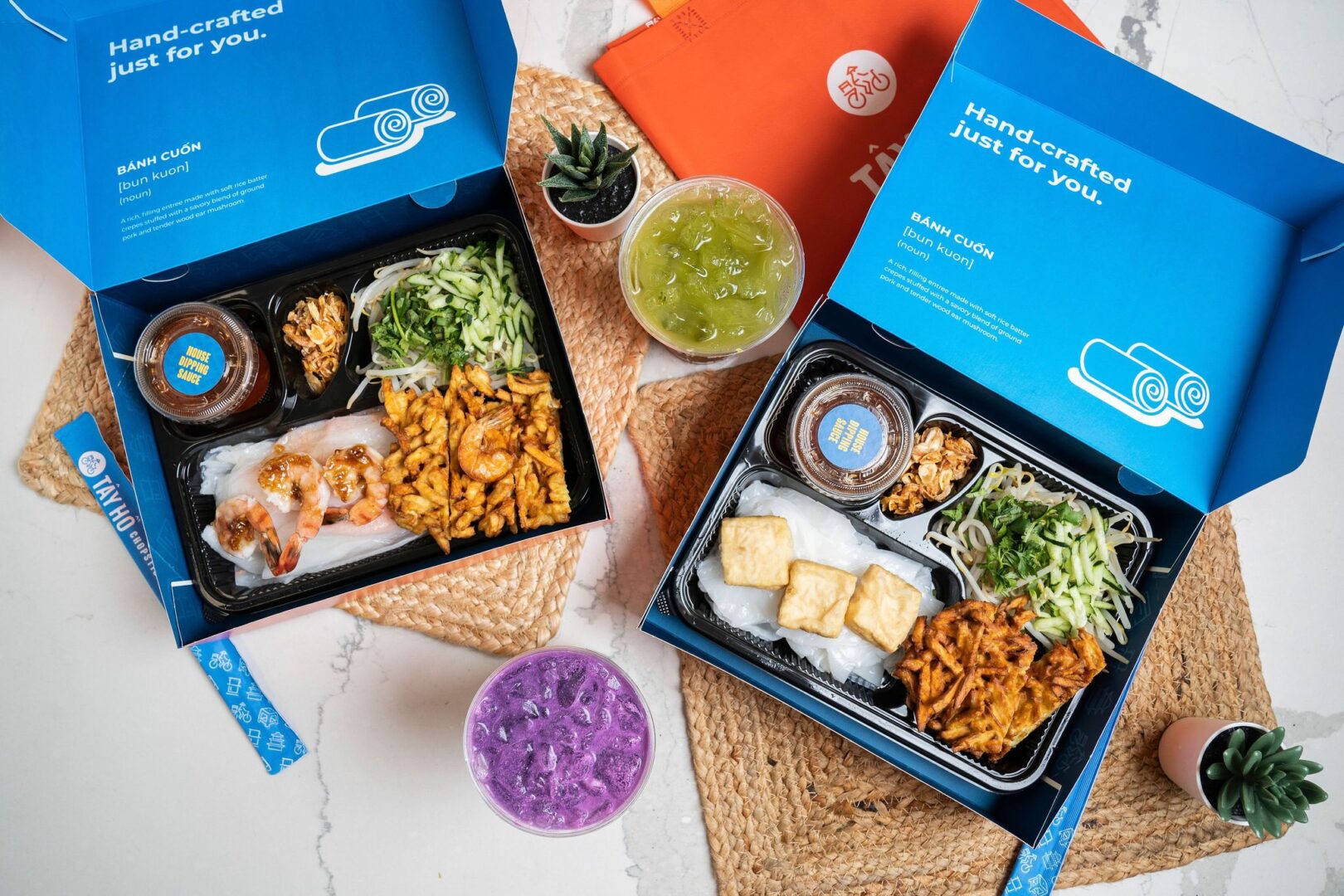
Tay Ho restaurants’ signature dish, bánh cuốn | Photo by Slique Media / Tay Ho Restaurants

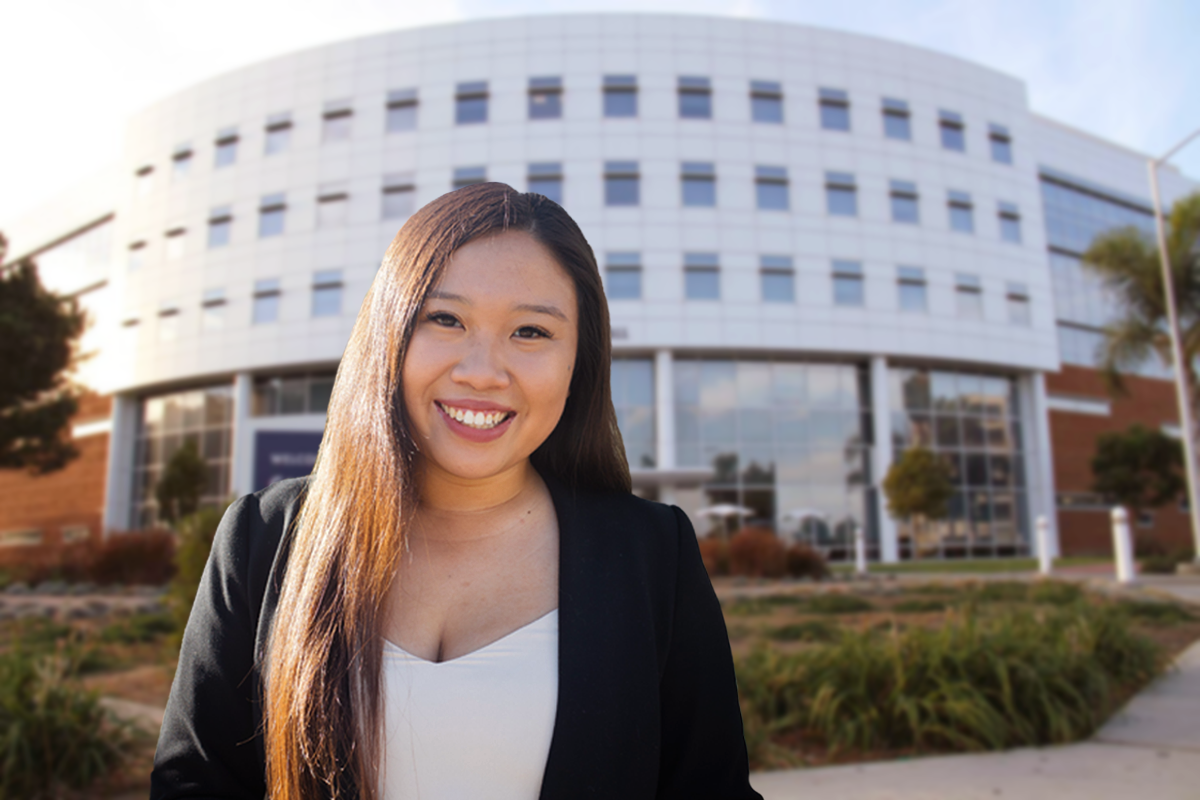
Vivian Yenson, who was born and raised in Fountain Valley in Orange County, isn’t your average 21-year-old college graduate. In fact, there’s nothing average about this young woman who earlier this year opened her brainchild restaurant in San Gabriel – Tây Hố Takeout Restaurant. (read Brianna Chu’s food review here) And that was before she graduated from Cal State Fullerton this past May. As if that wasn’t impressive enough, a month ago she inaugurated her second restaurant in Chino Hills.

Interviewed by phone, Yenson talks about the history of the Tây Hố food family enterprise, Tây Hố Takeout Restaurants, and some of her plans to grow the business.     

“My grandparents immigrated to the United States in 1980 when my dad was 10 years old. They went to Illinois when they first moved here – I don’t know why they chose Illinois – but they found the weather too cold. Besides, they were looking to settle down where there was a Vietnamese population. So they headed west to California.”

Vivian Yenson | Photo by Slique Media / Tây Hố Restaurants

In 1986, the family opened their first Tây Hố Restaurant in Westminster – home to the largest Vietnamese population outside Vietnam. Yenson is quick to point out that at that time the Asian Garden Mall had yet to finish construction (it opened in 1987) and the Vietnamese community called Little Saigon was still in its infancy. Originating in Westminster, on Bolsa and Brookhurst, Little Saigon later spread into the adjacent city of Garden Grove. 

Recognizing the needs of the flourishing Vietnamese community, her father Jayce Yenson established the Tây Hố Food Company. Today, he is the CEO of Tây Hố Restaurants and Tây Hố Food Company (West Lake Food Corporation) in Santa Ana. The food company makes cold meats – like ham – and some basic ingredients, including canned broth, and are sold to Vietnamese restaurants. Tây Hố means West Lake and it’s located in Hanoi, the capital of Vietnam. Tây Hố restaurants’ signature dish, bánh cuốn, originated in that area.

Yenson explains the rationale for taking the Tây Hố brand outside Orange County, “We currently already have a few locations in Westminster that my grandparents started and which continue to be run by my great- aunt and uncle. There’s no point opening another one in Orange County so close to where there are already existing Tây Hố restaurants – although we will revisit that sometime soon. We decided to focus on places farther away where people aren’t likely to find bánh cuốn.

“This new version is my own that’s remodel-led and rebranded with a totally new look and feel – it’s a lot more modern. Instead of staying in the Little Saigon area of Orange County, we wanted to branch out. So our first step was going to 626, the area code of the San Gabriel Valley, which has a large Vietnamese population. We then went to Chino Hills, an up-and-coming Asian community that’s growing so rapidly. Chino Hills is such a warm and welcoming community with people of all races and backgrounds that want to try new things, whereas San Gabriel is populated more by an older generation who already knows what Tây Hố is. There used to be a Tây Hố sit-down restaurant down the street from where our current location is. It was run by my great-uncle, but he recently passed away so it closed. That was also the reason I opened the first Tây Hố takeout restaurant in San Gabriel.”

Tây Hố’s dishes come beautifully packaged in bright red orange boxes with blue inside flaps | Photo by Slique Media / Tây Hố Restaurants

A surprising revelation is that Yenson never envisioned being in this business; it was fate that intervened. She discloses, “I always thought I was going to be in the corporate world. Having grown up around my family and relatives who are in the restaurant business, I know all the stress and pressure. You go to work and you take that work home with you. I was supposed to study abroad the summer that COVID hit, but because of the worldwide lockdown, I didn’t end up doing that. Instead, I worked at West Lake Food Corporation when my dad had a corporate position available and I assumed the title Family Business Director. I helped in various projects, like restaurant franchising which I got curious about. The first thing I did on the project was R&D (research and development), specifically Vietnamese coffee.

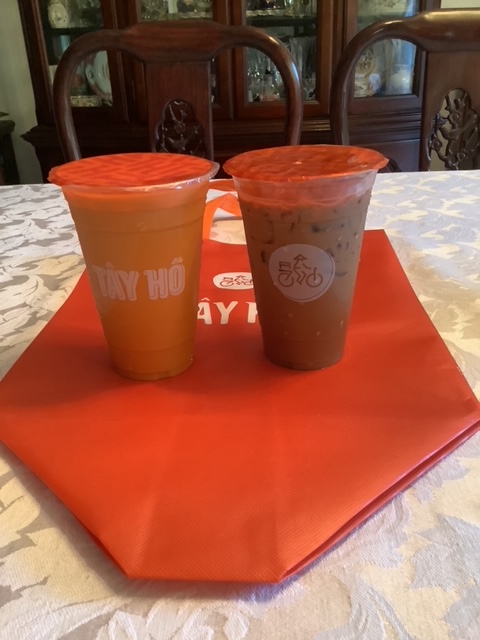
“It was after I completed that first project that I got involved. I had a free weekend and I spent it reading about the Vietnamese coffee drink and what makes it special. I love coffee, and Tây Hố Restaurants use a very good coffee brand – Trung Nguyen – which has a slight chocolate flavor. We blend it with condensed milk and hazelnut creamer. It’s creamy and sweet with chocolate flavor, without being too sweet or bitter.”

Asked what part of her business degree she’s able to use in the Tây Hố restaurants, Yenson replies, “The most important skill I learned was project management. I worked at my dad’s company part-time while I was in college, and he wanted me to be fully involved. So I got to know people and networked with people my age. I was the president of my business fraternity and the entire College of Business and Economics. That taught me how to handle multiple projects, including marketing. While it was on a much smaller scale, I had to make sure I didn’t make mistakes. I learned how to manage my time and prioritize, in general, which I use now in the restaurant industry.”

A key decision Yenson made was adopting a takeout business model. She explains, “We launched during COVID, so we were very careful because you never know if restaurants will remain open or if another pandemic or variant will cause closures again. Even with our sit-down restaurants, though, a good portion of it is takeout business. Concentrating on takeout makes it easier for us to scale and open more since it doesn’t require much staff. Right now, staffing is so hard; takeout also reduces the amount of space and labor necessary to keep operational.”

Yenson is cognizant of the inherent challenges in the takeout business. “I understand that people enjoy a restaurant dining experience. But our main goal is to put Vietnamese food forefront in American culture, no matter how that’s accomplished. Bánh cuốn is an easy dish to eat, whether it’s takeout or sit-down. Having said that though, we’re integrating phð into our fall menu. We’re teaching our staff how to prepare it and getting all the materials ready for it. We’ll have a phð kit that includes a reusable bowl, broth, noodles, and vegetables. We’ll provide a sturdy bowl, utensils, and small containers for the sauce and chilies. There will be a small removable tray on top for the meats and the noodles so they don’t get soggy. It will be the same as eating in a restaurant even if it’s a takeout. There are limitations, but you can always evolve and adapt, and find solutions.”

Tây Hố Restaurants’ Vietnamese coffee, at right, sits on a folded tote | Photo by May S. Ruiz / Beacon Media News

Reviews about Tây Hố Takeout restaurants have been very good and mostly positive, reports Yenson. “A comment among the older generation involves the fancy packaging. However, I’m catering to a new generation of people. I use the same recipe that my grandma had used; I just made it look nicer with the packaging. I’ve read some comments that they don’t need the extra packaging and, at the same time, I’ve gotten great reviews from people who said they had never seen or heard about bánh cuốn packaged that way.

“The orange red color in our packages comes from the color of our old logo” Yenson continues. “I insisted that even if we have a new logo, I want to have the same color and look. The boxes are packed in a reusable tote that is custom-fitted for the containers – there is one inch of space between the boxes and the bag. After you take out all the boxes, the tote folds in a very different way from other restaurant takeout bags. An amazing marketing team helped design the packaging that’s distinct to Tây Hố Takeout; the sit-down restaurants have their own.”

Yenson has two younger siblings, although it’s doubtful they’ll be joining the family business. She says, “My younger sister, who’s starting college this week at UC Riverside, helped with the restaurant from time to time. But she plans to be a bio major and not stepping into the family business. My brother is much younger – he’s only 16 and still in high school, and he doesn’t know yet what he wants to do.

“There are about 20 people at the store itself and I have my cooking team members. At the corporate level, there are my dad, my COO, my Operations Manager, and myself. While I’m keeping to our family business core values, I’m not limiting the company as a strictly family operation. I want my team to know they don’t have to be blood related to be family. I see them on a daily basis and I hope they feel like they are part of my family; they are my Tây Hố family.”

Family and tradition are paramount to Asians. And it is in that vein that Yenson honors the timeless practice of preparing authentic and delicious Vietnamese street food that her grandparents and parents grew up with. She hopes that through Tây Hố restaurants’ distinctive food offerings, a new generation of food enthusiasts will make Vietnamese food a regular dining choice.

Chef Tony Takes Dim Sum to New Culinary Heights

Originally published on 19 August 2022 on Hey SoCal

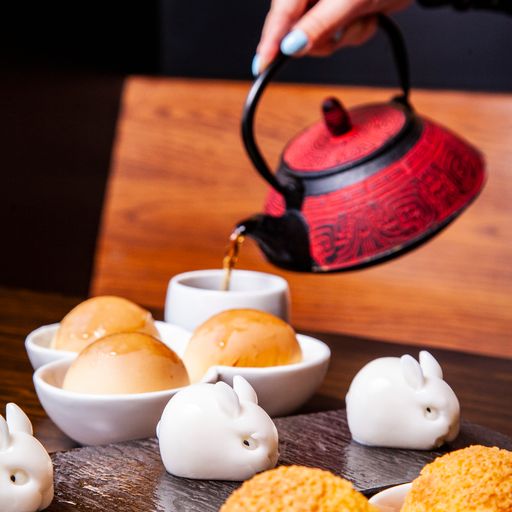
Chef Tony restaurants feature upscale, beautifully plated dishes | Photo by Slique Media / Chef Tony Dim Sum

Chinese food is one of the most popular cuisines the world over. Almost everyone has eaten fried rice or chow mein with orange chicken or sweet and sour pork. It’s not very often, though, that people think of dim sum when they hear Chinese food. And that’s a pity because anyone who has eaten these bite size delicacies would most probably say they’re addictively scrumptious.    

A Wikipedia entry informs that the origins of dim sum date back to the 10th century when commercial travel increased in the city of Guangzhou (formerly Canton). These travelers went to teahouses which served two pieces of delicately made food items – sweet or savory – to go with their tea; the second is dim sum, the term used for the small food portions. Teahouse owners later added a variety of snack pieces to their dim sum offering.        

It was during the latter part of the 19th century that this practice of having tea with dim sum evolved into what’s called yum cha, or brunch. Originally based on locally available food, chefs introduced influences from regions outside the Canton province and the dim sum culture flourished.

There are over a thousand dim sum dishes which are usually eaten as breakfast or brunch. Over time, however, restaurants started serving them for dinner as well. A big part of the experience is seeing and smelling the food. Traditionally, dim sum dining involves servers pushing rolling carts of small steaming baskets and tempting diners with the aroma of the delicious offerings. And it has been done that way for centuries – until Chef Tony He set the concept on its (tree) ear. 

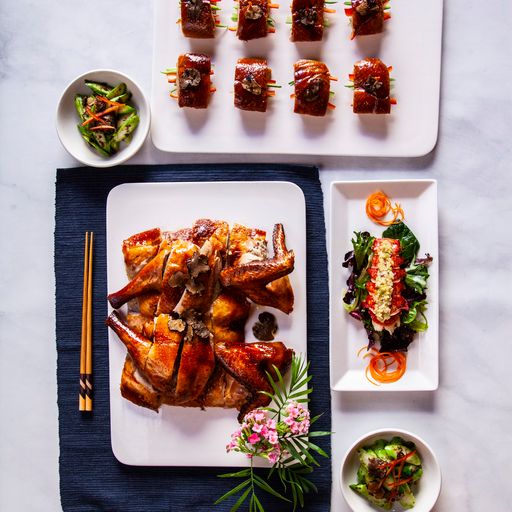
Photo by Slique Media / Chef Tony Dim Sum

In February 2020, Tony He introduced upscale dim sum when he opened Chef Tony Dim Sum in Old Town Pasadena. Moreover, he eliminated the mainstay of dim sum restaurants – rolling carts. Instead, dishes are served á la carte (which, in the past, was only done for take-out orders) and include ingredients such as freshly shaved black truffles and gold leaf touches.

The restaurant had to close shortly after that, however, because everything went on lockdown when the coronavirus reached American shores. But last year, Chef Tony Dim Sum Arcadia opened on Baldwin Avenue in the space that another Chinese restaurant vacated. And a month ago, Chef Tony Dim Sum Pasadena finally reopened (read Brianna Chu’s food review here).    

Tony He began his cooking career at the age of 15, apprenticing with some of the greatest chefs in Guangdong Province, China (formerly known as Canton Province). He later moved to Hong Kong where he further developed his culinary techniques, including training under ‘Abalone King,’ Yeung Koon-yat.

In 1992, Tony He opened his first Sea Harbour Seafood Restaurant in Zhongshan City in southern China. When he immigrated to Canada, he launched Sea Harbour Seafood Restaurant in Richmond, BC. It was such a huge success that he expanded his business southward, opening Sea Harbour Seafood Restaurant in Rosemead, in the Western San Gabriel Valley. Los Angeles Magazine ranked it as #1 in the Top Ten Best Chinese Restaurant in Los Angeles in 2011 and 2012.

Tea and dim sum | Photo by Slique Media / Chef Tony Dim Sum

Given that Tony He owns several restaurants, anyone will naturally assume that he comes from a family of restaurateurs. It’s surprising, therefore, to find out that isn’t the case. Answering our questions via email, he discloses cryptically, “No, I learned it myself, since I had no choice at that time.”       

“I immigrated to Canada in 1996, and started my business in 1998,” Tony He states. “The first restaurant I opened is a traditional Cantonese restaurant. The taste of the dishes made by the restaurant is very authentic, so it is loved by everyone. It was wildly successful and led to the opening of another one in the L.A. area. While they pretty much have the same menu, I make some adjustments to the offerings based on diners’ taste as well. I am always about innovation – I create more products based on customers’ feedback and suggestions.”

With the thought of delivering high-end fusion dining experience to a diverse clientele, Tony He founded Yi Dong Seafood Restaurant, also known as Chef Tony Seafood Restaurant, in British Columbia in 2013. Occupying an area 6,700 square feet, the restaurant won many awards over its three years of operation, including Gold Award for Best Dim Sum 2015 and Silver Award for Best Chinese Upscale 2015 by Vancouver Magazine (26th Annual Restaurant Awards). The Restaurant has also won Critics’ Choice of Chinese Restaurant Awards for three consecutive years (2014-2016) and Top 10 new Vancouver restaurant of 2014 by the Globe and Mail.

A selection of dim sum items | Photo by Slique Media / Chef Tony Dim Sum

There are three Chef Tony restaurants in Canada. The dim sum dishes on the menu are a reflection of Guangdong Cantonese cuisine layered with refined touches and high-quality ingredients, aimed at elevating traditional dim sum.

In 2016, Tony He and George Pang established the first Chef Tony Dim Sum, a unique dim sum fast food operation in the food court of Metrotown. It was their first step in building an international fast-food chain that specializes in bite-size Chinese dim sum.   

British Columbia is like a test market for Tony He – it’s where he introduces his culinary concepts, expanding only when the reception is highly favorable. Furthermore, some dishes find their way onto the menu of his various restaurants. He explains, “I integrated some diner favorites at Sea Harbour Seafood Restaurant, such as squid ink shrimp dumpling with gold leaf, French baked BBQ pork bun, black truffle chicken with cilantro and onion, to Chef Tony Dim Sum. If I can offer something that everyone agrees with, from children to the elderly, then that’s my motivation. Our attraction is our new products.”

The restaurant business is notoriously tough and fickle. There are over 2,000 restaurants offering various cuisines in the Western San Gabriel Valley and staying in business – much less standing out among the competition – could be a daunting task. But Tony He rises to the challenge, “Independent innovation, leading and being at the forefront of this industry are utmost. The customer agrees and we succeed by the customer approbate. The secret to having diners coming back regularly and keeping their loyalty are fair price, new products, customer happiness, and customer satisfaction after dining.”

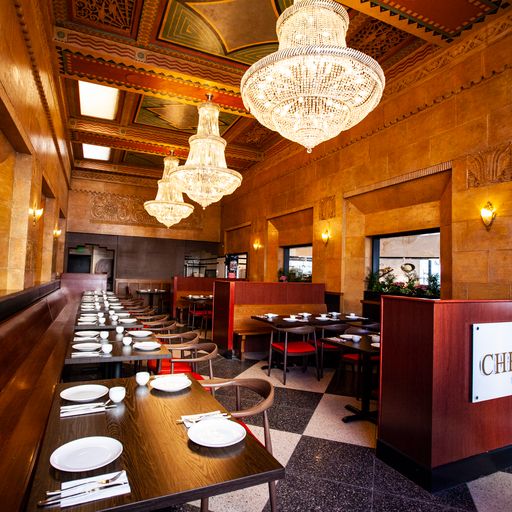
Chef Tony Dim Sum Pasadena | Photo by Slique Media / Chef Tony Dim Sum

It also helps to have a prime location, an impressive building, and warm ambiance. Chef Tony Dim Sum Pasadena is housed in the historic Bear Building built in 1929 on Colorado Boulevard. This stunning 1,260 square foot restaurant showcases historic art deco walls and features red accented booths and chairs; original opulent chandeliers beam in the main dining room. A separate cocktail area that seats six guests at the bar and 10 guests at the counter offers extra accommodation and drink options. 

“The goal for our Pasadena location is to create a memorable dining experience, serving modern dim sum to a new generation of diners,” says Tony He. “Guests are welcome to sit solo at the bar, order a cocktail and try a special house dim sum platter, or celebrate with a group of friends or family in our private dining room downstairs.” 

Currently, there are two Chef Tony restaurants in this area and Tony He declares, “People love them; however, we keep improving based on customers’ needs and tastes. I plan to open more high-end restaurants like Chef Tony Dim Sum.”

Tony He has restaurants in British Columbia and the Los Angeles area but he calls LA home. His family isn’t in the food industry business, though. He says, “I have my team that continues pushing innovation and creating with me. My children have their own dreams and I respect their decisions.”

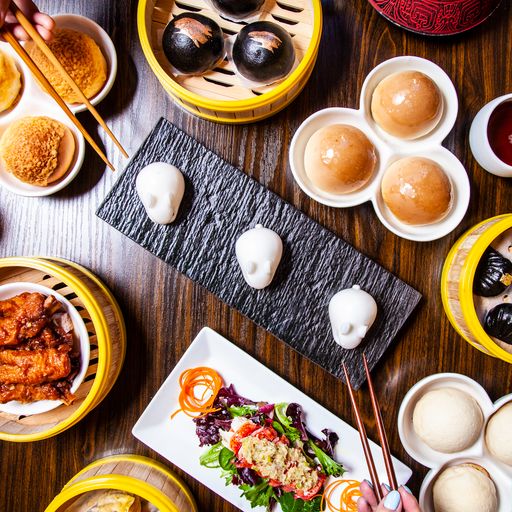
Enticing dishes at Chef Tony Dim Sum | Photo by Slique Media / Chef Tony Dim Sum

The Chef Tony Dim Sum menu offers something for everyone, featuring twelve delectable selections. These include: starters of steamed dim sum; rice noodle roll; baked and fried dim sum; main dishes of seafood and meat; soup; congee; noodle; rice; and vegetables; and a variety of desserts. There are signature dishes like: sliced Chinese broccoli with black truffle sauce; squid ink shrimp dumplings with gold leaf; sticky rice ball with lava salted egg yolk. Also on the menu are uniquely elevated dishes such as Chef Tony house special lobster salad; savory deep fried Chinese donut; deep fried crispy king prawn; eggplant stuffed with shrimp paste; BBQ pork puff pastry tart; pan fried shrimp and pork pandan bun; roast duck and minced duck lettuce wrap (prepared two ways and must order in advance); and roasted crispy chicken with black truffle (must order in advance).

With an array of meticulously prepared and beautifully plated dishes, diners are guaranteed to have an amazing dim sum experience! Chef Tony may have upset the apple – in this case rolling – cart, but for an extraordinary outcome. 

AbilityFirst Food and Wine Festival Returns at Laurabelle A. Robinson House

Originally published on 2 June 2022 on Hey SoCal

The Laurabelle A. Robinson house | Photo courtesy of AbilityFirst Food and Wine Festival

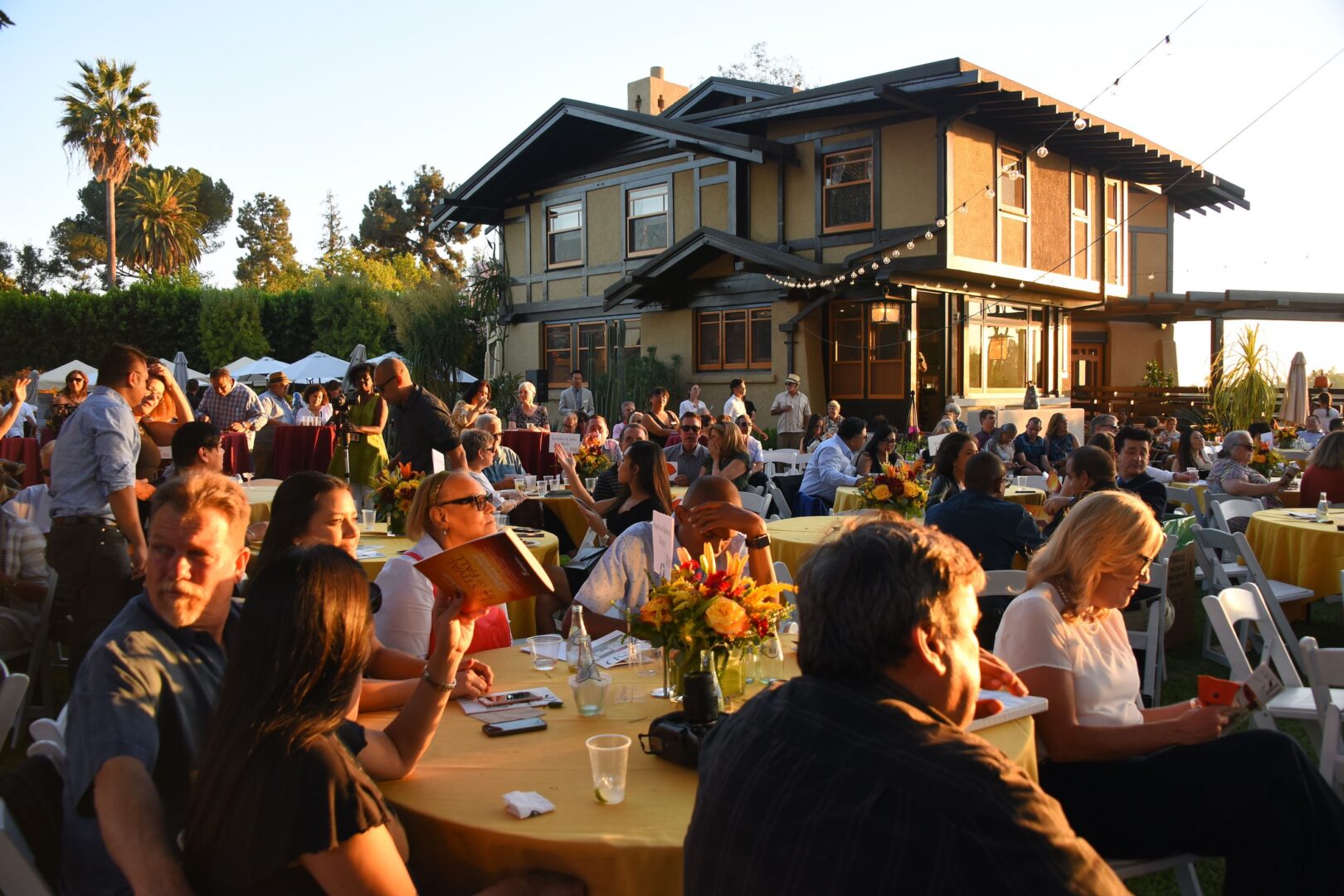
This Sunday, June 5, AbilityFirst’s famed Food and Wine Festival returns at the historic Laurabelle A. Robinson House in Pasadena from 5 to 8 pm. Sponsored by CHUBB, it marks the first time the outdoor gourmet food and drink event will be held in person since the pandemic began.

Nearly 400 guests are expected at this year’s event, which features more than 20 restaurants, cocktail bars, wineries, and breweries. The restaurants and dessert shops include Alexander’s Steakhouse, El Cholo Café, Gale’s Restaurant, Mi Piace, Porto’s Bakery, Ruth Chris Steak House, Tam O’Shanter, We Olive, Lark Cake Shop, Poppy Cake Bakery Company, Nothing Bundt Cakes, among others. Beverages featured include Cocktails and Spirit Tastings from 1886 at The Raymond, Dulce Vida Tequila, Krafted Spirits, JuneShine, and Golden Road Brewing, along with specially curated Wines. Pasadena’s very own Cerveceria Del Pueblo will also be pouring their distinctive beers showcasing flavors and aromas from South America; Califia Farms and PepsiCo will be serving non-alcoholic beverages.

Proceeds from this year’s Food & Wine Festival will directly benefit AbilityFirst which has targeted programming to help an individual successfully transition from childhood to adult life; providing employment preparation, training, and experience; building social connections and independence; and offering both their participants and their caregivers an opportunity to refresh and recharge through various recreational activities.

Guests at AbilityFirst Food and Wine Festival | Photo courtesy of AbilityFirst Food and Wine Festival

How the food and wine festival evolved into the spectacular event that it is today is quite a heartening story. Rebecca Haussling, Senior Director of Communications, relates. “A support group called Crown Guild created the first food and wine festival in 1953 with a wine tasting at the Langham Huntington, Pasadena (then known as the Huntington Hotel). Each Crown Guild member would invite ten to twelve friends and they would all be responsible for bringing a bottle of wine for the tasting. It branched out to Crown Guild members homes, and then onto friends of members’ homes, until they got local restaurateurs and beverage companies involved. It lent a casual outdoor environment where our guests could mingle and chat over food and drinks. Through the years, AbilityFirst has built strong relationships with restaurants, wineries, and breweries as we enthusiastically encouraged our guests to support these establishments.”           

“It grew to its largest event in 2018 and 2019 with over 500 guests and raised more than $300,000,” Haussling says with great pride. “The pandemic brought with it several challenges, but we quickly adjusted. During 2020 and 2021, we held a virtual program with small private dinner parties with catered dinners in more than a dozen homes in Pasadena and the Los Angeles areas. We are delighted to be back ‘in real life’ for 2022 and return at the Laurabelle A. Robinson home, where homeowners Phaedra and Mark Ledbetter have hosted this unique food and wine tasting off and on for more than a decade.”

AbilityFirst was established as the Crippled Children’s Society of Southern California in 1926 by members of the Los Angeles Rotary Club, to assist kids with polio. In 2000, it adopted the name AbilityFirst to better reflect their broader mission of helping children and adults with physical and developmental disabilities reach their full potential by providing recreational and socialization programs, employment, accessible housing, and camping.

Fifty years ago, AbilltyFirst opened the Lawrence L. Frank Center in Pasadena and Long Beach; it is named after Lawrence L. Frank, of Lawry’s Restaurants fame, one of the original founders. From 2016 to 2017, the number of children and adults with developmental disabilities in these communities grew by 1,000 people, 66 percent of whom are between the ages of 6 and 51 years old – the target age for AbilityFirst’s programs.

His grandson, Richard Frank, continues to preserve his grandfather’s legacy by being on AbilityFirst’s board of directors. He co-chaired the Capital Campaign to help raise over $6M to initiate several programs to fit the burgeoning needs of the individuals they serve. And mindful of carrying on with their regular activities during the pandemic, AbilityFirst immediately responded to the lockdown restrictions.    

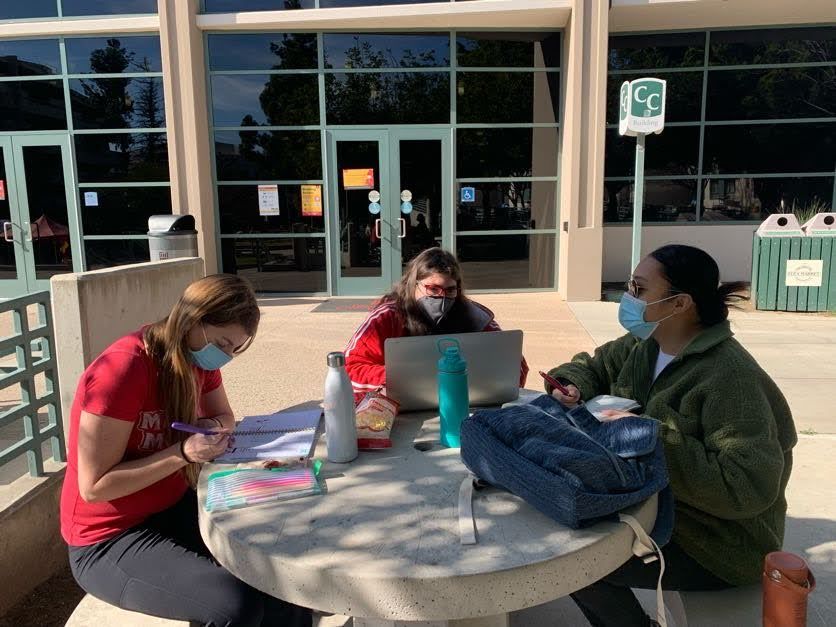
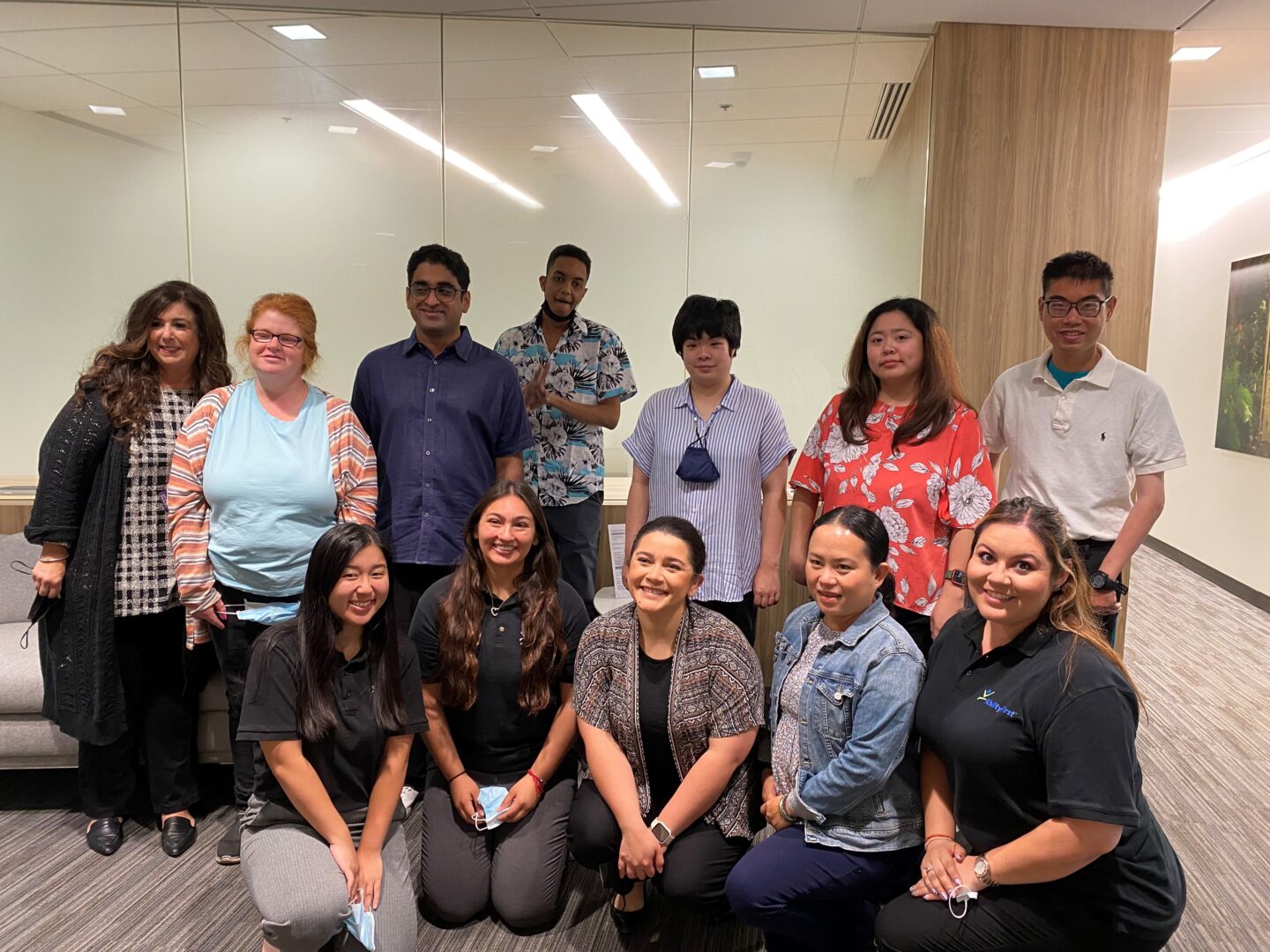
(Shown left to right): Teresa, Maya, and Coach are participants in AbilityFirst’s College to Career program

Haussling discloses, “We were quick to pivot to remote and virtual programming for all of our programs and centers. Within less than two weeks AbilityFirst programs were able to get back up and running on Zoom with daily programs for our participants that included everything from exercise and yoga to arts and crafts, drawing classes, movie nights, book clubs, and much more. This helped lessen the feelings of isolation our participants felt during the pandemic and created space for social interaction – and FUN.”

“By August 2021 we were continuing with our remote programming and alternate programs where we were able to offer services out in the community and at local community venues such as parks, libraries and other safe, outdoor venues,” adds Haussling. “And by the end of 2021 we were safely delivering most services in person while utilizing our person-centered approach to maintain remote services as needed. Our person-centered approach (person-first) showcases and values diversity, inclusion and belonging.”

“Today, we are devoting our resources to providing the best services to those who are referred to us and actively seeking out those who have historically experienced barriers to receiving our services,” Haussling states.

Introduced a few years ago is College to Career, a community-based program for students who want to go to college and gain the skills, training, and education they need to achieve their academic and career goals. Additionally, the program emphasizes independence and personal choice in using community resources for daily living and future employment. This multi-year program begins with a self-discovery and community exploration component to help students to identify and develop a plan to achieve goals. Upon completion of the academic component, individuals may transition to community jobs, internships, or volunteer programs as they launch their career paths. The Lawrence L. Frank Center, AbilityFirst’s flagship location in Pasadena, houses the expanding College to Career program.      

“AbilityFirst has six community centers offering several new adult  programs including ExploreAbility, DiscoverAbility and PossAbility,” informs Haussling. “Our after school enrichment program includes homework support, outdoor activities, arts and crafts, cooking and more!”

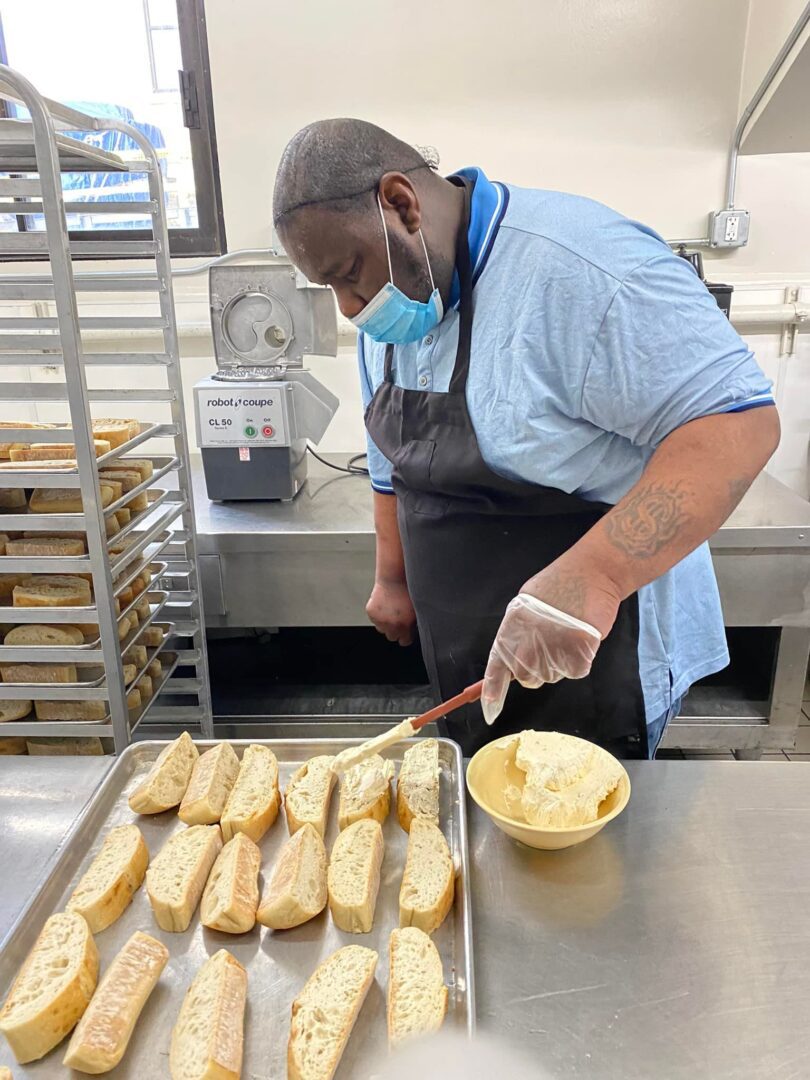
Darreyon, in PossAbility Los Angeles, is prepping food for the Dream Center | Photo courtesy of AbilityFirst

ExploreAbility is an adult day and community integration program currently being offered at the AbilityFirst Joan and Harry A. Mier Center in Inglewood and the AbilityFirst Lawrence L. Frank Center in Pasadena. A licensed program, its objective is to identify what is important to each individual, to develop the skills necessary to achieve their goals, and to be involved in their communities through volunteering and community activities. Individual support and small-group activities promote interaction and learning. The program is designed to help individuals access their communities in their daily lives, work, recreational and leisure activities. It incorporates volunteering, community activities, independent living and skill-building, using a small group model.

PossAbility, offered in Pasadena and Los Angeles, is intended for adults who want to enhance their skills and independence, and to participate in their communities. Individuals in the program are empowered to set and pursue personal goals with an emphasis on employment readiness and increased community connections, including volunteering.  

AbilityFirst has two group homes in Pasadena for adults and seniors – Crown House and Sierra Rose.

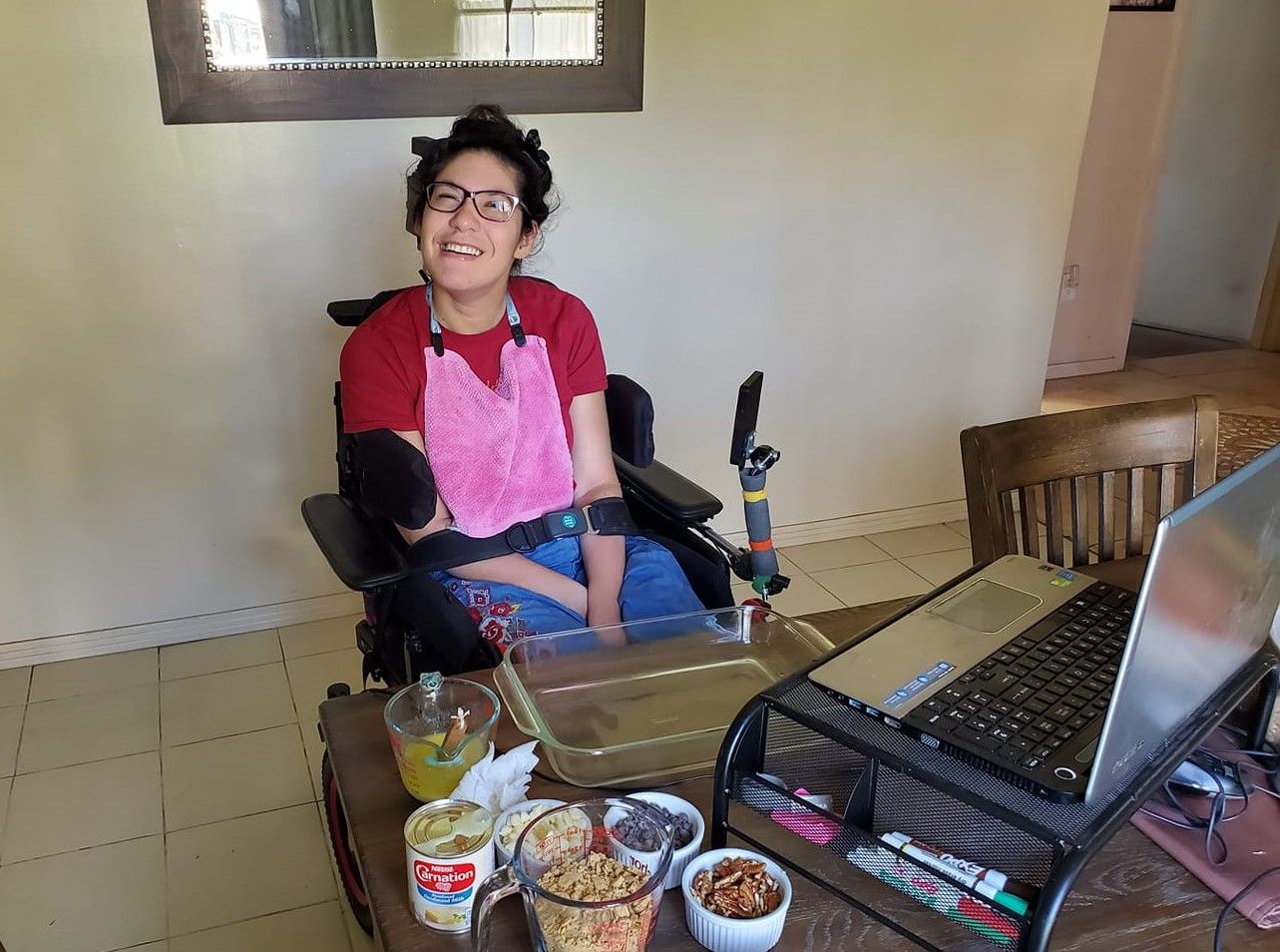
Debbie baking at Camp Paivika | Photo courtesy of AbilityFirst

According to Haussling, Ability First closed their work centers in December 2019. “We have since launched several new adults programs (mentioned above) and we have an expanding Supported Employment Program. In 2021 we completed a merger with FVO Solutions and we now run their manufacturing program as part of the acquisition.”

This merger gave AbilityFirst the capability to provide equipment and material storage, and to service a wide variety of assembly needs with a dedicated work-force, including: kit assembly; prototype to high volume runs; finished products and sub-assemblies; re-work; mechanical assembly; point-of-purchase displays; gluing and heat sealing; metal frames; and parts salvaging.  They work with customers across many markets including government, commercial, consumer and industrial. 

Rounding out AbilityFirst’s programs is Camp Paivika (a Native American word meaning “Dawn”) in the san Bernardino Mountains. It was begun in 1946 by the Rotary Club as one of the first full-accessible camps in the United States and has been in active operation since. It is maintained through endowments from donors and fund-raising efforts by community members.

Going to summer camps helps children develop social and communications skills as they participate in activities with other kids. It helps individuals build character and gain self-respect as they become responsible for their own safety and survival in a setting outside their comfort zone.

Camp Paivika offers this same independence and self-reliance for children, teens and adults with physical and developmental disabilities. Specially-trained members of AbilityFirst staff provide assistance and guidance as campers enjoy all the fun activities available to them – archery, arts & crafts, campfires and cookouts, nature hikes, horseback-riding, swimming. It is fully accredited by the American Camp Association.

Kelly (second from left) at City of Hope | Photo courtesy of AbilityFirst

In its 96 years of existence, AbilityFirst has touched thousands of lives and has made it possible for people with disabilities become productive, participating members of society. One successful ‘alum’ is Kelly who was in AbilityFirst’s College to Career program. On May 16 this year, she joined four other interns in the first Project SEARCH internship program, an AbilityFirst partnership with City of Hope and the San Gabriel Pomona Regional Center. An internationally known training model, it is designed to provide vocational training in a natural work setting to individuals with disabilities. It involves an extensive period of skills training and career exploration, innovative adaptations, long-term job support, and continuous feedback from on-site supervisor and trainers. The goal for each program is competitive employment.                 

What a supremely gratifying outcome! The founding Rotarians would have been so pleased to see how their foundation has grown to become ever more responsive to people’s needs. And with this year’s return of the AbilityFirst Food and Wine Festival, the organization is certain to reach its centennial with an impressive array of programs to help individuals with disabilities enjoy fulfilling lives.    
Masters of Taste 2022 — a Delicious Way to Donate to a Worthwhile Cause

Originally published on 10 March 2022 on Hey SoCal

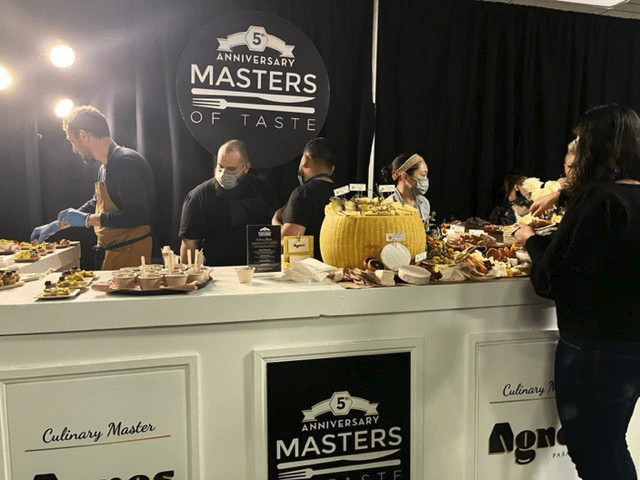
Agnes Pasadena, which serves delectable cheeses, is one of the participating restaurants in ‘Masters of Taste 5th Anniversary’ | Photo courtesy of May S. Ruiz / Hey SoCal

Two years after the pandemic unceremoniously canceled the Masters of Taste’s planned event, it’s coming back to Pasadena! So mark your calendars for the Masters of Taste’s 5th Anniversary to be held on Sunday, April 3 from 3 p.m. to 7 p.m. at the world-famous Rose Bowl.

Approximately 100 Los Angeles-area food and beverage experts will again gather in one place to create masterpieces for Southern California’s gastronomic aficionados, all for a worthwhile cause.      

Masters of Taste 2019 was a sold-out event that attracted over 3,000 guests and garnered media attention throughout Southern California and beyond. This fifth-anniversary event is also expected to bring over 3,000 food and beverage enthusiasts together for one afternoon to celebrate this exhilarating festival, which will include the finest fare from culinary masters and restaurants, delectable sweets prepared by L.A.’s top sweet masters, and leading beverage masters.

A Media Night was held on Thursday, March 3, at the locker room of the Rose Bowl for a sampling of what foodies can expect at Masters of Taste 2022 and to introduce this year’s host chef, Vanda Asapahu. At the organization’s inception in 2016, she was one of only two female chefs. And now she’s the first female chef to take on the mantle of this prestigious food festival.

Vanda Asapahu is the first female chef host of Masters of Taste | Photo courtesy of Masters of Taste

Chef and owner of Ayara Thai Cuisine, Asapahu went to college at UCLA and to graduate school at Yale. She then spent four years living, traveling, and working her way through Thailand before returning home to Los Angeles. During her stay in her native country, she absorbed the Bangkok street food scene and revived old family recipes. Taking up the torch of her family’s culinary tradition, she brought back these treasured old recipes and new flavors to share at Ayara Thai. And in May 2019, Ayara Thai Cuisine was named one of “Michelin Guide California’s 2019 Bib Gourmands.”                    

Masters of Taste is the brainchild of Rob and Leslie Levy, owners of The Raymond 1886 in Pasadena. He recalls what drew him to this endeavor, “This goes way back in my childhood. My oldest friend in the world started an organization in Chicago called Inspiration Café, delivering sandwiches to the homeless when she was working as a cop. Then she ended up opening a restaurant for the homeless where they could come in, order off the menu, be served with dignity, and leave with no check to pay. If they were a good client, they were invited to work there and learn a trade. That grew into something huge, with multiple restaurants and cafes, cookbooks, and job training. She did this for 20 years and never took a paycheck – she did it for the love of it. She worked as a massage therapist to pay the bills while she grew this multimillion-dollar organization. It gives me shivers just thinking about her and what she has accomplished – she’s quite a remarkable individual and the most positive person you could ever meet in your life.”

Rob Levy, along with his wife, founded Masters of Taste | Photo by May S. Ruiz / Hey SoCal

“When the former CEO of Union Station Homeless Services asked me to be on the board, I immediately agreed,” continues Levy. “Then we thought we had to change the way we raise funds – we had been to one too many galas where nobody wanted to go, but got dressed up and went anyway because we felt obligated to. We figured we needed to create an amazing event where people aren’t thinking it’s a charity affair and Leslie came up with this idea of getting other chefs to gather for a cause. And what better place to do it than on the field of the Rose Bowl. Thus, Masters of Taste was born.

“We reached out to other chefs that we had done events with over the years and also through Lawrence Moore. When we explained what we were trying to accomplish, everyone agreed to participate. And they were absolutely thrilled when they learned that it was going to be at the Rose Bowl field. The first year that we did Masters of Taste, participants were incredulous when we told them to be on the field for the load-in because events are usually held only at the perimeter. One guy serving for a brewery had played football in college and played on the Rose Bowl field; it was his first time back there since. He actually got teary-eyed at the recollection because now he was there for a reason other than football.

“That same year, a spontaneous line dancing broke on the field – DJs played music and in the middle of everything, there must have been 100 people line dancing. It was a delightful occurrence that was totally unanticipated. That was when we knew we were on to something.       

The Raymond 1886 team at a past ‘Masters of Taste’ event | Photo courtesy of ‘Masters of Taste’

“Then we had one year when it rained which, unbelievably, made it an even better event. Nobody left – 3,000 people on the field and they all stayed through the rain. It was the most memorable year we had. We set out to create an event that was like having a great Sunday afternoon out and it has taken on a life of its own. People want to do good – helping other people is now a movement.”

Lawrence Moore, principal of public relations firm Lawrence Moore & Associates, was one of the founding members of the group that puts up the event. She talks about the inception and evolution of Masters of Taste.

“I had known and worked with Rob and Leslie Levy for several years at the time he was thinking about partnering with an organization for a fundraising event,” he said. “When he sat on the board of Union Station and saw that the homelessness problem was growing – probably well before the rest of us ever realized it – he and Leslie decided that was where they wanted to focus their energies. They came up with the idea of creating an event and having it at the Rose Bowl. There were plenty of naysayers who said they wouldn’t be able to pull it off because no one had ever been allowed to use the field and the cost would be prohibitive even if they were able to.

“However, Rob and Leslie were undeterred; they were determined to do this. They gathered everyone – Amanda Green; Dana Levy, the Assistant Director of Development at Union Station at the time; me; and a friend and colleague of mine Dennis Richardson, whom I brought along, and who’s now our Event Producer. We literally sat down for lunch and just hashed out details, including a to-do list, names of people we needed to call, and so on. It was then decided that we were going ahead with the plan and this was the team to do it. From that day on, I became the event’s public relations person. We had the honor of creating the name and the strategy; we wanted to identify it as a food festival rather than a charity event for the first year, to build excitement from the culinary and beverage standpoint.”

Moore adds, “We met with people at Union Station and when we told them our concept, they were uncertain about it initially. They were used to the standard model of fundraising – holding a gala or a dinner. Additionally, we told them that we wanted to promote it as a luxury food festival instead of a fundraiser; that was the biggest obstacle we had to overcome. But they eventually came around and we held the first Masters of Taste on Sunday, April 3, 2016.

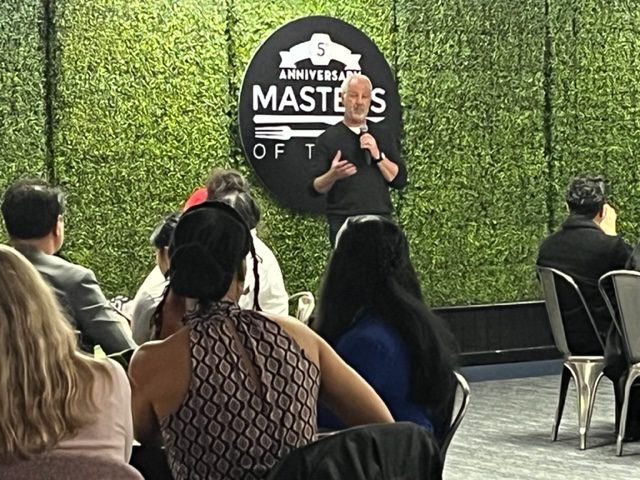
Masters of Taste’s 5th Anniversary Media Night | Photo by Brianna Chu / Hey SoCal

“The experience from that was very positive – we made half a million dollars the first year so we were able to prove we could raise money through ticket sales and private company sponsorships. We had an easier time for our second year because the Rose Bowl people got over their trepidation at using the space for a food festival and they even offered the option to have a Media Night. That’s when we announced the charity and that 100 percent of the proceeds will benefit Union Station. I think that was better received on the second year than it would probably have been the first year.”

“Being a member of the founding team and working on it as well, I am excited because I need to know that the money is going where it’s supposed to go. That was more impactful for me,” declares Moore. “As the years have gone by, I have had the opportunity to work directly with our media sponsors and build a relationship with them. Moreover, we are now able to invite more media to the actual event. And because everyone in the media has been introduced to the charity personally, they have a bigger investment in the event’s success. They are now part of the team and have put Masters of Taste on the map as L.A.’s foremost food event. It highlighted the cause and gave integrity to the event.”

‘Masters of Taste 2022 Team and Participants | Photo by Brianna Chu / Hey SoCal

The return of Masters of Taste this year has taken on an even greater significance. Anne Miskey, Union Station’s CEO, expounds, “Two years ago, Covid hit. And one of the first things that all of us heard was stay home to stay safe. The people we serve don’t have homes. So we had a crisis on top of a crisis here in Los Angeles. I’m very proud to say that my staff all went into high gear not only to help all of those people living on our streets, but also to keep them safe from Covid. Over the last two years we opened some sites – hotels and other buildings – where we could bring people inside safely.

“I remember sitting down and talking to one gentleman who had been living on the median down the street in his tent. He spoke about what it was like to come in a room, with a bed and a bathroom, a microwave and a coffee pot, and to be treated with dignity and respect. Of all the things he said to me, what hit me the most wasn’t the bed but of having someone acknowledge his humanity and care what happens to him. And that is the work that we do at Union Station. We recognize the humanity in all of these people living on our streets – we walk beside them to get them permanently housed, gain stability, and be able to hope and dream again.”

Miskey says further, “The people we serve have been hit incredibly hard, but we’re not the only ones. We know that the restaurant industry suffered over the last couple of years. So I want to thank all our chefs, our beverage masters, our vintners, our distillers for staying with us after two years of hell.”  

Union Station Homeless Services CEO Anne Miskey | Photo by Tom Williams / Hey SoCal

Asapahu underscores what Miskey has pointed out, “This year’s event will have over a hundred culinary, beverage, and sweets masters. Many of us are still understaffed, we still have ingredient and raw material shortages, and every issue possible. But what sets people in the restaurant industry apart from others is their willingness to give and give and give, until we have nothing left to give. There are a lot of restaurants that couldn’t join Masters of Taste this year, but please show all the love and support to those who are going to be there. We’re barely getting out of the pandemic and they’re donating their time and their food.”

“This is L.A.’s biggest food event. And every dollar goes to Union Station Homeless Services, which provides meals, housing, and services to the homeless community of Los Angeles. There are currently 66,000 people in Los Angeles who are homeless, which is probably an under-reported number, and it breaks my heart. And while this issue can’t be solved overnight,  every guest, participant, and media person attending Masters of Taste is working towards a solution,” concludes Asapahu.

The pandemic has challenged all of us; we have been tested and stretched to our limits. And the restaurant business has been the hardest hit. Many restaurants were forced to shutter permanently and those that have managed to reopen when it was safe continued to struggle. Even as health and safety protocols have been eased, social distancing and masking mandates lifted, restaurateurs still have difficulty finding people to work. No dining place – whether it’s a sit-down restaurant or a drive-thru – has been spared the staff shortage. And yet when they were called to come and help, they happily stepped up to the plate.

Masters of Taste 2022 will be an extraordinary event not only because it’s poised to break its all-time record of raising money to help L.A.’s homeless population, but more so because it will demonstrate the resilience of humankind and endless generosity and giving spirit of restaurateurs and beverage company owners. Let’s eat and drink to them and the event’s great success!

Pasadena Filmmaker’s Short Documentary Attracts Tens of Thousands of Online Viewers

Originally published on 27 March 2019 in the Pasadena Independent, Arcadia Weekly, and Monrovia Weekly

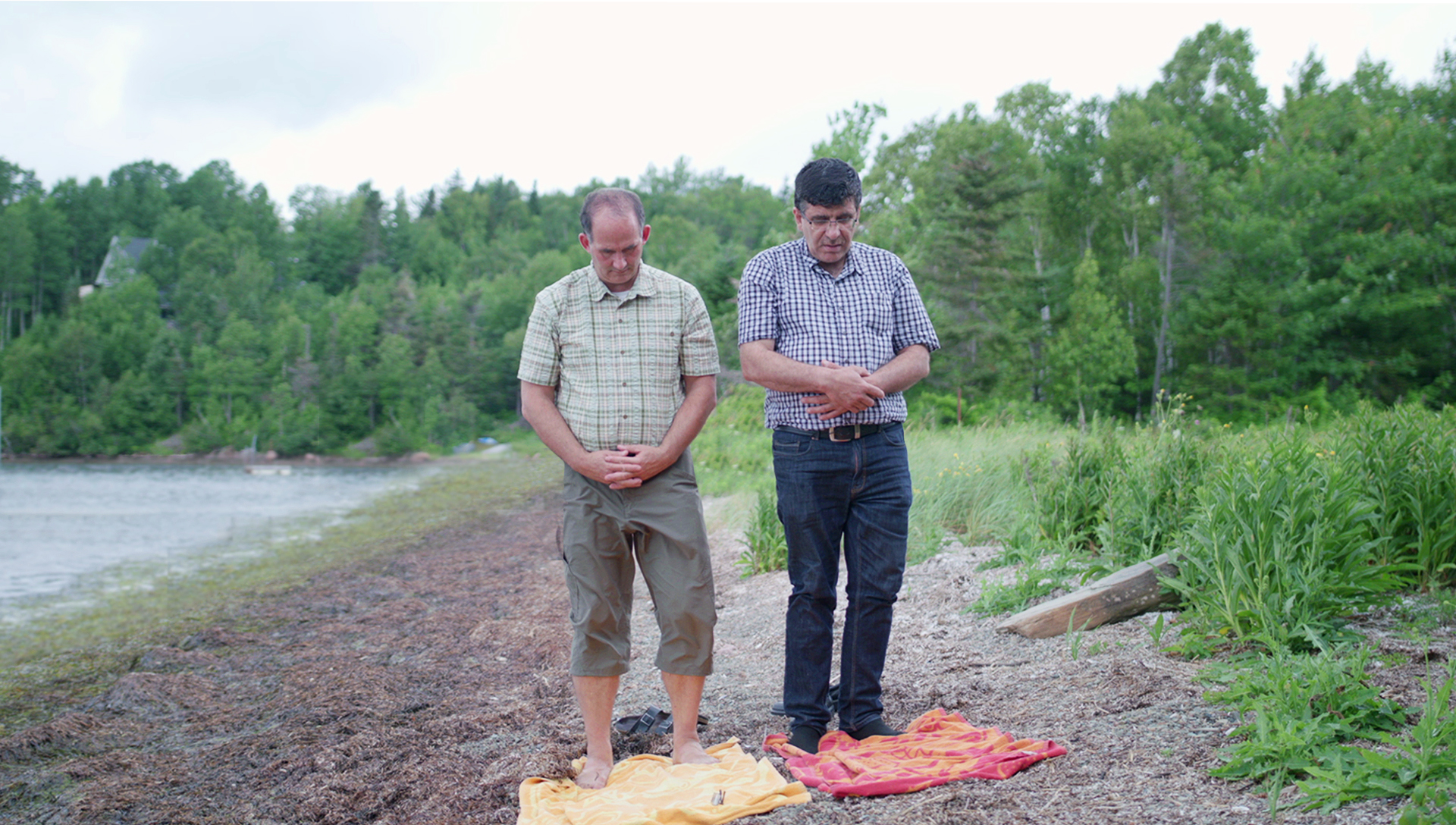
Frank Gallant and Issam Hadhad in ‘Brothers’ | Courtesy photo / Magnetic North Pictures

Jonathan Keijser is a young filmmaker in Pasadena who has been working on a based-on-a-true-story feature narrative about the Hadhad family, who moved from Damascus, to Lebanon, and eventually to Nova Scotia in Canada, and how the community came together and rebuilt the Hadhads’ business from scratch.

In the process, Keijser met Frank Gallant, one of the Nova Scotians who helped the Hadhads. That circle of friendship – between Gallant, Hadhad, and Keijser – led to the production of another, much shorter documentary about a camping trip. And that film, called ‘Brothers,’  became part of ‘The Atlantic Selects,’ an online showcase of short documentaries from independent creators, curated by The Atlantic. It has been online for three weeks and seen by several thousand viewers.

Taking a break from his feature film project, Keijser chats about how this short documentary came about.

“When I was researching about the main people involved in the story, I came across Frank who was the Canadian local who befriended Issam and helped him build his chocolate business out of nothing. Frank provided valuable assistance when I was writing the script. We would communicate by phone every couple of weeks or so, and we struck up a friendship.

“Last summer, after Frank and I had been talking on the phone for a year, I asked what he was doing for the summer and he said he wanted to do some Canadian things out in the wilderness with Issam. Issam’s never gone camping and Frank loves to go camping. And I thought that would be such a cool film and decided to do something about it. So I called Frank and told him I would like to follow him and Issam on their first camping trip together. While Frank wasn’t sure what anyone would find interesting in it, he good-naturedly agreed.”

Keijser adds, “In documentary filmmaking, it’s imperative to establish trust between you and your subject because if they don’t trust you, not only will the things they tell you sound inauthentic, but you won’t have the kind of access necessary. In this case, Frank could have said ‘I wouldn’t be comfortable with you filming that.’

“During production, there were only two of us, which allowed us to embed into scenes more easily. Typically when you’re trying to shoot observational footage, it’s always a challenge to stay inconspicuous. But after a few hours of us being together, Frank and Issam, for the most part, forgot we were even there. However, there was one instance where Issam broke the fourth wall and offered us some food he had just cooked at the campsite, knowing we hadn’t had dinner yet. Frank had to gently remind Issam that we, the crew, ‘were invisible.’ Issam quickly apologized but we silently smiled because it was just another example of how kind and considerate Issam’s nature is.”

“Being invisible is such an interesting skill – in fiction, it’s all about the camera, doing the takes, having the light, getting everything perfect; in documentary, it’s about you disappearing, you’re non-existent, you’re a fly on the wall,” Keijser elucidates.

Courtesy photo | Peace by Chocolate

Their little adventure, which took two days of filming and two months of editing, is called ‘Brothers’ for a reason. Keijser discloses, “The title is based on Frank’s and Issam’s brotherly friendship. In the campfire scene in the film, Frank mentions how happy he is to be camping with Issam, like brothers. Issam also stated during our interviews with him that he thinks of Frank as a brother.”

‘Brothers’ may be a short documentary but Keijser paid as much attention to details as he would making a feature film. He utilized the knowledge he gained from his Master of Fine Arts degree from University of Southern California’s School of Cinematic Arts and his Bachelor of Music degree (in classical doubles bass performance) from McGill University’s Schulich School of Music for it to approximate a movie experience.

“The music is a completely original score,” Keijser says. “As a musician myself, I was pleased to have been able to collaborate with composer David Bertok on the shaping of the style and tone of the music. It was important that the music reflected the celebration of cultures in the story. We did this by blending traditional Nova Scotian and Middle Eastern sounds in the instrumentation. The accordion is used throughout, which is rooted in the Scottish heritage of Nova Scotia as well as the darbuka, a goblet drum, often used in Middle Eastern music.”

Keijser sent his short documentary to The Atlantic, a prestigious publication, where it has gained worldwide viewership. He adds, “The film will be available to the public indefinitely. It shares a timeless message that is increasingly more relevant today. It has subsequently been picked up by other media outlets, including Mother Jones.”

But Keijser is hardly an amateur in the genre. He is an award-winning storyteller with a strong focus on creating socially conscious content. As a film and theatre director, and screenwriter, he is committed to sharing compelling stories of progressive communities and people, with the goal of helping encourage positive social change in the world.

Before his film career, Keijser founded a non-profit theatre company for emerging artists in Montreal, Canada. He directed fully-staged Broadway productions, including ‘Into The Woods’ and ‘Cabaret,’ both of which received critical acclaim. Pat Donnelly of the Montreal Gazette called him ‘a promising young director’ and described his shows as ‘packing an unusually powerful punch, with a cast that works like a team.’ His films and stage productions have played at over thirty festivals and venues around the world since.

In 2016, Keijser’s feature film, ‘What Would Beethoven Do?,’ had its world premiere at the Cleveland International Film Festival where it held three sold-out screenings and took home an audience award. The film questions why we create art by following three superstar musical renegades as they independently take action to repair the fractured and ailing world of classical music, reinstating its relevance in the 21st century.

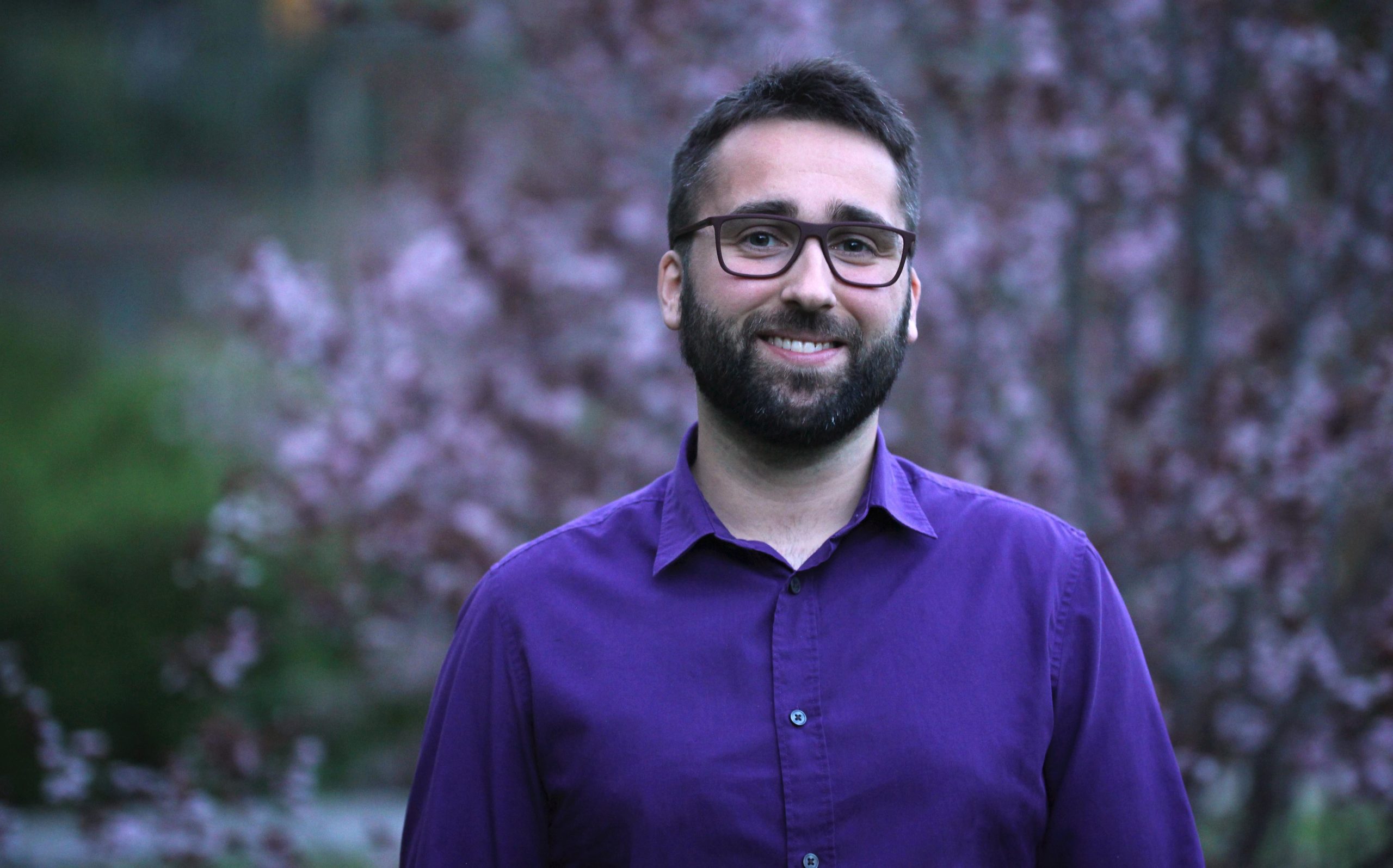
Jonathan Keijser | Courtesy photo / Magnetic North Pictures

Keijser believes that in order to inspire and challenge audience perceptions, content must be both reflective and humorous. To make an impact, stories must go beyond a single message approach and allow viewers to draw their own informed conclusions. Instead of providing definitive answers to difficult questions, he encourages increased awareness to help broaden perspectives as a way to spark curiosity and effect positive change.

It was in that spirit that Keijser created a larger project about Peace by Chocolate, the Hadhads’ family business. He clarifies, “The feature film follows the Hadhad family from their immigration to Antigonish, Nova Scotia, to the process of their rebuilding their lives in their new Canadian homeland. Although the short documentary, ‘Brothers’ is a separate story and is not directly related to the storyline of the feature film, it shares a similar tone in its warmth and sweetness. It is particularly special to me as I grew up in the Canadian province of Nova Scotia. Not only does the warmth of the community reflect my experiences in Nova Scotia, but also the importance of spending lots of time in the wilderness and natural beauty of the province.”

“I’m very happy the documentary launched in The Atlantic, where people can just go online and watch it,” continues Keijser. “Its purpose is more a social cause than financial gain. In the short time it’s been up, I’ve gotten tons of comments – most of them have been very, very heartening. People are saying, ‘Finally, something positive’ or ‘Finally, something uplifting!’ But that’s the theme in all my work. I want to leave the audience with some hope for the future, to believe they can actually do something that makes a difference. And it doesn’t have to be on a grand scale – it could be a simple interaction with someone else.”

“My vision for the ‘Brothers’ documentary was very much what Frank said at the end,” explains Keijser. “Starting a conversation with somebody is the basis for a connection. And vice-versa, connection can lead to a conversation. That’s what the documentary is about – we’re more similar than we are different as human beings. It only takes you having a conversation or connection with someone to realize it and to shrink that gap.

“I hope Issam’s and Frank’s friendship encourages audiences to be more open when meeting someone seemingly different from themselves. Although we don’t all share the same background or speak the same language, we are all the same underneath. Stories like theirs are proof that good can come from love, inclusion, and acceptance. When we turn people away, it not only furthers the divide between us, it builds resentment as well. Films like this can give hope to the millions of displaced refugees around the world and inspire others to help. We never know when we ourselves may need a helping hand.”

Keijser’s ‘Brothers’ could not have come at a better time. Given today’s political and social climate, we are in dire need of constructive examples to emulate.

Bone Kettle’s Delicious Offerings Continue to Captivate Diners

Originally published on 17 January 2019 in the Pasadena Independent, Arcadia Weekly, and Monrovia Weekly

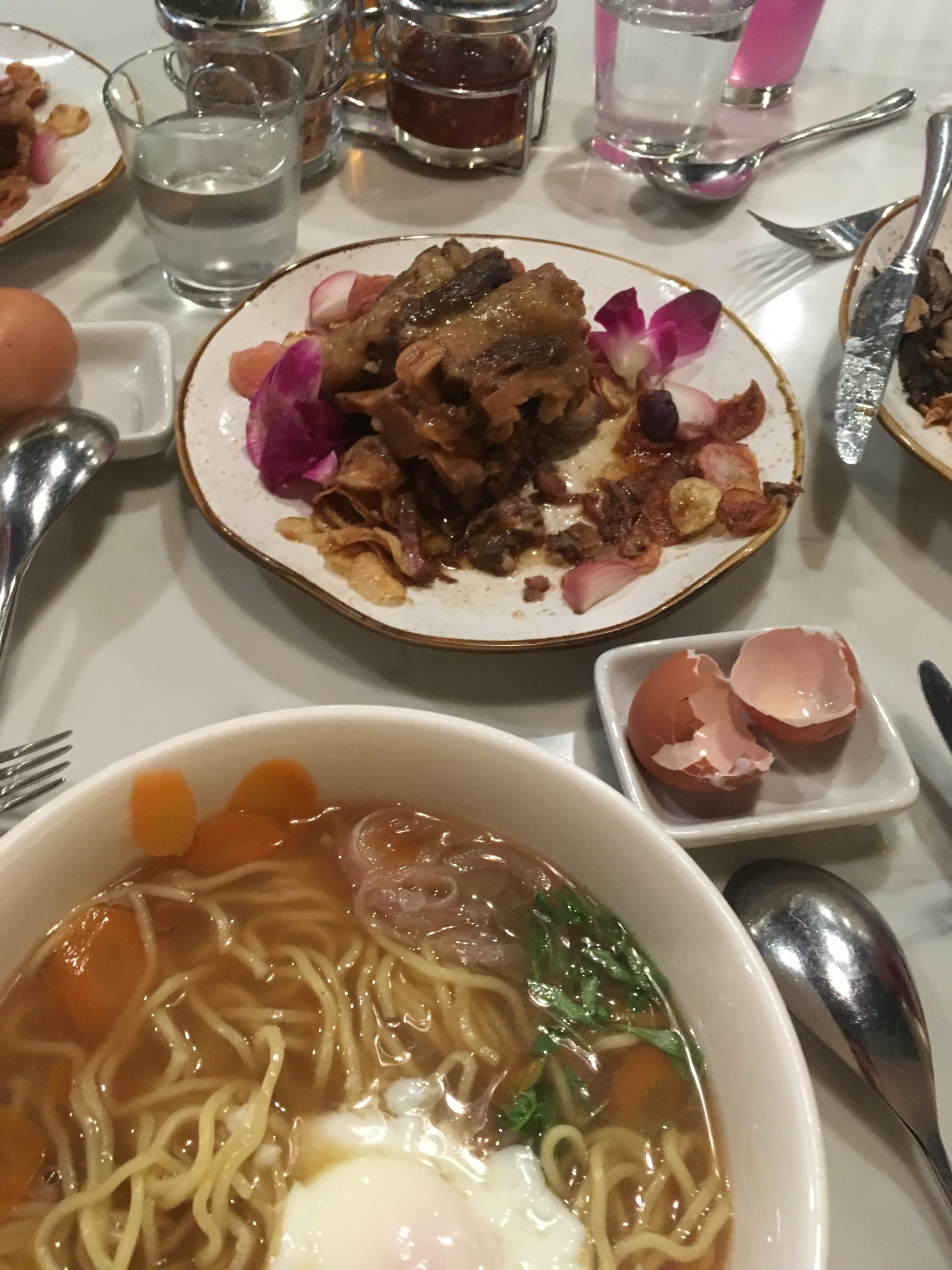
Bone Kettle’s St Helen’s braised oxtail with ramen noodles is the perfect comfort food | Photo by Brianna Chu

By Brianna Chu

Last year, May and I were invited to a PR mixer at the Bone Kettle, a Southeast Asian restaurant and bar in Old Pasadena, and the food was, as hoped for, simply amazing. I loved it so much that I revisited the restaurant last week with my family for lunch to try their full menu on for size. Sure, the food at the mixer was good, but they knew they were throwing an event for the Press. How good was their food normally? And what hadn’t I tried yet?

At their opening time of 11:30 am, there were available tables everywhere in the young, modern space, and we easily got a great booth in the main dining area. Over the next hour, though, tables began to fill up rather quickly for a random weekday. Service was fast, too – our main courses were served almost immediately after we finished devouring our appetizer, and their staff were friendly and helpful.

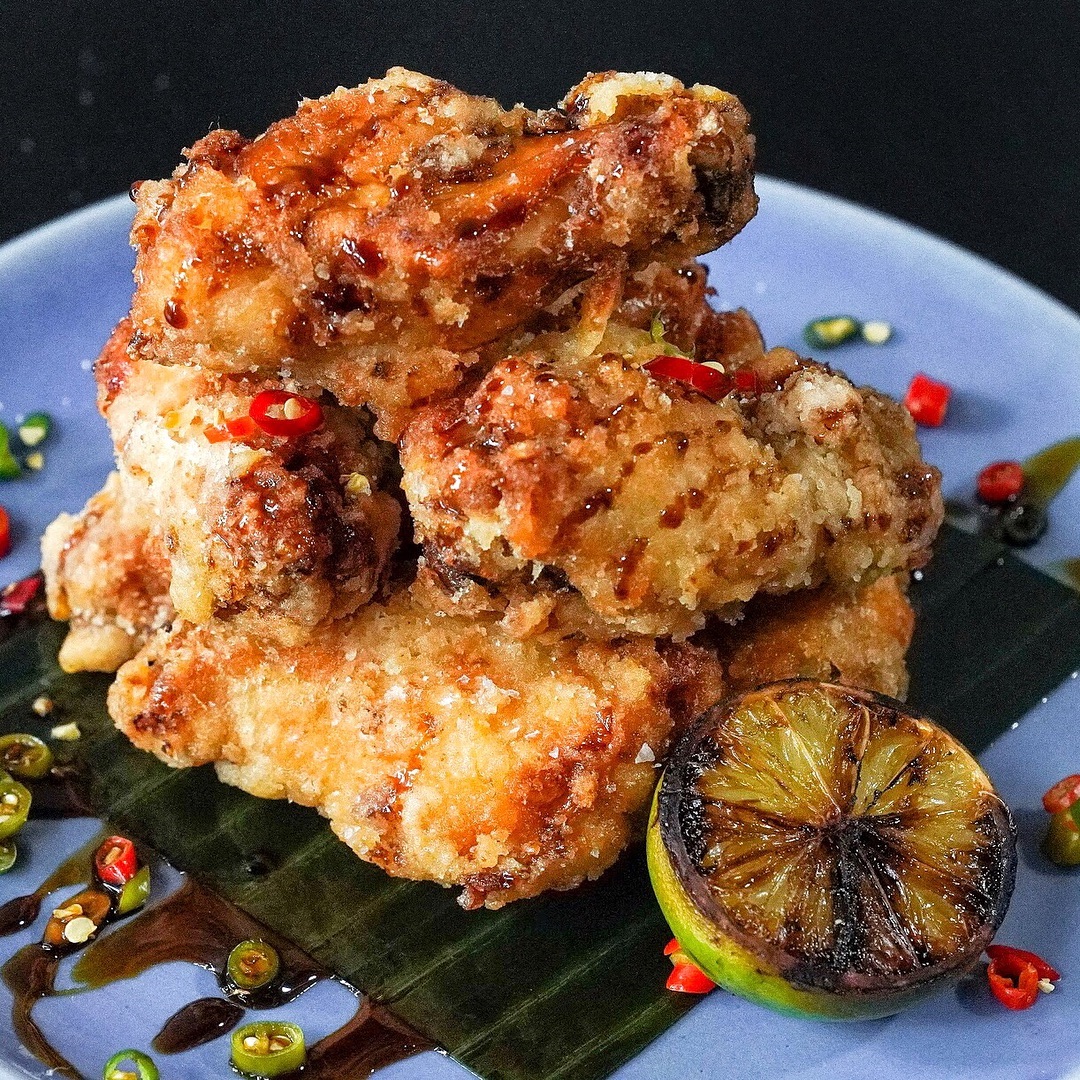
An important note to future diners: the lunch and dinner menus vary slightly. The succulent oxtail dumplings that I was looking forward to were reserved as an appetizer for the dinner menu. Luckily, however, the amazingly juicy and yet perfectly crunchy fried chicken wings with Thai chilis, sweet sauce, and lime did appear on the lunch menu – and tasted just as wonderful as they had previously. I spotted some familiar appetizers like the fluffy kroket, spicy papaya salad, and fried oxtail tips, which we sadly did not sample again since we all wanted to save enough room for the main dishes.

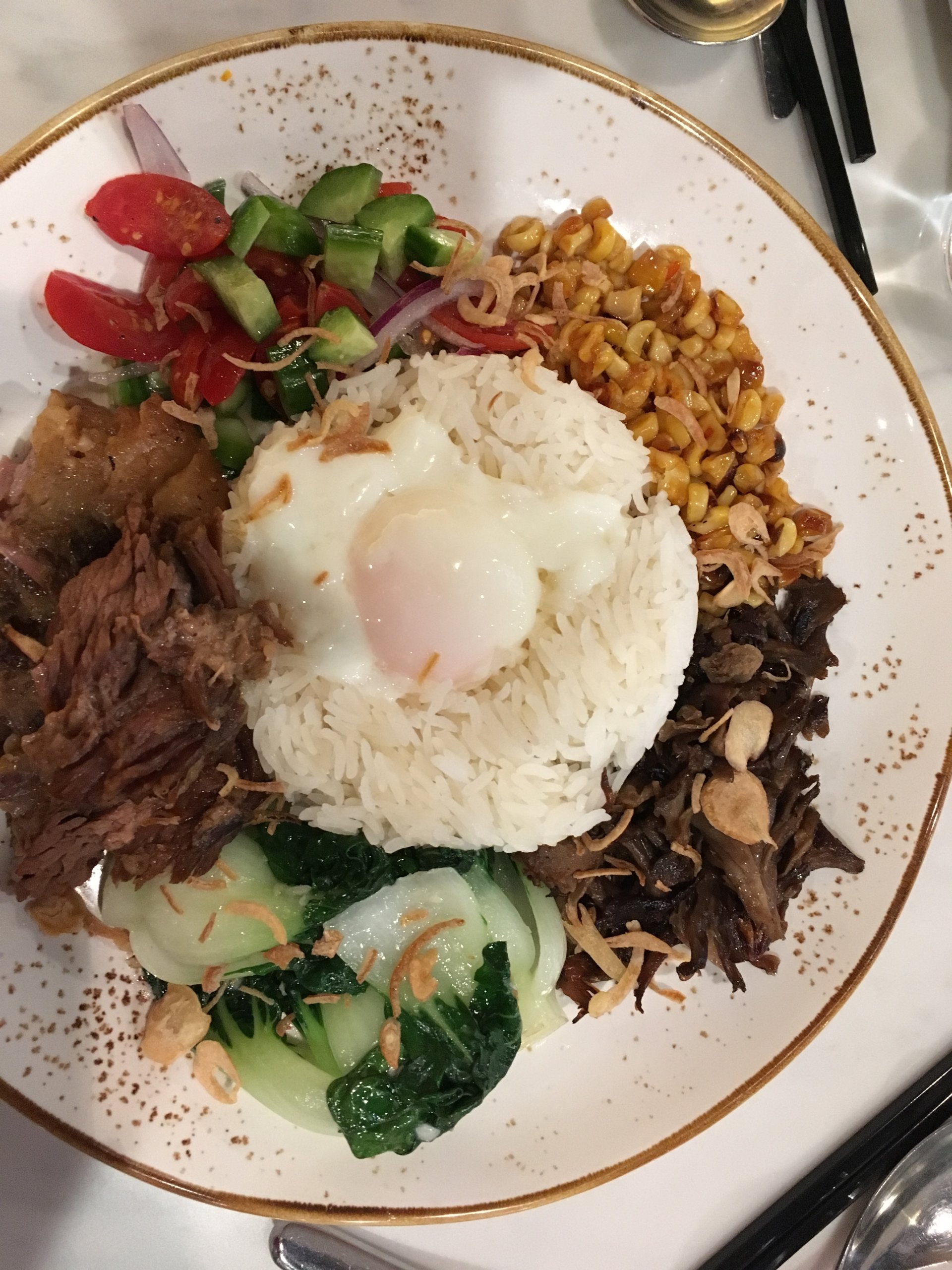
May opted for a rice plate with their fatty beef brisket – it was reportedly excellent, and presented beautifully. Vibrant vegetables and delicious meat haloed a rice plateau that featured a soft poached egg nestled at its center. It was a balanced, delicious plate for about $19-20, though prices vary on your protein choice, from tempeh to varying meats.

The fatty beef brisket rice plate is as delicious as it looks | Photo by Brianna Chu

My fiancé and I both immediately gravitated towards their broth options, though. The restaurant is called the Bone Kettle, after all! We both knew that we had to try their 24 hour, slow-cooked, St Helen’s braised oxtail, served with five ounces of fresh ramen, basil, cilantro, and sliced heirloom carrots, with the addition of a cheeky poached egg (for an extra $2, but I love eggs in my soup). At $24 for the large oxtail, noodles, and broth, I felt the meal was worth the price, especially given that the oxtail was the most expensive protein option for the broth.

As ever, the Bone Kettle’s presentation was impeccable. The oxtail was served on its own plate with crispy fried shallots and edible flowers, and the flavorful, succulent meat could be readily pulled off the bone with our chopsticks. May immediately tried some of my oxtail, and after her first bite, reached for another with the excited declaration that: “This is SO good!”

The bowls of noodles initially arrived broth-less, and a server came swiftly out with a pitcher of broth. Our soft poached eggs came still in their shells on a soy sauce dish for us to break open and serve into our broth when we pleased. I can happily confirm that I was as captivated by their broth this time around as I was the first! I left comfortably full, and even took home some leftover oxtail.

I wanted to check out the restaurant on my own time (and dime) to see whether I would enjoy the food and atmosphere just as much, and the Bone Kettle did not disappoint. I highly recommend the restaurant to everyone, as there are options for meat-eaters and vegans alike.

Brianna Chu, a guest opinion writer for Beacon Media, was born and raised in Pasadena. She loves to cook and to eat, is a lifelong viewer of Food Network, and enthusiastically introduced the tradition of Thanksgiving dinners to her British and European friends while earning her degree at the University of St Andrews.

Bone Kettle Serves Up Delicious Southeast Asian Cuisine with a Twist

Originally published on 20 November 2018 in the Pasadena Independent, Arcadia Weekly, and Monrovia Weekly

The chicken wings are a favorite among diners at Bone Kettle | Courtesy photo

By Brianna Chu and May S. Ruiz

Old Pasadena is a commercial district on the westernmost part of the city comprising 22 blocks where an eclectic mix of enterprises happily co-exist. There are museums and hotels, hotels converted into residential apartments and office spaces. There are a multitude of businesses – clothing retailers and coffee shops, dining venues and dress accessories stores, cosmetics shops and cinemas, jewelry and kitchen stores, nightclubs and sports bars, tech-selling stores and telecommunications service providers – housed in beautifully restored, historic buildings. You name it, it’s there.

Bone Kettle, an Indonesian fusion restaurant on North Raymond Avenue, has recently joined the numerous food establishments in this melting pot Pasadenans refer to as Old Town. It is co-owned by the Tjahyadi Brothers, Eric and Executive Chef Erwin, who immigrated to the San Gabriel Valley from Indonesia with their parents over two decades ago. They arrived with practically only the clothes on their back, except for an English dictionary to help them get by in their adopted country, and a few Indonesian cookbooks to remind them of home.

After 20 years, Chef Erwin went back to Indonesia on a quest of self-discovery. Through his travels in his birthplace, he reconnected with his childhood as he once more smelled the fragrance of spices that flavored the complex dishes he grew up with.

That reminder of his heritage inspired Chef Erwin to open a restaurant which deliciously blends heirloom recipes from his mother’s and grandmother’s cookbooks with local California ingredients and French classical techniques. His training at Le Cordon Bleu in Pasadena and apprenticeships under Wolfgang Puck and Trey Foshee have prepared him for the intricacies of creating unforgettable dishes. Thus, Bone Kettle was born.

Chef Erwin | Courtesy photo

“Living in the San Gabriel Valley, we would frequent Pasadena,” Chef Erwin informs us by email on his choice of restaurant location. “And it’s always been a dream to open in Old Town. It’s charming and rich in history; we love all the old buildings. Being here makes us feel like we’re part of not only a community but of something bigger.

“Because of the emergence of ever more Asian restaurants in Pasadena, we felt the city is prime for our food. At the same time, we felt compelled to represent our cuisine in our own authentic voice and perspective.”

And the community has been exceptionally welcoming, discloses Chef Erwin. “The reaction has been positive and overwhelmingly warm. We love it when customers are able to make a very personal connection and relate the cooking experience with their own. They appreciate that Bone Kettle is a family-run restaurant for Pasadena families and friends. In turn, we are enjoying getting to know our diners and making new friends.

“We want our patrons to remember their dinner at Bone Kettle as something that reflects the highest standards of quality food, with imaginative dishes of great flavors,” adds Chef Erwin. “I hope that through the food we serve, they see that we passionately care about the guest experience. And that, ultimately, we are able to tell our story.

Brianna’s review below speaks to Chef Erwin’s love of food and culinary mastery.

When my old high school friends and I met up after we all graduated to share our experiences over the past four years, we noticed that despite the disparate locations in which we studied, all of us missed the range of food available here in Los Angeles County. Even just in the Pasadena area, we do not lack for diversity of cuisines; the Bone Kettle in Old Town exemplifies the broad variety of food which we enjoy.

Bone Kettle’s modern interior | Courtesy photo

You can expect an Indonesian and Southeast Asian food experience when coming to the Bone Kettle, a small, family-owned restaurant and bar with a modern and chic atmosphere on Raymond Avenue. It’s only about a year and a half old, and full of surprising contrasts. While it has a young and modern feel not only in its decor, but also by its playlist – when we came in, there was relaxed electronic music softly playing – the restaurant feels homey and comfortable, too, as the head chef’s father served us plates that his son had just made, explaining to us what the dish was.

May and I aren’t particularly big fans of alcohol, so we ordered two non-alcoholic drinks: the dragonfruit lychee lemonade, and a raspberry and yuzu drink. The dragonfruit lemonade tastes entirely like lychee and dragonfruit, which definitely brought me back to my childhood eating dragonfruit and lychee jellies. The raspberry and yuzu drink was a gorgeous ombré of light lilac into deep magenta and tasted as close to candy as actual fruit can, while also having an incredibly refreshing and fragrant taste.

We were pleasantly bombarded with samples of many of Bone Kettle’s small sharing plates. Shortly after we sat down, two dishes were placed on our table. While slightly spicy, the papaya and shrimp salad was also tangy and delightfully crunchy. Tips of salty, fall-off-the-bone tender oxtail with freshly fried and crisp slices of potato followed, in perfect contrast to the salad.

One of the restaurant’s favorites, the oxtail dumpling, is understandably popular. The dumpling was served in deeply savory and rich but also slightly acidic sauce, complementing the succulent oxtail dumpling, whose filling dripped with au jus and marinade.

The oxtail dumplings are rich in flavor | Courtesy photo

Their kroket are fluffy and delicate, filled with an incredibly smooth paste of beef with pieces of carrot and peas, but surprisingly, it was served in hoisin sauce. The combination dumbfounded me; I could never have imagined that these two things would ever taste great together, let alone be found in the same dish, but I was pleasantly surprised by the depth that the hoisin sauce brought to the lighter, more one-toned kroket.

I managed to snag a bite of deeply umami and also somehow cheesy tartare, which was served on a shrimp cracker; after which, we were treated to shots of the restaurant’s famous bone broth – incredibly rich but eminently drinkable. Every sip is clearly imbued with the incredible flavor of bone marrow. This is not a broth that is merely a vessel for other ingredients – it has its own flavor that demands attention. When waiters circled back with second rounds of bone broth, hands from all tables immediately reached towards the tray for seconds.

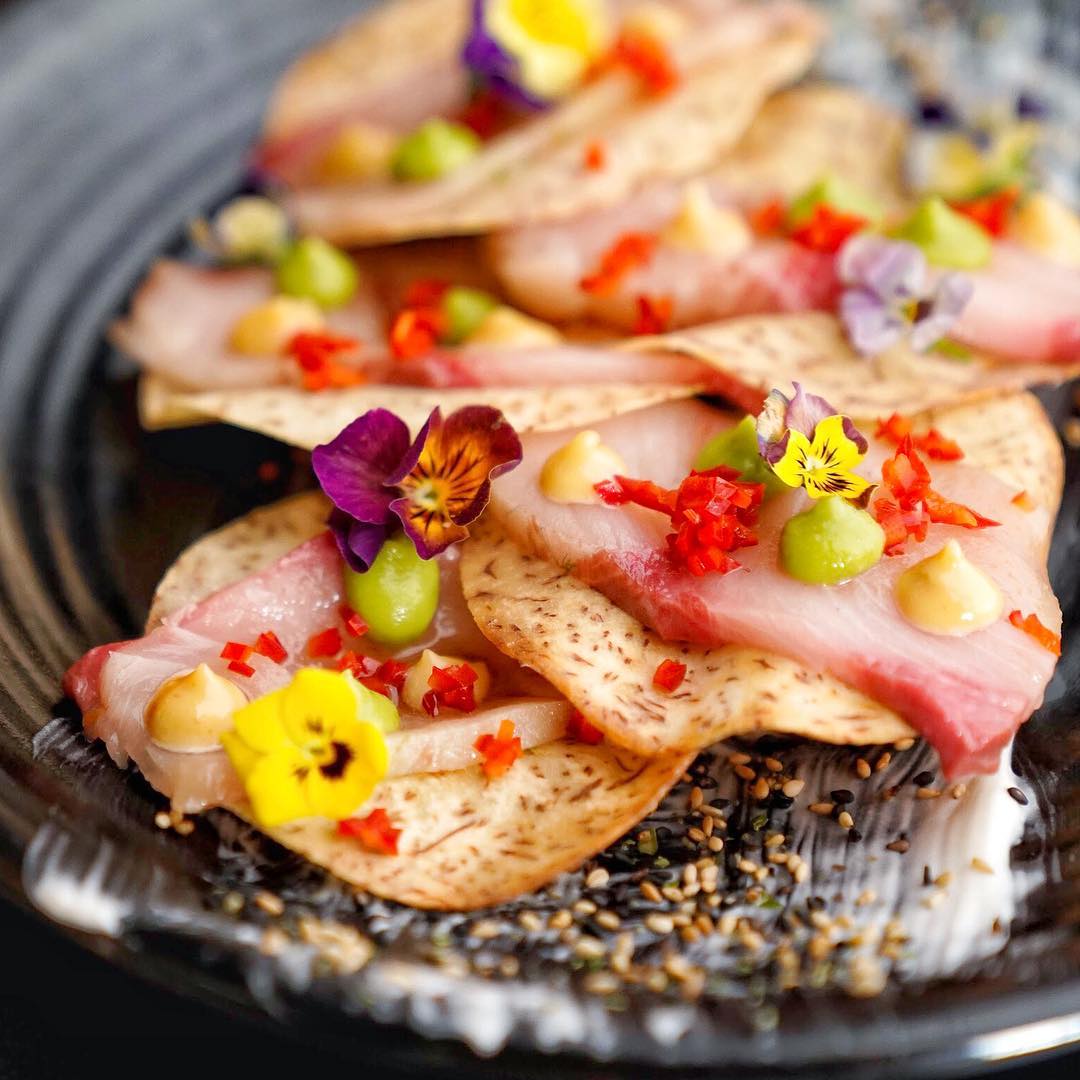
Even more irresistible bites followed: Hamachi crudo with green onions and peppers and fried chicken wings. The sweetness of the fresh yellowtail made the crudo light and addictive, with a light pop of heat from the peppers. I had my eye on the tray as it went around the room and I unabashedly took the last one when it was offered.

The hamachi crudo with green onions and peppers | Courtesy photo

The fried chicken wings with Thai chilis and a sweet sauce are another of the Bone Kettle’s popular dishes, for a reason – the wing was perfectly crispy, the sweetness from the sauce woken up by the kick of the Thai chili, and the chicken was juicy and perfectly cooked. May started volunteering me to take every leftover sample of food they brought out. I protested, but mostly out of pride…

A third round of broth came out – and it was gone in a matter of seconds. As I drank the broth, I marveled at its richness, but as soon as I finished a sip, I noticed how light it was and immediately reached for more.

The penultimate appetizer was a Rendang rice fritter with a filling of short rib, slow cooked for 15 hours, and cheese. The cheese really shone through, and the pulled short rib was pillow-soft. In the cross-section of my bite, I could see each individual grain of rice used to make the coating. The rice was crispy on the outside, and not too soft within, maintaining the structural integrity of each grain of rice for some texture.

The rendang rice fritter has a filling of short ribs slow cooked for 15 hours | Courtesy Photo

The finale: a platter of drier, crunchy coconut-braised fried chicken with a spicy salsa made from an unusual set of vegetables.

As the restaurant is sandwiched between a burger joint and a barbecue place, some might think that the Bone Kettle would struggle to compete with such classic American favorites. However, I’d argue that the Bone Kettle is perfectly situated to exemplify the diversity of flavors in Southern California.

The Bone Kettle is the kind of place where I’d want to take my girlfriends to on a weekend for some good food, and catch up on our weeks. I can’t wait to go back and see what more delights they have to offer on their full menu!

Brianna Chu, a guest opinion writer for Beacon Media, was born and raised in Pasadena. She loves to cook and to eat, is a lifelong viewer of Food Network, and enthusiastically introduced the tradition of Thanksgiving dinners to her British and European friends while earning her degree at the University of St Andrews. While they absolutely hated going around the table and saying what they were grateful for every year, they also loved the excuse to get together and feast with friends enough to endure it anyway.

The Pie Hole Offers Fare from Original Recipes

Originally published on 19 November 2018 in the Pasadena Independent, Arcadia Weekly, and Monrovia Weekly

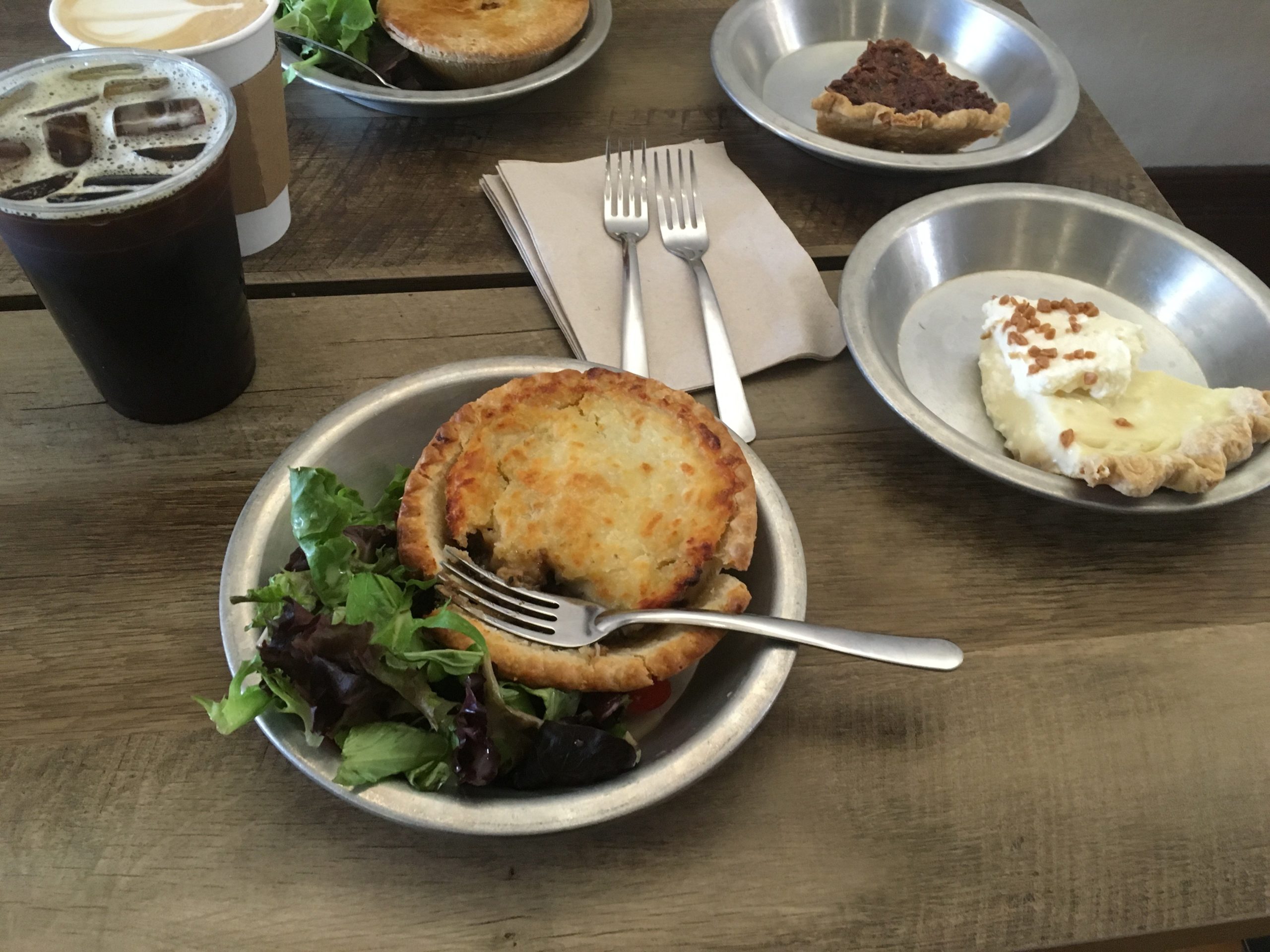
The chicken pot pie and salted caramel pecan pie, served in pie tins, and a cup of latte | Photo by May S. Ruiz / Beacon Media News

By Brianna Chu and May S. Ruiz

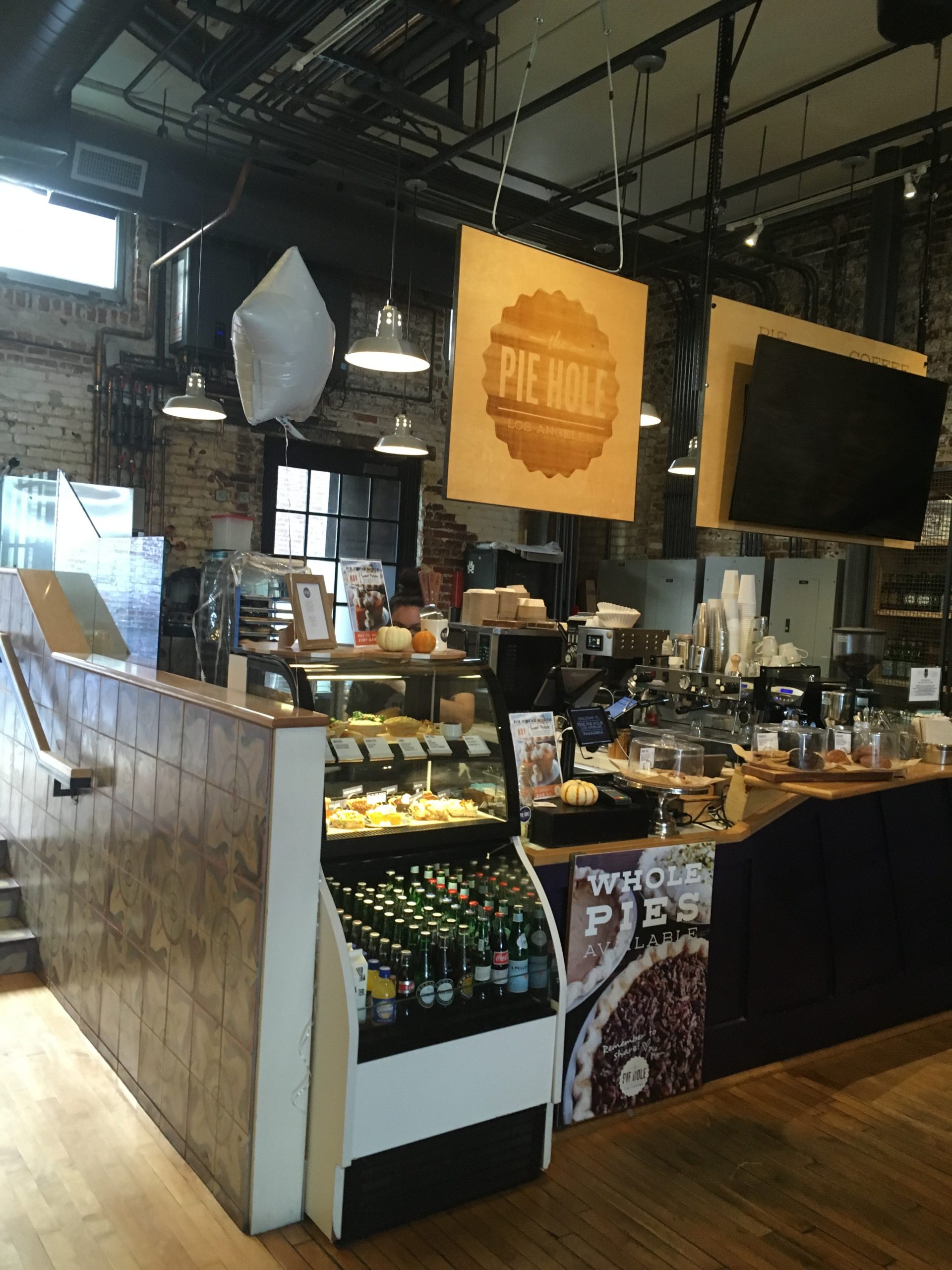
The Pie Hole, located at the Indiana Colony in  Old Pasadena, serves up the kinds of pies that are not found at regular cafés, diners, or restaurants. That’s because the items on its menu were created by Becky Grasley who comes from a long line of bakers and cooks in rural Pennsylvania, where pie is a way of life.

Grasley and the other women in her family showed their love through baking and marked the seasons with the pies they made. She continued this tradition with her own children, using recipes that have been passed on from one generation to the next. She baked pies after school and took them to the fair, where her apple pie won the blue ribbon.

Years later, when her children were grown, Grasly spent a Thanksgiving weekend baking countless pies for friends and family at a remote cabin. And her life-long dream of opening up a pie shop got closer to actuality.

With co-founder Sean Brennan, whose restaurant experience balanced her pie-making skills, Grasley established their first eating place in October 2011, at the Arts District in Los Angeles known as Bloom Square, in honor of a local legend and activist who owned a neighborhood convenience store. They named it The Pie Hole and it became an instant hit.

Brennan, speaking with us via e-mail, answers questions that range from where they choose to open shop to how they keep the standards in all locations. “From a real estate perspective, we look for terrific neighborhoods that don’t have great pie restaurants. Realistically, our regulars tell us where they want us to be. People invite us all the time, on social media and at our restaurants, to come to their neighborhood. And Pasadena is a perfect example – we had so many fans visiting our Arts District restaurant asking us to open in Pasadena, so we did.”

The Pie Hole in Old Pasadena | Photo by Brianna Chu / Beacon Media News

Word about The Pie Hole spread and to date there are ten locations – eight in the Los Angeles area and two in Tokyo, Japan. The Arts District, Hollywood, and Pasadena locations are owned by Grasley and Brennan and the others are either franchises or licensing agreements.

“Whether they’re owned  by The Pie Hole or franchises, all of our restaurants are teams and they undergo a rigorous training program,” Brennan points out. “We start with selecting the right people – those who love coffee and pie. We always have open lines of communication and a great collaborative culture. Our chefs in Japan are constantly talking with our chefs in L.A. We also spend a lot of time visiting all of our restaurants to make sure everything is up to our standards.”

Ensuring that the quality is maintained means all pies are made with the same ingredients and undergo the same process in all their restaurants. Their founder’s recipe for Mom’s Apple Crumble, for instance, contains two pounds of Granny Smith apples. The Earl Grey Tea pie, infused white chocolate mousse with a layer of dark chocolate ganache and salted pistachios, is a house invention and a masterpiece that takes 24 hours to make.

Besides signature pot pies, individual pot pies, and hand pies, the restaurant offers galettes, breakfast quiches, and salads. Hot and iced coffee – either espresso or their own specialty blend, specialty and seasonal specialty lattes – are wonderful accompaniments to all the food items.

“We have mostly the same menu at all of the restaurants, using our Arts District shop as a culinary incubator where we test new recipes and pies,” explains Brennan. “However, we regularly add new pies and specialty coffee drinks, including the Pie of the Month and Drink of the Month. The November  pie of the month is a sweet potato pie with brown butter sage in a butter crust, topped with marshmallows; the drink is spicy mocha made with our signature house blend, chocolate syrup, and ground ancho chili pepper.”

However much her business has grown, Grasley isn’t about to stop there just yet. She would like to add more locations and novel items. The Pie Hole is now open for breakfast with its new breakfast pies. Most recently, in time for pie season, it introduced Pie Holes – small, round, two-bite pies perfect for a quick snack and eating on the go. Available in four flavors, they are priced at $1.00 each or $12.00 for a baker’s dozen.

Brianna’s review below provides highlights about The Pie Hole’s food and ambience.

Tucked into the back corner of Indiana Colony’s marketplace space, The Pie Hole sits amidst the company of a juice bar, an ice cream vendor, and a tea and herb-selling stall. It’s the kind of place that seems geared towards attracting young adults who want the ready availability of caffeine, food, and WiFi of a Starbucks, but with a hipper vibe.

The café was kind enough to offer us each a savory and sweet pie, along with a drink of our choice. May opted for the classic latte and I chose a cold brew coffee; we were both very pleased with our coffees, May especially. I was given both sugar and simple syrup to sweeten my cold brew, which was a thoughtful touch.

Shepherd’s pie, banana cream pie, and cold brew coffee | Photo by Brianna Chu / Beacon Media News

We sampled some classic pies, the chicken cornbread and shepherd’s pie, and May picked the salted caramel pecan for her dessert while I selected the banana cream. The staff were friendly and helpful, and we received our food shortly after ordering.

Each pie was served in a metal pie tin, which emphasized the hip vibe – there’s a growing trend of restaurants using unorthodox objects in lieu of plates, and the trend is polarizing, to say the least, but I felt that in this case it actually made sense.

The Pie Hole’s chicken pot pie is a twist on the classic, what with the cornbread incorporated into their filling and the inclusion of red bell peppers instead of the staple carrots and peas. I hesitate to opine on the chicken pot pie, as I enjoy the traditional chicken pot pie and the red bell pepper isn’t quite my taste, but I will say that I couldn’t quite pick out the cornbread in their filling.

Their shepherd’s pie is more along the lines of the classic, complete with a topping of mashed potatoes. Perhaps it was just a fluke of the batches, but we found that the shepherd’s pie tasted a tad too salty for our palate, becoming less easy to eat after running out of the accompanying side salad to temper it; and the salted caramel pecan pie fell a little on the sweet side for May.

However, the banana cream pie was everything I hoped for; a big plus for me was that the pudding tasted homemade, without the slight aftertaste of the store-bought variety. The banana slices were visible and texturally present in the pie, and the shards of toffee on top provided a welcome pop of sweetness and textural contrast. The consistent high point, for me, was the pie crusts – which were dependably buttery, flaky, and everything I’ve come to expect in a good pie crust.

The newly introduced, snack-sized pie holes | Photo by May S. Ruiz / Beacon Media News

Two weeks after we initially visited, we were invited back to experience their newest offering – the rather fitting pie hole. Self-enclosed mini pie bites, these pie holes currently come in four flavors: caramel apple, blueberry, Mexican chocolate, and Nutella. For me, each pie hole is about a four bite proportion, a perfectly snack-able size.

Both the caramel apple and blueberry were excellent, slightly warm, and not too sweet – and I’m not even much of a caramel fan, either. The Mexican chocolate and Nutella bites were definitely much sweeter, but they were also served cold, so they were on the hard side. Like our last visit, the drinks were great – May loved her salted caramel latte, and my pumpkin pie latte was exactly what I thought it would be – the Pie Hole’s smoother and classier version of the popular Pumpkin Spice latte.

All in all, I would consider returning; and in fall, an afternoon outing in Old Pasadena definitely benefits from a good slice of pie.

Brianna Chu, a guest opinion writer for Beacon Media, was born and raised in Pasadena. She loves to cook and to eat, is a lifelong viewer of Food Network, and enthusiastically introduced the tradition of Thanksgiving dinners to her British and European friends while earning her degree at the University of St Andrews. While they absolutely hated going around the table and saying what they were grateful for every year, they also loved the excuse to get together and feast with friends enough to endure it anyway.

Celestino: Creating Memorable Sicilian Dining Experiences

Originally published on 12 November 2018 in the Pasadena Independent, Arcadia Weekly, and Monrovia Weekly

Celestino, at 141 South Lake Avenue in Pasadena, has been a favorite among diners for over 20 years | Courtesy photo / Alen Lin

By Brianna Chu and May S. Ruiz

Celestino, at the South Lake Avenue District, has been a celebrated restaurant among diners looking for authentic Italian cuisine. For over 20 years, it has attracted locals and visitors to Pasadena with its seasonal fares made with the finest and freshest ingredients.

Owner Calogero Drago, one of the famed Drago Brothers who operate several restaurants in the Los Angeles area, is legendary for his exuberance. He dashes through the restaurant, making his rounds from table to table, imbuing an atmosphere of cheerful energy and enthusiasm. It wouldn’t be a surprise to anyone that he actually knows diners by name and is aware of their food preference. Because of the personal relationships he has built with diners, people travel to Pasadena to enjoy the food as much as the friendship.

However, Drago doesn’t rely on goodwill alone. Celestino is, after all, a restaurant; so he ensures that diners are never disappointed and comes up with dishes that make their experience memorable. During a recent private tasting dinner, he inaugurated his seasonal menu featuring mushrooms and truffles – those rare and coveted fungi which make for the most sublime food creations.

Calogero Drago shows’ off Celestino’s handmade pasta | Courtesy photo / acuna-hansen

And after reading Brianna’s review below, you’ll appreciate why Celestino is the acclaimed restaurant that it is.

Italian cuisine is fairly ubiquitously loved, making the search for a great Italian restaurant a challenging one. Even novice cooks can tackle some classic and comforting Italian dishes, thus raising the bar for finding an Italian spot that is truly worth going out for. Ambience, too, is especially important; we want the kinds of places we can rely upon for any occasion – birthdays, weekend dinners with family, dates – and the mere mention of Italian restaurants conjures images of candlelight, warmth, red-checked tablecloths, and great hospitality. The balance? Food that is indulgent yet not overwhelming, and of a quality that I couldn’t imagine easily replicating in my own kitchen.

These were my expectations when we walked into Celestino. For 7 pm on a Wednesday night, the cozy restaurant was already filling up, and my high hopes raised higher still when we were immediately greeted by the friendly face of its owner, Calogero Drago. We were directed to a softly lit table in Celestino’s Lake Room, which, with deep red, fresco-textured walls and flickering candlelight, fit the image of your favorite upscale Italian restaurant.

The Lake Room |Courtesy photo / TinTin Beligan

Over the course of the evening, we were treated to small plates of six different appetizers, a choice between an entreé of sole or veal scalloppini, and a dessert of panna cotta in a tasting menu prepared to showcase Celestino’s seasonal dishes.

The tasting commenced with an eggplant polpettine, a little “meat”-ball which had a crisp outer shell and surprisingly cheesy pureé of eggplant.

The following pumpkin soup subverted my expectation – the pumpkin element came from the seeds, and was not the main component of the soup. The pumpkin seeds provided texture and nuttiness to the thin, spring green soup, which also featured tender cooked squid.

Next, the burrata antipasto – accompanied by a tomato sauce on a bed of arugula. The skin of the freshly-made cheese was resilient and slightly resistant to being cut, and once my fork broke through, the texture of the cheese within was incredibly silky and creamy in taste – as buttery as its name suggests.

Tortelloni stuffed with mixed seafood and spicy tomato sauce | Courtesy photo / TinTin Beligan

The penultimate appetizer was mixed seafood tortelloni, which are the larger cousin of tortellini. Each tortelloni was handmade, Drago told us (an assertion supported by the bite of the dough), and was the perfect two-bite size proportion. The cioppino sauce in which the tortelloni were served was gently spicy: enough to warm the tongue, but certainly nowhere near overpowering to interfere with any of the flavors of the sauce itself.

Risotto and bambolotti | Courtesy photo / TinTin Beligan

When the risotto and bambolotti combination came out, the room was delighted by the simultaneous entrance of waiters holding truffles and graters in their hands. The risotto was rich and savory, and the slight sweetness and tang of the Nero D’Avola red wine was clearly present. Of course, the topping of truffle shavings added depth and earthiness to the already rich risotto. The bambolotti with gorgonzola, hazelnuts, and fresh black truffle was outstanding.

My chosen entreé of veal scalloppini was tender and delicious, but the polenta that accompanied it actually caught more of my attention, perhaps because it provided relief from the heaviness of eating the risotto and scalloppini back-to-back.

Veal scalloppini with mushroom and soft polenta | Courtesy photo / TinTin Beligan

For me, however, the dessert was quite literally the showstopper of the entire dinner. After so many courses, everyone was quite full, but the panna cotta perfectly contrasted against some of the heavier elements of the meal. The cream was lightly sweetened and both the flecks and flavor of vanilla bean shone through. The strawberries seemed to have been macerated in the limoncello, so the flavors were happily married by the time it reached us. Despite how full I was, I found the panna cotta dangerously easy to eat.

Panna cotta with strawberries and limoncello | Courtesy photo / TinTin Beligan

As we walked out to our car, we passed the kitchen, where I noticed trays of what appeared to be freshly-made tagliatelle nests on sheet pans laying on the order counter; and I wondered how I could have lived in Pasadena most of my life without ever eating at Celestino. The atmosphere is comfortable and welcoming, which seems to be a reflection of the joy and heritage of its Sicilian owner, and the food is a celebration of authentic Italian cuisine.

After some reviewing of Celestino’s online menu, it must also be noted that not all the dishes we tasted are present on the online menu, and there does not appear to be a dessert menu online either, despite the inclusion in the photo gallery of the truly excellent panna cotta. The items sampled that do seem to appear are the burrata antipasto, the truffle risotto, the veal scalloppini, and the sole (the alternate entreé choice). The lack of inclusion of these items on the menu is perhaps unsurprising, as Drago has been known to spontaneously invent new culinary offerings. To truly know what Celestino has to offer, I have a feeling you must just visit and find out yourself; and I personally plan to return just to see what new treats Drago has concocted.

Brianna Chu, a guest opinion writer for Beacon Media, was born and raised in Pasadena. She loves to cook and to eat, is a lifelong viewer of Food Network, and enthusiastically introduced the tradition of Thanksgiving dinners to her British and European friends while earning her degree at the University of St Andrews. While they absolutely hated going around the table and saying what they were grateful for every year, they also loved the excuse to get together and feast with friends enough to endure it anyway.