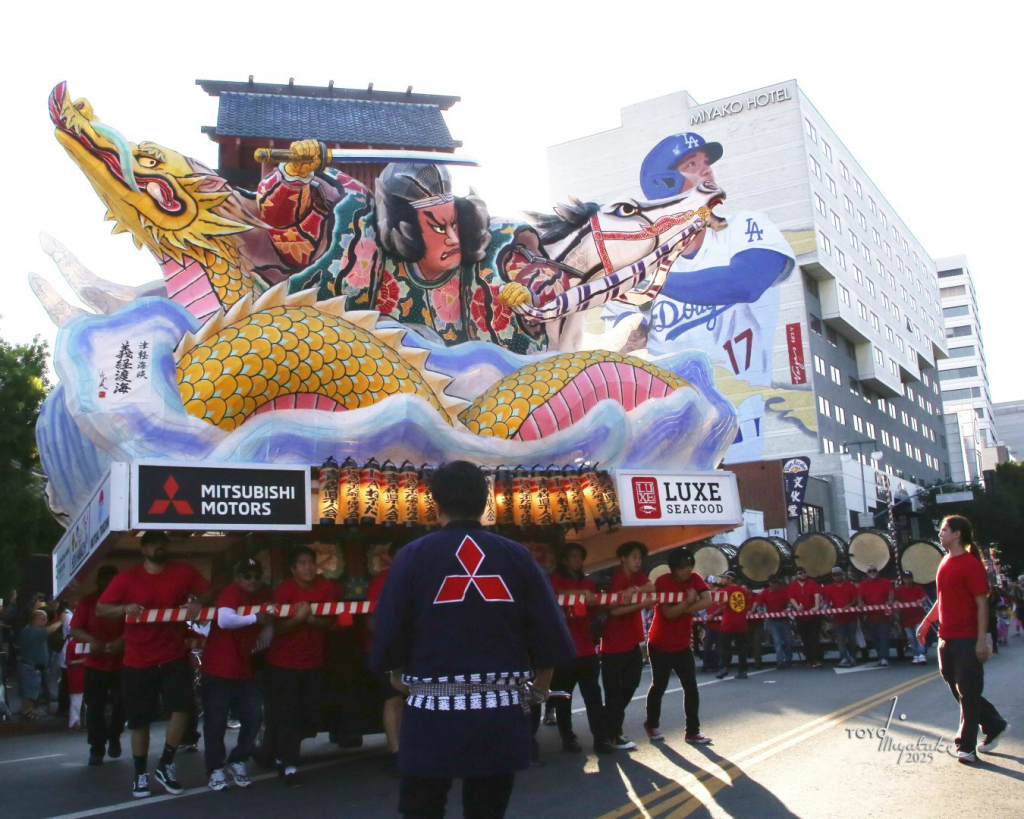
2025 Parade Float. | Photo courtesy of Toyo Miyatake for Nisei Week Festival
Every year in mid-August, Little Tokyo in downtown L.A. becomes the site of the Nisei Week Festival. According to cultural scholar and writer Dr. Oliver Wang, this event began in 1934 as a way to encourage cultural pride in the community by an emergent second generation of Japanese Americans – the Nisei – who wanted to stake out a space for themselves within a community that up to that point had been largely dominated by their Nikkei parents and their generation.
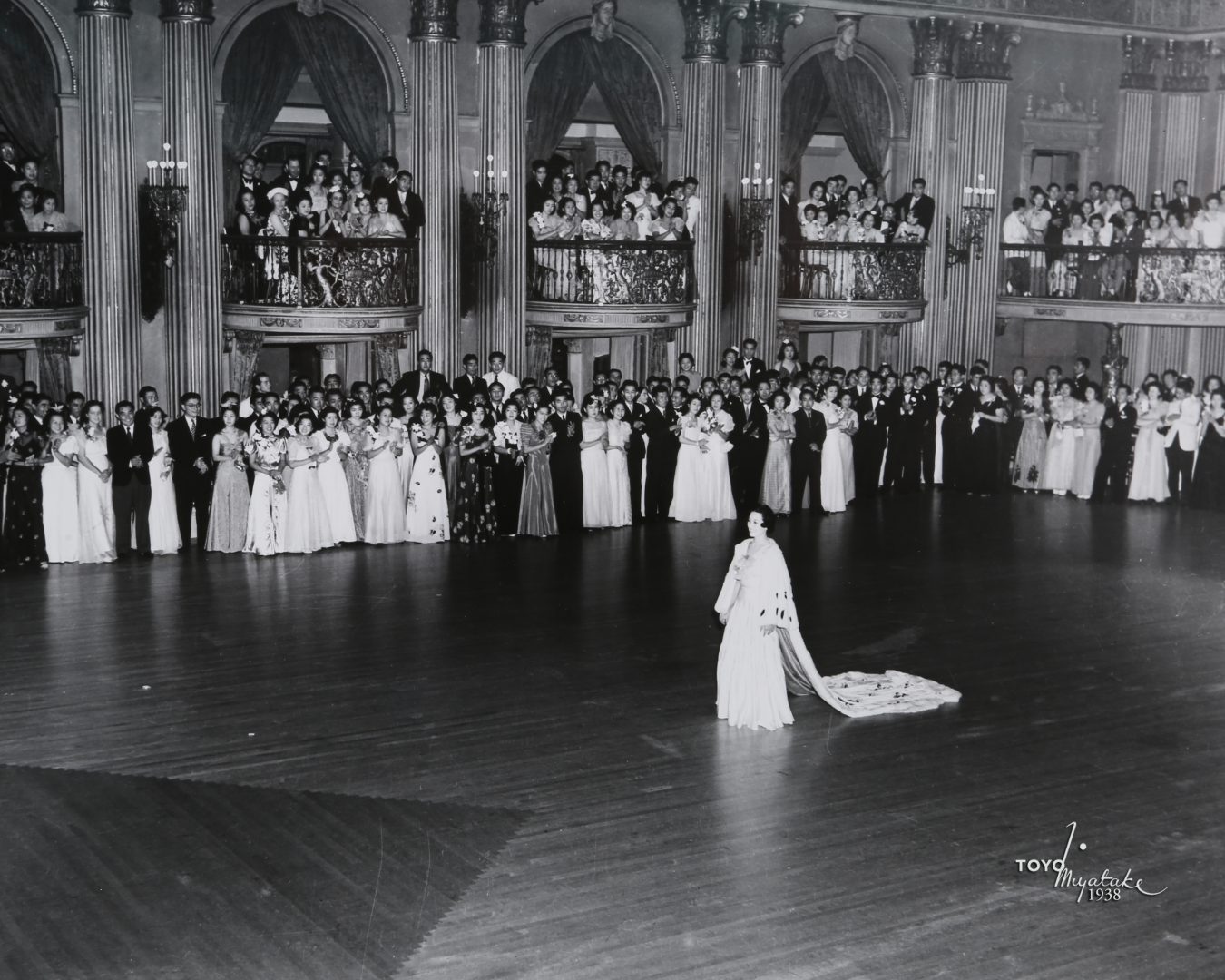
Nisei Week quickly grew to become an annual celebration of the Japanese American community and further anchored Little Tokyo as the center of the Nikkei community in the southland. As a tradition, it continued throughout the rest of the 1930s up to the summer of 1941 and went on hiatus because of the Japanese American incarceration. It resumed in 1949 and has been held every year since, except during the pandemic.
1938 Coronation of Nisei Week Queen Margaret Nishikawa. | Photo courtesy of Toyo Miyatake for Nisei Week Festival
What started as a weeklong celebration of Japanese culture and history meant to appeal to the Nisei later drew people from all over Southern California. Additionally, the event has extended beyond seven days to the multi-week event it is today that attracts 30,000 attendees from various ethnic groups.
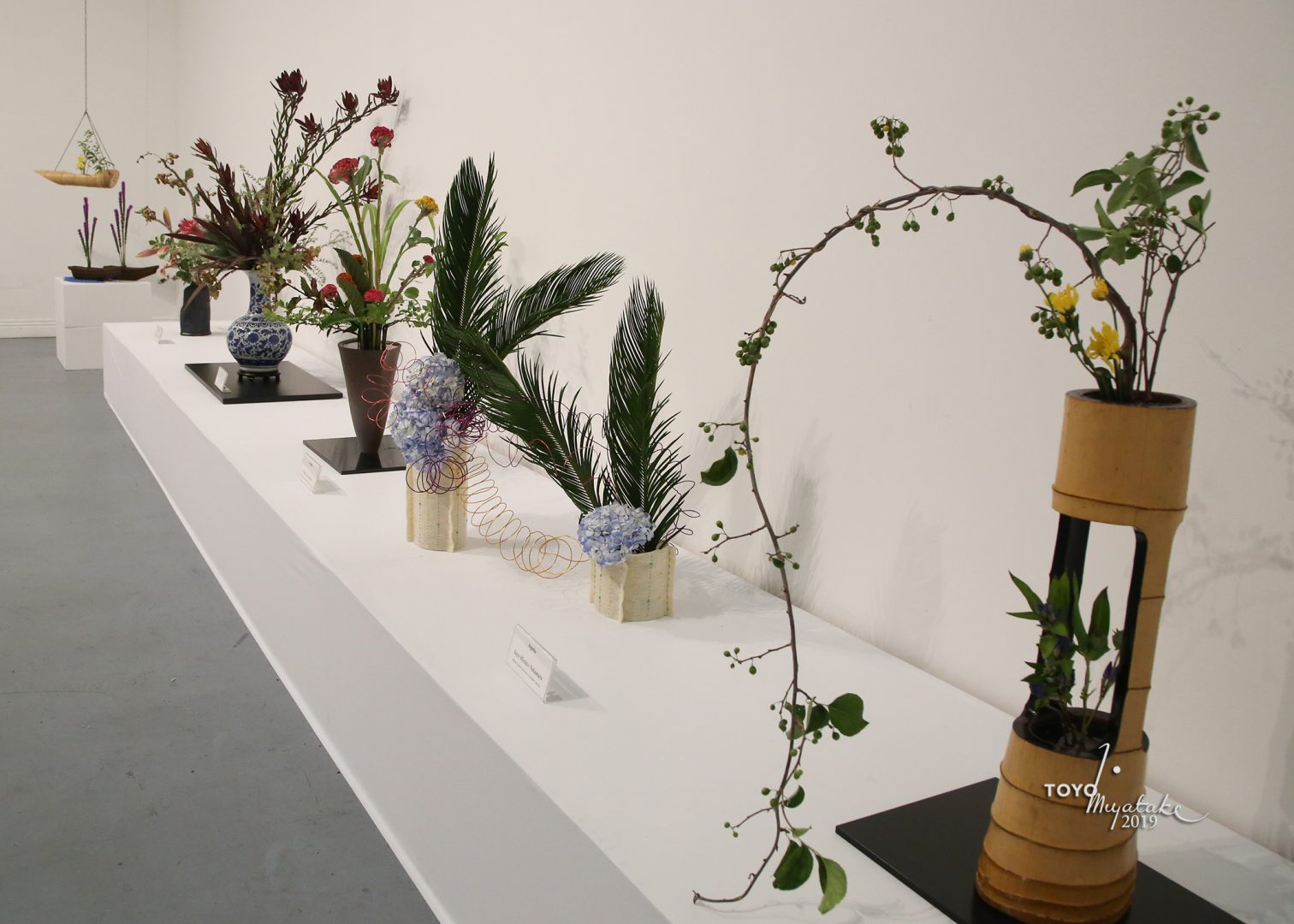
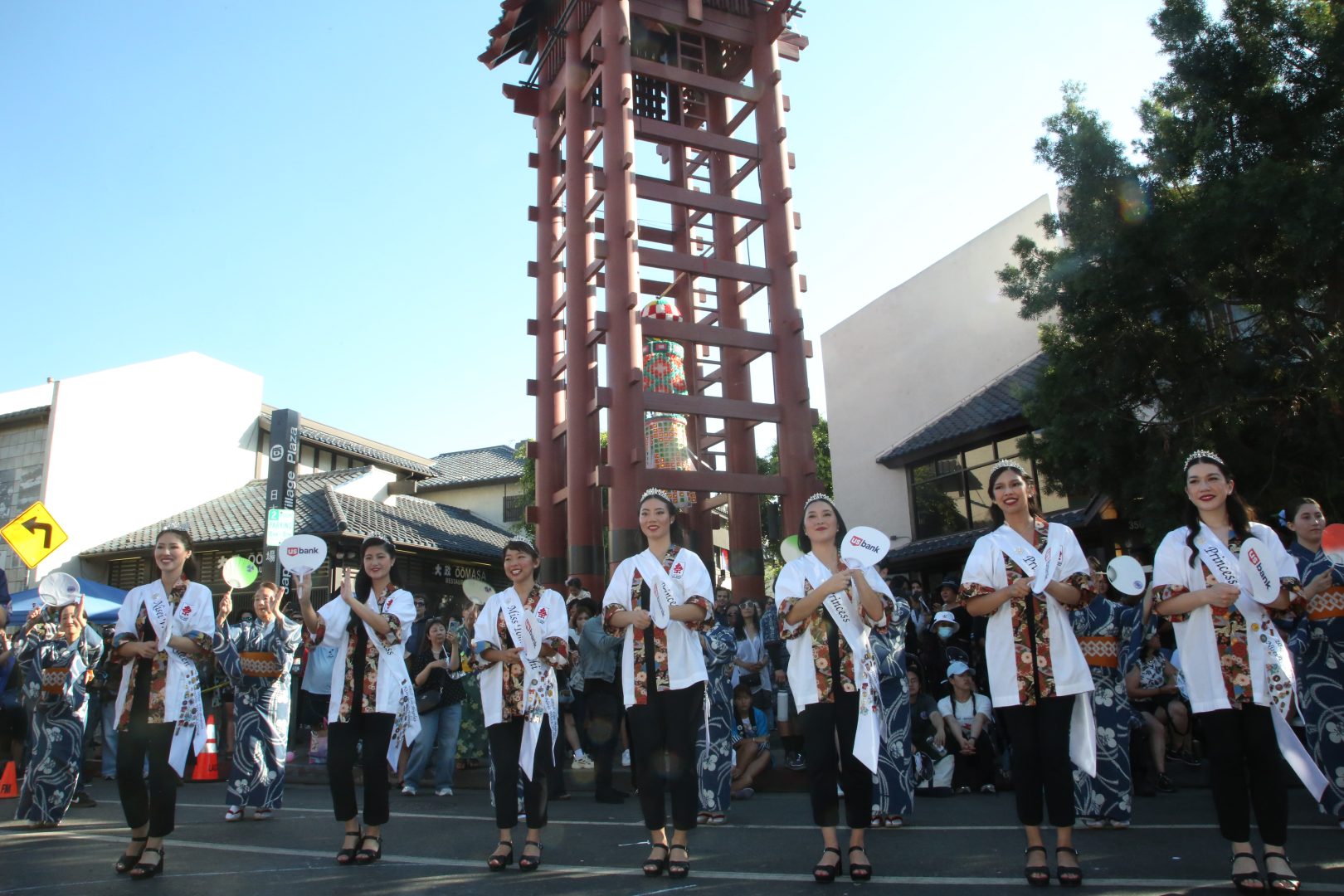
This year marks the 84th year the festival is being celebrated and will be held from August 15 through the 23rd. The Grand Parade featuring Japanese dancers, marching bands, musical groups, and floats will travel through the streets of Little Tokyo. The Japanese American Cultural and Community Center will host the Plaza Festival where food booths, live music, cultural exhibitions, and family games await visitors. Cultural exhibitions showcasing Japanese arts like bonsai, ceramics, ikebana flower arrangements, and tea ceremonies are not to be missed. Other special activities include the coronation of the Nisei Week Queen and Court and the Pioneer Spirit Awards Luncheon. Nisei Week Festival ends with the Ondo Public Street Dancing and Closing Ceremony.
2019 Ikebana flower arranging exhibition. | Photo courtesy of Toyo Miyatake for Nisei Week Festival
“As best we know, the Nisei Week Cruise was a phenomenon that started in the 1970s,” relates Wang. “And certainly by the late 70s into the 80s it became the single biggest annual gathering of Japanese American car fanatics. Thousands of people lined up on the sidewalks and watched hundreds of cars and motorcycles on the street going around the carnival grounds. It was a really huge deal for the car owners because they would spend their entire summer getting their cars ready.”
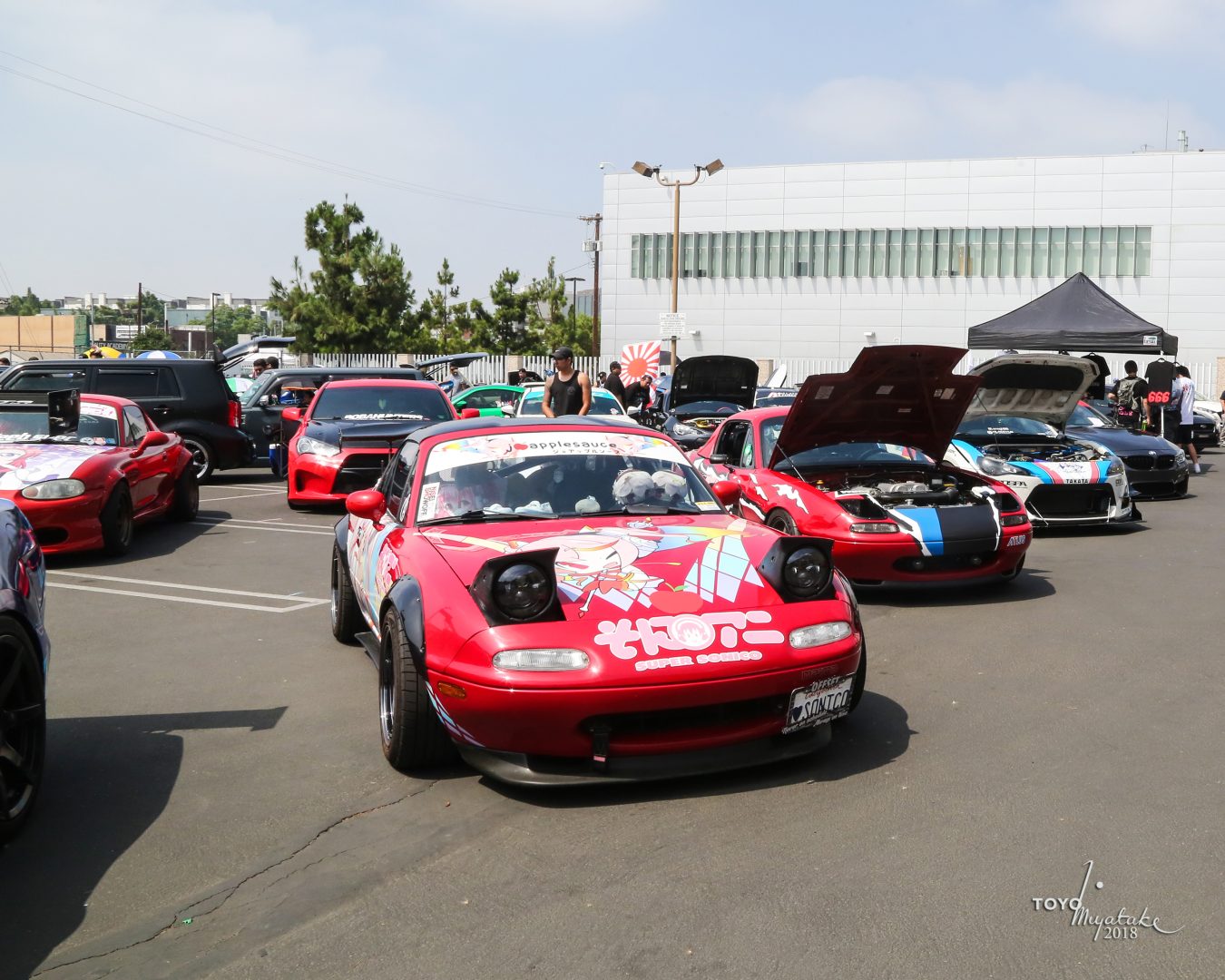
2018 Car Show Exhibition. | Photo courtesy of Toyo Miyatake for Nisei Week Festival
“Because it was the last major event of the summer, Nisei Week Cruise ended up becoming the ‘Super Bowl’ of cruises,” Wang adds. “It was the pinnacle event that people spent their entire summer getting their cars ready for. The last cruise occurred in the summer of 1988; by 1989 the organizers and the LAPD voted to shut it down. There had always been ambivalence among the organizers from the noise and safety point of view. By the 1990s Nisei Week began hosting a car show instead as a compromise.”
Helen Ota, the 2026 Nisei Week Festival president, reveals that there’s an event that will be featured for the first time this year.
“The JX Matsuri will take place on Sunday, August 16 at Weller Court,” says Ota. “This event is being organized by Japan Crossover (JX) and will be a call back to the days when Nisei Week had its popular carnival many years ago. There will be game booths, food, and entertainment from 11 a.m. to 4 p.m. When JX Matsuri concludes, the Grand Parade will begin, so the attendees will be able to stay afterwards to enjoy this beloved tradition.”
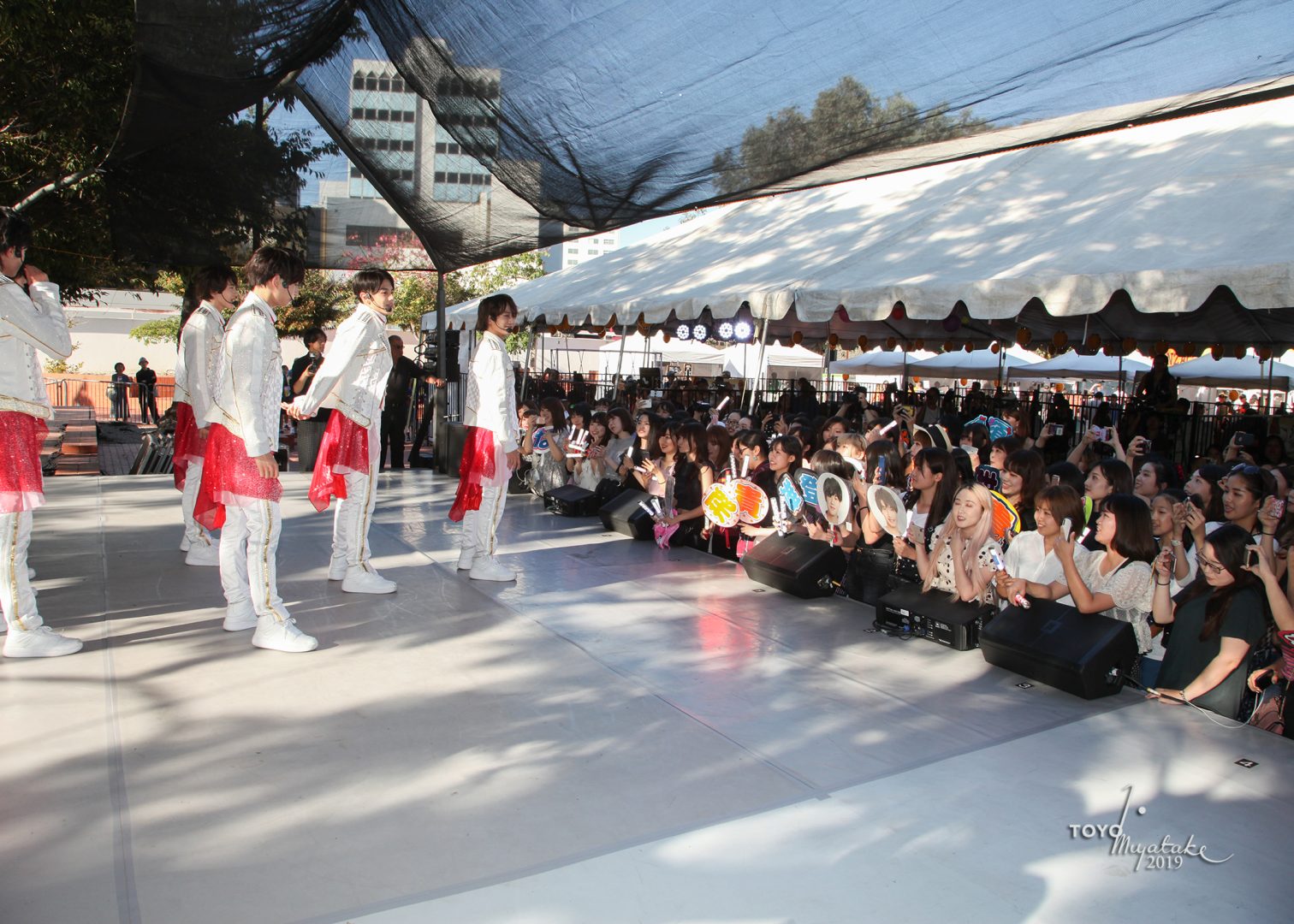
2019 Performers at Sunset Plaza. | Photo courtesy of Toyo Miyatake for Nisei Week Festival
But Nisei Week’s evolution isn’t only reflected by the activities. Ota declares, “The Nisei Week Japanese Festival has evolved over the years by engaging the rising generation to be involved as committee members and taking on leadership roles. At the same time, we look to our longstanding board members and volunteers to provide institutional knowledge to carry on the tradition and understand the significance of the Nisei Week Japanese Festival. This has allowed the Nisei Week Foundation to remain grounded in tradition while being mindful of who our audience is today and what they might be interested in seeing at the festival. Through this lens, we’ve been able to partner and collaborate with different organizations to continue to enhance the festival.”
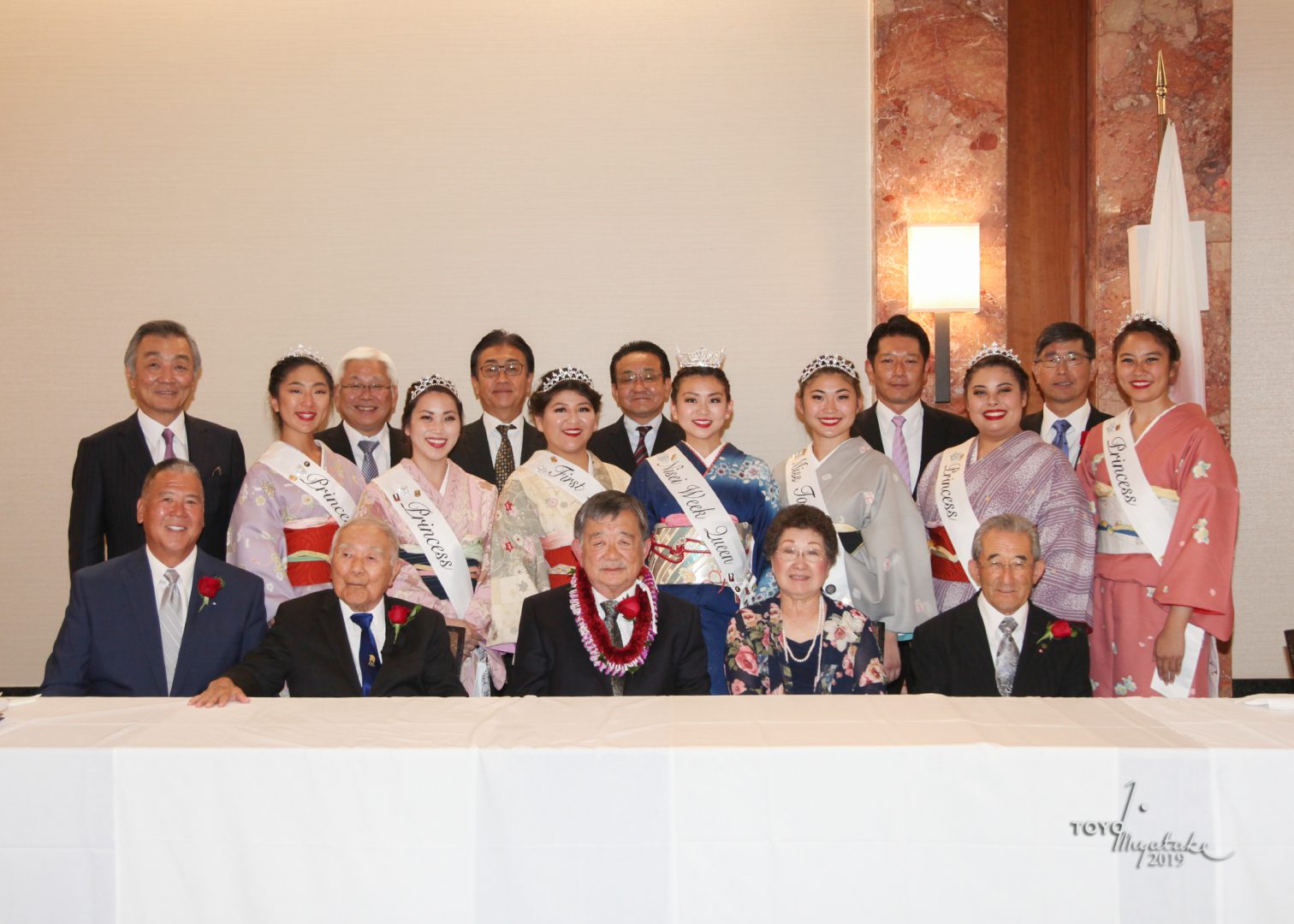
2019 Pioneer Spirit Awards Luncheon. | Photo courtesy of Toyo Miyatake for Nisei Week Festival
Unlike many L.A. area Japanese Americans, Ota didn’t go to Nisei Week growing up. Recalls Ota, “My first experience was participating in the Grand Parade in the 80s. I remember it being hot, but enjoying being part of the festival with the community. I started becoming involved with organizing Nisei Week ten years after I was on the Nisei Week Court. In 1999, I co-chaired the Queen & Court Program Committee and helped to initiate a leadership component within the program. I took on more leadership roles and learned much from my mentor, the late Frances Hashimoto. Soon after, I was elected as a board member of the Nisei Week Foundation.”
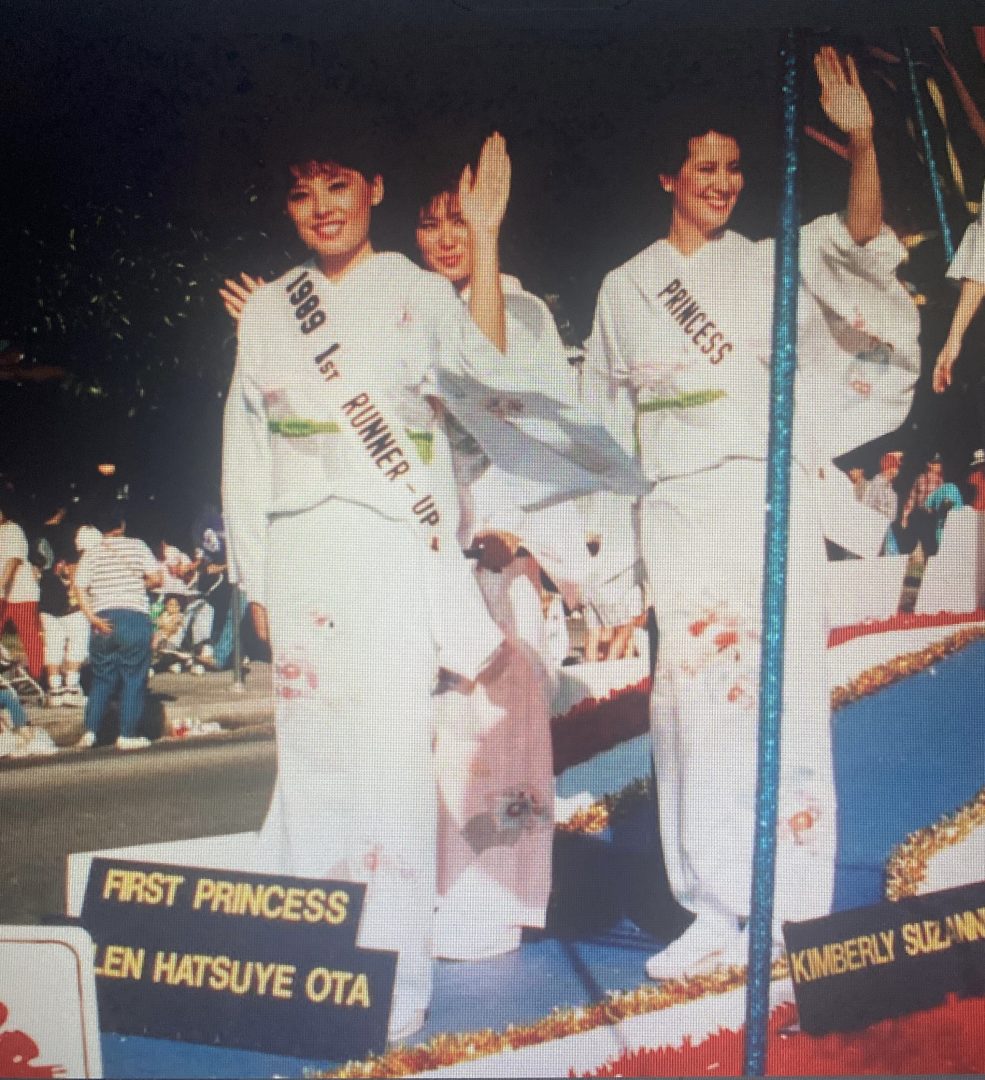
1989 First Princess Helen Hatsuye Ota at far left. | Photo courtesy of Helen Ota
Presiding over the yearly festival isn’t new to Ota. She says, “This is the third time I’m serving as president. The first year was in 2008 and the second time was in 2025. My responsibilities are to lead the Nisei Week Foundation board to plan for the festival every year, work with the different committees that organize each Nisei Week Japanese Festival event, collaborate with our partners and stakeholders, and work with the Little Tokyo community.”
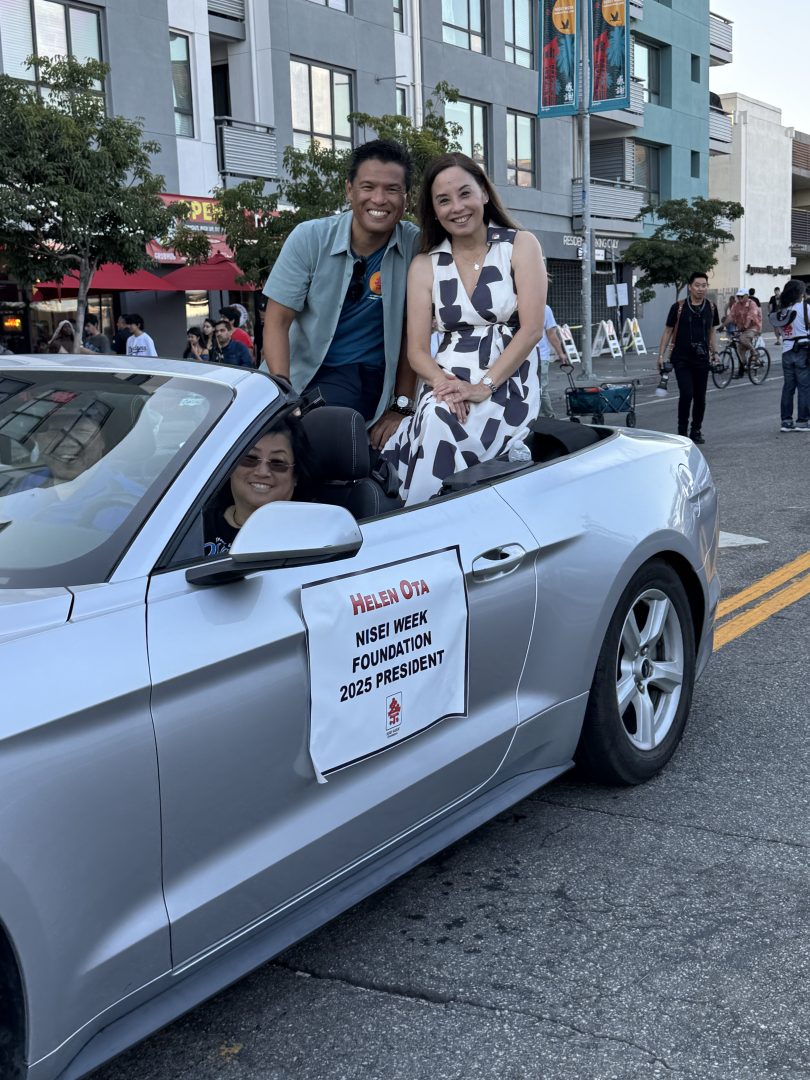
Helen Ota with husband Mike Palma in the 2025 Grand Parade. | Photo courtesy of Helen Ota
It is a role she doesn’t take lightly. “Having this position is very meaningful,” Ota explains. “It has allowed me to give back to Nisei Week and the community at large. I’ve been fortunate to have worked with several organizations and community leaders who inspire and provide me with great support. Serving as a representative of the Nisei Week Foundation and its festival has allowed me to appreciate Little Tokyo and the community with a grateful heart.”
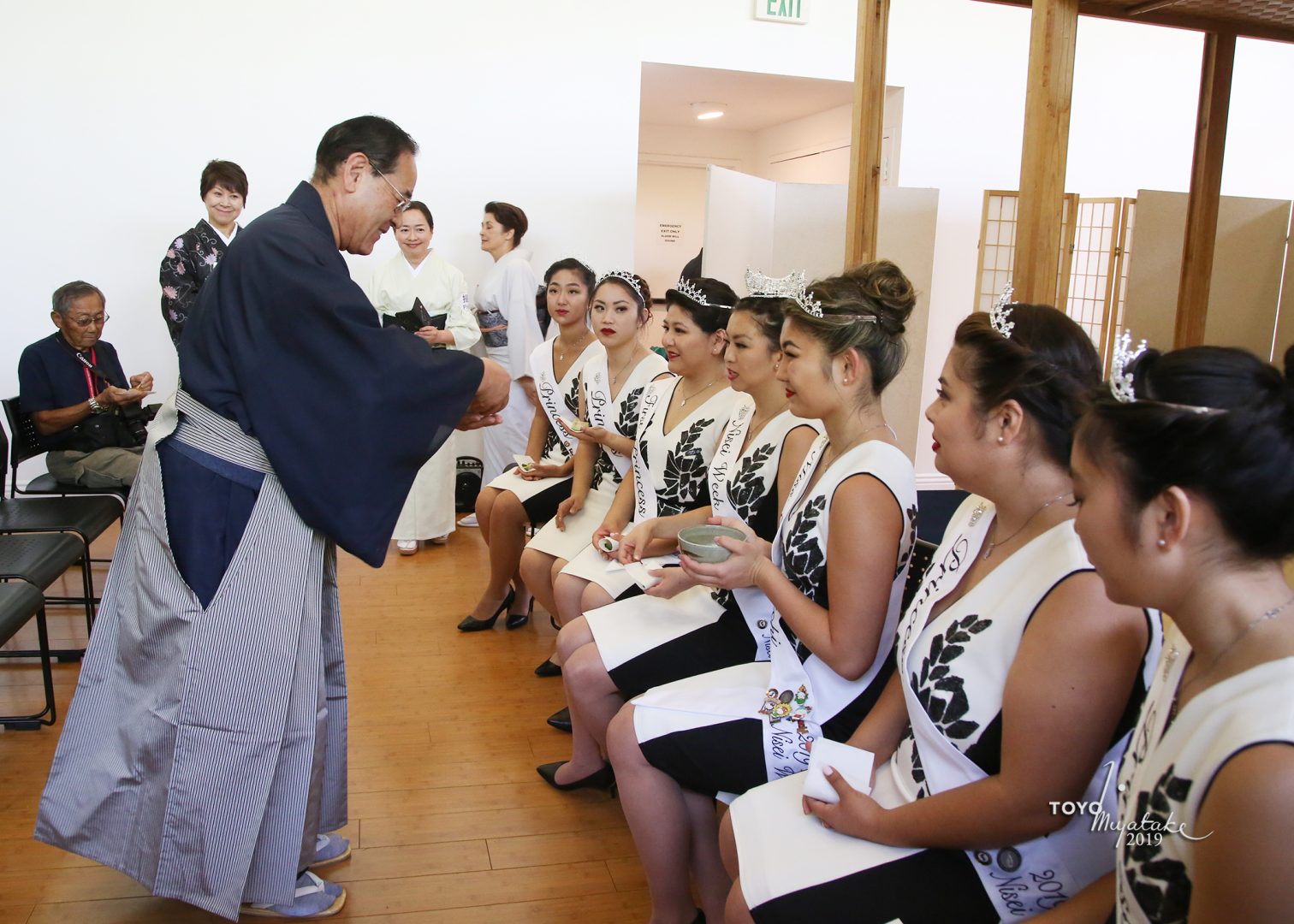
2019 Tea Ceremony Exhibition with the Queen and Court. | Photo courtesy of Toyo Miyatake for Nisei Week Festival
Nisei Week is an all-volunteer organization with no full time staff, with over a hundred volunteers involved throughout the year. According to Ota planning for each festival begins shortly after it ends in August.
“The Nisei Week Japanese Festival is a celebration of Japanese and Japanese American arts, culture, and community,” stresses Ota. “With only three historic Japantowns remaining in the U.S., we hope to connect communities throughout Southern California and beyond to Little Tokyo and discover the rich history and cultural arts it offers.”
2025 Closing Ceremony. | Photo courtesy of Toyo Miyatake for Nisei Week Festival
Asked if there has been a particularly memorable Nisei Week for her, Ota replies, “Each year has been memorable, which goes along with our theme this year, ‘ichigo ichie.’ It means one time, one meeting in Japanese and signifies that every moment is unique, unrepeatable, and should be treasured. Although we have a festival every August, each one has been a unique and remarkable experience because of the community and the people who come out to support us.”
For numerous Japanese Americans living in Southern California, Nisei Week is an annual tradition that was very much a part of their youth and a ritual they passed on to their children. And to this day multi-generational families go to Little Tokyo for the food, exhibitions, parades, and street dancing. For them it is an enjoyable summer adventure that, at the same time, preserves their cultural heritage.
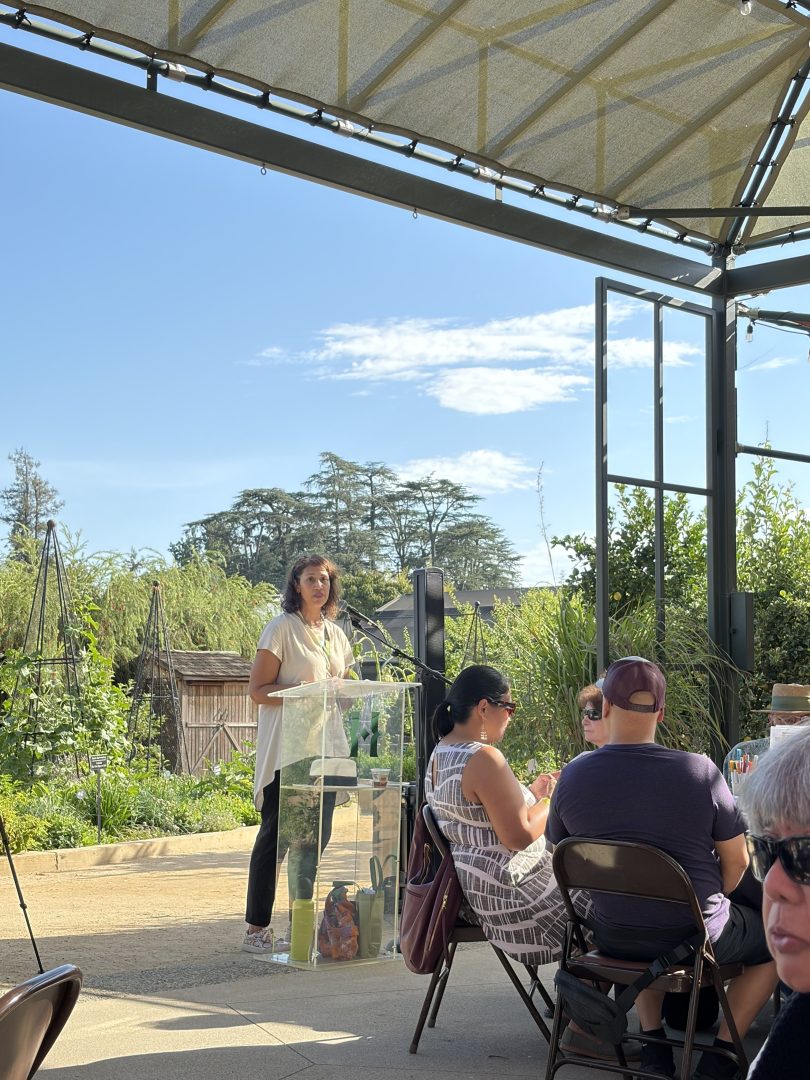
Co-presented by The Huntington and the Smithsonian Folklife Festival, the event was hosted by the team from This Filipino American Life podcast. Attendees pondered on the theme of This Land Is … and shared their lived Filipino experience in the United States.
This Land Is … Sunday Supper and Conversation series was conceived by Nenette Luarca-Shoaf, The Huntington’s Director of Education and Public Engagement. By email she discussed how it came about, her collaborators, and what programs are in the series, among other things.
Nenette Luarca-Shoaf and Joseph Bernardo. | Photo by May S. Ruiz / Hey SoCal
“I first had the idea for the series a little more than a year ago as we brainstormed programs for The Huntington’s THIS LAND IS… initiative,” Luarca-Shoaf recalled. “Institutionally and within the Education division, we wanted to create opportunities for learning history while also reflecting on how those histories have shaped who we are today. I kept thinking about a family dinner or kitchen table and the way that current events and serious issues can be discussed by people with differing opinions, and how food can help to soften the edges of those encounters.”
“We always knew we wanted the programs to be co-created with local partner organizations so that we could tell a wide range of stories and bring together existing Huntington audiences with other communities,” continued Luarca-Shoaf. “It was also a great opportunity to partner with the Smithsonian Institution Folklife Festival, and they were especially keen for us to delve into Southern California traditions and culture. It is because of their co-sponsorship that we can make the series free to participants.”
“As plans developed for the ‘Filipino Food Magic’ program in March, I had the chance to meet Joe Bernardo over lunch with research fellow Cathy Ceniza Choy and Huntington curator Linde Lehtinen,” Luarca-Shoaf said further. “I floated the idea of partnering with the This Filipino American Life podcast on one of the Sunday Suppers and we continued to develop the program with our teams virtually and in-person.”
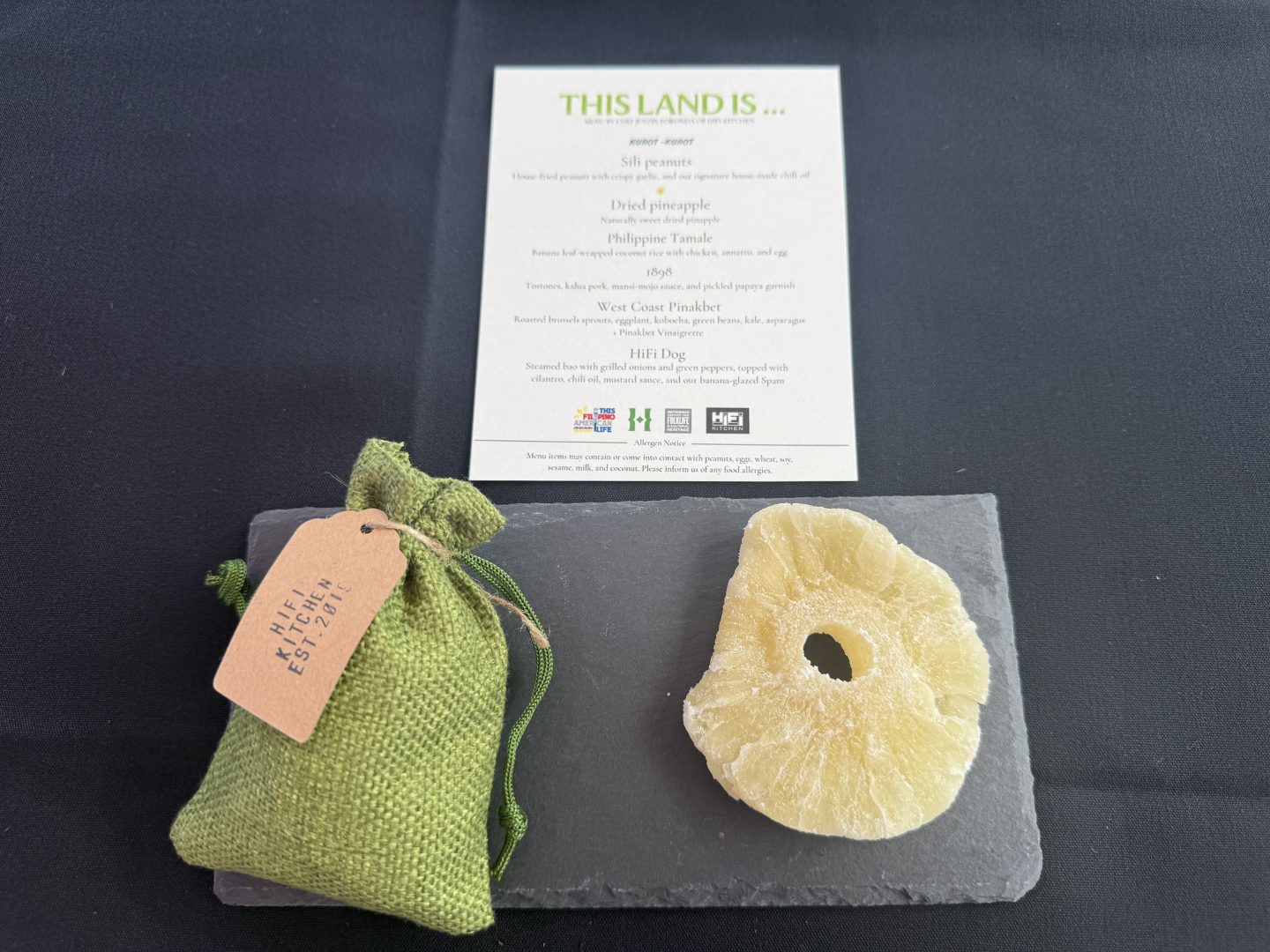
The Tasting menu card, a bag of peanuts, and dried pineapple on each place setting. | Photo by Brianna Chu / Hey SoCal
“We explored working with several different organizations and the Filipino supper turned out to be first because of scheduling,” explained Luarca-Shoaf. “However, it worked out well because of the way that the topic will survey centuries of history, dating back to the earliest cultural exchanges between the Philippines and the Americas. It allows us to show that American history is not just 250 years old, and that we need to think about how we are ‘setting the table’ for those who come after us.”
Luarca-Shoaf expanded on how the partnership with the This Filipino American Life podcast and Lehtinen informed The Huntington’s program.
“We drew a lot on Joe’s knowledge of Filipino diasporic history and were inspired by objects in The Huntington’s collection that photography curator Linde Lehtinen – one of the curators of the exhibition and someone who has been adding to the depth of our library collection relating to the Philippines – brought to our attention. One example is a scrapbook in The Huntington collection that visitors can see in the This Land Is… exhibition. It belonged to Domingo Salas, a Filipino chauffeur working in the first half of the 20th century and includes clippings from his life in Southern California as well as memories of home in the Philippines. We thought about the ways in which different generations document their lives and share their stories with the next generations, and also the way that food connects us to our memories and our heritage.”
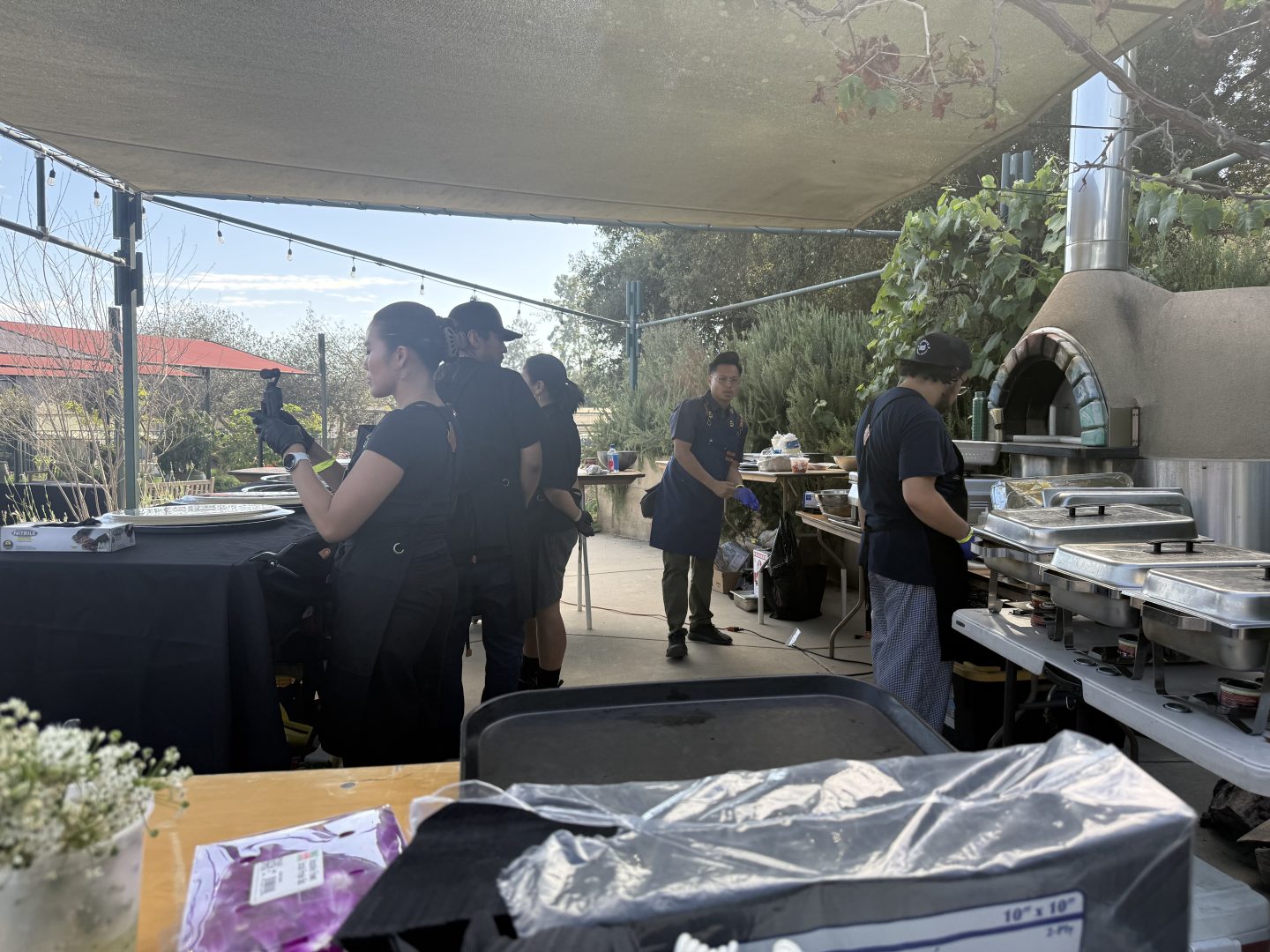
The HiFi Kitchen team busy at work. | Photo by May S. Ruiz / Hey SoCal
“Working with Justin Foronda of HiFi Kitchen has been exciting as well, as he understood what we were trying to do in showing how culture continues but also evolves, and he was able to create dishes that accompany each era of Filipino American history,” added Luarca-Shoaf.
Through the series, Luarca-Shoaf wants to bring together people from diverse backgrounds to learn from one another’s stories, find their common ground, and use history and creativity to look ahead. She hopes that partaking in a meal will help people create a sense of community and joy in the process. Taking their cue from Salas, her team will be making their own scrapbook pages during the program to document the evening and the ideas, memories, and experiences from their time together.
A total of three suppers and conversations have been planned for this year. On the last week of August, the program will feature Zocalo Public Square and discuss community-based agriculture. The LA Commons will take center stage on the first Sunday in October and look into healing in relationship to land and the connections between Leimert Park and Altadena.
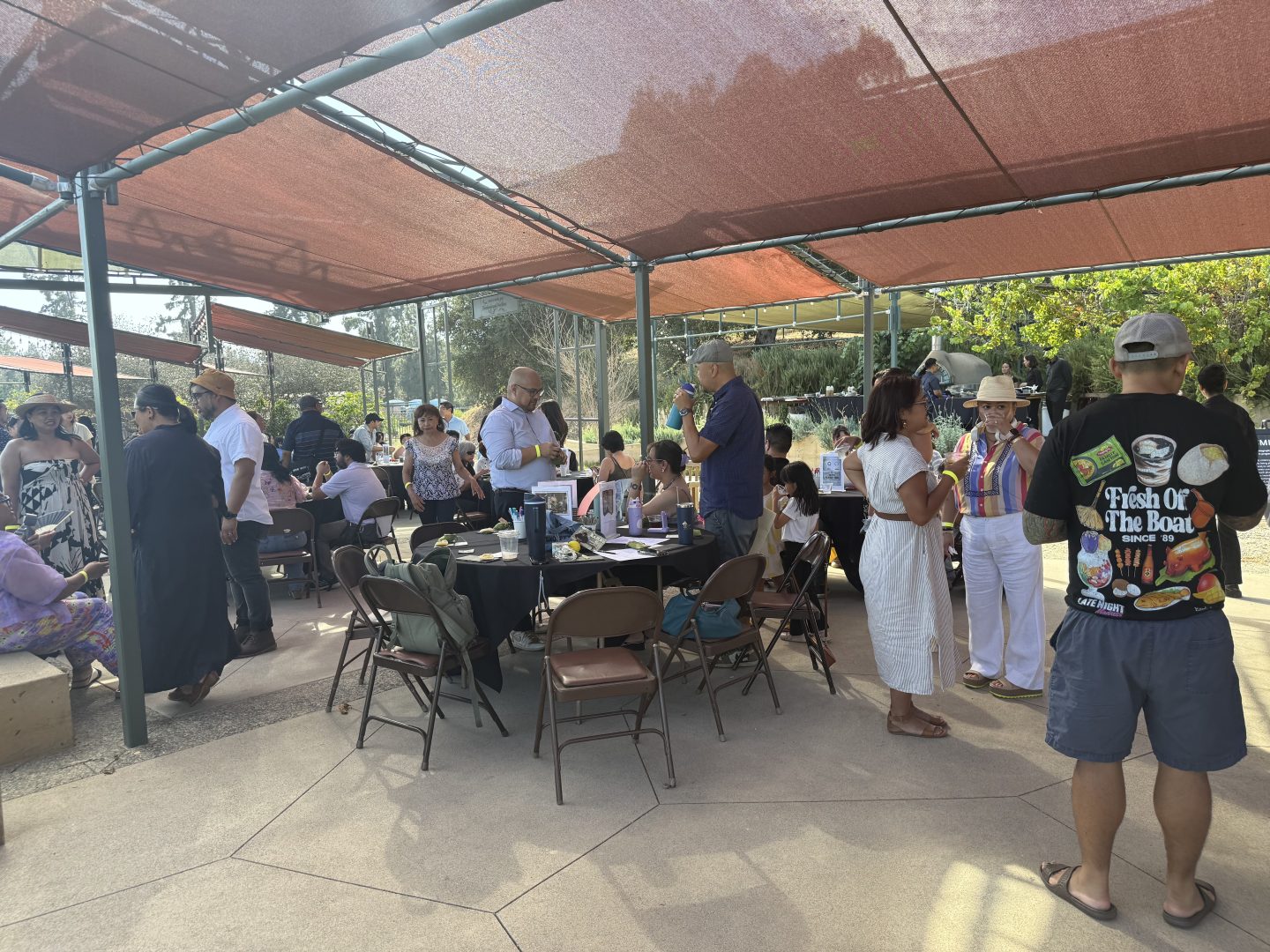
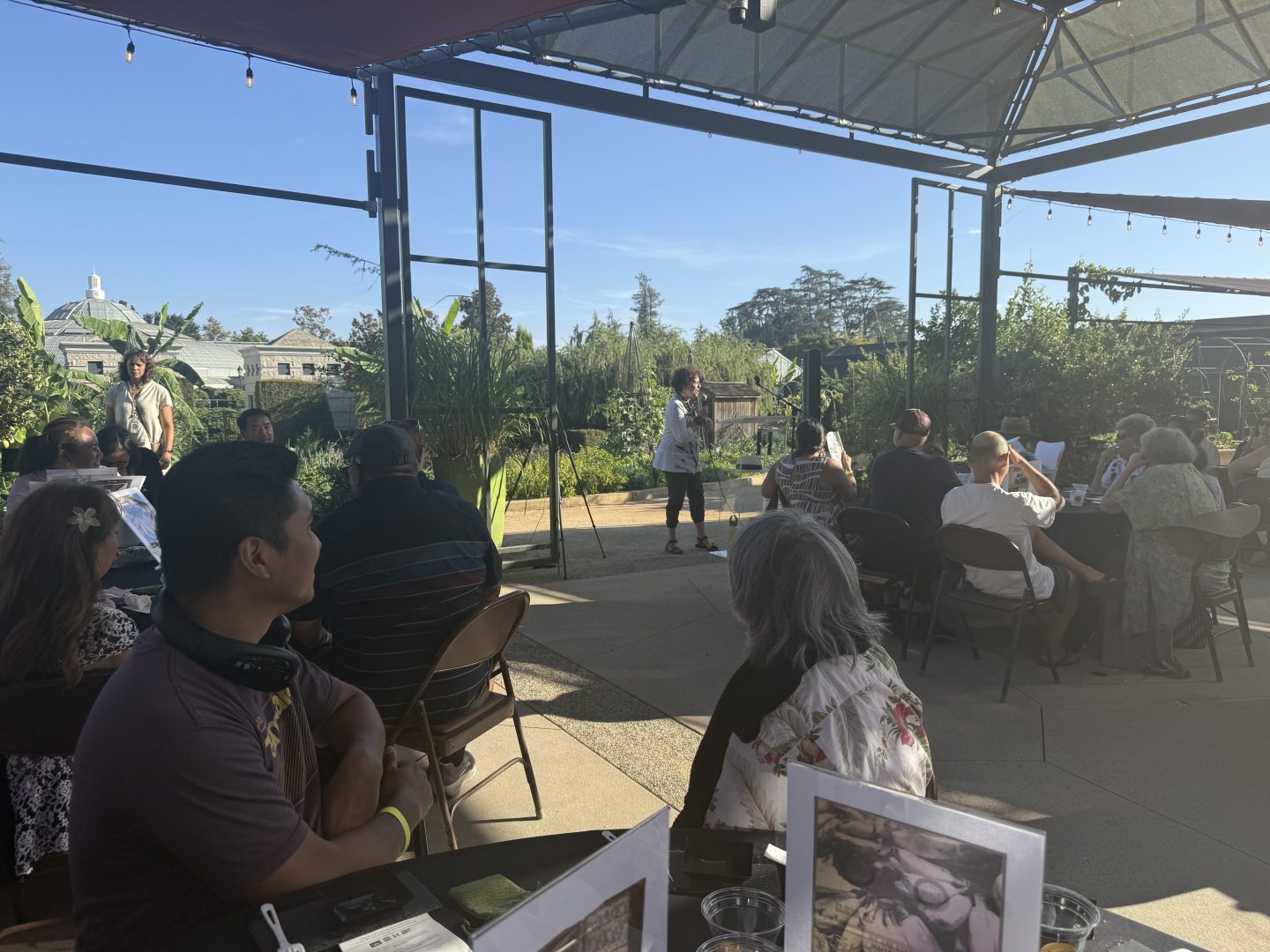
Attendees and participants at the This Filipino American Life event. | Photo by Brianna Chu / Hey SoCal
Luarca-Shoaf’s collaborator on this program, Joseph Bernardo, was one of the three original founders of the This Filipino American Life podcast. He earned a doctorate degree in Filipino American history and culture, a subject he had been studying for years. After leaving academia, he discovered podcasting as an ideal forum to share ideas and discuss issues affecting the Filipino American community in a fun and entertaining way. He approached Ryan Carpio, who worked with him at Mayor Garcetti’s Office, about starting a podcast; Carpio loved the idea at the outset.
Elaine Dolalas, who ran her own podcast – the now-defunct Oblivious Nerd Girl’s Great Idea – joined the team as a counterpart to Bernardo and Carpio’s perspective. She also brought on board her husband Mike, who had helped produce her previous podcasts and, like her, was also involved in L.A.’s Filipino American community. This Filipino American Life podcast was born and the three have been co-hosting it since. In 2024, Carpio stepped down and the team brought on Kat Carrido-Bonds.
“In the podcast, we explore the numerous experiences of being Filipino in the United States,” Bernardo stated by email. “Each of us have certain interests and we take turns coordinating an episode. If you look at our archive of episodes, we’ve covered so many political issues affecting our community or cultural phenomena we just want to dive into. We can discuss a certain topic like gentrification, Catholicism, undocumented immigration, or karaoke among ourselves or bring in an expert to interview. Our hope is that our discussions spark even more discussion and education in our community. Usually each episode runs 45 minutes to sometimes an hour-and-a-half, depending on the topic.”
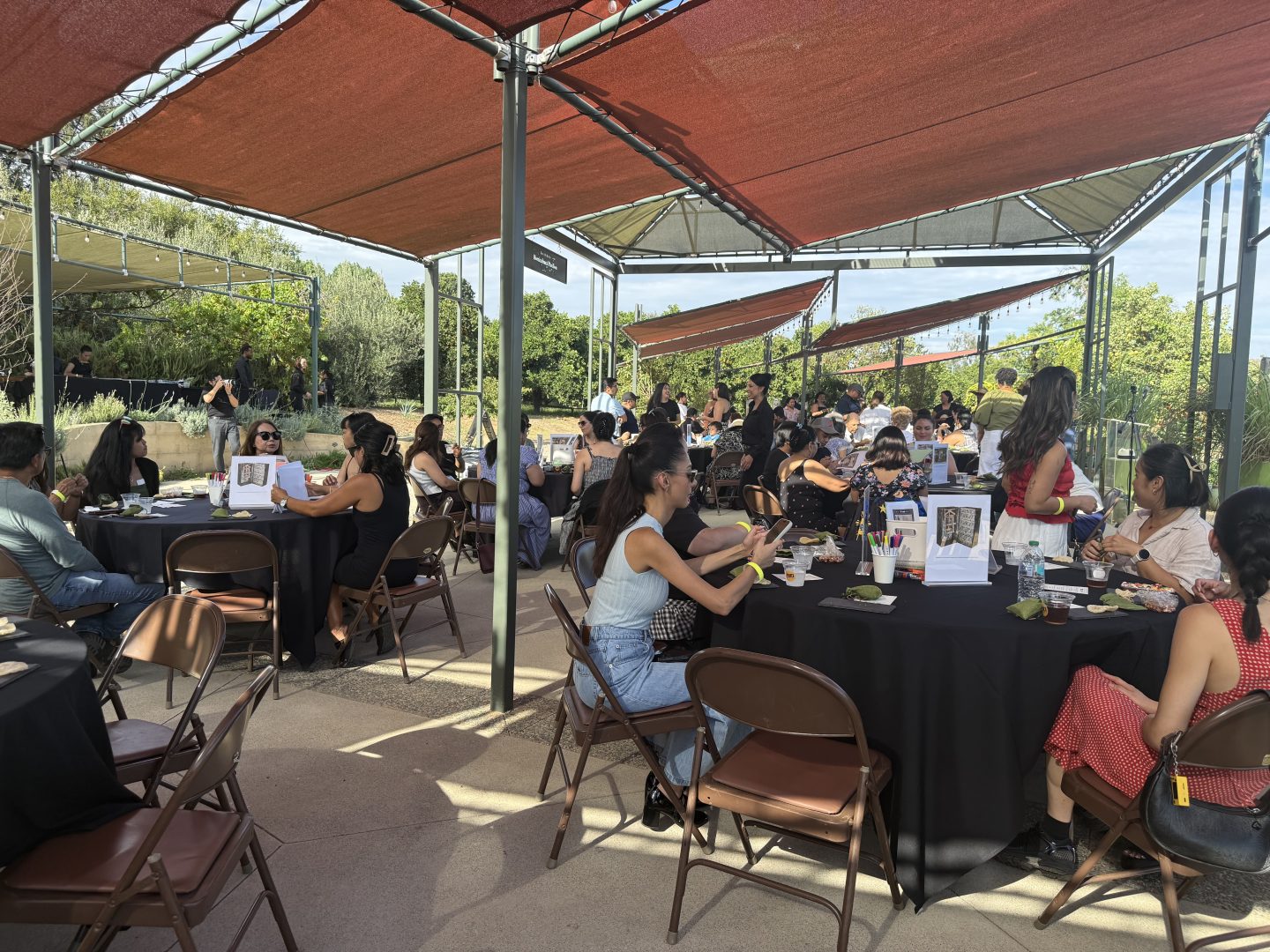
Attendees at the event. | Photo by Brianna Chu / Hey SoCal
The team examines a specific topic on the podcast only once. Explained Bernardo, “There are very few issues that we come back to after we covered it. Not to say that there isn’t much to talk about something in view of a new set of political and social context. I think we’re just ready to move on after we finish one episode. However, we covered Filipino gangs twice – one from a member’s perspective, and the other from a cop’s perspective – and I think that’s the only time we returned to the same topic.”
Asked if there has been an episode that stood out for him in the years that he’s been hosting, Bernardo replies, “I’d say our interview with Maria Ressa, journalist and Nobel Peace Prize recipient, was the most star struck we’ve ever been. To think that someone that important and vital to both Filipinos, and the wider world, came to our podcast was something that will stick with us forever.”
This Filipino American Life podcast enjoys a loyal following and listeners frequently give them feedback. Bernardo said, “We used to get voicemails and play them on an episode, but folks stopped doing that. Maybe because nobody really leaves voicemails in general anymore? We’d regularly receive messages from Filipinos living in the Midwest or the South, where there aren’t too many Filipino American communities. They say that our podcast is one of the few ways that they connect to their heritage, which makes us feel honored and responsible for delivering meaningful content…. And having done the podcast for ten years, teaming with The Huntington and working on a project that helps spread awareness of the history and culture of Filipino Americans gives us reassurance that our work remains vital and necessary.”
Nenette Luarca-Shoaf. | Photo by May S. Ruiz / Hey SoCal
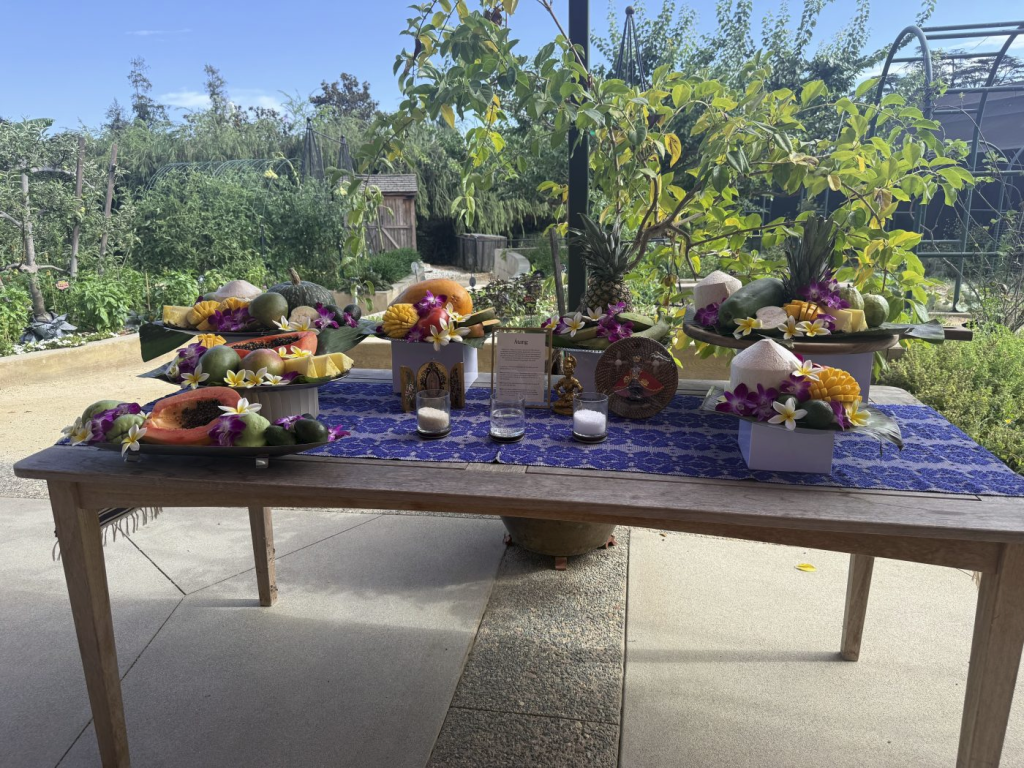
The Sunday Supper and Conversation featuring This Filipino American Life was a sold out event and had a long wait list. It took place at an outdoor venue – The Huntington’s Kitchen Garden – on a sweltering evening. The temperature was 93 degrees F but seemed even hotter because of the humidity. While one of the speakers commented on the Manila weather, everyone just laughed; not one of the 90 attendees complained.
In the spirit of exchange and sharing, Luarca-Shoaf asked us to take a few minutes to meet the people at our table and answer the question “What specific food or dish helps you feel connected to your family’s history?”
A few agreed on one particular food – kare-kare; other dishes mentioned were adobo, pinakbet, pochero, sinigang, and sisig. An animated conversation of which version of the dish one preferred, ingredients, and recipes ensued.
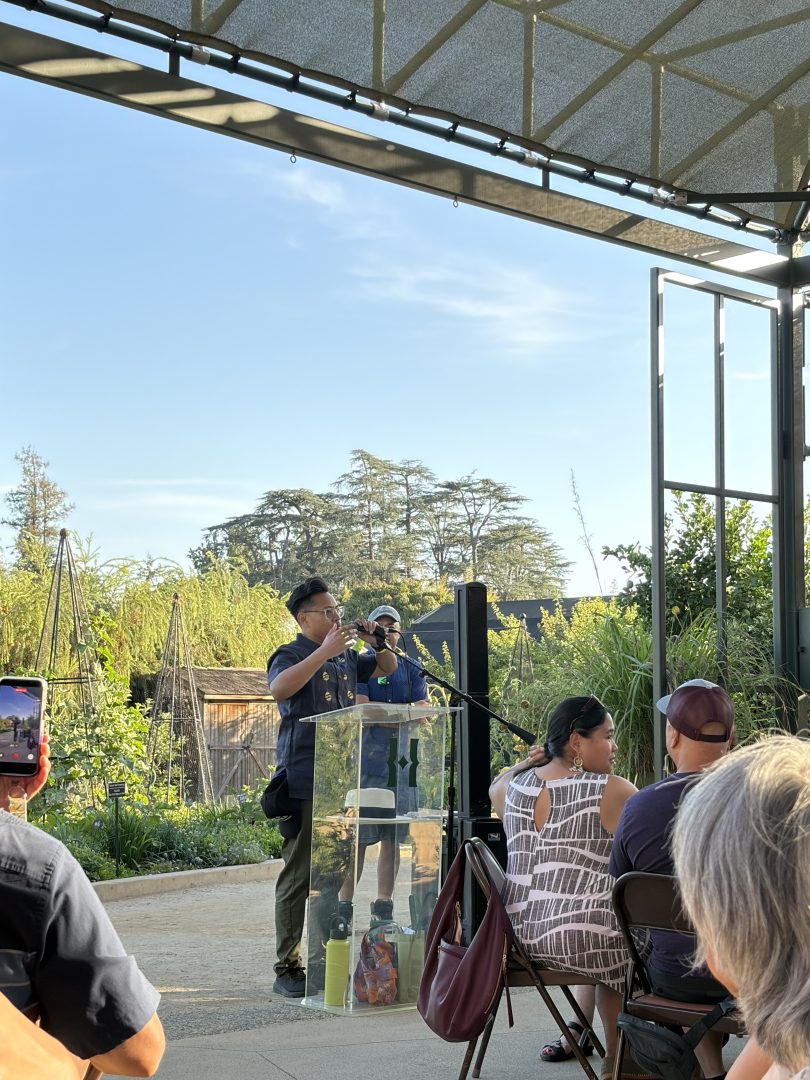
Before leading us into the shared history of the United States and the Philippines, Bernardo introduced his This Filipino American Life co-hosts. A trivia question started off the program: When was the first documented presence of Filipinos in what is now known as the United States?
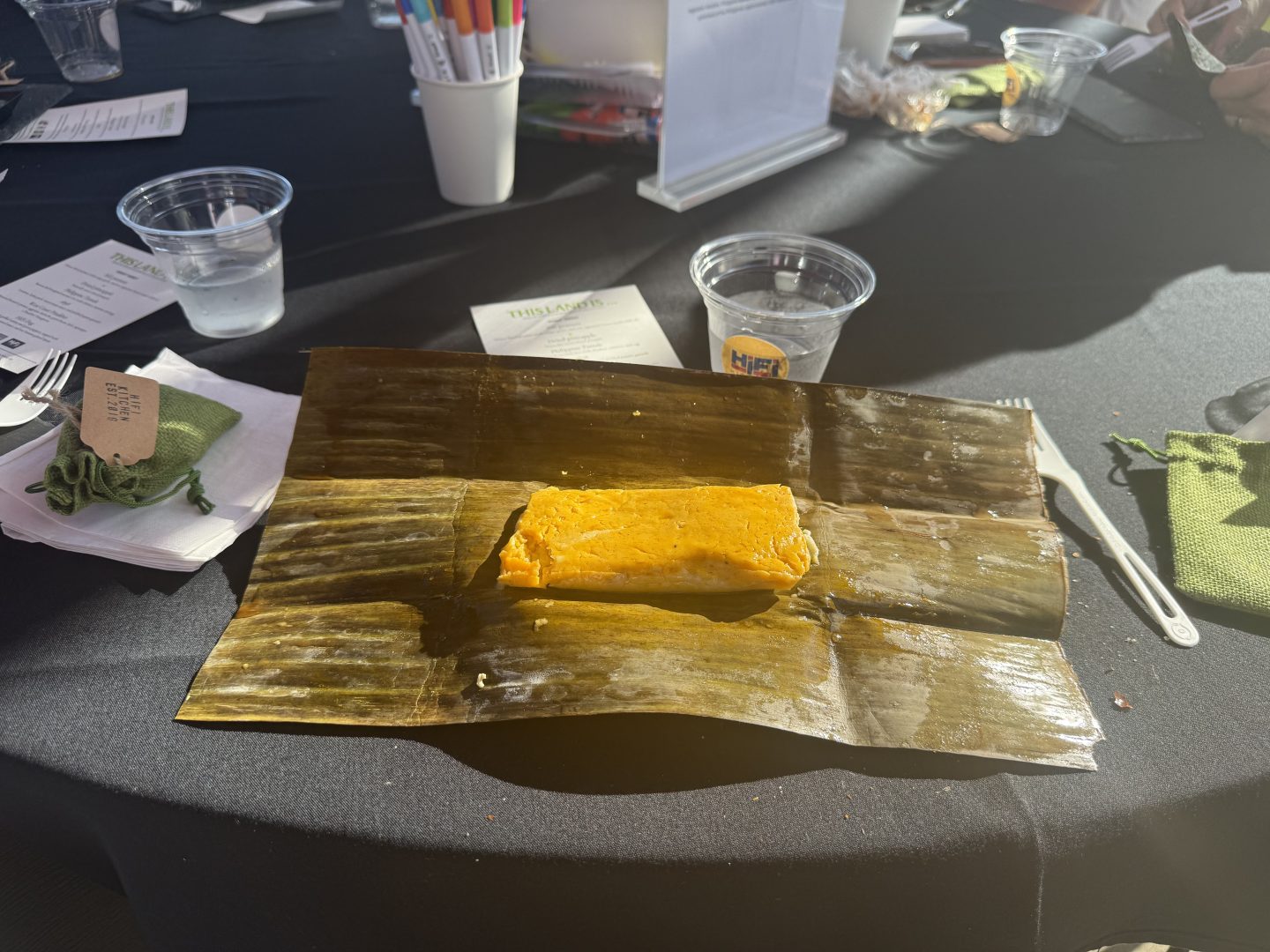
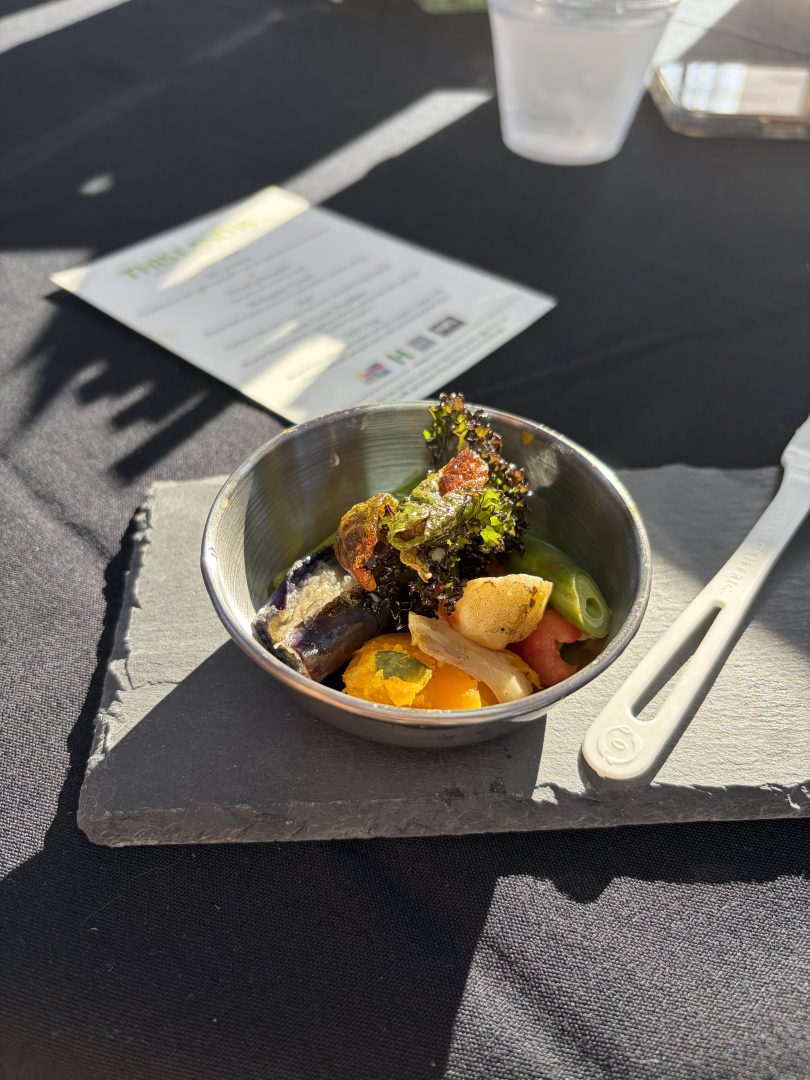
It was on October 18, 1587 that Filipinos landed on Morro Bay and it was the theme of the first dish on Foronda’s tasting menu – Philippine tamale. Bernardo also informed us the bag of peanuts and dried pineapple on each place setting represented the fruits and vegetables that were introduced to Filipinos at the time of the Manila Galleon Trade.
Philippine tamale; the first dish on the tasting menu.| Photo by Brianna Chu / Hey SoCal
Filipinos built the ships for the galleon trade established by the Spaniards. The economic trade route linked Asia, the Americas, and Europe from 1565 through 1815, according to Bernardo. The trade route brought goods from Asia to Acapulco, Vera Cruz, and onto Spain. It was one of the reasons Spain wanted to keep the Philippines as a colony.
Lehtinen provided imagery pertaining to that time period. On each table there was photograph in a Plexiglas which had a map of Asia and the ship that Magellan was on when he discovered the Philippines in 1521. It also visualized the spice trade and emphasized how Manila became the collecting hub for the trading activity.
Before the second course was served, a This Filipino American Life podcast co-host asked the next trivia question, “Besides the Philippines, name the other nations America colonized at the turn of the 20th century?”
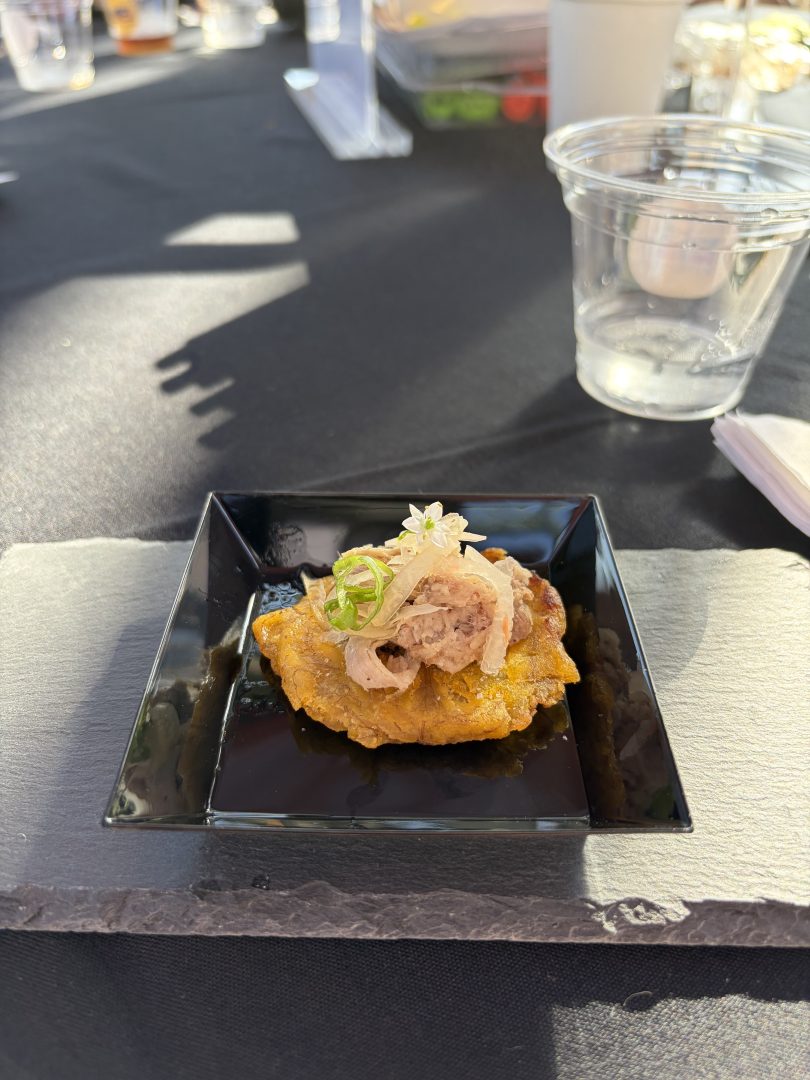
1898: tostones, Kalua pork, mansi-mojo sauce, and pickled papaya garnish. | Photo by Brianna Chu / Hey SoCal
Cuba, Guam, and Puerto Rico were also colonized by the U.S. in 1898. Bernardo discussed American Expansionism when it acquired the Philippines from Spain for $20M at the Treaty of Paris. At the same time that the United States was fighting the Spaniards, Filipino revolutionaries were engaged in its own war for independence against this new colonizer. Approximately 200,000 Filipinos died during the Filipino-American War.
The United States prevailed and reigned for 48 years and shaped Philippine culture and society. Examples of this are the form of government, Filipino economic dependence on the U.S., English as the medium of instruction, industries like nursing, and popular culture including food and food science, music, and sports.
Such was the long introduction to the next course – fittingly called 1898. Foronda informed us that it was influenced by Cuba, Guam, and Puerto Rico, and is eaten like a pizza.
In the spirit of community, Bernardo gave us the next table discussion question: “How did this history that we learned in course number 1 and 2 broaden your understanding of the United States?”
This prompted a lively discussion at our table that went beyond the scope of what was asked. Someone suggested that U.S. global trading was the precursor to globalization. Another posited that the two dishes were an amalgamation of cultures, to which someone supplemented that it started multiculturalism. A GenZer then argued that going down that line of reasoning meant nothing is indigenous anymore. Yet one person – an authority on Filipino Language, Literature, and Culture – referenced anthropologist Franz Boas’s historical particularism to argue her point.
Karen R. Lawrence, president of The Huntington. | Photo by May S. Ruiz / Hey SoCal
A special guest that afternoon was native Californian Sam Vong, who came all the way from Washington D.C. He talked about an exhibition he curated called “How Can You Forget Me: Filipino American Stories” currently on view at the Smithsonian’s Asian American Center at the National Museum of American History. It shines a light on Filipino migrant labor, community-building, and history in Stockton, California – the home of one of the largest Filipino communities outside of the Philippines in the 1930s.
Between the food tasting and history lesson, music by Filipino American artists played in the background while attendees got up to mingle or get a drink from a selection of spa water on a side table. Kat Carrido-Bonds, podcast co-host, acknowledged the individual who created the playlist for the evening. She then invited us to join them to celebrate This Filipino American Life podcast’s 10th anniversary party on August 8 at Hello Stranger in Little Tokyo. She also announced the next trivia question: “What is the name of the U.S. legislation that led to Philippine independence?”
Bernardo provided context for this next historical discussion. When the Philippines became a U.S. possession, Filipinos come to this country freely. A large wave of Filipinos – particularly men from the Ilocos region – migrated to the U.S. during the 1920s and 1930s to provide immigrant labor on the West Coast.
Foronda’s West Coast Pinakbet. | Photo by Brianna Chu / Hey SoCal
These Filipinos resettled in Los Angeles and neighboring areas like Orange County, the San Gabriel Valley, and the San Fernando Valley. They worked on the farms alongside the Mexicans, but also in the service industry as domestics, hotel workers, and restaurant busboys. Eventually, a Little Manila in L.A. was established and then later a Historic Filipino Town. This generation of Filipino Americans were the Manongs, an Ilocano term of respect that’s taken from the Spanish word for brother, hermano.
The passage of the Tydings-McDuffie Act in 1934 set the date for Philippine independence and the primary reason for that was to curb immigration.
One of the photographs on the tables was of an archival object in The Huntington’s collection – a scrapbook made by Domingo Salas. Lehtinen explained that it contained pictures that told the story of the man who compiled it. He was a Filipino who worked as a chauffeur in Pasadena in the early 20th century and was part of the Manong generation. He was a U.S. veteran and served in both WWI and WWII. He was born in 1899 and died in 1985; he is buried at Riverside National Cemetery.
Justin Foronda. | Photo by Brianna Chu / Hey SoCal
Lehtinen pointed out that the scrapbook reflected the anti-racial sentiments at that time. Salas had several photographs that showed him with white girlfriends, yet the U.S. Census records showed him as never having married – probably due to anti-miscegenation laws.
To discuss the present day, which Bernardo jokingly said was 1985, he invited his co-host Elaine Dolalas to ask the final trivia question: “What metropolitan area has the largest population of Filipinos in the United States?”
The answer is Los Angeles. Bernardo informed us there are over 700,000 Filipino Americans in the Greater L.A. area, which includes Orange, Riverside, Ventura counties, etc. Filipino immigration to the U.S. increased dramatically because of the 1965 Immigration Act which is the basis of immigration policies today. It prioritized family reunification as well as employment-based immigration. Many Filipinos came here as skilled professionals and their family members joined them later through sponsorships.
“As a result of the 1965 Immigration Act, many second generation Filipinos came of age in the 1980s and 1990s” Bernardo expounded. “We established many institutions and became leaders in respected fields, fighting for representation and social justice.… Many second and third generation Filipinos have developed a unique Filipino American culture and identity influenced by multi-ethnic environment, especially in California. Our food, culture, and sensibilities reflect that.”
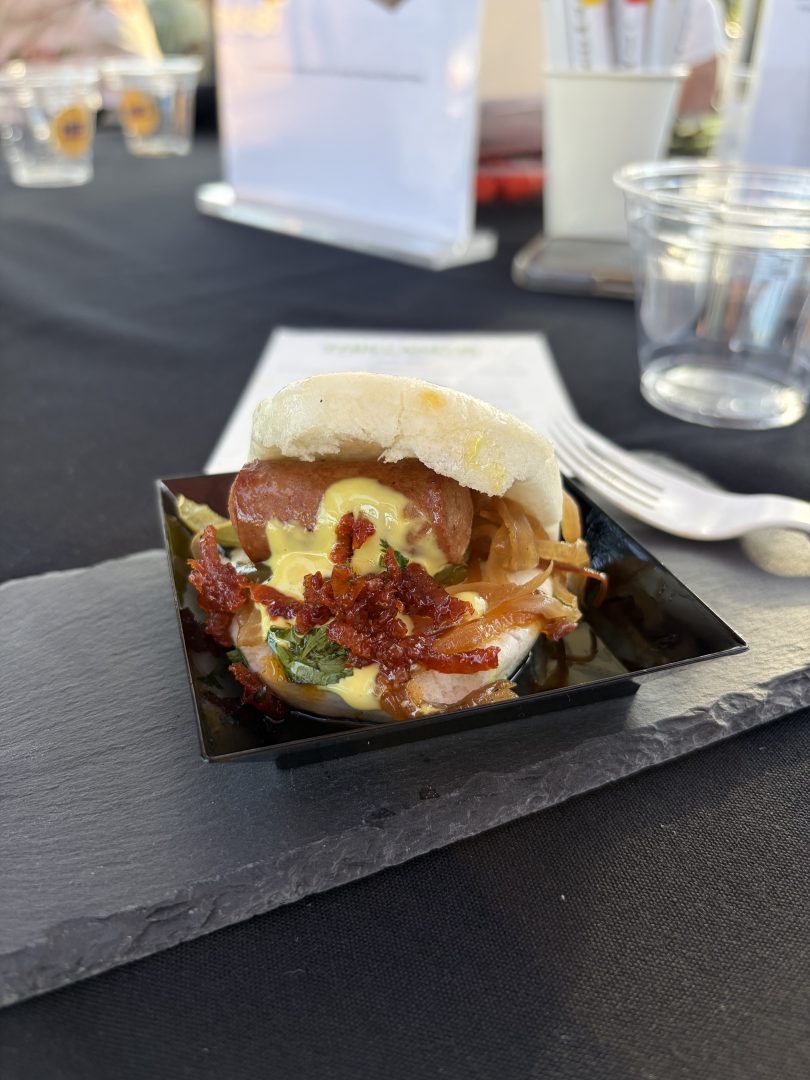
Today’s Filipino Americans were the inspiration for Foronda’s last tasting menu course, which he called HiFi Dog and he put in a bao.
HiFi Dog, Foronda’s version of the L.A. hot dog. | Photo by Brianna Chu / Hey SoCal .
Domingo Salas’s scrapbook was the inspiration for the artmaking project at close of the event. Luarca-Shoaf invited us to create our own scrapbook about the afternoon’s experience to share with others. They provided an instant camera, some sharpies, scissors, glue, and decorative paper for the project.
Luarca-Shoaf and her collaborators – Lehtinen, Bernardo and his This Filipino American Life podcast co-hosts, Foranda and his HiFi Kitchen team – methodically planned each segment of the event and made it such a success. They even managed to import Manila weather that reminded some of us of our homeland.
It’s worth noting that the Sunday Supper and Conversation series is part of The Huntington’s celebration of the 250th anniversary of the U.S. Declaration of Independence from British rule and, incidentally, marks the day the Philippines gained independence from American sovereignty on July 4, 1946.
The United States freed the Philippines 80 years ago, but many Filipinos today still feel a deep connection to America. For while the U.S. relinquished its hold on the Philippines, the ties that bind the two countries are forged within the hearts of the Filipino people.
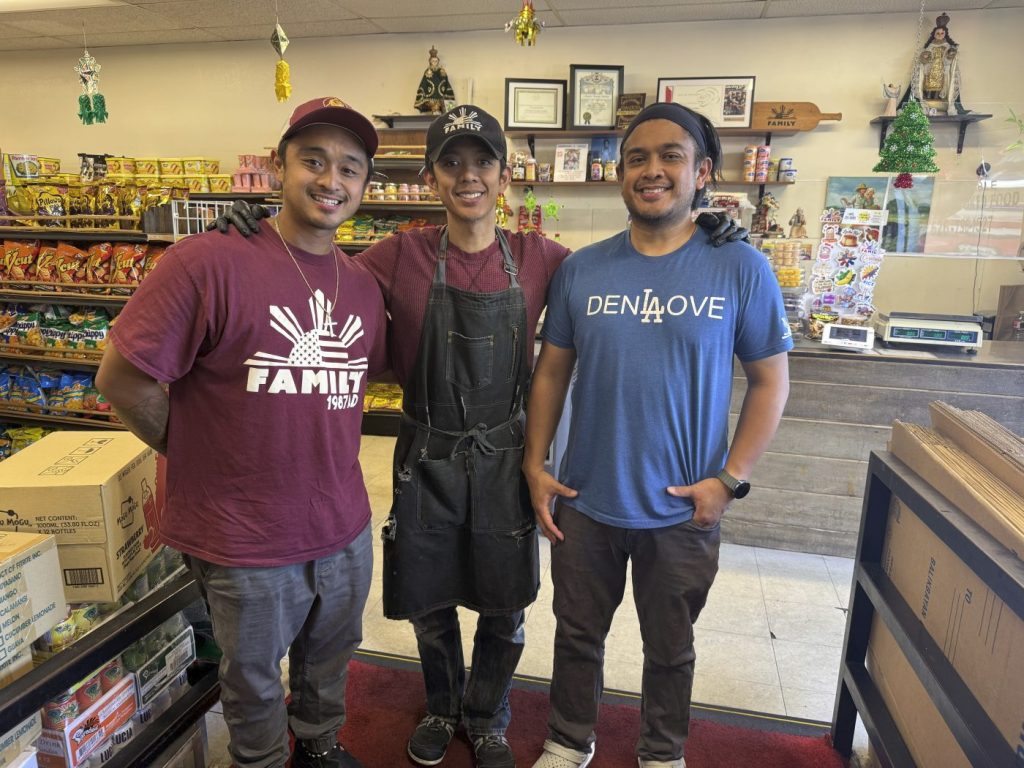
The Esteban brothers, also known as the Chaaste Brothers (from left): Gabriel, Christian, and Abraham. | Photo by May S. Ruiz / Hey SoCal
On October 5,1978, President Jimmy Carter signed a joint resolution for a week-long celebration of Asian American and Pacific Islanders’ contributions to the United States. The month of May was chosen for two historic events – on May 7, 1843, the first Japanese immigrant, Nakahama Manjirō, arrived in the United States. More than two decades later, on May 10, 1869, the golden spike was driven into the first transcontinental railroad, which was completed using Chinese labor.
In 1990, George H. W. Bush signed a bill passed by Congress to extend Asian-American Heritage Week to a month; May was officially designated as Asian/Pacific American Heritage Month two years later.
According to the U.S. Census Bureau, the AANHPI population in the U.S. is the fastest-growing racial group, with over 25 million people (nearly 8% of the total population) as of 2023. This diverse group includes around 25.8 million Asian Americans (alone or in combination) and roughly 1.6 million Native Hawaiian and Other Pacific Islander (NHPI) individuals.
There are 7 million to 7.2 million Asian Americans living in California as of 2023-2025, according to Pew Research Center. They make up approximately 18%-18.4% of the state’s total population, representing the largest Asian population in the continental United States.
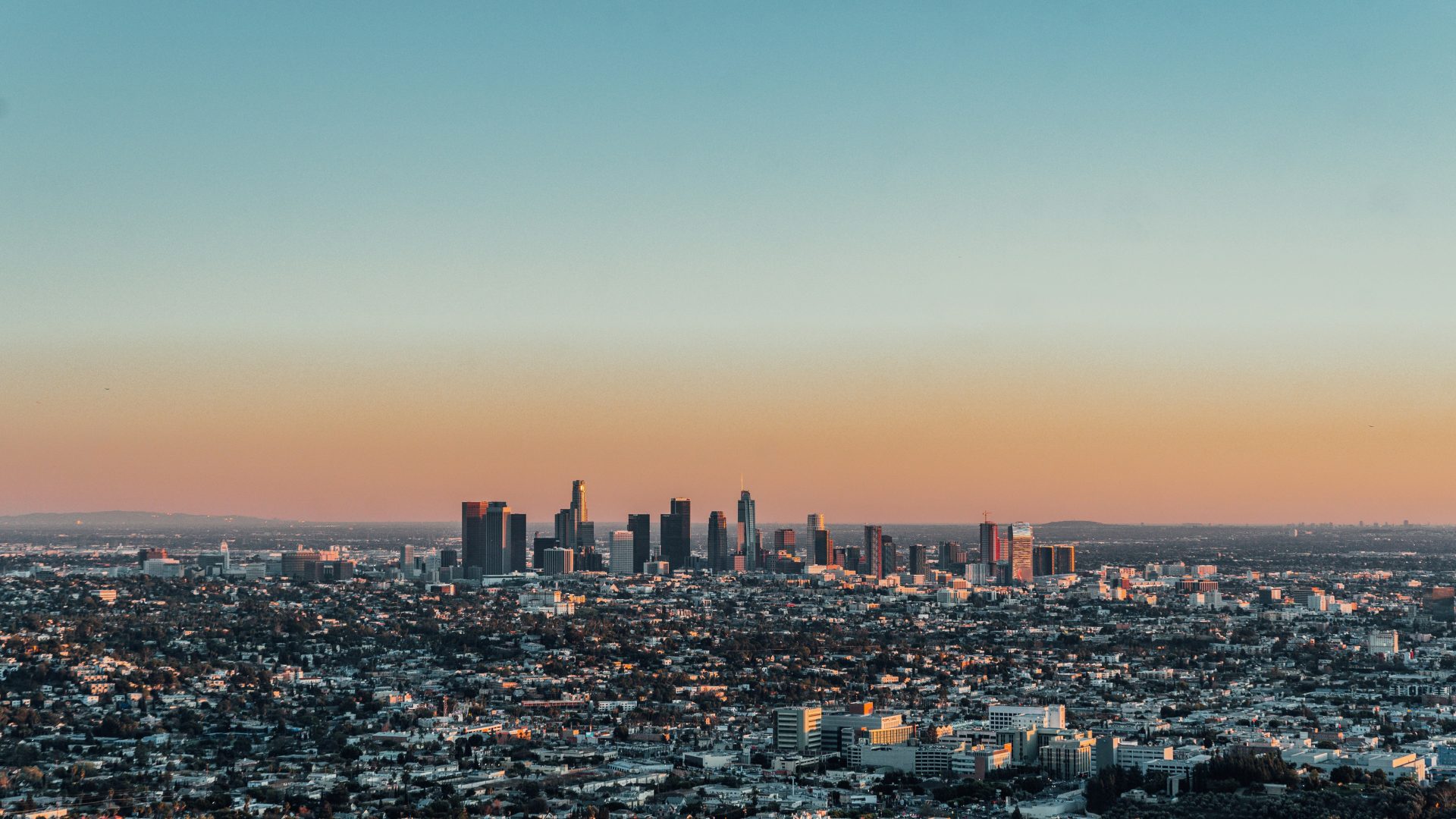
L..A. Skyline. | Photo by Josh Miller on Unsplash
Los Angeles County has the highest concentration of Filipinos in any U.S. county, often cited as the largest population outside of the Philippines. Filipinos were the earliest recorded Asian immigrants to the United States who landed on October 18, 1587 on what is now Morro Bay – a significant event that is commemorated as Filipino American History Month (FAHM). Based on Neilsberg Census estimates, L.A. county is home to approximately 416,221 Filipino residents, representing about 4.23% of county’s population as of 2025.
There is no official statistic on the Filipino population in the San Gabriel Valley and Pasadena, in particular. However, Asian Americans make up approximately 15.5% to 17.4% of the total city population according to the U.S. Census Bureau. While representing a smaller percentage of the overall city population than neighboring L.A., the Filipino community in the San Gabriel Valley is a visible and significant presence, with heavy representation in healthcare, nursing, and service industries.
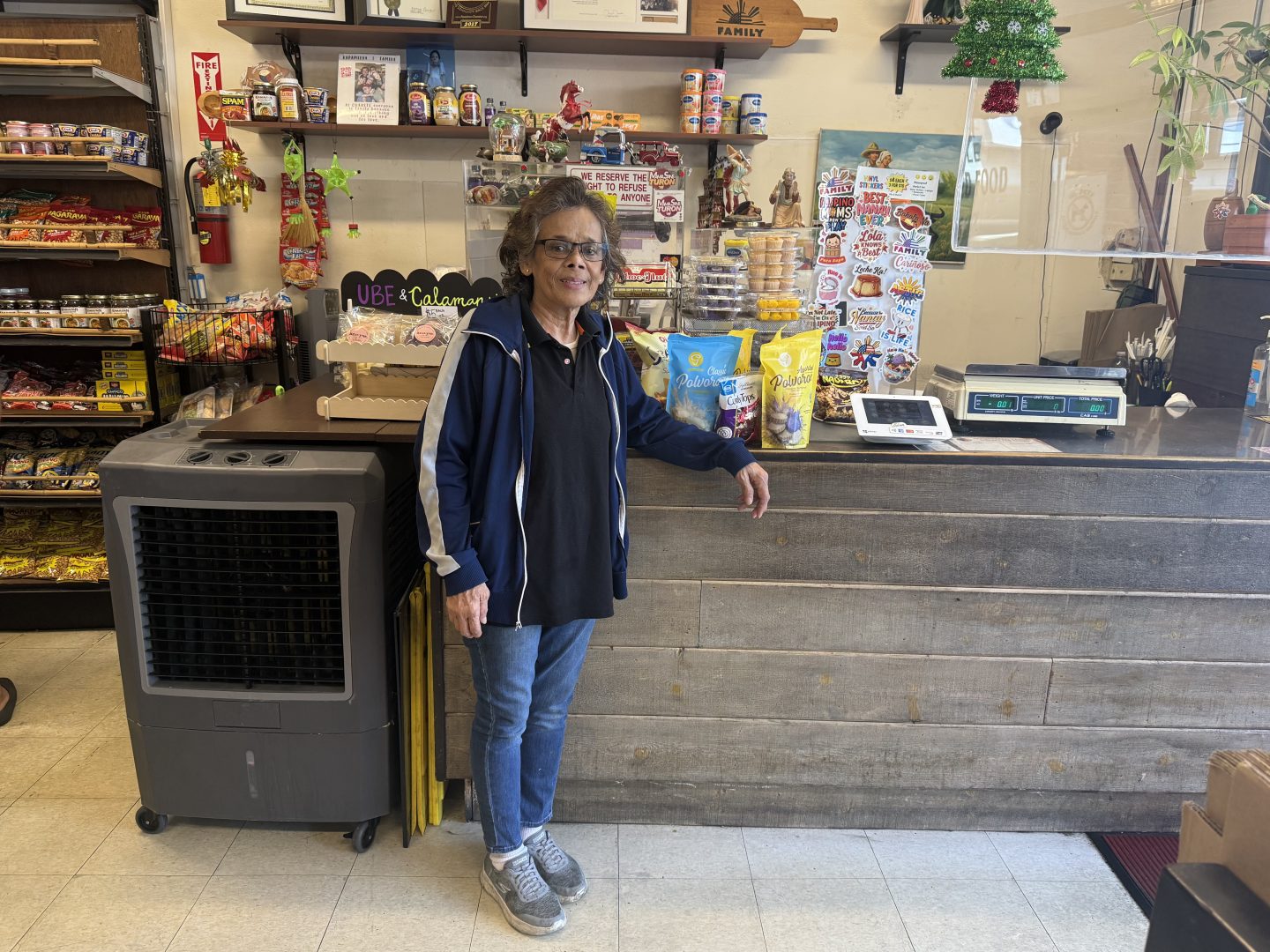
Susan Esteban, founder of Chaaste Family Market. | Photo by May S. Ruiz / Hey SoCal
Chaaste Family Market in Pasadena has been serving the Filipino community since 1987 when it was founded by Susan Esteban. Beginning in 2015, her three children – Christian, Abraham, and Gabriel – have been carrying on her legacy.
The Esteban family has deep roots in Pasadena, as Christian relates. “My grandfather was a POW in WWII when he arrived in Pasadena in 1949. He was one of the manongs (a term of respect for older brother or older male relative in the Philippine province of Ilocos) in Pasadena and was the first Asian to own a house in Loma Vista.”
“Several of our relatives were workers in Delano but they weren’t just farm pickers,” continues Christian. “They knew agriculture and planting seasons, were educated and conversant in both English and Spanish. They moved to Pasadena in the 1950s and formed one of the earliest Filipino working class communities here. They were able to acclimatize to the new place and do other jobs – they were jacks-of-all-trades and reliable employees. My uncle ‘Apo’ Ordinario, who was one of the first Filipinos born at The Huntington Hospital, worked for the Ballard family.”
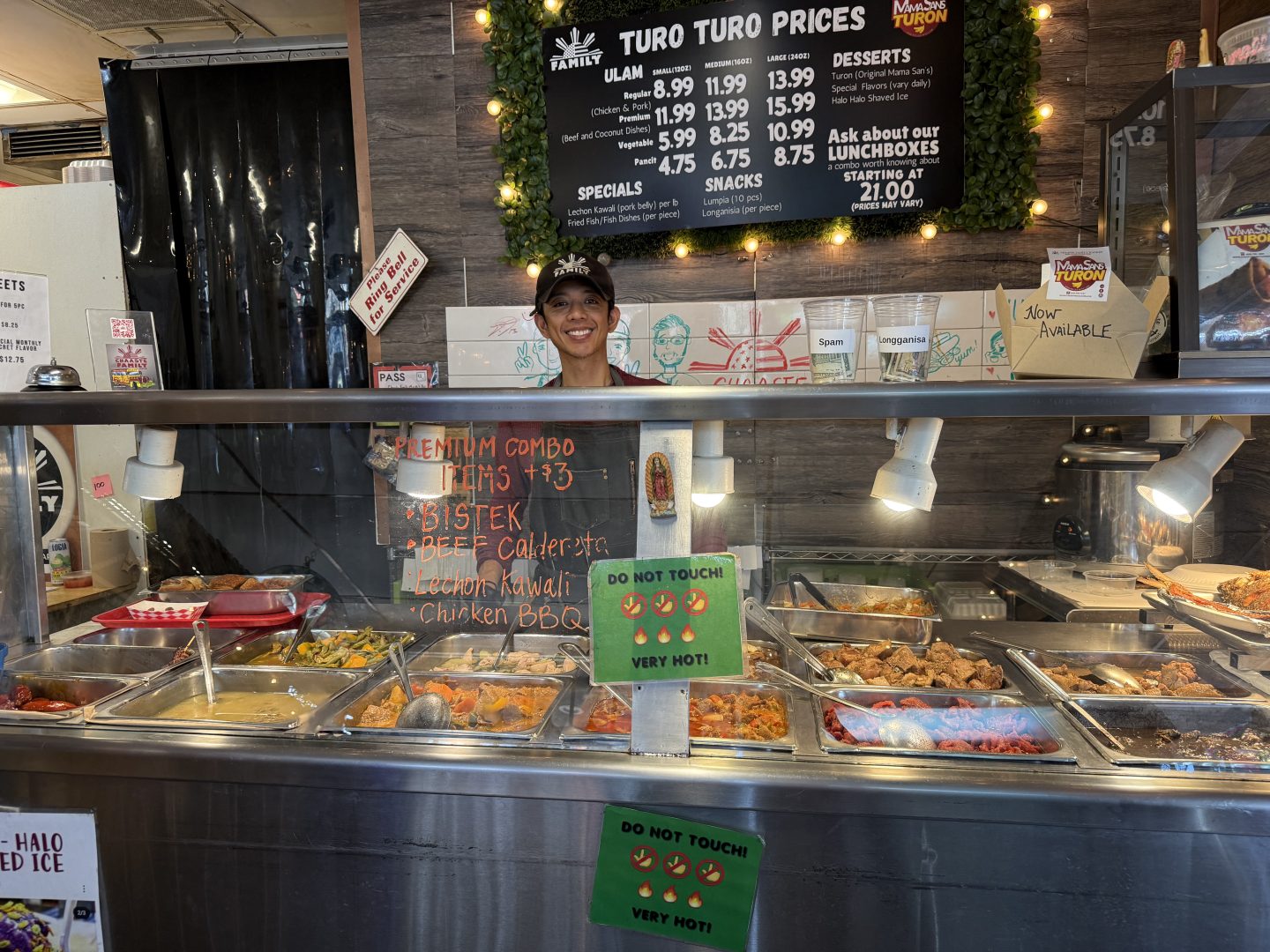
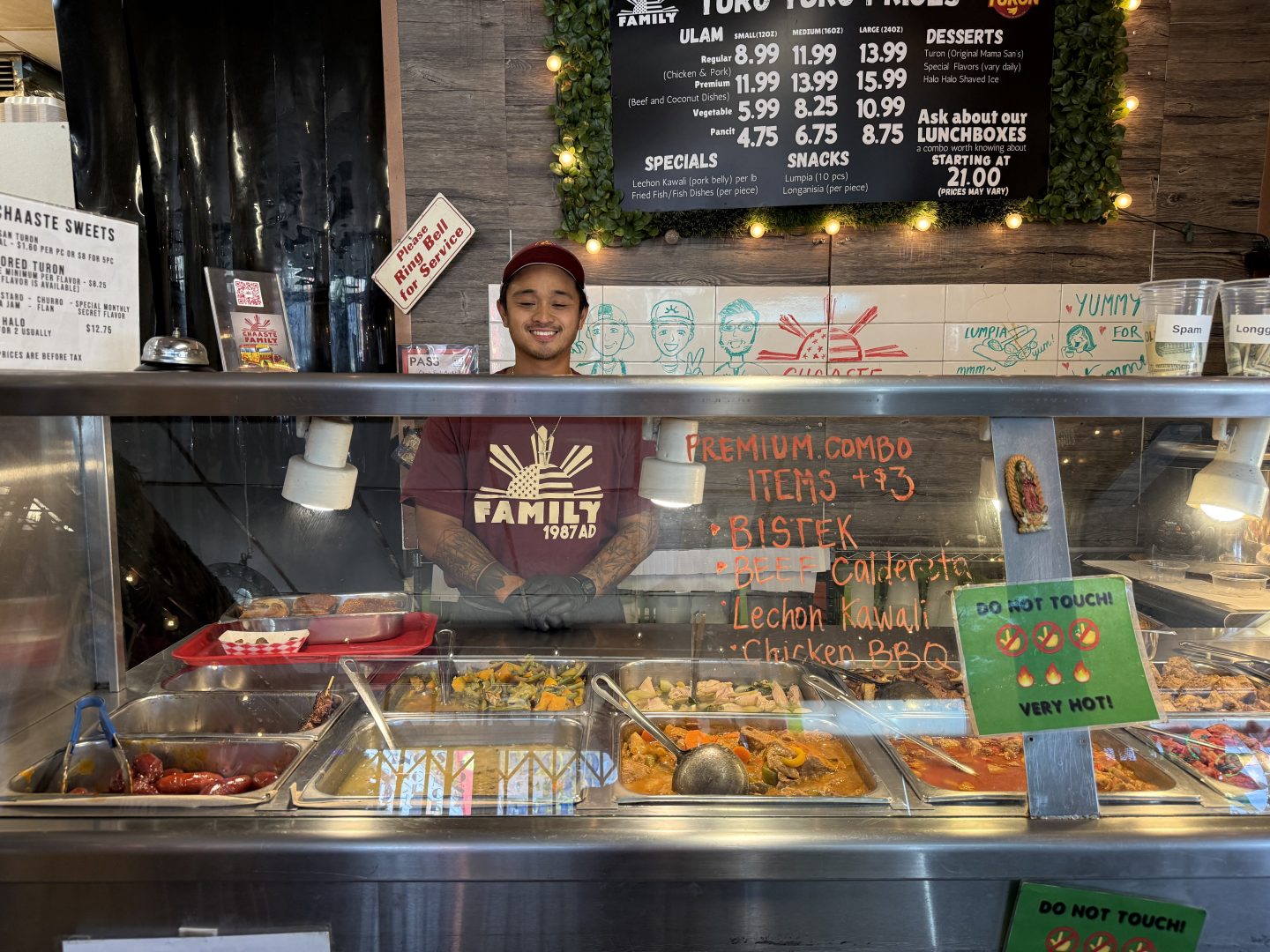
Christian Esteban and Chaaste Market’s hot food counter. | Photo by May S. Ruiz / Hey SoCal
“While my grandfather was given American citizenship by the U.S. government, his family was not,” Christian goes on to say. “He had to petition them separately and my dad, Arturo, arrived here when he was nine years old. My dad served in the Air Force and fought in Vietnam; he graduated from Cal State LA. He worked as an auditor at mostly aerospace companies – first at Lockheed, which moved to Phoenix, but he didn’t want to relocate; so he went to work for Northrop; then he was recruited by JPL, where he worked for about 25 years as senior auditor until he retired.”
Susan Torres (later Esteban) was able to immigrate to the U.S. through her uncle, who was an engineer. He was one of the Filipinos who took advantage of the 1965 Immigration and Nationality Act. She and Arturo met through mutual friends.
“My mom was a pioneering woman,” Christian claims proudly. “She was one of the first three Asians to work at Warner Brother Records. She was still employed there when she had me and when my brother was born three years later. After ten years, it became hard for her to raise two difficult boys – we were a handful. She had been entrepreneurial even at a young age, so she decided to open a store. Because Pasadena didn’t have a large Filipino population, she thought Eagle Rock would have been the ideal spot for it. But my dad insisted that it be located in Pasadena, and he prevailed.”
Chaaste Family Market opened its doors in 1987 in a nondescript corner on Allen Avenue and Corson Street, right next to the 210 freeway. The name is derived from their names – C for Christian, A for Abraham, the other A for Arturo, S for Susan, T for Torres (her maiden name) E for Esteban – and is pronounced “chaste.” Susan could have simply named it Esteban Family Market but Filipinos have a penchant for combining their first and second names like Marivic for Maria Victoria, for instance. She is also a devout Catholic so it was vital for her to practice Christian virtues and integrate them into all her endeavors.
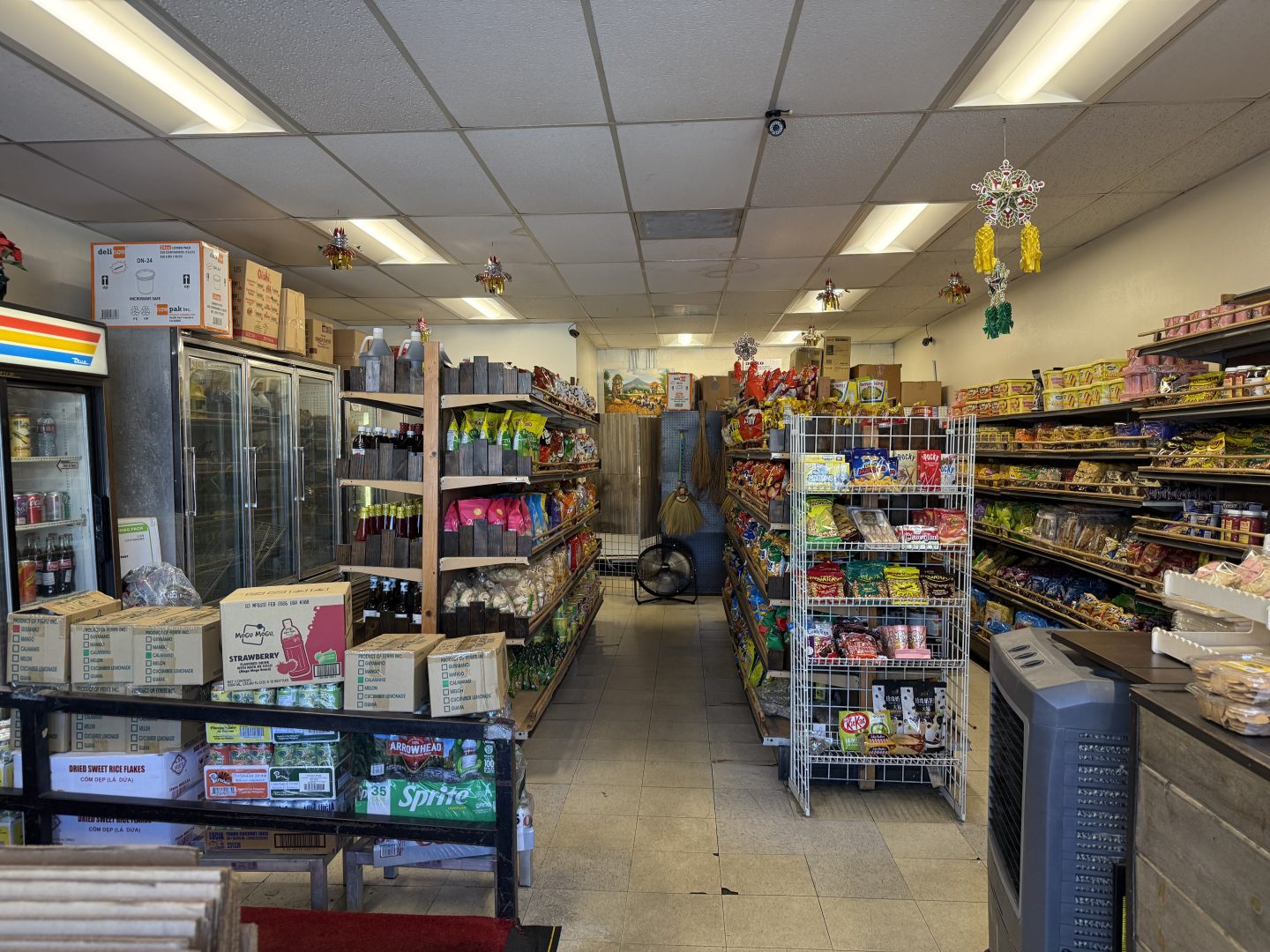
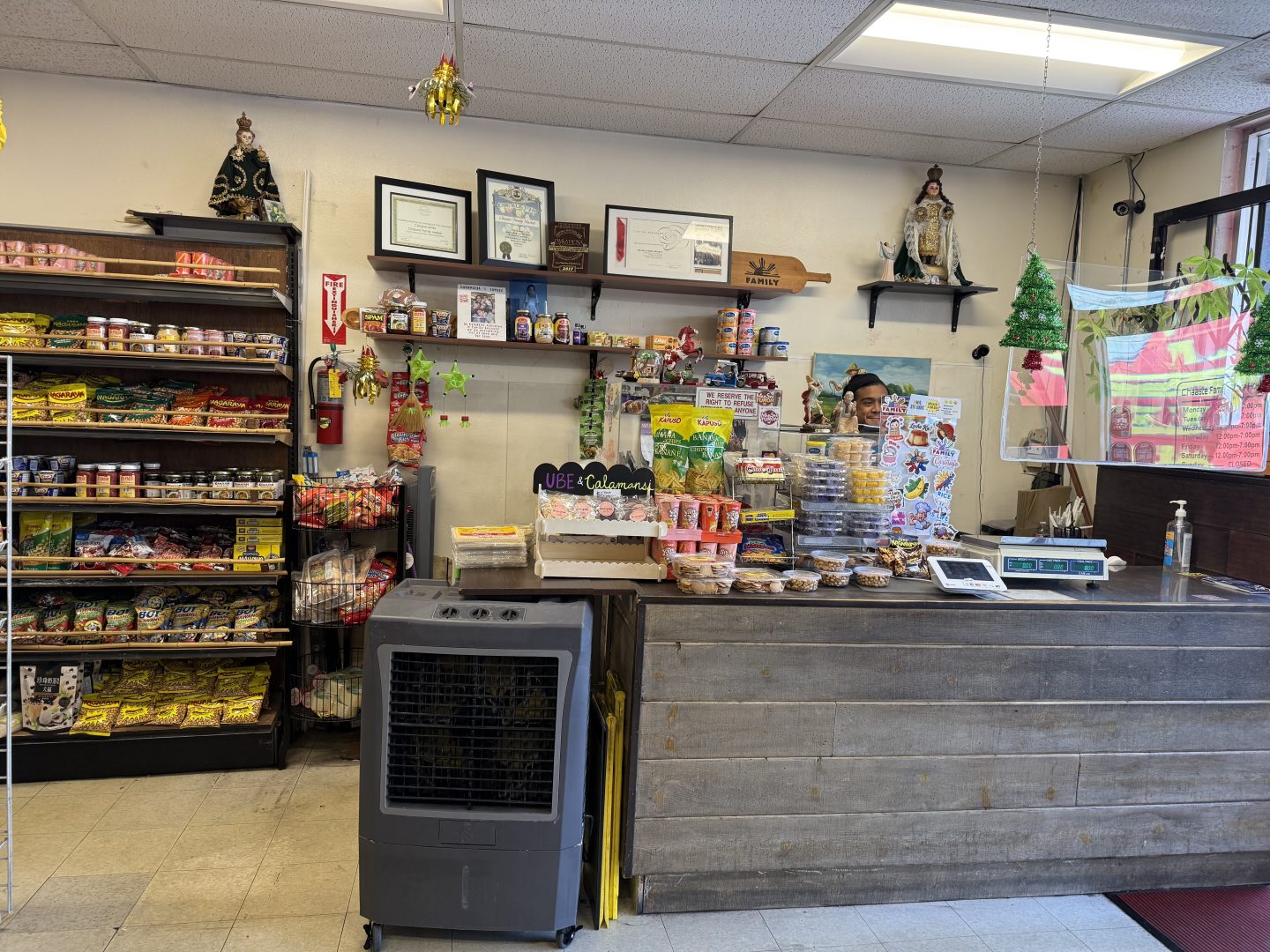
Chaaste Market’s displays and shelves of food and household items from the Philippines. | Photo by May S. Ruiz / Hey SoCal
Always someone to take things into her own hands, Susan did the marketing herself in the early days. Christian recalls, “Filipinos and Hispanics are mostly Catholic so my mom would go to the churches with flyers promoting the store. The Hispanic community kept us afloat; they came for our fresh produce – we didn’t have the hot food till 1995. This strip mall was a mini business hub for the Filipino community. My cousin owned the first video store two doors away; my uncle George had the small restaurant next door. The tax preparing business, the doctor’s office, and insurance company were Filipino-owned.”
Christian explains how Chaaste Market started offering hot food, known as turo-turo (literally point-point because customers point to the food). “People who were employed at the hospitals and in the healthcare field, the post office, and other private companies would get out from work too tired to cook after a long day. They would stop at my Uncle George’s restaurant to pick up food on their way home. But he closed early and those who had to leave work a bit later had no place to get hot food, so they asked my mom to offer turo-turo in the store. While she could cook, she wasn’t a professional chef and didn’t know how to prepare food for a hundred people. But she learned through hard work and trial and error.”
The youngest Esteban, Gabriel, was born a few years after the market opened. Being a close-knit family, the entire family was involved in the business. Their relatives – uncles, aunt, cousins – helped out and Chaaste Market flourished. In the intervening years, the Filipino restaurant and video store closed. There are now only two remaining Filipino-owned businesses but Chaaste still acts as the glue the binds the Filipino American community in the western San Gabriel Valley.
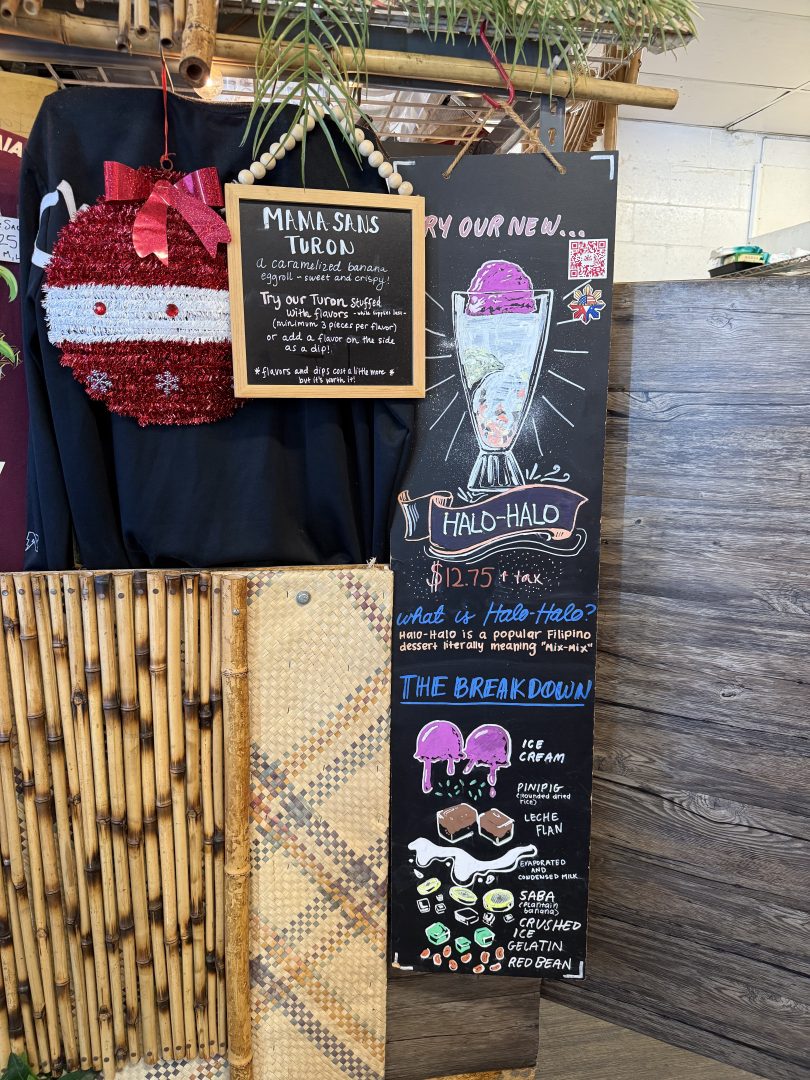
Drawing and explanation of halo-halo, a Filipino shaved ice dessert. | Photo by May S. Ruiz / Hey SoCal
Christian says about his upbringing, “My brothers and I have always been proud of being Filipino. But we were raised in Pasadena where the majority of the population is White, with some Blacks, Hispanics, and Asians. We went to private Catholic schools and grew up around non-Filipinos and we wanted to be like them, to fit in, to belong. So we had to adapt to our surroundings and to the way the kids we spent most of the day with ate, moved, and talked.”
Susan felt the only way for her children to really know what it meant to be Filipino was for them to live in the Philippines. “My mom sent us back to the Philippines in 2007 to attend university there and to learn about our culture,” Christian discloses. “I studied Film in Baguio where it’s cool and then worked in News and Public Affairs for GMA-7, traveling all over the country. The experience opened my eyes to a whole different world, the beauty of the Philippines, and the talent of Filipinos.”
“Being Filipino American and being Filipino are two distinct things,” clarifies Christian. “I thought I knew what it was to be Filipino, but it was only when I lived there that I recognized that it was a very different culture. I’m conversational in Tagalog and then I heard what the real Tagalog language is. I saw first-hand that Filipinos value education and have exceptional work ethic. Looking back now, it was that realization that gave me the passion to carry on my mom’s legacy through her store. I’m very proud of my heritage.”
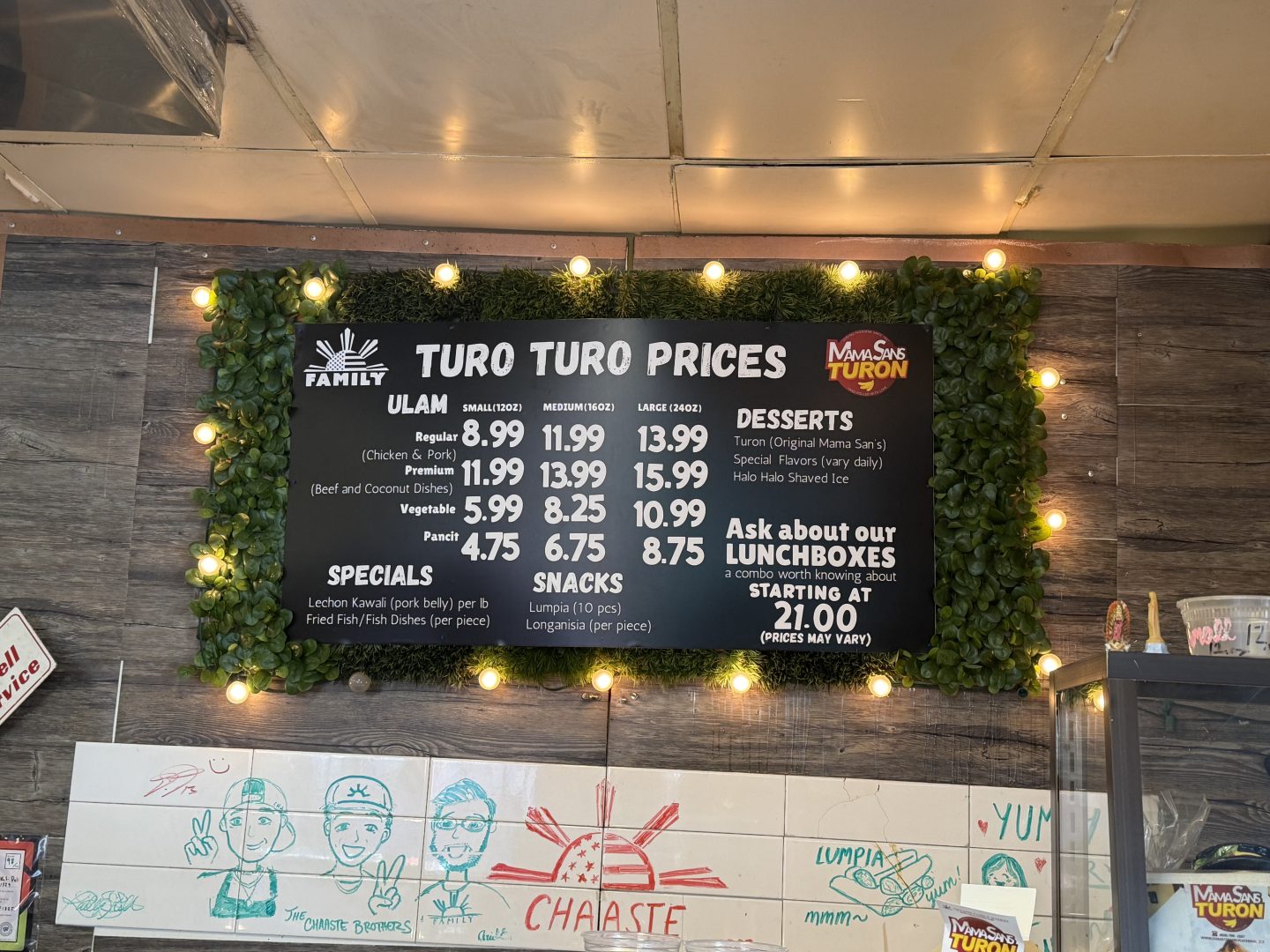
Hot food and dessert prices. | Photo by May S. Ruiz / Hey SoCal
When Arturo showed early signs of dementia (he has since passed away), Susan asked her children to come back to California. The store had been struggling to stay financially viable and she planned to close it. However, her children insisted they would take over and she could focus on their dad’s care.
“I really just wanted them to be here for emotional support,” Susan says. “With their excellent education, they were able to get wonderful jobs in the Philippines. They had enough work experience so it would have been easy for them to find professional employment here and earn good salaries.”
“It took a bit of convincing for my brothers, especially Abe, to go back to California,” admits Christian. “He attended Ateneo de Manila, and after graduation he was employed as systems operations manager at Hewlett Packard in the Philippines working with international companies.”
“But in the end, we love the store my mom built and we grew up thinking of it as our second home,” Christian emphasizes. “As kids my mom brought us back here from school and the parking lot was where we skateboarded. We’re connected to the store emotionally and spiritually; we grew up here with our cousins.”
Abraham behind the cashier by the store entrance, | Photo by May S. Ruiz / Hey SoCal
Abraham echoes Christian’s words. “HP offered to have me work remotely so I could stay on the job, which was very kind. But I declined because I also wanted to continue what Mom started 39 years ago. We’ve had a couple of proposals from people to buy the store and that would have been an opportunity for me and my brothers to find regular jobs, have weekends off, take a two-week vacation annually. However, the buyers weren’t Filipinos and they were going to convert it into something else altogether. And that outcome wasn’t something we wanted to see. It’s important for us to ensure that Filipino Americans in Pasadena and beyond have a place to come together as a community.”
That coming together as a community was on display last year after the Eaton Fire broke out. Chaaste Market organized a donation drive and filled half of the store with clothes and toiletries from Filipino Americans who wanted to help. The brothers posted it on Instagram and very quickly fire survivors came to avail themselves of the much-needed items.
Filipinos are, by nature, big-hearted and generous to a fault. But they are also very low-key; they don’t want to call attention to themselves and they avoid public accolades. They want to give quietly, even anonymously.
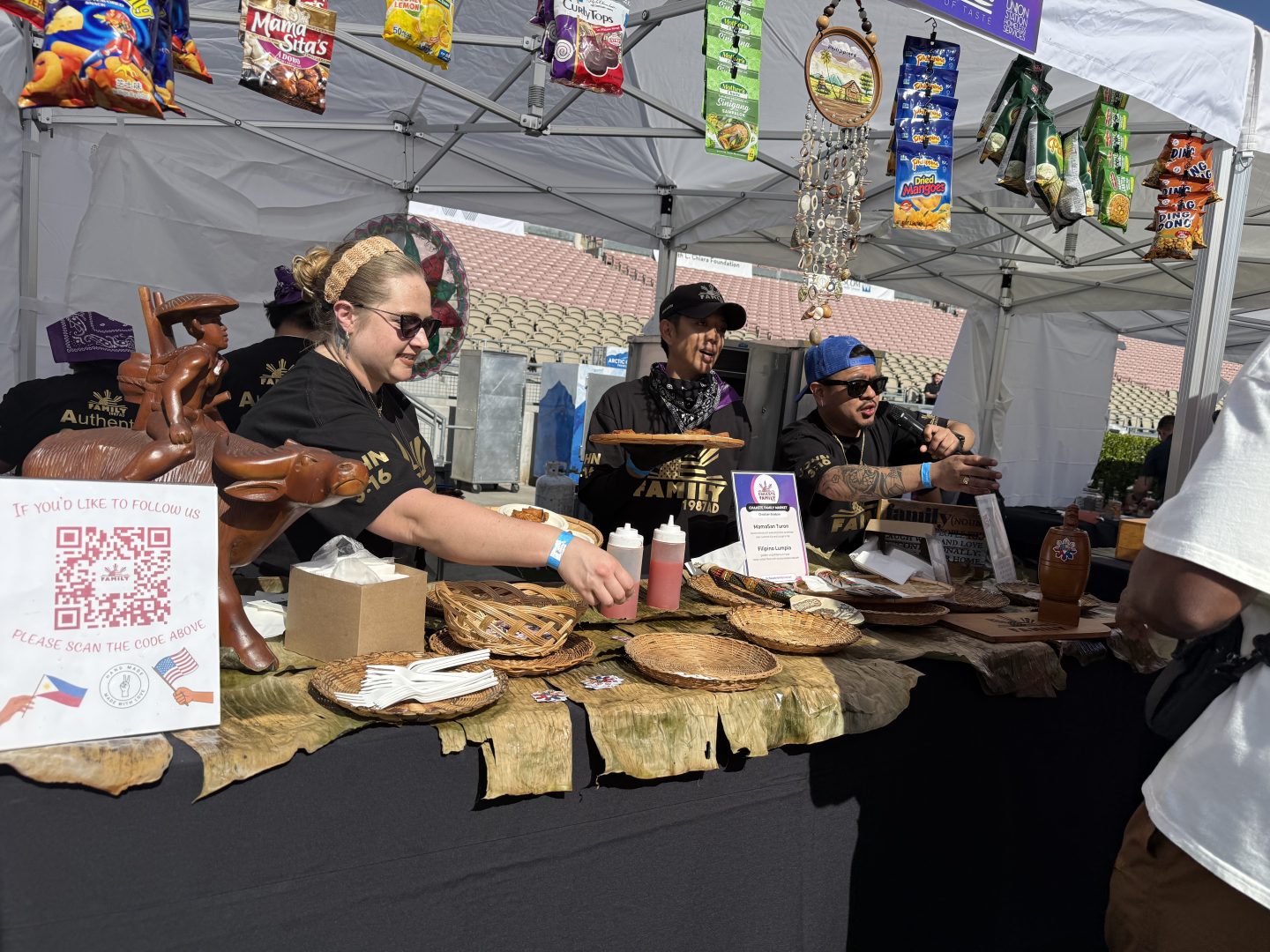
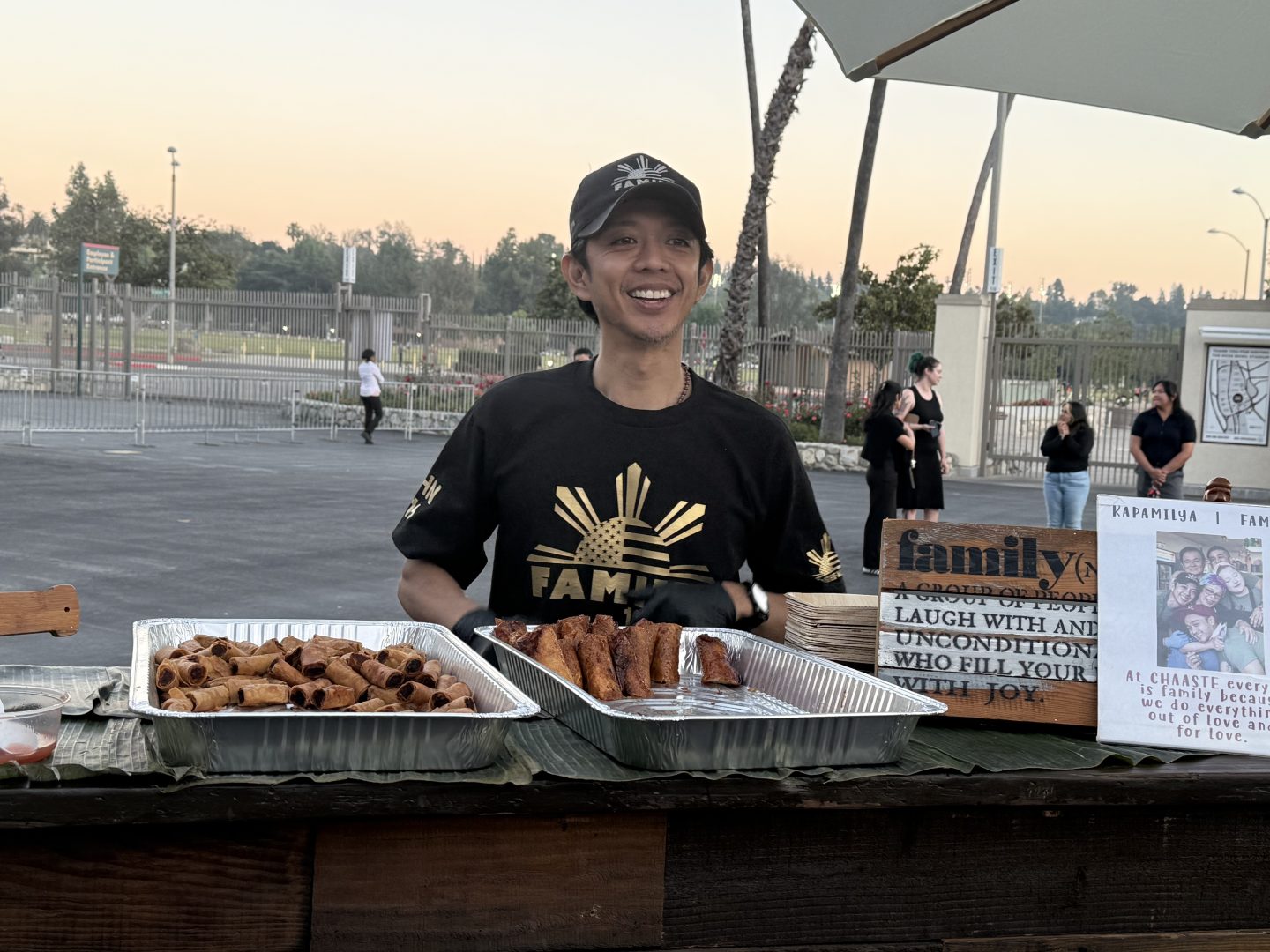
Chaaste Market table at Masters of Taste 2026 at the Rose Bowl. | Photo by May S. Ruiz / Hey SoCal
But the Esteban brothers broke the mold this past spring when Chaaste Market participated in Masters of Taste 2026, an annual event that attracts thousands of foodies from all over Southern California and gets much media coverage. They brought their own sound system to play Filipino music and Abraham talked about their store, to the delight of those who were in the long queue to sample their lumpiá and signature Mama San’s turón.
The pride in their heritage is the philosophy behind the store. Christian describes, “Chaaste Market is all about the Filipinos’ way of life, our attitudes, generosity, and openness. We always invite people to eat with us – kain na (let’s eat) is an everyday phrase we use. And my mom wanted to share that with our customers.”
Chaaste Market is open from Monday to Saturday. During the pandemic, they stopped carrying produce, removed the lunch/dinner tables, and shortened the hours to 12 pm to 7 pm (from the previous 11 am to 8 pm). Customers come primarily for the hot food and the store sells between 70 to 100 “to-go” boxes daily.
Gabriel behind the hot food counter. | Photo by May S. Ruiz / Hey SoCal
Susan is still actively involved and, to this day, Chaaste Market uses her recipes. Gabriel explains, “Initially, I wanted to do fusion so I could incorporate what I learned in culinary school but my mom was adamant about keeping it traditional. My mom didn’t teach me how to cook Filipino food; I picked it up from observing and watching her. But my two brothers and I spent several years in the Philippines so I was able to try all kinds of Filipino food. Now that I’ve been cooking over ten years, I’m inclined to keep it as it is, but working the kitchen more efficiently.”
“While some Filipino chefs put their own spin on Filipino food, I focus on different techniques in keeping the food hot,” Gabriel says further. “It took me about two to three years to learn that some dishes have to be prepared a certain way so they don’t spoil. Pasadena has very strict health inspection requirements. Health inspectors want food to be at a specific temperature and they don’t understand that a lot of our food are cooked with vinegar. For example, chicken adobo keeps cooking after it leaves the fire so there’s a potential for the chicken to get too dry and tough. That’s one of the reasons we stopped making pork barbecue, which was a very popular item.”
According to Gabriel beef steak is a favorite among customers and is one of Chaaste Market’s mainstays. He thinks the dish is popular because beef is expensive so it isn’t something being offered in most turo-turo places; it’s usually available only for catering. Other mainstay dishes are pork adobo and chicken adobo.
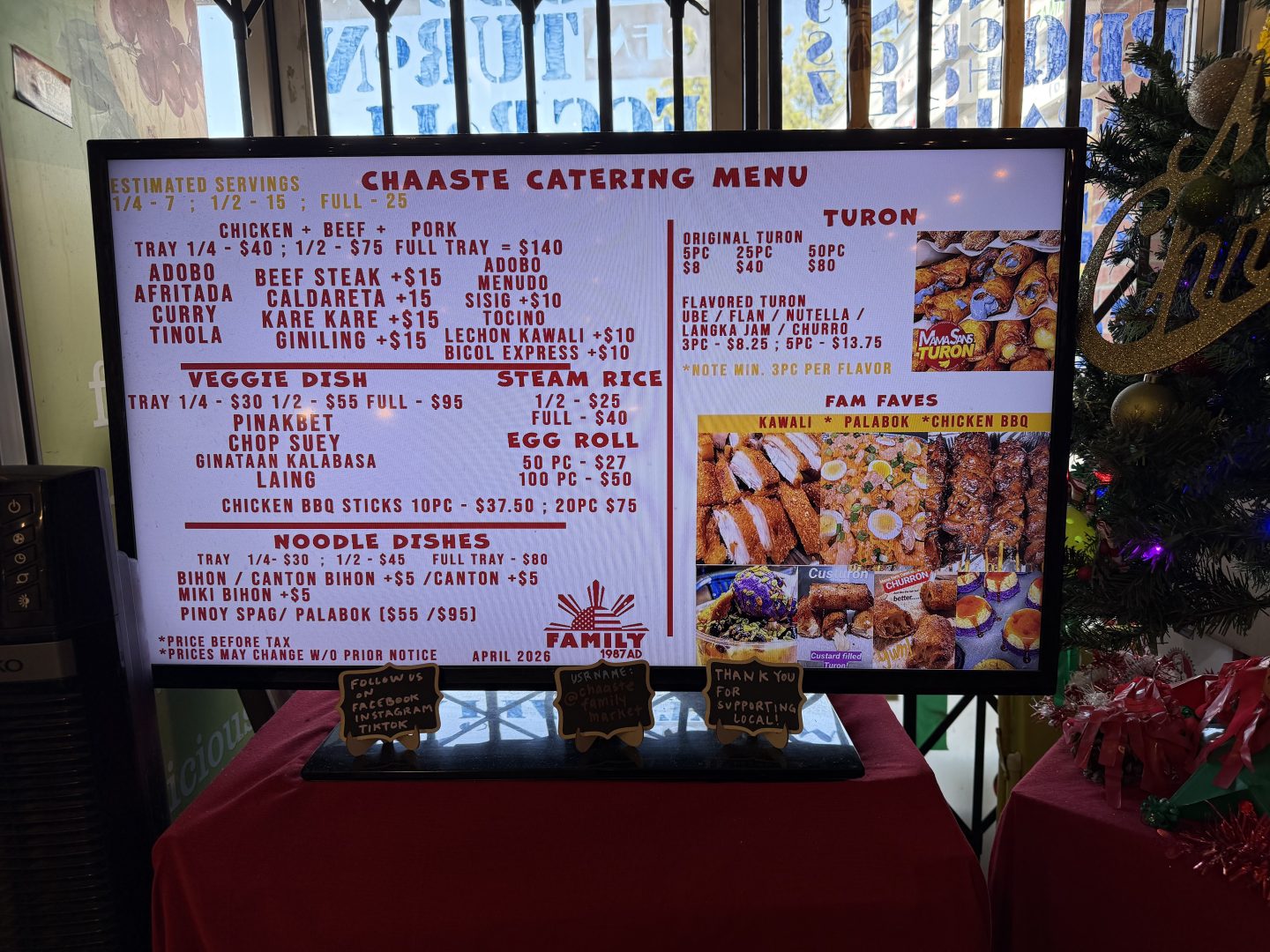
Chaaste Market’s catering menu board. | Photo by May S. Ruiz / Hey SoCal
“We have many vegetarian customers now so we have adjusted our menu to offer what the community wants,” adds Gabriel. “Most Filipino vegetable dishes are cooked with meat to give them more flavor. It took us a while to transition and offer a variety of dishes that vegetarians can eat. They’ve been surprisingly popular and we’re getting more customers in.”
The store has been getting media attention in recent years which has really boosted business. Gabriel recounts, “About ten years ago, a Filipino actress living here had a show in Echo Park and she asked us to cater turón. That’s how people first heard about us and customers started coming to Chaaste Market from the exposure. It’s such a blessing and a grace of God – we don’t advertise or promote the store. We don’t really know how to use social media and we’re busy working in the store that we have no time to post regularly.”
“It’s quite miraculous when bloggers and influencers come over,” says Gabriel in amazement. “A few months ago, Richard Antablian, who has a blog called ‘1 Hour Lunch Break’ on Instagram, Tik Tok, and YouTube showed up and just got food – which he ate in his car – and posted videos. About three days after he posted his blog, we got an influx of customers and we sold out in a couple of hours. A food blog called ‘The Infatuation’ has also been one of our supporters – we’re consisently on the top 10 on the list of food places in Pasadena. The LA Times has run a few articles about our food, and some local publications have featured us.”
“Fridays and Saturdays are our busiest days because we have both the catering and the turo-turo business,” Gabriel states further. “The media coverage has been bringing us catering customers from almost everywhere, who initially request our chicken barbecue, lumpiá, and turón. And when they come to pick up their order, they decide to get other dishes from our turo-turo.”
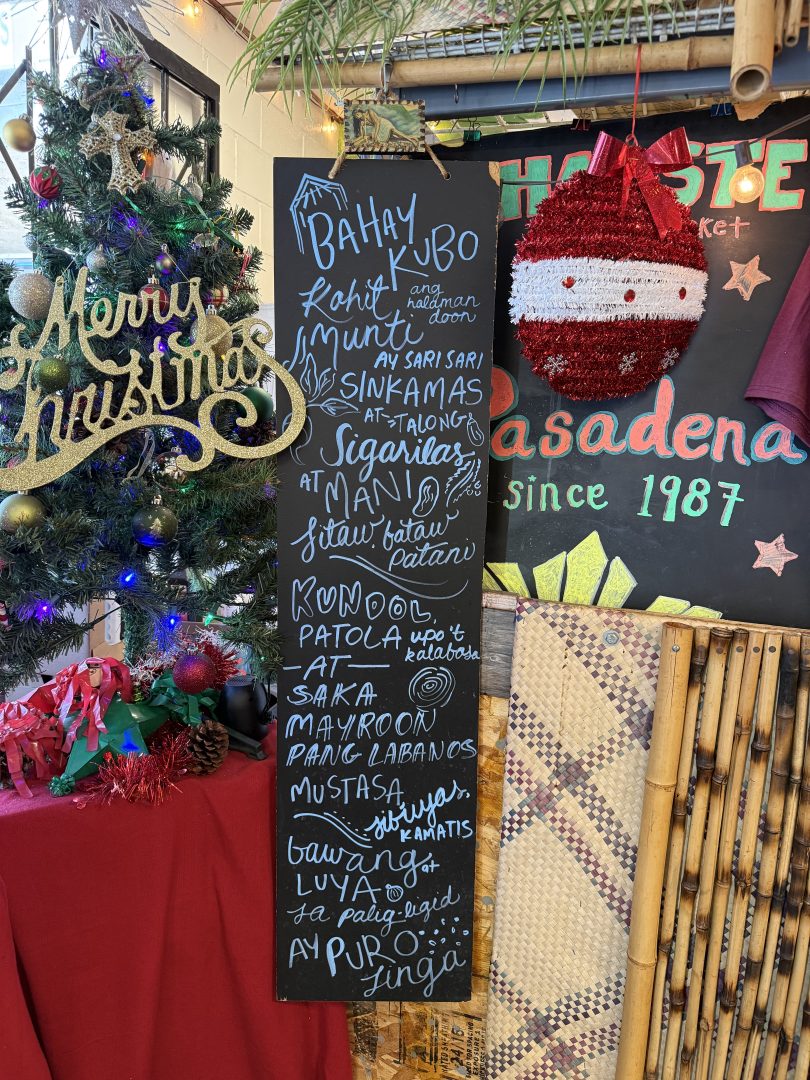
Blackboard with lyrics to Bahay Kubo (Nipa Hut), a Filipino folk song. | Photo by May S. Ruiz / Hey So Cal
For all the popularity Chaaste Market has gained and the success their business has reaped, the Esteban brothers never take anything or anyone for granted – they are humble and grateful, always. They greet all their patrons with a warm welcome. They happily chat with shoppers, many of whom they know by name. And they thank people for coming when they pay for their purchase.
The store is never empty of customers – Filipinos and non-Filipinos. There’s a constant stream of people from Pasadena and neighboring cities and from as far away as Santa Clarita, coming for the turo-turo and other Filipino items. For the majority of its customers, Chaaste Market is a regular stop from work on their drive home to buy hot food for their family.
But for some Filipinos, Chaaste Market is the place that brings back fond memories of their homeland – with the familiar objects and aromas. The lyrics of the long-forgotten first song they learned as toddlers, written on a blackboard in one corner, bring a smile. On the walls, drawings and references to-all-things-Filipino are nostalgic reminders of their youth all those years ago. Chaaste Family Market keeps the Filipino culture and traditions alive.
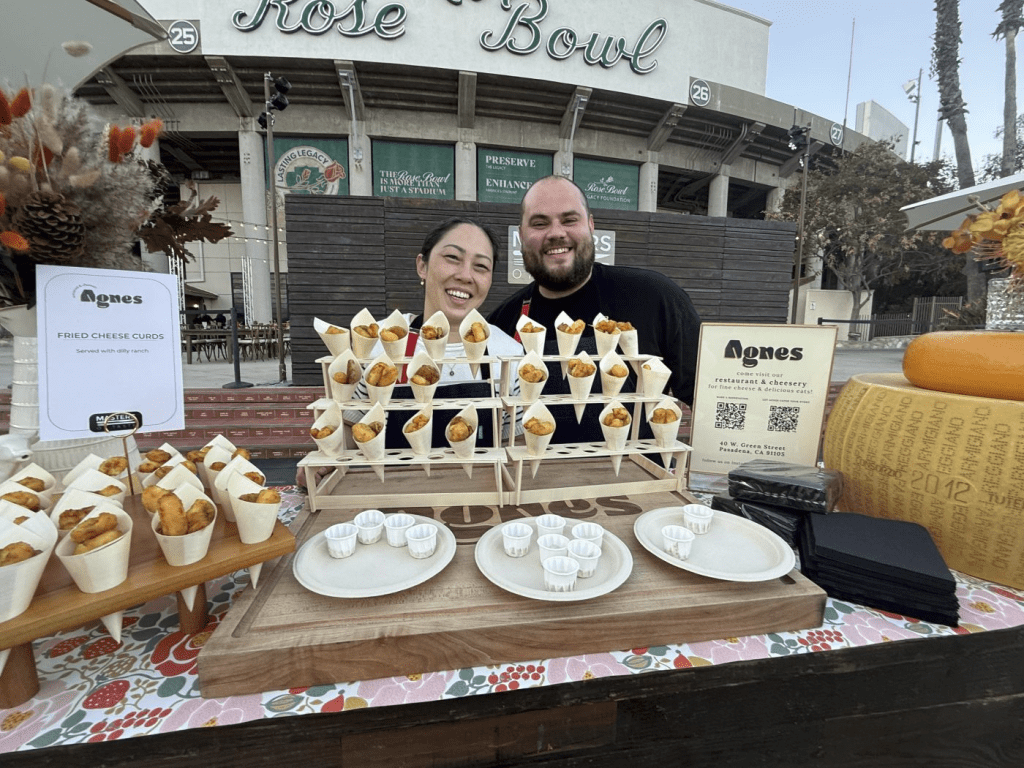
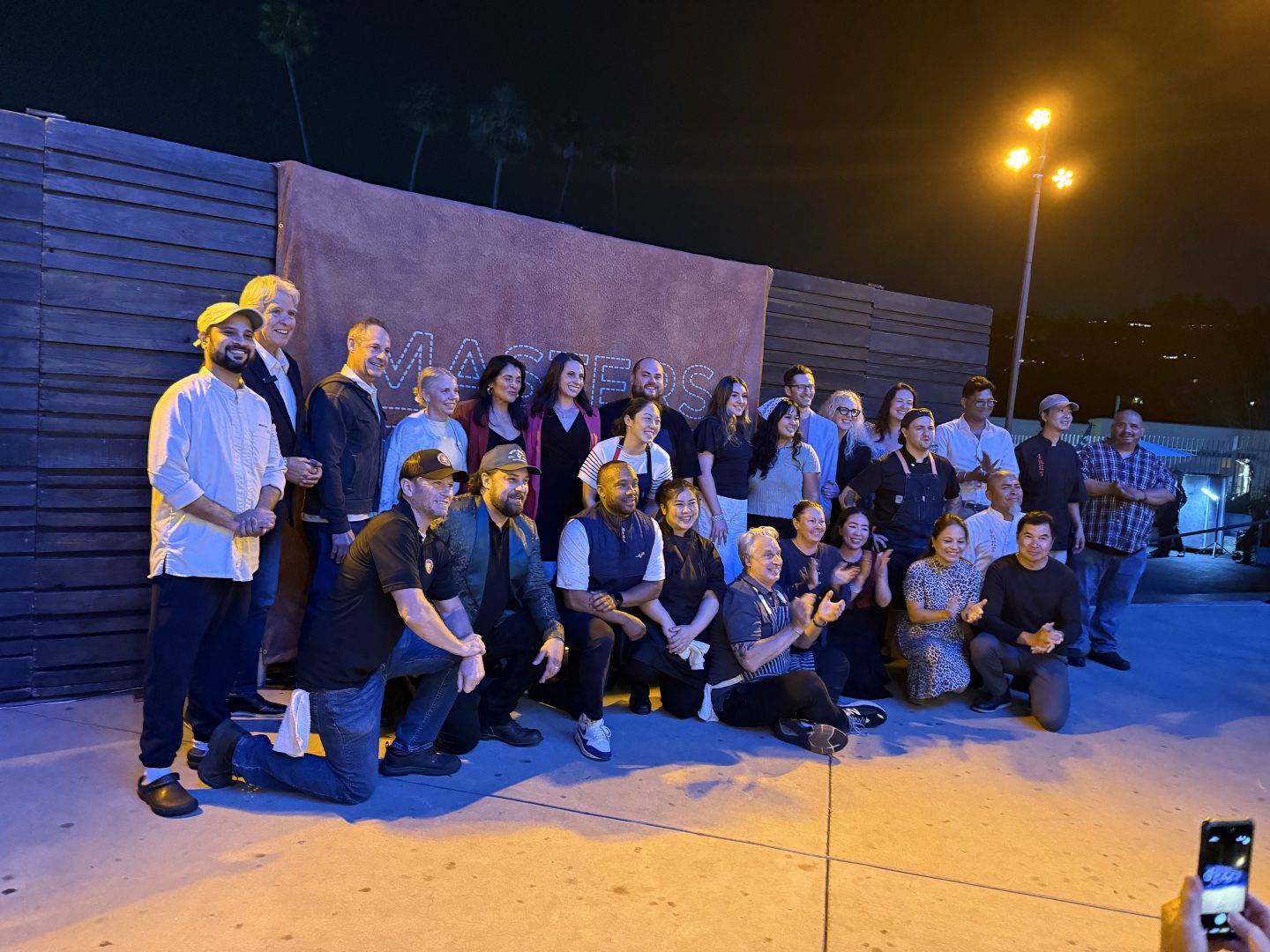
Masters of Taste 2026 host chefs Vanessa and Thomas Tilaka-Kalb of Agnes. | Photo by May S Ruiz / Hey SoCal
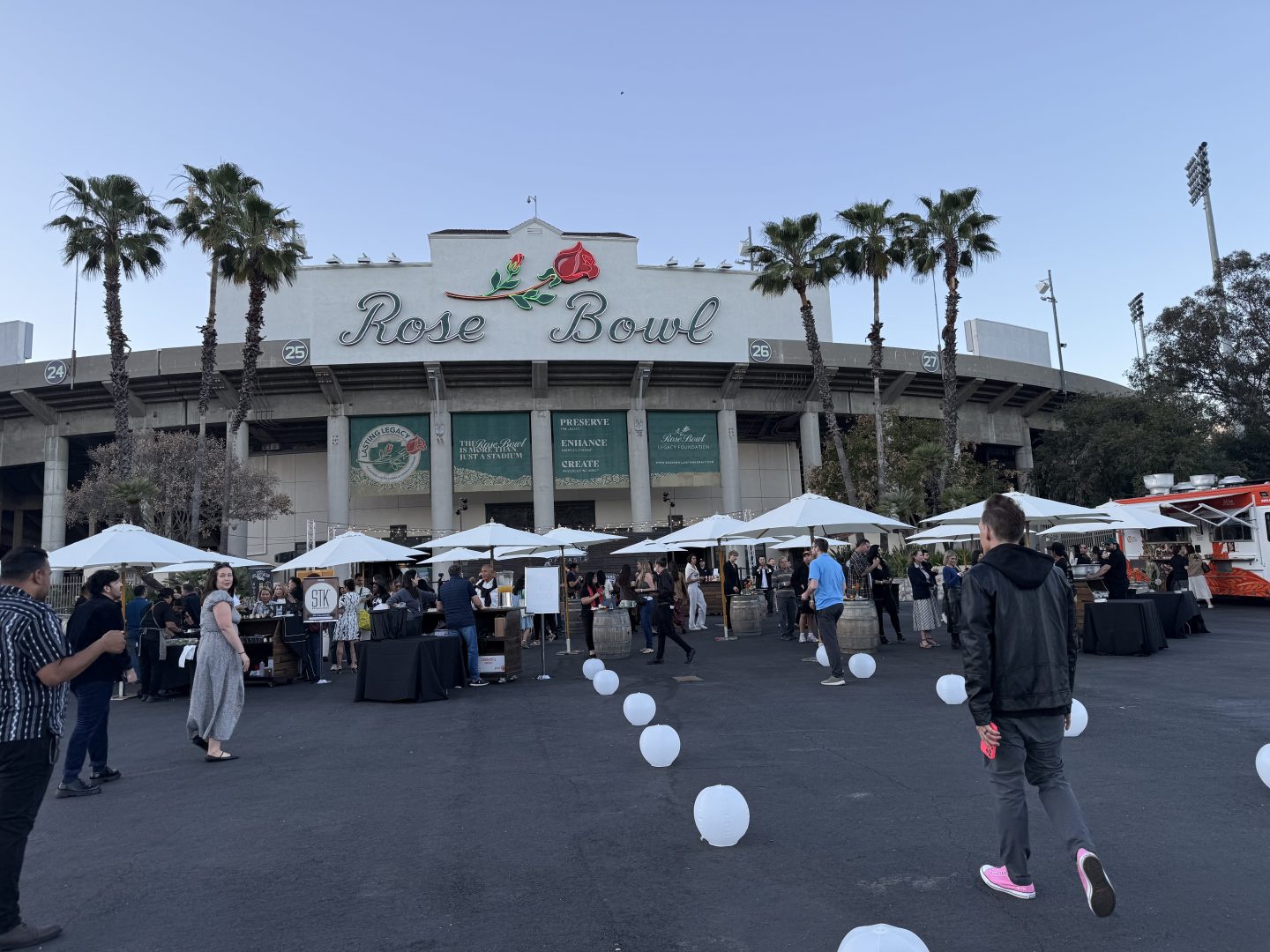
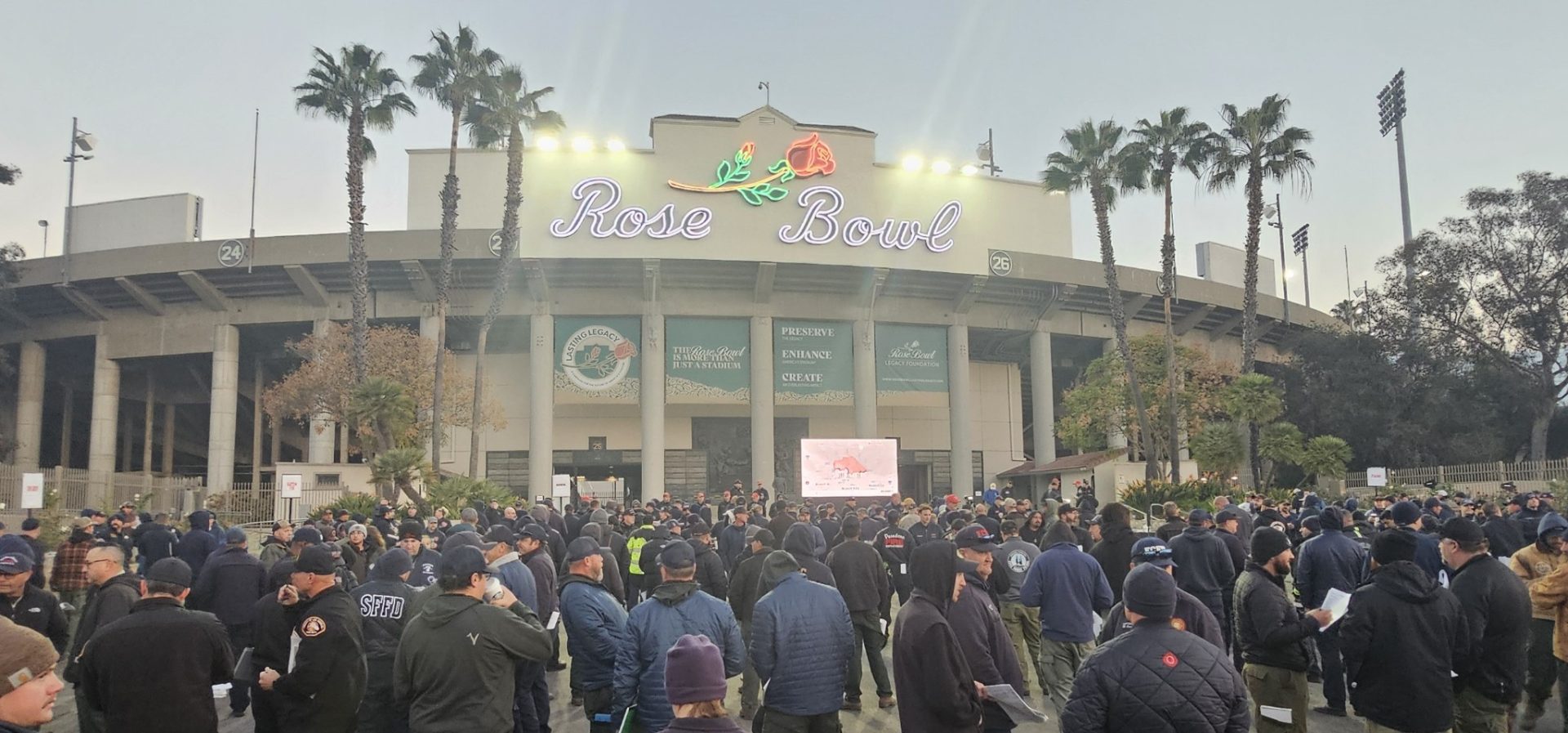
Masters of Taste, Southern California’s premier food festival held its media preview night on Wednesday, March 25 at the Rose Bowl’s Court of Champions. In a departure from previous previews, the event was staged outdoors directly beneath the Rose Bowl sign instead of in the locker room.
Guests were treated to a selection of food and drinks that will be served at Masters of Taste 2026 when it returns to the Rose Bowl on April 19. We mingled with other food writers and chatted with the chefs who were serving a sampling of food and beverage purveyors pouring alcoholic and non-alcoholic drinks.
Masters of Taste media preview held at the Rose Bowl’s Court of Champions. | Photo by May S. Ruiz / Hey SoCal
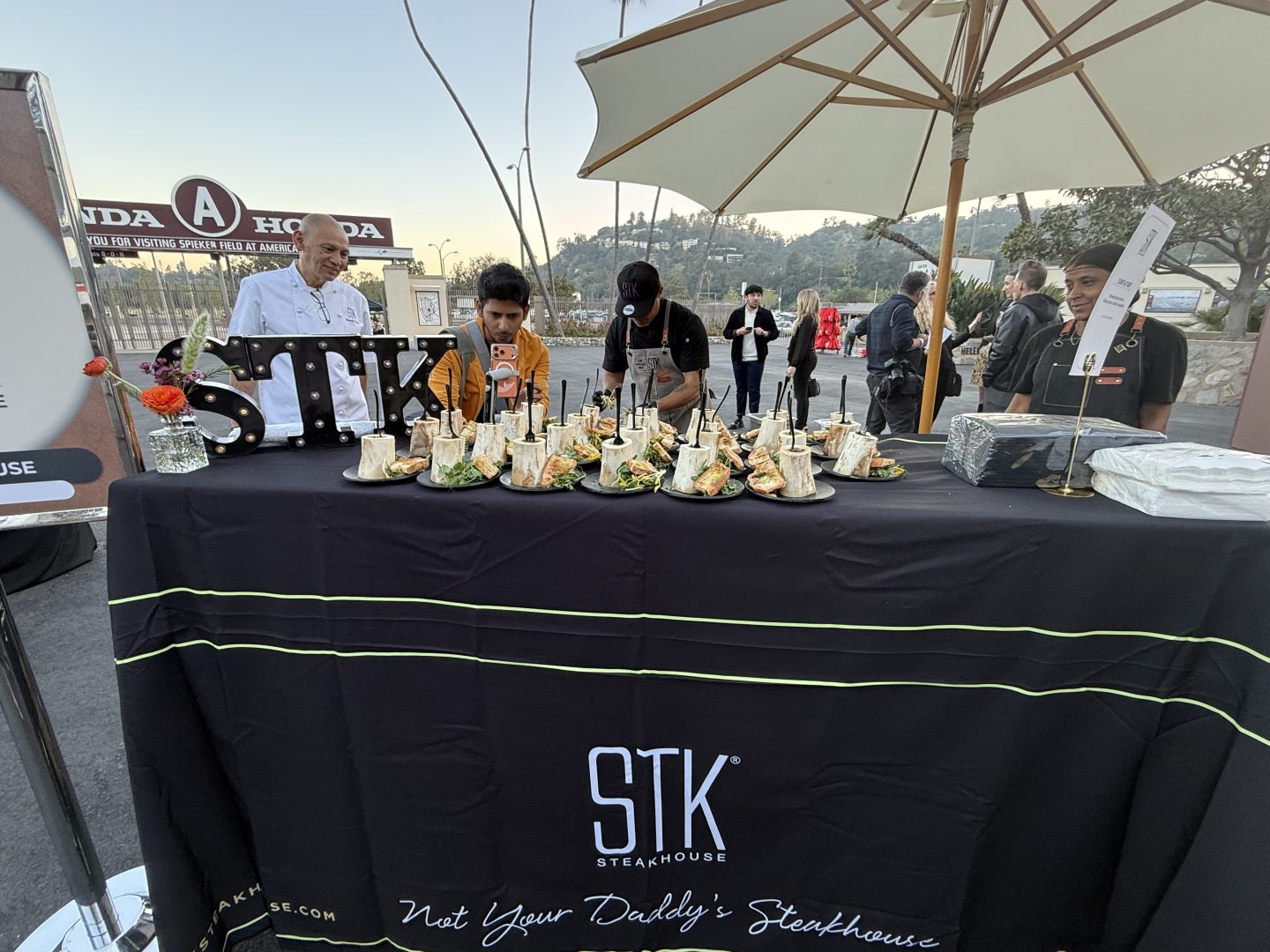
Local Masters of Taste participant and Pasadena native, Christian Esteban – son of the founders of Chaaste Family Market on Allen Avenue – happily invited attendees to try Filipino favorites lumpia (spring rolls) and turón (deep fried slices of banana in a crepe-like wrap). The Tilaka-Kalbs of Agnes Restaurant and Cheesery on Green Street in Old Pasadena greeted us warmly and offered fried cheese curds with a dilly ranch dip. Dennis Cruz of STK Steakhouse in Santa Monica served beef bone marrow, which Filipinos call “bulaló,” topped with a smidgen of caviar, toast crisp, and microgreens. We downed all the delicious fare with non-alcoholic sparkling water slightly flavored with hops from LA-based beverage company HOPWTR.
Christian Esteban of Chaaste Family Market. | Photo by May S. Ruiz / Hey Socal
There wasn’t time to indulge in other delectable fare and refreshing beverage because we had to head over to the dinner tables. After guests were seated, the program began as servers brought out the different courses and drinks that evening. Participating chefs and beverage producers were introduced and they described each succeeding dish or drink we were enjoying.
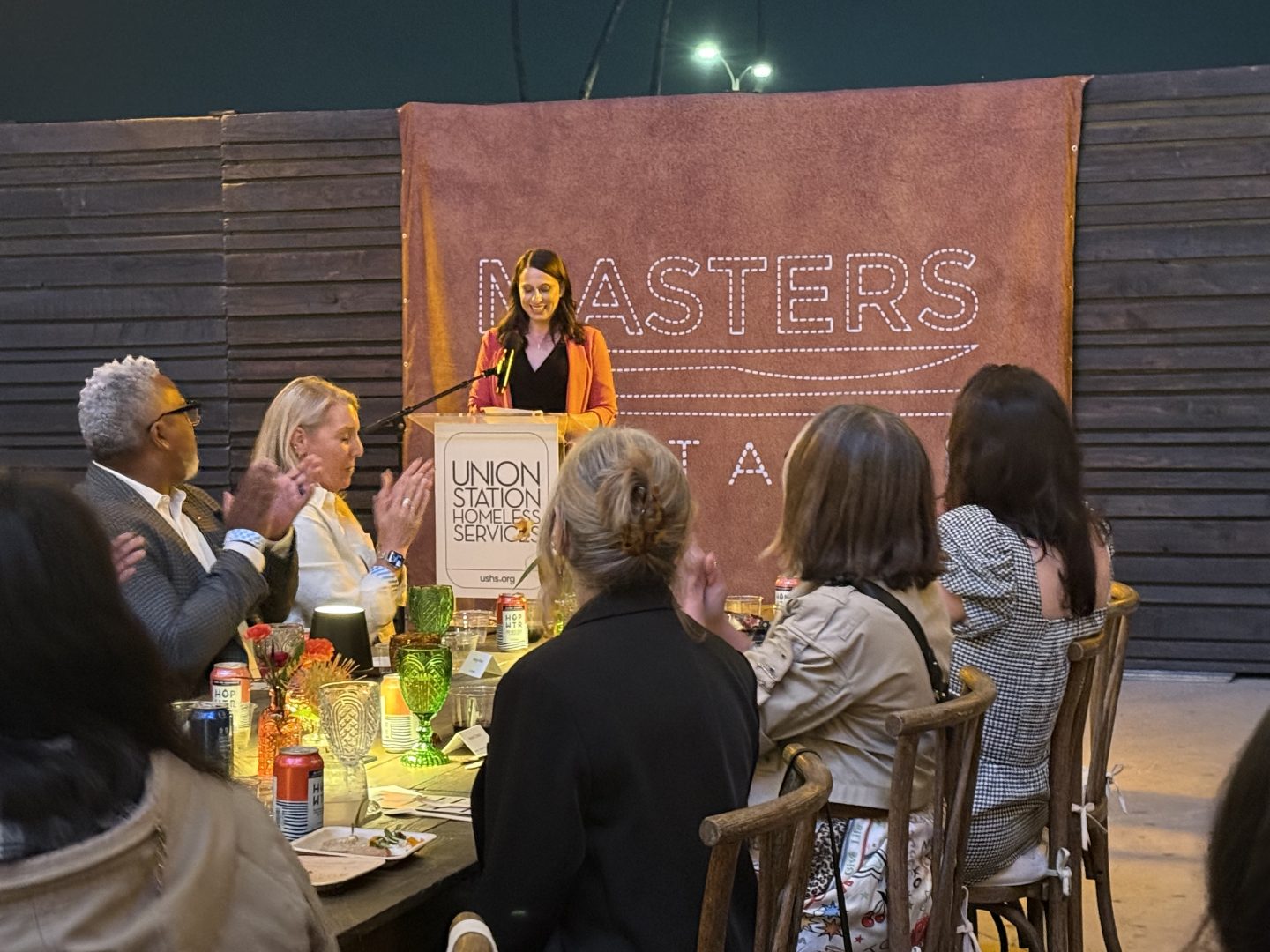
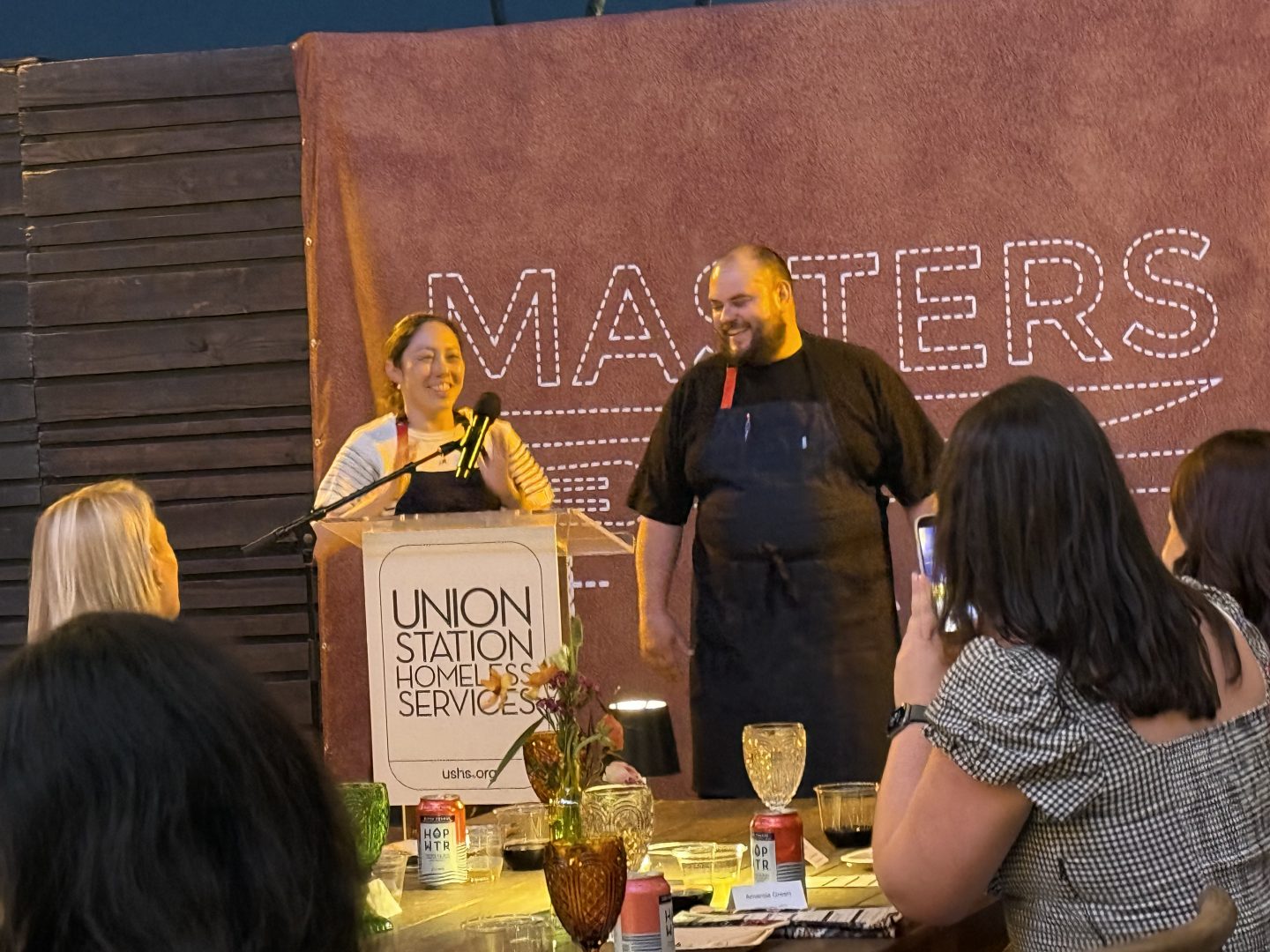
Midway through dinner, attendees were reminded of the reason we were there: to promote the event that benefits Union Station Homeless Services (USHS). Katie Hill – who was named CEO of USHS merely weeks before the Eaton Fire – quite literally had a ‘baptism by fire’ and was thrown headlong into the center of activity. USHS’s Adult Center was converted into a central hub for donated essentials and hot meals for the thousands of Altadenans and Pasadenans who became homeless overnight.
USHS CEO Katie Hill. | Photo by May S. Ruiz / Hey SoCal
When Hill took the stage that evening she reiterated USHS’s mission – to end homelessness through housing, supportive services, and connection to community. Last year the organization served more than 4,200 people. It helped over 1,200 individuals and families move into permanent housing and another 2,200 people stay in housing. It also assisted nearly 2,000 to find safety through shelter or outreach. At the same time, USHS served over 700,000 meals.
“These are big numbers, but every one of those numbers is a person, a family, a story,” Hill clarified. “But here’s the reality – homelessness is becoming part of us all; it’s reaching more people. And we’re seeing it affect people who never thought they would face it: people who lost their home through fire; people who are working full time, sometimes multiple jobs, and still can’t afford the rent; seniors on fixed income who have been priced out of the community they’ve lived in for decades. This is no longer something that affects someone else. It affects our neighbors, our co-workers, sometimes our own family and friends – people who did everything right and still found themselves without a safety net.”
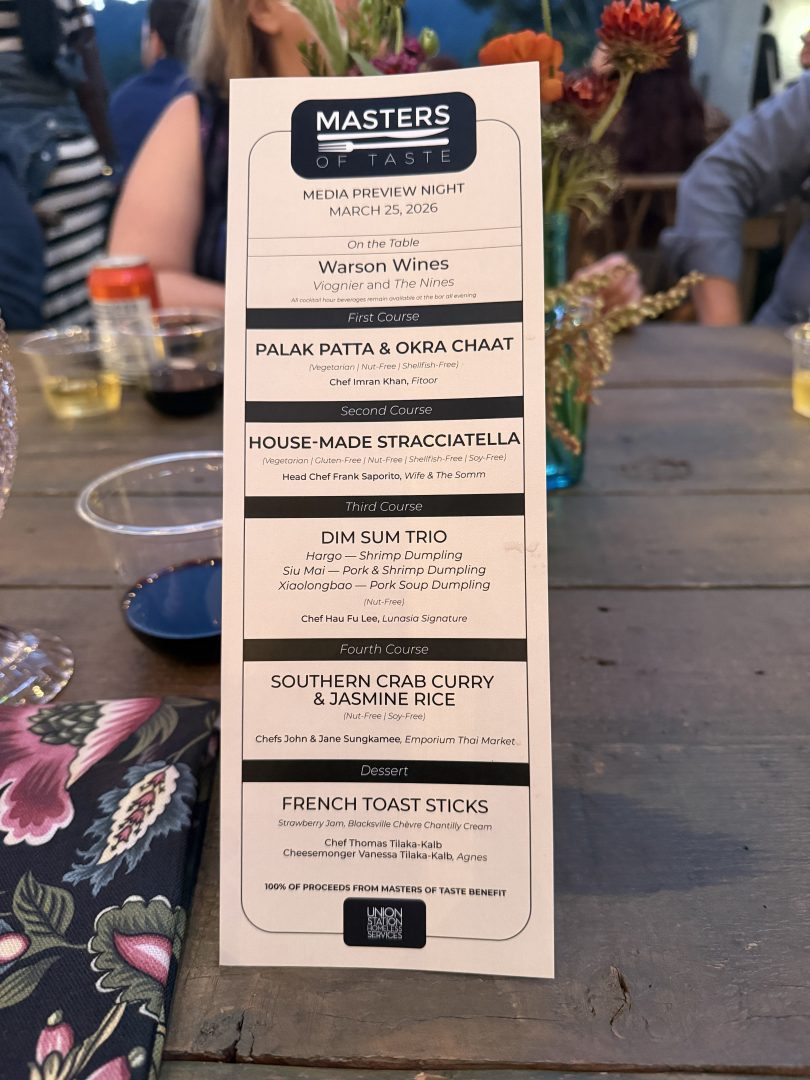
Masters of Taste media preview menu. | Photo by May S. Ruiz / Hey SoCal
“So we took a hard look at where we are and where we can make the biggest impact,” continued Hill. “Over the past year, we’ve built a new three-year strategic plan for our staff, our partners, and the people we serve. It’s focused, it’s practical, and it’s centered on five priorities – preventing homelessness before it starts, integrating behavioral health in housing, expanding workforce development and job pathways, strengthening food access, and increasing affordable housing – because these are what would solve homelessness.”
“As a result of that planning, I’m excited to share that we are launching a new initiative that brings together two of those priority areas: food access and workforce development,” Hill disclosed. “It’s a culinary workforce program that will be operated out of our brand-new commercial kitchen and will allow us to do two things at once – feed more people as the need continues to grow in our communities and create real job pathways for the people we serve. Participants who earn food safety certifications will work in our commercial kitchen and build the skill they need to enter into the workforce.”
2026 Masters of Taste restaurateurs and beverage purveyors. | Photo By May S. Ruiz / Hey SoCal
And Hill announced the plan that received the biggest applause. “This is where THIS community stepped up in such a powerful way. Many of the chefs and restaurant partners involved in Masters of Taste have committed to hiring our graduates.”
“We are absolutely thrilled that our first cohort of graduates will work with our Union Station Food Services team as they are featured this year at Culinary Masters,” Hill added. “This is not just training, it’s not just food, it’s a direct bridge from homelessness, to employment, to long-term stability.”
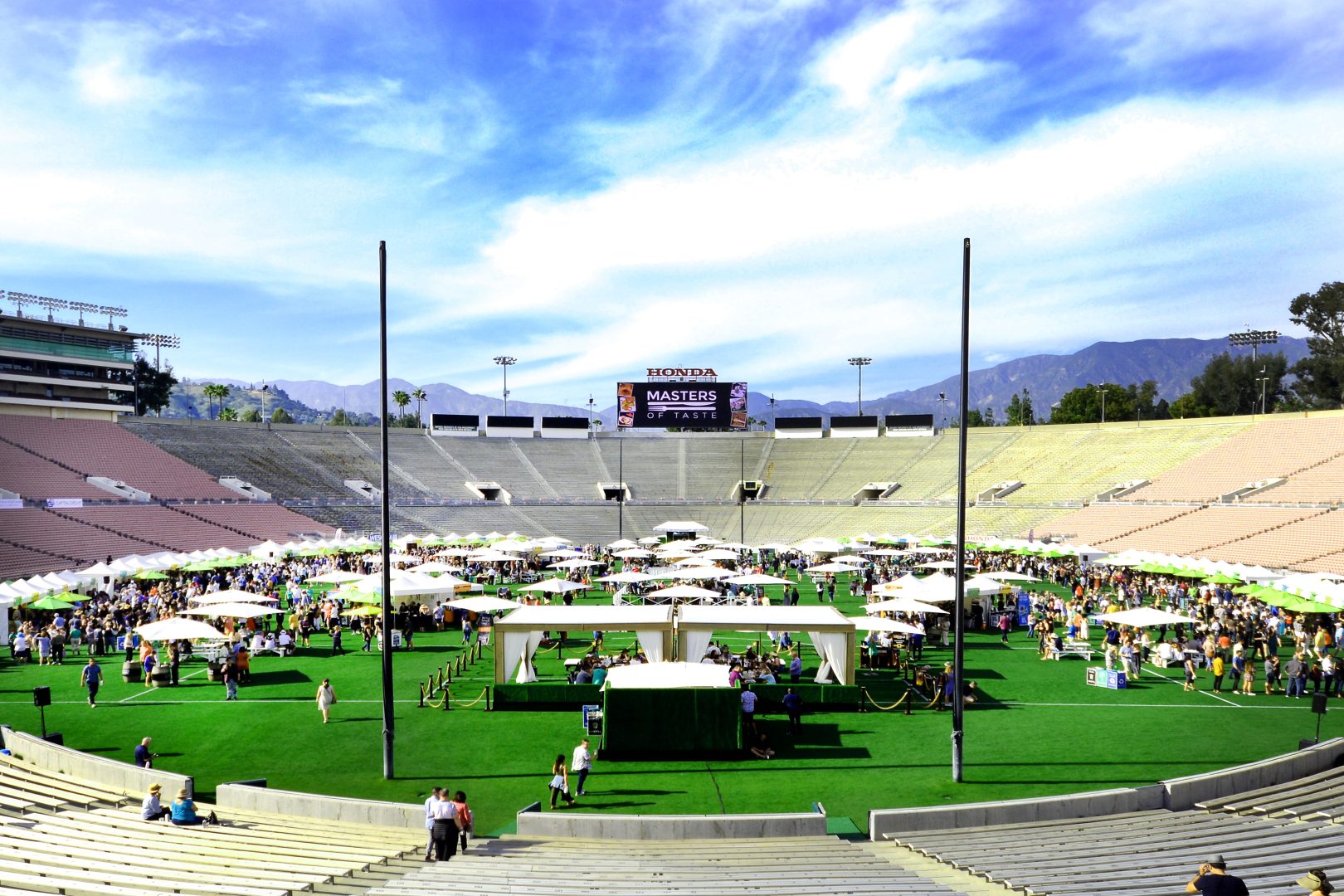
Masters of Taste at the Rose Bowl. | Photo courtesy of Masters of Taste
“And that’s why Masters of Taste matters,” emphasized Hill. “Yes, it’s one of the top food events in L.A. but it’s also one of the most impactful. Every ticket, every sponsor, every story shared helps fund housing, food programs, and workforce development. Events like this help us fill that kitchen, train more people, serve more meals, and move more people into stable housing.”
“To everyone in this room – our sponsors and our media partners – you shape how people understand this issue and there are a lot of misconceptions out there. You decide what story gets attention and the stories that matter the most are the human stories – the ones about each person that we’re able to help, each family, each kid whose life has changed because of this work. And that’s what moves people to do something about it. Your work is critical in this effort and we’re so grateful for your partnership,” Hill concluded.
Vanessa and Thomas Tilaka-Kalb. | Photo by May S. Ruiz / Hey SoCal
When Masters of Taste 2026 host chefs Thomas and Vanessa Tilaka-Kalb came on stage, Thomas said they have been eagerly waiting for this opportunity to host the event and promises to make this year the best one yet. And Vanessa said they plan to transform the Rose Bowl into the “field of Cheese.”
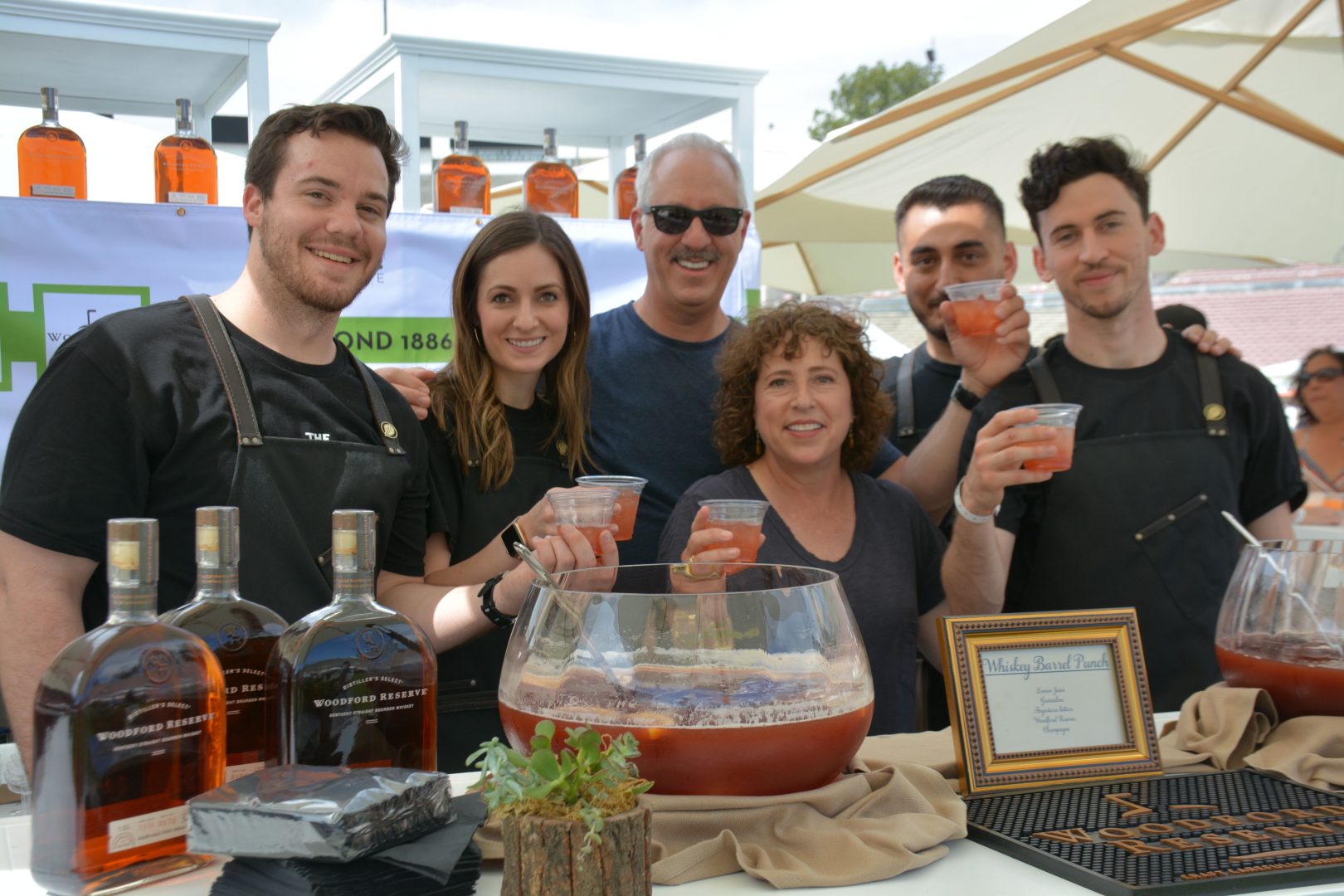
The brainchild of Rob and Leslie Levy, owners of The Raymond 1886 and Knox & Dobson in Pasadena, Masters of Taste was a concept Rob adapted from a childhood friend’s organization in Chicago called “Inspiration Café” which delivers sandwiches to the homeless. When the former CEO of Union Station asked him to be on the board, he set out to find a better way to raise funds than asking people to get all dressed up to attend a gala they only felt obligated to attend. Leslie came up with the idea of having chefs gather for an event that was so amazing it didn’t feel like it was a charity affair.
Rob and Leslie Levy (third and fourth from left) surrounded by the Raymond 1886 team. | Photo courtesy of Masters of Taste
On their first year at the Rose Bowl, a spontaneous line dancing broke out on the field – a delightful occurrence that was totally unanticipated. It was when they knew they had stumbled upon a successful endeavor. There was another year when it rained which, incredibly, made it an even better event. Nobody left – 3,000 people on the field stayed through the rain; Levy said it was the most memorable year they’ve had.
Masters of Taste continues to grow bigger every year; it has flourished through the COVID pandemic and the Eaton Fire. This year’s participating restaurants are: Agnes, Alexander’s Steakhouse, Ayara Thai, Bianca Sicilian Trattoria, BOA Steakhouse, Casa Cordoba, Celestino Ristorante, Chaaste Family Market, City Club of Los Angeles, Descanso Restaurant, Dorasti, Emporium Thai, Fitoor Santa Monica, Harold & Belle’s Restaurant, Love & Salt, Marina Restaurant, Paloma, Paradise Dynasty, Pez Coastal Kitchen, Poppy + Rose, Ramen Tatsunoya, STK Steakhouse, Sushi Roku, The Exchange Restaurant (Freehand LA), The Italian Deli Co., The Second Wind, Truffle Brothers, Uchi West Hollywood, Wife and the Somm, and Zira Uzbek Kitchen.
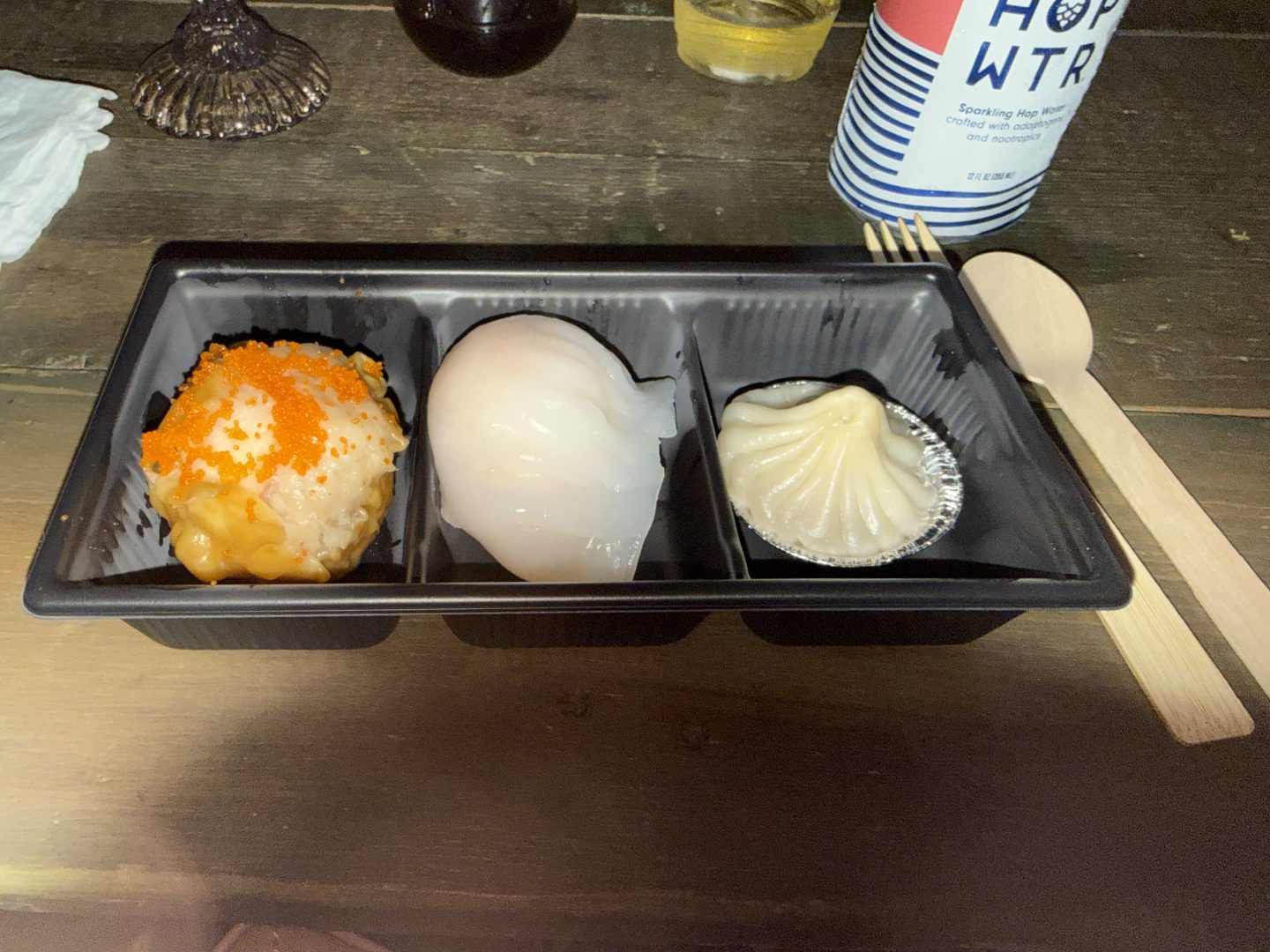
Dim Sum from Lunasia Signature. | Photo by May S. Ruiz / Hey SoCal
Joining them on the Rose Bowl field on April 19 are these beverage sellers: Above Board Liqueurs, Akagisan Sake, All Season Brewing Company, Arts District Brewing Company, Broda Vodka, Broken Shaker, Bücha Whole Fruit Hard Kombucha, Burden of Proof, Empress 1908 Gin, Eever -Tree, Good Intentions Coffee, Knox & Dobson, LA Bay Gin Distillerie Californienne, Lyre’s, Meadows Estate Vineyard and Winery, Navarro Vineyards, Old Hillside Bourbon, Paperback Brewing, Pucker Up Lemonade Company, Sake High!, Savage Rabbit Distribution, Shelter Distilling, Shinju Japanese Whisky, Smoke Lab Vodka, Subourbon Life, Sunright Tea Studio, The Raymond 1886, Ventura Spirits, Warson Wine Company, and Xoloitzcuintle Tequila.
The bakeries and confectioners in this year’s Masters of Taste are: All About the Cinnamon, Bertha Mae’s Brownie Co., Cakes by Chante, Delight Pastry, Id-Éclair, Laderach, Lark Cake Shop, Magpies Softserve, Nothing Bundt Cakes, Pazzo Gelato, Perlas Ice Cream, Porto’s Bakery & Café, Rico Rico Snack Carts LLC, and The Pink Cookie.
STK Steakhouse is one of the many participating restaurants in Masters of Taste. | Photo by May S. Ruiz / Hey SoCal
Major sponsors for this year’s event include: U.S. Bank, AltaMed Foundation, City National Bank, Pepsi, the Rose Bowl Stadium, Smart & Final, Soyfoods of America, Sysco, Vesta Food Service, Westport Construction, and Whittier Trust.
With a vast array of food and beverages to be savored and imbibed, the 2026 Masters of Taste is coming back this April 19 better and more fun than it has ever been. More than an afternoon and evening filled with culinary, beverage, and sweet offerings along the 50-yard line at the iconic Rose Bowl, attendance will help USHS in its mission to end homelessness.
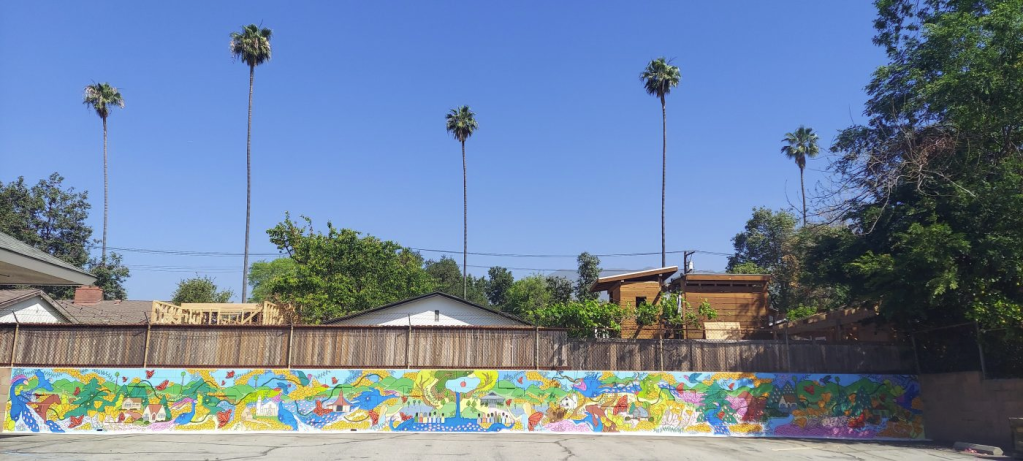
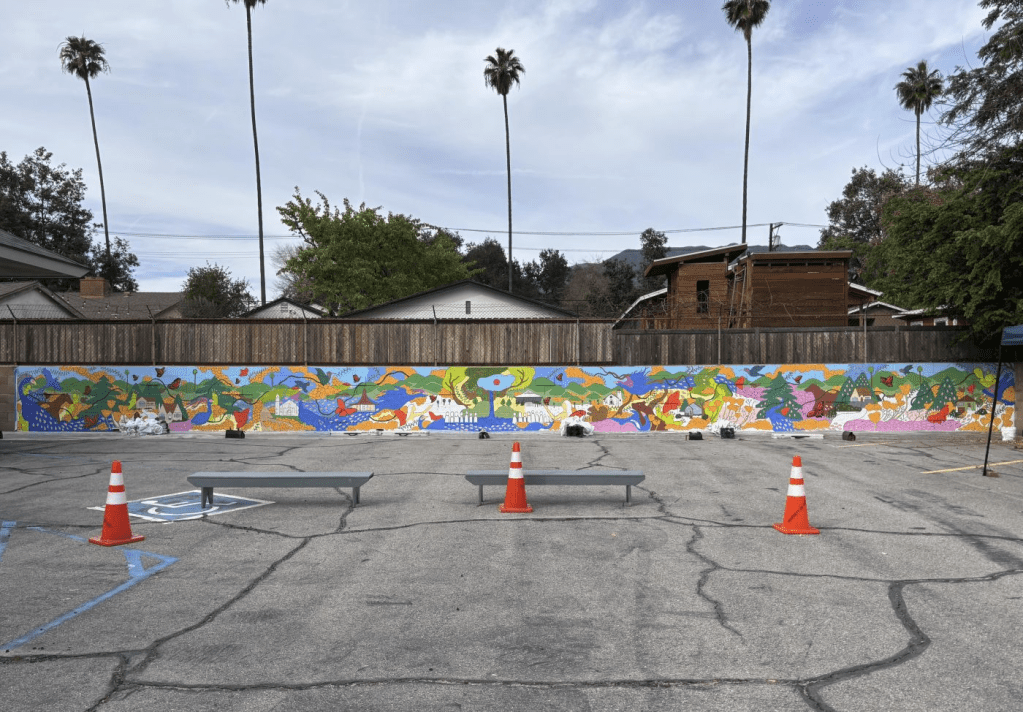
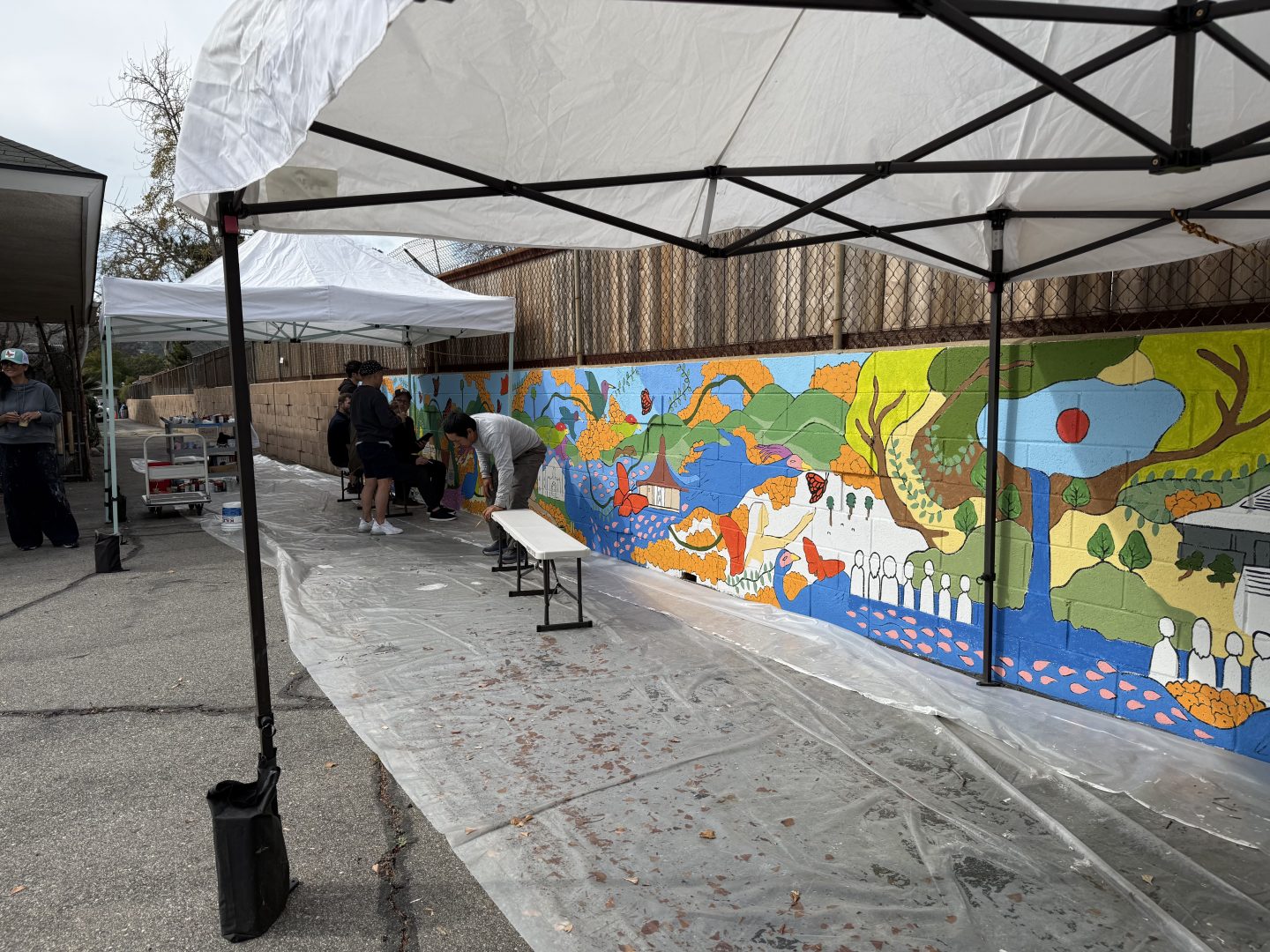
The completed “Healing and Hope” mural unveiled. | Photo courtesy of the Pasadena Buddhist Temple
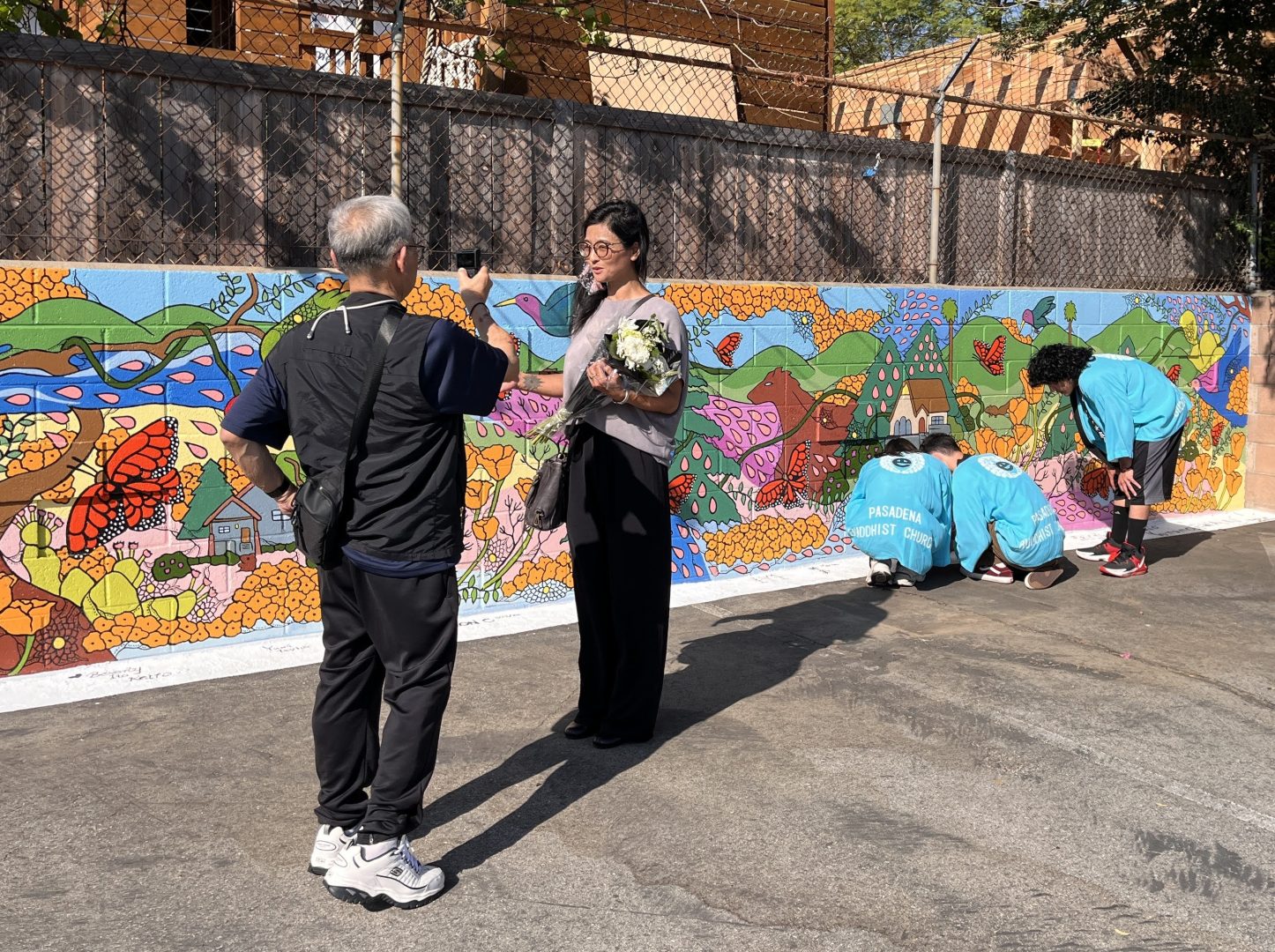
The Pasadena Buddhist Temple celebrated the completion of the “Healing and Hope” mural at 3 pm on Sunday, March 22. The brainchild of Kyoko Gibbs, wife of the temple’s spiritual leader Rev. Gregory Gibbs, who collaborated with Miki Yokoyama, an artist and Eaton Fire survivor – it was a way of restoring the community after their life-shattering experience.
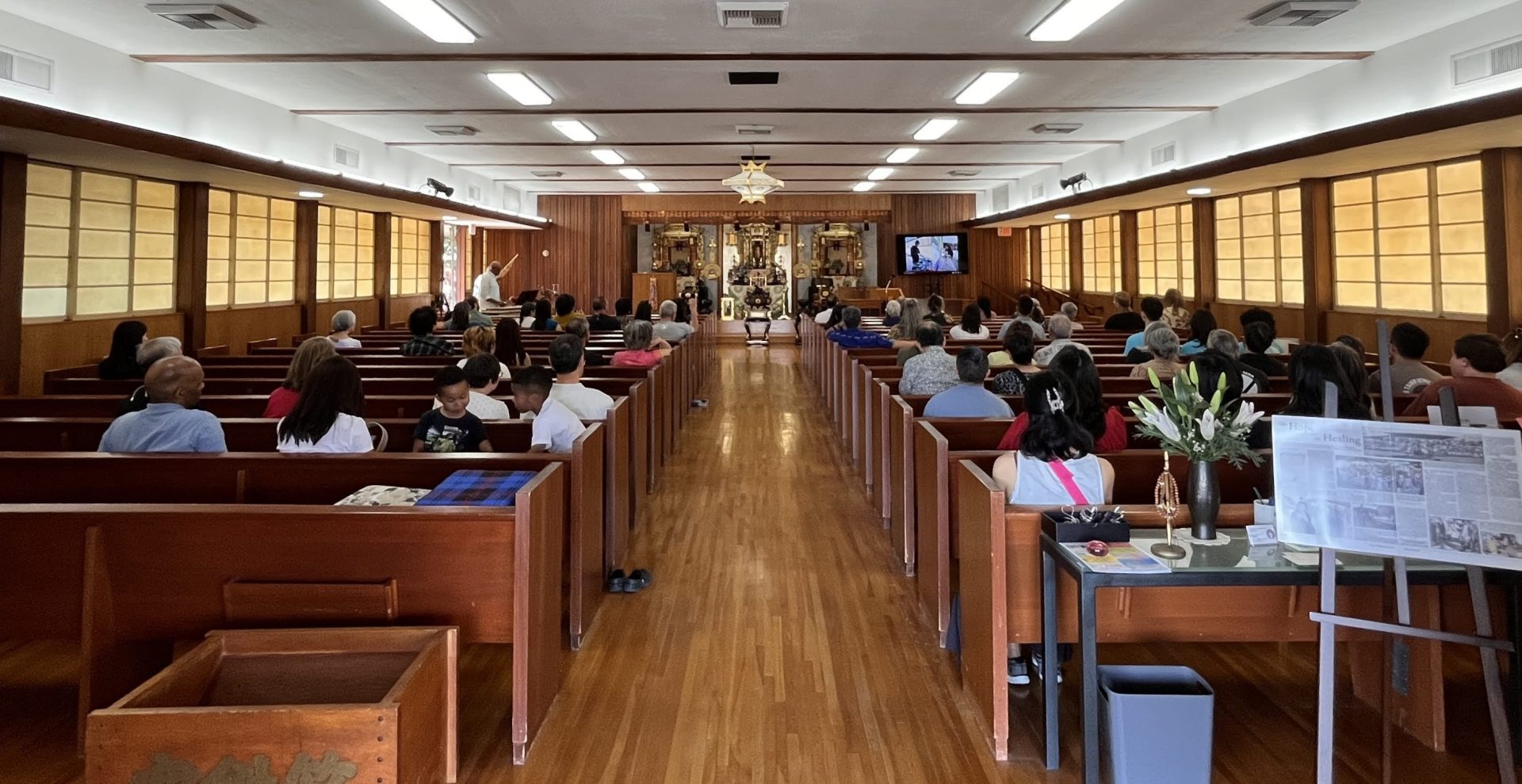
It was a festive occasion with about 70 people in attendance. A video about the progress of the mural was shown, after which attendees were invited to gather outside for the unveiling of the completed mural.
About 70 people attended the celebration at the Pasadena Buddhist Temple. | Photo courtesy of the Pasadena Buddhist Temple
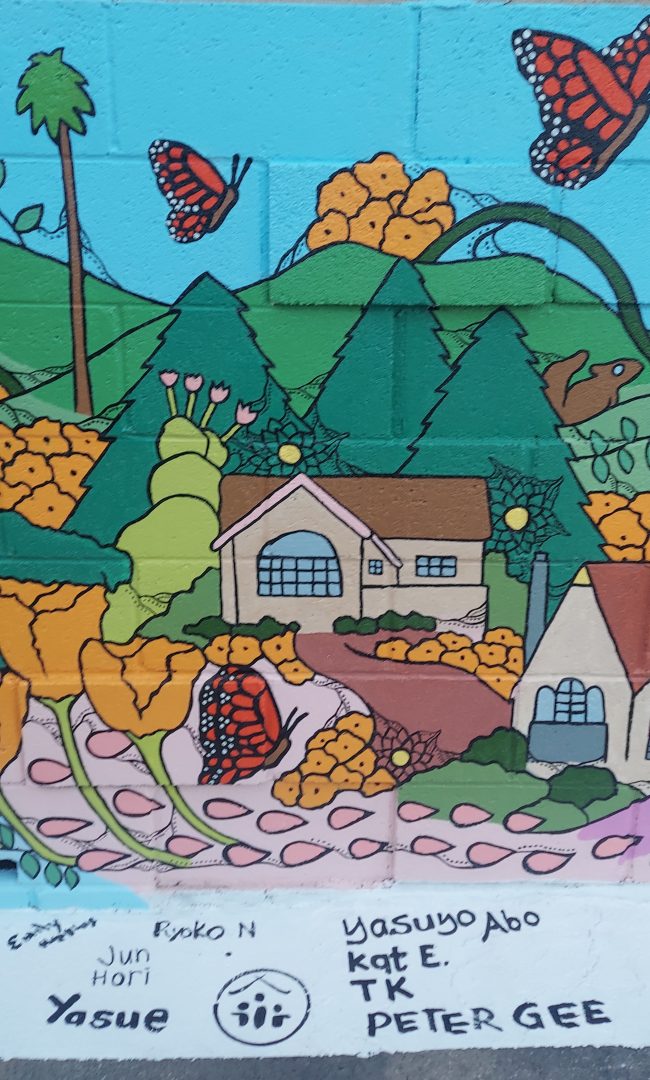
Gibbs’s younger son Ren and his friends Winston and Felix – fittingly attired for the occasion in happi (a tube-sleeved Japanese coat) – walked rapidly as they uncovered the mural. Their fast-walking provided a light-heartened moment for the mothers present who found it entertaining. Keiro and Little Tokyo Service Center were recognized for their compassionate support. Yokoyama shared her story in creating the mural with the community and invited everyone to sign their names on the painted primer area, the ground part.
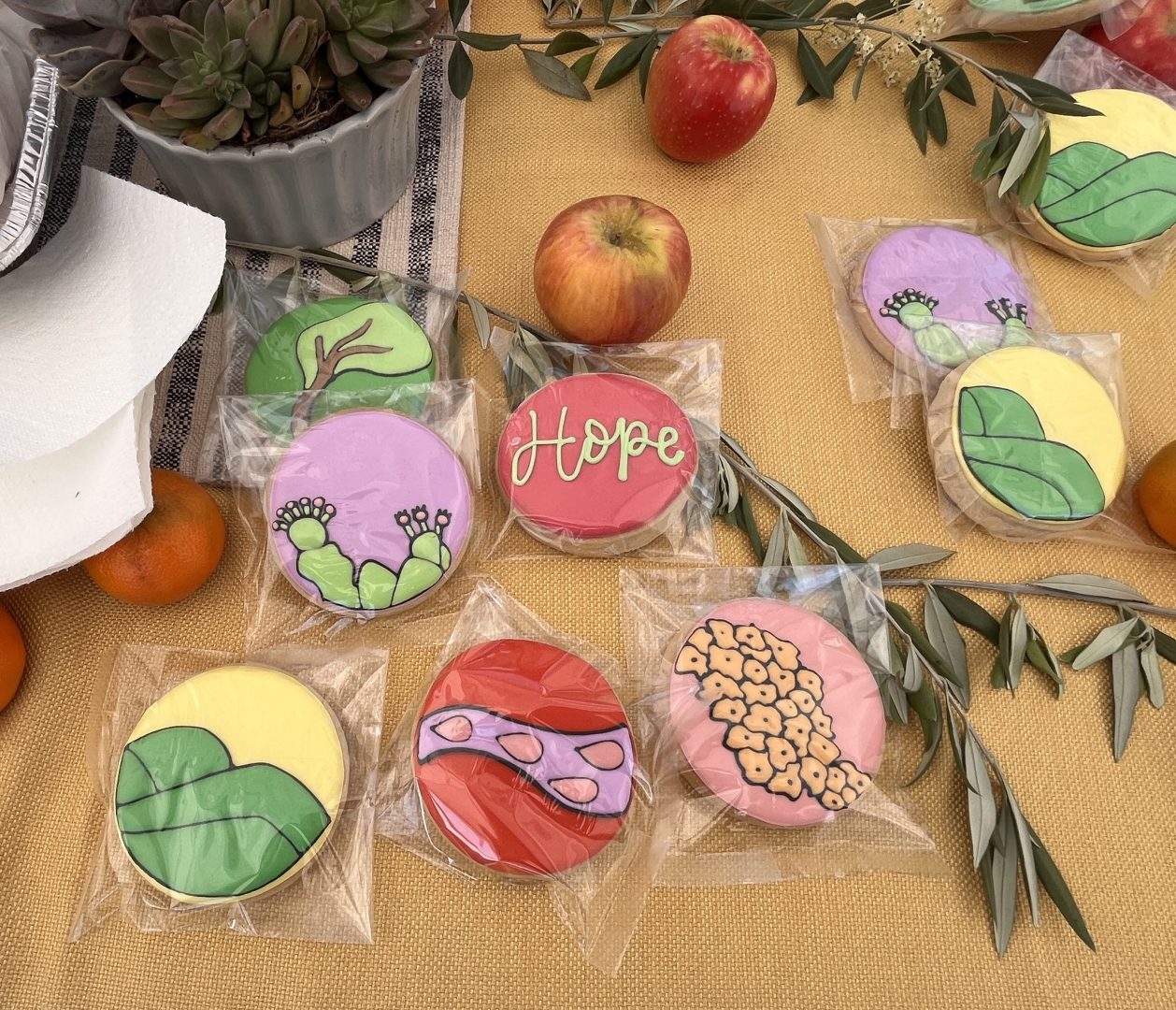
“Judicanti Responsura,” the music duo formed in 1984 by tubaist William Roper and percussionist Joseph Mitchell – who were fire survivors as well – set the stage beautifully to welcome people in the Hondo, the main building. The Altadena Cookie Company provided custom cookies for the event.
Miki Yokoyama, at right. | Photo courtesy of the Pasadena Buddhist Temple
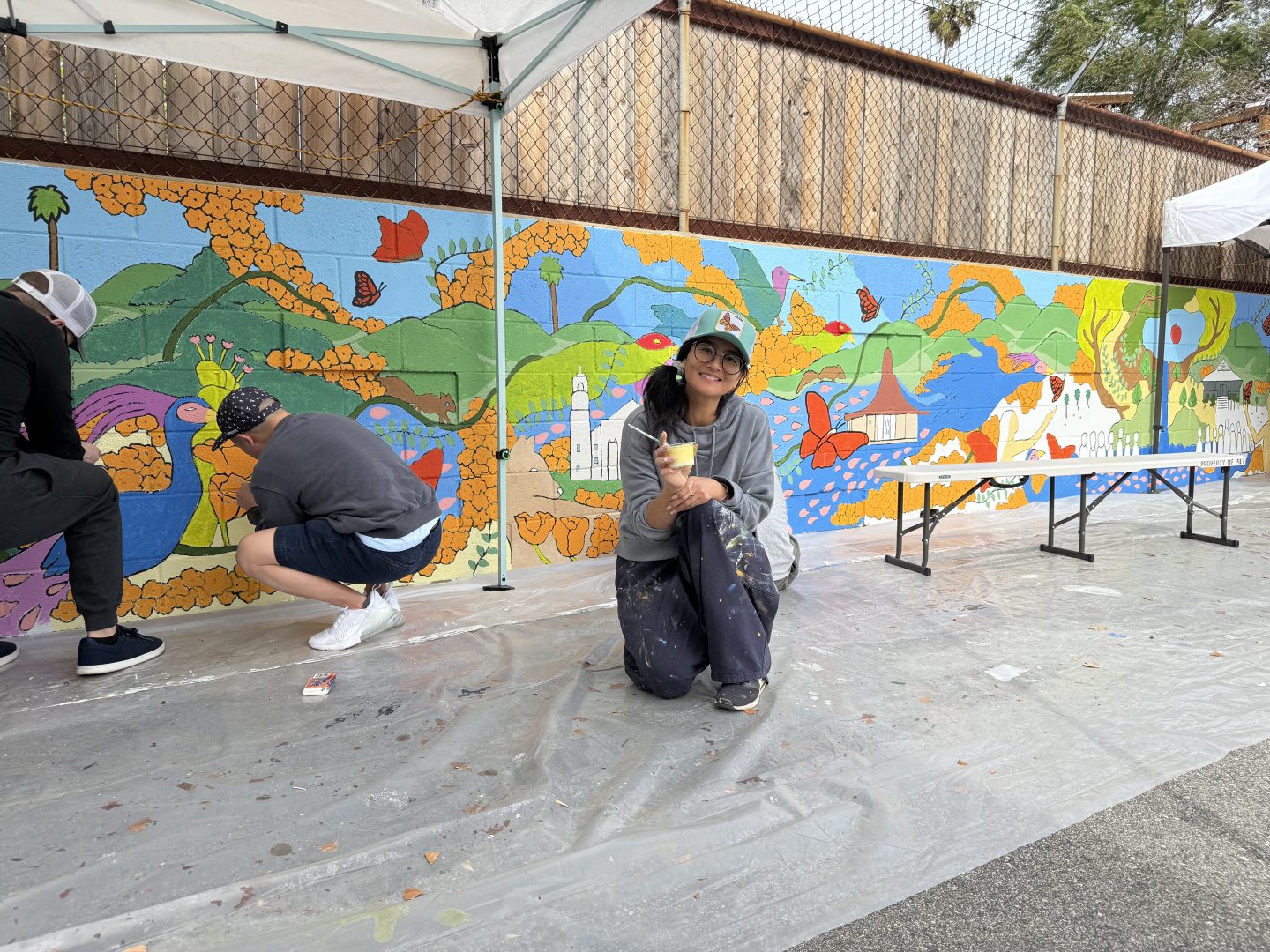
The “Healing and Hope” mural took a few months to paint, with Eaton Fire survivors participating in the project. In mid-March, the mural was almost done.
Yokoyama recounts, “I completed the final touches on the mural last Sunday, the 15th. This week, I have been applying a top coat over the finished painting, painting the ground directly below the wall white, and preparing a space where everyone who participated in the mural can add their signatures.”
People’s signatures on the mural. | Photo courtesy of the Pasadena Buddhist Temple
For Yokoyama, the completion of the project is as joyful as it is bittersweet. “This experience has been incredibly meaningful to me,” states Yokoyama. “Working together with everyone on a single mural was something that truly helped and supported me. I had been struggling mentally over the past year since the fire, so I am very grateful to Kyoko for proposing this project. The time spent painting with everyone allowed me to focus on both the creative process and connecting with others. Each day, I felt that these moments were healing my heart. Seeing everyone working so hard on their parts of the mural gave me strength and courage.”
“My feelings right now are quite complex,” Yokoyama discloses. “I am very happy that we were able to complete the mural. At the same time, I feel a deep sense of sadness knowing that this time of creating together has come to an end. Since Kyoko and I first began discussing the location of the mural, I have been coming to the site five days a week for about two months, so it has been a very special part of my life.”
Custom cookies from the Altadena Cookie Company
Those sentiments are echoed by Gibbs, “I already miss the sense of togetherness from working together. It brought me happiness and strength. The bond we formed through the mural project, and of course during last year’s gatherings and activities, will stay in my heart and help me move forward! I will cherish all the encounters.”
“Feeling the results of the community’s teamwork is truly empowering,” adds Gibbs. “We are stronger together, and I am deeply thankful to be part of this caring and supportive community! This mural gives me a deep sense of hope, seeing how something beautiful and empowering has emerged from such a devastating event.”
Indeed the Eaton Fire, as tragic as it has been, provided the impetus for Altadenans to unite – whether to fight for accountability from county officials or to work on an artistic endeavor that commemorates their shared experience. And that is a wonderful outcome to celebrate.
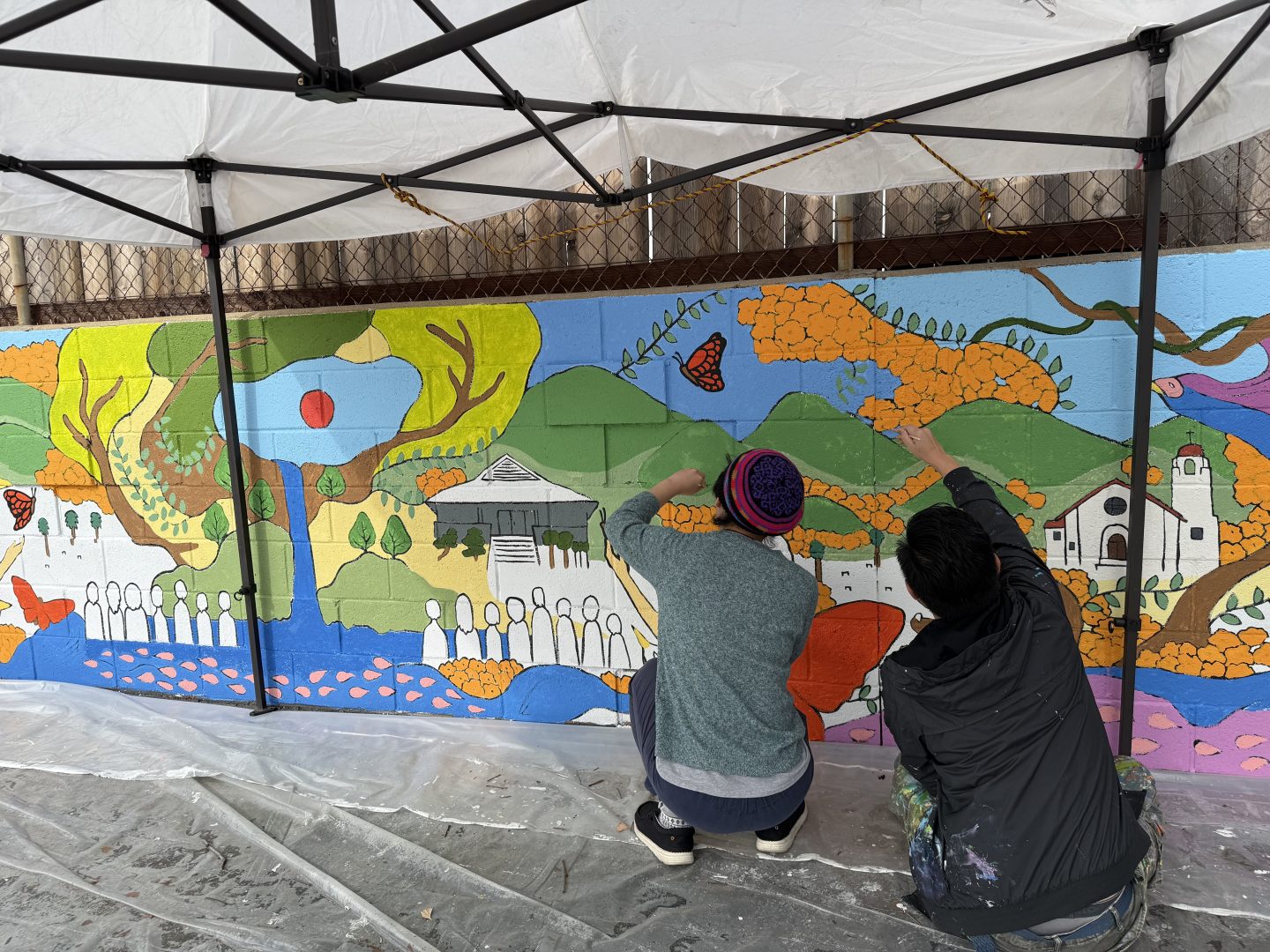
The Healing and Hope Mural painting in progress. | Photo courtesy of Miki Yokoyama / Pasadena Buddhist Temple
The Eaton Fire killed 19 people, destroyed over 9,000 structures, and brought untold grief to the community. More than a year later, displaced Altadena and Pasadena residents are still reeling from the trauma. There are constant reminders of what they lost and memories of that fateful day are still fresh in their mind.
As much anguish as the Eaton Fire wrought, there have also been many instances of a community coming together in their shared experience. The most recent of such moments is a group painting initiated by Miki Yokoyama who created a mural at the Pasadena Buddhist Temple. The brainchild of Kyoko Gibbs, wife of the temple’s spiritual leader Reverend Gregory Gibbs, the mural symbolizes what she thinks everyone needs – healing and hope.
The temple almost became a casualty of the fire had it not been for the bravery of neighbors who put out the flames. Gibbs recalls, “Greg and I, along with our younger son, live in the temple residence, so we followed the evacuation order in the very early morning of Jan. 7 and drove to a hotel. Watching the news at the hotel, we recognized the temple’s neighbors getting burned down despite the efforts of firefighters. Feeling urged to return to the temple, we drove back there to find our ‘heroes’ and some other temple members trying to extinguish the flames that had landed between the tea garden and the edge of the main building, Hondo.”
The Pasadena Buddhist Temple at night. | Photo courtesy of the Pasadena Buddhist Temple
“As we heard and learned about the temple members, associated friends, and neighbors’ loss and damage due to the fire, we were deeply hurt – not just physically but also emotionally,” continues Gibbs. “No words were spoken; we cried while holding and hugging them.”
Immediately, the temple community collaborated on events and efforts to help fire survivors. “Since two days after the fire, the restaurants in Little Tokyo (Azay and Far Bar) and San Gabriel (Yama Sushi), Little Tokyo Service Center, Keiro, Pasadena Japanese Cultural Institute, and the churches and temple in the affected Altadena and Pasadena areas, along with many others such as Buddhist Churches of America, Tanaka Farms, King’s Bakery, Go For Broke, and many more, have stepped up to the plate. Each individual person and organization gave them a hand in a selfless and compassionate way. As we continue to move forward, I am truly grateful for everyone’s kindness.”
The Gibbses themselves have been the recipient of people’s generosity. “During the remediation process for all the temple facilities, we needed to relocate to the temple’s friends’ house for about two months,” Gibbs says. “We were so fortunate to receive their kind offer. The temple is now fully restored and I am very thankful for those two temple board members who tirelessly worked with the insurance and intensive cleaning companies.”
The temple is now fully restored. | Photo courtesy of the Pasadena Buddhist Temple
For its part, the temple raised and distributed close to $90,000 to fire victims and actively continues to raise funds for them. “On the first anniversary of the fire, we presented them with a card and a small monetary gift. We wanted them to know that we are thinking of them. Additionally, we will be holding a White Elephant Sale, which opens to them first for free before the general public. We will also have a Girls’ Day Celebration with the tea ceremony, which they will be invited to join. More financial support will be distributed soon from the social welfare committee of Buddhist Churches of America (Pasadena Buddhist Temple is a part of BCA).”
Another activity that took place one year after the Eaton Fire was the creation of a mural. Recalls Gibbs, “As the first anniversary of the fire approached, I was thinking about what we – as the whole affected community – could do to help heal and inspire hope. Then, SOGs (Sons of Gardeners), who volunteer twice a week to maintain the temple grounds, were discussing painting a concrete section of the ramp outside. And it hit me with the idea of creating a mural instead of just painting. I brought up this concept with them and shared it with the temple board, and they all rallied behind it right away!”
“Fortunately, Keiro, which has been a financial supporter of activities and events for fire survivors, also agreed to continue its support,” Gibbs says further. “I knew who I needed to ask to lead the mural designs – Miki. She isn’t a member of the temple but I met her through the meal program for fire survivors.”
In mid-November, Gibbs reached out to Yokoyama and proposed crafting a mural and inviting the participation of those who had lost their homes in the fire as a way to help restore the town. They discussed what kind of wall painting they wanted to create and developed the concept together. To signify what it represents, they called it Healing and Hope Mural.
Miki Yokoyama. | Photo by May S. Ruiz / Hey SoCal
The Eaton Fire decimated Yokoyama’s home and all her artwork, and wreaked havoc on her mental health. She discloses, “The emotional shock was immense; I struggled with symptoms of PTSD for a long time. During the first year after the disaster, I believe that painting truly saved me. Now, through this project, I find healing in creating together with the temple community and others who were also affected by the disaster. Realizing that I am not alone and receiving strength from everyone involved fills me with deep gratitude.”
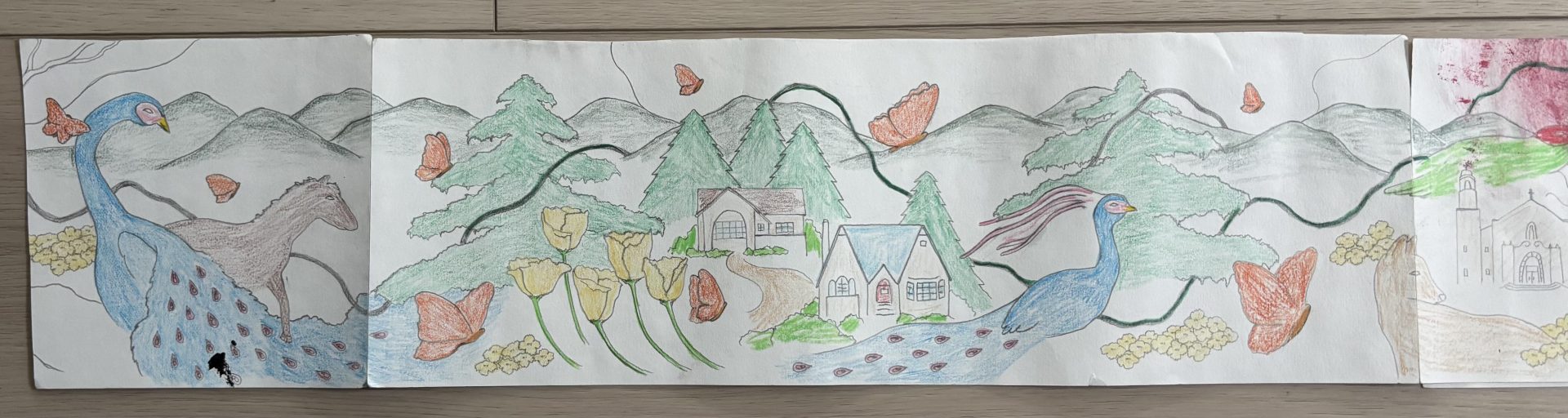
Yokoyama describes how she transferred the painting – measuring approximately 70 feet long by 56 inches tall – on the wall. “I first created a rough sketch on paper and then projected it onto the wall. However, many of the finer details will be added freehand while looking at the actual wall. From here, I plan to add more delicate lines and dots to develop the piece further.”
Yokohama’s drawings of the mural. | Photo courtesy of Miki Yokoyama
“This project is open to everyone, regardless of artistic experience,” explains Yokoyama. “Before we began painting together, I prepared the mural by drawing the outlines in black ink. Although I predetermined the colors, my hope is simply that everyone enjoys the process. I tell participants that it is perfectly fine if they paint outside the lines or even cover the black outlines. I will make any necessary corrections afterward, so everyone is free to add color as they wish.”
“At present, the mural is about halfway complete,” Yokoyama adds. “Much of the white space has been filled, and the next steps are to apply a second layer to the lighter areas of ink, retrace the black outlines, and then add finer lines and dots. By layering these delicate details, I hope to bring greater depth and subtlety to the work. Even if it takes time, I am committed to leaving behind the best possible piece.”
“As we continue working together with the community – shaping it according to our shared intentions – I am also excited to see how the mural will ultimately come together,” Yokoyama says further. “I am very much looking forward to its completion.”
One of the Eaton Fire survivors who went to the temple to paint heard about it through her mom who is a member of the temple. She asks that her name not be mentioned but graciously agrees to talk about her participation.
“Miki was there and she showed me where to paint, provided paint and brush, and instructions,” she begins. “I painted the windows on the house light blue as she instructed. She explained that it was okay to paint over lines as these will be repainted after the color is applied; the community painters are adding color and the artists are adding detail. While I was there one of the artists was refining with details. She used a Q-tip to add white spots to a red butterfly. The mural is a representation of the local community and the hope that exists in the Eaton Fire area to rebuild the physical and emotional aspects of the community.”
Photo by May S. Ruiz / Hey SoCal
Painting the mural offered a brief respite from her daily stresses in the aftermath of the fire. She says, “The consequences of the fire a year later are still part of a continuing domino effect in various ways that will remain for many years. Growth and hope are also results of this effect. Projects and institutions such as the Pasadena Buddhist Temple bring the community together for positive focus and forward momentum.”
It is exactly what compelled Gibbs to come up with a community endeavor. She declares, “Through this experience – coloring in the mural while chatting with others or working quietly – I would like all to feel connected and empowered. You are not alone. We are stronger together.”
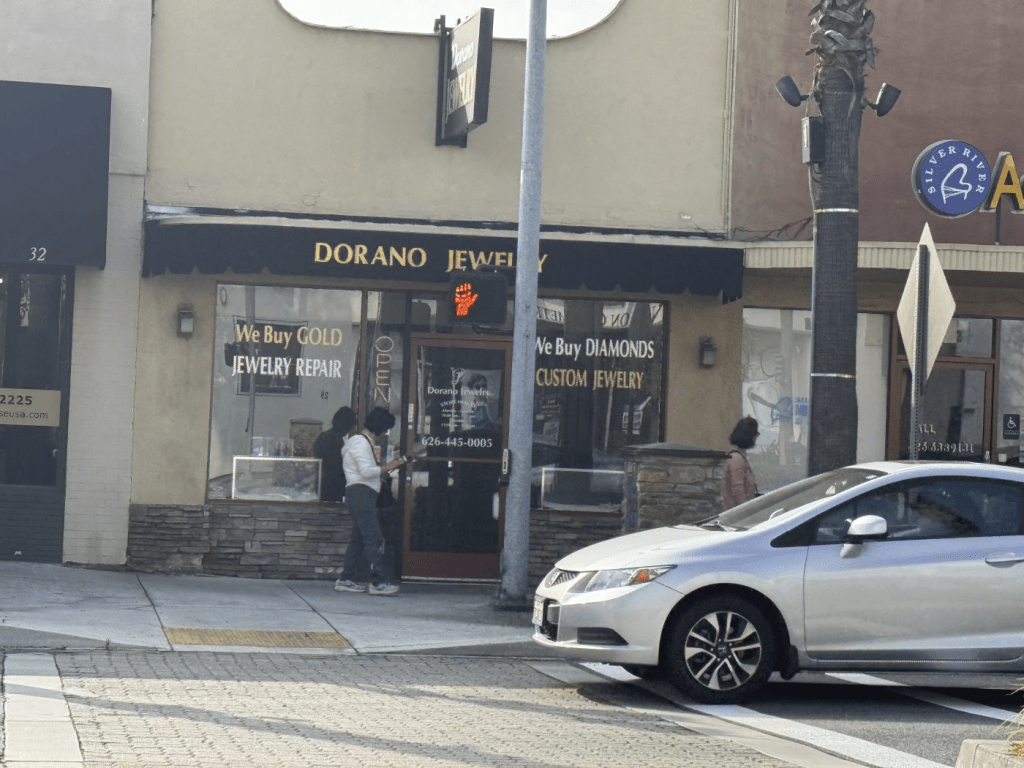
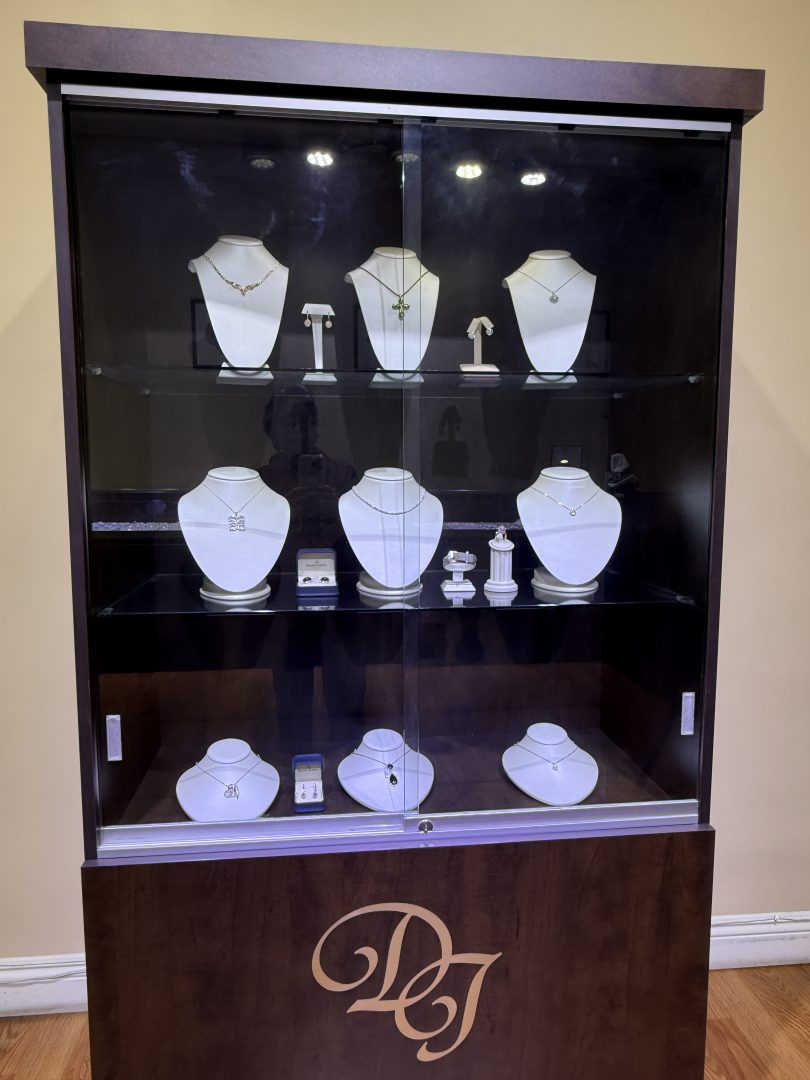
The Dorano Jewelry store on Huntington Drive in Arcadia. | Photo by May S. Ruiz/Hey SoCal
Gold is regarded as a risk-averse asset and safe haven during times of uncertainty. And recent geopolitical instability sent the price of gold soaring to an unprecedented high of over $5,000 per ounce then plunged below that mark.
But long before the huge demand for it and the wild price swings grabbed financial news headlines, the enduring value of gold inspired songs from Neil Young’s “Heart of Gold” to Harry Styles’ “Golden.” The metal — universally enjoyed as a piece of jewelry — symbolizes beauty, longevity, power, status and wealth.
In certain Asian cultures, gold figures prominently in people’s customs and traditions. Newborn children in China are commonly gifted with a piece of gold jewelry; gold is also a part of the Lunar New Year celebrations. In Korea, a gold ring is usually given for a child’s first birthday. In India, gold is purchased during the annual Diwali festival to bring wealth and good luck.
For Garen Avetisyan, proprietor of the Dorano Jewelry store on Huntington Drive in Arcadia, jewelry and the craftsmanship behind it are his life’s work. Creating memorable pieces are a source of pride and joy for this immigrant from Armenia who now calls Glendale home.
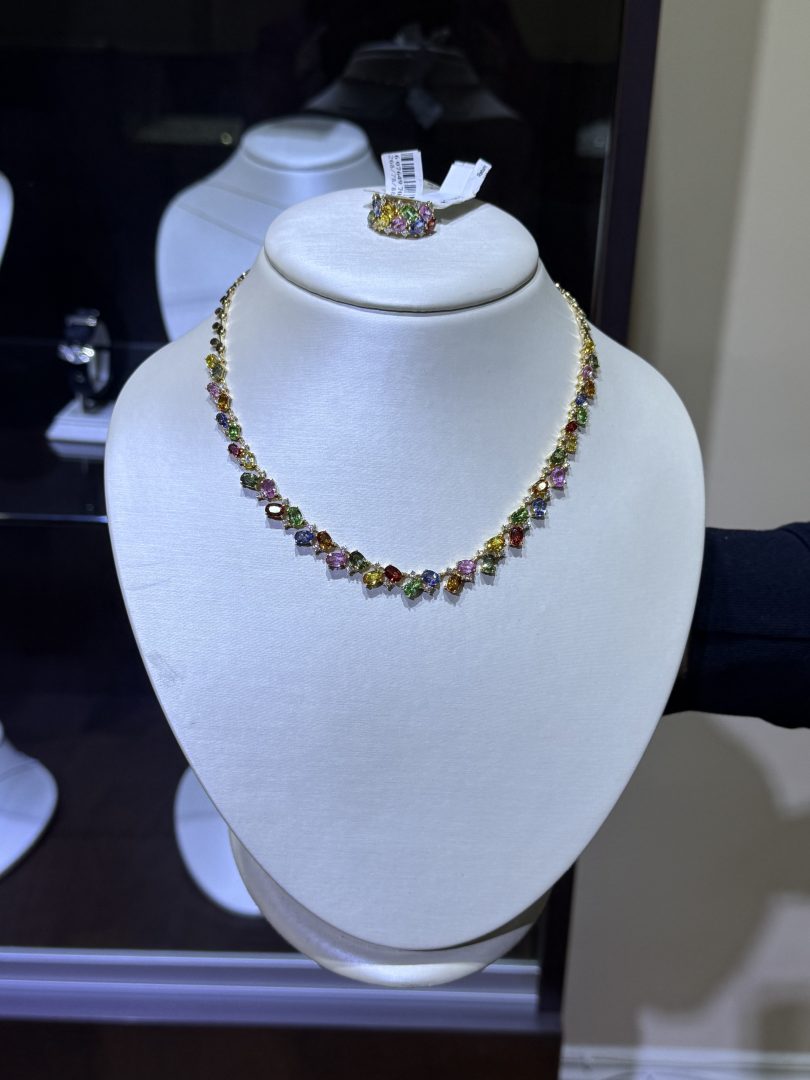
A 14-karat yellow gold necklace and ring with fancy sapphires. | Photo by May S. Ruiz/HeySoCal.com
Avetisyan’s story is that of very immigrant’s journey from their homeland to a new place to build a new life. Born and raised in Yerevan, Armenia, he started working in the jewelry business when he was 18. In 2012, at the age of 37, he and his family migrated to California and the following year he opened Dorano Jewelry.
Making jewelry is an art and skill that Avetisyan honed back in Armenia. He relates, “I had family members in the jewelry business and I always enjoyed watching them work, so I decided to follow in their footsteps. I took private jewelry courses in Armenia and also spent years observing, reading and educating myself on the profession and training. I still continue to expand my knowledge to this day.”
Uprooting oneself and beginning anew in a foreign country is a huge challenge and Avetisyan knows it only too well.
“I began looking for a storefront for my jewelry business soon after my family and I came to California,” Avetisyan recalls. “Since I had only been in America for such a short period of time, I had no credit history. Therefore, a lot of people turned me down despite the fact that I was willing to pay for a few months in advance. It was very difficult to gain people’s trust. I stumbled across one location in Arcadia and spoke to the owner directly. Thankfully, after our conversation, he decided to give me a chance and that’s how my shop opened in Arcadia in early 2013.”
A display case at Dorano Jewelry. | Photo by May S. Ruiz/HeySoCal.com
The moniker he gave to his shop — Dorano Jewelry — is a portmanteau of sorts and has a special meaning. Reveals Avetisyan, “I always admired the Italian language and used it as an inspiration for my store name. ‘Oro’ is Italian for gold and ‘d’oro’ refers to something made of gold. I incorporated these words and created the unique name of ‘Dorano.’ I believe it reflects the elegance and timelessness associated with gold jewelry.”
While finding the location for his shop was a fortuitous initial step, making a success of the business seemed an insurmountable undertaking early on in his business venture. He struggled to make ends meet yet he persevered.
Avetisyan says, “The first few years were very difficult for me because I was starting over in a new country and speaking a language not native to me. I had no connections, no reputation and didn’t know a lot of people. But I chose to continue this journey because I felt a huge responsibility to continue my life’s work that I had begun in Armenia. I didn’t view this passion of mine only as a job but also a skill that had so much history and hard work behind it. I had confidence in myself and my ability and I knew that if people gave me a chance, they would also recognize value in my work.”
“I realized that I was making progress when customers would visit the shop and share that they were recommended by my other clients,” continues Avetisyan. “I was excited that word of mouth was growing because it meant I was building trust with the community. As more people became happy with the work and product I was providing them with, I knew that all the struggle was worth it and continued to work just as hard.”
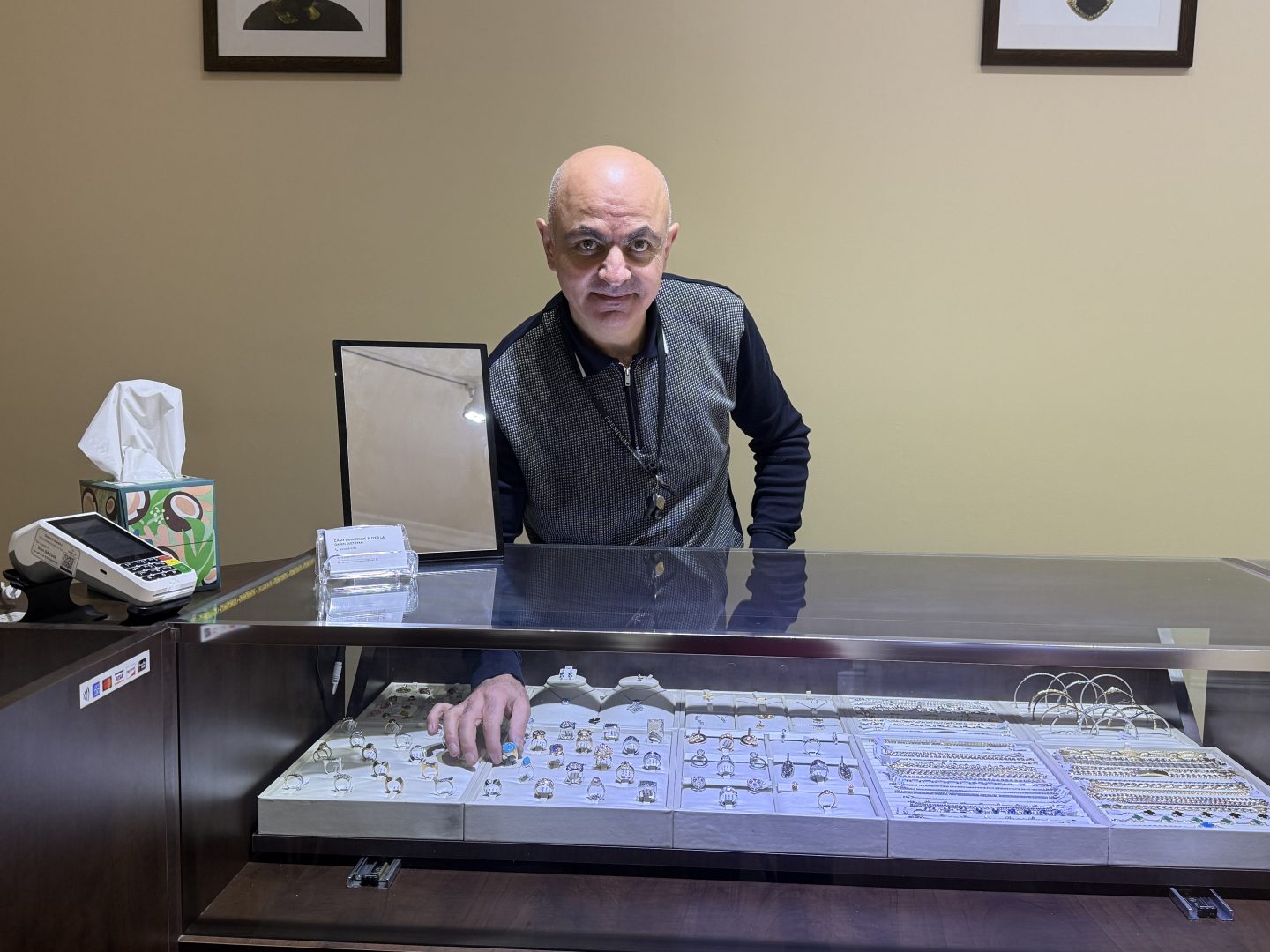
Garen Avetisyan, jeweler/gemologist and proprietor of Dorano Jewelry. | Photo by May S. Ruiz/HeySoCal.com
There is no shortage of jewelry stores in the vicinity — every mall has at least one — where shoppers can buy a necklace, ring or a pair of earrings. But what could be more exceptional than owning a bespoke piece that reflects one’s individuality? Custom work is Dorano Jewelry’s niche and Avertisyan has set out to make his shop stand apart.
He declares, “Dorano Jewelry is unique due to our deep expertise and detailed attention to each client. The staff is skilled across all aspects of the business, including custom designs, appraisals, repairs, sales and more. Thus, customers receive all services in one place quickly yet efficiently. This helps us ensure consistency and quality, and build close relationships with all our guests.”
“Dorano Jewelry holds itself to a high standard and has maintained this benchmark of care since day one,” Avetisyan emphasizes. “The business first advertised on television and social media to try and spread the word. After our first year, we relied primarily on word of mouth, focusing on growing the business through trust and reputation. Over time, satisfied customers became the best promotion.”
Being able to offer a variety of services has served Avetisyan well. “Dorano Jewelry operates as a ‘one stop shop’ as the business is evenly divided among custom work, repair services and jewelry sales from our display,” he says. “Each of these areas makes up approximately one-third of our business, allowing us to serve a wide variety of customer needs.”
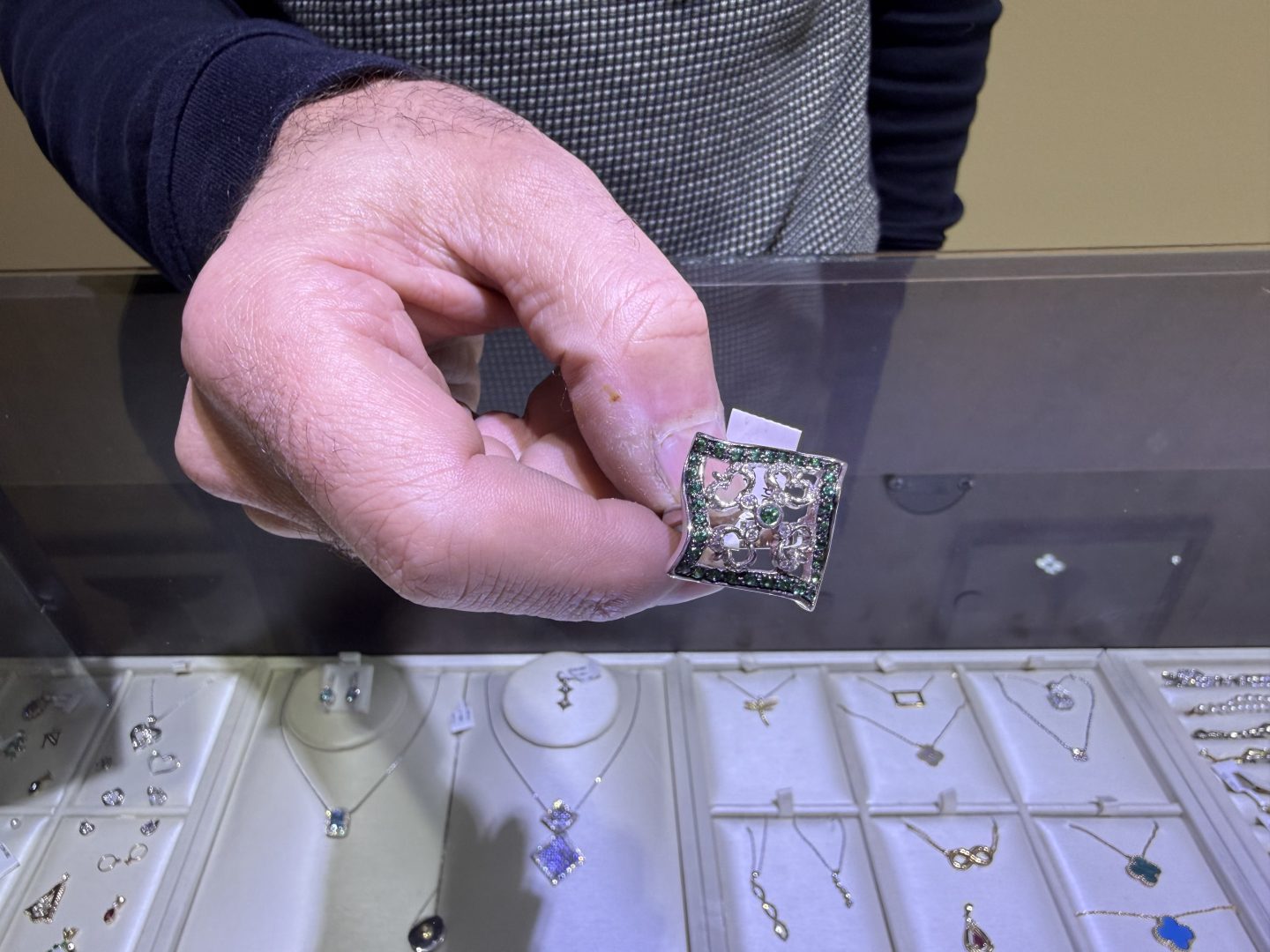
14-karat white gold ring with green tsavorites and diamonds. | Photo by May S. Ruiz/HeySoCal.com
Many people think bespoke jewelry is prohibitively expensive — a misconception that Avetisyan hastens to clarify.
“Custom jewelry is definitely affordable at Dorano Jewelry,” Avetisyan asserts. “The most requested items are engagement rings and wedding bands and we offer a large variety of options and customizable details to best fit our clients’ budget. Whether they are simple elegant designs to more intricate pieces, we work very closely with all clients to ensure they receive the best quality within their budget.”
But it isn’t just the product and service that make Dorano Jewelry different. Avetisyan clarifies, “Dorano Jewelry is more than just a jewelry store, it’s a community and welcoming space. We focus on building a relationship based on trust and connection, allowing clients to come to us for guidance and support. Through this genuine relationship, we celebrate the most meaningful life moments together — from engagements to weddings to family milestones. The community feeling is what makes this store so special.”
Repeat business and customer loyalty are vital for every business’s success. And Dorano Jewelry has been fortunate to have both.
“Sixty percent of our business is generated from existing clients while 40% comes from new customers,” says Averisyan. “The majority of our clients are locals — I would say about 80% are from Arcadia, Pasadena and nearby cities. The remaining 20% is from Santa Barbara, San Diego and even clients who now reside in Las Vegas and visit us sometimes.”
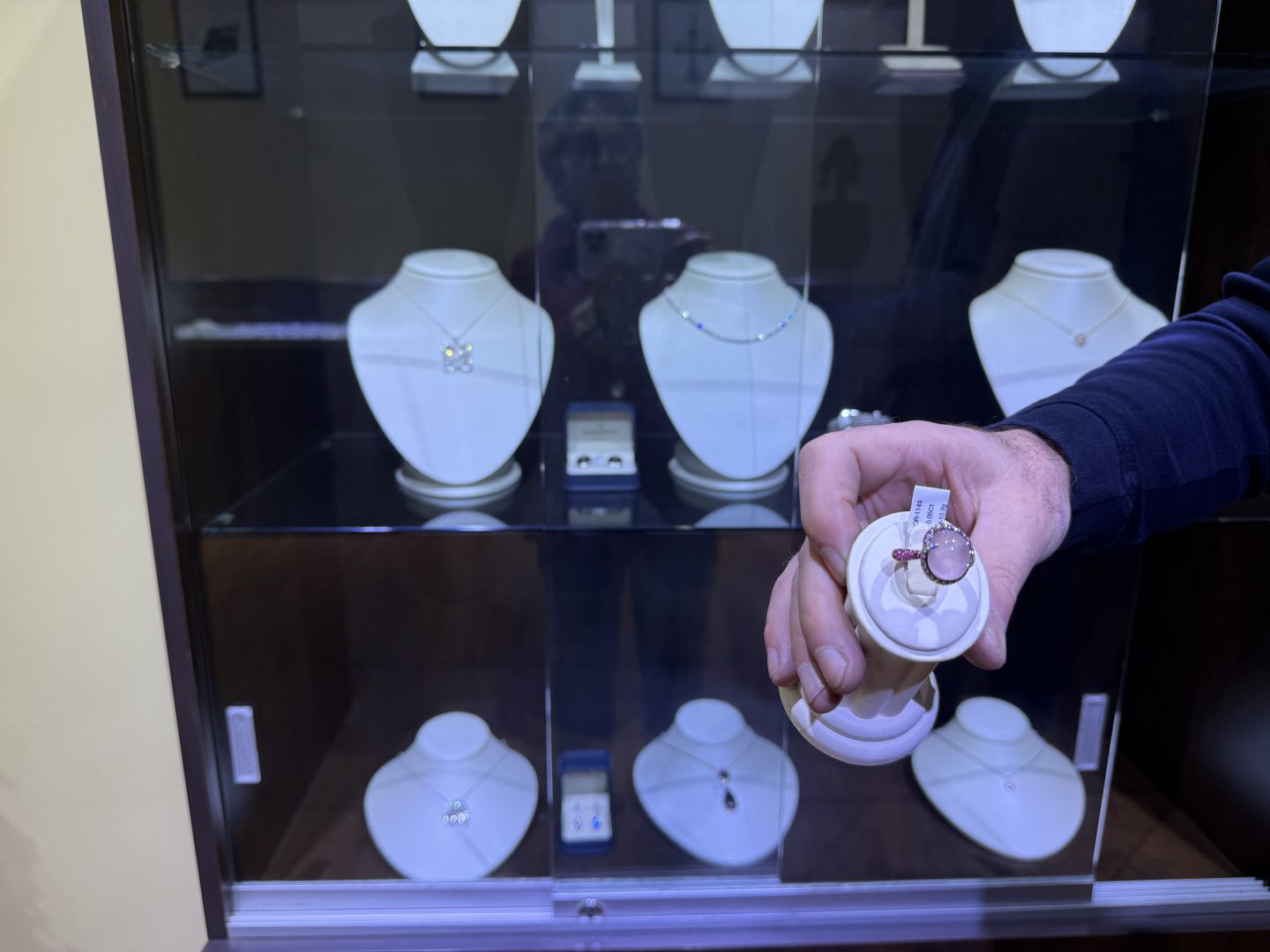
14-karat rose gold ring with pink quartz, diamonds, pink sapphires and rubies. | Photo by May S. Ruiz/Hey SoCal
Asked if there’s one particular piece he has created over the years that is memorable, Avetisyan quickly replies, “A client wished to design a custom ring based on a lost heirloom left behind by the client’s ancestors. We worked closely together to maintain the sentimental value of the ring based on the client’s memory and description of the heirloom. Our goal was to preserve its history while also customizing the ring to best fit the client’s style and needs. We used an amethyst for the center stone and incorporated Indian symbols reflected through shape and detailing, referring to custom 3D designs to guide us. We achieved a refined and timeless finish.”
“I specifically remember the extensive research involved with this piece,” Avetisyan expounds. “To fully understand what the client wanted and realize the client’s vision, I studied symbolism and cultural meaning to best design the historical elements with accuracy and respect. I had the chance to explore this cultural background, making the piece challenging to make but with a rewarding outcome. It was one of the coolest projects I completed, learning a lot in the process.”
Having a piece of jewelry created by Dorano Jewelry means acquiring something that evokes significance for the person wearing it. Whether it’s to celebrate Valentine’s Day, a birthday, a wedding or anniversary, jewelry makes any special occasion sparkle. But it can also be just a practical, wearable investment — and jewelry makes even the everyday shine.
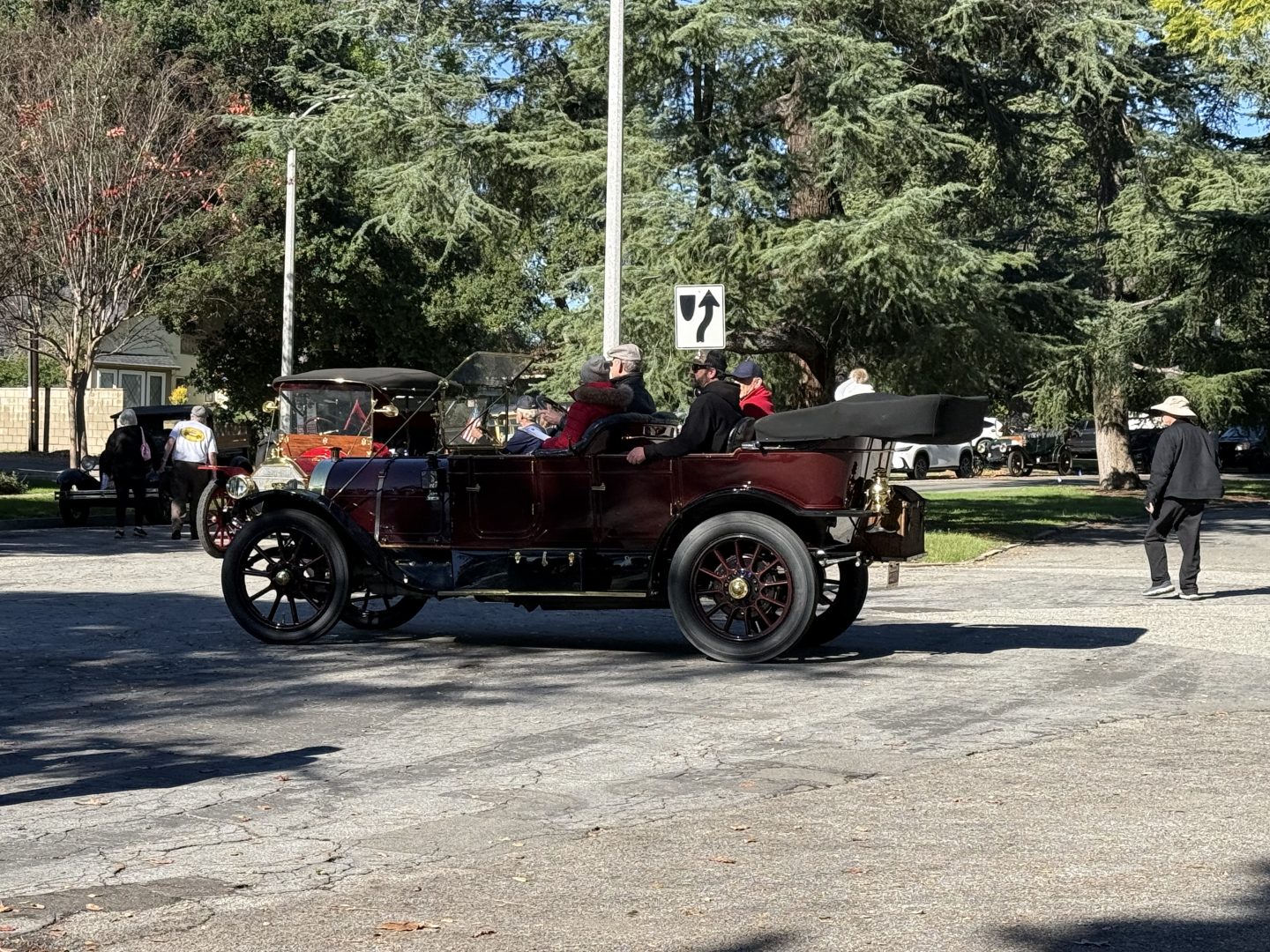
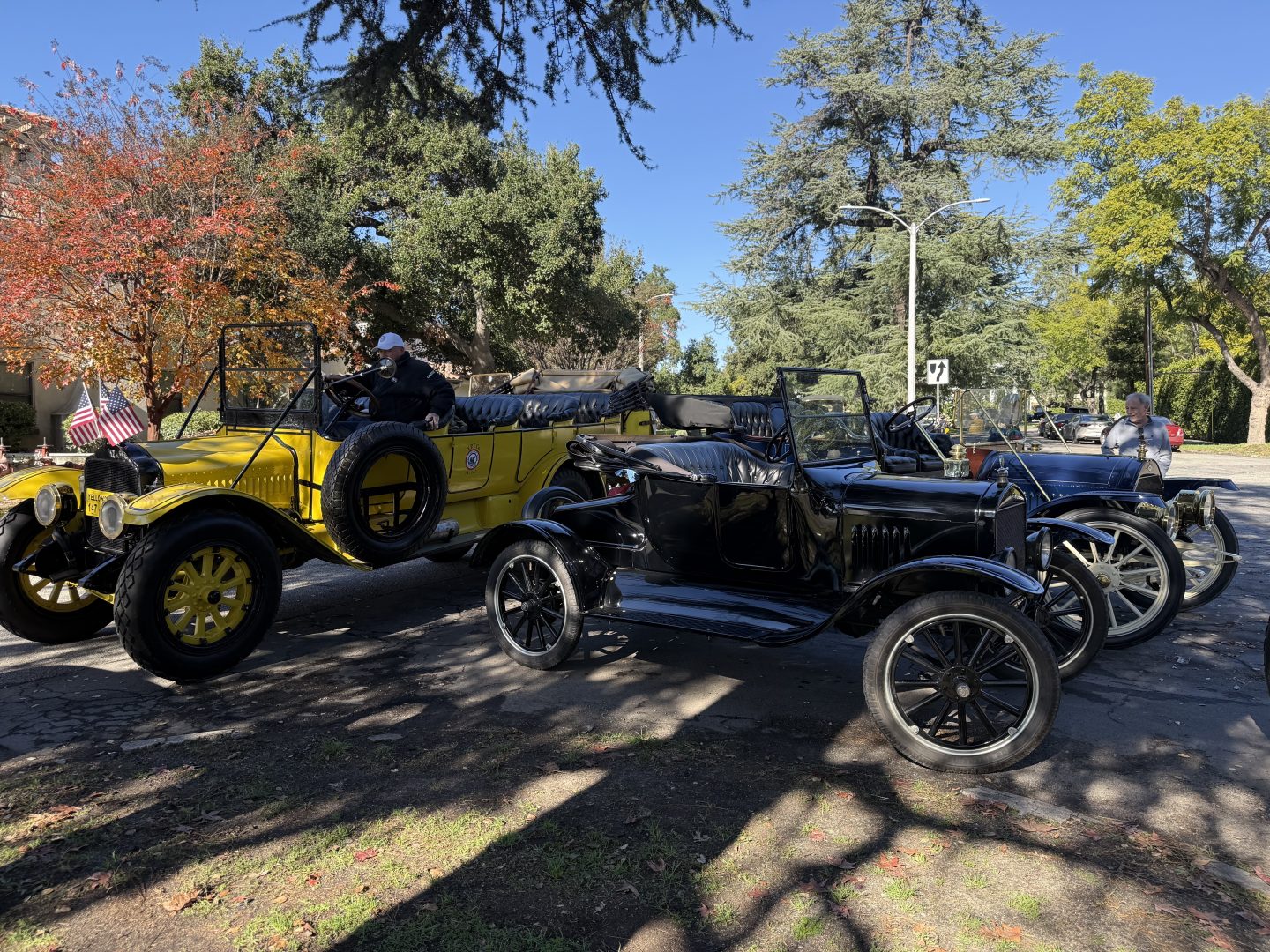
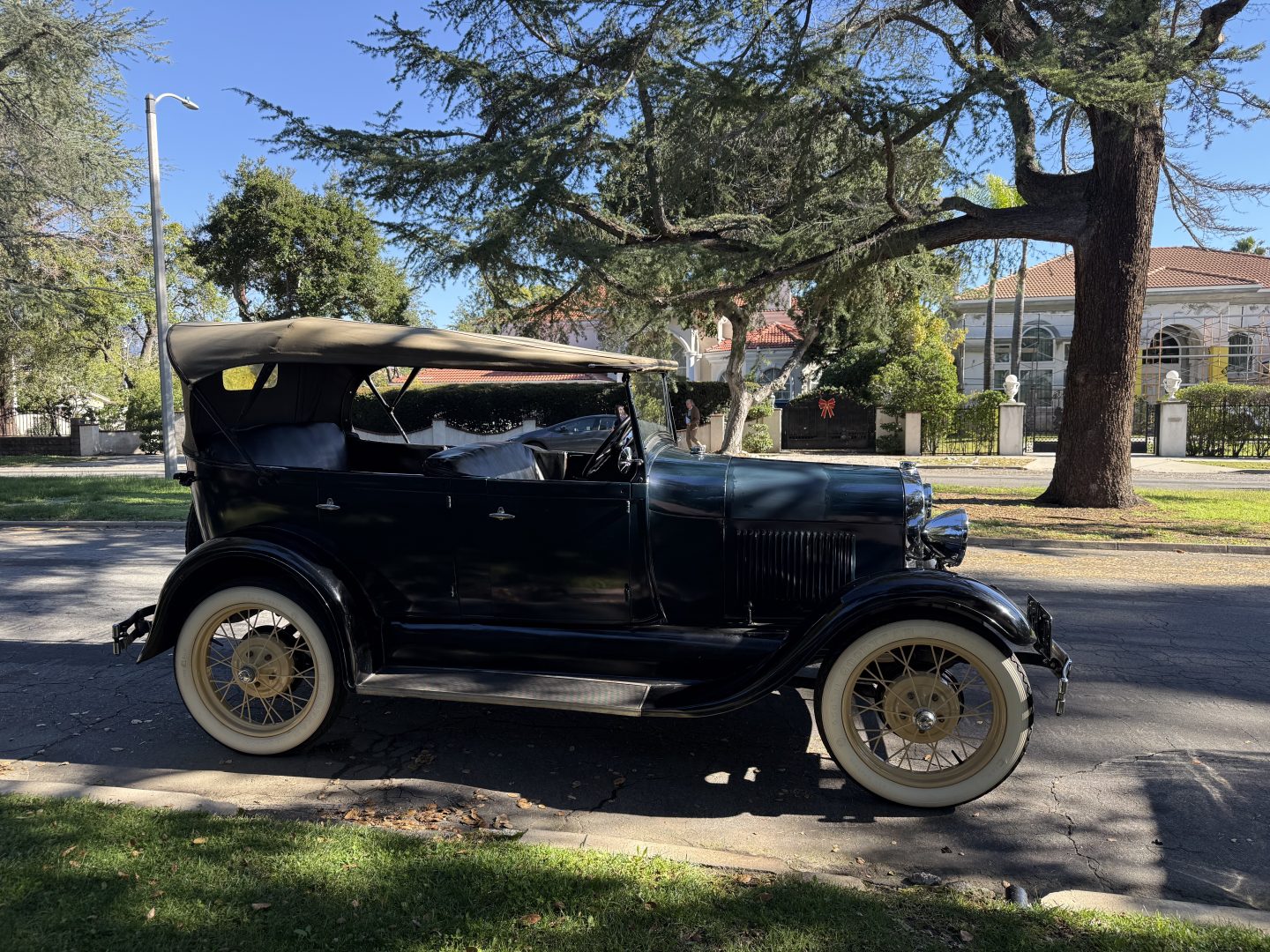
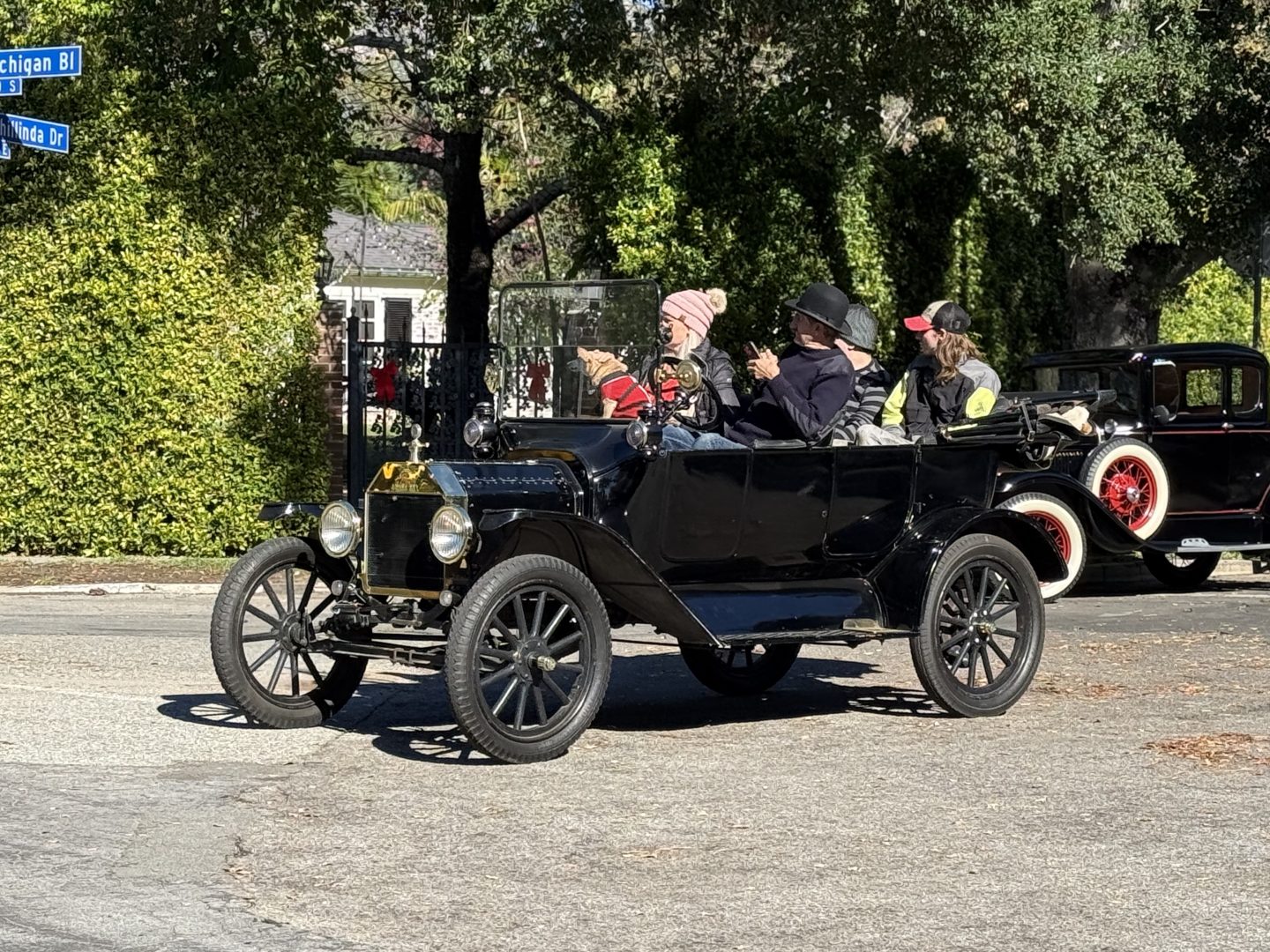
For residents of the Michillinda Park neighborhood in East Pasadena, an ostentation of peacocks promenading on the boulevard is an everyday sight. But on a recent Sunday morning, we are pleasantly surprised to observe dozens of antique and vintage automobiles driving past our house.
It is a fascinating spectacle that invites further investigation. I take a break from pruning my roses and walk about 200 feet to Michillinda Park where I see several antique cars on the road while people chat by tables laden with pots of hot cocoa and coffee. I learn that this car show is an annual event and someone points out the organizers, Jean and Peter Eastwood, who are siblings and lifelong Pasadena residents.
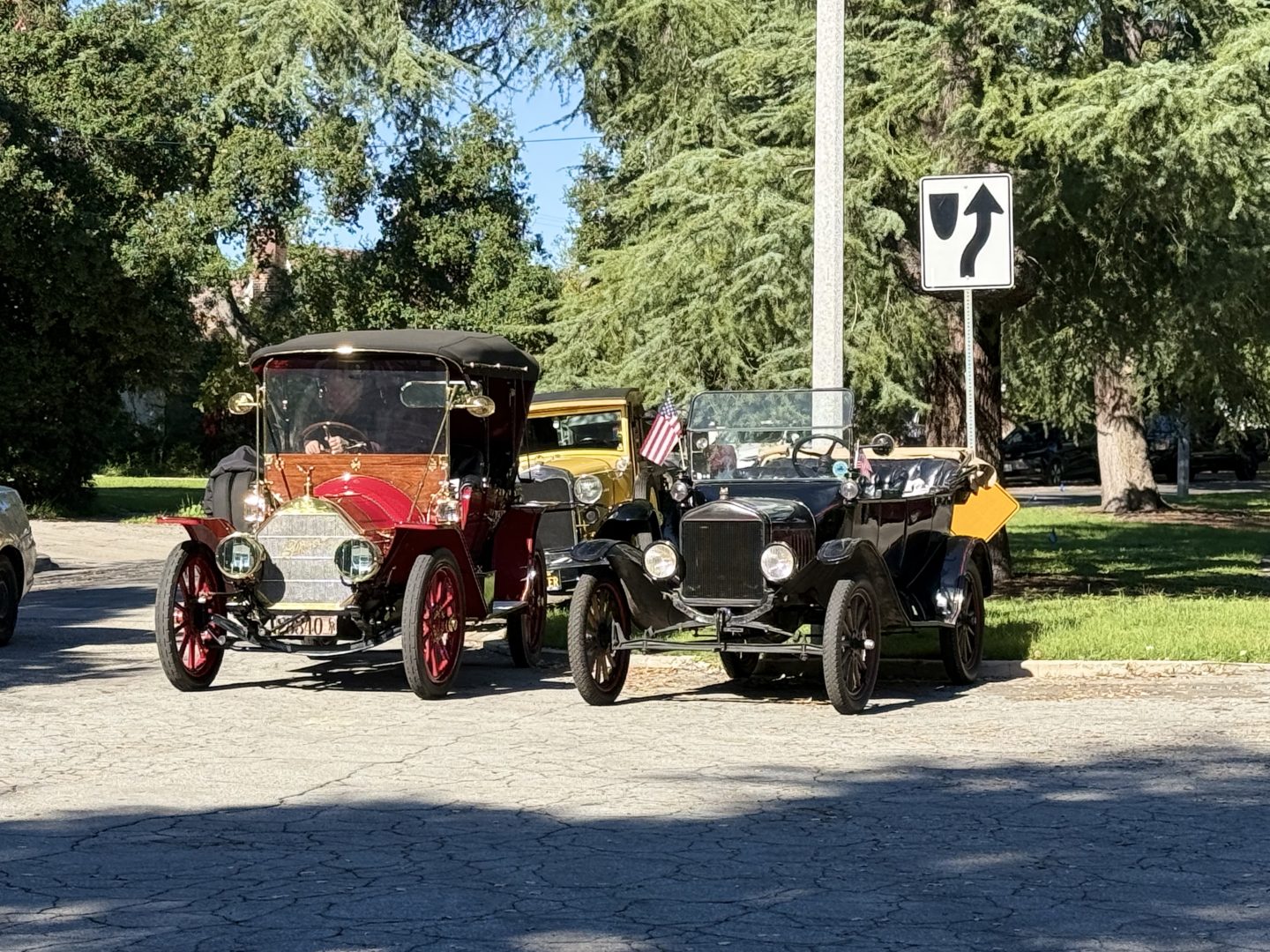
A 1909 Pierce Arrow (left) and 1920 Model T Ford (right). | Photo by May S. Ruiz / Hey SoCal
I approach the Eastwoods and Peter proudly says that this is the 69th year they’ve been holding this annual antique car show. He proceeds to give me the history of the event, which is known as the Holiday Motor Excursion (HME), but interrupts himself to inform me that he actually has the history written down somewhere.
Indeed for the 40th anniversary of HME, Peter authored a write-up about how the event originated on behalf of the Eastwood family.
December 25th in Southern California is, more often than not, sunny and clear. It was on one of those Christmas days back in the early 1950s when the seed was planted that eventually grew into the Holiday Motor Excursion.
In Pasadena that Christmas morning, Doug and June Eastwood suggested to their five children, after opening their presents,“Let’s go to Uncle Warwick and Aunt Millie’s to see what (cousins) Joyce and Elaine got.”
Jean and Peter Eastwood. | Photo by May S. Ruiz / Hey SoCal
It did not take long for Richard, Sharon, Jean, Peter, and David to squeeze into Dad’s Model T Ford for the ride over there. After the cousins compared gifts, Warwick’s 1905 Buick was cranked up and a short trip around the corner took the families to Bill and Lola Collier’s house for a look at Nancy’s presents. This prompted Bill to take out his 1910 Maxwell and the three families went for a short ride. Then to Ward and Betty Kimballs’s house for Christmas cookies and tea.
It only took a year or two for the spontaneous Christmas Day itinerary to expand and visits were made to the homes of John Walgamott, Bob Coombes, Louis Cook, Dick Mendelson, and other Pasadena area Horseless Carriage Club friends.
The sight of a small caravan of antique cars crisscrossing Pasadena only hours after Santa had been there was always greeted with cheers from the neighborhood residents.
1920 Duesenberg racecar. | Photo by May S. Ruiz / Hey SoCal
Before long, club members from outside the area were feeling left out. The explanation that the Eastwoods were just out having some fun and that it really wasn’t an organized club event was not what they wanted to hear.
It was at this time in the mid-1950s when families in their antique cars started showing up at Doug or Warwick’s house on Christmas morning, not wanting to miss out on “the fun.” Over the years, homemade cookies had to be supplemented with store bought doughnuts and the first of several 100-cup coffee pots were put into service.
1911 Pope Hartford. | Photo by May S. Ruiz / Hey SoCal
Sometime in the late 1960s the event date was changed to the weekend between the holidays and the departure point was moved to the Pancake House located between Doug’s and Warwick’s homes. As the event grew in popularity, the Model T Club and other clubs with newer cars joined in. In the late 1980s, to maintain the flavor of early day motoring and to keep the event to a manageable size, participants were invited to bring vehicles built before 1933.
Over the years the HME has been fortunate to be invited to visit many wonderful family homes, collections, and businesses in the area. Many visits have been made to the Dean Hensley, Burton Burton, and Don Ricardo Collections, just to name a few.
Somewhere along the line the HME. was adopted as a Horseless Carriage Club of Southern California event but the Eastwood family still handles all the event planning. For over 30 years Warwick and Millie hosted the dessert stop at their home at the event’s conclusion. In 1994 they decided to take it easy and Gary and Sheryl Hunter eagerly volunteered to take over and host the party at their home in nearby Arcadia.
The popularity of the event can be gauged by the 450 nametags and 150 copies of driving instructions given out last year – not to mention 30 dozen doughnuts, 400 cups of coffee, and 200 cups of orange juice.
1925 White Yosemite Tour Bus (yellow car on left), 1923 Model T Ford (right); 1910 Jackson (in back)
At some later time, the Arcadia County Park became the Holiday Motor Excursion’s departure point. Cars arrive as early as 6:30 but the event officially commences at 7:30 and the tour begins promptly at 9:30.
“This year there are 110 participating cars,” discloses Eastwood. “I believe the oldest car this year is a 1909 Stanley (steam powered!). A few arrived on trailers but most are driven to the event. I know that two of the cars that came by trailer were from Arroyo Grand and Hanford, California.”
1929 Model A Ford. | Photo by May S. Ruiz / Hey SoCal
Continues Eastwood, “The tour route is usually around 30 miles. We drive about 10 miles winding through the picturesque neighborhoods of Arcadia and Pasadena. Then we stop at a different park for coffee and donuts provided by our club – the donut stop is part of the event’s annual traditions.”
“Then we carry on for another 20 miles through more scenic Pasadena neighborhoods along the arroyo and other areas,” Eastwood adds. “We then circle back for lunch at Clearman’s North Woods Inn or Clearman’s Galley on Huntington Drive and Rosemead Blvd. From there we take a short drive to a nearby club member’s house for dessert. The route changes every year because we want to keep people guessing. But we come to Michillinda Park every two or three years”
The Horseless Carriage Club (HCC) doesn’t promote the event to the public according to Eastwood. The information is posted on the club’s website for the car owners. HME shirts – the artwork for which was created by Disney animator and HCC member Ward Kimball – are available at the event and they are discussing selling them through the club website.
Model T Ford. | Photo by May S. Ruiz / Hey SoCal
Unlike other antique car shows, HME is not a fundraising affair. Eastwood clarifies, “The event is merely an opportunity for the car owners and their families to have some holiday fun. The emphasis is on the driving aspect. We are fortunate that we can enjoy our cars this time of year – many clubs in other areas don’t have the weather we have.”
After a while, the tables of drinks and donuts are cleared and club members get in their cars to resume the tour. The drivers and passengers of the antique cars happily wave to people who happen to see them making their way to their scheduled stop on the route. And at every stop bystanders and onlookers marvel at the exquisite automobiles.
What started for the Eastwood family as a fun Christmas day jaunt around the neighborhood has grown into an eagerly anticipated annual tradition for hundreds of car enthusiasts and even those who might know next to nothing about antique cars. Watching the beautiful rare cars we don’t normally see on our streets certainly puts a smile on our face. What a delightful treat!
A view of the Eaton Fire on Washington Blvd. in north Pasadena. | Photo courtesy of Grigory Heaton/Wikimedia Commons (CC BY-SA 4.0)
Jan. 7, 2025, dawned bright, clear, and very windy in the San Gabriel Valley, with the mountain peaks clad in snow. Most Altadenans and Pasadenans went about their usual chores and workday despite the windstorm. But by the end of that fateful day the lives of several thousand people in these two towns would be upended.
According to news reports, shortly after 6 p.m., residents observed flames on a hillside in Eaton Canyon. While the fire itself was not large, 59 mph wind gusts pushed sparks across the canyon. The wind shifted the embers west into central Altadena and decimated a large swath of the unincorporated L.A. county area.
The Eaton Fire was the fifth deadliest and second most destructive wildfire in California’s history. Approximately 7,000 residential and commercial structures burned to the ground overnight, with 19 deaths reported. Most of the residents are still temporarily housed, residing in motels and extended-stay hotels in Pasadena and neighboring cities.
The Rose Bowl parking lot serves as the base for hundreds of firefighters. | Photo courtesy of Tom Stokesberry of the Forest Fire Service/Wikimedia Commons
An Altadena man, David Ly, and his family were among those who were displaced. He recalls the horrors they experienced.
“Jan. 7 started for us like a normal day,” says Ly. “We heard about a fire, but at first we didn’t think much of it. Fires happen, and you assume it’ll be contained. Later that day, my brother, who lives in the Highland Oaks area of Arcadia, called and said he could see the fire raging behind his house. He told us he was evacuating to our parents’ place and that we should do the same because the wind could turn at any moment. That’s when it became real and was truly one of the most traumatizing days of my life.”
“I remember going back on the morning of Jan. 8 thinking the fire was done because as I drove up Lake Avenue, everything seemed quiet,” Ly continues. “I had no idea I was literally driving into an area still burning. I saw homes on fire, and it was this surreal scene of memories literally disappearing. When I reached my own street, the power lines were down, and there was just this heavy sense of disbelief. I locked eyes with neighbors who were also there, and we just stood silently crying. By the time I got to where my house had been, it was all gone. You could still smell the smoke. I’ll never forget that feeling of seeing everything just, gone.”
Ly and his family proceeded to drive out to Dana Point that same day. Then they went to Phoenix to stay with family, to get some distance, and breathe. While it was a moment of disbelief and trauma, for him it was also when he began to realize how many others needed help. The past year had been a difficult journey, but it also gave him purpose — help others rebuild.
David Ly at one of the rebuild sites. | Photo courtesy of Rebuild Altadena
“Rebuild Altadena was born from the ashes of this fire, so we are not business as usual,” declares Ly. “Our focus is on rebuilding smarter and more fire-resilient, based on what this community has lived through. The concept behind it is rebuilding as a community. After the fire, it became clear that families were overwhelmed trying to navigate everything on their own — the County process, insurance, engineering, timelines, and rising construction costs.”
“We bring together a coordinated network of designers, engineers, and contractors who are focused almost entirely on Altadena,” Ly explains. “Just like our organization, their priority is helping this community rebuild – not chasing projects across Los Angeles. That’s where our Group Build approach comes in. It means our entire network is concentrated on the same area, working under the same County requirements and fire-rebuild conditions. By staying local, our partners are able to respond faster; keep pricing lower and more stable, even as tariffs and material costs fluctuate; reduce inefficiencies caused by labor shortages; share real-time knowledge from project to project; and move families through the rebuild process together. That level of coordination simply doesn’t happen when a contractor has job sites scattered across multiple cities.”
Rebuild Altadena uses bulk purchasing to protect homeowners from sudden cost spikes. By buying materials — including cabinets, tile, FirePoint plywood, HVAC systems, and lighting — in volume, the company can lock in pricing and reduce exposure to shortages and supply-chain disruptions.
“At the heart of everything we do is a neighbor-first philosophy,” emphasizes Ly. “Rebuild Altadena exists to make sure families who want to come home can do so with a rebuild that is reliable, locally built, transparent, and fire-resilient. This isn’t about shortcuts or volume — it’s about rebuilding Altadena smarter, safer, and with accountability that lasts long after construction is complete.”
The company is supported by a network of about 25 building professionals, comprised of contractors, designers, structural and civil engineers, surveyors, permit expeditors, and specialists in fire-hardening and resilient construction.
“We also have key staff members who bring deep lived experience and local leadership to the work,” Ly says. “One example is Steve Lamb, a fifth-generation Altadenan who lost his home in the Eaton Fire. Steve previously served on the Altadena Town Council and is a residential designer whose career has focused on historical preservation. His background reflects the values of this community — respecting Altadena’s architectural character while helping it rebuild stronger and safer. People like Steve don’t just contribute professional expertise; they carry the history, pride, and long-term vision of Altadena.”
David Ly and the Rebuild Altadena team. | Photo courtesy of Rebuild Altadena
“And our network continues to grow every day,” adds Ly. “More individuals and companies reach out because they want to help. They see the need, they believe in the mission, and they want to be part of rebuilding our town the right way.”
Since its founding, there have been four Rebuild Altadena Fairs, each growing dramatically as the community and industry partners have rallied behind the effort. Each Fair brings in 50 to 70 building professionals — architects, designers, engineers, builders, SBA representatives, county officials, material suppliers, and fire-hardening specialists. These events have drawn up to 2,000 attendees, making them one of the largest community rebuild gatherings in the region.
“When we first started, the goal was simple: give fire-affected families a place to meet architects,designers, the SBA, the County, and builders — all in one room, without barriers or confusion. But the Fairs have evolved into something much bigger,” Ly explains. “Our most recent event included: fire-hardening materials; 3D visual walkthroughs of rebuild designs; Vicon exterior fire-sprinkler demonstrations; a full Rebuild Zone where homeowners could see, feel, and compare real materials; windows and doors; tile and flooring options; roofing systems; lighting by Maison Enterprises; and other essential components of a resilient rebuild. It’s become a true one-stop experience where families can get educated, meet their teams, and touch the materials that will become their future homes. For many residents, the Fair is the first moment they feel clarity and hope again.”
The site gets ready for rebuilding. | Photo courtesy of Rebuild Altadena
Starting in the new year, one major Rebuild Altadena Fair every three months is being planned. These quarterly events allow Ly’s team to keep homeowners updated, introduce new technologies, and bring in additional experts as the rebuild landscape evolves.
“Families are still facing very complex concerns in the rebuild process, and these Fairs help address the biggest challenges we hear every day,” states Ly. “These include navigating the County process which is unfamiliar and stressful, especially for families who lost everything overnight. People are overwhelmed by engineering corrections, plan-check timelines, fire-zone requirements, inspections, knowing what to submit and when.”
“Additionally, homeowners are concerned about rising construction costs and insurance gaps,” Ly says further. “Many homeowners worry their insurance payout won’t cover today’s costs. They need guidance on budgeting, materials, and how to avoid unnecessary expenses.”
“Fire-hardening and long-term safety are also major concerns,” declares Ly. “Residents want to rebuild stronger but often don’t know which materials are best, what new codes require, and how exterior fire sprinklers, roofing, windows, doors, and siding work together. This is why we bring FirePoint sheathing, Vicon exterior fire sprinklers, and other fire-resilient products to the Fairs.”
“And then there are temporary housing pressures,” Ly cites. “Families are still paying rent out of pocket. Delays hurt not just emotionally but financially, creating urgency for clear timelines and dependable teams.”
The first fire-resilient rebuild.| Photo courtesy of Rebuild Altadena
“Another worry is knowing who to trust,” says Ly. “After a disaster, homeowners are approached by dozens of contractors and consultants. Many fear choosing the wrong people. Rebuild Altadena was created so residents have vetted, local professionals they can rely on. The quarterly Fairs give families a place to get answers, explore materials in person, meet trustworthy experts, and move forward with confidence.”
Out of roughly 4,500 single-family homes lost in the Eaton Fire, Ly estimates that about 60% to 70% of residents intend to rebuild, though everyone is moving at a different pace depending on insurance, finances, and the County process.
“Most families are still in the design, engineering, or plan-check stages, working through approvals and corrections,” Ly says. “A smaller number have reached construction. And we’re very proud that one of the very first rebuilds in Altadena is a Rebuild Altadena project. By the one-year anniversary of the fire, that home will be in painting and finishing stages.”
“Not only is it among the first to rise from the fire, it’s also the first home in the entire burn zone to use fire-resilient materials like FirePoint Sheathing, which is designed specifically to withstand extreme heat exposure,” Ly explains. “For many families, that home represents hope — a sign that rebuilding is possible, and that we can do it smarter and more resilient than before.”
Rebuild Altadena is currently supporting more than 30 homes in the design and planning phase, which includes architectural design, engineering, and county plan check.
The first Altadena Rebuild home is expected to be completed around the first anniversary of the Eaton Fire. | Photo courtesy of Rebuild Altadena
“On the construction side, two homes began construction in mid-December,” Ly says further. “We anticipate three additional homes breaking ground in the first half of January, assuming permitting and utility coordination stay on track. Aside from the first home that will be in finishing stages, the timelines for the other rebuilds vary based on lot conditions, design complexity, utilities, and fire-hardening requirements. For most projects, a realistic expectation is 12 to 18 months from permit issuance to completion.”
Ly is also rebuilding. And being one of the first rebuilds in Altadena comes with its own unique set of challenges, one that every family after him will face as well.
“For example, we’re dealing with major utility uncertainties,” Ly explains. “Southern California Edison still hasn’t confirmed whether they’re going overhead or underground with the new electrical system, which affects design, trenching, and timelines.”
“Because of new fire codes, many homes — including mine — now require interior fire sprinklers,” cites Ly. “That means a lot of families must upgrade their water meters, and one of our clients was quoted an astronomical price by the water company just to make that change. These are things no homeowner planned for.”
“And that’s why Rebuild Altadena has taken on a strong advocacy role,” Ly declares. “We’ve already helped the community win important battles: eliminating unfair fire hydrant flow test fees for each individual home; challenging cross-lot drainage requirements that didn’t make sense for wildfire survivors; pushing back on County fees and conditions that were originally designed for single new homes being built in an established neighborhood — not for a town where thousands of homes burned overnight.”
“We didn’t ask for this disaster,” asserts Ly. “We lost our homes, our stability, and in many ways our sense of place in a single night. Families should not be burdened with excessive fees and code upgrade costs that were never intended for a mass-rebuild situation. So yes, I’m rebuilding — but I’m also fighting every day for the families behind me, making sure the path gets a little clearer and a little fairer for all of us.”
Rendering of a future rebuild. | Photo courtesy of Rebuild Altadena
“Altadena is in a complicated place right now,” Ly says further. “There’s a mix of grief, frustration, determination, and hope all happening at once. Physically, many lots are still empty, and that can make it feel like time has stood still. Simultaneously, there’s real movement happening — plans being approved, foundations going in, and the first homes starting to rise. Progress is uneven, but it’s real.”
“Emotionally, people are tired,” laments Ly. “Many families are still displaced, paying rent, navigating insurance, and waiting on approvals. There’s frustration with the pace of utilities and permitting, and uncertainty about what comes next. But there’s also a strong sense of resolve. Neighbors are more connected than they were before the fire. People are sharing information, showing up for one another, and pushing for fair treatment together. You see it at community meetings, at the Rebuild Altadena Fairs, and even just on the street.”
An article in the Los Angeles Times in November 2025 featured the first house that was rebuilt after the Palisades Fire. The developer-owned showcase home, which was constructed within six months, was an advertisement of sorts for Thomas James Homes. The company has a library of home plans available for faster rebuilds and claims a rebuild typically takes 12 months.
Asked if this can be done in Altadena, Ly replies, “I saw that article, and it’s an impressive accomplishment. But comparing the Palisades rebuild to Altadena isn’t exactly apples to apples. In the Palisades example, the contractor rebuilt his own model home — a single property, on a standardized lot, with no insurance complications, and no displaced family depending on it. That allowed him to fast-track the process and present a ‘template’ home.”
The Rebuild Altadena office on Marengo Avenue in Pasadena. | Photo courtesy of Rebuild Alatdena
“But Altadena is different,” expounds Ly. “We pride ourselves on our diversity — our lots, our architecture, and our neighborhoods are not cookie-cutter. Many of us don’t want pre-designed, identical boxes placed across the community. People want to rebuild homes that reflect who they are, not a one-size-fits-all model. And with that individuality comes complexity: unique slopes and topography; older utility systems; unanswered questions from SCE about overhead vs. underground power; interior sprinkler requirements that force water meter upgrades; soils, drainage, and grading challenges; insurance delays; and County processes that were never designed to handle over 4,500 rebuilds at once.”
“So while it’s inspiring to see a house rebuilt in six months, making that promise in Altadena would be unrealistic — even irresponsible,” Ly continues. “False promises give families hope in the short term, but they cause real pain when they fall apart. What we are focused on is speed with integrity — rebuilding smarter, stronger, and with fire-resilient materials. Our goal is to eventually streamline to a point where 12-month rebuilds become achievable.”
What would success look like and what accomplishments does Ly envision for Rebuild Altadena?
“Success for Rebuild Altadena isn’t measured by how fast we rebuild homes,” states Ly. “It’s measured by whether families feel supported, empowered, and protected throughout one of the hardest experiences of their lives. Success is thousands of families back home, living in a safer, stronger, more unified Altadena. That’s what we’re fighting for every day.”
Very soon now, a Rebuild Altadena house will be completed. It will most probably be celebrated not only by the family that moves in, but by the thousands of other families who are still displaced. Each house that rises from the ashes of the Eaton Fire provides them with a glimmer of certainty that one day in the not-too-distant future they will be back — exhausted by the ordeal they’ve been through, but very happy to return to the town they call home.
Firefighters spray water from a hose during the Eaton Fire. | U.S. Forest Service photo taken by Capt. Jason Benton / Courtesy of Wikimedia Commons
The Eaton Fire of January 7, 2025 will be endlessly seared in the collective memories of the Pasadenans and Altadenans who experienced the largest blaze in the history of the San Gabriel Valley. Overnight 19 people died and 9,000 structures were reduced to ashes, among them 80 homes at Upper Hastings Ranch in Pasadena and over 4,500 in Altadena.
Large corporations and private citizens across the country responded immediately to the disaster – sending cash, food, personal items, and other basic necessities to the various collection sites that opened during the days following the fire.
All through the year, several non-profit organizations emerged in Altadena to continue to support those who were affected even as the rest of the country moved on to other important matters. Community leaders have worked ceaselessly to keep the momentum going and thought of ways to ensure we didn’t forget that thousands of Altadenans are still grappling with the aftermath.
Two individuals – Victoria Knapp and Ethan Marquez – are collaborating on an event to benefit those who were affected by the Eaton Fire. They are co-chairing the Altadena Forever Run which will be held at 8:00 am on Sunday, January 4, 2026 at the Mariposa Junction in Altadena.
Thousands of runners and community members will gather for a10K, 5K and 1K family run raising critical funds for residents still recovering from the Eaton Fire – including individuals and families who remain displaced, are living in vehicles, or are running out of short-term rental assistance.
Victoria Knapp is a longstanding Altadena community leader and organizer whose civic work has focused on connection, recovery, and purposeful engagement. A former Pasadenan, she made Altadena her home in 2011, where she spent the next 15 years deeply involved in community life. She played a central role in crisis communication and community coordination after the fire, helping residents navigate loss while fostering collaboration among neighbors, small businesses, and local organizations throughout the recovery period. She is a firm advocate for community-based initiatives that bring people together with purpose and meaning, including the Altadena Forever Run, which reflects her belief that shared action – like running together – can be a powerful force in healing and resilience.
Ethan Marquez is a 26-year veteran of the Los Angeles County Sheriff’s Department with a career spanning custody, patrol, training, and command assignments. He was on the scene during the Eaton Fire, playing a critical role in emergency response and community coordination. In August 2025, he was promoted to Captain of Altadena Station, where he continues to emphasize operational excellence, public safety, and community partnership. A dedicated endurance runner and philanthropist, he runs marathons while pushing his son in a wheelchair to raise awareness and funding for Duchenne Muscular Dystrophy research, using running as both advocacy and a deeply personal expression of service.
“The Altadena Forever Run is about honoring what we’ve lost, supporting those still recovering, and reaffirming our commitment to one another,” state Knapp and Marquez. “After the Eaton Fire, our community showed that resilience isn’t just about rebuilding homes, it’s about standing together, staying connected, and moving forward with purpose. This run reflects the heart of Altadena: strong, compassionate, and forever connected.”
The course passes through neighborhoods and foothill corridors impacted by the fire, featuring on-course storyboards that highlight survivor experiences and ongoing recovery efforts. Organizers say one of the most meaningful aspects of the event is the regional turnout, with runners traveling from across Southern California and beyond to stand in solidarity with Altadena residents.
Community leaders and first responders are expected to attend – including Robert Luna and Kathryn Barger. The Los Angeles Laker Girls will also be on site to cheer on runners and support the event atmosphere. The Altadena Forever Run is supported by corporate and community partners, including SoCalGas, GoFundMe, East West Bank, First City Credit Union, and Toyota of Pasadena.
Proceeds from the event directly support Altadena residents who continue to face housing instability and are seeking viable pathways to rebuild and return home. Although the emergency response has ended, many residents continue to recover in the long term with limited resources.
But through the tireless efforts of dedicated individuals and the support of the community, Altadenenas will get through this unfathomable tragedy and get back on their feet stronger than ever before.