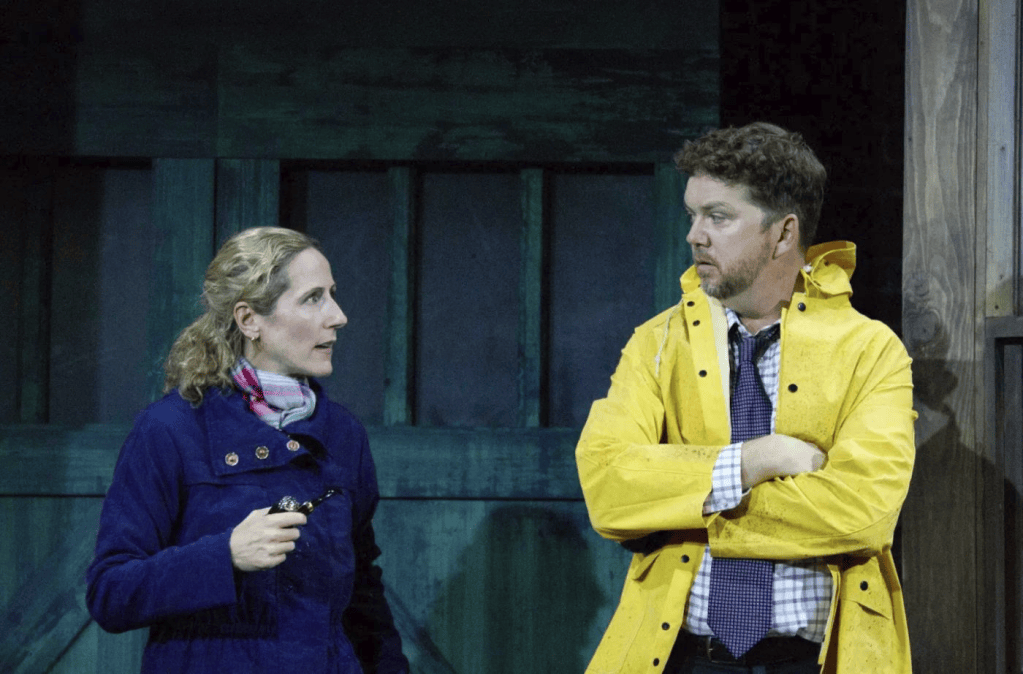
Liza Seneca as Rosemary Muldoon and Michael Kirby as Anthony Reilley. | Photo courtesy of The 6th Act
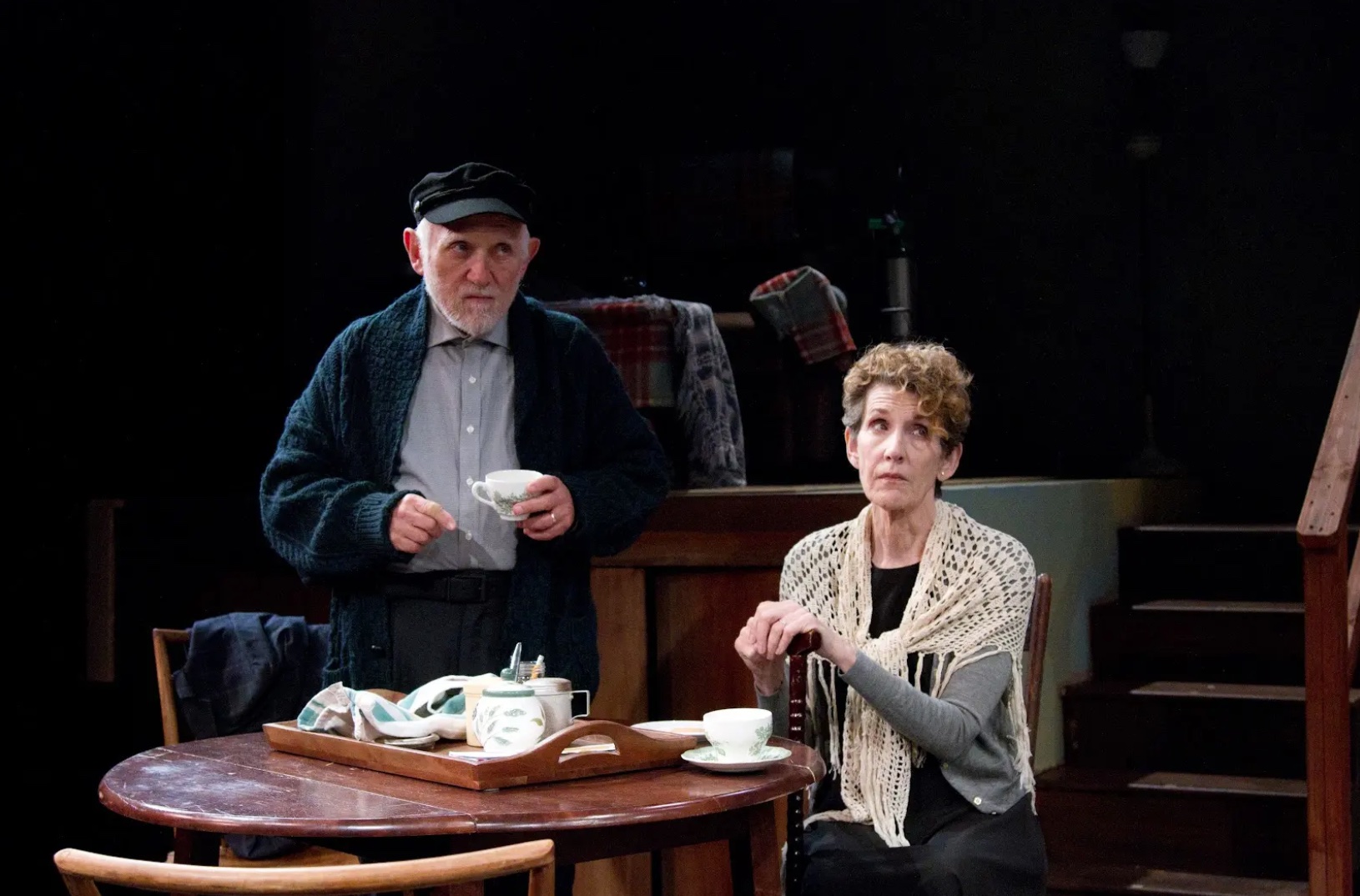
Outside Mullingar, a tender and humorous play set in pastoral Ireland, comes to the Sierra Madre Playhouse in conjunction with The 6th Act for 16 performances from the 2nd of October to the 25th. Directed by Matthew Leavitt, the play stars Michael Kirby as Anthony Reilly, Liza Seneca as Rosemary Muldoon, Armin Shimerman as Tony Reilly, and Kitty Swink as Aoife Muldoon.
Conceived by Tony/Pulitzer Prize/Academy Award-winning writer John Patrick Shanley, Outside Mullingar explores the balance between love and land, inheritance and independence, and the courage it takes to follow one’s heart. It is a deeply human story – warm, wistful, and full of hope that love can bloom late in life.
In the mist-shrouded farmlands of rural Ireland, Anthony and Rosemary live side by side, bound by family legacies, stubborn pride, and an unspoken longing that has lasted a lifetime. Anthony has spent his days quietly tending his father’s cattle farm, uncertain of his future and haunted by what might have been. Rosemary, his strong-willed neighbor, has waited years for him to see what’s been right in front of him all along.
Outside Mullingar premiered on Broadway in 2014 with Debra Messing and Brian F. O’Bryne. Leavitt’s production of the play with this current cast was previously staged at the Matrix Theatre in West Hollywood from June 5 to 22, 2025 and at the Skylight Theatre in Los Feliz from October 16 to November 9, 2025.
Armin Shimerman as Tony Reilly and Kitty Swink as Aoife Muldoon. | Photo courtesy of The 6th Act
The production has garnered considerable critical acclaim. Stage Raw declares, “This first-rate production is powered by outstanding cast performances. The infectious vibrancy and skill these four actors bring to their characters immediately beckons and is highly effective under director Matthew Leavitt’s perceptive direction.” LA Splash Magazine states, Outside Mullingar is “packed with laughs and sly comments about life.” It won Stage Raw’s Best Ensemble Award and was also included on both Stage Raw and Arts Beat LA’s “Top Ten” lists.
By email, Leavitt talks about The 6th Act, how he decides what plays to stage, what drew him to Outside Mullingar, and the audience takeaway.
“The 6th Act is a theatre company I co-founded with my producing partner Liza Seneca ten years ago, and, every year since then, we’ve been consistently producing several full productions, staged readings, and workshops,” Leavitt begins.
Leavitt is also a renowned playwright and a stage director himself. However, he has made a firm choice to never direct his own plays. He explains, “I love the collaborative process with the incredible directors I’ve been lucky enough to have helmed the plays I’ve written and could never have achieved what I have without them.”
“Liza brought this play to me; it had always been one of her dreams to do this play,” says Leavitt. “The minute I read it, I knew we had to do it. This play transports you to the most deeply enchanting romantic comedy, I think, in all of theatre, enormously enhanced by the unique and wonderful wit and charm of Ireland.”
It was also Seneca who suggested the cast. “Liza and I always collaborate on casting our shows, however Liza definitely knew these actors much better than I did entering the process,” adds Leavitt. “Now I am fortunate to call them all my dear friends, and they have been an absolute joy to work and collaborate with.
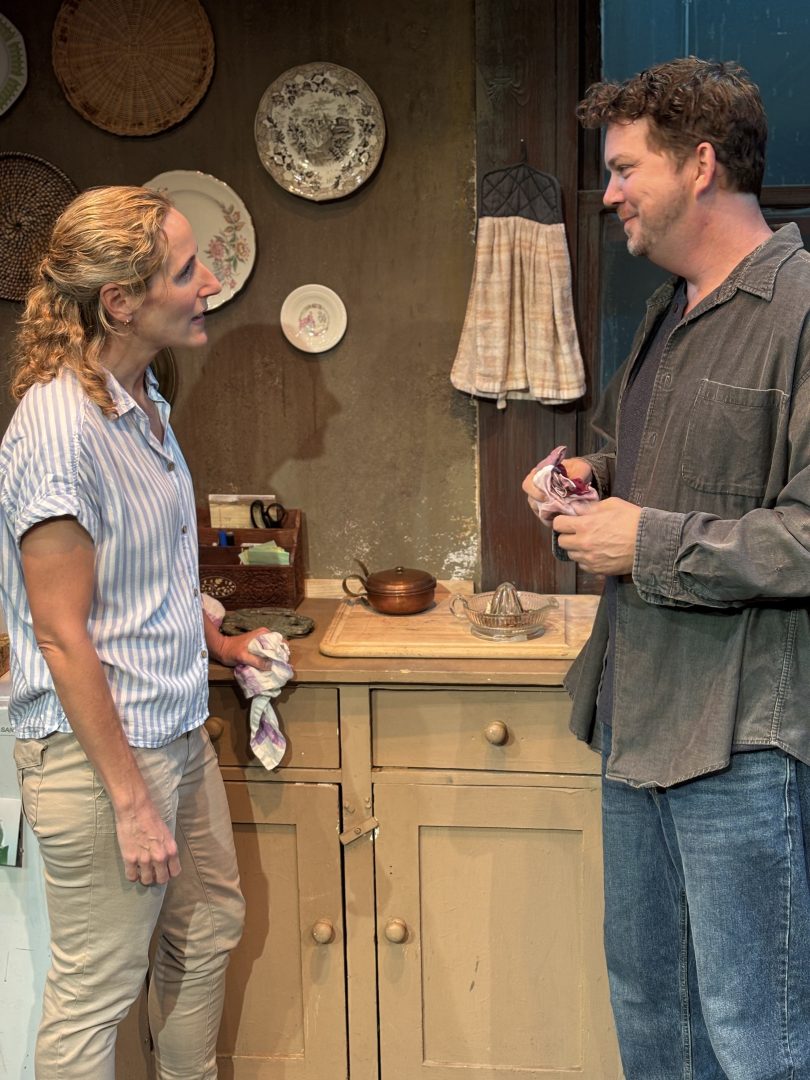
Liza Seneca and Michael Kirby. | Photo courtesy of The 6th Act
Leavitt’s iteration of Outside Mullingar is a departure from what has been staged on Broadway and the Geffen Playhouse. He elaborates, “I believe what makes our version stand out from previous ones is that I chose the approach to the play through the lens of an Irish fairy tale about true love. Plus our set – designed by the brilliant Mark Mendelson – is truly the fifth character, as it unfolds and turns the page of each chapter so gracefully, giving it that fairy tale essence. We have had dozens of people after our shows tell us they saw the Broadway production and believed ours was better. I genuinely believe we have captured something truly magical in our production.”
Perhaps it was that quality that inspired the Sierra Madre Playhouse’s creative team to invite Leavitt to stage the play here.
“We were approached by the Sierra Madre Playhouse to mount our production here, and it has been an absolute dream come true,” Leavitt discloses. “Every single person has been so overwhelmingly gracious and kind, we feel truly grateful and thrilled to have our production at this theater.”
Asked what he wants audiences to take away from the play, Leavitt replies, “Absolute enchantment, positivity, and belief in true love.”
With all the bewildering and depressing news we have been hearing and reading about lately, we are so ready to be charmed by a fairy tale love story set in the sweeping Irish countryside.
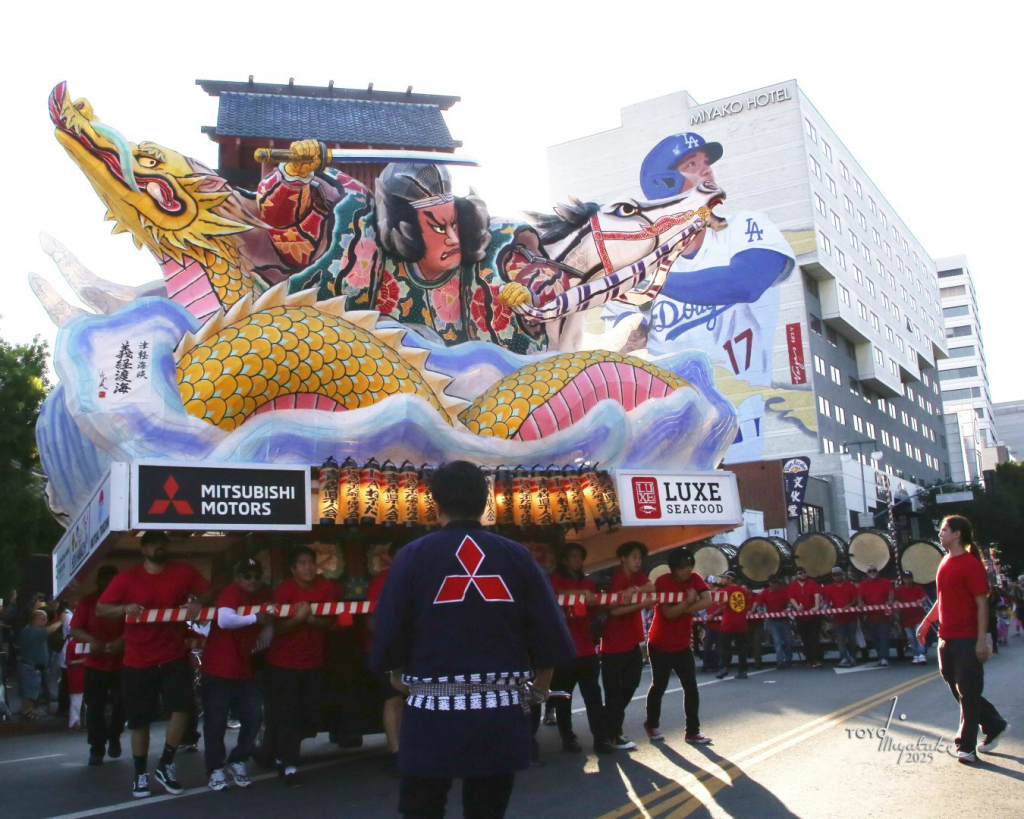
2025 Parade Float. | Photo courtesy of Toyo Miyatake for Nisei Week Festival
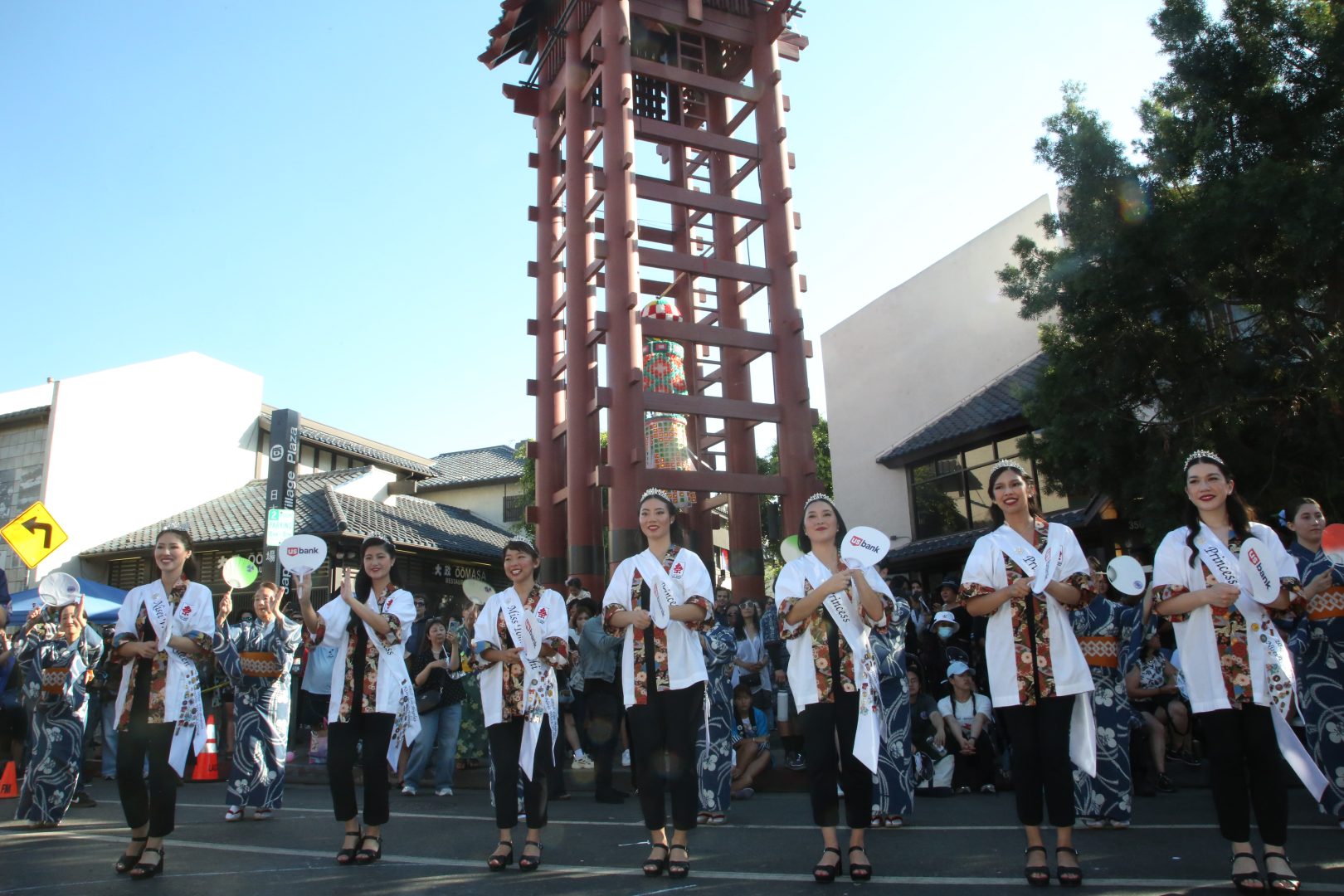
Every year in mid-August, Little Tokyo in downtown L.A. becomes the site of the Nisei Week Festival. According to cultural scholar and writer Dr. Oliver Wang, this event began in 1934 as a way to encourage cultural pride in the community by an emergent second generation of Japanese Americans – the Nisei – who wanted to stake out a space for themselves within a community that up to that point had been largely dominated by their Nikkei parents and their generation.
Nisei Week quickly grew to become an annual celebration of the Japanese American community and further anchored Little Tokyo as the center of the Nikkei community in the southland. As a tradition, it continued throughout the rest of the 1930s up to the summer of 1941 and went on hiatus because of the Japanese American incarceration. It resumed in 1949 and has been held every year since, except during the pandemic.
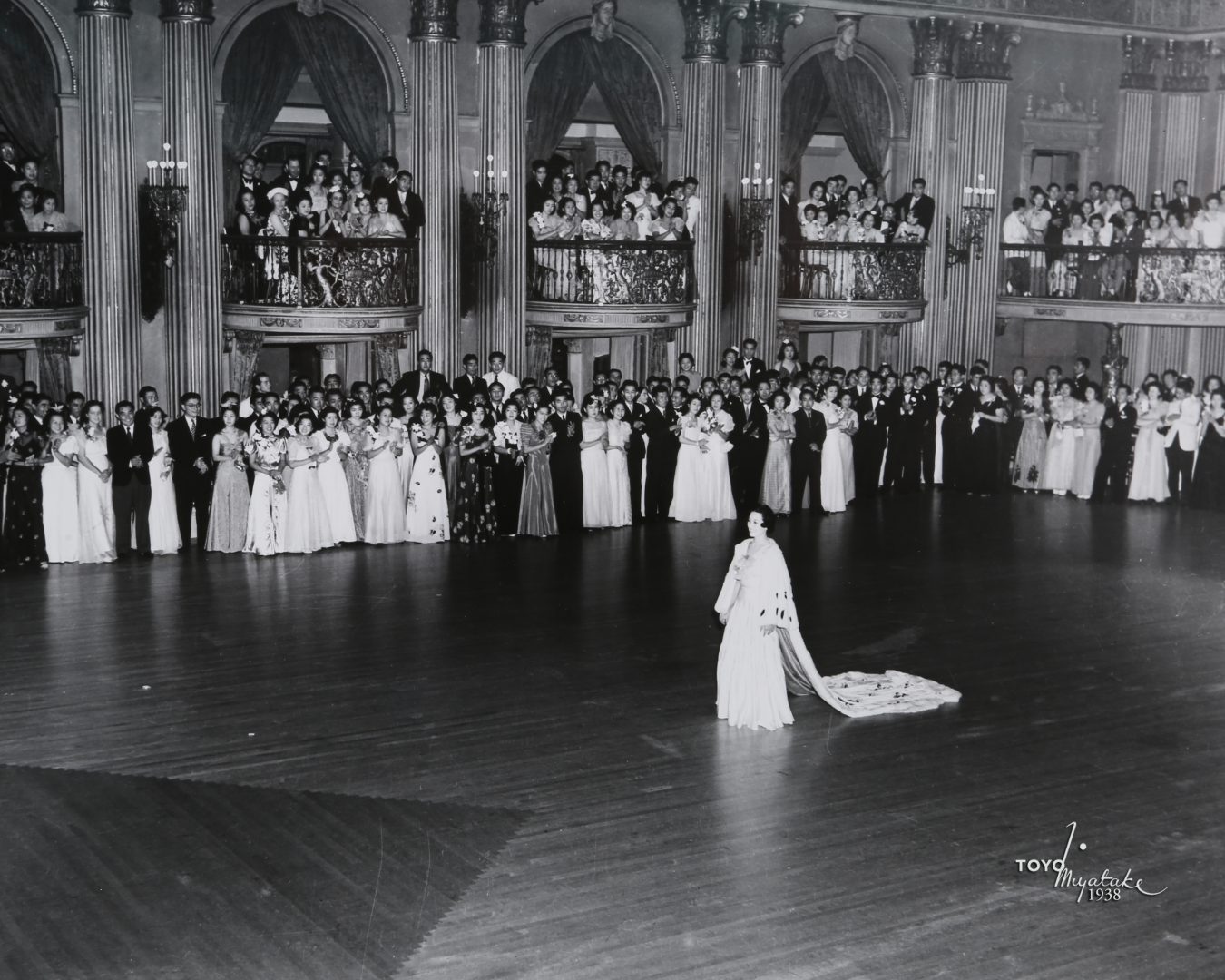
1938 Coronation of Nisei Week Queen Margaret Nishikawa. | Photo courtesy of Toyo Miyatake for Nisei Week Festival
What started as a weeklong celebration of Japanese culture and history meant to appeal to the Nisei later drew people from all over Southern California. Additionally, the event has extended beyond seven days to the multi-week event it is today that attracts 30,000 attendees from various ethnic groups.
This year marks the 84th year the festival is being celebrated and will be held from August 15 through the 23rd. The Grand Parade featuring Japanese dancers, marching bands, musical groups, and floats will travel through the streets of Little Tokyo. The Japanese American Cultural and Community Center will host the Plaza Festival where food booths, live music, cultural exhibitions, and family games await visitors. Cultural exhibitions showcasing Japanese arts like bonsai, ceramics, ikebana flower arrangements, and tea ceremonies are not to be missed. Other special activities include the coronation of the Nisei Week Queen and Court and the Pioneer Spirit Awards Luncheon. Nisei Week Festival ends with the Ondo Public Street Dancing and Closing Ceremony.
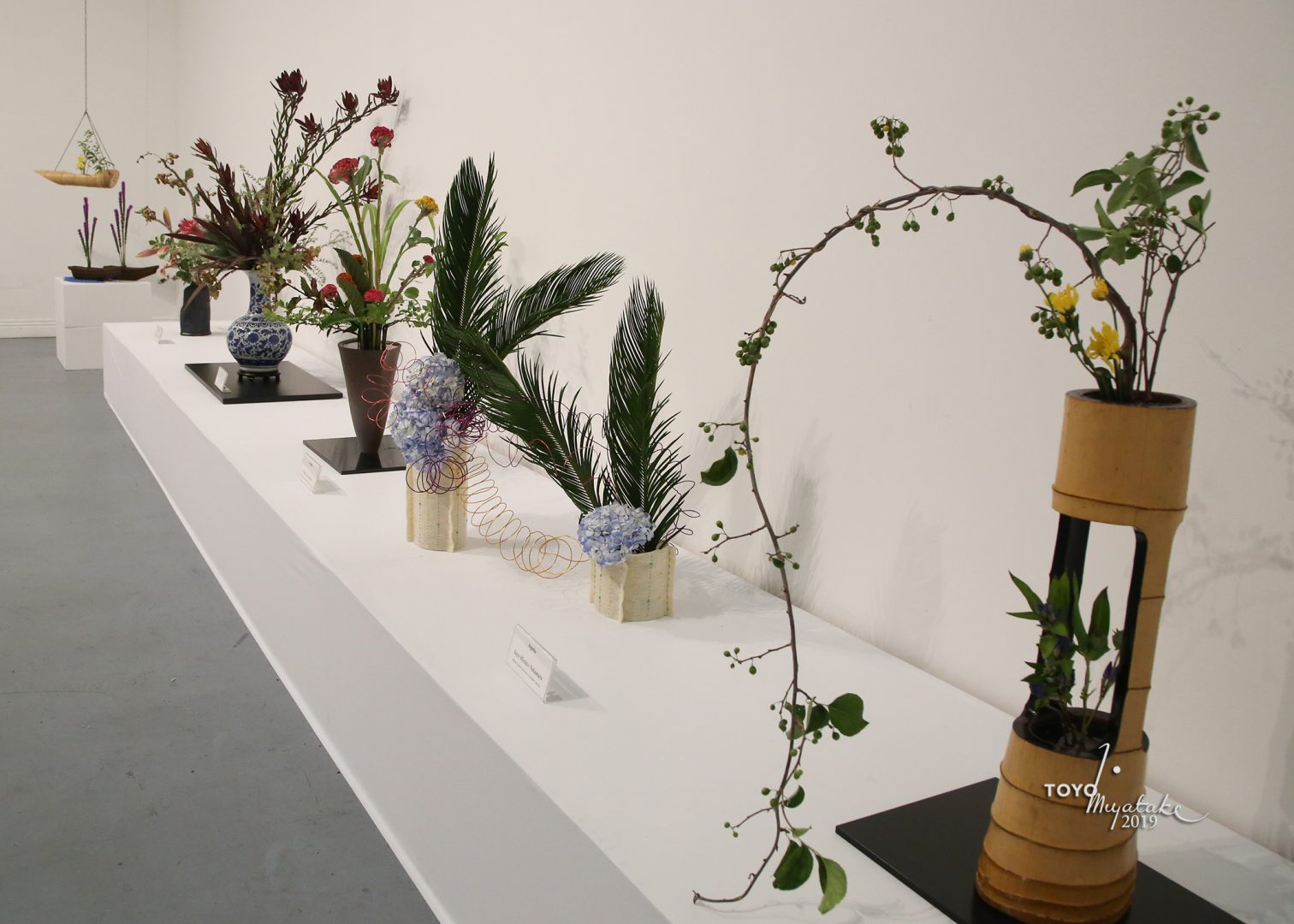
2019 Ikebana flower arranging exhibition. | Photo courtesy of Toyo Miyatake for Nisei Week Festival
“As best we know, the Nisei Week Cruise was a phenomenon that started in the 1970s,” relates Wang. “And certainly by the late 70s into the 80s it became the single biggest annual gathering of Japanese American car fanatics. Thousands of people lined up on the sidewalks and watched hundreds of cars and motorcycles on the street going around the carnival grounds. It was a really huge deal for the car owners because they would spend their entire summer getting their cars ready.”
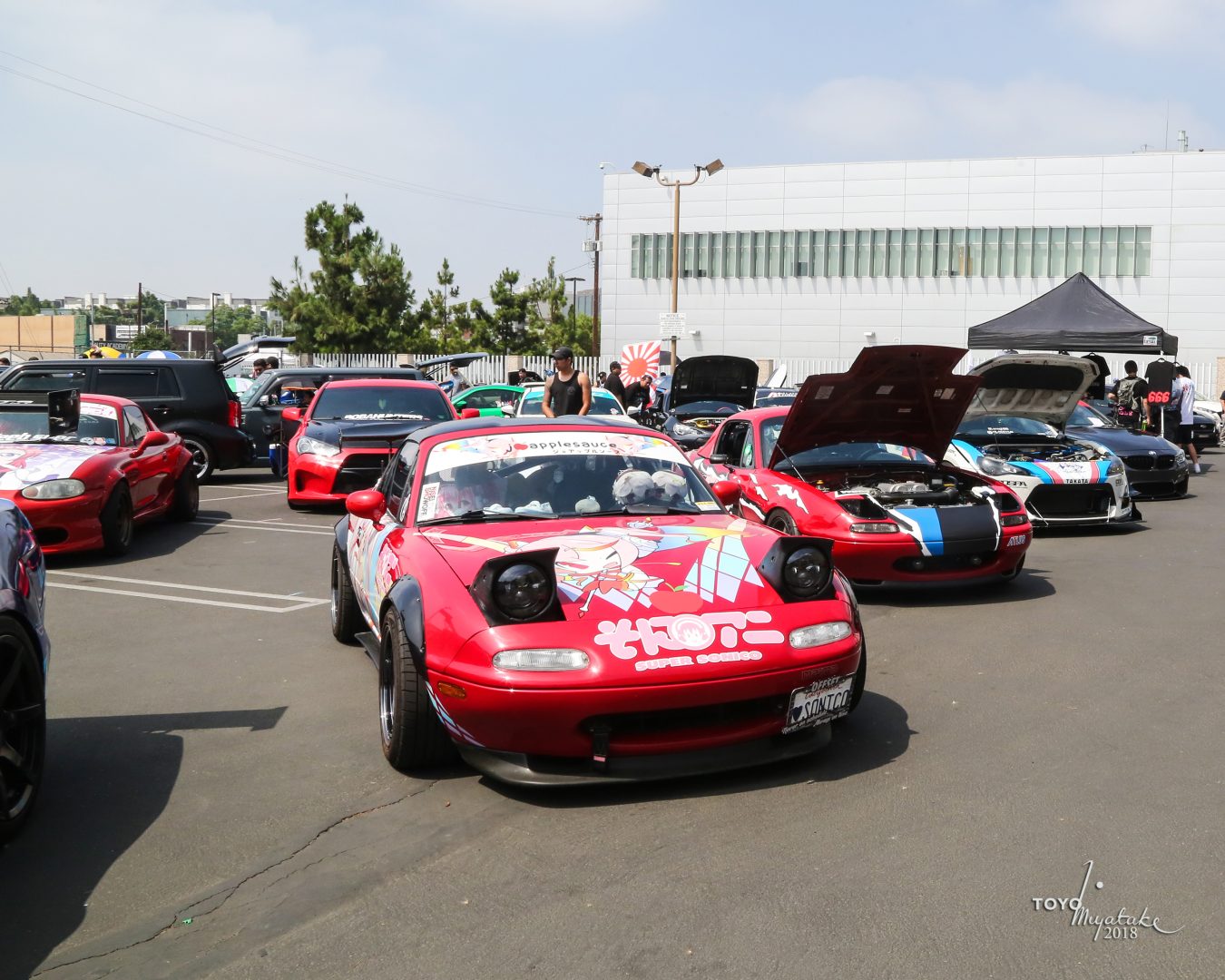
2018 Car Show Exhibition. | Photo courtesy of Toyo Miyatake for Nisei Week Festival
“Because it was the last major event of the summer, Nisei Week Cruise ended up becoming the ‘Super Bowl’ of cruises,” Wang adds. “It was the pinnacle event that people spent their entire summer getting their cars ready for. The last cruise occurred in the summer of 1988; by 1989 the organizers and the LAPD voted to shut it down. There had always been ambivalence among the organizers from the noise and safety point of view. By the 1990s Nisei Week began hosting a car show instead as a compromise.”
Helen Ota, the 2026 Nisei Week Festival president, reveals that there’s an event that will be featured for the first time this year.
“The JX Matsuri will take place on Sunday, August 16 at Weller Court,” says Ota. “This event is being organized by Japan Crossover (JX) and will be a call back to the days when Nisei Week had its popular carnival many years ago. There will be game booths, food, and entertainment from 11 a.m. to 4 p.m. When JX Matsuri concludes, the Grand Parade will begin, so the attendees will be able to stay afterwards to enjoy this beloved tradition.”
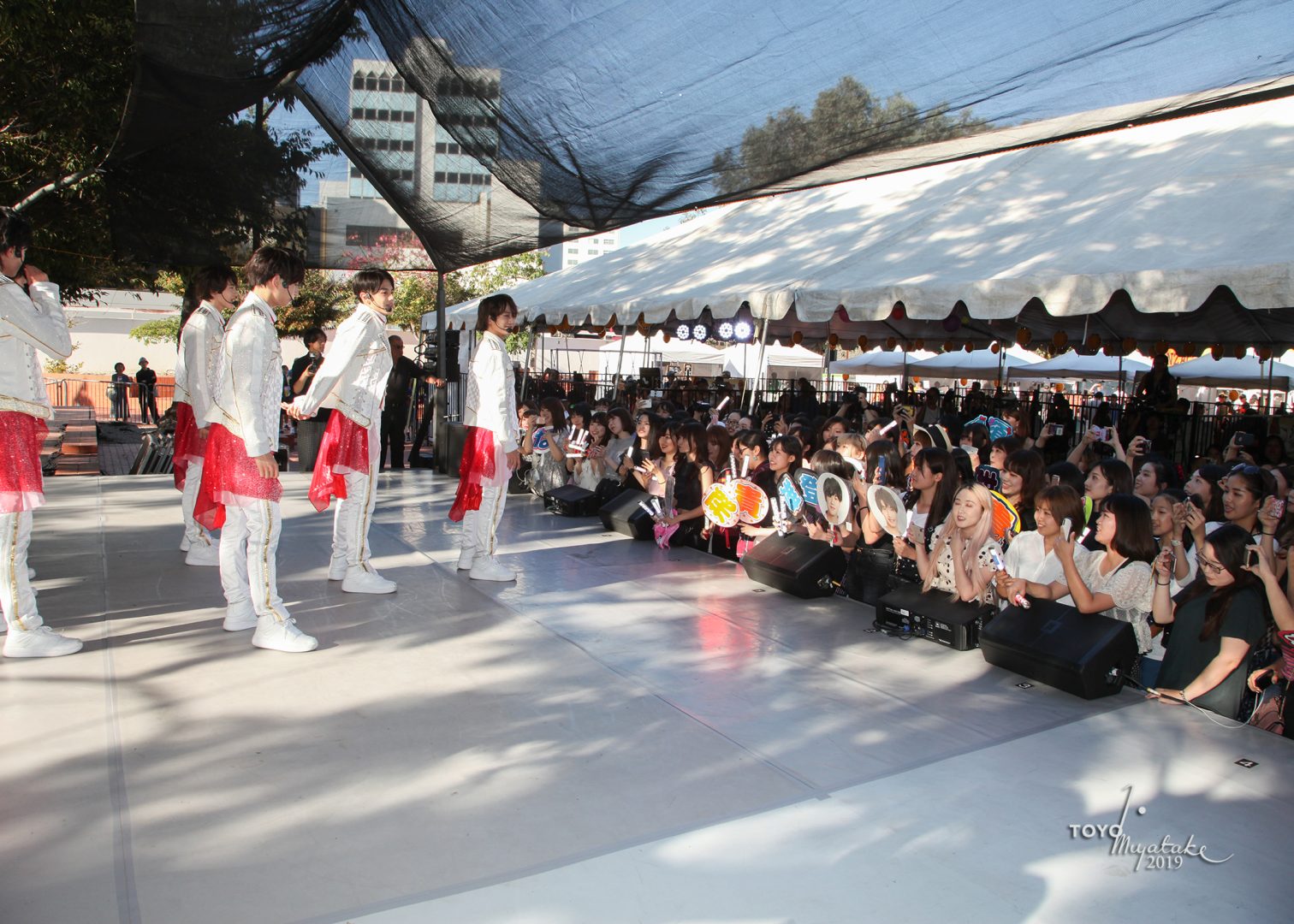
2019 Performers at Sunset Plaza. | Photo courtesy of Toyo Miyatake for Nisei Week Festival
But Nisei Week’s evolution isn’t only reflected by the activities. Ota declares, “The Nisei Week Japanese Festival has evolved over the years by engaging the rising generation to be involved as committee members and taking on leadership roles. At the same time, we look to our longstanding board members and volunteers to provide institutional knowledge to carry on the tradition and understand the significance of the Nisei Week Japanese Festival. This has allowed the Nisei Week Foundation to remain grounded in tradition while being mindful of who our audience is today and what they might be interested in seeing at the festival. Through this lens, we’ve been able to partner and collaborate with different organizations to continue to enhance the festival.”
2019 Pioneer Spirit Awards Luncheon. | Photo courtesy of Toyo Miyatake for Nisei Week Festival
Unlike many L.A. area Japanese Americans, Ota didn’t go to Nisei Week growing up. Recalls Ota, “My first experience was participating in the Grand Parade in the 80s. I remember it being hot, but enjoying being part of the festival with the community. I started becoming involved with organizing Nisei Week ten years after I was on the Nisei Week Court. In 1999, I co-chaired the Queen & Court Program Committee and helped to initiate a leadership component within the program. I took on more leadership roles and learned much from my mentor, the late Frances Hashimoto. Soon after, I was elected as a board member of the Nisei Week Foundation.”
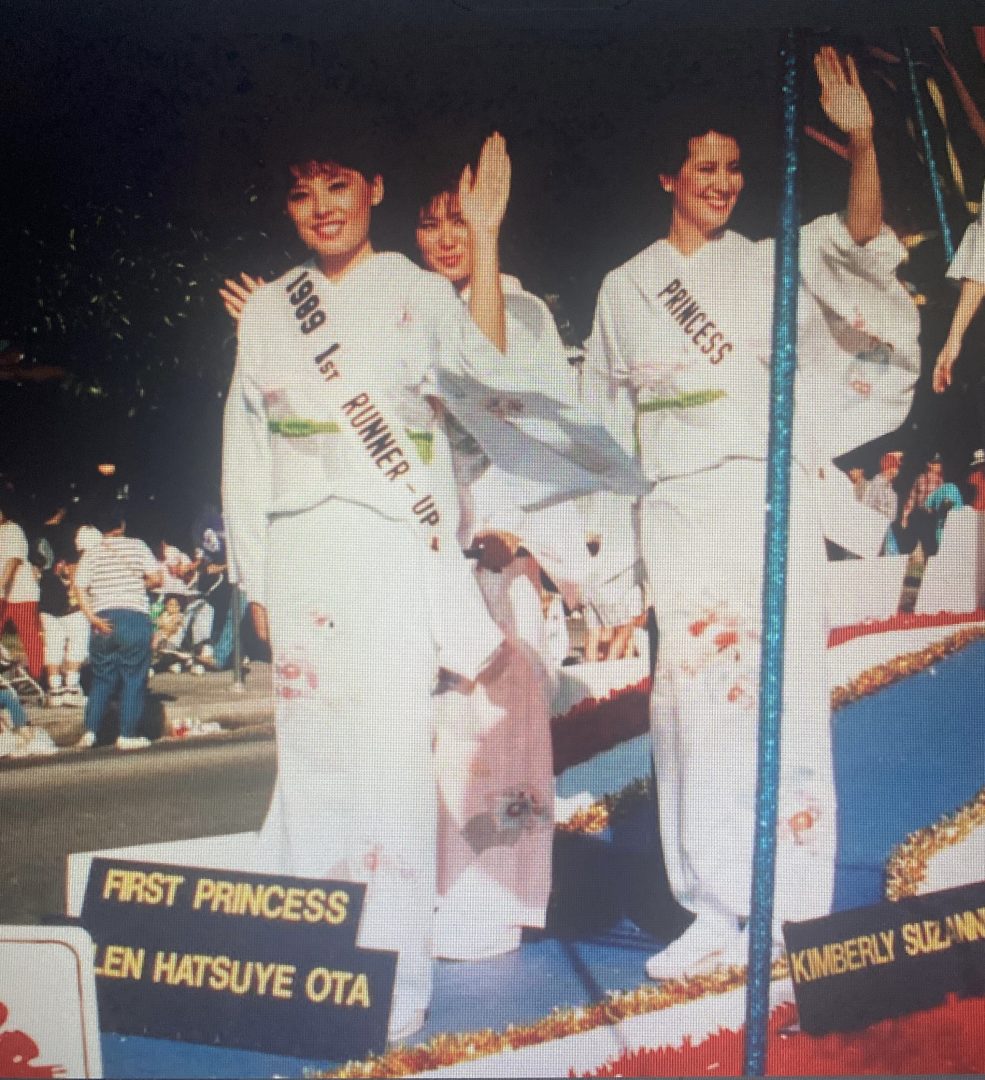
1989 First Princess Helen Hatsuye Ota at far left. | Photo courtesy of Helen Ota
Presiding over the yearly festival isn’t new to Ota. She says, “This is the third time I’m serving as president. The first year was in 2008 and the second time was in 2025. My responsibilities are to lead the Nisei Week Foundation board to plan for the festival every year, work with the different committees that organize each Nisei Week Japanese Festival event, collaborate with our partners and stakeholders, and work with the Little Tokyo community.”
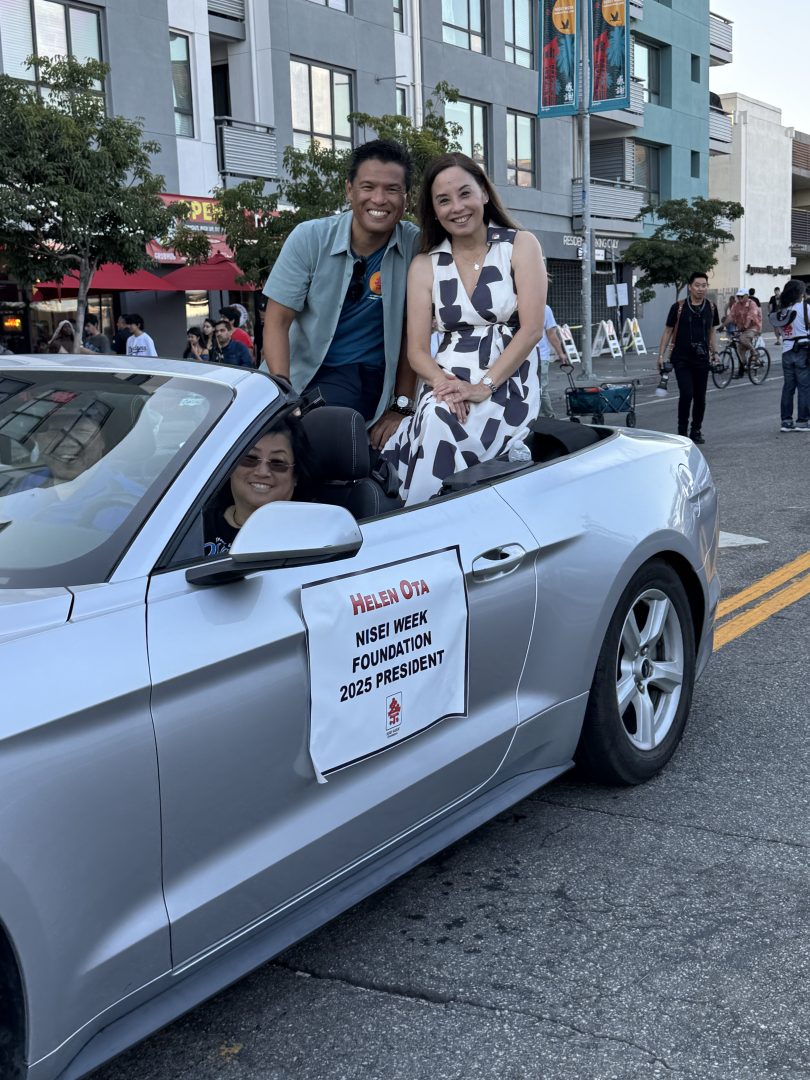
Helen Ota with husband Mike Palma in the 2025 Grand Parade. | Photo courtesy of Helen Ota
It is a role she doesn’t take lightly. “Having this position is very meaningful,” Ota explains. “It has allowed me to give back to Nisei Week and the community at large. I’ve been fortunate to have worked with several organizations and community leaders who inspire and provide me with great support. Serving as a representative of the Nisei Week Foundation and its festival has allowed me to appreciate Little Tokyo and the community with a grateful heart.”
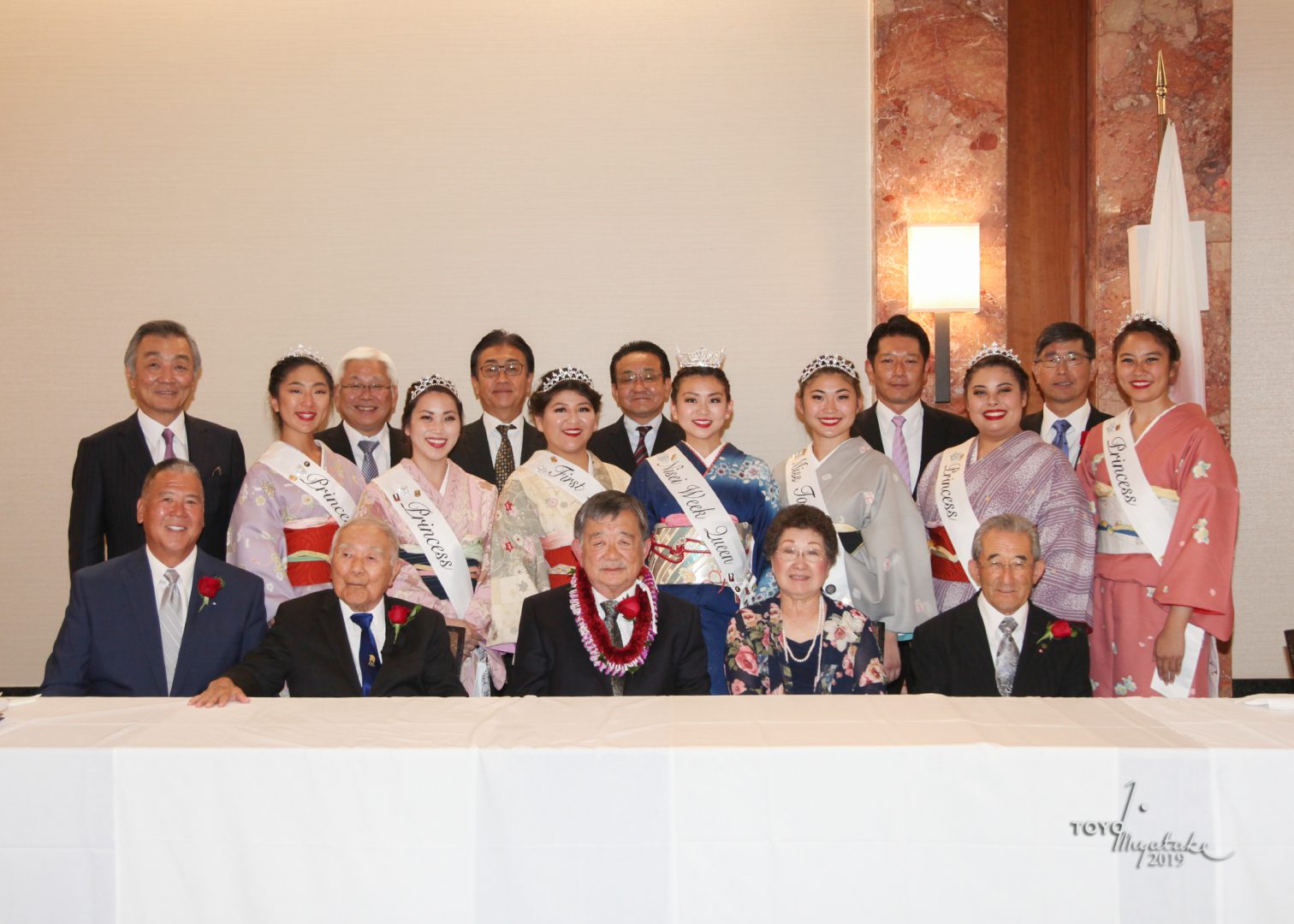
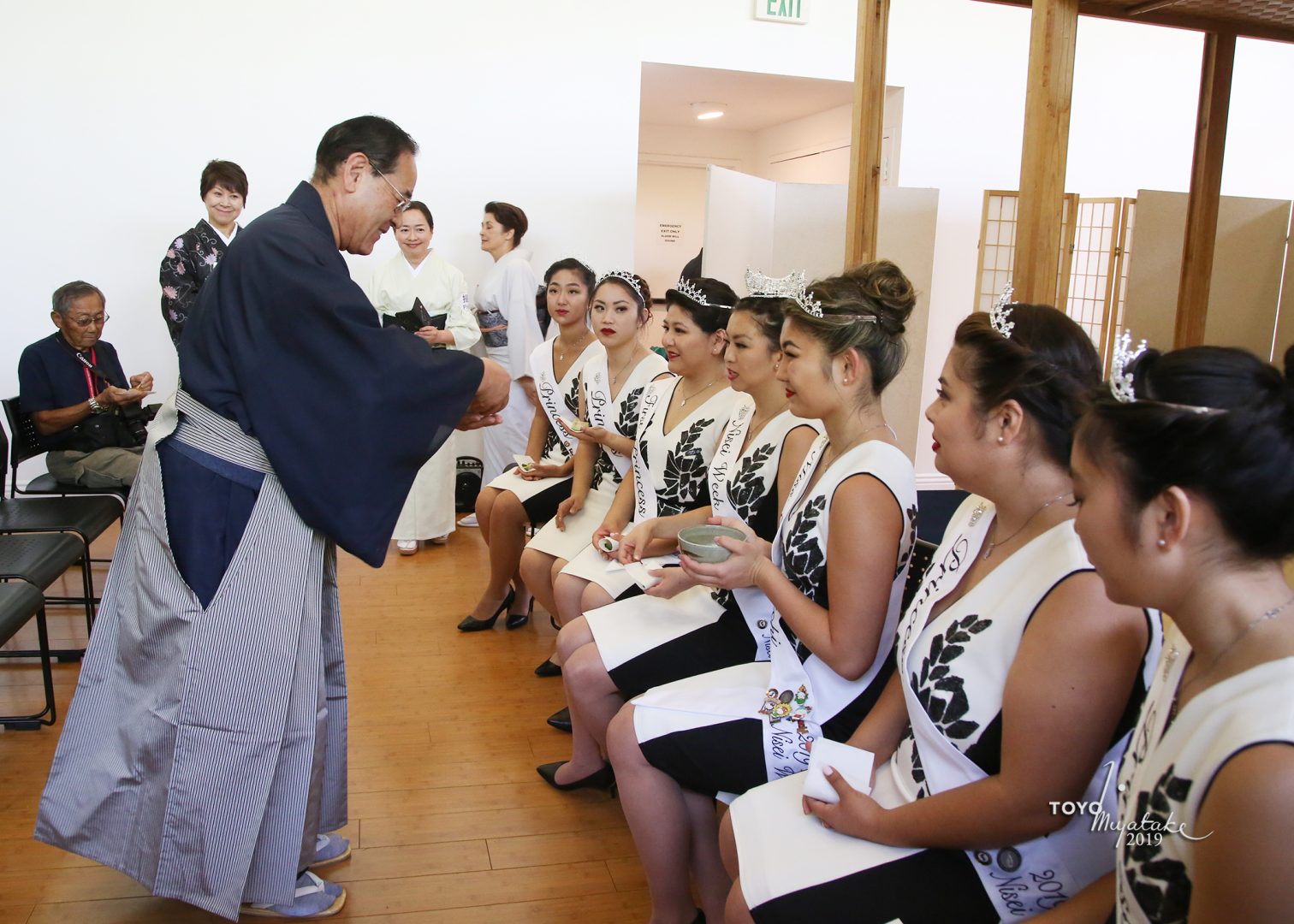
2019 Tea Ceremony Exhibition with the Queen and Court. | Photo courtesy of Toyo Miyatake for Nisei Week Festival
Nisei Week is an all-volunteer organization with no full time staff, with over a hundred volunteers involved throughout the year. According to Ota planning for each festival begins shortly after it ends in August.
“The Nisei Week Japanese Festival is a celebration of Japanese and Japanese American arts, culture, and community,” stresses Ota. “With only three historic Japantowns remaining in the U.S., we hope to connect communities throughout Southern California and beyond to Little Tokyo and discover the rich history and cultural arts it offers.”
2025 Closing Ceremony. | Photo courtesy of Toyo Miyatake for Nisei Week Festival
Asked if there has been a particularly memorable Nisei Week for her, Ota replies, “Each year has been memorable, which goes along with our theme this year, ‘ichigo ichie.’ It means one time, one meeting in Japanese and signifies that every moment is unique, unrepeatable, and should be treasured. Although we have a festival every August, each one has been a unique and remarkable experience because of the community and the people who come out to support us.”
For numerous Japanese Americans living in Southern California, Nisei Week is an annual tradition that was very much a part of their youth and a ritual they passed on to their children. And to this day multi-generational families go to Little Tokyo for the food, exhibitions, parades, and street dancing. For them it is an enjoyable summer adventure that, at the same time, preserves their cultural heritage.
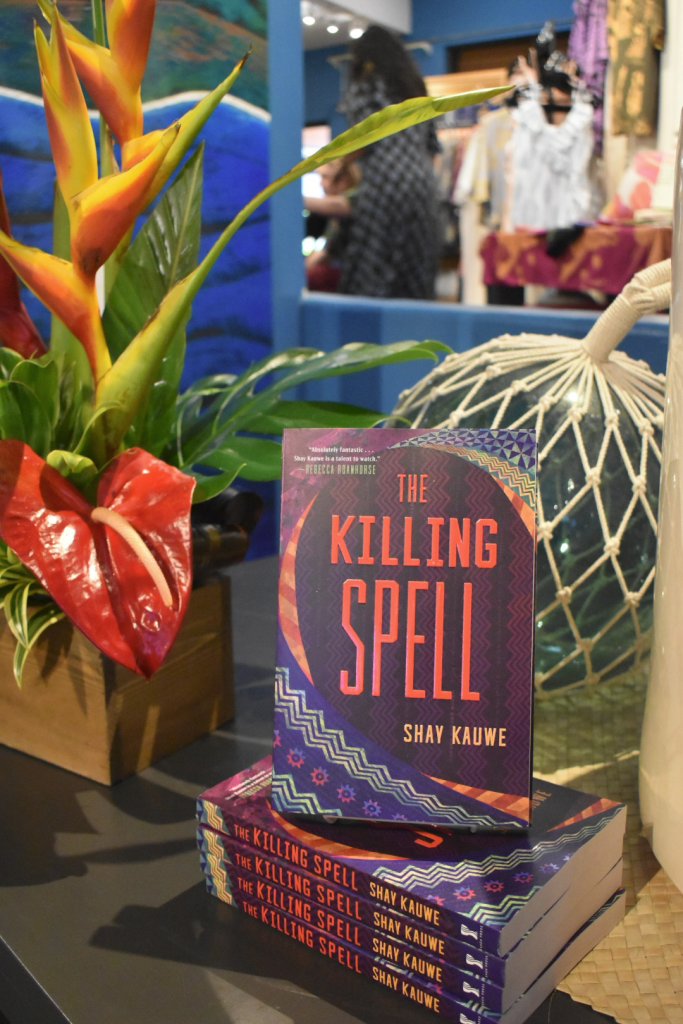
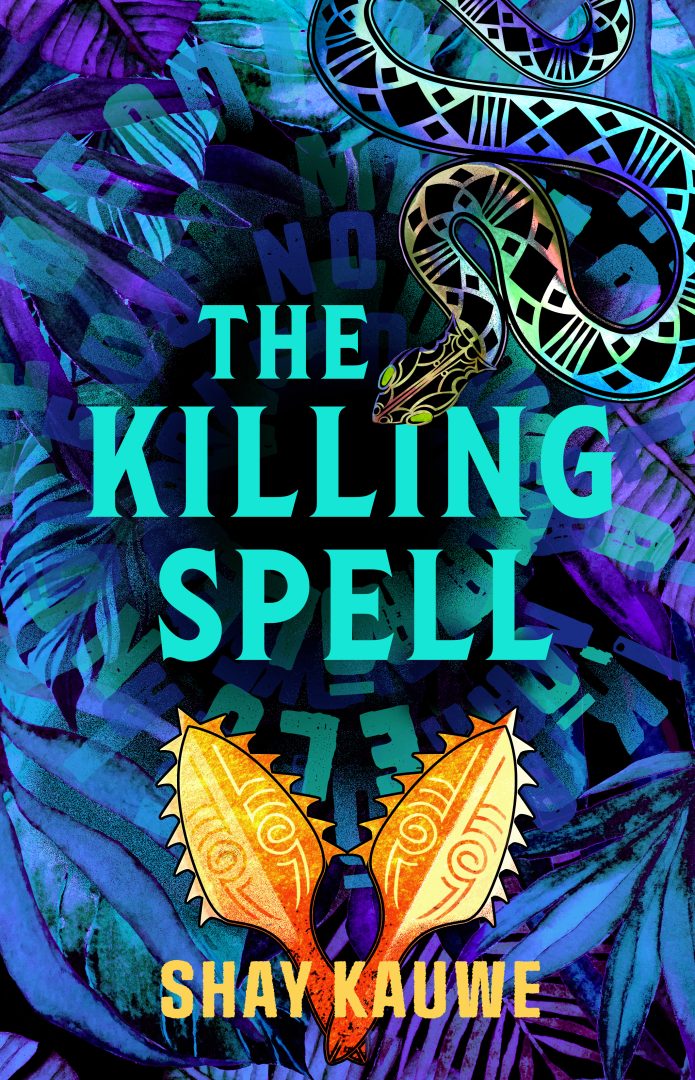
The Killing Spell, a young adult fantasy mystery set in L.A. – where the majority of Hawai‘i’s population fled to after a cataclysmic flood sank their islands – about 200 years into the future was released in the U.S. by Saga Press, an imprint of Simon & Schuster, on April 14. It is also available in Canada and the United Kingdom.
A debut book from Native Hawaiian Shay Kauwe, it follows the story of Kea Petrova – the youngest clan leader at the homestead – who ekes out a living by selling handcrafted magic spells. Her quiet life is upended by the murder by death spell of Angelo Reyes, a prominent Filipino activist, and she becomes the prime suspect. She has to act fast to find the killer and clear her name.
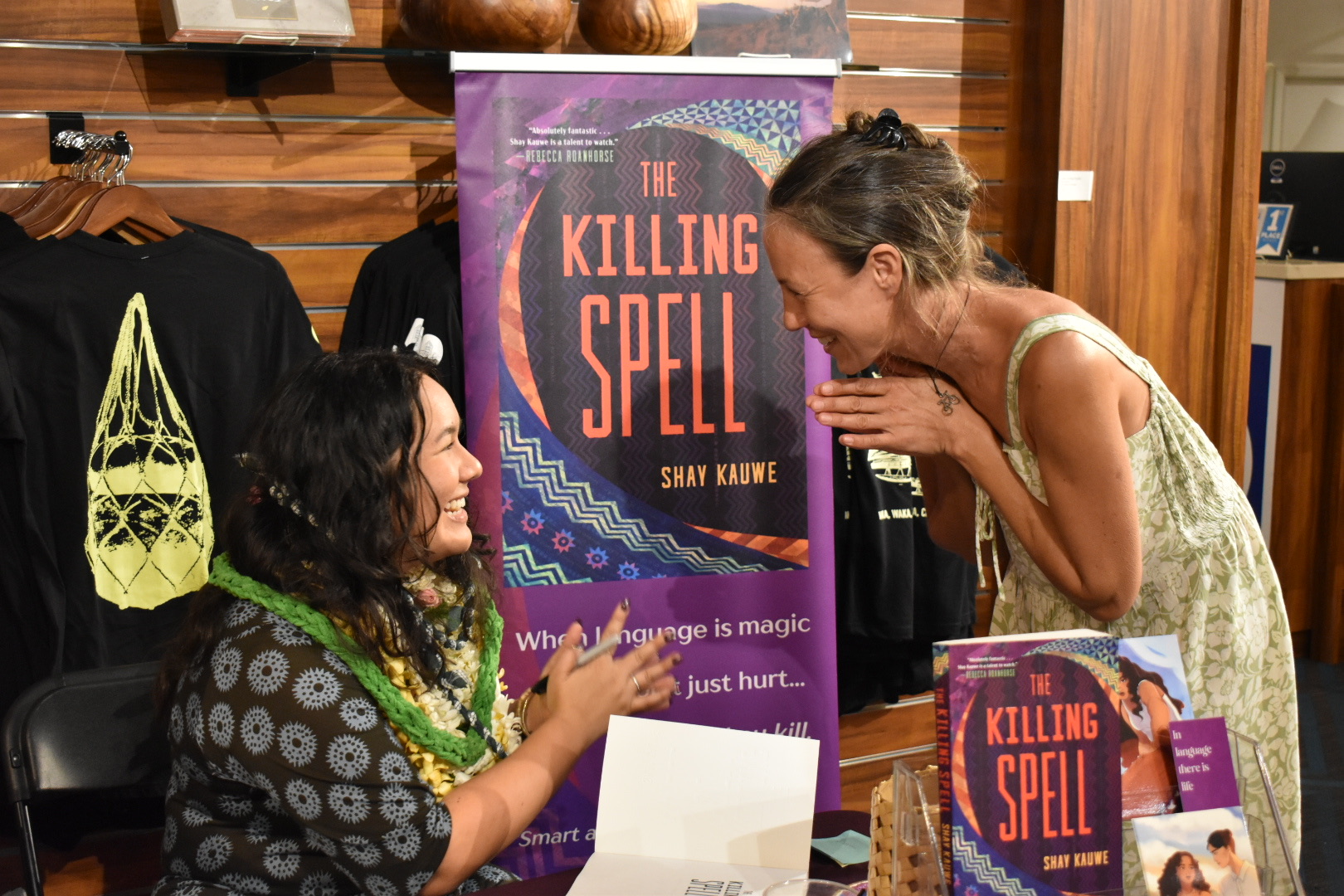
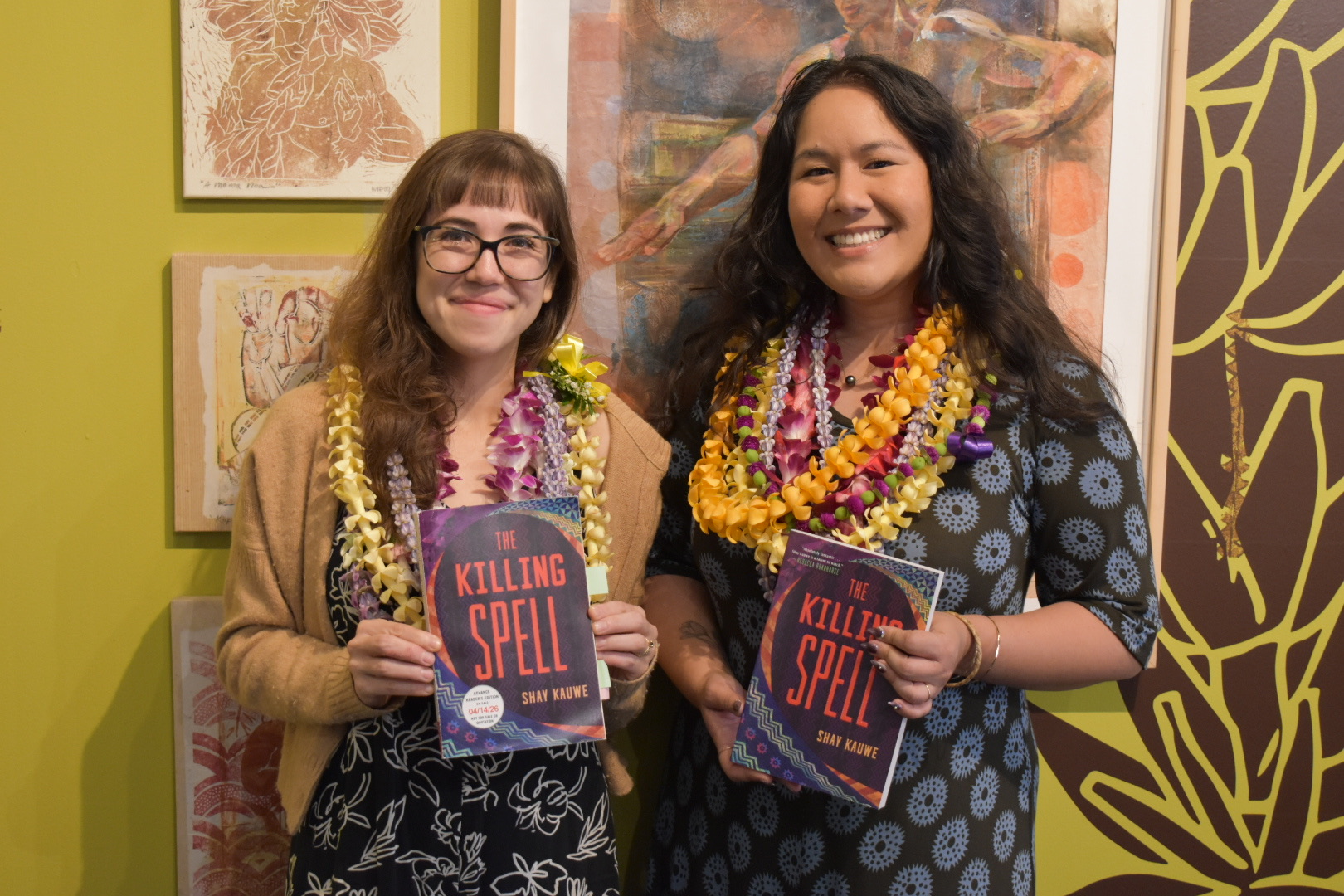
Shay Kauwe, at left, during the book launch. | Photo courtesy of Shay Kauwe / The Killing Spell
Language is at the heart of the tale. Throughout the book, Kauwe sprinkles Hawaiian phrases and one-word spells that will certainly delight logophiles. In her foreword, she explains that she included the diacritical marks to indicate how the words are pronounced to help readers. Linguaphiles will most assuredly agree with her when she says, “Languages are wonderful, beautiful, strange things that change and shift as they please.”
Kauwe’s love for language began in her childhood and she has always been partial to reading fantasy books. Some of those she enjoyed as a child – which have stood the test of time – are The Hero and the Crown by Robin McKinley and The Old Kingdom series by Garth Nix. But she never dreamed that she would one day join the ranks of fantasy authors. That happy outcome happened in a roundabout way.
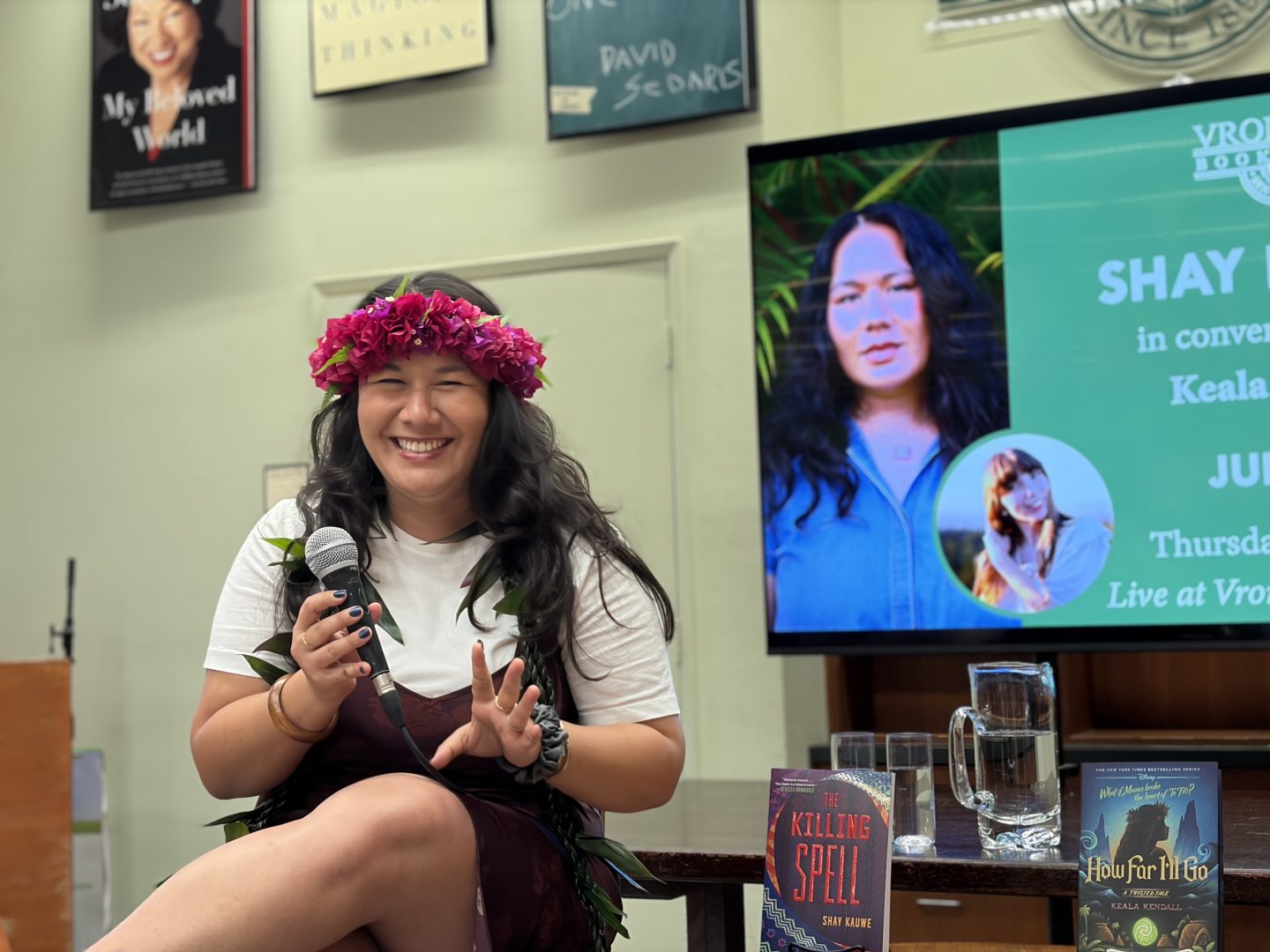
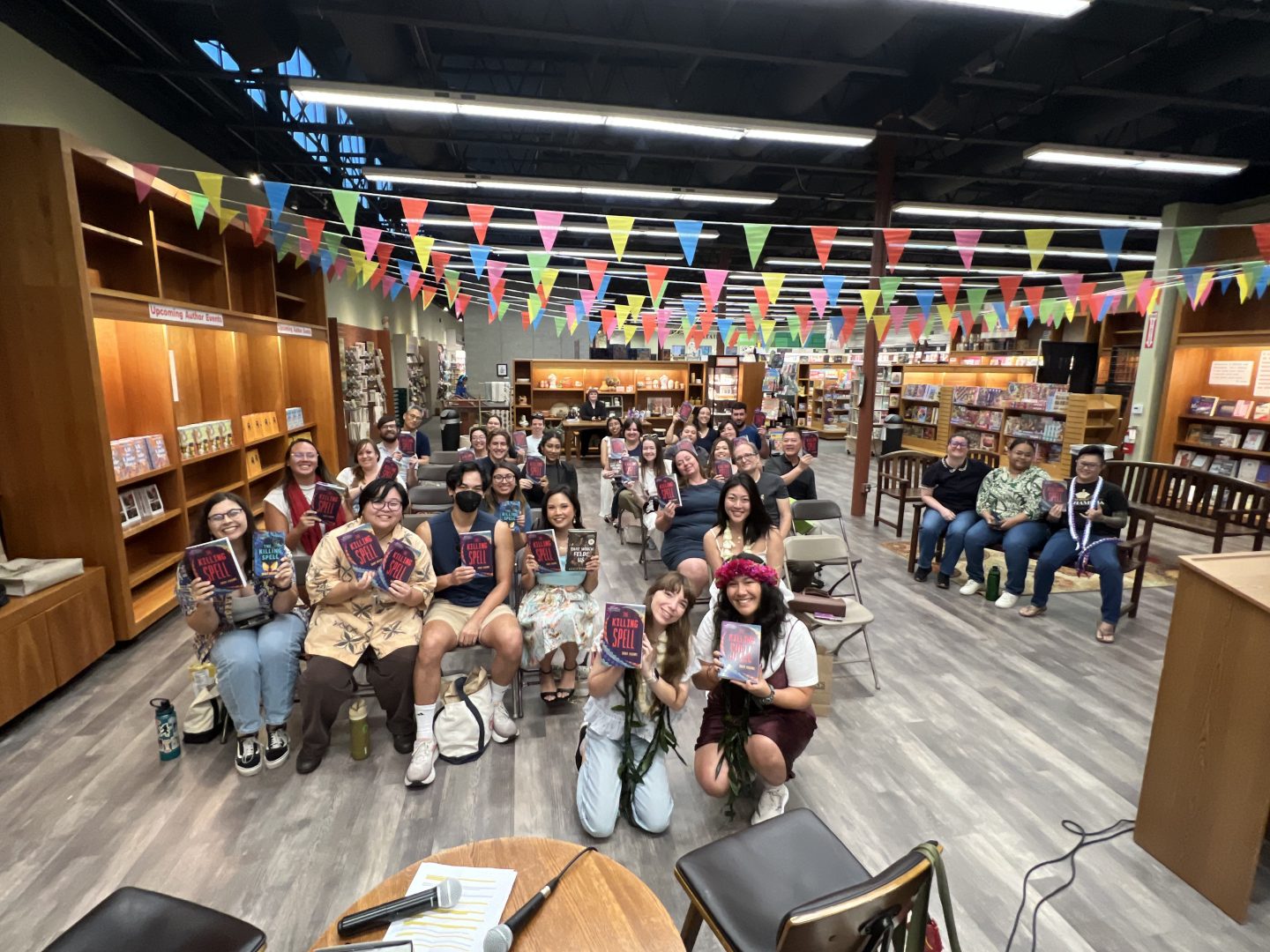
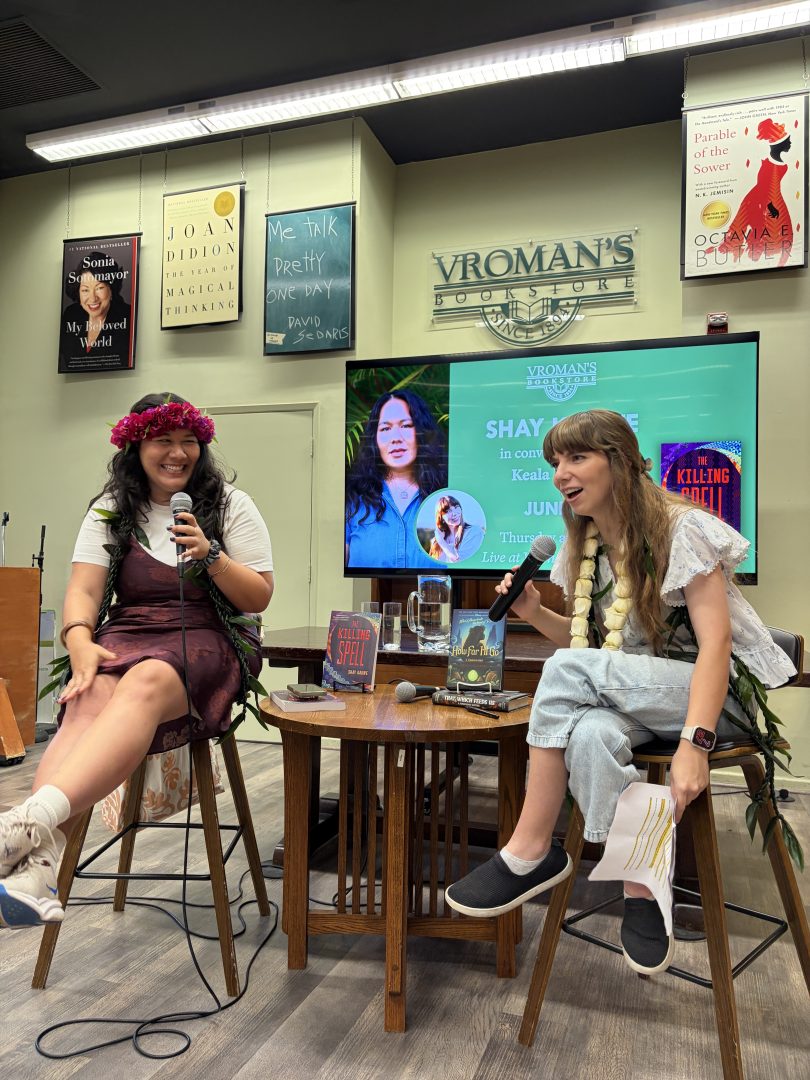
Shay Kauwe at the Vroman’s Bookstore event. | Photo courtesy of Shay Kauwe / The Killing Spell
“When I was 21, I moved to Russia – for a man. You can imagine how thrilled my parents were with that!” recounts Kauwe with irony. “But I was in love, and I knew that he was the one. (He was, too! We’ve been happily married now for ten years!) That said, I made this huge leap and began living in St. Petersburg, Russia, learning Russian by necessity without thinking too much about it.”
“There was this moment, maybe three years in, where I was sitting in our cold apartment in the middle of winter, watching Moana, and just sobbing,” Kauwe continues. “The language there, while not Hawaiian, was similar enough that I could make out words, and it struck me that here I was, half-way across the world, and I knew my partner’s mother tongue better than my own.”
“It was a lightbulb moment, and I knew then that I wanted to go home and learn Hawaiian,” adds Kauwe. “I foolishly thought it would be easy. I spoke Russian now! How hard could it be? So, I was incredibly frustrated when I couldn’t get things as quickly. Immersion was a huge part of my language learning process, and the hard truth is that as an adult, that isn’t a feasible option for many learners of Hawaiian. It is a consequence of colonization that we still have to deal with to this day. All of that frustration and shame, I took and funneled into this book, which is why it was so important for me to have a main character who struggled with relearning her indigenous tongue. “
The Killing Spell’s U.K. book cover. | Photo courtesy of Shay Kauwe / The Killing Spell
Kauwe began writing The Killing Spell when she was still teaching. She was inspired by urban fantasy books which include the Kate Daniels series by Illona Andrews and the Mercy Thompson series by Patricia Briggs. She’s no longer in education, though she still has a full-time job and she admits that balancing working and writing is not easy. However, she has a rigid routine that helps her keep on track. She takes long walks in the mornings and listens to audiobooks to learn from writers she admires. When she gets home from work in the evenings, she writes between four to five hours, and tries to write at least 1,000 words a day.
Some authors get the inspiration for their characters from people they know or have met. But those in The Killing Spell are completely fictional and products of Kauwe’s imagination.
“I don’t base characters that I write off of real people, but I do use the names of family and friends quite often!,” Kauwe clarifies. “Hawaiian names aren’t super common to see in literature, and especially not in fantasy, so I love to include the names of loved ones in my books; they get a kick out of it. Granted, I always make sure that the character with their name is nothing like them.”
Shay Kauwe (on the right) at the book launch with conversation partner Megan Kamalei Kakimoto. | Photo courtesy of Shay Kauwe / The Killing Spell
However, Kauwe confesses that the book’s protagonist bears some resemblance to her. “Like many debut authors, I’m definitely guilty of inserting pieces of myself into Kea! We’re both stubborn, eldest daughters with a big sense of responsibility for our families. And also like Kea, I struggle with learning new languages. However, in writing The Killing Spell, I found a sense of catharsis, a way to have more patience with myself in learning Hawaiian.”
Kauwe also admits to having a favorite secondary character in her book. “Basilio was incredibly fun to write as he had a huge personality! I tend to like characters that are funny, charismatic, and enjoy teasing the people around them so Basilio fit the bill in every single way. I’d love to continue to write his story if possible.”
Additionally, Kauwe knew how her story would end at the outset. “Funny enough, I needed to rewrite my book about eight times throughout this process! However, the beginning and the ending never changed. I had a clear idea of what the emotional core and character arc for Kea would be, and that remained consistent during every revision. What changed was the progression of my plot and the clues that led Kea to her conclusion. The magic system also became a lot narrower in scope as I rewrote the book, so that greater emphasis was placed on language.”
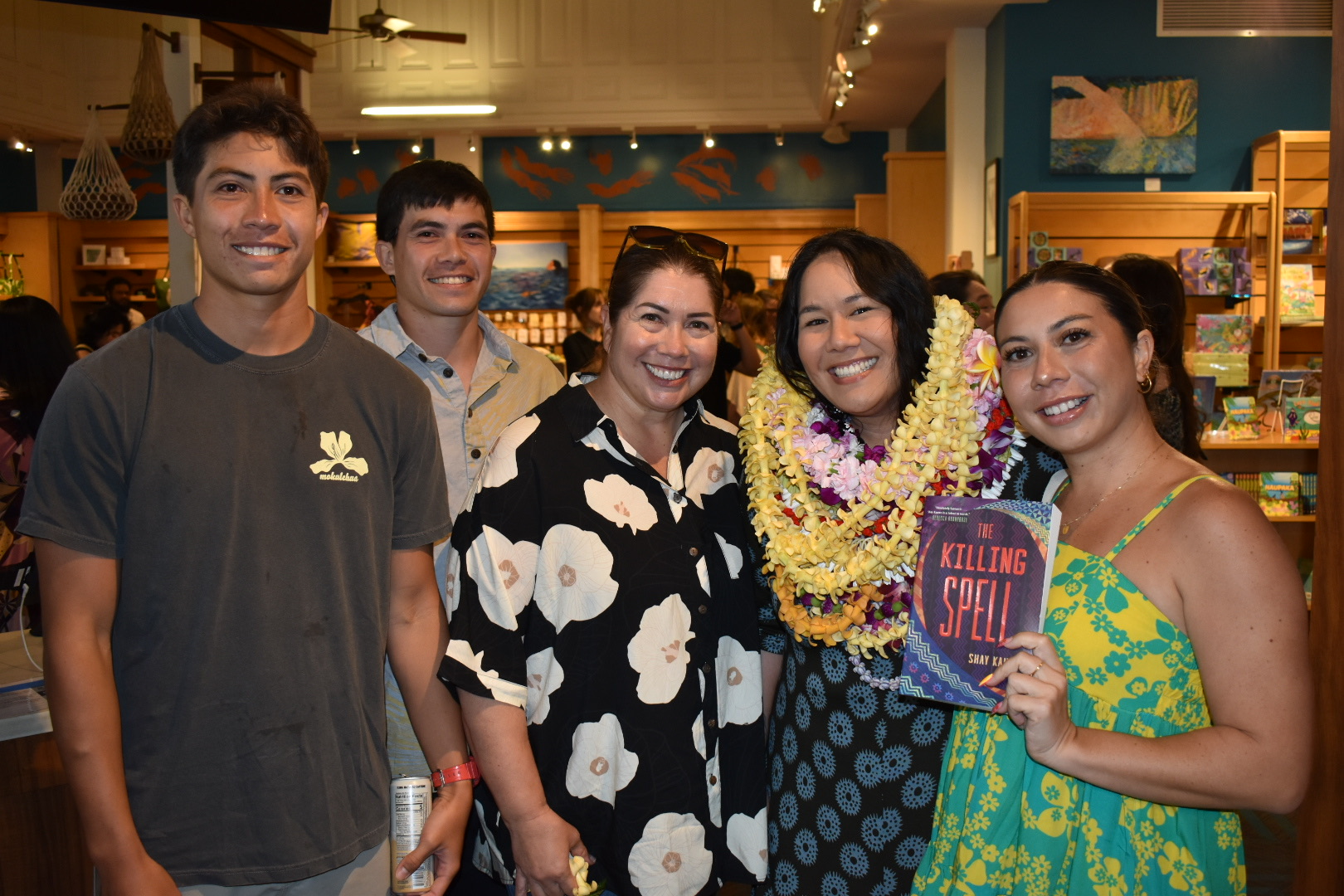
The author (second from right) with book launch event attendees. | Photo courtesy of Shay Kauwe / The Killing Spell
Instead of setting The Killing Spell in her native Hawai‘i, her book takes place in L.A. and the reason is twofold. “One, it was a nod at the reality of diaspora Hawaiians, who have in my lifetime become the majority which has been a wild shift to witness,” explains Kauwe. “Secondly, Hawaiʻi can often feel really isolated from the larger politics of the U.S. This book is a conversation about indigenous rights to land, water, language, and culture, and I wanted those conflicts rubbing right up against the policies of the U.S. rather than separated by an ocean.”
Promoting a book could be exhausting, but it most often proves to be a gratifying endeavor for authors. The Killing Spell’s publicity tour, which was split into two sections, was certainly more of the latter. It commenced with a book launch at the Bishop Museum’s book shop – Shop Pacifica run by the Hawaiian Council – in Honolulu. Kauwe’s conversation partner at the event was Megan Kamalei Kakimoto, the USA Today bestselling Hawaiian author of Every Drop a Man’s Nightmare and a 2026 National Book Foundation 5 Under 35 Honoree. She then embarked on a tour through the Hawaiian islands: Kahului, Maui; Līhuʻe, Kauaʻi; and Hilo, on the Big Island.
The Killing Spell’s book singing event at Vroman’s Bookstore in Pasadena. | Photo courtesy of Shay Kauwe / The Killing Spell
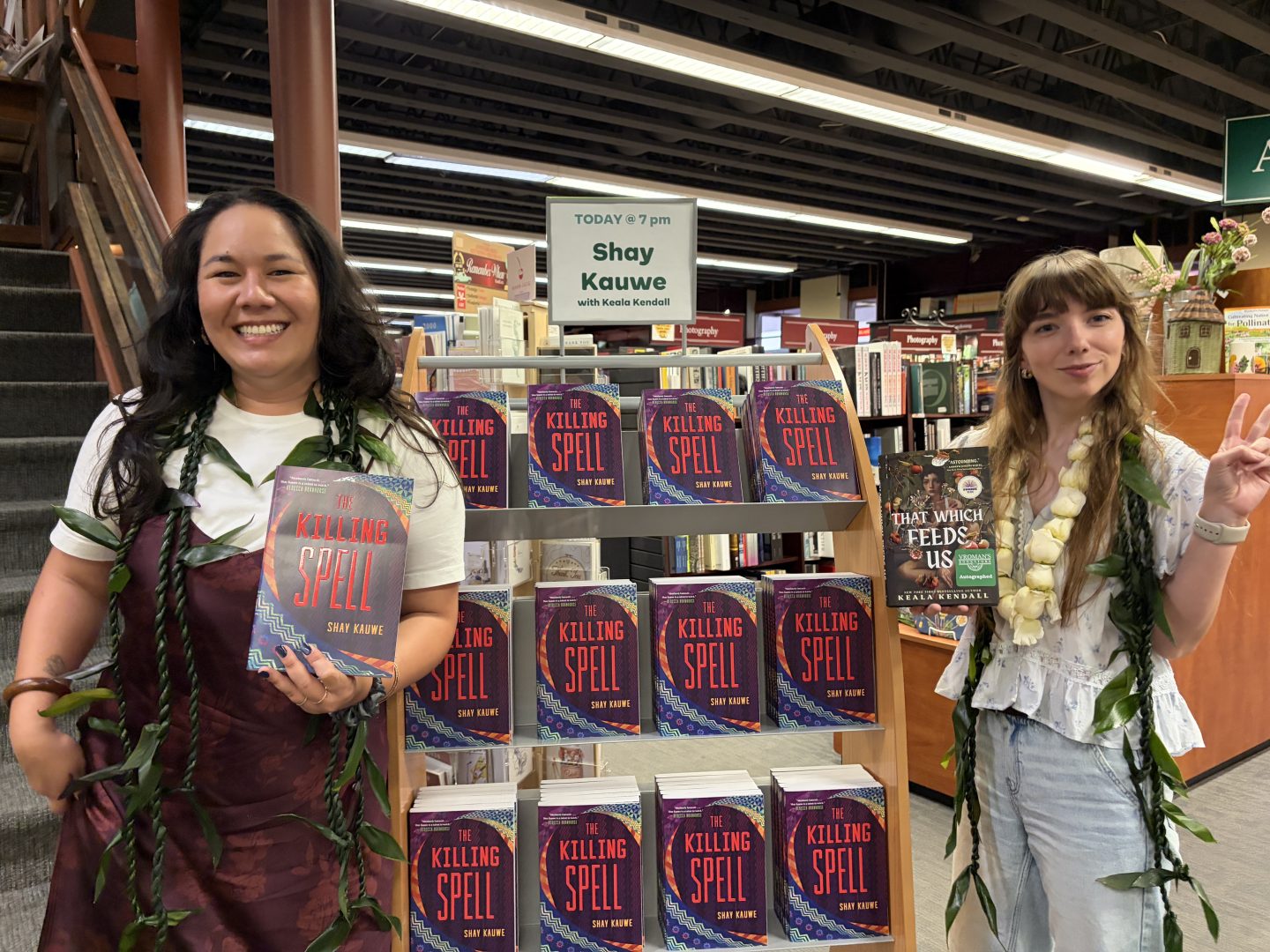
The second leg of the tour took Kauwe through prominent West Coast cities. The first stop was Los Angeles, California, and a book signing was held at Vroman’s Bookstore in Pasadena. Her conversation partner was NYT Bestselling Hawaiian author Keala Kendall of How Far I’ll Go: A Twisted Tale, and of the YA horror, That Which Feeds Us. From here she went to Seattle, Washington; and Portland, Oregon.
“My audience has been a lot of diaspora Hawaiians and Pacific Islanders, which is amazing since that’s exactly my target demographic,” Kauwe marvels. “It’s hard to pick which city has been the most enthusiastic audience because each stop has exceeded my wildest expectations in terms of turnout! I don’t know that many people personally from each city, so it’s been so cool to meet so many folks excited to read The Killing Spell. My most memorable event, though, has got to be heading out to Los Angeles! L.A. is the city that The Killing Spell takes place in, so there’s something super special about getting to do an event here.”
The author at the Vroman’s Bookstore event with conversation partner Keala Kendall. | Photo courtesy of Shea Kauwe / The Killing Spell
An important part of the book tour is the Q & A session, which was a revealing experience. “The most unexpected question that I got during book signings was what magical properties Hawaiian Pidgin would have as language!” discloses Kauwe. “And the truth is that I never really settled on a great answer to that. I’d love to know what features speakers of Pidgin think it should have.”
Kauwe was asked several interesting questions but one particular query was never brought up. “I wish people would ask more questions about Kea’s love interest, Sora,” she discloses. “I love my little red-eyed, grouchy man and think he’s such a fun character to have in the story.”
Asked if seeing the story end after ‘living’ with these characters for five years was a happy or bittersweet moment for her, Kauwe replies. “It’s definitely bittersweet to have this story end! I’d love to continue Kea’s story and dive deeper in the world of The Killing Spell and explore different languages like Russian and Japanese in more depth, as well as Sora’s family.”
The Killing Spell book display at Vroman’s Bookstore. | Photo courtesy of Shay Kauwe / The Killing Spell
As to The Killing Spell’s message or reader takeaway, Kauwe says, “It’s so important to learn our mother tongues, but we have to be kind to ourselves in the process. No one is perfect from the get-go, and quitting is the only way to truly fail at it.”
Readers who really liked The Killing Spell will be glad to know that Kauwe has something in store for them. “I have a book coming out next year which is totally separate from The Killing Spell. House of Salt will be my first foray into the horror genre. It’s a modern gothic set in Hawai’i, about a young Hawaiian woman who scams tourists out of their money by pretending to be a kahuna and ‘cleansing’ them of evil, but when she’s invited to the estate of a wealthy hotel heiress she discovers that the ghost lurking there may actually be real – and the only thing that might save them all is a real kahuna. I’m really excited for this book and can’t wait to have it out in the world!”
If The Killing Spell is any indication, Kauwe’s next book promises to be another page-turner. It’s hard to imagine now that this is the same practical kid who never thought writing and publishing a book would be something she’d accomplish in her lifetime.
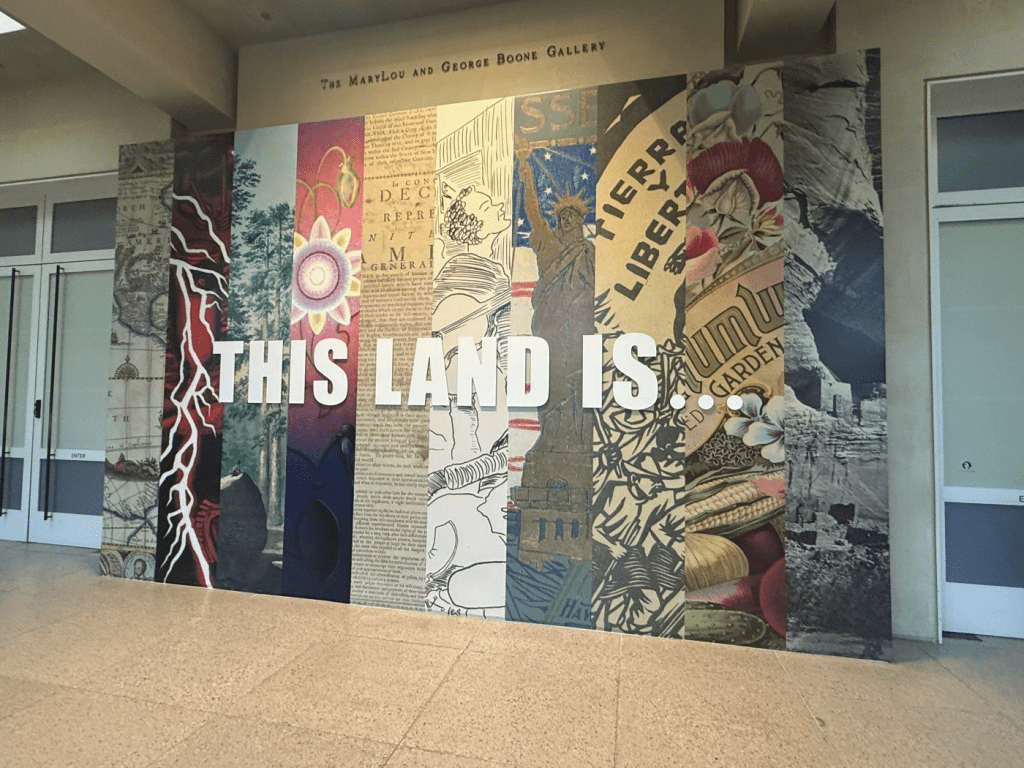
The “THIS LAND IS…” installation at the MaryLou and George Boone Gallery. | Photo by May S. Ruiz / Hey SoCal
A sweeping exhibition commemorating the 250th anniversary of the U.S. Declaration of Independence is now open at The Huntington. Called “THIS LAND IS …. Reflections for America at 250,” the show is on view from June 14 through Jan. 11, 2027 at the MaryLou and George Boone Gallery.
Co-curated by Josh Garrett-Davis (H. Russell Smith Foundation Curator of Western American History), Linde Lehtinen (Philip D. Nathanson Senior Curator of Photography), and Armando Pulido (assistant curator for special projects), the retrospective’s title was inspired by Woody Guthrie’s song “This Land is Your Land.”
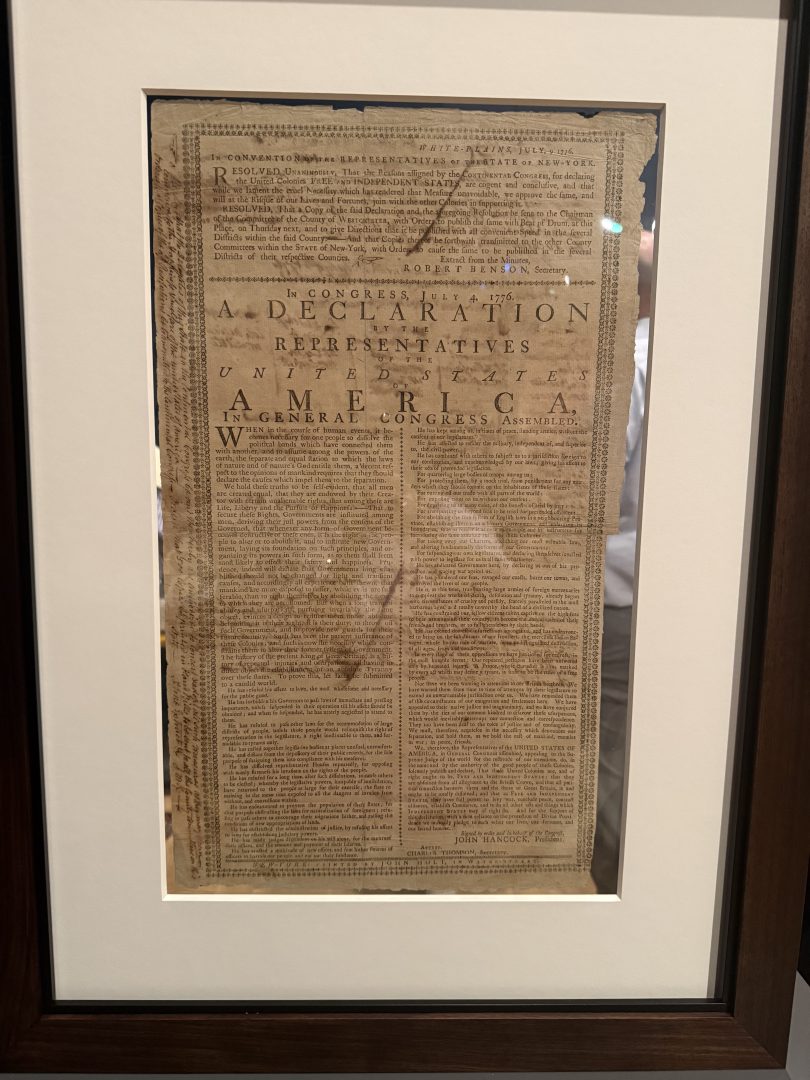
A copy of the Declaration of Independence. | Photo by May S. Ruiz / Hey SoCal
The exhibition comprises six thematic sections that link ecological concepts to cultural and historical meanings: Roots; Uprootings; Amendments; Edge Effects; Disturbances; and Regeneration. Among numerous displays, it showcases two annotated July 1776 copies of the Declaration of Independence, an inscribed Woody Guthrie guitar, historic documents including early Native American treaties and a Congressional resolution to pass the 13th Amendment, a manuscript by poet Walt Whitman, and contemporary photography by artist Cara Romero.
During the opening celebration and reception held on June 11 for the Society of Fellows, Avery Director of the Library Sandra Brooke Gordon remarked, “It should be no surprise that The Huntington would take to heart this essential American anniversary in 2026 just as it did a century ago. In March of 1927, only two months before Henry Huntington’s untimely death, because of the interest aroused for the 150th anniversary of the Declaration of Independence in 1926, the Library utilized the brand-new exhibition cases in its Main Hall to mount an exhibition of books and manuscripts relating to the history of the United States – from the discovery of America to the adoption of the Constitution.
Avery Director of Library Sandra Brooke Gordon. | Photo by May S. Ruiz / Hey SoCal
“The Library’s ‘America at 150’ show proved so popular that over 5,000 visitors were admitted to see it between March and December of 1927. A century later, the magnificent show that we’re celebrating tonight anchors a larger cross-Huntington ‘This Land Is …’ initiative that invites visitors to reflect on the American story from before 1776 to the present through the lens of the land.”
According to Gordon, the ‘This Land Is …’ initiative includes art museum installations, a new Oak Meadow Garden, and programs and events for a wide-range of audiences – including an all-day community festival which will be held Sunday, June 28. A companion volume ‘This Land Is … Field Notes on American Ground,’ edited by Josh Garrett-Davis and Linde Lehtinen, features essays from Huntington contributors and multiple other writers, scholars, and artists, reflecting on the theme of the land and our relationship to it.
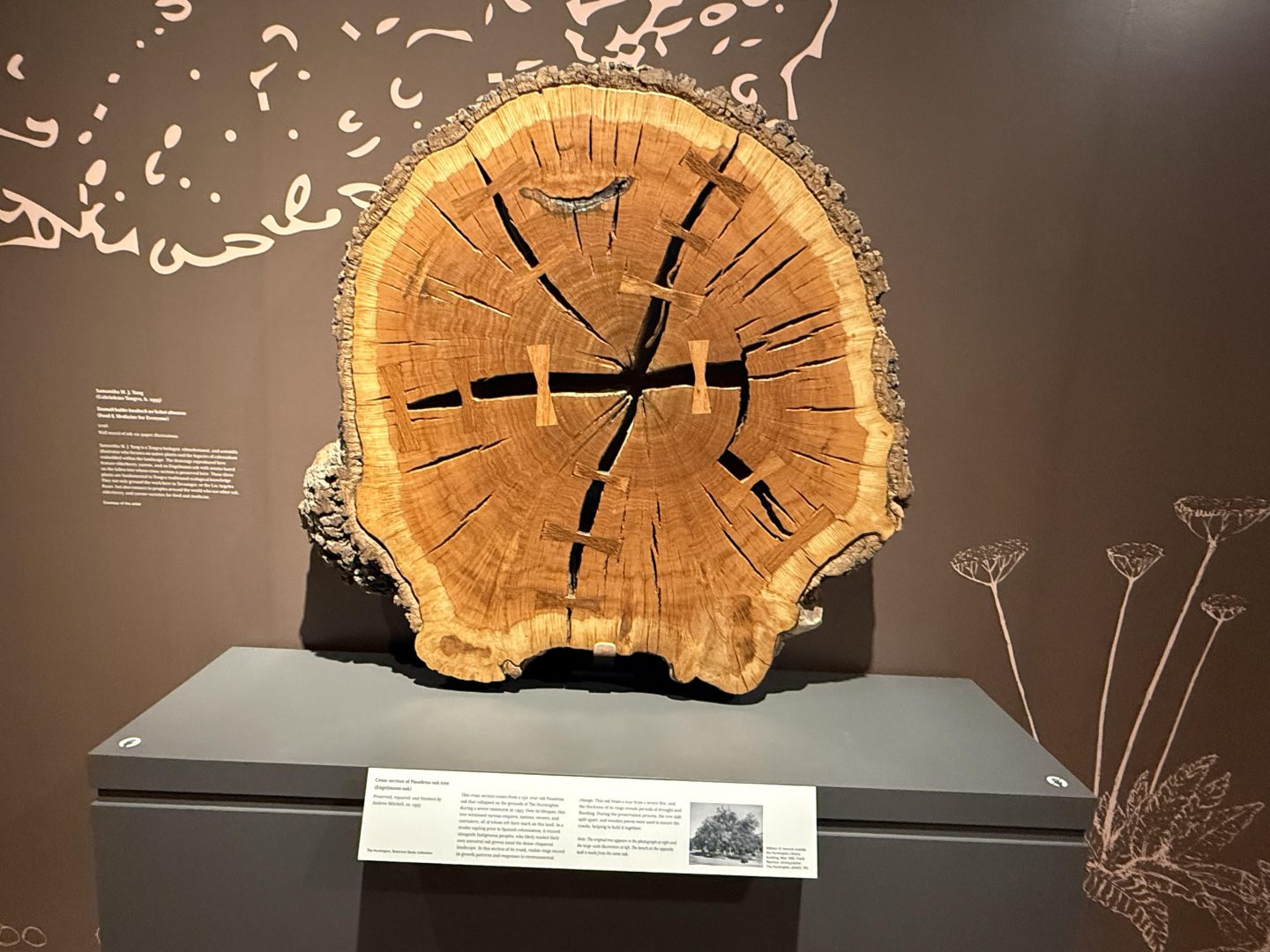
A cross-section of Pasadena oak tree. | Photo by May S. Ruiz / Hey SoCal
In addition to the Boone Gallery show, the “This Land Is …” initiative, the Art Museum (under the guidance of Hannah and Russell Kully Director Christina Nielsen) mounted a major reinstallation of its American galleries creating seven new areas dedicated to art of the Colonial Period through the Civil War and Reconstruction eras. These reimagined spaces examine issues of land, history, and identity within a global context. Recent acquisitions of works by Winslow Homer, Grafton Tyler Brown, Edward Mitchell Bannister, Argostino Brunias, Jean-Baptiste Carpeaux, and Nari Ward, along with historic documents such as a signed copy of the Emancipation Proclamation enhance the collection.
Also on view in the ‘Borderlands’ exhibition at the Virginia Steele Scott Galleries, are three new installations devoted to historic silhouettes by L.A. Laura Aguilar (1959-2018), Sandy Rodriguez (b.1975), and Mercedes Dorame (B. 1980).
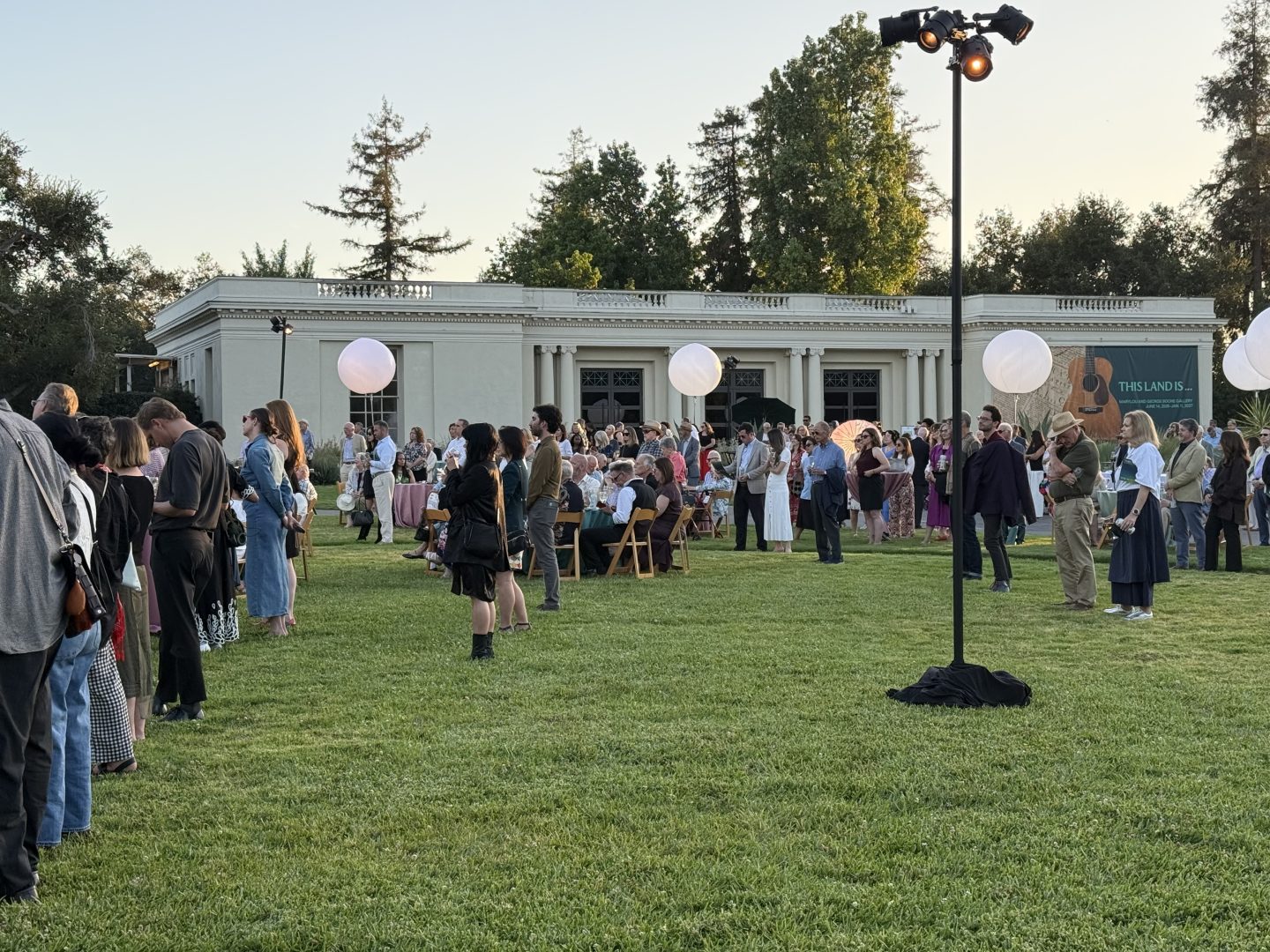
Continued Gordon, “The Botanical Gardens, under the leadership of Telleen/Jorgensen Director Nicole Cavender, have created an Oak Meadow as their contribution to ‘This Land Is …’ It is a renovated garden space that helps connect the galleries at the heart of the campus with the outdoors while orienting us to the foothills of the San Gabriel Mountains and connecting us to the people who came before us.”
Guests at the Oak Meadow with the Virginia Steele Scott Galleries of American Art in the background. | Photo by May S. Ruiz / Hey SoCal
“More than 5,000 plants representing over 55 species – most of them native to California – have been planted here along with 22 trees, including 16 oak species. Oaks, of course, are America’s national tree and they anchor this cherished space at The Huntington visually, culturally, and environmentally,” added Gordon as she invited guests to look at the mountainscape behind us. “I think it is one of the most beautiful views in America.”
“‘This Land Is …’ the Boone Gallery exhibition is the Library’s prime offering for America at 250,” said Gordon. “The library is one of the nation’s chief repositories for historical Americana and is justifiably famous for its holdings of Washington, Jefferson, and others of the nation’s founders. As stewards of these collections – unparalleled West of the Mississippi – we’ve known for several years that it would be both our privilege and responsibility to share them with L.A. audiences and beyond in the year of America’s 250th birthday.
“The show has been three years in the making … and it comes at a time when America’s civic square can feel more fraught than fruitful – where the ideals of life, liberty, and the pursuit of happiness have never seemed more important that the pathways to achieving their promise as a nation isn’t always clear. The galleries of ‘This Land Is …‘ offer conversations across time and place among peoples grand and common, powerful and not. For all of them, as for all of us, land was and is a singular force central to questions of survival, identity, and belonging.
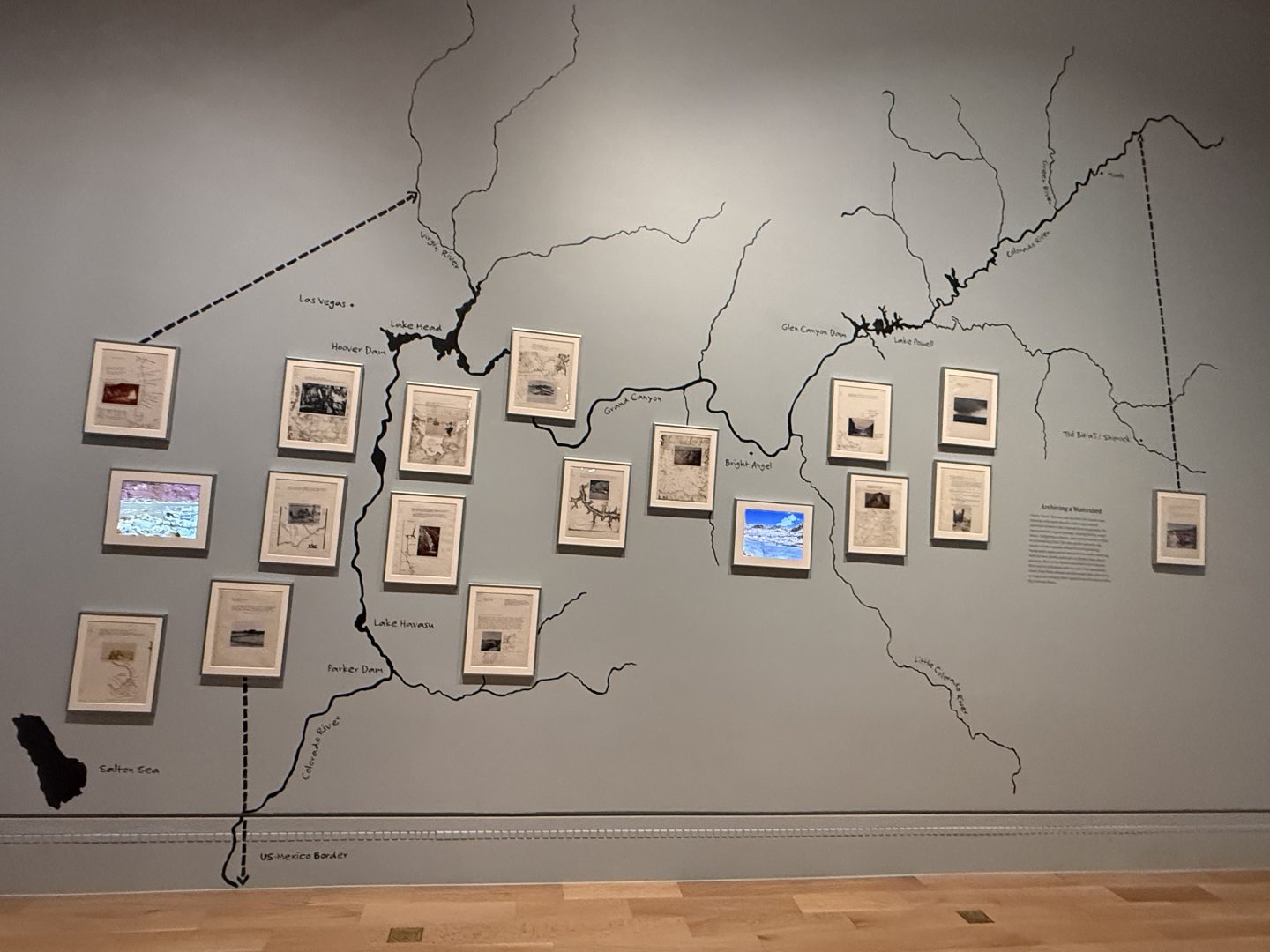
A collection of artifacts about the Colorado River from the archives of Otis Marston. | Photo by May S. Ruiz / Hey SoCal
“At a time when listening can seem in short supply, please spend some quality time in this exhibition, listen, and converse with the many people you’ll meet there – from Thomas Jefferson and Woody Guthrie, to the Kuromi family, Langston Hughes, Otis Marston, and Noni Olabisi. I can promise it will repay the investment of your time. And these conversations, I hope, will help us all think differently and more deeply about the meaning and the promise of this national anniversary,” Gordon exhorted.
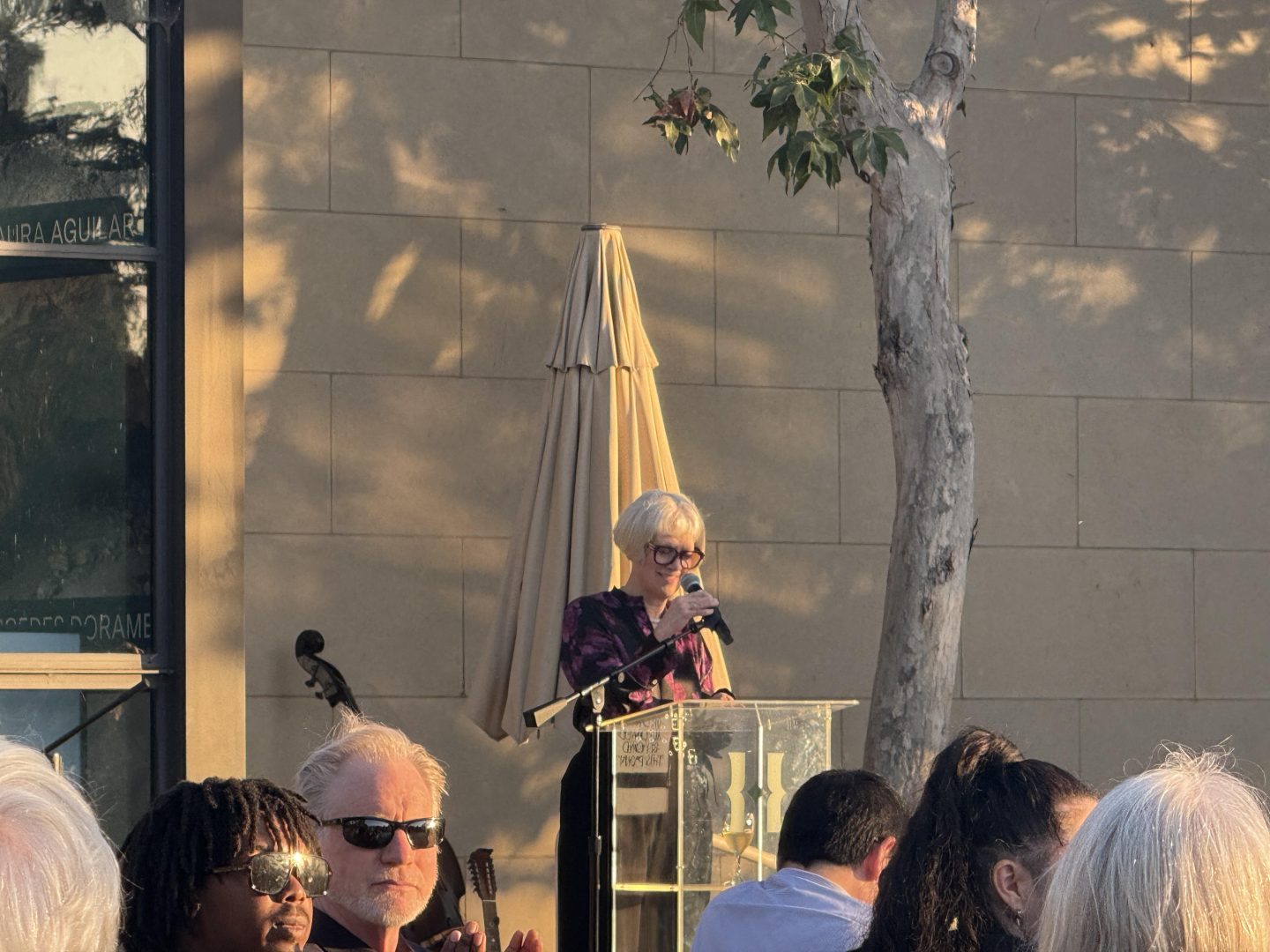
Because the exhibition is about land, Gordon acknowledged that The Huntington sits on the ancestral lands of the Gabrielino Tongva and Kizh nation peoples who continue to call this region home. She then presented the evening’s next speaker.
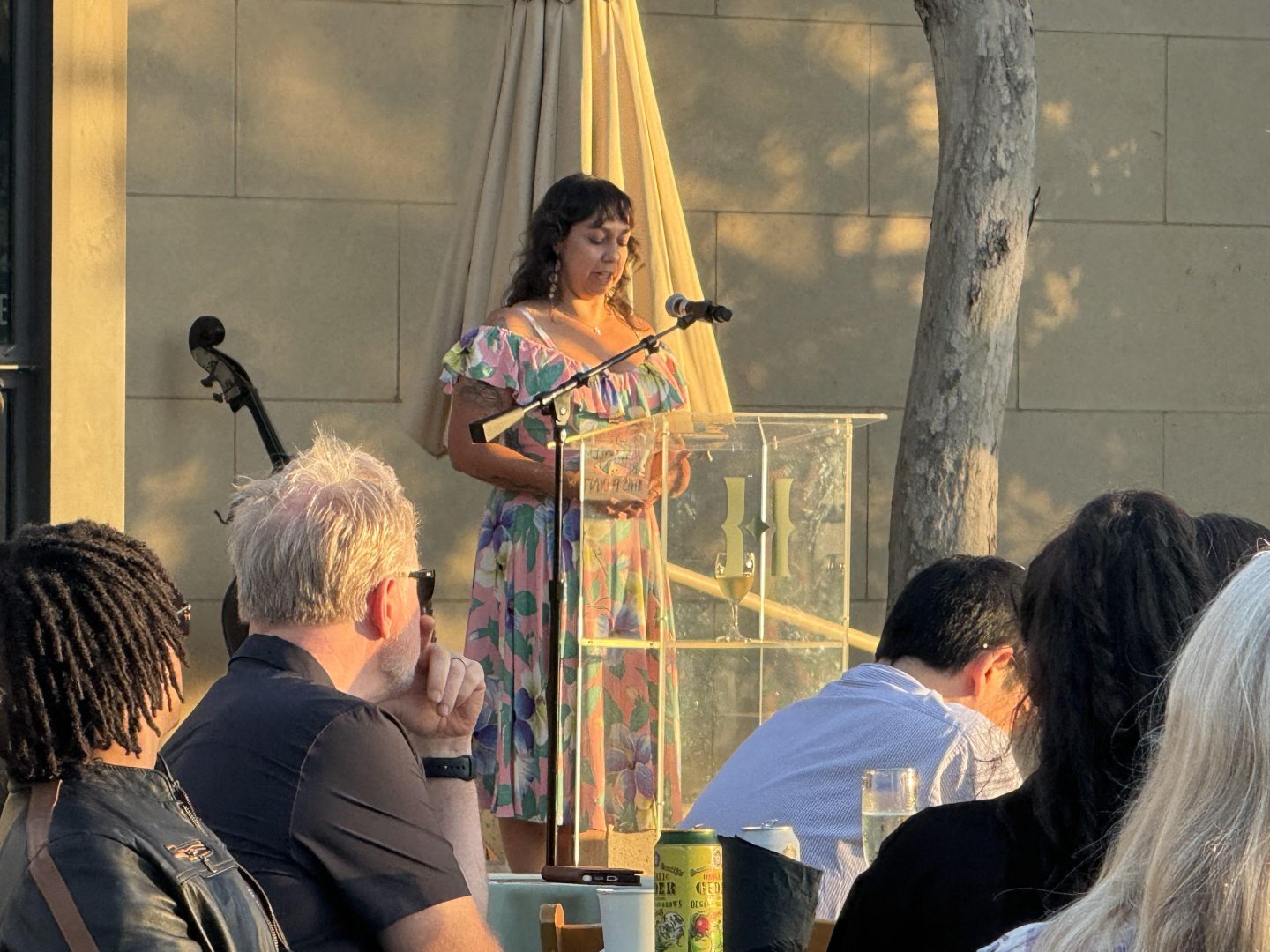
“We are privileged to have L.A.-based Tongva artist Mercedes Dorame here this evening to speak to this essential topic. Mercedes has been engaged with The Huntington for the past five years on a range of projects that integrate archival research and deep knowledge of the surrounding landscape. This has culminated in her installation ‘Deliquescence: Sites of Transformation’ that you can see in the American Art Gallery.”
Mercedes Dorame. | Photo by May S. Ruiz / Hey SoCal
Dorame introduced herself by her Tongva name and the village where her ancestors hailed, then said, “In thinking about ideas of land and the exhibitions connected to the ‘This Land Is…’ and the 250th birthday of the United States, I moved into ideas of the land intersecting ancient time, deep time, and time immemorial. When for thousands of years my Tongva ancestors cared for this land, it is an honor and a pleasure to be standing here today in acknowledgement of this presence. The land nourishes us, it reciprocates, and is full of care. I always ask myself how we can mend, relearn, connect, and know the land better to build a more reciprocal relationship. I believe this question holds space for immense potential and inspiration for all of us.
“For me connecting care to the land is not about looking to the past but at the vital active present necessary exercise. It’s not metaphorical, it means feeling the bark of the oak tree, or smelling all the different amazing scents of the rose garden, or looking at the sage and thyme that bloom seasonally. As an artist and a Tongva culture-bearer, I hope to shape an experience that allows us to move to an environment with our hearts more open, more connected, and more full of love.”
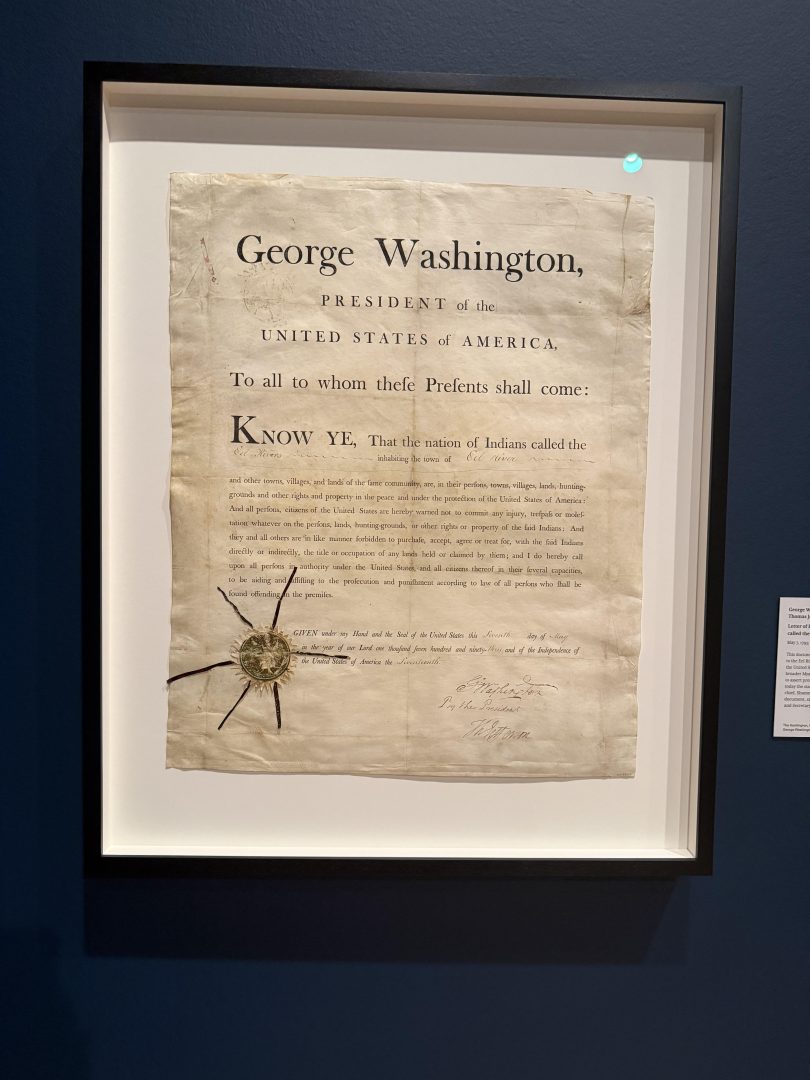
George Washington (1732-1799)
Thomas Jefferson (1743-1826)
Letter of Protection to the Nation of Indians called Eel Rivers. | Photo by May S. Ruiz / Hey SoCal
Dorame sang a song which came from ancestral recordings that contain messages. She said it was her way of embodying hikaye – breath, spirit, and wind in the Tongva language. It translates to “My heart is with you, the sun is rising; my heart is with you, do not be afraid.”
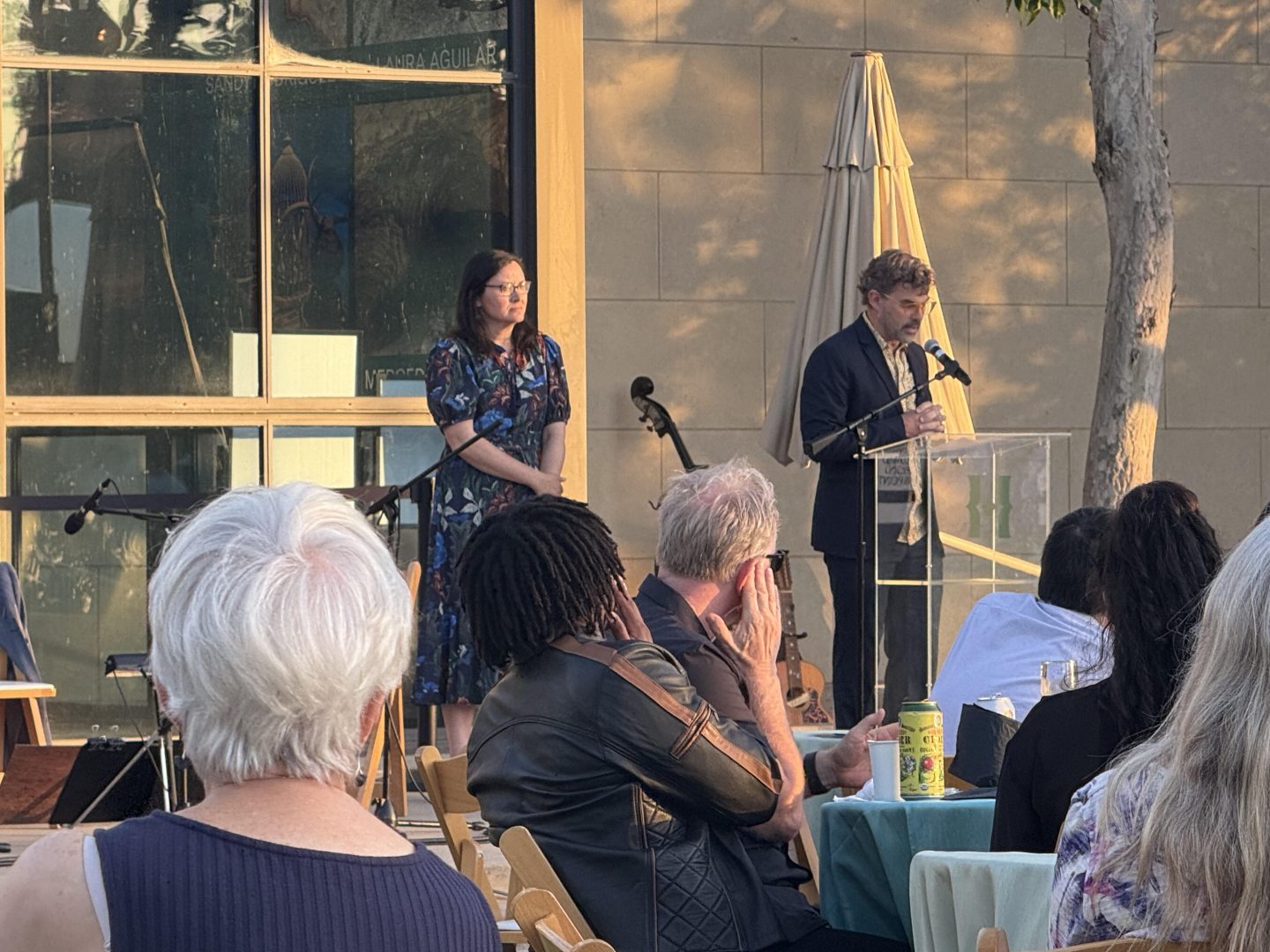
Co-curators Josh Garrett-Davis and Linde Lehtinen took the stage to acknowledge the countless people who were part of this massive undertaking. He thanked Dorame for her artwork and contributions to the book and two other Tongva representatives who worked with them to learn about indigenous presence in this land – artist and illustrator Samantha MJ Yang, who created the design of the Pasadena oak tree on the title walls at the entrance to the exhibition, and Wallace Cleaves who lent a recording of the acorn song by his Tongva great-great-grandmother Narcisa Higuera – which could be heard in the living room area of the Boone Gallery.
“’This Land Is …’, among other things, calls our attention to the endless ways we all use land metaphors when we talk about history, art, and national experience,” declared Garrett-Davis. “Through conversations with our colleagues in the botanical division, especially, we settled on structuring this exhibition around six sections that link ecological and cultural themes…. (And) the process of curating the exhibition has brought us through many other land analogies. We tracked through fields of collections, we dug deep into boxes and shelves, and sometimes fell down rabbit holes into particular stories or archival objects.”
Co-curators Linde Lehtinen and Josh Garrett-Davis. | Photo by May S. Ruiz / Hey SoCal
Lehtinen continued with further acknowledgments and reflections using more land metaphors. “In our own backyard we want to thank all the incredible teams and colleagues at The Huntington who planted seeds, tended the sprouts of the exhibition, pruned out bad ideas, allowed us to cultivate the exhibition, and now hopefully watch it flourish. The project builds on the vision and the foundations established by our senior leadership, the advancement department, the president’s office, and other key stakeholders who made this possible.
“There may be many things around this particular anniversary, and indeed within this current national moment, that are seemingly thrown together and not really thought-out. That is not the case with this project. There is so much attention, precision, and passion woven into the many elements of ‘This Land Is …’ that nurtures and sustains us and shows what community and nation can be a their best.”
Gordon then came back one last time on the stage for a toast and said, “I would like to paraphrase Abraham Lincoln ‘Though passions may have strained, they must not break our bonds of affection. May the mystic cords of memory stretching over this broad land – and over this exhibition – inspire the better angels of our nature. To all of you and to this land!”
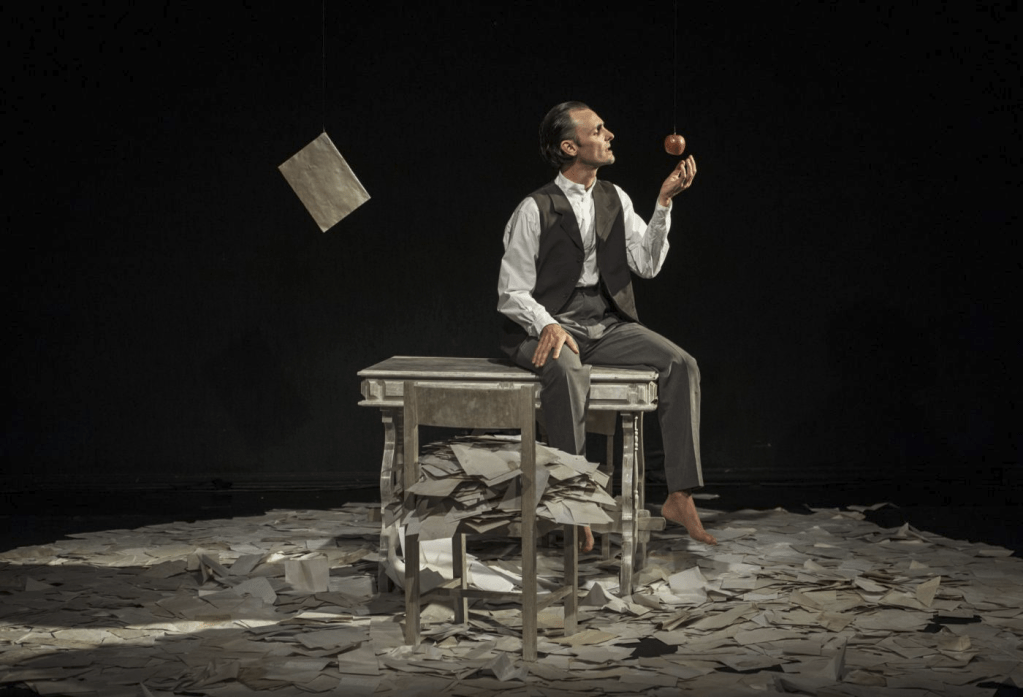
Ivo Müller. | Photo courtesy of Ivo Müller / One Million Words – Rilke
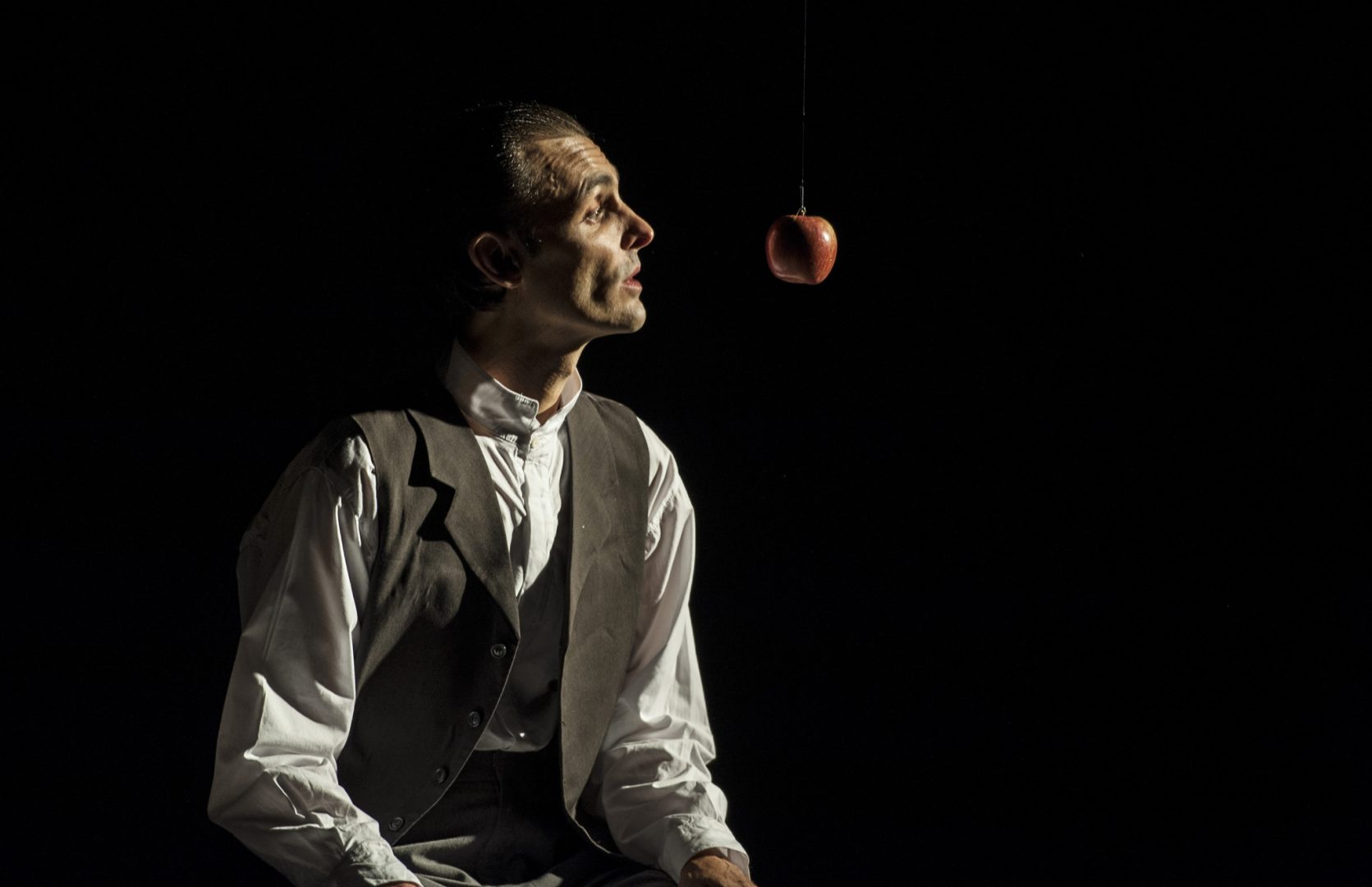
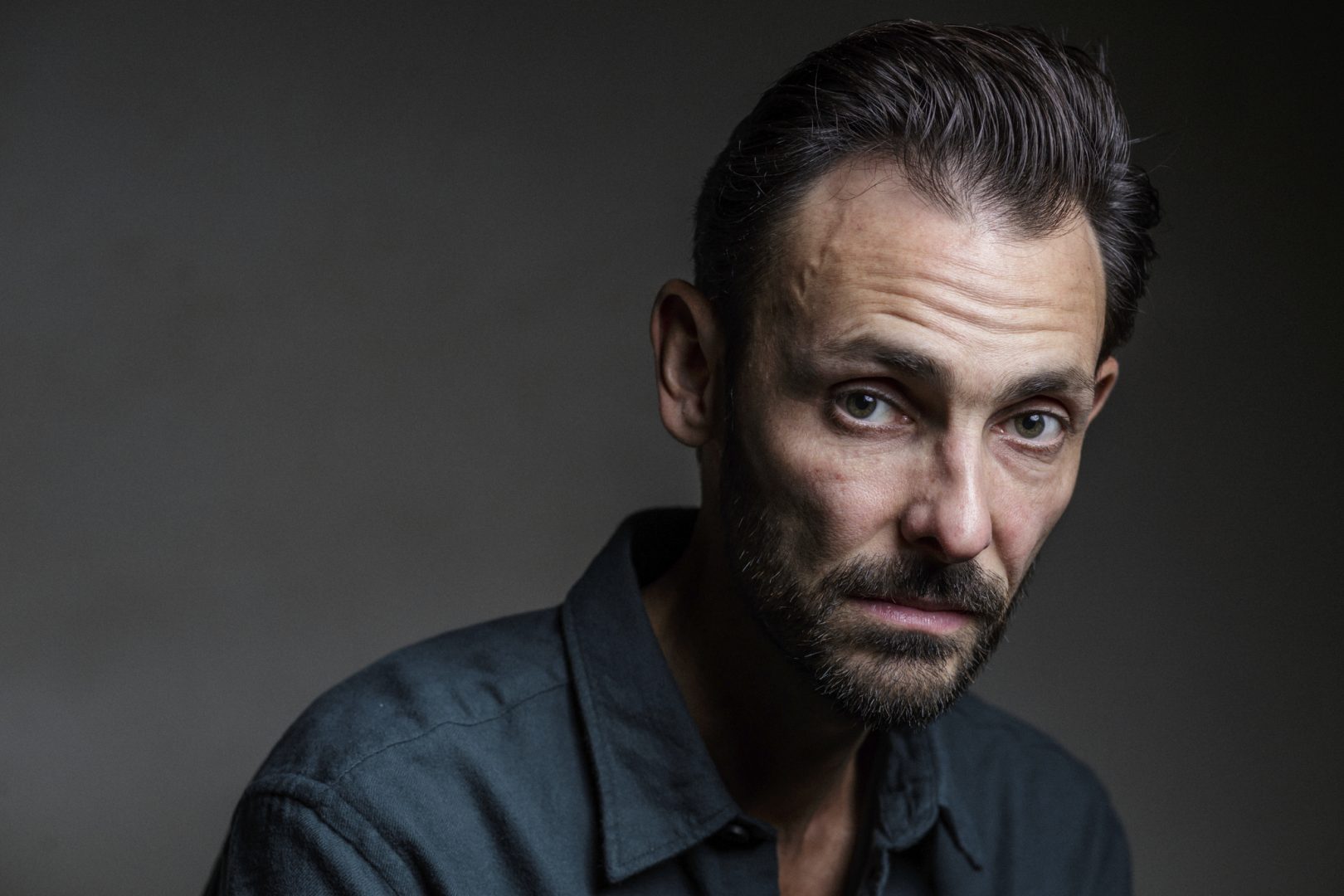
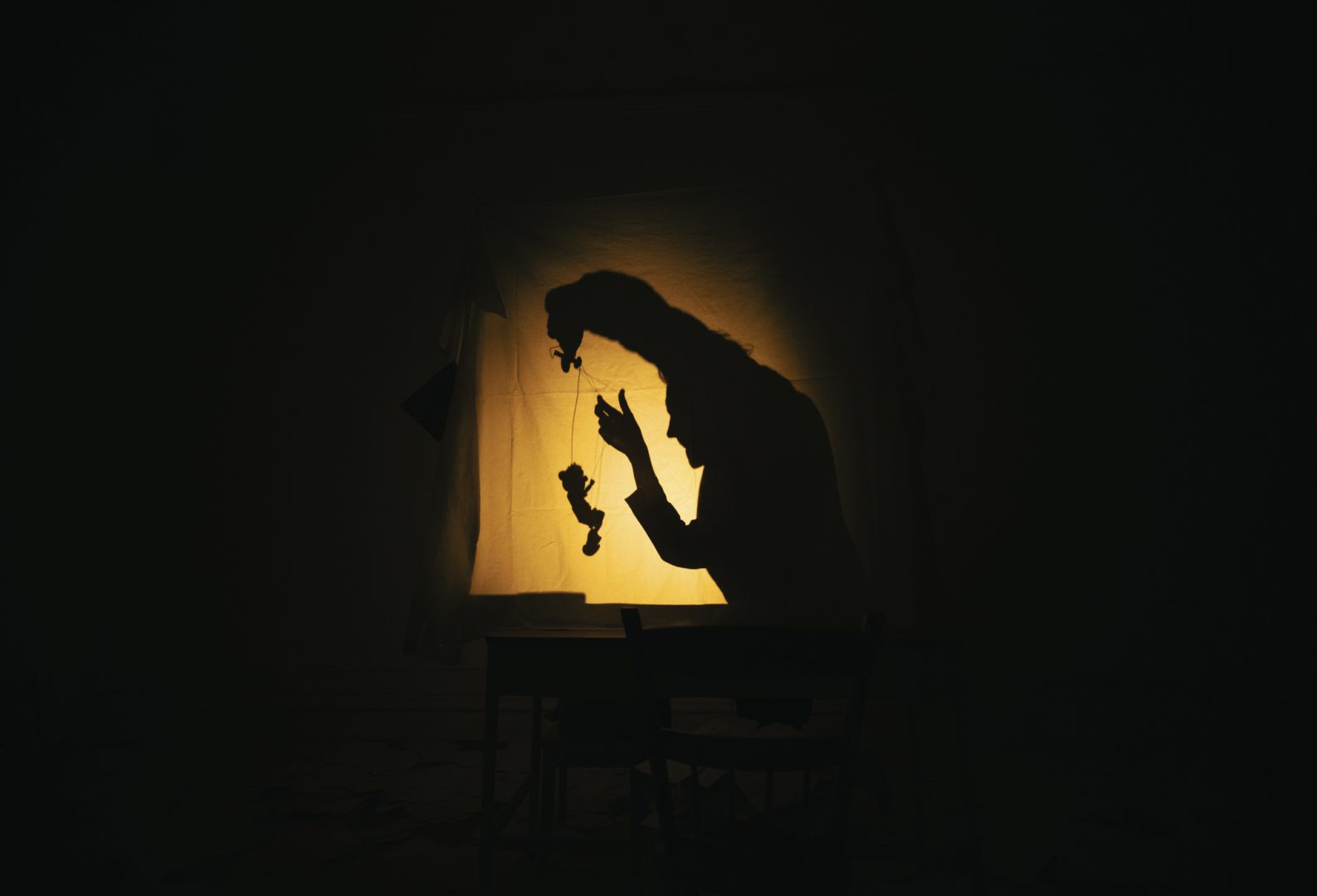
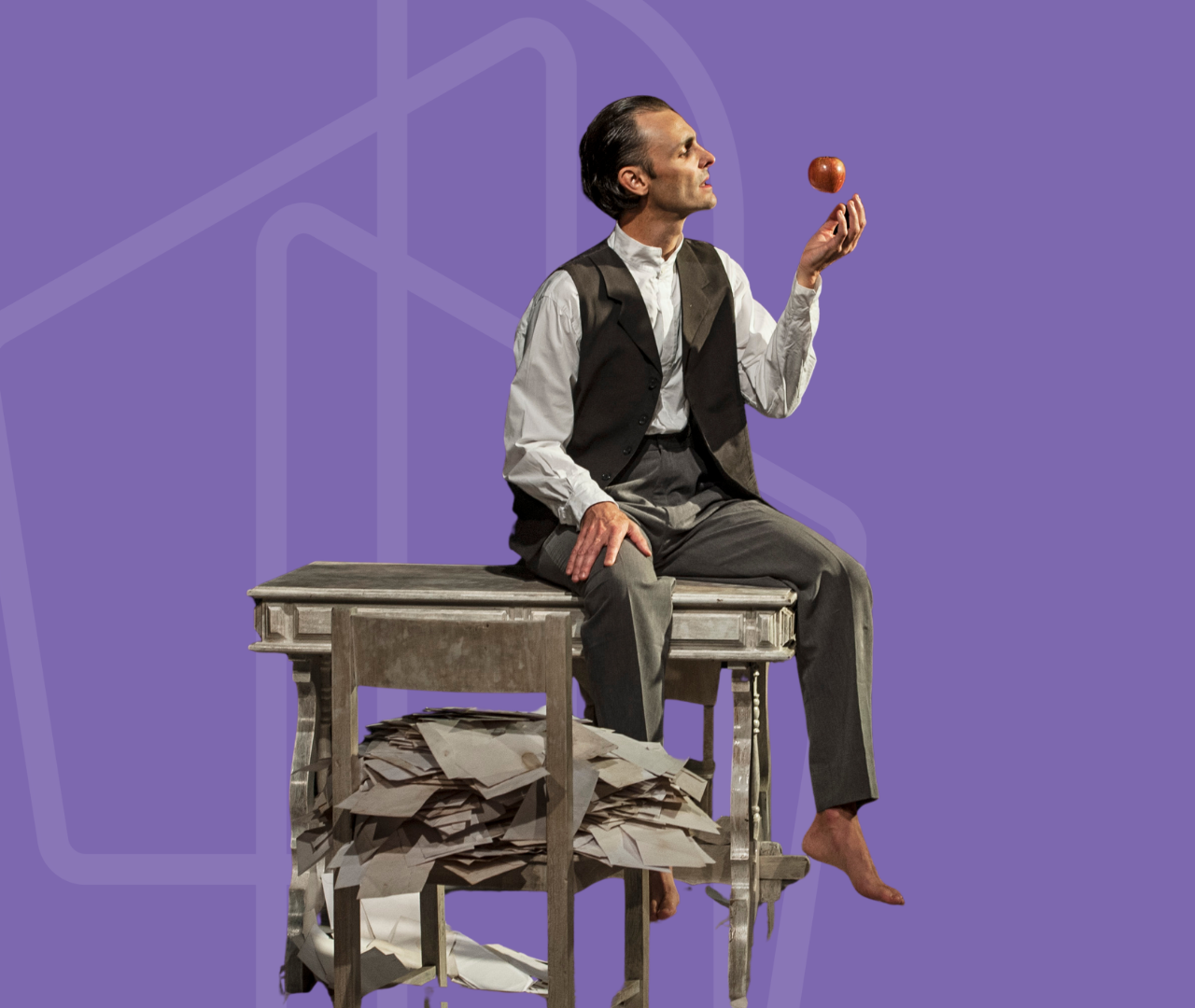
The Sierra Madre Playhouse presents the highly anticipated North American premiere of “One Million Words – Rilke,” a hit solo show inspired by the groundbreaking work of poet Rainer Maria Rilke. Created by and starring Ivo Müller, the play is slated to have six performances: April 24, 25, 26 and May 1, 2, 3, 2026.
Müller portrays both an actor from the present and a poet from the past who connect, exploring creativity, belonging, and what it means to stay grounded in a fast-moving world. Originally developed in Brazil, the show arrives in California during the centennial of Rilke’s passing (1875-1926), before heading to its UK premiere at the Edinburgh Festival Fringe.
Austrian poet Rainer Maria Rilke, who wrote in German, is widely regarded as a master of verse. He is celebrated as an idiosyncratic and expressive poet. According to scholars his work suggests mysticism – exploring themes of personal knowledge and incredulity.
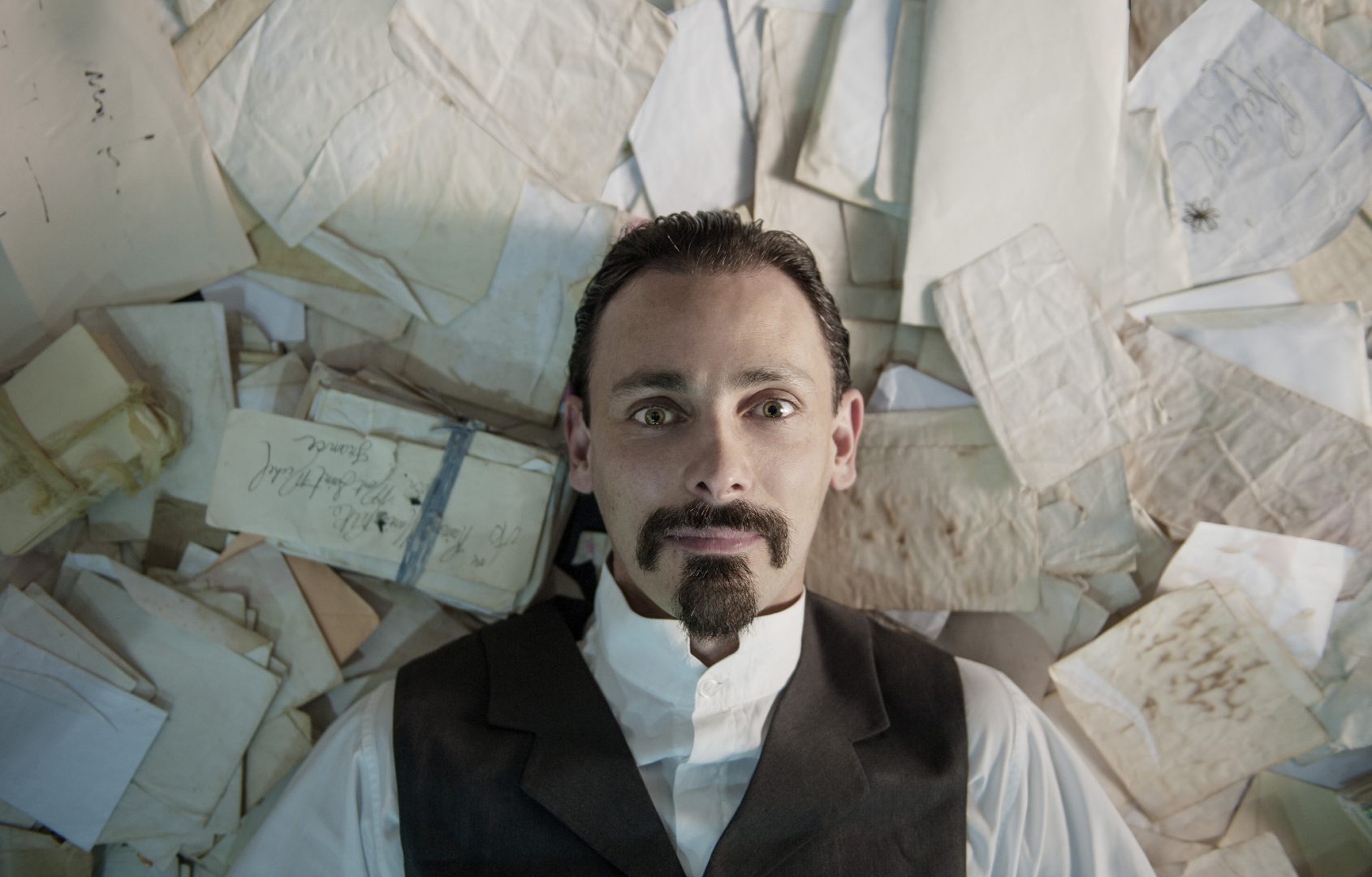
A prolific poet, Rilke wrote hundreds of published poems – most notably The Book of Hours, New Poems, Duino Elegies, and Sonnets to Orpheus. He is also known to have been a great letter-writer, having penned an estimated 10,000 to 17,000 letters in his lifetime.
Ivo Müller. | Photo courtesy of Ivo Müller / One Million Words – Rilke
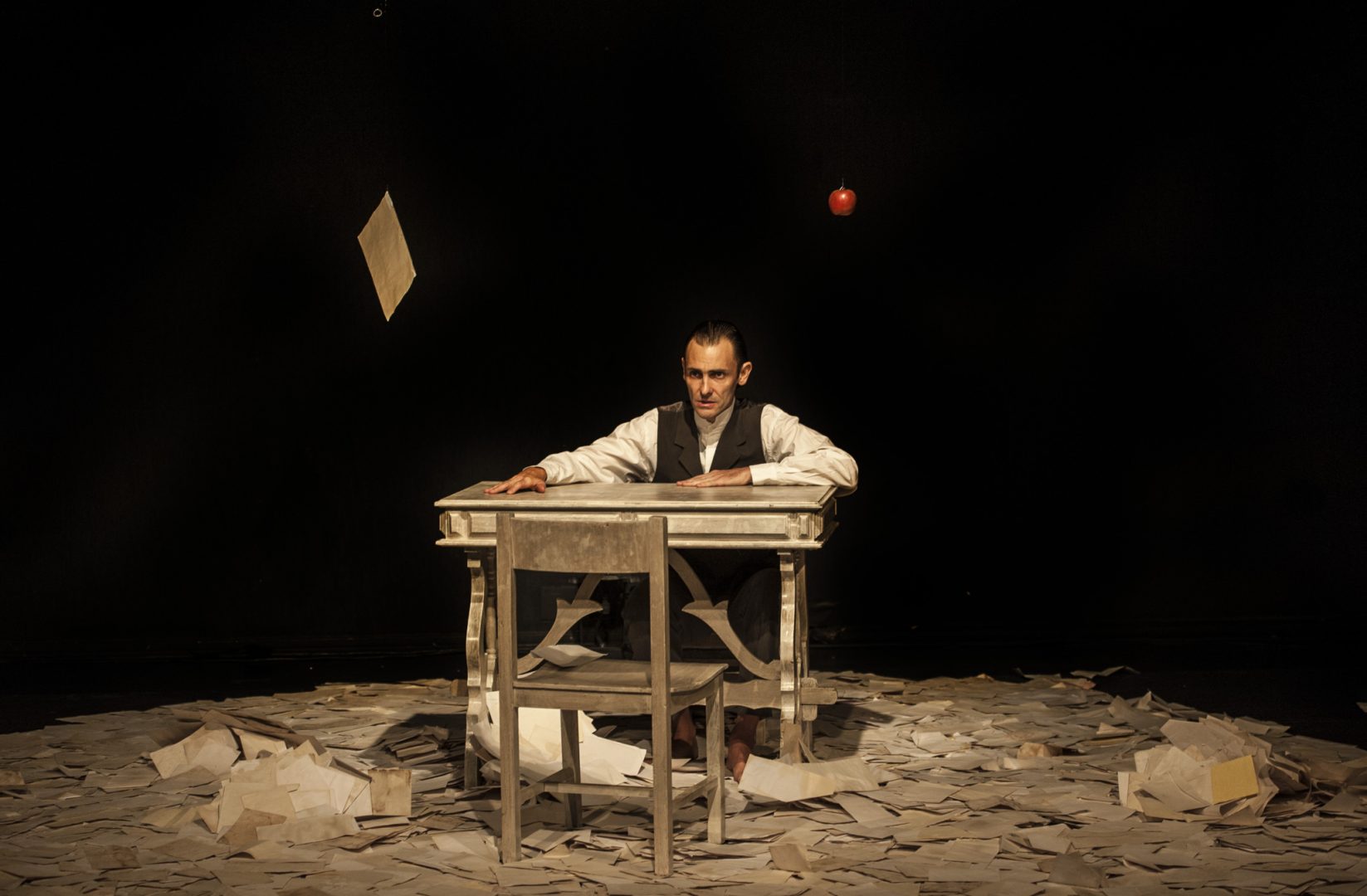
Directed by Arieta Corrêa, with Darrell Larson co-directing the English-language version, One Million Words – Rilke, tells the story of a writer who, for nearly a year, struggles to create poetry and can only express himself through letters. An actor uses these letters to navigate his own challenges in a place where even his name feels foreign, shaking the foundations of his identity.
Together, the poet and the actor explore themes of love, the creative process, and a sense of not belonging, highlighting the importance of being grounded in the present moment – topics that resonate deeply in today’s world.
Ivo Müller is a stage and screen actor whose work spans Europe, the US, and his native Brazil. His stage credits include a production of Twelve Angry Men with leading Brazilian theatre company Grupo Tapa, in addition to his long-running hit solo performance based on the writings of Rainer Maria Rilke.
Müller’s cinematic work includes Tabu, the multi-award-winning Portuguese film directed by Miguel Gomes, which received the Critics’ Best Picture Award at the Berlin International Film Festival in 2012. Müller has worked with major studios such as HBO, Sony, and Globo TV. His recent credits include Hebe: The Brazilian Star (2019), in which he portrayed an AIDS-stricken hairdresser in the biopic about a celebrated Brazilian television host; and Night Stage, which premiered at the Berlin International Film Festival in 2025.
Ivo Müller. | Photo courtesy of Ivo Müller / One Million Words – Rilke
Alongside his acting career, Müller also served as a teacher and acting coach on the award-winning documentary film Cine Marrocos (2019), collaborating with homeless people and refugees living in an abandoned movie theatre in São Paulo. Other stage credits include Stitching by Anthony Neilson, Huis Clos (No Exit) by Jean-Paul Sartre, The Widows by Arthur Azevedo, Camaraderie by August Strindberg, Bitter Sicilian by Luigi Pirandello, and Hecuba by Euripides.
By email, Müller discusses when his interest in Rilke’s work commenced, what the play means to him, the choice of title for it, its enigmatic theme, and the audience reaction.
“While working as an acting teacher at a public school when I was in my twenties, I discovered copies of ‘Letters to a Young Poet’ in the library,” begins Müller. “At the time I was a young actor pursuing art outside my comfort zone, far from where I was born and raised, so I related deeply to what he was saying to the young poet.”
Ivo Müller. | Photo courtesy of Ivo Müller / One Million Words – Rilke
Though Müller was drawn to all of Rilke’s works, one in particular made the biggest impression. He recalls, “Years later, when I decided to create something for the theater using that material, I began reading his poetry more extensively. Rilke seemed to ‘appear’ to me – in bookstores, in quotes from films I was watching. I read much of his work but, without a doubt, the Duino Elegies are the ones that resonated most with me.”
Müller refers to this play as the Rilke Project and whereas he has been doing this solo show for over a decade now, he didn’t possess enough confidence when he first performed it. That assuredness only came in later years. It has also gone through different versions and these iterations have taken him around the globe and keeps the play fresh.
“The first – ‘Letters to a Young Poet’ – was performed from 2010 to 2013, with long runs in São Paulo and tours across many cities in Brazil,” enlightens Müller. “Then I stopped. I had grown tired of it and didn’t want to continue with that version.”
“In 2018, I was invited by the Biblioteca Mário de Andrade in São Paulo to bring the piece back,” Müller continues. “They offered a small budget, and I spoke with director Arieta Corrêa about creating a new version, which we simply called Rilke. That version was performed until 2019. And in 2020, I presented it via live streaming – as many artists did during the pandemic.”
Ivo Müller. Photo courtesy of Ivo Müller / One Million Words – Rilke
To reach a wider audience as well as to reflect where he is in life, Müller translated it into English. He had been writing the English version on and off for at least five years, but in 2024 – when he had a clear deadline – the process became more intense and he worked on it almost daily.
“The English version transformed the piece once again – it became a new play, for new audiences,” pronounces Müller. “Because of all these shifts, neither the play or my performance ever felt repetitive. Every single one has been memorable and so challenging that each performance feels like a milestone for me.”
Asked what ‘One Million Words – Rilke’ means to him, Müller replies, “This project has been a refuge for me, especially in moments when I’m not working on other projects and anxiety starts to surface. Beyond that, it brings me a sense of peace. At times like these, when we live with the looming possibility of a major war, it reminds me why this play feels important. As the poet Marina Tsvetaeva wrote about Rilke, he is a kind of ‘antidote’ to violence and to the brutality of the battlefield.”
Photo courtesy of Ivo Müller / One Million Words – Rilke
“I titled it ‘One Million Words – Rilke’ because of the vast amount of material you find when you search for Rilke online,” explains Müller. “He wrote more than 13,000 letters, many of which have been translated into different languages. But also, I wanted the show to have a distinct and memorable name.”
“I’m not sure my performance ten years ago matched my abilities as an actor,” Müller discloses. “Perhaps I was too immature to take on a solo show when I first performed it in Portuguese. At the same time, it taught me so much – it has been a constant and intense form of training. Now, performing it in English truly aligns with where I am. It’s a character who has never fully belonged to the place he was born, who is a foreigner, who speaks with an accent.”
Workshopping the play to mounting it on the stage was a journey in itself. Relates Müller, “I had planned to workshop the show at the Hollywood Fringe in 2024, but I was invited to work in Brazil, so I cancelled the run. In the end, that project in Brazil was postponed. But things happen for a reason. Later that same year, Tony Torn and Lee Ann Brown offered me a slot to workshop the show in New York, at Torn Page – the historic brownstone in Chelsea where actors Geraldine Page and Rip Torn once lived. That’s where One Millions Words – Rilke in English was first performed.”
Ivo Müller. | Photo courtesy of Ivo Müller / One Million Words – Rilke
Every performance has been remarkable but one particular show stands out in Müller’s mind. He recalls, “Looking at the project as a whole, one of the most unforgettable moments happened during the run at the library I mentioned. It’s located in downtown São Paulo, and the performances were free – which brought in a very diverse audience. One day, a man came to speak with me after the show. He said he was there for the second time because the performance had somehow made him feel better. Then he told me he had been living on the streets and struggling with very negative, intrusive thoughts. But after watching the show, he said something had shifted. Those thoughts were no longer overwhelming him in the same way.”
As to what he wants his audience to take away, Müller declares, “Whatever they take away from the day they see the show. As writer Janet Flincher said after watching it, ‘the show has more ideas in an hour than you usually get in a month.’ And I like to write on the Playbill: ‘No, do not try to understand everything that is said. Instead, take a deep breath and let the words flow into your soul. And if some parts of the show bring you memories or if you zone out, that’s great. You should ‘travel’ and come back.’ I want the audience to tell the story with me, based on how they feel in that moment, on that particular day that they experience it.”
Those enigmatic words could only make us want to embark on a journey with him.
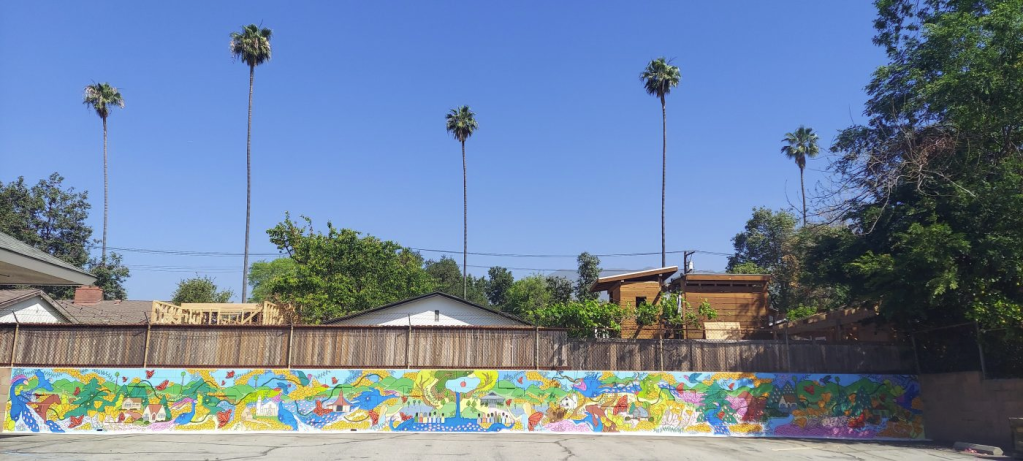
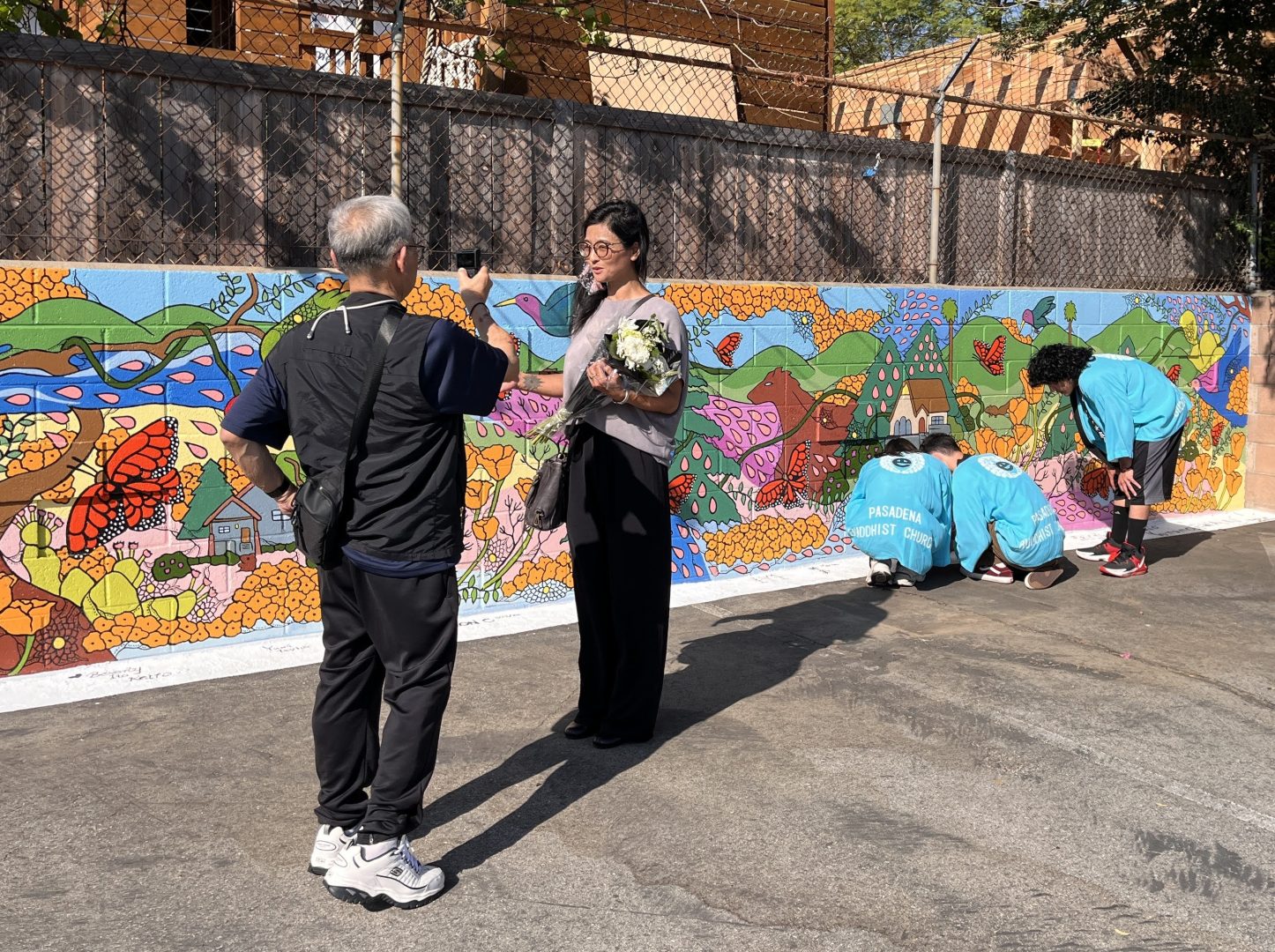
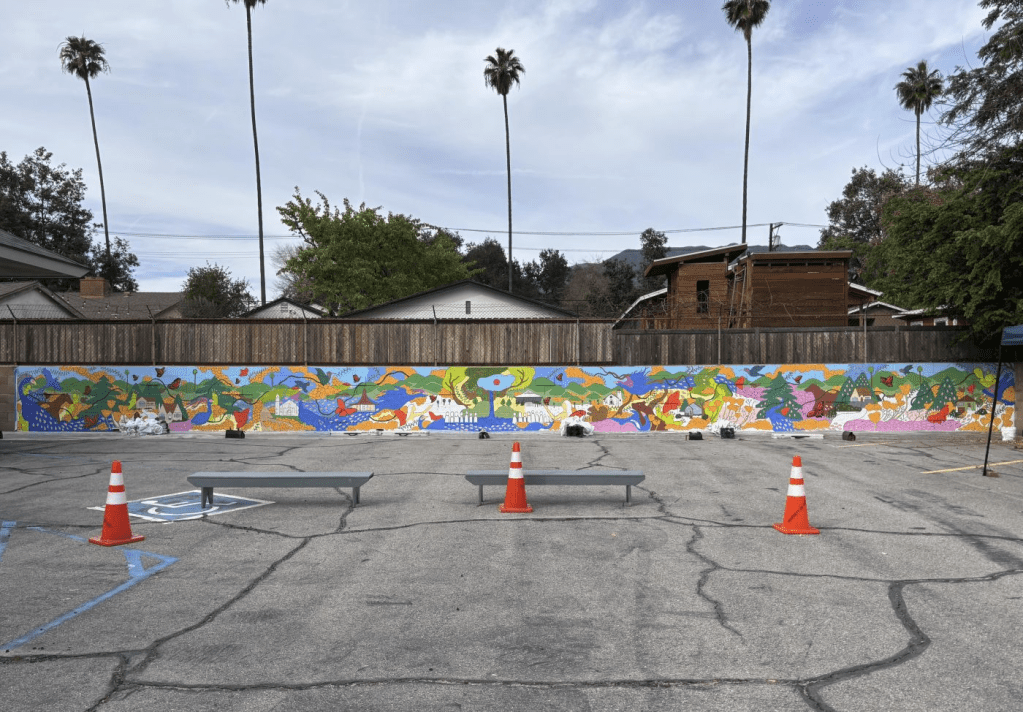
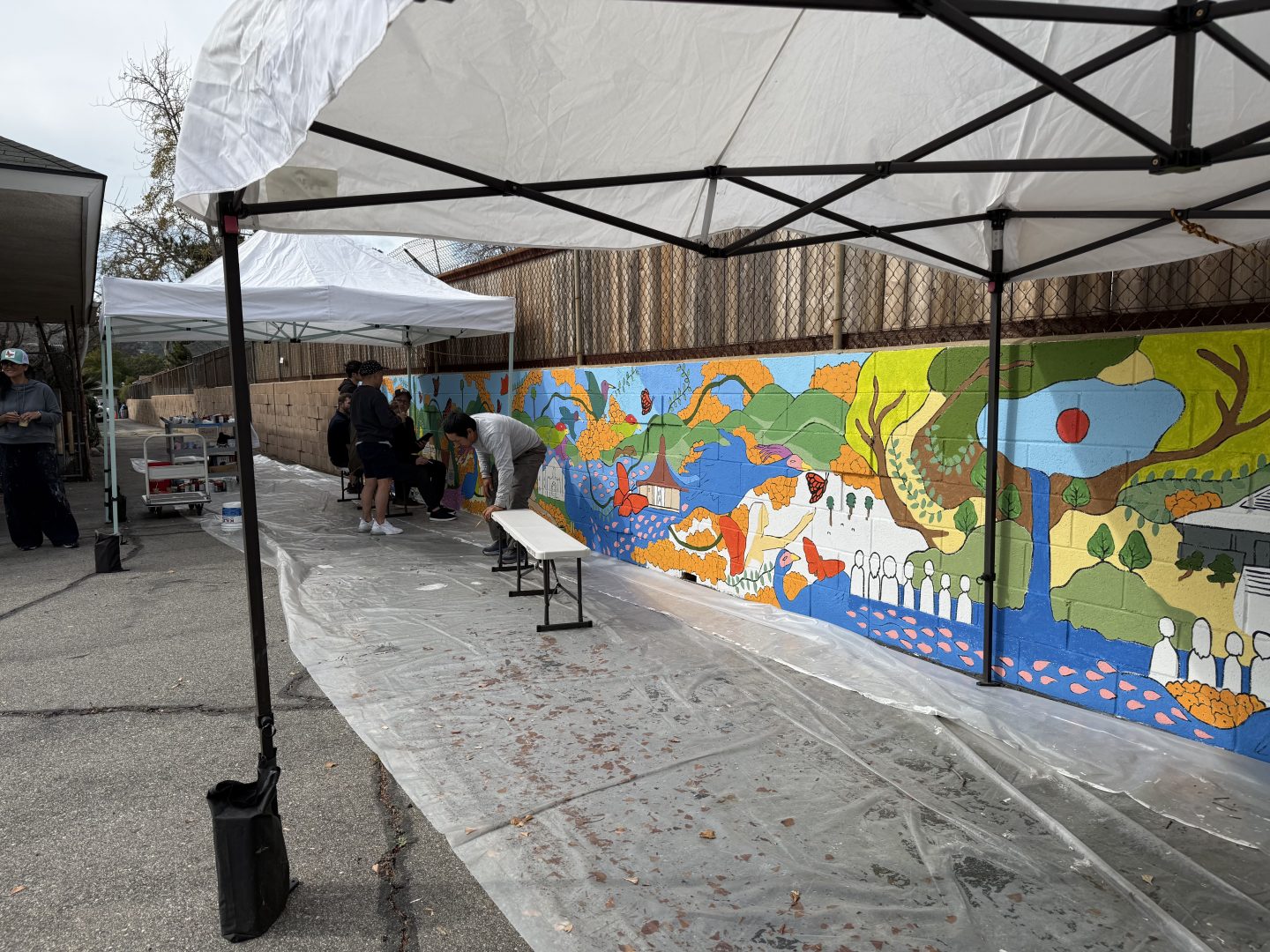
The completed “Healing and Hope” mural unveiled. | Photo courtesy of the Pasadena Buddhist Temple
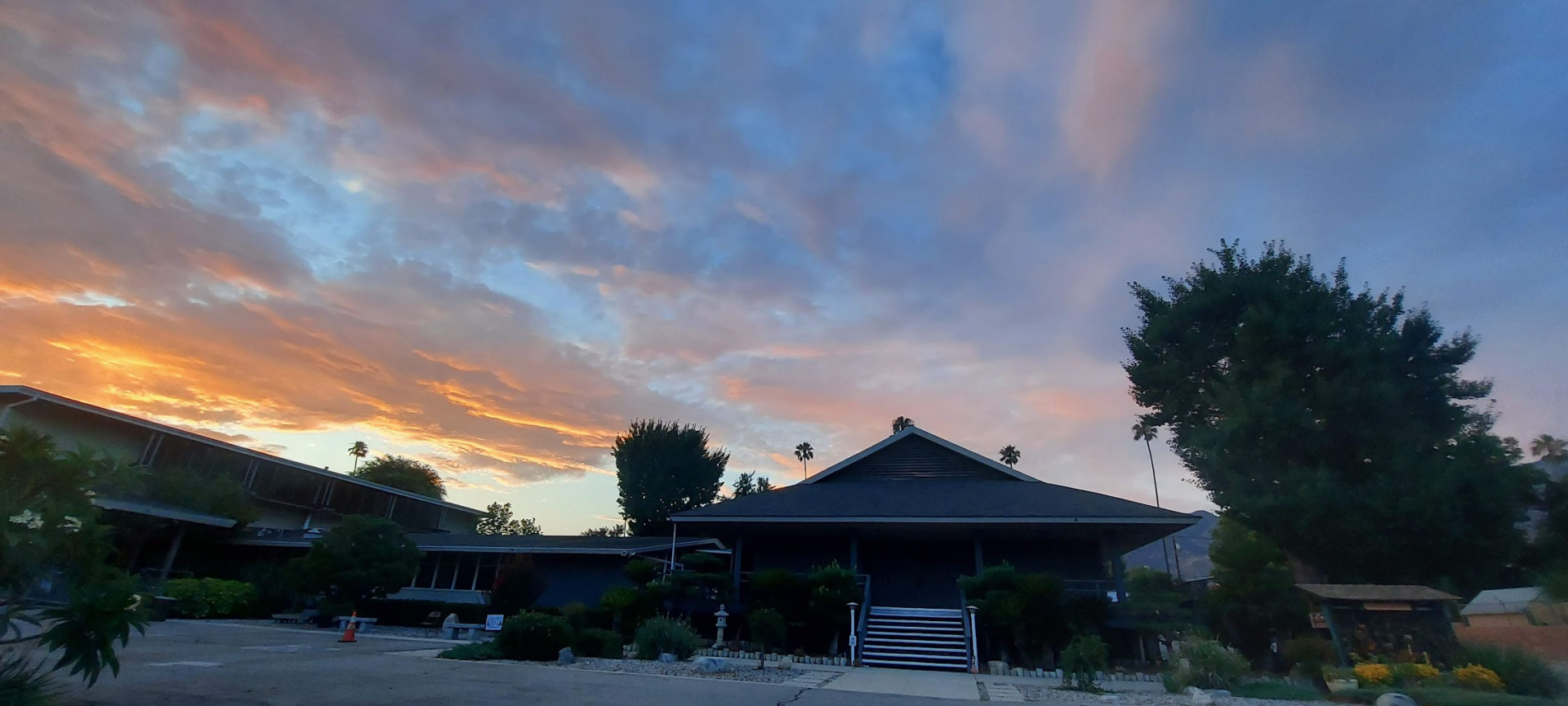
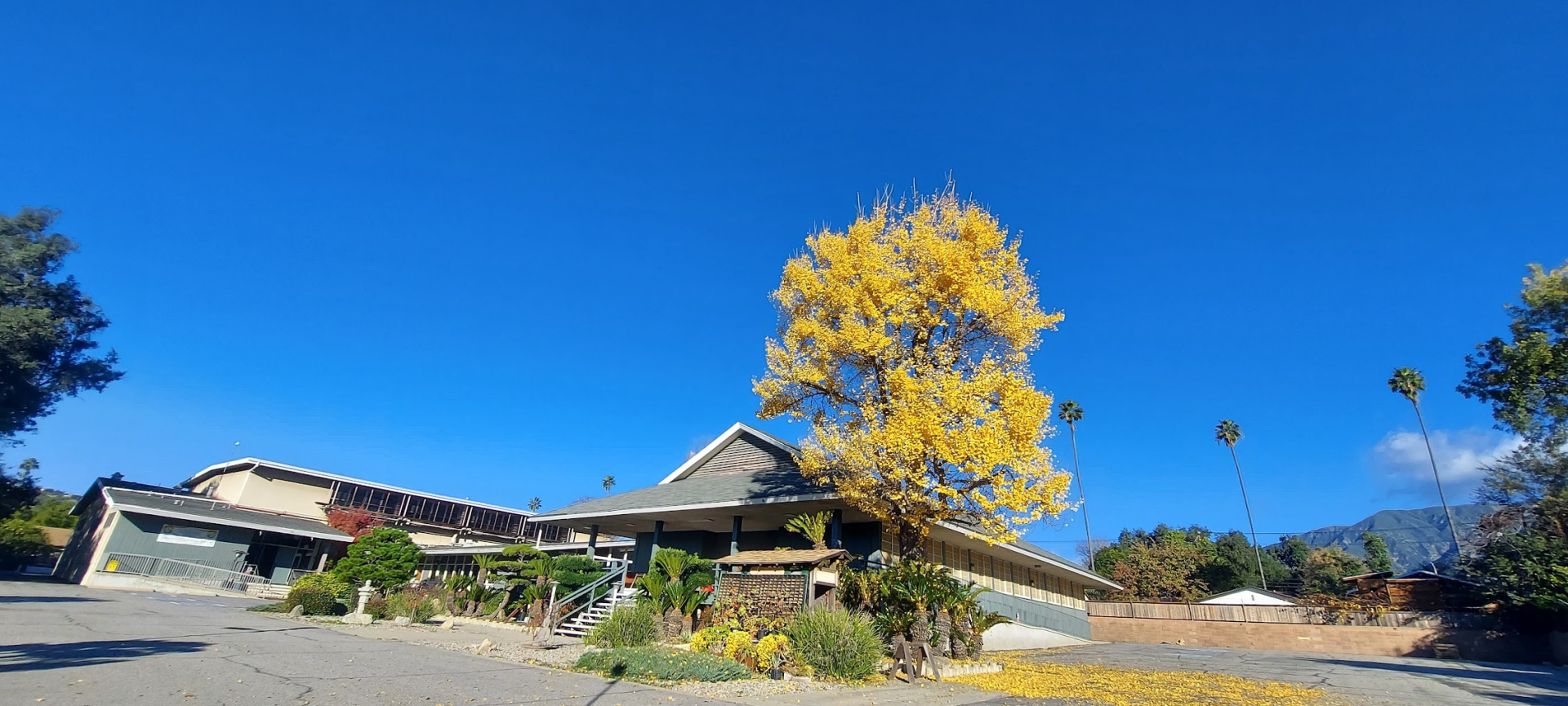
The Pasadena Buddhist Temple celebrated the completion of the “Healing and Hope” mural at 3 pm on Sunday, March 22. The brainchild of Kyoko Gibbs, wife of the temple’s spiritual leader Rev. Gregory Gibbs, who collaborated with Miki Yokoyama, an artist and Eaton Fire survivor – it was a way of restoring the community after their life-shattering experience.
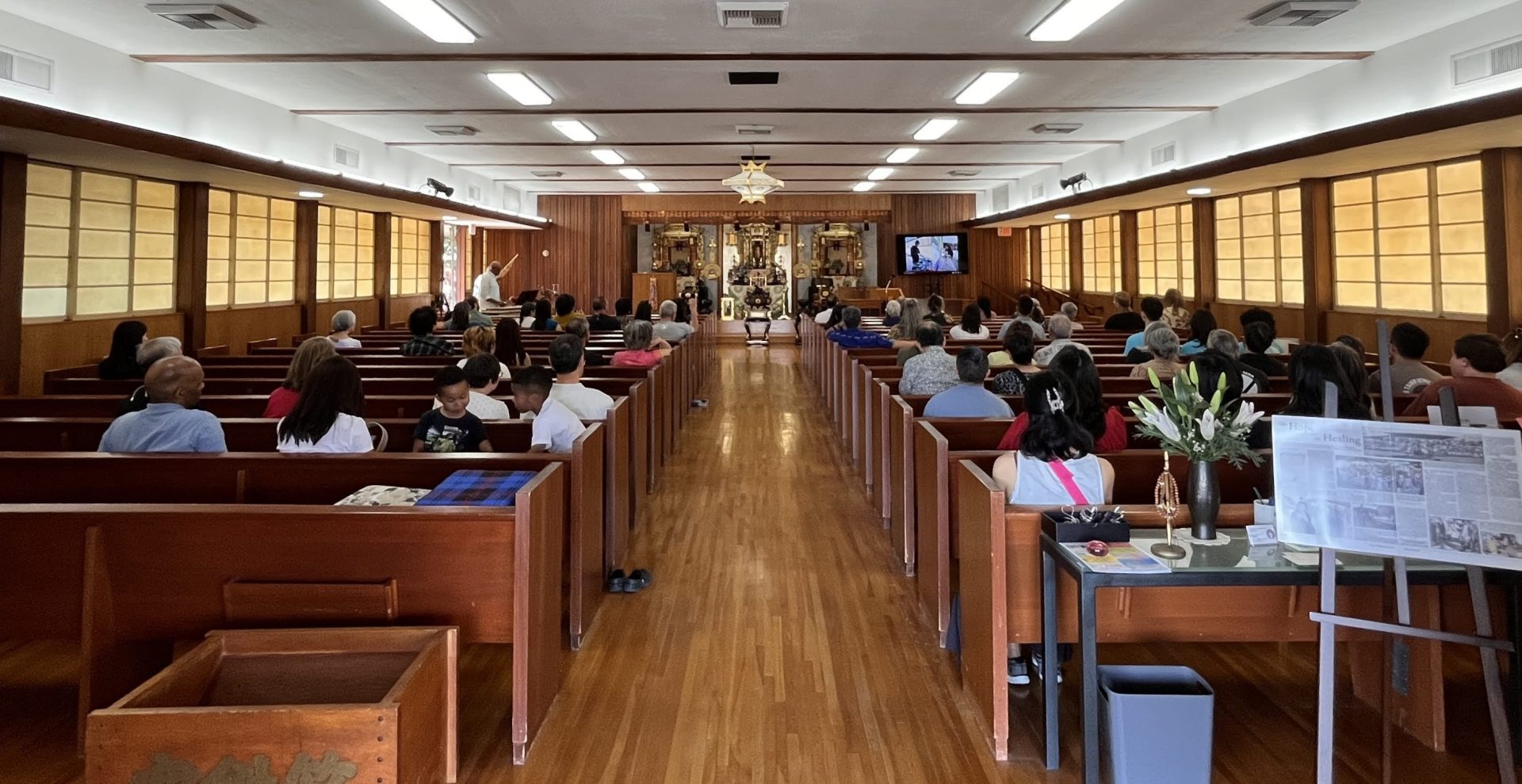
It was a festive occasion with about 70 people in attendance. A video about the progress of the mural was shown, after which attendees were invited to gather outside for the unveiling of the completed mural.
About 70 people attended the celebration at the Pasadena Buddhist Temple. | Photo courtesy of the Pasadena Buddhist Temple
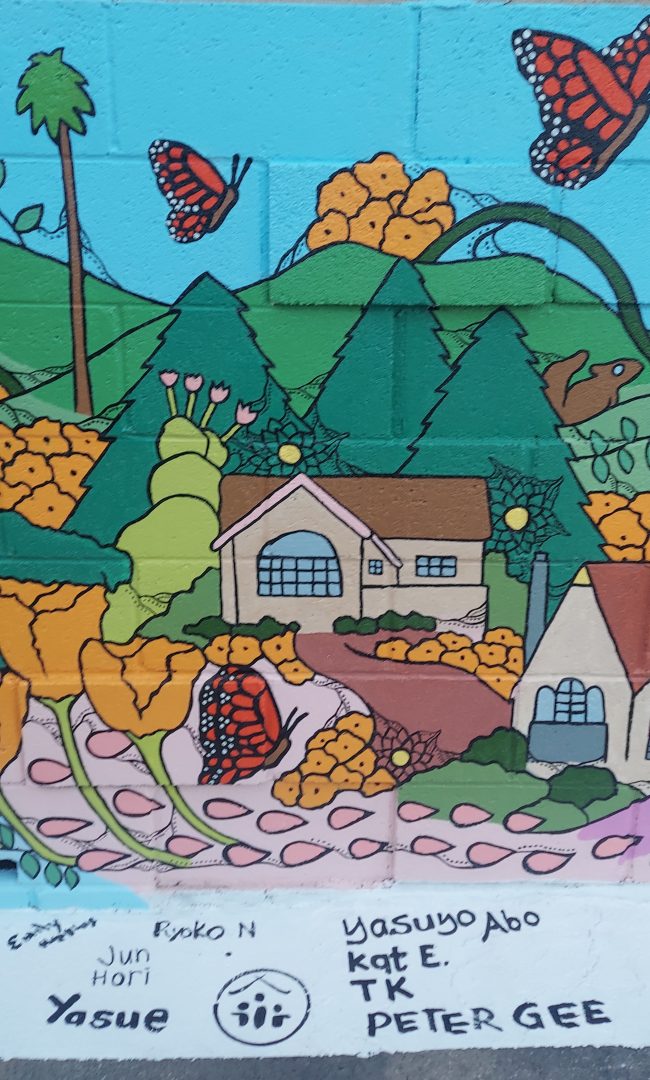
Gibbs’s younger son Ren and his friends Winston and Felix – fittingly attired for the occasion in happi (a tube-sleeved Japanese coat) – walked rapidly as they uncovered the mural. Their fast-walking provided a light-heartened moment for the mothers present who found it entertaining. Keiro and Little Tokyo Service Center were recognized for their compassionate support. Yokoyama shared her story in creating the mural with the community and invited everyone to sign their names on the painted primer area, the ground part.
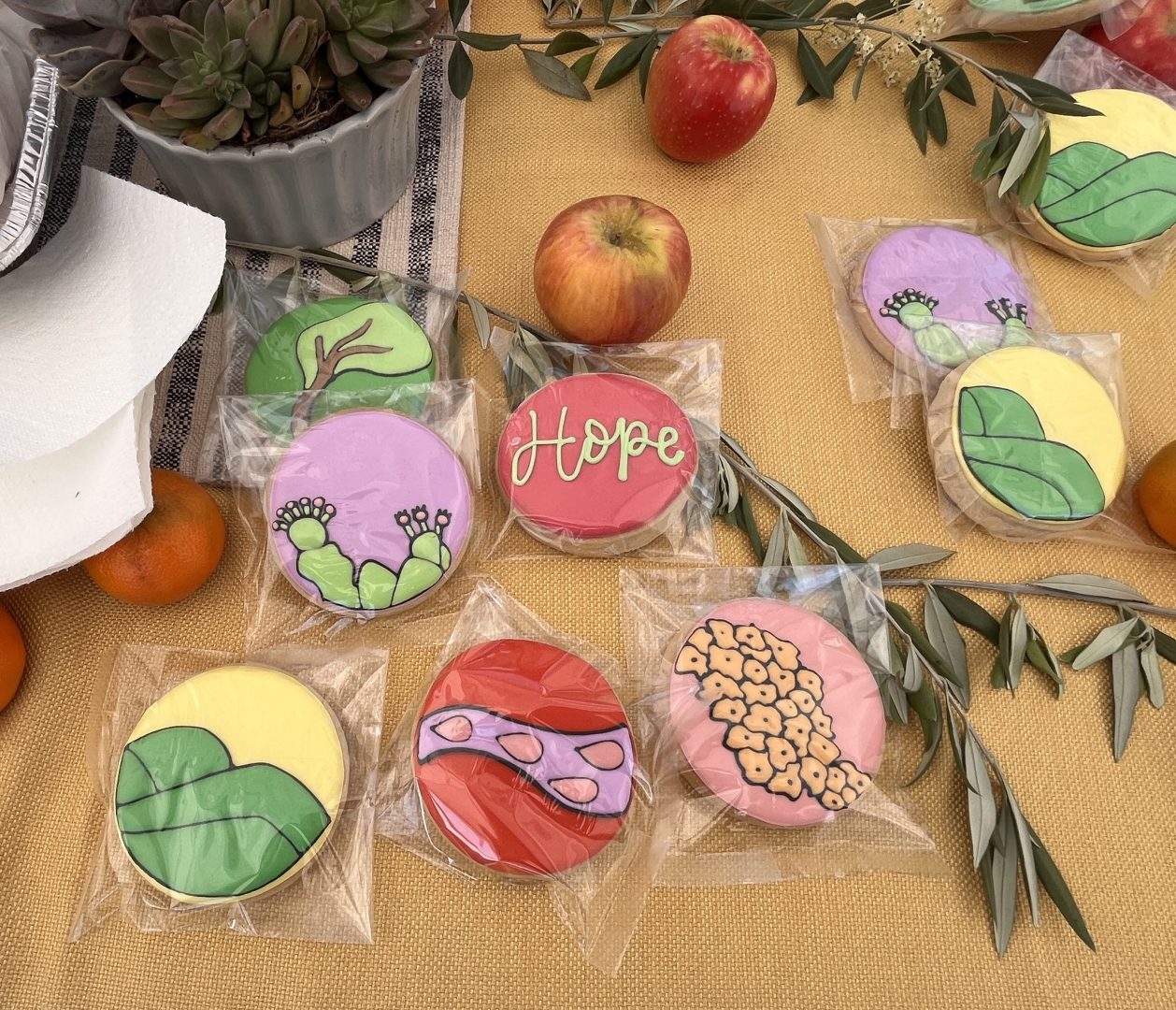
“Judicanti Responsura,” the music duo formed in 1984 by tubaist William Roper and percussionist Joseph Mitchell – who were fire survivors as well – set the stage beautifully to welcome people in the Hondo, the main building. The Altadena Cookie Company provided custom cookies for the event.
Miki Yokoyama, at right. | Photo courtesy of the Pasadena Buddhist Temple
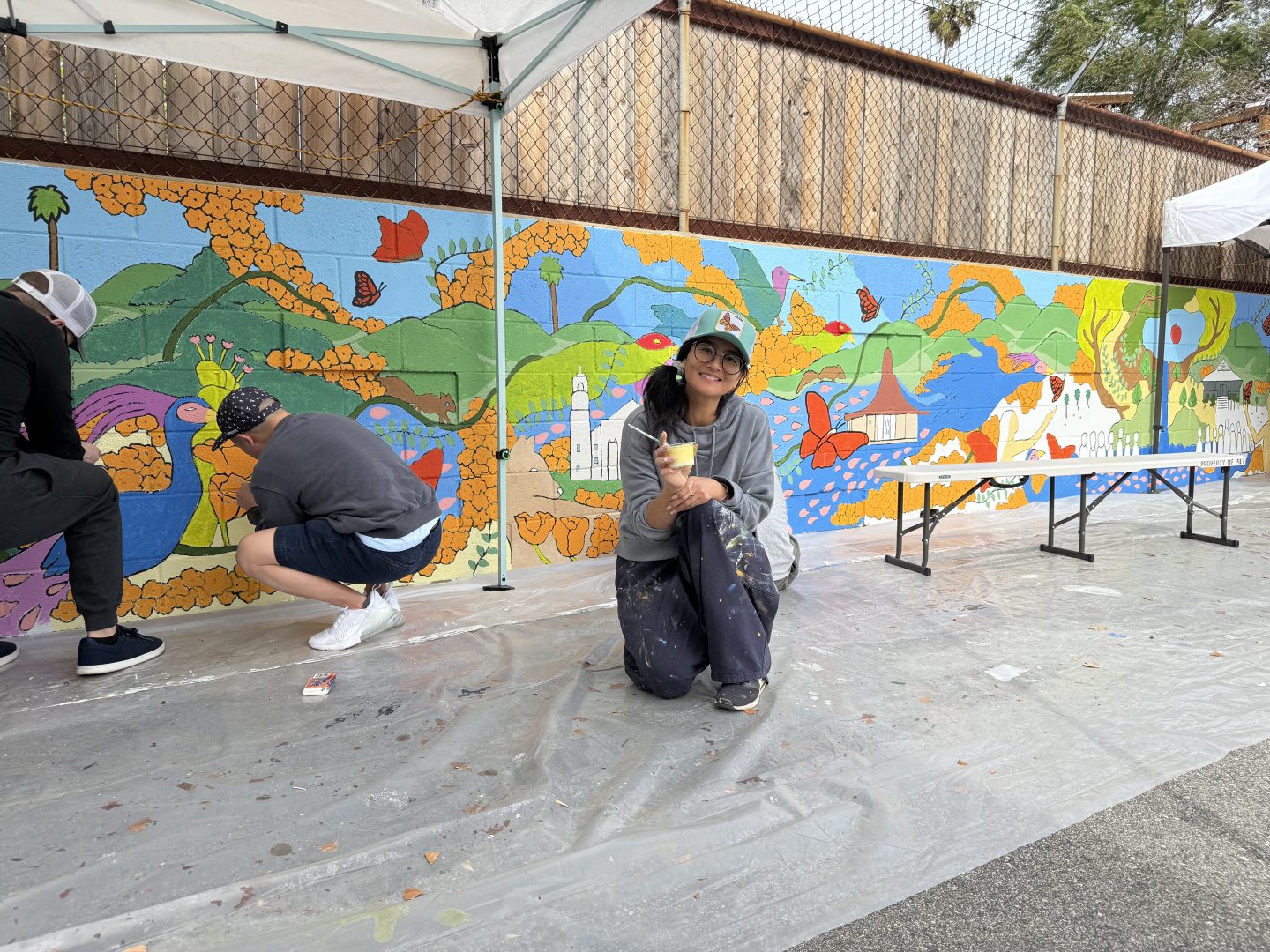
The “Healing and Hope” mural took a few months to paint, with Eaton Fire survivors participating in the project. In mid-March, the mural was almost done.
Yokoyama recounts, “I completed the final touches on the mural last Sunday, the 15th. This week, I have been applying a top coat over the finished painting, painting the ground directly below the wall white, and preparing a space where everyone who participated in the mural can add their signatures.”
People’s signatures on the mural. | Photo courtesy of the Pasadena Buddhist Temple
For Yokoyama, the completion of the project is as joyful as it is bittersweet. “This experience has been incredibly meaningful to me,” states Yokoyama. “Working together with everyone on a single mural was something that truly helped and supported me. I had been struggling mentally over the past year since the fire, so I am very grateful to Kyoko for proposing this project. The time spent painting with everyone allowed me to focus on both the creative process and connecting with others. Each day, I felt that these moments were healing my heart. Seeing everyone working so hard on their parts of the mural gave me strength and courage.”
“My feelings right now are quite complex,” Yokoyama discloses. “I am very happy that we were able to complete the mural. At the same time, I feel a deep sense of sadness knowing that this time of creating together has come to an end. Since Kyoko and I first began discussing the location of the mural, I have been coming to the site five days a week for about two months, so it has been a very special part of my life.”
Custom cookies from the Altadena Cookie Company
Those sentiments are echoed by Gibbs, “I already miss the sense of togetherness from working together. It brought me happiness and strength. The bond we formed through the mural project, and of course during last year’s gatherings and activities, will stay in my heart and help me move forward! I will cherish all the encounters.”
“Feeling the results of the community’s teamwork is truly empowering,” adds Gibbs. “We are stronger together, and I am deeply thankful to be part of this caring and supportive community! This mural gives me a deep sense of hope, seeing how something beautiful and empowering has emerged from such a devastating event.”
Indeed the Eaton Fire, as tragic as it has been, provided the impetus for Altadenans to unite – whether to fight for accountability from county officials or to work on an artistic endeavor that commemorates their shared experience. And that is a wonderful outcome to celebrate.
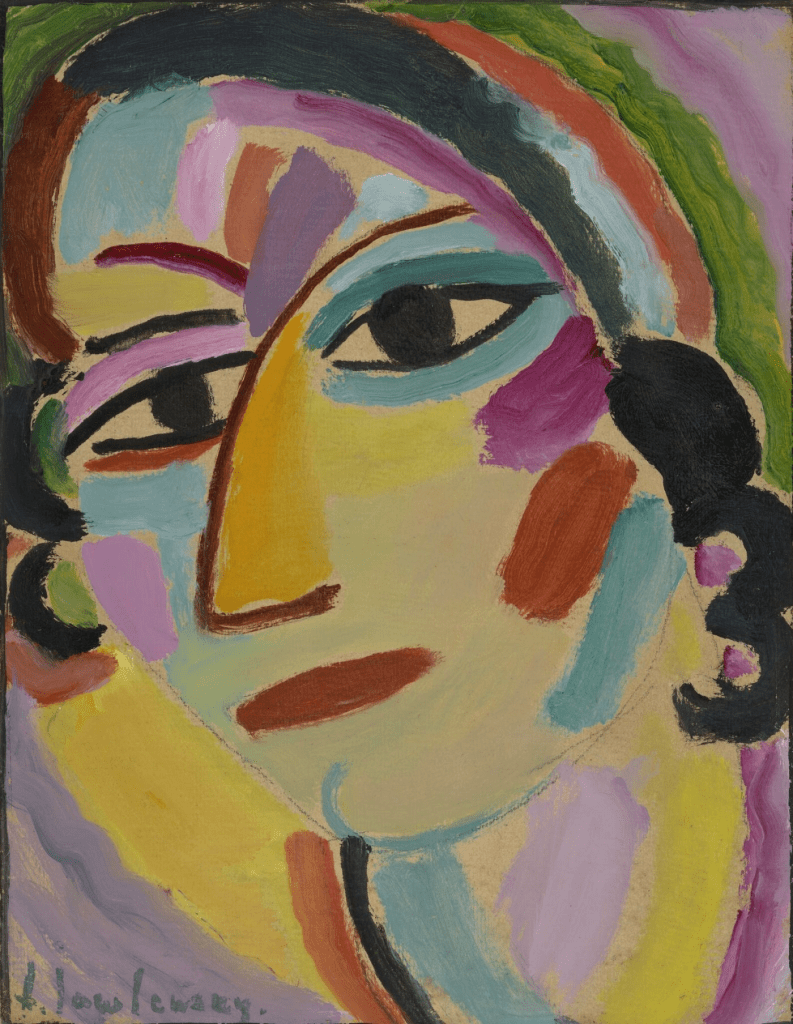
Alexei Jawlensky. Mystical Head, 1917. | Photo courtesy of the Norton Simon Museum, The Blue Four Galka Scheyer Collection
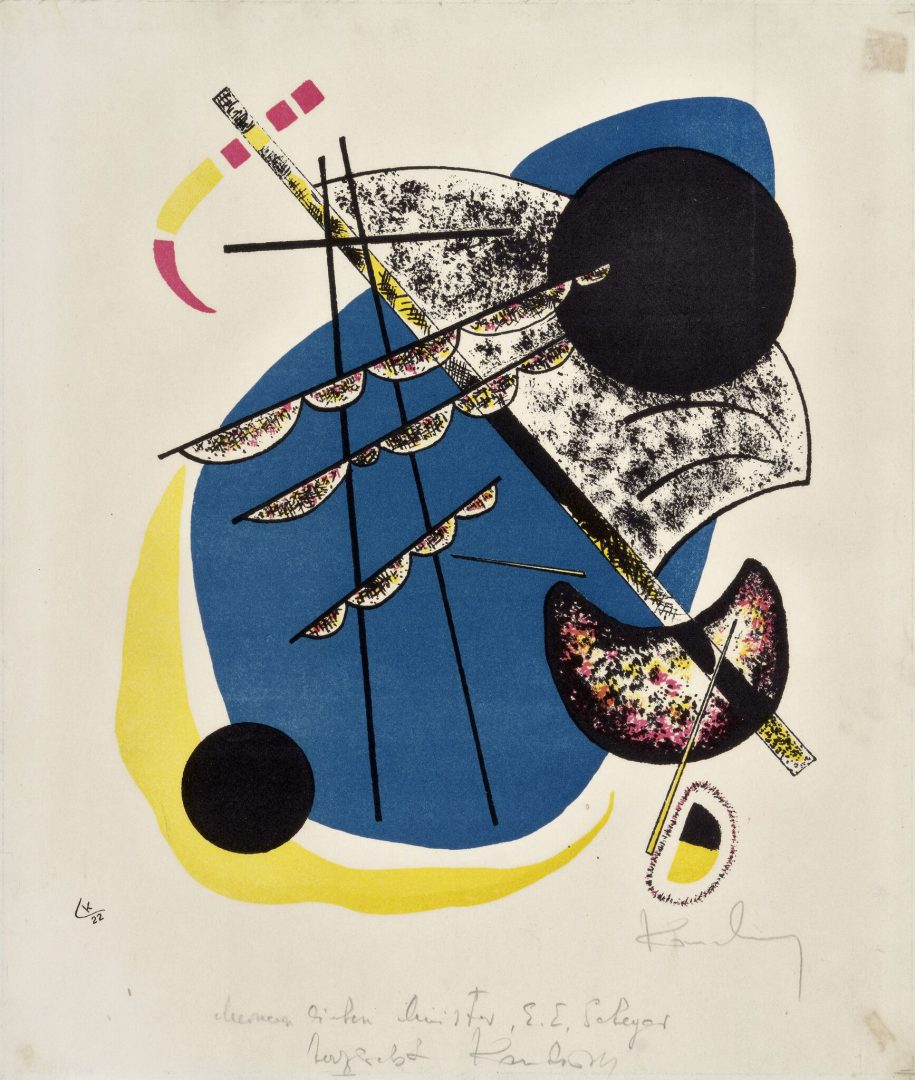
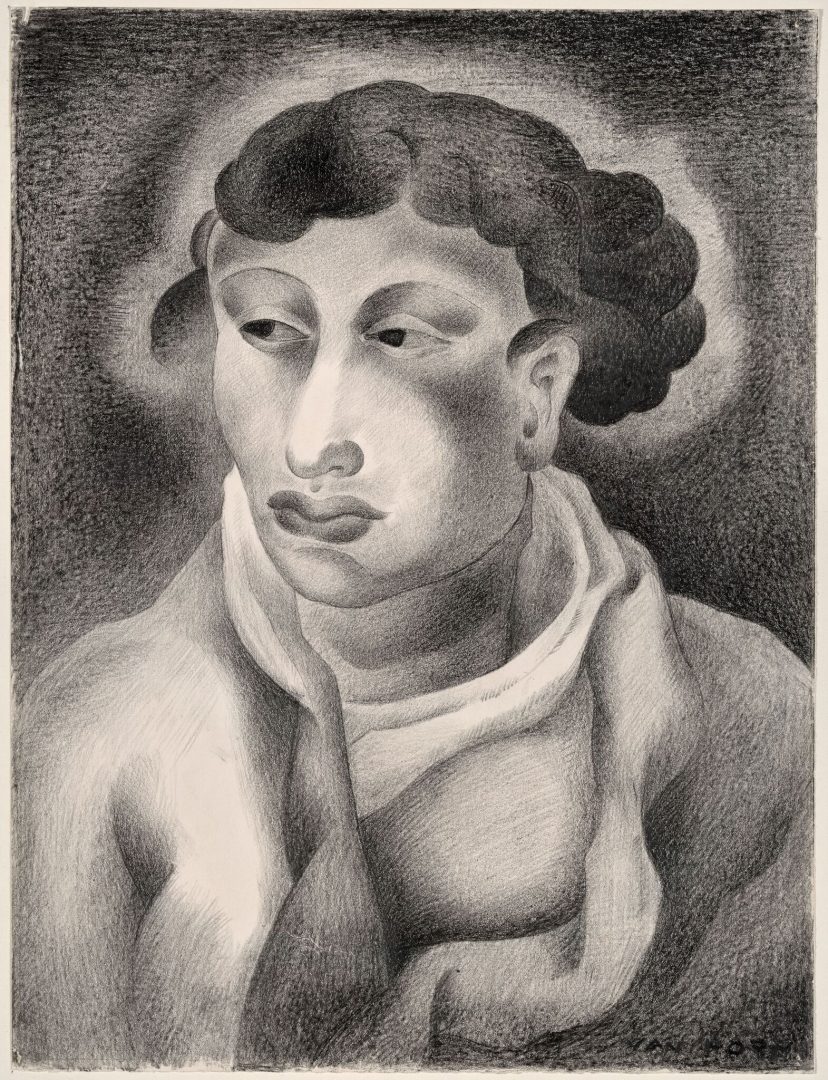
An intimate exhibition at the Norton Simon Museum, called “Dear Little Friend: Impressions of Galka Scheyer,” focuses on the art dealer and promoter’s close relationship with the artists she represented. On view from Feb. 20 through July 20, it features works of art gifted to her by Alexei Jawlensky, Maynard Dixon, Peter Krasnow, and Beatrice Wood, among others; the show is curated by Gloria Williams Sander.
Culled from Scheyer’s archive, the exhibition offers a close look at the significant role the German-born collector played in bringing European modernism to the United States and promoting the so-called Blue Four – Lyonel Feininger, Alexei Jawlensky, Paul Klee, and Vassily Kandinsky.
The title “Dear Little Friend” comes from the affectionate salutation Feininger adopted in his letters to Scheyer and captures the personal connection and collaborative spirit that defined her activities in Europe and California. Alongside the artwork are correspondence and ephemera that testify to her dedication to art and to her artists, as well as the excitement she generated in pursuing her mission.
Vassily Kandinsky. Small Worlds II, 1922. | Photo courtesy of the Norton Simon Museum, The Blue Four Galka Scheyer Collection
In her lifetime Scheyer accumulated more than 450 works of art, according to Sander. All of the Blue Four’s work belonged to her and some were on consignment from the artists; what remained unsold at her death were returned to the artists or their estate. Composed of paintings and works on paper of various sizes and media – including illustrated letters – they could not be displayed simultaneously and would have been stored for rotation in exhibits and salons.
Scheyer bequeathed her collection to UCLA with the proviso that the university meet the same conditions of a 1944 gift of her friend Walter Arensberg’s modern art collection. Arensberg’s donation required UCLA to provide a building for his collection within five years; additionally, Scheyer stipulated that the university must publish a modest catalogue of her collection. When UCLA failed to meet the conditions, the fate of the Scheyer collection was left to a committee.
In 1953, the committee entrusted Scheyer’s collection of 450 works by the Blue Four and other modern artists (plus a cache of 800 documents) to the Pasadena Art Institute, which evolved into the Pasadena Art Museum and moved to a new building on Colorado Boulevard. The late Norton Simon took over the facility in 1974 and fulfilled the Scheyer trust’s provisions by publishing a catalogue of the collection.
Lucretia Van Horn. Portrait of Galka Scheyer, 1927-30. | Photo courtesy of the Norton Simon Museum, The Blue Four Galka Scheyer Collection
Born Emilie Esther in Braunschweig, Germany, in 1889 to a middle class Jewish family, Scheyer studied art and music. She had dreamed of becoming an artist but in 1915, after seeing the paintings of Alexei Jawlensky at an art exhibition in Switzerland, decided to be an art promoter instead. Thus, her career as an art dealer was born. She organized shows for him in Munich, Berlin, and various cities around Germany to drive interest in his work. Jawlensky gave her the moniker “Galka,” the Russian word for jackdaw – a gregarious, intelligent crow.
“It was Jawlensky who introduced her to Paul Klee, Vassily Kandinsky, and Lyonel Feininger, all of whom were on the faculty of the Bauhaus in Germany – a forward-looking university of art design and architecture,” explains Sander during a walkthrough of the exhibition. “They all became friends. This was in the 1920s when times were tough in Germany politically and economically. Artists were having trouble showing and selling their work so Galka decided to go to the United States to promote them.”
“They banded together and took on the name ‘The Blue Four,’” Sander says further. “They all had different artistic styles, but they wanted to give her a sort of rubric to help her organize exhibitions. ‘Blue’ has a long-standing importance for modernism in Europe and the United States; it’s considered to be a spiritual color.”
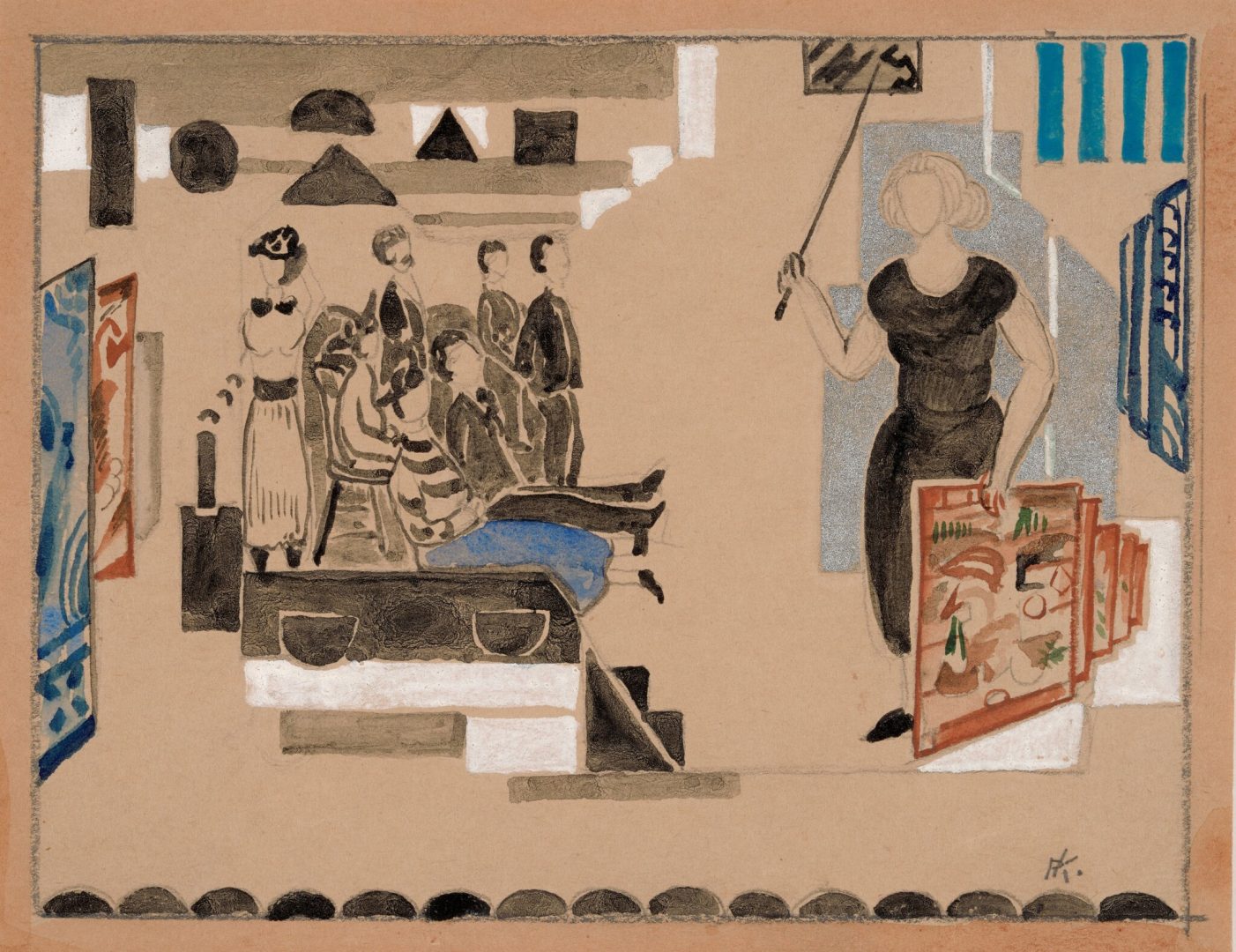
Peter Krasnow. Recalling Happy Memories, c. 1927. | Photo courtesy of the Norton Simon Museum, The Blue Four Galka Scheyer Collection
However, when Scheyer arrived in the U.S. she realized getting a foothold in the modern art world was a challenge. It was through a combination of fate and opportunities that she came to California and held her first show called “The Blue Four” at Stanford University in October of 1925. It was such a phenomenal success that the San Francisco Examiner proclaimed her the “Prophetess of the Blue Four.”
“The reaction – not only to the works that she was showing, but also to her charismatic delivery and lecturing – was immense,” states Sander. “In March of the following year, Roi Partridge, who was the chairman of the art department at Mills College, wrote to let her know how much he enjoyed her show and lecture and invited her to come to Mills. And Scheyer was able to augment her income through speaker fees.”
Scheyer promoted herself and the Blue Four using marketing brochures printed with the Blue Four logo of four blue stripes and contained endorsements and her skills as a lecturer and art dealer.
“Galka was one of the most amazing art impresarios in the United States in the early 20th century,” Sander pronounces. “She was a single woman in a profession as an art dealer inhabited by men, which was an unusual task she set for herself. The Galka Scheyer archive is a testament of her activism in the United States on behalf of four European artists whom she represented from the 1920s to the 1940s in trying to seed a taste for European Modernism and Abstraction. It was new art that was not conventional in California at that time, when it was very conservative and the prevailing art style was still in the Impressionism and post-Impressionism. Artists came here to paint the beautiful landscape.”
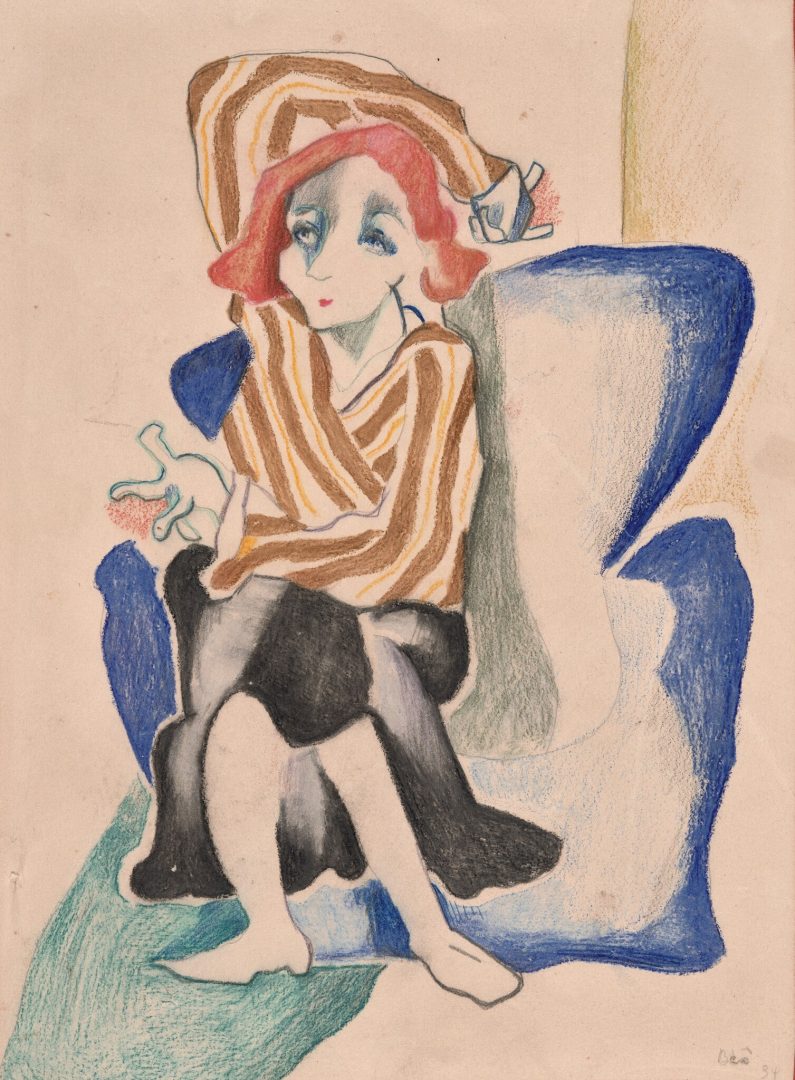
Beatrice Wood. Portrait of Galka Scheyer, 1934. | Photo courtesy of the Norton Simon Museum, The Blue Four Galka Scheyer Collection
“It was a real blessing for modern artists when Galka came to California,” continues Sander. “One of the first artists she met when she arrived in 1925 was Maynard Dixon. Most people would think of him as the artist who painted landscapes of the western United States and its native peoples. He had a modernist outlook in his flat spaces and cool colors. He loved Galka’s lectures and her style and introduced her to his wife, Dorothea Lange, who did those memorable photographs of people in desolate lands and plains during the Depression. It was Dorothea who took the photograph that Galka used for her brochure. Dorothea was a good friend of modernist photographer Imogen Cunningham, who was married to Roi Partridge who was also a printmaker.”
In a matter of months Scheyer found herself in an intellectual, creative community in the Bay area. It provided the foothold she needed in promoting the art of the Blue Four. Dixon and Scheyer maintained a friendship after she moved to Los Angeles. One of the paintings in the show is Maynard’s stylized drawing of Galka on which he inscribed, “To Mme Moderne Kunst” which means “To Mrs. Modern Art.”
“This is one of the most iconic images from the collection that shows Galka,” Sander explains as she points to another artwork. “It’s by an artist named Peter Krasnow, who’s Ukrainian-born but came to the United States in 1907. He attended the University of Chicago but he really wanted to come to the West Coast. His painting shows Galka at what many people would recognize at that time if they knew her. She has a pointer in her hand and teaching a rapt audience. The scene is a combination of realism and fantasy, and he named it ‘Recalling Happy Memories.’”
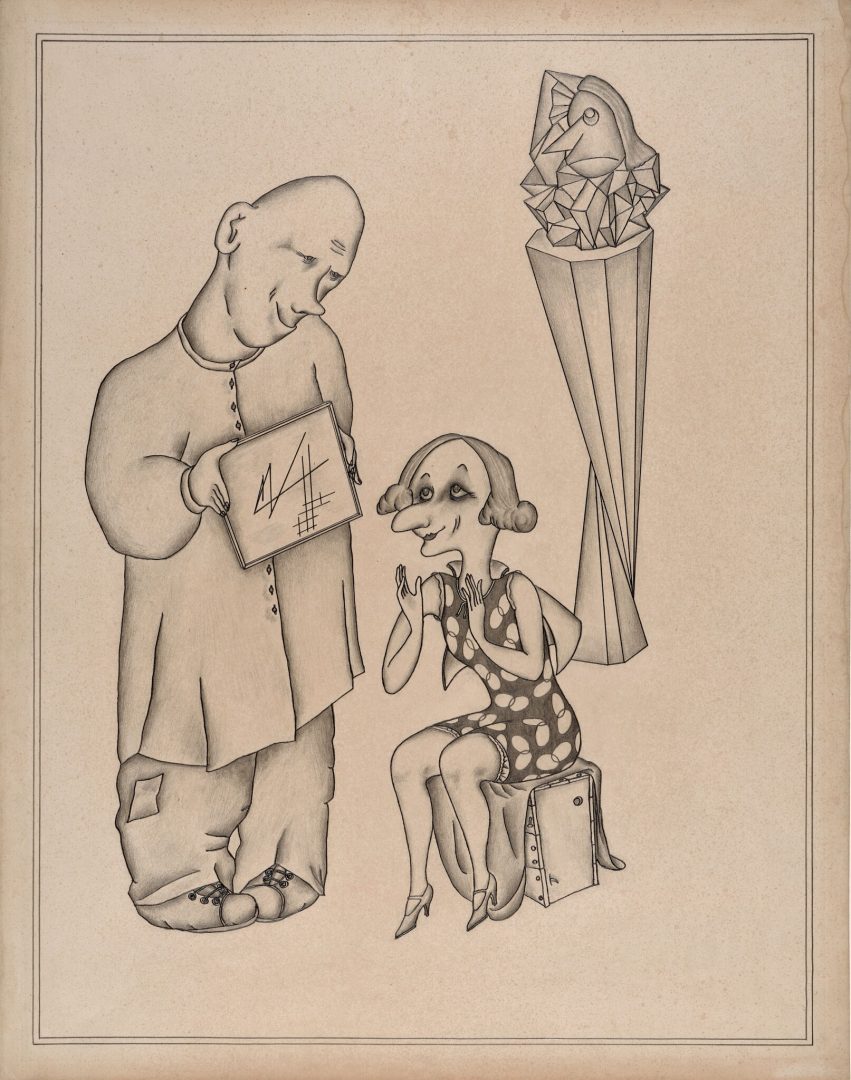
Edward Hagedorn. Galka Scheyer Viewing Modern Portraits of Galka Scheyer, c. 1926-28 | Photo courtesy of the Norton Simon Museum, Anonymous Gift, Courtesy of Denenberg Fine Arts
Another artwork in the exhibition is from Edward Hagedorn. “He was a self-taught artist from Berkeley,” explains Sander about the next painting. “Hagedorn was practicing a style that wasn’t getting much traction for him despite shows he held in artist associations and print clubs. But when he saw the Blue Four material at the Oakland Gallery show that Galka held in 1926, he was amazed. He saw an avenue for himself to move forward. They became friends and he did this beautiful drawing of Galka sitting on a wood chest and behind her is a pedestal. She’s thrilled to be looking at an artwork – on which there’s a number 4 – that a gentle giant is showing her. You can see the affection that is communicated in their glances.”
The film industry was taking off in Los Angeles in the 1920s when Scheyer met Josef von Sternberg, a renowned Hollywood director. He asked her to show him some of the pieces she was selling and he bought $600 worth of artwork. That confirmed that L.A. was the place for her and she made plans to move. The sale, which was massive at that time, enabled her to purchase a parcel of land and she asked the modernist architect Richard Neutra to build her home in the Hollywood Hills.
“In 1927 Galka met Beatrice Wood, a renowned ceramicist in Los Angeles, who was a friend of Walter and Louise Arensberg, who had a home in L.A. and lived in New York,” Sander relates. “They were the first collectors of modern art in the United States and had salons that Beatrice and Galka would frequent. Wood created a piece that showed Galka holding court.”
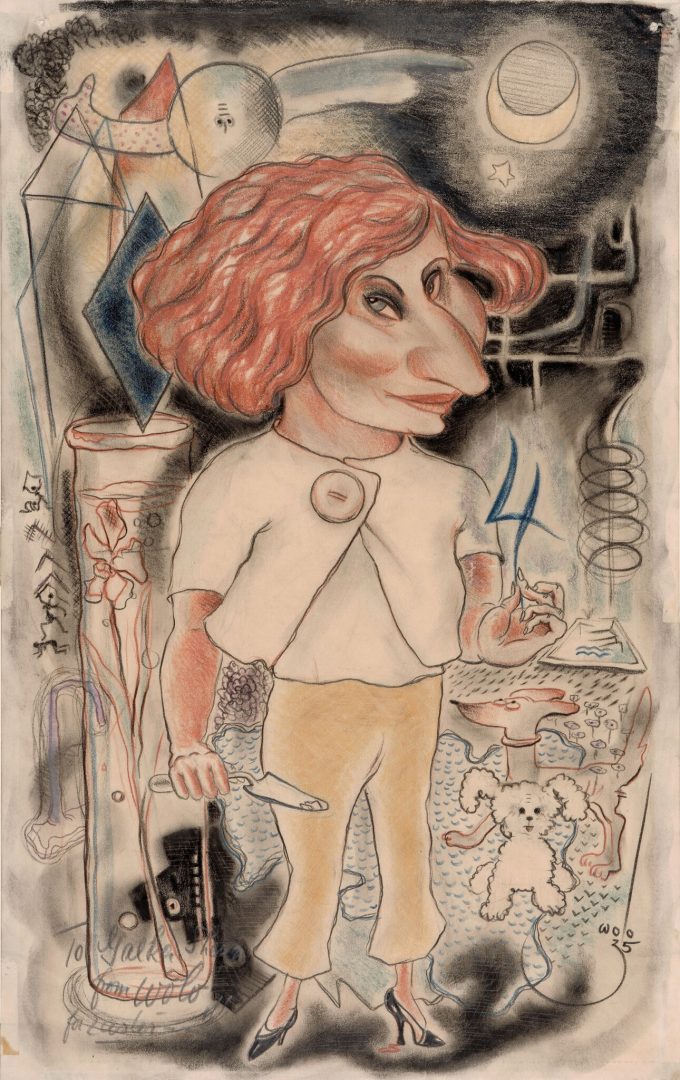
Wolo Trutzschler. Caricature of Galka Scheyer, 1935. | Photo courtesy of the Norton Simon Museum, The Blue Four Galka Scheyer Collection
One artwork in the exhibition is from Trutzschler. “Swiss caricaturist Wolo Trutzschler came to the United States, and went to Chicago for a bit,” informs Sander. “He made money doing caricatures of people at cabaret and selling the art to newspapers. He decided to come to L.A. in the late 1920s and lived on Olvera Street and was part of the German émigré community. He met Galka and created a piece depicting her in her milieu – she’s holding a number 4 and a trowel in her other hand because she loved to garden. Next to her is her poodle, whom she called Blue-Blue.”
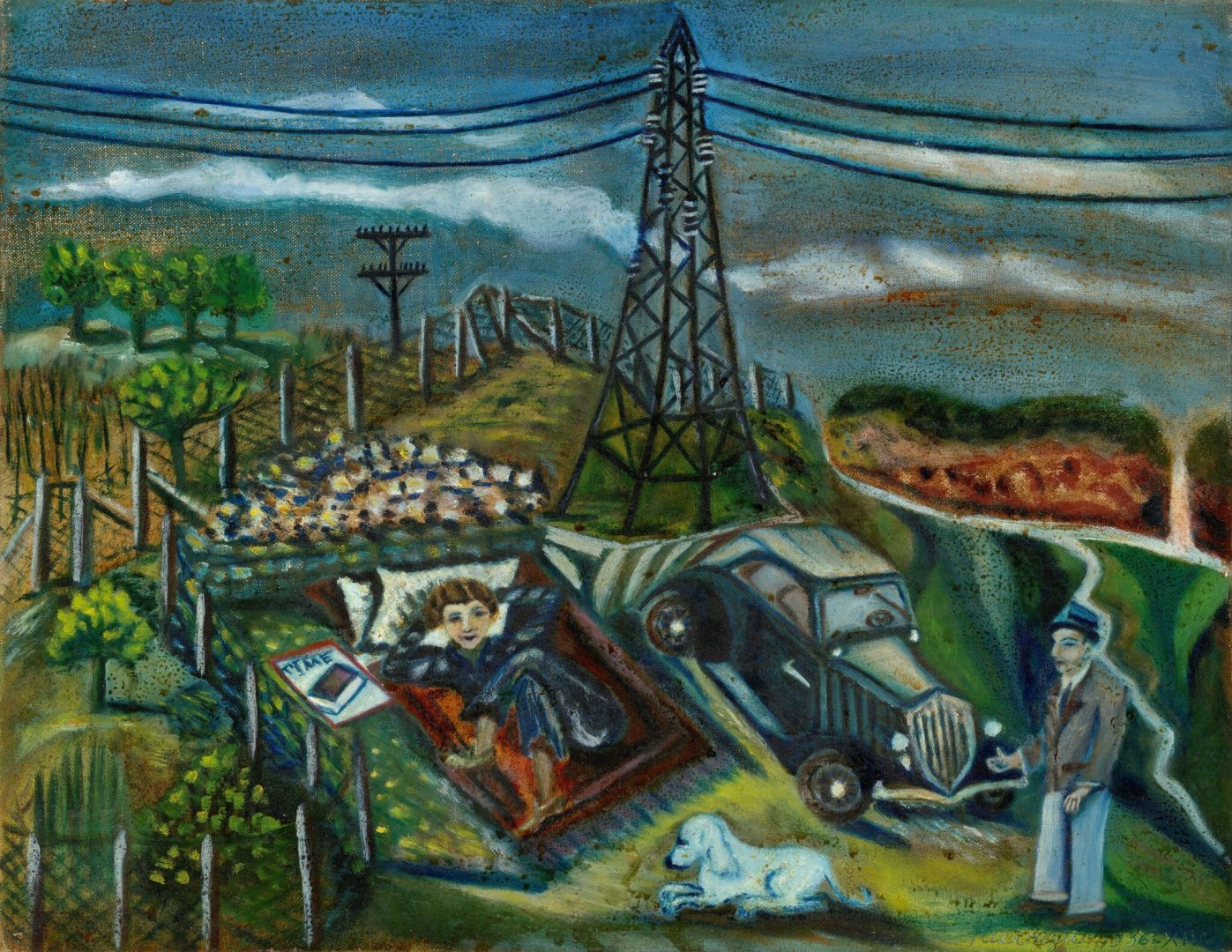
That Scheyer made numerous connections is evident in the exhibition’s displays. “Galka met Angelo Ravagli who married Frieda Lawrence, the former wife of D. H. Lawrence,” says Sander. “The Ravaglis lived in New Mexico but they started coming more frequently to Los Angeles in the 1930s. Through Galka, they made the acquaintance of a rare book dealer in L.A. who became the exclusive publisher of the manuscripts of D.H. Lawrence in the United States. As a thank you gift to Galka, Ravagli made a drawing showing her lying on a rug on a hill where her house would have been, with her poodle by her side.”
Scheyer mounted more than 60 exhibitions from 1925 to 1944, including one-man shows (i.e. Feininger, or Klee). They include traveling exhibits around California and the U.S. held at museums, galleries, and university art galleries. Additionally, she hosted salons at her home that had art displays and lent artwork to the salons and parties of other clients. The artworks she loaned to Marlene Dietrich in March 1929 (a list of which is included in the exhibition case), is an example of one such informal installation.
Angelo Ravagli. Galka Scheyer, 1936. | Photo courtesy of the Norton Simon Museum, The Blue Four Galka Scheyer Collection
The last part of the exhibition shows Scheyer’s house. “I wanted to bring people’s attention to her house because it’s inseparable from her work – and her spirit in many ways,” explains Sander. “Galka worked with Neutra to build a house that’s open to nature but with plenty of wall space. She had moveable screens on which to hang works of art for special shows and every room in her home displayed the art of the Blue Four. She had salons where people discussed art. She was the first resident at the top of the hill and was able to get permission from the city to name the street Blue Heights Drive. And the number she took for the house was 1818 because eight is divisible by four.”
“Galka lived there until her death in 1945,” Sander states. “It was sold in 2024 to a German art collector and business man and it will be the home of the newly established Blue Heights Art & Culture whose mission focuses on fostering contemporary artistic creation and hosting curated exhibitions within this historically significant, modernist space.”
Sander hopes viewers of the exhibition take away that “Galka Scheyer served as a powerful catalyst for the West Coast art scene, bridging the gap between bold new trends and a growing audience. Her work was driven by kinship, not just commerce. The portraits, artworks, and letters on display are more than artifacts; they are tokens of gratitude from a community that responded to her vision with enduring friendship.”
Over eight decades after Scheyer’s death, she will continue to be a source of inspiration for artists who will take part in the Blue Heights Art & Culture’s residencies. Through exhibitions like “Dear Little Friend: Impressions of Galka Scheyer” and “Maven of Modernism: Galka Scheyer in California” before it, the Norton Simon Museum is ensuring that her legacy as an ardent lover of art lives on.
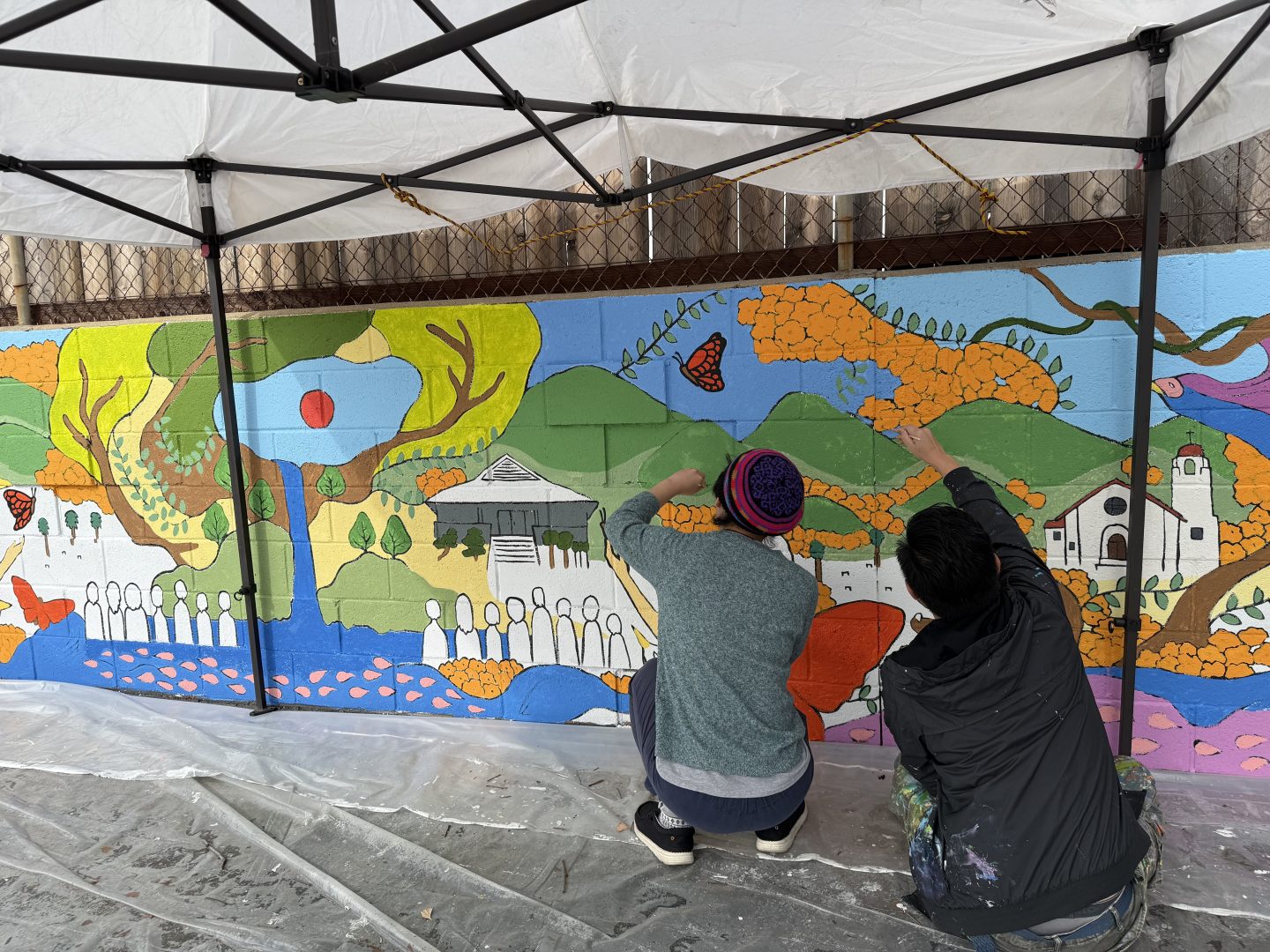
The Healing and Hope Mural painting in progress. | Photo courtesy of Miki Yokoyama / Pasadena Buddhist Temple
The Eaton Fire killed 19 people, destroyed over 9,000 structures, and brought untold grief to the community. More than a year later, displaced Altadena and Pasadena residents are still reeling from the trauma. There are constant reminders of what they lost and memories of that fateful day are still fresh in their mind.
As much anguish as the Eaton Fire wrought, there have also been many instances of a community coming together in their shared experience. The most recent of such moments is a group painting initiated by Miki Yokoyama who created a mural at the Pasadena Buddhist Temple. The brainchild of Kyoko Gibbs, wife of the temple’s spiritual leader Reverend Gregory Gibbs, the mural symbolizes what she thinks everyone needs – healing and hope.
The temple almost became a casualty of the fire had it not been for the bravery of neighbors who put out the flames. Gibbs recalls, “Greg and I, along with our younger son, live in the temple residence, so we followed the evacuation order in the very early morning of Jan. 7 and drove to a hotel. Watching the news at the hotel, we recognized the temple’s neighbors getting burned down despite the efforts of firefighters. Feeling urged to return to the temple, we drove back there to find our ‘heroes’ and some other temple members trying to extinguish the flames that had landed between the tea garden and the edge of the main building, Hondo.”
The Pasadena Buddhist Temple at night. | Photo courtesy of the Pasadena Buddhist Temple
“As we heard and learned about the temple members, associated friends, and neighbors’ loss and damage due to the fire, we were deeply hurt – not just physically but also emotionally,” continues Gibbs. “No words were spoken; we cried while holding and hugging them.”
Immediately, the temple community collaborated on events and efforts to help fire survivors. “Since two days after the fire, the restaurants in Little Tokyo (Azay and Far Bar) and San Gabriel (Yama Sushi), Little Tokyo Service Center, Keiro, Pasadena Japanese Cultural Institute, and the churches and temple in the affected Altadena and Pasadena areas, along with many others such as Buddhist Churches of America, Tanaka Farms, King’s Bakery, Go For Broke, and many more, have stepped up to the plate. Each individual person and organization gave them a hand in a selfless and compassionate way. As we continue to move forward, I am truly grateful for everyone’s kindness.”
The Gibbses themselves have been the recipient of people’s generosity. “During the remediation process for all the temple facilities, we needed to relocate to the temple’s friends’ house for about two months,” Gibbs says. “We were so fortunate to receive their kind offer. The temple is now fully restored and I am very thankful for those two temple board members who tirelessly worked with the insurance and intensive cleaning companies.”
The temple is now fully restored. | Photo courtesy of the Pasadena Buddhist Temple
For its part, the temple raised and distributed close to $90,000 to fire victims and actively continues to raise funds for them. “On the first anniversary of the fire, we presented them with a card and a small monetary gift. We wanted them to know that we are thinking of them. Additionally, we will be holding a White Elephant Sale, which opens to them first for free before the general public. We will also have a Girls’ Day Celebration with the tea ceremony, which they will be invited to join. More financial support will be distributed soon from the social welfare committee of Buddhist Churches of America (Pasadena Buddhist Temple is a part of BCA).”
Another activity that took place one year after the Eaton Fire was the creation of a mural. Recalls Gibbs, “As the first anniversary of the fire approached, I was thinking about what we – as the whole affected community – could do to help heal and inspire hope. Then, SOGs (Sons of Gardeners), who volunteer twice a week to maintain the temple grounds, were discussing painting a concrete section of the ramp outside. And it hit me with the idea of creating a mural instead of just painting. I brought up this concept with them and shared it with the temple board, and they all rallied behind it right away!”
“Fortunately, Keiro, which has been a financial supporter of activities and events for fire survivors, also agreed to continue its support,” Gibbs says further. “I knew who I needed to ask to lead the mural designs – Miki. She isn’t a member of the temple but I met her through the meal program for fire survivors.”
In mid-November, Gibbs reached out to Yokoyama and proposed crafting a mural and inviting the participation of those who had lost their homes in the fire as a way to help restore the town. They discussed what kind of wall painting they wanted to create and developed the concept together. To signify what it represents, they called it Healing and Hope Mural.
Miki Yokoyama. | Photo by May S. Ruiz / Hey SoCal
The Eaton Fire decimated Yokoyama’s home and all her artwork, and wreaked havoc on her mental health. She discloses, “The emotional shock was immense; I struggled with symptoms of PTSD for a long time. During the first year after the disaster, I believe that painting truly saved me. Now, through this project, I find healing in creating together with the temple community and others who were also affected by the disaster. Realizing that I am not alone and receiving strength from everyone involved fills me with deep gratitude.”
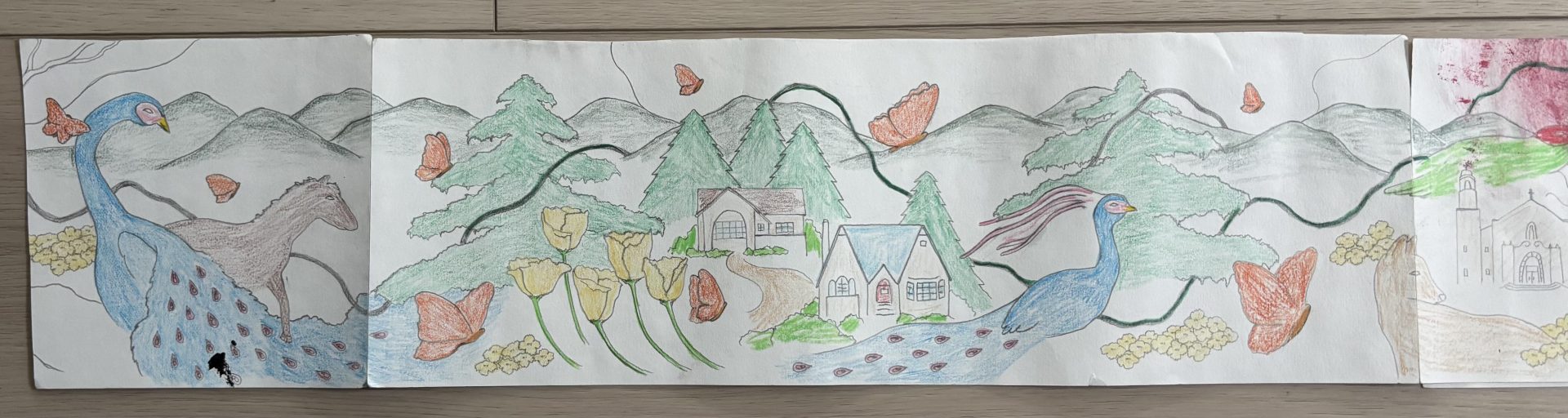
Yokoyama describes how she transferred the painting – measuring approximately 70 feet long by 56 inches tall – on the wall. “I first created a rough sketch on paper and then projected it onto the wall. However, many of the finer details will be added freehand while looking at the actual wall. From here, I plan to add more delicate lines and dots to develop the piece further.”
Yokohama’s drawings of the mural. | Photo courtesy of Miki Yokoyama
“This project is open to everyone, regardless of artistic experience,” explains Yokoyama. “Before we began painting together, I prepared the mural by drawing the outlines in black ink. Although I predetermined the colors, my hope is simply that everyone enjoys the process. I tell participants that it is perfectly fine if they paint outside the lines or even cover the black outlines. I will make any necessary corrections afterward, so everyone is free to add color as they wish.”
“At present, the mural is about halfway complete,” Yokoyama adds. “Much of the white space has been filled, and the next steps are to apply a second layer to the lighter areas of ink, retrace the black outlines, and then add finer lines and dots. By layering these delicate details, I hope to bring greater depth and subtlety to the work. Even if it takes time, I am committed to leaving behind the best possible piece.”
“As we continue working together with the community – shaping it according to our shared intentions – I am also excited to see how the mural will ultimately come together,” Yokoyama says further. “I am very much looking forward to its completion.”
One of the Eaton Fire survivors who went to the temple to paint heard about it through her mom who is a member of the temple. She asks that her name not be mentioned but graciously agrees to talk about her participation.
“Miki was there and she showed me where to paint, provided paint and brush, and instructions,” she begins. “I painted the windows on the house light blue as she instructed. She explained that it was okay to paint over lines as these will be repainted after the color is applied; the community painters are adding color and the artists are adding detail. While I was there one of the artists was refining with details. She used a Q-tip to add white spots to a red butterfly. The mural is a representation of the local community and the hope that exists in the Eaton Fire area to rebuild the physical and emotional aspects of the community.”
Photo by May S. Ruiz / Hey SoCal
Painting the mural offered a brief respite from her daily stresses in the aftermath of the fire. She says, “The consequences of the fire a year later are still part of a continuing domino effect in various ways that will remain for many years. Growth and hope are also results of this effect. Projects and institutions such as the Pasadena Buddhist Temple bring the community together for positive focus and forward momentum.”
It is exactly what compelled Gibbs to come up with a community endeavor. She declares, “Through this experience – coloring in the mural while chatting with others or working quietly – I would like all to feel connected and empowered. You are not alone. We are stronger together.”
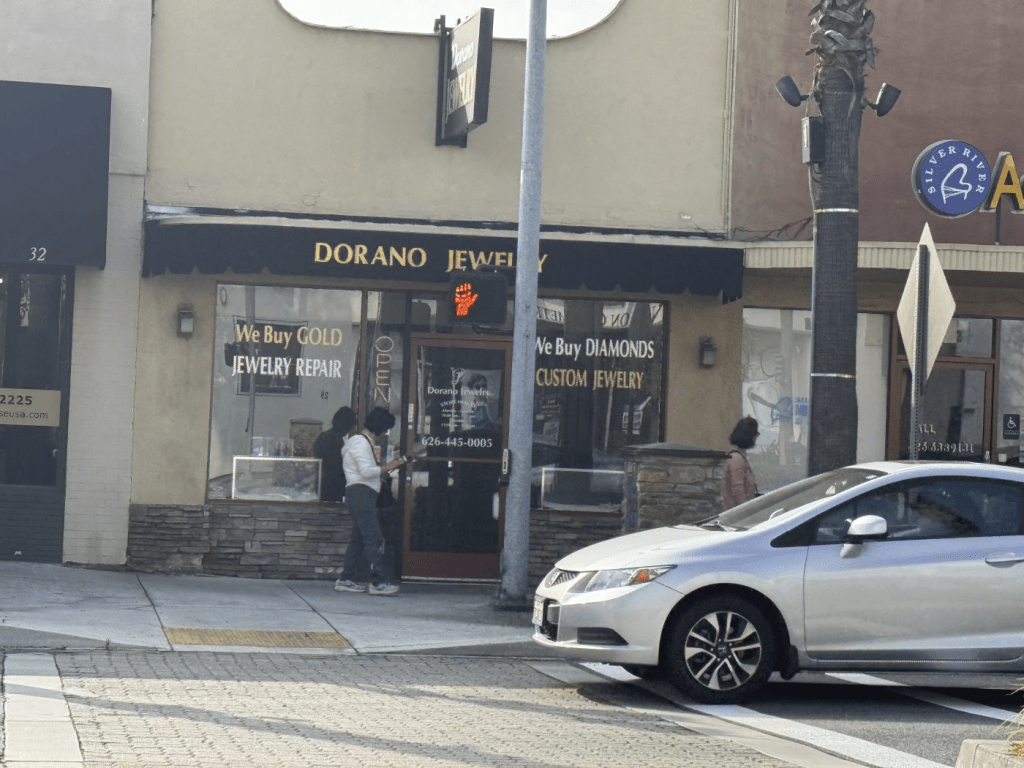
The Dorano Jewelry store on Huntington Drive in Arcadia. | Photo by May S. Ruiz/Hey SoCal
Gold is regarded as a risk-averse asset and safe haven during times of uncertainty. And recent geopolitical instability sent the price of gold soaring to an unprecedented high of over $5,000 per ounce then plunged below that mark.
But long before the huge demand for it and the wild price swings grabbed financial news headlines, the enduring value of gold inspired songs from Neil Young’s “Heart of Gold” to Harry Styles’ “Golden.” The metal — universally enjoyed as a piece of jewelry — symbolizes beauty, longevity, power, status and wealth.
In certain Asian cultures, gold figures prominently in people’s customs and traditions. Newborn children in China are commonly gifted with a piece of gold jewelry; gold is also a part of the Lunar New Year celebrations. In Korea, a gold ring is usually given for a child’s first birthday. In India, gold is purchased during the annual Diwali festival to bring wealth and good luck.
For Garen Avetisyan, proprietor of the Dorano Jewelry store on Huntington Drive in Arcadia, jewelry and the craftsmanship behind it are his life’s work. Creating memorable pieces are a source of pride and joy for this immigrant from Armenia who now calls Glendale home.
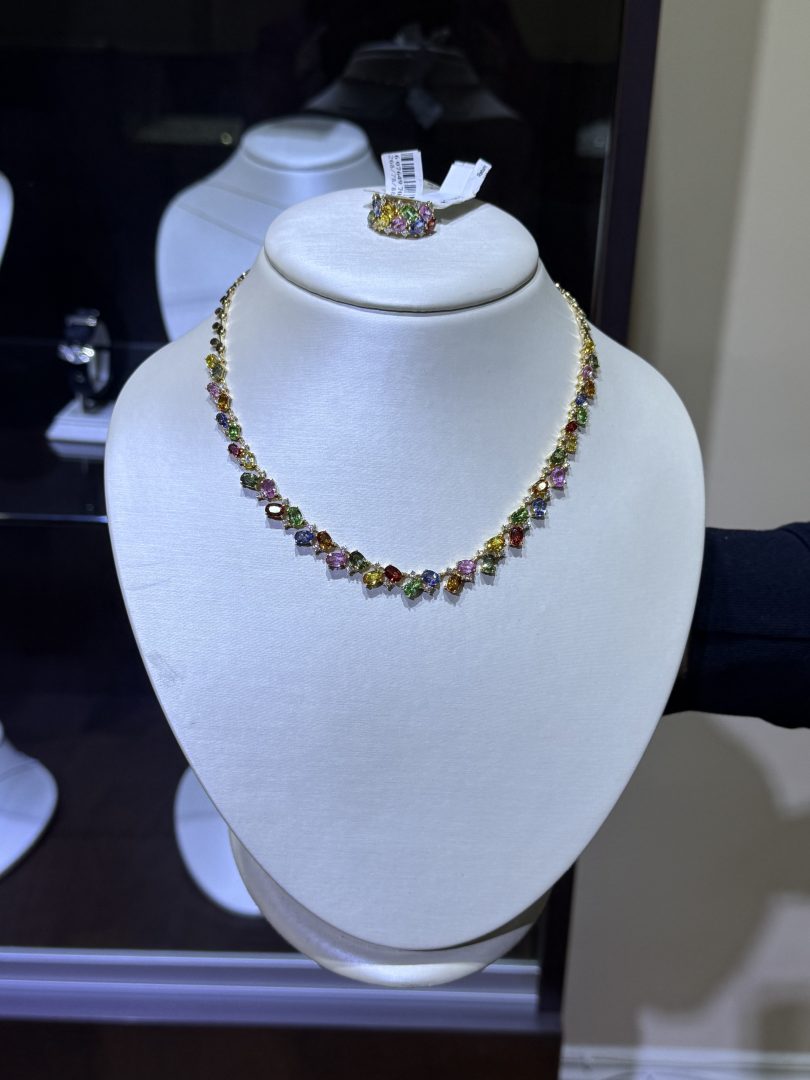
A 14-karat yellow gold necklace and ring with fancy sapphires. | Photo by May S. Ruiz/HeySoCal.com
Avetisyan’s story is that of very immigrant’s journey from their homeland to a new place to build a new life. Born and raised in Yerevan, Armenia, he started working in the jewelry business when he was 18. In 2012, at the age of 37, he and his family migrated to California and the following year he opened Dorano Jewelry.
Making jewelry is an art and skill that Avetisyan honed back in Armenia. He relates, “I had family members in the jewelry business and I always enjoyed watching them work, so I decided to follow in their footsteps. I took private jewelry courses in Armenia and also spent years observing, reading and educating myself on the profession and training. I still continue to expand my knowledge to this day.”
Uprooting oneself and beginning anew in a foreign country is a huge challenge and Avetisyan knows it only too well.
“I began looking for a storefront for my jewelry business soon after my family and I came to California,” Avetisyan recalls. “Since I had only been in America for such a short period of time, I had no credit history. Therefore, a lot of people turned me down despite the fact that I was willing to pay for a few months in advance. It was very difficult to gain people’s trust. I stumbled across one location in Arcadia and spoke to the owner directly. Thankfully, after our conversation, he decided to give me a chance and that’s how my shop opened in Arcadia in early 2013.”
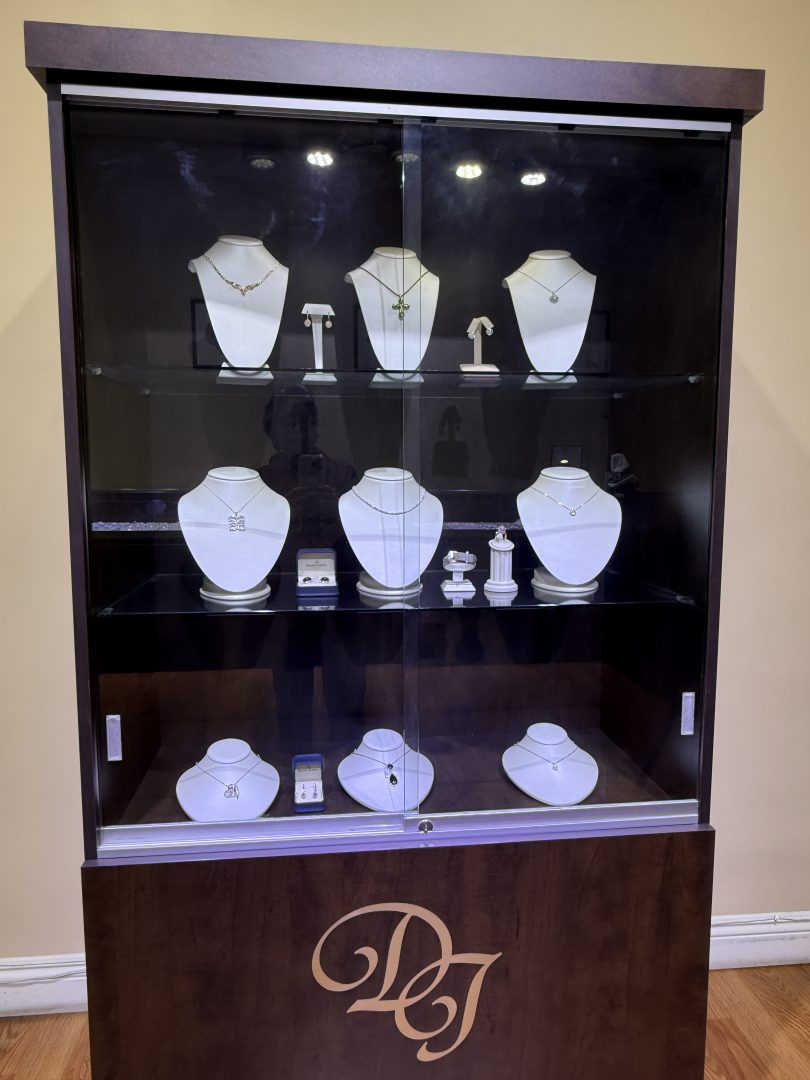
A display case at Dorano Jewelry. | Photo by May S. Ruiz/HeySoCal.com
The moniker he gave to his shop — Dorano Jewelry — is a portmanteau of sorts and has a special meaning. Reveals Avetisyan, “I always admired the Italian language and used it as an inspiration for my store name. ‘Oro’ is Italian for gold and ‘d’oro’ refers to something made of gold. I incorporated these words and created the unique name of ‘Dorano.’ I believe it reflects the elegance and timelessness associated with gold jewelry.”
While finding the location for his shop was a fortuitous initial step, making a success of the business seemed an insurmountable undertaking early on in his business venture. He struggled to make ends meet yet he persevered.
Avetisyan says, “The first few years were very difficult for me because I was starting over in a new country and speaking a language not native to me. I had no connections, no reputation and didn’t know a lot of people. But I chose to continue this journey because I felt a huge responsibility to continue my life’s work that I had begun in Armenia. I didn’t view this passion of mine only as a job but also a skill that had so much history and hard work behind it. I had confidence in myself and my ability and I knew that if people gave me a chance, they would also recognize value in my work.”
“I realized that I was making progress when customers would visit the shop and share that they were recommended by my other clients,” continues Avetisyan. “I was excited that word of mouth was growing because it meant I was building trust with the community. As more people became happy with the work and product I was providing them with, I knew that all the struggle was worth it and continued to work just as hard.”
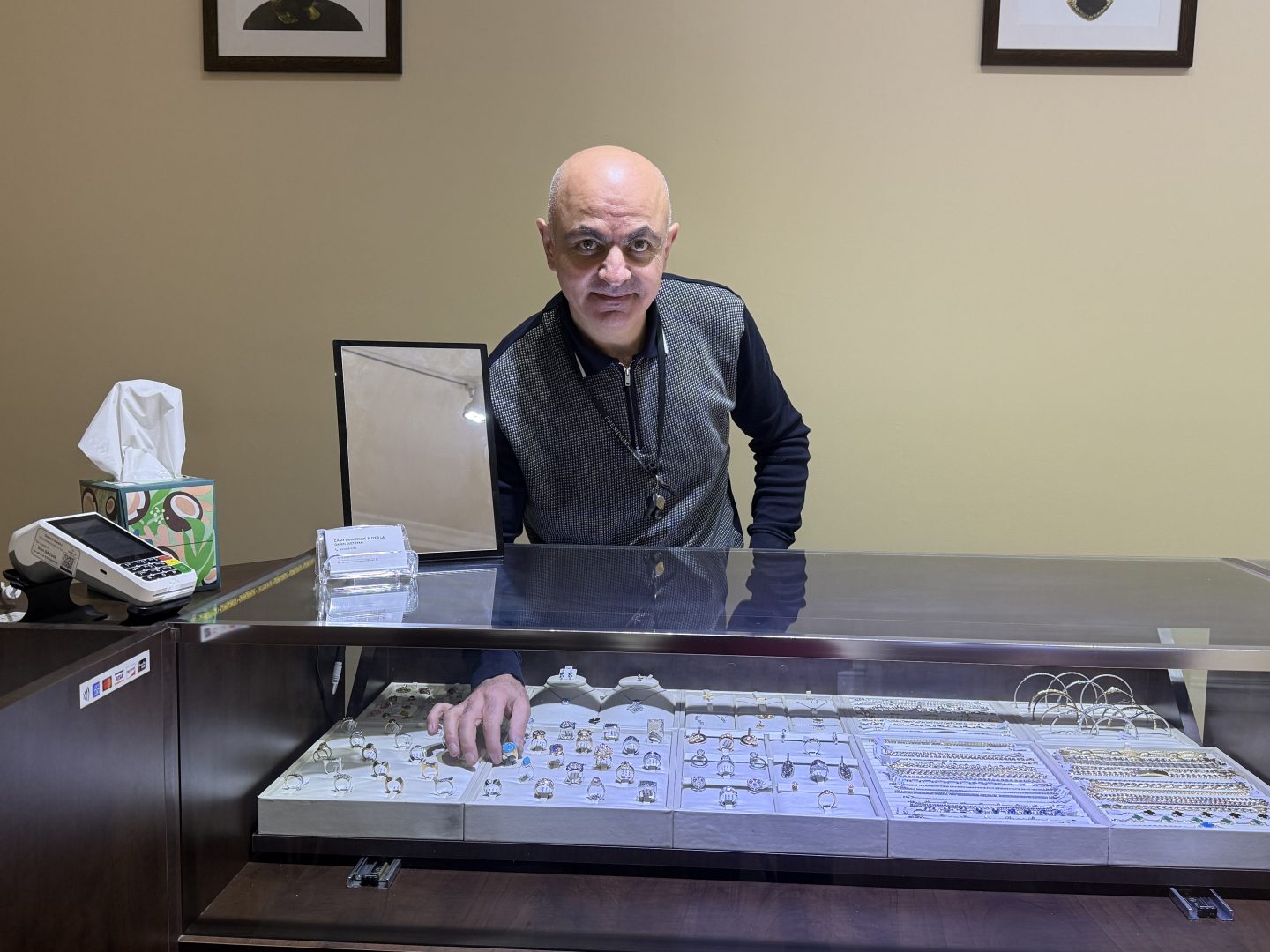
Garen Avetisyan, jeweler/gemologist and proprietor of Dorano Jewelry. | Photo by May S. Ruiz/HeySoCal.com
There is no shortage of jewelry stores in the vicinity — every mall has at least one — where shoppers can buy a necklace, ring or a pair of earrings. But what could be more exceptional than owning a bespoke piece that reflects one’s individuality? Custom work is Dorano Jewelry’s niche and Avertisyan has set out to make his shop stand apart.
He declares, “Dorano Jewelry is unique due to our deep expertise and detailed attention to each client. The staff is skilled across all aspects of the business, including custom designs, appraisals, repairs, sales and more. Thus, customers receive all services in one place quickly yet efficiently. This helps us ensure consistency and quality, and build close relationships with all our guests.”
“Dorano Jewelry holds itself to a high standard and has maintained this benchmark of care since day one,” Avetisyan emphasizes. “The business first advertised on television and social media to try and spread the word. After our first year, we relied primarily on word of mouth, focusing on growing the business through trust and reputation. Over time, satisfied customers became the best promotion.”
Being able to offer a variety of services has served Avetisyan well. “Dorano Jewelry operates as a ‘one stop shop’ as the business is evenly divided among custom work, repair services and jewelry sales from our display,” he says. “Each of these areas makes up approximately one-third of our business, allowing us to serve a wide variety of customer needs.”
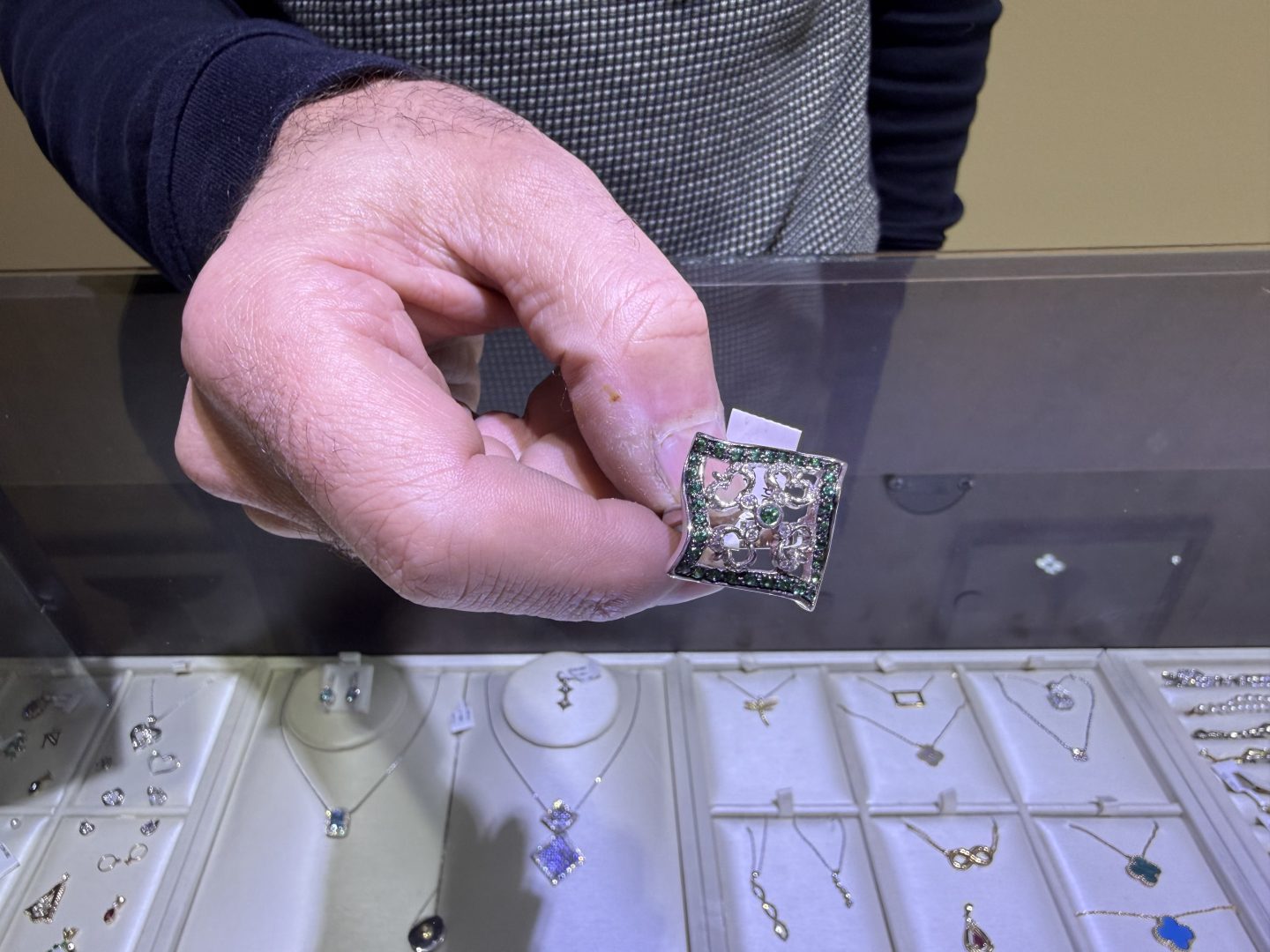
14-karat white gold ring with green tsavorites and diamonds. | Photo by May S. Ruiz/HeySoCal.com
Many people think bespoke jewelry is prohibitively expensive — a misconception that Avetisyan hastens to clarify.
“Custom jewelry is definitely affordable at Dorano Jewelry,” Avetisyan asserts. “The most requested items are engagement rings and wedding bands and we offer a large variety of options and customizable details to best fit our clients’ budget. Whether they are simple elegant designs to more intricate pieces, we work very closely with all clients to ensure they receive the best quality within their budget.”
But it isn’t just the product and service that make Dorano Jewelry different. Avetisyan clarifies, “Dorano Jewelry is more than just a jewelry store, it’s a community and welcoming space. We focus on building a relationship based on trust and connection, allowing clients to come to us for guidance and support. Through this genuine relationship, we celebrate the most meaningful life moments together — from engagements to weddings to family milestones. The community feeling is what makes this store so special.”
Repeat business and customer loyalty are vital for every business’s success. And Dorano Jewelry has been fortunate to have both.
“Sixty percent of our business is generated from existing clients while 40% comes from new customers,” says Averisyan. “The majority of our clients are locals — I would say about 80% are from Arcadia, Pasadena and nearby cities. The remaining 20% is from Santa Barbara, San Diego and even clients who now reside in Las Vegas and visit us sometimes.”
14-karat rose gold ring with pink quartz, diamonds, pink sapphires and rubies. | Photo by May S. Ruiz/Hey SoCal
Asked if there’s one particular piece he has created over the years that is memorable, Avetisyan quickly replies, “A client wished to design a custom ring based on a lost heirloom left behind by the client’s ancestors. We worked closely together to maintain the sentimental value of the ring based on the client’s memory and description of the heirloom. Our goal was to preserve its history while also customizing the ring to best fit the client’s style and needs. We used an amethyst for the center stone and incorporated Indian symbols reflected through shape and detailing, referring to custom 3D designs to guide us. We achieved a refined and timeless finish.”
“I specifically remember the extensive research involved with this piece,” Avetisyan expounds. “To fully understand what the client wanted and realize the client’s vision, I studied symbolism and cultural meaning to best design the historical elements with accuracy and respect. I had the chance to explore this cultural background, making the piece challenging to make but with a rewarding outcome. It was one of the coolest projects I completed, learning a lot in the process.”
Having a piece of jewelry created by Dorano Jewelry means acquiring something that evokes significance for the person wearing it. Whether it’s to celebrate Valentine’s Day, a birthday, a wedding or anniversary, jewelry makes any special occasion sparkle. But it can also be just a practical, wearable investment — and jewelry makes even the everyday shine.
“Radical Histories: Chicano Prints from the Smithsonian American Art Museum,” makes its West Coast debut at The Huntington’s Marylou and George Boone Gallery from Nov. 16 to March 2. Curated by E. Carmen Ramos, forming acting chief curator and curator of Latinx art at the Smithsonian American Art Museum, the exhibition features 60 dynamic works by nearly 40 artists and collectives that trace more than six decades of Chicano printing as a form of resistance, community building and cultural reclamation.
Commencing with the late 1960s Delano Grape Strike, the precursor to the United Farm Workers (UFW) labor union, the prints in “Radical Histories” depict momentous events in the history of community activism and the formation of collective identity. Chicano artists used silkscreens, posters, and offset prints to mobilize communities – often with barbed wit, lively colors, and evident urgency.
The exhibition is arranged in five thematic sections: “Together We Fight,” “¡Guerra No!” (No War!), “Violent Divisions,” “Rethinking América,” and “Changemakers.” Each section highlights how Chicano artists have used the accessible and reproducible medium of printmaking to confront injustice, affirm cultural identity, and engage in transformative storytelling.
Installation photo courtesy of The Huntington
Section 1: Together We Fight
The opening section explores how the UFW, cofounded by César Chávez and Dolores Huerta, collaborated with visual and performance artists to support the fight for farmworkers’ rights. Key labor actions inspired a wave of Chicano art that functioned as both political expression and tangible solidarity. Artists adopted the UFW’s iconic black eagle, embedding it in posters, prints, and murals that raised awareness and helped fund the movement. The union’s visual language extended beyond its own campaigns, appearing in advocacy materials for the Texas Farm Workers Union and the Cannery Workers Committee in Sacramento.
Section 2: ¡Guerra No! (No War!)
Since the 1960s, Chicano graphic art has played a vital role in advancing antiwar resistance. These works serve as rallying cries, counternarratives to mainstream media, and spaces of reflection. Chicano artists have used print and poster art to critically examine U.S. military interventions in Vietnam, El Salvador, Chile, Iraq, and elsewhere.
Section 3: Violent Divisions
The U.S.-Mexico border has been a central theme in Chicano art. Printmaking has enabled Chicano artists to raise awareness about the experiences of immigrant communities because it is affordable and prints are easily distributed. Recurring iconography – such as the monarch butterfly, a symbol of natural migration – challenges the notion of geopolitical boundaries. Figures like the Virgin of Guadalupe and ancient Mesoamerican goddesses appear as powerful cultural symbols.
Section 4: Rethinking América
This section presents works that broaden historical narratives by including perspectives rooted in resistance and cultural reclamation. The artists drew inspiration from revolutionary figures and movements to create narratives that center Mexican American and Indigenous perspectives. Using mapmaking and record forms like the ancient Mesoamerican codex, Chicano artists also created speculative past and present narratives to reimagine social landscapes.
Linda Zamora Lucero, América, 1986, screenprint on paper, Smithsonian American Art Museum, Gift of Gilberto Cardenas and Dolores Garcia. | Photo courtesy of The Huntington
Section 5: Changemakers
Portraiture is a cornerstone of Chicano art, used to educate audiences and celebrate both cultural icons and overlooked figures. Artists often base their portraits on documentary photographs, transforming black-and-white images into vivid prints that honor the subject’s life and legacy. Featured changemakers include political prisoners, activist leaders, attorneys, actors, and artists—individuals who challenged the status quo and shaped history.
By email, Dennis Carr, Virginia Steele Scott Chief Curator of American art, and Angélica Becerra, Bradford and Christine Mishler Associate Curator of American Art – also the venue curators – discuss the exhibition’s origins, its relevance, and viewer takeaways.
“Radical Histories was organized by the Smithsonian American Art Museum to highlight the central role Chicano artists have played in shaping American visual culture,” begins Carr. “The exhibition began touring nationally in 2022 following its debut at the Smithsonian American Art Museum, and The Huntington is presenting its first West Coast exhibition.”
“While the core exhibition is drawn from SAAM’s collection, our presentation places particular emphasis on Los Angeles as a vital center of Chicano printmaking,” Carr clarifies. “To honor that history, The Huntington commissioned a new mural by Los Angeles–based artist Melissa Govea, created in collaboration with Self Help Graphics & Art, a community print studio that has supported Chicanx and Latinx artists since 1973.”
Melissa Govea’s mural. | Photo courtesy of The Huntington
“Through this partnership, we commissioned Melissa Govea, a Los Angeles–based artist who is Chicana and Purépecha,” explains Carr. “Govea began her career as a muralist and is known for work that honors community, ancestry, and cultural memory. Rather than giving her a specific direction, we invited her to respond to the themes of the exhibition. The result is a dedicated gallery featuring a new mural, a sculptural installation, and print-based works that together reflect multiple dimensions of her practice. This marks the first time her work has been presented in a museum context.
“Her mural, titled ‘Sangre Indígena’ (Indigenous Blood), draws on portraits of friends, collaborators, and cultural leaders who have shaped her life. The work recognizes the generations of artists, organizers, and knowledge-keepers who came before her, while affirming the presence, agency, and creativity of those shaping Los Angeles today.”
Installation Photo courtesy of The Huntington
It would be an oversimplification to say how many works in the exhibition are from L.A. artists, as Becerra explains.
“Many artists in ‘Radical Histories’ have deep ties to Los Angeles, whether they lived, studied, printed, organized, or collaborated here. The most meaningful connection is through Self Help Graphics & Art, which offered open studio access, mentorship, and a collaborative printmaking environment to generations of Chicano and Latinx artists.
“Artists such as Barbara Carrasco and Ernesto Yerena Montejano continue to live and work in L.A., and their practices remain rooted in local community networks. So rather than thinking in terms of birthplace alone, it’s more accurate to say that Los Angeles is one of the central homes of Chicano printmaking, and the exhibition reflects that history.”
Installation photo courtesy of The Huntington
Asked if the exhibition has taken greater meaning now with ICE raids targeting Hispanic communities and looking Hispanic or Latino is enough to get one handcuffed and thrown into a detention camp, Becerra replies, “The themes in ‘Radical Histories’ are both longstanding and timely. Chicano printmakers have historically used posters and prints to address labor injustice, state violence, displacement, and the struggle for belonging – issues that continue to resonate today.”
Becerra says further, “What museums like The Huntington can offer is space: a place to look closely, process, reflect, and connect personal experience to shared history. These works remind us that art has always been a tool of community care and resistance.”
As for the viewer takeway, Carr states, “We hope visitors come away with a deeper understanding of how Chicano artists have used printmaking to organize, to tell stories, to build community, and to assert cultural identity. And we hope they see that art is not separate from daily life – it is a tool for resilience and collective meaning-making.”
“In addition to the exhibition itself, The Huntington will host public programs, bilingual gallery talks, and hands-on workshops in collaboration with local artists and partners,” adds Carr. “A major highlight will be Historias Radicales: Latinx Identity and History in Southern California, a two-day conference on December 5–6, connecting the exhibition to The Huntington’s co