Altadena Library Programs Reflect Multi-Ethnic Community

Originally published on 24 November 2016 in the Pasadena Independent, Arcadia Weekly, Monrovia Weekly, and Sierra Madre Weekly

On the second Saturday of every month (at least from October through June), the Altadena Library turns into a hopping and noisy place – descriptions few people would associate with the word library. And that’s by design.

A brainchild of Mindy Kittay, Director of the Altadena Library District, Second Saturday began about a year and a half ago. She explains, “I felt we needed to do something to bring the community into the library for reasons besides checking out a book. We want to provide opportunities for people to create, imagine, and be motivated to learn, grow, and enjoy music, dancing, food, and drink.”

“From 6:30 to 8:30 pm every month, Second Saturday features a band to provide music people can dance to while they eat, drink, mingle and talk,” continues Kittay. “In October we partnered with ‘Next Door’, an online social network for communities. Altadena ‘Next Door’ reaches 4,000 members and they wanted to celebrate in a meet-and-greet where they can see face-to-face the people they’ve been talking to online. So we invited them to our community center for that purpose. About 50 or 60 ‘Next Door’ people came that Saturday then they headed upstairs to eat, drink, listen to music, and dance.”

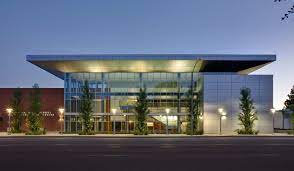
Image taken from the Altadena Library website

Kittay makes it a point to present a diverse offering. This month, Second Saturday (which will be held on a first Saturday, December 3, because the Christmas Tree Lane lighting is scheduled for December 10) will feature Young Dempsey. Band members Drewin Young, Josh Jones, Matt Lake and Marc Doten will play music from the 50s to 80s to evoke hot-rodded nostalgic doo wop and country sound.  

This month’s Second Saturday event will coincide with the Open Studios Tour weekend which will kick-off with a reception on Friday, December 2 from 6 to 9 pm. The library will be open on Saturday, December 3, from 10 am to 6 pm and on Sunday, December 4, from 11 am to 5 pm.

“The library hasn’t opened on a Sunday in several years but it will be this weekend for Open Studios. It’s where their tours will start, for people to pick up the brochures, maps, and information for the self-guided tour to 23 locations hosting a total of 53 artists,” Kittay says.

Unlike a typical gallery show, the Open Studios Tour provides an intimate view into the artist’s life and studio; it shows where and how ideas are conceived and developed. Visitors get a glimpse of the creative process, which makes for an individualized experience.                          

From January through June, Second Saturday concerts will showcase multi-cultural musical performers: Todd Washington Trio (blues, folk, rock, soul and gospel); Louis Van Taylor Quintet (jazz); DeRumba (Spanish guitar to the beat of the gypsy rumba); Splish Splash Band (folk ‘n blues);  Michael Haggins Band  (funk and smooth jazz); and The Satisfaction Band (dance music Top 40, Latin rock, R&B, cumbias, and oldies).

A project Kittay is currently working on is called Community Conversations. She describes, “Using the Harwood Process, we will reach out to every corner of Altadena between now and mid-March, and have a series of fifteen conversations. We want to represent everyone in the community regardless of race, religion, financial standing, or sexual orientation. We want to ask them their aspirations for themselves and the community; their challenges; and how they felt they can help with those challenges.”

“We will compile our findings and create a report which we will present to the Altadena Chamber of Commerce, Town Council, Board of Supervisors, churches, schools, and service  organizations including the Rotary Club,” Kittay says further. “From this process we expect three specific things. First: connections – we will learn about organizations, people and opportunities, and who needs what so we can effectively connect people. Second: partnerships – this will help eliminate duplication of effort. We can partner with someone to provide what we need instead of us reinventing the wheel to fill that requirement. Third: a plan – our strategic plan expires in 2017. We’ll use the information we gather to help us decide how we can better serve our community.”

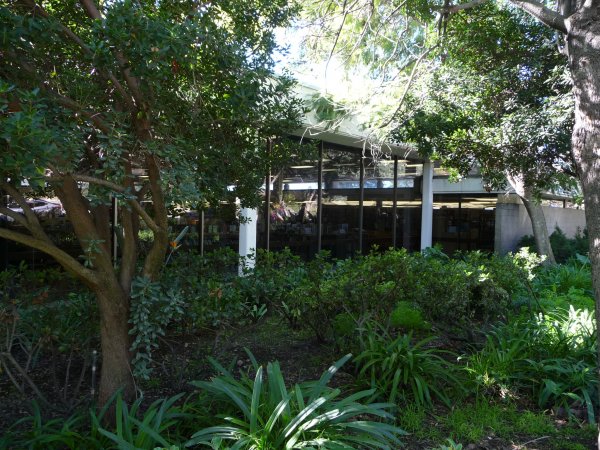
Image taken from Altadena Library website

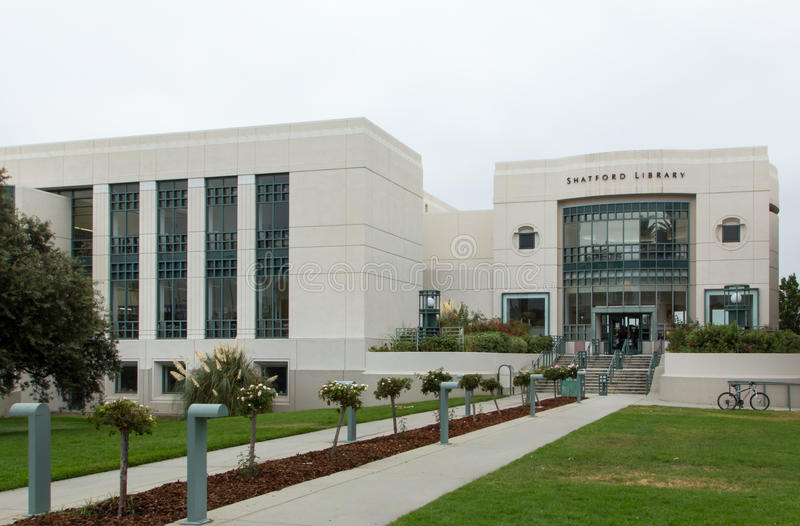
Kittay came on board in November of 2014 to lead a staff of 32, and run the main library, which occupies a 10,000 sq. ft. mid-century building on East Mariposa Street, and a branch library, a 1,500 sq. ft. structure on Ventura and Lincoln in west Altadena. She was responsible for the many changes the main library has undergone since. Without spending a dime, she supervised moving around shelves and area partitions to create spaces for specific functions and users. She got rid of books which no one has checked out in years and reorganized the physical area to make it easier for people to locate what they’re looking for.

And there’s much to find. The Altadena Library has over 80,000 items for people to borrow including books, magazines, CDs, DVDs, books on CDs and video games. It has ebooks and eaudiobooks that can be checked out and downloaded from home.

There are 20 laptops and 12 chromebooks available for patrons to checkout for the full day at the main library (but cannot leave the premises). The branch library has three laptops and three chromebooks. Both library sites have 1G WiFi.

Users have access to computers, printers, scanners, and copiers (color and B&W), 3D printers and Virtual Reality equipment by appointment. The libraries have online programs to help with homework and job skills as well as research. Librarians can help with questions and research needs. All the services at both libraries are free except for photocopying, faxing, and printing.  

A community room is available to the public for use as a small meeting or collaboration space.  There is a water conservation garden for people to enjoy on site as well.

According to Kittay, Altadena has about 55,000 residents and has also seen several changes since the Altadena Library opened its doors in 1967. Its population used to be 30 percent African Americans and 10 percent Latinos, the number has reversed to 30 percent Latinos and 10 percent African Americans.

It is Kittay’s job to make sure the library adapts to the shifting needs of the community. But she is undoubtedly up to the task. After all, she gained an excellent experience at her previous job as the Finance Director at Any Think Libraries in Colorado. During the five years she worked there, it went from what the Denver Post decried ‘the worst library in the state’ to winning an IMLS (Institute of Museum and Library Services) Library of the Year award, the highest honor it can achieve. “We reinvented what a library could be,” she declares. 

In the two years since taking the helm at the Altadena Library, Kittay has redefined its functions.  She has created a library that is responsive to the needs of the community – “outward-facing,” she says.

With Kittay steering the wheel at the Altadena Library District, it will assuredly head in the direction where it had never gone before.                                                                                      

Farmscaping Takes Root

Originally published on 3 November 2016 in the Pasadena Independent, Arcadia Weekly, Monrovia Weekly, and Sierra Madre Weekly

Farmscape, which started out as a small company offering backyard vegetable growing service to Pasadena residents, is slowly spreading the urban farming concept to large businesses whose names most people recognize. 

This evolution has been an organic process which began when a handful of young college students collaborated on what seemed like an ambitious project.  

When Dan Allen was 21 years old, one of his old high school pals was writing an analysis paper for Pomona College about environmental challenges to the biosphere. It just happens that this friend is also a day trader, has made a great deal of money, and would like to do something about it.  

Relates Allen, “He wanted to identify the problem and solve it which, looking back, is a naïve and noble objective at once. But we were 20, maybe 21 years old so that made sense at the time; we were young idealists and optimists who wanted to make the world a better place. I moved from where I was then staying in D.C. out to California, and together with two other childhood buddies from Iowa, we turned a school paper into a business plan and created Farmscape in 2009.”         

Seven years later, Farmscape has a staff of 30 and operates from an office in Eagle Rock that has an outdoor space for growing produce. It maintains urban farms for 30 public and private schools, several restaurants, and a multitude of residential clients in the Los Angeles area. It also has branched out to Northern California which caters to a mostly corporate clientele that counts the San Francisco 49ers ball club, the Giants stadium, and Oracle as customers. And Allen is all of 31 years old.

Says Allen, “Our clients enjoyed the vegetable garden experience with their kids; our subsequent expansion into schools, therefore, was an organic growth. The most satisfying aspect of this business endeavor is the experiential part. It’s working with partners or clients who are inspired by the garden in some way.  Our educational program instills in young children a love of the outdoors and nature. I make it a point to hire people who have backgrounds and skills specific to the project they’re working on. Farmscape’s horticulturist, Melissa Gutierrez, has a great speaking and teaching style. She’s able to build rapport with young kindergartners and get them to taste what they’re growing in the al fresco classrooms.” 

Farmscape teachers hold workshops at 30 L.A. area schools including Clairbourn, an independent pre-K to eighth grade institution in San Gabriel; Valentine Elementary in the San Marino Unified District; and Oak Knoll Kinderhouse Montessori in Pasadena.

Continues Allen, “Then some restaurateurs heard about Farmscape and reached out to us. One them is Chef Niki Nakayama, who used to live in San Gabriel, but has since moved closer to her restaurant, n/naka, in Culver City. She grows the vegetables she uses on her upscale Japanese tasting menus in her backyard garden. Another client is Providence, Chef Michael Cimarusti’s innovative seafood restaurant  in Melrose. 

The Jonathan Club in downtown L.A. is also a client. It has a 5th floor rooftop garden from which the chef and sous chef harvest their vegetables every morning. Farmscape also has raised beds at the Los Angeles County Museum of Art (LACMA) which provide extraordinary seasonal fare for its Ray’s and Stark Bar.”          

“It’s great to work with varied clients because they’re the ones pushing us on to different approaches to growing produce,” claims Allen. With homes and schools, our farmers emphasize that ‘it tastes amazing’ – they don’t lecture on the health benefits. But it’s the restaurants who push us on flavors – they want great tasting produce than what they might otherwise have access to.”                

Now the Los Angeles office is extending its reach to include multi-housing projects and Allen works with several developers in the area to include vegetable garden amenities in their buildings. Farmscape currently maintains a vegetable garden at the Abbot Lofts (in Abbot Kinney) in Venice. The company’s garden is also on display for clients to enjoy at the Traina Developers office in Northridge.    

A most inspired move proved to be opening a Farmscape branch in Oakland, California in February 2014. Lara Hermanson, who declares she’s the company’s second hire, heads that division which currently has eight employees. She is responsible for generating all new business  for Northern California and beyond. Once she lands a project, she brings it back to the office and the install team takes over. From there, the maintenance crew takes care of the garden’s weekly maintenance.      

Hermanson says it was her idea to expand, “I pushed to open in Northern California because I thought it made good financial sense and would lead to more interesting work. There’s a real energy and commitment to innovation; people here like having cool stuff. This has proven true for us – we have more leeway to do better, more creative projects. While L.A. is committed to healthy eating and living, the conversation here is further along. People are past vegetable gardens, they’re into improved water systems, they’re ready to live completely off the grid. It’s easier to close deals here because I don’t have to sell the concept.”

“Most of our Oakland business is corporate,” Hermanson reveals. “Our largest client is Levi Stadium where the San Francisco 49ers play. It has a 4,500 sq. ft. rooftop farm from which the kitchen harvests the produce that’s divided among its various restaurants.”

While she has accomplished quite a lot in the short time she’s been in the Northern California office, Hermanson has her sights on some big names in the area. “I use Apple and Google all day so it would be really awesome if they can be Farmscape clients,” she says.

That wish isn’t too farfetched. As Allen has said, Farmscape’s growth has been very organic. It has taken root and, in time, it will spread far and wide.                                  

The Huntington Offers Outstanding Dining to Match its World-Class Reputation

Originally published on 17 November 2016 in the Pasadena Independent, Arcadia Weekly, Monrovia Weekly, and Sierra Madre Weekly

Laura Skandera-Trombley took over as president of The Huntington Library, Art Collections, and Botanical Gardens, in San Marino, in July of last year and put into motion several initiatives almost as soon as she walked in her office. One of her first undertakings was to ensure that visitors’ dining experience at The Huntington matches its reputation as a world-class institution.

Eight months ago, Skandera-Trombley led a committee composed of Huntington staff, overseers and trustees on what she describes as a “food quest”. They reviewed proposals and interviewed 14 prospective catering operators who will work with them to usher in a new era in destination dining at The Huntington.  

On October 5, The Huntington announced that it has contracted with Bon Appetit Management Company based in Palo Alto. As part of this partnership, The Huntington and Bon Appetit have invited Border Grill cofounders, Mary Sue Milliken and Sue Feniger, and Blue Window co-owner, Kajsa Alger, to launch several new dining concepts on its historic grounds.               

It is a perfect partnership according to Skandera-Trombley, “The introduction of world-class dining at The Huntington is a natural extension of who and what we are. We are home to a 6,5000-volume historic cookbook collection, including the first known printed cookbook – dating to 1475. Specially prepared good food beautifully matches our commitment to authenticity, quality and culture. And, for that reason, we couldn’t be more excited to have Susan, Mary Sue, and Kajsa joining us at this time.”

Says Skandera-Trombly on their choice of Bon Appetit, “Standout features of the Bon Appetit proposal included their commitment to quality, taste, and sustainability. We consider sustainability to be of key importance at The Huntington – whether we are considering how to lower our water use, narrow our carbon footprint, or determine what types of seafood we serve.” 

Bon Appetit CEO and co-founder Fedele Bauccio, who has been recognized for his work in sustainability before it became a household word, says, “I am thrilled to bring our focus on sustainability and fresh, seasonally driven food to The Huntington.”       

Feniger, who also cofounded Blue Window with Alger, enthuses, “In the heart of the San Gabriel Valley, surrounded by breathtaking botanical gardens, art collections, and renowned library holdings, and serving flavorful foods that reflect Southern California’s growing multi-cultural population, we hope to transform The Huntington into a place that inspires all the senses!”

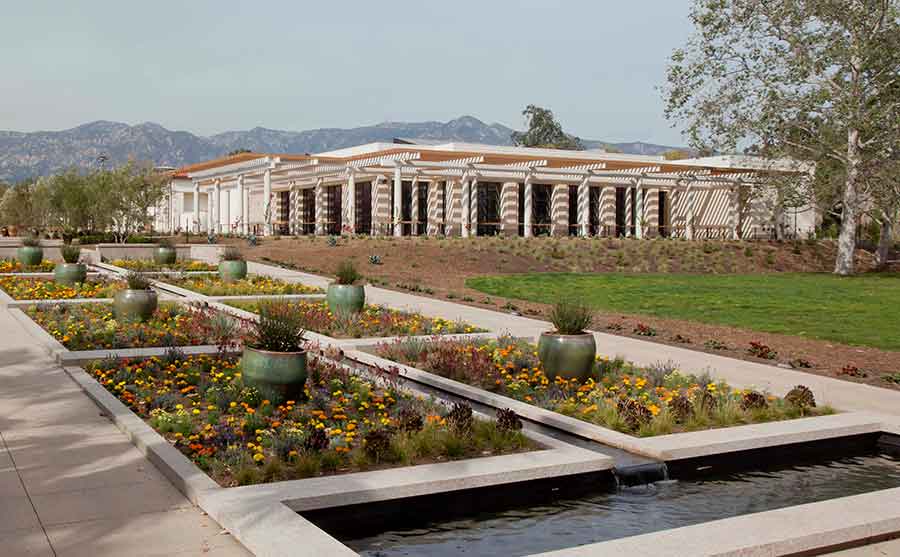
The Celebration Garden | Image taken from The Huntington’s website

The celebrated chefs are offering their signature fares befitting the various destinations at The Huntington. The main café, newly renamed 1919 for the year The Huntington was founded, features different dining concepts to please visitors. The Border Grill taqueria, a smaller version of Feniger’s and Milliken’s Border Grill restaurants, serves the chefs’ signature modern Mexican cuisine like tacos on handmade corn tortillas with organic rice and beans, quesadillas, ceviche, and seasonal aguas frescas. At The Bar, Alger creates freshly made sushi – rolls, nigiri, and bowls; or small plates of global fare for pairing with beer, wine, and sake – or whimsical craft cocktails inspired by the setting.    

Alger and Feniger are offering at the Chinese Garden’s Freshwater Dumpling and Noodle House authentic dumplings, noodles, and rice dishes drawn from China, Nepal and Mongolia. The chefs will take their food inspiration as the surrounding garden changes with the season.

“The Huntington has always been this little oasis within the city, a place where you can come and feel tranquil among the chaos,” proclaims Alger. “We’re thrilled to be at the center of the Chinese Garden and to offer the simple dishes and flavors that I grew up with, spanning the regions of China.”

At the casual Patio Grill, adjacent to The Huntington’s Shakespeare Garden and American art galleries, weekend visitors can savor Feniger’s and Milliken’s global-meets-local flavors. The rotating seasonal menus will highlight the rich culinary heritage from the various communities in Los Angeles like griddled Cubano sandwiches; grilled corn with smoky aioli and cheese; a roasted yam, quinoa, and kale salad; and seasonal aguas frescas.

A tour of The Huntington wouldn’t be complete without stopping at the Rose Garden Tea Room.  Currently under renovation, it will reopen on November 16 to once again be the venue for an elegant and memorable experience, inspired by the English tradition of afternoon tea with a distinctive California twist. Visitors can indulge on crumpets and scones, delicate finger sandwiches, caviar-topped blinis, and decadent desserts with their choice of herbal and Fair Trade teas or sparkling wine.       

“At a time when cuisine has become key to every type of cultural experience – from museum-going to concert-watching – we believe it’s critically important to have dining here reflect the high quality that is The Huntington standard,” declares Skandera-Trombley. “Food is no longer incidental – it is part of our culture. And, according to some, it is everything. We want wonderful, memorable food to be part of the greater Huntington experience. 

With the most respected names in food creation and catering all working together, Skandera-Trombley’s wish to make people think of The Huntington as a food destination in an incomparable setting is now a triumphant reality.               

Major League Baseball Wonder is a Local Sports Mentor

Originally published on 10 November 2016 in the Pasadena Independent, Arcadia Weekly, Monrovia Weekly, and Sierra Madre Weekly

In the early 1960s a determined high school athlete from Michigan named John Paciorek set his sights on a successful Major League baseball career and was, by all indications, on his way there.  But chronic back problems and a subsequent spinal surgery quelled that ambition and led him in a far different direction from where he started.  

The rise and fall of this once promising baseball star was recounted in a biographical book titled ‘Perfect’ written by Steven Wagner in 2014. Paciorek’s experience was hailed as  “… a tantalizing story of hope and inspiration for young players aspiring to greatness.”

Paciorek’s story began in Detroit, where he was born the eldest of eight children to a father who worked at an automotive factory and a stay-at-home mother. They were so poor they had no money to spend on entertainment, and there were times when they had to rely on government welfare assistance.

However, Paciorek’s father made it a point to play some sport with his children after a long and arduous day as an assembly-line employee at Chrysler-Plymouth.  He also instilled in them the importance of spirituality and value of education; he sent all his kids to Catholic schools.

Says Paciorek, “I think I was too young for my class. Coupled with that, I must have been dyslexic because I had a hard time reading. Fortunately, sports offered another avenue for me to do well at something. In high school I was an excellent athlete and, coming from a poor family, I dreamed of getting out from poverty through sports. That dream became a reality when I was recruited by the Houston Colt .45s (which later became the Houston Astros) in 1962. I was a 17-year-old kid and was supremely confident that I was meant to be in the Major League!”

While Paciorek didn’t receive an extraordinarily huge amount in the way of signing money, the contract included a college scholarship that his father insisted on. That, in hindsight, proved to be a stroke of genius. From that bonus, he gave his family $15,000 and bought himself a brand new Chevrolet Malibu convertible. And he was off to what he anticipated would be a long  professional baseball career.  

September 29, 1963 was a memorable day for Paciorek. The Colt .45s, fielding a team of eight rookies, played against the New York Mets at Colt Park. Right fielder Paciorek made history when he had three hits, two walks, scored four runs and three RBIs. He had a perfect game.

It should have been a foreshadowing of a magnificent career but instead it turned out to be the only game Paciorek would ever play in Major League baseball. The persistent back problems he’d suffered from since childhood, exacerbated by a rigorous regimen, landed him in the minors.   

Eager to get better once and for all, Paciorek underwent a spinal fusion surgery. He spent a year in a back brace and missed two baseball seasons. While recovering, he pursued a degree in physical education at the University of Houston. There, he happened upon the Christian Science Reading Room and learned about the teachings of its founder, Mary Baker Eddy. 

“I was raised Catholic but converted to Christian Science. I discovered in it an expression of everything I felt but which had never been articulated.” Paciorek explains. He hadn’t known it at the time but that singular decision was the pivotal point in his career and his life.     

Paciorek graduated from the University of Houston and later worked as a physical educator at the Jewish Community Center. “It was then that I heard about a school in San Gabriel, California needing a Christian Scientist P.E. teacher,” Paciorek relates. “I had been out in California during baseball practice and I liked it. So I applied and got the job.”

Randall Hall at Clairbourn School | Image taken from Clairbourn School’s website

“It has turned out to be an ideal post for me,” says Paciorek four decades later. “Clairbourn School has a beautiful field and a large area where we can simulate seasonal sports. In the fall we have boys’ football and girls’ volleyball; next season, we’ll have boys’ soccer and girls’ basketball and the reverse after that. Track season begins in mid-February through the end of March; our final season is boys’ volleyball and girls softball.”

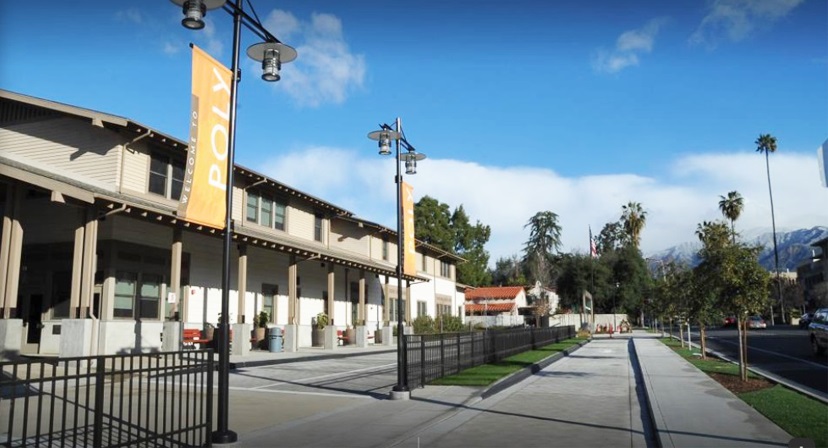
“We belong to the Middle School Independent League (Pasadena Area). Our teams play against Chandler, Mayfield, Poly and Prep and we’ve had championships in all sports,” Paciorek says proudly.

But championships and trophies aren’t top of mind for Paciorek. More than wining, he instills in students a love for outdoor activity and playing for fun. He can motivate even the least athletic kids to be the best they can be; he is their Number One supporter and cheerleader. He is a coach and mentor who truly cares about children’s development, academically, and athletically.         

While the school has successfully won trophies, Paciorek doesn’t emphasize winning. As his wife, Karen, who is Clairbourn’s lower school director, points out, “John teaches basic skills and he sees the potential in every single student. He has a true connection with children and you can see that in his interaction with them. But at the same time, he bonds with parents.” 

“It’s rare for us to go somewhere and not see someone he remembers from school,” Karen recounts. “And each time we do, he would recall all the children’s, parents’ and even the dogs’ names. He would have an exchange with the parents and get caught up on how the kids are doing in high school or college. It’s as if he’s on an ongoing conversation all along and is just picking up from where he left off. It’s pretty amazing.” 

Clairbourn School’s East Hall walkway | Photo courtesy of Clairbourn School

“The kids also have fond memories of John. Several years after they’ve left Clairbourn, they would remember the nickname that he gave them when they were students,” Karen continues.  “John gets letters and notes from former students who are now fathers, who say they use the same life lessons they learned from him to teach their children.”   

A lesser man would have become bitter after such an auspicious start in professional sports then end up teaching P.E. But not Paciorek; he has remained sanguine through his disappointment. 

Karen says, “I have never heard or seen any bitterness from John on what he might have become had back injuries not sidelined him. At the time he achieved what he did, he didn’t know he had done something remarkable. But even after he found out, he wasn’t overly excited. Momentous as it was, that event was just a small part of his experience. He’s always expressed gratitude for finding his way to Christian Science and Clairbourn.”

Dr. Robert Nafie, headmaster of Clairbourn School, describes Paciorek’s impression on the school and the community, “John Paciorek took over a physical education and interscholastic sports program that was lacking direction and vitality in 1976. Through his leadership and vision he has inspired multiple generations of Clairbourn students and San Marino-area young people to see physical conditioning and competitive sports as a life-long pursuit.” 

“More than any other faculty member, John Paciorek is the most sought-after educator from Clairbourn alumni when returning to campus,” Nafie adds. “He has touched the lives of thousands of young people through his professional level of instruction and guidance, and his personal life-long example of high spiritual and ethical values.”

“We are very grateful for what John has brought to the school, the knowledge and skills he shared with our students. Indeed, Major League Baseball’s loss has been Clairbourn’s gain. And while he won’t be a daily presence on campus after this school year, his impact will forever linger,” Nafie concludes.

Paciorek will be retiring in June of 2017, after 41 years of dedicated service to Clairbourn. In his honor, the school will construct an aptly named Coach Paciorek Bat 1.000 Batting Cage. It will be at once a symbol of his lasting influence on Clairbourn and the school community’s loving tribute to him.       

Clairbourn students aren’t aware that he is an important Major League baseball figure. To them,  he is Coach Paciorek, a teacher who has provided as much encouragement as he did training while they navigated elementary and middle school. 

John Paciorek’s imprint will be etched for ages not only in the minds of kids aspiring to greatness but of all the young people he inspired to reach for a dream. It may be a legacy far more significant than a record of a perfect game in The Baseball Encyclopedia.                                                      

My Family’s Independent School Experience

Originally published as the introduction to Beacon Media’s Education Guide which appeared in the Pasadena Independent, Arcadia Weekly, Monrovia Weekly, and Sierra Madre Weekly on 27 October 2016

Having children is a lifelong commitment that brings with it tremendous joy as it begets vast responsibilities. One of every parent’s primary concerns when raising kids is ensuring them an education that not only teaches reading, writing, math, and science but also prepares them for life beyond school.

My husband and I decided to give our daughter a private school education and that journey began when she was only two years old. I enrolled her in a co-op where parents are expected to work alongside a teacher and an assistant teacher in class.

It turned out to be a really fun experience for both of us. My daughter and I enjoyed being at school two mornings during the week. She learned to draw and sing; I handed out snacks and drinks, cleaned after the little kids and took them to the potty.

My daughter stayed at the co-op for only one year. The following school year, she attended a Montessori school. It was there that she learned reading, writing, and math. Having helped out in the classroom the previous year, I had become adept at assisting so I helped the teacher and her aide. 

By the time my daughter was four years old, she had outgrown the Montessori system. She was ready for traditional education and our quest for the right independent school commenced.  

Pasadena has several outstanding private schools but the competition to get accepted to one of them is fierce. We went on countless campus tours and applied to six schools; she was waitlisted on all but one, and it was in La Canada. Like in her previous two schools, she did extremely well in class, was adored by teachers, and was well-liked by her classmates.  

Private schools are completely funded by parents and tuition only covers a portion of what’s needed to run them; it falls on the parents’ association to raise funds for enrichment programs.  To fill the library or add books to its current offering, for instance, the association holds book fairs. So in addition to driving kids on field trips, I also volunteered for the book fair. I got braver and chaired the spring auction the following year. This benefit gala is usually a school’s largest fundraiser and proceeds from it are used for field trips, or to buy computers for the classrooms.  

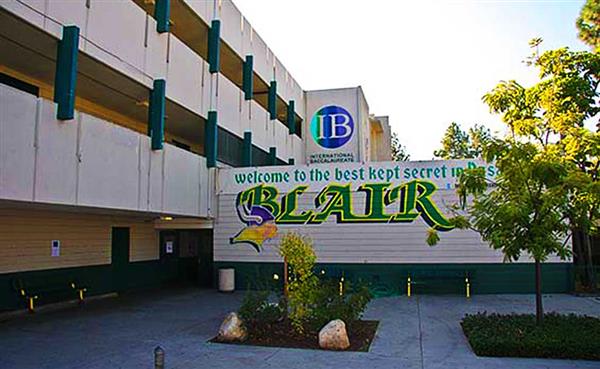
Image taken from Pasadena Now

The drive from Pasadena to La Canada, though, got too tiring for both of us after two years.  Fortunately, I had kept in touch with the admissions director at one of the private schools where she had been waitlisted. My daughter reapplied and got accepted when a family had to relocate and leave the school. I was ecstatic – the school is a mile away from our house! 

My daughter excelled in class, even played the piano for the entire school during morning assembly. I was again involved in the parent association. One year I managed the school store which carried snacks and drinks for after-school sports, provided pizza and drinks for dances, and even sold school uniforms, sports clothing and gym bags. 

I was immersed in school activities, found friends, and felt comfortable there. I had found a community where I belonged. My daughter, however, felt quite the opposite so we decided to find another school. 


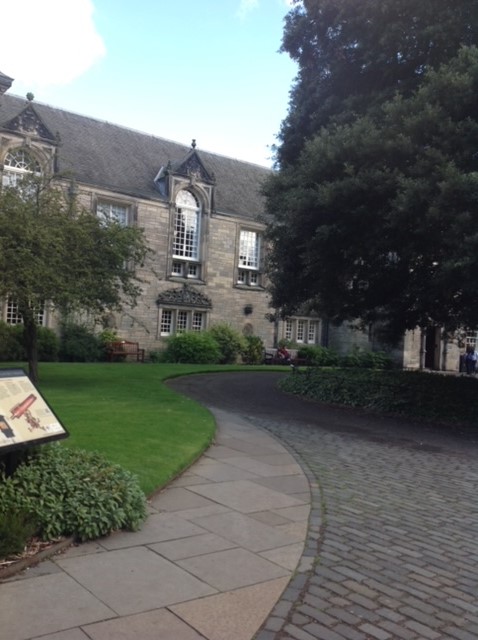
St Mary’s College, University of St Andrews, Scotland (UK) | Photo by May S. Ruiz

In the first ten years of my daughter’s life, she had attended four different schools. In all of them students were expected to excel in academics, have a passion for artistic expression, and possess an athletic ability.  Besides raising funds, parents were counted on to be partners in their children’s education – making certain that the kids came to school prepared to do the work.      

In middle and high school, my daughter attended THE school of all schools in Pasadena. Every student and parent for miles around want to be there, and applying to it is sport. I found out that its culture is vastly different from all the ones she previously attended when I signed up for the book fair. I was very excited to sit in the very first meeting and had a lot of ideas, only to be told it wasn’t a fund-raising event. In fact, this school had no other fund-raising activity besides the annual fund and parents weren’t needed on campus

My daughter was there for seven years, the longest she had ever stayed in one school, and had the best time. She found like-minded friends, was challenged by the vigorous curriculum, and earned the admiration of teachers. 

While my experience hadn’t been pleasant, my daughter spent several happy years there and received an outstanding education. And, at end of the day, that was what mattered.    

Two years ago, my daughter graduated from high school. Today she is a third-year student at the third-ranked university in the United Kingdom. She’s thriving in a very active campus life and enjoying being self-reliant – skills she has successfully learned. Her private school education is certainly serving her well.    

Orange County School of the Arts Expands to the San Gabriel Valley

Originally published on 13 October 2016 in the Pasadena Independent, Arcadia Weekly, Monrovia Weekly, and Sierra Madre Weekly

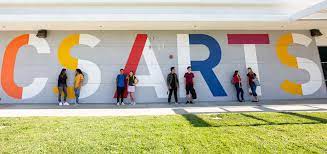
Duarte Unified School District’s (DUSD) commitment to arts programs will have its most tangible proof yet when the California School of the Arts-San Gabriel Valley (CSArts-SGV) opens its doors next year as a public charter school of the DUSD, operating from the current Northview Intermediate School campus. The first sister school to the Orange County School of the Arts (OCSA) in Santa Ana, CSArts-SGV is a partnership that is expected to benefit children in Duarte and the surrounding region.

“The choice of housing CSArts-SGV at Northview was based on the interest of our community to support the concept of neighborhood schools,” declares DUSD superintendent, Dr. Allan Mucerino. “In addition, we identified grades 7-8 as the point in time when 70% of our students of residence who transferred out of our district exited DUSD. As a result, we chose to reconfigure from K-6 to K-8 schools. That provided us the opportunity to repurpose Northview by entering into a license agreement with OCSA to create CSArts-SGV.”

This grade level reconfiguration will also necessitate a bit of relocation for current students.  Mucerino explains, “Starting in the 2017-2018 school year current sixth graders will remain on their present campus for seventh grade. Current 7th grade students will be housed in a satellite 8th grade facility between the existing Northview campus and Duarte High School for one year. In 2018-2019, the conversion to K-8 will be complete.”            

Dr. Ralph Opacic, who founded OCSA in 1987, explains the decision to expand to the San Gabriel Valley. “The OCSA is celebrating its 30th anniversary and we are now at capacity at 2,200 students. We attract 3,000 applicants each year for 400 spots from cities not only in Orange County, but also from adjacent Los Angeles, Riverside and San Diego counties. And so we began looking at areas where our program will have an appeal. The San Gabriel Valley quickly came to our attention as we know it will draw from the entire region. We’re likewise having conversations with school districts in the South Bay, at El Segundo, and the San Fernando Valley.”

“This is the first sister school of OCSA and is modeled after it,” continues Opacic. “Our goal is in ten years to be able to provide 10,000 kids who are passionate for the arts with a transformational experience. We want to offer a culture where they are surrounded by like-minded students; to afford them an academic preparation combined with an arts curriculum so they can continue on a path. But it isn’t a program to educate talented students to become future artists. Rather, it’s an innovative school environment that graduates highly engaged, creative young leaders who are well-equipped for meaningful, successful lives at the college of their choice and in any career they select. ”

Opacic describes, “Students will have the academic portion of their day from 8 am to 2 pm consisting of three 90-minute classes and a 30-minute tutorial block. CSArts-SGV will offer college preparatory, honors and advanced placement courses taught by fully credentialed faculty members, with the majority of them holding advanced degrees.

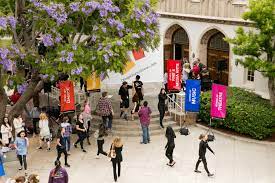
Image taken from CSArts-SGV website

Then high school arts students will be attending their choice of art course from 2:30 to 5 pm.  Conservatory for students in the 7th and 8th grade is scheduled prior to the high school conservatory. We’ll be offering ten arts classes – acting, classical and contemporary dance, classical voice, commercial dance, creative writing, instrumental music, integrated arts, musical theatre, production and design, and visual arts.”     

The opening of CSArts-SGV will bring in more jobs into the city. Opacic reveals, “We currently have job postings for the eight full-time arts teachers and will be interviewing within the next four to six weeks. We will be hiring academic and arts instructors after March 1st next year when we have an idea of what our enrollment will be. We hope to open grades seven to ten at 200 students per grade level. We staff our academic programs at 30:1 so we’ll probably have 20 – 27 academic educators and we staff the arts programs at 20:1 and we’ll probably have 40 arts teachers in the afternoon conservatory.”

According to Mucerino, the presence of CSArts-SGV in Duarte will infuse additional funding.  He says of the amount of Average Daily Attendance (ADA) revenue generated by 1,200 students in grades 9-12, three percent will go towards DUSD.       

Opacic will serve as the executive director of the California School of the Arts, which is the umbrella company for all schools they open going forward. As a charter school, CSArts-SGV will have its own board of directors, independent of Duarte Unified School District (DUSD), which is its sponsoring agency.

CSArts-SGV’s first principal will be Dr. William Wallace, who was Dean of Facilities and Supervision at OCSA, where he oversaw the expansion of the school from 1,800 students to its current size of nearly 2,200. He also assisted in supervising the construction of OCSA’s premier dance, music and science building, which was inaugurated in August of 2015; he also served as OCSA’s Assistant Principal of Student Services.

Image taken from CSArts-SGV website

Abbe Levine will come on board as the Dean of Arts Conservatories, having served as Director of Arts Environment and Program Expansion at OCSA. She has been teaching at OCSA since 2004 until she became Co-Director of the Creative Writing Conservatory. In that post she implemented innovative community programming and collaborative arts projects.

Mucerino has been an ardent supporter of arts programs and this partnership is the culmination of his months-long search for a genuine alliance. He says, “OCSA has created the blueprint for an innovative school that has proven that arts and creative educational experiences transform schools and communities. The evidence is powerful: children of all social and economic levels who experience high levels of art engagement have more positive outcomes in virtually every achievement indicator, compared to students who are not as lucky. Creative thinking and innovation are at the core of advancement in today’s globalized world. This unique public school/charter school partnership is an example of how historically polarized forces can work together to challenge the status quo and create exceptional and flourishing learning environments.

Over 1,000 people have already signed up for the first preview day on October 22. Judging from that level of interest, it’s going to be as popular as the original Orange County School of the Arts.  But what’s truly unique about this partnership is that it includes an opportunity for students in grades seven and eight to attend DUSD K-8 schools to prepare for CSArts-SGV by participating in the same conservatory program currently delivered to 7th and 8th graders in OCSA. The conservatory for 7th to 8th grade students will be on the CSArts-SGV campus in the same facility used for the 9-12 conservatory program and taught by the same instructors.”         

Students in Duarte and in the entire San Gabriel Valley are the fortunate recipients of education leaders’ out-of-the-box approach to teaching. Mucerino says it best when he quips, “There’s never been a better time to be a kid in Duarte.”

Temple City Alternative School Offers Different Learning Methods

Originally published on 6 October 2016 in the Pasadena Independent, Arcadia Weekly, Monrovia Weekly, and Sierra Madre Weekly

High schools are usually multi-level structures that are populated by two thousand teen-agers hurrying from one classroom to another. While most kids enjoy this daily interaction with classmates and lectures with teachers, there are some to whom this schedule isn’t the right fit for their needs. 

The Temple City Unified School District (TCUSD) is one of the few districts offering students and their families some options for getting a high school education using a different delivery method – the Dr. Doug Sears Learning Center (DDSLC) and the Alternative School.

According to Chris Sewell, principal, “While both are alternative schools, they are two separate institutions, having different accreditations and curricula. The DDSLC is a continuation school serving 10th to 12th graders from TCUSD who might need credit recovery and for those who may not have passed some classes but weren’t able to attend summer school. Students could recoup and maintain credits to be able to transfer back to the high school and graduate on time.”

“Our enrollment fluctuates from one year to the next,” Sewell says. “At one time we had as many as 80 students; we currently have fewer than 50, with four full-time teachers and a counselor. Several things have changed over the years in terms of intervention at the high school so fewer kids are sent to remedial school. The district altered and added services to support students before they reach the point of failing a course.”          

Sewell explains, “DDSLC is also another option for students who feel that a comprehensive high school schedule interferes with other things going on in their lives. Some of our students are 18 years old and are working; they would like to pick up more hours and a traditional school doesn’t allow for that. Still some who come here already know they want to start at Pasadena City College (PCC) so this schedule allows them to take a class or two at PCC.”

“The Temple City Alternative School (TCAS), on the other hand, offers online independent study for 9th to 12th grade students,” adds Sewell. “It has the same academic requirements for graduation as a comprehensive high school – four years of English; three years of history and government; two years of science; three years of math and economics; three years of physical education; four years of electives. Those who are planning on applying to UC/CSU have to complete the A-G requirements.”

“The only difference is the delivery method – we have a digital curriculum using APEX Learning. Students have access to their online course 24 hours day; they study at home at a convenient time to do so. Students are required to come in only for an hour once a week to meet face-to-face with Shannon Findley, the supervising teacher,” Sewell says further.

Findley, who came on board during the 2015-2016 schoolyear, says, “I supervise and approve student coursework designed to meet their individual needs and levels. I meet with them regularly to assess their work, discuss progress on an ongoing basis, and revise individual instruction plans when called for. If necessary, I provide mediation which can mean either teaching or counseling. I also have an open computer lab to serve as additional resource for one-on-one tutoring and technology, and to furnish an absorbing learning environment or workplace.”   

To explain how she combines APEX Learning and teacher instruction, Findley describes, “The digital curriculum keeps students actively engaged and attentive as they are required to read, watch, listen, inquire, write, discuss, and manipulate. Embedded in the program are multimedia tutorials which give students the opportunity to explore and understand new concepts at their own pace. Whenever necessary, I provide direct instruction or I modify material and assignments to help them become proficient with the concepts.”               

With technology a pervasive tool in today’s world, online schools have gained wider acceptance. Sewell points out, “Ten years ago, if someone said he or she was taking a class online, people gave a knowing smile. With more and more prestigious schools offering online courses, the stigma attached to digital study has disappeared. The truth of the matter is that the digital classes can be as rigorous as, if not more rigorous than, coming on campus listening to a lecture and taking notes.”

Kids who attend an alternative school have unique needs that cannot be filled by traditional institutions. Sewell illustrates, “We have students who are serious athletes and their training schedule doesn’t allow them to go to Lemon Avenue (where Temple City High is located) from 8:00 am to 3:00 pm but they want to obtain a high school diploma. The district has given much support – the school is open daily so students can come in and leave any time between 8:00 and 3:00; laptops are available and they can sit in coffee shop-style chairs; the lab is open for them to use. A math teacher comes in from 3:30 to 5:00 twice a week to provide extra help.”

“The 12 students currently attending have direct access to a full-time teacher and a counselor. They can still participate in all the events at Temple City High, like grad night or the homecoming. They can go to the college fair the high school hosts, with the advantage of getting individual and personal attention from the counselor. They are, in fact, better off than the 500 seniors at the traditional high school,” Sewell observes.   

Raul Acevedo, who has been the school counselor since 2004, ensures that he provides a welcoming environment for all newcomers, “Each students enrolls into the independent study program due to a variety of reasons – often, although not always, after some challenging experience. Because students have very few adults to interact with, it is important that each interaction is a positive one. So building that initial rapport is key.”

Pasadena City College Photo taken online

“Within three domain areas – academic, personal/social, and college/career – I give students the support they need towards attaining knowledge, setting goals, and follow-through for individual success. While the majority of our alternative school students are on a college prep track, some may not be. The challenge then is to develop the college and career readiness mindset and behavior within those students,” Acevedo expounds.

“I provide orientation; schedule classes based on students’ transcript review, grade level, and oral interest survey to select elective courses; monitor progress throughout the term; check-in and follow up with students on their goals and plans. I make sure I know if they intend to stay in independent study or transfer back to the high school; if they have post-secondary plans, including attending Pasadena City College (PCC). 

“During our first few interactions, college counseling occurs when I ask students about their goals. But the process begins in earnest in junior year and culminates in senior year. I assist in their school research, relative to the courses they have in mind; I guide them through the college and financial aid (FAFSA) applications, and I help find scholarships.

“Being the counselor for DDSLC, I combine certain activities with our alternative program students, like visiting local community colleges. I usually take students in my car and visit PCC and Citrus College; another teacher drives his own car to take more students, when needed.

“Our students also attend fairs including: PCC Career Technical Education Fair; the annual Citrus College Theatre Performing Arts Open House; and the National Hispanic College Fair, which provides a platform for dozens of colleges and universities nationwide to connect with students (last year’s fair was at Loyola Marymount University).

“During the 2015-2016 school year, three seniors graduated and are now attending community colleges – Brandon Johnson is at Citrus College and plans to major in accounting with the hope of becoming an FBI accountant; Charles Osborne is pursuing a political science degree at PCC on a full tuition scholarship from AJ Wang; and Lu Jiang is currently at PCC but intends to transfer to the Art Center of Pasadena,” Acevedo says.     

Everyone who comes through their doors is expected to do well and succeed, “The onus is on the student to have self-motivation and drive because they have more independence – it’s so easy to be a slacker,” Sewell warns. “But if they can manage this well, it will serve as a skill that helps them transition to college, to a career, and to life.” From that perspective, an alternative school offers some very attractive reasons for students to deviate from traditional learning. But as Sewell enthusiastically proclaims, “In the year 2016, what’s traditional? Technology has changed all that.” Indeed it has!                       

Clairbourn School Incorporates Appreciation for Nature in Teaching

Originally published on 15 September 2016 in the Pasadena Independent, Arcadia Weekly, Monrovia Weekly, and Sierra Madre Weekly

In an area like the Pasadena market which is replete with outstanding schools, setting itself apart from all the rest is a remarkable feat. However, Clairbourn School, a junior pre-K to 8th grade independent learning institution in San Gabriel, succeeds in standing out.

Headmaster, Dr. Robert Nafie, leads dedicated administrators and teachers who work tirelessly to build a strong instructional program balanced with meaningful elective courses, extra-curricular activities and after-school classes. He ensures that each student gets the best education, using all the tools available, in a caring and nurturing atmosphere.     

That children need to be children was uppermost in the mind of former head of school, Gloria Stahmer, when in 2009 she asked then 5th grade teacher, Jonathan Barner, “Don’t you think our kids need to be out in the dirt, gardening … or something?”  

“As an avid backyard gardener, I thought it was a fabulous idea,” Barner relates. “Thus began our vegetable propagation – we bought three pre-made plant beds which our maintenance crew installed and integrated with an irrigation system in the 4th and 5th grade area. They also made beds along the fence in the parking lot.

“The project was a collaboration with the other 5th grade teacher, Laurie Corwin, who taught social studies. I suggested we recreate the American Colonial period and grow corn, pumpkin and cotton – all the crops that were important to the survival of early colonists and the native Americans. Through this colonial garden students learned how early settlers struggled in the new world. 

“We planted in the spring and let it grew through the summer while the students were on their break. When they came back in the Fall, the 5th graders were learning about the Colonial period, which was so timely as we had an abundance of harvest from our spring plantings. We did some pretty cool things – we took the corn off the husk, we dried, and then ground it. A couple of times we made corn and pumpkin bread. By eating what they might have survived on, we bridged a connection with the colonists. 

“With the cotton plants, we made students separate seeds from the bolls. When they used their fingers to pull out the seed, which were actually the size of pencil erasers, they discovered it wasn’t easy. It was a perfect teaching opportunity to discuss Eli Whitney’s invention of the cotton engine (gin) in 1793, that mechanized separating the seeds from the fiber.

“While students weren’t studying the physiology of plants in science, gardening became a component of our daily class. It was simply more meaningful for kids to have the hands-on experience planting seedling, watching plants grow, learning about soil quality, and fertilizing.  A couple of times we tried composting but we realized it was just too much for us to take on, on top of the gardening, much less the actual school curriculum.

“The greenhouse, which was originally put in in November 2001 by a previous science teacher, had not been used much after he left. It was upgraded in 2013 to make it usable for a class – we put in a flat area made of decomposed granite, we brought in three round picnic tables as work areas, we installed a sink with water, and we fenced it in for security. Teachers used it as a learning center.

“In 2012, a generous lady by the name of Betty Barker heard about our gardens and offered to fund the project. We used the grant to purchase two steel benches, and a couple of round picnic benches where kids could sit and write notes while other students were planting. She also gave money for the greenhouse upgrade in 2013, and made a follow-up donation in 2015,” Barner adds.

When Barner retired in 2015, Nancy Ward, Director of Communications, took on the mantle.  An enthusiastic gardener like him, she knew that an important component for success is finding partners who share her vision and help realize it.                                                      

In the spring of 2016 Ward resurrected Clairbourn School’s gardens with assistance from Farmscape, a local company that maintains vegetable gardens and home orchards. She pronounces, “I’m a big supporter of gardens because it teaches us important lessons in growing up and having successful lives. Every planting season is an expectation of good things to come – from the seed that’s buried in the ground, vegetables emanate. Then we have to devise a way to cook them, and how to put up the surplus – from dehydrating, to canning or preserving – to feed us through the winter months. We also need to learn long-term planning because if we want pumpkins for Halloween, we need to plant seeds in the summer. 

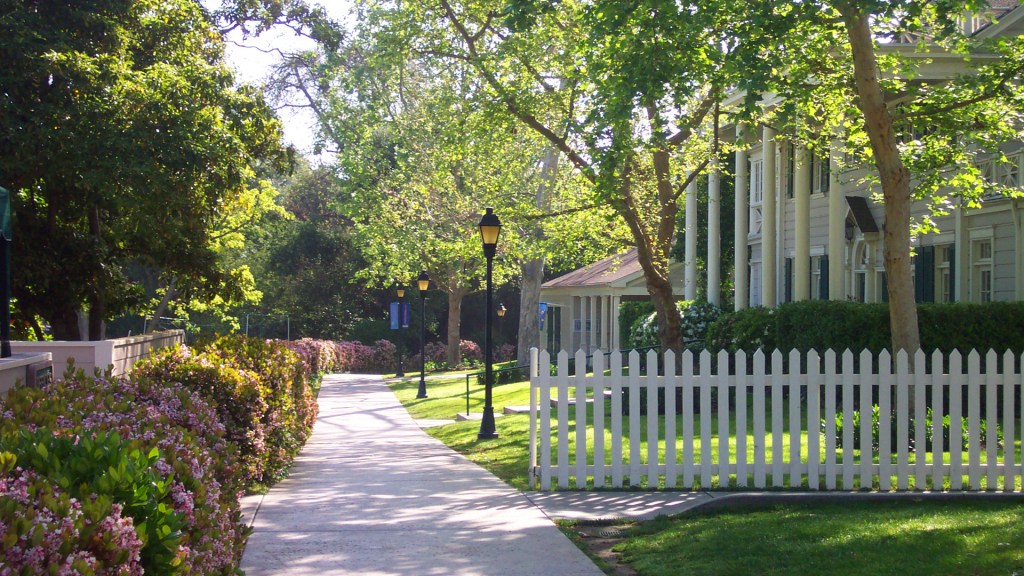
East Hall walkway at Clairbourn School | Photo courtesy of Clairbourn School

“I want gardening to be personal for the kids. When they study American history, I want them to see the crops Native Americans grew – corn, bean, and squash – three sisters planting, they’re called. There’s a symbiotic relationship where these three crops thrive at one time; the beans are supported by corn stalks and squash grow underneath, to shade its roots and keep moisture in. When students learn about Eli Whitney and the cotton gin, they can see first-hand what that plant looks like and how difficult it is to handle it.

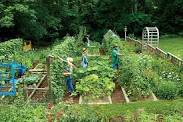
“There are multiple areas on campus where students can go to at designated times of the school day to enjoy the flower and vegetable gardens. There is a raised bed for vegetables and a butterfly garden near the kindergarten classrooms for small students. Behind the 4th and 5th grade classrooms, there are three raised vegetable beds; plantings of cotton, corn and wheat along the walkway; and a passion fruit vine snaking up the trellis at the entrance to the garden. A greenhouse is in the middle school ‘jungle,’” Ward explains.         

Farmscape’s horticulturist, Melissa Rodriguez, teaches the after-school gardening program twice a week. Tuesday’s entry level class is composed of pre-K, kindergarten, and first grade students. They learn about the life cycle of plants and insects; plant organic vegetable seeds and seedlings;           

harvest and sample fresh produce from the garden. On Wednesday, she teaches 2nd to 5th graders in the greenhouse. Lessons include: learning about soil health and nutrition; cultivating vegetables, herbs, tropical plants, and orchids; propagating plants from seedlings and cuttings.  Students keep a journal to record plant growth patterns.

What Rodriguez usually encounters when she teaches is that students don’t know where food comes from. She illustrates, “Many kids don’t know what cucumbers, squash and tomatoes look like before they reach the supermarket. I want to build the connection between the plant on the ground to the food they have on their dining table or are served in the restaurant.”

“I introduce them to plants and vegetables that are not what they’re used to – purple and yellow carrots, red yard-long beans. I encourage them to taste the things we’re growing. I noticed that Clairbourn kids aren’t willing to try produce as readily as the other children I teach, which is a bit of a challenge. So now I grow plants with interesting taste like basil and mint, even strawberry,” Rodriguez discloses.                        

The gardens serve as outdoor ‘classrooms’ where students spend a portion of their day. Mary-Kaye Halferty, 4th grade teacher, declares, “The lessons are quite fascinating. In one class my students and I went to, the teacher pulled out all the insects and butterflies in the garden to discuss their role in either helping or hindering the growth of a plant.” 

Whether they’re learning al fresco, or merely enjoying the beautiful scenery, students get some relief from academic stress. Teachers, too, feel the gardens offer a welcome breather during the day. Those who originated the planting program and made horticulture an important component of education have their own personal views of its purpose.               

To Barner, it means valuing quality food over processed fare; an appreciation for farmers and their hard toil to produce vegetables; an opportunity for children to have a new learning environment; and taking on the responsibility to preserve this earth for future generations.     

For Ward, whose stewardship and constant presence in the gardens have inspired the kids to get their hands in the dirt, it denotes planting a seed to spark the inner gardener of every student and to serve as a regular enrichment activity that teaches great life lessons.

In his 2016-2017 mission statement, Nafie states, “The abundant nature with which Clairbourn is blessed is clear evidence of annual renewal. That success in academics, as in life, is not just a momentary event. When students get discouraged or stressed by new concepts, we can help them put down the kind of roots that will feed and sustain their success now and in the future. From the same sturdy plant, many flowers and crops will bloom in cycles of regeneration. So too, with our students, each year has its seeds, its watering, its below the surface, and its above the ground work to do. With teamwork and patient tending, the renewal of success will be assured.”

These gardens assume a significance as varied as the individuals whose lives they touch. But there is one constant  – all the students reap the fruit they have to offer.That is a Clairbourn promise.                    

Crestview Preparatory School in La Canada Offers Individualized Teaching

Originally published on 1 September 2016 in the Pasadena Independent, Arcadia Weekly, Monrovia Weekly, and Sierra Madre Weekly

There is a small, quiet, and picturesque community nestled between the San Gabriel Mountains and the Angeles National Forest that not too many people outside of Southern California are familiar with. It’s La Canada-Flintridge (otherwise known as La Canada), which is home to the world-renowned Jet Propulsion Laboratory (JPL) and Descanso Gardens

For the past 30 years, Crestview Preparatory School (Crestview Prep or Crestview), a kindergarten to sixth grade co-ed school, has also called La Canada home. With a total student population of 160, it is dwarfed by three other educational institutions (Flintridge Prep, a seventh to twelfth grade school, La Canada High and St. Francis HS) on this stretch of Foothill Blvd.

Crestview Prep is the only elementary school in this area and will remain so by design. Baudelia Chavez Taylor, who is in her third year as headmaster, declares, “We only have five- to twelve-year-olds on campus. And while it would be financially lucrative to offer a middle school program, we have no aspirations to do so. Our kindergarteners as well as our 6th graders will be read to in the library. We believe strongly that children should be children. This is a foundational time for them and we want to provide a space for their innocence.”

Established by in 1986 by Vicki Dempsey and Marge Hanna, with Dempsey acting as chief financial officer and Hanna serving as head of school until her retirement in 2007, Crestview’s  mission is to provide academic excellence while encouraging students to discover their unique talents as they face challenges with confidence.

Today Crestview exhibits the same beliefs and values its founders imbued the school. As Taylor relates. “We celebrated our 30th anniversary this past school year. It was interesting to reconnect with folks who have a history with the school and find that there were such commonalities in people’s ideals of 30 years ago that attend to the present. Then, as now, it was the sense of community that was most important, and it was the first thing everyone wanted to talk about.

They reminisced about the traditions – tried and true events on campus like the walkathon, where people get up early and convene to have a great time – that parents and students enjoy to this day. They spoke about balancing the academic, social and emotional development of the child.  Hearing that sentiment was validating for me. It was yet another reason that this feels such a good fit.”

Continues Taylor, “My first year at Crestview was lovely but fast-paced and quite overwhelming. There were a lot of things to become familiar with – not just the culture, but the inner workings of the school as well. But I found everybody to be open and helpful; where there were questions I didn’t ask, they filled the gaps.”

“My knowledge of Crestview before I came onboard was just in passing because my training was mostly with West LA schools,” Taylor explains. “While we live in Pasadena, I wasn’t a parent looking in the area when my children were getting ready to go to school. Then my son decided to go to Polytechnic in 7th grade and I wasn’t able to attend any campus event because I was on the West Side. That compelled me to find a job closer to home.” 

Image taken from Crestview Prep’s website

Taylor had only worked at large institutions so this career move to Crestview was a big change. Previous to this post, she spent 14 years at the Center for Early Education in West Hollywood where there were 543 elementary-level students. She taught early childhood education through 3rd grade before being named a division head, a position she held for five years. Prior to that she worked at Bellagio Road Newcomer, an LAUSD specialty school that focused on introducing new immigrants to the American education system before being mainstreamed into the district.  This is the third school she’s worked at, and her first headship.

“Now that my daughter goes to Westridge, I am only ten minutes away from my two children.  As an educator, it’s something I’ve always had to consider – my role as a parent,” explains Taylor. “As a mother, I have always been pulled by my children. Consequently, as head of an elementary school which is foundational in a child’s development and learning, it’s my parent hat that’s front and center. It helps me understand their needs and life experience because I live it.”               

Taylor says about Crestview, “We’d love parents to understand that our focus is on the academic, emotional and social needs of the child at all times. Parents will see that some classrooms will have very traditional teaching; and in the next half hour they will witness exceptionally innovative, hands-on, forward-thinking approach in education. We’re reflective of how we’re teaching and why we’re teaching that way. It is a method or strategy that works and we’ll constantly be providing that. It’s a place of balance – it will ebb and flow into that traditional and progressive space all day, every day, but always with the best interest of students at heart.”

With so many outstanding educational institutions in the Pasadena area, Crestview nevertheless manages to shine. Taylor expounds, “What makes us different is the way we deliver curriculum;  it isn’t stagnant and it’s individualized teaching. We make adjustments, as needed, throughout the year so our curriculum is constantly evolving. We may adopt a different method from one grade level to another, based on the class dynamic. We use a program called balanced math that gives us the flexibility to target students’ need. We employ our ERB scores to look at systematic areas where we need to improve.”

Individualized teaching is the norm at Crestview which has small class sizes – the student-teacher ratio in the classroom is ten to one. Crestview has 12 master teachers, nine specialists, and five teaching assistants. Twelve teachers hold master’s degrees; all the others have bachelor’s degrees; and assistants are currently in credentialing programs. The faculty’s average length of service is 10 to15 years, with four teachers who have been there for over 20 years.

Crestview Prep has a strong program that comprises reading and language arts, math, social studies, and science. It offers a character education curriculum in addition to its robust specialist programs including technology integration, music, art, physical education, library, and Spanish.  Chrome books and iPads are used in all the classrooms to enhance students’ learning experience.

Image taken from Crestview Prep website

The demographic make-up of Crestview’s student body is 40.5 percent predominantly Armenian, 34.3 percent multi-race, 18.5 percent Asian, four-and-a-half percent Latino, and two-and-a-quarter percent African American. Graduates successfully matriculate to highly selective schools like Chandler, Flintridge Prep, Polytechnic, Westridge School for Girls, Campbell Hall, Harvard-Westlake, and Marlborough.

While Crestview Prep occupies a tiny sliver of land that’s leased from the city, it uses the property as efficiently as possible. Reveals Taylor, “We’re getting ready to embark on a very modest capital campaign to expand our facilities. Mindful of strict building codes which limit the height of structures to preserve the views, we have to be creative in how we grow and change, utilizing space laterally. We previously did it with modulars and we will continue to use them; happily, today’s modulars are better looking. We have more choices for improving the facilities that are aesthetically pleasing and that blend with the environment.”

“A recent improvement is the introduction of the science lab which we inaugurated with a ribbon-cutting ceremony,” Taylor adds. “Ideally, we would also want to make the library and music areas to be contiguous. Right now our library shares the space with the tech lab. While it works well because they co-teach so there’s no real issue, it would be nice to have a larger dedicated room. We have 10,000 books in our collection and we have been ingenious in how we display them and keep them fresh.”

As Taylor commences her third school year as head of Crestview, she ruminates, “The role of a headmaster 15 years ago was programmatic but shifted because of demographic changes. For economic reasons, heads in the past ten years became more finance-focused. However, what has fallen short is the attention to the program, the families, and students themselves. I think there is a tipping point that will force heads of school to change course. We can’t lose sight of our mission to educate and nurture a child. While we need the skills related to finance and fund-raising, priority needs to be put on families. Where before, meeting with a headmaster would have been a tall feat, now it’s going to be a regular part of everyday activity.”               

That’s the one thing that truly sets Crestview Prep apart from all the excellent schools in the area.  When parents come into the office to get answers to even the simplest of questions, like what forms they need to fill in, they ask the head of school. 

For Crestview parents, Baudelia Chavez Taylor is always their first resource. And she embodies the kind of high-touch headship all caring school administrators ought to model.                        

Arcadia High School Valedictorian Advocates Service to Others

Originally published on 28 July 2016 in the Pasadena Independent, Arcadia Weekly, Monrovia Weekly, and Sierra Madre Weekly

When the Arcadia High School class of 2016 bade farewell to their alma mater last month during their graduation ceremony, George Hou, spoke on behalf of his classmates. In his valedictory speech he did not brag about his peers’ academic prowess, instead he lauded their empathy.

“It was our compassion that united us so quickly in solidarity after the recent shooting in Orlando; it was our compassion that brought us all together to help stop the spread of the Ebola outbreak; and it is our compassion – and how we show it – that will dictate our future and the world’s for generations to come,” George declared.

That George has been chosen this year’s valedictorian is evidence that academic excellence isn’t everything Arcadia High School stands for. As he himself confesses, “I was really surprised to be named valedictorian. I am of the opinion that this honor isn’t bestowed to the person with the highest GPA, because if that were the case I wouldn’t have had a chance. I can list ten or 20 students who have higher grades and better minds, and who learn faster than I do. I think I realized that early on when I saw my classmates grasp concepts in an hour when it took me twice as long to understand them.”

There is a message George wants to impart to students who may be like him, “To all students out there who might be struggling, know that you’re not alone. Keep your head up and take a deep breath.  It’s not a matter of who sprints the fastest. Work at your own pace, but never, ever give up. If you fall, get right back up and look at your failure as a stepping stone – a learning experience to see how you can improve. By focusing on what lies at the core of everything – your attitude and work ethic – slowly, yet surely, you will see that your potential has no bounds.”   

In his valedictory address George began by saying, “When I was in first grade, I wanted to become just like my idol, Curious George – charming, curious, cute. But somewhere along the way, I lost the inquisitiveness I always believed I had. At some points during high school I noticed there were times when I was confused about why I was studying. Why did I need to learn the Greek alphabet – alpha, epsilon, pi, sigma – to study math, for instance? I became calculated and grade-driven, singularly focused on getting a certain grade in hopes of attending a better college. I was no longer the Curious George that I once was; I was frustrated that I lacked any and all passion.”

But George knew the adults around him expected him to find his passion, and to meet expectations he went in search of it. He googled ‘how to find your passion’ and took a bunch of quizzes that claimed to provide the answer, consulted his daily horoscope for potential clues, even read fortune cookies. But nothing yielded the result he was looking for.

Image of Harvard University taken from Harvard website

“Even now I don’t think I have figured out what my passion is. But I believe the path to discovering it is an ongoing process and it starts with compassion. For me passion and happiness go hand-in-hand. And happiness to me means a healthy family, an impactful legacy, and a meaningful contribution to society,” George explains.

“That gave me the drive and the purpose to accomplish something of value,” George continues. “In my case, the impetus to find meaning to everything I was studying began with my grandfather who was hearing-impaired. While early on I questioned why I had to learn calculus when I didn’t see its importance in the future, since I didn’t want to be a mathematician, I had a sudden change of heart. I discovered that math could help develop a method to enhance hearing aids; I can improve the quality of hearing aids so people will actually want to wear them. That motivated me to apply my knowledge in the classroom to solve a real-world problem.”

George’s research ‘Separating Mixed Signals in Noise-Polluted Environments Using Global Optimization’ landed him in the final round of the 75th Annual Intel Science Talent Search competition. He was one of 40 finalists chosen from around the country who traveled to Washington D.C. this past spring to present their work. For George, being in the same room with these talented researchers was a tangible validation of his own accomplishment.  

This summer George continues his quest to build an algorithm that will separate sounds and filter out noise in hearing aids in real time. He intends to make it his life’s work to create something that will enrich the lives of the hearing-impaired.

As George heads off to Harvard University next month, he will take with him his deep-seated resolve to be of service to humanity. He may not have been the smartest one in his class, but just as he has proven, when he puts in twice the effort he can achieve whatever he aspires to.