
Originally published on 28 July 2016 in the Pasadena Independent, Arcadia Weekly, Monrovia Weekly, and Sierra Madre Weekly
When the Arcadia High School class of 2016 bade farewell to their alma mater last month during their graduation ceremony, George Hou, spoke on behalf of his classmates. In his valedictory speech he did not brag about his peers’ academic prowess, instead he lauded their empathy.
“It was our compassion that united us so quickly in solidarity after the recent shooting in Orlando; it was our compassion that brought us all together to help stop the spread of the Ebola outbreak; and it is our compassion – and how we show it – that will dictate our future and the world’s for generations to come,” George declared.
That George has been chosen this year’s valedictorian is evidence that academic excellence isn’t everything Arcadia High School stands for. As he himself confesses, “I was really surprised to be named valedictorian. I am of the opinion that this honor isn’t bestowed to the person with the highest GPA, because if that were the case I wouldn’t have had a chance. I can list ten or 20 students who have higher grades and better minds, and who learn faster than I do. I think I realized that early on when I saw my classmates grasp concepts in an hour when it took me twice as long to understand them.”
There is a message George wants to impart to students who may be like him, “To all students out there who might be struggling, know that you’re not alone. Keep your head up and take a deep breath. It’s not a matter of who sprints the fastest. Work at your own pace, but never, ever give up. If you fall, get right back up and look at your failure as a stepping stone – a learning experience to see how you can improve. By focusing on what lies at the core of everything – your attitude and work ethic – slowly, yet surely, you will see that your potential has no bounds.”
In his valedictory address George began by saying, “When I was in first grade, I wanted to become just like my idol, Curious George – charming, curious, cute. But somewhere along the way, I lost the inquisitiveness I always believed I had. At some points during high school I noticed there were times when I was confused about why I was studying. Why did I need to learn the Greek alphabet – alpha, epsilon, pi, sigma – to study math, for instance? I became calculated and grade-driven, singularly focused on getting a certain grade in hopes of attending a better college. I was no longer the Curious George that I once was; I was frustrated that I lacked any and all passion.”
But George knew the adults around him expected him to find his passion, and to meet expectations he went in search of it. He googled ‘how to find your passion’ and took a bunch of quizzes that claimed to provide the answer, consulted his daily horoscope for potential clues, even read fortune cookies. But nothing yielded the result he was looking for.
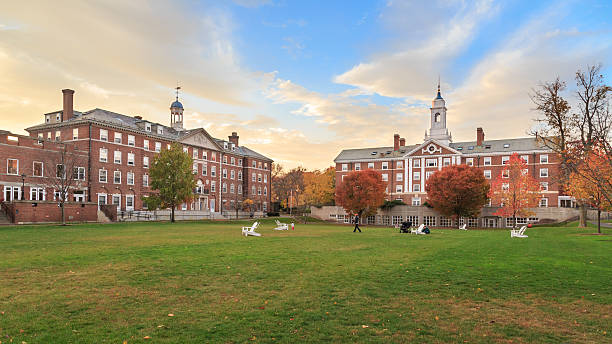
Image of Harvard University taken from Harvard website
“Even now I don’t think I have figured out what my passion is. But I believe the path to discovering it is an ongoing process and it starts with compassion. For me passion and happiness go hand-in-hand. And happiness to me means a healthy family, an impactful legacy, and a meaningful contribution to society,” George explains.
“That gave me the drive and the purpose to accomplish something of value,” George continues. “In my case, the impetus to find meaning to everything I was studying began with my grandfather who was hearing-impaired. While early on I questioned why I had to learn calculus when I didn’t see its importance in the future, since I didn’t want to be a mathematician, I had a sudden change of heart. I discovered that math could help develop a method to enhance hearing aids; I can improve the quality of hearing aids so people will actually want to wear them. That motivated me to apply my knowledge in the classroom to solve a real-world problem.”
George’s research ‘Separating Mixed Signals in Noise-Polluted Environments Using Global Optimization’ landed him in the final round of the 75th Annual Intel Science Talent Search competition. He was one of 40 finalists chosen from around the country who traveled to Washington D.C. this past spring to present their work. For George, being in the same room with these talented researchers was a tangible validation of his own accomplishment.
This summer George continues his quest to build an algorithm that will separate sounds and filter out noise in hearing aids in real time. He intends to make it his life’s work to create something that will enrich the lives of the hearing-impaired.
As George heads off to Harvard University next month, he will take with him his deep-seated resolve to be of service to humanity. He may not have been the smartest one in his class, but just as he has proven, when he puts in twice the effort he can achieve whatever he aspires to.

