High Point Academy Imagines a Bright Future

Originally published on 28 July 2016 in the Pasadena Independent, Arcadia Weekly, Monrovia Weekly, and Sierra Madre Weekly

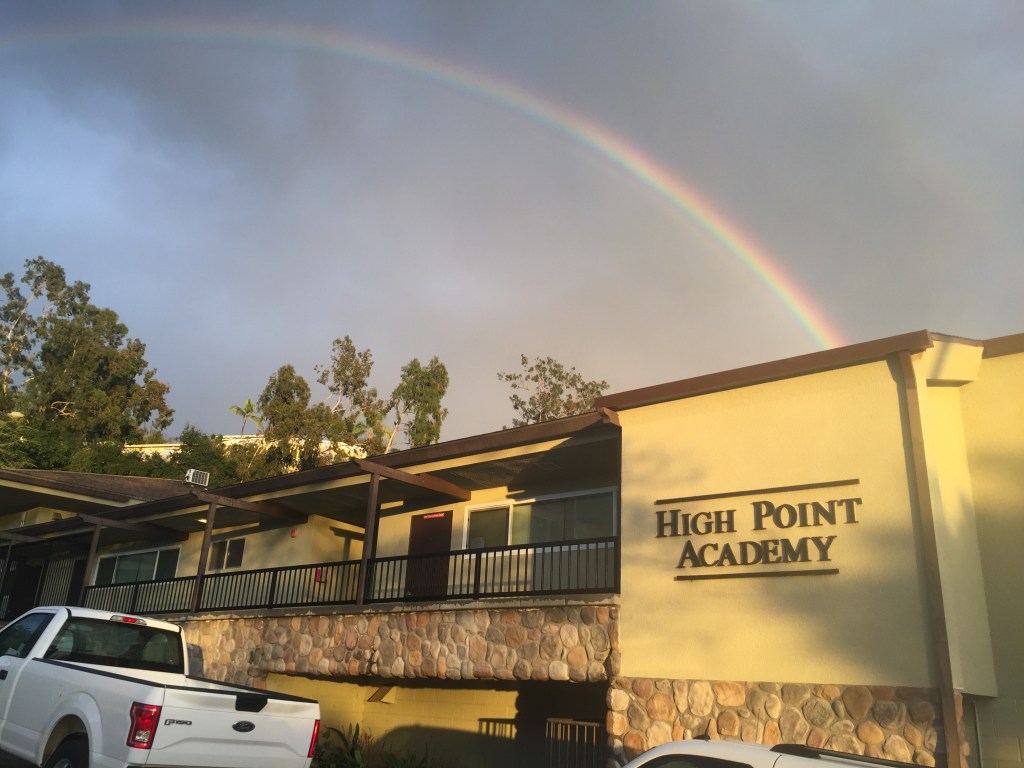
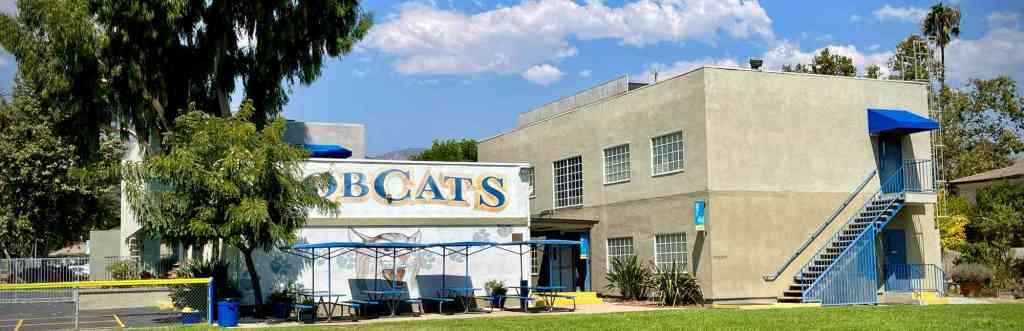
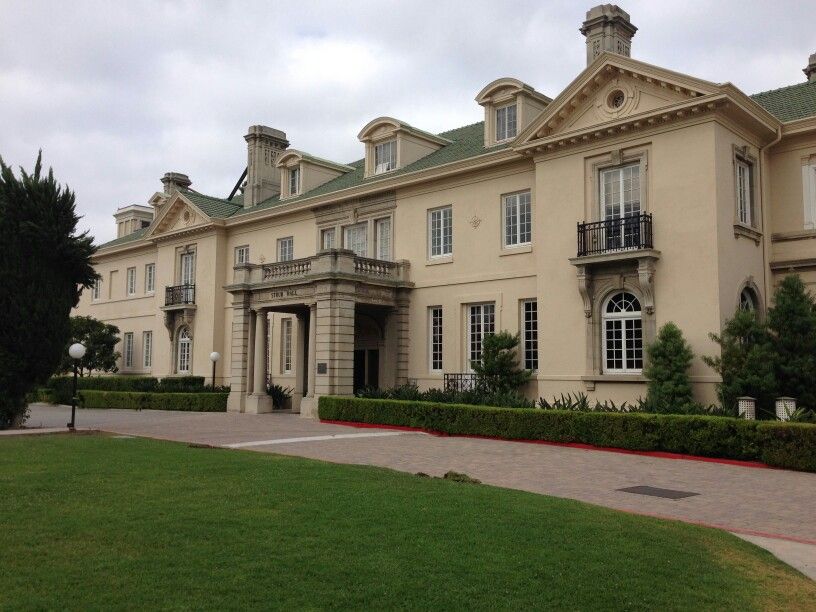
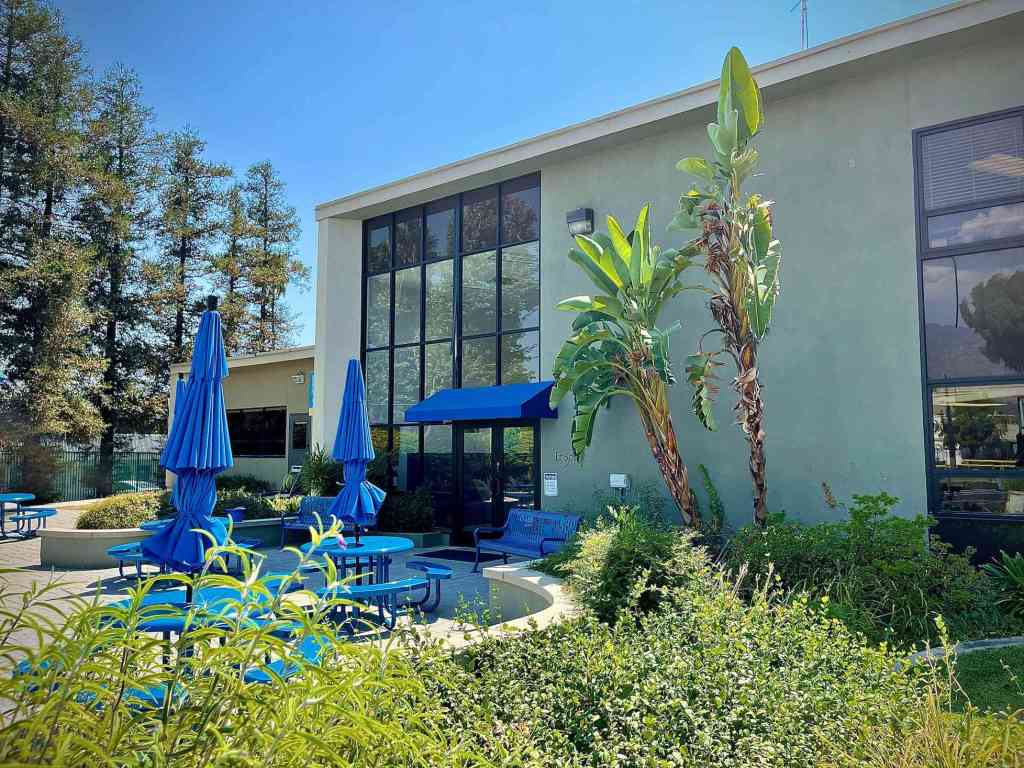
Carved into the foothills of Pasadena is a Kindergarten to eighth grade independent school that has consistently provided an outstanding education for its students for the past 50 years. High Point Academy (HPA), located on five compact acres on Kinneloa Canyon Road, to this day remains competitive in a market which reputedly boasts some of the most high achieving educational institutions in the state.

HPA was established in October 1965 when three women decided to open a small school for a few children. With Millicent Wilson serving as the first headmaster, it opened on Chester Avenue with 16 pupils; the following year enrollment grew to 50.  In 1967 it had 75 students and eight teachers, and another space had to be leased to accommodate third to ninth graders.      

By 1973 it became clear that their existing site wasn’t big enough for all their students; construction on its present location began. In 1974 the 15 faculty members welcomed 230 students on their first day of school in this brand-new structure that featured a sports field.  School uniforms were also introduced that year; and a $10 donation to the building fund was incorporated into the monthly statements (it continued until 1990).

The HPA library was opened and a junior high (seventh and eighth grades) science department was created in 1976. The decade between 1977 and 1987 saw more classroom and building additions; computers were installed.  When the school observed its 25th anniversary in 1990 it had 312 students, 29 teachers and three administrators. 

In 1993 John Higgins was appointed the sixth headmaster. He served in this office for 21 years and oversaw major expansions of the school’s facilities. He also ushered in the age of technology with the installation of Smartboards in every classroom, the launch of a digital library, and the introduction of laptops in junior high.

Under Higgins’s charge HPA’s enrollment reached its capacity of 350 students. The staff and faculty grew to about 55 (31 teachers, one librarian, one school counselor, one learning specialist, seven aides and student supervisors; with the rest in administrative capacities).  Sixteen teachers hold masters degrees and have an average length of service of ten years. 

Image taken from High Point Academy website

High Point offers a vast array of subjects including: math; science; history/social studies; language arts (reading and writing); world languages (K-3 Spanish; 4-8 French or Spanish); writers’ workshop; technology (coding, robotics, STEAM); visual arts and choral music; instrumental music in grades 4-7; physical education daily; library program twice weekly; and a technology class (computer lab) several times a week.

After-school enrichment courses are offered every day during the schoolyear with Kindercare for kindergartners and Eagle Club for grades 1 to 8.  Some programs include: bricks 4 kids; chess club; dance; mad science; mathnasium; robotics; STEAM; cub scouts and girl scouts. An after-school musical theatre program is likewise available. Most seventh and eighth graders are in athletic teams and play a variety of sports in five different seasons in the California Interscholastic Federation (CIF). 

The school holds small class sizes with an average student/teacher ratio of 11 to 1. In K-6, there are approximately 20 students in the classroom with one teacher and an associate teacher who works with smaller groups.

Forty percent of HPA’s student body is of diverse ethnic backgrounds (Asian Americans, Latinos, African Americans, and Middle Eastern) and 60 percent are Caucasians. Most of the students who arrive in kindergarten stay until they graduate in eighth grade.

HPA has a middle school placement program designed to help students and families find the perfect fit for them. Graduates matriculate to some of the most highly selective schools in the Pasadena area including Polytechnic, Flintridge Prep, Mayfield Senior, Westridge School for Girls, La Salle, Flintridge Sacred Heart Academy, Loyola, Saint Francis and Maranatha.       

By the time Higgins retired in 2014, HPA had gained a reputation as one of the best elementary and junior high schools in the area. The sports field was renamed ‘Higgins Field’ to commemorate his enviable legacy.

Timothy Burns was appointed interim headmaster for the 2014-2015 school year. He led HPA through the California Association of Independent School (CAIS) accreditation process where it was awarded the maximum certification of seven years. 

Gary Stern, who in 2015 succeeded Burns as the eighth headmaster, is charged with ensuring the next half century measures up to the success of the first five decades. Several events marked his first year, a milestone for HPA. On the first day of the school year students and parents got to ‘Dive into the 50th with a swim event at Gerrish.

Alumni students and parents came back on campus for the ‘Alumni Wine & Cheese’ affair. On the 50th day of the school year, the entire student body, faculty and staff gathered on Higgins Field to form an ‘HPA 50’ and photographed by a sky lift and drone for posterity. A Golden Gala was held on April 30 to celebrate High Point’s anniversary in style. 

The Earth Day and Green School Showcase in April was the capstone of HPA’s ongoing commitment to lead independent schools in the advancement of environment sustainability. The school was recognized as a flagship ‘green’ school and local dignitaries were on hand to present an award. 

During his first year, Stern hired a curriculum and innovations specialist who will work with teachers to incorporate and integrate technology in their classroom curriculum. This will pave the way for students to keep pace with technology and be able to access its power to prepare them for today’s global society.         

This fall, Stern will unveil HPA’s Strategic Five-Year Plan which outlines what’s ahead. Created in collaboration with the board of trustees, administrators, faculty, staff, parents and students, he says it will provide a clear path forward to allow High Point to remain true to its mission and core values, and successfully grow and evolve.

Stern elaborates, “First and foremost, we focus on academic excellence through awakening the joy of learning in every student. We trust that when learning is a joyful experience all students will rise to their full potential. We also believe in meeting the needs of the whole child, which means emphasizing not only the academic advancement but the social, emotional, and ethical development as well.

“Through our strategic planning process we identified four pillars that support and sustain our mission:  excellence, innovation, responsibility, and community,” Stern expounds. “These, in turn, are the cornerstones of our long-term objectives that focus on: a strong, challenging curriculum; a commitment to fiscal responsibility; fund-raising and friend-raising; campus facilities to optimize student learning; admissions, enrollment, and marketing; and recruiting, retaining, and supporting talented faculty and staff.”  

“Next year, most probably, we will undergo a campus master planning process.  An architect will be consulting with all our constituents to come up with a facilities design that will continue to support our academic program,” Stern reveals.

“Some of the upgrades we’re contemplating include:  remodeling the junior high classrooms; improving the sport court; expanding the Snack Shack; increasing technological enhancements; reconfiguring space to meet our curriculum needs; and adding more drought-tolerant landscaping,” Stern explains further.

HPA’s 50 years of establishment will be memorialized in posterity. Says Stern, “Sometime in the early part of the 2016-2017 school year, we will bury a time capsule to be opened in 2041.  Students have gathered mementos from the five decades that denoted a noteworthy event for the period. Each student included in this time capsule things that represent who we are today and their dreams and aspirations for the future. They also put in their predictions about how life will change over the next 25 years.”                                 

Another 50th anniversary commemorative is a transportable mural hanging on an outdoor wall made up of tiles individually painted by a student. It is a tangible demonstration of the importance of each piece to compose one beautiful whole.

It was indeed quite an auspicious beginning for Stern. That he came on board during this landmark year for High Point must have been predetermined by fate as he himself celebrated his 50th birthday. And just as he is looking forward to the rest of his productive life, he is likewise eager to lead this singular school to achieve greater significance in the San Gabriel Valley.                 

Marc Soong Epitomizes Gifted and Talented Youth

Originally published on 7 July 2016 in the Pasadena Independent, Arcadia Weekly, Monrovia Weekly, and
Sierra Madre Weekly

The word ‘gifted’ usually refers to someone who has innate intellectual or artistic abilities that surpass his or her age, while ‘talented’ is often used to describe one who works hard and accomplishes feats exceptionally well. Based on those delineations, a gifted child doesn’t put in any work while a talented kid makes some effort to achieve something spectacular.

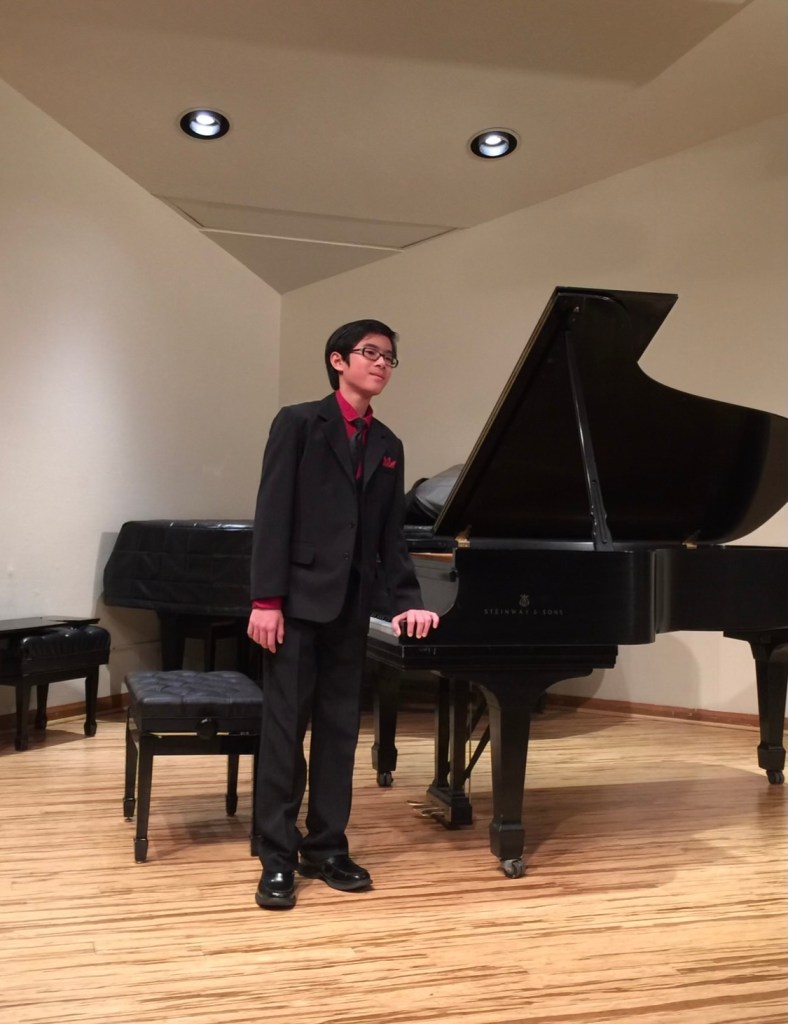
Marc Soong, a recently graduated eighth grader from Barnhart, a K-8th grade independent school in Arcadia, is both gifted and talented. Listening to his spirited and rousing rendition of Grand Etude Paganini No. 3 ‘La Campanella’ by Franz Liszt on the piano transports you into another world and time. His amazing fingering also reveals a mastery of technique honed by hours of painstaking practice and a devotion to his craft.

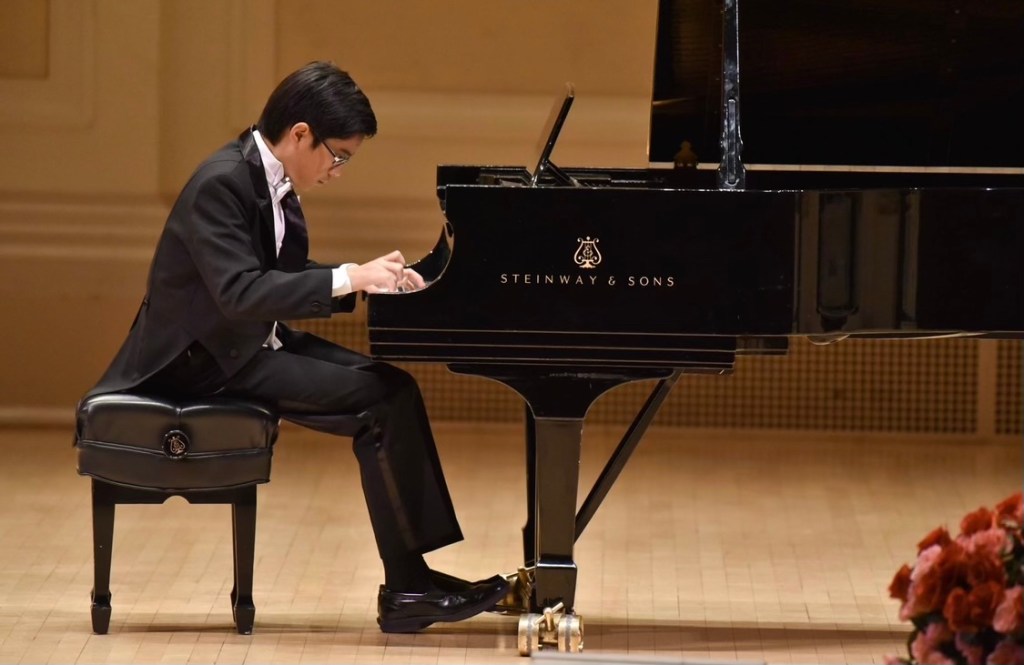
This past June 28, Marc electrified as he performed the finale number at The 65th Annual Redlands Bowl ‘Young Artist Competition Winners’ where he interpreted Chopin, Rossini and Ginzburg. 

Valerie Peister, program director for the Redlands Community Music Association pronounces, “As a winner of the 2016 Redlands Bowl Young Artist Competition, Marc Soong thrilled Tuesday evening’s Redlands Bowl Summer Music Festival audience with a virtuosic recital performance. His technical mastery was matched by a sensitivity and depth of expression well beyond his years, and showcased his remarkable ability to tell a musical story.”    

And again on June 30, Marc impressed at the Isaac Stern Auditorium/Perelman Stage at Carnegie Hall in New York, where he played Paraphrase of Figaro’s aria from the Barber of Seville by Ginzburg/Rossini. 

Marc’s outstanding musical abilities have earned him awards from the Los Angeles Young Musician International Competition, San Jose International Piano Competition, American Protégé Piano and String Competition, among other others.

Music, specifically, piano, is an important family activity for the Soongs. Marc’s mom, Alice, says “My husband and I attend all of our kids’ concerts, competitions and performances. Both Marc and Melodey, Marc’s older sister, perform at senior homes, and volunteer as ushers for concerts held at the Pasadena Symphony and Pops”.

Love of music came to Marc early on when he was three years old and heard Melodey playing the piano. He remembers that in first grade, he tagged along when his sister visited USC Thornton School of Music to meet with Daniel Pollack, a renowned professor there. When he was in third grade, he became one of Prof. Pollack’s students.

Vladimir Khomyakov, who at age 32 is an accomplished concert pianist himself, is Pollack’s assistant and has been Marc’s piano teacher since he was eight years old. From Khomyakov Marc learns technique as well as general music knowledge – history, the background of each piece, composer, style, and theory. 

“Marc is a brilliant student to teach because once he starts, he’s hungry for more.  He learns a piece on his own, asks a lot of questions, and has great initiative. While he chooses his pieces based on his personal journey, I help him build a balanced repertoire to include various genres, styles, periods, and composers, and develop a solid program as an artist,” Khomyakov states.

“As a musician, Marc is very passionate about his music. He plays from the heart – a rare trait for someone at his age, most kids do it mechanically. He has excellent ears: when he hears a noise he knows what pitch it is; when he hears a computer tone, he can play it. He absorbs all sounds like a sponge. He has what it takes to be a successful concert pianist … although I wouldn’t recommend it. It is a challenging life, with countless hours spent practicing which may turn out to be time wasted on something that might not work. It is usually filled with disappointments and stress, especially at the age of 20 to 25 when one gets into serious competitions,” Khomyakov says.

And Kyomyakov knows whereof he speaks. Like Pollack, he himself has concertized internationally as a pianist, conductor, chamber musician, and a soloist with leading orchestras including Dresden Philharmonic and Houston Symphony. He says he holds 40 to 50 concerts a year and has been all over the world except Africa. In 2009 he was chosen to be the assistant to Prof. Pollack; he teaches weekly master classes to all degree-level students.   

Music is not the only thing that Marc is superior at. According to Tonya Beilstein, associate head of school and director of curriculum and instruction at Barnhart, Marc exhibited talent and creativity for a normal fourth grader. She relates, “I began working with Marc in fourth grade, supporting his social and emotional growth. At the end of his fifth grade here we realized he was also ready for more academic challenges. I thought a solution was for him to go from fifth grade in June to seventh grade that Fall, skipping sixth grade entirely.   

“That decision didn’t come about haphazardly. We first asked his parents to get outside psychological evaluations (because we don’t have the resources on campus to do it). One of the things we do now, that we weren’t doing before, is use a tool called Iowa Acceleration Scale. It provides the rubric to help schools make effectual decisions relating to grade-skips.  Besides psychological evaluation, we look at IQ, academic assessment – capacity and performance.

“We conferred with the whole team in Marc’s life – his parents; past, current, and future teachers; school administrators. The last step we took was talk to Marc himself. He was very excited about the idea – he very much wanted to move ahead,” Beilstein discloses further.

Marc says, “I was a little nervous about being in seventh grade and being with older students but I also wanted a more challenging curriculum. My classmates were very kind to me and I developed deeper and more meaningful friendships in seventh and eighth grade. I found it easy as well as enjoyable.”

As if all these weren’t enough, Marc has been accepted to attend Stanford Online High School (SOHS) in the fall. At 13 years old, he might be the youngest person to gain admission to this highly selective institution.  Offering a distinctly innovative program, SOHS requires students to take core courses in Science, Math, English, and History. For academically advanced students, SOHS has numerous post-AP subjects, including university-level courses that typify most undergraduate programs.

“Stanford Online High School is the perfect fit for Marc,” declares Beilstein. “It’s a good choice for so many reasons – the challenge of the curriculum, the interaction he will have with like-minded students. I think, for the first time, he’s really going to be surrounded by his academic peers which he will find engaging and exciting.

“For students like Marc, who have participated in the summer program at Johns Hopkins Center for Talented Youth, a rigorous curriculum will give them peace and confidence. This model of learning is ideal because he can study at the pace that’s right for him and gives him the time to focus on his piano – it accommodates all his needs. He’s going to be in control of his destiny now,” Beilstein concludes. 

Marc is surrounded by people who support him – from his parents who encourage him to follow his dreams and provide the means for him to do so, to school administrators who find the perfect environment to engage his mind, to his music teachers who dare him to play demanding piano pieces, to friends who supply him with equilibrium as he navigates life. Through it all, Marc has remained sanguine and has retained his inner ‘kid-ness’. He thinks the coolest thing about going to an online high school is that he doesn’t have to eat cafeteria food.                                      

Laura Skandera Trombley Marks First Year at The Huntington

Originally published on 23 June 2016 in the Pasadena Independent, Arcadia Weekly, Monrovia Weekly, and Sierra Madre Weekly

The Huntington Library, Art Collections and Botanical Gardens in San Marino is a venerable institution beloved by residents in the San Gabriel Valley, recognized by scholars all over the world, and visited by tourists of every color and stripe.

At the heart of this landmark foundation is Dr. Laura Skandera Trombley, who took over as its eighth president (and the first woman to hold the title) in July of last year. She oversees an organization with so many moving parts that perfectly coalesce to make The Huntington run as smoothly and seamlessly as it is beautiful and breathtaking.

Prior to her current post, Trombley served for 13 years as president of Pitzer, one of the Claremont Colleges in Southern California. Under her tenure the college raised its U.S. News & World Report ranking, and improved its acceptance rate. In 2012 The Chronicle of Higher Education named Pitzer College the top producer of Fullbright Fellows among U.S. colleges.          

Two weeks before commemorating her first full year at The Huntington, Trombley remarks on the past eleven and a half months, “It’s like discovering the wonderful contents of a treasure box – from the people, to the objects, to the gardens. The Huntington has the most amazing way of revealing itself like the petals of a flower. You see that the totality of it is stunning but the real beauty comes in the particulars. I’ve spent the year just looking at it a little more deeply than I have ever had before … and that has been really incredible for me.”

Like most people living in the area, Trombley is no stranger to the place. She remembers that as a child, she walked through the rose garden with her mother and went to tea. Years later she came back to The Huntington as a young scholar researching for her doctoral thesis. 

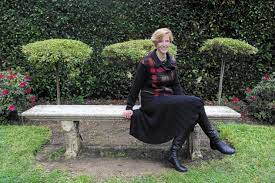
Image taken from the Los Angeles Times

“I felt this strong connection to it and I thought my experience was atypical. But I soon learned that it’s not. In fact I’ve met families who’ve volunteered at The Huntington for three generations; we have someone who has been actively volunteering for 54 years. That a quarter of a million people have the same robust ties to The Huntington – that this is so widely shared – was something that I could not have anticipated,” Trombley observes.

Trombley has fully immersed herself in the operations of The Huntington. She has worked alongside volunteers to prune and deadhead the roses in the garden, meet school buses as they arrive for tours, and wrap gifts during the holidays. She says, “I don’t want to just sit in my office; part of the fun is engaging with people here.”

The work for Trombley going forward is several-fold. She wants to focus on what goes on inside the buildings – continue to expand The Huntington’s collections, increase funding for art exhibitions. Additionally, she’s thinking of putting on more outdoor art displays, making sure all  staff are well-taken care of, and imagining how to enhance the visitor experience.

As president of Pitzer, Trombley grew its annual endowment from $42 million in 2003 to $133 million in 2014, and raised its national profile. As she is quick to point out, The Huntington is already a world-class organization as well as a global cultural institution and is in an incredibly robust financial position. Her charge is to continue to grow the institution and consider carefully its physical footprint. 

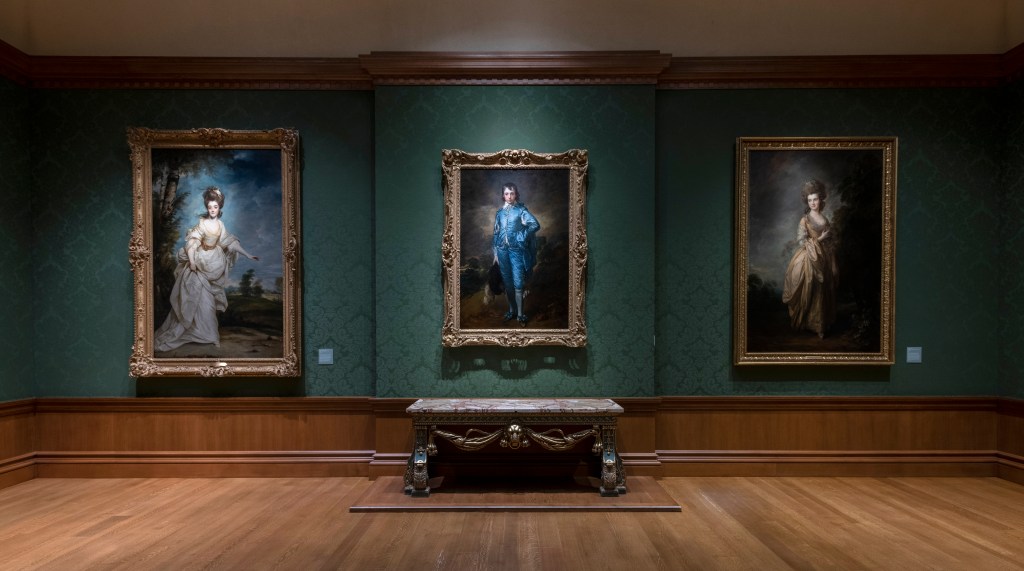
The Blue Boy Installation after the conservation project | Photo courtesy of The Huntington

And as Trombley did in her previous post, she intends to make The Huntington a model of environmental responsibility. She states, “We are moving strategically towards sustainability – analyzing how much water and power we consume and looking at how we can use less of both. 

“In fact, we will be a beta site for cutting-edge drip irrigation systems that are astoundingly sophisticated – they are all computer-controlled and can actually sense when it’s time to water. We’re considering installing low-flow toilets across the board, and maybe generating our own power. 

“These things are options that are important not just because we are a very challenged area when it comes to water and power but also because more and more the state is requiring that people take measures. Beyond that, we are always a teaching institution and we want to exhibit best practice. We want to show a path for how people can become increasingly sustainable in their homes at an affordable way,” Trombley expounds.

Ten months ago, Trombley embarked on a mission to make The Huntington a food destination. She explains, “The thing that’s interesting, and at the same time is complex, is that we have so many constituents when it comes to food. We have children who want grilled cheese sandwiches, tater tots, and mac n’ cheese; adults who want an authentic fine-dining experience with chefs designing their meals; our staff who want organic food and pre-prepared meals they can take home so they won’t have to go to the market and cook dinner from scratch.

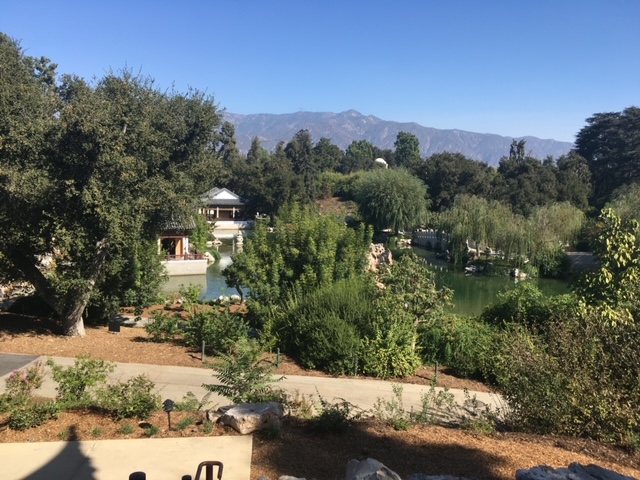
The Huntington’s Chinese Garden | Photo by Brianna Chu

“We plan to launch it in September and we hope it will be part of the attraction among the locals and particularly for our members. We want them to come for a nice walk and then enjoy an incredible meal with the best parking in Los Angeles. It would be so satisfying for me if people think of The Huntington when they want to have a world-class meal in an incomparable setting,” Trombley enthuses.

Dovetailing with this project is an expansion of their dining venues to accommodate the sheer number of people who visit. Trombley reveals they are building a second restaurant in the Chinese Garden – the Garden of Flowing Fragrance. The one that currently exists will very likely return to being a dim sum place, or become a real teahouse serving sweets and desserts, while the second restaurant would offer heartier fare. 

Trombley says further, “We have received an enormous number of requests for a place to accommodate large parties for weddings, first birthdays, even dances. Right now we only have our grass area and not everyone wants to be on grass; we also have to build a stage, which adds to the expense. To meet that space requirement, we are on the final phase of fund-raising for a 600-seat venue on the hillside of the Chinese Garden to be used for events. It will be able to support a tent so we can have events at any time of the year. It would have a spectacular view of the Chinese Garden and the two restaurants there can cater the affair.”   

There are several memorable events during Trombley’s first year that stands out in her mind. She describes her favorites, “The Huntington Ball is always lovely … I’d never been to a ball before … that was a lot of fun. It’s a fundraiser we hold every September for our members, guests and corporate sponsors. 

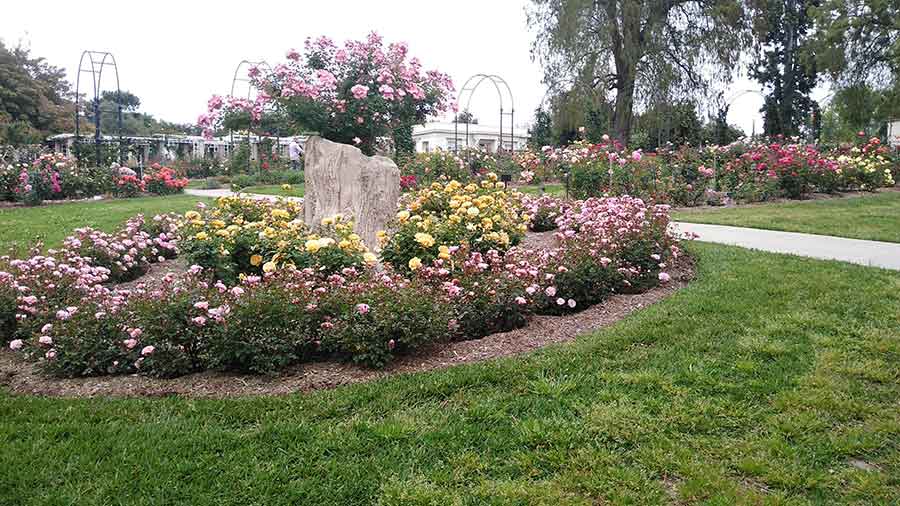
The Huntington’s Rose Garden – Courtesy Photo

One event they had for the first time is the San Marino Day which Trombley initiated. In April The Huntington opened its gates and invited everyone to come free of charge – about 20 percent of San Marino’s population came in that day, reports Trombley. Another favorite is An Evening Among the Roses, held for the LGBT community. She is also looking forward to the completion of the Garden of Flowing Fragrance, a grand celebration slated for 2018.

“There are so many events here … and I’m not even mentioning the fantastic speakers who have all been extraordinary,” Trombley hastens to add. “Except for the San Marino Day which we held with my coming in, these other amazing events have been going on for a long time. But it’s a place that’s very open to new ideas … to creative ideas. I find that to be one of the best parts of The Huntington.”

When asked what vision she wants people to have at the mention of The Huntington, Trombley laughs and protests, “I think it would be almost impossible for me to name just one. We have The Huntington rose, The Blue Boy, Mark Twain’s manuscript of ‘The Prince and the Pauper.’ What I’ve learned is that everyone has a different mental image of it.

But one thing that comes to mind above everything is that it’s a kind and gentle place where people are treated very, very well. And it’s a place where you could just have a sense of spontaneous exhaling and, at the same time, an inhaling of creativity. I think that’s the most special aspect of The Huntington,” Trombley opines. 

The Huntington is an institution that evokes as many different feelings and emotions as the tourists and visitors who come to experience it. And just as Trombley discovered when she came on board a year ago, every single person who steps into this wondrous oasis retains a deep connection to it.                    

While locals happily share The Huntington’s vast treasures with the thousands who come to visit annually, they are fiercely protective as they are intensely proud of this national treasure in their midst. They are also absolutely certain that in Trombley’s accomplished stewardship The Huntington will thrive and flourish for centuries to come.  

Will Harvard’s Report Change College Admissions?

Originally published on 16 June 2016 in the Pasadena Independent, Arcadia Weekly, Monrovia Weekly and Sierra Madre Weekly

College applications: it’s a rite of passage among teenagers in this country.  High schoolers spend 18 months of their life focused on this singular pursuit – actively padding resumes, accumulating countless hours of community service work, and preparing feverishly to get high scores in standardized tests – with the hope they would be good enough to merit admissions officers’ interest and acceptance to their dream school.

In its present form, the process arguably favors students with the resources to take test-prep classes, hire independent counselors to ‘package’ them, travel to far-flung countries to build houses as part of their community service, and intern for prestigious corporations. All for the purpose of burnishing applicants’ resumes.            

In January of this year, Harvard’s Graduate School of Education released a study purportedly to change the college admissions process which many see as a broken system. Titled “Turning the Tide: Inspiring Concern for Others and the Common Good Through College Admissions”, it enumerated recommendations that would change how students are evaluated.

The authors of the report touched on three areas: promoting more meaningful contributions to others, community service and engagement with the public good; assessing students’ ethical engagement and contributions to others in ways that reflect varying types of family and community contributions across race, culture and class; redefining achievement in ways that both level the playing field for economically diverse students and reduce excessive achievement pressure.

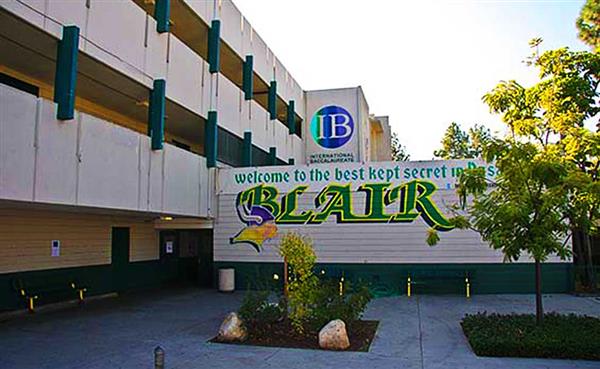
Image taken from Blair High School’s website

At Blair High School, in the Pasadena Unified School District, community service activism is a component of its International Baccalaureate program, according to college counselor, Karen Favor. She says, “Students identify a need for the school or the community, develop a plan with other schools, people or community, address that need and complete it in 150 hours. The Harvard study’s second recommendation – collective action that takes on community challenges – validates what we are already doing.

Favor adds, “I also appreciate its recommendation for assessing ethical engagement and contributions to others across race, culture, and class – specifically the one touching on contributions to one’s family. More and more we see students who also are caregivers for the elderly in their family. We had one student who had a grandfather with Alzheimer living at home. She woke him up every morning, fed him breakfast before going to school, then fed him dinner when she got back home. Besides providing care for him, she also had to deal with the mood swings that come with the disease.”

Image taken from Flintridge Prep’s website

At Flintridge Prep, a 7th-12th grade independent school in La Canada, Harvard’s seminal report has been widely circulated. Gloria Diaz Ventura, director of college counseling, reveals, “We know it well, it’s posted outside my office door. I believe in the words and to me it’s two different things. It’s something I will use to promote a balanced and healthy college process. The second issue is whether or not I feel if, in fact, this document will implement change in the college application process.

“Having worked at highly selective institutions, I’m very clear on the institutional standards and how the process works. But I believe in the document because I have to; I have to believe there’s a better way because right now I don’t see how we can keep going at this rate. The extreme selectivity among universities is creating unhealthy behaviors on the high school side.

“While we don’t have a community service requirement, we encourage our students to be part of their community. Our messaging is so clear that life has to be more than test scores and grades. We have a middle class ethos – there is no entitlement and we don’t forget where we come from,” Ventura further expounds.

Prep’s headmaster, Peter Bachmann, pronounces, “We support the values of the Harvard report, which are extremely compatible with Flintridge Prep’s. We sincerely hope that colleges around the country truly embrace them.” 

Image of Mayfield Senior School taken from Mayfield’s website

Among independent schools in Pasadena, community service and doing good for others are already part of their moral ethos. Kate Morin, head of school at Mayfield Senior, says “That’s  our core mission – Action Not Words. It’s really about empowering our students to be leaders in making the world a better place.” 

Morin recounts, “When I met recently with several generations of alums in San Francisco and in New York – some of whom were in their 70s – that’s what they want to talk to us about. They all have continued to serve the community in various ways, an extension or expansion of the work they started back when they were at Mayfield; maybe as part of their experience on Cornelia Connelly Day or Annual Service Day.”

Lori Holtrust, Mayfield college counselor, echoes Morin’s words, “We foster the development of the whole person. I think we’ve found that students are learning because they’re intrigued – they’re diving in. I don’t know that they’re doing it for college admissions. We focus on the journey of development, learning and understanding. And the college piece just happens.”

Sequoyah School, which will welcome its first 9th grade class this fall, has instilled this ‘habit of mind’ even among their elementary and middle school students. Marc Alongi, high school director, says “Our curriculum is designed to prepare students to graduate as experienced, confident and resourceful problem solvers, who know how to apply their knowledge and passion using strategies that can make a difference for their communities and for their own lives. Students will be challenged to think critically and creatively, learn how to work in diverse teams, and communicate ideas successfully.”

“The Harvard study certainly aligns with our values; our high school curriculum is framed along those lines. We aren’t merely preparing our students for college, we’re educating them. We want to inspire curious learners who are passionate and engaged about what they’re doing and connected to their community. 

“Oftentimes the college process distracts students from that; they focus on APs, grades, test scores, extra-curriculars. Again and again you hear in the media about college admissions officers seeing window dressing on students applications, not genuine interest. Are the community service hours being done to merely check off a box or is it for a deeper purpose? Our program for social innovation makes students responsible for their own impact project. It would show genuine interest and commitment; they’d have a real story to tell in their college essay.    

“The question for college admissions officers is how do they sort through the application? Are they using SAT scores as the initial filter? Some of these essays may still not get read; but if they are read, does it make a difference?,” Alongi further queries.

Ventura of Flintridge Prep, voices this same concern.  “In large offices, it’s newly graduated professionals from that school – 22-, 23- or 24-yeard-old grads – reading the file. Not unless the dean or director is telling them this is what they’re going to emphasize, they’ll just be following their marching orders. The deans, in turn, are following what the university president is telling them.

“College admissions officers need to evaluate what they’re valuing and what they’re praising at the end of the day. It’s very political – you have to look at these institutions and how they’re tied to Wall Street and political organizations.  Community service by itself doesn’t get you into Harvard,” Ventura states. 

Another Mayfield college counselor, Abigail Shaw, opines, “I think colleges are honest that  they’re looking holistically. They want students with broader perspectives. A lot of colleges are shifting their priorities – there are schools which are making the testing element optional and it’s building every single year. They are realizing that testing doesn’t necessarily present a true reflection of what a student can provide in their community so they’re taking it to heart. But I think in terms of the full spectrum of colleges making that shift … it’s not going to happen.”   


According to the media spokesperson for the Association of College Counselors in Independent Schools (ACCIS), Jodi Sweeney, “The intentions of the report are very noble. From our perspective, we feel that the report meshes well with our programming. Independent schools are preparing citizens of the world; we really work hard to help students find a balance so that they’re selecting courses with an appropriate amount of rigor so that they’re able to engage in the life of the community.

“We encourage our students to challenge themselves, find authentic service opportunities, and have transformative experiences. But we also want them to thrive and get sleep at night. It’s a balancing act and the landscape right now is more is more. And until we see that colleges really are recognizing and valuing a student who engages deeply in two or three activities and rewarding that with an acceptance, we won’t be making great changes to our college application process.

“Often admissions officers talk about the transcript being the most important component of the application – more so than the ACT or SAT. But when you look at the median scores at the schools, you’ll see that ranges are very high. College applications is so complex that it’s a perfect storm; fixing it requires a collective effort.  

“Technology and the ease with which students can apply to more schools, have also increased the competition. While we encourage them to be thoughtful and do intentional searches, students put out 12 to 15 applications because they can.

“We’re waiting to see what impact this report has on admissions selection and their recruitment process.  Right now it’s GPA- and SAT-based. We want to get a sense from college admissions officers how they’re going to tweak their process,” Sweeney says.  

At the core of the Harvard report is a fundamental issue – raising children with a moral compass who will grow up to be upstanding citizens of their community and the world. And that process starts during childhood.

Clairbourn School – Courtesy Photo

Dr. Robert Nafie, headmaster of Clairbourn School, a pre-K to 8th grade school in San Gabriel, offers his insight to support it. “Encouraging young people to take a more ethical path of social responsibility and community service must begin in the home. Additionally, it must be embraced at the individual level or there will be nothing but lip-service to perceived expectations. It is a way of life, not a fulfillment of college admissions criteria.

“The position paper implies students who demonstrate social responsibility and concern for the common good to be more desirable than those who have not exhibited such. However, it is doubtful that these institutions would accept social and ethical engagement in lieu of proven proficiency and knowledge in chosen fields of study. Although it is not clear from reading the study, it is likely that the report is actually arguing for the use of social and ethical engagement as an important secondary consideration, or even at the tertiary level, in the admissions process,” Nafie further opines.

While emphasis on the empathetic record might be highly desirable in a liberal arts college which focuses on the humanities or in education, social services, counseling, even law, Nafie puts forth that this does not hold true in technical areas.

“In the technical fields, content mastery and demonstrated proficiency will continue to be paramount. And the United States must continue to strive for excellence as measured by objective standards instead of anecdotal testimony. In science, medicine, aviation, and mathematics, for example, no amount of  motivation, intention, or concern, will make up for lack of precision or knowledge.

“When content mastery and demonstrated proficiency are substantially equal in college applicants, admissions officers should evaluate important but less critical elements in making their decisions. Without such a strong standard for objective measures of readiness, American colleges will be pulled into accepting good enough instead of reaching for genuine excellence,”  Nafie posits.

American universities are the envy of the world. Students everywhere aspire to gain admission to them. It is incumbent upon these institutions of higher learning to find the students who can balance scholastic ability and ethical responsibility.         

Barnhart School Aims to be the Best

Originally published on 9 June 2016 in the Pasadena Independent, Arcadia Weekly, Monrovia Weekly, and Sierra Madre Weekly

Barnhart School was founded in 1959 by Dr. Ethel Barnhart and is affiliated with the non-denominational Santa Anita Church. Students from kindergarten to 8th grade acquire a stellar education based on an ethos of respect and love that encourages independence and self-responsibility.      

Tucked away in eight acres of real estate between Colorado Place and Colorado Blvd. in Arcadia, close to the race tracks, Barnhart can easily by missed by someone driving by.  But if Ethan Williamson, headmaster of five years, were to have his way, it wouldn’t be too long when everyone will know exactly where it is.

“My ultimate goal is for Barnhart to be the premier independent school in the greater Pasadena marketplace – Altadena, Arcadia, Monrovia, Sierra Madre – the surrounding communities where we draw from,” Williamson pronounces. “I think we have an excellent product. We do exceedingly well placing our students into highly selective independent schools. 

“We don’t track them to one particular school. And that’s also what I think is unique about Barnhart. We try to understand the child and make sure a Barnhart education is about stretch, not stress,” Williamson says further.

The 32 8th graders graduating this year were accepted to 23 high schools, including Marlborough, Campbell Hall, Flintridge Prep, Los Angeles County High School for the Arts (LACHSA), Mayfield Senior, Sequoyah, St. Francis, Westridge, and Stanford Online High School. Seven of them have been awarded merit scholarships. This wide range of institutions to which they applied and were admitted is proof that Barnhart ensures it finds the best fit for them.  

“Academics are essential at Barnhart. The rigor of our program shows in our ERB scores which have been improving over time. But we don’t focus a whole lot on test scores, we focus on education. We recognize that excellent test scores follow excellent education.

“We have been tracking their GPAs and our graduates do better than the average incoming freshman into high schools. We have a really high cohort of students who test as gifted; about 40 percent of our students qualify for the Johns Hopkins Center for Talented Youth (CTY) and participate in its summer program, and it’s still increasing,” Williamson proudly states.
 

Barnhart is also distinctive for its racially diverse student body – 40 percent of its enrollment is Caucasian, 30 percent Asian (Chinese, Japanese or Korean), 20 percent Hispanic, ten percent African-American.  And while students attend 15 minutes of chapel every morning (Monday-Wednesday-Friday for elementary students and Tuesday-Thursday for middle schoolers), a third of them are Catholics, another third are Agnostics or Atheists, and the rest belong to other world religions including Buddhism, Hinduism and Islam.

Williamson says, “Cultural diversity and cultural competency are very important to our students because their peers are from all over the world. It mirrors what they will be experiencing in the future as society and jobs become ever more global.”

With a total enrollment at 225, a faculty and staff of 50, the average class has about eight students to one teacher; with a maximum of 15. According to Melissa Gersh, Director of Marketing, Barnhart has 25 teachers, representing 336 years of total experience in the classroom.

Gersh adds, “On average, our teachers have a little over six years of experience directly at our school.  Half of our teachers have a master’s degree or higher; the school also requires all teachers to be credentialed.”  

Barnhart’s elementary program schedule incorporates the core content areas into the homeroom classes. A focus on literacy (reading/writing) includes 90-minute teaching blocks each day.  Math instruction occurs daily with a minimum of 60-minute lessons. Social studies and science classes are also built into the daily lessons. Balancing out the academic program is a variety of enrichment classes including: 45 minutes of art and library weekly; 30 minutes of music and Spanish, twice weekly; and 30 minutes of physical education daily.

The middle school program is designed to prepare students for the requirements of Pasadena-area high schools. Students have eight classes each day which include five core academic classes – Algebra/Geometry; English; History; Science; and Spanish – and three opportunities to experience the Barnhart Balance. 

Four exploratory classes rotate each quarter. In 6th grade: art appreciation; music appreciation; public speaking; technology. In 7th grade: human health; life skills; theatre appreciation; woodshop. In 8th grade: art appreciation; music appreciation; woodshop.

Students take one elective class per year: advanced band; studio art club; drama club; outdoor education; science club; screenwriting; and yearbook.

Physical education is a required daily 45 minute class.  


Barnhart has made incredible strides in technology. Says Williamson, “Four years ago not every student had individual access to an iPad or a laptop or any sort of tech device; they had to go to the computer lab. But our vision is to make technology as ubiquitous and available to students as pencils. This year we have iPads for every student in K to 2nd as they’re easy for children to use with their small fingers. Third to 5th graders use Chrome Books; we recognize that students enter the world of Google so we have Google Apps for Education and Google Classroom. In middle school it’s ‘bring your own device’ because we know this is the generation that will be device-agnostic. Many students already have both Apple and IBM at home so we intentionally gave them the flexibility to choose the right tool for the job they need to accomplish.

“We thought a lot about making sure our students are ready for the world they will encounter outside of college. We’re not just getting them into their high school or into college; we’re thinking about what their workplace will look like. And that’s especially true around technology where collaboration is key. In grades 3 to 5 our students use Google Doc so if they have a group project, which they might want to work on during the weekend, they can edit simultaneously without being in the same room. 

“Investing in a seamless wireless infrastructure became a priority for me when I first came on board. By spending $7K on a wireless network, we were able to integrate our entire system. Another enhancement we’ve created is a comprehensive student information system database – the instant students apply to Barnhart, we are able to track their progress in the admissions process. Once they’re accepted, we are able to interact with the family, keep all of them updated. Grades, test scores are all available in real time – there’s no hiding as a student,” Williamson laughs.

There’s much yet to be accomplished in the future, as Williamson says. “We’ve made major improvements in our school facilities. While it isn’t exciting to talk about, last summer we pulverized 75,000 sq. ft. of asphalt. But what’s cool about it is that we were able to recycle what we dug up and used it as a foundation for the new asphalt … and we were able to complete the project in 30 days, between summer school and the start of the school year! In the process, we also took down outdated poles, put in brand new basketball hoops, put in a nice white fence.

“Our future goals include updating our facilities to make them inspiring and competitive with our peer schools. We are currently on the planning stage of figuring out our priorities for improvement, how to go about that, what fundraising that entails.

“In terms of our curriculum and staffing, we want to optimize what we’re already doing by making changes every year as warranted. We have something solid, it’s simply a matter of continuing training. On the technology side, we will keep up with students’ needs to get their work done.

“We have a big rollout on a social curriculum this coming schoolyear. We’ll be using a system from a book developed by the Northeast Foundation for Children called ‘Teaching Children to Care – Management in the Responsive Classroom.’ It’s a proactive approach using a social curriculum that involves creating community standards or rules in the classroom. We will have teachers model the expected behaviors. This consistency in conduct means students don’t have to adjust to teachers’ expectations and styles; while personalities differ, the language we use does not. 

“More broadly, it’s a management system for the classroom. Research talks about ‘affect’ – how you feel in a classroom or work environment, for that matter, tremendously affects your performance. If one is scared, that uses up a lot of brain energy and leaves less available for learning. As students feel comfortable, their brains become fully engaged on their activity. So I think an investment in the social curriculum is critical to everything else we do.

 We have adapted the system into our middle school what the Northeast Foundation for Children designed for K-6th grade. But they have now come out with a middle school-specific book for which we have the honor of hosting the training. This summer, from August 8 to 11, an international group of 90 educators will be on our campus to learn it. It’s pretty exciting!” Williamson enthuses. 

Williamson’s infectious passion for learning and social responsibility is pervasive in the entire Barnhart community. Conceivably in the not-too-distant future, this spirit will spread far afield.  

Duarte High School Gears Up for the San Gabriel Valley Special Olympics

Image taken from the L.A. Times

Originally published on 12 May 2016 in the Pasadena Independent, Arcadia Weekly, Monrovia Weekly and Sierra Madre Weekly

Some 300 special education students – from elementary,  middle and high school – will convene and race on Duarte High School’s new football field at this year’s 2016 San Gabriel Valley Duarte Spring Games (Special Olympics Southern California)  which starts at 10:00 on the morning of Friday, May 20. Greg Saris, Duarte Unified School District (DUSD) adapted Physical Education teacher, heads a group of volunteer students, faculty, and parents who will be on hand to assist as well as cheer them on.

“The School Games were established in the San Gabriel Valley region well over ten years ago and in that span we have hosted over 20 school districts in this area,” says Teresa Borunda, Senior Manager of Sports & Programs for Special Olympics Southern California-Los Angeles and San Gabriel Valley Regions. “However, this is the first year for the 2016 Spring School Games hosted by Duarte High School.”

Saris, who is responsible for coordinating this year’s event along with Tracy Hall, another DUSD special education teacher, explains the district’s involvement, “Duarte has been participating in Special Olympics’ School Games for about six or seven years. In the Fall we go to a soccer tournament in Walnut where we compete against several West San Gabriel Valley school districts for elementary, middle and high school levels. Then in the Spring we compete in track & field. Last year we got left out because there is a cap of 300 participants and by the time we registered for the event they had reached that limit. Tracy and I decided to organize our own event and invited other districts who, like us, were not able to get in.

We had to do everything – from creating Excel spreadsheets for all the races, to finding T-shirts. When it proved to be quite a success we applied to the Special Olympics to put on the event for them in the area. It turned out that they were also looking for another school to host the games, and so here we are,” Saris happily states.

Adds Borunda, “The games were added to our calendar this year because of the popularity of the previous School Games. DUSD will be hosting ten schools from other districts – Alhambra, El Monte, Montebello, Rowland Heights, and Westmoreland Academy (in Pasadena).”

“I think it’s going to be a really fun event,” says Saris. “Jersey Mike’s will cater the food for all the volunteers and student participants. Special Olympics will be providing T-shirts and all the equipment. Duarte special education students will participate in seven races and one relay, but there will be as many as 25 different variations to give them more opportunities to win awards. There will be one volunteer who will run with each participant from the starting point of the races until they get to the awards area.   

“Assistant Superintendent, Miriam Fox, will officially open the games; we’re hoping Superintendent Allan Mucerino will be in attendance as well. Christine Wheeler, a general education senior, will sing the National Anthem. One of our special education students – Eric Little – will lead the Pledge of Allegiance. We’ll have our photographers take pictures and our videographers will create a promo video to send to Special Olympics to show other districts. We’re very excited – we’ve been planning this since last November. And we will soon see the culmination of all our efforts and hard work,” Saris says with unrestrained enthusiasm.

The Special Olympics was created in 1968 by Eunice Kennedy Shriver to provide year-round sports training and athletic competitions in a variety of Olympic-type sports for children and adults with intellectual disabilities, giving them continuing opportunities to develop physical fitness, demonstrate courage, experience joy and participate in a sharing of gifts, skills and friendship with their families, other Special Olympics athletes and the community.      

In 1969, Olympic decathlon gold medalist Rafer Johnson founded the Western/California Regional Chapter and the first annual Western Regional Olympics were held at the Los Angeles Memorial Coliseum. Athletes from seven western states competed in track and field and swimming.

The International Special Olympics was held in 1972 for the first time in Southern California at UCLA and Santa Monica College, with more than 2,500 athletes from eight countries attending. Law enforcement officers from the LAPD joined with California Special Olympics in the first Law Enforcement Torch Run in 1986.

To expand its outreach efforts, the California Special Olympics branched out into two chapters – Northern and Southern California – in 1995. Today Special Olympics’ global extent counts 4.4 million athletes participating in over 8,000 events and competitions held annually. Southern California accounts for more than 24,000 athletes.

This Friday, 319 young students from the San Gabriel Valley will participate in a Special Olympics event. They will join an outstanding and remarkable band of athletes, who will discover abilities they didn’t know they possess, to inspire others to achieve greatness.

Seeing the unbridled joy on the faces of the students he has known and taught would be the most significant reward of all for Saris.  

Sequoyah School Welcomes its First Ninth Graders

Originally published on 17 March 2016 in the Pasadena Independent, Arcadia Weekly, Monrovia Weekly, and Sierra Madre Weekly

In January this year, the Harvard Graduate School of Education released a seminal document titled Turning the Tide: Inspiring Concern for Others and the Common Good through College Admissions,which has the potential to forever alter the college admissions landscape. 

The result of a joint effort among the nation’s most respected colleges and universities, this two-year campaign hopes to promote ethical engagement among students, reduce excessive achievement pressure, and level the playing field for economically disadvantaged students. If its noble mission were to actually come to pass, Sequoyah School, which will be welcoming its first high schoolers this Fall, will be at the forefront of this sea change.

Established in Pasadena in 1958 by local college professors, ministers, scientists, teachers, doctors, and civil servants, Sequoyah School is a place where children can find joy in learning and make a difference in the world. Its founders’ mission is to provide education that challenges the mind, nurtures the heart and celebrates human dignity. The school values racial and socio-economic diversity in its enrollment, and 30 to 40 percent of its students pay below full tuition. Over half a century later, it hopes to extend this same ethic from the K-8 grades into high school. 

Josh Brady, Sequoyah’s School Director, welcomes the timely conversation sweeping the nation’s institutions of higher learning that emphasizes concern for others over building shiny resumes for students aspiring to gain admission to university. He says, “Colleges want to see students who have demonstrated work over time on a particular area that are of service to others. For a while, only the privileged few can afford to do novel things that look good on a transcript.”

“As a Progressive School, Sequoyah starts with the students’ experience and understanding how they are interacting with the curriculum, what’s motivating them, and what’s challenging them, but also making sure they’re thinking of their life outside school. It isn’t just school for school’s sake; it should be about preparing them to become responsible and caring citizens of the community,” Brody expounds.

“I feel, in a wonderful way, more schools are embracing progressive ideals which are being recognized as good pedagogy. Doing it in a very deep way is challenging for high schools where transcripts, GPAs, and standardized testing results have been used as assessment methods.  While these are measurements of learning, they are also imperfect measurements in the face of grade inflation and resume-padding,” he says further.   

Brody elaborates, “Our high school students will develop initiative and self-direction through college preparatory coursework and field studies emphasizing global perspectives and cultural competency. Independent study and collaborative effort will culminate in a junior-year social impact project and senior-year internship.”

Sequoyah’s first high school director, Marc Alongi, explains how their program lends itself to a progressive approach, “We use performance tasks as a way to assess student learning.  Each one has a project with a real purpose. If you’re in Conceptual Physics and you’re thinking about energy and mechanics, you’ll actually be building something that uses mathematics and all the equations that underlie whatever principle you used to come up with that object. It’s like what goes on in medical school where you demonstrate competency, not just taking an exam.”

“In K-8, students don’t get grades. In high school, we’ll have grades but we’ll continue to value goals that are process-oriented. We’ll include specific objectives relating to collaboration, or communication, or inquiry, as well as content standards. Students have seven modules per year that are five weeks long; they take three 85-minutes courses a day so they can be more focused, plus an elective and a social innovation program. At the end of each mod, they’ll get a report that scores their performance according to their mastery goals for each of the subject areas. What’s different also, is that we have interdisciplinary work within the curriculum. For example, students will be taking a Humanities course that integrates history and English, and some of the big themes and ideas could connect very nicely to the conceptual physics class or to the mathematics program,” Alongi explains. 

“We have adopted a framework for Great Challenges which is a set of goals for making the world a better place,” Alongi illustrates Sequoyah’s program. “Let’s look at energy – where we get it, and how we produce it. The implication is that it contributes to global warming. The challenge then is to change that and mitigate its effects on CO2 emissions. We can embed that in our physics curriculum. At the same time there might be a group in the social innovation program who are out in the community talking about how we use energy in L.A., what innovations are taking place to transform technology or consumer behavior, etc. So we have it from both angles: real world investigating on the community project perspective and studying the subject.”

With progressive education in core courses in English, math, history/social science, laboratory science, foreign language, visual and performing arts, and college-prep elective, Sequoyah will meet the A-G requirements of the University of California. It will also offer athletics and participate in the California Interscholastic Federation (CIF) as it fields teams in basketball, cross country, fencing, mountain biking, soccer, swimming and diving, tennis, and volleyball.   

More importantly, though, its four-year Social Innovation Program (SIP) will develop students’ empathy and desire to be thoughtful, effective collaborators and changemakers.  

Sequoyah’s educational philosophy is attracting the attention of accomplished proponents as evidenced by the caliber of teachers who have applied, and agreed to come on board. They come from the best colleges and universities, including MIT and Caltech, Columbia and Stanford.  These educators have held jobs and been involved in careers that span the gamut – a journalist for a television network, counseling psychologist at a Quaker School or an artist in residence in New York, fair trade business entrepreneur, scientist and co-founder of a biotech company in Los Angeles. They have varied interests ranging from organic gardening and amateur beekeeping to cooking Greek food or at Lucques.           

Brody himself is an alumnus of Pasadena’s Polytechnic School. He graduated magna cum laude from the University of Colorado and later received his Master’s in Education from Harvard.  He has been involved in education and human rights in the U.S. and internationally. As an Echoing Green Fellow from 1999 to 2002, he started a project for education reforms in very remote high mountain areas of Nepal. Its objective was to make education relevant to languages, livelihood, and culture of people living in these remote areas where the nearest road is an eight-day walk.

Alongi, a New Mexico native, completed his BA in religious studies and his MA in Teaching at Brown University, and holds a doctorate in Educational Psychology from USC. He is also co-founder and advisor to Ashram Paryavaran Vidyalaya (APV), a model school and teacher training center dedicated to project-based learning, mindfulness, and music, in Uttarakhand, India. 

This diverse group of civic-minded educators come together at Sequoyah School to use their experience and to impart their knowledge to the first class of high schoolers who share their passion for community service in scholarship. And if Brody is correct in saying this philosophy is being embraced by more schools, then through their combined work, future generations of Americans may yet get a chance at a better world.                          

Kenneth Bell Mentors Duarte’s Youth

Originally published on 31 December 2015 in the Pasadena Independent, Arcadia Weekly, Monrovia Weekly, and Sierra Madre Weekly

As Ken Bell puts it, he might not be here today if it weren’t for a vice-principal’s timely and thoughtful involvement when he was a very young student living in Los Angeles.  

After Bell beat a gang member one Friday morning in school, word went around that there was going to be a showdown between him and the same gang member when school let out. The wise vice-principal sent him home 15 minutes before school ended and when the kids came back to class the following week, they had forgotten the incident. Thus, trouble was successfully averted.

That lesson he learned early in life taught him the value of intervention to avoid a possible combustible situation. It stayed with him during his years at the “Hard Core Gang Unit” in the District Attorney’s office.  And it was what prevented riots from breaking out after the Rodney King beating trial in 1992. 

Anticipating problems after the Rodney King proceedings verdict, Bell invited 19 inner city gang leaders to his church on 52nd and Hoover Street in L.A. to meet with the various police chiefs in LA County. Bell smiles as he recounts that momentous event, “No one has ever managed to get law enforcement officers and gang leaders together. It was tough getting them there, but it was tougher getting them to leave – the communication was so good that a certain respect was reached among them.”        

As a member of the Duarte School Board, Bell created the “Yes, We Can!” (As in: Yes, we can have a safe campus and get along as fellow students) program in the city’s middle schools. The program wasn’t anti-gang, it was anti-violence. According to Bell, he selected 25 student leaders on campus to serve as role models for kids in elementary school. With them, he talked about how they could be agents for the positive, how they could help identify brewing problems, and how they could stave these off before they escalate. 

With the sponsorship of The Gas Company, Bell held an all-day summer camp at Monrovia Canyon Park for these “Yes, We Can!” student leaders. He invited several prominent city officials, including district attorney, Jackie Lacey, to be guest speakers. During the camp, they also discussed possible situations they might come across, and how to handle these.

Dressed in T-shirts emblazoned with the “Yes, We Can!” logo, this multi-cultural group leaders visited all six elementary schools in Duarte. There they spoke to 6th graders and discussed transitioning to 7th grade. Alums of the elementary schools spoke of their middle school experience; this helped calm the minds of kids about what awaited them in 7th grade.

According to Bell, they also invited all 6th graders to spend a day at Duarte High School to vie in sport competitions. Students from the six elementary schools were mixed to play in the various competitions, in a fun environment. Boundaries were broken that day – students played together and they all had fun. Everyone realized that each one was the same after all and it made for a seamless transition into middle school where they will all meet again.           

The “Yes, We Can!” campaign was eventually handed over to the school counselors and Bell went on to start yet another initiative – STAR or Students Taking Action Responsibly. Some “graduates” of “Yes, We Can!” are now in STAR. It is a two-year program aimed at holding various campus activities promoting campus safety. 

Now Duarte Unified School District (DUSD) is known as the place Where Everybody Belongs (WEB). Transitioning from elementary to middle school or middle school to high school can be a daunting prospect. To help Duarte’s youth ease into new grade levels confidently and smoothly, DUSD implements national programs called WEB and Link Crew. WEB is a middle school orientation and transition program that partners 8th grade mentors with 7th graders. Every transitioning student is assigned a mentor and all student mentors go through an application and interview process; those selected then receive two days of extensive leadership and mentoring training.  

Throughout the year, WEB and Link Crew mentors put on various social and academic activities for the 7th and 9th graders, ranging from holiday parties to team competitions, to classroom lessons on bullying prevention and school success. More importantly, WEB and Link Crew mentors are a source of encouragement and support for 7th and 9th graders on campus, and the programs ensure that all students feel they are in a place where everyone belongs.

Schools, parents, and society, in general, are all responsible for providing a positive and safe environment for all young people Duarte students. He knows that young people need to be able to talk to someone they can trust. Timely intervention can save one young man from a gangster life. Bell can attest to that with utmost certainty.    

Bell’s efforts on behalf of the youth have not gone unnoticed. For his dedicated service to the affairs of the community and numerous contributions to the residents of L.A. County, the  NAACP Pasadena branch honored him with the Community Award. He was feted during the 30th Annual Ruby Knight Williams Awards Dinner held on October 8, 2015. 

For Ken Bell, it is a journey from a possible life on the edge of violence to one of model citizenship. 

The Life and Times of Y.C. Hong Focus of Exhibit at The Huntington

Originally published on 18 December 2015 in the Pasadena Independent, Arcadia Weekly, Monrovia Weekly, and Sierra Madre Weekly

You Chung (Y.C.) Hong | Photo courtesy of The Huntington

The United States is one big melting pot – a land of immigrants who come from far-flung corners of the world. It’s almost inconceivable, therefore, that there was a time when Americans were openly hostile to certain foreign nationals who wanted to come into this country. And yet, this was the reality that You Chung (Y.C.) Hong, foremost Chinese-American immigration lawyer, encountered during the early years of the 20th century. 

A practicing immigration lawyer from 1927 to 1977, Y.C. worked relentlessly on behalf of Chinese settlers and, in the span of his career, helped over 7,000 enter the country legally. He was one of the Asian experts invited to take part in President Harry Truman’s commission to study and reform the U.S. Immigration system.

Y.C.’s history and life’s work is the subject of a show currently going on the Huntington Library, Art Collections and Botanical Gardens. Li Wei Yang, Curator of Western American History, says, “We were compelled to mount an exhibition because it was the first time the Huntington has received a collection about the life of a major Chinese-American figure in L.A. We felt it was important to let the community know, especially in San Marino and the San Gabriel Valley, that we are serious about the preservation of Chinese-American history. We want to show that we care about this community and that we encourage future collections of this kind.”   

To make the exhibition more accessible to a greater number of visitors, the Huntington presented it in bilingual form – translation panels are available to Chinese speakers. Six topical sections divide the 77 items on display – from a broad overview of why and how the Chinese came into the country to the last section showing the establishment of a family-friendly Chinatown in L.A.  

As the exhibit reveals, Y.C. was born in San Francisco in 1898 to Chinese-American parents who originated from Southern China. His early childhood was marked by two significant events – his father died at an early age leaving his mom to raise two boys on her own. And he was accidentally dropped by a relative who was taking care of him. The resulting spinal damage limited his full height to reach only four feet and five inches tall.    

In spite of his early misfortunes, Y.C. had a normal childhood. He graduated from Berkeley High School in 1915, then traveled around the country for a while, and worked as a bookkeeper at a Chinese restaurant in Boston. 

Y. C. Hong with his wife and sons | Photo courtesy of The Huntington

In 1918, Y.C. came to L.A. and was employed as Chinese translator for the Bureau of Immigration while attending night school. He passed the California Bar Exams in 1923, a remarkable feat as he was still a year away from receiving his Bachelor’s degree from USC. He was one of the first Chinese-Americans to be licensed to practice law; he graduated in 1924 and earned his Master’s degree in 1925 at USC. His 74-page Master’s thesis analyzed how the extension and administration of the Chinese Exclusion Act deviated from the original decree, making Chinese-Americans second-class citizens in their own country. In 1927, Y.C. became an immigration lawyer.

Y.C. grew up during the period when Chinese laborers were considered persona non grata. The Chinese Exclusion Act, which was in effect from 1882 to 1943, prohibited Chinese laborers from entering the country. Chinese miners who were in California during the Gold Rush were singled out, and had to pay $4 each month for the right to engage in mining. This tax practically legalized discrimination.

The Chinese Exclusion Act made it essential for every Chinese traveler to carry a passport when they came into the U.S. China’s Qing government issued passports to all merchants, missionaries, students, and all returning residents.

Beginning in 1909, all Chinese with legal status in the U.S. were issued Photo Certificates of Identity – a requirement which only applied to the Chinese, until 1928. This residence certificate became their proof of their legal right to be here – if stopped by the police, they had to produce such ID or they could be arrested or deported. It was eventually replaced by the Alien Registration Receipt Card, informally known as the “green card.”

As rules became ever more stringent, making it extremely difficult for Chinese immigrants to file the necessary paperwork, much less navigate the complex process, lawyers became requisite. Successful entry into the U.S. depended on their ability to recall precise details of family history during long hours of interrogation. While immigration officers used this deterrent, it didn’t stop the Chinese from coming as they adapted to the technique. Y.C. provided his clients with a list of commonly asked questions (which numbered in the hundreds), to which they constructed all the answers. They then used this “cheat sheet” to pass the test – they had found a way to outsmart the authorities. 

On March 28, 1931,Y.C. married Mabel Chin Qong, another Chinese-American whom he met during a Student Exchange in San Francisco in 1928. Mabel was one of the first Chinese-Americans to graduate from the University of Oregon. Their marriage produced two boys – Nowland and Roger.

In L.A. there was an old Chinatown which was a haven for gambling and prostitution. When it was razed in the 1930s to make way for Union Station, a group of Chinese entrepreneurs purchased land to build a new Chinatown on Broadway. It was designed and erected to appeal to families, and a place not just for the Chinese, but for everyone who wanted to learn about this Asian culture. It was the first planned Chinatown in the United States. Y.C. commissioned three buildings where he moved his law offices.

During World War II the Chinese became American allies as they joined the fight against a common enemy – Japan. Mabel helped the American Women’s Volunteer Services raise funds for and run the Chinese canteen, located in Chinatown, providing meal services and entertainment to servicemen in L.A. Approximately 1,500 military personnel patronized the canteen every month. Y.C.’s and Mabel’s war relief efforts in Chinatown were a huge success that a military ambulance airplane was named “Los Angeles Chinese” in recognition of their contributions.

A very astute man, Y.C. recognized the value of political connections sympathetic to the Chinese. He befriended politicians and contributed to their campaigns; he worked the system. 

Y.C. Hong with Ronald Reagan, then governor of California | Photo courtesy of The Huntington

The Hong family papers document that in 1947 Senator Philip Hart introduced S747, which was merged with a bill proposed by Representative Emanuel Celler to form the basis of the Immigration and Nationality Act of 1965. This Act served as the foundation for the current immigration system, which abolished the National Origins Formula and emphasized job skills and family reunification.

Executive Order 10392, issued by President Truman on September 4, 1952 established the President’s Commission on Immigration and Naturalization. Y.C. was one of the experts invited to give their opinions. The Commission’s report “Whom Shall We Welcome” urged reform of the then-current immigration system. 

Y.C.’s and Mabel’s two sons went on to lead distinguished lives. Their older son, Nowland C. Hong, graduated from Pomona College in 1956 with a Bachelor of Arts degree. And, like his father before him, he matriculated at USC’s School of Law, earning his juris doctor degree in 1960. In 1961, he passed the California Bar Examinations and was appointed deputy city attorney of Los Angeles by City Attorney Roger Arnebergh. He served as chief general counsel for the L.A. Board of Harbor Commissions. He was also a founding member and two-term president of the Southern California Chinese Lawyers Association. He served as grand president of the Chinese American Citizens Alliance (of which his late father was an active member). He lives in Pasadena.

Roger S. Hong, their younger son, graduated with a Bachelor’s degree in Architecture from USC in 1965, and a Master’s degree in City and Regional Planning in 1968. He was certified as a licensed architect in many states, including California. Some of his notable projects include the expansion of the California Exposition and State Fair (Sacramento), Thomas and Mack Center (Las Vegas), Kunlun Hotel (Beijing) and Chieh Shou Sports Park (Taipei). He cofounded Arechaederra Hong Treiman Architects in the late 1970s. After his retirement in the early 1960s, he devoted himself to preserving his family’s history. Between 2000 and 2006, he donated the Hong family papers to the Huntington; he died of cancer in 2006.

Y.C. practiced immigration law from 1927 until his death on November 8, 1977. For 50 years the Chinese came to him for help and he responded with grace. He advocated for his people to gain acceptance into society and achieve economic stability. Any one of his countrymen who had lived through the exclusion era knew his name.

Circumstances beyond Y.C.’s control made him physically small and seemingly insignificant. But his unforgettable life and many accomplishments prove him to be extraordinary writ large.              

My Masterpieces Series: Pasadena Museum of History

Originally published on 15 October 2015 in the Pasadena Independent, Arcadia Weekly, Monrovia Weekly, and Sierra Madre Weekly

Brad Macneil, Education Program Coordinator at the Pasadena Museum of History (PMH), is readying once more for this year’s My Masterpieces Program. Every Tuesday and Thursday, beginning this month until the end of the school year, he and his team of volunteers will be welcoming 4th graders from all the public schools in Pasadena for a two-hour art class and activity at the Fenyes Mansion. 

According to Mr. Macneil, this program originated from a pilot test collaboration among the Pasadena Unified School District (PUSD), Pasadena Educational Foundation (PEF) and different cultural institutions, with input from teachers. He says, “It was important that we involved the teachers. We made sure they felt it was their program too so we asked them to write the curriculum for it.”

For My Masterpieces, PMH provides students and teachers with the Museum publication Painting the Beautiful as background material for their visit.Students also complete a lesson in class to prepare them for the field trip and learn some basics in art education. During their visit, they learn about the mansion and other members of the family, and explore what life was like in the early 1900s.      

The Fenyes Mansion, which is also home to PMH, is a Beaux Arts residence built in the early 1900s as a winter home for Eva and Dr. Adalbert Fenyes. Macneil adds, “At the time Pasadena was a winter resort that attracted artists to the area because of its landscape which they painted.  They later sold these paintings to the wealthy visitors. A leader of that art community was Benjamin Brown, a famous landscape painter. He was a friend of Eva and he created some of the portraits and landscape paintings that still hang today in the mansion. Eva became a patron of Pasadena’s flourishing art colony and invited various artists to her studio or to go out into the foothills for creative material.”          

“The inspiration for the mansion field trip is Eva’s life and her love for the arts,” explains  Macneil. “Each visiting class is divided into three groups – art critics, artists, film makers – that   rotate to do different 30-minute activities led by a PMH volunteer. The art critics take a tour of the mansion and look at Eva’s art collection which they have seen in the book Painting the Beautiful. Using art terms and vocabulary, students discuss what they like or don’t like about a painting. They talk about the techniques the artist used to get certain effects.”

Macneil continues, “The artists head outside to the fountain, which has been depicted in painting by a well-known artist named Richard Miller. Volunteers give students a brief instruction: their task is to capture the spirit of the fountain as best they could using the pencil and pad they are provided. It’s very surprising how 4th graders can quietly concentrate on their sketches during the entire 30 minutes.  And more amazing is what they come up with!”

The Fenyes Mansion

The film makers go out in the garden. Macneil says, “Eva was not only interested in the arts, she was also fascinated by the technology involved in moving pictures. So for our film makers, we pick the actors, camera person, and director who will take part in creating a silent movie called A Thief in the Park. They learn not only techniques in movie-making, but more importantly, the value of collaboration. Teachers have great fun taking photos of the finished students’ work on their Smart Phones to show later in class. It’s probably the most popular thing we do – it’s exhausting and it needs several volunteers.”

PMH serves 3,000 4th grade students a year in the My Masterpieces program, using funds raised by the Paloheimo Foundation. But the organization could use more volunteers to help keep it running. Volunteers can be college-age or older and will lead tours Tuesday through Friday.  Anyone who has patience, enthusiasm, a sense of humor, and is interested in volunteering can call PMH at (626) 577-1660.

According to Jennifer Olson, District Arts Education Coordinator for PUSD, My Masterpieces started during the 2008-2009 school year. It began serving only four schools, then expanded by four to five schools annually until eventually all of Pasadena’s 18 schools became part of it. It aims not only to provide arts education and a cultural experience for all children, but also to help them feel at home at any of the arts organizations in their community. They found that so many students in the Pasadena Unified don’t usually go to museums with their families because there are too many barriers including cost and transportation. This program removes those impediments and invites all Pasadena families to experience the arts in their community.

A class visit to the Fenyes Mansion leaves a truly lasting impression in the minds of young students. According to Macneil, several of PMH’s Junior Docents (7th and 8th graders in Pasadena public and private schools giving tours to 3rd graders in the PUSD) first saw the mansion during their My Masterpieces Program visit in 4th grade. And it was what encouraged them to later become Junior Docents.

The Pasadena Museum of History’s motto is ‘History Matters.  Help us Pass it On’. The My Masterpieces program breathes life into that adage.