Sequoyah School Welcomes its First Ninth Graders

Originally published on 17 March 2016 in the Pasadena Independent, Arcadia Weekly, Monrovia Weekly, and Sierra Madre Weekly

In January this year, the Harvard Graduate School of Education released a seminal document titled Turning the Tide: Inspiring Concern for Others and the Common Good through College Admissions,which has the potential to forever alter the college admissions landscape. 

The result of a joint effort among the nation’s most respected colleges and universities, this two-year campaign hopes to promote ethical engagement among students, reduce excessive achievement pressure, and level the playing field for economically disadvantaged students. If its noble mission were to actually come to pass, Sequoyah School, which will be welcoming its first high schoolers this Fall, will be at the forefront of this sea change.

Established in Pasadena in 1958 by local college professors, ministers, scientists, teachers, doctors, and civil servants, Sequoyah School is a place where children can find joy in learning and make a difference in the world. Its founders’ mission is to provide education that challenges the mind, nurtures the heart and celebrates human dignity. The school values racial and socio-economic diversity in its enrollment, and 30 to 40 percent of its students pay below full tuition. Over half a century later, it hopes to extend this same ethic from the K-8 grades into high school. 

Josh Brady, Sequoyah’s School Director, welcomes the timely conversation sweeping the nation’s institutions of higher learning that emphasizes concern for others over building shiny resumes for students aspiring to gain admission to university. He says, “Colleges want to see students who have demonstrated work over time on a particular area that are of service to others. For a while, only the privileged few can afford to do novel things that look good on a transcript.”

“As a Progressive School, Sequoyah starts with the students’ experience and understanding how they are interacting with the curriculum, what’s motivating them, and what’s challenging them, but also making sure they’re thinking of their life outside school. It isn’t just school for school’s sake; it should be about preparing them to become responsible and caring citizens of the community,” Brody expounds.

“I feel, in a wonderful way, more schools are embracing progressive ideals which are being recognized as good pedagogy. Doing it in a very deep way is challenging for high schools where transcripts, GPAs, and standardized testing results have been used as assessment methods.  While these are measurements of learning, they are also imperfect measurements in the face of grade inflation and resume-padding,” he says further.   

Brody elaborates, “Our high school students will develop initiative and self-direction through college preparatory coursework and field studies emphasizing global perspectives and cultural competency. Independent study and collaborative effort will culminate in a junior-year social impact project and senior-year internship.”

Sequoyah’s first high school director, Marc Alongi, explains how their program lends itself to a progressive approach, “We use performance tasks as a way to assess student learning.  Each one has a project with a real purpose. If you’re in Conceptual Physics and you’re thinking about energy and mechanics, you’ll actually be building something that uses mathematics and all the equations that underlie whatever principle you used to come up with that object. It’s like what goes on in medical school where you demonstrate competency, not just taking an exam.”

“In K-8, students don’t get grades. In high school, we’ll have grades but we’ll continue to value goals that are process-oriented. We’ll include specific objectives relating to collaboration, or communication, or inquiry, as well as content standards. Students have seven modules per year that are five weeks long; they take three 85-minutes courses a day so they can be more focused, plus an elective and a social innovation program. At the end of each mod, they’ll get a report that scores their performance according to their mastery goals for each of the subject areas. What’s different also, is that we have interdisciplinary work within the curriculum. For example, students will be taking a Humanities course that integrates history and English, and some of the big themes and ideas could connect very nicely to the conceptual physics class or to the mathematics program,” Alongi explains. 

“We have adopted a framework for Great Challenges which is a set of goals for making the world a better place,” Alongi illustrates Sequoyah’s program. “Let’s look at energy – where we get it, and how we produce it. The implication is that it contributes to global warming. The challenge then is to change that and mitigate its effects on CO2 emissions. We can embed that in our physics curriculum. At the same time there might be a group in the social innovation program who are out in the community talking about how we use energy in L.A., what innovations are taking place to transform technology or consumer behavior, etc. So we have it from both angles: real world investigating on the community project perspective and studying the subject.”

With progressive education in core courses in English, math, history/social science, laboratory science, foreign language, visual and performing arts, and college-prep elective, Sequoyah will meet the A-G requirements of the University of California. It will also offer athletics and participate in the California Interscholastic Federation (CIF) as it fields teams in basketball, cross country, fencing, mountain biking, soccer, swimming and diving, tennis, and volleyball.   

More importantly, though, its four-year Social Innovation Program (SIP) will develop students’ empathy and desire to be thoughtful, effective collaborators and changemakers.  

Sequoyah’s educational philosophy is attracting the attention of accomplished proponents as evidenced by the caliber of teachers who have applied, and agreed to come on board. They come from the best colleges and universities, including MIT and Caltech, Columbia and Stanford.  These educators have held jobs and been involved in careers that span the gamut – a journalist for a television network, counseling psychologist at a Quaker School or an artist in residence in New York, fair trade business entrepreneur, scientist and co-founder of a biotech company in Los Angeles. They have varied interests ranging from organic gardening and amateur beekeeping to cooking Greek food or at Lucques.           

Brody himself is an alumnus of Pasadena’s Polytechnic School. He graduated magna cum laude from the University of Colorado and later received his Master’s in Education from Harvard.  He has been involved in education and human rights in the U.S. and internationally. As an Echoing Green Fellow from 1999 to 2002, he started a project for education reforms in very remote high mountain areas of Nepal. Its objective was to make education relevant to languages, livelihood, and culture of people living in these remote areas where the nearest road is an eight-day walk.

Alongi, a New Mexico native, completed his BA in religious studies and his MA in Teaching at Brown University, and holds a doctorate in Educational Psychology from USC. He is also co-founder and advisor to Ashram Paryavaran Vidyalaya (APV), a model school and teacher training center dedicated to project-based learning, mindfulness, and music, in Uttarakhand, India. 

This diverse group of civic-minded educators come together at Sequoyah School to use their experience and to impart their knowledge to the first class of high schoolers who share their passion for community service in scholarship. And if Brody is correct in saying this philosophy is being embraced by more schools, then through their combined work, future generations of Americans may yet get a chance at a better world.                          
Kenneth Bell Mentors Duarte’s Youth

Originally published on 31 December 2015 in the Pasadena Independent, Arcadia Weekly, Monrovia Weekly, and Sierra Madre Weekly

As Ken Bell puts it, he might not be here today if it weren’t for a vice-principal’s timely and thoughtful involvement when he was a very young student living in Los Angeles.  

After Bell beat a gang member one Friday morning in school, word went around that there was going to be a showdown between him and the same gang member when school let out. The wise vice-principal sent him home 15 minutes before school ended and when the kids came back to class the following week, they had forgotten the incident. Thus, trouble was successfully averted.

That lesson he learned early in life taught him the value of intervention to avoid a possible combustible situation. It stayed with him during his years at the “Hard Core Gang Unit” in the District Attorney’s office.  And it was what prevented riots from breaking out after the Rodney King beating trial in 1992. 

Anticipating problems after the Rodney King proceedings verdict, Bell invited 19 inner city gang leaders to his church on 52nd and Hoover Street in L.A. to meet with the various police chiefs in LA County. Bell smiles as he recounts that momentous event, “No one has ever managed to get law enforcement officers and gang leaders together. It was tough getting them there, but it was tougher getting them to leave – the communication was so good that a certain respect was reached among them.”        

As a member of the Duarte School Board, Bell created the “Yes, We Can!” (As in: Yes, we can have a safe campus and get along as fellow students) program in the city’s middle schools. The program wasn’t anti-gang, it was anti-violence. According to Bell, he selected 25 student leaders on campus to serve as role models for kids in elementary school. With them, he talked about how they could be agents for the positive, how they could help identify brewing problems, and how they could stave these off before they escalate. 

With the sponsorship of The Gas Company, Bell held an all-day summer camp at Monrovia Canyon Park for these “Yes, We Can!” student leaders. He invited several prominent city officials, including district attorney, Jackie Lacey, to be guest speakers. During the camp, they also discussed possible situations they might come across, and how to handle these.

Dressed in T-shirts emblazoned with the “Yes, We Can!” logo, this multi-cultural group leaders visited all six elementary schools in Duarte. There they spoke to 6th graders and discussed transitioning to 7th grade. Alums of the elementary schools spoke of their middle school experience; this helped calm the minds of kids about what awaited them in 7th grade.

According to Bell, they also invited all 6th graders to spend a day at Duarte High School to vie in sport competitions. Students from the six elementary schools were mixed to play in the various competitions, in a fun environment. Boundaries were broken that day – students played together and they all had fun. Everyone realized that each one was the same after all and it made for a seamless transition into middle school where they will all meet again.           

The “Yes, We Can!” campaign was eventually handed over to the school counselors and Bell went on to start yet another initiative – STAR or Students Taking Action Responsibly. Some “graduates” of “Yes, We Can!” are now in STAR. It is a two-year program aimed at holding various campus activities promoting campus safety. 

Now Duarte Unified School District (DUSD) is known as the place Where Everybody Belongs (WEB). Transitioning from elementary to middle school or middle school to high school can be a daunting prospect. To help Duarte’s youth ease into new grade levels confidently and smoothly, DUSD implements national programs called WEB and Link Crew. WEB is a middle school orientation and transition program that partners 8th grade mentors with 7th graders. Every transitioning student is assigned a mentor and all student mentors go through an application and interview process; those selected then receive two days of extensive leadership and mentoring training.  

Throughout the year, WEB and Link Crew mentors put on various social and academic activities for the 7th and 9th graders, ranging from holiday parties to team competitions, to classroom lessons on bullying prevention and school success. More importantly, WEB and Link Crew mentors are a source of encouragement and support for 7th and 9th graders on campus, and the programs ensure that all students feel they are in a place where everyone belongs.

Schools, parents, and society, in general, are all responsible for providing a positive and safe environment for all young people Duarte students. He knows that young people need to be able to talk to someone they can trust. Timely intervention can save one young man from a gangster life. Bell can attest to that with utmost certainty.    

Bell’s efforts on behalf of the youth have not gone unnoticed. For his dedicated service to the affairs of the community and numerous contributions to the residents of L.A. County, the  NAACP Pasadena branch honored him with the Community Award. He was feted during the 30th Annual Ruby Knight Williams Awards Dinner held on October 8, 2015. 

For Ken Bell, it is a journey from a possible life on the edge of violence to one of model citizenship. 

The Life and Times of Y.C. Hong Focus of Exhibit at The Huntington

Originally published on 18 December 2015 in the Pasadena Independent, Arcadia Weekly, Monrovia Weekly, and Sierra Madre Weekly

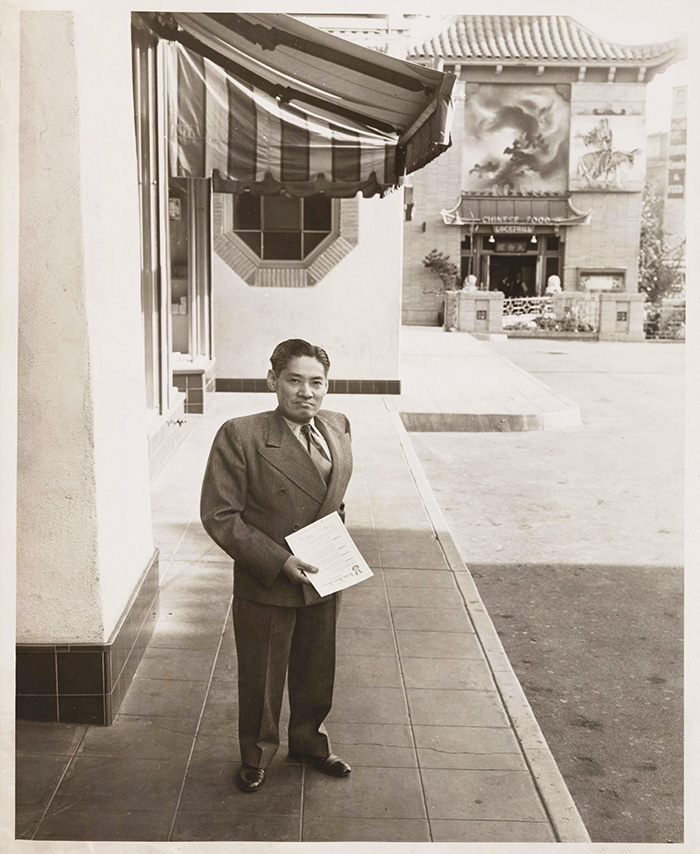
You Chung (Y.C.) Hong | Photo courtesy of The Huntington

The United States is one big melting pot – a land of immigrants who come from far-flung corners of the world. It’s almost inconceivable, therefore, that there was a time when Americans were openly hostile to certain foreign nationals who wanted to come into this country. And yet, this was the reality that You Chung (Y.C.) Hong, foremost Chinese-American immigration lawyer, encountered during the early years of the 20th century. 

A practicing immigration lawyer from 1927 to 1977, Y.C. worked relentlessly on behalf of Chinese settlers and, in the span of his career, helped over 7,000 enter the country legally. He was one of the Asian experts invited to take part in President Harry Truman’s commission to study and reform the U.S. Immigration system.

Y.C.’s history and life’s work is the subject of a show currently going on the Huntington Library, Art Collections and Botanical Gardens. Li Wei Yang, Curator of Western American History, says, “We were compelled to mount an exhibition because it was the first time the Huntington has received a collection about the life of a major Chinese-American figure in L.A. We felt it was important to let the community know, especially in San Marino and the San Gabriel Valley, that we are serious about the preservation of Chinese-American history. We want to show that we care about this community and that we encourage future collections of this kind.”   

To make the exhibition more accessible to a greater number of visitors, the Huntington presented it in bilingual form – translation panels are available to Chinese speakers. Six topical sections divide the 77 items on display – from a broad overview of why and how the Chinese came into the country to the last section showing the establishment of a family-friendly Chinatown in L.A.  

As the exhibit reveals, Y.C. was born in San Francisco in 1898 to Chinese-American parents who originated from Southern China. His early childhood was marked by two significant events – his father died at an early age leaving his mom to raise two boys on her own. And he was accidentally dropped by a relative who was taking care of him. The resulting spinal damage limited his full height to reach only four feet and five inches tall.    

In spite of his early misfortunes, Y.C. had a normal childhood. He graduated from Berkeley High School in 1915, then traveled around the country for a while, and worked as a bookkeeper at a Chinese restaurant in Boston. 

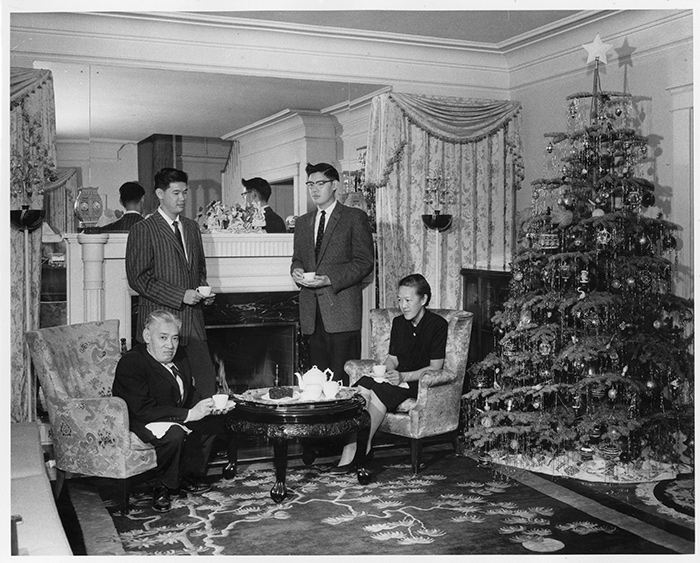
Y. C. Hong with his wife and sons | Photo courtesy of The Huntington

In 1918, Y.C. came to L.A. and was employed as Chinese translator for the Bureau of Immigration while attending night school. He passed the California Bar Exams in 1923, a remarkable feat as he was still a year away from receiving his Bachelor’s degree from USC. He was one of the first Chinese-Americans to be licensed to practice law; he graduated in 1924 and earned his Master’s degree in 1925 at USC. His 74-page Master’s thesis analyzed how the extension and administration of the Chinese Exclusion Act deviated from the original decree, making Chinese-Americans second-class citizens in their own country. In 1927, Y.C. became an immigration lawyer.

Y.C. grew up during the period when Chinese laborers were considered persona non grata. The Chinese Exclusion Act, which was in effect from 1882 to 1943, prohibited Chinese laborers from entering the country. Chinese miners who were in California during the Gold Rush were singled out, and had to pay $4 each month for the right to engage in mining. This tax practically legalized discrimination.

The Chinese Exclusion Act made it essential for every Chinese traveler to carry a passport when they came into the U.S. China’s Qing government issued passports to all merchants, missionaries, students, and all returning residents.

Beginning in 1909, all Chinese with legal status in the U.S. were issued Photo Certificates of Identity – a requirement which only applied to the Chinese, until 1928. This residence certificate became their proof of their legal right to be here – if stopped by the police, they had to produce such ID or they could be arrested or deported. It was eventually replaced by the Alien Registration Receipt Card, informally known as the “green card.”

As rules became ever more stringent, making it extremely difficult for Chinese immigrants to file the necessary paperwork, much less navigate the complex process, lawyers became requisite. Successful entry into the U.S. depended on their ability to recall precise details of family history during long hours of interrogation. While immigration officers used this deterrent, it didn’t stop the Chinese from coming as they adapted to the technique. Y.C. provided his clients with a list of commonly asked questions (which numbered in the hundreds), to which they constructed all the answers. They then used this “cheat sheet” to pass the test – they had found a way to outsmart the authorities. 

On March 28, 1931,Y.C. married Mabel Chin Qong, another Chinese-American whom he met during a Student Exchange in San Francisco in 1928. Mabel was one of the first Chinese-Americans to graduate from the University of Oregon. Their marriage produced two boys – Nowland and Roger.

In L.A. there was an old Chinatown which was a haven for gambling and prostitution. When it was razed in the 1930s to make way for Union Station, a group of Chinese entrepreneurs purchased land to build a new Chinatown on Broadway. It was designed and erected to appeal to families, and a place not just for the Chinese, but for everyone who wanted to learn about this Asian culture. It was the first planned Chinatown in the United States. Y.C. commissioned three buildings where he moved his law offices.

During World War II the Chinese became American allies as they joined the fight against a common enemy – Japan. Mabel helped the American Women’s Volunteer Services raise funds for and run the Chinese canteen, located in Chinatown, providing meal services and entertainment to servicemen in L.A. Approximately 1,500 military personnel patronized the canteen every month. Y.C.’s and Mabel’s war relief efforts in Chinatown were a huge success that a military ambulance airplane was named “Los Angeles Chinese” in recognition of their contributions.

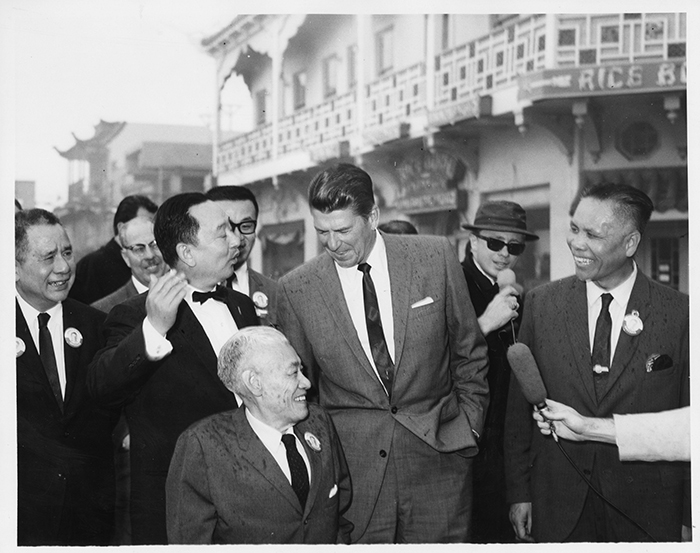
A very astute man, Y.C. recognized the value of political connections sympathetic to the Chinese. He befriended politicians and contributed to their campaigns; he worked the system. 

Y.C. Hong with Ronald Reagan, then governor of California | Photo courtesy of The Huntington

The Hong family papers document that in 1947 Senator Philip Hart introduced S747, which was merged with a bill proposed by Representative Emanuel Celler to form the basis of the Immigration and Nationality Act of 1965. This Act served as the foundation for the current immigration system, which abolished the National Origins Formula and emphasized job skills and family reunification.

Executive Order 10392, issued by President Truman on September 4, 1952 established the President’s Commission on Immigration and Naturalization. Y.C. was one of the experts invited to give their opinions. The Commission’s report “Whom Shall We Welcome” urged reform of the then-current immigration system. 

Y.C.’s and Mabel’s two sons went on to lead distinguished lives. Their older son, Nowland C. Hong, graduated from Pomona College in 1956 with a Bachelor of Arts degree. And, like his father before him, he matriculated at USC’s School of Law, earning his juris doctor degree in 1960. In 1961, he passed the California Bar Examinations and was appointed deputy city attorney of Los Angeles by City Attorney Roger Arnebergh. He served as chief general counsel for the L.A. Board of Harbor Commissions. He was also a founding member and two-term president of the Southern California Chinese Lawyers Association. He served as grand president of the Chinese American Citizens Alliance (of which his late father was an active member). He lives in Pasadena.

Roger S. Hong, their younger son, graduated with a Bachelor’s degree in Architecture from USC in 1965, and a Master’s degree in City and Regional Planning in 1968. He was certified as a licensed architect in many states, including California. Some of his notable projects include the expansion of the California Exposition and State Fair (Sacramento), Thomas and Mack Center (Las Vegas), Kunlun Hotel (Beijing) and Chieh Shou Sports Park (Taipei). He cofounded Arechaederra Hong Treiman Architects in the late 1970s. After his retirement in the early 1960s, he devoted himself to preserving his family’s history. Between 2000 and 2006, he donated the Hong family papers to the Huntington; he died of cancer in 2006.

Y.C. practiced immigration law from 1927 until his death on November 8, 1977. For 50 years the Chinese came to him for help and he responded with grace. He advocated for his people to gain acceptance into society and achieve economic stability. Any one of his countrymen who had lived through the exclusion era knew his name.

Circumstances beyond Y.C.’s control made him physically small and seemingly insignificant. But his unforgettable life and many accomplishments prove him to be extraordinary writ large.              

My Masterpieces Series: Pasadena Museum of History

Originally published on 15 October 2015 in the Pasadena Independent, Arcadia Weekly, Monrovia Weekly, and Sierra Madre Weekly

Brad Macneil, Education Program Coordinator at the Pasadena Museum of History (PMH), is readying once more for this year’s My Masterpieces Program. Every Tuesday and Thursday, beginning this month until the end of the school year, he and his team of volunteers will be welcoming 4th graders from all the public schools in Pasadena for a two-hour art class and activity at the Fenyes Mansion. 

According to Mr. Macneil, this program originated from a pilot test collaboration among the Pasadena Unified School District (PUSD), Pasadena Educational Foundation (PEF) and different cultural institutions, with input from teachers. He says, “It was important that we involved the teachers. We made sure they felt it was their program too so we asked them to write the curriculum for it.”

For My Masterpieces, PMH provides students and teachers with the Museum publication Painting the Beautiful as background material for their visit.Students also complete a lesson in class to prepare them for the field trip and learn some basics in art education. During their visit, they learn about the mansion and other members of the family, and explore what life was like in the early 1900s.      

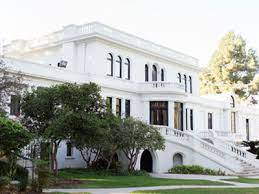
The Fenyes Mansion, which is also home to PMH, is a Beaux Arts residence built in the early 1900s as a winter home for Eva and Dr. Adalbert Fenyes. Macneil adds, “At the time Pasadena was a winter resort that attracted artists to the area because of its landscape which they painted.  They later sold these paintings to the wealthy visitors. A leader of that art community was Benjamin Brown, a famous landscape painter. He was a friend of Eva and he created some of the portraits and landscape paintings that still hang today in the mansion. Eva became a patron of Pasadena’s flourishing art colony and invited various artists to her studio or to go out into the foothills for creative material.”          

“The inspiration for the mansion field trip is Eva’s life and her love for the arts,” explains  Macneil. “Each visiting class is divided into three groups – art critics, artists, film makers – that   rotate to do different 30-minute activities led by a PMH volunteer. The art critics take a tour of the mansion and look at Eva’s art collection which they have seen in the book Painting the Beautiful. Using art terms and vocabulary, students discuss what they like or don’t like about a painting. They talk about the techniques the artist used to get certain effects.”

Macneil continues, “The artists head outside to the fountain, which has been depicted in painting by a well-known artist named Richard Miller. Volunteers give students a brief instruction: their task is to capture the spirit of the fountain as best they could using the pencil and pad they are provided. It’s very surprising how 4th graders can quietly concentrate on their sketches during the entire 30 minutes.  And more amazing is what they come up with!”

The Fenyes Mansion

The film makers go out in the garden. Macneil says, “Eva was not only interested in the arts, she was also fascinated by the technology involved in moving pictures. So for our film makers, we pick the actors, camera person, and director who will take part in creating a silent movie called A Thief in the Park. They learn not only techniques in movie-making, but more importantly, the value of collaboration. Teachers have great fun taking photos of the finished students’ work on their Smart Phones to show later in class. It’s probably the most popular thing we do – it’s exhausting and it needs several volunteers.”

PMH serves 3,000 4th grade students a year in the My Masterpieces program, using funds raised by the Paloheimo Foundation. But the organization could use more volunteers to help keep it running. Volunteers can be college-age or older and will lead tours Tuesday through Friday.  Anyone who has patience, enthusiasm, a sense of humor, and is interested in volunteering can call PMH at (626) 577-1660.

According to Jennifer Olson, District Arts Education Coordinator for PUSD, My Masterpieces started during the 2008-2009 school year. It began serving only four schools, then expanded by four to five schools annually until eventually all of Pasadena’s 18 schools became part of it. It aims not only to provide arts education and a cultural experience for all children, but also to help them feel at home at any of the arts organizations in their community. They found that so many students in the Pasadena Unified don’t usually go to museums with their families because there are too many barriers including cost and transportation. This program removes those impediments and invites all Pasadena families to experience the arts in their community.

A class visit to the Fenyes Mansion leaves a truly lasting impression in the minds of young students. According to Macneil, several of PMH’s Junior Docents (7th and 8th graders in Pasadena public and private schools giving tours to 3rd graders in the PUSD) first saw the mansion during their My Masterpieces Program visit in 4th grade. And it was what encouraged them to later become Junior Docents.

The Pasadena Museum of History’s motto is ‘History Matters.  Help us Pass it On’. The My Masterpieces program breathes life into that adage.

Altadena Farmers Market Educates on Domestic Technology


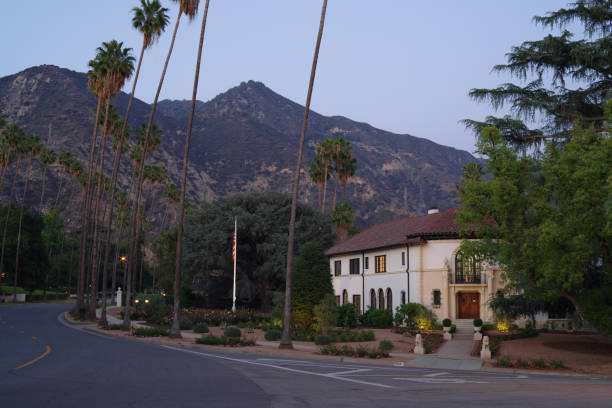
A residential neighborhood along Mendocino Lane in Altadena, showing the San Gabriel Mountains in the background.

Originally published on 15 October 2015 in the Pasadena Independent, Arcadia Weekly, Monrovia Weekly, and Sierra Madre Weekly

It all started when Joseph Shuldiner (who passed away in 2019) taught classes at the Altadena Urban Farmers Market at the Zane Grey Estate in Altadena. This underground market became a means for growers in the area to share information and exchange goods. Somehow, Los Angeles County officials got wind of this activity and took it as a sign that there was a need for a community market. They approached Shuldiner about starting a certified farmers market in the park and on May 30, 2012, he established the Altadena Certified Farmers Market.

Elizabeth Bowman, writing her thesis to earn her Master’s degree on Urban Sustainability from Antioch University, heard about Shuldiner’s program. A young woman with a mission to devise ways to get locally grown food to people in the community, she joined this urban farming project.

Meanwhile, Salim Moore, interning for Pasadena Magazine, was researching for a story he was writing on ‘Flour & Tea’. He was reading back issues of the publication “to get a feel for their writing style” and ran across Shuldiner’s Institute of Domestic Technology. He immediately sent an email to Shuldiner, and the rest is history.

It was serendipity. Three individuals coming from different background and circumstances happened upon each other born out of one concept. 

Bowman served as Assistant Secretary of Urban Farming. She helped backyard growers understand the various regulations and certification requirements of the Department of Agriculture and L.A. County. She was also instrumental in securing certification for a handful of backyard farmers with L.A County’s agricultural commissioner.

The Farmers Market found a sponsor in the Altadena Heritage, a non-profit, volunteer-based advocacy organization dedicated to protecting, preserving and raising awareness of the rich architectural, environmental, and cultural heritage of this foothill community. Every Wednesday from 4 to 8 pm in spring/summer, and from 3 to 7 pm during fall/winter, at the Loma Alta County Park, about half a dozen urban farmers, a few regional organic farms, and prepared food vendors set up shop in this bustling, albeit quaint setting.

Shuldiner conducted a ‘healthy snacks for kids’ demonstration at the Aveson Charter School opening. Last summer, he and Bowman organized food demos with their market vendors.  

Moore served as facilitator for the market, and provided such services as marking designated areas for each vendor, assisting farmers put up stalls, making sure there is electricity powering the area, and helping out in the actual selling at various booths.

Some changes took place in the meantime. The Altadena Community Garden assumed sponsorship from the Altadena Heritage. Last year, Bowman took over from Shuldiner as manager of the Altadena Farmers Market, and Moore moved up to the spot she vacated.  Together, Bowman and Moore continue Shuldiner’s legacy of making farmers market food more accessible, cooking with raw ingredients, stretching the food budget. They show people how they can feed a family of four on a $25 budget using fresh, locally grown produce. Shuldiner was the first participant in the $25 Challenge.

As the Altadena Farmers Market heads into its fourth year of operation since its founding, it is thriving as more urban growers and regional organic farms establish their business there. Vendors like Etheridge Organics from Orosi, Chuy’s Berry Farm of Arroyo Grande, and Bliss Avocados in Carpinteria join the cooperative of backyard farmers of Altadena, Pasadena, Sierra Madre and Hacienda Heights including: Whisper Farms (Altadena); Chili Lily Garden (Altadena); Reedley Street Farm (Panorama City); Nancy’s Garden (Hacienda Heights); and Spade & Seeds (South Pasadena).

In the works is the participation of Collard Greens Jr. Gardeners’ Club, an organization offering kids in Northwest Pasadena hands-on opportunity to learn about gardening, arts, science, health and fitness, and community awareness. They plan to demonstrate kid-friendly recipes with collard greens at the Farmers Market.

Occupying the rear area of the marketplace are prepared food vendors like Shucked Oyster Bar serving up oysters on the half shell, and selling clams, mussels and prepared fish; CA Chef’s Center preparing Japanese rice balls; Coldwater Canyon Provisions in Los Angeles, selling preserves from farmers market produce; Gypsy Eats and The Paella Artisan cooking hot foods; Morning Glory Confections, based in Echo Park, offering brittles, brownies, and cookies; Granola Mama’s Handmade, a Los Angeles-based cottage food producer. There’s even Ben Potter Knife Sharpening, an Altadena shop.

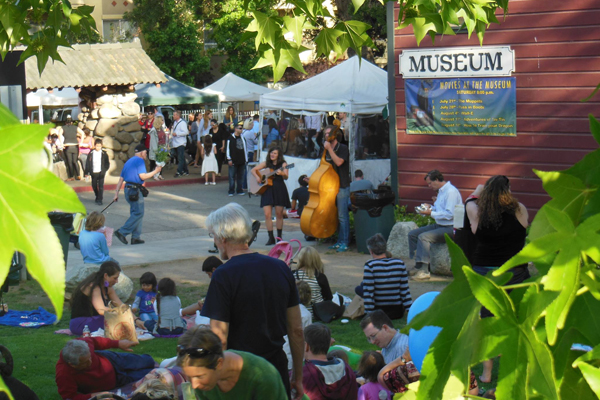
It is a true community endeavor – food crafters use produce and ingredients they buy from the urban farmers in the other tents. There is a palpable feeling of conviviality – regular customers come up and chat with vendors, stall owners visit with other farmers. A lot of ideas-swapping goes on throughout the afternoon. Performers provide music later on and further enliven the mood at the market. The general atmosphere evokes an image of times past when life was simpler, when the food on the table were made from ingredients freshly picked from the garden and were shared with neighbors.

Today the Altadena Farmers Market continues to be a flourishing endeavor. It has evolved into a true reflection of its entrepreneurial manager, Elizabeth Bowman – young and vibrant, with a definitely contagious positive outlook!    

School District Highlight: Alhambra

Originally published on 17 September 2015 in the Pasadena Independent, Arcadia Weekly, Monrovia Weekly, and Sierra Madre Weekly

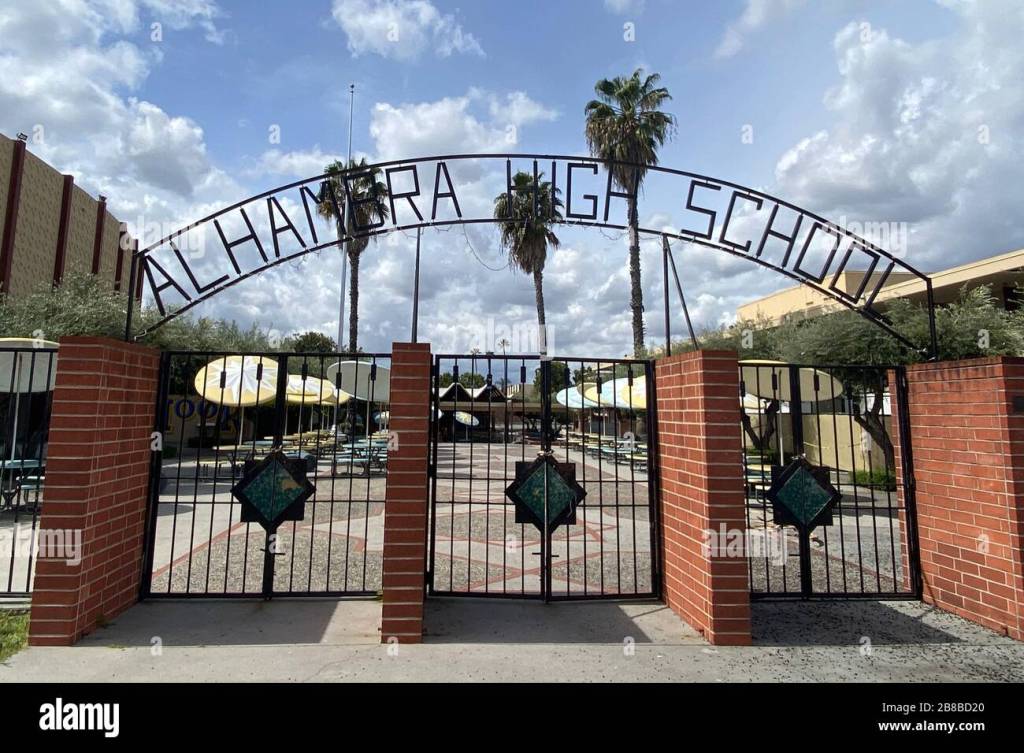
The city of Alhambra, about eight miles northeast of downtown Los Angeles, started out as a small residential town when it was first established in 1903. Today it has grown into a bustling community where businesses and residents amicably co-exist.

While Alhambra’s roots were largely Spanish, the 2014 U.S. Census figures show its population is about 53 percent Asian, 34 percent Hispanic or Latino, 10 percent white, 1.5 percent Black or African American, and a sprinkling of other ethnic groups.

The Alhambra Unified School District (AUSD) encompasses 13 elementary, three comprehensive secondary, and two alternative high schools servicing Alhambra, and adjacent Rosemead, Monterey Park and San Gabriel. It is a middle-size district with close to 18,000 students under the leadership of the superintendent, Dr. Laura Tellez-Gagliano.

An award-winning district, AUSD has earned numerous accolades as California Distinguished and Blue Ribbon Schools – in 1993; 2002 through 2008; in 2010 and 2014. From 2002 through 2013, several of the district’s schools received the Title I Academic Achievement Award (AAA). 

This year, U.S. News & World Report-America’s Best High Schools awarded all three AUSD high schools a Silver Medal. Newsweek’s America’s Top High Schools named San Gabriel High School #9, Mark Keppel #107 and Alhambra High School #165, in Beating the Odds.

AUSD has received five Golden Bell Awards from the California Board Association in 2005, 2006, 2008, 2010 and 2013. Its three high schools have also garnered an impressive array of achievements – they placed in the LA County Academic Decathlon annually beginning in 2008 through 2015. Alhambra High and Mark Keppel High Schools reached state level in 2009 and 2010; Mark Keppel got to state finals in 2013 and, in 2015, with Alhambra High as well. 

Programs in the school district address the needs of its students. According to Dr. Gary Gonzales, Assistant Superintendent, the Local Control and Accountability Plan (LCAP), a critical component of the Local Control Funding Formula (LCFF), designates Alhambra as having 72 percent unduplicated count in English learners, socio-economically disadvantaged, and foster youth. Because of this, the district is able to get a supplemental and concentration grant which enables administrators to develop programs, hire teachers and teacher assistants as well as non-certified certificated personnel in their various schools, to provide extra education.  Eligible students can take summer classes or extended school days. 

According to Brad Walsh, Director for Secondary Learning, AUSD offers four California Partnership Academies – International Business, Business and Technology, Medical Careers, and Green Construction. Students who take classes in any of these academies get real life experience as they practice what they learn in the classroom made possible through partnerships with the business community. Graduates not only receive a high school diploma, they leave school with higher employability skills.

Career and Technical Education courses provide not only classroom learning but practical skills for students who choose these paths – architecture/computer-aided drafting; automotive technology; business; computer applications; culinary arts; drafting; emergency medical responder; emergency medical technician; heating, ventilation and air conditioning (HVAC); health careers and medical terminology; restaurant; retail; and wood technology.   

AUSD is currently developing its Dual Immersion Initiative which it will implement in a pilot program in two elementary schools during the 2015-2016 school year. Mandarin and Spanish will be offered as early as kindergarten, preparing students for a global society and economy.

An open enrollment procedure for  Honors and Advanced Placement (AP) courses started during the 2007-2008 school year. According to Walsh, AUSD has a total of 122 AP classes offered at their three comprehensive secondary schools – Alhambra, Mark Keppel and San Gabriel High Schools.  An AP course in Human Geography is available as early as 9th grade.

A Special Education Collaboration Model from  8th grade through high school supports students with learning disabilities. Teachers and credentialed facilitators help these individuals keep up with class work and assist students in the classroom. Online education tools, like APEX and ACELLUS, are especially helpful for all students.

Partnerships with community colleges, including Cerritos, Citrus, Rio Hondo, Mount San Antonio and PCC give AUSD high school students an edge in college. Through classes offered on their high school campus, they earn credits towards an Associate or Bachelors degree.

All AUSD teachers have been involved in intensive professional development for three years to get their students up-to-speed on the Common Core curriculum. The recently-released results of the new standardized assessment put in place by state superintendent of Public Instruction, Tom Torlakson, indicated that all their hard work have paid off. The publicized numbers were met with jubilation at the Alhambra Unified School District as their assessment scores showed that they outpaced county and state levels.

Fifty-eight percent met or exceeded county and state levels in ELA (English Language arts).

Among Latinos, 43 percent met and exceeded county and state levels; 29 percent English learners exceeded county and state levels; and 53 percent socio-economically disadvantaged (SED) met or exceeded county and state levels.   

In the Math exams, 50 percent of AUSD students met or exceeded county and state levels. Among Latinos, 26 percent met or exceeded county and state levels; 35 percent English learners met or exceeded county and state levels; and 45 percent SED met or exceeded county and state levels. 

According to Gonzales, “This new standardized assessment is completely different from the tests given in the past. It wouldn’t be fair to compare the results with past scores; it’s not a pen and paper test, it’s all online. It’s more than a multiple choice exam where students can answer with some guesswork; it’s analytical.  It makes students go beyond the procedural; they utilize the conceptual part of learning. It forces them to be critical thinkers – a great way to prepare for college and careers.”

“College and career preparation at AUSD begins even at the elementary school level,” says Judy Huffaker, Nutrition & Career Technical Education Specialist at Alhambra High School.   According to Ms. Huffaker, AUSD college counselors invite 8th grade students to come to the high school they will be attending for a day-long event that introduces them to College and Career Readiness. They start 9th grade with the mindset that they will be going to college. High school freshmen get acquainted with an online process called Career Cruising.

On October 15 this year, approximately 3,000 senior students and parents will be on the San Gabriel High School campus for a College Fair. From 6:00 to 8:00 in the evening, they will meet with about 70 college representatives and attend workshops on planning for college, financial literacy, difference between the ACT and SAT exams.  

AUSD’s Career Center conducts college tours at local universities (UC, Cal State and other private institutions). Counselors hold workshops on resume writing, preparing the personal statement, and available scholarships; they provide assessment orientation and counseling.

Each school year, the approximately 1,800 AUSD seniors attend Cash for College events. With  68 percent socio-economically disadvantaged students in the district, all seniors complete the FAFSA, which may provide financial aid to qualified students.

The Alhambra school district has an impressive academic record.  In 2015, it produced nine National Merit semi-finalists; annually, 43 percent of seniors meet the A-G requirements.   Graduates from the three high schools  go on to some of the most prestigious universities in the country, including Harvard, Yale, Columbia, USC, Cal Berkeley, and Stanford.  Additionally, students attend many local colleges and universities like Cal Poly Pomona, Occidental, Azusa Pacific, Cal State Los Angeles, and Whittier College.

So while the recent state-administered exams showed there is still a gap in academic skills between AUSD’s Asian and Latino students, that divide is narrowing. Administrators are working feverishly to put in place action plans and services to close that learning difference.    

As Gonzales points out, “Each and every student in the Alhambra School District believes he or she will go to college.” Initiatives and programs are in place to ensure students harness their potential to realize that dream. Indeed they have much to look forward to and celebrate! 

Allan Mucerino Positions Duarte as Model for 21st Century Learning

Originally published on 17 September 2015 in the Pasadena Independent, Arcadia Weekly, Monrovia Weekly, and Sierra Madre Weekly

“Duarte is poised to be a model for work-based learning that transcends socio-economics,  race and culture. We have 21st century learning going on, connecting students with college and career opportunities,” states Dr. Allan Mucerino, newly installed Superintendent of Duarte Unified School District (DUSD). 

Barely three months into his term of office, Mucerino has held numerous talks, attended several symposia, and established additional partnerships with organizations to expand on the many programs already in place. He came to Duarte on the first of July to occupy the post vacated by Dr. Terry Nichols, who retired at the end of June. And while Mucerino is cognizant of the great responsibility he has undertaken, he is confident that his expertise and past experience, coupled with all the district resources, will serve him well.   

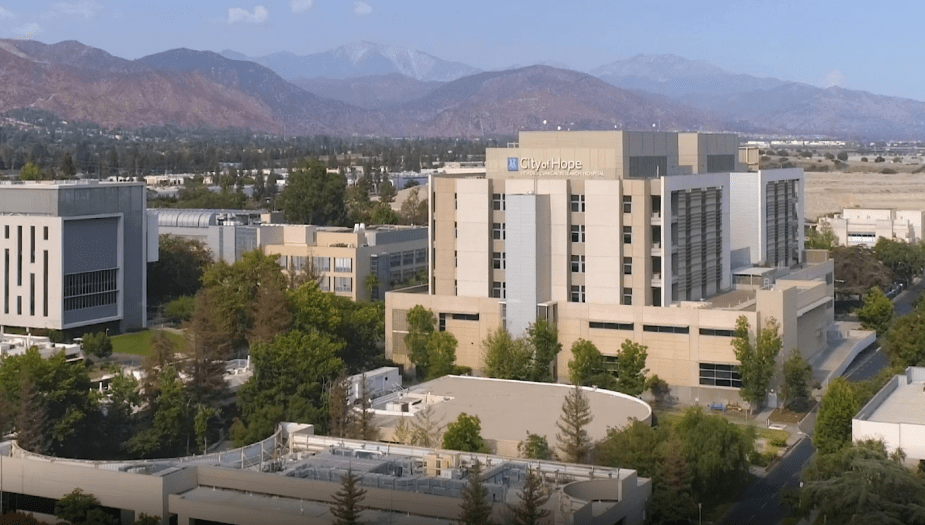
“We have several wonderful projects in place – a collaboration with City of Hope that has created SEPA (Science Education Partnership Award); an Early College Program established with Citrus College; the Pathways in Technology with City of Hope and Citrus College; a mentoring program called STEP (Shoulder-Tapped Empowered Proteges); and LIFI (Latino International Film Institute) – all of which give our students opportunities to not only acquire classroom education but also practical training,” Mucerino explains.

In addition to those excellent programs, Maxwell Elementary recently received its International Baccalaureate designation – a distinction that makes it a much sought-after school. A  $19,000 Advancement Grant from Los Angeles County “Arts for All” was awarded to the district, augmenting their arts funding through Mr. Holland’s Opus Foundation.      

As he hit the ground running, Mucerino immersed himself into enlarging the building blocks already begun by his predecessor. He says, “Using Linked Learning as a framework, I am looking to get in on the stackable certification movement.” He wants to expand on the Early College Program by collaborating with community colleges to create stackable certifications, giving secondary school students the option to take courses on their campus to earn a certificate for a particular career while in high school. 

As Mucerino further expounds, “Someone can take a nursing course beginning in high school and earn a certification as a CNA (nursing assistant). He or she can take further studies to stack additional certifications from LVN (licensed vocational nurse), to RN (registered nurse), to a BA in Nursing with our higher education partners. Earning certifications in high school provides students with employable education and skills. We aim to prepare all of our students for college, but this approach readies graduates for the work force if higher learning is not an immediate option, for one reason or another.”    

Mucerino is also looking to collaborate further with the community colleges to offer capstone classes in high school. He says, “as part of our College and Career readiness in STEM fields, I would like to see classes that focus on one specific industry woven throughout. So as students satisfy the A-G requirements, they can study a particular course of interest progressing each year.  An internship with our business partners in the community, will cap their senior year.”

Of notable interest to Mucerino is the Healthcare Workforce Initiative. He is involved in a healthcare minority consortium to help develop youth for healthcare professions. As the recipient in 2012 of the Science Education Partnership Award supported by the National Institutes of Health, DUSD is in an unparalleled position to take full advantage of the partnership between City of Hope (COH) and the San Gabriel Valley, and the SEPA Collaborative. This grant established a two-stage research education program for rising high school juniors and seniors. It gives students solid background in the theory and practice of science as they conduct real discovery research. 

SEPA also led to a professional development agenda for K-12 teachers. Workshops for elementary, middle and high school teachers educate them on skills and techniques for critical reading of science texts. There are also workshops focusing on implementation strategies for the K-8 Genetics curriculum, which are aligned Next Generation Science Standards (NGSS) and Common Core State Standards (CCSS). The grant also provides for a K-12 education program.  This involves visits to classrooms by COH scientists and field trips top COH by 2nd, 5th and 8th grade students designed to get them interested in research and applying for summer research program during their high school years.

According to Mucerino the healthcare sector is paramount in DUSD. The district’s STEM Academies have made it possible for more students to pursue health careers. While Duarte previously only had a handful of students doing summer work, there are now hundreds of them working in the various hospitals in the region. He points out that Jeff Radsick, Biotech teacher at Duarte High School, who oversees the summer program, is constantly looking for internship opportunities. Ann Miller, Senior Director for Talent Acquisition and Workforce Development at City of Hope, works closely with the district in encouraging students to consider a career in the healthcare and biomedical fields.    

There are countless programs offered in Duarte schools and partnerships the district has formed through the years. Not only do these opportunities put DUSD on the leading edge of work-based learning, they also prepare students to fill the one million STEM jobs that will become available in 2025. What better incentive could there be for children to attend school?     

Community Organizer Intern at Pasadena Playhouse

Originally published on 27 August 2015 in the Pasadena Independent, Arcadia Weekly, Monrovia Weekly, and Sierra Madre Weekly

Giselle Boustani-Fontenele had an amazing summer. No, she didn’t do anything daring at some exotic locale like swim with sharks at Ambergris Caye in Belize, or climb the peaks of Mt. Kilimanjaro in Tanzania. Giselle spent ten weeks as The Pasadena Playhouse’s Community Organizer (CO) summer intern.  She did, however, brave the daily commute from her home in Tarzana to Pasadena.

For the first time, the internship program at The Playhouse was financed through a grant from the Los Angeles County Arts Commission (LACAC). Gisele reported to Seema Sueko, Associate Artistic Director, who joined The Playhouse in January 2014 from the Mo’olelo Performing Arts Company in San Diego. Sueko originated  Consensus Organizing for Theatre as a means to build partnerships with the community which, in turn, translates into higher ticket sales.  

During her internship, Giselle learned about Consensus Organizing by asking questions and by watching Sueko, and Victor Vazquez, The Playhouse’s Real Women Have Curves (RWHC) Community Organizer. She attended meetings with potential RWHC, the first show slated for the 2015 season,CO partnerships. According to Sueko, “…our summer intern had an up-close opportunity to experience CO and support these efforts.”

Giselle created the Master Colleges and Universities CO Contact Spreadsheet, a document which consolidates contact information for all the schools The Playhouse has collaborated with in the past or which have shown interest in becoming CO partners.  This document lists institutions, including Stanford, USC, The Claremont Colleges, Azusa Pacific University, Cal State L.A. and Pasadena City College, and others.   

Another interesting job Giselle worked on was preparing the Dramaturgy Starter Kits (DSK) for Real Women Have Curves and Breaking Through. A DSK is an internal document created by the Artistic Department for The Playhouse staff which helps them frame and promote the stage play or musical they are putting on.  This includes information such as the themes of the play and the inspiration for it. Giselle interviewed the artists of two shows – Sueko, who is directing RWHC; Sheldon Epps, Artistic Director of The Playhouse and director of Breaking Through, Kirsten Guenther, playwright  and Katie Kahanovitz, who is working on music and lyrics along with Cliff Downs.  

Additionally, Giselle produced two Learning Community gatherings involving  10-15 trainees who, like her, received their internships from the LACAC. She produced one of these gatherings herself, and the other, she assembled with a fellow-intern in the Pasadena area, Jessie Fontana-Maisel, who apprenticed at California Alliance for Arts Education.  In the first Learning Community, Giselle led a tour of The Playhouse, facilitated the Q&A Session with Epps and Sueko, and handled logistics. 

Giselle also worked on Walk and Learn Notes, an internal document with information for staff members on how they can ensure the safety and security of The Playhouse. This document includes emergency contact information, among other things. She was also involved in managing the reservations list of over 240 guests for the reading of Fabric at The Playhouse;  assisting in preparations for CO receptions during Waterfall and CO rally meetings for RWHC; and assisting with RWHC auditions. She also took on stage managerial duties for the reading of Fabric on the night the Stage Manager could not be present.

A theatre enthusiast herself, Giselle conducted interviews with Director of Finance, Meredith Min, and Producing Associate and Company Manager, Kirsten Hammack, to learn about their positions and their work – invaluable information for someone who might want to start a theatre company in the future. From Min, she learned how to keep track of accounts and ticket sales; the importance of creating balance sheets and P&L (Profit and Loss) statements. With Hammack, she learned about the  requirements and details concerning various unions like the AEA (Actors’ Equity Association), the SDC (Stage Directors and Choreographers Society), and the USA (United Scenic Artists); writing contracts for artists; and maintaining a clear head in times of stress.      

Meet and Greet for Real Women Have Curves fell on the last day of Giselle’s internship. She was there to welcome the artists and the community who came to listen to the table read. 

This month, Giselle will head back to Boston University as a Junior where she is pursuing a joint degree in Anthropology and Religion, and a minor in Theatre. She can’t wait to talk about her transformational ten weeks at The Playhouse with her Acting and Performance professor and mentor, Johnathan Solari. He had encouraged her to intern at a theatre company during the summer.

As a high school student at Sherman Oaks Center for Enriched Studies, Giselle was deeply involved in its theatre department.  She was president of its International Thespian Society and performed in many productions – Shakespeare and contemporary plays, and musicals – under the direction and guidance of John Beckman, Jill Cunningham and Frank Dion.

Giselle hopes to continue learning about and pursuing her interest in theatre while at Boston University. She aspires to take a Stage Directing MFA program in the future. So Giselle didn’t scale the mountains or swim in the deep this past summer, but she certainly got fully immersed in a rare and exciting theatre adventure.     

A High Schooler’s Quest for the Gold Award

Originally published on 13 August 2015 in the Pasadena Independent, Arcadia Weekly, Monrovia Weekly, and Sierra Madre Weekly

Emma Antonides is a typical teenager living in the San Gabriel Valley. She does exceedingly well in school, plays the piano and viola, and puts in hundreds of hours performing community service. When she isn’t busy with school and homework as a student at LACHSA (Los Angeles County High School for the Arts) and viola lessons at the esteemed Colburn School, she enjoys watching comedy on TV. She also loves going to Disneyland.

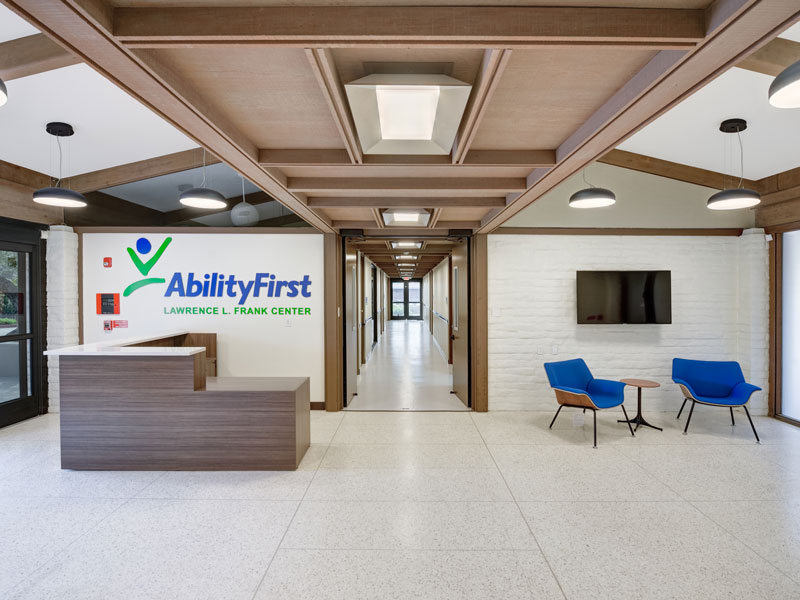
But where Emma veers from the predictable, busy 16-year-old and perfect student, with an eye towards going to the university of her choice, is her adherence to the Girl Scouts ideals and her empathy for kids with disabilities. For her Girl Scouts Gold Award project, Emma identified what she thought would be a good activity to work on. Based on her affinity for kids  she decided to partner with AbilityFirst, an organization that provides opportunities for people with physical and developmental disabilities. 

With the help of her adviser, Stephanie Yamasaki, Emma set an appointment with Jenny Valadez, project supervisor at AbilityFirst’s Lawrence L. Frank Center in Pasadena. From her conversation with Valadez she learned that the center did not have art classes. Thus, after-school art classes at AbilityFirst was established as her Gold Award Project for the Girl Scouts.  

Emma let AbilityFirst know about her plan and handed in the specifics of the proposed after-school art program to Valadez.  She coordinated with Valadez on what lessons she was going to teach and the class format. Valadez suggested 90 minute classes – 30 minutes of art, 30 minutes of interactive break for playtime, and then back to art for the last 30 minutes.

The first step for Emma was to fill out a proposal application for the Gold Award, which she did in January. In March, she submitted this application, where she identified herself, her adviser,  her project plan, and a letter of approval from Valadez on behalf of AbilityFirst. Emma then awaited an interview. During the interview, she presented her project to members of the Girl Scouts Service Center, who gave her feedback on whether she got the approval or if her proposal needed any improvement. Once she got the approval for her idea, she was given six months to start and finish her project.     

And so beginning on July 1st,  through the 31st , Emma held art classes two days a week where she taught the three basic categories of color theory and color harmony. Using multiple forms, she showed and worked with kids on finger painting, rainbow scratch paper art, an innovative class that uses dip-o-dot markers, and candy leis.        

To support this art program, Emma undertook fundraising events like a bake and jewelry sale.  She also partnered with Panda Inn where she received 20% of the restaurant’s earnings for one day from people who mentioned that they were helping Emma earn her Gold Award. Additionally, she got cash donations from family, friends and members of the community and personal donations from members of the San Marino Rotary Club.

Using the money she raised, Emma bought art supplies she used for the afterschool classes

and funded an Open House to raise awareness about AbilityFirst. She also donated art supplies to enable AbilityFirst to continue holding after school art classes in years to come. This ensures that her project will live on, a requirement of the Girl Scout’s Gold Award. Furthermore, she has informed Valadez that she will be coming back next summer as a mentor to the new project leader.

Emma finished teaching the kids at AbilityFirst, created a collage of all her students’ artwork, and returned to the Lawrence L. Frank Center to show the children and center staff a video of the art classes they held. In late September, she will give a presentation of  her project outcome to the Girl Scouts. She’ll then learn if she has earned a Gold Award.            

But whether Emma achieves that coveted Gold Award or not, she did accomplish something extraordinary – she did something she has never done before. In her words: “ During the course of this undertaking, I discovered just what I am capable of. With guidance from Stephanie, I learned to take action, manage a project, communicate and raise awareness, plan and bring a project to life. And, along the way, I learned to be a leader, how to deal with unexpected problems, and be a teacher.” Valuable lessons indeed!

Emma continues, “This experience revealed many things about myself. I realized I could do even more that I thought – I feel confident about by abilities to teach, and be a leader. It exposed me to working with people of different backgrounds, talents, and personalities. And it taught me how to keep the focus on the goal.”         

A respected English teacher from Pasadena’s most prestigious school once exhorted to her students that they should never use the term “quest” unless it was to denote a hero’s search.For Emma, this was a journey into hitherto unexplored territory that led to the unearthing of self-knowledge. What could be a better hero’s quest? 

International Student Program at Pasadena City College

Originally published on 30 July 2015 in the Pasadena Independent, Arcadia Weekly, Monrovia Weekly, and Sierra Madre Weekly

College freshmen heading to school next month may be feeling somewhat nervous about this different environment they are about to enter. Most of them are leaving the security of their home in the town or city where they grew up. To the approximately 500 students joining the freshman class at Pasadena City College, this novel experience is more nerve-racking than usual. They are arriving for the first time in a new school, city and country. For these arriving international students, PCC’s First Pathways Program is a lifeline. 

Pasadena City College’s First Pathways Program was created in 2011to help incoming students  transition smoothly to college and achieve success in school. And while there are only 1,200 international students attending PCC at any given year (compared to its total enrollment of 22,671) administrators have felt it crucial to dedicate one Pathway program to this group to address their vastly different need.

The IS (International Student) First Pathways program has three major components. The first of these is the International Student Center whose staff help arriving students with visa, housing,  health, and safety issues. It also includes a study center for homework, workshops and meetings with classmates. The second component is the Success Team made up of counselors, coaches and tutors who guide them in choosing their classes and making sure they are registered for the full load of 12 units. The third component is Priority Registration for the classes they need to be able to transfer quickly to a four-year college or university. This is particularly important for foreign students who are on an F1visa as they cannot overstay in the U.S.

International students on the First Pathways Program begin their college life at PCC with an iJam orientation, a one-week event where they prepare their classes, learn about life in Pasadena and Los Angeles, and have the opportunity to make friends with other students. They meet others like them from 85 countries and regions, including China, South Korea, Indonesia, Malaysia, Japan, Hong Kong, Vietnam, Canada, Germany, Russia, and Saudi Arabia. 

The most popular majors for these international students are: Business/Accounting/Economics (45%); Science/Math/Engineering (15%); Art/Architecture/Design (11%); Health Professions (8%); others (22%).

Through the years, PCC has proven itself as a leader among California’s 112 community colleges in 72 districts. It offers foreign students a diverse learning environment with numerous Honors programs, over 70 student clubs and many opportunities for student involvement, a safe location in a “walking friendly” community and convenient access to public transportation. The city offers students a vibrant restaurant scene and shopping areas. And they aren’t too far away from local beaches and recreational destinations. Pasadena is home to cultural attractions including The Huntington (Botanical Garden, Library and Art Museum), Norton Simon, Pacific Asia Museum.    

Another essential feature of a PCC education is its small class size and accessibility to instructors and support staff. More important of all, it affords students ease and support in transferring to a four-year university.   

According to Dr. Russell Frank, Interim Associate Dean for International Education, in 2012-2013, 2327 students transferred from PCC to public and private four-year universities like the University of California – in Los Angeles, San Diego, Irvine, Berkeley, Davis, and Riverside, California State University – Cal Poly Pomona, CSU Northridge and Los Angeles), Art Center College of Design, and the University of Southern California.

Frank is deeply invested in the success of every student in his charge. He set targets for himself to make the IS First Year Pathways program remains vital and relevant. Together with the team of counselors and coaches, he helps them identify their specific transfer objective and personal goals. He wants students to be engaged in the college community so PCC has created campus-wide events like the lunar new year celebration and the international education week. He wants to increase global and international awareness for the school and the IS program for health courses like Nursing, which is a popular field of study. He envisions a rise in student enrollment to 1,500 by putting in place more classes where he sees growth like nursing, environmental engineering, design and art.

In anticipation of the increase in their international student population, Frank would like to add more peer mentors who speak the same language as the students they advise and put in place additional services to cater to their specific needs. Frank is optimistic that his goals are doable in the immediate future; he says the infrastructure is there to support his plans.   

All of Frank’s plans for the International Student Program are aimed at enriching their students’ learning experience so they are better prepared to get into their choice of four-year university.  The Learning Center, of which the IS First Pathways Program is a part, has a slogan “Get In, Get Out, Get Going”. What an apt aphorism it is!