Originally published on 22 November 2021 on Hey SoCal
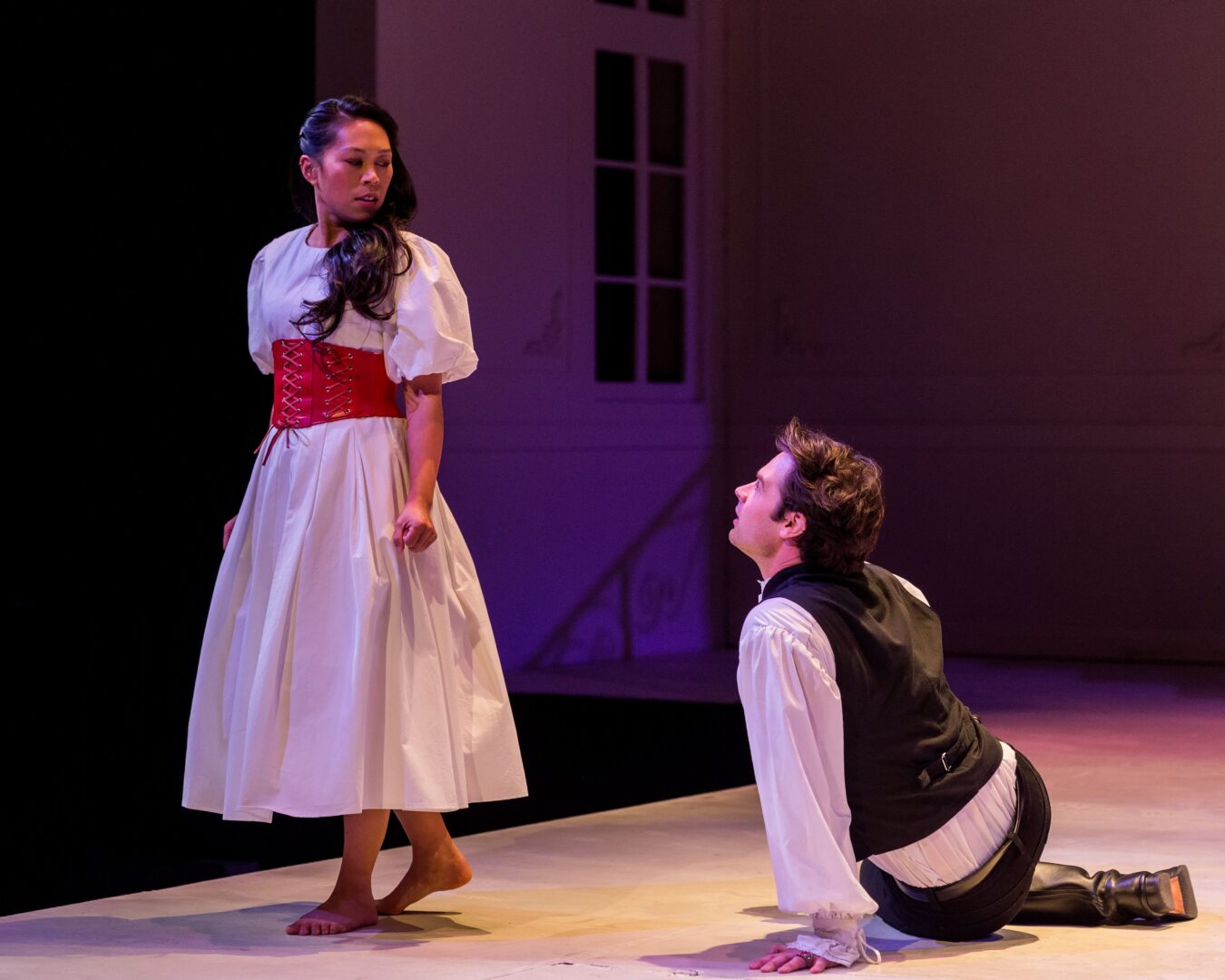
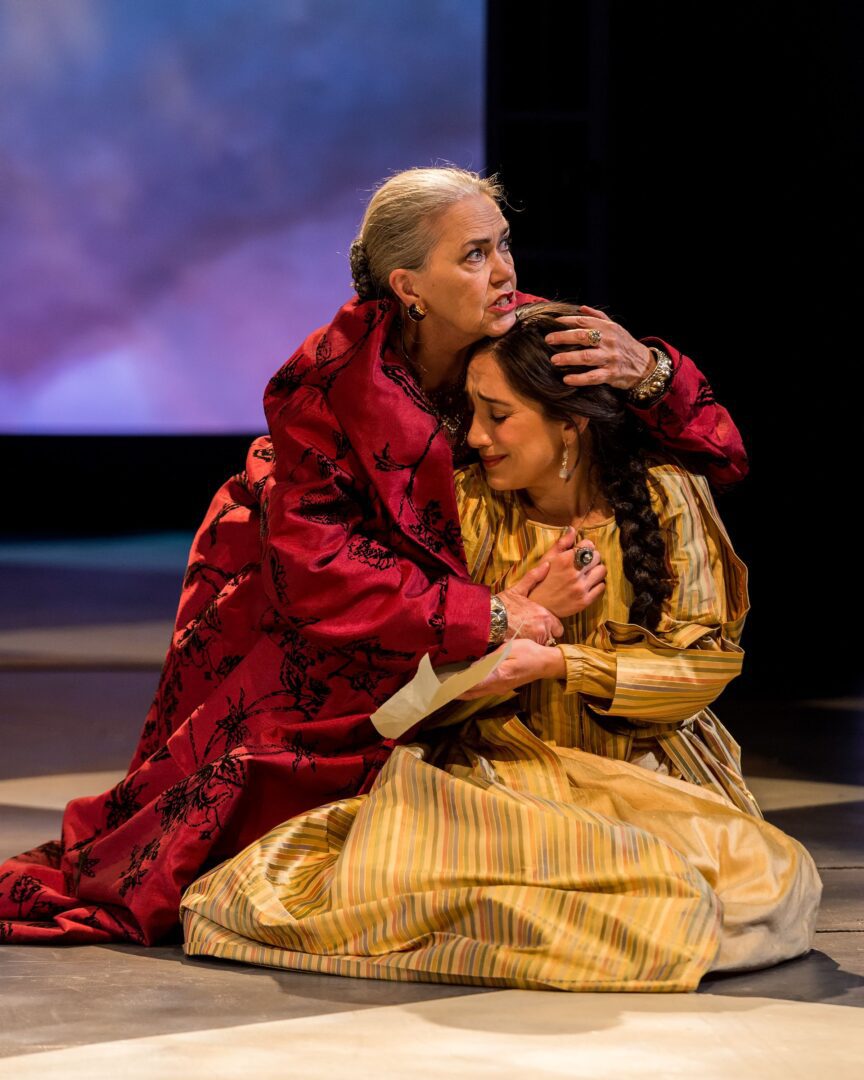
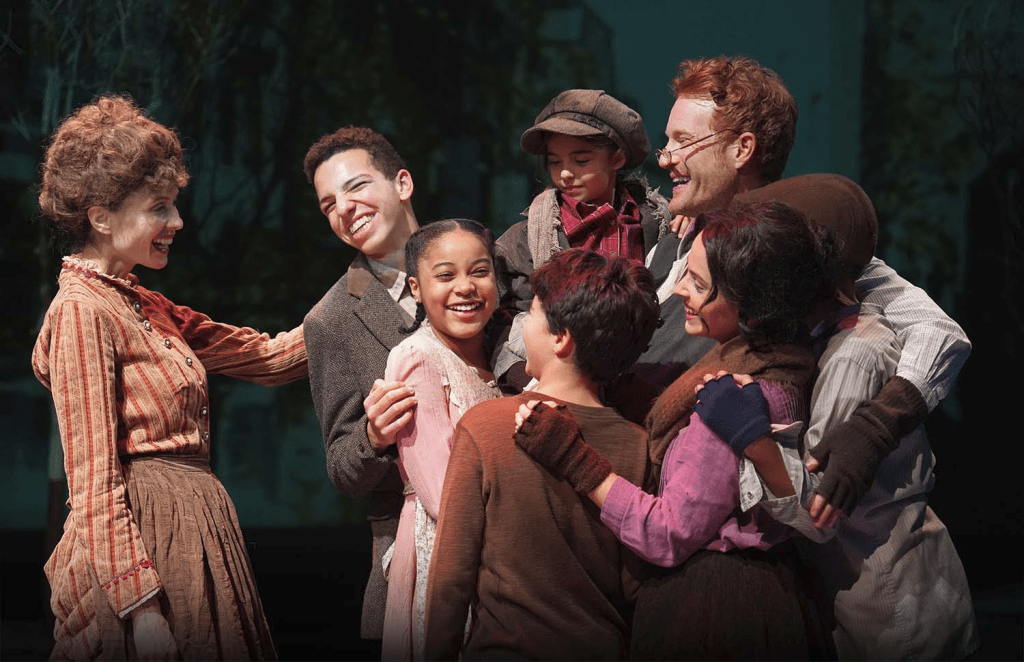
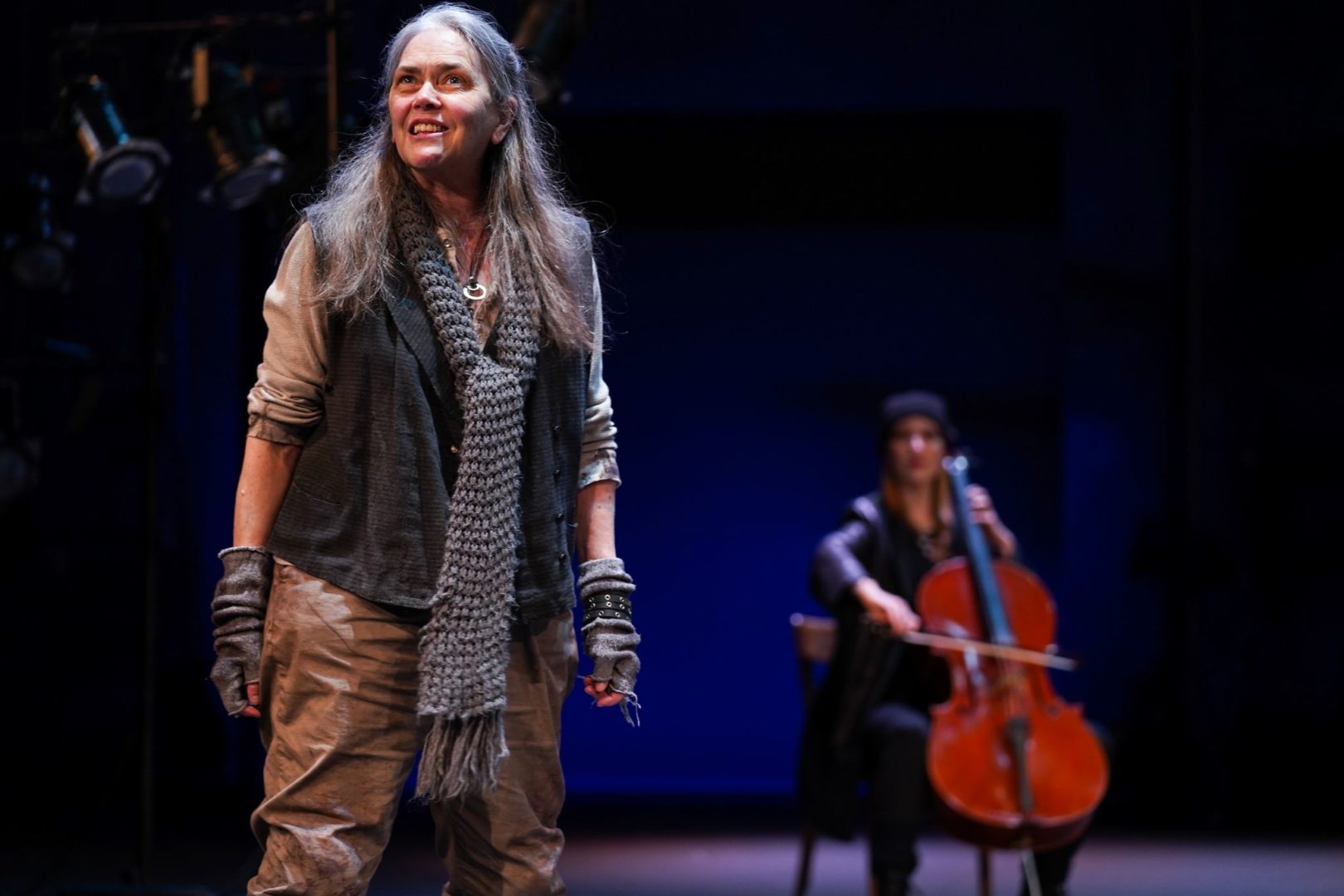
The cast of “A Christmas Carol” | Photo by Eric Pargac / A Noise Within
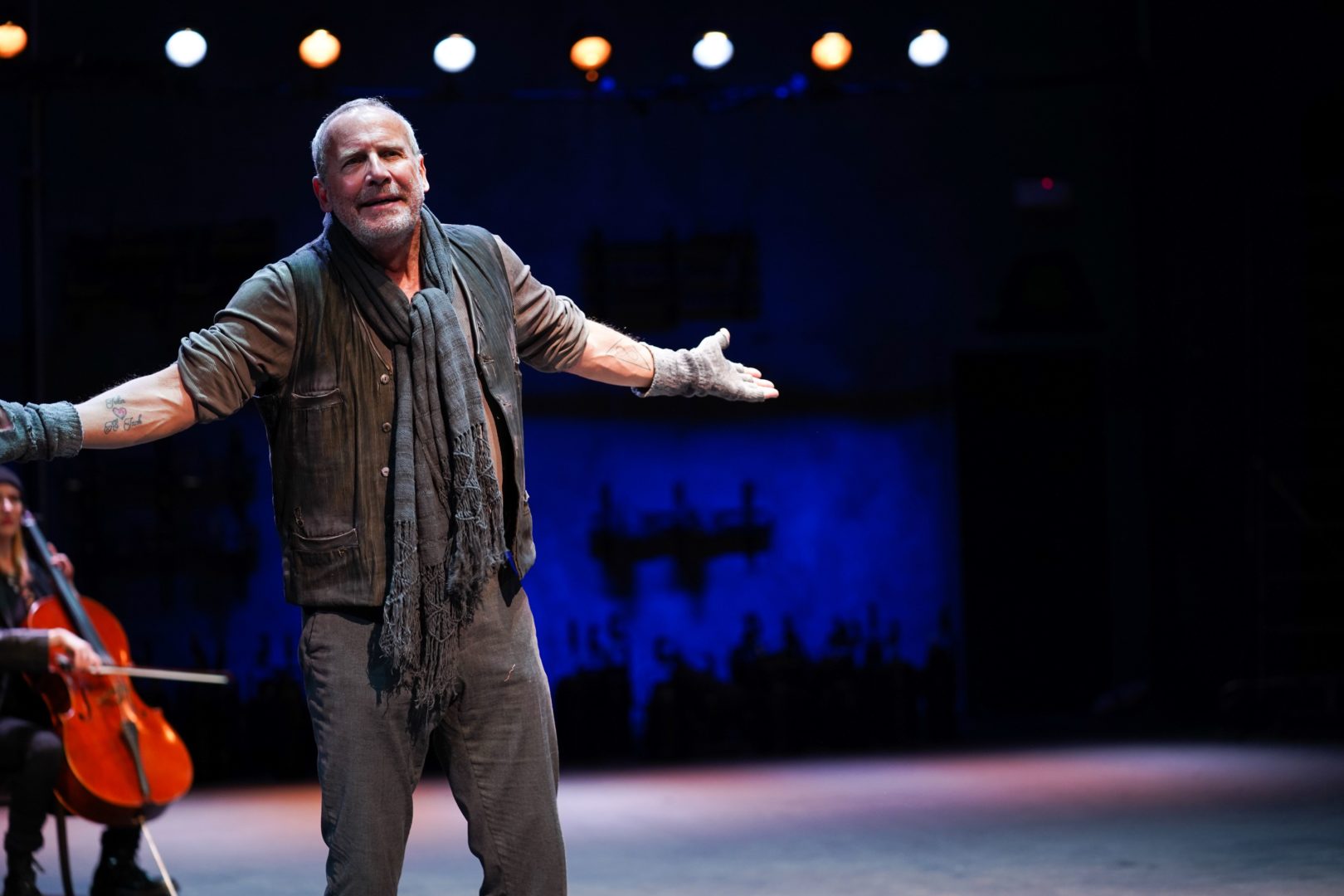
After missing out last year on A Noise Within’s (ANW) “A Christmas Carol,” we can once again take in this much-loved show when it returns on stage from Dec. 2 to 23, 2021. Adapted from Charles Dickens’ novella by co-artistic director Geoff Elliott, it has been an annual holiday tradition and is celebrating its ninth year at ANW.
We’re also in for a treat with all-new, original musical compositions created by resident artist Robert Oriol, an accomplished composer and sound designer who was the recipient of the 2019 LADCC (Los Angeles Drama Critics Circle) Special Award for Distinguished Achievement in Theatrical Design. Speaking by phone, Oriol talks about being a lifelong musician, and his work at A Noise Within and on “A Christmas Carol.”
“I’ve been writing songs for rock bands to play on stage since 1975, but it was with the advent of computers in 1984 that I sat down and started writing music for others to perform,” Oriol states.
He goes on to explain, “You could write orchestral music from your studio without having to hire an orchestra at the outset. You could get it to a point where your music comes across, have it approved, and then take it to an orchestra, if necessary. Once computers got up to a certain speed, you could do the bulk of the writing and arranging yourself much quicker than you could have done prior. So that was when I was able to write more complex arrangements strictly for orchestra; it allowed me to write different styles of music to fit the play’s music requirements.
“The very first show I did for ANW was ‘Grapes of Wrath,’ where there was a Dust Bowl Era band on stage and I was the musical director. I didn’t write much music for it because a lot of the music came with the show — they were all acoustic instruments for the period — bass, banjo, and guitar. The next show after that was ‘Pericles’ which was a big orchestral show, and it still stands as one of the biggest shows we’ve ever done as far as sound.”
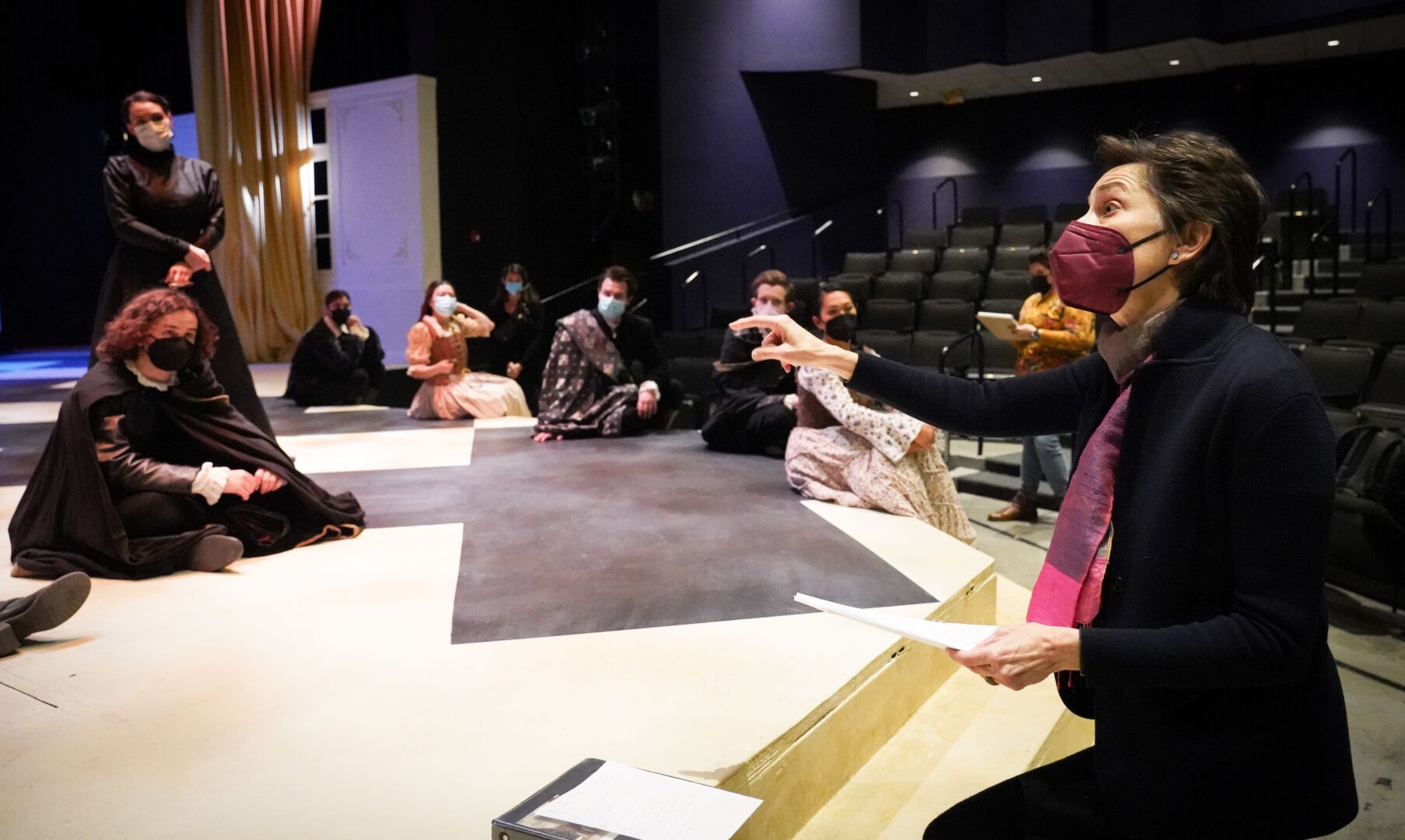
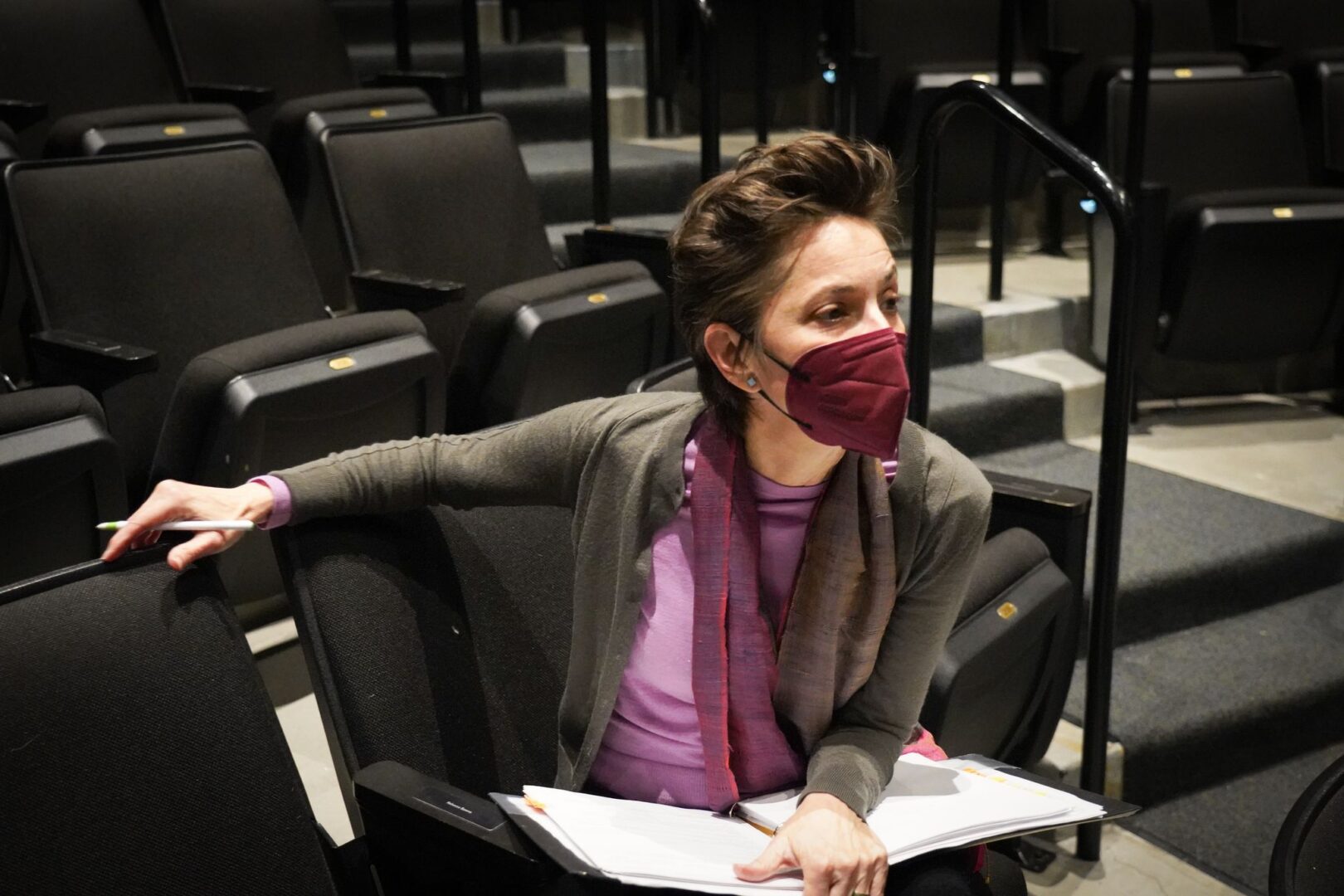
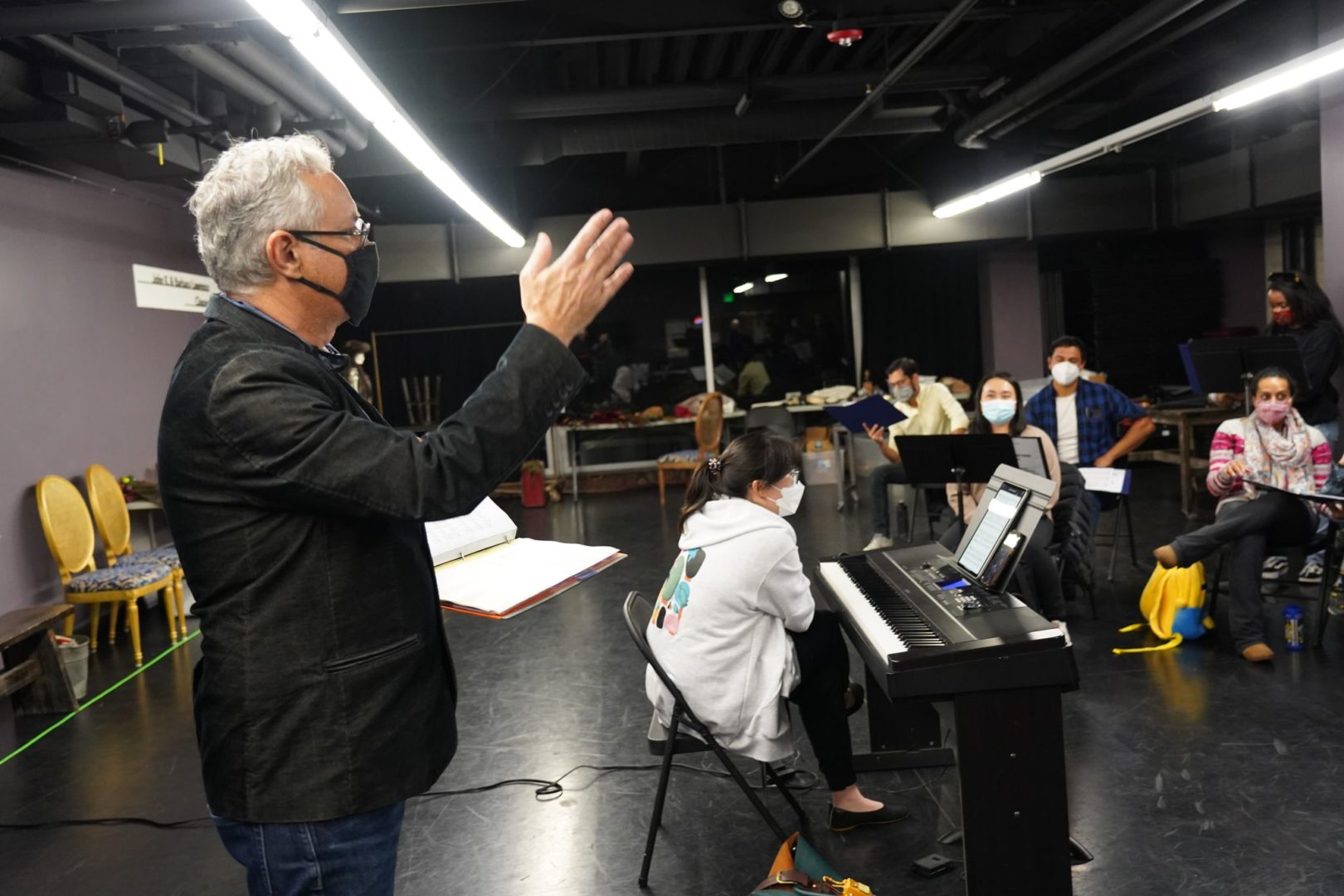
Robert Oriol, at far left, during “A Christmas Carol” rehearsals | Photo by Eric Pargac / A Noise Within
Oriol became a regular on so many ANW performances that it was only a matter of time before he would become a resident artist. He recalls, “There was one year when I was involved in three plays in one season. I was the composer for ‘Figaro’ and ‘Julius Caesar’ and I was in the band for ‘Three Penny Opera.’ I was setting up the music stands for ‘Three Penny Opera’ when they asked me if I wanted to be a resident artist. Probably because I was working so hard on all three shows and I was always there.”
And for someone who claims he doesn’t really enjoy putting the words to the music, Oriol did exactly that for ANW’s productions of ‘Tartuffe,’ ‘Figaro,’ ‘Julius Caesar,’ ‘Imaginary Invalid,’ ‘King Lear,’ ‘Tale of Two Cities,’ ‘Henry V,’ and ‘Argonautika.’
It was only natural, then, that Oriol would also be writing the music and lyrics for ANW’s longest-running show. He says, “I’ve been wanting to do the music for ‘A Christmas Carol’ and we started talking about it in 2016. But the rehearsal phase would usually be when they had just finished a brutal tech for a major Shakespeare play. It just kept getting pushed back for various reasons, like scheduling, and it was simply easier to go with what they already had because the cast literally knew every word of the songs and the choreography — putting new music in would make it a much longer tech process. So, I’ve been chipping away at it since 2016. It’s very rare that I have that kind of time to work with on a play — usually it’s a rush job with only a couple of weeks to do the whole show. This time, I could look at past productions on archival video; I could score it like a film, which is a real luxury.”
Asked about his process, Oriol responds, “After reading the script, I would get ideas from the producer about what era the play is set and what type of music is right for it. But it’s different at ANW with Geoff and Julia because we’ve known each other so long now. I’ll just send them some ideas and they’ll say ‘Yes,’ or maybe ‘A little less of this here,’ and they’ll tell me how long it needs to be. The key at that point is to just stay flexible because you know things are going to change. I just try to do as much of that as I can and then start attending rehearsals as early as possible. The first rehearsal is usually very telling because then I can hear the play, even though I’ve read it a few times — hearing the actors say the words changes everything and gives a real idea of direction. I usually record that and work with it. Then I start writing music where it should be under, try to come up with transitional ideas.”
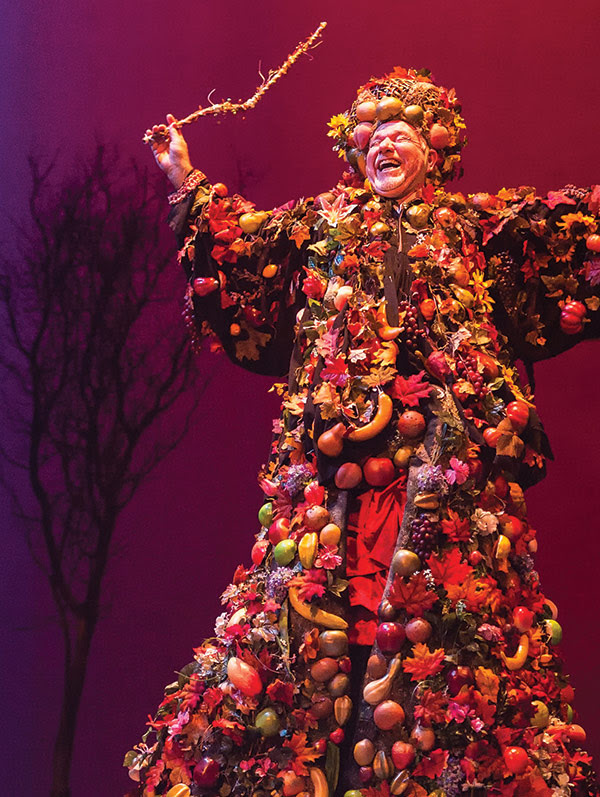
Alan Blumfeld as Christmas Present | Photo by Craig Schwartz / A Noise Within
For “A Christmas Carol,” the music was going to stay in the same vein as the previous production. Oriol relates, “At first I was only going to do a sound design plan. And then we talked about redoing the Fezziwig dance. The instruction was to make the dance the same length so they could use the same choreography, and I did that. The dance has a completely different music but it has the same tempo and length, with the same section structure as the original. But we kind of gave up on the idea of having the same length. Then the songs became completely different, although they’re in the same place in the script, they have the same subject matter, and the same characters are singing them.”
Adds Oriol, “Previously, the song ‘Glorious’ was used three times in the play. Instead of doing that, we have three different songs where ‘Glorious’ was used in the original production. The final song is actually the same melody from the Fezziwig dance. People with an ear for music, to some extent, will recognize that they’ve heard that music before.”
The actors will be working with the musical director on the songs. Oriol says, “That’s just not something I’m good at because I don’t sing well. I do hear the songs in my head and how I want them sung but it’s a matter of how we get there. I know keys will change — two of them already have because Geoff is singing and he wants them to be an A major rather than what they were. And I’ll be expecting more of that and we’ll just take it as they come. I’m really looking forward to hearing the actors actually sing these songs.”
“Tech on the show will take place on the 27th, the Saturday after Thanksgiving. Previews start Friday, December 3rd. We get feedback from preview audience in a sense because the presence of 300 people inside the theatre alters the acoustics of the space dramatically. Having them there really helps me determine if something is too loud, or too quiet, or if I need more of this here and more of this there.”
Having spent several years working on “A Christmas Carol,” Oriol is really excited about the audience’s reaction. Many of us who have heard his compositions for past ANW productions already know what to expect. We can only be wowed.
Originally published on 16 November 2021 on Hey SoCal
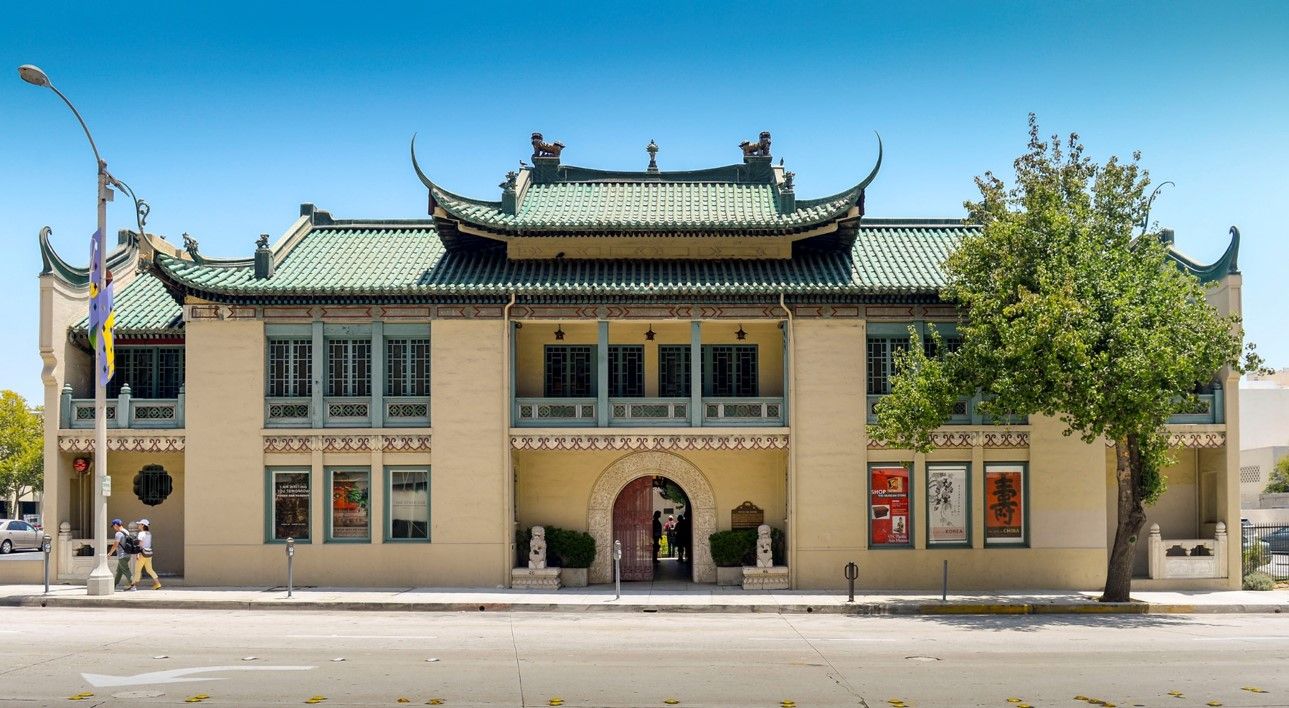
USC Pacific Asia Museum’s ‘Intervention: Fresh Perspectives After 50 Years’ exhibition entrance | Photo courtesy of USC Pacific Asia Museum
USC Pacific Asia Museum (USC PAM), the only museum in Southern California with the mission and vision to further intercultural understanding through the arts of Asia and the Pacific Islands, is marking its 50th anniversary with an exhibition called “Intervention: Fresh Perspectives after 50 Years.” It runs from Nov. 12, 2021 through Feb. 6, 2022.
In its press release announcing the event, USC PAM’s director, Bethany Montagano, states, “As we celebrate USC PAM’s 50th anniversary, we look to the future by asking questions and reflecting on our past as it is embodied in the museum’s collection. ‘Intervention’ offers an opportunity for institutional critique while acknowledging all that the museum has achieved over its 50-year history. The exhibition expands on USC PAM’s groundbreaking legacy, which includes being the first museum in North America to mount an exhibition on contemporary Chinese art with its 1987 show ‘Beyond the Open Door: Contemporary Paintings from the People’s Republic of China.’ As well as the first museum to assemble an exhibition of Aboriginal art in the United States with ‘The Past and Present Art of the Australian Aborigine in 1980.’ We look forward to continuing to present boundary-breaking exhibitions for the next 50 years.”
As with any institution’s milestones, we travel back to its origins and recall the past. To say that USC PAM’s history is intertwined with Grace Nicholson’s is not an entirely factual statement because she didn’t found the museum. However, it is her treasure house of oriental arts where the museum’s treasures are housed. And it just so happens that it’s patterned after the Imperial Palace Courtyard style used in the construction of major buildings in Beijing (Peking). It is such a significant and extraordinary example of Chinese architecture, that it is one of the great treasures of the museum. So it is only fitting that we look at her life’s story as well.
Exterior shot of Grace Nicholson’s Treasure House of Oriental Arts now known as USC Pacific Asia Museum. | Photo courtesy of USC Pacific Asia Museum
When Nicholson, a transplant from Philadelphia who moved to California in 1901, decided to open a business using her modest inheritance, she set up shop on Raymond Avenue. She marketed Southwestern Indian handiwork which she learned about through two of her early customers who had been involved in archeological excavations in Arizona. With the rest of her funds, she invested on basket collections. She got increasingly interested in Native American art and culture and frequently traveled the western United States to buy directly from basket makers and weavers. She established herself as an authority in the field of archeology and was elected to the American Anthropological Association in 1904.
By 1907, her curio shop needed a bigger location so she moved her business to the corner of North Los Robles Avenue and Union Street. Nicholson hired the architectural firm of Marston, Van Pelt and Maybury in 1924 to build a grand residence to her exact specifications. In fact, every detail, material, and construction — roof tiles, stone and marble carvings, and bronze and copper work — were either imported directly from China, or masterfully copied and made by Pasadena-area craftsmen based on the Chinese originals.
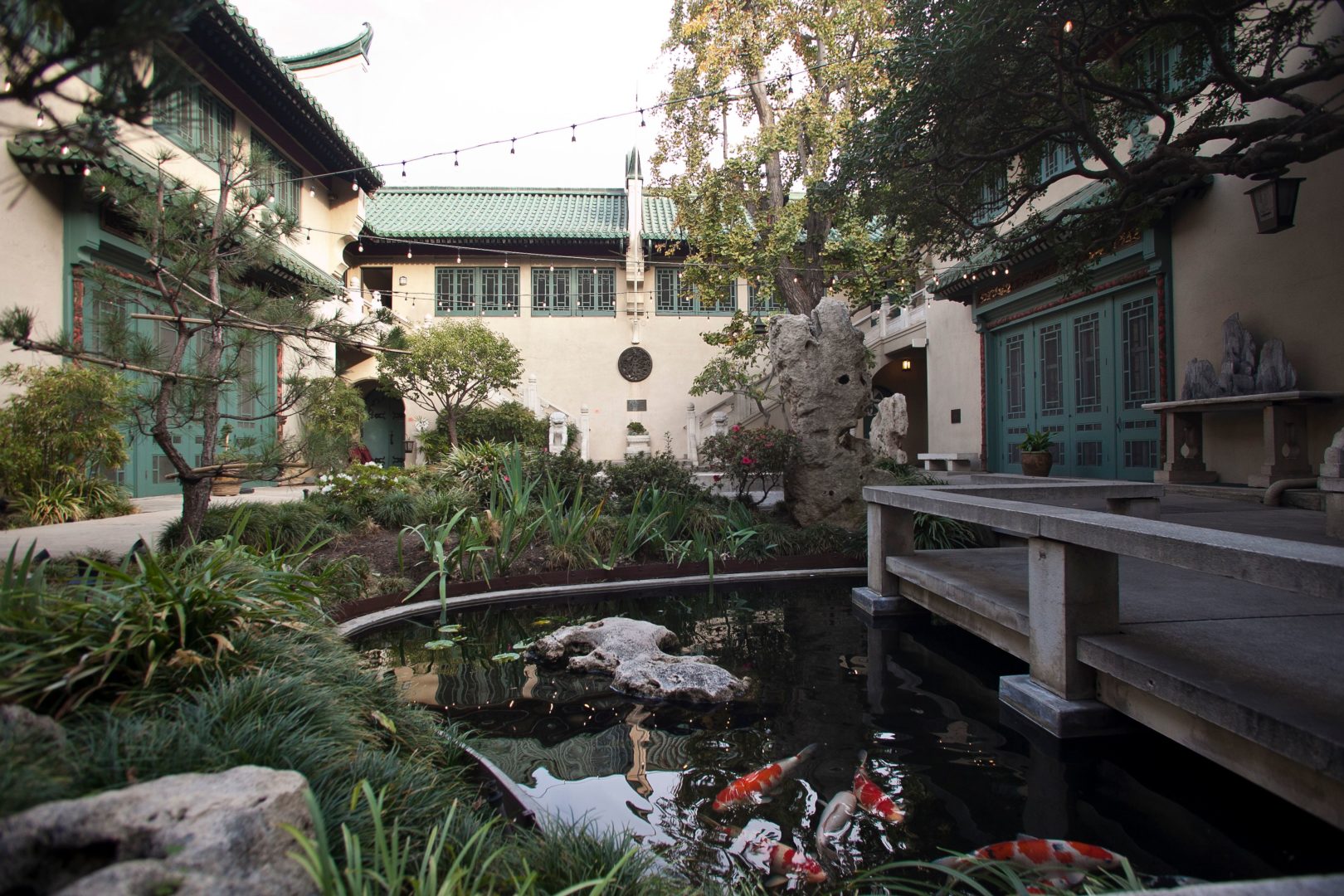
The arched entrance is a replica of the Buddhist library in Beijing. The upturned roofline is designed to prevent evil spirits from landing on it; antique ceramic dogs on the roof keep an eye out for enemies. Cloud patterns and lotus finials on the balustrades of the four courtyard stairways symbolize the ascent to enlightenment and mimicked the marble bridges of Nai-chin-shin-chiao. The structure, when it was completed, was so magnificent it received an award from the American Institute of Architects and became a noted landmark.
While the building was known as Grace Nicholson’s Treasure House of Oriental Arts, she referred to it as ‘Chia,’ a word with distinct meaning in two cultures particularly associated with her. In American Indian legends, the word refers to a nutritious seed that could sustain someone for long periods of time. And for the Chinese, chia means ‘sacred vessel.’
The first floor of the house served as a gallery where she displayed and sold American Indian and Oriental art objects. On the second floor were more galleries, an exhibition auditorium, and her private quarters. It hosted several cultural organizations and became the center for the arts in Pasadena.
Nicholson bequeathed the building to the City of Pasadena in 1943 for art and cultural purposes, with the stipulation that she would retain her private rooms until her death. She shared the building with the Pasadena Art Institute until she passed away in 1948. In 1954, the Pasadena Art Institute changed its name to the Pasadena Art Museum and occupied the building until 1970, when it moved to its new location at Orange Grove and Colorado Boulevards and became the Norton Simon Museum.
In 1971, the Pacificulture Foundation moved into the Grace Nicholson Treasure House of Oriental Art. The foundation eventually bought it in 1987 and renamed it Pacific Asia Museum. Then in 2013, the University of Southern California partnered with the institution. Renamed USC Pacific Asia Museum (USC PAM), it is a vital resource for education and cultural heritage. For Asians like me, this was a monumental development because having USC’s collaboration and support meant our art and culture would get recognition and gain wider reach.
The courtyard | Photo courtesy of USC Pacific Asia Museum
The 50th anniversary exhibition features seven Asian American artists and scholars who created new artworks that demonstrate new ways to view and engage with the museum’s history and collection of Asian and Pacific Island art. The participating Asian diasporic artists are Antonius Bui, Audrey Chan, Jennifer Ling Datchuk, Amir Fallah, Akiko Jackson, Alan Nakagawa, and kate-hers RHEE.
Rebecca Hall, USC PAM’s curator declares, “The artworks commissioned for this exhibition create new ways to view the museum’s collection and serve to remind visitors that USC PAM’s history is complex. Our public has many ways to consider this story beyond how it is presented in our galleries. The artists and their fresh perspectives are asking viewers to ponder for who was this collection created and how does its meaning change when seen through the eyes of our diverse communities?”
About her selection of artists for the exhibition, Hall states, “I had a few artists in mind when I began work on ‘Intervention.’ I specifically sought out artists whose work focused on (at least in part) the questioning of history and representation or whose work engaged with objects and the past in some way. I wanted to work with artists who already had a deeper understanding of the questions we were asking as the impetus for the exhibition, mainly: what do collections and displays of Asian art mean to Asian diasporic communities.”
For this article, I chose to feature Jennifer Ling Datchuk, whose talk at the gallery Art Salon Chinatown Hall had attended and whose work she had seen.
Born and raised in Warren, Ohio, Datchuk is a child of a Chinese immigrant and grandchild of Russian and Irish immigrants. She states on her website that the family histories of conflict she has inherited — which she captures by exploring the emotive power of domestic objects and rituals that fix, organize, soothe and beautify our lives — provide constant inspiration for her work.
Datchuk earned her BFA in crafts from Kent State University and MFA in artisanry from the University of Massachusetts. While she was trained in ceramics, she often works with other materials including porcelain, fabric, and embroidery. She has received grants from the Artist Foundation of San Antonio and Artspace for her research project about the birthplace of porcelain in Jingdezchen, China.
In 2016, Datchuk was granted a residency at the Künstlerhaus Bethanien in Berlin, Germany through the Blue Star Contemporary Art Museum; she was also a Black Cube Nomadic Museum Art Fellow. In 2017, she completed a residency at the European Ceramic Work Center in the Netherlands and received the Emerging Voices Award from the American Craft Council. She was named a United States Artist Fellow in Craft in 2020. She currently lives in San Antonio, Texas and is an assistant professor of studio art at Texas State University in San Marcos, Texas.
According to the introduction to the various artists in the exhibition, Datchuk’s body of work reflects cultural identity as an Asian American woman. She uses her artwork to question the cultural, political, and economic systems that maintain a status quo of sexism, racism, stereotyping, and oppression. For ‘Intervention,’ she will be examining and expanding upon representations of women in Asian art.
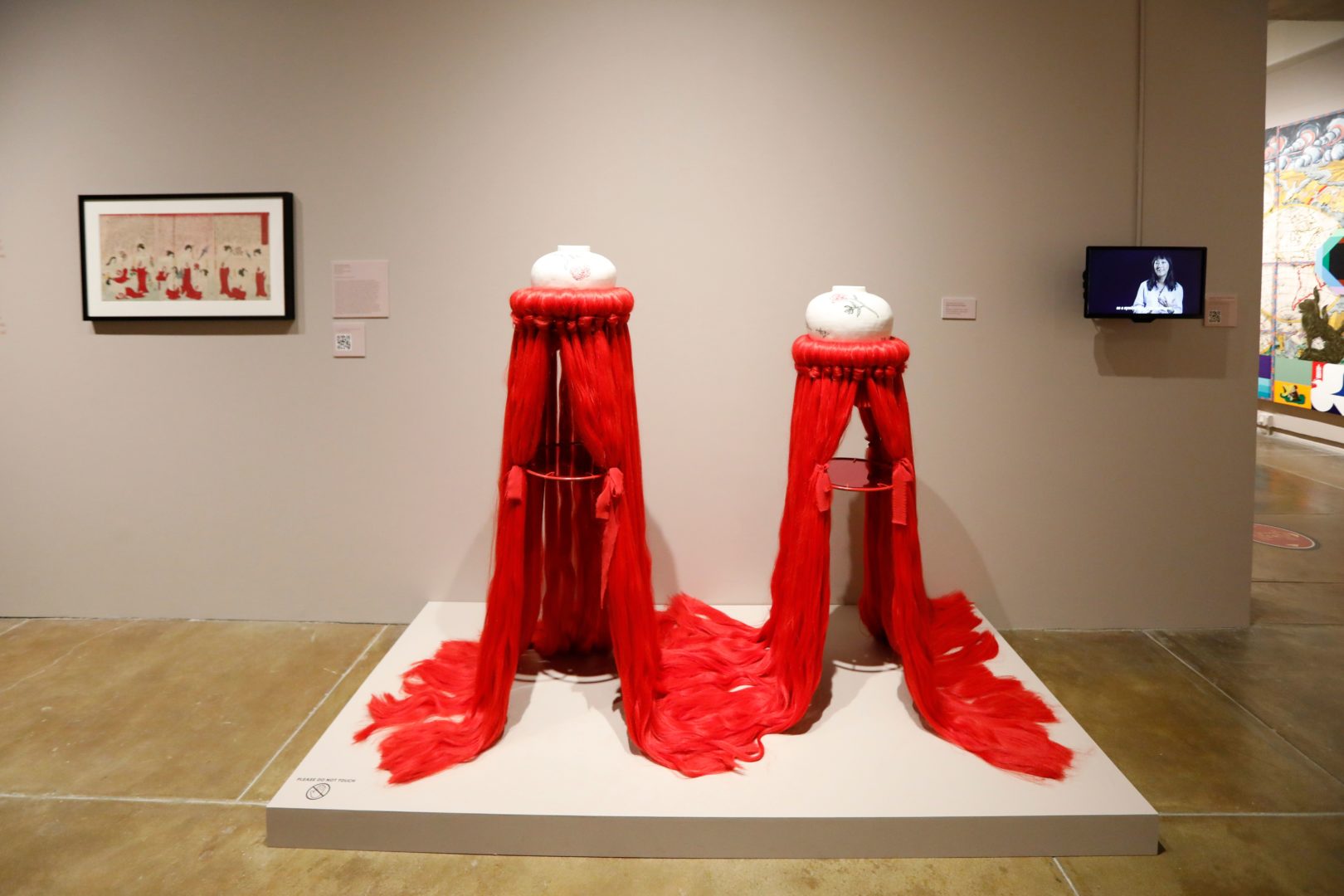
Datchuk’s ‘Gaze at All Sorts of Flowers’ | Photo courtesy of USC Pacific Asia Museum
Interviewed by email, Datchuk describes her display, “I created a pair of porcelain vessels that rest on metal stands draped in red synthetic hair. The title ‘Gaze at All Sorts of Flowers’ comes from a translation of the text found on the woodblock print that describes the purpose of procreation for familial lineage and honor. I was first attracted to the voluminous pregnant female figures draped in red and how they seemed relaxed in their time of waiting. I was fascinated to see geishas depicted this way instead of constantly being sexualized or fetishized in their talents for the consumption of men.
“The translation depicted a more rigid expectation of pregnancy, the lack of pleasure from procreation for honor in one’s family. It also detailed the 10 months of pregnancy in the Japanese calendar and how gazing at flowers would make for a happier and easier incubation of a baby. I wanted to reinsert the female narrative to this translation and reclaim pleasure, pain, beauty, and all sorts of flowers to gaze upon.”
Speaking as an Asian, I know how we are either invisible or dismissed in American society. And as a Filipino immigrant, I feel even less significant because I’m not stereotyped as a ‘model minority’ but a member of an underclass. I ask her if she feels that there is racial disparity even among Asians, and Datchuk replies, “Yes! There is a wide range of racial disparity and it doesn’t help that we get lumped into a big collective of Asians. So much of the histories of Asians in America and the diasporas that exist all over the word are because of war and colonization and this is not taught in schools. We are invisible because our histories don’t exist.”
Chinese cuisine is one of the most popular ‘ethnic’ food for Americans — actors in American movies are usually shown eating Chinese takeout with chopsticks. One of the displays on Datchuk’s website shows chicken feet, a Chinese delicacy, so I ask if she plans to depict food in any future work. “I use the chicken foot in some of my work as a cultural connector that can elicit feelings of comfort or home and the uncomfortable and disgusting,” she answers. “In some ways I’m always making work about being half and both and the third space this creates for these dual experiences. I’m not sure I will make work about food but I do make work about acts of love through food and culture because they are part of how we visualize care.”
Datchuk expounds, “My work always comes from living with the constant question ‘what are you?’ In these moments I am seen as an object and different from the question ‘where are you from?’ where you are seen as a perpetual foreigner. I make work about my layered identity of being a woman, a Chinese woman, and how I exist within this third space, of having one foot in each world but never feeling fully whole or accepted. I always start my work from a personal story, a family reference, a current event, and research. I start every form from the history of porcelain and how I can take something from the past and make it present, make the private public, and that the personal is political.”
In her introduction statement, Montagano references USC PAM’s legacy of showcasing cultures and countries which are not usually at the forefront because they don’t have enough representation. Throughout its 50-year history, it has provided Asian and South Pacific artists with the venue and platform to mount their creations. Because of that — as the exhibition demonstrates — artists are flourishing and, through their artwork, are telling their stories that transcend limits and expectations.
Originally published on 8 October 2021 on Hey SoCal
Kehinde Wiley’s ‘A Portrait of a Young Gentleman’ | Photo courtesy of The Huntington Library, Art Museum, and Botanical Gardens
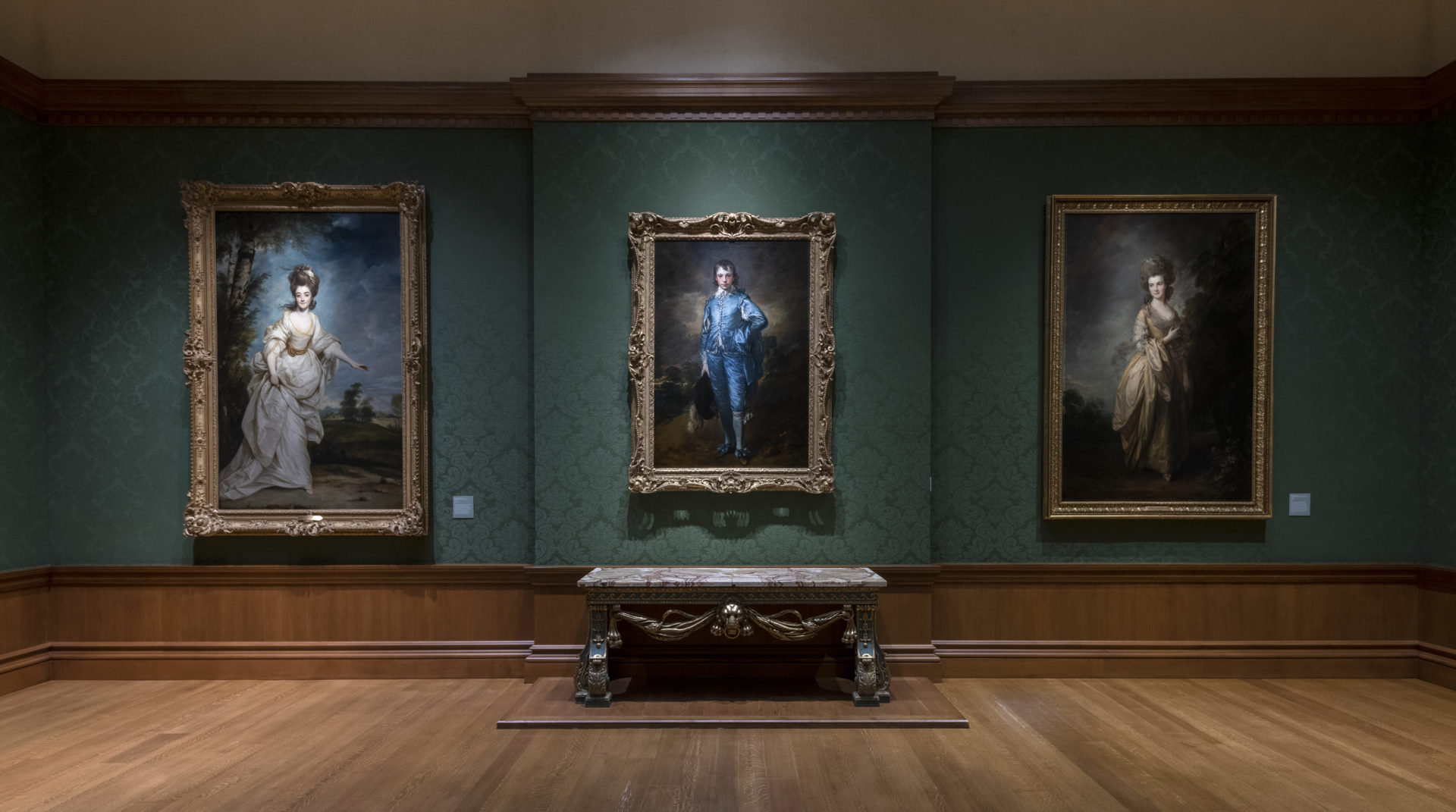
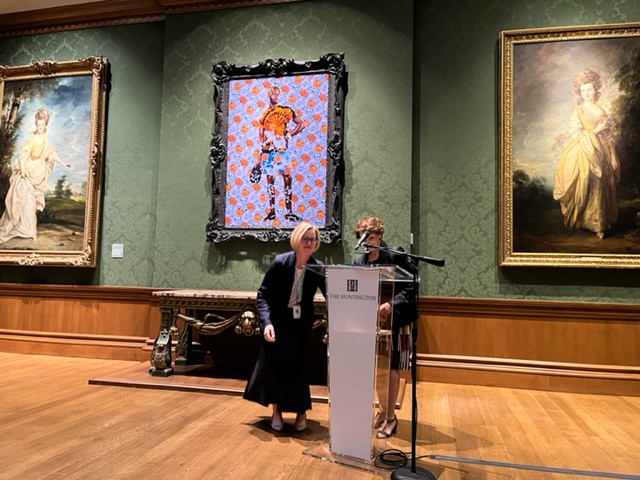
On Saturday, Oct. 2, 2021, The Huntington Library, Art Museum, and Botanical Gardens (The Huntington) unveiled Kehinde Wiley’s “A Portrait of a Gentleman,” a modern-day interpretation of Thomas Gainsborough’s magnificent 18th century masterpiece. It will be on display at the Thornton Portrait Gallery as part of an exhibition which includes other paintings hanging outside in the north passage. (Thomas Lawrence’s “Pinkie,” another renowned treasure, has been moved there but will be back in the portrait gallery next year.)
Commissioned by The Huntington to celebrate the 100th anniversary of “The Blue Boy’s” acquisition by Henry and Arabella Huntington, “A Portrait of a Young Gentleman” will be in the museum’s permanent collection and visitors can still view it after the show ends on Jan. 3, 2022.
Wiley has famously talked about The Huntington having a major role in his formative years. “I loved The Huntington’s galleries; the paintings by Joshua Reynolds, Thomas Gainsborough, and John Constable were some of my favorites. I was taken by their imagery, their sheer spectacle, and, of course, their beauty. When I started painting, I started looking at their technical proficiency – the manipulation of paint, color, and composition. These portraits are hyperreal, with the detail on the face finely crafted, and the brushwork, the clothing, and the landscape fluid and playful. Since I felt somewhat removed from the imagery – personally and culturally – I took a scientific approach and had an aesthetic fascination with these paintings. That distance gave me a removed freedom. Later, I started thinking about issues of desire, objectification, and fantasy in portraiture and, of course, colonialism.”
Karen Lawrence, president of The Huntington, speaking to the press during a preview one hour before the public viewing remarks, “We’ve long admired Kehinde Wiley’s work and the idea of engaging him with us at The Huntington has been in the works and under development for a few years. It is impossible to communicate how thrilling this moment is for us. We often think about influence as a one-way street: the past affecting the present. But as these two portraits of a ‘young gentleman’ face each other across this gallery and across 250 years of history, we can recognize that the present affects the past – the present powerfully reconfigures the past.”
“Kehinde Wiley’s magnificent portrait does more than engage with Gainsborough’s 18th century masterpiece ‘The Blue Boy’ and the other works on display in this room,” continues Lawrence. “It really brings Wiley full circle to a place that he himself has said influences his art practice greatly. For it was to The Huntington that he came as a child with his mother and spent much time looking at these oversized portraits and their grand landscapes. He was impressed in two ways – by the sheer beauty of the brushstrokes and the grandeur of the composition – as much as by what was missing – the lack of representation of anyone who looked like himself.
“When we celebrated our centennial at The Huntington in 2019 we committed ourselves to re-examining the past and re-imagining the future. In this sense, our archives and collections are alive. Kehinde Wiley’s painting changes the Grand Manner portraits of the English nobility surrounding us.”
The themes of past and present are further explored when Christina Nielsen, director of The Huntington Art Museum, tells how Gainsborough – who preferred landscapes – became a portrait painter because it was the more lucrative career, how he broke into the London art market, and then gained national prominence.
Installation view of Gainsborough’s ‘Blue Boy’ | Photo courtesy of The Huntington Library, Art Museum, and Botanical Gardens
“Gainsborough called upon the art of artists before him – van Dyck, in particular – and produced ‘A Portrait of a Young Gentleman,’ as he named it, and displayed it in 1770 at the Royal Academy Exhibition. It was a show stopper. He threw everything at it, including enormously expensive pigments: lapis, azurite, cobalt, indigo. He tweaked artistic conventions and went against reigning art theory of the day, which says blue should not provide a compositional methodology for a painting. It was a sensational success and artists of the time renamed Gainsborough’s painting ‘Blue Boy.’”
Nielsen expands, “The Huntington Art Museum has the enormous responsibility of being the steward of Gainsborough’s ‘Blue Boy.’ We are the keeper of this work for present visitors and future generations. It is one of the most influential and beloved master paintings in an American collection and we feel it very keenly on a daily basis. In the 250 years since its existence, it has influenced people like Whistler, Rauschenberg, now Wiley, among many others. It has absolutely sparked public imagination. It was on Cadbury tins in Great Britain before coming to the United States and it was in 11 exhibitions across the 19th century. It was reproduced and hanging on the walls of most British homes before it was purchased by Henry and Arabella Huntington in 1921.”
“And as we celebrate the 100th anniversary of its coming here, we also know how beloved it has become not only for British audiences,” Nielsen says further. “It is an American icon thanks to popular culture that emanates from California, specifically the movie industry. Stars from Marlena Dietrich to Jamie Foxx have dressed up and appeared in Hollywood movies as the ‘Blue Boy.’ It’s iconic on so many levels it’s hard not to sound hyperbolic. And if you have a painting like that in your collection, how do you respond for 21st century audiences?”
“There are few living artists today who could respond to the call like the one emanating from Gainsborough’s ‘Blue Boy.’ Kehinde Wiley answered the phone and responded magnificently. He is a painter who singlehandedly has changed the conversation about portraiture in the country, the power of representation, and the representation of power,” declares Nielsen.
And because everything today is global, ‘A Portrait of a Young Gentleman’ corresponds in its span. The model looks like someone every Angeleno can relate to – a surfer dude wearing a tie-dyed tee shirt, neon blue shorts, and Vans shoes, standing in a field of bright orange California poppies. Yet, he is anonymous. And there is universality in anonymity, according to Nielsen.
Christina Nielsen (left) and Karen Lawrence (right) | Photo by May S. Ruiz / Beacon Media News & Hey SoCal
Wiley began working on the portrait during lockdown in Senegal where his Black Rock Senegal multidisciplinary artist-in-residence program is based, so Nielsen thinks his model is a young man from Dakar. The painting moved to his Beijing studio and then to his New York atelier early this summer. It then came to Los Angeles where it was placed in a train with an exact replica of the 18th century frame that The Huntington purchased a decade or so ago for the ‘Blue Boy.’ The frame was hand-carved in Nicaragua.
Seeing Wiley’s “A Portrait of a Young Gentleman” occupying the space that has been “The Blue Boy’s” pride of place in the last hundred years might come as a surprise to some. It seems like a dissonance from all the paintings of properly-attired personalities in the gallery.
“Some of the Grand Manner sitters are in clothes of the day. Even in the 18th century, fashion was an incredibly important marker,” Nielsen explains. “Kehinde Wiley inserts black bodies into historical stories, and what these people would be wearing today. He’s also very aware of fashion and high fashion; these choices are all incredibly deliberate and conscious. The portraits right now face each other in the characteristic gesture. The details in the Wiley speak to the contemporary.
“All art was once contemporary and Gainsborough’s was revolutionary in his day and was the catalyst for his fellow artists and visitors to that original Royal Academy show. I imagine this will feel catalytic. I know how I felt when I walked into this room and saw it on the wall. I can also say that several days in, I have fully metabolized it and now it feels like it’s always been here. You can’t look at it without thinking of them, you can’t look at them without feeling its presence. It’s incredibly exciting the range of conversations that this will open up for our audiences and I imagine, as always, art will elicit responses across the whole spectrum. It will take time for some people and some will immediately just feel the joy and exuberance.”
Lawrence says, “Kehinde’s portrait of Barack Obama for the National Portrait Gallery transformed everyone’s thought about presidential portraiture – the Grand Manner genre of presidential portrait was stunningly interrupted. And with that of Barack Obama’s added with all the white faces, you could predict how this will enter into the canon. The significance will be great.
“We wanted The Huntington to make invitations to re-interpret cultural practice as well as our historical and literary archives and collections in the library. For contemporary practitioners to activate, motivate, respond to what we have because otherwise, what’s the point? We’ve made that invitation and I think that the audiences for the Huntington will come here and see the continuity of past, present, and future, and embrace that. What is unexpected? What are the different voices? These are opportunities that we want to take. I’m speaking for myself and Christina and we’re absolutely thrilled with what Wiley has chosen to do.”
Originally published on 28 September 2021 on Hey SoCal
Deborah Strang as ‘the poet’ in “An Iliad” | Photo by Eric Pargac / A Noise Within
After 18 months of shutdown, A Noise Within (ANW) returns to live theatre with a one-person show of Lisa Peterson and Denis O’Hare’s modern-day retelling of Homer’s epic “An Iliad.” Directed by Julia Rodriguez-Elliott, it features two ANW powerhouses Geoff Elliott and Deborah Strang in alternating performances as “the poet” and will be on stage through Oct. 3, 2021.
Speaking with us by phone, co-producing artistic directors Geoff Elliott and Julia Rodriguez-Elliott explain the theme of their 2021-2022 season, which marks their 30th anniversary, and detail ANW’s protocols to assure theatre-goers that their safety is a top priority.
Asked if there are plays they had originally planned for the previous season that will be included, Rodriguez-Elliott replies, “Yes, we brought back ‘An Iliad’ and ‘Metamorphoses.’ We have just experienced so much change in the world we live in, so our season’s theme ‘We Shattered the Chrysalis’ seemed like a very appropriate one to examine. And ‘Metamorphoses’ is at the center of that because it’s a play about transformation and the healing power of love as a change agent. We felt it would fit into the 30th anniversary season.”
Geoff Elliott as ‘the poet’ | Photo by Eric Pargac / A Noise Within
Continues Rodriguez-Elliott, “‘An Iliad’ is a play with one actor and no intermission so it was a means for audiences to get used to theatre again before we get into full productions. We figured we would learn a lot with this first show and any adjustment that we needed to make, we would be implementing in the following show, which has more cast members. More importantly, this play is always relevant; but more so right now, as we see and read about the rage and conflict going on everywhere. And with the Afghanistan withdrawal, it seems like it was written just yesterday. Additionally, it’s a brilliant piece of writing, and Geoff and Deborah are magnificent! It’s just a wonderful way to re-enter the world of live theatre.”
Prior to reopening, ANW developed and refined extensive plans to keep everyone safe which they outlined in a press statement. These procedures include, but are not limited to: staff and crew certifying as COVID compliance officers; initiating a deep clean of its HVAC system for optimal turnover of fresh air; routinely disinfecting high-touch areas; providing PPE; and following LA Department of Health guidelines.
Besides requiring full vaccination for all staff, artists, and volunteers who work onsite, ANW has also put into effect strict guidelines for theatre-goers. Before being admitted into the theatre, all audience members must provide full proof of vaccination. Masks are required regardless of vaccination status and will be available on site until such time that LA County stops requiring masks indoors. At that point, masks will continue to be strongly recommended.
A Noise Within enforces strict safety guidelines | Photo by Brian Feinzimer / A Noise Within
During the months when the theatre was dark, ANW filmed ‘An Iliad’ with Elliott and Strang alternating as “the poet.” Elliott performed it on opening night for a live audience and relates the experience. “It was surreal on a certain level. Like everybody else, other than doing online things here and there, including filming ‘An Iliad’ a while back, we’ve been dormant for a year and when I got out there, I wasn’t prepared for all of the masks. It was a really surreal experience – I had to adjust as I have never done before. It’s beautiful to be back, but also very strange.
“From an actor’s perspective, it’s a totally different feel. We rehearsed it differently. We knew we had to do it in a certain way because we only had limited time with the resources. It was a three-camera shot. There are seven chapters in ‘An Iliad’ and Deborah and I alternated performing in each chapter. We were very happy with the product but this play was meant to have a live audience for the actor to connect with them. Hearing their response propels you as a performer and you learn something new each time you do it – which doesn’t happen when the show is filmed. There’s something about everyone being in the same room, watching and listening to the story, and everybody relating to what’s happening on stage. You can’t have that anywhere else. It’s a kind of communion; there’s something very healing about it.”
“The show is really a conversation with the audience and when you do it on film, you’re missing that piece because the camera becomes your partner in a sense,” adds Rodriguez-Elliott. “It’s also different from the directing perspective. When you’re filming, the director or director of photography is making choices about what the audience is going to see, whereas in a play you’re on stage and you have a much more open canvas. As an audience member, you get to choose what you want to be looking at at any given time. Essentially, the audience members are much more active participants in a live version then in a film version. And it’s been interesting because a lot of folks who saw it on film have returned to see it live and almost everyone said they like the live version so much more.”
Audiences who have come back to watch the play are reacting positively to ANW’s strict protocols as well. Elliott says, “Overwhelmingly so. The feedback we’re getting is that people are thankful we’re requiring those and that we’re diligent about imposing them. If someone takes their mask off during the performance, our house manager and ushers gently remind them to put them back on, which makes everyone around them feel safe.”
Deborah Strang | Photo by Eric Pargac / A Noise Within
ANW is bringing back their popular holiday show this year and Rodriguez-Elliott addresses it. “We’re making an accommodation for ‘A Christmas Carol’ because it’s all about families coming to watch the show together. We’ll move to requiring children 12 and under to show proof of negative test for COVID. I think by then people are used to that because that’s being done in schools.”
Concurs Elliott, “The joy of the show is having families and their kids there. I have to say that I’ve read reports about Pfizer coming out with a lower dose vaccine for kids which they think will be available by Halloween. I hope – and I have my fingers crossed – that a lot of kids will be able to get vaccinated by then.”
While looking forward to things getting better by the end of this year, they recall the challenges of the past 18 months. Rodriguez-Elliott says, “Like other theatre companies, we tried to find opportunities to stay connected with our audiences on Zoom. We also wanted to keep the artists engaged. It was a challenging time for performers because the lockdown happened very unexpectedly, so they were quickly displaced and essentially out of work. As an artist, what fuels you is working on the art. As an organization, we were ultimately lucky despite all the challenges because we have such a strong support system. Our board did an amazing job of helping us navigate the challenges of the moment. Our supporters and donors responded and supported us in extraordinary ways, as did the foundations. Certainly, the government support was critical to surviving 18 to 19 months and not producing theatre nor having opportunities to generate revenue. It’s unheard of.”
“And, again, from a performer’s point of view, these Zoom readings are such a cheap knock-off,” Elliott expresses in frustration. “The artist is just trying to hang on, trying to connect with partners because the reality is actors feed off of each other. But we’re not in the same room so I’m not really looking at them when I’m speaking to them in a scene. We have to just imagine all that and, man, it’s so synthetic; I don’t think I will miss it.”
Rodriguez-Elliott declares, “It was a place holder but definitely not a substitute for real theatre. That said, in terms of the artistic piece of it, I think we got so adept at the Zoom world that it has been useful in things like being able to provide resources for audiences. Now we’re doing these deep dives where we have directors and artists talk about the play and audiences can participate in advance of attending a production. There are things that can enhance the theatre-going experience but not a substitute for it.”
“Plays like ‘An Iliad’ aren’t really suited for film; and performing on film isn’t what we do as a theatre company,” Elliott states firmly. “At the same time I take my hat off to all the performers and directors who were involved with it because it’s not easy to do. And as Julia said there was a learning curve but I think we actually got very good at it.”
“We also held two virtual annual fundraising dinners, believe it or not,” Rodriguez-Elliott says. “The first one came up really fast right after everything shut down and the second one was last April. That we got adept at doing – we partnered with a caterer and had dinner delivered to people’s homes. We tried as much as possible to recreate the feeling in the room when we have events.”
Photo by Brian Feinzimer / A Noise Within
While ANW will now stage all plays with live audiences, they will keep some of their virtual programming. Rodriguez-Elliott discloses. “We’ll have the post-show conversations so even if people don’t watch a show on a night with one, they can still participate. We’ll also keep the ‘deep dives’ which our audiences enjoy.”
As much hardship the pandemic and resulting shutdown presented, there were lessons gained, which Rodriguez-Elliott expounds on. “We were still doing a lot of work. We still had to figure out what to do next and how to get through the next three months, but we were able to do it in comfortable clothes. It gave us a chance to consider a work/life balance and I think that’s a positive take-away. The other piece is that we learned to be flexible. It really called on us to change direction a number of times and I think one of the advantages for us was the size of our organization – we’re rather nimble so we were able to make changes as things were coming at us 24/7.
“It has been very moving to see how important the arts are in people’s lives because that’s what we heard over and over again with our community during this period of shutdown – the importance of theatre and community and coming together. On that note, I would like to say that this is a great time for people to support local theatre in the same way that we’re dining out to support restaurants. I think there’s a level of hesitancy. But once they come and they see the protocols that are being followed, and that we’re taking safety seriously and meeting them where they are, I think people will feel more comfortable attending live performances.”
Originally published on 14 September 2021 on Hey SoCal
The Pasadena Playhouse returns this fall with its 2021-2022 season. Danny Feldman, producing artistic director, couldn’t contain his thrill to be coming back to the theatre with a live audience. And it wouldn’t be just your standard seated audience either. But I’ll let him tell you all about it.
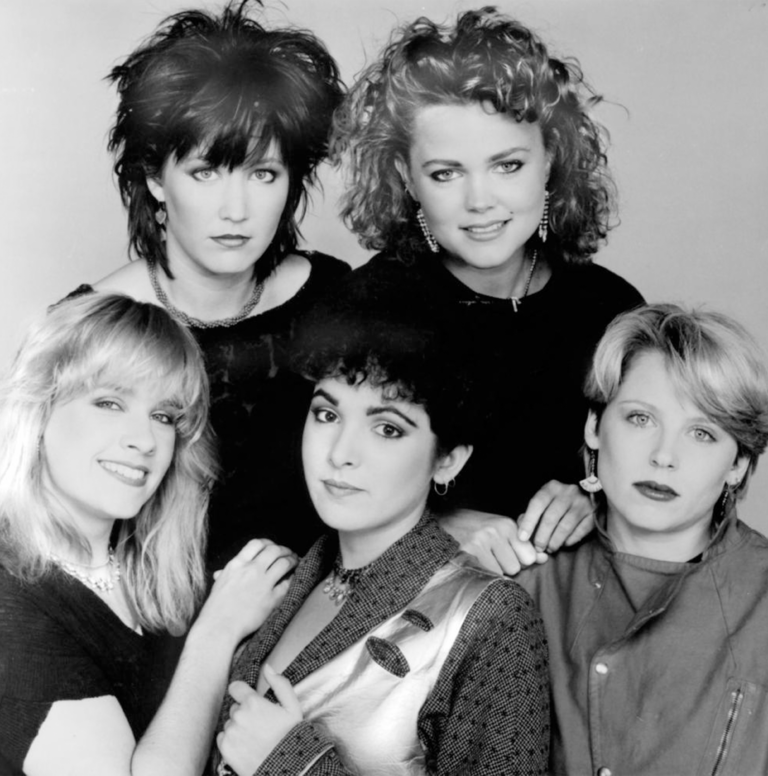
Speaking by phone on a recent afternoon, Feldman enthuses, “We’ll open our season in November with ‘Head Over Heels,’ a musical comedy adaptation of ‘The Arcadia’ by Sir Philip Sidney and is set to the music of the iconic 1980s all-female rock band The Go-Go’s. It’s huge and ambitious. I had been working on this for a long time, but I was planning to do it for a future season – there was no way in my mind we could do it this season. However, a few months ago, I went on an artistic retreat with two extraordinary artists – Jenny Koons and Sam Pinkleton – and afterwards we all thought this show is the only way to come back from a pandemic. It just felt so perfect for the moment even if we only had a short timeline to make it happen. This show is joyful, diverse, and wonderfully inclusive. We want to give people one of their best nights out since the pandemic happened.
The Go-Go’s | Photo courtesy of Pasadena Playhouse
“The world has changed. It is pretty unrecognizable to me right now and we want people to have that experience. So we’re completely reconfiguring the theatre – there will be no traditional stage and proscenium. The best way I can describe it is the show happens all around you. The story is about a royal family who goes on a journey to save their kingdom and discovers the joy of each other along the way. It is full of comedy, dancing, and great music, and the audience is coming along with them.”
Amidst anxieties about emerging coronavirus variants and mutations, rehearsals on “Head Over Heels” are well underway. Feldman says, “Like everyone, I’m cautiously optimistic, a little nervous, and really very excited to get things going again. At the same time, we’re being flexible because we realize there’s so much uncertainty. It’s truly a piece of art and theatre being created out of the pandemic. And that’s rare because we’re so close to it. I expect years from now there will be plays about what it was like during a pandemic period and what we have is a piece of art created during one, which takes into account the challenges – audience safety concern and all that. But we still feel we can safely pull this off given the guidelines now and the direction COVID’s going. That said, if things change we will adapt and change with it. This is a new world.”
Except for next spring’s premiere of “Ann,” The Playhouse’s 2021-2022 season isn’t what was originally slated for last year. Feldman discloses, “Everything is going to be new because I took a different approach that is reflective of the world that changed. The Pasadena Playhouse takes great pride in the fact that though we’re a hundred-year-old-plus institution, we’re relevant, we’re responding to the moment.
“’After ‘Head Over Heels,’ we’re staging a play that’s a Pasadena Playhouse co-production with the Woolly Mammoth Theatre Company in Washington, D.C. and the Huntington Theatre Company in Boston. Again, this is a new model of creating work. The play is a teenage retelling of ‘Richard III’ with a rather racy title ‘Teenage Dick’ and it’s a pretty exciting new work by Mike Lew, an amazing young playwright. It sets Richard III in high school where he’s bullied because he has cerebral palsy and he’s running for senior class president. It gets into power and what one does to achieve power and status when they’re a marginalized person. It’s both funny and gut-punching and is really a fun way to approach a classic like ‘Richard III,’ but in a contemporary setting. It’s a wild ride. I think it’s a surprising evening of theatre people will not forget for a long time.”
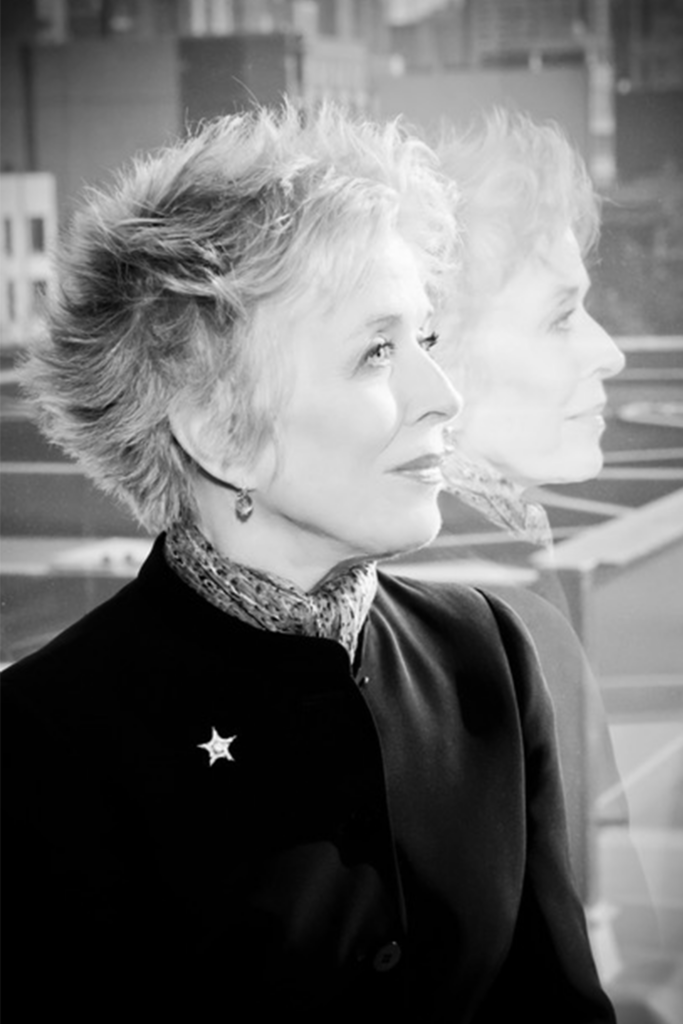
Holland Taylor | Photo courtesy of Pasadena Playhouse
Feldman says further, “‘Ann’ follows in the spring with the extraordinary Holland Taylor, the legend – this is her show. It’s a delightful evening celebrating Ann Richards. It gets into politics in a way that is appropriate for today, that is not trying to separate people or create division but bringing people together. Governor Ann Richards was an older divorced woman, single mother, former alcoholic, Democrat in Texas. And Holland just reincarnates her. She’s coming back alive on stage and you feel like you’re having a visit with Ann Richards. It’s a delightful, soul-soothing celebratory evening. After ‘Ann’ there’s a show I haven’t picked yet.
“Then we close with a party as well – ‘freestyle love supreme.’ This was created from the minds of Lin Manuel Miranda and his collaborators Anthony Veneziale and Tommy Kail who directed ‘Hamilton’ and another production we did with Nia Vardalos ‘Tiny Beautiful Things.’ This will be the first time that the Pasadena Playhouse has a show coming directly from Broadway. It’s a Special Tony recipient and it will be on Broadway for the second time in October, and then it’s coming here next summer. It’s got several things all at once – hip-hop, freestyle rappers, a band, an audience, and no script. The show will be made up every night using words and ideas solicited directly from the audience and then, like magic, you see it appear right in front of your eyes. It’s a wonderful way to round out a season that to me is exciting and pulsating and celebratory and creating a new path forward – different kinds of shows, different ways for audiences to engage with the work.”
While The Playhouse won’t be opening until November, Feldman stayed busy during the pandemic. He says, “We launched our digital platform PlayhouseLive where we had a full program which included commissioned work that was in response to George Floyd and the racial reckoning in America. We also did the Jerry Hermann show about the Broadway composer, which garnered attention all over the country. We offered a Broadway class with hundreds of people across the United States taking it.
“We expanded our footprint. We really worked on redefining what a theatre can be during that time – what it looks like when you’re not confined to four walls of a historic theatre. That was exciting and we’re certainly planning to continue some of our digital work.”
PlayhouseLive was as much a success as it was a revelation. Feldman explains, “The word community changed for us. One of our shows was favorably reviewed by the New York Times. I don’t think that’s ever happened at the Pasadena Playhouse! Our community wasn’t just Pasadena, San Gabriel Valley, and Los Angeles. People from all over the world were watching our content – it confirmed that the name Pasadena Playhouse actually means something around the world. Of course we know that because it’s been here forever, but it really was a fantastic sign of our power and peoples’ understanding of who we are and desire to engage with us.”
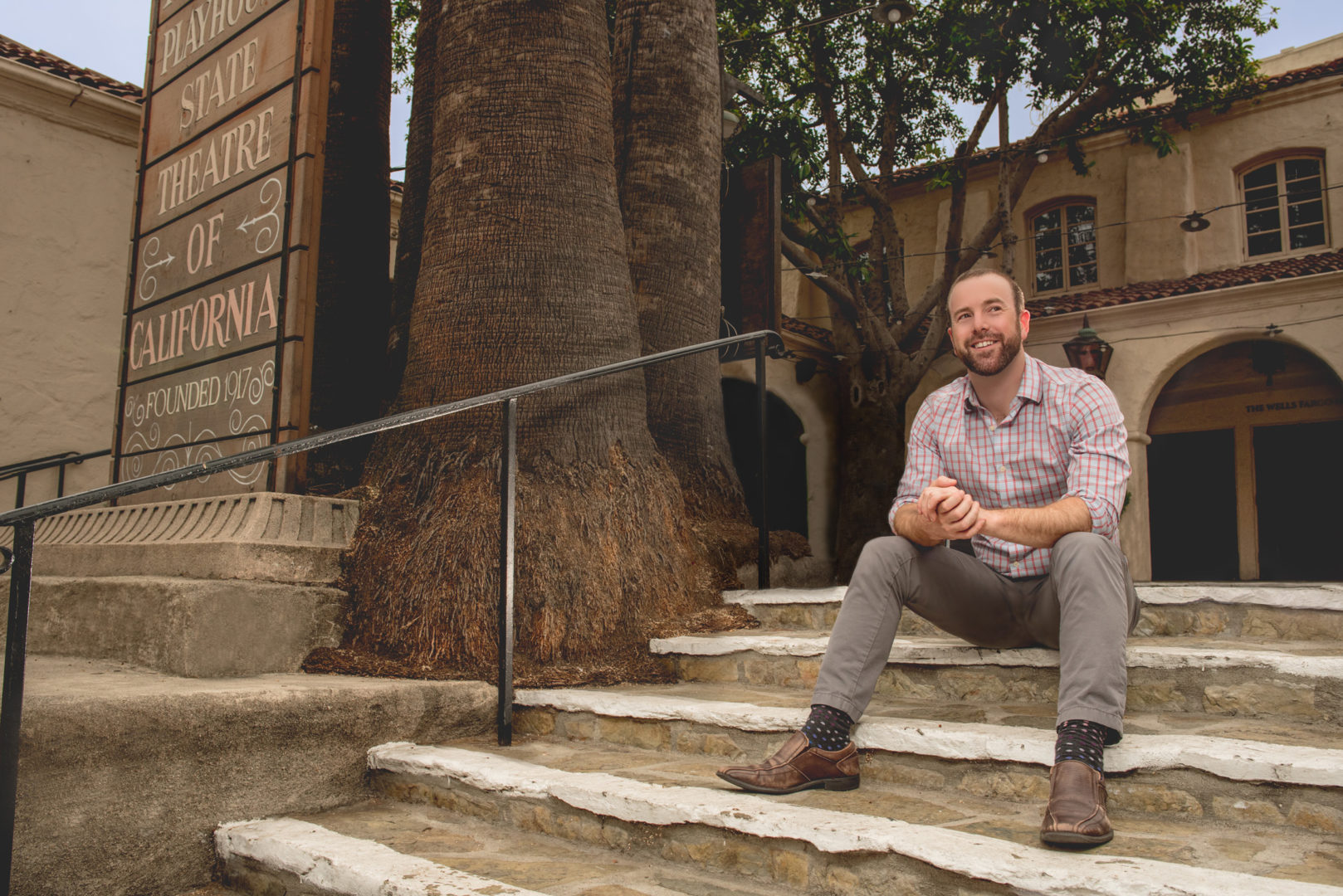
Danny Feldman | Photo courtesy of Pasadena Playhouse
Asked what he learned during the pandemic, Feldman replies, “I learned to slow down a little bit. I learned that in the absence of performing art, we realized how much we need it, and how much as humans we’re wired to come together and be together. It’s not just we’re wired to tell stories and hear stories, we could do than on Netflix and HBO. It’s the collective experience of sitting in a room with strangers, having the lights go down, playing make-believe, and having shared experience with the actors on stage but also with the audience – laughing together, crying together, applauding together – all of that. It was an opportunity to understand the value of that in our lives and to make sure that when we came back out of that, that we do it wholeheartedly, we do it with intention, and we do it to create good in the world.
“Our role at the Pasadena Playhouse is to make the lives of our community better – to enrich the community. When I try to pick shows, I ask ‘Is this one going to create good in the community – even the challenging ones?’ ‘What conversations is it going to start?’ This season there’s so much celebration – whether it’s Go-Go’s dancing party at the beginning or free style with The Supremes at the end – and how to get people to laugh and engage and come out of their shells together. Or for those who just want to sit back and experience it their way, ‘How do you create a space for them to do that?’ We take stock in these moments. I’m thrilled to be coming back! I can’t wait!”
Feldman ends with a call to action. “We had a year plus of absence of the performing arts. If any of the readers are like me, that was a part of the pain of the year. Now that we have an opportunity to come back, having community here that is full of rich cultural experiences is so important. It’s why I love living here. And the best way our community can come together to make sure that in this very uncertain period we can have a thriving scene and places to go, is to support cultural institutions. Support us here at the Pasadena Playhouse and other local theatres. You can do that by donating if you’re in a position to do it but, even more importantly, become a member, subscribe. Make a commitment that I’m going there a couple times a year. That’s our lifeblood. We need a robust audience to stand up and say, ‘We want this and we’re ready to come on a journey with you’ in order for us to be here for many years to come.”
Originally published on 10 September 2021 on Hey SoCal
Installation view of The Blue Boy | Courtesy Photo / The Huntington Library, Art Museum, and Botanical Gardens
Last month we published an article about the announcement that The Huntington Library, Art Museum, and Botanical Gardens has decided to loan our beloved “Blue Boy” to the National Gallery in London. Gainsborough’s magnificent work, which left England for the United States on Jan. 25, 1922, will be part of an exhibit that is set to open exactly 100 years since that day.
In its announcement, Huntington President Karen R. Lawrence, remarked, “This masterpiece has made an indelible mark on both art history and popular culture, capturing the imaginations of a wide range of audiences. Given ‘The Blue Boy’s’ iconic status at The Huntington, this is an unprecedented loan, one which we considered very carefully. We hope that this partnership with the National Gallery will spark new conversations, appreciation, and research on both sides of the Atlantic.”
We in the San Gabriel Valley are so fortunate to have world renowned museums and to have been exposed to stunning works by some of the greatest artists who ever lived. Most of us have never known a time when “The Blue Boy” wasn’t at The Huntington. So we asked our readers to tell us how they feel about it traveling to London and share with us their experience with this piece of art.
While we didn’t receive as many responses as we had hoped, we learned that our readers have informed opinions with information to impart. We also feel that what we did get are representative of people’s reactions and we’re printing them below:
“My informal response to your informal survey is that if the experts say it’s not safe for the painting to travel, then it shouldn’t. I’m also concerned that if the painting does go to London, what’s to keep their museum from saying that the painting is too fragile to send back?
“As you can see, I’m reluctant to let it go.”
Meg Gifford Pasadena
“Everybody likes to return home, even for a short visit … and I’m sure ‘Blue Boy’ is among them. So I wish him “calm seas and prosperous voyage.”
“The greatest gift master painters have given mankind is that it doesn’t take an advanced degree in art to appreciate their work.
“Even as a rustic with no refinement, I have stood at length in reverence before Gainsborough’s masterpiece. And in so doing, I convinced myself that if I touched that canvas, I wouldn’t feel a flat surface, but instead Blue Boy’s silken garment and his flesh underneath it.”
David Quintero Monrovia
‘The Blue Boy’ post conservation | Photo by Christina Milton O’Connell / The Huntington Library, Art Museum, and Botanical Gardens.
“I believe it is a wonderful opportunity to return it to the land from whence it came so that a ‘new generation’ can admire its beauty. The concerns cited can be mitigated if those involved will check history regarding other great works of art that traveled outside their respective country.
“The Mona Lisa was painted in 1503, 276 years BEFORE Blue Boy. Thanks to the efforts of former First Lady Jacqueline Kennedy, France’s national treasure, a very fragile piece of art, was shipped to America. On January 8, 1963, Leonardo da Vinci’s Mona Lisa made its first appearance when it was put on display at the National Gallery of Art in Washington, D. C. It was transported by the S.S. France ocean liner in a temperature-controlled box in its own stateroom, accompanied by armed guards. The temperature, which was alarm-monitored, would not be allowed to fluctuate by more than one degree throughout the entire journey. Eleven years later, in 1974, the Mona Lisa once again left France to travel to Russia and Japan. It can be done without endangering the masterpiece.
“Françoise Nyssen, France’s former Minister of Culture, once said that she didn’t believe works of tremendous cultural significance should be confined to a single institution. I thoroughly agree. Whenever possible, great works of art should be shared with the world.
“Thank you.”
Charlotte Farmer Arcadia
“My first memories of seeing the ‘Blue Boy’ was in the 1970s when my parents took me to The Huntington as a young kid. It was my mom who introduced me to it, saying it’s a great piece of art. But my appreciation of it at the time was due to the fact that the painting was of a child, like me. I remember it also being next to “Pinkie,” and I don’t know if they were meant to be deliberately displayed next to each other. While these were paintings from a long time ago, I felt a connection and kinship with them.
“That impression stayed with me to this day so when we have visitors, I take them to The Huntington and show them the ‘Blue Boy.’ When my cousins from Japan came in 2018 for my dad’s 88th birthday celebration, I took them to the mansion along with a niece and nephew who aren’t from this area. I told them about The Huntington’s conservation project and what the x-rays showed beneath the painting. I was able to share a part of my local culture to two generations. There was a language barrier between my Japanese cousins and my American relatives and they had to use Google translate to communicate, but it was a fun family experience tied to the ‘Blue Boy.’
“It’s a nice gesture to share the artwork and I hope it’s safe for it to travel that far. However, its absence will sadden many of us who have grown up knowing it’s always been there. I imagine ‘Pinkie’ will also be sad not to have him by her side. What’s going in that space while ‘Blue Boy’ is away?
“I’m a member of The Huntington and I take strolls at the gardens. And every time I go to the mansion, I make it a point to see the ‘Blue Boy.’ It’s a magnificent piece of art and embodies what I think The Huntington is about. There are so many rotating exhibits – even at the promenade area – but seeing the ‘Blue Boy’ always makes me happy. It evokes emotions and memories of my childhood. I’ll be looking forward to its safe return.”
Stephanie Yamasaki Altadena
The board of The Huntington will be glad to know that their decision has more proponents than opponents and art experts can be assured that “The Blue Boy” can safely travel, as one reader asserted. And we can be gratified in the thought that art enthusiasts across the Atlantic will have the rare chance to see and experience the treasure we hold precious.
Originally published on 19 August 2021 on Hey SoCal
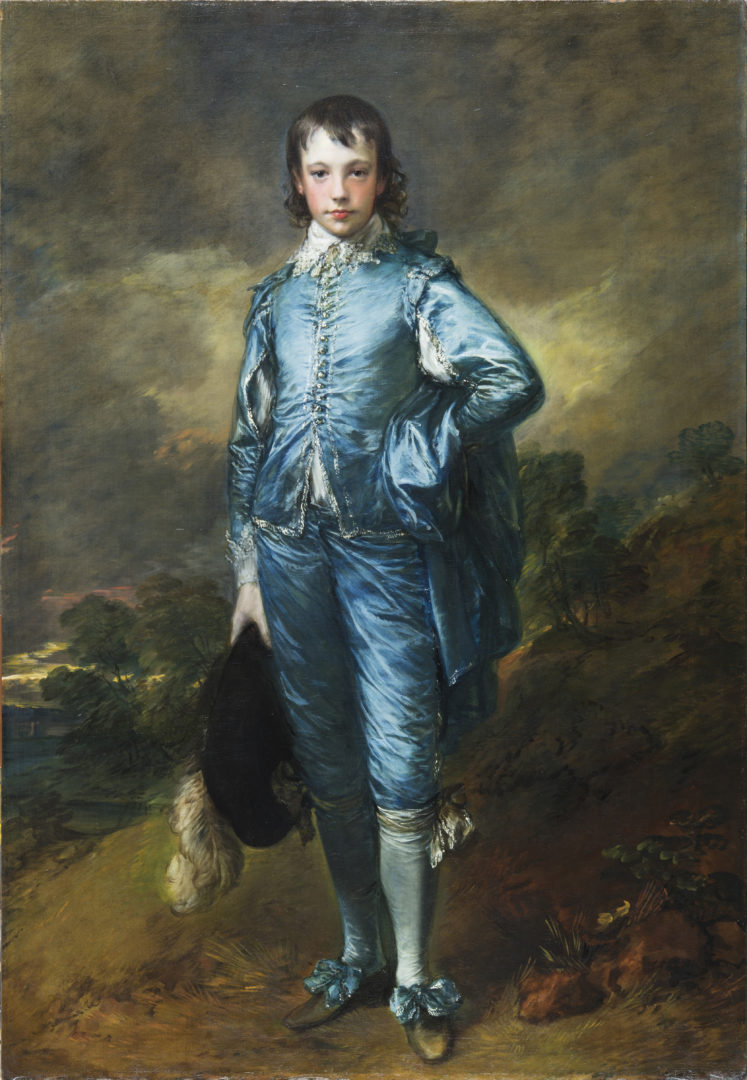
‘The Blue Boy’ | Photo by Christina O’Connell / Huntington Library, Art Museum and Botanical Gardens
Among the many treasures housed in The Huntington’s art galleries, none has a more storied history than Thomas Gainsborough’s “The Blue Boy.” It had been a beloved artwork in its homeland – images of the boy in the striking blue attire appeared on various souvenir items. Its purchase in 1921 by an American collector caused quite a stir among the British people and they took to the streets when they found out that it was leaving for America.
“The Blue Boy” has occupied an important place at the Huntington Library, Art Museum, and Botanical Gardens since it opened in 1928. Along with the breathtaking and expansive gardens, the many valuable collections in the library – William Shakespeare’s quarto and folio editions, a rare Gutenberg bible on vellum, the Ellesmere manuscript of Chaucer’s “Canterbury Tales,” and Benjamin Franklin’s handwritten autobiography, among them, – the impressive works of art in the various galleries, the “Blue Boy” attracts more than 800,000 visitors every year.
In 2018, The Huntington embarked on “Project Blue Boy,” a nearly three-year conservation project to analyze, stabilize, clean, and restore the painting. To provide visitors a peek into the art and science of the process in real time, much of the conservation work was performed in public. Senior paintings conservator Christina O’Connell, who led the project, gave approximately 170 gallery talks and answered questions posed by the more than 200,000 visitors who came to watch the progress between 2018 and 2019.
The restored “Blue Boy” was scheduled to be back at the Thornton Portrait Gallery on March 26, 2020 but the coronavirus pandemic delayed that much anticipated unveiling (read related article here). While it was back at its usual spot in September last year, it was only on April 17 this year – when The Huntington’s art galleries were again open to the public – that visitors got to see Gainsborough’s masterpiece.
And then last month, The Huntington announced that “The Blue Boy” will be returning to England 100 years after it left. From Jan. 25 through May 3, 2022, it will be on display at the National Gallery in London – a reversal of events when it was last viewed by 90,000 people during its last three weeks there before it departed for its new home in California.
This time, the news stunned art experts. In a Los Angeles Times article published on July 6, art critic Christopher Knight wrote that he asked Mark Leonard, a retired conservator of paintings at the J. Paul Getty Museum, for a comment. Leonard replied that the panel of nine American and European art conservators – experts the museum convened in December 2018 to evaluate the “Blue Boy’s” condition – expressed shock about the decision made by The Huntington’s board of trustees.
Knight further wrote that “sending the picture was unanimously opposed by the expert team, who believed travel puts the prized work at grave risk. They warned of potential structural damage to the 250-year-old canvas from the arduous trip.”
While it’s magnanimous of The Huntington board to lend “The Blue Boy” to the National Gallery so that others across the Atlantic are afforded the opportunity to once more see it, we in the San Gabriel Valley are also very protective of it. We have wonderful memories of going to the Thornton Gallery to gaze in awe at Gainsborough’s genius, and we want to make sure the painting celebrates its next centennial.
How do you feel about “The Blue Boy” traveling 5,429 miles and being gone for four months? We invite you to send us an email and tell us, in 100 words or fewer, your thoughts about it and share your experience looking at this magnificent work of art. Send your email to: MayRChu56@gmail com. Unless you request otherwise, we will include your name when we publish our informal poll.
‘We Are Here’ Exhibition Gallery entrance | Photo by Brianna Chu / Hey SoCal
“We Are Here: Contemporary Art and Asian Voices in Los Angeles” was slated to open at USC Pacific Asia Museum (USC PAM) in March of last year but the coronavirus pandemic caused temporary closure of art galleries. While it was an enormous disappointment, it was a necessary mandate given the severity of the situation. We didn’t know it then, but all art venues would remain shuttered for what felt like an interminably long time.
The museum’s announcement that it will reopen to the public on May 29 was welcome news for all art enthusiasts. “We Are Here,” which has only been accessible online, will have its final week on view with in-person visits. The news also couldn’t have come on a more fitting occasion – AAPI Heritage Month. These artists and the experiences mirrored in their work reflect Asian American and Pacific Islanders’ many contributions to our country’s history, culture, and achievements.
“We Are Here” is curated Dr. Rebecca Hall, who has a PhD in Southeast Asian Art History from UCLA with a specialty in Buddhist art and textiles in Thailand, Laos, and Cambodia. After receiving her doctoral degree, she lived in Southeast Asia for a while doing research and teaching. She then moved back to the United States and taught in L.A. and Richmond, Va. She also had a curatorial postdoctoral fellowship at The Walters Art Museum in Baltimore, Maryland. More recently, she taught at Santa Monica College and Pasadena City College.
Because of her expertise, Hall was hired as a guest curator at USC PAM for an exhibition called “Ceremonies and Celebrations: Textile Treasures from the USC Pacific Asia Museum Collection”. It was up in the special exhibition galleries from September 2018 until January 2019, following her designation as a full-time curator in July 2018.
Prior to the pandemic, Hall graciously agreed to give a private guided tour while she discussed her vision for the exhibition and talked extensively about each artist’s background.
“I have been putting this together for a little over a year now,” Hall commenced. “It was grounded in my conviction that we have this incredible collection of art from the Asia Pacific world. And that world extends beyond the geography of Asia and the Pacific which we typically think of, but really encompasses the diversity of Los Angeles itself. As a person who’s not from L.A., but has lived here off and on since 2002, I wanted the opportunity to celebrate the diversity of our Asian and Pacific population.”
Recounted Hall, “I didn’t have any connections to contemporary artists in L.A. but I know we have one of the most wonderfully diverse and densely populated areas of people of Asian heritage living in one of the most creative cities on earth. I knew my task would not be that difficult and I just began to explore. Once I decided to develop an exhibition featuring the work of L.A.-based Asian artists, I started googling and looking at galleries, exhibitions, and artists’ websites. I made a long list of artists, and chose the seven I was most interested in and whose work I was most drawn to. It was a slow process at the outset but it was interesting and I learned a lot about artists in Los Angeles.
“As part of the exhibition, we also have these videos of three- to five-minute conversations with the artists that add layers of understanding. One of the joys, for me, in putting together this exhibition, is how brilliantly and clearly each of these artists articulate their vision in their work as well as when they talk about it. Furthermore, they’re very dynamic artists – each one works in different media and from a different perspective.”
The exhibition is organized by artist – there is a small display with a short introduction about each, with an accompanying detail about their work. As you walk in you’ll enter the space of Phung Huynh. Hall described, “Phung is a refugee from the Vietnam War but her history isn’t as straightforward as just that. Her mother is Vietnamese; her father is Cambodian who fled Cambodia into Vietnam where he met her mom. Her mother’s side of the family is actually ethnic Chinese who moved to Vietnam as refugees from China. She moved to the United States when she was a toddler and, living in Chinatown, was pushed to learn Chinese; it became a part of who she was. So her initial works of art and what she had shown up to this point were about how we perceive Chinese people and culture and how Asian American woman are pressured to modify their appearance to acceptable American standards. When I met with her, she had actually just been embarking on artwork that looks at her experiences as a Vietnamese and Cambodian refugee.
Huynh’s display of cross-stitched license plate | Photo by Brianna Chu / Hey SoCal
“When you come into the gallery you’ll see right away something iconic – a dozen pink donut boxes that she’s using as a canvas for portraits. Each portrait is that of a refugee from Southeast Asia who exemplifies power and perseverance: herself as a toddler; her parents; an artist; a chef; and some local personalities she interviewed, including someone who survived the Khmer Rouge through his art; and a documentary filmmaker who now lives in France.
“She created a baker’s dozen and on one wall is a portrait of a 13th person who isn’t a refugee – Mister Rogers. He was the one who made her and her family feel welcome in the United States and helped them to learn English. I think a lot of people can identify with that compassion he showed everybody and his lack of judgement in the way that he helped people see that they’re all Americans. He has a warmth that we should all aspire to.”
Pink donut boxes reference the donut shops that Cambodian refugees opened to build a new life in Southern California after they fled the genocide. Huynh’s display of cross-stitched license plates, meanwhile, are souvenir key chains that kids going to theme parks can buy that signifies inclusivity and an opportunity for all Americans to find their names on these mementos.
The next artist is Ann Le and she has twelve pieces in the show.
Ann Le’s ‘World War Apartment’ photo collage | Photo courtesy of USC Pacific Asia Museum
Hall expounded, “Ann was born in the United States to Vietnamese refugees. Growing up in a Vietnamese refugee community with her family left a lot of questions for her about who she was and why she was in this country. But her conversations with her family never directly touched on the war, its effects on them, and the reason they were refugees. I think she realized it was most important for her to articulate that point of view. She wanted to give voice to that experience and found a way to do it visually.
“Ann’s father was a photographer in Vietnam and he continued that interest in America. She has an archive of family photographs and her vision really came together when she looked at her family album. She took the photographs, collaged them on the computer, and layered them to create this juxtaposition that talks about war and loss, family and memory, in an incredibly compelling way. These are all members of her family in Vietnam and she put those photographs in front of typical Southern California middle class households to think about the disconnect, or connection, depending on your perspective, of who they are. She bridged that gap of what they would have if they were in California, or what they would have if they were in Vietnam.
“She has done a lot of research about the Vietnam War and wrapped that research into her work as well. She shows photos of her family placed together with imagery of the war – it’s a very strong statement. There are some subtleties but everyone sees and understands what she’s trying to get at. She’s very aware of the need for that conversation to take place.”
Hall introduced the next artist Ahree Lee and her work, “It was actually this video that drew her to me; I find this to be a very emotionally beautiful experience. It’s called ‘Bojagi’ (Memories to Light) which she created when she was resident artist at Asian Art Museum in San Francisco. She collected home videos and films from members of the Asian community in San Francisco doing just regular, mundane activities like visiting Frontier Town or going to the beach for a picnic, that aren’t important enough to be represented in mainstream media. She looked at human memories, emotions, and experience and then determined what was missing – in this case, the Asian-American experience – and put that into her work. What she came up with is a video that she called Bojagi, which is a Korean hand-quilted cloth that mothers would make for their daughters when they were going away to be married and got passed down over generations.
Ahree Lee’s weaving and computer coding artwork | Photo by May S. Ruiz / Hey SoCal
We then approached the next two displays which Hall explained are a totally different body of work that’s very new for Lee. She learned to weave when she became fascinated with the connection between weaving and computer technology. Her resulting artwork reveals a history that somehow got buried – that computer coding was based on loom technology and the pioneers of early programming were women. But when computer technology turned into a hugely profitable enterprise, it became a men’s field and women were shut out of the scene. She created a piece called ‘Ada,’ after Ada Lovelace, who was the first computer programmer in the 19th century, which physically and visually connects to that past and brings women’s labor into the discussion.
The other piece is composed of seven different weavings demonstrating her own labor. It’s one week of time in 2018, wherein she showed which portion of her day was spent on each activity – personal care, food, housework, childcare, non-household work, art, and leisure.
Kaoru Mansour’s ‘Succulent’ mixed media display | Photo by Brianna Chu / Hey SoCal
Walking to the space of Kaoru Mansour, Hall declared, “I love Kaoru’s work. You look at it and you just want to take it home with you. Growing up in Japan, Kaoru was discouraged from becoming an artist. When she moved to America, she started taking art classes and found her voice as an artist. The fact that she’s able to work every day on something that expresses who she is makes her happy. And that joy shines through in her work; she’s playful.
“Kaoru crafts her own visual language and doesn’t restrict herself – she moves through what’s interesting to her. She comes up with an idea, like heavy things hanging from a string, and she places the strings on the canvas. She falls in love with doilies and pompoms and creates art from those. She is active outdoors and in nature, and she integrates that in her work. If she’s thinking about family and her relationship to people, her work pivots in that direction.
“Her artist’s statement ‘If I can represent my character in the artwork, then I feel that I have successfully created an honest piece,’ is spot on. It perfectly describes her joy, her love of life, and her love of making art … and it spreads. People walk in this gallery and they love it – they feel excited.”
“Reanne Estrada‘s art is a little bit more difficult to explain,” Hall confessed as we reach the next display. “But I could not be more thrilled that she’s in this exhibition. She works very eclectically; she has both a collaborative and an individual art-making process. All of her work that we show here are part of a single idea – surveillance and security systems and how we function within something we aren’t actively a part of – we’re being watched all the time by cameras.
“She did a performance piece on Hollywood Boulevard in September 2019 in which she used prophylactics to obscure people’s gaits from being recorded by security monitors to identify who they are. She underscores the fact that surveillance is something that we have become so passive about. She is the only artist whose work carries over into our permanent collection – she created an audio tour of the Pacific Asia Museum that talks about surveillance and how it’s everywhere, but it is necessary because we’re protecting priceless works of art. But maybe when you leave, you’ll think about how surveillance cameras invade our privacy.
“Related to that is this website called ‘People Who Don’t Exist’ which shows how computers can harvest images of people who aren’t real but look real. She talks about how we lose control because of all the technology around us and finding ways to reassert ourselves.”
In the final gallery, visitors will see the works of two artists – Mei Xian Qiu and Sichong Xie.
Hall said about Qiu, “Mei is an ethnic Chinese woman born in Java. Her family has been in Indonesia for several generations since the 19th century where there’s a divided relationship between the Chinese and the Indonesian population. When she was born, she was given three different names by her family – a Chinese name, which was illegal according to the Indonesian government; an Indonesian name, which was required by the Indonesian government; and an American name, in anticipation of any possible future – in an embrace of her heritage. Her family fled to the United States to escape the anti-Chinese riots in Java. Her grandparents still live there, hence, Mei has been going back and forth between Indonesia and the United States with her family since her childhood. Her perspectives emanate from her as a Chinese, Indonesian, and American woman trying to figure out how she fits into all of this.”
Mei Xian Qiu’s series ‘Let a Thousand Flowers Bloom’ | Photo by Brianna Chu / Hey SoCal
“We’re showing different series of Mei’s work,” continued Hall. “The first one is an ongoing series she’s been doing for several years now called ‘Let a Thousand Flowers Bloom.’ It is a play on a 1965 Mao speech ‘Let a Hundred Flowers Blossom’ that saw arts flourish but subsequently got artists persecuted. She’s exploring how we think we have freedom of expression, but maybe we do not.
“It is a playful, yet serious look at the possible Chinese invasion of the United States. She’s toying with perception and the relationship between the Chinese and the United States. For instance, in this piece ‘Hollywood Land’ from 2012, the models she used in her work are actually people who would have been persecuted under Mao’s regime – intellectuals, writers, and artists. The apparel that they’re wearing, like military outfits, were from the photo studios in Beijing that people would go to mimic the Red Army or Red Guard.
“Mei’s second series is about the homeland. This one is called ‘Homecoming: Once we were the Other,’ about a Chinese woman going home who felt a disconnect between herself and her environment. She is questioning who this woman is with multiple identities in connection with the trash in the street. So she began collecting it and making art from that which asks ‘Who am I as a Chinese woman and how do I connect with this material?’ ‘How do I excavate Chinese culture and that Chinese side of myself?
“There’s always apprehension when she goes back to Indonesia because of the ongoing tension between the Chinese and the Indonesian people. It ebbs and flows – there’s violence and then everything seems fine. Using her Indonesian name Cindy Suriyani, she created a piece ‘Dewi Cantik’ (Pretty Darling) that shows a child’s and a woman’s bedroom, all nice and pretty but underneath, the threat of violence is always there. The cutout pieces are actually batik pattern because their family had a batik factory. This woman’s work changes depending on what she’s doing but they’re all around the idea of figuring out who she is with all these identities stemming from her having three different names.”
The seventh artist featured in the exhibition is Sichong Xie. Hall noted, “One aspect we’re touching on is that many people who live in L.A. are transplants and Sichong is an example. She was born in Mainland China, came to the United States initially as an undergraduate student, and found her voice as an artist. She eventually moved to L.A. for graduate school and decided to stay here.
“Sichong’s work is quite personal as well. She was very close to her grandparents; when her grandfather passed away, she found out he had drawn an illustration that had been published in the Beijing paper in the 1960s that had a political element to it. Because of it, he was thrown into a labor camp for two years and it had an adverse effect on her family. They had to relocate to Xian where she was born. The political cartoon was destroyed and nobody talked about it again so when she found out about it, she wanted to recreate it.
Sichong Xie’s ‘Do Donkeys Know Politics’ video still | Courtesy of USC Pacific Asia Museum
“What you see here came about from the chain of conversations she had with her grandmother in trying to redraw the cartoon. She would talk on the phone with her grandmother in Xian, and draw out how her grandmother would describe the cartoon and then would send it to her grandmother. Her grandmother would say, ‘That’s not right at all; the donkey wasn’t just holding the money bag, the donkey had the family riding on it, or there was a car, etc.’ And so, she has five different versions. It brings up questions about memory and about protection – ‘Is her grandmother misremembering it?’ and ‘Is she still afraid of what the cartoon would do for her granddaughter?’
“Sichong is a performance and an installation artist and we’re trying to show both. In this installation, she asks ‘Do donkeys know politics?’ and she’s done versions of it over the years and I really wanted it in the show because she came up with this way of presenting it. It’s totally new from everything she’s done before.”
Of the experience, Hall remarked, “I really enjoyed the process of working with the artists. It was definitely a conversation between me and each of them. We talked together to choose which pieces would be in the show and I tried to give them creative freedom and flexibility. Some artists were in the process of creating new works of art that are in the exhibition. A lot of that was just really good timing and for that reason I could not be happier. For example, Phung Huynh had explored aspects of being Asian in the US and the specific pressures placed on Asian women, but had only just started on her work examining the refugee experience when I first met with her. Reanne Estrada was just beginning her work on surveillance and created the site specific audio tour for USC PAM. And Mei Xian Qiu totally branched out from the photography series that people are more familiar with of hers, into the scrolls and the artworks exploring her experiences in Indonesia.”
The exhibition highlights women artists and Hall said it wasn’t by design. When she set out to find the artists, she discovered that they made what she found most compelling. Coincidentally, the show was scheduled to open in 2020 when there were many planned celebrations about women. Unfortunately, what would have been a commemoration of ‘The Year of the Woman’ was eclipsed by a year marked by untold worldwide devastation brought about by a pandemic. But it’s never too late to salute women and their accomplishments.
Hall clarified, “Personally, I’m not promoting it as an exhibition of women’s work, but this is at the point it should be because these artists do incredible work. But as a curator, I feel that the more important thing is I look forward to the day when having seven women of Asian heritage together in one show is not something out of the ordinary.
“Setting gender aside, however, the work of these artists engages with who they are as people and, often, who they are as immigrants or refugees. What I also love about their work is that they’re impeccably made. So even if you’re not interested in their narratives, I think that you can look at them and appreciate them for what they are. Furthermore, while their pieces are very specific, they express sentiments we can relate to and understand.”
Besides being a celebration of Asian artists’ achievements, and Asian women’s work in particular, it is being shown at a very opportune moment when anti-Asian crimes have reached immense proportion and publicity. For far too long, Asians have endured such hate crimes in obscurity and silence. Recently, they have been speaking up – urgently – and it’s time they were seen and heard.
Speaking as an Asian American, we should stop being invisible and voiceless. We’re no less important than others and our truths are no less significant than that of the next person’s. ‘We Are Here’ demonstrates that Asians are part of the human race but the Asian experience isn’t exclusive to Asian immigrants and refugees. The stories these seven women are telling are as profoundly personal as they are fundamentally universal.
Originally published on 12 November 2020 in the Pasadena Independent, Arcadia Weekly, and Monrovia Weekly
Illustration by J.J. Dunn | Courtesy photo / M.G. Rawls
Pasadena is only 12 miles from the hustle and bustle of downtown Los Angeles, but you’d never know it if you are a resident of its canyon area. Here, busy activity comes from the bears, mountain lions, and exotic wildlife that call it home. Human residents are used to observing animals we would otherwise only see at the zoo go about their daily existence.
In a newly published young adult book called ‘The Sorts of Pasadena Hollow: Hannah’s Fires,’ (available on Amazon) humans and the wildlife share equal billing as well as the locale’s physical space. Readers will be excited to read on and find out what creatures are lurking in the book’s pages.
‘The Sorts of Pasadena Hollow’ is an unexpected offering from M. G. Rawls, a former lawyer who spent her working career battling with contractors who had failed to pay pension and fringe benefit contributions on behalf of their union employees. Let me add that I am also her friend and, in all the years I’ve known her, never imagined she would come up with this book. But, as this article will reveal, there is a logical explanation for the theme choice.
Conducting the interview by email, I start by remarking, “I’ve heard of previous lawyers who ended up writing legal thrillers, proving the adage that you write what you know. And that begs the question – why fantasy? Have you been harboring an interest in the genre for a while?”
“Great question!” answers Rawls. “I’ve wondered about this myself. Before retiring in 2013, I represented union trust funds in breach of contract actions. I enjoyed what I did, but it’s probably not an exciting basis for a novel.”
“What inspires and continues to inspire me is living in the foothills of the San Gabriel Mountains in the Angeles Crest Forest and watching bears with cubs, deer, coyotes, skunks, mountain lions, foxes, miner’s cats (bet most have never heard of those stripe-tailed and raccoon-eyed nocturnal animals), the list of sightings is endless. Many of the descriptions in my fantasy story have their genesis in real events that happened and most of the wild animals I write about are local to the Pasadena and surrounding areas. I have been nurturing this story in my mind since I moved here in 1988,” reveals Rawls.
“Did the ideas about what animals to include in the books come before the people?” I ask, and Rawls replies, “No, generally the people came first and then as I developed their characters, their animal forms emerged.”
Illustration by J.J. Dunn | Courtesy photo / M.G. Rawls
One of Rawls’s characters is a Tongva man and I ask what compelled her to write about the tribe. She responds, “I first learned about the Tongva, an indigenous people that inhabited the area thousands of years before the Europeans settlers, through docent training at the Pasadena Museum of History. Their descendants exist today and their language continues to be taught. I love history, especially local history and wanted to learn more, so in researching the Tongva, I discovered that they believe in a spiritual connection between themselves, animals, and the land. That is fascinating to me, given the little canyon where I live. There is so much more I want to learn; I hope to do further research on this.”
The book includes real events that transpired in Pasadena and I ask if she investigated major events that made the news to build around and if there were places she wanted to include beforehand.
“I did both,” discloses Rawls. “It was fun to put the pieces together as I wrote the story. Having been an attorney, I worked to make my fantasy story as logical as possible. For example, there was a small discovery of gold in Southern California in 1842 before the major discovery in Northern California in 1848 at Sutter’s Sawmill in Coloma. I found that idea fascinating and built a small subplot around it. Also, one of the largest solar storms to hit the earth, known as the Carrington event, occurred in 1859. It was so bright, it was reported that gold prospectors got up thinking it was morning. That event is an important part of my books, but written in a way that I hope readers will remember. As for local places, between the three books, I think I will have written about every place of interest in the Pasadena area from the Cawston Ostrich Farm in South Pasadena (closed in 1935) to Pasadena City College and the Huntington Library in San Marino.
“Why did you chose to make it a fantasy story and why did you give your characters extraordinary powers?” I inquire. “Every writer is different of course,” Rawls states. “But for me, writing fantasy allowed me to expand my love of history in a creative manner. I wanted to include local history, but also have the flexibility to invent when needed. Wrapping local history with fantasy is my sneaky way of making history interesting and memorable to younger readers.
“I forgot to mention that I’m also a volunteer in the Junior Docent program at the Museum, training seventh and eighth graders in tours of the historic Fenyes mansion. So I’ve had some experience seeing what works and doesn’t work in retaining information.”
Illustration by J.J. Dunn | Courtesy photo / M.G. Rawls
Then I inquire how she decided on who her protagonists were going to be, whether training young people had any bearing on her choice, and if she thought the Z Generation had more compelling life challenges to overcome.
Rawls says, “In this first book, I knew it was going to be a young female. In that regard, I guess you do write what you know, since I was once 19. Though I want to stress this is a fictional story. I don’t know that training the junior docents influenced me other than hearing what interests them – like the stuffed owl and marmoset monkey cage in the Mansion’s studio. You may see these in Henry’s Hopes. I think young or old we all have life challenges to overcome, though the young may have the additional burden of not knowing where they’re headed, having so much of their life in front of them.”
“Why did you give them extraordinary powers?” I ask. “That’s an easy one,” declares Rawls. “In Hannah’s case, she is a 19-year-old girl who’s had a tough life, with no real family, and an evil stepfather. She suffers from nightmares and real life demons that she cannot get rid of. But there is hope as she enters this magical place called Pasadena Hollow.”
Curious about her process, I inquire, “Did you already have all the components planned out before you set out to write the books or did you make them up as you went along? Did you base some of your characters on people you know or have met or are they purely imagined?”
Replies Rawls, “Essentially, what I did is title my chapters and then write the story around the names of the chapters. I have no idea if this is how it’s supposed to be done. But it was important to me to get chapter names I was happy with. All three books are the same, chapter headings first and no outline. My characters are fictional! Even if there was a connection with a real person, living or deceased, I don’t know that I would say who it was.”
Asked what was the most difficult hurdle to overcome as she wrote, Rawls confesses, “Probably myself. I didn’t even tell my husband I’d written a book, until I handed him a near final draft. He took it in good stride and was very supportive, but he read it so fast I went back and lengthened it!”
Illustration by J.J. Dunn | Courtesy photo / M.G. Rawls
“Where did the name ‘sorts’ for these fantasy characters come from?” I query. And Rawls says, “It’s from the phrase ‘It takes all sorts,’ that I’ve been fascinated with forever. I couldn’t figure if the phrase was positive or negative, so I’ve used it for both and included it in my prologue. I don’t know the origin – maybe one of your savvy readers does.
“I’ve even taken to sometimes calling the creatures we see on a daily basis, ‘Sorts.’ You know, the grasshopper that clings to the screen door, the cricket that chirps inside the house or apartment, but you cannot locate, even the friendly jumping spider with the inquisitive eyes and red body I found in my house and relocated outside. Even if we don’t live near the forest, I think we’ve all wondered about these everyday creatures. – what they’re thinking and who they really are…”
‘Hannah’s Fires’ is the first installment in a planned trilogy. I ask her how far the characters’ arcs go and if the books will span several years as they grow older. Rawls replies, “In book two, ‘The Sorts of Pasadena Hollow: Tony’s Tales,’ the characters only age a few months, but you learn more about their back stories and personalities. And this second book takes a deep look, literally, as to what lives or rather lurks deep under Pasadena. I met with a Caltech geologist and despite my insistent prodding, he assures me that absolutely nothing like I imagined lives under Pasadena. But who knows? Haven’t we only gone down about seven miles? As you can probably tell, I’m a big fan of Jules Verne, having read ‘Journey to the Center of the Earth.’
“The third book, ‘Henry’s Hopes,’ continues the same time period, but just might have a brief flash forward at the end. ‘Tony’s Tales’ is nearing final edits and will appear first as an e-book without illustrations. I have also completed the first draft on ‘Henry’s Hopes,’ which should be online by late next year.”
‘The Sorts of Pasadena Hollow’ is aimed at readers from middle-school age to adults. Rawls asserts, “There is no reason why adults can’t enjoy fantasy or, in my case, enjoy fantasy writing. I want my readers to be able to escape, even if only for a brief period.”
Readers, young and old, will be treated to beautiful full-color drawings that begin each chapter in the ebook and a colored edition of the paperback, which is now an available option (order here). Rawls enthuses, “I want to give a shout out to the illustrator, JJ Dunn. JJ has been a friend since our children were in preschool, but I never knew she could draw until she gave me a picture for Christmas a couple of years ago. Her pictures are amazing! I hope you enjoy them as much as I have.”
Having been a Pasadena resident close to four decades, I was fascinated to discover its history through Rawls’s book. It gave me such a thrill that some of the landmarks where the events happen are places I frequent and know very well. I had fun figuring out what a fictional location’s real name is and trying to guess who a character is based on. It’s almost like an insider’s view of Pasadena and its residents. And that’s fantastic!
Originally published on 19 October 2020 in the Pasadena Independent, Arcadia Weekly, and Monrovia Weekly
Scott Silven in ‘The Journey’ | Photo by David Wilkinson/Empirical Photography / The Broad Stage
Wouldn’t it be great to travel 5,000 miles and see the breathtaking beauty of Scotland during lockdown? With some modern technology and illusion techniques, we can take in all the magic this land has to offer from our very own living room.
The Broad Stage has co-commissioned the West Coast premiere of a virtual event called ‘The Journey’, created and performed by illusionist and mentalist Scott Silven. From Oct. 20 through Nov. 15, Silven will take us along with him when he goes back to his beloved country. This immersive and intimate show promises to be quite a different experience where 30 participants per show will feel transported to a different place and time.
According to The Broad’s publicity material, Silven tells a long-forgotten story that reveals mysteries of the mind and unlocks the secrets of his glorious Scottish homeland. Through incredible illusions and feats of imagination, ‘The Journey’ explores the sense of home and the transformative power of place. We’ll then discover the path that connects us to Silven’s past, our own present, and a collective future.
It all sounds quite intriguing so I interview Silven by email to find out more about him and the show. I ask him when and how he got interested in illusion and magic, and he says, “I have a couple of defining moments from my childhood that stand out to me. The first echoes back to my grandfather: he took a piece of candy that I’d signed my name on, vanished it, and made it appear in a sealed matchbox on the table. He then immediately shared the secret with me — it was embarrassingly simple, but I was instantly captivated by him taking something ordinary and creating something extraordinary from it.
“The second is a little less specific: the experience of growing up in Scotland — which is a place where myth and mystery is woven into the fabric of its identity. So being connected to those stories and surroundings as a kid really instilled a sense of wonder and imagination in me. Thankfully, my parents were incredibly supportive in allowing me to follow my creative pursuits.”
As anyone who has read Harry Potter knows, there is a school for wizards. There is, however, none for mere mortals wanting to learn magic. As Silven confirms, “I’m afraid there’s nothing as exciting as a general school of magic, but I wish there was! It’s a very solitary craft which I started at a really young age. There are books that you can read, skills you can source, but the world of illusion is a meritocracy in that the more you learn and show an interest in it, the more you’re able to engage with mentors who will teach you esoteric secrets.”
I inquire how he became a professional illusionist and Silven answers, “I think the focus for me has always been to create my own work. I studied theatre in Edinburgh, Scotland, and while I was there I took part in the Edinburgh Fringe Festival — the biggest arts festival in the world — which allowed me to put my work in front of lots of international producers and was lucky enough to sign with an agent and move to London. From there I worked on establishing my craft and then signed with American management before making the move to the U.S.A. My focus was never becoming an illusionist in particular, but to create interesting and impossible experiences that audiences can relate with. I think that helped my work stand out in some way and is probably the reason why it’s connected with audiences across the world.”
“I have a core production team that I collaborate with, but then I like to engage with additional crew from local venues depending on the state or country I’m performing in,” continues Silven. “It’s really wonderful to connect with creatives across the world and share my work with them.”
Scott Silven in ‘The Journey’ | Photo by David Wilkinson/Empirical Photography / The Broad Stage
Unlike his previous shows, ‘The Journey’ uses Scotland as the backdrop in an immersive experience. Silven says, “Memory and nostalgia form a big part of my work, and Scotland was such a formative part of my childhood and what I do today — as I mentioned, the mythical landscape provides constant inspiration for me. Serendipitously, returning back to Scotland made me recognize the power of home and place and how that stays with us, and I knew I wanted to create an experience that would ask an audience the same questions. I began creating the experience based around the landscape and myths of my childhood and discovered that I wanted to take my audience on a virtual adventure from their home to mine in rural Scotland, and to use their imaginations and memories as the guide on ‘The Journey.’
“It’s an entirely live experience, as well as being interactive and immersive, with the audience’s input directly affecting elements of the show. By combining breakthrough technology, projection mapping, high definition visuals, and stereo sound to help tell my story, we have hopefully created something audiences will have never experienced in the online realm before. The challenges of the online format have allowed unique opportunities to connect with the audience on a deeper level that I wouldn’t otherwise be able to do in a live environment. We send the audience exclusive advance content that they can interact with before they engage with the experience. As well as this, there’s something very powerful about audience members sitting in the comfort of their own homes. They are asked to bring objects of meaning and purpose to them to the performance itself, which I hope makes it a far more personal and powerful experience than sitting in the usual darkened space of a theatre.”
‘The Journey’ is Silven’s debut performance on the West Coast. It’s unfortunate that we have been deprived of his physical presence, but he quickly assures, “I’ve been privileged enough to complete three world tours and I adore the West Coast — it’s one of my favorite places to visit. I’m looking forward to returning in the near future and already have plans to perform live as soon as we are able to.”
Finally, I inquire how many shows he does each year and if there has been one particularly significant or memorable place or event for him. Silven responds, “I usually have a pretty packed schedule where I perform on stage and screen; I typically do around 500 shows a year across the world. That’s what is particularly interesting about this format, in that I’m able to perform a ‘digital world tour,’ where anyone in the world can come and engage with my work. It’s one of the unique elements of moving from a live setting to an entirely online format.”
“I have so many wonderful moments from all my shows. Some that stand out to me are my first shows in New York. It was meant to be a four-week run but was extended and ran for many months. It really helped connect my work with American audiences and facilitated the step to move to New York City permanently — a childhood dream. Since then the opportunity to travel, where one week you’re doing shows in Seattle and the next you’re doing shows in Sydney, is perhaps the most memorable and important luxury my work has given me. I’m hugely excited to be bringing ‘The Journey’ to the Broad Stage for its West Coast premiere — I’ve hopefully crafted an experience that audiences will never have seen in the online realm before, and I can’t wait for them to experience it,” concludes Silven.
Maybe the lockdown isn’t an altogether unfortunate circumstance after all. Because of it, we have this fantastic opportunity to go on a virtual journey with a master illusionist to one of the most hauntingly beautiful places on earth.