Originally published on 14 February 2019 in the Pasadena Independent, Arcadia Weekly, and Monrovia Weekly
Marc Soong performs Paraphrase on Figaro’s Aria from Rossini’s ‘Barber of Seville’ by Grigory Ginzburg | Courtesy photo / Barry Eckhaus Photography
Marc Soong, a 15-year old teen from Alhambra, is one of five performers who will appear on an upcoming episode of NPR’s (National Public Radio) ‘From the Top.’ It airs on KUSC 91.5 FM on Sunday, February 24 at 6 pm and by podcast at fromthetop.org starting February 18.
The hit NPR radio program, which averages half a million listeners every week, features America’s best young classical musicians’ performances and interviews. This particular show will be guest-hosted by Bernstein-Award Winning violinist Charles Yang and co-hosted by pianist Peter Dugan.
Being included in this esteemed assembly is quite a thrill for Soong. He says, “I feel very honored! I know some fellow musicians who have participated in the program and I occasionally tune in on KUSC to listen to their ‘From the Top’ broadcast.”
“I filled out a very, very long application to be in one of the five slots,” explains Soong. “There is technically no deadline, but if you want to be a part of a specific program, you have to submit an application four months beforehand. Besides musical ability, candidates are chosen based on other factors including gender, age, instrumentation, repertoire, and diversity of stories in their application.”
“Applicants submit two pieces but can upload up to six video recordings. Out of these, ‘From the Top’ will choose one with a length of five minutes or less to be used on the show. “I submitted three recordings and the piece they wanted me to perform was a transcription of Figaro’s Aria from the Rossini opera ‘The Barbier of Seville.’ I suppose they chose it because it was the right length. The transcription isn’t well known, but the tune is popular. Furthermore, it’s virtuosic and exciting. Well, that’s also my biased opinion,” Soong adds with the confidence of an expert.
‘From the Top’ is a Boston-based independent non-profit organization that supports, develops, and shares the artistic voices and stories of young classically-trained musicians. It provides young musicians with live performance opportunities in the foremost concert halls across the United States. This affords them national exposure to over half a million listeners on its weekly NPR program.
Aside from the performance aspect, ‘From the Top’ offers leadership and community engagement preparation and, since 2005, nearly $3 million in scholarships. All these components intensify the hope, passion, and discipline of today’s extraordinary young musicians.
For his live recording performance, Soong traveled to Beaver Creek, Colorado. He relates, “It was a three-day commitment program – I was at the ski village from January 15 to 17. On the first day, I got to know the other four performers and we had a rehearsal. On the second day, there was more rehearsing and the actual show was held that evening. On the last day, there was an ‘Arts Leadership Community Engagement’ event – we had discussions on how to engage an audience based on their age group and we applied what we learned during an unrecorded final performance in front of an entire elementary school. All the events were held at the Vilar Performing Arts Center.”
Marc Soong | Courtesy photo / Barry Eckhaus Photography
Each musician is interviewed during the broadcast. “For my interview, I talked about math and music – my two favorite subjects – and physics, the third thing I’m obsessed with … primarily because the class is so hard. I know I unconsciously slip into nerdy talk; I hope listeners will think my interview is funny. Though I will attribute most of the humor to the co-hosts,” Soong discloses with a great deal of self-deprecation.
Soong says of his appearance on the program, “Since I heard about ‘From the Top,’ it has been my dream to be on the broadcast. And the whole experience did not disappoint. I got to meet the kindest, most talented group of musicians my age – all of them played different instruments. I had expected tension and competitiveness among us, which is pervasive during piano competitions and festivals, but there was none of that at all.
“Everyone on the show – from the executive director and stage manager to the producer and music director – were exceedingly nice. Whenever guest host Charles Yang and co-host Peter Dugan played the violin and the piano, you can hear the energy vibrating through the room. They’re also very humble and down-to-earth.
“I had never been on a radio program and I didn’t realize just how much time and effort were involved in creating a one-hour show. It took a full eight hours of preparation before the show started. This has been such a memorable experience!”
The gifted teen credits his close-knit family and caring mentors for this wonderful experience, “I would like to thank my two amazing teachers, Professor Daniel Pollack and Dr. Vladimir Khomyakov, for their guidance and encouragement; and my parents and my sister Melodey for their love and support. I know I wouldn’t have had this incredible opportunity without them.”
A third-year student in the Stanford University Online High School, Soong attended Barnhart School in Arcadia, where he was so academically advanced that he skipped 6th grade altogether. His sister, who is a freshman at Washington University in St. Louis, went to Barnhart and Mayfield Senior School in Pasadena. Both of them are still actively involved in the community, giving piano performances at the various senior centers in the Pasadena area during their school breaks.
He may be only all of 15 years, but Soong has done more than most people who are far older than he. That he has remained so unaffected and unassuming despite his innumerable achievements is a breath of fresh air in this age of self-importance and self-promotion.
Originally published on 11 February 2019 in the Pasadena Independent, Arcadia Weekly, and Monrovia Weekly
‘Ragtime’ ensemble | Photo by Nick Agro / Pasadena Playhouse
The Pasadena Playhouse is presenting one of its most lavish productions yet – ‘Ragtime: The Musical.’ Directed by David Lee, with choreography by Mark Esposito and musical direction by Darryl Archibald, it is on stage from Tuesday, February 5 through Sunday, March 3, 2019.
Danny Feldman, The Playhouse’s indefatigable Producing Artistic Director, chats with us during the busiest day of rehearsal week, and tells us why he chose ‘Ragtime.’
“This 1997 musical was based on an E.L. Doctorow book written in the mid-1970s. It premiered at the Shubert Theatre in Century City before it was on Broadway. I saw ‘Ragtime’ 21 years ago and it was one of the most incredible shows I’d ever seen. It was a new production but it felt like this old-fashioned epic – with a lot of people, so much dancing, and a large orchestra. I fell in love with it!”
“About a year and a half ago, when I was planning this slot, I knew I wanted to do a big, splashy show for my second season,” continues Feldman. “We hadn’t done something like that in a while and I kept coming back to it. While the book was published in 1975 and the musical was first produced two decades later, ‘Ragtime’ felt tremendously relevant – like it was written today.
“The show deals with America at a decisive moment in our history, right after the turn of the century up until World War I. It was a time when America was going through radical change – when we were trying to figure out who we were, striving to get along with one another, and considering what kind of country we wanted to be.
“Then I realized we were in another one of these moments. We’re again asking ourselves ‘What is America about?,’ ‘How are we moving forward?’ There’s a great deal of clash and conflict right now. ‘Ragtime: The Musical’ explores that conflict – not today’s, but that at the turn of the century, yet there are so many parallels to it. I suspect that people who are watching the show, who’ve seen it before or even those who’ve never seen it before now, will think we altered it to make it about today. But we didn’t change a word!”
Shannon Warne as Mother | Photo by Jenny Graham / Pasadena Playhouse
Explains Feldman, “One of the through lines in the show was about women standing up for themselves, redefining their relationship in the household, and finding value. Then there was the African-American family who suffered a hate crime perpetrated against them, representing the theme of justice and fighting for what’s right. The third family we’re following personifies Jewish immigrants coming through Ellis Island, what they faced as outsiders, and how Americans treated them.
“These same issues are in the news every day! It’s not a play about 2019 but in many ways it is a play about 2019. And, like any masterpiece or great piece of art, when looked at over time through a new lens, we see different things in it. And with ‘Ragtime’ we’ll find distinct aspects in it today, given where we’re at. As serious as I make it sound, though, it’s also wildly entertaining. It’s a brilliantly constructed show full of sentiment and laughs; it hits you in the heart and the gut all at once. It is, ultimately, an American story that’s uplifting and hopeful. I think it has the power to move people deeply.
“It’s these things all rolled into one great night of theatre. And it’s not done a lot because it’s a pretty big undertaking. It has a 16-piece orchestra and a 21-person cast. We’re jumping all over New York in terms of locations in the story.”
The sheer enormity of the show makes for a truly amazing experience for the audience. Says Feldman, “Our stage is as big as that of a Broadway’s but our seating area isn’t; the Shubert Theatre, I think, had over 2,000 seats. But that’s great because watching that size musical in a 650-seat venue gives you a more intimate experience – you’re really connecting with what’s happening on stage.
“Watching rehearsals, I’m reminded that the combined resonance created by 21 actors with big voices and an orchestra is so powerful, particularly when they’re singing this beautiful score; it knocks you over. It’s pretty exciting! The experience you’ll have sitting in this theatre hearing 40 musicians and actors singing at you, I don’t know where else you get that.”
Asked if he’s making a statement with this show, Feldman replies with a thunderous “Yes! I’m glad you’re listening! The Pasadena Playhouse creates audacious shows. Sometimes it’s in the form of ‘Bordertown Now’ which is the culture of what’s going on today. Sometimes it’s a big celebrity doing a play here. But sometimes it’s a big, bold, ambitious musical. I think everything I try to program and create here has a sense of adventure and boldness in it. I want our audiences, whenever they come here, to be surprised by something we’re doing and to really feel something they’re not used to feeling. This show is in line with all our other ambitious projects.”
“The next play we have coming up, ‘Tiny, Beautiful Things,’ is just as bold in a very different way. I think the impact of a show as grand as ‘Ragtime’ and the intimacy of a little production like ‘Tiny, Beautiful Things’ will demonstrate what we’ve already done since I’ve been here, and what we’re constantly trying to accomplish – that to be a whole theatre experience you need the big and the bold as much as the small and the quiet. And they’re equally powerful.”
Coalhouse and Crew (from left: Candace J. Washington, Clifton Duncan, Cornelius Jones, Jr., and Bryce Charles) | Photo by Jenny Graham / Pasadena Playhouse
Throughout its hundred-year history, the Pasadena Playhouse has retained its core mission. Reiterates Feldman, “A lot of the theatre people go to see are national tours – ‘Hello Dolly’ or ‘Jersey Boys,’ for instance. They’re great! I see all of them and I love them all. I’m a huge fan of bringing in all these big Broadway musicals for people to enjoy. But we’re different here, we don’t see the show in New York and decide we’d rent the sets and the costumes and bring the show here as part of a tour stop.
“However, I don’t want to come off as being negative about national tours and theatres that do. To have a healthy theatre ecosystem, you need those who are building it by themselves and others who are bringing it in; those are necessary components for an interesting cultural landscape.
“My goal is to have as many people as possible see our work. If, in the future, someone sees our show and says ‘Let’s take it to other places’ that would be delightful, but that’s not why we exist. We exist to serve this community. That’s been our mission for a hundred years and we’re continuing to do that. It’s what the Pasadena Playhouse is all about.
“We’re proud that ‘Ragtime’ is made here; it’s pretty much like growing organic grapes. We start with a blank page where people come together and say, ‘For four weeks, we’re going to tell this story on this stage in a big, bold way.’ It is created of, by, and for this community. And that’s what makes it extra special.”
The stories of the three families we’re following in ‘Ragtime’ unfold in New York, yet they could very well happen here. Feldman asserts, “While we have a unique history in Pasadena, we also have conversations about race and instances of segregation. I think Americans, as a culture, don’t want to talk about the troubled parts of our past. We have a way of thinking ‘We know this happened in our past and it’s shameful. But that was the past, it’s not now.’ That’s something we explored in ‘Hold These Truths,’ a play we did about the Japanese internment camps during the anniversary of the imprisonment.
“To me, the reason theatre looks back at history isn’t to shame anyone, but to learn from things we’ve done in the past. Because, whether we like it or not, that’s part of who we are as a people. A production like ‘Ragtime’ speaks to our past as if to say ‘Let’s unpack this.’ There are moments that are uncomfortable. But the goal, particularly with ‘Ragtime,’ is not to dwell in it for the sake of dwelling in it. It’s to show, in many ways, how far we have come and how far we have yet to go. Our job as a theatre, and mine as an Artistic Director, isn’t to prescribe that for people but to put the work out there and let people take from it what they will.”
If audiences, after watching ‘Ragtime’ at the Pasadena Playhouse, examine their own failings and resolve to be better human beings, then theatre will have served a higher purpose than merely entertained. And that would, indeed, be a noble feat.
Originally published on 5 February 2019 in the Pasadena Independent, Arcadia Weekly, and Monrovia Weekly
(Left to right): Michael Manuel, Wayne T. Carr, and Angela Gulner | Photo by Daniel Reichert
William Shakespeare’s ‘Othello,’ A Noise Within’s fifth production in its 2018-2019 season, will be on stage from February 10 through April 28. Directed by Jessica Kubzansky, it stars Wayne T. Carr in the title role, Angela Gulner as Desdemona, Tania Verafield as Emilia, and Michael Manuel as Iago.
Manuel graciously agrees to share with us his thoughts about this classic play and the character he is about to inhabit. He recalls, “I did Othello 20 years ago and I played Cassio; this time I’m Iago. Any time you play a bad guy you can’t think of the character as bad. Even the most evil people believe they’re doing the best they could under the circumstances.
“I just finished doing Toby Belch, in ‘Twelfth Night,’ at the Alley Theatre in Houston. He’s a character who’s like Cassio – the big, drunk, funny guy. And I knew I was going to be doing this so I got to thinking ‘what triggers people into different behaviors?’ What, for instance, drives some to drink?
“For Iago, there are events that push him into that place where he’s just coping with everything that’s happening to him. There’s an inherent frustration, feeling ‘less than’ and being slighted, in some way, that he hasn’t gotten what he deserves. But, on some level, he tells himself ‘Of course, I can’t get it – I don’t look as Cassio does, I don’t speak as well as Cassio does, I don’t have the same upbringing that Cassio has.’”
This is a role Manuel is sympathetic to. He says, “I have a love for characters who might be described as having a grievance of sorts … a chip on their shoulder might not be accurate, but someone who’s trying to prove he’s worthy of being. I gravitate towards characters who weren’t born into privilege and make something of their lives.
“I recently did Lopakhin in ‘The Cherry Orchard’ and he’s someone who resonates with me. He used to be the grounds man of the land which he now owns. When he was a lowly worker, everyone had nicknames for him; so now his attitude is ‘you should have treated me nicely because now you all work for me.”
Michael Manuel with Wayne T. Carr | Photo by Daniel Reichert
Continues Manuel, “The other day, among the cast, we were talking about class and perception. We were discussing how Cassio is someone who’s got everything. I went to Yale and there’s a perception that I’m somehow smart or rich. Truth is, I came from a blue-collar background and the neighborhood I grew up in wasn’t the best.
“Just like Lopakhin, my classmates’ parents were teachers, attorneys, and professionals. Growing up, I was embarrassed to tell people that my Dad worked as a garbage collector. But there came a point when I realized that everyone has value and what was shameful was that I hadn’t recognized it until then. Now I’m very proud to let people know what he did for a living!”
Because he played Cassio before and is now taking on the role of Iago, Manuel has a chance to look at both characters on opposite perspectives. He says, “Looking back, I don’t really remember much about that first time I did ‘Othello.’ I did Cassio when I was fresh out of college when I felt I knew everything there was to know, that I’ve figured it all out. Then, I finally grasped that I hardly knew anything; there are so many other layers in both characters that I learned from just living 20 more years since.”
The passage of time has helped Manuel give a more layered interpretation of Iago. “First of all, I’m older and I’ve accepted the fact that I don’t know everything; I no longer harbor that resentment in being told what to do. So now I have a vulnerability because I don’t have to pretend to know more than I do.
“Of course, the trap is that when you’re older you also think you know everything because you’ve gained more experience. So you’re always in the same boat – there’s always someone older or wiser no matter what their age is. I would say my Iago then would have been different from my Iago now,” Manuel expounds.
“It’s funny, this is only my second time doing ‘Othello,’” discloses Manuel. “While ‘Hamlet’ I’ve done five times, ‘Lear’ thrice, ‘Midsummer Night’s Dream’ I’ve done probably six or seven times, on occasion playing the same character. But there’s so much to mine in this. Since I have never fully figured it out, there’s always something new.
“Jessica’s vision for Iago is that he’s honestly sharing his feelings. I would like to be able to convince everyone on that stage that I’m being truthful and that I believe in everything I’m saying. People can tell when someone isn’t sincere. I think Iago understands people – he might not be book smart but he is clever. I’m sure if people saw his resume, they would say, ‘Of course, he shouldn’t get that high in the military, he isn’t someone who could be elevated to an upper rank.’”
(Left to right): Angela Gulner, Wayne T. Carr, Tania Verafield, and Michael Manuel | Photo by Daniel Reichert
Asked if he wants audiences to hate or empathize with Iago, Manuel replies, “I want people to see that they’re no different than I. I want them to understand there was no other way for me to behave. The challenge is that when a character does something bad he has to check in with the audience – that’s why there’s a lot of soliloquies. He tells the audience what he’s going through and then asks ‘What would you do if you were in my place?’ And follow that up with, ‘You know you’d do exactly as I’m doing’ or, at the very least, ‘You’re thinking of doing the same thing I’m doing right now.’
“In the soliloquies, I’m basically saying ‘There’s nothing wrong with that I’m doing; I’m telling people exactly the truth.’ How they hear it and how they deal with it is up to them. Part of what I would like for the audience to say is, ‘I wanted to hate him but I like him’ or ‘I can’t believe I like someone who’s so awful.’
“I wouldn’t go so far as justifying my actions, so much as showing our commonality. That we share all the same feelings – they’re what make us humans. We plan the way our lives would go and then something happens so we have to adjust. And one of the things Iago does better than most is that he’s a great improviser. He’s in constant firefights and each one requires a different tactic. As we all do, Iago reacts in the moment. I think that’s what makes these characters so fascinating.
Manuel adds, “I break down what Iago is saying and what people are saying about him. I think his choice of words reveal a lot. There are some people he addresses as ‘thee’ or ‘thou’ versus ‘you’ or ‘your’ he uses with others. Shakespeare is a master of language and he uses a combination of word sounds to signify emotions and motives. I could spend my whole life trying to figure out how to play a part and still discover something I haven’t seen the first time.”
However many Shakespeare productions Manuel has been in, each performance of the same play is different. He explains, “It’s really the conceit of the play – it depends on the actors and the message the director wants to impart. This ‘Othello’ is set in 2019 so that has given me a different perspective; it also informs the character’s actions. Wayne’s ‘Othello’ is very different from Chuck’s, the actor who played that part in the first ‘Othello’ I was involved in. As Iago, my relationship to this ‘Othello’ changed too.
“Yet, it doesn’t matter what period this ‘Othello’ is set in. Shakespeare’s plays have endured through the years because they’re timeless. Everything that was relevant at that time is still relevant today. The feelings that we have – jealousy, anger, revenge, pettiness – all these are innate in everyone, then and now. That’s the reason for classical theater – the message resonates with everyone.”
We can all agree with Manuel. Shakespeare’s genius is that he perfectly captures the essence and the complexity of human behavior. When we watch his plays, we recognize ourselves and empathize with the characters on stage – we are all capable of heroic actions as much as we succumb to deplorable deeds. And that, ultimately, our doing or undoing comes down to how we choose to act at any given moment.
Originally published on 15 January 2019 in the Pasadena Independent, Arcadia Weekly, and Monrovia Weekly
Ma’s entry called ‘Ruins’ | Courtesy photo / Galaxy Press
Qianjiao Ma, known to her friends as ‘Q,’ is a long way from her birthplace in Northern China but is very much at home in her adopted city of Arcadia. She is one of twelve ‘Illustrators of the Future’ winners to be honored during the 35th Annual L. Ron Hubbard Achievement Awards at the Taglyan Complex on Friday, April 5, 2019.
The highlight of the ceremony will be the announcement of the year’s two Grand Prize winners – a writer and an illustrator – who will each receive $5,000. Quarterly winners, like Ma, also receive cash prizes from $1,000 to $500. Their winning stories and illustrations will appear in the annual anthology ‘L. Ron Hubbard Presents Writers and Illustrators of the Future’ Volume 35.
An international competition, ‘Illustrators of the Future’ is considered the most enduring and influential contest in the field of science fiction and fantasy. Artists worldwide participate in this competition and they are judged by professional artists, some of whom are masters in the genre.
To get to the heart of how Ma arrived at this momentous stage in her chosen profession, it helps to know what drives this determined young woman.
“I was born in Shenyang in Northern China,” begins Ma. “In my senior year in high school I went to Beijing to investigate what school I could go to and get training. I have always been interested in art so I could have gone to a well-known arts academy in China. But my mom also asked me if I wanted to study abroad. It was an exciting prospect as I discovered that Beijing was vastly different from the city where I came from and it made me realize that I really wanted to see the world.”
Continues Ma, “I arrived in Los Angeles in 2008 and I attended Santa Monica College. One year later, my mom, who lives in Seattle, asked me to move there and I did. I went to Bellevue Community College for a year but I found their arts offerings quite limited.
“A friend mentioned ArtCenter College of Design in Pasadena, so I decided to visit the school. When I got there, I saw students were sleeping on the sofas in the hallway; they had worked all night on projects and didn’t have the time to go back to their dorm. The artwork displayed at the gallery were amazing, a far cry from anything I’d seen in Bellevue!
“I was convinced I had to go to that school; I applied but was rejected the first time around. While there are other entertainment design schools in California because the movie studios are here, ArtCenter is the Number One school for that discipline, so it was where I wanted to be. I prepared my portfolio again, resubmitted it, and was accepted on my second try.”
Qianjiao Ma is known to her friends as ‘Q’ | Courtesy photo / Galaxy Press
While attending ArtCenter College of Design from 2012 to 2016, Ma held freelance posts and various internships. She describes, “I interned for BRC Imagination and was one of the artists involved in the 2015 redesign of the Rock & Roll Hall of Fame Museum in Cleveland. It was at BRC that I gained training in experience design, which became my forte.
“After college I wanted to pursue experience design work but couldn’t find any opening. Not wishing to be unemployed, I worked as a comic book illustrator at Stela Unlimited, which is an app for smart phones. I was the background concept artist for a graphic novel called Lumi White, a remake of Snow White.
“I still really wanted to go into experience design, though, and that opportunity came six months into my stint at Stela. A spot opened up in a small company called Steadman Design Studio which creates immersive entertainment experiences for theme parks, attractions, exhibits and shows.
“From Steadman, I moved on to Thinkwell Group, which is a larger outfit. I had the chance to work on museum, restaurant, casino, and theme park design including Warner Brothers Abu Dhabi, the largest indoor amusement park in the world. It was a lot of fun – I was able to try out different aspects of experience design; I conceptualized the entrance ticketing area, the art deco-style Bugs Bunny, and various murals inside. It was an absolute thrill to see my designs get built!
“A year later, an acquaintance of mine at a company called ShadowMachine approached me to do animation design. I started working at ShadowMachine in February of last year and I’m enjoying doing animation.”
Throughout her career, Ma has been driven by that same passion students demonstrated which made such a profound impression on her when she visited ArtCenter years ago. She continues to look for ways to learn and expand her knowledge. She was a designer and painter for the Netflix Original ‘Disenchantment’ and TBS’s ‘Final Space.’ She was one of the featured artists to share their views on theme park design in ImagineFX magazine, and was included in Graphite magazine on traveling sketches.
An accomplished plein air painter, Ma has exhibited her work in various Los Angeles galleries. She recently did illustrations for the magazine ‘Compound Butter Issue One: Junk Food.’ She is being included in the upcoming sci-fi design tutorial ‘Beginners’ Guide to Sketching: Robots, Vehicles & Sci-Fi Concepts.’
Ma’s second entry, called ‘Apocalyptic World’ | Courtesy photo / Galaxy Press
Last year, Ma found out about the ‘Illustrators of the Future’ worldwide contest and right away she sent three entries – Ruins, Apocalyptic World, and Space Ship Inter(ior Design). After winning the quarterly competition, she was paired up with a writer.
“I can’t disclose details about the novel other than it happens in the post-apocalyptic world,” states Ma. “I depicted the harsh environment to which people are exposed, where chips are embedded in their brains as a means of controlling them.”
“This is my first time illustrating a novel and even if my work doesn’t earn the grand prize, I feel that I’ve learned so much already. I met people whose perspectives are different from mine,” adds Ma. “Should I win, I would be quite ecstatic! It would prove that I made the right decision on how to illustrate the writer’s idea and that I’m ready for more book designing.”
Winning the Grand Prize would indeed take Ma’s career into another realm. John Goodwin, president and publisher of Galaxy Press which is the exclusive publisher of the winning books and illustrations, confidently says, “After 35 years, we’ve had close to 800 winners. Several of today’s best known fantasy and science fiction writers and illustrators got their start from winning the ‘Writers and Illustrators of the Future’ competitions.
“Many past winners are now recognized names – Patrick Ruthfuss, one of the top-selling fantasy authors in the world today; Brandon Sanderson; Sean Williams; Eric Flint, the biggest fantasy author in Australia; Nnedi Okorafor, of Nigerian descent, now one of the main writers in the Black Panther Universe; among many others. Canadian writer Robert Sawyer is one author who didn’t actually win, but it was the judges who gave him critique that helped advance his writing; he has gone on to become Canada’s most successful science fiction writer.
Goodwin continues, “Part of their success in becoming known to the general public is that we arrange publicity for the winners of the writing and illustration competitions. They get written about in various news outlets, appear on TV shows, do book signings in bookstores, and attend conventions like Comic-Con International and Dragon Con to promote their books. We continue to support them in their career. If they publish new books, we let them bring those as well. That’s why these two contests have enjoyed such longevity.
“And because it’s free to enter, we attract a large number of competitors from all over the world. We received entries from over 175 countries in Africa, South America, Central America, and throughout Europe. For the illustration contest, they don’t have to speak English since they’re only drawing pictures. This year we have several winners with Chinese, Japanese, and Korean names but we don’t have the information on whether they were born there or if they’re children of immigrants. An unprecedented five writers and illustrators from the United Kingdom won this year.”
John Goodwin at a ‘Writers and Illustrators of the Future’ seminar | Courtesy photo / Galaxy Press
Pairing the writer with the illustrator is done by the editor, according to Goodwin. “There is no standard for what illustration an artist can send us. Some of them do oil, others do pencil, many do computer-generated images. Sometimes we look at their choice of medium to figure out which book would work with it best. But we also try to make complementary matching – we pair up a fantasy writer with an illustrator who reads fantasy books, for instance.
“Judges are established professionals in the industry including: Larry Elmore, known for his illustrations for ‘Dungeons & Dragons,’ ‘Dragonlance,’ and his own comic series ‘Snarfquest;’ Gary Myer who is an illustration professor at ArtCenter College of Design in Pasadena; Stephan Martiniere, who did the design work for Disney’s ‘Frozen,’ ‘Suicide Squad,’‘Aquaman,’”
Goodwin explains the history of the contest, “While L. Ron Hubbard was widely known for his work in Dianetics and Scientology, he was also one of the most prolific writers in America in the 1930s and 1940s, having written over 200 western, mystery, adventure, science fiction, fantasy, and romance books using his own and 15 different pen names.
“As a young man, he had traveled to Guam and as far as China back in the 1920s, and wrote about his experiences. In fact, he took the first photo of the Great Wall of China, well before it was a tourist attraction, and sold it to the National Geographic. That was the first picture Americans had ever seen of it.
“Towards the end of Mr. Hubbard’s writing career he turned to fantasy and science fiction. When he was in Alaska in 1978, he initiated the ‘Golden Pen Award’ to celebrate his 50th year as a writer. It was the precursor to the ‘Writers of the Future’ Award which he launched in 1983 as a means to discover and nurture new talent in science fiction. Five years later, ‘Illustrators of the Future’ was created to provide artwork for the books.”
“He set up an endowment from his personal earnings and royalties from his books,” Goodwin goes on to say. “When he passed away in 1986, he directed in his will that the writers and illustrators contests continue. Galaxy Press was established as the exclusive publisher of the ‘Writers of the Future’ contest winners and all the fictional works of L. Ron Hubbard.”
Arcadia’s Qianjiao Ma is one of the many beneficiaries of L. Ron Hubbard’s bequest. On April 5, she’ll find out if her already burgeoning career will also be catapulted into another world.
Originally published on 28 December 2018 in the Pasadena Independent, Arcadia Weekly, and Monrovia Weekly
2018 Craftsman Weekend Asian Influence Tour | Courtesy photo / Pasadena Heritage
Old Pasadena is a bustling place that has become a dining, shopping, and entertainment destination for people of all ages. There was a time, however, when this corner of the city was a rundown area and no one had reason to wander into it. And were it not for the Pasadena Heritage, the city’s original downtown and its historic buildings would have disappeared altogether.
Patty Judy, Pasadena Heritage’s Education Director, describes, “In 1977 concerned citizens from various walks of life were seeing some of the historic structures in the city being demolished or being threatened for demolition to make room for generic properties and large corporate buildings. The plan to bulldoze Old Pasadena, including structures there like the Parsons headquarters, was of particular interest to them. Additionally, they noticed that neighborhoods were endangered – craftsman houses were being torn down, new development were sprouting, and the climate of the area was changing.
“It should be noted that this was also the time when the National Historic Preservation Association and California Preservation Foundation were being established. So there was a movement already going on throughout the country which sort of filtered its way here.
“Bill Ellinger, who was an architectural historian working oversees and came back and saw what was happening, and Claire Bogaard, whose husband Bill would later become Pasadena’s mayor, were two of those who actively advocated for an organization to preserve the city’s architectural treasures. As I heard it, someone said ‘Anyone who wants to join us can come to Claire’s house and they will be the first board.’ They adjourned to the dining room and that was their first board meeting. Thus, Pasadena Heritage was born.
Historic architect William W. Ellinger III Old House lecture | Courtesy photo / Pasadena Heritage
“They raised money by having tours of neighborhoods like Prospect Park and Old Pasadena – they did a little bit of advertising, set a table on the street, and people just walked up. They didn’t presell tours as we do now. For the Colorado Street Bridge, it started as a bridge party to raise funds; today it’s a celebration party.”
Many of us aren’t aware of Pasadena Heritage’s existence at all, which is regrettable because its impact on our surroundings is sweeping. As Judy elaborates, “People don’t understand why Pasadena looks the way it does and how much that has to do with our influence. I think it might be a shock for people to know how many meetings we go to with the City or how many times we meet with developers and how much sway we have.
“On the other hand, some people think we can do more than we actually can. We hear people ask why we allow developers to construct new condominiums or apartments in a particular location. They don’t understand that zoning laws allow such construction and we can’t legally bar them from building.”
Indeed, the organization’s breadth of involvement in Pasadena’s environs is too staggering for a single article to encompass. But several of its noteworthy accomplishments are highlighted here.
Pasadena Heritage’s first National Register of Historic Places Nomination in 1978 was for the Civic Center; including City Hall, the Central Library, the Civic Auditorium, the former YMCA and YWCA, and other historic buildings in the 1925 Bennett Plan that envisioned Pasadena as ‘The Athens of the West.’
The following year the organization saved its first endangered house – the Parsons House, designed by Alfred and Arthur Heineman – which was moved to Altadena and restored. In 1982 it spearheaded Pasadena’s adoption of the Landmark District Ordinance. Neighborhoods can apply for special status and design guidelines to protect their history and character. This local landmark designation is the best way structures can be ensured of protection from being destroyed.
It lobbied to save the Main Post Office on Colorado Blvd. in 1983 when the Lincoln Avenue postal facility was proposed. In 1984 one of Pasadena’s oldest bungalow courts, Gartz Court, was set to be demolished and Pasadena Heritage stepped in. It partnered with the City and moved the six-unit construction to a new location. The charming Myron Hunt-designed building was restored and updated and sold as affordable housing.
“In 1985 we adopted a Greene & Greene Initiative when an out-of-state buyer stripped the Robert R. Blacker House of its custom light fixtures,” states Judy. “We had to get an emergency ordinance that resulted in strengthening the city’s zoning with added protections for Greene & Greene structures. A higher level of designation – the Historic Treasure (now Historic Monument) – was also created to protect interior features.”
The Huntington Hotel is now the Langham Pasadena | Courtesy photo / Pasadena Heritage
As much as Pasadena Heritage would like to preserve all historic structures, the interest of the building’s owners could prevail. One such occurrence took place in 1986 when the demolition of Huntington Hotel on South Oak Knoll Avenue, which dates back to 1906, was being discussed. Pasadena Heritage nominated it to the National Register of Historic Places. While the hotel was eligible, it was not officially listed because the owners objected. A local referendum narrowly approved a new hotel and the historic tower was demolished in 1988.
However, Pasadena Heritage enjoyed numerous other victories. Judy recounts, “In 1993 the Castle Green Exterior Restoration and Historic Structure Report, funded by a $693,000 grant to Pasadena Heritage from the State Office of Historic Preservation, was completed and won a California Preservation award. The Report is still used to guide restoration of the former hotel, which has been converted as privately owned condominiums, and our easement protects the building.
“In December of that year, the Colorado Street Bridge officially reopened after a three-year project to seismically upgrade, repair, and restore it. In July 1994, Pasadena Heritage’s famous party on the bridge returned after a four-year hiatus, and record crowds turned out to celebrate.”
The organization was the recipient of a plaudit in 1995 when Old Pasadena received one of the first Great American Main Street Awards from the National Trust for Historic Preservation. It also won support from the State Office of Historic Preservation to save the last 12 Vista del Arroyo Bungalows remaining along the east bank of the Arroyo.
In 1996 Pasadena Heritage moved to the 1893 Madison House on South St. John Avenue which was received as a bequest. Two years later it established Heritage Housing Partners (HHP) as a subsidiary affiliate to purchase, rehabilitate, and resell historic homes as affordable housing. This effort was supported by the National Trust for Historic Preservation, which had fostered a similar program in the East and the South.
Heritage Housing Partners began work in 2000 on the 1910 Merrill House designed by Greene & Greene, the fourth single-family home it rehabbed. The house, the former residence of Samuel Merrill, an important early environmentalist, was obtained from the bank at a deep discount and allowed for a larger restoration budget.
In 2001 Pasadena Heritage’s efforts helped save a cluster of 1928 Spanish Colonial Revival commercial buildings on Green Street at Madison Avenue from demolition and subsequently became home to the California School of Culinary Arts.
“We started noticing that some mid-century architecture were also in danger,” Judy adds. “Normally the National Trust doesn’t consider something as historic until it’s 50 years old but in 2001 we asked for a special exception for the 1958 Stuart Pharmaceutical Co. building. We got it listed on the National Register when it was acquired by the MTA and was going to be converted into a parking lot. Happily, it is now a local historic landmark and is occupied by A Noise Within, the renowned classic repertory theater company.”
The expansion of the Pasadena Convention Center was the focus of Pasadena Heritage’s attention in 2003 because its centerpiece is the Civic Auditorium. It participated in the development of a new design concept that complemented the building.
In 2005 the organization strongly opposed plans to attract the NFL to take over the Rose Bowl because the project would destroy the original National Landmark stadium. The City Council rejected the NFL plan in June, but supporters managed to put the issue on the ballot in 2006. Fortunately, a massive community effort led to its ultimate defeat.
The Pasadena City Hall | Courtesy photo
Pasadena City Hall was once again in the spotlight in 2007 when it reopened after extensive seismic upgrade and restoration work. Pasadena Heritage was involved in the planning for the massive undertaking and served on the project oversight committee.
One of the structures Pasadena Heritage has been watching closely was the YWCA. Judy relates, “Since our founding, we’ve urged the restoration of the former YWCA. We felt it was important principally because it was designed by Julia Morgan, who had a prolific career. She designed more than 700 buildings in California, most notably the Hearst Castle in San Simeon. She also did the Fairmont in San Francisco, the Berkeley City Club, the Riverside Art Museum, the Hollywood Studio Club, the Herald-Examiner Building in Downtown L.A., among many others.
“Neglect over the years had kept the building on our Preservation Watch List. In 2010 the city finally took the major step of invoking eminent domain and then moved forward to secure and stabilize it while completing the lengthy acquisition process.
“Then in 2014, the YWCA was under review to become a Kimpton Hotel, a great adaptive use for the historic building. However, the proposal met with controversy because the adjacent green space would be built upon. It remains on our Advocacy Watch list to this day.”
Judy clarifies “Our goal is not to stop new development but to make sure that it is consistent with the look of the neighborhood. For example, there’s a new development in El Molino which is next to a turn of the century Victorian home. We wanted to have a green space between houses so we sat down with the developers and they redesigned the project to fit with the historic structures in the area.”
“HGTV is our biggest enemy,” confesses Judy. “They want to update historic buildings, although in doing so they take out what makes the structure important. They just tear down all the walls in the house, but they’re there for a reason. While we can’t dictate what homeowners should do in the house’s interior, we try to educate the owner of a historic home.
“Recently, there was a house that was purchased by a celebrity who wants to change all the windows so our Preservation Director met with them to tell them which ones they can change and which ones they can’t, and why. We try to get there before they get the permit to make any alterations.”
There is never a dearth of new projects and one that Pasadena Heritage will be keeping an eye on is the Fuller Seminary. According to Judy, since the seminary’s sale, they’ve had meetings with the Women’s Club and the University Club because they will be affected when the development starts. Another upcoming project is the First Congregational Church on Walnut and Los Robles. The organization has had conversations with the new owners about how much of the building will have to be preserved.
The Rose Bowl | Courtesy photo
“It’s not only the old part of the city that we have an interest in as we have proven when we intervened in Stuart Pharmaceutical’s plight,” Judy points out. “We’ve been watching East Pasadena. In fact, we’ve held commercial tours there because there are several mid-century buildings in the area. And we’re thinking of maybe doing a ‘60s Tour’ at some point. The Neptune and Thomas-designed Avon Building on East Foothill Blvd has been sold to Home Depot and we have urged the retention of the 1947 building.
“The Space Bank site, also on East Foothill Blvd., which is eligible as an historic district due to its association with Cold War-era weapons research, has received City approval. The developer, Trammel Crow, has agreed to mitigation measures that include retention of some historic features and interpretive displays.
“The ‘Ability First’ building on Kinneloa was designed by a very prominent mid-century architect and they’re planning on doing new development. My daughter works there and the director knows I’m with Pasadena Heritage. So he asked how involved we were going to be and I said ‘Well, we’re going to have an eye on it and we’d appreciate it if you could include this person and this person in the early stages.’
“We didn’t ignore East Pasadena at all. In fact, sometime in the 1990s we produced a video called ‘East Pasadena.’ We know there are several interesting communities in that locale like Chapman Woods. We’ve also been working in the Hastings Ranch area, developing an Awareness Project but we have yet to figure out what it’s going to be. Some of the homes there look similar to each other and we’re trying to decide if we could do a home tour there. But be assured that we’re there and we’re attempting to get more people interested.”
To make everything happen, Pasadena Heritage has a large support group: six full-time staff members; a board of 17 people; several committees; and hundreds of volunteers. It holds several events in any given year including The Craftsman Weekend, which is the longest and consists of bus and walking tours, workshops, lectures, receptions, and Contemporary and Antique Decorative Arts and Furnishings sale. The Bridge Party is a one-day activity and most of the other events are two- to three-hour tours or presentations. It hosts a Summer Gala during the years when there’s no Bridge Party.
“Since 1977 the Neighborhood Walking Tour have been the bread-and-butter events for us,” Judy discloses. “These tours are limited to the exterior, except during Craftsman Weekend when we try to get at least one homeowner to show us the inside, which is always a treat for our guests. Every once in a while we get a surprise when a homeowner invites us to come in and to see their new fireplace. With the Old Pasadena Walking Tour we have an arrangement with Castle Green to show their lobby and the first floor.”
Judy mentions that The Pasadena Architectural Legacy Walking Tours – Hillcrest Neighborhood and the Civic Center District that includes City Hall, Pasadena Library, and Civic Auditorium – will take place this Saturday, December 30.
She then remembers, “We recently held a Fountains Tour, which is really fascinating. We found out there are 16 or 17 fountains within walking distance of each other – two Batchelder tile drinking fountains by the YMCA/YWCA; one at the Civic Center; one next to the police station; one outside the Library; a fountain landscape at the Pasadena Mutual Savings and Loan Building at Garfield across Union designed by Ruth Shellhorn who also created the central landscaping at Disneyland; one at the courtyard of Western Assets Plaza; one at Westin Hotel. And then there was that Batchelder tile fountain that Pasadena Heritage saved from a home, which just sat in Claire Bogaard’s garage for a long time, and is now at Plaza Las Fuentes.”
Judy has been Pasadena Heritage’s Education Director for 10 years and a volunteer for 20. In that time she says the most difficult thing she’s had to do is to convince homeowners that their house is significant enough that other people would want to see it. She says, “A lot of houses in Pasadena have architectural importance and it’s my job to tell them why. Although I’m not an expert, I’m just a fan, I have enough contacts like historians, researchers, and architects who have the knowledge and expertise to show them what makes their home remarkable.”
2018 Pasadena Heritage Colorado Street Bridge party | Courtesy photo / Pasadena Heritage
Throughout its 40-year history, Pasadena Heritage has achieved several milestones. It marked the 20th anniversary of its Craftsman Weekend in 2011. In 2012, it celebrated ‘35 Years of Preservation’ as the theme of the summer’s Colorado Street Bridge Party. Last year, it commemorated the four decades of its founding and co-hosted a very successful California Historic Preservation Conference scheduled with multiple programs throughout the year. A major ‘40 Years Celebration’ was held in October of 2017 in the original Exhibition Hall at the Civic Auditorium.
Its yearly Educational Programs and Architectural Legacy Tours have gained a massive following, drawing visitors from across the country. The newly created Old Pasadena Pub Crawl, which was sold out soon as it was announced, will be offered every month starting next year.
When Claire Bogaard and other caring citizens decided to put their heads together to save Old Pasadena from demolition all those years ago, they did not foresee how that singular resolve would affect the most extraordinary projects that uphold the integrity of structures.
And the work hasn’t ebbed – there are ever more buildings needing to be rescued from the wrecking ball. Today Pasadena Heritage continues its mandate of protecting the city’s rich architectural history and preserving the landmarks that make Pasadena the unique and charming place that we’re proud to call our home.
Originally published on 18 December 2018 in the Pasadena Independent, Arcadia Weekly, and Monrovia Weekly
Marissa Jaret Winokur as Glinda, Mackenzie Ziegler as Dorothy, and The Youth Talents of Los Angeles as The Munchkins in Lythgoe Family Panto’s ‘The Wonderful Winter of Oz’ | Courtesy photo / Philicia Endelman
In keeping with their Christmas tradition of adapting the classics into family Panto events, the Lythgoes premiere ‘The Wonderful Winter of Oz’ at the Pasadena Civic Auditorium from December 15 to December 30, 2018.
This star-studded presentation headlines singer, actress, and dancer Mackenzie Ziegler as Dorothy, Tony Award winner Marissa Jaret Winokur as Glinda, Jared Gertner as The Scarecrow, Phil LaMarr as The Tin Man, and Yvette Gonzales-Nacer as The Wicked Witch of the West. The ‘Wonderful Winter of Oz’ is directed by Bonnie Lythgoe, choreographed by Napoleon and Tabitha D’umo, with book by Kris Lythgoe, and Michael Orland serving as musical arranger and supervisor.
A holiday version of America’s favorite modern fairy tale done in the style of a traditional British Family Panto, Dorothy gets swept away by a ‘freak’ blizzard on Christmas eve and lands in a world of munchkins and witches. Featuring songs from Imagine Dragons to Earth, Wind and Fire, it promises to delight people of all ages.
Gertner, who was in last year’s ‘Beauty and the Beast,’ is thrilled to be involved once more. He says, “I’m revisiting the role of Scarecrow which I played in 8th grade. In high school, I also did ‘The Wiz’ so this world has been with me for a long time. But Panto is a little bit bawdier and crazier so it would be exciting to find out how to play a character with no bones in his body.
“This is a story that made me so happy; I don’t think there’s anybody out there who doesn’t have an attachment to the story so I’m anticipating really great response from the audience. I was in their Panto last year, a fairy tale that’s familiar to everyone, but this is more immediate because it was a film made within the last century.”
“My son, who was two-and-a-half years old then, came to watch last year’s Panto and he absolutely loved it,” adds Gertner. “The thing about Panto is that people from 2 to 92 will enjoy it and I had never been involved with something like that. I think, in America, the closest thing we have to this performance style is the children’s theater.
“But this isn’t geared specifically for children – it’s for everyone – it just happens to be fun for kids. There’s humor in it that adults won’t get but kids will, and there will be jokes that children won’t cackle at but adults will. They also put contemporary music from the last 30 to 40 years, so on top of the story, the jokes, the slapstick, and the dancing, there are songs you hear on the radio.”
Phil LaMarr as The Tin Woodman, Mackenzie Ziegler as Dorothy, Juan Pablo Di Pace as The Lion, and Jared Gertner as The Scarecrow | Courtesy photo / Philicia Endelman
In addition to being The Scarecrow in the show, Gertner will also be hosting a segment called ‘The Golden Ticket.’ Gertner explains, “For an extra bit of money, you could buy your child a golden ticket. At the end of the show, I’ll bring them on stage and interview them. As you must have surmised, anything goes; we don’t rehearse it or discuss it beforehand. It’s a tradition they’ve done every year which, I think, is what people talk about the most.
“It’s really funny, when they told me last year that I was going to do this, I thought they would give me guidance before the show, but they didn’t. So I had to figure it out along the way. But it never was a disaster because kids are fun, open, and suggestible so I was able to steer the conversation where I wanted it to go.
“There was one day when I had a kid who was hard to manage and just kept saying rude things to me. But the interesting thing was, the audience was on my side – I could look at them and roll my eyes, and they were with me.”
The Lythgoes knew what they were doing when they asked Gertner to do the ‘Golden Ticket’ again this year. As Gertner says, “I think they chose someone with improv experience. That really helps because the kids who come up on stage could be as young as 4 and you never know what they’re going to say. One other thing that works for me is that I have a three-and-a-half year old at home and I spend all day playing with him and his friends … so interacting with kids that age feels right to me.
“While the danger with audience interaction is you don’t know which way it could go, it’s also an interesting challenge. I will let them steer a bit but I will be in control. That way, everyone feels they’re getting an original experience. The show changes when someone from the audience comes on stage … it becomes something different and fresh. I could never let my guard down but I enjoy the ride at the same time. I’ve been on Broadway and all over the world but doing the ‘Golden Ticket’ is one of the most fun experiences I’ve ever had on stage.”
‘The Wonderful Wizard of Oz’ brings an extra dose of excitement for Gertner. He discloses, “Kermit the Frog plays the wizard. Everyone loves Kermit – he’s an icon and an institution. And the thought of being on stage with Kermit makes me giddy. I sing ‘Rainbow Connection’ to my son, so it’s something close to my heart as well.”
When families watch this year’s ‘The Wonderful Wizard of Oz’ at the Civic Auditorium, they will go on a fantastic adventure along with Dorothy as much as they will relive their happiest childhood memories of growing up with Kermit and the Muppets. All of which makes for a Christmas experience that is at once exciting and heartwarming.
Originally published on 11 December 2018 in the Pasadena Independent, Arcadia Weekly, and Monrovia Weekly
Shown left to right: Jeff Gardner, Simon Helberg, Rebecca Mozo, Rob Nagle, and Ryun Yu in ‘It’s a Wonderful Life: A Live Radio Play’. – Photo by Brick Patrick
There are some movies that so embody the spirit of Christmas that we want to watch them every year. One of those films is Frank Capra’s ‘It’s a Wonderful Life,’ which is now considered one of the best motion pictures ever made.
‘It’s a Wonderful Life: A Live Radio Play,’ will be part of the largest holiday celebration in the history of the Pasadena Playhouse. On stage from December 12 through December 23, it was adapted by Joe Landry from the celebrated 1946 film.
Simon Helberg, whom most of us know as Howard Wolowitz in the CBS award-winning smash hit ‘Big Bang Theory,’ stars as the despondent George Bailey who’s contemplating suicide. His guardian angel intervenes and shows him what his town would have been like had he never been born.
Actor, director, and producer Cameron Watson, who directed last year’s Pasadena Playhouse radio play ‘Miracle on 34th Street’ will once again be at the helm. He distinguishes each production, “Last year’s show, which is an iconic holiday story, is a lighter piece viewed from a child’s perspective and we used some animated backdrops, like the Christmas cards, to underscore that.
“On the other hand, ‘It’s a Wonderful Life’ is a pretty dark tale which starts with George Bailey ready to jump off the bridge. The roles are meatier and the characters are more complex in this piece. While we’re treating it as a traditional play, we’re doing something unexpected but will be supported by the story.”
“Joe Landry took all the materials from the script and put them into this radio play format,” Watson explains. “It’s faithful to the movie in a very clever way. One really fun thing about doing a radio play is seeing actors’ versatility. There are only five performers in this play that has about 45 parts. Two actors will be playing the roles of George Bailey and Mary, George’s wife. The three others portray close to 20 characters each, from the cab driver to the various children. And they’re going to do that with merely their voice, there’s no costume change.
“It’s such a treat for audiences to see what went on behind the scenes of a radio play in the old days. They can visually paint the story for themselves; they get to imagine what this cab, for instance, looks like; they can envision the bridge that George Bailey is standing on. I love that it makes for a very open canvas.
“We did ‘Miracle on 34th Street’ last year as the original radio play, which was a Lux Radio Theatre, and it was remarkable. It had the same commercial breaks that were in the radio play from the 1940s. This one will have some built-in commercial breaks as well except that Joe crafted it so that there’s a little more structure to it.”
“The other good thing about a radio play format is that it’s a short production,” continues Watson. “It’s not a lengthy commitment for actors because it doesn’t require extensive preparation – they don’t have to memorize lines, they’re reading the script. We’ll rehearse it in one week and then the show starts. That short commitment gives us more opportunities to find the best talents. It’s such a privilege for a director to be working with the finest people in the industry.”
Asked whether this scheme makes his job easier or harder, Watson replies, “I can’t say if it’s easier or harder to direct; I think there’s a purity to the process because it’s all about the text and the words. Our mission is to make the words come alive. In a sense my task as a director is more important than if I were directing a traditional play.
“My focus is to make sure the actors really mine all the emotion in the role so that when they play the 15 or so characters, the audience knows exactly who it is. Each actor has to use a voice specific to a character so the audience isn’t confused, and that requires a different skill set. So I think I have a technical job that I wouldn’t have to do if it were a full production.”
As a Christmas offering, ‘It’s a Wonderful Life’ doesn’t appear to be geared for children. Watson recalls, “I remember watching the movie as a young boy and being scared when George was ready to jump off the bridge. That was scary for children to see because the sense of mortality isn’t something they are aware of yet.”
However, Watson quickly assures, “While it might look dark at first glance, when we get to the part of the story that’s somber, there will be a surprise that I think children will be enchanted by.”
Watson adds, “I was reading it again last night as I prepared for rehearsals and, not unlike last year’s radio play, it’s all about believing in Santa, or in hope, or in whatever we hang our beliefs on. Furthermore, it has a message of self-worth, of how much we matter – to our family, to our friends, to each other. That, in a small way, we are connected to people and we are important … that kindness is important. And I think that’s why the story has withstood the test of time. I get very moved by it; the play is very emotional to me.
“I emphasized to the actors that we have to tell this story from our hearts. Even if it’s a radio play, there will be plenty of sounds that will help the audience envisage what’s going on, for them to have a good time, and to enjoy the play. The actors have to treat it as the most important thing in the world, like it’s the first time the story is being told and that it’s truthful. Because it’s a radio play, there’s a tendency for it to be taken lightly, and actors have to really work hard to impart the message at its core.”
“Oftentimes, we go through life without being aware that a small, kind gesture – a warm hug, a friendly touch, a ‘hello’ to someone we see on the street – is important. ‘It’s a Wonderful Life’ is a story that reminds us that all of us, not matter how insignificant we think we are, have a contribution to make to society,” Watson wisely pronounces.
In our increasingly rancorous and deeply divided society, the lesson of George Bailey’s life takes on a greater significance. It makes us recognize that while, individually, our existence might not seem important enough to make a difference in the world, just as it takes millions of stars to light a dark sky, the good things we do in our little sphere of influence could very well make a world of difference.
Originally published on 26 November 2018 in the Pasadena Independent, Arcadia Weekly, and Monrovia Weekly
Jay Wallace (left) and Jer Adrianne Lelliott (right) flank Melissa Bautista and Mateo Alfonso | Photo By May S. Ruiz / Beacon Media News
This weekend, California School of the Arts-San Gabriel Valley (CSArts-SGV) and mediaV, a Santa Monica-based production company, will jointly premiere a retelling of William Shakespeare’s ‘The Merry Wives of Windsor.’ Renamed ‘The Merry Lives of Windsor High,’ it will be held on Friday and Saturday, November 30 and December 1, at the Duarte Performing Arts Center.
This production is the first ‘Incubator Project’ developed by the partners, an incredible one-of-a-kind collaboration that gives students of CSArts-SGV’s Musical Theatre Conservatory the opportunity to be the first to originate and produce a series of brand-new rock musicals.
MediaV founders and philanthropists Russell Meyer and Marcy Shaffer have pledged a gift of $50,000 to CSArts-SGV over the next two years to support the creation of two world premieres, with the intention to continue collaborating over the next several years. Using the works of William Shakespeare as source material, the Incubator Project will create modern and relevant musicals that would subsequently be offered for public license and performance.
“We are thrilled to be given the opportunity to create and contribute original works to the catalog of musicals available today,” pronounces CSArts-SGV Chair of Theatre Jay Wallace. “We hope the material will gain momentum and be performed by high school, college, and community programs across the country.”
Jer Adrianne Lelliott, who directed last year’s CSArts-SGV’s production of Oscar Wilde’s ‘The Importance of Being Earnest’ will be directing ‘The Merry Lives of Windsor High.’ A theater actor since early childhood, she played Chip in the original Los Angeles cast of Disney’s ‘Beauty and the Beast’ at age 12. She attended film school at Loyola Marymount University and upon completion returned to theatre. She earned her MFA in Acting at Cal State Fullerton, after which she started working professionally in regional theatres all over the United States.
The founding artistic director of Coeurage Theatre Company, Lelliott’s theatrical directing highlights include Carla Ching’s Blackbird, as well as Vieux Carré, The Woodsman, and Andronicus for Coeurage.
Lelliott’s television credits include Sweet Justice, Picket Fences, Journey of the Heart, Melrose Place, Walker Texas Ranger, Life with Louie, The Practice, Ambushed, Safe Harbor, Providence, 7th Heaven, Disappearance, Smallville, The Handler, NCIS: Los Angeles, and Ctrl Alt Delete, among many others. Film credits include Jack, Ambushed, Diplomatic Siege, Betrayal, Race You to the Bottom, Driftwood, and more.
Students in rehearsal | Courtesy photo / CSArts-SGV
Distinguishing between the two productions she helmed at CSArts-SGV, Lelliott states, “Last year’s was straight-on Oscar Wilde, a dead playwright, so the script was set in stone. While this year, the script is continually developing and revising as we go.
“Jay and I have been talking since spring, planning with the creators and writers. There have been numerous phone calls and face-to-face meetings. They were here two days ago to see our progress and making script changes as they watched students in rehearsals.”
That so much is riding on this Incubator Project is not lost on the students. Pasadenan Melissa Bautista, who’s in 11th grade and attends the Musical Theatre Conservatory, says, “My parents understand that being a junior and participating in a production is a big responsibility so they could be knocking on my door at 3 am to check if everything’s fine.
“I constantly juggle between doing homework and going to rehearsals. We have a buffer from 4:45 to 5:30 so that’s usually the time I do homework. I also eat snacks and drink water to replenish my energy. We’re not always on during rehearsals so I use the in-between times, too.”
“It’s very much about time management,” inserts Wallace.
Concurs Mateo Alfonso, a 9th grade student from Monrovia who’s also in the Musical Theatre Conservatory, “My parents know that if I get into a show I’ll be in rehearsals until 8:30 pm and that’s just a commitment you have to make when you dedicate yourself to the Arts and you’re doing what you love.”
“In this musical, I play Tess, the coffee girl who works at the brewery,” describes Bautista. “She’s a senior and she’s trying to raise money to go to college; she’s also the friend that everyone goes to for advice. She just happens to be caught in the middle of all the drama.”
“Tess loves her friends with all her heart, a trait that’s close to me as a person,” Bautista continues. “But as kind-hearted as she is, she’s sassy and sarcastic at the same time. She stands up for herself, which is something I aspire to.
“In previous roles I was someone flighty. But this time, my character is very down to earth, a great advice-giver, and a very supportive friend. This gives me the opportunity to be seen as someone who’s not just an airhead, or that high-pitch voiced, quirky girl, but someone with more substance.”
Alfonso couldn’t say much about his character beyond, “I play the role of Oliver who’s a senior and a soccer fan; he’s the twin brother of Olivia. I would like the audience to see what a high schooler is really like. Playing the character of someone who’s shy, I relate to him. However, unlike the role I portrayed last year who holds a lot inside, in this musical my character shows that you don’t have to pretend, you just have to be yourself.”
Getting in character | Courtesy photo / CSArts-SGV
Asked if she gave Bautista and Alfonso direction on how to act like senior students on the show, Lelliott remarks, “First of all, I’d like to commend Mateo for doing a great job of talking around a major spoiler. But to answer your question, they’re giving me pointers! Actually, what’s important to us and the creators is that it reflects our campus and students. They chose our school because they wanted our population so when they present the work to other colleges and universities they can show the crème de la crème. Most of the characters in the play are high school seniors with the exception of one; we have one 8th grader who cracked that age criterion and managed to get in the play.”
“I directed it just like I would professional theatre,” asserts Lelliott. “These young people are as professional as some of the adults I work with; their training is excellent. It’s collaborative as to who they are. I also cast all 26 of them for specific reasons – they were as close as possible to the characters they play and we want their personalities to shine through.
“But beyond that, I gave them notes as to how they could make clear their objectives, staging – making sure the audience can see their faces and hear their voices, and technique. The good thing about teaching and then directing them is that we have a shared vocabulary, so when I say ‘You have to raise the stakes here,’ they know what that means.”
“I would say that this is a broader philosophy of how we approach all our productions here. There should be a collaborative effort, we should show respect, we have a mutual language. We certainly value having a polished professional product and the shows we have mounted, thus far, have demonstrated that. However, process is probably the most vital component to everything that we do. Our philosophical goal throughout the conservatory and theatre acting is our growth, whether as artists or as individuals. It’s up to us as the leaders at CSArts-SGV to inspire them to achieve their potential through the process.”
Speaking of the process, Lelliott discloses, “Tonight, we’re just working on songs. There are 20 songs, bookended with big company musical numbers. In between there are quartets, trios, duets, solos, and reprises. My musical director and choreographer are there; I’ll put the students up, we have a running order. They’ll get notes specifically for vocal and choreo.
“Tomorrow, there won’t be any music, we’ll just be concentrating on staging scenes. Sometimes it will be like a three-ring circus, where I’ll be working on acting with students, while the musical director will be doing songs with them, and the choreographer will be working with other students on the dancing.”
“The reason ‘Hamilton’ is so much better than everything else that came out on Broadway is that the producers gave it extra time, which doesn’t usually happen with union contracts,” expounds Lelliott. “They didn’t just go in with a script and put on the show, it was an evolving process.
“That’s the same thing here. While we didn’t make major revisions, the writers came in and we all watched it and we were thrilled with it. Then we decided we could streamline the opening number to make it even faster. We’ll turn in a show in 90 minutes, with no intermission. People can see the show then grab lunch afterwards.”
“I think one of the things that we considered is what’s happening in the world right now,” Wallace says further. “Some of the revisions that were made were to make it more relevant to the audience.”
Lelliot clarifies, “The show doesn’t really touch on social issues. I’m going to riff off what Mateo said earlier – it touches on them by not touching on them. What people will see up there is a really diverse, inclusive cast. It will honor, even as we shatter, a lot of archetypes and stereotypes in a school setting – the jocks, the cheerleaders, and the brains. We’ll see more three-dimensional characters and, in so doing, I suppose there will be an undercurrent of social justice, if you will. But the real justice of it, really, is that we’ll be presenting a more idyllic world which is what CSArts-SGV embodies – a beautiful culture – and how well that works when we don’t label people.”
Rehearsing the songs with the choreography | Courtesy photo / CSArts-SGV
This first incubator project has another outcome, explains Wallace, “Something interesting I want to touch on is that this is also linked to a course that we’ll offer in the spring which will be led by the person who will direct next year’s incubator project. Students will develop the actual product as well as get exposure to what it’s like to put on a brand-new musical, to promote it, to learn how to be marketing savvy. An important part of that course will be workshopping next spring’s incubator so by the time we get into the Fall we’re ready to rock and roll, literally.
“We’re exploring how we can tap into the youth who may not be trained in those, but who are so innovative. We’d like to utilize that to build a framework together that will become the foundation of future incubator projects, so when these students graduate our school they’ll have a major head start on collaborating and originating new material.”
When queried how he found a teacher to teach the course, Wallace replies, “I started from the creative side – who would be the most ideal person to lead the incubator project. It’s important that it’s always somebody who has experience in generating their own product, in promoting their own image and product; someone who has an understanding of the means to engage on a collaborative effort. And, first and foremost, someone who can connect with students.
“This opportunity for us to originate a musical and to collaborate with professional talent, is almost unheard of even at the collegiate level, and certainly not at the high school level. I’d be very surprised if there were anything like this anywhere in the country. The shakers at media V deserve a lot of credit for that vision and for coming to us to partner with them. It’s a real sign of reinvesting in youth and theatre arts, specifically musical theatre, and allowing these students to develop through that process. It’s extremely unique and, quite honestly, a blessing. And to do this in the second year of our school is just insane.”
As the chair of the theatre department, Wallace is aware that the onus to make a success of the project falls squarely on him, “My philosophy is ‘This is my challenge and my opportunity. Embrace it.’”
It is that spirit of ownership that Wallace displays that has made such a tremendous success of all CSArts-SGV’s theatre productions. Bravo!
Originally published on 5 November 2018 in the Pasadena Independent, Arcadia Weekly, and Monrovia Weekly
Shown during the launch of ‘The Wonderful Winter of Oz’ are, from left to right: Kris Lythgoe, Becky Lythgoe, Julietta Perez, and Darrell Brooke | Courtesy photo / Kareem Cervantes
A decade ago there would have been no place to take in a Panto show in Southern California. But in 2010 the Lythgoes, known for their creativity and involvement in television hits ‘American Idol’ and ‘So You Think You Can Dance,’ changed all that when they mounted their first Panto production in North Hollywood.
In 2013 Lythgoe Family Panto took its Christmas show to the Pasadena Playhouse where it gained such a huge following that two years ago they had to move to a larger venue. This year will be their second time at the Pasadena Civic Auditorium, their ninth in Southern California.
Kris and Becky Lythgoe, the couple behind the Panto company, together with Sheldon Epps, erstwhile Artistic Director of the Pasadena Playhouse and a Lythgoe Panto producer, launched this year’s ‘The Wonderful Winter of Oz’ at a party held recently at Bistro 45.
Enlightening us on why they want Panto to be an American tradition, Kris states, “I was raised in England, where there is a vehicle that introduces theater to kids called Panto. My childhood memories include seeing “The Grinch,’ ‘A Christmas Carol,’ and ‘The Nutcracker’ in Panto, which were so exciting for children because they were interactive. The shows had pop music and all the kids would be jumping up and down, swinging from the aisles and everything. It was a fun way to get them interested in theater. Now that I’ve moved here, I would like to be able to do the same thing for my children.”
Becky elaborates, “Kris came to America to start creating shows like ‘American Idol.’ In 2009, when our son was three years old and we wanted to see a show, he realized there was no affordable family show for parents to take their kids to, as his parents did in England.
“Kris’s mum used to direct Pantos and his dad used to write them back in England. So he and his mum said ‘Why don’t we do a Panto here?’ When he told me about his vision I knew exactly what to do with it. We started a company and produced ‘Cinderella,’ which we showed in North Hollywood.”
The reception for their first Panto was very warm, recalls Becky. “It was welcomed, really. There seemed to be a hunger for this kind of show where the entire family can have a great time. We have jokes and songs that kids, parents, and grandparents can appreciate and we have stars from several generations on our show.
“This is what made ‘American Idol’ popular as well – it’s multi-generational. I think American audiences revel in these kinds of shows. We’re loud people, we love to boo or clap, we love to share, we’re not shy with our opinions.”
Chimes in Kris, “I think there was a need for a family experience, especially at this time when people tend to watch YouTube by themselves. Panto brings together several generations – we might get something different from it, but we’re all watching the same show.
Epps recounts how he became involved, “They had some success in North Hollywood but they really wanted to be in a theater and producing organization, where they had more of a support system. At the same time, I had been looking for an entertainment show for the holidays that would appeal not only to children, but to families as well.
“I went to see ‘Snow White’ at El Portal and I really loved it; I thought it was great work. So I told them to come over to The Playhouse and see how it goes. We were lucky enough to have Ariana Grande for our first Playhouse show and it was a really big success. Becky is in charge of casting and she’s tenacious about going after people – making phone calls, knocking on doors, and calling on friends. That’s how she gets such a great cast which draws people to our shows.”
Becky says, “To get stars like Ariana Grande and Gordon Fisher as we had in the past, we needed to have a short run and a bigger venue. At the same time, as we’ve grown, we felt it was appropriate to partner with the city. We still collaborate with The Playhouse for an education outreach and development that is financed by the Pantos and we feel truly part of the community now.
“Pasadena is like New York to me in that it supports the Arts as much as it encourages family endeavors. So I felt this should be the heart of our work. Now we’ve expanded to Laguna, Nashville, and San Diego. As we take it nationally and extend it to television audiences, I would like to keep Pasadena as the epicenter of our ventures. We would like to make Panto a destination in Pasadena during the Christmas season much like the Rose Parade and Rose Bowl Game.”
Concurs Epps, “I remember the first time I mentioned Panto and people asked ‘Is that like Marcel Marceau?’ It has since become so hugely successful that it turned into a sort of Pasadena holiday tradition to the point where people say ‘We’re going to see the Panto. I don’t know what the show is, but I’m going to see it.’
“I’ve produced seven Pantos since it started at The Playhouse. Last year I directed my first Panto, ‘Beauty and the Beast – A Christmas Rose,’ our first at the Civic Auditorium, and I will be directing it again this holiday season when the show goes to Laguna Playhouse.
“What I love about this Panto is that the audience that saw it seven years ago have returned and they now have children who are coming to see it for the first time. It’s a perpetuating enterprise. That’s a far cry from when people thought of it as a mime show.”
It’s very rewarding to the Lythgoes to hear that audiences recognize their efforts at making Panto relatable. Kris states, “I’ve been here for 15 years, which is most of my adult life, so I understand American culture and the jokes. I make sure I take out the British-ness out of it to make it reflective of the American way of life.”
Asked to distinguish between English and American Panto, Kris replies, “People tell us British Panto is more boring than its American counterpart. Most of the fairytales have been adapted into Disney movies which are very popular so everyone is familiar with them. We also hire professional performers so the singing is far superior.”
Adds Becky, “We also use better props. For instance, if an actor refers to a horse, there will be an actual horse on stage or, at the very least, something resembling it. The quality of our productions is definitely higher.”
As the writer, Kris likewise has to keep coming up with interesting shows. He discloses, “While it’s getting harder and harder to decide what stories to adapt to Panto, there remain several fairy tales from The Brothers Grimm and Hans Christian Andersen. However, I’m not limiting myself to European fairy tales – ‘The Wizard of Oz’ is a very American story.”
“‘The Wonderful Winter of Oz’ is a play on the Frank Capra classic, the ultimate American fairy tale,” describes Kris. “It follows the same story line, except that Dorothy gets swept away by a blizzard instead of a tornado, and it’s interactive. We have famous actors playing the various characters but our biggest ‘get’ is Kermit the Frog who’ll be our Wizard. And the reason we wanted him is because Emerald City is green.”
Interjects Becky, “And also because Kermit sings the ‘Rainbow Connection’ and the song Dorothy sings is ‘Somewhere Over the Rainbow.’ So there are those links.”
“This is the first time Kermit will be in Pasadena so we’re very excited,” states a giddy Kris. To which Becky inserts, “This will also mark the first time Kermit will be on stage to play a role other than himself.”
Not even Kermit is immune to the attractions of Panto. The Lythgoes have outdone themselves again.
Originally published on 5 November 2018 in the Pasadena Independent, Arcadia Weekly, and Monrovia Weekly
A peacock in the L.A. County Arboretum in Arcadia
Tenor Todd Wilander grew up in Arcadia, attended Arcadia High School in the late 1980s, then went to California State University in Los Angeles (Cal State). Little did he know then that he would be traveling the globe, performing the works of venerated opera composers in world-famous concert halls.
Wilander is one of four featured guest soloists in the Verdi Chorus 35th anniversary season which culminates with its Fall 2018 concert ‘Passione! Opera!’ for two performances only at the First United Methodist Church in Santa Monica on November 10 and 11 at 7:30 pm. He has been praised by the New York Times for his ‘brave, vocally assured portrayals,’ and he has returned for eight seasons, thus far, with The Metropolitan Opera.
Tracing his extraordinary path that led to opera, Wilander recalls, “At Arcadia High, I was a member of ‘Chanteurs,’ which was like a ‘Glee’ group; we wore sequined vests and we sang show tunes and rock n’ roll. I also sang in the Arcadia Presbyterian church choir with my mom and grandma – I was a back-up singer with a bunch of adults, not really knowing what I was doing but I had a big voice and a natural talent.
“Dr. Thomas Miyake, who was the choir conductor and head of church music at the Arcadia Presbyterian Church, was also a professor in Music Studies and the Choir Director at Cal State. When I was looking at colleges for my undergrad work, he mentioned that he could get me a scholarship if I was interested in attending Cal State.
“At Cal State I was encouraged by Professor Pollyanne Baxter and the school pianist, Twyla Meyer, who I still see often. Both became my biggest academic supporters.
“I also became active in student politics – I was the president of the student body made up of 20,000 students. Political science had also been an interest and that gave me the opportunity to meet Bill Clinton and Pete Wilson. However, I decided to pursue singing and went to Northwestern University in Chicago to earn my Master’s degree.”
“From Chicago, I moved to Kansas City,” continues Wilander. “It was while I was there that I tried out for The Metropolitan Opera competition which it holds ever year. I made the first round then I went to New York with 25 other competing singers. The next round whittled it down to ten competitors, until five winners were chosen and I was one of them.
From the opera ‘Lucia di Lammermoor’ by Donizetti, singing the role of Edgardo, with the Boheme Opera of New Jersey | Courtesy photo / Boheme Opera
“Winning a competition by The Metropolitan Opera in 2000 was a big deal as it opened many doors. The next year I won a foundation competition and moved to Berlin where I lived and worked for three years; I was in my 20s. That led to performances in Italy and elsewhere in the world.”
In the years hence, Wilander has performed in 20 countries. And if this year’s engagements were any indication, he could be looking forward to seeing many more places.
“I was in San Francisco in January, San Luis Obispo in February, Alaska in March, Mississippi in April, then in Barbados for a week, and Germany for two months,” Wilander details. “I came back here and did a concert for my stepmom Marilynne held at the First Methodist Church in Pasadena, where she has been a member of for 50 years. I just finished an opera in New Hampshire.”
Wilander’s association with Verdi Chorus began almost two decades ago. He relates, “I knew Anne Marie Ketchum, Verdi Chorus’s conductor and founding artistic director, when I was a Cal State undergrad. She was in charge of the Pasadena City College (PCC) opera theater program at that time. Someone told me they were doing a Bernstein/Gershwin revue and they needed some male tenors so I called her up. To this day, I think fondly of that concert because those two composers are such geniuses.
“Anne Marie and I became friends and we would get in touch from time to time. Around 2013, we met for lunch and she told me about Verdi Chorus. She said they hold two big concerts a year and invited me to be a tenor soloist; I think this will be my fourth time with the group.”
The Verdi Chorus | Courtesy photo / Tim Berreth
The Verdi Chorus was founded in 1983 at the Verdi Restaurant in Santa Monica. When the restaurant closed in 1991, the Verdi Chorus continued. It is the only choral group in Southern California that focuses primarily on the dramatic and diverse music of the opera chorus. Every Monday night, over 50 singers from every walk of life, ranging in age from 18 to 80, gather together to become the Verdi Chorus.
“This concert is a great opportunity for people to hear a wide variety of the Top Ten Opera,” Wilander describes. “It’s not a full stage A to Z production – we’ll do selections from Verdi’s ‘Aida’ and Boito’s ‘Mephistopheles.’ We’ll do a big chunk of ‘The Tales of Hoffman’ by Offenbach and ‘Samson and Delilah’ by Saint-Saens. So it’s French, German, and Italian.”
“There will be no orchestra, only a piano. While it’s not the same thing as an opera in the sense that the performers will be in tuxedos and gowns, I will still be able to do a limited amount of acting a role. So it’s really about making music with the voice and connecting with the pianist and the audience.”
Opera takes Wilander all over the world and he lives full-time in Manhattan, where he’s had an apartment in Washington Heights for the past ten years. But when he isn’t touring, he returns to Arcadia and picks up where he left off.
“I’m an only child and my parents have always been very supportive of me and my career,” Wilander discloses. “My mom was a huge influence in my life as a musician and as a human being. She always encouraged me to follow my passions and to do my best to make the world a better place. A few days before she passed away in 2010, she told me that every time I perform on stage and feel the spotlight following me, ‘Just know that it is me, beaming down on you from the heavens with grandma. Our hearts are full of pride that you’re sharing with everyone your God-given gifts.’ I still think of her words daily and am continually grateful.
“Her service was held at Lake Avenue (Congregational) Church in Pasadena. About 80 choir members sang and it was absolutely beautiful. Every Christmas I come back to sing with the Lake Avenue choir led by Worship Music Director Duane Funderburk.
“To this day, I stay with my dad when I’m in town. And with my mom gone, he makes sure I know that he is behind me emotionally, financially, and spiritually. Having that unconditional support is a blessing in this kind of work with such highs and lows. You could be performing in front of 2,000 people only to go back to a hotel and be by yourself. There are no groupies for opera singers.”
Todd Wilander as Tamino in Mozart’s ‘Magic Flute’ at Opera Fairbanks, Alaska | Courtesy photo / Opera Fairbanks
“There are gratifying moments, however,” Wilander quickly adds. “Like when someone says to me ‘Your passion made me feel something,’ or ‘That song was what my father listened to,’ or ‘Even if you were singing in French, I followed your character so well I understood his heartache.’”
Asked if he has a favorite opera, Wilander quips, “My funny answer is ‘the next job I’ll be doing.’ Clever remarks aside, I’ve had the most success with Italian composers like Donizetti, who wrote ‘L’elisir d’amore’ (The Elixir of Love). He composed operas about English Royals – ‘Elisabetta,’ ‘Anna Bolena’ ‘Maria Stuarda.’ I love historical operas. While he embellished here and there, his operas were pretty accurate.
“Now that I’m older and my voice has settled more, I can sing a lot of Donizetti’s works. In the same way that now I can do Wagner … which is great because his works are harder to cast. Twenty-year olds can’t possibly sing Wagner or they’ll ruin their vocal chords. Singers have to move on to the operas as they gain age and wisdom and emotional connectedness with the character.
“I can execute more Verdi and Puccini and I can project against a 60-piece orchestra, that’s very lush and big. Opera singers don’t wear microphones so shows are usually not held on consecutive evenings to give us time to rest our voice.”
Todd Wilander singing the title role of Hoffman in the opera ‘Tales of Hoffman,’ by Offenbach, at Opera North summer festival | Courtesy photo / Opera North
Wilander has sung in so many operas but every new role still induces the same thrill as when he first started out. He happily divulges, “My next big engagement will be with Opera New Jersey in March when I get to be Radames in Verdi’s ‘Aida.’ Then in April, I will be with the Tampa Bay Opera in Florida to sing in Puccini’s ‘La Boheme’ as Rodolfo. Other opportunities coming up include a concert in Germany and other New York concerts in the Spring. I don’t have a dream role but there are some roles I would like to perform again; and I’d love to do ‘Tosca’ one day.”
What the future holds can sometimes be a complete surprise as in Wilander’s case. “I didn’t grow up with opera; my parents didn’t either. They took me to The Ahmanson in downtown L.A. and we watched musical theater. I’d only sung Latin in Church when I was young. My love for opera started in college, but even then Cal State didn’t have an opera program.
“But opera has been a part of who I am as a person and I can’t imagine life without it. After all these years, I am still amazed at how each live performance is different because anything can happen. There was one concert when I slipped and slid across the entire length of the stage, but I didn’t skip a beat singing. There are nights when someone would be in remarkable form, or a singer would be struggling, or someone had a fight with his girlfriend so his head would be in a bad place. But all those emotions could be transferred to the words you’re singing.
“Opera is such a wonderful art form that imbues all kinds of sensations and experiences. It isn’t just a bunch of people in costume, singing in a foreign language. It transports audiences to places – fighting wars, falling in love, being rejected – to make the characters and stories a part of them.”
“There’s a reason that opera has lasted over 400 years – because it tells a story of love, passion, betrayal, anger, of human emotions every one of us goes through each day. And, in the world we live in today, it’s good to be reminded that there’s more than what we see on CNN and Fox News. There’s more humanity and love to go around.”
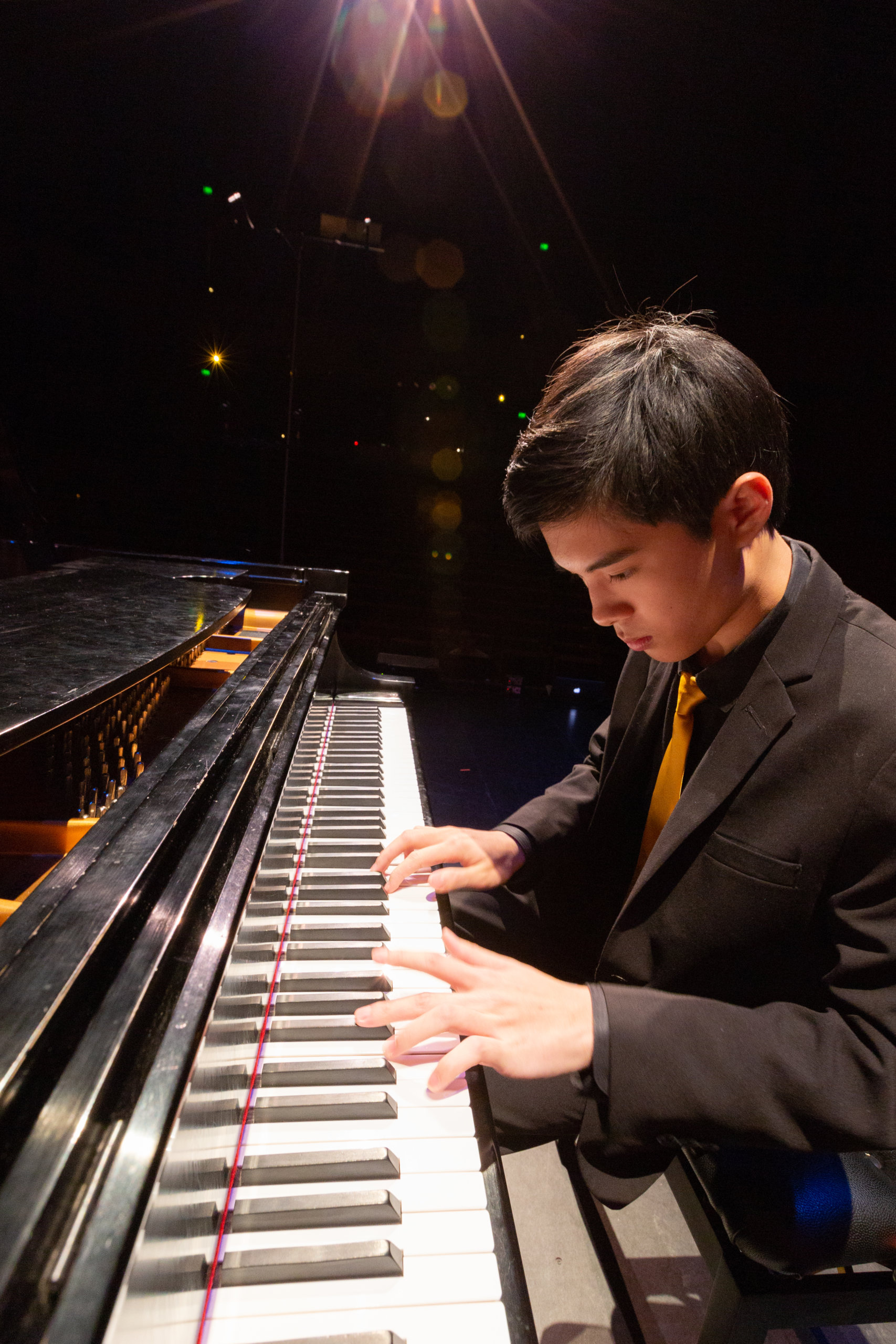
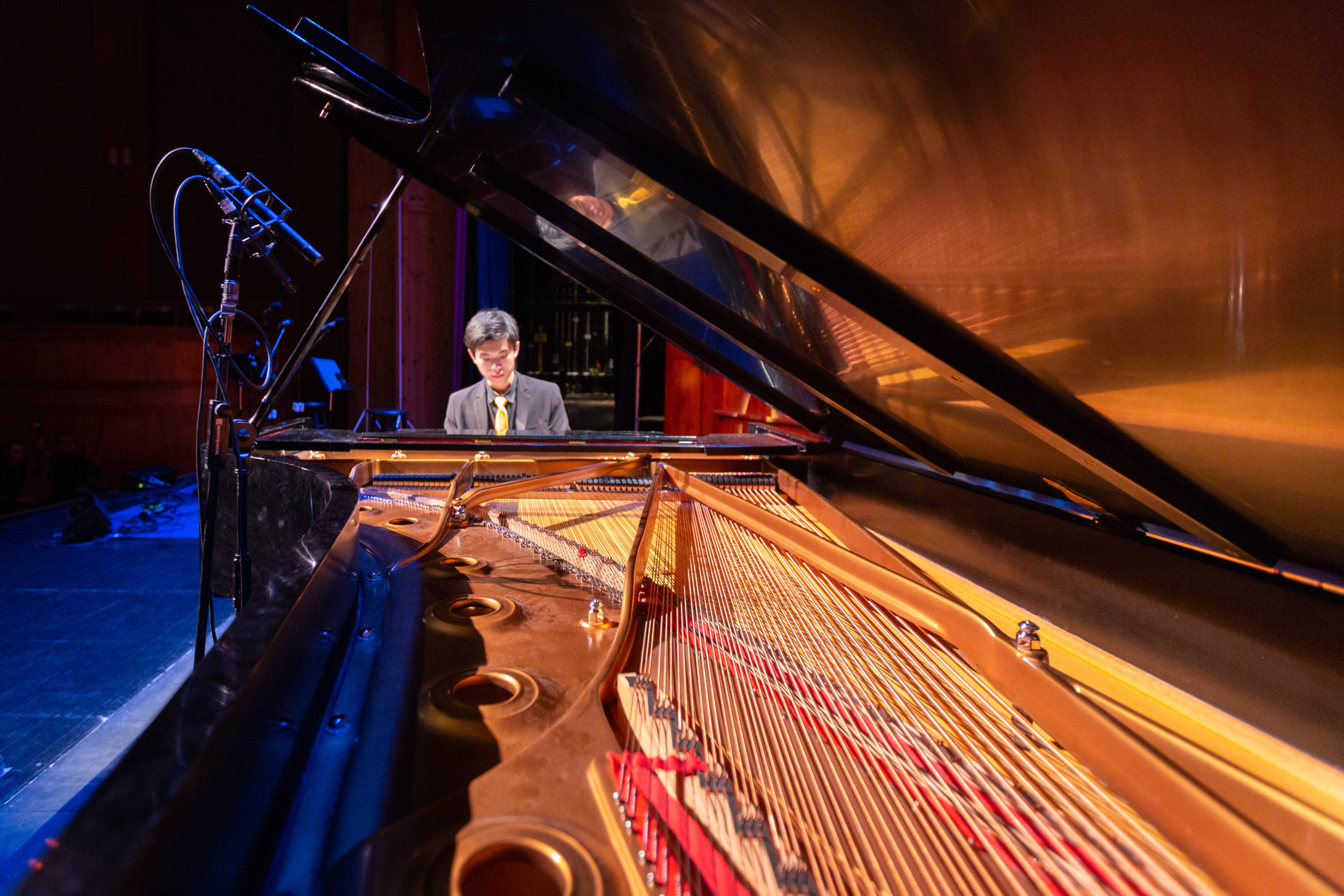
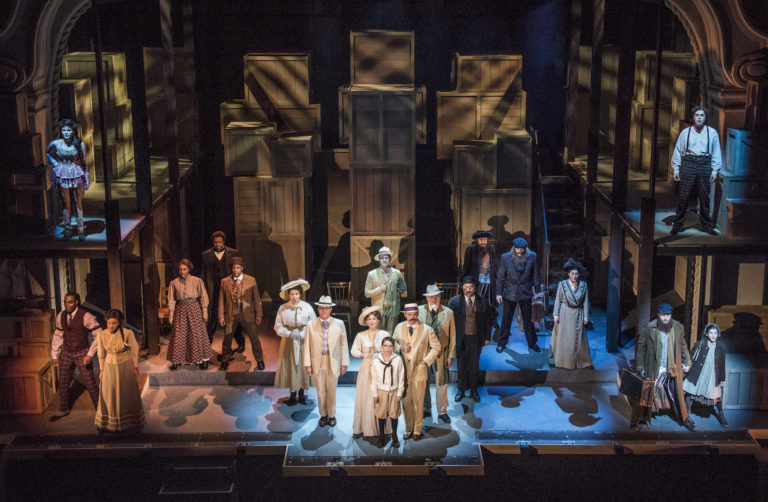
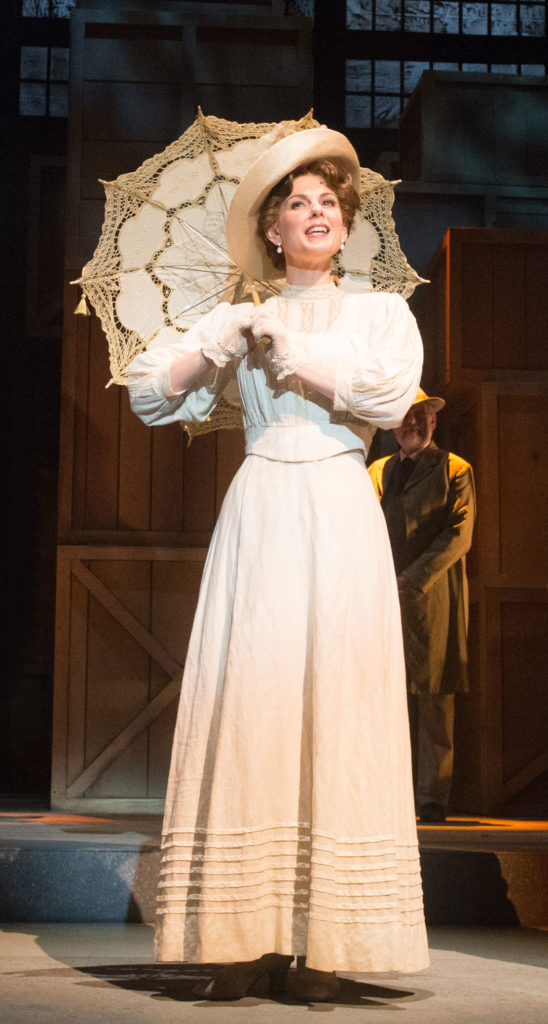







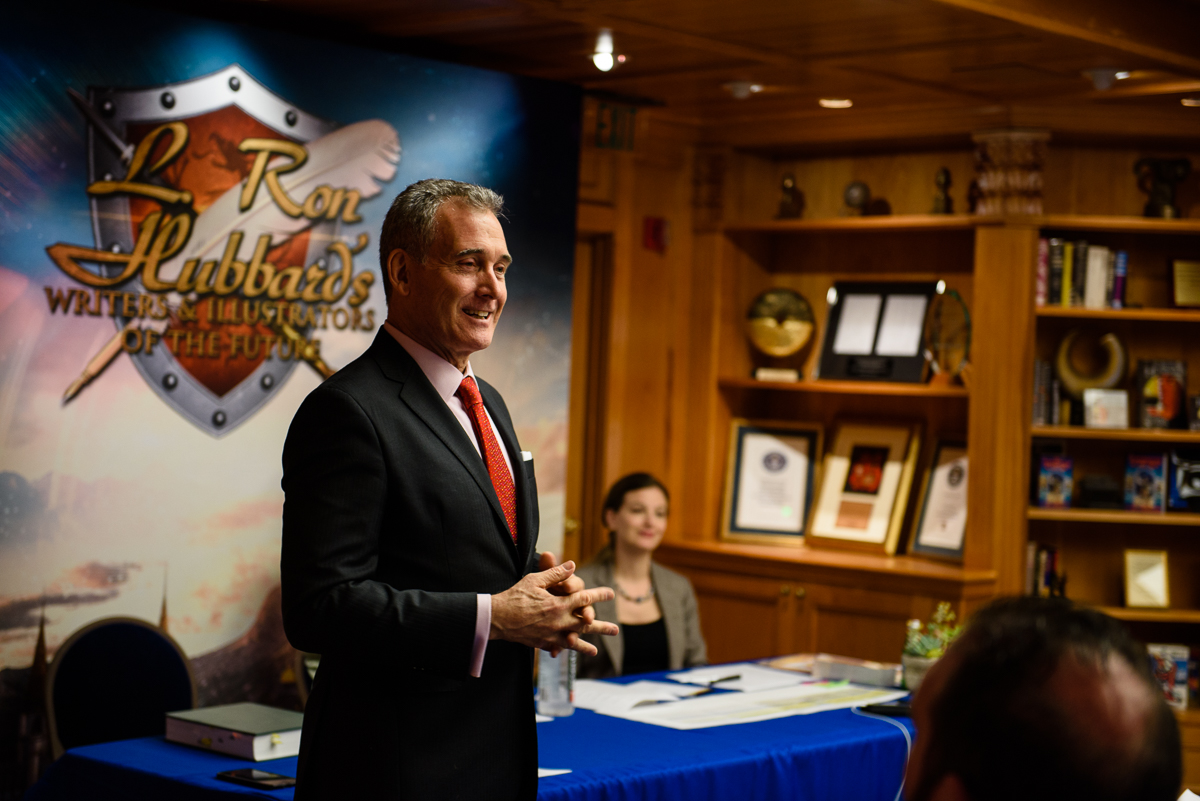
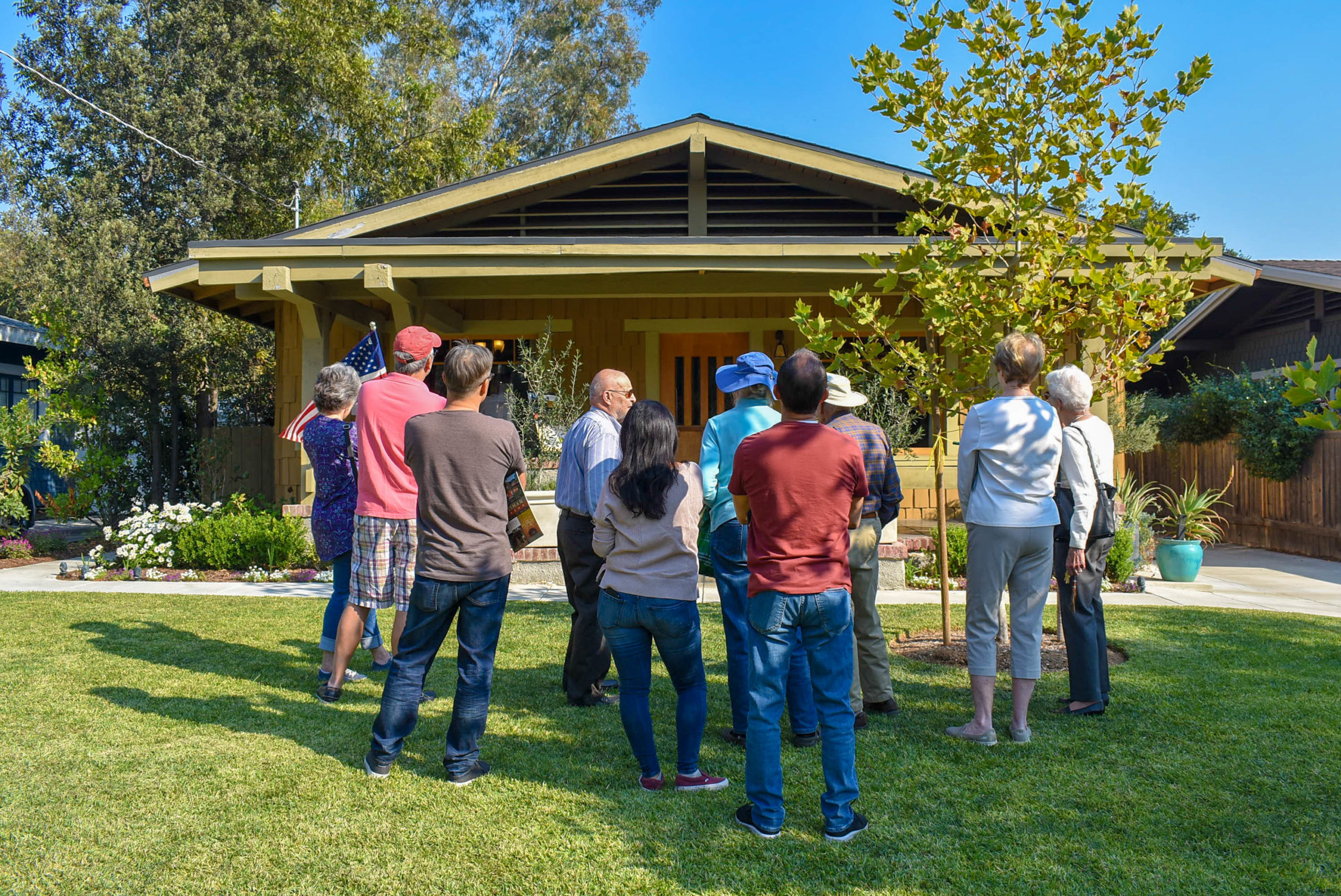


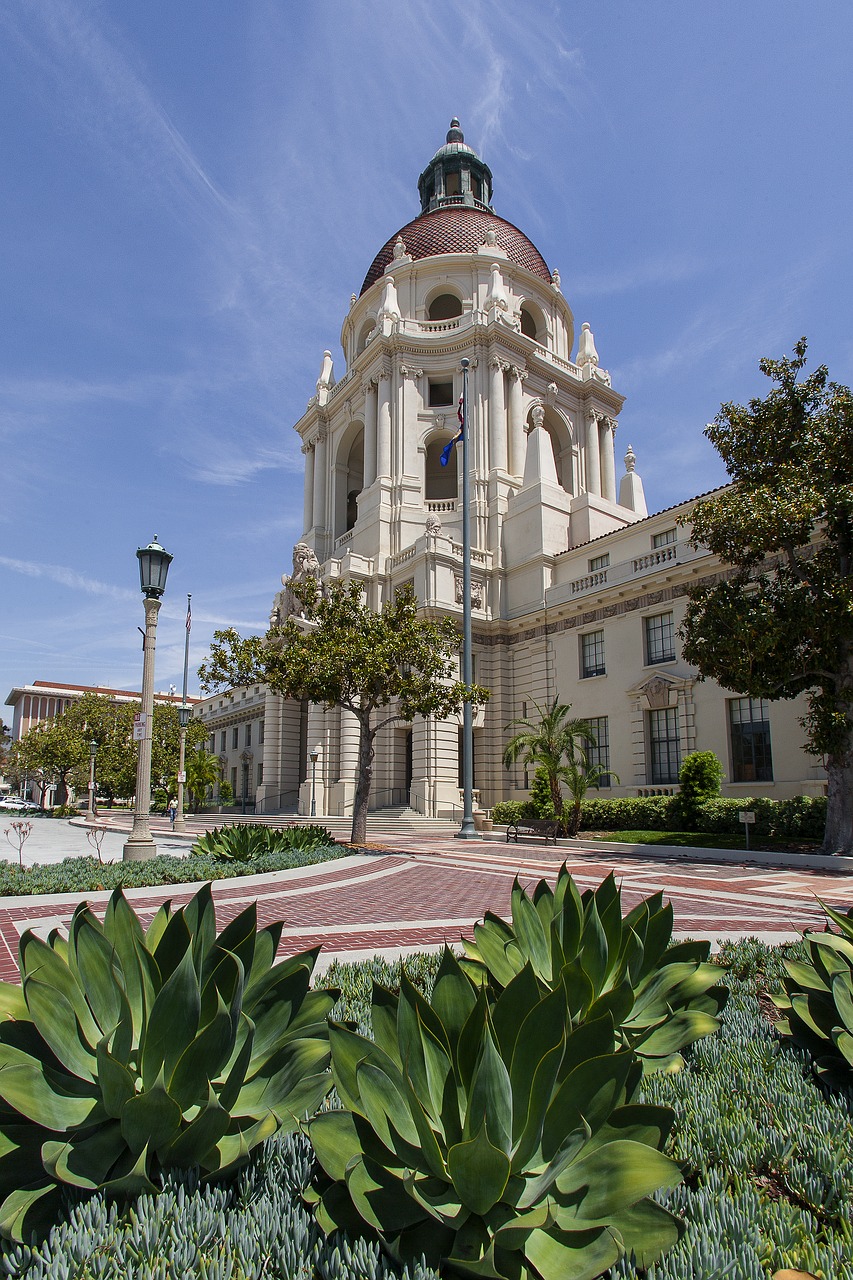


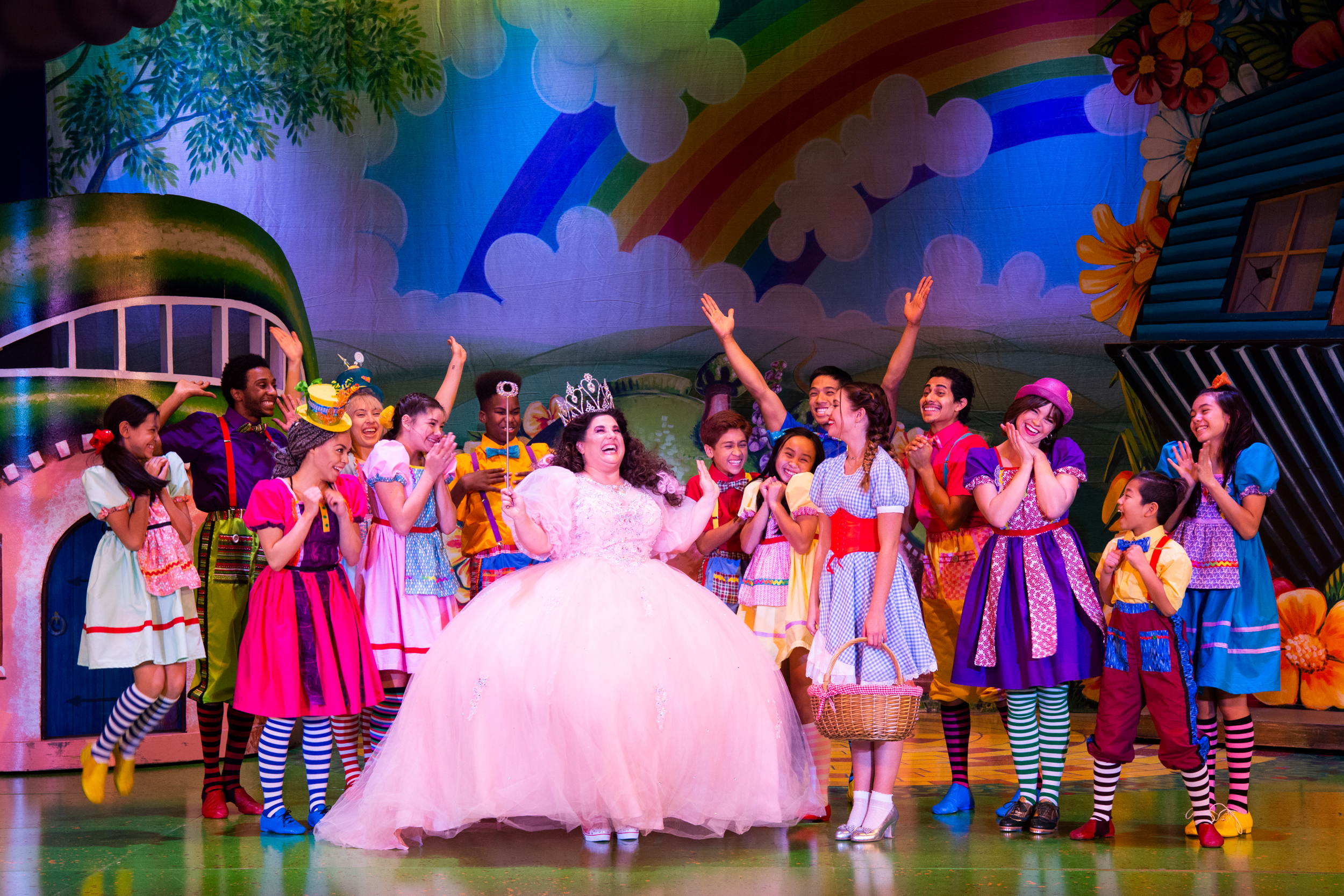

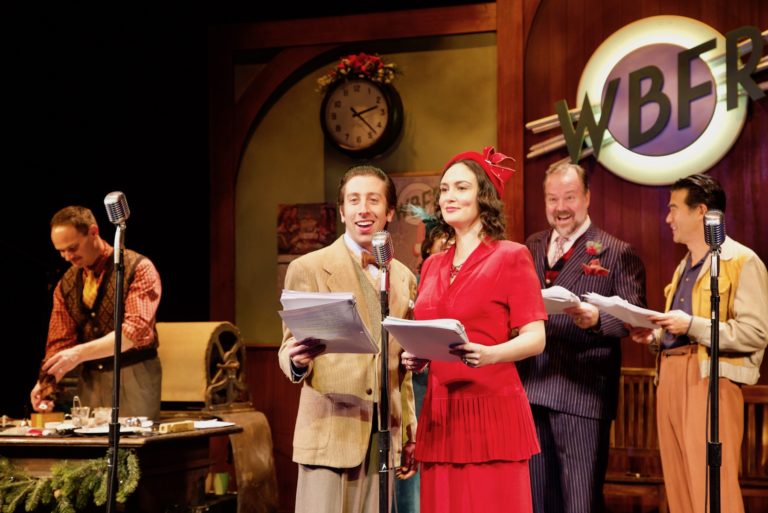
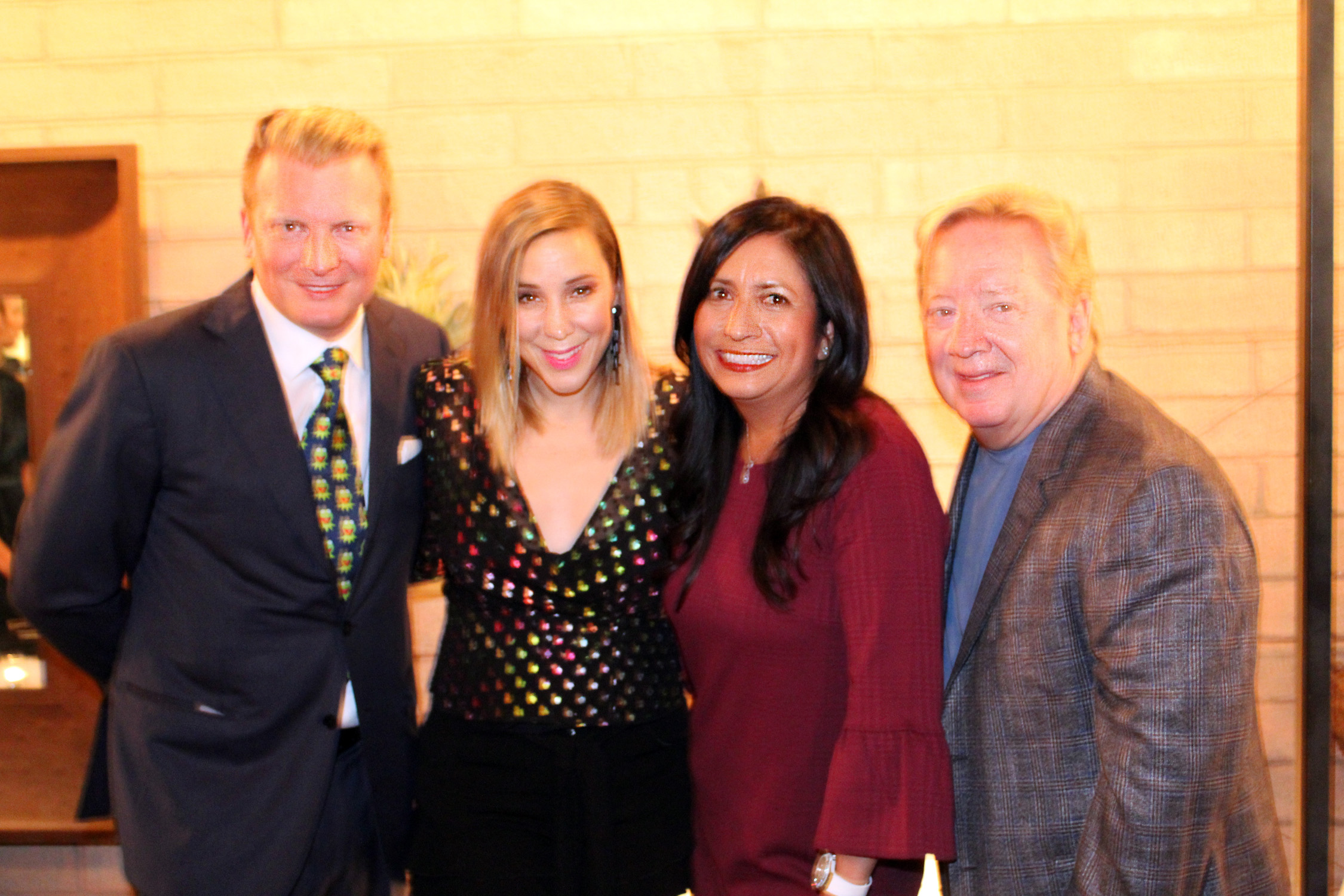

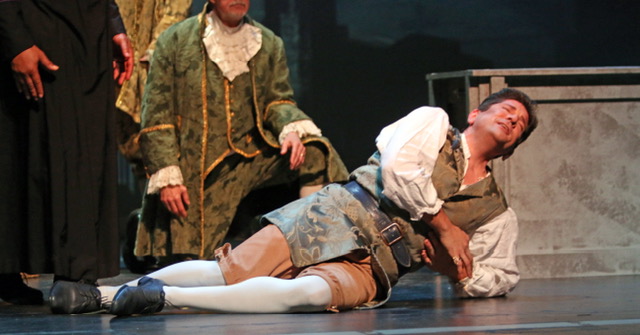
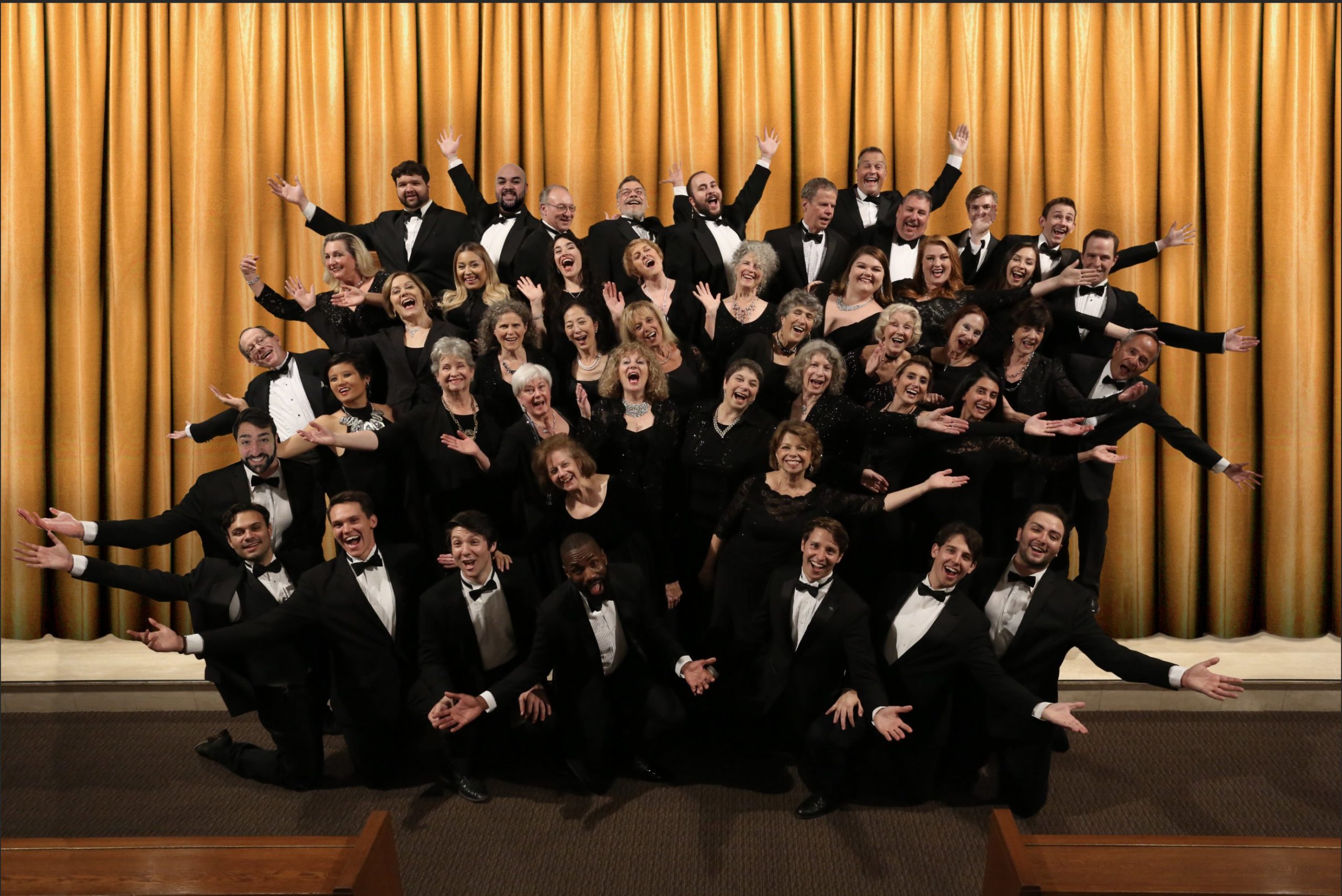
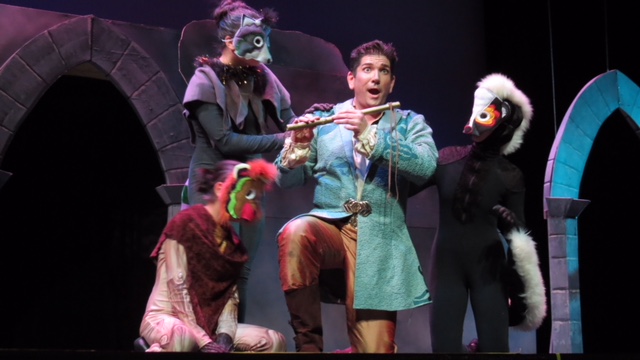
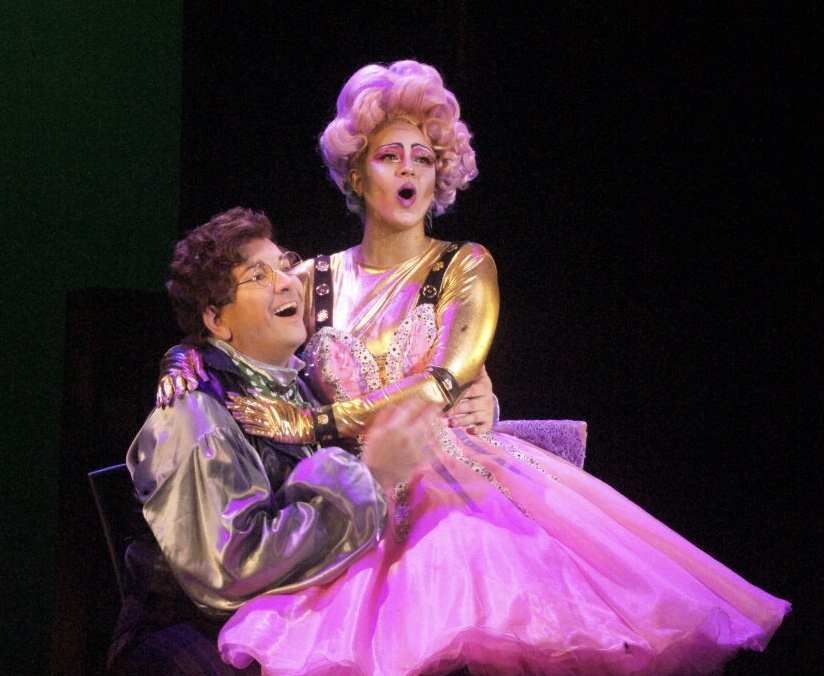
 A San Gabriel Valley Inquirer