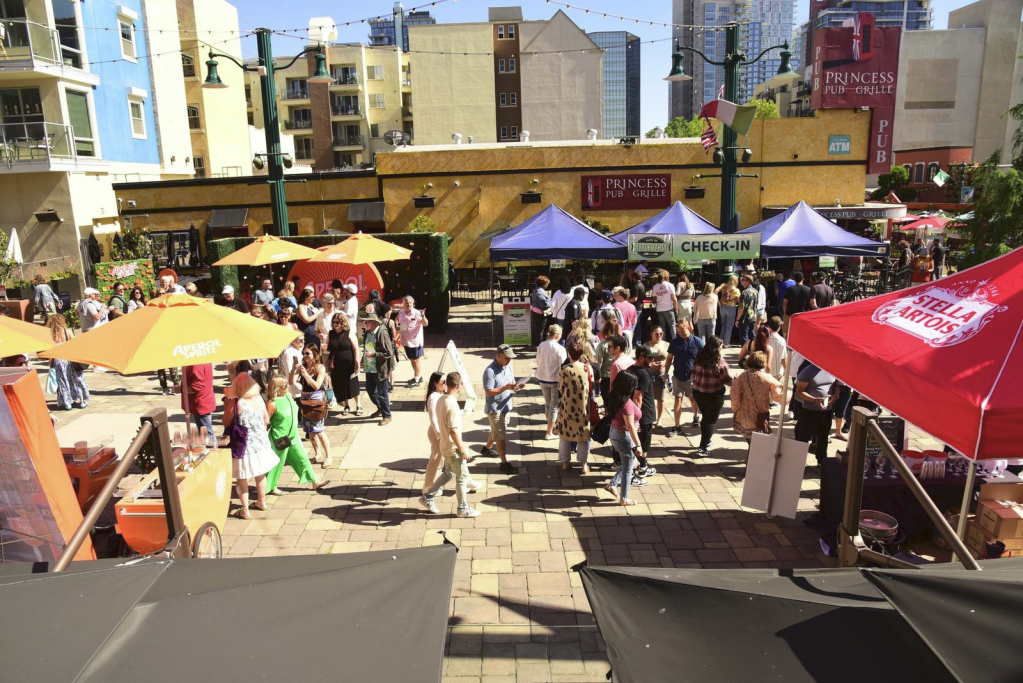
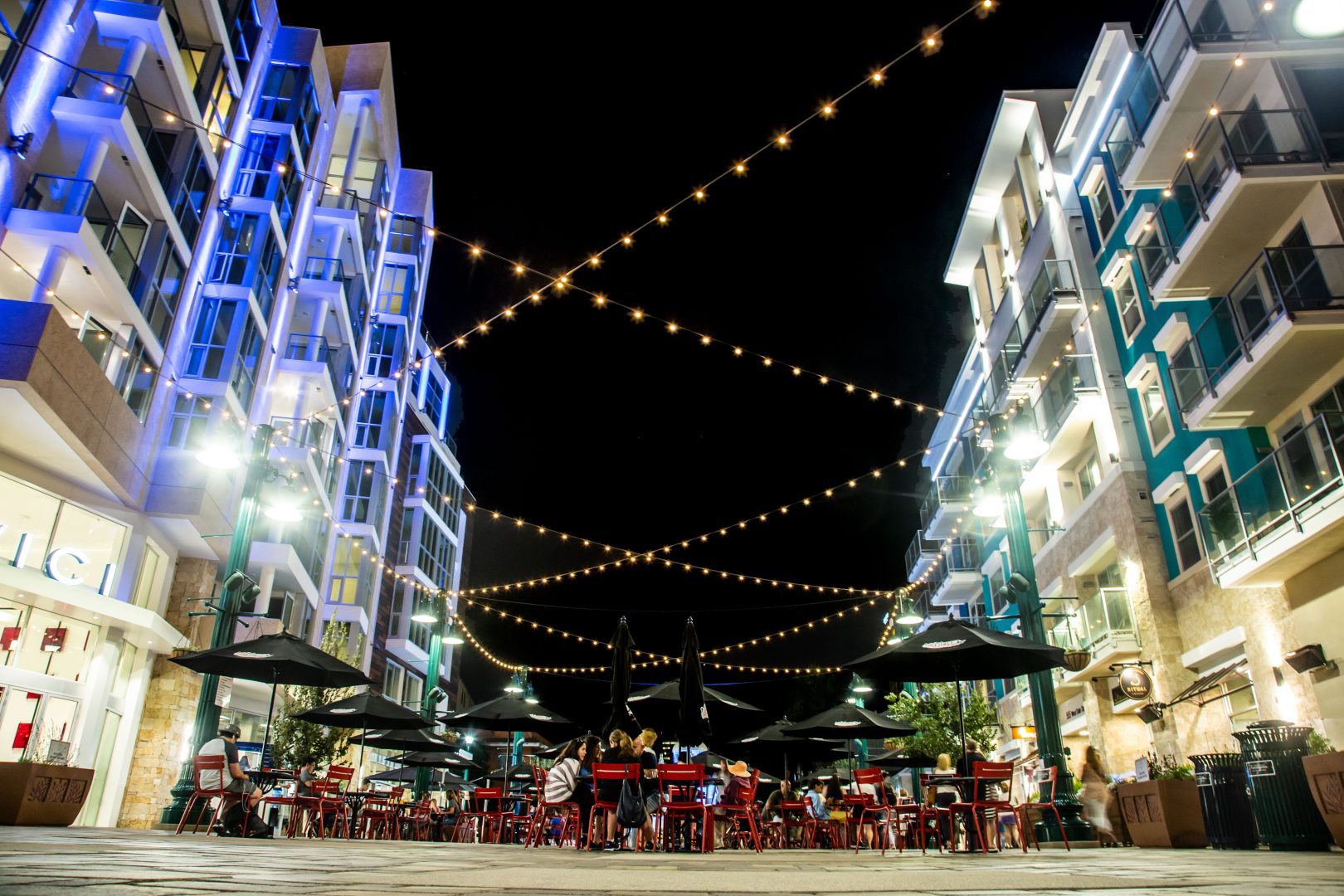
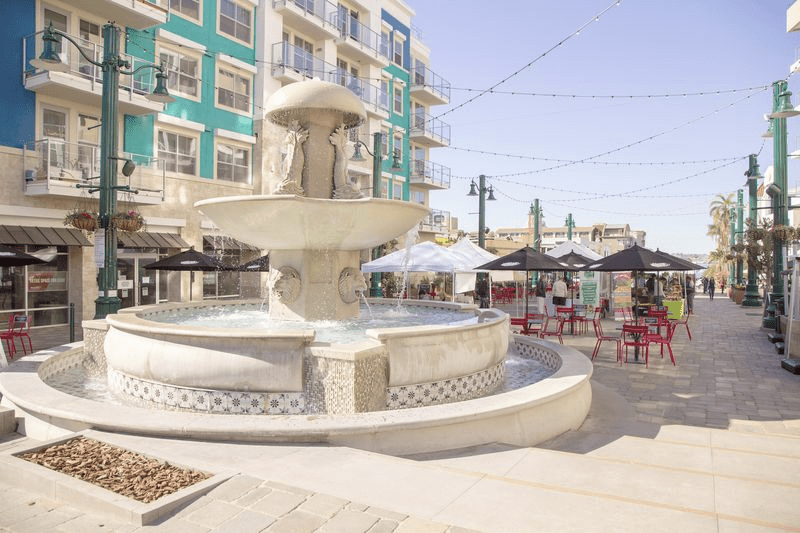
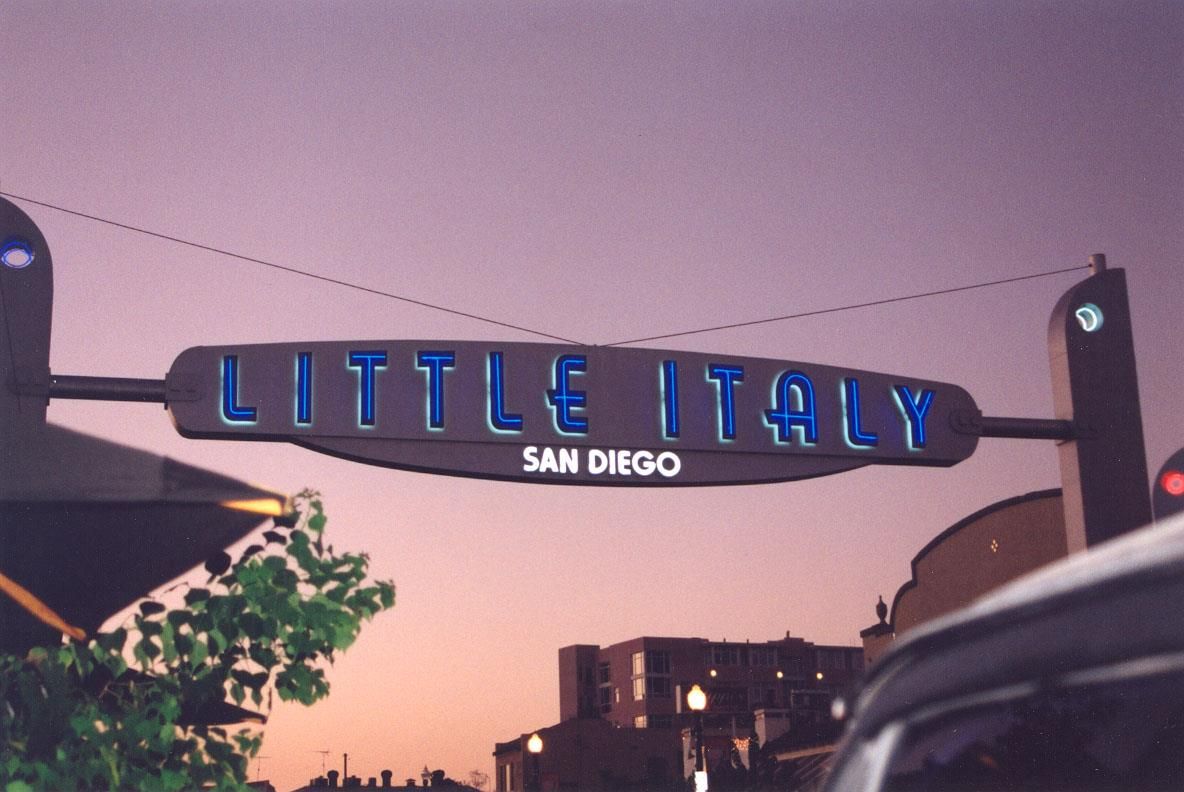
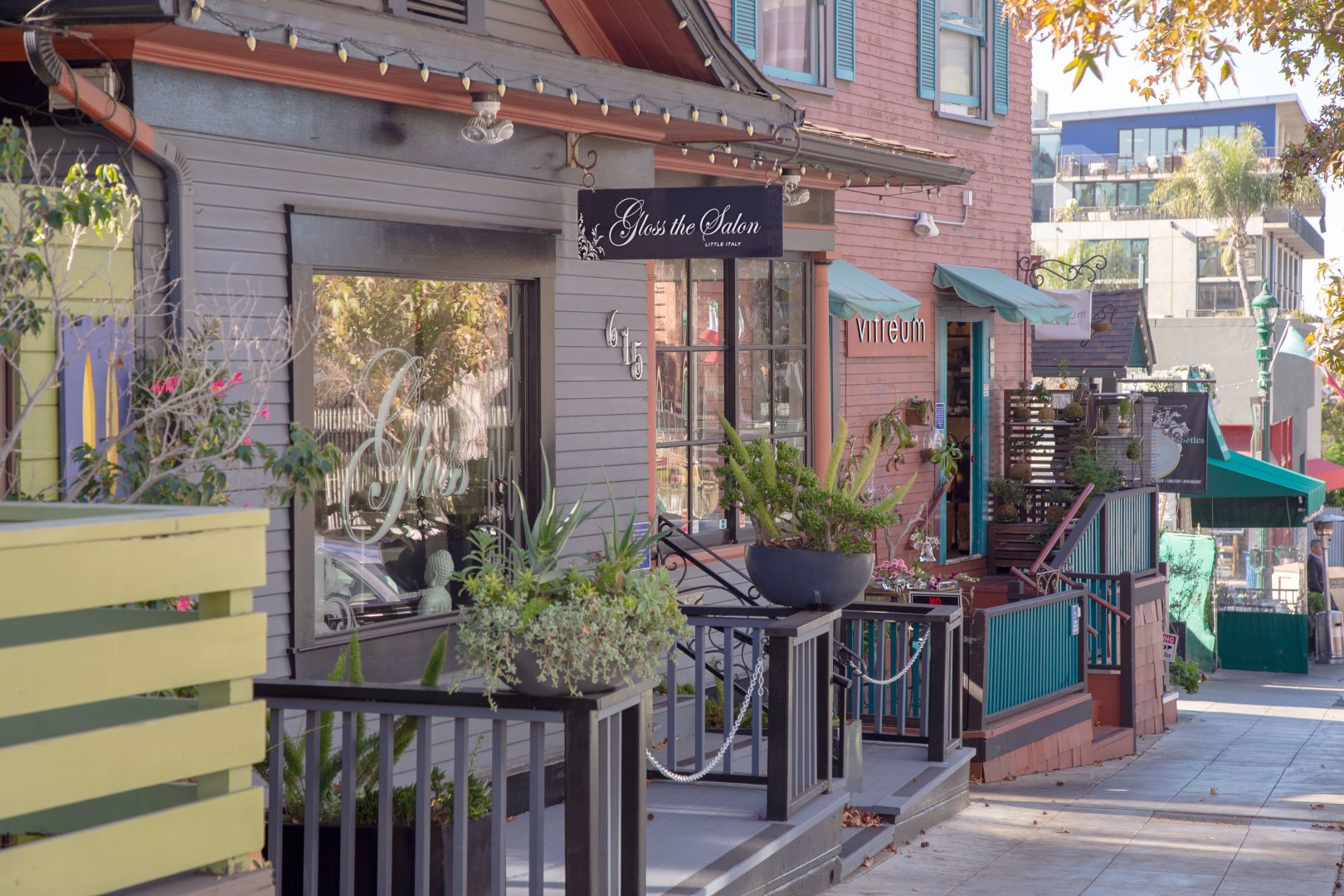
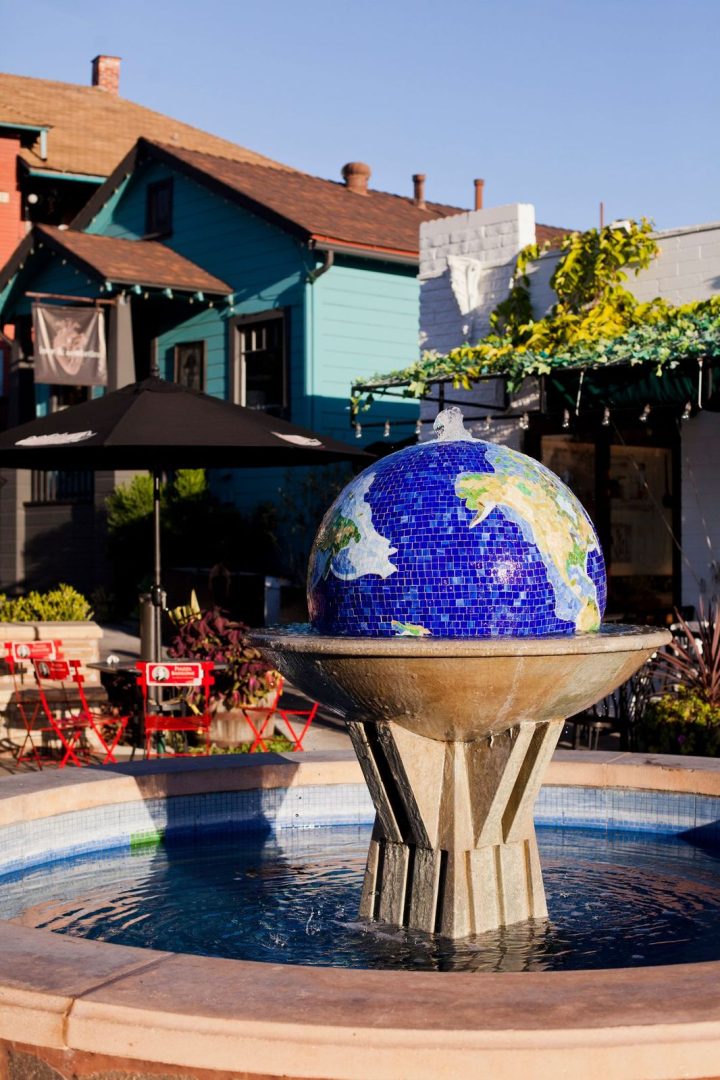
One of the many piazzas in San Diego’s Little Italy. / Photo courtesy of San Diego Little Italy Association
Looking for something more fun and adventurous to do on Mother’s Day? Make it a destination event and drive down to Little Italy in San Diego! Better yet, stay for the weekend to acquaint yourself with this extraordinary place and enjoy everything it has to offer.
San Diego’s Little Italy has such a fascinating and rich history – it was at one time the center of the world’s tuna industry. Chris Gomez, district manager of the San Diego Little Italy Association, recounts, “Little Italy was originally known as Middletown because it was north of downtown San Diego, south of Mission Hills and Hillcrest, east of San Diego International Airport, and west of Bankers Hill. It was settled back in 1920 when Italian immigrants from San Francisco and New York who came to live here created a small community that was close to the waterfront that allowed them to build their economic strengths through fishing. It was the hub of the fishing industry in the 1960s, 1970s, and into the 1980s before all the fishing moved down to Baja. The Italian fishermen would go out to the San Diego Bay and catch tuna and bring them back to packing houses and they would distribute them from there. The Chicken of the Sea and Bumble Bee Tuna companies started in Little Italy.”
Photo courtesy of San Diego Little Italy Association
“But just as we’re celebrating Little Italy’s heritage, what it has become now is not necessarily all Italian – we also focus on the diversity of the community. We have restaurants that have opened from Mexico and this is the first location they’ve opened in the United States, like Fisher’s. We have several dining places that offer very eclectic cuisines and foodie experience,” Gomez clarifies.
While other Little Italies in the United States have declined because of the growth of other adjacent ethnic neighborhoods, San Diego’s Little Italy has remained a vibrant symbol of the remarkable contributions Italians have made to this country. Since the 1920s, it has been a stable ethnic business and residential community; it represents Downtown San Diego’s oldest continuous-neighborhood business district.
Photo courtesy of San Diego Little Italy Association
However, the area’s history is not without its dark period. At one time, more than 6,000 Italian families lived in Little Italy and toiled to build San Diego into the global hub of the tuna industry. When the tuna industry on the West Coast waned and 35% of Little Italy was torn down during the construction of Interstate-5 freeway, the neighborhood suffered nearly thirty years of neglect. Then, in the early 1990s established property owners and family-run business proprietors decided to take their fate into their own hands.
New Italian American and non-Italian business owners opened retail and professional spaces while creative builders and architects constructed beautiful developments. That it is today a model urban neighborhood not just in San Diego but also for the handful of Little Italies remaining throughout the country is a lesson in a community’s resilience.
This remarkable accomplishment can be credited mostly to the Little Italy Association (LIA), which was established in 1996 during the time of the revitalization of the Downtown area. The only district management corporation of its kind for any Little Italy neighborhood in the United States, it is run by a board of directors comprising 29 individual who represent property owners, residents, businesses, and the community at large. It advocates on behalf of its members’ best interests in matters of public safety, beautification, promotion, and economic development, while preserving the unique cultural resources of the area. Since its inception, it has been re-energizing this neighborhood while telling the story of Little Italy to its visitors through public art displays and amazing piazzas.
Photo courtesy of San Diego Little Italy Association
Gomez has been with LIA for 24 years and has become somewhat of an authority on all things Little Italy, so I ask him how he would plan an itinerary for someone visiting from L.A. He promptly replies, “If possible, make a weekend out of it. Come in on Friday night and stay in one of our boutique hotels like Carte and La Pensione, or the Doubletree, and stay for a couple of days. After checking in, go out for a casual dinner at Barbusa or Civico 1845.”
“The next morning, head out to the Farmers Market, which is very unique,” continues Gomez. “Our market maestro has curated the offerings to be very European – there’s fresh fish, including sturgeon, things that you wouldn’t normally see at standard farmers markets. Take a walk up and down India Street and visit the boutique retail stores on First Street, linger at our many piazzas, stop in and have lunch at Devanti Enoteca or another great restaurant. Then go back to the hotel to relax and freshen up.”
“Afterwards, go to the Embarcadero or downtown where dining places offer diverse culinary dishes,” Gomez goes on to say. “There are top chefs who have Michelin-starred restaurants here, like Juniper & Ivy. We have really cool bars like Camino Riviera or Kettner Exchange where people can go for a cocktail. Craft & Commerce is another great one with a speakeasy in the back that’s called False Idol.
“On Sunday morning, get coffee at a local café like Caffe Italia or Pappaleco … maybe have a quiche or panino and start your day all over again. Then check out of your hotel and head back home safely,” concludes Gomez.
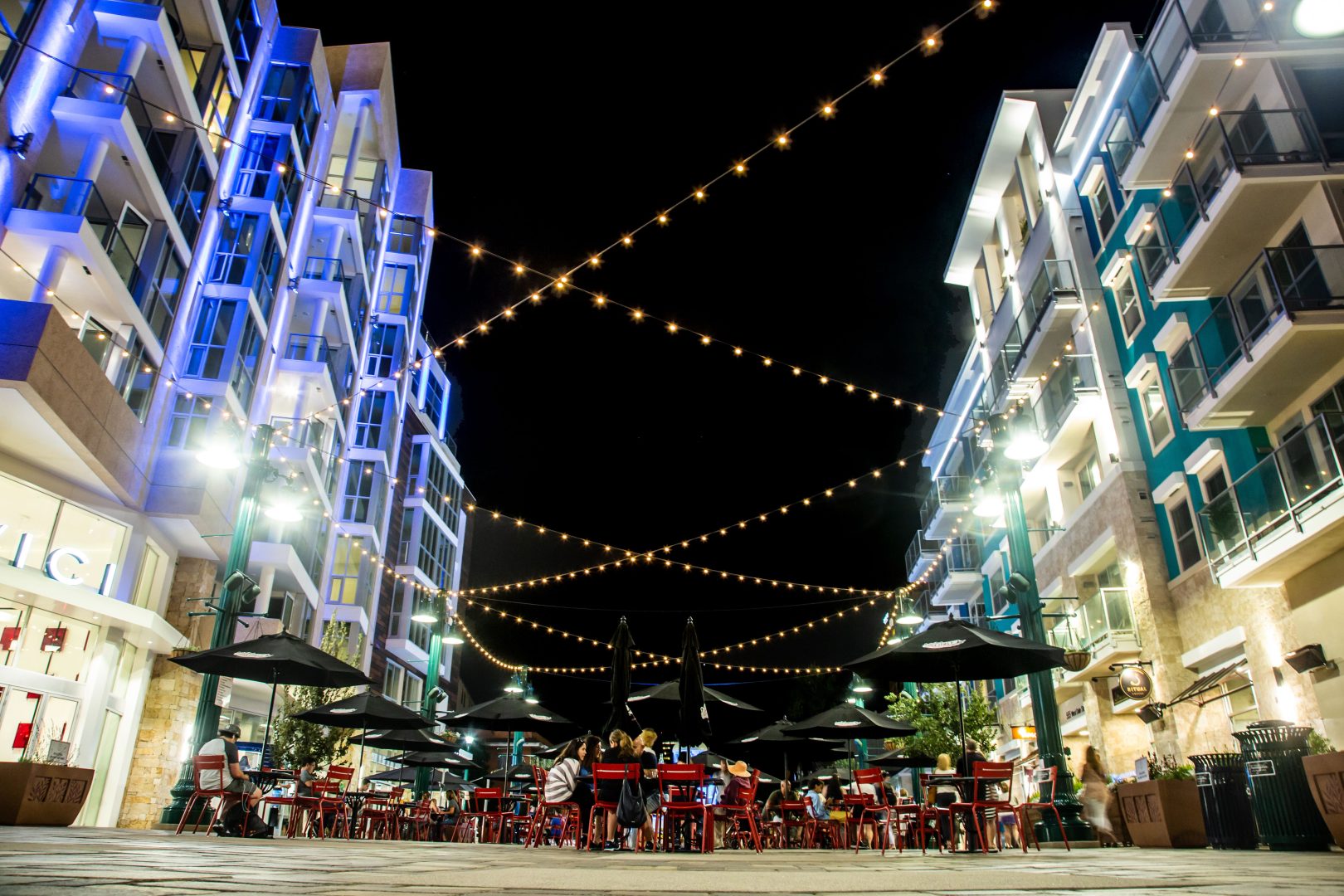
The Piazza della Famiglia at night / Photo courtesy of San Diego Little Italy Association
I ask what a highlight would be if one were visiting Little Italy only for eight hours and Gomez responds, “It depends on what day you come. But if you’re here on a Saturday, definitely come to see the Farmers’ Market. Additionally, we have several piazzas that mirror European public spaces for people to sit at and relax in. Piazza della Famiglia is one particularly wonderful place to explore – it’s our largest piazza at 10,000-sq. ft. People can sit there and have a glass of prosecco or a cocktail while they enjoy a view the San Diego Bay, the weather, and the sound of people in that space. You can grab lunch or dinner at one of our local restaurants. There are multiple retail stores and galleries people can enjoy. We also have something called Music Box, which is an entertainment venue where you can watch a concert.”
This year, take your mom out on Mother’s Day for an experience that’s more memorable than the usual brunch at a chain restaurant. Spend her special day with her in Little Italy San Diego!
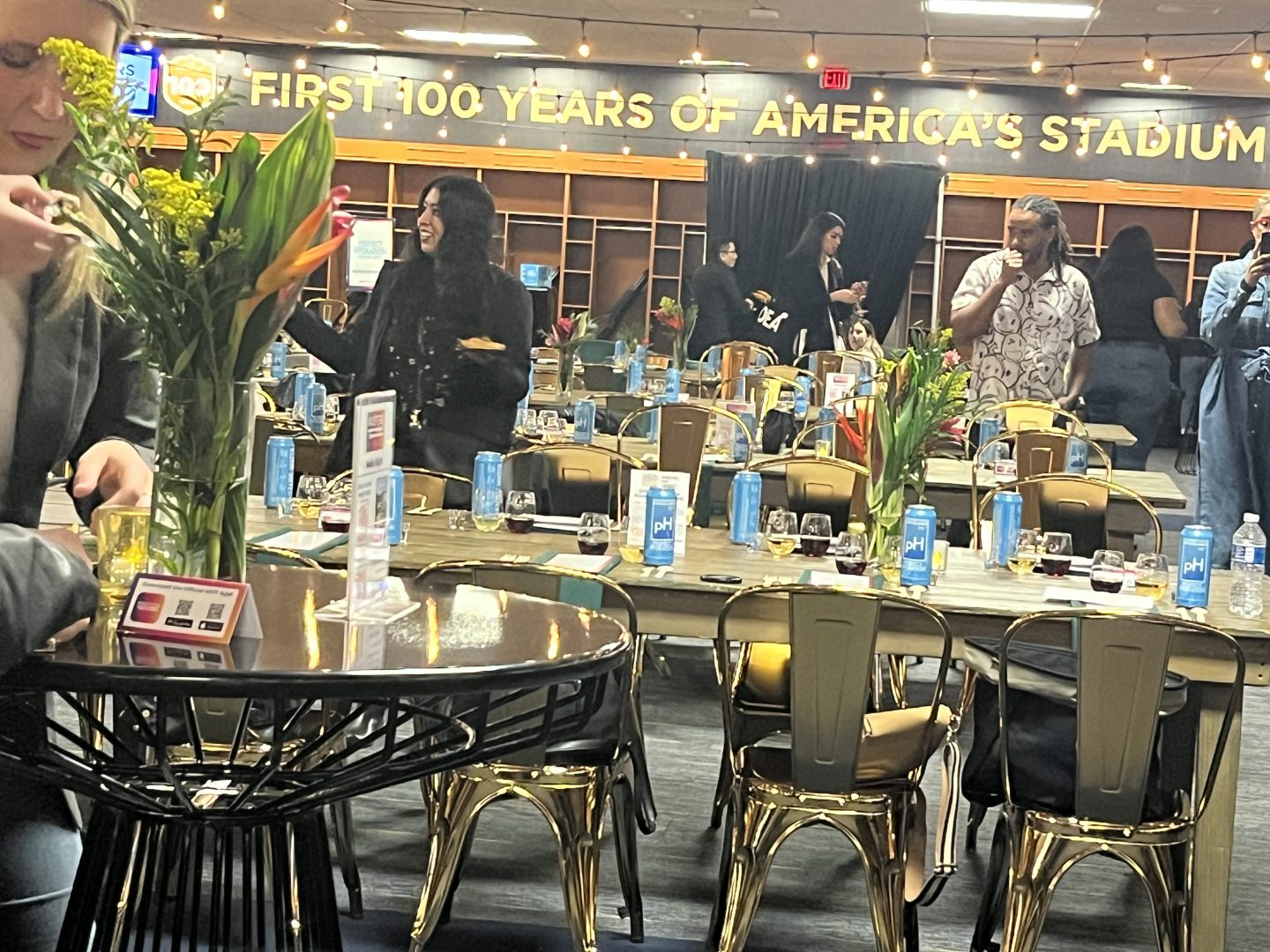
Masters of Taste Media Night in the locker room of the Rose Bowl. | Photo by May S. Ruiz / Hey SoCal
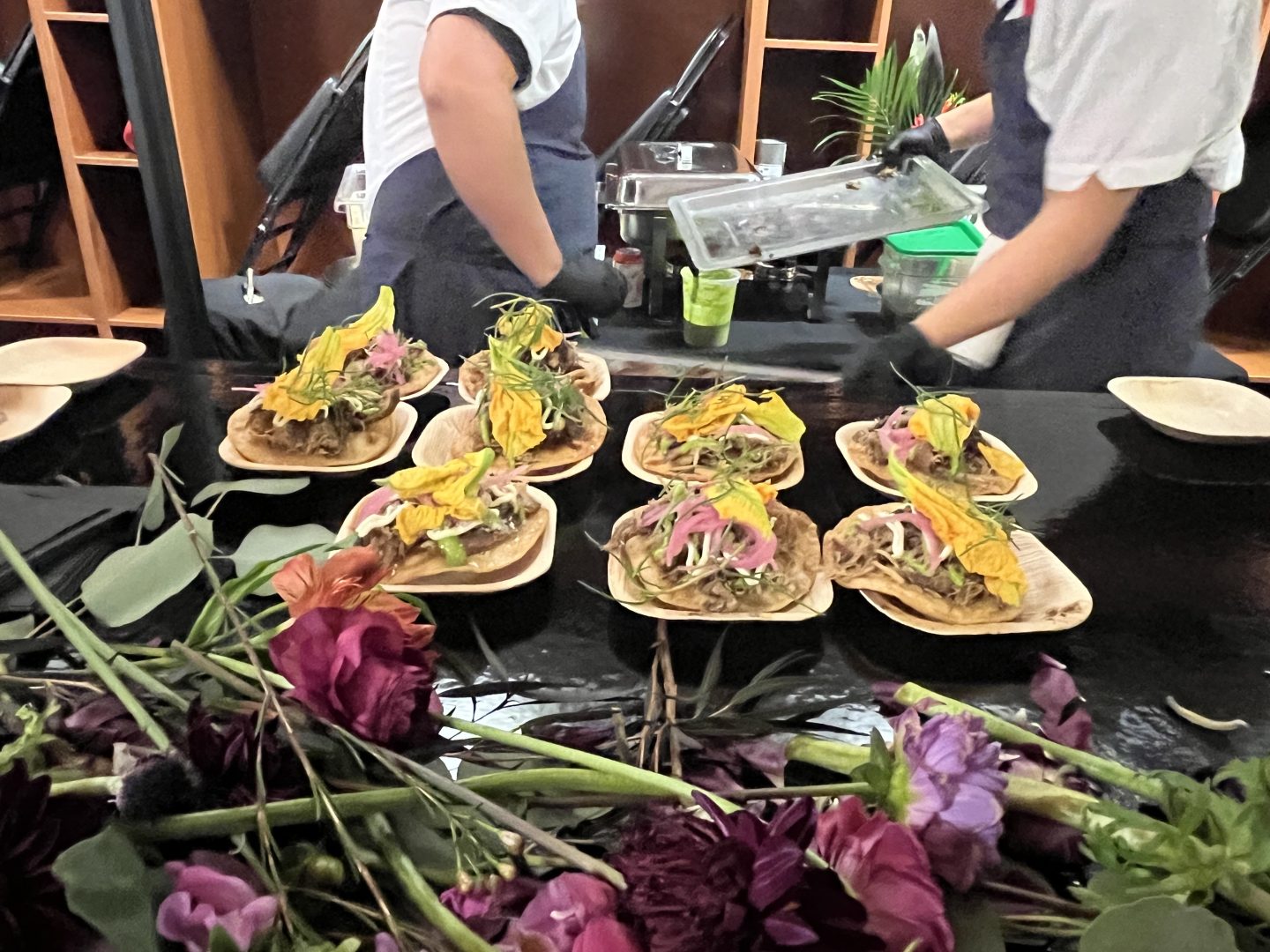
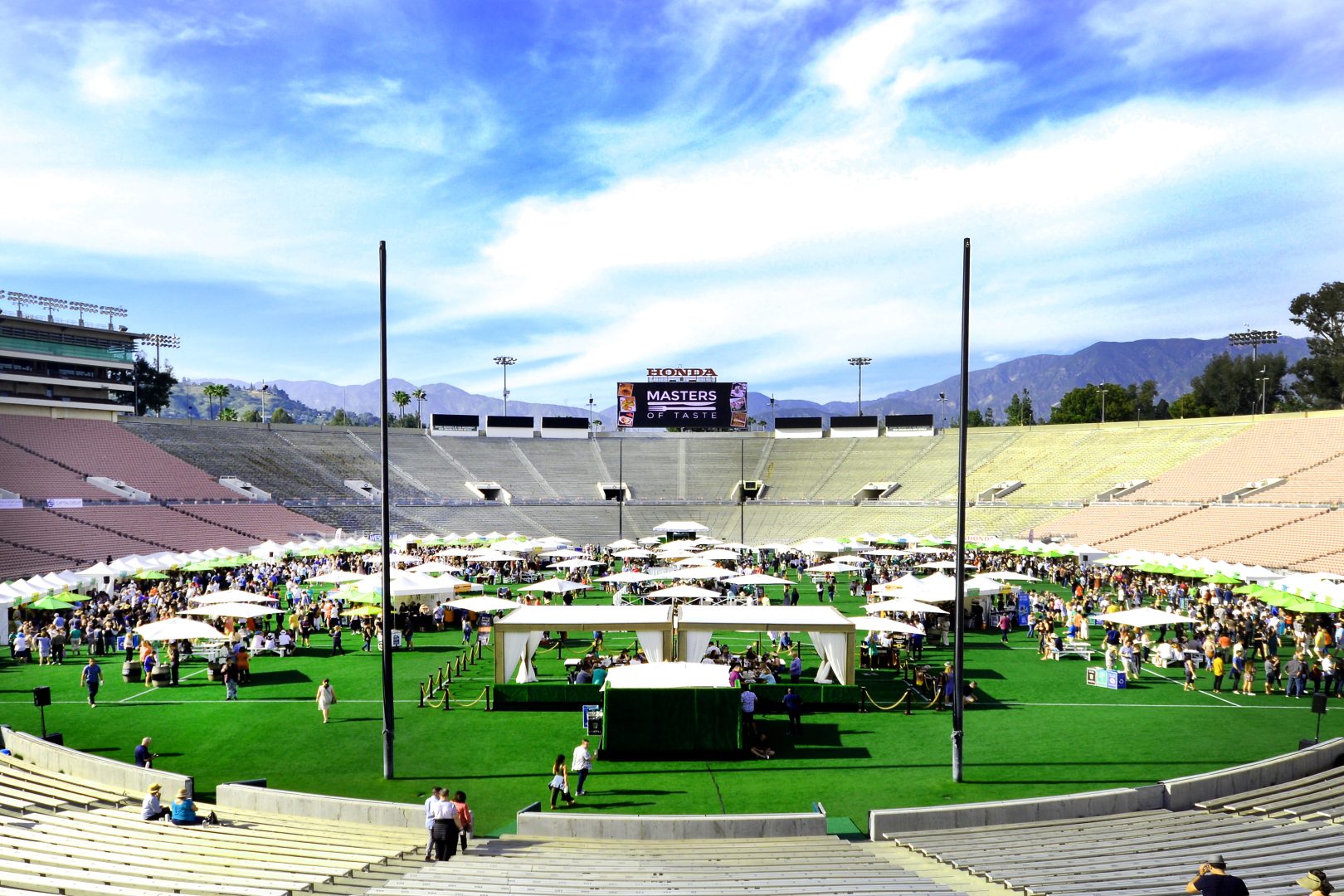
Masters of Taste (MoT), L.A.’s premier food and beverage festival, returns at the 50-yard line of Pasadena’s Rose Bowl on Sunday, April 7, 2024 from 3 to 7 pm. Celebrating its seventh year raising funds for Union Station Homeless Services (Union Station), the event brings together 100 restaurateurs and beverage company owners to serve food and drinks to approximately 3,000 attendees.
The brainchild of Rob and Leslie Levy, owners of The Raymond 1886 and Knox & Dobson in Pasadena, Masters of Taste was a concept Rob adapted from a childhood friend’s organization in Chicago called “Inspiration Café” which delivers sandwiches to the homeless. When the former CEO of Union Station asked him to be on the board, he set out to find a better way to raise funds than asking people to get all dressed up to attend a gala they only felt obligated to attend. Leslie came up with the idea of having chefs gather for an event that was so amazing it didn’t feel like it was a charity affair.
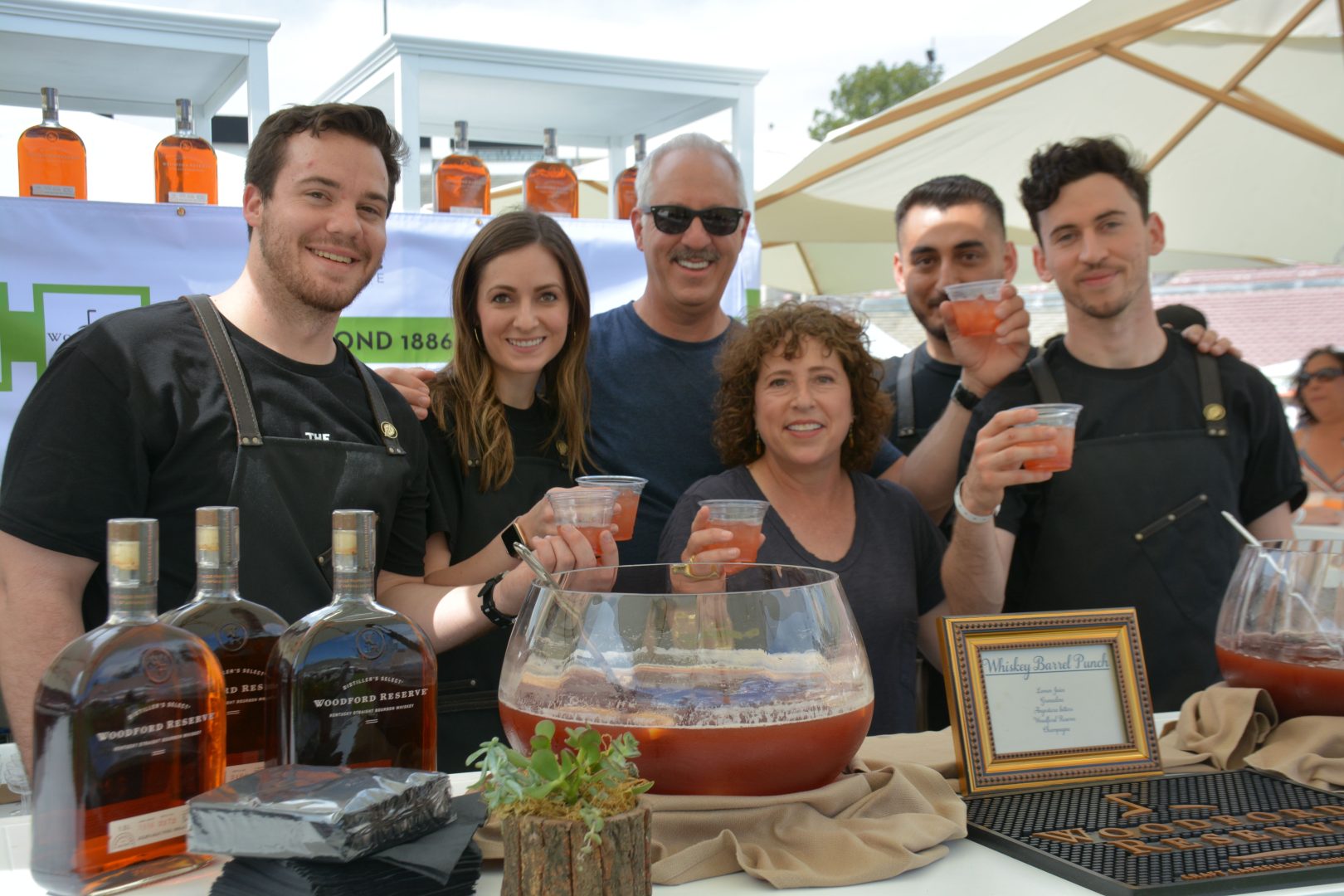
Rob and Leslie Levy (third and fourth from left) at their Raymond 1886 Masters of Taste booth. / Photo courtesy of Masters of Taste
On their first year at the Rose Bowl, a spontaneous line dancing broke out on the field – a delightful occurrence that was totally unanticipated. It was when they knew they had stumbled upon a successful endeavor. There was another year when it rained which, incredibly, made it an even better event. Nobody left – 3,000 people on the field stayed through the rain; Levy said it was the most memorable year they’ve had.
As the organizers had previously done, Masters of Taste held its media night in the locker room of the Rose Bowl. On February 28, 2024, we arrived at the venue and were pleasantly surprised to see twice the number of chairs and tables from last year’s media preview. Media attendance and sponsorship had increased dramatically since we first attended it. And as always, there was excitement among the individuals behind this annual event and the people covering it.
City Club in Los Angeles served hors d’oeuvres at Masters of Taste media night. | Photo by May S. Ruiz / Hey SoCal
After we had enjoyed a few drinks and hors d’oeuvres, the program began with a reminder of why we were there. Benjamin Turkle of Boomtown Brewery declared, “We’ve been working with homeless causes in L.A. for almost nine years now, helping on Skid Row. My wife’s partnership with Brilliant Corners to work with Union Station Homeless Services is just another foundation stone.”
Turkle went on to say, “We’ve always been told that we need to pick ourselves up by our bootstraps. But that’s very challenging when we don’t have bootstraps to pick ourselves up by. It takes a community and each individual citizen – whether or not you’re an entrepreneur in the service industry or in the thousands of other positions in our city – to lend threads to others so they can make their own bootstraps, to lend hands so others can pick themselves up as well. We’re all in it together and our rising tide will raise all ships. Thanks to Masters of Taste for doing this, for involving all of us in keeping this issue forefront.”
Anne Miskey, CEO of Union Station Homeless Services. | Photo by Margaret Gifford / Hey SoCal
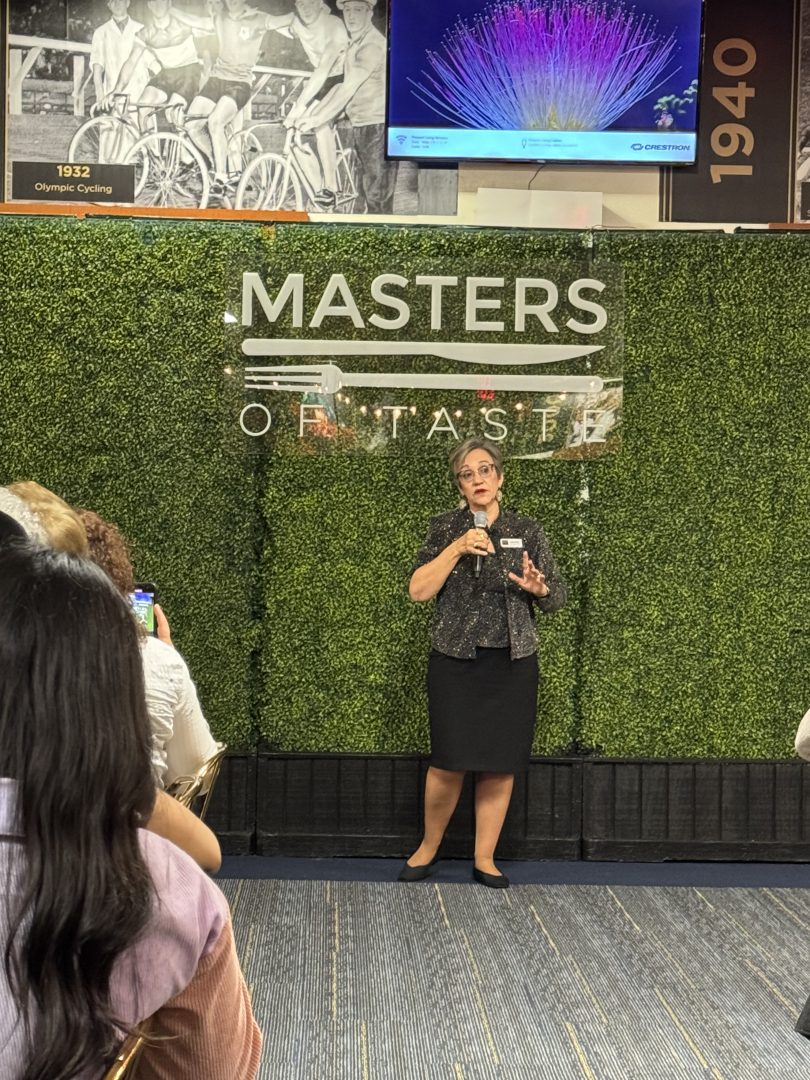
Anne Miskey, CEO of Union Station, then stood up to welcome everyone. She said, “You’re more than friends, you’re now part of our Union Station family. We’re here for a fun night to enjoy great food and drinks but they’re all for a great cause. Every bite of food and sip of drink at Master of Taste helps the homeless in Los Angeles – could there be a better way to spend your evening?!”
Joking that she used to be thin, Miskey then thanked all the chefs and beverage masters for making Masters of Taste a possibility. She added, “Thank you to the media. It’s because of you that we’re able to get the word out … and year after year, we sell out. Union Station works with all sorts of people – those living in tents and whose lives have fallen apart. It is through the support of people like you that we’re able to walk alongside homeless people in their journey. We don’t just see people housed and get work; what we see is the return of hope and the ability for them to once again have dreams.”
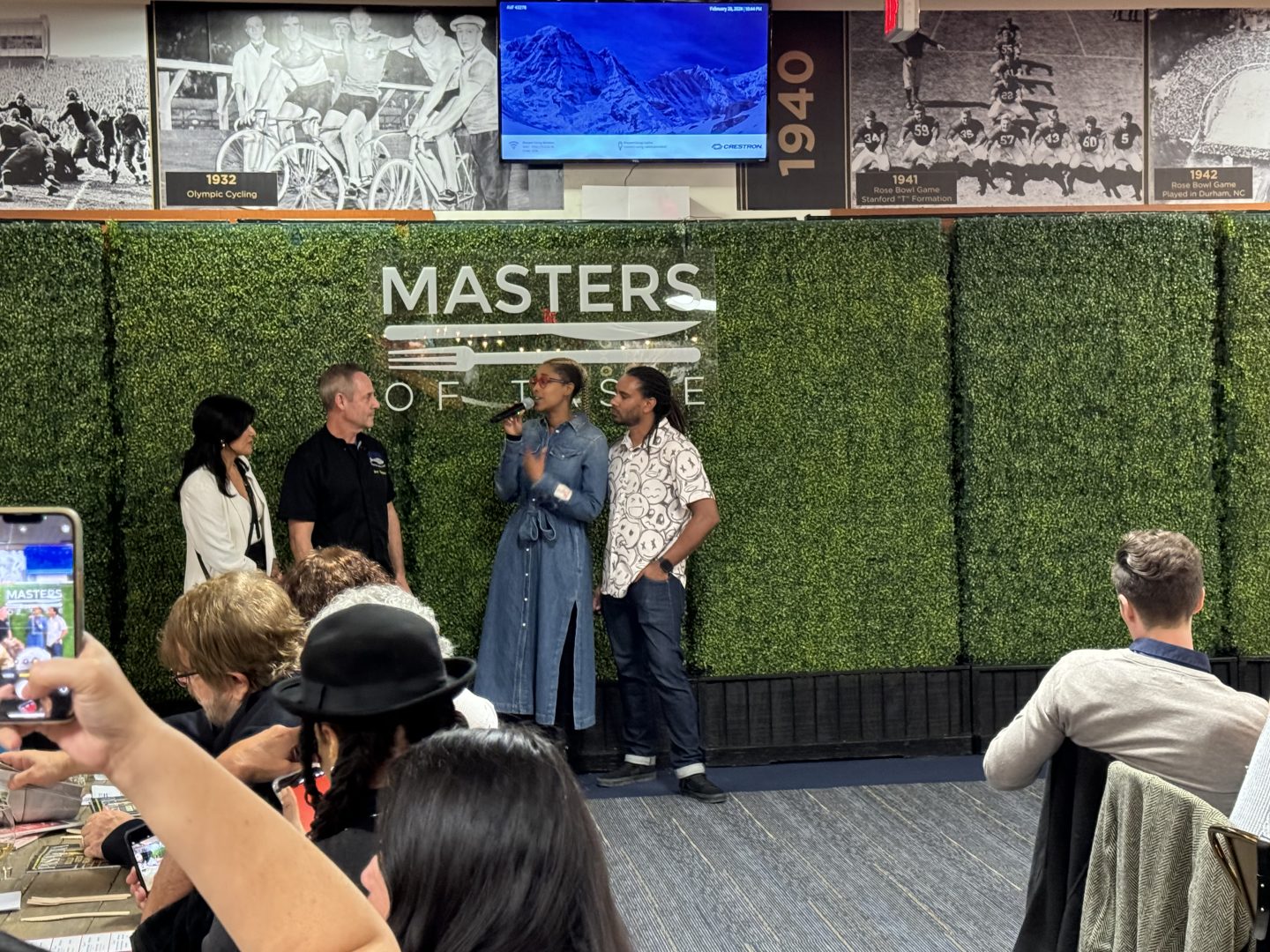
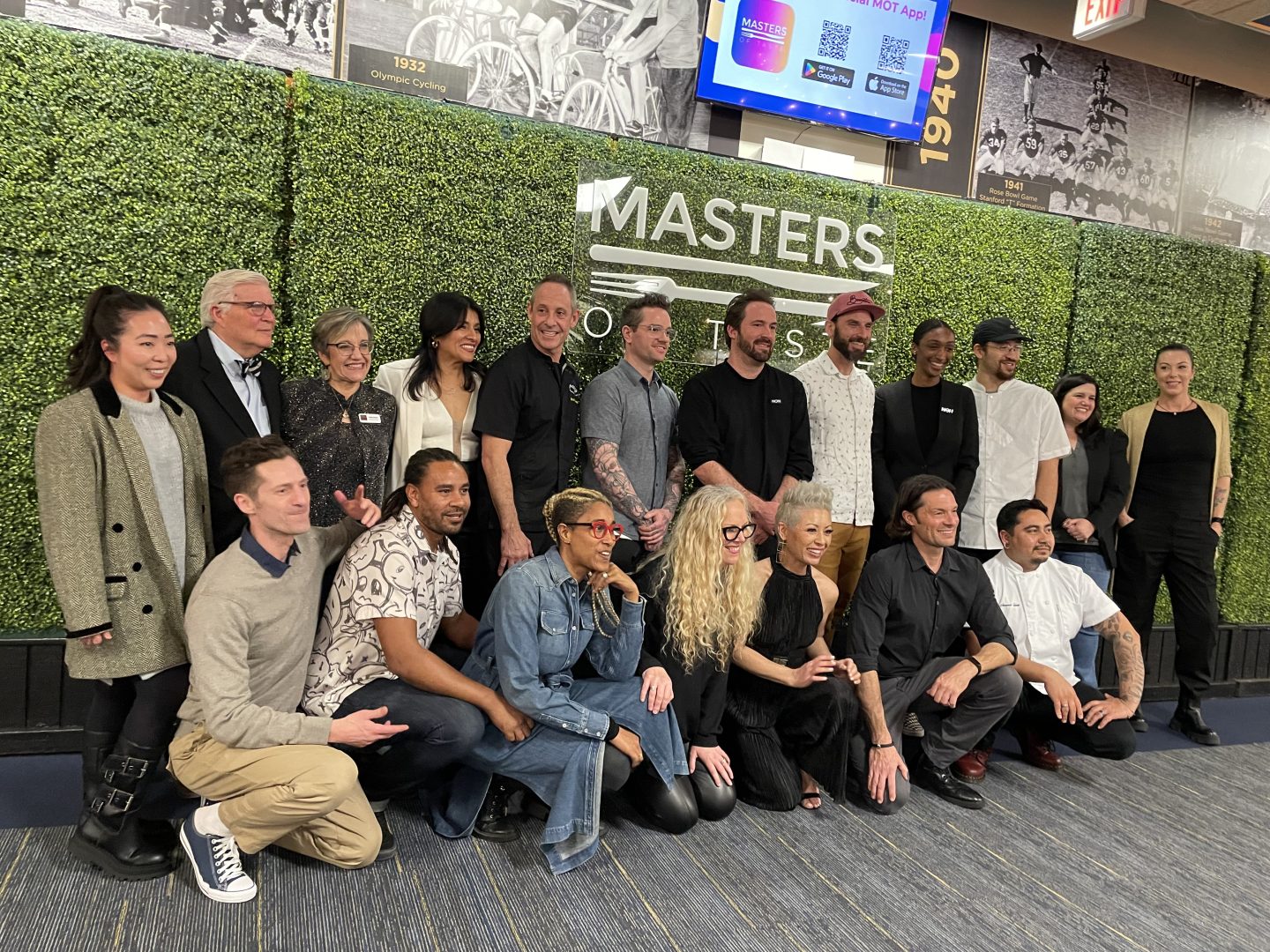
In a bow to tradition, 2023 MoT host chefs Michael and Kwini Reed of Poppy + Rose and Poppy & Seed passed the baton to this year’s chef hosts Bret Thompson and Lucy Thompson-Ramirez, owners of Pez Cantina and Pez Coastal Kitchen. The husband and wife team has made a significant impact in the hospitality industry. With their passion for culinary excellence and warm hospitality, they have made a distinctive mark in the Los Angeles dining scene and beyond.
Kwini and Michael Reed (third and fourth from the left) passed the baton to Lucy Thompson-Ramirez and Bret Thompson (first and second from left). | Photo by Brianna Chu / Hey SoCal
Bret Thompson’s culinary journey began at the renowned California Culinary Academy in San Francisco. He honed his skills at esteemed establishments such as Aqua in San Francisco, Roy’s in Hawaii, and Pinot Blanc in St. Helena, California. Seeking international inspiration, he traveled to Spain to study under Chef Martin Berasategui at Restaurante Martin Berasategui, a Michelin 2-star establishment in Lasarte, Spain. He further expanded his culinary repertoire in Lebanon at Atlas Café, then studied under Chef Bernard Loiseau at La Cote d’Or – his Michelin 3-star restaurant in Saulieu, France – and then at L’Arpege, Chef Alain Passard’s Michelin 2-star restaurant in Paris.
Throughout his career, Thompson also had an extensive tenure with The Patina Group, working at multiple restaurants, running catering operations, and ultimately becoming the Corporate Executive Chef overseeing all restaurant operations for the entire chain. While there he garnered accolades – including being named “Chef of the Year 2002” by the Orange County Business Journal during his time as Executive Chef at Catal Restaurant in Anaheim.
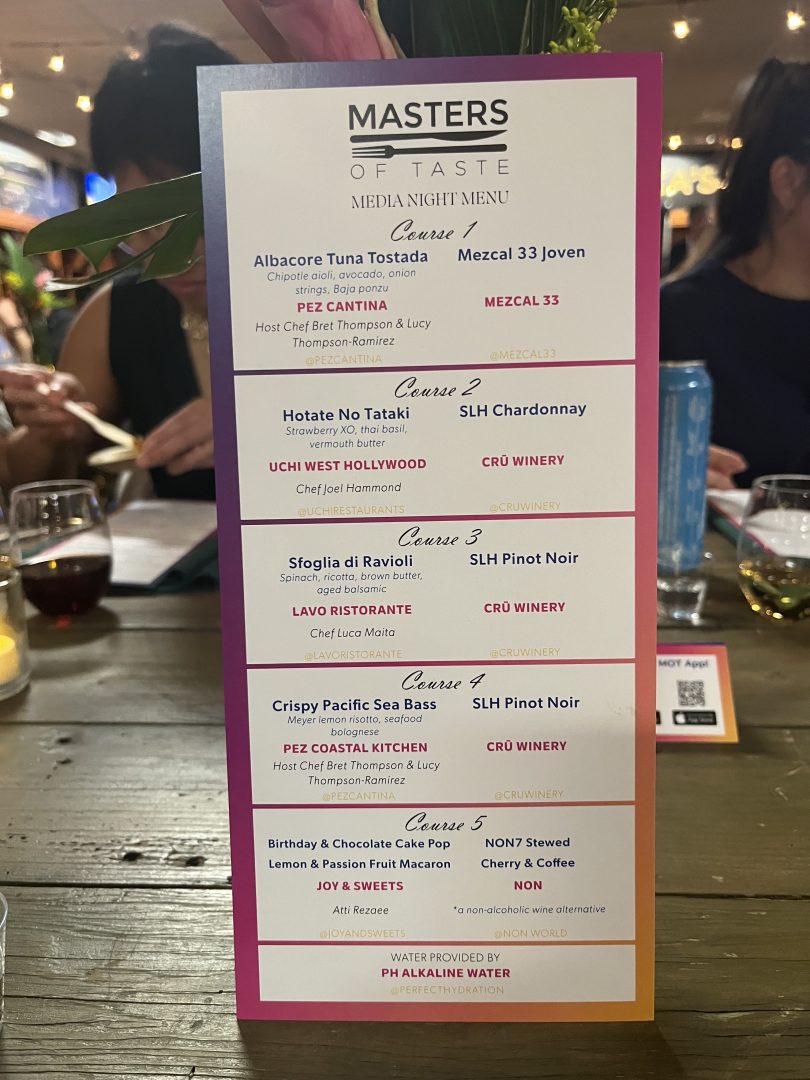
The menu during media night. | Photo by May S. Ruiz / Hey SoCal
Thompson eventually moved on and co-founded and became a partner at the iconic MILK Ice Cream Parlor & Bakeshop in Los Angeles. He also opened his own Market Restaurant and Catering, which he successfully sold in 2014. In 2015, he joined forces with his wife to embark on a new culinary adventure as the proud owners of Pez Cantina. This seasonal, modern, coastal-inspired Mexican restaurant and bar in downtown Los Angeles quickly became a beloved dining destination. In October 2021, they expanded with a new location LA Burrito in Montebello, California.
Lucy Thompson-Ramirez brings her unique perspective and expertise to the front of the house at Pez Cantina. Born in Guanajuato, Mexico, she migrated to the United States with her family at a young age. She pursued her education at the University of Santa Barbara, majoring in Sociology and minoring in Spanish. Her first career path led her into the fashion industry, where she excelled in sales and later established her own showroom with her brother called Siblings Showroom.
After a successful 18-year tenure in fashion, Thompson-Ramirez made a seamless transition into the hospitality industry alongside her husband. At Pez Cantina, her warm and welcoming demeanor shines as she personally greets regulars by name and fosters new connections. Her dedication to providing a home-like atmosphere has made Pez Cantina feel like an extension of their own family. In recognition of her leadership and contribution to the industry, she was appointed as President of the Latino Restaurant Association in 2023 and serves on the Los Angeles Tourism and Convention Board.
Seating during media night at Masters of Taste. | Photo by May S. Ruiz / Hey SoCal
Two weeks ago, Thompson and Thompson-Ramirez opened Pez Coastal Kitchen in Pasadena which offers a diverse menu featuring sea-to-table and farm-to-table cuisine – showcasing the best of seasonal California flavors. The restaurant highlights their expertise in curing, smoking and dry-aging meats and seafood, as well as their partnerships with local farmers and specialty producers. With a focus on creating a modern coastal dining experience, they aim to contribute to Pasadena’s thriving culinary scene and bring a fresh new concept to the city.
As the evening wound down, Shawn Morrissey, Senior Director of Advocacy and Community Engagement at Union Station as well as head of the Lived Experience Advisory Panel at the organization, county and state level, shared his moving experience as someone who was once an unhoused individual. He related, “In 2002, when I was almost 40, I arrived at Union Station with two black eyes, a gash on my forehead, and practically naked. Besides being homeless, I was also trying to get help overcoming a decades-long drug addiction due to trauma. And for the first time in my life, I was met with unconditional regard and I was nurtured. I was brought into a community where people wanted an authentic relationship with me. These were the things that made a difference.”
Masters of Taste organizers and participants during media night at the Rose Bowl locker room. | Photo by Brianna Chu / Hey SoCal
“We used to make homeless individuals jump through hoops and blame them for the situation they’re in, make them earn their way into housing or their way out of the streets,” continued Sean. “All that did was make the homeless problem worse. We know today there are best practice models – housing first, harm reduction, post-trauma care, etc. – which make us healthy.”
“I want to end with two thoughts – people are not broken; systems are. One of the things we hear a lot is that drug addiction drives people to homelessness but what we really know is that it’s a symptom of larger systemic and structural issues. In the 16 years that I’ve worked on the streets with people, I have yet to meet someone who chose not being sober over getting housing,” Sean concluded.
Masters of Taste at the Rose Bowl. / Photo courtesy of Masters of taste
Union Station has grown to be one of the best homeless services agencies in Los Angeles and is the lead County agency for Service Planning Area 3 (SPA 3). For over 50 years, it has been coordinating homeless services in 38 communities spanning from Eagle Rock to Pomona. It has seen a 97% success rate in permanently housing people since adopting the Housing First model. But its mission transcends providing temporary shelters; it is committed to creating lasting solutions for homelessness through housing, supportive services, and connection to the community.
Every dollar raised at Masters of Taste benefits the work of Union Station to end homelessness. Over the last six years, MoT has donated close to $3 Million to help countless families and individuals find a secure and welcoming place to call home.
So purchase your tickets to the 2024 Masters of Taste for a really fun Sunday afternoon hanging out with other foodies while doing your share in helping solve the homelessness crisis.
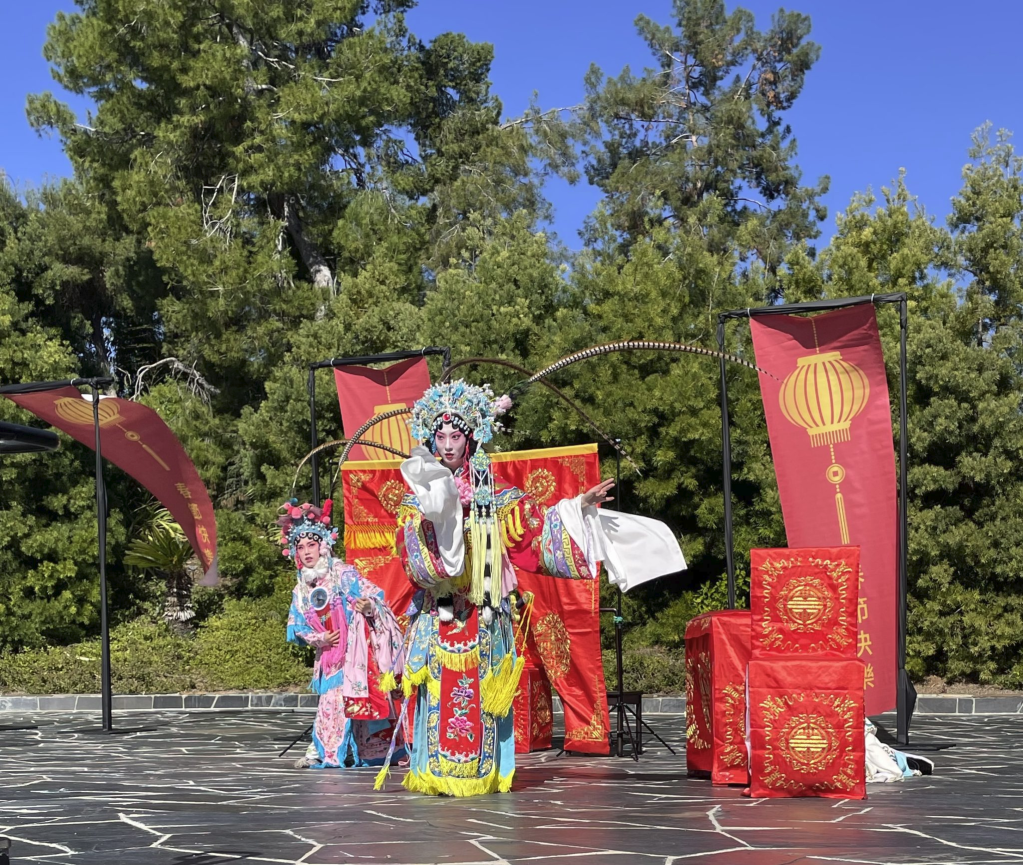
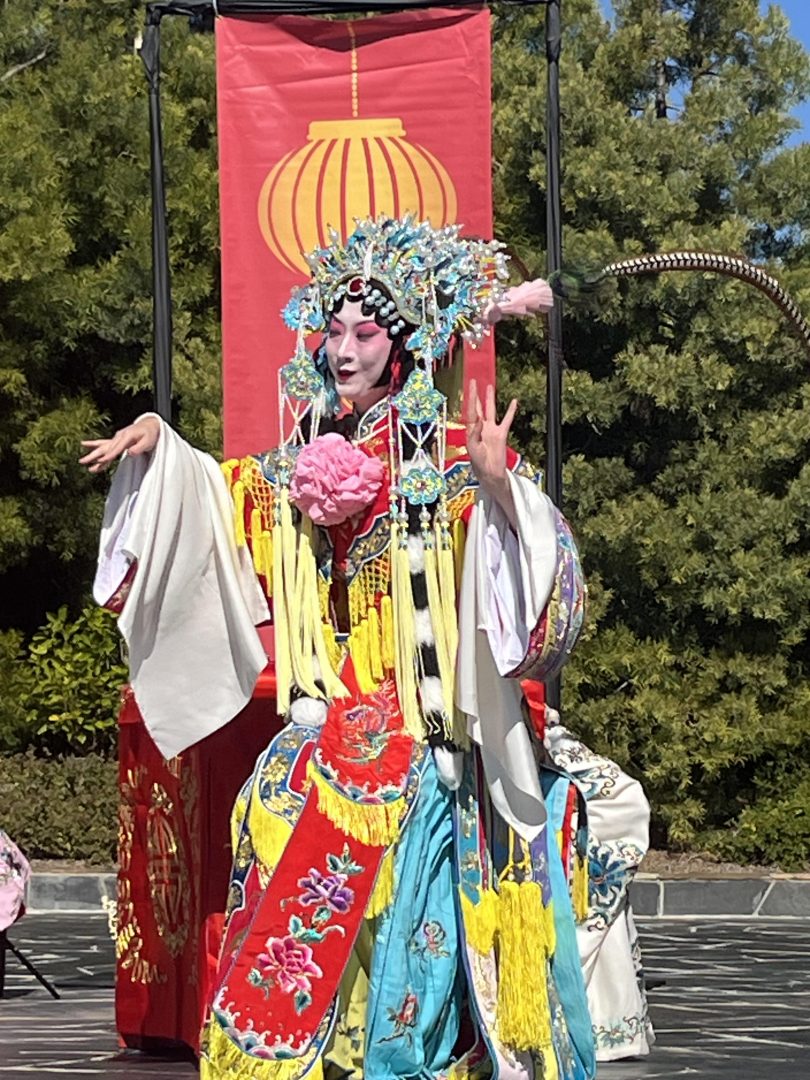
The Kwun Shu Opera Society’s Kun Opera performance | Photo by Brianna Chu / Hey SoCal
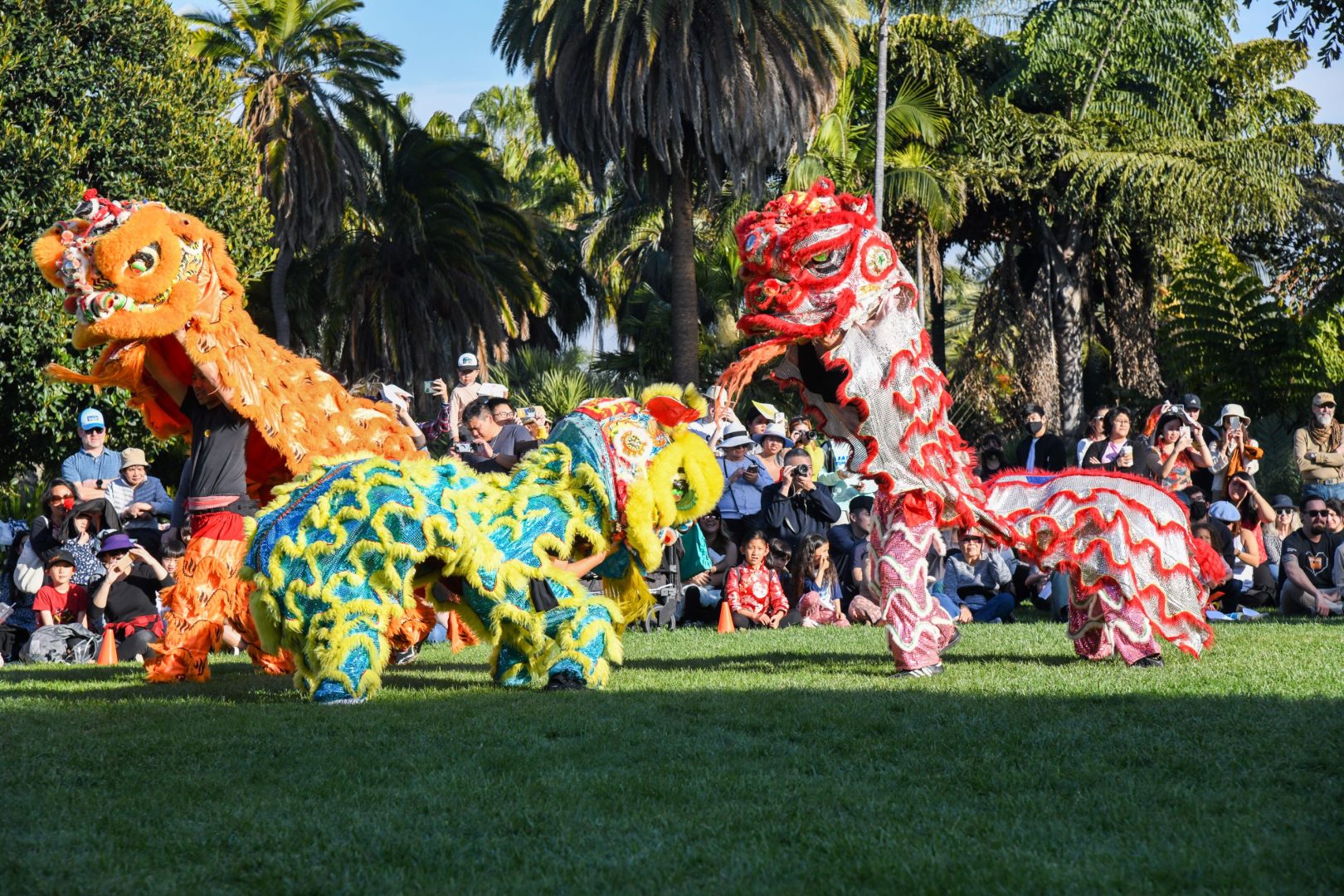
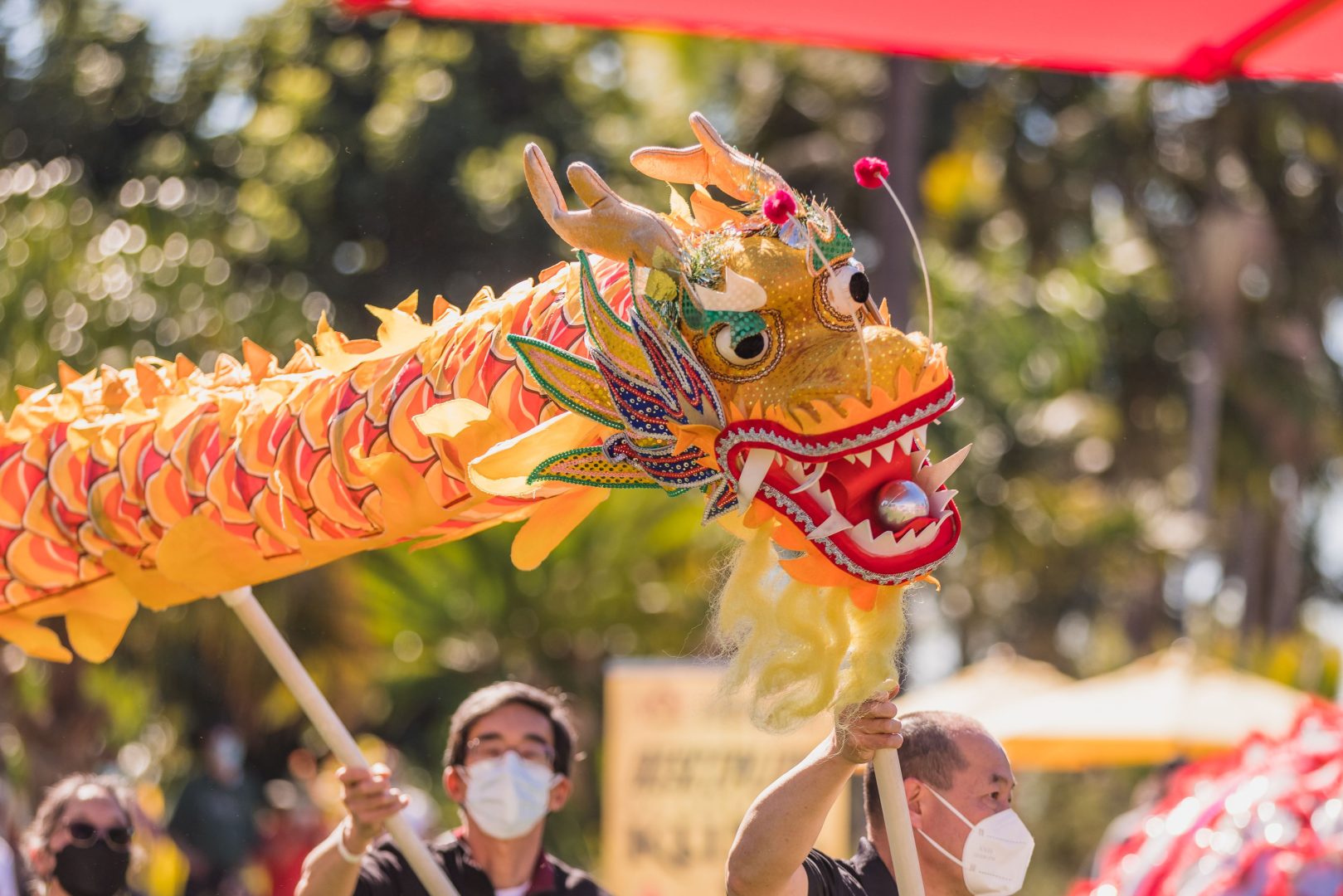
To most Asians and people of Chinese descent, the dragon is the most auspicious animal symbol in the lunar calendar – the sign symbolizes power and success and brings good fortune and prosperity. The Huntington Library, Art Museum, and Botanical Gardens welcomed the Year of the Dragon with a festival on February 10 and 11, 2024 from 10 am to 5 pm.
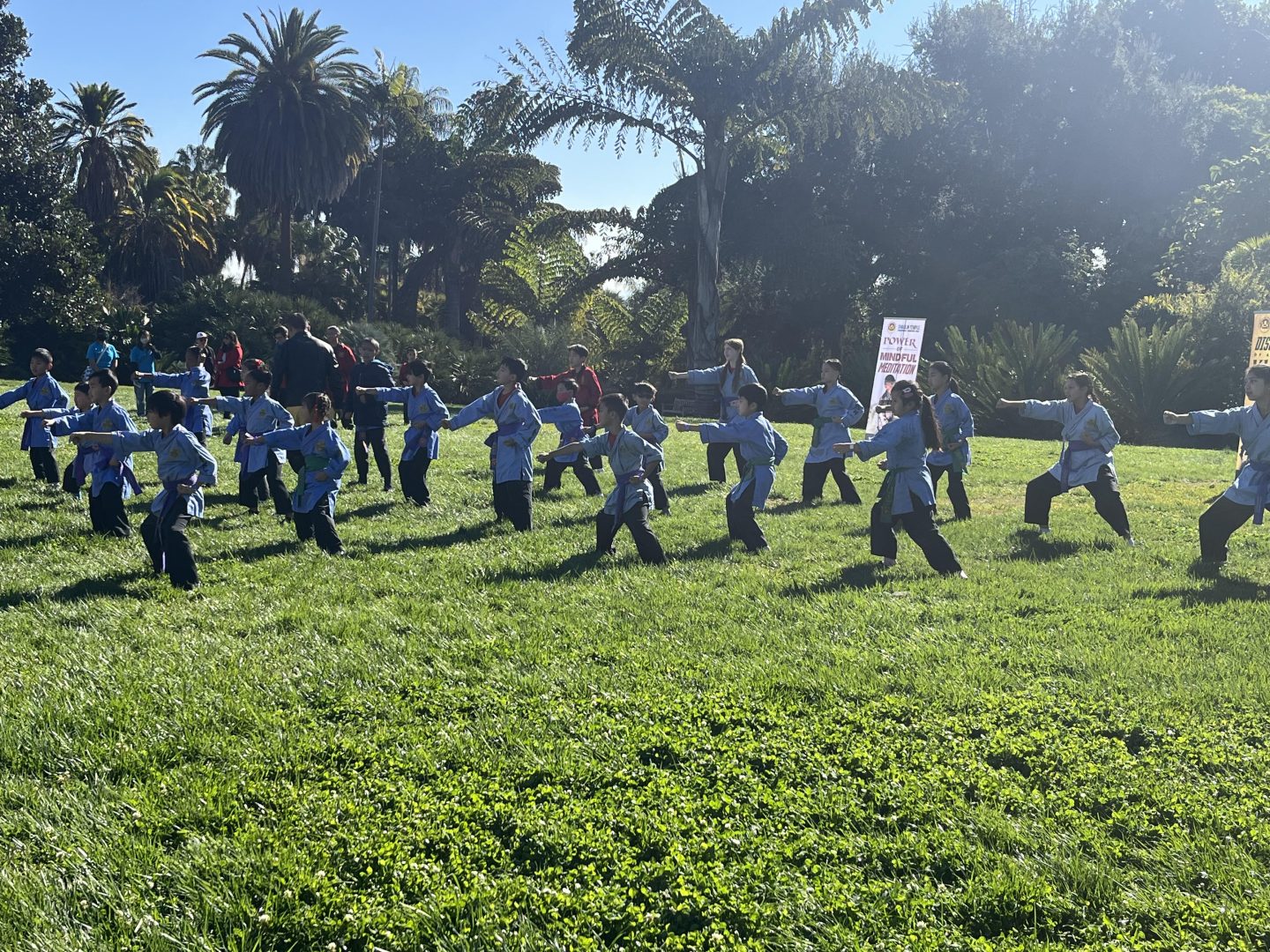
Program highlights on Feb. 10 included live music by the Han Music Ensemble (10:30 a.m.–12:30 p.m. and 2–4 p.m.) and Chinese Kwun Opera Society (11 a.m. and 1 p.m.) in the Chinese Garden. There were also martial arts demonstrations by Shaolin Temple Cultural Center USA (East Lawn, 10:30 a.m. and 2:30 p.m.) and K-STAR Contortion and Martial Arts (Rothenberg Hall, 11 a.m. and 1 p.m.), as well as lion dancers featuring Northern Shaolim Kung Fu (12:30 and 3:30 p.m.) on the East Lawn near the Huntington Art Gallery. Additionally, mask-changing artist Wei Qi Zhong performed (11 a.m., 1 p.m., and 3 p.m.) inside Haaga Hall.
Lion Dance | Photo courtesy of The Huntington Library, Art Museum, and Botanical Gardens
“This is one of the most beloved events of the entire year at The Huntington,” Sian Adams, Director of Strategic Initiatives, stated during a phone conversation. “There’s something for everybody; it has a lot of different food options, live music, performances, arts and crafts workshops for kids, lots of different offerings that make the day fun for a variety of ages.”
Kung Fu demonstration | Photo by Brianna Chu / Hey SoCal
While some events – like the lion dance – are mainstays, the organizers mix up the offerings. “We always are looking at the programming,” stated Adams. “This year we added the Kun Opera for a two-day performance in the Chinese Garden because we wanted to bring in something very artistic and special to the garden’s space itself.”
Kun Opera | Photo by Brianna Chu / Hey SoCal
The Kun Opera, also known as Kunqu Opera, is one of the three classic operas of the world. It is highly stylized – singers with painted faces wear elaborate costumes; hand gestures and head movements add another layer of meaning to what’s being sung. UNESCO proclaimed it as a ‘Masterpiece of the Oral and Intangible Heritage of Humanity in 2001.
All performances were relatively short – about 20 minutes each – held at different locations and people watched while standing. However, some performances had seating, like the Kun Opera in the Chinese Garden and the contortion and martial arts shows in Rothenberg Hall.
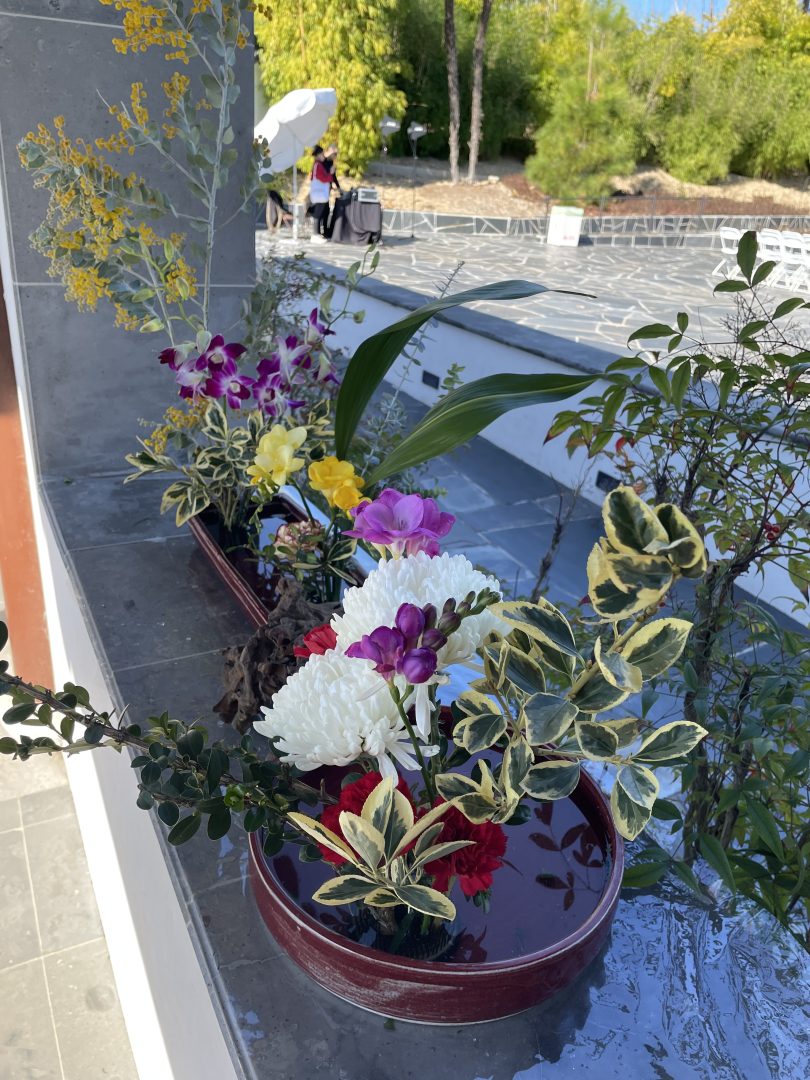
Floral display | Photo by Brianna Chu / Hey SoCal
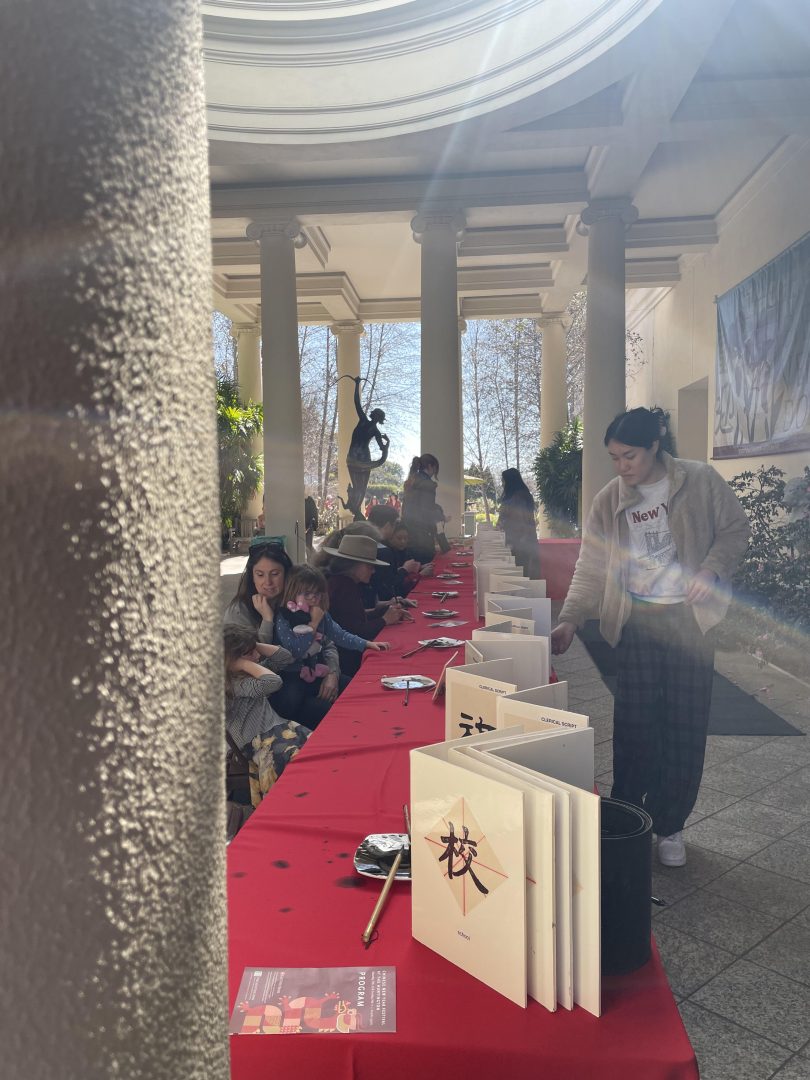
Whether it was by design or a case of bad scheduling, some shows were presented during the same time slots. Visitors either missed a really great presentation or had to stay the entire day to catch all the performances. If the organizers planned that all along to entice people to stay longer, though, then it was brilliant! There were several shows that went on throughout the day, like the floral arrangements, the Lego display, and calligraphy writing station. The Han Music Ensemble played well-known Chinese music with traditional instruments at the Transcendent Pavilion from 10:30 a.m. to 12:30 p.m. and from 2 to 4 p.m.
Calligraphy-writing station | Photo by Brianna Chu / Hey SoCal
According to Adams the Lunar New Year Festival is open to all members but it’s so popular that membership tickets usually sell out on the first day they’re offered. Tickets are also available to the general public although these also go very quickly so everyone is encouraged to purchase well in advance. Advanced reservations to get in are required for non-members and members as well.
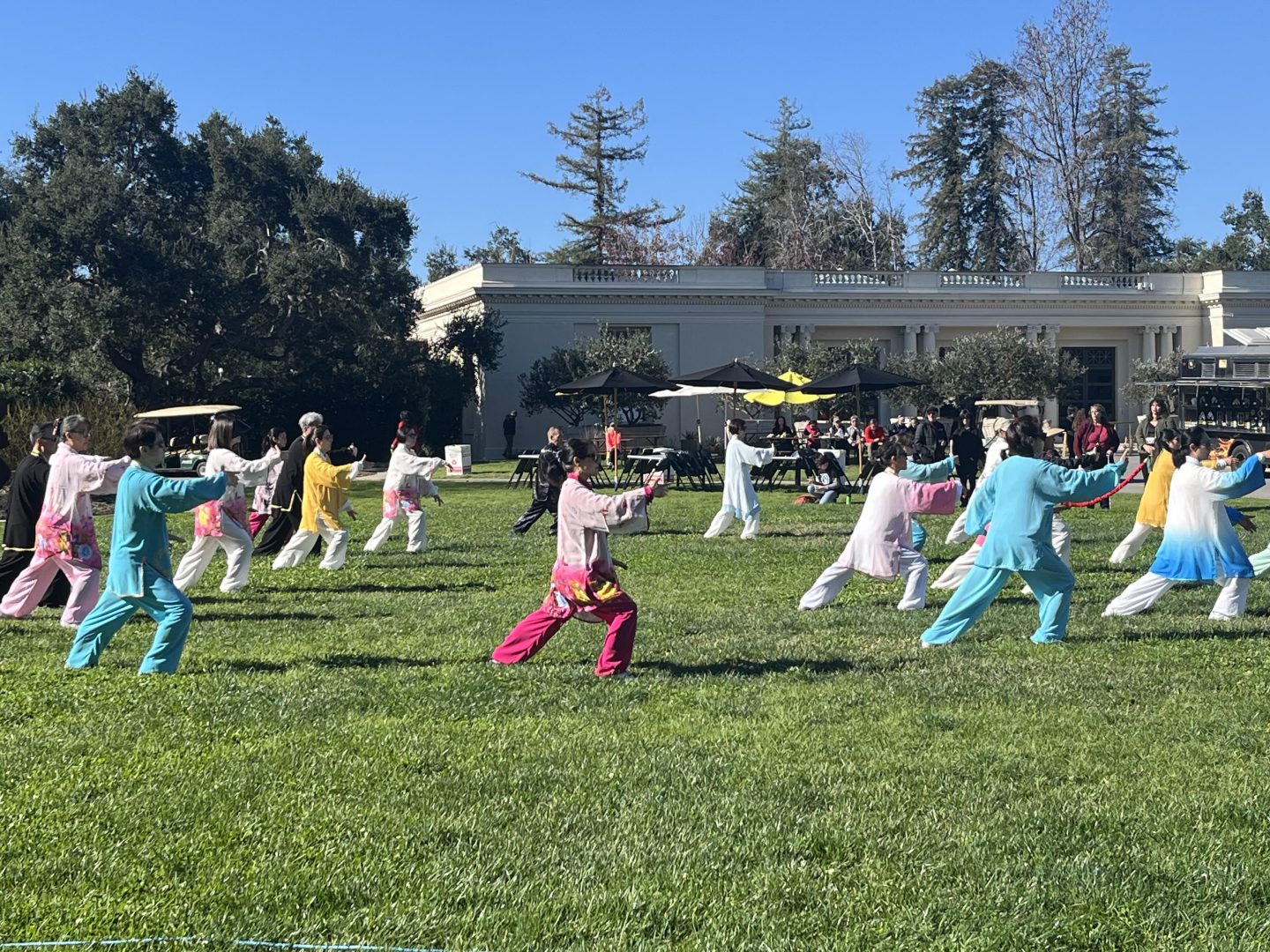
Tai Chi demonstration | Photo by Brianna Chu / Hey SoCal
“This annual event is part of The Huntington’s regular programming,” explained Adams. “That said, we’ve had one corporate partner which has made the Lunar New Year Festival possible for us since the beginning and that’s East West Bank. They have been our champion and a friend to the Chinese Garden at The Huntington from the earliest days. We’re truly lucky and we appreciate their friendship.”
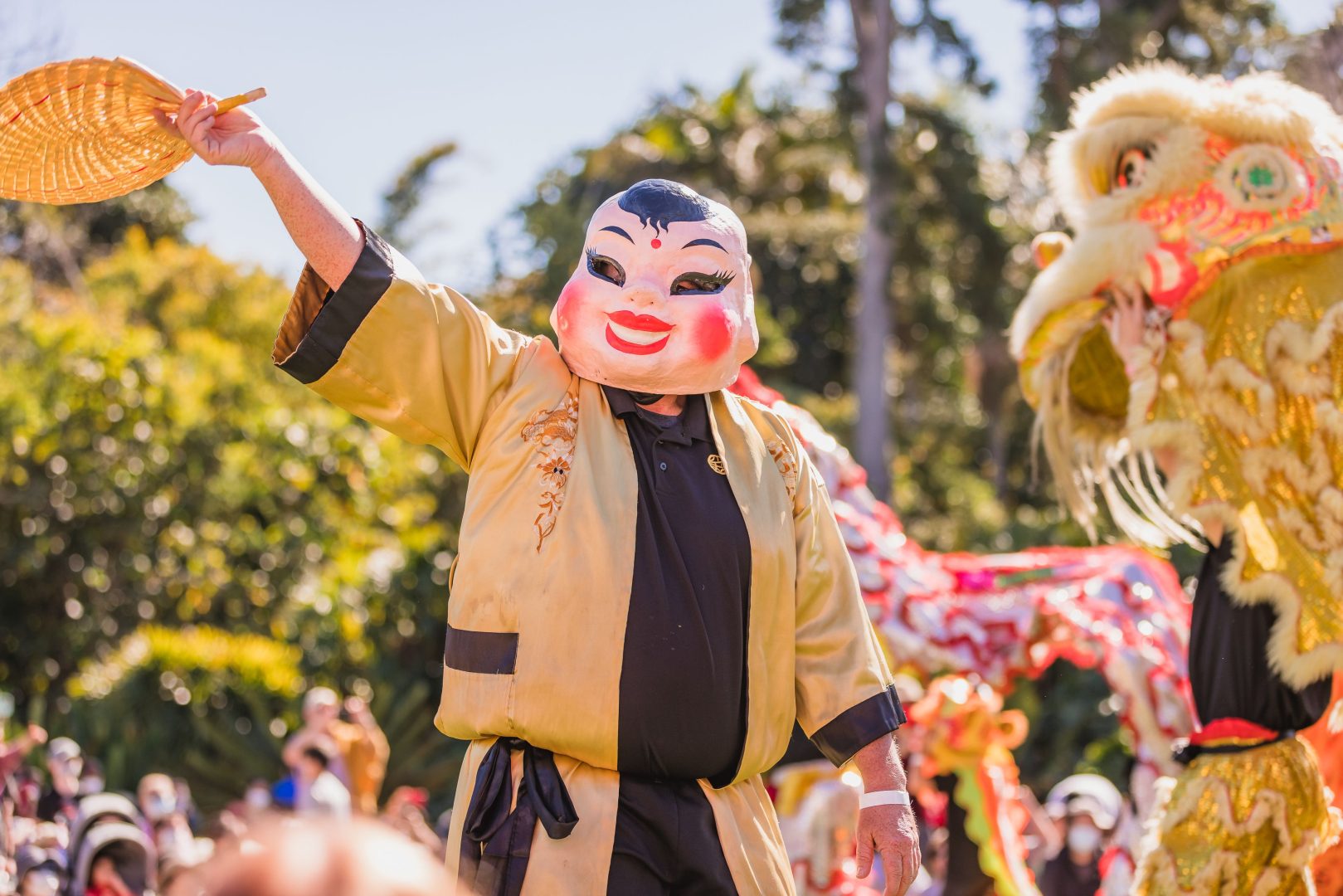
Masked performer / Photo courtesy of The Huntington Library, Art Museum, and Botanical Gardens
Now on its 19th year, the Lunar New Year Festival is The Huntington’s biggest event and it takes place across the institution in multiple staging spaces. It’s surprising therefore to learn that there aren’t that many people who make it happen. Adams said, “It’s a pretty lean and mean team headed by our Membership Dept. But while there are only a handful of core staff organizing it, there are about 50 volunteers on the day of the event to help ensure everything runs smoothly. We have a robust volunteer program – teen volunteers, docents, and staff sign up for the various events.”
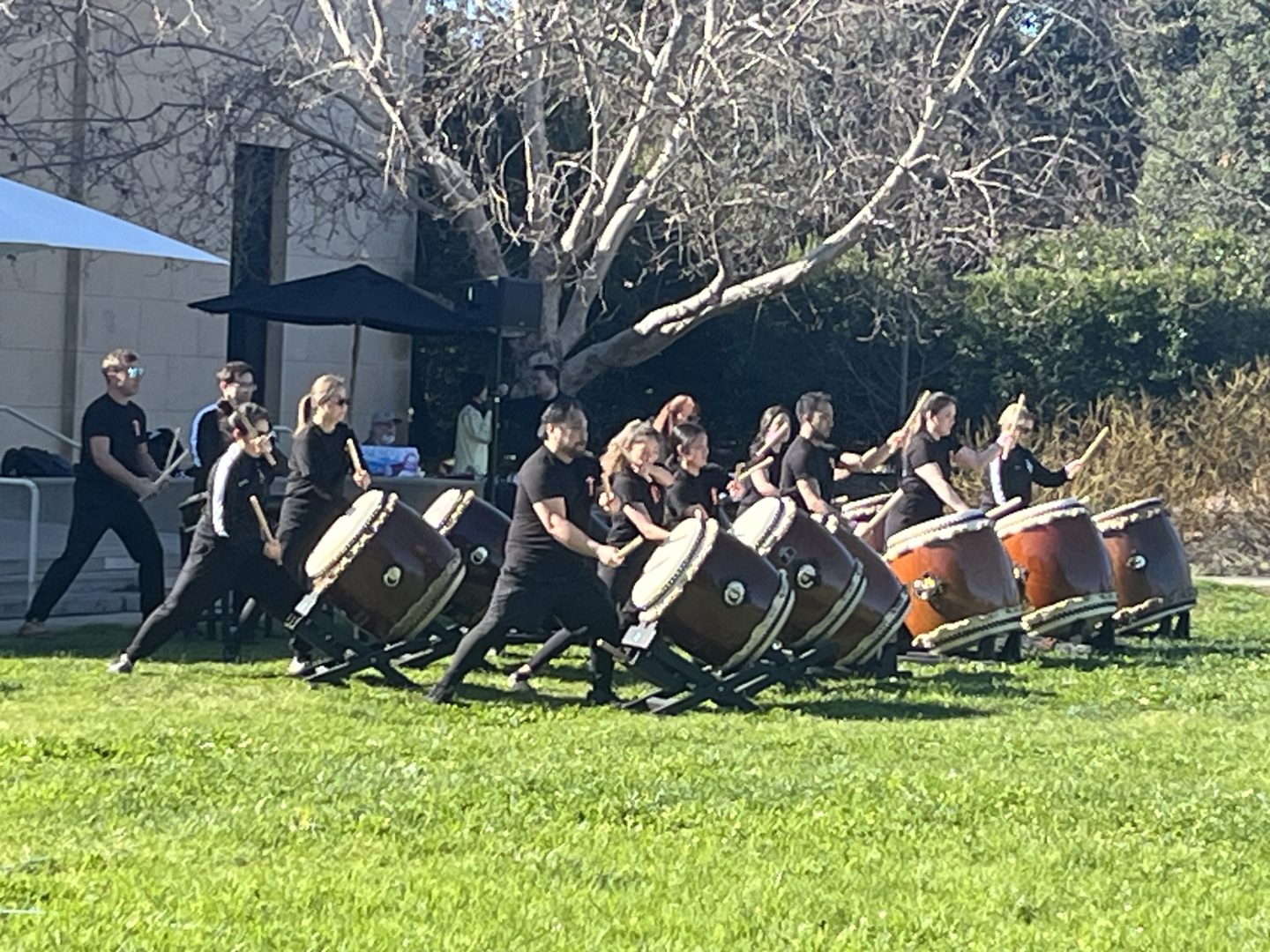
Battlefield drums (gu) being played| Photo by Brianna Chu / Hey SoCal
“The Lunar New Year Festival is a big lift for The Huntington – it’s all hands on deck for all of us here. We want everybody who comes to have a good experience and a great time. We look carefully at our programming and, just as important, our food offerings. All our restaurants are open and we also bring in external food trucks so there are lots of options to help ensure shorter lines and people aren’t waiting a long time for food. Additionally, we want to give visitors a variety of choices. These food trucks are they’re typically grouped in spaces but they’re all over The Huntington. It’s a very large campus so we want to make sure there are food available everywhere for easy access to visitors. You can be on one side and you don’t want to go all the way to the other side to find food.”
Adams added, “We make sure we offer lots of different entry points to invite people to come in and learn about other cultures and experience different traditions. Food can sometimes be an important gateway. You might try Chinese food and think ‘Oh I want to learn a little bit more.’ It makes the world a little bit smaller.”
Han Music Ensemble with traditional Chinese instruments (pipa, which is like a guitar, on the left; guzheng, a plucked zither, on the right) | Photo by Brianna Chu / Hey SoCal
“One of the things I want to emphasize is how proud we are to be a part of the Chinese-American community in Southern California,” declared Adams. “With the Garden and this festival, we open up The Huntington and welcome that dialogue in trying to make the world a little bit smaller by bringing east and west together. And really just connecting people and educating for the purpose of increasing understanding is important for these days and times. If you can learn a little bit more about another culture, boy doesn’t that go far!? Those are the things you carry your whole life – a little bit of understanding, a little bit of perspective.”
Photo courtesy of The Huntington Library, Art Museum, and Botanical Gardens
If there’s one thing that most people can connect with, it’s food. And who doesn’t like Chinese food? Dumplings, chow mein, sweet and sour pork, and orange chicken are some of the most recognizable dishes the world over. How wonderful it is to discover our shared humanity with people sitting at the same table while enjoying a delicious bowl of noodles and taking in the artistic and cultural traditions of one of the oldest civilizations on earth. At the very least, it’s a fantastic way to welcome the Year of the Dragon.
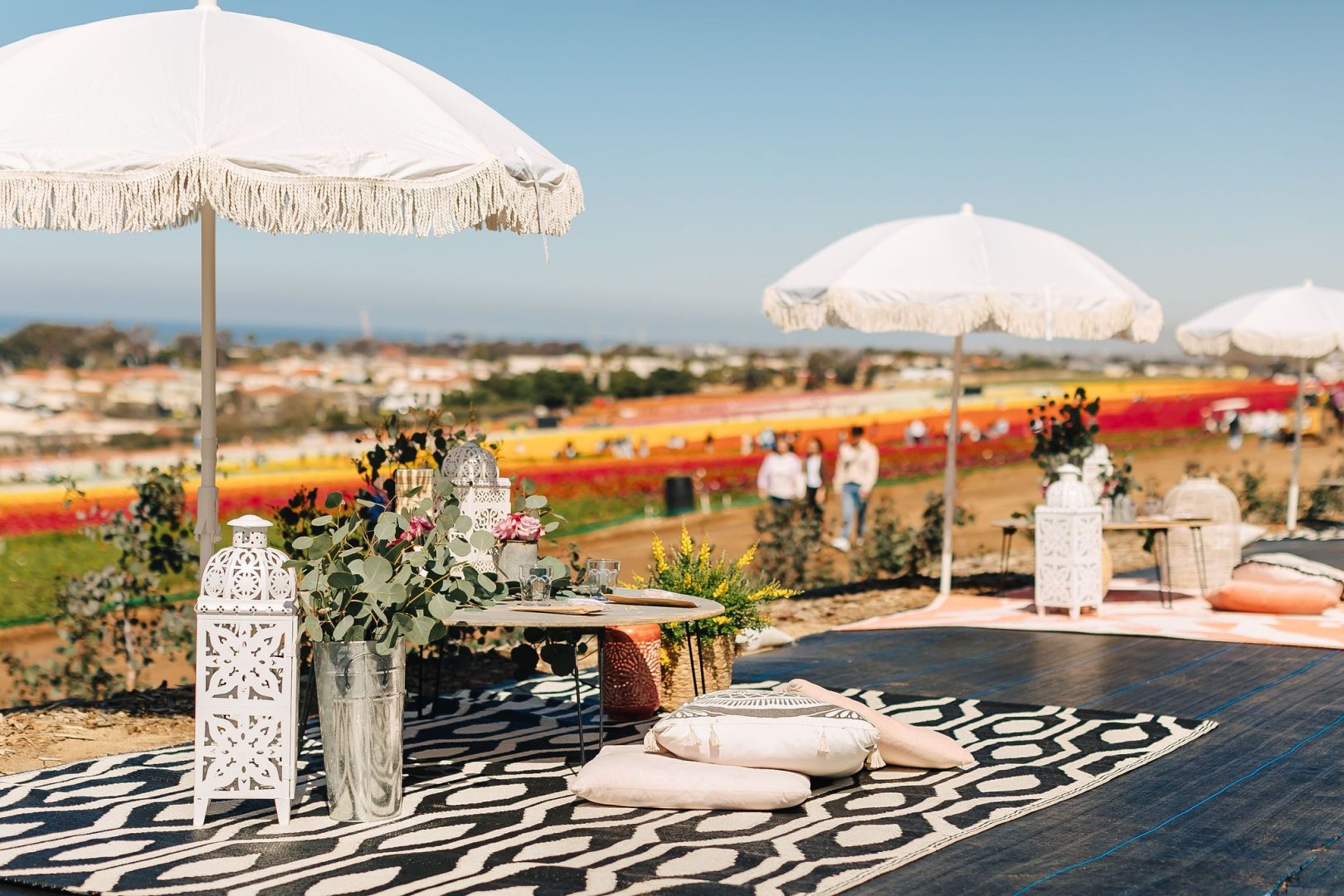
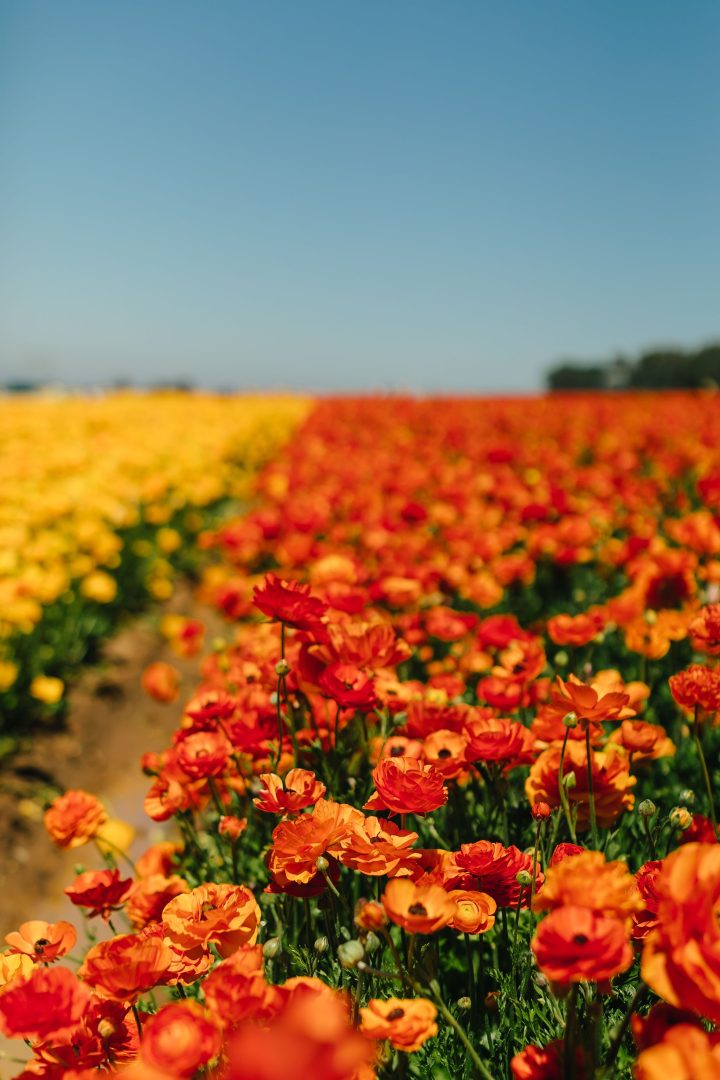
The Flower Fields in Carlsbad | Photo courtesy of Diana Rose Photography
After the cold weather and rain we’ve had, one can’t help but wish for spring to arrive. And what could be a lovelier way to bask in the mild Southern California sunshine than with a picnic and a walk on a field of vibrant blooms?
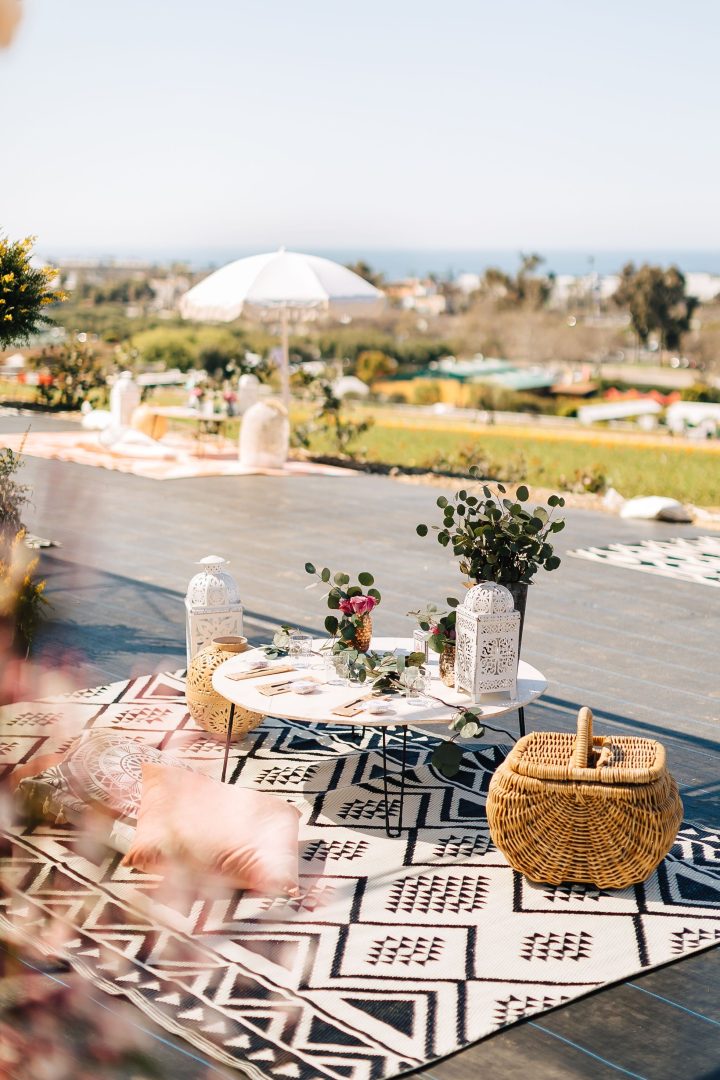
Pop Up Picnic Co. provides just that with their PICNIC + FLOWERS event when they return this year from March 23 to May 12, 2024. Against a backdrop of The Flower Fields in Carlsbad and the San Diego coastline beyond, picnickers will enjoy an elevated outdoors experience with curated bites, live music, and stunning views. The event will take place every Saturday and Sunday with seatings available between 11am and 2pm.
While several other picnic pop up companies have appeared in recent years, Lauren Kimmons is proud to have founded the original. She talks by phone about the origins of this popular event, “I created Pop Up Picnic as a promotional idea for Valentine’s Day 2012 to create buzz for the wedding + design business that I owned at that time. People loved it! We did them on request for several years and even when I sold that business in 2016, I never stopped getting requests for Pop Up Picnics. In 2018, I relaunched the service as Pop Up Picnic Co and we’ve been helping people get together ever since.”
Photo courtesy of Diana Rose Photography
Successful endeavors are usually products of an inventive mind, an entrepreneurial spirit, and serendipity, as PICNIC + FLOWERS proves. Kimmons explains, “PICNIC + FLOWERS was a nebulous dream of mine and it all came to fruition because of a great networking opportunity and a gracious, creative, fearless lady: Joni Miringoff of The Flower Fields. Joni happened to see my company included in press for the San Diego Tourism Authority Accelerator (Pop Up Picnic Co was an inaugural cohort member) and we just hit it off! That meeting set my business on a completely novel direction. I am forever grateful to SDTA and Joni for setting me on this new path.”
Kimmons says 1,195 people booked the weekend event in 2023, which encouraged her to return this year. And as she has always done, she does a lot of planning and prep work to ensure the event runs smoothly. She describes “I’m a big believer in systems. There are lots of details and logistics that go into planning an event like this and the biggest thing is staying organized and starting early. There are a few key areas where we focus in the months leading up to P+F: logistics, guest experience, supplies, marketing, and staffing. Luckily, we have the blueprint from last year so we have the added benefit of seeing what works (and what doesn’t) and making adjustments from there. We’re a tiny but mighty team of just three full-time staff members. As the event comes closer we’ll add about five more team members.”
That’s not to say it was easy from the get-go. She says, “The biggest challenge was believing I could do it. But like anything, it’s just one foot in front of the other. That’s where my background in weddings really honed my talent for logistics and planning. We just take everything one step at a time. This year, I just hope it lives up to the success of last year! We’re adding new features and amenities for the guests like more shaded areas, increasing the menu, adding dessert, and including private parking. All these features come with new challenges but we’re up for the task!”
Photo courtesy of Diana Rose Photography
This pop up picnic isn’t only offered in Carlsbad. Kimmons clarifies, “We have picnics in several locations! Pop Up Picnic Co’s main service is picnics for parties of 2-25 guests throughout San Diego. We call them Pop Up Picnics, a term we coined way back in 2012. We have two styles – BOHO with low seating and ORIGINAL with farm tables and bistro chairs. We can pop-up at the beach, a park, your home and lots of other places.”
“We would love to have our guests come back again in 2024 and we’re offering a couple bonuses for our previous guests which will all go out to our email subscribers,” says Kimmons. “We’re adding some enhancements this year including a private entrance and dedicated PICNICS + FLOWERS parking which means more time enjoying the fields! PICNICS + FLOWERS guests will also receive free wagon rides, expanded shade structures, a family-fun zone with lawn games, and expanded pre-fixe menu with picnic-inspired tea sandwiches, an assortment of seasonal salads, charcuterie for the table and mini fruit pies for dessert. Moreover, we’re making the experience more inviting for families, on top of giving discounted kids tickets, we’ve created a really fun, picnic-themed kids menu with cheese sandwiches, fruit + kid-friendly, nut-free snacks. We also have custom PICNICS + FLOWERS activity packs with coloring pages and a scavenger hunt and lawn games in our family-friendly play area.”
Photo courtesy of Diana Rose Photography
The culinary offerings at this year’s event are set to delight attendees. Guests will receive an individual box containing a tasting menu with a variety of options to choose from, including cucumber chive sandwiches, chickpea smash sandwiches, ham and tomato sandwiches, three seasonal side salad choices, mini charcuterie, and delightful fruit pies on a stick for dessert. Refreshing beverages will accompany the delectable bites such as hibiscus-lemon aguas frescas and mint-infused water. Children will be served a child-friendly meal comprising cheese sandwiches, fruit, and dessert.
While the charming picnics have limited seating times of one hour, guests are encouraged to linger and explore The Flower Fields at their leisure and enjoy their complimentary wagon rides. Games at the tables add to the entertainment, allowing attendees to savor the experience with family and friends. For those bringing their children, a family-fun zone will be open for play.
It’s never too early to plan for fun things to do and new places to visit this spring. Make PICNIC + FLOWERS one of your exciting new adventures!
Located about 120 miles south of Pasadena, La Jolla is a wealthy seaside community with a population of approximately 50,000 or close to a third of Pasadena’s. It occupies seven miles of coastline and is home to several venerable educational foundations, including the Scripps Institute of Oceanography and University of California San Diego; historic buildings like the La Jolla Woman’s Club and La Jolla Recreational Center; renowned sports venues such as Torrey Pines Golf course and La Jolla Beach and Tennis Club.
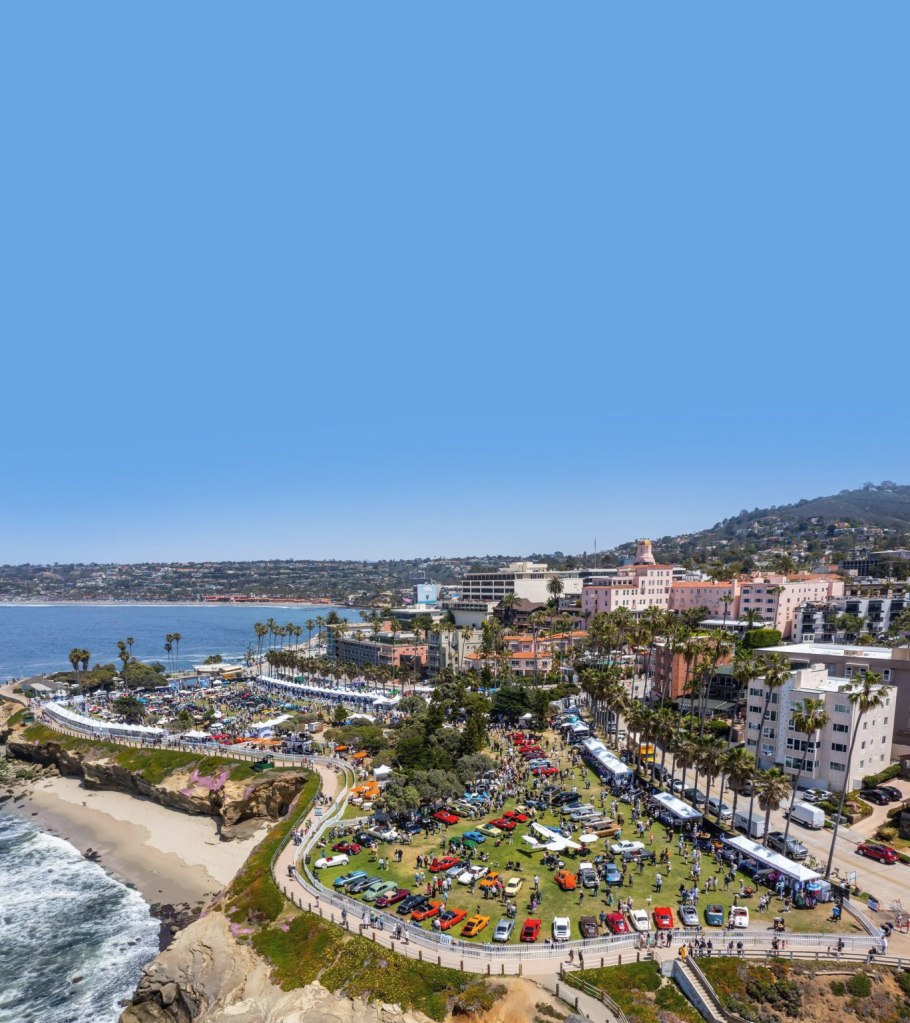
It is also the breathtaking setting for the Annual La Jolla Concours d’Elegance, which will be held this year from April 19 to 21. Presented by LPL Financial and major sponsors Panerai, Mercedes Benz, and Sotheby’s, among others, it will showcase classic automobiles from the Roaring ’20s and Glamorous ’30s. Celebrating its 18th year, it is recognized as the premier automotive lifestyle event.
Photo courtesy of La Jolla Concours d’Elegance
Speaking by phone, event chair Michael Dorvillier talks about the event’s humble beginnings and how it evolved into one of the most prestigious classic automobile showcases in the country. He relates, “It was created 20 years ago as the La Jolla Motor Cars Classic by a group of community leaders and merchants with the primary objective of bringing business into La Jolla in the month of January when things are usually really, really quiet. Then sometime in 2011 or 2012 the original founders handed ownership of the show to the La Jolla Historical Society.”
“Incidentally, the historical society’s executive director at the time was a friend of mine and didn’t know anything about cars,” adds Dorvillier. “The founding group knew I was a car collector – I would always go to the show because it was in my own backyard. I put in a car once; it was always a fun thing for me to do. They also knew I was passionate about the community and I had relationships in the car world. I was asked to step in and be part of the committee that oversaw the event. I was at a point in my professional career when I was financially stable and I wanted to find something I could donate time and money to.”
A wealth manager offering financial services, Dorvillier has lived in La Jolla for the past 35 years. It was where he raised his kids and established his business. Buying and collecting old cars, tinkering with them and showing them, became a lifelong hobby when he bought his first car – his dad’s 1969 Camaro – which he retrofitted with fancy wheels and a modern motor.
Dorvillier continues, “I joined the committee the first year to observe and soak up as much information as I could about this event as it stood then and what its future could look like. And I realized very quickly they had this really great little car show, but it was on a concours venue at this amazing location – Ellen Browning Scripps Park. No other organization can have that entire park for a weekend to themselves, but the show had been there long enough that they kind of had that in their back pocket. However, I wasn’t going to put in my time and energy for a local car show held once a year on a Sunday; I wanted to do a proper concours. Thus, in 2013, the three-day weekend getaway called La Jolla Concours d’Elegance was born.”
Photo courtesy of La Jolla Concours d’Elegance
“When we converted it to a concours, we needed to have judges. Today we have 75 volunteer judges who are from different parts of the U.S., and six or seven of them come from overseas. They’re all specialists in the cars they judge and they want to have La Jolla on their resumé. There are, in fact, quite a few high-end concours around the world. You can go to many different ones around the globe and see world-class cars that travel from concours to concours. But what makes us stand out and garner global attention is the experience we offer. Our tagline is ‘world-class cars, world-class experience.’
And La Jolla Concours d’Elegance has certainly lived up to that claim. Dorvillier remarks, “Last year, we had 21 Duesenbergs on display. Most of them were 1 of 1 – meaning they only ever made one of them. Every single screw, wire, and leather seat was exactly what it would have been when the car was built new. The first five or six Duesenbergs in the line-up were probably worth $100-M. These are pieces of art! They’re very rare, beautiful automobiles. You don’t have to like cars to come to our show and love it and want to come back. You’re looking at art and history.”
The three-day getaway experience has an impressive array of activities with every amenity imaginable. Much thought and planning have gone into this year’s event, starting with the cover art for the posters, programs, tickets, banners, and other promotional materials. Official La Jolla Concours artist Scott Jacobs, prominent for his incredible photorealistic paintings of motorcycles and automobiles, will continue to astound as he paints the 1937 Rolls-Royce Phantom III from the Aaron Wiess collection.
The 1937 Rolls-Royce Phantom III epitomizes the luxury and engineering prowess of pre-war Rolls-Royce. This model, replacing the Phantom II, is distinguished as the only V12 Rolls-Royce until 1998’s Silver Seraph. Among the 721 V12 Phantom III chassis built from 1936 to 1939, this particular vehicle is a testament to the era’s peak in automotive luxury and design. Its heart, an aluminum-alloy V12 7.32-liter engine, is a marvel of its time, featuring a dual ignition system with two distributors and 24 spark plugs. Enhanced by Ace wheel discs for aesthetics and practicality, the car also boasts advanced features like on-board jacking and the Bijour lubrication system. Scott Jacobs’s portrayal of this iconic vehicle in his artwork not only captures its elegance and sophistication, but also serves as a tribute to the artistry and grandeur of the automotive and artistic crafts of the era.
Photo courtesy of La Jolla Concours d’Elegance
Instead of featuring a single marque, the 2024 Concours celebrates a vast range of makes and models from the transformative era of the 1920s and 1930s, including Bugatti, Duesenberg, Packard, Bentley, Rolls Royce, and more. From sleek Art Deco designs to the powerful engines found within, these vehicles will transport spectators back to a time of innovation, luxury, and boundless enthusiasm for automotive craftsmanship.
An exquisite collection of automobiles will also be on display including:
1932 Chrysler CP8 (Robert Schlesier): A marvel of engineering with only 5 surviving examples of the original 251 built. Debuting at the La Jolla Concours after extensive restoration, this car boasts a unique transmission.
1930 Ruxton (The Nethercutt Museum): Of the 96 produced, fewer than 20 survive. The Ruxton’s distinctive striped paint job highlighted its low profile.
1937 Rolls Royce Phantom III V-12 (Thrupp & Maberly): Originally commissioned by Sir Kameshwar, Maharajah of Bahadur, this vehicle was a highlight at the 2003 Pebble Beach Concours.
1965 Alfa Romeo Giulia SS (Mark Angotta): A rarity in black, among the 1,400 built, this model stands out for its stunning livery.
1955 Jaguar D-Type: Once owned by Hollywood comedian and writer Jack Douglas, this is one of only 71 ever made.
1973 250 cc Husqvarna Trials Bike: A rare find in the USA, with only 200 initially imported.
Aston Martin DB5: Celebrated as the “Most Famous Car in the World,” renowned for its iconic role in the James Bond film ‘Goldfinger.’
Fiat 1500 GT by Ghia (Kipland Howard): An extremely rare model, with only 36 imported to the USA and fewer than 50 known to survive worldwide. Its appearance at the La Jolla Concours marks its American debut.
1962 Triumph Italia 2000 Vignale (Kurt & Sharon Oblinger): Designed by Giovani Michelotti and built by Vignale, this is one of the only 328 ever produced.
Photo courtesy of La Jolla Concours d’Elegance
The world-class experience begins on Friday, April 19, with a VIP Party from 6:00 to 10:00 pm at Ellen Browning Scripps Park. Guests will immerse themselves in live music, savor artistically crafted cocktails from a hosted bar, relish gourmet delights from 20 of San Diego’s top restaurants, and participate in an exciting live auction featuring unique items.
On Saturday, April 20, guests will take part in an intimate and exclusive experience from 7:00 am to 2:00 pm. They will start the day by visiting remarkable car collections followed by a driving tour of the dramatic scenery of San Diego. A sumptuous lunch awaits them at the private venue.
Later that day, “Porsches on Prospect” goes on from 5:00 to 9:00 pm. Guests will witness 75 magnificent Porsches lining Prospect Street, and enjoy the village’s vibrant atmosphere, featuring live music, exclusive retail offers, gallery openings, restaurant specials, and much more.
On Sunday, April 21, from 9:00 am to 4:00 pm, guests will get a once-in-a-lifetime chance to view over 200 spectacular and rare vehicles that will be displayed at Ellen Browning Scripps Park on the La Jolla Cove lawn along the breathtaking Pacific Coast. They will indulge in the Champagne and Honey Tasting Garden and other unique experiences throughout the day. They will enjoy live music, visit exclusive vendors, and be treated to refreshing beers and cocktails – all while surrounded by an extraordinary display of cars. Moreover, they will watch a vintage flyover along the coast!
Photo courtesy of La Jolla Concours d’Elegance
That the little La Jolla car show has gone on to the become the dazzling and sought-after weekend party is not lost on Dorvillier. He enthuses, “When I took over as chairman, I jokingly said to someone one day ‘Every time I say to my wife let’s go to this car show this weekend, her response is do we really have to go to another one of those?’ It’s usually the last thing a non-car person wants to do. So we purposefully created an experience where if the husband was the car guy and the wife was sick of going to car shows, she was going to be dragging him back next year. And we have succeeded!”
Dorvillier quickly points out that he didn’t accomplish this feat by himself – there are 24 individuals that make up the committee who share the credit. He says, “Laurel McFarlane of McFarlane Promotions is the event coordinator and she’s been involved with this show from Day One. As the event grew, I spread out the responsibilities so there are now two components: the ‘talent,’ which are the cars; and the business aspect, which encompasses fundraising and sponsors, and the parties. While I oversee the entire project, I focus on the business side and my co-chair Bob Kerner runs the talent side. He has a team underneath him that ensures everything that’s related to the cars is perfect and topnotch – finding the cars and judges, for instance. We’re very discerning when it comes to cars, we don’t take any automobile that comes in. The selection team goes through all the cars and makes sure they’re authentic and original, worthy of having on the field. The executive committee, along with the car selection committee and the chief judge, decide on the marque.”
The La Jolla Concours d’Elegance is actually a year-long endeavor. Dorvillier explains, “We start over the minute one show ends. We didn’t hold it during the pandemic, but in October of 2021 we organized a golf tournament that raised the money we needed to pay for our expenses during the two years we were off. There are costs associated with this event and we needed to generate enough revenue while we sat on the sidelines so the Historical Society wouldn’t get adversely affected.”
Photo courtesy of La Jolla Concours d’Elegance
A unique event in this year’s celebration is the Mille Miglia at La Jolla which Dorvillier is excited about. He says, “Hagerty, the largest insurance company in the car industry, owns the California Mille, which is a 1,000-mile race that started in Italy and is still held there to this day. (The iconic car racing event was begun by Counts Aymo Maggi and Franco Mazzotti in 1927). Hagerty has reinvented that race here in the United States and this year they’re starting the Mille Miglia at La Jolla at the Concours. On Monday morning, all those cars participating in that race – I believe there are about a hundred – will take off on their 1,000-mile race over five days through Southern California. All the cars are classic Ferraris, Lamborghinis, and Maseratis from the ‘50s and early’60s era.”
It has been a little more than a decade since Dorvillier took the reins of what is now La Jolla Concours d’Elegance. And in that time, he has met many wealthy yet unassuming people who are just taking in the joys of seeing the most beautiful cars in one place. He marvels, “My best memories involve the people that I’ve met in the car hobby world. When you come to our event, you’re standing there looking at a Bugatti or a Duesenberg that costs anywhere from $10-M to $20-M and you’re talking to the owner. You have no idea that that person is a billionaire other than the fact that he owns that car. They’re just very down-to-earth people who are truly passionate about their hobby, which is collecting and preserving these pieces of art.”
Photo courtesy of La Jolla Concours d’Elegance
“For a long time, La Jolla was a sleepy town. But the Concours d’Elegance has livened things up for our community,” declares Dorvillier. “It has helped tourism – people usually arrive on a Thursday and stay for the weekend. Last year we were able to fill 800 hotel rooms; visitors dined in participating restaurants, shopped at clothing stores and various retail establishments, and went into museums. (There were 2,500 attendees in the Sunday events but there were several free events during the weekend so the total attendance was much higher) I’m proud to have played a small role in putting La Jolla back on the international map.”
“That said, I didn’t do this all by myself,” Dorvillier emphasizes. “Indeed it takes a village to make this happen – we have a dedicated team year-round and 250 volunteers on the weekend of the event. And I want to make sure they get the recognition they deserve.”
Dorvillier and his team have stopped at nothing to put on a once-in-a-lifetime experience. What could be more spectacular than driving down to La Jolla on a beautiful Friday morning this spring with clear blue skies above and the pristine waters of the Pacific Ocean on the horizon and then spending the weekend at the La Jolla Concours d’Elegance? It promises to be one weekend affair to remember!
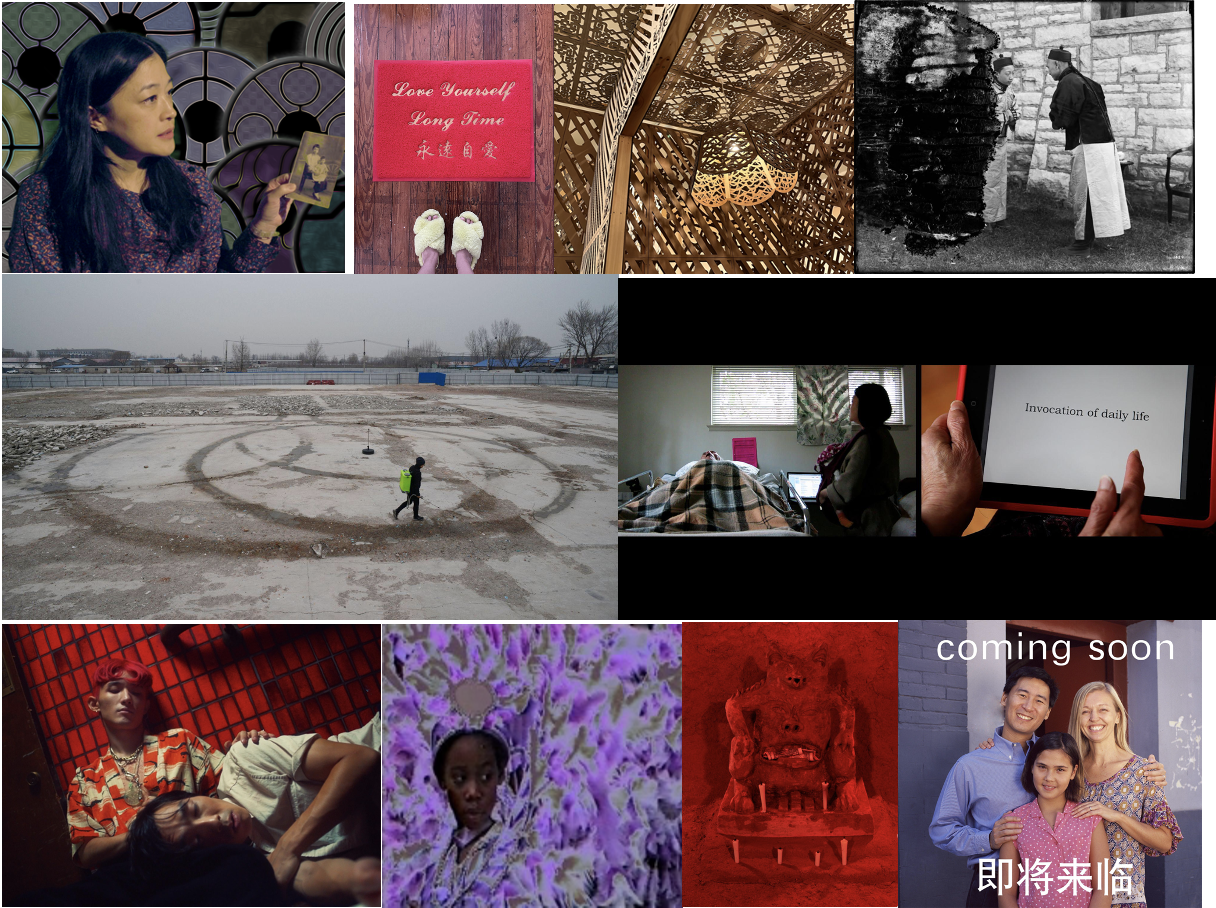
Clockwise from top left: Vivian Wenli Lin, The Joy Luck Mom Club, 2023; Jennifer Ling Datchuk, Love Yourself Longtime, 2019; Charlene Liu, China Palace, 2023; Rania Ho, Roundabout, 2023; Patty Chang, Invocationsand Que Sera Sera, 2013, Andrew Thomas Huang, Kiss of the Rabbit God, 2019; Richard Fung, My Mother’s Place, 1990; Candice Lin, Lithium Sex Demons in the Factory, 2023; Ken Lum, Coming Soon, 2009 / Courtesy of USC Pacific Asia Museum
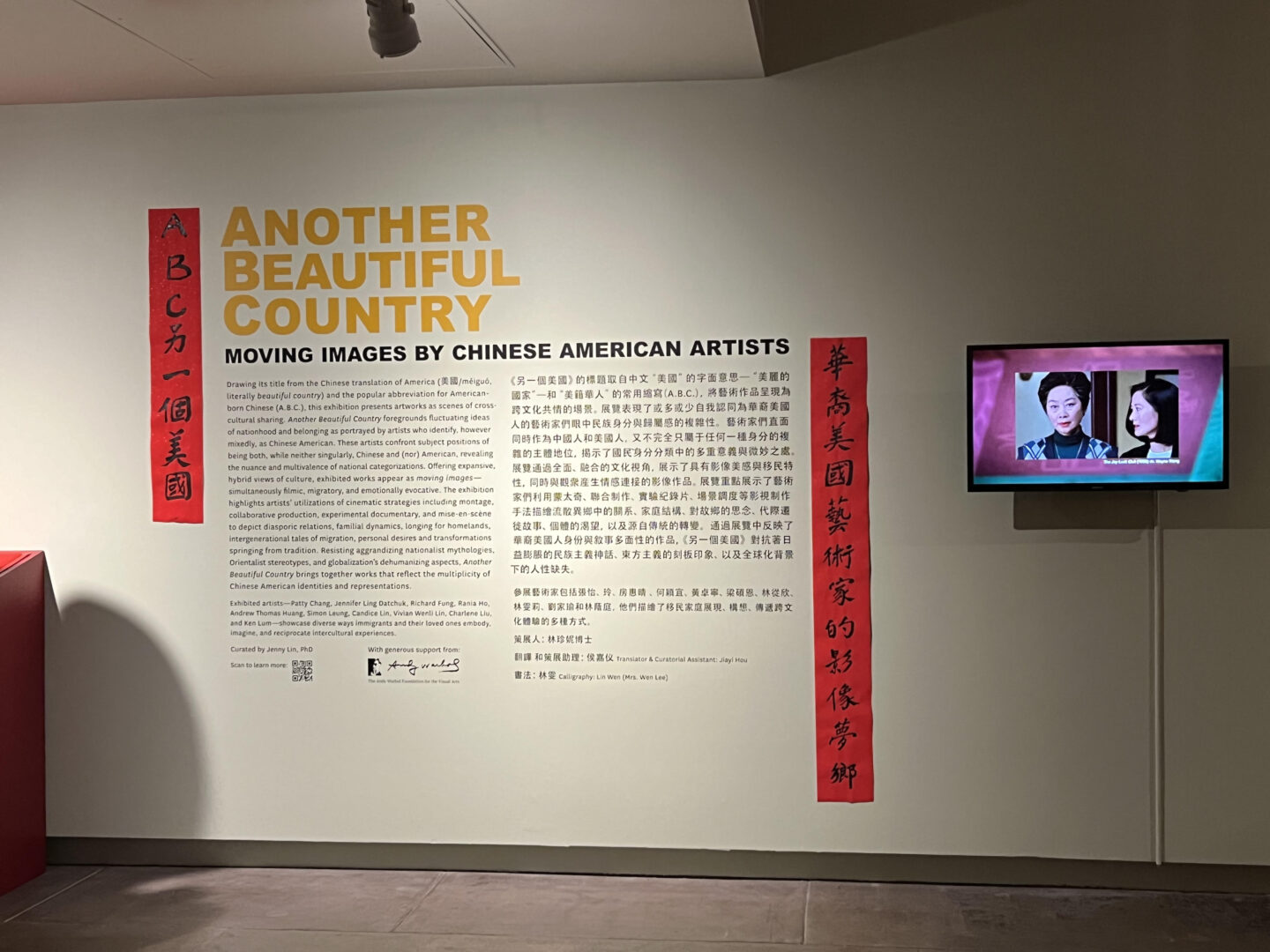
A touching experience awaits visitors to USC Pacific Asia Museum who come to see Another Beautiful Country: Moving Images By Chinese American Artists. On view from January 26 to April 21, 2024, the exhibition showcases ten artists whose work explores diverse ways immigrants and their families embody, imagine, and reciprocate intercultural experiences.
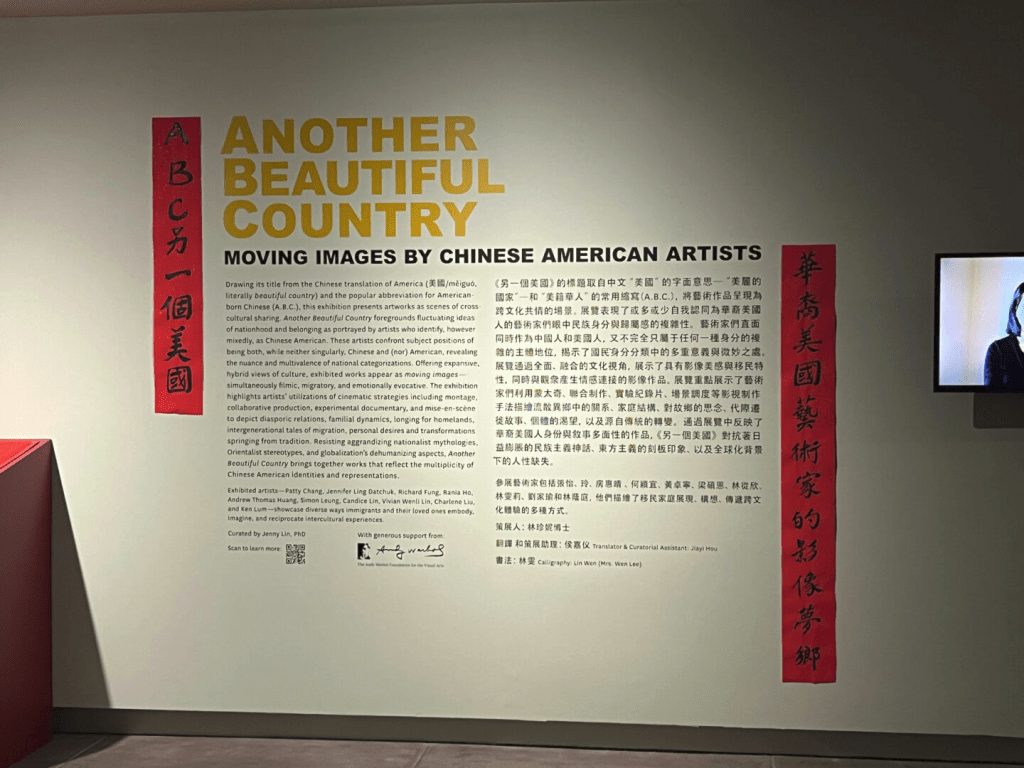
Drawing its title from the Chinese translation of America, 美國/měiguó, literally beautiful country, and the popular abbreviation for American-born Chinese (A.B.C.), this exhibition presents artworks as scenes of cross-cultural sharing. Another Beautiful Country foregrounds fluctuating ideas of nationhood and belonging as portrayed by artists who identify as Chinese American. These artists confront subject positions of being both, while neither singularly, Chinese and (nor) American, revealing the nuance and multivalence of national categorizations.
Another Beautiful Country installation | Photo by May S. Ruiz / Hey SoCal
Another Beautiful Country is the first full exhibition that Lin curated at PAM but she’s certainly not a stranger to the museum. She explains via email. “I have had the pleasure of working with PAM on multiple programs. In 2020, I collaborated with USC students and colleagues to create an online exhibition, ‘In a Bronze Mirror: Eileen Chang’s Life and Literature,’ which showcases qipao/cheongsam from PAM’s collection. In October 2022, I organized the USC Visions & Voices event at PAM, ‘Taipei Night,’ which featured Taiwanese pop music, snacks and boba tea, as well as talks, a special print giveaway, and film screening and workshop by two of the exhibition’s included artists: University of Oregon Art and Printmaking Professor Charlene Liu and Occidental Media Arts and Culture Professor Vivian Wenli Lin.”
Putting on an exhibition typically takes time and Another Beautiful Country was several years in the making. Lin states, “I’ve been conceptualizing this project since I started my new position as Associate Professor of Critical Studies in USC’s Roski School of Art and Design in 2019. The preparation, including working with the wonderful PAM staff, fundraising (we received a major Exhibition Support Grant from The Andy Warhol Foundation for the Arts), crafting didactics, promotional materials, and a beautiful publication, organizing related programming, and my favorite part – talking with the artists – has been ongoing since 2021.”
Lin is also very familiar with the artists whose artworks are being showcased. She discloses, “I had been following, teaching, curating, and/or writing about the marvelous works of most of these included artists for years. I’ve had the good fortune of getting to know many of them as colleagues and collaborators, and our discussions and further research introduced me to more artists whose works align with the exhibition’s themes. All the selected artists inhabit and contemplate subject positions of being both, while neither purely Chinese and (nor) American. Each artist creates works that I see as moving images – considered both literally as videos, projections, and costume and set-oriented installations in transnational circulation, and figuratively as emotionally evocative and addressing migration and Chinese American diasporic relations.”
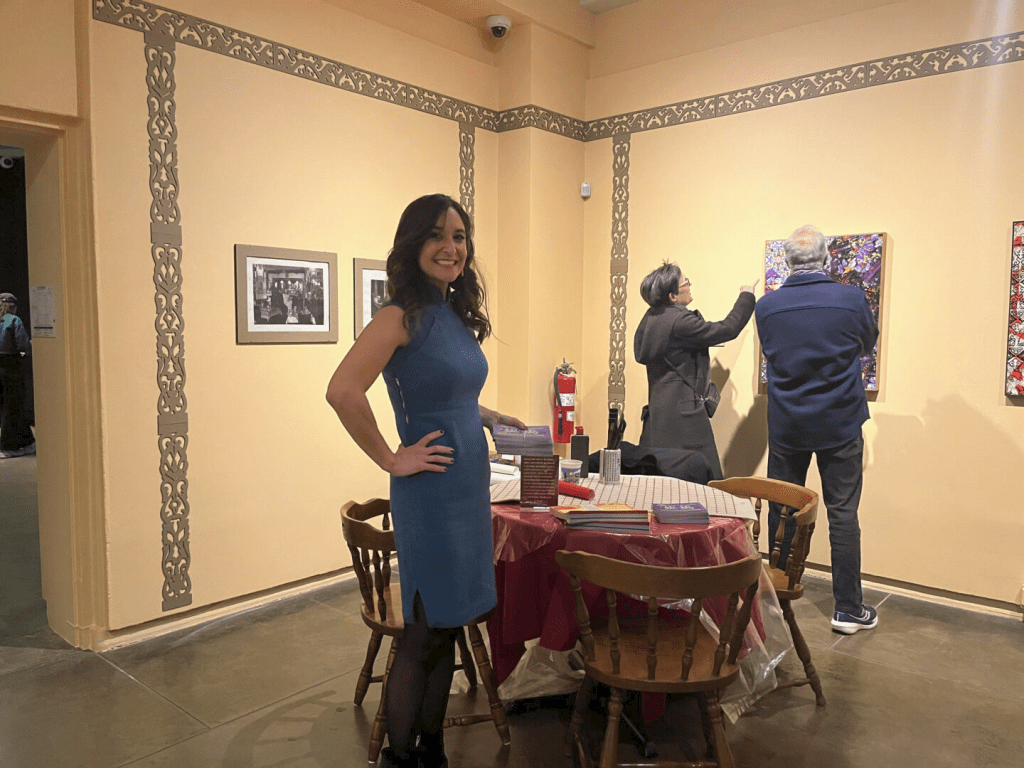
Jenny Lin during exhibition opening and reception | Photo by May S. Ruiz / Hey SoCal
Both curator and artist were active partners in choosing pieces that provoke discussion. Lin says, “Each artist is exhibiting one to three pieces/series but we made the selections together in extensive conversations. Featured artworks vary wildly in style, content, medium, and scale, with the exhibition encompassing a doormat, neon sign, prints, experimental videos, participatory documentary, large-scale projection, hybridized sculptures, and immersive installations. While vibrantly diverse, all these artworks closely relate to one another, and we’ve designed the exhibition to highlight those relations.”
Below is a sampling of artists’ works.
Patty Chang / 張怡
Invocations and Que Sera Sera, 2013
Two channel video installation, 3 Minutes, 45 seconds
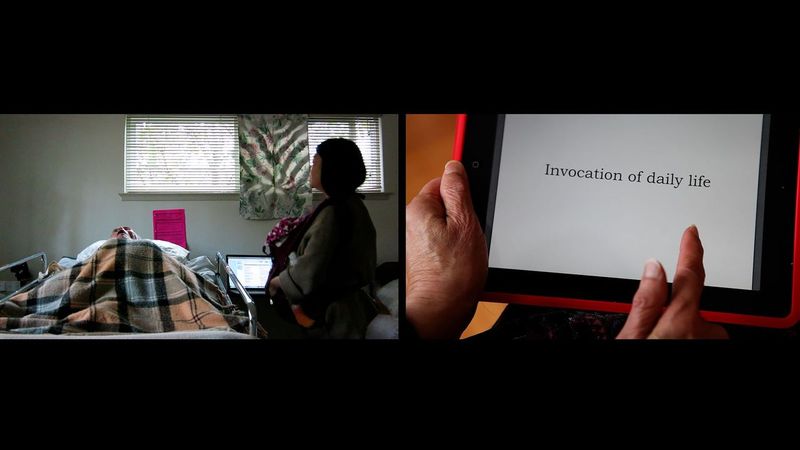
Patty Chang’s “Que Sera Sera” | Photo courtesy of USC Pacific Asia Museum
Que Sera Sera features the artist singing her newborn baby to sleep. Chang gently rocks to and fro, her baby strapped to her body in a carrier – baby whimpers at first, and a tiny foot protruding from the carrier rests on the artist’s hip. Beside them lies Chang’s father in a bed with side rails; he is dying, breathing, but nearly motionless. She sings to him too: “Que Sera Sera, What Will Be Will Be.”
As in Chang’s video, wherein we encounter three generations of family members at distinct life stages, Que Sera Sera covers childhood, growing up and falling in love, and having a child of one’s own. Throughout the song, the narrator – the singer’s parent or singer-as-parent – tenderly responds to questions of what will be: “Will we have rainbows day after day? The Future’s Not Ours To See.” Both artwork and song urge us to be patient and present. With sorrow and joy, Chang inhabits a moment of intimacy with her baby and father, one drifting to sleep, the other drifting toward death.
Written by US composers Jay Livingston and Ray Evans, who often co-wrote songs for movies, “Que Sera Sera” became popularized by Doris Day, who belted the song as a secret signal to her kidnapped son, in Alfred Hitchcok’s 1955 film, The Man Who Knew Too Much. The song’s title, “Que Sera Sera,” which has since become a popular US phrase to express “what will be will is grammatically incorrect in the languages it assimilates (in Spanish it would be “lo que será, será,” in Italian “quel che sarà sarà”), a reminder of the imperfections of translation and language acquisition. Yet even if imperfectly, we learn new languages – studying in schools, speaking the words of a place we have migrated to, learning the native tongues of our parents, or grandparents; Chang’s son now speaks with her mother, his grandmother, in pǔtōng huà.
In Invocations, we catch a glimpse of Chang’s baby being rolled up, in stroller, to his grandmother. She embraces her grandson, she in paisley trousers, he in striped onesie and green leggings. Baby cries; grandmother exclaims, “Jīntiān nǐ zěnme chǎo!” (Today you are so noisy!). In the rest of Invocations, we see Chang’s mother’s hands, holding and swiping through a list of invocations that appear on a tablet. Her voice, soothing and steady, reads in accented English: “Invocation of loss of balance / Invocation of falling / Invocation of motor control / Invocation of envy / Invocation of incontinence / Invocation of caregiving / Invocation of catheter / Invocation of daily life / Invocation of isolation / Invocation of shame / Invocation of guilt / Invocation of longing…” The list of invocations related to growing older, disease, medical treatments, desire, everyday life, and ideas, at once quotidian and dreamy, reads like a poem.
List of Invocations, 2017 Letterpress print
Echoed in a print, List of Invocations hangs nearby the video installation. Light grey text in a clinical font appears on white paper; the lightness of the words, as well as their structural repetition, mimics life’s fleeting nature. Chang’s invocations are practical, magical, ethical, and perhaps, ultimately futile, albeit still worthwhile, as all states, emotions, and things shall pass; “what will be will be.” Chang’s Invocations and Que Sera Sera stand as offerings of familial intimacies and vulnerabilities, tenderly reminding us of life’s cruel and beautiful cycles.
Jennifer Ling Datchuk / 玲
Love Yourself Long Time, 2019
Doormat
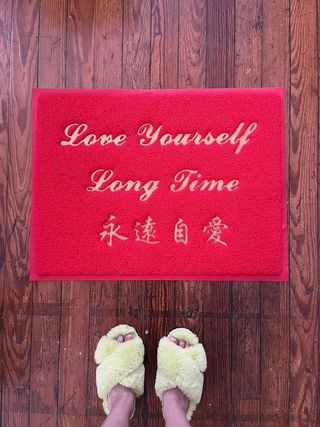
Jennifer Ling Datchuk’s ‘Love Yourself Longtime’ /
Photo courtesy of USC Pacific Asia Museum
and
Love Yourself Long Time, 2021
Mirrored acrylic and neon
Love Yourself Long Time (2019) takes form in two artworks: a glowing custom-made neon, mirrored sign and a red doormat, nearly identical to those meant to be stepped on, elevated in the exhibition via the museological standard of placing art objects upon pedestals. The phrase, Love Yourself Long Time, illuminated in neon on the sign (with yourself lighting up letter by letter) and embossed in golden English letters and Chinese characters on the doormat, references a scene in director Stanley Kubrick’s 1987 film Full Metal Jacket, in which two US soldiers stationed in Vietnam negotiate with a Vietnamese sex worker, who advertises: “Me love you long time.” Datchuk twists the line, which has circulated widely throughout American popular culture. Asserting agency, she turns the grammatically incorrect offer of the subjugated, exoticized sex worker into a positive affirmation encouraging self-love.
Two Week Wait (2021) is a sculpture reflecting on female health and safety, as well as the common Covid-19 quarantine period. Constructed like a shimmering alter with Chinoiserie, famille rose porcelain candlesticks stacked upon its steps, Two Week Wait acknowledges ways in which people in North America and Western Europe often look to Eastern symbols and rituals for spiritual fulfilment. Simultaneously, the artwork sparks varied emotions that may accompany pregnancy, shared across the globe: exuberance, joy, fear, terror, sorrow, trepidation, regret, excitement, anticipation.
The title, Two Week Wait, refers to the typical time of waiting between ovulation and menstruation, in other words the time it takes to confirm pregnancy. Women internationally, including in the United States and People’s Republic of China, have long struggled and continue struggling for bodily autonomy and reproductive rights.
(Jennifer Ling Datchuk will be giving an artist talk in the galleries with Ken Lum at PAM on Saturday, January 27 at 1pm)
Rania Ho / 何颖宜
Roundabout, 2023
Single channel video, 14 Minutes, 29 seconds
Rania Ho’s ‘Roundabout’ / Photo courtesy of USC Pacific Asia Museum
Roundabout features US-born, China and US-based artist Rania Ho walking in circles in a demolition site in her video projection. A fade-in technique makes the artist appear and disappear as she walks in large concentric circles, her body attached to string, stanchion, and ball bearing, creating a fulcrum point. As Ho steadily walks each circumference, she sprays the ground from a hose attached to a fluorescent green water pack she wears on her back. The spray emits a hum and leaves a ghostly residue that slowly begins evaporating over the course of the video. The gesture, along with Ho’s uniform-like black clothing and industrial hose, recalls decontamination processes used in China following the initial outbreak of Covid-19.
Those who live or have spent time in China may also be reminded of the poetic practice of people, usually elderly, writing calligraphy in water on the stone pathways of parks. For others, Ho’s overlapping circles resemble the logo of the Olympics, held in summer 2008 and winter 2022 in Beijing, where Ho made the video. As the artist describes in her writing about the piece, the demolition site, Luoge Zhuang Village of Shunyi District, used to be filled with artists’ studios (she herself had a studio on the outskirts of the village), which were hastily demolished in 2021, supposedly to make way for Olympics-related construction that never came to be.
The fixed camera surveys the demolition site, with its cracked surface and rubble, below a smoggy sky and deciduous trees, sans leaves. Ho’s body, dwarfed by the site and her circumambulation – at once like a Buddhist ritual and Sisyphean task – persist on infinite loop, a quiet mourning for the fallen studios on the outskirts of Beijing.
You Kinda Had to Be There (Motel Cali), 2005/2023
Single channel video, 6 minutes, 30 seconds, edited from 24 hours
Visitors encounter a very different, comical, high-spirited representation of Beijing’s art scene in the mid-aughts in Ho’s You Kinda Had To Be There (2023). This project, tucked behind a curtain, consists of a karaoke-inspired video installation with a shimmering tinsel backdrop, headphones, and microphones for museum goers who fancy singing along. The video features artists singing or performing in various ways The Eagle’s “Hotel California,” a common karaoke song that most all of us love to hate. Ho created this 6 minute, 30 second video (the duration of the actual song) by editing footage of a 24-hour participatory event she organized in 2005. For the original event, part of Complete Art Experience Project (CAEP/联合现场地计划), a city-wide art initiative in Beijing, Ho invited artists and other community members to sing “Hotel California.”
The creative, offkey renditions by many of Beijing’s most active artists of the day collectively compose a kind of time capsule of a free reeling art world, set amidst the frenetic pace of intense urban development. Ho’s moving images of artist friends, goofing off and singing “Hotel California,” especially when juxtaposed against the solitude of her post-Covid-19 Roundabout, wherein the only other creature to appear is a dog we later hear barking, stresses the vitality of friendship, chosen family, and playful communal gatherings.
(Rania Ho will be giving an artist talk with Simon Leung at PAM on Wednesday, April 3 at 6pm)
Andrew Thomas Huang /黃卓寧
Kiss of the Rabbit God, 2019
Single channel video, 14 minutes, 29 seconds
and
Rabbit God Statue, 2019
Mixed media with adornments by Tanya Melendez
Andrew Thomas Huang’s ‘Kiss of the Rabbit God’ / Photo courtesy of USC Pacific Asia Museum
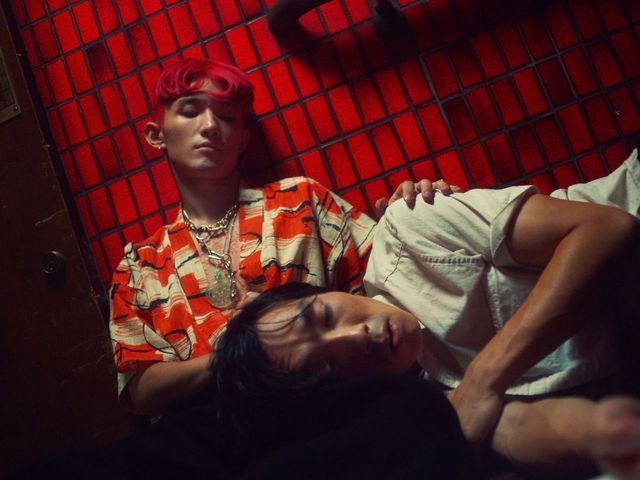
Kiss of the Rabbit God is a fairy tale of queer love. The protagonist, a young Chinese American man named Matt, played by actor Teddy Lee, feels trapped working in his parents’ Chinese restaurant (filmed on location in LA’s Chinatown), until he meets the deity, Tu’er Shen (Rabbit God), in human form, played by actor Jeff Chen.
The two young men embark on a loving, celestial sequence that allows Matt to embrace his gay identity through self-discovery and by entering into a mystical Chinese legend. Accompanying Huang’s short film stands Huang’s Rabbit God Statue, which the artist recently showed in another exhibition of Kiss of the Rabbit God in Hong Kong. Kiss of the Rabbit God’s setting nods to Huang’s own family’s 40-year history running a Cantonese restaurant in southern California.
Vivian Wenli Lin / 林雯莉
The Joy Luck Mom Club: Untold Narratives of Migration, 2023
Single channel video, 10 minutes
Vivian Wenli Lin’s “The Joy Luck Club: Untold Narratives of Migration | Photo by May S. Ruiz / Hey SoCal
The Joy Luck Mom Club: Untold Narratives of Migration is a mixed-methods participatory, interview and observation-based video project. In turning to lost and untold narratives of migration that have been kept silent or hidden away, Lin centers the diasporic identities that were excluded in mainstream representations of the immigrant narrative.
Inspired by the film The Joy Luck Club (1994) based on the novel by Amy Tan and directed by Wayne Wang – a film considered to be a dominant representation of the Asian American immigration narrative, the project attempts to contribute to the untold/unheard/silenced and forgotten narratives of women’s migration. Immigrant stories are often centered on generational trauma as a result of the self-sacrificing Asian mother.
The narratives shared via The Joy Luck Mom Club: Untold Narratives of Migration attempt to decenter the “Asian American” immigration story, through the use of participatory media making methods, to gather transnational stories between Asia/America, blurring the lines between how these histories of migration can be remembered as fact or fiction, memory or truth. Lin offers an opportunity for museum visitors to share their own “joy luck mom club” moments; a flier with QR code and instructions is available near the video.
(Vivian Wenli Lin will be holding a related workshop, “The Joy Luck Mom Club – Participatory Video,” on Saturday, March 23 from 11:30am-2pm)
Ken Lum /林蔭庭
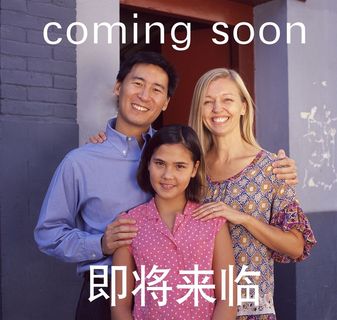
Coming Soon, 2009/2023
C-print reproduced on vinyl
Ken Lum’s ‘Coming Soon’ / Photo courtesy of USC Pacific Asia Museum
The print, facing outward from a museum window, resembles a family photograph of a mixed-race European-Asian couple and their biracial daughter. This picture of a seemingly benign nuclear family, paired with the text Coming Soon in both English and Chinese characters, resembles an advertisement for a Hollywood movie or global fashion brand, though without slick styling or airbrushed perfection. The image counters historical anti-miscegenation laws and parodies superficial corporate diversity campaigns. Simultaneously, for those in the know,
Coming Soon reminds us of the ability of images to deceive and the importance of questioning our assumptions; Lum divulged to me that the people in the photograph are not in fact a family, but three strangers the artist met in Beijing.
(Ken Lum will be giving an artist talk in the galleries with Jennifer Ling Datchuk at PAM on Saturday, January 27 at 1pm)
Lin has consciously and mindfully put together an extraordinary show. Another Beautiful Country is an impressive collection of thought-provoking artwork that invites a response and reaction from its audience.
She expresses magnificently what she wishes the exhibition engenders. “I hope people will spend time with each artwork, absorbing the multivalent presentations of Chinese American experiences and identities, which collectively unravel grand historical narratives, nationalist myths, and essentializing stereotypes. I hope people visiting the exhibition will come away with admiration for these artists’ fantastic works and the unique, nuanced ways they portray Chinese American relations. Ultimately, I hope the exhibition will inspire visitors to reflect on their own familial stories of migration and imagine belonging in another beautiful country, a place where generous, cross-cultural relations flourish.”
Emmanuel Romano, “Construction Workers: Solidarity in Action,” 1940, oil on board, 48-by-36-by-1.75 inches. | Courtesy of the Collection of Sandra and Bram Dijkstra
From Dec. 2 through Mach 18, “Art for the People: WPA-Era Paintings from the Dijkstra Collection” will be on view in the Virginia Steele Scott Galleries of American Art at The Huntington. Featuring 19 remarkable works drawn from the collection of Sandra and Bram Dijkstra, the exhibition is a collaboration between the Crocker Art Museum in Sacramento, the Oceanside Museum of Art in Oceanside, and The Huntington Library, Art Museum, and Botanical Gardens in San Marino.
The exhibition highlights federal Works Progress Administration artists of the 1930s and early 1940s who were employed by the government to help stimulate the post-Depression economy. More than 10,000 artists participated, creating works that represented the nation and its people, and seeking to express fundamental human concerns, basic democratic principles and the plight of the dispossessed.
“Art for the People” and its companion catalog feature paintings from across the United States, with strong representation by California artists, artists of color, women artists, and Jewish artists who have generally been omitted from the WPA-era narrative. Some of the paintings are often described as American Expressionism or American Scene, depicting both urban and rural subjects and focusing on the lives of average Americans.
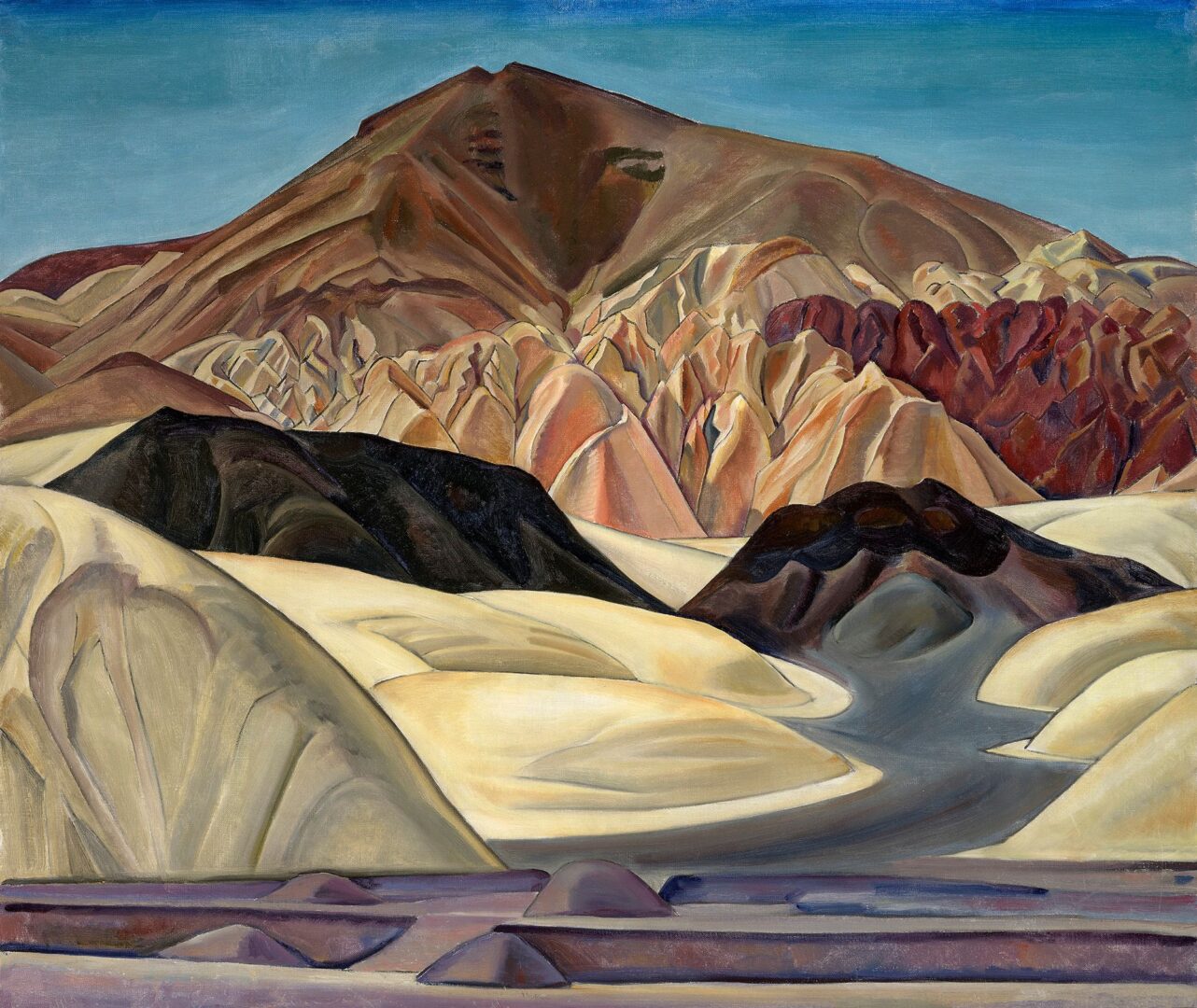
Helen Forbes, “A Vale in Death Valley,” 1939, oil on canvas, 34-by-40-by-1.75 inches. | Courtesy of the Collection of Sandra and Bram Dijkstra
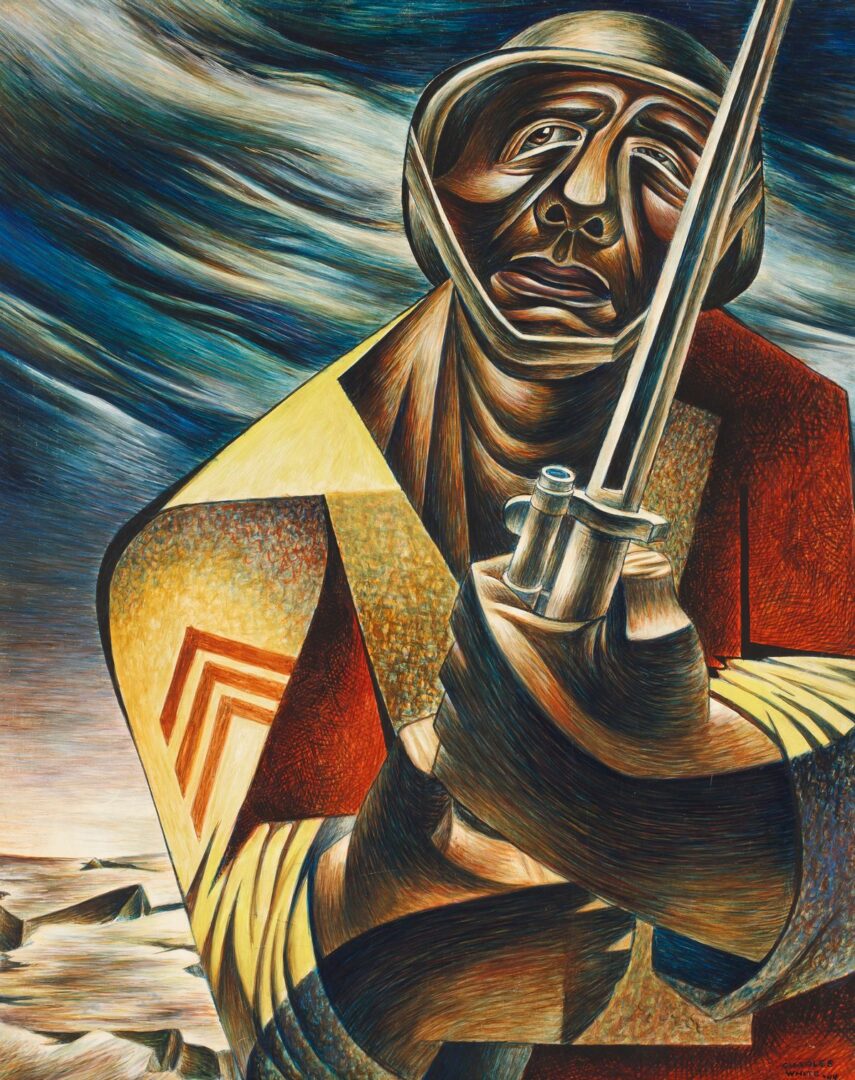
The Huntington’s presentation of “Art for the People” is the third and last stop for the traveling exhibition, which originated at the Crocker Art Museum, where it ran from Jan. 29 to May 7, 2023. It was on view at the Oceanside Museum of Art from June 24 until Nov. 5. Shown differently at each venue, the installation at The Huntington showcases paintings by 18 artists, including paintings that were given to The Huntington by the Dijkstras, such as “Soldier,” a major work by African American artist Charles White. White, who became an important figure in what was known as the Chicago Black Renaissance, made the painting in 1944 after he had been drafted into the U.S. Army.
Dennis Carr, Virginia Steele Scott chief curator of American Art at The Huntington, speaks to me about the exhibition and how the collaboration with the two other museums came about.
“If memory serves, it started with a conversation between Scott Shields at the Crocker Museum and Sandy and Bram Dijsktra, who expressed their interest in presenting publicly this part of their collections,” Carr starts. “Once the Crocker Museum was enthusiastic about it, they reached out to other venues, including The Huntington. We were especially interested given the strength of our American paintings collection in the early 20th century — specifically around the WPA period — as well as the strength of The Huntington Library in collecting material like this. So we felt it was a natural fit for the institution.”
Carr explains, “Both the Oceanside Museum and the Crocker Museum displayed all 40 paintings. We didn’t have the space available at The Huntington but we chose what we felt were highlights of the collection and focusing on California artists, artists of color, and women artists.”
Charles White, “Soldier,” 1944, tempera on masonite, 30-by-25 inches. | Courtesy of The Huntington/Sandra and Bram Dijkstra/The Charles White Archives
“There’s one from The Huntington’s permanent collection which was donated by Bram and Sandy Dijkstra in 2013,” Carr continues, referring to ‘Soldier’ by White. “In my opinion, it’s one of the most striking paintings in the American Art collection. Charles White was a black artist who moved from the East Coast and eventually settled in Altadena and became a very important painter in Los Angeles in the mid-20th century. This is a vital early work by him and we’re so proud to have it in The Huntington’s permanent collection. But we thought it was important to include the Charles White painting in this show because it’s of the era and it’s by a very local artist. It’s been on view in our gallery ever since they donated it in 2013 and it’s nice to see it join other works from the Dijkstra’s private collection in the exhibition.”
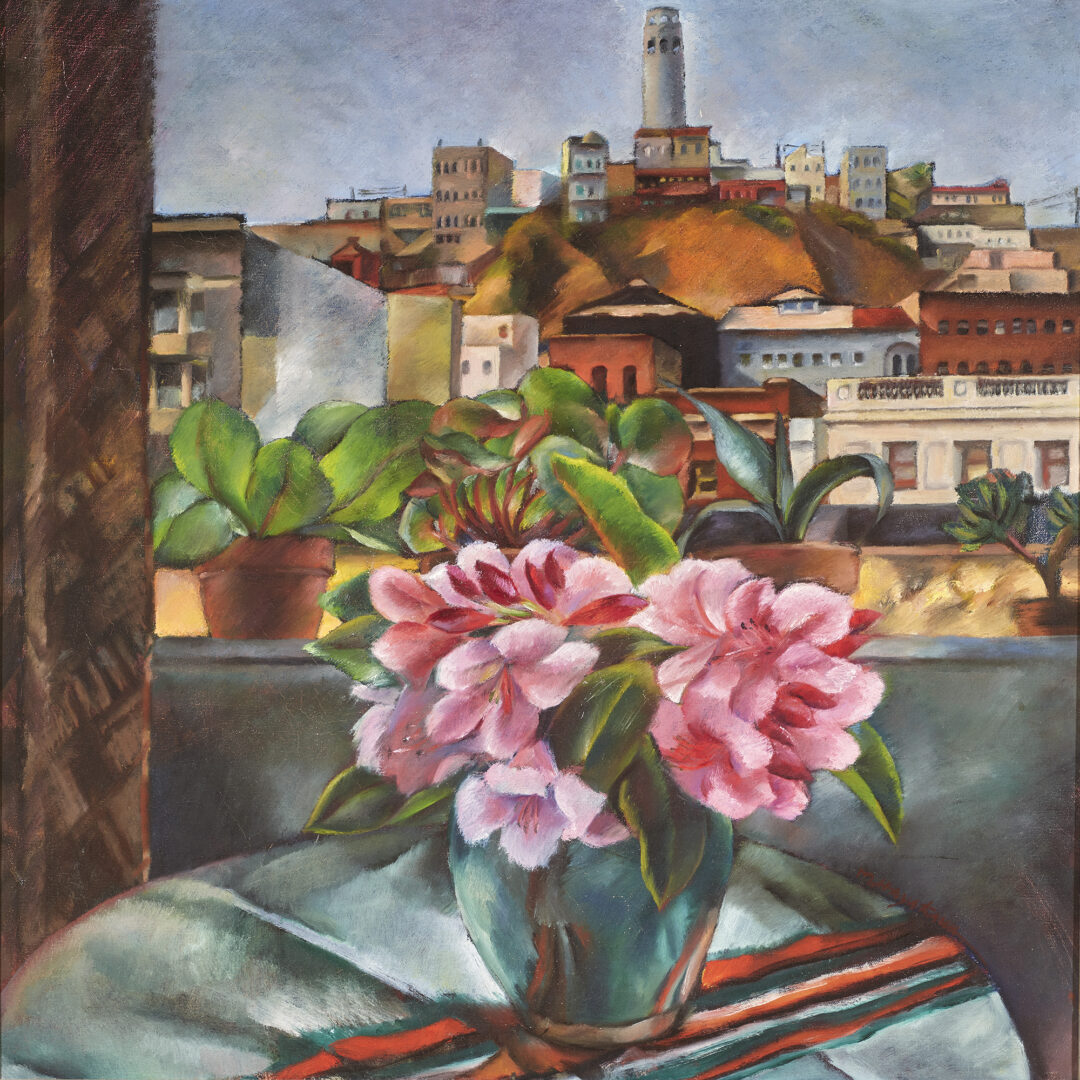
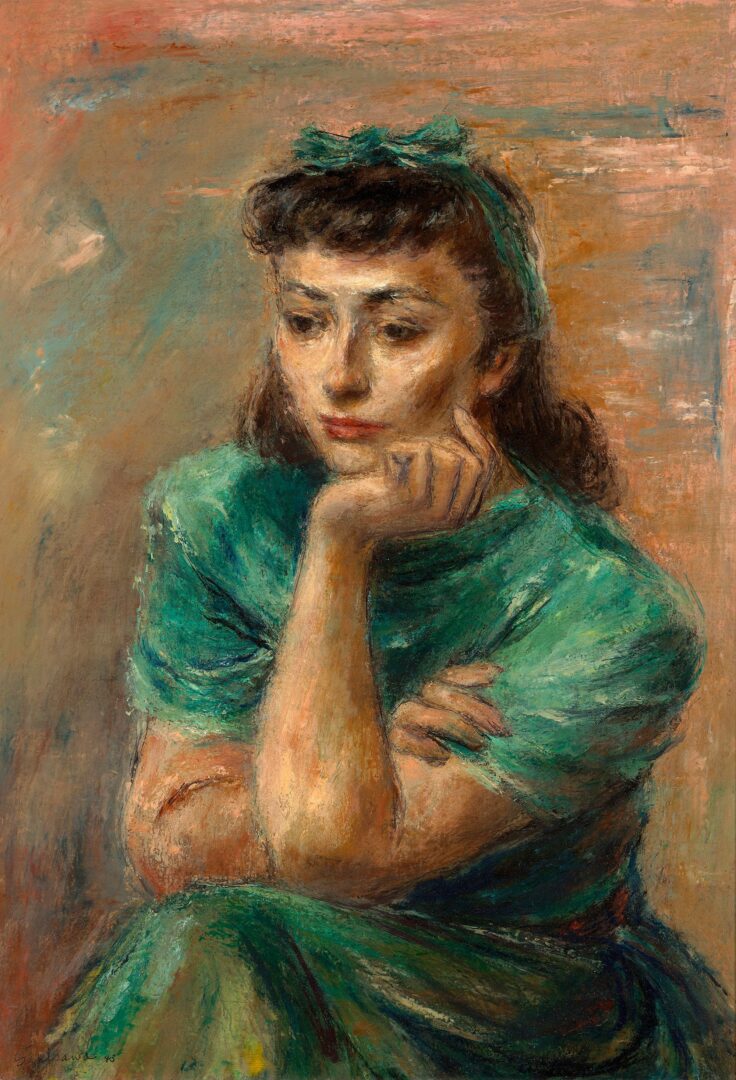
Carr adds, “Miki Hayakawa was a Japanese-born artist who immigrated to California as a young girl and there’s a delightful painting by her called ‘The View from my Window’ from 1935. It shows the scene from her apartment in San Francisco looking at Coit Tower in the distance. There’s also a painting by Sueo Serisawa, another Japanese-born artist who lived in California during World War II but had to leave the Coast and eventually settled in Chicago and New York. The work that’s represented in the show is from 1945. There are works by other women artists like Helen Forbes who depicted a wonderful aspect of the California landscape.”
Miki Hayakawa, From My Window, 1935, oil on canvas, 28-by-28 inches. | Courtesy of the Collection of Sandra and Bram Dijkstra
“What the exhibition shows is not just an East Coast view of art in the period but across the United States and the development of different regional schools on the East Coast, in the Midwest and on the West Coast — where different artists were showing different aspects of American life. The focus of the Dijkstra collection on mostly underrepresented and under-recognized artists presents a much broader and more diverse vision of this era,” Carr emphasizes.
Interestingly, while “Art for the People” is on view, The Huntington will be opening a show in February about Sargent Claude Johnson, another WPA-era painter.
“Sargent Claude Johnson was a black sculptor based in the Bay Area who was also supported by the WPA in the 1930s and early 1940s,” says Carr. “I believe he was one of only three black supervisors of the WPA nationwide. He was a very distinguished artist and was very proud of the fact that he was a supervisor in the WPA. He led large-scale projects for architectural installations in a number of venues in San Francisco and Berkeley. For Johnson, the program allowed him to work on a bigger scale with larger teams of artists. It definitely supported him as an artist during this difficult time period, and I think it allowed him to expand his creativity.”
Sueo Serisawa, Portrait of My Daughter, 1945, oil on canvas, 20-by-14-by-1.75 inches. | Courtesy of the Collection of Sandra and Bram Dijkstra
I ask what the significance of WPA-era paintings in American art is, and Carr replies, “They present a very diverse look at the American scene in two extremely important decades in the development of American art — the 1930s and 1940s. It was a very challenging time for artists, financially and socially, but it was also a time of significant governmental support for the arts. It kept many of them alive and working, and it allowed many artists to work on a larger scale than they had ever before. Likewise, it was a time of great flourishing of the arts in the United States and the seed for that was planted not just by the government but by the people who participated in this program. That resulted in a number of murals created for post offices, government buildings, and public spaces like schools and classrooms. It also produced a larger network of artists who were also being supported by the program and I think that it helped in the advancement of communities of artists across the United States.”
As for the visitor takeaway, Carr opines, “It’s a profound and striking view of a bleak period in American history and it looks at ways that visual artists were responding to this moment across the United States. I think there will be many names of artists that our public is not familiar with but should be, because the works are stunning and powerful, and they speak with the clarity and an emotional quality that really capture the era. Sometimes art can feel esoteric to some audiences, but this art speaks with the simplicity and directness that people can relate to. I think that the show itself and the works within it will be a surprise for many.”
“Moreover, it’s interesting to look back in an era when there was the largest governmental program for the support of the arts ever created until then or since. We can reflect on what that meant in that moment and how the arts remained so relevant in American culture and what the government’s role could be or should be to support that,” Carr concludes.
Betye Saar, ‘Drifting Toward Twilight,’ 2023 (installation view) | Photo by Joshua White / JWPictures.com. The Huntington Library, Art Museum, and Botanical Gardens
A newly commissioned, site-specific installation by renowned Pasadena artist Betye Saar opened to the public on Saturday, November 11, 2023 at The Huntington Library, Art Museum, and Botanical Gardens. Called ‘Drifting Toward Twilight’ it will be on view for two years at the Virginia Steele Scott Galleries of American Art, after which it will become part of the institution’s American art collection.
The large scale artwork – a 17-foot vintage wooden canoe and found objects, including antlers, birdcages, and natural materials Saar harvested from The Huntington’s 207-acre grounds – is the focus of an immersive exhibition ‘Betye Saar: Drifting Toward Twilight.’ It is co-curated by Yinshi Lerman-Tan, The Huntington’s Bradford and Christine Mishler Associate Curator of American Art, and Sóla Saar Agustsson, Saar’s granddaughter and the Huntington Art Museum’s special programs and digitization coordinator.
During the press preview on Friday, November 10, Dennis Carr, Virginia Steele Scott Chief Curator of American Art, remarks, “Betye Saar is one of the most important artists of our time. Her compelling voice has echoed in Los Angeles for many, many decades. But she grew up in Pasadena and has fond memories of walking in the Huntington’s gardens.”
Yinshi Lerman-Tan | Photo by May S. Ruiz / Hey SoCal
Co-curators Lerman-Tan and Agustsson alternately talk about the installation. Lerman-Tan divulges that Saar specifically chose this location for the installation because it’s like a secret room. She explains, “It has a ‘cocoon-like environment.’ The walls are painted in an oceanic blue gradient, featuring a poem by Saar and phases of the moon. Shifting lighting effects in the gallery emulate phases of daylight to twilight, evening to night, and night to dawn. Inside the monumental canoe, Saar positions mysterious ‘passengers,’ including antlers in metal birdcages, children’s chairs, and architectural elements – all drawn from the artist’s ever-evolving collection of found objects. The space beneath the canoe will be illuminated by a cool neon glow, highlighting plant material foraged by the artist from The Huntington’s gardens.”
“Saar’s work evokes mysticism and the occult, as well as the human relationship to nature and the cosmos,” Lerman-Tan describes. “An immersive, watery space containing a canoe that is part vessel and part dreamscape, the installation gestures to the ancestral and mythological journeys, and the constant cycles of the natural world.”
Betye Saar with ‘Drifting Toward Twilight,’ 2023 (installation view) | Photo by Joshua White / JWPictures.com. The Huntington Library, Art Museum, and Botanical Gardens
Besides her role as co-curator, Agustsson was instrumental in making this installation and exhibition a reality. Speaking by phone a week before the exhibition opening, she discloses, “I worked as an assistant to Christina Nielsen (Hannah and Russell Kully Director of the Art Museum) when I first came to The Huntington about two years ago. She happens to be a huge fan of Betye’s and wanted to do an exhibition with her. A few ideas floated around but I remembered that when I was working for Betye a few years ago, she had bought this vintage canoe and had started collecting antlers and natural materials for an assemblage. She’s done canoe installations in the past so this was a notion that has been marinating. I thought that The Huntington Gardens would be the perfect home for the canoe because the concept was to incorporate natural materials. Then Betye came up with the idea of foraging and using plant materials from the Huntington garden.”
Interviewed via email, Saar recounts her collaboration with the Huntington’s Art Museum and Botanical Gardens to realize this endeavor. “I visited the Huntington in the spring of 2022 and met with Christina Nielsen and my granddaughter Sóla Saar Agustsson and the idea of a project came up. Then some of the Huntington curators came to visit my studio and saw the canoe. I submitted a sketch and then made a scale model of the room and the canoe. It all just came together after that.”
“I have used canoes in some of my previous installations,” explains Saar. “To me it represents an element of indigenous people who used them, and the connection to nature. But I also really enjoy the shape of the canoe. The flow of it visually and how when you are in a canoe you feel like you are gliding. I acquired this particular canoe a few years ago and it was sitting in my garage waiting to become art. The Huntington commission made it take shape.”
In a short documentary film – produced for the exhibition and is being shown at an adjacent room – Saar explains her concept for the installation, “A canoe is an object of Early America as a means of transportation and I added the wood burrows to make it look vintage. There are three cages that make you think of slavery, of being taken care of and having certain things but you’re still caged – caged freedom in a way.”
The companion film also includes a footage of her foraging natural materials at the Huntington garden. Saar recollects, “I think it was back in April when I came to gather materials from the garden. There had been a series of storms and many of the trees had limbs break or had to be trimmed. I picked up what Mother Nature started.”
As she picks up discarded branches, she gets ideas about how to use them and asks an assistant to hand her her notebook. Saar expounds, “I am an assemblage artist and am inspired by the materials I find at flea markets and estate sales, or things people give me. Sometimes I’ll think ‘Oh this old red box needs to sit on a red table’ or something. But I also am inspired by things I see as I travel or images in my dreams and I’ll make a sketch of it. I always have a little sketchbook in my purse and a bigger art kit and sketchbook when I travel. Sometimes the sketch becomes an assemblage, sometimes it stays a sketch.”
Betye Saar, ‘Drifting Toward Twilight,’ 2023 (installation view) | Photo by Joshua White / JWPictures. com. The Huntington Library, Art Museum, and Botanical Gardens
Saar had a very clear idea about the ambience she wanted to produce and she kept close tabs on its progress. She relates, “I’ve been back and forth to The Huntington many times these past months. I was selecting the wall colors, choosing the lighting effects, etc. until it all came together to create the right mood. I wanted to feel immersed in the room.”
Agustsson says she worked very closely with Lerman-Tan to ensure they carried out what her grandmother envisioned. The inter-generational component of this exhibition will extend to the catalogue to be published in the summer of 2024. Agustsson will write a Q&A piece that covers Saar’s life and her career. It focuses specifically on her childhood growing up in Pasadena and her visits to The Huntington as a child and teenager, gardening practice, and an interview about the new canoe installation.
It will have a Director’s foreword by Christina Nielsen, followed by a short essay by Ishmael Scott Reed, an American poet, novelist, playwright, and longtime friend of Saar, as well as a re-publication of an archival interview he did with Saar in the 1970s. Lerman-Tan and Tiffany E. Barber, assistant professor of African American art at UCLA, will be contributing essays.
I ask Agustsson what it was like to work on a project with someone she knows so well, and she replies, “I’ve worked with her in the past for years so that helped me capture her vision and facilitate dialogue between her and the museum. I realize that this is a very special and personal project given her upbringing in Pasadena so I wanted to establish that particular connection.”
“For me, I found it to be really inspiring and meaningful especially getting to interview her and learning more about her,” Agustsson says further. “Even though I’ve grown up with her, there are things I continue to discover about her. I learned that she liked tap dancing when she was a teenager. I had no idea, I never heard that before! She’s 97, she’s had so many amazing experiences, and she’s done different kinds of art work in various media – costume design, designing greeting cards, printmaking, collage, immersive installations like this one, and she was a seamstress. It doesn’t surprise me that she also did tap dancing.”
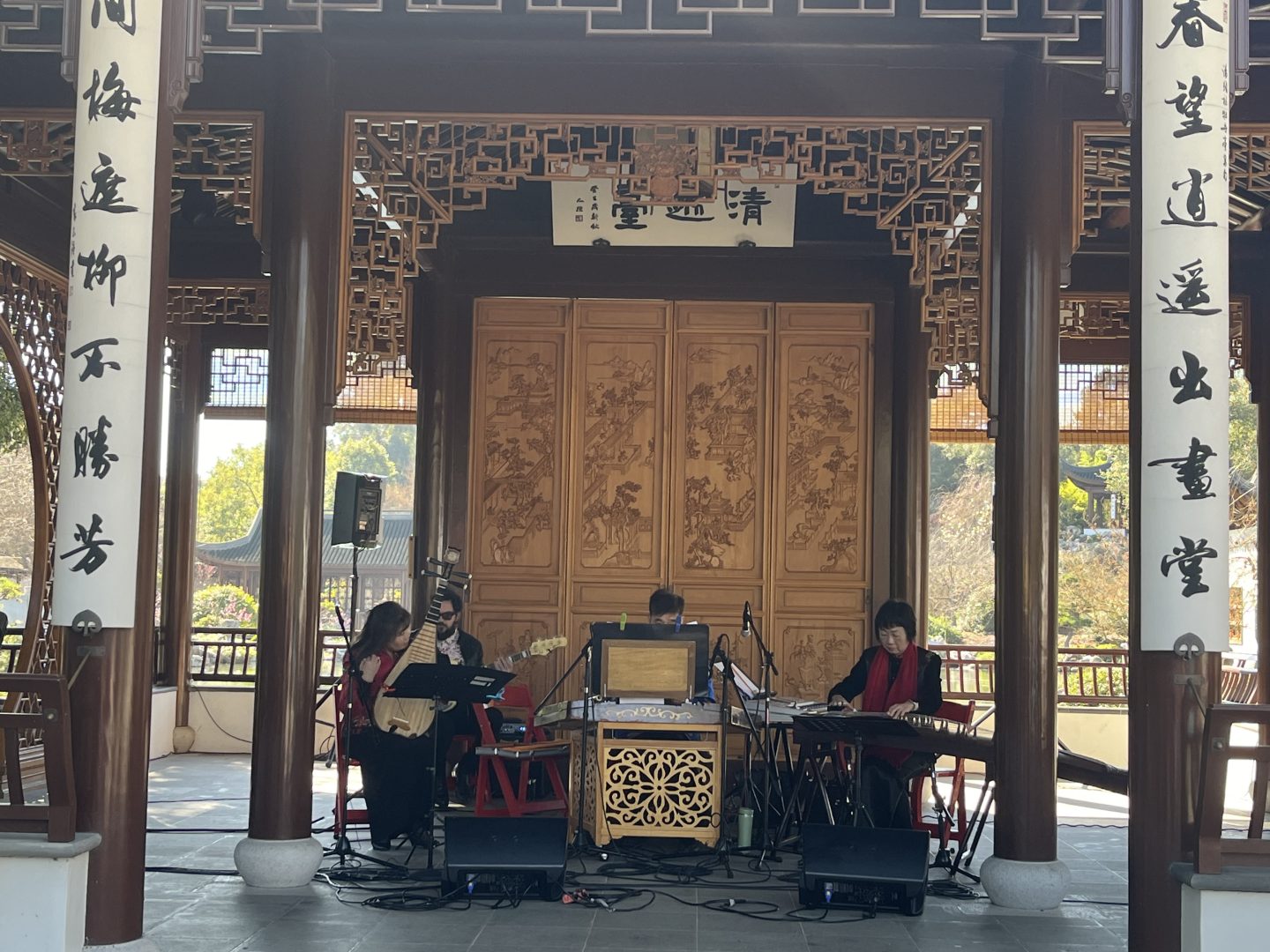
Saar is the matriarch of a close-knit family of artists, as Agustsson’s account of her grandmother’s influence in her childhood years and present life as an adult attests to. “Betye has three daughters and six grandchildren. We were always drawing and doing art as youngsters. But even now, we have themed family parties and we’re all very supportive of each other. In a way Betye working in diverse mediums – assemblage, printmaking, collage, design, painting – was passed down. Two of her daughters, Alison and my mother Lezley, are artists and her other daughter Tracye is a writer and her studio manager. Alison does printmaking and sculpture, my mom does painting, collage, and assemblage.”
Betye Saar and Sóla Saar Agustsson | Photo courtesy of Sóla Saar Agustsson
“I’m not really a visual artist but I do collages and dollhouses, which is like assemblage in a way. My cousin does printmaking and ceramics,” continues Agustsson. “My grandfather, Betye’s husband, Richard Saar was a ceramicist and my other cousin does set design, which relates to Betye being a costume designer. We like to go to flea markets together and are on the lookout to get each other certain things. My grandmother would also give me a lot of advice about art.”
Collecting found objects to create art is something Saar began doing since she was four or five years old. She says that whenever they moved to a new house, she would look through the previous owners’ trash to see what they threw away.
It’s no wonder then that assemblage spoke to her. Saar reminisces, “In the 1970s I saw the work of Joseph Cornell, right here at the Pasadena Art Museum in fact. I was inspired by how he took ordinary objects and made them into art. He made art that was beautiful and clever and had a sense of humor. It made me want to do that too.”
I inquire if there’s one artwork she created that means more to her than the rest, which one is the most memorable piece she made and why. Saar answers, “I don’t really have a favorite but I have a few works of art that I like because the viewer is invited to make an offering. Mti (1973) and Mojotech (1987). I like involving the public and getting them to experience my work in different ways. It’s also very interesting to see what people leave as an offering. Sometimes it’s a gum wrapper or money or ticket stubs. But sometimes people will leave a drawing they made on site or return later with a photograph or poem. I keep all of these items and feel they have a special power from people connecting to my work.”
That tangible takeaway is something Saar hopes for. She says, “As an artist, one tries to elicit an emotion from the viewer. This can be a tricky thing because I want people to feel what they feel but not dictate it. I hope that people come and see my exhibition in the gallery and then go out and find their own inspiration in the gardens. That’s what I did.”
Betye Saar, ‘Drifting Toward Twilight,’ 2023 (installation view) | Photo by Joshua White / JWPictures.com. The Huntington Library, Art Museum, and Botanical Gardens
When I ask Agustsson what she wants viewers to take away, she replies, “It’s meditative and I think she wanted to convey that emotion. It mimics floating in a body of water looking at the twilight and the moon; it has a very cosmic feeling. With all the turmoil going on in the world and in life, the room feels like a reprieve. I don’t get caught up in thinking about its meaning in terms of words. It’s refreshing to walk away with just an emotional response to it. And that’s very much integral in her process of creating – getting across an emotion – and intuition is a lot of what guides her.”
Agustsson adds, “I just hope that visitors and aspiring artists will relate to her method in harvesting and assembling the work where she demonstrates you can make art out of everyday objects and things you find on the ground. And that they get inspiration after seeing the film, watching her work in the creative process with so much enthusiasm at 97 years old.”
Finally, I ask Saar what it means for her to have her installation become part of The Huntington’s permanent collection and she says, “Well, being from Pasadena it means a great deal to me. I came to the gardens as a child and now here I am as an adult, a 97-year old, with my art in this amazing museum. It’s truly an honor that my work is now part of the legacy of The Huntington.”
‘Betye Saar: Drifting Toward Twilight’ represents a homecoming for Saar. Without a doubt, Pasadenans will be proud of her significance in this community and celebrate her iconic status in Black feminist and American art.
But the installation will profoundly affect all visitors. As they step inside the room, they will at once be enveloped in its warm embrace. And as they read Saar’s poem painted on the wall, ‘The moon keeps vigil as a lone canoe drifts in a sea of tranquility seeking serenity in the twilight,’ they will feel transported to a calm and peaceful place.
“Plumb Line” 48 x 72 oil on panel | Photo courtesy of Heather Horton
Canadian-born painter Heather Horton has been an artist all her life; she received her Master’s degree in Illustration from Sheridan College. But it was only when she joined Abbozzo Gallery in 2004 that she began exhibiting her works regularly. She has held solo and group shows over the years and her recent solo exhibition “Love Story” was held in Toronto, Ontario in September 2020.
In 2019, Horton met her future husband Joss Whedon in Los Angeles. When they decided to leave Ontario for warmer climes, they relocated to the United States in 2021. Then the couple moved to California on L.A.’s west side – Santa Monica – before eventually settling down in Pasadena in May last year. She discloses, “We had heard great things about the city, and we have been so delighted with our decision to move here. Lots of greenery, interesting architecture, an active art scene, and we appreciate that it has a serenity to it that we find inspiring. We look forward to exploring the city more as time goes by!”
Heather Horton | Courtesy Photo
And it’s here that Horton continues to practice her craft – taking photos of friends underwater in their pool and using the pictures as the basis for the oil paintings in this exhibition. Her 16th solo show “Immersion,” will be on display at Whimsy Pasadena in Old Town through Sunday, October 22. She will be painting live onsite at the gallery on Thursday, Friday and Saturday (October 19, 20, and 21) from 11am to 5pm to let the public in on her creative process and talk to visitors about her journey.
“Immersion” is an autobiographical journey of resilience. It investigates the internal complexities within simple moments: exploring trauma, womanhood, deep pain, and deeper gratitude. The exhibition introduces over 30 new oil paintings, which breathe new life into Horton’s renowned water series. It transports us beneath the surface into a twilight fantasia of luminous tranquility. Within these artworks, fabric, flesh, and liquid merge and nearly dissolve into one another, all bathed in the spellbinding interplay of wild and languid light from above.
“Madrona” 24 x 36 oil on panel | Photo courtesy of Heather Horton
Additionally, “Immersion” chronicles the evolution of Heather’s relationship with her own body, a journey that has traversed years of battling anorexia and depression, ultimately culminating in newfound confidence and grace, despite the challenges posed by major spinal surgery last spring.
Having endured a tumultuous childhood, Horton has long used art as a way of finding order in a life marked by subtle chaos. Her troubled past instilled in her a strong sense of self-reliance and a heightened awareness of emotions and movement. Her portraits and figures reflect a sense of fragility, often showing subjects who avert their gaze, are depicted from behind, or appear with their heads just above a surface we can’t quite grasp.
Horton’s art captures the world with a sense of wonder that avoids becoming overly sentimental or prescriptive. Instead, she encourages viewers to embark on their own journeys and find their own interpretations.
“The Chameleon” 30 x 30 oil on panel | Photo courtesy of Heather Horton
“I’m hoping that the viewers might be moved by the work, on a small level, or from a deeper place, as there are themes of floating, immersion but also surgery, health challenges, transitions, and introspection within,” states Horton. “If viewers see the work and are glad they did, or it moves them to reach out to someone they love and tell them so, or write a letter to a friend or someone in need, that would be amazing to me. Just showing the work to friends and people in the community and beyond brings a great feeling of peace and great emotion. After so much work, and surgery, and challenges, but also excitement, I’m excited to enjoy a bit of repose, reconnect and take a few deep breaths before submerging again into new worlds.”
After the exhibition ends, a portfolio of “Immersion” is set to be immortalized on the moon as a part of Samuel Peralta’s visionary Lunar Codex time capsule project. Horton’s artistic expressions reflect the experiences of countless women today, and her legacy is destined to span generations in these time capsules immortalized on the moon. It is such a fitting outcome for a painter whose works should live on beyond earth for eons to come.
During the press opening held on Friday, October 13, Karen Lawrence, president of The Huntington expressed her gratitude for the generosity of the Yokoi family who gifted their ancestral home to the beloved institution.
Karen Lawrence, president of The Huntington Library, Art Museum, and Botanical Gardens. | Photo by Brianna Chu / Hey SoCal
Lawrence remarks about this exceptional new destination at The Huntington. “This restored residential compound is truly a masterpiece and it offers a glimpse of life in rural Japan some 300 years ago. It’s the only example of this kind of architecture in the U.S. and its presence here wouldn’t have been possible without the generosity of the Yokoi family.”
“In Japan, the house was disassembled, restored, disassembled again, and shipped to us at The Huntington,” Lawrence adds. “Once the components of the house arrived, it was up to The Huntington to rebuild and provide context, including recreating the landscape and gatehouse.”
A signage at the house shows the Yokoi family crest. | Photo by Brianna Chu / Hey SoCal
It’s only fitting for the Shōya House to join the distinctive house Henry E. Huntington bought from Pasadena businessman George Turner Marsh that has been at the Japanese Garden, which has such a fascinating history. The Huntington’s information kit gives the following chronology.
The building of the Japanese Garden began in 1911 and was completed in 1912. The garden, which is currently 12 acres, was inspired by the widespread Western fascination with Asian culture in the early 1900s. Henry E. Huntington purchased many of the garden’s plants and ornamental fixtures, as well as the Japanese House, from a failed commercial tea garden in Pasadena, located at the northeast corner of Fair Oaks Avenue and California Boulevard. When The Huntington opened to the public in 1928, the Japanese Garden became a major draw for visitors. Features such as the bell tower and bridge were newly built for the garden by Japanese American craftspeople.
Robert Hori, Gardens Cultural Director and Programs Director. | Photo by Brianna Chu / Hey SoCal
By World War II, staffing shortages – including those resulting from the incarceration of Japanese American employees – and the political climate led to the closure of parts of the Japanese Garden, and the Japanese House fell into disrepair. In the 1950s, members of the San Marino League helped support the refurbishment of the buildings and surrounding landscape.
In 1968, The Huntington expanded the Japanese Garden to include a bonsai collection, which now numbers in the hundreds, and a rock garden, the Zen Court. Since 1990, The Huntington has served as the Southern California site for the Golden State Bonsai Federation.
The ceremonial teahouse, called Seifū-an (the Arbor of Pure Breeze), was built in Kyoto in the 1960s and donated to The Huntington by the Pasadena Buddhist Temple. In 2010, the teahouse made a return trip to Japan for restoration, overseen by Kyoto-based architect Yoshiaki Nakamura (whose father built the original structure). It was then shipped back to San Marino and reassembled.
In 2011, a team of architects with backgrounds in historic renovation, horticulturists, landscape architects, engineers, and Japanese craftsmen undertook a yearlong, large-scale restoration of the historic core of the garden. The project included repairs to the central pond system and water infrastructure, along with increasing pathway accessibility and renovating the original faux bois (false wood) ornamental trellises.
A view of the house from the side. | Photo by Brianna Chu / Hey SoCal
The Japanese Garden continues to be a popular attraction to this day. However, as Lawrence points out, “What was missing was a traditional Japanese residence that could demonstrate the important historical relationship between the Japanese people, their culture, and the landscape. The iconic Japanese house in the original garden provides the idea of a Japanese residence but it wasn’t really lived in.”
Lawrence clarifies, “The shōya house is completely different. It’s an exquisite example of a village leader’s residence where rural village life can be explored through the lens of 18th century architecture and farming practices. The residence was occupied by one family, generation after generation, over the course of three centuries. Mr. Yokoi is the 19th generation to own the house.”
The tile work on the roof. | Photo by Brianna Chu / Hey SoCal
“Today it provides us with a rich aesthetic experience of the beauty of Japanese building art and many insights into what it means to live sustainably on the land,” Lawrence adds. “We were fortunate to have artisans come from Japan to work alongside local architects, engineers, and construction workers to assemble the house here and recreate elements that would have surrounded it at the time when it housed a village leader or shōya. They created the wood and stonework features you see, as well as the roof tiles and plasterwork prioritizing traditions of Japanese carpentry, artisanship, and sensitivity to materials.”
Lawrence concludes by voicing her opinion that this will become a major visitor attraction in Southern California, as well as a primary resource for architects, scholars, students, teachers, and others interested in the complexities and beauty of traditional Japanese design, craftsmanship, and architectural practices. And that visitors it will appreciate the lived experience of what this meant and how it was sustained for 300 years.
Robert Hori, gardens cultural director and programs director, says, “It has really taken an entire village to build the head of a village’s house. It wasn’t just the botanical gardens, everyone at The Huntington has contributed in interpreting the house which will make a full experience for the visitors. They won’t be looking at an exhibit in a museum, they will be in that museum. They’ll be able to participate in rice planting, and see the changes of the season. This is something that exists nowhere else and can only live at The Huntington.”
The doors open so the outdoors and indoors blend seamlessly. | Photo by Joshua White / JWPictures.com. The Huntington Library, Art Museum, and Botanical Gardens
The construction team that undertook this project was headed by Yoshiaki Nakamura of Nakamura Sotoji Komuten, who oversaw the restoration of the teahouse in 2010. Hori discloses, “When Mr. Nakamura first came to The Huntington about 15 years ago, he toured it and he said, ‘Wow, this is something special.’ He saw the resources in the library (each year we have over a thousand scholars) and he said, ‘I want to create something that students, teachers, and researchers can explore and be inspired by.’ He wanted to bring traditional building and garden techniques here at The Huntington so they can be a primary resource for those who are not going to Japan.”
“We have also been blessed to have the partnership of many architects and professionals, including Mike Okamoto (U.S. Architect of Record),” continues Hori. “He has been a valuable partner in reassembling this house. You can imagine the challenges of bringing not just a 300-year-old house and re-erecting it, but bringing the metric system and having it meet U.S. building code. We are likewise fortunate to have Takuhiro Yamada (Hanatoyo Landscape Co. Ltd. (Kyoto, Japan) doing the landscape and really putting together the program.”
The formal garden. | Photo by Brianna Chu / Hey SoCal
“What we’d like to show is the beginning of landscape,” Hori expounds. “And that design starts
with the ability to control water and to move earth – and that’s exactly what a farmer is doing. We want visitors who go on a tour of the house to have the experience of being transported to 18th century Japan.”
Each time Hori gives a tour of the Shōya house, he begins at the terraced agricultural field, where he notes a whole new animal population has taken as their home. “You’ll notice the terrain is sloped – this is how many of the farms were in Japan because it’s the most efficient way to move water from uphill to downhill.”
Nicole Cavender, Telleen/Jorgensen Director of Botanical Gardens. | Photo by Brianna Chu / Hey SoCal
Throughout the tour Hori impresses on everyone how these sustainability practices were a matter of survival for farmers centuries ago. And that sustainability is one of the biggest challenges we face today globally.
And it’s an issue that Nicole Cavender, Telleen/Jorgensen Director of the Botanical Gardens, deeply cares about. She states, “I’d like to emphasize one aspect in particular that’s especially near and dear to me – we have here a model of sustainability practices. You’ll see how in this house, in this landscape, we’ve integrated and showcased the historical integration of agricultural systems, how water can be used and recycled. In the front as you come in, you see the agricultural landscape that showcases sustainable practices of using cover crop and companion planting. I’m really excited to be able to share these practices and hope to inspire people to integrate them into their own life.”
View of the private garden | Photo by Joshua White / JWPictures. com. The Huntington Library, Art Museum, and Botanical Gardens
Without hammering our head with it, The Huntington makes a compelling argument for practicing sustainability. By restoring the Shōya house and recreating the landscape which will grow vegetables and various crops that change through the seasons – and showing how the village head and townspeople lived – we will witness for ourselves how extraordinary beautiful the outcome can be. Would that in the foreseeable future, Cavender’s hope that their efforts to persuade us to do as these villagers did in 18th century Japan come to fruition.