‘Unbroken Blossoms’ at East West Players Explores Authenticity and Representation

Also published on 24 June 2024

In 1919 D.W. Griffith directed Hollywood’s first onscreen interracial love story between a white woman and a Chinese man. The movie was “Broken Blossoms” and the lovers were played by Lillian Gish as Lucy Burrows and Richard Barthelmess, in yellow face make up, as Cheng Huan.                       

What went on behind the scenes is the subject of East West Players’ next World Premiere play “Unbroken Blossoms” — a historical reimagining of the making of this actual boundary-breaking Hollywood classic — written by Philip W. Chung and directed by Jeff Liu.

“Unbroken Blossoms” follows two Chinese American consultants who are hired for the movie “Broken Blossoms” — Moon, an idealistic family man and James, a cynical, aspiring filmmaker — as they contend with the inflated ego of the film’s director D.W. Griffith, who is hoping to disprove criticisms of racism after the release of his controversial Civil War epic “The Birth of a Nation.”

Based on real events, this story of the suppressed voices behind the silent film “Broken Blossoms” reveals a historical conflict just behind the silver screen. “Unbroken Blossoms” goes on stage from June 27 through July 21 at the David Henry Hwang Theatre in downtown Los Angeles. The cast includes Gavin Kawin Lee as James Leong, Ron Song as Moon Kwan, Arye Gross as D.W. Griffith, Alexandra Hellquist as Lillian Gish/Gilda, and Conlan Ledwith as Richard Barthelmess.
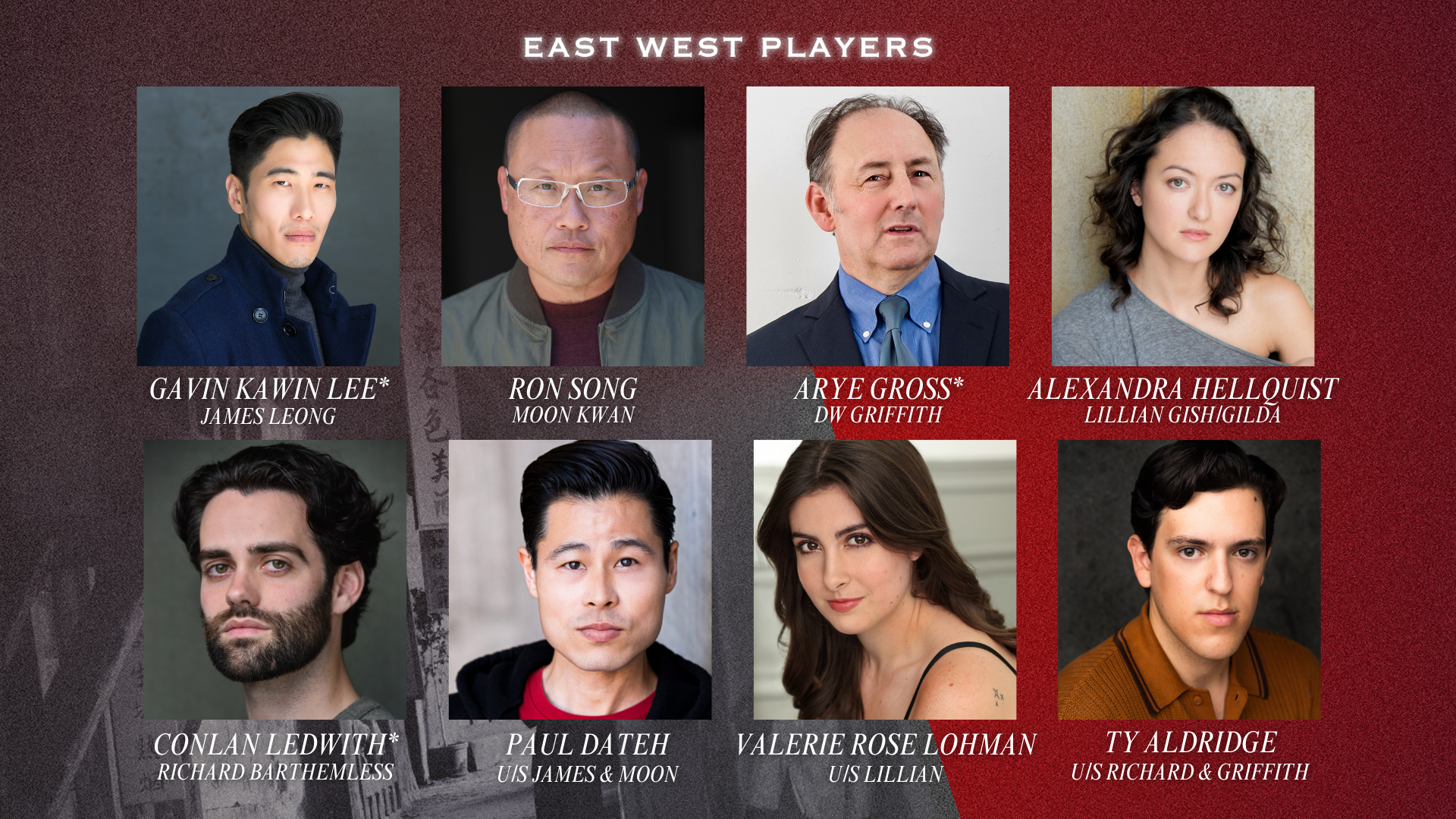
The cast of “Unbroken Blossoms.” | Photos courtesy of East West Players

Speaking by phone, Chung explains the genesis of the play. “I’m fascinated by Hollywood history so I’ve read about D.W. Griffith; he is considered the godfather of cinema. His film ‘Birth of a Nation’ is hailed as one of the first and greatest films of all time. But it’s also a movie that makes heroes out of the Ku Klux Klan. It says something about America that the film which defined Hollywood — it introduced new forms and techniques about the craft — had KKK as protagonists. I thought it was interesting.”

“Studying his career I realized that he made ‘Broken Blossoms,’ one of the first ‘positive’ interracial relationships in Hollywood films, after that.” Chung continues. “But, of course, it was 1919 and it was a white man in yellow face makeup playing a Chinese character. I watched the movie and from today’s point of view it’s very dated and offensive because of the stereotypes. So one has to look at it from the historical context. For that time, this was a progressive movie — it was arguing for this relationship between a white woman and Chinese man. They were clearly trying to do something that wasn’t the usual negative depiction of Chinese people. The intent might have been good but, because of the limitations at that time, the result was still problematic.”

“And then I found out during my research that he hired two Chinese American consultants for the movie — James Leong and Moon Kwan,” Chung adds. “They were both real people and went on to have long careers working in Hollywood films. But we don’t really know much about that history and a lot of it is forgotten. That got me thinking about what it might have been like to work on this movie at a time when the Chinese were being portrayed but not in an authentic way. ‘Unbroken Blossoms’ tries to explore both sides of that dichotomy. It’s an imagining of what transpired from their point of view.”

Chung finished writing a draft of “Unbroken Blossoms” in 2015 and the play had a public reading of it at the Japanese American National Museum with East West Players and Visual Communications. He put it away after that and worked on other projects. It was during the pandemic that he revisited and reworked the play.
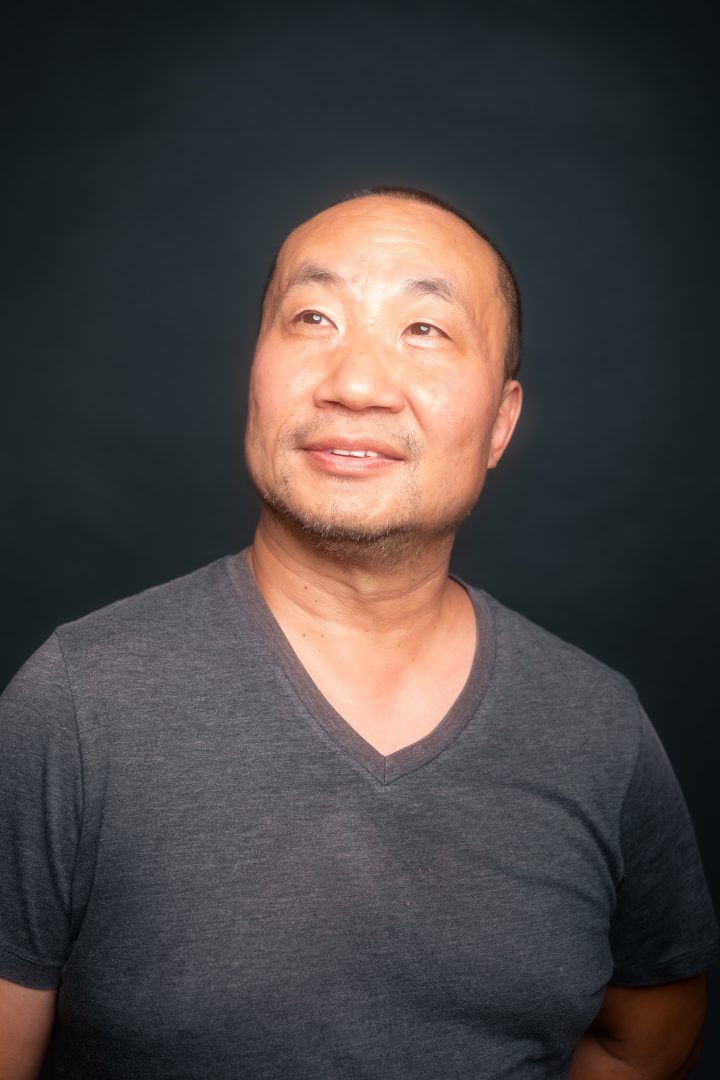
Philip W. Chung. | Photo by TJ Ramirez/East West Players

“The world has changed a lot since I wrote ‘Unbroken Blossoms’ in 2015,” explains Chung. “The play is set in 1919 in Los Angeles during the Spanish flu pandemic. It was very similar to COVID: people were wearing masks and there were several race riots — black versus white — and anti-Asian violence all over the country. Those were the things in my play, but when I wrote in 2015 those were events that happened in the past. I wanted to explore that parallel between now and 1919 more closely than I did in the original version. The fact that the play feels more relevant now than it did back in 2015 is strangely disappointing in a way, because it shows that history is repeating itself and we didn’t learn from past experience.”

That Chung called his play “Unbroken Blossoms” hints at something hopeful, though. He discloses the idea behind the title. “The white woman and Chinese man in the 1919 film are broken blossoms. Each has tragedies in their lives that prevent them from being a whole person. I thought it would be interesting if the play was the opposite of that. Is there a way to become unbroken — specifically in this case — if the portrayal of being Asian is a broken version of ourselves that we see from Hollywood? Is there a way beyond that?”
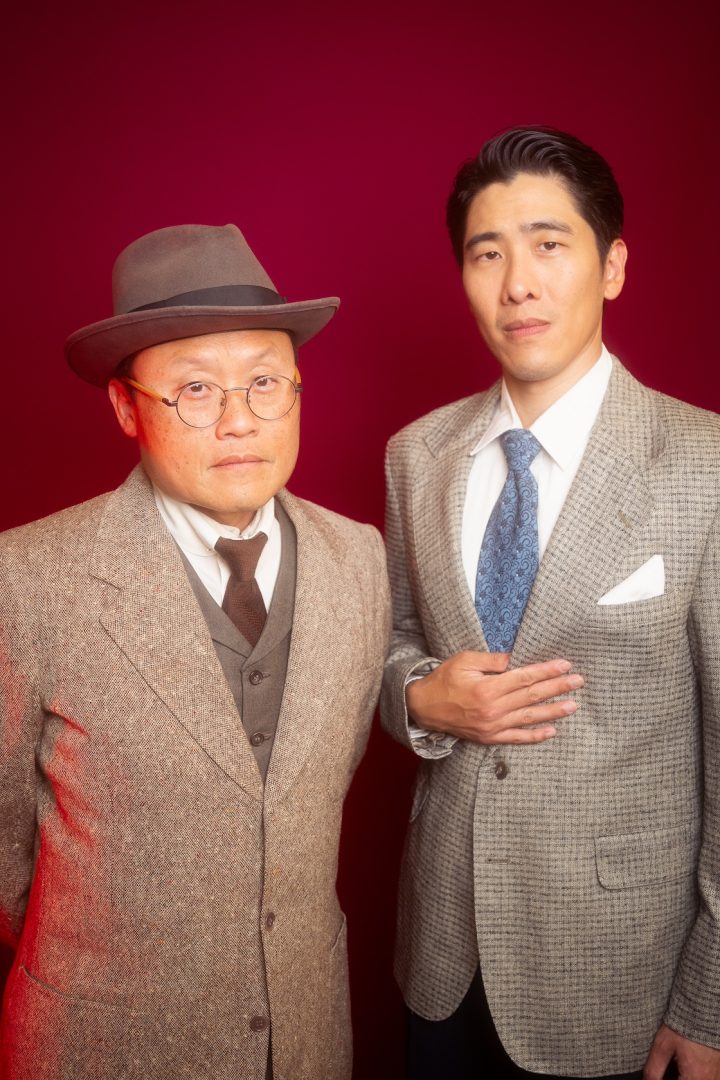
Ron Song, left, and Gavin K. Lee. | Photo by TJ Ramirez East West Players

Gavin Lee, who plays James Leong, heard about Chung’s play in February through “Unbroken Blossoms” director Jeff Liu. He says, “I had worked with Jeff before and he asked me if I was interested in reading a new play. He sent me the script and I thought it was pretty visceral. There are many elements in the play, like the misogynistic laws at that time, that got me angry. But they are obviously meant to have that effect. There are some scenes that were difficult to read — particularly the part where Moon gets mistaken for me and he gets brutally beaten. They can’t tell the difference between the two Chinese men.”

“Anyone who watches the play will definitely feel for the two Chinese consultants,” states Lee. “They have vastly different viewpoints. My character is very cynical. Already he knows the filmmakers don’t really care about them or their opinions; they were only hired because the producers want to look good. My character understands that whole process and he’s just trying to get something out of it. Moon, on the other hand, really believes he’s there to be a consultant. I feel like he’s the one the audience will root for.”

“Moon and James poke at each other because Moon believes he’s helping to make the characters be more authentic and represented in this film,” Lee relates. “James, on the other hand, believes the only way the film can be more authentic is if it has an actual Chinese actors instead of white actors portraying Chinese people. So Moon laughs at what James is trying to do; he thinks it’s unrealistic and wishful thinking.”

Two weeks into rehearsals, Lee reconsiders his initial reaction about his character. “When I first read the play, I saw James as being cynical. The more I work on it, though, I’m finding parts in which his love, passion, and hope show through his sardonic exterior, which is fun to play. I’m not sure if this was the intention of the author, Philip Chung, or if it’s just a character trait I had to apply myself to get more grounded in it. But it does make me want to root for James more. While he seems cynical, James’s ultimate goal is to learn from a renowned director so he can make films that are true to Chinese people.”
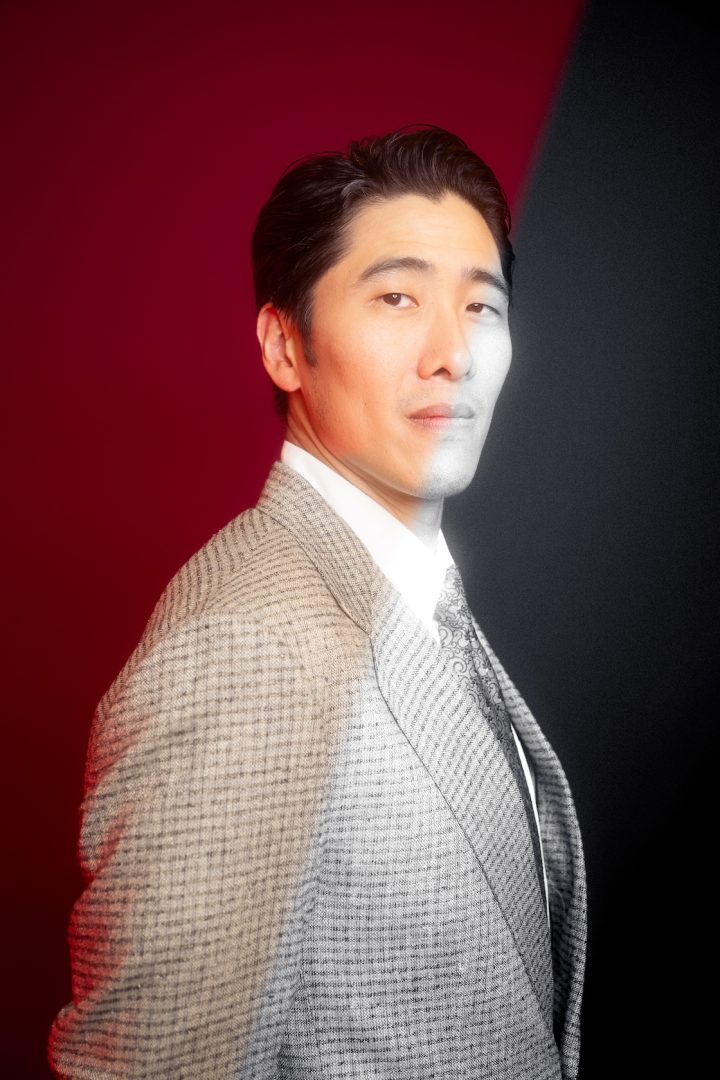
Gavin K. Lee. | Photo by TJ Ramirez/East West Players

Lee didn’t set out to be in theater. He reveals, “I had always been into math and sciences — or at least that was what I thought. I was on a pre-med track going into college and I had taken the MCAT. But about ten years ago, I decided that medical school wasn’t for me. I had switched from pre-med to teaching and was living in Korea then. I took an interest in acting after reading career guide books and taking personality tests which showed it was the best career for me. I thought it was strange, but I tried it out on a web series. I had no training so I was awful. As bad as I felt about my acting, though, I actually loved doing it.”  

“So I moved back to the U.S. and almost immediately I signed up for acting classes,” Lee says. “I went to the Beverly Hills Playhouse and took a course on scene study. Then I did my first play in 2016. I have also done some TV and film but theatre has become a strong passion for me.” 

“I feel that there’s better representation in theatre than TV or film. But that’s only my opinion and it’s based on my lived experience,” Lee clarifies. “I get audition calls for roles for open casting. In fact, I have another audition to play a British character. I think theatregoers are more accepting seeing a non-white actor portraying a traditionally white character.”

As for the audience takeaway, Lee opines, “Whether people believe one viewpoint or another, any good play will have them contemplating the repercussions of what they saw. Some people may disagree with the message of the play but I definitely think people will come out after seeing the play feeling a flurry of emotions — which is why we do theatre. There’s comedy in it, obviously drama, anger, which is one of the feelings I had when I read Philip Chung’s play. Ideally, some people will leave the theatre hopeful that because times have changed in the last hundred years, it will continue to do so for the better.”

While it’s unfortunate that Chung didn’t find much information about Moon and James and their experience, it’s also propitious. Having a blank canvas accorded him the freedom to create nuanced, complex characters and the engrossing plot that make Unbroken Blossoms compelling theater.         
AbilityFirst’s Food and Wine Festival Marks 50th Anniversary in South Pasadena

Also published on 10 June 2024 on Hey SoCal

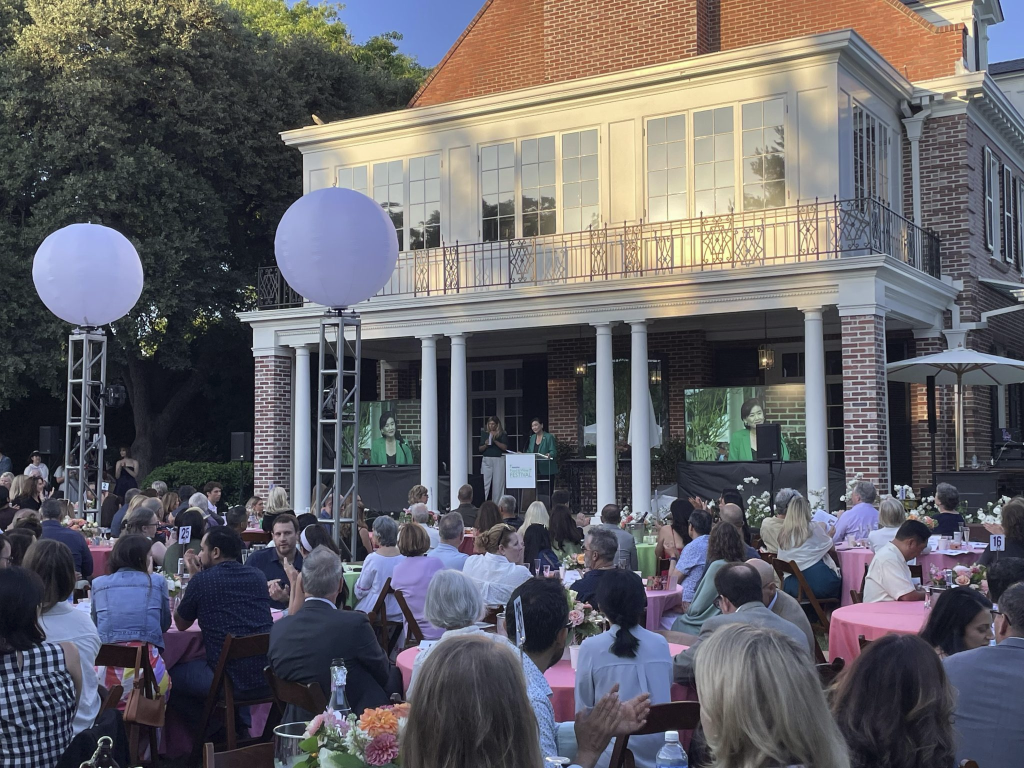
Congresswoman Judy Chu at the Food and Wine Festival | Photo by Brianna Chu/HeySoCal.com

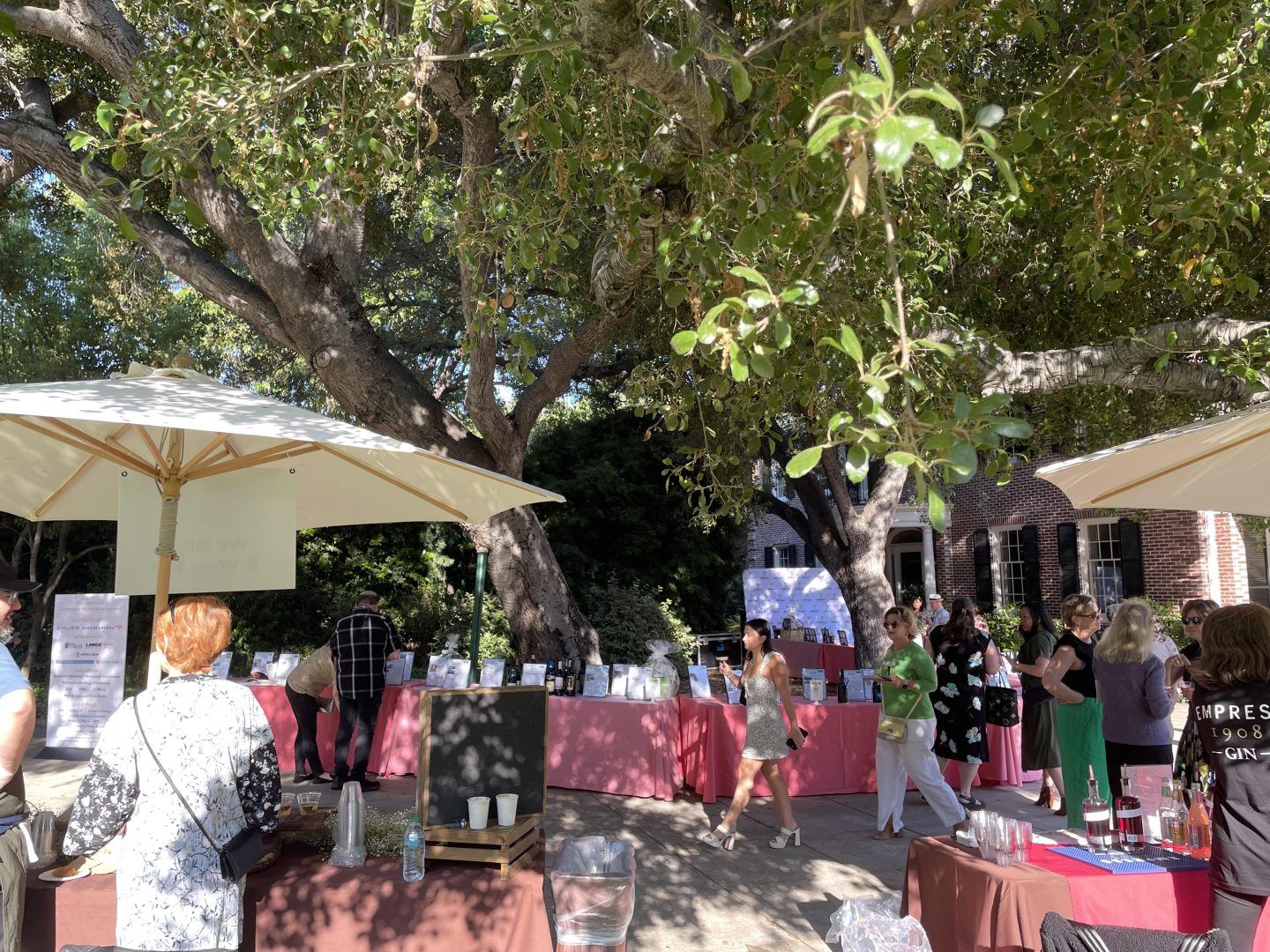
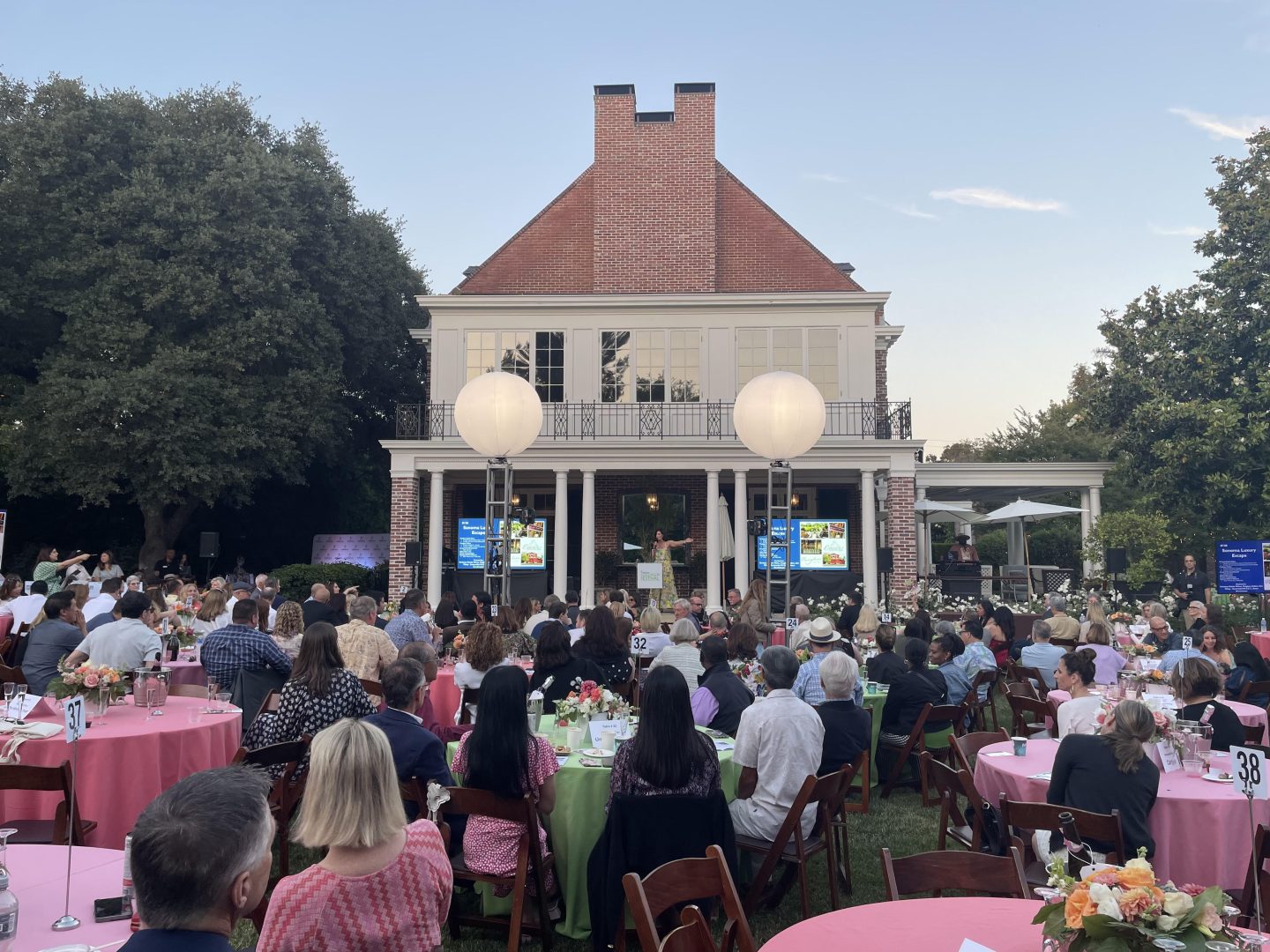
AbilityFirst’s renowned Food and Wine Festival celebrated its 50th anniversary in grand style on Sunday, June 9 from 5 to 8 pm at the Urquhart residence in South Pasadena. Approximately 400 guests attended this milestone year and enjoyed the culinary and beverage offerings from more than 30 top restaurants, cocktail bars, wineries and breweries.

Some of this year’s participating restaurants and dessert shops were Agnes Restaurant & Cheesery, Alexander’s Steakhouse, Beard Papa’s, Bone Kettle, El Cholo Cafe, Gale’s Restaurant, Kensington Caterers, Lord Empanada, Marina, Mi Piace, Nothing Bundt Cake, Pocha LA, Porto’s Bakery, Stems: Cheese, Charcuterie & Catering, Tam O’Shanter, The George, and more.

Beverages featured cocktails and spirit tastings from 1886 at The Raymond, Dulce Vida Tequila, Empress 1908 Gin, Knox & Dobson, Old Hillside Bourbon Company, and We Olive & Wine Bar; craft beer from Golden Road Brewing, San Gabriel’s Ogopogo Brewing, along with specially curated Wines from Caymus Vineyards, Navarro Vineyards, and Riboli Family of San Antonio Winery. Nonalcoholic beverages were provided by Celsius and PepsiCo.

Attendees peruse auction items. | Photo by Brianna Chu/HeySoCal.com

According to Mary Urquhart, she got involved with AbilityFirst when she was the president of the San Marino chapter of the National Charity League and this is the third time that her family has hosted this outdoor event.

A few days before the Food and Wine Festival, Urquhart said, “We should be very proud that we have such a wonderful institution for 98 years in our community. It serves so many people with special needs and we’re lucky to have it … and hopefully many will support it this Sunday.”  

Indeed AbilityFirst has transformed the lives of children with special needs and their families. Established in 1926 as the Crippled Children’s Society of Southern California by members of the Los Angeles Rotary Club, it aimed to assist kids with polio.

In 2000, the organization adopted the name AbilityFirst to better reflect its broader mission of helping children and adults with physical and developmental disabilities reach their full potential by providing recreational and socialization programs, employment, accessible housing and camping.

Lawrence L. Frank, of Lawry’s Restaurants fame, was one of the original founders of the organization, and 52 years ago AbilityFirst opened the Lawrence L. Frank Center in Pasadena and Long Beach. From 2016 to 2017, the number of children and adults with developmental disabilities in these communities grew by 1,000 people, 66 percent of whom are between the ages of 6 and 51 years old — the target age for AbilityFirst’s programs.

Food and Wine Festival auction | Photo by Brianna Chu/HeySoCal.com

Introduced a few years ago was College to Career, a community-based program for students who want to go to college and gain the skills, training and education they need to achieve their academic and career goals. Additionally, the program emphasizes independence and personal choice in using community resources for daily living and future employment.

This multi-year program begins with a self-discovery and community exploration component to help students to identify and develop a plan to achieve goals. Upon completion of the academic component, individuals may transition to community jobs, internships, or volunteer programs as they launch their career paths. The Lawrence L. Frank Center, AbilityFirst’s flagship location in Pasadena, houses the expanding College to Career program.      

AbilityFirst has six community centers offering several new adult  programs including ExploreAbility, DiscoverAbility and PossAbility. After school enrichment program includes homework support, outdoor activities, arts and crafts, cooking and more!”

ExploreAbility is an adult day and community integration program currently being offered at the AbilityFirst Joan and Harry A. Mier Center in Inglewood and the AbilityFirst Lawrence L. Frank Center in Pasadena. A licensed program, its objective is to identify what is important to each individual, to develop the skills necessary to achieve their goals and to be involved in their communities through volunteering and community activities. Individual support and small-group activities promote interaction and learning.

The program is designed to help individuals access their communities in their daily lives, work, recreational and leisure activities. It incorporates volunteering, community activities, independent living and skill-building, using a small group model.

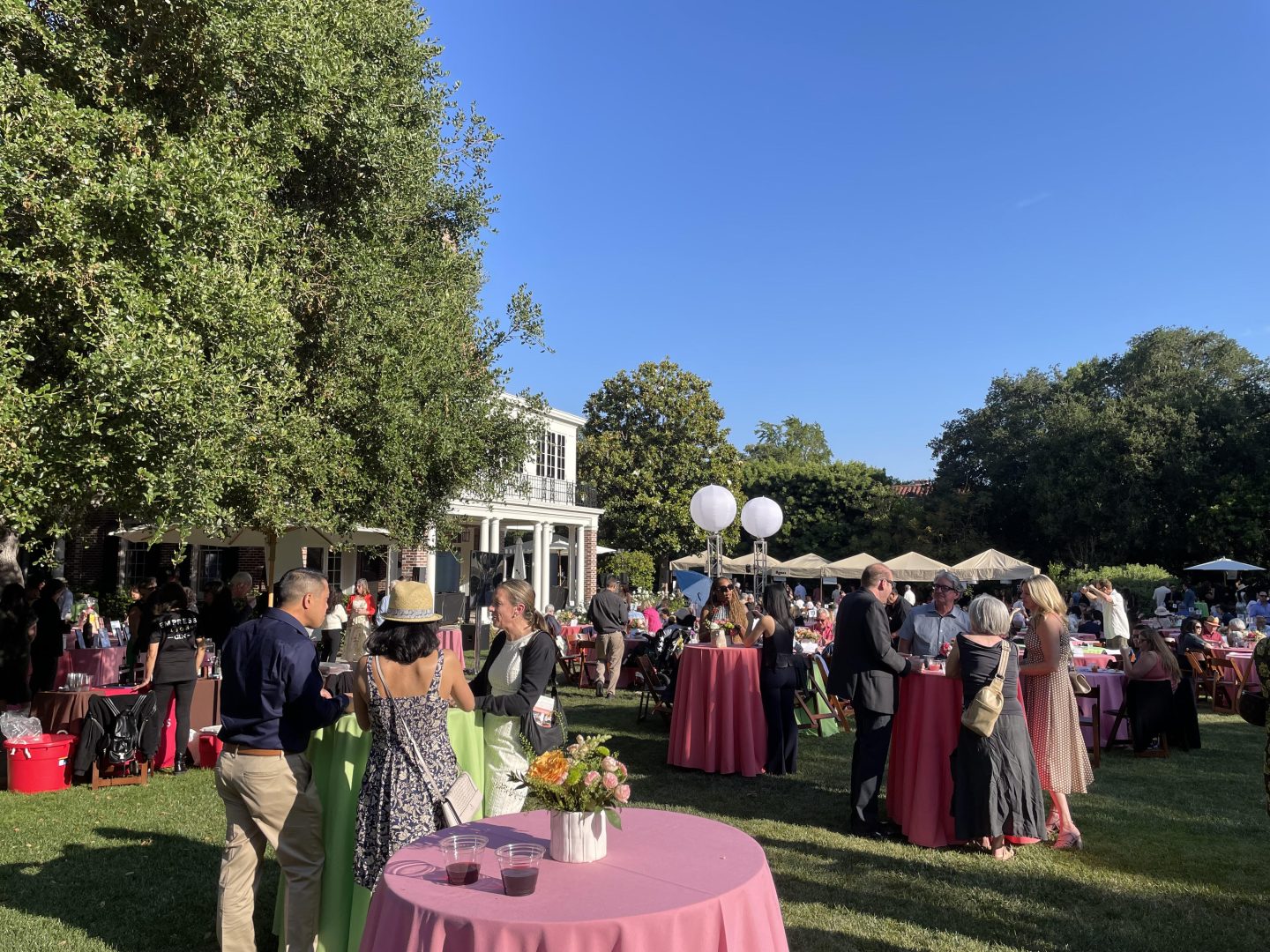
Guests chat, eat, and drink at the Food and Wine Festival | Photo by Brianna Chu/HeySoCal.com

PossAbility, offered in Pasadena and Los Angeles, is intended for adults who want to enhance their skills and independence, and to participate in their communities. Individuals in the program are empowered to set and pursue personal goals with an emphasis on employment readiness and increased community connections, including volunteering. 

Rounding out AbilityFirst’s programs is Camp Paivika, a Native American word meaning “Dawn,” in the San Bernardino Mountains. It was begun in 1946 by the Rotary Club as one of the first full-accessible camps in the United States and has been in active operation since. It is maintained through endowments from donors and fund-raising efforts by community members.

Going to summer camps helps children develop social and communications skills as they participate in activities with other kids. It helps individuals build character and gain self-respect as they become responsible for their own safety and survival in a setting outside their comfort zone.

Camp Paivika offers this same independence and self-reliance for children, teens and adults with physical and developmental disabilities. Specially-trained members of AbilityFirst staff provide assistance and guidance as campers enjoy all the fun activities available to them — archery, arts and crafts, campfires and cookouts, nature hikes, horseback riding, swimming. It is fully accredited by the American Camp Association.

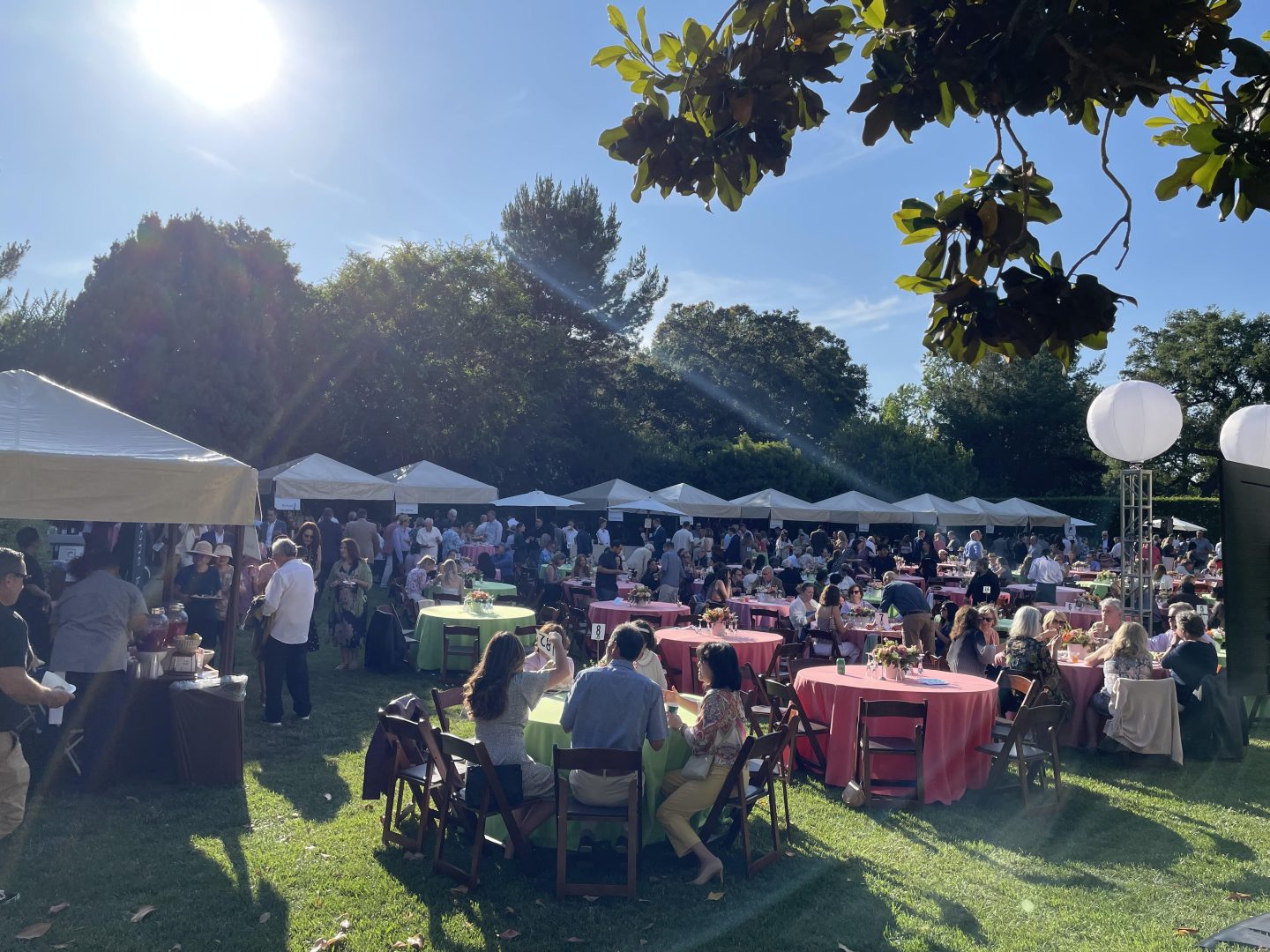
Attendees enjoy the food and beverage offerings | Photo by Brianna Chu/HeySoCal.com

All these life-changing programs are made possible through AbilityFirst’s Food and Wine Festival. How it evolved into the spectacular event that it is today is quite an inspiring story.

A support group called Crown Guild held the first food and wine festival in 1953 with a wine tasting at The Langham Huntington Pasadena, then known as the Huntington Hotel. Each Crown Guild member would invite ten to twelve friends and they would all be responsible for bringing a bottle of wine for the tasting.

It branched out to Crown Guild members homes, and then onto friends of members’ homes, until they got local restaurateurs and beverage companies involved. It lent a casual outdoor environment where guests could mingle and chat over food and drinks. Over the years, AbilityFirst built strong relationships with restaurants, wineries, and breweries.          

With the Food and Wine Festival’s 50th anniversary celebration, AbilityFirst continues the founding Rotarians’ legacy. Ninety-eight years after it was first created, AbilityFirst

Showcasing the perennial relationship between humans and plants at the Huntington’s Chinese Medicinal Garden

By Brianna Chu

Also published on 3 June 2024 on Hey SoCal

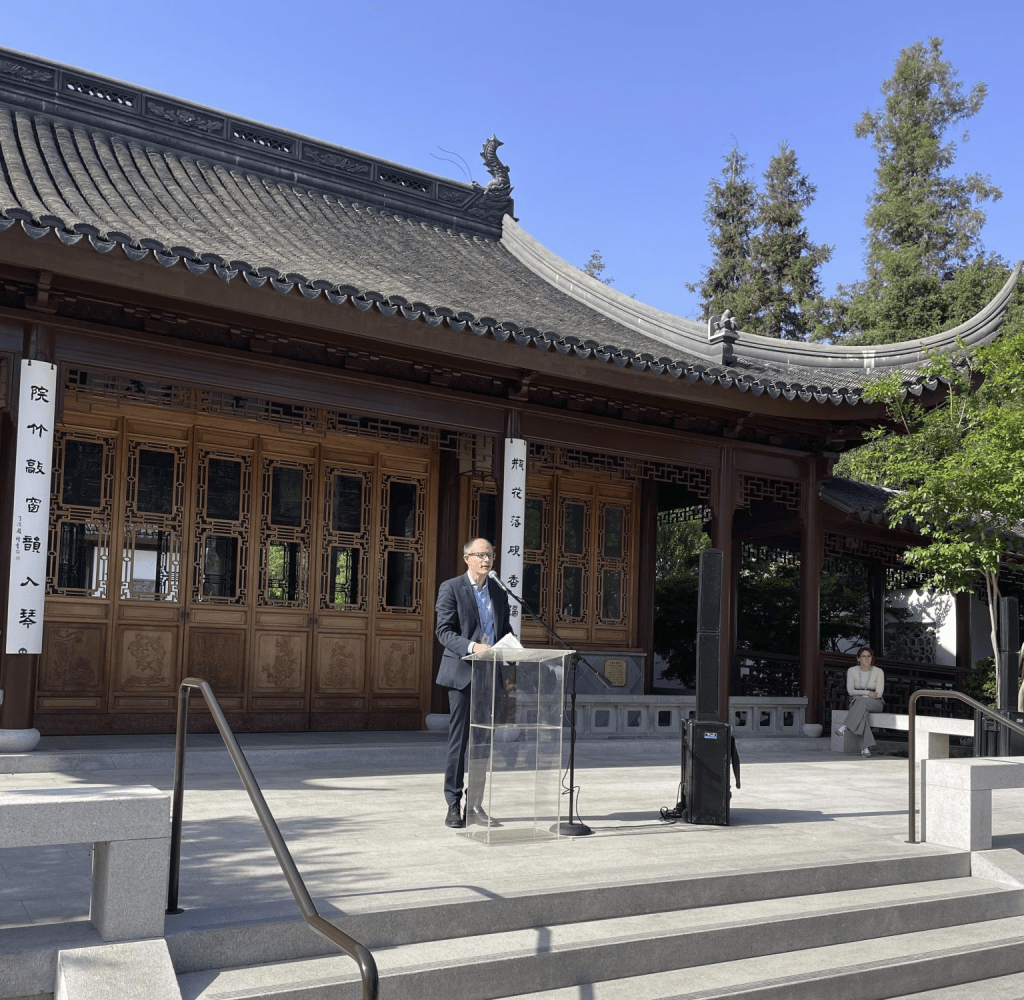
Philip Bloom speaks during the press opening of The Huntington’s Chinese Medicinal Garden opening

The final piece of the Huntington’s popular Chinese Garden — the culmination of years of work, interrupted by the pandemic — the Chinese Medicinal Garden (採藥圃 Cǎi Yào Pǔ) is, as the Chinese Garden’s curator Philip Bloom says, truly a milestone worth celebrating.

The team has been working on many types of interpretive programming for the Chinese Garden, including an art gallery scholar studio and the celebration court for performance space.

“But it is, I think, the Chinese Medicinal Garden that most powerfully connects the Chinese Garden to the rest of the Huntington as a whole,” Bloom reflected in his remarks to the press the day before the garden’s official May 22 opening.

“The Cǎi Yào Pǔ is a place for learning about the relationships between plants and people,” Bloom said. “Indeed, in historical China, medicinal gardens were always a primary site where people went to learn about and think with plants.”

Michelle Bailey, the garden’s assistant curator, concurred: “The deepest purpose for us at The Huntington is to show the long relationship between humans and plants.”

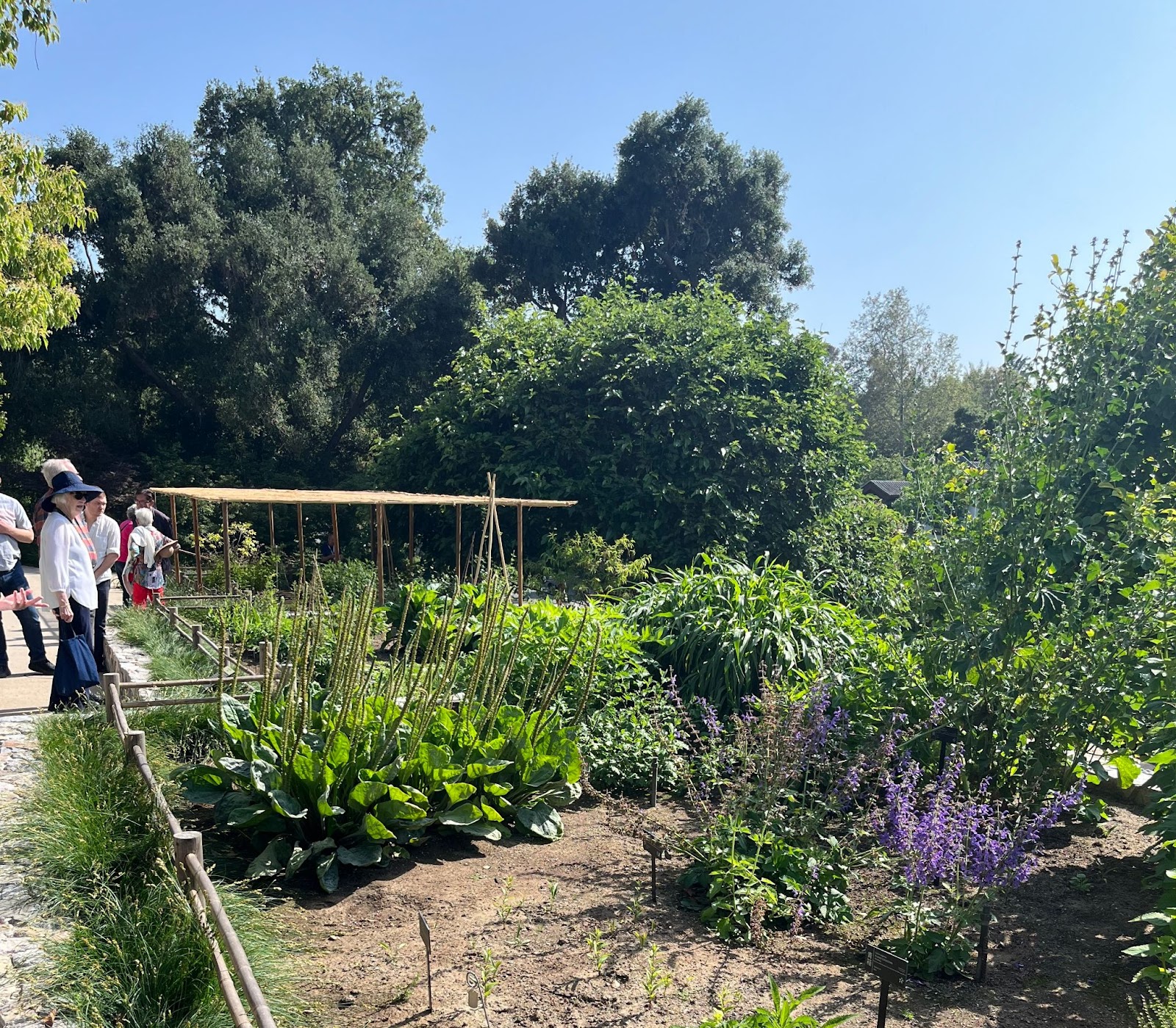
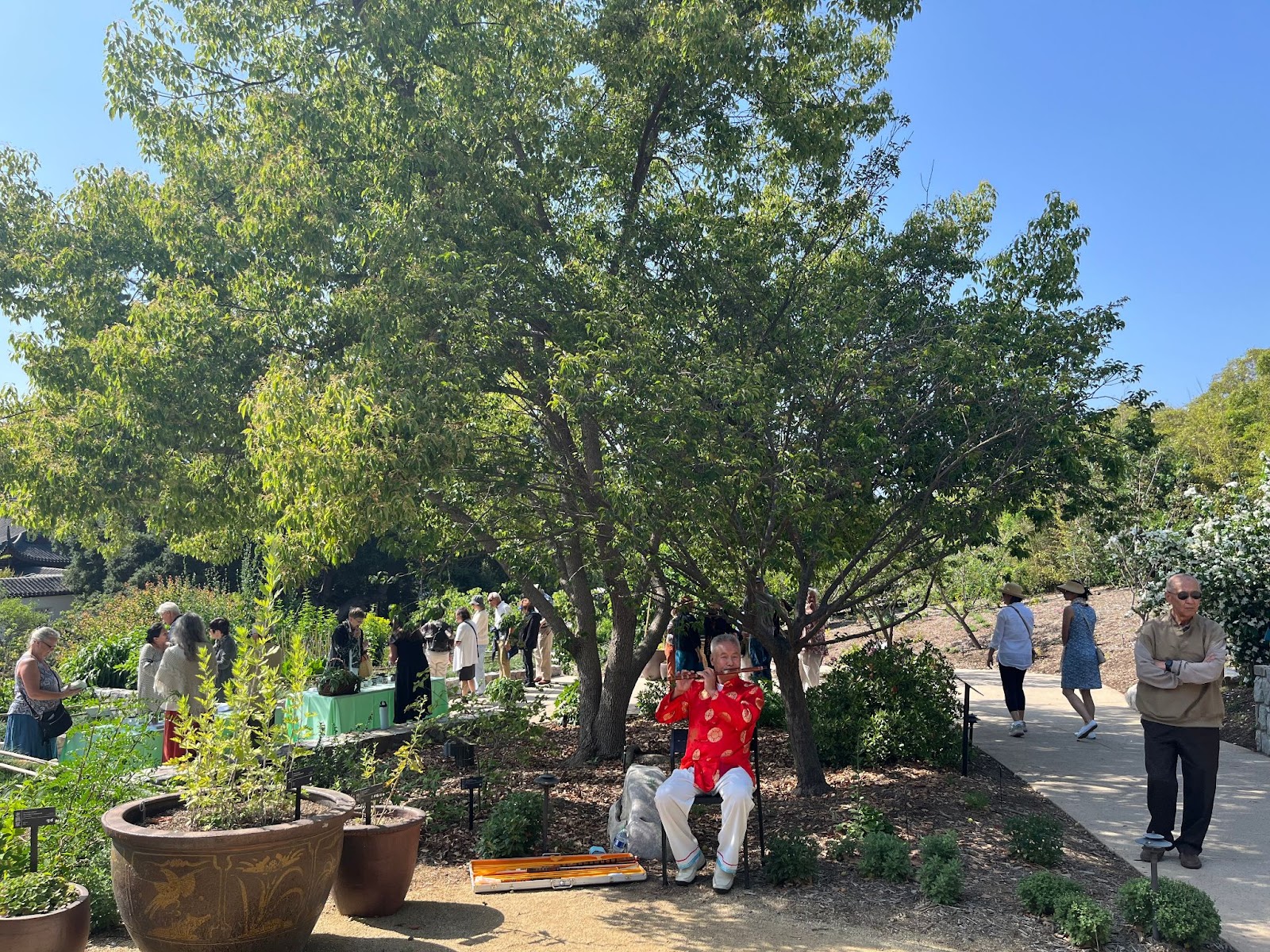
Some of the Medicinal Garden’s first admirers studying its plots. | Photo by Brianna Chu/HeySoCal.com

The plants featured in the garden were chosen partially based on those included in seminal medical texts of Chinese traditional medicine, such as “Shennong’s Classic of Medicine” (神農本草經 Shénnóng Běncǎo Jīng) — one of the world’s oldest pharmaceutical texts, written in the first or second century C.E. The garden’s collection includes selections shared by the Chinese Medicinal Herb Farm in Petaluma, California. Additionally, some included specimens were hand-collected from China in the 1990s by Robert Newman, dean emeritus of Emperor’s College, which further impresses botanical and historical significance. 

In total, around 100-120 of these plants have been selected and included in the medicinal garden. As both Bailey and Bloom are historians by background, the two chose to structure the garden’s six main beds based on the stories they saw within the plants’ characteristics and uses, rather than following the more typical approach of simply grouping plants based on how well they grow together.

The six main beds are broken down into the following categories: fundamental herbs, prescriptions/plant classifications, ornamentals, comestibles, imported medicines and useful plants.

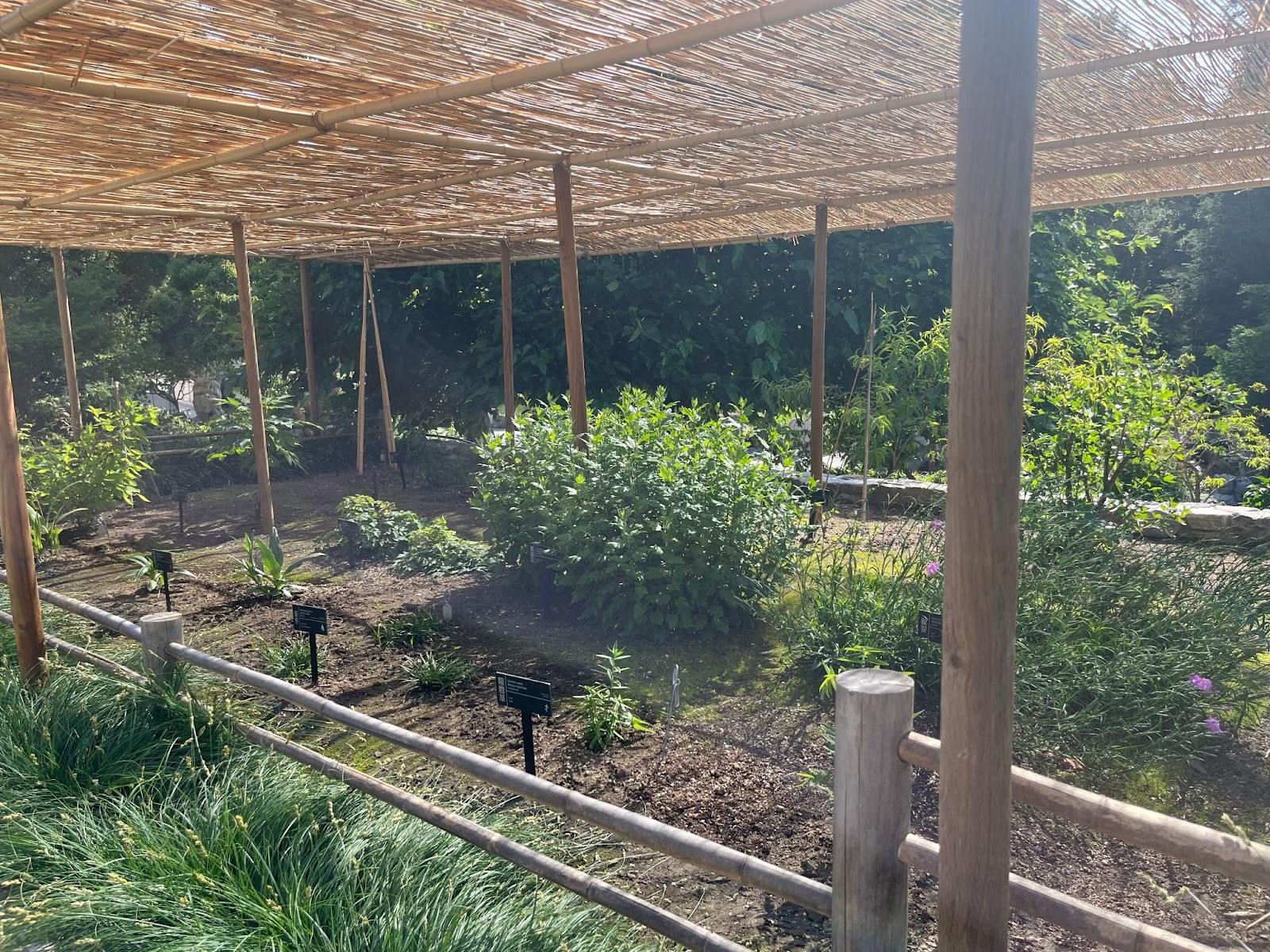
One of the Fundamental Herbs beds. | Photo by Brianna Chu/Hey SoCal.com

The Fundamental Herbs bed showcases many plants and herbs from “Shennong’s Classic,” many of which are still used today in traditional Chinese medicine. Due to the sheer quantity of plants covered across in the text, plants’ inclusion were dictated by availability. 

To delve into the story of trade, the Imported Herbs bed features plants non-native to China but would have reached them through the Silk Road or by maritime trade. Some plants nested in this bed may be familiar, like turmeric, ashwagandha and St. Paul’s Wort, among others. These tell the story of communication, travel and exchange — making their way from their native lands of India, Southeast Asia, Europe and even the Americas to be used, studied and cataloged in another seminal medical text, “Compendium of Materia Medica” (本草綱目 Běn Cǎo Gāng Mù)also known as“Great Pharmacopeia,” which was originally published in Nanjing, China, in 1596.

True indigo boasts not only medicinal properties but also wide use as a beautiful dye. | Photo by Brianna Chu/Hey SoCal.com

The “Useful Plants” are multipurpose ones: those that can be used not only as medicine or treatment, but also as dyes, textiles, incense, timber and other purposes. “Comestibles” are foods that also have beneficial medicinal properties, like sacred basil and aloe.

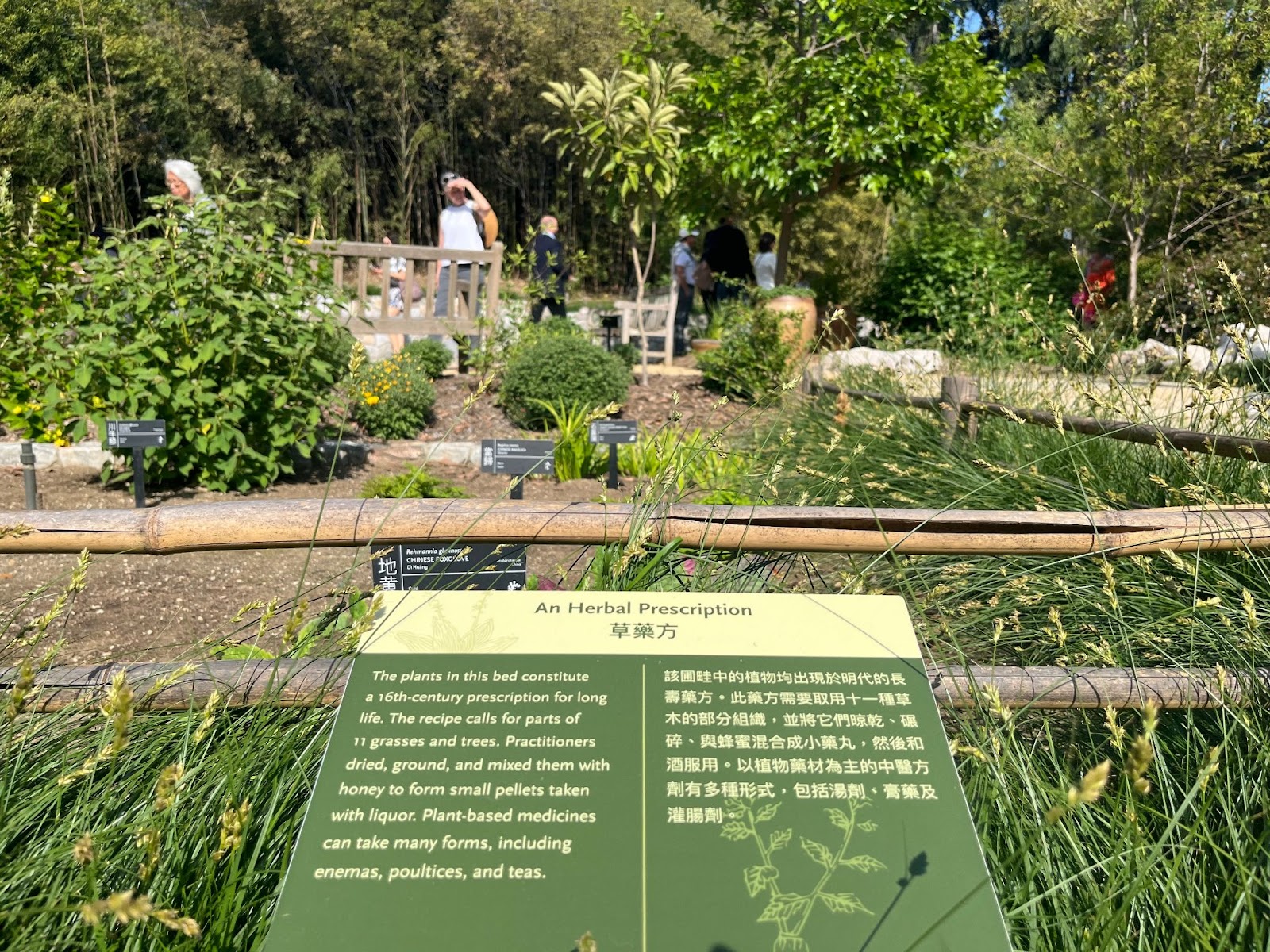
Half of this split bed features the 11 components for a prescription. | Photo by Brianna Chu/Hey SoCal.com

One bed is split in half: on one side, all 11 herbs and grasses needed for a prescription for long life are grouped together, while the other half of the bed is dedicated to herbs classified by their taste — bitter, sweet, salty, sour and acrid.

The “Ornamentals” may strike visitors as familiar flowers and trees for a Chinese garden, such as plum and peach trees, chrysanthemums, peonies and roses — evidence that cultivating a garden can be healthful and beneficial in more ways than one.

Beyond the verdure currently exhibited in the garden, there are still more rare specimens being tended in the Huntington’s nursery. While nothing is planned yet, there is the potential to further explore the knowledge and history of medicinal herbs in an extension of the Cǎi Yào Pǔ.

The Cǎi Yào Pǔ buzzes with interest at its press opening. | Photo by Brianna Chu/Hey SoCal.com

Aside from independent strolls through the Chinese Medicinal Garden, members of the public can also attend monthly open houses, at which Bailey’s dedicated and knowledgeable team of about 10 volunteers will be available to answer questions regarding the plants, their history and their uses. Prospective attendees can check the dates and times for these open houses at the garden’s webpage to plan visits here: https://huntington.org/event/chinese-medicinal-garden-open-house

May S. Ruiz contributed to this story.

“An Evening with Ezra” sets benchmark for inclusivity in film screenings and production

Also published on 17 May 2024 on Hey SoCal

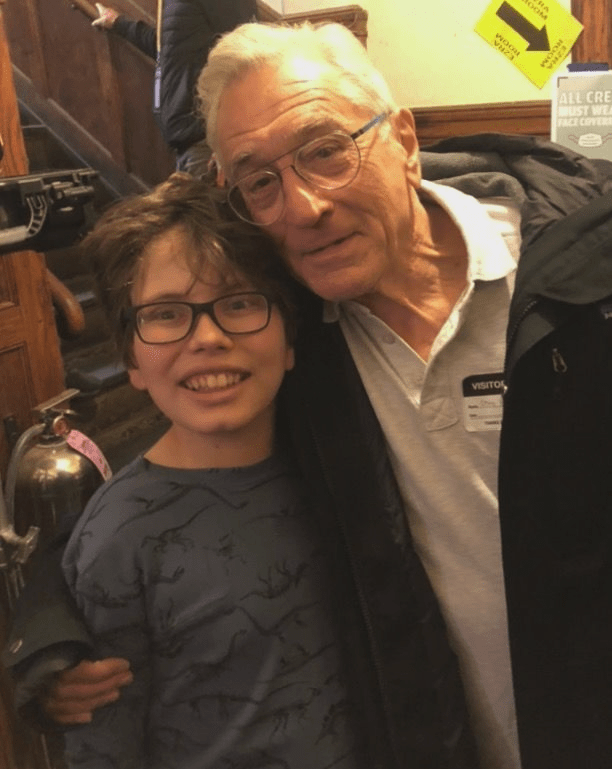
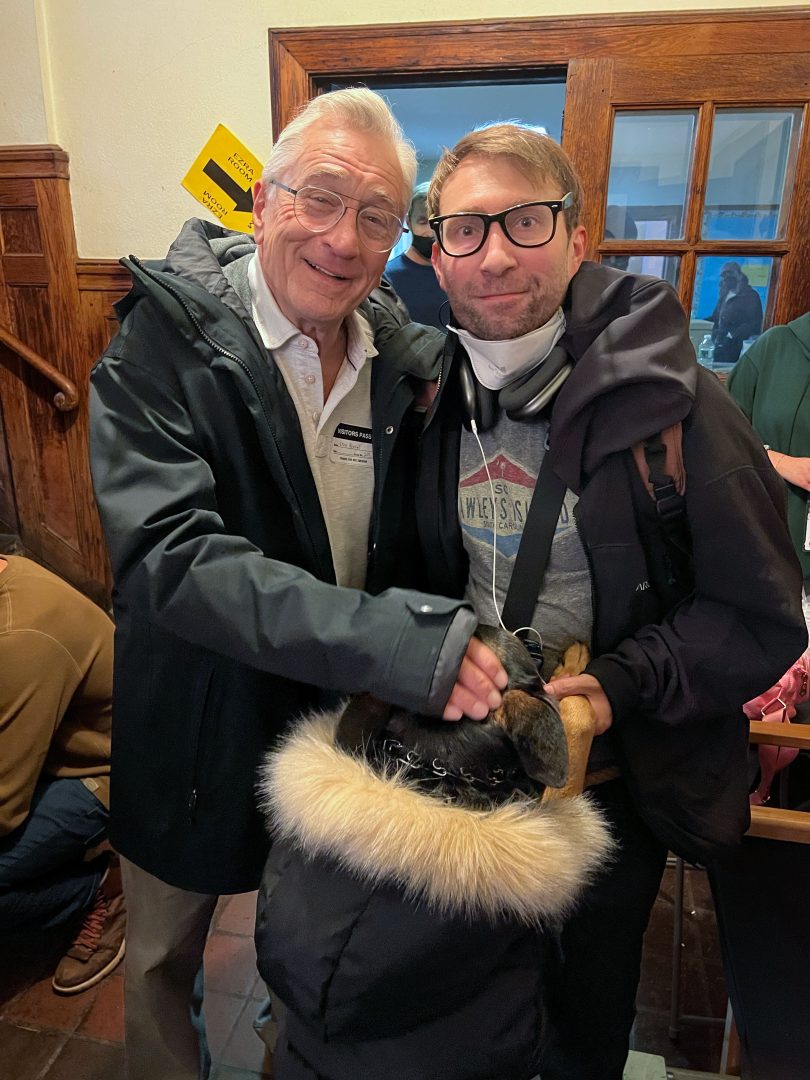
William Fitzgerald with Robert de Niro. | Photo courtesy of Alex Plank


According to the American Psychiatric Association, autism is a complex developmental condition involving persistent challenges with social communication, restricted interests, and repetitive behavior. The Centers for Disease Control and Prevention estimates that one in 36 children has been identified as having autism spectrum disorder, or ASD. Academic books have been written to help us understand it while fiction novels and movies with autistic protagonists have been published and produced.       

A Hollywood film makes cinema history with the release of “Ezra” at the end of the month in about 1,000 movie theaters across the country — marking the first time a neurodivergent actor is playing a title role.

With an ensemble cast starring Robert de Niro, Bobby Cannavale, Rose Byrne, Vera Farmiga, Whoopi Goldberg and Rainn Wilson, the movie follows a father’s journey co-parenting his autistic son. Written by Tony Spiridakis, directed by Tony Goldwyn, and introducing autistic actor William Fitzgerald, “Ezra” is more than a film about autism; it’s a groundbreaking step toward inclusive filmmaking, inspired by Spiridakis’ own journey of acceptance with his son Dimitri.

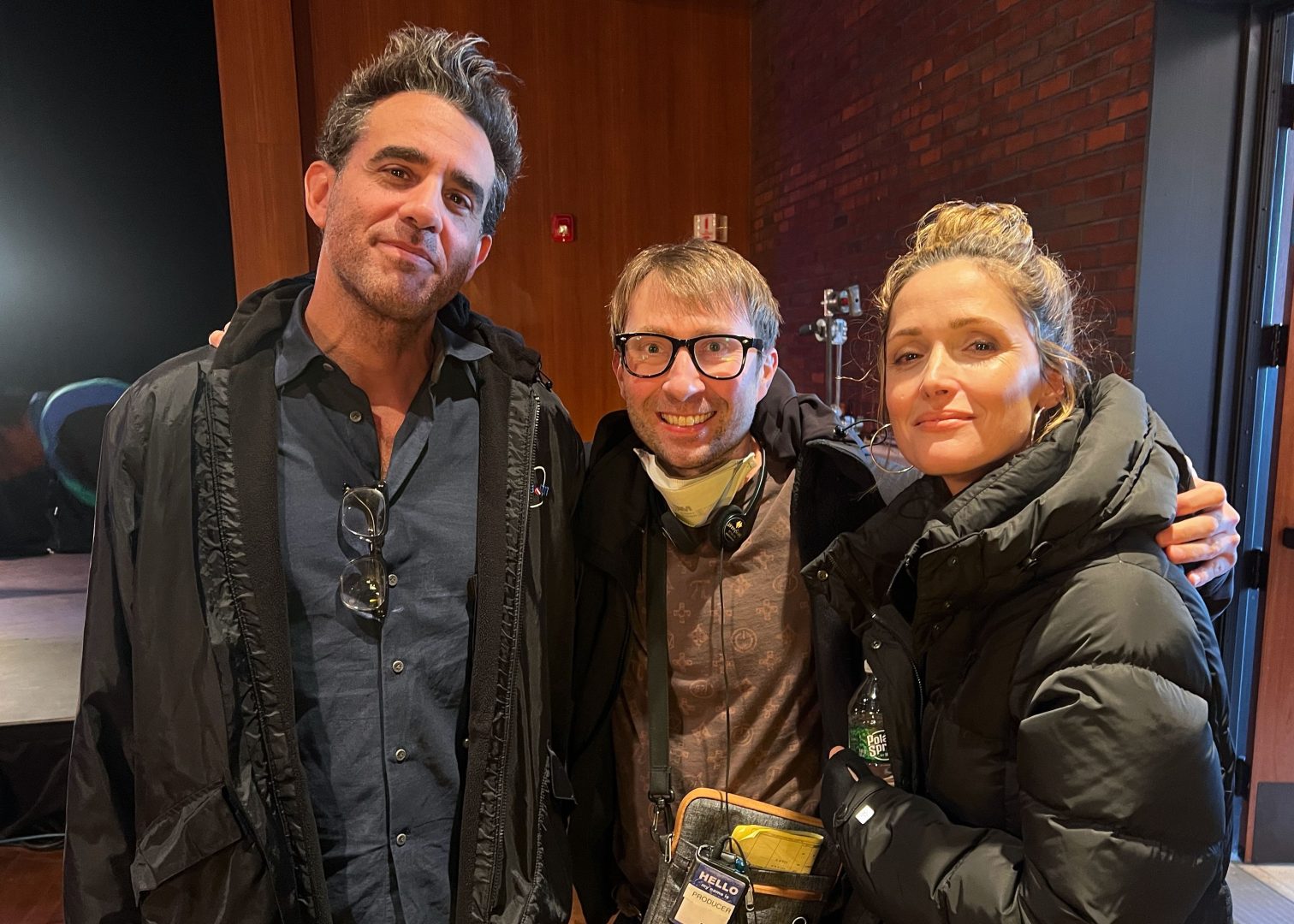
From left, Bobby Cannavale, Alex Plank and Rose Byrne. | Photo courtesy of Alex Plank

Taking that history-making event one step further, Love & Autism will host Hollywood’s “An Evening with Ezra” on Tuesday, May 24. To be held at The Writer’s Guild Theater in Beverly Hills, it is a first-of-its-kind neurodivergent-affirming film screening. This event aims to become the blueprint for inclusive screening practices in Hollywood, advocating for authentic representation of neurodiversity both on and off the screen. 

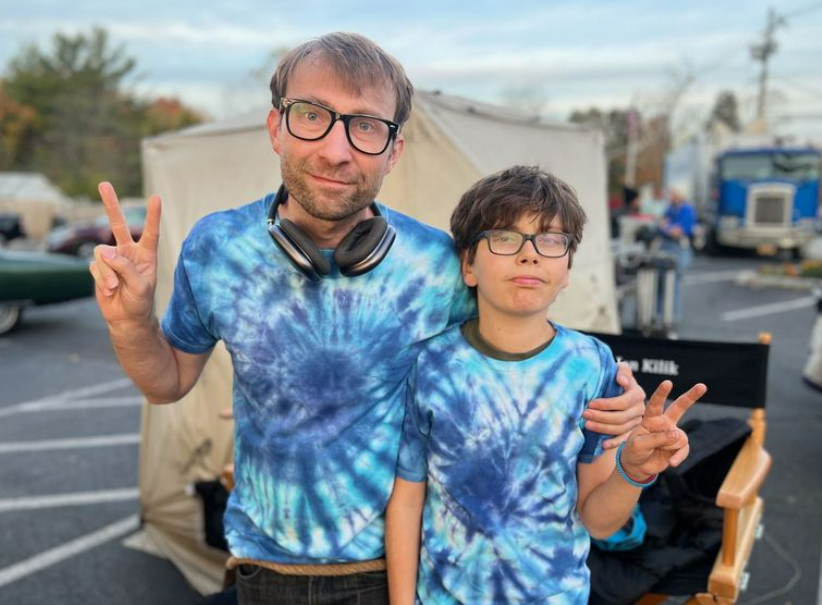
The entire movie production centered around a neurodivergent-affirming ethos, tapping filmmaker and autistic advocate Alex Plank as the film’s associate producer, creative consultant and DEI advisor to ensure meaningful representation behind the camera as well as thoughtful accessibility for its titular actor on set. Plank continues this work for “An Evening with Ezra,” ensuring the inclusivity of production is continued in this event.

Dr. Jenny Palmiotto, an expert in neurodivergent-affirming care and founder of Love & Autism, is the driving force behind this screening, inviting Hollywood to celebrate the autistic and neurodivergent community and confront internalized ableism in traditional screening practices. The neurodivergent community features prominently in every aspect of the event — from the chefs and musicians to artists and guests.

“Ezra captures the universal themes of love and connection that are often missed within the larger conversation and beliefs about what it means to be autistic,” Palmiotto says. “Everyone deserves to be seen and heard, to have a sense of belonging, and be their authentic self. Ezra gets it right, and we want to reflect that in this event.”

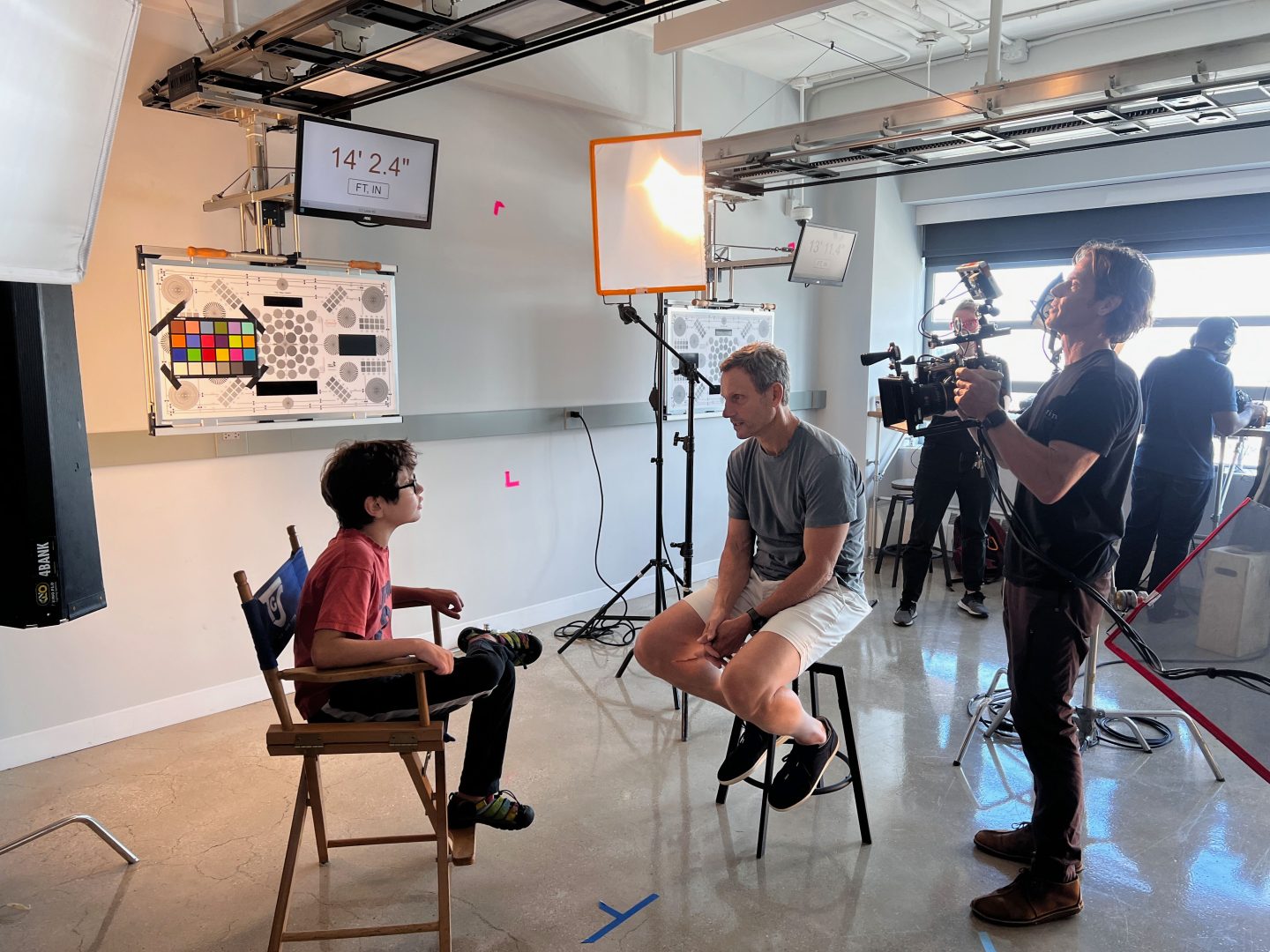
On the set of “Ezra.” | Photo courtesy of Alex Plank

At “An Evening with Ezra,” inclusivity isn’t just a buzzword — it’s a fundamental aspect of the event’s design. Guests can expect a range of thoughtful accommodations throughout the evening, including a peaceful entrance, grounding areas, sensory experiences and more.

Guests will have access to noise-canceling headphones and earplugs, swings for movement regulation, and quiet thoughtful reflection spaces available at any point in the evening. During the screening, guests are invited to drape a colored sash on a neighboring chair to ensure spatial needs are respected discreetly and effectively.

The evening will also prominently feature autistic talent including “The Autistic Chef” Vanessa D’Souza, harpist Evangeline and violinist Navid. Guests will be invited to explore intersectional art installations by neurodivergent artists Dimitri Spiridakis and Maze Creatix.

By email, Palmiotto and Plank talked about how the movie came about and their involvement with it.

“The film was written by Tony Spiridakis who has an autistic son. I was brought on by Bill Horberg and Tony Goldwyn who wanted to make sure we cast an autistic actor and was a proponent of ‘nothing about us without us’ — a concept I introduced him to,” Plank states.

Getting films produced is very challenging and filled with obstacles, but “Ezra” was blessed with good fortune. Plank explains. “Films have gotten harder and harder to finance recently but Ezra is a story that struck a chord with a lot of people. Bill Horberg has a son on the autism spectrum so Closer Media and its founder Zhang Xin were instrumental. Jon Kilik, who produced De Niro’s directorial debut A Bronx Tale, also produced our film and was on set every day. Tony Goldwyn was a powerhouse in terms of getting things in place. And Wayfarer Studios also made this film.”

Alex Plank with William Fitzgerald. | Photo courtesy of Alex Plank

One misconception about autism is that it’s a rare condition, which Plank sets straight. “Autism is much more common than people realize,” elucidates Plank. “Being autistic is another way of being human, so this film takes on a story that is part of many of our lives. What ‘Ezra’ does that other films have not done is within character development of Ezra, played by William Fitzgerald. The character Ezra is more nuanced and authentic than autistic characters in previous films. Autistic people were included from start to finish and the autistic experience on which I think contributed to the overall success of the storyline and resulting film.”

Having the support of esteemed Hollywood personalities right at the start attracts a stellar cast, as Plank discloses. “Robert De Niro’s son is autistic and he had a very strong reaction to ‘Ezra.’ So having him involved didn’t hurt. But Tony Goldwyn, our director, managed to get a lot of great actors involved because he is so beloved and respected. For instance, Whoopi worked with him on Ghost. A lot of our cast has a personal connection to autism as well.”

Plank continues, “I served as the consultant and associate producer for ‘Ezra.’ Having a creative role was important to me as an autistic person because I adhere to ‘nothing about us without us.’  It took us less than 30 days to film. I think everyone was really impressed with how well everything went. Autistic people are often underestimated and so I think that was part of it.”

Robert de Niro and Alex Plank. | Photo courtesy of Alex Plank

False impressions about autism abound, as Palmiotto and Plank reveal.

“There are way too many misconceptions about autism to be able to list them all but some of the most common are related to the way we think about disability in general,” states Plank. “Autistic people don’t overcome our own limitations. We overcome society being set up in a way that doesn’t align with the way neurodivergent individuals function. I’m autistic myself so everything I do involves neurodivergence (at least my own). I founded a website called WrongPlanet.net when I was a teenager. Since that time I’ve been doing public speaking and activism. I majored in Film at George Mason University and began working on TV series and films. I worked on The Bridge on FX as a consultant and also acted in it. I also guest starred  on The Good Doctor.”

Palmiotto adds, “Misconceptions about being autistic are discriminatory as they create access barriers in all systems. Each of us is responsible for examining our own ableism and how these internal thoughts stigmatize and pathologize those that are autistic. When we make assumptions that autistic people are broken versions of ‘normal,’ we have a human rights issue.

“It isn’t hard to change our internal thoughts and actions, it just requires us to accept the invitation to do so. Alex, myself and so many others work towards dismantling ableism, when we do this we create a better world. As a neurodivergent-affirming therapist, I see this work as not just the work of autistic self-advocates and their family members, but all of our journey. My work within neurodivergence is to help all of us accept the invitation to challenge ableism for autistic people.”

“Film has a way of moving people towards change even when we have no lived experience with the story. ‘Ezra’ invites viewers to shift their perspective on what it means to be autistic. Ezra’s story is one of universal themes of becoming, authenticity and love. Each character becomes a better version of themselves when their loved ones are their truest self. Even more than that, it’s a story of love and the risks that we take for those we love. Within this, ‘Ezra’ shows us all that autistic people want and need the very things that we all need. This is what I hope the audience takes from this movie; that each person deserves the human right of being their authentic self and when we allow for that in others, autistic or non-autistic, we all a better for it,” Palmiotto concludes.

Wiser words have never been spoken. Would that Ezra and its film screening event “An Evening with Ezra” serve as the standard for inclusivity in Hollywood.    


Visiting Scottsdale (Arizona) in the Spring

Also published on 13 May 2024 on Hey SoCal

Magenta penstemon flowers with red rock formation in background | Photo by Brianna Chu / Hey SoCal

It had been five years since I traveled out of the country so when I got an invitation to attend a wedding in Scottsdale, I gladly accepted. Located in Phoenix’s metropolitan area, Scottsdale was founded in 1894 by retired U.S. Army chaplain Winfield Scott and was incorporated in 1951 with a population of 2,000. While it’s only in a neighboring state, it nonetheless offers a change of atmosphere and scenery.

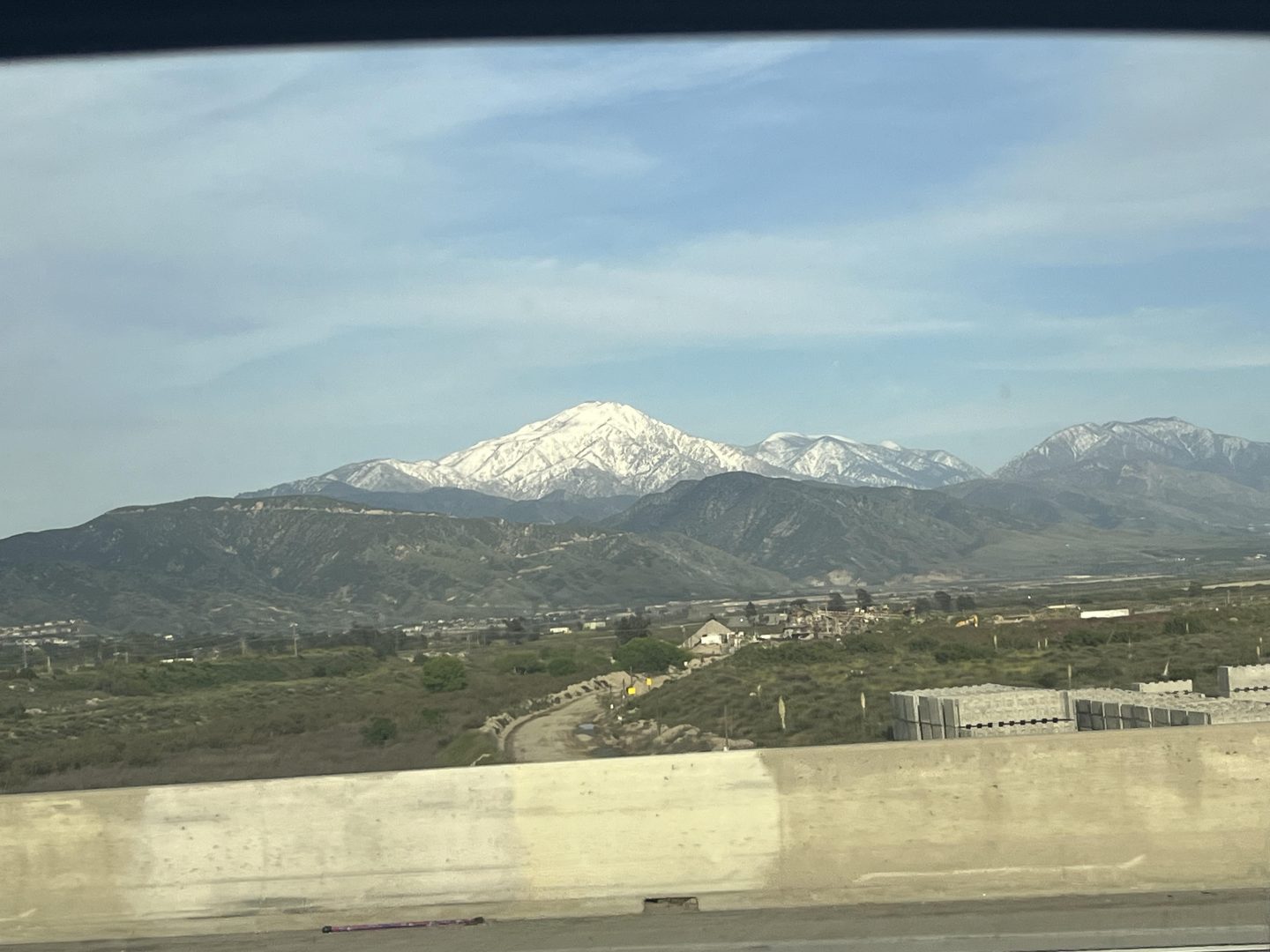
The snow-capped San Gabriel Mountains | Photo by May S. Ruiz / Hey SoCal

Excited to take a long road trip, my daughter, her husband, and I set out from Pasadena on a pleasant Thursday morning in April to spend a long weekend to discover Scottsdale. The majestic snow-capped San Gabriel Mountains along the 210 and 10 freeways were a sight to behold! As we got past Palm Springs to the other desert cities and the freeway became a two-lane thoroughfare, we were struck with how vast California is – there’s so much land and empty space!

The freeway turned into a four-lane road when we reached Buckeye and we were right in the midst of the evening rush. The big rigs that shared the road with us the last few hundred miles were soon lost with all the other cars driven by people trying to get home after a long workday. While the freeway was crowded, traffic was moving at a moderately fast speed and we soon arrived at our destination – Scottsdale.

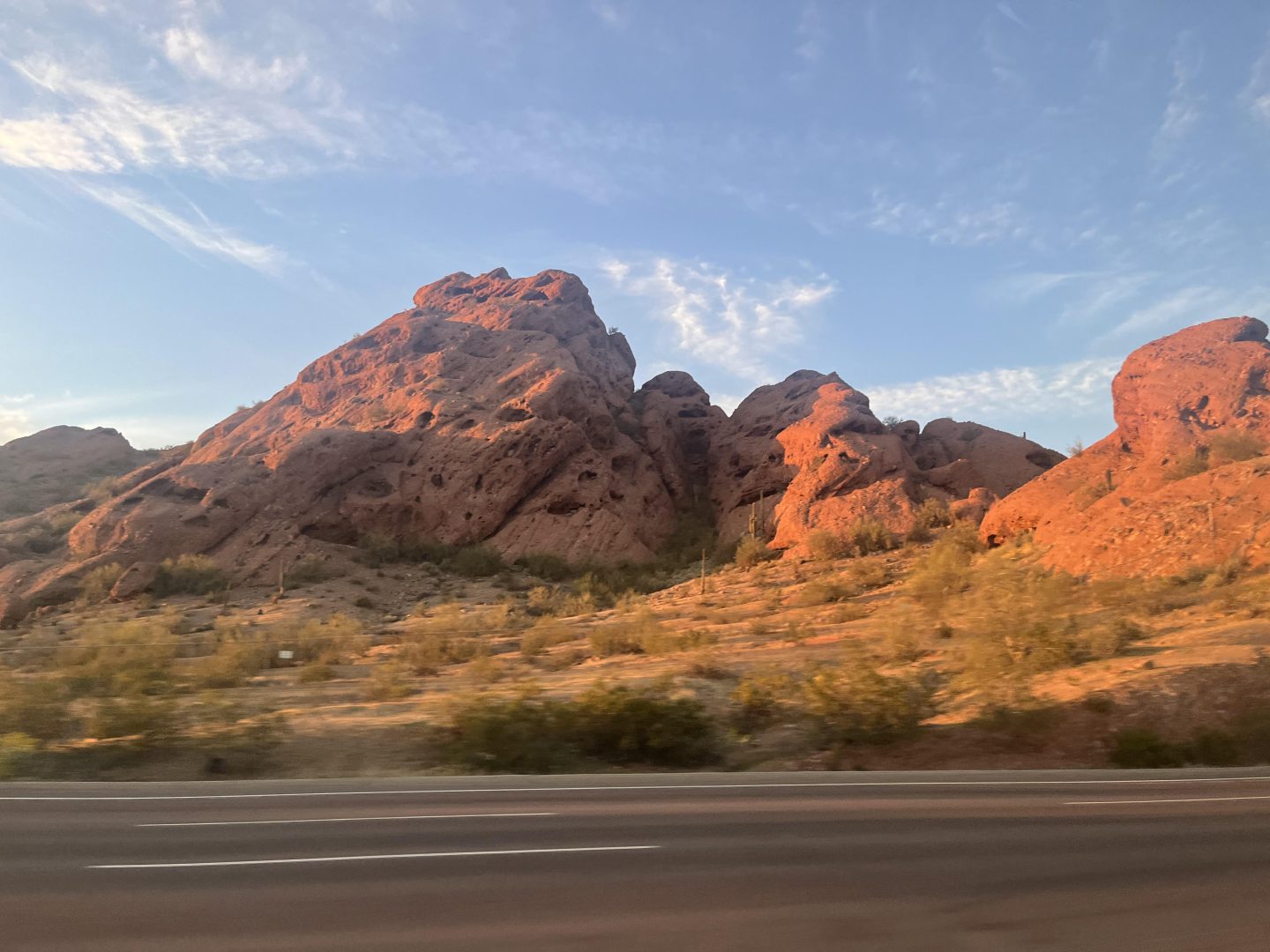
Red rock formations near the Arizona state line | Photo by May S. Ruiz / Hey SoCal

We checked in at The Scott Resort & Spa, a boutique hotel that’s independently owned and managed. Intentionally eschewing cookie-cutter lodging chains with no distinct personality, we were thrilled that the bride and groom chose it as their wedding venue. I learned that it used to be the Firesky Resort & Spa and went through a major renovation when Marc & Rose Hospitality acquired it. The hotel retained the property’s existing Spanish Revival architecture but injected a Bauhaus vibe for a hip and modern ambience. It seems to attract a young crowd – millennials and Gen Zs enjoying a night out about town. I noticed a majority of staying guests were couples instead of families.             

The lobby of The Scott Resort & Spa | Photo by May S. Ruiz / Hey SoCal

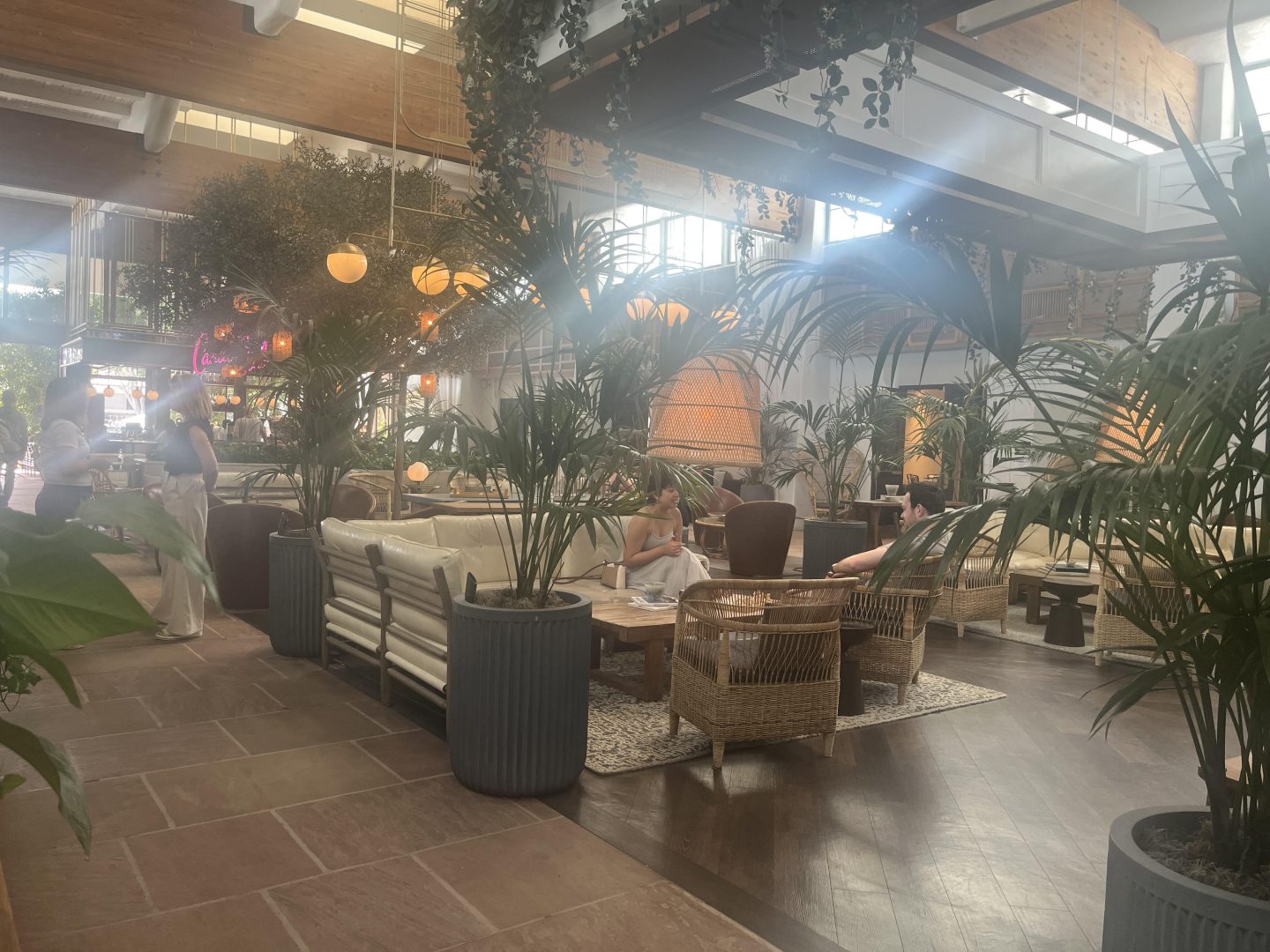
A narrow bench next to the entrance doors is set up as a sideboard, laden with two large glass jars of cold water and iced tea to quench guests’ thirst when they arrive or as they head out. The expansive lobby has separate seating areas dotted with rattan chairs and semi-upholstered couches. Long coffee tables invite guests to linger and enjoy a game of backgammon or chess. There are several potted plants and abundant greenery everywhere. The back hallway opens out into a center patio and pool area that guests navigate to get to their rooms which are housed in a separate two-story building. The suites and rooms – which have private patios and balconies –  are simply appointed with warm wood furniture and old world bronze, conveying a luxurious Sonoran style.        

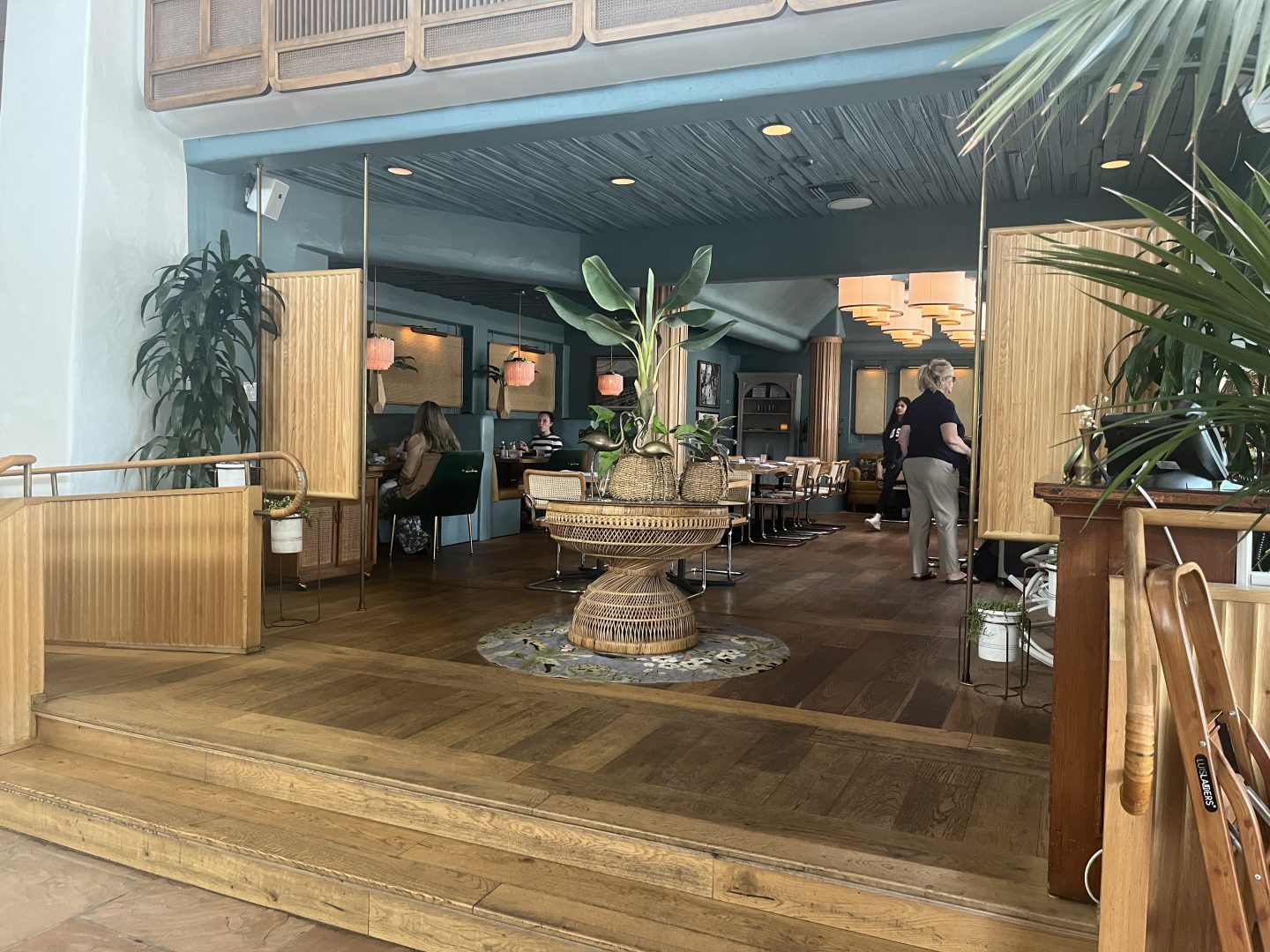
I had prepared an itinerary for our little adventure so I was saddened that we had to miss the first item on it – the Art District’s Thursday Night Artwalk. After our long drive we were simply too tired. So we got settled in our rooms and shortly after met downstairs at the hotel’s Canal Club for dinner. The restaurant is dimly lit, quite intimate and cozy, and we enjoyed a delicious meal. While the food weren’t exceptional, they were better than standard hotel fare and were prepared using fresh local harvest.

Canal Club at The Scott Resort & Spa | Photo by May S. Ruiz

After a restful night, we ate a hearty breakfast at the Canal Club and were ready to see Scottsdale’s Old Town. However, we were delayed when family we hadn’t seen in a while stopped by our table. An hour later than planned, we headed out. We took advantage of the complimentary shuttle service The Scott offers. Logan, a very enthusiastic and upbeat young man (he looked like a high-schooler working there part-time and seemed to get even younger the more we saw him), drove us half a mile away and dropped us off at what he referred to as P.F. Chang loop at the Waterfront District. I found out afterwards that the P.F. Chang restaurant chain, which I always thought originated in L.A., first opened in Scottsdale.     

Waterfront District | Photo by May S. Ruiz / Hey SoCal

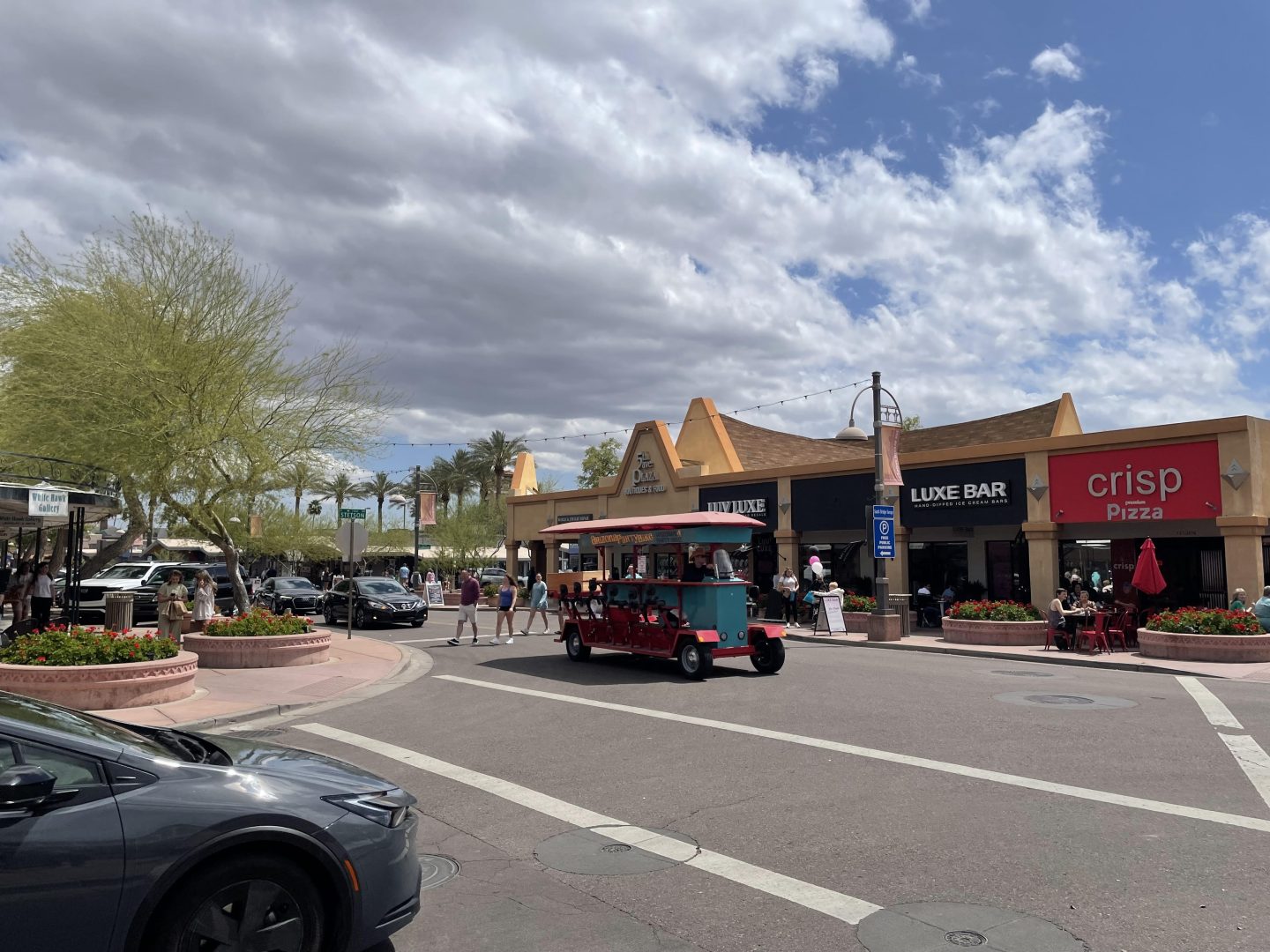
Old Town Scottsdale, an area that’s a little over one square-mile, is vibrant and alive with several art galleries, museums, restaurants, Southwestern storefronts, public art installations, and landmarks. It was named after Winfield Scott, who in 1888 bought 640 acres of Sonoran desert farmland and turned it into what is now a bustling district that honors and memorializes Scottsdale’s storied past.

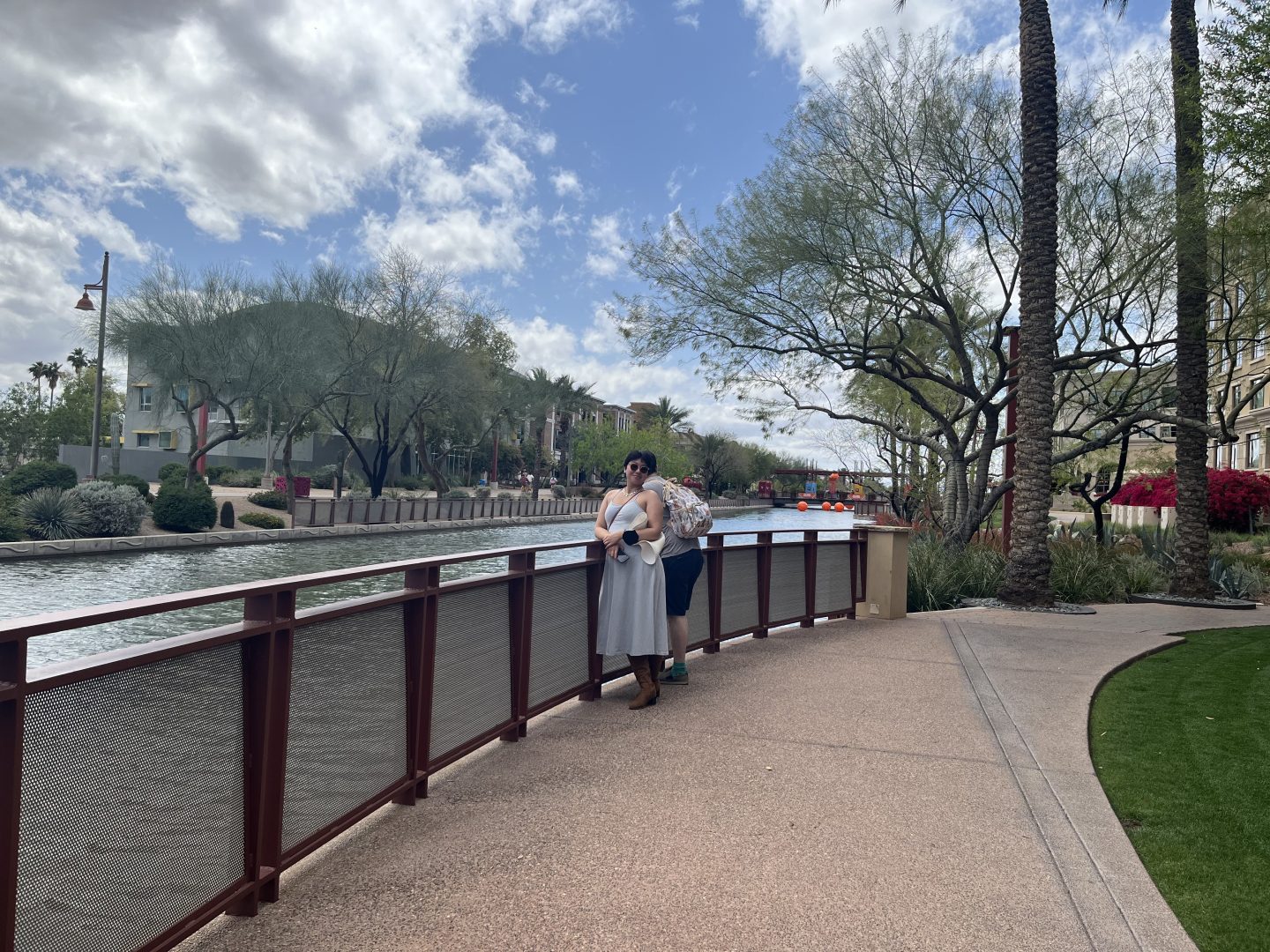
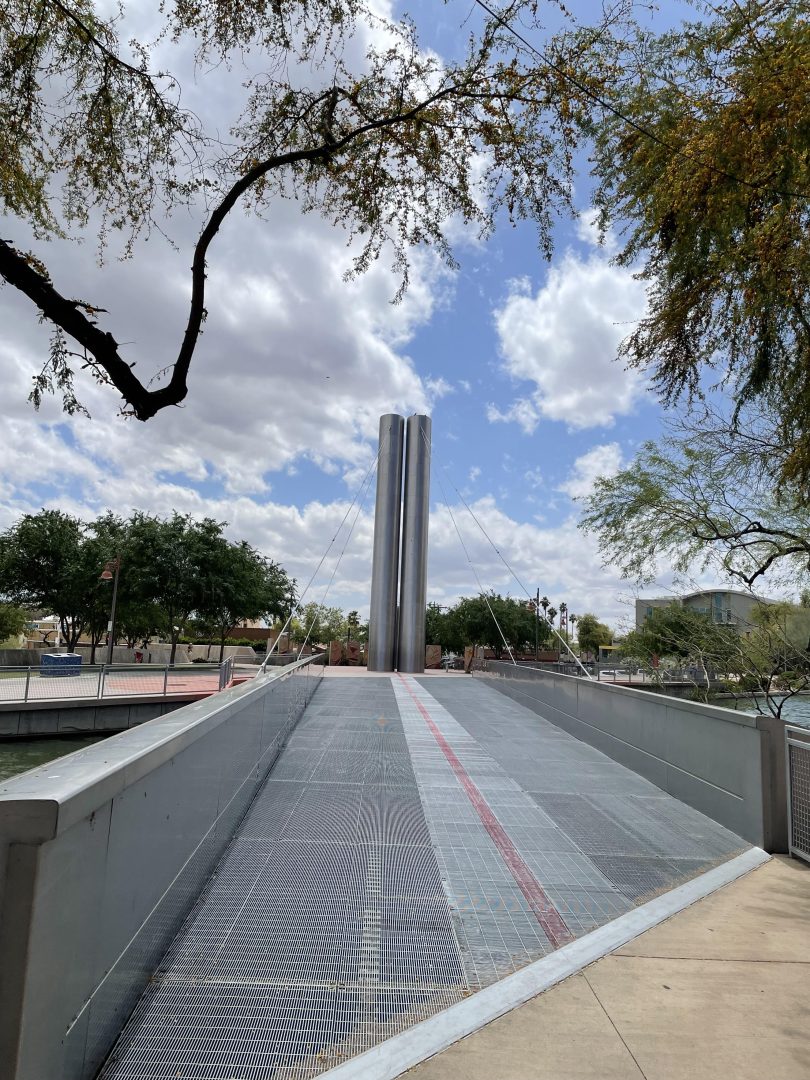
We took a leisurely walk at Solstice Park where the Soleri Bridge and Plaza are located. A pioneer of mid-century architecture, Paolo Soleri lived in Scottsdale from 1955 until his death in 2013. He was fascinated by the movement of the earth around the sun and how the sun’s position in the sky could be utilized for natural climate control. So he envisioned a bridge that is more than a passageway and connection between one side of the canal to the other; he positioned it like a sundial that synchronizes with the sun on winter and summer solstices. According to a knowledgeable staffer at the Scottsdale tourist center, it is the only bridge ever erected out of over 100 that he designed in his lifetime.

Soleri Bridge and Plaza | Photo by Brianna Chu / Hey SoCal

Soleri’s Goldwater Bell Assembly, named after the Goldwater Store in Scottsdale where it previously hung, is a towering structure at Solstice Park. It was constructed entirely by Paolo Soleri at Cosanti – his former residence, gallery, and studio which is now an Arizona Historic site – and reflects his life’s work in architecture and ecology. The bell was part of his first U.S. retrospective at the Corcoran Gallery in Washington, DC.  

Fifth Avenue Shopping District | Photo by Brianna Chu / Hey SoCal

Some notable Old Town landmarks include the Little Red Schoolhouse which was built in 1909 for $4,500 and is now home to the Scottsdale Historical Museum; Old Adobe Mission on the southeast corner of First and Brown Avenue, constructed in 1933 of 14,000 adobe blocks made on site, functioned as Scottsdale’s only Catholic Church for many residents; Cavalliere’s Blacksmith Shop, the first blacksmith shop which opened in 1910, is still owned and operated by the Cavalliere family; Sugar Bowl Ice Cream Parlor, a converted Western Auto Service shop, serves treats and American food.

This wouldn’t be the Southwest without taverns and Old Town doesn’t disappoint. Rusty Spur Saloon, once Farmer’s State Bank of Scottsdale which opened on Main Street in 1921 and closed during the Depression, now holds liquor instead of U.S. currency; Porters Western Saloon, housed in what used to be Scottsdale’s first post office from 1929 to 1949, still has the familiar brick walls and crystal chandeliers but its staff has traded selling stamps for craft cocktails like the Sonoran Sunset and Postmaster.           

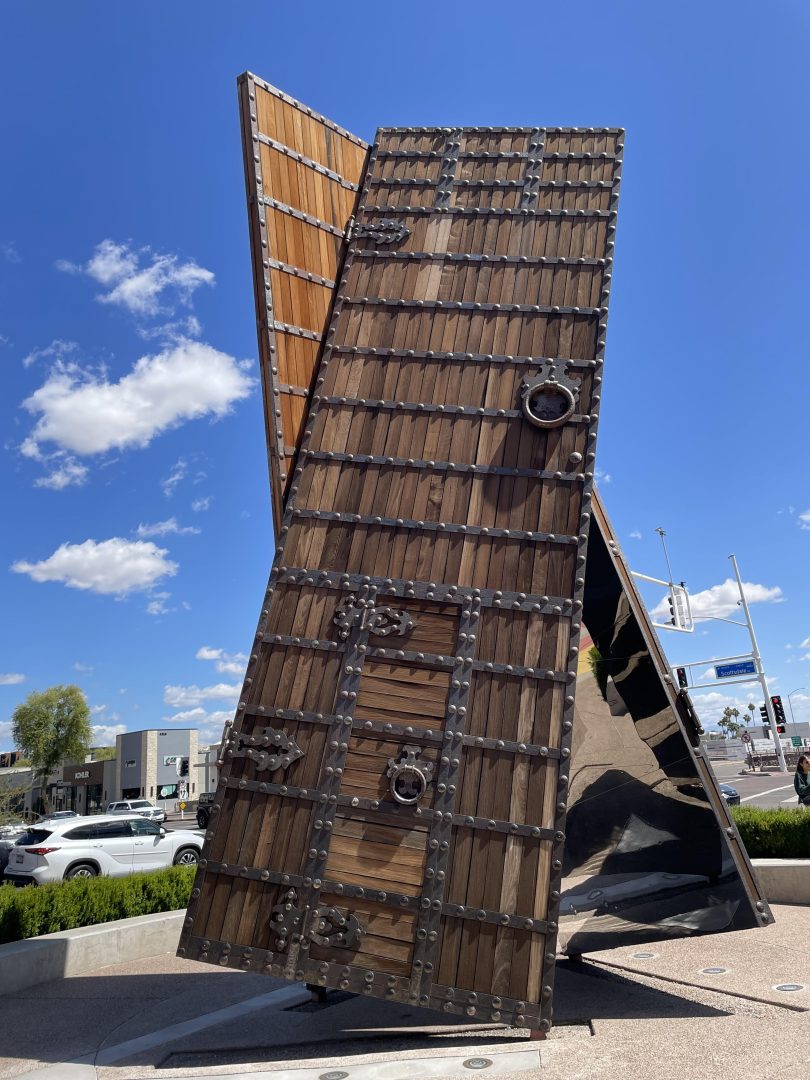
Donald Lipski’s “The Doors” | Photo by Brianna Chu / Hey SoCal

Old Town’s popular attractions include Scottsdale Artists’ School, the Museum of Contemporary Art, the Center for the Performing Arts, Museum of the West, Fashion Square, and Scottsdale Stadium – home base for the San Francisco Giants during the Cactus League Spring Training.     

Inside “The Doors” | Photo by Brianna Chu / Hey SoCal

Public art installations abound in Old Town. Donald Lipski’s colossal work called The Doors – 28-foot-tall mirrored panels – invites people to experience what it’s like to stand inside a kaleidoscope. Louise Nevelson’s Windows to the West, dedicated in 1973, is the artist’s first large-scale work in the Southwest. James Turrell’s Knight Rise is a “skyspace” installation that frames the sky as pure color and displays the changing light of day. Robert Indiana’s Love sculpture, conceived when America was consumed by the Vietnam War, is a symbol for peace. John Randall Nelson’s One-Eyed Jack, a 26-foot-tall painted sculpture inspired by the legendary desert “jackalope,” bounded into Old Town in 2018.   

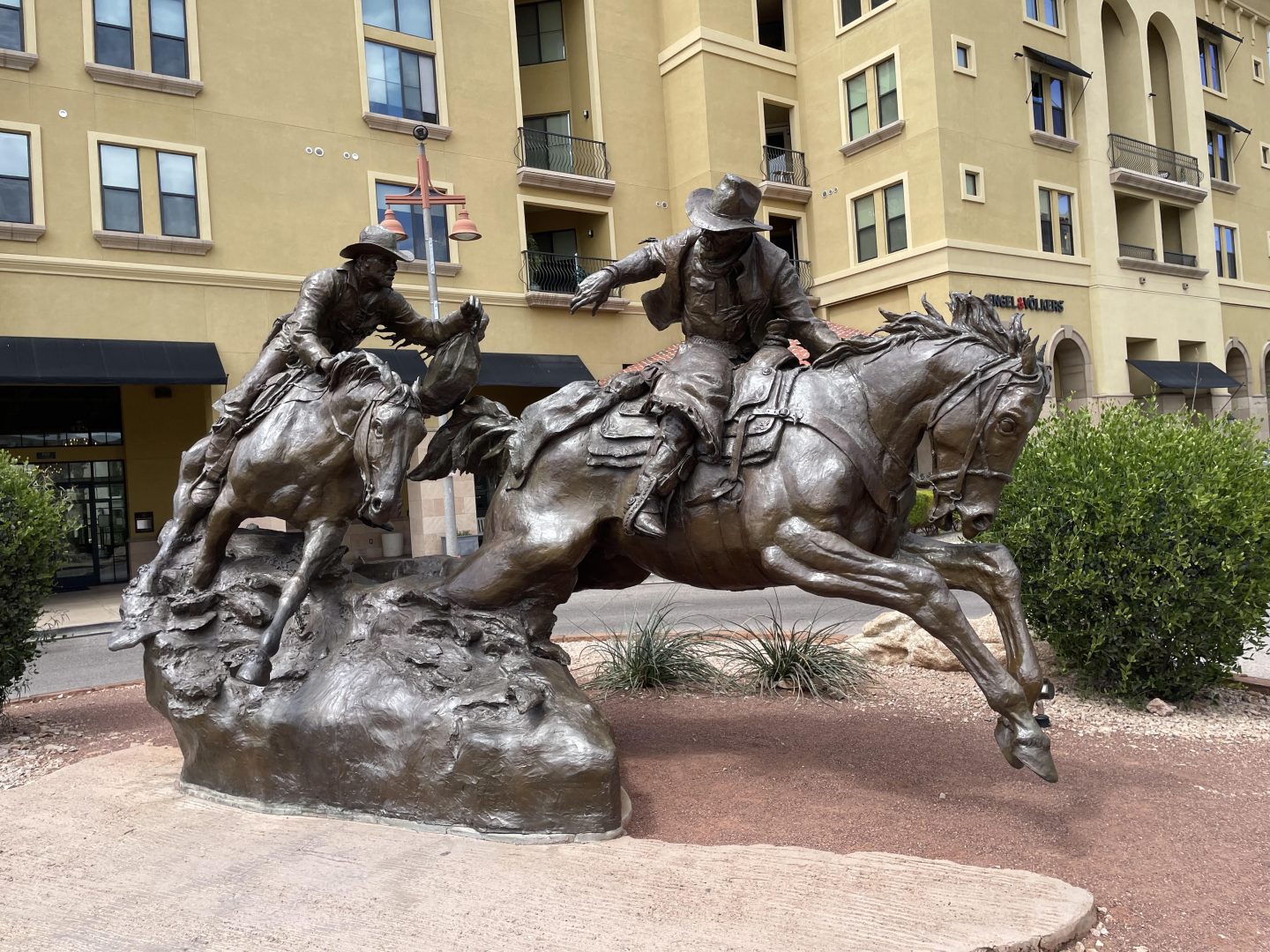
Herb Mignery’s “Passing the Legacy” | Photo by Brianna Chu / Hey SoCal

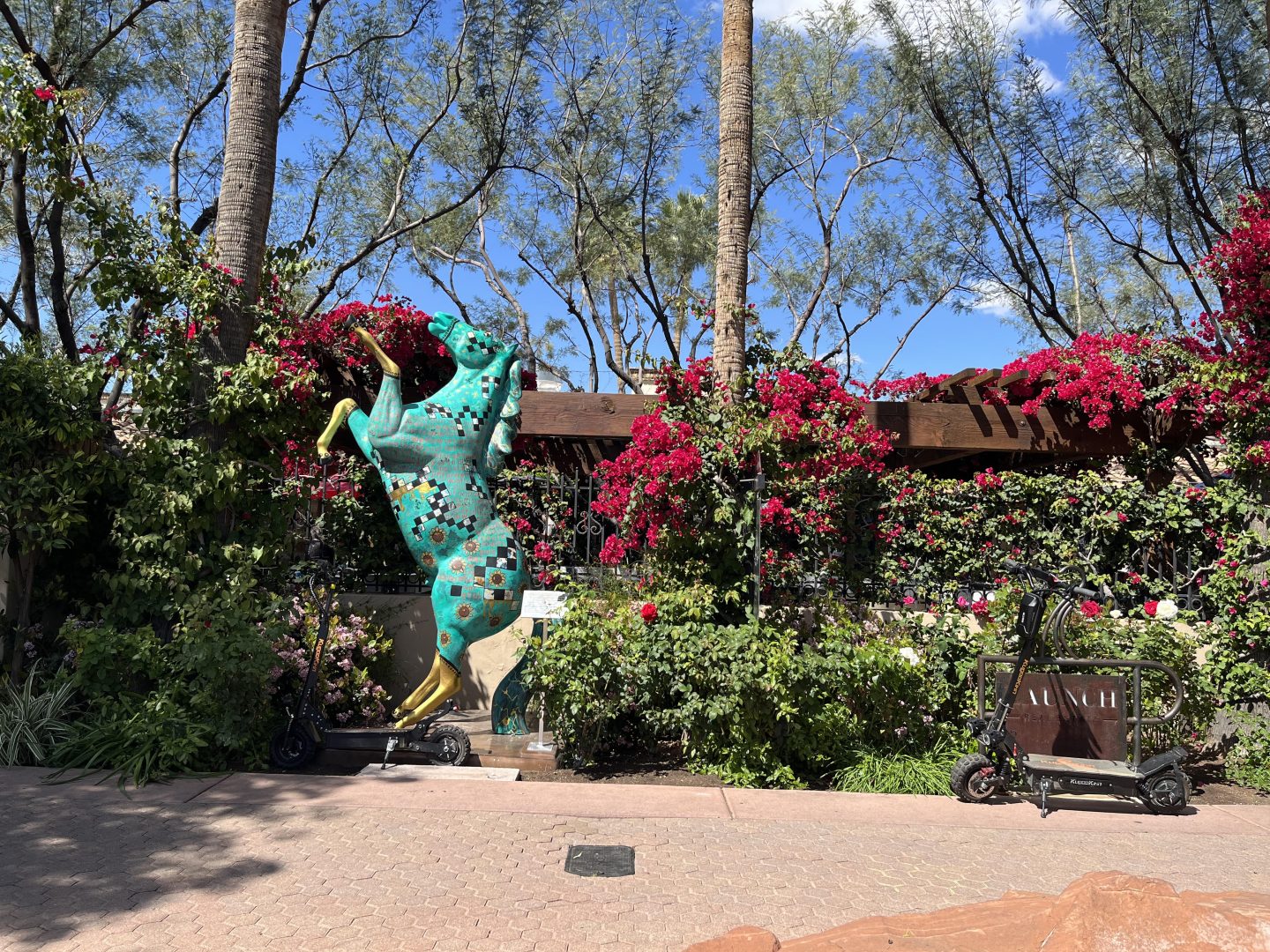
Impressive horse-themed sculptures reflect the city’s history. Herb Mignery’s Passing the Legacy, a life-size bronze, portrays a vintage Pony Express rider and a contemporary Hashknife Pony Express rider handing off the mail depicting the Old West meeting the New West. Ed Mell’s  Jack Knife, a massive bronze of a bucking bronco, is a nod to Scottsdale western heritage and is the city’s official seal. George-Ann Tognoni’s The Yearlings, three bronze yearlings galloping full stride, is a monument to wild horses and an icon of the free spirit of the American West.         

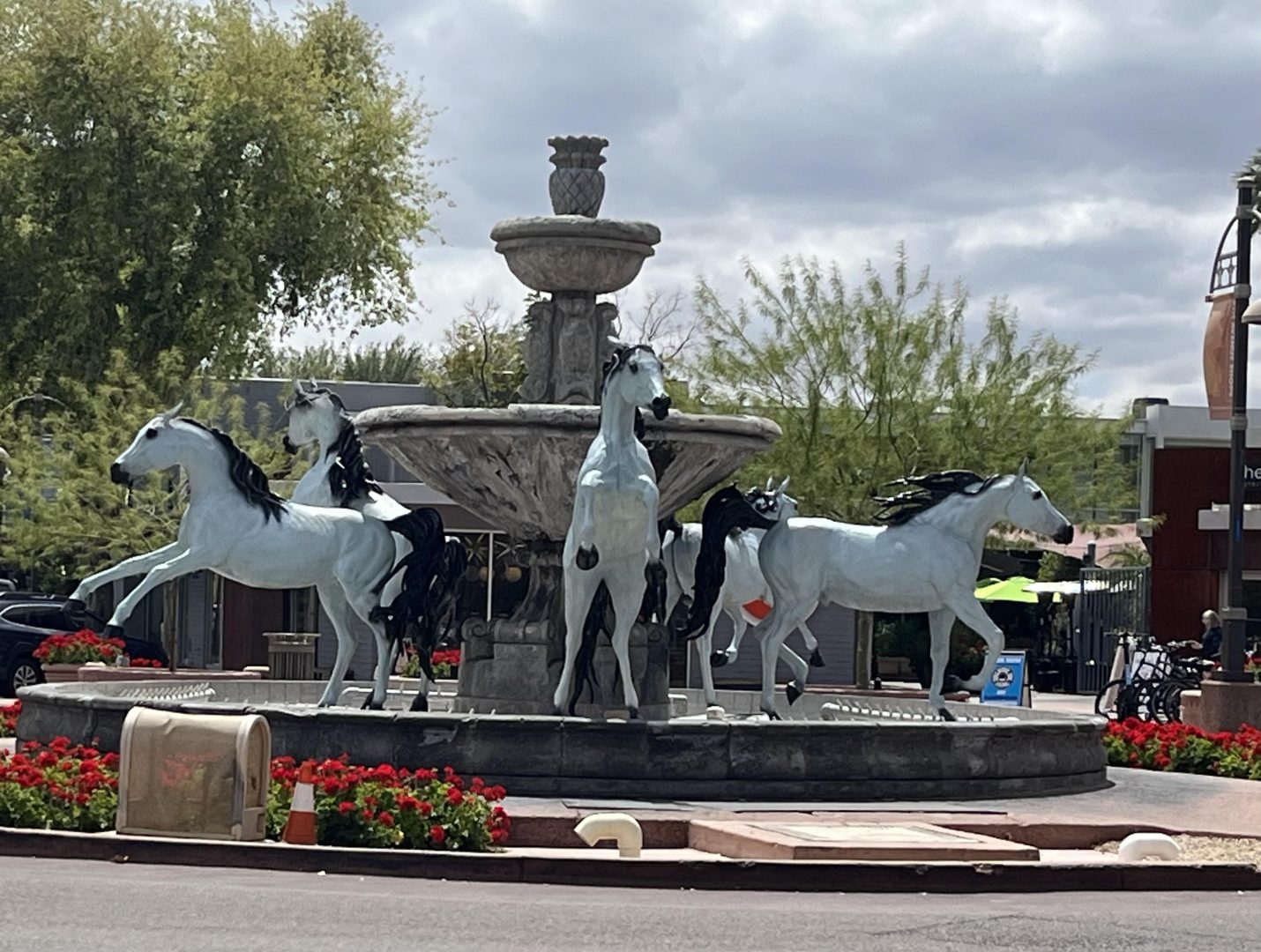
Bob Parks Horse Fountain | Photo by Brianna Chu / Hey SoCal

In the center of the Fifth Avenue/Marshall Way roundabout is the famous Bob Parks Horse Fountain, which was donated by artist and gallery owner Bob Parks in 1989 in an effort to attract visitors to the area. Leaping from the fountain are five champion Arabian horses sculpted after horse breeder Tom Chauncey’s award-winning Arabians. It’s a fitting homage to Scottsdale’s legacy as the center of Arabian horse breeding in America.

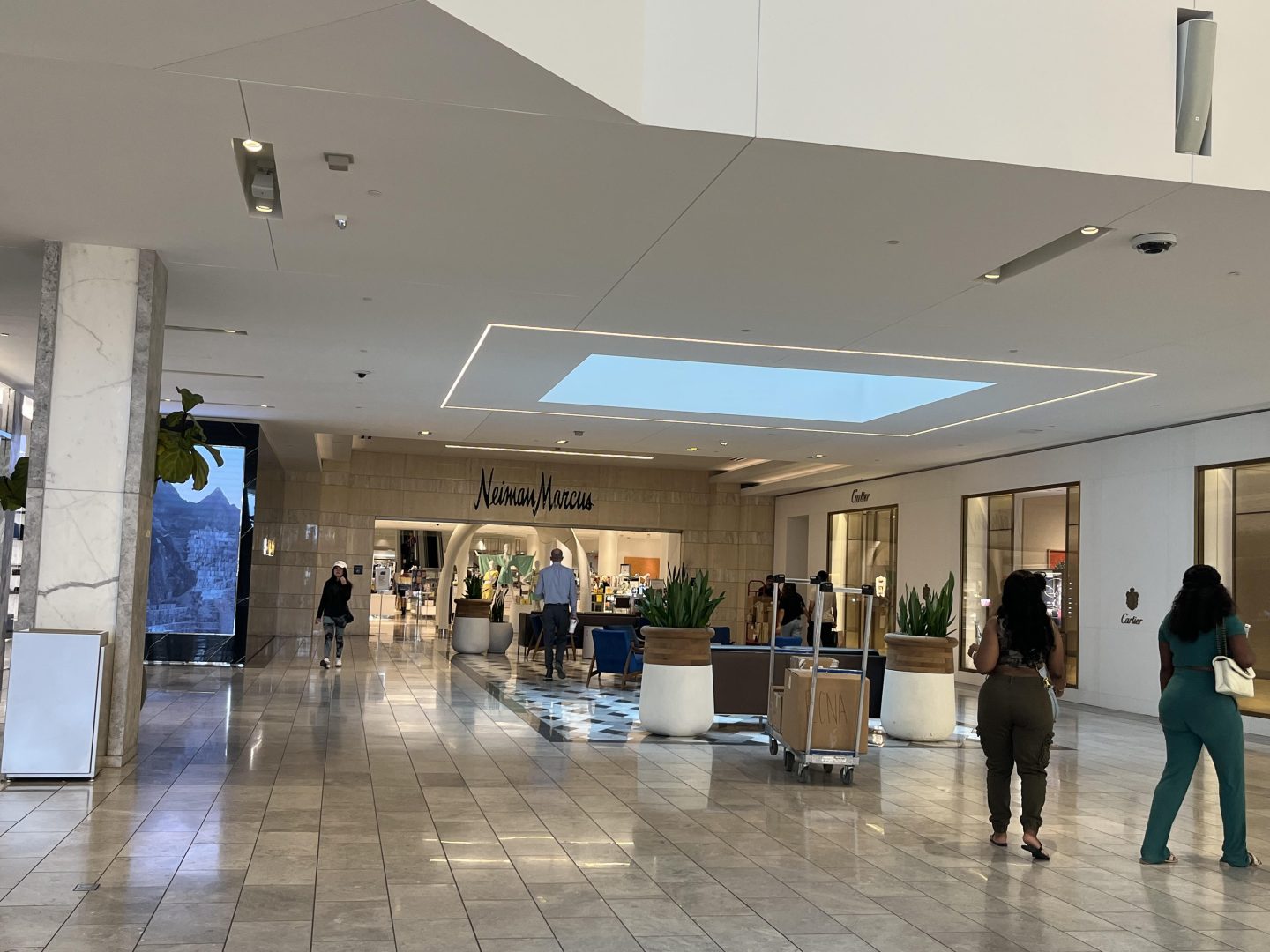
Fashion Square beckoned to us and off we went to discover what stores are within. Occupying this magnificent building are purveyors of designer apparels, fashionable accessories, and luxury goods, like Gucci, Louis Vuitton, and Rolex; renowned restaurants, including Nobu, Ocean 44, and Francine; popular anchor stores Neiman Marcus, Nordstrom, Macy’s and Dillard’s. Caesars Republic Scottsdale, the 11-story first non-gaming hotel from Caesars Entertainment, is adjacent to it.

Fashion Square | Photo by Brianna Chu / Hey SoCal

After we had our fill of window-shopping, we got a hankering for a snack so we ambled to Jeni’s for ice cream. It was no surprise that the place was packed – their frozen treats were decadently delicious!

The Scott’s shuttle service to took us back to the hotel after 3:00; we barely had time to freshen up and change for the 4:00 wedding. The sun was shining, the temperature pleasant and cool, when big raindrops suddenly started falling right at 4:00. We watched in amazement as a parade of hotel staff deftly carried bouquets and flower arrangements indoors. It is a testament to their efficiency that the wedding ceremony transpired at 4:30 in an alternate venue. It was quite lovely! The dinner and dance reception that followed was very delightful.

Schmooze Cafe | Photo by Brianna Chu / Hey SoCal

The following morning we took the shuttle service and went to Old Town once more in search of food. There was a long wait at both the Breakfast Club and The Montauk but we found a place called Schmooze for Breakfast and got outdoor seating at their patio that’s filled with gorgeous flowering plants and vines.

Fully sated, we called the hotel’s trusty shuttle service to deposit us back at our lodgings and then we drove to the botanical garden.

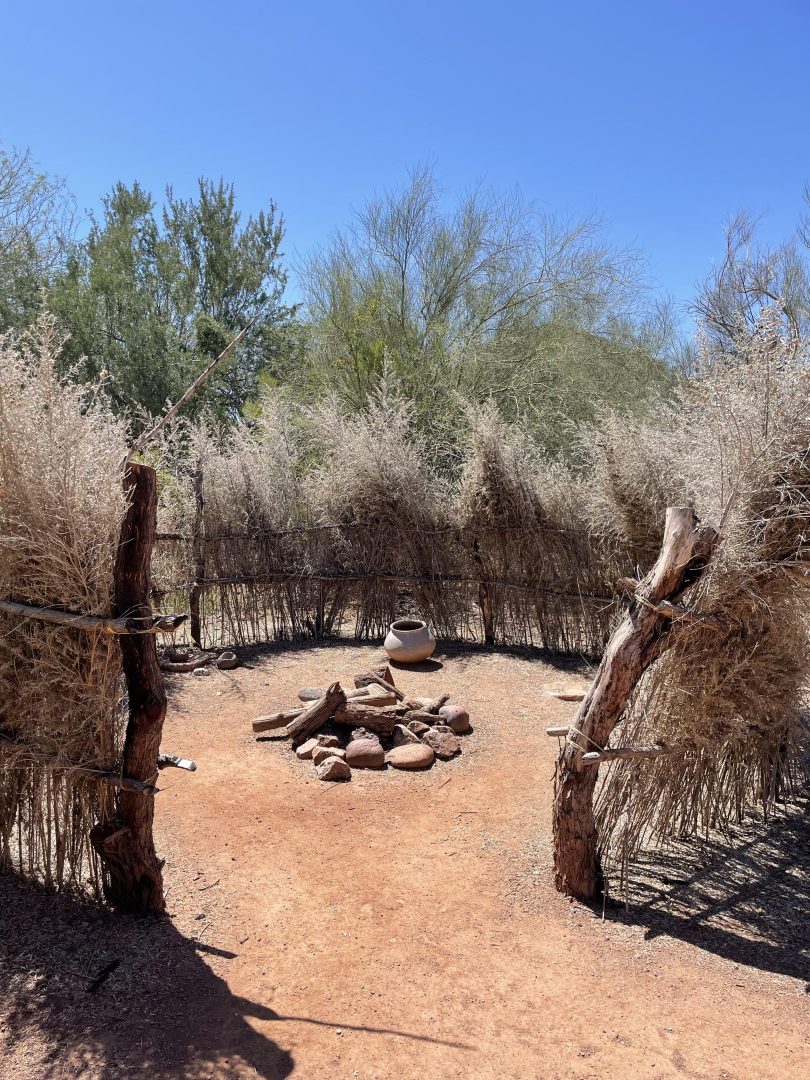
A kitchen space in the Plants & People of the Sonoran Desert Trail | Photo by Brianna Chu / Hey SoCal

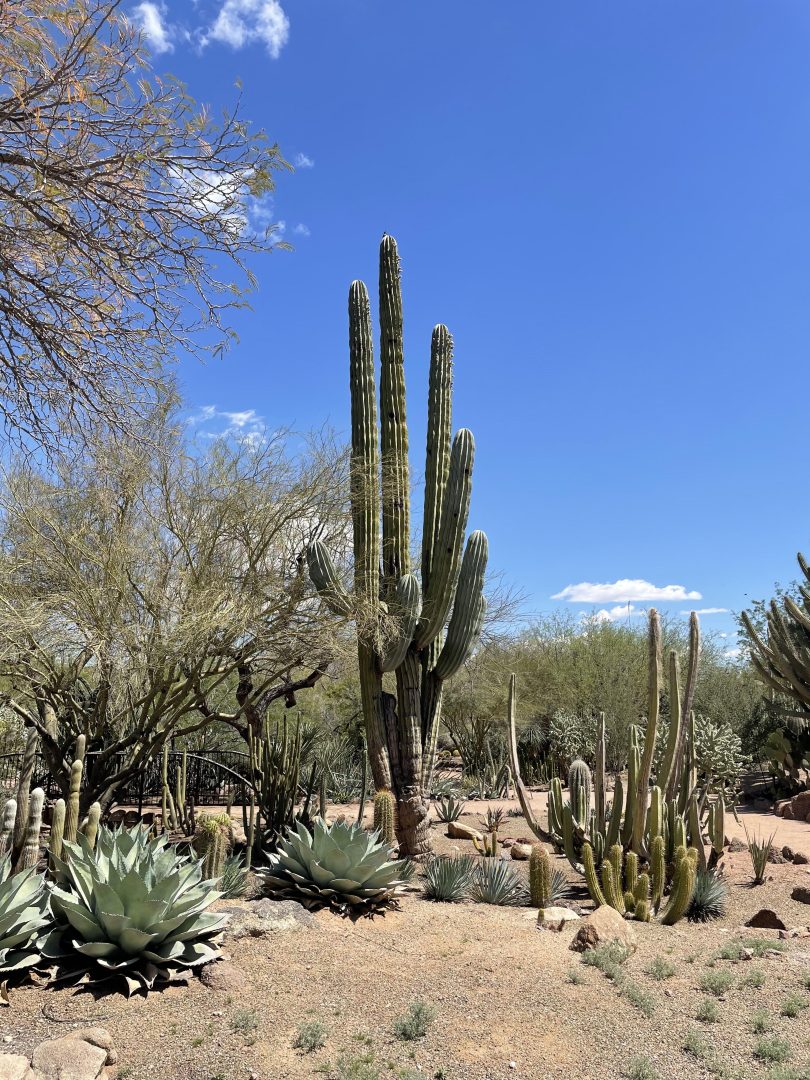
Celebrating its 85th anniversary, the Desert Botanical Garden boasts five trails – four of which are about a third of a mile – to stroll in. We wandered on the Discovery Trail, which features a wide variety of cacti and succulents as well as historic plant collections. Along the Harriet K. Maxwell Desert Wildflower Trail, we meandered through vibrant blooms and came upon bees, butterflies, hummingbirds, and other pollinators that play important roles in thriving desert ecosystems. On the Center for Desert Living Trail, the shortest stretch at one-tenth of a mile, we discovered fragrant herbs, vegetable beds, and shady spots to relax in. We found out how plants and animals survive on the Sonoran Desert Nature Trail. Along the Plants & People of the Sonoran Desert Trail, we walked through five different desert habitats and learned how indigenous people have used native plants for food, fiber, and shelter.

Saguaro cacti at the Discovery Trail | Photo by Brianna Chu / Hey SoCal

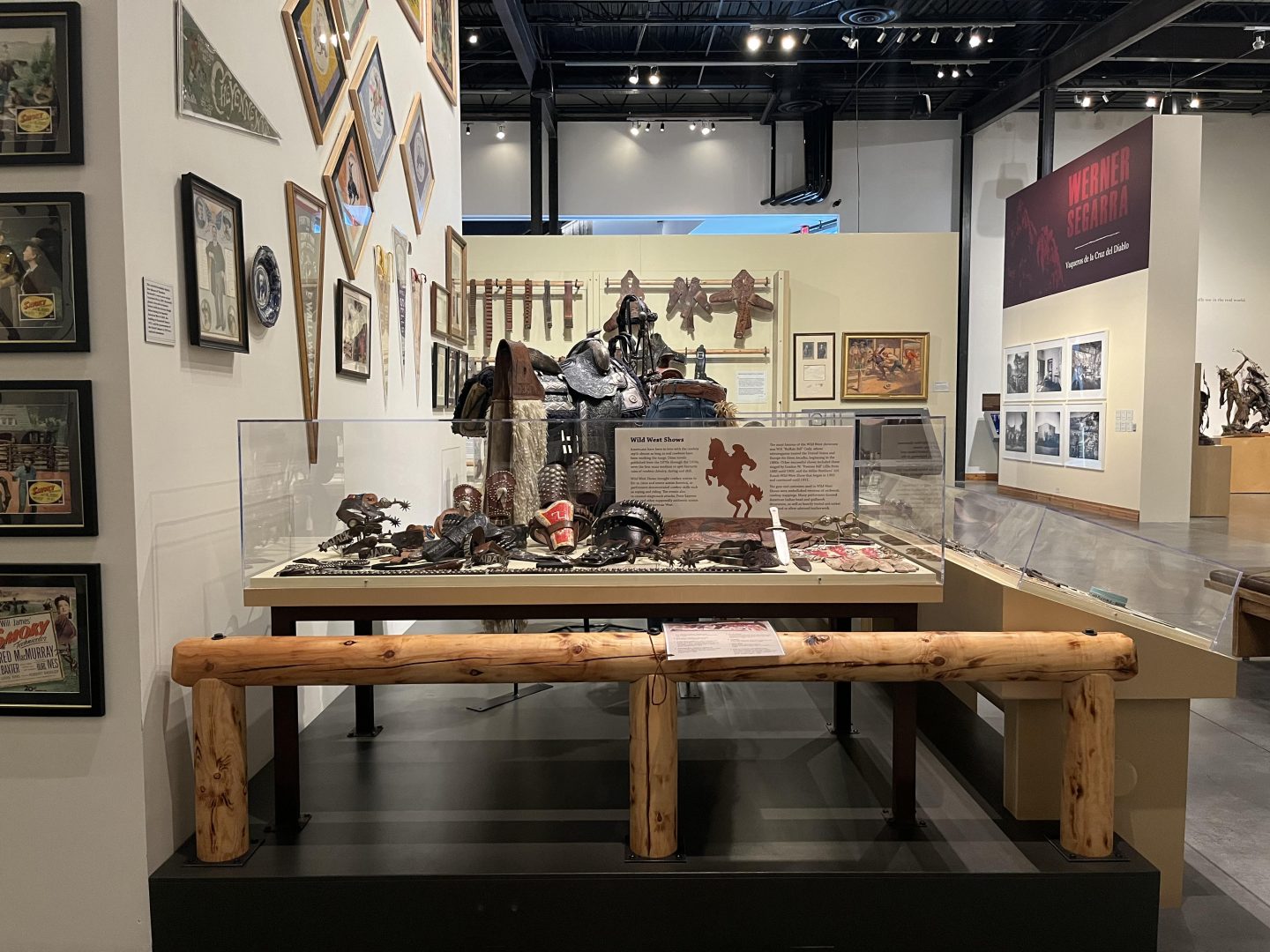
Later in the afternoon we took in Western Spirit: Scottsdale’s Museum of the West in Old Town. Built on what was once the Loloma Transit Station, the two-story museum showcases the art, culture, and history of 19 states in the American West, Western Canada, and Mexico. The 43,000 square-foot museum opened in January 2015 – the realization of Herb Drinkwater’s dream who served as Scottsdale mayor from 1980 to 1996.

A permanent display of Southwestern artifacts | Photo by May S. Ruiz / Hey SoCal

Within the compact space are enlightening current exhibitions and permanent presentations. Inner Light: The Art of Tom Gilleon, a 70-year painting career retrospective featuring 12 oil paintings on loan from Walt Disney Imagineering, is showing until August 25, 2024 On view through October 2024 are the William Matthews’s plein air watercolors, and other mediums – album covers, murals, and ephemera that demonstrate his contributions in global art. The works of Warner Segarra, a Puerto Rican of German descent, is on view until May 19, 2024: a collection of photographs captured over 30 years shows the world of vaqueros.

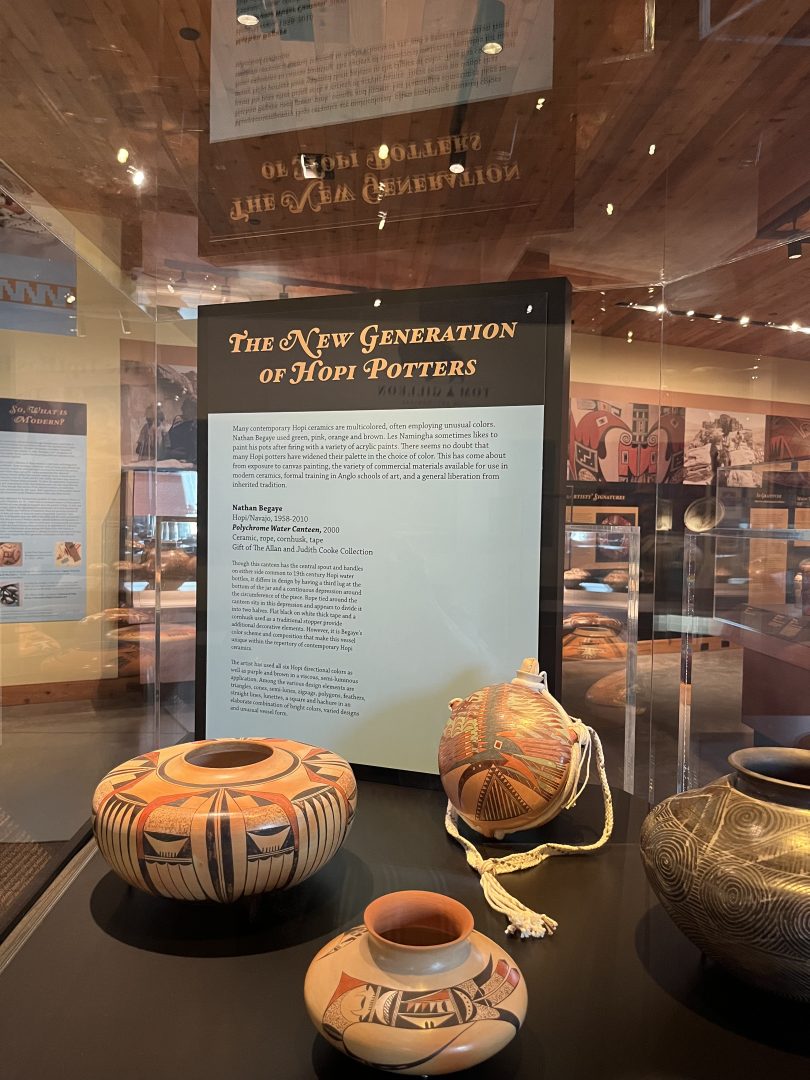
Canvas of Clay: Hopi Pottery Masterworks from the Allan and Judith Cooke Collection | Photo by May S. Ruiz / Hey SoCal

We marveled at the numerous ongoing displays that tell stories of the American West – Rails Building America, an exploration of the transformative power of railroads in shaping the Southwest; The A.P. Hays Spirit of the West Collection, an assortment of revolvers, rifles, saddles, knives, holsters, chaps, badges, and more; Dazzling Array: The Richard A. Gates Collection of Native American Jewelry; Courage & Crossroads: A Visual Journey through the American West; Canvas of Clay: Hopi Pottery Masterworks from the Allan and Judith Cooke Collection; Collecting Stories: John Coleman Bronzes from the Collection of Frankie and Howard Alper. 

A stagecoach display | Photo by May S. Ruiz / Hey SoCal

A museum staffer announced we had ten minutes to complete our tour before closing time so we headed downstairs. We got back to the hotel, started packing for our drive home the next day, and made plans for dinner. As it was Saturday evening, restaurants were crowded and fully booked. We lucked out with Farm & Craft, a trendy but casual place known for healthy and sustainable food and fun cocktail concoctions. They even have a good selection of fruit-infused teas which I happily sampled. We had a delightful meal served by their pleasant and attentive staff. Having been told there’s a separate stomach for dessert, we walked to Jeni’s after dinner to once again indulge in their delicious ice cream.

On Sunday morning we ate a hearty brunch and did a final check of our rooms. The ever eager and helpful Logan took our luggage out to our car. It had been a fabulous long weekend – we had the best time in this gloriously picturesque city! But, alas, our adventure was at an end. Goodbye, Scottsdale!                         

Ontario Museum’s Annual Culture Fest Celebrates Chicanx Diaspora at Block Party

Also published on 3 May 2024 on Hey SoCal

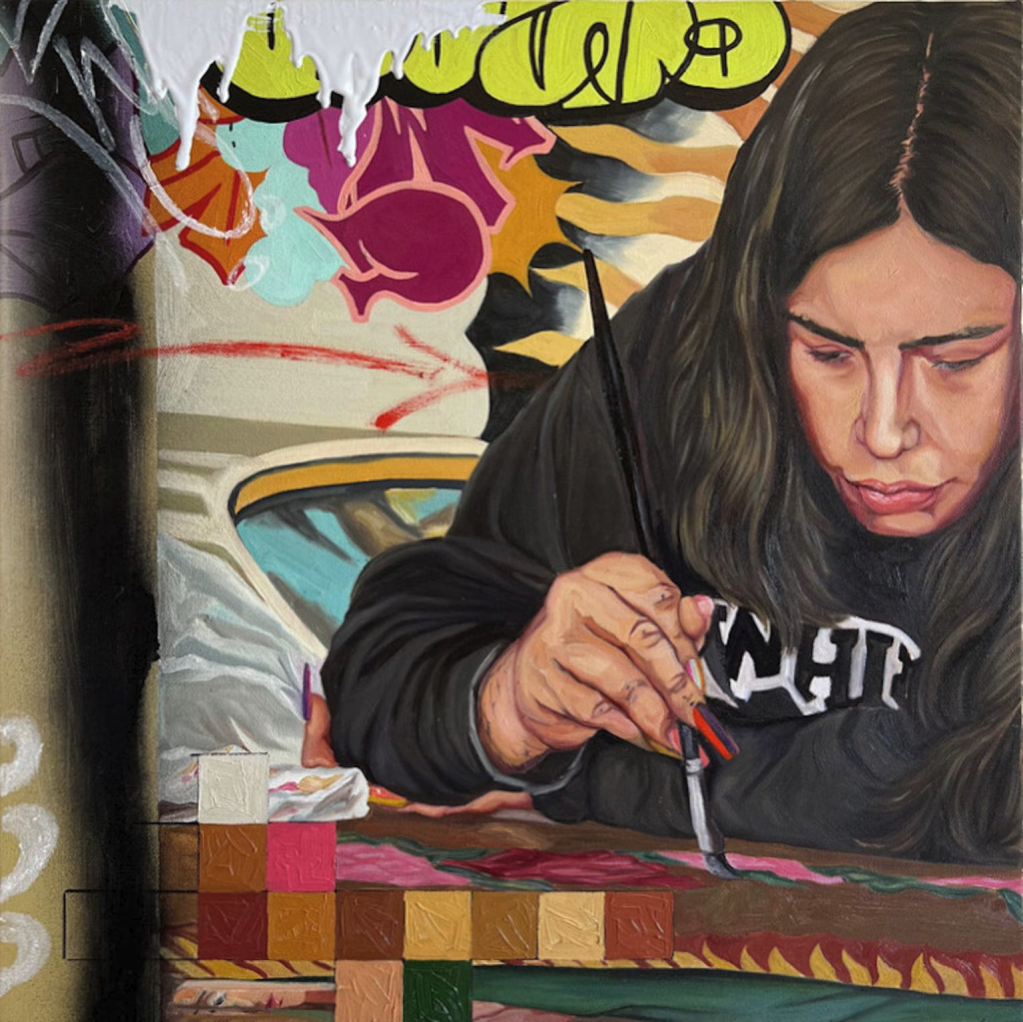
Jacqueline Valenzuela. Cooking. Aerosol Oil Paint Stick on Canvas / Photo courtesy of Ontario Museum of History & Art

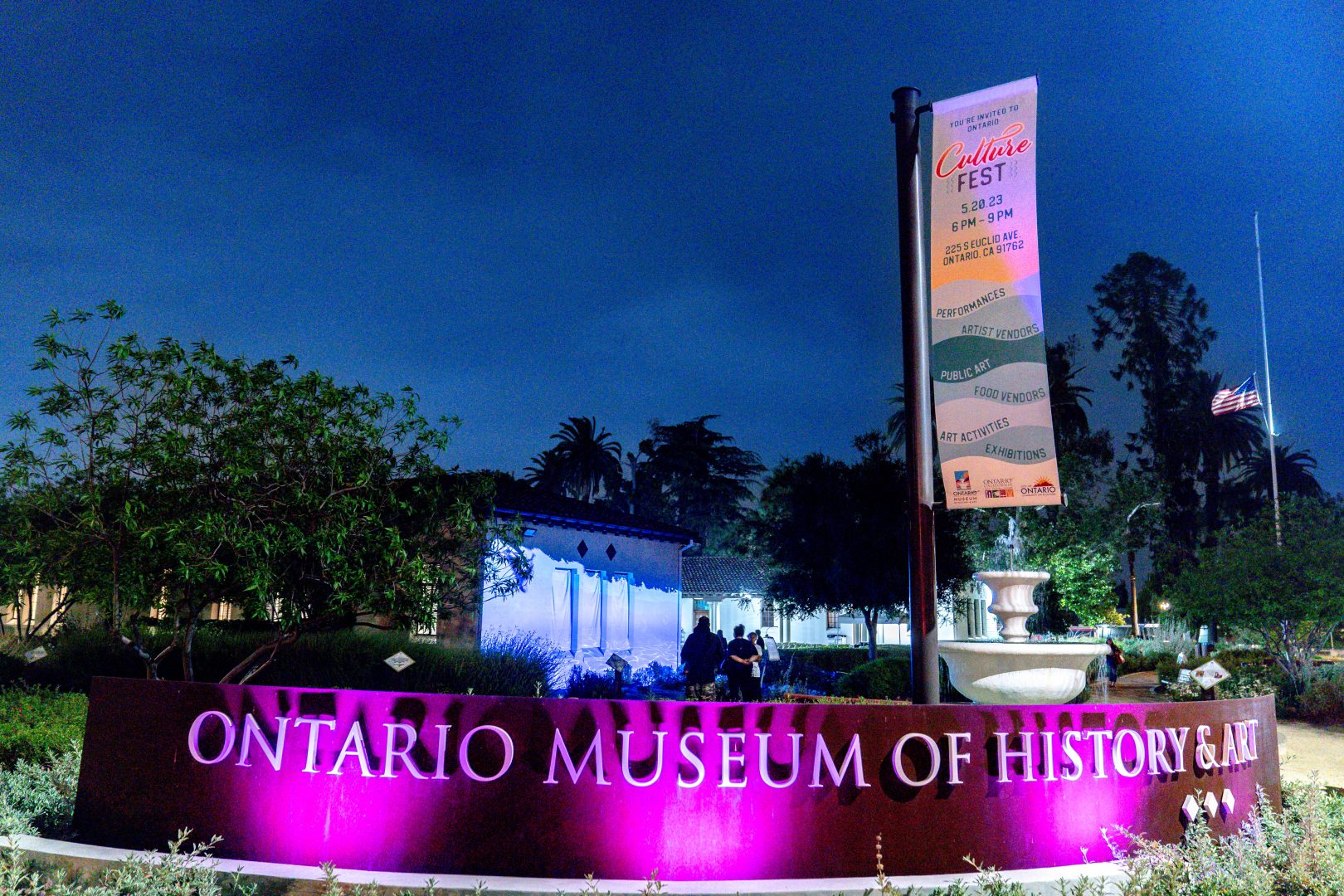
In 2009, the various community groups in the City of Ontario’s recreation centers got together and created what they dubbed the performer showcase. What was a simple affair has become an annual celebration now known as Culture Fest and it returns on May 11, 2024 from 12 to 4 pm with a block party presented by the Ontario Museum of History & Art.

Located at 225 South Euclid Avenue, the Ontario Museum of History & Art is uniquely housed in the former City Hall and is a historical landmark funded by the Works Progress Administration. Its mission is to preserve, interpret, and celebrate the history and cultural heritage of Ontario and the surrounding area. From developing exhibitions, to engaging visitors through educational experiences, and events that inspire creative action, it is an anchor to the growing downtown arts district. The Museum recently achieved accreditation by the American Alliance of Museums (AAM), the highest national recognition accorded to the nation’s museums.

Photo courtesy of the Ontario Museum of History & Art

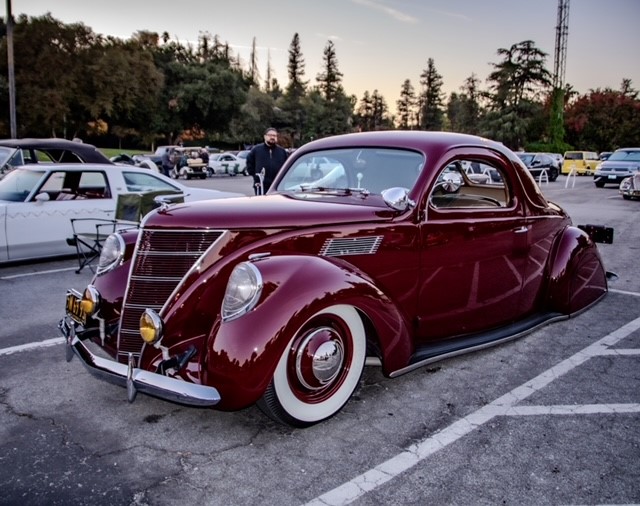
The free, family-friendly Culture Fest features the different cultural experiences that exist within Ontario’s diverse community. This year it will highlight the rich Chicanx diaspora. Participants will enjoy art installations, live music, a classic car show, hands-on art-making activities, food and beverages, live performances that express what it means to be Chicanx in the Inland Empire, and more.

By email, event coordinator, Rebecca Ustrell, talks about its fascinating history. “Culture Fest originated over 15 years ago as a showcase of community groups from the City of Ontario’s recreation centers and was called the performer showcase. It was held at the time of class registrations (before you could sign up online) so that community members could see the types of classes that they could sign up for. A few years back, it became a heritage event and was hosted by the library and Robert E. Ellingwood Model Colony History Room.”

“It’s gone through different iterations to serve the needs of the community at the time it was happening,” explains Ustrell. “Always with the aim of continuing to celebrate Ontario’s diversity, Culture Fest was created to serve as a platform to showcase the different cultural tradition of communities which reside in Ontario, California.”

Photo courtesy of the Ontario Museum of History & Art

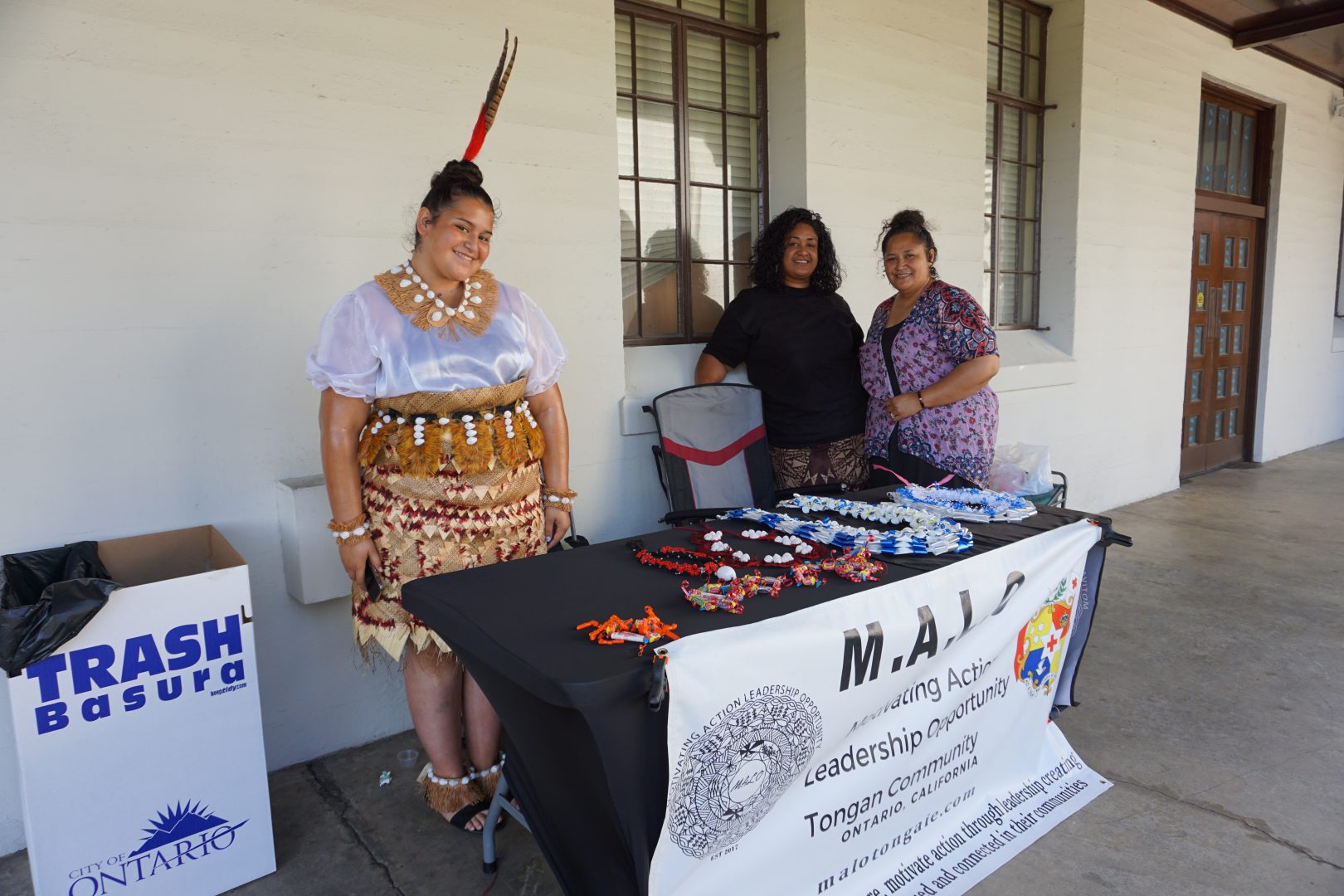
As Culture Fest expanded, it moved to various venues to accommodate the audience which had likewise increased. Ustrell relates, “In 2019, the Community Life & Culture Agency hosted the event at Ontario Town Square, where the many cultural communities of Ontario were celebrated through an array of spectacular performances by local Ontario groups and schools including Tongan dance, Taiko drumming, Mariachi, Folklorico, and Interpretive dance. The event also hosted family arts and craft booths, and information booths from local communities such as MALO (Motivating Action Leadership Opportunity) highlighting the Tongan Community and the Hispanic Chamber of Commerce.”

The pandemic upended life as we know it and the world went on lockdown. Culture Fest was not hosted in 2020-2021 and – as all institutions did – the City of Ontario focused on online arts and culture experiences to continue to engage with the city’s diverse community.

Photo courtesy of the Ontario Museum of History & Art

“In 2022, Culture Fest returned. This time taking place in the Downtown Ontario Arts District at the historic old City Hall which is now the Ontario Museum of History & Art,” explains Ustrell. “The staff at City of Ontario Community Life and Culture and the Ontario Museum of History & Art partnered to it to reinvigorate the spirit of celebrating cultural diversity. It featured The Southland Symphony Orchestra, Bob Baker Marionette Theater, MALO, artist vendors, and an assemblage workshop with Dr. Patricia Jessup-Woodlin. Occurring in tandem with the city-wide Ontario Art Walk, this event attracted a wider audience at its new venue, further solidifying the impact of community.”

According to Ustrell planning Culture Fest takes between six to nine months and taps into the needs of the community for the event’s theme. Their current programming is also significant factor when deciding what to focus. In the past, it showcased the different performing arts programs within the recreation department. Last year, the theme was water, inspired by the new permanent exhibit Built on Water.
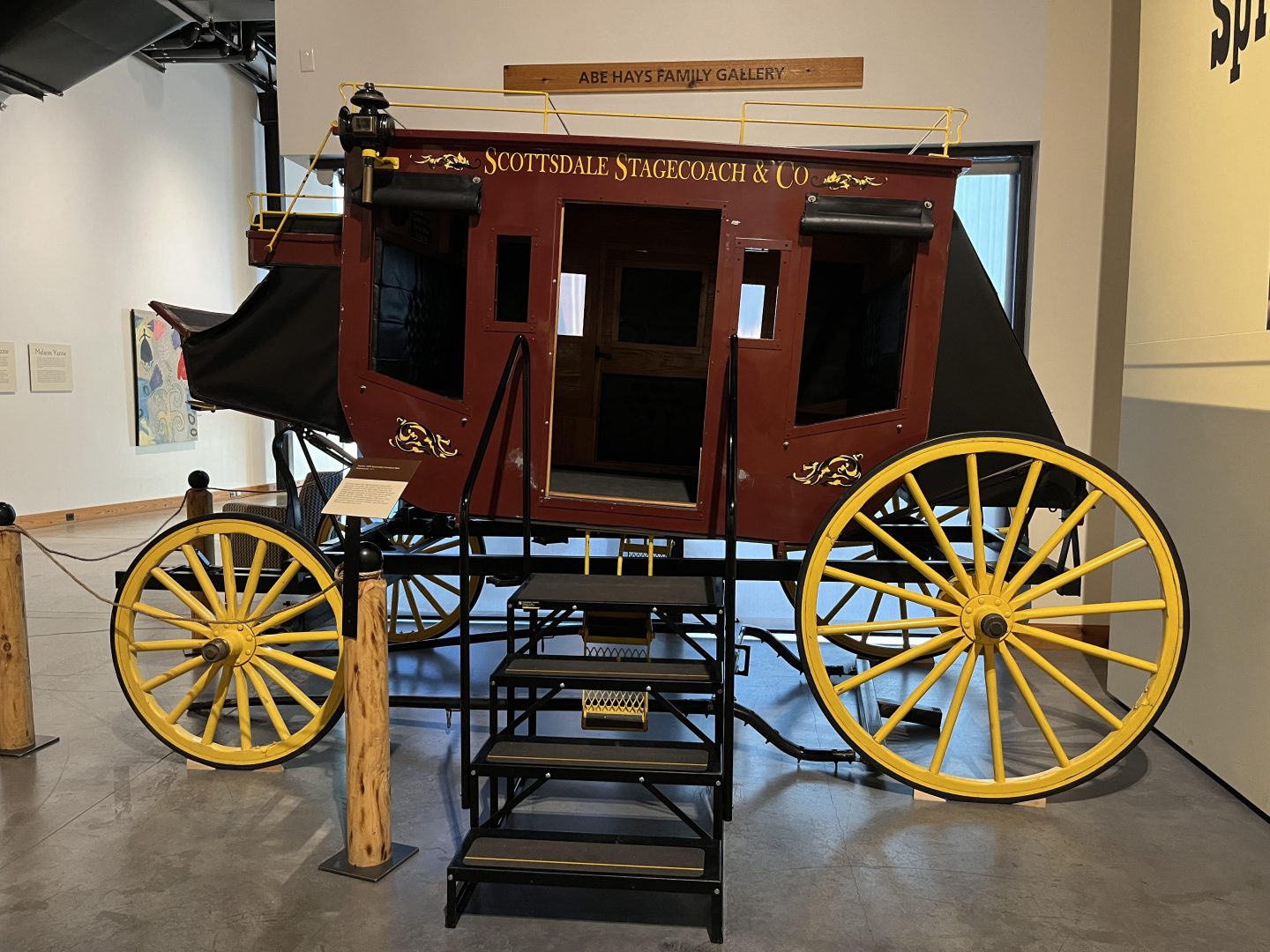
Photo courtesy of the Ontario Museum of History & Art

Continues UstrelI, “In 2023, the Museum, Arts & Culture department at the City of Ontario doubled capacity and allowed for growth in the vision of Culture Fest. With the addition of a public art installation, Culture Fest’s impact on the local art scene grew tremendously. The event thematically focused on water, in celebration of the opening of the Museum’s new permanent exhibition, Built on Water: Ontario and Inland Southern California. Additionally, the festival featured public artist Luciana Abait’s large-scale immersive video projection installation, The Glass Wall.”

“Originally presented in 2022 as a part of LUMINEX 2.0 in downtown Los Angeles, the artwork draws attention to water as a resource, and the realities and metaphors involved in the struggle to control it,” Ustrell describes. “The video was projected onto the northwest façade of the Museum. A roster of performers, varying from a Tongan performance by MALO and marionette puppetry, to a rendition of Handel’s Water Dance by the Southland Symphony’s brass quintet, was featured. High school bands with the Southern California Percussion Ensemble closed out the evening.”

Design and Build your own Front Yard Plaza / Photo courtesy of the Ontario Museum of History & Art

“The 2024 Culture Fest will highlight the rich Chicanx diaspora which has called Ontario its home for generations,” discloses Ustrell. “Whilst inviting local entertainers, artists, and organizations to partner with us, we realized that the footprint of the event had to expand to house all of the exciting activations we had in mind. We opted to reserve an entire city block to host this year’s Culture Fest, resulting in the decision to add the tagline ‘Block Party’ to the title.”

“This year’s roster of activities and entertainment is exciting, and attendance is expected to double because of the attractions planned for the day. Guests are invited to explore a classic car show hosted by colorblindshotz while sounds are provided by Bitter End Gallery and DJ Lis Bomb. Experience art installations by Briar Rosa which celebrate childhood candy and snacks, such as Takis, iconic in the Chicanx community; Jacqueline Valenzuela will present a historical timeline of custom car culture; view a claymation animation by Anthony Chacon and a stacked CRT TV video installation by Al Espinugio; and a 4ft low rider piñata created by The Piñata House will be on display,” Ustrell says further.

Classic Car Show / Photo courtesy of the Ontario Museum of History & Art

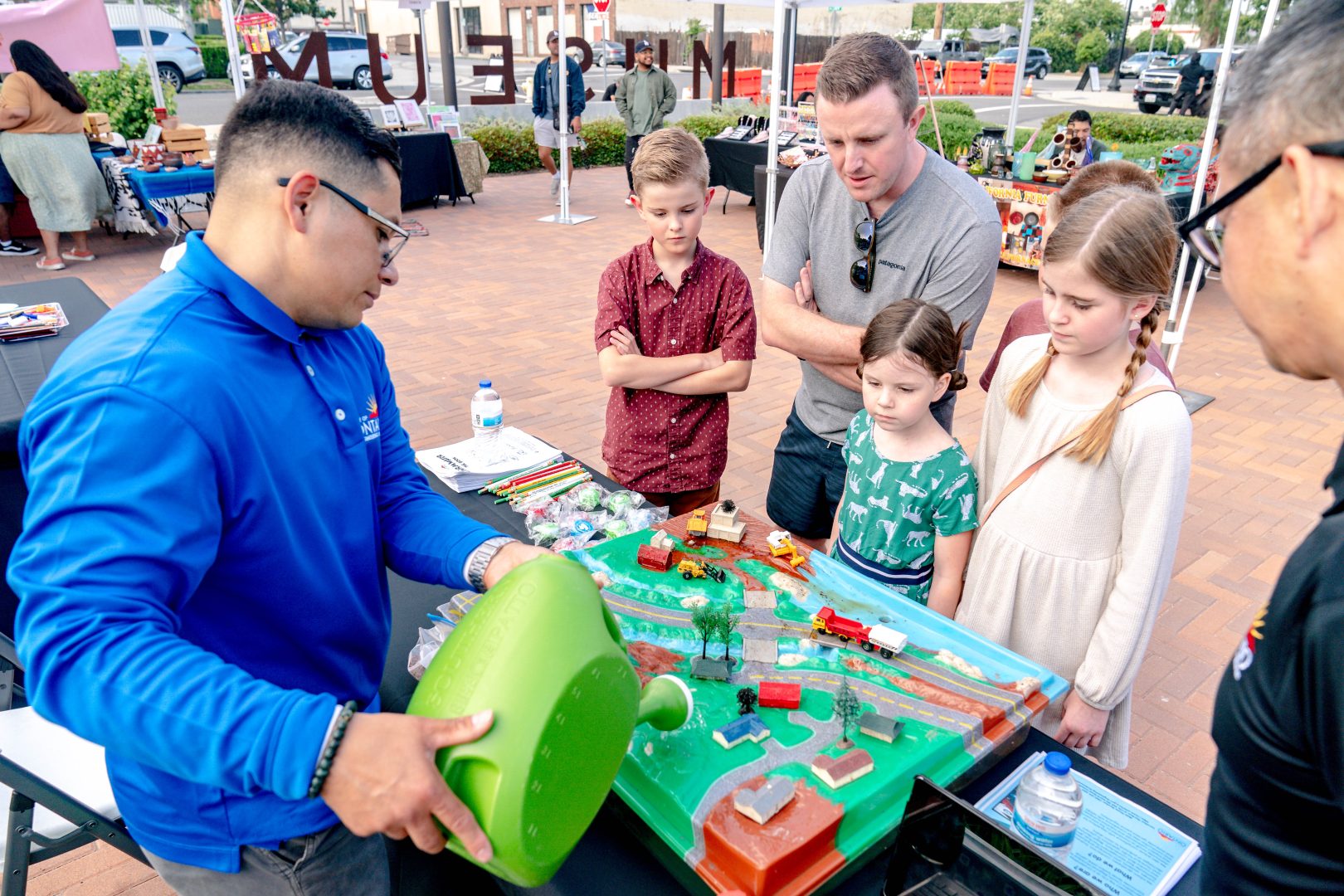
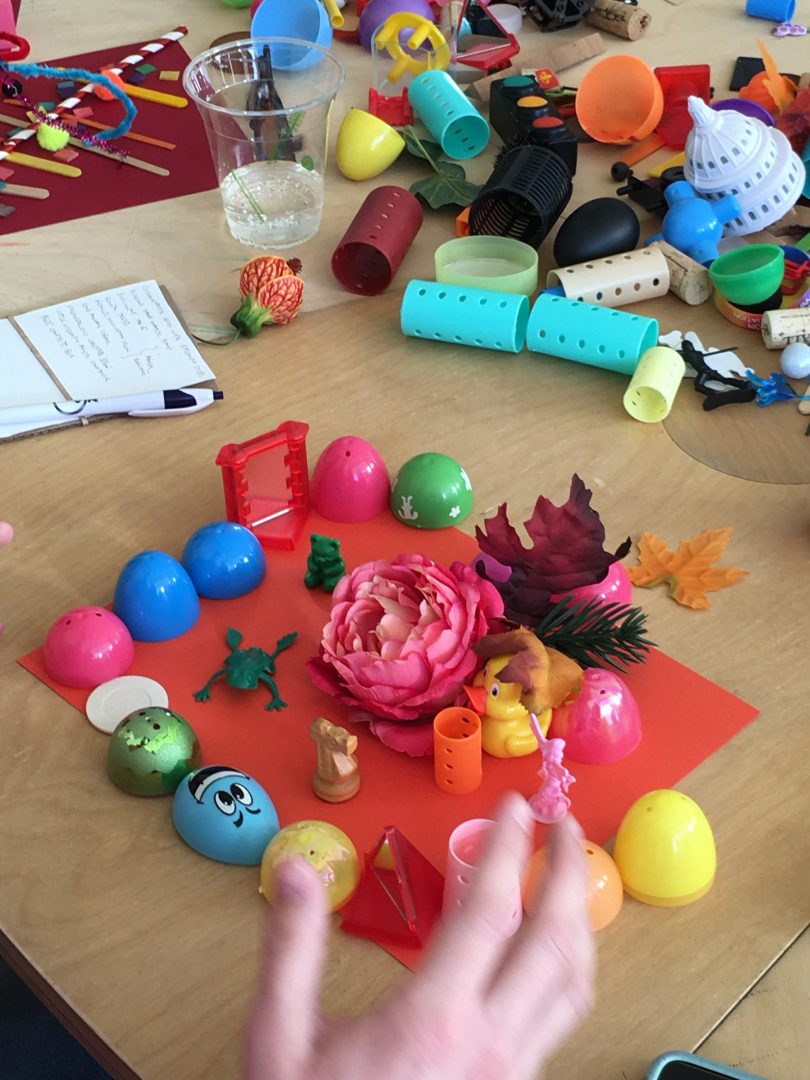
Financed entirely by the Department of Museum, Art & Culture’s operating budget, Culture Fest will also feature hands-on art-making activities like “Build Your Own Lowrider” with Jacqueline Valenzuela. “Growing Art Ontario” with Willis Salomon will contribute to a communal art installation celebrating a more art-ful community. “Build and Dream Your Front-Yard Plaza with John Kamp and James Rojas will demonstrate how residents can make the ultimate Chicanx inspired front yard with found objects. Attendees can decorate themselves with original hand-carved stamp temporary tattoos with Grafica Nocturna and take glamour shots at the Old School Photobooth by Gilbert G Photography.

Collaborations with The Cheech Center include a Build Your Crown activities inspired by artist Eloy Torrez, and the Chaffey Community Museum of Art will hold a Piñata Bust Art Raffle. Both the Ontario Museum of History & Art and Chaffey Community Museum of Art, which are admission-free and open to the public, will remain open throughout the duration of the event.

Gilbert G Photography / Photo courtesy of the Ontario Museum of History & Art

“As an agency, Community Life & Culture’s consistent driving force is to uplift, highlight, and educate visitors on the cultural communities of Ontario and Greater Southern California. We work diligently to provide opportunities for artists and purveyors of culture to thrive by collaborating with these talented individuals. Culture Fest could not exist without that collaboration, and we are honored to engage with musicians, entertainers, and artists by providing them with paid opportunities, and afford unique arts and educational experiences for visitors,” concludes Ustrell.

While showcasing the Chicanx experience, the 2024 Culture Fest in Ontario also promises to be a spectacular event full of fun and thrills for the entire family. What could be a better way to spend a beautiful spring day in Southern California!        

Enjoy Culinary Delights at Taste of Little Italy San Diego

Also published on 23 April 2024 on Hey SoCal

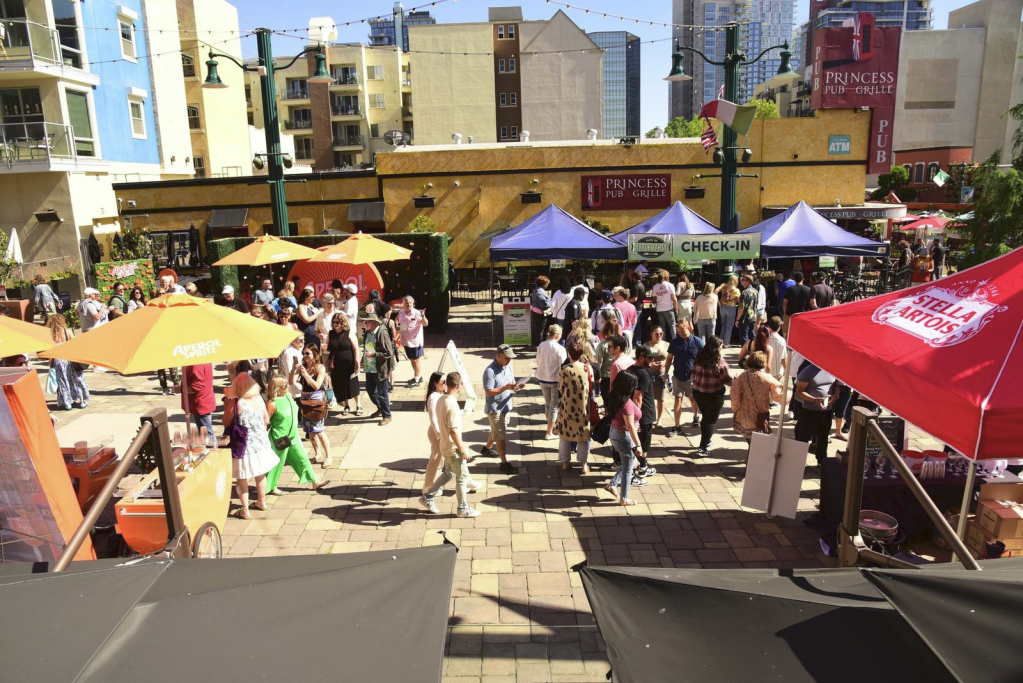
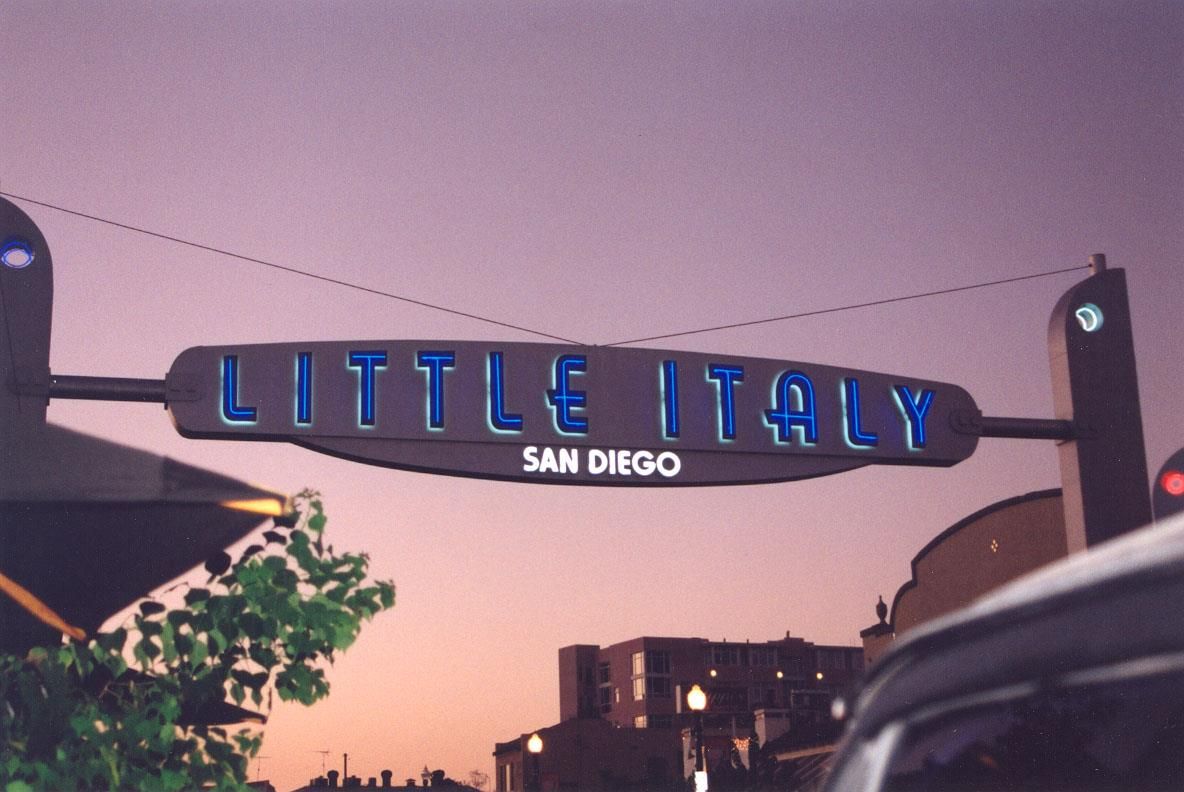
Thinking of traveling to San Diego this summer? Make sure you schedule your trip to include the Taste of Italy event which returns for two nights of delicious bites on June 18 and 19, 2024. First held in 2018, this famous foodie experience features restaurant exploration, live music, and memorable dishes.

From 4:00 to 8:00 pm on Tuesday, June 18, and Wednesday, June 19, visitors to Little Italy can immerse themselves in a gastronomic journey that spans 40 square blocks. Each day of the event brings a new culinary adventure, with different selections available from 20+ restaurants in the neighborhood. From classic pizza and pasta to gourmet burgers and sushi, this dynamic approach guarantees a fresh and exciting experience for both loyal patrons and newcomers.

Photo courtesy of Little Italy Association

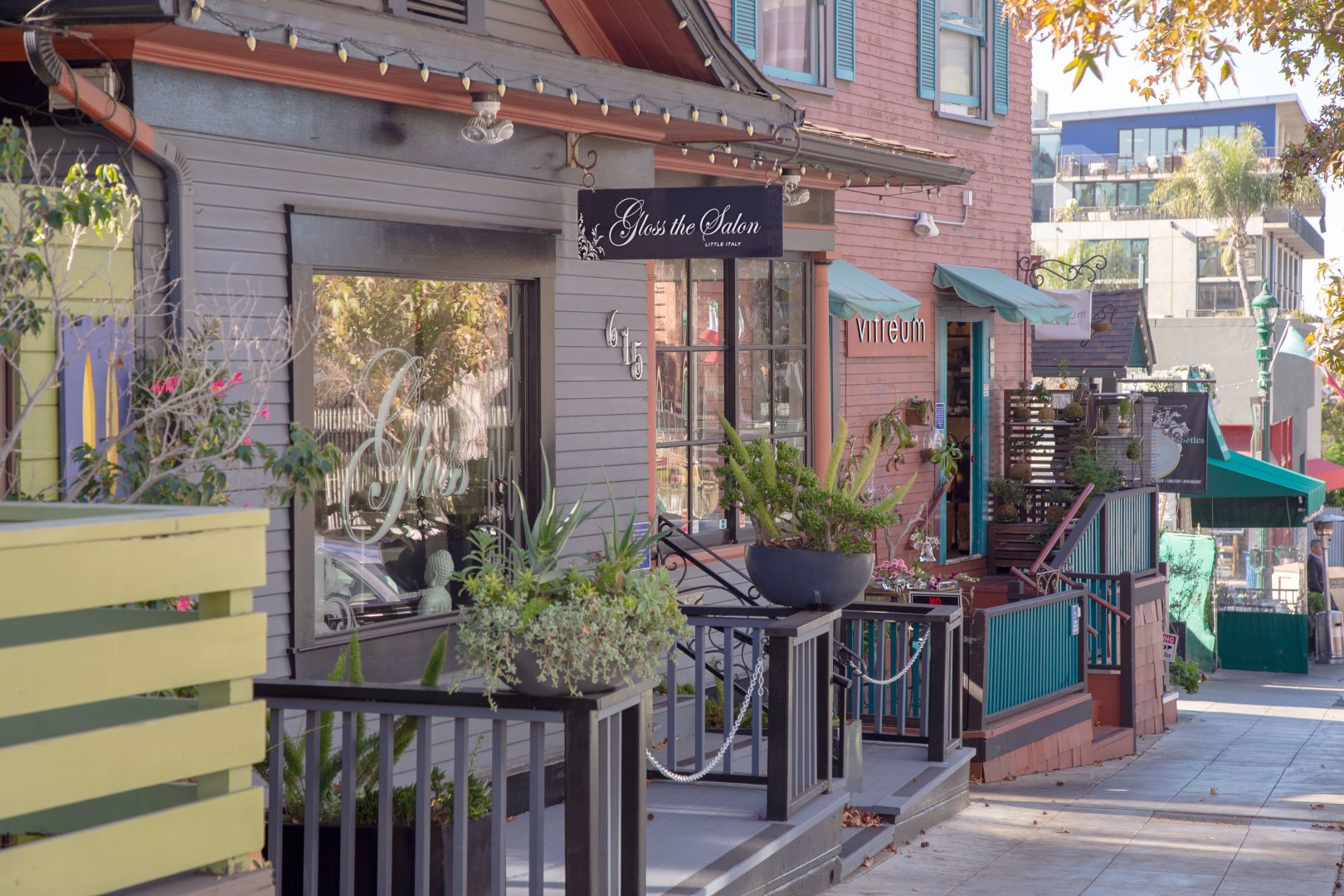
While other Little Italies in the United States have declined because of the growth of other adjacent ethnic neighborhoods, San Diego’s Little Italy has remained a vibrant symbol of the remarkable contributions Italians have made to this country. Since the 1920s, it has been a stable ethnic business and residential community; it represents Downtown San Diego’s oldest continuous-neighborhood business district.

However, the area’s history is not without its dark period. At one time, more than 6,000 Italian families lived in Little Italy and toiled to build San Diego into the global hub of the tuna industry. When the tuna industry on the West Coast waned and 35% of Little Italy was torn down during the construction of Interstate-5 freeway, the neighborhood suffered nearly thirty years of neglect. Then, in the early 1990s established property owners and family-run business proprietors decided to take their fate into their own hands.

New Italian American and non-Italian business owners opened retail and professional spaces while creative builders and architects constructed beautiful developments. That it is today a model urban neighborhood not just in San Diego but also for the handful of Little Italies remaining throughout the country is a lesson in a community’s resilience.

Photo courtesy of Little Italy Association

This remarkable accomplishment can be credited mostly to the Little Italy Association (LIA), which was established in 1996 during the time of the revitalization of the Downtown area. The only district management corporation of its kind for any Little Italy neighborhood in the United States, it is run by a board of directors comprising 29 individual who represent property owners, residents, businesses, and the community at large. It advocates on behalf of its members’ best interests in matters of public safety, beautification, promotion, and economic development, while preserving the unique cultural resources of the area. Since its inception, it has been re-energizing this neighborhood while telling the story of Little Italy to its visitors through public art displays and amazing piazzas.

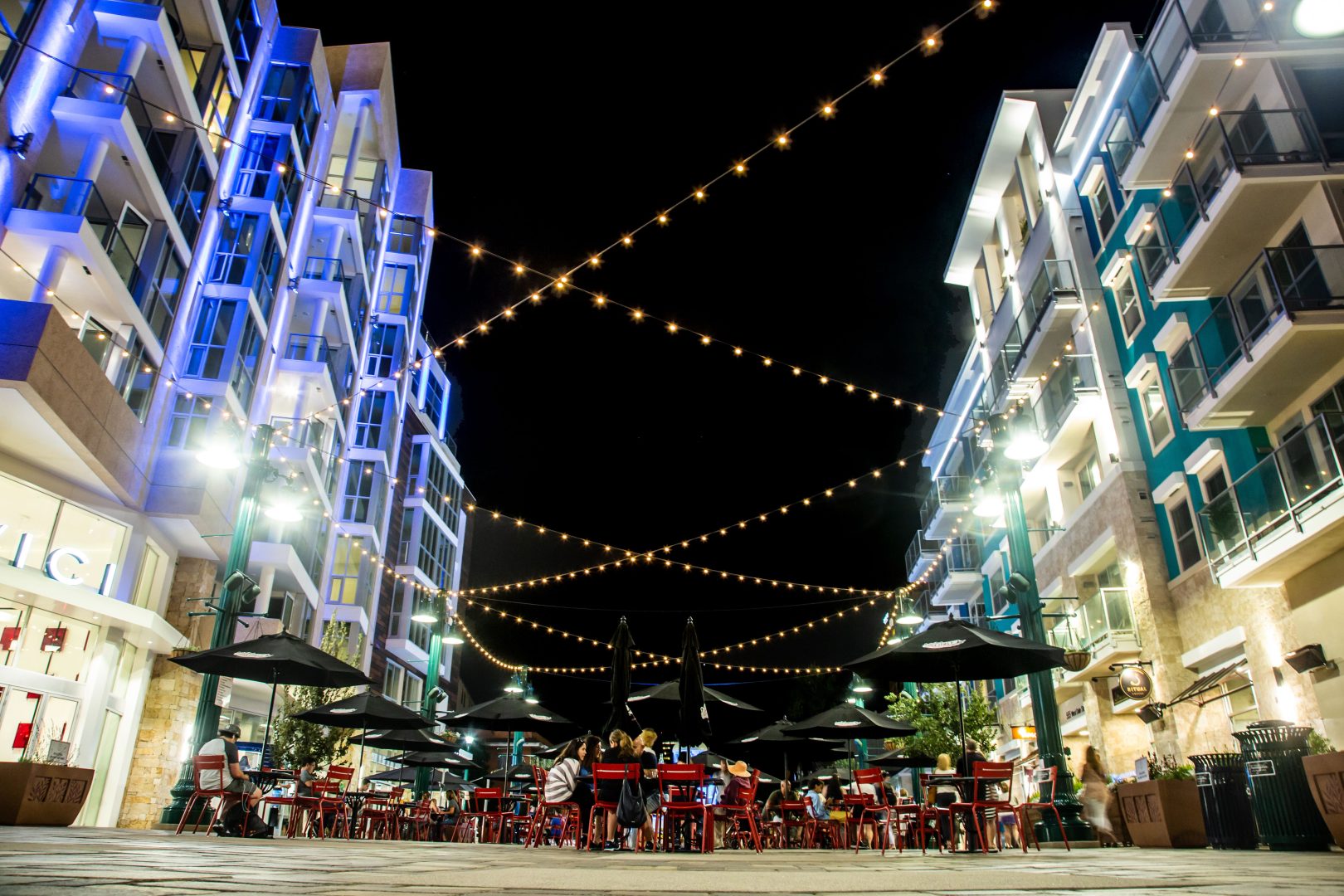
Visitors to Little Italy for the event will check in at the vibrant Piazza della Famiglia, where they will receive their exclusive Taste Passport. With this passport, attendees will embark on a culinary adventure, visiting a wide range of restaurants, checking off as they stop, to savor their curated “tastes” while they stroll through the neighborhood. For those who prefer a more leisurely experience, ample seating will be available at the Piazza della Famiglia, complemented by live music at Piazza della Famiglia and Piazza Basilone.

Photo courtesy of Little Italy Association

Curt Brooker of FUSE Events, which partners with the association to make this a successful endeavor, tells the origins of Taste of Little Italy. “There are many neighborhoods that hold ‘Taste of’ events, but Little Italy quickly started to showcase a growing number of restaurants that were being recognized throughout San Diego. The Little Italy Association decided to create an event that brought people into the neighborhood so they can sample the variety of restaurant options old and new.” 

“Taste of Little Italy began as a one day event and featured a handful of restaurants,” Brooker explains. “As the restaurant numbers grew, two routes were created on the same day with about 15 restaurants each. We were getting feedback from attendees that they just couldn’t eat so much food in one night. Now, Taste is a two day event that features approximately 20 restaurants each day. Tickets are $55 each day – it’s a great value for being able to try that many restaurants in a night.” 

“The number of restaurants have increased over the years and we continue to add new concepts as they come into Little Italy,” continues Brooker. “The restaurants are a true partner in this event and we make it a priority to not make it a burden on the restaurant or staff. We limit the number of tickets sold each day to 750. Over the two-day event, a total of 1500 tickets are sold.”

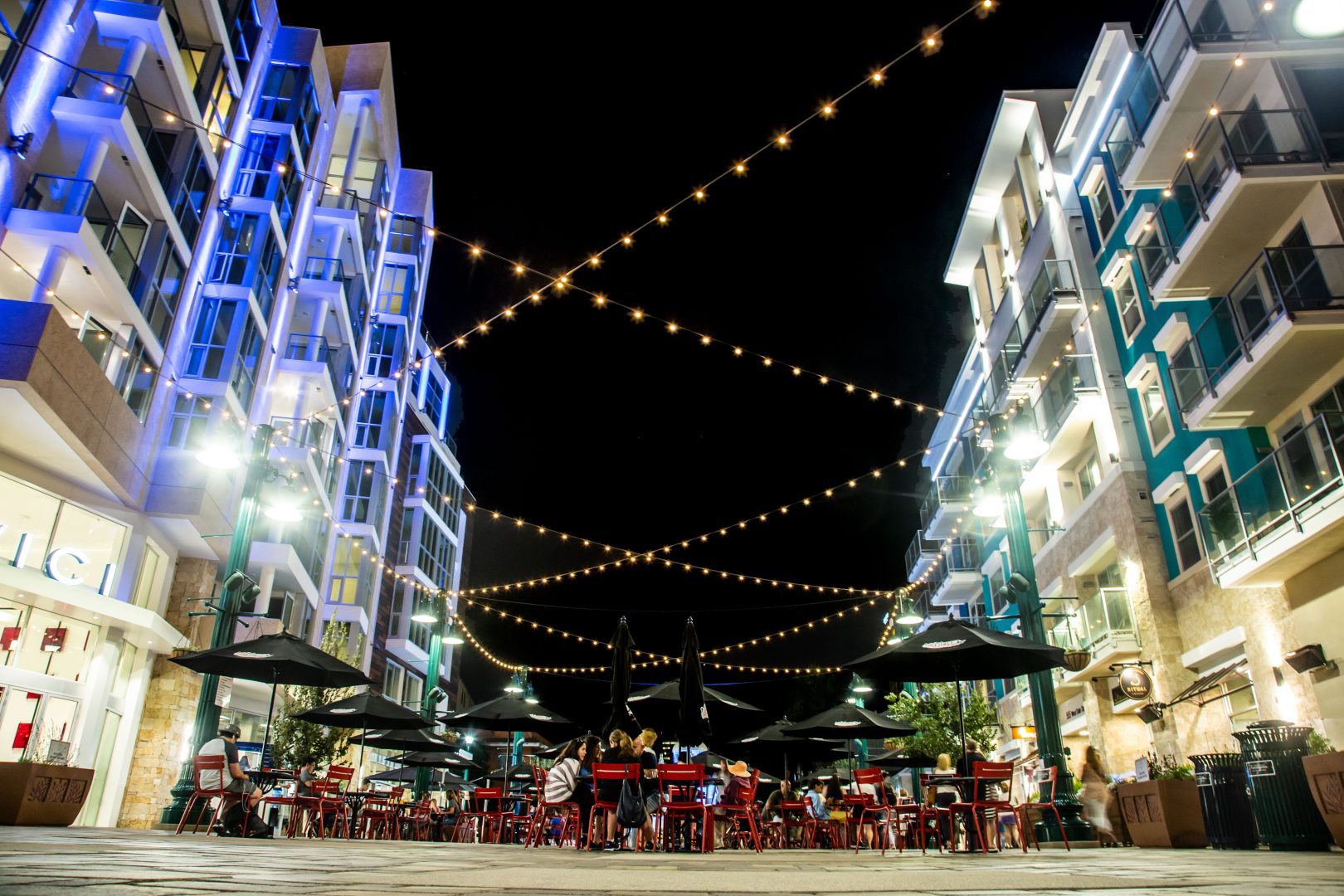
Pizza della Familia at night / Photo courtesy of Little Italy Association

Brooker says they are constantly making changes and adjustments to improve the event throughout its existence. “The Piazza della Familia has been the biggest change over the years. We now have this wonderful space to hold the registration area and have sponsor activations to enhance the attendee experience.”

Food and drinks aren’t the only things visitors can enjoy at Taste of Italy. Brooker clarifies, “We want to make each night an experience. So along with the food and drinks that are offered on the routes, we have live music placed throughout the neighborhood to give it that fun foodie vibe. Of course, we have a lot of the same restaurants participate each year, but there are new options that change year to year. Also, our sponsors bring new experiences each year. We’ve had a full ‘beer garden’ one year thanks to Birra Moretti and last year we had fun photo opportunities courtesy of Campari. We’ll again have new and fun activities for attendees this year in the Piazza.”

The community spirit which has made this little corner of San Diego flourish in spite of the economic downturn and global catastrophe was on full display a few years ago. Recalls Brooker, “One of the most memorable Taste of Little Italy events was during COVID. The neighborhood was quiet and the restaurants had obviously slowed down. We came up with a very unique idea that allowed people to enjoy the restaurants with a ‘Take Home Edition’ Taste concept. We had four nights where we curated a four course meal from four different restaurants. One restaurant  provided an appetizer, another the main course, dessert and a paired drink. It was a fun way during COVID to still enjoy Little Italy’s restaurants by taking home a variety of options from multiple restaurants.” 

Photo courtesy of Little Italy Association

Planning Taste of Little Italy is year-round. Brooker states, “Once the event ends, we are taking surveys and brainstorming how to make it a little better. Then it’s back to communicating with the restaurants on what to expect next year. There’s no Master Chef that leads the event; restaurant and bar owners have to secure their spot by February and our team works with them to try and bring as much variety as possible and highlight what each restaurant does best.”
There’s no fee for restaurants to participate and all the funds raised during the event go the Little Italy Association. The money is then used to help keep the streets clean, maintain the beautiful flowers and trees, and support the businesses with marketing and promotions.  

Taste of Little Italy is hugely popular and it’s a big attraction in San Diego. Says Brooker. “People try to walk up on the day of the event to buy tickets and are disappointed that we are sold out. I would recommend buying tickets as early as possible.”
So don’t miss out! Purchase your Taste of Italy ticket now and take a leisurely two-and-a-half-hour drive to San Diego for an unforgettable culinary experience.                        

Spend Mother’s Day in Little Italy San Diego

Also published on 11 March 2024 on Hey SoCal

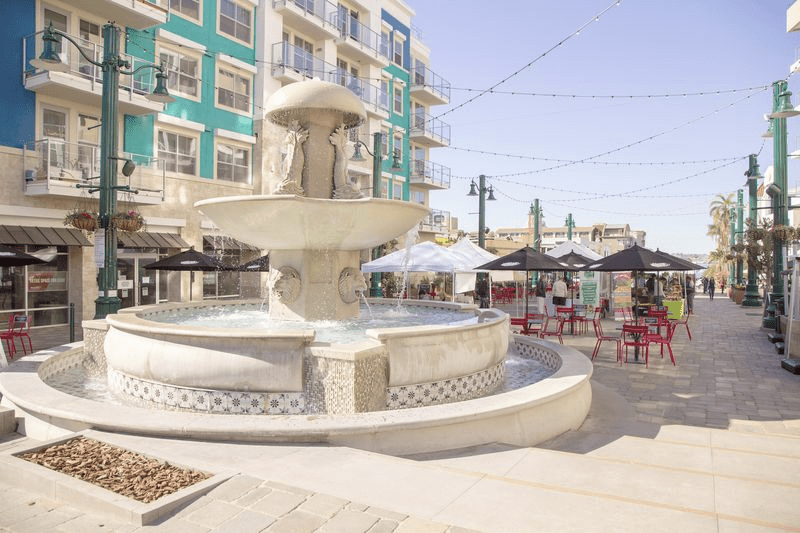
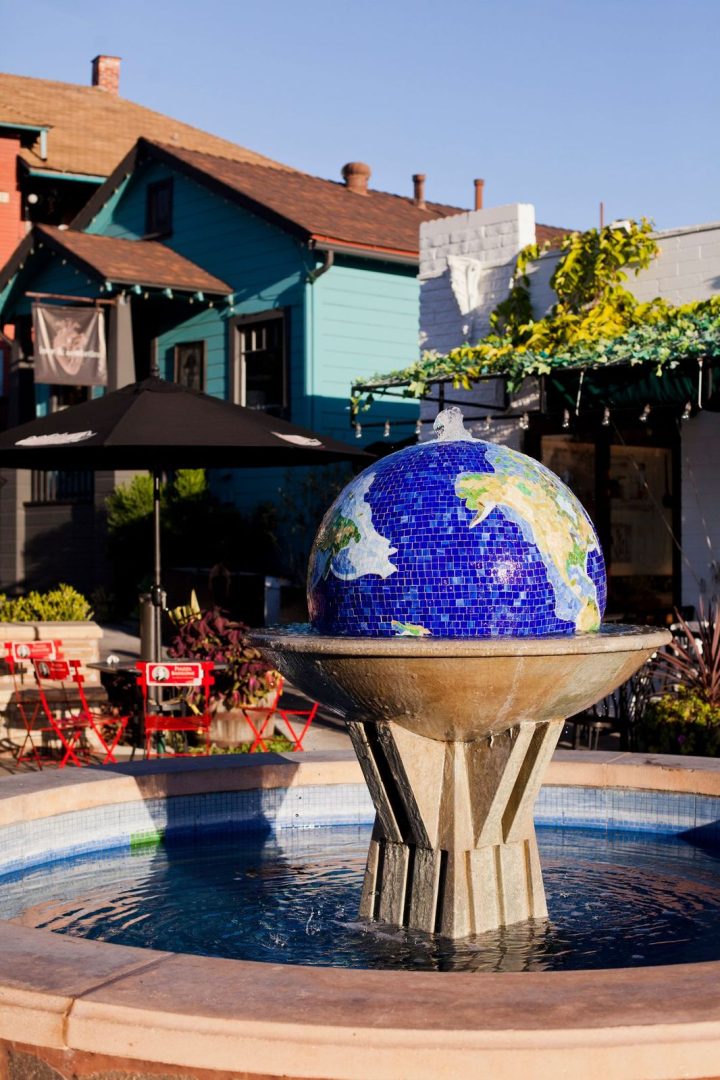
One of the many piazzas in San Diego’s Little Italy. / Photo courtesy of San Diego Little Italy Association

Looking for something more fun and adventurous to do on Mother’s Day? Make it a destination event and drive down to Little Italy in San Diego! Better yet, stay for the weekend to acquaint yourself with this extraordinary place and enjoy everything it has to offer.
San Diego’s Little Italy has such a fascinating and rich history – it was at one time the center of the world’s tuna industry. Chris Gomez, district manager of the San Diego Little Italy Association, recounts, “Little Italy was originally known as Middletown because it was north of downtown San Diego, south of Mission Hills and Hillcrest, east of San Diego International Airport, and west of Bankers Hill. It was settled back in 1920 when Italian immigrants from San Francisco and New York who came to live here created a small community that was close to the waterfront that allowed them to build their economic strengths through fishing. It was the hub of the fishing industry in the 1960s, 1970s, and into the 1980s before all the fishing moved down to Baja. The Italian fishermen would go out to the San Diego Bay and catch tuna and bring them back to packing houses and they would distribute them from there. The Chicken of the Sea and Bumble Bee Tuna companies started in Little Italy.”

Photo courtesy of San Diego Little Italy Association

“But just as we’re celebrating Little Italy’s heritage, what it has become now is not necessarily all Italian – we also focus on the diversity of the community. We have restaurants that have opened from Mexico and this is the first location they’ve opened in the United States, like Fisher’s. We have several dining places that offer very eclectic cuisines and foodie experience,” Gomez clarifies.

While other Little Italies in the United States have declined because of the growth of other adjacent ethnic neighborhoods, San Diego’s Little Italy has remained a vibrant symbol of the remarkable contributions Italians have made to this country. Since the 1920s, it has been a stable ethnic business and residential community; it represents Downtown San Diego’s oldest continuous-neighborhood business district.

Photo courtesy of San Diego Little Italy Association

However, the area’s history is not without its dark period. At one time, more than 6,000 Italian families lived in Little Italy and toiled to build San Diego into the global hub of the tuna industry. When the tuna industry on the West Coast waned and 35% of Little Italy was torn down during the construction of Interstate-5 freeway, the neighborhood suffered nearly thirty years of neglect. Then, in the early 1990s established property owners and family-run business proprietors decided to take their fate into their own hands.

New Italian American and non-Italian business owners opened retail and professional spaces while creative builders and architects constructed beautiful developments. That it is today a model urban neighborhood not just in San Diego but also for the handful of Little Italies remaining throughout the country is a lesson in a community’s resilience.

This remarkable accomplishment can be credited mostly to the Little Italy Association (LIA), which was established in 1996 during the time of the revitalization of the Downtown area. The only district management corporation of its kind for any Little Italy neighborhood in the United States, it is run by a board of directors comprising 29 individual who represent property owners, residents, businesses, and the community at large. It advocates on behalf of its members’ best interests in matters of public safety, beautification, promotion, and economic development, while preserving the unique cultural resources of the area. Since its inception, it has been re-energizing this neighborhood while telling the story of Little Italy to its visitors through public art displays and amazing piazzas.

Photo courtesy of San Diego Little Italy Association

Gomez has been with LIA for 24 years and has become somewhat of an authority on all things Little Italy, so I ask him how he would plan an itinerary for someone visiting from L.A. He promptly replies, “If possible, make a weekend out of it. Come in on Friday night and stay in one of our boutique hotels like Carte and La Pensione, or the Doubletree, and stay for a couple of days. After checking in, go out for a casual dinner at Barbusa or Civico 1845.”

“The next morning, head out to the Farmers Market, which is very unique,” continues Gomez. “Our market maestro has curated the offerings to be very European – there’s fresh fish, including sturgeon, things that you wouldn’t normally see at standard farmers markets. Take a walk up and down India Street and visit the boutique retail stores on First Street, linger at our many piazzas, stop in and have lunch at Devanti Enoteca or another great restaurant. Then go back to the hotel to relax and freshen up.”

“Afterwards, go to the Embarcadero or downtown where dining places offer diverse culinary dishes,” Gomez goes on to say. “There are top chefs who have Michelin-starred restaurants here, like Juniper & Ivy. We have really cool bars like Camino Riviera or Kettner Exchange where people can go for a cocktail. Craft & Commerce is another great one with a speakeasy in the back that’s called False Idol.

“On Sunday morning, get coffee at a local café like Caffe Italia or Pappaleco … maybe have a quiche or panino and start your day all over again. Then check out of your hotel and head back home safely,” concludes Gomez.

The Piazza della Famiglia at night / Photo courtesy of San Diego Little Italy Association

I ask what a highlight would be if one were visiting Little Italy only for eight hours and Gomez responds, “It depends on what day you come. But if you’re here on a Saturday, definitely come to see the Farmers’ Market. Additionally, we have several piazzas that mirror European public spaces for people to sit at and relax in. Piazza della Famiglia is one particularly wonderful place to explore – it’s our largest piazza at 10,000-sq. ft. People can sit there and have a glass of prosecco or a cocktail while they enjoy a view the San Diego Bay, the weather, and the sound of people in that space. You can grab lunch or dinner at one of our local restaurants. There are multiple retail stores and galleries people can enjoy. We also have something called Music Box, which is an entertainment venue where you can watch a concert.”

This year, take your mom out on Mother’s Day for an experience that’s more memorable than the usual brunch at a chain restaurant. Spend her special day with her in Little Italy San Diego!       

Masters of Taste Marks 7th Year at the Rose Bowl

Also published on 4 March 2024 on Hey SoCal

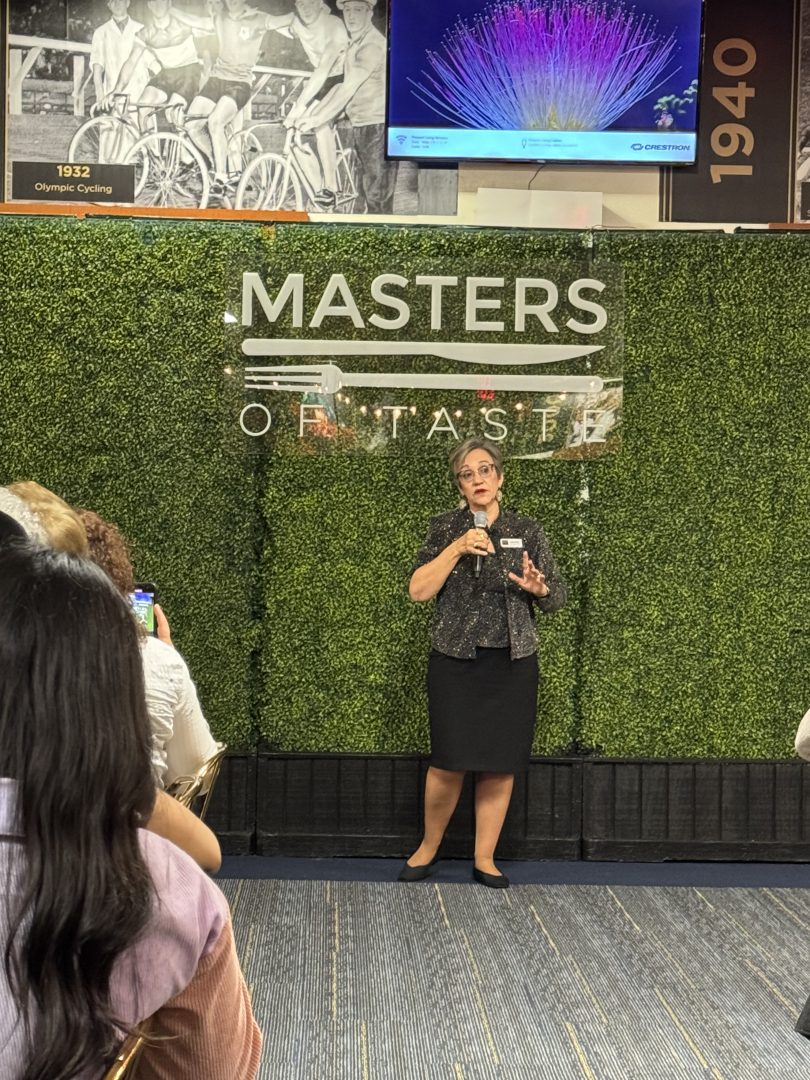
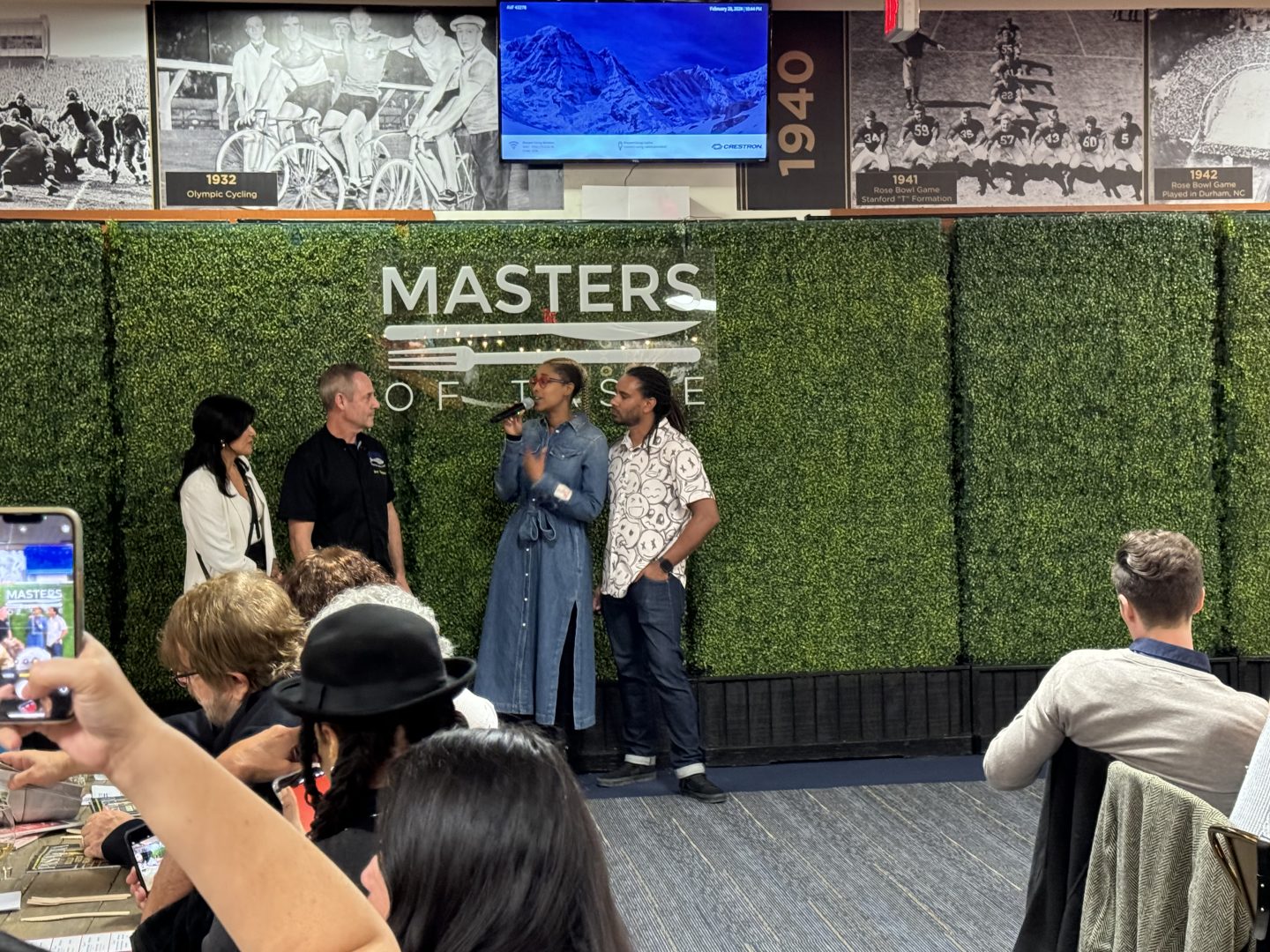
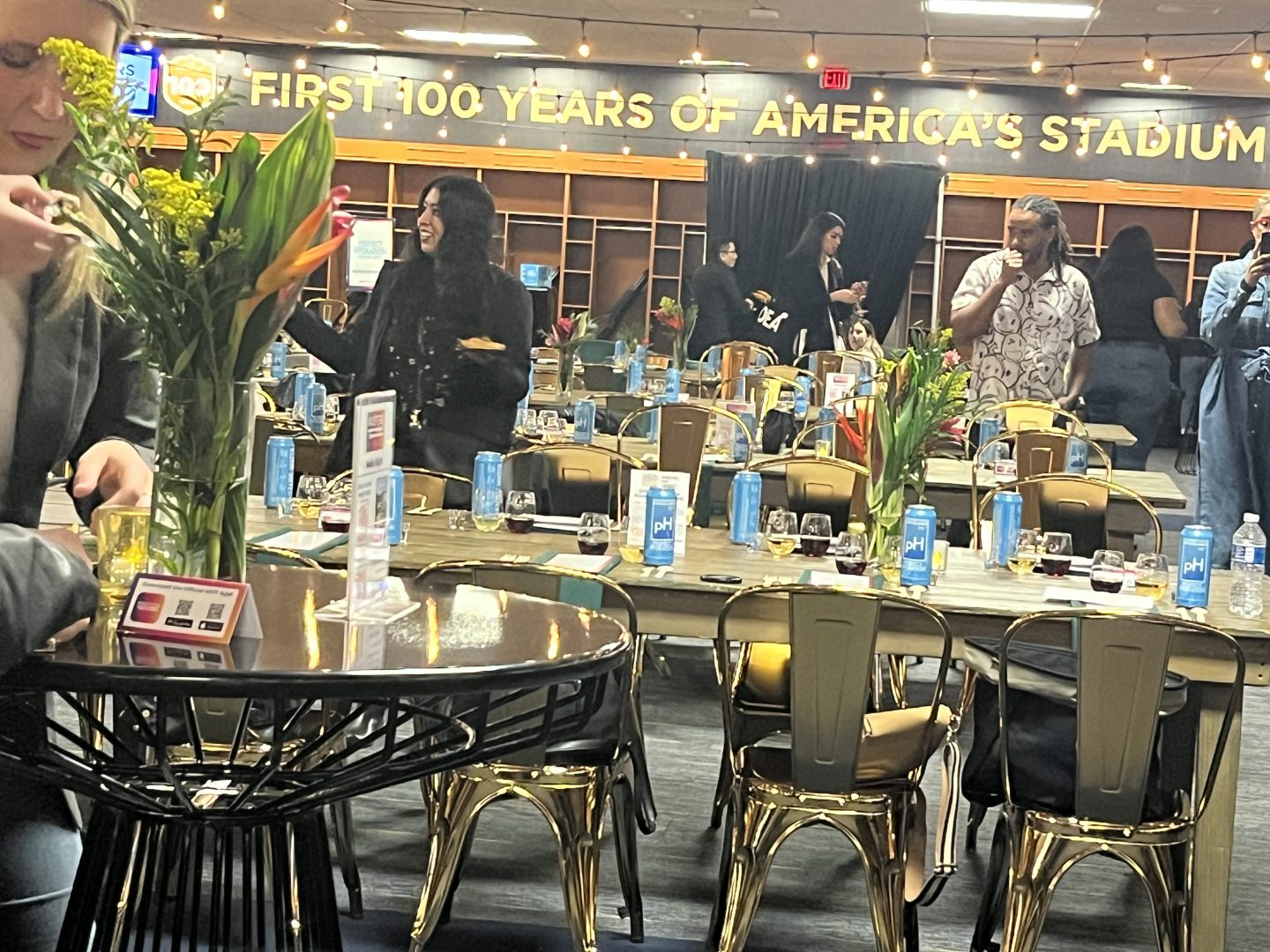
Masters of Taste Media Night in the locker room of the Rose Bowl. | Photo by May S. Ruiz / Hey SoCal

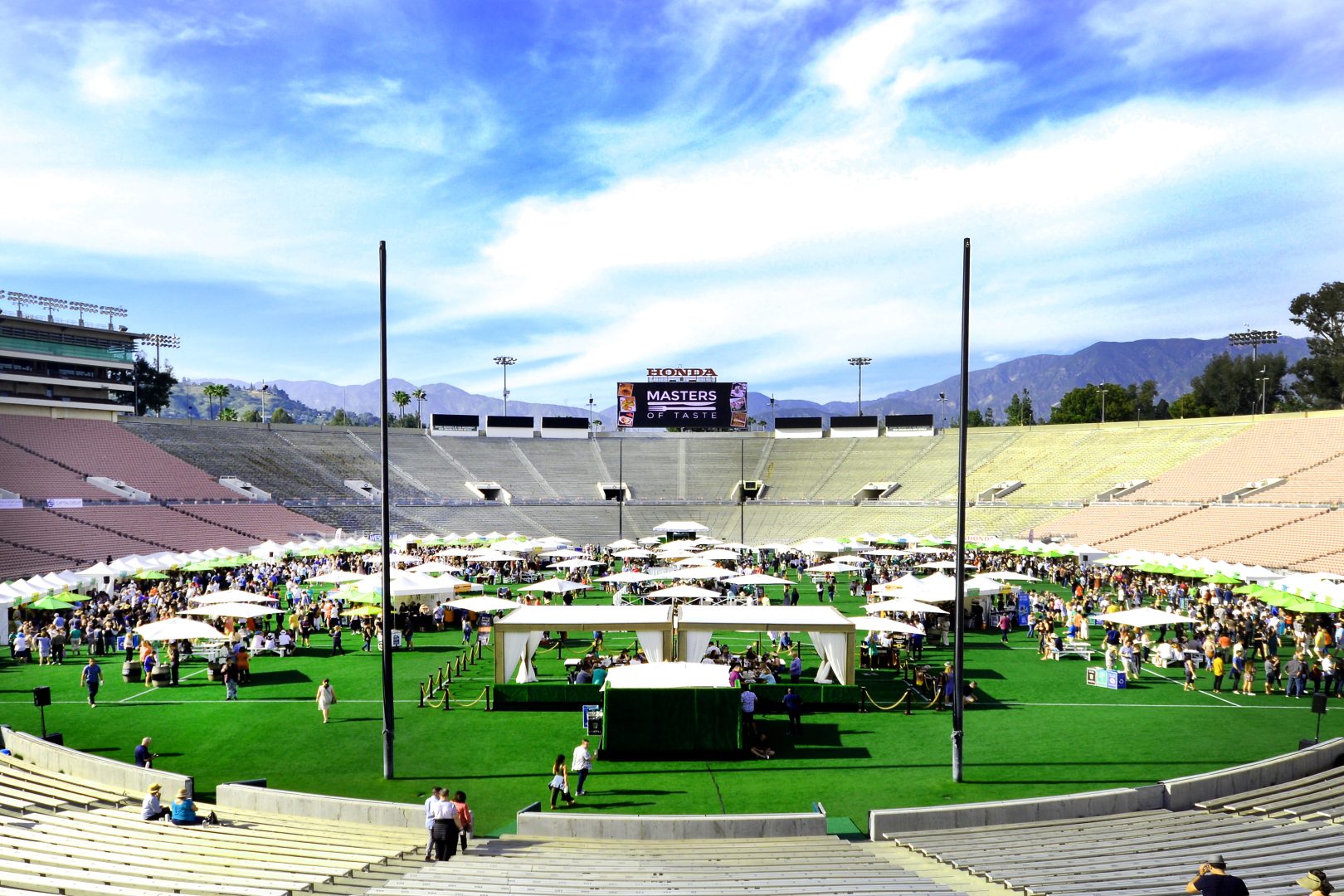
Masters of Taste (MoT), L.A.’s premier food and beverage festival, returns at the 50-yard line of Pasadena’s Rose Bowl on Sunday, April 7, 2024 from 3 to 7 pm. Celebrating its seventh year raising funds for Union Station Homeless Services (Union Station), the event brings together 100 restaurateurs and beverage company owners to serve food and drinks to approximately 3,000 attendees.

The brainchild of Rob and Leslie Levy, owners of The Raymond 1886 and Knox & Dobson in Pasadena, Masters of Taste was a concept Rob adapted from a childhood friend’s organization in Chicago called “Inspiration Café” which delivers sandwiches to the homeless. When the former CEO of Union Station asked him to be on the board, he set out to find a better way to raise funds than asking people to get all dressed up to attend a gala they only felt obligated to attend. Leslie came up with the idea of having chefs gather for an event that was so amazing it didn’t feel like it was a charity affair.  

Rob and Leslie Levy (third and fourth from left) at their Raymond 1886 Masters of Taste booth. / Photo courtesy of Masters of Taste

On their first year at the Rose Bowl, a spontaneous line dancing broke out on the field – a delightful occurrence that was totally unanticipated. It was when they knew they had stumbled upon a successful endeavor. There was another year when it rained which, incredibly, made it an even better event. Nobody left – 3,000 people on the field stayed through the rain; Levy said it was the most memorable year they’ve had.

As the organizers had previously done, Masters of Taste held its media night in the locker room of the Rose Bowl. On February 28, 2024, we arrived at the venue and were pleasantly surprised to see twice the number of chairs and tables from last year’s media preview. Media attendance and sponsorship had increased dramatically since we first attended it. And as always, there was excitement among the individuals behind this annual event and the people covering it.

City Club in Los Angeles served hors d’oeuvres at Masters of Taste media night. | Photo by May S. Ruiz / Hey SoCal

After we had enjoyed a few drinks and hors d’oeuvres, the program began with a reminder of why we were there. Benjamin Turkle of Boomtown Brewery declared, “We’ve been working with homeless causes in L.A. for almost nine years now, helping on Skid Row. My wife’s partnership with Brilliant Corners to work with Union Station Homeless Services is just another foundation stone.”

Turkle went on to say, “We’ve always been told that we need to pick ourselves up by our bootstraps. But that’s very challenging when we don’t have bootstraps to pick ourselves up by. It takes a community and each individual citizen – whether or not you’re an entrepreneur in the service industry or in the thousands of other positions in our city – to lend threads to others so they can make their own bootstraps, to lend hands so others can pick themselves up as well. We’re all in it together and our rising tide will raise all ships. Thanks to Masters of Taste for doing this, for involving all of us in keeping this issue forefront.”

Anne Miskey, CEO of Union Station Homeless Services. | Photo by Margaret Gifford / Hey SoCal

Anne Miskey, CEO of Union Station, then stood up to welcome everyone. She said, “You’re more than  friends, you’re now part of our Union Station family. We’re here for a fun night to enjoy great food and drinks but they’re all for a great cause. Every bite of food and sip of drink at Master of Taste helps the homeless in Los Angeles – could there be a better way to spend your evening?!”

Joking that she used to be thin, Miskey then thanked all the chefs and beverage masters for making Masters of Taste a possibility. She added, “Thank you to the media. It’s because of you that we’re able to get the word out … and year after year, we sell out. Union Station works with all sorts of people – those living in tents and whose lives have fallen apart. It is through the support of people like you that we’re able to walk alongside homeless people in their journey. We don’t just see people housed and get work; what we see is the return of hope and the ability for them to once again have dreams.”

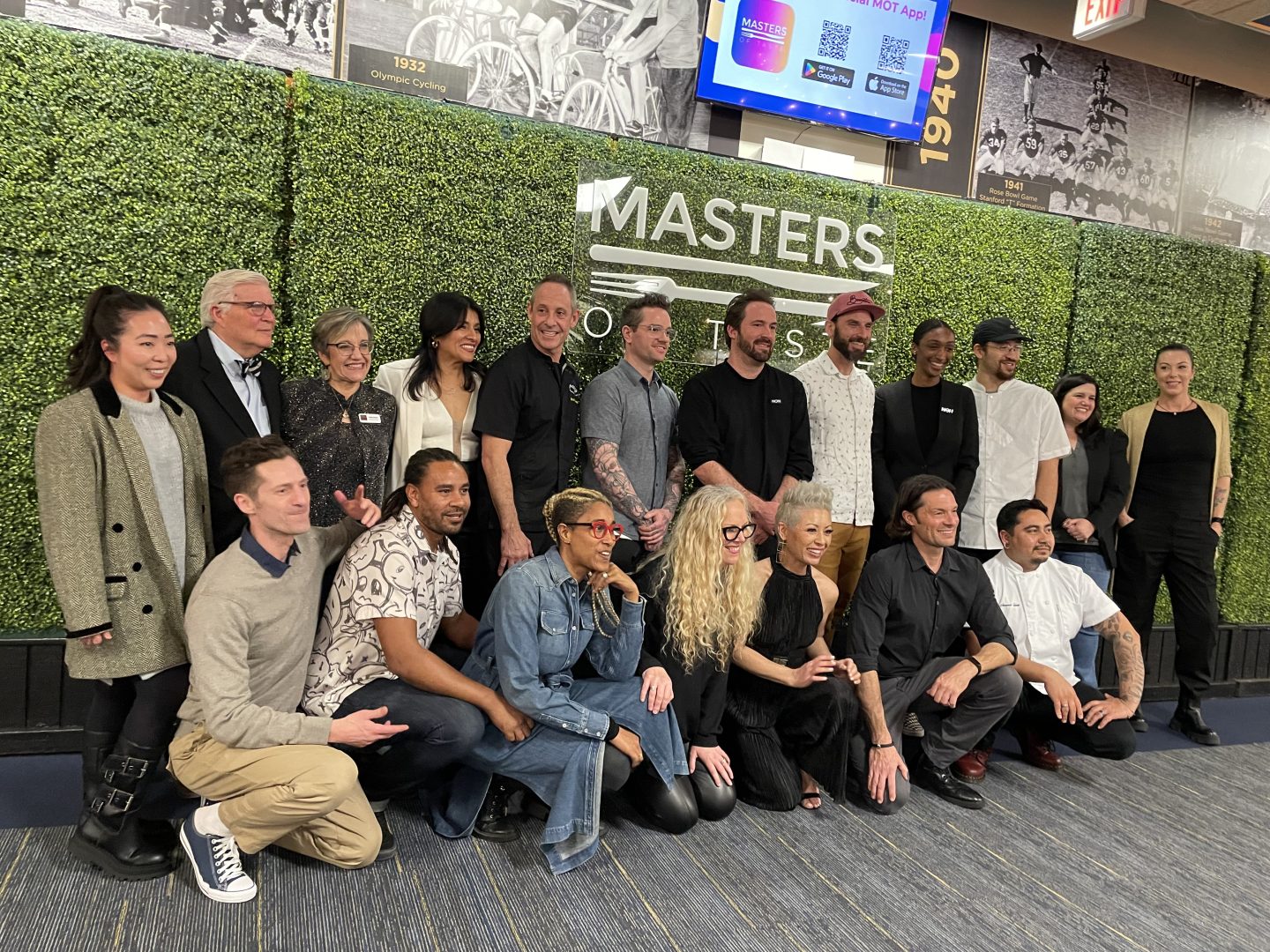
In a bow to tradition, 2023 MoT host chefs Michael and Kwini Reed of Poppy + Rose and Poppy & Seed passed the baton to this year’s chef hosts Bret Thompson and Lucy Thompson-Ramirez, owners of Pez Cantina and Pez Coastal Kitchen. The husband and wife team has made a significant impact in the hospitality industry. With their passion for culinary excellence and warm hospitality, they have made a distinctive mark in the Los Angeles dining scene and beyond.

Kwini and Michael Reed (third and fourth from the left) passed the baton to Lucy Thompson-Ramirez and Bret Thompson (first and second from left). | Photo by Brianna Chu / Hey SoCal

Bret Thompson’s culinary journey began at the renowned California Culinary Academy in San Francisco. He honed his skills at esteemed establishments such as Aqua in San Francisco, Roy’s in Hawaii, and Pinot Blanc in St. Helena, California. Seeking international inspiration, he traveled to Spain to study under Chef Martin Berasategui at Restaurante Martin Berasategui, a Michelin 2-star establishment in Lasarte, Spain. He further expanded his culinary repertoire in Lebanon at Atlas Café, then studied under Chef Bernard Loiseau at La Cote d’Or – his Michelin 3-star restaurant in Saulieu, France – and then at L’Arpege, Chef Alain Passard’s Michelin 2-star restaurant in Paris.

Throughout his career, Thompson also had an extensive tenure with The Patina Group, working at multiple restaurants, running catering operations, and ultimately becoming the Corporate Executive Chef overseeing all restaurant operations for the entire chain. While there he garnered accolades – including being named “Chef of the Year 2002” by the Orange County Business Journal during his time as Executive Chef at Catal Restaurant in Anaheim.

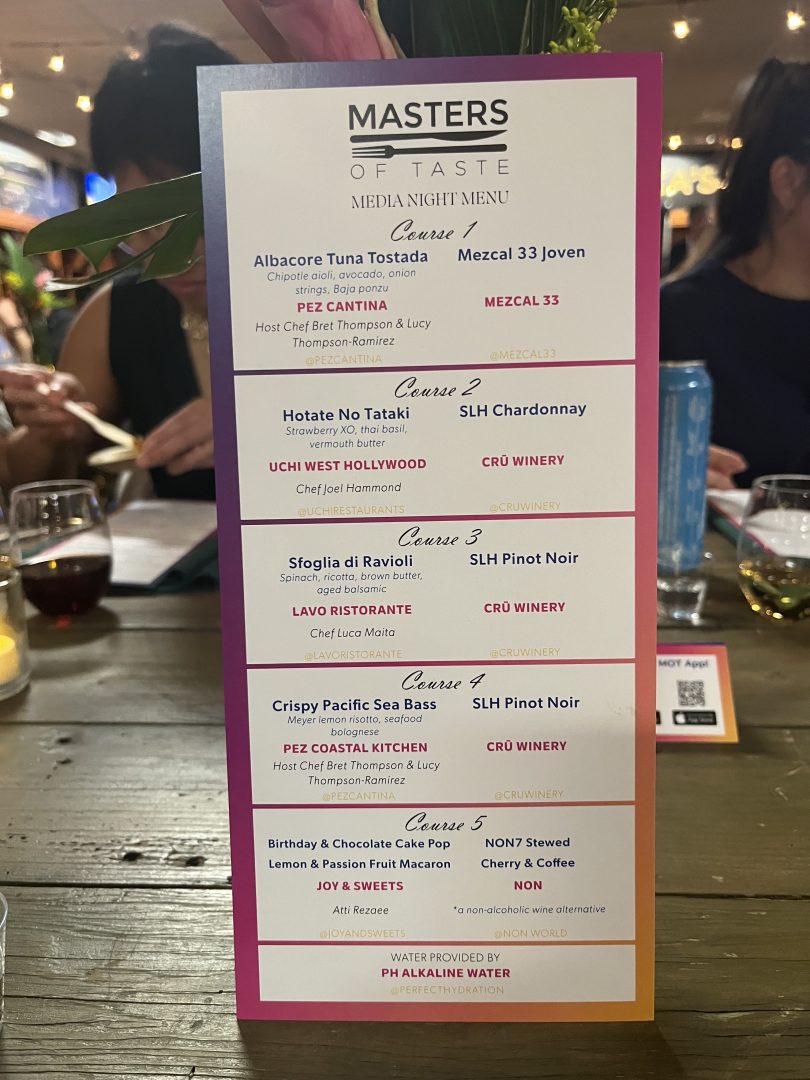
The menu during media night. | Photo by May S. Ruiz / Hey SoCal

Thompson eventually moved on and co-founded and became a partner at the iconic MILK Ice Cream Parlor & Bakeshop in Los Angeles. He also opened his own Market Restaurant and Catering, which he successfully sold in 2014. In 2015, he joined forces with his wife to embark on a new culinary adventure as the proud owners of Pez Cantina. This seasonal, modern, coastal-inspired Mexican restaurant and bar in downtown Los Angeles quickly became a beloved dining destination. In October 2021, they expanded with a new location LA Burrito in Montebello, California.

Lucy Thompson-Ramirez brings her unique perspective and expertise to the front of the house at Pez Cantina. Born in Guanajuato, Mexico, she migrated to the United States with her family at a young age. She pursued her education at the University of Santa Barbara, majoring in Sociology and minoring in Spanish. Her first career path led her into the fashion industry, where she excelled in sales and later established her own showroom with her brother called Siblings Showroom.

After a successful 18-year tenure in fashion, Thompson-Ramirez made a seamless transition into the hospitality industry alongside her husband. At Pez Cantina, her warm and welcoming demeanor shines as she personally greets regulars by name and fosters new connections. Her dedication to providing a home-like atmosphere has made Pez Cantina feel like an extension of their own family. In recognition of her leadership and contribution to the industry, she was appointed as President of the Latino Restaurant Association in 2023 and serves on the Los Angeles Tourism and Convention Board.

Seating during media night at Masters of Taste. | Photo by May S. Ruiz / Hey SoCal

Two weeks ago, Thompson and Thompson-Ramirez opened Pez Coastal Kitchen in Pasadena which offers a diverse menu featuring sea-to-table and farm-to-table cuisine – showcasing the best of seasonal California flavors. The restaurant highlights their expertise in curing, smoking and dry-aging meats and seafood, as well as their partnerships with local farmers and specialty producers. With a focus on creating a modern coastal dining experience, they aim to contribute to Pasadena’s thriving culinary scene and bring a fresh new concept to the city.

As the evening wound down, Shawn Morrissey, Senior Director of Advocacy and Community Engagement at Union Station as well as head of the Lived Experience Advisory Panel at the organization, county and state level, shared his moving experience as someone who was once an unhoused individual. He related, “In 2002, when I was almost 40, I arrived at Union Station with two black eyes, a gash on my forehead, and practically naked. Besides being homeless, I was also trying to get help overcoming a decades-long drug addiction due to trauma. And for the first time in my life, I was met with unconditional regard and I was nurtured. I was brought into a community where people wanted an authentic relationship with me. These were the things that made a difference.”

Masters of Taste organizers and participants during media night at the Rose Bowl locker room. | Photo by Brianna Chu / Hey SoCal

“We used to make homeless individuals jump through hoops and blame them for the situation they’re in, make them earn their way into housing or their way out of the streets,” continued Sean. “All that did was make the homeless problem worse. We know today there are best practice models – housing first, harm reduction, post-trauma care, etc. – which make us healthy.”

“I want to end with two thoughts – people are not broken; systems are. One of the things we hear a lot is that drug addiction drives people to homelessness but what we really know is that it’s a symptom of larger systemic and structural issues. In the 16 years that I’ve worked on the streets with people, I have yet to meet someone who chose not being sober over getting housing,” Sean concluded.

Masters of Taste at the Rose Bowl. / Photo courtesy of Masters of taste

Union Station has grown to be one of the best homeless services agencies in Los Angeles and is the lead County agency for Service Planning Area 3 (SPA 3). For over 50 years, it has been   coordinating homeless services in 38 communities spanning from Eagle Rock to Pomona. It has seen a 97% success rate in permanently housing people since adopting the Housing First model. But its mission transcends providing temporary shelters; it is committed to creating lasting solutions for homelessness through housing, supportive services, and connection to the community.

Every dollar raised at Masters of Taste benefits the work of Union Station to end homelessness. Over the last six years, MoT has donated close to $3 Million to help countless families and individuals find a secure and welcoming place to call home.

So purchase your tickets to the 2024 Masters of Taste for a really fun Sunday afternoon hanging out with other foodies while doing your share in helping solve the homelessness crisis.          

Ushering in the Year of the Dragon at The Huntington’s Lunar New Year Festival

Also published on 12 February 2024 on Hey SoCal

The Kwun Shu Opera Society’s Kun Opera performance | Photo by Brianna Chu / Hey SoCal

To most Asians and people of Chinese descent, the dragon is the most auspicious animal symbol in the lunar calendar – the sign symbolizes power and success and brings good fortune and prosperity. The Huntington Library, Art Museum, and Botanical Gardens welcomed the Year of the Dragon with a festival on February 10 and 11, 2024 from 10 am to 5 pm.     

Program highlights on Feb. 10 included live music by the Han Music Ensemble (10:30 a.m.–12:30 p.m. and 2–4 p.m.) and Chinese Kwun Opera Society (11 a.m. and 1 p.m.) in the Chinese Garden. There were also martial arts demonstrations by Shaolin Temple Cultural Center USA (East Lawn, 10:30 a.m. and 2:30 p.m.) and K-STAR Contortion and Martial Arts (Rothenberg Hall, 11 a.m. and 1 p.m.), as well as lion dancers featuring Northern Shaolim Kung Fu (12:30 and 3:30 p.m.) on the East Lawn near the Huntington Art Gallery. Additionally, mask-changing artist Wei Qi Zhong performed (11 a.m., 1 p.m., and 3 p.m.) inside Haaga Hall.

Lion Dance | Photo courtesy of The Huntington Library, Art Museum, and Botanical Gardens

“This is one of the most beloved events of the entire year at The Huntington,” Sian Adams,  Director of Strategic Initiatives, stated during a phone conversation. “There’s something for everybody; it has a lot of different food options, live music, performances, arts and crafts workshops for kids, lots of different offerings that make the day fun for a variety of ages.”   

Kung Fu demonstration | Photo by Brianna Chu / Hey SoCal

While some events – like the lion dance – are mainstays, the organizers mix up the offerings. “We always are looking at the programming,” stated Adams. “This year we added the Kun Opera for a two-day performance in the Chinese Garden because we wanted to bring in something very artistic and special to the garden’s space itself.”

Kun Opera | Photo by Brianna Chu / Hey SoCal

The Kun Opera, also known as Kunqu Opera, is one of the three classic operas of the world. It is highly stylized – singers with painted faces wear elaborate costumes; hand gestures and head movements add another layer of meaning to what’s being sung. UNESCO proclaimed it as a ‘Masterpiece of the Oral and Intangible Heritage of Humanity in 2001.       

All performances were relatively short – about 20 minutes each – held at different locations and people watched while standing. However, some performances had seating, like the Kun Opera in the Chinese Garden and the contortion and martial arts shows in Rothenberg Hall.

Floral display | Photo by Brianna Chu / Hey SoCal

Whether it was by design or a case of bad scheduling, some shows were presented during the same time slots. Visitors either missed a really great presentation or had to stay the entire day to catch all the performances. If the organizers planned that all along to entice people to stay longer, though, then it was brilliant! There were several shows that went on throughout the day, like the floral arrangements, the Lego display, and calligraphy writing station. The Han Music Ensemble played well-known Chinese music with traditional instruments at the Transcendent Pavilion from 10:30 a.m. to 12:30 p.m. and from 2 to 4 p.m.    

Calligraphy-writing station | Photo by Brianna Chu / Hey SoCal

According to Adams the Lunar New Year Festival is open to all members but it’s so popular that membership tickets usually sell out on the first day they’re offered. Tickets are also available to the general public although these also go very quickly so everyone is encouraged to purchase well in advance. Advanced reservations to get in are required for non-members and members as well.                 

Tai Chi demonstration | Photo by Brianna Chu / Hey SoCal

“This annual event is part of The Huntington’s regular programming,” explained Adams. “That said, we’ve had one corporate partner which has made the Lunar New Year Festival possible for us since the beginning and that’s East West Bank. They have been our champion and a friend to the Chinese Garden at The Huntington from the earliest days. We’re truly lucky and we appreciate their friendship.”

Masked performer / Photo courtesy of The Huntington Library, Art Museum, and Botanical Gardens

Now on its 19th year, the Lunar New Year Festival is The Huntington’s biggest event and it takes place across the institution in multiple staging spaces. It’s surprising therefore to learn that there aren’t that many people who make it happen. Adams said, “It’s a pretty lean and mean team headed by our Membership Dept. But while there are only a handful of core staff organizing it, there are about 50 volunteers on the day of the event to help ensure everything runs smoothly. We have a robust volunteer program – teen volunteers, docents, and staff sign up for the various events.” 

Battlefield drums (gu) being played| Photo by Brianna Chu / Hey SoCal

“The Lunar New Year Festival is a big lift for The Huntington – it’s all hands on deck for all of us here. We want everybody who comes to have a good experience and a great time. We look carefully at our programming and, just as important, our food offerings. All our restaurants are open and we also bring in external food trucks so there are lots of options to help ensure shorter lines and people aren’t waiting a long time for food. Additionally, we want to give visitors a variety of choices. These food trucks are they’re typically grouped in spaces but they’re all over The Huntington. It’s a very large campus so we want to make sure there are food available everywhere for easy access to visitors. You can be on one side and you don’t want to go all the way to the other side to find food.”

Adams added, “We make sure we offer lots of different entry points to invite people to come in and learn about other cultures and experience different traditions. Food can sometimes be an important gateway. You might try Chinese food and think ‘Oh I want to learn a little bit more.’ It makes the world a little bit smaller.”                    

Han Music Ensemble with traditional Chinese instruments (pipa, which is like a guitar, on the left; guzheng, a plucked zither, on the right) | Photo by Brianna Chu / Hey SoCal

“One of the things I want to emphasize is how proud we are to be a part of the Chinese-American community in Southern California,” declared Adams. “With the Garden and this festival, we open up The Huntington and welcome that dialogue in trying to make the world a little bit smaller by bringing east and west together. And really just connecting people and educating for the purpose of increasing understanding is important for these days and times. If you can learn a little bit more about another culture, boy doesn’t that go far!? Those are the things you carry your whole life – a little bit of understanding, a little bit of perspective.” 

Photo courtesy of The Huntington Library, Art Museum, and Botanical Gardens

If there’s one thing that most people can connect with, it’s food. And who doesn’t like Chinese food? Dumplings, chow mein, sweet and sour pork, and orange chicken are some of the most recognizable dishes the world over. How wonderful it is to discover our shared humanity with people sitting at the same table while enjoying a delicious bowl of noodles and taking in the artistic and cultural traditions of one of the oldest civilizations on earth. At the very least, it’s a fantastic way to welcome the Year of the Dragon.