The Adventures of Sherlock Holmes Afoot at The Arboretum

Originally published on 8 June 2017 in the Pasadena Independent, Arcadia Weekly, and Monrovia Weekly

Anyone familiar with Sir Arthur Conan Doyle expects nothing short of the impossible from his legendary creation. Fans will not be disappointed when Unbound Productions’ Mystery Lit staging of ‘Holmes, Sherlock and the Consulting Detective’ comes to the Los Angeles County Arboretum in Arcadia. It will run for 19 performances between June 2 and July 1 in and around the Santa Anita Train Depot.

Sponsored by the L.A. Arboretum Foundation, this immersive theatre event is a mash-up of three Sherlock Holmes cases, ‘A Scandal in Bohemia’, ‘The Red-Headed League’ and ‘The Adventure of the Copper Beaches’. The 105-minute, two-act play is the first Mystery Lit event from Unbound Productions, which creates the popular Wicked Lit series.

Unbound Productions, comprised of Jonathan Josephson (Executive Director), Paul Millet (Artistic Director), and Jeff G. Rack (Producing Artistic Director), was founded in 2008 with a mission to reimagine timeless stories for new audiences.

Josephson notes, “ In 2007 Paul, Jeff, and I began talking about establishing a theatre company that will put on plays inspired by classic literature. We had worked together in various capacities on different productions all over Southern California and we all had an idea to create dynamic new adaptations of classic literature of the horror genre.”
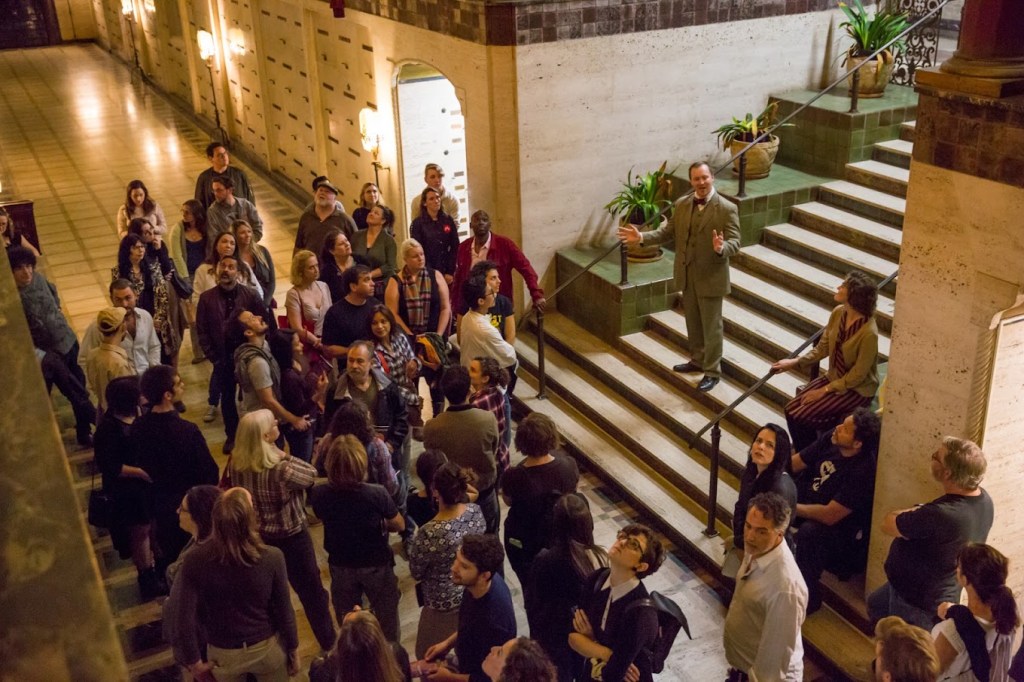
Image of Wicked Lit Production taken from Wicket Lit website

“In 2008 we mounted our first Wicked Lit production at the Greystone Mansion in Beverly Hills which went from downstairs to the courtyard. Up until that time we hadn’t really considered to be immersive but since that first play we’ve done only immersive style specific theatre. We’ve produced over 40 plays almost all of them world premieres. We’re working in really cool and exciting venues and it’s been fun so far,” Josephson states with obvious delight.

From 2010 to 2016 Wicked Lit has been staged at Mountain View Mausoleum and Cemetery in Altadena where audiences walk through the hallways of the mausoleum and among the headstones.

“Soon we thought about bringing new life to great literature that reflects history in creative ways,” recalls Josephson. “In 2011, we produced the inaugural reading series with the Pasadena Museum of History (PMH) featuring works by distinguished women writers of the 19th and 20th centuries: Harriet Beecher Stowe’s ‘Two Pictures in One’, Katherine Mansfield’s ‘The Garden Party’, and Charlotte Perkins Gilman’s ‘The Yellow Wallpaper.’ Performances took place at the Museum and private readings at Los Angeles-area schools.”

Josephson continues, “We create site-responsive theatre, crafting performances around a setting that already exists.  We found a Frank L. Baum story called ‘The Girl Who Owned a Bear” which we staged last year within PMH’s exhibit called ‘Flying Horses & Mythical Beasts: The Magical World of Carousel Animals’. We remounted  ‘Two Pictures’ and ‘Garden Party’ and held them inside and on the grounds of Fenyes Mansion as part of History Lit 2016.”

Unbound Productions expanded yet again in 2014 with Mystery Lit when it began a reading of ‘Holmes, Sherlock and the Consulting Detective’ at The Huntington, the Pasadena Central Library, and the Arboretum. This summer’s staging of the play is its world premiere and, as usual, the producers face challenges.
Photo courtesy of The Huntington

“As in all our immersive plays, we’re dealing with old buildings and historic settings. At the Arboretum, we have a beautiful venue but there’s no electrical power so we’re bringing in generators,” Josephson states.  “It’s also open to the public, with adults and children coming through, so we have a dual mindset about the structure. We have to think of it from The Arboretum’s perspective and the general public’s.”

Reveals Josephson, “When we started immersive theatre, we didn’t realize it was actually a movement. It presents so many opportunities and are impossible to replicate digitally. There’s a reality about a play that takes place at The Arboretum, with the actors right there, that’s irreplaceable. It’s enhanced storytelling, not gimmicking for a reason to buy a ticket. We’re intrigued by that and we try to heighten that experience for our audience.”

“Unbound Productions is a year-round company,” reports Josephson. “We’re in pre-production right now with Wicked Lit. We’ve selected the plays and are talking to playwrights and directors. We’ve developed twelve new plays with as many new writers; we’re stage-reading at the end of July; and we’ll be promoting our Fall show by the end of August.”

Continues Josephson, “We’re on a three-year planning cycle on projects, venues, and collaborators. Our partners are our number one priority. And while we’ve had multiple productions all at once, we’re also a three-person part-time staff. We employ about 50 people who are contractors on individual shows – we have a cast of 12, a running crew of five, a design team, skilled technicians, photographers, and assistants.”

Joe Camareno, who portrays Watson in Mystery Lit’s ‘Holmes, Sherlock and the Consulting Detective’ has worked with Unbound Productions in the past. He relates, “I played the devil in 2014 for Wicked Lit at Mountain View Cemetery. I had red eyes and I spoke with a Castilian dialect which was very cool. I was a sophisticated bad guy like Mr. Roark but very evil.”

“They have a huge fan base and are highly successful; they have also recently been awarded for their costume and sound design. I’ve worked with Paul Millet twice – he directed me in a show in 2003 and again in 2014. I did mostly film in the intervening 11 years. But it’s exciting to go back to theatre and I was happy when they asked if I was interested to take part in this play. They’re extremely professional; they take good care of their actors. We actually get paid and that’s rare in L.A.,” Camareno laughingly pronounces.

Image of the Santa Anita train depot taken from the L.A. County Arboretum website

During a tour of the Santa Anita Train Depot, Camareno describes,“The first act, which lays out the cases, starts with the actors on the balcony of the train station while the audience watches from their seats down below. People will hear the train whistle and see steam rise from the locomotive to establish the ambience. We’re mic-ed so they won’t have trouble hearing what’s being said.”

“In the second act, when the cases unfold, performers head from the balcony to the ground level,” continues Camareno. “As a member of the audience it will be so cool to be part of the story with actors interacting so close to you.”

Camareno says further, “In Act Three, when the cases get solved, the play moves to the open field at the back of the train station where they have built a western setting. The actors will be able to go inside these structures and the audience will see all of it like it’s real.”

“For actors it’s fun because some of us will play multiple roles and we’ll do that through slight changes in our costume – like donning a hat or a coat, or putting on a mustache to change one’s appearance to reflect the character. We’ll be doing all that in front of the audience but it’s at night so it’s subtle,” Camareno adds.

This role is a departure from what Camareno has previously done. He explains, “It’s physical comedy and it’s exciting for me as an actor because recently I’ve been doing heavy drama. The show is family-friendly and a lot of fun which I think kids will really enjoy. I imagine parents taking their children to The Arboretum in the afternoon to stroll around the lovely garden, having a light dinner at the café there, then coming to see our show in the evening.” 

Doyle’s cerebral detective, while having enjoyed a loyal following over the years among readers of mystery stories, has seen his fan base broaden to a much younger audience. Robert Downey, Jr. became an unlikely teenage idol overnight when the cinematic iteration of Sherlock came out in movie theaters.  The BBC’s version with Shakespeare-trained heartthrob, Benedict Cumberbatch, further extended the world’s fascination with everything Sherlock Holmes. 

This summer, at The Arboretum, Holmes will again dazzle you with his uncanny prowess at deduction. But this time you’ll be in on the cases as if you were unraveling the mystery with the great detective himself, proving once more that ‘when you have eliminated the impossible, whatever remains, however improbable, must be the truth’.                              

It’s Blooming Roses at The Huntington

Originally published on 18 May 2017 in the Pasadena Independent, Arcadia Weekly, and Monrovia Weekly

No single flower has moved more bards – from Robert Burns to William Butler Yeats – to  wax poetic than the magnificent rose.  And nowhere are the roses more cared for and celebrated than at The Huntington Library, Art Collections, and Botanical Gardens in San Marino where they are displayed in stunning splendor.                          

Tom Carruth, who became the E.L. and Ruth B. Shannon Curator of the Rose Collection in 2012, presides over The Huntington’s vast assortment of 2,500 plants and 1,250 varieties. 

Prior to his arrival here, he spent 25 years as a hybridizer for Weeks Roses, the country’s leading wholesale grower, where he led the company’s hybridizing efforts.  In his long career he has won more awards from the All-America Rose Selections (AARS) organization than any other living hybridizer.   

“My hybridizing career ended when I took this position,” reveals Carruth.  “As curator of the rose collection I’m responsible for ensuring the plants are vibrant and alive, and for bringing in new parts to the collection.”

In the five years he’s been at The Huntington, Carruth has organized all the labels and  systematized the collection records.  He has expanded some of the beds, added arbors, rebuilt trellises, repaved pathways, re-landscaped, modified irrigation, tested the soil, and even established a dramatic new entrance to the rose garden.  He has also taken on a mission to identify older cultivars that were ‘collectible’ quality and custom propagating them to replace the weaker shrubs in the garden.  


The Rose Garden at The Huntington | Photo courtesy of The Huntington

But Carruth gets the most fun studying the plants, “As a horticulturist I just observe – plants talk to you and you listen.  This is an old garden so the soil is impacted and we started amending with gypsum.  I noticed the roses were getting too much shade so we pruned out some trees.  Some of the old plants which were struggling to live responded to the care and started to turn around.  We had agapanthus going down on both sides of the trellis which were so overgrown they were in the rose roots and were strangling the roses.  We divided up the agapanthus and for two years we just let the roots get some air.”

Originally a cutting garden for Mrs. Huntington, the flowers were grown for production with 50 shrubs of each variety – she was fairly nearsighted and she loved having big bouquets in the mansion.  According to Carruth records from that time showed that one year 9,000 roses were cut to bring to her house.  Today it is a vast collection with just one or two of each kind to show the history of the rose.

The Huntington’s Rose Garden is a veritable history lesson that traces the story of the rose from ancient times to the present day.  Growing on the south side of the pergola leading from the Shakespeare Garden to the Tea Room are roses that represent the early history of the flower dating back to the pre-Christian era. 

On the north side of the pergola are Tea and China roses, introduced into Europe from Asia around 1800.  Says Carruth, “The Chinese were known to have been working with this flower for over 2,000 years.  The whole collection behind the trellis were roses that came here in the tea ships and were the ones that gave us repeat flowering; up to that point roses bloomed only once a year.”

The central part of the garden is dedicated to roses of the modern period when the first hybrid tea rose, called ‘La France’ was introduced.  The hybrid tea went on to become the most popular class of rose of the 20th century, with thousands of known varieties.   According to Carruth, ‘Ophelia’ dating to that period was crossbred in the garden and is in The Huntington’s collection.         

Carruth explains, “The roses are classed by color but not planted by color.  We want to keep the integrity of each variety – the China Teas are all in one location, the older hybrid has its devoted area, and the fragrant roses are in two beds closest to the Rose Garden Tea Room.  That makes it easy for us to direct the public when they ask.”

“Roses have several natural fragrances like fresh cut apples, spice, lemon blossom, myrrh, damask, honey, violets, and all sorts of combinations of those,” adds Carruth.  “It’s fun to watch people get a whiff of the fragrant flowers while they wait for their table in the Tea Room (for information and reservations, call 626/405-2236 or huntington.org/dining).  We have a variety out there that smells like Lemon Pledge and over here we’ve got one that reminds you of Ponds Cold Cream.  Down there we have something that’s white licorice and smells strongly like licorice candy.”

Photo courtesy of The Huntington

“Everyone loves walking around, reading names, and looking at the dates,” observes Carruth. “Many visitors, who don’t’ necessarily know much about growing roses look for classics like ‘Mr. Lincoln’, ‘Peace’, or ‘Sterling Silver’ – bed number 17 in the collection – which is a silvery lavender and is a repeat bloomer.  ‘Sterling Silver’ is interesting because that was the first hybrid from a female hybridizer, in a male-dominated field. We also have the everyday version, ‘Stainless Steel’, which is a much easier plant to grow and has bigger flowers, that’s similar in color and fragrance.”  What he failed to mention, however, is the fact that ‘Stainless Steel’ is a rose he developed in the 1990s as a more robust version of the fussier ‘Sterling Silver’.

The roses at The Huntington bloom from mid-April to November.  Explains Carruth, “This year, because of the rain, we had an elongated pruning season resulting in an extended spring bloom. We’ll have color throughout because we manipulate the plant in the beginning so they don’t blossom all at once. People will see roses every time; we even have a smattering of them in time for the Rose Parade.”

It would surprise people to know that The Huntington does not have a large staff tending to the garden. Carruth discloses, “I have two gardeners who work three acres of roses so we depend heavily on our volunteers.  Right now I have 52 rose garden volunteers deadheading, weeding, watering, and anything they’re willing to do. Some people love to deadhead and prune so I see them in winter and I may not see them during the summer. We’ll take whatever level of interest they have. They get prime time – they come in early in the morning before visitors arrive – when it’s beautiful and calm, and not hot.”

You’ll know that Carruth, and his staff and volunteers, take painstaking care of The Huntington’s roses when you see the glorious flowers in bloom. The next time you visit, go for a stroll on the grounds to take in the breathtaking beauty and heady fragrance laid out before you. When you do, you undoubtedly wouldn’t be able to help stopping to smell the roses.               

Online Schooling Helps Teen Pursue her Dream to Play Golf

Originally published on 18 May 2017 in the Pasadena Independent, Arcadia Weekly, and Monrovia Weekly

Isabelle Olivas-Lowell is a 13-year-old middle-schooler who plays a mean game of golf and is an outstanding volleyball server. Lest you think she’s all sports, Isabelle is also an avid  photographer and an imaginative poet. And, by the way, her favorite subject is math and she’s gotten all A’s in her science course. She’s a smart, friendly and outgoing Brainiac – she’s all these contradictions – defying all manner of stereotype.

So how does someone like Isabelle balance the rigors of schoolwork and active engagement in the myriad of activities she enjoys without getting exhausted and stressed-out? For the Lowells, the answer is online home-schooling.

Mark Lowell, Isabelle’s dad and learning coach says, “Isabelle is deep into the volleyball season now. In fact, we’re traveling to Minneapolis next month for the finals. She’s also been getting ready for the summer set of tournament golf. She’s older now to advance to the AJGA (American Junior Golf Association), the larger realm of the golf world, where kids start to get recognized when they play larger tournaments. The problem is they’re played all over the country.”

“This is why online schooling makes so much sense for Isabelle,” Lowell explains. “It gives us the ability to be connected to the school anywhere we go as long as there’s an Internet connection.”

Playing golf is a constant in Isabelle’s life and becoming a professional golfer a singular dream.    She has been on the golf course since she was five years old; she won her first tournament when she was seven. Her family moved from West Covina to Monrovia when she was in 5th grade and she attended Mayflower Elementary School. That was when athletic events clashed with class attendance. 

Relates Lowell, “I would take Isabelle to golf tournaments so I always sent a note to school letting them know she’d miss a day or two and we’d need to get whatever schoolwork had to be completed. But I would receive letters in the mail; the last one that really got me upset was when they notified me that she had missed nine school days from August through May. But so what? She hadn’t been lagging academically; she had perfect grades.”

“From the golf tournaments Isabelle had been competing in, we met a couple of girls who were being home-schooled,” Lowell continues. “We thought that was an option down the road as she got busier with sports activities. Then one day I came home and she said, ‘I have two phone numbers of on-line schools for you’. One was in Newport Beach, but it was a school for students who got behind due to an illness, and so forth. It offers tutoring for kids to make up for missed classes so they could be mainstreamed to regular school instead of being held back a grade. The other was iQ Academy Los Angeles (iQLA) in Simi Valley, which was the right fit for a GATE (Gifted And Talented Education) student like her.”

Essentially Isabelle herself found the school and her dad was happy to make the phone call. The same week Lowell called iQLA they were able to finish all the required paperwork. The following week, all the books were delivered, and the computer was set up; she was enrolled. He took her out of Mayflower immediately after the first semester of fifth grade and started at iQLA.  She’s now a seventh grader and quite happy where she’s at.

“I can download the curriculum and am able to see what I have to accomplish the entire semester so I can plan ahead,” Isabelle states. “I can schedule practices and figure out which tournaments I can attend. For instance, this morning I am reading about Nixon and the Watergate scandal and there will be a test on it later. This Friday I have to turn in my Science PowerPoint presentation on the California condor. In between those and daily classes I have to attend online, I can practice my golf swings at Santa Anita golf course.”

Just like regular school, Isabelle has seven graded classes – science, math, history, language arts, music, art, and P.E. – all in which she has earned A’s. She is also on the 13 Elite Team at the San Gabriel Elite Volleyball Club and is heading to Minneapolis in a month for the championship.  Sometime before the end of the school year she will be taking the CAASPP (California Assessment of Student Performance and Progress) in Glendora. 

One of the pitfalls of online schooling is the lack of social interaction among one’s peers. But this isn’t the case with Isabelle. She says, “I don’t feel like I’m missing out on some events because we have field trips just like regular school.  In fact, we were just at the Aquarium of the Pacific with some other students from all over the L.A. area. I had the greatest time! That inspired my dad to get me an aquarium and now I have some fish in an aquarium in my bedroom.”

“If anything, I miss assisting my teachers,” Isabelle reveals. “When I was in kindergarten, while my classmates played outside I helped staple class packets. In 2nd grade I was the teacher’s aide – I got to answer the phone when my teacher was busy. The dances I don’t miss; I’ve never been a girly-girl.”          

The youngest of four siblings, Isabelle grew up in a family where almost everyone enjoys a sport. She says, “My maternal and paternal grandparents, my dad, and my uncles, are enthusiastic golfers. My older brother who’s built like a footballer played baseball, but he wasn’t that great – he had one hit in his entire career. But he’s very smart – he invented an alarm system and he can fix anything. If you tell him there’s something wrong with your computer he’ll be able to figure out how to make it work again. My eldest sister didn’t do sports, instead she was a color guard in band; she went to Le Cordon Bleu and is now a chef. My other sister played water polo in high school but she’s now into dance and attends Cal State Channel Islands.”

The Old Course at St Andrews, Scotland (UK)

For all her kin’s affinity for athletics, Isabelle is the only one in her family who has shown a lively interest in professional sports. She continues, “All my brother and sisters went to private Catholic schools and pursued a college degree. I know that nowadays you have to go to college or you wouldn’t be able to find a job. But if I keep playing golf and become professional I might take the opportunity while it’s there, then go to college later.”

Lowell says, “Everyone’s different as my family proves. That’s why I’m an advocate of virtual schooling in spite of the stigma attached to it because it isn’t mainstream. But my daughter isn’t mainstream. Everyone’s unique and the problem is now we’re told we’re all the same – which isn’t true. She has two half-sisters and a half-brother, but not one of them is like the other.  Online schooling is what works for us; you only have to look at the enviable feats Isabelle is able to accomplish, especially in golf, to appreciate that.”

Isabelle envisions herself in Scotland one day, on the iconic Old Course in St Andrews where the celebrated sport was first played. There she is at Road Hole, number 17, reputedly the toughest par 5 for women championship golf – her ball sailing over Road Hole Bunker.It bounces on the front of the green and takes a serpentine route, ending on its last roll into the center of the cup.  Perfection itself.

‘Memory 5D+’ Captures Essence of Chinese Culture in Spectacular Fashion

Originally published on 11 May 2017 in the Pasadena Independent, Arcadia Weekly, and Monrovia Weekly

Vivian (Ulan) Xuerong, a film and television producer based in Beijing with a local office in Los Angeles, grew up in Ordos in Inner Mongolia. She was raised in a culturally rich and diverse environment. This vibrant childhood had given her a wealth of ideas which she nurtured throughout her life.                

Three years ago, Xuerong decided to transform these imaginations from dream to reality in a spectacular show called ‘Memory 5D+’. She is sharing this once in a lifetime event for the first time outside of China on Friday, May 26, and Saturday, May 27, at 8 pm on both days at the Pasadena Civic Auditorium.  

Billed as an immersive musical odyssey to a distant past, ‘Memory 5D+’ is an innovative show of epic proportions, featuring 17 of China’s most revered musical performers – national treasures in their native country – playing rare traditional instruments largely unknown in the western world. 

The $4 million production puts together a cast of 43 musicians, singers and dancers who will perform against a backdrop of real, virtual and projected images and action that evokes China’s unique cultural heritage.  

Collaborating with Xuerong on this massive event are two of Hollywood’s respected visionaries. Creative designer Tom E. Marzullo – who has created, designed and directed international tours for Justin Bieber, Chris Brown, Prince, KISS, Luther Van Dross, among others – will create new imagery to provide the setting for the artists performing classical works of Chinese music.

Marzullo and his team are designing a multi-dimensional immersive journey for ‘Memory 5D+’ using state-of-the art concert production techniques, including high definition digital video and lighting, 7.1 surround sound, lasers, and aromatic sensory technology.        

The scenario for ‘Memory 5D+’ was written by filmmaker John Hughes, who is known for visual effects he generated in feature films such as ‘Frozen’, ‘Kung Fu Panda 2’, ‘Shrek Forever After’, ‘Spider-Man 3’, ‘Harry Potter and the Prisoner of Azkaban’, among others.   

“In ‘Memory 5D+’, the elusive nature of Chinese spirit becomes tangible and poignant,” declares Hughes. “Philosophies, characterized in the music, are those most Westerners know from Taoist thought including concepts of Yin and Yang, the Five Elements, Chinese Medicine, Astronomy, and Tai Chi. These have long guided millions of people and through performance, music can bring about a communication of the soul in a joyful and harmonious way.”

Image of Pasadena Civic Auditorium taken from Pasadena Civic Auditorium website

Against the background of the creation of the universe, ‘Memory 5D+’ frames a story of how the forces of darkness and light became one. Yin (darkness) and Yang (light) have travelled through time and space, flying across mountains and rivers to arrive at an ancient and mysterious Orient. They abound in the forest, and later encounter a variety of magical birds. Symbolic bamboo leaves and birds’ feathers dance in the wind and fall to the ground. Everything strikes the world as new and beautiful, and they are innocent of what is ahead of them.

Hughes dramatized a dance scenario backed by celebrated traditional Chinese music. The story captures the vital essence of Taoist thought: Tao is a oneness that contains two component forces known as Yin and Yang which have starkly contrasting qualities. Taoism describes the perfect symmetry of light and dark as so powerful it causes everything we know to come into existence and that they eventually intertwine seamlessly to establish a balance.

This equilibrium is depicted in ‘Memory 5D+’ through music and dance. Hughes describes, “A drama of contrasting responses leads to an imbalance, and the conflict carries the power for the universe to become unstable. Eventually the differences are resolved, and they once more fuse with each other in harmony. They again reach a state of interdependence and counterbalance. At the end, everything is peaceful and glorious.”

“Most importantly, ‘Memory 5D+’ reflects the significance of love, faith, and spirit, as well as people’s yearning for – and tireless pursuit of – love and all things of beauty,” expounds Hughes. “For when all matters cease to exist in the universe, the only things that are truly immortal are spirit and love. I hope that, one day, mankind will really understand that love is the universe’s biggest mystery and that finding energies in others that most perfectly complement oneself are the foundation for amicable coexistence.”   

‘Memory 5D+’ features many of China’s most important musical instruments with defining influence on its culture. These include: the cowboy flute, gijak, guqin (Chinese zither), guzheng (zither), konghou (Chinese harp), morin khuur (horsehead fiddle), pipa (Chinese flute), shamanic drum (tuva drum), topshur, and yekele.    

Chinese theatrical productions are replete with a rich tradition of stage techniques. ‘Memory 5D+’ employs Chinese acrobatics, one of the oldest traditional performing arts that emerged during the Warring States Period; dolan muqam, a comprehensive classical performance art developed by the Uygur ethnic group that features free and unrestrained style, coupled with simple yet powerful dance rhythms; khoomei (throat singing), a magical singing art created by the Mongolian people; urtin duu (Mongolian long tune), which represents the highest achievement of Mongolian singing art and reputed as the ‘living fossil of prairie music’; shadow play, which integrates shadow, art, paper cutting, sculpture, dance, music, talking, and singing; Suzhou Pingtan (storytelling and ballad singing in Suzhou dialect); and Tibetan folk songs. 

‘Memory 5D+’ showcases the diversity of Chinese culture which many Westerners aren’t aware of.  As Hughes says, “America is strong because it’s made of up of different groups and cultures, thus is called a ‘melting pot’. China, with its 56 ethnic groups, is just that – a ‘melting pot’. The show will acquaint its audience with some of these groups that have their own distinctive art forms and characteristics.”   

Xuerong adds, “This 90-minute production will introduce ten instruments which are almost obsolete that not many people know how to play them. They are also not known in the western world. Through the musical interpretations in ‘Memory 5D+’, I want to show that China is so advanced – these instruments existed over a thousand years ago, long before other nations’  history began.”

“The show itself is based on an ancient philosophy that the Chinese have been imbued with since birth and which they handed down through the ages,” Xuerong continues. “Through ‘Memory 5D+’ I would also like to pass along China’s ancient beliefs and culture to the next generation, many of whom are not familiar with it.”

After finding the artists, performers, and various technical personnel to help her realize her ambitious undertaking, Xuerong traveled with them to Ordos where they rehearsed the show. She discloses, “Audiences from several towns away previewed ‘Memory 5D+’. It was an unprecedented immersive experience for them – together with the performers, the audience travelled through space and time in their search for the key to a happy life. The show gained a brilliant reputation and met with much success.”       

Of all the cities in the U.S. in which to inaugurate ‘Memory 5D+’, Xuerong chose Pasadena. “Culture and heritage are deeply important to me, and I think Pasadena has much of both,” she reasons. “It is the perfect venue from which to debut its worldwide tour. The Pasadena Civic Auditorium has hosted many awards shows, musical performances, and theatrical events. It has so many happy memories; it will bring good luck to us.”

From its American premiere, ‘Memory 5D+’ will travel to several Chinese cities, with a performance in Guangdong scheduled in June, according to Xuerong. She also says discussions with promoters from French and Italian professional institutions are underway.

Following its international tour ‘Memory 5D+’ will go back to Ordos. Reveals Xuerong, “After the rehearsal and preview, the local government decided to invite ‘Memory 5D+’ to be a resident show. And although it has won much praise, we are still making improvements to the program. We are chasing perfection and even greater breakthroughs in stage technology; we are endeavoring to give our audience the very best in technological magic.”

Xuerong has come far from her humble youth in Ordos. She has successfully established the China Film HuaTeng Movie & TV Culture Co., Ltd. in Beijing and L.A., and has produced several shows. But her most spectacular creation yet – ‘Memory 5D+’ – which originated from her early childhood musings may be the one to bring her the greatest acclaim.

Ordos, which Xuerong asserts is the final resting place of the immortal Genghis Khan, is a land rich in cashmere as well as rare natural resources. It is referred to as the ‘Ocean of folk songs and hometown of dance’ to honor the natural artistic talent of the Mongolian people who inhabit it. It will be here that ‘Memory 5D+’ will ultimately reside – a fitting tribute to Xuerong’s beloved homeland and Chinese heritage.                               

Little Free Library Takes Us Back to a Kinder, Gentler America

Originally published on 4 May 2017 in the Pasadena Independent, Arcadia Weekly, and Monrovia Weekly

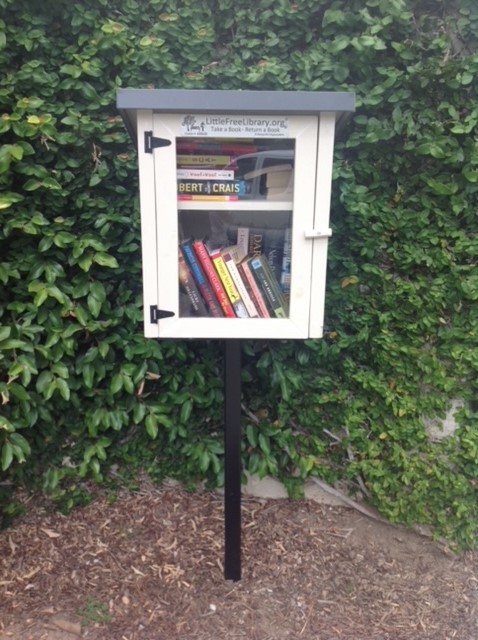
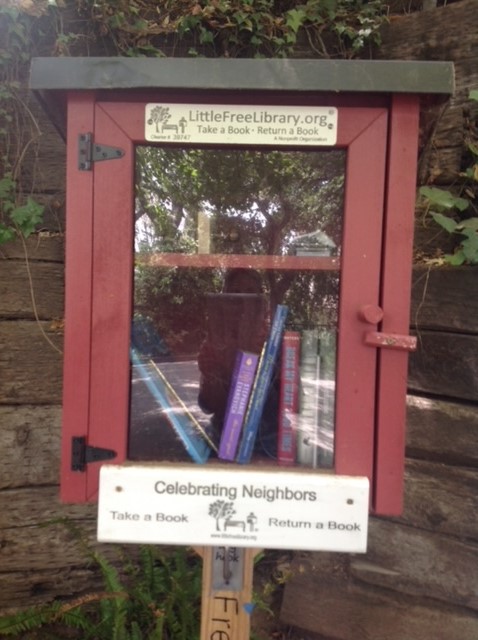
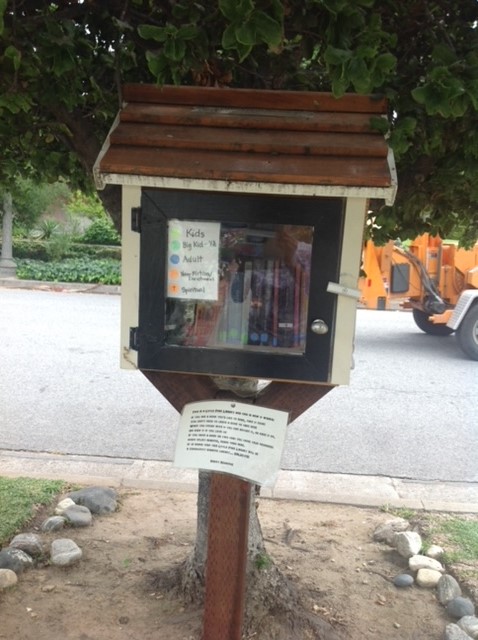
Whoever pronounces no one reads books anymore – the kind that’s not on an electronic device – has probably not heard of or seen a little free library (LFL). It looks a bit like a birdhouse, except it isn’t sitting in a tree but propped up on a stand in front of people’s yards and contains books for people to borrow and take home to read.  It has of late become a worldwide phenomenon and has been known to start conversations among neighbors who might never have had occasion to chat until now.    

The LFL was an idea concocted by Todd Bol in 2009 in Hudson, Wisconsin, who built a wooden container to resemble a one-room schoolhouse. He then mounted this on a post which he installed on his lawn then filled with books as a tribute to his mother – a book lover and school teacher.

Relates Bol, “We had a garage sale one day, and people who saw our little free library hugged it, kissed it, took selfies, and talked to it like it was little puppy. There was this little sparkle of energy and kinship that brought people together. So I started to make them and I gave way 30; then the media began covering us.”        

In 2012, LFL became a non-profit organization whose mission is to inspire a love of reading, build community, and spark creativity by fostering neighborhood book exchanges around the world.    

Today Bol’s simple brainchild can be found in all 50 U.S. states where there are more than 50,000 registered LFL book exchanges and in over 70 countries around the globe. People in even the remotest and farthest-flung nations, including Ghana, India, Nigeria, Pakistan, the Philippines, and Vietnam now have access to free books.          

California was a little late in joining the movement, according to Bol, but has been the fastest growing in the past two years. In the Los Angeles area, it was a brief article in the newspaper about the LFL that ignited the fire that’s now ablaze and spreading in earnest.     

Karen Hovanitz is the steward of the Florecita Farm Little Free Library in Altadena, charter number 3727.  She says, “It was built by my then 94-year-old dad from a 1920s-era window from the Habitat for Humanity Restore and scraps of pine from his garage. The handle is made from vintage wooden thread spools.  It sits by the street in front of our home which was originally the store for Florecita Farm. It was installed in 2012, the very first LFL in Altadena.”

“This neighborhood encompasses 144 households in a self-contained region that was developed from a dairy, chicken, and citrus farm in the 1950s,” Hovanitz describes. “When we moved to Florecita Farm in 1987, it was a fairly geriatric area. It has since dramatically changed and today there are many young families with children living here. Books for young children, from less than a year old to seven, are taken most quickly and are seldom returned. There are several middle readers so I try to have a supply of YA novels for them; recent fiction is popular among adults. Adult and YA books always come back. The LFL is largely self-sustaining through donations. Occasionally I purchase children’s books from the Salvation Army to replenish stock.”

Continues Hovanitz, “Residents love the LFL; they enjoy donating books. Even if they don’t use it, they like knowing it’s there. It’s part of what makes our community special. I met Todd Bol recently and learned that one of his highest priorities, in addition to getting books into the hands of readers, is fostering community. Having a LFL promotes pride and ownership of community.”

“Because our neighborhood is somewhat isolated, I think almost all LFL patrons are from Florecita Farm.  Hikers, mountain bikers, and horseback riders do pass through and may use the library. Although a homeless gentleman frequents our neighborhood; I have seen him on the chair by the library to read and I’m glad he feels comfortable. I love surreptitiously watching from my kitchen window as elementary-age kids ride up on bikes and skateboards to use the LFL,” concludes Hovanitz.   


In Pasadena, there are 31 charter LFLs scattered throughout the city’s 23.13 square miles. Sue Feldmeth, who lives on Oakdale Street, had noticed some of the little libraries but didn’t know about the organization. She says, “I had seen them and heard about them. I thought there were just individuals who came up with designs and built their own library or book nook. I wanted to do something like that and when I went online I found out there was an official organization that did exactly that. It also offered for purchase kits to make the little houses or little libraries already made. Although it wasn’t cheap, I bought one; I figured it was one less project to give to my husband.”

Feldmeth explains, “About a year ago I did some spring cleaning and cleared out my children’s books to make room on the shelf.  I had a few boxes of these perfectly good books that someone else could read so I thought it was time to get my little free library going. I felt it would be a good way to get rid of my books and share them with others who would enjoy them.”

 “What’s funny, though, is that we’ve been getting book donations. Now I have thrice as many  as when I started out. I had been trying to get rid of them but ended up having to make room for more books in my home … so that backfired a little bit,” chuckles Feldmeth.

“I know people would return the books they borrow but now I’m really glad when they don’t,” Feldmeth adds. “I realize some feel uncomfortable not leaving a book in return; I put up a sign saying they can take a book and leave one, or pass the book along to someone, or keep it if they love it.”

“When we first moved here in 1999, when my now college freshman son was a year old, we were one of a few families with young kids,” discloses Feldmeth. “Now there are several school-age children in our area, so I decided to have a small box on the ground filled with children’s books to make it easier for small kids who can’t reach into the little library.”

“There’s a lot of foot traffic on our street – little kids on their way to school, neighbors walking their dog – so our library gets used a lot. Our LFL has space for two rows of books and when I see it down to one row, that’s when I put in a new group. I attach circle stickers to categorize them – adults, teens, YA, and children’s books. That’s also how I keep track of what’s going out and what’s coming in,” Feldmeth says.

“Our little library sits in the shade outside our house and I’ve been putting out a basket of lemons from my tree to share with people who come by. We have so many that we can’t possibly eat or use them all,” discloses Feldmeth. “It’s like killing two birds with one stone, really – encouraging book reading and building neighborliness.”  


Another Pasadenan, Robin Trickett, reports she learned about the LFL by happenstance, “I stumbled across it one day while I was driving around town. Then I kept seeing one or two of these tiny houses with books when I would take my kids to school. So I thought, ‘Okay, I need to stop and find out what this is all about!’ Once I started to read up on it I had to join the book movement – both my husband and I are big readers and I wanted to encourage our kids to be the same. What a wonderful way to give back and encourage reading in the community!”

“About six months ago we put up our LFL. I find there is a lot of interest in the free library on our lane, not just from the 20 families that live here but also from delivery people and folks working at the houses on our street,” adds Trickett. “We are the stewards of our library and we select new books to put in weekly.  Right now there are more children’s books than anything else but I mix it up with novels, cookbooks and bestsellers as well. My goal is to share my love of reading and I cover a variety of choices to appeal to everyone.”

Sean Moriarty, on Rose Villa, first saw the LFL in Chico, in Northern California. He says, “My sister-in-law has one. It piqued my interest so I did a little research online and learned more about it. What a fantastic idea! Then for Christmas last year she and her partner gave me a little library as a present.”

“Our LFL has been up for a few months and we’ve seen a pretty lively response. In fact my kids just informed me our supply is low so I would have to fill it back up again,” Moriarty states. “I’m not terribly scientific about what I stock it with. I have young kids so I make sure there are children’s books in the little library. And I read pretty widely – fiction, biography, history, you name it; we have books of general interest.”

Sums up Moriarty, “I see some books coming back and a few new titles showing up. It’s still early but over time we hope we see more books that we’d need a bigger library! I hope that people who respond to it appreciate it, are excited about it, and care. If we had a million of these across America we’d be a better country.”                           

A similar sentiment was expressed to Bol one day at a recent conference he attended. He recounts, “The former governor of Wisconsin came up to me and said, ‘Todd, what’s going on in America right now – this divisiveness and polarization – that’s not us. The Little Free Library is more representative of who we are and what we are. We reach across the aisle and across the street. We pick each other up and make one another’s life better – we don’t care who they are or where they’re from.’” 

For all of Bol’s good intentions, however, there are naysayers out there. He is very much aware of them and offers this analogy, “I believe a community is like a beehive: if everything’s done right it will produce honey. But oftentimes it’s beaten with a stick and yelled at. I don’t subscribe to all the negativity out there. I’m proud of LFL and how we’re making it a better world. I sound old-fashioned and corny but reality is before us every single day – we see it.”    

The scope of the LFL’s outreach has widened since 2012. Through its Impact Fund, Bol intends to put LFL in communities where it would make the greatest difference – trailer parks, apartment buildings, high-need neighborhoods.        

Bol launched an initiative to put a little library in every police department across the country – over 14,000 of them, according to him. There are currently four dozen LFL in police departments in Detroit, Cleveland, Raleigh, Chattanooga, and New Orleans, among other cities. He says the L.A. Police Department has a LFL in every precinct.       

“We also recently unveiled the Action Book Club which identifies authors and publishers who demonstrate community engagement,” adds Bol. “We ask people to sign up with us, read one of the books, go out and fix things in their neighborhood, then report back to us. One of my favorite stories is about this group of fourth-graders in Lafayette, Louisiana, who collected 100 pair of new socks and gave them to the homeless. We’re gathering tales of people doing good around the world, one neighborhood at a time.”

“There’s a saying ‘it takes a village to raise a child,’” Bol expounds. “That’s a statement of observation. The statement really should be ‘how can I be a part of the village?’ What we want is for the LFL to be the spark for people to make things better through literacy, books, conversation, dialogue, and action.”                                                      

Lofty objectives and noble aspirations aside, at core the little free library simply takes us back to a time when we would walk up to our neighbor’s house to share a plate of freshly made cookies, or to borrow a cup of sugar to bake some. For most of us that outcome alone makes it a better world already.     

Monrovia High School Students Perform on A Noise Within’s Stage

Originally published on 27 April 2017 in the Pasadena Independent, Arcadia Weekly, and Monrovia Weekly

This past Tuesday night, April 25th, 23 drama students from Monrovia High School (MHS) put on a production of Shakespeare’s ‘King Lear’ at A Noise Within (ANW) in Pasadena. The partnership was a first for both the high school and the classical theatre company.

Nathanael Overby, MHS drama teacher who came on board in 2012 and was responsible for expanding the school’s drama department, advanced the partnership with ANW. He states, “A Noise Within clearly takes a unique approach to theatre – they have a quality and creativity unequaled by other professional groups. That was something I wanted my students to emulate.”

“We have been performing on our stage, which is quite impressive, but being on a professional stage would be an exciting experience for my students,” continues Overby. “ I wrote a proposal to partner with ANW and discussed it with Patrick Garcia, the director of performing arts for the Monrovia Unified School District, who reached out to ANW. When ANW’s artistic directors agreed to it, I began working with Alicia Green, the director of Education and Community Outreach at ANW.”

Concurs Green, “The director, Patrick, and I came together to discuss the proposed partnership and we decided to do ‘Lear’ as it worked best for the school and us. From the outset Nate and I worked to ensure students had a great experience and understood what it takes to do a show in a professional space.”

Overby adds, “This partnership is so much more than the students being able to perform ‘King Lear.’  We were able to join ANW’s cast for their table read of ‘Lear’ and we watched ANW actors perform it on stage. This gave my students the opportunity to join a professional cast on their journey on a production – to experience what it’s like to put on a professional show by observing ANW’s cast at several different points in their process. Furthermore, I want to develop a connection with ANW to inspire my students to pursue work with them after they graduate.”                     

“All students attended first rehearsal, some attended opening night, and all students came to a student matinee in mid-March,” Green said the week before their performance. “We wanted to immerse them fully in every step of the way – what it takes to make a full production a reality!  Nate worked with the students at Monrovia on the show and I am looking forward to having them come for the first time on Monday, the 24th, to rehearse on our stage, and then perform it the following night.”

Monrovia High School | Photo by Alicia Valdez / Monrovia High School website

While the show was put on at ANW, it was truly a student production as Green relates, “Other than providing one tech person to help set up the lights/sound they need, their technical director and students will be running all of the technical elements and stage managing the show. We are here to support them, but this is their show and we encourage them to make the space their own!”

“We are constantly looking for ways to engage students in the world of classical theatre,” Green says about ANW’s outreach. “Equitable access is of key importance, and we continue to grow and develop our education program through attendance at student matinees and evening/weekend performances, in-school residencies and workshops, full-school partnership programs, pre-show engagement activities, post-show conversations with the artists and our free study guides. Ideally, every student would have the opportunity to participate in some way with our programing to enhance their education!”

A Noise Within has its ‘Summer with Shakespeare’ camp and Saturday conservatory classes where students perform on its stage and in the building. This past Tuesday’s performance of ‘King Lear’ by Monrovia High School students, however, was a first for this kind of project.

According to Overby, MHS had two drama classes back in 2012 when he came to teach at the school. He says, “Now we have a full-time department offering five different periods of drama, including a Stagecraft class and an Honors drama course. We also started out with one performance a year; we are currently producing three a year which includes at least one musical and one play. This year we produced ‘Dracula’ in October, ‘Urinetown the Musical’ in March, and now ‘Lear’.”

‘King Lear’ was the capstone to a great year for the school’s drama students. And what better venue to fully realize the essence of one of Shakespeare’s most celebrated works than in Pasadena’s premier classical theatre company. 

Indeed it was a dream come true for these Monrovia High School students. How propos that their performance took place towards the end of A Noise Within’s own season they called ‘Beyond our Wildest Dreams’.  

Octavia Butler Exhibition at The Huntington Library

Originally published on 20 April 2017 in the Pasadena Independent, Arccdia Weekly, and Monrovia Weekly

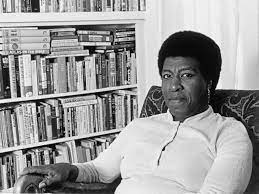
Octavia E. Butler was the first science fiction writer to receive the prestigious MacArthur Foundation ‘genius’ grant and the first African American woman to win recognition writing in a genre dominated by male authors. For all her literary fame and awards, however, hers is not a household name.      

But this is about to change if Natalie Russell, were to have her way. As curator of ‘Octavia E. Butler: Telling My Stories’ which opened on April 8 and goes on until August 7, 2017 at The Huntington Library, Art Collections, and Botanical Gardens, Russell was charged with organizing this exhibition. On view in the West Hall of the Library in chronological order, the retrospective includes approximately 100 items that reveal the author’s early years and influences, highlighting specific themes that repeatedly commanded her attention.    

States Russell, “I hope it introduces Butler to people who may not know her, who may not be familiar with her works; for those who have not read science fiction before but were intrigued about what she has to offer which are a little different from what they thought they were going to be reading. I hope that people who are fans of hers get to know the writer behind these works a  little deeper – that through the process they get to know the inner person.”

Butler was born in Pasadena on June 22, 1947 to a maid and a shoeshine man. Her father died when she was very young and she was raised primarily by her mother. A painfully shy, introverted child, she spent her time reading at the Pasadena Public Library where she discovered science fiction.   

At age twelve Butler saw a film called ‘Devil Girl from Mars’ and was convinced she could write something better. She later enrolled in every creative writing course at Pasadena City College to her mother’s disappointment, who wanted her to have a more reliable job as a secretary. 

In the early 1970s, at a workshop for minority writers, Butler met science fiction author Harlan Ellison, who introduced her to the Clarion Science Fiction Workshop.  There, among other like-minded writers, she learned to hone her craft and even sold her first story.

Butler’s conviction that she was going to be a successful writer grew stronger after the Clarion workshop. She did not want to find work that would distract from her ultimate goal so she took odd jobs to support herself. 

Success proved elusive for a while, until 1975 when Butler sold her first novel, ‘Patternmaster’ to Doubleday, which quickly followed with ‘Mind of My Mind’ and ‘Survivors’. This trio came to be known as her ‘Patternist’ series, which depicts the evolution of humanity into three distinct genetic groups. There is a review in the exhibition that lauds ‘Patternmaster’ for its especially well-constructed plot and progressive heroine, who is ‘a refreshing change of pace from the old days’.       

On display in the exhibition are motivational notes Butler would write to pick herself up during bouts of self-doubt – ‘I am a Bestselling Writer. I write Bestselling Books ….  Every day in every way I am researching and writing my Award winning Bestselling Books and short stories …. Every one of my books reaches and remains for two or more months at the top of the bestseller lists …. So Be it! See To It!’

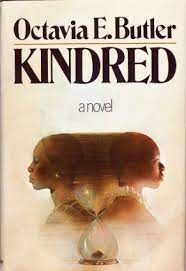
Butler’s readership continued to grow and with the publication of ‘Kindred’ in 1979 she was able to make a living on her writing alone. In 1984 she won her first Hugo Award for the short story ‘Speech Sounds’. Her novelette ‘Bloodchild’ won a Hugo, a Nebula, the Locus, as well as an award for best novelette from Science Fiction Chronicle, in 1985.                  

That Butler was a female writer of color informs many of her works. Russell concurs, “I think being a woman and African American gave her this unique voice. Butler said she never saw herself in any of the stories she read. So she decided to write herself into these books so she could see a woman character in a setting that reflected the diverse world she lived in”.  

Beyond race, Butler explored themes between genders and worked to develop strong female characters who resolved problems differently. Russell adds, “Her audience varied – young, old, people of color – anyone who’s interested in science fiction; her themes also covered a diverse range – disease; pharmaceuticals; fears about the environment, drought, and alien contact – the differences that divide us and how we overcome these to become better people and get together as human beings.”

 “In 2008 Butler’s papers arrived at The Huntington in two four-drawer file cabinets and 35 large cartons,” states Russell. “She kept nearly everything – from her very first short stories, written at age 12, to book contracts and programs from speaking engagements. The body of materials includes 8,000 individual items and more than 80 boxes of additional items: extensive drafts, notes, and research materials for more than a dozen novels, numerous short stories and essays, as well as correspondence.”

Photo courtesy of The Huntington

According to Russell more than 40 scholars were asking to get access to the Butler collection by the time she was done processing and cataloguing all the items. In the past two years, it has been used nearly 1,300 times – or roughly 15 times each week, making it one of the most actively researched archives at The Huntington.

“I was not familiar with her beforehand; it’s a shame because she’s so amazing,” confesses Russell. “But I hope that everybody can have the same experience I had while I sorted through all the materials she left behind – that it’s okay to start fresh. Be prepared to be amazed and entertained, to experience something new, and thought-provoking. She was a very shy, private person, but she has a big presence on the page; she has so much to say. Some of those inner thoughts and the struggles she underwent to become the person that she was is a story we can all be inspired by.”      

“When I look back at the things I sifted through in the collection, I think of the highlights, themes, and things that were important to Butler and how to share her with the world. That’s what I hope I have done with this exhibit,” concludes Russell.

After having lived in Seattle for several years, Butler had planned on returning to Pasadena. She died suddenly in 2006 before she realized that wish, but her literary archive has come home to reside permanently in The Huntington. Here scholars can come to examine the life and work of this extraordinary woman.        

She lived but 58 years but her legacy will endure far longer than her existence on earth.  Generations of future writers, and people from all walks of life, will find inspiration from Octavia E. Butler – a woman ahead of her time.        

Greg Kaplan Teaches Effective College Application Strategies

Originally published on 13 April 2017 in the Pasadena Independent, Arcadia Weekly, and Monrovia Weekly

Right about now, high school seniors across the United States are getting their acceptance (or dreaded rejection) letters from the universities to which they applied. 

As many of these students have found out, getting into one’s their dream college has gotten increasingly difficult. The admissions process has become a cause of much angst among stressed-out twelfth graders and their equally weary parents. But with careful planning and well-thought out approach, you and your child will come out of it with your sanity intact.

Greg Kaplan, an admissions strategist, has written a book called ‘Earning Admission: Real Strategies for Getting Into Highly Selective Colleges’ to give tips to parents as they, in turn, guide their children through this daunting process. It is an excellent resource for students to stand out in a sea of equally academically strong applicants.  

Working as an independent counselor in Southern California for the past year and a half (and informally while he was in law school at UC Irvine), Kaplan has helped over 85 students and their families. But his strategy doesn’t cover merely getting into college. When he meets with students he begins the conversation by asking where they want to be in ten years.

“It allows them to understand that college is where it fits in – it’s not the end-all be all, but a means to achieving something greater than just a degree,” Kaplan explains. “I want them to see that there’s a life beyond college or beyond a name.”

Kaplan meets with his students in L.A. and Orange County in person at least once week. He supplements that with conversations via phone or Skype; emails with families when planning activities during the course of high school; and uses Google Docs to help them with essays.

The most important guidance he offers is assembling a really compelling application using a strong theme, picking what classes to take, figuring when and how to prepare for the ACT or SAT, planning extra-curricular activities. During the application process he works hand-in-hand with his students in creating a personal statement that demonstrates perspective, maturity, and shows personality and assets.

It greatly helps students to work with Kaplan beginning in ninth because they’re growing up through the process. It’s good for them to know what they’re working for and to orient all the hard work that comes in high school to the college application process and beyond. They have a more persuasive application if it’s planned.             

Kaplan, himself, had been through this not too long ago which makes him a relatable counselor, and his book more effective as he recounts examples from personal experience. His language is relatable and counsel realistic.

“I draw a lot of experience from attending a very competitive high school in Southern California, similar to Arcadia and San Marino,” states Kaplan. “My book and workshop are most relevant to students in these high-achieving areas where people feel the most loss. They’re competing with peers who have outstanding GPAs and perfect test scores so they want to know how to separate themselves from all the excellent students.”

“After I gained admission to the University of Pennsylvania back in 2005, people started asking me what I did to get accepted to multiple Ivy League universities,” Kaplan continues. “From there I gave a lot of advice and it turned into an informal, casual business where I helped mostly family friends and children of colleagues at a private equity firm where I worked while I was going to law school.”

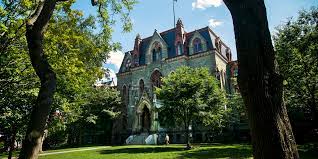
Image of the University of Pennsylvania taken online

“My in-depth research culminated in me writing ‘Earning Admission’ because I wanted to provide families a blueprint and the material to make informed decisions. I didn’t like seeing  students who are stressed out and engaged in a million different activities, taking six to eight AP classes in sophomore and junior year. That’s not necessarily the winning formula to achieve the goals that we want our children to go for when it comes to higher education. This book is my response to all the anxiety I see. It is my desire to give back to the community for the opportunity to come from a great public school in California, which I wanted to share with people,” Kaplan expounds. 

‘Earning Admission’ is divided into three parts, the first of which discusses the high school transcript and the ACT or SAT scores – the two most important components of your children’s application. These objective elements will give a university admissions officer the reason to read the rest of the submission.   

The second part of Kaplan’s book delves into the subjective pieces of the college application.  He divides this into eight chapters: application theme; personal statement; extracurricular activities; responses to the application form questions; letters of recommendation; and admissions interview. Throughout these chapters, he offers guidelines on how to use all the elements in marketing your child as a compelling applicant.

The last part touches on the application strategy – where and when to apply; scholarships and financial aid; and getting admitted from the waitlist.

A very useful appendix shows the college admissions timeline, which has tables on what activities your child should be involved in starting from the summer before ninth grade. The high school timeline is divided by months and covers tests your children should be taking; researching and finding test prep courses; planning their summer internships, community service, school and college course enrolment, and international experience.

Image of Stanford University taken online

Kaplan engages his readers as he talks about his experience applying to college. While he went to a terrific public school, he also was in a large class and the counselor didn’t have too much time to spend creating a specific plan to market each student. His counselor told him to go to a community college.

“I was at the top of my class, got good SAT test scores, was very involved in the community, and had extra-curricular activities that showcased my leadership abilities. That was definitely not the best support from my guidance counselor,” Kaplan quips.

A funny anecdote Kaplan includes towards the end of his book is about visiting colleges on the east coast with his mom. As he relates it, he and his mom were in Philadelphia and were hoping to see the University of Pennsylvania. But they couldn’t find it on their map and decided to go to the mall instead; he essentially blew off his future alma mater. 

Kaplan also shares with his readers some of the things he did and later regretted: he applied to so many schools that, in hindsight, he shouldn’t have since he had no intention of matriculating even if he were accepted; he also needlessly went on more than one college tour for which his parents paid thousands of dollars – money which would have been better spent on test prep courses. 

An important message Kaplan wishes to impart is that life teaches lessons and it’s up to students to make the most of them, “I didn’t want to go to Penn when I was accepted. I couldn’t even find Penn when I tried to visit it. However, at Penn I learned first-hand that anything was possible if I set my mind to it. My college experience, at a college I almost did not apply to, shaped the person I am today.”  

“Your child’s college experience will also shape her into the person she is destined to be. Whether it is at Penn or Penn State, your child will learn that anything is possible for her if she has the will and vision to achieve it. Even if your child does not have the outcome she envisions with the college application process, she will succeed in college and beyond,” Kaplan concludes.                  

Kaplan will be holding two free book talk and workshops in the San Gabriel Valley on Saturday, April 15 at 11:30 am at the San Marino Public Library, and Saturday, May 20, at 2:00 pm at the San Gabriel Public Library.  

Parents and students who are interested in getting college counseling from Kaplan can contact him at greg@earningadmission.com; or his cell phone (858) 204-6553. His website is www.earningadmission.com. The first meeting when they create the admission plan is free.

Kevel Education Uses Different Approach to Math Tutoring

Photo by Annie Spratt for Unsplash

Originally published on 30 March 2017 in the Pasadena Independent, Arcadia Weekly, and Monrovia Weekly

For students of all ages, one of the most challenging subjects to learn is math. And with most schools’ increased focus on STEM (Science, Technology, Engineering, Math), it’s crucial to provide these kids with the tools to help them understand and learn math. 

In the San Gabriel Valley, there are several companies offering STEM tutoring. A recent addition is Kevel Education which was founded by Gao Jun, Kevin Yu, and Lydia Zu quite by happenstance. Says Yu, “It all started with California Table Tennis Club, which Gao and I established four years ago offering weekend and after-school sports program for young kids in the area. Students would bring their homework to the club, and from time to time we saw them struggling. So we began helping them.”

“Then Gao and I met Lydia two years ago and we found out she graduated from UC Berkeley with a math degree,” Yu continues. “Seven months ago, the three of us thought that since we were already teaching table tennis and we had this base of students taking it who also want to excel in academics, we might as well extend our offering to include math instruction. These kids can learn both table tennis and math in one place, making it convenient for parents. So four months ago, we launched Kevel Education.”  

The three founders’ own experience with math involved memorization of formulas, which isn’t exactly fun so they took a different tutoring method. Yu explains, “Most Asians learn by rote;  it’s fast but there’s no long-term retention. When forced to memorize so many formulas, kids, even adults, will hate math. But we believe learning math can be fun. Instead of just teaching children the formula to solve problems we show them the reasoning behind the principle. I noticed that this is how Lydia tutors my daughter, Kinslee, who’s in 6th  grade.”

“Kinslee knows the formula and she can memorize it; but 10 or 15 years from now she wouldn’t remember it,” Zu elucidates. “I use logical reasoning to explain the formula and show her why some math problems are solved in a certain fashion. That way, she makes sense of the problem first then can figure out how to go about deciphering it.”

“We offer much-needed support to what their teachers provide in a 45-minute class,” Zu expounds. “Learning math is a step-by-step process. When students are weak in certain steps they will fall behind. Our tutoring service has developed an assessment test for students so we can see their weakness and work on it. Our tutoring format inspires interest, develops problem solving abilities, and uses creative ways to approach a challenge – life skills that will help them succeed later.”

Zu adds, “I used to teach elementary-school kids while I was still at Berkeley and I found that there’s a gender stereotype in early childhood – people generally think girls aren’t very good in math. Yet my professor in upper division math told us that every student can succeed in it. Now I know how you teach it makes all the difference in the world.”    

Kevel Education has three credentialed teachers – one Caltech graduate, another who holds a Master’s degree from the University of Arizona, and Zu. They concentrate on helping students  in sixth through twelfth grade because they’ve observed it’s when kids get into more advanced math, like geometry, that they struggle. A fledgling company, they currently use their office at the Rosemead location of the California Table Tennis Club to tutor students. They also offer on–demand, private tutoring in coffee shops, libraries or public parks in Pasadena, Arcadia, and nearby cities.

Yu says, “Kevel Education is still a start-up so we’re taking it slow. We’re not trying to get more students than we can realistically help at the moment. We’re building a strong reputation and getting more exposure through social media. We also have an ongoing partnership with a local karate club owner who distributes our flyers, and we have an email campaign with local schools in the San Gabriel Valley.”

However, they have plans to open a second location and hire more tutors sometime this year in the Diamond Bar/Walnut area to service the eastern San Gabriel Valley. In that new place, they will have a few table tennis tables and a much larger space for tutoring. 

According to research there will be more than one million unfilled  STEM jobs in 2020. Now, more than ever, teachers have to find ways to make these courses stimulating and exciting to successfully graduate students to fill those vacancies.    

So confident are these three entrepreneurs their method will attract more students that future plans include opening five more tutoring locations in five years. To them, it simply adds up.

French Language Immersion Program at the Pasadena Unified School District

Photo by Terry Miller | Beacon Media News

Originally published on 23 March 2017 in the Pasadena Independent, Arcadia Weekly, and Monrovia Weekly

Beginning this Fall, some kindergarteners and first graders in the Pasadena Unified School District (PUSD) parleront francais when the district adds a third dialect in its Dual Language Immersion Program (DLIP).    

According to Hilda Ramirez Horvath, PUSD’s Coordinator for Communications and Community Engagement, “A group of parents approached the district asking about the possibility of starting a French language immersion program based on the success of the Mandarin and Spanish programs the district created about eight years ago.”

“The district superintendent met with them, a series of meetings between staff and parents followed, and an online survey was created to gauge interest,” continues Horvath. “The Board of Education approved opening a DLIP in French a few weeks ago and plans are ongoing to welcome its first Kindergarten and first grade classes for the 2017-2018 school year.”

States Dr. Brian McDonald, PUSD superintendent, “The ability to speak more than one language can enhance brain function, academic performance, and business acumen. As a school system committed to responding to the needs and interests of Pasadena area families, we are expanding opportunities for multilingual education that prepare our students to compete on a global scale.”          

Director of Language Assessment & Development Dept. for Pasadena, Hassan Doryani, is one of the people coordinating this effort of assessment, budgeting and hiring. He says, “After presenting to the board for final approval, and meetings with the community outlining the first steps, we are now moving forward to get ready to unveil this program. We have identified the need to hire three teachers  – one French speaker to teach Kindergarten, another French teacher for first grade, and the third instructor to teach the English component. We’re currently accepting applications for these positions and will start the screening process shortly. ”

“We launched our DLIP with Spanish and Mandarin starting with kindergarten in 2008. This class is now in eighth grade and students will be continuing through high school,” Doryani adds.  “It’s one of the programs with an actual secondary component and we’re using this same model for French.We’ve had a lot of success and the community likes the program so we’d like to replicate the same structure with French.”

PUSD is looking to have a total of 40 students – 20 in kindergarten and 20 in first grade – enrolled this Fall in the French DLIP at the Altadena Elementary School. Doryani says further, “As in our Mandarin and Spanish program, we would like the same class population with half of them dominant in English and the other half in the partner language. We do this by testing the incoming students in their French capabilities to have a better idea of students that have native abilities and those that don’t.”   


Helen Chan Hill, Director of Curriculum, is responsible for developing the curriculum for the program. She explains, “When deciding what set of courses we use in a language immersion program we consider: 1) fit for the learning outcomes of the subject; and 2) language of instruction/instructional percentage in each language. For example, balanced literacy is a priority districtwide, so we are currently in search of leveled books and assessment system for informal reading inventory in French since the models call for 90 percent instruction at K, and 80 percent in first grade. This is in exact alignment with our English mainstream priorities, but modified for the language of instruction.  We use this template for all programs.” 

The school provides all instructional materials to ensure that all students have equitable access to core supplies.

“Since we are still in the research and selection phase, we do not know the specifics of what will be available for students and parents in terms of resources,” reveals Hill. “However, the majority of our programs have digital components that families can access outside of school, and we also look for resources that are beyond the selected curriculum. We attempt to publish resources on our website so they can be easily found – we reference resources from ACTFL (American Council on Teaching Foreign Languages) whose domains of language acquisition we use for benchmark progress. We also share guiding principles for Dual Language and other such resources that can help a family understand the instructional program and expectations.”

Hill expands, “We expect students, as in all our programs districtwide, to attend fully and engage with the learning. While we are still establishing learning outcomes, we would anticipate students to function at low to mid-novice levels (based on ACTFL’s proficiency levels) by the end of kindergarten year, and mid- to high novice levels by the end of first grade. From parents we would expect streams of communication with their student at home. Whether parents speak or write French or not is not a consideration in our expectations – we simply want them to encourage their student to be involved via communication with the teacher or school.”

“We feel that PUSD offers a robust model of instruction for all its DLIPs, and are placing similar expectations on French,” says Hill. “We have a keen understanding of the teacher skill set required, and have worked hard to establish consistent templates in our current programs that help launch a new one. Additionally, with our emphasis on 21st century learning, the PUSD embraces not only the innovation that comes along with this, but the cultural competency and global citizenship that is much needed in this increasingly connected world of ours.”

America is raising a generation of future job seekers who will not be limited by geographical boundaries. Polyglots will have a definite advantage – PUSD students will be better equipped to occupy their place in a highly competitive global economy.