Arcadia Poetry Slam Tackles Social Issues

Originally published on 3 April 2018 in the Pasadena Independent, Arcadia Weekly, and Monrovia Weekly
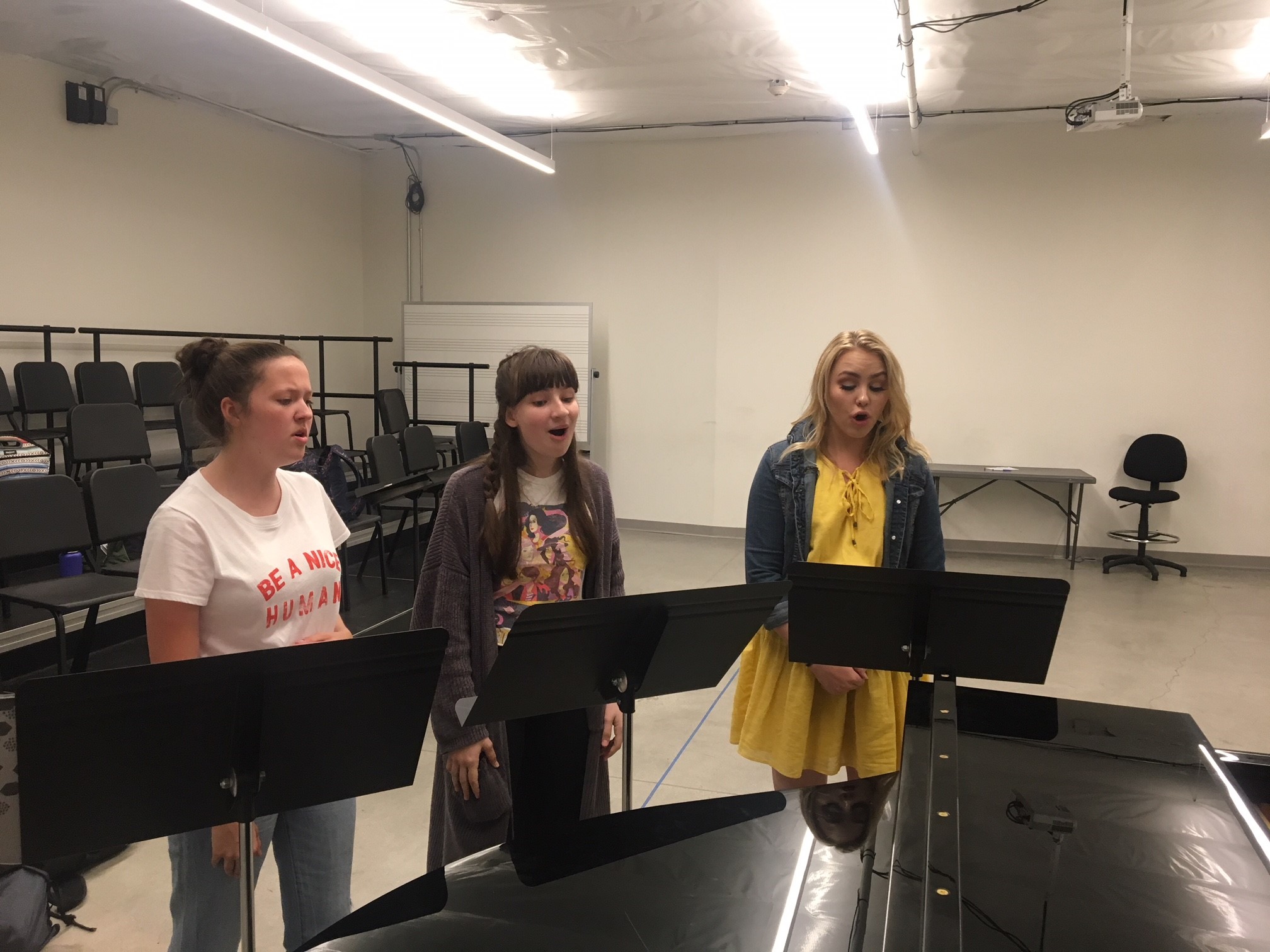
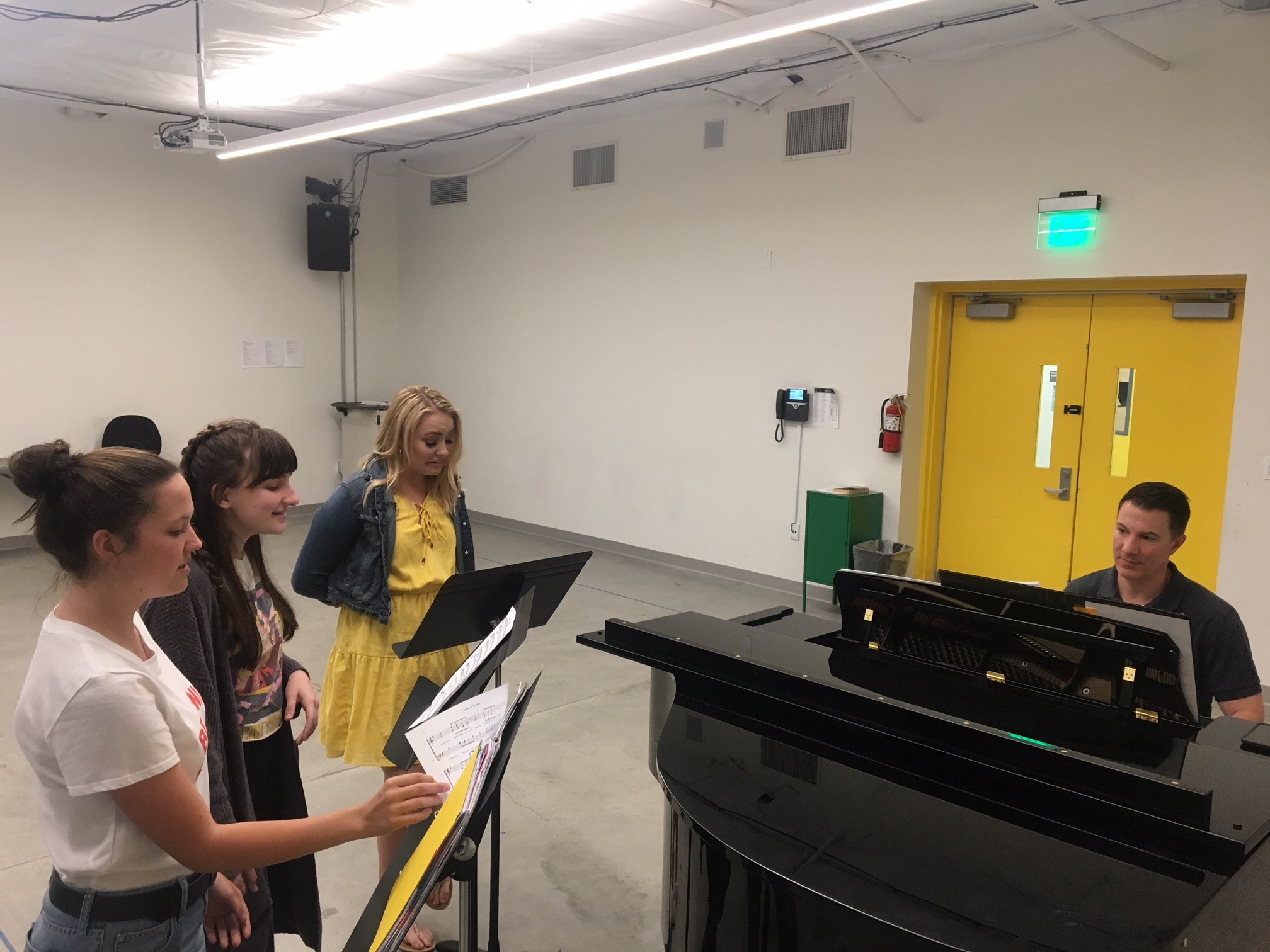
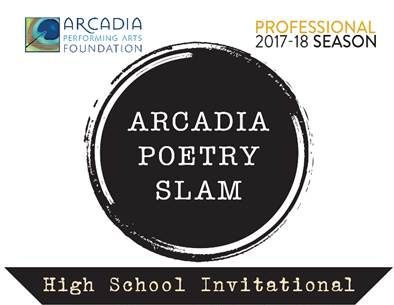
Arcadia High School students will call attention to social issues, including poverty and homelessness, at the Arcadia Poetry Slam which will be held at 2:00 pm on Sunday, April 29, at the Arcadia Performing Arts Center (APAC).

To benefit Foothill Unity Center, it will also serve as a launching ground for students to get their voices heard. Whitney La Barge, assistant general manager of APAC, coordinates the event with Arcadia High School.

“We want to bring more students into the space,” says La Barge. “Right now we do orchestra, band concerts, dance and theatre shows. Arcadia Poetry Slam gives other students, who wouldn’t otherwise have, the chance to be a part of the center as well as the foundation.”

Anthony Sigman-Lowery, APAC operations manager, says further, “This will be the inaugural Poetry Slam and it’s meant to encourage students to use their voices through poetry. We have a black box with 99 seats: it’s a small intimate environment for students who may have stage fright.  What better way to bring students who might not normally be performing here.”

La Barge expounds, “We announced the competition at AHS in mid-March and we’re giving preference to seniors since it’s their last opportunity to do it. We’re also limiting it to 30 students. It’s pretty open in terms of format because we want them to express their creativity. The only restrictions we have are that it is under five minutes long and it has to be school-appropriate so it can’t glorify violence, guns, or drugs. As it is benefiting Foothill Unity Center we’re encouraging students to touch on social issues like homelessness and poverty.”

To get student participation from neighboring schools, La Barge reached out to the English and Drama department teachers and shared the event poster with them.

“It’s an invitational and we’re hoping that each year we’ll have more and more schools involved,” La Barge states. “We definitely want AHS to be well represented because obviously we’re here on campus and we want to serve the school district. As it’s our first time, we’re keeping it small but we eventually want to turn it into an all-day competition.”

“We really wanted to hold this but we don’t know how to judge a poem,” relates Sigman-Lowery. “How do we keep it school appropriate without restricting people’s voices? So we partnered with L.A. Poets Society. They gave us the components by which the poems will be judged – content, stage performance, voice, and diction.”

La Barge adds, “We also asked for a statement from each poet of what they’re trying to accomplish with the piece, what they’re trying to say. The judges will then pick three poets who best accomplished their goal, whose messages came across effectively. For prizes, we’re giving away Beats wireless headphones courtesy of Beats. L.A. Poets Society will award writing journals and feature them in their website under the New Poet Section.”

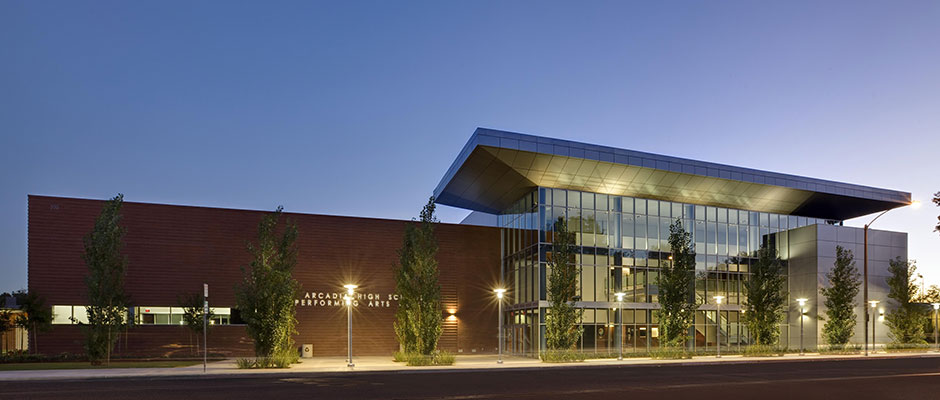
Arcadia Performing Arts Center | Courtesy photo

APAC and Foothill Unity Center have been community partners for a while according to Sigman-Lowery. He explains, “We started working with Foothill Unity Center with our Sunday with Santa event in December. We collected canned goods and to encourage people to donate,  each can served as a raffle ticket to win prizes. We liked working with them and we figured it was a good way of serving the Arcadia community since one of the big goals of the foundation is making art accessible.”

Raina Martinez, Foothill Unity Center’s development and donor relations director, confirms, “APAC’s executive director, Maki Hsieh, wanted to come up with a way to support the center as well as get the community involved, especially the youth. And poetry is popular with young people and is a great way to get their voice out there. We’re making it the thematic concept to incorporate poverty, hunger, and homelessness to bring more awareness about the center and, more importantly, about the issues.

“Our two sites – Pasadena and Monrovia – serve eleven cities in the San Gabriel Valley offering food, temporary shelter, case management, transportation, and vital health services for low income and homeless people. Additionally, we offer job training skills for youth and adults, and an internship program. We have an AmeriCorps program on the site where they can get clerical and warehouse type skills.

“One of the things we do well is developing partnerships. We’re not trying to reinvent the wheel, we work with other agencies. We connect our clients with other organizations who can provide them assistance. Donations come from everyone in the community – individuals, businesses, churches. It’s neighbors helping neighbors. And volunteers are a big component of our organization – we couldn’t do this without them. Last year we had 40,000 volunteer hours.

“We have two major events during the year. In addition to the regular food services we provide, we have thanksgiving boxes and the Christmas holiday distribution food boxes. For all registered children we have the Holiday Angel program that provides toys and gift items, and a popular Back-to-School event which we do at the Santa Anita Race Track in August. Children from kindergarten through college receive backpacks, school supplies, socks, clothing, haircuts, manicure, health screenings – everything they need to get them ready for school.”

Since its founding in 1980, Foothill Unity Center has remained the primary provider of food, case management/crisis help, and access to healthcare resources for people who are at or below the national poverty level. Each day it lives up to its mission ‘Helping People. Changing Lives.’

Through the Arcadia Poetry Slam local students will bring attention to Foothill Unity Center and  the most pressing problems affecting the lives of those around us. It is art galvanizing social activism.

Four San Gabriel Valley Students Recognized with the Congressional Award Medal

Originally published on 2 April 2018 in the Pasadena Independent, Arcadia Weekly, and Monrovia Weekly

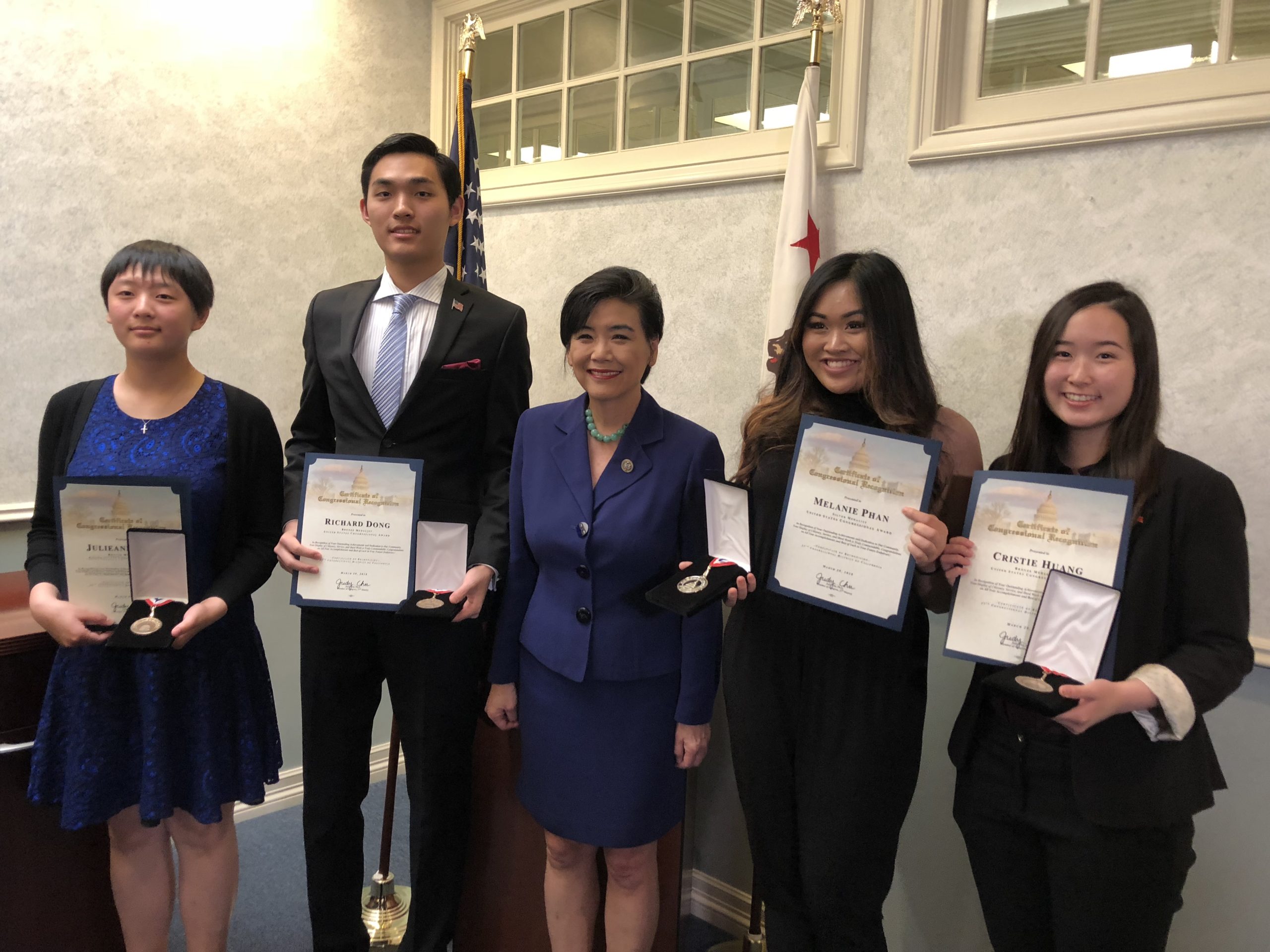
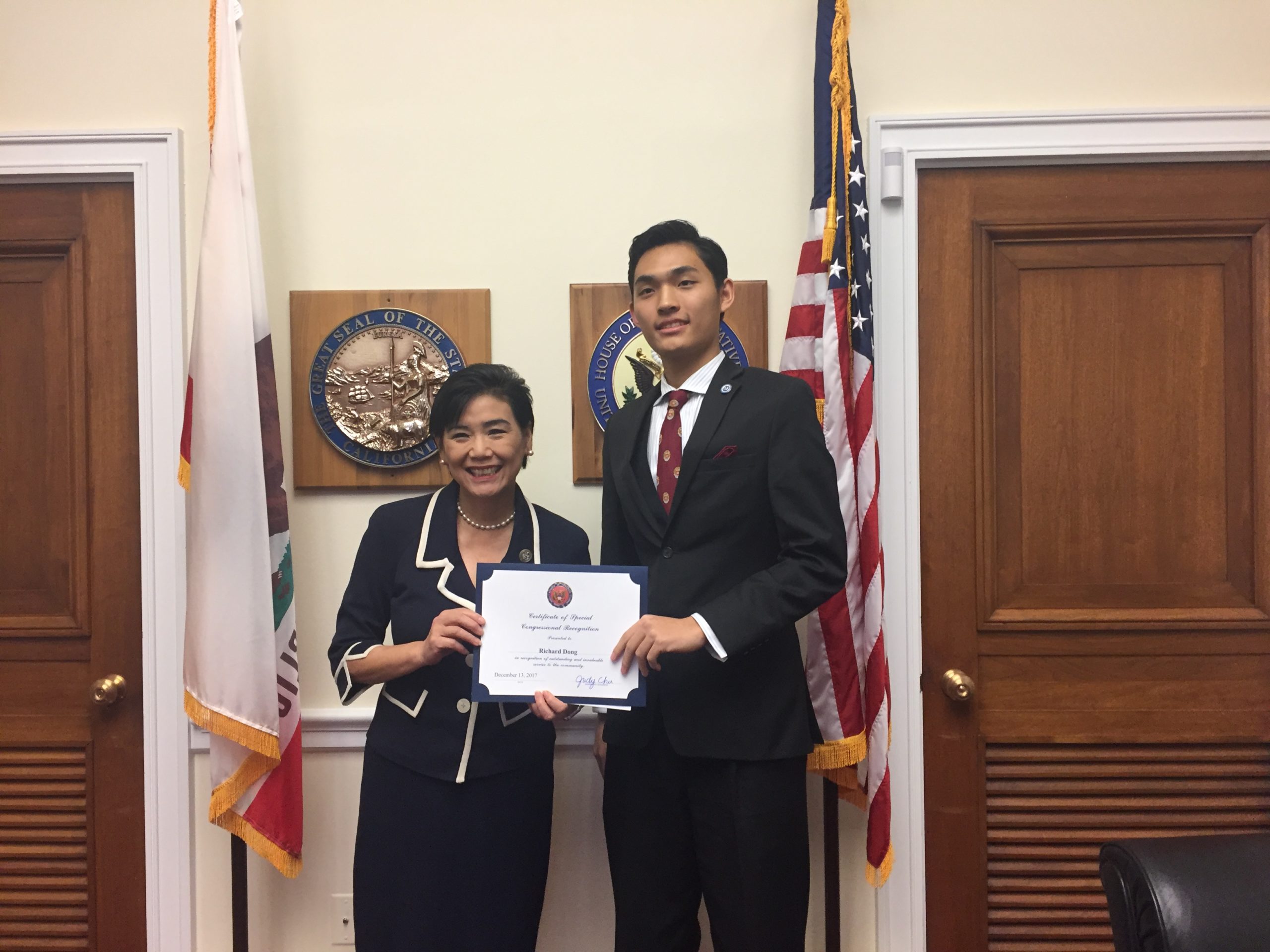
Congresswoman Judy Chu (center) gave the Congressional Award Medal to four SGV students (left to right): Julieanne Guo, Richard Dong, Melanie Phan, and Cristie Huang | Courtesy photo

Four high school students from the San Gabriel Valley were given the Congressional Award by Representative Judy Chu at a presentation ceremony held at noon last Thursday, March 29 at the Pasadena office of Congresswoman Chu.

“The Congressional Award program is a private–public partnership created by the United States Congress in 1969 to recognize and promote service, initiative and achievement among American’s youth. It is, in fact, the highest award for youth in the country. To date, nearly eight million hours of service have been rendered by 48,000 of involved youth across the nation,” declared Congresswoman Chu.

Participants have to set and accomplish goals in four program areas: voluntary public service, personal development, physical fitness, and expedition/exploration. The recipients of this honor  were Richard Dong from Arcadia, Julieanna Guo of Alhambra, Cristie Huang from Arcadia, and Melanie Phan from Claremont.

Alhambra High School student, Julieanna Guo, received a bronze medal. She committed to over 100 hours of volunteer service to the  non-profit organization Global Youth Mission, tutoring children and providing assistance to the elderly in nursing homes in the community; for personal development, she practiced her piano skills to prepare her for future performances and competitions; for physical fitness she reduced her mile run time from eleven minutes to under nine minutes; for her expedition/exploration she traveled to Boston to compare the culture and history of the East and the West Coast. While there she saw the sights, took in a concert, and watched the dragon boat racing festival.

Cristie Huang from Arcadia High School was awarded a bronze medal. She volunteered at the Arcadia Retirement Center to care for and help better the lives of its elderly residents; for personal development she improved her piano skills and participated in solo and group recitals; for physical fitness she ran on the treadmill six times a week to increase her stamina from 20 minutes to 25 minutes; for expedition/exploration she traveled to Japan and experienced various sites, including Tokyo’s oldest Temple, the Sky Tree, a Cat Café, and Kyoto.

Melanie Phan, who attends Claremont High School, received a silver medal. She spent over 200 hours volunteering as a Human Services personnel for San Bernardino County. For her personal development she committed to expanding her guitar skills to help her gain confidence and start performing in front of an audience. For physical fitness she increase her overall time in breast stroke and was able to make it to the top 20 girls for the swimming finals. For her expedition she traveled to Georgia to learn more about the Southern culture. While there she visited Stone Mountain Park and the Martin Luther King Jr National Historical Park, and Coastal Heritage Society in Savannah.

Judy Chu and Richard Dong | Courtesy Photo

Arcadian Richard Dong, whom Congresswoman Chu introduced as someone she knows quite well because he was in intern in her office in 2015, is a junior at San Marino High School (SMHS) and received the bronze medal. For volunteer service he worked as a teacher’s aide for SMHS, volunteered and participated in the Los Angeles Taekwondo competition; for personal development he refined his piano skills to perform multiple hours per week at local schools, churches, and online; for physical fitness he focused at recovering from his 2015 medical treatment for gallstones by restoring his swimming capabilities and competitiveness. He swam for an hour and half everyday through the summers of 2016 and 2017 and is now totally recovered from it and rejoined his competitive swim team; for expedition/exploration he traveled to Taiwan to tour sites including Taiwan Science Museum, Liberty Square, and Taipei World Trade Center.

“Through this experience I developed time management skills, gained the courage to face challenges head-on, grew and matured as a young adult,” says Dong. “It helped me tremendously to become enduring and resilient, to rebound from setbacks and become stronger physically, mentally, and psychologically.

Like me, young people today face enormous pressure – to participate in arts and sports, volunteer for community service while doing well academically. We might think of them as activities to cram into our already busy lives, but we should also realize that they prepare us to make a difference in the world.”

Dong was diagnosed with cholecystitis when he was 14 years old and had to miss a year of school to recover from it. He has first-hand knowledge about fighting against medical challenge. Through it all he managed to not only get back on his feet but to push himself to achieve greater things. In addition to this recent accomplishment, Dong traveled to Washington DC in February to receive a medal for Outstanding Student for 2017 from the International Leadership Foundation (ILF).

But, more importantly, Dong has mustered the energy and found the time to serve others using his talent as a pianist, performing in senior centers and schools. He is also lending his assistance in homeless shelters and is fundraising for them.

Representative Chu was right when she said the recipients of the Congressional Award are outstanding young people. We can all rest easy to leave the future in their capable hands.

PMH’s ‘Dreaming the Universe’ Goes Where no Exhibition Has Gone Before

Originally published on 26 March 2018 in the Pasadena Independent, Arcadia Weekly, and Monrovia Weekly

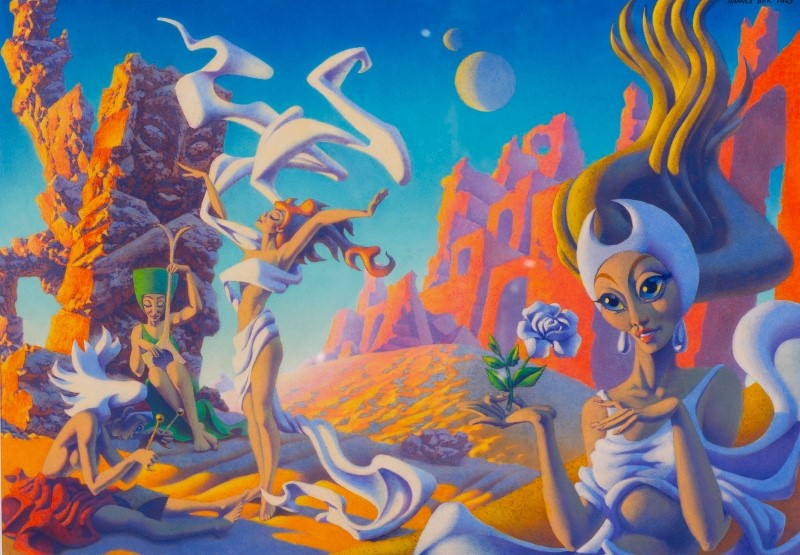
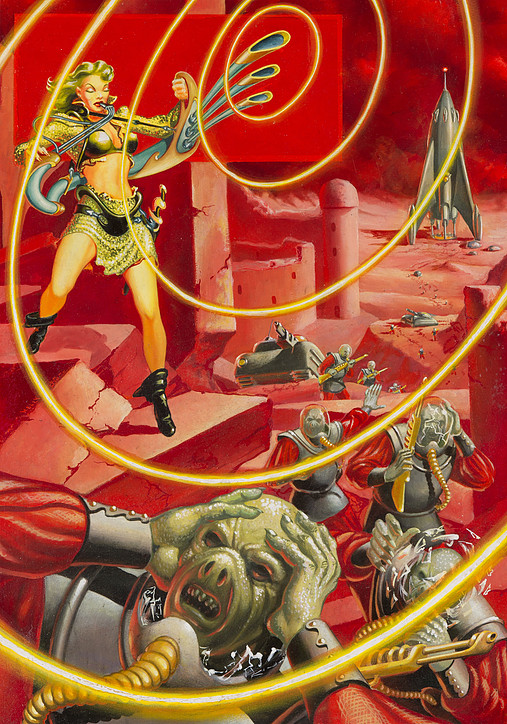
This Hannes Bok (1914-1964) illustration appeared as a wrap-around cover of The Magazine of Fantasy and Science Fiction for ‘A Rose for Ecclesiastes’ | Photo courtesy of the Korshak Collection

Southern California played a pivotal role in our country’s aerospace program when in 1936 the first rocket tests took place in Pasadena’s Arroyo Seco and launched the Rocket Age. Interestingly, the progress in the aeronautics industry in the region paralleled the growth of the science fiction community.

The Pasadena Museum of History (PMH) shows how science, fiction, and Southern California converge in an exhibition called ‘Dreaming the Universe.’ On view from March 3 through September 2, 2018, it explores the history of science fiction from 1930 to 1980, and its significance in the advances of science, the changes in technology, and shifts in American society.

Nick Smith, president of the Los Angeles Science Fantasy Society, curated this show that features historic artifacts, fine and graphic art, books and ephemera, and historic photographs. It will touch on the contributions of Ray Bradbury, Octavia Butler and other luminaries whose names are synonymous with science fiction; it will likewise highlight the fans and followers of the genre. Children and adults alike will find something they will instantly recognize as what initially pulled them into this exciting world.

Smith’s fascination with science fiction began several decades back. He relates, “Ever since I could read I read the ‘Superman’ comics. My barber would let us read whatever books he had, like ‘Incredible Hulk’ and ‘Super Spy,’ whenever we behaved. But the local library provided me the opportunity to read science fiction books written for younger readers. The earliest one I could remember was called ‘Have Space Suit Will Travel,’ about a kid who won a space suit in a contest and got caught up with things like aliens and other weird things.

“Once I had an allowance and had the ability to buy magazines at the newsstand I started purchasing them. That actually influenced some of the artwork we have in this exhibition. I was at a magazine stand and my eye caught this really curious-looking wrap-around cover of The Magazine of Fantasy and Science Fiction. It turned out to be a Hannes Bok illustration called ‘A Rose for Ecclesiastes.’”

“There were a lot of books and magazines about science fiction, fantasy, and speculative adventure written for kids in the 1950s and 1960s,” continues Smith. “They piqued children’s imagination because they were about the things that you didn’t see every day but would be fun if they did happen. They were wish-fulfillment fantasy to a great extent – traveling to Mars, or becoming space cadets to solve crime throughout the galaxy. That led to a lot of radio, television, and comic book science fiction.

“For adults, some science fiction dealt with warnings against abuses of technology which was what the original Frankenstein books were about, if you think about it. That was the first modern science fiction story written and it’s 200 years old now.”

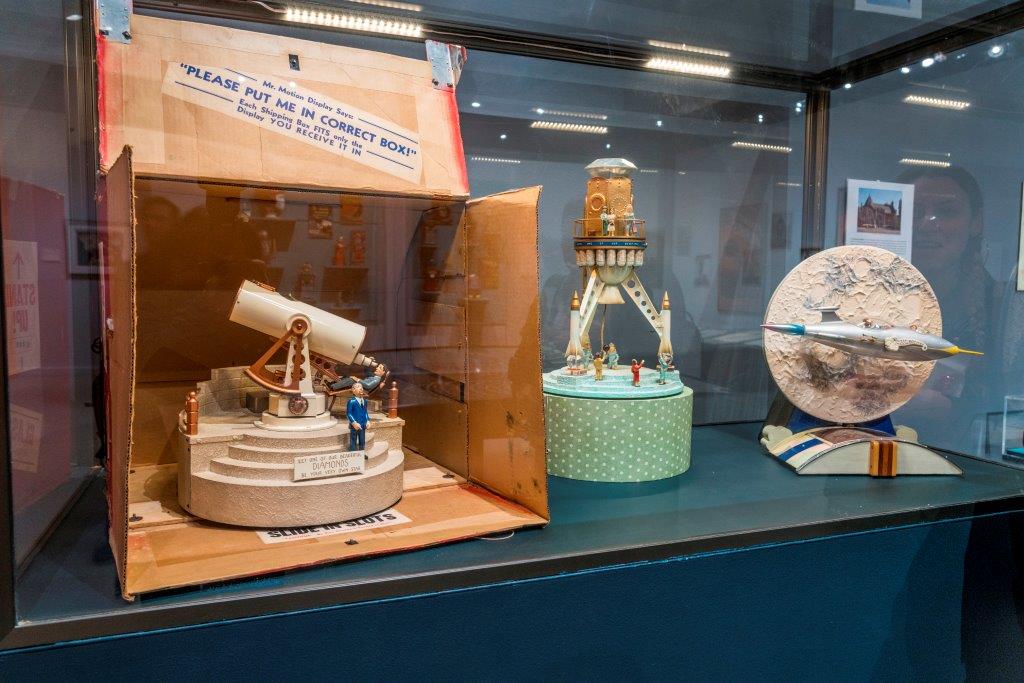
A group of Baranger Motion Displays, 1952-1957, Baranger Studios, South Pasadena, CA. Courtesy of Justin Pinchot (Toyraygun.com,robotcoffeela.com) | Photo by Joanne Wilborn/Marlyn Woo

“Laura Verlaque, PMH’s Director of Collections, and I worked for about a year identifying which things we would like to include in the exhibit that would be representative of the different aspects of science fiction. These items include visuals like flat pieces of artwork ranging from photographs to paintings; costumes – pieces of it or the entire outfit; physical objects from toys to window displays, especially in the 1950s.

“And that’s an interesting bit of the story. In the 1950s when Walt Disney put scientists on TV to talk about the space program, science fiction was all over radio and television. It was very much part of the culture in more ways than people didn’t think of. In fact, there was a company in South Pasadena that made window displays for jewelry stores and many of these had science fiction themes.”

“We don’t think about it nowadays but if we were to look back, science fiction was part of children’s experiences growing up,” points out Smith. “Tom Corbett’s ‘Space Cadet,’ which was very loosely based on science fiction story, was part of my background as a child. I watched that on TV, convinced my parents to buy me the little toys that went with it. A modern musician who, coincidentally, is named Tom Corbett uses a replica of the Tom Corbett lunchboxes at his concerts because he thinks it’s cool that a 1950s show had a character with his name.”

Science fiction’s integration into the mainstream culture took place in stages, says Smith. “There were some anthology science fiction shows on radio and television. ‘Space Patrol’ started here in LA as a radio show before it became a national television show and because they had big sponsors, they were able to get major publicity – they had a national giveaway of a backyard rocket ship clubhouse.

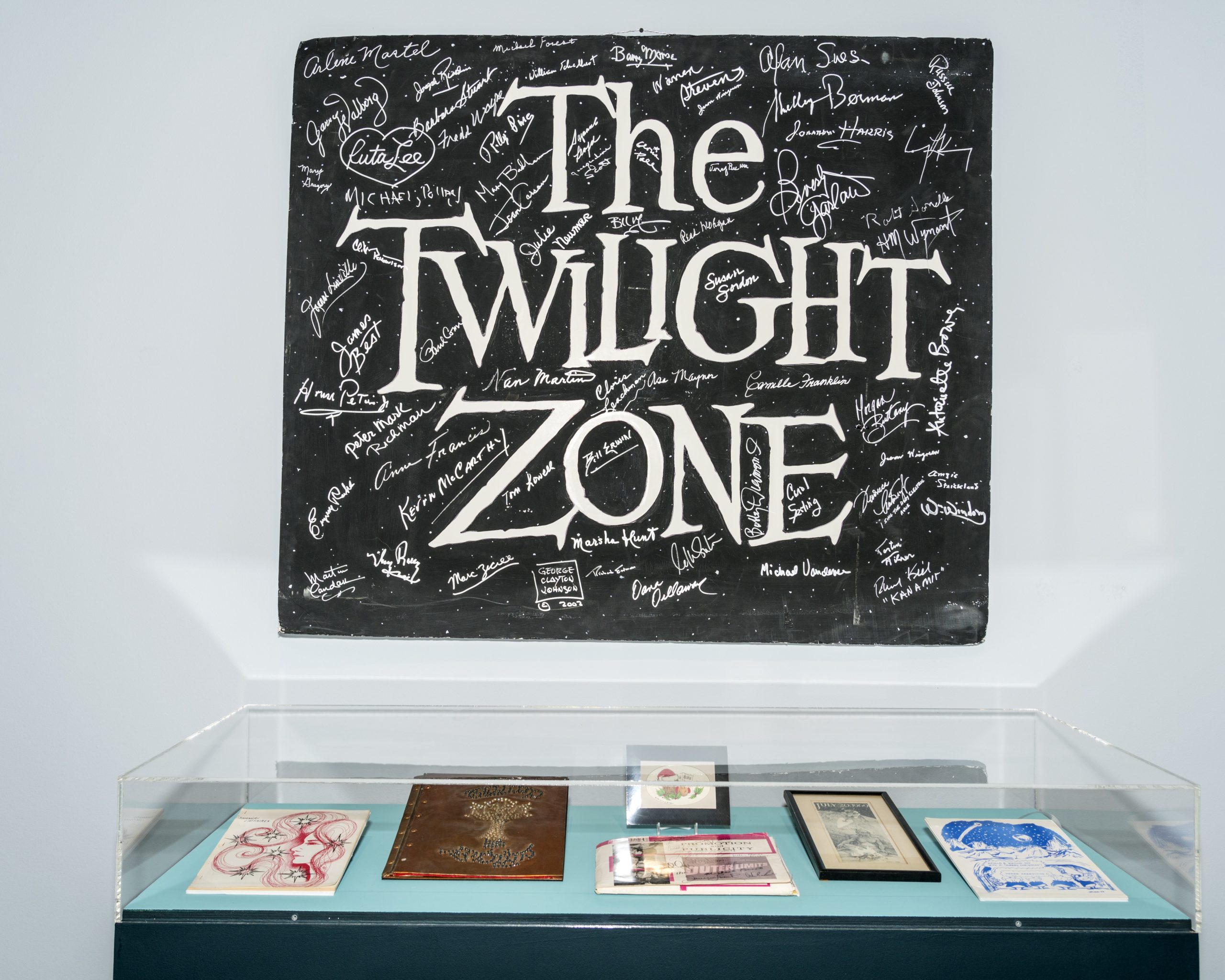
“‘The Twilight Zone’ came out in the 1960s but it was Star Trek that brought in the new wave of fans. It was hugely popular that when NBC cancelled the show Caltech students organized a march to protest it and they were joined by other enthusiasts and students from several universities.

‘The Twilight Zone’ display | Photo by Joanne Wilborn/Marlyn Woo

“Here’s another curious thing – the genre attracted not just males. In this exhibit we have one of the earliest published science fiction female writers. Clare Winger Harris was born in the 1890s and wrote stories for two of the major sci-fi and fantasy magazines back in the 1920s. What makes her particularly noteworthy is that she wrote under her own name, not a pseudonym, at a time when it wasn’t socially acceptable and women didn’t think they could sell a science fiction story. There were no other women in the 1920s in science fiction magazines.

“A more recent famed writer Octavia Butler, who was Pasadenan, was remarkable because she was both a woman and African American. And at that point she was the most successful female African American science fiction writer.”

Adds Smith, “To a great extent science fiction is based in Southern California because the technology and the sources of technology are here, as well as the TV and film industry. Rod Serling didn’t have to travel very far to find writers to work on ‘The Twilight Zone.’ He was able to get some of the best scriptwriters by driving down the street. One such brilliant writer, Charles Beaumont, turned out amazing stories throughout the 50s and 60s. He’s largely forgotten now because he died fairly young but several of his stories became television episodes for ‘The Twilight Zone’ and ‘Night Gallery.’”

“Everything in the field of science fiction is being considered for television right now,” declares  Smith. “There have been successful series like ‘Game of Thrones’ which are radically different from previous fantasy science fiction but they attract an audience which has never read the books they’re based on. The field is growing in several ways. However, not every project that’s started  is shown because the genre deals with such big ideas that are difficult to realize.”

The books Smith read as a youngster were published by Erle Korshak. The distinctive wrap-around cover of the magazine that stopped him in his tracks at the newsstand is one of six graphic art on display in the exhibit from the Korshak Collection. This is the first time these artwork are being exhibited on the West Coast.

Stephen Korshak, himself, began his interest in science fiction illustrations when he was a child. He recounts, “My father owned a pioneering science fiction book company, Shasta Publishers, which ushered in the transition of important science fiction literature from magazines printed in cheap pulp paper to hardcover, library-quality books. These covers, which I was exposed to growing up, engendered my lifelong love for collecting science fiction art.”

There are currently 90 pieces in his collection, with 29 pioneering American artists representing 80 years of published science fiction and 20 European artists from 15 countries who worked from 1863 to 1984. They can be seen online in ‘Korshak Collection: Illustrations of Imagination Literature.’ In the introduction he names one particular piece that stands out in his memory, “The J. Allen St. John illustration for the 1941 ‘Amazing Stories’ magazine cover of John Carter battling the dead in ‘The City of Mummies’ lured me into a fantastic world that I never knew existed. I read and enjoyed the Edgar Rice Burroughs story behind the illustration but, for me, the illustration itself gave me a sense of wonder I had never previously experienced.”

It is the only science fiction collection that tours, conjectures Korshak. And that touring bit came about quite by accident. He discloses, “I took one of the paintings to a framer and he told me it needed to be restored. When it came back from the restorer, my framer told me it was the talk of the restorer’s workshop. He asked me if I had any more of these illustrations and I said ‘yes.’ He said he wanted to display them here in Orlando, where I live, at one of the museums where he’s a trustee. The attendance was so overwhelming and the reception so amazing that we started to do the tours.”

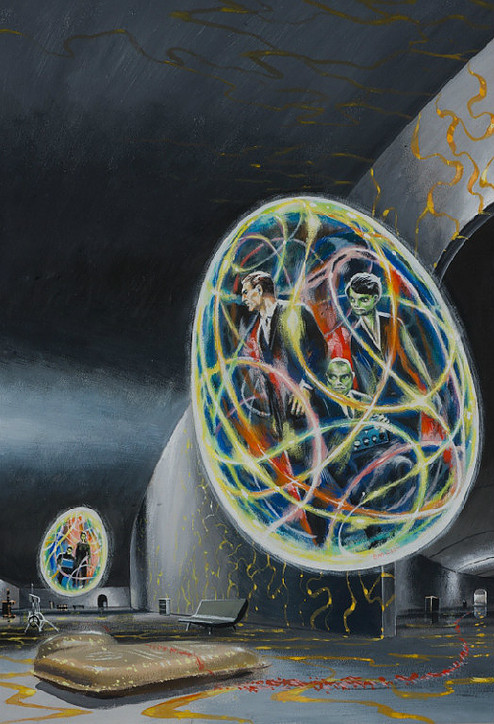
This Kelly Freas (1922-2005) illustration appeared on the cover of Planet Stories magazine | Photo courtesy of the Korshak Collection

Since it began touring  nine years ago, the Korshak collection has been shown in some of the most prestigious illustration museums in the United States – the Brandywine River, the Chazen, and the Society of Illustrators’ – and at Museu Valencia in Spain.

“In the beginning, people were just tossing these illustrations away like the comic books because they weren’t worth anything,” says Korshak. “No one considered them to be art because artists were not supposed to be entrepreneurs – they were meant to work for the Medicis and have great rich patrons who would support their art. However, in the United States, it being a capitalist society, artists were businesspersons like everyone else. Illustrators, by and large, were educated, and had a family to support. They did it to make a living, to sell products and market books.

“For a long time there was a prejudice in the art world; the gurus and fine arts critics pronounced illustration wasn’t art. But there has been a reassessment taking place in the last 15 years or so; there is now a better appreciation for this art form. People paid $30M for a Normal Rockwell, who was an illustrator for the Saturday Evening Post. Maxfield Parrish, N. C. Wyeth, or Howard Pyle pieces go for millions of dollars.”

In the process of collecting, Korshak learned that illustration covers a wide field.  He explains, “My love has always centered on a sense of wonder, that sense of being in a fantasy world, which I tried to capture with my collection. Except for a rare one or two, they are illustrations of literature spanning 125 years, from 1875 to 2000. There are thousands of illustrators and I can’t possibly display thousands of paintings. So what I tried to do was to pick what I thought, in my humble opinion, were the greatest illustrators or those who weren’t as technically famous but had a great influence. But we are not the definitive criterion of who’s great and who isn’t.”

Like a doting father, Korshak demurs when asked to pick the one he likes most, “It’s hard to say which is my absolute favorite but I’ll tell you three of my favorites. Jose Segrelles, a Spanish illustrator, is technically one of the eminent artists in the whole field but was little known in the United States. He made his name in Spain, although he did appear for a short time in the Illustrated London News. He appeared in books and magazines for 80 years but has been forgotten for the most part.

“I was lucky enough to go to Spain to meet his family. I bought the painting from his nephew and before he died I promised them I would take Segrelles back with me and introduce him to the American market. In fact, I will be collaborating on a book about Segrelles with Guillermo del Toro, the academy-award winning director, who said Segrelles was one of the great influencers in his life.

“Another illustrator who is highly esteemed by the cognoscenti is Arthur Rackham. He is a British illustrator who did magnificent work for children’s gift books, including Lewis Carroll’s ‘Alice’s Adventures in Wonderland.’

“A third one would be Hannes Bok who illustrated for Weird Tales. These three illustrators, I think, are the best in their field,” proclaims Korshak.

‘The Tree of Time,’ Edward Emshwiller’s (1925-1990) illustration appeared on the cover of The Magazine of Fantasy and Science Fiction

Having this collection has afforded Korshak opportunities he cherishes, “There’s a camaraderie when you meet with other collectors. It’s a hobby you can share with other people which is tremendously fun and enriching. I have developed friendships through this.

“At the same time I really want to share and give back to the field that’s given me so much. The illustrators in my collection established the basic genre, the vocabulary of the field. These books haven’t appeared in print in 80 or 100 years, and out of sight out of mind. Many of the themes are reproduced by modern illustrators but in different ways and techniques.

“By exhibiting the artwork, I feel I’m doing something thoughtful by introducing these illustrators to a new generation of people and helping preserve some of these illustrators’ legacy as well. I’m not single-handedly going to do that but, in my own little way, am contributing  towards that end.

“We’ve finished our East Coast tour and we’re now starting one on the West Coast. Coincidentally, I have just been contacted by a big gaming company in Japan that’s doing an Alice in Wonderland exhibition and wants to take one of our famous Arthur Rackham illustrations. It’s really exciting now that people are starting to know these illustrators. And I think it’s going to help the modern illustrators. My collection goes through 2000 but there are contemporary artists right now who are doing great work like Michael Whelan and the Brothers Hildebrandt.

“I have also written books on two illustrators – Hannes Bok and Frank R. Paul. I wrote the Hannes Bok book with Ray Bradbury before he passed away. It was Bradbury who introduced Bok to the editor of Weird Tales which helped start up his career.

“A few years ago I convinced my father to help me publish an artbook on the father of science fiction art, Frank R. Paul. We named the company Shasta/Phoenix because his original book publishing company, Shasta, had been inactive for 50 years and we resurrected it, like the phoenix, from the dead.

“In the Frank R. Paul book, I mentioned Sir Arthur C. Clarke, who co-wrote the screenplay for  ‘2001: A Space Odyssey.’ Clarke claimed that Paul was one of the great influencers in his life. He said that the NASA space engineers who worked on NASA projects knew we could go to the moon because Frank R. Paul had visualized it,” confides Korshak.

If the people responsible for America’s space program look to science fiction books to determine which galaxies to explore, do we need further evidence that whatever the mind can imagine is humanly possible?

Enjoy Enticing Eats and Treats at ‘Taste of La Salle’ in Pasadena

Originally published on 19 March 2018 in the Pasadena Independent, Arcadia Weekly, and Monrovia Weekly

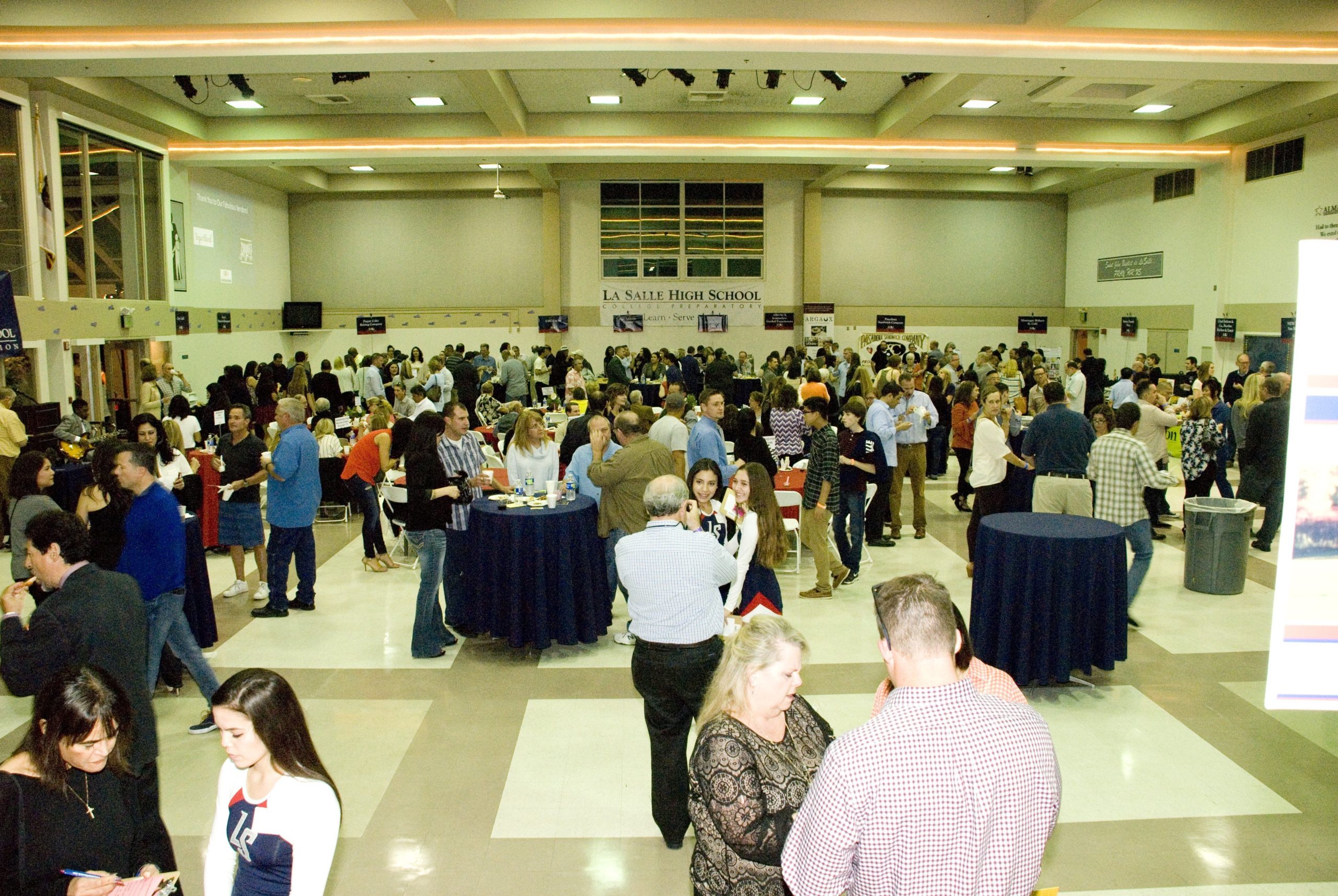
Guests enjoying the various food and beverages at the 2016 ‘Taste of La Salle’ | Courtesy photo / Annette Dyson

How cool is it to sample the various food and drinks from over 35 different restaurants and beverage companies all gathered in one place?  And how great would you feel knowing that you are donating to a good cause while enjoying such bounty?

La Salle High School gives you the opportunity to indulge your gastronomic appetite and satisfy your philanthropic inclinations at its bi-annual ‘Taste of La Salle’ from 6:30 to 9:00 pm on Saturday, March 24. Advance ticket price is $50 and $75 at the door.

Now in its fourth year, ‘Taste of La Salle’ has attracted popular Pasadena and San Gabriel Valley establishments including Altadena Town and Country Club, Casa del Rey, Colette, Domenico’s, El Cholo Café, El Portal, The Peacock Grille, Roy’s, StoneFire Grill, Twohey’s; breweries and wine growers from farther afield like Craft Beer Cellar, Lagunitas, Stone Brewing, E & J Gallo Wine, San Antonio Winery, and Wilson Creek Winery.

‘Taste of La Salle’ will take place on campus (3880 E. Sierra Madre Blvd., Pasadena on the corner of Michillinda Avenue) with students directing people to three different check-in tables to make for an easy flow of foot traffic to the party. All vendors will be set up along the perimeter of the dining pavilion and atrium to give everyone room to walk around, visit the various stalls, and delight on all the various offerings for the night.

Parking will be available on both lots on campus – the upper lot on Sierra Madre Blvd. and the lower parking lot on Michillinda – the field will also be open, and there will be parking on surrounding streets.

Kristen Schultz, Assistant Director of Institutional Advancement and Director of Alumni Relations, spearheads this delectable event. She says, “We started ‘Taste of La Salle’ in 2012. It was deliberately a bi-annual event because we recognized that these vendors are also asked by various non-profit institutions all the time to donate and we didn’t want to burn them out. And while other organizations charge vendors a fee for participation, we don’t; they provide the food, drinks, and the manpower to staff their table so they give quite a lot as it is. At the same time, because it’s only every other year, the community looks forward to it and is more hyped about it.

The incentive for the vendors is the heavy publicity we do for it. We send out invitations to about 7,000 people in the San Gabriel Valley, we include the event on our social media feeds – Twitter and Instagram; send emails every other week promoting it; mail postcards with the logo of participating establishments, advertise it in a local magazine which reaches 15,000 people.

It benefits restaurants because we really target San Gabriel Valley so people who come to the event can patronize these establishments later. We always do a thank you and a follow-up with all our participating establishments and have gotten extremely positive feedback – that they had a great experience and would like to come back; that our event was every well done and organized. Several past vendors will be here again this year.

We had 23 vendors in our first event and we had no idea what we were doing. It was hugely successful and it gave us room to build upon that success. It expanded every year and we now have 39 vendors. But we really don’t intend to grow it any larger than that because we want to keep it community-friendly and preserve the school atmosphere as well. We expect between 300 to 400 people; two years ago we had 360 and we’ve attracted more each time. I know we’ll have about 350 but we’re hoping to reach 400 attendance.”

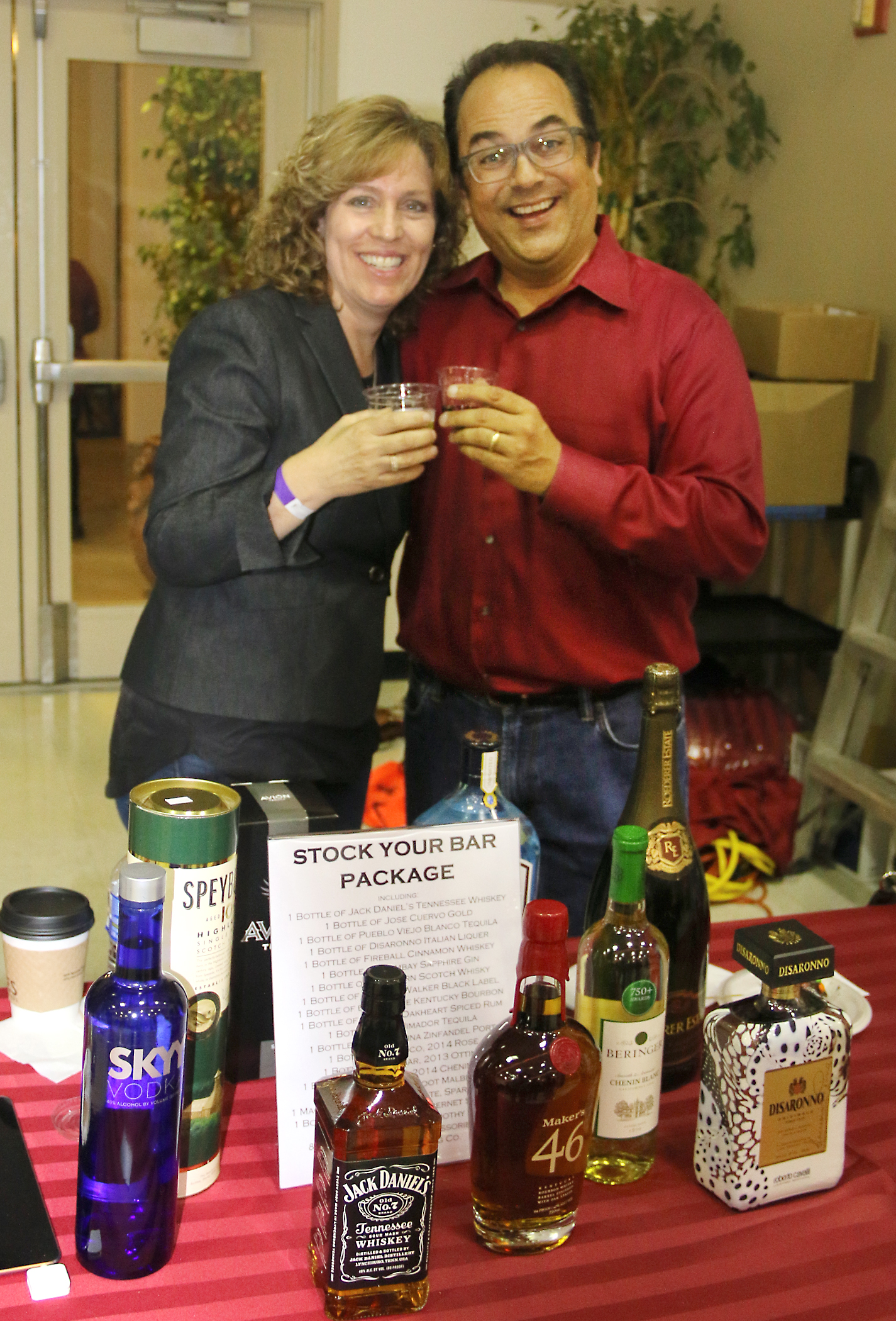
Michelle and Brian Day were the winners of the Stock Your Bar Package in 2016 that includes over 19 bottles of premium libations | Courtesy photo / John Blackstock

Food and drinks are not the only items on offer. There are also drawing opportunities for some really awesome packages. The Grand Prize is ‘Eat Out for a Year,’ which is an array of gift cards to local restaurants valued at over $2,000. There is a ‘Travel and Wine Lover’ prize, a Temecula Getaway and Culinary and Wine Pairing for 4 in Paso Robles. A ‘Stock the Bar’ prize is an assortment of premium libations; a ‘Work it Off Fitness Basket’ gives the winner over $700 worth of gift certificates to local fitness classes and gyms; a ‘Staycation’ is a one-night stay at the Embassy Suites in Arcadia, $100 gift card to The Derby Restaurant and four Club House passes to the Santa Anita Race Track; and more.

Tickets for the drawing are available online – $10 for one ticket; $25 for five; $50 for 15; $100 for 40. People can go online to buy tickets to the event and for the drawing at the same time or separately. Drawing is done at the actual event but they don’t have to be present to win.

‘Taste of La Salle’ takes lengthy planning, as one can imagine. Relates Schultz, “We start preparing this in the summer, around May and June. Any time we do an all-school event we obviously have to work it into the calendar. And there are several of them like the plays and the musical which need all the school facilities. We picked March the first time because it was open.

The school has two fund-raisers: the golf tournament in the fall and the Crystal Ball in May and we didn’t want to compete with those two events. We were cognizant of the fact that we were asking money from the very same pool of parents. We also made sure we kept the drawing items food-themed because we didn’t want to take away from what the two other events are also requesting.”

Adds Schultz, “‘Taste of La Salle’ is the only event that the Alumni Association puts on. It’s also the only way people can donate, they can’t write a check towards the scholarship. We ask the scholarship recipients to attend and we profile them so people can see where their money is going.

It was created to have an alumni fund going to current students from alumni donors. When this began, we awarded two college scholarships to two members of the class of 2013. It is a one-time scholarship to help them with their first-year expenses and focuses on service, citizenship and leadership, not on their GPA.

Members of the La Salle Alumni Association Executive Board with the class of 2018 Alumni College Scholarship recipients (pictured front center). Back row, left to right: Armando Ramirez, Chris Kealy, Amanda Richardson, Manny Soriano, Paul Lees, Tyler Varing, Kristine Nonato, Chris Rettig, Mike Sullivan. Front row, left to right: Joe Alvarez, Rafael Mirasol, Sarah Day, Garien Agapito, Tony Messineo, Gabe Castillo | Courtesy photo / Kristen Schultz

We invite students to apply in the spring of their junior year and they’re asked to give short answers to questions related to their leadership, their impact on the greater community, what happened in their years at La Salle, their future plans and how they will remain  engaged after  they graduate. I take out all the personal information about the applicants so the 17-member Alumni Association Executive Board makes its decision based purely on the answers given by the students.

I check in with the scholarship recipients six months into their first year of college to get an update on how they’re doing, etc. While I continue to communicate with them periodically during their college career, there are no requirements on their part. Although I hope they stay in touch and most of them do!

In 2016 we offered the first incoming heritage scholarship to a member of the class of 2020, who is now a sophomore. This is a four-year scholarship as long as the student retains a 3.0 (B average), remains active in school activities, and maintains an exemplary discipline record.

The criteria are similar for the incoming scholarships but obviously with some differences because we’re asking 13-year olds versus 17-year old students – community service and involvement, why do they want to be a part of La Salle, what difference can they do here, what La Salle means to them.

We have continued to offer two college scholarships every year since 2012 to the graduating class and one freshman scholarship since 2016 to the incoming class. We just recently named our incoming scholar for the class of 2022 who will start at La Salle this August. The class of 2019 is currently applying for next year’s College Scholarship. We have 12 college scholarships and three freshman scholarships to date.”

‘Taste of La Salle’ promises to be a fun and enjoyable way to spend an evening. That it goes a long way towards providing assistance to future generations of community-engaged and socially responsible citizens only makes it doubly worth our generous support.

‘A Raisin in the Sun’ at A Noise Within Portrays the American Dream

Originally published on 12 March 2018 in the Pasadena Independent, Arcadia Weekly, and Monrovia Weekly

Saundra McClain and Ben Cain | Photo by Craig Schwartz

It is an American dream – to get an education, earn a fair wage, own a home, and live a life of dignity. In this land of opportunity that seems attainable. There are people, however, to whom the realization of that dream is elusive.

This is the theme of Lorraine Hansberry’s seminal play ‘A Raisin in the Sun,’ which debuted on Broadway in 1959. The title is derived from a line in ‘Harlem,’ a poem by Langston Hughes, ‘What happens to a dream deferred? Does it dry up like a raisin in the sun?’

There has been a renewed interest in ‘A Raisin in the Sun’ of late. According to American Theatre magazine, it is one of the ten most produced plays of the current season. And it is on stage at A Noise Within from February 25 to April 8, 2018 in repertory with Henry V. Directed by accomplished actor and director Gregg T. Daniel, its cast includes Saundra McClain as the matriarch of the Younger family; with Ben Cain as Walter Lee, Toya Turner as Ruth, Sarah Hollis as Beneatha, and Sam Christian as Travis.

On a recent afternoon, Daniel and McClain sat down to share their thoughts about the play, what it means to be a person of color in today’s political climate, and what they hope they are able to convey to their audience.

Neither Daniel nor McClain has staged it before but both are familiar with ‘A Raisin in the Sun.’ Says Daniel, “This play came out around the time of the Civil Rights Movement. It was very significant in that it was the first play written by an African American woman staged on Broadway and which was later adapted into a movie.”

Adds McClain, “My generation grew up with this play – in college the first monologue I learned  was from it. More recently, I was involved in the stage reading of ‘A Raisin in the Sun’ here. It was an amazing experience; we got a standing ovation after the show.”

“They got such tremendous response when they did the reading two years ago,” continues Daniel, “which compelled Geoff and Julia to mount a full production. They contacted me because I had just finished directing ‘Le Blanc.’

Lorraine wrote ‘Raisin in the Sun’ in 1959, wherein she portrayed an African-American family with seemingly competing dreams that threaten to tear them apart and what they come up against as they try to better themselves. Everyone reacted to it saying ‘I didn’t know that was happening to black families until I saw it on stage.’ The floodgates opened after that; it altered American theatre forever.

Saundra McClain with Toya Turner. Photo by Craig Schwartz

One thing that’s different about our production is the humor which a lot of people said they didn’t expect to see. The role of Mama has been played as a heavy character – stern, aggressive, and judgmental. That disposition is the very opposite to Saundra’s who has such joie de vivre; she’s so vibrant and alive.

Right at the outset, Saundra was my first choice for the role because as dysfunctional a family as the Younger household is, they love each other. They have moments of cheerfulness and moments of levity, and she could bring all that to this play. Our Mama is very joyful; she has a lot more laughs than has been depicted in previous plays. You could clearly see that she loves Walter; she’s not bullying or bludgeoning.

‘Raisin’ was set in 1959 so it reflected that scary and worrying period in history. But there was no reason for us to do it that way. And we live in interesting times, with #Black Lives Matter and #Oscar So White. We still have racial issues but they’re of our time so we want to be emblematic of our present challenges.

Change is costly – it’s always bloody and violent. It took courageous people like Martin Luther King, Malcom X, and Robert Kennedy to stand up and advocate for change. But lest we forget, we’ve had a black president since then which proves we have evolved in terms of political consciousness.

That said, I feel like we’re reverting to the era of divisiveness with families ripped apart and social support withdrawn. People of conscience should rise up and say, ‘Enough, this isn’t what American is all about!’ There needs to be consequences when you verbalize bigotry and hate.”

McClain opines, “It’s a universal play that speaks not only to African-Americans but to Latinos, Muslims, immigrants, all people of color in our society right now all over the world. There’s a white nationalist sentiment currently going on and it’s a little bit frightening. This small group of people are afraid of the change that’s taking over now, of not being the superior race. But there is no superior race, it’s the human race.

Every day that I’m in this play, I get a better understanding of Mama and her relationship to her children, especially to her son, that I didn’t know before. Mama is uneducated; she is devout about her religion and everything beyond the bible has to be wrong. She is very supportive of her daughter Beneatha who is a little bit like her. But because of all her education, Beneatha turns against God. That is the change I don’t like.

On the other hand, Mama thinks that Walter is irresponsible. He drinks and doesn’t adequately provide for his family. He’s still dependent on Mama so he isn’t his own man. And while he’s so right about so many things he goes about it the wrong way. He doesn’t have the knowledge nor the sophistication to realize his dreams. It’s only at the end of the play that I finally give him respect.

This iteration of ‘Raisin’ gives it a ‘now’ perspective because we’re focusing it on Walter instead of Mama. Young black men today can relate to him – it’s open season for them in our current political climate. During today’s student matinee, some of them didn’t get the references in the first act. But in the second act when I beat up on Walter, you could hear a pin drop. And then there were sniffles in the audience. After the matinee one of the boys came up to me, shook my hand, and said, ‘This reminds me so much of my family. I wish my grandmother had seen this play.’”

Daniel adds, “There are certain cultural themes that they understand. This generation isn’t quite as burdened as we were because, if anything, they have been the outcome of all the civil rights movements. When I was in college there weren’t very many black students. We have come a long way in so many respects.

But, as in times past, it is our country’s youth who will lead the charge for reform. They are vocal about how unfair it is when they’re judged by the way they dress, or how they talk, or for their lack of education. This generation is more aware of social justice and is at the forefront of societal movements. They know what they need to do to achieve quality of life.

This is a very American play. It reflects the dreams of every human being in this nation – Mama wants a house and a garden of her own; Beneatha wishes to become a doctor; Walter aspires to upward mobility. Which one of us wouldn’t understand what they’re reaching for?

We want the audience to see that everyone’s potential deserves to be realized, that if they work on it, they have an equal shot at achieving it without impediment – whether it’s due to racist laws, or their economic stature. We have to appreciate that if we deny one person’s dream because he’s black or he’s gay, that affects us all. That’s a tragedy.”

Ben Cain with Sam Christian | Photo by Craig Schwartz

“I wanted to focus on Walter because he has the biggest journey, he goes the farthest,” Daniel expounds. “At the start of the play Walter is a miserable human being. What he wants drives them apart because he’s simplistic, almost like a child with his grand dreams. He’s looking for an easy way out of their situation, to benefit without putting in the work.

In the end Walter realizes that he needs to be the role model for the next generation, for his son. It’s the catalyst that gets him on the road to transformation. He declines the offer from the Clybourne Park Association because he doesn’t want to teach his son that swindlers win. In this golden moment – like the rainbow after the rain – he decides not to lose is soul. His arc is the most transformed. By the time he decides to reject the money, there isn’t a dry eye in the audience.”

Lorraine Hansberry, a woman of color and a playwright ahead of her time, is a visionary unparalleled. Her jewel of a play, ‘A Raisin in the Sun,’ is an uplifting tale of one family’s struggle that ultimately ends triumphantly. It is a hopeful, positive story which shows that individuals, however imperfect and flawed, will find the wisdom to do the right thing for the people they love. It is a revelation to inspire us all.

‘The Man Who Mistook his Wife for a Hat’ Fascinates at Caltech

Originally published on 5 March 2018 in the Pasadena Independent, Arcadia Weekly, and Monrovia Weekly

The human brain works in such complex ways and each one’s thought process is different based on their environment that there’s no predicting what a person would do or how an individual would react to a stimulus at any given moment. However inaccurate that statement might sound to an expert, what’s indisputable is how fascinating it must be to study how our minds operate and what happens when they don’t function as they should.

Dr. Oliver Sacks, a British neurologist, spent his life studying the human brain and shared his knowledge and findings with the world. He authored and published best-selling case histories about his experiences involving his patients’ disorders. His book ‘Awakenings’ was the subject of a documentary made for British television series Discovery. It was later adapted for the screen and became a film which starred Robin Williams and Robert de Niro.

‘The Man Who Mistook his Wife for a Hat,’ Dr. Sacks’s case study about a man who couldn’t decipher what his eyes were seeing (medically known as visual agnosia), was the subject of a 1986 opera by Michael Nyman. It will enthrall Pasadena audiences when it debuts at the Dabney Lounge and Gardens at Caltech on Saturday, March 10 at 8:00 pm and on Sunday, March 11 at 3:00 pm.

Presented by the Pasadena Opera, ‘The Man Who Mistook his Wife for a Hat’ will be stage directed by Dr. Indre Viskontas with music conducted by Dana Sadava. Soprano Julia Metzler,  plays the role of Mrs. P; baritone Ian Walker plays Mr. P; and tenor William Grundler is Dr. Sacks. Pasadena Opera was established in 2014 by Dana Sadava (Artistic Director) and Indre Viskontas, (Creative Director) to revolutionize the presentation and perception of opera. Together they have a mission to provide contemporary theatre experiences the resonate with the community while maintaining the highest standards of artistic excellence.

Chelsea Basler and James Callon in Pasadena Opera’s 2016 production of Susannah | Courtesy photo / Brian Biery

Viskontas says, “We like to tell stories with a social conscience that are compelling and touch on issues relevant to the times we live in. While we don’t have a mandate to perpetuate feminism, our last two shows featured female characters. ‘Susannah,’ a story about a beautiful woman who attracted a lot of men predated the #MeToo movement. It was a commentary on how women are sometimes misjudged because of their physical looks. Last year we presented ‘Cosi fan tutte’ which, loosely translated, means ‘Women are fickle’ and denigrates women.”

Their process for choosing which shows to put on commences during a lunch when they list all the operas they find interesting. Viskontas elaborates, “We come up with a ‘wish’ list then narrow it down to what we want to do next year and why. We try to be inspired by what’s going on in the country at the moment.”

Sadava relates her own method, “I walk around the city. I visit the San Francisco Music Library thumbing through scores, discovering new pieces, listening to recordings. Then I make my long list and short list. I find this process of choosing our next show very exciting.”

“There isn’t one particular opera that I am dreaming to put on,” explains Sadava. “My favorite thing to do is working with composers on new pieces. For our first production, we chose ‘Candide’ because it’s exuberant and involves a lot of people. It’s also in English and it’s by Bernstein, who’s one of my favorite composers. So I thought it made a statement in a lot of ways. For our next production we commissioned a new opera based on the story by Angela Carter called ‘The Bloody Chamber’ by Daniel Felsenfeld with a libretto by Elizabeth Isadora Gold. We’re planning it as a Halloween show.”

For ‘The Man Who Mistook his Wife for a Hat’ Sadava and Viskontas chose three performers who have an affinity to the area. The singers who make up the only three characters are all Los Angeles residents.

Julia Metzler and Jonathan Beyer in Pasadena Opera’s 2017 production of Cosi fan tutte | Courtesy photo / Carin Yates

Soprano Julia Metzler grew up in Glendale, a city about six miles west of Pasadena. She was the  winner of the Metropolitan Opera Competition’s western region finals. She graduated from the San Francisco Conservatory of Music with a bachelor’s degree in music and gained her master’s degree in voice from UCLA.

Having professionally performed in her late teens, Metzler has built an impressive resume. Recent roles include Fiordiligi in ‘Cosi fan tutte’ (Pasadena Opera), Micaela in Bizet’s ‘La Tragedie de Carmen’ (UCLA Opera), the title role in Gustav Holst’s ‘Savitri’ (Pasadena Pro Musica),and Lady Billows in ‘Albert Herring’ (Repertory Opera Company).

Additionally Metzler has performed and been interviewed on NPR’s ‘From the Top.’ She was also featured in the HBO miniseries ‘Masterclass,’ in which she had the opportunity to coach with Placido Domingo.

Metzler says, “Everyone in my family is a musician so I grew up with music. We had a violin store in Glendale and I played the instrument as a child. Sometimes I worked in the store helping kids try out violins.

When I was about 18 or 19, I started singing professionally but my interest in it started earlier than that. Music is ingrained in me; there wasn’t any one defining moment when I realized singing was my calling.”

“I have been a singing waitress in Italian restaurants,” recounts Metzler. “I try to work with as many different companies as I possibly can; I recently did small parts with L.A. Opera. I have just come back from China where I sang nationalistic songs for a televised performance. I will be traveling to New York to compete in the National Metropolitan Opera Awards and I’m very excited about that.”

Metzler pronounces, “I’m very lucky to be employed in a profession I am passionate about and travel wherever my art takes me. I have been involved in amazing productions and hope to one day get my dream role, Tosca.”

Sadava used to call Pasadena home. She reminisces, “I grew up in Pasadena so it has been a huge playground for me. I went to high school and college here. It’s a very sophisticated but open place so I’ve always had an eye on it as somewhere I’d love to come back to one day. We started this company as a tribute to the city of my youth.

Dana Sadava | Courtesy Photo

It was when I was attending Caltech that I had a carpe diem moment and decided to switch from engineering to music. I thought I could always go back to rocket science but I have to try doing music professionally and that’s what I did. I was thrilled to meet Indre and in her I found a kindred spirit. She and I both have parts of our brains firing out all at once; we just work well together. We have a kind of sixth sense about what we need to do and how it’s going to go.”

While Sadava has an engineering degree, music has always been a part of her life. She originally trained as a pianist and studied with Dorothy Hwang at Colburn School, Sanford Margolis at Oberlin Conservatory of Music, and Gabriel Chodos at the Aspen Music Festival. She was with the Disney Young Musician’s Symphony Orchestra and was seen on the Disney Channel when she was eleven years old.

As a Caltech student Sadava pursued her love for the arts, appearing as a piano soloist with the Caltech-Occidental Symphony and playing chamber music. She went to the University of Michigan for a master’s degree in orchestra conducting and studied with Kenneth Kiesler on a merit scholarship.

Sadava has been a professional conductor for the past eight years and has toured all over the United States, Canada, and Ireland. She is currently also the Artistic Director of the Community Women’s Orchestra in Oakland. She has recently been hired by the San Francisco Conservatory of Music to work on a project with their opera department.

A Toronto native, Viskontas earned her PhD from UCLA in neuroscience with particular emphasis on how the brain  changes when one learns new things. She received her master’s degree from the San Francisco Conservatory of Music where she met Sadava.

“It would have been more convenient for us to establish our company somewhere else,” Viskontas declares. “But because of Pasadena’s unique profile it became the most logical place for us. It is a beautiful city where there is a big support for the arts. With its world-class university, it is the center of education and technology. Opera, the way we present is, uses ground-breaking technology and new ideas. Besides, it didn’t have an opera company so we wanted to fill that gap.”

Indre Viskontas | Courtesy Photo

Viskontas happily mixes music with neuroscience. She says. “I teach Psychology courses at the University of San Francisco but I spend a lot of my time bringing science to the public. I like doing one or two projects a year. I did a couple of lecture series with The Great Courses (12 Essential Scientific Concepts and Brain Myths Exploded); a TV show on the Oprah Winfrey Network called Miracle Detective as well as a few web series. I write and host two podcasts, Cadence: What Music Tells us About the Mind and Inquiring Minds about science and society. I just finished writing a book on music and the brain which will be published by Chronicle in 2019.

I have sung in several companies and have done a whole bunch of bizarre projects. While I still sing on occasion with other companies, now I mainly work on projects involving Pasadena Opera or chamber music. I work often with a string quartet on vocal chamber music (Vocallective.com). I’m also working on a project to investigate what aspects of musical performance can elicit empathy in audiences (www.TheEnsembleProject.com).

‘The Man Who Mistook is Wife for a Hat’ is an amazing story about the power of music and the ways we should approach neurological problems. Dr. Sacks shows us that there’s a lot doctors could learn from their patients about the brain. To have this idea and to be able to present them in my favorite art form is something I had wanted to do for a long time. It is also a very personal project for me; he and I worked together on a venture called Musicophilia. He was my mentor and I wanted to honor his passing in a significant way.”

“He might have had trouble connecting with the larger world, but he always managed to reach even the most elusive patients with his unassuming manner and keen ability to get to the heart of their experience,” continues Viskontas. “I’m thrilled to have the opportunity to share his genius with our audience.”

For Sadava, ‘The Man Who Mistook His Wife for a Hat’ is a fulfillment of a long-dreamed of production. She reveals, “I have been looking forward to presenting Nyman’s beautifully minimalist score weaved with the accessible melodies of Robert Schumann, whose music is a remedy for the patient’s ailing mind. The sparseness of the score gives the audience time to digest the profound insights the Oliver Sacks poetically presents.”

Viskontas expresses it succinctly when she pronounces, “We boastfully and arrogantly think that opera is the height of theatre. Storytelling is what we do – in the grand form of opera.”

At the turn of the 20th century, Pasadena saw the flourishing of the arts and the blossoming of technology which inspired solar astronomer and visionary George Ellery Hale to develop the city as a scientific and cultural destination. It’s only fitting that ‘The Man Who Mistook his Wife for a Hat’ is set here where, more than a century later, arts and culture still mesh seamlessly with innovation and technology.

Introducing Ancient Chinese Culture to a Wider Audience

Originally published on 26 February 2018 in the Pasadena Independent, Arcadia Weekly, and Monrovia Weekly

Wu Man (left) playing the pipa with the Huayin Shadow Puppet Band | Courtesy Photo

The Chinese civilization is one of the oldest known to humankind. Its vibrant cultural heritage dates back thousands of years, and the country’s rich and diverse musical tradition forms a vital part of that heritage. Traditional music – with its essential instruments including the pipa, guqin, ruan, xiao and zheng – is deeply ingrained in people’s daily lives and intersects with other art forms and traditions like drama, storytelling, and shadow puppetry.

The New World certainly has much to learn from this ancient civilization. This is why Wu Man, a pipa virtuoso who is regarded as the foremost ambassador of Chinese music and culture, has made it her calling to ensure that the early Chinese traditions are not merely preserved but kept alive and relevant. She has spent most of her life travelling the globe acquainting modern audiences with the pipa whose history goes back over two millennia.

We in the San Gabriel Valley will have the opportunity to hear and see Wu Man and the Huayin Shadow Puppet Band on March 5 at 7:30 pm when they perform at The Huntington Library, Art Collections, and Botanical Gardens in San Marino. This is one of three California stops (UC Santa Barbara on March 8 and Hertz Hall in Berkeley on March 11) as part of their North American tour encompassing a dozen appearances in Utah, Idaho, Arizona, Nebraska, Washington DC, New York, Ohio, and Massachusetts.

For many of us who aren’t familiar with the pipa and the shadow puppet, this show will give us a glimpse of and an appreciation of these musical and performance art forms. Wu Man is eager to share her vast knowledge and experience about them.

Wu Man explains, “Pipa is a pear-shaped, lute-like, string-plucked instrument which was introduced to China 2,000 years ago from Central Asia or the Persian area. It is related to the middle eastern instrument called ‘ud,’ and is in the same string family as the European lute, the American banjo, and the Indian sitar.”

“The pipa has a long history with the Chinese people. Music for the pipa was developed during the Tang Dynasty. In many paintings and statues you will always see the beautiful goddess holding the instrument,” continues Wu Man. “While it is an ancient instrument, it has survived to the modern days. The instrument I’m using today is one from the 19th century, which is bigger than the 16th century pipa which is on display at the Metropolitan Museum of Art in New York.”

To introduce the pipa to the public and gain a wider audience for it, Wu Man has been teaming up with internationally recognized artists and performers. One of her early collaborations was with the Kronos Quartet in the early 1990s. They premiered their first project called ‘Tan Dun’s Ghost Opera’ at the Brooklyn Academy of Music in 1997. Their partnership endures to this day and she participated in the Quartet’s 40th anniversary celebration concerts at Cal Performances in Berkeley, CA and at Carnegie Hall, and was Artist-in-Residence with the Quartet in February 2016.

Wu Man with the Silk Road Ensemble |Courtesy photo / Max Whittaker

Wu Man was also a founding artist of Yo-Yo Ma’s Silk Road Project and has performed throughout the United States, Europe, and Asia with the Silk Road Ensemble (SRE). She is a featured artist in the documentary ‘The Music of Strangers: Yo-Yo Ma and the Silk Road Ensemble,’ as well as on the film’s 2017 Grammy Award-winning companion recording, ‘Sing Me home,’ which includes her original composition ‘Green’ (Vincent’s Tune) performed with the vocal ensemble Roomful of Teeth. She has recorded six albums with the group. Her recent performances with SRE include a 2016 tour to summer festivals such as Tanglewood, Wolf Trap, Blossom, Ravinia, and Hollywood Bowl; as well as with Mark Morris Dance in Berkeley and Seattle, and a tour of Asia.

Locally, Wu Man was the Inaugural Artist-in-Residence at The Huntington in 2014 for which she composed a piece called ‘Three Sharing.’ She recalls, “It was meant as a celebration of the relationships among Asian countries. I played the pipa with two of my friends, one playing the Japanese flute shakuhachi and the other the Korean drum janggo. It was such a fun collaboration, we each contributed something to the music.”

Depending on whom you ask, there is the assertion that China has attained world dominance. Even if this weren’t entirely true, we can definitely say that it has a presence on the world stage and people are paying more attention to China.

Wu Man reflects on this, “I have noticed changes since I came to this country 20-some years ago when it seemed that no one knew anything about Asia and Chinese culture. In the past, my audience has been mostly older Chinese who knew about the pipa growing up. Today we are attracting people of different cultures who are open-minded and are willing to know more about China and its ancient musical instruments.

After a performance people usually come up to tell me the pipa sounds like a guitar or a banjo. Every once in a while I hear remarks like ‘it’s like listening to a harp or a ukulele.’ They’ll bring up the various plucked instruments. I observe a greater appreciation for it now.”

It’s also important for Wu Man to educate young Chinese people about their ancient roots. She says, “The younger generation is exposed daily to western culture and music through the Internet and social media. While it’s great that they are embracing others’ way of life, there is the likelihood of them forgetting their ancestry. That’s why tied in with my concert performances, I visit classrooms – all the way from elementary to college level – to talk about Chinese history, music and specifically, the pipa.

Even my performances for adults are usually concerts/informational talks because not everyone knows Chinese ancient musical instruments. So my goal is to make this as familiar as the guitar. It’s such a beautiful instrument and it would be a shame if people didn’t know about it. It has a very rich history and it’s really pretty cool. It’s gratifying for me that recently people have been seeing the pipa in a much better light – they see its many potentials.”

Wu Man tours extensively and has practically visited every continent. She says, “I see different audiences and I get different reactions. Californians are more familiar with Asian culture and they are more receptive to my music. I get a vastly atypical reaction in Japan – the  audience is so quiet I can hear myself breathe. Normally there would be the little noises during a concert like someone moving his chair. But over there the silence is almost reverential. It’s only after the performance I would get a wild applause and hear them exclaim, ‘Wow, that was truly amazing.’ That’s always a wonderful feeling for a performer.”

Wu Man with her pipa | Courtesy photo / Kuan Di Studio

A few years ago Wu Man traveled to China’s remote regions to unearth the country’s ancient musical traditions that are in danger of being lost, and explored the customs of the Huayin Shadow Puppet Band, which was then known as the Zhang Family Band. It comprises farmers from Shaanxi Province’s Huayin County in a rural village at the foot of Mount Hua in northwest China.

For more than 300 years the Huayin Puppet Band has toured the countryside bringing its rugged shadow puppet plays that recall the mythical heroes and gods of the oral folk culture of Shaanxi, often evoking famous battles of the Tang dynasty (618-907), to temples, fairs and rituals.

These shadow puppet plays are accompanied  by ‘old tune’ (laoqiang) traditional music with guttural and high-pitched singing with a rough, mad spirit; percussion, including clappers, cymbals, and gongs; stringed instruments including the yueqin (moon lute) and fiddle; the shawm, a double-reed instrument similar to the oboe; and a natural trumpet.

The shadow puppetry tradition that exists in the village first appeared during the Qing Dynasty under Emperor Qianlong (1736-1796) and has been passed down from generation to generation. For many years the shadow puppetry was part of the Zhang family household only, and not until recently has it had been passed down to performers outside the family.

Wu Man is excited to bring the Huayin Shadow Puppet to The Huntington. This is only the second time she has performed with them in the United States since their first visit in 2009 as the Zhang Family Band.

“The Huayin Shadow Puppet music is very dramatic and earthy, it’s almost like Chinese gypsy music,” declares Wu Man. “Our audience will see that Chinese traditional music isn’t limited to the pipa, ruan, and zheng. I’ve been wanting to share this for a long time.”

In our digital era we tend to move past one new thing speedily to go to the next, lest we get left behind. It would be refreshing to stop hurrying for once and appreciate Wu Man’s effort to bridge the past and present.

For even as we enjoy a world of technological advances, we could still learn a thing or two about the simple pleasures in life from those who occupied this earth thousands of years before our time.

APAC Integrates Students in all its Professional Productions

Originally published on 21 February 2018 in the Pasadena Independent, Arcadia Weekly, and Monrovia Weekly

Lunar New Year Production at APAC | Courtesy Photo

At the northwest end of the Arcadia High School (AHS) campus stands the Arcadia Performing Arts Center (APAC), a 40,000 square-foot venue that was funded by Bond Measure 1 which passed in 2006. The $20 million structure opened in 2012 and the non-profit Arcadia Performing Arts Foundation (APAF) was created to maintain and manage it.

It is the hub for Arcadia High School students who are taking courses in the various art offerings. Any time during the day kids can be seen practicing with their band in the parking lot while another group hangs out at the lobby waiting for their rehearsal to begin.

In the evenings APAC is transformed to host performances by renowned American and international artists. The 2017-2018 season, with its slate of 16 productions, draws an audience that comes to Arcadia from different cities in the San Gabriel Valley.

With its state-of-the-art facilities, APAC is an important cultural destination and is the venue for touring artist concerts, recitals, distinguished speakers, special events, and commercial filming. Booked for 257 days of the year, it is the busiest performing arts center in the area, surpassing even that of the Pasadena Playhouse and the Pasadena Civic Auditorium.

It is also a youth talent incubator that makes great art accessible, a descriptor that Maki Hsieh, APAF’s Executive Director, would like the APAC to live up to in every sense.

Hsieh, who was installed in January 2017, spent her first hundred days in office doing an assessment analysis.  She explains, “I worked from the inside out, meeting with key stakeholders including Arcadia philanthropist Micky Segal, Mayor Peter Amundson, former Mayor Tom Beck, AUSD superintendent David Vannasdall, the PTA president, and every single board member to get their private perspective on how things were going.

Then I met with other community leaders, community partners, guests, and patrons before venturing outward to other people in the industry, like the Association of Performing Art Centers, to see how we compare with them. I spoke with some of our competitors to gauge how we can do better and obtain dominant market share that would, in turn, help us attract donors, funders, and grant makers.

After that 100-day assessment period I decided on what I want APAC to look like as a foundation and determined our place in the region – from the component of the board all the way down to our staff, including their specific titles and compensation structure – by our 10th, 20th, and even 50th anniversary. I presented to the board our vision going forward together with plans for making changes.”

Arcadia Performing Arts Center | Courtesy Photo

When Hsieh speaks with her team she emphasizes the four pillars of a successful organization – people, product, process, and profit. She asserts, “These are not something I made up but came from a quote by Steve Forbes I read a long time ago in the Wall Street Journal. He said there are only three things important in business and those are product, profit, and people. While he made an excellent point, I think he’s got it backwards. I would put people first because they make the product; you have to customize your product around your people. I mean ‘people’ in its broadest sense – your guests, team, board, city, community, and the industry. Then the process has to be solid to have that fulfillment and delivery. The end is the profit and that’s the whole P&L aspect including expenses, operational issues, etc. You can track and calibrate these four components in a very dynamic way in order to succeed. That formula works for any organization from a coffee shop to a major corporation.”

Hsieh’s first year as Executive Director can be defined by the word ‘quality.’ She expounds, “This past year we increased the quality of our product, the front of house, the production understanding, our VIP events. Our VIP hospitality went up 50 percent and ticket sales increased 120 percent within one year. Ticket sales now cover 53 percent of our expenses while the industry average is 38 percent. That says a lot about the team for finding creative ways to cut costs.

We improved the quality of our marketing in the sense that we’re really starting to have a brand. Before we had four shows here and there, almost at random; there was no plan, no story, no infrastructure. Productions cost money to put on so how do you make money when there’s no fundraising or grant program in place? There were so many missing pieces and the quality piece was one of those.

Now we’re showing the community we have a passion for furthering the next generation and the future of the valley. We want to be known as an impact-driven social organization, not just a performance group. We do life-changing work; we’re here to touch every person who comes through our doors.

We’re determined to increase the quality of life of families and children in need. We donate tickets to underserved children so they can come to our shows; we give them raffle tickets to participate so they don’t feel like outsiders.

We’re enhancing the quality of life for seniors. For example there’s a senior center whose residents want to come to our show but they don’t have a driver to take them here every other month. We coordinated with them and offered assistance by providing a driver to drive their vans.

We’re extremely serious about our outreach. Working with Foothill Unity Center, we’re very actively raising awareness on poverty, hunger, and homelessness. We are donating a show to them called Arcadia Poetry Slam on April 8. High school students will compete for prizes.”

Continues Hsieh, “Going into my second year, in addition to quality I want all of us to focus on loyalty. By that I mean high affinity and returning guests. We want our guests to go beyond buying a $10 ticket; we want them to come back and not necessarily for a show. It could be in the form of a donation or support, sponsoring a show for a school.

I spent 80 percent of my time last year on marketing and operations and this year I will devote that time on fundraising, which is tied into loyalty. There’s a large corporation in our town that gives $1,000 for an ad to which they can easily add a couple of zeroes. They were able to do that for an Olympic sponsorship so surely they can invest in our community.

Their donation goes directly to our children. APAC has a $400,000 venue capital need for new microphones, speakers, and lighting which are now falling apart and are put together by duct tape. We also have an Arcadia Children’s Choir which we are ready to launch that gives children an opportunity to perform with a professional orchestra twice a year. And, finally, the school district needs to hire arts teachers from K to 5.

Tied into fundraising is looking for grants which are not easy to get. This year we will be collaborating with Rachel Repko to write grants. With her assistance we will create a grant program that involves getting one gift at a time. We won’t be seeing results right away but we will be increasing perception about the organization until people see that we’re building long-term sustainability.”

Another one of Hsieh’s initiatives is to attract bigger productions. She says, “Our General Manager for Programing and National Sponsors, John Nicholas, headed EMI Sales and Marketing before it was bought out by Universal. He has toured and worked with major artists in the industry including Katy Perry, Pink Floyd, Tears for Fears, and Rolling Stones. He will pitch the idea that APAC is a campus theater, a showcase for students, and serves all the children in the community. He will try to get performers at 50 percent off their price so we can, in turn, offer discounted ticket prices to children. Because he knows the artists, their agents, and managers they will be willing to negotiate with him.”

Hsieh (far left) with (L to R) Christine Lee, APAF board member; Connie Liao; Tim Lee; and Jennifer Yang, APAF board member during the Chinese New Year banquet | Courtesy Photo

All of Hsieh’s efforts are focused on offering children and young people a way to express themselves and gain confidence in their talent. She pronounces, “We were recently nominated for the ‘Make Change Award’ because the core of our work is dedicated to children. Helping children develop their artistic talent and perform at world-class level has always been the heartbeat of the foundation. We encourage the inclusion of arts in children’s daily school activities.

Students in the Arcadia Unified School District are integrated in all our shows. They’re an essential part of the production either as interns or volunteers; they work at the front of the house or as crew. Some of our interns are involved in our marketing process helping with concessions, handing out flyers, putting up posters.

We also provide them with a venue where they can showcase their talent. For the Chris Mann Gala Concert, which officially opened our 2017-2018 season, we integrated 165 students including Orchesis, which is the Arcadia High School (AHS) dance group, the AHS marching band, the AHS advanced orchestra, Arcadia Stage. All the resident youth companies of the center came together and performed at the event. For the Beatles Tribute Concert, held last Saturday, February 17, the Longley Way Elementary School Glee Club was featured alongside a professional tribute band.”

This greater involvement of students in the productions held at APAC is Hsieh’s deliberate effort to prove that the arts are fundamental components of a happy and successful school experience. She relates, “Since I came on board I have learned so much about the community. Arcadia has a 60 percent Asian population and parents want their children to focus on math and science. They send kids to ‘cram school’ to prepare for ACTs, SATs, APs and SAT IIs. Counselors at these schools tell their students they should drop their arts classes to make time for studying to get higher GPAs. They make it sound like arts courses are a waste of time which is simply erroneous.

Now all our shows will be opened by students from one particular school. Parents, grandparents, siblings, and friends can enjoy watching students’ accomplishments. Being on a professional production is something students can put on their resume as they build their portfolio for inclusion in their high school transcript. I want for families to recognize that participation in these events advances their children’s prospects for college and beyond.

But more than simply an entry in a college application, the arts occupy a far greater role. I am a firm believer in the positive impact of the arts in children’s development so much so that I have campaigned for the integration of visual and performance art courses in all the elementary schools in our district.

While the ancient Asian perception still carries on today, I am slowly hoping to change people’s minds about the importance and relevance of the arts in children’s lives. And my agenda is to make parents continue their investment in arts courses for their kids. That while they don’t see it now, their investment will yield positive results and change the perspective in our community.

APAC’s slogan is ‘Coming Together’ to highlight how the arts can be the bond that unites families in our community as it is the glue which connects us with other communities. We have strengthened our relationships with other school districts in the San Gabriel Valley.”

There’s so much going on at APAC it’s a hopping place. What’s surprising about that is Hsieh took the helm at APAF not that long ago. But what a change she’s made in that short time.

Maki Hsieh will debut her ‘New Moon’ album at APAC on March 24 | Courtesy Photo

To say that Hsieh is an overachiever is a colossal understatement. At the age of 15 she debuted at the National Recital Hall for Taiwan’s First Lady. She has also performed for Queen Paolo of Belgium. She was classically-trained at Peabody as violinist, concert pianist, and opera singer who performs in 12 languages.

Hsieh attended the Taipei American School where she earned awards in orchestra, choir, theatre, poetry, and the Veterans of Foreign Wars Voice of Democracy Speechwriting Prize. She went on to Phillips Academy Andover and served as concertmaster of two orchestras and received the Andover Music Prize.

From there Hsieh went to Johns Hopkins University and graduated with a degree in pre-med majoring in Sociology. She won the Hopkins Provost Prize for her research on inner-city youth academic achievement and worked for Al Gore as part of her Hopkins fellowship.

Extending her record of stunning achievements to her professional life, Hsieh was responsible for closing over 6.6 billion in sponsorships, investment banking, and new business development during her 20 years in media, entertainment, and finance industries.

Prior to her leadership of APAF, Hsieh was Executive Director for the private equity company JTN Group. She also had extensive experience in executive communications for the Chairman of the Walt Disney Company, institutional advancement as Director of Development at the Gallo Center for the Arts, and asset management for Fortune 500 corporations including Visa and Deutsche Bank.

A consummate performer, Hsieh made a 2013 Skrillex remix which made number one for five weeks on Los Angles, U.S., and global electronic music charts. She has appeared in a Cannes Film Festival film and in over 300 red carpet events, performing arts centers, festivals, and arenas including the Special Olympics World Games, and singing the National Anthem at a Major League Baseball Division Series televised on FOX Sports Network. Fittingly, she will unveil her album ‘New Moon’ on March 24 at APAC.

Hsieh is propelled with a determination to succeed in her role as overseer of this outstanding organization that is equaled only be her desire to prove that the arts are essential to life. Her mission is to make APAC the home of arts and culture in the San Gabriel Valley. And given her fiery spirit, she will undoubtedly make that happen.

Boston Court’s ‘A Streetcar Named Desire’ Speaks to Significant Issue of our Time

Originally published on 13 February 2018 in the Pasadena Independent, Arcadia Weekly, and Monrovia Weekly

‘A Streetcar Named Desire’ is arguably Tennessee Williams’s most celebrated and momentous  work. Originally a play which opened on Broadway in 1947, it has been made into a film, adapted as an opera, ballet, and for television.

And now Boston Court Performing Arts Center in Pasadena presents a reimagined modern version of ‘A Streetcar Named Desire,’ featuring a multicultural cast and contemporary setting.  Onstage from February 15 to March 25, 2018, it is directed by Co-Artistic Director of Boston Court, Michael Michetti, and stars Jaimi Page as Blanche, Desean Kevin Terry as Stanley, and Maya Lynne Robinson as Stella.

Michetti had a very successful run directing two other plays in Pasadena – ‘Mrs. Warren’s Profession’ at A Noise Within and ‘King Charles III’ at the Pasadena Playhouse – and is aiming for a trifecta with ‘A Streetcar Named Desire’ at his home theatre company.

“I’ve never done any Tennessee Williams before now but I’m a big fan of ‘A Streetcar Named Desire,’” discloses Michetti. “I’m not exaggerating when I say I love it so much that I must have seen a dozen or more productions of it. I’m glad to have a ‘home’ where I can do passion projects.

Interestingly, I’ve been thinking about this play for a couple of years as a response to what I was sensing was happening to our world, before even a Trump presidency was possible. But the current political climate has only made it more timely; all the issues which were bubbling underground a little bit have now come to the surface.

‘A Streetcar Named Desire’ is so thematically rich – different threads stand out depending on how you focus it. Great works like it can be revisited in different eras and political circumstances and reflect current society.”

Michetti’s vision is a wide departure from its classic production as he sets it in the modern day  with diverse actors. Pronounces Juilliard-trained Desean Terry, “It’s going to be a very different take and that’s why I’m really interested in it – Michael’s setting it in contemporary America. Blanche is a remnant of American history, dressed in the costume of the 1940s; she’s the only traditionally cast character and only Caucasian actor amidst an ethnically diverse group in modern clothes. She’s incongruent to the setting. As in the original play, Blanche is a fish out of water and Michael brings more attention to that fact. It’s a very intriguing concept, really.”

Desean Kevin Terry as Stanley. Courtesy Photo

On assuming the role memorably portrayed  by Marlon Brando in the 1947 play and the 1951 movie, Terry declares, “Fortunately I never saw the original play and I don’t remember much about the film version, which I think I saw when I was quite young. I don’t know what Marlon Brando did and I think that works to my advantage. I can try to recreate the character as I see the circumstances in the play and in response to our particular production. I will definitely honor the text in the way that it described Stanley.”

“To be honest, I’m a bit freaked out to be playing the role that Marlon Brando immortalized,” confesses Terry. “Well, actually I didn’t think about it until after I got the part when I told myself ‘What are you doing, Desean? Now you’re pitting yourself against an icon.’ However, Michael didn’t have a set idea of what Stanley should be like so it’s been a discovery process for both of us; we’re continually working on each role as part of the whole play.”

“We’re illuminating the love between Stella and Stanley which I think got shortchanged,” expounds Terry. “In this play we’re developing that relationship more, creating a healthy dynamic between them as much as we can with the play which has incidents of domestic violence. It’s pretty challenging what we’re trying to accomplish. I hope our interpretation of the play gives our audience a fresh appreciation for it.

“For me, personally, I hope they see a more human version of Stanley. If people respond to that I would feel pretty good. I’ve been in plays that speak to race relations and I enjoy the opportunity to effect change,” Terry concludes.

Michetti adds, “The primary impetus for this production was the discovery of the important themes of class, gender, and race that Williams touched on when he wrote it. Among them is how Blanche comes from a world with social privileges that even then, when the play was first produced, were no longer pertinent. Belle Reve, where Blanche grew up, was a big old house that came with a great deal of history but it was not a working plantation even in the 1940s. She was trying to hold onto an expectation about a way of the past that’s slipping away.

Even then Williams was exploring the changing demographics – there were more immigrants, people of different backgrounds. Many people were having trouble accepting that shift. It was something inherent in Blanche’s relationship with others.

By setting this production in contemporary urban environment populated with people of color and dropping in a Blanche, a white woman from the 1940s in that period’s clothes, hairstyle, and behavior, we emphasize to an even greater degree how much she is a relic of the past, unable to accept the world and move on. It was a contrast that Williams had intended and which I am visually amplifying.”

Director Michael Michetti. Courtesy Photo

“It’s tricky because the play is so complex, it cannot be boiled down to single issues,” continues Michetti. “Within this treatment Blanche represents, in many ways, the loss of equilibrium that many white people are feeling. I want to deeply explore the flaw in her inability or trouble in accepting that the demographics of the world are changing. That said, any imbalance is uncomfortable. This was true then as it is today and is something we need to recognize. We’ll heal better by embracing and acknowledging it instead of avoiding or ignoring it.

White people should not keep trying to hold onto our privilege. The truth is, there is a cluelessness among us whites and we all need to be awakened. At the same time there is a real sense of loss that we should also be empathetic to.”

“However, I will not impose my morals on my audience – I want this play to reflect humanity and let people make up their mind about it,” says Michetti . “I think everyone is going to experience it through a different lens and see different things in it. There’s certainly an idea of investigating this divisiveness we have in our country right now and what that means. The beauty of this play is that all the characters are flawed people but also people we could be empathetic to. While I don’t think we will ever heal the divisions in our country we can show compassion to one another.

There are systemic problems we haven’t quite tackled but the beauty of theatre is that if you can do it well it’s an opportunity to explore these things through living, breathing humans, which touch not only our minds but our hearts. I think our minds are more successfully changed when our hearts are also changed.”

Michetti pronounces, “I’m very grateful to be doing for a living something that I love and am excited about. But more importantly, I’m always trying to discover what’s meaningful to me, to continue growing and reinventing myself. I’m in a period in my life when one of the most powerful things I can do is to help address vital issues in our time with an authentic sense of social justice focus. I think we have a great potential as a nation and a culture to be much better than we are. I want to genuinely fulfill the promise that our forefather said that all men are created equal.”

Through ‘A Streetcar Named Desire’ Michetti proves that his projects are not merely works of art but agencies of change as well. That is the true transformative power of theatre.

‘Henry V’ at a Noise Within Stars Pasadena-area Native

Originally published on 6 February 2018 in the Pasadena Independent, Arcadia Weekly, and Monrovia Weekly

Rafael Goldstein as Henry V. | Photo by Craig Schwartz

William Shakespeare’s ‘Henry V’ goes on stage at A Noise Within (ANW), the acclaimed repertory theatre company, from February 4 to April 6, 2018. Co-directed by Geoff Elliott and Julia Rodriguez-Elliott, it focuses on the Battles of Harfleur and Agincourt and has been streamlined into a dynamic thrill ride infused with modern relevance.

“‘Henry V’ is a play about going to war, and the propulsive energy that leads to conflict,” declares Elliott. “We’ve zeroed in on the conflict between Henry and France, and captured the unifying, almost euphoric energy that comes with having a shared enemy. While the play is not explicitly for or against war, it does provide an in-depth look at the politics of war and our thirst for conflict. Ours is a very physical, visceral production: we have three fight choreographers and a live percussionist. Expect a fast, furious, and ferocious evening.”

At the center of the intense action is ANW resident artist, Rafael Goldstein, who assumes the title role. He states, “When I found out I was going to be playing Henry I started training – running four or five miles a day – and eating better to get in shape. We spent hours staging the battles. Our fight choreographer, Ken Merckx, and a couple of his assistants  have done a fantastic job of putting this together. It’s edge-of-your seat excitement and really bloody action. It’s a spectacle not to be missed.”

Shakespeare’s history play tells the story of King Henry V of England and takes place during the Hundred Years War. ANW’s iteration of it, however, does not specify an era. States Goldstein,  “It’s a timeless tale set in a timeless way. Men’s need for conflict and war never goes out of style. When you’re working with a story this malleable and universal you could pretty much do whatever you want with it and the strength of the story would stand up.

This particular production happens in a ritualistic arena where this group of people comes together to tell a story about humanity’s need for conflict. They use Shakespeare’s words and plot to tell this very human story but it isn’t set in 1415 on a battlefield with knights in armor. It’s a modern version of what warfare looks like and what it does to people. While we’ll be sporting contemporary clothes, we’ll still be wielding swords. And we’ll be wearing crowns so the audience can tell who’s the king, the prince, the princess, and so on.”

Henry V ensemble | Photo by Craig Schwartz / A Noise Within

Ever the professional, Goldstein prepares for his performances seriously. He declares, “No matter what show it is and what role I play, I go over the script two or three times a day. And during the lead-up to rehearsals when we get ‘off-book’ I try to have all my lines memorized before the first run-through so when I get into the room with all the other actors, I can communicate with them and not have to look down at the script.

Memorizing, especially Shakespeare, is a joy. The language is so rich and the characterizations are so clear. He gives you so many clues as to how to read and understand it that it becomes a familiar song, a part of who you are.”

This talented and prolific actor hails from the Pasadena area and his involvement with ANW goes way back. Goldstein discloses, “I was born and raised at the base of these mountains, in Altadena. I went to St. Andrew Catholic School on Raymond Avenue in Pasadena. And then I went to the Los Angeles County High School for the Arts (LACHSA).

Actually, the summer before I went to LACHSA, I took the Summer with Shakespeare program at A Noise Within when it was still in Glendale to give me a leg up and little bit more training under my belt before I head into this conservatory-style setting. That fall, ANW contacted me and asked if I wanted to be in their production of Macbeth. So I worked on high school stage productions and professionally with ANW all through high school.

I attended New York University’s (NYU) Tisch School of the Arts and stayed in New York for a while. When I moved back here in 2011, I rekindled my association with ANW. So not only did I come back to my birth home but to what has become my stage home as well. They cast me in Antony and Cleopatra as Eros, a wonderful little role as Antony’s servant on the battlefield. When Antony realizes that all is lost he asks Eros to kill him. Rather than kill Antony, Eros kills himself instead.

In my many years at ANW, I have played key characters. I had a principal role last season in Tom Stoppard’s ‘Arcadia,’ which was an ensemble piece. I’ve also played title roles before but never in a venue like this; it’s challenging in a nice way. One of the obstacles is thinking of Henry as a lead role because even though the world of the play hinges on his experience, that world is still very much alive and independent of him. There are so many things that he can’t control in this world. He causes a lot to happen but things happen to him as well.

Being in a titular role, I do feel a certain amount of responsibility for ensuring our play is well received and resonates with our audience. That’s why I have been preparing for as long as I have and as assiduously as I possibly can. But, like Henry, I can’t take all the credit because there are so many moving parts and aspects to this play. It really does take a village to raise a mountain of a play and incredibly long hours of hard work that goes into the production that the audience will eventually see.”

Henry V cast (left to right): Erika Soto as Boy; Jeremy Rabb as Bardolph (supine); Deborah Strang as Mistress Quickly; Frederick Stuart as Pistol; and Kasey Mahaffy as Nym | Photo by Craig Schwartz

I have worked in other theatre companies like Theatre Forty and Sacred Fools, and a part-time job at Pasadena Playhouse, but ANW is my home base. ANW and doing theatre are vital to my life; they’re essential to who I am. My poor wife sees me maybe one day a week but that’s the life of an actor – it’s hard and grueling. It’s not always rewarding in the way you would like it to be, you hear the word ‘no’ more than ‘yes.’ But when you do have a job and you’re doing a play that feeds your soul, you couldn’t ask for anything more – it’s the fulfillment of a passion. You give something of yourself to your audience as they watch you on stage. There is a symbiotic relationship between the actor and the audience, a true communion.

Other professional pursuits keep Goldstein busier still. He says, “I do voicing for video games, standing in a dark room screaming into the microphone. I’m also involved in film-making with a friend who has started a small company. Right now he’s doing mostly music videos and we shot one wild little film recently at Joshua Tree. We have plans to put together some shorts and features, going through the fund-raising phase, pitching the idea for possible funding. I’ve been in a number of short films as well and one TV spot on Investigation Discovery Chanel.”

“Theatre is my first love though,” Goldstein hastens to add. “It has been since I first went on stage at the age of three and played one of the sons of Adam and Eve in a little play at a Unitarian Church about the creation of the world. I remember I had one line and the audience laughed. I was hooked.

If that weren’t enough motivation for me, my father is an English professor who would bring home plays for us to read aloud. My mother, my sisters, and I would divide the parts and we’d talk about it after. We’d read Eugene O’Neill, Shakespeare, Neil Simon, any author he was doing a unit on at the time.

My mother is a psychologist who would talk to me about people and human behavior and thought. I never had a chance: I was always going to be an actor. So for as long as I still have all my hair and teeth, I’ll be on stage somewhere many years from now telling stories and, hopefully telling them well.”

While Goldstein’s little three-year-old self couldn’t have foretold that he would be playing incredibly memorable roles in numerous acting projects at age 30, empirical evidence suggests he has been honing his skills for ever more significant performances.

‘Henry V’ may be Rafael Goldstein’s star vehicle but it’s only the beginning of his journey. His career’s ascent may not be akin to a fast, furious, and ferocious evening of ‘Henry V’ on stage but it will be steady, strong, and superlative. And that would be a far more thrilling ride.