Prepare to be Moved by ‘Tiny Beautiful Things’ at the Pasadena Playhouse

Originally published on 8 April 2019 in the Pasadena Independent, Arcadia Weekly, and Monrovia Weekly
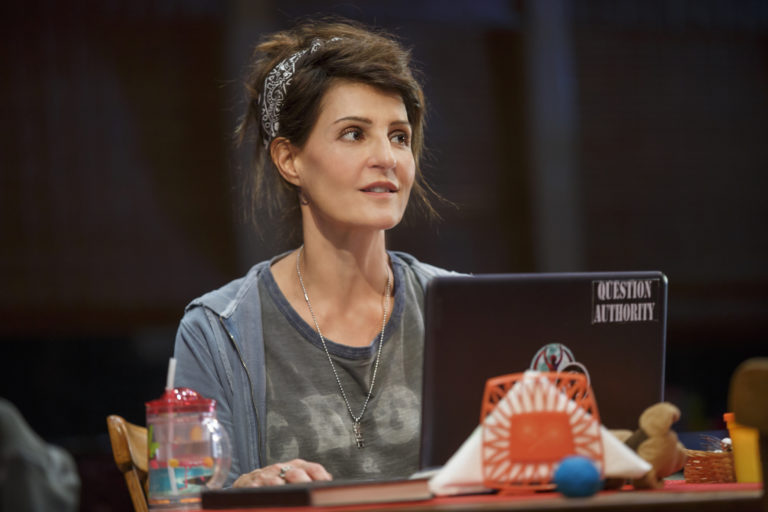
Nia Vardalos as Sugar | Photo by Joan Marcus / Courtesy of the Public Theater

Tiny Beautiful Things,’ which was a New York Times Critics’ Pick when it debuted at the Public Theater, is coming to the Pasadena Playhouse on April 10 until May 5, 2019. It stars Nia Vardalos as Sugar and features Sameerah Luqmaan-Harris, who will play the role of Sugar at select performances, Teddy Cañez, Natalie Woolams-Torres, Giovanni Adams, Adam J. Smith, and Sarah Hollis. Sherri Eden Barber will restage this production based on the original direction by Thomas Kail (of the ‘Hamilton’ fame).

Vardalos, who originated the role of Sugar at the Public Theater under the direction of Thomas Kail, also created the stage adaptation of ‘Tiny Beautiful Things’ based on the New York Times Bestseller of the same name by Cheryl Strayed. The project was conceived by Vardalos in conjunction with Thomas Kail and Marshall Hayman.

Speaking with us on the first day of rehearsals, Vardalos recalls what drew her to Strayed’s book. “Tommy Kail gave me the book and said ‘I think there might be a play in this.’ I read the book on a plane and was overwhelmed by the letters – I cried so hard that I think people must have thought something was wrong. It wasn’t that they’re sad, but it was that I was unleashed, unzipped, opened. It was catharsis.

“The letter writers – their naked emotions and the lack of conceal in any way – were what struck me. The letters were so well-written and Cheryl’s responses were not advice. I didn’t know how I could write it. It terrified me. It was so outside of my comfort zone and, yet, that was what drew me to it. I had finished the script for ‘My Big Fat Greek Wedding 2,’ and I knew at the time that we were about to start filming it. So I felt it was the perfect moment to just jump in on something different.”

“Ironically, it was through social media that we found Cheryl,” Vardalos continues. “We contacted her on Twitter and asked for the rights to the book. It’s a daunting experience to adapt someone else’s writing. And to do it, I had to really get to know Cheryl, which was not a hardship in any way. She’s the most wonderful person and we bonded. It was an incredible partnership from beginning to end.”

“What I found absolutely transformative was the moment I realized that Cheryl wrote the unpaid column particularly because she, too, was grieving and thus was able to relate to the letter writer,” discloses Vardalos. “I was faithful to her words but then I started to get really brave and pulled from one piece and put it in another. Right within her words, I arced the play, and added a narrative. To create conflict, I had the letter writers question me, when the ones in her book  didn’t because they loved her right away.”

Teddy Canez, Nia Vardalos, and Natalie Woolams-Torres | Photo by Joan Marcus / Courtesy of the Public Theatre

From the time she started to adapt the book to getting it staged, took three years. Vardalos says, “It was a process that didn’t have boundaries because, luckily, with theatre you have a long time to do it. So I did the workshops for ‘Tiny Beautiful Things’ in between filming, editing, and world-touring for ‘My Big Fat Greek Wedding 2,’ then I came back and did the play. After the first run I changed it again to add some humor for the second run. I realized that even though there was a funny bit in the latter part of the play, the audience didn’t know they had permission to laugh – I put humor in the beginning so they would know.”

It’s surprising to learn that when ‘Tiny Beautiful Things’ played in New York, more than 50 percent of the audience was male. Vardalos conjectures, “I think that anyone can sit there in the audience and feel. These pieces are open to everyone’s interpretation. For example, even though I cannot personally relate to some of the pieces, what gets me every time is the advice because it’s illuminating rather than instructional, nobody wants to be told what to do. And it seems that Cheryl intuitively knows that, and that’s why I love her advice columns – they’re not authoritative, they’re transparent, and storytelling. It was heartening to look out there and see at least half the audience be men and that they would come back. It was amazing.”

When Vardalos started adapting the book, she hadn’t thought about who would play the role of Sugar. She says, “Cheryl has a way of knowing the truth. After sitting down with her, she asked me, ‘Do you want to play Sugar?’ and in that moment I realized I did. And I was as honest as I always am, and I said ‘Yes, please.’”

However, knowing the characters intimately doesn’t inevitably mean the writer could do a better job of playing the part. Vardalos explains, “In my entire career, I have seen actors take my words and give them life. I don’t think the person who puts fingertips to keyboard is necessarily the best person to play a role. Tommy and I set out to create a role and many roles that were not bound by ethnicity, age, or gender because we want it to be as open as Cheryl is.

“I’ve now seen Sugar played by an African American woman named Opal Alladin who knocked it out of the park in San Diego. Cheryl has seen a woman play Sugar in Portland who is white. It’s going on stage in New Haven, Connecticut and in Seattle, Washington. So it’s really cool! It’s gender-less and race-less and it’s all the things we want it to be. I want to learn and see what other people do with it. In fact, I wrote in the notes ‘I look forward to upcoming productions in which you will interpret this play with your love, creativity, and ingenuity. Above all, I hope you will always remember that the letters are real.’”
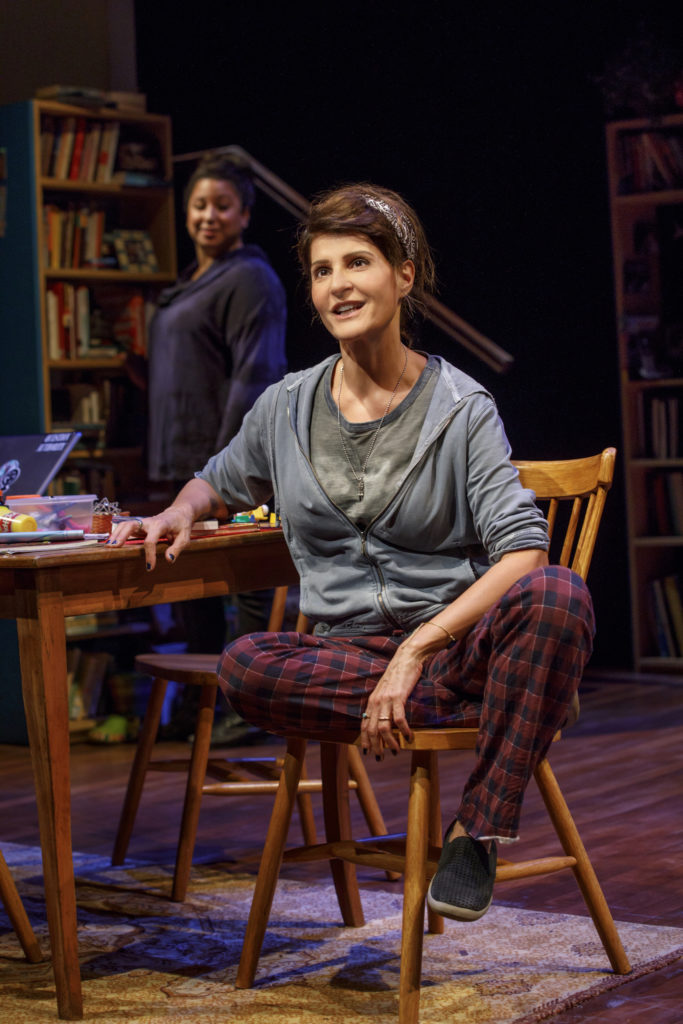
Nia Vardalos | Photo by Joan Marcus / Courtesy of the Public Theater

“Can we talk about the cast now?” Vardalos requests excitedly, “We had to cast people who were incredibly diverse. Tommy had envisioned them to embody the characters without changing costumes, voices, or accents; it was all about attitude, character, emotions, and personality. We tried a lot of different ways of accomplishing this when we were workshopping. And Tommy obviously knows what he’s doing; he knows when something feels right and he doesn’t waver. I also love that he would ask me ‘Okay? Feel good to you?’ And there was never a moment when I didn’t go ‘Yeah! Okay!’”

“So we have these wonderfully multi-talented actors. For example, one actor plays a man who’s confused about whether to tell his girlfriend how he feels. Then 20 minutes into the play, the same actor plays a transgender person. We have a man who’s my online troll and is incessantly vulgar, needling Sugar with online abuse. And by the end of the play, is a grieving father. Natalie has the role of someone who doubts me the most in the play, then becomes my mother who showers love on Sugar.”

About her experience playing the role of Sugar, Vardalos describes, “We did eight shows a week for three months during the first round, then we did eight shows a week for four months during the second round. Whenever I’m asked how many times I’ve played Sugar I say ‘not enough,’ and it’s not meant to be a glib answer. Every time I think I’m finished with the run, I can’t wait to do it again. There’s something about the play that always affects us– we’ll sit in the wings and hear the audience coming in and we get really excited because they haven’t heard it yet. And the stories are so uplifting and cathartic. The audience walks out happy and high because they felt something. Isn’t that where we’re all at right now? Just to feel something that will let us get away from all the craziness. We’ve got political fatigue; the news cycles just weigh on us.”

The audience reaction is as varied as the number of times the play is staged. Clarifies Vardalos, “Each audience is different, which is what’s great about live theatre. But, more often than not, the story that I tell about my mother is the one that affects people. It’s where Natalie plays the part of a young girl who was raped. There’s a part when I’m heading downstage and Natalie goes upstage, then goes over to the side and becomes Sugar’s mother. That’s my favorite moment in the play because to see this young actress who’s 28 years old transform like that … it gives me the shivers every time. She literally goes from being vulnerable to commanding and I love it! In just a turn, she transforms! And I love the reaction of the audience.”

Much has transpired since ‘Tiny Beautiful Things’ opened in New York, Vardalos enthuses, “We published the play and it has been licensed by approximately 25 theatres across the U.S. It’s been translated to Spanish and it’s going to be in Mexico and Uruguay. I hope to bring it to Greece and it’s going to be a touring production. This Pasadena production is the first time the New York cast is being brought back from the Public Theatre. It’s so exciting! This is so unique because I didn’t just pull one or two people –  it’s all the actors, the production designer, the costumer, the sound designer, Tommy’s associate Sherry Barber – it’s everybody. We’re all still so close, which is rare. We played it one year and two months ago in New York. We closed December 18, 2017 and we’re opening here on April 10, 2019.”

“When Pasadenans see ‘Tiny Beautiful Things’ I just want them to say ‘That’s me!’ Because as Chery Strayed says ‘We’re all Sugar,’” Vardalos pronounces.

Local Opera Virtuoso Leads the Verdi Chorus

Originally published on 2 April 2019 in the Pasadena Independent, Arcadia Weekly, and Monrovia Weekly

Anne Marie Ketchum during rehearsal | Courtesy photo / Verdi Chorus

It might surprise some people to know that the Pasadena City College (PCC) has an opera music program. In fact, PCC’s administrators themselves didn’t think to offer the course until Anne Marie Ketchum, a full-time faculty teacher, established it.

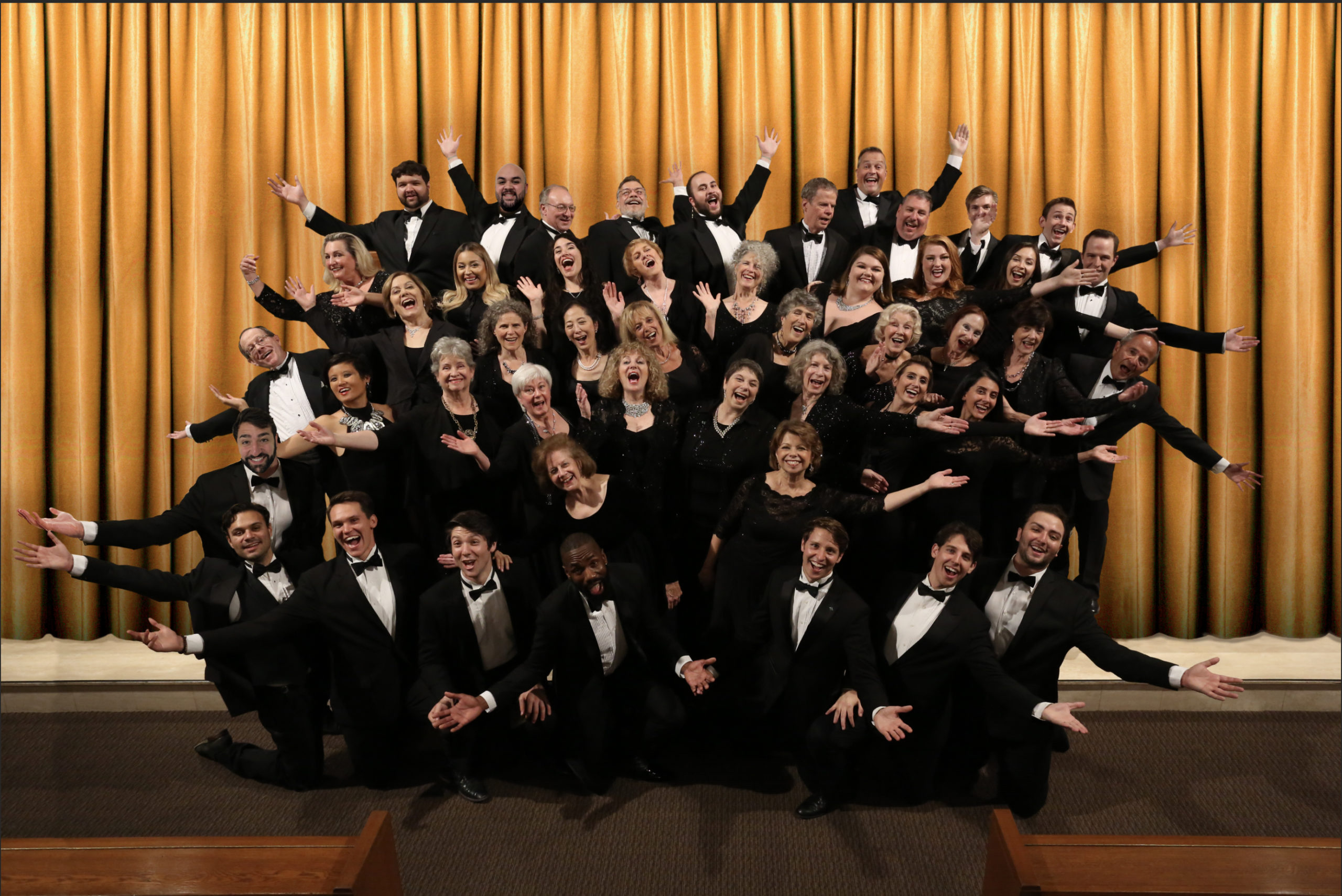
Ketchum, a South Pasadena resident, is also the master behind the Santa Monica-based Verdi Chorus, which is celebrating its 36th season with a Spring Concert ‘L’Amore e la Vita’ (Love and Life). It will hold two performances at First United Methodist Church in Santa Monica on April 6 and 7, 2019.

A few weeks before Verdi Chorus’s spring concert, Ketchum sat down with us to talk about her two major endeavors.

“I started teaching at PCC in 1981 where we had a song and dance group that performed with the big band, which became the musical theatre workshop. But my love was classical music and I found there was an awful lot of interest among the students. The administrators had no clue, they thought the kids wouldn’t be interested. So I set them straight and started the opera music program, which became an immediate success. It grew to the point that we were doing major productions once a year. We did a workshop program in the fall and a full opera production in the spring – sometimes it was a series of one-acts and at other times it was a full opera. We did ‘The Magic Flute,’ ‘The Marriage of Figaro,’ ‘Merry Widow,’ and many other well-known operas. The last one we did was ‘Tales of Hoffman.’”

Continues Ketchum, “I taught at PCC for 34 years and, in fact, just recently retired. I enjoyed teaching, but it was time to change my focus and do other things. And I was lucky enough to be able to retire at an age when I could still do that. I wanted to make sure that the opera program continued, so, along with some of my colleagues, we made a push to engage someone to replace me as opera director. They hired Maria Fortuna Dean and she’s doing a wonderful job keeping that program robust.”

The Verdi Chorus | Courtesy photo

At the time Ketchum was teaching at PCC, she was also an opera singer at a dining place in Santa Monica called The Verdi Restaurant. She recalls, “The Verdi Restaurant was a beautiful place with elegant décor, served delicious Italian food, and had dinner shows. I was one of about 25 opera singers who would sing three or four songs. On any given night, we would do a show of opera arias, duets, etc., and then a late night performance of Broadway hits.

“The owners of the restaurant decided it would be a good idea to form a chorus made up of patrons. They asked me to lead it because I had some conducting experience – having done my undergraduate degree in choral conducting. The professional singers from the restaurant, like me, did solos with the patrons who were part of the chorus. Every time the chorus sang the restaurant had a full house because all their friends and relatives came. They loved it so much that when the restaurant closed, the chorus didn’t want to quit. Consequently, several of them got together and raised some money to keep it going. They asked me if I wanted to head the group and I said yes, with the stipulation that we auditioned everybody. It wasn’t something we did then because the owners of the restaurant didn’t want to turn anyone away. But when I took over, I thought it was important to elevate the quality of our show. My other condition was that they take care of all the business and leave all of the artistic decisions to me. It’s highly unusual for an arts organization to give its artistic director complete control, but they agreed. Thus, in 1983, Verdi Chorus was born.

“We found various places to perform until we finally ended up at the First Methodist Church in Santa Monica. We grew into a huge company of strong singers and good musicians of all ages from every walk of life and every place on earth. I have 15 section leaders – which is also very unusual in a group like this – of young, paid opera singers to sing with the group and to do some of the small solos.”

The section leaders, named the Walter Fox Singers after the family who donated the funds to maintain it, became an offshoot of the Verdi Chorus. These are young, serious-minded talents who are pursuing a career in opera. Describes Ketchum, “Most of them are either opera students in the universities, or grad students, or those who have just graduated and starting careers. This gives them an opportunity to learn music that they might not have learned, probably because as a young singer they don’t do all the big heavy singing. We’re doing Verdi, Puccini, and some of the big opera; this also gives them the chance to sing solos, which they may not have gotten to do in school. It’s like a launching pad for them.”

Asked if she has helped start someone’s career in opera this way, Ketchum responds, “Yes, as a matter of fact, there’s one that comes to mind – Babatunde Akinboboye who’s from Nigeria. We call him Bobby and he was a Walter Fox singer for several sessions. He’s done marvelous work and has flourished. Another one is David Childs, who was with us for several sessions a year ago, and is now going to Rabbinical School. He’s going to become cantor and I think he’s just absolutely perfect for that. There are several who have gone in various directions in music.”

(Left to right): Returning soloists Nathan Granner and Jamie Chamberlin with Anne Marie Ketchum and her husband Aurelio de la Vega | Courtesy photo / Verdi Chorus

Verdi Chorus’s ‘L’Amore e la Vita’ features two returning soloists, Nathan Granner and Jamie Chamberlin, for whom this year’s performance marks a particularly happy occasion. Ketchum elucidates, “When they sang with us last season, the Sunday matinee culminated with Nathan proposing marriage to Jamie onstage, to the delight and surprise of the audience and Jamie. She not only accepted, but did so with several high Cs! To have them back as husband and wife, and heralded by Verdi Chorus with ‘Si celebri alfine’ from Verdi’s ‘I Vespri Siciliani,’ seems wonderfully right! I’m also thrilled to have the wonderful Danielle Marcelle Bond, who I am a huge fan of, joining us. Additionally, I’m delighted to welcome back Roberto Perlas Gomez, one of our favorite baritones and part of the Verdi Chorus family. The fact that these four incredible soloists are also connected as dear friends makes having all of them together for this concert even more special.”

The longevity and success of Verdi Chorus seems incredible given the general belief that opera isn’t mainstream and is a niche. Making it accessible and appealing to a larger population could prove to be challenge. While Ketchum agrees with that assumption, she contends, “Sure, there is a wide swath of the populace that’s clueless about opera. But I have to say that people who love opera are often fanatical about it. They champion it wholeheartedly and go to great lengths to support it. Furthermore, our chorus members and Walter Fox Singers are involved in many things in their daily lives and meet other people. Through simple word of mouth, people are finding out about us. But we are also very consciously doing a lot to actively promote the work that we do – we now have a PR company that publicizes us, we’re on social media like Facebook and Twitter.

“One other thing I want to point out is that our ticket prices are much lower than other opera events. In many instances, someone will come to the concert and get turned on to opera because of that. It’s not as expensive, it’s a one-night thing, and it’s a couple of hours. We don’t have sets and we’re not in costumes, yet there’s something powerful and lyrical in the acting and the soloists’ performance. It’s different from your normal choral music because there’s so much going on, it’s exciting and magnificent. Opera might be one of the most complex of the performing arts. Opera is theatre – there’s passion and intrigue, comedy and tragedy, and everything in between – and that’s why the art has survived over a long period of time.”

This weekend, let the Verdi Chorus transport you into another world for a celebration of love and life. For opera allows us to escape the monotony of our mundane life even as it mirrors its confounding complexities.

Pasadena Filmmaker’s Short Documentary Attracts Tens of Thousands of Online Viewers

Originally published on 27 March 2019 in the Pasadena Independent, Arcadia Weekly, and Monrovia Weekly

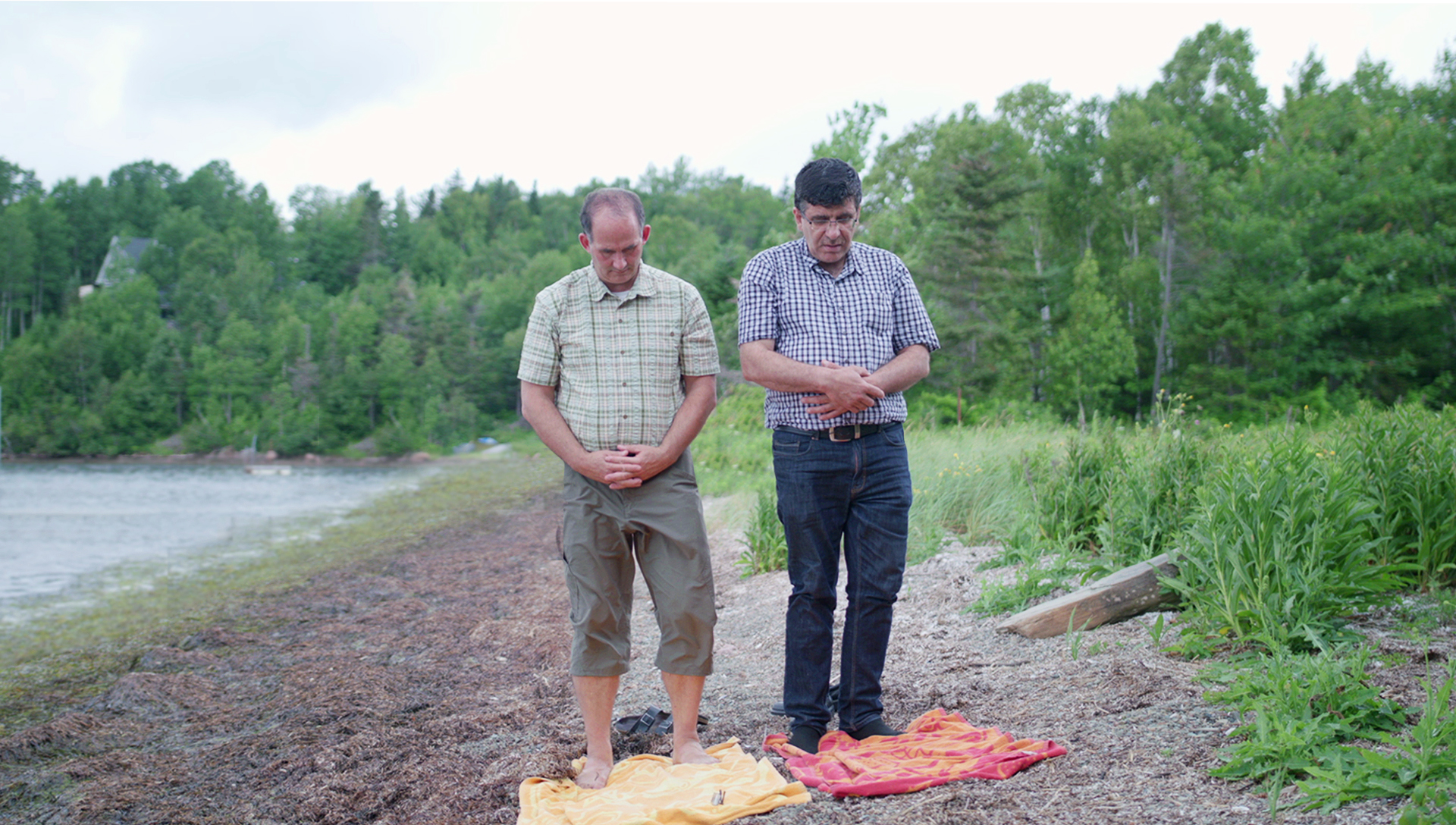
Frank Gallant and Issam Hadhad in ‘Brothers’ | Courtesy photo / Magnetic North Pictures

Jonathan Keijser is a young filmmaker in Pasadena who has been working on a based-on-a-true-story feature narrative about the Hadhad family, who moved from Damascus, to Lebanon, and eventually to Nova Scotia in Canada, and how the community came together and rebuilt the Hadhads’ business from scratch.

In the process, Keijser met Frank Gallant, one of the Nova Scotians who helped the Hadhads. That circle of friendship – between Gallant, Hadhad, and Keijser – led to the production of another, much shorter documentary about a camping trip. And that film, called ‘Brothers,’  became part of ‘The Atlantic Selects,’ an online showcase of short documentaries from independent creators, curated by The Atlantic. It has been online for three weeks and seen by several thousand viewers.

Taking a break from his feature film project, Keijser chats about how this short documentary came about.

“When I was researching about the main people involved in the story, I came across Frank who was the Canadian local who befriended Issam and helped him build his chocolate business out of nothing. Frank provided valuable assistance when I was writing the script. We would communicate by phone every couple of weeks or so, and we struck up a friendship.

“Last summer, after Frank and I had been talking on the phone for a year, I asked what he was doing for the summer and he said he wanted to do some Canadian things out in the wilderness with Issam. Issam’s never gone camping and Frank loves to go camping. And I thought that would be such a cool film and decided to do something about it. So I called Frank and told him I would like to follow him and Issam on their first camping trip together. While Frank wasn’t sure what anyone would find interesting in it, he good-naturedly agreed.”

Keijser adds, “In documentary filmmaking, it’s imperative to establish trust between you and your subject because if they don’t trust you, not only will the things they tell you sound inauthentic, but you won’t have the kind of access necessary. In this case, Frank could have said ‘I wouldn’t be comfortable with you filming that.’

“During production, there were only two of us, which allowed us to embed into scenes more easily. Typically when you’re trying to shoot observational footage, it’s always a challenge to stay inconspicuous. But after a few hours of us being together, Frank and Issam, for the most part, forgot we were even there. However, there was one instance where Issam broke the fourth wall and offered us some food he had just cooked at the campsite, knowing we hadn’t had dinner yet. Frank had to gently remind Issam that we, the crew, ‘were invisible.’ Issam quickly apologized but we silently smiled because it was just another example of how kind and considerate Issam’s nature is.”

“Being invisible is such an interesting skill – in fiction, it’s all about the camera, doing the takes, having the light, getting everything perfect; in documentary, it’s about you disappearing, you’re non-existent, you’re a fly on the wall,” Keijser elucidates.

Courtesy photo | Peace by Chocolate

Their little adventure, which took two days of filming and two months of editing, is called ‘Brothers’ for a reason. Keijser discloses, “The title is based on Frank’s and Issam’s brotherly friendship. In the campfire scene in the film, Frank mentions how happy he is to be camping with Issam, like brothers. Issam also stated during our interviews with him that he thinks of Frank as a brother.”

‘Brothers’ may be a short documentary but Keijser paid as much attention to details as he would making a feature film. He utilized the knowledge he gained from his Master of Fine Arts degree from University of Southern California’s School of Cinematic Arts and his Bachelor of Music degree (in classical doubles bass performance) from McGill University’s Schulich School of Music for it to approximate a movie experience.

“The music is a completely original score,” Keijser says. “As a musician myself, I was pleased to have been able to collaborate with composer David Bertok on the shaping of the style and tone of the music. It was important that the music reflected the celebration of cultures in the story. We did this by blending traditional Nova Scotian and Middle Eastern sounds in the instrumentation. The accordion is used throughout, which is rooted in the Scottish heritage of Nova Scotia as well as the darbuka, a goblet drum, often used in Middle Eastern music.”

Keijser sent his short documentary to The Atlantic, a prestigious publication, where it has gained worldwide viewership. He adds, “The film will be available to the public indefinitely. It shares a timeless message that is increasingly more relevant today. It has subsequently been picked up by other media outlets, including Mother Jones.”

But Keijser is hardly an amateur in the genre. He is an award-winning storyteller with a strong focus on creating socially conscious content. As a film and theatre director, and screenwriter, he is committed to sharing compelling stories of progressive communities and people, with the goal of helping encourage positive social change in the world.

Before his film career, Keijser founded a non-profit theatre company for emerging artists in Montreal, Canada. He directed fully-staged Broadway productions, including ‘Into The Woods’ and ‘Cabaret,’ both of which received critical acclaim. Pat Donnelly of the Montreal Gazette called him ‘a promising young director’ and described his shows as ‘packing an unusually powerful punch, with a cast that works like a team.’ His films and stage productions have played at over thirty festivals and venues around the world since.

In 2016, Keijser’s feature film, ‘What Would Beethoven Do?,’ had its world premiere at the Cleveland International Film Festival where it held three sold-out screenings and took home an audience award. The film questions why we create art by following three superstar musical renegades as they independently take action to repair the fractured and ailing world of classical music, reinstating its relevance in the 21st century.

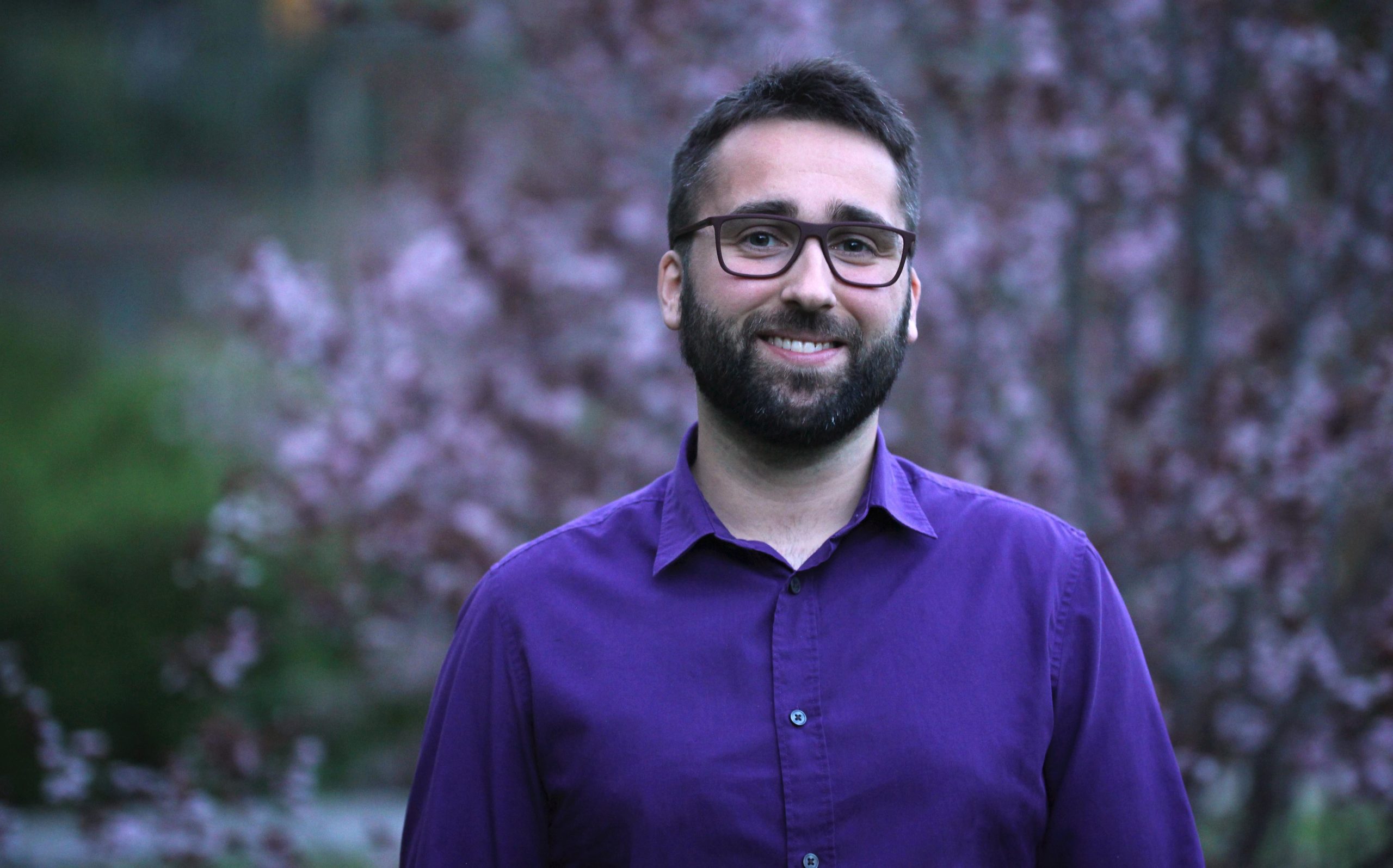
Jonathan Keijser | Courtesy photo / Magnetic North Pictures

Keijser believes that in order to inspire and challenge audience perceptions, content must be both reflective and humorous. To make an impact, stories must go beyond a single message approach and allow viewers to draw their own informed conclusions. Instead of providing definitive answers to difficult questions, he encourages increased awareness to help broaden perspectives as a way to spark curiosity and effect positive change.

It was in that spirit that Keijser created a larger project about Peace by Chocolate, the Hadhads’ family business. He clarifies, “The feature film follows the Hadhad family from their immigration to Antigonish, Nova Scotia, to the process of their rebuilding their lives in their new Canadian homeland. Although the short documentary, ‘Brothers’ is a separate story and is not directly related to the storyline of the feature film, it shares a similar tone in its warmth and sweetness. It is particularly special to me as I grew up in the Canadian province of Nova Scotia. Not only does the warmth of the community reflect my experiences in Nova Scotia, but also the importance of spending lots of time in the wilderness and natural beauty of the province.”

“I’m very happy the documentary launched in The Atlantic, where people can just go online and watch it,” continues Keijser. “Its purpose is more a social cause than financial gain. In the short time it’s been up, I’ve gotten tons of comments – most of them have been very, very heartening. People are saying, ‘Finally, something positive’ or ‘Finally, something uplifting!’ But that’s the theme in all my work. I want to leave the audience with some hope for the future, to believe they can actually do something that makes a difference. And it doesn’t have to be on a grand scale – it could be a simple interaction with someone else.”

“My vision for the ‘Brothers’ documentary was very much what Frank said at the end,” explains Keijser. “Starting a conversation with somebody is the basis for a connection. And vice-versa, connection can lead to a conversation. That’s what the documentary is about – we’re more similar than we are different as human beings. It only takes you having a conversation or connection with someone to realize it and to shrink that gap.

“I hope Issam’s and Frank’s friendship encourages audiences to be more open when meeting someone seemingly different from themselves. Although we don’t all share the same background or speak the same language, we are all the same underneath. Stories like theirs are proof that good can come from love, inclusion, and acceptance. When we turn people away, it not only furthers the divide between us, it builds resentment as well. Films like this can give hope to the millions of displaced refugees around the world and inspire others to help. We never know when we ourselves may need a helping hand.”

Keijser’s ‘Brothers’ could not have come at a better time. Given today’s political and social climate, we are in dire need of constructive examples to emulate.

Monrovia’s Pathways to Stem Cell Science Makes Learning Fun for Even the Youngest Students

Originally published on 26 March 2019 in the Pasadena Independent, Arcadia Weekly, and Monrovia Weekly

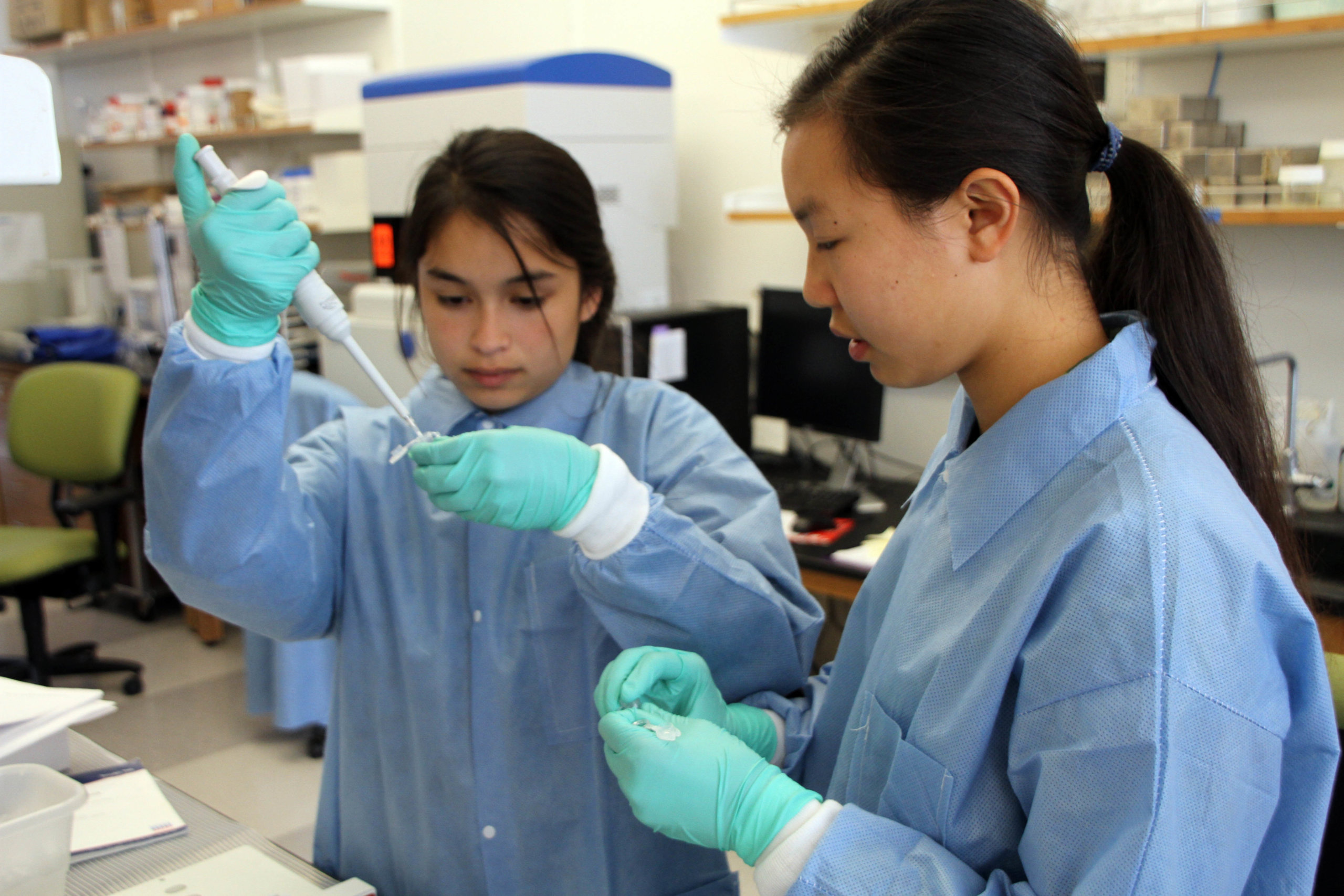
Science is one of those tricky subjects that can’t be learned just by sitting in a classroom, reading about it, and looking at pictures. Mention ‘stem cells’ and it becomes more complicated still. Right away you’ll think it’s certainly not something 4-year-olds would even grasp. Yet, it’s basic to life on earth. And so, the scientists at Pathways to Stem Cell Science have made it their mission to educate children from pre-K to 12th grade.

In 2016, Dr. Victoria Fox, a former professor at the University of Southern California’s (USC) Department of Regenerative Medicine and Stem Cell Biology, founded the non-profit Pathways to Stem Cell Science (Pathways) with a team of professionals in this field. They conduct research on a contract basis for universities and companies. The work they do generates skills and knowledge which they translate into the courses that provide hands-on learning with stem cells.

Describing one of the classes they offer, Fox says, “A two-week course for high school students called ‘Regenerative Medicine and Disease Modeling’ teaches them how to isolate a skin cell, turn it into a stem cell, and then turn that stem cell into a heart cell for use in medicine and research. Each course is based on the science that we do. Students learn hands-on skills and real-life science. They gain the confidence and the social experiences working in a private sector workplace they couldn’t get in a university teaching lab.”

Now Pathways is extending their course offerings to the pre-K level.

Explains Fox, “To effectively inspire, guide, and prepare students for STEM fields, you have to start early. We left USC partly because their focus is on college and professional training, but we want to support the entire education pipeline from pre-K to 12, college and industry professionals. We’ve developed a unique curriculum to get children interested in science right as they’re beginning their early childhood education. I’m convinced I could teach authentic science to students as young as pre-Kindergarten. My son is in kindergarten so I know what he can and cannot understand. We’ve worked closely with his pre-K and elementary school to make sure this curriculum can be delivered.

“The culmination of this is Pathways’s newly developed Stem Cell Explorers program, which consists of five one-and-a-half -hour sessions on the weekends held over five weeks and a one-hour mobile lab program called ‘Did Dinosaurs Have stem Cells.’ This latter course came about because my son learned about dinosaurs in school. Kids are fascinated with dinosaurs, which are basically the ancestors of birds and reptiles. Some lizards have an amazing capacity to regenerate their limbs because of the presence of active stem cell populations in their tissues. Over dinner one night, we were pondering whether dinosaurs would have had the same capacity for limb regeneration because they are related through evolution.”

That conversation over dinner led Fox to develop an inquiry-based session. Students can observe stem cells in action – regenerating lizards limbs – then they formulate an experimental plan for how one might test if dinosaurs had similar regenerative capacity.

Courtesy photo | Pathways to Stem Cell Science

“After that they do a hands-on experiment that demonstrates how real-life scientists might test a dinosaur tissue for the presence of stem cells, should you be lucky enough to find one that hadn’t been fossilized,” expands Fox. “This involves applying a chemical assay solution to four types of cells we’ve grown in the lab – skin cells, muscle cells, neurons, and stem cells. The solution reacts only with stem cells, turning them pink. They then observe what dinosaur stem cells might have looked like using a professional lab microscope. These are real tests I carry out in my work on a regular basis that we’ve adapted to teach authentic science to elementary school children in a fun context they can relate to.

“Session 3 of our Stem Cell Explorers program is probably the coolest and the most interesting – it focuses on the role of stem cells in human development,” Fox continues. “I’m not aware of any other curriculum like this for pre-school and elementary school children. It demonstrates how human life begins from a single stem cell and how that cell goes on to divide and create different tissues of the adult body. Students learn about the different stages of human development using our specially designed ‘development calendar’ which places images of growing human embryos side-by-side on a large floor-sized calendar.

“We also model some of the stages with Play-Doh to promote active learning and fine motor skills. Young children love this class because they often have younger siblings and are interested in understanding where babies come from. This session satisfies that curiosity in a way that’s authentic but still accessible for young audiences.”

Fox expounds further, “We also talk about the role of stem cells in therapies like bone marrow transplants. We’ve created a life-size model that enables students to perform a ‘mock bone marrow transplant.’ They harvest and inject a red fluid containing pretend bone marrow stem cells and observe them circulating around the body. They get to play doctor – something young children enjoy.

“In session 4 of the Stem Cell Explorers Program, we touch on the importance of keeping cells healthy by eating nutritious food, breathing fresh air, drinking clean water, and exercising regularly. We discuss why these are essential for cells and what happens to your cells if they’re unhealthy and die. They take part in a cooking exercise where they learn to make a healthy snack. The curriculum is cross-disciplinary – combining science with other subjects like cooking, art, math, literacy and geography – not only to stimulate scientific curiosity but to also prepare students broadly for success in school and in life.”

“The final day of Stem Cell Explorers centers on experimental stem cell science,” Fox says. “It’s in this session where students perform a real-life experiment with beating heart cells we’ve derived from stem cells. They count the number of times heart cells beat before and after adding ice to the medium, demonstrating the effect of temperature on heart function. They then draw a simple bar graph and, with our help, analyze their data. This experiment shows what would happen to your heart cells if they were cold – hypothermic. It’s a very striking visualization they can understand.”

According to Fox, the Dinosaur stem cell program is an hour long and designed specifically as a mobile lab to go into classrooms. It can be taught to large assemblies in groups of 20 students. They charge a small fee to cover the cost of materials and time, much like other mobile lab programs. They are still working out a fee structure, but it would be somewhere in the range of $300 to $500 per session – which is close to what other mobile programs charge. Additionally, Fox’s team is engaged in fundraising to provide subsidies for low income communities and will work collaboratively with specific schools to raise tuition money.

The science lab | Courtesy photo / Pathways to Stem Cell Science

“We ensure our curriculum aligns with the NGSS (Next Generation Science Standard) so students learn about new topics in a way that also informs their core science instruction,” clarifies Fox. “Our courses are devised to augment existing school programs, providing real-world context to the science students learn in the classrooms. These are particularly useful for schools that teach a lot of textbook science but don’t have the capacity to offer hands-on activities. There are other mobile labs that work this way, but they are usually pretty simple and don’t provide the same real-life experiments and concepts we are able to teach. And it’s the real-life context that makes our science so fascinating to young students.

“We’ve developed a number of different course for students of all ages. Some of our programs – particularly the high school and college courses – have been offered for many years. However, not many people know we exist. Raising awareness for our programs and the unique learning opportunities these offer is one of the biggest challenges we face.”

Getting more girls interested in STEM fields is one of the more daunting tasks schools are faced with and they’re hiring more female science teachers to help in this endeavor. College counselors advocate that high school seniors follow their passion when choosing what degrees to pursue, and for good reason. Students succeed when they’re studying something they find engrossing and captivating.

Fox points out, “Teaching exciting real-life science when they’re still young is a great way to entice girls into this field because by the time they get into high school, it’s often too late. This is at the heart of what we do – building that pipeline from pre-K to professional level. It obviously helps that I’m female and have children. It’s important for female students to see a woman who’s also a mother leading a science organization – it helps them to see themselves becoming a professional scientist.”

Pathways’s program bucks the norm, though. Program Director Dr. Mickey Pentecost discloses, “We attract more female students into our program than male students. Our goal is to provide students a variety of role models. Showing them the diversity of careers they could go into with a STEM background is also a key part of our mission. My concern is that if students are only exposed to academia, which struggles to retain women and minorities, they’ll think ‘Oh, I’m going to get this far and then the door is closed to me.’”

Pathways to Stem Cell Science attracts more female students to its programs | Courtesy photo / Pathways to Stem Cell Science

Additionally, the delivery method for science courses is outdated, as Fox elaborates on. “I think the college education system, which still relies heavily on lecturing, is antiquated. It dates back to a time when there were limited textbooks. So if you wanted to learn a particular science subject, you had to go to a college lecture and learn first-hand from a professor who was an expert in it. That was even true to a certain extent when I was doing my undergraduate degree – there were only a few textbooks for each topic and they weren’t that great so you really relied on the theoretical knowledge the professor provided. But so much has happened in the time since I took my undergraduate degree. The Internet, online textbooks, and online teaching modalities enable science theory to be taught and learned outside of formal lecture settings. By leveraging these technologies, science education programs could dedicate more time to vocational activities that offer students the skills they need to compete for jobs.

“Biotechnology is going through the same boom Silicon Valley went through with Facebook and Google. This is driving a demand for professional scientists with a range of skills set; 21st century bioscience has become so complex it requires sophisticated skills that one can’t get in a lecture hall. Yet many universities continue to emphasize lecture-based teaching, a system that’s more compatible with preparing students for academic career paths versus the private sector jobs they’re more likely to seek out. A lot of schools are not really teaching in an active way that meets the requirements of biotech and private sector science. Yet private sector science industries currently offer more jobs than university science departments. The system needs some modernization to ensure students are prepared more broadly for the jobs that are available to them in the sciences.”

Fox adds, “All our teaching courses are hands-on and taught in a real-world context. We created Pathways to offer these courses because many universities feel this type of teaching is too expensive to provide. Teaching in lectures is much cheaper because you only need one classroom and one person to reach hundreds of students. I think the lack of real-world hands-on activities could deter girls from going into science – it’s just not that interesting sitting in lecture halls, listening to lectures, even when you like science.

“I don’t want to detract from the importance of a college degree – the knowledge that’s gained in university is essential to enter any bioscience profession. However, the academic career track tends to create university professors with similar backgrounds and experiences, by favoring scientists with high impact factor publications from a limited number of Ivy League institutions. This produces a scientific faculty with qualifications that are crucial for grant writing and lecturing, but not necessarily the diversity of experiences required to prepare students for the wider world. If you browse at the backgrounds of private sector bioscience professionals you’ll notice experiences are much broader. Exposing students to the array of experiences they will need to plan viable careers, train for future employment, and become successful scientists was another reason I founded Pathways.”

And today’s students are much better for it.

Arcadia’s Maki Hsieh is Honored 22nd District’s ‘Woman of the Year’

Originally published on 12 March 2019 in the Pasadena Independent, Arcadia Weekly, and Monrovia Weekly

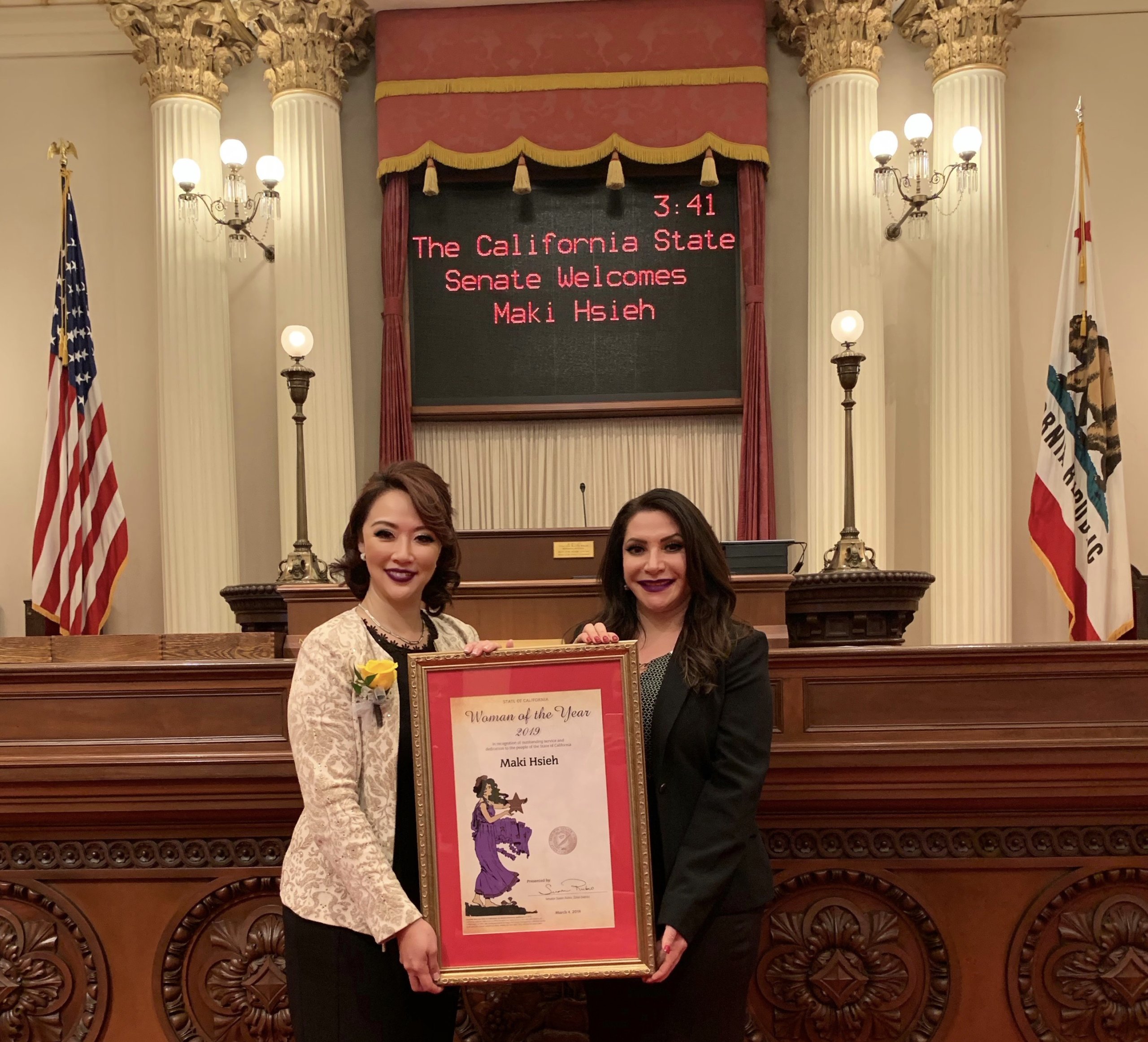
Maki Hsieh (left) being honored by Senator Susan Rubio (right) | Courtesy photo / Arcadia Performing Arts Foundation

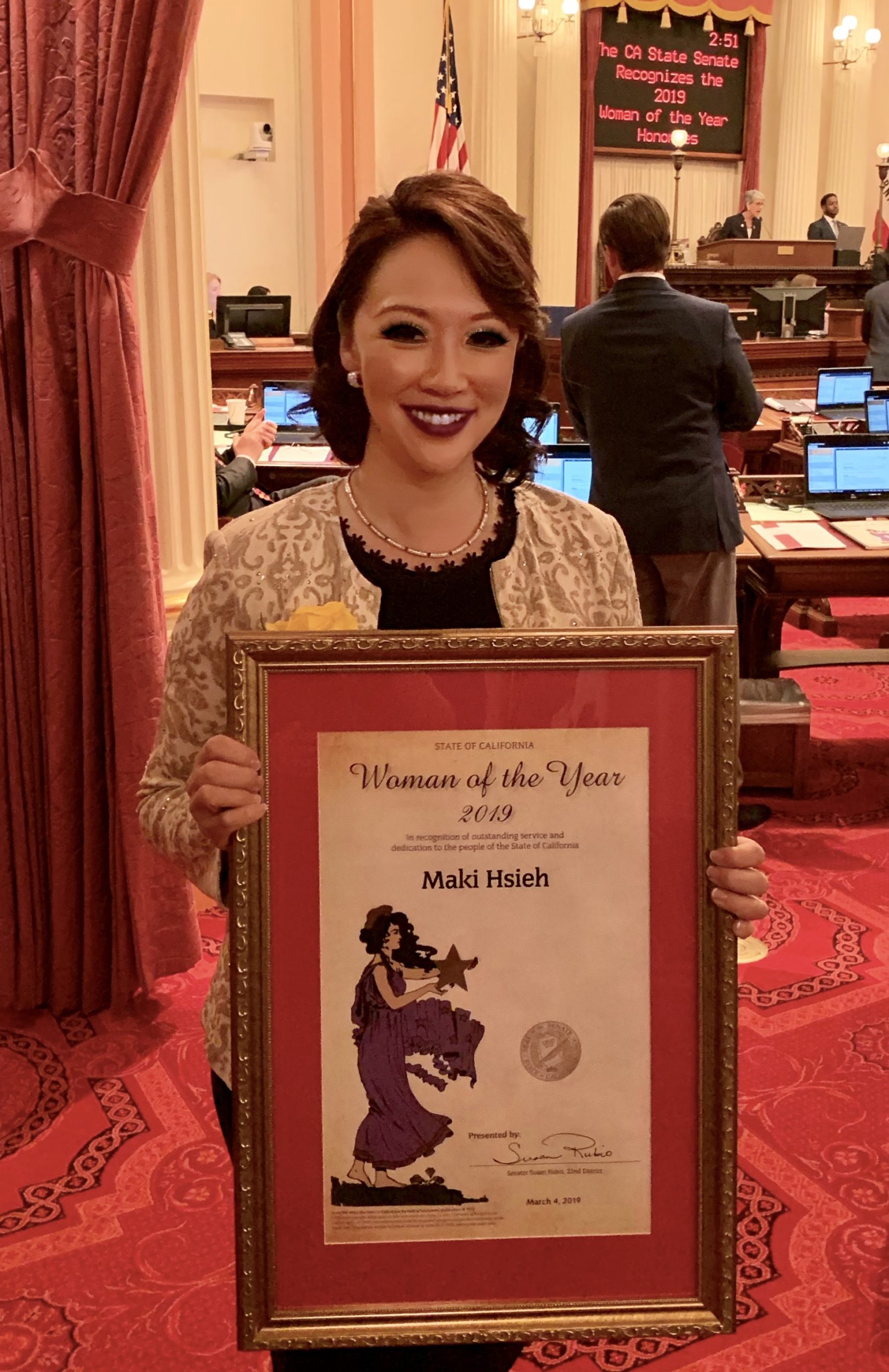
On March 4, Maki Hsieh, Arcadia Performing Arts Foundation Executive Director, was honored as the 2019 Woman of the Year by Senator Susan Rubio of the 22nd district. Since 1987, the California Legislative Women’s Caucus has awarded women in each State and Assembly district this recognition at a ceremony held at the California State Senate Chamber at the state capitol.

The day after the event, Hsieh is still in disbelief at the unexpected accolade. I’m sitting at her dining table to chat about the award, how she was chosen, and what it means to her.

“I didn’t know this was coming and I was caught completely by surprise!” Hsieh declares. “I spearheaded Arcadia’s first formal Chinese New Year’s festival in January. This was the first time the city sponsored it, and the foundation organized and helped promote it. Because it was a special event, elected public officials attended it and gave certificates.

“One of the officials was Senator Susan Rubio, who was a teacher at Monrovia for 17 years. She was really impressed by how hard the Foundation works for arts education and arts excellence in school. When it came time for her to honor her first ‘Woman of the Year,’ she and her staff went through a whole vetting process. She has a million people in her district and they looked at a lot of candidates. And my name came up.”

Continues Hsieh, “ Her team contacted me from Sacramento and asked me for my biography but  I really didn’t have one. The last time I wrote something about myself was for a press release that went out in 2017 when I was appointed Executive Director for the Foundation. So I dug up the press release from our website, downloaded the PDF, and sent it to them. When I asked what it was for, they said ‘We’re looking at ways to increase our arts outreach to the community so we wanted to learn more about you.’

“Then in February, her office kept trying to schedule time on my calendar. And every time they requested to reserve an appointment with me, they said ‘The senator would like to speak with you for a few minutes to tell you about the award.’ All along I thought it was about arts outreach. But, again, other things took precedence, like fundraising and dealing with a lot of issues.

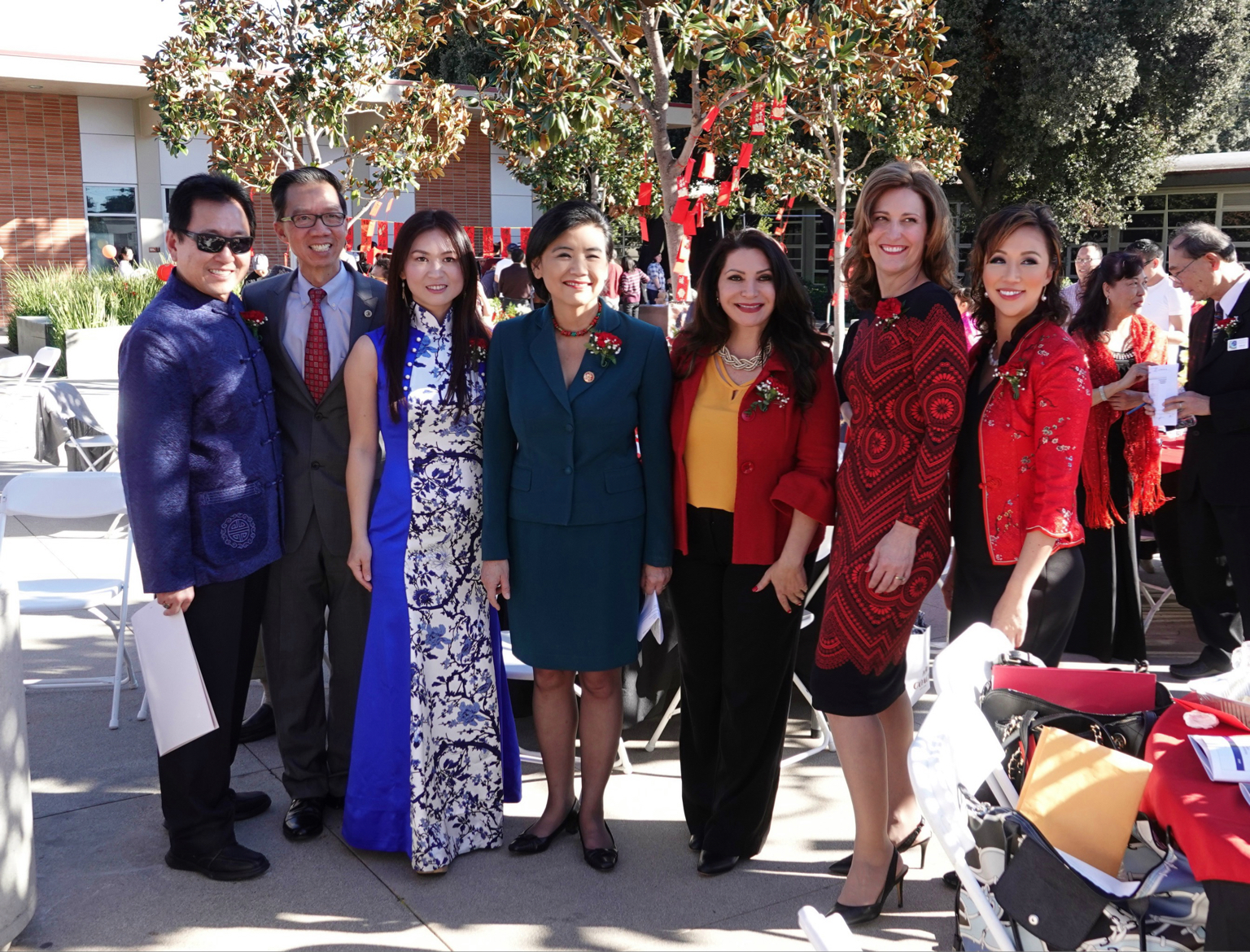
Arcadia’s first official Chinese New Year Festival with Arcadia Mayor Sho Tay (far left), Congresswoman Judy Chu (center), Senator Susan Rubio, Mayor Pro Tem April Verlato, and Maki Hsieh (far right) | Courtesy photo / Arcadia Performing Arts Foundation

“Finally, they called and said, ‘Please, you have to speak with the senator for a few minutes.’ I was in Las Vegas then and this was when the city had three snowfall days for the first time in over a decade. I was stuck at the airport and couldn’t leave. But they insisted that Senator Rubio needed a few minutes to speak with me. So I asked, ‘What is this in regard to? If this relating to the art outreach program, I would be happy to connect with her at a later time.’ They still didn’t tell me what it was about or that the senator needed to speak with me because they had to book my flight.

“When we ultimately connected, I said ‘Thank you very much, Senator, for giving me a call. I look forward to hearing how you would like us to help you.’ And she said, ‘No, it’s not about you helping me. It’s about me honoring you!’ And I said, ‘Honoring me for what?’ Then she said, ‘Every year the California State Senate honors a ‘Woman of the Year’ from their district. This year I would like you to be my very first ‘Woman of the Year’ and we will fly you to Sacramento.’ It was an immense surprise to me, I started tearing up, and all I managed to utter was ‘Really?! Me?!’”

Hsieh adds, “Being bestowed this honor got me thinking about my mother’s journey. She started her new life in this country with nothing but a dream. She first came here in the 1950s to Sacramento, with two suitcases, not knowing any English. She was 19 years old. She toiled her way through Sacramento City College and then Cal State Sacramento – as a busser at Sacramento’s German restaurant; as a live-in maid at former Supreme Court Associate Justice Anthony Kennedy’s home, for free room and board; and as a laborer at the Chinese laundromat, for ten cents an hour – until she eventually got her Masters at USC. And here I am one generation later, getting this award. Going back to Sacramento, recalling my mom’s path, had special meaning to me.”

This recognition isn’t merely an achievement for Hsieh, but for the Foundation as well. She explains, “We have a shoestring budget so getting free publicity is a god-send. I always say ‘A rising tide lifts all boats.’ And if I’m that rising tide in the region, it will lift the foundation in many ways. Fundraising is one thing, but more important than fundraising is awareness that arts excellence is a legacy and it will go away if we don’t support it. Arts excellence is not funded by the state and it is severely lacking in focus and vision. This honor will elevate the region as a cultural mecca and Arcadia as a destination for kids who already are high achievers but can really benefit from something more.”

Photo taken during Maki Hsieh’s Album concert at Arcadia Performing Arts Center (left to right): Camilla Leonard (Maki’s daughter); Maki Hsieh; Mary Hsieh (Maki’s mother); and Aubrey Leonard (Maki’s daughter) | Courtesy photo / Arcadia Performing Arts Foundation

“A crucial mission of mine is getting young people off the screen,” Hsieh explains. We have to give them a lot of things to do – activities that are fun – that have direct impact in their lives. It was, therefore, a fortunate development when the district rolled out and funded mandatory orchestra or general music in 4th and 5th grade, for one period a week, throughout all six elementary schools. In the past, music was a pull-out system where you signed out and you were pulled out of class. But those kids were always the ones who didn’t want to be in class and needed a reason not to be there. Now it’s mandatory, everyone’s on the same page.

“I didn’t think it was a big deal until my 10-year old daughter came home one day and said ‘We have to pick an instrument.’ I said, ‘But you’re already doing drums and piano.’ To which she replied, ‘No, this is mandatory, it’s going to be part of our school day and we’re all really excited. Every day at lunch we’re talking about a different instrument to pick so we could have a quartet, or we can have a band, or we can do this …’ and on and on she went.

“It isn’t just about learning to play an instrument or being on stage. It’s about having a shared experience with their peers, which is something they’re missing. Today kids play ‘Overwatch’ on the TV with a headset that connects through WiFi with other kids in their home doing the game. They’re playing and watching a game but they’re not having a communal shared social experience, it’s all on the screen. Furthermore, seniors aren’t able to participate in children’s lives because they don’t play computer games on TV. And suddenly you have a whole generation of kids who are disengaged from their parents, grandparents, veterans, and those people who can really pass on their wisdom. Children can use their artistic talents to be involved with them. ”

Most of the honorees in the ‘Woman of the Year’ are in the academic, medical, or political fields and the write-ups about them in the event book reflected that. Hsieh’s bio spotlighted her artistic achievements before touching on her professional career, which helps tremendously in providing a model for young people to emulate.

Hsieh expands on the point. “Artistic talent is a gift from your family, from ancestors, from DNA, from the heavens. And what you do with it is your gift to the community and the world. If you do it as a side thing and have fun, that’s fine too in its own merit. But, I think, if you focus on your gifts and work on them, they would evolve into being a means to effect change. It’s an agency to help your community and, in a way, it becomes a public service. My musical ability made me the right fit for my position at the Foundation, which led to my being honored. I didn’t appreciate that until now.”

Maki Hsieh | Courtesy photo / Arcadia Performing Arts Foundation

And Hsieh’s accomplishments at the Foundation are as impressive as her artistic talent. She discloses, “When I first started, our fundraising wasn’t covering operations –we were in the red and we had a debt obligation we couldn’t pay. Diversity programming was almost non-existent and it was focused on a certain demographic. The founder, Mickey Segal, actually walked out on the board because he didn’t feel that the Foundation was doing what it was called on to do. I inherited a lot of things that needed to be fixed pretty quickly. It wasn’t a five-year plan, it had to be done now or we were going under. Fast forward to today, we’ve paid off our debt and we’re going to be in the black for the first time in our operation’s history. We had a 114% net sales growth; we’ve just acquired a match challenge – in seven days we raised $88,000 towards that match. We recently secured our first $1 million planned gift. We’re really starting to see traction in both awareness and funding for arts excellence. Art excellence is such a great legacy in our region and it can’t go away. It’s a battle we have to win.”

Offering her assessment of what this honor means, Hsieh says, “The ‘Woman of the Year’ has been an annual tradition during the Women in History month. But this year, I believe, it has a greater significance to many people because of the growing trend in giving female leaders a place in the national scene. At the awards yesterday, we had the first female lieutenant governor of California.

“Being chosen ‘Woman of the Year’ out of one million people in the 14 cities in Senator Rubio’s district, heralds a wonderful opportunity for Asian females. Until now, we didn’t a voice. When my Mom came here, there were signs that said ‘Japs should not sit here,’ ‘Japs are not allowed,’ ‘Chinks go to the back.’ She wanted to work for the state and she interviewed constantly, but they always picked the Caucasian male. The door was closed. While the door isn’t entirely open, I feel the welcome mat is there. We still have to knock on the door to be admitted, but at least we’re no longer being sent away.”

As a woman, I am proud of Hsieh’s award. And as an Asian, I would like to think that it is as much her singular honor as it is her mother’s and the other Asian women who arrived in America before her. It so eloquently speaks to how far we’ve come as a people in this country. And it is so reflective of our silent crusade to be recognized, not by going out in the streets to rant about the acknowledgement we deserve, but by quietly demonstrating through talent and action what we’re made of and what we’re capable of accomplishing.

March College Search Guide

Originally published on 4 March 2019 in the Pasadena Independent, Arcadia Weekly, and Monrovia Weekly

Lawrence University | Courtesy Photo

The road to college

It’s drought or deluge. After years of dry winters, we finally got rain. Lots of it! I’m sure you’re ready to put away your umbrellas and rain boots and looking forward to some sunshine. And I’m quite certain students can’t wait for their hard-earned spring break. It would be a welcome respite for your children, a time to recharge as they head towards the end of the schoolyear. While it is an opportunity for them to relax, it is also a chance to evaluate where they are on their schoolwork.

FRESHMAN

Your children should have all their grades on track. They need to concentrate on maintaining good study habits now to be better equipped to handle the rigors of the workload in the coming years. If they haven’t been reading much, they should seriously consider taking up reading as a hobby during spring break to help them increase their vocabulary which they will need to take the SAT, and as preparation for writing their essay. 

They need to line up their summer activities. Their grade dean would have some ideas on how they can explore their passions and research summer opportunities. Consider looking into international experiences.   

SOPHOMORE

Tenth graders who are taking AP courses need to register for the AP exams administered in May.  While there is a slew of small independent tutoring schools offering courses to prepare for the AP tests, some children do not need to take on this additional burden on their already busy schedules. Your children have enough on their plate with the intensive homework associated with an advanced placement course. That said, your kids would still have to show competence on the AP exams as all scores are submitted to the College Board; all the colleges to which your children apply will see the AP scores.

Your children should also take the SAT subject test. Your children’s teachers could provide guidance on what they need to prepare for. They might want to ask the teachers in that particular course for study suggestions, review packets, and sample tests. There are also test prep books available in bookstores and online.

It’s also a good time for your children to consult their class dean regarding summer activities – academic enrichment programs, volunteer work, or part-time employment. College admissions officers are looking for students who explored their passions while getting good grades.

There are outside resources for your children to plan ahead for the admissions process. A college preparation service called CollegeVine (www.collegevine.com) offers near-peer mentoring from ninth to twelfth graders. Their consultants, who are recent high school graduates themselves, provide expert guidance. They are near in age to the children they are helping and have recently applied to college themselves.   

If you’re looking for a counselor who can meet in person with you and your children, I would recommend Greg Kaplan. He is a native Southern Californian and has been holding free college application workshops in the San Gabriel Valley. He is available for a personal meeting for the initial conference and thereafter confers with you and children via Skype. 

Likewise, Kaplan’s book “Earning Admission: Real Strategies for Getting into Highly Selective Colleges” is a useful resource. It offers your children  a guide on how to best present themselves to admissions officers.

JUNIOR

Besides registering and preparing for the SAT or ACT, your children should use the spring break to visit college campuses.  If possible, they should have a prepared college visit checklist with a page or several pages allotted for each school. For each of the schools, they would need to write their overall impressions – what they liked most or least. 

They should write their observations by categories: the intellectual atmosphere (Do students enjoy their courses or are they stressed-out? What is the advising system for freshmen? Are there opportunities for independent study/study abroad?). They should note the social climate (Do students stay on campus or do they leave on weekends? What are the facilities for socializing?  Is there an active Greek life?) They should observe the campus life (What are the living arrangements? Is there guaranteed housing for four years? What are the dining options?). 

One major concern for parents and children should be security on campus (Can outsiders gain access to the library, the fitness center or student union? Are there video cameras around the school periphery?). Of course, the most serious threat to students’ well-being may actually be within the confines of the institution. This topic has become part of the national conversation   and some universities are addressing the topic up front. I, personally, would want to know if officials have safeguards in place to prevent such crime from occurring. Do administrators disclose information about it or do they hide and blur the facts? What consequences does the school impose on perpetrators?

Some children know right away when they visit a campus that they don’t see themselves thriving there. It could be that it isn’t the right intellectual or academic fit for them; or the environment doesn’t suit their lifestyle. But it’s a good thing to know before they decide to apply.  

SENIOR

As I expounded on last month, some colleges will be sending out decision letters sometime in March or April. Your children should keep their wits about them as they await word from the colleges they applied to. 

After the marathon they finished, your children could be quite restless and anxious to know if they have been accepted to their school of choice. Remind them to use this quiet time productively by keeping their focus on academics and their grades. They should still engage in other worthwhile activities like sports or arts. 

Tell your children that they might be getting letters of rejection from some schools. While you might be more disappointed than your son or daughter, avoid showing it as that sends the wrong message. Not being accepted to their first choice isn’t the end of the world. In fact, while it may not seem like it at first blush, it usually turns out to be a blessing in disguise because, in most cases, they end up in the school that is the right fit for them.     

You and your children should research all scholarships and grants available to them. Many colleges offer merit scholarships to applicants with excellent academic records to motivate them to matriculate. The package usually includes the full cost of tuition and fees and may also cover room and board.

Universities also extend need-based grants to applicants who demonstrate a financial hardship. These reduce the cost of a college education and do not need to be repaid. Your children should complete the Federal Application for Federal Student Aid (www.fafsa.ed.gov). Other schools may also require a college-specific financial aid application.

Here are some useful websites to help you get started in your research: CollegeXpress (https://www.collegexpress.com/); Fastweb (www.fastweb.com); National Merit Scholarship Corporation (www.nationalmerit.org); Scholarships.com (www.scholarships.com);  Scholarships360 (www.scholarships360.org); Student Aid on the Web (www.studentaid.ed.gov).

‘The Glass Menagerie’ Stirs at A Noise Within

Originally published on 4 March 2019 in the Pasadena Independent, Arcadia Weekly, and Monrovia Weekly

Kasey Mahaffy and Erika Soto in a pivotal scene | Photo by Craig Schwartz / A Noise Within

‘The Glass Menagerie,’ the autobiographical play that launched Tennessee Williams to great renown, takes off at A Noise Within (ANW) from February 24 through April 26. It made its debut in 1944 in Chicago, moved to Broadway a year later, and earned Williams the New York Drama Critics’ Circle Award.

In the play, an innocuous visit from a potential suitor unsettles the sheltered Wingfield family. At the center of this drama is matriarch Amanda who fiercely protects her adult children from the harshness of others, oblivious to the likelihood that her eccentricities are the biggest threat to their well-being.

First produced by ANW during its 1997-1998 season, it was directed by Julia Rodriguez-Elliott and starred Geoff Elliott narrating as Tom Wingfield, with Deborah Strang as the imposing matriarch Amanda Wingfield.

This re-staging of ‘The Glass Menagerie’ is helmed by Producing Artistic Director Geoff Elliott and features four resident artists – Deborah Strang returns as Amanda, Rafael Goldstein as Tom Wingfield and the narrator from whose memory the story is told, Erika Soto as Laura Wingfield, and Kasey Mahaffy as the gentleman caller, Jim O’Connor.

Soto, one of ANW’s two newly installed resident artists (the other is Kasey Mahaffy, who shares the stage with her in the play), talks about the play, her role, and the challenges in inhabiting the character of Laura.

“I found ‘Glass Menagerie’ moving in its mundane complexity; it’s so revelatory of American psyche,” Soto says. “Even as the play has a resonant theme, it was inspired by Tennessee Williams’s specific experience – as a writer, as a gay man, and as a reluctant patriarch and caretaker of his family.”

Erika Soto (left) and Deborah Strang (right) | Photo by Craig Schwartz/ A Noise Within

“Laura is the foil to Amanda’s energy,” Soto describes. “If Amanda is this almost ridiculous force – this hurricane – Laura is the eye of the storm. Tom, as the narrator, is navigating in and out of this experience. And you see that as he moves in and out of the house; he’s the one with the mobility even if that comes with consequences. He’s the one yearning to escape from this place. Tom breaks free externally while Laura does it internally; she navigates the storm by going within. She lives in her own little world, which is an oasis, with the music she listens to and her glass menagerie, which she has such a devotion for. That has given her an inner strength, whether that’s for better or for worse. It’s her coping mechanism and what makes her function in society. It’s her survival instinct – to cocoon, and that’s her safe space.”

“In the beginning, I struggled connecting with Laura because she was written as someone who is so shy, so afraid, so apologetic,” reveals Soto. “She wanted to disappear, to placate, and to do whatever is necessary to keep the calm. And I am so not like that. At all. That was more challenging than I ever thought. If this role had come years ago, when I was in my early 20s, I would have said ‘Easy-peasy! I know what that feels like.’ But those years are now in the rearview mirror. The 30-year old me is vivacious and alive, an activist and a feminist. But, then again, it wouldn’t be called acting if I were to play someone exactly like me. And, having had my share of playing the ingénue, I have that well to draw from.”

Adds Soto, “Laura’s physical limitation, which we have decided was the result of her bout of polio, helps put me in a vulnerable place and rationalizes my need to feel safe. She lives in a world where the boxes are very different and are a lot smaller – there are only so many places she could go and there’s only so much power she has. I made those the parameters around which to work.

“Thankfully, Tennessee Williams didn’t write static characters with linear lives. Laura has an immense arc in the course of a night. In fact, in this story, I see her journey as being a full circle. She starts in a place and experiences something she never expected to. Through circumstance, and tragedy in a way, she comes back. And there’s a kind of peace to that … it’s sort of a melancholy peace. And I think that is what’s so heartbreaking. You meet this person, and you imagine she’s going to reach that crescendo, and burst off the page.”

Deborah Strang and Rafael Goldstein | Photo by Craig Schwartz / A Noise Within

“That said, I choose not to think of Laura as a victim because I don’t find that interesting,” Soto discloses. “To see any woman as a victim is very lame to me in terms of actionable character. I see her as a response to her environment – a product of her time and space. She is just like any of us, responding to people in our lives and the hand we’re dealt, with our own personal insecurities and resistance.”

“I feel you should have a big ‘spoiler alert’ disclaimer at the beginning of your article,” Soto cautions before continuing. “I think Laura does have a moment where she takes a chance and tries to embody someone she hadn’t even imagined she could be. To me, someone who takes authority over her own experience can never be a victim.”

As she inhabited the role, Soto discovered something about Laura that she didn’t know going in. She divulges, “It wasn’t until I started to think about her inner life, and the kind of strength it takes to survive a mother like Amanda, that made me appreciate her. That’s quite interesting and complex. Then I thought, here’s a man writing about these ridiculous women. Maybe if a woman had written Amanda and Laura, they wouldn’t be such polar opposites and so extreme. It wasn’t genuine femininity but stereotypical ideas of femininity – the aggressive, bite-your-head-off, hysterical mother and the trembling, terrified, apologetic, little doe of a daughter. Women are none of these things!”

“I had never read the play before now, nor have I seen it performed, and I like it that way,” Soto confesses. “As embarrassing as it is to admit ignorance about something so iconic, I prefer having a blank slate – to discover it and it being fresh for me so that my performance also translates that way to the audience – rather than having to live up to decades of expectation, or to deliver lines with a precious quality, which is not real to the character. The characters in this play don’t know they’re iconic, they’re just people.

“But I have to honor who Tennessee Williams perceived in telling the story about his sister because it was his reality. It’s his story and that’s what we’re telling. Even if, ideally, I want to apply the things I try to practice in my daily life to the stories I’m telling. And it’s only a piece of a puzzle as well, it’s her piece, along with Amanda’s, and Tom’s, and the gentleman caller’s – all these parts tell a bigger story.”

Rafael Goldstein and Deborah Strang | Photo by Craig Schwartz / A Noise Within

Asked what the audience would find relevant, Soto pauses to consider the question before responding, “I personally relate a lot to Tom in his churning, boiling, and brimming fire where he feels something’s got to give. I think that’s fascinating to watch. Tom says ‘I’m boiling inside; I’m ready for adventure. I’m tired of watching other people having it.’ He talks a lot about the impending war and that war is when the common man can have his adventure. He also mentions movies, he’s constantly wanting to go to the movies. This would resonate in Los Angeles, especially in our media-driven world, where we’re watching people from our TV screens, our phones, and laptops. We could relate that to our idolization of celebrity, stars, and the fantastical world we see in films. I love his idea that we sit there and watch other people have adventures and live fantastical lives. That, to me, is such a call to action.”

Soto confesses she hasn’t really thought about the audience takeaway in great depth, but concedes, “It isn’t necessarily a feel-good play but I hope they’re moved. I want for them to react the same way I do after watching a movie or a play … to say ‘I know! Me too!’ Whatever that is – it could be ‘I know, me too, I also feel extremely depressed’ or ‘I know, me too, I have that kind of mom or that kind of relationship with my mom.’ I feel that’s why we tell stories. And however you want theatre to be, it’s all therapeutic, it’s catharsis. I  hope the play strikes a chord and, in doing so, is vibrational enough that it shifts something, or validates them in some way.”

“And I think that’s why we go to the theatre and why stories are valuable to us as human beings. It’s such a ritualistic thing we do – gathering in groups in a particular space. How different is that from, I don’t know, church? It’s a community of people enjoying a common experience.  There’s something strange and magical about,” Soto concludes.

While ‘The Glass Menagerie’ was specific to Tennessee Williams’s upbringing, the feeling of being constrained by societal expectations or being stuck in a rut is something most of us can relate to. Lest the play engender resignation and hopelessness may it, instead, impel us to take the reins and change course. That sense of personal agency is key to owning our life.

‘Digital Nature 2019’ Display Dazzles at The Arboretum

Originally published on 22 February 2019 in the Pasadena Independent, Arcadia Weekly, and Monrovia Weekly

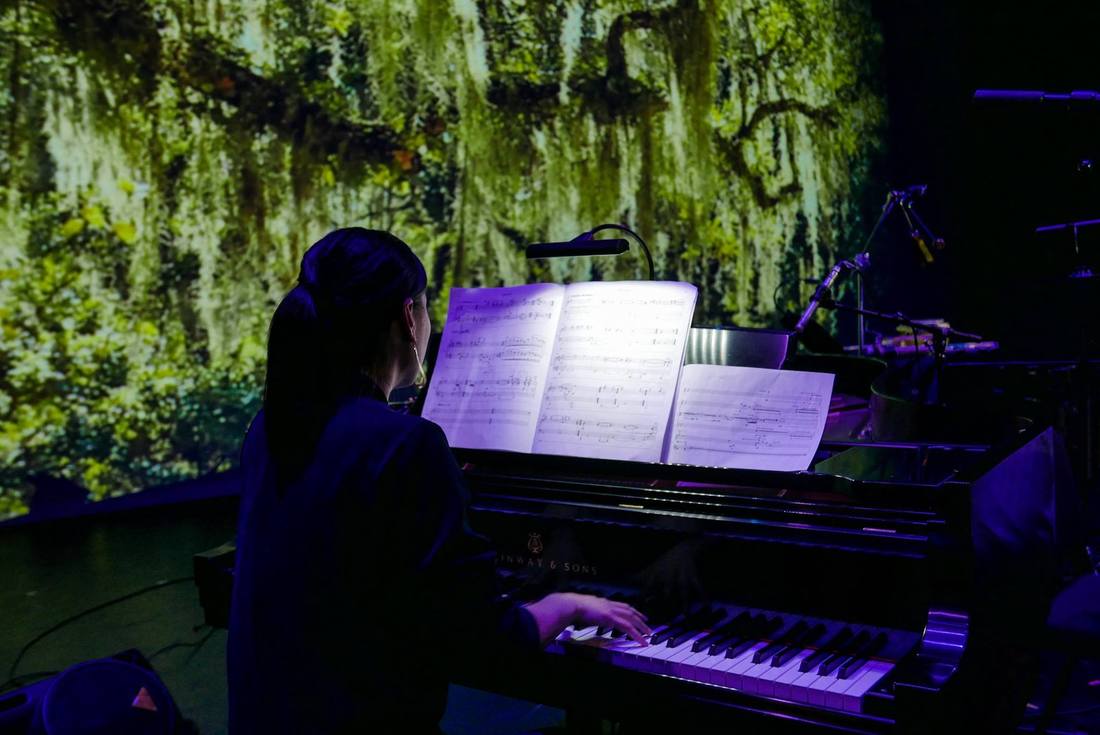
‘Southern Specter,’ Richard Johnson’s and Timothy Roy’s collaboration shows a Southern oak tree shrouded in Spanish moss | Courtesy Photo / The Arboretum

Make The Arboretum in Arcadia your destination for an evening of dazzling contemporary art. From February 27 to March 3, the natural landscape of this beautiful garden will serve as the backdrop for ‘Digital Nature 2019,’ an art exhibit featuring unique, site-specific artworks.

‘Digital Nature’ brings together a collection of contemporary artists who explore diverse themes – butterfly camouflage, bird songs and heavy metal, and interactive digital wildflowers. They will transform The Arboretum into an outdoor gallery of illuminated art, video, and sound installations.

Richard Schulhof, CEO of The Arboretum says, “We first presented ‘Digital Nature’ in 2016;  this one takes it to the next level. The Arboretum, I believe, is a spectacular setting for art. As part of our mission, we have education programs and we connect with people with our landscapes and gardens that explore themes. Art is yet another vehicle to engage people, to inspire thought, and encourage conversation about what’s happening in our world. We want to stimulate new thinking about the natural environment, our relationship with it, and the changes that are presently transforming it.”

As the recently concluded ‘Moonlight Forest Festival’ proved, people enjoy coming to The Arboretum at night. Schulhof would like ‘Digital Nature’ to kindle the same enthusiasm but quickly points out the distinction between them, “This is an art exhibition – statements from artists about a variety of topics. Unlike going to a light show where you come to enjoy the beauty of visual art or presentation, like the lantern festival, this one is a more cerebral experience. These installations will be scattered along the paths so you come upon them as you walk, and in that sense it’s similar to that of the lantern festival. But whereas ‘Moonlight Forest’ was a continuous experience, each encounter in ‘Digital Nature’ is a discrete experience: it’s in its own gallery. But I would love for there to be an overlap; I would be delighted if people who turned up for the lantern festival came and enjoyed this exhibition as well.”

Nami Yamamato’s ‘Radiant Flux’ poetically illustrates the process of photosynthesis | Courtesy Photo / The Arboretum

Schulhof declares, “We’re making a statement that art doesn’t necessarily belong only in an art gallery – it could belong in the landscape, it could be available to everyone, it could be part of our everyday experience. We want to take the art out of the museum and make it available to a much larger populace. We serve a broad community here at the Arboretum; so why not have an art exhibition that allows that community to engage with this art.

“‘Digital Nature’ is a very personal expression of the artists, which concerns an aspect of nature they find intriguing and inspiring, and they’re sharing that with us. It’s a look inside of their world. Nami Yamamoto, for instance, is fascinated by photosynthesis. She cuts intricate leaf patterns from paper she made with abaca and then embeds phosphorescent powder into the paper, so at night you’ll encounter these sheets of leaves that glow in the dark. You can see the connection with our botanical collections. It’s our way of communicating that just about every living thing on this planet thrives on this amazing ability of plants to harness energy from the sun. It’s the basis for life on earth and most people will never think about it; it’s taken for granted, it’s just a given.

“Another example is the work of Richard Johnson and Timothy Roy which explores the relationship between two plants – the Spanish moss that colonizes the branches of live oaks. They’re an artist and a composer working collaboratively who became fascinated by the incredible biological and visual drama of these live oak trees dripping with Spanish moss. They composed a score and combined it with imagery of the relationship between the plants. Each person watching and hearing the music will have his own interpretation. Those of us who are sensitive to plants and other forms of life will have that internal experience that Richard and Timothy find transformative.”

“This has been in development for a year and a half,” relates Schulhof. “Shirley Watts, a Bay Area artist and curator, who has a special interest in botanical landscapes as a context for the public exhibition, is the visionary responsible for ‘Digital Nature.’ She realized there was a rich opportunity in juxtaposing works of art with landscape and botanical collections.”

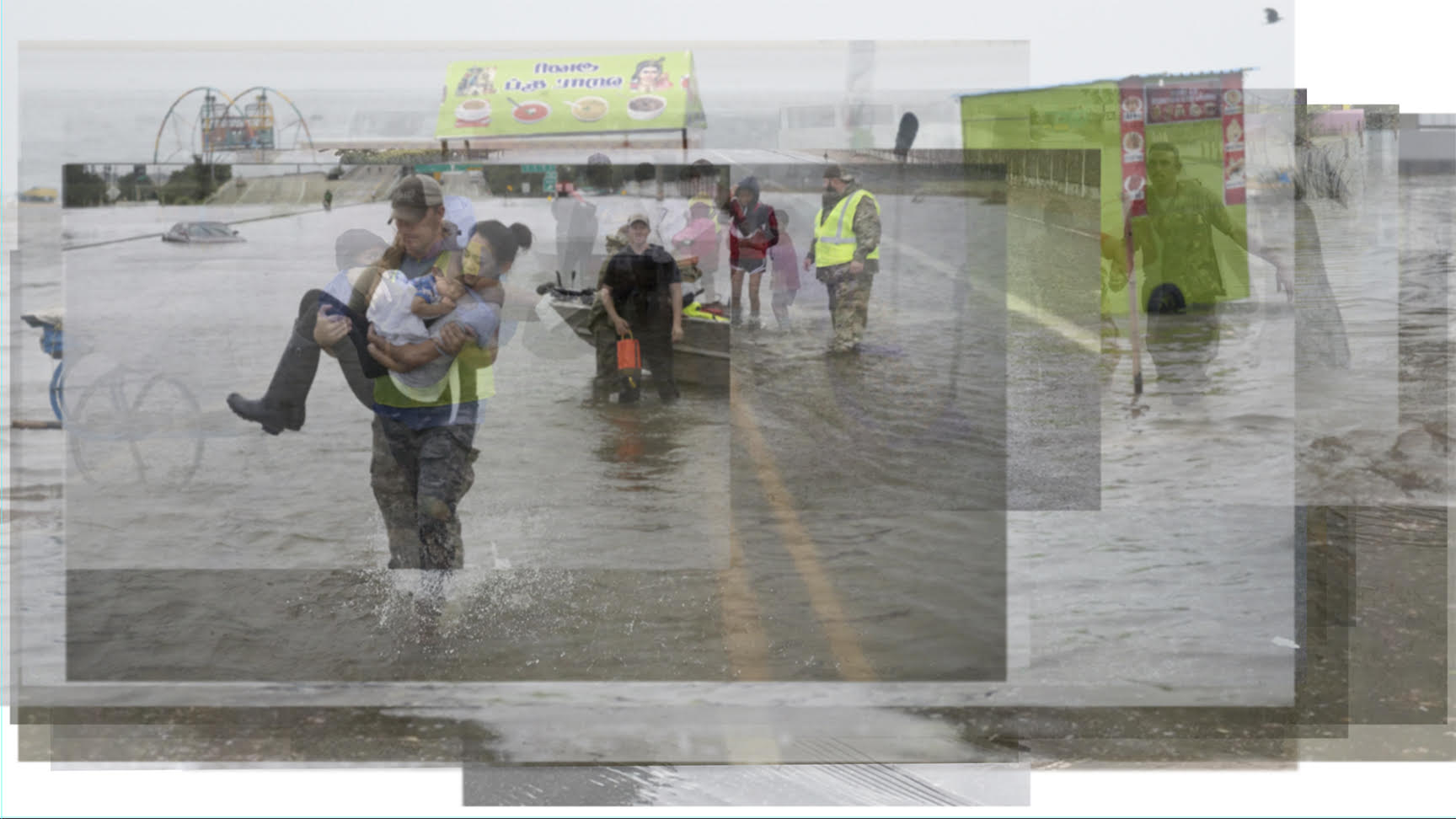
‘Flood,’ by Deborah Oropallo and Andy Rappaport, is composed of hundreds of images layered into a video collage | Courtesy Photo / The Arboretum

To explain how her involvement with The Arboretum came about, Watts says, “I had done a show at U. C. Berkeley in 2013 called ‘Natural Discourse,’ which was totally unlike what we’re doing here. It had physical installations of sculptures and some poets rewrote the plant tags. Since it wasn’t an art gallery, where there was another event coming up behind it, we could do whatever we wanted. So it stayed up in the garden for six months. It was fantastic! So many people saw the exhibition, not necessarily because they were there because of it, they just came upon it. And that’s a big deal with the work that I do – taking the art out of the museum and putting it in places where there’s a large public.

“Coincidentally, after we did the show in Berkeley, I was contacted by Gloria Gerace, who is the Managing Director of Pacific Standard Time, which puts up shows in museums all over Los Angeles. Apparently, Richard had hired her to do some consulting here to explore the possibility of having art events at the garden. Gloria found ‘Natural Discourse’ online and she asked me about the work we did in Berkeley. I had met Richard before, too, and he told me that he was open to having art here at The Arboretum. So I pursued him.”

Continues Watts, “When I started working here at The Arboretum, we were looking at doing the same kind of show we did in Berkeley. But I really started thinking about what this place is – its history and its location – and realized that so many films and TV shows have been made here. So I thought why don’t we have a show of video installations? It seemed appropriate for The Arboretum.

“Once we decided to show videos, it was a no brainer, we had to do it at night. And from a financial support basis, that turned out to be a brilliant idea because The Arboretum closes at 5:00 so people had to come back to get separate tickets for the show. And tickets sales help fund the work we’re doing. It isn’t expensive, though. Tickets are $15; the highest-priced ticket is $18.

“We put on ‘Digital Nature 2016’ exhibit not knowing what to expect. We thought we would sell 500 tickets and we sold 1,500; that helped fund the project. It was an amazing experience for all the artists involved – they helped install the artwork, they were here during the show, they met each other. That kind of collaboration in a garden like this was different, something they’d never had before. That the public also showed up to see the show was just such a positive outcome for everyone.”

Asked why ‘Digital Nature’ will only be up for a week, Watts replies, “It’s funny, the other day I was in San Francisco and I was talking to a gallery owner about this show, and she said ‘All that work for only five nights?’ I really contemplated about it afterwards and thought ‘I’ve had this long career working in gardens, and yeah, it’s only five nights but that’s how things happen in gardens – its ephemeral. Right now, at home, my magnolia is blooming and I’m missing it, and that’s it for this year! Things come and go and change in gardens. For me, it’s appropriate.”

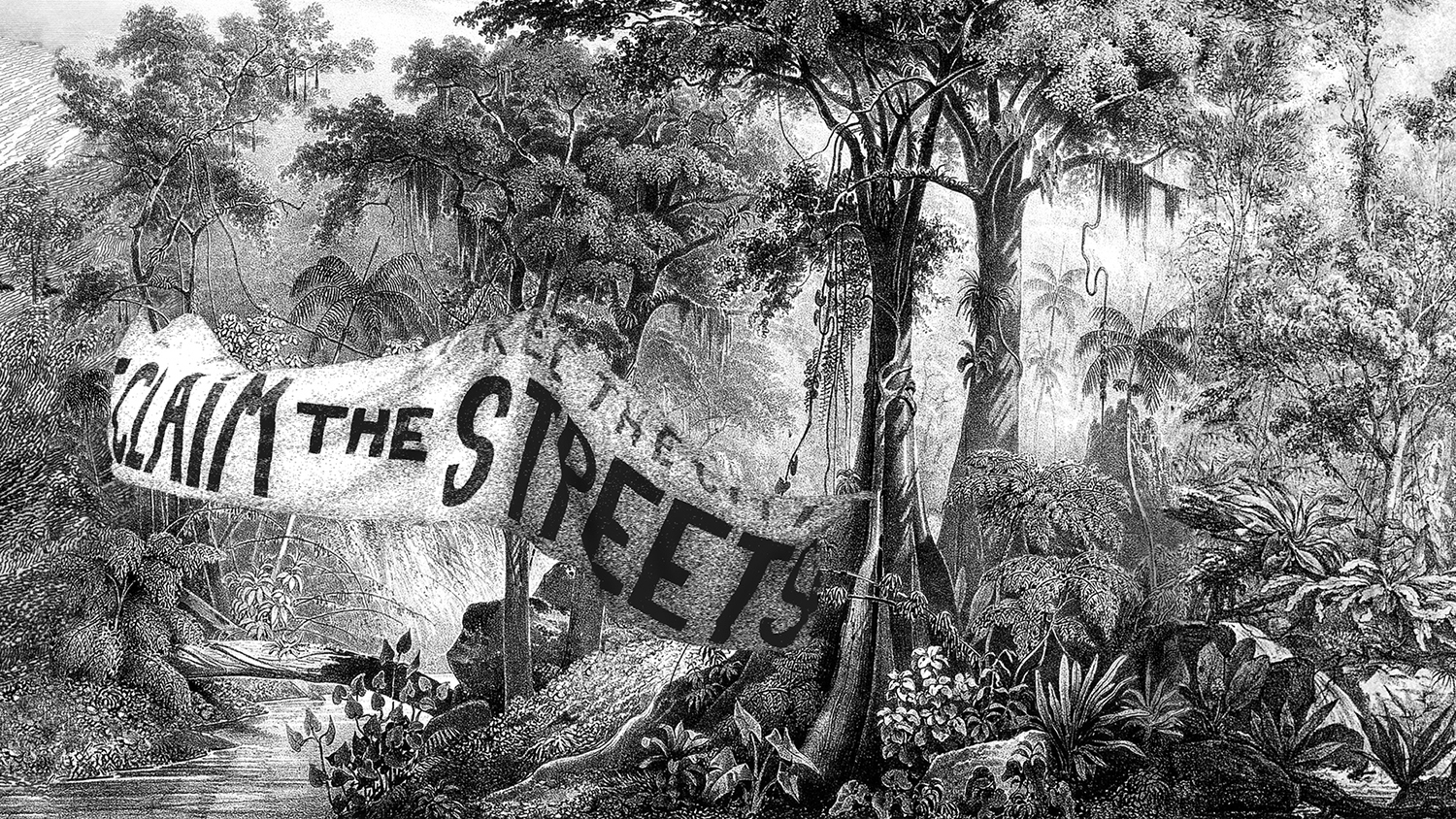
Brigitte Zieger’s ‘Bewildered’ plunges us into the heart of the forest with protest banners the only clue to human presence | Courtesy Photo / The Arboretum

Only one artist from 2016 will be presenting artwork in this year’s ‘Digital Nature’ exhibit. Watts explains, “I’m always looking for new artists. Now I know a lot of artists, and they refer me to their friends’ works and I find people online. I also have connections to an artists’ residency in Connecticut and they have a lot of composers that go to residency. And when they send out their emails I go through everybody’s work. For this year’s show, I found these young composers who wrote a piece about Southern oak trees – one of them wrote the chamber music and the other made a video that goes along with that. Unfortunately we won’t have live chamber music but we’ll show the recording and the video under an oak tree. All the installations have a connection to the place they’re at.”

Watts says she didn’t have specific sites at The Arboretum in mind beforehand, “I mostly found the artists I wanted to work with – sometimes they have existing work, a few of them are still making new work now – and I had conversations with them. We have 18 or 19 artists for this sow, but some of them are collaborating. Most of them are local but some are from out of state;  one is from Chicago, the composers are coming in from Michigan, another is from Philadelphia. Once I had a group of artists together, that’s when I spent some time at The Arboretum to decide where the pieces are going.”

“The show isn’t touring; its site-specific work,” clarifies Watts. “While the pieces can go places, they were brought together to be in this show, in this place. For artists it’s an opportunity to show their work; it’s difficult to find places where you can find an audience. However, some artists we have in ‘Digital Nature’ are pretty well known. Brigitte Zieger, who’s from Paris, is one whose work has been displayed around the world. LACMA owns an art piece of hers. We’re showing one of her works which we’ll be projecting onto two walls by the front fountain. She and the other artists participating in this exhibit get the chance to see their work in a completely different setting.”

Schulhof underlines ‘Digital Nature’s’ more pressing significance, “There’s so much focus right now on changes that are occurring in our natural environment around the world – global warming, the introduction of invasive species, increasing urbanization. I think there is a cascade of environmental shifts because of climate change. While that’s not the sole emphasis of this show, it’s an important focus. To bring art into the landscape where you can have an artist make a statement juxtaposing with the botanical collection here at The Arboretum is an incredibly opportune occasion. ”

That ‘Digital Nature 2019’ transpires and culminates in five nights underscore the fleeting nature of blossoms in our environment, as Watts points out. The installations are a reminder that we need to appreciate the inherent wonders around us and recognize that we have to play an active role in preserving them for future generations.

‘The Judas Kiss’ Premieres at Boston Court Pasadena

Originally published on 21 February 2019 in the Pasadena Independent, Arcadia Weekly, and Monrovia Weekly

Rob Nagle (left) as Oscar Wilde and Colin Bates (right) as Lord Alfred ‘Bosie’ Douglas| Photo by Jenny Graham / Boston Court Pasadena

Boston Court Pasadena launches its 2019 season with a rarely staged production of David Hare’s ‘The Judas Kiss’ from February 15 through March 24. This S. Mark Taper Foundation-sponsored play tells the story of Oscar Wilde’s love for Lord Alfred ‘Bosie’ Douglas and follows his downfall through a brutal trial and life in exile.

‘The Judas Kiss’ stars Rob Nagle (Oscar Wilde), Colin Bates (Lord Alfred ‘Bosie’ Douglas), Darius de la Cruz (Robert Ross), Will Dixon (Sandy Moffatt), Matthew Campbell Dowling (Arthur Wellesley), Mara Klein (Phoebe Cane), and Kurt Kanazawa (Galileo Masconi).

Artistic Director Michael Michetti, at the heels of his recent success directing his adaptation of Wilde’s ‘The Picture of Dorian Gray’ at A Noise Within, helms this play that examines a literary icon who continues to hold onto his passionate ideals of love and beauty even as his life falls apart.

Michetti, chatting with us about his fascination with the Irish playwright on a recent afternoon, clarifies how he found himself directing an Oscar Wilde play and a play about Oscar Wilde in succession.

“It’s not strictly by design, yet it’s not accidental either,” Michetti begins. “While preparing for ‘A Picture of Dorian Gray,’ I was re-reading a lot of Oscar Wilde and a lot of things about him. This David Hare play is one I’ve loved for years, so out of curiosity I pulled it off the shelf and re-read it. And I fell in love with it again. This was around the time that we were trying to refine our season here at Boston Court. We were talking about balancing our offerings and I kept thinking maybe this is the right play, so I suggested it.”

Asked what draws him to Oscar Wilde plays, Michetti responds “A lot of things really. I’ve always been captivated by his plays. Then I became enthralled with his short stories, children’s stories, and poems. And, of course, as a historical figure I found him interesting so I read several biographies about him, and his letters which reveal so much about him.

“But one thing I always felt was that, in most of his writing, including his letters, which were probably the most personal, he was always wearing different masks .. . that he was somewhat obscured by his wit, his cleverness, and his brilliant use of language. The sense of who the man was has always been a mystery to me. That’s what I love about this play – I think David Hare has crafted a very complex portrait of this man. He did a lot of research and, however conjectural it was, I think the play is pretty accurate to he was and the struggles he was going through.”

Rob Nagle | Photo by Jenny Graham / Boston Court Pasadena

“It’s very biographical,” continues Michetti. “The play takes place during two key moments in his life. The first act happens on the day he dropped his ill-advised libel suit against the Marquess of Queensberry who had accused him of sodomy. A warrant has been issued for his arrest, the police have delayed arresting him, and he’s trying to decide whether he should flee. Robbie wants him to run but Bosie wants him to stay and stand trial.

“The second act occurs two years later, after his release from prison. He’s exiled and penniless; he and Bosie are renting a villa in Naples and they’re out of money. Each of their families has offered them an allowance of income but, in both cases, it comes with conditions. And, again, Oscar has to make a decision.”

“While ‘The Judas Kiss’ was first produced in 1998, it hasn’t been performed often,” Michetti explains. “The original production starred a miscast Liam Neeson. The arguments for him playing the lead role were that he’s a brilliant Irishman and he’s tall, as Oscar Wilde was. But it didn’t get a good reception.

“Because it wasn’t successful, a lot of people dismissed the play itself. It languished for a long time and only a couple of productions were done in the United States. It was revived in London a few years years ago with Rupert Everett and it went on stage Off-Broadway in New York. There hasn’t been a lot of high-profile productions since and, to the best of our knowledge, this is the first time it’s being done in Los Angeles.

“It has always saddened me that this play’s reputation is not greater than it is. And so I hope we will be able to crack that in this production. There’s one element which makes us poised to be able to do it. While the stakes in both acts are very high, the drama isn’t; there are no big dramatic car chases and action events. It’s all underneath – it’s in the little conflicts and resolutions, choices and decisions, and the resistance to make choices. The fact that we’re in such an intimate theatre allows us to play those with subtlety and honesty. It allows our audience  to see in those delicate nuances the drama of this play.”

(Left to right): Darius de la Cruz, Rob Nagle, and Colin Bates | Photo by Jenny Graham / Boston Court Pasadena

Michetti adds, “The challenge is that dramaturgically, Oscar is obviously the protagonist in the play and Bosie is the antagonist – the one who has caused a lot of hurt in Oscar’s life. But I think it’s critical that we understand what it is about Bosie that Oscar loves so he doesn’t look like a fool for being so devoted to him for so long.”

Because this play is close to his heart, Michetti had a hand in casting the characters for it. He discloses, “The role of Oscar Wilde is a challenging one and I knew going into it that I would need someone remarkable. There’s an L.A. artist whom I’ve known and loved for years, he’s been a friend and a colleague, but I’ve never done a full production with him, only readings previously and his name is Rob Nagle.

“When we were talking about this, Rob was one of the first people who came to mind. And rather than going through an audition process, I began teasing Rob the idea of this role. It turned out he knew the play. Rob is a big, dynamic man and because of that, he’s always playing a villainous character. But he’s the most generous, kind-hearted human being you could possibly meet. And this play is tapping a lot of things I don’t think he often gets the opportunity to play. I’m thrilled to say that my faith in him was well placed because he can be so brilliant in this role.

“It’s quite interesting that Colin Bates, who was just my Dorian Gray, is Bosie. There’s this fascinating parallel because in ‘Picture of Dorian Gray,’ which he wrote in 1890, Wilde wrote about this beautiful younger man who destroys the life of an older artist and the next year he met Bosie. It just seems preordained! Colin and I talked about ‘Was it that he had a type?’ ‘Was it a self-fulfilling prophecy?’ or ‘Was it some sense of fulfilling a martyrdom complex?’ I don’t know exactly what it was, it may have been a little of all those, but it was intriguing to see Colin in the role that is the real life counterpoint to the fictitious character he just played.”

Rob Nagle (left) and Darius de la Cruz (right) as Robbie Ross | Photo by Jenny Graham / Boston Court Pasadena

Michetti adds, “There’s a third character in the play, Robbie Ross, who was Oscar’s first male lover. He was Oscar’s lifelong friend who remained devoted to him throughout his life. Robbie was the one who wrote to him and visited him in prison, the one who met him when he was released from prison and found a home for him to live in afterwards, and the one who was there at his deathbed. Oscar made him his literary executor and he spent the rest of his life making sure the works of Oscar Wilde were published and continued on.

“But there’s a captivating triangulation that happens between the three of them, as often happens. Robbie is very judgmental of Bosie and his influence on Oscar, and he’s trying to get at Oscar for what he thinks are the right choices for him. And to do that he’s trying to get Oscar to face that fact that he has fallen in love with someone who wasn’t worthy of his love. That’s always a tricky thing.

“Any time in real life we try to intercede in that way, it rarely goes well. There’s something about that that feels relatable and human. I relate a lot to Robbie in many ways. I’ve had dear friends who have been in relationships that I think aren’t the best for them and I’ve made impassioned arguments as to why they’d be better off making another choice, as Robbie makes to Oscar. But I’ve also heard impassioned arguments back, as Oscar makes to Robbie, as to why this is none of his business.”

One could argue that Oscar Wilde’s genius comes from all the events in his life. Concurs Michetti, “I think this play will give people a new lens as to who he was. For somebody whom we know for his witty aphorisms, Oscar was a very complex man, and sometimes in conflict with himself. There are things that he writes where he states a matter of fact one thing and then, almost in the next sentence, contradicts himself.  He was a complicated man and love is complicated, and particularly love in relationships that have conflict in them.”

“All of these circumstances in ‘The Judas Kiss’ were similar to what is in ‘The Picture of Dorian Gray.’ Oscar Wilde wrote about what he knew and while he wrote it in a dramatic, sensational form, he actually did live it. I think this play humanizes him and gives us a window to understanding who the man was. Audiences will recognize the darker notes underneath his works.”

It’s been said that art imitates life; Oscar Wilde personified the adage. It must be why we find his works utterly mesmerizing.

Local Car Collector’s Model T Makes its Debut at The Playhouse

Originally published on 18 February 2019 in the Pasadena Independent, Arcadia Weekly, and Monrovia Weekly

Clifton Duncan with the Model T | Courtesy photo by Nick Agro / Pasadena Playhouse

In ‘Ragtime: The Musical,’ a Ford Model T precipitates all the ensuing action that takes place; so it was important for the car to be on stage. Fortunately, Christopher Cook, Pasadena Playhouse’s Production Manager, didn’t have too far to go to find one. Altadenan Norm Haley, a real estate broker, is an avid collector of Model Ts and he graciously lent one of his cars.

Danny Feldman, Producing Artistic Director, can’t wait to show off the car they were able to borrow for the show. After I interview him at in his office, he walks me down to the stage where the Ford Model T is set on rollers, all ready to make its debut. “Norm drove this car up to The Playhouse and you should have seen us – we were jumping with excitement!,” he relates with the giddiness of a child in a toy store. “Doesn’t it look amazing?! Someone has to write about him and the car.”

And so on a cold and gray morning, a few days into ‘Ragtime’s’ run, Norm Haley and I meet at the theatre’s library to chat about how his Model T became part of The Playhouse’s biggest production, his collection, and his fascination with cars.

“I got a phone call from The Playhouse asking me what Model Ts I had,” Haley begins. “After they described what they needed,  I said yes, I have something that looks like that and it’s garaged somewhere close to The Playhouse. We met, they looked at it, they photographed it, and they decided they wanted to use it.”

Haley’s interest in automobiles came from his dad, who, in the early 1960s, worked on cars. He bought his first car – a Jeep – when he was 14, before he could even drive. He and his dad worked on it for a couple of years until he was old enough to take it on the road.

Collecting Ford Model Ts happened quite by accident, though. Haley recalls, “Back in 1976 or 1977, I had sold a house up in Altadena and I was sitting at the breakfast table with the couple. We were getting ready to sign the sale papers when the wife looked up and said to her husband, ‘I’m not signing these papers until you agree to get rid of some stuff.’ And one of the ‘stuff’ was a 1926 Canadian Model T Touring car. As you probably surmised, I ended up selling their house and owning the car.

“Now I own ten Model Ts, with some of the last serial numbers they made. I have every model they built in 1926-27, which were called The Improved Fords – I have the 2-door, the 4-door, the roadster, and the roadster pick-up.”

The 1926 Ford Model T Roadster at the Sierra Madre 4th of July Parade | Courtesy photo / Norm Haley

Having owned, driven, and toured the Ford Model Ts, Haley is very knowledgeable about them. He declares, “It was the car that put America on the road – until it came along, most people didn’t venture more than ten miles away from home because that’s how far they could walk or ride a horse. The Model Ts of the early years were very expensive, comparatively speaking, they were around $1,200 to $1,300 and they were all made by hand, there were no assembly lines yet. In 1914 Ford got his assembly lines and it was when he put Americans on wheels.

“The Model T represents a cherished past – everywhere I drive, people gawk, or come up to tell me ‘I learned how to drive in one of these,’ ‘My Grandpa used to drive me to school in one.’ I don’t hear that so much any longer; they aren’t that popular anymore. Those who appreciated them have mostly passed away so the market has flooded out. Young people don’t want them because they don’t have enough power and kids don’t want to learn to drive them. It’s such a shame; to me, the Model T is part of Americana.”

Continues Haley, “That particular truck on the stage has been driven from Baltimore, Maryland to Los Angeles. I didn’t drive it – I met some German people when I was part of the Model T Ford Tour in Italy and Switzerland, and I left them that car. I have another Model T, the 1927 Coupe, which I have driven 60,000 miles. It’s been across the United States and the Rockies twice, and to Lake Superior and Fairbanks, Alaska.

“By 1927, it was no longer popular because you had to shift the car by pedal on the floor – the car had three pedals on the floor, two of which are for shifting – and the gas was by the steering wheel. At the time there were other cars, like the Chevrolet and Dodge, which had standard three-speed transmission, that women liked better. Ford shut down his plant for over a year, stopped manufacturing the Model T, and retooled for the Model A.”

Most of Haley’s cars are what he calls ‘20 footers.’ He explains, “They look really good from 20 feet away; when you get up close you could see all the little flaws. But, to me and my circle of friends, they’re worth a lot more than if they were restored. In fact, the Model T on the stage isn’t up to most car connoisseurs’ standards. The paint job on it isn’t that great and it’s still the original except for the rear fender. I had lent it to a friend and he rear ended someone when he drove it in Nova Scotia, so it had to be repaired and repainted.”

For the record, the car that figures prominently in ‘Ragtime: The Musical’ is a 1917 Model T while the vehicle on the stage of the Pasadena Playhouse is a 1926 Model T Ford Roadster Pick-Up. While true collectors would know the difference, audiences at The Playhouse don’t nitpick – we all cheer when the car makes its appearance. We can recognize and appreciate a priceless treasure when we see one.

Discloses Haley, “Almost all my cars are survivors. That Model T in ‘Ragtime’ is very, very original. Highly, ridiculously, overly restored cars with the $5,000 paint job and the $5,000 motor are a dime a dozen. For each survivor car I have, I probably passed up on 20. In fact, last Wednesday I drove up to Visalia with a trailer to look at a truck, but even as I got out of my car I knew I wasn’t going to buy it. When I buy a vehicle, I want to make sure no one has started to restore it and that it’s still pretty much in its original shape.

“I do have some nicely restored automobiles, but they’re the ones that were on their last legs so I had no choice. The Model T Coupe I was talking about, I’m the third owner of that car. It had been parked in a barn at Plano Texas since the 1960s. I actually drove it for several years but it was so tired that I completely tore it apart and restored it. That was years and years ago, maybe in the 1980s.”

As many cars as he owns, Haley has never taken any of them to a show like the San Marino Motor Classic held in June every year at Lacy Park. He says, “Besides the Pebble Beach Auto Show, the event we have here in San Marino may be one of the best in the Western United States. But I’m not the ‘Show and Tell’ kind of guy; besides, I don’t really have the time to sit around at these events. I have a couple of trucks that I’ve put on display – a restored truck which is in the March page of an Auto Calendar and a Helms Bakery truck.”

Haley drives a 1947 DIVCO Helms Bakery truck painted the wrong color by a previous owner (it should be yellow and blue) | Courtesy photo / Norm Haley

Seeing the blank look on my face, Haley elucidates, “In 1930, a gentleman from the East Coast named Paul Helms came to California because he had tuberculosis. He was a marketing genius. He opened a bakery and the first contract he got was to deliver all the baked goods to the Olympics in Los Angeles. Later, the Helms baked items became a household staple.

“In those days most families didn’t have enough money to own two cars. Father took the car to work and mother relied on the cleaners which had a truck that came out to pick up the dry cleaning, the grocer who delivered the groceries if she called in, and the Helms man. By 1940, the trucks that made the home delivery were driving 75,000 miles a day transporting bread, donuts, cakes, and cookies all over Southern California. I was lucky enough to get one of those Helms trucks. There may be only ten of them in existence today.”

Asked if he has any favorites among the 50 vehicles in his collection, Haley replies, “My most-prized car is the 1927 Coupe just because I’ve driven it so much. My favorite truck is the Helms. I’m a member of the Monrovia Historical Society’s Board of Directors and once a year I would put one or two trucks in the ‘Friends of Monrovia.’ Recently, we’ve been handing out donuts in the Helms truck, along with information pamphlets about the society.

“I have a 1954 truck called Canopy Express. Only 3,000 of them were made and I don’t know how many are left. It’s used for delivering fruits and vegetables around the neighborhood, and I would load it up with pineapples to give away to people. For the last 35 years, I’ve also put a different car or truck in the Sierra Madre Fourth of July parade.”

We can certainly understand Haley’s nostalgia for the cars of old which people today don’t particularly care for. There are so many different makes and models to choose from – all of them with the latest technological features – to bother with antiquated vehicles.

But, every once in a while, we see a vintage car driving down the Colorado Street Bridge at a leisurely 30 miles per hour and we can’t help but stare and delight at such a rare sight. Thanks to collectors like Haley, we can reminisce and look back to a time when we weren’t in such a  state of frenzied haste.