‘The Glass Menagerie’ Stirs at A Noise Within

Originally published on 4 March 2019 in the Pasadena Independent, Arcadia Weekly, and Monrovia Weekly
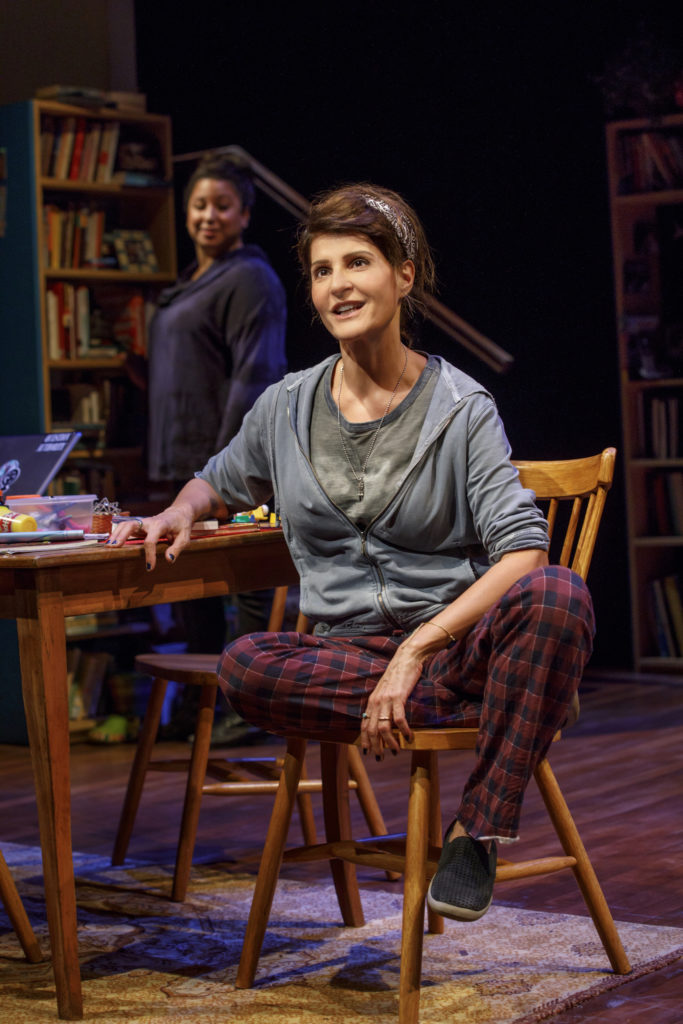
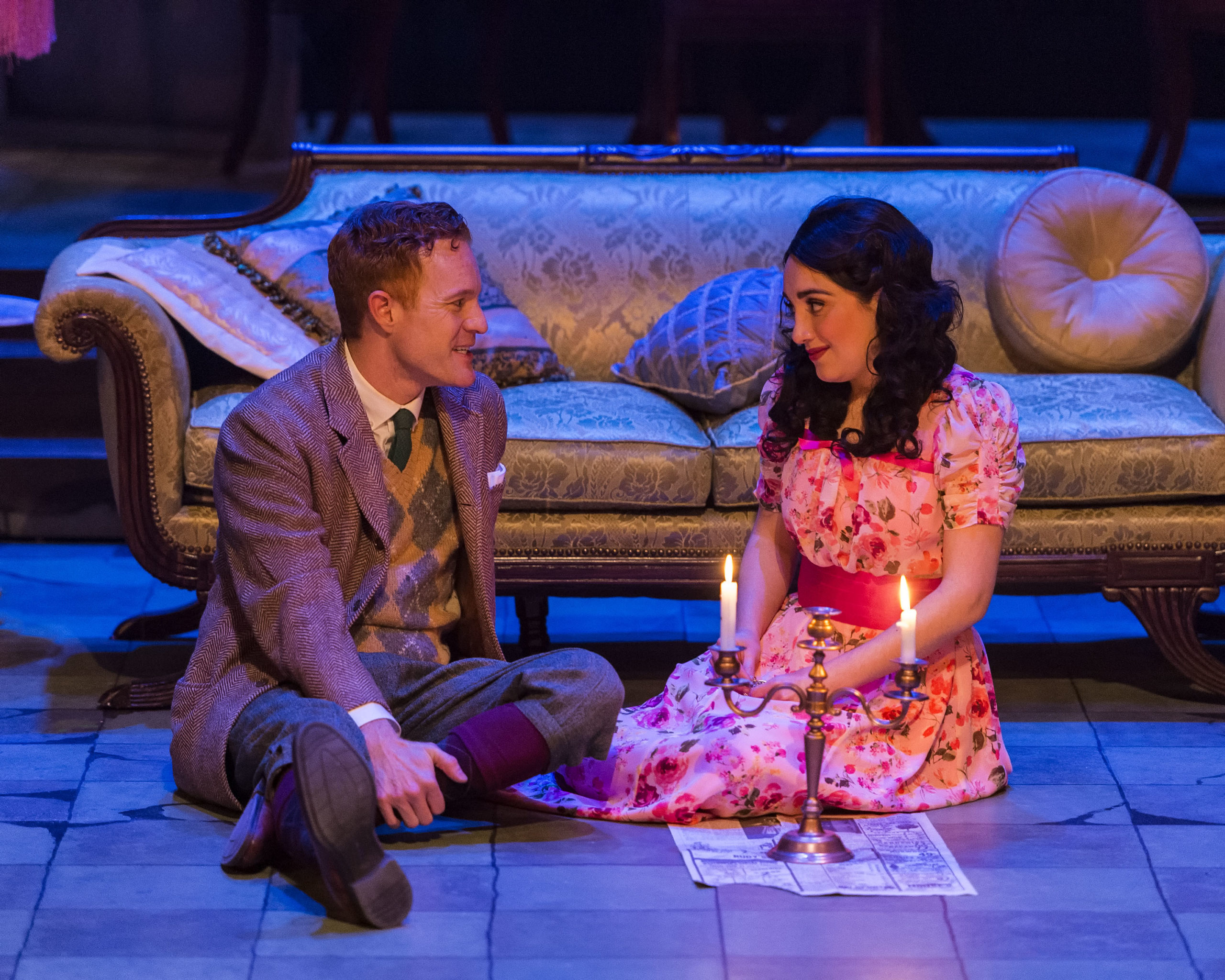
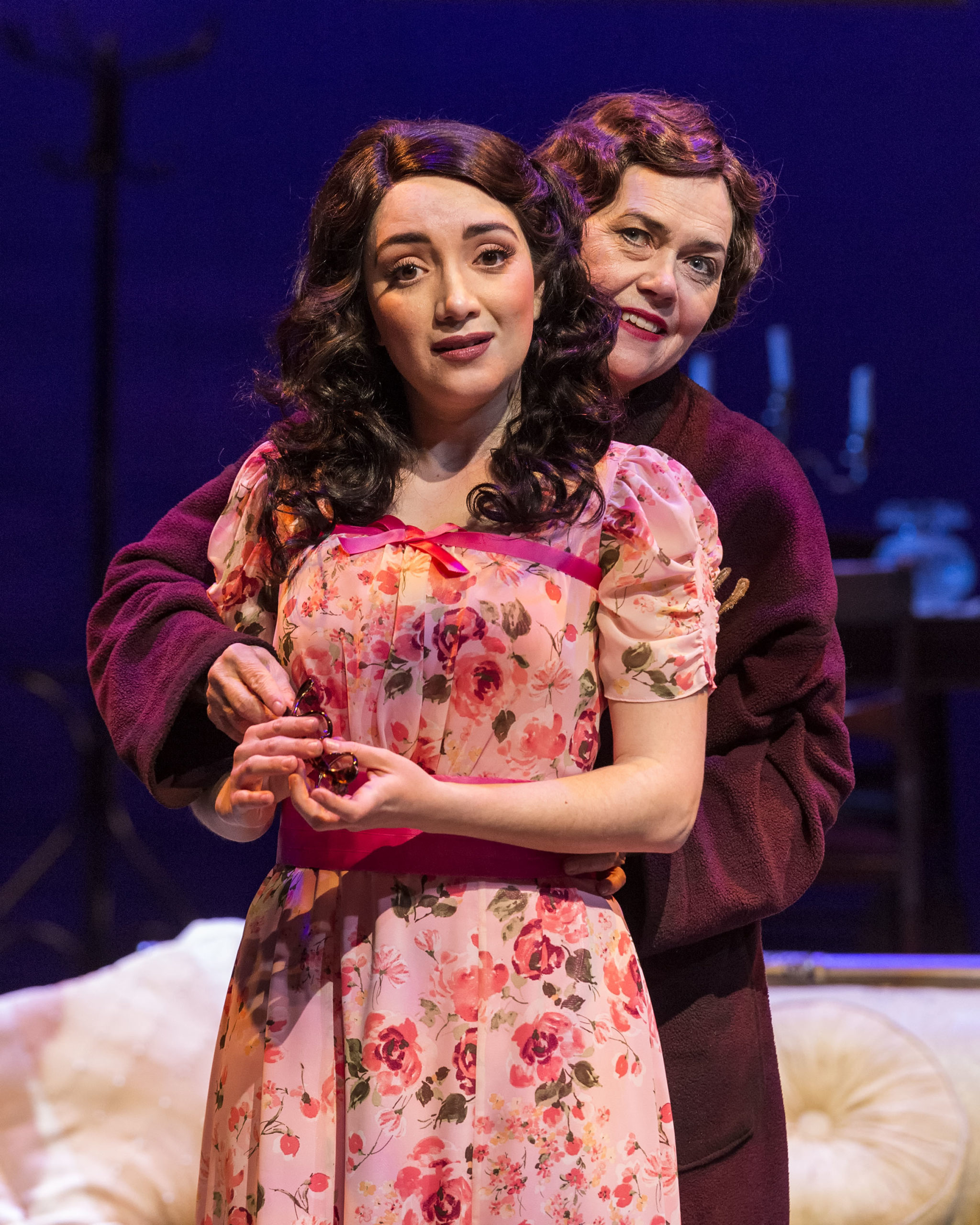
Kasey Mahaffy and Erika Soto in a pivotal scene | Photo by Craig Schwartz / A Noise Within

‘The Glass Menagerie,’ the autobiographical play that launched Tennessee Williams to great renown, takes off at A Noise Within (ANW) from February 24 through April 26. It made its debut in 1944 in Chicago, moved to Broadway a year later, and earned Williams the New York Drama Critics’ Circle Award.

In the play, an innocuous visit from a potential suitor unsettles the sheltered Wingfield family. At the center of this drama is matriarch Amanda who fiercely protects her adult children from the harshness of others, oblivious to the likelihood that her eccentricities are the biggest threat to their well-being.

First produced by ANW during its 1997-1998 season, it was directed by Julia Rodriguez-Elliott and starred Geoff Elliott narrating as Tom Wingfield, with Deborah Strang as the imposing matriarch Amanda Wingfield.

This re-staging of ‘The Glass Menagerie’ is helmed by Producing Artistic Director Geoff Elliott and features four resident artists – Deborah Strang returns as Amanda, Rafael Goldstein as Tom Wingfield and the narrator from whose memory the story is told, Erika Soto as Laura Wingfield, and Kasey Mahaffy as the gentleman caller, Jim O’Connor.

Soto, one of ANW’s two newly installed resident artists (the other is Kasey Mahaffy, who shares the stage with her in the play), talks about the play, her role, and the challenges in inhabiting the character of Laura.

“I found ‘Glass Menagerie’ moving in its mundane complexity; it’s so revelatory of American psyche,” Soto says. “Even as the play has a resonant theme, it was inspired by Tennessee Williams’s specific experience – as a writer, as a gay man, and as a reluctant patriarch and caretaker of his family.”

Erika Soto (left) and Deborah Strang (right) | Photo by Craig Schwartz/ A Noise Within

“Laura is the foil to Amanda’s energy,” Soto describes. “If Amanda is this almost ridiculous force – this hurricane – Laura is the eye of the storm. Tom, as the narrator, is navigating in and out of this experience. And you see that as he moves in and out of the house; he’s the one with the mobility even if that comes with consequences. He’s the one yearning to escape from this place. Tom breaks free externally while Laura does it internally; she navigates the storm by going within. She lives in her own little world, which is an oasis, with the music she listens to and her glass menagerie, which she has such a devotion for. That has given her an inner strength, whether that’s for better or for worse. It’s her coping mechanism and what makes her function in society. It’s her survival instinct – to cocoon, and that’s her safe space.”

“In the beginning, I struggled connecting with Laura because she was written as someone who is so shy, so afraid, so apologetic,” reveals Soto. “She wanted to disappear, to placate, and to do whatever is necessary to keep the calm. And I am so not like that. At all. That was more challenging than I ever thought. If this role had come years ago, when I was in my early 20s, I would have said ‘Easy-peasy! I know what that feels like.’ But those years are now in the rearview mirror. The 30-year old me is vivacious and alive, an activist and a feminist. But, then again, it wouldn’t be called acting if I were to play someone exactly like me. And, having had my share of playing the ingénue, I have that well to draw from.”

Adds Soto, “Laura’s physical limitation, which we have decided was the result of her bout of polio, helps put me in a vulnerable place and rationalizes my need to feel safe. She lives in a world where the boxes are very different and are a lot smaller – there are only so many places she could go and there’s only so much power she has. I made those the parameters around which to work.

“Thankfully, Tennessee Williams didn’t write static characters with linear lives. Laura has an immense arc in the course of a night. In fact, in this story, I see her journey as being a full circle. She starts in a place and experiences something she never expected to. Through circumstance, and tragedy in a way, she comes back. And there’s a kind of peace to that … it’s sort of a melancholy peace. And I think that is what’s so heartbreaking. You meet this person, and you imagine she’s going to reach that crescendo, and burst off the page.”

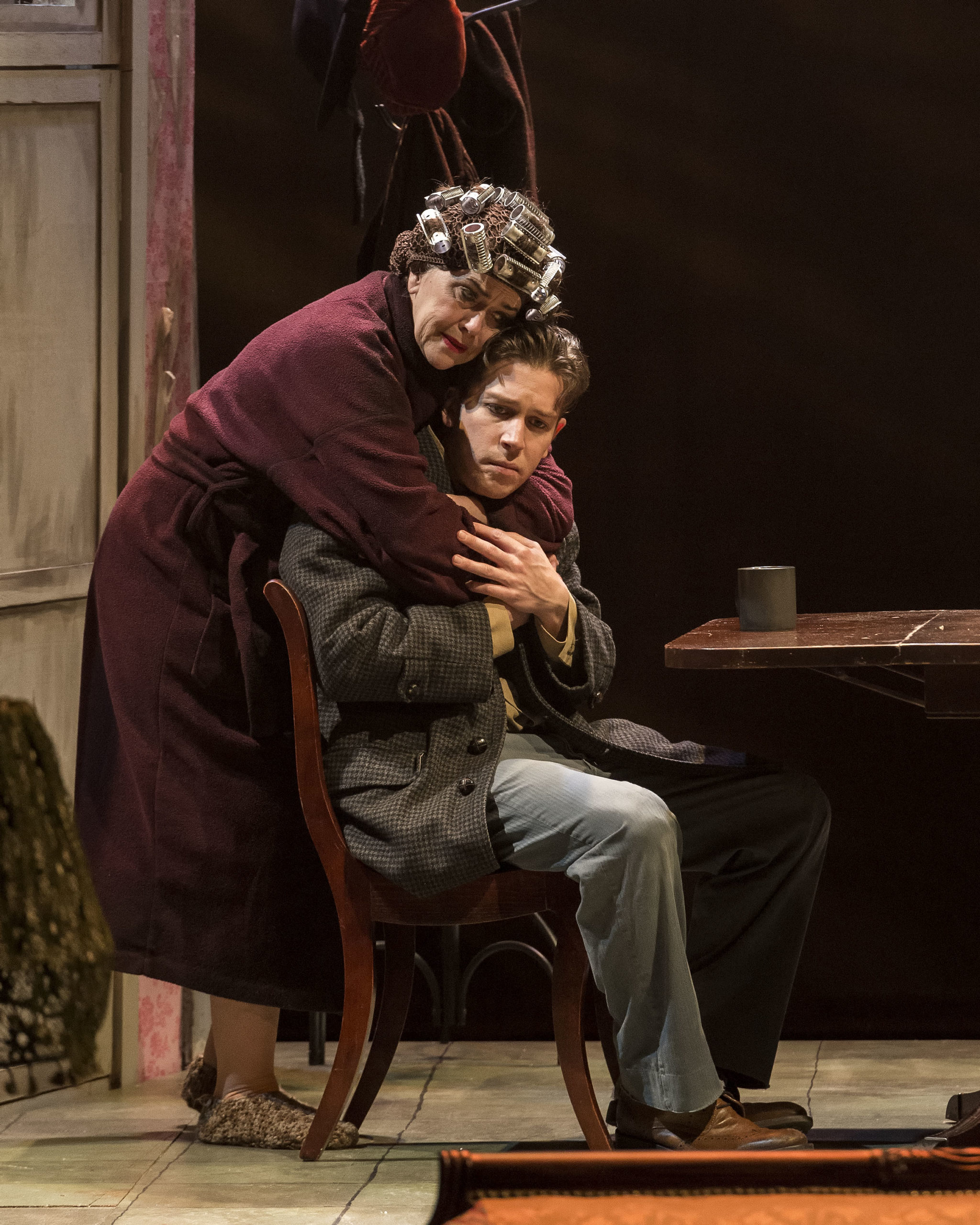
Deborah Strang and Rafael Goldstein | Photo by Craig Schwartz / A Noise Within

“That said, I choose not to think of Laura as a victim because I don’t find that interesting,” Soto discloses. “To see any woman as a victim is very lame to me in terms of actionable character. I see her as a response to her environment – a product of her time and space. She is just like any of us, responding to people in our lives and the hand we’re dealt, with our own personal insecurities and resistance.”

“I feel you should have a big ‘spoiler alert’ disclaimer at the beginning of your article,” Soto cautions before continuing. “I think Laura does have a moment where she takes a chance and tries to embody someone she hadn’t even imagined she could be. To me, someone who takes authority over her own experience can never be a victim.”

As she inhabited the role, Soto discovered something about Laura that she didn’t know going in. She divulges, “It wasn’t until I started to think about her inner life, and the kind of strength it takes to survive a mother like Amanda, that made me appreciate her. That’s quite interesting and complex. Then I thought, here’s a man writing about these ridiculous women. Maybe if a woman had written Amanda and Laura, they wouldn’t be such polar opposites and so extreme. It wasn’t genuine femininity but stereotypical ideas of femininity – the aggressive, bite-your-head-off, hysterical mother and the trembling, terrified, apologetic, little doe of a daughter. Women are none of these things!”

“I had never read the play before now, nor have I seen it performed, and I like it that way,” Soto confesses. “As embarrassing as it is to admit ignorance about something so iconic, I prefer having a blank slate – to discover it and it being fresh for me so that my performance also translates that way to the audience – rather than having to live up to decades of expectation, or to deliver lines with a precious quality, which is not real to the character. The characters in this play don’t know they’re iconic, they’re just people.

“But I have to honor who Tennessee Williams perceived in telling the story about his sister because it was his reality. It’s his story and that’s what we’re telling. Even if, ideally, I want to apply the things I try to practice in my daily life to the stories I’m telling. And it’s only a piece of a puzzle as well, it’s her piece, along with Amanda’s, and Tom’s, and the gentleman caller’s – all these parts tell a bigger story.”

Rafael Goldstein and Deborah Strang | Photo by Craig Schwartz / A Noise Within

Asked what the audience would find relevant, Soto pauses to consider the question before responding, “I personally relate a lot to Tom in his churning, boiling, and brimming fire where he feels something’s got to give. I think that’s fascinating to watch. Tom says ‘I’m boiling inside; I’m ready for adventure. I’m tired of watching other people having it.’ He talks a lot about the impending war and that war is when the common man can have his adventure. He also mentions movies, he’s constantly wanting to go to the movies. This would resonate in Los Angeles, especially in our media-driven world, where we’re watching people from our TV screens, our phones, and laptops. We could relate that to our idolization of celebrity, stars, and the fantastical world we see in films. I love his idea that we sit there and watch other people have adventures and live fantastical lives. That, to me, is such a call to action.”

Soto confesses she hasn’t really thought about the audience takeaway in great depth, but concedes, “It isn’t necessarily a feel-good play but I hope they’re moved. I want for them to react the same way I do after watching a movie or a play … to say ‘I know! Me too!’ Whatever that is – it could be ‘I know, me too, I also feel extremely depressed’ or ‘I know, me too, I have that kind of mom or that kind of relationship with my mom.’ I feel that’s why we tell stories. And however you want theatre to be, it’s all therapeutic, it’s catharsis. I  hope the play strikes a chord and, in doing so, is vibrational enough that it shifts something, or validates them in some way.”

“And I think that’s why we go to the theatre and why stories are valuable to us as human beings. It’s such a ritualistic thing we do – gathering in groups in a particular space. How different is that from, I don’t know, church? It’s a community of people enjoying a common experience.  There’s something strange and magical about,” Soto concludes.

While ‘The Glass Menagerie’ was specific to Tennessee Williams’s upbringing, the feeling of being constrained by societal expectations or being stuck in a rut is something most of us can relate to. Lest the play engender resignation and hopelessness may it, instead, impel us to take the reins and change course. That sense of personal agency is key to owning our life.

‘Digital Nature 2019’ Display Dazzles at The Arboretum

Originally published on 22 February 2019 in the Pasadena Independent, Arcadia Weekly, and Monrovia Weekly

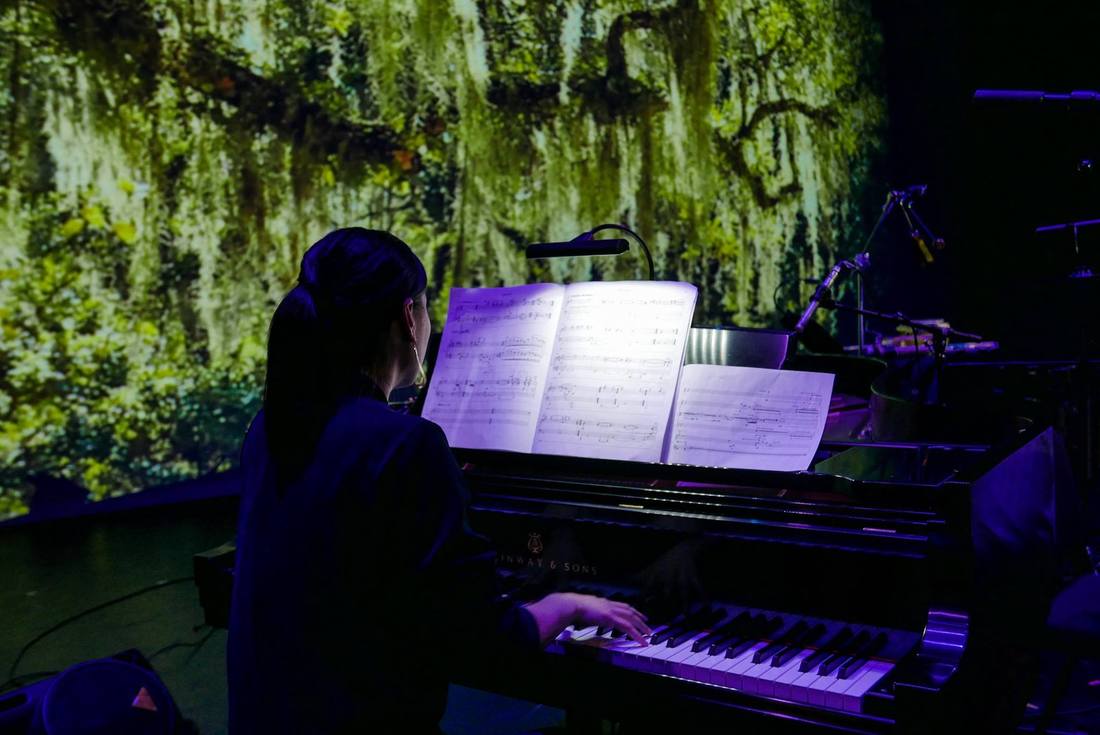
‘Southern Specter,’ Richard Johnson’s and Timothy Roy’s collaboration shows a Southern oak tree shrouded in Spanish moss | Courtesy Photo / The Arboretum

Make The Arboretum in Arcadia your destination for an evening of dazzling contemporary art. From February 27 to March 3, the natural landscape of this beautiful garden will serve as the backdrop for ‘Digital Nature 2019,’ an art exhibit featuring unique, site-specific artworks.

‘Digital Nature’ brings together a collection of contemporary artists who explore diverse themes – butterfly camouflage, bird songs and heavy metal, and interactive digital wildflowers. They will transform The Arboretum into an outdoor gallery of illuminated art, video, and sound installations.

Richard Schulhof, CEO of The Arboretum says, “We first presented ‘Digital Nature’ in 2016;  this one takes it to the next level. The Arboretum, I believe, is a spectacular setting for art. As part of our mission, we have education programs and we connect with people with our landscapes and gardens that explore themes. Art is yet another vehicle to engage people, to inspire thought, and encourage conversation about what’s happening in our world. We want to stimulate new thinking about the natural environment, our relationship with it, and the changes that are presently transforming it.”

As the recently concluded ‘Moonlight Forest Festival’ proved, people enjoy coming to The Arboretum at night. Schulhof would like ‘Digital Nature’ to kindle the same enthusiasm but quickly points out the distinction between them, “This is an art exhibition – statements from artists about a variety of topics. Unlike going to a light show where you come to enjoy the beauty of visual art or presentation, like the lantern festival, this one is a more cerebral experience. These installations will be scattered along the paths so you come upon them as you walk, and in that sense it’s similar to that of the lantern festival. But whereas ‘Moonlight Forest’ was a continuous experience, each encounter in ‘Digital Nature’ is a discrete experience: it’s in its own gallery. But I would love for there to be an overlap; I would be delighted if people who turned up for the lantern festival came and enjoyed this exhibition as well.”

Nami Yamamato’s ‘Radiant Flux’ poetically illustrates the process of photosynthesis | Courtesy Photo / The Arboretum

Schulhof declares, “We’re making a statement that art doesn’t necessarily belong only in an art gallery – it could belong in the landscape, it could be available to everyone, it could be part of our everyday experience. We want to take the art out of the museum and make it available to a much larger populace. We serve a broad community here at the Arboretum; so why not have an art exhibition that allows that community to engage with this art.

“‘Digital Nature’ is a very personal expression of the artists, which concerns an aspect of nature they find intriguing and inspiring, and they’re sharing that with us. It’s a look inside of their world. Nami Yamamoto, for instance, is fascinated by photosynthesis. She cuts intricate leaf patterns from paper she made with abaca and then embeds phosphorescent powder into the paper, so at night you’ll encounter these sheets of leaves that glow in the dark. You can see the connection with our botanical collections. It’s our way of communicating that just about every living thing on this planet thrives on this amazing ability of plants to harness energy from the sun. It’s the basis for life on earth and most people will never think about it; it’s taken for granted, it’s just a given.

“Another example is the work of Richard Johnson and Timothy Roy which explores the relationship between two plants – the Spanish moss that colonizes the branches of live oaks. They’re an artist and a composer working collaboratively who became fascinated by the incredible biological and visual drama of these live oak trees dripping with Spanish moss. They composed a score and combined it with imagery of the relationship between the plants. Each person watching and hearing the music will have his own interpretation. Those of us who are sensitive to plants and other forms of life will have that internal experience that Richard and Timothy find transformative.”

“This has been in development for a year and a half,” relates Schulhof. “Shirley Watts, a Bay Area artist and curator, who has a special interest in botanical landscapes as a context for the public exhibition, is the visionary responsible for ‘Digital Nature.’ She realized there was a rich opportunity in juxtaposing works of art with landscape and botanical collections.”

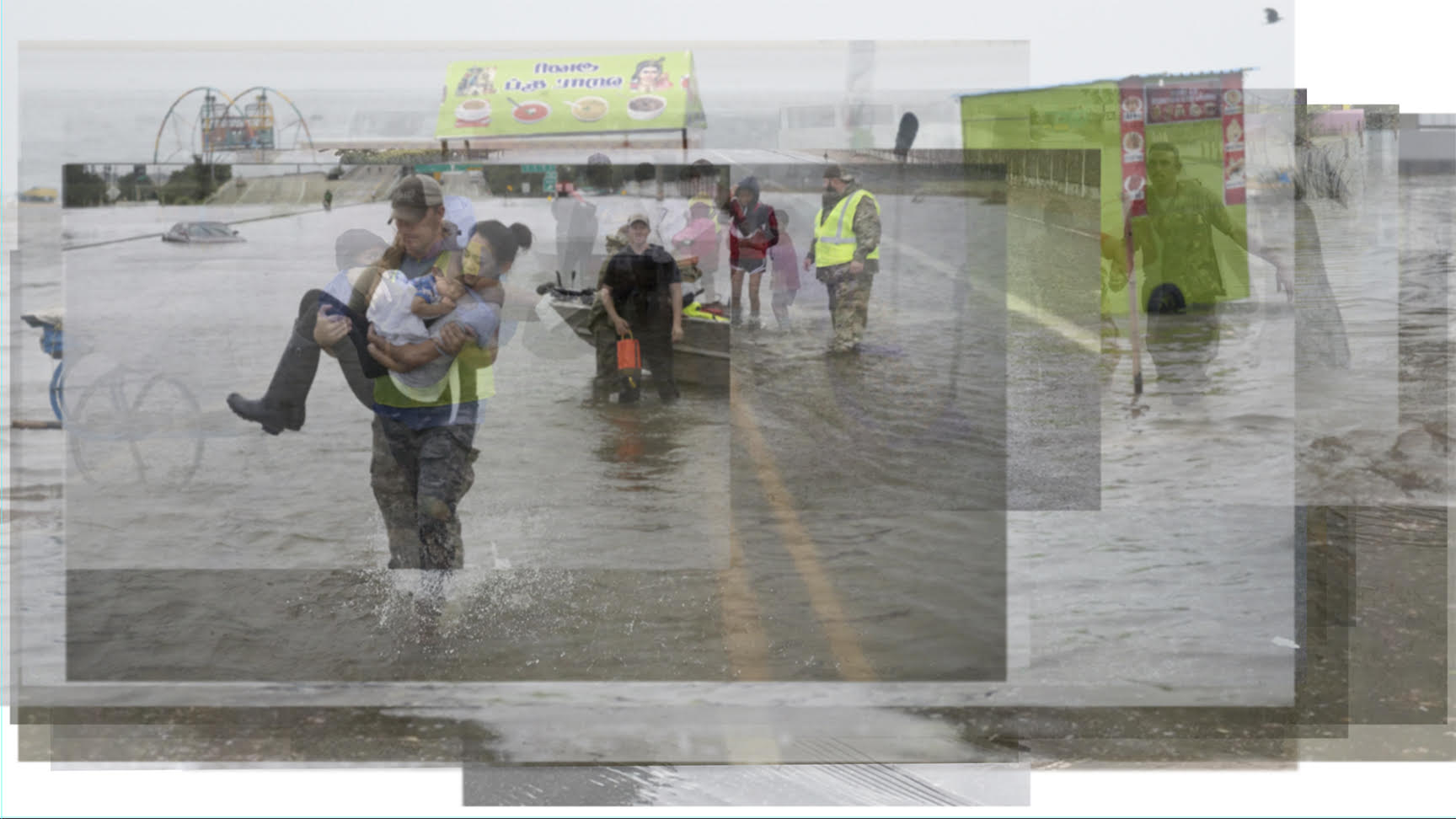
‘Flood,’ by Deborah Oropallo and Andy Rappaport, is composed of hundreds of images layered into a video collage | Courtesy Photo / The Arboretum

To explain how her involvement with The Arboretum came about, Watts says, “I had done a show at U. C. Berkeley in 2013 called ‘Natural Discourse,’ which was totally unlike what we’re doing here. It had physical installations of sculptures and some poets rewrote the plant tags. Since it wasn’t an art gallery, where there was another event coming up behind it, we could do whatever we wanted. So it stayed up in the garden for six months. It was fantastic! So many people saw the exhibition, not necessarily because they were there because of it, they just came upon it. And that’s a big deal with the work that I do – taking the art out of the museum and putting it in places where there’s a large public.

“Coincidentally, after we did the show in Berkeley, I was contacted by Gloria Gerace, who is the Managing Director of Pacific Standard Time, which puts up shows in museums all over Los Angeles. Apparently, Richard had hired her to do some consulting here to explore the possibility of having art events at the garden. Gloria found ‘Natural Discourse’ online and she asked me about the work we did in Berkeley. I had met Richard before, too, and he told me that he was open to having art here at The Arboretum. So I pursued him.”

Continues Watts, “When I started working here at The Arboretum, we were looking at doing the same kind of show we did in Berkeley. But I really started thinking about what this place is – its history and its location – and realized that so many films and TV shows have been made here. So I thought why don’t we have a show of video installations? It seemed appropriate for The Arboretum.

“Once we decided to show videos, it was a no brainer, we had to do it at night. And from a financial support basis, that turned out to be a brilliant idea because The Arboretum closes at 5:00 so people had to come back to get separate tickets for the show. And tickets sales help fund the work we’re doing. It isn’t expensive, though. Tickets are $15; the highest-priced ticket is $18.

“We put on ‘Digital Nature 2016’ exhibit not knowing what to expect. We thought we would sell 500 tickets and we sold 1,500; that helped fund the project. It was an amazing experience for all the artists involved – they helped install the artwork, they were here during the show, they met each other. That kind of collaboration in a garden like this was different, something they’d never had before. That the public also showed up to see the show was just such a positive outcome for everyone.”

Asked why ‘Digital Nature’ will only be up for a week, Watts replies, “It’s funny, the other day I was in San Francisco and I was talking to a gallery owner about this show, and she said ‘All that work for only five nights?’ I really contemplated about it afterwards and thought ‘I’ve had this long career working in gardens, and yeah, it’s only five nights but that’s how things happen in gardens – its ephemeral. Right now, at home, my magnolia is blooming and I’m missing it, and that’s it for this year! Things come and go and change in gardens. For me, it’s appropriate.”

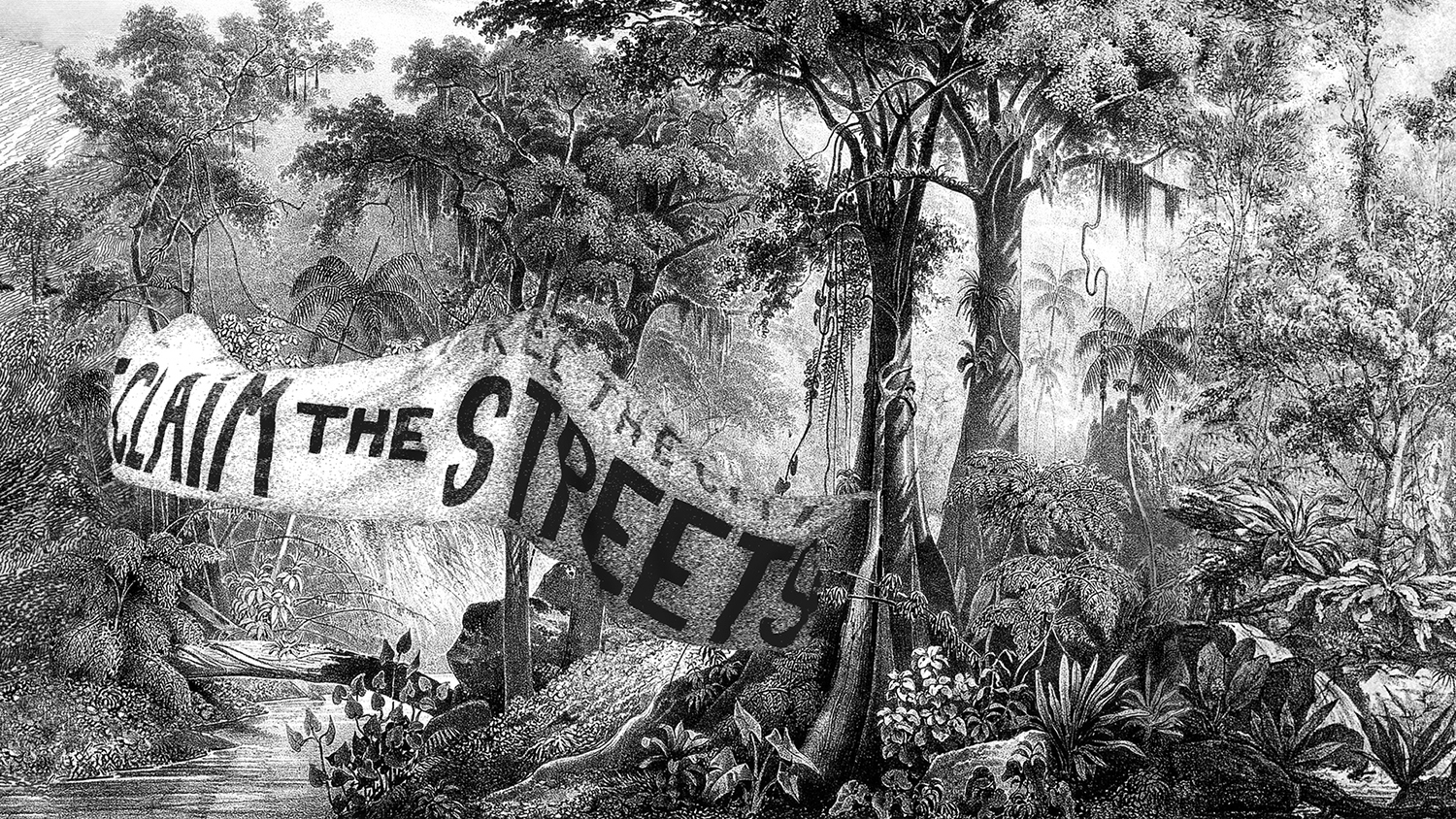
Brigitte Zieger’s ‘Bewildered’ plunges us into the heart of the forest with protest banners the only clue to human presence | Courtesy Photo / The Arboretum

Only one artist from 2016 will be presenting artwork in this year’s ‘Digital Nature’ exhibit. Watts explains, “I’m always looking for new artists. Now I know a lot of artists, and they refer me to their friends’ works and I find people online. I also have connections to an artists’ residency in Connecticut and they have a lot of composers that go to residency. And when they send out their emails I go through everybody’s work. For this year’s show, I found these young composers who wrote a piece about Southern oak trees – one of them wrote the chamber music and the other made a video that goes along with that. Unfortunately we won’t have live chamber music but we’ll show the recording and the video under an oak tree. All the installations have a connection to the place they’re at.”

Watts says she didn’t have specific sites at The Arboretum in mind beforehand, “I mostly found the artists I wanted to work with – sometimes they have existing work, a few of them are still making new work now – and I had conversations with them. We have 18 or 19 artists for this sow, but some of them are collaborating. Most of them are local but some are from out of state;  one is from Chicago, the composers are coming in from Michigan, another is from Philadelphia. Once I had a group of artists together, that’s when I spent some time at The Arboretum to decide where the pieces are going.”

“The show isn’t touring; its site-specific work,” clarifies Watts. “While the pieces can go places, they were brought together to be in this show, in this place. For artists it’s an opportunity to show their work; it’s difficult to find places where you can find an audience. However, some artists we have in ‘Digital Nature’ are pretty well known. Brigitte Zieger, who’s from Paris, is one whose work has been displayed around the world. LACMA owns an art piece of hers. We’re showing one of her works which we’ll be projecting onto two walls by the front fountain. She and the other artists participating in this exhibit get the chance to see their work in a completely different setting.”

Schulhof underlines ‘Digital Nature’s’ more pressing significance, “There’s so much focus right now on changes that are occurring in our natural environment around the world – global warming, the introduction of invasive species, increasing urbanization. I think there is a cascade of environmental shifts because of climate change. While that’s not the sole emphasis of this show, it’s an important focus. To bring art into the landscape where you can have an artist make a statement juxtaposing with the botanical collection here at The Arboretum is an incredibly opportune occasion. ”

That ‘Digital Nature 2019’ transpires and culminates in five nights underscore the fleeting nature of blossoms in our environment, as Watts points out. The installations are a reminder that we need to appreciate the inherent wonders around us and recognize that we have to play an active role in preserving them for future generations.

‘The Judas Kiss’ Premieres at Boston Court Pasadena

Originally published on 21 February 2019 in the Pasadena Independent, Arcadia Weekly, and Monrovia Weekly

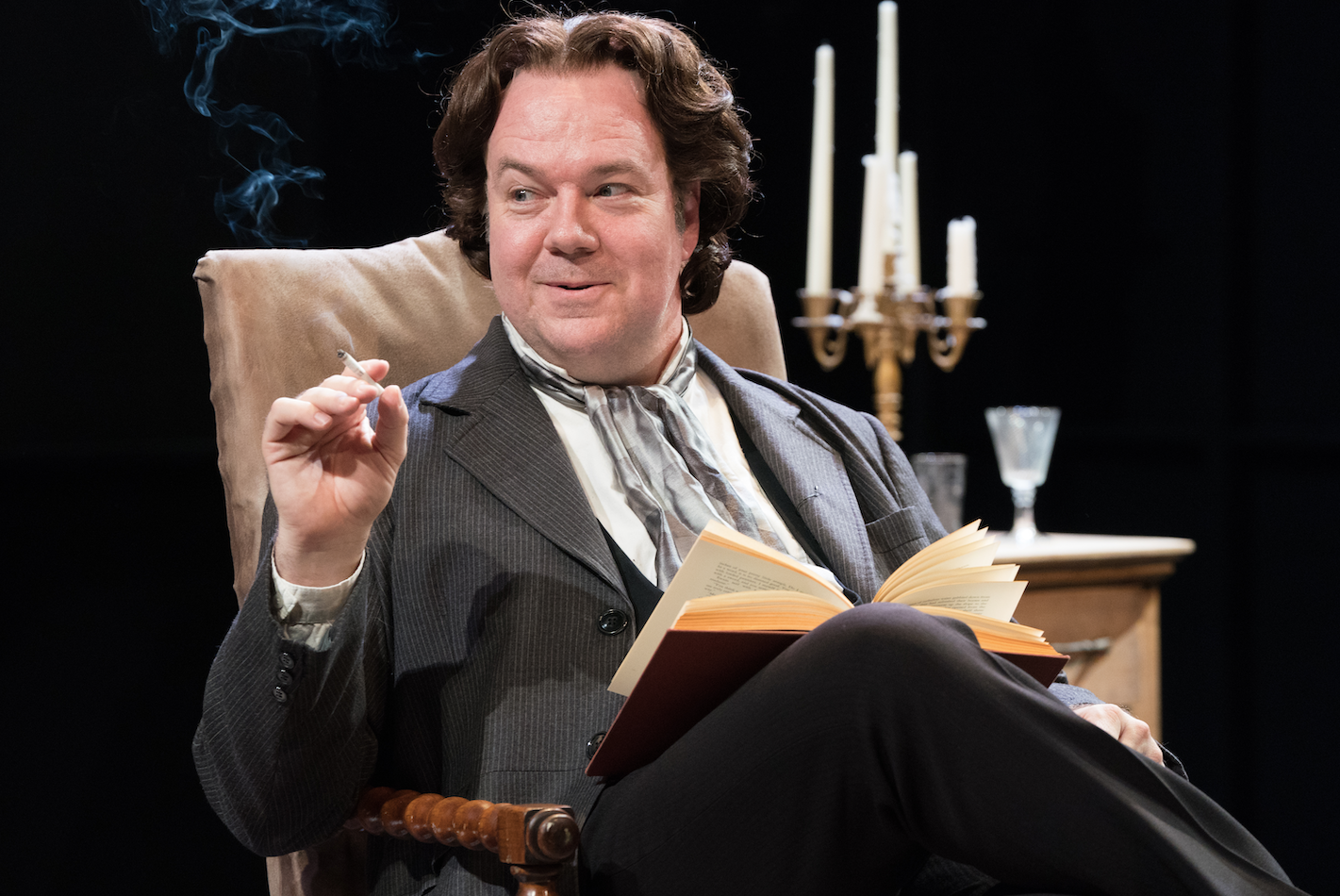
Rob Nagle (left) as Oscar Wilde and Colin Bates (right) as Lord Alfred ‘Bosie’ Douglas| Photo by Jenny Graham / Boston Court Pasadena

Boston Court Pasadena launches its 2019 season with a rarely staged production of David Hare’s ‘The Judas Kiss’ from February 15 through March 24. This S. Mark Taper Foundation-sponsored play tells the story of Oscar Wilde’s love for Lord Alfred ‘Bosie’ Douglas and follows his downfall through a brutal trial and life in exile.

‘The Judas Kiss’ stars Rob Nagle (Oscar Wilde), Colin Bates (Lord Alfred ‘Bosie’ Douglas), Darius de la Cruz (Robert Ross), Will Dixon (Sandy Moffatt), Matthew Campbell Dowling (Arthur Wellesley), Mara Klein (Phoebe Cane), and Kurt Kanazawa (Galileo Masconi).

Artistic Director Michael Michetti, at the heels of his recent success directing his adaptation of Wilde’s ‘The Picture of Dorian Gray’ at A Noise Within, helms this play that examines a literary icon who continues to hold onto his passionate ideals of love and beauty even as his life falls apart.

Michetti, chatting with us about his fascination with the Irish playwright on a recent afternoon, clarifies how he found himself directing an Oscar Wilde play and a play about Oscar Wilde in succession.

“It’s not strictly by design, yet it’s not accidental either,” Michetti begins. “While preparing for ‘A Picture of Dorian Gray,’ I was re-reading a lot of Oscar Wilde and a lot of things about him. This David Hare play is one I’ve loved for years, so out of curiosity I pulled it off the shelf and re-read it. And I fell in love with it again. This was around the time that we were trying to refine our season here at Boston Court. We were talking about balancing our offerings and I kept thinking maybe this is the right play, so I suggested it.”

Asked what draws him to Oscar Wilde plays, Michetti responds “A lot of things really. I’ve always been captivated by his plays. Then I became enthralled with his short stories, children’s stories, and poems. And, of course, as a historical figure I found him interesting so I read several biographies about him, and his letters which reveal so much about him.

“But one thing I always felt was that, in most of his writing, including his letters, which were probably the most personal, he was always wearing different masks .. . that he was somewhat obscured by his wit, his cleverness, and his brilliant use of language. The sense of who the man was has always been a mystery to me. That’s what I love about this play – I think David Hare has crafted a very complex portrait of this man. He did a lot of research and, however conjectural it was, I think the play is pretty accurate to he was and the struggles he was going through.”

Rob Nagle | Photo by Jenny Graham / Boston Court Pasadena

“It’s very biographical,” continues Michetti. “The play takes place during two key moments in his life. The first act happens on the day he dropped his ill-advised libel suit against the Marquess of Queensberry who had accused him of sodomy. A warrant has been issued for his arrest, the police have delayed arresting him, and he’s trying to decide whether he should flee. Robbie wants him to run but Bosie wants him to stay and stand trial.

“The second act occurs two years later, after his release from prison. He’s exiled and penniless; he and Bosie are renting a villa in Naples and they’re out of money. Each of their families has offered them an allowance of income but, in both cases, it comes with conditions. And, again, Oscar has to make a decision.”

“While ‘The Judas Kiss’ was first produced in 1998, it hasn’t been performed often,” Michetti explains. “The original production starred a miscast Liam Neeson. The arguments for him playing the lead role were that he’s a brilliant Irishman and he’s tall, as Oscar Wilde was. But it didn’t get a good reception.

“Because it wasn’t successful, a lot of people dismissed the play itself. It languished for a long time and only a couple of productions were done in the United States. It was revived in London a few years years ago with Rupert Everett and it went on stage Off-Broadway in New York. There hasn’t been a lot of high-profile productions since and, to the best of our knowledge, this is the first time it’s being done in Los Angeles.

“It has always saddened me that this play’s reputation is not greater than it is. And so I hope we will be able to crack that in this production. There’s one element which makes us poised to be able to do it. While the stakes in both acts are very high, the drama isn’t; there are no big dramatic car chases and action events. It’s all underneath – it’s in the little conflicts and resolutions, choices and decisions, and the resistance to make choices. The fact that we’re in such an intimate theatre allows us to play those with subtlety and honesty. It allows our audience  to see in those delicate nuances the drama of this play.”

(Left to right): Darius de la Cruz, Rob Nagle, and Colin Bates | Photo by Jenny Graham / Boston Court Pasadena

Michetti adds, “The challenge is that dramaturgically, Oscar is obviously the protagonist in the play and Bosie is the antagonist – the one who has caused a lot of hurt in Oscar’s life. But I think it’s critical that we understand what it is about Bosie that Oscar loves so he doesn’t look like a fool for being so devoted to him for so long.”

Because this play is close to his heart, Michetti had a hand in casting the characters for it. He discloses, “The role of Oscar Wilde is a challenging one and I knew going into it that I would need someone remarkable. There’s an L.A. artist whom I’ve known and loved for years, he’s been a friend and a colleague, but I’ve never done a full production with him, only readings previously and his name is Rob Nagle.

“When we were talking about this, Rob was one of the first people who came to mind. And rather than going through an audition process, I began teasing Rob the idea of this role. It turned out he knew the play. Rob is a big, dynamic man and because of that, he’s always playing a villainous character. But he’s the most generous, kind-hearted human being you could possibly meet. And this play is tapping a lot of things I don’t think he often gets the opportunity to play. I’m thrilled to say that my faith in him was well placed because he can be so brilliant in this role.

“It’s quite interesting that Colin Bates, who was just my Dorian Gray, is Bosie. There’s this fascinating parallel because in ‘Picture of Dorian Gray,’ which he wrote in 1890, Wilde wrote about this beautiful younger man who destroys the life of an older artist and the next year he met Bosie. It just seems preordained! Colin and I talked about ‘Was it that he had a type?’ ‘Was it a self-fulfilling prophecy?’ or ‘Was it some sense of fulfilling a martyrdom complex?’ I don’t know exactly what it was, it may have been a little of all those, but it was intriguing to see Colin in the role that is the real life counterpoint to the fictitious character he just played.”

Rob Nagle (left) and Darius de la Cruz (right) as Robbie Ross | Photo by Jenny Graham / Boston Court Pasadena

Michetti adds, “There’s a third character in the play, Robbie Ross, who was Oscar’s first male lover. He was Oscar’s lifelong friend who remained devoted to him throughout his life. Robbie was the one who wrote to him and visited him in prison, the one who met him when he was released from prison and found a home for him to live in afterwards, and the one who was there at his deathbed. Oscar made him his literary executor and he spent the rest of his life making sure the works of Oscar Wilde were published and continued on.

“But there’s a captivating triangulation that happens between the three of them, as often happens. Robbie is very judgmental of Bosie and his influence on Oscar, and he’s trying to get at Oscar for what he thinks are the right choices for him. And to do that he’s trying to get Oscar to face that fact that he has fallen in love with someone who wasn’t worthy of his love. That’s always a tricky thing.

“Any time in real life we try to intercede in that way, it rarely goes well. There’s something about that that feels relatable and human. I relate a lot to Robbie in many ways. I’ve had dear friends who have been in relationships that I think aren’t the best for them and I’ve made impassioned arguments as to why they’d be better off making another choice, as Robbie makes to Oscar. But I’ve also heard impassioned arguments back, as Oscar makes to Robbie, as to why this is none of his business.”

One could argue that Oscar Wilde’s genius comes from all the events in his life. Concurs Michetti, “I think this play will give people a new lens as to who he was. For somebody whom we know for his witty aphorisms, Oscar was a very complex man, and sometimes in conflict with himself. There are things that he writes where he states a matter of fact one thing and then, almost in the next sentence, contradicts himself.  He was a complicated man and love is complicated, and particularly love in relationships that have conflict in them.”

“All of these circumstances in ‘The Judas Kiss’ were similar to what is in ‘The Picture of Dorian Gray.’ Oscar Wilde wrote about what he knew and while he wrote it in a dramatic, sensational form, he actually did live it. I think this play humanizes him and gives us a window to understanding who the man was. Audiences will recognize the darker notes underneath his works.”

It’s been said that art imitates life; Oscar Wilde personified the adage. It must be why we find his works utterly mesmerizing.

Local Car Collector’s Model T Makes its Debut at The Playhouse

Originally published on 18 February 2019 in the Pasadena Independent, Arcadia Weekly, and Monrovia Weekly

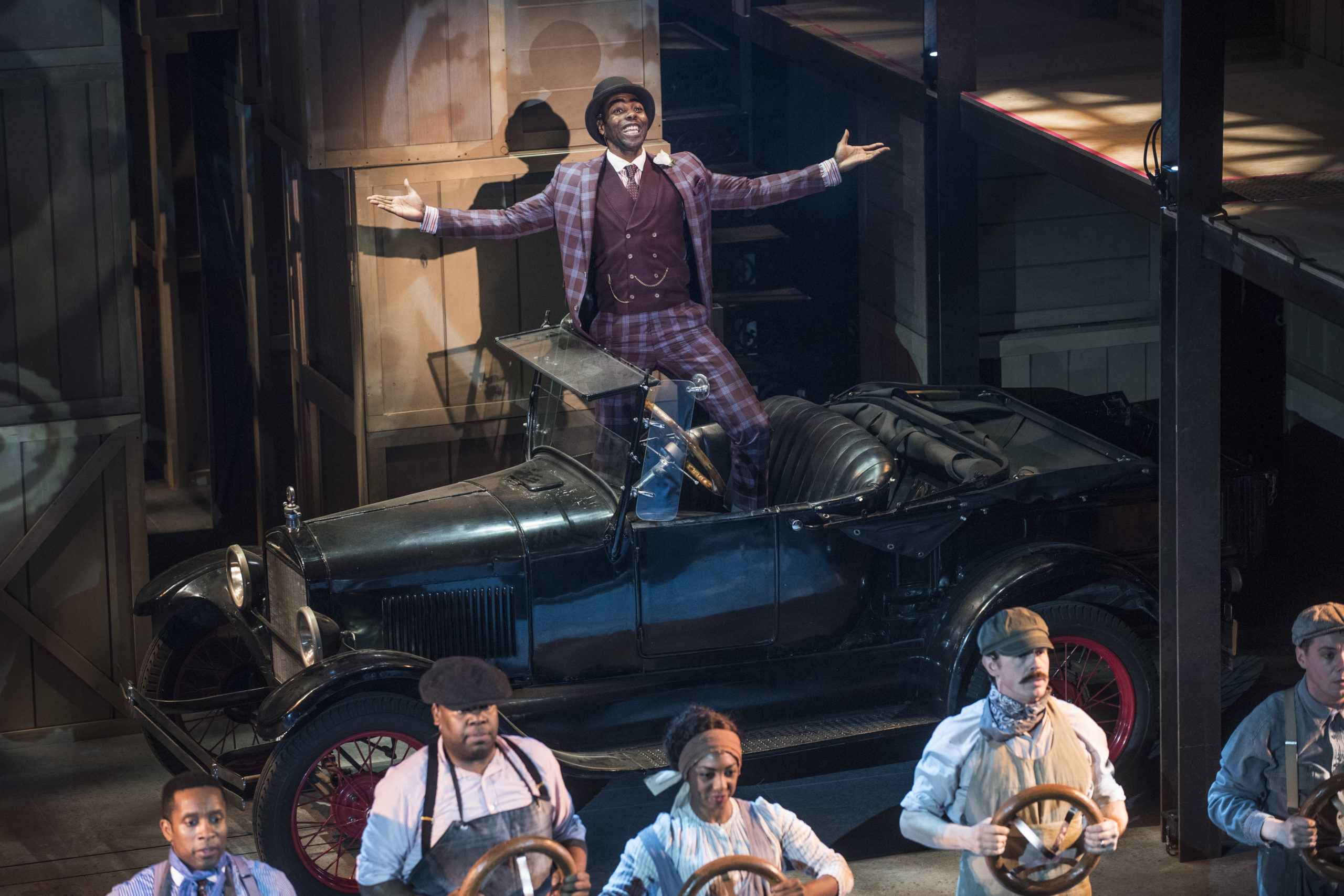
Clifton Duncan with the Model T | Courtesy photo by Nick Agro / Pasadena Playhouse

In ‘Ragtime: The Musical,’ a Ford Model T precipitates all the ensuing action that takes place; so it was important for the car to be on stage. Fortunately, Christopher Cook, Pasadena Playhouse’s Production Manager, didn’t have too far to go to find one. Altadenan Norm Haley, a real estate broker, is an avid collector of Model Ts and he graciously lent one of his cars.

Danny Feldman, Producing Artistic Director, can’t wait to show off the car they were able to borrow for the show. After I interview him at in his office, he walks me down to the stage where the Ford Model T is set on rollers, all ready to make its debut. “Norm drove this car up to The Playhouse and you should have seen us – we were jumping with excitement!,” he relates with the giddiness of a child in a toy store. “Doesn’t it look amazing?! Someone has to write about him and the car.”

And so on a cold and gray morning, a few days into ‘Ragtime’s’ run, Norm Haley and I meet at the theatre’s library to chat about how his Model T became part of The Playhouse’s biggest production, his collection, and his fascination with cars.

“I got a phone call from The Playhouse asking me what Model Ts I had,” Haley begins. “After they described what they needed,  I said yes, I have something that looks like that and it’s garaged somewhere close to The Playhouse. We met, they looked at it, they photographed it, and they decided they wanted to use it.”

Haley’s interest in automobiles came from his dad, who, in the early 1960s, worked on cars. He bought his first car – a Jeep – when he was 14, before he could even drive. He and his dad worked on it for a couple of years until he was old enough to take it on the road.

Collecting Ford Model Ts happened quite by accident, though. Haley recalls, “Back in 1976 or 1977, I had sold a house up in Altadena and I was sitting at the breakfast table with the couple. We were getting ready to sign the sale papers when the wife looked up and said to her husband, ‘I’m not signing these papers until you agree to get rid of some stuff.’ And one of the ‘stuff’ was a 1926 Canadian Model T Touring car. As you probably surmised, I ended up selling their house and owning the car.

“Now I own ten Model Ts, with some of the last serial numbers they made. I have every model they built in 1926-27, which were called The Improved Fords – I have the 2-door, the 4-door, the roadster, and the roadster pick-up.”

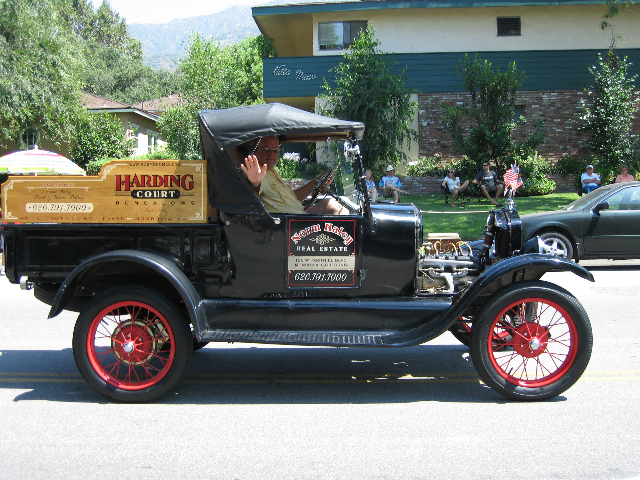
The 1926 Ford Model T Roadster at the Sierra Madre 4th of July Parade | Courtesy photo / Norm Haley

Having owned, driven, and toured the Ford Model Ts, Haley is very knowledgeable about them. He declares, “It was the car that put America on the road – until it came along, most people didn’t venture more than ten miles away from home because that’s how far they could walk or ride a horse. The Model Ts of the early years were very expensive, comparatively speaking, they were around $1,200 to $1,300 and they were all made by hand, there were no assembly lines yet. In 1914 Ford got his assembly lines and it was when he put Americans on wheels.

“The Model T represents a cherished past – everywhere I drive, people gawk, or come up to tell me ‘I learned how to drive in one of these,’ ‘My Grandpa used to drive me to school in one.’ I don’t hear that so much any longer; they aren’t that popular anymore. Those who appreciated them have mostly passed away so the market has flooded out. Young people don’t want them because they don’t have enough power and kids don’t want to learn to drive them. It’s such a shame; to me, the Model T is part of Americana.”

Continues Haley, “That particular truck on the stage has been driven from Baltimore, Maryland to Los Angeles. I didn’t drive it – I met some German people when I was part of the Model T Ford Tour in Italy and Switzerland, and I left them that car. I have another Model T, the 1927 Coupe, which I have driven 60,000 miles. It’s been across the United States and the Rockies twice, and to Lake Superior and Fairbanks, Alaska.

“By 1927, it was no longer popular because you had to shift the car by pedal on the floor – the car had three pedals on the floor, two of which are for shifting – and the gas was by the steering wheel. At the time there were other cars, like the Chevrolet and Dodge, which had standard three-speed transmission, that women liked better. Ford shut down his plant for over a year, stopped manufacturing the Model T, and retooled for the Model A.”

Most of Haley’s cars are what he calls ‘20 footers.’ He explains, “They look really good from 20 feet away; when you get up close you could see all the little flaws. But, to me and my circle of friends, they’re worth a lot more than if they were restored. In fact, the Model T on the stage isn’t up to most car connoisseurs’ standards. The paint job on it isn’t that great and it’s still the original except for the rear fender. I had lent it to a friend and he rear ended someone when he drove it in Nova Scotia, so it had to be repaired and repainted.”

For the record, the car that figures prominently in ‘Ragtime: The Musical’ is a 1917 Model T while the vehicle on the stage of the Pasadena Playhouse is a 1926 Model T Ford Roadster Pick-Up. While true collectors would know the difference, audiences at The Playhouse don’t nitpick – we all cheer when the car makes its appearance. We can recognize and appreciate a priceless treasure when we see one.

Discloses Haley, “Almost all my cars are survivors. That Model T in ‘Ragtime’ is very, very original. Highly, ridiculously, overly restored cars with the $5,000 paint job and the $5,000 motor are a dime a dozen. For each survivor car I have, I probably passed up on 20. In fact, last Wednesday I drove up to Visalia with a trailer to look at a truck, but even as I got out of my car I knew I wasn’t going to buy it. When I buy a vehicle, I want to make sure no one has started to restore it and that it’s still pretty much in its original shape.

“I do have some nicely restored automobiles, but they’re the ones that were on their last legs so I had no choice. The Model T Coupe I was talking about, I’m the third owner of that car. It had been parked in a barn at Plano Texas since the 1960s. I actually drove it for several years but it was so tired that I completely tore it apart and restored it. That was years and years ago, maybe in the 1980s.”

As many cars as he owns, Haley has never taken any of them to a show like the San Marino Motor Classic held in June every year at Lacy Park. He says, “Besides the Pebble Beach Auto Show, the event we have here in San Marino may be one of the best in the Western United States. But I’m not the ‘Show and Tell’ kind of guy; besides, I don’t really have the time to sit around at these events. I have a couple of trucks that I’ve put on display – a restored truck which is in the March page of an Auto Calendar and a Helms Bakery truck.”

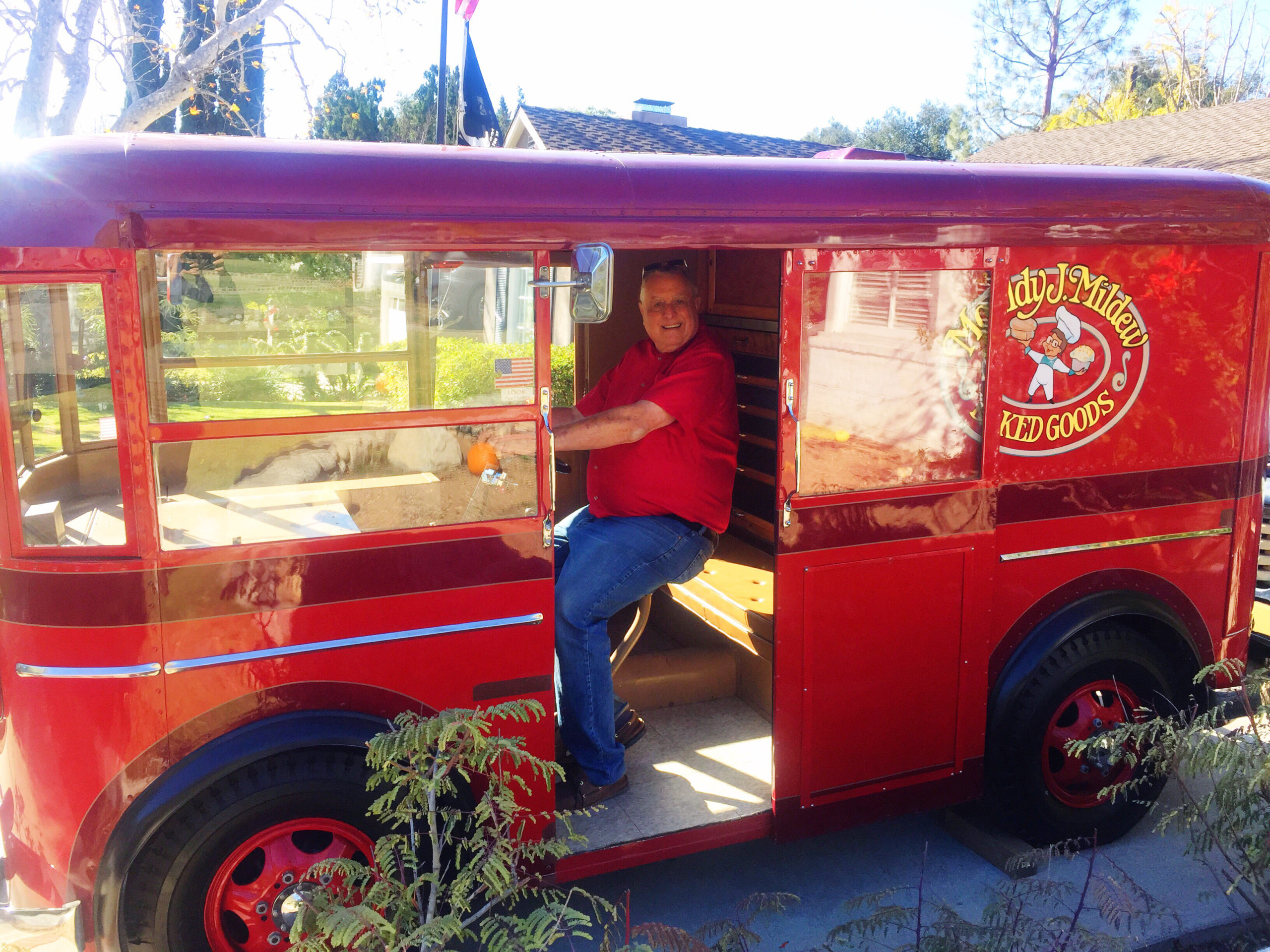
Haley drives a 1947 DIVCO Helms Bakery truck painted the wrong color by a previous owner (it should be yellow and blue) | Courtesy photo / Norm Haley

Seeing the blank look on my face, Haley elucidates, “In 1930, a gentleman from the East Coast named Paul Helms came to California because he had tuberculosis. He was a marketing genius. He opened a bakery and the first contract he got was to deliver all the baked goods to the Olympics in Los Angeles. Later, the Helms baked items became a household staple.

“In those days most families didn’t have enough money to own two cars. Father took the car to work and mother relied on the cleaners which had a truck that came out to pick up the dry cleaning, the grocer who delivered the groceries if she called in, and the Helms man. By 1940, the trucks that made the home delivery were driving 75,000 miles a day transporting bread, donuts, cakes, and cookies all over Southern California. I was lucky enough to get one of those Helms trucks. There may be only ten of them in existence today.”

Asked if he has any favorites among the 50 vehicles in his collection, Haley replies, “My most-prized car is the 1927 Coupe just because I’ve driven it so much. My favorite truck is the Helms. I’m a member of the Monrovia Historical Society’s Board of Directors and once a year I would put one or two trucks in the ‘Friends of Monrovia.’ Recently, we’ve been handing out donuts in the Helms truck, along with information pamphlets about the society.

“I have a 1954 truck called Canopy Express. Only 3,000 of them were made and I don’t know how many are left. It’s used for delivering fruits and vegetables around the neighborhood, and I would load it up with pineapples to give away to people. For the last 35 years, I’ve also put a different car or truck in the Sierra Madre Fourth of July parade.”

We can certainly understand Haley’s nostalgia for the cars of old which people today don’t particularly care for. There are so many different makes and models to choose from – all of them with the latest technological features – to bother with antiquated vehicles.

But, every once in a while, we see a vintage car driving down the Colorado Street Bridge at a leisurely 30 miles per hour and we can’t help but stare and delight at such a rare sight. Thanks to collectors like Haley, we can reminisce and look back to a time when we weren’t in such a  state of frenzied haste.

San Gabriel Valley Teen Pianist to Appear on NPR’s ‘From the Top’

Originally published on 14 February 2019 in the Pasadena Independent, Arcadia Weekly, and Monrovia Weekly

Marc Soong performs Paraphrase on Figaro’s Aria from Rossini’s ‘Barber of Seville’ by Grigory Ginzburg | Courtesy photo / Barry Eckhaus Photography

Marc Soong, a 15-year old teen from Alhambra, is one of five performers  who will appear on an upcoming episode of NPR’s (National Public Radio) ‘From the Top.’ It airs on KUSC 91.5 FM on Sunday, February 24 at 6 pm and by podcast at fromthetop.org starting February 18.

The hit NPR radio program, which averages half a million listeners every week, features America’s best young classical musicians’ performances and interviews. This particular show will be guest-hosted by Bernstein-Award Winning violinist Charles Yang and co-hosted by pianist Peter Dugan.

Being included in this esteemed assembly is quite a thrill for Soong. He says, “I feel very honored! I know some fellow musicians who have participated in the program and I occasionally tune in on KUSC to listen to their ‘From the Top’ broadcast.”

“I filled out a very, very long application to be in one of the five slots,” explains Soong. “There is technically no deadline, but if you want to be a part of a specific program, you have to submit an application four months beforehand. Besides musical ability, candidates are chosen based on other factors including gender, age, instrumentation, repertoire, and diversity of stories in their application.”

“Applicants submit two pieces but can upload up to six video recordings. Out of these, ‘From the Top’ will choose one with a length of five minutes or less to be used on the show. “I submitted three recordings and the piece they wanted me to perform was a transcription of Figaro’s Aria from the Rossini opera ‘The Barbier of Seville.’ I suppose they chose it because it was the right length. The transcription isn’t well known, but the tune is popular. Furthermore, it’s virtuosic and exciting. Well, that’s also my biased opinion,” Soong adds with the confidence of an expert.

‘From the Top’ is a Boston-based independent non-profit organization that supports, develops, and shares the artistic voices and stories of young classically-trained musicians. It provides young musicians with live performance opportunities in the foremost concert halls across the United States. This affords them national exposure to over half a million listeners on its weekly NPR program.

Aside from the performance aspect, ‘From the Top’ offers leadership and community engagement preparation and, since 2005, nearly $3 million in scholarships. All these components intensify the hope, passion, and discipline of today’s extraordinary young musicians.

For his live recording performance, Soong traveled to Beaver Creek, Colorado. He relates, “It was a three-day commitment program – I was at the ski village from January 15 to 17. On the first day, I got to know the other four performers and we had a rehearsal. On the second day, there was more rehearsing and the actual show was held that evening. On the last day, there was an ‘Arts Leadership Community Engagement’ event – we had discussions on how to engage an audience based on their age group and we applied what we learned during an unrecorded final performance in front of an entire elementary school. All the events were held at the Vilar Performing Arts Center.”

Marc Soong | Courtesy photo / Barry Eckhaus Photography

Each musician is interviewed during the broadcast. “For my interview, I talked about math and music – my two favorite subjects – and physics, the third thing I’m obsessed with … primarily because the class is so hard. I know I unconsciously slip into nerdy talk; I hope listeners will think my interview is funny. Though I will attribute most of the humor to the co-hosts,” Soong discloses with a great deal of self-deprecation.

Soong says of his appearance on the program, “Since I heard about ‘From the Top,’ it has been my dream to be on the broadcast. And the whole experience did not disappoint. I got to meet the kindest, most talented group of musicians my age – all of them played different instruments. I had expected tension and competitiveness among us, which is pervasive during piano competitions and festivals, but there was none of that at all.

“Everyone on the show – from the executive director and stage manager to the producer and music director – were exceedingly nice. Whenever guest host Charles Yang and co-host Peter Dugan played the violin and the piano, you can hear the energy vibrating through the room. They’re also very humble and down-to-earth.

“I had never been on a radio program and I didn’t realize just how much time and effort were involved in creating a one-hour show. It took a full eight hours of preparation before the show started. This has been such a memorable experience!”

The gifted teen credits his close-knit family and caring mentors for this wonderful experience, “I would like to thank my two amazing teachers, Professor Daniel Pollack and Dr. Vladimir Khomyakov, for their guidance and encouragement; and my parents and my sister Melodey for their love and support. I know I wouldn’t have had this incredible opportunity without them.”

Soong’s proudest accomplishment, though, was organizing and performing in a benefit concert with Melodey at the First Church of the Nazarene in Pasadena in October 2017. It raised more than $8,000 for the Michael J. Fox Foundation for Parkinson’s Research.

A third-year student in the Stanford University Online High School, Soong attended Barnhart School in Arcadia, where he was so academically advanced that he skipped 6th grade altogether. His sister, who is a freshman at Washington University in St. Louis, went to Barnhart and Mayfield Senior School in Pasadena. Both of them are still actively involved in the community, giving piano performances at the various senior centers in the Pasadena area during their school breaks.

He may be only all of 15 years, but Soong has done more than most people who are far older than he. That he has remained so unaffected and unassuming despite his innumerable  achievements is a breath of fresh air in this age of self-importance and self-promotion.

‘Ragtime: The Musical’ Goes on Stage at the Pasadena Playhouse

Originally published on 11 February 2019 in the Pasadena Independent, Arcadia Weekly, and Monrovia Weekly

‘Ragtime’ ensemble | Photo by Nick Agro / Pasadena Playhouse

The Pasadena Playhouse is presenting one of its most lavish productions yet – ‘Ragtime: The Musical.’ Directed by David Lee, with choreography by Mark Esposito and musical direction by Darryl Archibald, it is on stage from Tuesday, February 5 through Sunday, March 3, 2019.

Danny Feldman, The Playhouse’s indefatigable Producing Artistic Director, chats with us during the busiest day of rehearsal week, and tells us why he chose ‘Ragtime.’

“This 1997 musical was based on an E.L. Doctorow book written in the mid-1970s. It premiered at the Shubert Theatre in Century City before it was on Broadway. I saw ‘Ragtime’ 21 years ago and it was one of the most incredible shows I’d ever seen. It was a new production but it felt like this old-fashioned epic – with a lot of people, so much dancing, and a large orchestra. I fell in love with it!”

“About a year and a half ago, when I was planning this slot, I knew I wanted to do a big, splashy show for my second season,” continues Feldman. “We hadn’t done something like that in a while and I kept coming back to it. While the book was published in 1975 and the musical was first produced two decades later, ‘Ragtime’ felt tremendously relevant – like it was written today.

“The show deals with America at a decisive moment in our history, right after the turn of the century up until World War I. It was a time when America was going through radical change – when we were trying to figure out who we were, striving to get along with one another, and considering what kind of country we wanted to be.

“Then I realized we were in another one of these moments. We’re again asking ourselves ‘What is America about?,’ ‘How are we moving forward?’ There’s a great deal of clash and conflict right now. ‘Ragtime: The Musical’ explores that conflict – not today’s, but that at the turn of the century, yet there are so many parallels to it. I suspect that people who are watching the show, who’ve seen it before or even those who’ve never seen it before now, will think we altered it to make it about today. But we didn’t change a word!”

Shannon Warne as Mother | Photo by Jenny Graham / Pasadena Playhouse

Explains Feldman, “One of the through lines in the show was about women standing up for themselves, redefining their relationship in the household, and finding value. Then there was the African-American family who suffered a hate crime perpetrated against them, representing the theme of justice and fighting for what’s right. The third family we’re following personifies Jewish immigrants coming through Ellis Island, what they faced as outsiders, and how Americans treated them.

“These same issues are in the news every day! It’s not a play about 2019 but in many ways it is a play about 2019. And, like any masterpiece or great piece of art, when looked at over time through a new lens, we see different things in it. And with ‘Ragtime’ we’ll find distinct aspects in it today, given where we’re at. As serious as I make it sound, though, it’s also wildly entertaining. It’s a brilliantly constructed show full of sentiment and laughs; it hits you in the heart and the gut all at once. It is, ultimately, an American story that’s uplifting and hopeful. I think it has the power to move people deeply.

“It’s these things all rolled into one great night of theatre. And it’s not done a lot because it’s a pretty big undertaking. It has a 16-piece orchestra and a 21-person cast. We’re jumping all over New York in terms of locations in the story.”

The sheer enormity of the show makes for a truly amazing experience for the audience. Says Feldman, “Our stage is as big as that of a Broadway’s but our seating area isn’t; the Shubert Theatre, I think, had over 2,000 seats. But that’s great because watching that size musical in a 650-seat venue gives you a more intimate experience – you’re really connecting with what’s happening on stage.

“Watching rehearsals, I’m reminded that the combined resonance created by 21 actors with big voices and an orchestra is so powerful, particularly when they’re singing this beautiful score; it knocks you over. It’s pretty exciting! The experience you’ll have sitting in this theatre hearing 40 musicians and actors singing at you, I don’t know where else you get that.”

Asked if he’s making a statement with this show, Feldman replies with a thunderous “Yes! I’m glad you’re listening! The Pasadena Playhouse creates audacious shows. Sometimes it’s in the form of ‘Bordertown Now’ which is the culture of what’s going on today. Sometimes it’s a big celebrity doing a play here. But sometimes it’s a big, bold, ambitious musical. I think everything I try to program and create here has a sense of adventure and boldness in it. I want our audiences, whenever they come here, to be surprised by something we’re doing and to really feel something they’re not used to feeling. This show is in line with all our other ambitious projects.”

“The next play we have coming up, ‘Tiny, Beautiful Things,’ is just as bold in a very different way. I think the impact of a show as grand as ‘Ragtime’ and the intimacy of a little production like ‘Tiny, Beautiful Things’ will demonstrate what we’ve already done since I’ve been here, and what we’re constantly trying to accomplish – that to be a whole theatre experience you need the big and the bold as much as the small and the quiet. And they’re equally powerful.”

Coalhouse and Crew (from left: Candace J. Washington, Clifton Duncan, Cornelius Jones, Jr., and Bryce Charles) | Photo by Jenny Graham / Pasadena Playhouse

Throughout its hundred-year history, the Pasadena Playhouse has retained its core mission. Reiterates Feldman, “A lot of the theatre people go to see are national tours – ‘Hello Dolly’ or ‘Jersey Boys,’ for instance. They’re great! I see all of them and I love them all. I’m a huge fan of bringing in all these big Broadway musicals for people to enjoy. But we’re different here, we don’t see the show in New York and decide we’d rent the sets and the costumes and bring the show here as part of a tour stop.

“However, I don’t want to come off as being negative about national tours and theatres that do. To have a healthy theatre ecosystem, you need those who are building it by themselves and others who are bringing it in; those are necessary components for an interesting cultural landscape.

“My goal is to have as many people as possible see our work. If, in the future, someone sees our show and says ‘Let’s take it to other places’ that would be delightful, but that’s not why we exist. We exist to serve this community. That’s been our mission for a hundred years and we’re continuing to do that. It’s what the Pasadena Playhouse is all about.

“We’re proud that ‘Ragtime’ is made here; it’s pretty much like growing organic grapes. We start with a blank page where people come together and say, ‘For four weeks, we’re going to tell this story on this stage in a big, bold way.’ It is created of, by, and for this community. And that’s what makes it extra special.”

The stories of the three families we’re following in ‘Ragtime’ unfold in New York, yet they could very well happen here. Feldman asserts, “While we have a unique history in Pasadena, we also have conversations about race and instances of segregation. I think Americans, as a culture, don’t want to talk about the troubled parts of our past. We have a way of thinking ‘We know this happened in our past and it’s shameful. But that was the past, it’s not now.’ That’s something we explored in ‘Hold These Truths,’ a play we did about the Japanese internment camps during the anniversary of the imprisonment.

“To me, the reason theatre looks back at history isn’t to shame anyone, but to learn from things we’ve done in the past. Because, whether we like it or not, that’s part of who we are as a people. A production like ‘Ragtime’ speaks to our past as if to say ‘Let’s unpack this.’ There are moments that are uncomfortable. But the goal, particularly with ‘Ragtime,’ is not to dwell in it for the sake of dwelling in it. It’s to show, in many ways, how far we have come and how far we have yet to go. Our job as a theatre, and mine as an Artistic Director, isn’t to prescribe that for people but to put the work out there and let people take from it what they will.”

If audiences, after watching ‘Ragtime’ at the Pasadena Playhouse, examine their own failings and resolve to be better human beings, then theatre will have served a higher purpose than merely entertained. And that would, indeed, be a noble feat.

‘Othello’ Takes the Stage at A Noise Within

Originally published on 5 February 2019 in the Pasadena Independent, Arcadia Weekly, and Monrovia Weekly

(Left to right): Michael Manuel, Wayne T. Carr, and Angela Gulner | Photo by Daniel Reichert

William Shakespeare’s ‘Othello,’ A Noise Within’s fifth production in its 2018-2019 season, will be on stage from February 10 through April 28. Directed by Jessica Kubzansky, it stars Wayne T. Carr in the title role, Angela Gulner as Desdemona, Tania Verafield as Emilia, and Michael Manuel as Iago.

Manuel graciously agrees to share with us his thoughts about this classic play and the character he is about to inhabit. He recalls, “I did Othello 20 years ago and I played Cassio; this time I’m Iago. Any time you play a bad guy you can’t think of the character as bad. Even the most evil people believe they’re doing the best they could under the circumstances.

“I just finished doing Toby Belch, in ‘Twelfth Night,’ at the Alley Theatre in Houston. He’s a character who’s like Cassio – the big, drunk, funny guy. And I knew I was going to be doing this so I got to thinking ‘what triggers people into different behaviors?’ What, for instance, drives some to drink?

“For Iago, there are events that push him into that place where he’s just coping with everything that’s happening to him. There’s an inherent frustration, feeling ‘less than’ and being slighted, in some way, that he hasn’t gotten what he deserves. But, on some level, he tells himself  ‘Of course, I can’t get it – I don’t look as Cassio does, I don’t speak as well as Cassio does, I don’t have the same upbringing that Cassio has.’”

This is a role Manuel is sympathetic to. He says, “I have a love for characters who might be described as having a grievance of sorts … a chip on their shoulder might not be accurate, but someone who’s trying to prove he’s worthy of being. I gravitate towards characters who weren’t born into privilege and make something of their lives.

“I recently did Lopakhin in ‘The Cherry Orchard’ and he’s someone who resonates with me. He used to be the grounds man of the land which he now owns. When he was a lowly worker, everyone had nicknames for him; so now his attitude is ‘you should have treated me nicely because now you all work for me.”

Michael Manuel with Wayne T. Carr | Photo by Daniel Reichert

Continues Manuel, “The other day, among the cast, we were talking about class and perception. We were discussing how Cassio is someone who’s got everything. I went to Yale and there’s a perception that I’m somehow smart or rich. Truth is, I came from a blue-collar background and the neighborhood I grew up in wasn’t the best.

“Just like Lopakhin, my classmates’ parents were teachers, attorneys, and professionals. Growing up, I was embarrassed to tell people that my Dad worked as a garbage collector. But there came a point when I realized that everyone has value and what was shameful was that I hadn’t recognized it until then. Now I’m very proud to let people know what he did for a living!”

Because he played Cassio before and is now taking on the role of Iago, Manuel has a chance to look at both characters on opposite perspectives. He says, “Looking back, I don’t really remember much about that first time I did ‘Othello.’ I did Cassio when I was fresh out of college when I felt I knew everything there was to know, that I’ve figured it all out. Then, I finally grasped that I hardly knew anything; there are so many other layers in both characters that I learned from just living 20 more years since.”

The passage of time has helped Manuel give a more layered interpretation of Iago. “First of all, I’m older and I’ve accepted the fact that I don’t know everything; I no longer harbor that resentment in being told what to do. So now I have a vulnerability because I don’t have to pretend to know more than I do.

“Of course, the trap is that when you’re older you also think you know everything because you’ve gained more experience. So you’re always in the same boat – there’s always someone older or wiser no matter what their age is. I would say my Iago then would have been different from my Iago now,” Manuel expounds.

“It’s funny, this is only my second time doing ‘Othello,’” discloses Manuel. “While ‘Hamlet’ I’ve done five times, ‘Lear’ thrice, ‘Midsummer Night’s Dream’ I’ve done probably six or seven times, on occasion playing the same character. But there’s so much to mine in this. Since I have never fully figured it out, there’s always something new.

“Jessica’s vision for Iago is that he’s honestly sharing his feelings. I would like to be able to convince everyone on that stage that I’m being truthful and that I believe in everything I’m saying. People can tell when someone isn’t sincere. I think Iago understands people – he might not be book smart but he is clever. I’m sure if people saw his resume, they would say, ‘Of course, he shouldn’t get that high in the military, he isn’t someone who could be elevated to an upper rank.’”

(Left to right): Angela Gulner, Wayne T. Carr, Tania Verafield, and Michael Manuel | Photo by Daniel Reichert

Asked if he wants audiences to hate or empathize with Iago, Manuel replies, “I want people to see that they’re no different than I. I want them to understand there was no other way for me to behave. The challenge is that when a character does something bad he has to check in with the audience – that’s why there’s a lot of soliloquies. He tells the audience what he’s going through and then asks ‘What would you do if you were in my place?’ And follow that up with, ‘You know you’d do exactly as I’m doing’ or, at the very least, ‘You’re thinking of doing the same thing I’m doing right now.’

“In the soliloquies, I’m basically saying ‘There’s nothing wrong with that I’m doing; I’m telling people exactly the truth.’ How they hear it and how they deal with it is up to them. Part of what I would like for the audience to say is, ‘I wanted to hate him but I like him’ or ‘I can’t believe I like someone who’s so awful.’

“I wouldn’t go so far as justifying my actions, so much as showing our commonality. That we share all the same feelings – they’re what make us humans. We plan the way our lives would go and then something happens so we have to adjust. And one of the things Iago does better than most is that he’s a great improviser. He’s in constant firefights and each one requires a different tactic. As we all do, Iago reacts in the moment. I think that’s what makes these characters so fascinating.

Manuel adds, “I break down what Iago is saying and what people are saying about him. I think his choice of words reveal a lot. There are some people he addresses as ‘thee’ or ‘thou’ versus ‘you’ or ‘your’ he uses with others. Shakespeare is a master of language and he uses a combination of word sounds to signify emotions and motives. I could spend my whole life trying to figure out how to play a part and still discover something I haven’t seen the first time.”

However many Shakespeare productions Manuel has been in, each performance of the same play is different. He explains, “It’s really the conceit of the play – it depends on the actors and the message the director wants to impart. This ‘Othello’ is set in 2019 so that has given me a different perspective; it also informs the character’s actions. Wayne’s ‘Othello’ is very different from Chuck’s, the actor who played that part in the first ‘Othello’ I was involved in. As Iago, my relationship to this ‘Othello’ changed too.

“Yet, it doesn’t matter what period this ‘Othello’ is set in. Shakespeare’s plays have endured through the years because they’re timeless. Everything that was relevant at that time is still relevant today. The feelings that we have – jealousy, anger, revenge, pettiness – all these are innate in everyone, then and now. That’s the reason for classical theater – the message resonates with everyone.”

We can all agree with Manuel. Shakespeare’s genius is that he perfectly captures the essence and the complexity of human behavior. When we watch his plays, we recognize ourselves and empathize with the characters on stage – we are all capable of heroic actions as much as we succumb to deplorable deeds. And that, ultimately, our doing or undoing comes down to how we choose to act at any given moment.

February College Search Guide

Originally published on 4 February 2019 in the Pasadena Independent, Arcadia Weekly, and Monrovia Weekly

San Diego State University | Courtesy Photo

The road to college

After several years of drought and rainless months, we’re finally getting much drenching which may be affecting your family schedule. Maybe some sports events are being postponed or canceled and getting your children to all their after-school activities could be taking longer than usual. But don’t stress over the rain we’re getting; we can be thankful that we don’t live in Chicago where it’s colder than the North Pole. 

By this time, winter break is a distant memory and your children’s emphasis should have shifted back to school work. Hopefully, they have also done well in their first semester and are actively involved in this phase of their learning.  

FRESHMAN

Your children are well into the second semester of 9th grade and are now fully engaged in the academic and extra-curricular life at their school. They should continue focusing on maintaining good grades. If their first semester marks need improvement, now is the time to turn things around. Time management is of paramount importance as schedules could prove to be challenging with their course load, sports and extra-curriculars all vying for their attention and time.  

Encourage your children to start thinking about their summer community service activity. Your student’s college counselor may have some recommendations on community service and other clubs and organizations to develop his or her interests and abilities. I have to emphasize that your children should pursue an activity they are truly passionate about and be involved in it throughout their four years in high school. This shows admissions officers genuine interest and zeal.   

SOPHOMORE

Make sure your children are staying on top of their grades so that the final grades that go on their transcript are the best they could earn. The schools they will be applying to will only get to see all the marks in their first three years in high school. If their first semester grades weren’t stellar, they need to improve their grades this semester. They need to meet with their grade class dean to make sure their grades and courses are on the right track for graduation. They should know what tests they need to take and register for them (www.collegeboard.com; http://www.act.org).

It would be a smart move for them to take the SAT subject test the year they take the course while it is still fresh in their mind. My daughter took her SAT II Chemistry test as well as the AP test in May of her sophomore year.

JUNIOR

I cannot emphasize this enough – junior year is the last complete year that college admissions officers will be looking at when your children send their application. They need to maintain their good grades and continue their extra-curricular activities. If they had good study habits back in 9th grade and have established a routine, they shouldn’t be feeling overwhelmed right now.    

Recently, I was reminded of the fact that for most students meeting frequently with their school’s counselors isn’t always a possibility. In some high schools where there are as many as 400 seniors to four full-time counselors, a junior may not even get any face-to-face time with a counselor. This puts the onus on your children to be very resourceful and to take the initiative in gathering their research material and plan their course of action as they embark on the college application process. 

Outside independent resources are also available for you and your children if you need assistance. One particular organization I heard about is called CollegeVine in Cambridge, Massachusetts. Its near-peer mentoring method pairs high school students with highly-qualified college student “peers” who have had recent success navigating this same road, which is challenging and daunting for teens. This model works  because students relate to mentors closer to their own age who truly get them, communicate the same way, and are already on the campuses of the top universities with access to real-time information and tools. Peer mentors confer with students via video conferencing.

Photo by Annie Spratt for Unsplash

If you want an independent counselor who can sit down with you face-to-face during the initial meetings, Greg Kaplan would be a good resource. He grew up in and attended Southern California schools and has written an excellent book called “Earning Admission: Real Strategies for Getting into Highly Selective Colleges.” He is very much aware of the competitiveness in the local schools and offers free workshops in the San Gabriel Valley. He will guide your student through the four years of high school and strategize how to best present your child to admissions officers. He does Skype conferencing after the first meeting.  

Meanwhile, as the parent of a junior, you should also make sure your child is on track – has taken all the courses the high school requires for graduation and are taking all the courses to complete the UC and Cal State requirements.                

They need to be aware of what standardized tests they should be registering for and taking (SAT I in March, ACT in April or June, SAT II exams in May or June.  www.collegeboard.com, www.act.org).

Your children’s plans for spring break college visits should be finalized. If they are visiting the colleges on their own (not the high school’s group-arranged tour), they need to call the admissions office to schedule their visit. It would be very ill-advised for parents to be scheduling the college visit for their students. As much as you want to be hands-on, relinquish control and have your children make the appointments. Most universities have a morning and an afternoon tour at 10:00 am and 2:00 pm.  There is usually an information session for an hour and a walking tour afterwards. If they are thinking of applying through early action or early decision, they might want to make an interview appointment with an admission officer (if it is a requirement for application). They might also want to schedule to meet with a current student to learn more about the school, or ask to see the rooming arrangements.

SENIOR

Your children should not take for granted that they are all done with schoolwork because they have sent in their college application. Don’t let them succumb to “senioritis” as third quarter grades are very important in case they are waitlisted. Also, in the unfortunate event that they realize the school they have been attending as college freshmen isn’t the right fit for them, senior-year grades will be crucial in the transfer decision.  

If your children have received new awards or commendations, or have accomplished something significant since they sent in their college application, they should email this important update to the admissions officer or the area representative of the school they applied to.

The months following the end of the college application process are usually as anxiety-ridden for seniors as well as parents. While everyone has breathed a sigh of relief that the mad rush is over, the waiting period is just as nerve-wracking. In the next few weeks, some college decisions would be trickling in.

Remind your children to be careful how they share their good news as their friends might be getting some bad news at the same time. If they have been accepted to their “safety school” but aren’t planning on attending it, they should resist the urge to boast about it as it might be someone else’s “dream school.”

Most of all, your children need to be patient – the answer will eventually arrive and nothing can hurry it up. Colleges notify at different times and in different ways. They shouldn’t read into the timing of the decision letters; their friends getting good news early doesn’t necessarily mean a bad outcome for them.       

Your children should confirm with the colleges to make sure they have all the documents they require. They should continue applying for scholarships (www.scholarships.com; www.collegexpress.com; www.scholarships360.org, www.fastweb.com,

www.studentaid.ed.gov, http://www.affordablecollegesonline.org/graduating-debt-free) and getting their FAFSA (www.fafsa.ed.gov) ready for submission.

Bone Kettle’s Delicious Offerings Continue to Captivate Diners

Originally published on 17 January 2019 in the Pasadena Independent, Arcadia Weekly, and Monrovia Weekly

Bone Kettle’s St Helen’s braised oxtail with ramen noodles is the perfect comfort food | Photo by Brianna Chu

By Brianna Chu

Last year, May and I were invited to a PR mixer at the Bone Kettle, a Southeast Asian restaurant and bar in Old Pasadena, and the food was, as hoped for, simply amazing. I loved it so much that I revisited the restaurant last week with my family for lunch to try their full menu on for size. Sure, the food at the mixer was good, but they knew they were throwing an event for the Press. How good was their food normally? And what hadn’t I tried yet?

At their opening time of 11:30 am, there were available tables everywhere in the young, modern space, and we easily got a great booth in the main dining area. Over the next hour, though, tables began to fill up rather quickly for a random weekday. Service was fast, too – our main courses were served almost immediately after we finished devouring our appetizer, and their staff were friendly and helpful.

An important note to future diners: the lunch and dinner menus vary slightly. The succulent oxtail dumplings that I was looking forward to were reserved as an appetizer for the dinner menu. Luckily, however, the amazingly juicy and yet perfectly crunchy fried chicken wings with Thai chilis, sweet sauce, and lime did appear on the lunch menu – and tasted just as wonderful as they had previously. I spotted some familiar appetizers like the fluffy kroket, spicy papaya salad, and fried oxtail tips, which we sadly did not sample again since we all wanted to save enough room for the main dishes.

May opted for a rice plate with their fatty beef brisket – it was reportedly excellent, and presented beautifully. Vibrant vegetables and delicious meat haloed a rice plateau that featured a soft poached egg nestled at its center. It was a balanced, delicious plate for about $19-20, though prices vary on your protein choice, from tempeh to varying meats.

The fatty beef brisket rice plate is as delicious as it looks | Photo by Brianna Chu

My fiancé and I both immediately gravitated towards their broth options, though. The restaurant is called the Bone Kettle, after all! We both knew that we had to try their 24 hour, slow-cooked, St Helen’s braised oxtail, served with five ounces of fresh ramen, basil, cilantro, and sliced heirloom carrots, with the addition of a cheeky poached egg (for an extra $2, but I love eggs in my soup). At $24 for the large oxtail, noodles, and broth, I felt the meal was worth the price, especially given that the oxtail was the most expensive protein option for the broth.

As ever, the Bone Kettle’s presentation was impeccable. The oxtail was served on its own plate with crispy fried shallots and edible flowers, and the flavorful, succulent meat could be readily pulled off the bone with our chopsticks. May immediately tried some of my oxtail, and after her first bite, reached for another with the excited declaration that: “This is SO good!”

The bowls of noodles initially arrived broth-less, and a server came swiftly out with a pitcher of broth. Our soft poached eggs came still in their shells on a soy sauce dish for us to break open and serve into our broth when we pleased. I can happily confirm that I was as captivated by their broth this time around as I was the first! I left comfortably full, and even took home some leftover oxtail.

I wanted to check out the restaurant on my own time (and dime) to see whether I would enjoy the food and atmosphere just as much, and the Bone Kettle did not disappoint. I highly recommend the restaurant to everyone, as there are options for meat-eaters and vegans alike.

Brianna Chu, a guest opinion writer for Beacon Media, was born and raised in Pasadena. She loves to cook and to eat, is a lifelong viewer of Food Network, and enthusiastically introduced the tradition of Thanksgiving dinners to her British and European friends while earning her degree at the University of St Andrews.

Arcadia Artist Vies for the Grand Prize in the ‘Illustrators of the Future’ Competition

Originally published on 15 January 2019 in the Pasadena Independent, Arcadia Weekly, and Monrovia Weekly

Ma’s entry called ‘Ruins’ | Courtesy photo / Galaxy Press

Qianjiao Ma, known to her friends as ‘Q,’ is a long way from her birthplace in Northern China but is very much at home in her adopted city of Arcadia. She is one of twelve ‘Illustrators of the Future’ winners to be honored during the 35th Annual L. Ron Hubbard Achievement Awards at the Taglyan Complex on Friday, April 5, 2019.

The highlight of the ceremony will be the announcement of the year’s two Grand Prize winners –  a writer and an illustrator – who will each receive $5,000. Quarterly winners, like Ma, also receive cash prizes from $1,000 to $500. Their winning stories and illustrations will appear in the annual anthology ‘L. Ron Hubbard Presents Writers and Illustrators of the Future’ Volume 35.

An international competition, ‘Illustrators of the Future’ is considered the most enduring and influential contest in the field of science fiction and fantasy. Artists worldwide participate in this competition and they are judged by professional artists, some of whom are masters in the genre.

To get to the heart of how Ma arrived at this momentous stage in her chosen profession, it helps to know what drives this determined young woman.

“I was born in Shenyang in Northern China,” begins Ma. “In my senior year in high school I went to Beijing to investigate what school I could go to and get training. I have always been interested in art so I could have gone to a well-known arts academy in China. But my mom also asked me if I wanted to study abroad. It was an exciting prospect as I discovered that Beijing was vastly different from the city where I came from and it made me realize that I really wanted to see the world.”

Continues Ma, “I arrived in Los Angeles in 2008 and I attended Santa Monica College. One year later, my mom, who lives in Seattle, asked me to move there and I did. I went to Bellevue Community College for a year but I found their arts offerings quite limited.

“A friend mentioned ArtCenter College of Design in Pasadena, so I decided to visit the school. When I got there, I saw students were sleeping on the sofas in the hallway; they had worked all night on projects and didn’t have the time to go back to their dorm. The artwork displayed at the gallery were amazing, a far cry from anything I’d seen in Bellevue!

“I was convinced I had to go to that school; I applied but was rejected the first time around. While there are other entertainment design schools in California because the movie studios are here, ArtCenter is the Number One school for that discipline, so it was where I wanted to be. I prepared my portfolio again, resubmitted it, and was accepted on my second try.”

Qianjiao Ma is known to her friends as ‘Q’ | Courtesy photo / Galaxy Press

While attending ArtCenter College of Design from 2012 to 2016, Ma held freelance posts and various internships. She describes, “I interned for BRC Imagination and was one of the artists involved in the 2015 redesign of the Rock & Roll Hall of Fame Museum in Cleveland. It was at BRC that I gained training in experience design, which became my forte.

“After college I wanted to pursue experience design work but couldn’t find any opening. Not wishing to be unemployed, I worked as a comic book illustrator at Stela Unlimited, which is an app for smart phones. I was the background concept artist for a graphic novel called Lumi White, a remake of Snow White.

“I still really wanted to go into experience design, though, and that opportunity came six months into my stint at Stela. A spot opened up in a small company called Steadman Design Studio which creates immersive entertainment experiences for theme parks, attractions, exhibits and shows.

“From Steadman, I moved on to Thinkwell Group, which is a larger outfit. I had the chance to work on museum, restaurant, casino, and theme park design including Warner Brothers Abu Dhabi, the largest indoor amusement park in the world. It was a lot of fun – I was able to try out different aspects of experience design; I conceptualized the entrance ticketing area, the art deco-style Bugs Bunny, and various murals inside. It was an absolute thrill to see my designs get built!

“A year later, an acquaintance of mine at a company called ShadowMachine approached me to do animation design. I started working at ShadowMachine in February of last year and I’m enjoying doing animation.”

Throughout her career, Ma has been driven by that same passion students demonstrated which made such a profound impression on her when she visited ArtCenter years ago. She continues to look for ways to learn and expand her knowledge. She was a designer and painter for the Netflix Original ‘Disenchantment’ and TBS’s ‘Final Space.’ She was one of the featured artists to share their views on theme park design in ImagineFX magazine, and was included in Graphite magazine on traveling sketches.

An accomplished plein air painter, Ma has exhibited her work in various Los Angeles galleries. She recently did illustrations for the magazine ‘Compound Butter Issue One: Junk Food.’ She is being included in the upcoming sci-fi design tutorial ‘Beginners’ Guide to Sketching: Robots, Vehicles & Sci-Fi Concepts.’

Ma’s second entry, called ‘Apocalyptic World’ | Courtesy photo / Galaxy Press

Last year, Ma found out about the ‘Illustrators of the Future’ worldwide contest and right away she sent three entries – Ruins, Apocalyptic World, and Space Ship Inter(ior Design). After winning the quarterly competition, she was paired up with a writer.

“I can’t disclose details about the novel other than it happens in the post-apocalyptic world,” states Ma. “I depicted the harsh environment to which people are exposed, where chips are embedded in their brains as a means of controlling them.”

“This is my first time illustrating a novel and even if my work doesn’t earn the grand prize, I feel that I’ve learned so much already. I met people whose perspectives are different from mine,” adds Ma. “Should I win, I would be quite ecstatic! It would prove that I made the right decision on how to illustrate the writer’s idea and that I’m ready for more book designing.”

Winning the Grand Prize would indeed take Ma’s career into another realm. John Goodwin, president and publisher of Galaxy Press which is the exclusive publisher of the winning books and illustrations, confidently says, “After 35 years, we’ve had close to 800 winners. Several of today’s best known fantasy and science fiction writers and illustrators got their start from winning the ‘Writers and Illustrators of the Future’ competitions.

“Many past winners are now recognized names – Patrick Ruthfuss, one of the top-selling fantasy authors in the world today; Brandon Sanderson; Sean Williams; Eric Flint, the biggest fantasy author in Australia; Nnedi Okorafor, of Nigerian descent, now one of the main writers in the Black Panther Universe; among many others. Canadian writer Robert Sawyer is one author who didn’t actually win, but it was the judges who gave him critique that helped advance his writing; he has gone on to become Canada’s most successful science fiction writer.

Goodwin continues, “Part of their success in becoming known to the general public is that we arrange publicity for the winners of the writing and illustration competitions. They get written about in various news outlets, appear on TV shows, do book signings in bookstores, and attend  conventions like Comic-Con International and Dragon Con to promote their books. We continue to support them in their career. If they publish new books, we let them bring those as well. That’s why these two contests have enjoyed such longevity.

“And because it’s free to enter, we attract a large number of competitors from all over the world. We received entries from over 175 countries in Africa, South America, Central America, and throughout Europe. For the illustration contest, they don’t have to speak English since they’re only drawing pictures. This year we have several winners with Chinese, Japanese, and Korean names but we don’t have the information on whether they were born there or if they’re children of immigrants. An unprecedented five writers and illustrators from the United Kingdom won this year.”

John Goodwin at a ‘Writers and Illustrators of the Future’ seminar | Courtesy photo / Galaxy Press

Pairing the writer with the illustrator is done by the editor, according to Goodwin. “There is no standard for what illustration an artist can send us. Some of them do oil, others do pencil, many do computer-generated images. Sometimes we look at their choice of medium to figure out which book would work with it best. But we also try to make complementary matching – we pair up a fantasy writer with an illustrator who reads fantasy books, for instance.

“Judges are established professionals in the industry including: Larry Elmore, known for his illustrations for ‘Dungeons & Dragons,’ ‘Dragonlance,’ and his own comic series ‘Snarfquest;’ Gary Myer who is an illustration professor at ArtCenter College of Design in Pasadena; Stephan Martiniere, who did the design work for Disney’s ‘Frozen,’ ‘Suicide Squad,’‘Aquaman,’”

Goodwin explains the history of the contest, “While L. Ron Hubbard was widely known for his work in Dianetics and Scientology, he was also one of the most prolific writers in America in the 1930s and 1940s, having written over 200 western, mystery, adventure, science fiction, fantasy, and romance books using his own and 15 different pen names.

“As a young man, he had traveled to Guam and as far as China back in the 1920s, and wrote about his experiences. In fact, he took the first photo of the Great Wall of China, well before it was a tourist attraction, and sold it to the National Geographic. That was the first picture Americans had ever seen of it.

“Towards the end of Mr. Hubbard’s writing career he turned to fantasy and science fiction. When he was in Alaska in 1978, he initiated the ‘Golden Pen Award’ to celebrate his 50th year as a writer. It was the precursor to the ‘Writers of the Future’ Award which he launched in 1983 as a means to discover and nurture new talent in science fiction. Five years later, ‘Illustrators of the Future’ was created to provide artwork for the books.”

“He set up an endowment from his personal earnings and royalties from his books,” Goodwin goes on to say. “When he passed away in 1986, he directed in his will that the writers and illustrators contests continue. Galaxy Press was established as the exclusive publisher of the ‘Writers of the Future’ contest winners and all the fictional works of L. Ron Hubbard.”

Arcadia’s Qianjiao Ma is one of the many beneficiaries of L. Ron Hubbard’s bequest. On April 5, she’ll find out if her already burgeoning career will also be catapulted into another world.