The Huntington Appoints First Female Director of Botanical Gardens

Originally published on 5 April 2021 in the Pasadena Independent, Arcadia Weekly, and Monrovia Weekly

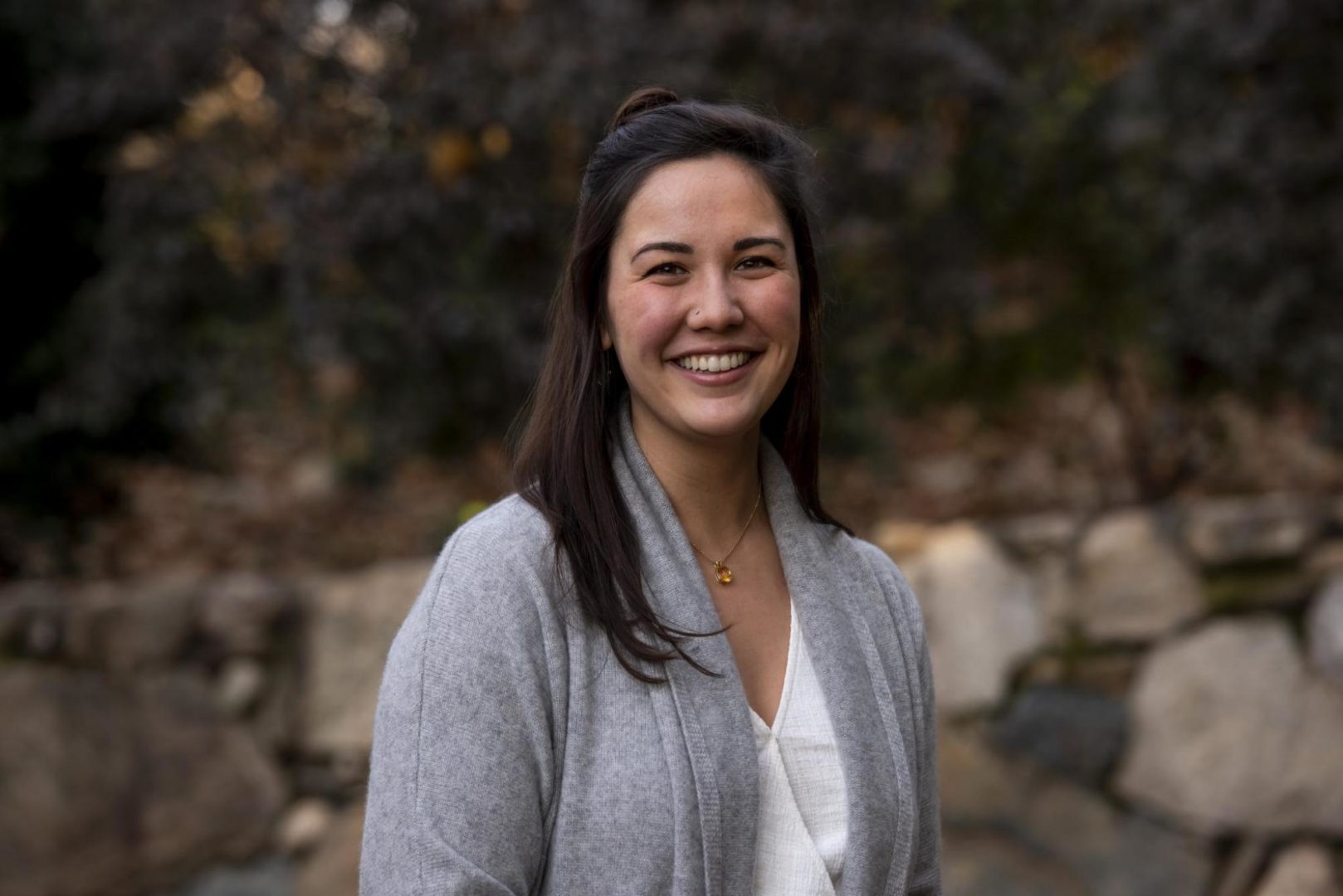
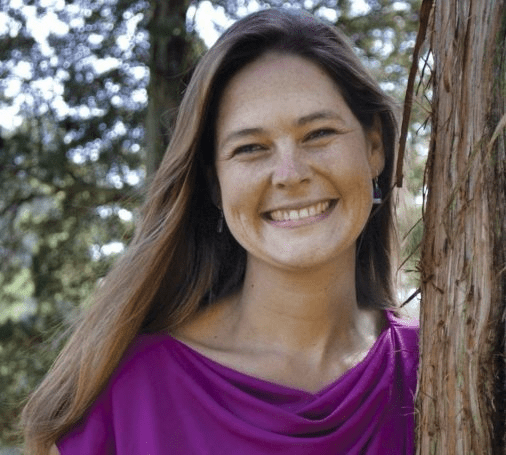
Nicole Cavender | Photo courtesy of Morton Arboretum

When The Huntington Library, Art Museum, and Botanical Gardens announced last week the appointment of Dr. Nicole Cavender as the Telleen/Jorgensen director of the botanical gardens, she became its first female director — a momentous event in the beloved institution’s remarkable history.

And it is only fitting that Cavender has been chosen to hold that distinction. She has a B.S. in environmental and plant biology from Ohio University and a Ph.D. from Ohio State University in horticulture and crop science. She will officially join the Huntington on May 17, 2021 after serving nine years as vice-president of science and conservation at Morton Arboretum, a 1,700-acre area of plants and trees which also boasts a hiking trail. Previous to that, she was chief programmatic officer at The Wilds, a 10,000-acre safari park and wildlife conservation center in southeastern Ohio which offers adventures like zip lining, horseback riding, and fishing.

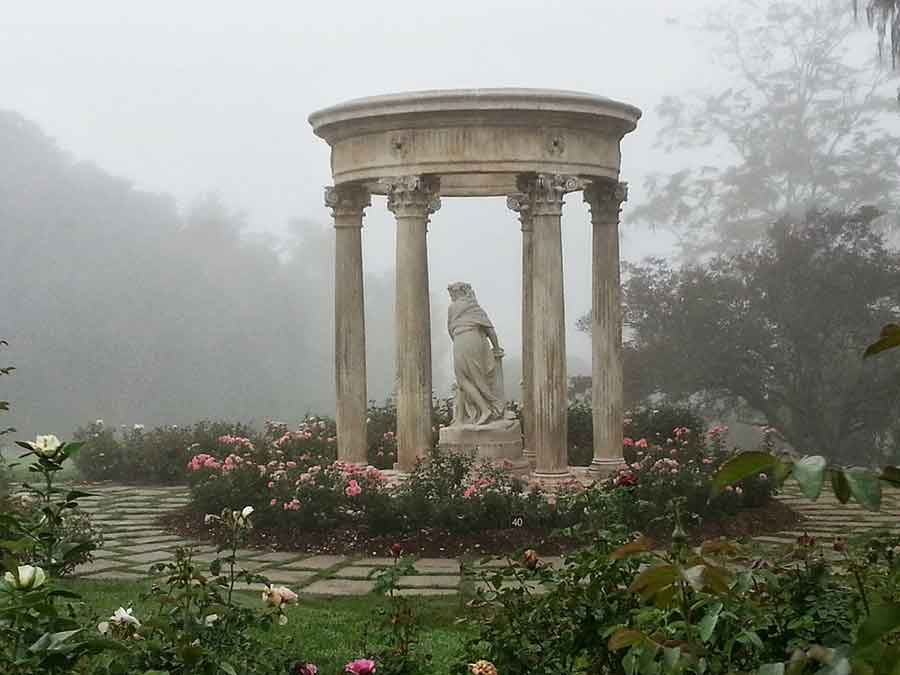
The Huntington’s Rose Garden | Photo courtesy of The Huntington Library, Art Museum, and Botanical Gardens.

Her new post at The Huntington, which has a mere 207 acres of gardens, might seem a departure from what Cavender has done before. But at the core, she will be continuing to apply what she knows and carry out what she wishes to accomplish. As The Huntington’s announcement outlines, she “will oversee a staff of 85 and several hundred volunteers in caring for more than a dozen gardens, including the renowned Chinese Garden, Japanese Garden, Desert Garden, and Rose Garden (read about it here). In addition, she will be actively involved in developing and expanding botanical education, outreach, and research programs. Along with the gardens, the botanical division at The Huntington also includes a seed bank, tissue culture lab, and a cryopreservation lab focused on developing protocols for freezing plant tissue at extremely low temperatures and then bringing them back to life at a later date — an arm of research crucial to conservation and sustainability of rare species.”       

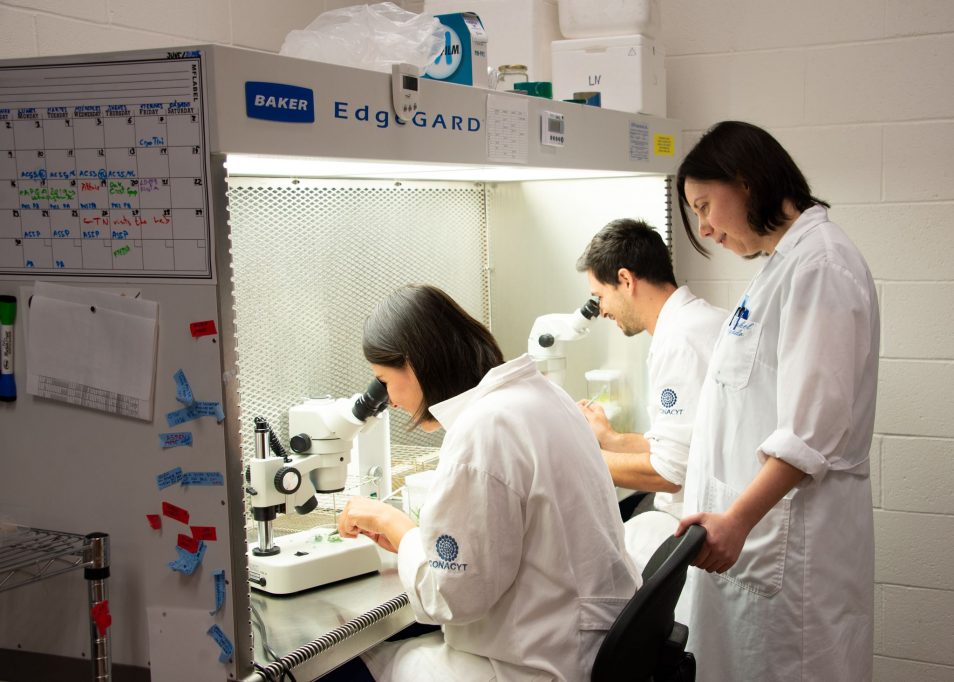
The Huntington has taken a lead role in recent years in the cutting-edge field of cryopreservation | Photo courtesy of The Huntington Library, Art Museum, and Botanical Gardens

Cavender states via email interview, “I’ve been fortunate to have the professional experience of working to advance science, conservation, and human connections at wonderful and unique places such as the Wilds and the Morton Arboretum. Looking forward, The Huntington has one of the largest, most diverse collections of plants in the world with over 15,000 different types of plant taxa — absolutely incredible! It offers the opportunity to work among amazing colleagues and with an incredibly vast and diverse collection, where I can bring to bear my love of plants, my devotion to the study of biodiversity, and my desire to continue improving the human connection to and appreciation of nature.”

“My focus will be on working with the amazing Huntington botanical gardens’ staff while collaborating with the library and museum team members,” adds Cavender. “The Huntington provides an exceptionally unique opportunity for synergy to maximize our collective impact and provide a remarkable visitor experience. I want to be able to help promote the important role gardens play in conserving the world’s plant diversity, promoting good stewardship of our planet, while also providing creative spaces for cultural expression and the human spirit connection.”

Cavender’s personal upbringing, academic background, and work experience inform her career path. “My interest in plants is rooted in my childhood as my father was a mycologist (fungi) and botany professor at Ohio University for over 30 years. He inspired my passion for conservation and plant biology at an early age which led to my earning a Ph.D. from The Ohio State University in horticulture and crop science. A common thread throughout my entire life is a love of plants and animals from my formal education throughout my professional career. I’m very motivated to build, encourage and bring together teams of people around common goals that promote the protection and restoration of nature while enlightening the human spirit.”

Liu Fang Yuan, the Garden of Flowing Fragrance, is one of the largest and finest classical-style Chinese gardens outside of China. It’s also the focal point for a variety of programs promoting cross-cultural exchange | Photo by Lisa Blackburn / The Huntington Library, Art Museum, and Botanical Gardens

That The Huntington has one of the largest authentic Chinese Gardens in the country, the realization of a long-held dream of James Folsom (read related article here), is fortuitous. Cavender explains, “Jim left a remarkable legacy. His attention to detail and authenticity when creating the Chinese Garden and the botanical gardens as a whole is amazing. In my role as VP of science & conservation at The Morton Arboretum, I was fortunate to take numerous trips to China for projects that focused on tree conservation and urban forest management. I plan to build upon Jim’s successes and am excited to continue to advance the plant, human and cultural connection within this garden and the many other excellent gardens at The Huntington.”

Cavender will be working within a predominantly Asian American community at a time when there’s national focus on correcting people’s misconceptions about Asian culture and eliminating anti-Asian sentiments. Her appointment as the first female botanical garden director comes at an opportune period as The Huntington tries to rectify its past practices of inequity and as it embraces inclusion, as Carolina A. Miranda wrote on April 1, in an L.A. Times exclusive.    

“My beliefs very much align with The Huntington’s principles on diversity, equity, and inclusion,” comments Cavender. “As a plant lover, I’m obviously thrilled by the diversity of species in the garden. But I’m even more excited by the diversity of the extended Huntington community and its historical role in the region. It’s been an honor to visit China numerous times over the years as I’ve developed a special appreciation of the culture which I treasure. I very much look forward to working with the local and national Asian community to build a better, more accurate understanding of Asian and Asian American history and culture.”

One of the many projects that Cavender will oversee is the addition in the Japanese Garden of a 350-year-old magistrate’s house from Marugame, Japan donated to The Huntington. When the fully dismantled house — currently being reconstructed with the help of a team of Japanese artisans — is completed, visitors can come in and learn about traditional Japanese residence and garden.           

The distinction of being first in a given post isn’t new for Cavender. She discloses, “Each of my last two posts at the Wilds and The Morton Arboretum were newly developed roles so I was the first person to hold those positions. I’m honored to be the first woman director of the Huntington botanical gardens. More women are taking leadership roles in botanical gardens in the U.S. and even throughout the world than ever before, and I’m excited to be one of them.”

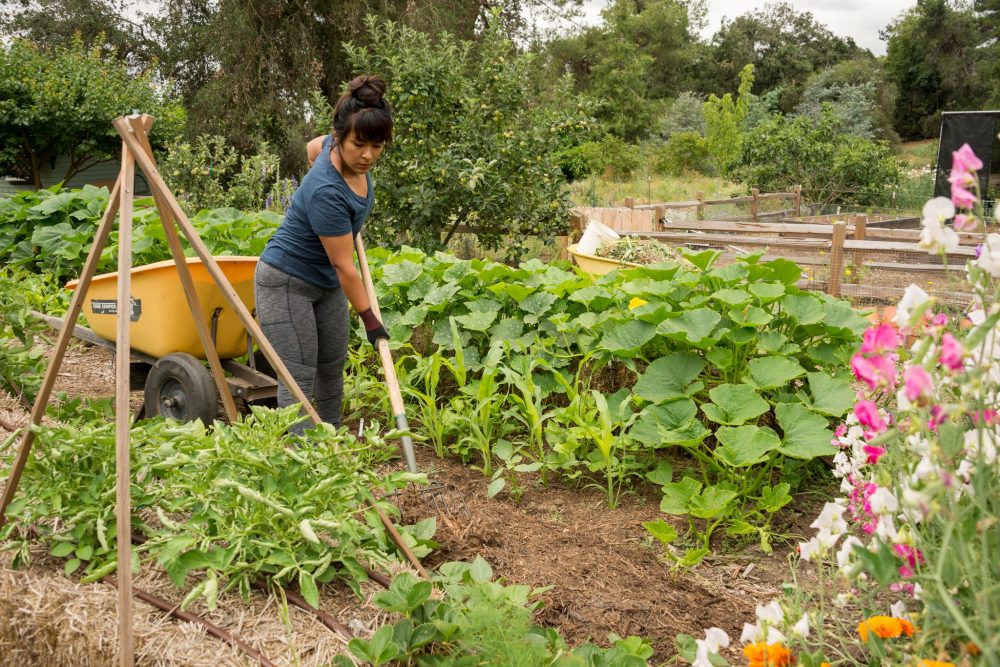
Best practices in sustainable agriculture for our regional climate are explored in The Huntington’s James P. Folsom Ranch Garden. Volunteer Emma Ho’o mulches rows of vegetable crops | Photo by Deborah Miller / The Huntington Library, Art Museum, and Botanical Gardens

Asked if there was something she discovered about The Huntington that was surprising, Cavender replies, “I was delighted to learn about the potager (kitchen garden) and experimental ranch garden created and now dedicated to Jim Folsom. These are opportunities to teach students and people about the very important connection between plants, horticulture, and food sustainability.

“It’s been an absolute joy learning about the Huntington. It’s such a unique, complex place with a rich, diverse history. The plant collection is AMAZING and truly exceptional, and is one of the most diverse in the world, while the library and museum collections are outstanding. The combination of everything in one place is incredible. I look forward to being continually surprised as I learn more over time.

“I’m eager to be working with the team in all three areas — the botanical gardens, library, and art museum. I want to understand our unique strengths and opportunities so we can build upon them synergistically and move the institution forward in the most relevant way possible.”

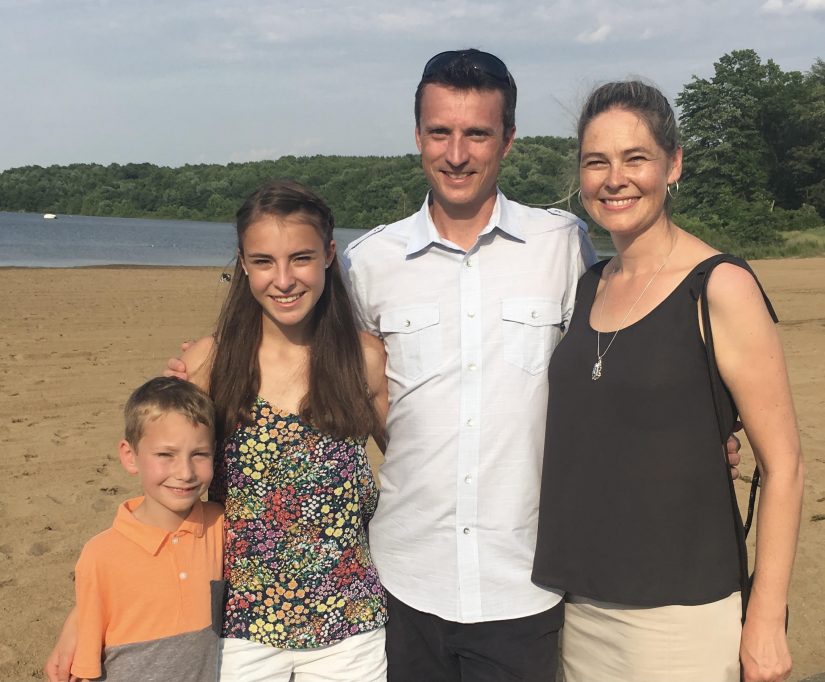
An earlier photo of the Cavender family | Photo courtesy of Dr. Cavender

This relocation to the West Coast will be a novel experience for the Cavenders as they move halfway across the country and settle in their new home. Cavender reveals about her family “I’ve been married to my husband Gary for 24 years. We have two children — Laurel (a sophomore at Marquette University) and Andrew (a seventh grader). While both are sad to leave their hometown friends, they’re excited about potential adventures in Southern California. We all appreciate that this position with The Huntington is truly a once-in-a-lifetime opportunity.”

In spite of the notorious L.A. traffic, Southern California has much to offer, and Cavender acquiesces, “The weather is certainly a draw as cold Chicago winters can be challenging. As an avid gardener, I can’t wait to have year-round growing opportunities. I will absolutely have my own garden and look forward to growing vegetables, California wildflowers, citrus plants, succulents, cacti, orchids, etc. that simply can’t survive harsh winters in the Midwest. It’ll be a very fun learning experience for a plant geek such as myself. I know I will need to learn more about water conservation, especially knowing that we have a vast collection of plants to care for and plants need water!”

It will come as no surprise for us to discover that the Cavenders like to spend their leisure time in the great outdoors. And since the San Gabriel Valley is about a two-hour drive from either the mountains or the beaches, they’ll find many places to go to.

States Cavender, “We’re a very outdoor-oriented family. The recreation opportunities available in Southern California are incredible. We’ll definitely be hiking in the mountains during the hot weather months and along the beaches during the ‘cold’ months. But there are no ‘cold’ months in L.A. to someone from Chicago!”

We can imagine the Cavenders sitting at the viewing stands along Colorado Boulevard on a brisk New Year’s Day morning watching Pasadena’s famous annual Rose Parade (read related article about The Huntington’s centennial celebration float entry) without winter jackets.

April College Search Guide

Originally published on 1 April 2021 in the Pasadena Independent, Arcadia Weekly, and Monrovia Weekly

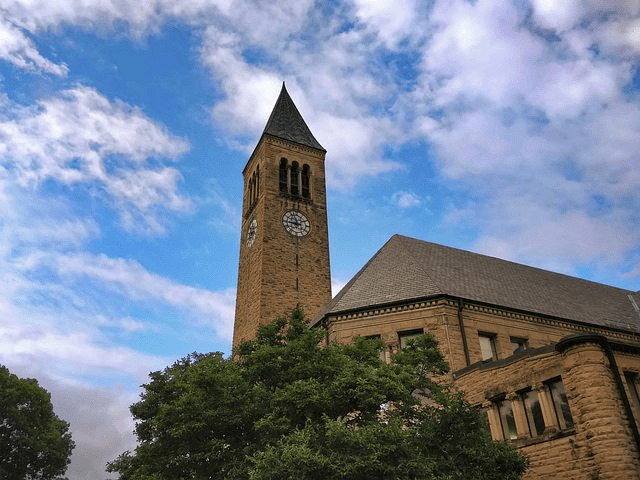
Oxford University’s Magdalen Tower (Oxford, England) | Courtesy Photo

The road to college

Last week the Wall Street Journal reported that the  U.S. Centers for Disease Control (CDC) cut in half the distance for K-12 classrooms and removed a recommendation for schools to install physical barriers – sneeze guards, partitions, or tape. However, students should maintain the six-feet social distance when they are in other indoor venues like the auditorium; during extra- curricular activities, like sports events and music practice; or when masks have to be removed, like when they’re eating.

The reduced social distance does not apply to teachers and staff  because, according to the CDC, COVID-19 transmission rates are higher among adults. Furthermore, the six feet requirement remains in place in communities with high transmission rates if students cannot be divided into cohorts.                         

L.A. County has seen a decline in the number of COVID-19 infections and several school districts in the San Gabriel Valley are planning on having students on campus in mid-April. Some school districts, though, are taking a more guarded approach by keeping the six feet distance, installing physical barriers to separate desks, and conducting their own health tests.       

While all research data show that the classroom setting is the best environment for learning, not    

all parents are rushing to send their children back to school, as reported by writer Howard Blume in an L.A. Times article. Parents in more affluent areas are twice as likely to send their children back to an elementary school as those in low income areas.

For middle- and high-schoolers, reluctance to return to school isn’t based on safety concerns but the classroom set-up – students will stay in a home room, instead of going to various teachers classrooms and classes will be taught via Zoom. For many, this arrangement isn’t much better than remote learning. In fact, they feel they’d rather learn from home where it’s more comfortable.

There are only two months left in the school year. And whether your high school children are going back on campus or have decided to complete the year in the comforts of home, they have to be preparing for the rigors of college.  

FRESHMAN

The school year is winding down. Your 9th graders should be on track on all their academic grades and putting extra effort into getting the best grades they could muster. Assuming that things will come back to normal soon, they should line up summer activities – enrichment programs, summer camps, volunteer work, or part-time jobs. 

All these – grades, arts, athletics, community work, employment – from 9th through 12th grade, will be recorded on the transcript that your children’s high schools will send to the colleges to which they apply.   

SOPHOMORE

The College Board has made updates in light of the coronavirus outbreak (read it here) so please be aware of what your children need to do. Make sure your children have registered for all the standardized tests they have to take in May or June (Possible AP tests for 10th graders are Math, Chemistry, History and Foreign Language. Deadlines are April and May for tests in May and June).

They need to plan their summer activities. If they are taking an Art elective, or are interested  in a particular art field, they should consider a summer program in that course to put on their resume.

High school students at school, wearing N95 Face masks in the classroom.

JUNIOR

This is the last complete academic year admissions officers will see when your children apply to colleges. They want to see grades that are improving from year to year, so the 11th grade final marks should be the highest on the report cards. If your children had gone on virtual college campus tours during spring break, they should also know the academic requirements of the colleges to which they are thinking of applying. They need to look at where they are grades-wise to figure out if the school on their list is a realistic goal.

Make sure your children have registered for the SAT, ACT (www.act.org), SAT Subject Tests, AP especially if they are thinking of applying through early action or early decision.

They should have all their summer activities lined up – enrichment programs, summer camps, volunteer work or part-time jobs. Remind your children to continue the pursuits they started in freshman year as admissions officers look for sustained interest, which is a reflection of what they are truly passionate about.

SENIOR

Some universities have sent out their decision letters in mid- or late-March, or mid-April if they applied to the Ivies. If your children are lucky enough to be accepted to all the schools to which they applied, they deserve a big congratulations! You can all exhale now! 

This is the part where your children get to choose the school they really want to attend. During the application process, your children were hoping the colleges to which they applied accept them. Now the colleges that accepted your children would like your kids to choose them! In this rank-obsessed world of American universities, the schools encourage all students to apply to them (they actively recruit students they would never even admit because the more applications they receive and the more rejections they send out, the higher they’re ranked.) The tables are turned because once your children get the schools’ acceptance letter, these schools would like to ensure your kids actually attend their college. This is the yield: the higher their yield, the higher their ranking.  

If your children are applying for financial aid or scholarships, now is the time to compare schools’ financial aid or scholarship offers. If a particular school really wants your children, you might have the opportunity to ask for a better package than what it originally extended.

If your children have been waitlisted to a school they are determined to get into, they need to respond quickly to let the admissions officers know that they are very interested. Your children should send a follow-up letter to express that the school is their top choice and that they will definitely enroll if accepted.

Demonstrated interest is all the more critical at this juncture as your children want to ascertain the admissions officers keep them in mind. Encourage your children to work with their high school’s counselor to make sure they send the transcript for the first semester, and any updates on awards and honors received after they sent their application. Your children need to keep in constant touch with the admissions officers.

The admissions office requires a decision from accepted students on May 1st. Make sure your children accept the offer of their second choice school where they have been admitted, and pay the required deposit. If your children are later accepted to the school to which they were waitlisted and accept that offer, they will lose the deposit on the other school. But it’s their guarantee that they will be attending a college in the fall.  

Arcadia Resident And LAUSD Educator Writes Book Encouraging Girls To Enter STEM Fields

Originally published on 23 March 2021 in the Pasadena Independent, Arcadia Weekly, and Monrovia Weekly

Jenny Lu was born and raised in Sacramento by first-generation Chinese immigrants who started a sewing business where she and her four siblings worked while growing up. Her parents encouraged their children to pursue their own interests; her siblings are small business owners and restaurateurs. She moved to Southern California where she went to college and earned an education degree, and then landed her first teaching job at Walnut Park Elementary School in Huntington Park.     

Currently a teacher and literacy coordinator at Delevan Drive Elementary School in Los Angeles, Lu has lived in Arcadia for the last 15 years with her husband, a compliance professional at a large insurance company in Orange County, and their two sons. Now she’s also a writer and has launched a Kickstarter campaign to realize her dream of becoming a children’s book author.

“My upcoming book, titled ‘Emma Ren: Robot Engineer,’ has diverse characters and takes place in the classroom setting where all children can relate to,” describes Lu. “It’s about a young girl named Emma who had always loved building things. When she was assigned a project to build a battle robot, she couldn’t be happier. However, her partner Jeremy assumed she couldn’t build robots because she’s a girl. But she doesn’t get discouraged and continues to persevere.

“It chronicles the school week of robot-building and highlights a STEM (science, technology, engineer, and math) approach. This is a fun book that promotes key skills, which include problem-solving, creativity, critical thinking, and collaboration. This book is important to me because I have dreamed of becoming a children’s book author since elementary school. I wanted to show children that dreams can come true and it’s never too late. I also want to provide books that celebrate diversity and encourage children to learn key concepts of STEM through picture books.”     

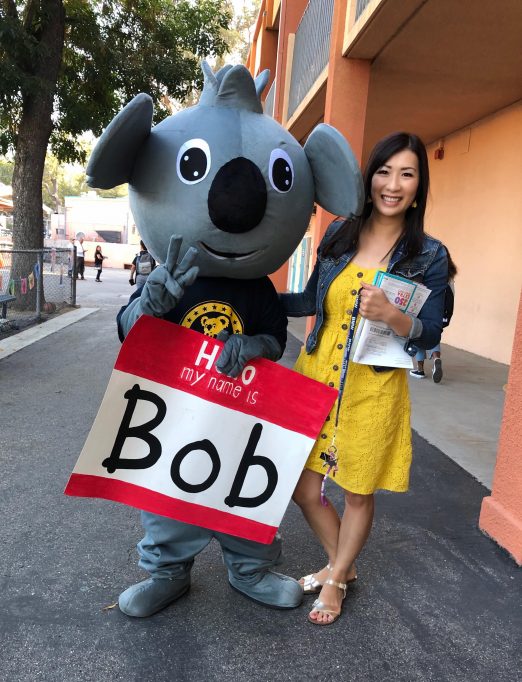
Jenny Lu with Delevan Drive Elementary School mascot, Bob the Koala | Photo courtesy of Jenny Lu

Lu is well aware of expectations and perceived limitations of women. She says, “I’ve always had a love for STEM subjects but my passion was to work with children. Growing up, I felt engineering was more suited for boys as I didn’t know of many females in that field. I can recall experiencing many gender stereotypes as a young child. Now that I am a mother and educator, I have different perspectives on gender roles, gender bias, and gender stereotypes in today’s society.

“As a parent, I have encouraged my boys to work hard, love learning, and pursue their passions. My eldest son chose to go to Rancho Lab School instead of the traditional school because it offers students the ability to work on projects in areas they are passionate about (Passion Projects), participate in STEAM projects (Makerspace), and engage in project-based learning. He is 12 years old and is currently a seventh grader. After attending Rancho Lab School he has developed a passion for math and programming. My youngest son is 10 years old and goes to Hugo Reid Elementary School. He says he also wants to write a book.”  

“I believe that I have the same perspectives as a parent and as a teacher,” adds Lu. “My message to my boys and my students is that they should always work hard, develop a passion for something, never give up, and break the glass ceiling.”

Lu started writing her book in May last year during lockdown as a means to connect with young children and in a way that would encourage them to cultivate an interest in STEM, especially among minorities and young girls.

Asked what her inspiration was, Lu replies, “I was inspired to write this book after noticing that the characters in most children’s books do not reflect the diversity at the schools that I’ve taught at. As a result, I was motivated to write a children’s book promoting STEM and include diverse characters from different backgrounds. Having been an educator for almost 20 years, I strongly believe STEM education will lead children to be future scientists, programmers, engineers, mathematicians, etc. According to the 2021 United States Bureau of Labor Statistics (BLS), the BLS expects an uptick in STEM jobs over the next decade and forecasts over 8 million STEM-related workers by 2029.”

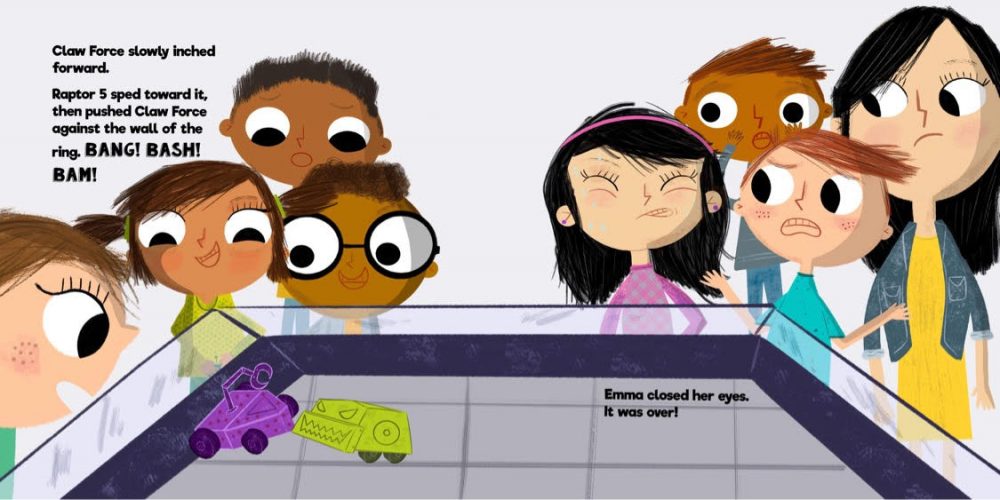
Illustration by George Sweetland | Photo courtesy of Jenny Lu

Many educators and psychologists say that boys and girls have the same abilities and interests as they start school. It is only later, around middle school, that each gender shows a particular inclination towards STEM or the arts and humanities. 

“From my experience as an educator, I see more boys getting interested in STEM than girls around the age of 10,” confirms Lu. “I believe at that age, children start to see the social expectations, gender stereotypes, and gender roles that society has presented. Children feel that they have to conform to these standards and expectations. This is why it’s important for parents and educators to teach children that they can follow their dreams and choose their career based on their interests and not what others believe they should do.”

Continues Lu, “In my opinion, when girls do well in STEM subjects but choose not to pursue careers in the field, it’s because of peer pressure in a male dominant field, lack of female role models and support from parents as well as teachers, and general misperception of what STEM careers look like in the real world.”

Long before STEM-based learning became a watchword in education, Asian parents have been guiding their children towards that path. Lu opines, “I feel that many Asian parents encourage their children to pursue STEM courses since it will lead them to pursue advanced degrees and ultimately careers that will protect them from discrimination and help them achieve financial stability. Furthermore, I believe that the majority of Asian parents believe STEM careers usually involve less subjective assessment from employers and customers and have passed on that belief for many generations.”

Given that job growth will occur in STEM fields and girls have the ability to excel in them as much as boys, it becomes imperative for educators to sustain that until students reach high school when they prepare for college application.    

“I believe it involves the collaboration of the entire community including the administrators, teachers, parents, and the larger community,” states Lu. “Administrators have to support and fund STEM programs in order for teachers to have the appropriate resources and integrate that into their lesson plans. Teachers have to believe in the value of STEM education and teach these skills in their classrooms. In addition, parents have to continue to support teachers and their children as they pursue STEM interests. Lastly, the community also needs to continue providing support for STEM education and success.”

What children are exposed to during their developmental years stimulate their thought processes. And ‘Emma Ren: Robot Engineer’ is a delightful way to introduce STEM to preschoolers. Aimed at children ages 4 to 8 years old, Lu’s unfussy words and George Sweetland’s kid-friendly illustrations are guaranteed to be an endless source of intellectual curiosity and fascination. 

March College Search Guide

Originally published on 1 March 2021 in the Pasadena Independent, Arcadia Weekly, and Monrovia Weekly

Stanford University | Courtesy Photo

The road to college

This month marks a year since the coronavirus pandemic became widespread and lockdown began. I wish I could say that we might see some light at the end of the tunnel but, sadly, that could still be months away. The U.S. has surpassed 500,000 COVID-19 deaths, more than in two world wars and the Vietnam war combined. While there are now three approved vaccines to help fight the coronavirus, there is very limited supply and rollout is being staggered. The latest vaccination update issued by the L.A. County Public Health Department has listed the sectors eligible for inoculation beginning March 1, they include workers in food and agriculture, education and childcare, and emergency services and first responders.

At the same time, government officials and school districts are announcing plans to reopen school campuses in early April. However, teachers’ unions are refusing to let their members go back to classrooms until they have been vaccinated. But private schools in California and the San Gabriel Valley have found ways to ensure their teachers’ and students’ safety and are now open for in-person learning. It only shows that the children who are more adversely affected by remote learning — those in low-income and racially diverse households — and who would most benefit from a return to classrooms, are not being served.      

Inequity in access to education goes all the way to the college level and first came into the spotlight during the spring of 2019’s bribery scandal. And now the pandemic has exposed a trend in college admissions. According to the New York Times’ education briefing, selective schools — including California’s UC system and Penn State — saw double-digit surges in applications due to standardized test scores being waived this admissions cycle. Harvard University had a record-setting 42% increase and the entire Ivy League had to extend its notification by a week to give admissions officers time to read and process applications.

On the other hand, many state schools and small private colleges suffered double-digit drops in applications and enrollments. Many institutions outside the top-tier have been struggling for years and the pandemic just made it worse. The N.Y. Times report further said American colleges and universities have endured losses of more than $120 billion and a few have shut down permanently. The institutions still operating often have to make up the difference by cutting services and programs that provide the tools, resources, and support which many low-income and first-generation students need to complete their degrees.                                                                

But let me get back to the purpose of this college search guide. If your children are now attending in-person classes, you must be so relieved after a year of practically having to home-school them. They might have to play catch-up, though. Whether your kids are still remote-learning or on campus, there are several tutoring services available if they require help with school work. Find one which offers options that fit your children’s specific need and your family’s budget. A company called Mundo Academy provides excellent tutoring services in the Pasadena and San Gabriel Valley area. Likewise, some high school and college students have created free tutoring services and learning platforms to help children during the coronavirus pandemic. Two of these organizations include Sailors Learning and Wave Learning Festival.                     

If your children are still distance-learning, you must be exhausted balancing home-schooling and working. Please reach out for assistance. The CDC has put together a resource kit for parents, divided by age group, to help them ensure their children’s well-being. The site also has links to other resources that cover various concerns. Another CDC webpage is dedicated to helping parents manage stress during the coronavirus pandemic.           

Empty classroom with chairs on the table during COVID-19 pandemic

FRESHMAN

Your children should have all their grades on track. They need to concentrate on maintaining good study habits now to be better equipped to handle the rigors of the workload in the coming years. If they haven’t been reading much, they should seriously consider taking up reading as a hobby during spring break to help them increase their vocabulary — it will come in handy when they write all the supplemental essays many universities require.   

It’s also a good time for your children to consult their class dean regarding summer activities – academic enrichment programs, volunteer work, or part-time employment. College admissions officers are looking for students who explored their passions while getting good grades.

Admissions officers will not expect your children to have extra-curricular activities during the  coronavirus pandemic. However, they will be interested to know how students spent their time outside of remote learning. Encourage your children to find virtual volunteer work or earn online certificates to put on their curriculum vitae. Hopefully, this time next year we’ll have some normalcy in our lives and students can resume some of the activities they have put on hold.              

SOPHOMORE

Tenth graders who are taking AP courses need to register for the AP exams administered in May.  While there is a slew of small independent tutoring schools offering courses to prepare for the AP tests, some children do not need to take on this additional burden on their already busy schedules. Your children have enough on their plate with the intensive homework associated with an advanced placement course. That said, your kids will still have to show competence on the AP exams as all scores are submitted to the College Board; all the colleges to which your children apply will see the AP scores.

Students with protective masks sitting in school desks in their classroom. School desks are marked with a cross to mark a place where sitting is not allowed to maintain social distance during corona virus.

JUNIOR

Spring break is usually the time when juniors visit various campuses. Years before the pandemic, my daughter’s school had an organized tour and students had a prepared college visit checklist with a page or several pages allotted for each school. They had to write their overall impressions.

In-person college visits may not be available during the pandemic so make sure you and your children do a virtual tour or a webinar. Many universities offer a live virtual tour where someone takes you around the campus on FaceTime or Zoom. There’s usually an admissions officer on hand to answer questions. And, as in pre-pandemic years, you and your children need to make an appointment to attend the tour.        

Even when tours are conducted virtually, you can still ask some of the questions you normally would during an in-person visit. Here are a few examples: What is the advising system for freshmen? Are there opportunities for independent/study abroad? Is there guaranteed housing for four years? What are the dining options? What safety measures and precautions are offered by the school during the pandemic?

Especially during the pandemic, it’s advisable to arrange to speak with a current student about campus life. Here are some questions to ask: Do students stay on campus or do they leave on weekends? Are students practicing healthy campus lifestyles, like limiting parties? Even before the pandemic, these parties led to excessive drinking and wild behavior; these gatherings could be super spreaders of COVID-19.        

One major concern for parents and children should be security on campus (Can outsiders gain access to the library, the fitness center or student union? Are there video cameras around the school periphery?). Of course, the most serious threat to students’ well-being may actually be within the confines of the institution. This topic has become part of the national conversation and some universities are addressing the topic up front. I, personally, would want to know if officials have safeguards in place to prevent such crime from occurring. Do administrators disclose information about it or do they hide and blur the facts? What consequences does the school impose on perpetrators?

SENIOR

You and your children should research all scholarships and grants available to them. Many colleges offer merit scholarships to applicants with excellent academic records to motivate them to matriculate. The package usually includes the full cost of tuition and fees and may also cover room and board.

Universities also extend need-based grants to applicants who demonstrate a financial hardship. These reduce the cost of a college education and do not need to be repaid. Your children should complete the Federal Application for Federal Student Aid. Other schools may also require a college-specific financial aid application.

Some useful websites to help you get started in your research include: CollegeXpress; FastwebNational Merit Scholarship Corporation; Scholarships.com; Scholarships360; and Student Aid on the Web.

As I expounded on last month, some colleges will be sending out decision letters sometime in March or April. Your children should keep their wits about them as they await word from the colleges they applied to. 

After the marathon they finished, your children may be quite restless and anxious to know if they have been accepted to their school of choice. Remind them to use this quiet time productively by keeping their focus on academics and their grades. They should still engage in other worthwhile activities like arts. 

Tell your children that they may be getting letters of rejection from some schools. While you might be more disappointed than your son or daughter, avoid showing it as that sends the wrong message. Not being accepted to their first choice isn’t the end of the world. In fact, while it may not seem like it at first, that rejection usually turns out to be a blessing in disguise — in most cases, they end up in the school that is the right fit for them. 

February College Search Guide

Originally published on 1 February 2021 in the Pasadena Independent, Arcadia Weekly, and Monrovia Weekly

San Jose State University | Courtesy Photo

The road to college

It’s been 13 months since the first signs of coronavirus in the United States were reported. To date, there have been more than 25.45 million cases of infection and over 425,000 deaths, with January being the pandemic’s deadliest month. While the Moderna and Pfizer vaccines are now available, getting most of the population vaccinated is still several months ahead.            

Students have been learning remotely beginning last spring; teachers have never been busier  preparing for the day’s lessons and trying to engage distracted learners during virtual class; and parents are struggling to keep their job and helping their young kids keep up with school work all at once.

In an effort to get students back on campus, Gov. Newsom unveiled last month a $2-billion plan called ‘Safe Schools for All.’ However, it wasn’t ratified by the California Legislature. In an L.A. Times article on January 24, John Myers wrote that the mechanics of the proposal weren’t the only challenge. Education advocates argued that most of the funds would have been used to provide COVID-19 testing for staff and students instead of going towards educational and social-emotional services to benefit students. Several school districts are going their own way in deciding when and how to open their campus safely.

There are several tutoring services available if you and your children require help with school work. Find one which offers options that fit your children’s specific need and your family’s budget. A company called Mundo Academy provides excellent tutoring services in the Pasadena and San Gabriel Valley area. Likewise, some high school and college students have created free tutoring services and learning platforms to help children during the coronavirus pandemic. Two of these organizations include Sailors Learning and Wave Learning Festival.                     

Photo courtesy of Wave Learning Festival

If you’re exhausted, as most of us are at this time, please reach out for assistance. The CDC has put together a resource kit for parents, divided by age group, to help them ensure their children’s well-being. The site also has links to other resources that cover various concerns. Another CDC website is dedicated to helping parents manage stress during the coronavirus pandemic.           

Meanwhile, COVID-19 has resulted in changes to the college application process. The biggest upheaval was doing away with standardized testing for this cycle. Ivy schools received an unprecedented number of applications because of this, and will be delaying sending out acceptances to process them. The College Board had to cancel multiple rounds of testing last year, which meant a significant revenue loss. This week, it announced the elimination of the SAT subject tests and essay. It added that APs – which are widely available – showcase students’  knowledge, and there are other ways students can demonstrate writing ability. But even before the pandemic, many universities were no longer requiring SAT and ACT scores as part of college applications; scrapping standardized testing altogether might not be far behind. The coronavirus could only hasten the inevitable.      

FRESHMAN

Your children are well into the second semester of 9th grade and are now fully engaged in the academic life at their school. With grades as the only benchmark for an applicant’s merit for  acceptance, the student’s GPA is the single most important component of their college application. If their first semester marks need improvement, now is the time to turn things around.

Admissions officers will not expect your children to have extra-curricular activities during the  coronavirus pandemic. However, they will be interested to know how students spent their time outside of remote learning. Encourage your children to find virtual volunteer work or earn online certificates to put on their curriculum vitae. Hopefully, this time next year we’ll have some normalcy in our lives and students can resume some of the activities they have put on hold.              

SOPHOMORE

Your children need to really understand and learn the courses they’re taking so that the final grades on their transcript are the best they could earn. The schools they will be applying to will only see the grades in their three years in high school. If their first semester grades weren’t stellar, they need to improve this semester. They need to ‘meet’ with their grade class dean to make sure their grades and courses are on the right track for graduation. While the SAT and ACT are no longer required by universities, AP scores are still being used as a gauge of college-readiness and your children should register for the tests (www.collegeboard.com; http://www.act.org).

JUNIOR

I cannot emphasize this enough – junior year is the last complete year that college admissions officers will be looking at when your children send their application. They need to maintain their good grades and the pursuits that replaced their extra-curricular activities. If they had good study habits back in 9th grade and have established a routine, they shouldn’t be feeling overwhelmed right now.    

For most students, meeting frequently with their school’s counselors isn’t always a possibility. In some high schools where there are as many as 400 seniors to four full-time counselors, a junior may not even get any face-to-face time with a counselor. This puts the onus on your children to be very resourceful, take the initiative in gathering their research material, and plan their course of action as they embark on the college application process. This was a pre-pandemic fact that has become all the more glaring with COVID-19. Seek the services of an independent counselor if you need help.      

Meanwhile, as the parent of a junior, you should also make sure your child is on track – has taken all the courses the high school requires for graduation and is taking all the courses to complete the UC and Cal State requirements.                

You and your children should do a virtual college tour. They might also want to make a phone call or have a Zoom chat with a current student to learn more about the school. More often than not, current college students and alums are happy to talk about their alma mater.    

SENIOR

Your children should not take for granted that they are all done with schoolwork because they have sent in their college application. Don’t let them succumb to ‘senioritis’ – they still have to submit their final transcript. Unlike last school year when teachers cut students a lot of slack because of the pandemic, they are more strict now that everyone has settled to the ‘new normal.’ Universities can rescind their acceptance if admissions officers see a drastic drop in the student’s grades. In fact, a single lower mark can trigger some questions. Moreover, third quarter grades are critical in case they are waitlisted. And, in the unfortunate event they realize the school they were accepted to isn’t the right fit for them, senior-year grades will be crucial if they decide to apply for a transfer.

Additionally, seniors need to be mindful of their social activities. Schools are tech-savvy – they check social media profiles of students they have accepted and can rescind that offer if they find unacceptable behavior. Your children should be mindful of what may end up online.         

If your children have received new awards or commendations, or have accomplished something significant since they sent in their college application, they should email this important update to the admissions officer or the area representative of the school they applied to.

Your children should confirm with the colleges to make sure they have all the documents they require. They should continue applying for scholarships (www.scholarships.com; www.collegexpress.com; www.scholarships360.org, www.fastweb.com,

www.studentaid.ed.gov, http://www.affordablecollegesonline.org/graduating-debt-free) and getting their FAFSA (www.fafsa.ed.gov) ready for submission.

The months following the end of the college application process are usually as anxiety-ridden for seniors as well as parents. While everyone has breathed a sigh of relief that the mad rush is over, the waiting period is just as nerve-wracking. In the next few weeks, some college decisions will be trickling in.

Remind your children to be careful how they share their good news as their friends might be getting some bad news at the same time. If they have been accepted to their ‘safety school’ but aren’t planning on attending it, they should resist the urge to boast about it as it might be someone else’s ‘dream school.’

Most of all, your children need to be patient – the answer will eventually arrive and nothing can hurry it up. Colleges notify at different times and in different ways. They shouldn’t read into the timing of the decision letters; their friends getting good news early doesn’t necessarily mean a bad outcome for them.       

January College Search Guide

Originally published on 4 January 2021 in the Pasadena Independent, Arcadia Weekly, and Monrovia Weekly

 
Ball State University (Muncie, Indiana) | Courtesy photo

The road to college

This new year starts with more warnings and worries about a ‘twindemic’ – cases of the seasonal flu combined with coronavirus infections – that could overwhelm hospitals, strain already overtaxed health care workers, and deplete vital resources. The impact of the virus was felt in every aspect of American life  – from the economy, to education, to our mental and physical well-being, among others.

On the school front, remote learning became the new normal and parents, a larger percentage of whom are mothers, have taken on the additional responsibility of homeschooling their children. While it is helping prevent the spread of the virus, parents are getting burned out and younger children are having difficulty focusing. At the same time, not all kids have access to reliable internet, and some who do have access are struggling to keep up with schoolwork.

There was a constant tug-of-war among parents, teachers, staff, and the government on to how best deliver teaching in the face of the pandemic and then resolve the ensuing learning crisis. Two days before the end of 2020, as reported by the L.A. Times,  Gov. Newsom announced a $2-billion package of incentives to encourage a return to in-person classes for California elementary school students as early as mid-February. However, as the report pointed out, given the alarming rate of infections over the region, it remains to be seen if districts can reasonably make this happen. Distance learning may still be our reality until the foreseeable future.                   

Fortunately, several tutoring services are available for parents and students who need help. Find   one that offers options to fit your children’s specific need and your family’s budget. A company called Mundo Academy provides excellent tutoring services in the Pasadena and San Gabriel Valley area. Likewise, socially-minded high school and college students have created free tutoring services and learning platforms to help children during the coronavirus pandemic. Two of these organizations include Sailors Learning and Wave Learning Festival.                     

If you’re exhausted, as most of us are at this time, please reach out for assistance. The CDC has put together a resource kit for parents, divided by age group, to help them ensure their children’s well-being. The site also has links to other resources that cover various concerns. Another CDC website is dedicated to helping parents manage stress during the coronavirus pandemic.           

Needless to say, the pandemic has only made the already complicated college application process all the more nerve-racking. I hope this college guide helps in some way.    


FRESHMAN 

Typically, the beginning of the year marks the halfway point in the schoolyear. First semester grades will soon be released, if they had not been sent out yet. If your 9th graders’ marks are not great, they would need to use the second semester to better them as it’s the end-of-year grades that show on the transcript. The College Board hasn’t been able to offer standardized testing because of the pandemic and some universities have dropped their SAT requirements, so a student’s GPA is the single most influential component of the college application. Admissions officers only have your children’s GPA to gauge their college-readiness and success.          

SOPHOMORE 

This is your student’s second year, and by this time they  should have fully transitioned into high school. They need to put extra effort into weak subjects and solidify grades in the second semester.

JUNIOR 

The second semester of junior year is significant as it is the beginning of the college application process. Students should have already started doing their research about the colleges and could start doing virtual tours, which might have to replace the usual campus visit. Some useful websites include campustours.com; CollegeProwler.com; SmartCollegeVisit.com; YOUniversity.com.  

SENIOR 

All college applications should have already been sent out for the January 1st regular decision/admission deadline. Some universities, like Georgetown, have a later deadline. Some schools also have ED (Early Decision) II. Parents should already have filed their income tax returns; get ready to submit FAFSA (www.fafsa.ed.gov). Apply for scholarships. There are several websites to help you with your search like www.scholarships.com, http://www.collegexpress.com, www.scholarships360.org, http://www.affordablecollegesonline.org/graduating-debt-free.

As much as I’m tempted to say “Tell your kids to breathe a sigh of relief, the hard part is over,” the truth is, the waiting part induces much anxiety. And, oftentimes, it’s worse because you or your children have no control over it. Just be there for your kids to remind them that they have done a great job and they should let the admissions professionals do theirs.

The months from January through March can still be a time for your children to do something to help their cause. Mid-January is when high schools get their first semester grades finalized. If your student’s mid-year report is particularly spectacular, this could be a very good development especially if they are applying to a highly selective college. When your children’s high school sends the grades, have your children follow up with an email to the area representative telling them about their hard work and interest in that college.

If your children have been deferred at a college when they applied through early action or early decision, it is advisable for them to send in an additional teacher recommendation, but only if this supports their application. Likewise, if your student has received any notable honors or made any significant achievement, they should let the admissions officers know by email.     

Having done all these, you and your children will now just have to wait patiently for the process to play itself out.           

.

A Special Rose Parade for these Extraordinary Times

Originally published on 29 December 2020 in the Pasadena Independent, Arcadia Weekly, and Monrovia Weekly

The 2020 Rose Parade | Courtesy photo / Tournament of Roses

To say that these are extraordinary times might be an understatement to describe a year beset by an astounding 81 million infections and over 1.7 million deaths from COVID-19 worldwide. In the face of those sobering statistics, a New Year’s Day without a Rose Parade or Rose Bowl Game in Pasadena seems trifling.

However, the Tournament of Roses Association (TofR) is determined to use that day — when we’re usually glued to our television sets marveling at the magnificent floats, watching the spectacular equestrians, and delighting in the marching bands as they travel five miles on Colorado Boulevard — to showcase and honor our New Year’s Day traditions.

This New Year’s Day presentation isn’t all about entertainment though. TofR President Dr. Robert Miller states, “We’re producing ‘Rose Parade New Year’s Celebration Presented by Honda,’ in partnership with Feeding America®, the nation’s largest organization dedicated to fighting domestic hunger through a nationwide network of food banks. Food insecurity has been a focus of our organization’s efforts during the pandemic, so it was only fitting for us to extend that commitment to our TV special. We’re very happy to have this opportunity to work with Feeding America, an organization that’s working to change lives in communities across the country.”  

“When we were envisioning what this was, we asked ‘What do we want this show to feature?'” Miller continues. “Words like ‘new beginnings,’ ‘current issues,’ ‘moving forward,’ ‘honoring first responders,’ ‘optimism,’ ‘football,’ ‘ celebration,’ came to mind. It’s a fully-produced, two-hours of engaging, interactive broadcast about everything Rose Parade — our history; volunteers; parade participants, including bands, equestrians; and all the beautiful flowers. We’ll have celebrity performers in the fields of music, film, and television, as well as culinary and sports personalities.”  

According to a press statement released by TofR, “The re-imagined New Year’s Day celebration will feature stellar musical entertainment and exciting celebrity guest appearances that will  appeal to fans of country music, television, Broadway, and sports. There’s something for everyone in the family to enjoy. Musical performers include: Sheryl Crow, nine-time GRAMMY® Award winner with more than 50 million albums sold; Mickey Guyton, country singer-songwriter and historic GRAMMY® award nominee; Tori Kelly, multi-GRAMMY® Award winner, singer-songwriter; Lady A, multi-platinum, seven-time GRAMMY® Award-winning country trio Rascal Flatts — the most awarded country group of the last decade; The War and Treaty, eclectic, soulful, husband-and-wife duo – one of Nashville’s breakout acts.

Actor and philanthropist Gary Sinise was the 2018 Rose Parade grand marshal | Photo by Terry Miller / Beacon Media News

“There will be celebrity guest appearances by: Daddy Yankee – multi award-winning singer; songwriter, actor and producer Shanola Hampton – star of ‘Shameless’ on Showtime; Laurie Hernandez – Olympic gold and silver medalist, 2016 U.S. Olympic Women’s Gymnastics Team; Emeril Lagasse – chef, restaurateur, TV personality; and author Matt Leinart – 2019 Rose Bowl Hall of Fame inductee, former NFL player and Heisman Trophy winner; Rita Moreno – Emmy®, GRAMMY®, Oscar® and Tony® (EGOT) award winner; Dascha Polanco – star of Netflix hit, ‘Orange is the New Black’; Vin Scully – voice of the Los Angeles Dodgers for more than 65 years; Gary Sinise – actor, philanthropist and 2018 Rose Parade grand marshal. Past Rose Parade grand marshals, Emeril Lagasse and Gary Sinise, will both be featured in the  special. Gary will open the show and Emeril will shake us up with his favorite New Year’s Day cocktail.” 

The 2009 Rose Court | Photo by Terry Miller / Beacon Media News

Adds Miller, “The two-hour special will speak to our Royal Court and their traditions; we’ll share some of our unique moments and lots of heartwarming stories about the TofR members and their activities. We’ll show spectacular floats from previous years, a behind-the-scenes look into building a parade float, and New Year’s wishes from fans around the globe. And, of course, it will talk about football — we’ll have Rose Bowl Game® football highlights. The show will air on ABC, Hallmark Channel, KTLA, NBC and RFD-TV at 8 a.m. PST and on Univision at 7 a.m. PST on Jan. 1. We limited travel and ensured the safety of our talent by having the performance segments filmed at iconic locations around the country — including the Grand Ole Opry and the Rose Bowl Stadium — using the strictest COVID-19 safety protocols.”

The TV special will also include a virtual performance of “Everything’s Coming Up Roses” by seniors in high school from bands across the country to be led by a surprise conductor. Explains Miller, “While we have invited all the bands who were scheduled to perform in this year’s parade to instead join us for the 2022 Rose Parade, we realize that there are many seniors who will graduate before that. We didn’t want them to miss out on this opportunity, so we’re giving them their very own, unique performance spotlight.

Courtesy photo | Tournament of Roses

“We’re very excited about this retrospect and a look at America’s New Year celebration — the Rose Parade. All the networks are happy to broadcast the program and we’re grateful to them for airing it. It is our gift to the country and to the world. We want to convey the message that the view of our parade may look very different this year but our mission never changes — to provide the world the best floral parade, to create an enjoyable entertainment event, and to make those accessible to everyone.”

In previous years, the floats were available for public viewing directly after the parade and the following day at Victory Park. When TofR announced in July that they would not be able to host a parade on New Year’s Day, the board sat down to figure out if they could have some floral art displays instead.

Fiesta Parade Floats rendering of Donate Life’s floral sculpture | Courtesy photo / Tournament of Roses

Miller expounds, “We thought about having drive-by floral installations sponsored by companies. But in order for it to be economically feasible, we needed anywhere from 15 to 20 participants. We were able to get seven or eight committed, but we realized that wouldn’t be enough to make it work so we informed them of our decision to scrap the plan. (As a side note, the idea sounds great, so we might do it another year as a spring or summer event.) However, Donate Life, an organization which has been a Rose Parade participant for several years, came back to us because they liked the concept and thought it would be a way for them to continue promoting the importance of organ, eye, and tissue donation — the need for donors doesn’t stop during the pandemic.”

A press release issued by TofR states, “The Donate Life Rose Parade® float has inspired people across the country and around the world to save and heal lives through the powerful message of organ, eye, and tissue donation since its first participation in 2004. On its 18th year, and as a tribute to17 years on the Rose Parade®, the Donate Life community commissioned a beautiful and symbolic floral sculpture that will be featured in the Tournament of Roses’ TV special and then installed at the Tournament House at the end of December.”

Donate Life’s floral sculpture was created by Fiesta Parade Floats (FPF) at its 70,000-square-foot facility in Irwindale. Established in 1988, it is the longest-tenured Rose Parade float builder and has boasting rights to having the most awards in the float building industry. Its float for The UPS Store’s entry “Stories Change the World” won the 2020 Sweepstakes Trophy.

The UPS Store’s Rose Parade entry | Courtesy photo / Fiesta Parade Floats

Relates Mark Havenner, Fiesta Float Parade’s spokesman, “Our company started in January of 1988, with its first Rose Parade being the 1989 Rose Parade. On a normal year we produce anywhere from 12-14 Rose Parade Floats. We have been Donate Life’s float builder for the last few years and we’re honored that they wanted us to create this special display. Working directly with Donate Life, award-winning float designer Charles Meier conceived the floral sculpture called ‘Community of Life.’”

Featuring a vibrant honeycomb built by bees, Donate Life’s floral sculpture illustrates that we are stronger when we work together as a community. In the honeycomb are 21 hexagonal memorial portraits, depicting the life that donors bequeath. Additionally, the names of six health professionals — Donation Healthcare Heroes — who have gone above and beyond the scope of duty to make donation and transplantation possible during the pandemic are inscribed on plaques. Hundreds of individually dedicated roses within two beautiful bushes contain personal messages of gratitude, hope, love, and remembrance from the families of donor recipients. Astromerias of various colors are also used in the floral garden.

“In mid-September Fiesta Parade Floats started work on Donate Life’s floral sculpture, which measures  approximately 30 feet wide and 15 feet high,” says Havenner. “Twelve people worked on building it and an additional 14 were involved with the decoration process. It will be on display from Dec. 30 through Jan. 3.”

Numerous small enterprises have been adversely affected by the pandemic and, in the Pasadena area, float builders count among them. Havenner discloses, “With the cancellation of the Rose Parade and other projects Fiesta normally works on, we have lost approximately 99% of our yearly business. Fiesta Parade Floats is hoping that all moves forward with the Tournament of Roses and its Jan. 1, 2022 Rose Parade.”

The 40-foot canvas at the Tournament House | Courtesy photo / Tournament of Roses

A 40-foot canvas in front of Tournament House reiterates that sentiment. It says “Getting Through the Unexpected, Together. The view of our parade might look very different this year, but our mission never changes.” On it are photos of bands, floats, and equestrians — the Rose Parade’s three major hallmarks. And according to Miller, already people are stopping, looking, and taking pictures. As he articulates it, “It basically says ‘We didn’t go anywhere. This pandemic hasn’t beaten us, we’re going to be back.’”

During pre-pandemic times, the Tournament president spends a whirlwind year traveling across and out of the country to be the face of the organization. In fact, it’s almost a full-time job that at the end of 2019 Miller decided to retire from his post at the Los Angeles Community College District as vice chancellor of financial resources, where he spent the last four years of his 37-year career in academia, so he could give it all his time and complete dedication.

Robert B. Miller | Courtesy photo / Tournament of Roses

Miller describes, “The president is the ambassador-in-chief and our job is to go out into the community — locally and regionally throughout the country, and between three to five internationally — and help with fundraising. That includes meeting with major sponsors, appearing at banquets, kissing babies, and whatever it takes to help them raise the money to be able to come to Pasadena. Getting a band to Pasadena, for example, is typically a $2,000 to $2,500 expense per band participant. So we’re looking at anywhere from $400,000 to $1 million just to get a band to Pasadena — that’s a lot of bake sale and car wash fund raising. I have been a TofR member for 37 years and it’s a true honor and pleasure to get to this point.”

This has been a vastly different year, though, and none of what Miller prepared decades for transpired. However, much like other major festivals, TofR’s board of directors decided that all of 2020-2021 assignments would be the same in 2021-2022. Therefore, he will be president again and will have the opportunity to do what other presidents before him had done. His theme “Dream, Believe, Achieve” will return next year.      

A Rose Parade entry | Photo by Terry Miller / Beacon Media News

Miller’s professional experience as a community college administrator — he spent 22 years at Pasadena City College as associate superintendent and senior vice-president for business and college services, which was essentially like being a chief financial officer; he was interim superintendent president for about 15 months — served him well in this challenging year.

“All that administrative experience and business knowledge and acumen came in handy in working through the myriad issues — cancelling the parade and the impact of that decision on everyone from parade participants, to vendors, major suppliers, sponsors, partners,” expresses Miller. “I was heavily engaged starting the end of March through Aug. 1, figuring out the business aspect. For example, we had to take this year’s operating budget from roughly $16 million to just under $6 million. That was difficult enough, but then we had to look at every one of our relationships and determine the impact on that and work with these entities to limit the damage. We determined we had to make a decision in early July if we wanted to cancel the parade because of the investments and contractual commitments these entities — our float builders, bands, co-sponsors — had to make. That kept me busy 10 to12 hours a day.                                                                                

“The TofR Foundation, which has been in operation, I’m guessing probably in the 1980s, has given almost $4 million to the local community and we’re working to give more. It’s a business and this year it was all about sustaining under these terms. My number one goal was to maintain as strong a balance sheet as we could and keeping as much reserves as we could to make sure this parade and game will be here for another 132 years. There’s no doubt that it has been a very different experience. We all have our journeys in life — I happen to be one who believes everything happens for a reason and, as fate would have it, I was the president during this horrible pandemic.”

Colorado Boulevard during the Rose Parade | Photo by Terry Miller / Beacon Media News

Besides the two-hour television special on New Year’s Day, the CFP semi-finals were originally going to be played at the Rose Bowl that afternoon and then later, at the Sugar Bowl. The winner of the Rose Bowl Game and the winner of the Sugar Bowl will then compete in the 2021 National Championship Game in Miami on Jan. 11 at the Hard Rock Stadium in Miami Gardens, Fla. and will be aired on ESPN.

TofR devised a schedule and set of activities in compliance with COVID-19 protocol. They will create a bubble environment necessary to ensure the health and safety of the players, coaches, and athletic staff, the vendors, and the media — from where they will be staying during their three days’ stay, to where they will be eating (the traditional Lawry’s dinner was cancelled), to where they will practice.

Because L.A. County had a surge of coronavirus outbreak, state health officials did not approve Rose Bowl representatives’ appeal to allow 400 to 500 people in the 90,888-seat stadium. So the plan was for the teams to play at 2 p.m. without spectators. According to a sports article in the Pasadena Star-News, though, Clemson’s coach Dabo Swinney said it made no sense to fly his players all the way to California to play to an empty stadium. Furthermore, “before losing to Clemson, Notre Dame coach Brian Kelly went so far as saying that his team might boycott the game if families were not allowed to attend.”

The Rose Bowl Game | Photo by Terry Miller / Beacon Media News

In the end, it was announced that the playoff between Clemson and Ohio State will be held at the AT&T Stadium in Arlington, Texas. This marks only the second time that the Rose Bowl Game will not be played in Pasadena’s Rose Bowl Stadium — the first was in 1942 when the game was moved because Japanese military forces attacked Pearl Harbor on the 7th of December and there had been fears of another attack on the West Coast.      

It was quite a disappointing outcome. Miller, however, chooses to take a philosophical view of it all, “I just want to say this because it’s so important. When you look at the financial pain and ruin, the illnesses, and the deaths wrought by this pandemic in this country and around the world, our parade and our game are relatively insignificant. We have to put it all in perspective. And we, like everybody else, just have to adapt and manage the situation as best we can. We have to recognize that as big a deal as our parade and game are to ourselves and, we’d like to think, to our country and the world, it’s a tiny piece of this horrible puzzle.”

On the morning of Jan. 1, Pasadenans can take heart that even if the Rose Bowl Game will not be held in our backyard, we have a Rose Parade TV special to wake up to — it will almost be just like a New Year’s Day of the past. And, as insignificant as the Rose Parade and Rose Bowl Game are in the face of the destruction caused by the pandemic, echoing Miller’s words, after the devastating year we’ve been through, it is reassuring to see something familiar and normal. That, indeed, would be a gift to Pasadena and the world.          

PEF’s Teacher Grant Program and Other Initiatives Support PUSD

Originally published on 16 December 2020 in the Pasadena Independent, Arcadia Weekly, and Monrovia Weekly

Pasadena Unified School District Office | Photo by Terry Miller / Beacon Media News

Nine months into the coronavirus pandemic, COVID-19 continues to challenge school systems, teachers, and students. Distance learning, while it’s better than not having any kind of learning at all, isn’t effectively reaching all students.

Fortunately for students in the Pasadena Unified School District (PUSD), administrators reacted quickly following the lockdown restrictions. Within two weeks, remote learning was in place — hotspots were provided for families with no internet access and iPads and chrome books were sent to students’ homes (read related article here). All that, however, doesn’t guarantee student success. As teachers would tell you, it’s hard enough engaging students when they’re in the classroom; remote learning presents more complications.

It is in this area where the Pasadena Educational Foundation (PEF) comes in. For almost 50 years, PEF has been a PUSD partner with a mission to support, enhance, and supplement the programs, initiatives, and priorities of the school district. It created the Teacher Grant Program to help bring more creativity, innovation, and inspiration into PUSD classrooms by providing the resources needed to help teachers and principals take their creative projects from idea to reality and enhance the classroom experience for their students. This year, 181 educators received awards representing 124 unique proposals from every school in the district — many of them addressed the unique resource needs of distance learning.  

Three special honors were given to recipients whose proposals exemplified the qualities embodied by the individual after whom the award is named.  

The Calvin Hunt Arts Award was created in memory of Calvin Hunt who, as director of the Alvin Ailey American Dance Theatre, took dancers all over the world as cultural ambassadors. This award promotes and supports dedicated teachers enhancing arts education in PUSD. It went to Pasadena High School’s (PHS) Hillary Temple, who proposed a dance room download.  

Pasadena High School’s dance classroom | Photo courtesy of PHS

This is Temple’s second year teaching all levels at PHS. Interviewed via email, she relates the challenges she’s encountered during remote learning and how she overcomes them. “Some of them include technology/WiFi issues for students or myself, lack of ability to communicate, and not being able to see the kids at all times. I think the key to overcoming teaching dance online would be to just have an open mind, trust your students, and laugh things off. It’s not going to be perfect because these are unprecedented times, so we have to make the best of it, still challenge our students and laugh at ourselves or the technology when it’s acting up.”

Asked about her Teacher Grant proposal, Temple says, “We just got a new dance room at PHS and it’s beautiful. However, there were no furniture, white boards, projector, etc. I am doing a ‘dance room download’ to bring the room up to date and to give our students the most amazing dance program I can.”

Hillary Temple | Photo courtesy of PHS

With the purchase of a television and sound system, students would be able to use their computers to broadcast their ideas and thoughts and become leaders via tech in the classroom through assignments and presentations. In addition, this will upgrade the dance room to standards used at most Cal State and UC classrooms to enhance the experience of a beginning dancer.

“I am super proud of my students and learning dance at home,” Temple hastens to add. “Learning how to dance, in general, is difficult. With the added stress of not knowing which way I’m truly facing, not being able to hear me or the music well, not having a mirror, etc., the kids are doing really well and they are dialed in. I feel blessed to have such motivated students who are making the best of my class — they are awesome.”

The Jarratt Brunson Memorial Award for Literacy honors the late Jarratt Brunson, the PEF founder who initiated the Teacher Grant Program. It goes to the proposal that best reflects Jarratt’s passion for reading and early literacy. This year it was given to Kathryn Marquez at Madison Elementary School who proposed Libros Para Todos! (Books for All!).

Madison Elementary School | Photo by Kathryn Marquez / Madison Elementary

Marquez, a first grade teacher at Madison Elementary School, relates, “My previous school closed at the end of the last school year, so this is my first year at Madison. It has been challenging to join a new school while learning to teach remotely using new mediums. Sometimes, technology refuses to cooperate! What makes it worth it is getting to know my students and developing relationships with them.”

“When I taught at Jefferson, I applied for and received the Jarratt Brunson Grant for Literacy, which enabled me to have four Little Free Libraries installed around the school,” continues Marquez. “LFLs are known around the world for their philosophy of Take a Book…Return a Book. I brought one of the libraries with me to Madison, where it is waiting to be installed. To my astonishment, I have been awarded this prestigious grant once again!

“I will be ordering a large selection of Spanish language and bilingual books to distribute to our school community. In this time of a pandemic that has so upended our lives, while students have no access to our school library, it is my goal to put books into the hands of families for whom Spanish is their home language. As they finish with the stories, they can return them to the LFL and choose a different one. It is my dearest hope that multiple generations share and enjoy these books.”

Little Free Library at Madison Elementary | Photo by Kathryn Marquez / Madison Elementary

The Kathy Onoye Principal Award goes to the PUSD administrator whose proposal best exemplifies their role in inspiring leadership. The 2020 winner is Angela Baxter of Willard IB which received two grants: a Schoolwide Grant – Grade Level Ukuleles and a Teacher Grant – Set of iPads for song writing and infomercials connected to students’ IB units of inquiry.

Linda Wittry, the teacher who proposed the projects, has been at Willard Magnet for 31 years as IB coordinator, working with teachers in designing and implementing the six inquiry units taught at each grade as part of the International Baccalaureate Primary Years Program.

Being outside the classroom has freed Wittry to set a schedule that helps her support various programs and projects for the school. She organizes monthly assemblies, musicals, and events, including the International Fashion Show, International Dance Festival, Rock and Roll Day, and Hispanic Heritage Assembly with a mariachi band. Additionally, as extra music instructor, she teaches first grade keyboards, second grade recorders, third grade ukuleles, fourth grade guitar, fifth grade keys, guitar, rock band.

The pandemic posed a problem, though. Says Wittry, “Having enough instruments for students to check out and not to share when back on campus was a challenge. So I proposed getting a grade level set of ukuleles to be used by third and fourth grade students during different times of the school year and, ultimately, for all students to have access to instrumental music.” 

Ukuleles for all at Willard IB | Photo by Linda Wittry / Willard IB

As Wittry explained in her proposal, the far-reaching purpose of the project is to maximize musical experiences for children through the use of a grade level set of ukuleles during distance learning and beyond. The project will provide grade level ukulele experiences for all fourth graders during distance learning; provide ukulele experiences for each grade level team three-five in the year following distance learning; create a long term contemporary ukulele course for all third graders at Willard; create a generation of students that can play multiple musical instruments; equip students with the ability to become proficient at: playing rhythms, chords, and songs on the ukulele; and give students the opportunity to invent and create their own songs individually or in cooperative groups.

For the iPad Song Teacher Grant, Wittry proposed purchasing a set of iPads and, with a Garage Bank app, provide opportunities for Willard’s second to fifth grade students to create music and music videos, write original songs, and produce infomercials. Moreover, these tools will give students another creative format to present to the class their research findings related to their IB course.  

Tournament of Roses President Robert Miller | Photo courtesy of Tournament of Roses

PEF’s Teacher Grant is made possible through donations from the College Football Playoff (CFP) Foundation and the Pasadena Tournament of Roses Association (TofR). Speaking with me by phone, Dr. Robert Miller, TofR’s president and chairman of the Board, declares, “Investing in our community has long been one of the association’s  principal goals. Particularly this year, given the suffering that is taking place during the pandemic, we felt it was important to increase our presence and profile, and to continue to contribute to our community. PEF, which has been a long-time supporter of PUSD, remains one of the organizations we want to work closely with in promoting public education in the city of Pasadena.   

“Education has been one of the sectors most impacted by the pandemic. But despite all the challenges, PUSD teachers have adapted quite well. They found creative ways to engage their students and I think they deserve our support more than ever. They continue to rise to the challenge of keeping students learning in a difficult environment.”

States Miller, “It’s incredibly satisfying to see where our donation goes. It’s being used to fund remote dance and music performance classes, art exhibits, science experiments — we’re giving take-home art and science supplies; we’re furnishing ukuleles and percussion instruments; we’re equipping art teachers with cameras to record and the technology to play back their performances, and document cameras for books and demonstrations; we’re providing books in Spanish, French, and Mandarin. Our donation benefits thousands of students in Pasadena, Altadena, and Sierra Madre.”    

Miller, along with PUSD Superintendent Dr. Brian McDonald, presented the grant to the teachers during a drive-thru celebration and parade. He enthuses, “I was particularly honored and pleased that I had the opportunity to welcome and meet the educators who received the award. They were incredibly enthusiastic. I was amazed how many showed up to receive the grant in person, who arrived in wonderfully decorated cars. It made me feel good to know that there are dedicated teachers here who give of themselves in ways that are far beyond what we expect and what they earn; they care deeply for their students. It is just one of the honors I have as TofR president — to represent our 935 members and say ‘thank you for your incredible service.’ It was a wonderful experience.”

At the helm of PEF is Dr. Patrick Conyers, who has been the executive director for 10 years. He graciously agrees to be interviewed by email to expound on his functions, the organization’s activities, and its future goals.

Patrick Conyers (left) with PEF board member Bill Creim | Photo courtesy of Pasadena Educational Foundation

Having read on his LinkedIn profile that he was the director of development at two Pasadena organizations, I inquire how those previous posts benefited PEF and its mission. Conyers replies, “I was Director of Development at Southern California Public Radio (KPCC) and, before that, the Pasadena Museum of History. I learned a great deal about the nonprofit world and philanthropy in our community from Bill Davis, CEO, and Mark Crowley, general manager, at SCPR, and from Jeannette O’Malley, PMH’s executive director. I learned how to set aggressive goals for a charitable organization, and meet those goals. Both organizations have an entrepreneurial spirit, which is something I’d like to think PEF has as well.”

Asked if he introduced new initiatives when he first came on board, Conyers answers, “PEF was a venerable and effective organization when I arrived. The organization, through the leadership of my predecessor, Joan Fauvre, and the rest of the Board and staff of PEF, was making a positive impact in the educational experience of PUSD students. My charge was to grow the organization, so we could be still more impactful. Sometimes, that effort at growth meant paring back some activities, so we could focus more energy on the most important programs and initiatives.

“Other times, what was needed was to grow already successful programs (like finding more funding and partners to expand the Teacher Grant Program, and increasing our capacity to serve more students in our Summer Enrichment Program). We have launched new programs during my tenure, too, and I am very proud we’ve been able to do that successfully. Programs like the App Academy, an innovative four-year computer science program at Pasadena High, and the Pasadena Math Academy, an accelerated math program for gifted PUSD math students in grades five to 12, have been great successes, and display an effective partnership among PEF, PUSD, and community members willing to give of their time, expertise, and financial resources to launch and grow new and engaging educational programs.”

In his 10 years’ leadership, Conyers thinks the most significant shift that has taken place is the growing awareness that prevailing views about Pasadena schools don’t reflect reality. He explains, “For too long, there has been a ‘perception gap.’ Many people in the community are holding on to outdated and inaccurate beliefs about the quality of education in our schools when, in truth, reality outpaces perception. The Board and staff of PEF have worked diligently to provide information that has helped shrink that perception gap. We know that by encouraging people to look for themselves and hear from educators and see the impact that community support is making, the gap would inevitably go away. The shrinking of that gap has been accelerated by excellent partners, including former Mayor Terry Tornek, partnering organizations like PEN, College Access Plan (CAP), Collaborate PASadena, Young & Healthy, and others, and enthusiastic parents, educators, and engaged community members. The recent successful passing of Measures J and O are testaments to the recognition our community has for the importance of quality, well-funded public education.’

I ask Conyers if there’s a project he started which has flourished and expanded and he says, “Our Realtor Initiative is something I am very proud of, but I wouldn’t say that I started it. A group of our Board members (Lorna Miller, Dawn O’Keeffe, George Brumder) recognized how  important area realtors are in welcoming families to the community and informing them about public/private school options. But they also knew that what was needed wasn’t just feeding information to realtors, which they in turn could pass along to clients; we needed to hear from realtors themselves about what they knew/didn’t know, what they needed to be informed, and how they preferred having information shared with them. Over the past several years, through our Realtor Initiative, we have built and grown positive relationships with area realty offices and with PFAR (Pasadena Foothill Association of Realtors). There is a Realtor Certification that PFAR awards to agents who have taken a short, informative course about PUSD schools and programs. I’m grateful that a second generation of PEF Board members, namely Del Lile and Jennifer Miyake-Trapp, have taken over leadership of this initiative on the PEF side, as well as Monica Lopez, from our staff. The program itself has been featured in scholarly publications and videos, and we have had countless discussions with organizations like ours from around the country, who are wanting to start a similar effort.”

Pasadena Unified School District | Photo by Terry Miller / Beacon Media News

Among the various programs that the PEF has created is one called ‘My Masterpieces,’ (read My Masterpieces series here) which has a huge impact on young students. I ask Conyers if there is a singular initiative that has the most lasting influence on students.

“My Masterpieces is an excellent program, and one that other communities would not be able to replicate,” Conyers pronounces. “It involves many wonderful partners, who are combining their expertise and energies for the benefit of our community’s public school students. We’ll never know how many students had their eyes and futures opened to them through a visit to the Armory, or The Huntington, or Norton Simon. Much of the work in education is, of course, aspirational — open doors, provide opportunities, spark imaginations, and help young people find and release their immense potential. 

“I also think our Teacher Grant program is having enormous influence. This year alone we were able to give grants to teachers and/or principals at every PUSD school. A couple years ago we awarded the Kathy Onoye Principal’s Award to Brian Stanley, the outstanding principal at Rose City Continuation High School, which enabled him to renovate a room on campus into a library; the next year, we awarded his school another grant to help purchase additional books to fill out the shelves. As with all the programs we do, we don’t always know the impact our work has on an individual student, but I have to believe more books in more students’ hands is having a profoundly positive impact.”

Given how the pandemic has affected the economy and people’s pocketbooks, I inquire if that changed the way PEF raised funds and how it allocated them. “Our mission is to support, enhance, and supplement the programs, initiatives, and priorities of the PUSD,” clarifies Conyers. “To that end, our work has traditionally focused on providing resources to teachers and administrators to amplify the good work they are already doing, and to enable innovative new programs to get off the ground. When the pandemic hit, we recognized that there were significant impediments that could make basic learning more difficult for many students in our community. The safety and well-being of PUSD students and staff became our priority. We created a Response Fund, and have been grateful for the many individuals and foundations that have generously contributed. The Response Fund was created to help distribute meals to area families (our volunteers helped to distribute more than 660 thousand meals), to help students with tech and connectivity needs, and to enable us to print nearly 2,000 face shields on 3D printers that we distributed to PUSD Food Services, custodial staff, and to community partners like the Rose Bowl Aquatics Center and Children’s Hospital LA.”

I ask what lessons were learned and how those can help PEF in the future, and Conyers says, “We are hearing from our PUSD colleagues that the pandemic and distance-learning are widening the gap between families with means and those without. We are committed to helping the district in every way we can to provide equitable resources and educational opportunities to every PUSD student.”

Through its numerous initiatives, PEF has done much to help students in the district. However, the work is far from finished. Conyers declares, “I think it’s time for our community, and our nation too, to have a dialogue about public education. Educating the young people of our community and helping them to be responsible citizens, critical thinkers, and practiced problem solvers is a responsibility we have for them. We need to renew our commitment to public education and devote our resources and energy that young people deserve. I’d like PEF to lead the effort to creating that dialogue in our community.”

Lastly, Conyers imparts, “If there was one thing I would like people to remember when they look back at my stewardship, it would be that our schools are stronger because of the hard work of PEF and its supporters.”

December College Search Guide

Originally published on 3 December 2020 in the Pasadena Independent, Arcadia Weekly, and Monrovia Weekly

University of Iowa | Courtesy Photo

The road to college

Well, the rain certainly put a damper on our Thanksgiving weekend. But Southern California is always in need of it, so the rain was something to be thankful for. We’re also feeling the Southland version of winter with cooler daytime weather and freezing overnight temperatures in the mountains. All these have resulted in snow-capped mountains, making for a veritable Alpine sight. Christmas tree lots beckon with fragrant firs and mall stores entice with all kinds of sales promotions. And, of course, children are eagerly anticipating the Christmas season and winter break.

As we head towards the end of the year, some students are finishing up on the first semester and grateful that they are halfway through this school year. At the same time, some universities are re-examining their application process in light of the bribing scandal that rocked some of the most elite institutions of higher learning in the country earlier this year.

In an article published on November 24, L.A. Times writer Teresa Watanabe reported that chancellors of UC Berkeley and UC Santa Cruz and the University of California’s chief academic officer said they support dropping the SAT and ACT as an admission requirement.

According to UC Berkeley Chancellor Carol T. Christ and UC Provost Michael Brown, research has convinced them that performance on the SAT and ACT is so strongly influenced by family income, parent’s education, and race that using them for high stakes admissions decisions is simply wrong.

While Brown sees the SAT and ACT as an inaccurate barometer for admission, he isn’t opposed to all standardized tests that measure students by how much they’ve mastered prescribed academic content. He cited Smarter Balanced, which is used in California to assess 11th graders on the state’s Common Core Curriculum.

The article further mentioned that the 10-campus UC system and 23-campus Cal State system would join more than 1,000 other colleges that have gone testing-optional, with 47 more schools joining in the last 12 months.

Such measures, of course, are bad news for the multi-billion dollar college prep industry and among the dissenters to universities’ dropping the SAT and ACT tests is the  College Board, which owns and administers the SAT. Any change to what has been standard in the college application process will upend the existing method and it’s safe to presume that it would take a while before everyone can agree to one solution.

As I have consistently preached to students, and parents who are helping and guiding them through the process, high schoolers should make sure they are getting good grades in all their subjects. The single, most important component of their transcript is their GPA. And, during the shift that is currently taking shape, it is the one constant that admissions officers are closely looking at. Students’ GPA reflects not merely what they’ve learned in the classroom but is an indicator of how well prepared they are to tackle the rigors of college and a predictor of their success when they get in.

FRESHMAN

What a relief it must be for your 9th grader – he or she has survived the first semester of high school. While your children’s thoughts may be all about Christmas holiday, this would be a good time to evaluate their progress. Remind them that while first semester grades don’t show on the final transcript, these are barometers of their academic strengths and weaknesses. Encourage them to use the winter break to plan how to improve where needed and how to build on their successes going into the second semester.

SOPHOMORE

If your children are taking AP courses they should also have taken the AP and SAT II exams.  They should take the time to meet with their college counselors for guidance on how to improve their test scores, if necessary. Now is the time to look at their interests to determine what college course they might be suited for. Based on their aptitude and grades, they will have to start planning on their course options for 11th grade. They can also start researching which colleges offer the course they might want to pursue.

JUNIOR

This is an all-important year for your 11th grader and it is one of the busiest of their high school career. Your children should be able to successfully balance their academic and extra-curricular responsibilities. They should have already taken rigorous course loads, participated in campus activities, and moved into positions of leadership in whatever extra-curricular endeavor they chose.

If your children are applying to universities that still require the ACT or SAT results, they should start preparing for the exams either by taking practice tests online or by taking a prep course. Hopefully, college counselors have met with you and your children, and have given you an overview of the college application process. Your children (and you) should already have been to at least one College Fair and have met with a few admissions officers.

It might also be an opportune time to visit some colleges, at least the ones in California, before the spring break when you might consider going to out-of-town universities. If you haven’t thought about college visits, now is the time to put it on your calendar. I cannot emphasize enough how important it is for your children to see the campus for themselves. There is nothing more unfortunate than for them to matriculate to a college only to be miserable after the first few months. Adjusting to life away from one’s parents and the reality of college life is bad enough; finding out they are in the wrong school is just an added disappointment.

SENIOR

While kids all around are excited about the Christmas holidays – perhaps thinking about what movies they want to watch, and where to spend their time during their winter break – your high school senior is sweating over his or her personal essay or feverishly writing all the supplemental essays colleges require with their application for the regular decision or the second early decision (ED II) round.

This is a crucial time for seniors. They need as much encouragement as elbow room to get their applications ready for sending. Your children should be in constant communication with the school counselor to ensure that all transcripts, teacher recommendations, and supplemental material are sent to all the colleges to which they are applying. They should be on top of application deadlines for all the schools – they’re not all the same – to which they plan to apply.

If your 12th grader applied through Early Action (EA) or Early Decision (ED), he or she must also be nervously waiting to hear from the college. And I’m sure your child would be ecstatic to receive an acceptance letter from his or her first choice. An ED means your child is legally bound to matriculate to that university, and his or her college search is over. Whew! If your child is accepted to a school through EA, he or she can either accept that offer or still go on to apply to other schools.

Accepting an EA offer relieves your children of pressure so they can enjoy the Christmas holidays, but it doesn’t give them leverage if they are qualified for scholarships. The best scenario is to apply and get accepted to several colleges so your children can get to pick the best financial offer or scholarship. The daughter of a friend had this enviable position – she is currently a freshman at an elite private college in Pennsylvania and her mom only had to pay $57 for the entire school year.

If your children are fortunate enough to have heard from their school, and have been offered admission, it would be mindful of them not to brag about their acceptance. Some of his or her classmates may have applied to the same school and are hoping for admission. The university to which your child was accepted might be his or her classmate’s first choice. It would be very hurtful to then boast that he or she has been accepted but is not planning on attending that college.

On the other hand, if your children have been deferred on the EA or ED round, there are some things they can do to enhance their chances during the regular round. They can send any updates on any significant changes since they sent their application – a letter from a counselor about their first semester work or a letter from a senior teacher. They can also send in their first semester grades, especially if they have received some As in the meantime.

Your children can also write a strong letter of interest and intent – all colleges and universities are concerned about their yield. If they are assured that your child will matriculate if accepted, they will look at him or her in a more favorable light (that is, if your child fits the profile they are looking for). This is one reason most colleges have instituted the ED II – they are assured that the applicant will matriculate if accepted. At the same time, it’s disheartening for applicants who aren’t applying for ED II as they would be far fewer slots available making the regular round more competitive than it already is.

Provide encouragement to your children if they have been deferred – the school isn’t rejecting them, they have just been put in the pool for the regular round. Remember that these admissions officers have thousands of applications to read. They wouldn’t want to go through your children’s application again if they weren’t interested in the first place, they would have just outright rejected them.

Your children should research all available scholarships, and start completing the FAFSA.

Some useful websites are: CollegeXpress (www.collegexpress.com); Fastweb (www.fastweb.com); Free Application for Federal Student Aid (www.fafsa.ed.gov); National Merit Scholarship Corporation (www.nationalmerit.org);  Scholarships.com (www.scholarships.com); Scholarships360 (www.scholarships360.org); Student Aid on the Web (www.studentaid.ed.gov).

‘The Sorts of Pasadena Hollow’ Features Local History and Wildlife

Originally published on 12 November 2020 in the Pasadena Independent, Arcadia Weekly, and Monrovia Weekly

Illustration by J.J. Dunn | Courtesy photo / M.G. Rawls

Pasadena is only 12 miles from the hustle and bustle of downtown Los Angeles, but you’d never know it if you are a resident of its canyon area. Here, busy activity comes from the bears, mountain lions, and exotic wildlife that call it home. Human residents are used to observing animals we would otherwise only see at the zoo go about their daily existence.

In a newly published young adult book called ‘The Sorts of Pasadena Hollow: Hannah’s Fires,’ (available on Amazon) humans and the wildlife share equal billing as well as the locale’s physical space. Readers will be excited to read on and find out what creatures are lurking in the book’s pages.

‘The Sorts of Pasadena Hollow’ is an unexpected offering from M. G. Rawls, a former lawyer who spent her working career battling with contractors who had failed to pay pension and fringe benefit contributions on behalf of their union employees. Let me add that I am also her friend and, in all the years I’ve known her, never imagined she would come up with this book. But, as this article will reveal, there is a logical explanation for the theme choice.

Conducting the interview by email, I start by remarking, “I’ve heard of previous lawyers who ended up writing legal thrillers, proving the adage that you write what you know. And that begs the question – why fantasy? Have you been harboring an interest in the genre for a while?”

“Great question!” answers Rawls. “I’ve wondered about this myself. Before retiring in 2013, I represented union trust funds in breach of contract actions. I enjoyed what I did, but it’s probably not an exciting basis for a novel.”

“What inspires and continues to inspire me is living in the foothills of the San Gabriel Mountains in the Angeles Crest Forest and watching bears with cubs, deer, coyotes, skunks, mountain lions, foxes, miner’s cats (bet most have never heard of those stripe-tailed and raccoon-eyed nocturnal animals), the list of sightings is endless. Many of the descriptions in my fantasy story have their genesis in real events that happened and most of the wild animals I write about are local to the Pasadena and surrounding areas. I have been nurturing this story in my mind since I moved here in 1988,” reveals Rawls.

“Did the ideas about what animals to include in the books come before the people?” I ask, and Rawls replies, “No, generally the people came first and then as I developed their characters, their animal forms emerged.”

Illustration by J.J. Dunn | Courtesy photo / M.G. Rawls

One of Rawls’s characters is a Tongva man and I ask what compelled her to write about the tribe. She responds, “I first learned about the Tongva, an indigenous people that inhabited the area thousands of years before the Europeans settlers, through docent training at the Pasadena Museum of History. Their descendants exist today and their language continues to be taught. I love history, especially local history and wanted to learn more, so in researching the Tongva, I discovered that they believe in a spiritual connection between themselves, animals, and the land. That is fascinating to me, given the little canyon where I live. There is so much more I want to learn; I hope to do further research on this.”

The book includes real events that transpired in Pasadena and I ask if she investigated major events that made the news to build around and if there were places she wanted to include beforehand.

“I did both,” discloses Rawls. “It was fun to put the pieces together as I wrote the story. Having been an attorney, I worked to make my fantasy story as logical as possible. For example, there was a small discovery of gold in Southern California in 1842 before the major discovery in Northern California in 1848 at Sutter’s Sawmill in Coloma. I found that idea fascinating and built a small subplot around it. Also, one of the largest solar storms to hit the earth, known as the Carrington event, occurred in 1859. It was so bright, it was reported that gold prospectors got up thinking it was morning. That event is an important part of my books, but written in a way that I hope readers will remember. As for local places, between the three books, I think I will have written about every place of interest in the Pasadena area from the Cawston Ostrich Farm in South Pasadena (closed in 1935) to Pasadena City College and the Huntington Library in San Marino.

“Why did you chose to make it a fantasy story and why did you give your characters extraordinary powers?” I inquire. “Every writer is different of course,” Rawls states. “But for me, writing fantasy allowed me to expand my love of history in a creative manner. I wanted to include local history, but also have the flexibility to invent when needed. Wrapping local history with fantasy is my sneaky way of making history interesting and memorable to younger readers.

“I forgot to mention that I’m also a volunteer in the Junior Docent program at the Museum, training seventh and eighth graders in tours of the historic Fenyes mansion. So I’ve had some experience seeing what works and doesn’t work in retaining information.”

Illustration by J.J. Dunn | Courtesy photo / M.G. Rawls

Then I inquire how she decided on who her protagonists were going to be, whether training young people had any bearing on her choice, and if she thought the Z Generation had more compelling life challenges to overcome.

Rawls says, “In this first book, I knew it was going to be a young female. In that regard, I guess you do write what you know, since I was once 19. Though I want to stress this is a fictional story. I don’t know that training the junior docents influenced me other than hearing what interests them – like the stuffed owl and marmoset monkey cage in the Mansion’s studio. You may see these in Henry’s Hopes. I think young or old we all have life challenges to overcome, though the young may have the additional burden of not knowing where they’re headed, having so much of their life in front of them.”

“Why did you give them extraordinary powers?” I ask. “That’s an easy one,” declares Rawls. “In Hannah’s case, she is a 19-year-old girl who’s had a tough life, with no real family, and an evil stepfather. She suffers from nightmares and real life demons that she cannot get rid of. But there is hope as she enters this magical place called Pasadena Hollow.”

Curious about her process, I inquire, “Did you already have all the components planned out before you set out to write the books or did you make them up as you went along? Did you base some of your characters on people you know or have met or are they purely imagined?”

Replies Rawls, “Essentially, what I did is title my chapters and then write the story around the names of the chapters. I have no idea if this is how it’s supposed to be done. But it was important to me to get chapter names I was happy with. All three books are the same, chapter headings first and no outline. My characters are fictional! Even if there was a connection with a real person, living or deceased, I don’t know that I would say who it was.”

Asked what was the most difficult hurdle to overcome as she wrote, Rawls confesses, “Probably myself. I didn’t even tell my husband I’d written a book, until I handed him a near final draft. He took it in good stride and was very supportive, but he read it so fast I went back and lengthened it!”       

Illustration by J.J. Dunn | Courtesy photo / M.G. Rawls

“Where did the name ‘sorts’ for these fantasy characters come from?” I query. And Rawls says, “It’s from the phrase ‘It takes all sorts,’ that I’ve been fascinated with forever. I couldn’t figure if the phrase was positive or negative, so I’ve used it for both and included it in my prologue. I don’t know the origin – maybe one of your savvy readers does.

“I’ve even taken to sometimes calling the creatures we see on a daily basis, ‘Sorts.’ You know, the grasshopper that clings to the screen door, the cricket that chirps inside the house or apartment, but you cannot locate, even the friendly jumping spider with the inquisitive eyes and red body I found in my house and relocated outside. Even if we don’t live near the forest, I think we’ve all wondered about these everyday creatures. – what they’re thinking and who they really are…”

‘Hannah’s Fires’ is the first installment in a planned trilogy. I ask her how far the characters’ arcs go and if the books will span several years as they grow older. Rawls replies, “In book two, ‘The Sorts of Pasadena Hollow: Tony’s Tales,’ the characters only age a few months, but you learn more about their back stories and personalities. And this second book takes a deep look, literally, as to what lives or rather lurks deep under Pasadena. I met with a Caltech geologist and despite my insistent prodding, he assures me that absolutely nothing like I imagined lives under Pasadena. But who knows? Haven’t we only gone down about seven miles? As you can probably tell, I’m a big fan of Jules Verne, having read ‘Journey to the Center of the Earth.’

“The third book, ‘Henry’s Hopes,’ continues the same time period, but just might have a brief flash forward at the end. ‘Tony’s Tales’ is nearing final edits and will appear first as an e-book without illustrations. I have also completed the first draft on ‘Henry’s Hopes,’ which should be online by late next year.”

‘The Sorts of Pasadena Hollow’ is aimed at readers from middle-school age to adults. Rawls asserts, “There is no reason why adults can’t enjoy fantasy or, in my case, enjoy fantasy writing. I want my readers to be able to escape, even if only for a brief period.”

Readers, young and old, will be treated to beautiful full-color drawings that begin each chapter in the ebook and a colored edition of the paperback, which is now an available option (order here). Rawls enthuses, “I want to give a shout out to the  illustrator, JJ Dunn. JJ has been a friend since our children were in preschool, but I never knew she could draw until she gave me a picture for Christmas a couple of years ago. Her pictures are amazing! I hope you enjoy them as much as I have.”

Having been a Pasadena resident close to four decades, I was fascinated to discover its history through Rawls’s book. It gave me such a thrill that some of the landmarks where the events happen are places I frequent and know very well. I had fun figuring out what a fictional location’s real name is and trying to guess who a character is based on. It’s almost like an insider’s view of Pasadena and its residents. And that’s fantastic!