Originally published on 5 January 2022 on Hey SoCal
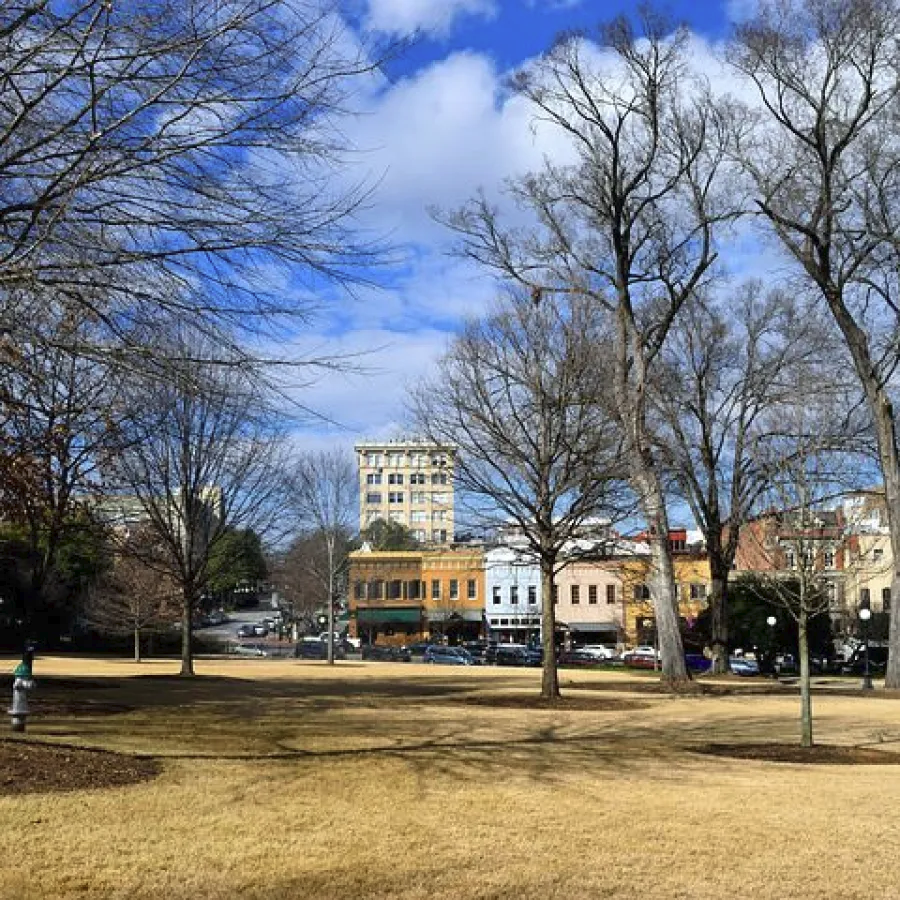
University of Georgia | Courtesy Photo
The road to college
Happy New Year!
We’re all still reeling from the impact of this pandemic which has touched every aspect of our life – from the economy to education, to our mental and physical well-being, among others. And now we welcome 2022 with the omicron variant, which seems to be less severe but more infectious. Before they even had a chance to take a breather, hospitals and health care workers are once again caring for those infected.
Anticipating a surge in Covid infections after the winter holiday, some schools are reinstating safety protocols. The L.A. Times published a Christmas story by staff writer Melissa Gomez about USC’s announcement that classes will be held remotely during the first week of this semester. She further reported that students and staff will be required to show proof of booster shots as soon as they are eligible.
There’s a heartening update about college admissions, though. On December 29, L.A. Times staff writer Teresa Watanabe reported that California is bucking the prevailing norm of privileged students with excellent GPAs and outstanding resumés. During this admissions cycle, unentitled kids are California’s new generation of star applicants.
And with that refreshing bit of news, let’s get on with the college guide.
FRESHMAN
Typically, the beginning of the year marks the halfway point in the school year. First semester grades will soon be released if they had not been sent out yet. If your 9th graders’ marks are not great, they would need to use the second semester to better them as it’s the end-of-year grades that show on the transcript. Some universities – including the UC and Cal State systems – have dropped their SAT requirements, so a student’s GPA is the single most influential component of the college application. Admissions officers only have your children’s GPA to gauge their college readiness and success.
SOPHOMORE
This is your student’s second year, and by this time they should have fully transitioned into high school. They need to put extra effort into weak subjects and solidify their grades this semester.
| Photo courtesy of Andrew Neel/Unsplash
JUNIOR
The second semester of junior year is significant as it is the beginning of the college application process. Students should have already started doing their research about the colleges and could start doing virtual tours ahead of a spring or summer campus visit. Some useful websites include campustours.com; CollegeProwler.com; SmartCollegeVisit.com and YOUniversity.com.
While I’m tempted to say “Tell your kids to breathe a sigh of relief, the hard part is over,” the truth is, the waiting part induces just as much anxiety as applying to colleges. And, oftentimes, it’s worse because neither you nor your children have control over it. Just be there for your kids to remind them that they have done a great job and they should let the admissions professionals do theirs.
The months from January through March can still be a time for your children to do something to help their cause. Mid-January is when high schools get their first semester grades finalized. If your student’s mid-year report is particularly spectacular, this could be a very good development especially if they are applying to a highly selective college. When your children’s high school sends the grades, have your children follow up with an email to the area representative telling them about their hard work and interest in that college.
If your children have been deferred at a college when they applied through early action or early decision, it is advisable for them to send in an additional teacher recommendation, but only if this supports their application. Likewise, if your student has received notable honors or made any significant achievement, they should let the admissions officers know by email.
Having done all these, you and your children will now just have to wait patiently for the process to play itself out.
Originally published on 14 December 2021 on Hey SoCal
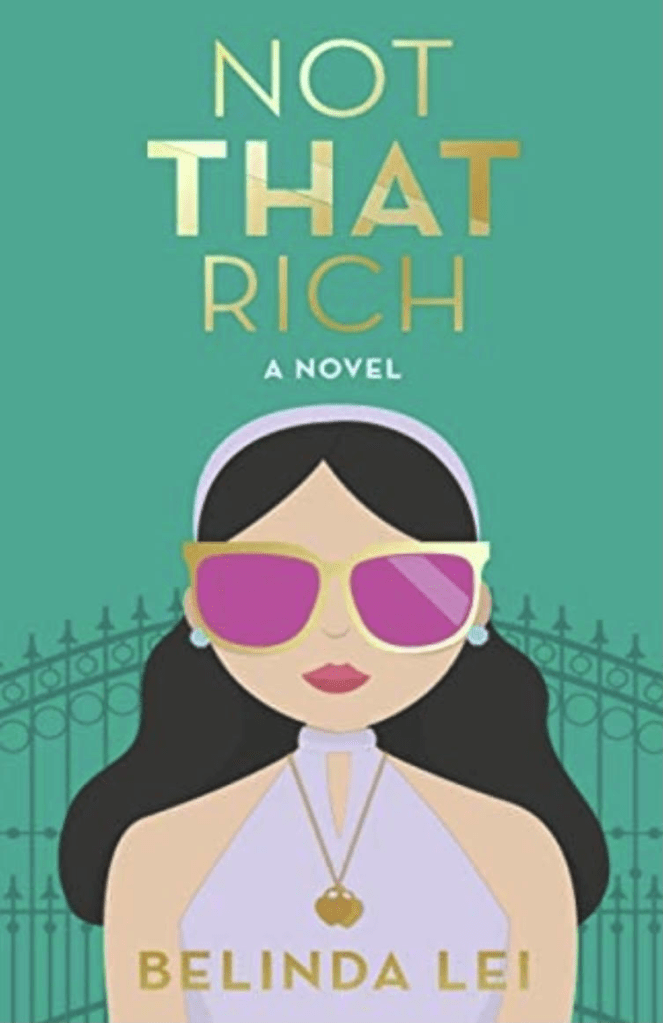
“Not THAT Rich” book cover | Photo courtesy of Belinda Lei
Asians are often stereotyped as the ‘model minority’ – overachieving, law-abiding, non-complaining people who soar above whatever challenges and obstacles are thrown at them to attain financial and personal success. That their accomplishments sometimes come at great cost to their mental well-being isn’t openly discussed.
This is what Belinda Lei explores in her young adult book called “Not THAT Rich,” which follows the lives of senior high schoolers as they navigate the stressful, highly competitive college admissions period.
The daughter of immigrants from Mainland China, Lei was born and raised in Walnut and Hacienda Heights in the eastern San Gabriel Valley. And while she says she’s grateful that her parents brought her up in predominantly Asian American communities where she wasn’t made fun of and bullied for what she ate and how she looked, it also meant being in a pressure cooker environment.
From her typical Asian upbringing – multi-generation family members in one household – she knows how Asian kids have to strictly adhere to the path their elders set out for them. “I also grew up with my grandparents, from whom I learned traditional Chinese values and an immigrant work ethic from a young age,” relates Lei. “My family promoted what they deemed best for me based upon what they thought would secure me a happy future – financial success, a reputable profession, and a devotion to family. As a teenager, I admittedly resented the expectations that seemed so unachievable and felt like I was simply following a mold – that of the model minority.
Belinda Lei’s publicity photo | Photo courtesy of notthatrich.com
“However, having recently turned 26 and now looking back, I empathize with why my family pushed me so hard when I was younger. Though I do believe there is a balance to everything (something I explore a lot in the book). With generational and cultural gaps, a lot of communication and understanding can be lost. And with mental health issues on the rise amongst adolescents and young adults too, it’s now more important than ever to try to bridge these gaps and develop common ground on this definition of ‘success’ and ‘happiness.’”
Asked if the title of her book is a reference to Kevin Kwan’s “Crazy Rich Asians” book series, Lei replies, “Yes and no. Originally, ‘Not THAT Rich’ was going to be called ‘SGV’ as a nod to the San Gabriel Valley, where the fictional Winchester High is located in. But over time, as I tailored the book to a young adult audience, I began to think about the books I loved as a teenager, like ‘Gossip Girl’ and ‘Crazy Rich Asians.’ For ‘Crazy Rich Asians,’ I was incredibly excited for not only the book series but also its fully Asian and Asian American cast in the movie adaptation.
“At the same, I also understood the stereotype that might be reinforced with it – that Asians are crazy and rich. Coming up with ‘Not THAT Rich,’ was a sarcastic response in some ways to ‘Crazy Rich Asians.’ What does being rich really mean? What are the sacrifices and struggles that it entails to achieve what we stereotypically deem as rich? Why do we pursue wealth in the first place? These are all questions I was hoping to address in the book although admittedly, I’m still trying to figure out all the answers myself!”
“I wrote ‘Not THAT Rich’ through the lens of being the book that I wish I had as a high schooler,” Lei describes. “Growing up, there wasn’t much Asian American representation in pop culture, and even when there was an Asian American actor on TV or in a book, I felt like it didn’t reflect my own experience of being a second-generation daughter of Chinese immigrants. I wanted to write a book that encompassed the glitz and glam I sought out in books growing up (like ‘Gossip Girl’ and ‘The Clique’) but also gave readers a glimpse into the diversity of perspectives and experiences that can be found in the world of being Asian American (like ‘Crazy Rich Asians’ to a certain extent, despite it being set in Singapore).
“Most importantly, I wanted the book to be fun. Young adults already have so much on their minds these days from juggling family, friends, education, and just being a teenager. The heaviness cast in 2020 by the pandemic and political turmoil made it even more important for me to write a lighthearted and juicy book that helped readers escape into a satirical world and, at the same time, draw out reflections about identity, motivations, and consequences.”
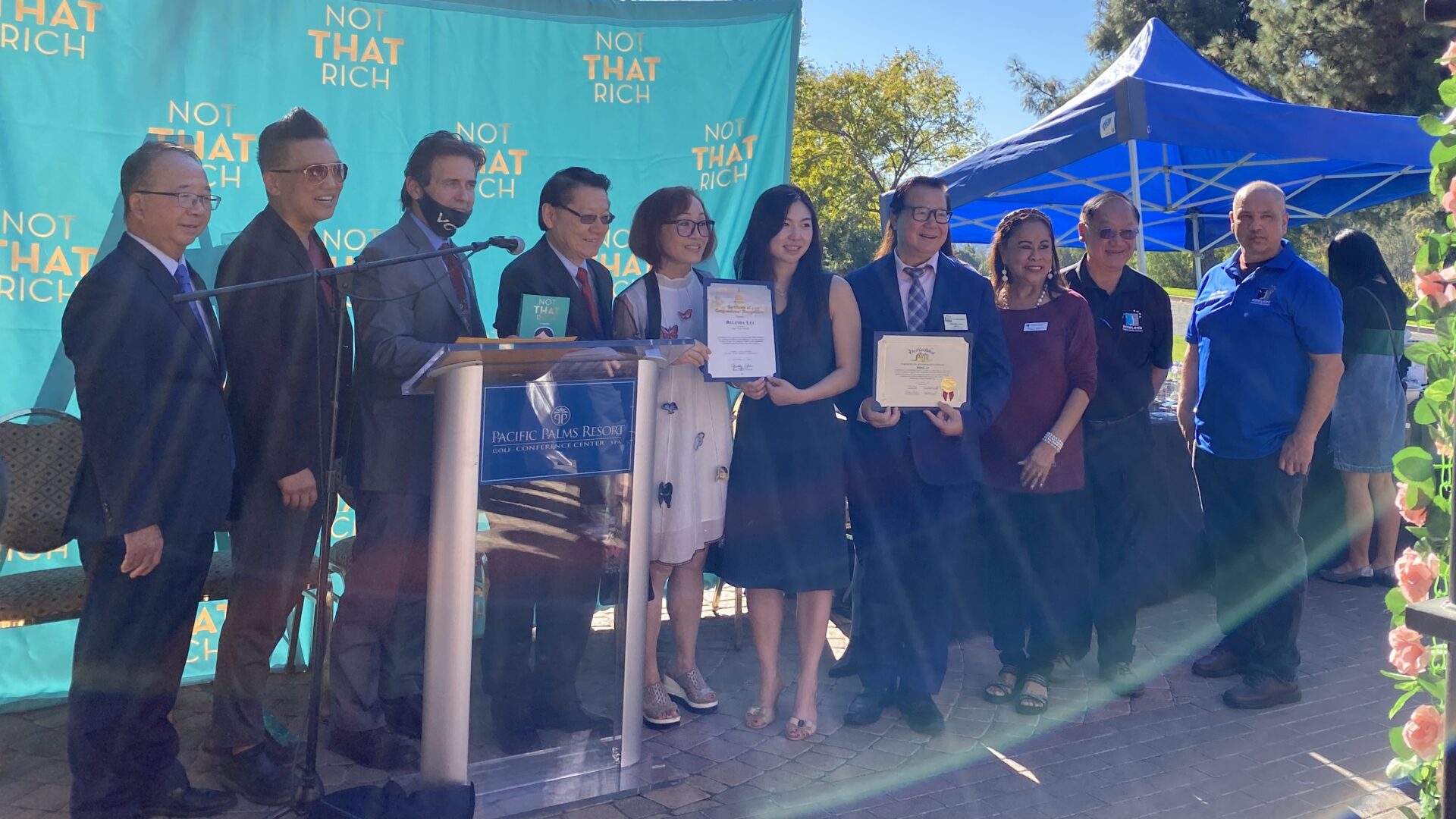
At the book launch of the Chinese version of ‘Not THAT Rich.’ From left, Monterey Park mayor/councilman Peter Chen; Duarte mayor Sam Kang; South Pasadena Mayor Michael Cacciotti; former assemblyman Mike representing congresswoman Judy Chu; former mayor of Walnut Mary Su; Belinda Lei; San Gabriel mayor Chin Ho Liao; Rowland Heights USD board president Cary Chen; RHUSD board member Agen Gonzalez; and board member Erik Venegas | Photo courtesy of notthatrich.com
But while Lei writes about high schoolers and their experience, her book is centered on her truths and others may not relate to them at all. She clarifies, “’Not THAT Rich’ only represents a tiny sliver of the extremely diverse and dynamic racial, socioeconomic, and cultural diversity of the L.A. region. It’s merely based on the world that I grew up in. I highlight a variety of backgrounds, thoughts, and experiences in the novel, but it doesn’t represent the 20 million Asian Americans who can trace their roots to more than 20 countries.”
“Asian Americans are an extremely heterogeneous group,” continues Lei. “Unfortunately, many people see us as a homogenous one. I was starkly aware of this ‘othering’ while writing it in 2020 and consuming reports about the increase of anti-Asian hate crimes due to COVID-19. How is it that my racial identity can brand me as someone who should ‘go back to my own country’ when the country that I’ve been born and raised in is the U.S.? I hope the stories that I weave can help subvert these misplaced prejudices by highlighting how being culturally American and culturally connected to another country should not be mutually exclusive.
“Lastly, think about who is not represented in the novel. Yes, ‘Not THAT Rich’ is fictional, but it does reflect the demographics of the area that I grew up in and the access and opportunities that I was surrounded by. It is very much a book about privilege. While it does not tackle issues of racism and classism head-on, this ‘fun, juicy, and dramatic’ world, unfortunately, does show how socioeconomic status, race, ethnicity, and educational opportunities are intimately intertwined in America.”
Spoiler alert – to say that “Not THAT Rich” depicts Asian parents in unflattering light would be a kindness. While they realize in the end how they have created a toxic environment for their children and redeem themselves by righting the wrongs, it could have happened sooner. And Lei is preaching the moral of her story by launching the Chinese version of her book so non-English-speaking parents can read it and, through it, develop self-awareness.
“I would like for the book to reach a worldwide audience, but my goal from the very beginning has always been that if I can reach only one youth out there and make them feel heard, then it has been worth it,” adds Lei. “In that sense, I’m already proud of how far it has come, and seeing it continue to rise in popularity is the icing on the cake. Target recently began carrying the English edition of my book online and as businesses are opening up more, I’m hoping to get it into more brick and mortar bookshops.”
‘Not THAT Rich’ book in Mandarin | Photo courtesy of notthatrich.com
In January, Lei will be returning to Yale to finish the final year of her MBA degree and will graduate next December. Since her first year there, though, she has been a strategy consultant, software engineer, and is currently a product manager at Citibank. She is also the managing director of an anti-bullying non-profit called Act to Change, which focuses on Asian American and Pacific Islander communities.
“The organization first started out in October 2015 as a national public awareness campaign on bullying prevention among youth under President Obama’s White House Initiative on Asian Americans and Pacific Islanders (WHIAAPI),” Lei explains. “I had been a senior intern at the White House Initiative to help spearhead the launch of the AAPI Bullying Prevention Task Force – a coordinated cross-agency effort to address bullying amongst youth. The report released by the task force resulted in the creation of Act To Change and when it officially became a non-profit in 2018, I joined as a founding board member and now I’m the Managing Director.
“I wear a lot of different hats in my role – I’m responsible for various initiatives like our Homeroom with Tan France series where Tan France conducts virtual school visits to talk about bullying and our most recent bullying survey in collaboration with Next Shark and Admerasia. I can also be hopping on calls about fundraising or making TikTok videos. This doesn’t include being our in-house developer where I help manage the website, acttochange.org, or our digital campaigns. It is like my second job.”
With Lei’s multitasking abilities and various pursuits, it’s difficult to foresee where she’ll be a decade from now. In fact, when queried about that, she confesses, “It’s a tough question that I never know how to answer for interviews! Being in my twenties, I feel like my life is constantly changing and with all my different interests I can see myself in multiple different situations in ten years. If I had to choose a dream state for me in my thirties though, it would be being in the entrepreneurship space and continuing to create products or experiences that make a positive impact on communities.”
We can predict, though, that we might see a sequel to “Not THAT Rich” in the not-too-distant future; Lei’s already brainstorming on it. Hopefully, in it the kids will have gone on to university and beyond, and are on the road to living fully realized versions of their younger selves.
But that ideal isn’t limited to Asians – it is something we all aspire to.
Originally published on 6 December 2021 on Hey SoCal
| Photo courtesy of Sofa Tutor on Unsplash
We all know that it’s college admissions season — as much a rite of passage as a dreaded time — when 12th-graders are feverishly writing supplemental essays in addition to the personal statement they submit with the common app, before spending the rest of their last year in high school anxiously waiting to hear from the colleges.
However, this is also the middle and high school application period. All over Pasadena and the San Gabriel Valley, fifth and eighth-graders planning to attend private schools are taking the ISEE (Independent School Entrance Examination) or HSPT (High School Placement Test), writing essays, and interviewing to gain admission to a middle school or high school.
Not much is written about it since the focus is mainly on college admissions and also because it affects only a small group, but it’s just as stressful and anxiety-inducing for young students and their parents.
Organization and time management are key to a successful school search, whether it’s a middle school, high school, or college. Above all, have reasonable expectations. There is a school that is the right fit for your child.
Originally published on 6 December 2021 on Hey SoCal
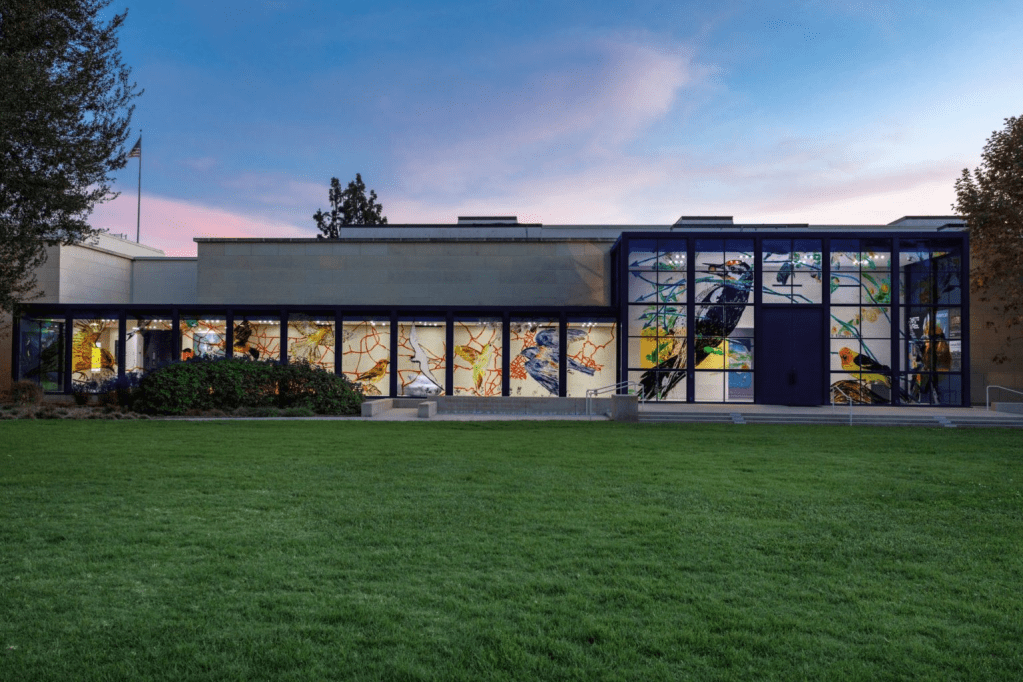
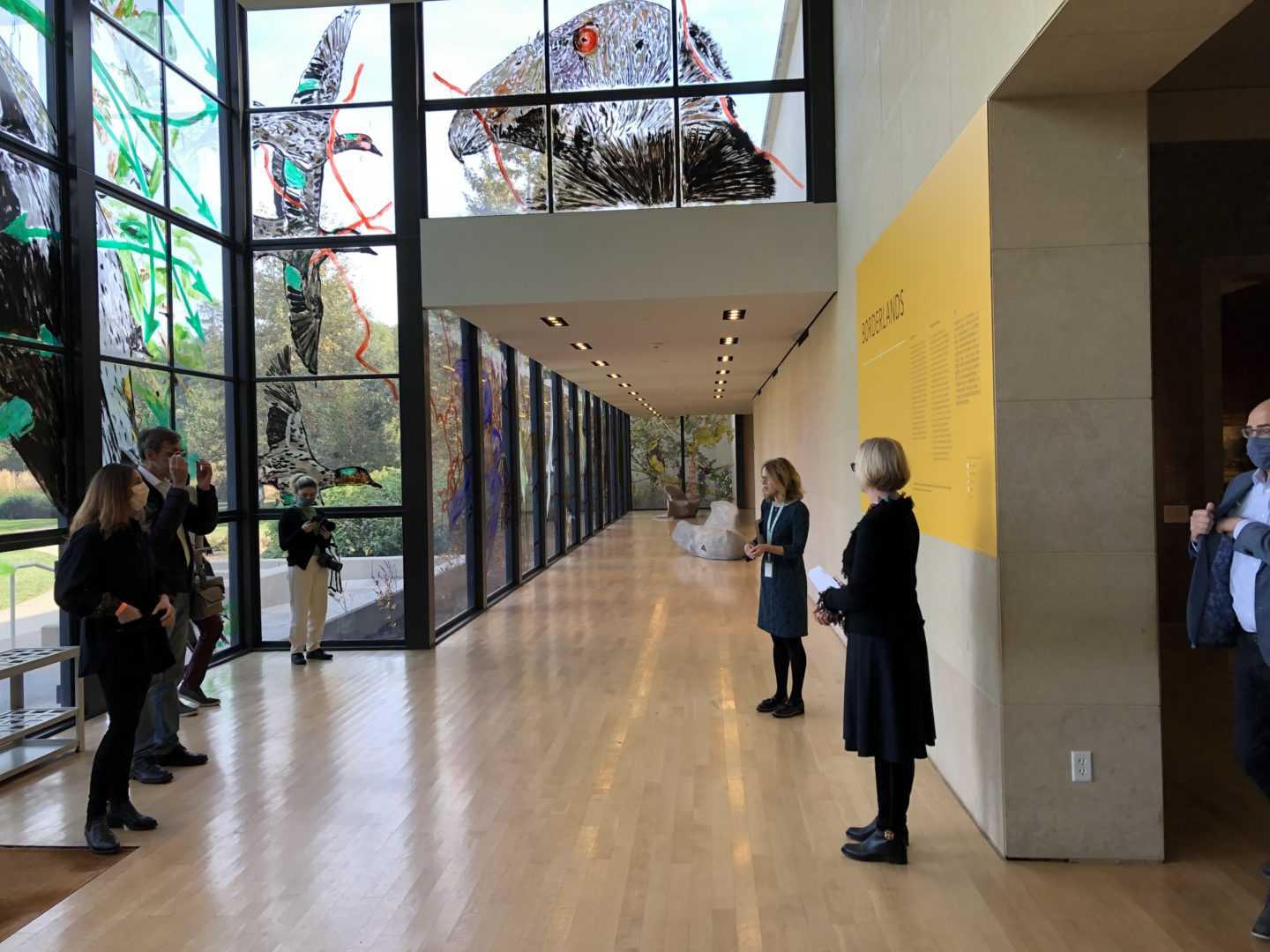
Installation view with There-Bound by Enrique Martinez Celaya | Photo courtesy of Joshua White / JW Pictures.com / The Huntington Library, Art Museum, and Botanical Gardens
It has been a banner year for American Art acquisitions at The Huntington Library, Art Museum, and Botanical Gardens. Many of these new pieces will join other existing artwork at the Virginia Steele Scott Galleries in an ongoing permanent collection display called “Borderlands,” which opened on November 20.
Christina Nielsen, Hannah and Russell Kully Director at the Huntington, declares during the exhibition’s press preview, “Borderlands celebrates the importance of the beautiful and historic collection we have in a way that opens up the story and allows for new voices, new interpretations, and new ways of looking. What you see across the galleries is sometimes a trans-national conversation and sometimes a trans-historic conversation.”
“The Huntington has a responsibility to convey the relevance of historical collections to contemporary audiences and to consider our shared past from multiple perspectives, as we begin to create a vision for the future,” Nielsen said. “Borderlands addresses these goals by presenting a more expansive history of American art in a beautiful and thought-provoking installation – from the re-imagined entrance area through a freshly conceived group of galleries, where objects interact with one another in new ways, drawing connections across media, time, and cultures.”
The Huntington’s Thea Page and Christina Nielsen at the “Borderlands” press preview | Photo courtesy of M.G. Rawls / TheSortsofPasadenaHollow.com / Beacon Media News
Two contemporary artists, Enrique Martinez Celaya, 2020-2022 Huntington Fellow in Visual Arts, and Sandy Rodriguez, 2020-2021 Caltech-Huntington Art + Research Fellow, along with strategic loans helped re-imagine the historical collection from multiple perspectives. Together they assembled the various pieces into four themed rooms – “Homelands,” “Crossing Borders,” “Americans Abroad,” and “Breaking Barriers.”
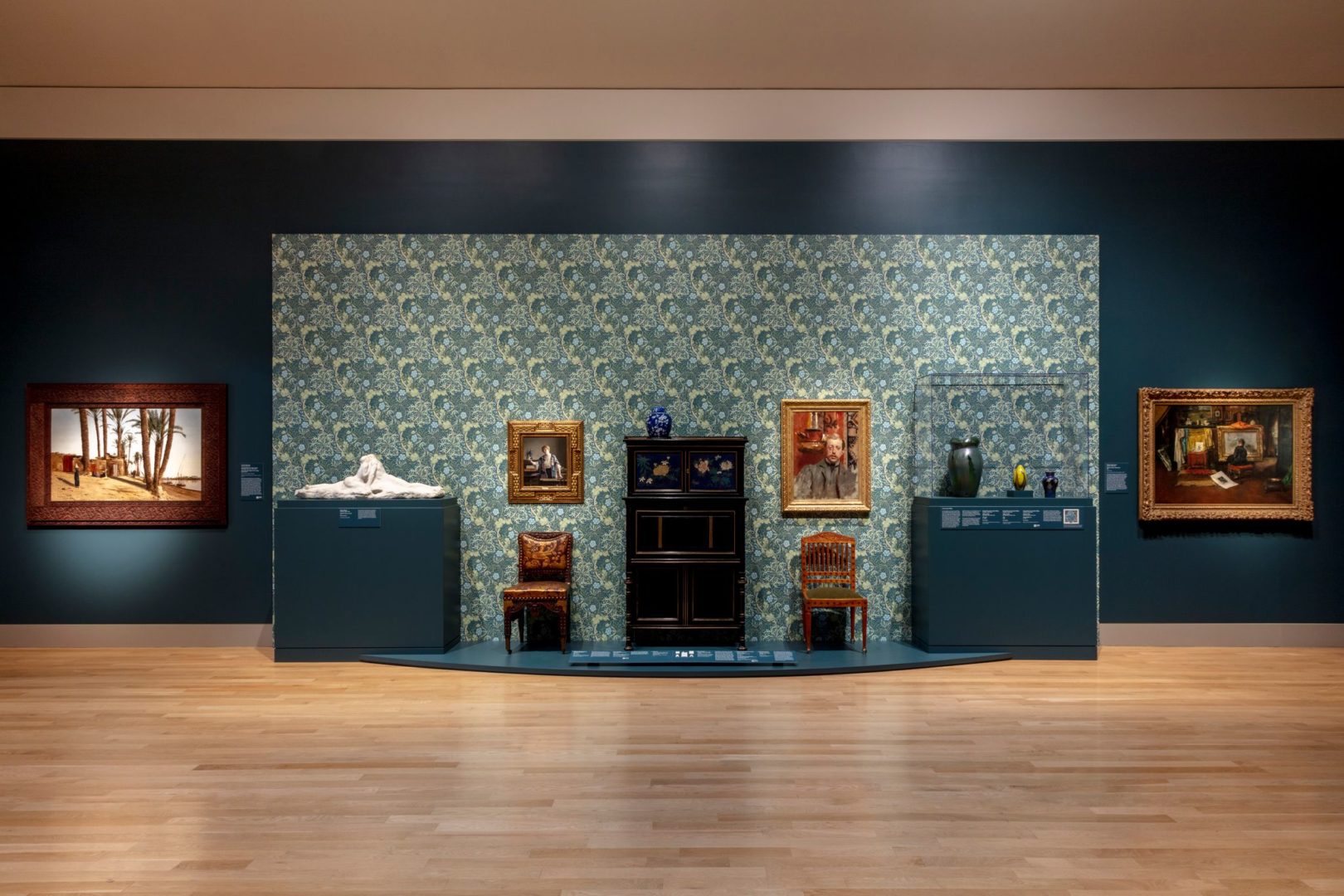
Spread out over about 5,000 square feet of gallery space, the exhibition is a reinstallation of portions of The Huntington’s American Art collection works of renowned artists Mary Cassatt, Frederic Edwin Church, Thomas Eakins, and Winslow Homer dating from the late 19th century to the early 20th century. New acquisitions include photographs by modern-day artists Mercedes Dorame and Cara Romero and a notable painting by Thomas Cole.
Dennis Carr, Virginia Steele Scott Chief Curator of American Art, explains, “We have organized these galleries under the theme of Borderlands, which looks at places where cultures came together historically, especially in the late 19th and early 20th centuries. To envision the arts in America in terms of the ‘borderlands’ metaphor, we looked at how artworks have registered the crossing of geographic, political, social, linguistic, and personal boundaries. The history of the United States has been shaped by innumerable borders, whose endurance or dissolution continues to impact us today.”
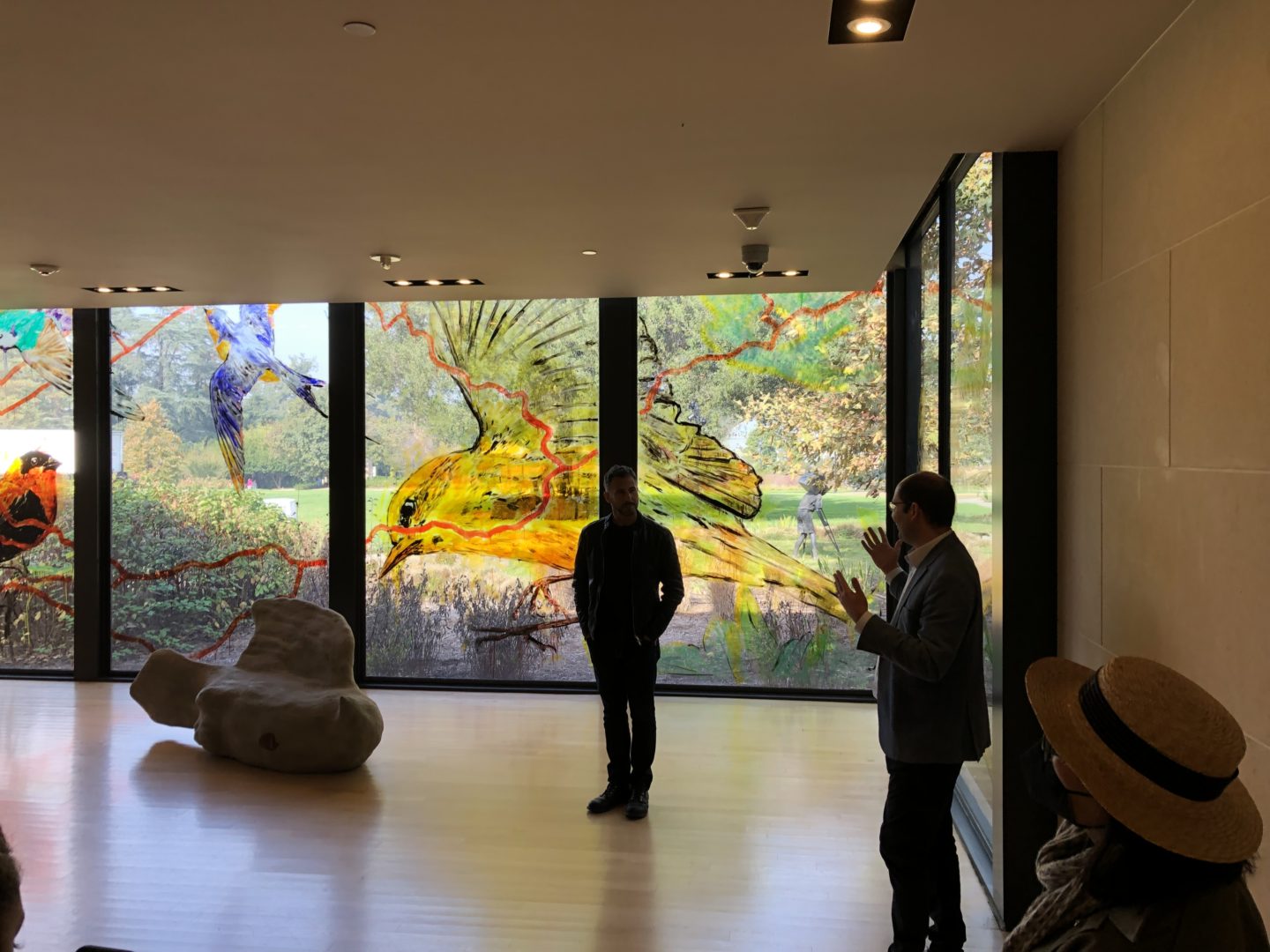
Martínez Celaya’s “There-bound” — depicting a variety of migratory birds flying across the building’s front windows — is painted inside the expansive glass façade of the Scott Galleries’ north entrance. It creates a stunning dialogue between the artworks inside the gallery with the famous landscapes and living collections at The Huntington. The glassed-in lobby and loggia radiate a chapel-like effect when the work is illuminated by sunlight. Custom-made seating he designed for the space encourages visitors to linger and take in the view of the garden and the San Gabriel Mountains beyond.
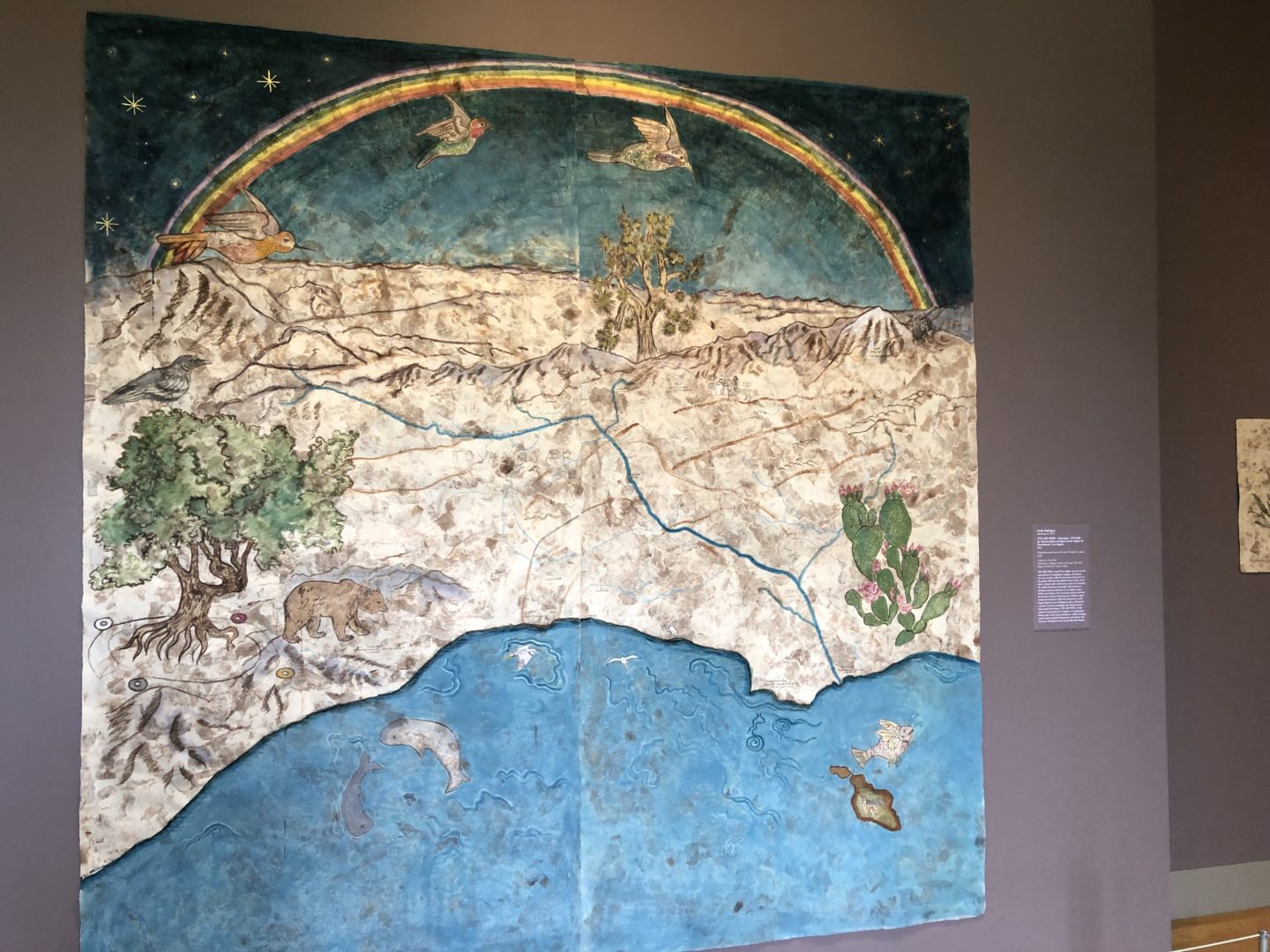
“YOU ARE HERE,” a watercolor by Sandy Rodriguez is the thematic anchor in the exhibition | Photo courtesy of M.G. Rawls / TheSortsofPasadenaHollow.com / Beacon Media News
An 8-by-8-foot watercolor called “YOU ARE HERE” is the thematic anchor in the exhibition. Painted by Los Angeles-based artist Sandy Rodriguez, it is a multi-lingual map of the greater Los Angeles area, representing the topography, language, flora, fauna, and land stewardship in the region over time and illustrating the movement and histories of peoples who have called, and still call, the area home.
The first room in the installation, called “Homelands,” centers on Rodriguez’s work. Raised on the California-Mexico border, she investigates the methods and materials of painting across cultures, with particular focus on indigenous histories and knowledge. In addition to YOU ARE HERE, the room features her drawings of botanical species that yield pigments and medicinal treatments for respiratory illnesses or susto (trauma), reminders of the devastating effects of the pandemic.
A single accordion-fold book (a traditional Mexican book form) contains records of Rodriguez’s meticulous study of botanical specimens at The Huntington. Also debuting in this room is a newly acquired 1824 painting of Ioway Chief Moanahonga (Great Walker) by the artist Charles Bird King and photographs by Native American artists Mercedes Dorame and Cara Romero.
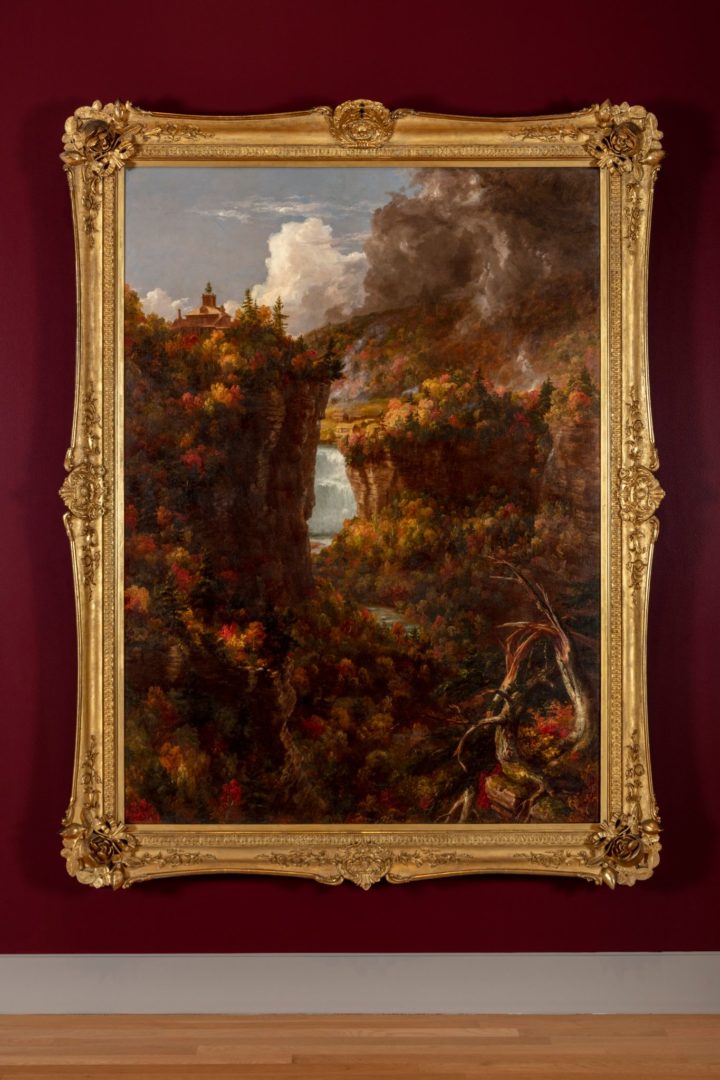
Thomas Cole’s majestic “Portage Falls on the Genesee” | Photo courtesy of M.G. Rawls / TheSortsofPasadean.Hollow.com / Beacon Media News
“Crossing Borders,” the second gallery in the exhibition, examines the relationship between landscape and American expansion and exploration in the 19th century with paintings by Albert Bierstadt, Frederic Edwin Church, Martin Johnson Heade, and Thomas Moran. Many of the featured artists crossed borders, depicting the farthest reaches of the American continent.
Additionally, this room looks at how artists often erased Indigenous presence, picturing a landscape devoid of human occupation and ready for economic exploitation.
“This colonialist view embodied a land-centered conception of nationhood, at a time when landscapes were becoming profoundly altered by rising development and industrialization,” Carr describes. Here, the recently acquired, Thomas Cole’s “Portage Falls on the Genesee” (ca. 1839) makes its first appearance at the Huntington. This majestic 7-by-5-foot painting captures the epic scale and Romanticism that define the Hudson River School, an artistic movement that Cole presumably founded.
As the name suggests, “Americans Abroad,” the next room in the exhibition, features American artists working abroad. In the late 19th and early 20th centuries, unprecedented numbers of American artists traveled abroad to connect with Europe’s history and its flourishing modern art scene. Some found greater freedom from the strictures of race, sexuality, gender, and class than they did at home. Artists were especially inspired by Impressionism, the Aesthetic Movement, and Art Nouveau, represented in this gallery by the works of Cecilia Beaux, Mary Cassatt, Thomas Eakins, Childe Hassam, John Singer Sargent, Lockwood de Forest, and Louis Comfort Tiffany, among others. Many artists also adopted non-Western, Asian and Middle Eastern forms and motifs. The newly acquired painting “Bank of the Nile Opposite Cairo, Egypt” (1879–86) by Lockwood de Forest is on view here.
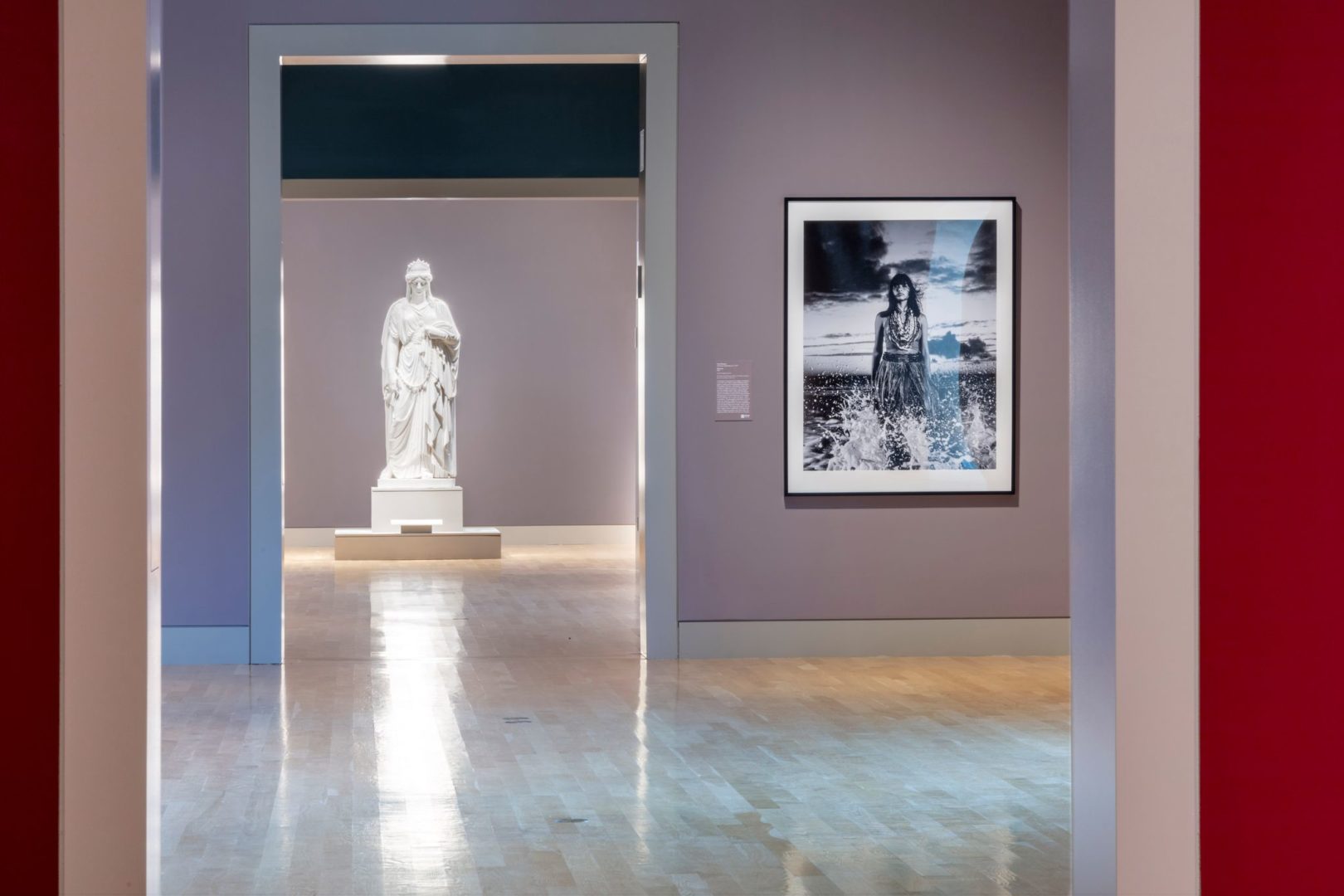
‘Xenobia in Chains,’ a marble sculpture by Harriet Goodhue Hosmer and ‘Hermosa,’ a pigment print by Cara Romero | Photo by Joshua White / JWPictures.com / The Huntington Library, Art Museum, and Botanical Gardens
In “Breaking Barriers,” “Zenobia in Chains,” Harriet Goodhue Hosmer’s monumental marble sculpture, shares the space with Henry Ossawa Tanner’s painting “Daniel in the Lions’ Den,” which is on loan from the Los Angeles County Museum of Art. “These works each speak to the idea of breaking down barriers,” says Carr.
Hosmer’s life, like that of the ancient queen she sculpted, was defined by rebellion. In her 20s, Hosmer moved to Rome to become a professional sculptor, finding support from a circle of creative expatriate women who broke 19th century social expectations by living alone, pursuing artistic careers, and, as was the case for Hosmer, being open about their queer identity. Hosmer became one of the most successful American sculptors — male or female — of her era. Nevertheless, when Zenobia was exhibited in the 1862 Great London Exposition, some male critics wrote that a woman could not possess the skill nor strength to execute such a significant work.
Tanner’s painting in this section highlights the work of artists of color in the 19th century. An African American artist born in Pittsburgh, he gained international acclaim for his paintings, including those with religious themes like Daniel in the Lions’ Den. That he chose to depict Daniel — a biblical character unjustly condemned to death — can also symbolize the systemic persecution of Black Americans, both in his time and ours.
Installation view of Decorative Arts | Photo by Joshua White / JWPictures.com / The Huntington Library, Art Museum, and Botanical Gardens
At the end of the exhibition, visitors reach a loggia where Martinez Celaya’s handmade bench beckons. He speaks about his project for The Huntington and describes the painting on the glass façade. He also graciously agrees to a short interview for Beacon Media to talk about his background and his work.
Martinez Celaya discloses that he was originally from Cuba and was raised in Puerto Rico. He started out as an artist when he was younger, before becoming a physicist, only to go back to his first love — art. He came to the United States for college and graduate school.
“First, they acquired my sculpture outside — which was also the first time they acquired from a contemporary artist — and that’s how I got to know them,” he relates how his partnership with The Huntington came about. “They then asked me to be their first Visual Arts Fellow; this is almost the end of two years’ collaboration.”
Martinez Celaya’s painting for the “Borderlands” exhibition combines his interests in literature and philosophy. He expounds, “I’m particularly drawn to T.S. Eliot’s ‘Four Quartets’ because of their circularity; the idea that in every end is a new beginning and every beginning has an ending. This seems quite fitting to the concept of migration and movement – the moment you leave the place you come from, you’re beginning elsewhere. That circularity of time is the theme of this work.”
Enrique Martinez Celaya (on left) and The Huntington’s Dennis Carr is (on right) | Photo by M.G. Rawls / TheSortsofPasadenaHollow.com / Beacon Media News
“Birds are the metaphor for people’s migration, exile, shift – different cultures, languages, and histories moving through the landscape and time,” he continues. “I’m fascinated by what that means — the dislocation and reinvention that come with that. This theme is fitting in California, especially Los Angeles, a place that brings in people from all over the world who came here for many different reasons. L.A. is a city of immigrants, much more than maybe London is. I’m interested in how migration is representative of a certain condition of being in California. That’s why I used California freeways as part of the design, it’s not only the movement of people, but this state has always been the point of intersection for all this movement.”
As for his last project as a Visual Arts Fellow, Martinez Celaya reveals, “I’m thinking of doing the art of exile for the lecture because I’m an exile, and exploring that as an act of reinvention — of leaving something behind and creating something new. I came here to flee the political situation in Cuba. And while the border is now open, I can never go back. You really can never go back once you leave. I came here when I was 21 so I’ve been for a long time. I do exhibitions around the world but I’m now an American. I’m more Californian than anything else.”
Carr hinted during the press preview that Martinez Celaya’s “There-Bound” painting may become a permanent part of the gallery’s collection of American Art. The peripatetic birds he painted — much like him — may have found their home.
Originally published on 3 December 2021 on Hey SoCal
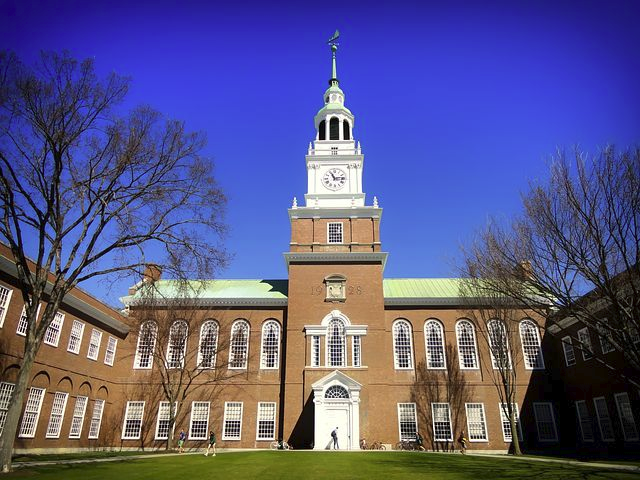
Dartmouth College | Courtesy Photo
The road to college
Just as we thought we were finally seeing a decrease in COVID-19 infection rates, comes the news that a highly transmissible coronavirus variant – Omicron – is causing great anxiety all over the world. Several countries, including the United States, are restricting travel to and from southern Africa. It has put a new wrinkle on people’s plans to travel during the holidays to be with relatives and friends they haven’t seen in almost two years.
We have yet to find out if this will affect schools as students have finally returned on campus two months ago and are adjusting to a new normal. The coronavirus pandemic changed the way learning is delivered not only for elementary and high schools but for colleges and universities as well.
College admissions also adapted to the circumstances when SAT, ACT, and AP tests got canceled because of the pandemic. It foretold the beginning of the end to standardized testing.
However, it wasn’t due to COVID-19 that the 10-campus UC and 23-campus Cal State systems went test-optional. It was because they were convinced that performance on the SAT and ACT is so strongly influenced by family income, parents’ education, and race that using them for high stakes admissions decisions is wrong.
On November 18th, Teresa Watanabe of the L.A. Times reported that the University of California is dropping standardized tests altogether after faculty could not find an alternative exam. In her follow-up article on the 23rd, she quoted FairTest, the National Center for Fair and Open Testing, in stating that the UC and Cal State systems “would join more than 1,000 other colleges that have gone testing-optional, with 47 more schools joining in the last 12 months, double the number over last year.”
As I wrote last year in this monthly guide, this means the only components of students’ applications are the personal essay and their GPA. And as I have constantly preached to students, and parents who are helping and guiding them through the process, high schoolers should make sure they are getting good grades in all their subjects. The student’s GPA is now the singular, most important component of their college application. It reflects not merely what they’ve learned in the classroom but is an indicator of how well prepared they are to tackle the rigors of college and a predictor of their success when they get in.
Their personal essay is the other piece that has taken on a greater significance. Admissions officers have to get to know your child through their personal statements and determine if they will be the right fit for the incoming class they are trying to build and if they will make a meaningful contribution to the school’s student body. It’s a rather daunting task to accomplish with 500 words. While a college counselor can guide and help your child craft a better essay, make sure it’s in their own voice – admissions officers can easily tell if it sounds contrived and unnatural.
Photo by Green Chameleon for UnSplash
Another development affecting college admissions is Amherst ending its legacy admissions preference, as reported by Matt Feeney on the New Yorker also on November 23rd. And, as he pointed out, other colleges and universities may soon follow suit.
While both those announcements seem to even out the playing field and make college admissions more equitable, they also translate to ever more students applying for spots that didn’t increase in number. That proved to be the case last admissions cycle when Ivy schools, led by Harvard at 42%, saw a rise in college applications.
Meanwhile, SmartAsset, a company that offers financial advice, released its seventh annual study on the colleges that give students the best return on their investments. It listed California at number 5 with the following colleges and universities:
Rank
School
City
Avg. Scholarships and Grants
Avg. Starting Salary
College Tuition*
Student Living Costs
Student Retention Rate
College Education Value Index
1
California Institute of Technology
Pasadena, CA
$41,062
$87,600
$52,362
$19,722
98%
89.80
2
Stanford University
Stanford, CA
$49,255
$81,800
$51,354
$20,233
99%
87.00
3
Harvey Mudd College
Claremont, CA
$36,443
$91,400
$56,620
$20,327
97%
86.85
4
University of California-Berkeley
Berkeley, CA
$19,369
$72,600
$14,184
$23,882
97%
65.13
5
University of California-San Diego
La Jolla, CA
$17,958
$65,000
$14,167
$18,671
93%
65.01
6
California Polytechnic State University-San Luis Obispo
San Luis Obispo, CA
$6,768
$66,400
$9,816
$18,486
94%
62.51
7
University of California-Los Angeles
Los Angeles, CA
$19,300
$62,600
$13,226
$21,394
97%
57.22
8
University of California-Davis
Davis, CA
$17,958
$62,700
$14,402
$20,775
92%
54.97
9
University of Southern California
Los Angeles, CA
$39,516
$66,100
$56,225
$18,600
96%
54.74
10
University of California-Irvine
Irvine, CA
$18,216
$61,100
$13,700
$20,561
94%
54.69
FRESHMAN
What a relief it must be for your 9th grader – he or she has survived the first semester of high school. While your children’s thoughts may be all about the Christmas holiday, this would be a good time to evaluate their progress. Remind them that while first semester grades don’t show on the final transcript, these are barometers of their academic strengths and weaknesses. Encourage them to use the winter break to plan how to improve where needed and how to build on their successes going into the second semester.
SOPHOMORE
Now is the time to look at their interests to determine what college course they might be suited for. Based on their aptitude and grades, they will have to start planning on their course options for 11th grade. They can also start researching which colleges offer the course they might want to pursue.
Photo by Annie Spratt for Unsplash
JUNIOR
This is an all-important year for your 11th grader and it is one of the busiest of their high school career. Your children should be able to successfully balance their academic, extra-curricular, and athletic activities. Hopefully, college counselors have met with you and your children and have given you an overview of the college application process. Your children (and you) should already have been to at least one College Fair and have met with a few admissions officers either in person or via Zoom.
SENIOR
While kids all around are excited about the Christmas holidays, your high school senior is sweating over his or her personal essay or feverishly writing all the supplemental essays colleges require with their application for the regular decision or the second early decision (ED II) round.
This is a crucial time for seniors. They need as much encouragement as elbow room to get their applications ready for sending. Your children should be in constant communication with the school counselor to ensure that all transcripts, teacher recommendations, and supplemental material are sent to all the colleges to which they are applying. They should be on top of application deadlines for all the schools – they’re not all the same – to which they plan to apply.
If your 12th grader applied through Early Action (EA) or Early Decision (ED), he or she must also be nervously waiting to hear from the college. And I’m sure your child would be ecstatic to receive an acceptance letter from his or her first choice. An ED means your child is legally bound to matriculate to that university, and his or her college search is over. Whew! If your child is accepted to a school through EA, he or she can either accept that offer or still go on to apply to other schools.
Accepting an EA offer relieves your children of pressure so they can enjoy the Christmas holidays, but it doesn’t give them leverage if they are qualified for scholarships. The best scenario is to apply and get accepted to several colleges so your children can get to pick the best financial offer or scholarship.
If your children are fortunate enough to have heard from their school and have been offered admission, it would be mindful of them not to brag about their acceptance. Some of his or her classmates may have applied to the same school and are hoping for admission. The university to which your child was accepted might be his or her classmate’s first choice. It would be very hurtful to then boast that he or she has been accepted but is not planning on attending that college.
On the other hand, if your children have been deferred on the EA or ED round, there are some things they can do to enhance their chances during the regular round. They can send any updates on any significant changes since they sent their application – a letter from a counselor about their first semester work or a letter from a senior teacher. They can also send in their first semester grades, especially if they have received some As in the meantime.
Your children can also write a strong letter of interest and intent – all colleges and universities are concerned about their yield. If they are assured that your child will matriculate if accepted, they will look at him or her in a more favorable light (that is, if your child fits the profile they are looking for). This is one reason most colleges have instituted the ED II – they are assured that the applicant will matriculate if accepted. At the same time, it’s disheartening for applicants who aren’t applying for ED II as they would be far fewer slots available making the regular round more competitive than it already is.
Provide encouragement to your children if they have been deferred – the school isn’t rejecting them, they have just been put in the pool for the regular round. Remember that these admissions officers have thousands of applications to read. They wouldn’t want to go through your children’s application again if they weren’t interested in the first place, they would have just outright rejected them.
Your children should research all available scholarships, and start completing the FAFSA.
Originally published on 22 November 2021 on Hey SoCal
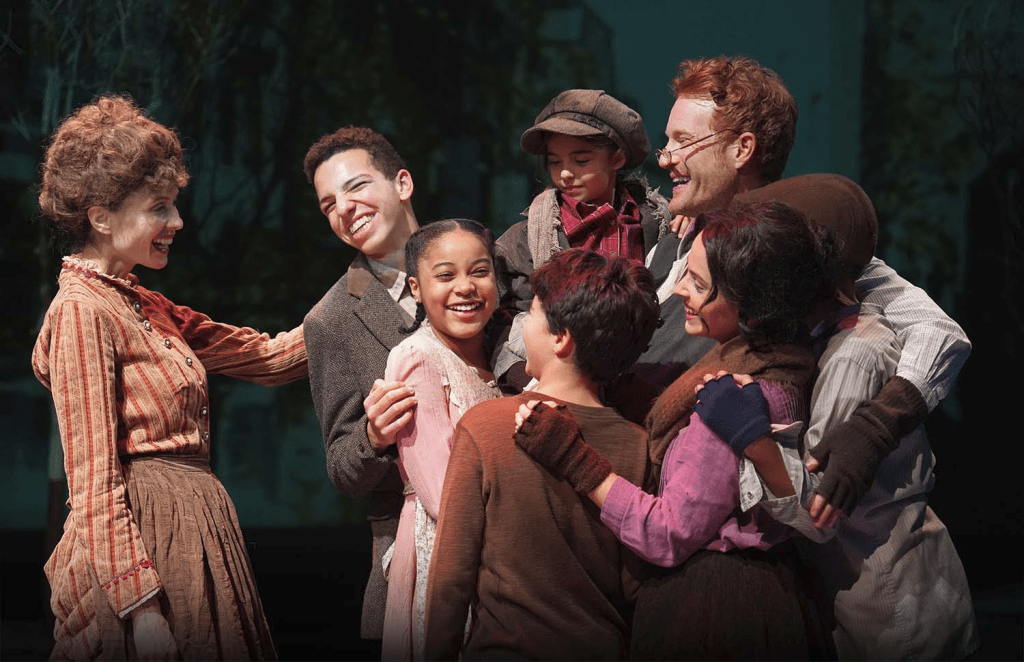
The cast of “A Christmas Carol” | Photo by Eric Pargac / A Noise Within
After missing out last year on A Noise Within’s (ANW) “A Christmas Carol,” we can once again take in this much-loved show when it returns on stage from Dec. 2 to 23, 2021. Adapted from Charles Dickens’ novella by co-artistic director Geoff Elliott, it has been an annual holiday tradition and is celebrating its ninth year at ANW.
We’re also in for a treat with all-new, original musical compositions created by resident artist Robert Oriol, an accomplished composer and sound designer who was the recipient of the 2019 LADCC (Los Angeles Drama Critics Circle) Special Award for Distinguished Achievement in Theatrical Design. Speaking by phone, Oriol talks about being a lifelong musician, and his work at A Noise Within and on “A Christmas Carol.”
“I’ve been writing songs for rock bands to play on stage since 1975, but it was with the advent of computers in 1984 that I sat down and started writing music for others to perform,” Oriol states.
He goes on to explain, “You could write orchestral music from your studio without having to hire an orchestra at the outset. You could get it to a point where your music comes across, have it approved, and then take it to an orchestra, if necessary. Once computers got up to a certain speed, you could do the bulk of the writing and arranging yourself much quicker than you could have done prior. So that was when I was able to write more complex arrangements strictly for orchestra; it allowed me to write different styles of music to fit the play’s music requirements.
“The very first show I did for ANW was ‘Grapes of Wrath,’ where there was a Dust Bowl Era band on stage and I was the musical director. I didn’t write much music for it because a lot of the music came with the show — they were all acoustic instruments for the period — bass, banjo, and guitar. The next show after that was ‘Pericles’ which was a big orchestral show, and it still stands as one of the biggest shows we’ve ever done as far as sound.”
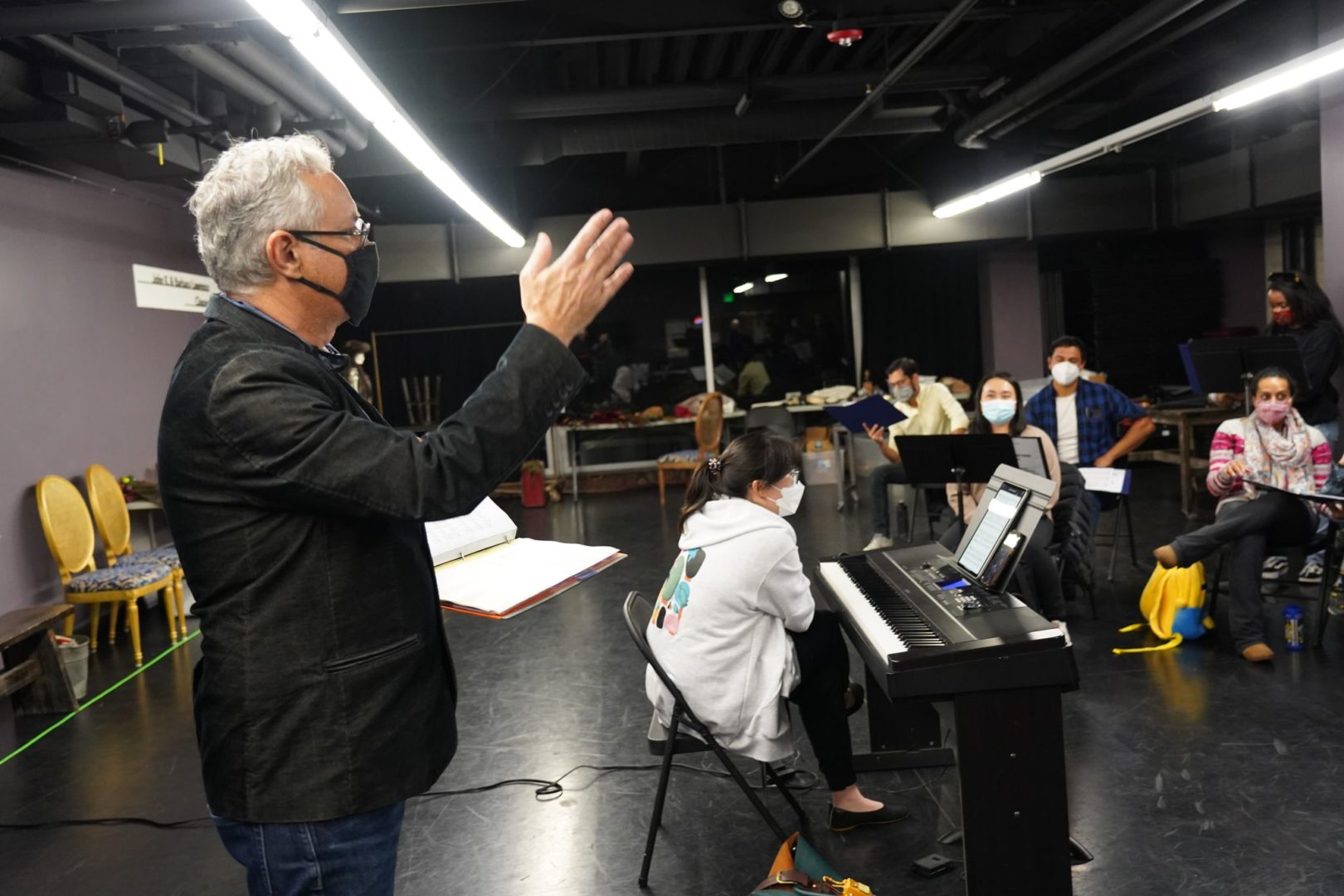
Robert Oriol, at far left, during “A Christmas Carol” rehearsals | Photo by Eric Pargac / A Noise Within
Oriol became a regular on so many ANW performances that it was only a matter of time before he would become a resident artist. He recalls, “There was one year when I was involved in three plays in one season. I was the composer for ‘Figaro’ and ‘Julius Caesar’ and I was in the band for ‘Three Penny Opera.’ I was setting up the music stands for ‘Three Penny Opera’ when they asked me if I wanted to be a resident artist. Probably because I was working so hard on all three shows and I was always there.”
And for someone who claims he doesn’t really enjoy putting the words to the music, Oriol did exactly that for ANW’s productions of ‘Tartuffe,’ ‘Figaro,’ ‘Julius Caesar,’ ‘Imaginary Invalid,’ ‘King Lear,’ ‘Tale of Two Cities,’ ‘Henry V,’ and ‘Argonautika.’
It was only natural, then, that Oriol would also be writing the music and lyrics for ANW’s longest-running show. He says, “I’ve been wanting to do the music for ‘A Christmas Carol’ and we started talking about it in 2016. But the rehearsal phase would usually be when they had just finished a brutal tech for a major Shakespeare play. It just kept getting pushed back for various reasons, like scheduling, and it was simply easier to go with what they already had because the cast literally knew every word of the songs and the choreography — putting new music in would make it a much longer tech process. So, I’ve been chipping away at it since 2016. It’s very rare that I have that kind of time to work with on a play — usually it’s a rush job with only a couple of weeks to do the whole show. This time, I could look at past productions on archival video; I could score it like a film, which is a real luxury.”
Asked about his process, Oriol responds, “After reading the script, I would get ideas from the producer about what era the play is set and what type of music is right for it. But it’s different at ANW with Geoff and Julia because we’ve known each other so long now. I’ll just send them some ideas and they’ll say ‘Yes,’ or maybe ‘A little less of this here,’ and they’ll tell me how long it needs to be. The key at that point is to just stay flexible because you know things are going to change. I just try to do as much of that as I can and then start attending rehearsals as early as possible. The first rehearsal is usually very telling because then I can hear the play, even though I’ve read it a few times — hearing the actors say the words changes everything and gives a real idea of direction. I usually record that and work with it. Then I start writing music where it should be under, try to come up with transitional ideas.”
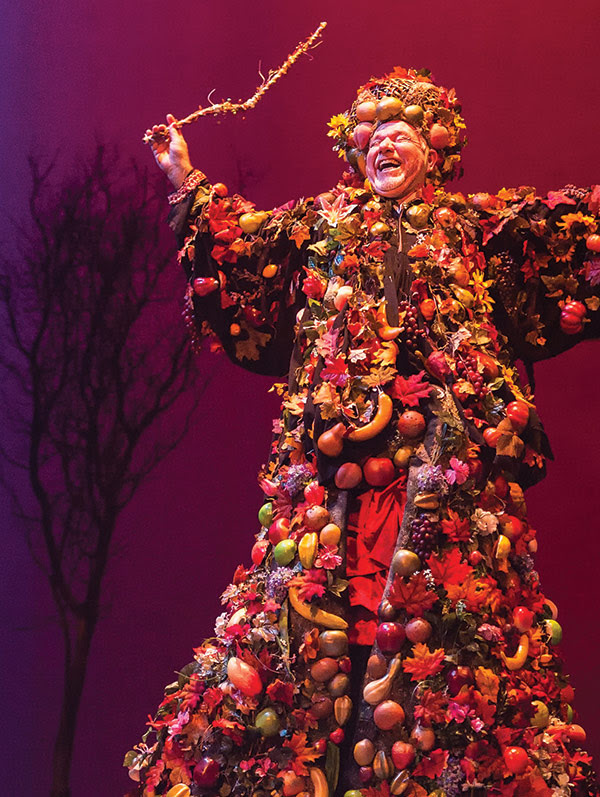
Alan Blumfeld as Christmas Present | Photo by Craig Schwartz / A Noise Within
For “A Christmas Carol,” the music was going to stay in the same vein as the previous production. Oriol relates, “At first I was only going to do a sound design plan. And then we talked about redoing the Fezziwig dance. The instruction was to make the dance the same length so they could use the same choreography, and I did that. The dance has a completely different music but it has the same tempo and length, with the same section structure as the original. But we kind of gave up on the idea of having the same length. Then the songs became completely different, although they’re in the same place in the script, they have the same subject matter, and the same characters are singing them.”
Adds Oriol, “Previously, the song ‘Glorious’ was used three times in the play. Instead of doing that, we have three different songs where ‘Glorious’ was used in the original production. The final song is actually the same melody from the Fezziwig dance. People with an ear for music, to some extent, will recognize that they’ve heard that music before.”
The actors will be working with the musical director on the songs. Oriol says, “That’s just not something I’m good at because I don’t sing well. I do hear the songs in my head and how I want them sung but it’s a matter of how we get there. I know keys will change — two of them already have because Geoff is singing and he wants them to be an A major rather than what they were. And I’ll be expecting more of that and we’ll just take it as they come. I’m really looking forward to hearing the actors actually sing these songs.”
“Tech on the show will take place on the 27th, the Saturday after Thanksgiving. Previews start Friday, December 3rd. We get feedback from preview audience in a sense because the presence of 300 people inside the theatre alters the acoustics of the space dramatically. Having them there really helps me determine if something is too loud, or too quiet, or if I need more of this here and more of this there.”
Having spent several years working on “A Christmas Carol,” Oriol is really excited about the audience’s reaction. Many of us who have heard his compositions for past ANW productions already know what to expect. We can only be wowed.
Originally published on 16 November 2021 on Hey SoCal
USC Pacific Asia Museum’s ‘Intervention: Fresh Perspectives After 50 Years’ exhibition entrance | Photo courtesy of USC Pacific Asia Museum
USC Pacific Asia Museum (USC PAM), the only museum in Southern California with the mission and vision to further intercultural understanding through the arts of Asia and the Pacific Islands, is marking its 50th anniversary with an exhibition called “Intervention: Fresh Perspectives after 50 Years.” It runs from Nov. 12, 2021 through Feb. 6, 2022.
In its press release announcing the event, USC PAM’s director, Bethany Montagano, states, “As we celebrate USC PAM’s 50th anniversary, we look to the future by asking questions and reflecting on our past as it is embodied in the museum’s collection. ‘Intervention’ offers an opportunity for institutional critique while acknowledging all that the museum has achieved over its 50-year history. The exhibition expands on USC PAM’s groundbreaking legacy, which includes being the first museum in North America to mount an exhibition on contemporary Chinese art with its 1987 show ‘Beyond the Open Door: Contemporary Paintings from the People’s Republic of China.’ As well as the first museum to assemble an exhibition of Aboriginal art in the United States with ‘The Past and Present Art of the Australian Aborigine in 1980.’ We look forward to continuing to present boundary-breaking exhibitions for the next 50 years.”
As with any institution’s milestones, we travel back to its origins and recall the past. To say that USC PAM’s history is intertwined with Grace Nicholson’s is not an entirely factual statement because she didn’t found the museum. However, it is her treasure house of oriental arts where the museum’s treasures are housed. And it just so happens that it’s patterned after the Imperial Palace Courtyard style used in the construction of major buildings in Beijing (Peking). It is such a significant and extraordinary example of Chinese architecture, that it is one of the great treasures of the museum. So it is only fitting that we look at her life’s story as well.
Exterior shot of Grace Nicholson’s Treasure House of Oriental Arts now known as USC Pacific Asia Museum. | Photo courtesy of USC Pacific Asia Museum
When Nicholson, a transplant from Philadelphia who moved to California in 1901, decided to open a business using her modest inheritance, she set up shop on Raymond Avenue. She marketed Southwestern Indian handiwork which she learned about through two of her early customers who had been involved in archeological excavations in Arizona. With the rest of her funds, she invested on basket collections. She got increasingly interested in Native American art and culture and frequently traveled the western United States to buy directly from basket makers and weavers. She established herself as an authority in the field of archeology and was elected to the American Anthropological Association in 1904.
By 1907, her curio shop needed a bigger location so she moved her business to the corner of North Los Robles Avenue and Union Street. Nicholson hired the architectural firm of Marston, Van Pelt and Maybury in 1924 to build a grand residence to her exact specifications. In fact, every detail, material, and construction — roof tiles, stone and marble carvings, and bronze and copper work — were either imported directly from China, or masterfully copied and made by Pasadena-area craftsmen based on the Chinese originals.
The arched entrance is a replica of the Buddhist library in Beijing. The upturned roofline is designed to prevent evil spirits from landing on it; antique ceramic dogs on the roof keep an eye out for enemies. Cloud patterns and lotus finials on the balustrades of the four courtyard stairways symbolize the ascent to enlightenment and mimicked the marble bridges of Nai-chin-shin-chiao. The structure, when it was completed, was so magnificent it received an award from the American Institute of Architects and became a noted landmark.
While the building was known as Grace Nicholson’s Treasure House of Oriental Arts, she referred to it as ‘Chia,’ a word with distinct meaning in two cultures particularly associated with her. In American Indian legends, the word refers to a nutritious seed that could sustain someone for long periods of time. And for the Chinese, chia means ‘sacred vessel.’
The first floor of the house served as a gallery where she displayed and sold American Indian and Oriental art objects. On the second floor were more galleries, an exhibition auditorium, and her private quarters. It hosted several cultural organizations and became the center for the arts in Pasadena.
Nicholson bequeathed the building to the City of Pasadena in 1943 for art and cultural purposes, with the stipulation that she would retain her private rooms until her death. She shared the building with the Pasadena Art Institute until she passed away in 1948. In 1954, the Pasadena Art Institute changed its name to the Pasadena Art Museum and occupied the building until 1970, when it moved to its new location at Orange Grove and Colorado Boulevards and became the Norton Simon Museum.
In 1971, the Pacificulture Foundation moved into the Grace Nicholson Treasure House of Oriental Art. The foundation eventually bought it in 1987 and renamed it Pacific Asia Museum. Then in 2013, the University of Southern California partnered with the institution. Renamed USC Pacific Asia Museum (USC PAM), it is a vital resource for education and cultural heritage. For Asians like me, this was a monumental development because having USC’s collaboration and support meant our art and culture would get recognition and gain wider reach.
The courtyard | Photo courtesy of USC Pacific Asia Museum
The 50th anniversary exhibition features seven Asian American artists and scholars who created new artworks that demonstrate new ways to view and engage with the museum’s history and collection of Asian and Pacific Island art. The participating Asian diasporic artists are Antonius Bui, Audrey Chan, Jennifer Ling Datchuk, Amir Fallah, Akiko Jackson, Alan Nakagawa, and kate-hers RHEE.
Rebecca Hall, USC PAM’s curator declares, “The artworks commissioned for this exhibition create new ways to view the museum’s collection and serve to remind visitors that USC PAM’s history is complex. Our public has many ways to consider this story beyond how it is presented in our galleries. The artists and their fresh perspectives are asking viewers to ponder for who was this collection created and how does its meaning change when seen through the eyes of our diverse communities?”
About her selection of artists for the exhibition, Hall states, “I had a few artists in mind when I began work on ‘Intervention.’ I specifically sought out artists whose work focused on (at least in part) the questioning of history and representation or whose work engaged with objects and the past in some way. I wanted to work with artists who already had a deeper understanding of the questions we were asking as the impetus for the exhibition, mainly: what do collections and displays of Asian art mean to Asian diasporic communities.”
For this article, I chose to feature Jennifer Ling Datchuk, whose talk at the gallery Art Salon Chinatown Hall had attended and whose work she had seen.
Born and raised in Warren, Ohio, Datchuk is a child of a Chinese immigrant and grandchild of Russian and Irish immigrants. She states on her website that the family histories of conflict she has inherited — which she captures by exploring the emotive power of domestic objects and rituals that fix, organize, soothe and beautify our lives — provide constant inspiration for her work.
Datchuk earned her BFA in crafts from Kent State University and MFA in artisanry from the University of Massachusetts. While she was trained in ceramics, she often works with other materials including porcelain, fabric, and embroidery. She has received grants from the Artist Foundation of San Antonio and Artspace for her research project about the birthplace of porcelain in Jingdezchen, China.
In 2016, Datchuk was granted a residency at the Künstlerhaus Bethanien in Berlin, Germany through the Blue Star Contemporary Art Museum; she was also a Black Cube Nomadic Museum Art Fellow. In 2017, she completed a residency at the European Ceramic Work Center in the Netherlands and received the Emerging Voices Award from the American Craft Council. She was named a United States Artist Fellow in Craft in 2020. She currently lives in San Antonio, Texas and is an assistant professor of studio art at Texas State University in San Marcos, Texas.
According to the introduction to the various artists in the exhibition, Datchuk’s body of work reflects cultural identity as an Asian American woman. She uses her artwork to question the cultural, political, and economic systems that maintain a status quo of sexism, racism, stereotyping, and oppression. For ‘Intervention,’ she will be examining and expanding upon representations of women in Asian art.
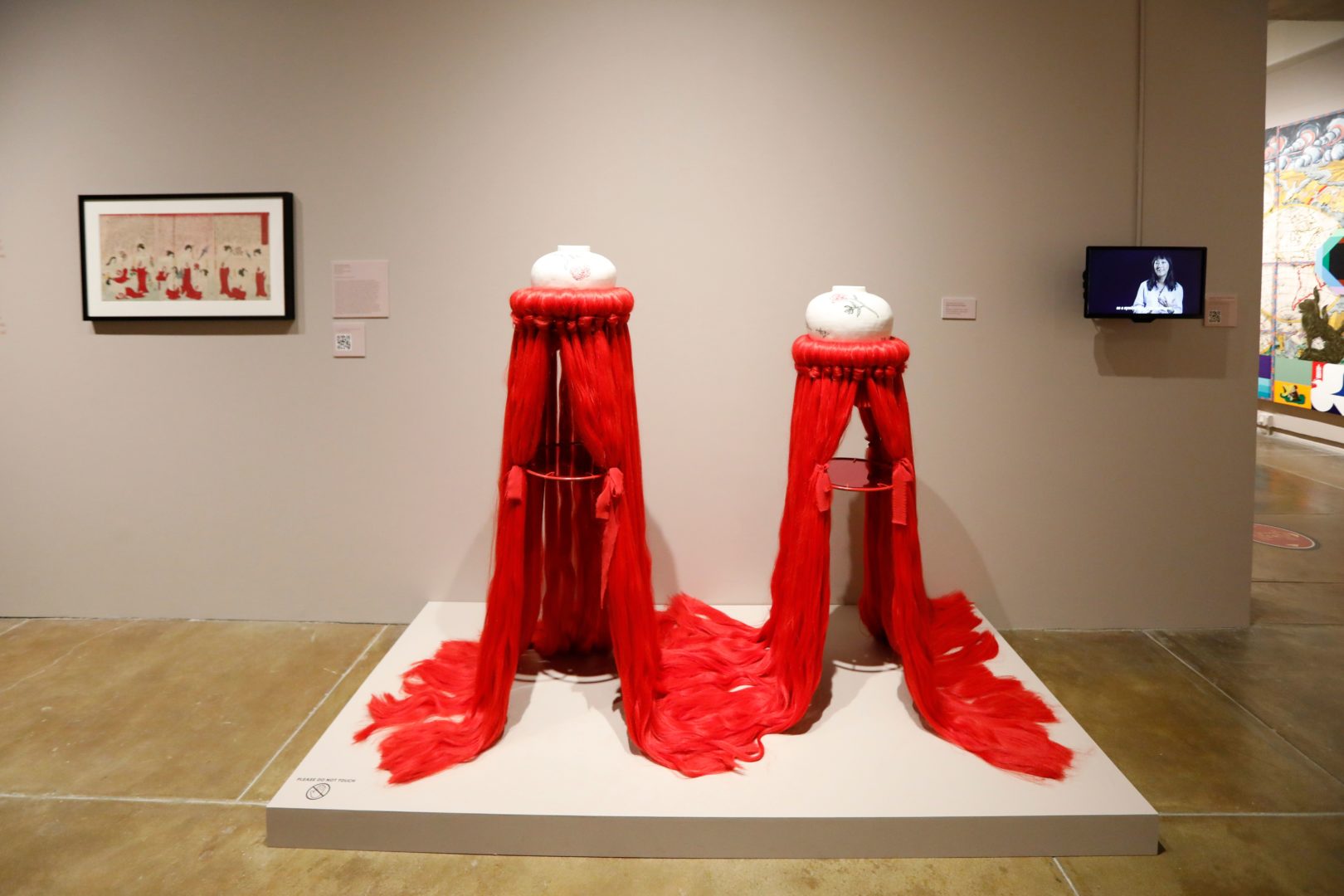
Datchuk’s ‘Gaze at All Sorts of Flowers’ | Photo courtesy of USC Pacific Asia Museum
Interviewed by email, Datchuk describes her display, “I created a pair of porcelain vessels that rest on metal stands draped in red synthetic hair. The title ‘Gaze at All Sorts of Flowers’ comes from a translation of the text found on the woodblock print that describes the purpose of procreation for familial lineage and honor. I was first attracted to the voluminous pregnant female figures draped in red and how they seemed relaxed in their time of waiting. I was fascinated to see geishas depicted this way instead of constantly being sexualized or fetishized in their talents for the consumption of men.
“The translation depicted a more rigid expectation of pregnancy, the lack of pleasure from procreation for honor in one’s family. It also detailed the 10 months of pregnancy in the Japanese calendar and how gazing at flowers would make for a happier and easier incubation of a baby. I wanted to reinsert the female narrative to this translation and reclaim pleasure, pain, beauty, and all sorts of flowers to gaze upon.”
Speaking as an Asian, I know how we are either invisible or dismissed in American society. And as a Filipino immigrant, I feel even less significant because I’m not stereotyped as a ‘model minority’ but a member of an underclass. I ask her if she feels that there is racial disparity even among Asians, and Datchuk replies, “Yes! There is a wide range of racial disparity and it doesn’t help that we get lumped into a big collective of Asians. So much of the histories of Asians in America and the diasporas that exist all over the word are because of war and colonization and this is not taught in schools. We are invisible because our histories don’t exist.”
Chinese cuisine is one of the most popular ‘ethnic’ food for Americans — actors in American movies are usually shown eating Chinese takeout with chopsticks. One of the displays on Datchuk’s website shows chicken feet, a Chinese delicacy, so I ask if she plans to depict food in any future work. “I use the chicken foot in some of my work as a cultural connector that can elicit feelings of comfort or home and the uncomfortable and disgusting,” she answers. “In some ways I’m always making work about being half and both and the third space this creates for these dual experiences. I’m not sure I will make work about food but I do make work about acts of love through food and culture because they are part of how we visualize care.”
Datchuk expounds, “My work always comes from living with the constant question ‘what are you?’ In these moments I am seen as an object and different from the question ‘where are you from?’ where you are seen as a perpetual foreigner. I make work about my layered identity of being a woman, a Chinese woman, and how I exist within this third space, of having one foot in each world but never feeling fully whole or accepted. I always start my work from a personal story, a family reference, a current event, and research. I start every form from the history of porcelain and how I can take something from the past and make it present, make the private public, and that the personal is political.”
In her introduction statement, Montagano references USC PAM’s legacy of showcasing cultures and countries which are not usually at the forefront because they don’t have enough representation. Throughout its 50-year history, it has provided Asian and South Pacific artists with the venue and platform to mount their creations. Because of that — as the exhibition demonstrates — artists are flourishing and, through their artwork, are telling their stories that transcend limits and expectations.
Originally published on 11 November 2021 on Hey SoCal
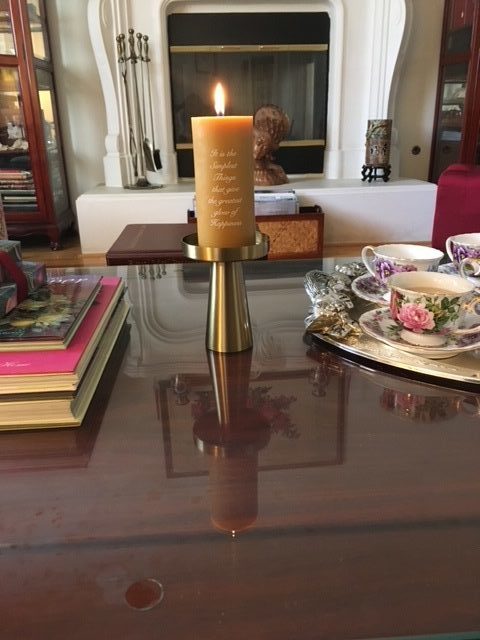
BeAmbiance candle | Photo courtesy of BeAmbiance.com
Cooler temperatures and a little bit of rainfall are such a welcome relief after several months of dry and hot weather. We’re eagerly storing our summer attires of shorts, T-shirts, and flip-flops and putting on jeans, sweaters, and booties. We’re cheerfully preparing comfort foods for dinner and baking pies for dessert. And, as we hear heartening news of COVID-19 infections slowing, we can look forward to the holidays.
During cold weather, there’s nothing that warms our hearts and homes more than the soft glow and pleasant scent of burning candles. And if providing a cozy atmosphere isn’t enough, candles also add beauty to any space and make every room feel lived-in. Fortunately, there are several different kinds to choose from and varying price range. In fact, the selections are plentiful so you can have a variety of them in your house.
BeAmbiance, an entrepreneurial candle brand born in the middle of a global pandemic, set themselves apart with their signature inspirational quotes. They are made with 100% beeswax with no additives; their wicks are 100% cotton with no metal hardeners. They also come with a guaranteed 65 hours of burn time so candle lovers with allergies can enjoy a healthy and safe product.
Melinda Kilchoer, an allergy sufferer herself, established BeAmbiance early this year. She is keenly aware of how the environment affects everyone and how people, in turn, affect the environment. Her choice of materials to create BeAmbiance candles reflects her ethos of a healthy and environmentally responsible lifestyle. She diligently eats plant-based food and vigilantly buys only ethically-sourced products.
Melinda Kilchoer | Photo courtesy of BeAmbiance
“I like candles and I have several friends who are always burning candles. So candle-making was my instinctive choice when I embarked on an entrepreneurial endeavor,” Kilchoer says. “Because the environment is the major factor in this venture, I decided right away that my candles are definitely not going to be made of paraffin; I looked at only natural products. I opted against using palm wax because forests are being burned to grow palm. Soy has the same problem – the Amazon is being burned to produce organic soy to feed animals whose meat is then sold as organic. Moreover, to produce soy wax, the oil extracted from the beans are processed, refined and bleached, then hydrogenated in order to increase the melting point.
“In comparison, beeswax comes directly from bees. Worker bees secrete the wax which they use to construct their comb. When the honey is harvested, the honeycomb can also be collected for the wax. The only processing needed is to boil the honeycomb and filter the wax through a cheesecloth.
“I also chose beeswax because I wanted to put quotes on pillar candles. Soy wax is too soft, which is why it’s mostly used for container candles. Beeswax is harder, giving it a longer burn time than soy wax. To make pillar candles, soy wax must be blended with paraffin, palm oil, coconut oil, or beeswax. Additionally, soy wax has no natural scent, hence fragrance has to be added. Because I don’t like fragrance, in general, and I would like to help people with allergies, in particular, I want to make candles that emit a natural honey scent.”
Other benefits of a beeswax candle include: it emits a brighter light; it burns cleanly and doesn’t drip so it’s mess-free; its soft glow creates a relaxing atmosphere; over time, a beeswax candle develops a unique white film called a ‘bloom;’ it has no oil-based ingredient and making it doesn’t involve any chemical process – it’s biodegradable; it’s bee and bee-keeping friendly; it doesn’t contain synthetic substances that can have adverse reactions on people with allergies, asthma, and other sensitivities.
Beeswax has the maximum shelf-life of all other candles made from natural waxes because it contains bee pollen and propolis, the component that gives it its honey scent and natural color. It can also stay for long periods of time without degradation because propolis has a conservation effect – ancient Egyptians used it to mummify the dead bodies of relatives. This longer shelf-life means a candle made with beeswax is a more cost-effective, even cheaper, option over other candles.
Photo courtesy of BeAmbiance
“Following the environmental mindset, I decided that the packaging will not have any plastic,” continues Kilchoer. “I searched for the box, the paper wrapper, and shreds. I’m still not happy that the box is not 100% brown kraft paper and I plan to change that when I sell all my current inventory.”
Kilchoer’s quest to get BeAmbiance candles on the market took almost two years to realize. She wanted to make her candles in the U.S. and the saga to find a domestic manufacturer began in mid-February 2020. For two months, as a deadly pandemic took hold and the world’s economy ground to a halt, she contacted over a dozen companies only to be given the run around. When it became clear that no U.S. manufacturer could make beeswax candles with the inscription, she turned to Asian companies.
“By then it was already mid-May and China had reopened for business so I resolved to contact the manufacturers myself,” relates Kilchoer. “I got in touch with some Vietnamese and Indian manufacturers as well. After another couple of months of describing, drawing, explaining, decoding the different languages, and getting samples back and forth, I decided to go with the Chinese manufacturer who came up with the best sample candle and packaging.”
Kilchoer relates further, “I placed an order in August and the candles were done in September. However, the initial candles didn’t pass the third-party inspection required so the manufacturer had to reopen every single box and change each candle that was deemed unacceptable. The second inspection had to wait because there was a week-long Chinese holiday until Oct. 9. Thankfully, the candles passed the second inspection on Oct. 10!
“Then there was a snag with the payment – the supplier refused to accept PayPal, which I had used to pay for the samples, as payment for the complete order – and I had to wire the money instead. Ultimately, the freight forwarder from Tennessee could only pick up at the end of October. The shipment cleared customs in New York early in December and was scheduled to arrive on the 15th of December. However, a winter storm caused a delay and it was after Christmas when the candles eventually reached the warehouse in Alabama. Of course, by then all holiday shopping was done, and I was left with candles during the down season.”
Instead of despairing, Kilchoer used that time to create BeAmbiance.com which she launched this past spring. She learned so much about candles when she did her research that she compiled all the materials to create an e-book to share with visitors to her website.
Photo courtesy of BeAmbiance
Twenty-one months and several twists and turns since her journey began, Kilchoer is hoping for a boom in this year’s holiday online shopping. With its signature inspirational quotes on love, romance, friendship, happiness, and blessings, Kilchoer hopes a beautifully wrapped BeAmbiance candle will make an excellent gift for someone on your list this Christmas. Its sweet honey scent will be appreciated by people who are sensitive to artificial fragrances. And because it’s purposefully fragrance-free, the aroma from a burning BeAmbiance candle won’t clash with the scent of your Christmas tree or wreath. Furthermore, purchases help advance the bee-keeping trade!
A room becomes warmer and more welcoming with a candle’s soft glow and sweet fragrance. Candles can also create a cozy atmosphere in any outdoor space. They turn the simplest meal into a fancy dinner by candlelight. After a busy day working and helping the kids with schoolwork, you can relax by lighting a candle as you soak in the tub. Its gentle light and soothing aroma help reduce stress and improve sleep. And after an extraordinarily challenging and difficult year, we all deserve to indulge in life’s simple pleasures.
Originally published on 4 November 2021 on Hey SoCal
Photo by sofatutor for Unsplash
Almost two years into the pandemic, we are hearing how education has been adversely affected. Some schools shut down because of double-digit decline in enrollment, students dropped out of school because of pandemic-related disruptions, students didn’t show up for virtual classes because they had no internet access. Distance learning underscored inequity in education — students in low-income households suffered the most learning loss.
EducationSuperHighway, a San Francisco-based national nonprofit organization, which successfully closed the K-12 classroom connectivity gap in seven years, just released a report that highlights that after decades of public and private investment in broadband infrastructure, affordability is now the number one cause of the digital divide, despite the widespread availability of low-cost broadband options from internet service providers.
Over 18 million unconnected households (46.9 million people) have access to internet service but cannot afford to connect to even low-cost broadband plans. In 43 states, the broadband affordability gap is the largest portion of the digital divide, making up 58% of the digital divide in states with rural populations that exceed the national average. Previous efforts to provide the resources households need to connect have fallen short. As few as 17% of Americans eligible for federal broadband affordability programs have enrolled due to awareness, trust, and enrollment barriers.
The report further noted that this broadband affordability gap disproportionately impacts low-income, Black, and Latinx communities. Without high-speed internet access at home, families in California can’t send their children to school, work remotely, or access healthcare, job training, the social safety net, or critical government services.
Thursday, Nov. 4, EducationSuperHighway launched its new mission and campaign ‘No Home Let Offline’ to close the digital divide for the households that have access to the internet but can’t afford to connect.
Evan Marwell | Photo courtesy of EducationSuperHighway
Evan Marwell, founder and CEO of EducationSuperHighway, details via email the organization’s efforts to accomplish their ambitious goal: “We are currently working with Partnership LA and their cohort of 19 schools within the Los Angeles Unified School District. First, we implemented our K-12 Bridge to Broadband program to understand the connectivity status of each of their student households, along with the specific ISPs that can serve them. Now, using the data provided by AT&T and Spectrum, we are supporting Partnership LA staff (admins) and local school staff with building, implementing, and managing a Broadband Adoption Center to support their families through enrollment in connectivity solutions. This includes general awareness marketing (social media, creating flyers, and other awareness materials), as well as deploying a targeted outreach strategy to guide staff through direct calling and texting to families to help sign them up for broadband. Our goal is to expand our partnership throughout the Los Angeles market, including the San Gabriel Valley, once we finish our work with Partnership LA. ”
“Raising awareness of federal broadband and low-cost broadband programs is critical,” Marwell emphasizes. “Many families eligible for federal broadband subsidies are simply not aware that these programs exist or are confused by the multitude of options presented to them. A recent national survey of low- and lower-middle-income households found that only 25% had heard of the Emergency Broadband Benefit program. Historically, marginalized groups are notoriously hard to reach, struggle with language barriers, and are more likely to have experienced challenges accessing other government programs.
“We think that broad outreach alone often only adds to the confusion and should be accompanied by targeted information from trusted sources such as school districts, community health centers, faith leaders, and other community-based organizations. To provide effective leadership, local governments must start with a clear understanding of the problem by collecting household-level data on who is and is not connected. Armed with data and specific goals, they can then develop a comprehensive strategy to close the broadband affordability gap in their communities.”
Photo by Avel Chuklanov for Unsplash
Funding for EducationSuperHighway’s massive undertaking will come from the federal government as well as philanthropic individuals and organizations.
Marwell discloses, “The federal government is poised to invest $20 billion in the nation’s largest-ever broadband affordability and adoption programs — starting with the Consolidated Appropriations Act of 2021 and continuing with the American Rescue Plan Act and the bipartisan infrastructure bill. Congress will provide over $85 billion in new funding for broadband infrastructure, affordability, and adoption programs. Perhaps most importantly, the Consolidated Appropriations Act of 2021 created the $3.2 billion Emergency Broadband Benefit Program to ensure that all households could afford a home broadband connection. This is ‘the nation’s largest-ever broadband affordability program,’ and the bipartisan infrastructure bill will increase funding for the program by $14.2 billion in order to ensure it can help close the affordability gap for at least the next five years.
“The Emergency Broadband Benefit, to be renamed the Affordable Connectivity Program as part of the bipartisan infrastructure bill, will provide $30 per month to ISPs for any household with an income below 200% of the poverty line. The Emergency Broadband Benefit provides $50 per month to ISPs for eligible households. This amount will be reduced to $30 per month as part of the bipartisan infrastructure bill. This is significantly more than the price of existing affordable connectivity plans from most ISPs and will likely result in ISPs offering home broadband plans at this price that meet the new broadband standard of 100 Mbps download / 20 Mbps upload being established by Congress as part of the bipartisan infrastructure bill. Together, the Emergency Broadband Benefit and higher capacity affordable broadband plans from ISPs will ensure that most households will have sufficient bandwidth to learn, work, and access healthcare and critical services remotely.”
“In addition, the bipartisan infrastructure bill also makes clear that Congress understands the need for proactive efforts to drive broadband adoption.” Marwell says further. “The $2.75 billion Digital Equity Act provides five years of funding for state and local entities to tackle the barriers to broadband adoption. This would be an unprecedented investment in driving broadband adoption and will enable state and local governments, nonprofits, community-based organizations, and the private sector to provide the outreach, training, and enrollment assistance required to reach and connect unconnected households to home broadband services.
“The Infrastructure Investment and Jobs Act includes $2 billion for the Tribal Broadband Connectivity Program. The bill creates a Digital Equity Competitive Grant Program to support broadband adoption, which includes a 5% set-aside to award grants to, or enter into contracts or cooperative agreements with, Indian Tribes, Alaska Native entities, and Native Hawaiian organizations.
“Finally, Congress is paving the way for innovative approaches to driving broadband adoption by making the installation of free Wi-Fi networks in low-income apartment buildings an allowable use of the $42.5 billion of infrastructure funding in the bipartisan infrastructure bill and the $10 billion Capital Projects Fund already enacted in the American Rescue Plan Act.”
Adds Marwell, “We do not yet have individual donors in the Los Angeles and San Gabriel Valley areas, but several foundations and philanthropic organizations have made a $16 million multi-year investment in our mission including: Emerson Collective; Blue Meridian Partners; Ken Griffin, Citadel, and Citadel Securities; the Chan Zuckerberg Initiative; Walton Family Foundation; and Zoom Cares Fund. EducationSuperHighway is fully funded by philanthropy, so all of our programs, and the tools and support we provide are free of charge.”
Photo by Ahmed Hindawi for Unsplash
Today’s launch also marks another milestone in EducationSuperHighway’s efforts to connect all homes to the internet — a wide-ranging partnership with the City of Oakland.
“It is one of our key demonstration programs to show how it’s possible for cities to close the affordability gap in their most unconnected communities,” explains Marwell. “Together with community-based organizations and other key stakeholders, the partnership will deploy free Wi-Fi in low-income apartment buildings and establish a broadband adoption center to help eligible households enroll in the Affordable Connectivity Program. Our goal is to develop playbooks that enable states, cities, school districts, housing authorities, and other trusted institutions of innovative programs to increase broadband adoption at scale across the country.”
Increasing the availability and speed of affordable broadband plans as well as government funding to make internet connection affordable, however, are not enough to close the gap. EducationSuperHighWay’s findings reveal that as few as 17% of Americans who are eligible for broadband benefit programs have enrolled.
“We must now remove the barriers that keep low-income families from adopting high-speed broadband when it is available in their area and fully subsidized,” declares Marwell. “These barriers fall into three categories — awareness, trust, and enrollment challenges. First, most unconnected households are unaware of federal broadband programs and how they can help them get connected. For example, a recent national survey of low- and lower-middle-income households found that only 25% had heard of the Emergency Broadband Benefit program (which provides eligible households with a $50 discount on their monthly internet bill). Second, many unconnected households are also concerned about sharing personal information as part of the sign-up process and are skeptical federal broadband benefits will actually cover the cost of their home broadband connection. Finally, signing up for federal broadband programs can be time-consuming, confusing and requires households to provide details of their income status or other documentation that many cannot easily access.”
Photo by Nick Morrison for Unsplash
Furthermore, success is hinged on people actually enrolling. Older Americans — those who aren’t digital natives — aren’t versed in technology and are intimidated by the application process.
“We agree that making enrollment as straightforward and painless as possible is vital to ensuring high adoption rates,” Marwell concurs. “Many low-income Americans struggle with the cost of long wait times, complex terms and conditions, language barriers, or navigating eligibility and enrollment information. For older Americans and those who rent their homes, concerns about the installation process can also influence the decision to apply.”
School districts and community-based organizations (CBOs) play a vital role, according to Marwell. “They are well-positioned to build awareness and trust for affordable broadband programs and should be critical partners in outreach campaigns to enroll eligible households in federal broadband programs and help them sign-up for low-cost broadband plans. Our Broadband Adoption Center program for states, cities, housing authorities, school districts, and other trusted institutions, provides a blueprint for success. Centers recruit and train outreach staff on calling and texting tools, call scripts, and enrollment processes. Outreach staff then streamline enrollment by walking individuals through the entire sign-up process. EducationSuperHighway works with local and national ISPs throughout the process to facilitate sign-ups. Where ISPs allow, families can be pre-qualified for eligibility and directly enrolled into affordable internet plans by outreach staff.”
Marwell ends by saying, “The pandemic has been the catalyst for unprecedented levels of federal funding, new public-private partnerships, and the emergence of best practices that present an opportunity to close two-thirds of the digital divide. As a result, we now have a historic opportunity to close the broadband affordability gap, which is the largest portion of the digital divide in 43 states and makes up 58% of the digital divide in states with rural populations that exceed the national average. Just like when we closed the K-12 digital divide, we must assemble a broad public-private partnership to seize this historic opportunity.”
The inequities in American society are deep and systemic. And while making internet connection affordable — even free for some households — doesn’t solve the problem, it is a first step in the right direction. In fact, in our digital world, it can be a lifeline.
Originally published on 2 November 2021 on Hey SoCal
| Courtesy Photo
The road to college
Students are back on campus for in-person learning and many parents are finding out that their children are behind on most of their courses. Tutoring companies, which were in high demand during remote learning, continue to see students struggling to keep up with coursework – as if the college admissions process weren’t stressful enough. If you think a tutoring service will help, find one that offers options to fit your student’s specific need and your family’s budget. A company called Mundo Academy provides excellent tutoring services in the Pasadena and San Gabriel Valley area.
If you’re overwhelmed, as most of us are at this time, please reach out for assistance. The CDC has put together a resource kit for parents, divided by age group, to help them ensure their children’s well-being. The site also has links to other resources that cover various concerns. Another CDC page is dedicated to helping parents manage stress during the coronavirus pandemic.
FRESHMAN
I hope your children are settling into high school, focusing on their studies, and using all available resources to accomplish all the work required and succeed in each course. The goal is not just to pass, however, but to make the best grade they are capable of getting.
Ideally, they should be up-to-speed in all their classes, but if there’s anything about the course they can’t grasp, they need to seek assistance. Teachers are usually available after school to meet with students to explain a lesson they can’t understand, so they have to ask right away or they will fall behind all the more as the school year progresses.
Several universities have eliminated standardized test results from their decision-making process. That means your children’s GPA has become the single most important component of the academic picture they present to the universities to which they will apply. It will show how well they did in high school and how prepared they are to go to college.
If your children are athletic and particularly good at one sport, encourage them to join their school’s division sports. Athletic excellence can be used as a hook to get into college; some universities offer lucrative athletic scholarships. They should ask their coach to help them determine the NCAA requirements.
They should have identified other extra-curricular activities they want to participate in, whether they’re in the arts or school clubs. An important thing for them to bear in mind is to make sure they continue that interest throughout high school – admission officers want to see depth of involvement.
SOPHOMORE
Most universities look at 10th grade as a fundamental year in high school. Your children should have already made a smooth transition from their middle school life and are enthusiastically exploring their various interests and are applying these towards extra-curricular work. They should be actively participating in sports, or arts, their school newspaper, or their yearbook.
The class deans should be working with your children in evaluating their class performance and workload to make sure they are on track and are making the grade. Together with their class dean, your children should be preparing for standardized testing and junior year course options.
Additionally, your children can start looking at various colleges offering the course they might consider taking.
Photo by sofatutor on Unsplash
JUNIOR
This is an important year for your children. They need to be in constant communication with their counselor to ensure they are on track for graduation and college admission.
Encourage your children to focus on getting good grades – this is the last complete school year marks the college admissions officers will see when your children send in their application. Their GPA is the most reliable and significant predictor of how well they are ready for college work.
Several high schools in the area have held virtual college fairs and you and your children should have met the representatives of the various colleges to which they might consider applying. Your children should be researching these schools’ requirements and keeping track of the universities which offer the courses they are interested in pursuing.
SENIORS
Your children should have already sent out their application early this month if they were trying for Early Action (EA) or Early Decision (ED). They should notify the universities of any honors they received since mailing their application; they have to make sure their school sends out a recent transcript, and all their standardized test results have been forwarded.
If the university they are applying to is offering an alumni virtual interview, I would advise your children to plan ahead because the report will become part of their admission file. While it will most probably be held via Zoom, they have to comport themselves as if it was an in-person interview. They should dress conservatively and comfortably – no tank tops and no bare midriffs; make eye contact and listen well; be positive – stress their strengths and explain their weaknesses, but don’t dwell on the negative and don’t complain; answer all the questions – if they’re confused, ask for clarification; keep the conversation going; be prepared to ask thoughtful questions of their interviewer; try not to lead the conversation into a ‘trouble’ area – if they don’t know much about current events, don’t direct the conversation there; be honest; send a thank you note.
Most universities will mail out their acceptance letters in mid-December. As your children await word from the college, they might want to keep writing all the supplemental essays required by the universities to which they will apply for the regular decision round. Admission to their EA school isn’t binding so they can still apply to other colleges, thus not limiting their options. However, an acceptance to their ED school is binding and they are required to matriculate if admitted.
In the meantime, you children should make sure they are doing well academically. Some universities require the first semester grades, or the first quarter grades if they’re applying for EA/ED. In fact, your children shouldn’t let up on academics because a college can still rescind their offer of acceptance if a student’s grades have fallen below acceptable level.
Likewise, make sure your children are continuing to participate in athletics and extra-curricular activities. These sometimes help them relieve the stress of the college application process.
As hectic as it is with the semester drawing to a close, take the time to celebrate this Thanksgiving. Almost two years since the pandemic upended our lives, about 58% of our population is vaccinated and the infection rate is slowing. We have much to be thankful for.