M. G. Rawls Completes Series with Third Book ‘The Sorts of Pasadena Hollow: Henry’s Hopes’

Also published on Hey SoCal on 14 September 2023
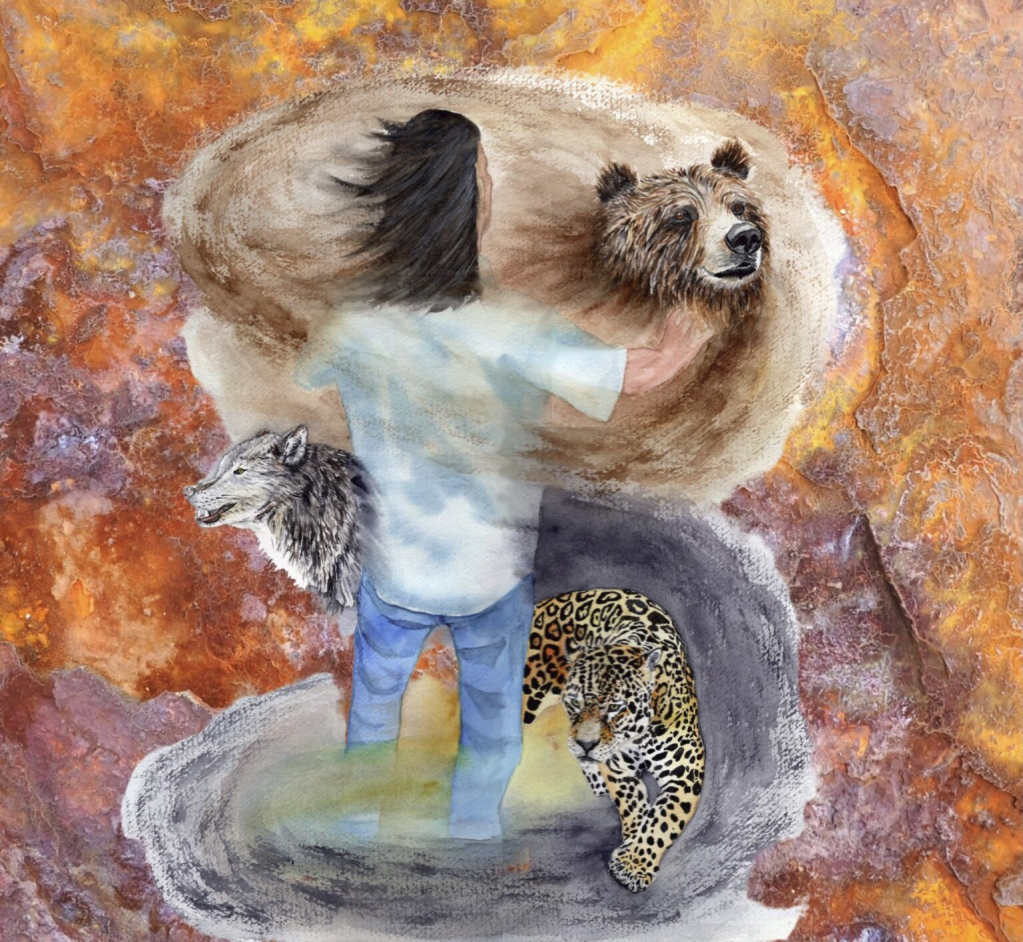
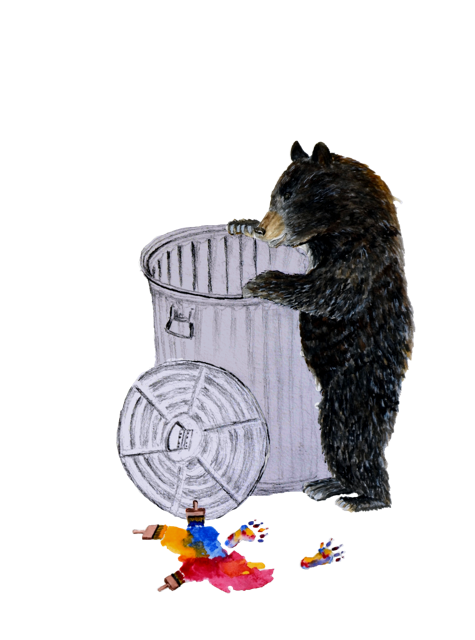
Chapter 28 ‘Extirpation’ illustration by J.J. Dunn | Rawls says, “I’m fascinated with the idea that there are extirpated animals and it makes me wonder whether they’ll come back | Photo courtesy of M.G. Rawls

While enjoying a refreshing glass of iced tea – and maybe a sandwich – on the balcony of M.G. Rawls’s home, you may get a sighting of a black bear. Or maybe a mountain lion. A review of her security camera from the previous night’s outdoor activity might show nocturnal creatures having free run of the creek that abuts her property.

They are the inspirations for the characters that inhabit The Sorts of Pasadena Hollow, a trilogy of young adult books created by Rawls in 2019 (Sorts are people who can transform into animals). Her first book, Hannah’s Fires, at 166 pages, follows a teenager’s story as she settles into her new home in Pasadena Hollow. The second installment, Tony’s Tales, is 224 pages and focuses on Hannah’s first friend there. The last in the series is Henry’s Hopes, which is 332 pages long and has just been released on Amazon as an ebook (order it here). It chronicles the life of an elderly Tongva shaman, one of the earliest residents in the area, who also serves as mentor for the young Sorts.
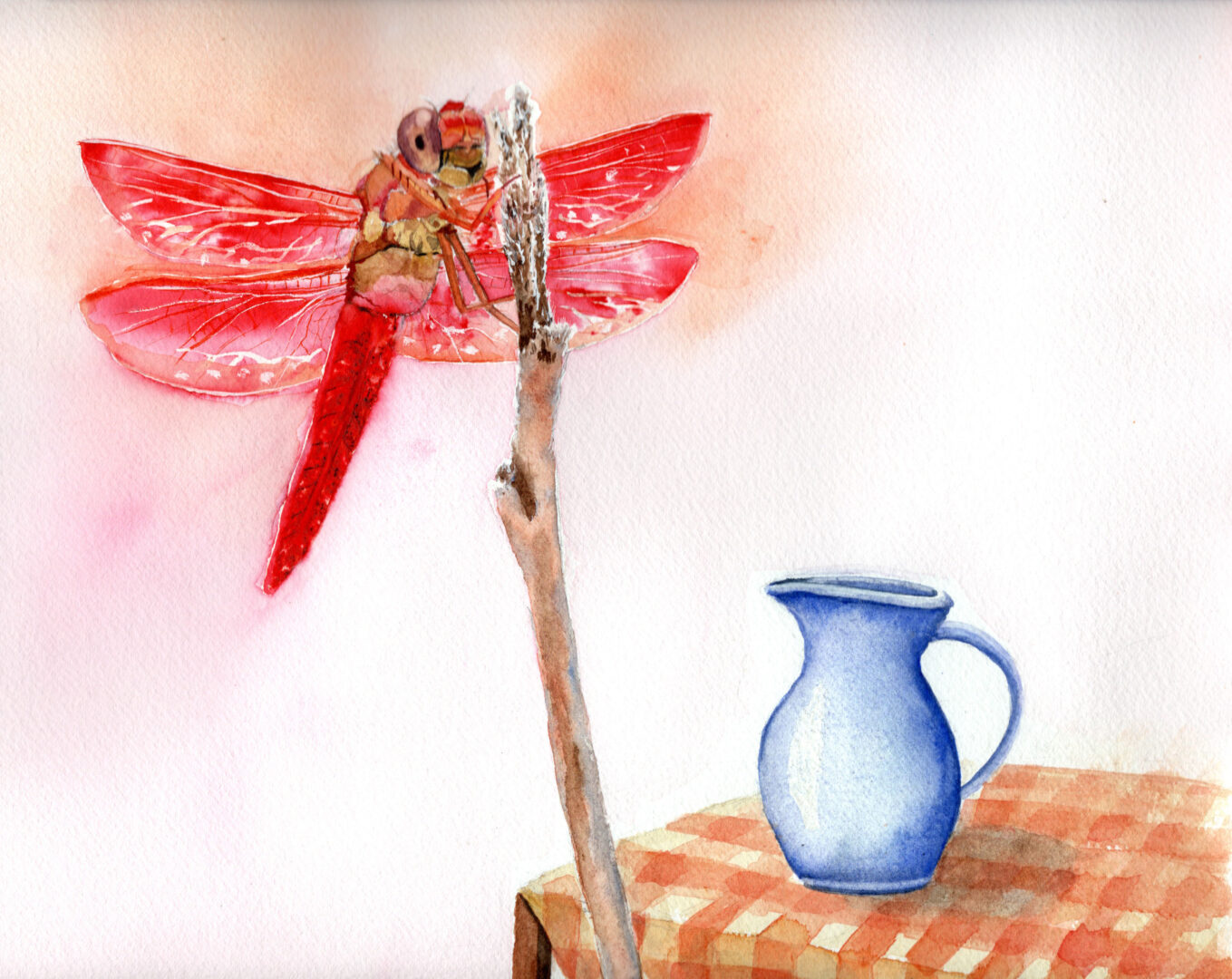
Chapter 1 ‘A Red Dragonfly and Birch Beer’ illustration by J. J. Dunn | Rawls says, “This red dragonfly landed on a single upright branch of a small apple tree in my yard. His face was so expressive, I couldn’t resist including him in my story. Birch beer (non-alcoholic) was a staple of my New England childhood and later visits.” / Photo courtesy of M. G. Rawls

Rawls graciously invites me for lunch followed by a short interview for a second article about her books (read first article here). I mention that each of the three books became increasingly longer, and ask if she planned it that way or if more ideas just came to her as she wrote.

“My initial thought was always to have three books but the audience would start at 5th grade and they would mature as I went along,” Rawls replies. “At the same time, it would help me, since I was a new writer, to be able to write in a way that I was comfortable with with each book. So you can see my progression through my work – it starts out simpler, then gets more complicated. I was always hoping that the reader who liked the book in 5th grade would like the next in 6th, and so on, as they were reading. I was writing it for middle schoolers and older.”

“With the exception of a few supporting characters, the main people in Henry’s Hopes were already part of the first,” Rawls adds. “One of the comments I received from readers is that there are so many to keep track of, so I included a list and description of characters at the beginning of each book.”  

Rawls kept to a fixed idea about how each book will flow. She explains, “Consistent with I told you in the first interview, the concept was the same with all three books. I created the chapter titles first and then built the story for each section. And what I wrote inspired me as I fleshed out that chapter. I pretty much stayed with the same titles I started out with; I made very little deviation from them.”          
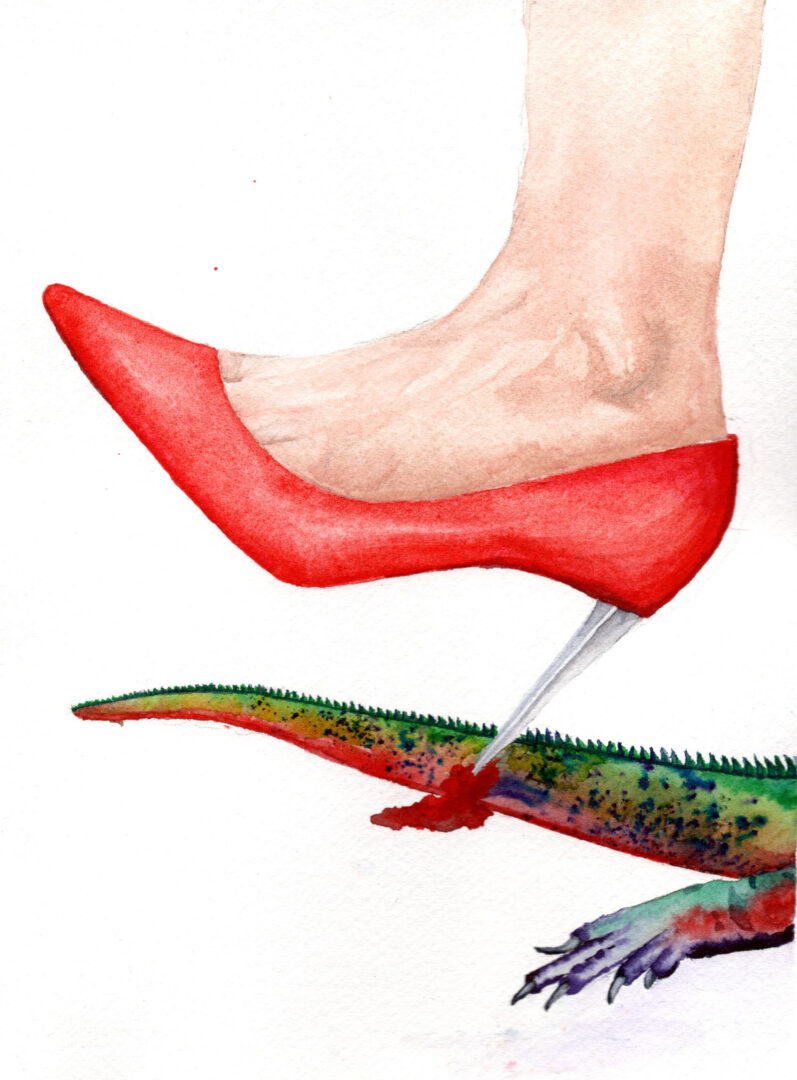
Chapter 3 ‘Till Death Do Part’ illustration by J. J. Dunn| Rawls claims, “This one is pure fantasy. Thankfully, no one I know (except for Sparkle Bitters) ever sliced off the tail of a marine iguana.” / Photo courtesy of M. G. Rawls

I then ask if she has a favorite character in her books, and Rawls responds, “You had a similar question the first time you wrote an article about The Sorts of Pasadena Hollow and my answer is: if I did, I wouldn’t say. Although each book has its own unique characters. In the first, there’s Hannah, the young adult girl with the emotional constraints within her. In the second, there’s Tony, who’s somewhat reckless; I meant for Tony’s Tales to be a boys’ book; and in the third – the adult book – there’s Henry, the Tongva spiritual leader. He wants the best for everybody but he doesn’t necessarily go about it the right way; he tends to be Machiavellian.”    

“Did the idea to write a book set in your neck of the woods happen organically or was there a particular moment or instance when it occurred?” I query. Rawls replies, “The inspiration for this series came from an article in the L.A. Times – which I included in Hannah’s Fires – about an engineer who was convinced there were half-lizards living deep under the ground with a cache of gold and arranged to dig for it. I was so intrigued by that article and it motivated me to create these characters.

“Besides that, we live next to a creek and I can hear the water running – especially when the door is open at night. Most (not all) of the animal events in my books have their genesis in reality. In the first book, for example, there’s a raven who tries to steal Hannah’s bracelet and pretends he hurt his wing to try to get sympathy from her because he likes her. About 10 or 15 years ago, my husband found what he thought was an injured juvenile raven. We took it in for the night and the next morning there was such a squawking outside, it woke us up. Dozens of ravens were on our fence and across the street staring at us – it was clear what they wanted. We brought out the juvenile and he flew off unhurt. My daughter named that raven Nicky and she would look for it at her school. I later heard that ravens are very smart and will sometimes feign injury to get attention.”

“As I said during your first interview, I had been nurturing this story in my mind since we moved here in 1988. When the idea to write these books happened, all the stories that have accumulated over the years living here started coming back to me,” she continues. “In 2019, I began writing them as notes on my iPhone in the early morning and they got longer and longer. Finally I started pruning it out and thought ‘Oh, this is interesting.’ It gave me comfort – it was a world I could escape into.”   
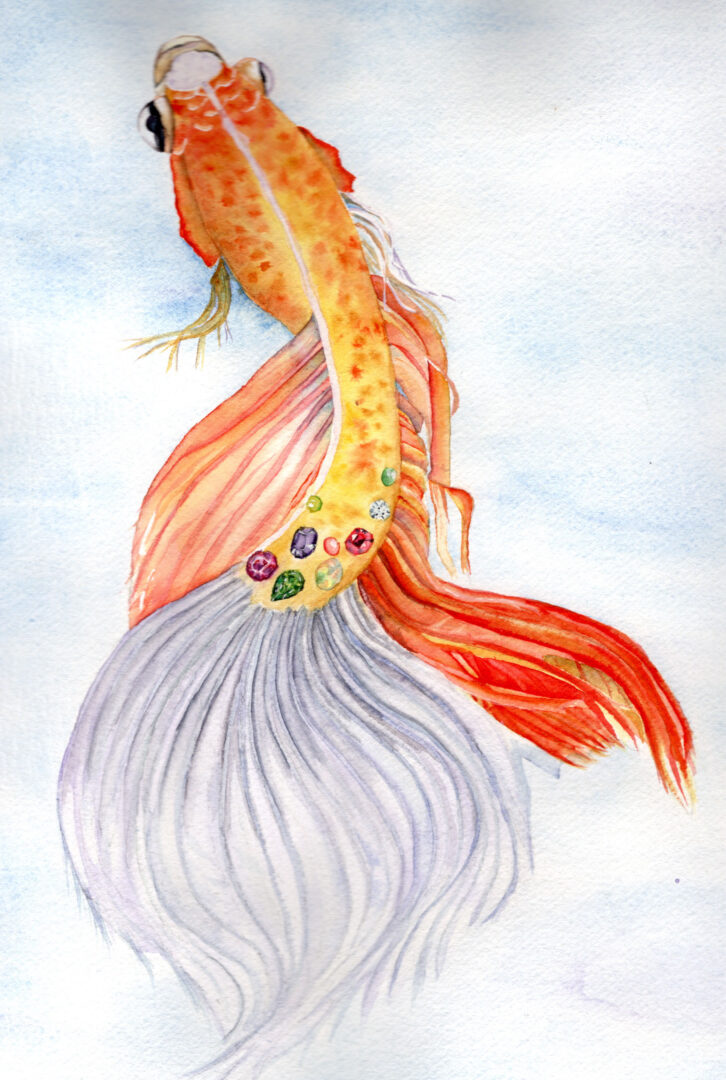
Chapter 11 ‘The Jeweled Koi’ illustration by J. J. Dunn | Rawls states, “I had a number of goldfish growing up including one named ‘Goldy’ who lived for several years until one day she jumped out and the consequences were tragic. The jewels were inspired by a book I read where the rulers kept giant kois in ponds and they attached precious jewels to their tails.” / Photo courtesy of M. G. Rawls

Unlike some popular fantasy young adult books set in dystopian worlds, the Sorts live in a utopian society. Rawls intentionally created an inclusive world where everyone is accepted. Without calling attention to it, she ensured there was representation for people of diverse race, age, and sexual orientation.                            

While some authors say they wish they had written something differently, Rawls stands by what she has created. “I’m fine with how they all turned out. If there was something I put in the book that sent me on a different path, I went along where that led me. That’s not to say I abandoned an idea or that I didn’t have a particular destination – I had the chapter titles to guide me – but the road wasn’t restricted.”

The ending to her third book wasn’t planned in advance. Rawls reveals in jest, “A writer I know once told me that every story needs to have an arc. Until she said that I hadn’t heard of the word. I didn’t know what it meant; I think I had to look it up because I was embarrassed. So I worked on my arc. Seriously, though, I had an idea how I wanted it to end, but not the specifics. It only came to me as I got there.”          
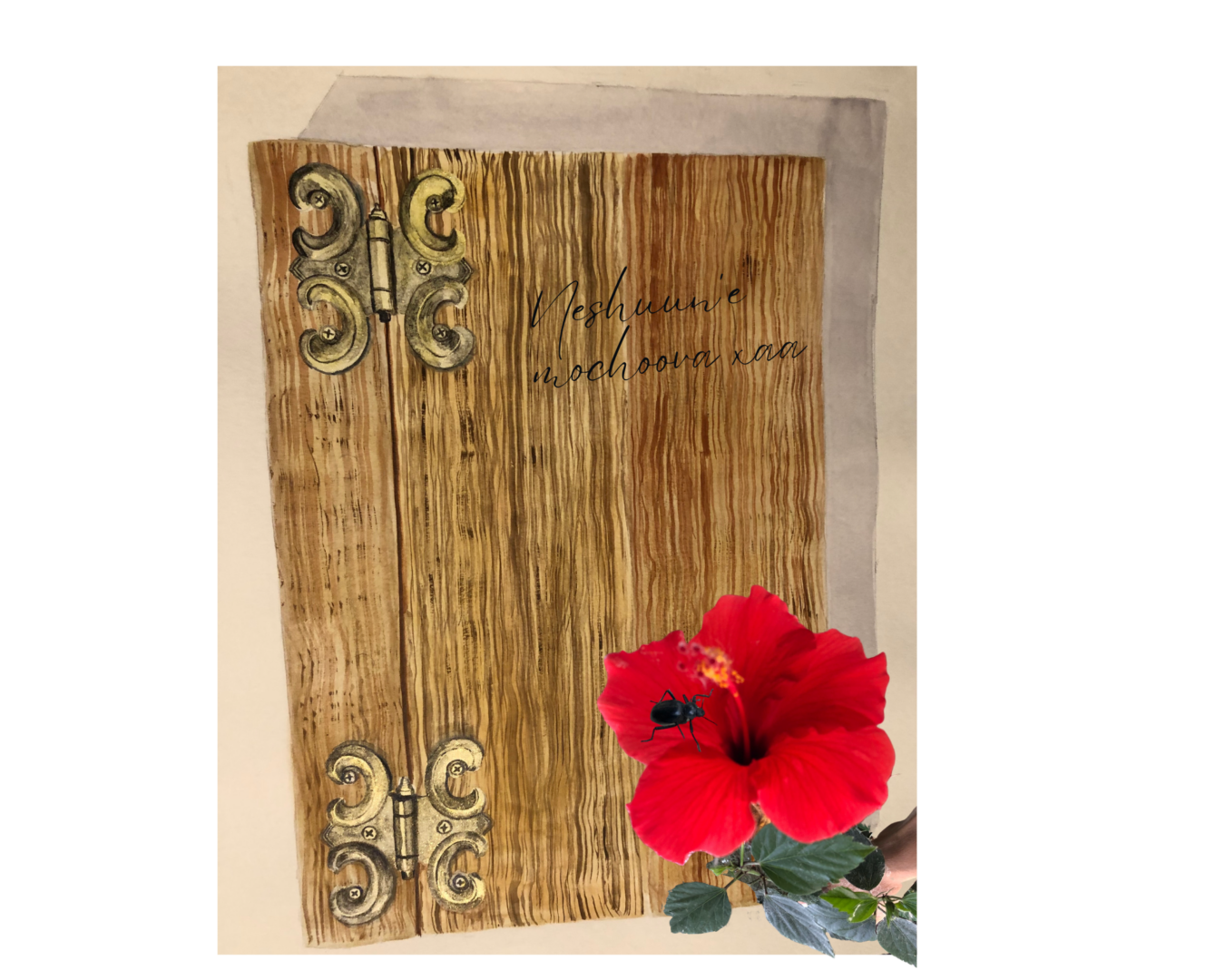
Chapter 33 “Wedding of Sorts’ illustration by J. J. Dunn | Rawls describes, “I thought the Tongva phrase ‘My heart is with you’ was appropriate for a wedding book. J. J. Dunn based her painting on her husband’s German family book. I added the stink bug and hibiscus from my yard.” / Photo courtesy of M. G. Rawls

When I ask her to describe how she felt after completing the last book in the trilogy, Rawls simply answers, “These characters have taken a life of their own – my job is done!”

At the end of Henry’s Hopes, we find Lydia as the voice for the characters and the narrator of events we’ve been following. It comes as a surprise. And yet it’s because she isn’t a Sort – not in spite of it – that makes her the logical storyteller. As Rawls says, “The events that happen are everyday occurrences for the Sorts so they don’t find them interesting. But they’re not normal activities for Lydia so she’s fascinated by them. Being an investigative reporter, she thinks of them as a mystery to be unraveled.”

Rawls’s characters grow with her as she matures in her writing. While she starts out tentative in Hannah’s Fires, she gets more confident in Tony’s Tales, and reaches her stride in Henry’s Hopes. In the same vein, a reader slowly gains insight about them and inevitably becomes invested in Hannah, Tony, Henry, and all the Sorts in Pasadena Hollow… and feels sad that there won’t be another book to look forward to. But Rawls also leaves a huge gap where a reader can infer that events will have transpired, leaving the possibility open for her to pick up where she left off.

As with painters and other artists, authors cede control of their work once it’s out there for the public to make of it what they will. So we can imagine for ourselves milestones happening during that gap – or
Belinda Lei’s ‘Not THAT Rich’ Exposes Competition Among Asians

Originally published on 14 December 2021 on Hey SoCal

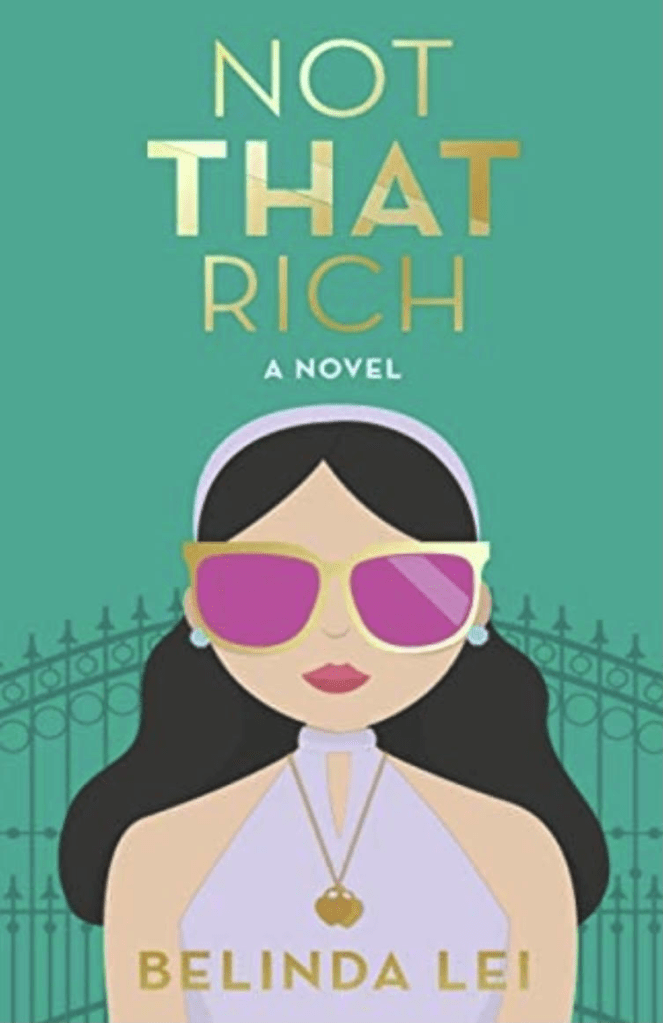
“Not THAT Rich” book cover | Photo courtesy of Belinda Lei

Asians are often stereotyped as the ‘model minority’ – overachieving, law-abiding, non-complaining people who soar above whatever challenges and obstacles are thrown at them to attain financial and personal success. That their accomplishments sometimes come at great cost to their mental well-being isn’t openly discussed.

This is what Belinda Lei explores in her young adult book called “Not THAT Rich,” which follows the lives of senior high schoolers as they navigate the stressful, highly competitive college admissions period.

The daughter of immigrants from Mainland China, Lei was born and raised in Walnut and Hacienda Heights in the eastern San Gabriel Valley. And while she says she’s grateful that her parents brought her up in predominantly Asian American communities where she wasn’t made fun of and bullied for what she ate and how she looked, it also meant being in a pressure cooker environment.    

From her typical Asian upbringing – multi-generation family members in one household – she knows how Asian kids have to strictly adhere to the path their elders set out for them. “I also grew up with my grandparents, from whom I learned traditional Chinese values and an immigrant work ethic from a young age,” relates Lei. “My family promoted what they deemed best for me based upon what they thought would secure me a happy future – financial success, a reputable profession, and a devotion to family. As a teenager, I admittedly resented the expectations that seemed so unachievable and felt like I was simply following a mold – that of the model minority.

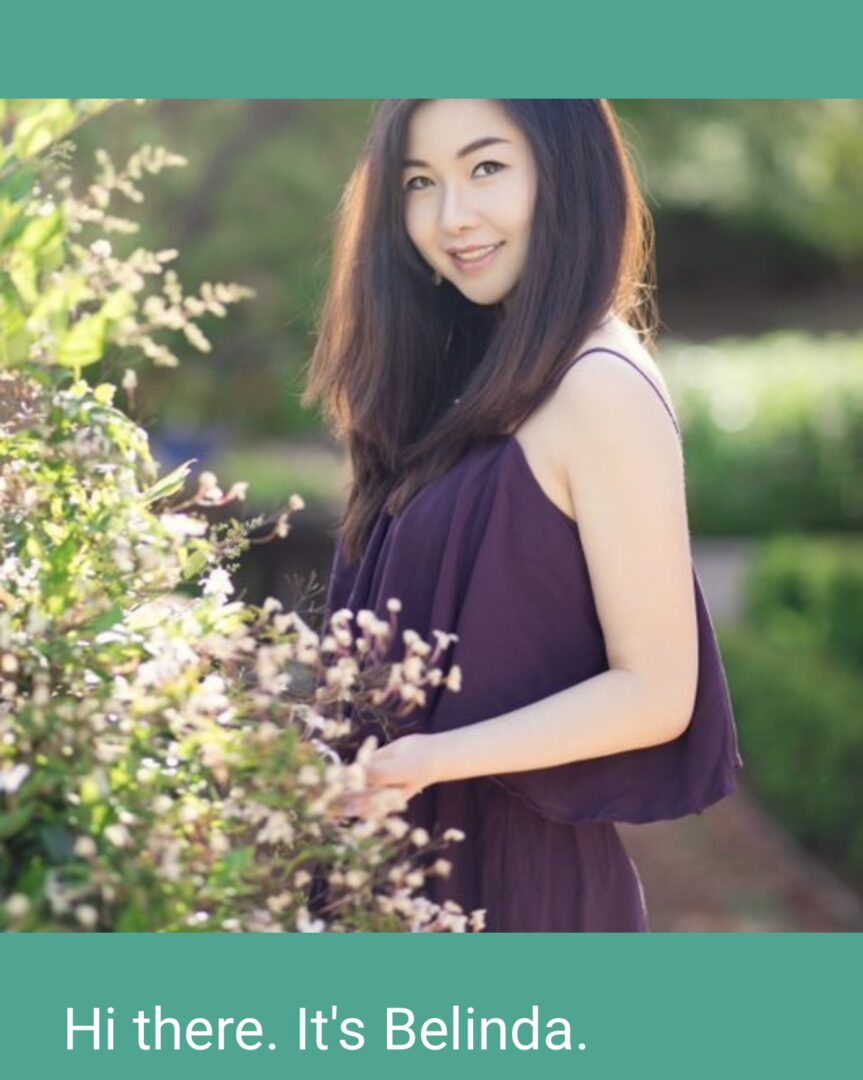
Belinda Lei’s publicity photo | Photo courtesy of notthatrich.com

“However, having recently turned 26 and now looking back, I empathize with why my family pushed me so hard when I was younger. Though I do believe there is a balance to everything (something I explore a lot in the book). With generational and cultural gaps, a lot of communication and understanding can be lost. And with mental health issues on the rise amongst adolescents and young adults too, it’s now more important than ever to try to bridge these gaps and develop common ground on this definition of ‘success’ and ‘happiness.’”                     

Asked if the title of her book is a reference to Kevin Kwan’s “Crazy Rich Asians” book series, Lei replies, “Yes and no. Originally, ‘Not THAT Rich’ was going to be called ‘SGV’ as a nod to the San Gabriel Valley, where the fictional Winchester High is located in. But over time, as I tailored the book to a young adult audience, I began to think about the books I loved as a teenager, like ‘Gossip Girl’ and ‘Crazy Rich Asians.’ For ‘Crazy Rich Asians,’ I was incredibly excited for not only the book series but also its fully Asian and Asian American cast in the movie adaptation.

“At the same, I also understood the stereotype that might be reinforced with it – that Asians are crazy and rich. Coming up with ‘Not THAT Rich,’ was a sarcastic response in some ways to ‘Crazy Rich Asians.’ What does being rich really mean? What are the sacrifices and struggles that it entails to achieve what we stereotypically deem as rich? Why do we pursue wealth in the first place? These are all questions I was hoping to address in the book although admittedly, I’m still trying to figure out all the answers myself!”

“I wrote ‘Not THAT Rich’ through the lens of being the book that I wish I had as a high schooler,” Lei describes. “Growing up, there wasn’t much Asian American representation in pop culture, and even when there was an Asian American actor on TV or in a book, I felt like it didn’t reflect my own experience of being a second-generation daughter of Chinese immigrants. I wanted to write a book that encompassed the glitz and glam I sought out in books growing up (like ‘Gossip Girl’ and ‘The Clique’) but also gave readers a glimpse into the diversity of perspectives and experiences that can be found in the world of being Asian American (like ‘Crazy Rich Asians’ to a certain extent, despite it being set in Singapore).

“Most importantly, I wanted the book to be fun. Young adults already have so much on their minds these days from juggling family, friends, education, and just being a teenager. The heaviness cast in 2020 by the pandemic and political turmoil made it even more important for me to write a lighthearted and juicy book that helped readers escape into a satirical world and, at the same time, draw out reflections about identity, motivations, and consequences.”

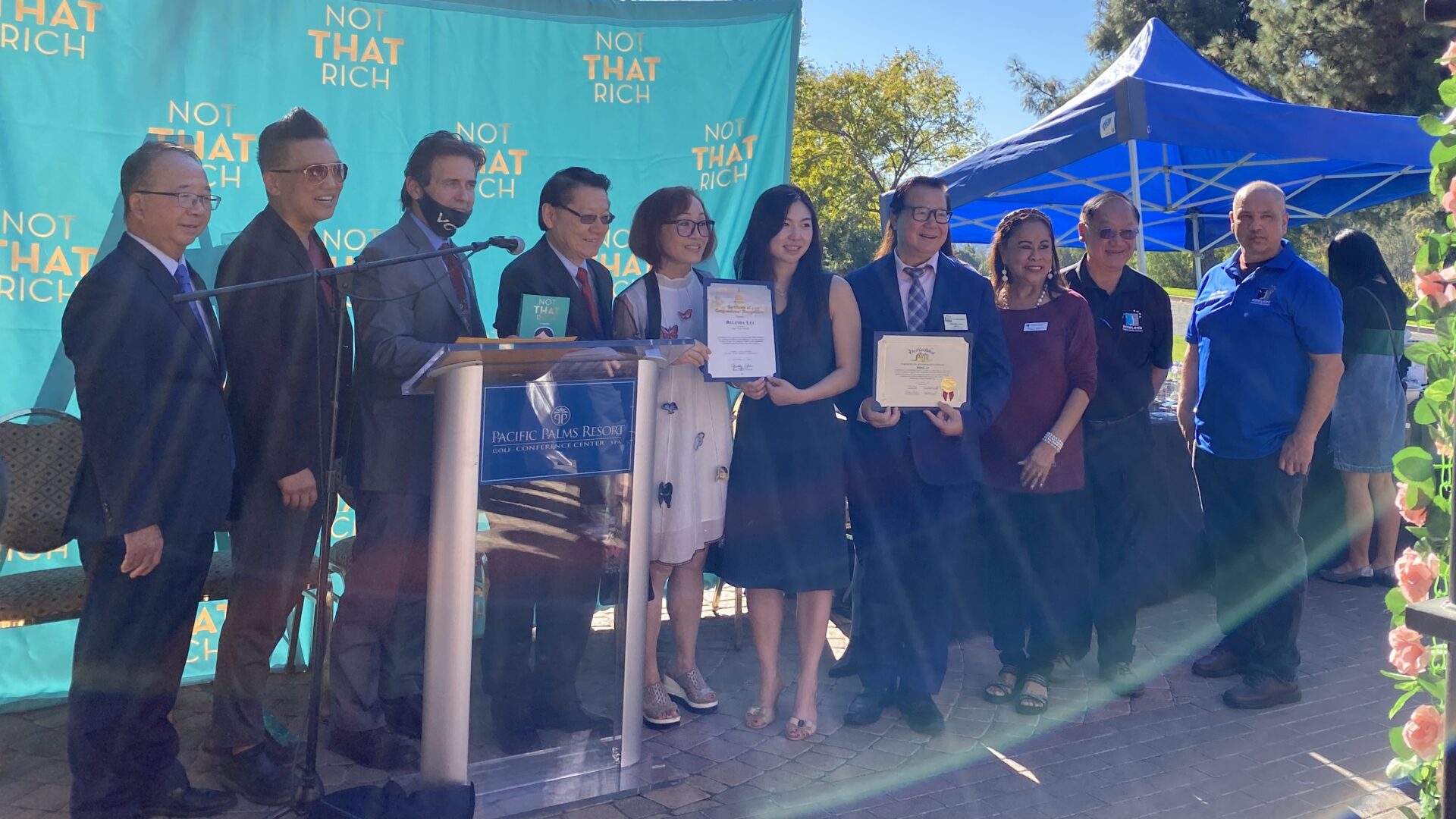
At the book launch of the Chinese version of ‘Not THAT Rich.’ From left, Monterey Park mayor/councilman Peter Chen; Duarte mayor Sam Kang; South Pasadena Mayor Michael Cacciotti; former assemblyman Mike representing congresswoman Judy Chu; former mayor of Walnut Mary Su; Belinda Lei; San Gabriel mayor Chin Ho Liao; Rowland Heights USD board president Cary Chen; RHUSD board member Agen Gonzalez; and board member Erik Venegas | Photo courtesy of notthatrich.com

But while Lei writes about high schoolers and their experience, her book is centered on her truths and others may not relate to them at all. She clarifies, “’Not THAT Rich’ only represents a tiny sliver of the extremely diverse and dynamic racial, socioeconomic, and cultural diversity of the L.A. region. It’s merely based on the world that I grew up in. I highlight a variety of backgrounds, thoughts, and experiences in the novel, but it doesn’t represent the 20 million Asian Americans who can trace their roots to more than 20 countries.”

“Asian Americans are an extremely heterogeneous group,” continues Lei. “Unfortunately, many people see us as a homogenous one. I was starkly aware of this ‘othering’ while writing it in 2020 and consuming reports about the increase of anti-Asian hate crimes due to COVID-19. How is it that my racial identity can brand me as someone who should ‘go back to my own country’ when the country that I’ve been born and raised in is the U.S.? I hope the stories that I weave can help subvert these misplaced prejudices by highlighting how being culturally American and culturally connected to another country should not be mutually exclusive.

“Lastly, think about who is not represented in the novel. Yes, ‘Not THAT Rich’ is fictional, but it does reflect the demographics of the area that I grew up in and the access and opportunities that I was surrounded by. It is very much a book about privilege. While it does not tackle issues of racism and classism head-on, this ‘fun, juicy, and dramatic’ world, unfortunately, does show how socioeconomic status, race, ethnicity, and educational opportunities are intimately intertwined in America.”

Spoiler alert – to say that “Not THAT Rich” depicts Asian parents in unflattering light would be a kindness. While they realize in the end how they have created a toxic environment for their children and redeem themselves by righting the wrongs, it could have happened sooner. And Lei is preaching the moral of her story by launching the Chinese version of her book so non-English-speaking parents can read it and, through it, develop self-awareness.                 

“I would like for the book to reach a worldwide audience, but my goal from the very beginning has always been that if I can reach only one youth out there and make them feel heard, then it has been worth it,” adds Lei. “In that sense, I’m already proud of how far it has come, and seeing it continue to rise in popularity is the icing on the cake. Target recently began carrying the English edition of my book online and as businesses are opening up more, I’m hoping to get it into more brick and mortar bookshops.”

‘Not THAT Rich’ book in Mandarin | Photo courtesy of notthatrich.com

In January, Lei will be returning to Yale to finish the final year of her MBA degree and will graduate next December. Since her first year there, though, she has been a strategy consultant, software engineer, and is currently a product manager at Citibank. She is also the managing director of an anti-bullying non-profit called Act to Change, which focuses on Asian American and Pacific Islander communities.

“The organization first started out in October 2015 as a national public awareness campaign on bullying prevention among youth under President Obama’s White House Initiative on Asian Americans and Pacific Islanders (WHIAAPI),” Lei explains. “I had been a senior intern at the White House Initiative to help spearhead the launch of the AAPI Bullying Prevention Task Force – a coordinated cross-agency effort to address bullying amongst youth. The report released by the task force resulted in the creation of Act To Change and when it officially became a non-profit in 2018, I joined as a founding board member and now I’m the Managing Director.

“I wear a lot of different hats in my role – I’m responsible for various initiatives like our Homeroom with Tan France series where Tan France conducts virtual school visits to talk about bullying and our most recent bullying survey in collaboration with Next Shark and Admerasia. I can also be hopping on calls about fundraising or making TikTok videos. This doesn’t include being our in-house developer where I help manage the website, acttochange.org, or our digital campaigns. It is like my second job.”

With Lei’s multitasking abilities and various pursuits, it’s difficult to foresee where she’ll be a decade from now. In fact, when queried about that, she confesses, “It’s a tough question that I never know how to answer for interviews! Being in my twenties, I feel like my life is constantly changing and with all my different interests I can see myself in multiple different situations in ten years. If I had to choose a dream state for me in my thirties though, it would be being in the entrepreneurship space and continuing to create products or experiences that make a positive impact on communities.”

We can predict, though, that we might see a sequel to “Not THAT Rich” in the not-too-distant future; Lei’s already brainstorming on it. Hopefully, in it the kids will have gone on to university and beyond, and are on the road to living fully realized versions of their younger selves.

But that ideal isn’t limited to Asians – it is something we all aspire to.     

‘The Sorts of Pasadena Hollow’ Features Local History and Wildlife

Originally published on 12 November 2020 in the Pasadena Independent, Arcadia Weekly, and Monrovia Weekly

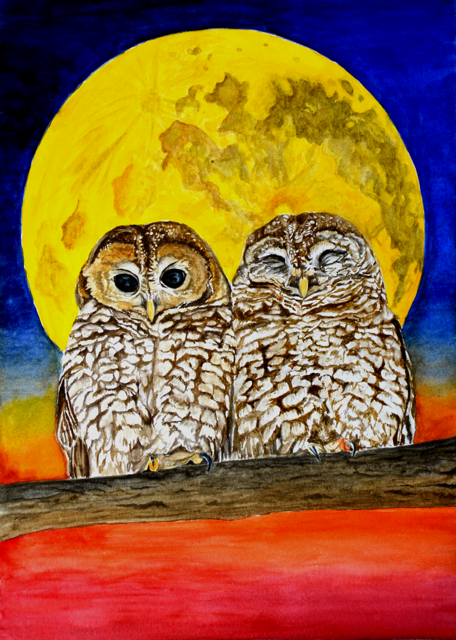
Illustration by J.J. Dunn | Courtesy photo / M.G. Rawls

Pasadena is only 12 miles from the hustle and bustle of downtown Los Angeles, but you’d never know it if you are a resident of its canyon area. Here, busy activity comes from the bears, mountain lions, and exotic wildlife that call it home. Human residents are used to observing animals we would otherwise only see at the zoo go about their daily existence.

In a newly published young adult book called ‘The Sorts of Pasadena Hollow: Hannah’s Fires,’ (available on Amazon) humans and the wildlife share equal billing as well as the locale’s physical space. Readers will be excited to read on and find out what creatures are lurking in the book’s pages.

‘The Sorts of Pasadena Hollow’ is an unexpected offering from M. G. Rawls, a former lawyer who spent her working career battling with contractors who had failed to pay pension and fringe benefit contributions on behalf of their union employees. Let me add that I am also her friend and, in all the years I’ve known her, never imagined she would come up with this book. But, as this article will reveal, there is a logical explanation for the theme choice.

Conducting the interview by email, I start by remarking, “I’ve heard of previous lawyers who ended up writing legal thrillers, proving the adage that you write what you know. And that begs the question – why fantasy? Have you been harboring an interest in the genre for a while?”

“Great question!” answers Rawls. “I’ve wondered about this myself. Before retiring in 2013, I represented union trust funds in breach of contract actions. I enjoyed what I did, but it’s probably not an exciting basis for a novel.”

“What inspires and continues to inspire me is living in the foothills of the San Gabriel Mountains in the Angeles Crest Forest and watching bears with cubs, deer, coyotes, skunks, mountain lions, foxes, miner’s cats (bet most have never heard of those stripe-tailed and raccoon-eyed nocturnal animals), the list of sightings is endless. Many of the descriptions in my fantasy story have their genesis in real events that happened and most of the wild animals I write about are local to the Pasadena and surrounding areas. I have been nurturing this story in my mind since I moved here in 1988,” reveals Rawls.

“Did the ideas about what animals to include in the books come before the people?” I ask, and Rawls replies, “No, generally the people came first and then as I developed their characters, their animal forms emerged.”

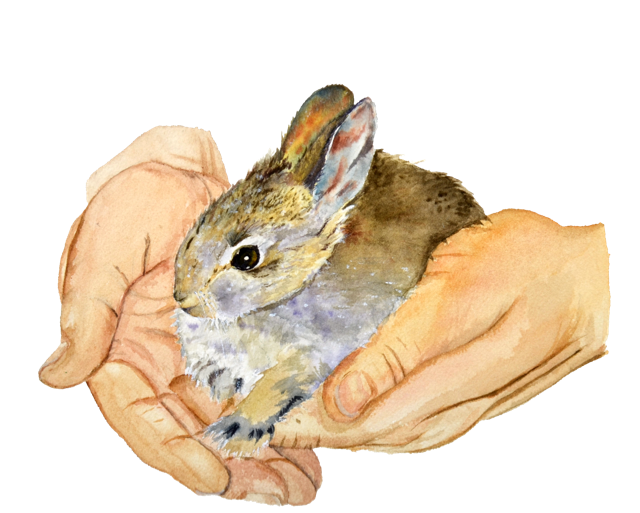
Illustration by J.J. Dunn | Courtesy photo / M.G. Rawls

One of Rawls’s characters is a Tongva man and I ask what compelled her to write about the tribe. She responds, “I first learned about the Tongva, an indigenous people that inhabited the area thousands of years before the Europeans settlers, through docent training at the Pasadena Museum of History. Their descendants exist today and their language continues to be taught. I love history, especially local history and wanted to learn more, so in researching the Tongva, I discovered that they believe in a spiritual connection between themselves, animals, and the land. That is fascinating to me, given the little canyon where I live. There is so much more I want to learn; I hope to do further research on this.”

The book includes real events that transpired in Pasadena and I ask if she investigated major events that made the news to build around and if there were places she wanted to include beforehand.

“I did both,” discloses Rawls. “It was fun to put the pieces together as I wrote the story. Having been an attorney, I worked to make my fantasy story as logical as possible. For example, there was a small discovery of gold in Southern California in 1842 before the major discovery in Northern California in 1848 at Sutter’s Sawmill in Coloma. I found that idea fascinating and built a small subplot around it. Also, one of the largest solar storms to hit the earth, known as the Carrington event, occurred in 1859. It was so bright, it was reported that gold prospectors got up thinking it was morning. That event is an important part of my books, but written in a way that I hope readers will remember. As for local places, between the three books, I think I will have written about every place of interest in the Pasadena area from the Cawston Ostrich Farm in South Pasadena (closed in 1935) to Pasadena City College and the Huntington Library in San Marino.

“Why did you chose to make it a fantasy story and why did you give your characters extraordinary powers?” I inquire. “Every writer is different of course,” Rawls states. “But for me, writing fantasy allowed me to expand my love of history in a creative manner. I wanted to include local history, but also have the flexibility to invent when needed. Wrapping local history with fantasy is my sneaky way of making history interesting and memorable to younger readers.

“I forgot to mention that I’m also a volunteer in the Junior Docent program at the Museum, training seventh and eighth graders in tours of the historic Fenyes mansion. So I’ve had some experience seeing what works and doesn’t work in retaining information.”

Illustration by J.J. Dunn | Courtesy photo / M.G. Rawls

Then I inquire how she decided on who her protagonists were going to be, whether training young people had any bearing on her choice, and if she thought the Z Generation had more compelling life challenges to overcome.

Rawls says, “In this first book, I knew it was going to be a young female. In that regard, I guess you do write what you know, since I was once 19. Though I want to stress this is a fictional story. I don’t know that training the junior docents influenced me other than hearing what interests them – like the stuffed owl and marmoset monkey cage in the Mansion’s studio. You may see these in Henry’s Hopes. I think young or old we all have life challenges to overcome, though the young may have the additional burden of not knowing where they’re headed, having so much of their life in front of them.”

“Why did you give them extraordinary powers?” I ask. “That’s an easy one,” declares Rawls. “In Hannah’s case, she is a 19-year-old girl who’s had a tough life, with no real family, and an evil stepfather. She suffers from nightmares and real life demons that she cannot get rid of. But there is hope as she enters this magical place called Pasadena Hollow.”

Curious about her process, I inquire, “Did you already have all the components planned out before you set out to write the books or did you make them up as you went along? Did you base some of your characters on people you know or have met or are they purely imagined?”

Replies Rawls, “Essentially, what I did is title my chapters and then write the story around the names of the chapters. I have no idea if this is how it’s supposed to be done. But it was important to me to get chapter names I was happy with. All three books are the same, chapter headings first and no outline. My characters are fictional! Even if there was a connection with a real person, living or deceased, I don’t know that I would say who it was.”

Asked what was the most difficult hurdle to overcome as she wrote, Rawls confesses, “Probably myself. I didn’t even tell my husband I’d written a book, until I handed him a near final draft. He took it in good stride and was very supportive, but he read it so fast I went back and lengthened it!”       

Illustration by J.J. Dunn | Courtesy photo / M.G. Rawls

“Where did the name ‘sorts’ for these fantasy characters come from?” I query. And Rawls says, “It’s from the phrase ‘It takes all sorts,’ that I’ve been fascinated with forever. I couldn’t figure if the phrase was positive or negative, so I’ve used it for both and included it in my prologue. I don’t know the origin – maybe one of your savvy readers does.

“I’ve even taken to sometimes calling the creatures we see on a daily basis, ‘Sorts.’ You know, the grasshopper that clings to the screen door, the cricket that chirps inside the house or apartment, but you cannot locate, even the friendly jumping spider with the inquisitive eyes and red body I found in my house and relocated outside. Even if we don’t live near the forest, I think we’ve all wondered about these everyday creatures. – what they’re thinking and who they really are…”

‘Hannah’s Fires’ is the first installment in a planned trilogy. I ask her how far the characters’ arcs go and if the books will span several years as they grow older. Rawls replies, “In book two, ‘The Sorts of Pasadena Hollow: Tony’s Tales,’ the characters only age a few months, but you learn more about their back stories and personalities. And this second book takes a deep look, literally, as to what lives or rather lurks deep under Pasadena. I met with a Caltech geologist and despite my insistent prodding, he assures me that absolutely nothing like I imagined lives under Pasadena. But who knows? Haven’t we only gone down about seven miles? As you can probably tell, I’m a big fan of Jules Verne, having read ‘Journey to the Center of the Earth.’

“The third book, ‘Henry’s Hopes,’ continues the same time period, but just might have a brief flash forward at the end. ‘Tony’s Tales’ is nearing final edits and will appear first as an e-book without illustrations. I have also completed the first draft on ‘Henry’s Hopes,’ which should be online by late next year.”

‘The Sorts of Pasadena Hollow’ is aimed at readers from middle-school age to adults. Rawls asserts, “There is no reason why adults can’t enjoy fantasy or, in my case, enjoy fantasy writing. I want my readers to be able to escape, even if only for a brief period.”

Readers, young and old, will be treated to beautiful full-color drawings that begin each chapter in the ebook and a colored edition of the paperback, which is now an available option (order here). Rawls enthuses, “I want to give a shout out to the  illustrator, JJ Dunn. JJ has been a friend since our children were in preschool, but I never knew she could draw until she gave me a picture for Christmas a couple of years ago. Her pictures are amazing! I hope you enjoy them as much as I have.”

Having been a Pasadena resident close to four decades, I was fascinated to discover its history through Rawls’s book. It gave me such a thrill that some of the landmarks where the events happen are places I frequent and know very well. I had fun figuring out what a fictional location’s real name is and trying to guess who a character is based on. It’s almost like an insider’s view of Pasadena and its residents. And that’s fantastic!

Pasadena Author Debuts First Book in her ‘Heart of Thorns’ Trilogy

Originally published on 6 August 2018 in the Pasadena Independent, Arcadia Weekly, and Monrovia Weekly

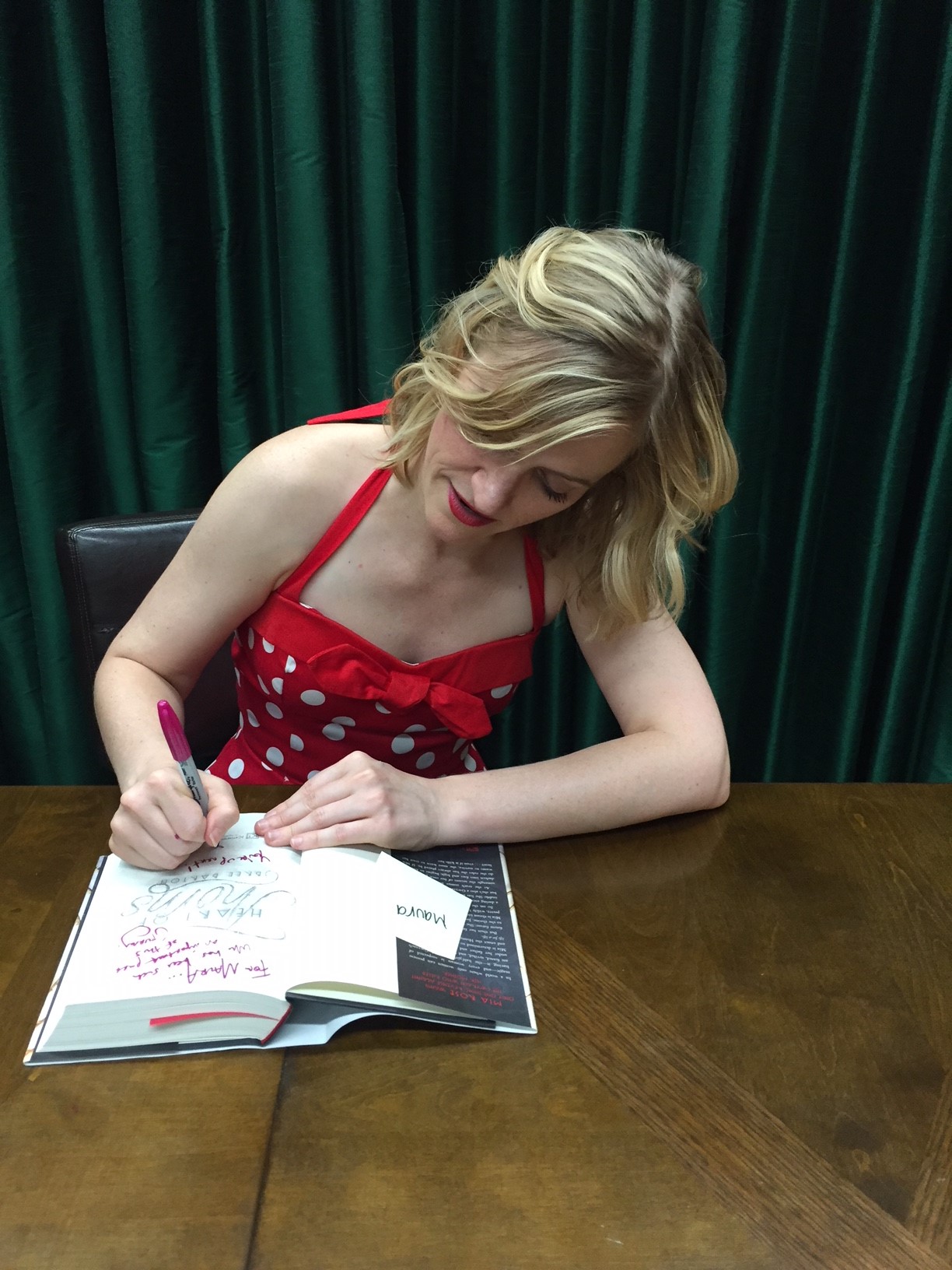
Bree Barton signs books during the ‘Heart of Thorns’ launch at Vroman’s Bookstore | Courtesy photo

It’s been a thrilling few weeks for Pasadena author Bree Barton as she embarks on a tour to unveil ‘Heart of Thorns,’ the first book in the trilogy. Geared for young adult (YA) readers, it’s a feminist fantasy book set in a dark kingdom where only women have magical powers.

‘In the ancient river kingdom, where touch is a battlefield and bodies the instruments of war, Mia Rose has pledged her life to hunting Gwyrach, women who can manipulate flesh, bones, breath and blood. The same women who killed her mother without a single scratch,’ reads the publisher’s blurb.

‘Heart of Thorns’ sounds like a story with a strong female protagonist who is out to wreak vengeance against evil women. The conflict it conjures in my mind is intriguing and I’m determined to find out more about the author who can come up with such challenging, if not entirely self-defeating, plot. I catch up with Barton at Vroman’s Bookstore on Colorado Blvd. the morning of her July 31 launch.

Brimming with excitement, Barton says, “Most girls envision their wedding as their ‘day’ but, for me, this book debut is my ‘day.’ I have  dreamed of this since I was a child and it’s difficult to grasp that it’s actually here!”

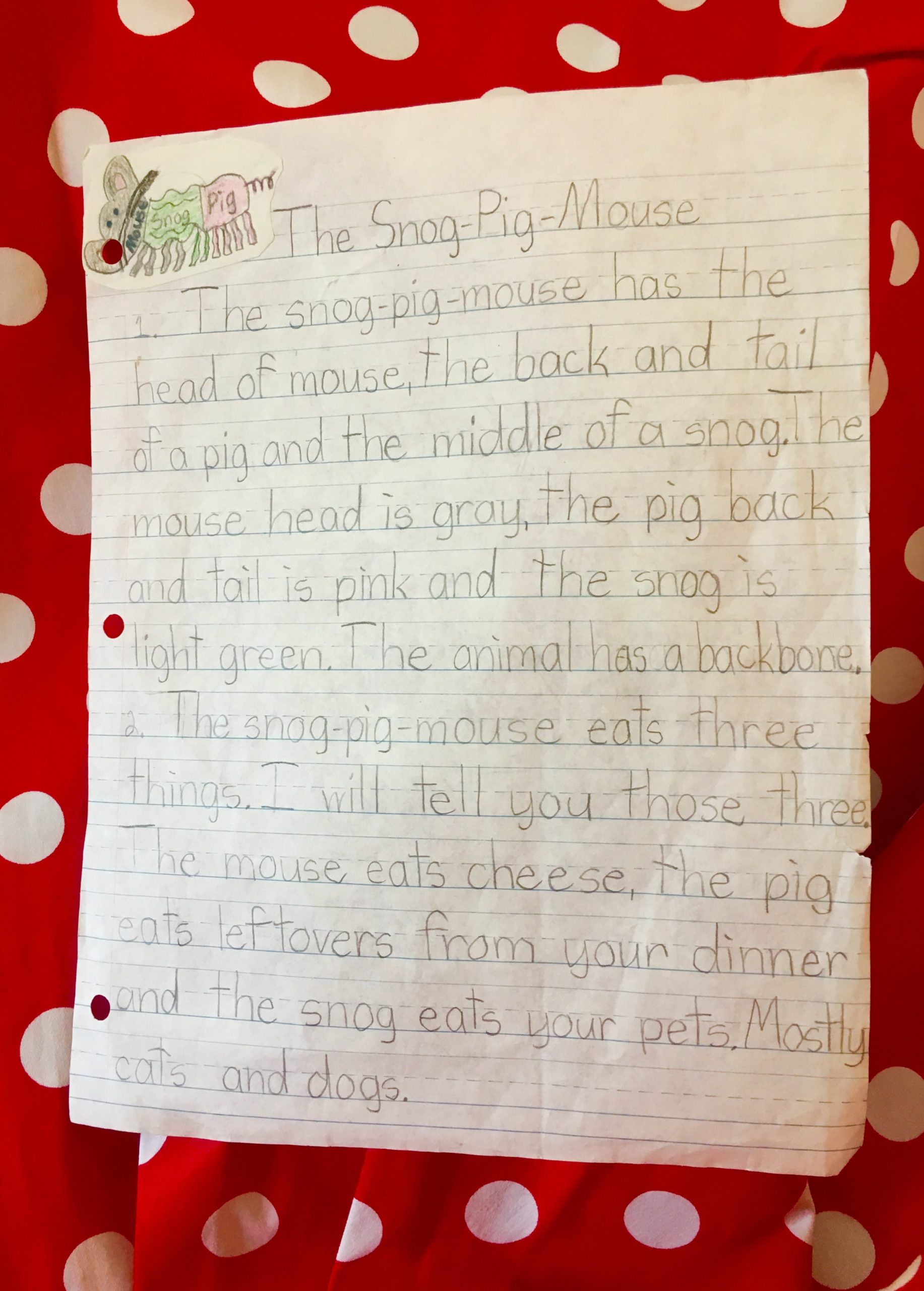
“This is my first published book but it isn’t my first fantasy story; that distinction belongs to ‘The Snog-Pig-Mouse,’ which I wrote when I was eight years old,” Barton points out. “When I was ten I wrote my first novel and was obsessed about writing that I would send letters to editors asking them all kinds of questions about publishing. That interest waned in high school when I was sidetracked and went into dance.

Barton’s first fantasy story | Courtesy photo

“My love of writing returned when I was in college, after an essay I wrote received a lot of plaudits. That led to my ghost writing stint after college. While it was a good experience, it wasn’t fulfilling because the books were in someone else’s name and I wasn’t writing in my own voice.”

Barton hastens to add, “Having said that, though, ghost writing was excellent preparation because I learned about the many layers involved in the process of getting a book published. A writer’s work goes through so many edits and revisions before it’s passed along to publicists, etc.

“It also gave me a resume when I was looking to publish my own book. I was able to claim I wrote a book that was optioned for television; I could give the name of other publishers who have printed books I have ghost-written. That gave me credibility and set me apart from other writers – and there are so many creative writers in the YA genre!”

“Fantasy books for young adults became hugely popular after the ‘Harry Potter’ series came out,” expounds Barton. “Although ‘Harry Potter’ is a genre that is its own universe. The ones that followed were more in the mold of ‘Twilight’ and ‘The Hunger Games.’

“But the YA books out there now aren’t only being read by teenagers, they’re read by people who are in their 20s and 30s. And that’s what I’m hoping for. ‘Heart of Thorns’ is about diversity, acceptance, and empowering women – issues that matter to people of all ages. It’s about women breaking free of years of persecution, misogyny, and a false belief that has been hard-wired in their brains. Furthermore, it’s women being in control.

“This tribe of women, called Gwyrach, has been made to think their powers are evil until Mia found out it can be used to heal. That made her realize that her power can be an instrument for good. It was fun to create a young protagonist because everything’s a new experience, it’s all about ‘firsts.’ That provides for a satisfying character arc.

“My sister’s 18, she graduated from high school, and is at the cusp of adulthood. People always congratulate teenagers when they graduate; and it is a cause for celebration. But it’s really a bittersweet moment because it signifies the loss of their childhood and it’s never coming back. While they have so much to look forward to, they also are leaving so much behind. She’s the reason I write YA.”

Barton with her sister | Courtesy photo

Women figure prominently in Barton’s world because she was raised by a single mother. She discloses, “My family background and childhood provided considerable inspiration. In my young mind, my Mom was the model of perfection. Then she had a child out of wedlock and we were banished from our Christian Fundamentalist community.

“That event made me recognize my Mom isn’t perfect; but I also know her to be determined and strong-willed. When I was going to school in Massachusetts, she drove straight through from Texas to spend some time with me. For today’s book launch, she came to Pasadena to organize the hospitality for the event. She’s a tiny woman – all of five feet – and she’s out there now laden with cupcakes, drinks, cups, and plates.”

Barton based the Gwyrach tribe, angels descended from the gods, from mythology. She says, “I looked at Irish and Welsh mythology, the origin of the word. However, this is also a mix of Brazilian, Portuguese, and Spanish folklore. I spent some time learning about cultures with a dominant maternal influence, like the pachamama, a fertility goddess who presides over planting and harvesting. She also embodies the mountains and causes earthquakes.”

Continues Barton, “While the idea for ‘Heart of Thorns’ began many years ago, it was really the Trump win in the 2016 elections – when we all thought we were going to have a woman president – that was the impetus for this. I would like for women to realize that we are stronger because of it, not in spite of it.

“And storytelling can be a source of healing. I wanted this book to have a balance so I made it light and funny. There is so much violence and gore in it but, at the same time, there are many humorous moments between Mia and Prince Hal. I wish for readers to find it engaging and interesting.”

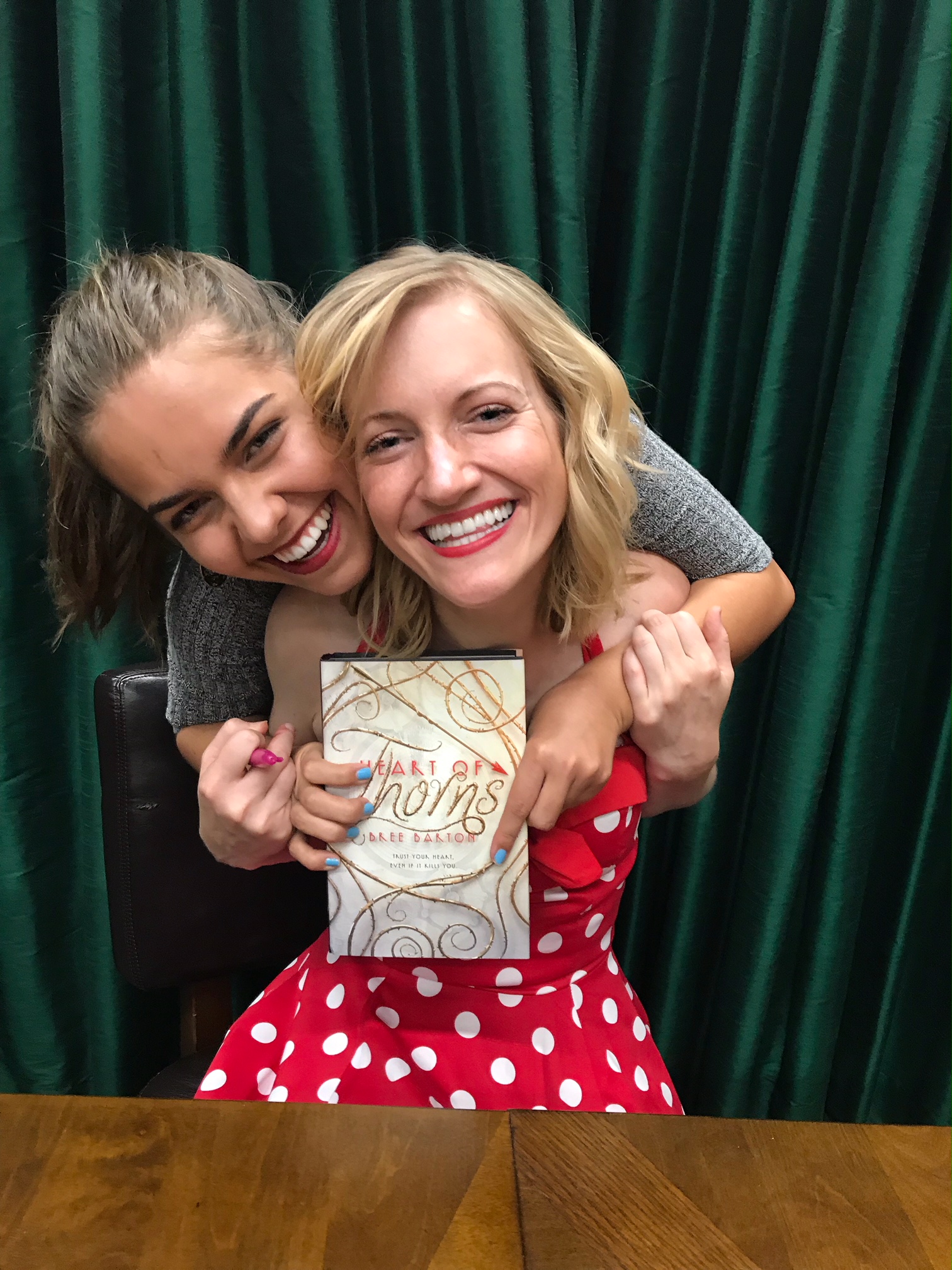
The book cover | Courtesy photo

Writing is a solitary endeavor and can be isolating, especially for a novelist who spends months on end working on one book. Six years ago Barton joined a group of writers who formed a community to share the same experience in this journey, to be each other’s support system.

We’re sitting in one corner of the YA section of Vroman’s and we’re surrounded by books whose authors Barton knows. She gets up to pick a few books off the shelf to show me, then not only gushes about how great the stories are but also marvels at the friendships she has with their writers.

Through this group she has met another author who also writes for television and then mentioned ‘Heart of Thorns’ to a producer. So there could be a TV show or series in Barton’s future. But for right now, she’s concentrating on the book launch.

“Social media has helped spread the word about ‘Heart of Thorns.’ Some readers have been sent advance copies and are tweeting about it,” Barton says. “Because of Twitter, someone from the United Kingdom who has a subscription book box business heard of it and ordered 5,000 books to include it in her mailing to subscribers. Maybe she would have heard of me at some point, which would have yielded the same result, just not as immediate. On the other hand, if I was hard to track down, she could have found another author.”

“Twitter has been really great but it’s also an incredible distraction –you’re reading what the other authors in the group are doing, where their publishers are sending them, and so forth, and you’re comparing yourself with them. So it’s challenging to give them love and support when you’re not enjoying all that at the time.

“Then you go on Facebook and all you read is how great everyone is doing. The danger is that you also want to show only ideal situations and make up success stories. But I’m really advocating for being honest so I started a monthly newsletter where I reveal secrets. For instance, it’s ‘I’m depressed,’ or ‘I’m terrified because I’m launching my first book and I don’t know how it will go.’

A full house at the Vroman’s launch | Courtesy photo

“I’m really proud of this newsletter because it will strip social media of some its negative side. It’s an outlet for people to just be themselves and not be thought of as lesser beings because they’re not perfect.”

“You also get so involved in social media that it takes time out of your work,” Barton adds. “The second book in the trilogy was due last month but because I’ve been tweeting instead of writing, I haven’t been able to finish it. So I needed the ‘down time.’ It’s scheduled for launch on July 31st next year and revolves around a minor character in the first one. It’s also darker and funnier. I’m so looking forward to completing it.”

While Barton may have written ‘Heart of Thorns’ with her family in mind, we all are the beneficiaries of her creative work. Mia Rose’s triumph is an inspiration, a call to arms, for womankind.

That Barton accomplishes that with a healthy dose of humor is testament to her ingenuity, maturity, and skill as a writer. She has come a long way since ‘The Snog-Pig-Mouse’ days but, happily for us, her eight-year-old self’s sense of fantasy and vivid imagination never left.