‘Art for the People: WPA-Era Paintings from the Dijkstra Collection’ on View at The Huntington

Also published on 27 November 2023 on Hey SoCal

Emmanuel Romano, “Construction Workers: Solidarity in Action,” 1940, oil on board, 48-by-36-by-1.75 inches. | Courtesy of the Collection of Sandra and Bram Dijkstra

From Dec. 2 through Mach 18, “Art for the People: WPA-Era Paintings from the Dijkstra Collection” will be on view in the Virginia Steele Scott Galleries of American Art at The Huntington. Featuring 19 remarkable works drawn from the collection of Sandra and Bram Dijkstra, the exhibition is a collaboration between the Crocker Art Museum in Sacramento, the Oceanside Museum of Art in Oceanside, and The Huntington Library, Art Museum, and Botanical Gardens in San Marino.

The exhibition highlights federal Works Progress Administration artists of the 1930s and early 1940s who were employed by the government to help stimulate the post-Depression economy. More than 10,000 artists participated, creating works that represented the nation and its people, and seeking to express fundamental human concerns, basic democratic principles and the plight of the dispossessed.

“Art for the People” and its companion catalog feature paintings from across the United States, with strong representation by California artists, artists of color, women artists, and Jewish artists who have generally been omitted from the WPA-era narrative. Some of the paintings are often described as American Expressionism or American Scene, depicting both urban and rural subjects and focusing on the lives of average Americans.
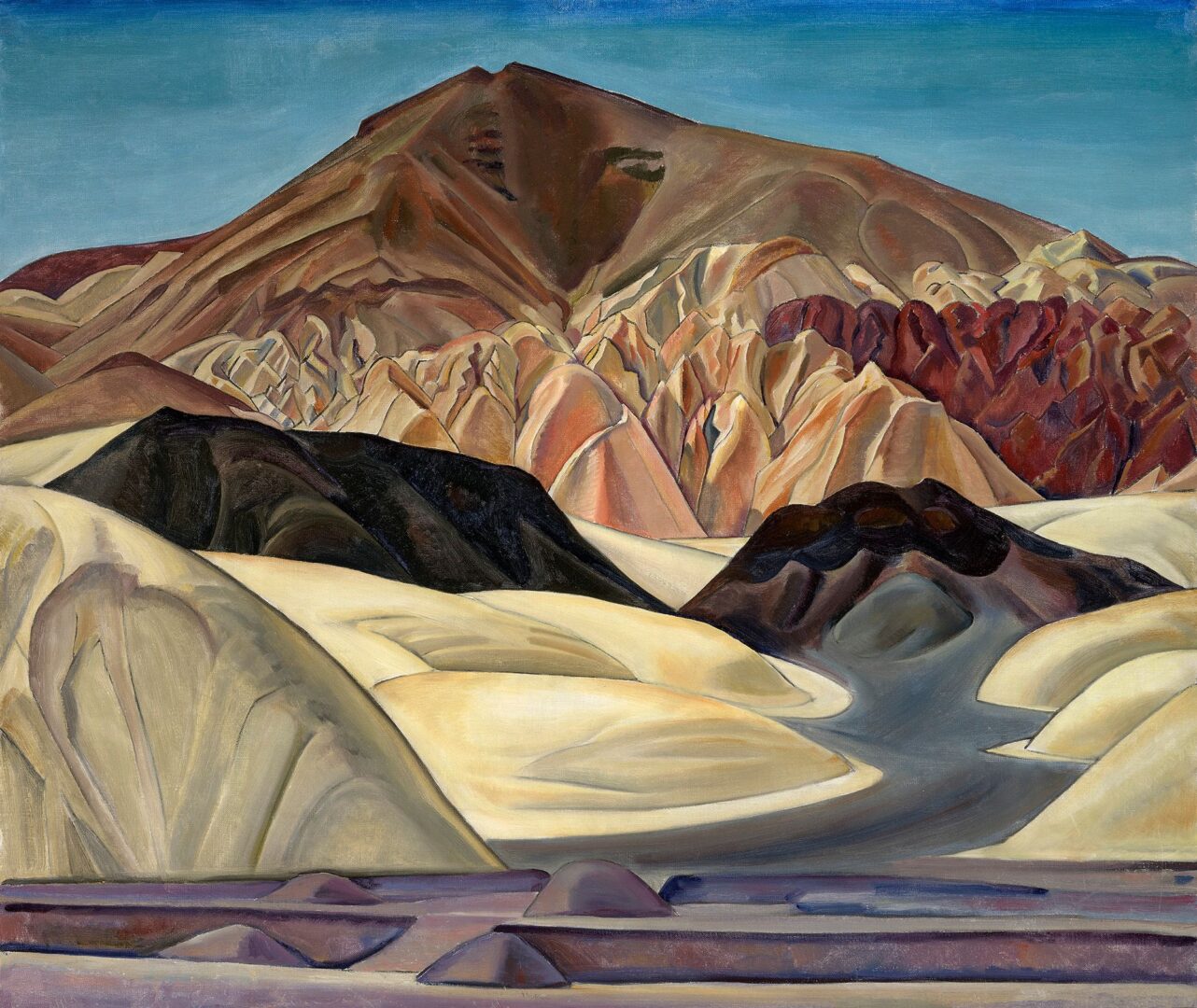
Helen Forbes, “A Vale in Death Valley,” 1939, oil on canvas, 34-by-40-by-1.75 inches. | Courtesy of the Collection of Sandra and Bram Dijkstra

The Huntington’s presentation of “Art for the People” is the third and last stop for the traveling exhibition, which originated at the Crocker Art Museum, where it ran from Jan. 29 to May 7, 2023. It was on view at the Oceanside Museum of Art from June 24 until Nov. 5. Shown differently at each venue, the installation at The Huntington showcases paintings by 18 artists, including paintings that were given to The Huntington by the Dijkstras, such as “Soldier,” a major work by African American artist Charles White. White, who became an important figure in what was known as the Chicago Black Renaissance, made the painting in 1944 after he had been drafted into the U.S. Army.

Dennis Carr, Virginia Steele Scott chief curator of American Art at The Huntington, speaks to me about the exhibition and how the collaboration with the two other museums came about.

“If memory serves, it started with a conversation between Scott Shields at the Crocker Museum and Sandy and Bram Dijsktra, who expressed their interest in presenting publicly this part of their collections,” Carr starts. “Once the Crocker Museum was enthusiastic about it, they reached out to other venues, including The Huntington. We were especially interested given the strength of our American paintings collection in the early 20th century — specifically around the WPA period — as well as the strength of The Huntington Library in collecting material like this. So we felt it was a natural fit for the institution.”

Carr explains, “Both the Oceanside Museum and the Crocker Museum displayed all 40 paintings. We didn’t have the space available at The Huntington but we chose what we felt were highlights of the collection and focusing on California artists, artists of color, and women artists.”
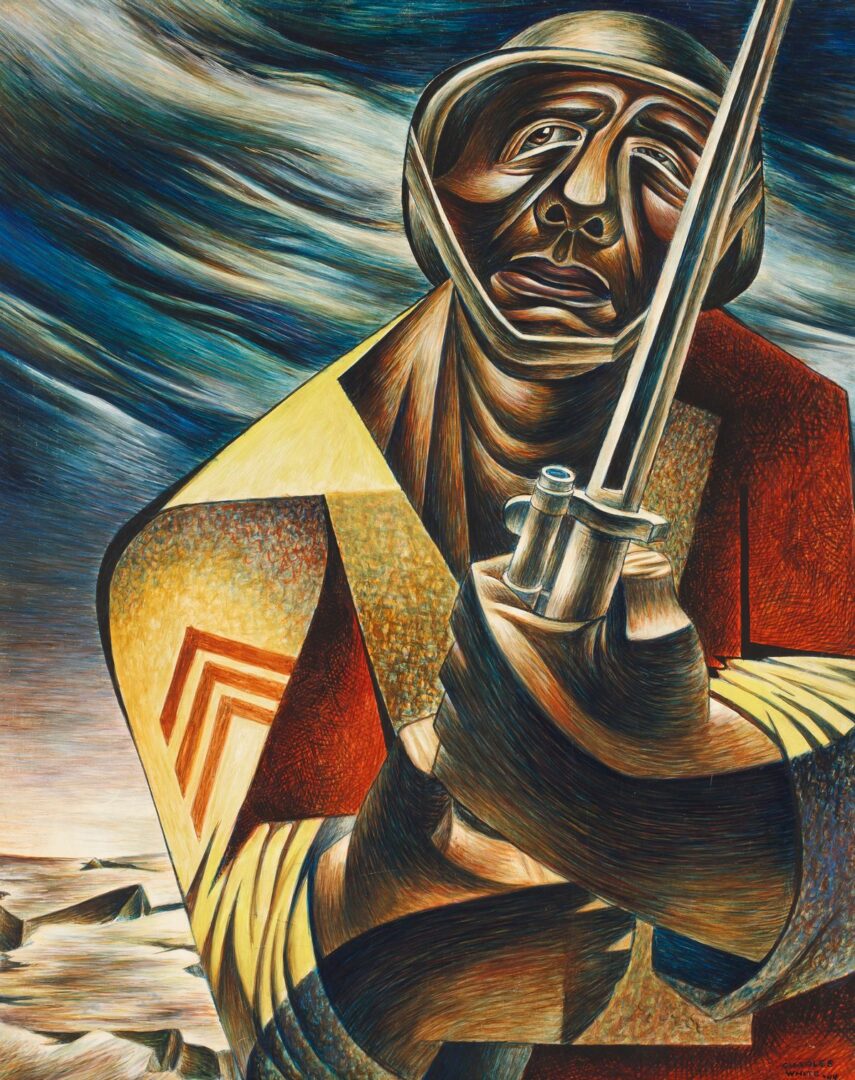
Charles White, “Soldier,” 1944, tempera on masonite, 30-by-25 inches. | Courtesy of The Huntington/Sandra and Bram Dijkstra/The Charles White Archives

“There’s one from The Huntington’s permanent collection which was donated by Bram and Sandy Dijkstra in 2013,” Carr continues, referring to ‘Soldier’ by White. “In my opinion, it’s one of the most striking paintings in the American Art collection. Charles White was a black artist who moved from the East Coast and eventually settled in Altadena and became a very important painter in Los Angeles in the mid-20th century. This is a vital early work by him and we’re so proud to have it in The Huntington’s permanent collection. But we thought it was important to include the Charles White painting in this show because it’s of the era and it’s by a very local artist. It’s been on view in our gallery ever since they donated it in 2013 and it’s nice to see it join other works from the Dijkstra’s private collection in the exhibition.”

Carr adds, “Miki Hayakawa was a Japanese-born artist who immigrated to California as a young girl and there’s a delightful painting by her called ‘The View from my Window’ from 1935. It shows the scene from her apartment in San Francisco looking at Coit Tower in the distance. There’s also a painting by Sueo Serisawa, another Japanese-born artist who lived in California during World War II but had to leave the Coast and eventually settled in Chicago and New York. The work that’s represented in the show is from 1945. There are works by other women artists like Helen Forbes who depicted a wonderful aspect of the California landscape.”
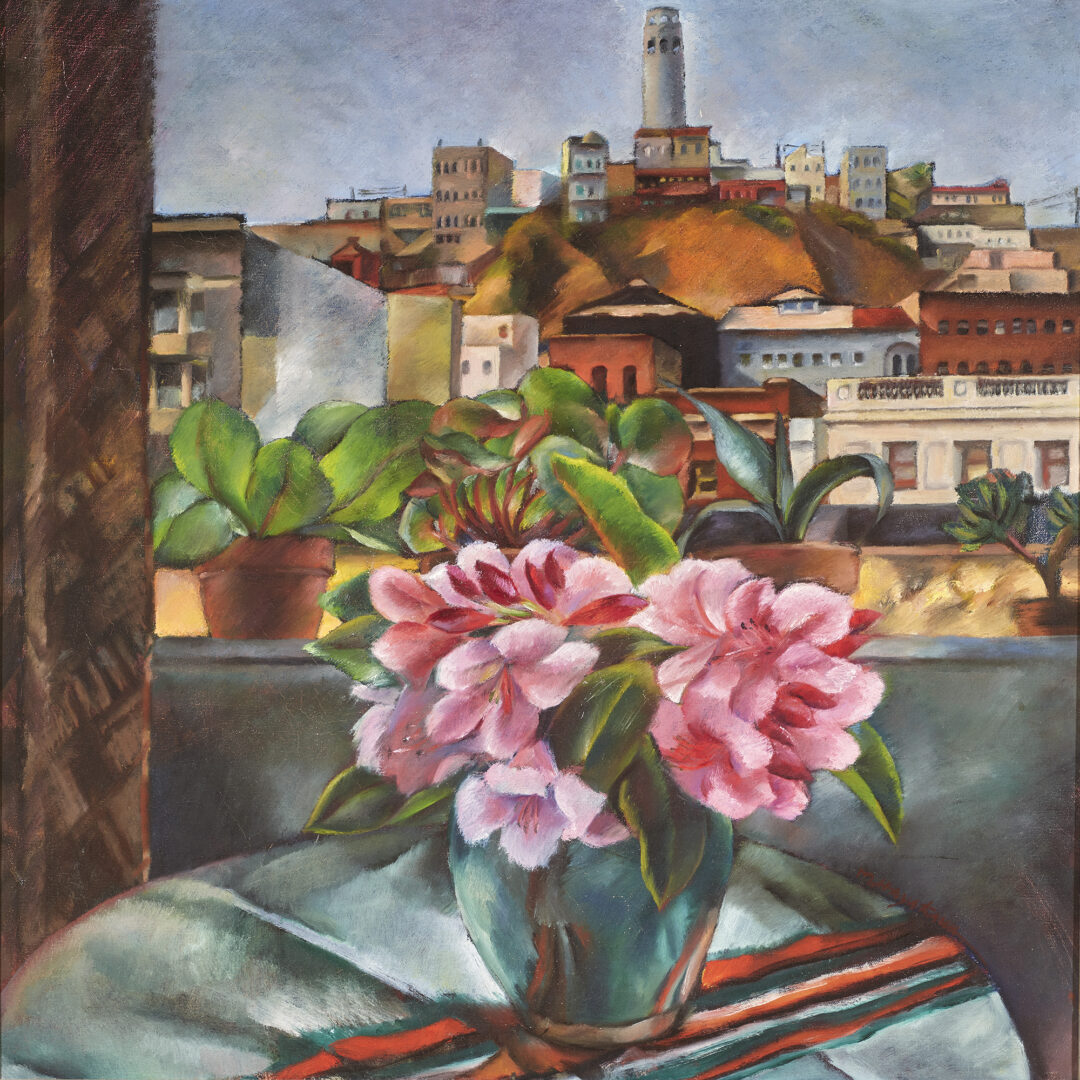
Miki Hayakawa, From My Window, 1935, oil on canvas, 28-by-28 inches. | Courtesy of the Collection of Sandra and Bram Dijkstra

“What the exhibition shows is not just an East Coast view of art in the period but across the United States and the development of different regional schools on the East Coast, in the Midwest and on the West Coast — where different artists were showing different aspects of American life. The focus of the Dijkstra collection on mostly underrepresented and under-recognized artists presents a much broader and more diverse vision of this era,” Carr emphasizes.

Interestingly, while “Art for the People” is on view, The Huntington will be opening a show in February about Sargent Claude Johnson, another WPA-era painter. 

“Sargent Claude Johnson was a black sculptor based in the Bay Area who was also supported by the WPA in the 1930s and early 1940s,” says Carr. “I believe he was one of only three black supervisors of the WPA nationwide. He was a very distinguished artist and was very proud of the fact that he was a supervisor in the WPA. He led large-scale projects for architectural installations in a number of venues in San Francisco and Berkeley. For Johnson, the program allowed him to work on a bigger scale with larger teams of artists. It definitely supported him as an artist during this difficult time period, and I think it allowed him to expand his creativity.”
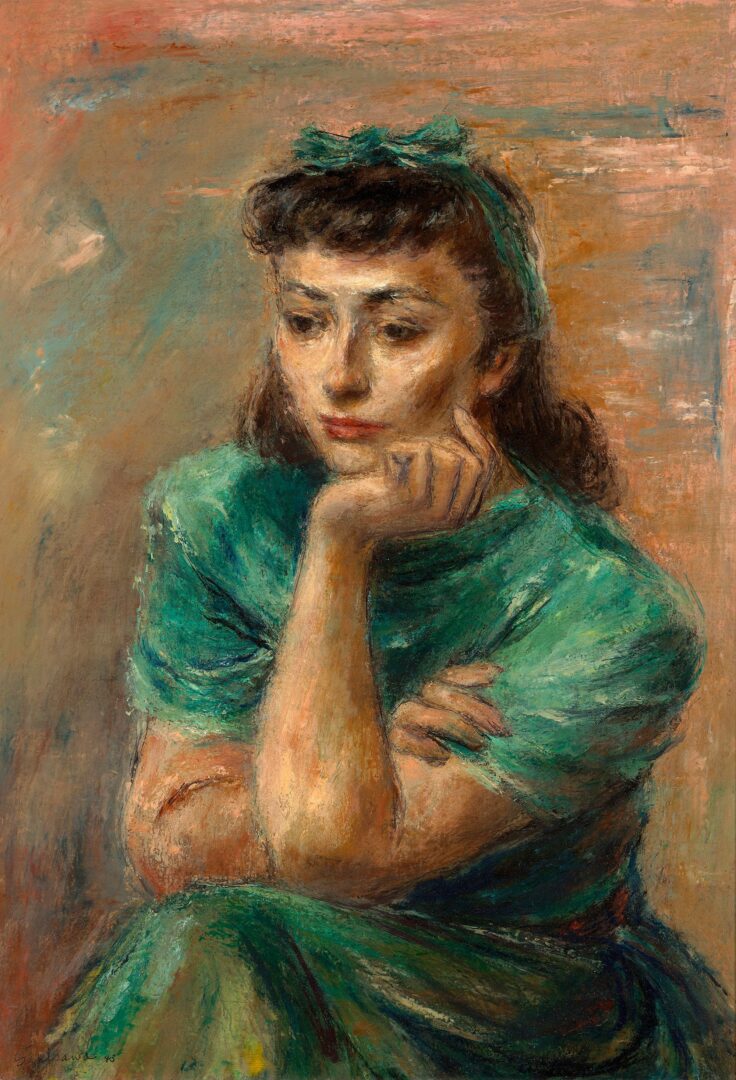
Sueo Serisawa, Portrait of My Daughter, 1945, oil on canvas, 20-by-14-by-1.75 inches. | Courtesy of the Collection of Sandra and Bram Dijkstra

I ask what the significance of WPA-era paintings in American art is, and Carr replies, “They present a very diverse look at the American scene in two extremely important decades in the development of American art — the 1930s and 1940s. It was a very challenging time for artists, financially and socially, but it was also a time of significant governmental support for the arts. It kept many of them alive and working, and it allowed many artists to work on a larger scale than they had ever before. Likewise, it was a time of great flourishing of the arts in the United States and the seed for that was planted not just by the government but by the people who participated in this program. That resulted in a number of murals created for post offices, government buildings, and public spaces like schools and classrooms. It also produced a larger network of artists who were also being supported by the program and I think that it helped in the advancement of communities of artists across the United States.”

As for the visitor takeaway, Carr opines, “It’s a profound and striking view of a bleak period in American history and it looks at ways that visual artists were responding to this moment across the United States. I think there will be many names of artists that our public is not familiar with but should be, because the works are stunning and powerful, and they speak with the clarity and an emotional quality that really capture the era. Sometimes art can feel esoteric to some audiences, but this art speaks with the simplicity and directness that people can relate to. I think that the show itself and the works within it will be a surprise for many.”

“Moreover, it’s interesting to look back in an era when there was the largest governmental program for the support of the arts ever created until then or since. We can reflect on what that meant in that moment and how the arts remained so relevant in American culture and what the government’s role could be or should be to support that,” Carr concludes.
‘Off Kilter: Power and Pathos’ Exhibit on View at USC Pacific Asia Museum

Originally published on 28 July 2022 on Hey SoCal

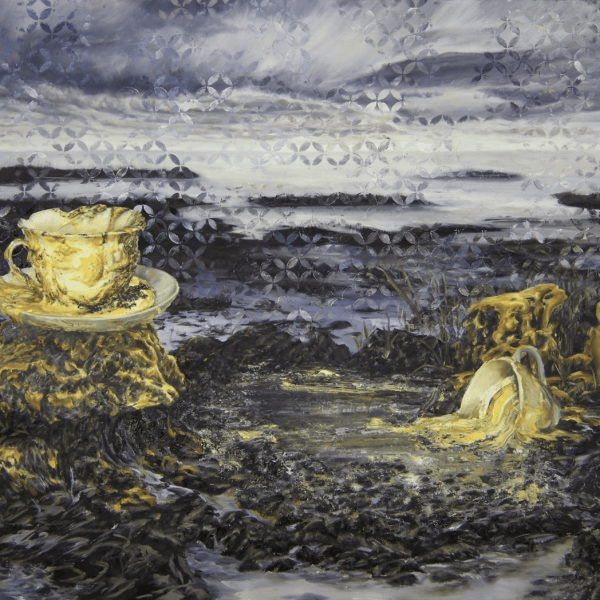
Sandra Low, A Very Civil Cheese, oil on canvas | Photo courtesy of the artist / USC Pacific Asia Museum

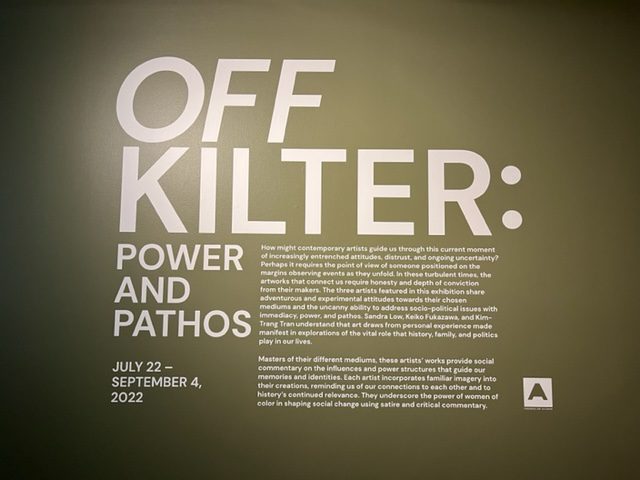
“Off Kilter: Power and Pathos,” on view from July 22 to Sept. 4 at the USC Pacific Asia Museum (USC PAM), features the works of Sandra Low, Keiko Fukazawa, and Kim-Trang Tran. The exhibition is the latest installation in the museum’s effort to provide a place where, through their work, diasporic Asian American artists can examine and address present-day concerns that affect our community.          

In her introduction to the exhibition, USC PAM Curator Rebecca Hall states, “How might contemporary artists guide us through this current moment of increasingly entrenched attitudes, distrust, and ongoing uncertainty? Perhaps it requires the point of view of someone positioned on the margins observing events as they unfold. In these turbulent times, the artworks that connect us require honesty and depth of conviction from their makers.

“The three artists featured in this exhibition share adventurous and experimental attitudes towards their chosen mediums and the uncanny ability to address socio-political issues with immediacy, power, and pathos. Sandra Low, Keiko Fukazawa, and T. Kim-Trang Tran understand that art draws from personal experience made manifest in explorations of the vital role that history, family, and politics play in our lives. 

‘Off Kilter: Power and Pathos’ installation entrance | Photo by May S. Ruiz / Hey SoCal

“Masters of their different mediums, these artists’ work provides social commentary on the influences and power structures that guide our memories and identities. Each artist incorporates familiar imagery into their creations, reminding viewers of our connections to each other and to history’s continued relevance. Using satire and critical commentary, they underscore the power of women of color in shaping social change.”

Hall explains during a press preview of the exhibition, “Those of you who are familiar with what I’ve been doing here as curator know that my ongoing work with contemporary Asian diasporic artists stems from my desire to focus on a very specific part in Asia, to bring it into L.A. and in the current moment – which has changed in the last couple of years – and to engage with the community (read about two previous exhibitions ‘We Are Here: Contemporary Art and Asian Voices in Los Angeles’ and ‘Intervention: Fresh Perspectives After 50 Years’). This started with an exhibition called ‘We Are Here’ which opened to great fanfare on March 13, 2020 only to be shut down because of the pandemic. We reopened it last year, aptly, during AAPI Heritage month.

“That exhibition highlighted seven Asian American female artists who lived and worked in Los Angeles. It was at that time that I met both Sandra and Kim-Trang but I wasn’t able to include their work on that show because of our limited space. I was so impressed with both that I wanted to make sure I brought them into the galleries. In fact, Kim-Trang was supposed to exhibit in 2020 the piece that we now have in our galleries, so I’m thrilled to find a way to make that happen. It was a bit later that I met Keiko after she displayed a piece in our sister museum The Fisher Museum of Art.”

“As a curator working with contemporary artists, my interest is ‘How are we moving in this worldview now and how are they capturing this moment that we’re in,” Hall continues. “And I think these three artists are doing it differently – using assorted media and with various perspectives – and you’ll see that as you walk through their work.”

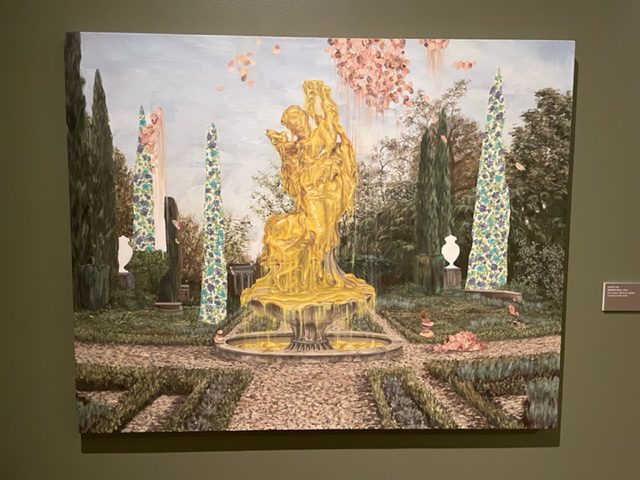
For the exhibition, Hall created wall labels that give background information on the artists and their works on display. The large canvases from Sandra Low’s ‘Cheesy Paintings’ series focus on the representation of kitschy subjects set within romantic landscapes. The central objects nearly disappear in a layer of oozing, dripping American cheese. With great attention to detail and a painterly eye, Low creates these paintings to call attention to the contrasting components of American life. On each canvas, viewers can relate to the seduction and illusion of prosperity; the desire to consume and the dangers of gluttony; and the way something familiar can seem completely novel when presented in an unexpected way.

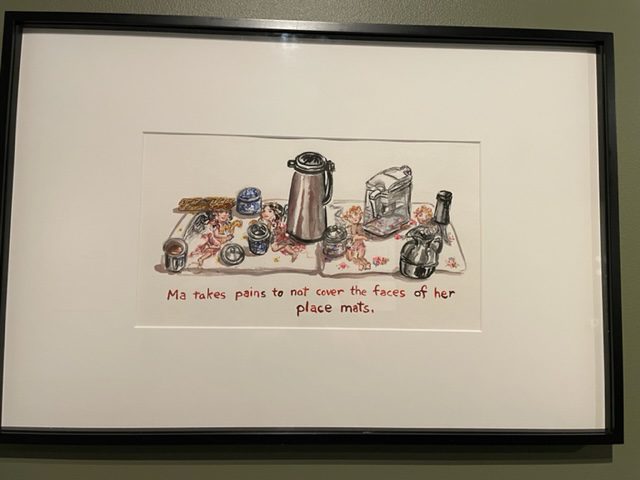
Low’s unique ability to merge the familiar with the unfamiliar while finding profound humor and warmth shines throughout her work. Her ‘Ma Stories’ chronicle cultural and generational differences through the illustration of her mother’s unique perspective of her daily world. Her ‘Pandemic Prints’ draw from a similarly uncanny ability to balance the personal with the poignant. Through all of these artworks, she reminds us that we can find humor and the absurd in even the darkest of moments, cutting through the drama of life and finding a sense of balance.

Sandra Low, Ma Stories | Photo by Brianna Chu / Hey SoCal

Hall reveals as we approach the artist’s displays, “I find Sandra’s work very compelling, but I also find it the most difficult to talk about because it’s so much about being a diasporic Chinese American woman. And I get it, but it’s not my place to talk about that and it’s not my voice that I should be using. But I can take on the role of sharing her work with everyone – and PAM has the space for that.  

“In my mind, Sandra is a stand-up comedian in a parallel world because of her way of using humor to talk about things. Two of her series have been ongoing for several years – ‘Ma Stories’ and ‘Cheesy Paintings’ – while ‘Pandemic Prints’ center on a specific period. Her ‘Ma Stories’ came from the disconnect she felt as an Asian American growing up in the San Gabriel Valley. She still lives with her mother, who has dementia, and that’s how she copes with it; she processes things through drawing, painting, and humor. This series records her day-to-day interaction with her mom. In fact, these pieces aren’t so much about art than they are about her relationship with her mother.”    

Indeed, when you look at the drawings and read the verbiage, you can imagine the artist reacting to what her mother did or said. The series – however absurd and comical the illustrations and captions are – is a child’s homage to a beloved mother. With the additional layer of her mother’s dementia, you sense that Low wants to preserve all the memories which her parent has lost. Each display is at once hilarious and heartbreaking.  

Sandra Low, Cheesy Paintings | Photo by Brianna Chu / Hey SoCal

About the next set of Low’s works, Hall says, “‘Cheesy Paintings’ pulls from the same experience  we see in her ‘Ma Stories.’ Cheese takes on different meanings to Sandra and she plays with the contrast of cheese dripping on the landscape.”

Anyone who has emigrated from Southeast Asia will tell you that several decades ago, dairy products like milk, butter, and cheese – daily staples in the U.S. and easily obtainable here – were rare commodities except for a privileged few. What a treat it must have been for Low’s mother who, until then perhaps, had only eaten Cheez Whiz and Velveeta – processed food which passed for cheese – to see so many varieties in the grocery store. Her mother’s reaction to the abundance of cheese made a huge impression and she memorialized that in a fantastically funny way.                                             

Sandra Low, Pandemic Prints | Photo by Brianna Chu / Hey SoCal

In ‘Pandemic Prints,’ Low uses household items. Hall relates, “We were all housebound during the pandemic so she used whatever objects were available, like doilies, to create these images and process what was going on; each print takes you to that moment. This one stands out for me – September 21, 2020: over 200,000 deaths from Covid-19 in the U.S., over 950,000 worldwide. She recorded what happened that day; they are universal and personal at the same time.”

The wall label for Keiko Fukazawa’s displays reads: Keiko Fukazawa believes that art “should define its era, reflect what we are living through, and challenge us to think and act with more awareness as we each shape the current and future world we live in.” Born and raised in Japan, Fukazawa has lived in the U.S. for nearly forty years. Her love of clay is evident in all of the work she creates. Fukazawa sees clay as a forceful medium that allows for boundary-breaking detail and artistry. She completed a multi-year artist residency in Jingdezhen, China from 2013 until 2015, an experience that further contextualized her longstanding interest in porcelain as a medium tied to Chinese culture and history. Her time in China also provided further insight into the unique connections between consumerism and control as they manifest in contemporary Chinese society, a theme seen in several of the works exhibited here.

As an artist raised in Japan now living in Southern California, Fukazawa has honed her perspective to question the role of perception and power in the world around us. By creating familiar objects in the exquisite and historically significant medium of porcelain, Fukazawa asks viewers to question the very systems in which we participate, pulling us into the detailed surfaces of her work and encouraging dialogue about our need to find common ground.

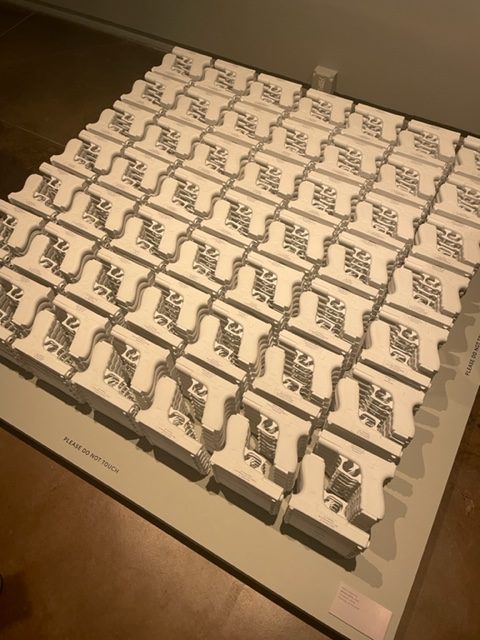
Keiko Fukazawa, Peacemaker Series | Photo by Brianna Chu / Hey SoCal

Hall describes as we reach the artist’s gallery, “This is Keiko’s ‘Peacemaker’ series. In ‘Seven Days,’ she selected seven days that had gun deaths – which includes suicide – and stacked guns which have the name and age of the person who died and where it occurred. Because I’m a curator, I think context is everything. And I think this is an important series in the way she visualizes gun violence so that there’s no way we can remain neutral on this issue. It’s new work for her and I’m excited that we could show it.”

The other part of Fukazawa’s ‘Peacemaker’ series shows the guns used in mass shootings with the state flower wrapped around the gun. The flower is a symbol of beauty, hope, and life while the gun represents violence, death, and sorrow.

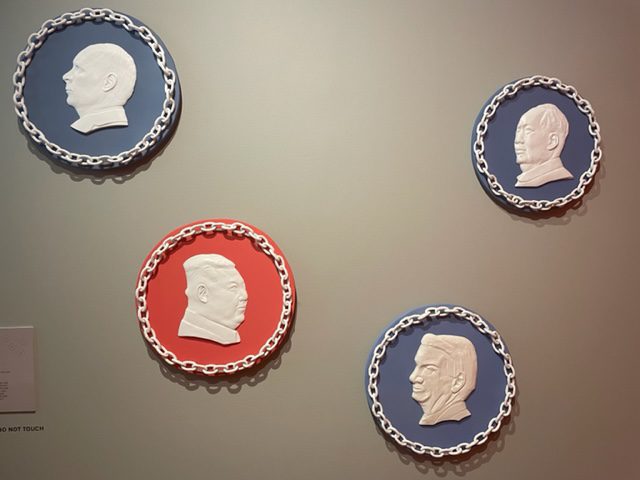
Keiko Fukazawa, Circle of Friends | Photo by Brianna Chu / Hey SoCal

One display area is devoted to Fukazawa’s work with clay and ceramics, and her time in China. When one thinks of China, the image of Mao Zedong inevitably comes to mind and so she produced a piece called ‘Hello, Mao.’ She also made ‘Perception Plates’ and five of these pieces are in the exhibition. Another set of artworks is called ‘Circle of Friends’ – porcelain underglaze with profile images of reviled world leaders past and present – that Hall says was shown at Fisher Museum last fall, to which Fukazawa has since added The Philippines’s Rodrigo Duterte and Brazil’s Jair Bolsonaro.

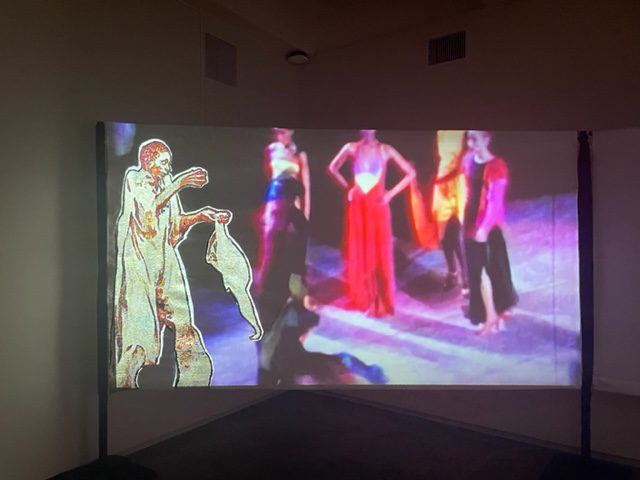
According to the display label for the third artist in this exhibition, Kim-Trang Tran creates multimedia artworks that question the way we perceive the world through our unique experiences and the ongoing influence of history and conflict on our lives. Tran’s experiences as a Vietnamese War refugee who immigrated to the United States at age 9 have been central to her body of work. ‘Movements: Battles and Solidarity’ is a large-scale three-channel video installation projected on handmade screens bearing images that explore the connections between women of color and their shared socio-political and physical “movements.” This installation links fashion, race, and class through intersecting images highlighting women as they challenge power structures and create autonomy.

The fashion industry’s roots in hegemony and both capitalist and cultural exploitation are like tendrils reaching through history and across the globe. Tran’s research into the subject of the global trade of cotton and its connections to colonization and war led her to focus on significant events between 1972–74 when the Civil Rights movement collided with high fashion, labor unrest in the garment industry, and the Vietnam War. The work explores shared political and physical “movements” made manifest in the catwalk, the run, and the march. Tran’s installation ‘Movements: Battles and Solidarity’ lays bare the interrelationship between women, diversity, production, and power and the continuing urgency of these subjects today.

Kim-Trang Tran, Movements: Battles and Solidarity | Photo by Brianna Chu / Hey SoCal

Hall informs that Tran’s inspiration for this was a book she read about a fashion show in Versailles in 1972 when the American prêt-à-porter competed against the French haute couture collection, “The Americans ran away with it because they had multi-ethnic models, disco music, and they were having great fun. This multi-media display captures that period from 1972 to 1974 – what was going on at that time and what fashion meant – but she makes it very relevant. And so she thought about the protest movement in textile factories in three different locations in the U.S. and all involved women.

“I feel it’s so empowering and so poignant in the way she portrayed labor, women, representation, and power. There are several layers to this artwork: the image on the left on the screen is embroidered and was made in Vietnam; then there’s a visual on how people treat women’s bodies. I also studied textiles and when I saw this for the first time, I had goosebumps on my arms and tears streaming down my face. I knew we had to have this.”

How fortuitous it is that Hall has made it her creed to advance the accomplishments of diasporic Asian Americans – ensuring that they are seen and heard. At a time when the population in Pasadena and Los Angeles is becoming ever more diverse, USC Pacific Asia Museum is leading the charge to connect us all.