Pasadena Artist Shares her Journey through her Art

Also published on 20 October 2023 on Hey SoCal
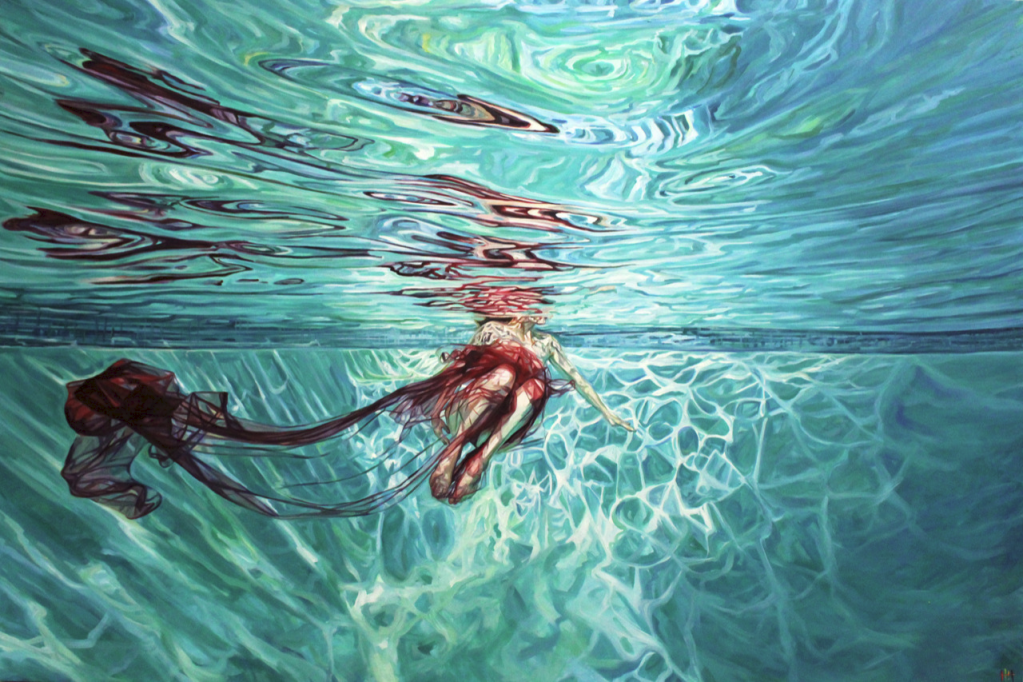
“Plumb Line” 48 x 72 oil on panel | Photo courtesy of Heather Horton

Canadian-born painter Heather Horton has been an artist all her life; she received her Master’s degree in Illustration from Sheridan College. But it was only when she joined Abbozzo Gallery in 2004 that she began exhibiting her works regularly. She has held solo and group shows over the years and her recent solo exhibition “Love Story” was held in Toronto, Ontario in September 2020.

In 2019, Horton met her future husband Joss Whedon in Los Angeles. When they decided to leave Ontario for warmer climes, they relocated to the United States in 2021. Then the couple moved to California on L.A.’s west side – Santa Monica – before eventually settling down in Pasadena in May last year. She discloses, “We had heard great things about the city, and we have been so delighted with our decision to move here. Lots of greenery, interesting architecture, an active art scene, and we appreciate that it has a serenity to it that we find inspiring. We look forward to exploring the city more as time goes by!”
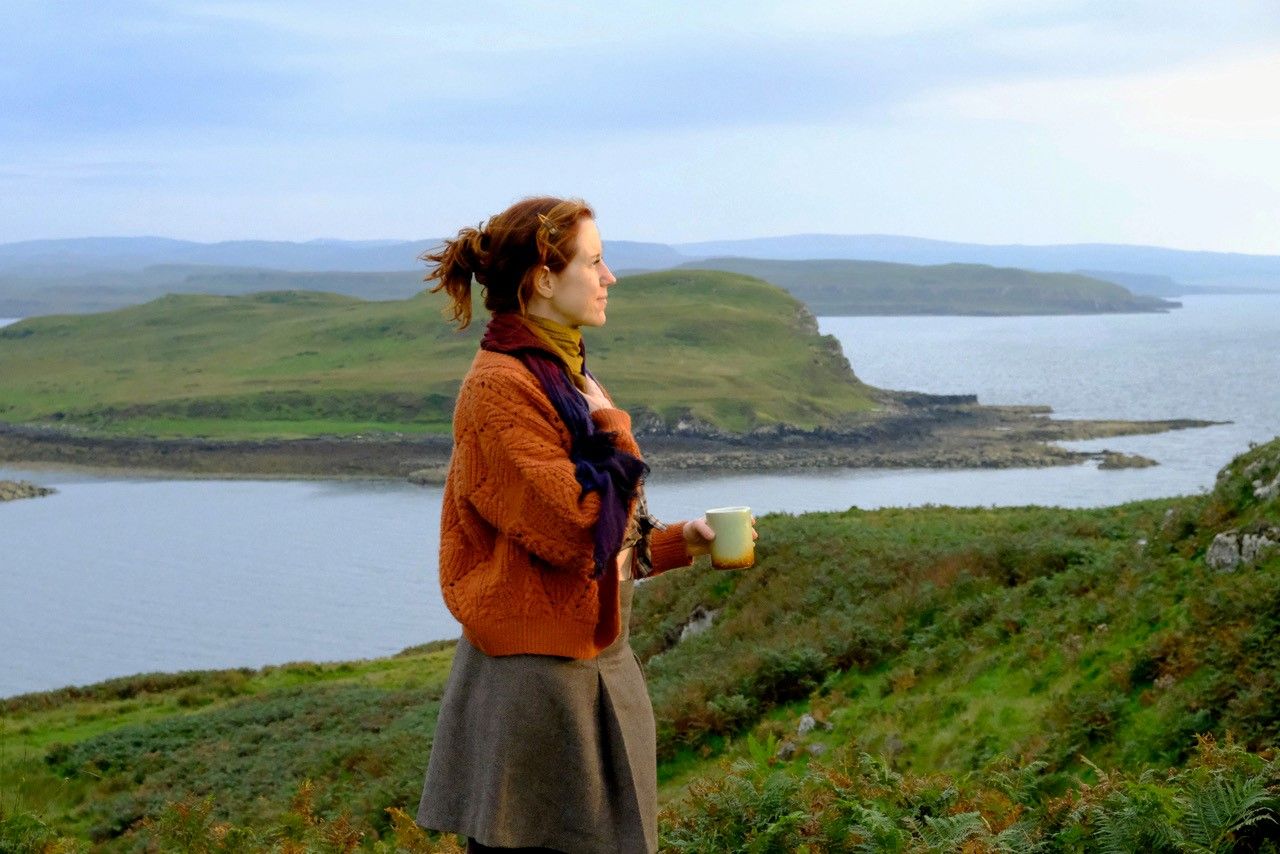
Heather Horton | Courtesy Photo

And it’s here that Horton continues to practice her craft – taking photos of friends underwater in their pool and using the pictures as the basis for the oil paintings in this exhibition. Her 16th solo show “Immersion,” will be on display at Whimsy Pasadena in Old Town through Sunday, October 22. She will be painting live onsite at the gallery on Thursday, Friday and Saturday (October 19, 20, and 21) from 11am to 5pm to let the public in on her creative process and talk to visitors about her journey.

“Immersion” is an autobiographical journey of resilience. It investigates the internal complexities within simple moments: exploring trauma, womanhood, deep pain, and deeper gratitude. The exhibition introduces over 30 new oil paintings, which breathe new life into Horton’s renowned water series. It transports us beneath the surface into a twilight fantasia of luminous tranquility. Within these artworks, fabric, flesh, and liquid merge and nearly dissolve into one another, all bathed in the spellbinding interplay of wild and languid light from above.
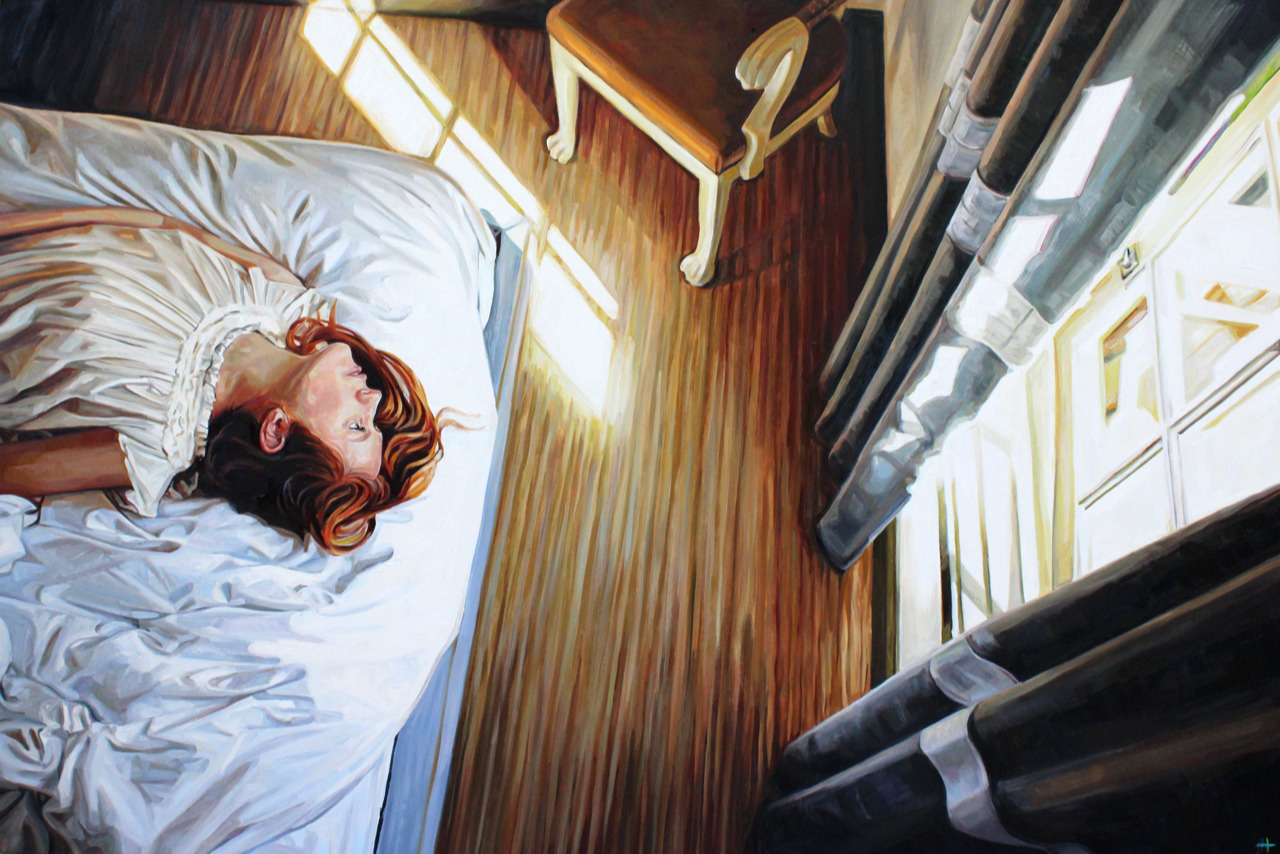
“Madrona” 24 x 36 oil on panel | Photo courtesy of Heather Horton

Additionally, “Immersion” chronicles the evolution of Heather’s relationship with her own body, a journey that has traversed years of battling anorexia and depression, ultimately culminating in newfound confidence and grace, despite the challenges posed by major spinal surgery last spring.

Having endured a tumultuous childhood, Horton has long used art as a way of finding order in a life marked by subtle chaos. Her troubled past instilled in her a strong sense of self-reliance and a heightened awareness of emotions and movement. Her portraits and figures reflect a sense of fragility, often showing subjects who avert their gaze, are depicted from behind, or appear with their heads just above a surface we can’t quite grasp.

Horton’s art captures the world with a sense of wonder that avoids becoming overly sentimental or prescriptive. Instead, she encourages viewers to embark on their own journeys and find their own interpretations.
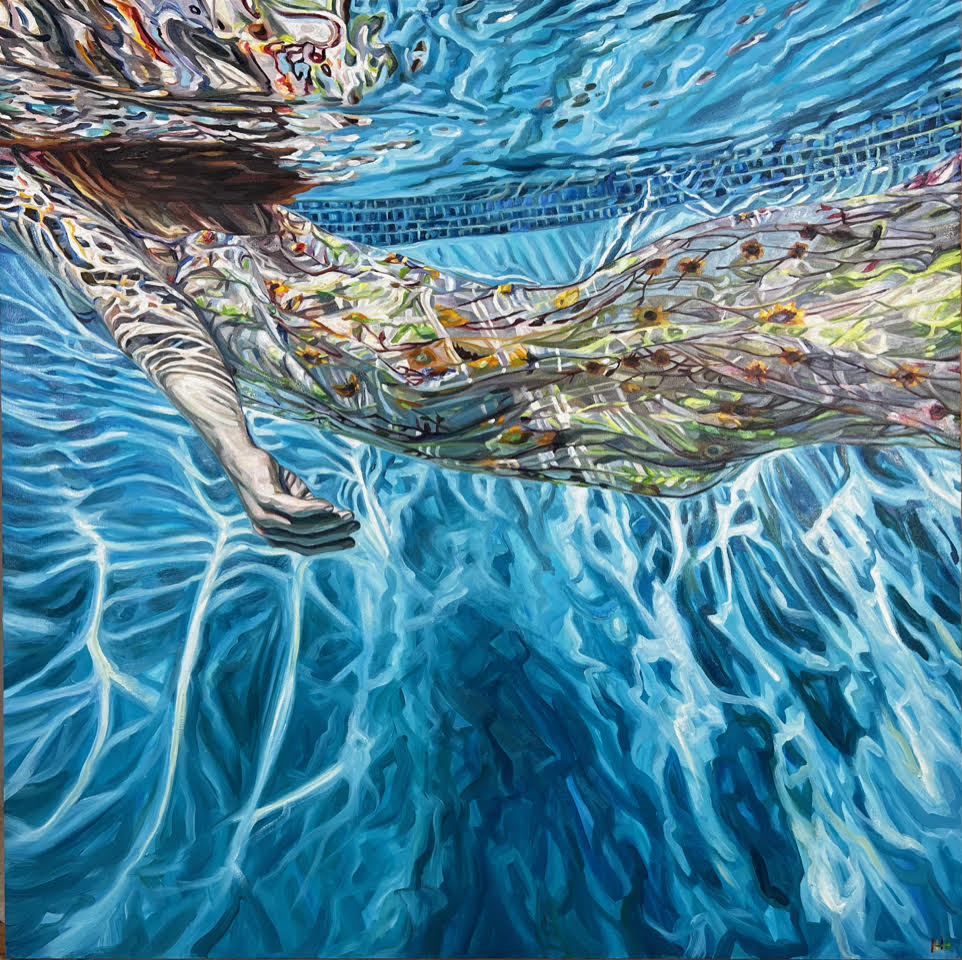
“The Chameleon” 30 x 30 oil on panel | Photo courtesy of Heather Horton

“I’m hoping that the viewers might be moved by the work, on a small level, or from a deeper place, as there are themes of floating, immersion but also surgery, health challenges, transitions, and introspection within,” states Horton. “If viewers see the work and are glad they did, or it moves them to reach out to someone they love and tell them so, or write a letter to a friend or someone in need, that would be amazing to me. Just showing the work to friends and people in the community and beyond brings a great feeling of peace and great emotion. After so much work, and surgery, and challenges, but also excitement, I’m excited to enjoy a bit of repose, reconnect and take a few deep breaths before submerging again into new worlds.”

After the exhibition ends, a portfolio of “Immersion” is set to be immortalized on the moon as a part of Samuel Peralta’s visionary Lunar Codex time capsule project. Horton’s artistic expressions reflect the experiences of countless women today, and her legacy is destined to span generations in these time capsules immortalized on the moon. It is such a fitting outcome for a painter whose works should live on beyond earth for eons to come.
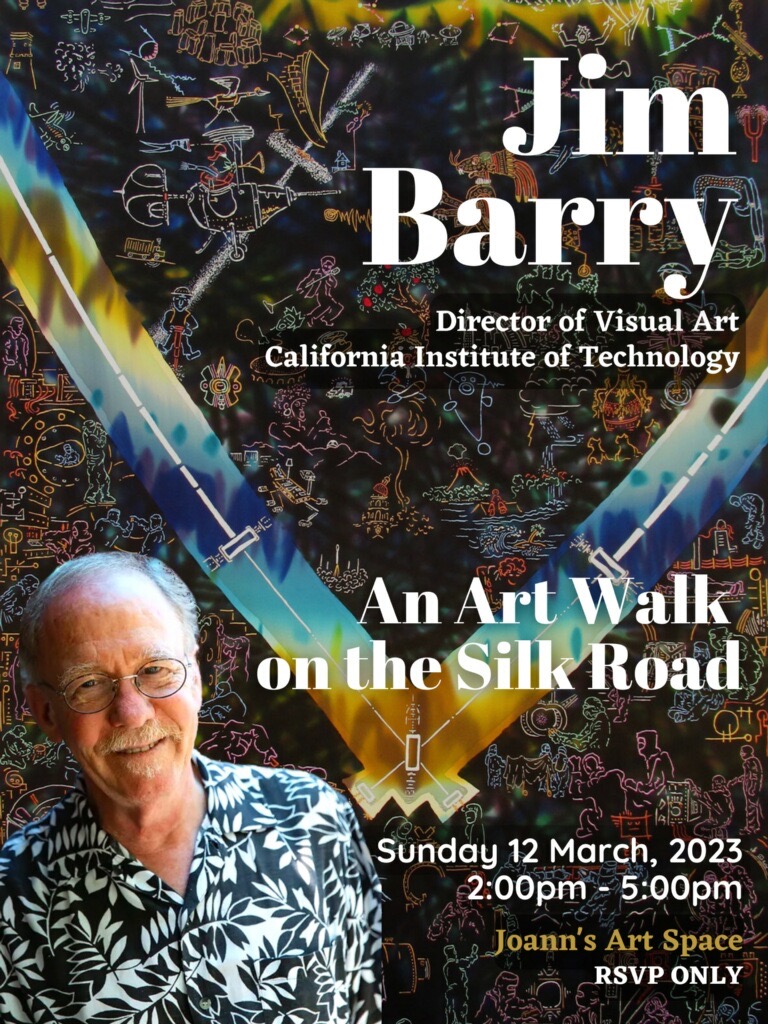
Join Pasadena Artist Jim Barry on ‘An Art Walk on the Silk Road’

Originally published on 17 March 2023 on Hey SoCal

On March 12, Joann’s Art Space at 1745 Orlando Rd. in San Marino opened a solo exhibition featuring the artwork of Jim Barry, the Visual Art Director at California Institute of Technology (Caltech). His pieces are available for purchase and can be viewed by appointment only until April 11, 2023, by calling (626) 999-1777.

The invitation to Barry’s solo exhibition | Photo courtesy of Joann’s Art Space

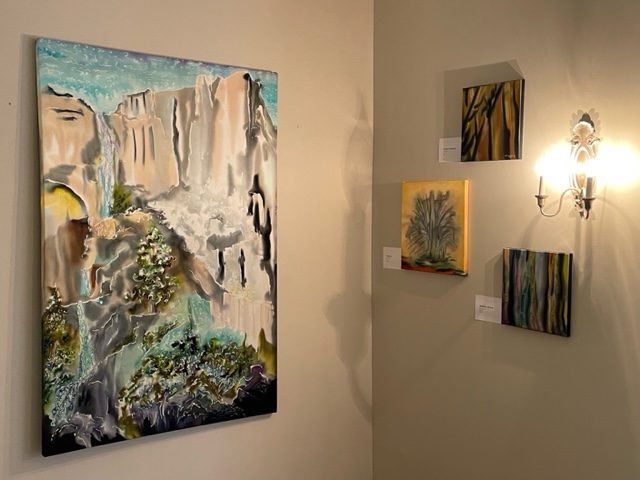
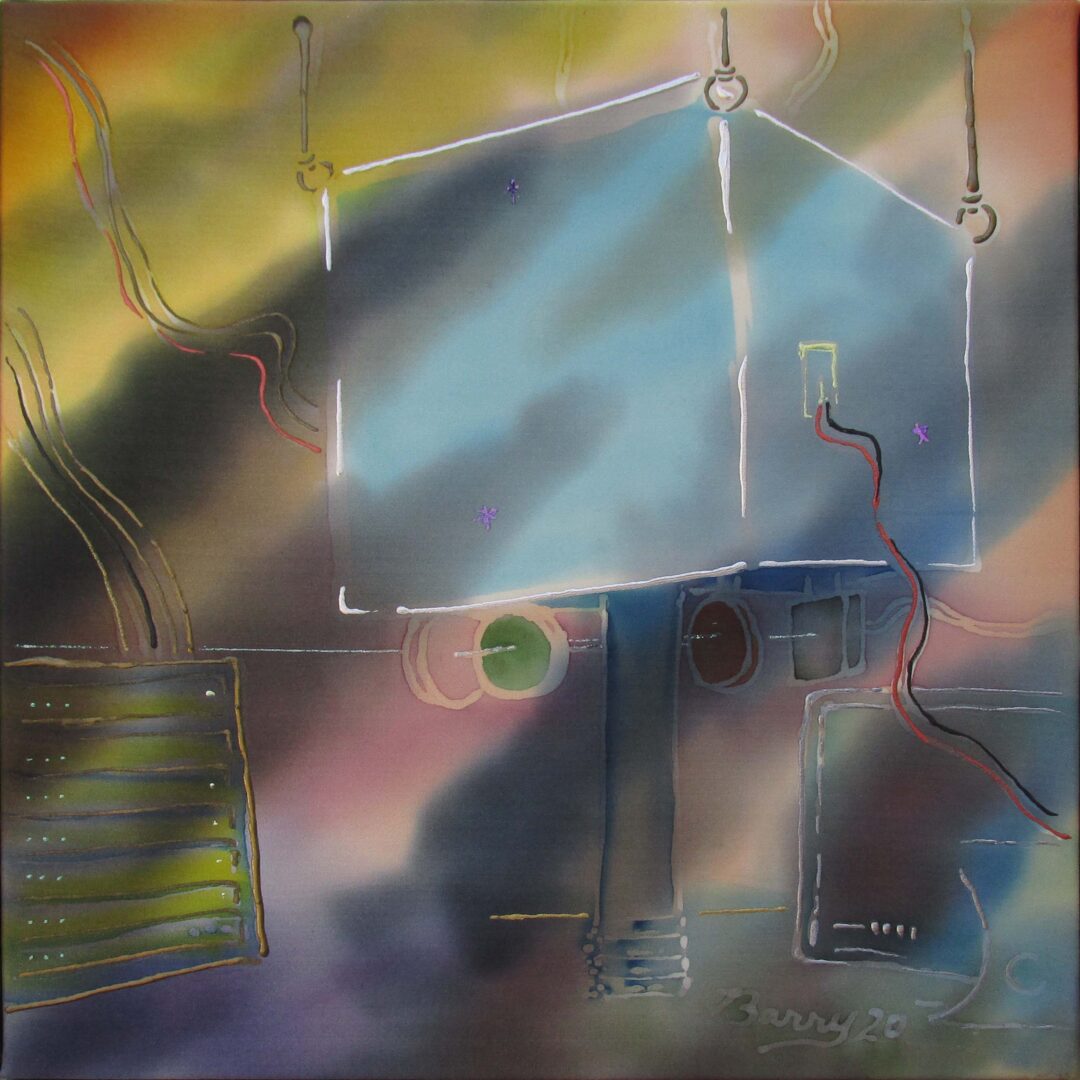
Called “An Art Walk on the Silk Road,” the exhibition features 79 silk paintings divided by themes: Science, Dance, Landscape, and Africa. In the landscapes are a number of pieces of Chinese scholar, viewing stones, and bonsai or pénjǐng.

In Science, he shows “Scientist’s Dream” a desktop room temperature detector for dark matter. It uses an interferometer for calibration and gas inside a chamber. Detection of dark matter is evident by the purple sparks in the chamber. This dream is just that, though — far beyond today’s technology.

‘Scientist’s Dream’ | Photo by Sean Yang / Joann’s Art Space

The poster features the LIGO project for detecting black hole collisions, a depiction of project teams, noise the machine needs to filter, and the global human history of observatories with examples from China, Korea, England, Egypt, Peru, etc.

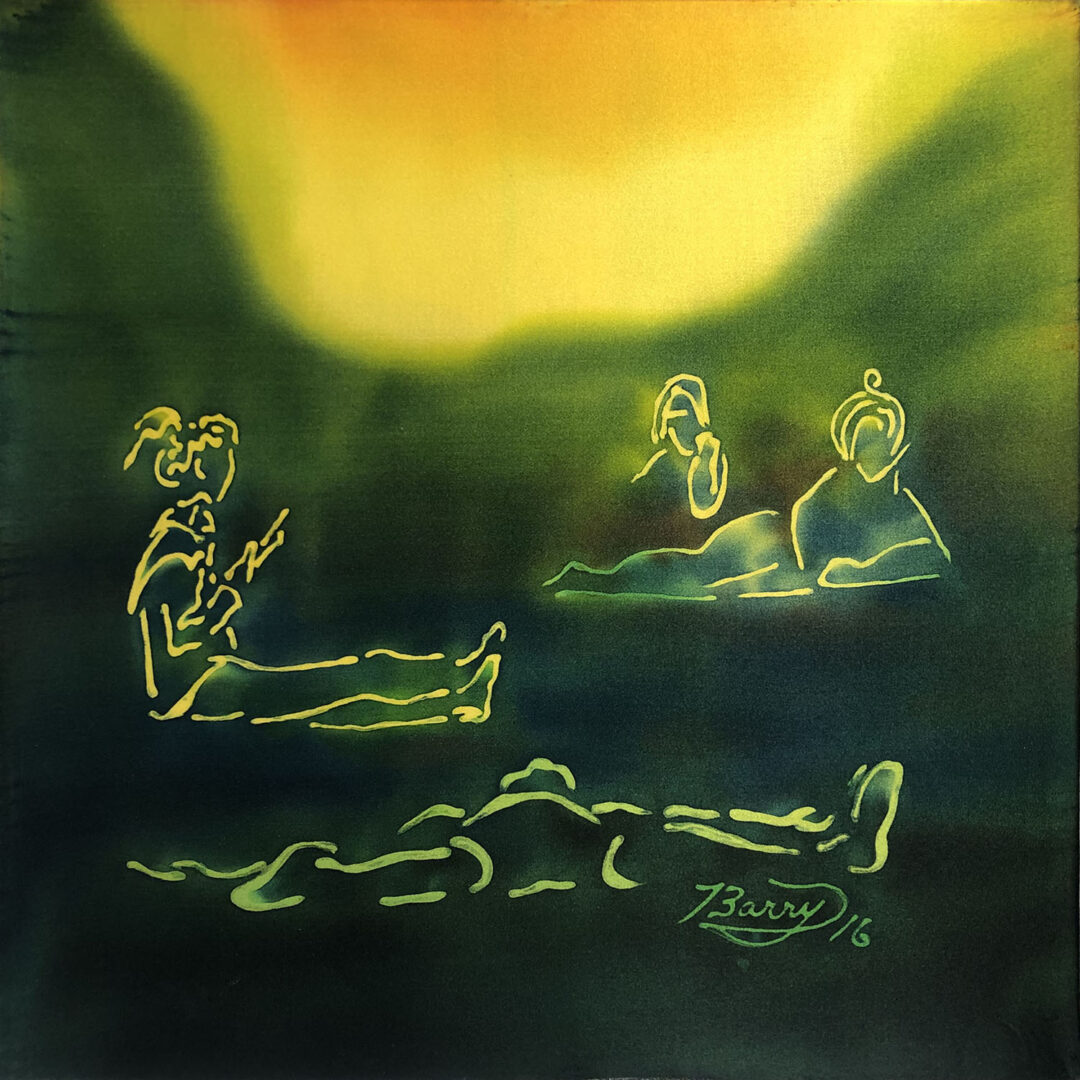
The dance pictures feature hip-hop dancers Barry sketched while they developed their routines.

A long time Caltech academic, Barry has been teaching classes at Caltech since 1987 – the year students changed the Hollywood sign to read ‘Caltech’ for a day. His courses include Silk Painting, some Silkscreen, and Drawing and Painting with Figure Drawing. He has also been instrumental in creating new virtual reality tools and interactive spaces with Santiago Lombeyda at the Center for Data-Driven Discovery (CDDD).

Because his grandmother was a painter, visual art had been his passion at an early age. He didn’t think of it seriously as a future career, however, and instead, he pursued a Bachelor’s degree that related to his interest in African life and culture. He received BA degrees in Cultural Anthropology, focusing on Africa and Black Studies with an emphasis on Race Relations, from the University of California Santa Barbara.

‘Resting Dancers’ | Photo by Sean Yang / Joann’s Art Space

Graciously agreeing to be interviewed by email and phone, Barry answers questions about how painting and teaching became his twin vocations. He relates, “I decided to go to West Africa after college. I was already interested in African life and culture; being able to explore many areas deepened my knowledge and led to more specific destinations such as Oualata, Mauritania, and the Dogon Country in Mali. I applied to graduate school to study Sociology at the University of Ibadan and I was accepted two years later, but had problems getting a visa.”

Barry continues, “So I went to Senegal. I arrived during an important ‘flowering’ of modern Senegalese painting driven in part by the President, Leopold Senghor, who was a well-known writer and poet. I met Senegalese artists and found my chosen medium, batik on cotton, was sought after but not well established. I shared a studio with the artist/painter, Aissa Dione — who’s now a textile artist — on the island of Goréé. My art started to sell and I traveled out to other countries putting up exhibits, leaving them to travel to small villages and interesting historic cultural centers often in remote areas.”

“That was what I’ve always wanted to do and I abandoned my plan to attend graduate school,” Barry discloses. “I remained in Senegal for four months, then spent two months in Gambia working in a batik cooperative, Gena Bess. I returned to Dakar for the larger Senegalese art community and market. After some time I began further travels to Mauritania and Mali and did shows with the cooperation of French and American cultural centers. The work I showed included Batik, Etchings, Watercolors, and pencil sketches.”

“Due to my interest in Anthropology, I learned greetings in the different languages I encountered. It was easy to make friends while I was traveling alone on public transportation. People far into the countryside respected the occupation of an artist and it was not unusual to get good advice from people who might have never entered a museum,” says Barry.

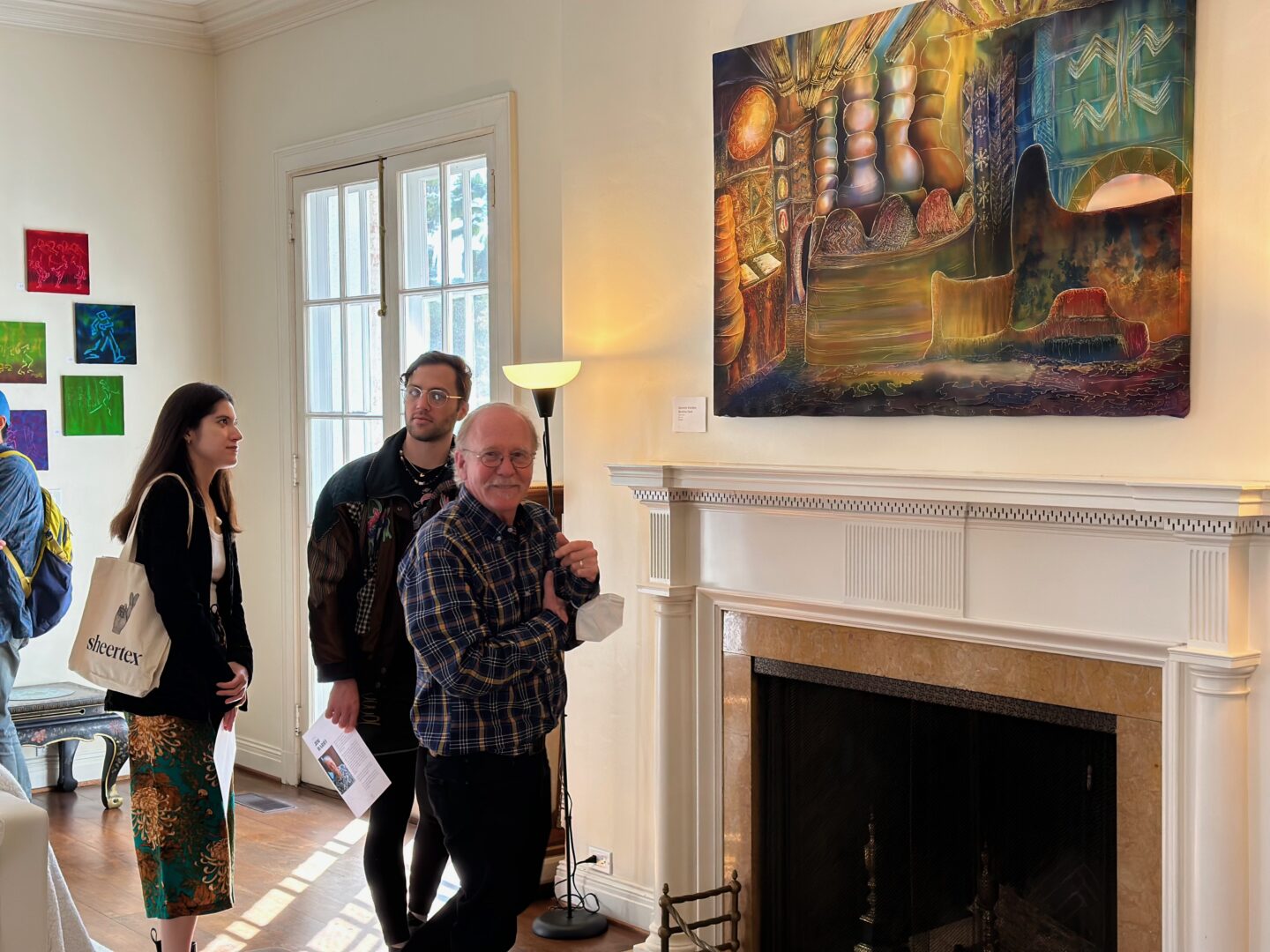
Jim Barry explains ‘Gurunsi Kitchen’ | Photo by Sean Yang / Joann’s Art Space

In 1981 Barry returned to the United States, and while visiting the Armory Center for the Arts he was invited to teach there. “It went really well; I was apparently good at teaching!” he marvels. “That eventually led to a job at Polytechnic School (Caltech’s sister school) a few years later, teaching a Perspective course for sixth graders. Then Caltech conducted a search for a teacher when the institution was seeking to reintroduce its Visual Art program after a long hiatus and I got the part-time job while still working as a teacher at Poly.”

While he held two teaching posts, though, he continued to paint. He held several exhibitions during return trips to West Africa.

Barry started silk painting after three decades of doing batik. “I refined and invented so many techniques that everything became highly complex. I felt I had painted myself into a corner,” he jokes.

“At an international Batik Conference in Boston, I was introduced to silk painting from Japan at a level I could appreciate and learn from,” Barry explains. “By transitioning I left behind the more toxic chemicals I had been working with on cotton since Africa. My silk painting has little in common with traditional Chinese artwork in that dye thickeners are not used. In many cases, it is closer to wet-on-wet watercolor but can be scaled larger.”

Large and small paintings at the exhibition | Photo by Sean Yang / Joann’s Art Space

Asked to describe his process, Barry replies, “Some pictures start with sketches from my daily sketchbook, transition to more drawings, then quick watercolors in preparation for a final large piece. Others begin with a color abstract that gets drawn into with the gutta resist (like wax), then more color, more gutta, etc., until I have achieved my goal or occasionally give up. There is no erasure in silk painting.”

“I like to paint and design both in the studio and in plein air,” explains Barry. “Taking photographs is rarely helpful to me. I will take them for information, but they are seldom used.” As to his painting style, he says, “I prefer to get my lines ‘right’ but enjoy playing with color. I rarely paint a blue sky in that it conveys no emotion.”

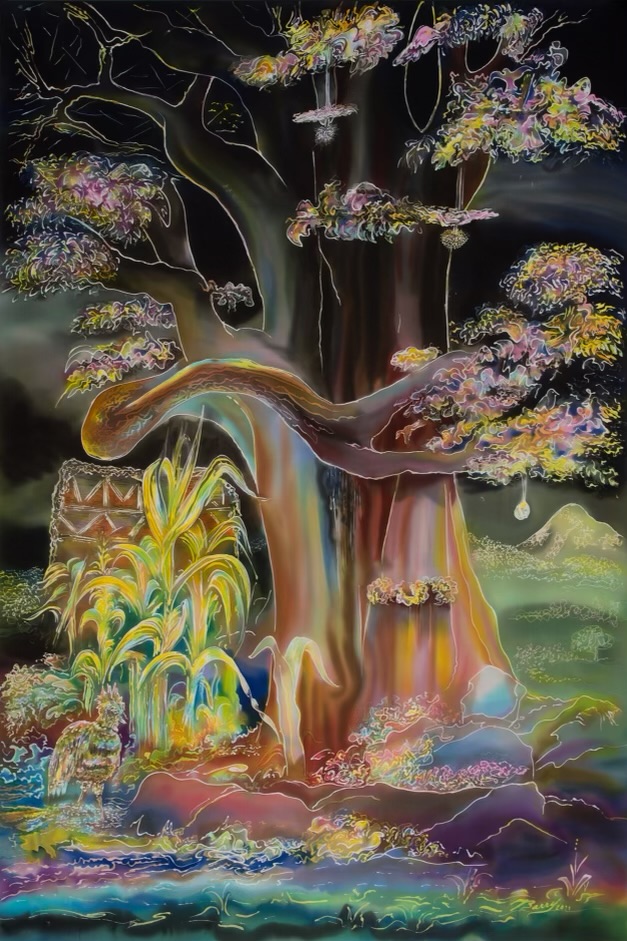
Gurunsi Backyard | Photo by Sean Yang / Joann’s Art Space

All of Barry’s paintings are done for the purpose of selling them and he doesn’t have a favorite painting that he never plans to sell.

Barry divulges, “While in Dakar, I had a complex painting of a flying turtle over Africa inspired by a mask statue. I made hand-colored etchings of it and tried to keep the original. Someone bought one of the etchings, and when I mentioned that I had the batik, he wanted that. I insisted it was not for sale; if it were, the price would be a certain multiple of the etching. Though he still wanted it at that, I would not sell. Later in the day, he returned saying he would make it ‘hard on me’ and offered me double. I sold it immediately! Then I asked what he did. It turns out he helps install airports in Africa.”

For someone who has neither a degree in painting nor teaching, Barry has definitely succeeded in both endeavors. And no matter how having a full-time job keeps him busy most days, he always finds the opportunity and time for his passion. As he pronounces, “Perhaps it’s an obsession. Painting is like a sport; one learns mostly by practicing and thinking about it on the field.” Spoken like a philosopher too.