Originally published on 15 August 2018 in the Pasadena Independent, Arcadia Weekly, and Monrovia Weekly
One of life’s greatest pleasures is being able to travel to different places to gain various experiences. Some people aspire to visit every state in our vast country, while others aim bigger and want to see every continent in the world.
For me, travel isn’t motivated by being able to tick off a list of dream destinations or having bragging rights to the number of countries I’ve been to. It’s about enjoying the local cuisine, experiencing another culture, and marveling at the sights – everything that makes the place unique from all others.
Italy is one country I am happy to go back to again and again. Who doesn’t like Italian food? It must be the most popular cuisine on this planet. Pizza, by far, outsells any other food item out there. And how can you say ‘no’ to a delicious dish of spaghetti with meatballs?
There isn’t any one quintessential Italian city; each region has something worthy of the amazement it engenders. Many travelers like Milan – it is a global fashion and design center; an important European financial base; and a cultural hub.
To countless others, Tuscany is an Italian paradise. One American author, Frances Mayes, wrote a memoir which chronicled how she bought and renovated a house in Cortona. Her book, ‘Under the Tuscan Sun,’ published in 1996 was subsequently turned into a movie and inspired many to visit, even reside, there.
Florence is definitely the place to see if you’re in Tuscany, though. It is the most populous area in the region. The birthplace of The Renaissance, Florence offers so much in terms of art and architecture.
Rome, Italy’s capital, is the most cosmopolitan of all Italian cities. The ruins of the Colosseum, the Pantheon, the Forum are reminders that it once was a formidable empire. For Roman Catholics, a visit to Rome is at the top of the list. It is where the Vatican, the seat of Catholicism, is located.
One place that is distinct from any other Italian city is Venice. Seasoned travelers will even tell you it is the most un-Italian city. Because it separated itself from the rest of Italy to escape invaders during medieval times, it had to establish itself as an independent state. Its location made it a maritime power. At the same time, it afforded access to other influences which added to its wealth of arts, architecture, and culture.
Since I absolutely love pasta vongole and tiramisu, both of which are typically Venetian, I don’t need any other reason to go back to Venice. But a trip to this dazzling city on the water is definitely all the more enriching because of its long history and glorious past.
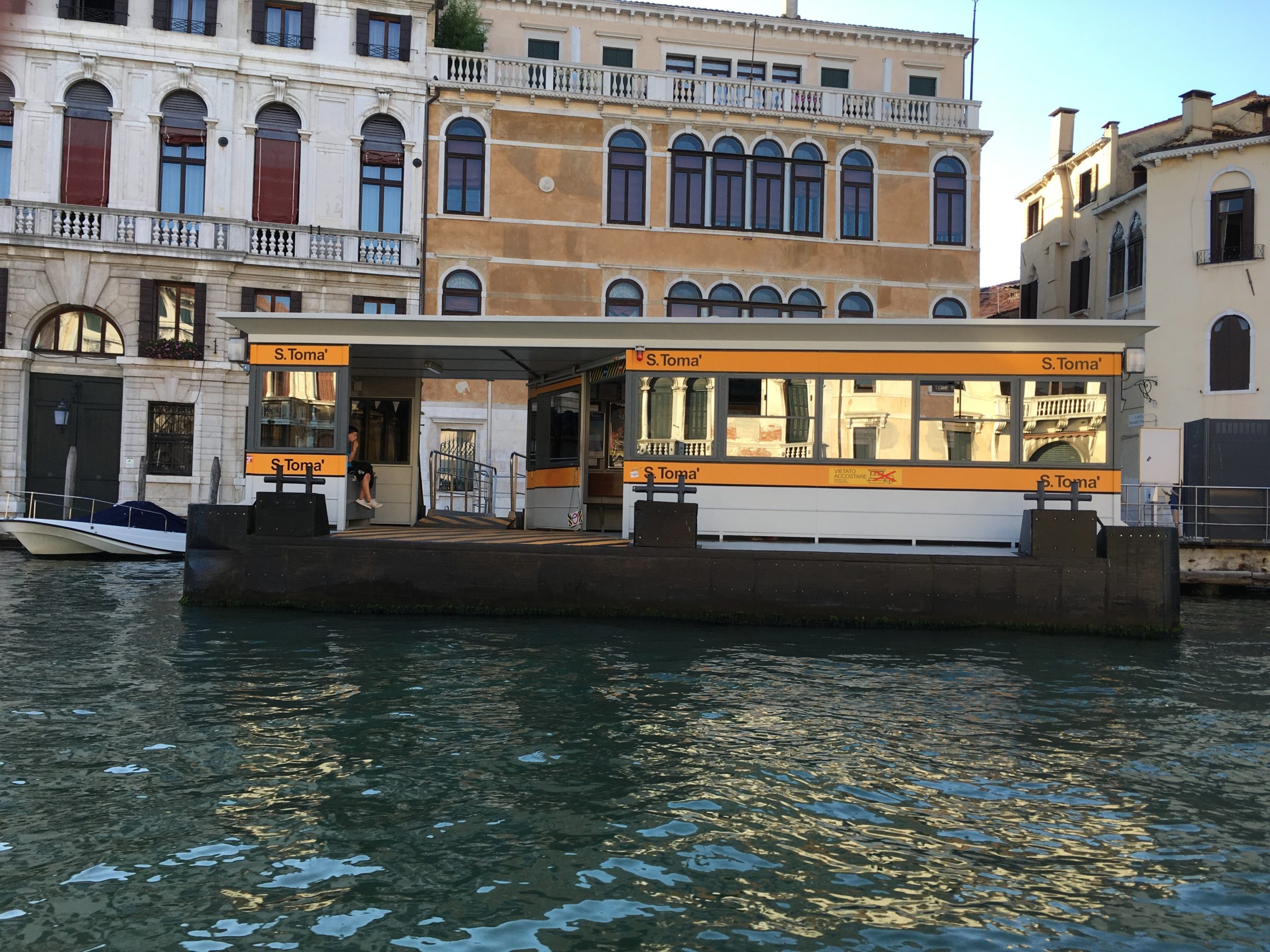
A visit to Venice is intentional. You can only get to it by vaporetto (waterbus or water taxi); it isn’t one of those sites you just happen to be driving through. It is a safe place for tourists – unlike in other busy cities, you can enjoy walking at night without the anxiety of getting mugged. There are very few violent crimes in Venice so you won’t have to fear for your life. However, there are pickpockets, just like in any other crowded city. So you have to be mindful of where you put your valuables and you have to be aware of your surroundings.
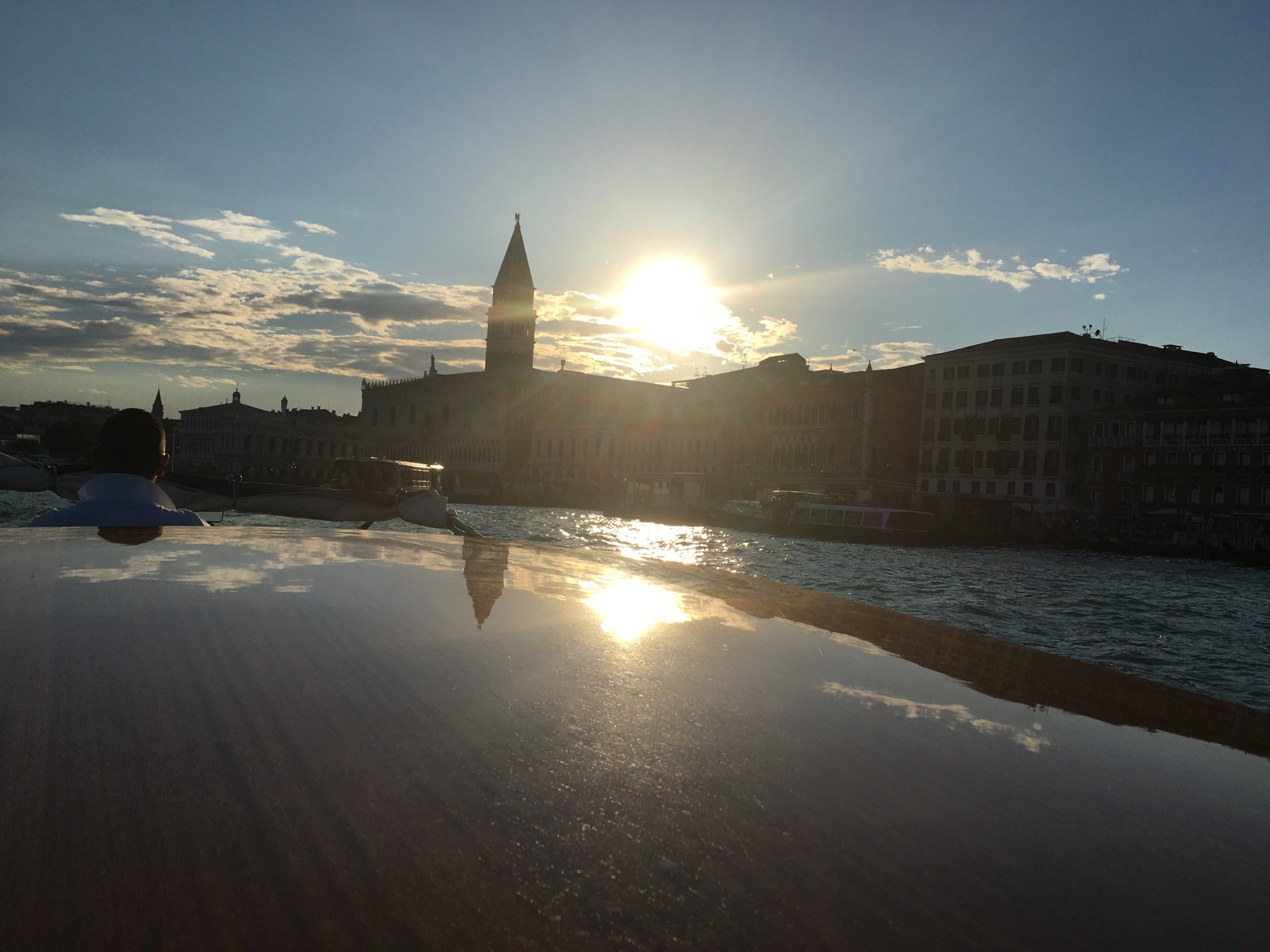
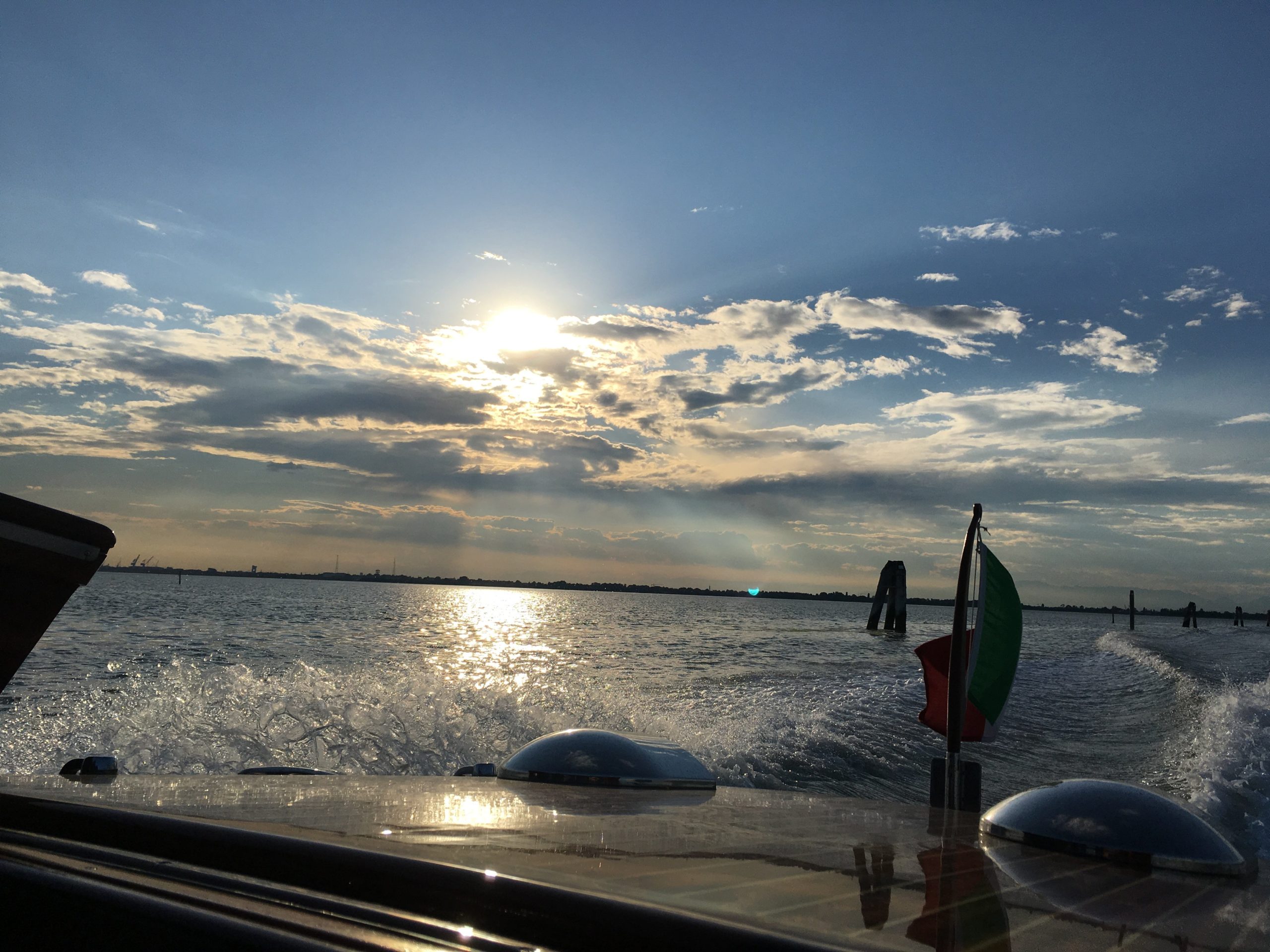
The trip to the hotel by vaporetto is the most spectacular half-hour ride one can have during sunset, when the amber light is filtered through pillow-y clouds. It is the most dramatic introduction to the beauty that awaits the traveler.
My two young companions and I got to Hotel Colombina in the early evening and we immediately unpacked. We crossed the footbridge a few steps away from the hotel and saw The Bridge of Sighs to our left.
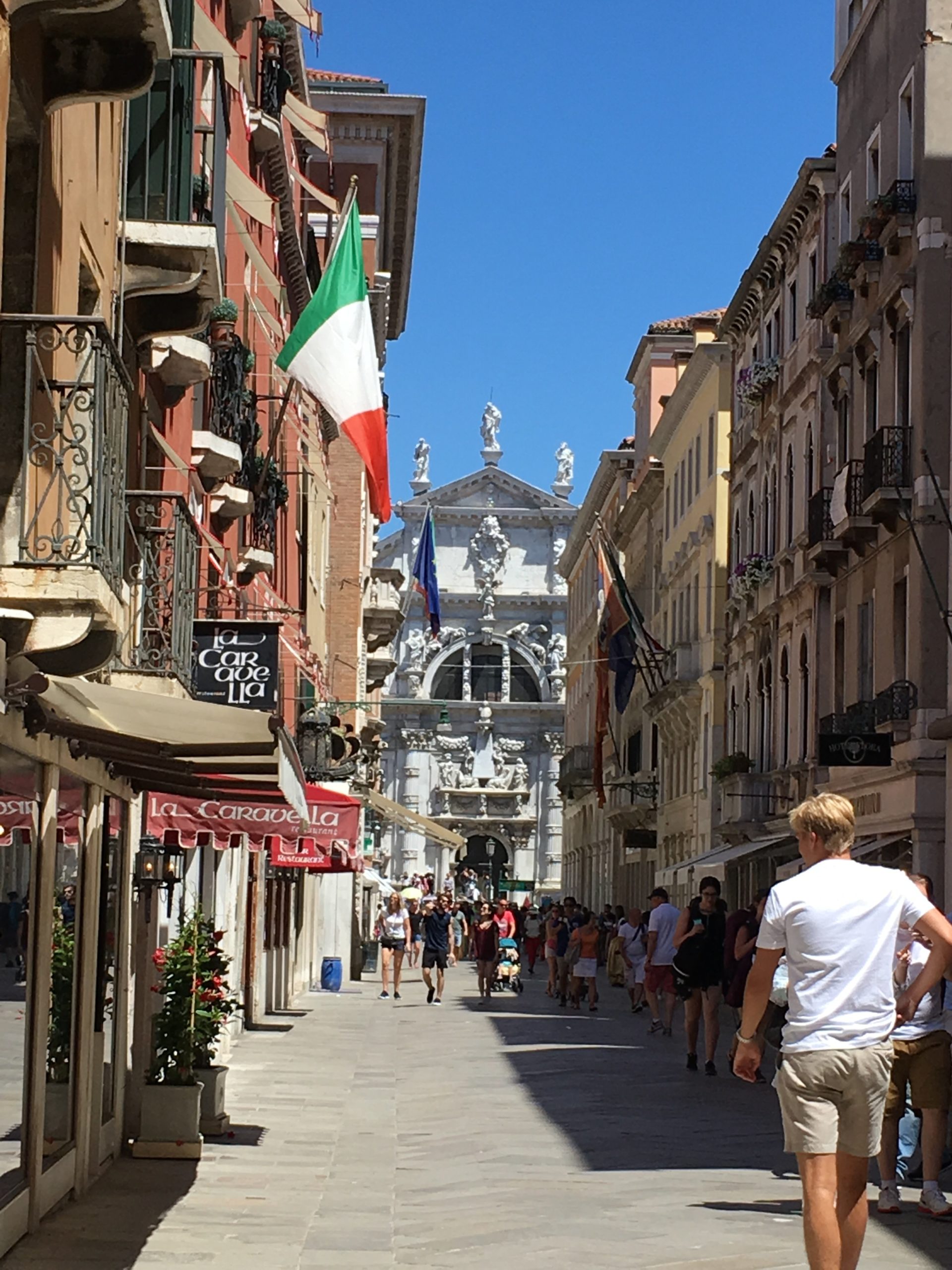
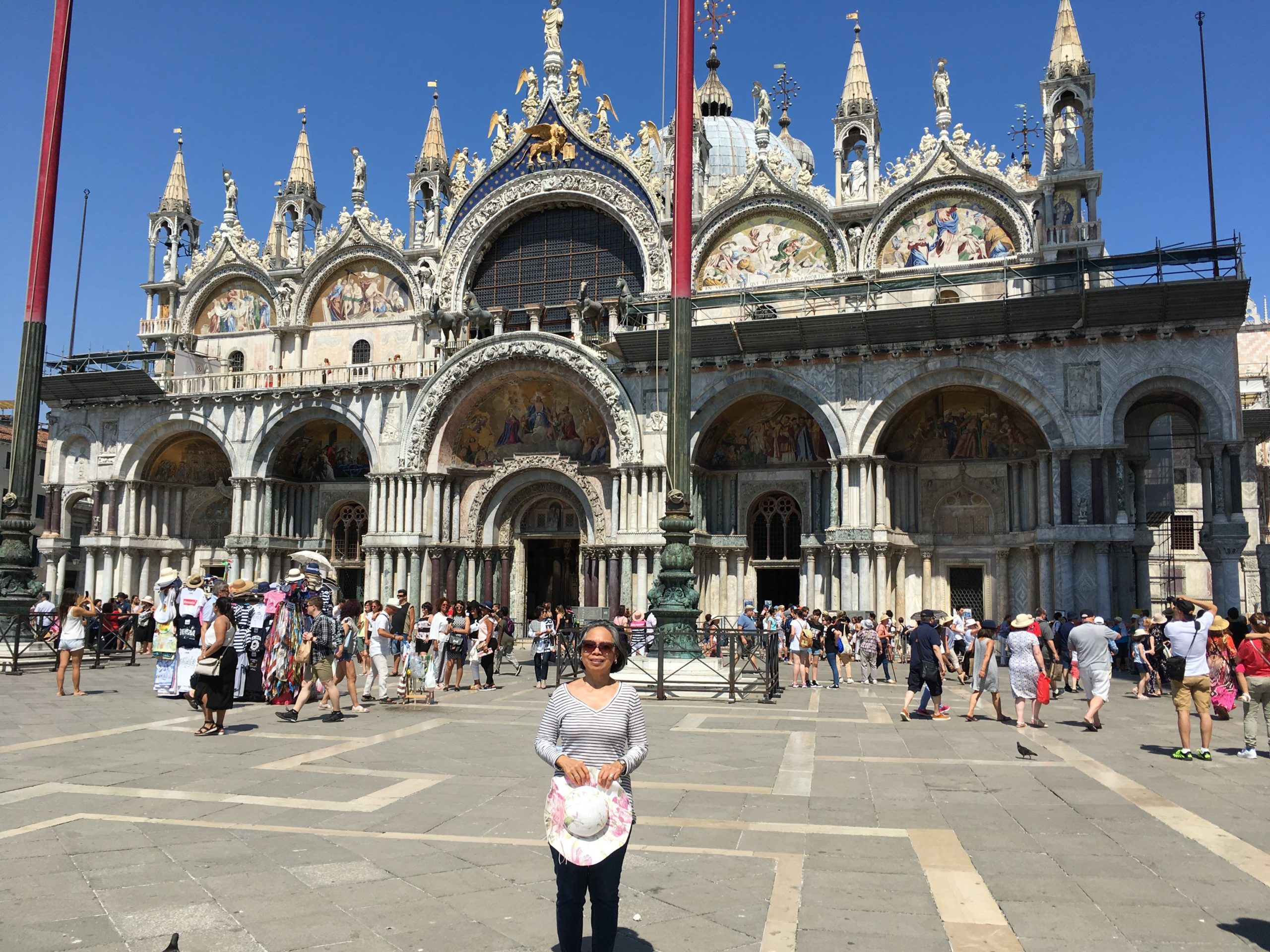
We followed the path most people were taking and found ourselves right in the middle of Piazza San Marco (St. Mark’s Square) and beheld all the magnificent buildings therein – the Basilica di San Marco (St. Mark’s Basilica), Palazzo Ducale (Doge’s Palace), the Procuratie, the Campanile (Belltower), and Torre dell’Orologio (Clocktower). We were in the heart of the city!
As close as Hotel Colombina is to the activities going on at Piazza San Marco, however, its location is surprisingly quiet. There isn’t much pedestrian traffic near it and the footbridge provides an excellent backdrop for picture-taking.
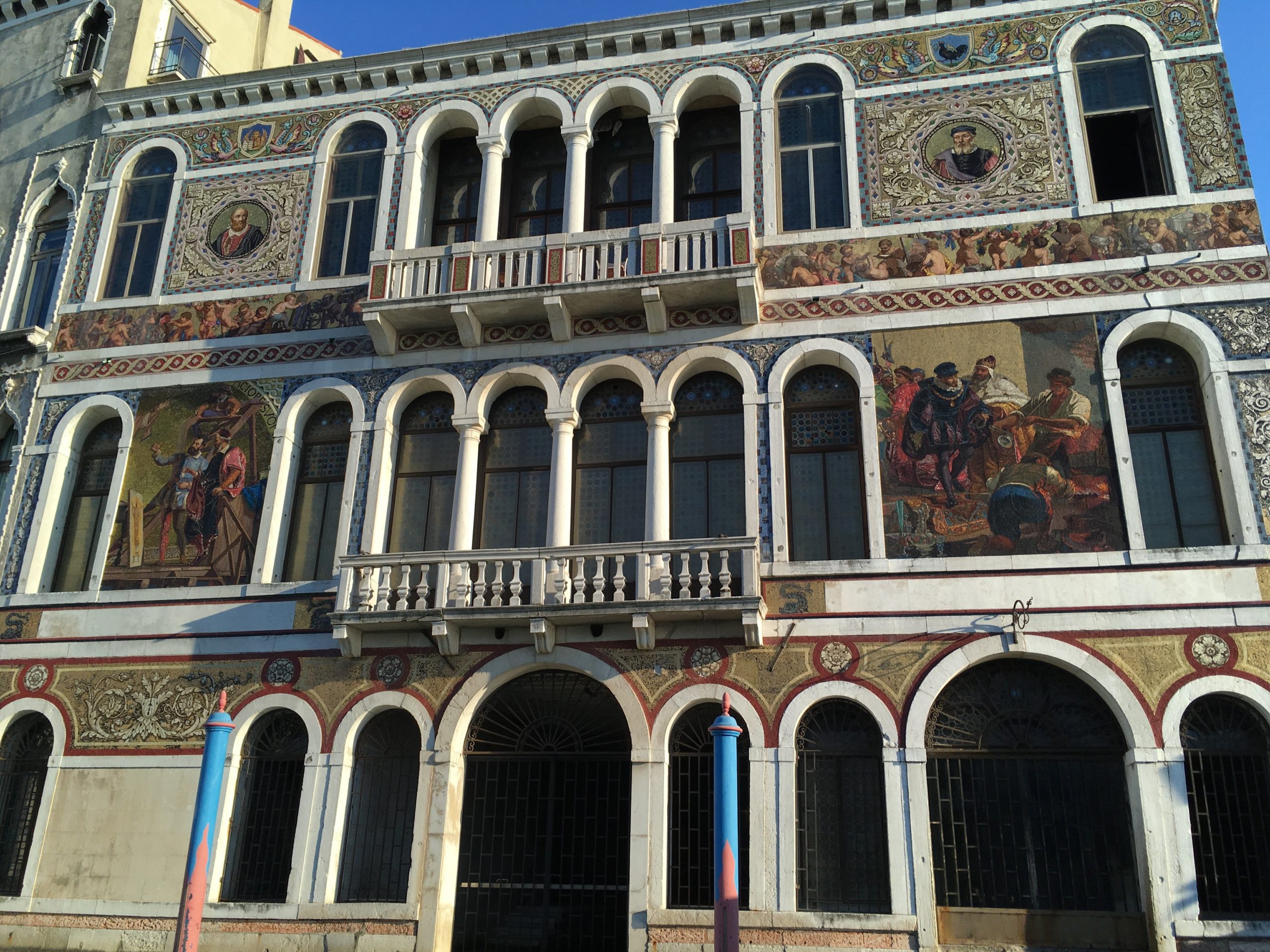
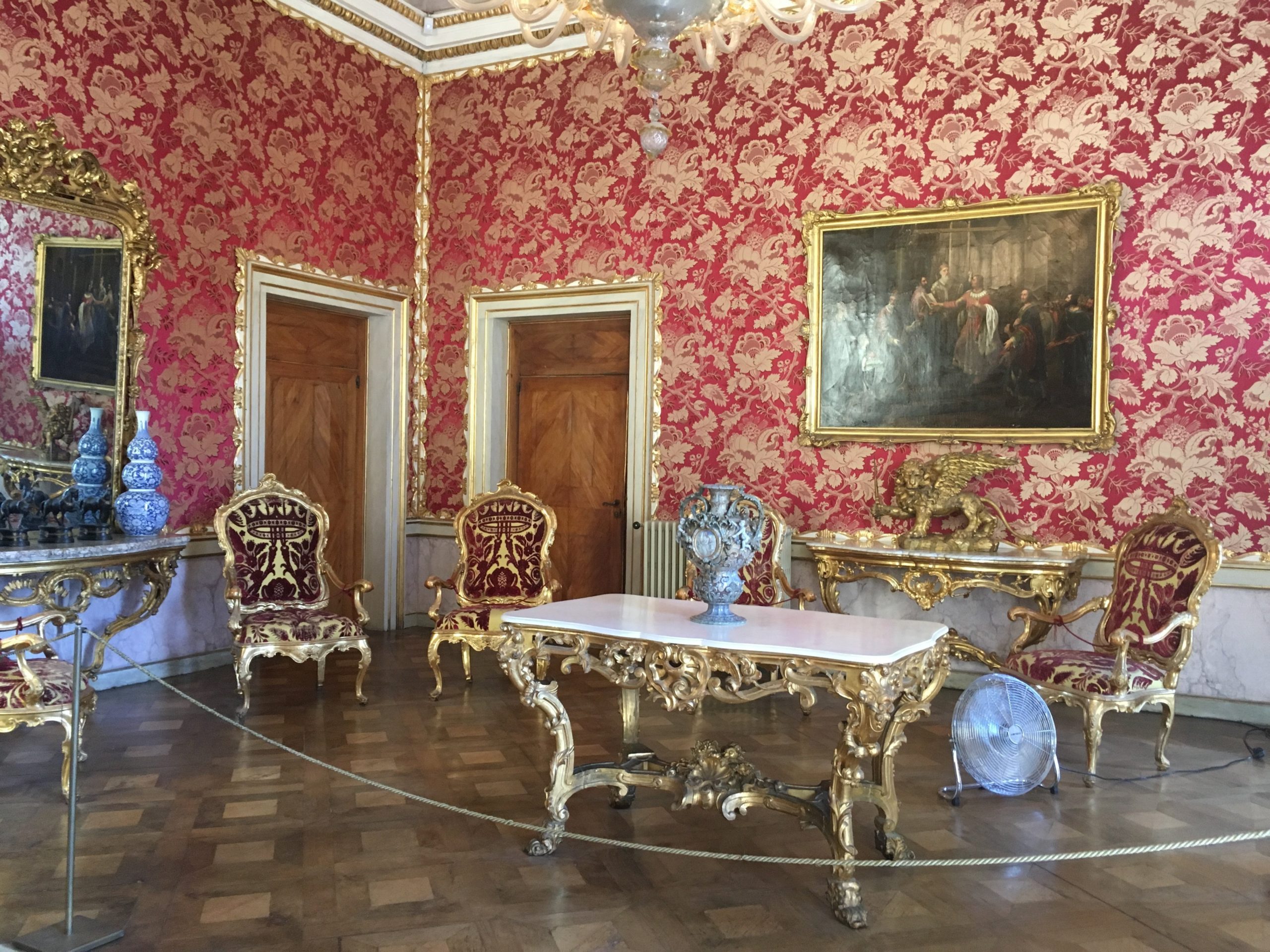
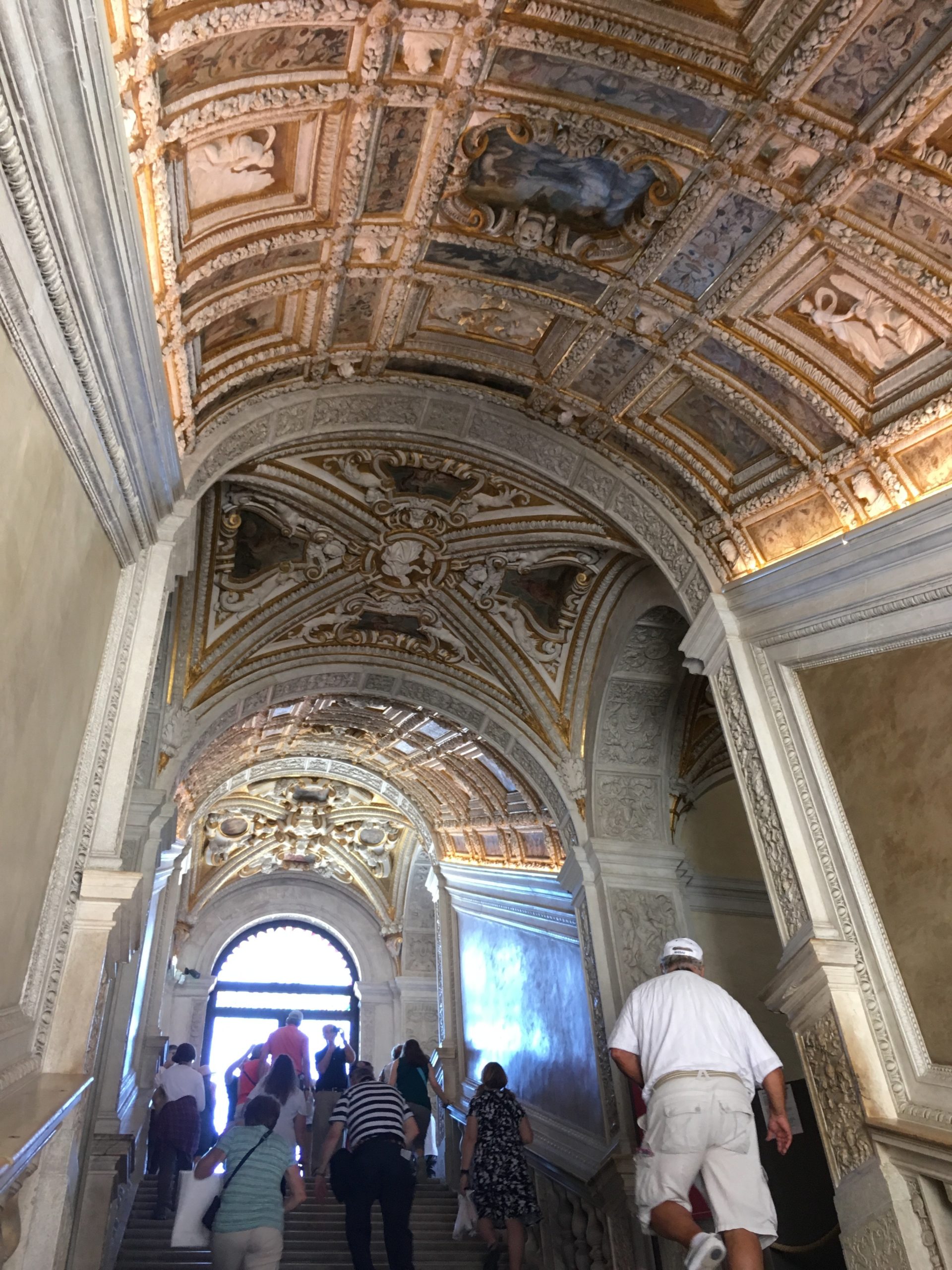
Venice produced renowned artists. The palaces we visited contained the most spectacular works of Italy’s greatest artists – Bellini, Canaletto, Canova, Tintoretto, Veronese, among others. Even the humblest homes in this city boast of priceless paintings by famous painters.
Moorish influences, not seen in other Italian edifices, are on display at St Mark’s Basilica with its mosaics, the arches on its façade, and the Islamic lanterns on top of the dome. Former residences like the Doge’s Palace and Ca’ d’Oro, and the fondacoes (trading factories and warehouses) have architectural elements that reflect those of mosques. They are all reminders that Venice was once a trade center that linked the Adriatic and Mediterranean Seas to Constantinople, Egypt, and Syria.
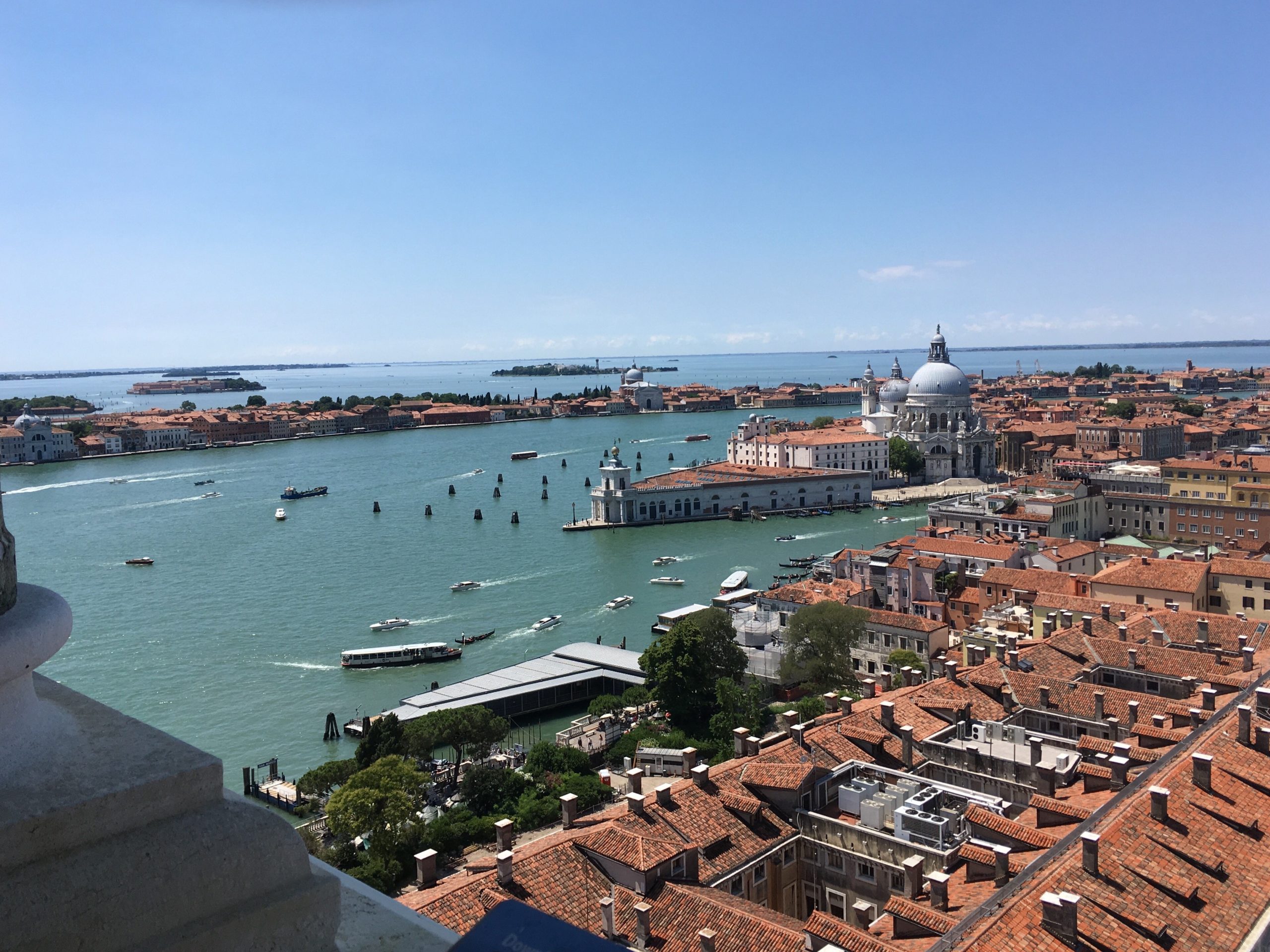
It’s impossible to see everything here unless you’re staying for a while. One way to take in the grandeur of Venice is a boat ride around the lagoon, as we did. A gondola ride is also a must if you want a more leisurely outing. Not all gondoliers sing as they paddle on the canal but they are always happy to oblige.
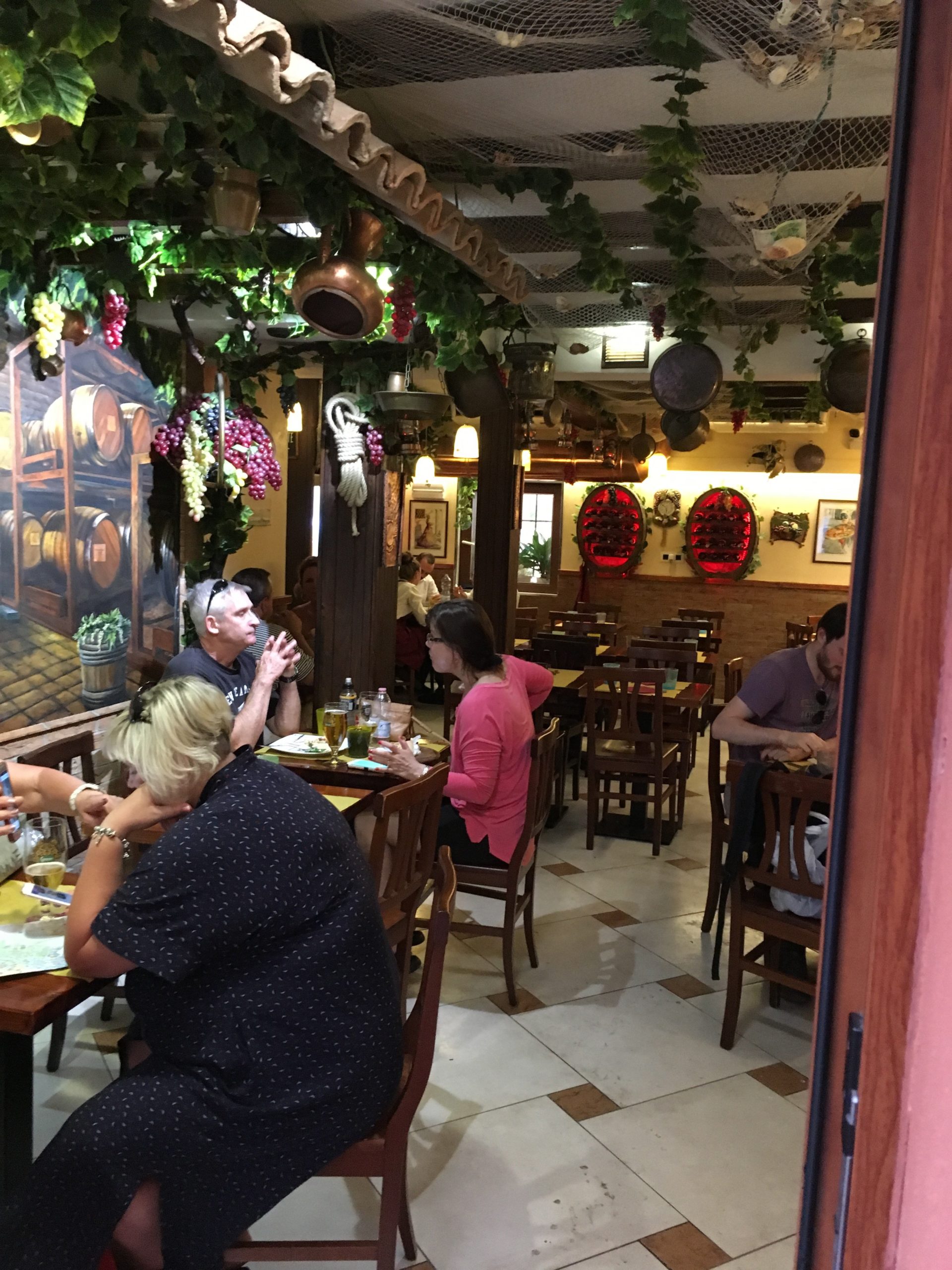
Italy is known for its delicious food and Venice abounds with trattorias and ristorantes. You don’t have to eat at expensive restaurants with fancy dress codes, your most satisfying gastronomic experience can be found in the hole-in-the-wall trattorias.
While Venice isn’t known for pizza like Naples or Sicily, we ate excellent pizza at the very popular Rosso Pomodoro.
Seafood is the specialty of Venice and every restaurant has an abundance of dishes to showcase their fresh catch. As determined as I was to try out many different varieties of it, I am addicted to pasta alle vongole (Italian noodles with clams) so I mostly ate that with either spaghetti or linguini.
The lagoon is the source of the local fishes in Venice, like sardele (pilchards), sardon (anchovies), sgombo (mackerel), and go (grass goby). However, if you’re not adventurous, restaurants offer other fish we know, including tuna and salmon; and some we don’t see too often, like cuttlefish and squid. Both of them have black ink, which can be strange, but they’re rather tasty. And the calamari anywhere we went was outstanding. Mussels and shrimps are also readily available at the market and served at restaurants.
Tiramisu, a decadent dessert which we might have first heard of in the 1993 romantic comedy ‘Sleepless in Seattle’ starring Tom Hanks and Meg Ryan, became an instant fad that almost every restaurant had it on their dessert menu. It’s not quite as popular now among foodies but in Venice, where tiramisu originated, it will never go out of style. It is a dessert mainstay and it was the perfect ending to every meal I ate there.
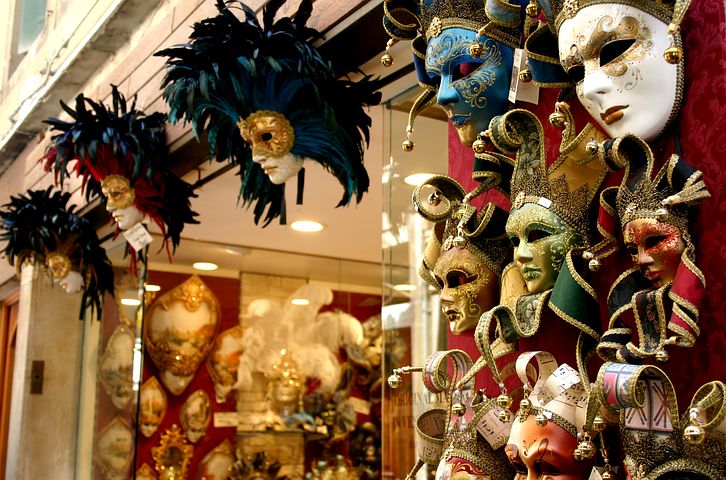
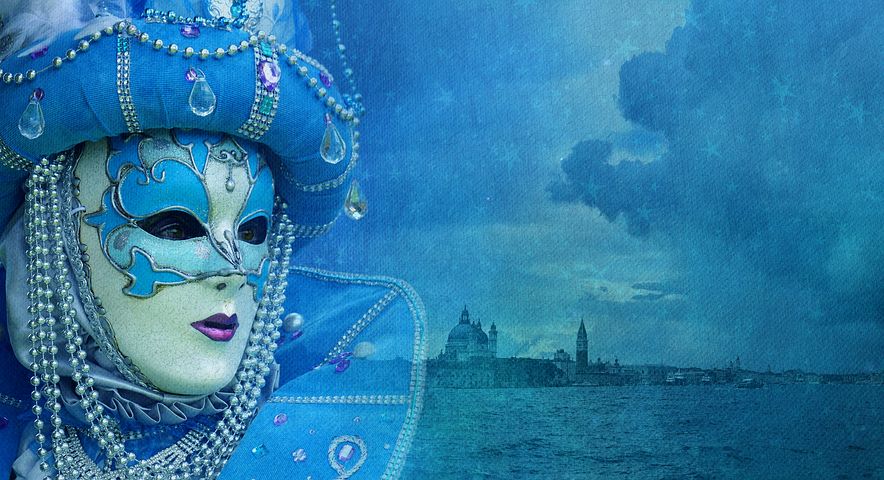
Venice is called the ‘City of Masks’ and you can find masks everywhere – from the biggest and most elaborate one that hides your entire face, to the simpler and smaller variety that covers mostly the eye area. They are made of papier–mache and are decorated with fabric, feather, fur, or gems.
The history of the Venetian mask goes back centuries when they were used as a disguise for people who were indulging in promiscuous or indulgent activities. Later on, they became the emblem of the Carnevale (Carnival), a pageant and street fair celebrating hedonism, which is still held every year at Piazza San Marco.
We weren’t going to leave Venice without bringing home an authentic Venetian mask but determining which to buy was tough. There were so many choices and each one so beautiful and colorful. In the end, what decided it for us was the size because it had to fit in a suitcase. Even then, packing the mask proved to be a challenge because of its shape.
Venice is also widely known for Murano glass. Historians believe Italian glassmaking began in the 8th century but it was in 1291 that Murano, located almost a mile away from the main city, became the center for it when glassmakers were ordered to move their foundries to the nearby island to protect Venice’s mostly wooden buildings from fires.
Murano glassmakers became the island’s most prominent citizens. By the 14th century they were so esteemed that they were allowed to wear swords, enjoyed immunity from prosecution by the Venetian state, and their daughters were permitted to marry into Venice’s most affluent families. Marriage between a glassmaker and a nobleman’s daughter was considered a good match.
We made an expedition to the New Murano Gallery to see how the exquisite Murano masterpieces are individually made. Our knowledgeable gallery guide told us glassmaking is still a respected artisan profession that’s handed down between generations.
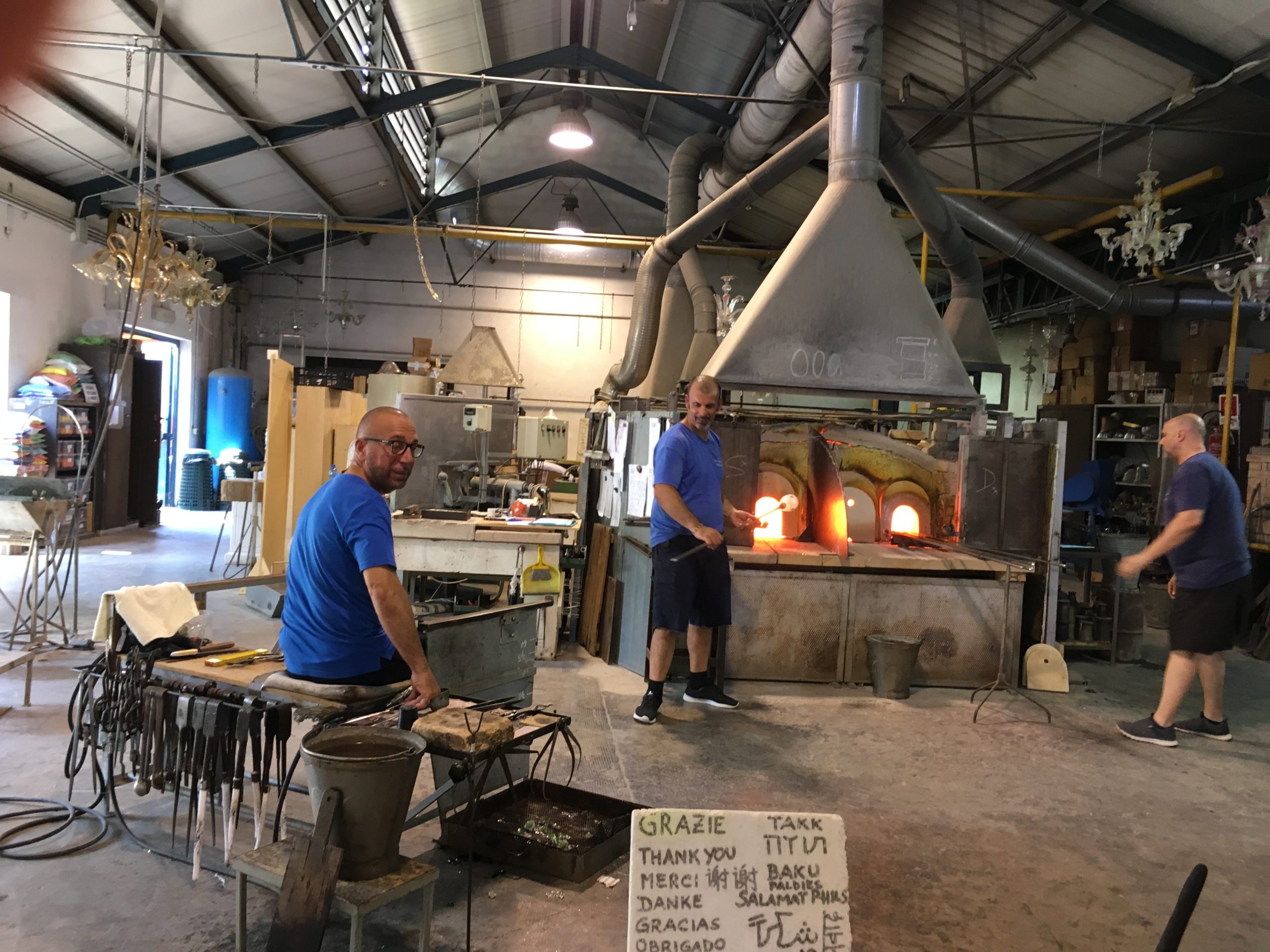
That morning we observed glassmaking artists create drinking glasses for a special order. We were told each piece in the set costs 110 Euros. That price seemed steep, but we deemed it equitable after we watched what the process for making it entailed.
Each artist has his own distinctive style and the pride he takes in his work is admirable. The New Murano Gallery displays all their products in an upstairs room with a dedicated area for each glassmaker. The pieces vary in size and come in spectacular colors. The intricacy and value of each work of art is reflected in the price tag too.
Some artists are known for a particular motif – fishes, equines, seahorses, and so on. They are truly magnificent sculptures and are a sight to see! Other lesser-priced items are presented according to type of glassware – wine goblets, drinking glasses, coffee and tea sets, Asian figurines, etc.
The gallery takes precautions with regard to guarding the integrity of their original products so picture-taking is not allowed upstairs. Each item is signed by the glassmaker and a certificate is issued as proof of authenticity.
Buyers of Murano Glass come from all over the world. That morning several groups from different countries were also there. Our guide, a polyglot, gave the tour and answered questions in languages besides English.
Judging by the number of orders the gallery gets, Murano Glass is still much-coveted. We saw huge packages ready for shipment with addresses in the United States and in other continents. Care is taken to guarantee the ordered items arrive in their destination safely. Each purchase is covered by insurance and Murano Gallery will replace any damaged piece without charge. Each order is also documented and saved on their computer so that if, years later, one piece in a set gets broken the owner can call the gallery with the order number and an exact item can be made.
There are several glassmakers on Murano and their merchandise can claim to be Murano Glass as long as they carry the trademark ‘Vetro Artistico Murano.’ It certifies that the products have been made there using traditional artistic methods born and developed on the island over a thousand years.
Lace is another Venetian product and lace-making is considered both an art and a tradition on the island of Burano. It began in the 16th century during the ‘Rinascimento,’ a period of artistic and cultural awakening and became as important as Murano Glass. Lace became a symbol of wealth and class as only aristocrats could afford to purchase it.
Competition from foreign makers selling cheap lace in the 1700s led to a sharp decline in lace-making. Then in the 1800s machinery industrialized lace production. However, handmade lace can still be found and purchased today in Burano, where a professional college for lace-making has been opened to protect this art and tradition.
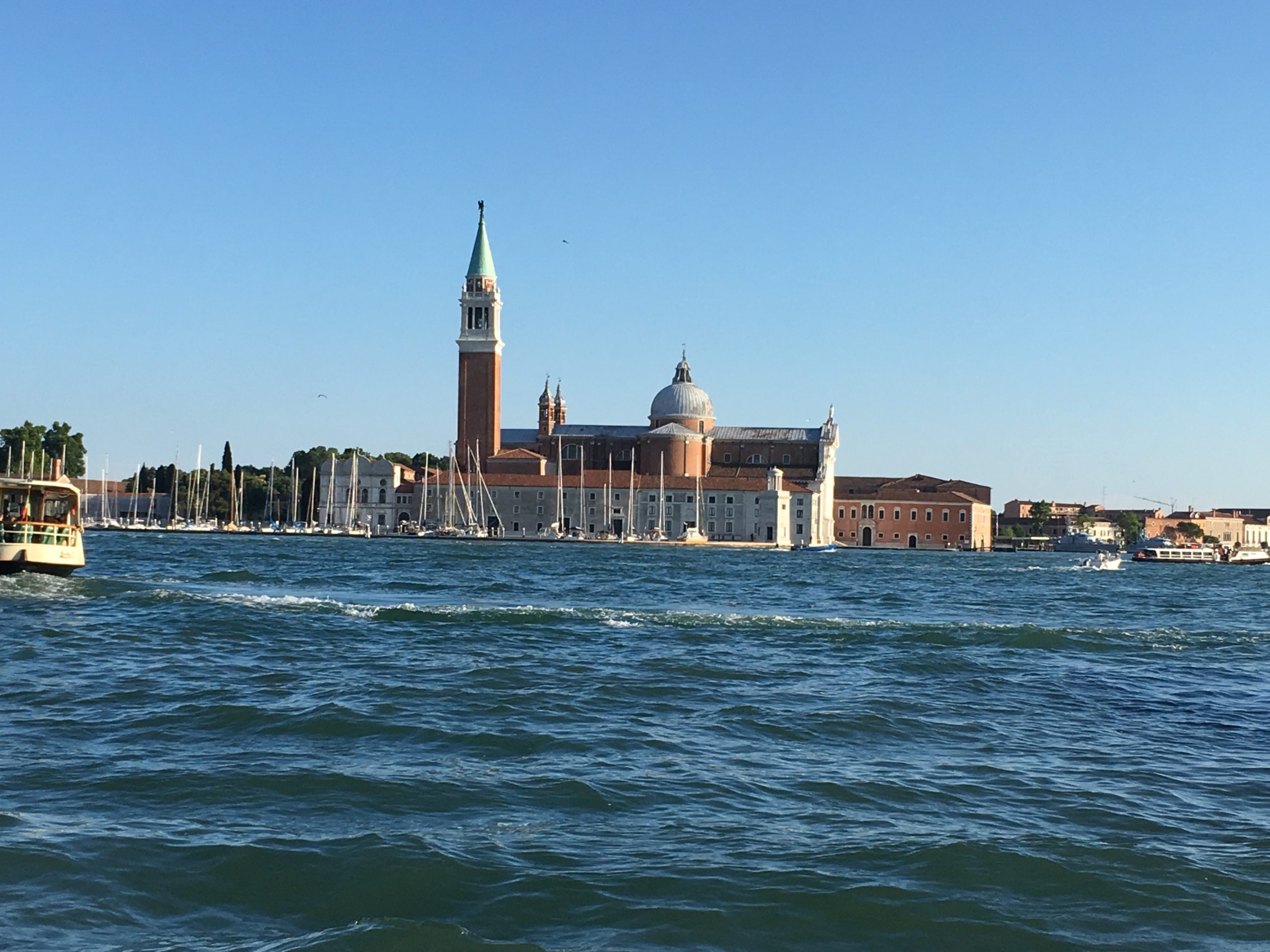
Venice is the venue for La Biennale di Venezia (Venice Film Festival), which is celebrating its 75th anniversary. Held on the island of Lido, it is one of the ‘Big Three’ film festivals alongside the Cannes Film Festival and Berlin International Film Festival.
From the 29th of August to the 8th of September this year, Venice will welcome thousands of people in the film industry as well as movie buffs. Because it is held in the Fall, the reception participating movies get from film critics has become a more accurate indication of what movies will be in the Academy Awards line up.
The magnificence of Venice is clearly evident to the 55,000 tourists who descend on this jewel of a city every single day. It is one travel destination that will remain unforgettable for me. Each time I visit, I see another aspect to it and I’m awed by its beauty all over again. But even those who haven’t been there are touched by it in some way. Venice’s influence – whether it’s related to art, clothing, food, or movies – reaches far and wide.
Venetians call their city ‘Serenissima’ – the Most Serene Republic – not because it’s peaceful (the presence of so many tourists guarantees it’s anything but quiet) but because it still reigns supreme. And Venice’s gifts to the world are as unique as the city itself; they are a reflection of the splendor that is Venice.
 A San Gabriel Valley Inquirer