Originally published on 20 August 2018 in the Pasadena Independent, Arcadia Weekly, and Monrovia Weekly
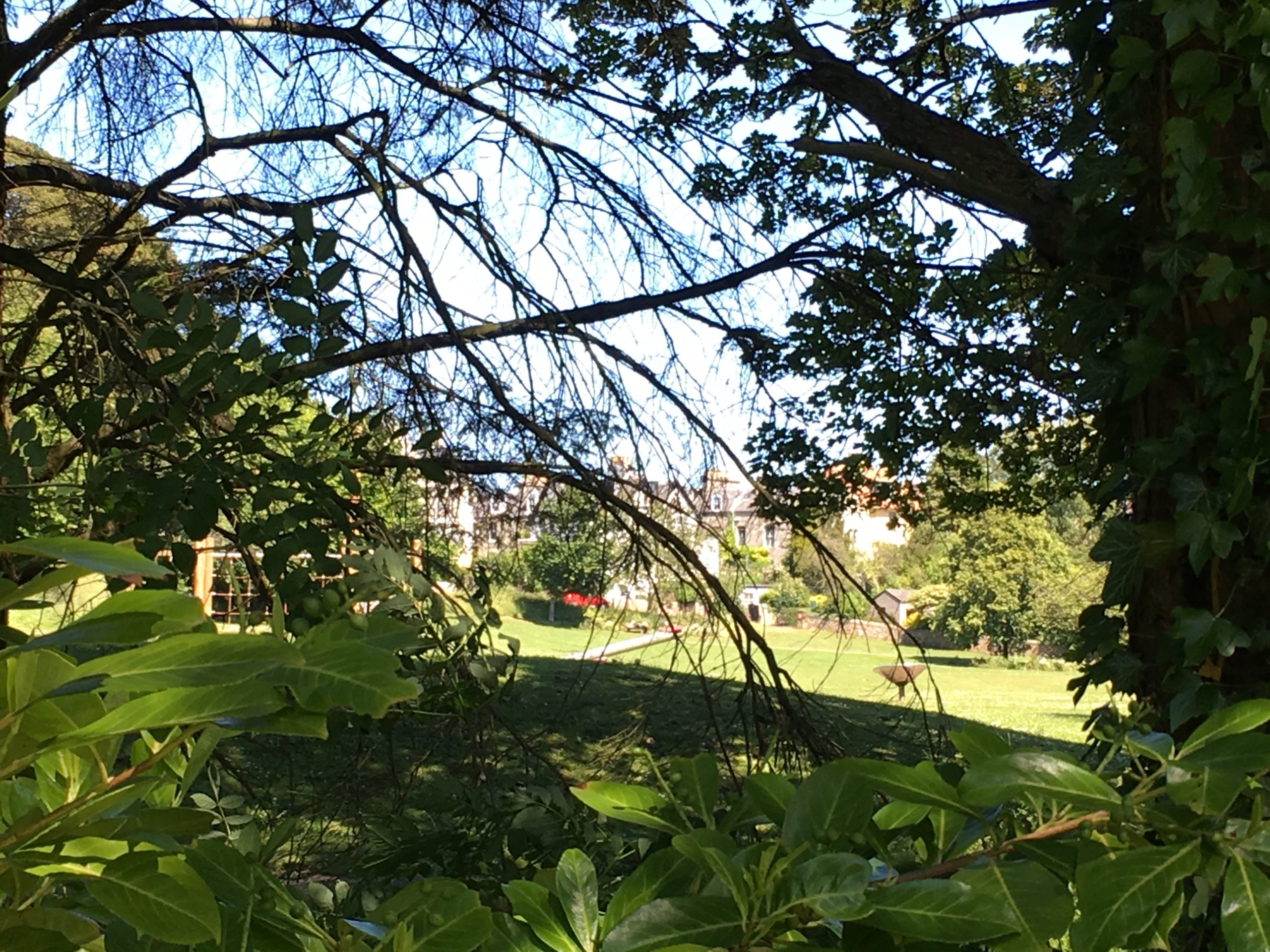
Abundant green plants in St Andrews Botanic Garden contrast with the centuries-old, stone-clad structures of the University of St Andrews | Photo by May S. Ruiz / Beacon Media News
St Andrews, in Scotland, is notorious for horizontal rains and arctic winds. My first visit there, in July of 2013, was marked by sporadic downpours and grey skies. The following year, I was there for three weeks of mostly gloomy weather in the middle of August. Last year, there was a hurricane when I got there during the height of summer.
It was such a delightful surprise to spend the greater part of June this year in St Andrews and experience sunlight. In fact, the sun rose at 3:00 in the morning and didn’t set until past 10:00 at night. I just couldn’t get enough of it; I availed of the glorious weather by taking in the outdoor sights.
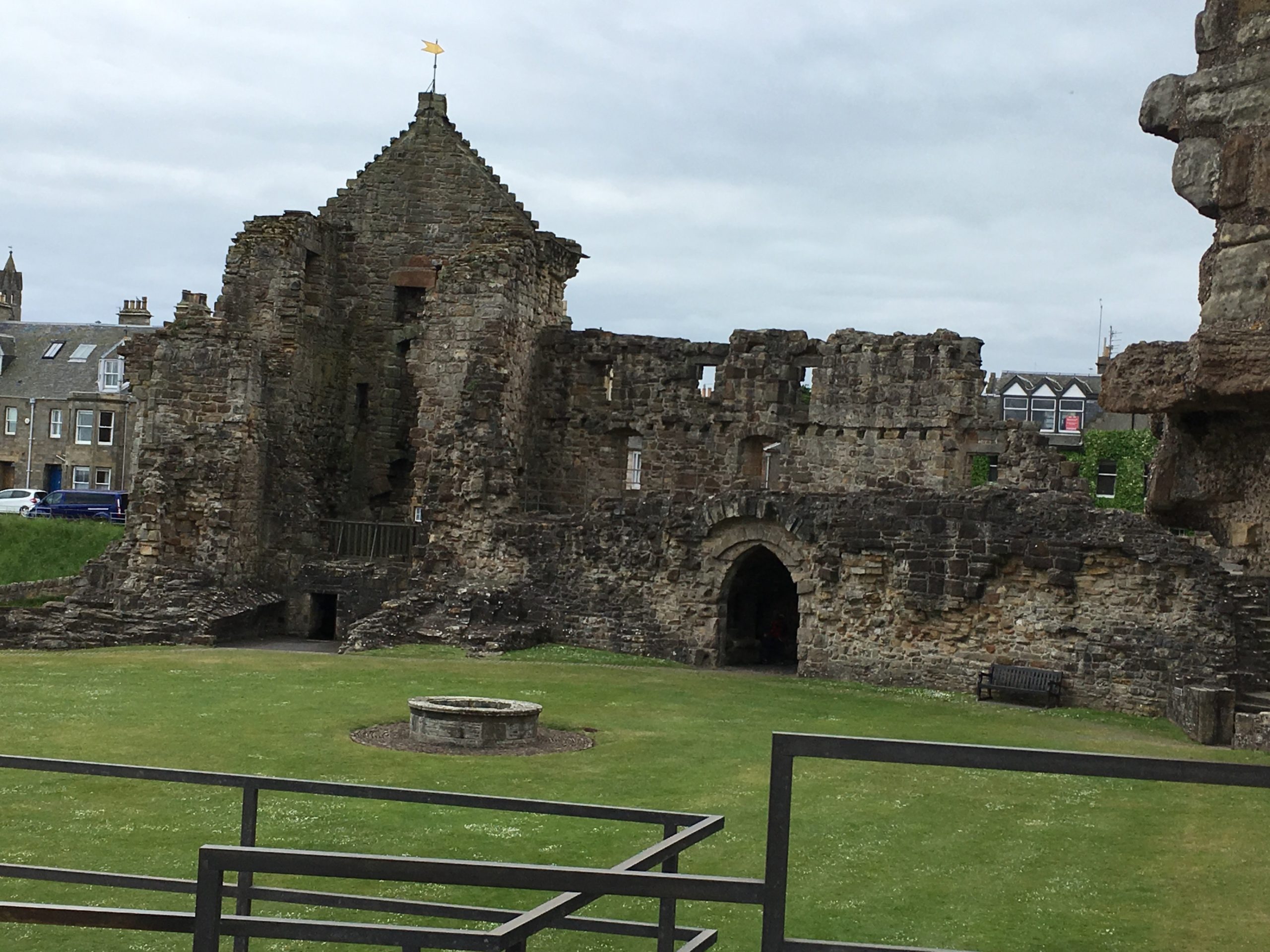
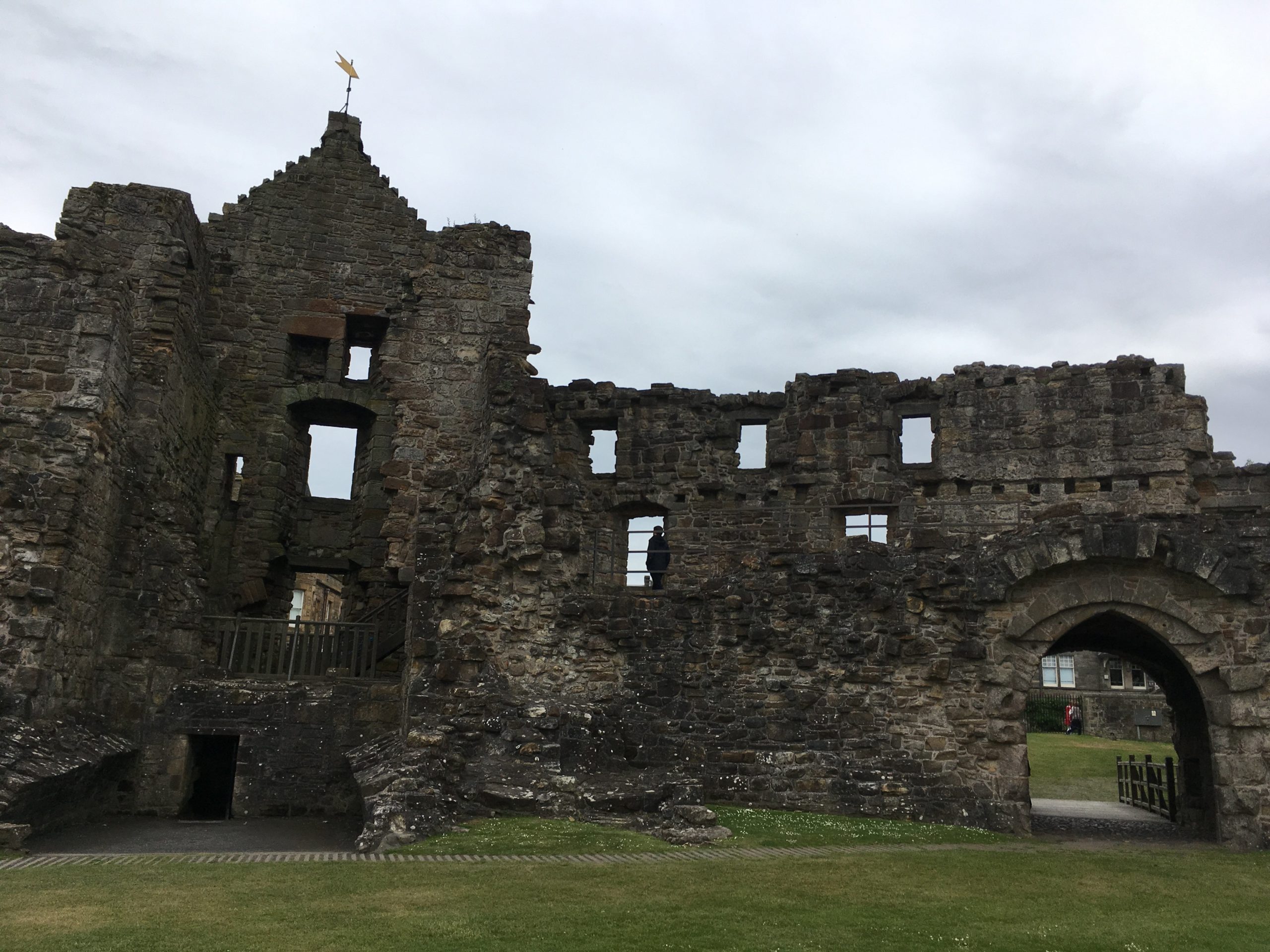
St Andrews Castle is actually in ruins so a tour of it is generally outside. What remains of it are the walls, the tower, the ‘bottle dungeon,’ and the mine and counter-mine. But its stunning location right next to the North Sea makes it a breathtaking tourist destination.
Unlike other European castles, which were primarily residences of the monarchy, St Andrews Castle was an ecclesiastic center inhabited by the powerful bishops and archbishops of Scotland in the 1200s and 1300s.
Its history is as remarkable, bloody, and controversial as its occupants. In the 1400s the Scottish royals were associated with the bishops and, in consequence, with the castle. King James I was educated by Bishop Henry Wardlaw, who founded the University of St Andrews in 1413. James II chose a later bishop, James Kennedy, to be his advisor. In 1445, James III was born in the castle.
The entry gate to St Andrews Castle | Photo by May S. Ruiz / Beacon Media News
St Andrews Castle was likewise used as a prison which housed not only local criminals under the bishop’s jurisdiction but other prominent figures, including David Stuart (the Duke of Rothesay, heir apparent to the throne of Great Britain which, today, is Prince Charles) in 1402, and Duke Murdoch in 1425. In 1478, Archbishop Patrick Graham was declared insane and was confined in his own castle.
During the Scottish Reformation, St Andrews Castle was the site of religious persecution when Scottish Protestants were punished with cruel and public deaths. In 1546, David Beaton, the Archbishop of Glasgow, imprisoned Protestant preacher George Wishart in the tower and on March 1, ordered him burned at stake in front of the castle walls. Wishart supporters avenged his death on May 26 when they gained entry, overcame the garrison, murdered Cardinal Beaton, and hung his body from his window on the castle’s front.
Protestants used the castle as a shelter where they established the first Protestant congregation in Scotland and the Regent James Hamilton ordered a long siege. In 1546, attackers dug a mine through solid rock to attack while defenders tunneled a counter-mine.
In 1547, John Knox, the leader of the Scottish Reformation, entered the castle during a ceasefire and served as the garrison’s preacher for the remainder of the siege. This temporary peace ended when the French fleet bombarded the castle, which fell unprotected.
St Andrews Castle was rebuilt by Archbishop John Hamilton but, after his death in 1571, it was inhabited by a succession of constables. Attempts to reestablish religious power in Scotland failed and, in 1689, William of Orange abolished the office of the bishop. The castle was rendered useless and quickly deteriorated; parts of it were used in repairing the pier.
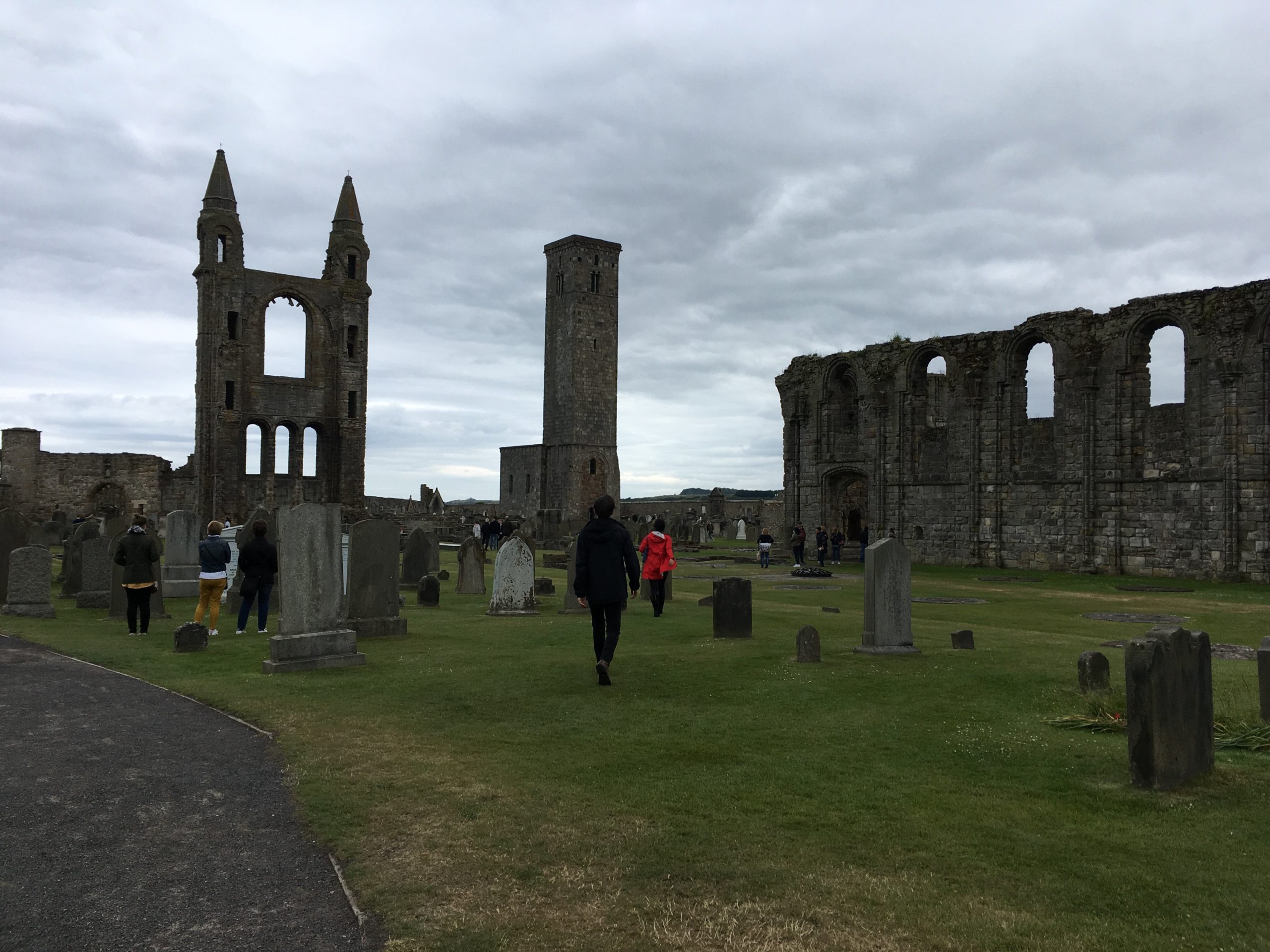
The ruins of St Andrews Cathedral | Photo by May S. Ruiz / Beacon Media News
The rare bright and warm day was the perfect antidote to what I learned about the castle. I headed out to St Andrews Cathedral but its history isn’t any cheerier than the castle’s. Built in 1158, it was the base of the Medieval Catholic Church in Scotland and the seat of the Archdiocese of St Andrews.
Inevitably, its past is intricately linked with the Castle. Incited by the preaching of John Knox, a Protestant mob ransacked St Andrews Cathedral during the Scottish Reformation and completely destroyed its interior. Whatever was left of it was used as building material for the town.
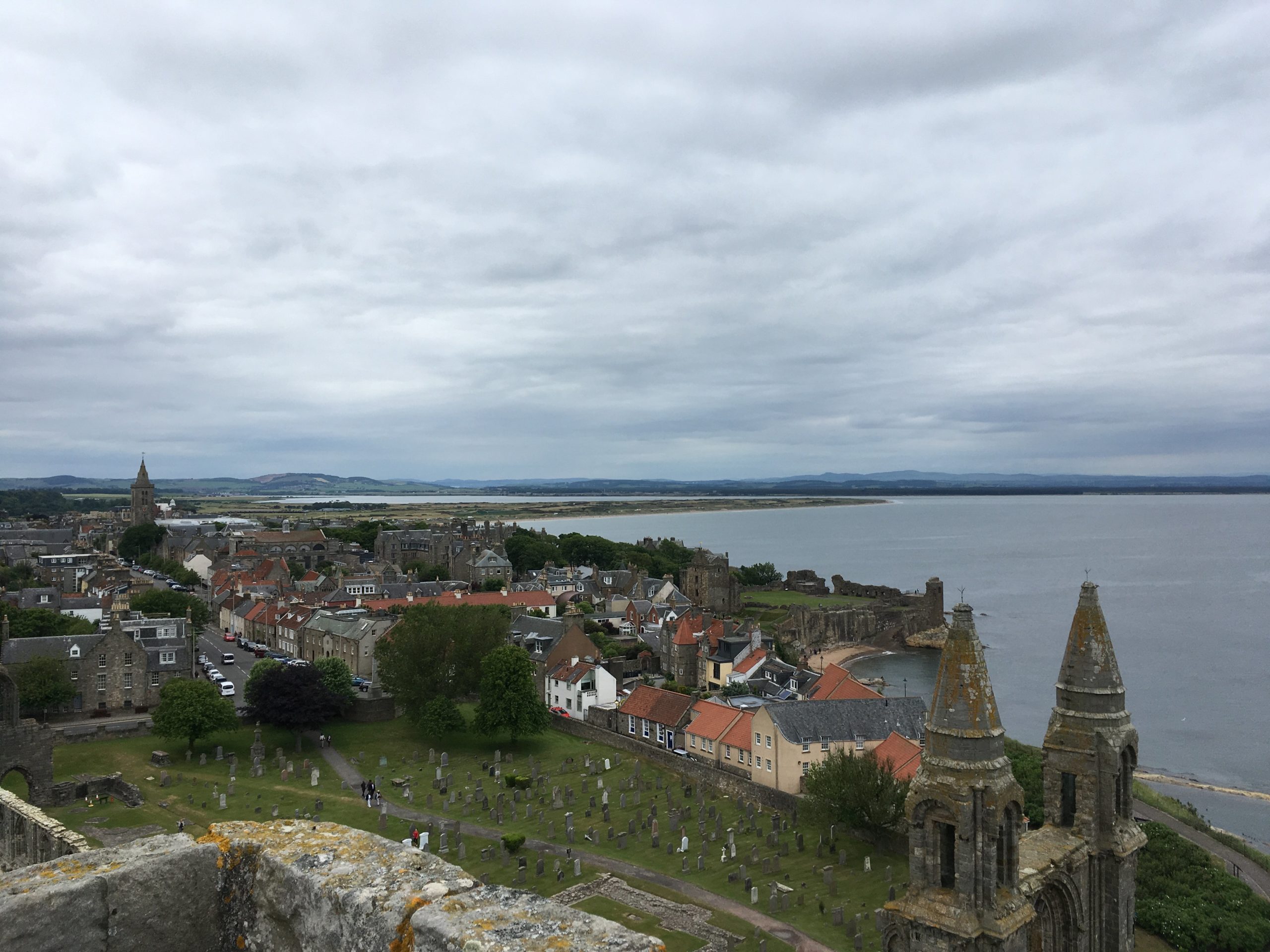
Long ago the largest cathedral and most magnificent church in Scotland, what stands for St Andrews Cathedral today are the ruins of the nave and St Rule’s Tower. Nonetheless, it continues to be a significant reminder of the influence it once wielded as the symbol of Catholicism.
Tourists looking to find a destination that doesn’t recall depressing times would do well to head to St Andrews Botanic Garden, as I did. Located on the southern edge of town at Kinnes Burn, it is sometimes referred to as St Andrews’ hidden gem. And for good reason.
The modest entrance to the garden is in sharp contrast to that of The Huntington‘s in San Marino, which has a tall, imposing gate that suggests what to expect within. Visitors to St Andrews Botanic Garden, however, will be pleasantly surprised to discover an 18-acre paradise.
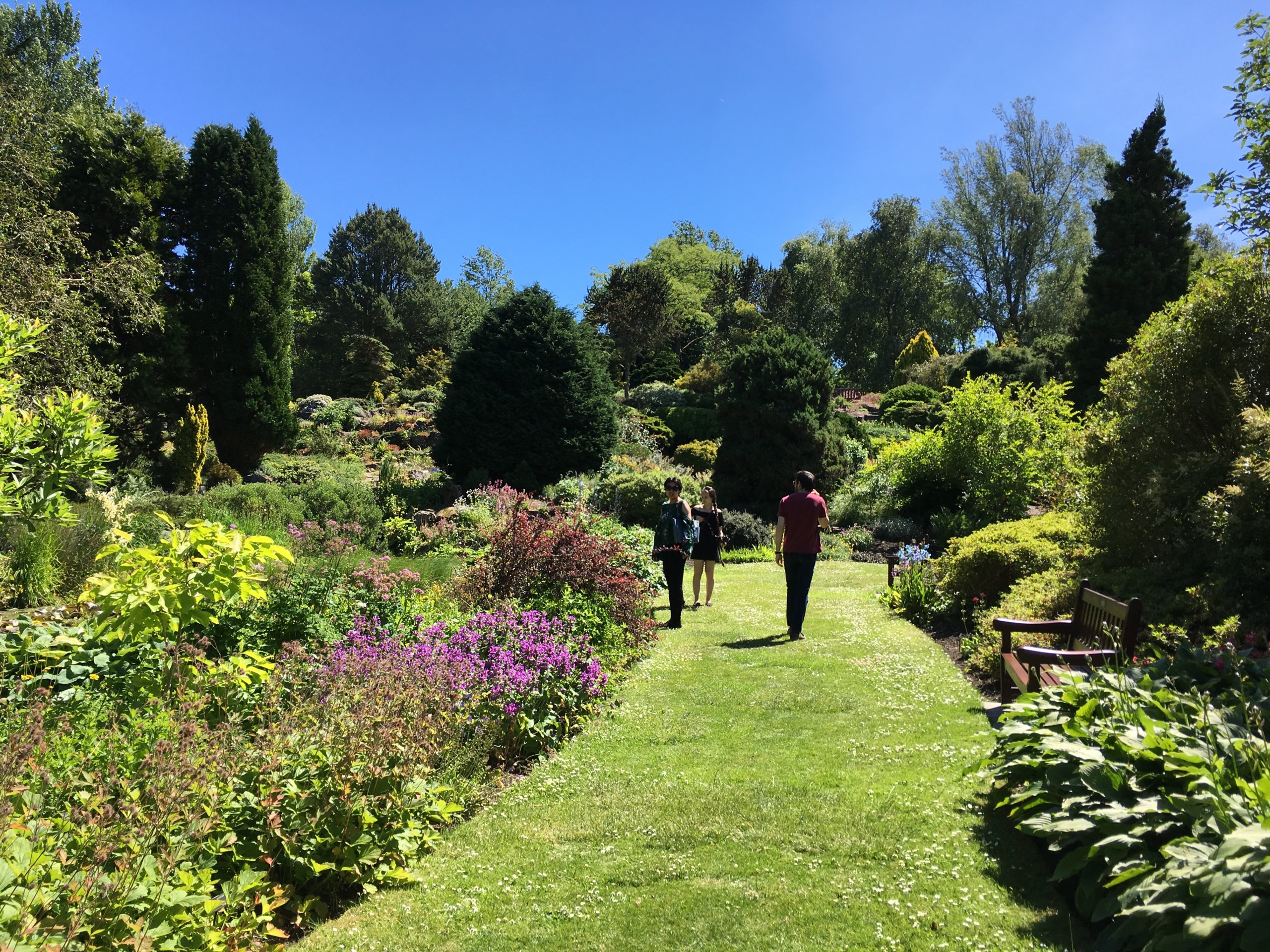
Native and exotic plants abound in St Andrews Botanic Garden | Photo by May S. Ruiz / Beacon Media News
Previously founded by the University of St Andrews in 1889 on the grounds of St Mary’s College, it was moved to its current location in the early 1960s. Mindful of the harsh Scottish climate, the designer structured a dense barrier of pine trees along the western edge, with many shrubs and trees around the site, to provide protection for the plants.
It is a wonderland of native and exotic plants laid out in zones of woodland, meadow, shrubbery herbaceous bedding, ponds, a rockery, and a butterfly house. In the greenhouses, I was thrilled to find myself surrounded by familiar plants – the very same ones in my backyard. There were anthuriums and lilies, cacti and aloe veras, birds of paradise and sago palms. It was easy to be deceived into thinking I was in Pasadena.
I marveled at the ponds with small waterfalls, walked on the impressive expanse of green meadow, and climbed up a rockery. This is a side of St Andrews I had never seen before and it offered me a vastly different perspective.
St Andrews doesn’t only have centuries-old, stone-clad structures; it also has abundant, green flora. The town isn’t all about honoring and preserving the past, but also about building and tending the future. The image that conjures is as heartwarming as it is astonishing.
Originally published on 15 August 2018 in the Pasadena Independent, Arcadia Weekly, and Monrovia Weekly
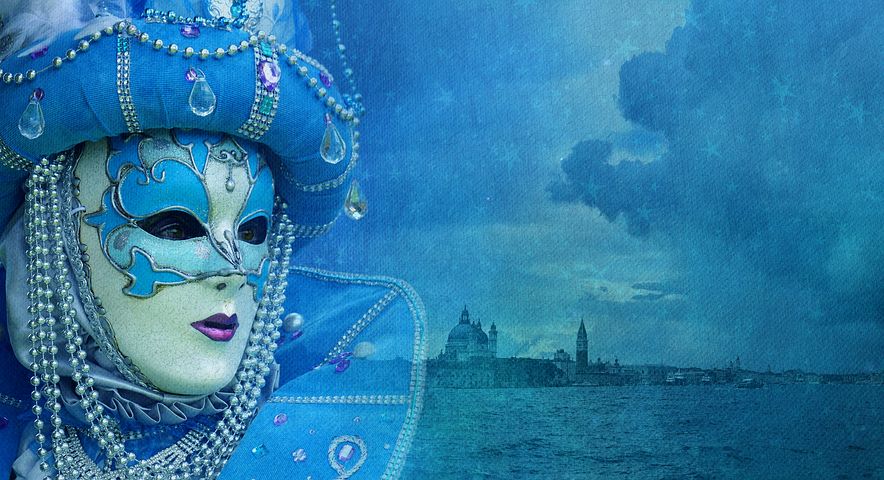
Venice in the Storm and a Venetian mask wearer | Courtesy photo
One of life’s greatest pleasures is being able to travel to different places to gain various experiences. Some people aspire to visit every state in our vast country, while others aim bigger and want to see every continent in the world.
For me, travel isn’t motivated by being able to tick off a list of dream destinations or having bragging rights to the number of countries I’ve been to. It’s about enjoying the local cuisine, experiencing another culture, and marveling at the sights – everything that makes the place unique from all others.
Italy is one country I am happy to go back to again and again. Who doesn’t like Italian food? It must be the most popular cuisine on this planet. Pizza, by far, outsells any other food item out there. And how can you say ‘no’ to a delicious dish of spaghetti with meatballs?
There isn’t any one quintessential Italian city; each region has something worthy of the amazement it engenders. Many travelers like Milan – it is a global fashion and design center; an important European financial base; and a cultural hub.
To countless others, Tuscany is an Italian paradise. One American author, Frances Mayes, wrote a memoir which chronicled how she bought and renovated a house in Cortona. Her book, ‘Under the Tuscan Sun,’ published in 1996 was subsequently turned into a movie and inspired many to visit, even reside, there.
Florence is definitely the place to see if you’re in Tuscany, though. It is the most populous area in the region. The birthplace of The Renaissance, Florence offers so much in terms of art and architecture.
Rome, Italy’s capital, is the most cosmopolitan of all Italian cities. The ruins of the Colosseum, the Pantheon, the Forum are reminders that it once was a formidable empire. For Roman Catholics, a visit to Rome is at the top of the list. It is where the Vatican, the seat of Catholicism, is located.
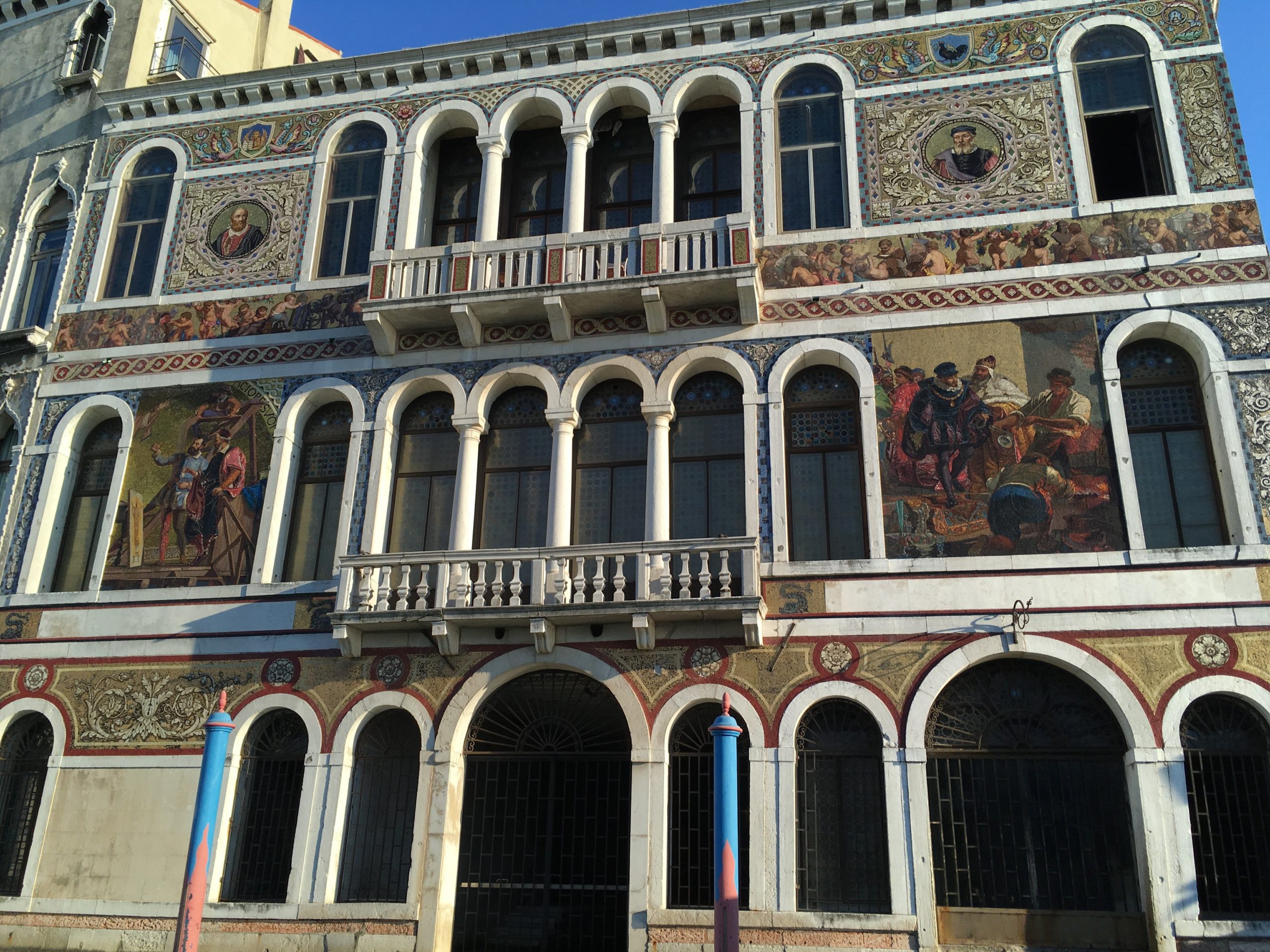
A painted palazzo facade on the Grand Canal | Photo by May S. Ruiz / Beacon Media News
One place that is distinct from any other Italian city is Venice. Seasoned travelers will even tell you it is the most un-Italian city. Because it separated itself from the rest of Italy to escape invaders during medieval times, it had to establish itself as an independent state. Its location made it a maritime power. At the same time, it afforded access to other influences which added to its wealth of arts, architecture, and culture.
Since I absolutely love pasta vongole and tiramisu, both of which are typically Venetian, I don’t need any other reason to go back to Venice. But a trip to this dazzling city on the water is definitely all the more enriching because of its long history and glorious past.
A visit to Venice is intentional. You can only get to it by vaporetto (waterbus or water taxi); it isn’t one of those sites you just happen to be driving through. It is a safe place for tourists – unlike in other busy cities, you can enjoy walking at night without the anxiety of getting mugged. There are very few violent crimes in Venice so you won’t have to fear for your life. However, there are pickpockets, just like in any other crowded city. So you have to be mindful of where you put your valuables and you have to be aware of your surroundings.
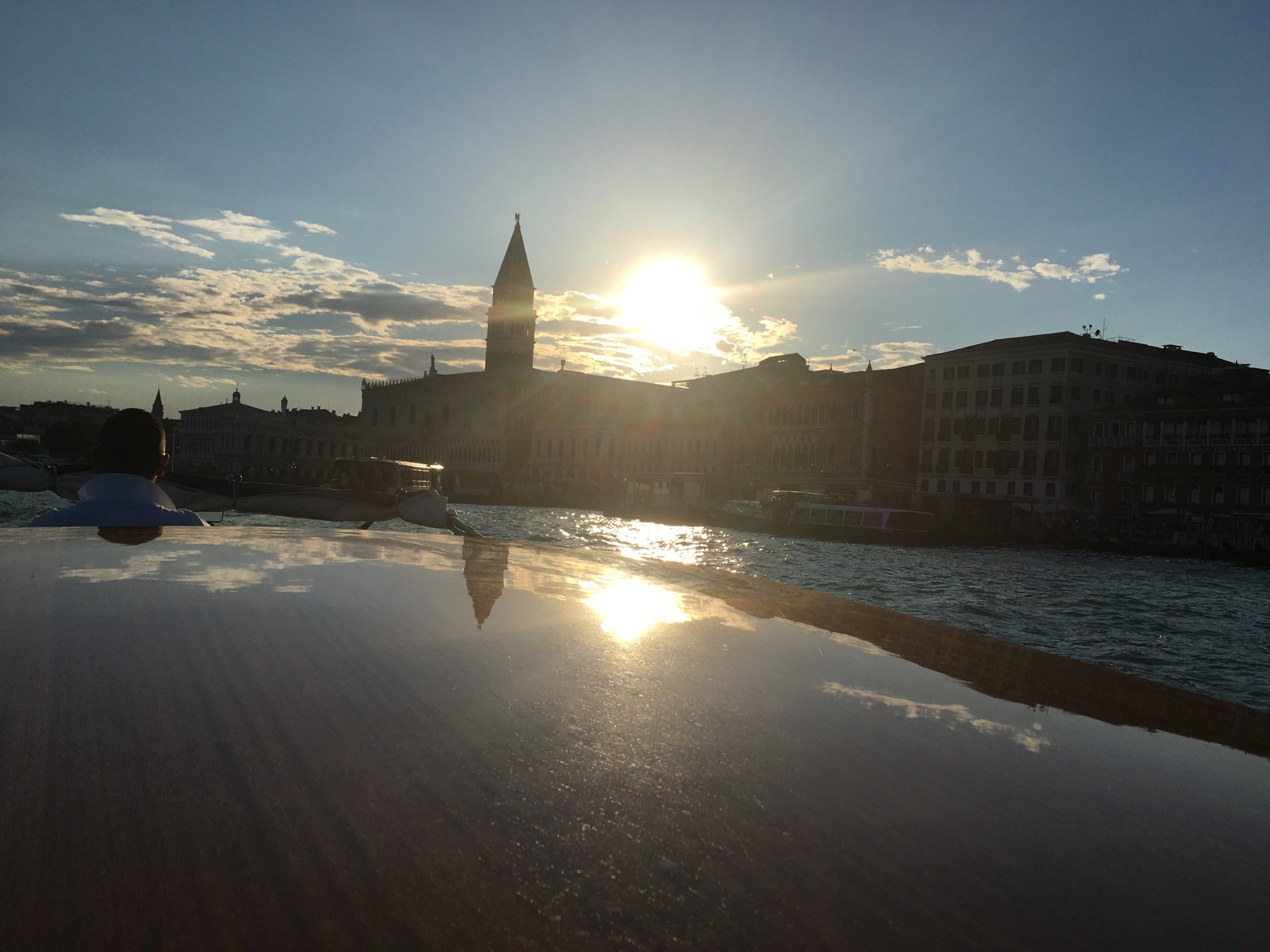
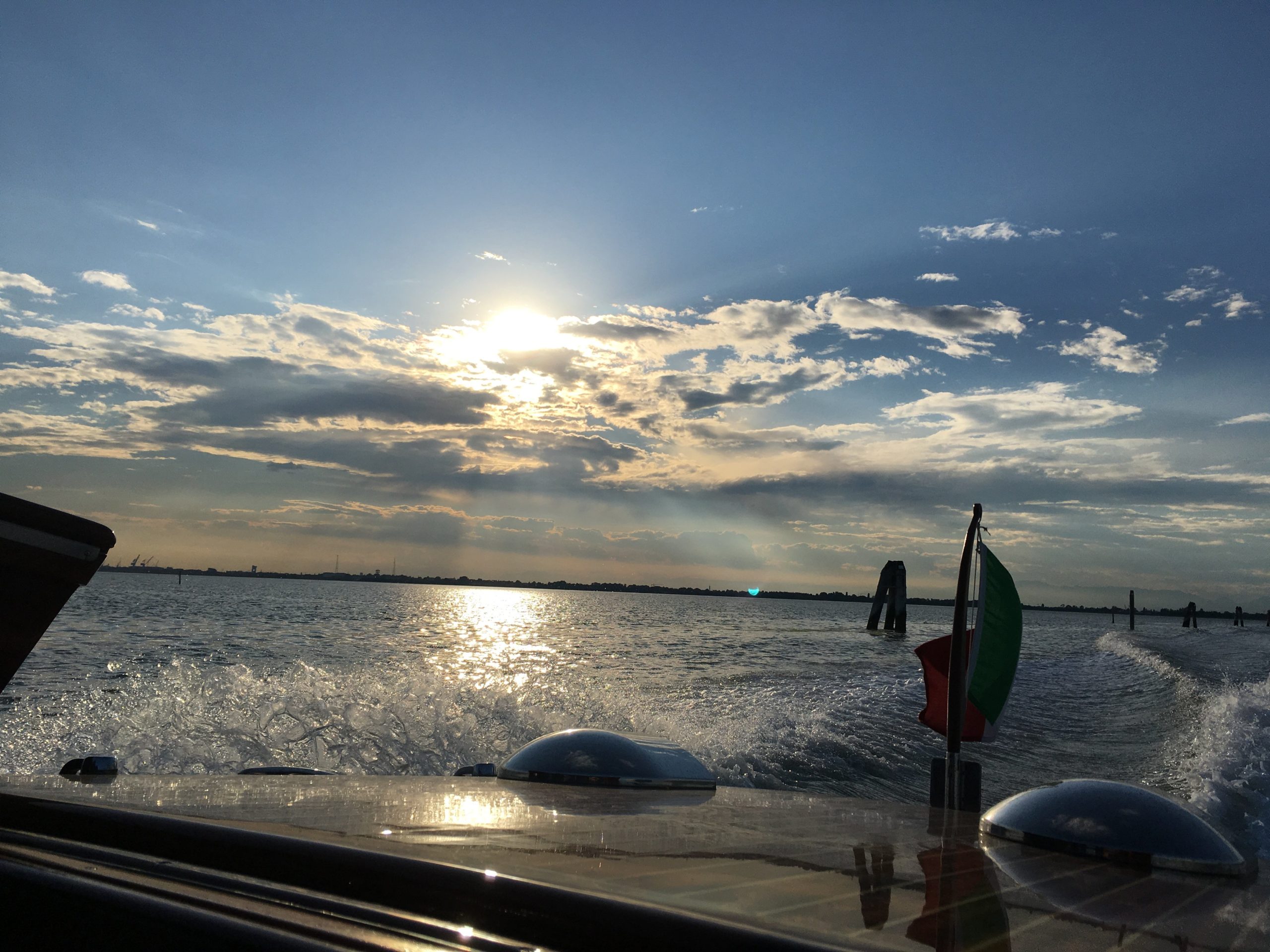
The trip to the hotel by vaporetto is the most spectacular half-hour ride one can have during sunset, when the amber light is filtered through pillow-y clouds. It is the most dramatic introduction to the beauty that awaits the traveler.
Arriving in Venice at sunset | Photo by May S. Ruiz / Beacon Media News
My two young companions and I got to Hotel Colombina in the early evening and we immediately unpacked. We crossed the footbridge a few steps away from the hotel and saw The Bridge of Sighs to our left.
We followed the path most people were taking and found ourselves right in the middle of Piazza San Marco (St. Mark’s Square) and beheld all the magnificent buildings therein – the Basilica di San Marco (St. Mark’s Basilica), Palazzo Ducale (Doge’s Palace), the Procuratie, the Campanile (Belltower), and Torre dell’Orologio (Clocktower). We were in the heart of the city!
As close as Hotel Colombina is to the activities going on at Piazza San Marco, however, its location is surprisingly quiet. There isn’t much pedestrian traffic near it and the footbridge provides an excellent backdrop for picture-taking.
Venice produced renowned artists. The palaces we visited contained the most spectacular works of Italy’s greatest artists – Bellini, Canaletto, Canova, Tintoretto, Veronese, among others. Even the humblest homes in this city boast of priceless paintings by famous painters.
Moorish influences, not seen in other Italian edifices, are on display at St Mark’s Basilica with its mosaics, the arches on its façade, and the Islamic lanterns on top of the dome. Former residences like the Doge’s Palace and Ca’ d’Oro, and the fondacoes (trading factories and warehouses) have architectural elements that reflect those of mosques. They are all reminders that Venice was once a trade center that linked the Adriatic and Mediterranean Seas to Constantinople, Egypt, and Syria.
It’s impossible to see everything here unless you’re staying for a while. One way to take in the grandeur of Venice is a boat ride around the lagoon, as we did. A gondola ride is also a must if you want a more leisurely outing. Not all gondoliers sing as they paddle on the canal but they are always happy to oblige.
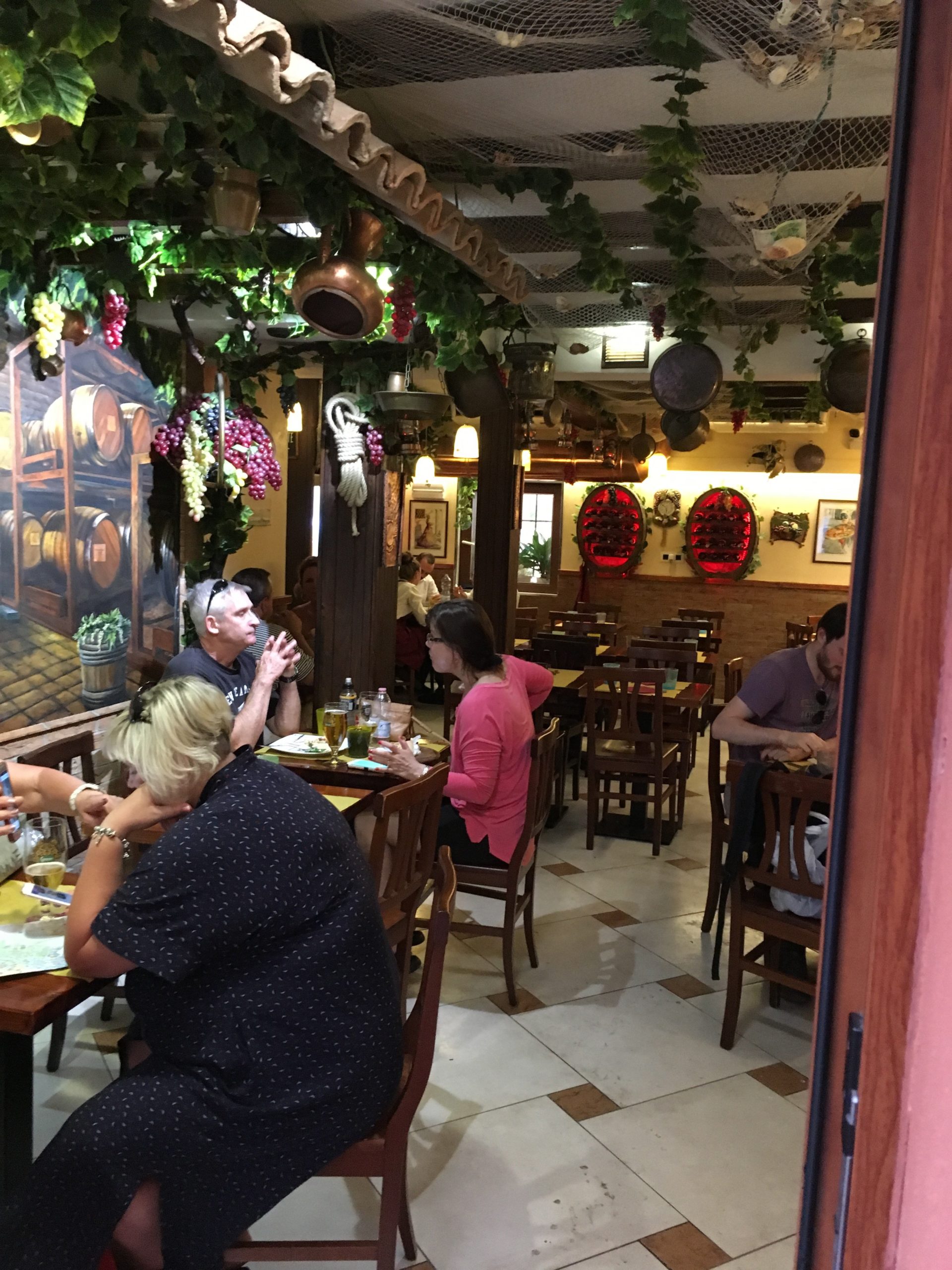
One of the many trattorias in Venice | Photo by May S. Ruiz / Beacon Media News
Italy is known for its delicious food and Venice abounds with trattorias and ristorantes. You don’t have to eat at expensive restaurants with fancy dress codes, your most satisfying gastronomic experience can be found in the hole-in-the-wall trattorias.
While Venice isn’t known for pizza like Naples or Sicily, we ate excellent pizza at the very popular Rosso Pomodoro.
Seafood is the specialty of Venice and every restaurant has an abundance of dishes to showcase their fresh catch. As determined as I was to try out many different varieties of it, I am addicted to pasta alle vongole (Italian noodles with clams) so I mostly ate that with either spaghetti or linguini.
The lagoon is the source of the local fishes in Venice, like sardele (pilchards), sardon (anchovies), sgombo (mackerel), and go (grass goby). However, if you’re not adventurous, restaurants offer other fish we know, including tuna and salmon; and some we don’t see too often, like cuttlefish and squid. Both of them have black ink, which can be strange, but they’re rather tasty. And the calamari anywhere we went was outstanding. Mussels and shrimps are also readily available at the market and served at restaurants.
Tiramisu, a decadent dessert which we might have first heard of in the 1993 romantic comedy ‘Sleepless in Seattle’ starring Tom Hanks and Meg Ryan, became an instant fad that almost every restaurant had it on their dessert menu. It’s not quite as popular now among foodies but in Venice, where tiramisu originated, it will never go out of style. It is a dessert mainstay and it was the perfect ending to every meal I ate there.
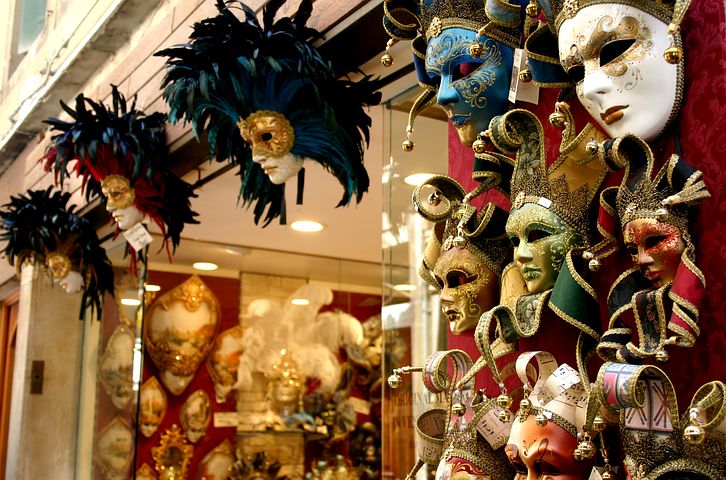
A store selling Venetian masks in all colors and sizes | Courtesy photo
Venice is called the ‘City of Masks’ and you can find masks everywhere – from the biggest and most elaborate one that hides your entire face, to the simpler and smaller variety that covers mostly the eye area. They are made of papier–mache and are decorated with fabric, feather, fur, or gems.
The history of the Venetian mask goes back centuries when they were used as a disguise for people who were indulging in promiscuous or indulgent activities. Later on, they became the emblem of the Carnevale (Carnival), a pageant and street fair celebrating hedonism, which is still held every year at Piazza San Marco.
We weren’t going to leave Venice without bringing home an authentic Venetian mask but determining which to buy was tough. There were so many choices and each one so beautiful and colorful. In the end, what decided it for us was the size because it had to fit in a suitcase. Even then, packing the mask proved to be a challenge because of its shape.
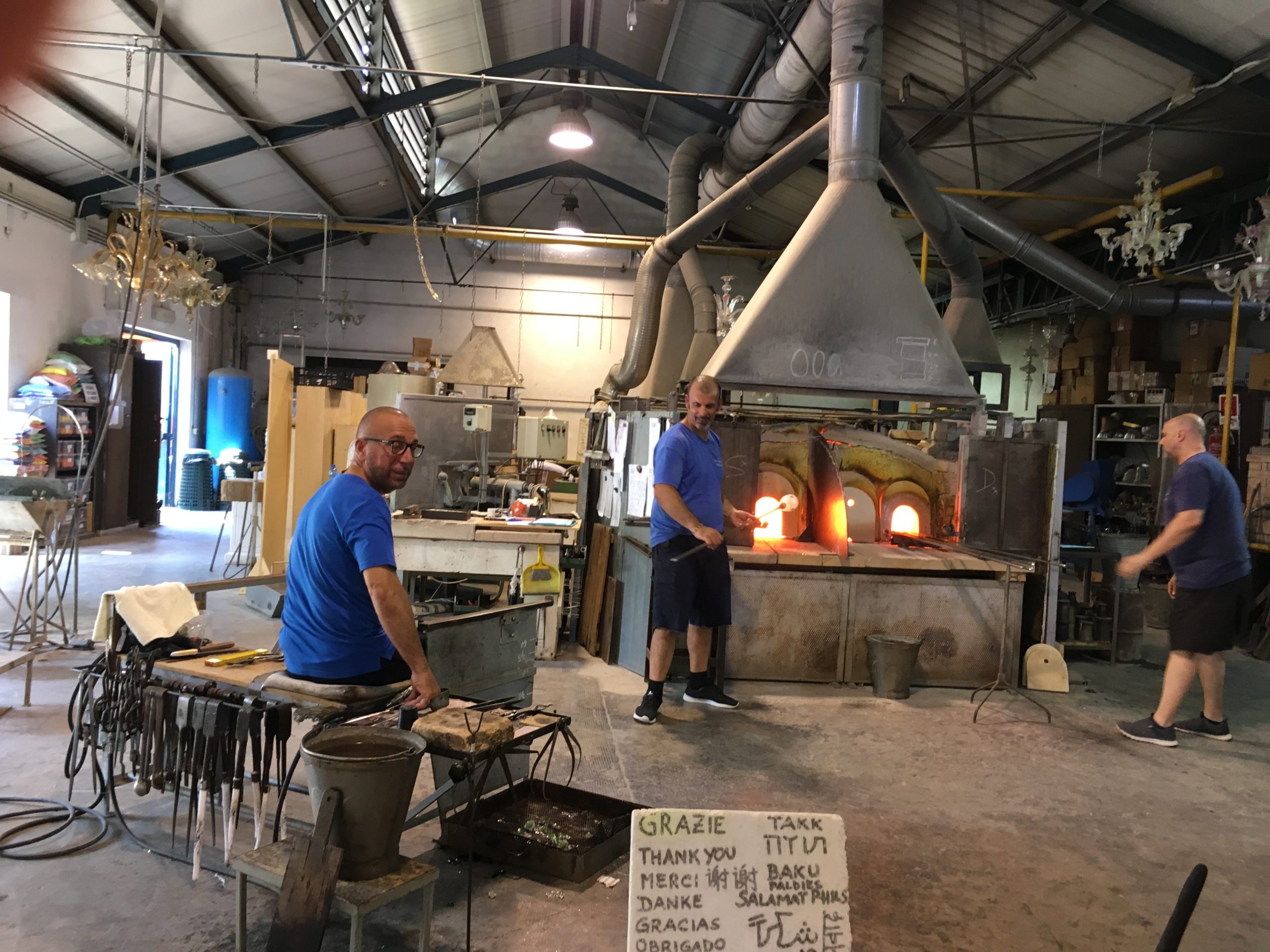
Venice is also widely known for Murano glass. Historians believe Italian glassmaking began in the 8th century but it was in 1291 that Murano, located almost a mile away from the main city, became the center for it when glassmakers were ordered to move their foundries to the nearby island to protect Venice’s mostly wooden buildings from fires.
Murano glassmakers became the island’s most prominent citizens. By the 14th century they were so esteemed that they were allowed to wear swords, enjoyed immunity from prosecution by the Venetian state, and their daughters were permitted to marry into Venice’s most affluent families. Marriage between a glassmaker and a nobleman’s daughter was considered a good match.
We made an expedition to the New Murano Gallery to see how the exquisite Murano masterpieces are individually made. Our knowledgeable gallery guide told us glassmaking is still a respected artisan profession that’s handed down between generations.
Murano glassmakers still use the traditional process developed a thousand years ago | Photo by May S. Ruiz / Beacon Media News
That morning we observed glassmaking artists create drinking glasses for a special order. We were told each piece in the set costs 110 Euros. That price seemed steep, but we deemed it equitable after we watched what the process for making it entailed.
Each artist has his own distinctive style and the pride he takes in his work is admirable. The New Murano Gallery displays all their products in an upstairs room with a dedicated area for each glassmaker. The pieces vary in size and come in spectacular colors. The intricacy and value of each work of art is reflected in the price tag too.
Some artists are known for a particular motif – fishes, equines, seahorses, and so on. They are truly magnificent sculptures and are a sight to see! Other lesser-priced items are presented according to type of glassware – wine goblets, drinking glasses, coffee and tea sets, Asian figurines, etc.
The gallery takes precautions with regard to guarding the integrity of their original products so picture-taking is not allowed upstairs. Each item is signed by the glassmaker and a certificate is issued as proof of authenticity.
Buyers of Murano Glass come from all over the world. That morning several groups from different countries were also there. Our guide, a polyglot, gave the tour and answered questions in languages besides English.
Judging by the number of orders the gallery gets, Murano Glass is still much-coveted. We saw huge packages ready for shipment with addresses in the United States and in other continents. Care is taken to guarantee the ordered items arrive in their destination safely. Each purchase is covered by insurance and Murano Gallery will replace any damaged piece without charge. Each order is also documented and saved on their computer so that if, years later, one piece in a set gets broken the owner can call the gallery with the order number and an exact item can be made.
There are several glassmakers on Murano and their merchandise can claim to be Murano Glass as long as they carry the trademark ‘Vetro Artistico Murano.’ It certifies that the products have been made there using traditional artistic methods born and developed on the island over a thousand years.
Lace is another Venetian product and lace-making is considered both an art and a tradition on the island of Burano. It began in the 16th century during the ‘Rinascimento,’ a period of artistic and cultural awakening and became as important as Murano Glass. Lace became a symbol of wealth and class as only aristocrats could afford to purchase it.
Competition from foreign makers selling cheap lace in the 1700s led to a sharp decline in lace-making. Then in the 1800s machinery industrialized lace production. However, handmade lace can still be found and purchased today in Burano, where a professional college for lace-making has been opened to protect this art and tradition.
The Campanile and Basilica di San Marco from the Canal | Photo by May S. Ruiz / Beacon Media News
Venice is the venue for La Biennale di Venezia (Venice Film Festival), which is celebrating its 75th anniversary. Held on the island of Lido, it is one of the ‘Big Three’ film festivals alongside the Cannes Film Festival and Berlin International Film Festival.
From the 29th of August to the 8th of September this year, Venice will welcome thousands of people in the film industry as well as movie buffs. Because it is held in the Fall, the reception participating movies get from film critics has become a more accurate indication of what movies will be in the Academy Awards line up.
The magnificence of Venice is clearly evident to the 55,000 tourists who descend on this jewel of a city every single day. It is one travel destination that will remain unforgettable for me. Each time I visit, I see another aspect to it and I’m awed by its beauty all over again. But even those who haven’t been there are touched by it in some way. Venice’s influence – whether it’s related to art, clothing, food, or movies – reaches far and wide.
Venetians call their city ‘Serenissima’ – the Most Serene Republic – not because it’s peaceful (the presence of so many tourists guarantees it’s anything but quiet) but because it still reigns supreme. And Venice’s gifts to the world are as unique as the city itself; they are a reflection of the splendor that is Venice.
Originally published on 31 July 2018 in the Pasadena Independent, Arcadia Weekly, and Monrovia Weekly
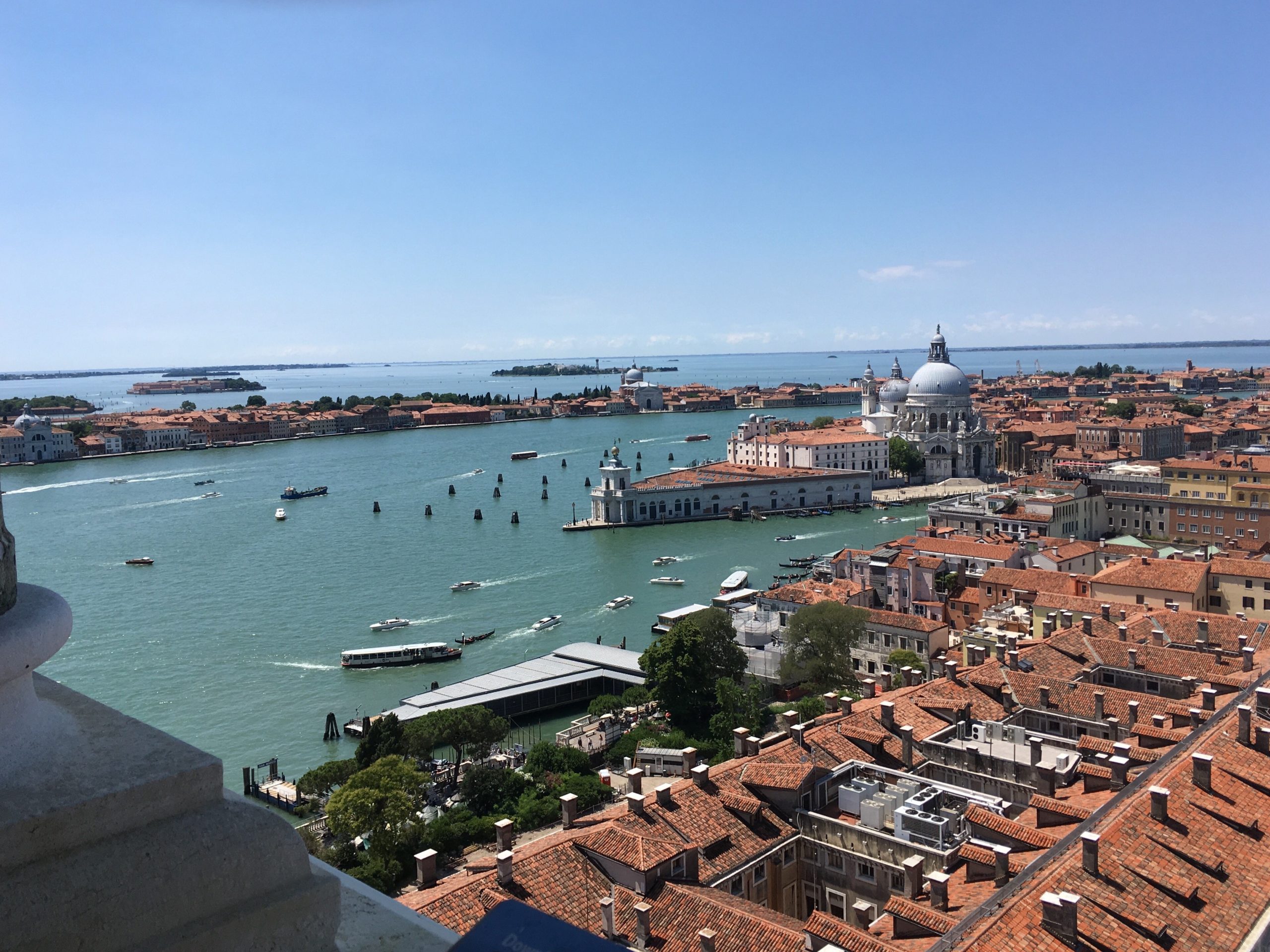
Venice, with the city’s red-tiled rooftops, viewed from the Clocktower | Photo by May S. Ruiz / Beacon Media News
Venice: It’s called ‘City of Bridges,’ ‘City of Canals,’ ‘City of Masks,’ ‘City of Water,’ ‘City of Gondolas,’ and ‘Queen of the Adriatic.’ But however many different ways we want to think of it, there is one thing we can universally agree on – Venice is quite unlike any other city in the world.
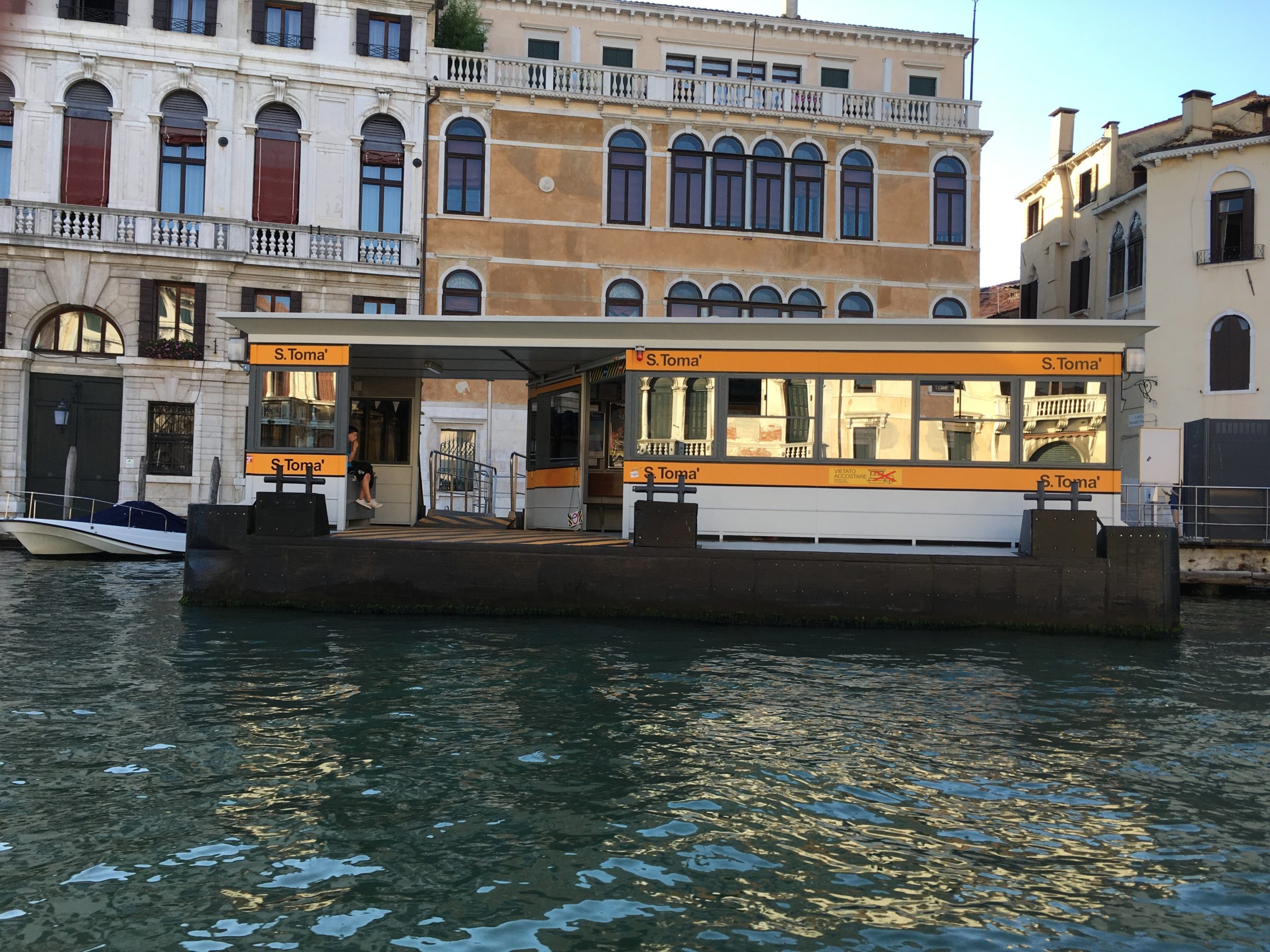
Built on more than a hundred islands in a lagoon on the Adriatic Sea, Venice floats on the water. It has no roads to speak of, only canals and bridges, and the mode of transportation is either the water bus or water taxi. Its main thoroughfare, the Grand Canal, is lined with magnificent Renaissance and Gothic palaces. The lagoon and a part of the city are listed as a UNESCO World Heritage site.
According to historians, Venice was ‘born’ on the 25th of March 421, the feast of the Annunciation, when people fleeing from the barbarian invasions built the first settlements. It was merely an unhealthy swamp at the time, whose inhabitants scraped a living by fishing and salt production.
In 697 the Byzantines realized Venice’s potential and built the duchy of Venice. By the year 1000 it established itself as a major maritime power alongside Amalfi, Genoa, and Pisa. These principalities maintained political autonomy, their money was accepted throughout the Mediterranean basin, and they participated in the Crusades with their own fleet.
All this led to Venice’s ascension as an empire which, at the height of its glory, extended from Bergamo in the north to the entire Dalmatian Coast and to the Greek Coast. From the 13th century up to the end of the 17th century it was also an important center of commerce and art. The wealth that Venetians accumulated during their years of prosperity is displayed by the enormous and stunning palaces that they built.
It was in the 18th century that the decline of Venice began. When Napoleon and his army invaded the city on the 12th of May 1797, no one resisted. In fact, many thought he was bringing new ideas of democracy. Venice then alternated being a French and Austrian territory.
A bus stop on the Grand Canal | Photo by May S. Ruiz / Beacon Media News
Today, Venice is a small city with about 60,000 inhabitants that attracts millions of tourists to make it fill past capacity. That it is singularly different makes it one of the most popular destinations in the world, which has been both a blessing and a curse. Its infrastructure endures much wear and tear from the trampling of feet; its tidal levels are lowering and the city is sinking; many houses are uninhabited during most part of the year, so they don’t get constant maintenance.
The thought that this city may one day be underwater is one reason most of us want to go there. But whatever motive urges us, we will never be disappointed. Venice offers the most breathtaking vista of historic structures and a rich culture uniquely its own.
A tour of Venice starts from the Marco Polo airport, if arriving by air, which is how my two young companions and I traveled. From there we took a water taxi to Hotel Colombina, which is located one bridge over from the Bridge of Sighs and is a five-minute walk to Piazza San Marco.
We were only staying in Venice for four days so we decided to spend most of that time taking in the sights at Piazza San Marco. This tour guide focuses on the structures one can find within this area, which Napoleon legendarily referred to as “the drawing room of Europe.”
Walking around Piazza San Marco | Photo by May S. Ruiz / Beacon Media News
St. Mark’s Square, the piazza’s English name, is the symbol of Venice and is considered one of the most beautiful squares in the world. It is also the only real ‘square’ in the city – all the others are called ‘campi.’
Venice’s political and religious center, St. Mark’s Square is trapezoid in shape and is framed by St. Mark’s Basilica, the Doges Palace, the Clocktower, the Bell Tower (Campanile), the Procuratie, the Library, and the Correr Museum (Museo Correr). Numerous kiosks selling anything from souvenir items, to postcards, to hats and parasols, dot the Square. Along its perimeters are countless trattorias, gelaterias, and name-brand retail stores. It is also where the internationally renowned annual Carnival (Carnevale) takes place.
When I first visited Venice 20 years ago, St. Mark’s Square was also inhabited by a teeming mass of pigeons attracted to the area because tourists fed them. Ten years ago, city officials banned the feeding of these birds so there are now far fewer pigeons mingling with people. The Basilica’s exterior has also since been repainted and looks much more impressive, as befits its lofty image.
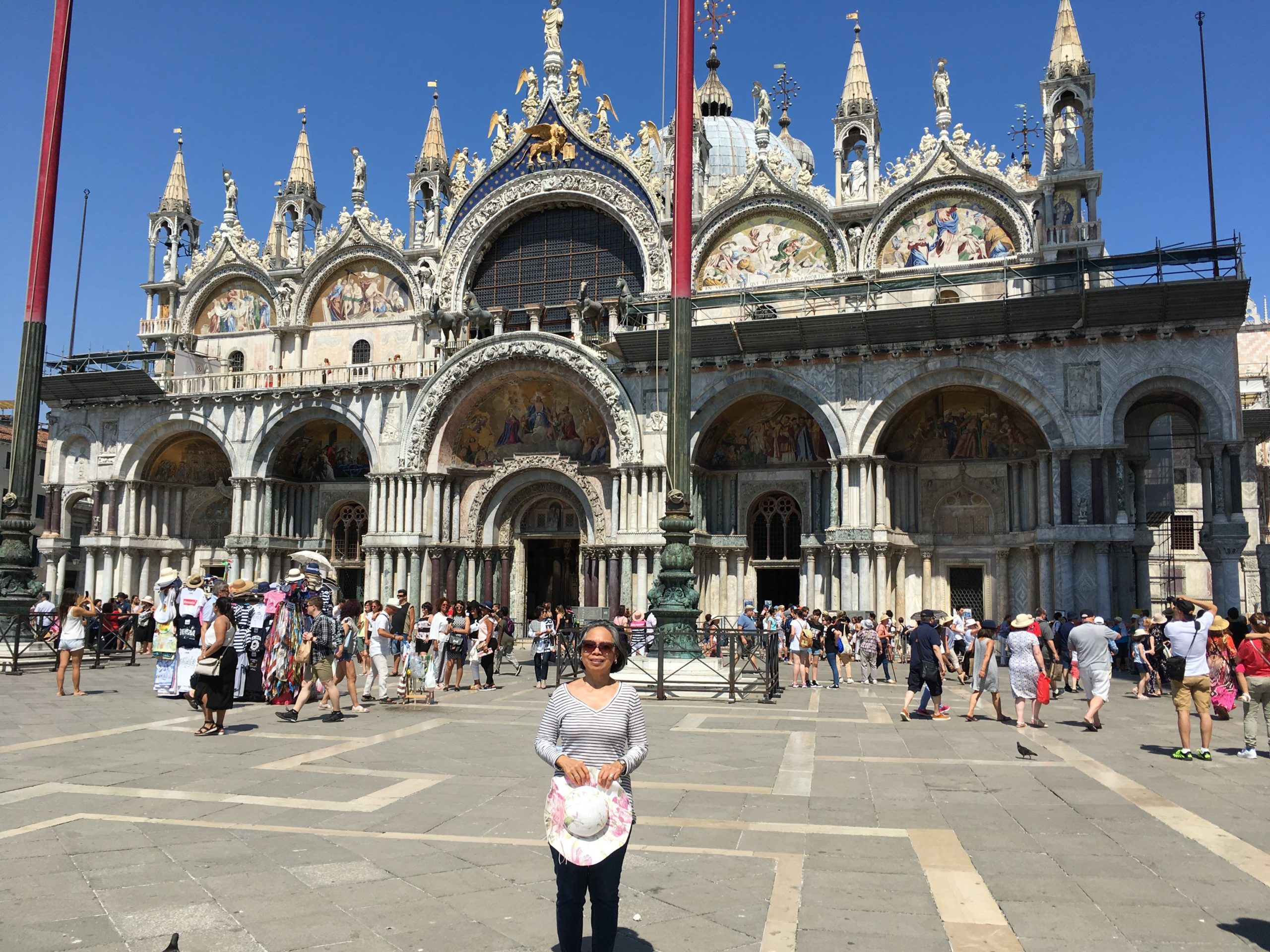
The writer in front of St. Mark’s Basilica | Photo by Brianna Chu
St. Mark’s Basilica, located at the eastern end of the Square, has seen several reconstructions over the centuries. In 832, a first basilica was built to house the remains of Mark the Evangelist from Alexandria. It was burned down in 976 and rebuilt in 978 by Doge Pietro Orseolo I.
Further reconstruction in 1063 by Domenico Contarini, with influences from Byzantine, Gothic, and Romanesque designs, led to today’s St. Mark Basilica. Connected to the Doge’s Palace, it was originally the chapel of the Doge. In 1807 it became the cathedral church of the Roman Catholic Archdiocese of Venice. Its opulence, marked by gold ground mosaics, made it a status symbol of Venetian wealth and power in the 11th century. A low tower houses St. Mark’s Treasure and has a high altar of gold.
A rigid dress code prohibits people in shorts or outfits exposing legs above the knees, those baring their arms, and women showing cleavage, from coming in. Paper ponchos and skirts are available at the entrance for people to wear before entering the Basilica. Taking photos, whether using a camera or a cell phone, is not allowed at all.
Above the portal of the basilica are perched the four gilded bronze horses of St. Mark, installed on the balcony in 1254. Also known as the ‘Triumphal Quadriga,’ they were part of the loot sacked by the Venetians from Constantinople during the Fourth Crusade. They were replaced in 1977 by replicas, with the originals kept inside the basilica, to save them from further damage caused by air pollution.
To the right of St. Mark’s Basilica is the Procuratie Vecchie, with a double loggia in the Venetian-Byzantine style. It was built in the 12th century under Doge Sebastiano Ziani during the Republic to house the apartments of the Procurators of San Marco. It has an expanse of almost 500 feet and a portico of 50 arches.
The original Procuratie was partly damaged by fire at the beginning of the 16th century. It was demolished and rebuilt and was completed in 1538. Connected to the Procuratie are the Museo Correr, the Museo del Risorgimento, and Museo Archeologico, the administrative department of the Musei Civici and part of the Biblioteca Nazionale Marciana (Marciana National Library). These buildings were originally utilized by Napoleon for receptions and later were reserved for the use of the kings of Italy.
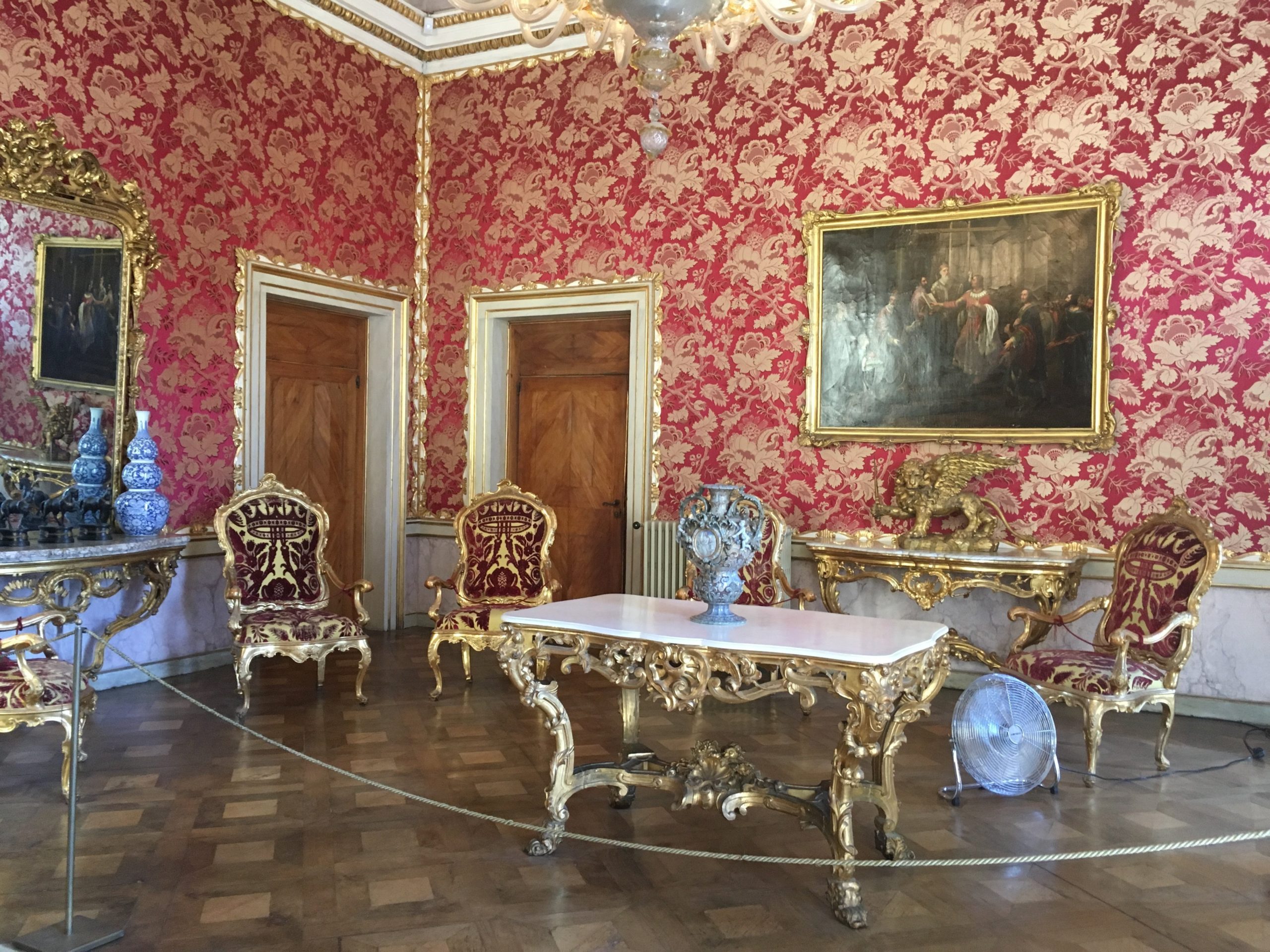
One of the Imperial Rooms at Museo Correr | Photo by May S. Ruiz / Beacon Media News
Museo Correr houses the Imperial Rooms, decorated in the style popularized during the Hapsburg period and some elements from the Napoleonic age. Next to the Imperial Rooms is the dining room for non-official occasions such as ‘work’ meetings of the Government cabinet, and as an antechamber to the Lombardy-Venetia Throne Room. The Throne Room functioned alternately as a waiting room for those seeking an audience with the Emperor or Empress.
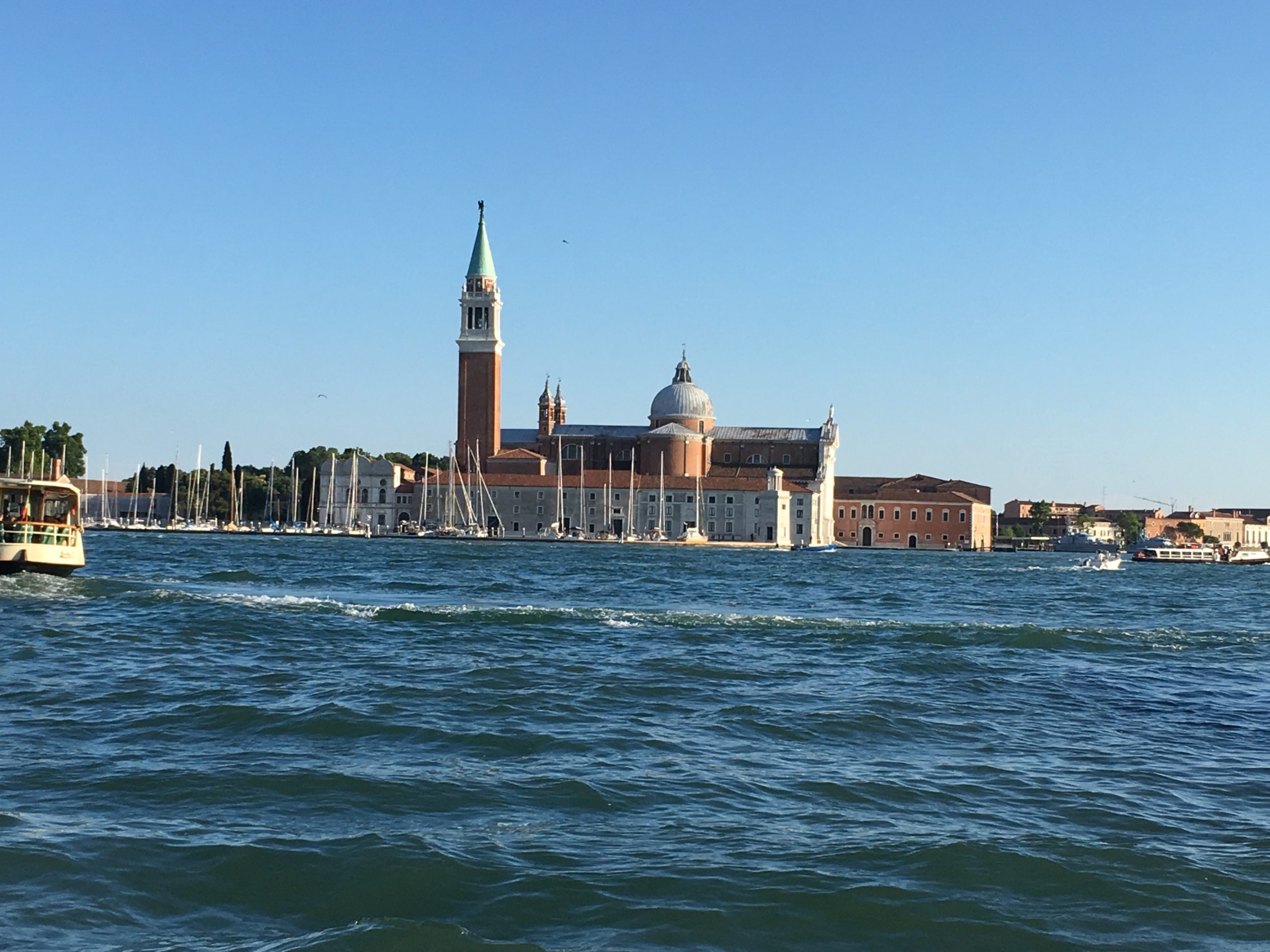
The next rooms, none less ornate or embellished, are for the Empress’s private use – the Bathroom, the Study, The Boudoir, and The Bed Chamber. There is an antechamber of the apartments, which was a passageway from the rooms of Empress Elisabeth and Emperor Franz Joseph. It has a balcony which gives a breathtaking view of the Royal Gardens, looking towards the Basin of St. Mark’s, and the island of San Giorgio.
An oval-shaped Neoclassical room is the junction between the palace’s public rooms and the royal apartments. When Franz Joseph and Elisabeth were staying there, it served as the Royals’ casual dining room where they ate breakfast, lunch, and dinner.
The Neoclassical Rooms were part of the 2015 Restoration Project to recondition the Antonio Canova Collection at Museo Correr. Italian sculptor Canova, who was famous for his marble sculptures, is regarded as the greatest of Neoclassical artists. Born in Venice on the 13th of October 1822, his works were inspired by the Baroque and the Classical Revival. The Ballroom at Museo Correr houses the most striking of Canova’s sculptures – Orpheus and Eurydice, Daedalus and Icarus, and Paride (or Paris. In Greek mythology, his elopement with Helen, Queen of Sparta, precipitated the Trojan War).
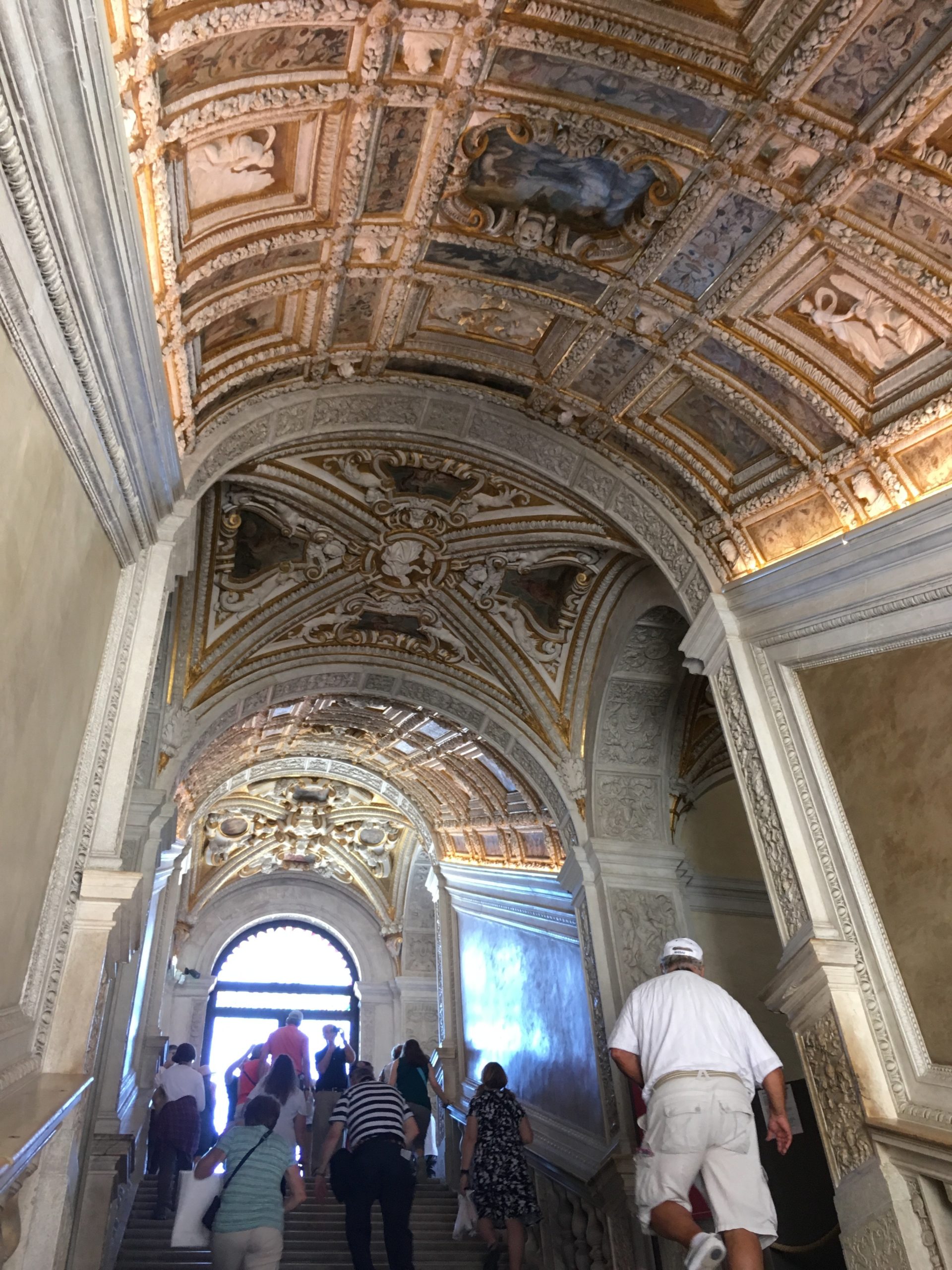
The Golden Staircase at Doge’s Palace | Photo by May S. Ruiz / Beacon Media News
The Doge’s Palace, the residence of the doges, stands where the Grand Canal flows into the lagoon. It was the heart of Venice, the symbol of its might and supremacy. Like the other structures on the Square, it is the product of complex reconstructions – which commenced in the 14th century, coinciding with the reorganization of the entire area. It opened as a museum in 1923, one of the eleven cultural and artistic buildings managed by the Fondazione Musei Civici di Venezia.
Imposing in its aspect, the façade of the Doges Palace is a grand example of floral Gothic decorated with white and rose-colored geometric shapes. It has a double row of arcades in the lower levels, typical of the Venetian fondaco palaces. Large lancet windows sit above, capped by a lace-like parapet of Oriental cresting.
A big interior courtyard and a spectacular Giant’s Staircase were our first clues of the lavishness within. Once inside, we went up the Golden Staircase, the breathtaking golden stucco-decorated vault which was formerly used only by Magistrates and important people. No ceiling or wall in the Doge’s Palace has been spared from artistic depictions of notable historic or biblical event. The extravagance and opulence are overwhelming!
The Armory Rooms have a collection of historical weapons and armaments used by the Palace’s guards. Some of them are 15th and 16th century suits of armor, swords, halberds, quivers, and crossbows. Room IV contains examples of 16th and 17th century firearms and instruments of torture.
Our visit to the Doge’s Palace ended at the prisons. We crossed the infamous Bridge of Sighs, the covered walkway that connects the palace to the walled-in chambers used to lock up criminals. The bridge was named for the sighs the prisoners breathed as they took their last look at freedom through the small windows.
Sunset in Venice | Photo by May S. Ruiz / Beacon Media News
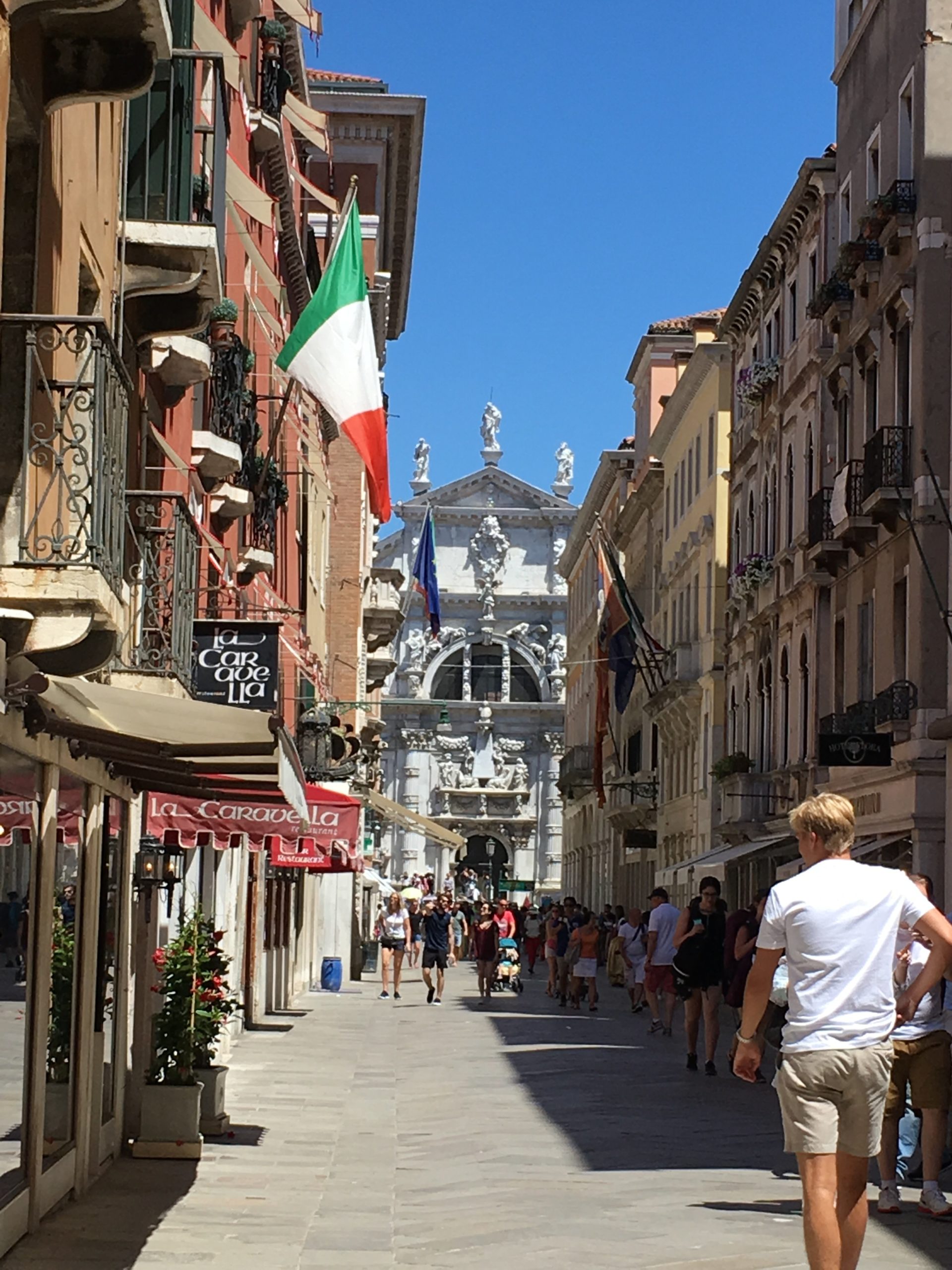
On the north side of St. Mark’s Square is the Clocktower, built at the end of the 15th century as the doorway to the Mercerie, one of the city’s main streets. It also served as a landmark visible from the lagoon to demonstrate the wealth and glory of Venice. Above the arch is a large enameled clockface showing the hours, the moon phases, a sundial, and signs of the zodiac. On top of it is a small balcony with the three Magi; and above are the Moors, the two bronze figures which, to this day, strike the hours by hammering on the bell.
The Campanile, or Bell Tower, is the most recognizable representation of Venice. Standing at 323 feet tall, it is the tallest structure and was used as a lighthouse or a look-out tower. Its five bells marked the important moments in the republic’s history, including the start and the end of the workday, the meetings of the Great Council, and the assemblies of the senate.
Our short tour of Venice gave us a glimpse of the city’s long history and glorious past. It was a lovely reminder that the city isn’t stagnant but is at once timeless and ageless. And although it no longer has the power and sovereignty it once boasted of, its grace and beauty will forever hold us captive.
This resplendent city on the water – with its fascinating bridges and canals, magnificent palaces and structures – continues to charm, to enchant, and to entice people the world over into its warm embrace.
Originally published on 19 July 2018 in the Pasadena Independent, Arcadia Weekly, and Monrovia Weekly
St Andrews from St Rule’s Tower | Courtesy photo
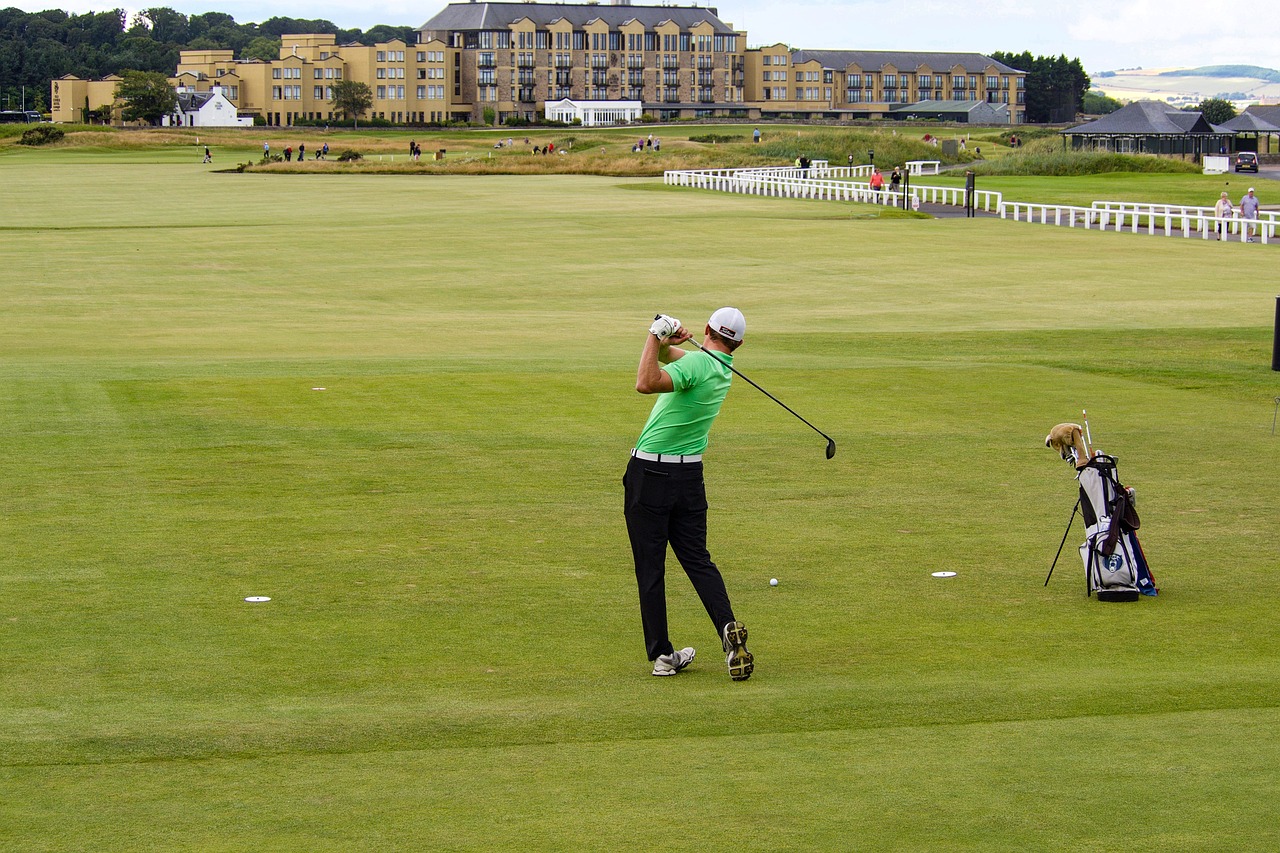
Mention St Andrews, Scotland, and most people would automatically think of golf. It is, after all, popularly known as the birthplace of this sport where it was first played in the 15th century. To this day the British Open is held on The Old Course every five years.
Golfer Bobby Jones once proclaimed, “I could take out of my life everything except my experiences at St Andrews and I would still have a rich, full life.” That may be a bit of an exaggeration, though. Celebrated golfer Jack Nicklaus put it in better perspective when he said, “If you’re going to be a player people will remember, you have to win The Open at St Andrews.”
After his first Open victory at St Andrews in 2000, Tiger Woods famously declared, “It may be years before I fully appreciate it, but I am inclined to believe that winning The Open at the Home of Golf is the ultimate achievement in the sport.”
Countless superlatives that can be uttered relating to the golf experience on this picturesque coastal town 30 miles northeast of Edinburgh and they would all be true. Golf enthusiasts have consistently included St Andrews on their bucket list.
Aside from the iconic Old Course, players can enjoy the New Course, Balgove Course, Castle Course, Eden Course, Jubilee Course, Kingsbarns Golf Links, Strathtyrum Course, and the Fairmont St Andrews. With so many venues to choose from, they could practically play a round on a different course each day for two weeks without having to travel more than 30 minutes to reach one.
Professional golf is a lucrative business that gets support from major sponsors and draws an elite following. St Andrews Links run five annual tournaments throughout the year, including the St Andrews Links Trophy, and host the St Rule Trophy, the Alfred Dunhill Links Championship, and The Open Championship.
During the summer months, non-professional players from all over the world flock into town. Golf is a big part of the daily lives of St Andrews residents; each one of them is touched by the sport in one way or another.
The world-famous and iconic Old Course | Courtesy photo
Limo chauffeurs, as well as cab and shuttle drivers, have numerous memorable stories about how many golfers and golf clubs they have transported from the Edinburgh airport to St Andrews. Every pub and tavern owner has served tankards of ale or glasses of Scotch whisky to the most famous golf luminaries, whether in celebration of a championship win or in commiseration for an upsetting loss. All hoteliers and B&B proprietors have warmly hosted these perennial visitors to their charming enclave.
But golf isn’t everything that St Andrews has to offer. It is also home to the University of St Andrews, the first and most ancient university in Scotland and the third oldest in the English-speaking world after Oxford and Cambridge. And while I don’t have first-hand knowledge as regards the importance of golf to life in St Andrews, I have a bit more perspective about what the school means to locals.
Founded in 1413, the University of St Andrews has consistently ranked third in academic excellence, behind Cambridge and Oxford, and first in student happiness in the United Kingdom. Presiding over this year’s graduation ceremony, Principal and Vice Chancellor Sally Mapstone also pronounced St Andrews as among the most modern and forward-looking universities.
While some might refute that claim, what’s indisputable is that St Andrews is the most international of all the universities in the U.K., which may partly explain why it is contemporary and in-step with the times. When my daughter and I visited it in 2013 during her college search, our student tour guide said 135 nationalities are represented – one-third of the student body come from Scotland, another third hail from England, and the last third are from around the globe.
Americans make up the largest group of international students, and each state is represented by two students. This last bit of information was demonstrated to us over a year later when my daughter was at the University Store to buy school supplies right before freshers’ (as incoming students are called; or freshmen as they’re referred to in the United States) week. Upon hearing my daughter’s American accent, the cashier inquired where she’s from and when she said “California,” he immediately said, “So you’re the second one; the first Californian was here the other day.”
The ruins of St Andrews Castle | Courtesy photo
During term time students make up approximately one third of the total population and because the university doesn’t really have a school campus, its buildings are scattered across town. The school and its students are such an integral part of the community. One out of every five residents has some connection to the school, whether as faculty or staff or as a worker in restaurants, grocery stores, retailers, and clothes shops catering to students and university personnel.
If you’re a tourist while school is in session, you will most definitely bump into students as they hurry off to their lectures or tutorials when you make your way to the ruins of St Andrews Castle or Cathedral. They are most probably sitting only a few feet away from you as you take in the majesty and splendor of sunset on the West Sands.
It’s a small town and everyone knows everyone else. Locals have as their neighbors students who are leasing the flat next door. The owner of the local cab company told us that there are only a hundred taxis in St Andrews and all cab drivers recognize the students by face. He assured us that they all treat these young people like their own children, “If ever students are too drunk to walk home we’ll drive them to their flat even if they have no money on them. They can just pay us the fare the next time they see us.” The legal drinking age in Scotland is 18 years old so intoxicated students are not an uncommon sight.
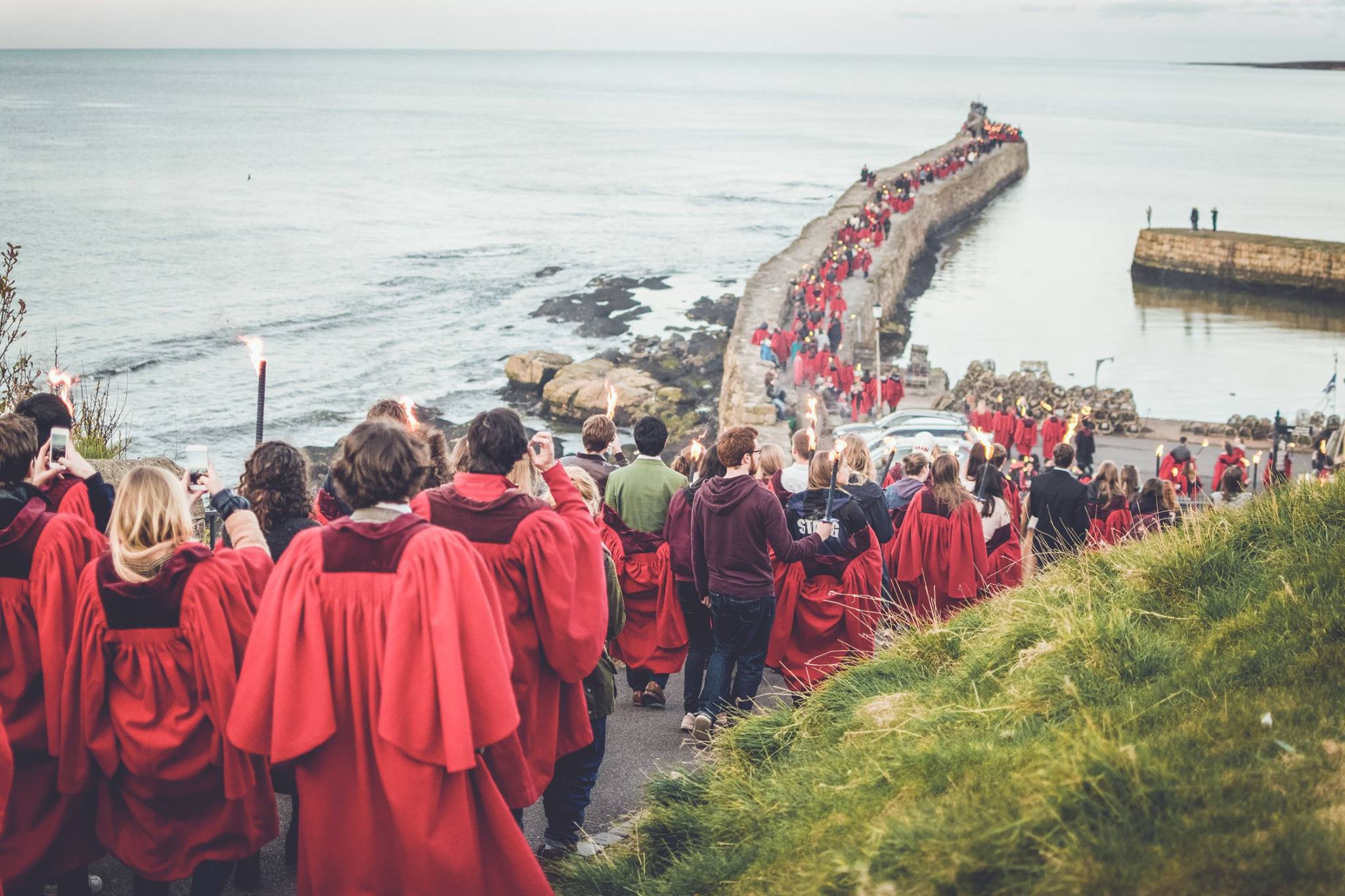
Students get the special treatment at The Botanic Garden, which is open all year and offers free admission to those with a valid student ID. University students mingle with locals as school traditions are celebrated all over town – whether it’s the Raisin Weekend during freshers’ week, the Gaudie Walk to East Sands, or the May Dip on the North Sea – and they’re all part of the daily affairs at St Andrews.
The Gaudie Walk is a University of St Andrews tradition | Courtesy photo
Academic dress, which is both distinctive and ubiquitous, is central to university life. In earlier days, students wore the red gown so tavern owners could identify them when they came round for a pint. Nowadays, it is worn to chapel services, formal dinners in the residential halls, meetings of the Union Debating Society, by student ambassadors who give guided tours and, most noticeably, for the traditional pier walk.
At no other time have students been lavished as much attention and affection than during graduation week which, this year, was from the 26th to the 29th of June. The entire town takes part in the excitement of the students and their families. A portion of North Street is closed for 15 minutes twice a day for the academic procession after the morning and afternoon ceremonies. The bells of St Salvator’s chapel are likewise on full peal and can be heard a mile out for an hour after each ceremony. Several restaurants offer prix fixe menus during graduation week. There is a palpable euphoric feel in the air at this joyous period.
This is also one of the busiest seasons at St Andrews when every single hotel room is booked and all bed and breakfast establishments are at full occupancy. Pam Izatt, a past president of the St Andrews B&B Association, says, “If your child is attending the University of St Andrews, reserve your accommodations two years in advance of graduation because they go fast. You’ll end up staying in Dundee or even Edinburgh otherwise.”
And graduation is the one occasion no University of St Andrews parent should ever miss. Unlike most American university commencement ceremonies which are conducted in large venues to accommodate thousands, it is an intimate affair at this ancient school where graduation is held at Younger Hall which has a capacity of 969 people.
It is a tradition that began in 1696 but the current form of graduation followed today is from the 1860s. In the past, the ceremony took place in the University Library but as the university grew it needed a larger venue and Younger Hall was built.
Two ceremonies are held for four days during graduation week, at 10:30 a.m. and at 2 p.m. Not everyone can be accommodated at Younger Hall but family and friends can watch the graduation from two screening rooms where the ceremony is streamed live.
Graduates at St Salvator’s Quad | Photo by May S. Ruiz
Graduands occupy the first several rows at the front of Younger Hall, with parents and families filling the remaining seats and those upstairs in the balcony. The university chaplain opens the ceremony and the academic procession enters the hall led by six men carrying maces that symbolize the university’s colleges. They are followed by various faculty heads, with the Principal and Vice Chancellor, Sally Mapstone, and the Chancellor Lord Campbell of Pittenween bringing up the rear.
The graduation ceremony I attended was presided by Mapstone who told us about the history of Younger Hall and explained the ritual, “It is the major celebratory occasion in our academic year at St Andrews and is a part of a tradition that allows for transformation. It is when scholars become masters and masters become doctors. It marks a particular rite of passage for our students when they become something they were not before. Graduations give us permission to change while recording what we stand for and establishing connections between generations.”
The conferment of a degree transpires when Mapstone says in Latin, “I raise you to the rank of Master of Arts and to symbolize this I place upon you this hat” to the first graduand. She then uses the shortened Latin phrase “et super te,” which means “and upon you, too” to the rest of the graduands.
According to Mapstone, the cap which touches the head of the graduate was long thought to have come from the trousers originally worn by St Andrews’ most famous 16th century student John Knox, the major proponent of Reformation in Scotland. He also, among other things, blew the first trumpet blast against the monstrous regiment of women. Happily, she notes, researchers found that this particular cap was purchased for the doctoral graduation of Sir John Arbuthnot, the Scottish physician and satirist who graduated in 1696, and this cap has been used since.
After the ceremony, new graduates join the academic procession which emerges from Younger Hall into North Street and then to St Salvator’s quad accompanied by the ringing of St Salvator’s chapel bells. Graduates take several turns around the quad while family and friends cheer their accomplishment.
A University of St Andrews graduation is the perfect capstone to students’ four years of diligent academic studies coupled with dynamic involvement in campus activities. It is a ceremony that is as solemn as it is stirring, and as moving as it is impressive. It is indeed a rite-of-passage worthy of the pomp and ceremony it is accorded.
In equal measure, golfers and students support the economy of this town as well as contribute to the local color. St Andrews is certainly abuzz and alive with their presence. And anyone who has been fortunate enough to visit this stunningly beautiful spot in Scotland fully appreciates how they have enriched the St Andrews experience.
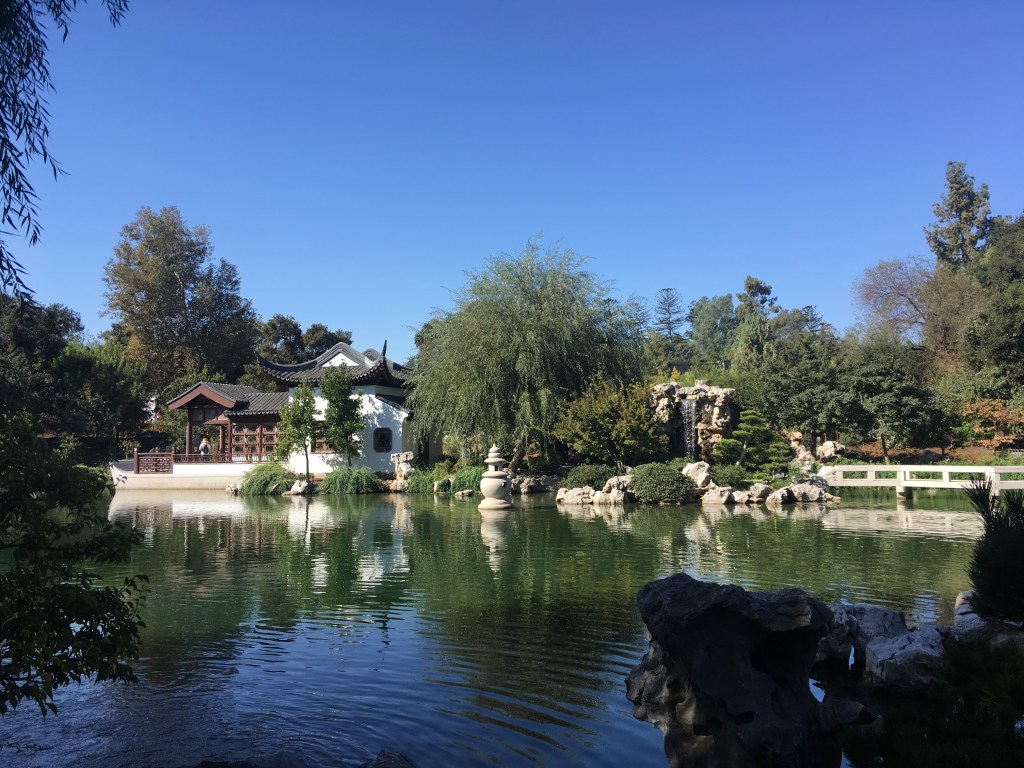
The Chinese Garden at the The Huntington Library, Art Museum, and Botanical Gardens, October 2020 | Photo by Brianna Chu
I have lived in Pasadena for four decades and though I’m not a native, I proudly call it my hometown. It’s a city steeped in history and tradition and rich with art and culture. It is as much a center of education as it is a seat of commerce in the western San Gabriel Valley. Resting at the foot of the San Gabriel Mountains, it has an abundance of natural beauty.
All these offer a writer fascinating material for articles and stories to share with readers. There are so many events worth capturing in words and pictures. There are countless individuals and organizations who make Pasadena and the San Gabriel Valley a great place to live and raise families in. I want to shine a light on these wonderful people and their causes so they can get the recognition they deserve. And I hope that in the process, their accomplishments influence others to also do good in the community.
I would love to hear from you and get feedback on the articles.

 A San Gabriel Valley Inquirer