Masters of Taste 2026 host chefs Vanessa and Thomas Tilaka-Kalb of Agnes. | Photo by May S Ruiz / Hey SoCal
Masters of Taste, Southern California’s premier food festival held its media preview night on Wednesday, March 25 at the Rose Bowl’s Court of Champions. In a departure from previous previews, the event was staged outdoors directly beneath the Rose Bowl sign instead of in the locker room.
Guests were treated to a selection of food and drinks that will be served at Masters of Taste 2026 when it returns to the Rose Bowl on April 19. We mingled with other food writers and chatted with the chefs who were serving a sampling of food and beverage purveyors pouring alcoholic and non-alcoholic drinks.
Masters of Taste media preview held at the Rose Bowl’s Court of Champions. | Photo by May S. Ruiz / Hey SoCal
Local Masters of Taste participant and Pasadena native, Christian Esteban – son of the founders of Chaaste Family Market on Allen Avenue – happily invited attendees to try Filipino favorites lumpia (spring rolls) and turon (deep fried slices of banana in a crepe-like wrap). The Tilaka-Kalbs of Agnes Restaurant and Cheesery on Green Street in Old Pasadena greeted us warmly and offered fried cheese curds with a dilly ranch dip. Dennis Cruz of STK Steakhouse in Santa Monica served beef bone marrow, which Filipinos call “bulalo,” topped with a smidgen of caviar, toast crisp, and microgreens. We downed all the delicious fare with non-alcoholic sparkling water slightly flavored with hops from LA-based beverage company HOPWTR.
Christian Esteban of Chaaste Family Market. | Photo by May S. Ruiz / Hey Socal
There wasn’t time to indulge in other delectable fare and refreshing beverage because we had to head over to the dinner tables. After guests were seated, the program began as servers brought out the different courses and drinks that evening. Participating chefs and beverage producers were introduced and they described each succeeding dish or drink we were enjoying.
Midway through dinner, attendees were reminded of the reason we were there: to promote the event that benefits Union Station Homeless Services (USHS). Katie Hill – who was named CEO of USHS merely weeks before the Eaton Fire – quite literally had a ‘baptism by fire’ and was thrown headlong into the center of activity. USHS’s Adult Center was converted into a central hub for donated essentials and hot meals for the thousands of Altadenans and Pasadenans who became homeless overnight.
USHS CEO Katie Hill. | Photo by May S. Ruiz / Hey SoCal
When Hill took the stage that evening she reiterated USHS’s mission – to end homelessness through housing, supportive services, and connection to community. Last year the organization served more than 4,200 people. It helped over 1,200 individuals and families move into permanent housing and another 2,200 people stay in housing. It also assisted nearly 2,000 to find safety through shelter or outreach. At the same time, USHS served over 700,000 meals.
“These are big numbers, but every one of those numbers is a person, a family, a story,” Hill clarified. “But here’s the reality – homelessness is becoming part of us all; it’s reaching more people. And we’re seeing it affect people who never thought they would face it: people who lost their home through fire; people who are working full time, sometimes multiple jobs, and still can’t afford the rent; seniors on fixed income who have been priced out of the community they’ve lived in for decades. This is no longer something that affects someone else. It affects our neighbors, our co-workers, sometimes our own family and friends – people who did everything right and still found themselves without a safety net.”
Masters of Taste media preview menu. | Photo by May S. Ruiz / Hey SoCal
“So we took a hard look at where we are and where we can make the biggest impact,” continued Hill. “Over the past year, we’ve built a new three-year strategic plan for our staff, our partners, and the people we serve. It’s focused, it’s practical, and it’s centered on five priorities – preventing homelessness before it starts, integrating behavioral health in housing, expanding workforce development and job pathways, strengthening food access, and increasing affordable housing – because these are what would solve homelessness.”
“As a result of that planning, I’m excited to share that we are launching a new initiative that brings together two of those priority areas: food access and workforce development,” Hill disclosed. “It’s a culinary workforce program that will be operated out of our brand-new commercial kitchen and will allow us to do two things at once – feed more people as the need continues to grow in our communities and create real job pathways for the people we serve. Participants who earn food safety certifications will work in our commercial kitchen and build the skill they need to enter into the workforce.”
2026 Masters of Taste restaurateurs and beverage purveyors. | Photo By May S. Ruiz / Hey SoCal
And Hill announced the plan that received the biggest applause. “This is where THIS community stepped up in such a powerful way. Many of the chefs and restaurant partners involved in Masters of Taste have committed to hiring our graduates.”
“We are absolutely thrilled that our first cohort of graduates will work with our Union Station Food Services team as they are featured this year at Culinary Masters,” Hill added. “This is not just training, it’s not just food, it’s a direct bridge from homelessness, to employment, to long-term stability.”
Masters of Taste at the Rose Bowl. | Photo courtesy of Masters of Taste
“And that’s why Masters of Taste matters,” emphasized Hill. “Yes, it’s one of the top food events in L.A. but it’s also one of the most impactful. Every ticket, every sponsor, every story shared helps fund housing, food programs, and workforce development. Events like this help us fill that kitchen, train more people, serve more meals, and move more people into stable housing.”
“To everyone in this room – our sponsors and our media partners – you shape how people understand this issue and there are a lot of misconceptions out there. You decide what story gets attention and the stories that matter the most are the human stories – the ones about each person that we’re able to help, each family, each kid whose life has changed because of this work. And that’s what moves people to do something about it. Your work is critical in this effort and we’re so grateful for your partnership,” Hill concluded.
Vanessa and Thomas Tilaka-Kalb. | Photo by May S. Ruiz / Hey SoCal
When Masters of Taste 2026 host chefs Thomas and Vanessa Tilaka-Kalb came on stage, Thomas said they have been eagerly waiting for this opportunity to host the event and promises to make this year the best one yet. And Vanessa said they plan to transform the Rose Bowl into the “field of Cheese.”
The brainchild of Rob and Leslie Levy, owners of The Raymond 1886 and Knox & Dobson in Pasadena, Masters of Taste was a concept Rob adapted from a childhood friend’s organization in Chicago called “Inspiration Café” which delivers sandwiches to the homeless. When the former CEO of Union Station asked him to be on the board, he set out to find a better way to raise funds than asking people to get all dressed up to attend a gala they only felt obligated to attend. Leslie came up with the idea of having chefs gather for an event that was so amazing it didn’t feel like it was a charity affair.
Rob and Leslie Levy (third and fourth from left) surrounded by the Raymond 1886 team. | Photo courtesy of Masters of Taste
On their first year at the Rose Bowl, a spontaneous line dancing broke out on the field – a delightful occurrence that was totally unanticipated. It was when they knew they had stumbled upon a successful endeavor. There was another year when it rained which, incredibly, made it an even better event. Nobody left – 3,000 people on the field stayed through the rain; Levy said it was the most memorable year they’ve had.
Masters of Taste continues to grow bigger every year; it has flourished through the COVID pandemic and the Eaton Fire. This year’s participating restaurants are: Agnes, Alexander’s Steakhouse, Ayara Thai, Bianca Sicilian Trattoria, BOA Steakhouse, Casa Cordoba, Celestino Ristorante, Chaaste Family Market, City Club of Los Angeles, Descanso Restaurant, Dorasti, Emporium Thai, Fitoor Santa Monica, Harold & Belle’s Restaurant, Love & Salt, Marina Restaurant, Paloma, Paradise Dynasty, Pez Coastal Kitchen, Poppy + Rose, Ramen Tatsunoya, STK Steakhouse, Sushi Roku, The Exchange Restaurant (Freehand LA), The Italian Deli Co., The Second Wind, Truffle Brothers, Uchi West Hollywood, Wife and the Somm, and Zira Uzbek Kitchen.
Dim Sum from Lunasia Signature. | Photo by May S. Ruiz / Hey SoCal
Joining them on the Rose Bowl field on April 19 are these beverage sellers: Above Board Liqueurs, Akagisan Sake, All Season Brewing Company, Arts District Brewing Company, Broda Vodka, Broken Shaker, Bücha Whole Fruit Hard Kombucha, Burden of Proof, Empress 1908 Gin, Eever -Tree, Good Intentions Coffee, Knox & Dobson, LA Bay Gin Distillerie Californienne, Lyre’s, Meadows Estate Vineyard and Winery, Navarro Vineyards, Old Hillside Bourbon, Paperback Brewing, Pucker Up Lemonade Company, Sake High!, Savage Rabbit Distribution, Shelter Distilling, Shinju Japanese Whisky, Smoke Lab Vodka, Subourbon Life, Sunright Tea Studio, The Raymond 1886, Ventura Spirits, Warson Wine Company, and Xoloitzcuintle Tequila.
The bakeries and confectioners in this year’s Masters of Taste are: All About the Cinnamon, Bertha Mae’s Brownie Co., Cakes by Chante, Delight Pastry, Id-Éclair, Laderach, Lark Cake Shop, Magpies Softserve, Nothing Bundt Cakes, Pazzo Gelato, Perlas Ice Cream, Porto’s Bakery & Café, Rico Rico Snack Carts LLC, and The Pink Cookie.
STK Steakhouse is one of the many participating restaurants in Masters of Taste. | Photo by May S. Ruiz / Hey SoCal
Major sponsors for this year’s event include: U.S. Bank, AltaMed Foundation, City National Bank, Pepsi, the Rose Bowl Stadium, Smart & Final, Soyfoods of America, Sysco, Vesta Food Service, Westport Construction, and Whittier Trust.
With a vast array of food and beverages to be savored and imbibed, the 2026 Masters of Taste is coming back this April 19 better and more fun than it has ever been. More than an afternoon and evening filled with culinary, beverage, and sweet offerings along the 50-yard line at the iconic Rose Bowl, attendance will help USHS in its mission to end homelessness.
The completed “Healing and Hope” mural unveiled. | Photo courtesy of the Pasadena Buddhist Temple
The Pasadena Buddhist Temple celebrated the completion of the “Healing and Hope” mural at 3 pm on Sunday, March 22. The brainchild of Kyoko Gibbs, wife of the temple’s spiritual leader Rev. Gregory Gibbs, who collaborated with Miki Yokoyama, an artist and Eaton Fire survivor – it was a way of restoring the community after their life-shattering experience.
It was a festive occasion with about 70 people in attendance. A video about the progress of the mural was shown, after which attendees were invited to gather outside for the unveiling of the completed mural.
About 70 people attended the celebration at the Pasadena Buddhist Temple. | Photo courtesy of the Pasadena Buddhist Temple
Gibbs’s younger son Ren and his friends Winston and Felix – fittingly attired for the occasion in happi (a tube-sleeved Japanese coat) – walked rapidly as they uncovered the mural. Their fast-walking provided a light-heartened moment for the mothers present who found it entertaining. Keiro and Little Tokyo Service Center were recognized for their compassionate support. Yokoyama shared her story in creating the mural with the community and invited everyone to sign their names on the painted primer area, the ground part.
“Judicanti Responsura,” the music duo formed in 1984 by tubaist William Roper and percussionist Joseph Mitchell – who were fire survivors as well – set the stage beautifully to welcome people in the Hondo, the main building. The Altadena Cookie Company provided custom cookies for the event.
Miki Yokoyama, at right. | Photo courtesy of the Pasadena Buddhist Temple
The “Healing and Hope” mural took a few months to paint, with Eaton Fire survivors participating in the project. In mid-March, the mural was almost done.
Yokoyama recounts, “I completed the final touches on the mural last Sunday, the 15th. This week, I have been applying a top coat over the finished painting, painting the ground directly below the wall white, and preparing a space where everyone who participated in the mural can add their signatures.”
People’s signatures on the mural. | Photo courtesy of the Pasadena Buddhist Temple
For Yokoyama, the completion of the project is as joyful as it is bittersweet. “This experience has been incredibly meaningful to me,” states Yokoyama. “Working together with everyone on a single mural was something that truly helped and supported me. I had been struggling mentally over the past year since the fire, so I am very grateful to Kyoko for proposing this project. The time spent painting with everyone allowed me to focus on both the creative process and connecting with others. Each day, I felt that these moments were healing my heart. Seeing everyone working so hard on their parts of the mural gave me strength and courage.”
“My feelings right now are quite complex,” Yokoyama discloses. “I am very happy that we were able to complete the mural. At the same time, I feel a deep sense of sadness knowing that this time of creating together has come to an end. Since Kyoko and I first began discussing the location of the mural, I have been coming to the site five days a week for about two months, so it has been a very special part of my life.”
Custom cookies from the Altadena Cookie Company
Those sentiments are echoed by Gibbs, “I already miss the sense of togetherness from working together. It brought me happiness and strength. The bond we formed through the mural project, and of course during last year’s gatherings and activities, will stay in my heart and help me move forward! I will cherish all the encounters.”
“Feeling the results of the community’s teamwork is truly empowering,” adds Gibbs. “We are stronger together, and I am deeply thankful to be part of this caring and supportive community! This mural gives me a deep sense of hope, seeing how something beautiful and empowering has emerged from such a devastating event.”
Indeed the Eaton Fire, as tragic as it has been, provided the impetus for Altadenans to unite – whether to fight for accountability from county officials or to work on an artistic endeavor that commemorates their shared experience. And that is a wonderful outcome to celebrate.
The Healing and Hope Mural painting in progress. | Photo courtesy of Miki Yokoyama / Pasadena Buddhist Temple
The Eaton Fire killed 19 people, destroyed over 9,000 structures, and brought untold grief to the community. More than a year later, displaced Altadena and Pasadena residents are still reeling from the trauma. There are constant reminders of what they lost and memories of that fateful day are still fresh in their mind.
As much anguish as the Eaton Fire wrought, there have also been many instances of a community coming together in their shared experience. The most recent of such moments is a group painting initiated by Miki Yokoyama who created a mural at the Pasadena Buddhist Temple. The brainchild of Kyoko Gibbs, wife of the temple’s spiritual leader Reverend Gregory Gibbs, the mural symbolizes what she thinks everyone needs – healing and hope.
The temple almost became a casualty of the fire had it not been for the bravery of neighbors who put out the flames. Gibbs recalls, “Greg and I, along with our younger son, live in the temple residence, so we followed the evacuation order in the very early morning of Jan. 7 and drove to a hotel. Watching the news at the hotel, we recognized the temple’s neighbors getting burned down despite the efforts of firefighters. Feeling urged to return to the temple, we drove back there to find our ‘heroes’ and some other temple members trying to extinguish the flames that had landed between the tea garden and the edge of the main building, Hondo.”
The Pasadena Buddhist Temple at night. | Photo courtesy of the Pasadena Buddhist Temple
“As we heard and learned about the temple members, associated friends, and neighbors’ loss and damage due to the fire, we were deeply hurt – not just physically but also emotionally,” continues Gibbs. “No words were spoken; we cried while holding and hugging them.”
Immediately, the temple community collaborated on events and efforts to help fire survivors. “Since two days after the fire, the restaurants in Little Tokyo (Azay and Far Bar) and San Gabriel (Yama Sushi), Little Tokyo Service Center, Keiro, Pasadena Japanese Cultural Institute, and the churches and temple in the affected Altadena and Pasadena areas, along with many others such as Buddhist Churches of America, Tanaka Farms, King’s Bakery, Go For Broke, and many more, have stepped up to the plate. Each individual person and organization gave them a hand in a selfless and compassionate way. As we continue to move forward, I am truly grateful for everyone’s kindness.”
The Gibbses themselves have been the recipient of people’s generosity. “During the remediation process for all the temple facilities, we needed to relocate to the temple’s friends’ house for about two months,” Gibbs says. “We were so fortunate to receive their kind offer. The temple is now fully restored and I am very thankful for those two temple board members who tirelessly worked with the insurance and intensive cleaning companies.”
The temple is now fully restored. | Photo courtesy of the Pasadena Buddhist Temple
For its part, the temple raised and distributed close to $90,000 to fire victims and actively continues to raise funds for them. “On the first anniversary of the fire, we presented them with a card and a small monetary gift. We wanted them to know that we are thinking of them. Additionally, we will be holding a White Elephant Sale, which opens to them first for free before the general public. We will also have a Girls’ Day Celebration with the tea ceremony, which they will be invited to join. More financial support will be distributed soon from the social welfare committee of Buddhist Churches of America (Pasadena Buddhist Temple is a part of BCA).”
Another activity that took place one year after the Eaton Fire was the creation of a mural. Recalls Gibbs, “As the first anniversary of the fire approached, I was thinking about what we – as the whole affected community – could do to help heal and inspire hope. Then, SOGs (Sons of Gardeners), who volunteer twice a week to maintain the temple grounds, were discussing painting a concrete section of the ramp outside. And it hit me with the idea of creating a mural instead of just painting. I brought up this concept with them and shared it with the temple board, and they all rallied behind it right away!”
“Fortunately, Keiro, which has been a financial supporter of activities and events for fire survivors, also agreed to continue its support,” Gibbs says further. “I knew who I needed to ask to lead the mural designs – Miki. She isn’t a member of the temple but I met her through the meal program for fire survivors.”
In mid-November, Gibbs reached out to Yokoyama and proposed crafting a mural and inviting the participation of those who had lost their homes in the fire as a way to help restore the town. They discussed what kind of wall painting they wanted to create and developed the concept together. To signify what it represents, they called it Healing and Hope Mural.
Miki Yokoyama. | Photo by May S. Ruiz / Hey SoCal
The Eaton Fire decimated Yokoyama’s home and all her artwork, and wreaked havoc on her mental health. She discloses, “The emotional shock was immense; I struggled with symptoms of PTSD for a long time. During the first year after the disaster, I believe that painting truly saved me. Now, through this project, I find healing in creating together with the temple community and others who were also affected by the disaster. Realizing that I am not alone and receiving strength from everyone involved fills me with deep gratitude.”
Yokoyama describes how she transferred the painting – measuring approximately 70 feet long by 56 inches tall – on the wall. “I first created a rough sketch on paper and then projected it onto the wall. However, many of the finer details will be added freehand while looking at the actual wall. From here, I plan to add more delicate lines and dots to develop the piece further.”
Yokohama’s drawings of the mural. | Photo courtesy of Miki Yokoyama
“This project is open to everyone, regardless of artistic experience,” explains Yokoyama. “Before we began painting together, I prepared the mural by drawing the outlines in black ink. Although I predetermined the colors, my hope is simply that everyone enjoys the process. I tell participants that it is perfectly fine if they paint outside the lines or even cover the black outlines. I will make any necessary corrections afterward, so everyone is free to add color as they wish.”
“At present, the mural is about halfway complete,” Yokoyama adds. “Much of the white space has been filled, and the next steps are to apply a second layer to the lighter areas of ink, retrace the black outlines, and then add finer lines and dots. By layering these delicate details, I hope to bring greater depth and subtlety to the work. Even if it takes time, I am committed to leaving behind the best possible piece.”
“As we continue working together with the community – shaping it according to our shared intentions – I am also excited to see how the mural will ultimately come together,” Yokoyama says further. “I am very much looking forward to its completion.”
One of the Eaton Fire survivors who went to the temple to paint heard about it through her mom who is a member of the temple. She asks that her name not be mentioned but graciously agrees to talk about her participation.
“Miki was there and she showed me where to paint, provided paint and brush, and instructions,” she begins. “I painted the windows on the house light blue as she instructed. She explained that it was okay to paint over lines as these will be repainted after the color is applied; the community painters are adding color and the artists are adding detail. While I was there one of the artists was refining with details. She used a Q-tip to add white spots to a red butterfly. The mural is a representation of the local community and the hope that exists in the Eaton Fire area to rebuild the physical and emotional aspects of the community.”
Photo by May S. Ruiz / Hey SoCal
Painting the mural offered a brief respite from her daily stresses in the aftermath of the fire. She says, “The consequences of the fire a year later are still part of a continuing domino effect in various ways that will remain for many years. Growth and hope are also results of this effect. Projects and institutions such as the Pasadena Buddhist Temple bring the community together for positive focus and forward momentum.”
It is exactly what compelled Gibbs to come up with a community endeavor. She declares, “Through this experience – coloring in the mural while chatting with others or working quietly – I would like all to feel connected and empowered. You are not alone. We are stronger together.”
“Radical Histories: Chicano Prints from the Smithsonian American Art Museum,” makes its West Coast debut at The Huntington’s Marylou and George Boone Gallery from Nov. 16 to March 2. Curated by E. Carmen Ramos, forming acting chief curator and curator of Latinx art at the Smithsonian American Art Museum, the exhibition features 60 dynamic works by nearly 40 artists and collectives that trace more than six decades of Chicano printing as a form of resistance, community building and cultural reclamation.
Commencing with the late 1960s Delano Grape Strike, the precursor to the United Farm Workers (UFW) labor union, the prints in “Radical Histories” depict momentous events in the history of community activism and the formation of collective identity. Chicano artists used silkscreens, posters, and offset prints to mobilize communities – often with barbed wit, lively colors, and evident urgency.
The exhibition is arranged in five thematic sections: “Together We Fight,” “¡Guerra No!” (No War!), “Violent Divisions,” “Rethinking América,” and “Changemakers.” Each section highlights how Chicano artists have used the accessible and reproducible medium of printmaking to confront injustice, affirm cultural identity, and engage in transformative storytelling.
Installation photo courtesy of The Huntington
Section 1: Together We Fight
The opening section explores how the UFW, cofounded by César Chávez and Dolores Huerta, collaborated with visual and performance artists to support the fight for farmworkers’ rights. Key labor actions inspired a wave of Chicano art that functioned as both political expression and tangible solidarity. Artists adopted the UFW’s iconic black eagle, embedding it in posters, prints, and murals that raised awareness and helped fund the movement. The union’s visual language extended beyond its own campaigns, appearing in advocacy materials for the Texas Farm Workers Union and the Cannery Workers Committee in Sacramento.
Section 2: ¡Guerra No! (No War!)
Since the 1960s, Chicano graphic art has played a vital role in advancing antiwar resistance. These works serve as rallying cries, counternarratives to mainstream media, and spaces of reflection. Chicano artists have used print and poster art to critically examine U.S. military interventions in Vietnam, El Salvador, Chile, Iraq, and elsewhere.
Section 3: Violent Divisions
The U.S.-Mexico border has been a central theme in Chicano art. Printmaking has enabled Chicano artists to raise awareness about the experiences of immigrant communities because it is affordable and prints are easily distributed. Recurring iconography – such as the monarch butterfly, a symbol of natural migration – challenges the notion of geopolitical boundaries. Figures like the Virgin of Guadalupe and ancient Mesoamerican goddesses appear as powerful cultural symbols.
Section 4: Rethinking América
This section presents works that broaden historical narratives by including perspectives rooted in resistance and cultural reclamation. The artists drew inspiration from revolutionary figures and movements to create narratives that center Mexican American and Indigenous perspectives. Using mapmaking and record forms like the ancient Mesoamerican codex, Chicano artists also created speculative past and present narratives to reimagine social landscapes.
Linda Zamora Lucero, América, 1986, screenprint on paper, Smithsonian American Art Museum, Gift of Gilberto Cardenas and Dolores Garcia. | Photo courtesy of The Huntington
Section 5: Changemakers
Portraiture is a cornerstone of Chicano art, used to educate audiences and celebrate both cultural icons and overlooked figures. Artists often base their portraits on documentary photographs, transforming black-and-white images into vivid prints that honor the subject’s life and legacy. Featured changemakers include political prisoners, activist leaders, attorneys, actors, and artists—individuals who challenged the status quo and shaped history.
By email, Dennis Carr, Virginia Steele Scott Chief Curator of American art, and Angélica Becerra, Bradford and Christine Mishler Associate Curator of American Art – also the venue curators – discuss the exhibition’s origins, its relevance, and viewer takeaways.
“Radical Histories was organized by the Smithsonian American Art Museum to highlight the central role Chicano artists have played in shaping American visual culture,” begins Carr. “The exhibition began touring nationally in 2022 following its debut at the Smithsonian American Art Museum, and The Huntington is presenting its first West Coast exhibition.”
“While the core exhibition is drawn from SAAM’s collection, our presentation places particular emphasis on Los Angeles as a vital center of Chicano printmaking,” Carr clarifies. “To honor that history, The Huntington commissioned a new mural by Los Angeles–based artist Melissa Govea, created in collaboration with Self Help Graphics & Art, a community print studio that has supported Chicanx and Latinx artists since 1973.”
Melissa Govea’s mural. | Photo courtesy of The Huntington
“Through this partnership, we commissioned Melissa Govea, a Los Angeles–based artist who is Chicana and Purépecha,” explains Carr. “Govea began her career as a muralist and is known for work that honors community, ancestry, and cultural memory. Rather than giving her a specific direction, we invited her to respond to the themes of the exhibition. The result is a dedicated gallery featuring a new mural, a sculptural installation, and print-based works that together reflect multiple dimensions of her practice. This marks the first time her work has been presented in a museum context.
“Her mural, titled ‘Sangre Indígena’ (Indigenous Blood), draws on portraits of friends, collaborators, and cultural leaders who have shaped her life. The work recognizes the generations of artists, organizers, and knowledge-keepers who came before her, while affirming the presence, agency, and creativity of those shaping Los Angeles today.”
Installation Photo courtesy of The Huntington
It would be an oversimplification to say how many works in the exhibition are from L.A. artists, as Becerra explains.
“Many artists in ‘Radical Histories’ have deep ties to Los Angeles, whether they lived, studied, printed, organized, or collaborated here. The most meaningful connection is through Self Help Graphics & Art, which offered open studio access, mentorship, and a collaborative printmaking environment to generations of Chicano and Latinx artists.
“Artists such as Barbara Carrasco and Ernesto Yerena Montejano continue to live and work in L.A., and their practices remain rooted in local community networks. So rather than thinking in terms of birthplace alone, it’s more accurate to say that Los Angeles is one of the central homes of Chicano printmaking, and the exhibition reflects that history.”
Installation photo courtesy of The Huntington
Asked if the exhibition has taken greater meaning now with ICE raids targeting Hispanic communities and looking Hispanic or Latino is enough to get one handcuffed and thrown into a detention camp, Becerra replies, “The themes in ‘Radical Histories’ are both longstanding and timely. Chicano printmakers have historically used posters and prints to address labor injustice, state violence, displacement, and the struggle for belonging – issues that continue to resonate today.”
Becerra says further, “What museums like The Huntington can offer is space: a place to look closely, process, reflect, and connect personal experience to shared history. These works remind us that art has always been a tool of community care and resistance.”
As for the viewer takeway, Carr states, “We hope visitors come away with a deeper understanding of how Chicano artists have used printmaking to organize, to tell stories, to build community, and to assert cultural identity. And we hope they see that art is not separate from daily life – it is a tool for resilience and collective meaning-making.”
“In addition to the exhibition itself, The Huntington will host public programs, bilingual gallery talks, and hands-on workshops in collaboration with local artists and partners,” adds Carr. “A major highlight will be Historias Radicales: Latinx Identity and History in Southern California, a two-day conference on December 5–6, connecting the exhibition to The Huntington’s co
Jan Brueghel the Younger. Flowers in a Gilt Tazza, c. 1620. | Photo courtesy of The Norton Simon Foundation
October 24, 2025 marks the 50th anniversary when the Pasadena Art Museum was renamed Norton Simon Museum. It is only fitting then that 50 years to the day, the museum will debut the exhibition called “Gold: Enduring Power, Sacred Craft.” On view in the lower level exhibition wing through February 16, 2026, it explores the artistic and cultural function of gold in 57 objects drawn from the museum’s American and European and South and Southeast Asian collections.
The objects in this exhibition were crafted from metal excavated from mines across three continents and transported over vast regions, often in the form of currency. In the hands of trained craftspeople, this processed gold was transformed into jewelry that adorned Roman patrician women or spun into thread that was then woven into textiles for elite patrons in Europe and Asia.
Co-curated by Maggie Bell, Norton Simon Museum’s associate curator, and Lakshika Senarath Gamage, assistant curator, “Gold: Enduring Power, Sacred Craft” being the exhibition during the 50th anniversary celebration came about serendipitously. They had been contemplating to collaborate on an exhibition that would bring the Asian collection and the American and European collection together. When they began this project two years ago, they realized there was a common element in the artwork they were looking at.
Rembrandt van Rijn, The Goldweigher, 1639. | Photo courtesy of The Norton Simon Foundation
“As we were looking at the objects in our collections, a theme emerged and we realized we talk about gold across mediums – tapestries, sculptures, painting, works on paper – as an opportunity to get to know and celebrate the collection,” Bell begins. “We systematically went through all the objects that had gold as a medium. At the same time we started thinking about the way gold as a metal interacted with other medium and also what gold means symbolically, even to representations of gold in thread or in paint. There are so many ways to approach this subject. There are things in the exhibition which don’t actually have gold in them but evoke ideas and associations with gold.”
Later in the process they realized the exhibition they had been planning was going to be completed around the same time as the museum’s 50th anniversary celebration. And it was a happy coincidence because the milestone is traditionally symbolized by gold.
“With the story we wanted to tell together, we started with about 200 possible objects,” continues Bell. “We got to know these objects and started doing research. And one of the best things that happened in the process is that I learned so much from Lakshika about her collection and the stories and themes that we can tell together. In conversation with each other and through research we narrowed them down. There were only a certain number of objects that would tell that story clearly and we consolidated them to the 57 that visitors will see in the exhibition.”
“We want to explore gold as a medium but also as an idea,” Bell states. “We want to show the ways in which gold as a material physically does endure for millennia, hence the title. Also, it has a grasp on our imagination globally; visitors will see in the geographical range of these objects that gold really has so much power as a medium.”
Gerard David, The Coronation of the Virgin, Maria in Sole, c. 1515. | Photo courtesy of The Norton Simon Foundation
The exhibition is divided into three themes: power, devotion, and adornment. The 57 objects represent about 17 countries across four continents, spanning from 1000 BCE to the 20th century.
“Through these works we explore how gold traveled across land and sea, how it was crafted, and how it has been imbued with special meaning, particularly with devotion,” explains Gamage. “This is possibly the first time South and Southeast Asian art are displayed together with American and European collection in the special exhibitions galleries. I do want to emphasize that this is not a comprehensive picture of gold because we are drawing solely from the Norton Simon Museum collection and these objects were mostly sourced by Norton Simon himself.”
Museumgoers will find a clean, front-facing plan and objects displayed on tables in the center instead of against the wall. The first gallery focuses on power, the second on devotion, and the third contains jewelry and the smallest objects. Interior walls and display stands are painted red, inspired by a lot of the images in the space. The lighting will be different in each gallery.
Asia: China, Tibet, Headdress, 20th century. Gold Metal with semiprecious stones. | Photo courtesy of The Norton Simon Foundation
Gamage elaborates, “Visitors won’t see any artwork on the peripheral walls and it’s a deliberate design choice to give prominence to the objects. Maggie and I worked very closely with the designers to create an exhibition that felt meaningful to visitors. The layout allows them to create their own pathways and gives them the freedom as they walk around to see these connections with their own eyes. And rather than separating them into just Asian and European, we wanted the objects to have interesting sightlines so visitors can see Asian objects visually interacting with American and European objects. That highlights function and meaning, whereas a division by geography and time loses those meaningful trajectories.”
A map at the entrance indicates where the objects originated and where the gold came from. In the first gallery, the very first object visitors will see is a bovine sculpture from 18th century China.
Asia: China, Tibet; Asia, Nepal, Bovine, 18th-19th century. Gilt-copper alloy. | Photo courtesy of The Norton Simon Foundation
“We chose this because it is associated with strength, power, and resilience, and possibly tied to ancient Chinese feng shui tradition,” explains Gamage. “The function is not exactly known because not much research has been done about this object. The practice itself remains unclear but the charging bull has long been viewed as an auspicious symbol of prosperity and abundance.”
One of the foremost European objects in the first gallery that addresses the power of gold – both as an economic material as well as a symbolic medium – is a portrait of Sir Bryan Tuke, who was appointed treasurer and secretary of Henry VIII’s royal household in 1528.
“This is a copy after a painting by Hans Holbein the Younger, a German artist primarily for the court of Henry VIII,” Bell describes. “Holbein was both a painter and a jeweler and was renowned for designing jewelry for Henry VIII and his wives, and incorporating those designs into the portraits he did of the people in Henry VIII’s court. Because Holbein was a 16th century artist and this was done in the 17th century, it’s possible that Tuke’s descendants commissioned the new portrait to hang in their home as a reminder of their own connections to the Court of Henry VIII in the previous century.”
Hans Holbein the Younger, Portrait of Sir Bryan Tuke, c. 1527. | Photo courtesy of The Norton Simon Foundation
“It’s very true to the original Holbein portrait especially in the way that the cross jewelry is hanging around Bryan Tuke’s shoulders,” explains Bell. “It’s very conceivable that Tuke designed this hefty gold cross himself. I really like this image because a treasurer gets the economic power of gold; it also has an interesting symbolism around the use of gold in this portrait. When this was painted Tuke had just recovered from a really serious illness. It has additional meaning because gold was associated with longevity and good health since it never tarnished.”
In the second gallery, objects on devotion and the sacred role of gold in making art are displayed.
“It was a really fascinating theme to think through with Lakshika because gold has different meanings in Christianity, Buddhism, and Hinduism that is very complex,” Bell declares. “For example, in the Christian tradition, gold is incorporated into images of religious figures as a way to honor them. But it also becomes a bit tricky because poverty is such an ideal in Christianity, so integrating gold undermines the value of poverty as a Christian virtue.
“But in Buddhism, there is the tradition of genuine sacrifice that comes from giving gold as a gift. It was really interesting to think through those ideas with Lakshika in terms of using gold to craft religious images and the different symbolic and devotional implications that they have.”
Workshop of Cornelis Engebrechtsz, The Adoration of the Magi, c. 1520. | Photo courtesy of The Norton Simon Foundation
One of the first European displays in the second gallery is a painting called “The Adoration of the Magi.” It is a scene showing the three kings who traveled from the four known corners of the world – Asia, Europe, and Africa – to honor the Son of God with extravagant gifts of frankincense, myrrh, and gold..
“What I found interesting that I didn’t realize, is that in a lot of these images from the 16th and 17th century, Christ is shown interacting with this pot of gold,” says Bell. “I find that thought-provoking because, at the same time. the Holy Family was also honored for their poverty. Christ was born in a manger, surrounded by farm animals but he was being honored with gold and he’s reaching out for the gold, and in some paintings even holding the gold coin.”
A South Asian object in the second gallery is the sculpture of Indra – the Hindu god of storms, thunder, and lightning, and was historically the king of gods.
Asia: Nepal, Indra, 13th century. Gilt bronze. | Photo courtesy of The Norton Simon Foundation
Gamage states, “Indra is in this particular posture called the ‘Royal Ease.’ He wears a very distinctive Nepalese crown and he also has a horizontal third eye that clearly tells us that this is the god Indra. There are various ceremonies that are very specific to the veneration of Indra, particularly in the Kathmandu Valley in Nepal.”
In the third gallery, called adornment, objects are mostly jewelry. The one object from the Asian collection is a bracelet made of pure gold dated 1000 BCE – the oldest object in the exhibition. It is from the Uragu Kingdom, which is modern Turkey, Armenia, and part of Iraq.
Asia: Urartu, Bracelet with Animal Head Terminals, c. 1000 BC. Gold. | Photo courtesy of The Norton Simon Foundation
“We have an eclectic group of ancient European objects,” enthuses Bell. “There are two Egyptian cats that we’re really excited about. These were on trend for collectors in the 1960s. We have figurines of various goddesses decorated in gold in someone’s home as talismans. We have this fantastic pair of earrings which are hollow inside but made of pure gold. They’re beautiful! It’s a testament to the power of gold – it doesn’t tarnish even after millennia. We were desperately trying to find photos of Jennifer Jones, Norton Simon’s second wife, wearing these to some events. But we have not been able to verify this.”
Europe: Roman, Pair of Earrings, 3rd century CE. Gold. | Photo courtesy of The Norton Simon Foundation
The Gold exhibition will feature four technical stations, created by the museum’s conservator, behind the two large tapestries. Bell expounds on the reason for this.
“We’re thinking about gold as a material and we had no idea about the many ways gold can be manipulated to become ink, paint, thread, leaf, or something you can melt. There are so many things you can do with gold. It’s alchemical in a real sense. We kind of condensed them into these four major techniques that you see throughout the show: gold leaf on painted wood panel, gold threads, gold paint, and gilded cast metal – which is the majority of the work that Lakshika is displaying from the South and Southeast Asian collection. So we’re very grateful to our conservator and we hope they will enhance the exhibition experience for our visitors.”
Giovanni di Paolo, Branchini Madonna, 1427. Tempera and gold leaf on panel. | Photo courtesy of The Norton Simon Foundation
Asked if they learned something when they worked on the exhibition they didn’t know before, Bell replies, “Training our eyes to recognize the different techniques was a skill I didn’t have before. That was something we acquired through looking at objects to get a sense of ways that gold paint or gold leaf could be applied. And also, just understanding the complexity of gold as the material resource in the world. What’s it meant to get from a mine or a river into the hands of the artist is extraordinarily difficult to understand, and I was very humbled by that research.”
Gamage echoes Bell’s sentiment “One of the most interesting things I learned is a very deep appreciation for those artists who used gold in magical ways we would never even have imagined. For example, to see how gold was coiled and wrapped around another thread and how it was used in a tapestry, cut silk embroidery; or in painting as gold leaf. Today, we have this state-of-the-art technology and are capable of so many modern and technological marvels. But to know that humans were capable of such intricate and extraordinary artistry was deeply humbling, to mimic Maggie’s words. That level of technical expertise and finesse they had – and that they did by hand – is something that still amazes me.”
Rendering of the Norton Simon Museum’s main entrance and pedestrian walkway. | Image courtesy of ARG and SWA
The Norton Simon Museum’s 50th anniversary celebration will include a community weekend, which is free to the public, to be held on November 7, 8, and 9. There will be exhibitions, various activities, live music, and the unveiling of the improvement project.
A book called “Recollections: Stories from the Norton Simon Museum” is also available for purchase. A fascinating read, it contains essays penned by former and current staff about some of the paintings, sculptures, and artworks in the museum’s holdings.
In the book’s introduction, Emily Talbot, Vice President of Collections and Chief Curator, recalls the museum’s history. Maggie Bell traces Tiepolo’s “Allegory of Virtue and Nobility’s” acquisition and journey to Pasadena. Talbot lets us in on the little-known friendship between Norton Simon and abstract expressionist artist Helen Frankenthaler. Dana Reeb’s essay informs us Simon amassed one of the largest and most important Goya print collections in the world. Likewise, Lakshika Senarath Gamage reveals how Simon assembled the largest body of Chola period bronzes that allowed him to wield the most influence in this area of the art market.
Recollections. | Photo by May S. Ruiz / Hey SoCal
Rachel Daphne Weiss explores the collaborative purchase of Poussin’s “The Holy Family with the Infant St. John the Baptist and St. Elizabeth” between Simon and the Getty. Leslie Denk writes about Cary Grant’s gift to the museum of Diego Rivera’s painting “The Flower Vendor.” Gloria Williams Sander gives us an insider look at how the right frames present paintings to their best effect. Bell’s second essay sheds light on how the West Coast exhibition “Radical P.A.S.T.: Contemporary Art and Music in Pasadena, 1960-1974” explored Pasadena’s role as a generative hotbed of contemporary art. John Griswold, Head of Conservation and Installation, discusses the museum’s collaborative approach to conservation.
Gloria Williams Sander reflects on the moment Photography became accepted in the art world as a medium worthy of collecting and exhibiting. Alexandra Kaczenski uncovers the legacy of Printmaking in Los Angeles. Gamage’s second essay examines Architect Frank Gehry and Los Angeles County Museum of Art Curator Pratapaditya Pal’s vision for the Asian galleries and the arrangement of the objects displayed within. The last essay by Griswold and Talbot talks about the Norton Simon Museum’s loan exchange program, which gives museumgoers the opportunity to view significant artworks from the National Gallery of Art in Washington, DC, the Art Institute of Chicago, and the Musée d’Orsay.
Norton Simon’s extraordinary art collection has been a Pasadena treasure since its founding. It has magnificently lived up to the purpose Simon envisioned when he assembled one of the finest European and South and Southeast Asian masterpieces in the world. In the capable hands of the museum’s stewards and curators, Simon’s legacy will continue to enrich our lives and flourish well into the next 50 years.
A work in The Huntington’s new exhibition is by Janet Harvey Kelman, “Stories from Chaucer Told to the Children” with pictures by W. Heath Robinson, London: T.C. and E.C. Jack, 1906, gift from Donald Green. | Image courtesy of The Huntington
The Huntington Library is renowned for several iconic pieces — the Gutenberg Bible, the Ellesmere Chaucer manuscript, and Shakespeare’s Folio, to name just a few. Visitors expect to see them individually at their usual spot.
Soon these exceptional items will be displayed at The Huntington Mansion alongside other important objects that reveal surprising connections and untold stories in a series called “Stories from the Library.” The inaugural show, on view from June 21 through Dec. 1, will feature Geoffrey Chaucer’s “Canterbury Tales” and later iterations of the work, and the visionary figures who shaped Los Angeles.
“The Tales Through Time” commences with The Huntington’s Ellesmere Chaucer manuscript, an elaborately decorated work created between 1400 and 1405. The most complete and authoritative version, it is presented together with later iterations of the work to illustrate how creators like writers, artists and printers — collectively and individually — changed the tales textually and visually over five centuries of retellings.
“Los Angeles, Revisited” explores ways in which architects, planners, business owners, and activists have contended with a constantly evolving city like Los Angeles. The show is anchored by the 1902 design plans for L.A.’s first skyscraper Braly Block, conceived by architect John Parkinson.
Sandra Brooke Gordon, the director of the library, states, “Drawn from across the library’s vast holdings, each rotation in this series centers on a single item making a star turn — a destination object — placed in conversation with other selections. These exhibitions highlight the interrelatedness, beauty, and power of the library’s collection of approximately 12 million items, while encouraging visitors to make new and inspired connections.”
Vanessa Wilkie, senior curator of medieval manuscripts and British history and head of library curatorial, and Steve Tabor, curator of rare books, co-curated “The Tales through Time.” By email, Wilkie talks about how the series originated, how they prepared the exhibition, and what she hopes visitors take away from it.
“While the mansion was built first, Henry Huntington had the Library constructed beginning around 1919, relatively early in his collecting,” Wilkie says. “So in a sense, he always envisioned that his library collections would be displayed independently of his other collections. I’ve always appreciated this idea — that books, archival documents, photographs, prints, and manuscripts deserved their own celebrated space.”
Just as necessity is the mother of invention, complications engender improvisations, as Wilkie discloses. “When the institution decided it was time to end the long run of the library’s Main Hall exhibition, ‘Remarkable Works-Remarkable Times,’ we were all committed to keeping library collections on view with the understanding that we logistically couldn’t take down an exhibit and have an exhibit in the same space. We saw this logistical challenge as an opportunity!
“The Art Museum generously offered to open two gallery spaces to the library. It was an obvious choice to put library collections in the historic ‘Large Library’ but our collections contain over millions of flat works — like photographs, architectural drawings, maps, and drawings. The Large Library doesn’t allow for anything to be hung on the wall, so the Focus Gallery was offered as a second location to showcase more of our collections … to tell more stories from the library.
“The Works of Geoffrey Chaucer,” Hammersmith: Kelmscott Press, 1896, from the Sanford and Helen Berger Collection. | Image courtesy of The Huntington
“Curators immediately saw this as an opportunity for unexpected pairings of exhibits, which made us all the more eager to think in unexpected ways,” continues Wilkie. “We are mindful that visitors always love to see some favorite pieces, like the Gutenberg Bible and the writings of Octavia Butler, and we envisioned this exhibition series as an occasion to bring in some of those beloved hits while also giving visitors a chance to get to know other parts of our magnificent collections. Our hope is that people come to see what they already love but leave thinking about a favorite piece in a new way or, better yet, having seen something they never expected!”
Asked what motivated their decision to center the exhibit around Geoffrey Chaucer’s The Canterbury Tales, Wilkie replies, “The Ellesmere Chaucer is one of The Huntington’s most famous manuscripts; it is gorgeous, but it is also perhaps the most influential work in the English-speaking world. ‘Stories From the Library’ is a rotating exhibition series that does something new for our collections, so we liked the idea of starting with a book people already know quite well and framing it in a completely different way than how visitors have seen it over the past twelve years. We actively chose not to think about ‘The Canterbury Tales’ in a singular historical context but rather wanted to think about how the Ellesmere Chaucer brought individual tales together and then what the visual and textual trajectories for those tales were.”
While the sheer number of items in the library’s collection could have posed a challenge when deciding which piece to showcase in the inaugural exhibition, the curators knew exactly what to launch with.
“Beginning with ‘The Canterbury Tales’ gave us a fairly focused starting point, and then we just followed the pilgrims through our collections!” declares Wilkie. “We have some 15th century manuscripts with copies of individual tales, so we plotted those through time and then narrowed back down when we realized our collections could easily fill multiple galleries.”
“The Chaucer display is paired with ‘Los Angeles, Revisited,’ an exhibition about the shifting real and imagined landscapes in L.A.,” Wilkie explains. “No other place in the world could offer that pairing with these stellar pieces; it is the past and present colliding in spectacular ways! When curators are thinking about exhibitions in this series, we’re also thinking about how they’ll be paired and recognize that their sum is greater than their individual parts — although their individual parts are also pretty special.”
The Ellesmere Chaucer manuscript. | Image courtesy of The Huntington
Visitors to The Huntington can expect to see “Stories from the Library” for a while.
“We anticipate the series running for three or four years and have paired-exhibitions planned that can take us far beyond that,” discloses Wilkie. “Each exhibition will run for six months, but we’ll turn pages or swap out entire pieces at the three-month mark. Library materials are extremely sensitive to light, so while we want to keep exhibits up to give visitors a chance to see them, we also need to be mindful of the physical needs and constraints of fragile collections.”
“Most people are introduced to ‘The Canterbury Tales’ as a singular canonical text, but this exhibition is a chance for people to break it down and see how it has changed, or not changed, over the centuries,” Wilkie says. “That also demonstrates how unstable the concept of a canonical work really is. Throughout the series, we hope people will be invigorated by seeing beloved favorites alongside never-before-exhibited items, in spaces they don’t typically see library collections. Change isn’t easy, but it can also give us a fresh perspective.”
“Los Angeles, Revisited” is curated by Erin Chase, the library’s associate curator of architecture and photography. She discusses the anchor piece of the exhibition, what other materials will accompany it, how she planned the show, and the visitor takeaway.
John Parkinson, architect, Building for Southern California Savings Bank (Braly Block), elevation to Spring Street, 1902, ink on tracing cloth. | Image courtesy of The Huntington
“The 1902 design plans for L.A.’s first skyscraper is part of a larger recent acquisition made by the Huntington which is the archive of the architecture firm of John and Donald Parkinson,” Chase begins. “It has never been shown in a museum or library before so it’s very exciting to be able to show it to the public.
“Also included in the exhibition is a variety of materials from across the Huntington’s library collections,” adds Chase. “Everything from an 1888 early birds-eye-view map of East Los Angeles to architectural drawings of iconic L.A. buildings like the Braly Block and Googies coffee shop, to historical and contemporary photographs and manuscripts by literary figures such as Eve Babitz and Christopher Isherwood.”
Explains Chase, “This is a small jewel-box exhibition with a hefty theme so striking the right balance was important. Los Angeles lacks the centrality and layout of most traditional American cities and it’s what makes us unique. I wanted to celebrate the city and the visionaries who believed in its promise, but it was also important to address some darker parts of our past including redevelopment and the displacement of families as a result. Additionally, L.A. has always served as an unwitting muse for artists. So it was important to include people like Ed Ruscha and Gusmano Cesaretti who have helped us make sense of our urban landscape from a visual perspective.
“I hope visitors get a deeper understanding of some of the issues architects, planners, business owners, residents, and activists contended with in the 20th century,” Chase says. “L.A. grew rapidly between 1900 and 1950 and this exhibition just begins to touch on major issues that have impacted the urban landscape such as architecture, transportation, and redevelopment. Most of all, I hope they enjoy seeing some of the extraordinary drawings and photographs from the Huntington’s archives up close. Many of these have never been on view before, so this is a great opportunity to catch them.”
“Stories from the Library” will be an eye-opener for many of us who have not fully appreciated the expanse and significance of The Huntington Library’s holdings. Until now the drawing of the groundbreaking Braly Block has never been displayed in an exhibition. It’s going to be so much fun to discover what surprise each show brings.
The Norton Simon Museum in Pasadena. | Photo courtesy of Tony Mariotti/Wikimedia Commons (CC BY 2.0)
The facade of the Norton Simon Museum is known to millions of television viewers around the world as the backdrop of Pasadena’s annual Rose Parade. With the beautiful San Gabriel Mountains behind it and flower-bedecked floats traveling along Colorado Boulevard on a sunny winter morning, it is an iconic image that once enticed countless people to move to Southern California, and still draws several thousand tourists to the city.
As the museum celebrates its 50th anniversary, it is undergoing an exterior renovation project to make it more inviting for these television viewers and people on the grandstands to come in and discover the treasures found within.
During a recent tour of Norton Simon Museum, Leslie Denk, vice president of external affairs, talks about the captivating man behind the institution’s magnificent collection, the history of the museum and the exterior improvement project.
Gallery entrance. | Photo courtesy of the Norton Simon Museum
“Norton Simon was originally from Portland, Oregon,” Denk begins. “When he was in his late teens, he and his family moved to Los Angeles. He started to think about business and with a small loan, he took over Hunt’s Food, which was called something else back then. He was really known for identifying businesses with potential but weren’t financially successful and then turning them around. Some of the businesses in his conglomerate include Avis Car Rental, Canada Dry Corporation, McCalls Publishing and, of course, Hunt’s Food where he really made a name for himself.”
While Simon always knew he wanted to become a business man, his first art acquisition was happenstance. Relates Denk, “As the story goes, in the early 1950s he and his first wife were living in Larchmont Village in L.A. and his wife hired a decorator to revamp their home. The decorator brought in works of art that didn’t speak to him. He had his regular haircuts at the barber shop in the Ambassador Hotel on Wilshire Blvd. where there was an art gallery. One day in 1954, he popped in at the gallery and ended up purchasing a few works of art. As a former senior curator who was hired as a young person by Simon described, ‘it was like an olive coming out of a bottle – he could never put the olives back in.’”
Today the Norton Simon Museum boasts a collection of 12,000 paintings, sculptures, and works on paper. Its collection of European paintings and sculpture, which spans the Renaissance to the 20th century, includes the finest collection of Impressionist and Post-Impressionist art on the West Coast.
Retrospect Exhibition Installation. | Photo courtesy of the Norton Simon Museum
It’s a staggering number considering Simon was personally involved and didn’t have a team acquiring artwork on his behalf. A self-created capitalist, he approached art acquisition like a business — purchasing an artwork and selling it when the value increased to procure more.
Before he acquired the building to display his collection, most of Simon’s art was traveling. Denk said, “He had a program called Museum Without Walls where he would send portions of his collection to other museums around the country. A lot were held at LACMA for many years too. He also had them at his businesses — several large monumental sculpture were at his corporate campus — and at his homes where he had a really interesting way of storing his art collection. He kept them in something similar to a vault where he had racks to hang them. It was an important part of his acquisition strategy to live with the paintings; he wanted to spend time with the artwork to see how he felt about it before he would commit to purchasing it.”
Norton SImon, third from right. | Photo courtesy of the Norton Simon Museum
Norton Simon Museum’s history is intertwined with that of Pasadena Art Museum’s. Denk reveals, “This building was actually built in the late 1960s by the Pasadena Art Museum which was the first modern and contemporary art museum in the Los Angeles area. They did some groundbreaking exhibitions in the 1950s and 1960s and they wanted to expand and relocate from their site on Los Robles. This land was owned by the city and they were able to build this structure. It opened in 1969, but they ran into a lot of financial difficulty.”
“They eventually struck a deal where Simon assumed control of the building and their collection, paid off their debts, and did some repairs,” Denk continues. “We debuted this museum in October 1975 and it was renamed Norton Simon Museum. When Simon took over, he quickly realized the museum is the backdrop of the parade. He negotiated to have the bleachers moved, he enlarged the museum’s letterings, and commissioned the rose placard on the front of the building. It’s a wonderful tradition that we’re happy to be part of.”
The building was designed for a contemporary art collection, with curved walls outside and similarly shaped interior. “After Simon’s death in 1993, his widow and the Board of Trustees decided to do a remodel of the interior galleries and they hired Frank O. Gehry,” states Denk. “He raised the ceilings, added the skylights, squared off the walls, and created new gallery spaces appropriate to the Simon collection.”
The pond in the sculpture garden. | Photo courtesy of the Norton Simon Museum
“At the same time, the sculpture garden was reenvisioned by landscape designer Nancy Goslee Power,” Denk says further. “The previous garden had been pretty minimalist and modernist — with a lot of turf, a long rectilinear fountain, and sparse plantings. When Jennifer Jones Simon hired Nancy, she asked her to create a romantic space to better reflect the collection and was a nod to Monet’s gardens. So Nancy patterned it after Japanese strolling gardens and it became a real highlight for visitors to the museum.”
Organized chronologically on an H pattern, the European collection is the first stop on our tour of the galleries.
“We have the only painting by Raphael west of Washington, D.C. — it’s one of the unique things people may not know about the Norton Simon Museum,” Denk discloses. “As part of our 50th anniversary, we selected 50 works of art throughout the museum, including this ‘Madonna and Child with Book’ and put labels that highlighted recent research or other projects that we’ve done, like conservation work, so people can learn a little bit more about how to care for and interpret the collection.“
Raphael (Raffaelo Sanzio, Italian, 1483-1520) “Madonna and Child with Book,” c. 1502-03 oil on panel. | Photo courtesy of the Norton Simon Foundation
Denk leads me to the next piece saying, “This is our wonderful ‘Still Life with Lemons, Oranges, and a Rose’ painted by Baroque Spanish artist Francisco de Zurbarán. It is the only signed and dated still life by this great master of the school of Seville. It was lent to the Prado last year and it will be a highlight of a Zurbarán major exhibition coming up in the next year or two. A scholar once referred to it as the ‘Mona Lisa of Still Life.’”
As we enter the theater, Denk explains, “Our theater seats almost 300 people and we screen films, host lectures, stage performances here year-round. In 2001, it was refurbished by Arthur Gensler Jr. & Associates Inc. We do about 10 lectures, four performances, and approximately 25 films a year. A week from today, we’re starting a film series directed by previous directors of the board that will run through July as part of our 50th anniversary celebration.”
Rembrandt’s “Self-portrait.” | Photo courtesy of the Norton Simon Museum
When we reach the 17th century Dutch wing, Denk remarks, “Here we display three paintings by Rembrandt – ‘Portrait of a Boy,’ ‘Self-portrait,’ and ‘Portrait of a Bearded Man in a Wide-Brimmed Hat.’ We have a huge and significant Rembrandt print collection and sometimes we organize smaller exhibitions for it. Ten years ago we had a rare Rembrandt print show.”
In the French and Italian 18th century collection, the museum has a notable selection of French paintings that include works by Jean-Siméon Chardin, Jean-Baptiste Greuze, and Jean-Honoré Fragonard; Italian masterpieces by artists like Giovanni Battista Tiepolo.
Impressionism Gallery. | Photo courtesy of the Norton Simon Museum
We reach the 19th century collection and Denk declares, “This is probably the most well-known among our artworks and this period was the origins of his art collecting. As he became more immersed in the art world he began collecting other genres and forms. We have this incredible Van Gogh ‘Portrait of a Peasant,’ which is certainly iconic of the collection. ‘Mulberry Tree’ by Van Gogh is also a real knockout. We have a pretty significant Van Gogh collection — the biggest in Southern California.”
Degas’s “Little Dancer Aged Fourteen.” | Photo courtesy of the Norton Simon Museum
Simon was fascinated by Edgar Degas and the museum has a wonderful collection of his works, including a little sculpture. Claude Monet is another crowd-pleaser and they have a few of his paintings. ‘The Ragpicker’ by Édouard Manet, is one of the highlights of their 19th century collection.
The museum’s pastel collection is in a dimly-lit space to protect the works. Degas’s small sculpture ‘Little Dancer Aged Fourteen’ is also kept in here because her skirt is material and also has sensitivity to light.
In the 20th century collection section, Denk points out a painting called ‘The Traveler’ by Liubov Popova — a Russian artist who died very young.
Picasso’s “Woman with a Book.” | Photo courtesy of the Norton Simon Museum
“Simon loved Picasso,” Denk pronounces. “We have various works here and a print collection. This is his ‘Woman with a Book’ — it’s one of the most celebrated likenesses of his lover Marie-Thérèse Walter and is another well-known work of art in the collection.
“This is a great artwork by Diego Rivera — ‘The Flower Vendor’ painted in 1941 — that was donated by Cary Grant to the museum,” says Denk. “That’s another fun little story that we’re highlighting for the anniversary because he served on the Board of Trustees. Diego Rivera did a series of similar paintings and this is one of them.”
Diego Rivera’s “The Flower Vendor” was a gift from actor Cary Grant. | Photo courtesy of the Norton Simon Museum
A number of works in the Modern Art gallery are from the Pasadena Art Museum, including those of the “Blue Four” — Lyonel Feininger, Alexei Jawlensky, Paul Klee, and Vassily Kandinsky. Constantin Brancusi’s sculpture called “Bird in Space” commands the most prominent spot beneath the skylight. Other art pieces include an Alberto Giacometti sculpture called “Tall Figure IV” from 1960 and Barbara Hepworth’s “Four-Square (Walk Through).”
From the Modern Art gallery, we walk downstairs to the lower level gallery which houses South and Southeast Asian Art.
“In 1971, Simon met and married Jennifer Jones who was an Academy Award-winning actress,” Denk explains. “They went to Hawaii for their honeymoon but he wasn’t a beach kind of guy and he got bored. So she suggested they move on to India. While he was there he started visiting museums and became excited about South Asian art. His collection later expanded to include Southeast Asia.”
The Asian collection. | Photo courtesy of Norton Simon Museum
The Asian collection was previously showcased in the main gallery but was moved here during the remodel with Gehry. It has three exhibition wings where temporary shows are held. It will be the site for the museum’s 50th anniversary exhibition called “Gold.” The café has been moved here since the start of the renovation work.
Donning hard hats and neon vests, we then explore the outdoor grounds where the renovation is going on.
“This exterior remodel has been in conversation for more than ten years,” Denk expounds. “Since 2021, we have been working on the conceptual and pre-design phases. The early part of the project was to make the exterior of the building more inviting for passers-by to want to come in, to make the main entrance more visible, to refurbish our tile — to create a better street presence, if you will. We’ll construct new pedestrian path and a fresh sign which will run parallel to the driveway. Our east driveway will be more visible as well. We’ll also have the ability to close our gates and protect the campus.”
Rendering of the Norton Simon Museum’s Sculpture Garden. | Image courtesy of ARG and SWA
The sculpture garden and pond – a favorite of visitors to the museum – are getting updated. Says Denk, “Our sculpture garden is 25 years old and the liner at the bottom of the pond was past its lifespan so we knew this was a good opportunity to drain the pond and rebuild it. We’ll make the pond smaller and reposition it away from the building to make it easier for people to navigate the area during busy exhibition openings and events.
“We’re redoing all the paths and hardscaping and adding more seating. People love our garden and I want to promise our visitors that it will look a lot like it did. We’re not trying to redesign the garden or change the original concept of it being a lush and romantic special place,” Denk assures.
Heath tile. | Photo courtesy of the Norton Simon Museum
The most recognizable feature of the Norton Simon Museum is the structure’s distinct tile-clad façade created by San Francisco-based Heath Ceramics. With 115,000 tiles on the building, the significant commission launched Edith Heath’s tile business.
According to Denk the tile had never been cleaned before other than the occasional spot cleaning and rain. Part of this project is working with architectural restorers to undertake a conservation treatment and touching up little blemishes. Heath is also recreating the tile for missing areas.
Additionally, a solid wall will be built around Colorado Blvd. and Orange Grove to help reduce the noise from the street. A big olive tree will be planted to catch people’s eyes. Along the south lawn three light pole banners which will have details from objects from the collection will be erected. Drivers will get a glimpse of Van Gogh’s ‘Portrait of a Peasant’ or Picasso’s “Woman with a Book.” “The Thinker” will be relocated near the pedestrian path away from the trees to make it more visible.
Rendering of the Norton Simon Museum’s main entrance and pedestrian walkway | Image courtesy of ARG and SWA
The architectural firm that’s leading the project design is Architectural Resources Group. Denk explains how they made the choice, “We interviewed a couple of different architectural firms and we really liked Architectural Resources Group because they are preservation-focused. Even though we’re not a historic site we have a lot of iconic elements like the tile and podium wall. We knew that they would come to this project with sensitivity for maintaining a lot of the physical elements of our site that are so important to us, especially being the backdrop of the parade.”
While they had hoped to complete the renovation sooner, Denk is hopeful it will wrap up in time for the October celebration. She says, “We had a soft launch in February with the opening of the ‘Retrospect’ exhibition, the ‘50 Objects’ on our website, and a program series — lectures and tours that highlight the museum’s history.”
“But our big moment of celebration will be in October,” Denk emphasizes. “The actual date of the name change to the Norton Simon Museum was October 24, 1975. That’s the day we’re opening the ‘Gold’ exhibition and the following Saturday we’re planning to have a community festival. It would be a great opportunity for people who haven’t been to the museum to see it and for others to rediscover it.”
A “Retrospect” exhibit installation. | Photo courtesy of the Norton Simon Museum
Norton Simon Museum hosts approximately 8,000 school groups from the Pasadena Unified School District and schools throughout the area every Monday, Thursday and Friday morning. The museum also welcomes 150,000 visitors per year, 70% of whom are local and 30% from Southern California, other states and abroad.
The museum has become an integral part of Pasadena’s Rose Parade so they adjust their hours for it. They’re closed on the day of the parade and they add more open days so people can come when they’re here for the annual event. They also make sure they have something exciting for visitors to see — whether it’s a special loan or an interesting exhibition — on top of their exceptional collection.
In the 50 years since Norton Simon Museum’s establishment, it has distinguished itself as a tourist destination and the place where art enthusiasts can find extraordinary artworks. With the completed renovation project, this rare gem in Pasadena will certainly shine ever
In L.A. County, freeways are a ubiquitous part of our surroundings. It’s hard to imagine a time when we traveled the expanse of the region on city streets. As population increased and more cars traversed the roads, freeways were constructed to make driving safer for people and areas more accessible.
The 110 Freeway, more popularly known as the Pasadena Freeway, is one of the oldest (if not the first) freeways in the United States. The first section – the Arroyo Seco Parkway – opened to traffic in 1938 and the rest of the throughway opened in 1940. Today, there are several freeway interchanges that connect Los Angeles to various parts of California and to other states.
Countless buildings were demolished to make way for the construction of these freeways. The book “Los Angeles Before the Freeways: Images of An Era 1850-1950” gives a lush, visual tour of a Los Angeles that no longer exists – one of elegant office buildings and stately mansions that were razed in the name of “progress.” Originally published by Dawson’s Book Shop in 1981, it has become a cult classic among L.A.’s architectural historians.
Photo courtesy of Pixabay
Gorgeous black-and-white photos from Arnold Hylen that capture a forgotten era are showcased in the book. It has an original essay by the photographer that provides historical background and context for the time period. This new edition from Angel City Press, to be released on March 25, contains additional, never-before-seen photographs from Hylen and newly unearthed information from historian Nathan Marsak on these lost architectural treasures.
The stunning photography recalls an era when downtown Los Angeles was unspoiled by wide-scale redevelopment and retained much of its original character. Each page offers a glimpse of what the city used to be, before some of its architectural jewels were destroyed for the newer, more modern city that would soon follow.
Marsak graciously agreed to be interviewed by email about how he became an L.A. historian – despite not being a native Angeleno – and the upcoming book “Los Angeles Before the Freeways” and why it’s important to get it republished.
“I was born and raised in Santa Barbara, and Los Angeles was like a weird, distant backyard,” he began. “Our television stations were all out of L.A. so I became obsessed with, for example, commercials for Zachary All and Cal Worthington. Then we’d go to LA and it was so different from the picture-perfect neighborhoods of Santa Barbara; in the 1970s Los Angeles was pretty treeless, covered in billboards, blanketed in smog. Like a dying civilization, but with so many insane neon signs, so much bizarre architecture. The whole of the city was fantastical like Disneyland, albeit a giant, grimy, dystopic version of Disneyland.”
California State Building on First Street. | Photo by Arnold Hylen / Courtesy of Angel City Press
The career choice, however, was preordained. Marsak explained, “My father was a historian and I follow in his footsteps. While other parents took their kids to baseball games, I was being led through Florentine museums or the cathedrals of France. I would have been destined to become a historian no matter where I landed, but I’m very glad my home became Los Angeles.”
Taking up roots in L.A., though, wasn’t always part of Marsak’s plans. He disclosed, “In the early 1990s, I was out in Wisconsin, going to graduate school and doing architectural history. But the lure of Southern California pulled me back, especially after I saw the ’92 riots on TV. I packed my things, and read Raymond Chandler and James Ellroy to acquaint myself with my new home, and moved to East Hollywood and began looking for ‘Old L.A.’
“Sometime in the mid-90s, I was in a downtown bar talking up the old timers about lost Los Angeles and one of them said ‘you know there was a guy who took photos all around here back in the fifties, and he published a coupla books of them’ — referring of course to Arnold Hylen – and I immediately began combing the bookstores until I found Hylen’s 1976 Bunker Hill book, and his 1981 Los Angeles Before the Freeways.”
L.A. historian Nathan Marsak / Photo courtesy of Angel City Press
And reading those books became the impetus to discover the architectural history of his adopted home.
“I loved Hylen’s Freeways book, and used to drive around with it on my lap like a Thomas Guide of phantom Los Angeles,” said Marsak. “And because so few copies existed – Dawson’s Book Shop only printed 600 of them in 1981 – I made it my mission to reprint it.”
“But for all of Hylen’s groundbreaking research, as included in his indispensable essay, there were unanswered questions,” continued Marsak. “I wanted to flesh out the buildings with the addition of their architects and construction dates. Naturally, as well, I wanted the images to be larger, and clearer, and that would require being in possession of the original negatives, which I finally managed to purchase in 2016. Each negative strip had three images, so sometimes there were alternate angles or shots of something not in the book. I was thrilled to be able to include some of those never-before-seen captures.”
Amestoy Block on Main and Market | Photo by Arnold Hylen / Courtesy of Angel City Press
The original version of Hylen’s book contained 116 photos and the expanded new edition of “Los Angeles Before the Freeways” has 143 images. Hylen began taking photographs downtown about 1950. The majority of his output occurred between 1955-1960, but there are images in the new book that date to as late as 1979, according to Marsak.
“This is not a book about buildings that were only lost to freeways,” Marsak clarified. “It also includes some structures that were demolished when the Hollywood Freeway made its easterly path through Fort Moore hill, and of course there are some images of the Harbor Freeway as it was constructed west of Bunker Hill. But most of the structures contained herein were lost to parking lots, or the expansion of the Civic Center. An accurate number for how many structures were razed because of freeway construction would be difficult to gauge, but a safe bet is about 1,000.”
The road to getting the book republished was long. Marsak related, “I established contact with Hylen’s family about 2006, and by the time I acquired rights and negatives, in 2016, I was already working on my Bunker Hill book for Angel City Press, so ‘Freeways’ took a back burner. I began writing the captions and scanning the ‘Freeways’ negatives in early 2022, which was about two years of work before I handed Angel City Press a completed manuscript in 2024.”
Marsak added, “I hope readers take away that there were first-rate domestic and commercial structures by top-flight architects in the 19th century. Naturally, the fact that the majority of the structures featured have been wiped away, I also hope causes readers to become active with preservation in their communities.”
Through this book, Marsak would also like us to have a better appreciation for the city.
“There’s more to Victorian L.A. than just the Queen Anne houses on Carroll Avenue or at Heritage Square – which are great, don’t get me wrong! – but we once had an incredible collection of Romanesque Revival, Italianate, and other styles blanketing the city in general, downtown in particular,” emphasized Marsak.
Unfortunately, these magnificent edifices didn’t survive the wrecking ball and – but for the images in the book – no trace of their past existence remains.
“Very few people in postwar America were interested in architectural salvage from Victorian buildings,” Marsak lamented. “The Magic Castle, though, utilized parts of structures for its fanciful interior. And of course, most famously, two houses from Bunker Hill were moved to Montecito Heights as the first structures in the Heritage Square project. But they were sadly burned to the ground not long after their relocation.”
It’s a disgrace that the inspired works of eminent architects had to be sacrificed in the service of building something as pedestrian as a parking lot. Fortunately, we’re now repurposing the ruins of significant structures. Many interior decorators and designers are sourcing demolished materials to integrate into new construction to imbue character and a distinctive look. It’s one way to ensure that torn down buildings are given a second life
Originally published on 23 September 2019 in the Pasadena Independent, Arcadia Weekly, and Monrovia Weekly
Christ Church College | Courtesy photo
Oxford, England, located in Oxfordshire (51 miles north of London), is best known for its university – the oldest in the English-speaking world and, quite possibly, the most esteemed institution of higher learning on earth. There was some form of teaching there as far back as 1096. Unlike at other university towns, the University of Oxford was there before the area was settled in, so the town was built around the school.
The first time I went to Oxford, 29 years ago, it was during the spring and it seemed like the quintessential college town. This time around, however, the atmosphere was as widely different as night and day.
My two young companions and I arrived in Oxford around 2:45 in the afternoon, having left Cambridge on the 13:30 train from London Kings Cross. Immediately, as we alighted, we felt the contrast between the two cities. Whereas Cambridge was calm even with tourists visiting for a few days and kith and kin descending into town for graduation week, Oxford buzzed with incessant activity and teemed with humanity jostling for space. Dozens of tourist vehicles, double-decker buses, taxis, and cars of all models and makes greeted us when we got out of the station. There were people milling every which way and vendors selling all sorts of souvenir items. It was a veritable circus.
It was also an uncommonly hot summer day for England where it’s usually cold and grey. We happened to be traveling there in one of their rare heatwaves. Thankfully, we were already in Oxford when Cambridge registered a temperature of 38.7C (101.7F), the highest ever-recorded in the U.K. (it beat the previous UK record of 38.5C set in Kent in 2003). But it wasn’t that less hot in Oxford either – it was 37C (98.6F).
But the situation only became worse when we got to the Van Brugh, a boutique hotel which was formerly a residence, and we found out it had no air conditioning (a fact they did not disclose on their website)! The building was ill-equipped for the soaring temperatures and the staff was woefully unprepared to allay the situation. The rooms were 32.7C (90.86F) at night and, for security reasons, the windows wouldn’t open more than a few inches. The electric fans and buckets of ice the staff provided didn’t do much to ease our discomfort.
We stayed outdoors sightseeing for as long as possible but there was no escaping the heat. We walked around town with the big umbrellas the hotel kept in every room, for the downpours that are normally expected, and we used them to shield us from the sun. We must have looked ludicrous. However, we saw several Asian tourists who had the same idea – it was like being back home in the San Gabriel Valley. In fact, it seemed like all the tourists were Asians!
This Thai restaurant on George Street has a bathtub for seating | Photo by May S. Ruiz / Beacon Media News
Happily, Van Brugh is located on St Michaels Street, off of George Street, and is central to all the places we wanted to go. We spent that first day meandering and decided to get an early dinner at Cote Brasserie on George Street as we made our way back to the hotel.
Oxford is a very popular tourist destination, with themed ‘Official Walking Tours’ to fit everyone’s interest. There’s the two-hour tour of the university’s most iconic buildings. Fans of the British detective series ‘Inspector Morse Lewis’ and ‘Endeavour’ can take a two-hour tour of the various locations used in the show. And then there are the ‘Official Harry Potter Highlights Tour of Oxford’ and the ‘Harry Potter and Alice in Wonderland Official Oxford Tour.’
Opting not to join any official tour, we set out on our own to see the various sights. Our first stop was Christ Church Cathedral and College – paradoxically the largest of Oxford colleges combined with the smallest cathedral in England. While Christ Church isn’t the oldest college (that claim belongs to University College), it is, arguably, the most prestigious.
Christ Church Cathedral and College | Photo by May S. Ruiz / Beacon Media News
Christ Church Cathedral’s and College’s architecture, population, and way of life have been a source of inspiration for many authors and filmmakers. Lewis Carroll studied, taught, and lived at Christ Church for 47 years and his ‘Alice’ was Alice Liddell, the daughter of the Dean at that time. In the Dining Hall, on the left-hand wall, the fifth window from the entrance bears portraits of Alice and creatures from ‘Alice in Wonderland.’
The Quad, Cloister, and Hall Staircase have been used in several films. Harry Potter fans will recognize the tops of the Hall Staircase where Professor McGonagall welcomes Harry, Hermione, Ron, and their classmates to Hogwarts. The Cloister is where Harry is shown the Quidditch trophy his dad won when he was a seeker. The Great Hall was replicated in a studio to become Hogwarts Hall.
Christ Church Meadow Entrance. | Photo by May S. Ruiz / Beacon Media News
We entered Christ Church through the Meadow and the Meadow Building bordered by the rivers Cherwell and Thames. The limestone path was lined with glorious blooms and made for an extremely pleasant walk, even on this hot and humid day.
The cathedral, which was originally the church of St Frideswide’s Priory, the patron saint of Oxford, was built in 1120. In 1522, Thomas Cardinal Wolsey selected the priory as the site for his proposed college and founded the cathedral as the college chapel (a dual role that’s unique in the Church of England). The choir has been there since 1526 when John Taverner was the organist and master of choristers. It was refounded in 1546 by Henry VIII when he established the College.
According to the Christ Church Information booklet, much of this ancient priory church was rebuilt between 1170 and 1190. The Cathedral used to extend towards the space where Tom Quad now stands but Cardinal Wolsey knocked down three bays of the name to accommodate the College.
The Jonah Window (made in 1630 by Abraham van Linge) is remarkable in that only the figure of Jonah is made of stained glass – the rest consists of small panels of painted glass, showing the city of Nineveh in minute detail. In the North Transept, the St Michael Window (created by Clayton & Bell in 1870) is the Cathedral’s largest. It contains Victorian glass that shows the Archangel Michael leading his army of angels to defeat the devil, who is depicted as a dragon beneath St Michael’s feet. The window also illustrates a scene from Revelation, the final book in the Bible.
St Michael Window | Photo by May S. Ruiz / Beacon Media News
What is believed to be either The Watching Loft or a Chantry Chapel, dating from the 1500s, is an exquisite example of medieval woodwork. Not far from the shrine is the Bell Chapel. It has an altar and a free-standing cross carved from its base made in memory of Bishop George Bell who, in 1942, opposed the bombing of German cities. Near the High Altar is the Bishop’s seat, indicating that this is the mother church of the Oxford Diocese.
The Cathedral’s vaulted ceiling is its chief architectural glory. Its striking ribs splay out from 12 stone lanterns which appear to hang miraculously in mid-air. Small interconnecting ‘lierne’ ribs in the center of the vault create eight-pointed stars, forming an image of heaven.
Located in the northeast corner is the Latin Chapel where the shrine of St Frideswide is found. The oldest monument in the Cathedral, it once held the relics of the saint but was smashed when King Henry commanded in 1538 that all monasteries be destroyed. He was then reburied nearby. The fragments of his shrine were discovered down a well and subsequently pieced together over 350 years later.
In the South Transept can be found the medieval Becket Window, the oldest in the Cathedral. It contains a rare panel illustrating the martyrdom of Archbishop Thomas Becket, who died at Canterbury Cathedral in 1170. He is shown kneeling between a monk and the four knights who murdered him. The panel was defaced in the 16th century in order to protect it from Henry VIII’s orders to destroy all images of Thomas Becket; the original face of Becket is now missing.
The Cloister, like the Cathedral, is part of the original Priory of St Frideswide, which stood here before the college was built. Human remains from the time of St Frideswide (8th century AD) were found in the central plot. The olive tree, a traditional symbol of peace, and the fountain are contemporary additions to the Cloister and mark the threshold of the Cathedral’s sacred space.
Christ Church Cathedral | Photo by May S. Ruiz / Beacon Media News
We were sitting in the Cathedral for the 12:00 Prayer when the priest asked everyone present to pray for the poor who are suffering from hunger, for refugees who are looking for safe haven, and for those being persecuted for their religious beliefs. And, lastly, he asked that we pray for Boris Johnson, who had just been elected as the new Prime Minister, so that he may find guidance to do what’s right for the U.K. An Oxonian himself (he attended Balliol College, one of the oldest colleges), Johnson was voted President of the Oxford Union in 1986.
How apt that we should be at this very Cathedral, on the 23rd of July, when my daughter’s English husband (who was her fiancé then) found out that the U.K. may indeed be in dire need of the world’s prayers. That he was soon to be wed and immigrating to the U.S. didn’t come as too great a comfort since his entire family lives in England.
From the Cathedral, we went to Christ Church College, which students endearingly refer to as ‘the house’ because it’s their home when they’re in Oxford – it’s where they live, eat, and study. It has several architecturally significant structures, including Tom Tower designed by Sir Christopher Wren, England’s most renowned architect. It is reputed to be the second wealthiest college after St John’s. It counts William Penn (the founder of Pennsylvania), C.L. Dodgson (whom we know as Lewis Carroll), Edward VII (when he was Prince of Wales), and 14 Prime Ministers, among its illustrious alumni.
The Great Staircase | Photo by Brianna Chu / Beacon Media News
We climbed the Great Staircase channeling Harry Potter and company even as we were cognizant of its greater significance. A door at the bottom of the staircase has the words ‘No Peel’ studded into it – a protest against the Home Secretary, Sir Robert Peel, who in 1829 proposed greater freedom for Catholics. Ironically, Peel was a Christ Church alumnus.
The Great Staircase leads into the Great Hall, the center of college life. It is where the academic community congregates to dine every day and where banquets are held on special occasions. Breakfast, lunch (brunch during weekends), and dinner are eaten there so the hall is closed during those times. We were there right after it reopened after lunch and there were still trays, carts, and signage for beverage choices – traces of the meal which had been recently served – which seemed quite mundane in the backdrop of this resplendent space.
The Great Dining Hall | Photo by May S. Ruiz / Beacon Media News
There are two dinner sittings: Informal Hall at 6:20 pm and Formal Hall at 7:20 pm and usually consist of a two- or three-course meal. During Formal Hall the academic community wears gowns, an undergraduate student says a Latin Grace at the lectern, and senior members dine at High Table. Wine, beer, and other drinks can be bought before dinner from the adjacent Buttery.
It is the largest pre-Victorian age college hall in either Oxford or Cambridge and seats as many as 300 people. Overhead is a magnificent hammerbeam ceiling and portraits of famous members, including a few of the 14 Prime Ministers educated at Christ Church, adorn the walls. Because Christ Church is a Royal Foundation, the reigning British Monarch acts as the representative of the Founder and is known as its ‘Visitor.’ A bust of her Majesty Queen Elizabeth II, as well as a portrait of the college’s founder King Henry VIII, can be seen behind the High Table.
As we passed back down the Hall Staircase, we came out onto the Tom Quad, originally called ‘the Great Quadrangle’ because of its grand scale. It is the largest in Oxford, measuring 79.5 x 80.5 meters. It was renamed ‘Tom Quad’ in the 17th century, after the six-ton bell ‘Great Tom’ was installed in Sir Christopher Wren’s new tower.
The Tom Quad – North Corner, the raised walkway around the Great Quadrangle, was meant to be roofed to form an enormous cloister as Cardinal Wolsey envisioned but was never completed. The arch shapes around the walls and protruding bases are all that remain. The new chapel Wolsey intended to build for his college along the north side of the quadrangle was never realized either. For 100 years the north side remained completely open with townspeople and cattle passing by on a muddy lane.
Tom Quad | Photo by May S. Ruiz / Beacon Media News
In contrast to the Gothic splendor of Tom Quad lies the classical sophistication of Peckwater Quad. These elegant 18th century buildings lie on the site of a medieval inn, which was run by the Peckwater family. Undergraduate accommodation is available in the symmetrical structures occupying the three sides of the quad. On the fourth side is a stunning library.
With all the tourists moving about it was hard to remember that students live and study there. I can’t imagine how they can actually study, though, with so much activity and noise going on around them.
There is a Christ Church Picture Gallery, which apparently has one of the most noteworthy private collections of Old Master paintings and drawings in Great Britain. But, alas, we were pressed for time and we wanted to see other places so we skipped it.
Oxford’s Bridge of Sighs | Photo by May S. Ruiz / Beacon Media News
We walked by Hertford Bridge, a city landmark, which is a skyway that connects two parts of Hertford College over New College Lane. It is often referred to as the Bridge of Sighs although it resembles not the original Bridge of Sighs in Venice but the Rialto Bridge. (Interestingly, Cambridge also has its own Bridge of Sighs). In one scene in the Harry Potter films, Draco Malfoy says to Harry ‘You won’t last 10 seconds’ under a tree. That tree is inside the grounds of New College and it can be seen from the Bridge of Sighs when you look at a certain angle.
You can’t go to Oxford without going to the renowned Oxford University Press. Besides being the university’s official publisher of all research materials, books, and publications for its academics and students, it also prints more than 6,000 titles globally in a variety of formats. Its range covers English language teaching materials, children’s books, journals, scholarly monographs, printed music, higher education textbooks, and schoolbooks. Its most famous publication, as everyone knows, is the Oxford English Dictionary (or the OED, as it is commonly referred to), the definitive record of the English language.
Inside Oxford University Press | Photo by May S. Ruiz / Beacon Media News
We lingered for hours to skim through some of their publications, to marvel at the 20-volumed OED, to buy some books and book bags and, I’m embarrassed to say, to escape the heat.
If you’ve ever been to the U.K. then you would know Tesco, their version of a Von’s or Ralph’s supermarket, except much smaller. I love their jute grocery bags and we stopped there the next day to buy a couple on our way to the Ashmolean Museum. The museum is named after Elias Ashmole, a celebrated antiquary, officer of arms, astrologer, and alchemist. He gifted his collection to the University of Oxford on the proviso that a suitable repository was constructed to house it. It opened its doors on the 21st of May 1683, making it Britain’s first public museum. Originally sited on Broad Street, it was relocated to its present location on Beaumont Street and completely redeveloped in 2009.
According to the Ashmolean souvenir book, it now ranks as one of the world’s great collections of art and archeology with an extraordinary range of objects from prehistory to the present day spanning Antiquities, Western and Eastern art, Coins and Casts. And that assertion is not an exaggeration. Visitors to the museum will be treated to a staggering amount of treasures and wealth found within.
Roman statues at the Ashmolean’s Level 1 | Photo by May S. Ruiz / Beacon Media News
On level 1, which explores the past, we beheld displays on Eastern art paintings, India from AD 600, Islamic Middle East, Medieval Cyprus, the Mediterranean world, and Mughal India. Level G is all about the ancient world – the Aegean, ancient Cyprus, ancient Egypt and Sudan, ancient Near East, the cast gallery, China to AD 800, Chinese paintings, European prehistory, Greek and Roman sculpture, India to AD 600, and Italy before Rome.
Level 2 has European ceramics | Photo by May S. Ruiz / Beacon Media News
Level 2 is where West Meets East – there are 18th century art, arts of the Renaissance, Baroque art, Britain and Italy, China from AD 800, Dutch and Flemish art, early Italian art, England from 400-1600, European art and ceramics, Japan from 1600-1850, music and tapestry, oil sketches, and still-life paintings.
Level 3’s 19th century art | Photo by May S. Ruiz / Beacon Media News
Special exhibitions are held on level 3 but it’s not usually open to the public so we went to level 3M which is dedicated to European art from 1800 to the present day –19th century art, De Morgan ceramics, modern art, Pissarro, pre-Raphaelites, Sickert and his contemporaries.
We spent several hours there and I can’t say that I was able to take it all in. The sheer number of floors to climb, galleries to enter, display cases to peer into, and captions to read, were mind-boggling. It was also laid out rather weirdly – with some collections which seemed to be misplaced. Additionally, there were so many twists and turns in the museum that it was easy for people to get lost.
Looking down onto the street from a Waterstones window seat | Photo by May S. Ruiz / Beacon Media News
From the Ashmolean we headed to Waterstones Oxford where it’s called ‘The Bookshop on the Corner’ because it’s inside William Baker House, located on the corner of Cornmarket Street and The Broad. After all the walking we did at the museum, it was a relief to sit down and read in one of the nooks. I found a great window seat on the third floor, from where I watched all the people and traffic below.
The following day was our last full day in Oxford and we squeezed in several sights. First on our list was the Bodleian Library at Old Schools Quad on Broad Street. The world’s largest academic library, it has six million books and one million maps. We met our tour guide at the Divinity School, which is attached to the Bodleian Library. It is a medieval building and room, the oldest surviving structure, and is used for oral exams and discussions on religion. It served as the infirmary in four Harry Potter films, and as the ballroom where Professor McGonagall taught students how to dance in ‘The Goblet of Fire.’
Divinity School | Courtesy photo
Our guide told us to store our handbags and all or belongings in a locked storage place. We were given earphones so we could hear her because, she reminded us, it is a working library and she had to speak at barely above a whisper. It was such a pity that taking photos was strictly prohibited (any device which could take pictures were kept under lock and key); it would have been such a thrill to have photos of places we recognize from watching Harry Potter movies. In fact, she carried a binder that contained laminated photos of the scenes from the films which she showed us.
She then took us to the Duke Humfreys Library, located above Divinity School. The oldest reading room in the Bodleian, it is divided into the original medieval section, the Arts End, and the Selden End, containing maps, music, and pre-1641 rare books. The books in the oldest part are housed in oak bookcases at right angles to the walls on either side. The ceilings are fitted with panels painted with the arms of the university.
Duke Humfreys Library | Courtesy photo
It was named after Humphrey of Lancaster, first Duke of Gloucester, a younger son of Henry IV. A connoisseur of literature, he commissioned the translation of classical works from Greek into Latin. He bequeathed his collection of 281 books to the University of Oxford upon his death in 1447, a generous donation since the university had merely 20 books (!) at the time. Only three of his original books remain in the library today.
The Humferys Library was used as the Hogwarts Library in the Harry Potter films. In ‘The Sorcerer’s Stone,’ Harry, wearing his invisibility cloak, steals into the restricted section at night to look for information about the alchemist Nicolas Flamel.
The Radcliffe Camera | Photo by May S. Ruiz / Beacon Media News
After our guided tour of the Bodleian, we walked to the Radcliffe Camera (Camera means ‘room’ in Latin), also known as ‘Rad Cam’ or ‘The Camera.’ It is a stunning structure designed by James Gibbs in neo-classical style built in 1749 to hold the Radcliffe Science Library. It was named after Dr John Radcliffe who donated the funds to build it and is now the principal reading room of the Bodleian.
We stopped in at Weston Library across the street which houses a large collection of rare and antiquarian books. It also has a souvenir shop where one can purchase Bodleian and Radcliffe Camera mementos.
Inside the Sheldonian Theatre | Photo by Brianna Chu / Beacon Media News
The Sheldonian Theatre was our next destination. Designed by Sir Christopher Wren, it was erected between 1664 and 1669, and has been described as one of the architectural jewels of Oxford. It is the ceremonial hall of the University of Oxford where graduations are held and is the venue for other university activities like lectures and concerts. Its most interesting feature is the eight-sided cupola in the center of the roof which has large windows on all sides that provide breathtaking views across central Oxford.
We then walked to the Oxford Covered Market, which reminded me of the Grand Central Market in Downtown L.A. It is where one can find over 50 independent traders selling gift items, clothing and shoes, fashion accessories, fresh flowers, prepared food, various beverages, and fresh produce and meat.
However, we didn’t find anything we wanted to eat or buy so we strolled to the shopping mall and went inside M & S. I hadn’t been to a Marks & Spencer store in almost three decades and thought it would be fun to see if I still remembered what it looked like. Nothing much had changed since except for the prices, which, understandably have gone higher. We had afternoon tea with Victoria sponge cake.
The Old Bank Hotel | Photo by May S. Ruiz / Beacon Media News
For our last evening in town we had dinner at Quod Restaurant and Bar at the Old Bank Hotel on Oxford’s famous High. Formerly a banking hall which was transformed by owner Jeremy Mogford, it boasts a show-stopping onyx bar and a stylish terrace. The delicious food and impeccable service at the Quod are matched only by the impressive and eclectic collection of modern art by young British artists such as Sandra Blow, Craigie Aitchinson, and Damien Hirst that hang on the walls.
It had been a lovely, albeit short, trip to Oxford. And while our visit was marked by extreme heat, it didn’t detract from our enjoyment. It’s a bustling city filled with tourists but when you get inside the colleges, there is that rarefied air you’d expect from an institution as revered as it is. I don’t know that it can ever be replicated. There is, after all, only one university called Oxford.
Originally published on 26 August 2019 in the Pasadena Independent, Arcadia Weekly, and Monrovia Weekly
King’s College, Cambridge | Photo by May S. Ruiz / Beacon Media News
I love college towns – they’re typically alive with students either hurrying off to lecture, tutorial, or the library, or leisurely heading out for a cup of tea with friends. Mingling with the young crowd are usually tourists with a map in hand, trying unsuccessfully to find a specific site on the ‘Places to See While in (fill in the blank) Guide.’ Inevitably, they would have to ask one of the students to point them in the right direction.
Fortunately, we had a ‘personal’ guide during our visit to the beautiful city of Cambridge, England in mid-July; we definitely didn’t look like bewildered tourists. My daughter and I spent a week in town to attend her fiancé’s graduation (for his second Master’s degree) and he took us around.
Most Americans have heard of the University of Oxford but are not very familiar with Cambridge. These two universities have had rivalries dating back centuries. And while Oxford benefits from name recognition, Cambridge is considered the most prestigious in the United Kingdom. In the last decade the top three universities in the UK were Cambridge, Oxford (both in England), and St Andrews (in Scotland) until this year, when the League Table ranked St Andrews second to Cambridge and ahead of Oxford.
The River Cam | Photo by Brianna Chu / Beacon Media News
A university city and the county town of Cambridgeshire, Cambridge lies on the River Cam, about 50 miles north of London. While it’s better known for its university, there was already a settlement there before the arrival of scholars who were fleeing from the riots in Oxford in 1209 to find refuge. Thus, the university was founded.
The early colleges were established by the church and then by monarchs who wanted to create learning institutions. Surprisingly, for a university that for so long admitted only men, six of the colleges were even begun by women.
Before long, Cambridge became embroiled in religious and political dramas as when Henry VIII dissolved the monasteries and when his daughter Mary Tudor got backlash for her religious retaliations.
It was in Cambridge that English military and political leader Oliver Cromwell found many Royalist adversaries during the Civil War (1642-1651). He sent his henchmen to destroy treasures in the colleges’ chapels, which he called Catholic superstitious symbolisms.
Mixed in with these power struggles were riots instigated by townspeople who were fed up with the inequalities between the privileged colleges and their own poverty. (To this day, there is evidence of disparity as homeless people roam the streets – a jarring contrast against a backdrop of opulent buildings.)
As in all college towns, there is a mutual relationship between ‘Town & Gown.’ Students provide income to the universities and tourists are a source of livelihood for locals. Cambridge has approximately 125,000 permanent residents but it welcomes three million visitors annually who come to experience the amazing beauty, culture, and history it offers.
King Cross Station’s Harry Potter Gift Shop | Photo by May S. Ruiz / Beacon Media News
Our weeklong stay began when we arrived at London’s Heathrow Airport, from where we boarded the Heathrow Express to Paddington Station. Another train ride took us to King’s Cross Station. King’s Cross figures prominently in the Harry Potter books and films because it is from the station’s platform 9 ¾ that students take the Hogwarts Express. The Network Rail has taken advantage of this – it is now a tourist attraction. For 30 pounds, Harry Potter fans can have their picture taken as they pretend to push a shopping cart into the wall. Really.
For 30 pounds Harry Potter fans can have their picture taken pushing a cart towards the wall | Photo by May S. Ruiz / Beacon Media News
From King’s Cross we hopped on the GWR (Great Western Railway) for our non-stop journey to Cambridge. We stayed at the Tamburlaine Hotel, which is literally across the street from the train station. I don’t usually comment on the hotel where we stay, lest readers get the impression that this is a paid promotion for it, but will make an exception this time because I’m excited to acquaint you with Tamburlaine.
The Tamburlaine hotel lobby | Photo by May S. Ruiz / Beacon Media News
A boutique hotel, the Tamburlaine isn’t huge and impersonal like chain hotels. It looks more like a big, welcoming residence where you’ll want to invite your friends to hang out. Upon entering the lobby on the ground floor, comfortable sofas beckon you to sit by the fire. Shelves stacked with old, leather-bound books complete the warm ambience. This place is just like my own house – there are books everywhere – and I instantly felt at home!
The first floor of Tamburlaine Hotel | Photo by May S. Ruiz / Beacon Media News
The first floor (which is actually the second) is a public space divided into several seating areas. One section has a long table which can be utilized for a conference or a meeting; there’s also a corner alcove where a couple can relax in front of some bookshelves. My favorite spot is an armchair next to the window where I sat to alternately read a book and watch people walking on the street level below.
However, I didn’t travel all the way to Cambridge to read a book; I wanted to explore the city. Let me preface this ‘travelogue’ by saying that my two young companions and I had to tailor our sight-seeing around graduation activities that I mentioned earlier. So, if you’ve ever been to Cambridge and are familiar with the town’s lay-out, you might notice that there were times when there was no rhyme or reason to how we went about our adventure.
The city’s lay-out | Photo by May S. Ruiz / Beacon Media News
We arrived in Cambridge at midafternoon and we simply unpacked and took it easy. The town center is two miles away, which is quite a trek for Southern Californians (who are notorious for parking nearest to the building entrance because we’re too lazy to walk). Happily, we were in no hurry, so we simply meandered and observed all the fascinating things amidst us.
Brown’s Brasserie & Bar | Photo by May S. Ruiz / Beacon Media News
Dinner was at Brown’s Brasserie & Bar, a delightful restaurant which faces the Fitzwilliam Museum on Trumpington Road, the main thoroughfare. It’s quite popular among locals and tourists and could get really crowded but we were smart enough to make reservations. Its extensive menu has several options for every diner’s food requirement, including vegan, vegetarian, and gluten-free fare. I always opt for a prix fixe meal because it gives me a tasting of courses at a great price. I would definitely recommend it, in case you visit Cambridge and dine at Brown’s.
The following day we went to the Fitzwilliam Museum to incorporate my companions’ visit with a friend there. Unlike in the United States where museums charge anywhere from $20 to $25 for admission, in the United Kingdom people get in free.
Cambridge’s Fitzwilliam Museum | Photo by May S. Ruiz / Beacon Media News
Here’s a brief history and description. In 1816, Richard, seventh Viscount Fitzwilliam and keen art collector, bequeathed his library and paintings to the University. He also gave 100,000 pounds to build a place to house half a million treasures of national and international significance, covering Egyptian, Roman, and Greek collections.
Coins, ceramics, and textiles are likewise displayed. Medievalists and artillery enthusiasts will find an impressive array of armors and weapons. The museum has a vast collection of ancient and modern manuscripts – John Keats’s ‘Ode to a Nightingale,’ a valuable series of Handel manuscripts, and autographed compositions by Purcell, Bach, and Mozart. My favorite Gallery is the one that holds various paintings ranging from Rembrandt and Rubens, to Picasso and Barbara Hepworth.
Today the Fitzwilliam is hailed as ‘one of the greatest art collections in England and a monument of the first importance.’ I can attest that the claim is not without merit.
A view of King’s College from ‘The Backs’ | Photo by Brianna Chu / Beacon Media News
Being an education writer, I was interested to see at least one college. Cambridge has a total of 31 colleges but, since we were there on a limited time, we chose to tour only King’s College and Chapel. It was established in 1441 by King Henry VI, when he was all of 19 years old. He also founded Eton School and, until 1873, King’s College exclusively accepted Eton students who were automatically granted a degree without having to take the exams. Many notable personalities graduated from here – Britain’s first Prime Minister Robert Walpole and renowned computer scientist and logician Alan Turing, among them.
King’s has inspired many a poet to sing its praises. And for good reason – it is a magnificent structure! But as grand as it is, the young King Henry’s original plans were even grander, which included a giant lake. No one knows who the architect was, but Reginald Ely was the master-mason who oversaw the work on the building. It is arguably the most photographed Cambridge college.
One of numerous stained glass windows in King’s Chapel | Photo by May S. Ruiz / Beacon Media News
Construction on the Chapel began in 1446 when King Henry laid the first stone but he never saw it finished – that would happen 90 years and four kings later. It is hailed as one of the finest examples of late Perpendicular Gothic English architecture.
We didn’t go inside Trinity College but it’s the grandest of all the colleges in Cambridge and if you’re ever there, I hope you get a chance to visit it. It was founded by King Henry VIII in 1546; its chapel was completed by his daughter Mary; and its library was designed, free of charge, by one of the most highly-acclaimed English architects in history, Sir Christopher Wren. It likewise has the lofty reputation of educating 32 Nobel Prize winners and alumni, including Sir Isaac Newton, Alfred Lord Tennyson, and HRH Prince Charles. According to lore, the poet Lord Byron once enraged college authorities by bathing in the fountain in front. There is also a small apple tree on the lawn which is descended from the one whose falling fruit enlightened Newton about the concept of gravity.
St Catharine’s College | Photo by May S. Ruiz / Beacon Media News
Until his graduation, my daughter’s fiancé was attending St Catharine’s (students refer to it as St Cath’s) and he proudly showed us the college. It was established in 1473 by Robert Wodelark, the third Provost of King’s College. Some of its alumni include John Addenbrooke, who founded Cambridge’s famous hospital, and known film personalities – Sir Ian McKellen, Rebecca Hall, Ben Miller, among others.
While we weren’t able to squeeze in visiting other colleges, we glimpsed several of them as we made our daily walks around town.
Every tourist should see the River Cam, as we did. It has had a major influence on this town for 2,000 years. Cambridge became rich from trading because it was accessible from the sea; small boats used the river as a trade route before the advent of the railway. Today River Cam is the site for recreational activity and the shallow boats which were once used for transporting goods and animals are now utilized for punting.
The Xu Zhimo Garden | Photo by Brianna Chu / Beacon Media News
It is said that all Cambridge seniors punt here one last time before they graduate. It’s so memorable that one King’s College alumnus, Xu Zhimo, who later became a renowned Chinese poet, refers to it in a poem he wrote, ‘Taking Leave of Cambridge Again.’ He is immortalized in a small garden near King’s Bridge. In 2018 a stone of white Beijing marble that displays the first and last two lines of his ode was installed. Stone steps, on which the rest of his poem is carved, wind around the garden and end at a ‘yin and yang’ formation.
Here is a portion of his poem translated:
Softly I am leaving, Just as softly as I came; I softly wave goodbye To the clouds in the western sky.
The golden willows by the riverside Are young brides in the setting sun; Their glittering reflections on the shimmering river Keep undulating in my heart.
The green tape grass rooted in the soft mud Sways leisurely in the water; I am willing to be such a waterweed In the gentle flow of the River Cam.
Called the China-UK Friendship Garden, or Xu Zhimo Garden, it is a tranquil space during the summer months when tourists flock to the area. We lingered there to escape the unexpected heat wave.
Lingering at the Xu Zhimo Garden | Photo by May S. Ruiz / Beacon Media News
The River Cam is located in the area to the east of Queen’s Road where several colleges back on to it. Aptly called ‘The Backs,’ it is very picturesque that some claim the view is one of the top ten in England. A portion of it is a field where cows leisurely graze and freely roam, a charmingly surprising sight. Sometimes an entire herd will decide to venture on the path, to the consternation of students who get held up on their way to class, as they wait for the cows to disperse.
Cows freely roam at ‘The Backs’ | Photo by Tom Williams / Beacon Media News
You can’t miss the Market on Crescent Street; you’re bound to come upon it as you wander around the city. For over 1,000 years, it has been a source of food and goods for locals, students, and tourists. From one day to the next, the market has an ever-changing coterie of vendors selling a wide array of items – fruits and vegetables, souvenirs that range from fridge magnets to sweatshirts, freshly baked breads and pastries or fresh from-the-oven pizzas. We enjoyed some blueberries and smoothies and perused the interesting things displayed on the stalls; I bought a few tchotchkes to take home.
We weren’t there in the mornings to see the sellers set up shop but we saw them pack up almost every single afternoon (at 5:00) during our week in Cambridge. It was quite amazing to watch them efficiently load their things – stalls and all – into vehicles of every make and model.
Interspersed between our Cambridge walks was a drive to the cathedral city of Ely, about 14 miles away. A quaint town, it is the 9th least populated city in the United Kingdom. Its most famous attraction is the Ely Cathedral, which predates the town. Built when Ely was a small settlement, the town grew around it.
Ely Cathedral | Photo by May S. Ruiz / Beacon Media News
In fact, one can get to the cathedral by walking past a small town square. Local retailers – from plumbing suppliers to stationers, gardening stores to souvenir shops, pizza parlors to cold creameries – dot the periphery while tables and chairs are neatly arranged in the center. I can imagine townspeople gathering there at the end of their workday or after Sunday service. It’s reminiscent of a time before the tech age, when people weren’t merely texting each other.
The central octagonal tower is the most distinctive and celebrated feature of Ely cathedral. Lady Chapel, a large free-standing edifice, is linked to the north aisle of the chancel by a covered walkway. The West Tower is open for those who like climbing heights; tours are held at intervals and are led by guides who tell the history of the cathedral.
From the South Triforium at Ely Cathedral, one can walk up a spiral staircase and visit the Stained Glass Museum on the second level. It has a collection of stained glass windows of national importance from the 13th century to the present.
Oliver Cromwell’s house | Photo by May S. Ruiz / Beacon Media News
A short stroll away from Ely Cathedral is the house where Oliver Cromwell and his family lived from 1636-1647. It is a half-timbered building that once served as the vicarage for the nearby St Mary’s Church. It is the only surviving Cromwell residence other than Hampton Court Palace in London. For several years it was a pub aptly called ‘Cromwell’s Arms.’ Today it is a visitor attraction and is the Ely Tourist Information Centre.
Everywhere I go, I end up stopping at a bookstore and Waterstone’s is my favorite one of all. It’s a prettier version of Barnes & Noble and you can find one in all major cities in the U.K. It usually occupies several stories, with each level dedicated to specific book genres. It has nooks, seating areas, and window seats where one can spend several glorious hours of uninterrupted reading.
Being bibliophiles, we made an appointment to visit The Parker Library at Corpus Christie College. It is significant in that it is the only library in Cambridge with a single benefactor, Matthew Parker. He was born in 1504 in Norwich to a prosperous weaver (weaving was a major industry in Medieval East Anglia).
The Parker Library | Photo by May S. Ruiz / Beacon Media News
Parker was believed to have attended Corpus Christi in 1520 and was elected Bible clerk of the college in 1521. He graduated in 1525 and was ordained as a priest in 1527. Because of family connections in Norwich, he became chaplain to Queen Anne Boleyn, second wife of King Henry VIII. Among the medieval collections in the library is a volume of autographed letters he assembled and indexed himself, with original specimens of correspondence from prominent figures of Lutheranism and English Reform – Anne Boleyn, Erasmus, Luther, Melanchthon, Calvin, and others.
As we left Corpus Christie, we espied several tourists taking pictures of a rather strange sight on the corner of Bene’t Street. A more recent fascination, the Corpus Clock never fails to attract a large crowd since its installation in 2008. Conceived and funded by John C. Taylor, it took design engineer Stuart Huxley and a team of 250 people five years to create. It was unveiled by physicist Stephen Hawking.
While it looks futuristic, the Corpus Clock honors the skills of 17th and 18th century clockmakers, as well as six new patented inventions. No computers are involved; the only electricity used is to wind the mechanism and light the LEDs that display the time in hours, minutes, and seconds. Taylor wanted to show how a clock works by turning the mechanism inside out, to reveal the largest ‘grasshopper escapement’ in the world.
The Corpus Clock on Bene’t Street | Photo by May S. Ruiz / Beacon Media News
The sinister grasshopper-like creature on top of the Corpus Clock is a ‘Chronophage’ (time-eater) sculpted by Matthew Sanderson. Every 15 minutes it raises its tail threateningly, before finally stinging each hour to death, to the sound of a chain rattling into a wooden coffin. It has an unnerving, irregular movement – sometimes the pendulum will pause and the LEDs flash, slowly at first, then chase as if to catch up. It’s all quite brilliantly deceiving because the clock, in fact, reads accurately every five minutes.
From Bene’t Road, we crossed King’s Parade and went to Ryder and Amies. One of the best known university outfitting companies, it has been serving the university for over 120 years under the management of one family. It is an integral part of university life – providing students with neckties, hoodies, pins, among other things. The windows display a striking array of college colors and clothing. It’s also a place to get all kinds of mementos and I left the shop with a bagful of souvenirs and an empty wallet. Sigh.
Afternoon tea at Fitzbillies is an English indulgence in its finest form | Photo by May S. Ruiz / Beacon Media News
We were told that we should never leave Cambridge without going to Fitzbillies on Trumpington Street. This fabulous cake shop and restaurant has been making the city a happier place since 1922. A cup of tea and some sweets sounded like a wonderful idea after a day of sightseeing and shopping. And true to what has been advertised, our tea experience at Fitzbillies was an English indulgence in its finest form.
Students emerge from St Catharine’s, process along King’s Parade, enter the Senate House, and leave from its side door into the Passage as graduates | Photo by May S. Ruiz / Beacon Media News
Graduations are held at the Senate House on King’s Parade. Successful students process along King’s Parade from their college, enter the imposing building, and leave from its side door into Senate House Passage as graduates. My daughter’s fiancé graduated at Senate House on the 19th of July. It was indeed quite moving to watch him and his classmates as they emerged St Catharine’s and went through this time-honored ritual.
The Church of the Holy Sepulchre on Trinity Street | Photo by May S. Ruiz / Beacon Media News
To celebrate his graduation, we decided to have dinner at The Ivy on Trinity Street. We took a meandering route from our hotel and, walking along Round Church Street, chanced upon the Church of the Holy Sepulchre. Also called The Round Church (I don’t know if it was named that because of the street or vice-versa), it is the second oldest building in Cambridge and one of only four round churches in England. The shape emulates its counterpart in Jerusalem. While it has changed much over the years – before the 1800s its tower was polygonal; the shape of its windows has been modified; and, during World War II, the east window was destroyed by a bomb – but the original ring of arches, decorated by curious stone faces, remains.
The Ivy Brasserie on Trinity Street | Photo by May S. Ruiz / Beacon Media News
A sumptuous dinner at the fabulous Ivy was the perfect cap to an extraordinary week in this beautiful city. While Cambridge is home to the best university in the United Kingdom and is a popular tourist attraction, it has retained all the charms and atmosphere of a small town. That magnificent, soaring structures abound only adds to its uniqueness, making for one unforgettable experience.
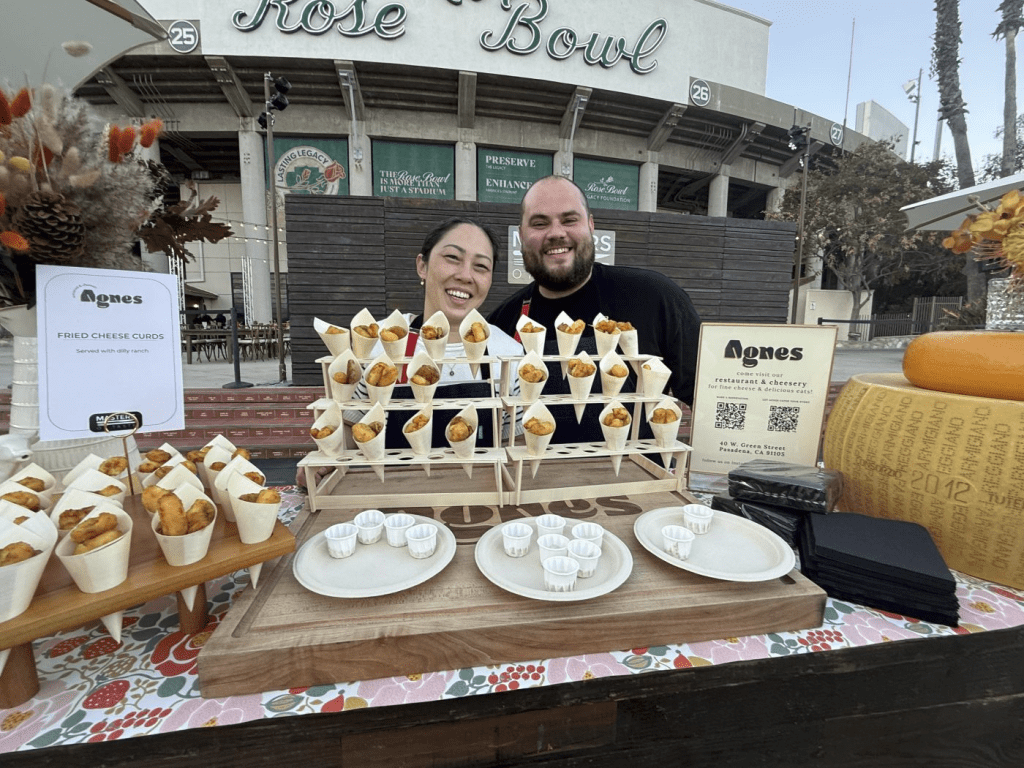
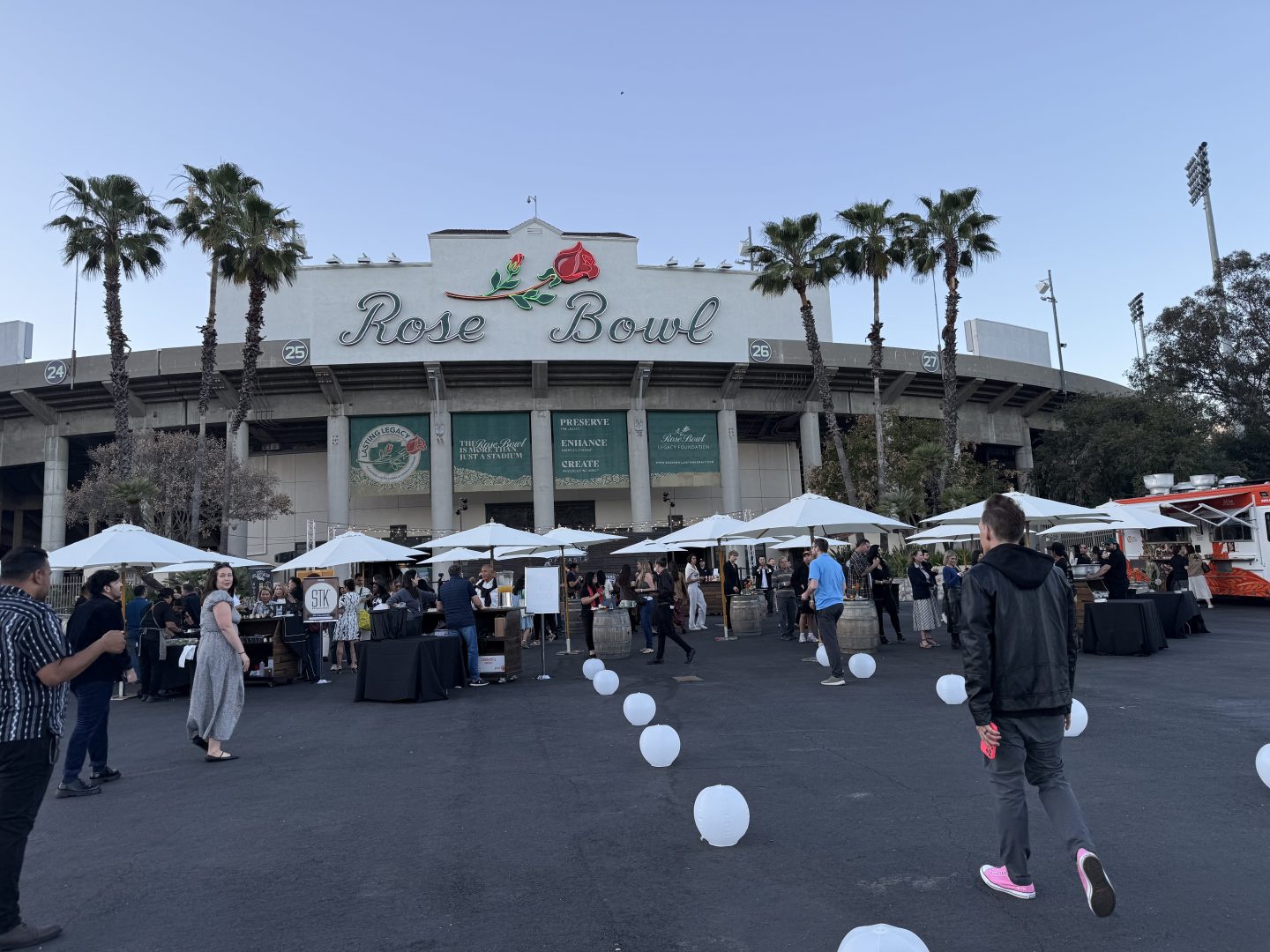
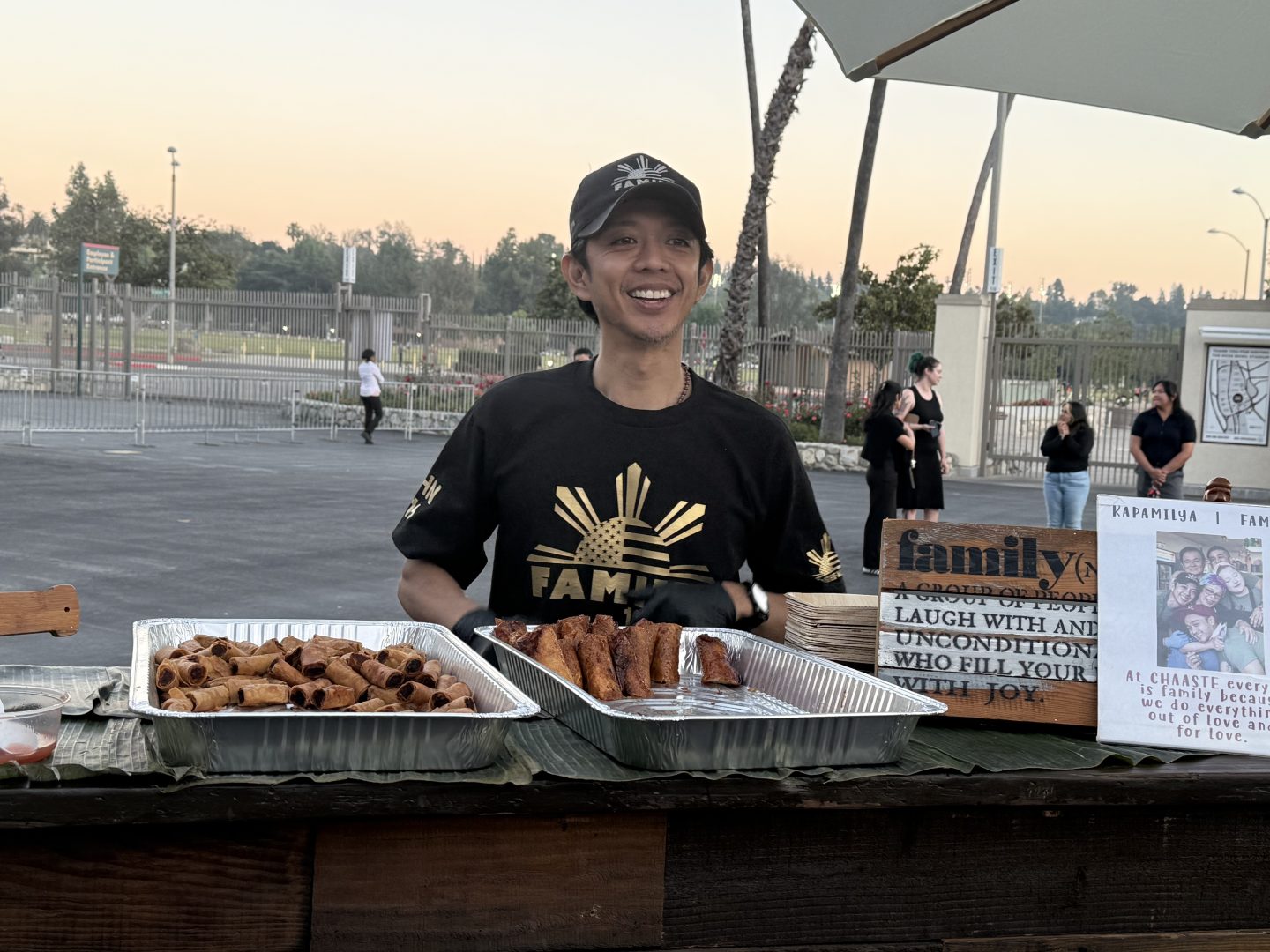
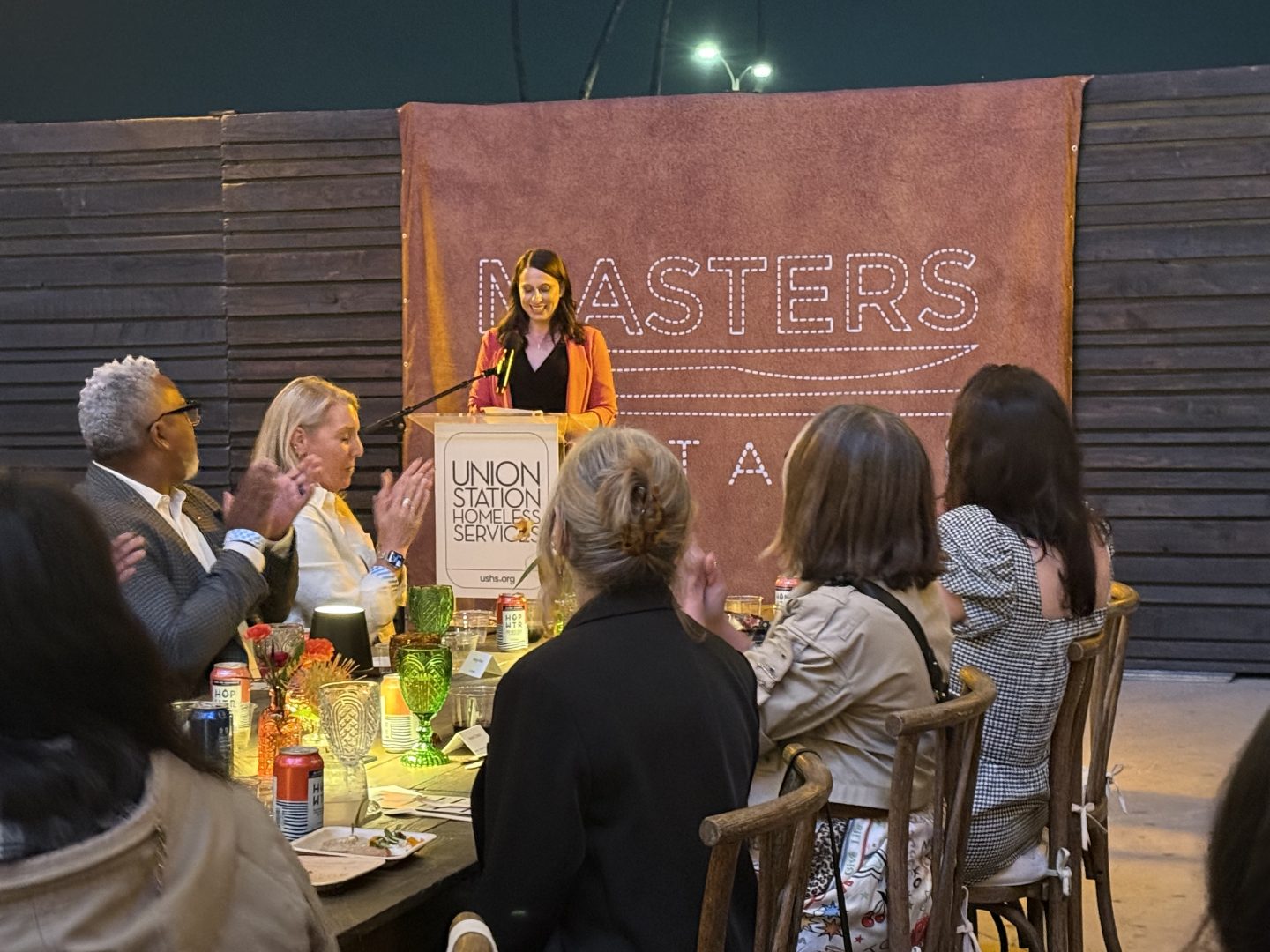
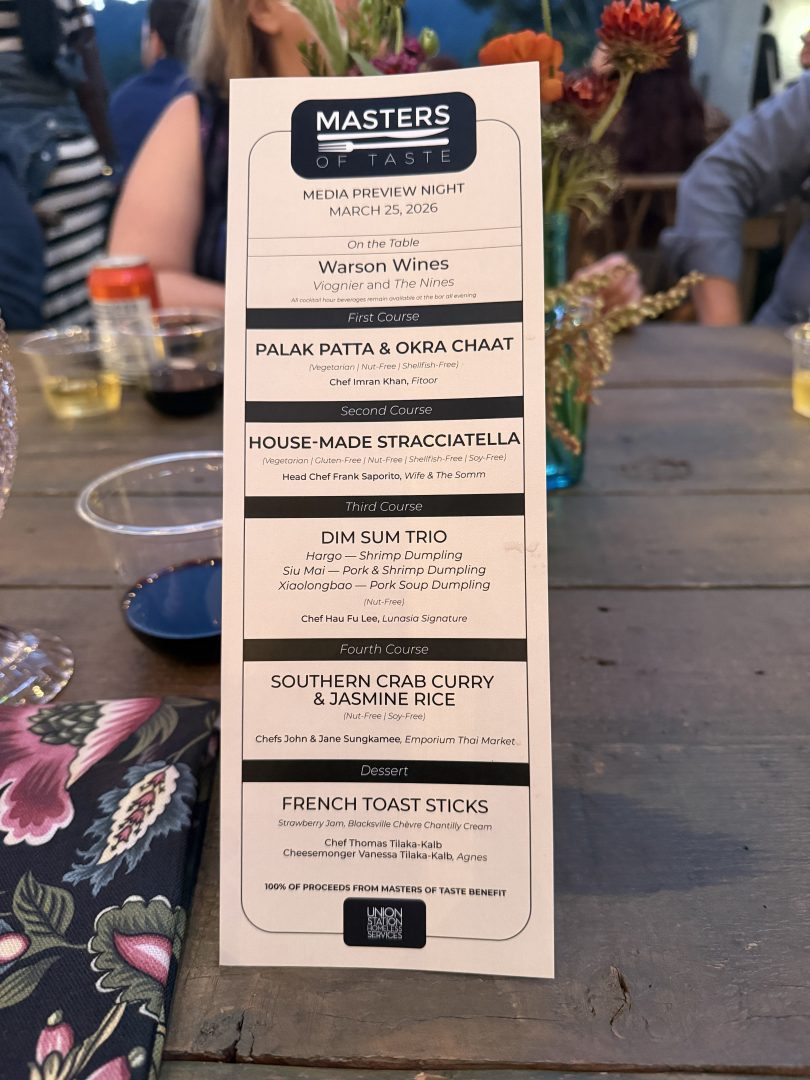
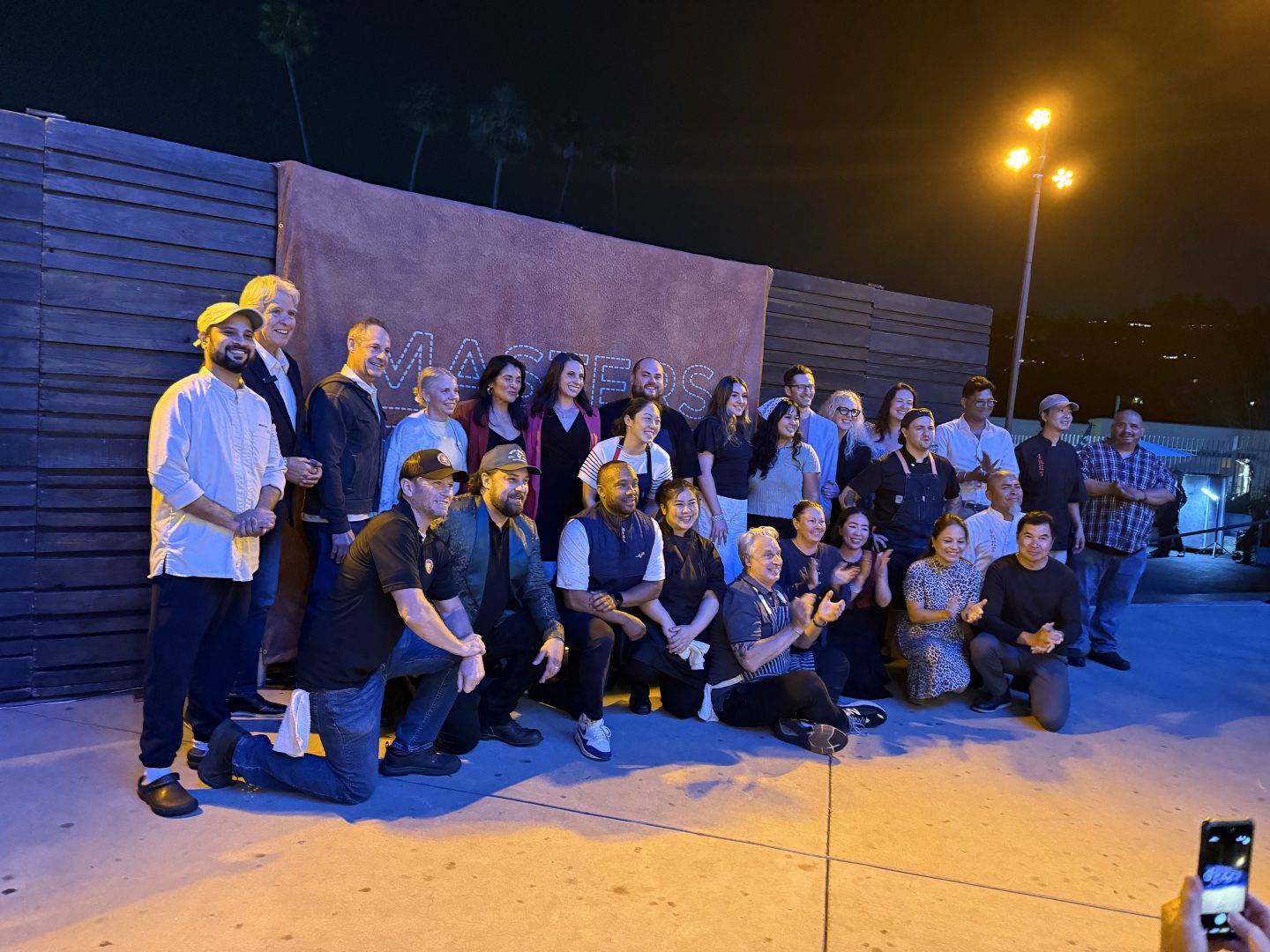
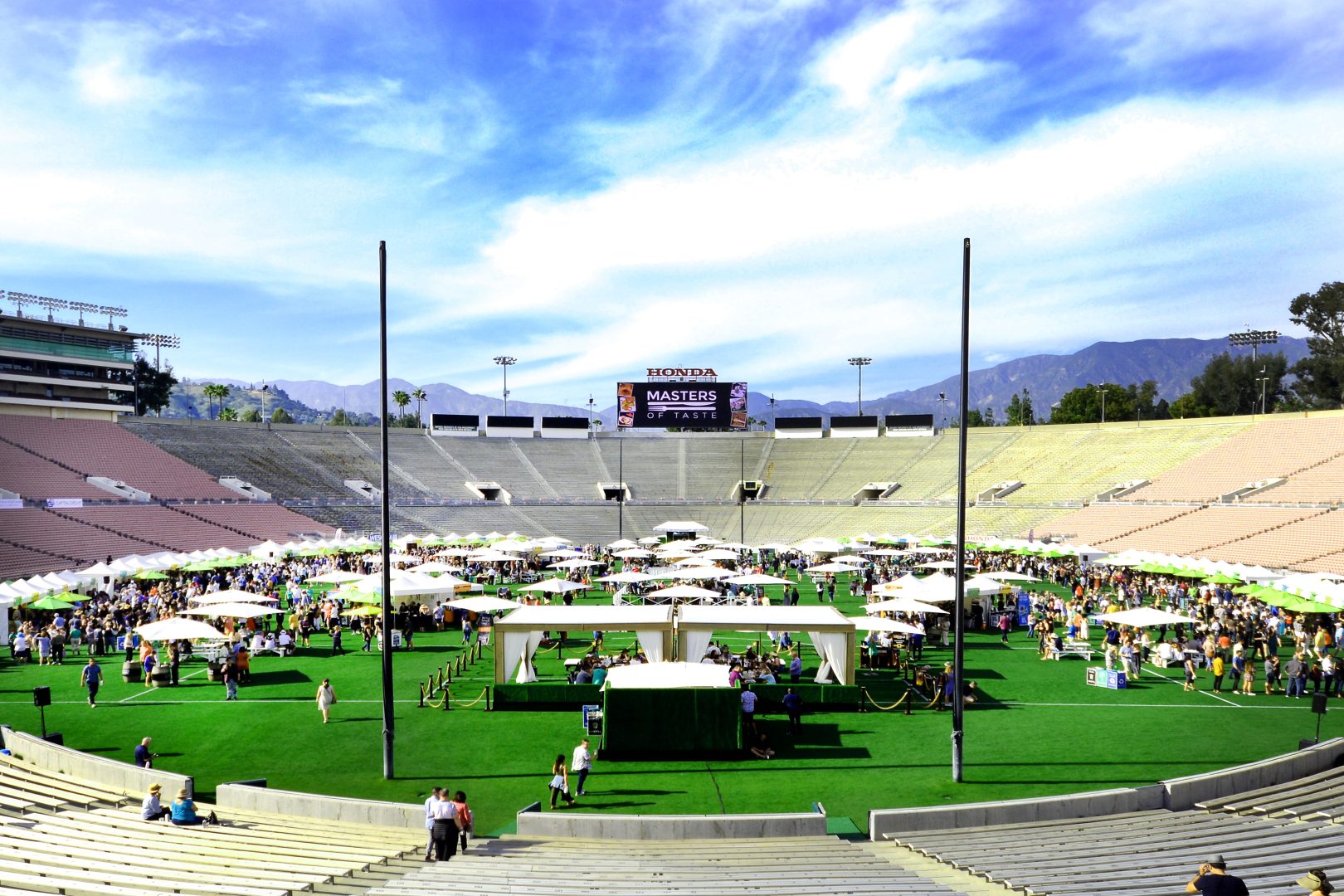
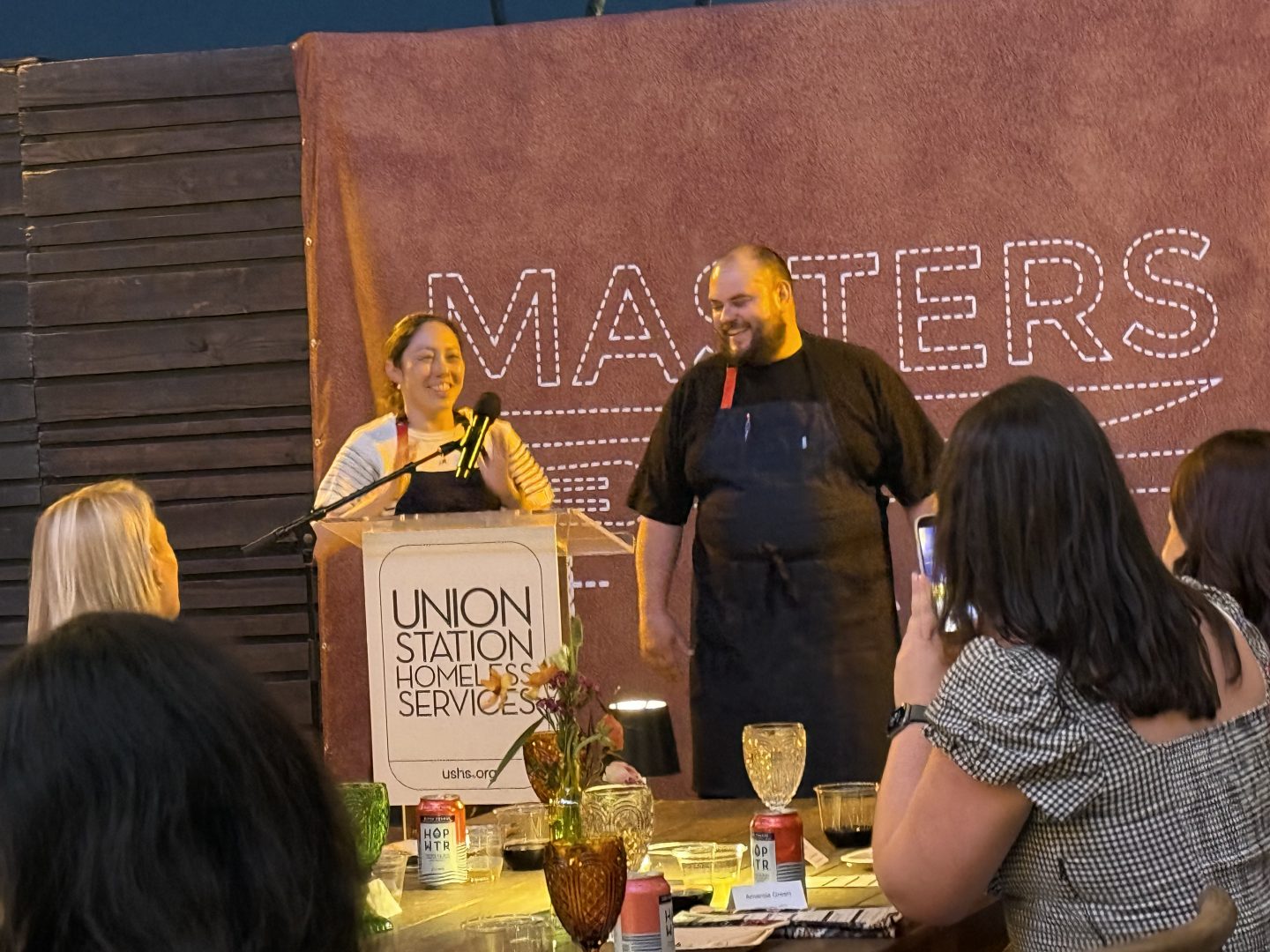
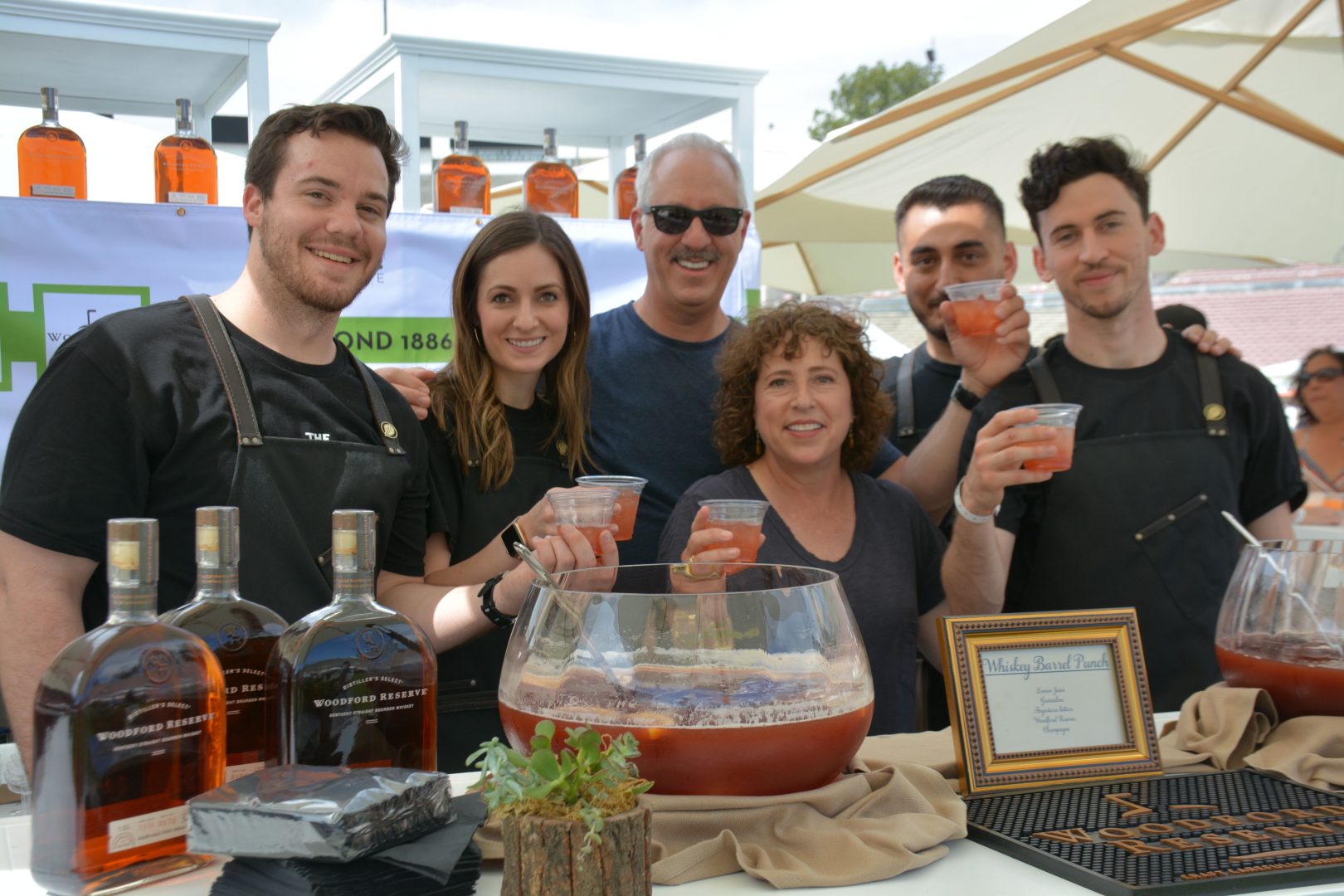

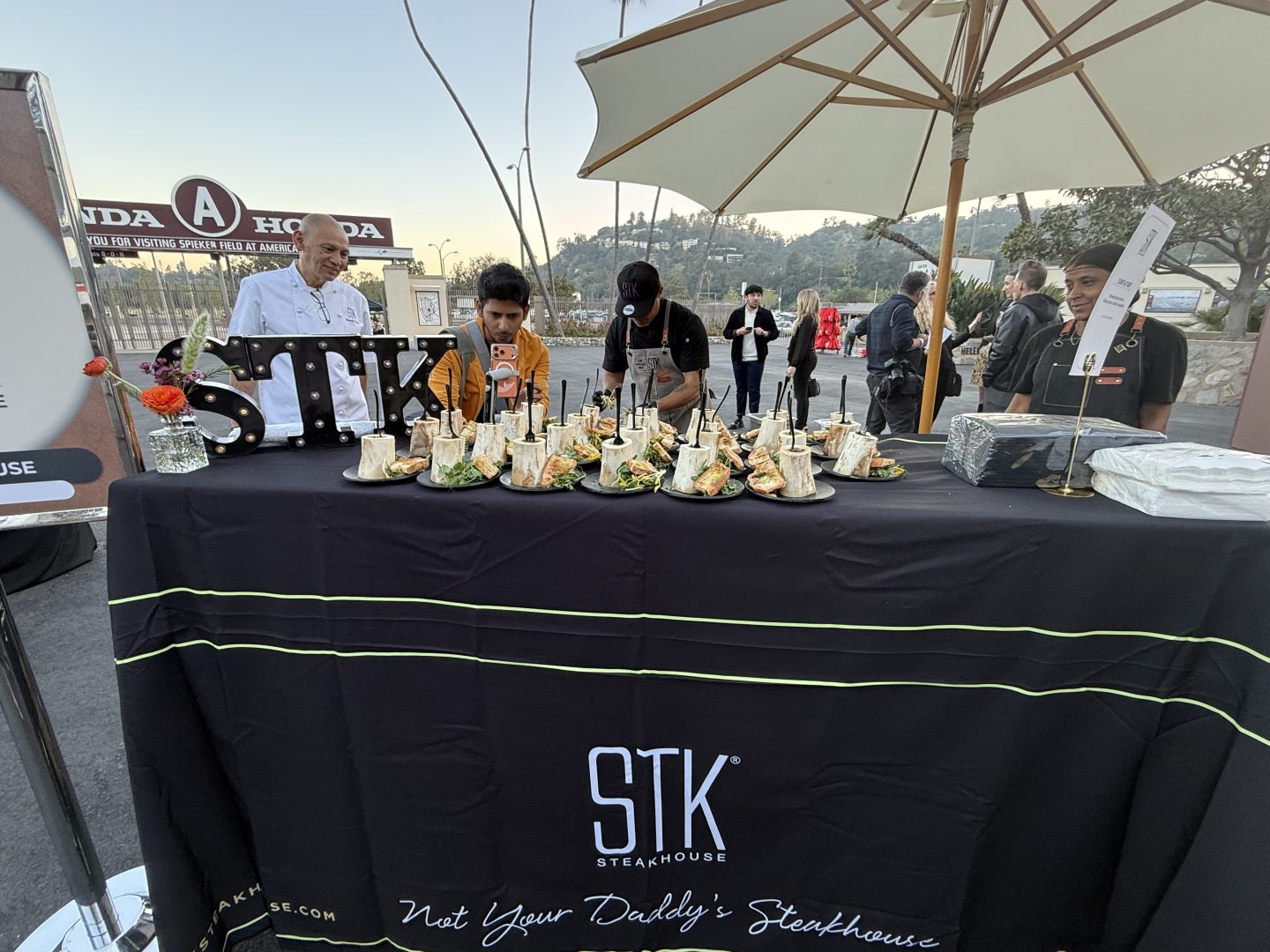
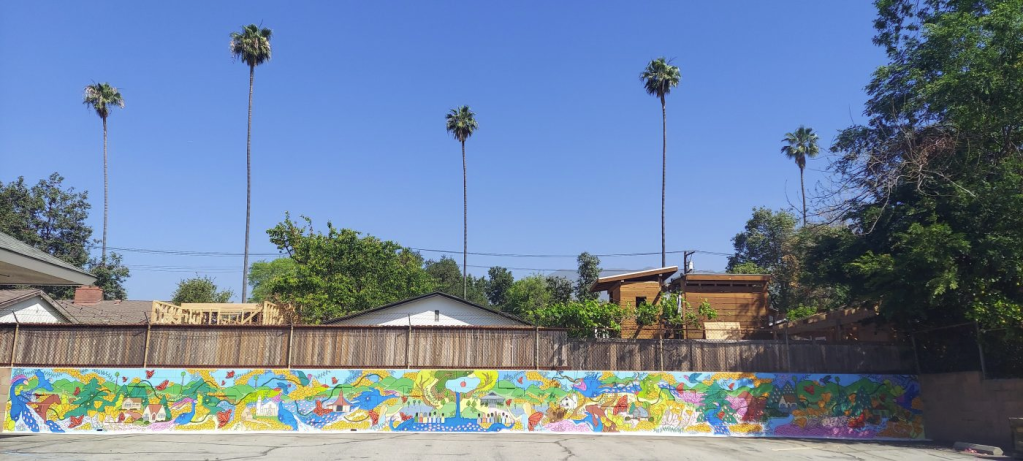
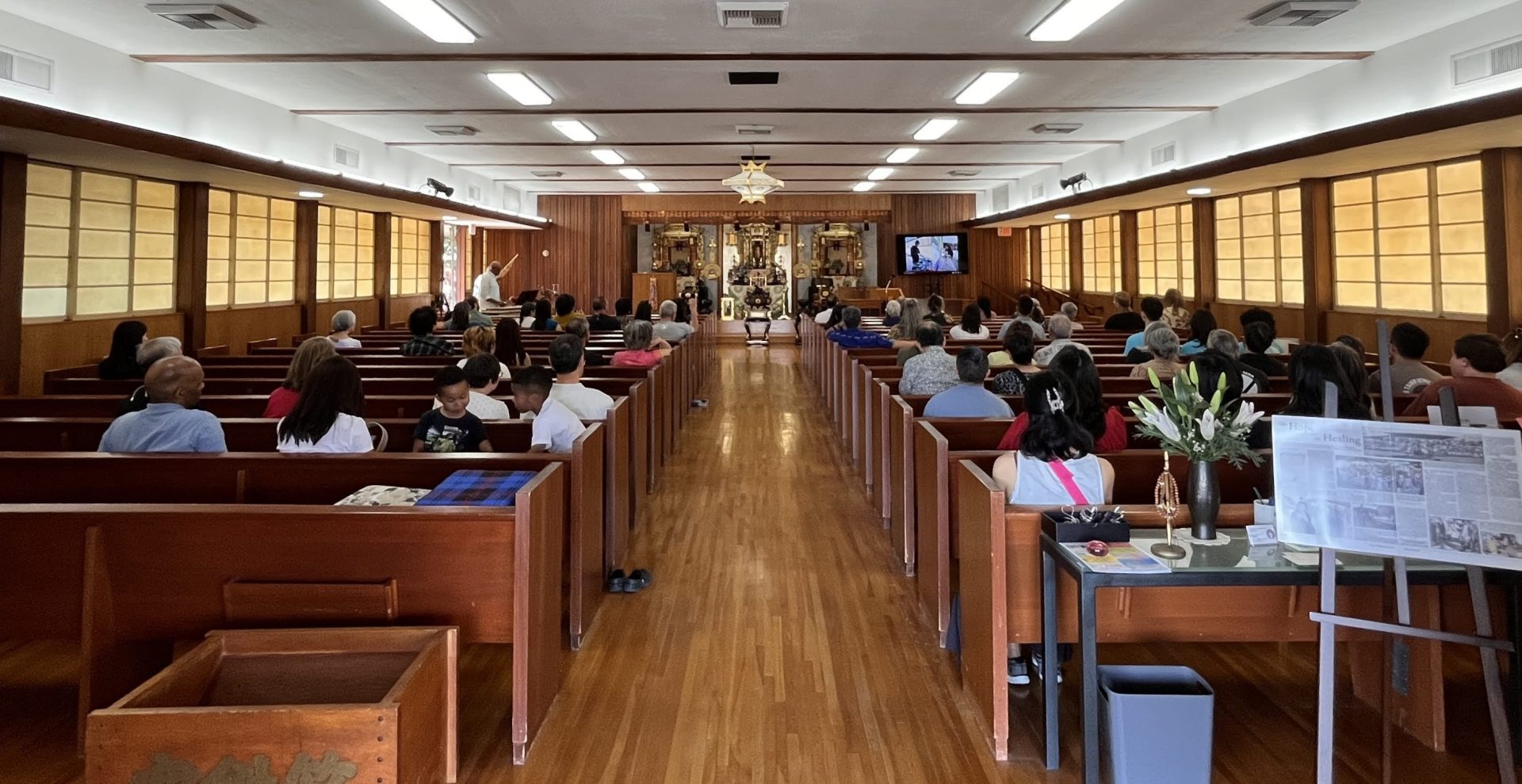
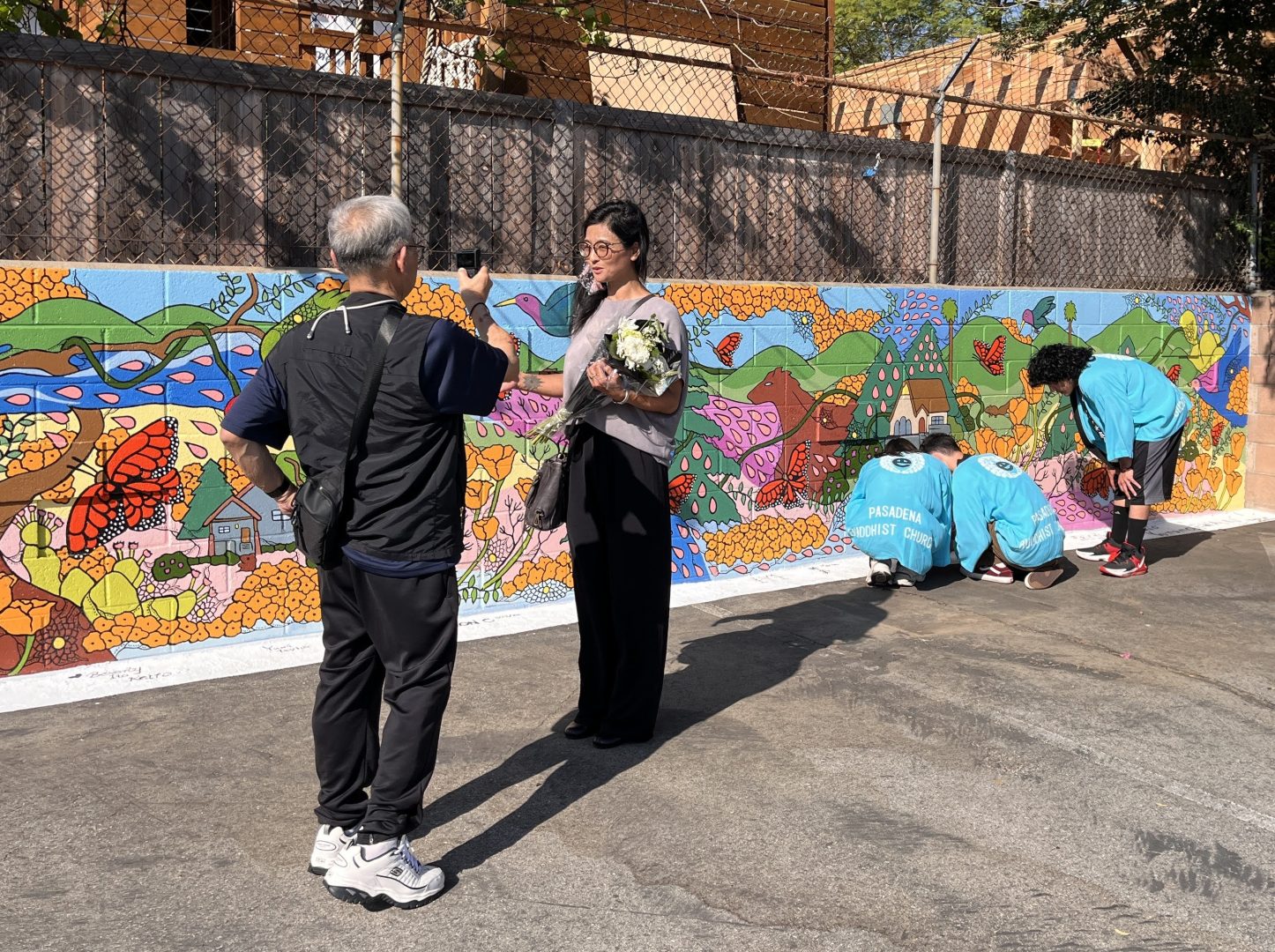
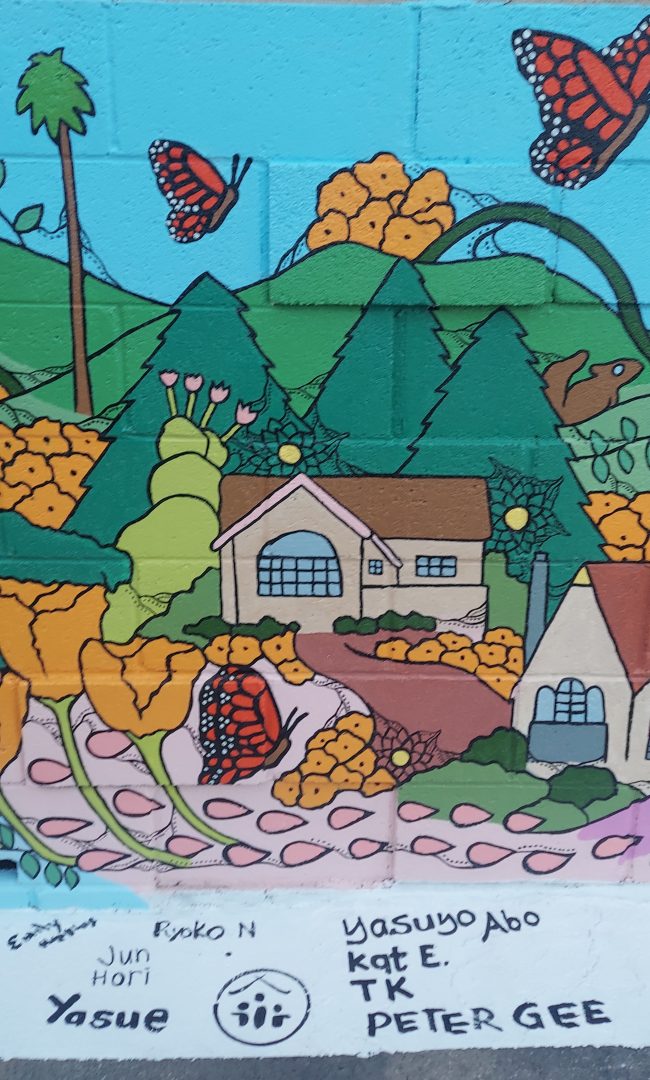
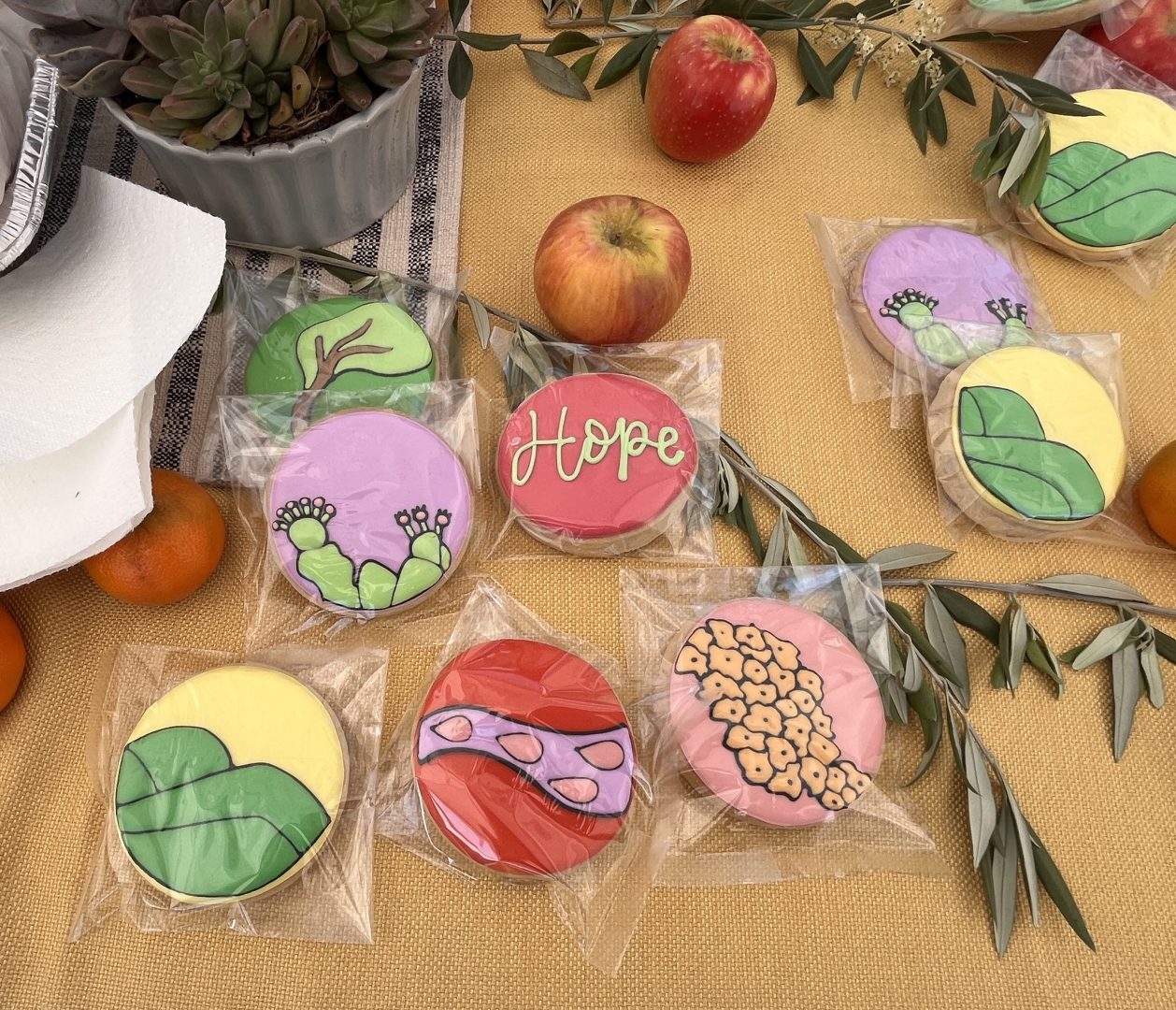
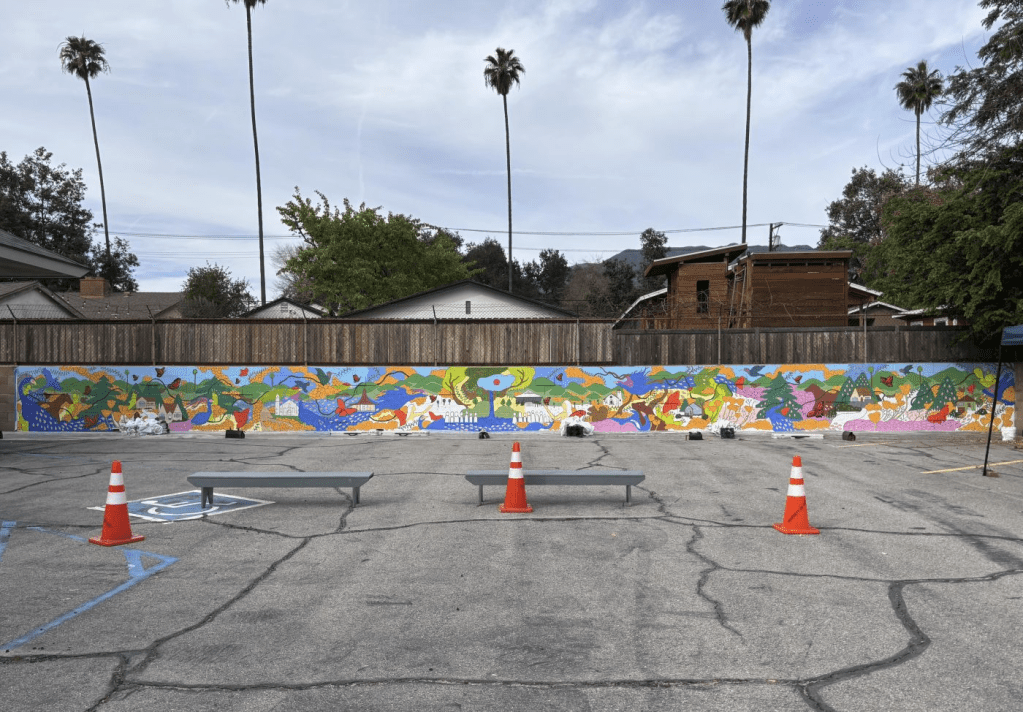
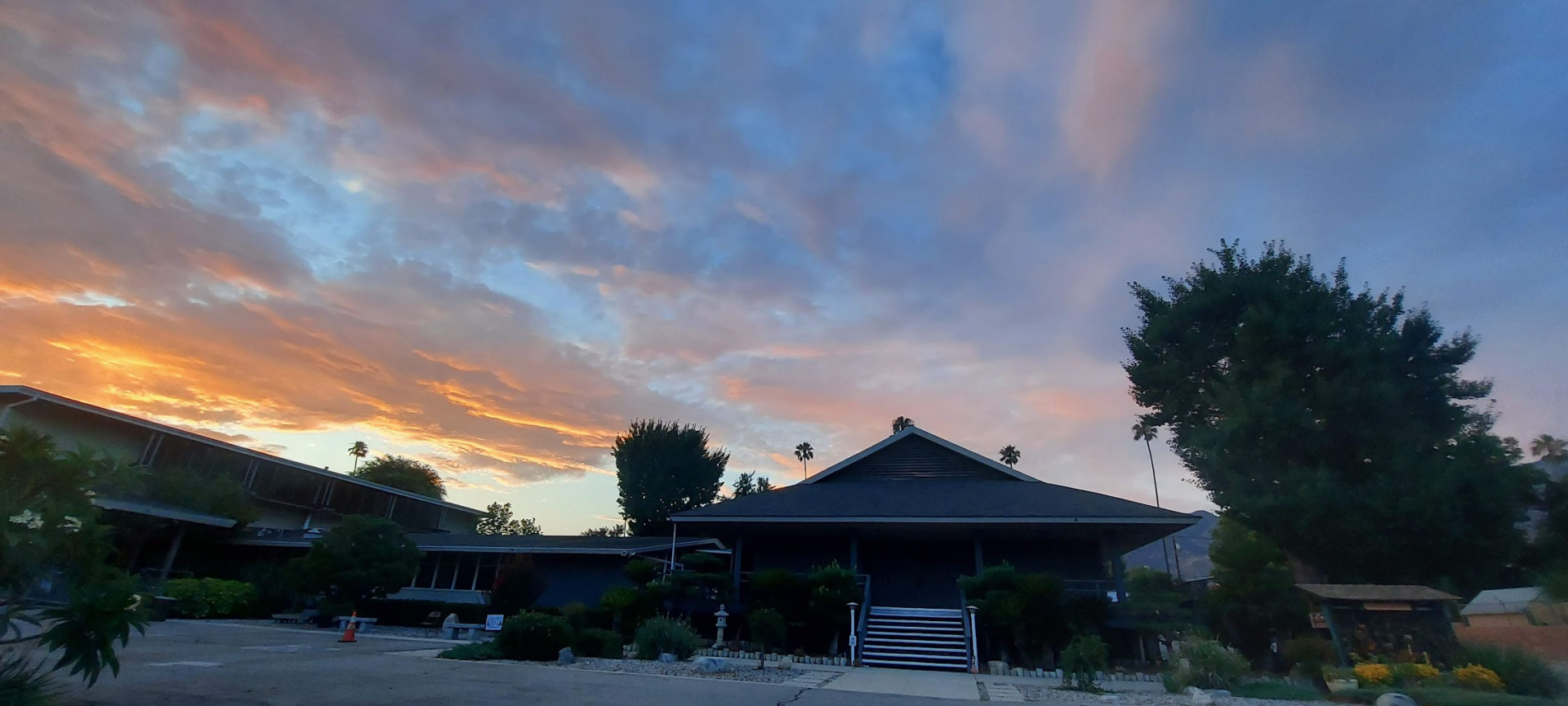
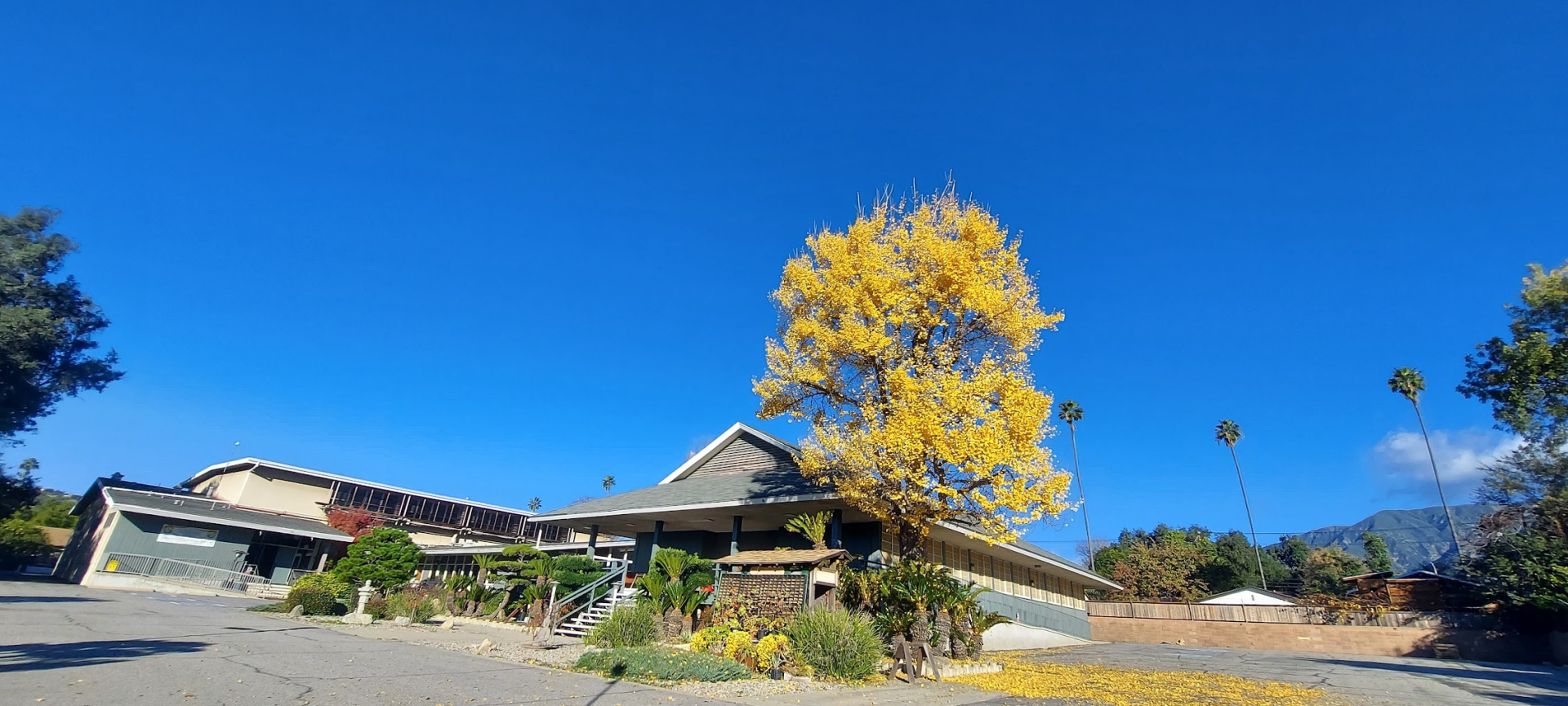
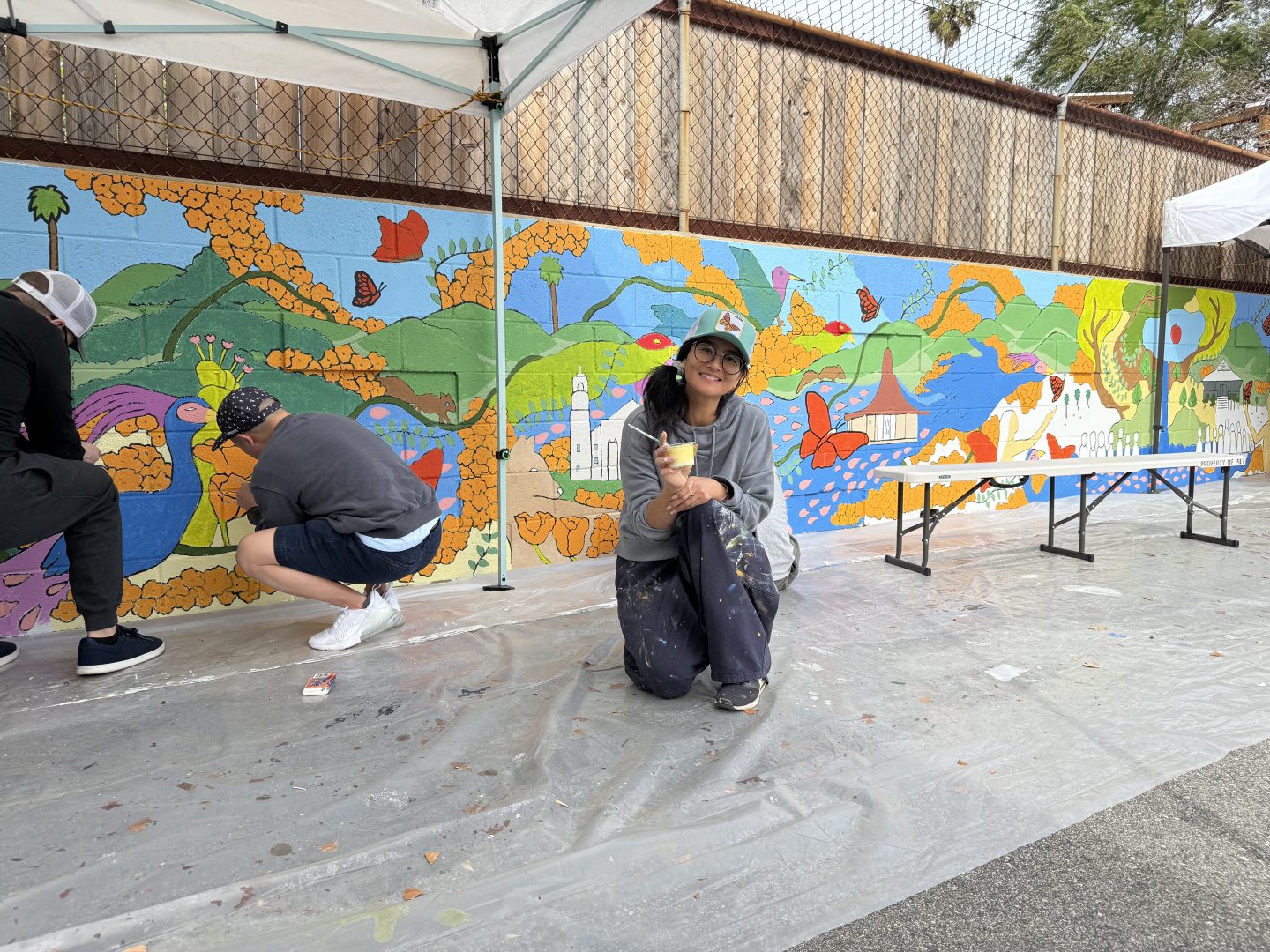
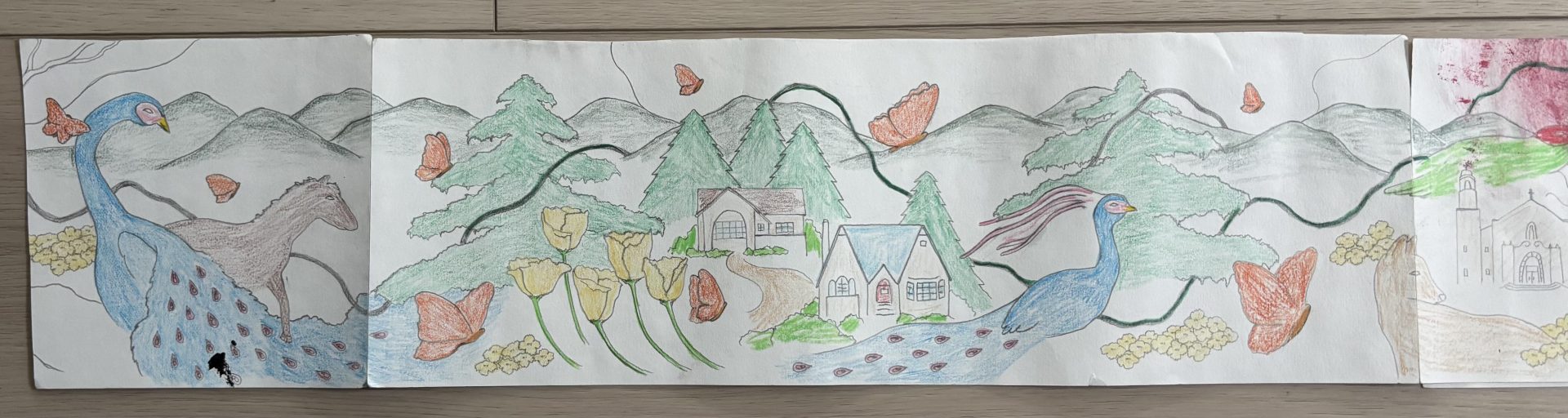
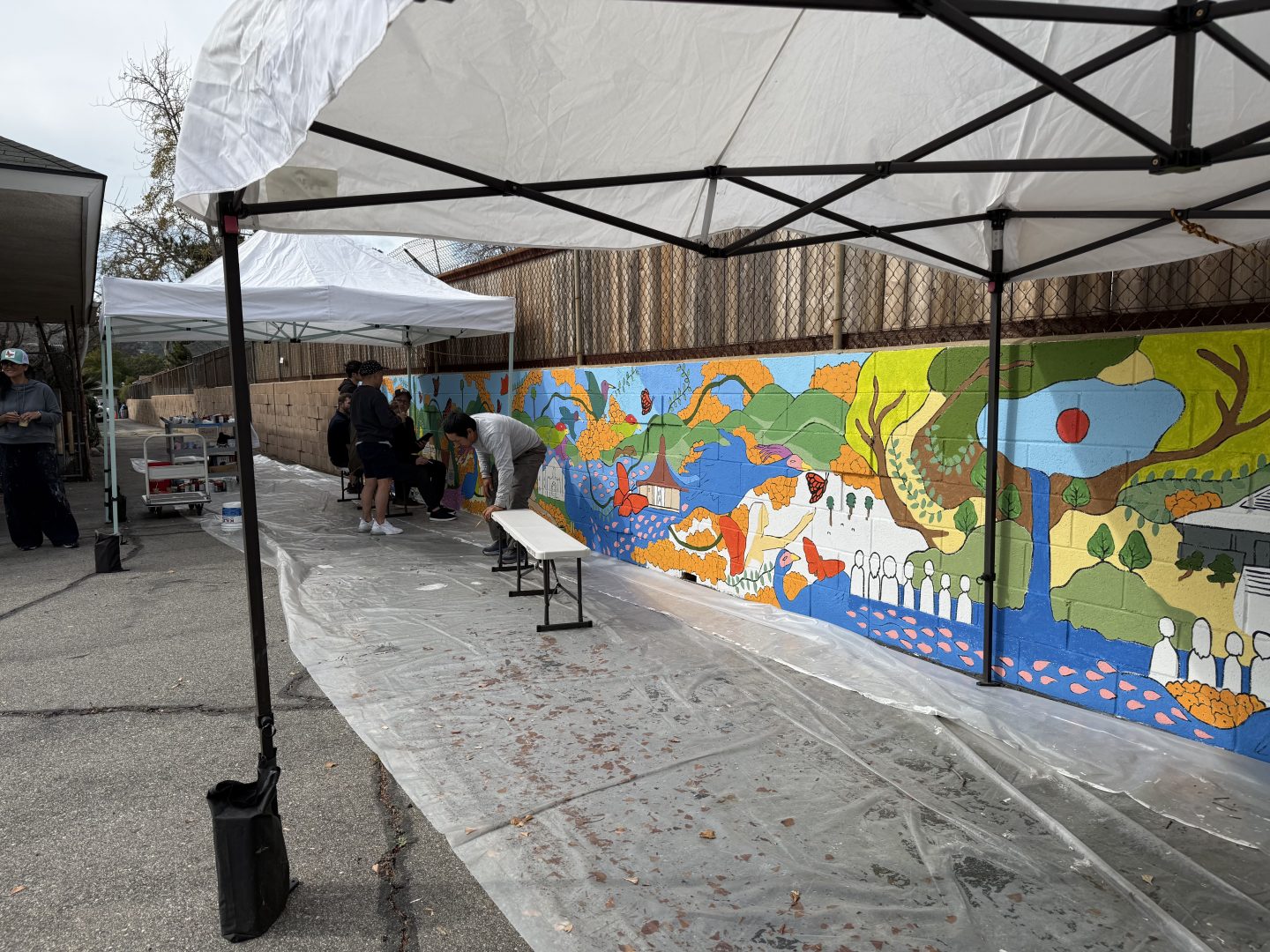
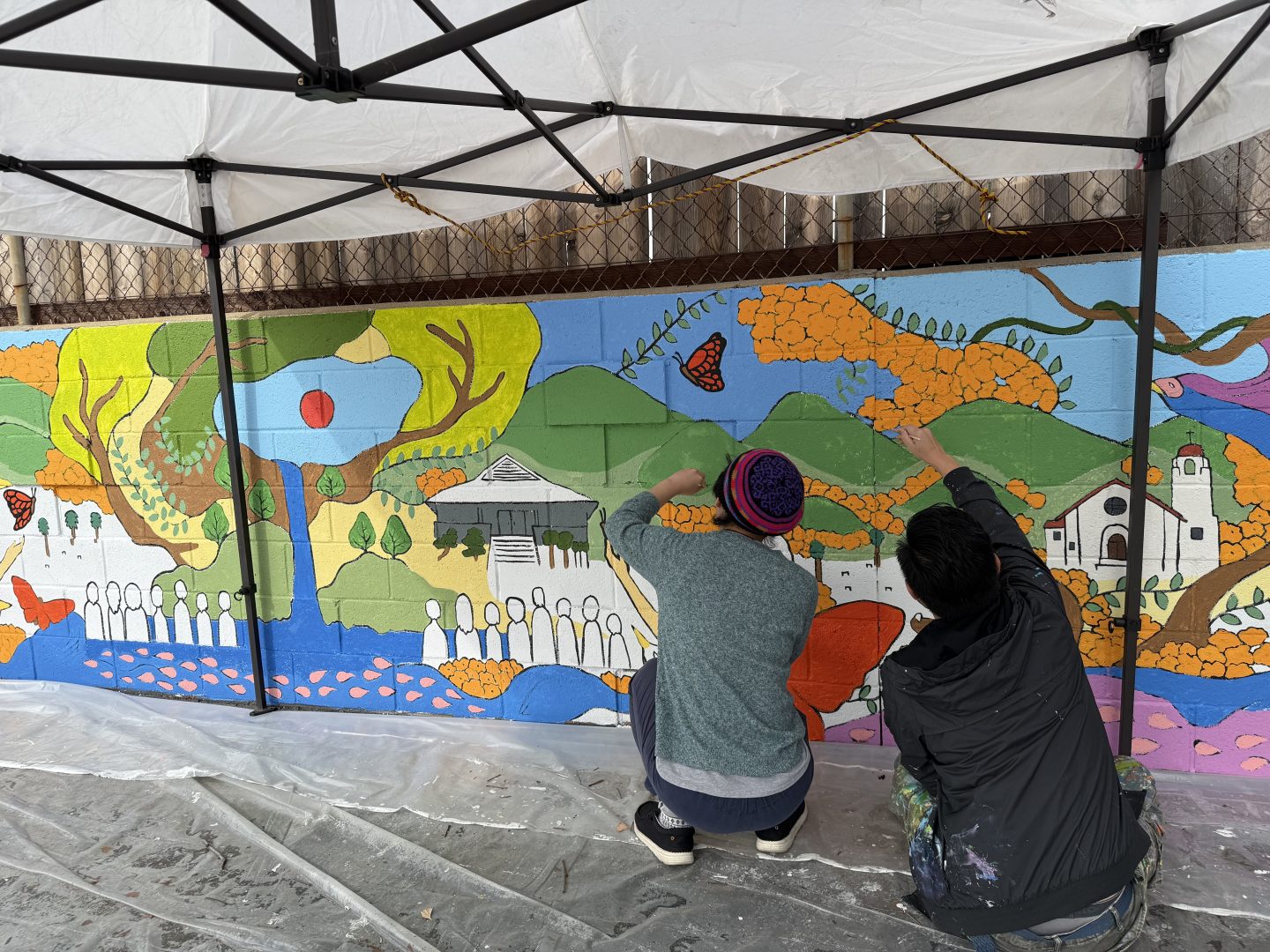
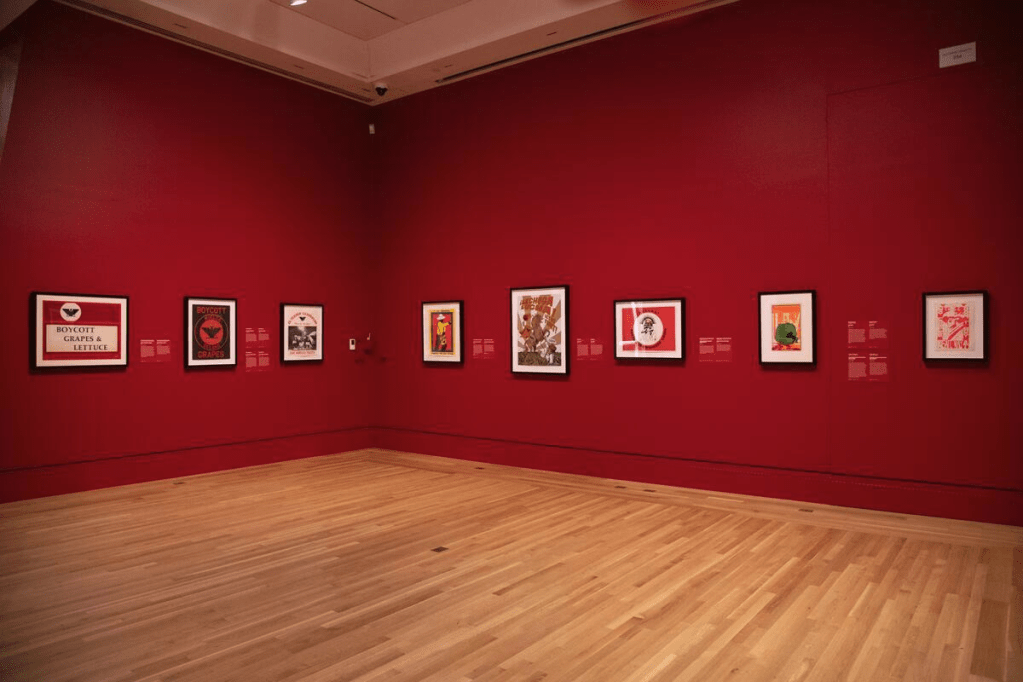
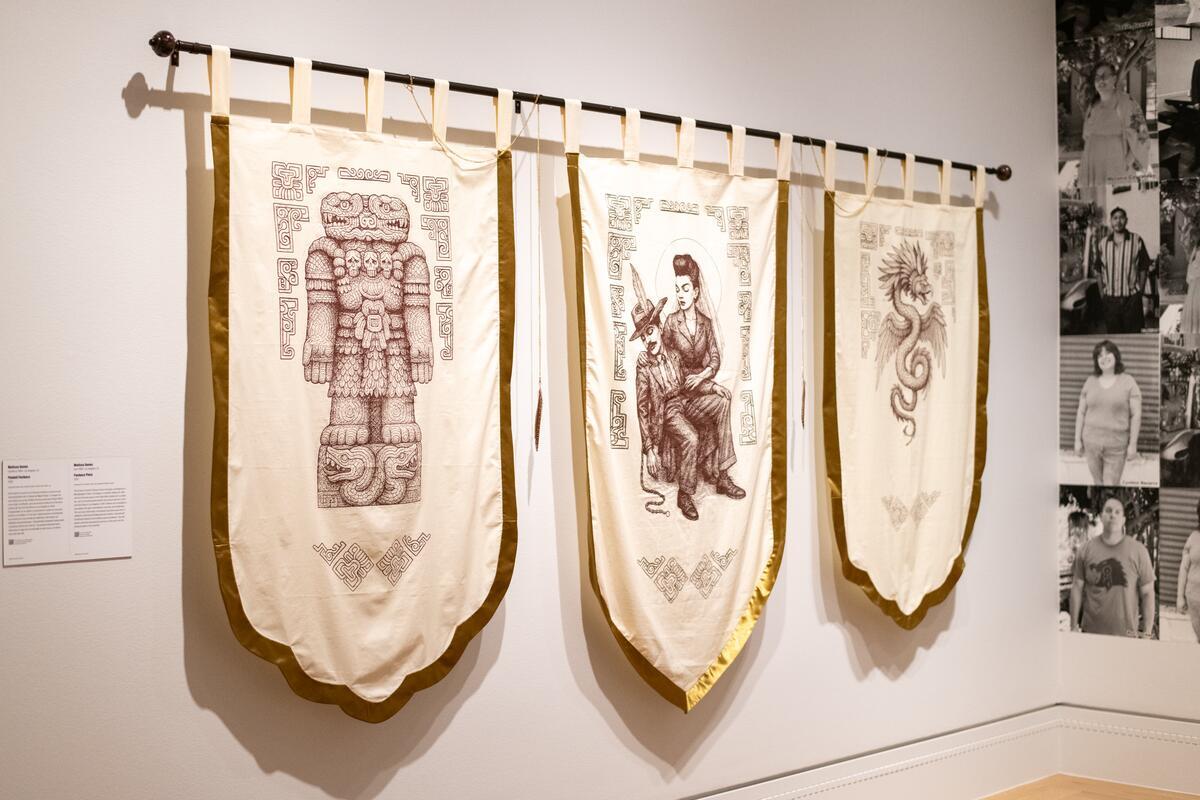
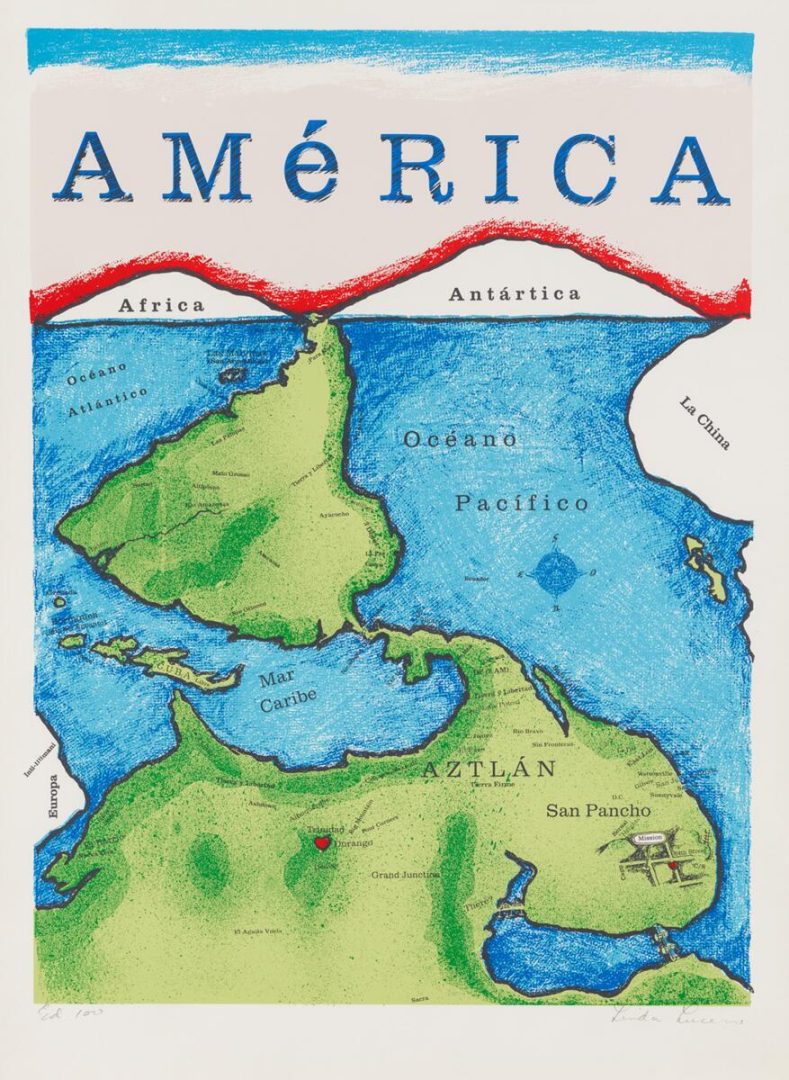
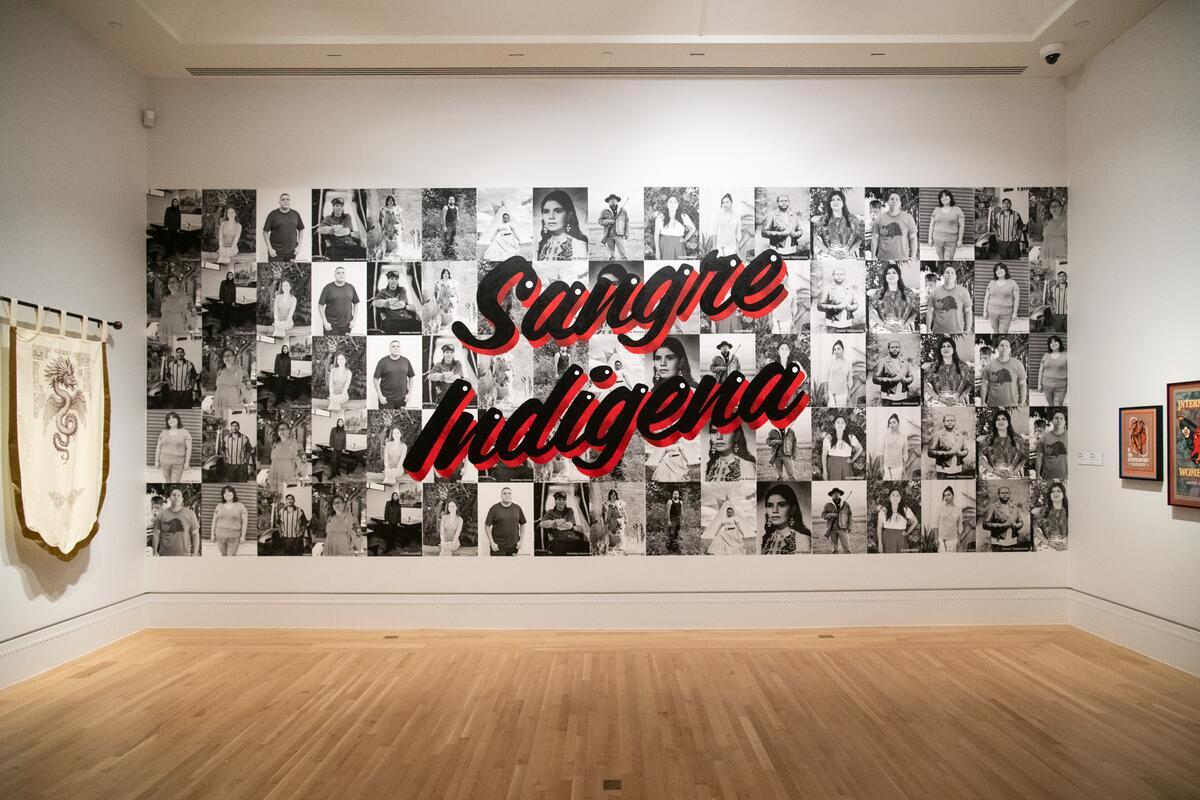
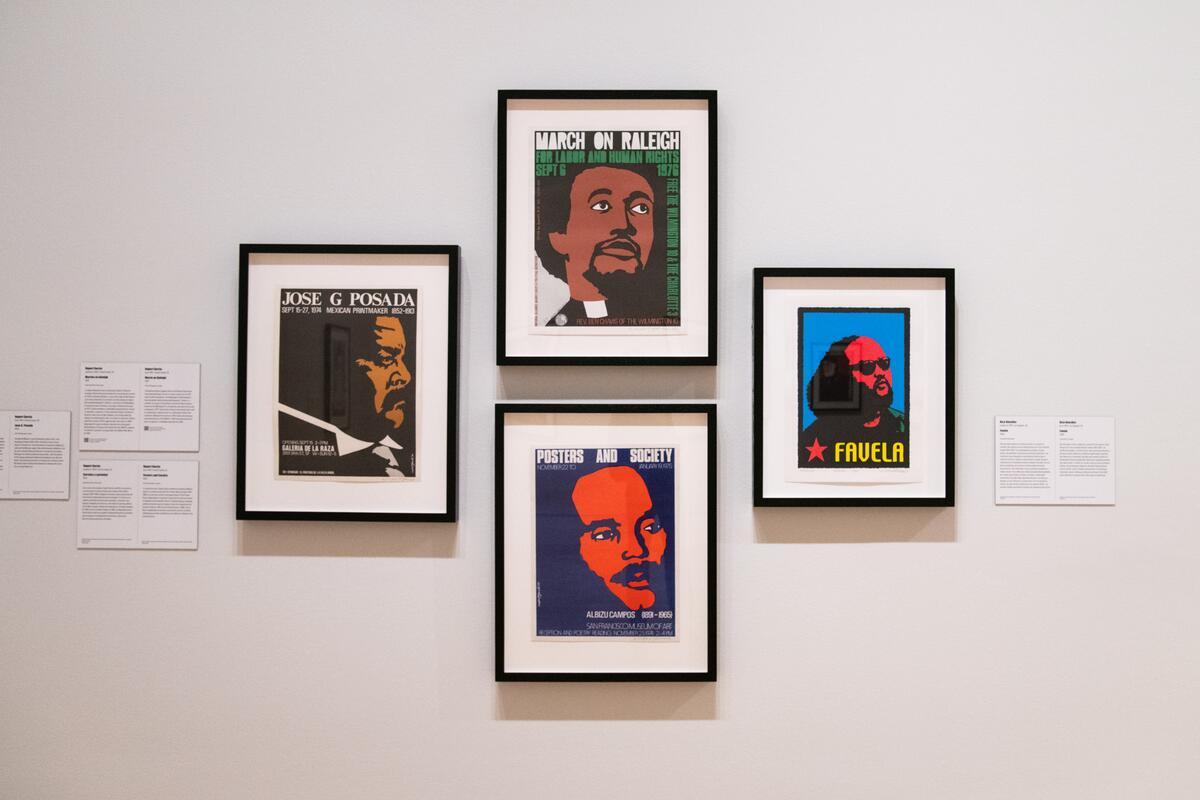
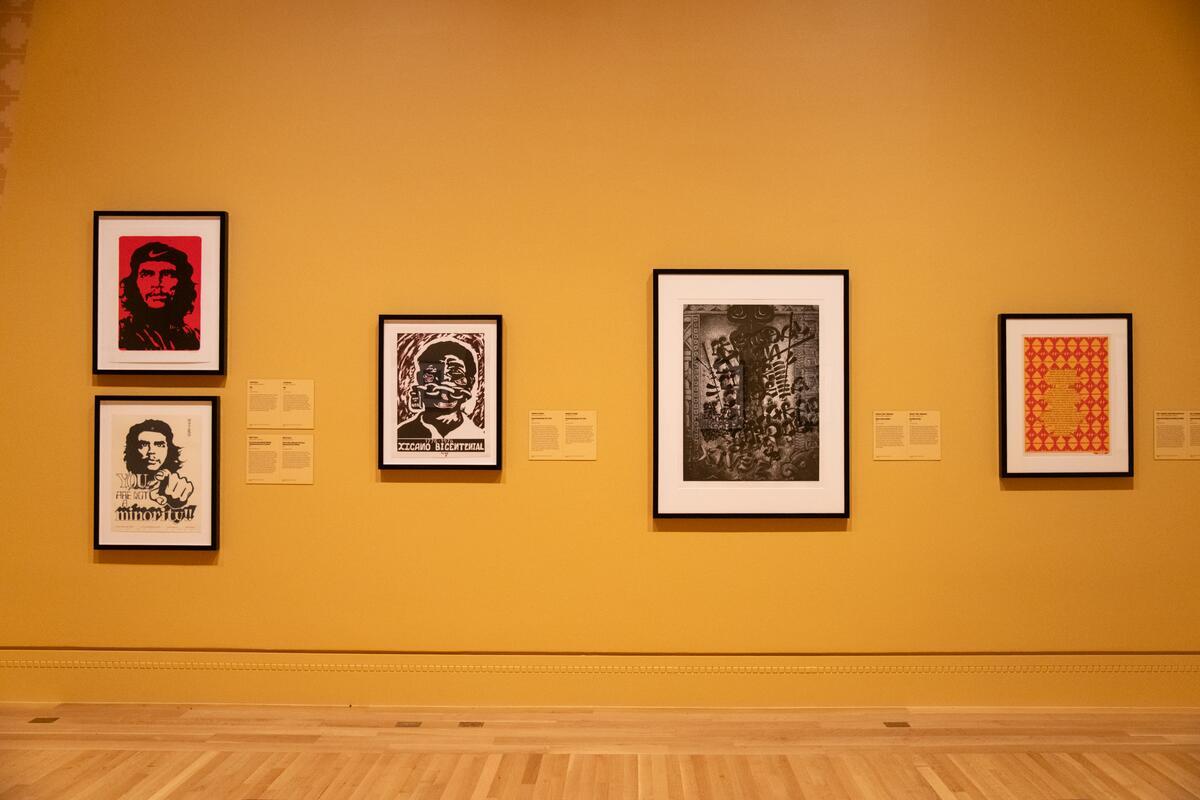
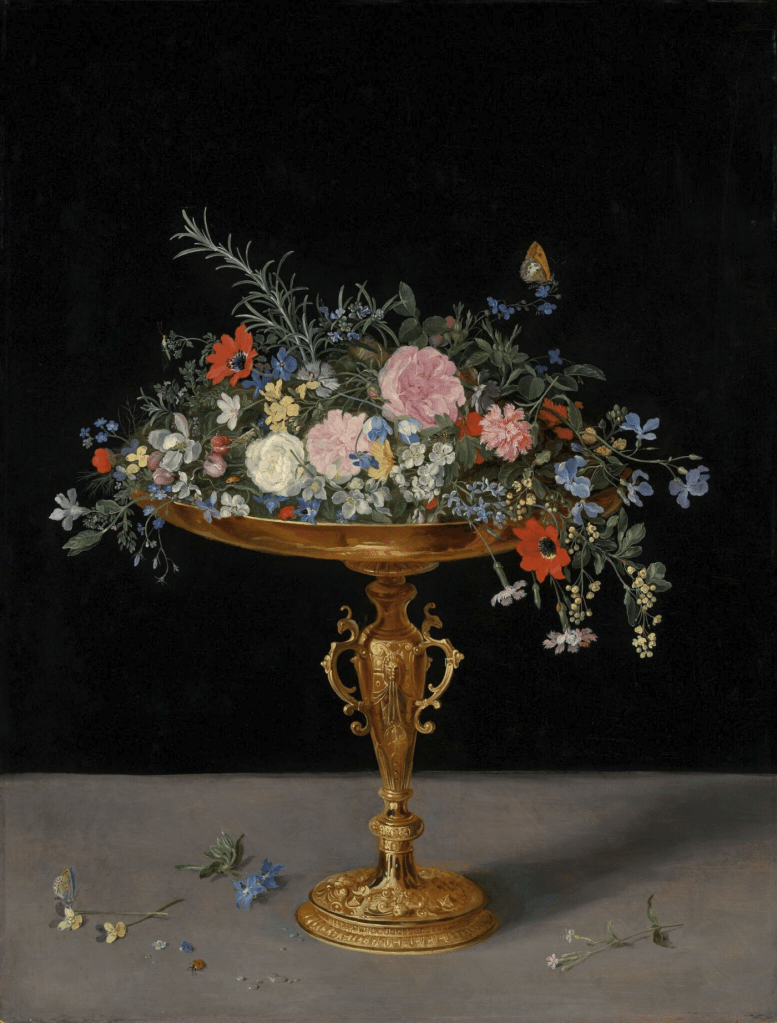
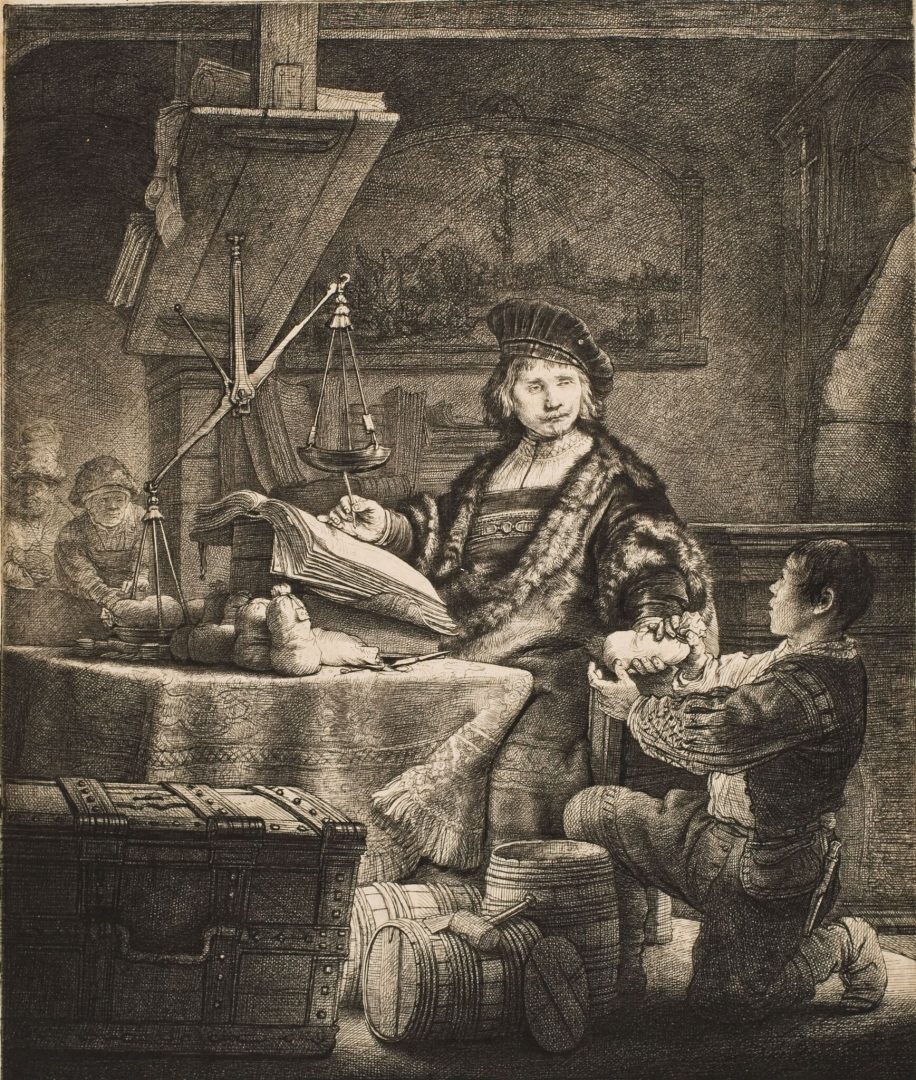
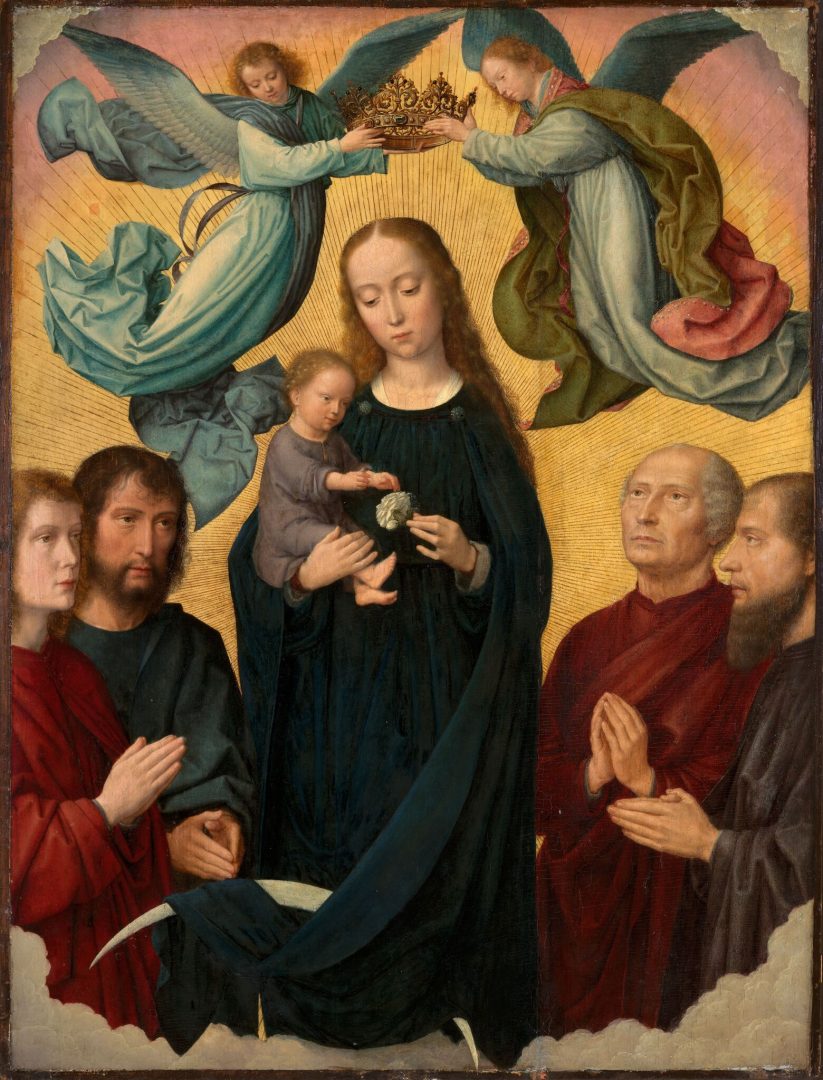
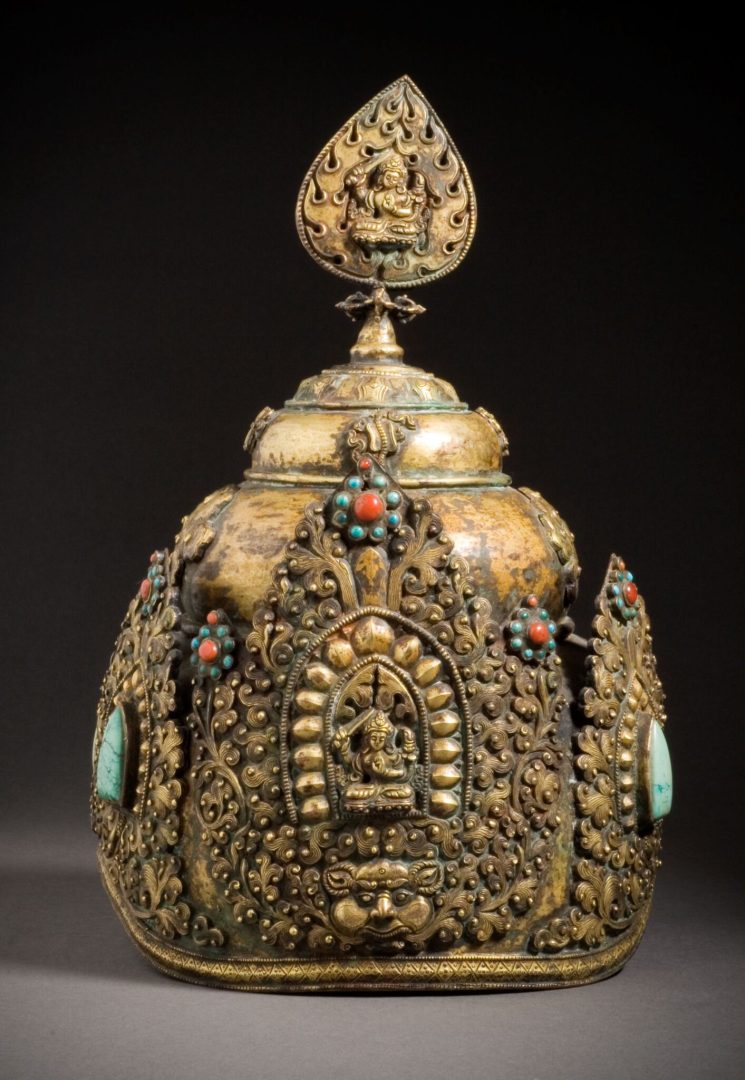
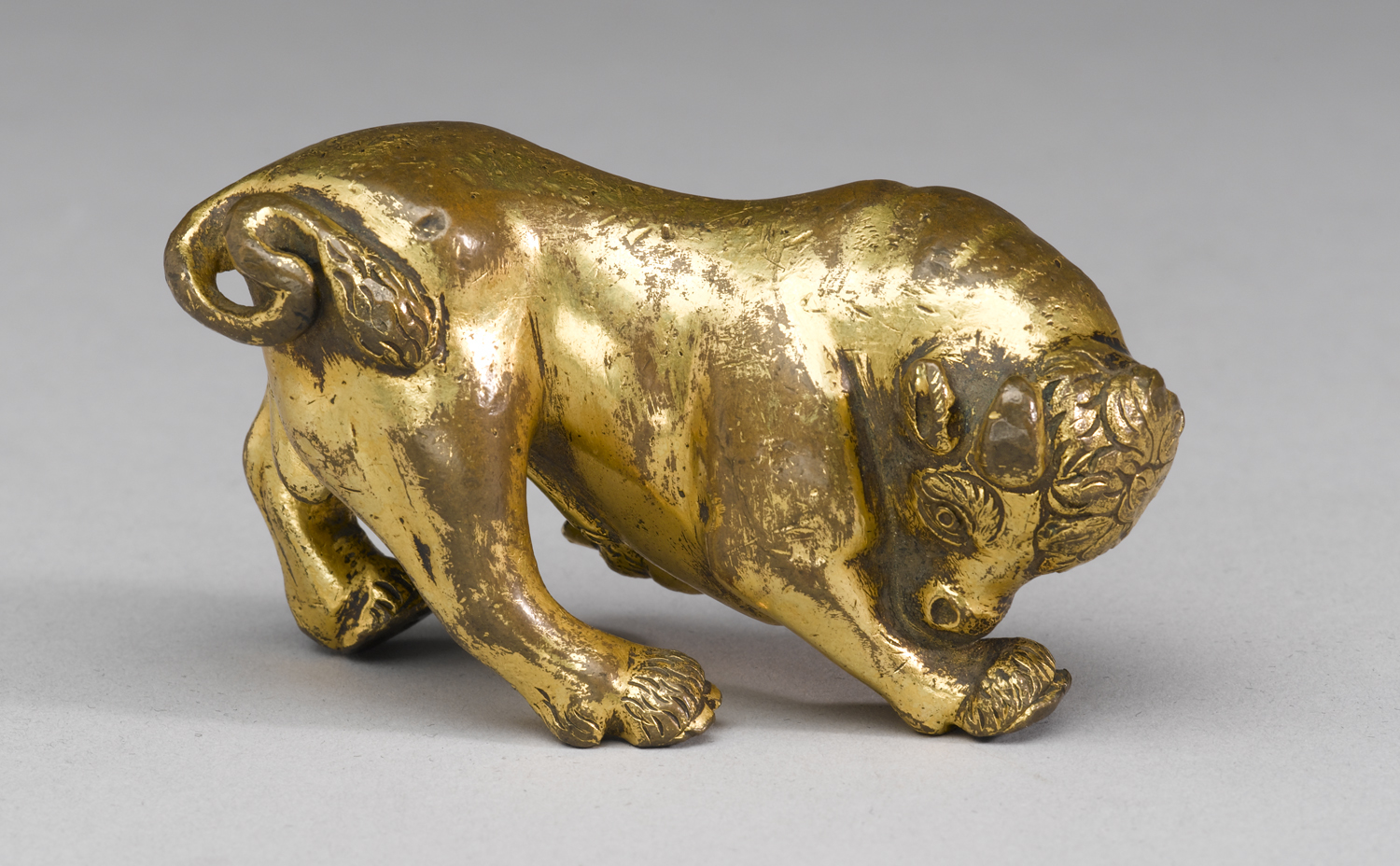
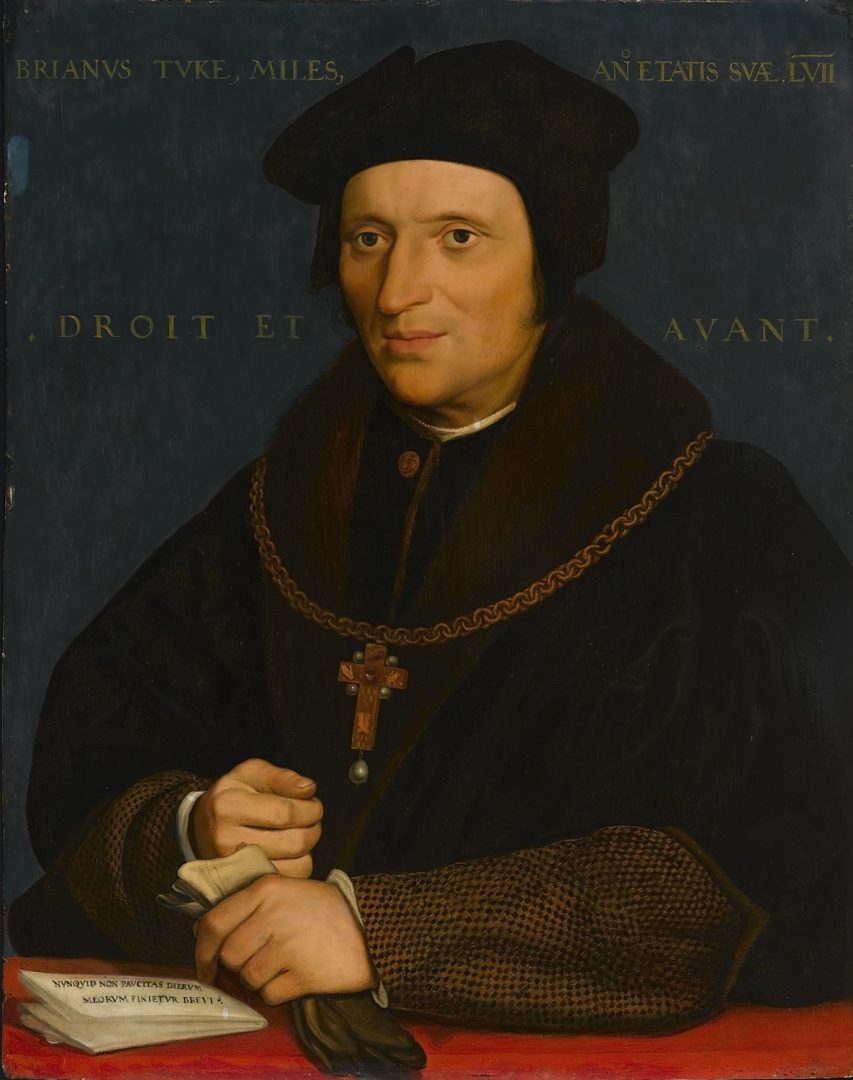
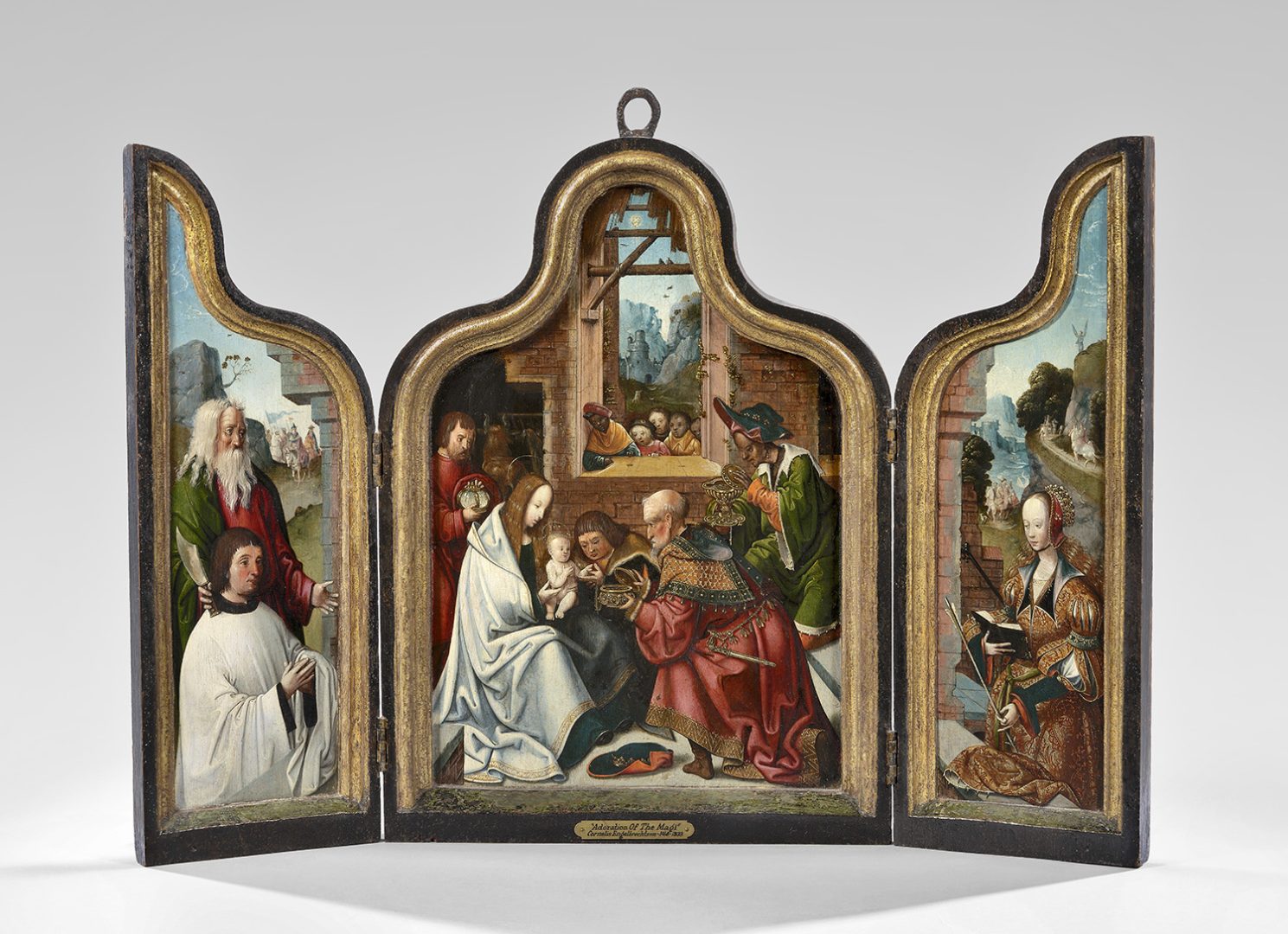
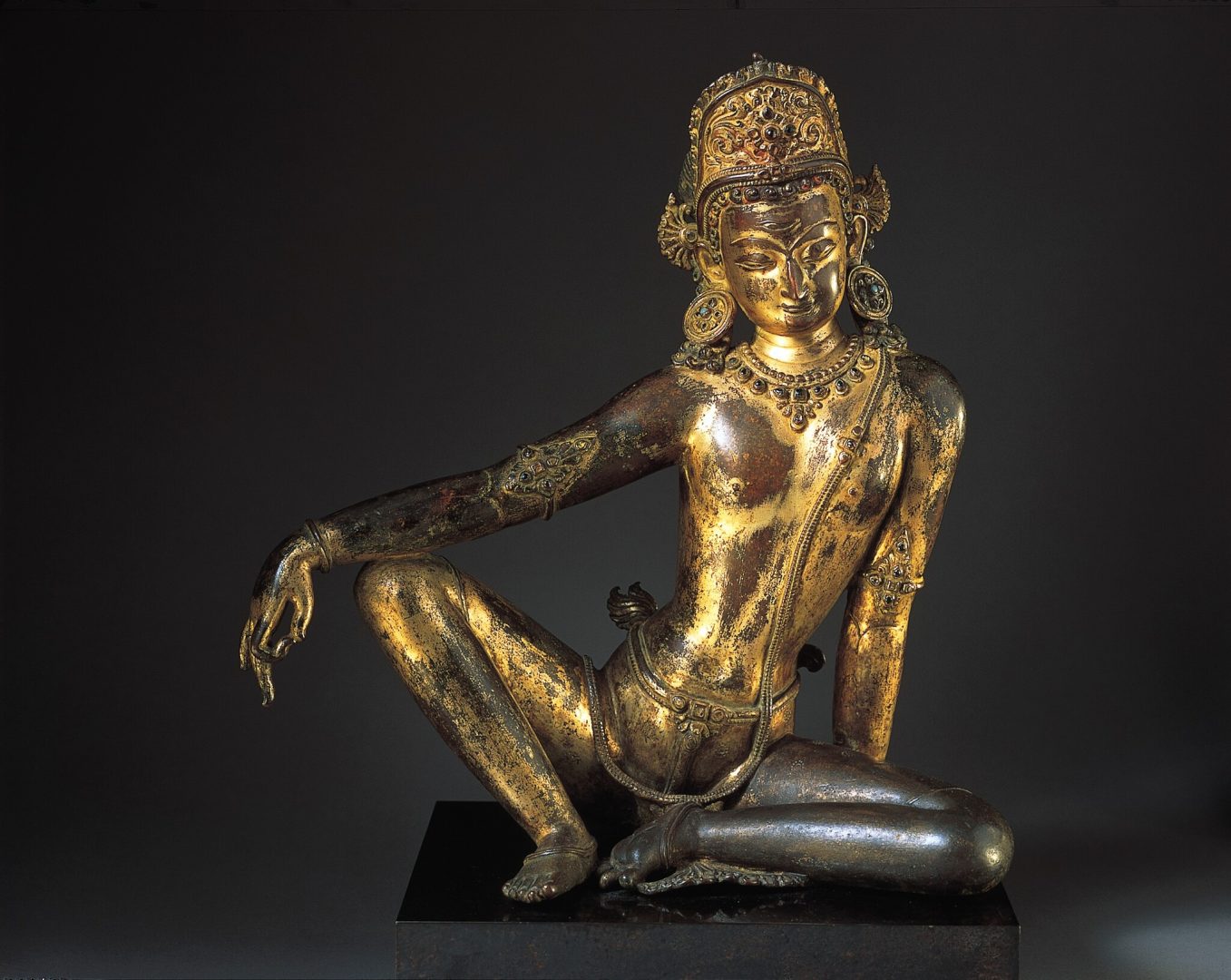
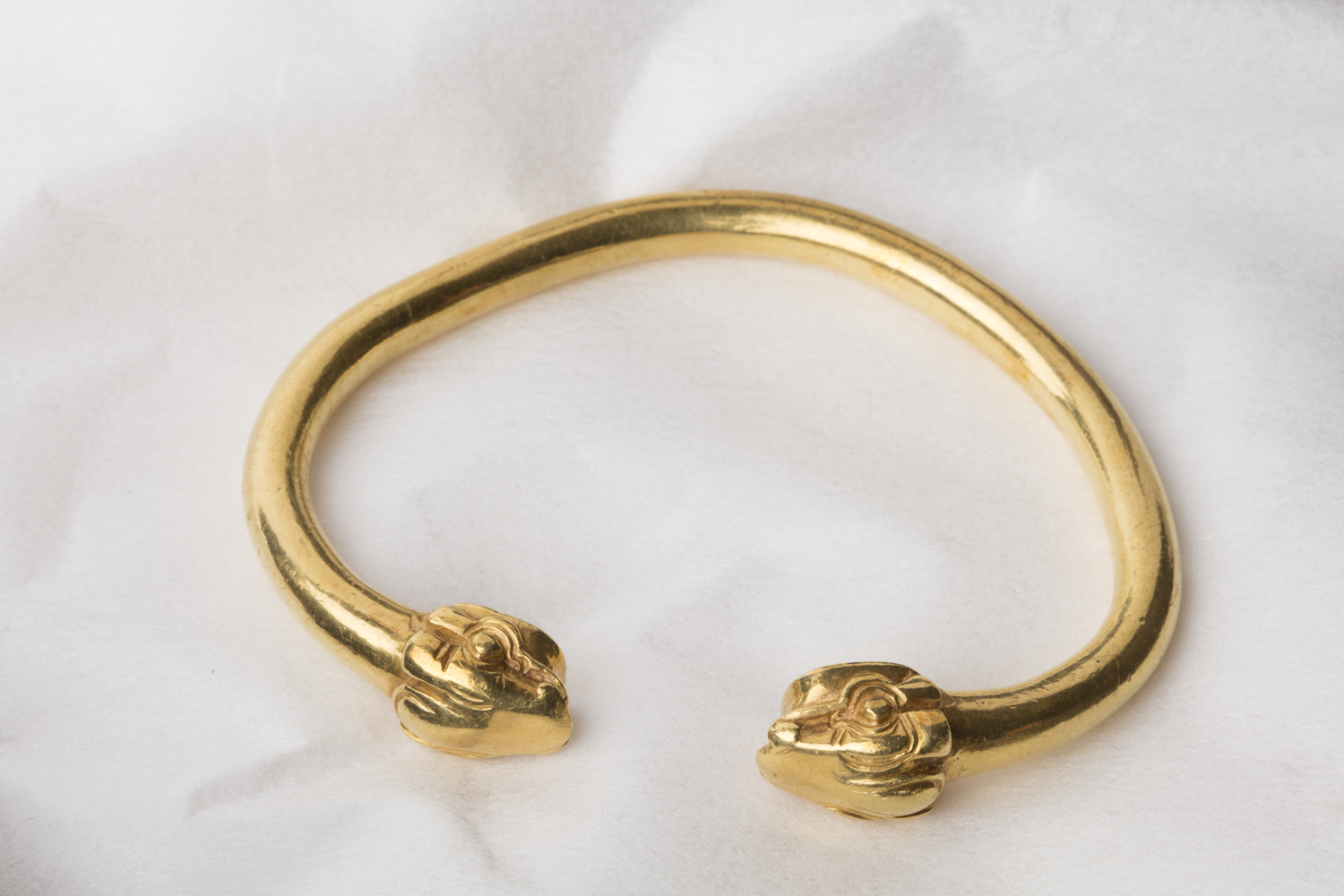
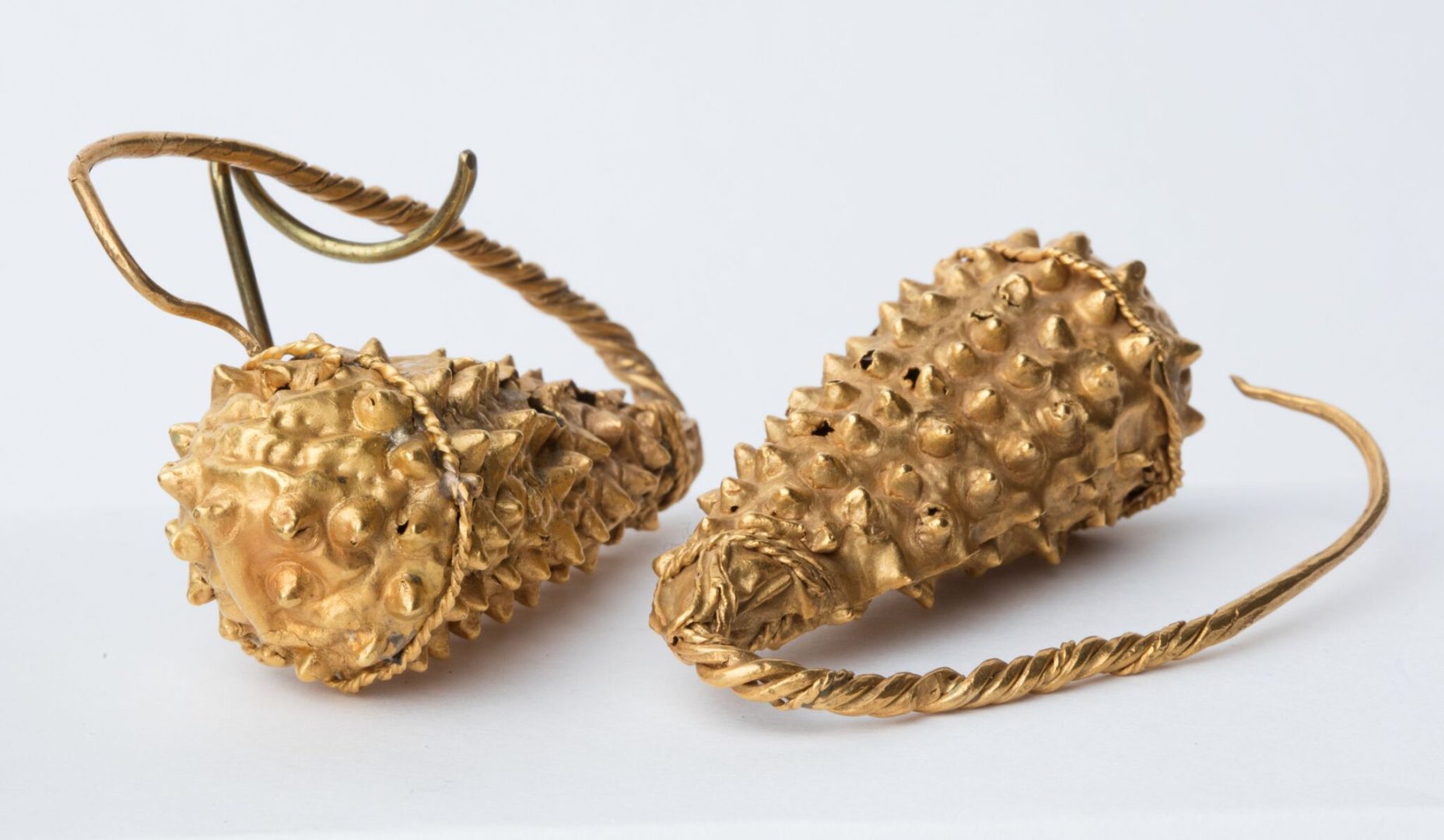
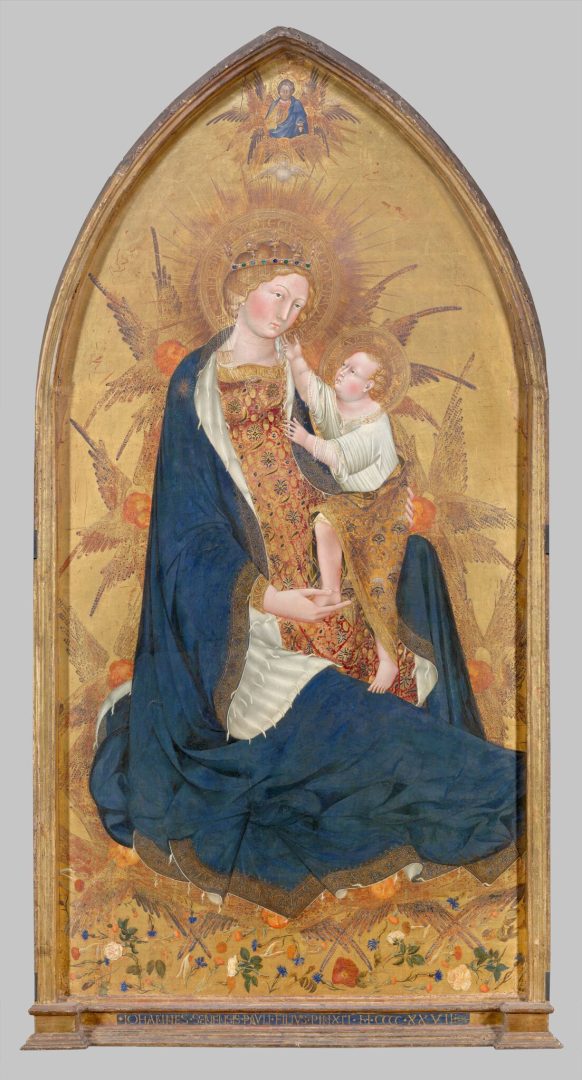
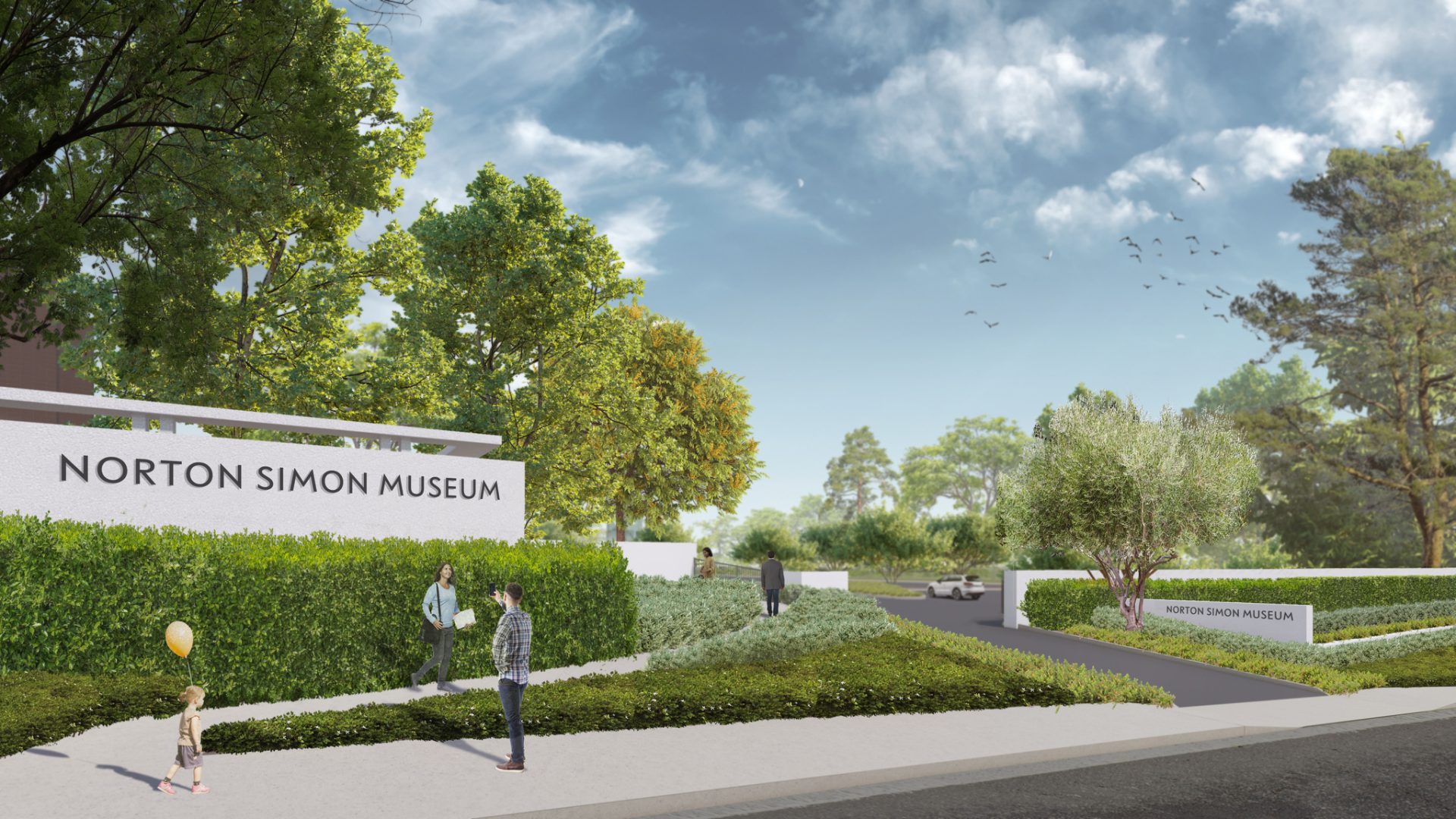
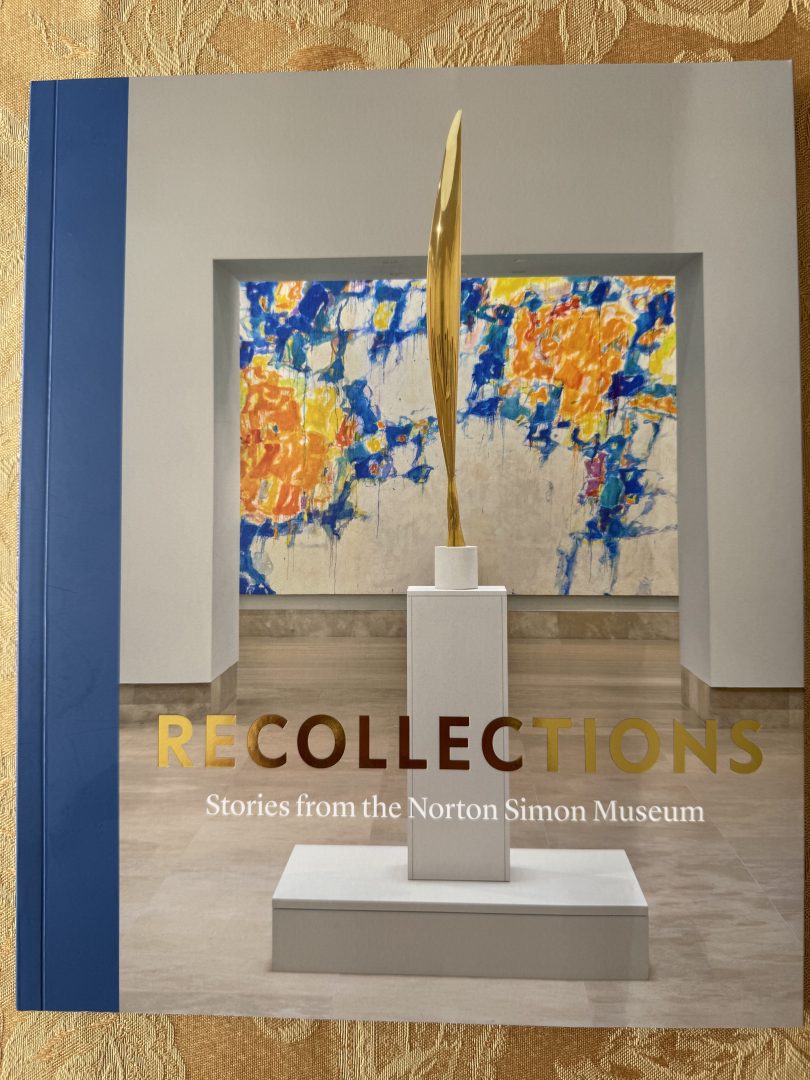

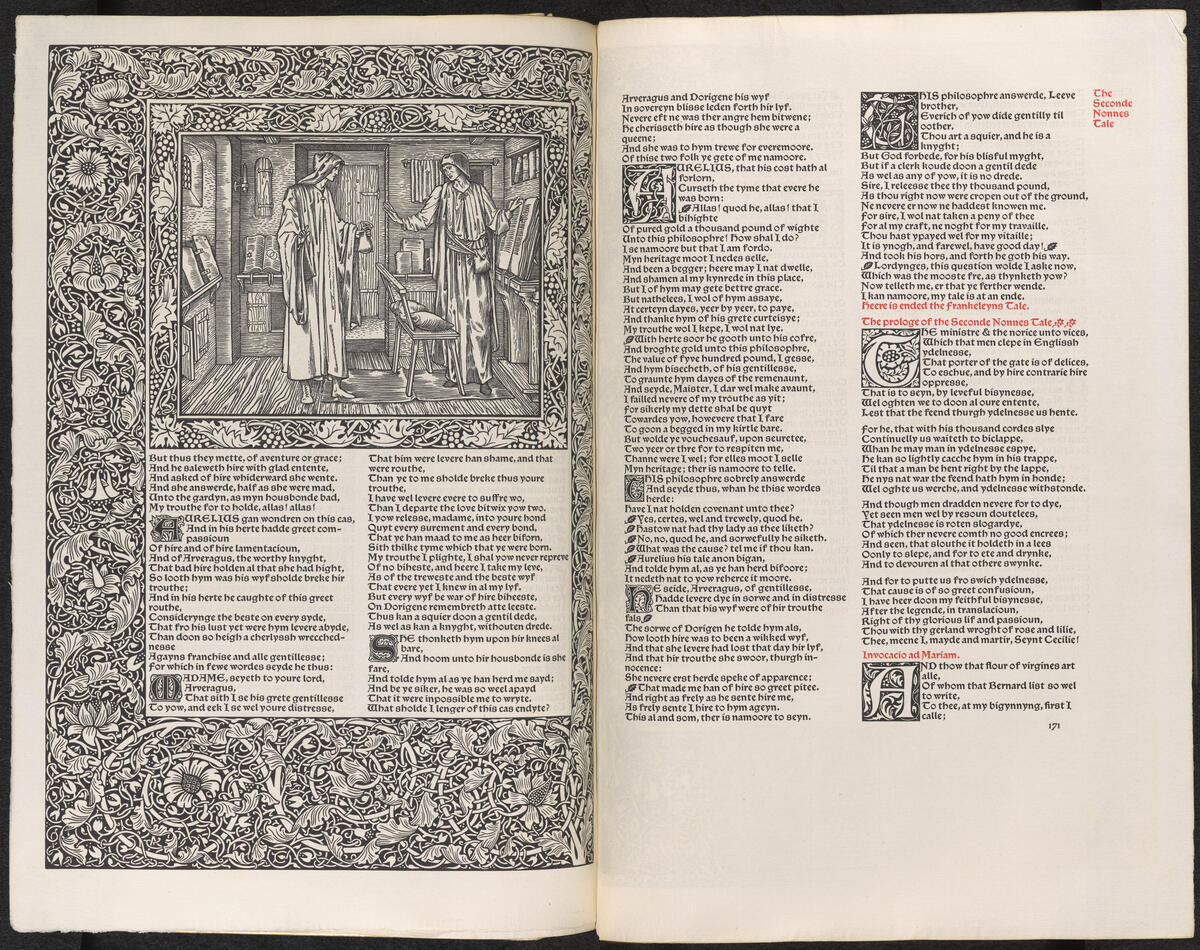
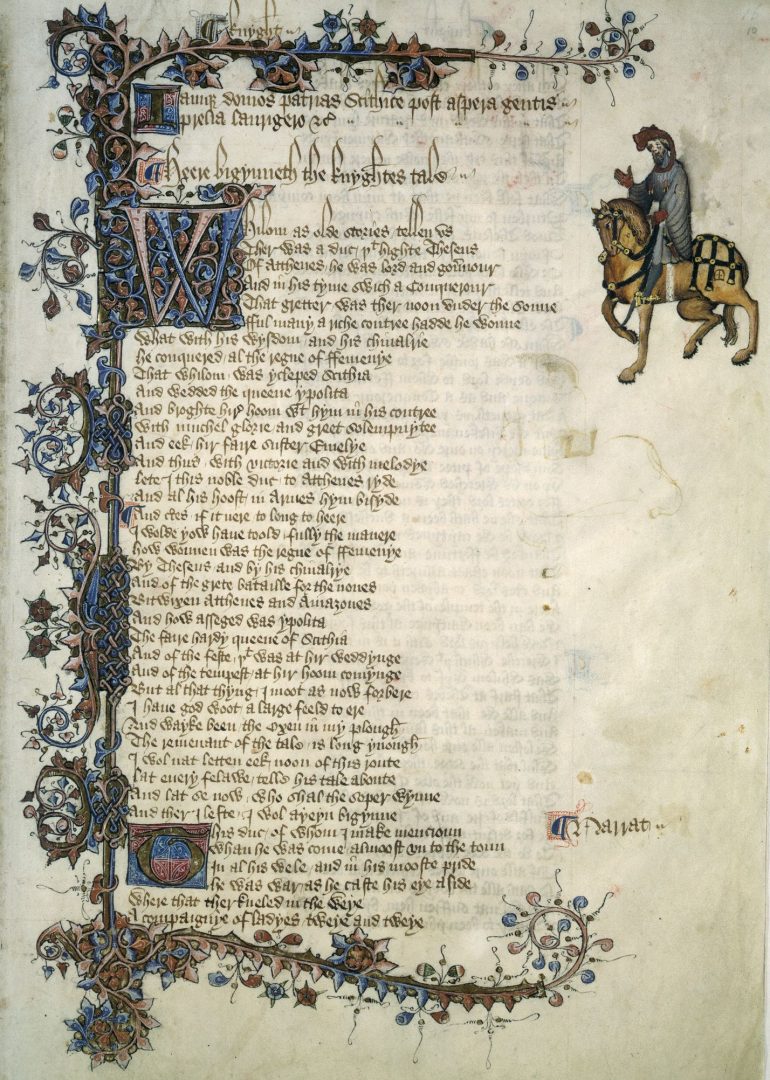
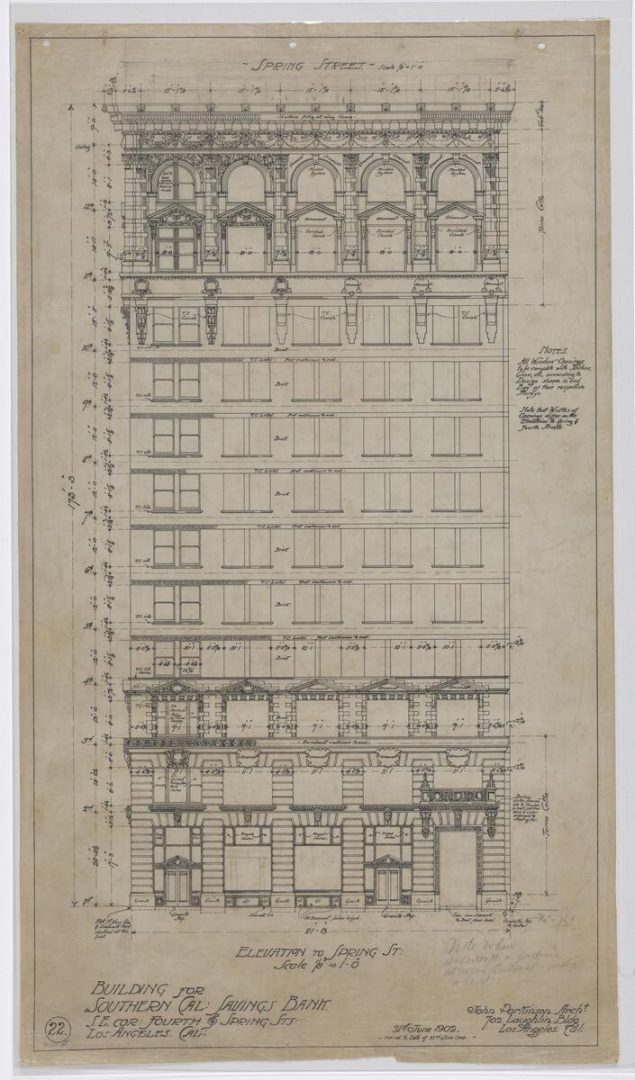
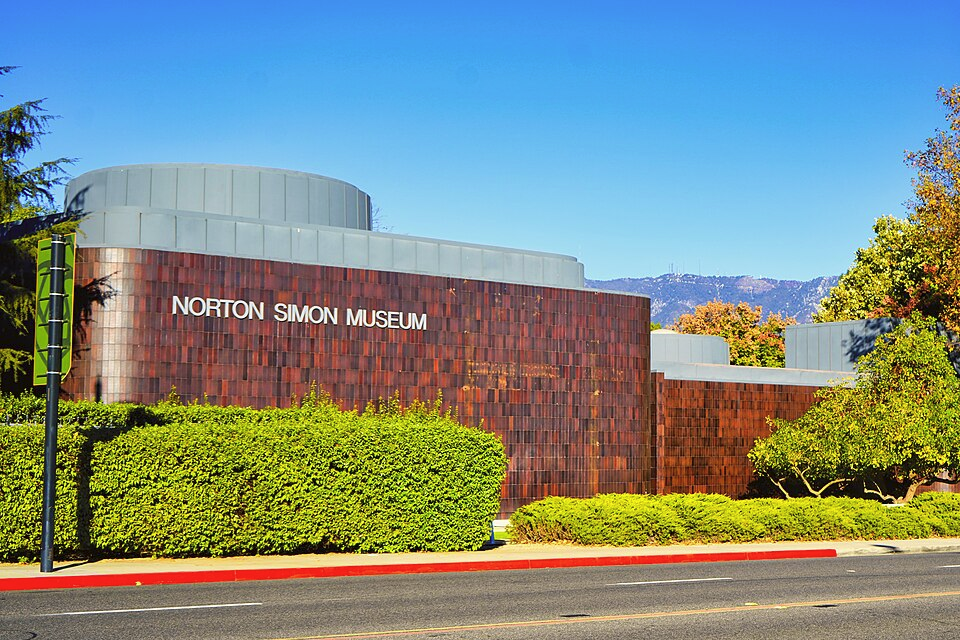
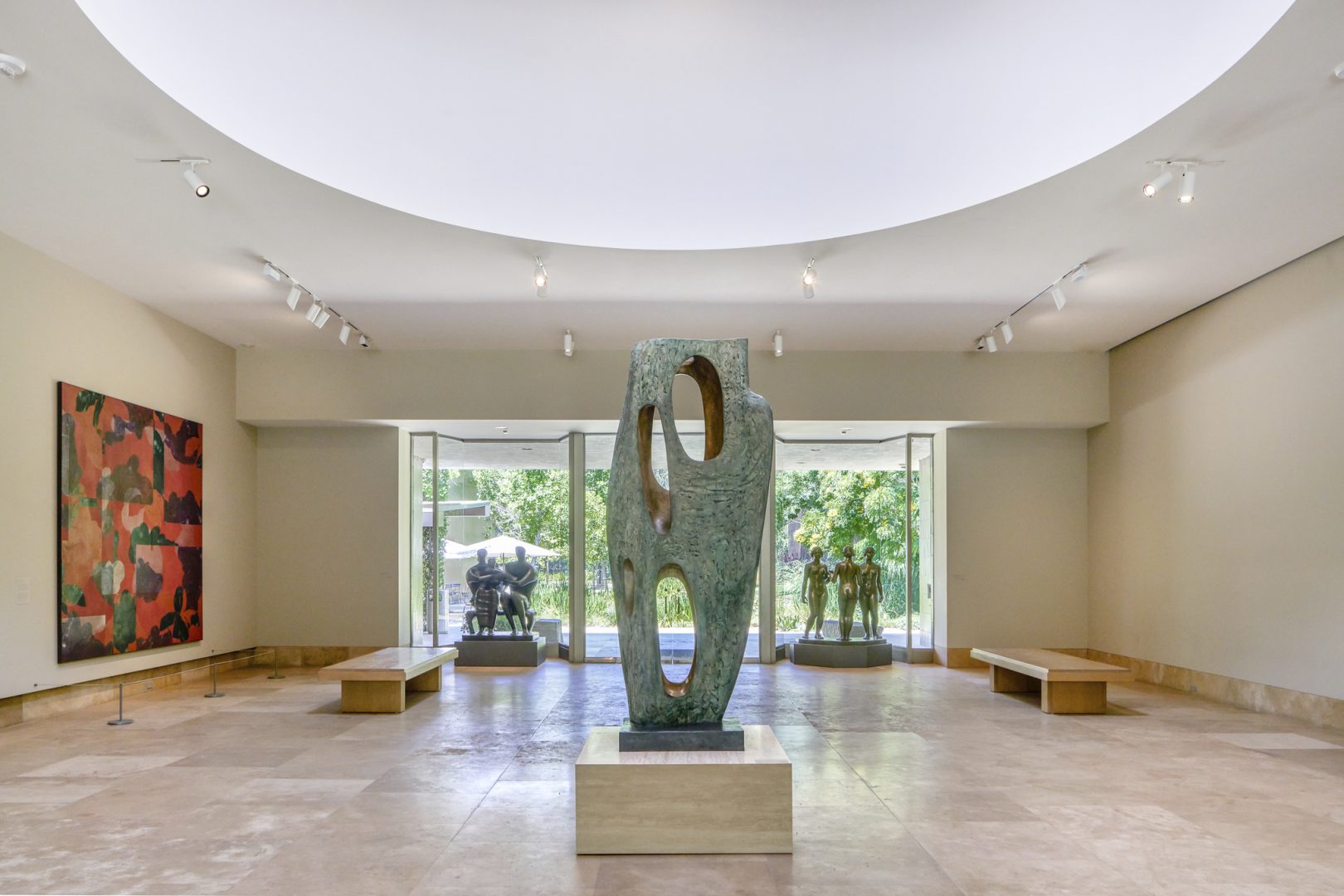
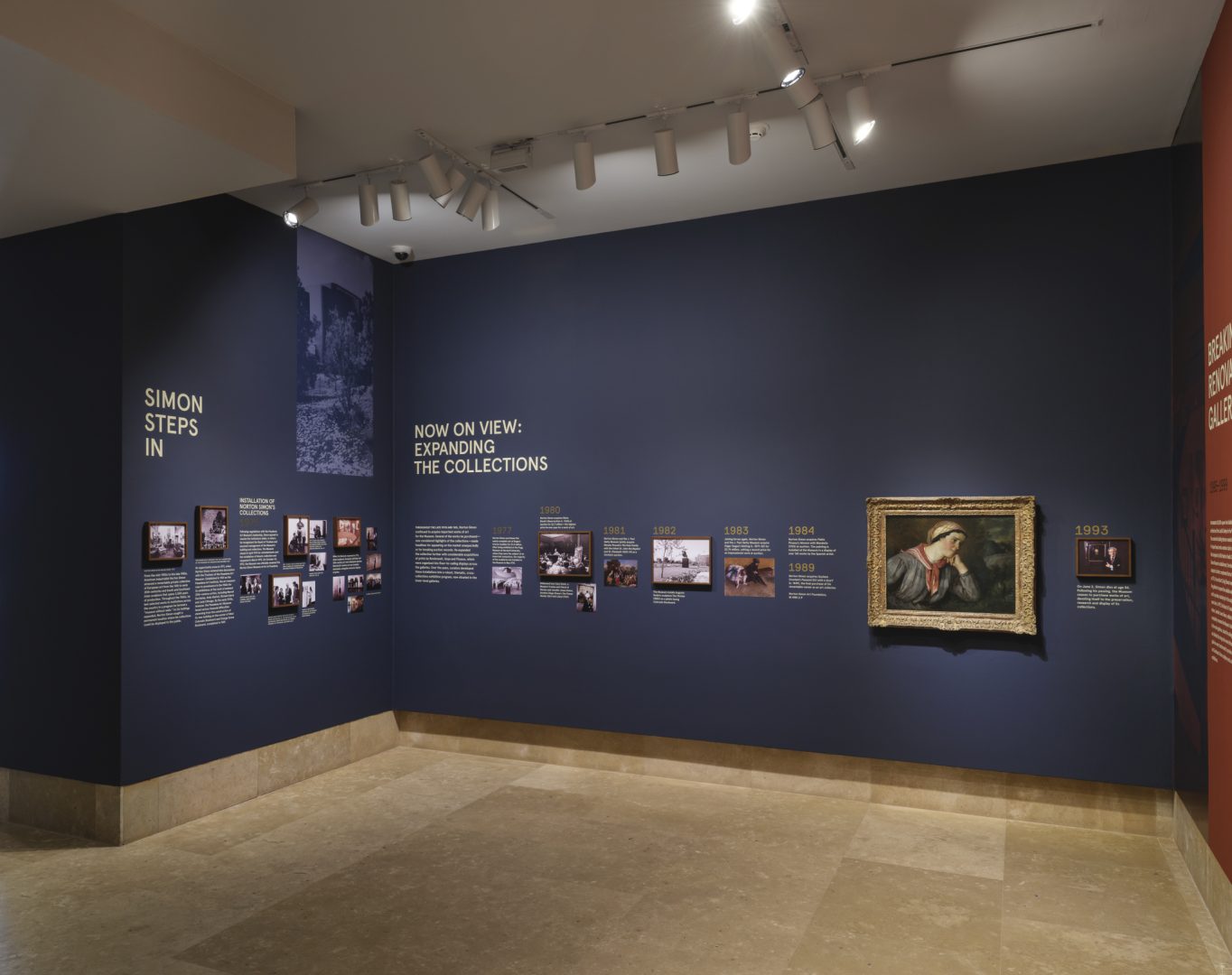
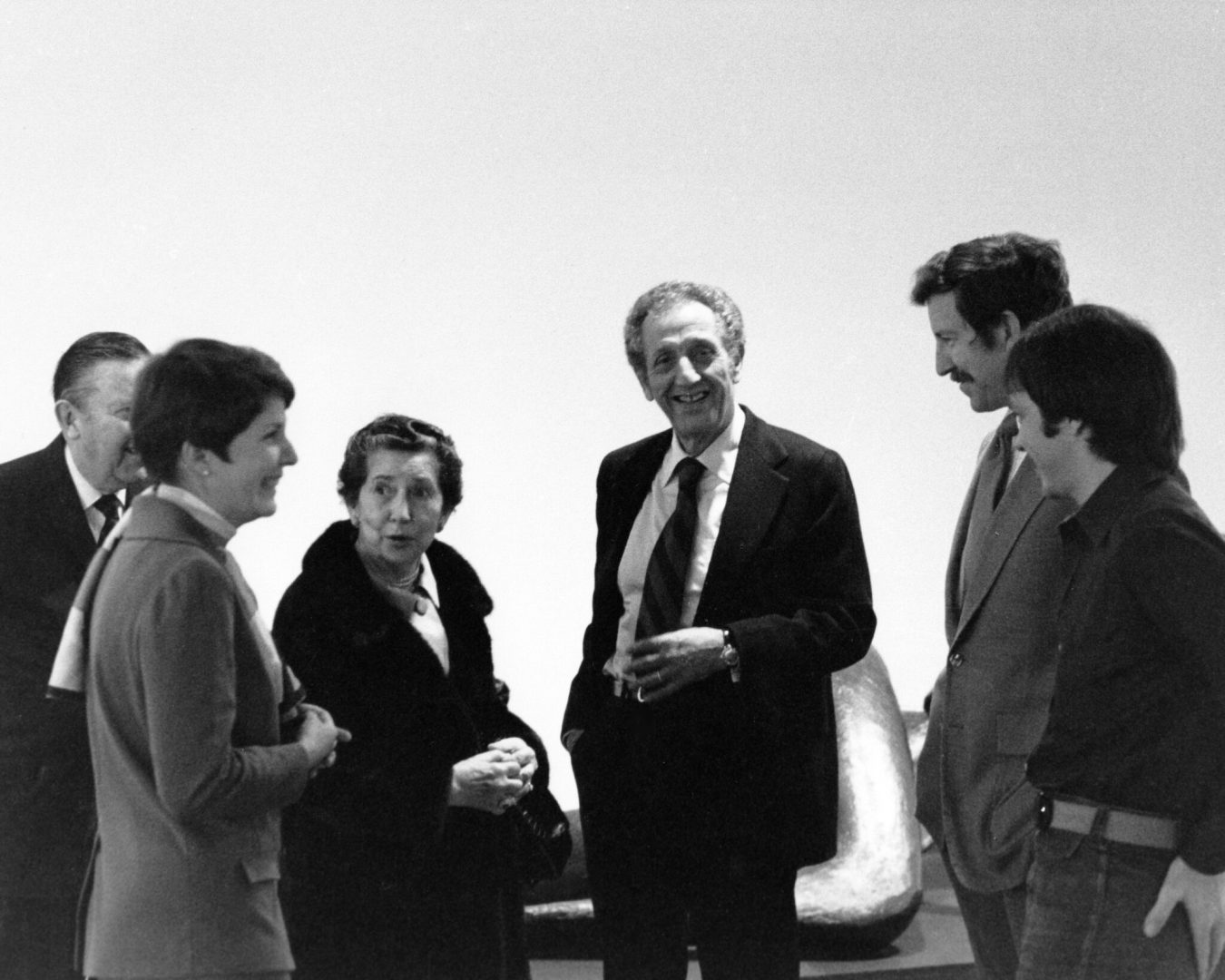
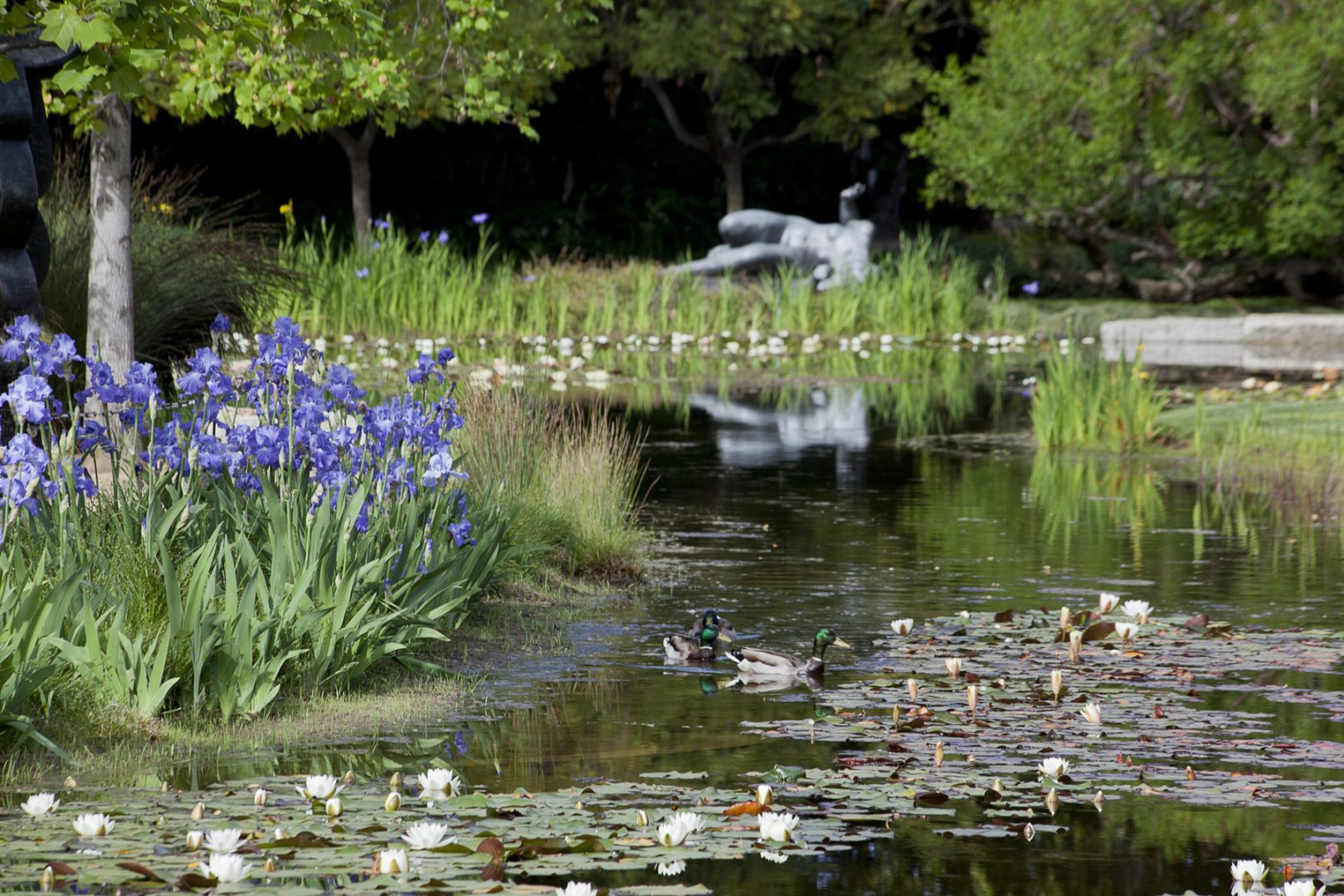
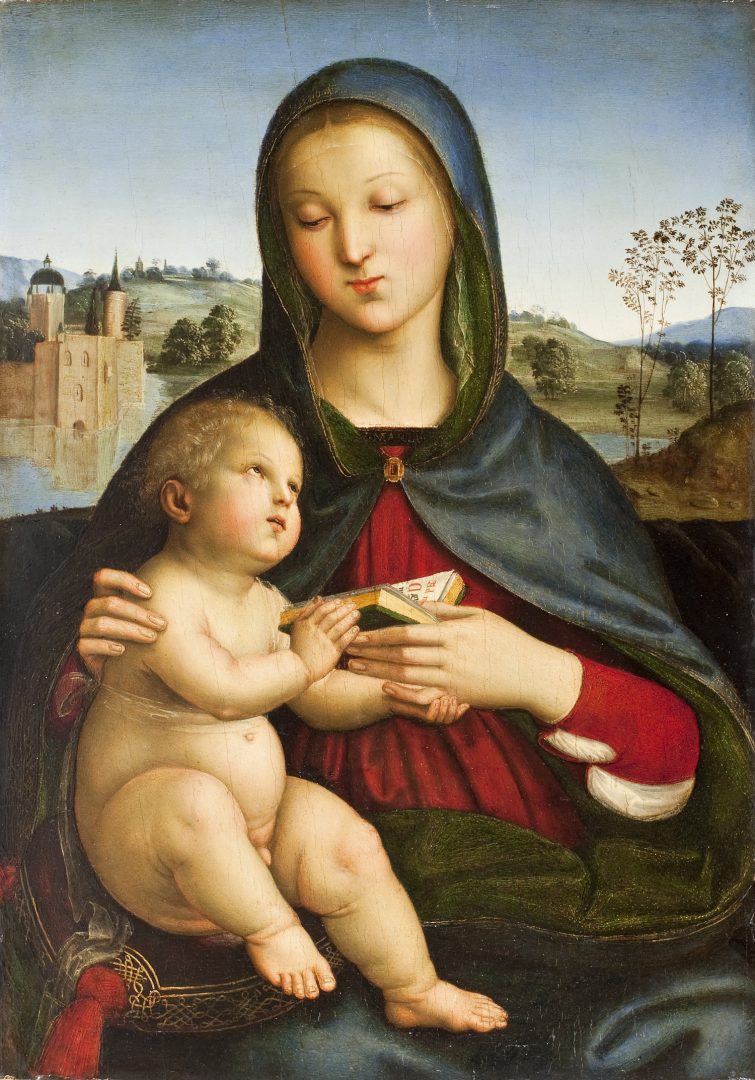
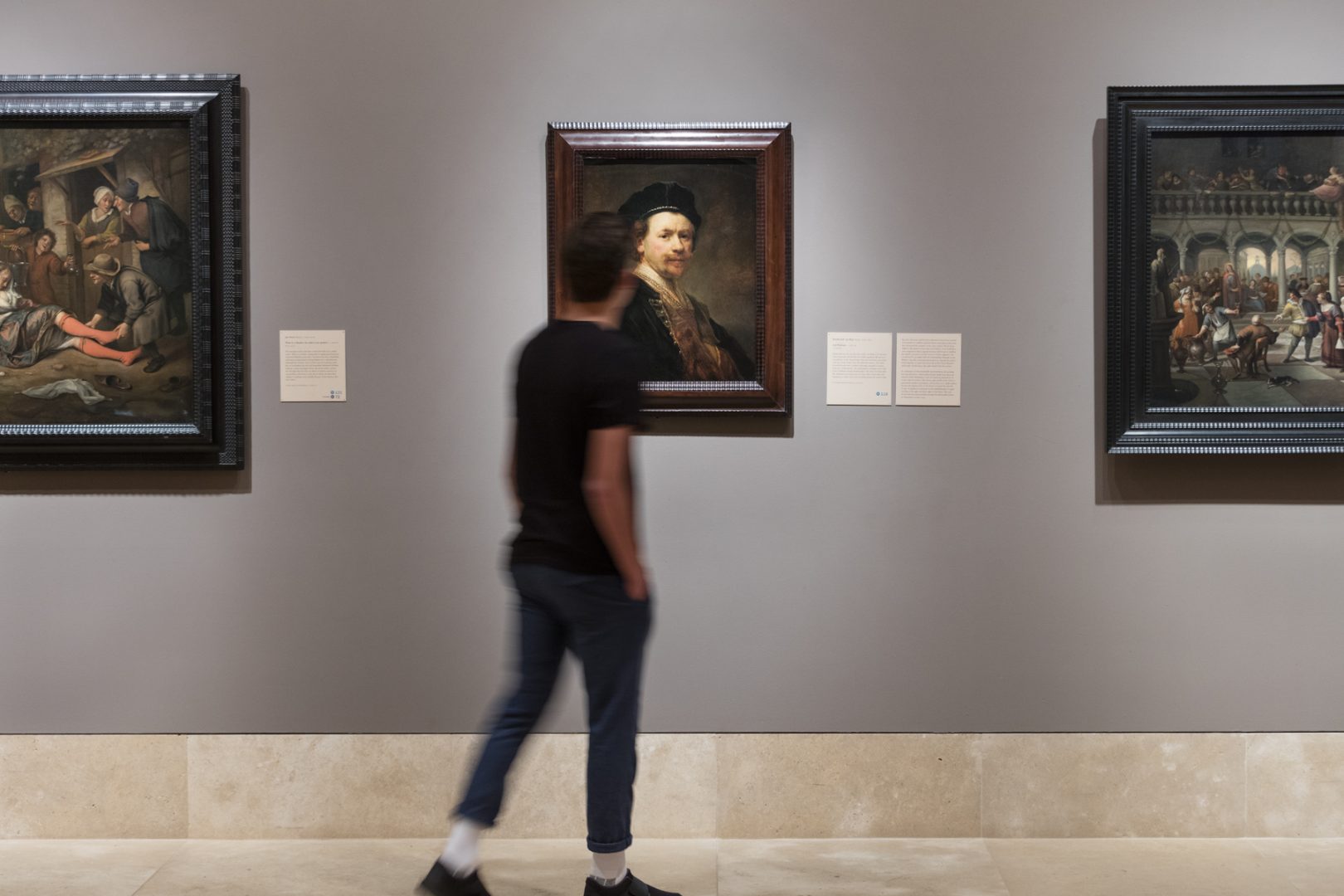
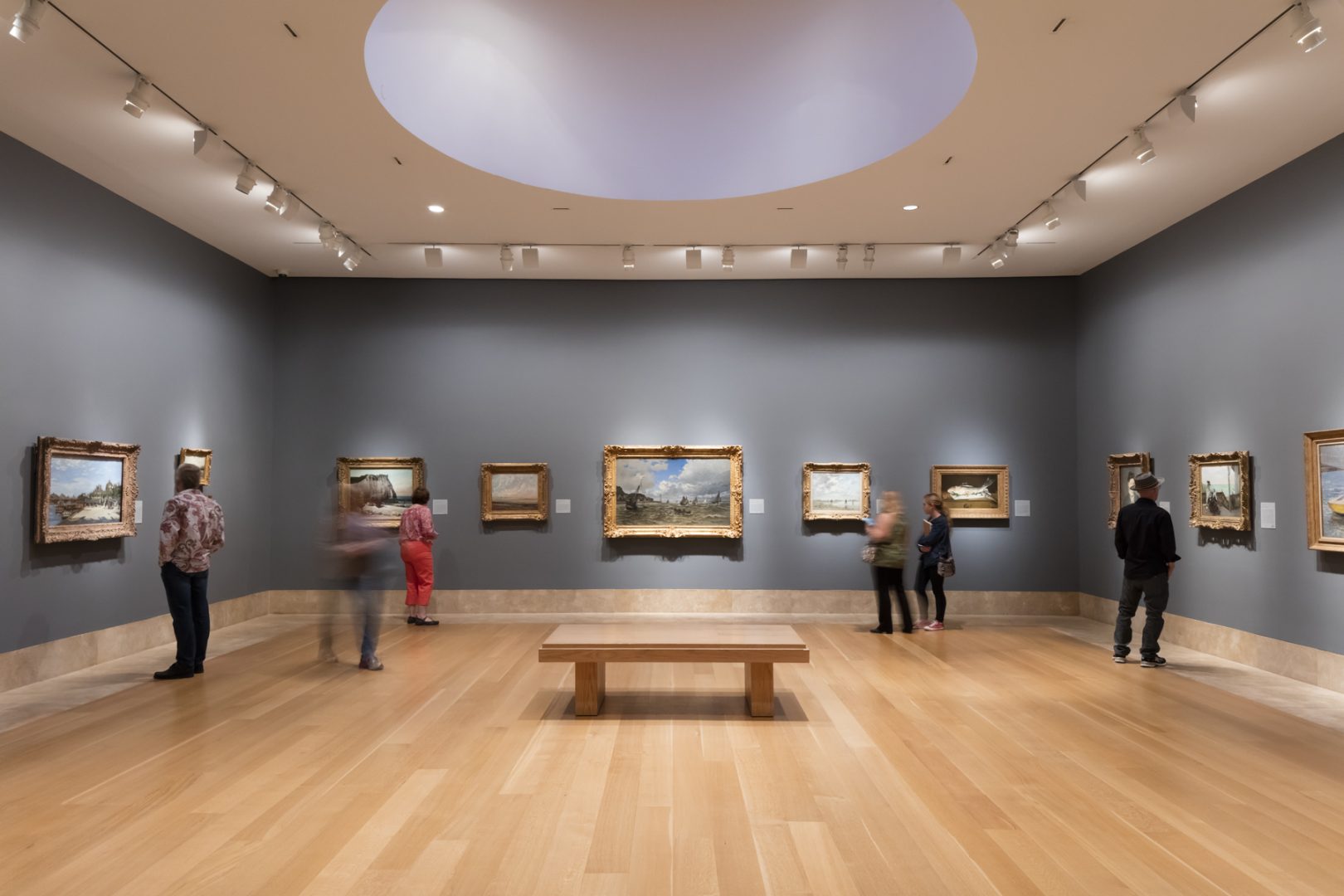
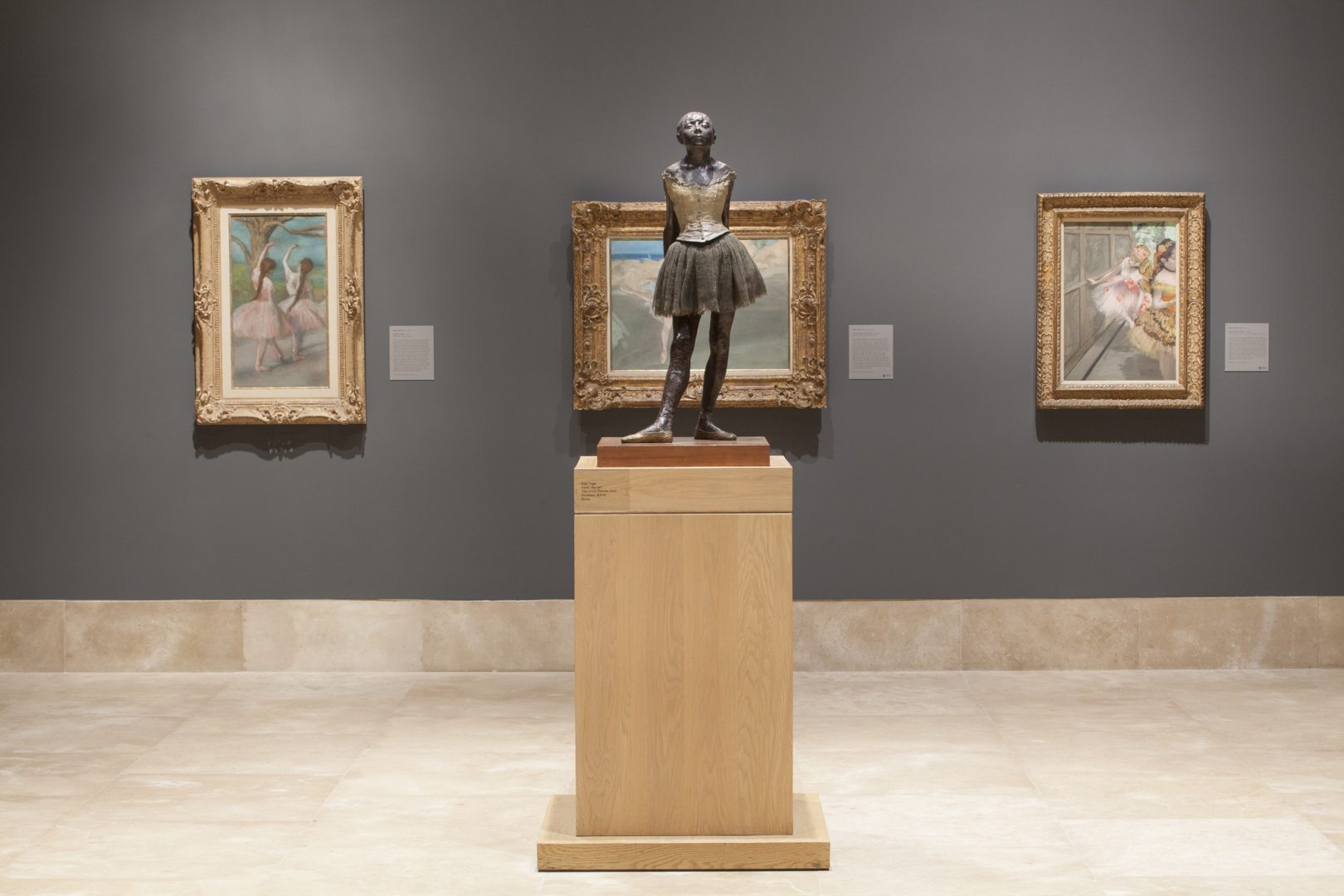
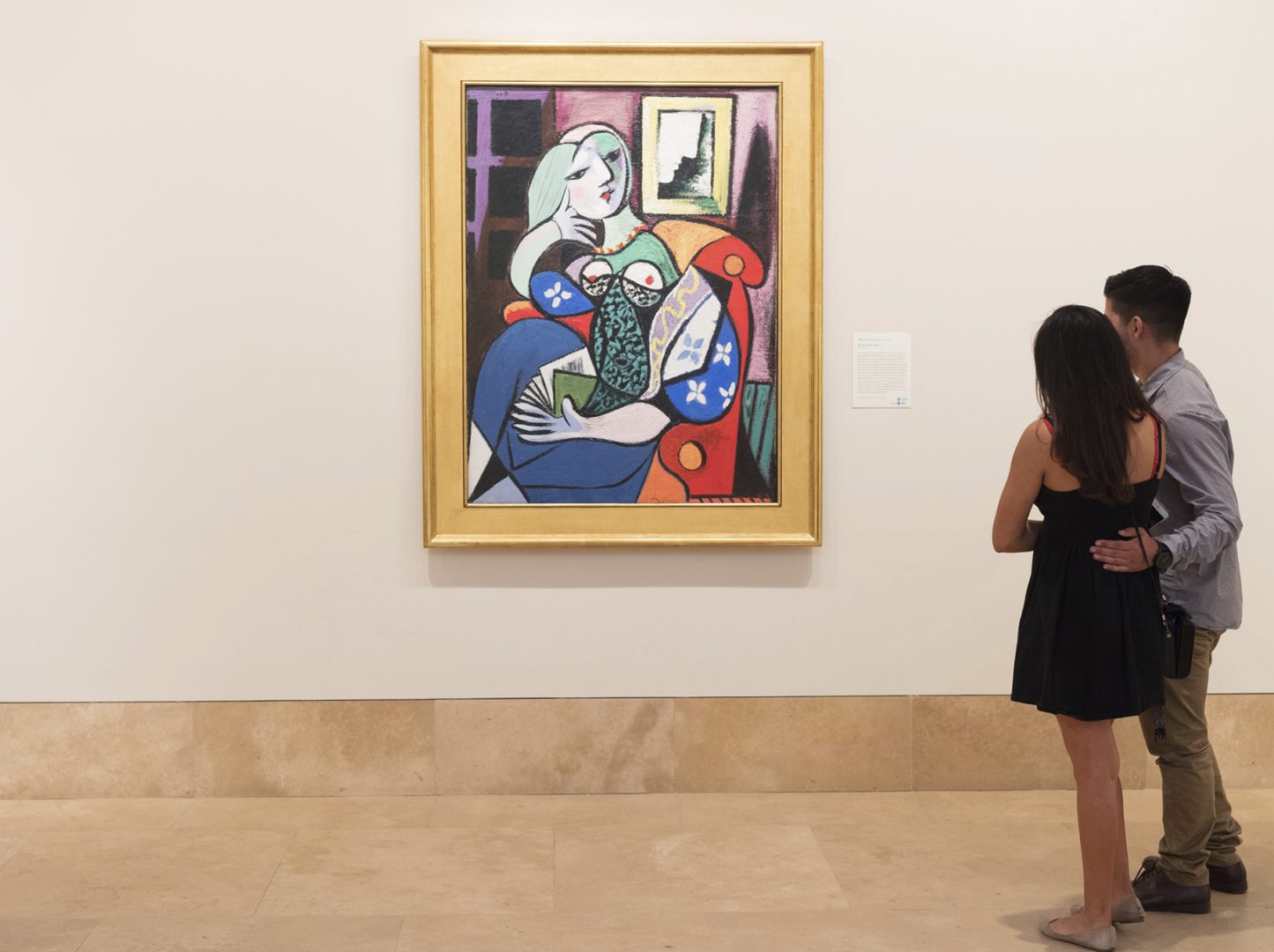
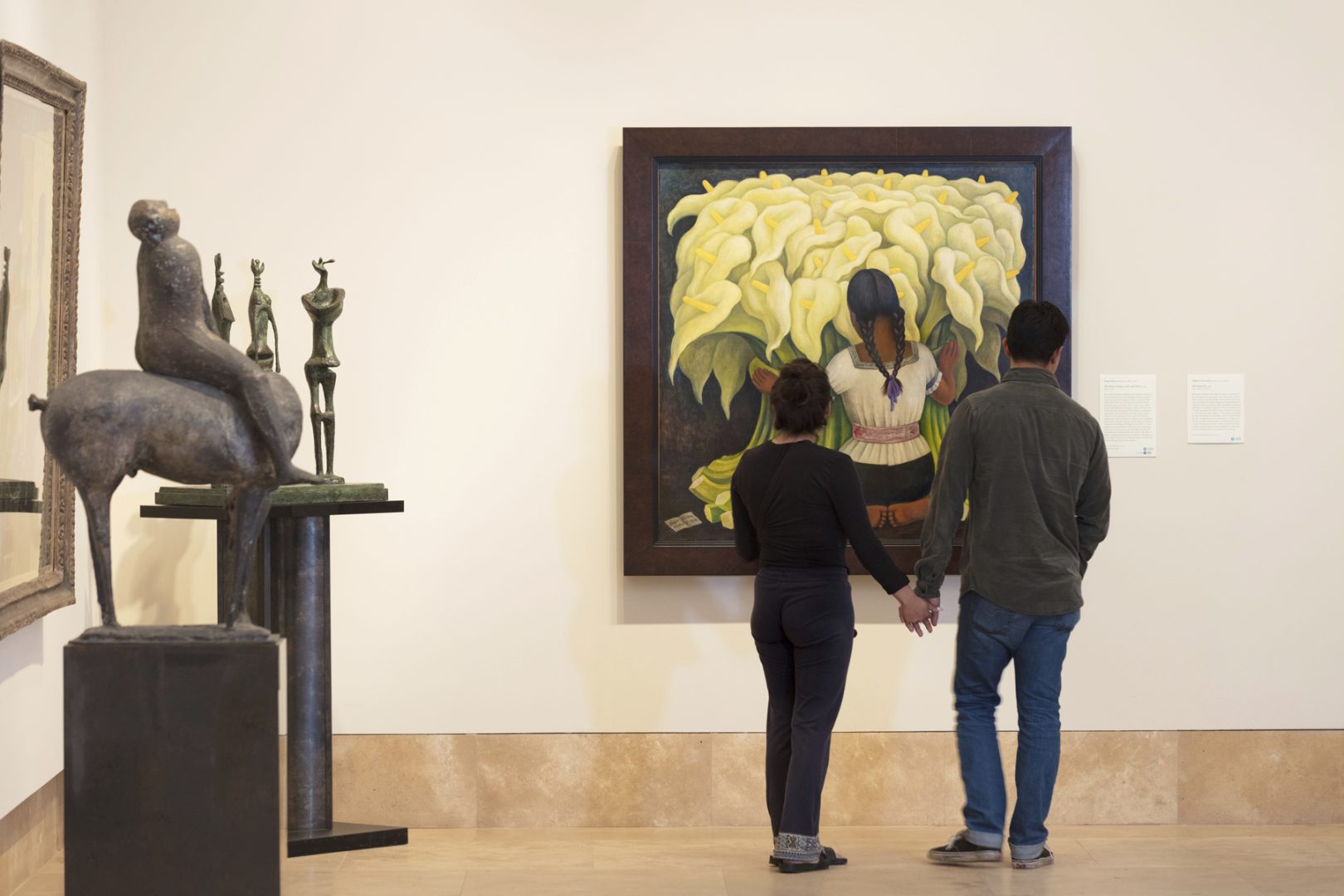
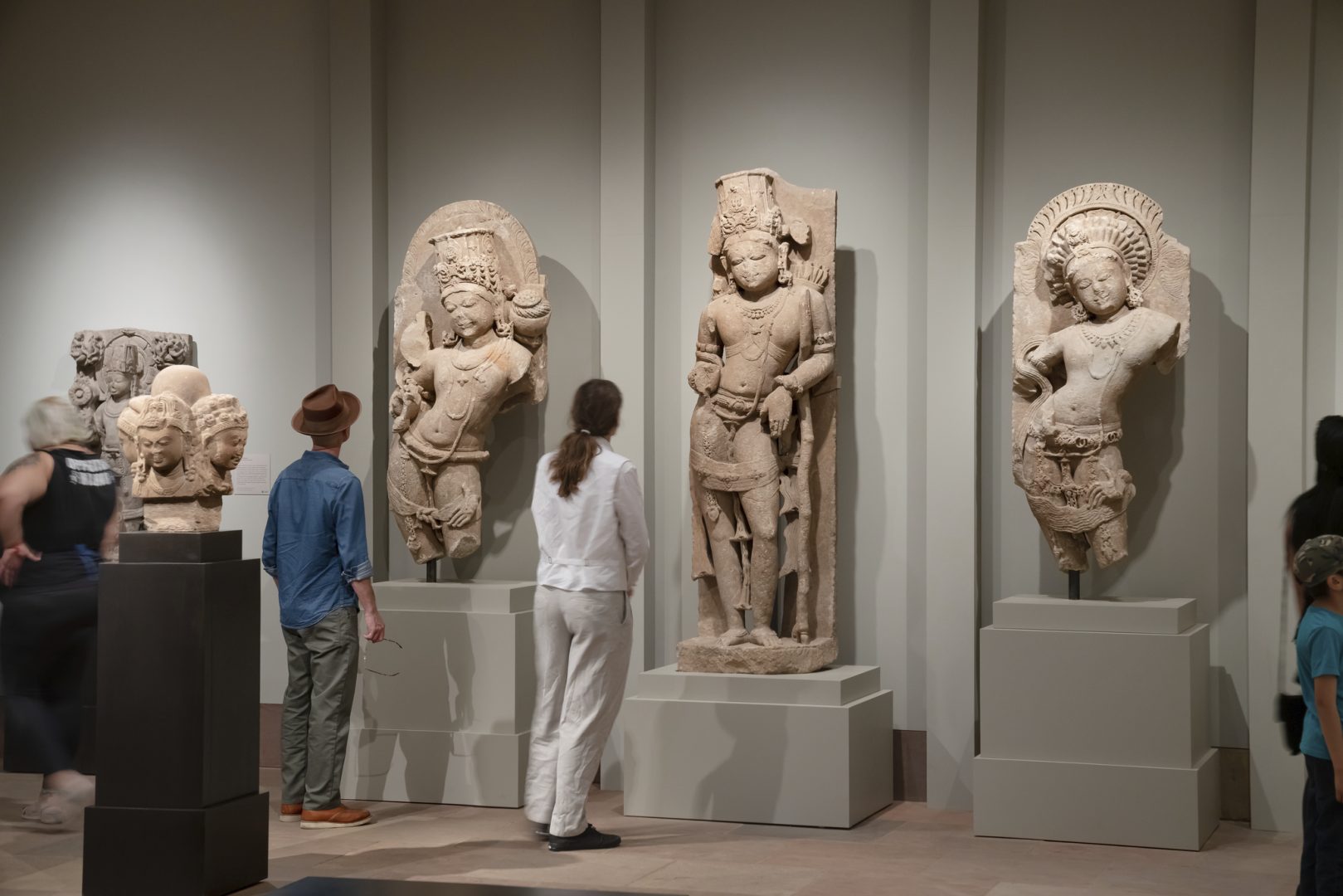
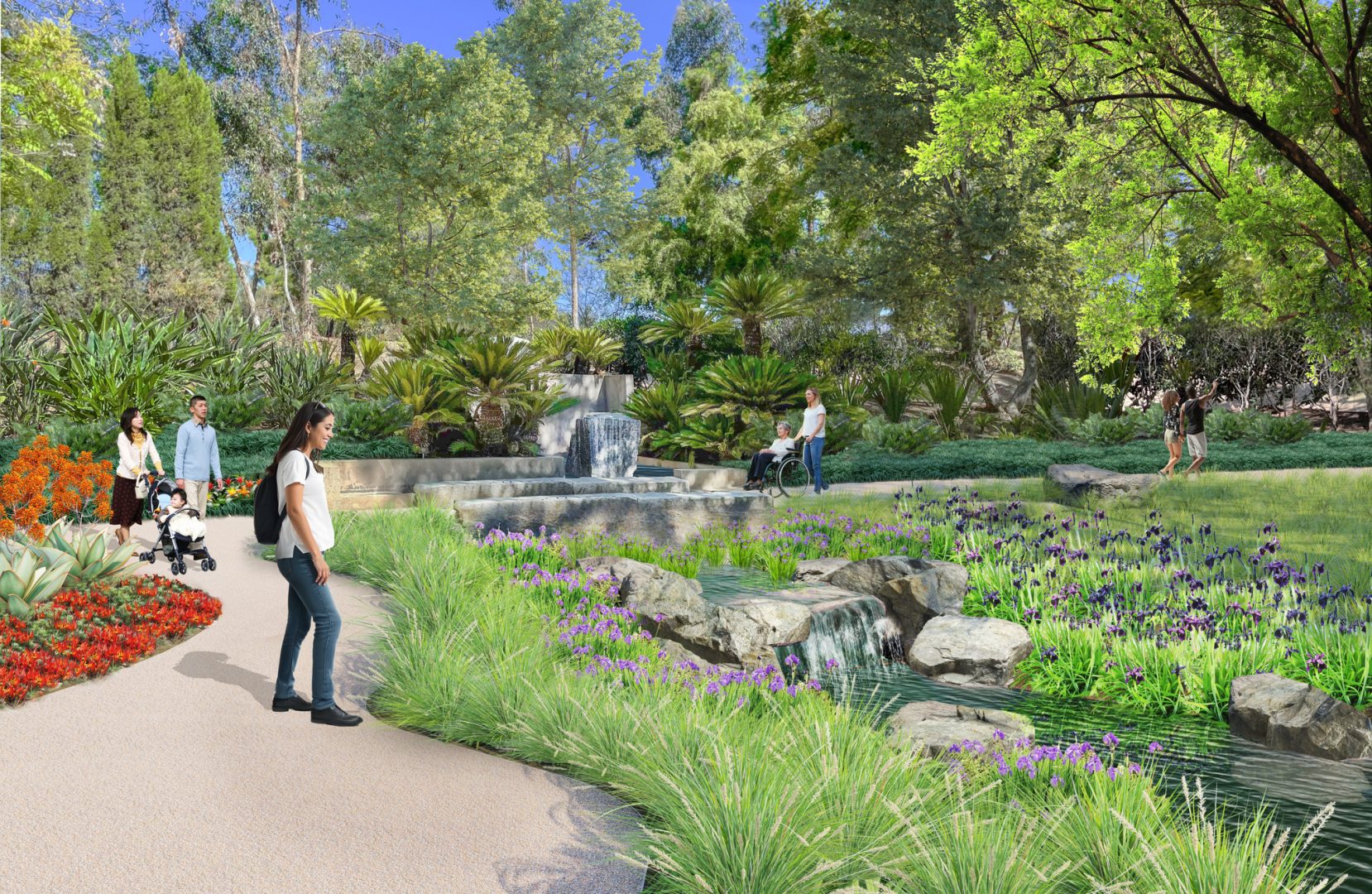
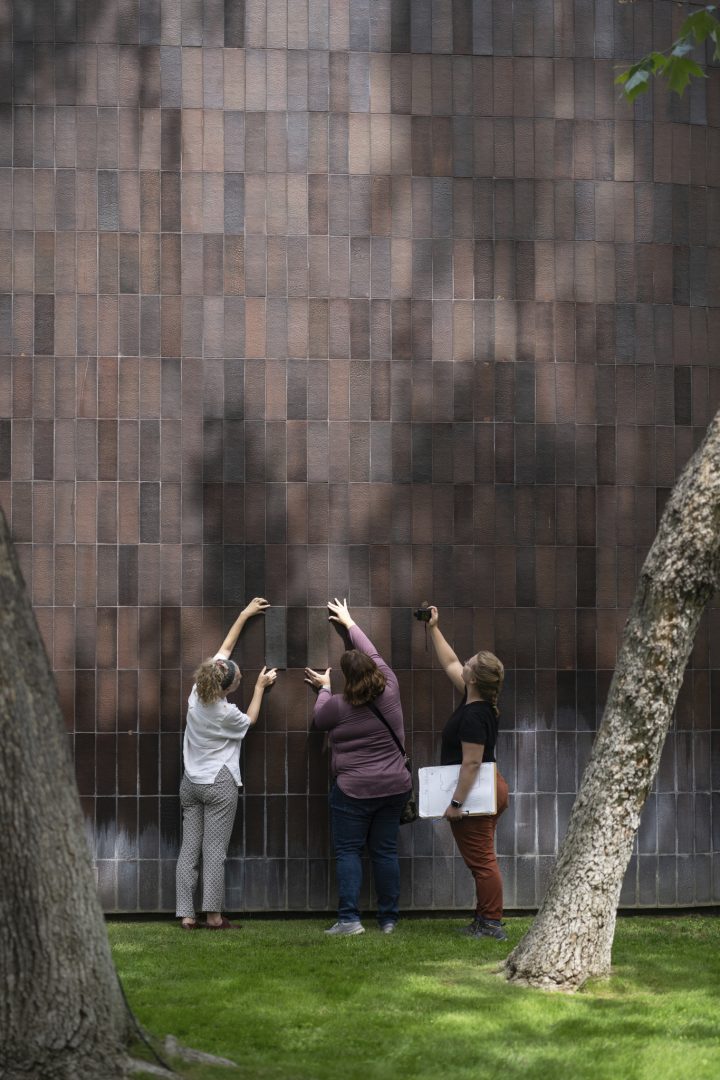
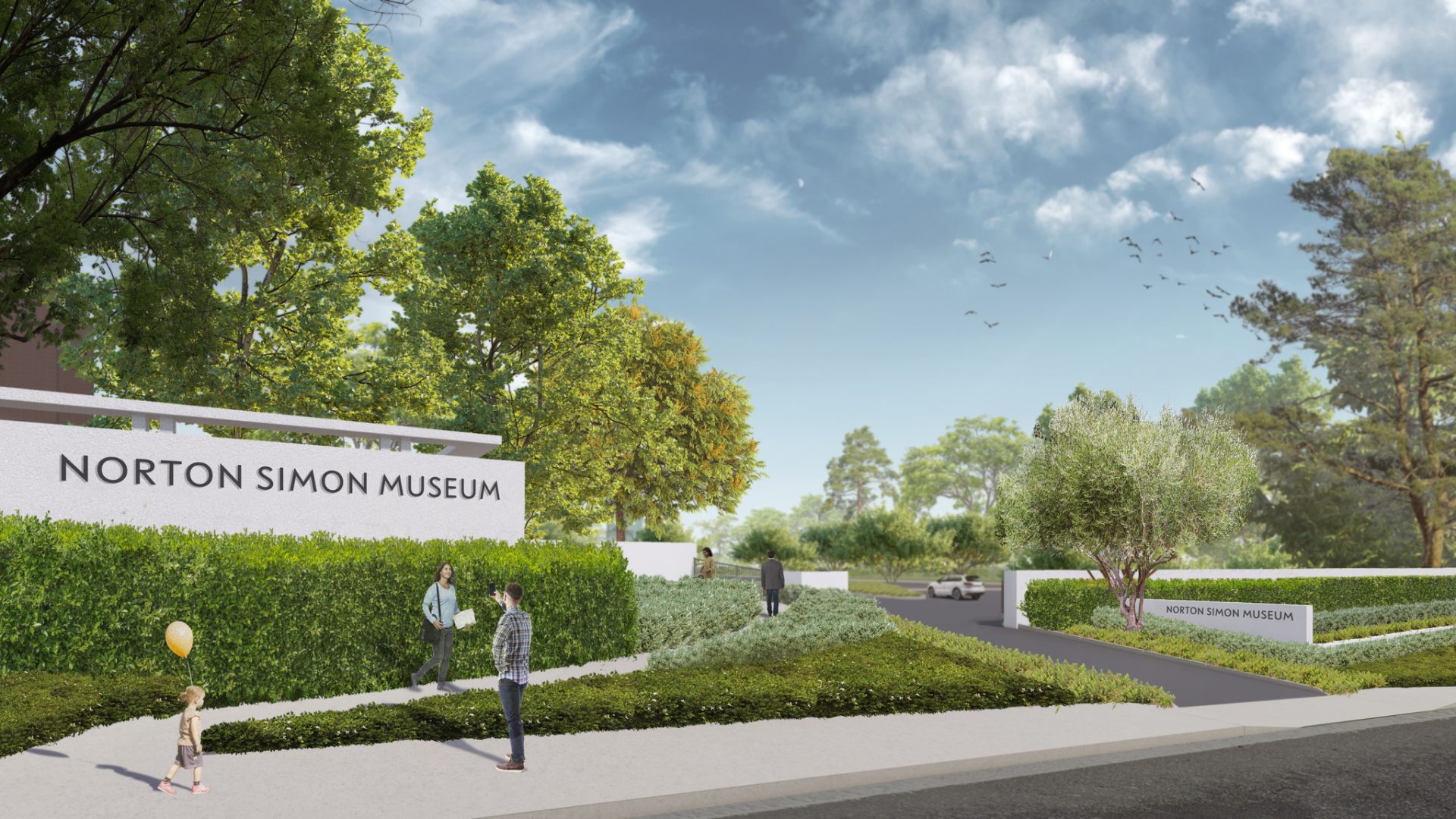
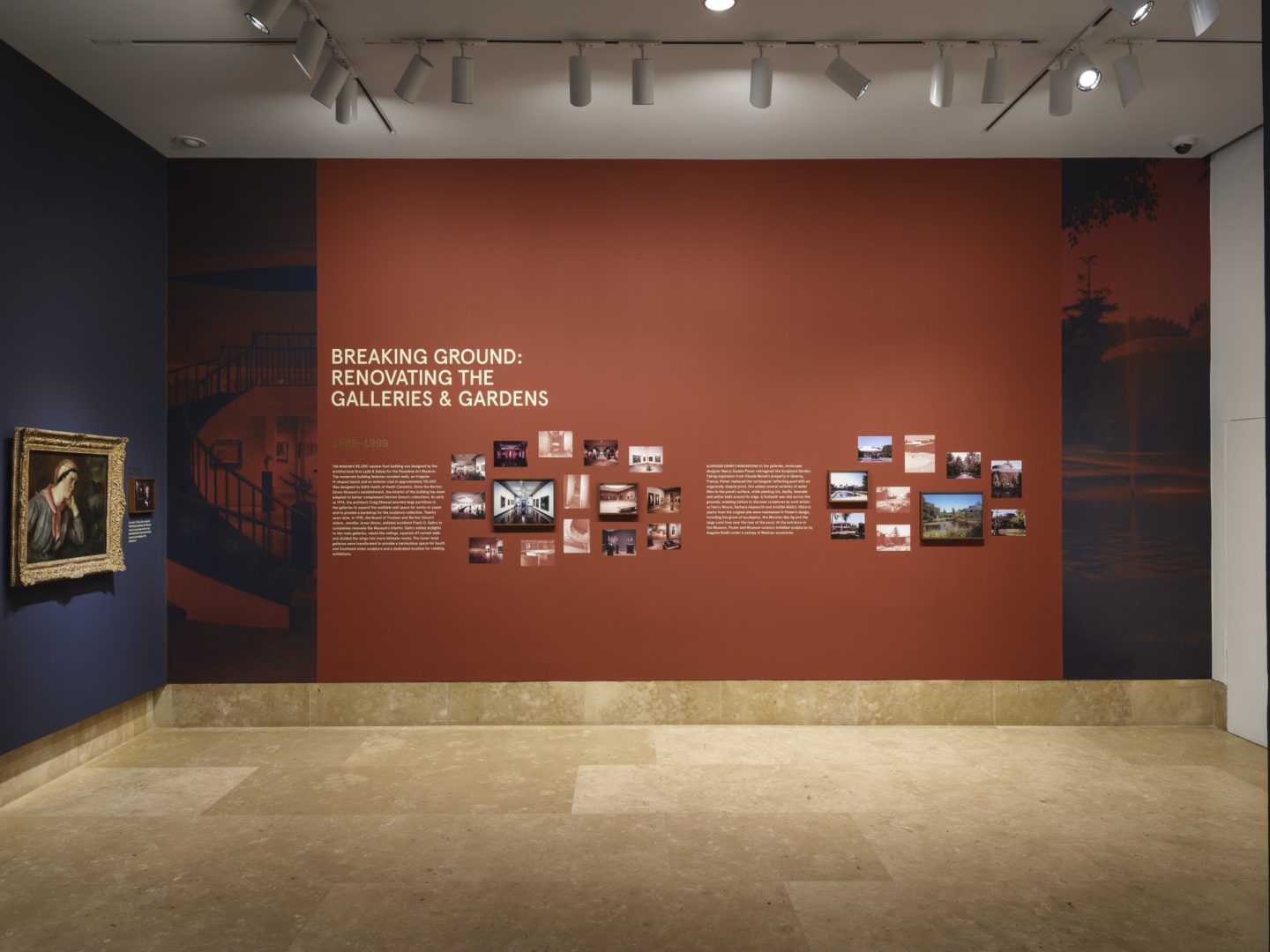
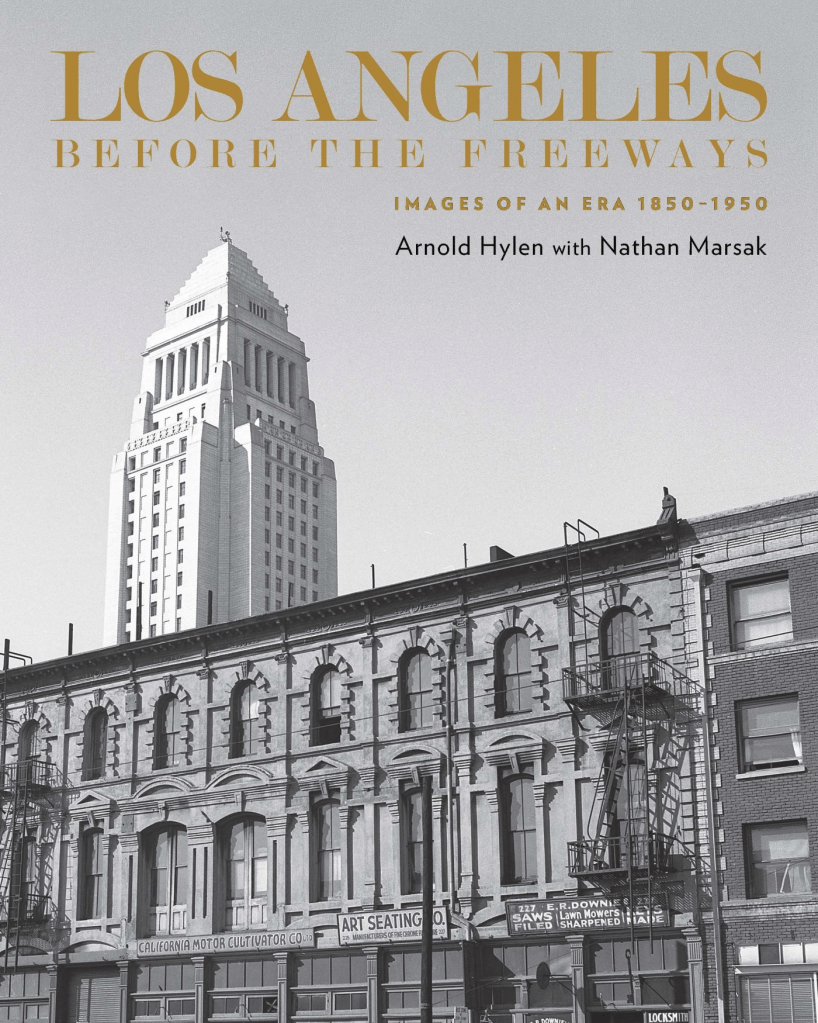
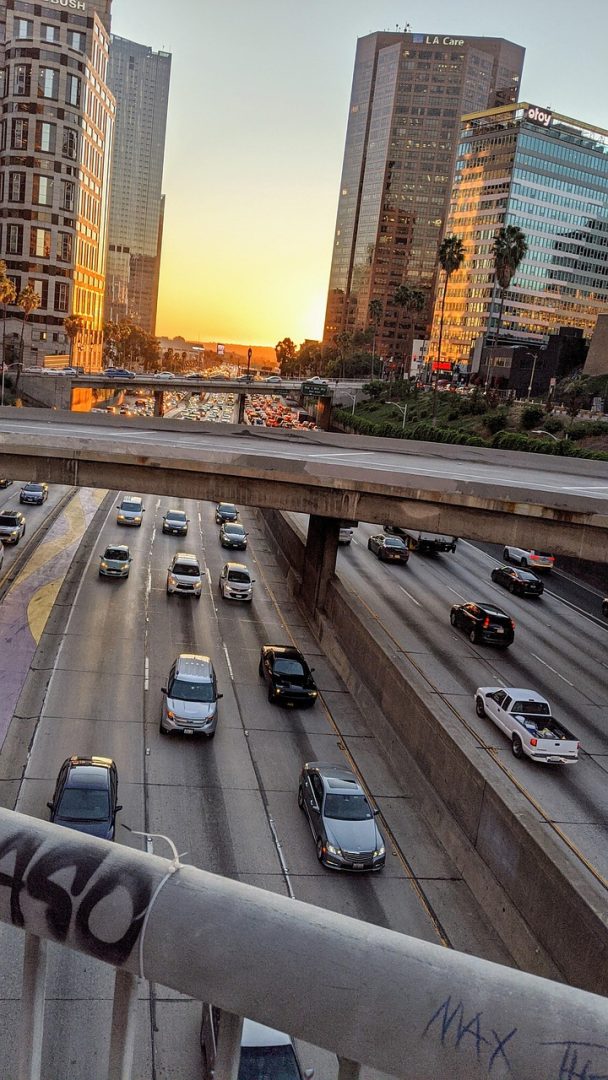
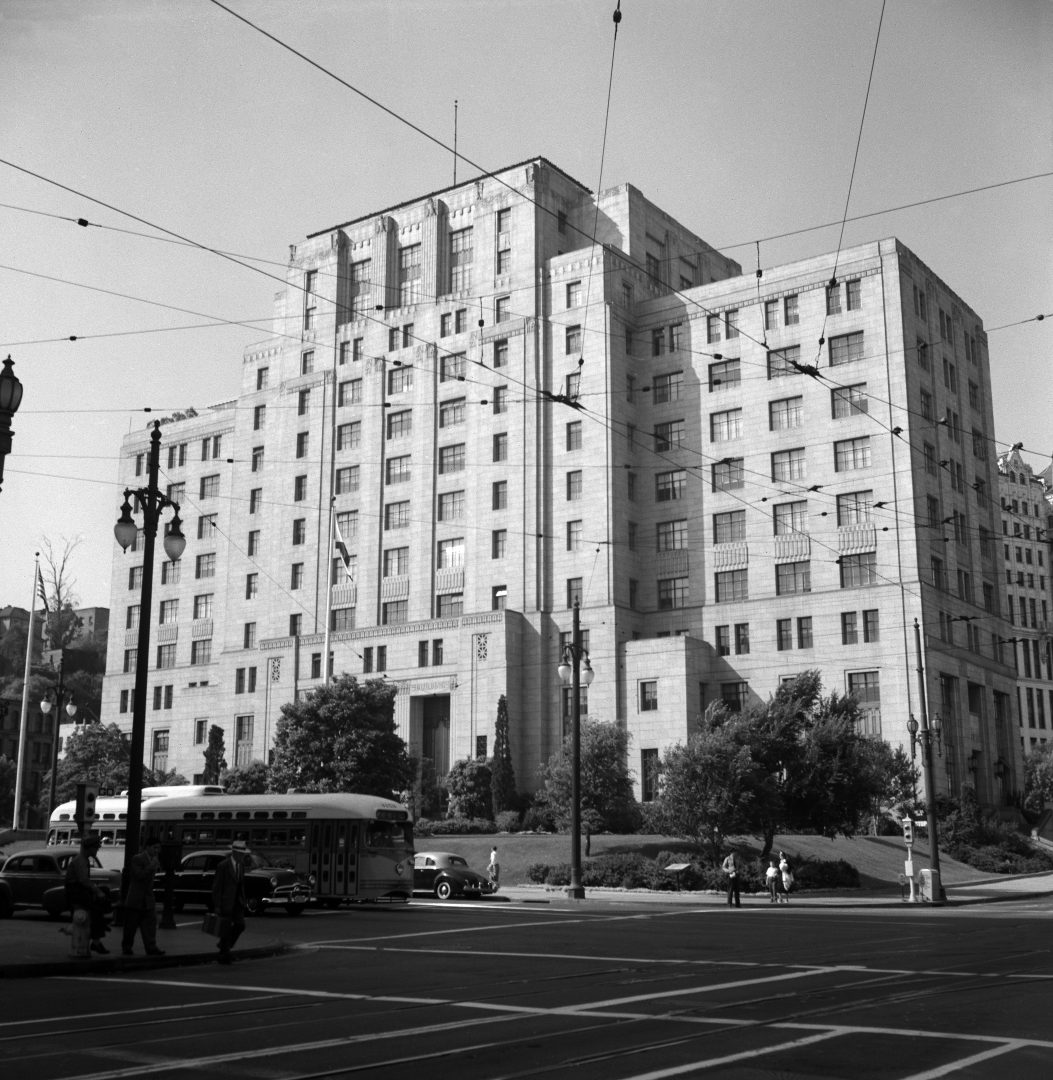
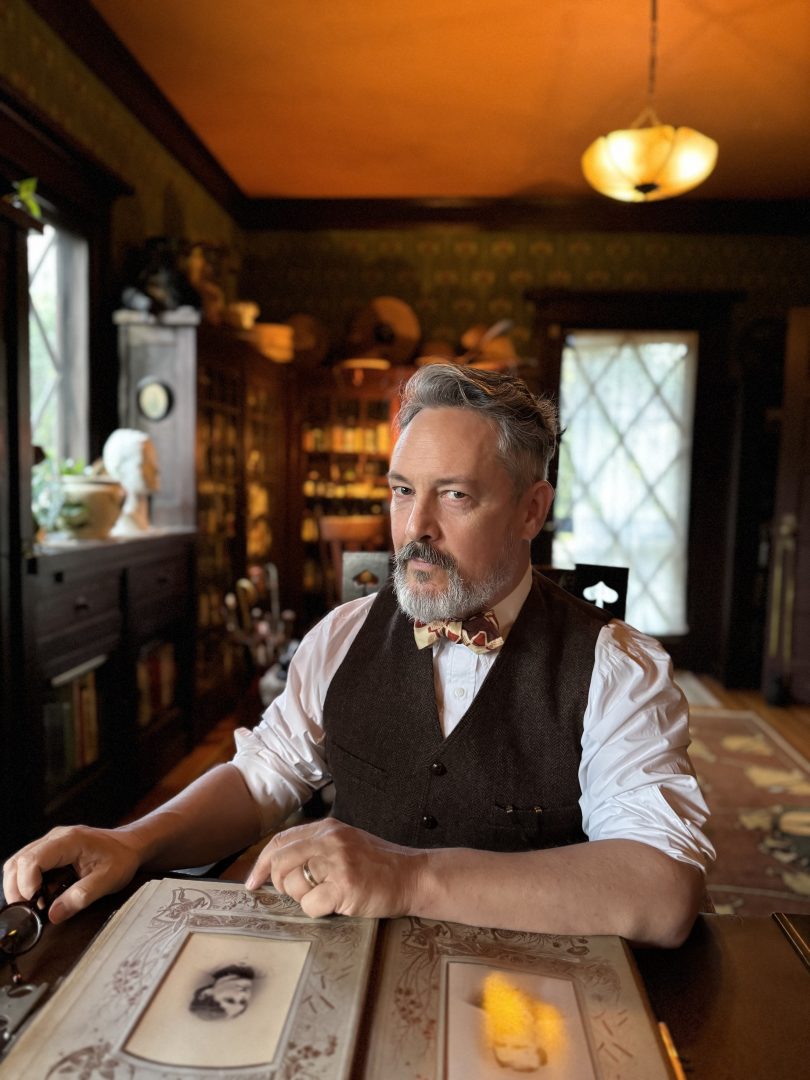
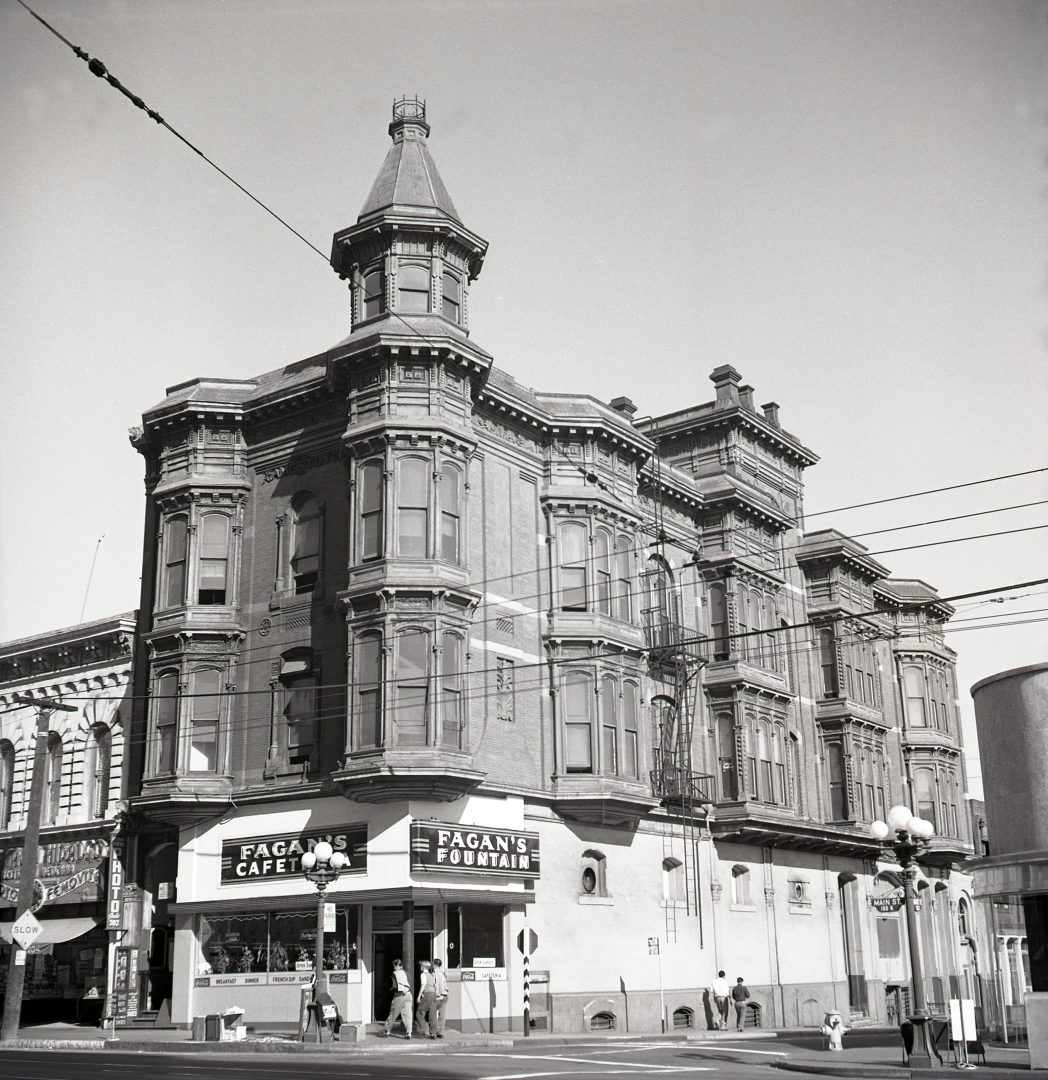
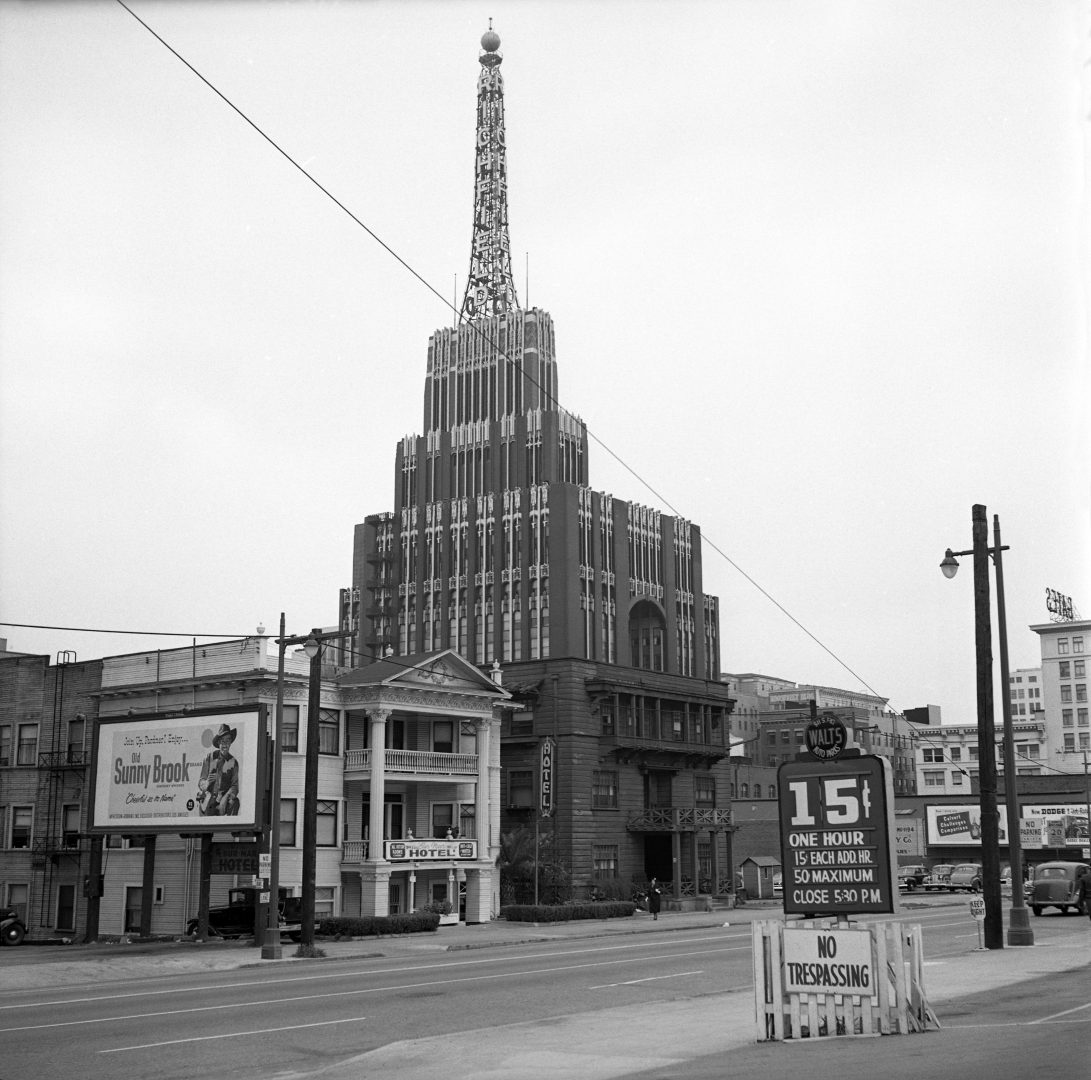
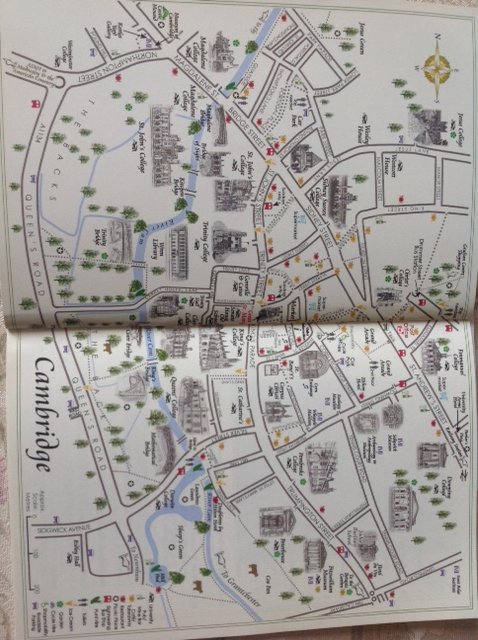
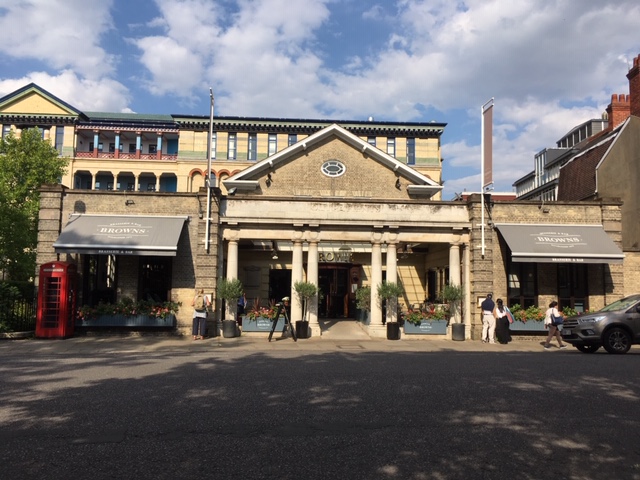
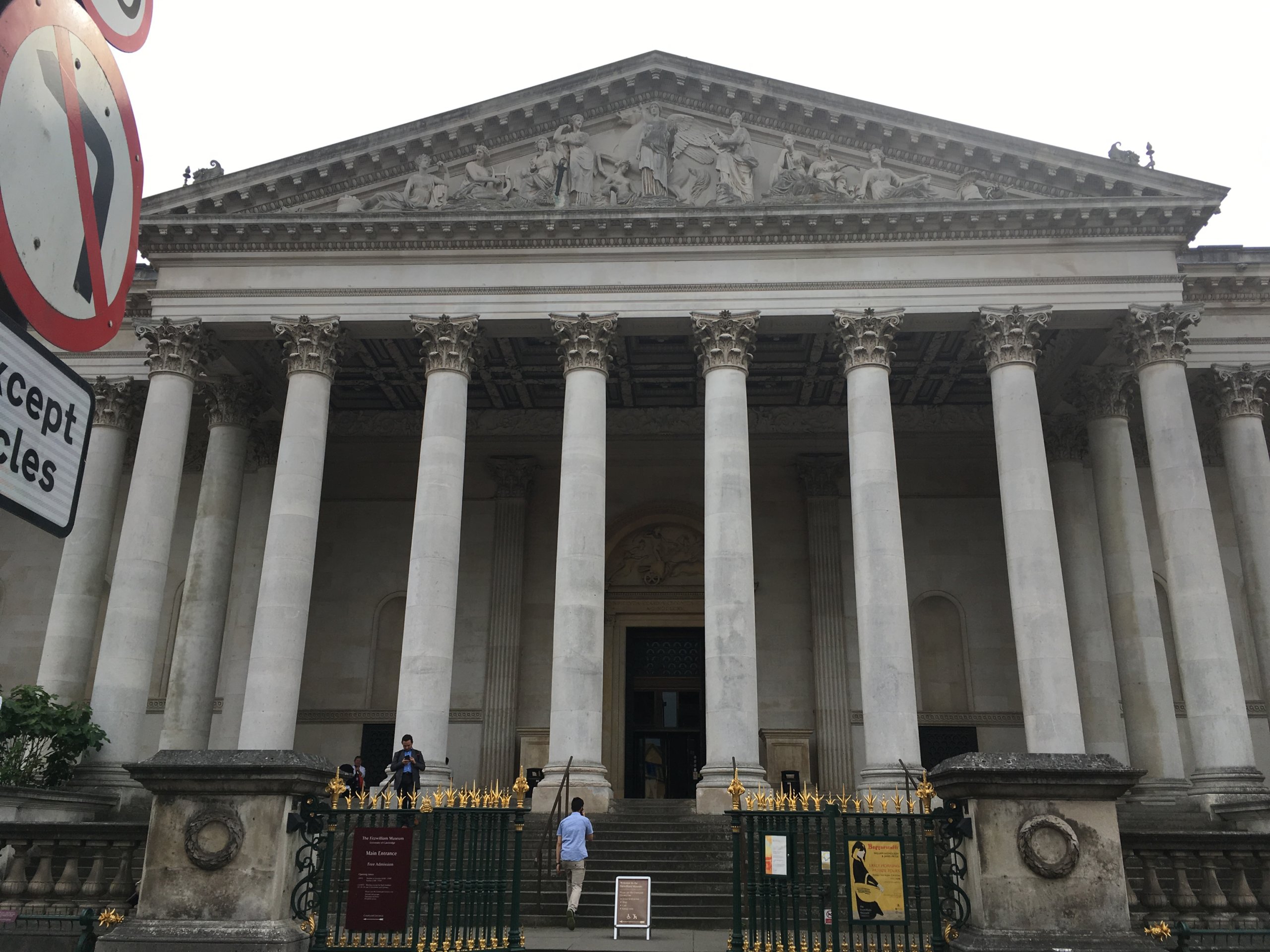
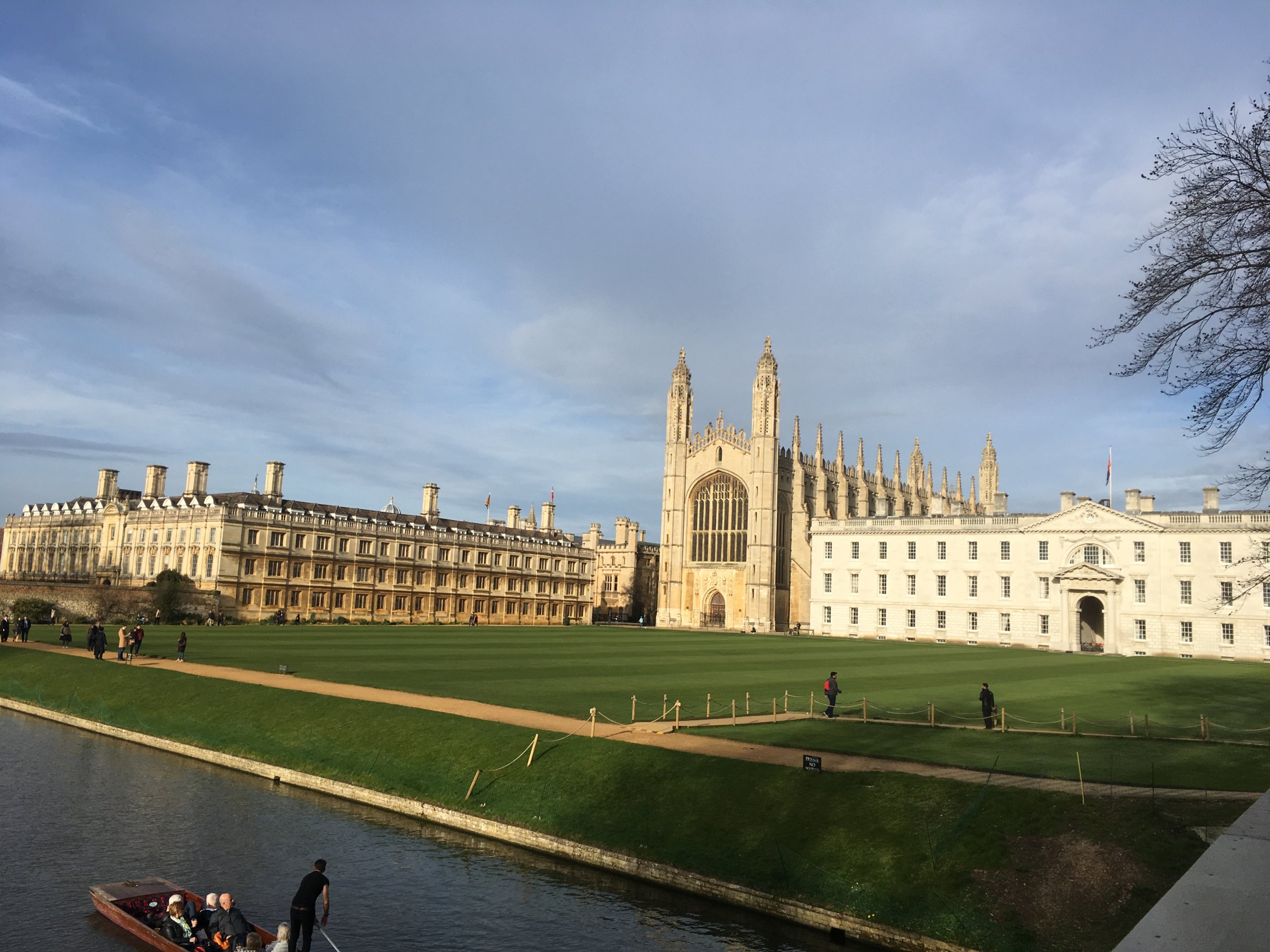
 A San Gabriel Valley Inquirer