Danny Feldman | Photo by Jim Cox / Pasadena Playhouse
The Los Angeles Times recently launched L.A. Influential and Pasadena Playhouse’s Producing Artistic Director Danny Feldman was called one of The Creators – a group of outstanding individuals who are leaving their mark in film, art, music, and more. He was listed with fourteen others across all of the arts, joining an esteemed company that includes Eva Longoria, Ava DuVernay, Shonda Rhimes, Ryan Murphy, Jordan Peele, Mindy Kaling, Steven Yeun, and others. In the accompanying write-up, theatre critic Charles McNulty hailed him “The man who saved L.A. theatre.”
“It’s a little bit of an exaggeration,” says Feldman during a phone interview. He then recalls when he was informed of the honor. “They reached out a little less than a year ago to say I’ve been selected for this influencer list, so I’ve had time to digest it. I didn’t know who else was on this and the full context exactly, but I was a little shocked.”
Feldman clarifies, “I’m very pleased and grateful, but it’s really less about me than The Playhouse – I just get to be the face of it. The tribute is a sign or symbol that the work we’re doing at Pasadena Playhouse is getting noticed. This happened around the time The Playhouse won the (2023) Tony for Best Regional Theatre, which was a major achievement for us. It was an embarrassment of riches!”
The exterior of Pasadena Playhouse | Photo by Jeff Lorch / Pasadena Playhouse
“The Tony award had a tremendous impact,” emphasizes Feldman. “The Playhouse has a storied history with lots of ups and downs. The award honored the legacy and the unique history of the Pasadena Playhouse as one of the most important theatres in America. At the same time, we were recognized at a high point – when we were firing on all cylinders, when we were rising artistically.”
“Financially, we were at one of the more solid places we’ve been in our entire history; we were finding our stride and were on the eve of an expansion,” continues Feldman. “To receive a national recognition, like a Tony Award, for our body of work and for our impact of excellence in the world of theatre was overwhelming. So many of us have been working so hard for so long, to be acknowledged with a Tony Award was very fulfilling.”
In May 2025, The Playhouse’s building will celebrate its centennial and its programming will reflect its history.
Feldman states, “The Pasadena Playhouse is an iconic building and institution in our Los Angeles community as well as in the American theatre. That’s the theme throughout 2024-2025 so we’re calling it our iconic season. I was aiming for big shows that were iconic in their way –epic presentations that look like New York coming here and having a moment in our theatre.”
The Playhouse’s historic stage will feel alive with a sizzling Martin Crimp adaptation of one of the greatest plays of all time, Cyrano de Bergerac; a fresh new revival of Jerry Herman and Harvey Fierstein’s Tony Award winner for Best Musical, La Cage aux Folles; a new production of Suzan-Lori Parks’ Pulitzer Prize and Tony Award-winning classic, Topdog/Underdog – one of the best new American plays written in the last 25 years, as Feldman asserts.
Danny Feldman | Photo by Jim Cox / Pasadena Playhouse
“We’ll have special musical performances with the Civic Auditorium for two consecutive weekends of concerts featuring two of the most enduring musicals of all time: Anything Goes in Concert, starring Jinkx Monsoon as Reno Sweeney and Follies, an encore to our recent Sondheim celebration,” Feldman adds. “It’s a robust slate of shows that are sort of the greatest hits in a way, to honor our extraordinary achievement of having one of the oldest operating theatres in America. These special theatrical events will expand our initiative exploring classic American musicals with our community. ”
According to Feldman, musicals are rarely performed by non-profit theatres because they’re cost prohibitive. While the Pasadena Playhouse had staged musicals in the past, in 2019 he launched the American Musical Project – a bold and financially risky move. He discloses the reasoning behind the expensive venture, “We feel that it’s important because musical theatre is one of our contributions to the world. And we realize there’s a danger that the next generation and the generation after may not be able to experience these shows the way they’re intended in a 650-seat theatre in our community. We started with ‘Ragtime,’ ‘Little Shop of Horrors,’ and, of course, our Sondheim celebration. ‘Jelly’s Last Jam’ closing this week is the latest. We’re really showing folks our commitment and dedication to the American musical. We do them quite well, I have to say. People are really enjoying the artists and responding to them.”
Watching Broadway musicals at The Playhouse is a singularly unique experience. Feldman explains, “We love Broadway tours! It’s wonderful that our community gets to see these great shows from New York when they come to the Ahmanson or the Pantages. But those shows were created for a commercial purpose for Broadway and they go on tour with mainly New York performers. We do something very different at Pasadena Playhouse – we start with a blank page. I put together a team and they make the show from scratch. ‘Jelly’s Last Jam’ has over a hundred local employees working on it; the scale of it is pretty fantastic. I think they’re so successful artistically because of the group of hardworking people who are making it just for the audience that comes to see the show at the Pasadena Playhouse.”
Not surprisingly, the back-to-back accolades of The Playhouse’s Best Regional Theatre Tony Award and Feldman being named “The man that kept L.A. theatre alive” have put pressure on Feldman. “I try not to think about that,” quips Feldman. “But, of course I feel a lot of pressure from my daily job – I’m in a very privileged position of running a very important theatre in American history and our community. We’ve got to keep raising the bar with every decision we make, every show we decide to put on. Pasadena Playhouse is on the forefront of the American theatre, which means there are a lot of eyes on all the things we do. But it’s always been that way.”
“We take the responsibility of being the state theatre of California very seriously,” stresses Feldman. “And I think you see that in the quality of our work. I’m assembling teams of some of the top theatre-makers in America, whether they’re the most experienced – Alfred Molina is on our board and performs on our stage often – or the most exciting new talent. But regardless, these are some of the hardest-working and talented people in theatre coming to create extraordinary theatre. We operate with the thought that if we don’t get this right it may be our last. Maybe that’s not true now but it used to be true, and that’s what drives us. And while these accolades are great and we feel deeply proud and honored by them, we have a lot more to do.”
The interior of Pasadena Playhouse | Photo by Jeff Lorch / Pasadena Playhouse
Feldman expounds, “We have a big vision for Pasadena Playhouse; we’re setting the theatre up for now as well as in the next hundred years. Today we have the luxury of not just thinking about the next show, but about where the American theatre is going – how do we lead the way on that – and what it will look like two or three decades from now.”
To that end, The Playhouse will present The Next Stage Immersive Summit 2025 in January in partnership with The Immersive Experience Institute, the main service organization for immersive theater artists. The premiere gathering of creators of immersive art & entertainment will draw international guests from the fields of performing arts, themed entertainment, XR, and gaming. This is the largest gathering of its kind in the world.
“This year we expanded our audience in a dramatic way with the inauguration of a major youth and family ecosystem – classes and professional shows for kids. Keep your eye out on that programming because that’s only going to grow in the future. Theatre education is core to who we are. The school at the Pasadena Playhouse was built in the 1920s and by the 1930s the College of Dramatic Arts was one of the top schools in America,” explains Feldman.
The public’s involvement is crucial to the realization of Feldman’s ambitious plans. He exhorts, “The lifeblood of our theatre is the people in the community and we urge folks to become members – you get to come along for the whole ride, you get to see all the shows. I think the folks who have been coming recently feel the new energy at The Playhouse and they understand that. But for those who may think it’s not for them or haven’t been here in a while, we encourage you to come take a look at us, come check out the shows, come look at our education program – we’ve really become a force in the world of theatre.”
Feldman will mark eight years of stewardship of the Pasadena Playhouse this fall. He took over as producing artistic director when the venerable institution was at its nadir financially and was struggling to get traction in the community. That he even took on such a daunting challenge is remarkable enough. That he then led the way in turning its fortunes around and flourishing during these particularly trying times for American theatre is an astounding feat.
The cast of ‘Metamorphoses’ includes (from left to right): Sydney A. Mason, Trisha Miller, and Cassandra Marie Murphy | Photo by Daniel Reichert / A Noise Within
A Noise Within’s (ANW) 30th anniversary season comes to a close with a rare revival of ‘Metamorphoses,’ the multiple award-winning theatrical event from MacArthur ‘Genius’ grant recipient Mary Zimmerman. On stage from May 14 through June 5, with previews beginning on May 8, this elaborate and much anticipated production is helmed by Producing Artistic Director Julia Rodriguez-Elliott.
Comedy, romance, and poetry abound as ancient tales about Midas, Orpheus, and Aphrodite come to life for a modern audience. Adapted from David R. Slavitt’s free-verse translation of ‘The Metamorphoses of Ovid,’ the play takes place in and around a swimming pool that stands in for locations that include a wash basin, the River Styx, and the sea. The characters – gods and mortals alike – endure love, loss, and transformation while immersed in a pool of water.
Interviewed by phone, Rodriguez-Elliott tells us what ‘Metamorphoses’ is about. “Mary Zimmerman took nine vignettes that share a common theme of transformation. They deal with love, loss, selflessness, generosity, greed – and they’re all incredibly human. She has a wonderful ability to bridge the ancient and the modern so the stories feel very much of the here and now.”
“In this moment that we’re living – when the world is undergoing extraordinary change – that could be painful or it could be joyous,” explains Rodriguez-Elliott. “And ‘Metamorphoses’ is the perfect play for us to end our season with its theme of exploring the joys and perils of change.”
“Mary first wrote it when she was teaching at Northwestern,” Rodriguez Elliott enlightens. “It had a different title the first time it was presented. And while she envisioned a body of water in it, there was no water for that particular show.”
Rafael Goldstein | Photo by Craig Schwartz / A Noise Within
Rodriguez Elliott, who previously directed ‘Argonautika’ at ANW, discloses that she has never seen a production of ‘Metamorphoses’ – which gives her the opportunity to make it her own. “Mary has a very specific style in her plays and the way that she writes really speaks to me. She has an ensemble that she works with, not unlike what we have, so these are people that really speak her language. However, even though a lot of her work has her DNA she leaves it quite open for the director – you could find your own voice within it. This is the second Mary Zimmerman play that I’m directing, and I found that to be the case.
“The marvelous thing about her plays is that she puts on stage what is seemingly impossible to stage. For instance, she would have a direction that says ‘And now there is a battle in the water.’ You, as the director, will visualize how this battle is articulated in a theatrical way. You have clues in the text as to where things are taking place, but you have to create it and imagine it yourself in a way that feels personal to you as an artist.”
“I love plays that are about voyages and journeys and the whole element of the water in this play is so thrilling,” adds Rodriguez-Elliott. “On the first day of rehearsals in the theatre and the play started coming to life with actors being in the water, I was so excited I couldn’t sleep that night when I got home!”
ANW is renowned for presenting plays in repertory, which they deviated from. Rodriguez-Elliott says, “Because we had to have a pool for this production, this spring season our plays were all straight run. The set will sit there for the five weeks that the show runs in. It may not be the most complicated set that we’ve ever done, but it’s challenging in the sense that you’re dealing with concerns like: is the water warm enough for the artists – you have change stations off stage that actors can warm up after they’ve been in the water; there’s a cleaning procedure that comes with temperature… all those things need to be addressed.
“Also, we all know as homeowners that water can have all kinds of consequences if they go in the wrong place. A lot of it is about containing and insulating the pool in the appropriate way. There are also concerns about what surface to have in the pool so no one slips – do the actors wear shoes or not. As to costumes, there’s a choice between synthetic versus cotton, because of what cotton does in terms of fibers being in the pool. All these have to be considered and they impact just about every designer on the show.”
Trisha Miller and DeJuan Christopher | Photo by Craig Schwartz / A Noise Within
ANW’s production of ‘Argonautika’ before the pandemic enjoyed critical acclaim. It’s only fair to assume that every one of their resident artists wanted to be a part of ‘Metamorphoses.’ Asked how she selected the actors among their very talented RAs, Rodriguez-Elliott answers, “It’s like with any casting – you have to cast appropriately for the needs of the role and show. The actors were definitely very excited especially because we announced it two years ago but we had to postpone it because of the pandemic.
“Like ‘Argonautika,’ it’s a very demanding show. It’s very physical and it takes a lot of stamina to get through it. But the actors love it. And it’s wonderful that a lot of us have worked together for so long that they know how I work as a director. It’s a lot easier to get where you want to get to when people are able to jump and dig in fearlessly and with a whole lot of trust. I trust them and they trust me, so we’re able to do so much.”
Rodriguez-Elliott says further, “The actors who were already cast when we first announced it had the time to think about it, had lived with the play, and had the desire to do the play for a very long time. We didn’t bring back all the shows that we postponed, but this was something we really wanted to do. However, as you might imagine, we did it late in the season because we thought if we were still implementing safety measures we had to consider all the protocols around water and all the attendant challenges.”
“This is a play that celebrates theatricality and the magic of theatre,” Rodriguez-Elliott declares as the audience takeaway. “It speaks to us about the things you can only do on stage and nowhere else. It’s a production unlike any other we have ever seen – the element of water on stage is almost another character in the play. I think there are so many moments that are thrilling just in terms of how the water behaves and how the actors interact with it. Additionally, we have an original music score for it and an exquisite design team. I think the set is one of the most beautiful I’ve seen on our stage. Ken Booth who’s our lighting designer is doing extraordinary work.”
“In this moment that we’re living in, this play commemorates the power of love, change, and the opportunity to change. And I think that’s therapeutic right now,” Rodriguez-Elliott emphasizes.
Asked what it meant to have audiences back in the theatre for ANW’s 30th anniversary, Rodriguez-Elliott replies, “Everything that we have ever done in the theatre is about community. And what we realized during the pandemic is how essential that community is to us and to the work, and how much we missed it. So having the opportunity not only to return, but to be returning during the 30th anniversary season and rejoicing as a community the accomplishments of the organization, is very moving.”
Erika Soto and Kasey Mahaffy | Photo by Craig Schwartz / A Noise Within
Coinciding with ANW’s 30th anniversary is their 10th year in Pasadena. Rodriguez-Elliott marvels as she relates what that’s like, “Can you believe it?! Again, you have to go back to community; you really have a sense that the community in Pasadena is tangible. I felt it from the first moment that we opened the theater. The value that they place on the arts as a quality of life issue isn’t something you see in every city. Pasadena is home – we’re not going anywhere.”
As to ANW’s plans for the next decade, Rodriguez-Elliott states, “We’ll continue to experience tremendous growth and there are a number of directions that growth can take. For us it’s embracing that journey – whether that means enlarging the physical plans or expanding programming, which includes our work in diversity, inclusion, and accessibility that’s very necessary.
“We’re bringing voices that have not been part of A Noise Within’s stages until now. We have the Noise Now Program where we invite the community to participate in events. We’ve developed wonderful relationships with other artists and organizations and that will continue to expand the definition of a classic for us. We have this beautiful campus and we’re able to use it in its totality – whether it’s outside, the lobby, the rehearsal space upstairs – in bringing other disciplines. We’ve had dance, music, art exhibitions that the place becomes a welcome environment for all.”
Rodriguez-Elliott describes ‘Metamorphoses’ as celebrating the magic of theatre. It could very well pronounce A Noise Within’s significant contribution to our community in the last ten years. It is organizations like them that endow Pasadena with the arts and the culture that are the city’s defining attractions.
Originally published on 24 March 2022 on Hey SoCal
The cast of Anna in the Tropics | Photo by Craig Schwartz / A Noise Within
“Anna in the Tropics,” Nilo Cruz’s Pulitzer Prize-winning drama about cigar factory workers, is on stage at A Noise Within (ANW) from March 20 through April 17, 2022. The fifth production during the theatre company’s 30th anniversary season, it marks the directorial debut of Jonathan Muñoz-Proulx.
The play is set in 1929 at a Cuban-American cigar factory where cigars are still rolled by hand and lectors are employed to provide a diversion in the workers’ tediously repetitious daily labors. When a handsome and debonair new lector, Juan Julian, reads the story of Tolstoy’s ‘Anna Karenina,’ the lives of the workers begin to parallel those of the novel’s characters. Suddenly the drama takes over their otherwise humdrum reality – old traditions and new ways collide while longing, love, and betrayal spark a volatile flame foreshadowing the end of an era.
It is through this electrifying play that ANW audiences will be introduced to Muñoz-Proulx, who is also ANW’s inaugural Director of Cultural Programming. He came on board three years ago and is responsible for curating and producing all the events in the Noise Now program. This means creating workshops, readings, concerts, and dance events in collaboration with community partners to build relationships with new audiences, and partner with other artists.
Muñoz-Proulx explains the genesis of the job, “It was a new position they were looking to fill. They knew they wanted to have a community focus that engages audiences of color – specifically, blacks and indigenous people. I really had a very open and supportive invitation to build this program from scratch and let it change as we continue to define it. That’s my principal role.
Jonathan Muñoz-Proulx (center) with the cast of Anna in the Tropics | Photo by Eric Pargac / A Noise Within
“But I also wear an artistic hat where I work with and Geoff and Julia (Elliott and Rodriguez-Elliott, artistic and producing directors of ANW) and we talk about season planning and selecting directors and designers, discussing what’s going to be on our main stage. Over these three years, my relationship with them and the theatre has deepened. When I first started, I really just had one job – these community partnerships. But because we’ve built trust and an artistic language together, I’m now supporting season selections and also working more closely with resident artists (RAs). The RAs curate and present their own reading series called ‘The Resident Artist Series’ which I’m going to be curating and producing.”
And directing ‘Anna in the Tropics’ has added an extra responsibility. To say that Muñoz-Proulx has been busy lately is quite an understatement. He states, “I’m in Zoom meetings all day with artists, answering emails, and reading plays. Then during dinner I do some directing prep and head into the theatre for rehearsals. We work from 6 to 11 pm on weeknights – they’re really long days for me. It’s a dream life for six weeks and then I’ll probably sleep for a month afterwards.”
In spite of the long days and sleep deprivation, Muñoz-Proulx excitement when he talks about ‘Anna in the Tropics’ comes through even when he’s speaking to me by phone. He describes, “It’s a highly theatrical play where these cigar workers escape the monotony of their day-to-day life working in a factory and are transported by the words of the classic literature read to them beyond the factory walls. There’s a wonderful balance of very intense drama and tension with a really poetic, musical freedom of the play. It’s a roller coaster – it just goes and goes and goes until it reaches its climax. And it’s epic! It will just pull the audience along this roller coaster ride to the end.”
“A lot of the play happens as the workers are coming in to work, as they’re leaving work, and in between their shifts,” Muñoz-Proulx explains. “So it’s almost like you’re seeing the characters at the water cooler chatting about the drama and the gossip of their lives – who they love and who they hate. Their lives start mirroring those of the characters’ in the book. And the characters in the book are giving the factory workers the courage to say what they want and ask for what they need and feel empowered to live their fullest lives. It reminds me of today where we might watch television or a movie and see our identities reflected back to us to give us the courage to be our fullest selves.”
Jason Manuel Olazábal and Tania Verafield | Photo by Craig Schwartz / A Noise Within
Because ‘Anna in the Tropics’ is about Cuban-Americans, the cast is made up of actors who look like the characters. Muñoz-Proulx states. “It was very important to us that everyone identifies as Latino or Latina or Latinx. Among ANW’s resident artists, only two – Erika Soto and Rafael Goldstein – are of Latin descent and we knew this is a play we were not going to cast from our RA community. So it was a great opportunity for ANW to meet a lot of new artists through several rounds of auditions. And, hopefully, this will be the start of some ongoing relationships with them.”
While it means that the cast will be new faces for ANW’s audience, they won’t be strangers to Muñoz-Proulx. He asserts, “I live, and work, and direct in Los Angeles so I’ve known and worked with most of the cast of ‘Anna in the Tropics’ for ten years. Even though they haven’t been to ANW necessarily, this is a community of artists whom I have a great relationship with. However, as a director, I’m not so concerned about having a shorthand with them or working quickly, we’ll find our own artistic language together. What matters most to me is that the people we bring into the room – the actors and creative community – have really big hearts and are pleasant collaborators. That doesn’t mean we all need to be best friends, it means we create a space where people can be imperfect, and vulnerable, and ask questions, and be supportive along that journey.”
I ask if people of color are now getting more roles and recognition in theatre. Muñoz-Proulx replies, “I think they are. I think it has become more and more unacceptable for theatres to produce plays that predominantly feature white actors. I think more and more theatres are producing plays written by playwrights of color. And more and more, they’re hiring directors of color. And more and more, not only are actors of color in those plays but, more importantly, actors of color are also in plays that don’t have to cast actors of color – like some classics or Shakespeare. I think there’s greater artistic freedom being celebrated in how we cast nontraditionally.”
“It isn’t that roles are color blind,” Muñoz-Proulx clarifies. “I gravitate towards the term color conscious because I think color matters and I think the audience does see it. And there can be some stories told about how folks identify on stage. But being color conscious, I think, allows us to let go of a default that every character is white unless we decide otherwise. I think being color conscious invites the possibility that a character could be whoever comes to the audition and really excites and surprises us with their interpretation of the role.”
Leandro Cano and Tania Verafield | Photo by Craig Schwartz / A Noise Within
“And it doesn’t matter if the blood relatives in the play are from a different race or culture,” expounds Muñoz-Proulx. “I think there’s a lot of freedom and flexibility in theatre that we maybe don’t have on film and television. In theatre, we can really build the artistic team; we can assemble the cast to how we decide to tell the story regardless of what they look like. The priority is that the cast is representative of our community. And in this state, our community is incredibly diverse Los Angeles. It’s important that within the whole season, we have a diverse balance of actors of color. But even with plays that have customarily white cast, we have people of color play roles that are traditionally played by white actors, as we did in ‘All’s Well that Ends Well.’”
When asked about his vision for the play, Muñoz-Proulx responds, “I’m very interested in how we can establish a simple and realistic monotony to this factory. I’m attracted to how we can show what their everyday life is like, but then infuse that with some form of magic, and poetry, and theatricality. And even though I haven’t seen a lot of other productions, I think that ours will probably have more magic and theatricality than other productions.”
Jonathan Muñoz-Proulx during rehearsals | Photo by Eric Pargac / A Noise Within
“That’s the type of theatre I love,” Muñoz-Proulx adds. “For example, if a character is having an emotional moment, I tell my team and my designers that I want to tease out that monologue, expand it to fill the room. That might mean that with light or sound or color we exaggerate or emphasize what’s going on. Even though the work inside the factory isn’t a particularly joyous moment or particularly traumatic instance, that might be represented in a more abstract and magical way. It might not be what Nilo Cruz requires in the text, but I’m little by little finding moments – and you’ll see them – where there will be some theatrical magic.”
“I want our audience to leave the theatre with the sentiment that the people we love and our relationships are the most important things we have,” says Muñoz-Proulx. “And it’s very easy to take for granted what we have even when it’s right in front of us … until it’s gone. We see these characters in this play really struggle with each other. But they also need each other to heal and to survive.”
“The play has an awareness – it is really interested in the tradition of rolling cigars, the tradition of bringing a Cuban culture to America,” enlightens Muñoz-Proulx. “It is very much about ‘How do we preserve and stay connected to our ancestors and to or legacy, and to the traditions that made us?’ And I think that’s a really beautiful theme that a lot of us can connect to. The play also engages with themes of modernity and progress and change taking place in 1929 just before the Great Depression. These characters are planning for a joyous future ahead, not knowing that the whole world is going to change and be crushed by the Great Depression. Having gone into this pandemic two years ago, and beginning to emerge from it now, never before have I thought so much about change, and recovering, and healing from change.”
Muñoz-Proulx couldn’t have better articulated what most of us are feeling at the moment. Because of what we’ve been through, we learned to distinguish the truly important and profoundly meaningful from a mere trifle and fleeting fancy – then to protect them fiercely and hold them close in our heart
Originally published on 22 November 2021 on Hey SoCal
The cast of “A Christmas Carol” | Photo by Eric Pargac / A Noise Within
After missing out last year on A Noise Within’s (ANW) “A Christmas Carol,” we can once again take in this much-loved show when it returns on stage from Dec. 2 to 23, 2021. Adapted from Charles Dickens’ novella by co-artistic director Geoff Elliott, it has been an annual holiday tradition and is celebrating its ninth year at ANW.
We’re also in for a treat with all-new, original musical compositions created by resident artist Robert Oriol, an accomplished composer and sound designer who was the recipient of the 2019 LADCC (Los Angeles Drama Critics Circle) Special Award for Distinguished Achievement in Theatrical Design. Speaking by phone, Oriol talks about being a lifelong musician, and his work at A Noise Within and on “A Christmas Carol.”
“I’ve been writing songs for rock bands to play on stage since 1975, but it was with the advent of computers in 1984 that I sat down and started writing music for others to perform,” Oriol states.
He goes on to explain, “You could write orchestral music from your studio without having to hire an orchestra at the outset. You could get it to a point where your music comes across, have it approved, and then take it to an orchestra, if necessary. Once computers got up to a certain speed, you could do the bulk of the writing and arranging yourself much quicker than you could have done prior. So that was when I was able to write more complex arrangements strictly for orchestra; it allowed me to write different styles of music to fit the play’s music requirements.
“The very first show I did for ANW was ‘Grapes of Wrath,’ where there was a Dust Bowl Era band on stage and I was the musical director. I didn’t write much music for it because a lot of the music came with the show — they were all acoustic instruments for the period — bass, banjo, and guitar. The next show after that was ‘Pericles’ which was a big orchestral show, and it still stands as one of the biggest shows we’ve ever done as far as sound.”
Robert Oriol, at far left, during “A Christmas Carol” rehearsals | Photo by Eric Pargac / A Noise Within
Oriol became a regular on so many ANW performances that it was only a matter of time before he would become a resident artist. He recalls, “There was one year when I was involved in three plays in one season. I was the composer for ‘Figaro’ and ‘Julius Caesar’ and I was in the band for ‘Three Penny Opera.’ I was setting up the music stands for ‘Three Penny Opera’ when they asked me if I wanted to be a resident artist. Probably because I was working so hard on all three shows and I was always there.”
And for someone who claims he doesn’t really enjoy putting the words to the music, Oriol did exactly that for ANW’s productions of ‘Tartuffe,’ ‘Figaro,’ ‘Julius Caesar,’ ‘Imaginary Invalid,’ ‘King Lear,’ ‘Tale of Two Cities,’ ‘Henry V,’ and ‘Argonautika.’
It was only natural, then, that Oriol would also be writing the music and lyrics for ANW’s longest-running show. He says, “I’ve been wanting to do the music for ‘A Christmas Carol’ and we started talking about it in 2016. But the rehearsal phase would usually be when they had just finished a brutal tech for a major Shakespeare play. It just kept getting pushed back for various reasons, like scheduling, and it was simply easier to go with what they already had because the cast literally knew every word of the songs and the choreography — putting new music in would make it a much longer tech process. So, I’ve been chipping away at it since 2016. It’s very rare that I have that kind of time to work with on a play — usually it’s a rush job with only a couple of weeks to do the whole show. This time, I could look at past productions on archival video; I could score it like a film, which is a real luxury.”
Asked about his process, Oriol responds, “After reading the script, I would get ideas from the producer about what era the play is set and what type of music is right for it. But it’s different at ANW with Geoff and Julia because we’ve known each other so long now. I’ll just send them some ideas and they’ll say ‘Yes,’ or maybe ‘A little less of this here,’ and they’ll tell me how long it needs to be. The key at that point is to just stay flexible because you know things are going to change. I just try to do as much of that as I can and then start attending rehearsals as early as possible. The first rehearsal is usually very telling because then I can hear the play, even though I’ve read it a few times — hearing the actors say the words changes everything and gives a real idea of direction. I usually record that and work with it. Then I start writing music where it should be under, try to come up with transitional ideas.”
Alan Blumfeld as Christmas Present | Photo by Craig Schwartz / A Noise Within
For “A Christmas Carol,” the music was going to stay in the same vein as the previous production. Oriol relates, “At first I was only going to do a sound design plan. And then we talked about redoing the Fezziwig dance. The instruction was to make the dance the same length so they could use the same choreography, and I did that. The dance has a completely different music but it has the same tempo and length, with the same section structure as the original. But we kind of gave up on the idea of having the same length. Then the songs became completely different, although they’re in the same place in the script, they have the same subject matter, and the same characters are singing them.”
Adds Oriol, “Previously, the song ‘Glorious’ was used three times in the play. Instead of doing that, we have three different songs where ‘Glorious’ was used in the original production. The final song is actually the same melody from the Fezziwig dance. People with an ear for music, to some extent, will recognize that they’ve heard that music before.”
The actors will be working with the musical director on the songs. Oriol says, “That’s just not something I’m good at because I don’t sing well. I do hear the songs in my head and how I want them sung but it’s a matter of how we get there. I know keys will change — two of them already have because Geoff is singing and he wants them to be an A major rather than what they were. And I’ll be expecting more of that and we’ll just take it as they come. I’m really looking forward to hearing the actors actually sing these songs.”
“Tech on the show will take place on the 27th, the Saturday after Thanksgiving. Previews start Friday, December 3rd. We get feedback from preview audience in a sense because the presence of 300 people inside the theatre alters the acoustics of the space dramatically. Having them there really helps me determine if something is too loud, or too quiet, or if I need more of this here and more of this there.”
Having spent several years working on “A Christmas Carol,” Oriol is really excited about the audience’s reaction. Many of us who have heard his compositions for past ANW productions already know what to expect. We can only be wowed.
Originally published on 28 September 2021 on Hey SoCal
Deborah Strang as ‘the poet’ in “An Iliad” | Photo by Eric Pargac / A Noise Within
After 18 months of shutdown, A Noise Within (ANW) returns to live theatre with a one-person show of Lisa Peterson and Denis O’Hare’s modern-day retelling of Homer’s epic “An Iliad.” Directed by Julia Rodriguez-Elliott, it features two ANW powerhouses Geoff Elliott and Deborah Strang in alternating performances as “the poet” and will be on stage through Oct. 3, 2021.
Speaking with us by phone, co-producing artistic directors Geoff Elliott and Julia Rodriguez-Elliott explain the theme of their 2021-2022 season, which marks their 30th anniversary, and detail ANW’s protocols to assure theatre-goers that their safety is a top priority.
Asked if there are plays they had originally planned for the previous season that will be included, Rodriguez-Elliott replies, “Yes, we brought back ‘An Iliad’ and ‘Metamorphoses.’ We have just experienced so much change in the world we live in, so our season’s theme ‘We Shattered the Chrysalis’ seemed like a very appropriate one to examine. And ‘Metamorphoses’ is at the center of that because it’s a play about transformation and the healing power of love as a change agent. We felt it would fit into the 30th anniversary season.”
Geoff Elliott as ‘the poet’ | Photo by Eric Pargac / A Noise Within
Continues Rodriguez-Elliott, “‘An Iliad’ is a play with one actor and no intermission so it was a means for audiences to get used to theatre again before we get into full productions. We figured we would learn a lot with this first show and any adjustment that we needed to make, we would be implementing in the following show, which has more cast members. More importantly, this play is always relevant; but more so right now, as we see and read about the rage and conflict going on everywhere. And with the Afghanistan withdrawal, it seems like it was written just yesterday. Additionally, it’s a brilliant piece of writing, and Geoff and Deborah are magnificent! It’s just a wonderful way to re-enter the world of live theatre.”
Prior to reopening, ANW developed and refined extensive plans to keep everyone safe which they outlined in a press statement. These procedures include, but are not limited to: staff and crew certifying as COVID compliance officers; initiating a deep clean of its HVAC system for optimal turnover of fresh air; routinely disinfecting high-touch areas; providing PPE; and following LA Department of Health guidelines.
Besides requiring full vaccination for all staff, artists, and volunteers who work onsite, ANW has also put into effect strict guidelines for theatre-goers. Before being admitted into the theatre, all audience members must provide full proof of vaccination. Masks are required regardless of vaccination status and will be available on site until such time that LA County stops requiring masks indoors. At that point, masks will continue to be strongly recommended.
A Noise Within enforces strict safety guidelines | Photo by Brian Feinzimer / A Noise Within
During the months when the theatre was dark, ANW filmed ‘An Iliad’ with Elliott and Strang alternating as “the poet.” Elliott performed it on opening night for a live audience and relates the experience. “It was surreal on a certain level. Like everybody else, other than doing online things here and there, including filming ‘An Iliad’ a while back, we’ve been dormant for a year and when I got out there, I wasn’t prepared for all of the masks. It was a really surreal experience – I had to adjust as I have never done before. It’s beautiful to be back, but also very strange.
“From an actor’s perspective, it’s a totally different feel. We rehearsed it differently. We knew we had to do it in a certain way because we only had limited time with the resources. It was a three-camera shot. There are seven chapters in ‘An Iliad’ and Deborah and I alternated performing in each chapter. We were very happy with the product but this play was meant to have a live audience for the actor to connect with them. Hearing their response propels you as a performer and you learn something new each time you do it – which doesn’t happen when the show is filmed. There’s something about everyone being in the same room, watching and listening to the story, and everybody relating to what’s happening on stage. You can’t have that anywhere else. It’s a kind of communion; there’s something very healing about it.”
“The show is really a conversation with the audience and when you do it on film, you’re missing that piece because the camera becomes your partner in a sense,” adds Rodriguez-Elliott. “It’s also different from the directing perspective. When you’re filming, the director or director of photography is making choices about what the audience is going to see, whereas in a play you’re on stage and you have a much more open canvas. As an audience member, you get to choose what you want to be looking at at any given time. Essentially, the audience members are much more active participants in a live version then in a film version. And it’s been interesting because a lot of folks who saw it on film have returned to see it live and almost everyone said they like the live version so much more.”
Audiences who have come back to watch the play are reacting positively to ANW’s strict protocols as well. Elliott says, “Overwhelmingly so. The feedback we’re getting is that people are thankful we’re requiring those and that we’re diligent about imposing them. If someone takes their mask off during the performance, our house manager and ushers gently remind them to put them back on, which makes everyone around them feel safe.”
Deborah Strang | Photo by Eric Pargac / A Noise Within
ANW is bringing back their popular holiday show this year and Rodriguez-Elliott addresses it. “We’re making an accommodation for ‘A Christmas Carol’ because it’s all about families coming to watch the show together. We’ll move to requiring children 12 and under to show proof of negative test for COVID. I think by then people are used to that because that’s being done in schools.”
Concurs Elliott, “The joy of the show is having families and their kids there. I have to say that I’ve read reports about Pfizer coming out with a lower dose vaccine for kids which they think will be available by Halloween. I hope – and I have my fingers crossed – that a lot of kids will be able to get vaccinated by then.”
While looking forward to things getting better by the end of this year, they recall the challenges of the past 18 months. Rodriguez-Elliott says, “Like other theatre companies, we tried to find opportunities to stay connected with our audiences on Zoom. We also wanted to keep the artists engaged. It was a challenging time for performers because the lockdown happened very unexpectedly, so they were quickly displaced and essentially out of work. As an artist, what fuels you is working on the art. As an organization, we were ultimately lucky despite all the challenges because we have such a strong support system. Our board did an amazing job of helping us navigate the challenges of the moment. Our supporters and donors responded and supported us in extraordinary ways, as did the foundations. Certainly, the government support was critical to surviving 18 to 19 months and not producing theatre nor having opportunities to generate revenue. It’s unheard of.”
“And, again, from a performer’s point of view, these Zoom readings are such a cheap knock-off,” Elliott expresses in frustration. “The artist is just trying to hang on, trying to connect with partners because the reality is actors feed off of each other. But we’re not in the same room so I’m not really looking at them when I’m speaking to them in a scene. We have to just imagine all that and, man, it’s so synthetic; I don’t think I will miss it.”
Rodriguez-Elliott declares, “It was a place holder but definitely not a substitute for real theatre. That said, in terms of the artistic piece of it, I think we got so adept at the Zoom world that it has been useful in things like being able to provide resources for audiences. Now we’re doing these deep dives where we have directors and artists talk about the play and audiences can participate in advance of attending a production. There are things that can enhance the theatre-going experience but not a substitute for it.”
“Plays like ‘An Iliad’ aren’t really suited for film; and performing on film isn’t what we do as a theatre company,” Elliott states firmly. “At the same time I take my hat off to all the performers and directors who were involved with it because it’s not easy to do. And as Julia said there was a learning curve but I think we actually got very good at it.”
“We also held two virtual annual fundraising dinners, believe it or not,” Rodriguez-Elliott says. “The first one came up really fast right after everything shut down and the second one was last April. That we got adept at doing – we partnered with a caterer and had dinner delivered to people’s homes. We tried as much as possible to recreate the feeling in the room when we have events.”
Photo by Brian Feinzimer / A Noise Within
While ANW will now stage all plays with live audiences, they will keep some of their virtual programming. Rodriguez-Elliott discloses. “We’ll have the post-show conversations so even if people don’t watch a show on a night with one, they can still participate. We’ll also keep the ‘deep dives’ which our audiences enjoy.”
As much hardship the pandemic and resulting shutdown presented, there were lessons gained, which Rodriguez-Elliott expounds on. “We were still doing a lot of work. We still had to figure out what to do next and how to get through the next three months, but we were able to do it in comfortable clothes. It gave us a chance to consider a work/life balance and I think that’s a positive take-away. The other piece is that we learned to be flexible. It really called on us to change direction a number of times and I think one of the advantages for us was the size of our organization – we’re rather nimble so we were able to make changes as things were coming at us 24/7.
“It has been very moving to see how important the arts are in people’s lives because that’s what we heard over and over again with our community during this period of shutdown – the importance of theatre and community and coming together. On that note, I would like to say that this is a great time for people to support local theatre in the same way that we’re dining out to support restaurants. I think there’s a level of hesitancy. But once they come and they see the protocols that are being followed, and that we’re taking safety seriously and meeting them where they are, I think people will feel more comfortable attending live performances.”
Originally published on 14 September 2021 on Hey SoCal
The Pasadena Playhouse returns this fall with its 2021-2022 season. Danny Feldman, producing artistic director, couldn’t contain his thrill to be coming back to the theatre with a live audience. And it wouldn’t be just your standard seated audience either. But I’ll let him tell you all about it.
Speaking by phone on a recent afternoon, Feldman enthuses, “We’ll open our season in November with ‘Head Over Heels,’ a musical comedy adaptation of ‘The Arcadia’ by Sir Philip Sidney and is set to the music of the iconic 1980s all-female rock band The Go-Go’s. It’s huge and ambitious. I had been working on this for a long time, but I was planning to do it for a future season – there was no way in my mind we could do it this season. However, a few months ago, I went on an artistic retreat with two extraordinary artists – Jenny Koons and Sam Pinkleton – and afterwards we all thought this show is the only way to come back from a pandemic. It just felt so perfect for the moment even if we only had a short timeline to make it happen. This show is joyful, diverse, and wonderfully inclusive. We want to give people one of their best nights out since the pandemic happened.
The Go-Go’s | Photo courtesy of Pasadena Playhouse
“The world has changed. It is pretty unrecognizable to me right now and we want people to have that experience. So we’re completely reconfiguring the theatre – there will be no traditional stage and proscenium. The best way I can describe it is the show happens all around you. The story is about a royal family who goes on a journey to save their kingdom and discovers the joy of each other along the way. It is full of comedy, dancing, and great music, and the audience is coming along with them.”
Amidst anxieties about emerging coronavirus variants and mutations, rehearsals on “Head Over Heels” are well underway. Feldman says, “Like everyone, I’m cautiously optimistic, a little nervous, and really very excited to get things going again. At the same time, we’re being flexible because we realize there’s so much uncertainty. It’s truly a piece of art and theatre being created out of the pandemic. And that’s rare because we’re so close to it. I expect years from now there will be plays about what it was like during a pandemic period and what we have is a piece of art created during one, which takes into account the challenges – audience safety concern and all that. But we still feel we can safely pull this off given the guidelines now and the direction COVID’s going. That said, if things change we will adapt and change with it. This is a new world.”
Except for next spring’s premiere of “Ann,” The Playhouse’s 2021-2022 season isn’t what was originally slated for last year. Feldman discloses, “Everything is going to be new because I took a different approach that is reflective of the world that changed. The Pasadena Playhouse takes great pride in the fact that though we’re a hundred-year-old-plus institution, we’re relevant, we’re responding to the moment.
“’After ‘Head Over Heels,’ we’re staging a play that’s a Pasadena Playhouse co-production with the Woolly Mammoth Theatre Company in Washington, D.C. and the Huntington Theatre Company in Boston. Again, this is a new model of creating work. The play is a teenage retelling of ‘Richard III’ with a rather racy title ‘Teenage Dick’ and it’s a pretty exciting new work by Mike Lew, an amazing young playwright. It sets Richard III in high school where he’s bullied because he has cerebral palsy and he’s running for senior class president. It gets into power and what one does to achieve power and status when they’re a marginalized person. It’s both funny and gut-punching and is really a fun way to approach a classic like ‘Richard III,’ but in a contemporary setting. It’s a wild ride. I think it’s a surprising evening of theatre people will not forget for a long time.”
Holland Taylor | Photo courtesy of Pasadena Playhouse
Feldman says further, “‘Ann’ follows in the spring with the extraordinary Holland Taylor, the legend – this is her show. It’s a delightful evening celebrating Ann Richards. It gets into politics in a way that is appropriate for today, that is not trying to separate people or create division but bringing people together. Governor Ann Richards was an older divorced woman, single mother, former alcoholic, Democrat in Texas. And Holland just reincarnates her. She’s coming back alive on stage and you feel like you’re having a visit with Ann Richards. It’s a delightful, soul-soothing celebratory evening. After ‘Ann’ there’s a show I haven’t picked yet.
“Then we close with a party as well – ‘freestyle love supreme.’ This was created from the minds of Lin Manuel Miranda and his collaborators Anthony Veneziale and Tommy Kail who directed ‘Hamilton’ and another production we did with Nia Vardalos ‘Tiny Beautiful Things.’ This will be the first time that the Pasadena Playhouse has a show coming directly from Broadway. It’s a Special Tony recipient and it will be on Broadway for the second time in October, and then it’s coming here next summer. It’s got several things all at once – hip-hop, freestyle rappers, a band, an audience, and no script. The show will be made up every night using words and ideas solicited directly from the audience and then, like magic, you see it appear right in front of your eyes. It’s a wonderful way to round out a season that to me is exciting and pulsating and celebratory and creating a new path forward – different kinds of shows, different ways for audiences to engage with the work.”
While The Playhouse won’t be opening until November, Feldman stayed busy during the pandemic. He says, “We launched our digital platform PlayhouseLive where we had a full program which included commissioned work that was in response to George Floyd and the racial reckoning in America. We also did the Jerry Hermann show about the Broadway composer, which garnered attention all over the country. We offered a Broadway class with hundreds of people across the United States taking it.
“We expanded our footprint. We really worked on redefining what a theatre can be during that time – what it looks like when you’re not confined to four walls of a historic theatre. That was exciting and we’re certainly planning to continue some of our digital work.”
PlayhouseLive was as much a success as it was a revelation. Feldman explains, “The word community changed for us. One of our shows was favorably reviewed by the New York Times. I don’t think that’s ever happened at the Pasadena Playhouse! Our community wasn’t just Pasadena, San Gabriel Valley, and Los Angeles. People from all over the world were watching our content – it confirmed that the name Pasadena Playhouse actually means something around the world. Of course we know that because it’s been here forever, but it really was a fantastic sign of our power and peoples’ understanding of who we are and desire to engage with us.”
Danny Feldman | Photo courtesy of Pasadena Playhouse
Asked what he learned during the pandemic, Feldman replies, “I learned to slow down a little bit. I learned that in the absence of performing art, we realized how much we need it, and how much as humans we’re wired to come together and be together. It’s not just we’re wired to tell stories and hear stories, we could do than on Netflix and HBO. It’s the collective experience of sitting in a room with strangers, having the lights go down, playing make-believe, and having shared experience with the actors on stage but also with the audience – laughing together, crying together, applauding together – all of that. It was an opportunity to understand the value of that in our lives and to make sure that when we came back out of that, that we do it wholeheartedly, we do it with intention, and we do it to create good in the world.
“Our role at the Pasadena Playhouse is to make the lives of our community better – to enrich the community. When I try to pick shows, I ask ‘Is this one going to create good in the community – even the challenging ones?’ ‘What conversations is it going to start?’ This season there’s so much celebration – whether it’s Go-Go’s dancing party at the beginning or free style with The Supremes at the end – and how to get people to laugh and engage and come out of their shells together. Or for those who just want to sit back and experience it their way, ‘How do you create a space for them to do that?’ We take stock in these moments. I’m thrilled to be coming back! I can’t wait!”
Feldman ends with a call to action. “We had a year plus of absence of the performing arts. If any of the readers are like me, that was a part of the pain of the year. Now that we have an opportunity to come back, having community here that is full of rich cultural experiences is so important. It’s why I love living here. And the best way our community can come together to make sure that in this very uncertain period we can have a thriving scene and places to go, is to support cultural institutions. Support us here at the Pasadena Playhouse and other local theatres. You can do that by donating if you’re in a position to do it but, even more importantly, become a member, subscribe. Make a commitment that I’m going there a couple times a year. That’s our lifeblood. We need a robust audience to stand up and say, ‘We want this and we’re ready to come on a journey with you’ in order for us to be here for many years to come.”
Originally published on 4 March 2020 in the Pasadena Independent, Arcadia Weekly, and Monrovia Weekly
| Courtesy photo
Be transported to a fantastical universe when ‘Alice in Wonderland’ goes on stage from March 1 through April 18 at A Noise Within. Adapted by Eva Le Gallienne and Florida Friebus from the beloved Lewis Carroll books ‘Alice’s Adventures in Wonderland’ and ‘Through the Looking Glass,’ this production is directed by two-time Los Angeles Drama Critics Circle Award winner Stephanie Shroyer. Erika Soto stars as Alice and is joined by Susan Angelo, Bert Emmett, Rafael Goldstein, Julanne Chidi Hill, Kasey Mahaffy, Justin Lawrence Barnes, and Gabriel Leyva.
The
story begins in Victorian England then quickly ventures into the topsy-turvy
world that makes Wonderland. There we meet the various creatures that Alice encounters
along the way. An ensemble cast becomes the white rabbit, the queen of hearts,
the Cheshire cat, the duchess, the caterpillar, the mad hatter, the March hare,
the dormouse, and all the other characters.
Rafael
Goldstein, who is part of the ensemble, sits down with me one late afternoon to
talk about the play and his many roles. In an earlier interview, he mentioned
that his father was a teacher and he took home books for the children to read
every night. I ask if ‘Alice’s Adventures in Wonderland’ was one of those
books.
“I
don’t think it was, but we did watch a couple of made-for-TV productions of it,”
Goldstein recalls. “Although my father introduced me to the ‘Jabberwocky’ when
I was very young because he would use it in his classes to teach parts of
speech. For those who are unfamiliar with it, the ‘Jabberwocky’ is a nonsense
poem using weird words. But by virtue of the way they sound, and their
placement in a sentence, you can apply whatever meaning you wish to the poem.
That’s sort of Carroll in a nutshell.”
“If this anecdote is to be believed, when Carroll first started writing ‘Alice’s Adventures in Wonderland,’ he set out to write a children’s story without a moral,” continues Goldstein. “All the children’s tales at the time taught lessons – listen to your parents, don’t talk to strangers, stuff like that. This was pure fancy, it was creating this world around this child that she could disappear into. It’s an interesting take because Alice is being confronted with characters – animals and people – and the rules of that world keep changing so she’s having to adapt. You can’t help but feel that it’s a comment on what the world does to children – people who are thrown into a country where they don’t speak that language so they have to figure out from clues and context what the rules of engagement might be. And it really just points out the fact that the rules in any world can be arbitrary and how, often, children bear the brunt of those arbitrary rules.”
Rafael Goldstein (left) in ‘Rosencrantz and Guildenstern’ Are Dead | Photo by Craig Schwartz / A Noise Within
According to accounts, the original handwritten and illustrated copy is now lost and Carroll made revisions when he gave in to pressure to publish it into a book. Perhaps that was when he added the situations where lessons can be gleaned, I conjecture.
Goldstein
explains, “He did mention in subsequent interviews how people were finding
meaning and he was cagey about that. There’s a famous riddle in ‘Alice in
Wonderland’ – why is a raven like a writing desk? Scholars at Oxford and
Cambridge have been speculating whether it’s a math or a literature joke.
Carroll was a mathematician so mathematicians claim that it’s clearly a
mathematical equation and if you look for the clues you can find out the answer
to it. Others were saying that one of the explanations for why a raven was like
a writing desk was a reference to Edgar Allan Poe. But Carroll resisted all
attempts to explain his work or to assign any meaning. He waffled a lot on it,
but, at the end of the day, I think he wanted to maintain this aura of mystery
and whimsy. And I think this production succeeds in that – it is a presentation
of this world and does a good job of honoring Carroll’s stated intention. But
as to the work itself, I think audiences will see what they want to see.”
Asked
for his impression, Goldstein confesses, “I’ve read it now a couple of times
during this process and I’m guilty of assigning meaning to it. It does feel
like he’s preparing Alice for adulthood. And I feel like he’s trying to give
her this story that illustrates how difficult it is to navigate the adult
world.”
“This play combines both ‘Alice’s Adventures in Wonderland’ and ‘Alice Through the Looking Glass.’” elucidates Goldstein . “The first half is light and whimsical and zany. The second half is much more abstract and a little threatening, a little philosophical. I think that that structure is there on purpose – to put you at ease in the first half so that you’re open and available for the philosophical dissertation that he’s presenting to Alice.
“It’s
a cast of eight – Erika Soto is Alice and stays Alice throughout and the other
seven of us are taking on the rest of the roles. We’re doubling, tripling,
quadrupling and reaching very deep into our bag of character voices and faces. I
play the mad hatter, Tweedledee, a crab, which I’m very proud of, a caterpillar,
and some Victorian spirits. The characters in this adaptation are straight out
of Lewis Carroll’s – they are very colorful and each of them has their own
point of view and communicating so they have to be reflected in the
performance.”
“It’s been a wonderful challenge, actually,” Goldstein discloses with a laugh. “It’s been a lot of fun. Because these characters are so iconic and so much a part of the vernacular of the literary world, you’ll find a reference to ‘Alice in Wonderland.’ So people coming to the show will have their own versions of Alice, the mad hatter, the March hare, Tweedles Dee and Dum. Part of what we’ve been exploring and experimenting with is finding a new way of approaching them.
“Yes, this production is recommended for ages six and up but we also have to remember that adults are watching it as well. Tapping into what makes these characters compelling and indelible, and why they’ve lasted for so long has been a joy.”
Rafael Goldstein as ‘Henry V’ | Photo by Craig Schwartz / A Noise Within
How
does this production make a fantastic world come to life? I inquire. Rafael
says, “We have access to the best designers in town. This play is a director’s
and designer’s dream. Actors can only do so much with our physical bodies and
everything else will come from the costumes, sets, lighting, music. They are crafting
this world around us. In the rehearsal hall, we would be going through a scene
and all the actors would be deep in thought about what’s happening in it– she’s
going to cry and because she’s a giant, her tears will create an ocean. And all
of us are sitting there asking how this is going to happen. Then we get down
into the theatre and the designers will say ‘we’ll just throw a light there,
we’ll have a sound cue there’ and as we run it, all of a sudden the world
becomes clear. And while Carroll might not want us to have a point of view or
an attempt at understanding or deconstructing the piece, it is the artist’s job
to have a point of view, to have this nonsense make sense. The designer’s work
is valuable in communicating that not only to the actors but to the audience as
well.”
Goldstein says about the production, “There’s something in the production that will appeal to all ages. For those of us who are older, it’s an opportunity to reclaim a piece of childhood that we think we’ve left behind as we become adults. It’s a chance to live in that fantasy world unapologetically. And I’m reveling in that opportunity right now where play is serious and serious matters are ridiculous. That inversion is fun to experiment with.”
“I
think this story is important especially now when the world seems inexplicable.
I think this play does a good job of saying ‘It’s okay. No matter how strange,
upsetting, unpredictable, or crazy things around you may seem, there’s a very
good chance you will prevail because you’re prepared. ‘Readiness is all,’ as
Hamlet says,” concludes Goldstein.
Looking at it that way, we can all take life lessons from Alice’s experience and be ready for whatever the world throws at us.
Originally published on 28 February 2020 in the Pasadena Independent, Arcadia Weekly, and Monrovia Weekly. The show, however, was eventually cancelled because of the lockdown.
Shown left to right: Bryce Charles, Richard Bermudez, and Meghan Andrews during rehearsals | Photo by Monica Montoya / Boston Court Pasadena
Stephen Sondheim’s ‘Passion’ takes center stage at Boston Court Pasadena from March 5 to April 19, 2020. Based on the film ‘Passione d’Amore’ directed by Ettore Scola, after the novel ‘Fosca’ by I.U. Tarchetti, this production is directed by Artistic Director emeritus Michael Michetti. It stars Richard Bermudez as Giorgio, Bryce Charles as Clara, and Meghan Andrews as Fosca.
‘Passion’ transports us to 1860s Italy and tells the story of Giorgio, a handsome young army captain, who falls in love with the beautiful Clara and the unattractive and sickly Fosca, who challenges his notion of what love is. It explores love with all its perplexities – desire, obsession, lust, and madness.
Director Michael Michetti and lead actor Richard Bermudez graciously sit down with me to talk about the play and share their thoughts about the characters in it.
“I saw the show on Broadway in its original show and I’ve seen other productions since,” begins Michetti. “In 1999, I actually directed a premiere concert version of it in Los Angeles for Musical Theatre Guild, which does a week of rehearsals and puts up semi-staged concert productions of rarely done musicals. We did it for the Pasadena Playhouse for one night and we brought it back for one more night at Reprise at UCLA. This is the first time I’m directing it again, but I’ve been in love with it since I first saw the original.”
Michetti expounds, “Our production will be a departure from the original Broadway show because we’re staging it in a much smaller venue. But we’re utilizing our intimate space as an occasion to focus on the love story while still being textually faithful to the script and score the writers wrote. It feels to me like this is a show that is rich enough in its writing that, like doing Shakespeare, you can keep going back and, if you are true to what the authors have created, come up with many ways to reinterpret it. Having said that, I think people who know the show will see different things than what they’ve seen before.
“We’re doing a full production with a cast of 12 plus five musicians, which is pretty big for Boston Court Pasadena. We’re not expanding the space for the show, but we’ll be using all of it. We’ll have a two-story set and the orchestra will be on stage under the balcony. ‘Passion’ is a love triangle at its heart – it often breaks down to two- and three-person scenes. But it also takes place within the context of a military base where Giorgio, the protagonist, is stationed. It’s a unit set so we have objects to help change the volume of the space – several chairs, a small writing desk, a platform that doubles as a table and a bed, and a series of sheer hanging drapes that the cast moves around to transform the space.”
Bryce Charles and Richard Bermudez | Photo by Monica Montoya / Boston Court Pasadena
This reinterpretation is set during the same time as in the original play. Michetti describes, “It takes place in 1863 in Northern Italy and there are behaviors that would not be commonplace now, but are true to that period, including the climactic moment when the characters are challenging each other to a duel, and so forth. The other thing that’s noteworthy is, as Giorgio is torn between these two women in his life, you feel compassion for the women in the way society has created constrictions on the kinds of roles that they can have in the world. And, interestingly, Clara, the young woman Giorgio is in love with at the beginning of the play, is very bound by the social mores at the time. In the same token, Fosca is viewed through that lens but she doesn’t behave as the world wants her to. While I think there’s something liberating about that, she also pays a price for it because people judge her for not following the rules.”
I ask if Fosca is using her difficult circumstances to manipulate Giorgio. Michetti replies, “The script makes a case for a woman who is not attractive by traditional societal standards, is sickly and, for over a decade, has been parentless and living on a military base without female role models to learn from. At one point, in one of her most vulnerable moments, she says, ‘No one has taught me how to love.’ A lot of her actions is naiveté and impulsive rather than consciously manipulative.”
However, one can also question Giorgio’s behavior – when the story begins, he’s in love with a married woman and then he falls in love with another woman who’s an unlikely choice – I remind Michetti. “Giorgio is written as a man of moral purity but he finds himself in difficult situations,” remarks Michetti. “Fosca sees Giorgio as kind, compassionate, and empathetic – qualities that a lot of the men in this military base don’t have. Giorgio, on the one hand, is repelled by her and, on the other, is sympathetic to her and has feelings for her. A part of his journey is about realizing that there is something to the kind of love that Fosca is able to feel where she is literally able to give everything, including possibly her life for a love that is a different definition of love that he had known before.
“It’s an interesting challenge the writers have set up because in the beginning, he is seemingly in love with the perfect companion for him. But as the play goes on, you start to appreciate that it’s not quite as perfect as it was made out to be and the woman we would never imagine he could have feelings for, has challenged him to think about love in new ways and one he’s come to genuinely love.”
Bryce Charles and Richard Bermudez | Photo by Monica Montoya / Boston Court Pasadena
How believable is that for the audience?, I query. Michetti says, “That’s one of the dividing points in the original production. There were people who found it wholly convincing, very moving, and really beautiful. And there were others who were not able to fully buy into it. That has been a big part of our approach to this production – to make his journey to be apparently impossible at the beginning and inevitable by the time he gets there. There are several opportunities within the script and score to tell that story and we’re doing our best to mine them. It’s absolutely a challenge but one that I’m excited to tackle – if I feel it’s easy and I know exactly how to handle it, it’s never as creatively exciting.
“I’m working with a marvelous team who’s eager to tell the story and take on the challenge. I met Richard for the first time in the audition and he’s terrific. I have worked with Meghan who’s playing Fosca and I have seen a few other cast members. Bryce, who’s playing Clara, was just in the outstanding production of ‘Ragtime’ at the Pasadena Playhouse. Because it’s a musical, it requires amazing singers with amazing instruments but, honestly, it needs people with equally strong acting skills. It’s about finding artists with all the attributes and getting the right balance between them as well. Some people who auditioned sang beautifully but when we asked them to act it, they missed an aspect of the character and vice versa. It’s always the more gratifying when you find the people, as I believe we have here, who hit both sides of it.”
What was he looking for with the different roles, I ask. Michetti responds, “Giorgio is, for much of the play, a reactive rather than active character. He is someone who tends to sublimate his own needs in order to take care of others. Yet he is the protagonist of the play – it’s his journey we’re following – so we needed someone who can be dynamic and compelling. He’s a good leader, organized, and efficient but he is also compassionate and a lover of literature and is a deep, thoughtful thinker. He has both traditional masculine military side and a side who has a more feminine approach to things in terms of his sensitivity which is what Fosca is attracted to. We needed someone who exemplifies all of the contradictory aspects of Giorgio, and Richard embodies all that.
“For the role of Fosca, one of the challenges is that the original Fosca was played by Donna Murphy who did it so beautifully and iconically, and there’s a tendency to use that performance as the benchmark. And while I thought her performance was really brilliant, we’re taking a different approach. Meghan and I are less interested in finding the extremes of her grotesqueness and more interested in exploring a woman who is a misfit, but not necessarily a grotesque person. There isn’t a lot of discussion about her appearance. Nevertheless, I don’t think Fosca needs to be tremendously ugly. And, by the way, the actress who originally played her is a beautiful woman as is Meghan and she is doing an outstanding job.
“In terms of Clara, I wanted someone who is, as the script required, beautiful and charming and who can play the tragedy of a woman who is caught within the social constraints of her time. She is an upper-class woman who comes to discover that if she were to give everything to this relationship, she would lose a lot of things that are important to her. Bryce is fully embracing that and doing just beautiful work.”
Richard Bermudez | Photo by Monica Montoya / Boston Court Pasadena
Bermudez arrives at this juncture and I also ask him if the premise of the show is credible. He notes, “Therein lies the issue and that’s what we explore for an hour and 50 minutes. It’s a very difficult question and that may be why ‘Passion’ is not popularly staged. My character essentially goes through this very emotional and, at times, disorienting and overwhelming journey where his fundamental belief system about how he envisions love, and what relationships look and feel like is challenged by someone.
“Fosca disrupts Giorgio’s mental and physical health. Through all that, he comes to realize that this woman has opened a door to a whole new way of looking at life. What we hope to do is to make that love that he’s developed for her believable and that it’s sincere. He sees in her someone who loves him for no other reason than to love him in the most selfless and genuine way, asking for nothing. It’s not a love that he has ever known. It’s juxtaposed by his relationship with Clara, which is a very conditional love. They enjoy the moment but to really have a life with her, he will have to wait for a number of years, when it’s convenient for her to leave her husband. And Fosca questions if that’s really love. This is in the 1860s, in a patriarchal society, when women aren’t allowed to have much of a voice in anything. And here is this woman who challenges not just men, but the military, and normal conventions. She’s a fully formed person in a society where he’s not used to meeting people like her. He’s initially attracted to her intellect – in the script, she talks about his favorite book and he is surprised that she likes it as well. That fascination with her intellect leads to the unexpected – he realizes that the physical is fleeting whereas real love is grounded in something much, much deeper than just physicality.”
She sounds like someone obsessed, which is rather disturbing, I observe. Bermudez clarifies, “At the outset, it could look like a fatal attraction-type of obsession. But it really isn’t because deep down she doesn’t want to hurt him, she wants to see him happy. But she’s also a woman who’s not used to delving into this kind of feeling. She herself is going on her own journey of how to express that and she recognizes that she doesn’t conform to normal conventions – she’s not supposed to ask a man to kiss her, to ask for a date. Ultimately, there is something very attractive about someone who doesn’t care about appearances or being judged for her love.”
Darryl Archibald and Richard Bermudez | Photo by Monica Montoya / Boston Court Pasadena
Asked how he relates to Giorgio, Bermudez answers, “I relate to his sensitivity. I played a lot of sports growing up; in a lot of ways I was a jock. But I also played an instrument, sang in choir, and did musical theatre, all of which require a degree of sensitivity which your average jock may not necessarily possess. His intellectual curiosity appeals to me as well because I was also an avid reader growing up. As a small child, I was always curious about the big books my dad was reading. I probably read books far above my intellectual capacity at that time. Additionally, I can relate to his empathy. It’s something I value in people and relationships – the ability to put themselves in other people’s shoes. I think it’s fundamentally what we do as actors and performers – we make a living being empathetic. I have to say, though, that I’ve always prided myself in being able to use both hemispheres of my brain equally. In fact, I’m an actuary during the day; I’ve always done well in the math and sciences and scored highly in the creative and writing subjects. And that helps me feel fulfilled because I have diverse interests.”
Bermudez confesses that he has never seen ‘Passion’ performed, “I’m not alone in that. Several of my friends, with whom I’ve done theatre for a long time, haven’t either. Even my closest friend who said ‘Oh, that’s one of my top two favorite shows. I adore it!’ and when I asked, ‘Really, where did you see it?’ answered, “I’ve never seen it.’ But you get that reaction a lot! It’s one of those shows that’s very well regarded and revered among the people who know musicals because they know how difficult the subject matter is. But the difficulty is also what makes it rewarding if you can nail it right.
“I think it’s also one of the most impactful shows that I’ve ever read. We’ve only been rehearsing for a week and a half, and I’ve already been challenged so much – not just in the script but the extent of what I have to do. But I consider Michael savant when it comes to this material – I know he studied it for decades, he knows it intimately, and he’s meditated on it. He’s familiar with every facet of it. And I appreciate the careful attention he puts in it. We have the luxury of having a pretty extended rehearsal period, from my experience at least. At times we’d just sit and analyze a couple of words for a half hour. The first few nights, instead of singing the songs, we spoke them because we wanted to get to the intent of what we’re saying. We’re not just singing songs because they sound pretty, every single word and line mean something and we want that to be reflected in our acting choices. And we don’t want the music to necessarily inform those choices. It’s been very, very exciting!”
Continues Bermudez, “We’re taking a fresh approach, it’s pared down. Our musical director Darryl Archibald is doing a unique arrangement of the music – he’s orchestrating it to fit the space. He has done several original orchestrations … I’ve worked with him on other shows and I have so much faith in him. He’s just brilliant and I’m sure he’s going to do an amazing job with this. Also, since we have an intimate space, we’re thinking of not having body mics. There’s something about the purity of an unamplified voice that we just forget what that even sounds like. That’s exciting too.”
Michetti inserts, “I just want to tack on something to what Richard said. Darryl is such a gifted man and I’m very excited about the orchestration. He’s reducing it to a string trio – cello, viola, violin – one reed which will double clarinet and flute, and a keyboard. It’s sort of the composition of an orchestra that will be able to adjust the dynamics to support the unamplified voice in the space. He’s an amazing musician and has fantastic taste but he’s also interested in how the musical choices support the story-telling. He’s always asking what’s going on dramatically – ‘the music is saying this but is it dramatically playing against that?’ And in some cases that’s true. He challenges us with some really wonderful questions. I worked with Darryl a number of times in the past and it’s a treat to be in the room with him again.”
“This is a musical interspersed with dialogue,” discloses Michetti. “It’s an interesting structure because they’ve written it so that there’s no opportunity at the end of musical numbers for applause. The first time it breaks for applause is at the end of the play. It weaves seamlessly between music and dialogue – the songs are structured so that the music transitions into underscoring and dialogue takes over.”
Left to right: Byrce Charles, Richard Bermudez, and Meghan Andrews | Photo by Jenny Smith Cohn / Boston Court Pasadena
Performing for almost two hours without intermission can be tricky for the artists. According to Bermudez, his character is on stage for the most part of it. He confesses, “I like to hydrate so this presents a conundrum. Literally, as I was reading through the whole show, I was thinking ‘Okay, I think I have about 37 seconds here. I can maybe sneak off very quickly.’ The last thing I want is to have this profound climactic moment and I’m dying because I really need to go to the bathroom.
“There aren’t moments in the show built for applause. Even if we sing these beautiful numbers, it’s like a freight train – it keeps going. Michael brought up a very good point yesterday when we talked about it – ostensibly applause is for the audience to show their appreciation for the performers. At the same time, the audience feels a catharsis when they applaud. So they’re going to have to hold that back throughout the show. And for me, this show builds and builds where I break down physically and emotionally until I come to the moment where I’m near death and I kind of have an epiphany. So the audience will also have all that pent-up emotion and the release at the end. That’s going to be interesting.
“Reading through the play from start to finish with the music last night, I also realized how quickly I have to reset between scenes. They go rapidly and my challenge is – I don’t want to have an emotional hangover from scene to scene. Some scenes are sad and emotionally fraught, but you don’t want to have that lethargy for the next. There are many scenes that happen after a couple of weeks have gone by, but it may only be 20 seconds for me. So yesterday I got a really good sense of how hard it will be. It is a test of stamina and commitment for this company of actors and Michael is confident they’re up to the task.”
As to the audience takeaway, Bermudez pronounces, “I fully accept that we probably will have different reactions – it’s not for everybody. I feel that we will have done our job if people talked about the show afterwards … if they want to analyze our motivations and some of the choices that we made. To me, the most exciting reaction to a material – whether it’s a movie, or a play, or a musical – is when I can’t stop thinking about it. Sure, I want them to enjoy our singing and acting, and there’s space for that – Michael has put together a phenomenal cast. But I also want the audience to think about their own definition of love, what relationships are, what that looks like, and what we’re willing to do in the name of love, really, when it came down to it. We can all profess all the things that we’ll do for the people we love but what will we actually do?”
To which Michetti says, “I fully agree and I hope that people will come in with their own ideas about what love is or what an ideal love is. I certainly don’t think this play is trying to present the ideal love but I hope that people will go along on the journey and be moved by it. Even the love that Giorgio and Fosca arrive at is not perfect and not without consequences but all of the principal characters are doing their best. Last night, after a week of rehearsal, we did our first singing and reading through the play and I was very moved by the writing of the show and, already in this early stage, the beautiful commitment of the performers to tell the story of complicated people trying to navigate the choppy waters of love.”
Does it have a happy ending? I ask, and Bermudez responds, “It depends on who you are.”
Acquiesces Michetti, “It isn’t a strictly happy ending because there are consequences to the choices they make and there is loss in addition to … I can’t find the opposite of loss.” Gain, I supply, and he says, “Well, I’m not sure that’s exactly what I mean either, but I’ll use it for lack of a better word. I don’t want to give anything away, but there’s something set up earlier in the play that comes to a conclusion that I find tremendously satisfying when Giorgio realizes that Fosca had an understanding of him deeper than he could have understood at that moment. That comes back at the end of the play, which I find moving and satisfying.”
It’s an enigmatic response but, fittingly, ‘Passion’ is about that bewildering emotion we call ‘love.’ And it can mean as many things to as many people as it touches.
Originally published on 20 February 2020 in the Pasadena Independent, Arcadia Weekly, and Monrovia Weekly
Left to right: Jayce Evans and Frederick Stuart | Photo by Craig Schwartz / A Noise Within
A Noise Within opens its Spring event with William Shakespeare’s ‘The Winter’s Tale,’ going on in repertory from February 9 until April 11. Directed by Geoff Elliott, it features Frederick Stuart as Leontes, Trisha Miller as Hermione, Brian Ibsen as Polixenes, Jeremy Rabb as Camillo, Deborah Strang as Paulina, Angela Gulner as Perdita, and Alan Blumenfeld as Antigonus/shepherd, Alexander de Vasconcelos Matos as Florizel, Jayce Evans as Mamillius, Eric Flores as young shepherd/ensemble, Matthew Faroul as lord/ensemble, Katie Rodriguez as Emilia, Robert Anaya, Christopher Barajas, and Thomas Chavira.
‘The Winter’s Tale’ tells the story of Sicilian King Leontes who, in a fit of jealousy, orders the death of his friend Polixenus and sends his wife Hermione to prison only to find out that he was entirely mistaken. He spends the next 16 years atoning for his sin and is redeemed in the end.
One late afternoon before rehearsal, I meet with Stuart at the theatre lobby to chat about the play, its relevance today, and his favorite roles, among other topics. “It wasn’t a play I particularly knew very well,’ he begins. “Coincidentally, it marked my introduction to A Noise Within. A very good friend of mine brought me to my first ANW play 12 years ago in the old space in Glendale and it was ‘The Winter’s Tale.’”
Jeremy Rabb and Frederick Stuart | Photo by Craig Schwartz / A Noise Within
Stuart summarizes the play for me and describes his character. “We’re staging the play in the 1930s, around the time of Mussolini, when fascism was taking hold. Leontes is essentially a dictator. He seemingly discovers that his wife is cheating on him and might even be nine months pregnant with someone else’s child. He has such certainty that he condemns her to jail and then puts her on trial. He wants to execute the baby but has second thoughts and lets one of his men put her in a place outside ‘so that chance may nurse or end it.’ It so happens that she is rescued by a shepherd and grows up.
“Not only does his wife die, but his son dies as well of, essentially, a broken heart at seeing his mother in such distress. He then finds out he’s mistaken and spends the next 16 years in absolute self-flagellation. He’s so appalled by what he has done and he tries to make amends by going to the grave of both his dead wife and son.
“The daughter later comes back into her father’s life. Unbeknownst to him, Paulina has a gallery with Hermione’s statue in it. And we see her come back to life. As to whether it’s a magical event or whether she stayed on the sidelines for 16 years to teach him a lesson, that’s up to the audience to decide.”
Frederick Stuart, Deborah Strang, Trisha Miller, Frederick Stuart, and Katie Rodriguez | Photo by Craig Schwartz / A Noise Within
Continues Stuart, “It’s a story that I think is so relevant nowadays because people are so certain about things, especially about their political opinions. It’s a kind of psychosis, a kind of madness, when you are absolutely certain about something. Even scientists’ mode of inquiry is to be doubtful or, at least, uncertain and that is a healthy state of mind. But we seemingly live in times when people are too impatient to be uncertain. I think it’s fitting that this play is set in the 1930s when there was this sense of uncertainty and people held on to Fascism as something they feel certain about all of a sudden. It’s a dangerous mentality especially for the masses to hold onto certainties as a movement – people are capable of doing anything when they’re certain and there are enough numbers behind that certainty – as we’ve seen in the last century.
“So this story is relevant for the times we live in but it’s also relevant to us personally as individuals. It’s always beneficial, before jumping to conclusions, to put ourselves in other people’s shoes, and have a little bit more compassion before we act in ways such as Leontes does in this play.”
Actors inhabit their characters despite how different they are from the roles. In this case, however, Stuart, actually connects with Leontes’s temper. He discloses, “I’ve learnt over the years, that I have rage inside me. Society tells us to conform, yet everybody has a certain rage about the machine, so to speak. I think it’s healthy to have rage, it’s just where to put it. I’ve been lucky enough to discover acting and I saw it immediately as a way to explore my psyche and put these apparently unacceptable states of mind – rage, lust, and so on – into some use. We’re living in such a society where it’s impolite or improper to display these feelings – especially in England where I grew up. There’s a lid that is put on into all of our natural instincts and emotions. In this play I am able to come on stage and let rip! It’s quite enjoyable. Oh my God, it’s fantastic! You’ll see some shocking things that I do in this play.”
Asked if he has favorite roles, Stuart responds, “I loved ‘Tartuffe‘ which wasn’t a particularly huge role – it was quite small, in fact. The first hour or so, everybody’s just talking about Tartuffe then he makes his entrance. But it was a wonderful character and I enjoyed doing that. Of course, Hamlet is a part that I will always remember playing – it’s iconic.
Frederick Stuart and Deborah Strang | Photo by Craig Schwartz / A Noise Within
“You know, it’s funny, Deborah Strang, a veteran actress here at A Noise Within, said a great thing – it’s the one you’re in that’s the favorite. And I have to say, I’m learning a lot about myself and my craft. This play came at the right time … I’m ready for this role. The experiences I’ve gained and where I’m at in life have deepened me as a human being. I have different outlooks on life now. Sure, you can play Leontes as a young man in the first act. But when you come back in the second half of the show, it’s 16 years later, and you have to understand what compassion is. And as a young man, I gave lip service to compassion. I think that’s what aging is about – it’s about realizing that we are finite and mortal. And sometimes we’re frail and there’s nothing like the smile of a stranger, or a helping hand, or some kindness. It means so much especially as you get older.
“Not too long ago, I played Sydney Carton in Charles Dickens’s ‘A Tale of Two Cities.’ That is one of those roles that crack you open. As you progress through roles, each time you tackle something, you wonder whether you’re capable of bringing to it what is needed. For that particular role, it became very emotional at the end because he has to walk up these steps as he says this beautiful line – ‘It is a far, far better thing that I do than I have ever done; it is a far, far better rest that I go to than I have ever known.’ It’s heartbreaking. And that is a man who was so cynical all his life and ends up preparing to die to let another man live because he knows this man will make the woman he loves happy.”
“There is a real emotional journey and you just wonder whether you’re up for it,” Stuart expounds. “A similar thing is happening right now with ‘The Winter’s Tale’ because it has an ending that is so emotional and bittersweet. I didn’t know how it was going to affect me. It’s very personal for me in the same way that Hamlet was to me. I am an only child who never knew his father. My parents were living in Hong Kong and he was a journalist. When my mother was eight months pregnant with me, my father died during a hurricane. Perhaps because I was in the womb, I had a connection with that particular moment where death was transcendent. It’s such a magical, universal, and profound moment for an audience to experience because, no matter where we come from, that’s the one thing we all share as human beings – we know there will be one day that will be our last. To see this moment that Shakespeare has created come to life, literally, is overwhelming.
“We’ve all worked together before and we all know each other intimately. So for this moment to happen amongst us, it’s almost as if the audience is privy to a private moment amongst the actors on stage. From the first rehearsal onwards, we felt that this meant something profound to us. Rehearsal after rehearsal, with just us on stage, without an audience, we were in tears all the time.”
Left to right: Angela Gulner, Frederick Stuart, and Alexander De Vasconcelos Matos | Photo by Craig Schwartz / A Noise Within
Stuart can’t predict, though, if the audience will react the same way. He states, “There’s so much out of your control and when you focus on those, you’re disempowered. I’ve honed down my own life only to the things that I can control and within this play I can control what I do as an actor and how I receive other actors. Luckily, I’m surrounded with actors whom I admire and trust and love and the connections are so real and emotional. It feels as if we’re giving birth to something very magical. That said, I hope the audience is walloped.
“My first theatrical experience was Marcel Marceau, the French artist and mime. I saw that as a kid and there was something about the lights coming down and having a communal experience. It’s not the same as cinema. You’re presenting a piece of writing that has lasted for centuries for good reason. That’s why the Greeks invented theatre – because it’s somewhere we could experience something larger than ourselves and be emotionally connected with. This play does that, it’s bigger than the sum of its parts. I want the audience to feel that.”
Brian Ibsen, Trisha Miller, and Frederick Stuart | Photo by Craig Schwartz / A Noise Within
Acting didn’t come early in Stuart’s life. He reveals, “I was at boarding school when I was in England but I was dreadful in academia. When I was 16, I played the Artful Dodger in the school production of ‘Oliver’ and I was a great success. So that got me thinking about it. I left school, and because I didn’t have any qualification for any career, I went into construction for a while – I carried bricks up and down ladders. I was very good-looking as a young man … you’d never guess it. There were commercials at the time who featured someone who looked similar to me. And the bricklayers would say, ‘Pretty boy, didn’t you see yourself in that advert on TV last night?’ I signed up with a modeling agency and I started booking commercials – I had an entire career of it.
“Then I decided I wanted to go into acting and I auditioned for drama schools. I got into The Royal Central School of Speech and Drama, which is one of the better drama schools in England; I was about 24 years old. In 2005, I came to Los Angeles with dreams of becoming a movie star and ended up falling in love with theatre all over again. I studied with the great Larry Moss and then I found A Noise Within. While I have TV and film credits, theatre is where I feel most at home.”
Finally, I ask what would be a dream role for him and why. Stuart replies, “I’d love to do ‘Richard II’ because he’s very conflicted. He’s being appointed, apparently by God, to be the king. But he is the most inept character you could ever have as the king. And he kind of knows that. So he’s dealing with everything from the point of view of someone with no self-esteem. It is very interesting to see someone grapple with a position that has been thrust on him.”
An inept king may be the character that’s most unlike Stuart but there is no doubt that he would be a believable Richard II. As his performance in ‘The Winter’s Tale’ demonstrates, he is magnificent in every role he takes on.
Originally published on 28 January 2020 in the Pasadena Independent, Arcadia Weekly, and Monrovia Weekly
Alfred Molina stars as ‘The Father’ | Photo by Paisley Smith / Pasadena Playhouse
If audiences who are watching ‘The Father’ at the Pasadena Playhouse are dazed and bewildered, then it would have spectacularly accomplished showing us what goes on in the mind of someone afflicted with dementia.
Written by Florian Zeller and translated by Christopher Hampton, ‘The Father’ has been acclaimed on two continents. It won the 2014 Moliere Award and was nominated for the Evening Standard Theatre Award, the Olivier for Best New Play, and the Tony for Best Play. The much celebrated theatrical production promises to astound when it goes on stage at the Pasadena Playhouse from February 5th through March 1st.
‘The Father’ is directed by Jessica Kubzansky and stars Alfred Molina, in what’s being hailed as a tour-de-force role, Sue Cremin as ‘Anne,’ Michael Manuel as ‘Pierre,’ Pia Shah as ‘Laura,’ Hugo Armstrong as ‘Man,’ and Lisa Renee Pitts as ‘Woman.’
Taking a break from rehearsals, Kubzansky chats with me about how she landed the plum job of directing the play, why she immediately thought of Alfred Molina, and what she wants the audience to take away.
Kubzansky relates, “The brilliant Danny Feldman, the Pasadena Playhouse’s Producing Artistic Director, and I have worked together before. He said, ‘I have a play I want to send you. I don’t want you to do any research, I just want you to read it.’ I read it cold. I actually didn’t know anything about it and, in fact, obviously when I saw the title ‘The Father,’ my first thought was ‘Is he sending me the Strindberg?’ But it soon became very clear that it’s not the Strindberg and as I read it, my heart started beating faster. At the end of the play, I was blown away – gobsmacked! I called him and I said ‘Listen, I hope you’re thinking of Fred Molina for this role’ and he said to me, ‘Fred is already attached.’ And I went, ‘Oh my God! This is incredible!’ Of course, I would be honored to direct it.’”
Curious, I ask why she thought of Alfred Molina straightaway and Kubzansky replies, “Because he’s a brilliant actor.” I protest saying, “Surely, there are other wonderful actors.” And she quickly explains, “One of the things that’s important is that this is a story that can happen to anyone and Fred is so vital and alive. He’s such a powerful man and the idea that this happens to people who are vital, alive, and powerful was really moving to me. Much more so, frankly, than to see it happening to someone who already is, in some ways, on their last legs. First of all, I love Fred and I’ve never had the opportunity to work with him – and I’ve wanted to, for years, because he’s so brilliant. He has such a deep well and so much breadth and depth that he was the one who came to mind for the role when I read the play. He’s an astonishing instrument as an actor.”
When I inquire if she gave Molina specific directions or if he came in with his own ideas about the role, Kubzansky says, “Fred and I had a number of lunches before we went into rehearsals to talk about what’s moving to us about the play and about the approach to take. And we were on the same page. There’s no question that we have shared thoughts and opinions about various aspects of the play. Fred brings so much to the table – actually every single actor in this cast is remarkable. When I have actors that are this amazing, in general, I usually like to work off of their impulses and then help shape from there. Because a smart director takes advantage of all the great brains in the room. It’s a collaboration, of course. He has thoughts and questions, as do I, and we’re bouncing together to discover the play and his character. We’re enhancing each other.”
Alfred Molina | Photo by Paisley Smith / Pasadena Playhouse
I ask what she found compelling about ‘The Father’ and Kubzansky enthuses, “I think it’s a beautiful, brilliantly written play. And I think it’s like getting lost in a fun house or a labyrinth. One of the things that really attracted me to the play was trying to figure out what is real and whose reality we’re in and why. That’s so exciting to me! It’s a viewpoint on a condition that many people are in the middle of that we don’t get to experience. The play is entirely from Andre’s perspective. And to understand the world through his eyes is very powerful and very moving and really disorienting in the way that I think it would be. I have never seen it and I’m happy I haven’t. When I direct something, unless it’s Shakespeare, I’m really delighted if I get to meet it for the first time.”
The play has been described as a dark comedy. But there’s nothing comedic about dementia, as people with relatives that suffer from dementia know very well, I tell Kubzansky. She acquiesces, then adds, “Dementia is a horrifying disease. It is unbearable because as the realities of people who have dementia diverge, you lose more and more the person you treasured all your life. That is totally undeniable and is absolutely touched on in this play. But there are events that happen around it that are just funny. There are some delicious moments when, for instance, Andre is meeting a new caregiver and he tells her that he was a tap dancer. And his daughter says, ‘Dad, you were an engineer!’ The fact that he’s now claiming he was a tap dancer, from one perspective, is horrifying. But there’s another perspective where that’s just funny. And, for the moment, maybe that’s true.”
Sue Cremin as Anne | Courtesy photo / Pasadena Playhouse
“We talk about both sides of people with dementia as being in a giant improv and (in the same way) most human beings don’t understand how much they’re improv-ing in daily life,” continues Kubzansky. “And what I mean by that is, I think, that a person who has dementia is aware that there are things they don’t know that they should. So they’re constantly acting like they know what’s going on to preserve face until a certain point after which that stops being the case. And the people surrounding them are continually trying to navigate what the person with dementia is thinking and the ways in which they can accommodate that thought while still getting what they need. The whole interaction is like a giant game of improv in which no one knows what’s going to happen next. Sometimes, unintentionally, the results of that are funny.
“For instance, in this play, Andre is very worried about a watch that he has. And the processes that he goes through to ascertain where his watch is, are sometimes really funny. He’s worried that it’s gone missing or someone’s taken it, and the means he uses to figure out what happened to his watch occasionally result in some kind of brilliant character improvs. So those are the reasons this play is funny. No one is making fun of this disease – it’s too terrible.”
Kubzansky has seen first-hand how dementia affects people. She discloses, “To be honest, in my particular case, my grandmother was a very dour, sour woman most of her life. She came from Poland to escape the pogroms. In Poland, her husband was an intellectual and when they immigrated to New York, he became a factory worker in a garment workshop. It was a very typical immigrant story. To get her to smile was like cracking granite. Her life was hard and you experienced that every time you interacted with her. But, as she turned 90, she started to have dementia and, all of a sudden, her personality radically changed. She confused us with people she grew up with – she didn’t recognize me as her granddaughter anymore. She assumed I was her friend in Poland – she was charming and sweet. I didn’t know that woman existed but I got to meet the woman before life beat on her. I could see why my grandfather married her. The dementia made her a nicer human. In a weird way, that one was a gift. Most of the time, I don’t think it is.”
The play might be disorienting for the audience. As Kubzansky describes, “Because the play is from Andre’s perspective, things change in very strange ways. Bizarre things happen and it is as disorienting for us as it is for him. For a minute we actually get to walk in his shoes but, blessedly, we don’t have to stay there like he does.”
Michael Manuel as Pierre | Courtesy photo / Pasadena Playhouse
As for the reaction she’s hoping for, Kubzansky declares, “I want the audience to have a huge amount of compassion for every single human in the play because, I think, this is not only the story of a man who has dementia, but the story of his daughter who’s trying to be his caregiver. It’s the story of her partner, who is living with someone who isn’t his parent who has dementia, and how trying that is. I want everyone to understand how challenging it is for everybody to be a good human being in very difficult circumstances – how wearying it is to be the caregiver, how exhausting it is to be the person who has the disease and doesn’t understand what’s going on most of the time. I want us to think about the people who dedicate their lives to taking care of these people. I think it’s such a challenging road to navigate. One of the things that I think gets really hard when people become exhausted – either because they have the disease or because they’re dealing with someone who has the disease – is how to remain a good human being, how to stay compassionate and not punitive or uncaring.
“I hope that people walk out of the play with the sense that they are seen, that they’re challenged in their journey. Because whether you’re caring for a parent with Alzheimer’s or a parent who is terminally ill with cancer, there’s so much caretaking going on. There is a huge generation of people taking care of older parents and their own children at the same time and it’s exhausting. The idea that the audience could walk out having seen themselves and know that someone else is seeing how challenging their journey is, and how difficult yet how desirable it is to be a good human being through those given circumstances. Most profoundly, with a new understanding from inside the head of the person who’s experiencing dementia – what it must be like. I would be thrilled if that’s what people walked away with.”


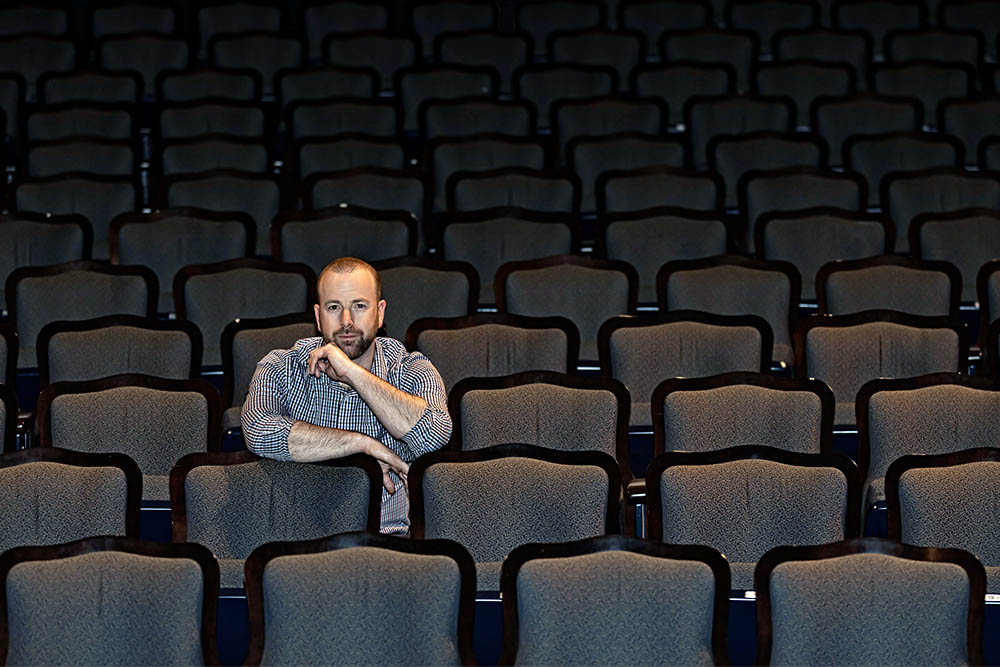
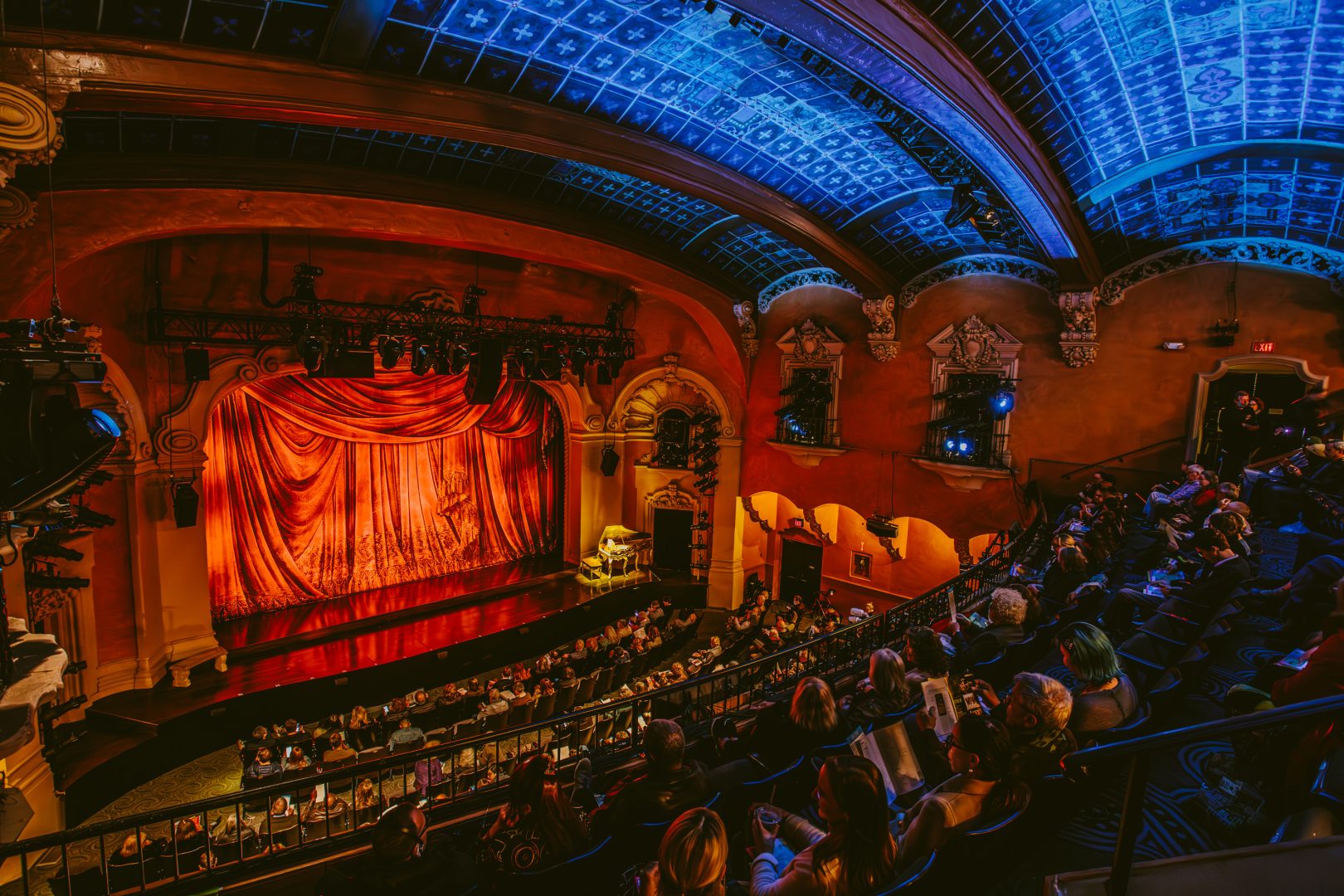
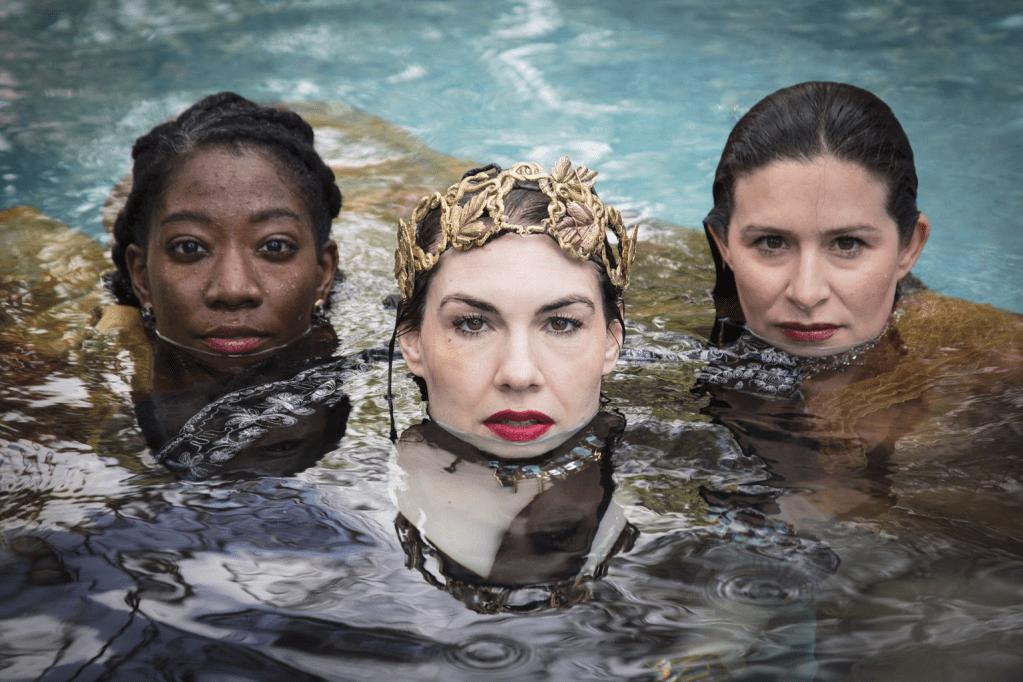
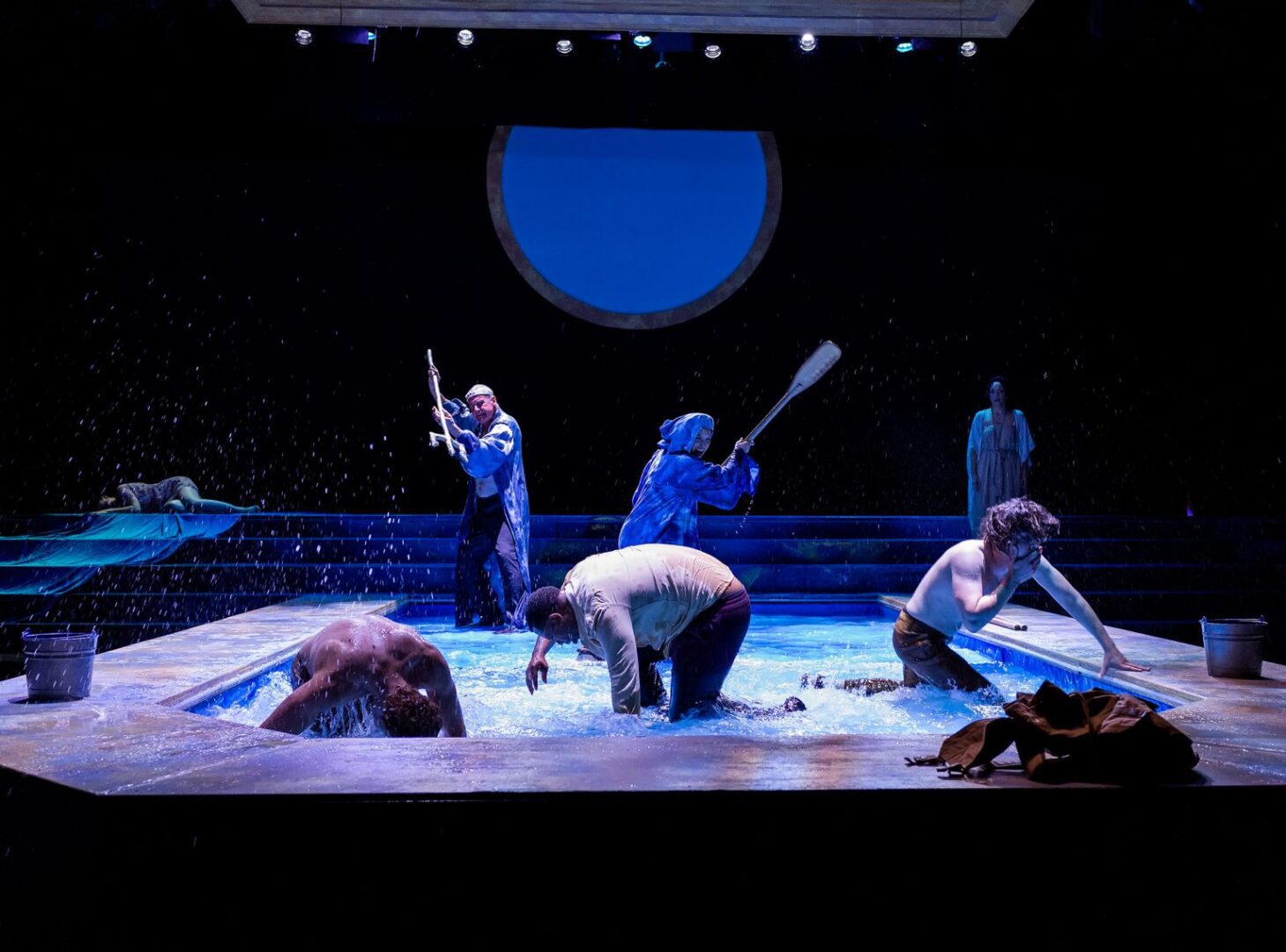
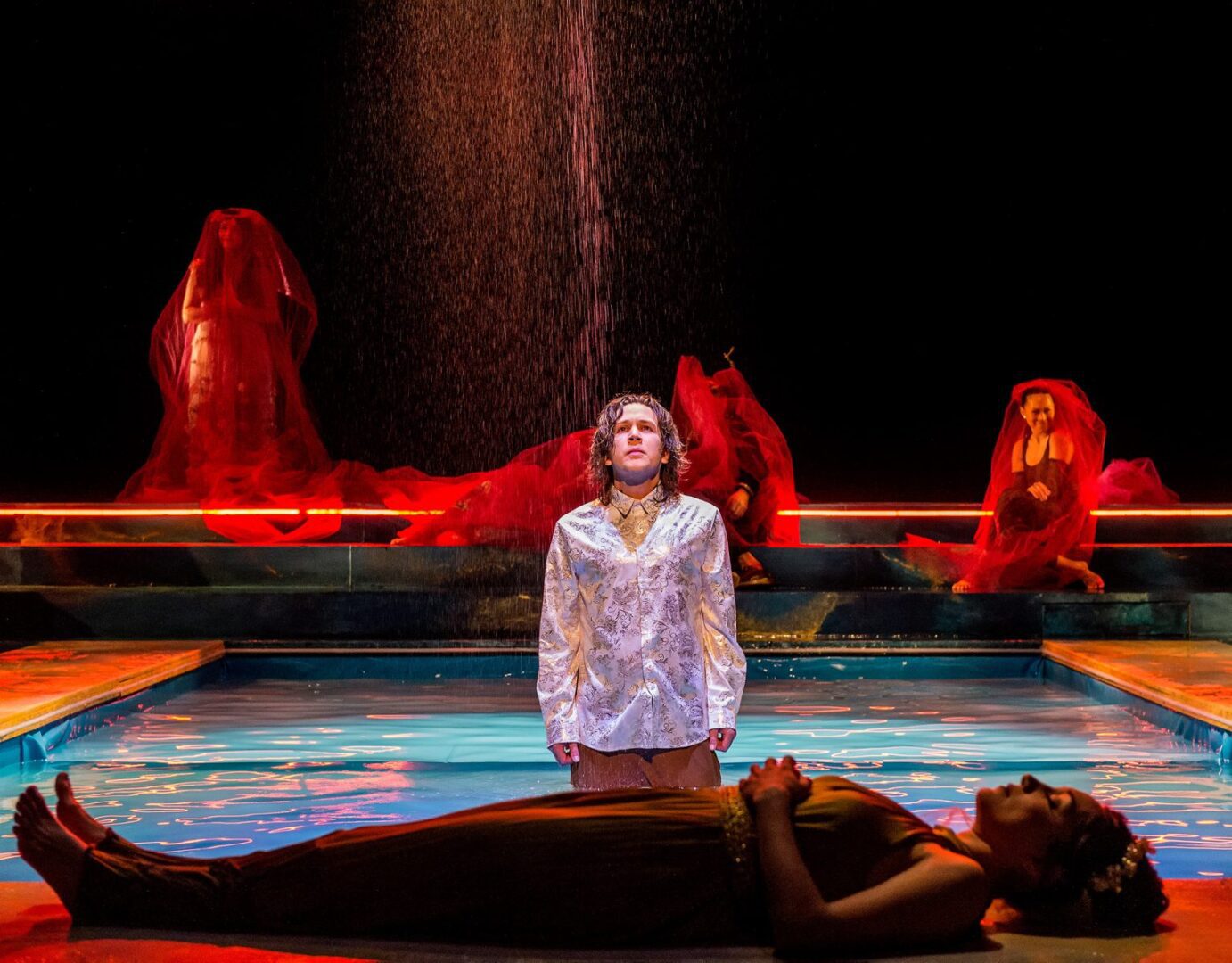
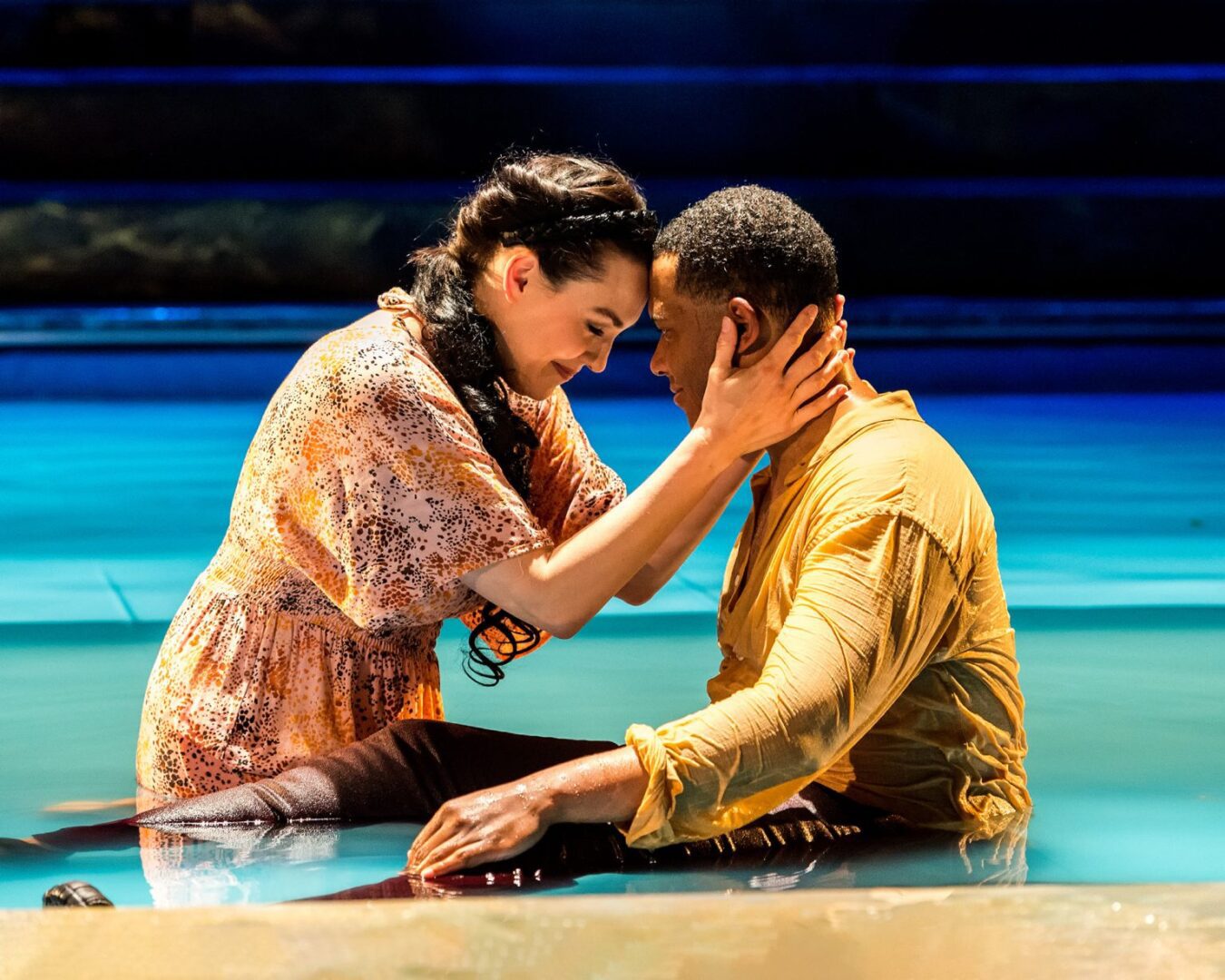
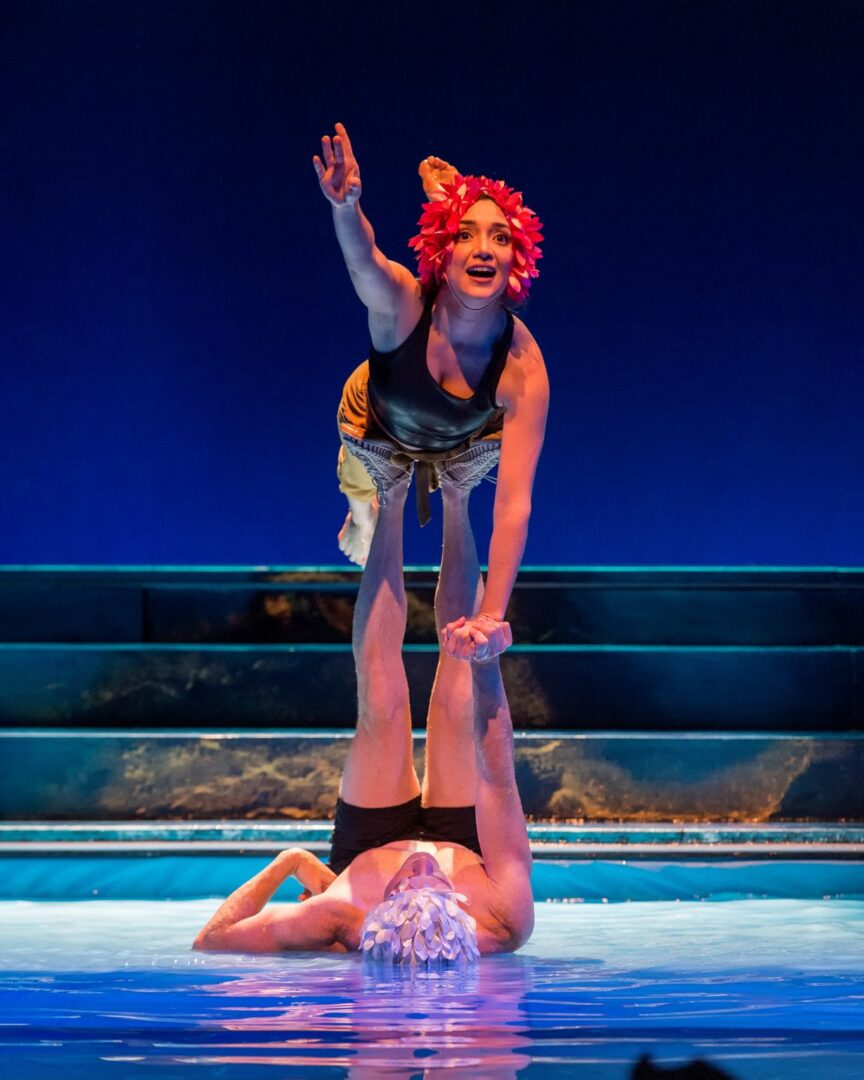
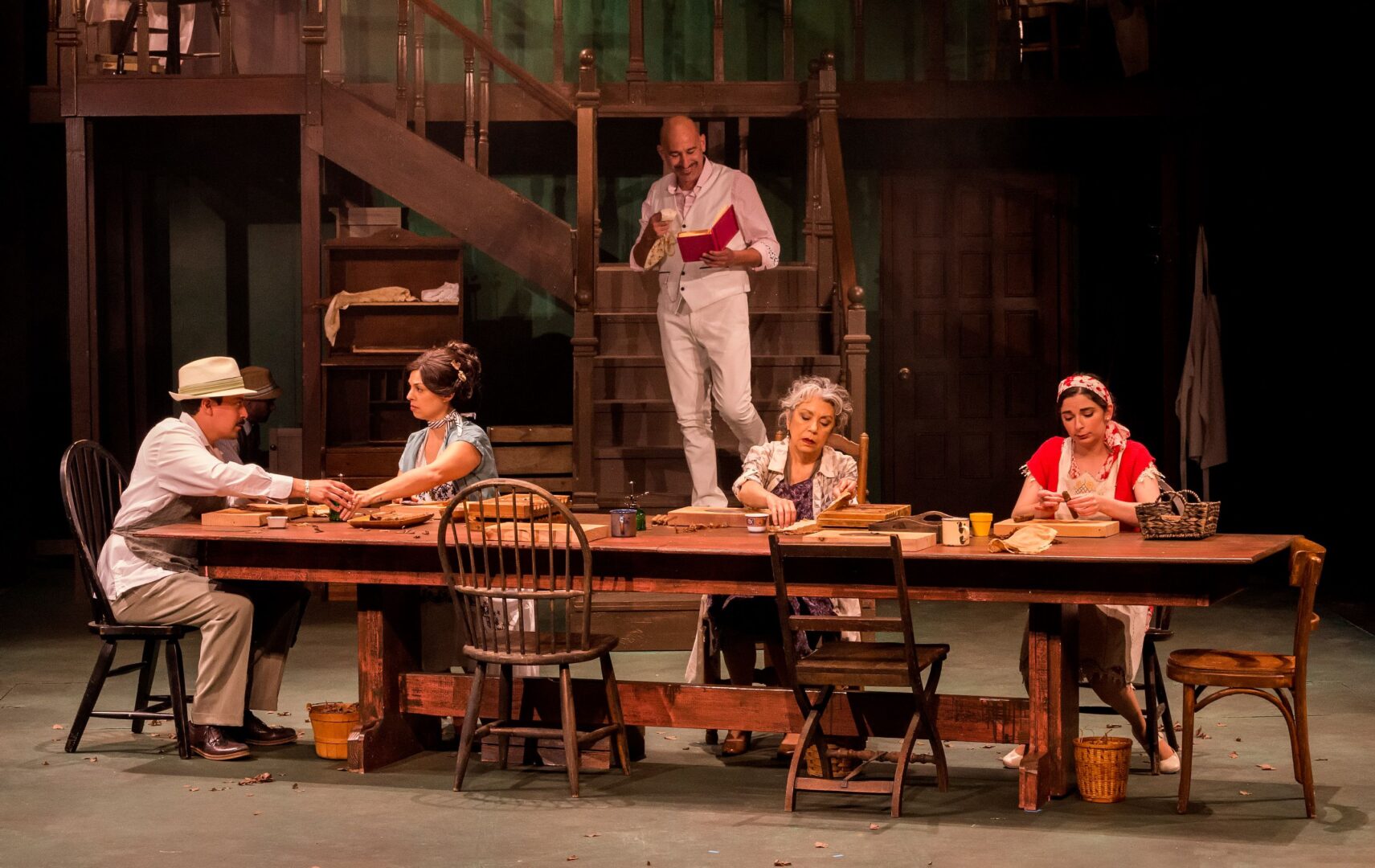
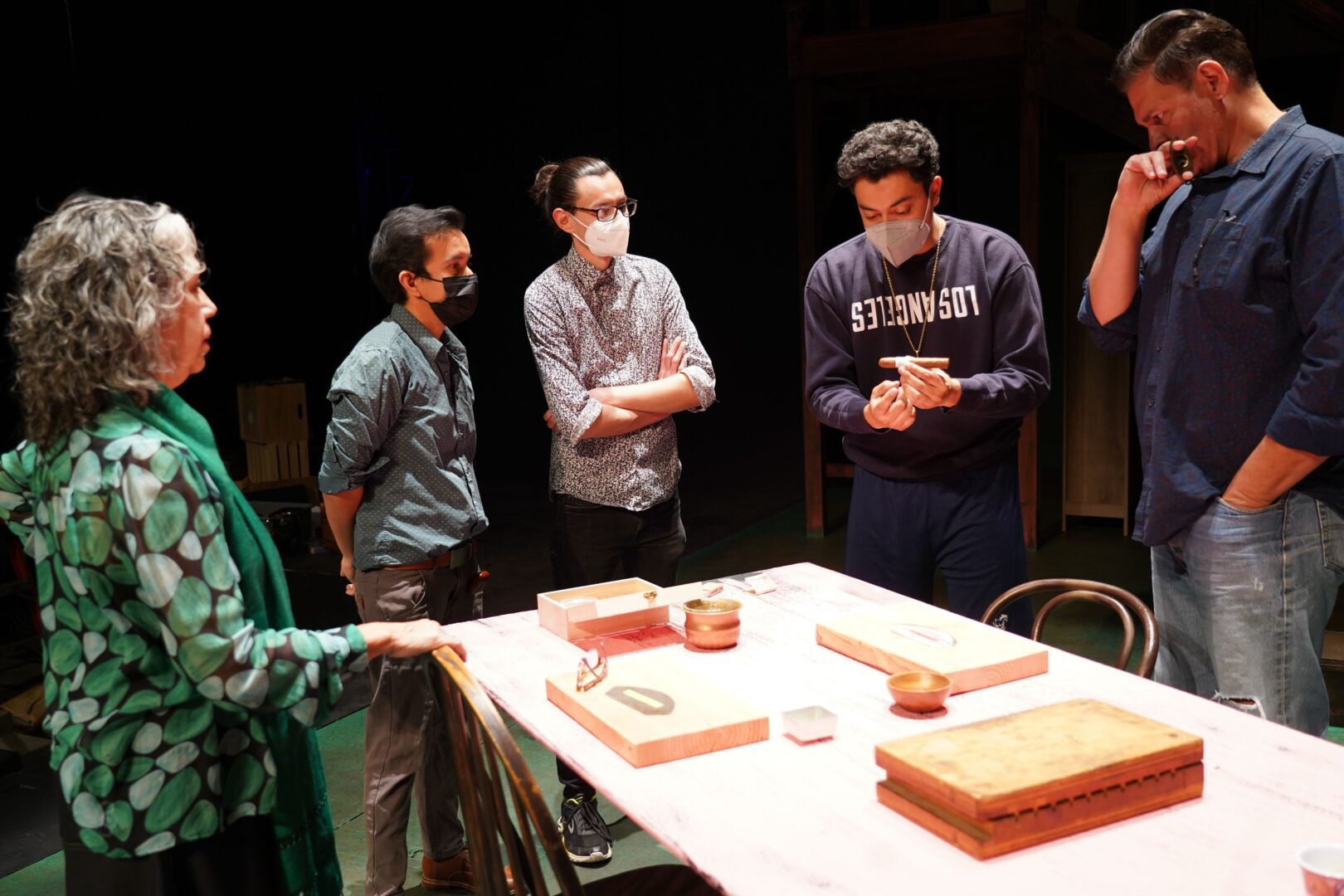
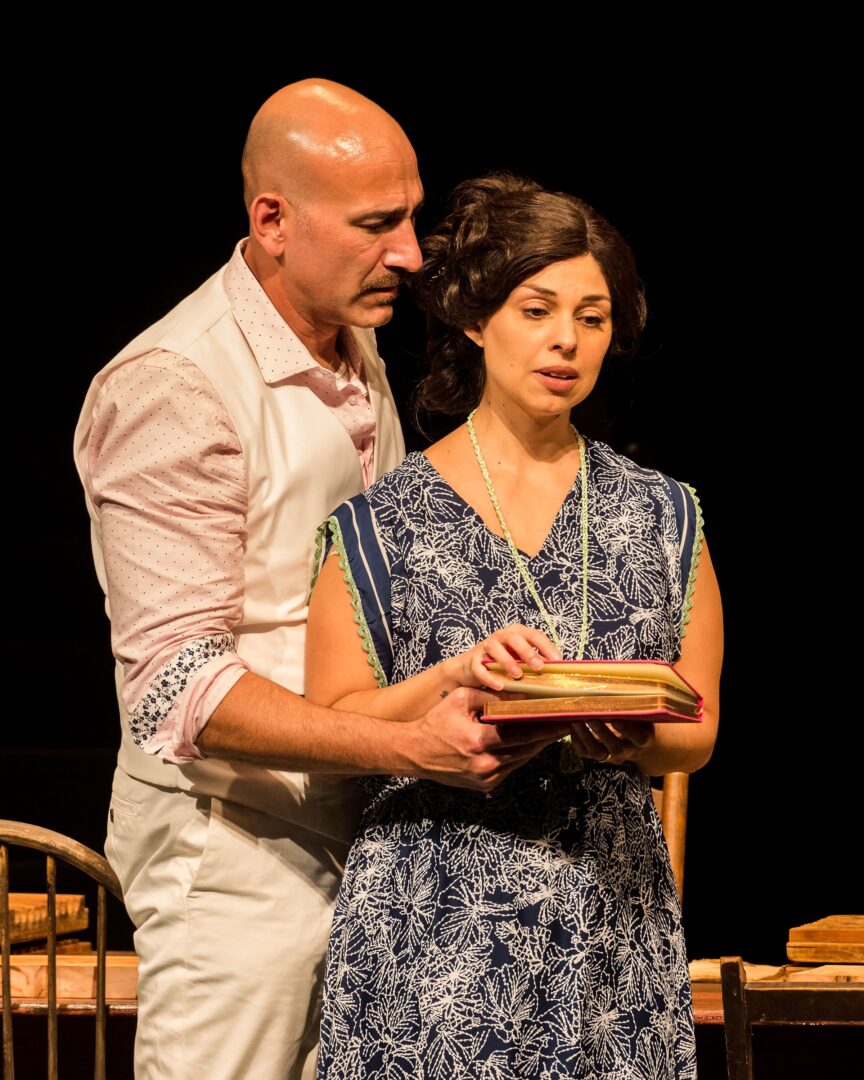
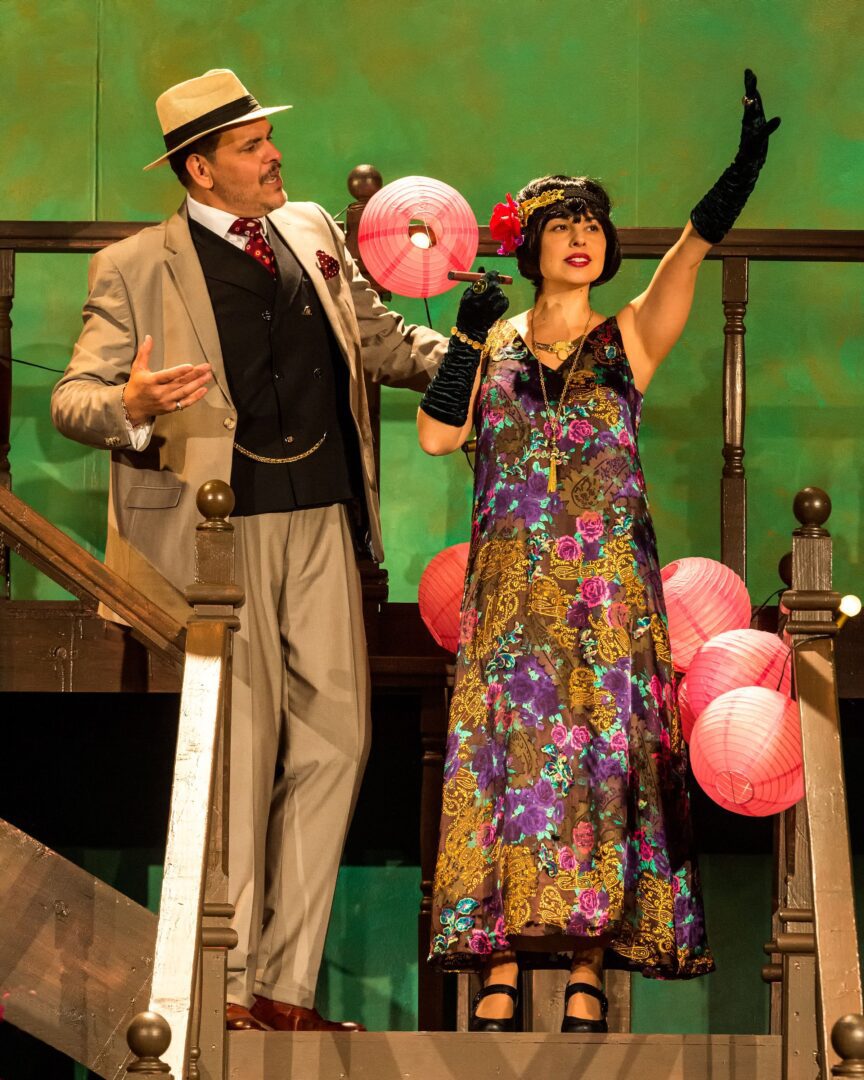
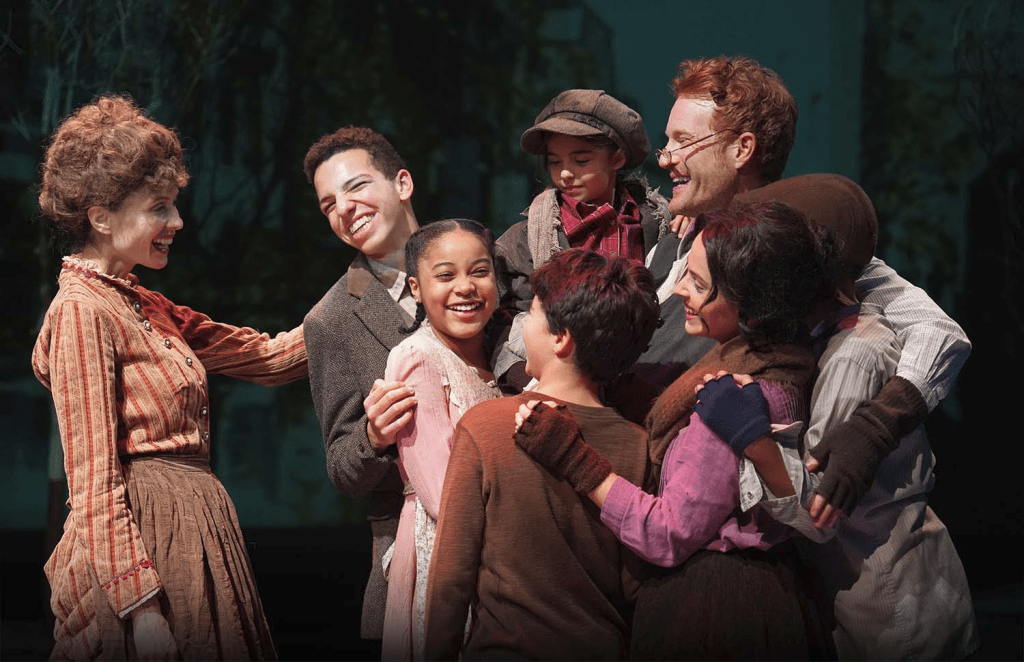
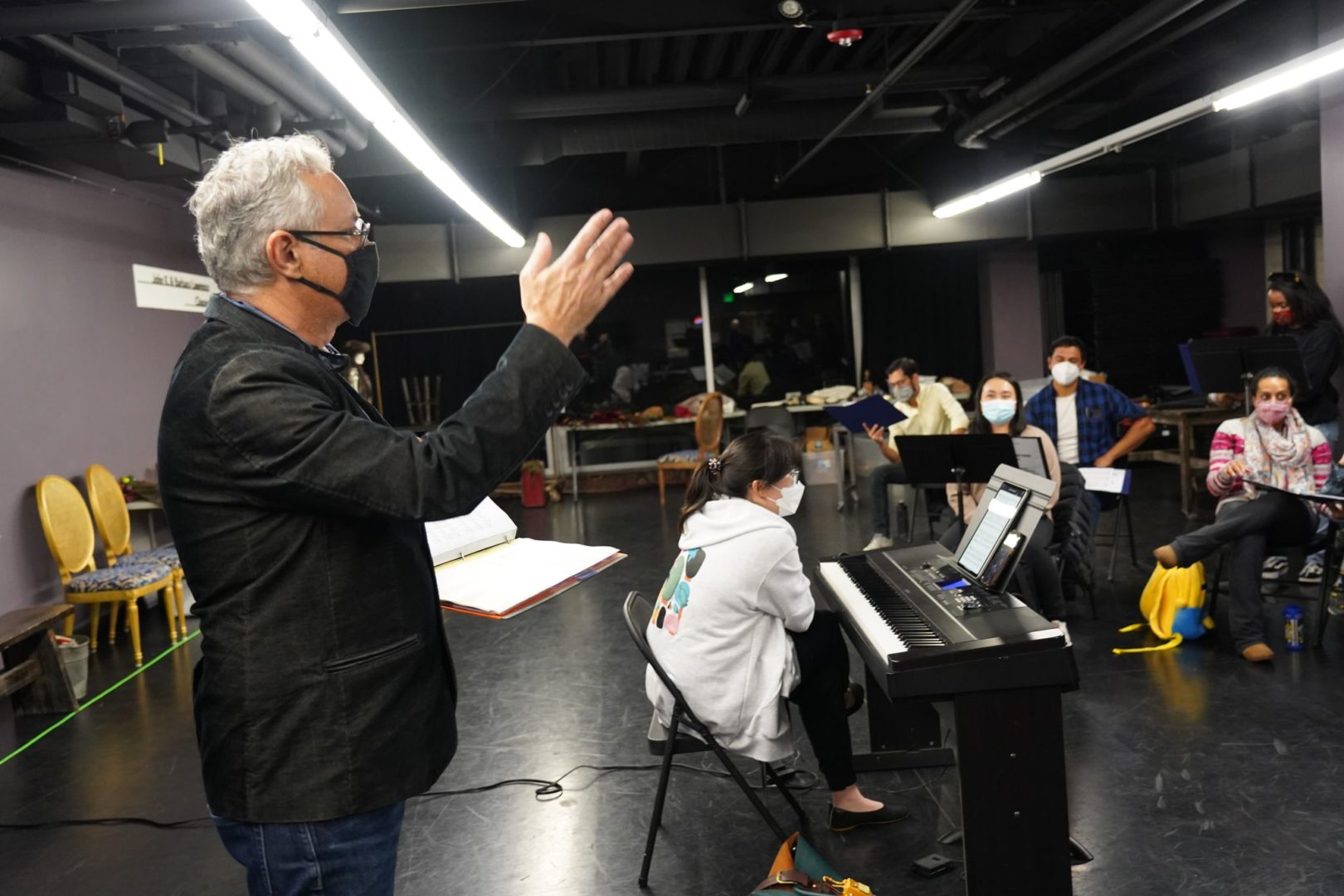
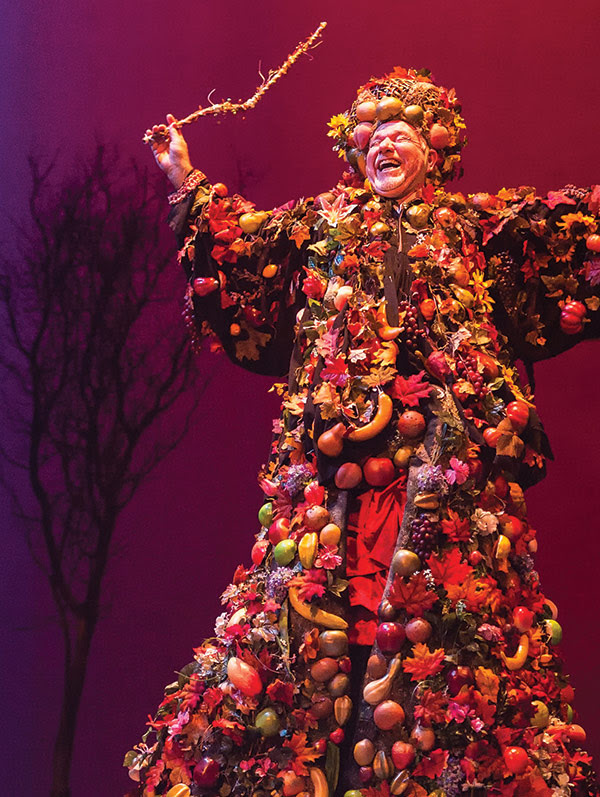

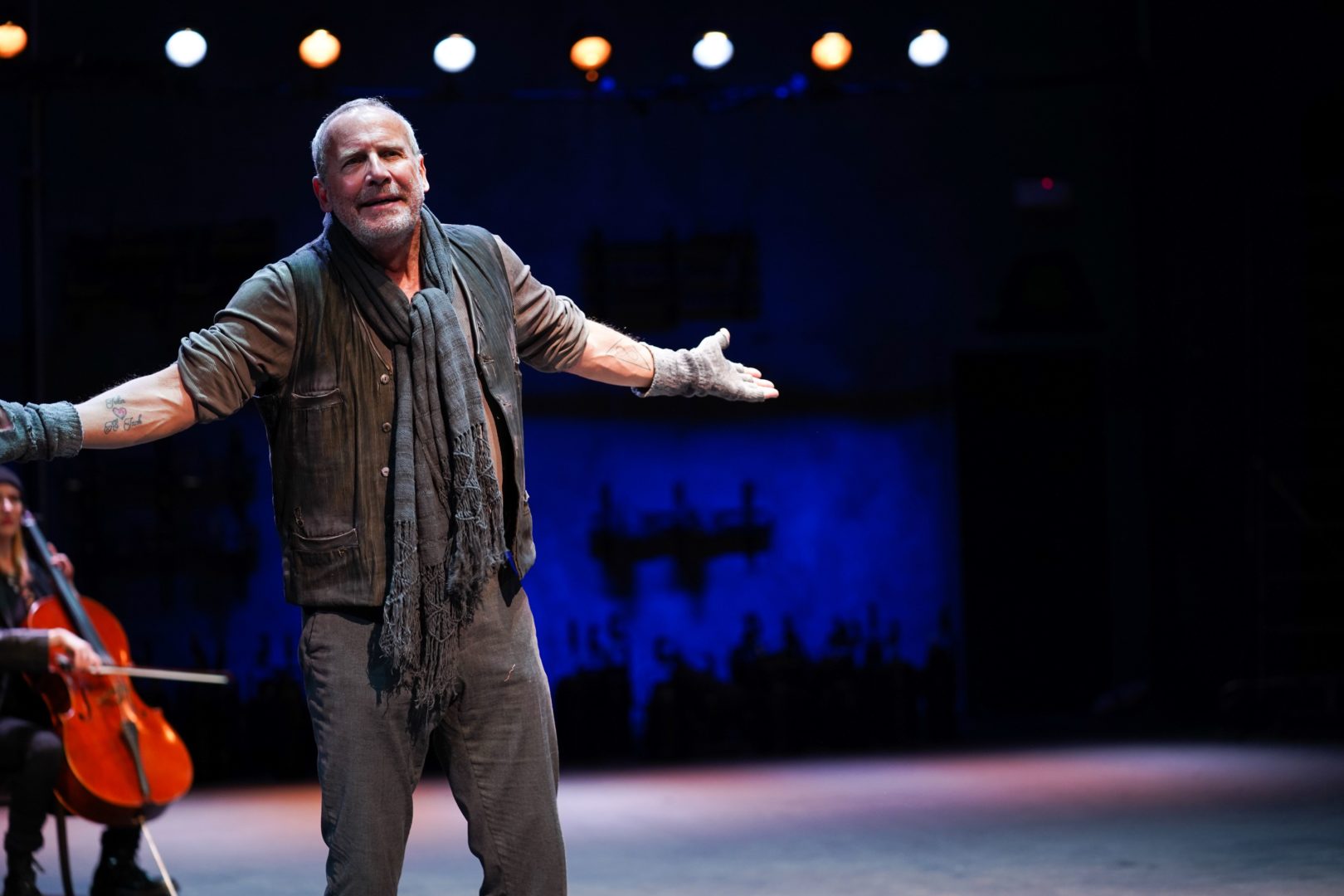
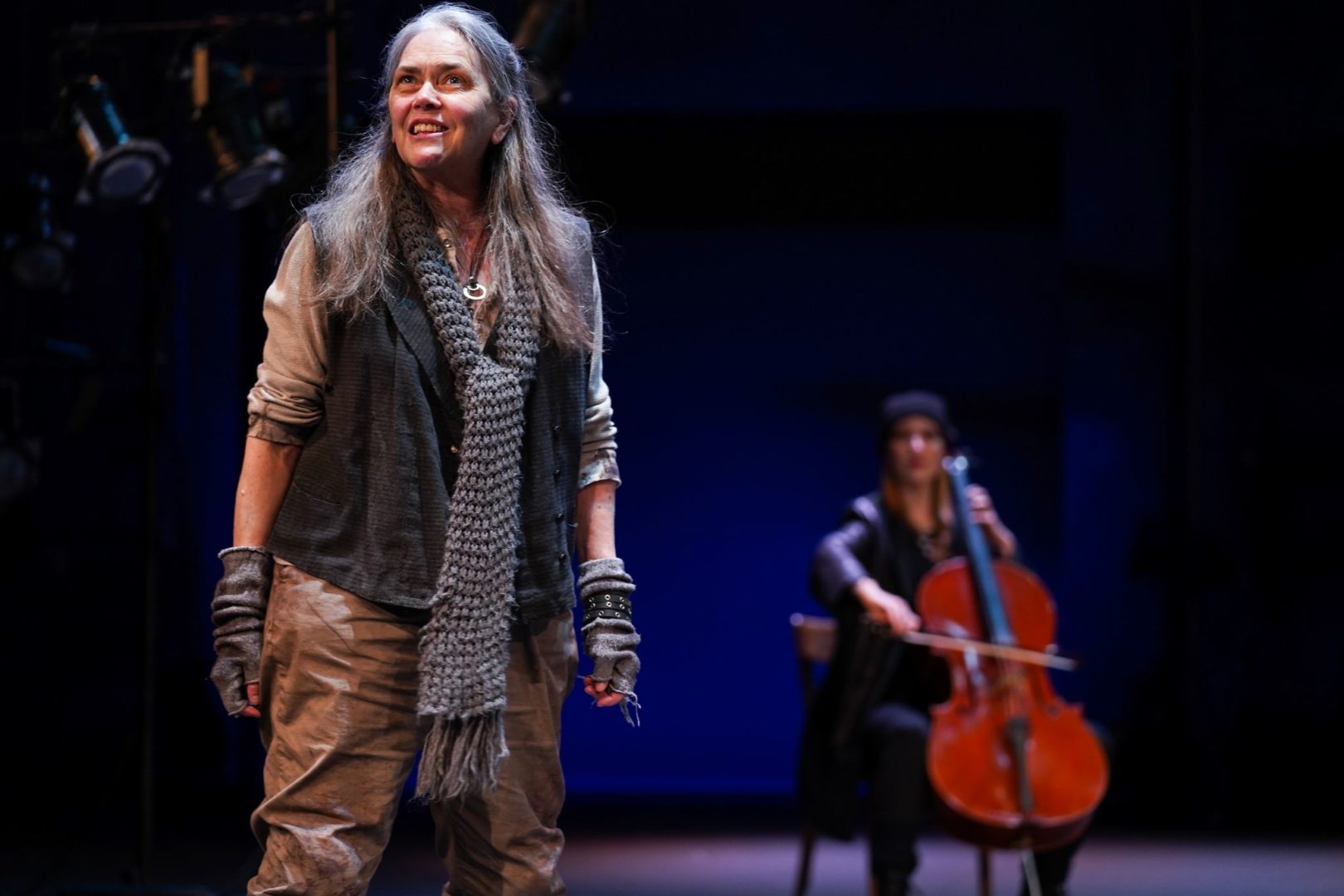
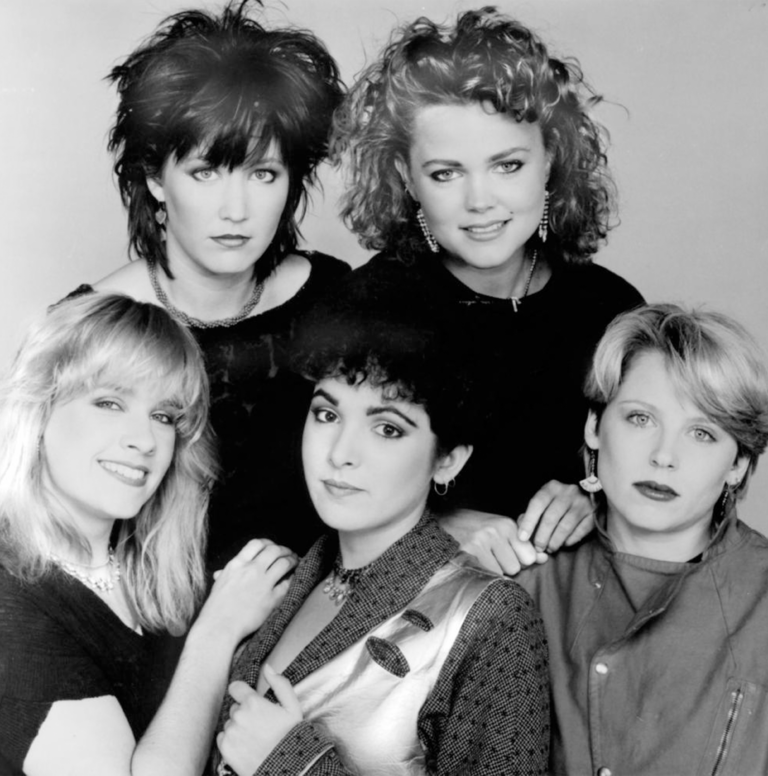
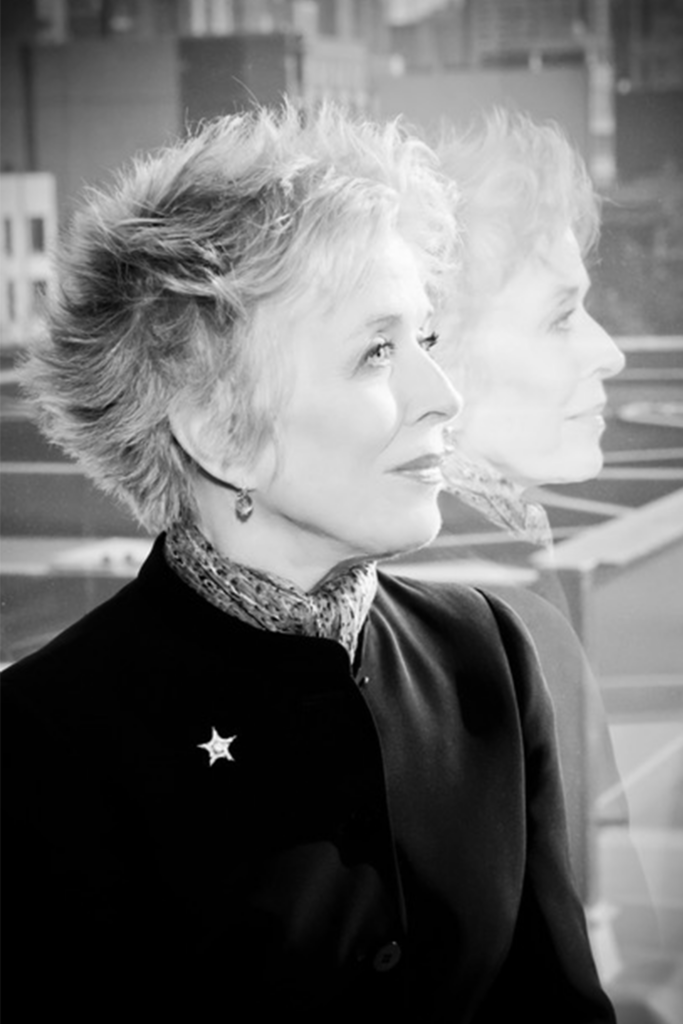
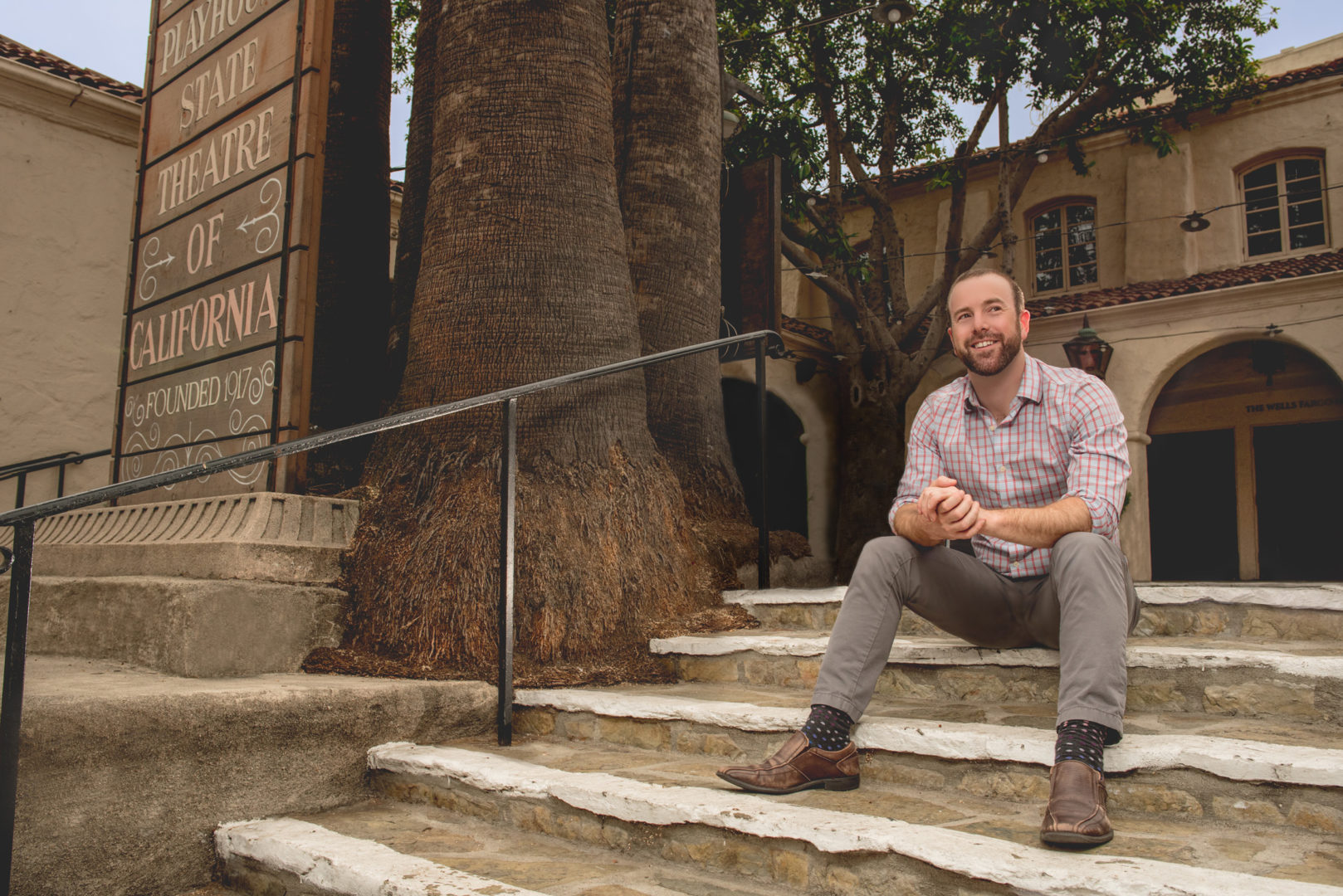

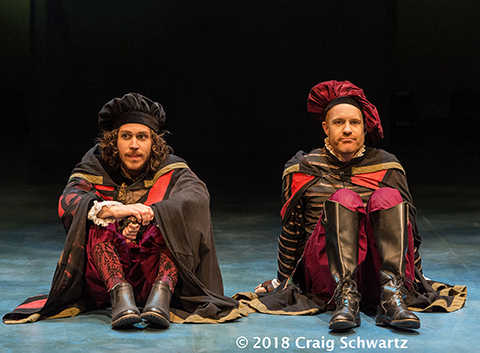

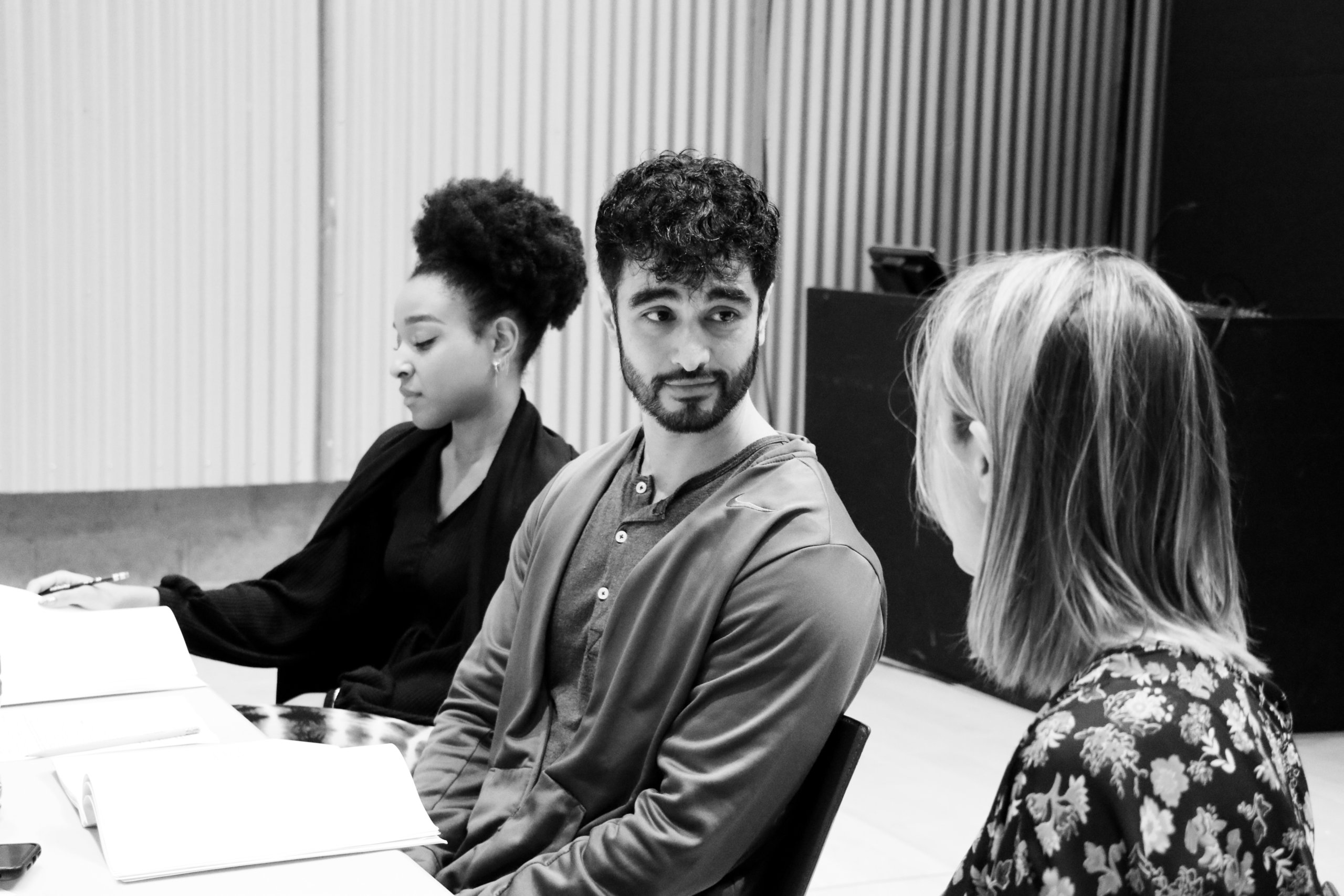
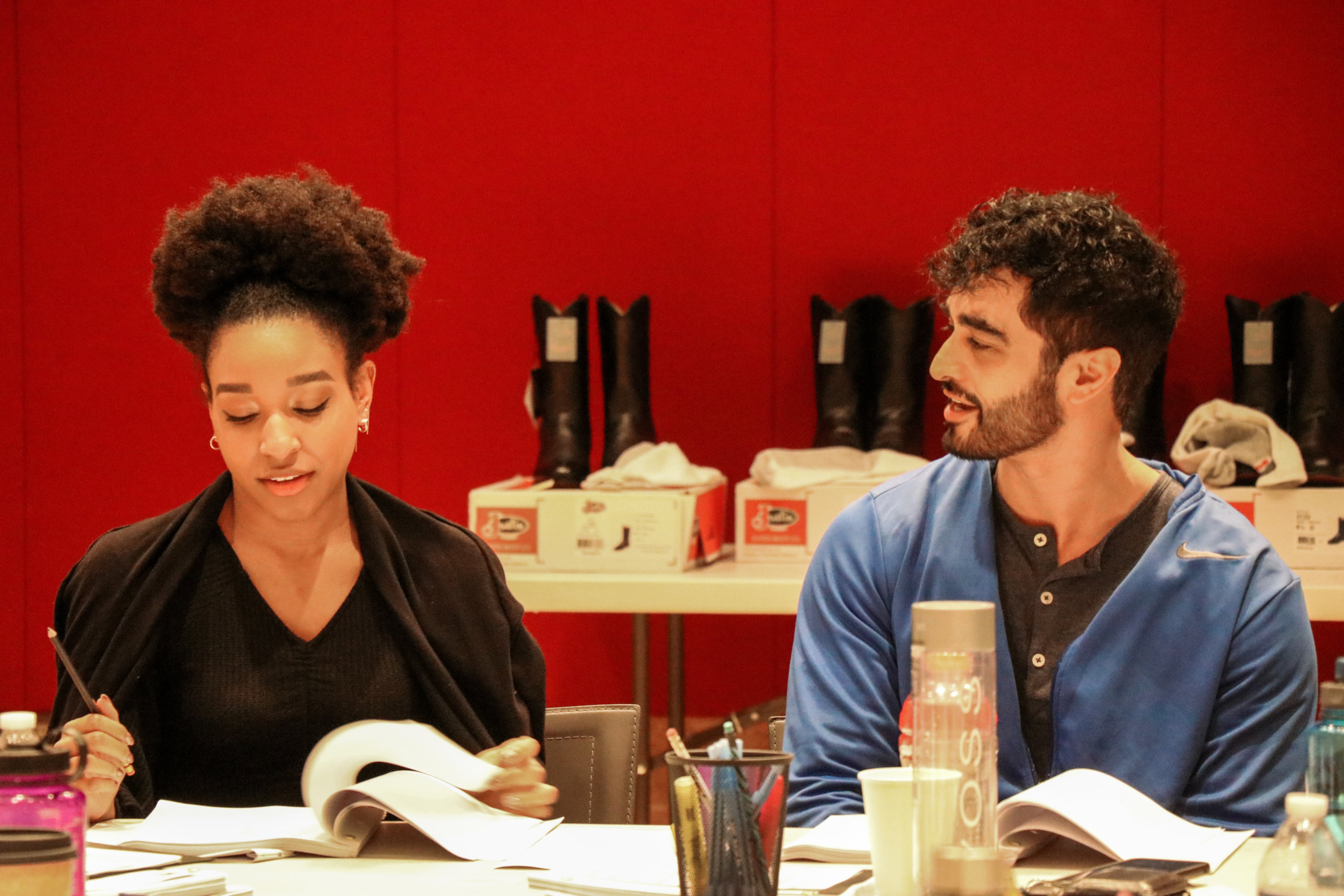
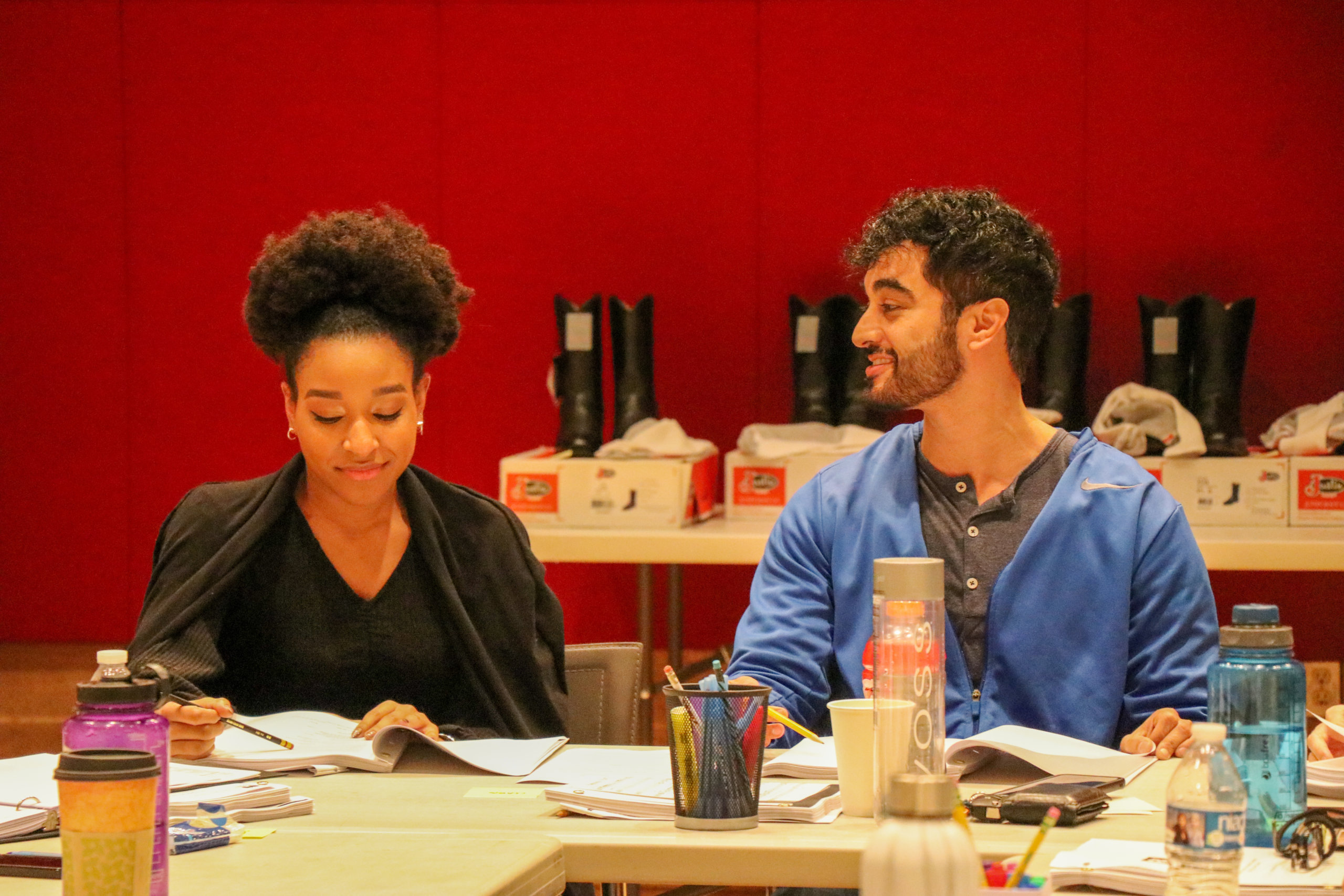
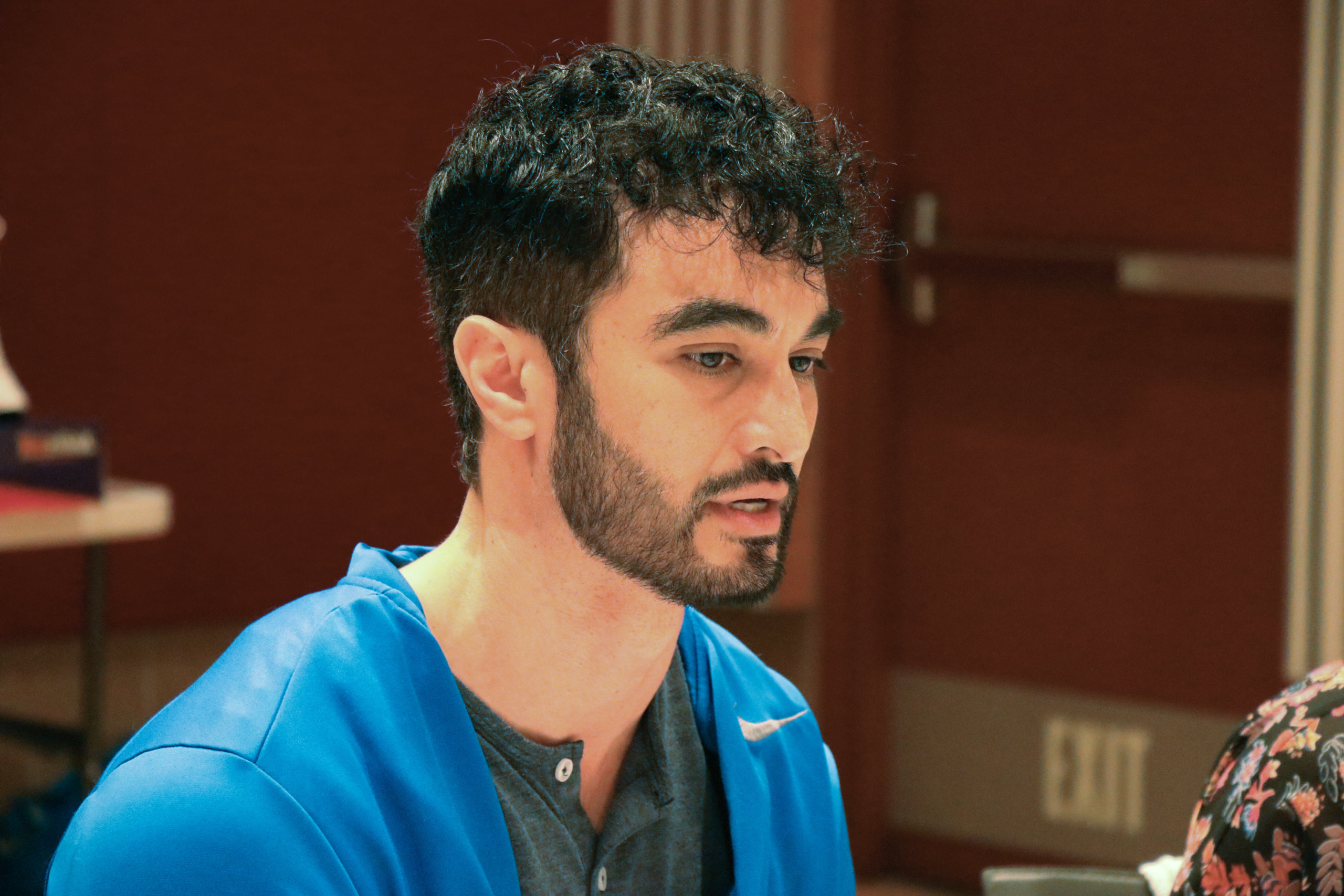
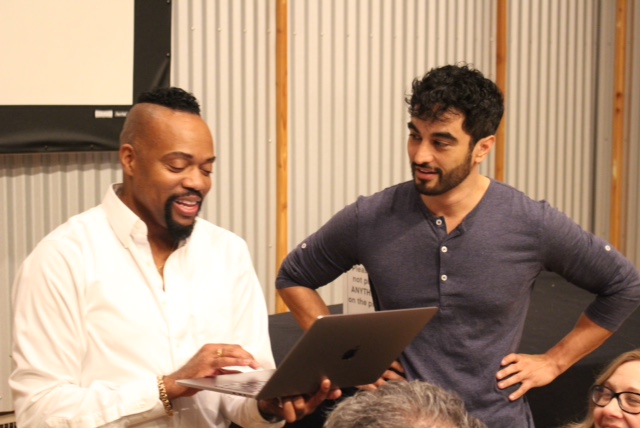
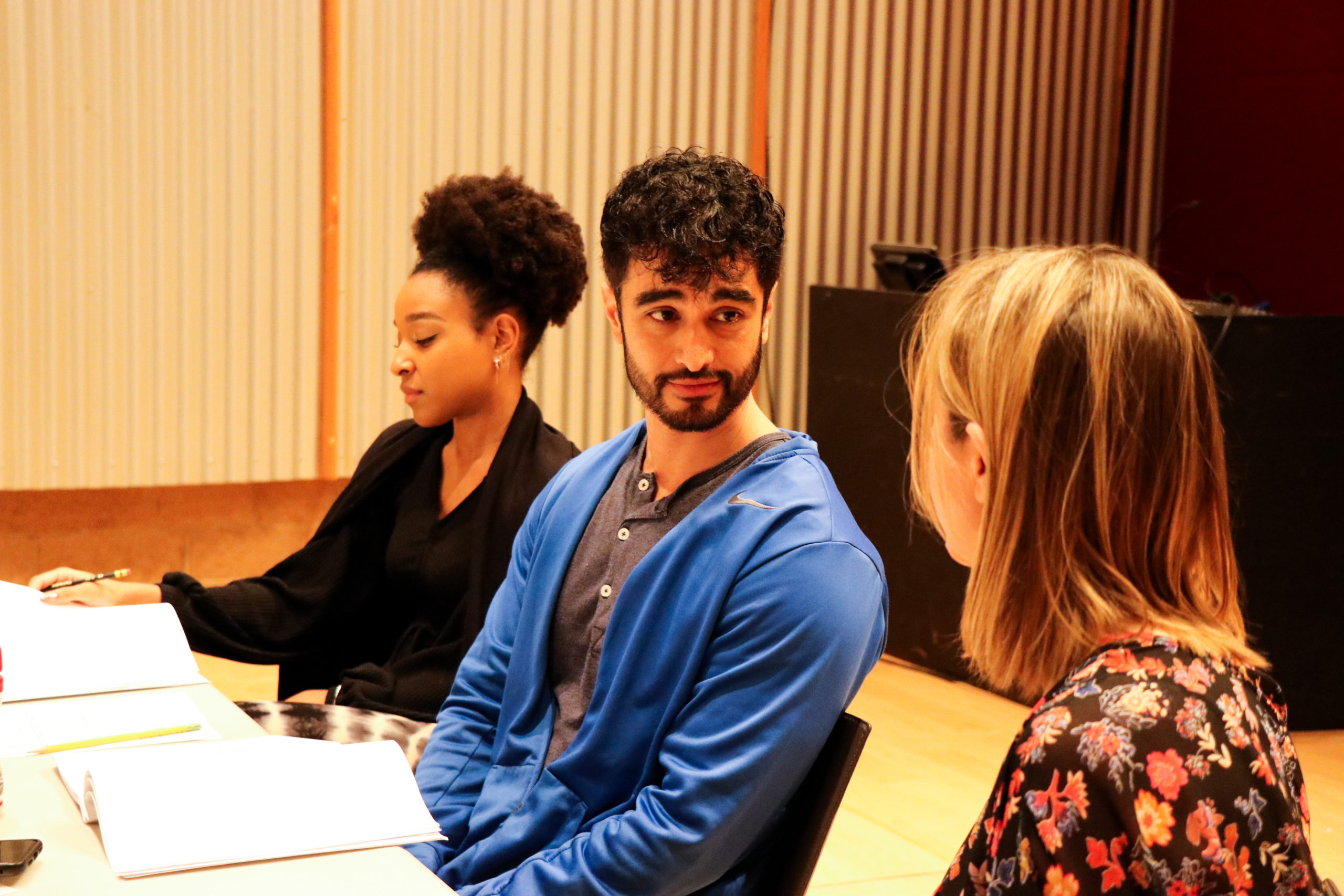
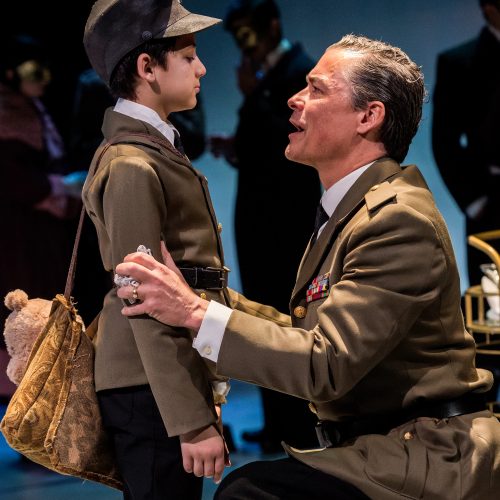
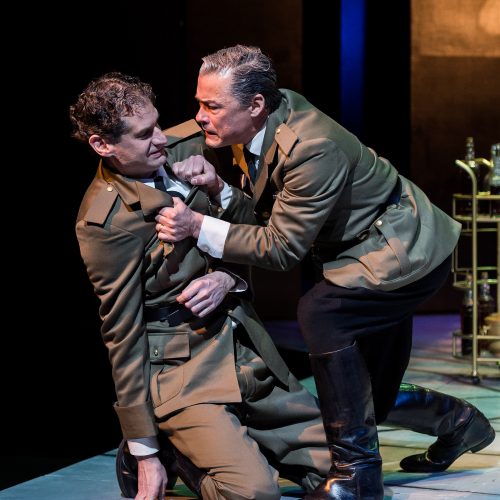
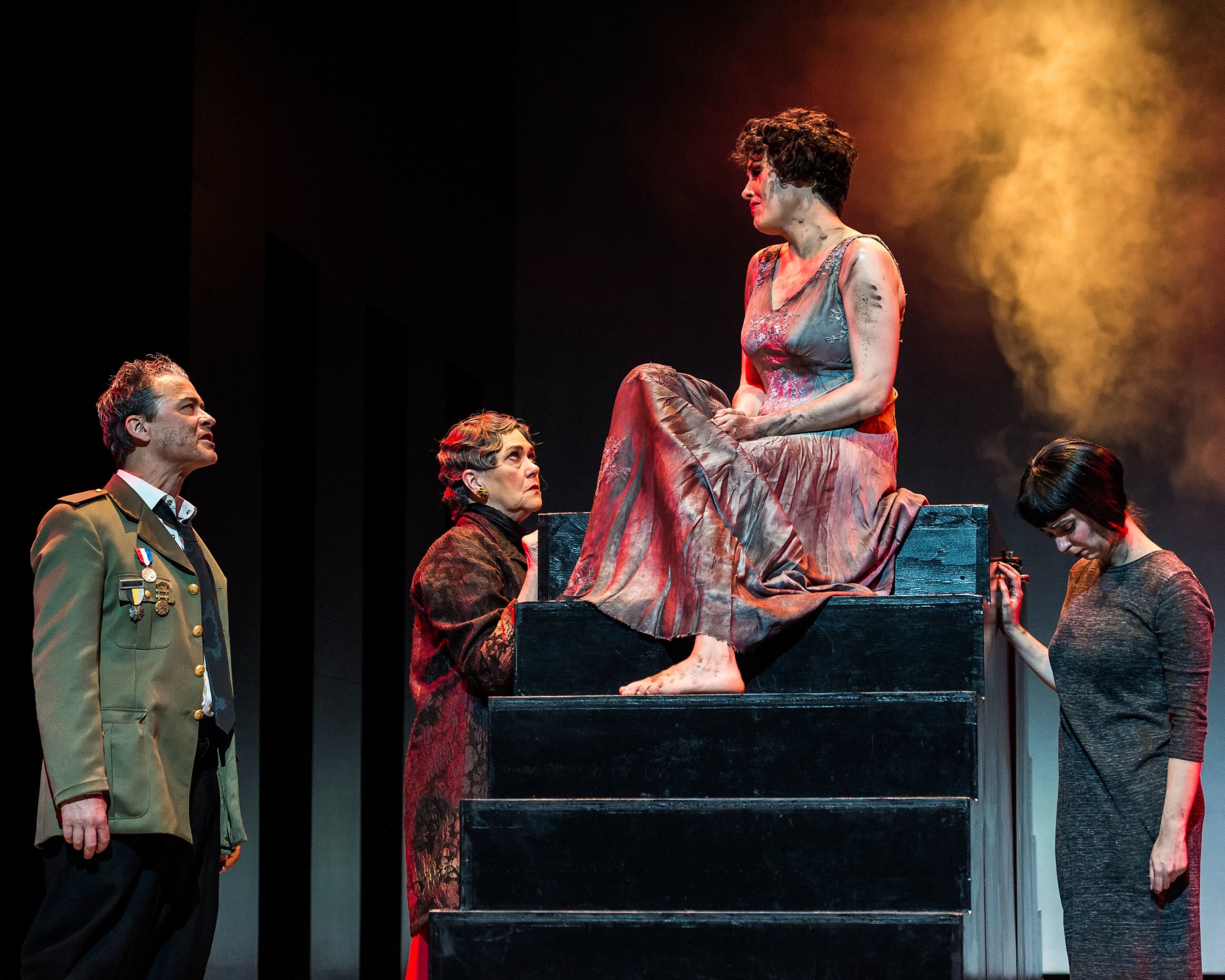
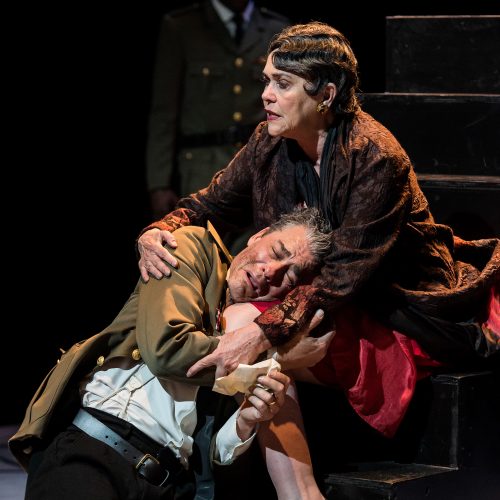
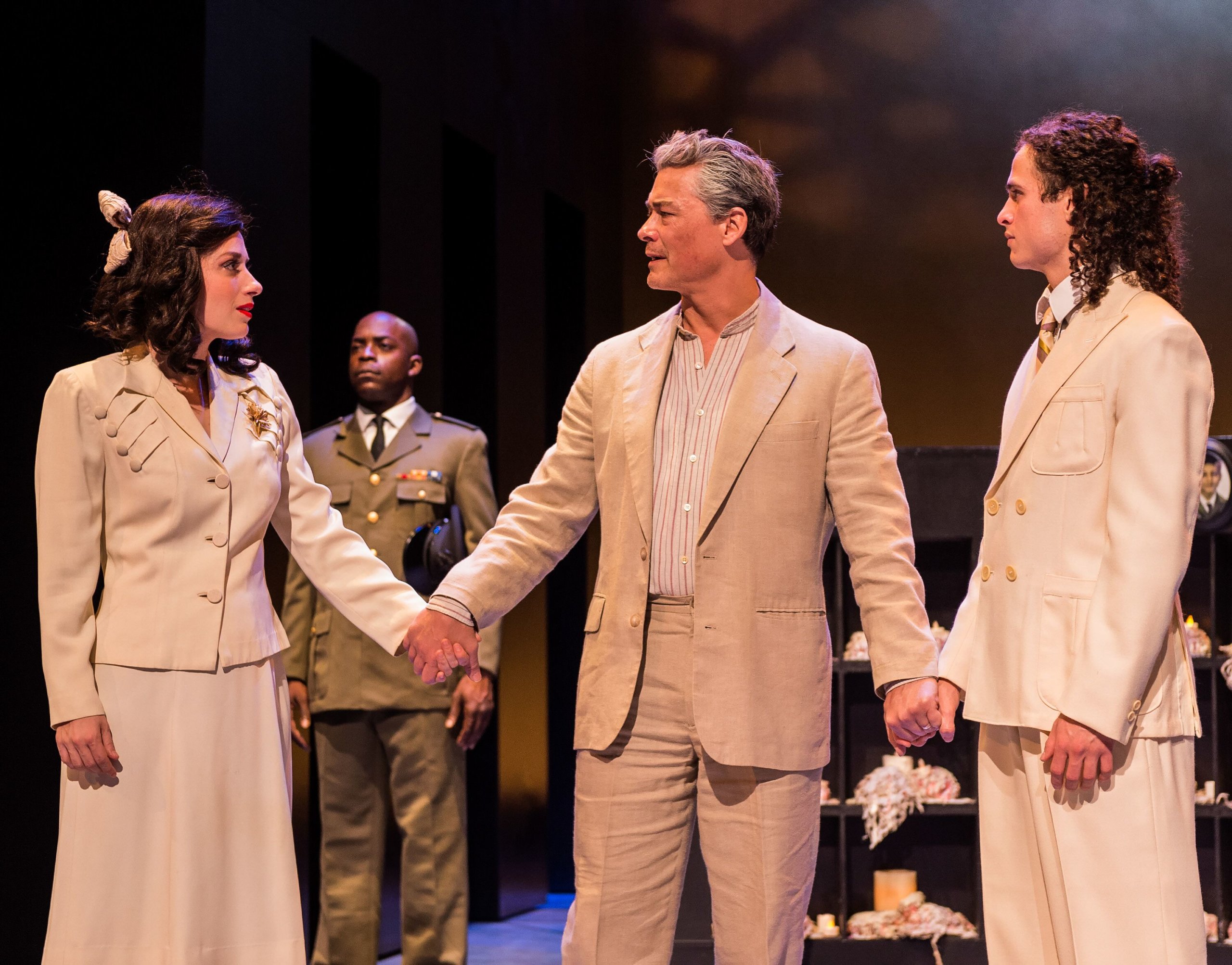
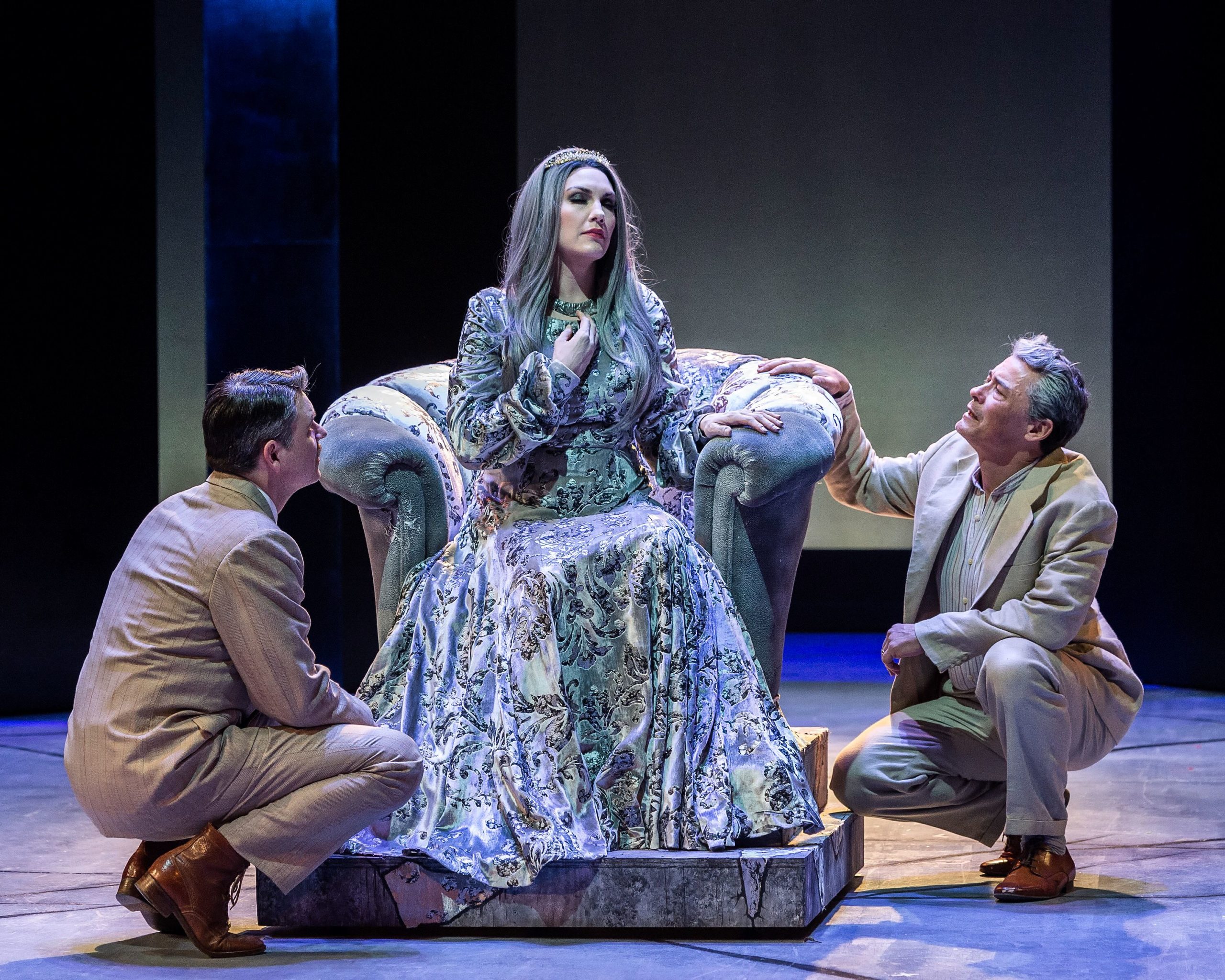
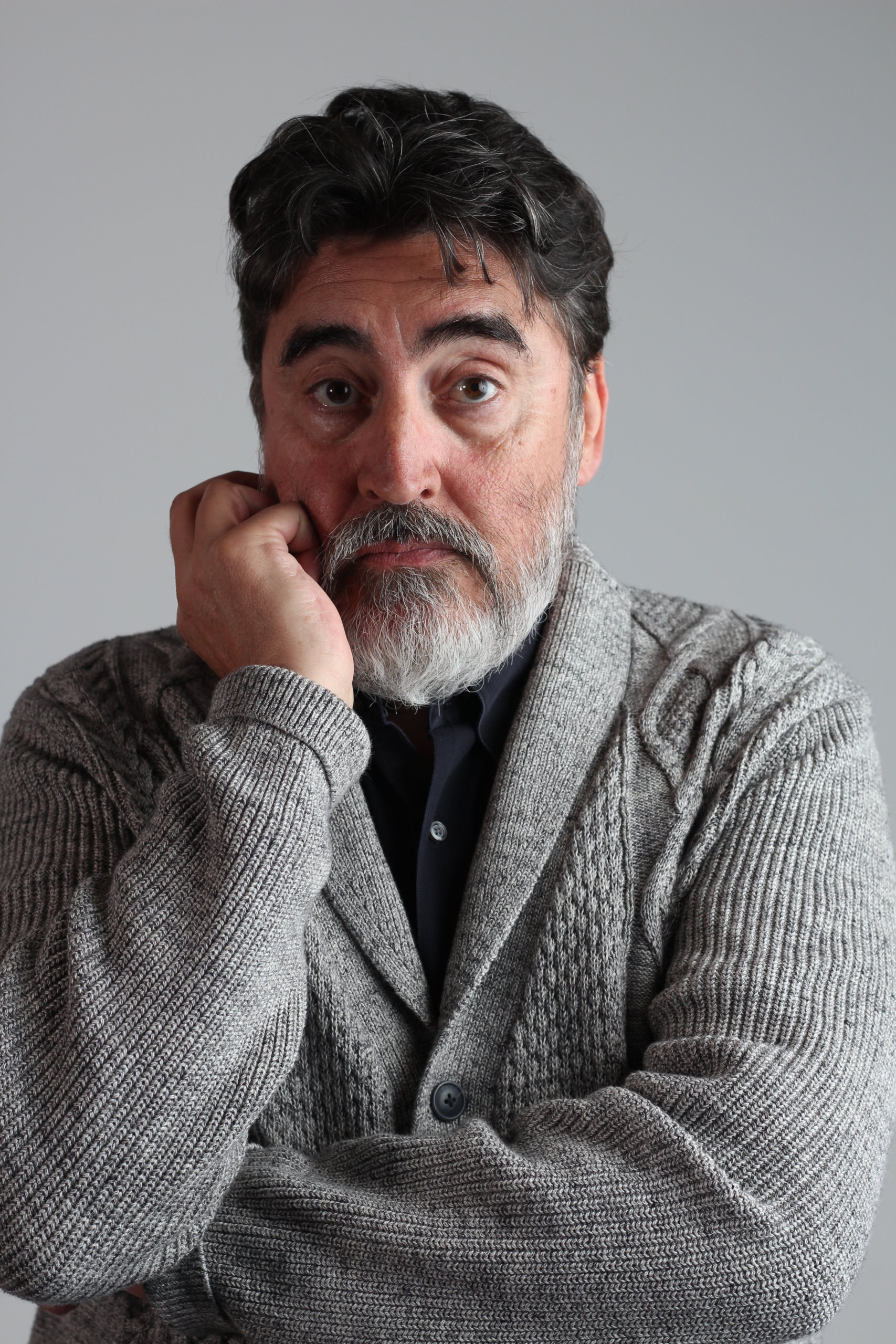


 A San Gabriel Valley Inquirer