The Life and Times of Y.C. Hong Focus of Exhibit at The Huntington

Originally published on 18 December 2015 in the Pasadena Independent, Arcadia Weekly, Monrovia Weekly, and Sierra Madre Weekly
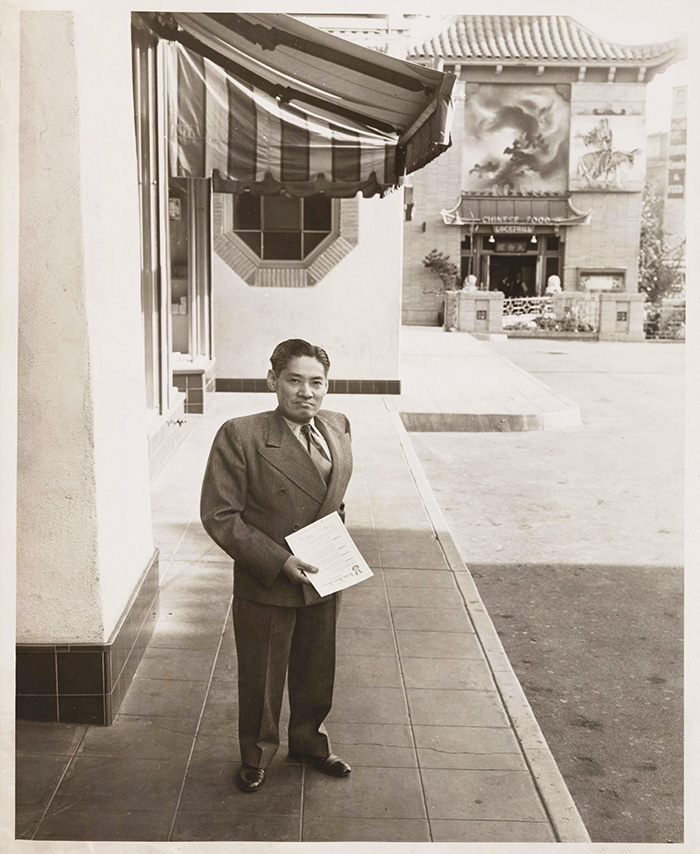
You Chung (Y.C.) Hong | Photo courtesy of The Huntington

The United States is one big melting pot – a land of immigrants who come from far-flung corners of the world. It’s almost inconceivable, therefore, that there was a time when Americans were openly hostile to certain foreign nationals who wanted to come into this country. And yet, this was the reality that You Chung (Y.C.) Hong, foremost Chinese-American immigration lawyer, encountered during the early years of the 20th century. 

A practicing immigration lawyer from 1927 to 1977, Y.C. worked relentlessly on behalf of Chinese settlers and, in the span of his career, helped over 7,000 enter the country legally. He was one of the Asian experts invited to take part in President Harry Truman’s commission to study and reform the U.S. Immigration system.

Y.C.’s history and life’s work is the subject of a show currently going on the Huntington Library, Art Collections and Botanical Gardens. Li Wei Yang, Curator of Western American History, says, “We were compelled to mount an exhibition because it was the first time the Huntington has received a collection about the life of a major Chinese-American figure in L.A. We felt it was important to let the community know, especially in San Marino and the San Gabriel Valley, that we are serious about the preservation of Chinese-American history. We want to show that we care about this community and that we encourage future collections of this kind.”   

To make the exhibition more accessible to a greater number of visitors, the Huntington presented it in bilingual form – translation panels are available to Chinese speakers. Six topical sections divide the 77 items on display – from a broad overview of why and how the Chinese came into the country to the last section showing the establishment of a family-friendly Chinatown in L.A.  

As the exhibit reveals, Y.C. was born in San Francisco in 1898 to Chinese-American parents who originated from Southern China. His early childhood was marked by two significant events – his father died at an early age leaving his mom to raise two boys on her own. And he was accidentally dropped by a relative who was taking care of him. The resulting spinal damage limited his full height to reach only four feet and five inches tall.    

In spite of his early misfortunes, Y.C. had a normal childhood. He graduated from Berkeley High School in 1915, then traveled around the country for a while, and worked as a bookkeeper at a Chinese restaurant in Boston. 
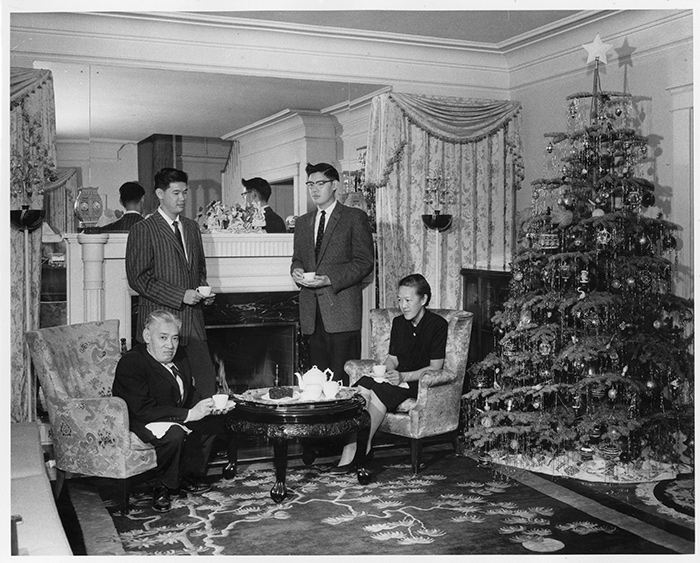
Y. C. Hong with his wife and sons | Photo courtesy of The Huntington

In 1918, Y.C. came to L.A. and was employed as Chinese translator for the Bureau of Immigration while attending night school. He passed the California Bar Exams in 1923, a remarkable feat as he was still a year away from receiving his Bachelor’s degree from USC. He was one of the first Chinese-Americans to be licensed to practice law; he graduated in 1924 and earned his Master’s degree in 1925 at USC. His 74-page Master’s thesis analyzed how the extension and administration of the Chinese Exclusion Act deviated from the original decree, making Chinese-Americans second-class citizens in their own country. In 1927, Y.C. became an immigration lawyer.

Y.C. grew up during the period when Chinese laborers were considered persona non grata. The Chinese Exclusion Act, which was in effect from 1882 to 1943, prohibited Chinese laborers from entering the country. Chinese miners who were in California during the Gold Rush were singled out, and had to pay $4 each month for the right to engage in mining. This tax practically legalized discrimination.

The Chinese Exclusion Act made it essential for every Chinese traveler to carry a passport when they came into the U.S. China’s Qing government issued passports to all merchants, missionaries, students, and all returning residents.

Beginning in 1909, all Chinese with legal status in the U.S. were issued Photo Certificates of Identity – a requirement which only applied to the Chinese, until 1928. This residence certificate became their proof of their legal right to be here – if stopped by the police, they had to produce such ID or they could be arrested or deported. It was eventually replaced by the Alien Registration Receipt Card, informally known as the “green card.”

As rules became ever more stringent, making it extremely difficult for Chinese immigrants to file the necessary paperwork, much less navigate the complex process, lawyers became requisite. Successful entry into the U.S. depended on their ability to recall precise details of family history during long hours of interrogation. While immigration officers used this deterrent, it didn’t stop the Chinese from coming as they adapted to the technique. Y.C. provided his clients with a list of commonly asked questions (which numbered in the hundreds), to which they constructed all the answers. They then used this “cheat sheet” to pass the test – they had found a way to outsmart the authorities. 

On March 28, 1931,Y.C. married Mabel Chin Qong, another Chinese-American whom he met during a Student Exchange in San Francisco in 1928. Mabel was one of the first Chinese-Americans to graduate from the University of Oregon. Their marriage produced two boys – Nowland and Roger.

In L.A. there was an old Chinatown which was a haven for gambling and prostitution. When it was razed in the 1930s to make way for Union Station, a group of Chinese entrepreneurs purchased land to build a new Chinatown on Broadway. It was designed and erected to appeal to families, and a place not just for the Chinese, but for everyone who wanted to learn about this Asian culture. It was the first planned Chinatown in the United States. Y.C. commissioned three buildings where he moved his law offices.

During World War II the Chinese became American allies as they joined the fight against a common enemy – Japan. Mabel helped the American Women’s Volunteer Services raise funds for and run the Chinese canteen, located in Chinatown, providing meal services and entertainment to servicemen in L.A. Approximately 1,500 military personnel patronized the canteen every month. Y.C.’s and Mabel’s war relief efforts in Chinatown were a huge success that a military ambulance airplane was named “Los Angeles Chinese” in recognition of their contributions.

A very astute man, Y.C. recognized the value of political connections sympathetic to the Chinese. He befriended politicians and contributed to their campaigns; he worked the system. 
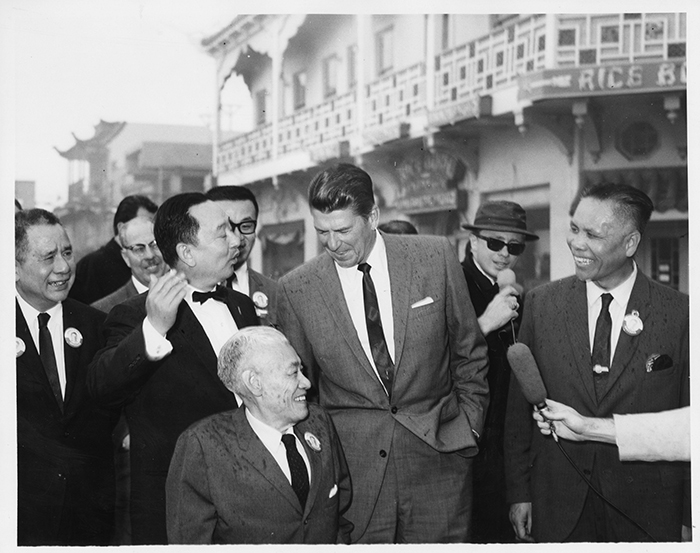
Y.C. Hong with Ronald Reagan, then governor of California | Photo courtesy of The Huntington

The Hong family papers document that in 1947 Senator Philip Hart introduced S747, which was merged with a bill proposed by Representative Emanuel Celler to form the basis of the Immigration and Nationality Act of 1965. This Act served as the foundation for the current immigration system, which abolished the National Origins Formula and emphasized job skills and family reunification.

Executive Order 10392, issued by President Truman on September 4, 1952 established the President’s Commission on Immigration and Naturalization. Y.C. was one of the experts invited to give their opinions. The Commission’s report “Whom Shall We Welcome” urged reform of the then-current immigration system. 

Y.C.’s and Mabel’s two sons went on to lead distinguished lives. Their older son, Nowland C. Hong, graduated from Pomona College in 1956 with a Bachelor of Arts degree. And, like his father before him, he matriculated at USC’s School of Law, earning his juris doctor degree in 1960. In 1961, he passed the California Bar Examinations and was appointed deputy city attorney of Los Angeles by City Attorney Roger Arnebergh. He served as chief general counsel for the L.A. Board of Harbor Commissions. He was also a founding member and two-term president of the Southern California Chinese Lawyers Association. He served as grand president of the Chinese American Citizens Alliance (of which his late father was an active member). He lives in Pasadena.

Roger S. Hong, their younger son, graduated with a Bachelor’s degree in Architecture from USC in 1965, and a Master’s degree in City and Regional Planning in 1968. He was certified as a licensed architect in many states, including California. Some of his notable projects include the expansion of the California Exposition and State Fair (Sacramento), Thomas and Mack Center (Las Vegas), Kunlun Hotel (Beijing) and Chieh Shou Sports Park (Taipei). He cofounded Arechaederra Hong Treiman Architects in the late 1970s. After his retirement in the early 1960s, he devoted himself to preserving his family’s history. Between 2000 and 2006, he donated the Hong family papers to the Huntington; he died of cancer in 2006.

Y.C. practiced immigration law from 1927 until his death on November 8, 1977. For 50 years the Chinese came to him for help and he responded with grace. He advocated for his people to gain acceptance into society and achieve economic stability. Any one of his countrymen who had lived through the exclusion era knew his name.

Circumstances beyond Y.C.’s control made him physically small and seemingly insignificant. But his unforgettable life and many accomplishments prove him to be extraordinary writ large.              
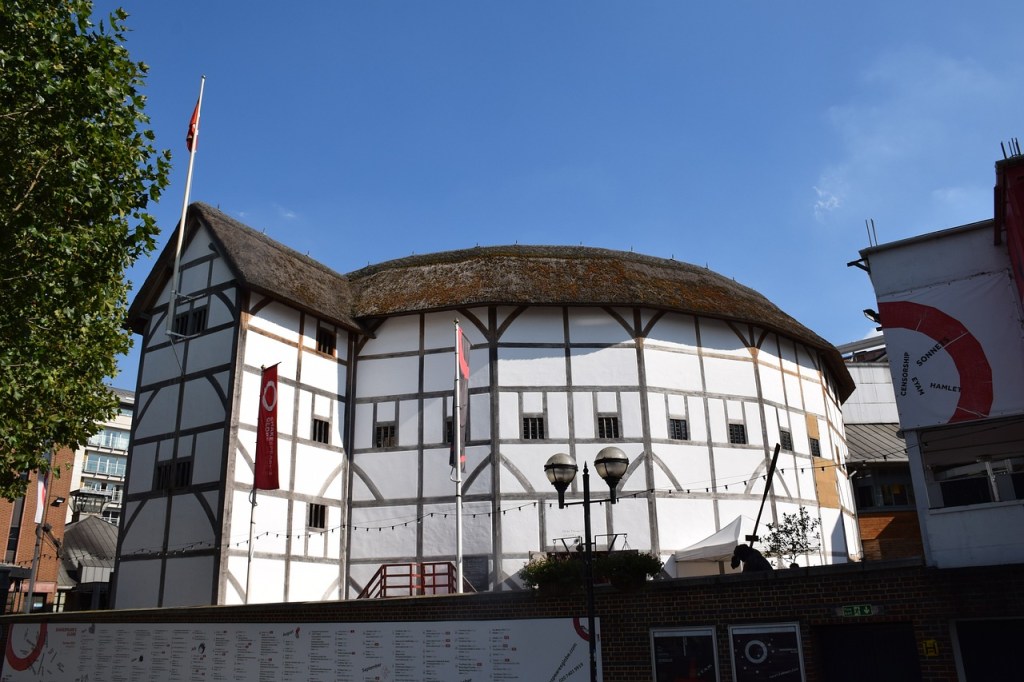
Shakespeare’s Globe Theatre on Tour at The Huntington

Shakespeare Globe Theatre, England (UK)

Originally published on 29 October 2015 in the Pasadena Independent, Arcadia Weekly, Monrovia Weekly, and Sierra Madre Weekly

Residents of the San Gabriel Valley will be in for a rare treat next week when London’s acclaimed Shakespeare’s Globe Theatre on Tour wends its way to Southern California to stage Much Ado About Nothing. For two nights in November, the 9th and the 10th, The Huntington will be the venue for this much-anticipated production.

Dominic Dromgoole, Artistic Director of Shakespeare’s Globe, has this to say, “I am delighted that Shakespeare’s Globe continues to extend its reach across the world through our epic touring programme. Our beautiful and fast-paced production of Much Ado About Nothing, having toured theatres and gardens in the UK over the summer, will be making its way to South America before touring to The Huntington in November. We have had a long-standing relationship with the Folger Shakespeare Library (in Washington, D.C.) where we have successfully toured our plays in the past, and consequently thought The Huntington would be a similarly natural fit.”

According to Lisa Blackburn, Communications Coordinator/Calendar Editor at The Huntington (Library, Art Collections, and Botanical Gardens), the Library’s depth of collection makes this San Marino, California institution one of the leading centers of Shakespeare scholarship. It rivals what is available at the British Library in London, The Folger Shakespeare Library in Washington, D.C., and the Newbury Library in Chicago.

The Huntington’s vast holdings include a rare 1623 “First Folio” edition of Shakespeare’s collected plays. Published seven years after the Bard’s death, it contains 36 plays, 18 of them printed for the first time. The Huntington also has numerous early quarto of individual plays, including one of only two surviving copies of the first edition of Hamlet (1603); rare 16th– and 17th-century works documenting life in Shakespeare’s world; materials relating to early theatre – including playbills promoting performances at London’s Drury Lane Theatre, engravings of famous Shakespearean actors of the day such as David Garrick and Sarah Siddons, and prints depicting dramatic scenes from many Shakespeare plays.

Educational and cultural programming – from lectures and conferences, to teacher training workshops, to professional theatrical performances – are frequently on offer at The Huntington.  It also works with schools on Shakespeare-related programs, as it did this past spring when The Huntington collaborated with Esteban E. Flores High School in East Los Angeles on a students’ production of A Midsummer Night’s Dream, which they performed for family and friends.

Other recent Shakespeare programs held at The Huntington include a production by the Independent Shakespeare Company, on the 6th of June 2015, of a rarely performed romance Pericles, Prince of Tyre.

Blackburn also says The Huntington has just successfully concluded a college-level seminar  in anticipation of the 400th anniversary of The Bard’s death. Heidi Brayman Hackel, associate professor of English at UC Riverside who specializes in the literature and culture of early modern England (1500-1700), conducted this course. It paid particular attention to Shakespeare’s late plays – The Winter’s tale, The Tempest, and Henry VIII – examining them as meditations on and farewells to the public stage and public life as well.  

At an April 2015 scholarly conference on “Rethinking Shakespeare in the Social Depth of Politics”, social historians and literary critics repositioned his works in the culture wars of the period to reassess his presentation of power and authority in his works.

In May, actors from the Independent Shakespeare Company and artists from LA Opera presented “Shakespeare Scenes and Sonnets: An Evening of Words and Music”. With 18th century Grand Manner Portraits in the art gallery serving as backdrop, they performed scenes, sonnets, and songs that explore connections between the works of Shakespeare and The Huntington’s art collections.

And this summer, as in summers past, The Huntington once more hosted its Shakespeare at The Huntington teacher training institute. A unique two-week workshop designed for secondary school teachers of English and Drama, it focuses on teaching Shakespeare through performance.  The course features an international faculty of scholars, educators, and theatre professionals.

Shakespeare’s Globe is a faithful reconstruction of the open-air playhouse for which he wrote his plays.  Globe Theatre on Tour has brought productions – Henry V, Ann Boleyn, As You Like It, King Lear, and The Taming of the Shrew – to castles, festivals, parks and town squares in the past five years. This London’s Bankside charity organization operates without government funding and has since become a popular tourist destination in the United Kingdom.  

Theatre season plays in repertory held annually from April through October, under Dromgoole’s helm, have attracted an international following and reputation for performance excellence, says Blackburn. Globe Education runs one of the largest arts education program in the country under the direction of Patrick Spottiswoode, with over 100,000 students a year. Shakespeare’s Globe Tour and Exhibition is open year-round and is the world’s only permanent exhibition dedicated to The Bard’s theatrical career.

Much Ado About Nothing, set in Governor Leonato’s house in the Sicilian town of Messina, follows the stories of two sets of lovers – Benedick and Beatrice and Claudio and Hero.  Leonato is hosting Prince Don Pedro of Arragon, Don John, Claudio (a young Florentine lord) and Benedick (a Paduan lord and confirmed bachelor engaged in a ‘merry war’ with Leonato’s niece, Beatrice, a confirmed spinster).

Don Pedro helps Claudio win the hand of Leonato’s daughter, Hero, in marriage; the wedding of Claudio and Hero is planned after a masked wedding. Don John is determined to break up this union and, knowing that the Prince and Claudio are listening, schemes to exchange vows with Hero’s gentlewoman , dressed in her mistress’s clothes, at Hero’s bedroom window.

At the same time, Pedro, Claudio, and Leonato conspire to make the feuding Benedick and Beatrice fall in love with each other.

Before Hero’s and Claudio’s wedding, Don John offers to give the prince and Claudio proof of Hero’s unfaithfulness. Claudio denounces Hero in the middle of the ceremony even as she proclaims her innocence. Friar Francis, not believing the charge, proposes that Hero should be reported dead and hidden until the truth is revealed.

The confusion is resolved in the final act, and a penitent Claudio ends up marrying Hero after all.  Beatrice and Benedick resolve their “merry war”; news comes that Don John has been captured and brought to justice.

Much Ado About Nothing, written between 1598 and early 1599, was made into a film in 1993 with Kenneth Branagh playing Benedick, and Emma Thompson as Beatrice; and was directed by Branagh.  Known as one of Shakespeare’s liveliest comedies, it was exceedingly popular in early years – it was one of the plays acted at Court during the May 1613 festivities for the betrothal and marriage of Princess Elizabeth and the Elector Palatine.

It will once more engage Southern Californians as Shakespeare’s Globe Theatre’s Much Ado About Nothing makes its two-night run at The Huntington. Almost four hundred years after his death, Shakespeare continues to delight audiences with his plays that still ring true today as they did when they were first performed.    

My Masterpieces Series: The Huntington Library, Art Museum, and Botanical Gardens

Virginia Steele Scott Galleries of American Art | Courtesy Photo

Originally published on 8 October 2015 in the Pasadena Independent, Arcadia Weekly, Monrovia Weekly, and Sierra Madre Weekly

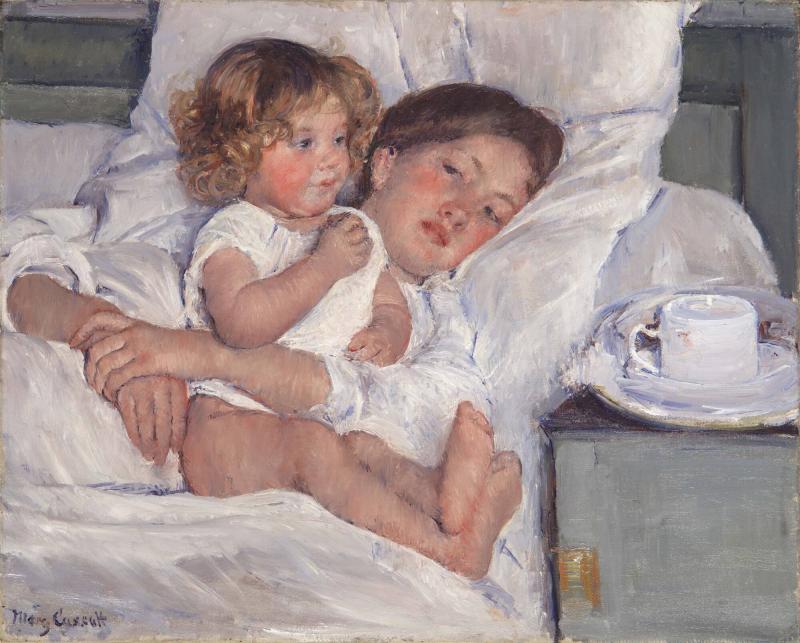
A group of lively 1st graders enters the double doors of The Huntington’s Virginia Steele Scott Galleries of American Art. As they are ushered into the foyer, all eyes alight upon Mary Cassatt’s 1897 painting, Breakfast in Bed. There is an audible gasp and a collective exclamation – “It’s Mary Cassatt!”

That this sense of awe, mixed with recognition, comes from 1st graders is why Guy Fish, Senior Manager for Art Education at The Huntington Library, Art Collections and Botanical Gardens, thinks Pasadena Unified School District’s (PUSD) and Pasadena Educational Foundation’s (PEF) My Masterpieces Program is in itself a treasure. He says, “That’s exactly what we’re trying to do! The program inspires passion and a love for art.”

Fish explains The Huntington’s collaboration further, “We were one of the co-developers of this pilot program; it is unique in its goal of stirring emotion, fostering knowledge and advancing understanding of the arts among schoolchildren. We are scaffolding and building these kinds of relationship with artwork. And we take seriously our charge of laying the Humanities foundation for young kids. We have a very important role to play; imagine if we didn’t do this and these kids go on to the 2nd grade program without this starting point.”

According to Fish, The Huntington’s focus for the one-hour field trip is to teach children the value of a museum experience. Each class is divided into small groups and a docent introduces the children to Henry and Arabella Huntington’s life as they tour the mansion.  Docents for the My Masterpieces Program are specially trained on how to make the visit fun and interesting.

To prepare the kids for their tour, teachers discuss in class the three paintings that they will see at The Huntington. They talk about these pieces of art and by the time the children come here, they’re already seeded with curiosity to see the actual painting – their visit adds another layer of meaning to the lesson.

“As our students are 1st graders, we focus on the theme of caring, while showing them the principles of line, shape, color and texture. Every artwork we choose to analyze portrays how this message is exemplified. One of the paintings they study is called The Clavering Children, a work of 18th century English painter George Romney. It encapsulates the basic concepts of art – warm and cool colors, line, texture and shape. It also shows a boy and a girl caring for each other and their animals … something most kids would relate to,” Fish further elaborates.

Another piece of artwork children look at during their field trip is called The Last Gleanings, an 1895 oil on canvas masterpiece created by French painter Jules-Adolphe Breton. It depicts a harvest scene, one of several paintings Breton produced that illustrates his love for the countryside.  To PUSD’s 1st graders, the painting shows caring for the land. 

Courtesy Photo

But it is American painter Mary Cassatt’s 1897 Breakfast in Bed that makes the biggest impression in these young children’s minds. An oil on canvas work showing a mother with her young child, painted in light colors, it is one of a recurring theme in Cassatt’s body of work. 

Early this year, The Huntington inaugurated the new Visitors Center that features four multi-room classrooms, among other things. According to Fish, they are thinking of adding a new component to their My Masterpieces program in January making use of those classrooms. He’s currently working on a plan to expand their program beyond kids analyzing artwork, but maybe creating their own. They now have the facilities to make that happen.      

An award-winning program, My Masterpieces received the prestigious CAMMY Award from the California Association of Museums in 2012. In 2010, it was also recognized by the California School Board with the Golden Bell Award. It was established during the 2008-2009 school year as a collaboration between teachers and various cultural organizations to bring about a high level of engagement among students.

It is this spirit of collaboration that proves My Masterpieces to be a worthwhile endeavor for The Huntington. As Fish explains, “It reinforces our commitment to our long-term partnerships; our work has matured into a deep relationship with PUSD. It also allowed us to systematize our school engagement. It was the springboard for The Huntington’s Teacher and School Programs, which developed the curriculum that supports the Common Core standards. The art course  offered by the My Masterpieces program isn’t far from the project-based learning promoted by the Common Core. Using the resources available at The Huntington, teachers from K-12th grade choose from 12 programs to provide students appreciation, engagement, and understanding of various subjects.”

The Huntington’s My Masterpieces field trip occurs during regular public viewing days. Visitors from far-flung countries as well as local tourists, together with PUSD’s 1st grade students, spend their day admiring the wealth of treasures this beloved institution has to offer. Arabella Huntington would have been delighted to know that Mary Cassatt’s Breakfast in Bed elicits as much appreciation from the youngest guests as from learned art aficionados.       

The Huntington Library Supports the Common Core Curriculum

Originally published on 9 April 2015 in the Pasadena Independent, Arcadia Weekly, Monrovia Weekly, and Sierra Madre Weekly

Henry Huntington may not have known it at the time but his bequest is not merely a showcase of important art and historical artifact, it is also an instrument in shaping America’s future.

Through the Huntington Library‘s Teacher and School Programs, educators receive training on how to incorporate the Library’s vast collection of books, art and gardens in the implementation of the Core Curriculum. Huntington’s educators collaborate with teachers in developing lesson plans, which are nationally available online. Teachers from K-12th grade choose from 12 programs to provide their students appreciation, engagement and understanding of various subjects.   

Programs in Art include:  European Voyages where students in grades 4 through 8 explore 18th century British and French art in the Huntington mansion. In Discovering Art, kindergarteners through 2nd graders are introduced to basic concepts as line, shape, color, and texture. American Adventures dialogue tours introduce critical thinking and speaking skills to 1st through 12th graders using artwork from 1700 – 1980, while theme based tours encourage students to look, think, and discuss their ideas and perceptions.

Some of the Garden Programs are: Soil, Seeds and Surprises, which acquaints students in kindergarten through 2nd grade with botany. Students from grades 4 through 12 experience the Japanese Garden as an art form and contrasts it with a traditional European-style garden. Poetry in the Chinese Garden engages 4th through 12th graders in verse as they compose two-line poems inspired by the beauty they behold.  

The Library Programs cover: Explorations in American History for grades 5, 8 and 11 is designed to complement the American History curriculum. In Paper, Pens & Prose, students in grades 4 to 9 learn how books were produced, how paper and inks were made, and what scribes used to write.    

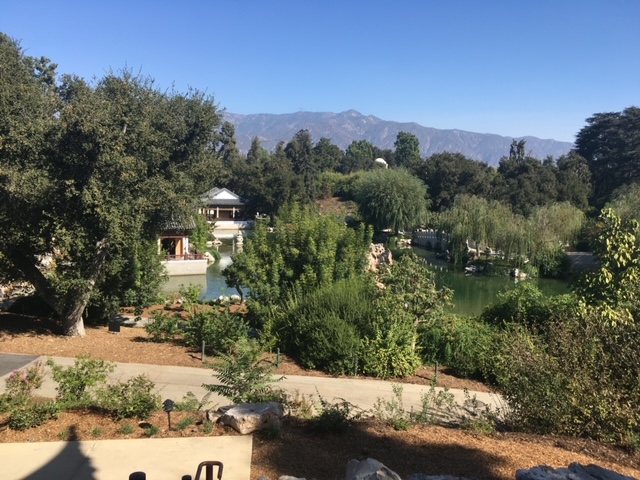
The Chinese Garden at The Huntington | Photo by Brianna Chu

The Huntington Library encourages teachers to use its grounds and facilities to make the learning experience enjoyable for students. Mikki Heydorff, Volunteer and School Programs Manager, would like educators to know about school field trips at no charge every Wednesday, Thursday and Friday from October through May. From 10:00 to 11:30 every morning on these three days, teachers can come in with their students to visit the Library and its gardens on docent-led  tours. To take advantage of this opportunity, teachers have to sign up on a first-come first-serve basis, starting August 1st, to reserve a date.

Educators, too, can take advantage of the many summer activities at the Huntington.  In its 11th year of implementation, Shakespeare at the Huntington is a three-week course for high school English and Drama teachers focusing on training through performance. Shakespearean educator Louis Fantasia and an international faculty train 6th to 12th grade teachers on development, scene analysis, acting and directing techniques. Getting your Green Thumb classes for teachers cover garden planning, gardening techniques and curriculum connections. Information on field trips, lessons plans, and interactive media are available on the Huntington’s website www.huntington.org under the Education page and teacher resources.

To ensure that it continues to support its various education efforts, the Huntington Library  embarked on a major expansion project. The $68 million renovation made possible through private donors will open this Saturday, April 4, as the Steven S. Koblik Education and Visitor Center.  It raised another $10 million to endow the new facilities’ operations. The project consists of 52,000 square feet of educational space and visitor amenities replacing existing construction built in1980 that no longer accommodated the needs of its visitors, scholars and staff. The Visitor Center features a 400-seat auditorium, a large café with indoor-outdoor seating and garden views, four multi-use classrooms, meeting and event areas, and an orientation gallery. 

This latest renovation followed the recent opening of the Huntington Store, a new specialty coffee shop, and a new full-service admissions and membership section.  

From its first opening in 1919, when Henry Huntington bequeathed his vast collection and botanical gardens to enrich visitors, it has grown into an internationally known research center for scholars, an important destination for tourists, and a tranquil retreat for locals. Every year 600,000 visitors come to the Huntington Library to experience its impressive collection of magnificent art, rare books, significant manuscripts and botanical gardens. Its education programs offer school visits, tours and hands-on activities to 20,000 students annually. More than 10,000 people participate in its public programs including classes, workshops, performances, and lectures.  

How monumentally proud Henry Huntington would have been if he were around to witness how his precious legacy is being utilized and preserved!