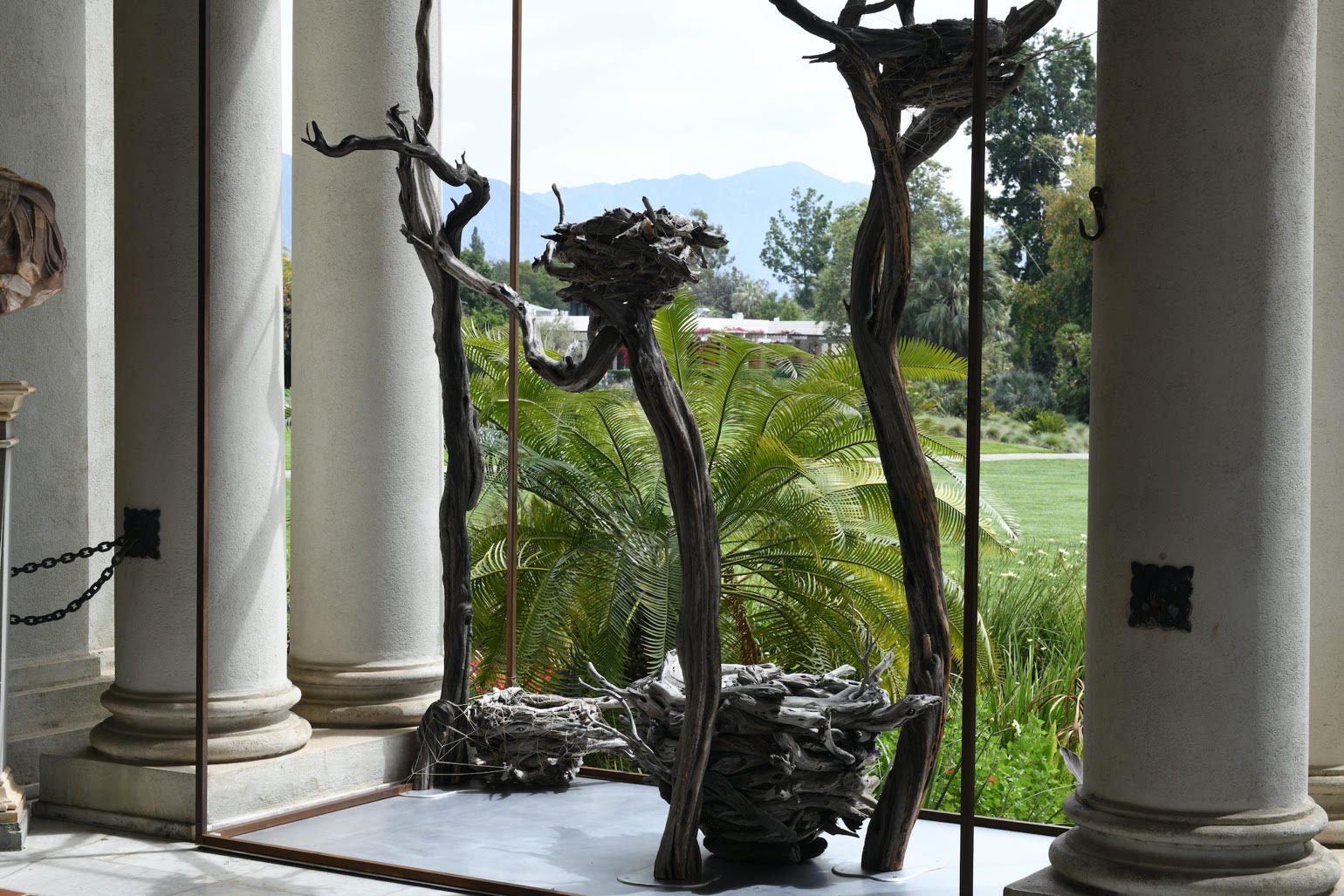
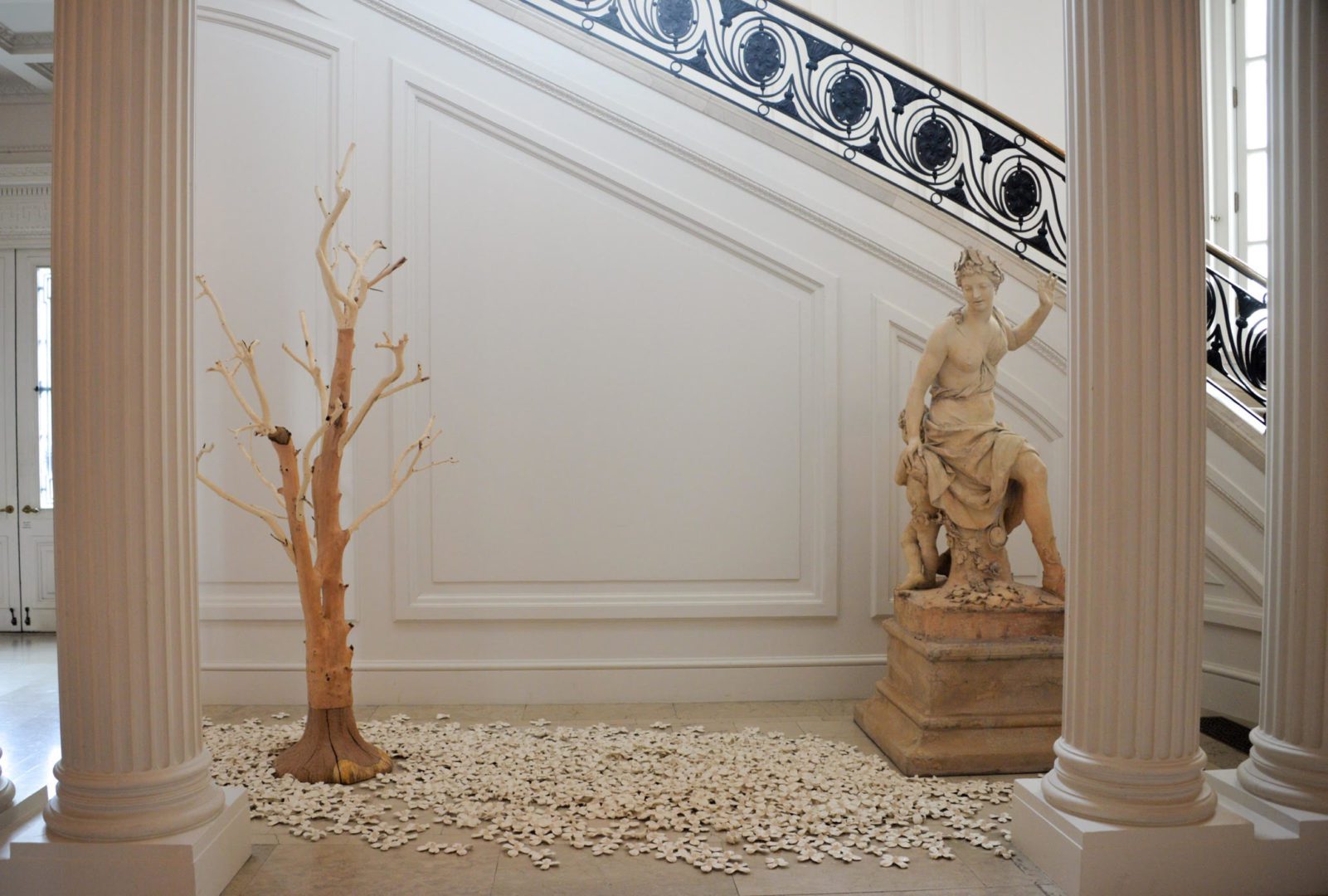
‘Storm Cloud: Picturing the Origins of our Climate Crisis’ Exhibition at The Huntington Captures our Attention

Also published on 23 September 2024 on Hey SoCal
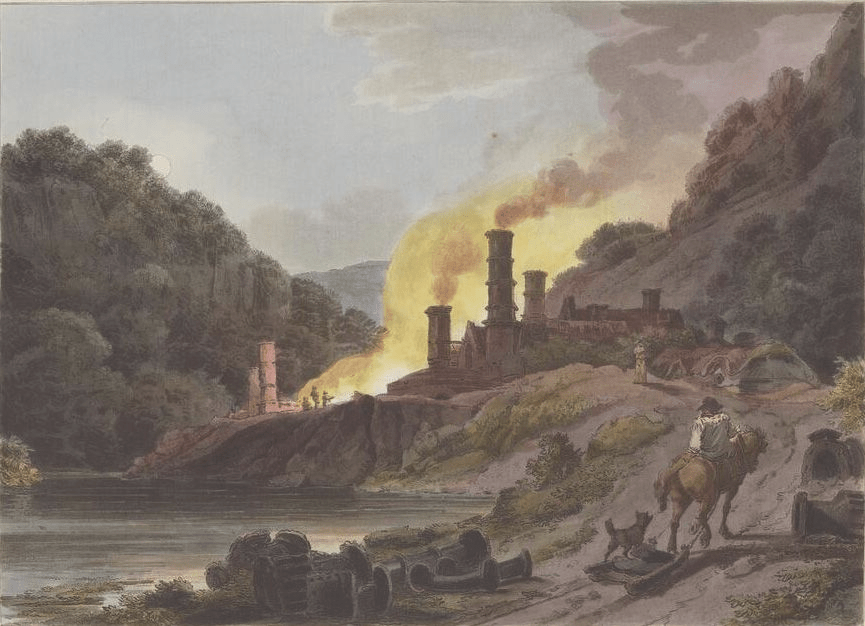
Philippe Jacques de Loutherbourg, Iron Works of Coalbrook Dale in The Romantic and Picturesque Scenery of England and Wales | Photo courtesy of The Huntington Library, Art Museum, and Botanical Gardens

Almost daily over the past two decades, we’ve been hearing about climate change – when we experience a heat wave, when we witness a wildfire, when we see on the news an arctic blast on the East Coast, or when we learn about melting icebergs in the Antarctic Ocean.

Yet this phenomenon didn’t just happen in the last 20 years, or even during our lifetime, as the “Storm Cloud: Picturing the Origins of our Climate Crisis” exhibition at The Huntington Library, Art Museum, and Botanical Gardens demonstrates. On view from September 15, 2024 through January 6, 2025 at the Marylou and George Boone Gallery, it will be on display concurrently with “Growing and Knowing in the Gardens of China.”
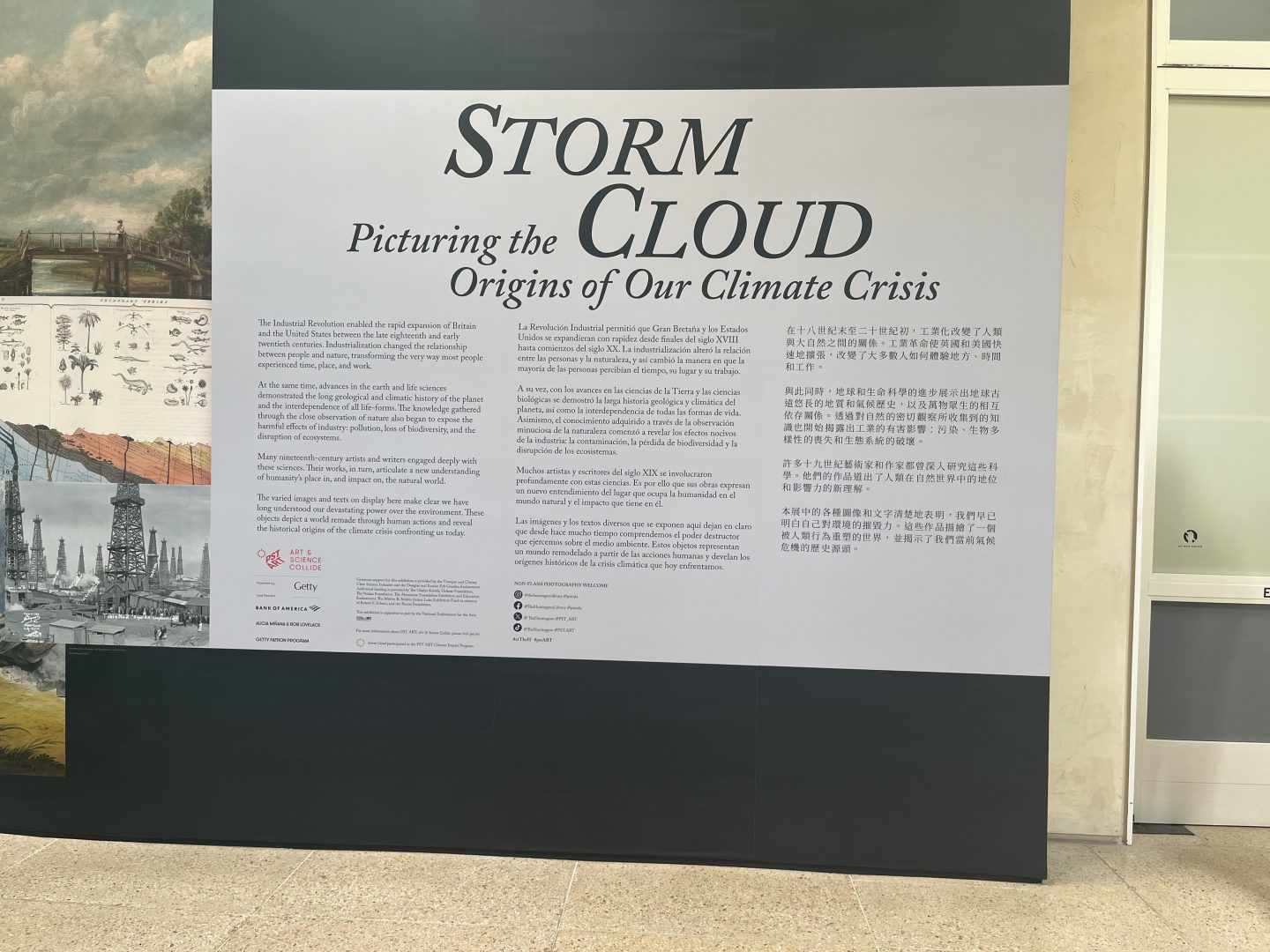
Photo by May S. Ruiz / Hey SoCal

The two shows are part of PST ART: Art & Science Collide, a regional event presented by Getty featuring more than 70 exhibitions and programs that explore the intersections of art and science, past and present.

Its title originates from a series of lectures given by British writer and art critic John Ruskin in 1884. In “The Storm Cloud of the Nineteenth Century,” he conveyed concern over the changing appearance of the English sky caused by the smoke generated by coal-fired factories.    

A pair of drawings that illustrates his “Storm Cloud” lecture – Thunderclouds, Val d’Aosta (1858) and Cloud Study: Ice Clouds over Coniston (1880) – is on loan to the exhibition from the Ruskin Museum and Research Centre at Lancaster University (U.K.). Ruskin made drawings of the sky throughout his life. These records of his observations helped him understand how the appearance of the sky had changed due to industrial pollution.
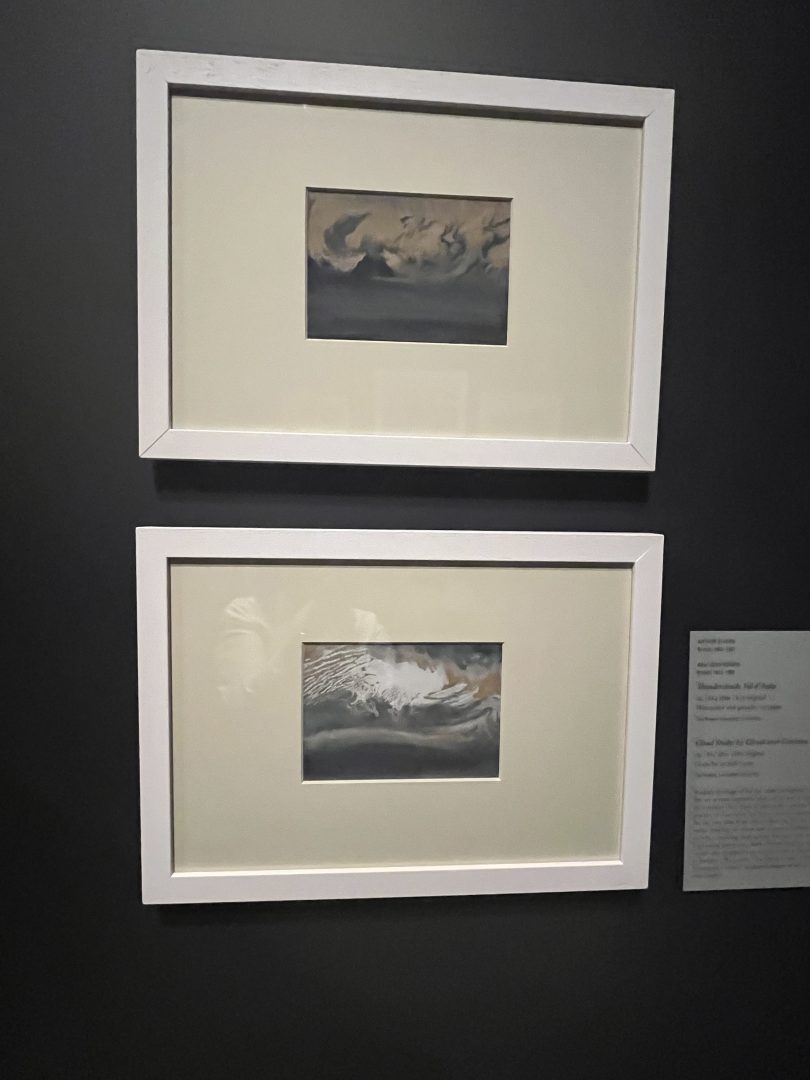
Arthur Severn after John Ruskin Thunderclouds, Val d’ Aosta; Cloud Study: Ice Clouds over Coniston | Photo by May S. Ruiz / Hey SoCal

To give visitors to the show greater insight, a companion book has been published and contains two major essays and 16 contributions by academics, art curators, authors, educators, environmental activists, graphic designers, poets, and scientists.

Co-curators Melinda McCurdy, The Huntington’s curator of British art, Karla Nielsen, senior curator of literary collections, and Kristen Anthony, assistant curator for special projects, talked about the exhibition by phone three days before the show.

Nielsen said, “When we were given the theme ‘Art and Science Collide,’ we knew we were going to initially use materials across the Huntington collections supplemented by key loans. We have materials by John Ruskin both in the museum and in the library and we started thinking about his process of close observation of the natural world.
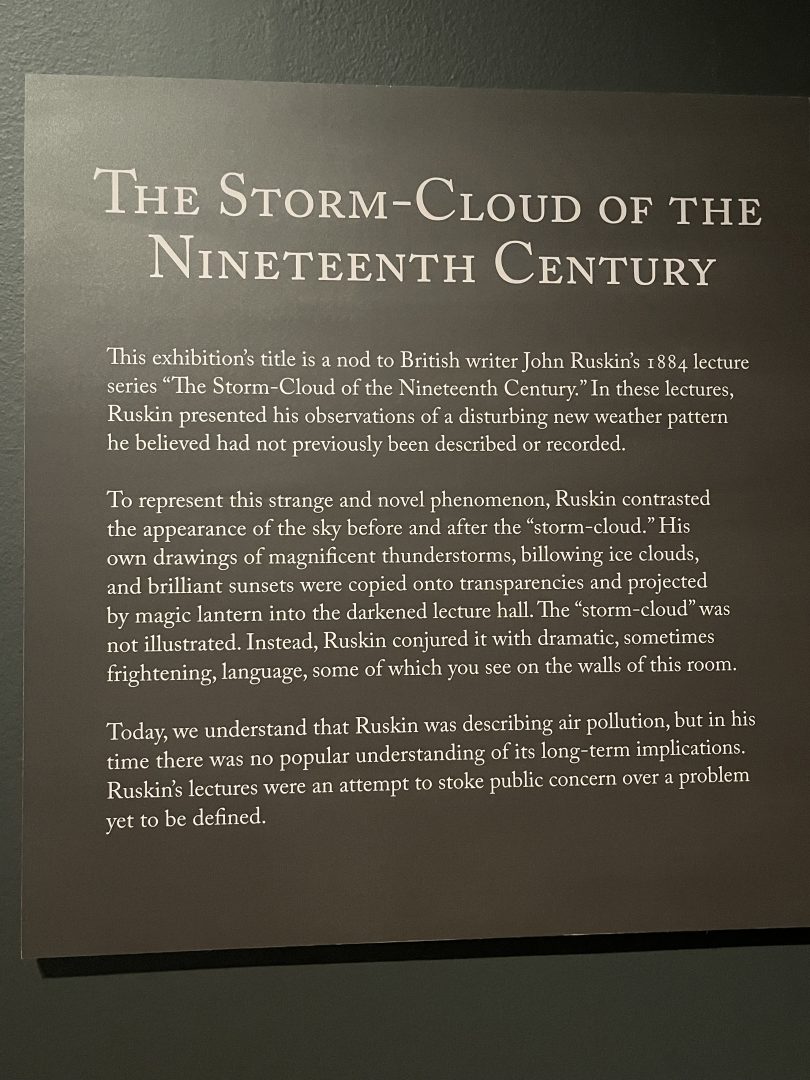
Photo by May S. Ruiz / Hey SoCal

“He gave a lecture in 1884 called ‘Storm Cloud of the Nineteenth Century’ in which he talks about decades of looking at the sky, thinking about the clouds, and drawing them. He referred to this new type of cloud ‘storm cloud,’ which today we would call smog – the cloud formation that happens around particulate matter from burning coal.”  

“It’s considered one of the first public outcries about human-caused climate change and it happened in 1884,” pronounced Nielsen. “We thought it was interesting that it was much earlier than when most people cite the beginning of our conversation about how long have humans known in the developing world that we were having a harmful impact on the natural world.”

Anthony explained, “So when we talk about the origins of the climate crisis, it’s important that we look at the period immediately after the Industrial Revolution because that’s when in earnest the extraction and burning of fossil fuels for industry really took off. And literally the carbon in the atmosphere began to steadily rise throughout the period that this show covers.”

“Ruskin was our starting point, but we actually traced the phenomenon through the Huntington’s collection which is strong in the histories of the United Kingdom and the United States, so it really does follow the material from Britain and the United States – it is a story of the Anglophone world. Obviously there are other stories to tell that cover the rest of the world, but this exhibition focuses on England and the U.S.,” clarified McCurdy.
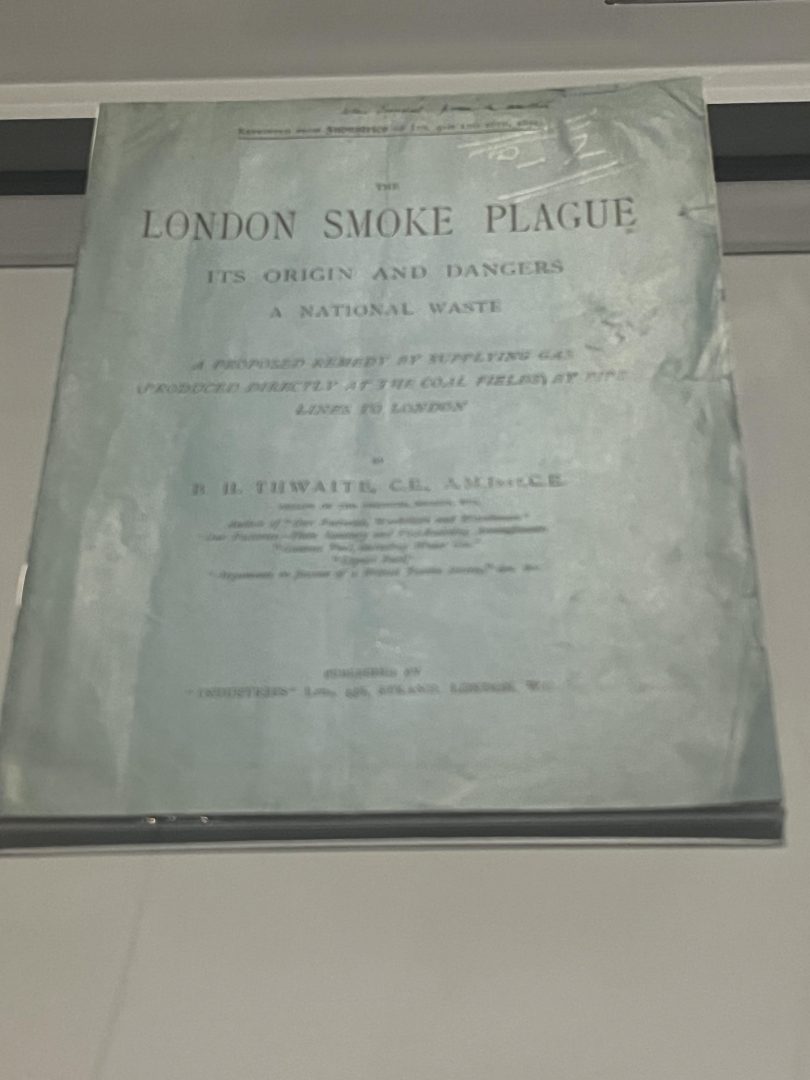
Photo by May S. Ruiz / Hey SoCal

“The thing that connects London and L.A. is smog so the show moves from the British Empire and a coal-powered economy to the beginnings of our current petroleum-based economy,” Nielsen pointed out. “Of course that makes L.A. a global hub because it’s one of the leading sites of extraction for petroleum as early as the late 19th century.”

Asked about the visitor takeaway, Anthony replied, “As far as the history of climate crisis, I think visitors will walk away knowing that we’ve understood humanity’s impact on the planet longer than the average person thought. And these changes – this impact on the planet – can be charted in the cultural productions of the period. You can see the earth changing and how industry is impacting the planet through the works of art and literature and the historical and scientific texts produced in the period.”
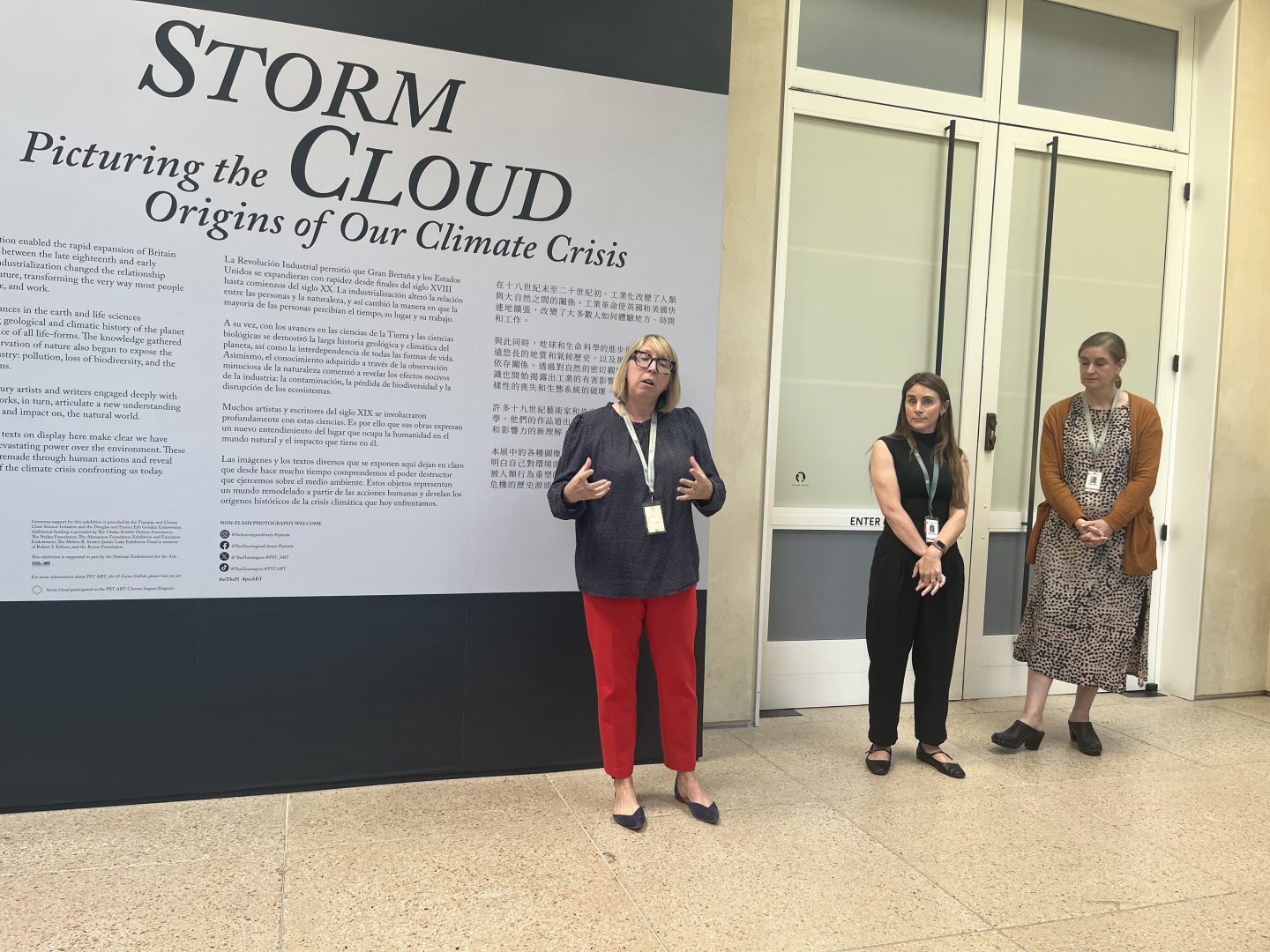
(From left) Melinda McCurdy, Kristen Anthony, and Karla Nielsen | Photo by May S. Ruiz / Hey SoCal

In her introduction shortly before a walkthrough of the exhibition, McCurdy said the project started when the Getty announced the theme for this iteration of PST, which is ‘Art and Science Collide.’ It was originally displayed in a smaller space but as their work progressed during the pandemic, the show moved to the Boone Gallery.

The exhibition is divided into three parts and multiple sections. The first “A New Relationship to Nature” is centered on humans’ connection with the natural world shown through beautiful works of art.   

McCurdy took visitors to the first room and stated, “We commenced this exhibition in the late 1700s with the rise of the Industrial Revolution when factories started drawing people away from the countryside to the city and people were disconnecting from nature because they were working indoors. They learned to appreciate nature in a different way. It started the rise of tourism – when people were going into nature for recreation and pleasure. People sought picturesque vistas, they climbed mountains, and walked through valleys looking for that connection to nature.”
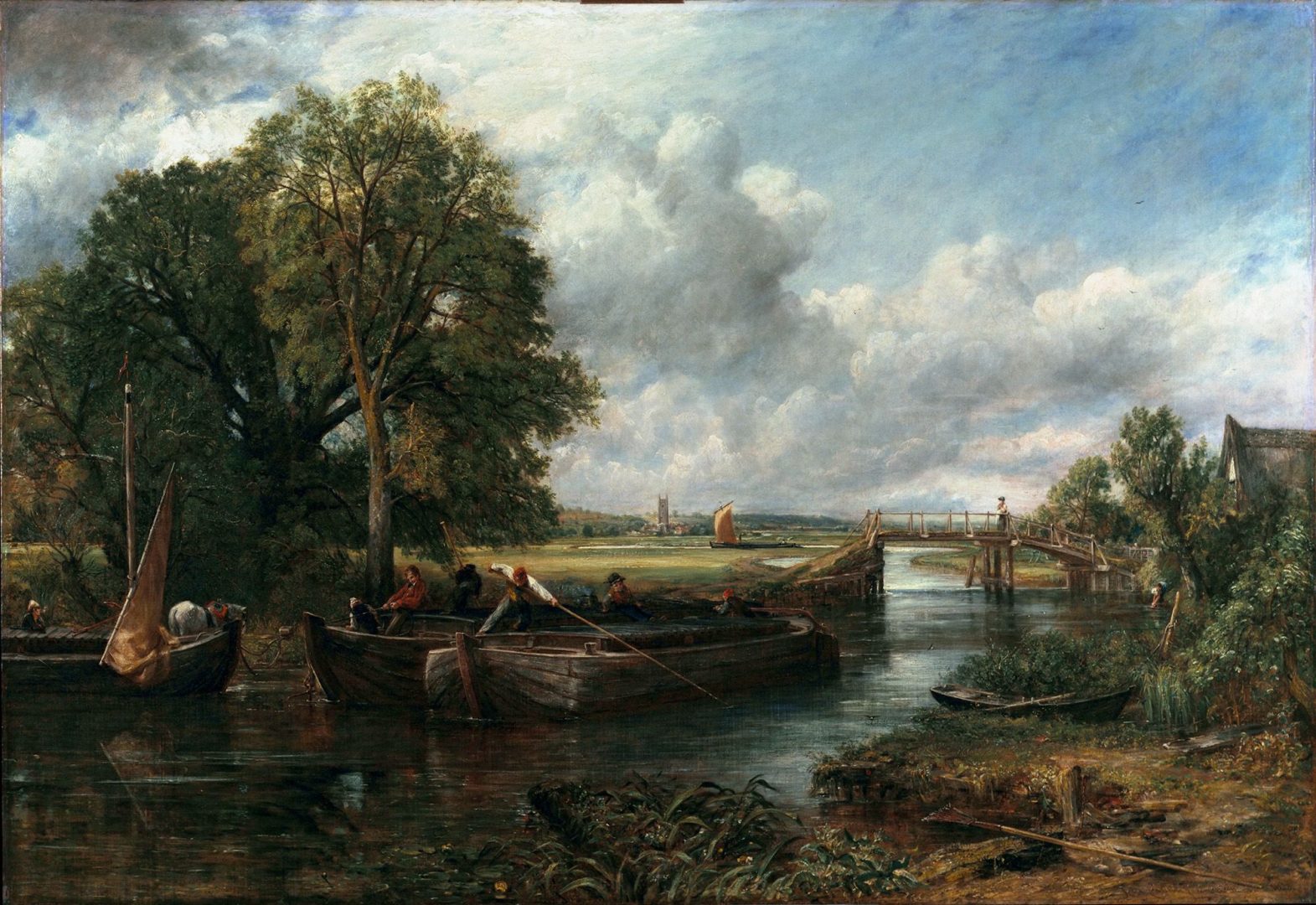
John Constable, ‘View on the Stour near Dedham, ‘ 1822 | Photo courtesy of The Huntington Library, Art Museum, and Botanical Gardens

“John Constable’s painting ‘View on the Stour Near Dedham’ is in fact not a natural landscape but a scene of  industrial infrastructure in Eastern England,” described McCurdy. “The river was converted into a canal in order to transport grain from the interior of the country where it was grown and processed in the mill to then be distributed to urban markets. It’s a story of commodity; we’re going to hear a lot about commodity and shipping in the 19th century. In the painting he showed how the weather and atmospheric conditions could be used to convey emotion – this is a very emotional connection to the landscape.”     

The exhibition’s other sections link the arts and science more explicitly. A selection of Constable’s “cloud studies” is juxtaposed with drawings of clouds by pioneering British meteorologist Luke Howard, demonstrating the shared interest in close observations of natural phenomena.
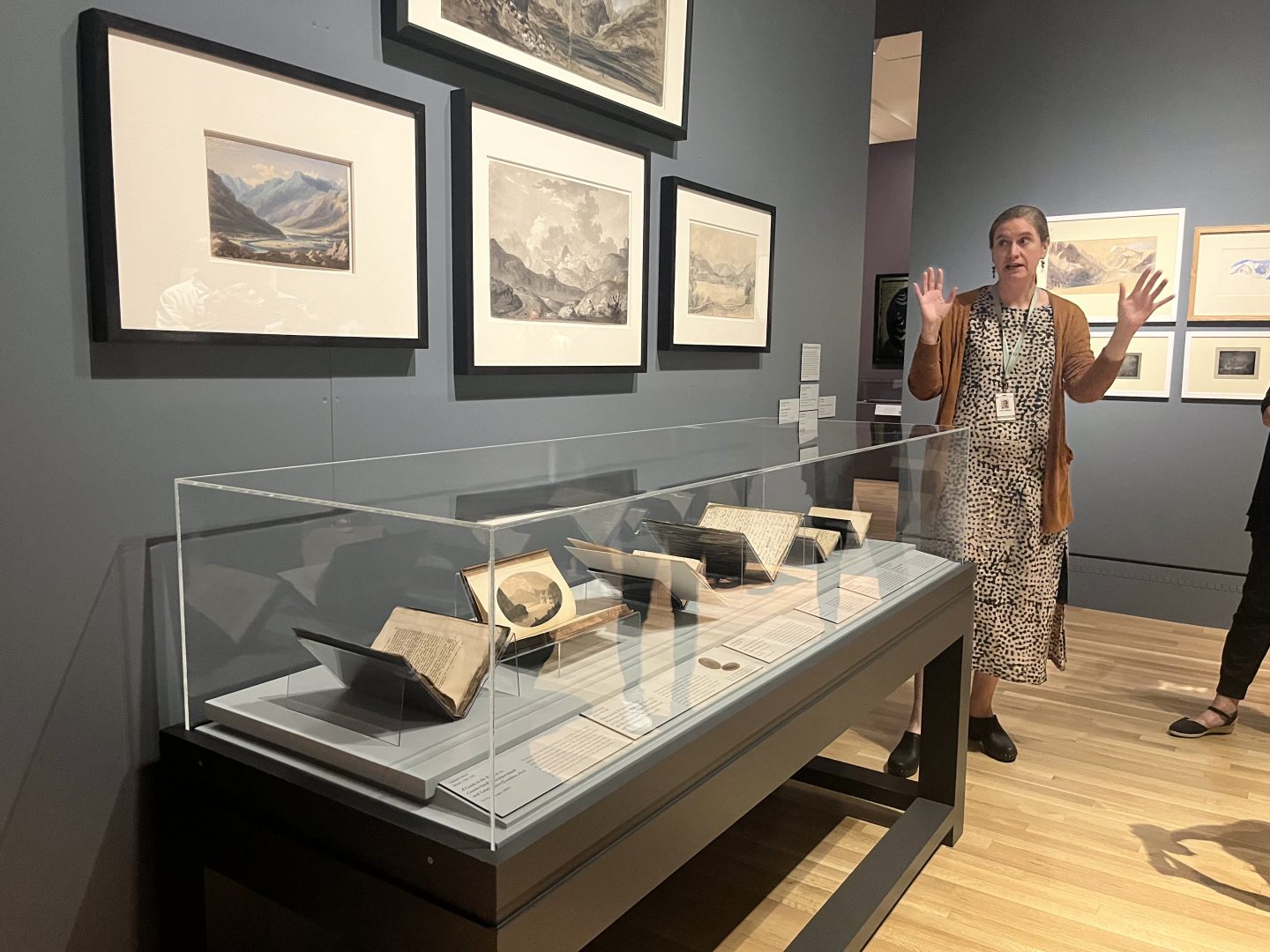
Photo by May S. Ruiz / Hey SoCal

Manuscripts by William and Dorothy Wordsworth are placed alongside multiple guidebooks to England’s Lake District, which were geared to the English public’s growing interest in hiking as a form of recreation and respite from city life.

Nielsen expounded, “While William was known as a poet, he actually wrote a guide about the Lake District. We were able to borrow from the Wordsworth Trust in the Lake District two manuscripts by his sister Dorothy Wordsworth. She was a companion to William throughout his life, accompanying him on his inspirational walks through the countryside. She was also an astute describer of the natural world so we borrowed one of her journals which contained a description ‘encountering daffodils on a hill’ that’s very reminiscent of his ‘Daffodils’ poem: ‘I wandered lonely as a cloud That floats on high o’er vales and hills, When all at once I saw a crowd, A host of golden daffodils.’ The poem conveys the enjoyment of being in nature.”
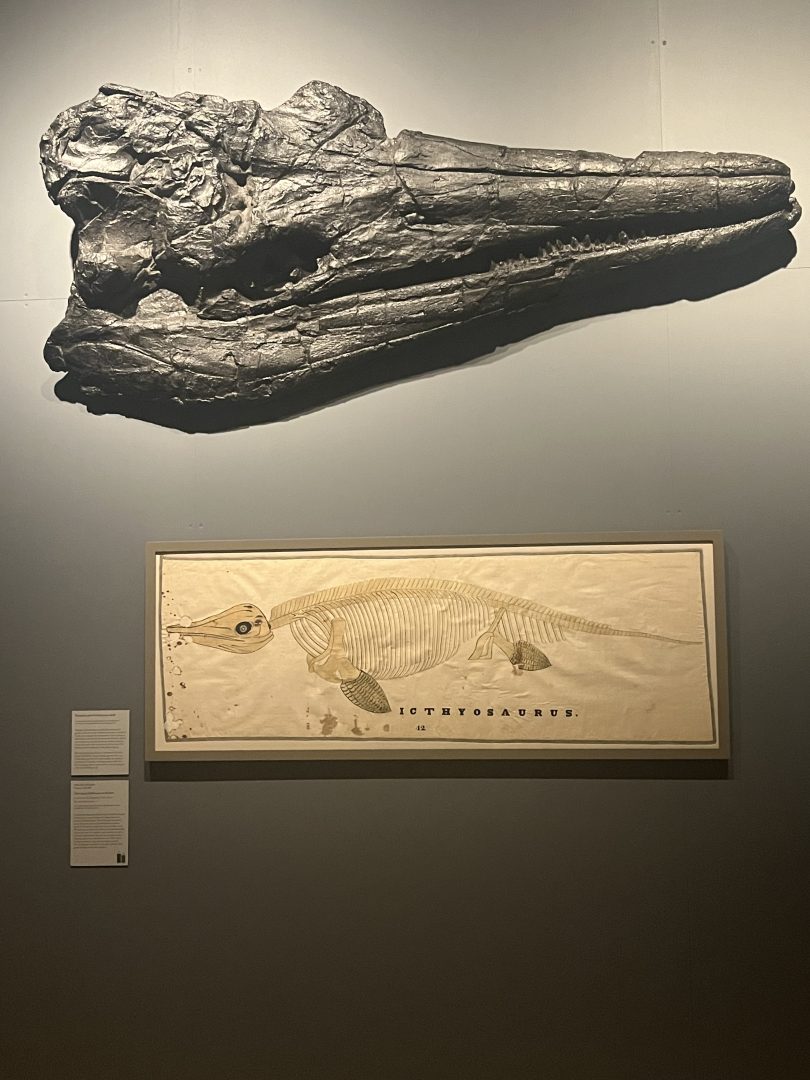
Photo by May S. Ruiz / Hey SoCal

The history of science is explored in the next room. Anthony pointed to a research cast of ichthyosaur skull borrowed from the Dinosaur Institute, Natural History Museum of L.A. County and Bureau of Land Management. The animal which this skull belonged to was from 244 million years ago; the drawing of the ichthyosaur skeleton is by Orra White Hitchcock, wife of Edward Hitchcock.

“One of the materials in this room is a book published by James Hutton, a Scottish farmer and naturalist, also known as the founder of modern geology,” declared Anthony. “In 1788, he wrote the theory of earth which was the first work to postulate that the earth was much older than the popular understanding of earth’s age which was derived from a literal interpretation of biblical text. After looking at the layers of rock on his land and how they formed, he hypothesized the planet was millions of years old and so much older than what we had ever thought. We now know it’s 4.6 billion years old.”

A broad range of objects traces growing environmental awareness over the course of the 19th century. Significant paintings by artists of the Romantic and Pre-Raphaelite movements and the Hudson River School are shown in conjunction with rare manuscript materials, such as Henry David Thoreau’s handwritten draft of Walden. Photographs of western American mountain ranges are displayed alongside materials from the archives of early 20th century conservationists John Muir and Mary Hunter Austin.
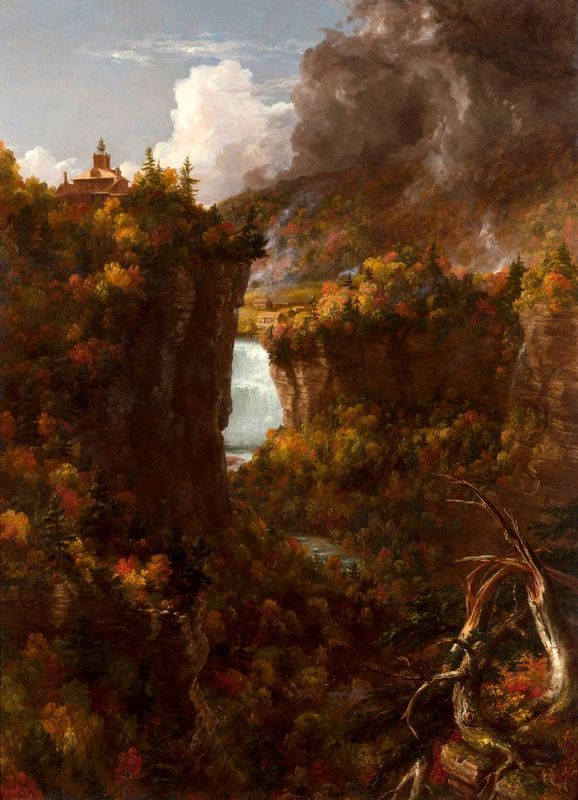
Thomas Cole, ‘Portage Falls on the Genesee,’ 1839 | Photo courtesy of The Huntington Library, Art Museum, and Botanical Gardens

“Storm Cloud” also features artists known for their paintings of the Hudson River Valley scene in Upstate New York. Thomas Cole’s colossal “Portage Falls on the Genesee” – a gift to The Huntington in 2021 from The Ahmanson Foundation – pays tribute to the natural world as much as it cautions us about people’s effect on it.

The second section of the exhibition focuses on the problems that come with industrialization. Using a painting that depicts Jamaica, McCurdy discussed the plantation economy and the ecological damage that results from it – the extraction of resources and devastation that goes along with degradation of humanity.
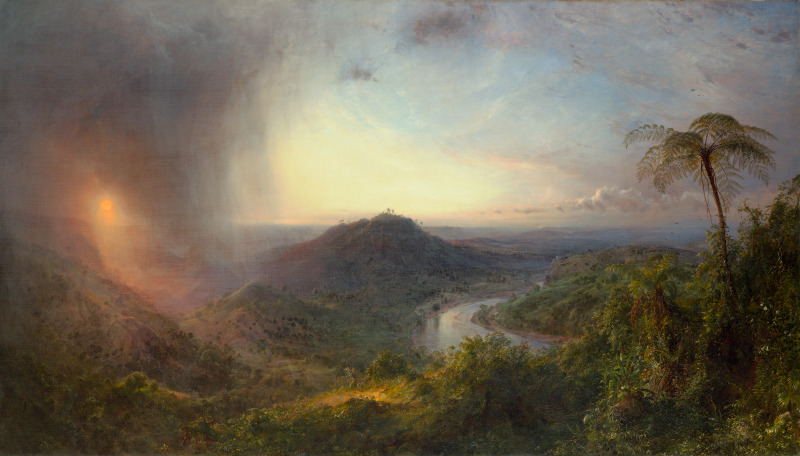
Frederic Edwin Church, ‘Vale of St. Thomas, Jamaica,’ 1867 | Photo courtesy of The Huntington Library, Art Museum, and Botanical Gardens

Frederic Edwin Church’s “Vale of St. Thomas, Jamaica” shows the relationship between people and the industrializing world. On the right side of this painting, he portrays Jamaica as an untouched paradise with a very lush jumble of nature; but the left side, almost hidden by a storm cloud, illustrates evidence of severe drought exacerbated by deforestation due to plantation agriculture.

The other section of the room shows factory labor and some textiles and wallpapers produced by William Morris. McCurdy pointed out that Morris veered away from factory work and instead advocated for the artisanal way of manufacturing. One of the treasures in The Huntington’s collection is a book containing recipes for the dyes made from plants and vegetables used in his textile factories to ameliorate some of the problems causing harm to the environment.
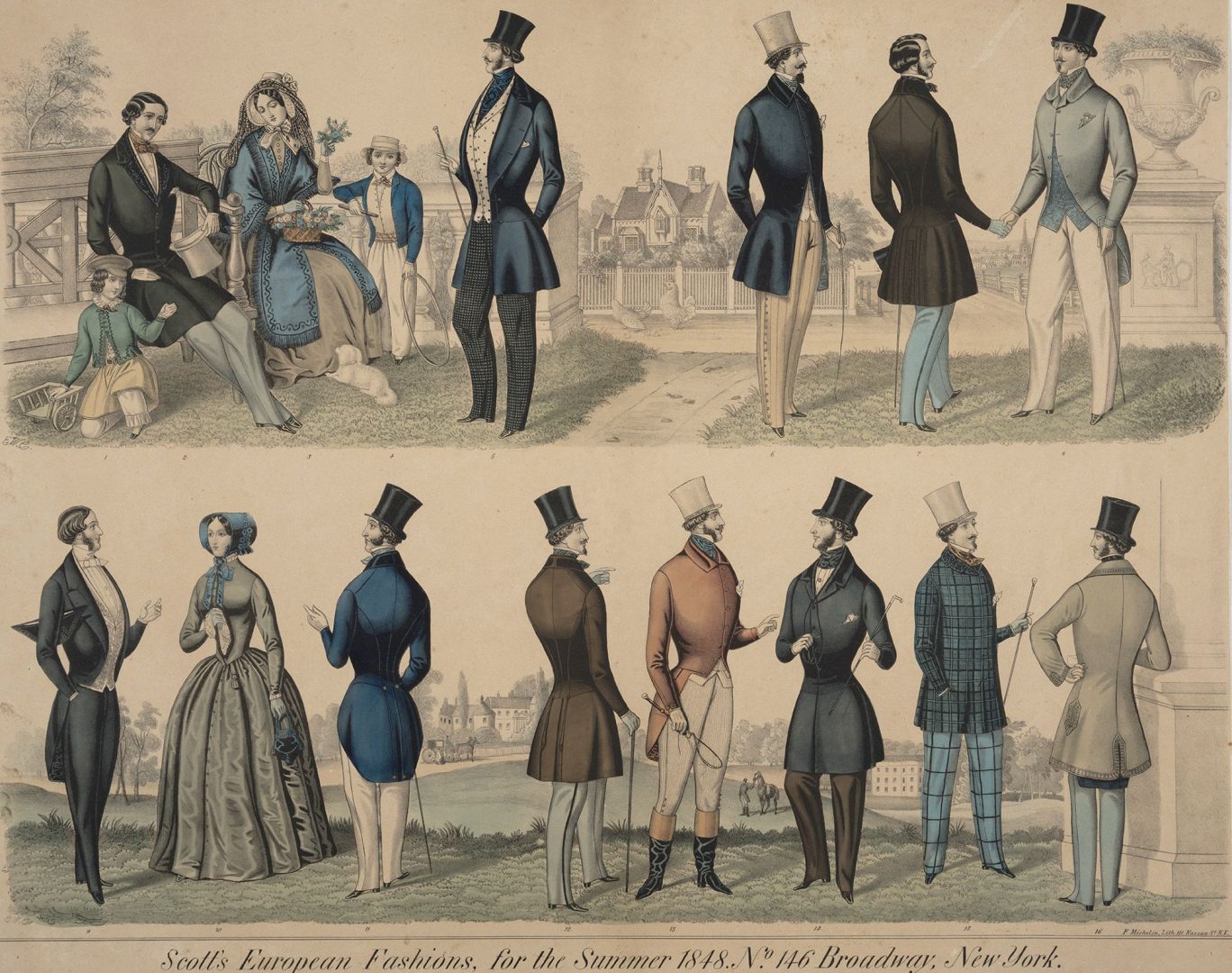
Francis Michelin, ‘Scott’s European Fashions, for the Summer 1848 | Photo courtesy of The Huntington Library, Art Museum, and Botanical Gardens

Impacts of fashion on the environment are displayed in the next room. The rate of extinction accelerated in the 19th century due to habitat destruction, overhunting, industrial pollution, among other factors. As this case shows, fashion was a major contributor as well. The hats which most gentlemen wore were made from beaver fur. Early in the 19th century their population was in such a deep decline that environmentalists were worried they were going to be extinct. The introduction of silk plush in 1840 saved beavers from that fate. Gentlemen decided they preferred the more shiny look of silk plush so it became a trend and the beaver population began to recover.
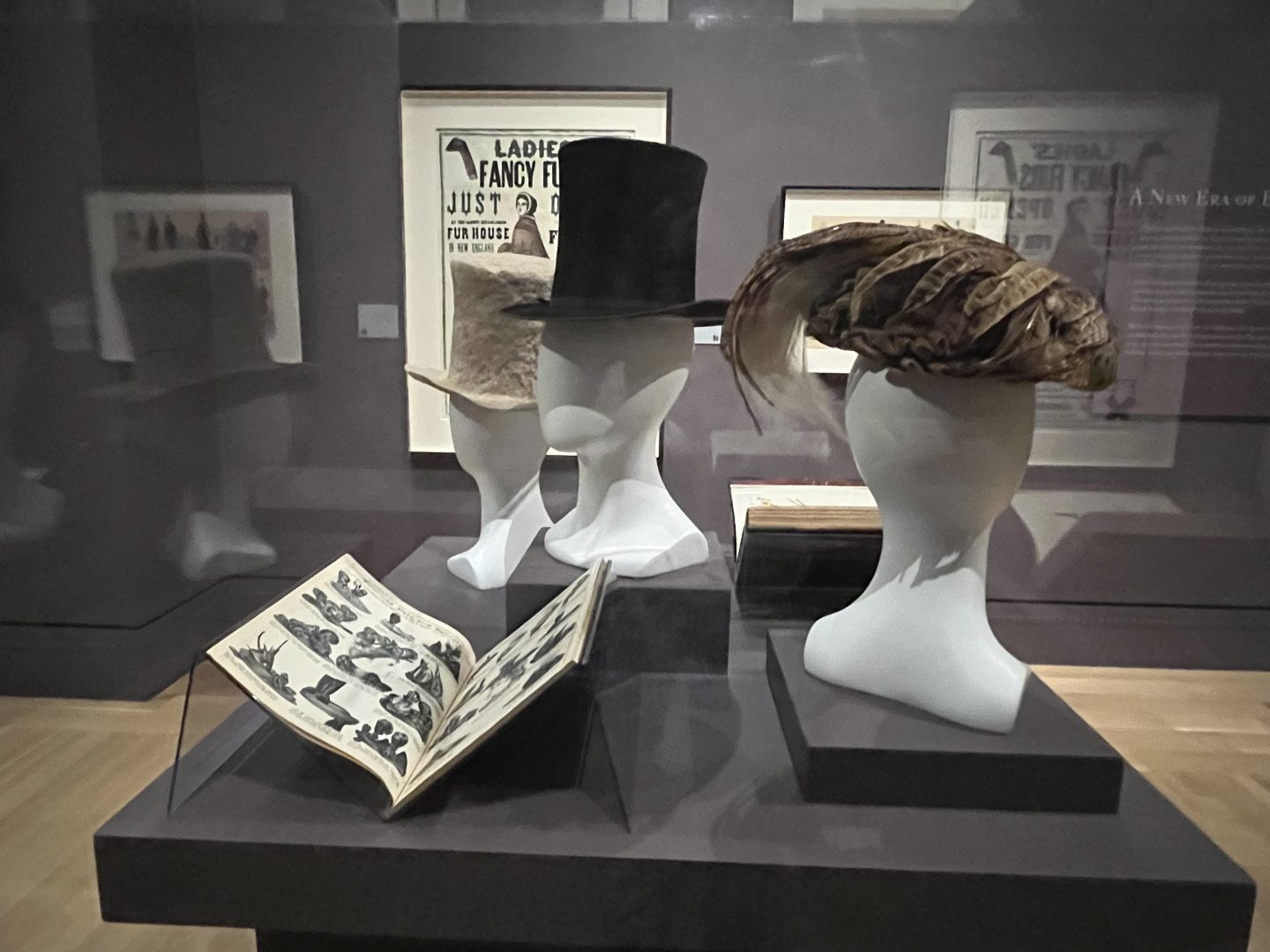
Photo by May S. Ruiz / Hey SoCal

Late in the 19th century, around 1888-1890, women’s hats using bird body parts became a trend. This extreme hunting brought many birds like egret and bird of paradise to near-extinction. A group of upper-class women decided to counter that by convincing their friends to move away from this fashion trend. That organization turned into the Audubon Society. It was one of the earliest wildlife preservation organizations specifically to protect animals from being hunted for fashion and it was able to lobby the government to enact laws that protect migratory birds.

The final section focuses on the extraction and burning of coal into oil and the exhibition displays paintings of factories blowing black smoke into the atmosphere – images meant to signal production and progress.
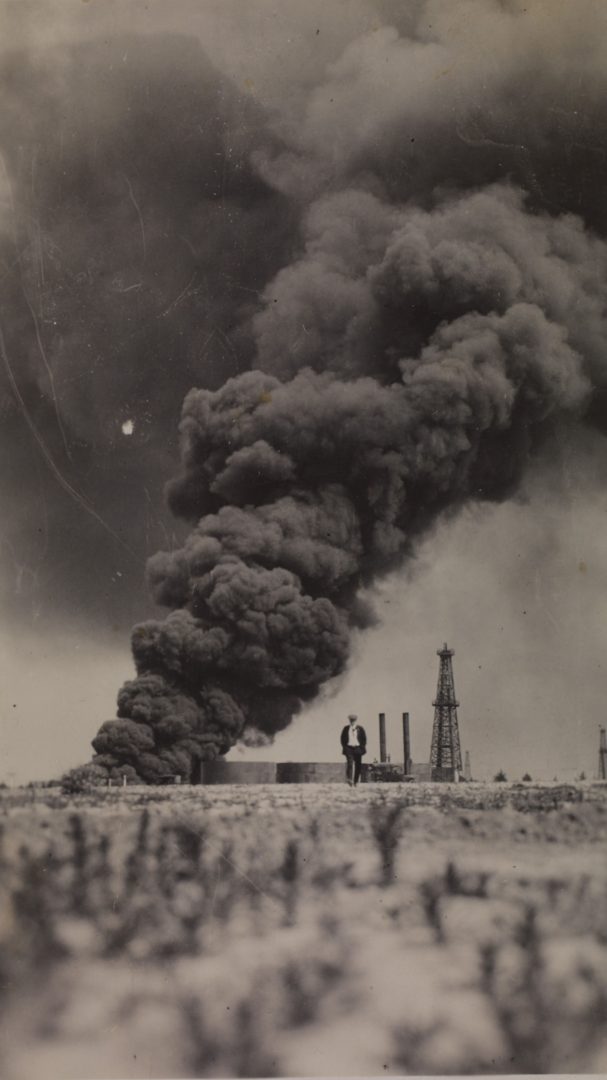
Unknown, Oil Well on Fire, photograph, circa 1920s | Photo courtesy of The Huntington Library, Art Museum, and Botanical Gardens

Materials from the Ruskin collection illustrate London as one of the most polluted cities in the world. McCurdy disclosed, “The air quality was so bad and the people called it ‘fog’ and ‘pea souper’ because of its sickly green yellow color which was essentially particulates from coal-burning fires in factories mixed with the water in the air, creating a dense atmosphere.”

“London and Los Angeles are connected by smog,” reiterated McCurdy. “Many of those who grew up here remember we had days when we weren’t allowed to go outside because of the bad air quality. It has gotten better with regulations; collective action and regulations help ameliorate these problems.”

Rebecca Méndez, ‘Any Instant Whatever’ / Photo courtesy of The Huntington Library, Art Museum, and Botanical Gardens

The final work of art is a video installation by L.A. based artist Rebecca Méndez. She spliced together images of different times of the day to illustrate that our sky is a shared space and we all breathe what we throw into it. The curators used it as a 21st century cloud study.

As a parting note, Anthony shared with us The Huntington’s participation in the Climate Impact Program. They created a show that has as little adverse effect as possible and modeled sustainability practices: they reduced their research travel and limited loans to a few geographic regions and institutions so shipments could be bundled together. Within the gallery itself they mixed cases and frames from existing inventory – nothing was customized; instead of building walls with Sheetrock they used apple plywood panels so they could be disassembled and utilized for future exhibitions. They will also produce a climate impact report.                                                           

“Storm Cloud” examines a critical issue in a fascinating way that captures our attention. Anthony, McCurdy, and Nielsen did an extraordinary job in turning an otherwise lecturing tone into one that encourages us to take an active role in reversing climate change lest future generations end up inheriting a planet that’s barely recognizable as the same place their ancestors inhabited.                                
Showcasing the perennial relationship between humans and plants at the Huntington’s Chinese Medicinal Garden

By Brianna Chu

Also published on 3 June 2024 on Hey SoCal

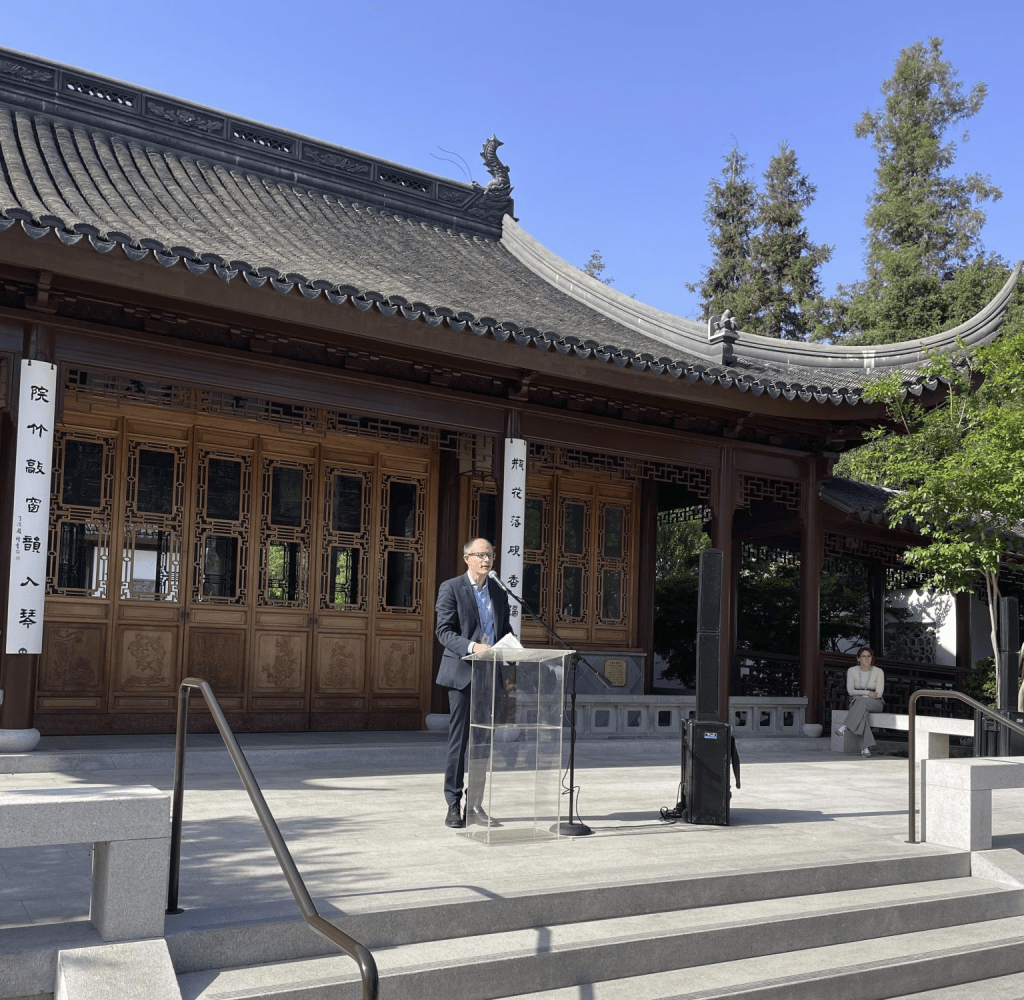
Philip Bloom speaks during the press opening of The Huntington’s Chinese Medicinal Garden opening

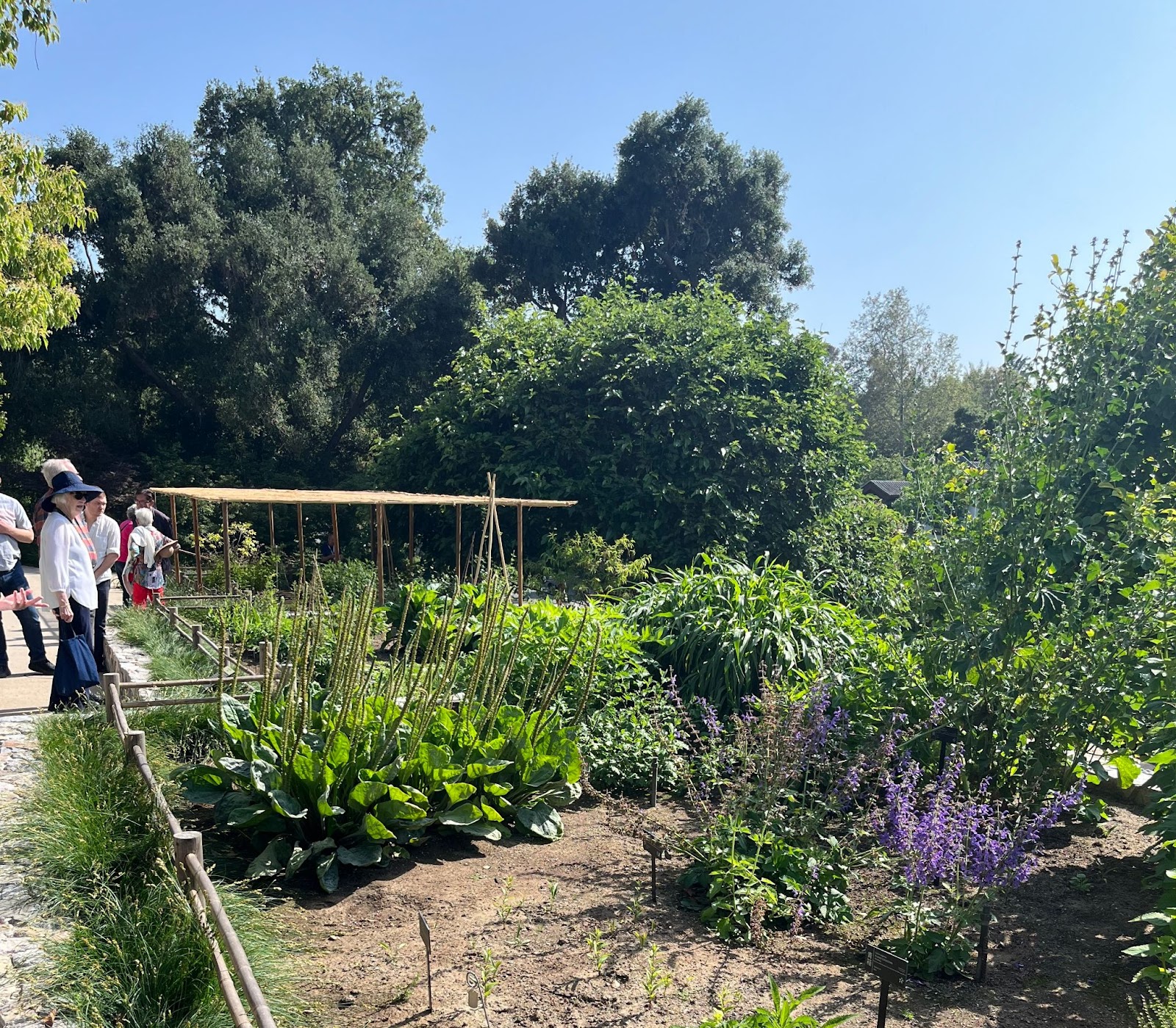
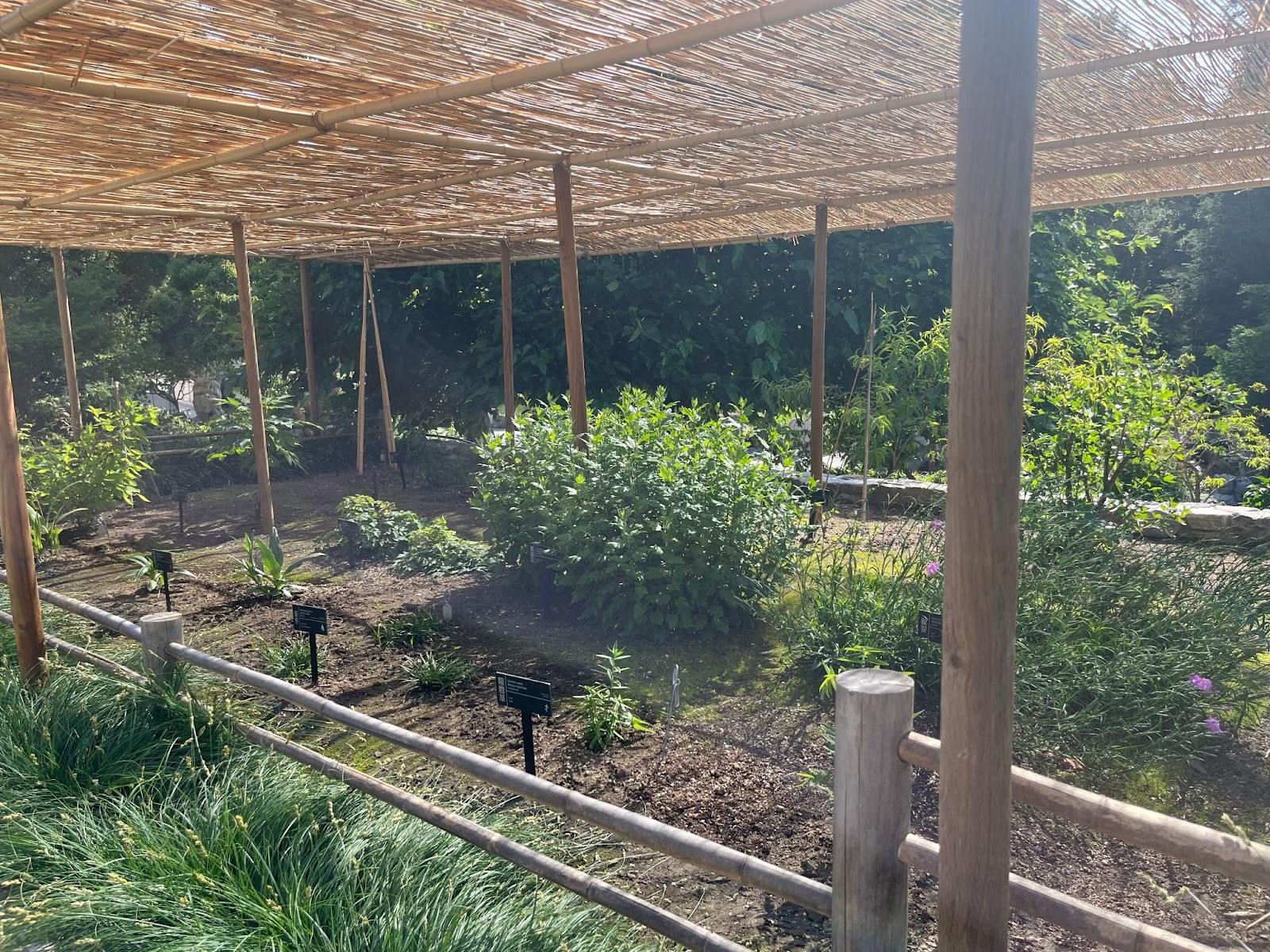
The final piece of the Huntington’s popular Chinese Garden — the culmination of years of work, interrupted by the pandemic — the Chinese Medicinal Garden (採藥圃 Cǎi Yào Pǔ) is, as the Chinese Garden’s curator Philip Bloom says, truly a milestone worth celebrating.

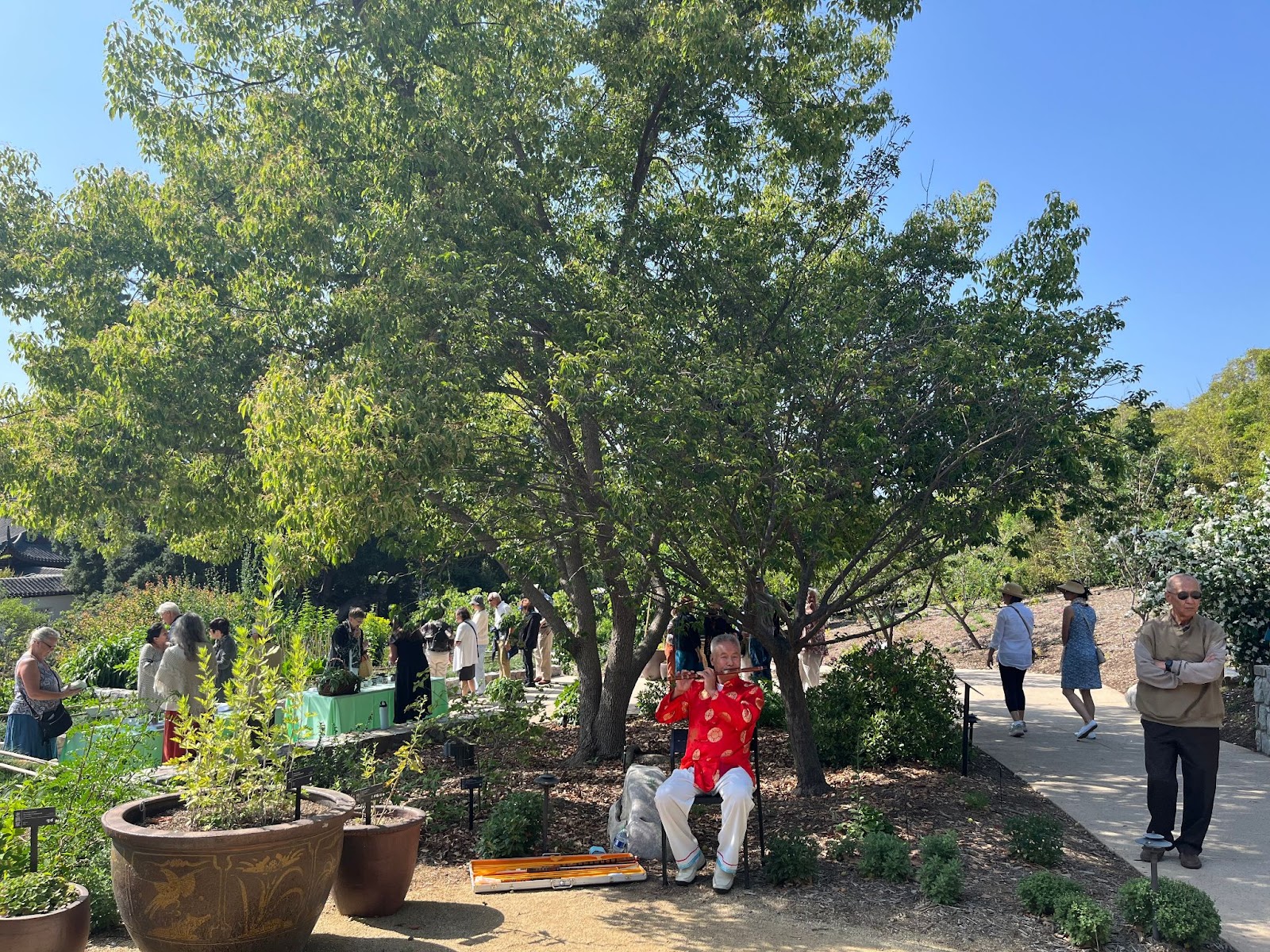
The team has been working on many types of interpretive programming for the Chinese Garden, including an art gallery scholar studio and the celebration court for performance space.

“But it is, I think, the Chinese Medicinal Garden that most powerfully connects the Chinese Garden to the rest of the Huntington as a whole,” Bloom reflected in his remarks to the press the day before the garden’s official May 22 opening.

“The Cǎi Yào Pǔ is a place for learning about the relationships between plants and people,” Bloom said. “Indeed, in historical China, medicinal gardens were always a primary site where people went to learn about and think with plants.”

Michelle Bailey, the garden’s assistant curator, concurred: “The deepest purpose for us at The Huntington is to show the long relationship between humans and plants.”

Some of the Medicinal Garden’s first admirers studying its plots. | Photo by Brianna Chu/HeySoCal.com

The plants featured in the garden were chosen partially based on those included in seminal medical texts of Chinese traditional medicine, such as “Shennong’s Classic of Medicine” (神農本草經 Shénnóng Běncǎo Jīng) — one of the world’s oldest pharmaceutical texts, written in the first or second century C.E. The garden’s collection includes selections shared by the Chinese Medicinal Herb Farm in Petaluma, California. Additionally, some included specimens were hand-collected from China in the 1990s by Robert Newman, dean emeritus of Emperor’s College, which further impresses botanical and historical significance. 

In total, around 100-120 of these plants have been selected and included in the medicinal garden. As both Bailey and Bloom are historians by background, the two chose to structure the garden’s six main beds based on the stories they saw within the plants’ characteristics and uses, rather than following the more typical approach of simply grouping plants based on how well they grow together.

The six main beds are broken down into the following categories: fundamental herbs, prescriptions/plant classifications, ornamentals, comestibles, imported medicines and useful plants.

One of the Fundamental Herbs beds. | Photo by Brianna Chu/Hey SoCal.com

The Fundamental Herbs bed showcases many plants and herbs from “Shennong’s Classic,” many of which are still used today in traditional Chinese medicine. Due to the sheer quantity of plants covered across in the text, plants’ inclusion were dictated by availability. 

To delve into the story of trade, the Imported Herbs bed features plants non-native to China but would have reached them through the Silk Road or by maritime trade. Some plants nested in this bed may be familiar, like turmeric, ashwagandha and St. Paul’s Wort, among others. These tell the story of communication, travel and exchange — making their way from their native lands of India, Southeast Asia, Europe and even the Americas to be used, studied and cataloged in another seminal medical text, “Compendium of Materia Medica” (本草綱目 Běn Cǎo Gāng Mù)also known as“Great Pharmacopeia,” which was originally published in Nanjing, China, in 1596.

True indigo boasts not only medicinal properties but also wide use as a beautiful dye. | Photo by Brianna Chu/Hey SoCal.com

The “Useful Plants” are multipurpose ones: those that can be used not only as medicine or treatment, but also as dyes, textiles, incense, timber and other purposes. “Comestibles” are foods that also have beneficial medicinal properties, like sacred basil and aloe.

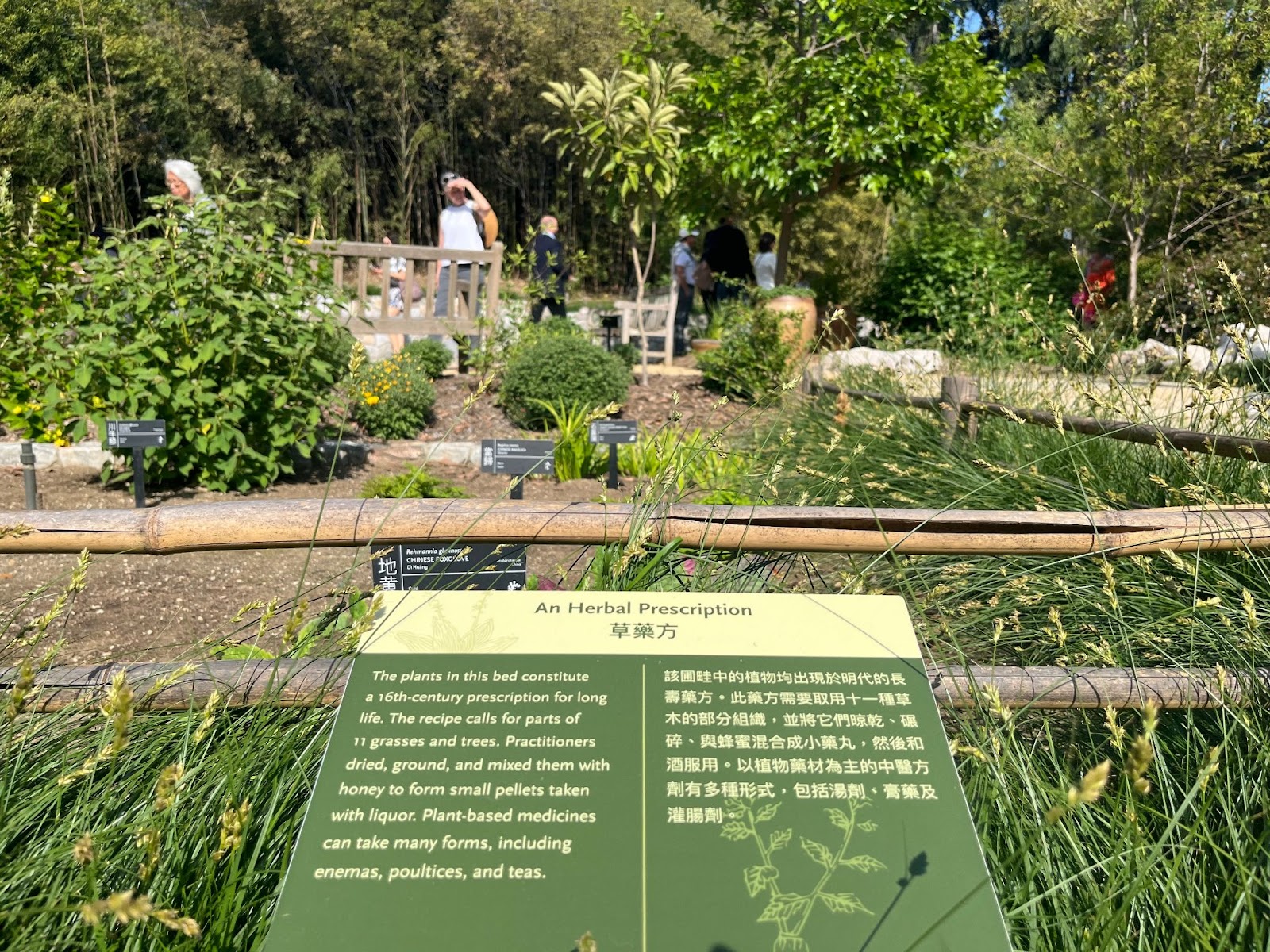
Half of this split bed features the 11 components for a prescription. | Photo by Brianna Chu/Hey SoCal.com

One bed is split in half: on one side, all 11 herbs and grasses needed for a prescription for long life are grouped together, while the other half of the bed is dedicated to herbs classified by their taste — bitter, sweet, salty, sour and acrid.

The “Ornamentals” may strike visitors as familiar flowers and trees for a Chinese garden, such as plum and peach trees, chrysanthemums, peonies and roses — evidence that cultivating a garden can be healthful and beneficial in more ways than one.

Beyond the verdure currently exhibited in the garden, there are still more rare specimens being tended in the Huntington’s nursery. While nothing is planned yet, there is the potential to further explore the knowledge and history of medicinal herbs in an extension of the Cǎi Yào Pǔ.

The Cǎi Yào Pǔ buzzes with interest at its press opening. | Photo by Brianna Chu/Hey SoCal.com

Aside from independent strolls through the Chinese Medicinal Garden, members of the public can also attend monthly open houses, at which Bailey’s dedicated and knowledgeable team of about 10 volunteers will be available to answer questions regarding the plants, their history and their uses. Prospective attendees can check the dates and times for these open houses at the garden’s webpage to plan visits here: https://huntington.org/event/chinese-medicinal-garden-open-house

May S. Ruiz contributed to this story.

Ushering in the Year of the Dragon at The Huntington’s Lunar New Year Festival

Also published on 12 February 2024 on Hey SoCal

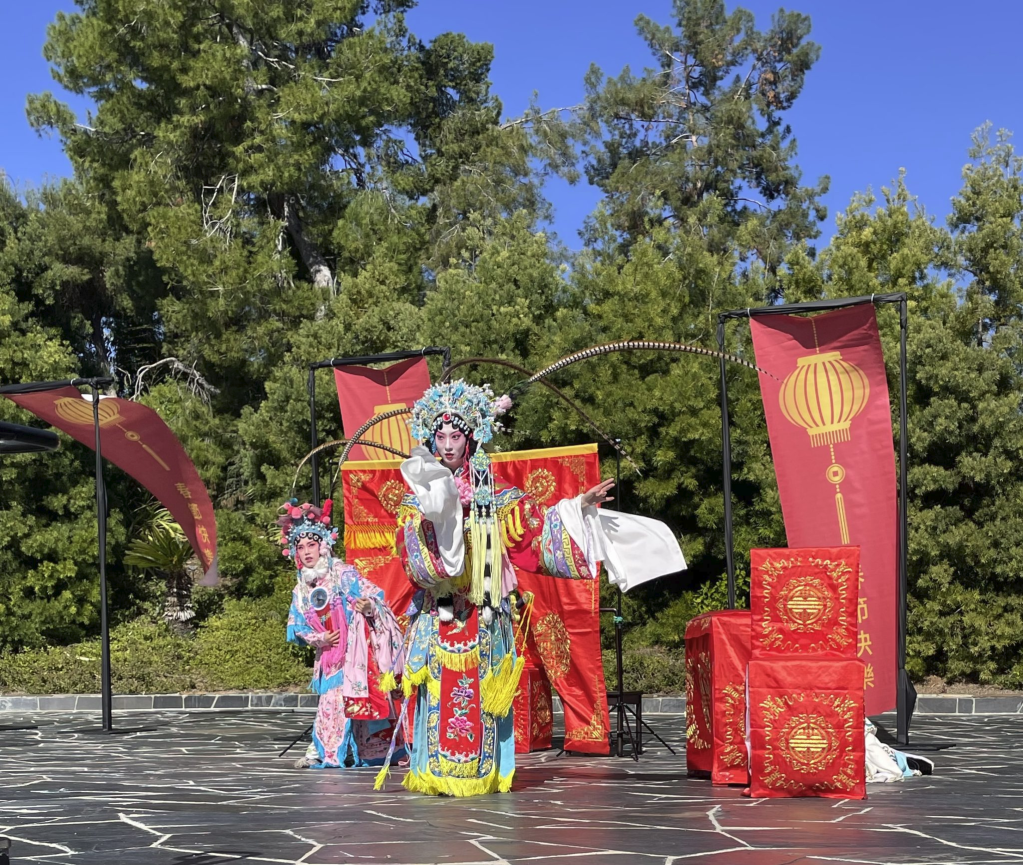
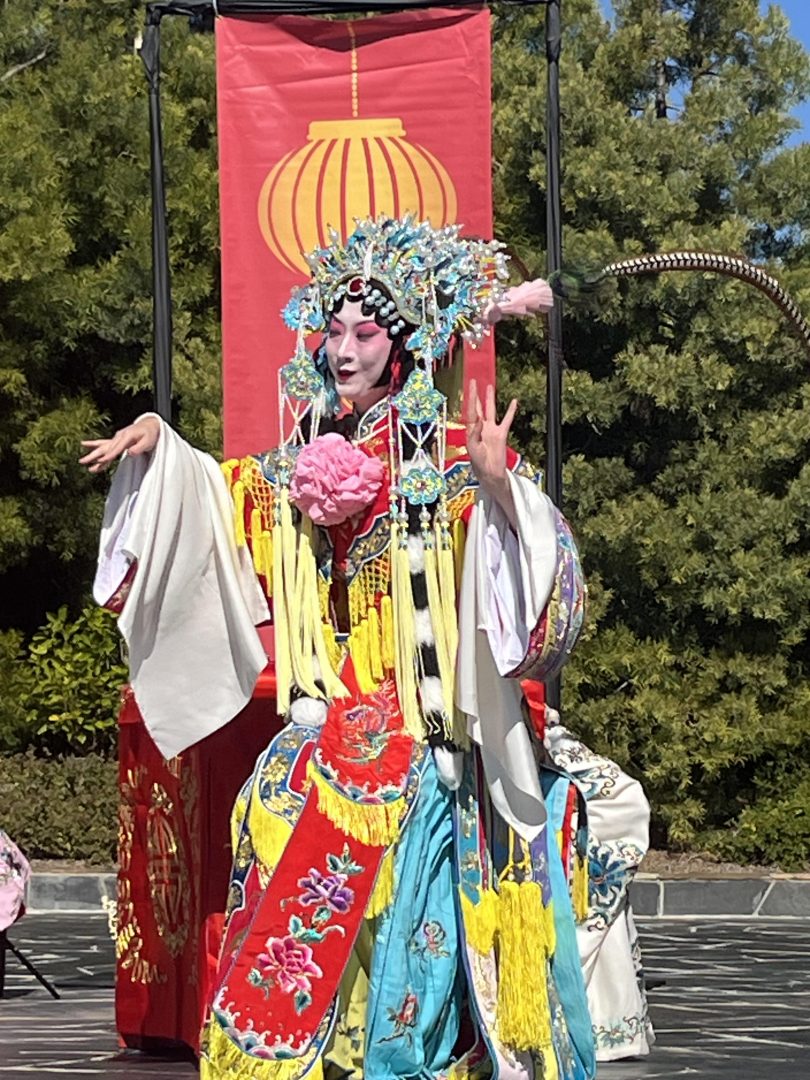
The Kwun Shu Opera Society’s Kun Opera performance | Photo by Brianna Chu / Hey SoCal

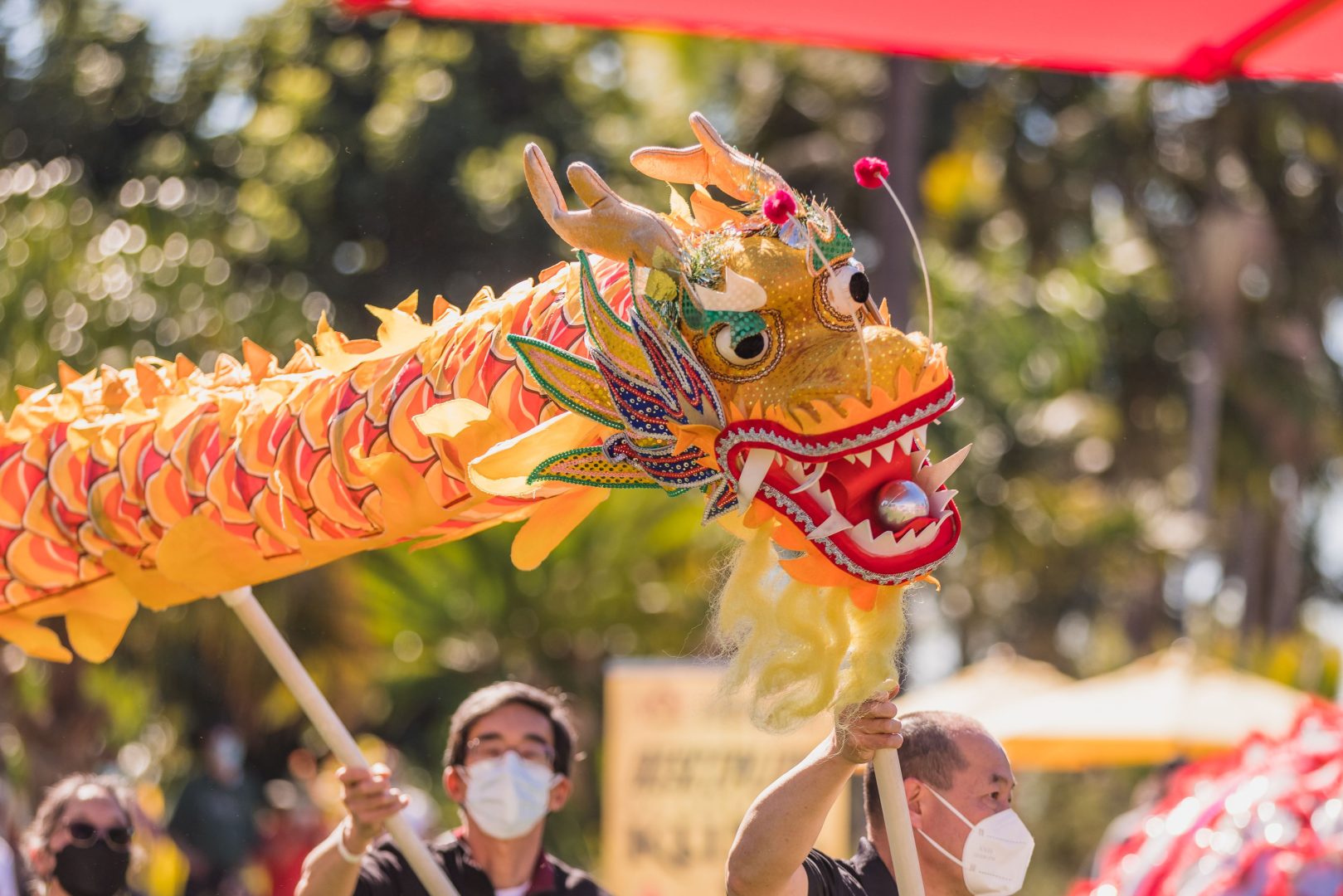
To most Asians and people of Chinese descent, the dragon is the most auspicious animal symbol in the lunar calendar – the sign symbolizes power and success and brings good fortune and prosperity. The Huntington Library, Art Museum, and Botanical Gardens welcomed the Year of the Dragon with a festival on February 10 and 11, 2024 from 10 am to 5 pm.     

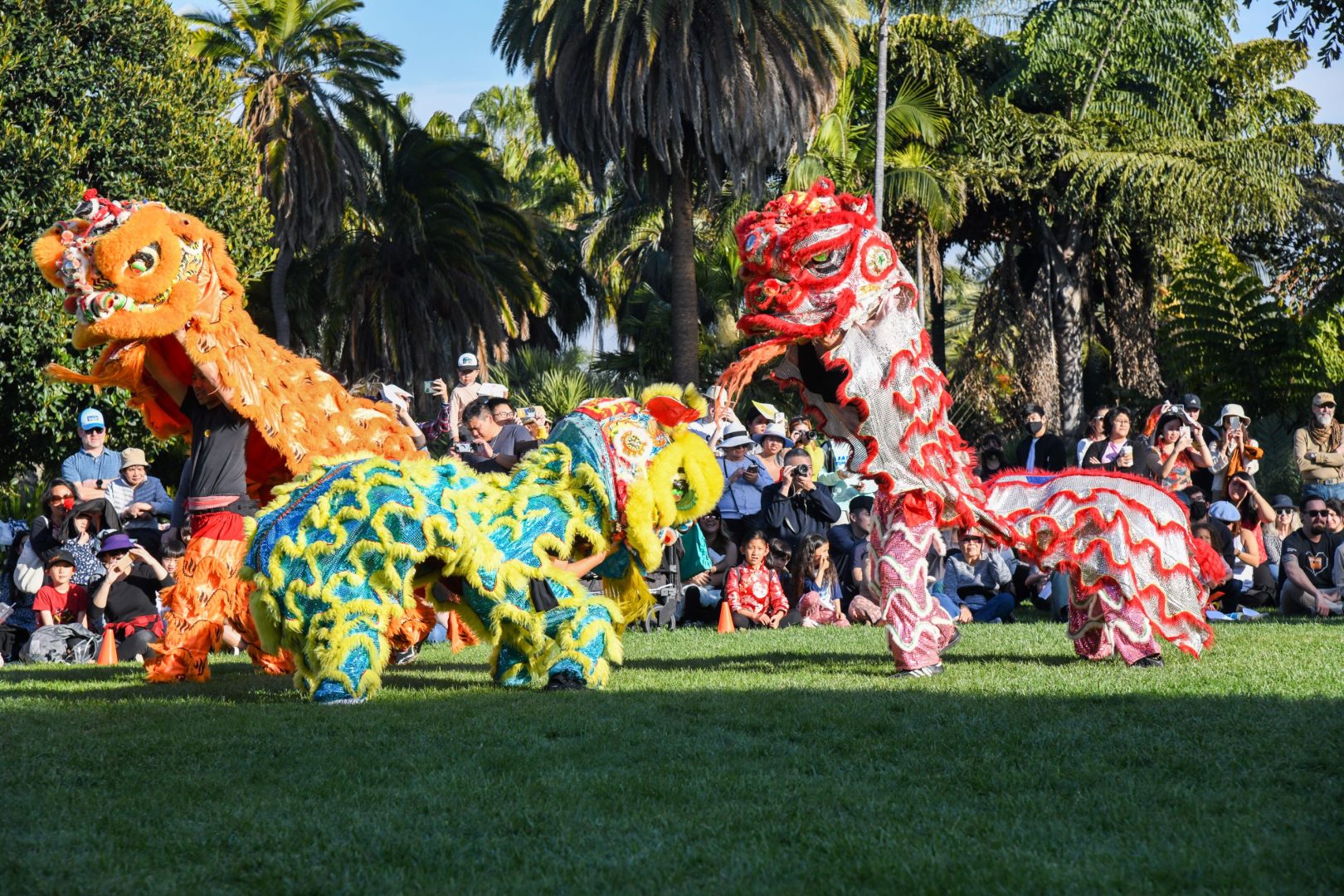
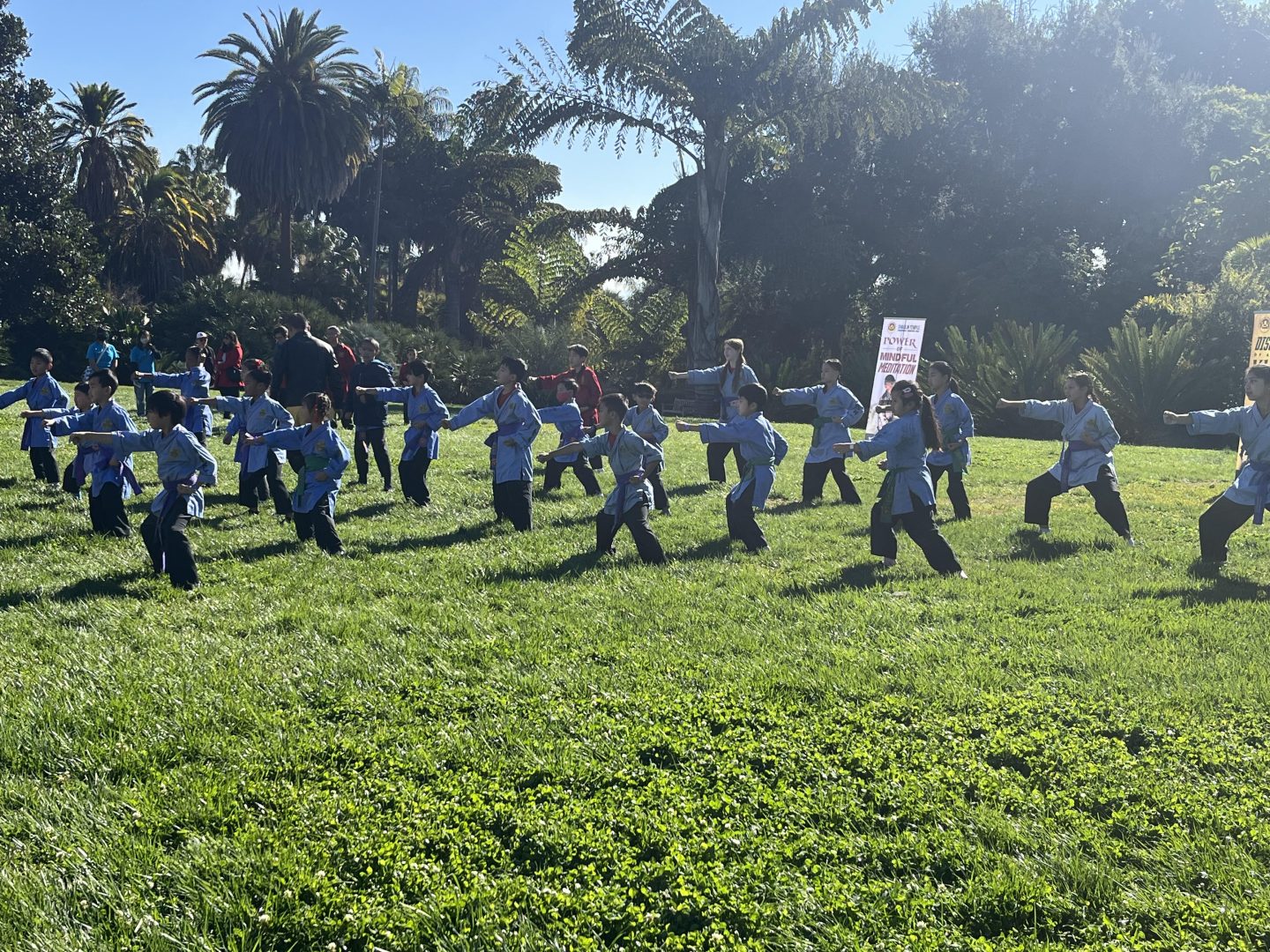
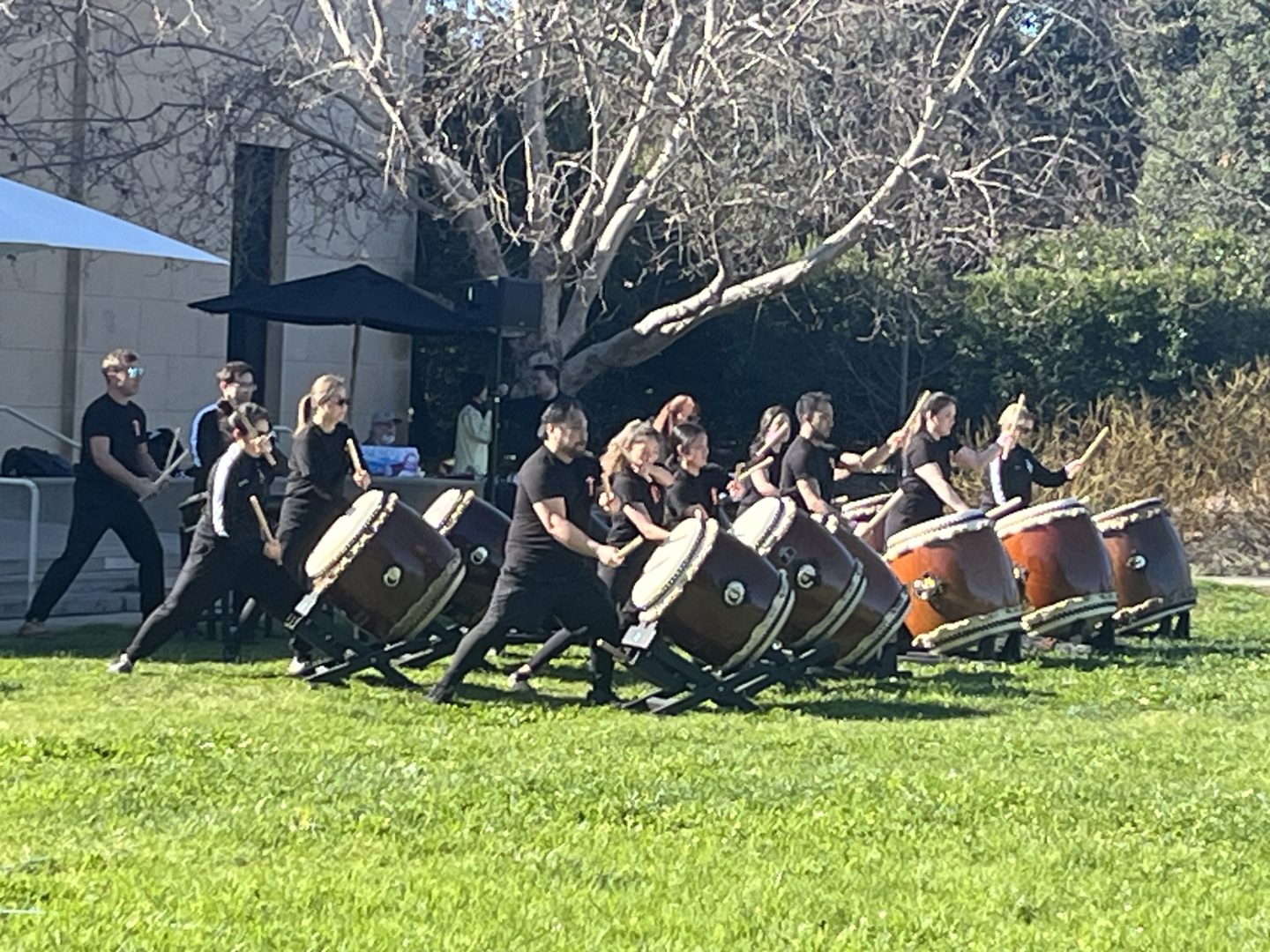
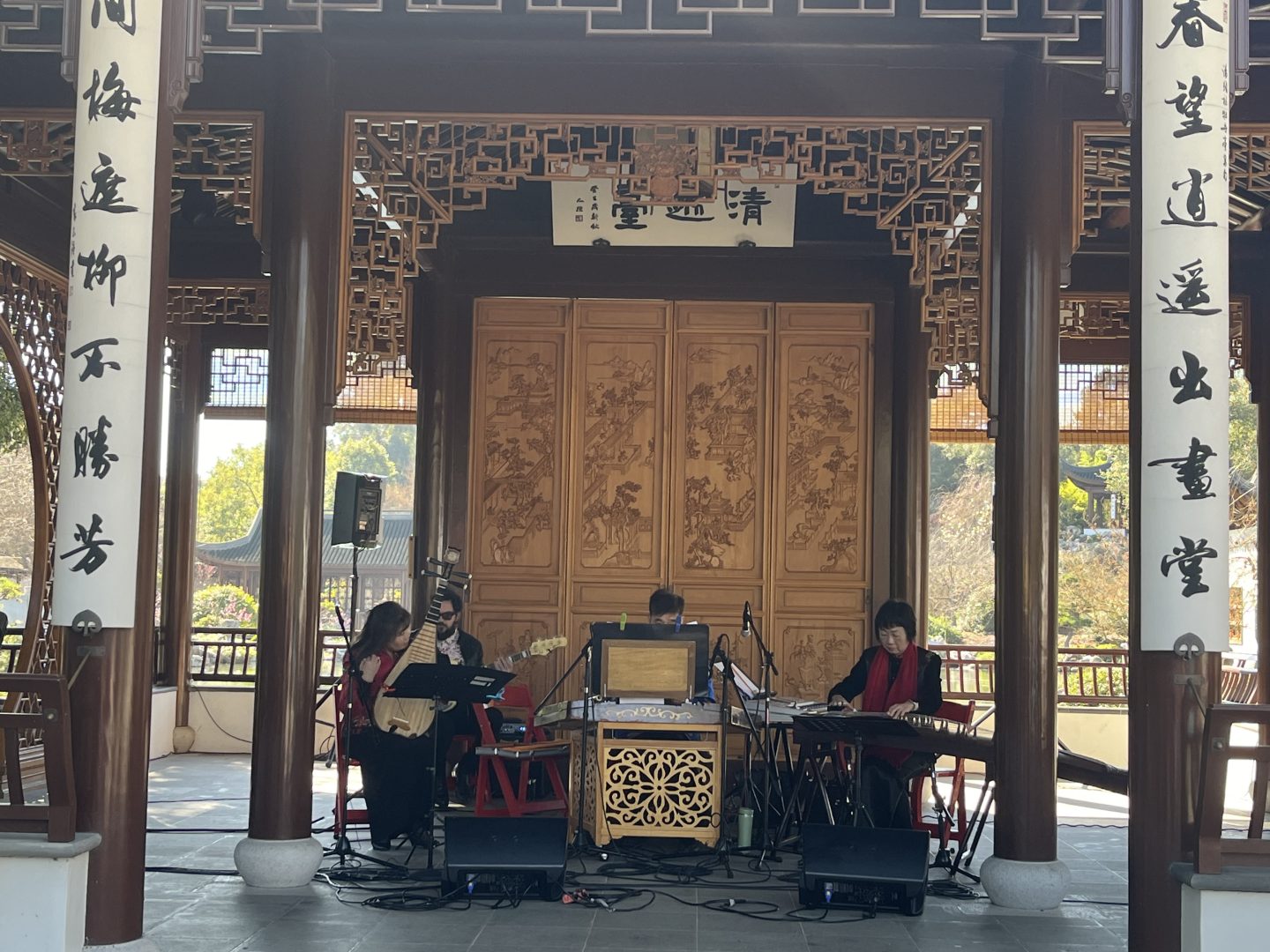
Program highlights on Feb. 10 included live music by the Han Music Ensemble (10:30 a.m.–12:30 p.m. and 2–4 p.m.) and Chinese Kwun Opera Society (11 a.m. and 1 p.m.) in the Chinese Garden. There were also martial arts demonstrations by Shaolin Temple Cultural Center USA (East Lawn, 10:30 a.m. and 2:30 p.m.) and K-STAR Contortion and Martial Arts (Rothenberg Hall, 11 a.m. and 1 p.m.), as well as lion dancers featuring Northern Shaolim Kung Fu (12:30 and 3:30 p.m.) on the East Lawn near the Huntington Art Gallery. Additionally, mask-changing artist Wei Qi Zhong performed (11 a.m., 1 p.m., and 3 p.m.) inside Haaga Hall.

Lion Dance | Photo courtesy of The Huntington Library, Art Museum, and Botanical Gardens

“This is one of the most beloved events of the entire year at The Huntington,” Sian Adams,  Director of Strategic Initiatives, stated during a phone conversation. “There’s something for everybody; it has a lot of different food options, live music, performances, arts and crafts workshops for kids, lots of different offerings that make the day fun for a variety of ages.”   

Kung Fu demonstration | Photo by Brianna Chu / Hey SoCal

While some events – like the lion dance – are mainstays, the organizers mix up the offerings. “We always are looking at the programming,” stated Adams. “This year we added the Kun Opera for a two-day performance in the Chinese Garden because we wanted to bring in something very artistic and special to the garden’s space itself.”

Kun Opera | Photo by Brianna Chu / Hey SoCal

The Kun Opera, also known as Kunqu Opera, is one of the three classic operas of the world. It is highly stylized – singers with painted faces wear elaborate costumes; hand gestures and head movements add another layer of meaning to what’s being sung. UNESCO proclaimed it as a ‘Masterpiece of the Oral and Intangible Heritage of Humanity in 2001.       

All performances were relatively short – about 20 minutes each – held at different locations and people watched while standing. However, some performances had seating, like the Kun Opera in the Chinese Garden and the contortion and martial arts shows in Rothenberg Hall.

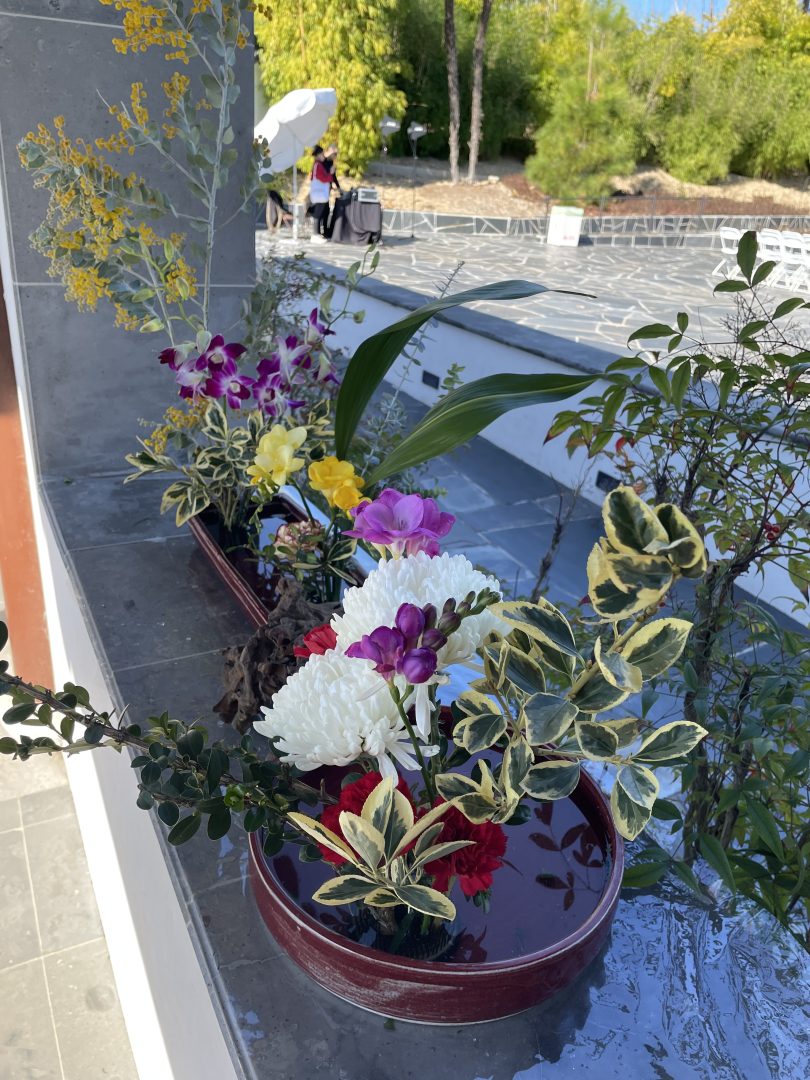
Floral display | Photo by Brianna Chu / Hey SoCal

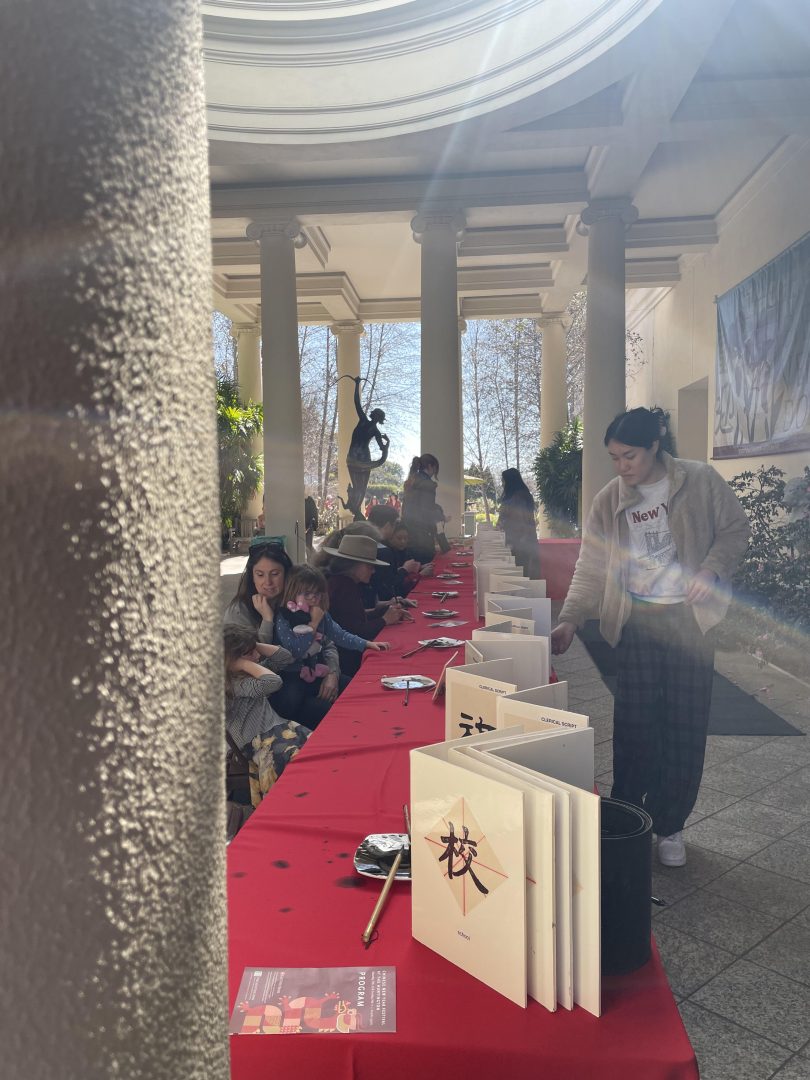
Whether it was by design or a case of bad scheduling, some shows were presented during the same time slots. Visitors either missed a really great presentation or had to stay the entire day to catch all the performances. If the organizers planned that all along to entice people to stay longer, though, then it was brilliant! There were several shows that went on throughout the day, like the floral arrangements, the Lego display, and calligraphy writing station. The Han Music Ensemble played well-known Chinese music with traditional instruments at the Transcendent Pavilion from 10:30 a.m. to 12:30 p.m. and from 2 to 4 p.m.    

Calligraphy-writing station | Photo by Brianna Chu / Hey SoCal

According to Adams the Lunar New Year Festival is open to all members but it’s so popular that membership tickets usually sell out on the first day they’re offered. Tickets are also available to the general public although these also go very quickly so everyone is encouraged to purchase well in advance. Advanced reservations to get in are required for non-members and members as well.                 

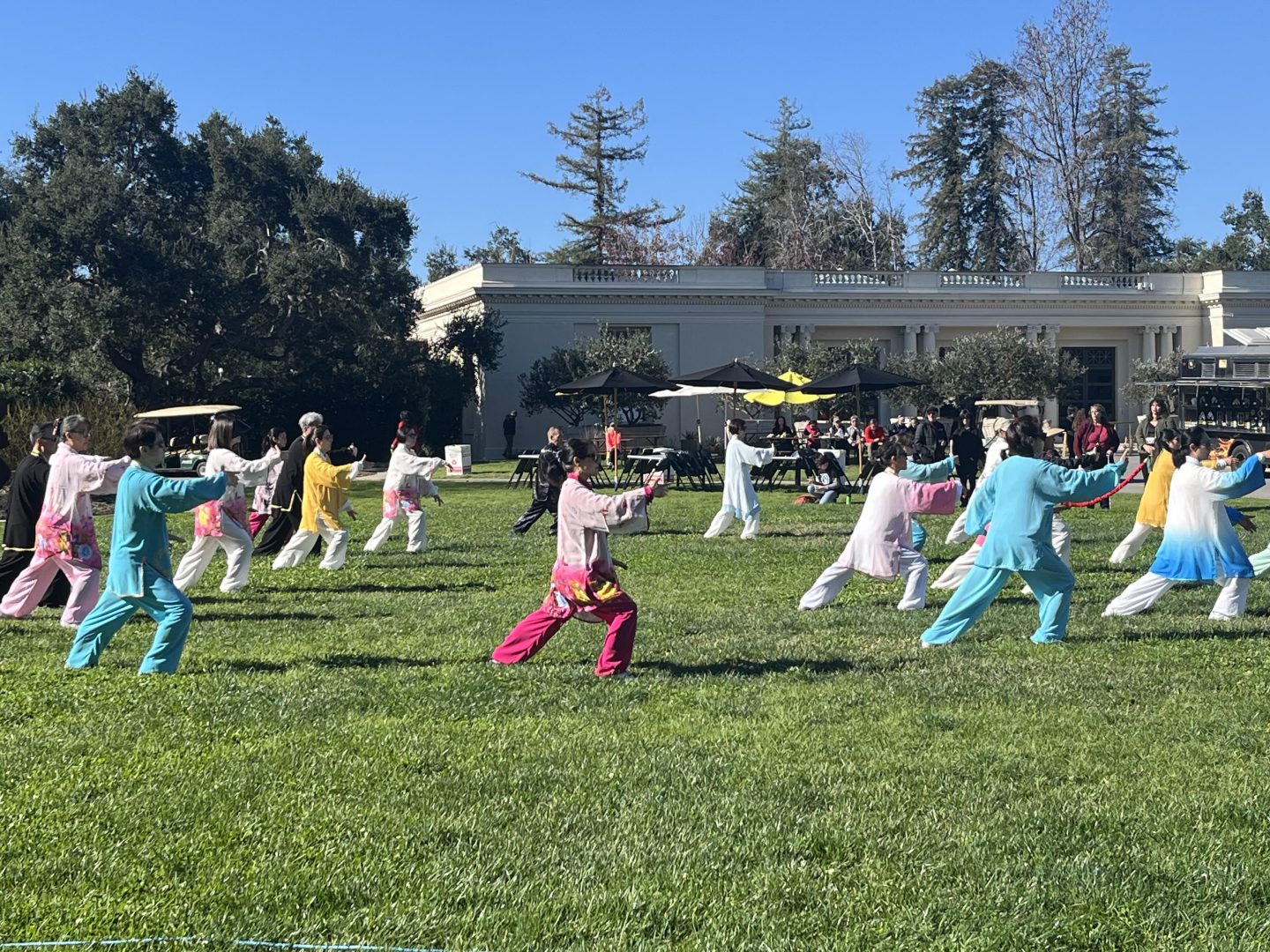
Tai Chi demonstration | Photo by Brianna Chu / Hey SoCal

“This annual event is part of The Huntington’s regular programming,” explained Adams. “That said, we’ve had one corporate partner which has made the Lunar New Year Festival possible for us since the beginning and that’s East West Bank. They have been our champion and a friend to the Chinese Garden at The Huntington from the earliest days. We’re truly lucky and we appreciate their friendship.”

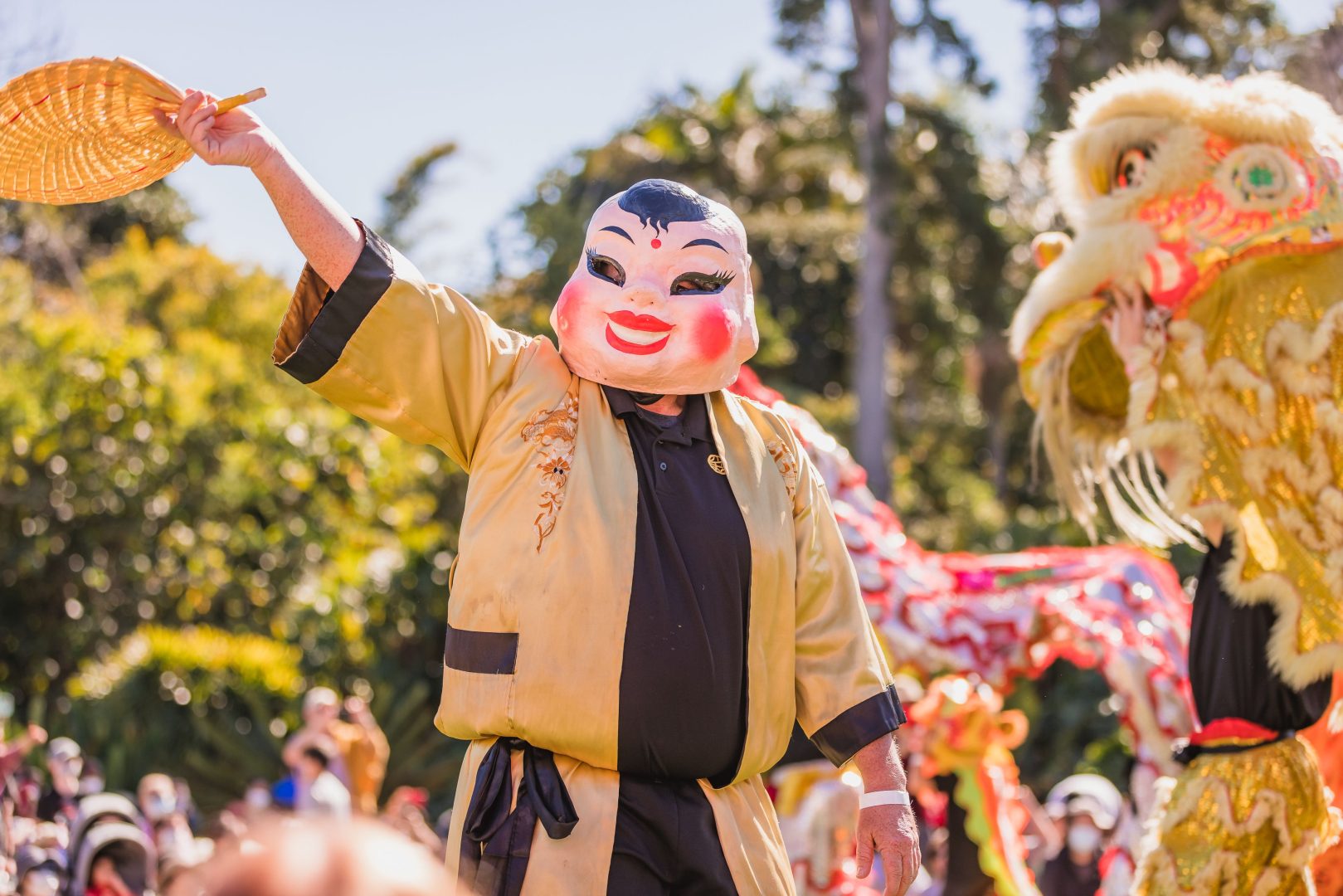
Masked performer / Photo courtesy of The Huntington Library, Art Museum, and Botanical Gardens

Now on its 19th year, the Lunar New Year Festival is The Huntington’s biggest event and it takes place across the institution in multiple staging spaces. It’s surprising therefore to learn that there aren’t that many people who make it happen. Adams said, “It’s a pretty lean and mean team headed by our Membership Dept. But while there are only a handful of core staff organizing it, there are about 50 volunteers on the day of the event to help ensure everything runs smoothly. We have a robust volunteer program – teen volunteers, docents, and staff sign up for the various events.” 

Battlefield drums (gu) being played| Photo by Brianna Chu / Hey SoCal

“The Lunar New Year Festival is a big lift for The Huntington – it’s all hands on deck for all of us here. We want everybody who comes to have a good experience and a great time. We look carefully at our programming and, just as important, our food offerings. All our restaurants are open and we also bring in external food trucks so there are lots of options to help ensure shorter lines and people aren’t waiting a long time for food. Additionally, we want to give visitors a variety of choices. These food trucks are they’re typically grouped in spaces but they’re all over The Huntington. It’s a very large campus so we want to make sure there are food available everywhere for easy access to visitors. You can be on one side and you don’t want to go all the way to the other side to find food.”

Adams added, “We make sure we offer lots of different entry points to invite people to come in and learn about other cultures and experience different traditions. Food can sometimes be an important gateway. You might try Chinese food and think ‘Oh I want to learn a little bit more.’ It makes the world a little bit smaller.”                    

Han Music Ensemble with traditional Chinese instruments (pipa, which is like a guitar, on the left; guzheng, a plucked zither, on the right) | Photo by Brianna Chu / Hey SoCal

“One of the things I want to emphasize is how proud we are to be a part of the Chinese-American community in Southern California,” declared Adams. “With the Garden and this festival, we open up The Huntington and welcome that dialogue in trying to make the world a little bit smaller by bringing east and west together. And really just connecting people and educating for the purpose of increasing understanding is important for these days and times. If you can learn a little bit more about another culture, boy doesn’t that go far!? Those are the things you carry your whole life – a little bit of understanding, a little bit of perspective.” 

Photo courtesy of The Huntington Library, Art Museum, and Botanical Gardens

If there’s one thing that most people can connect with, it’s food. And who doesn’t like Chinese food? Dumplings, chow mein, sweet and sour pork, and orange chicken are some of the most recognizable dishes the world over. How wonderful it is to discover our shared humanity with people sitting at the same table while enjoying a delicious bowl of noodles and taking in the artistic and cultural traditions of one of the oldest civilizations on earth. At the very least, it’s a fantastic way to welcome the Year of the Dragon.                        

‘Art for the People: WPA-Era Paintings from the Dijkstra Collection’ on View at The Huntington

Also published on 27 November 2023 on Hey SoCal

Emmanuel Romano, “Construction Workers: Solidarity in Action,” 1940, oil on board, 48-by-36-by-1.75 inches. | Courtesy of the Collection of Sandra and Bram Dijkstra

From Dec. 2 through Mach 18, “Art for the People: WPA-Era Paintings from the Dijkstra Collection” will be on view in the Virginia Steele Scott Galleries of American Art at The Huntington. Featuring 19 remarkable works drawn from the collection of Sandra and Bram Dijkstra, the exhibition is a collaboration between the Crocker Art Museum in Sacramento, the Oceanside Museum of Art in Oceanside, and The Huntington Library, Art Museum, and Botanical Gardens in San Marino.

The exhibition highlights federal Works Progress Administration artists of the 1930s and early 1940s who were employed by the government to help stimulate the post-Depression economy. More than 10,000 artists participated, creating works that represented the nation and its people, and seeking to express fundamental human concerns, basic democratic principles and the plight of the dispossessed.

“Art for the People” and its companion catalog feature paintings from across the United States, with strong representation by California artists, artists of color, women artists, and Jewish artists who have generally been omitted from the WPA-era narrative. Some of the paintings are often described as American Expressionism or American Scene, depicting both urban and rural subjects and focusing on the lives of average Americans.

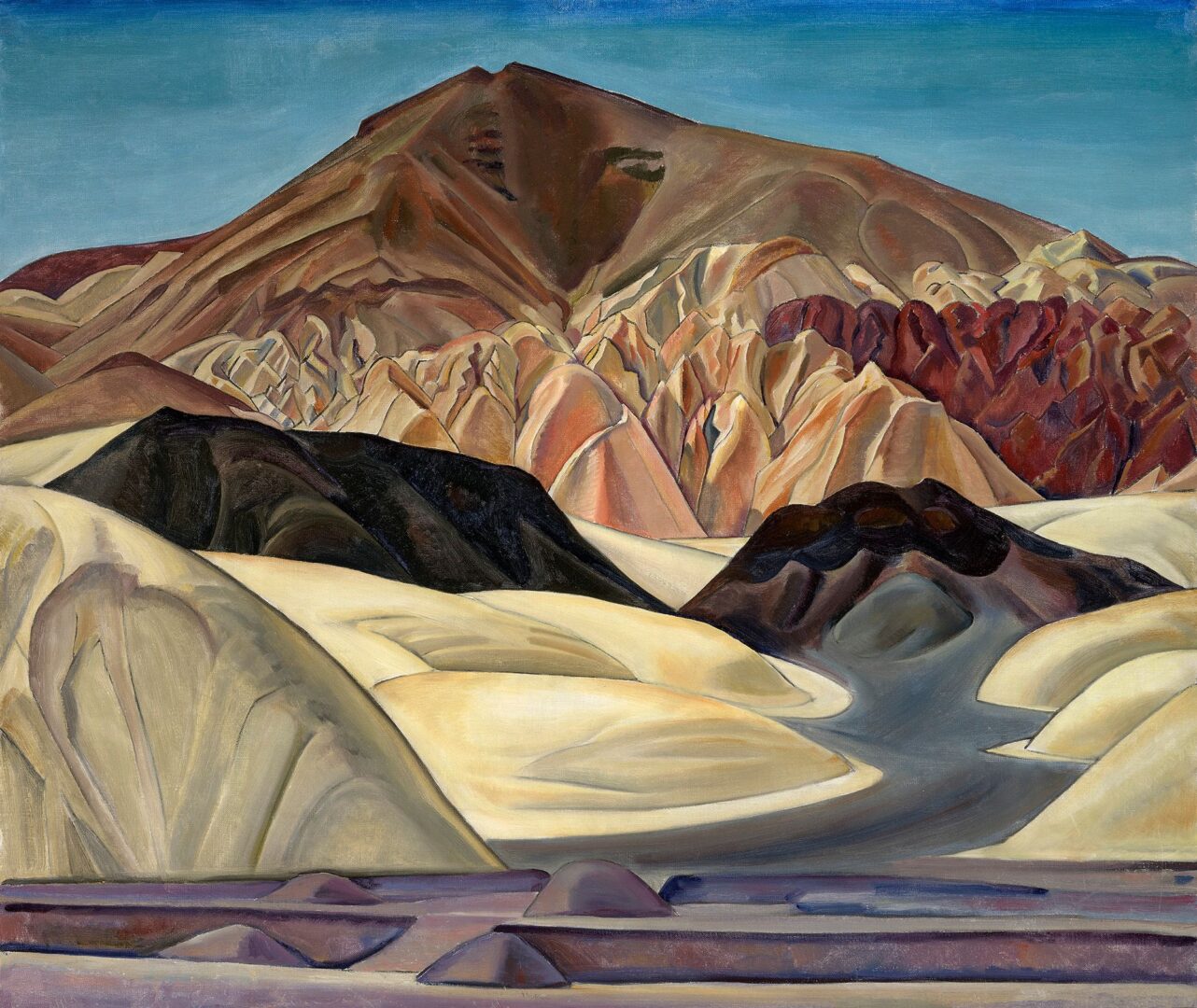
Helen Forbes, “A Vale in Death Valley,” 1939, oil on canvas, 34-by-40-by-1.75 inches. | Courtesy of the Collection of Sandra and Bram Dijkstra

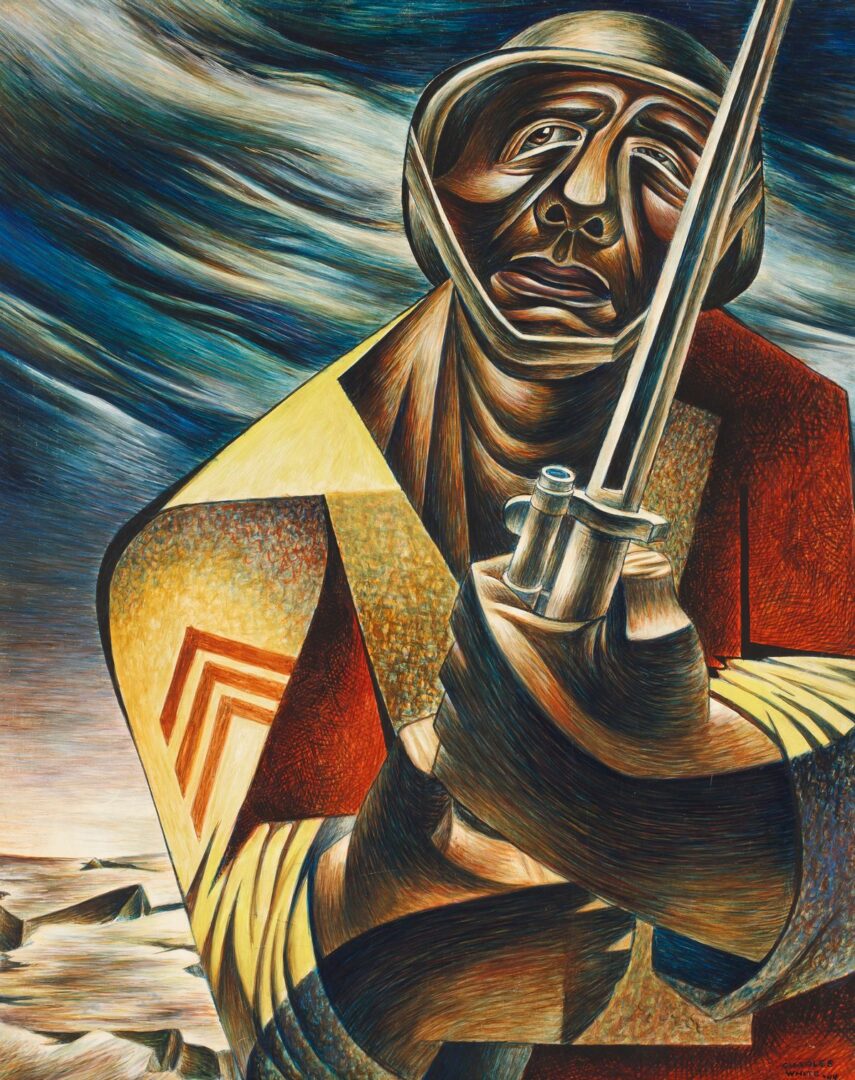
The Huntington’s presentation of “Art for the People” is the third and last stop for the traveling exhibition, which originated at the Crocker Art Museum, where it ran from Jan. 29 to May 7, 2023. It was on view at the Oceanside Museum of Art from June 24 until Nov. 5. Shown differently at each venue, the installation at The Huntington showcases paintings by 18 artists, including paintings that were given to The Huntington by the Dijkstras, such as “Soldier,” a major work by African American artist Charles White. White, who became an important figure in what was known as the Chicago Black Renaissance, made the painting in 1944 after he had been drafted into the U.S. Army.

Dennis Carr, Virginia Steele Scott chief curator of American Art at The Huntington, speaks to me about the exhibition and how the collaboration with the two other museums came about.

“If memory serves, it started with a conversation between Scott Shields at the Crocker Museum and Sandy and Bram Dijsktra, who expressed their interest in presenting publicly this part of their collections,” Carr starts. “Once the Crocker Museum was enthusiastic about it, they reached out to other venues, including The Huntington. We were especially interested given the strength of our American paintings collection in the early 20th century — specifically around the WPA period — as well as the strength of The Huntington Library in collecting material like this. So we felt it was a natural fit for the institution.”

Carr explains, “Both the Oceanside Museum and the Crocker Museum displayed all 40 paintings. We didn’t have the space available at The Huntington but we chose what we felt were highlights of the collection and focusing on California artists, artists of color, and women artists.”

Charles White, “Soldier,” 1944, tempera on masonite, 30-by-25 inches. | Courtesy of The Huntington/Sandra and Bram Dijkstra/The Charles White Archives

“There’s one from The Huntington’s permanent collection which was donated by Bram and Sandy Dijkstra in 2013,” Carr continues, referring to ‘Soldier’ by White. “In my opinion, it’s one of the most striking paintings in the American Art collection. Charles White was a black artist who moved from the East Coast and eventually settled in Altadena and became a very important painter in Los Angeles in the mid-20th century. This is a vital early work by him and we’re so proud to have it in The Huntington’s permanent collection. But we thought it was important to include the Charles White painting in this show because it’s of the era and it’s by a very local artist. It’s been on view in our gallery ever since they donated it in 2013 and it’s nice to see it join other works from the Dijkstra’s private collection in the exhibition.”

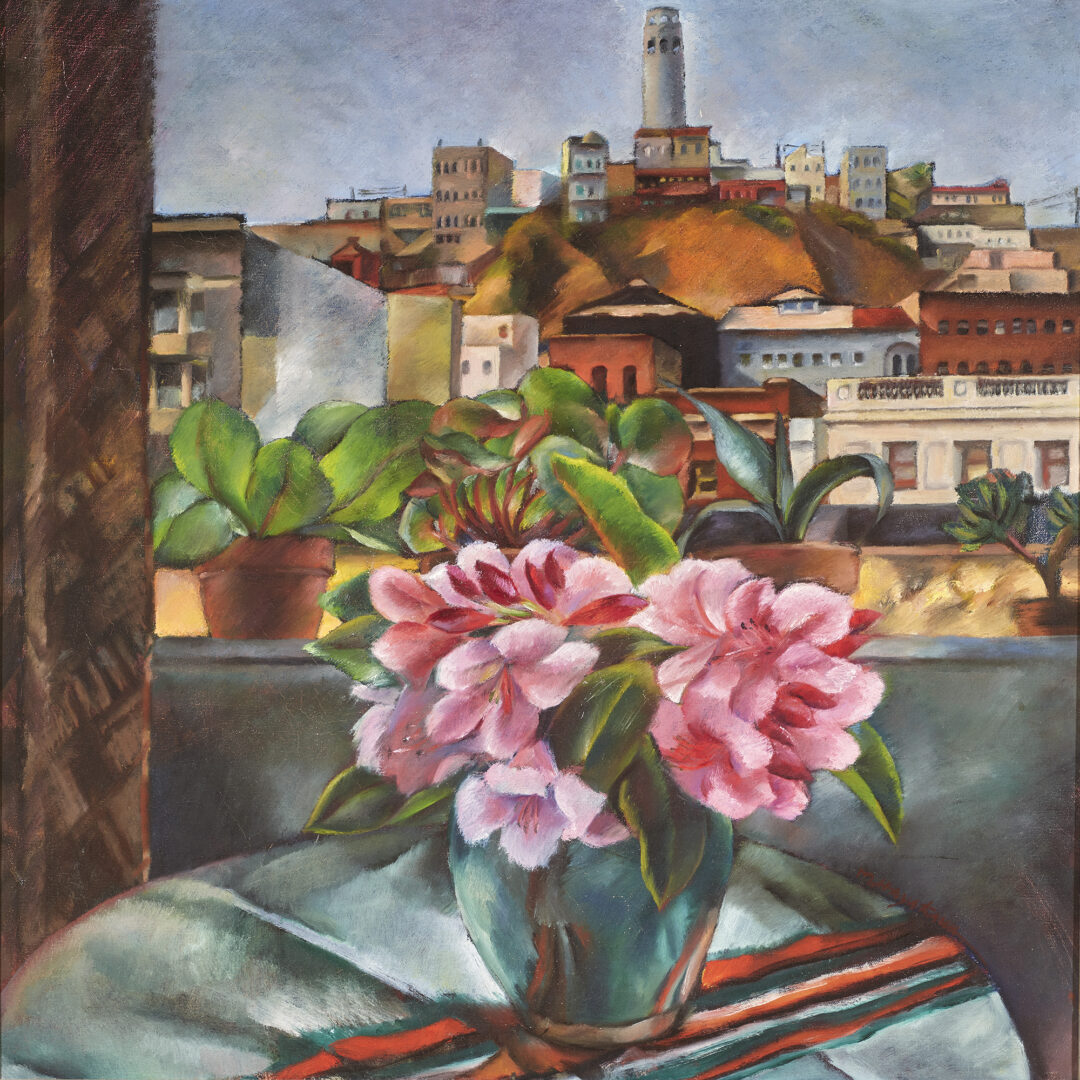
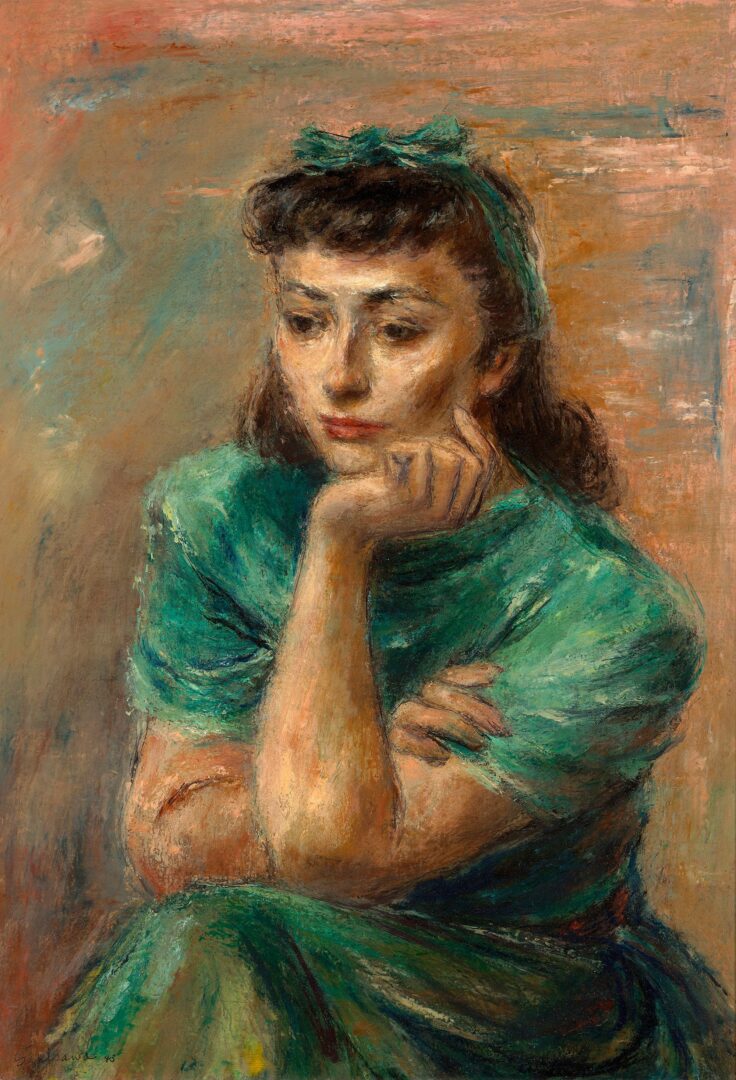
Carr adds, “Miki Hayakawa was a Japanese-born artist who immigrated to California as a young girl and there’s a delightful painting by her called ‘The View from my Window’ from 1935. It shows the scene from her apartment in San Francisco looking at Coit Tower in the distance. There’s also a painting by Sueo Serisawa, another Japanese-born artist who lived in California during World War II but had to leave the Coast and eventually settled in Chicago and New York. The work that’s represented in the show is from 1945. There are works by other women artists like Helen Forbes who depicted a wonderful aspect of the California landscape.”

Miki Hayakawa, From My Window, 1935, oil on canvas, 28-by-28 inches. | Courtesy of the Collection of Sandra and Bram Dijkstra

“What the exhibition shows is not just an East Coast view of art in the period but across the United States and the development of different regional schools on the East Coast, in the Midwest and on the West Coast — where different artists were showing different aspects of American life. The focus of the Dijkstra collection on mostly underrepresented and under-recognized artists presents a much broader and more diverse vision of this era,” Carr emphasizes.

Interestingly, while “Art for the People” is on view, The Huntington will be opening a show in February about Sargent Claude Johnson, another WPA-era painter. 

“Sargent Claude Johnson was a black sculptor based in the Bay Area who was also supported by the WPA in the 1930s and early 1940s,” says Carr. “I believe he was one of only three black supervisors of the WPA nationwide. He was a very distinguished artist and was very proud of the fact that he was a supervisor in the WPA. He led large-scale projects for architectural installations in a number of venues in San Francisco and Berkeley. For Johnson, the program allowed him to work on a bigger scale with larger teams of artists. It definitely supported him as an artist during this difficult time period, and I think it allowed him to expand his creativity.”

Sueo Serisawa, Portrait of My Daughter, 1945, oil on canvas, 20-by-14-by-1.75 inches. | Courtesy of the Collection of Sandra and Bram Dijkstra

I ask what the significance of WPA-era paintings in American art is, and Carr replies, “They present a very diverse look at the American scene in two extremely important decades in the development of American art — the 1930s and 1940s. It was a very challenging time for artists, financially and socially, but it was also a time of significant governmental support for the arts. It kept many of them alive and working, and it allowed many artists to work on a larger scale than they had ever before. Likewise, it was a time of great flourishing of the arts in the United States and the seed for that was planted not just by the government but by the people who participated in this program. That resulted in a number of murals created for post offices, government buildings, and public spaces like schools and classrooms. It also produced a larger network of artists who were also being supported by the program and I think that it helped in the advancement of communities of artists across the United States.”

As for the visitor takeaway, Carr opines, “It’s a profound and striking view of a bleak period in American history and it looks at ways that visual artists were responding to this moment across the United States. I think there will be many names of artists that our public is not familiar with but should be, because the works are stunning and powerful, and they speak with the clarity and an emotional quality that really capture the era. Sometimes art can feel esoteric to some audiences, but this art speaks with the simplicity and directness that people can relate to. I think that the show itself and the works within it will be a surprise for many.”

“Moreover, it’s interesting to look back in an era when there was the largest governmental program for the support of the arts ever created until then or since. We can reflect on what that meant in that moment and how the arts remained so relevant in American culture and what the government’s role could be or should be to support that,” Carr concludes.

Betye Saar’s Exhibition at The Huntington Offers Visitors a Calm and Meditative Experience

Also published on 13 November 2023 on Hey SoCal

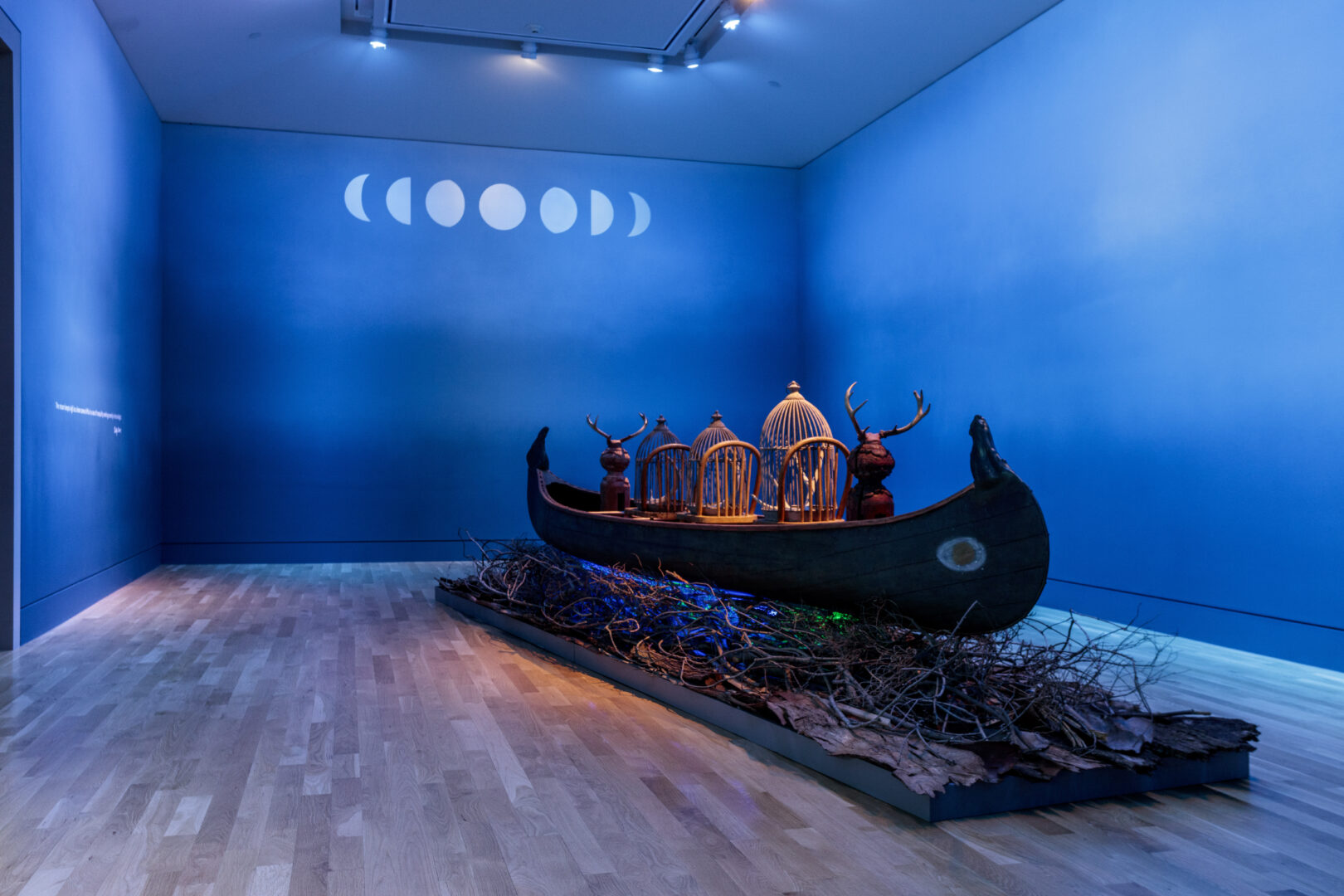
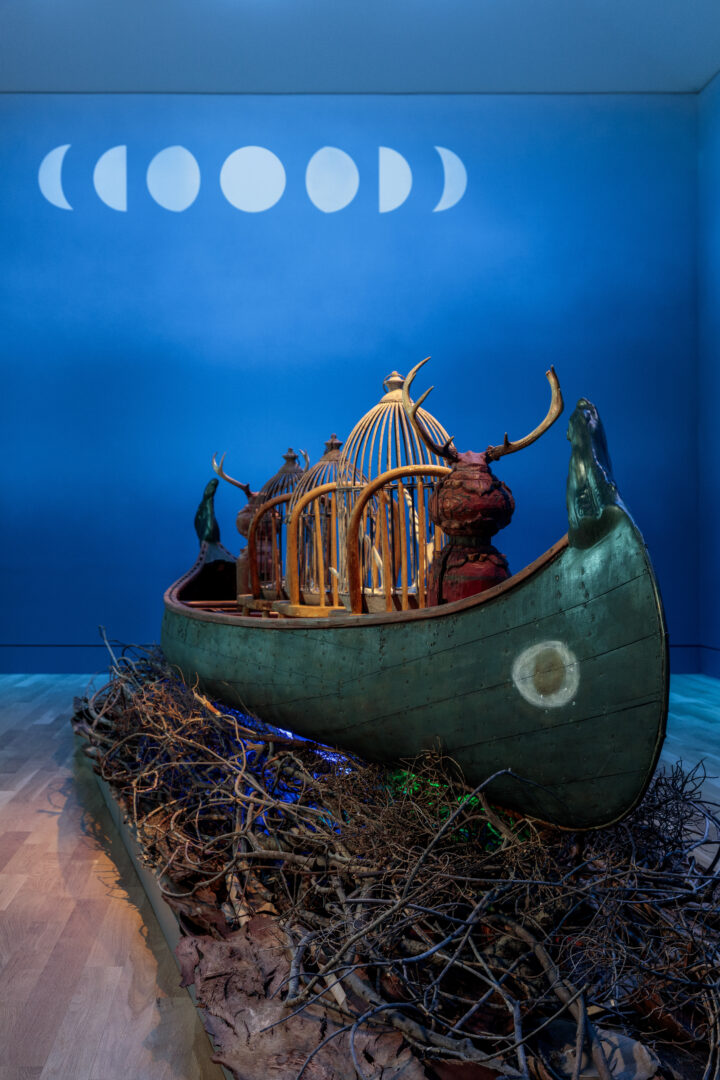
Betye Saar, ‘Drifting Toward Twilight,’ 2023 (installation view) | Photo by Joshua White / JWPictures.com. The Huntington Library, Art Museum, and Botanical Gardens

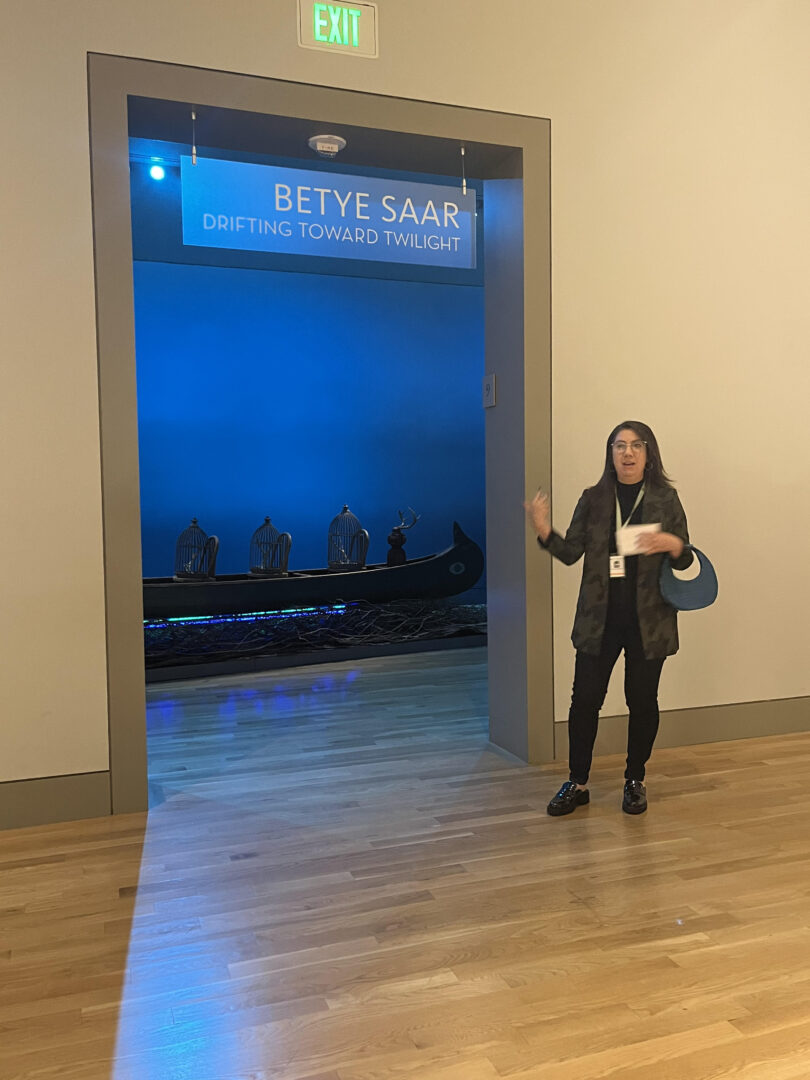
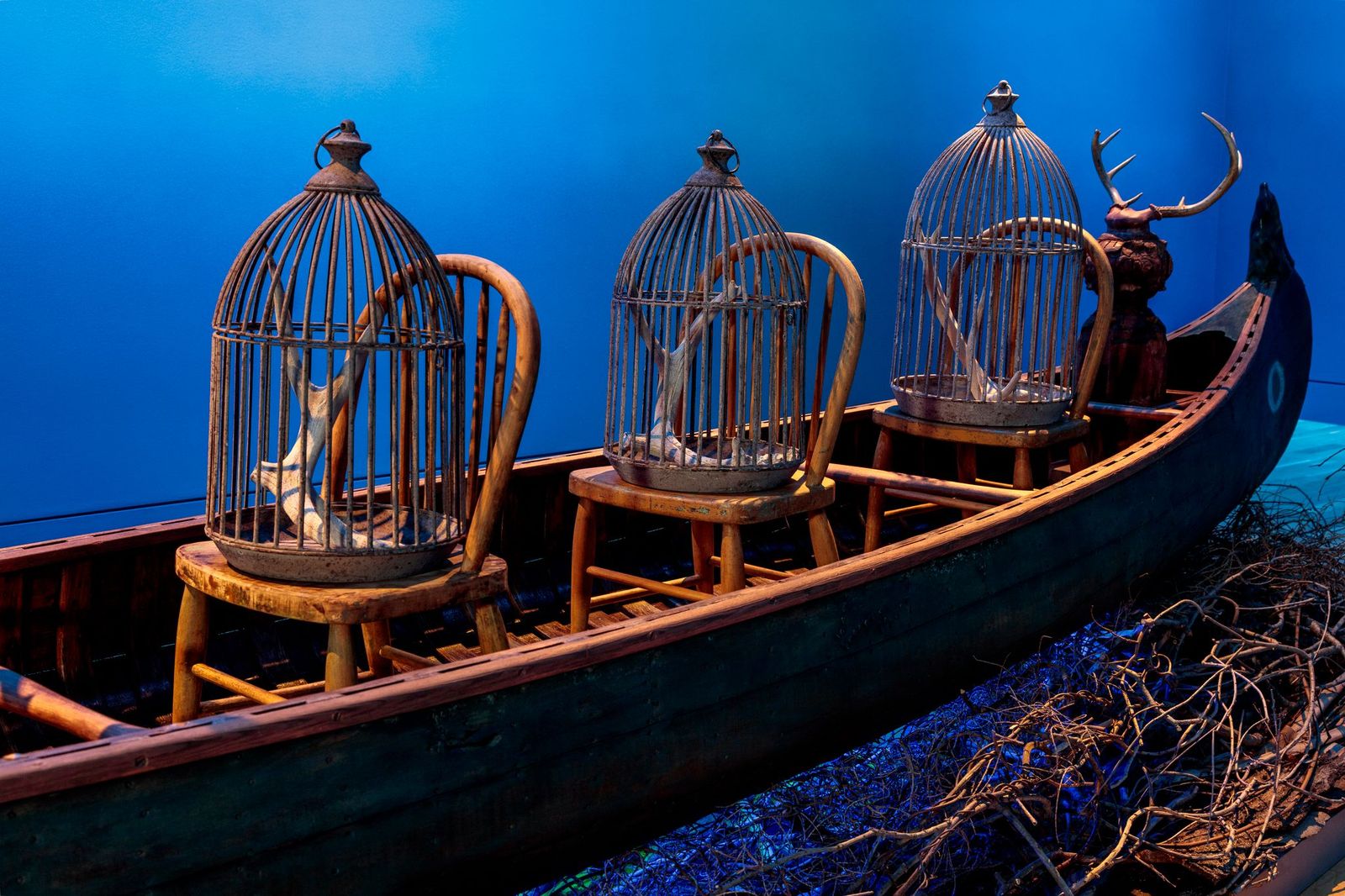
A newly commissioned, site-specific installation by renowned Pasadena artist Betye Saar opened to the public on Saturday, November 11, 2023 at The Huntington Library, Art Museum, and Botanical Gardens. Called ‘Drifting Toward Twilight’ it will be on view for two years at the Virginia Steele Scott Galleries of American Art, after which it will become part of the institution’s American art collection.

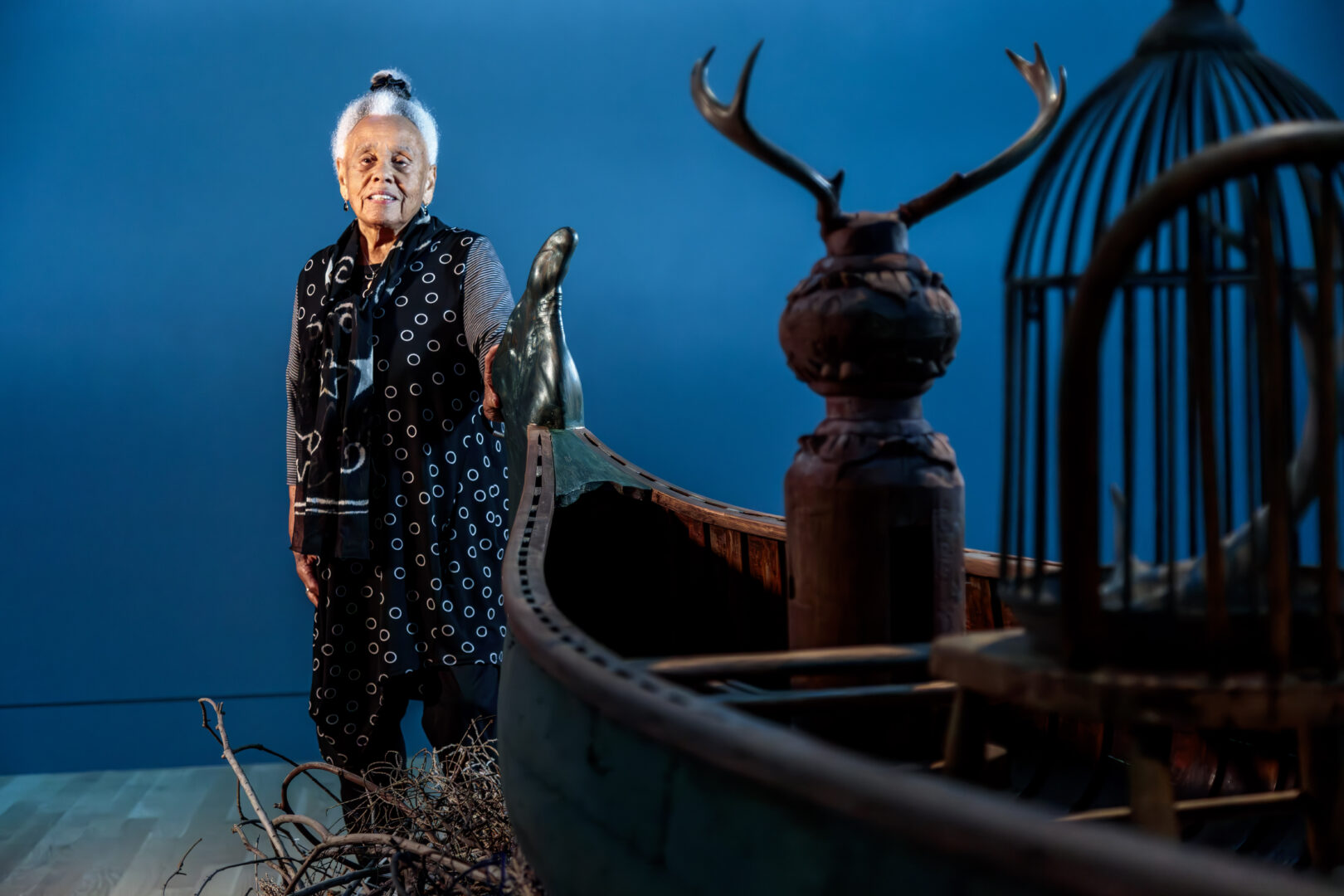
The large scale artwork – a 17-foot vintage wooden canoe and found objects, including antlers, birdcages, and natural materials Saar harvested from The Huntington’s 207-acre grounds – is the focus of an immersive exhibition ‘Betye Saar: Drifting Toward Twilight.’ It is co-curated by Yinshi Lerman-Tan, The Huntington’s Bradford and Christine Mishler Associate Curator of American Art, and Sóla Saar Agustsson, Saar’s granddaughter and the Huntington Art Museum’s special programs and digitization coordinator.

During the press preview on Friday, November 10, Dennis Carr, Virginia Steele Scott Chief Curator of American Art, remarks, “Betye Saar is one of the most important artists of our time. Her compelling voice has echoed in Los Angeles for many, many decades. But she grew up in Pasadena and has fond memories of walking in the Huntington’s gardens.”

Yinshi Lerman-Tan | Photo by May S. Ruiz / Hey SoCal

Co-curators Lerman-Tan and Agustsson alternately talk about the installation. Lerman-Tan divulges that Saar specifically chose this location for the installation because it’s like a secret room. She explains, “It has a ‘cocoon-like environment.’ The walls are painted in an oceanic blue gradient, featuring a poem by Saar and phases of the moon. Shifting lighting effects in the gallery emulate phases of daylight to twilight, evening to night, and night to dawn. Inside the monumental canoe, Saar positions mysterious ‘passengers,’ including antlers in metal birdcages, children’s chairs, and architectural elements – all drawn from the artist’s ever-evolving collection of found objects. The space beneath the canoe will be illuminated by a cool neon glow, highlighting plant material foraged by the artist from The Huntington’s gardens.”

“Saar’s work evokes mysticism and the occult, as well as the human relationship to nature and the cosmos,” Lerman-Tan describes. “An immersive, watery space containing a canoe that is part vessel and part dreamscape, the installation gestures to the ancestral and mythological journeys, and the constant cycles of the natural world.”     


Betye Saar with ‘Drifting Toward Twilight,’ 2023 (installation view) | Photo by Joshua White / JWPictures.com. The Huntington Library, Art Museum, and Botanical Gardens

Besides her role as co-curator, Agustsson was instrumental in making this installation and exhibition a reality. Speaking by phone a week before the exhibition opening, she discloses, “I worked as an assistant to Christina Nielsen (Hannah and Russell Kully Director of the Art Museum) when I first came to The Huntington about two years ago. She happens to be a huge fan of Betye’s and wanted to do an exhibition with her. A few ideas floated around but I remembered that when I was working for Betye a few years ago, she had bought this vintage canoe and had started collecting antlers and natural materials for an assemblage. She’s done canoe installations in the past so this was a notion that has been marinating. I thought that The Huntington Gardens would be the perfect home for the canoe because the concept was to incorporate natural materials. Then Betye came up with the idea of foraging and using plant materials from the Huntington garden.”

Interviewed via email, Saar recounts her collaboration with the Huntington’s Art Museum and Botanical Gardens to realize this endeavor. “I visited the Huntington in the spring of 2022 and met with Christina Nielsen and my granddaughter Sóla Saar Agustsson and the idea of a project came up. Then some of the Huntington curators came to visit my studio and saw the canoe. I submitted a sketch and then made a scale model of the room and the canoe. It all just came together after that.”

“I have used canoes in some of my previous installations,” explains Saar. “To me it represents an element of indigenous people who used them, and the connection to nature. But I also really enjoy the shape of the canoe. The flow of it visually and how when you are in a canoe you feel like you are gliding. I acquired this particular canoe a few years ago and it was sitting in my garage waiting to become art. The Huntington commission made it take shape.”

In a short documentary film – produced for the exhibition and is being shown at an adjacent room – Saar explains her concept for the installation, “A canoe is an object of Early America as a means of transportation and I added the wood burrows to make it look vintage. There are three cages that make you think of slavery, of being taken care of and having certain things but you’re still caged – caged freedom in a way.”             

The companion film also includes a footage of her foraging natural materials at the Huntington garden. Saar recollects, “I think it was back in April when I came to gather materials from the garden. There had been a series of storms and many of the trees had limbs break or had to be trimmed. I picked up what Mother Nature started.”

As she picks up discarded branches, she gets ideas about how to use them and asks an assistant   to hand her her notebook. Saar expounds, “I am an assemblage artist and am inspired by the materials I find at flea markets and estate sales, or things people give me. Sometimes I’ll think ‘Oh this old red box needs to sit on a red table’ or something. But I also am inspired by things I see as I travel or images in my dreams and I’ll make a sketch of it. I always have a little sketchbook in my purse and a bigger art kit and sketchbook when I travel. Sometimes the sketch becomes an assemblage, sometimes it stays a sketch.”

Betye Saar, ‘Drifting Toward Twilight,’ 2023 (installation view) | Photo by Joshua White / JWPictures. com. The Huntington Library, Art Museum, and Botanical Gardens

Saar had a very clear idea about the ambience she wanted to produce and she kept close tabs on its progress. She relates, “I’ve been back and forth to The Huntington many times these past months. I was selecting the wall colors, choosing the lighting effects, etc. until it all came together to create the right mood. I wanted to feel immersed in the room.”

Agustsson says she worked very closely with Lerman-Tan to ensure they carried out what her grandmother envisioned. The inter-generational component of this exhibition will extend to the catalogue to be published in the summer of 2024. Agustsson will write a Q&A piece that covers Saar’s life and her career. It focuses specifically on her childhood growing up in Pasadena and her visits to The Huntington as a child and teenager, gardening practice, and an interview about the new canoe installation.

It will have a Director’s foreword by Christina Nielsen, followed by a short essay by Ishmael Scott Reed, an American poet, novelist, playwright, and longtime friend of Saar, as well as a  re-publication of an archival interview he did with Saar in the 1970s. Lerman-Tan and Tiffany E. Barber, assistant professor of African American art at UCLA, will be contributing essays.    

I ask Agustsson what it was like to work on a project with someone she knows so well, and she replies, “I’ve worked with her in the past for years so that helped me capture her vision and facilitate dialogue between her and the museum. I realize that this is a very special and personal project given her upbringing in Pasadena so I wanted to establish that particular connection.”

“For me, I found it to be really inspiring and meaningful especially getting to interview her and learning more about her,” Agustsson says further. “Even though I’ve grown up with her, there are things I continue to discover about her. I learned that she liked tap dancing when she was a teenager. I had no idea, I never heard that before! She’s 97, she’s had so many amazing experiences, and she’s done different kinds of art work in various media – costume design, designing greeting cards, printmaking, collage, immersive installations like this one, and she was a seamstress. It doesn’t surprise me that she also did tap dancing.”

Saar is the matriarch of a close-knit family of artists, as Agustsson’s account of her grandmother’s influence in her childhood years and present life as an adult attests to. “Betye has three daughters and six grandchildren. We were always drawing and doing art as youngsters. But even now, we have themed family parties and we’re all very supportive of each other. In a way Betye working in diverse mediums – assemblage, printmaking, collage, design, painting – was passed down. Two of her daughters, Alison and my mother Lezley, are artists and her other daughter Tracye is a writer and her studio manager. Alison does printmaking and sculpture, my mom does painting, collage, and assemblage.”

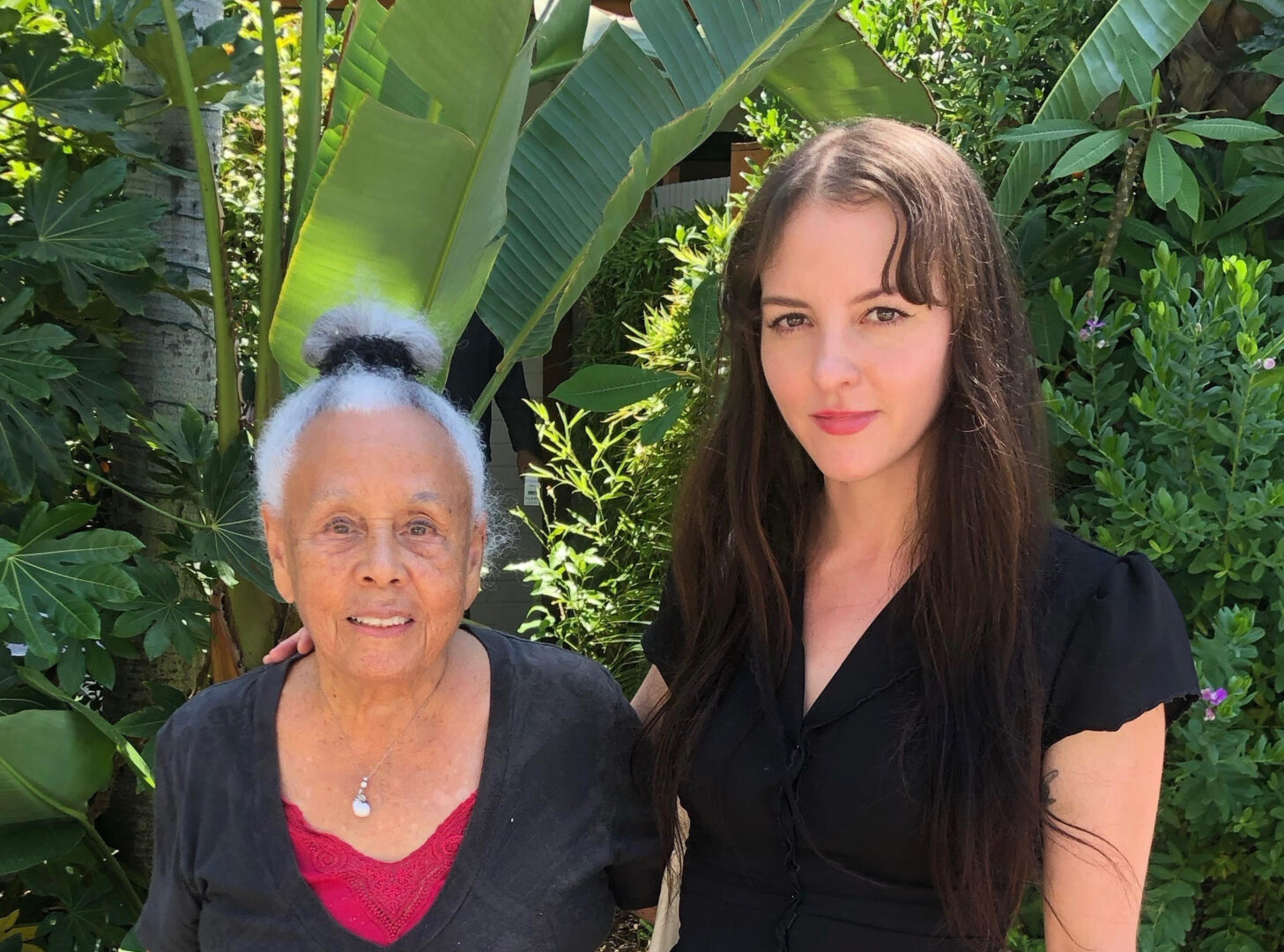
Betye Saar and Sóla Saar Agustsson | Photo courtesy of Sóla Saar Agustsson

“I’m not really a visual artist but I do collages and dollhouses, which is like assemblage in a way. My cousin does printmaking and ceramics,” continues Agustsson. “My grandfather, Betye’s husband, Richard Saar was a ceramicist and my other cousin does set design, which relates to Betye being a costume designer. We like to go to flea markets together and are on the lookout to get each other certain things. My grandmother would also give me a lot of advice about art.”

Collecting found objects to create art is something Saar began doing since she was four or five years old. She says that whenever they moved to a new house, she would look through the previous owners’ trash to see what they threw away.   

It’s no wonder then that assemblage spoke to her. Saar reminisces, “In the 1970s I saw the work of Joseph Cornell, right here at the Pasadena Art Museum in fact. I was inspired by how he took ordinary objects and made them into art. He made art that was beautiful and clever and had a sense of humor. It made me want to do that too.”

I inquire if there’s one artwork she created that means more to her than the rest, which one is the most memorable piece she made and why. Saar answers, “I don’t really have a favorite but I have a few works of art that I like because the viewer is invited to make an offering. Mti (1973) and Mojotech (1987). I like involving the public and getting them to experience my work in different ways. It’s also very interesting to see what people leave as an offering. Sometimes it’s a gum wrapper or money or ticket stubs. But sometimes people will leave a drawing they made on site or return later with a photograph or poem. I keep all of these items and feel they have a special power from people connecting to my work.”

That tangible takeaway is something Saar hopes for. She says, “As an artist, one tries to elicit an emotion from the viewer. This can be a tricky thing because I want people to feel what they feel but not dictate it. I hope that people come and see my exhibition in the gallery and then go out and find their own inspiration in the gardens. That’s what I did.”

Betye Saar, ‘Drifting Toward Twilight,’ 2023 (installation view) | Photo by Joshua White / JWPictures.com. The Huntington Library, Art Museum, and Botanical Gardens

When I ask Agustsson what she wants viewers to take away, she replies, “It’s meditative and I think she wanted to convey that emotion. It mimics floating in a body of water looking at the twilight and the moon; it has a very cosmic feeling. With all the turmoil going on in the world and in life, the room feels like a reprieve. I don’t get caught up in thinking about its meaning in terms of words. It’s refreshing to walk away with just an emotional response to it. And that’s very much integral in her process of creating – getting across an emotion – and intuition is a lot of what guides her.”

Agustsson adds, “I just hope that visitors and aspiring artists will relate to her method in harvesting and assembling the work where she demonstrates you can make art out of everyday objects and things you find on the ground. And that they get inspiration after seeing the film, watching her work in the creative process with so much enthusiasm at 97 years old.”

Finally, I ask Saar what it means for her to have her installation become part of The Huntington’s permanent collection and she says, “Well, being from Pasadena it means a great deal to me. I came to the gardens as a child and now here I am as an adult, a 97-year old, with my art in this amazing museum. It’s truly an honor that my work is now part of the legacy of The Huntington.”

‘Betye Saar: Drifting Toward Twilight’ represents a homecoming for Saar. Without a doubt, Pasadenans will be proud of her significance in this community and celebrate her iconic status in Black feminist and American art.

But the installation will profoundly affect all visitors. As they step inside the room, they will at once be enveloped in its warm embrace. And as they read Saar’s poem painted on the wall, ‘The moon keeps vigil as a lone canoe drifts in a sea of tranquility seeking serenity in the twilight,’ they will feel transported to a calm and peaceful place.                                                                                         

Restored Shōya House at The Huntington Demonstrates Sustainable Living Practices

Also published on 20 October 2023 on Hey SoCal

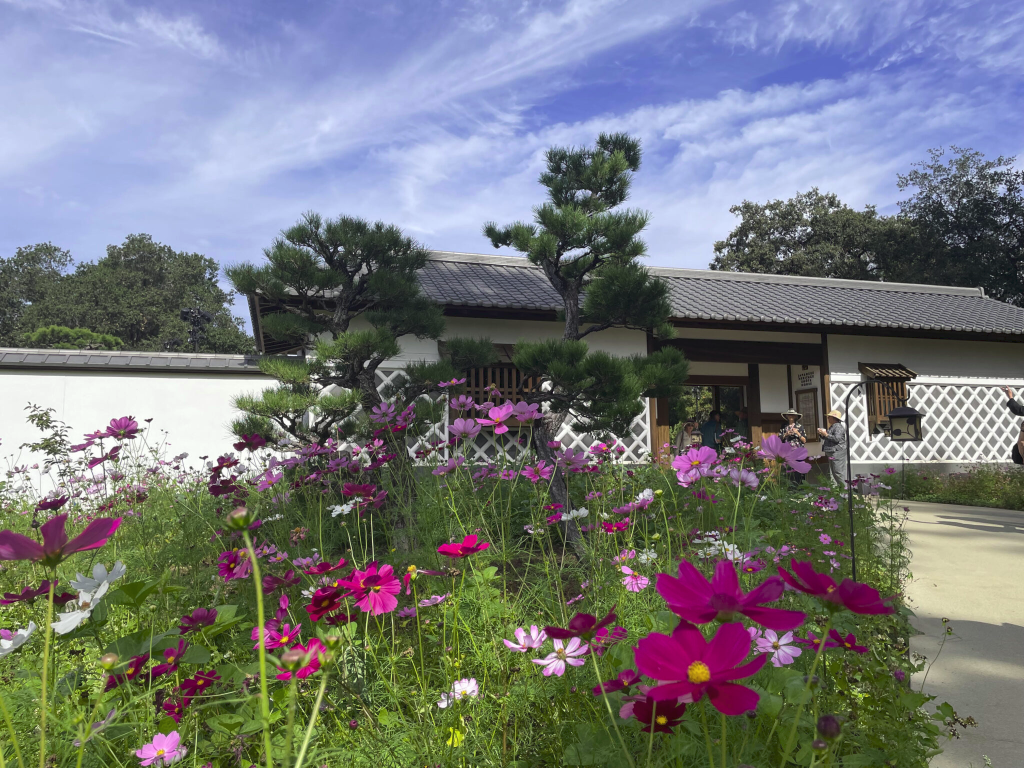
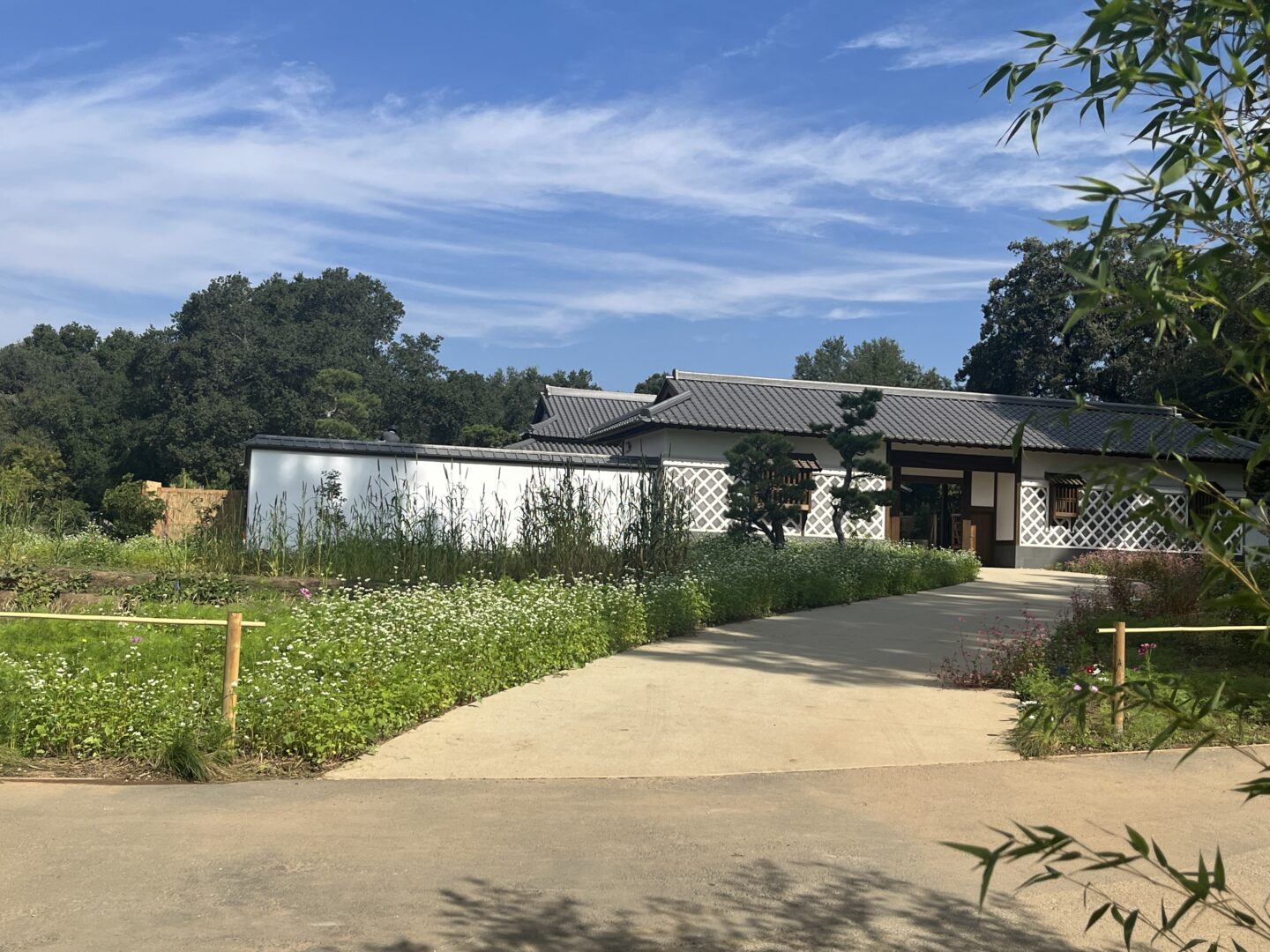
Flowers bloom outside the gatehouse. | Photo by Brianna Chu / Hey SoCal.com

Wouldn’t it be incredible to practically step back in time and experience what it was like to live in a rural village in 18th century Japan? Starting on October 21, visitors to The Huntington Library, Art Museum, and Botanical Gardens will have that unique opportunity when the Shōya House opens at the Japanese Garden (read previous article about the Shōya House here).   

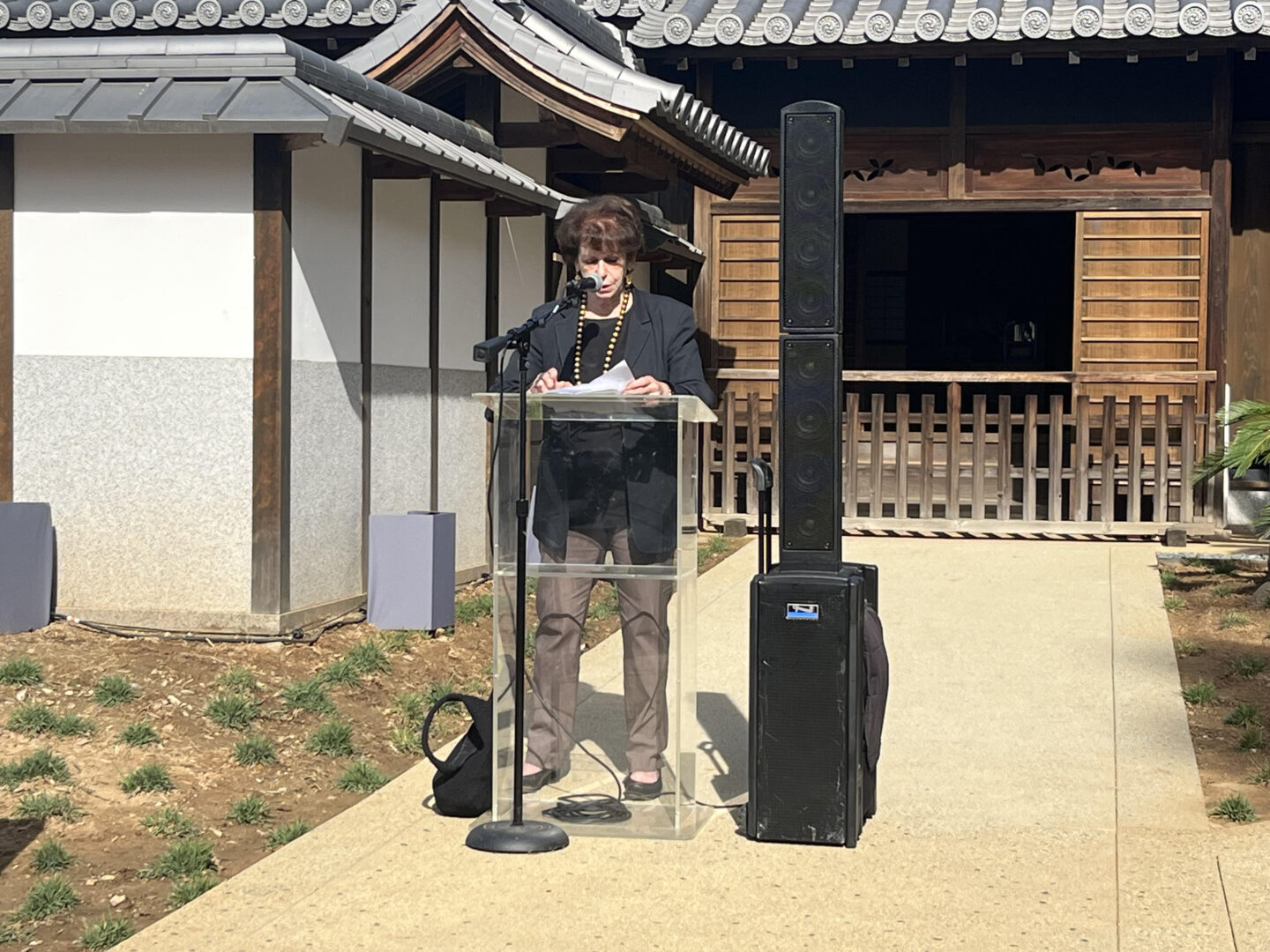
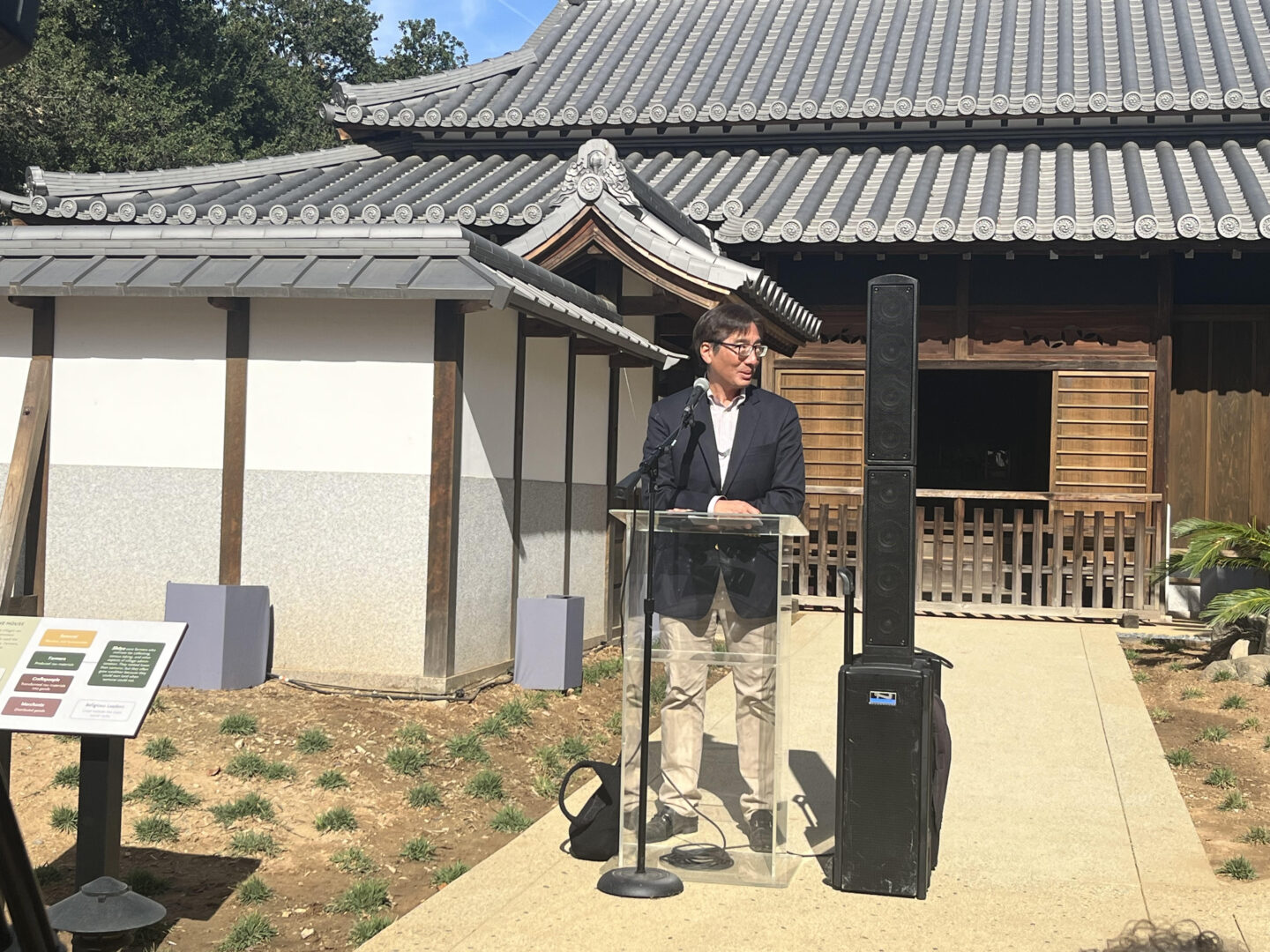
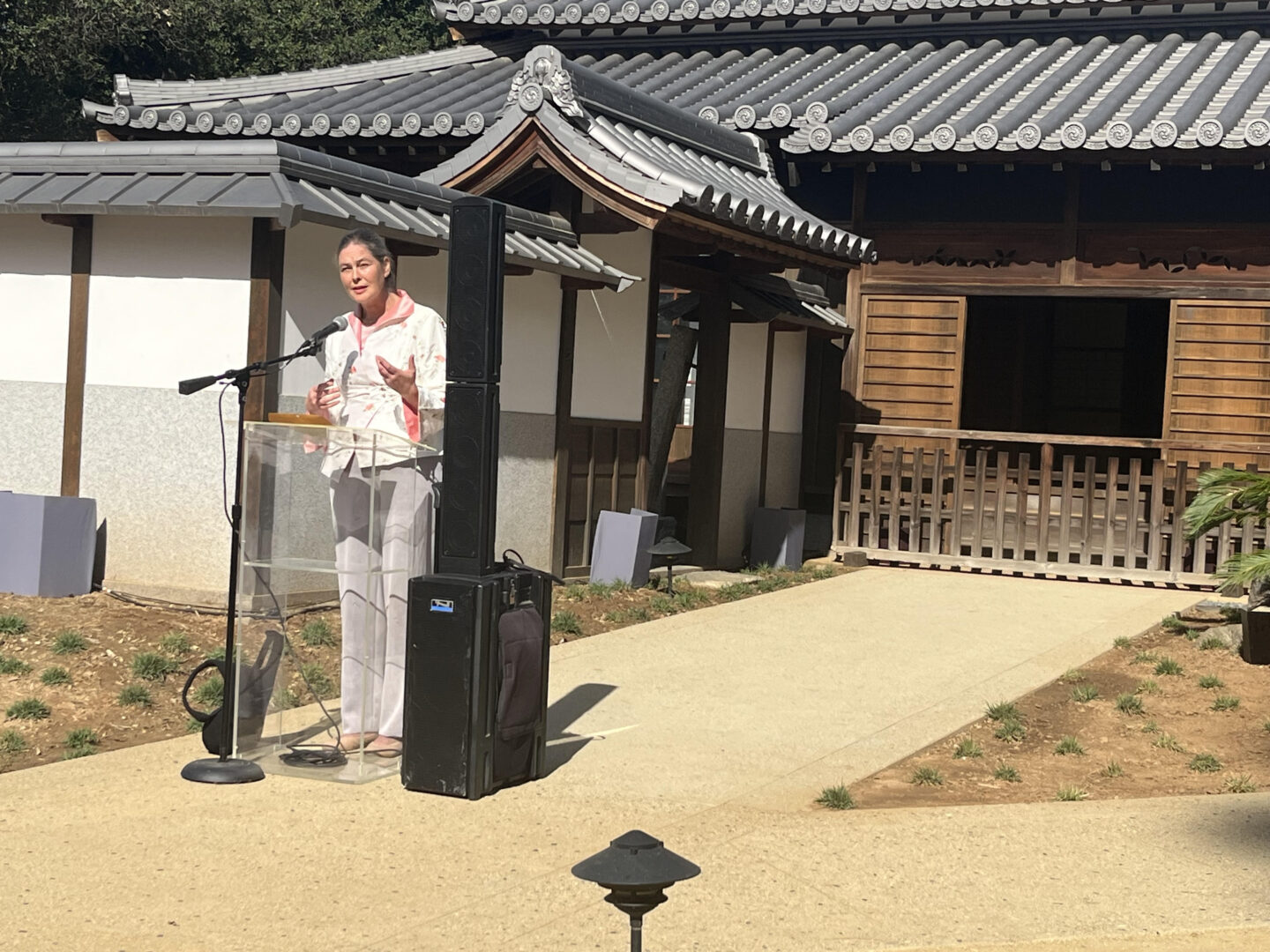
During the press opening held on Friday, October 13, Karen Lawrence, president of The Huntington expressed her gratitude for the generosity of the Yokoi family who gifted their ancestral home to the beloved institution.

Karen Lawrence, president of The Huntington Library, Art Museum, and Botanical Gardens. | Photo by Brianna Chu / Hey SoCal

Lawrence remarks about this exceptional new destination at The Huntington. “This restored residential compound is truly a masterpiece and it offers a glimpse of life in rural Japan some 300 years ago. It’s the only example of this kind of architecture in the U.S. and its presence here wouldn’t have been possible without the generosity of the Yokoi family.”

“In Japan, the house was disassembled, restored, disassembled again, and shipped to us at The Huntington,” Lawrence adds. “Once the components of the house arrived, it was up to The Huntington to rebuild and provide context, including recreating the landscape and gatehouse.”

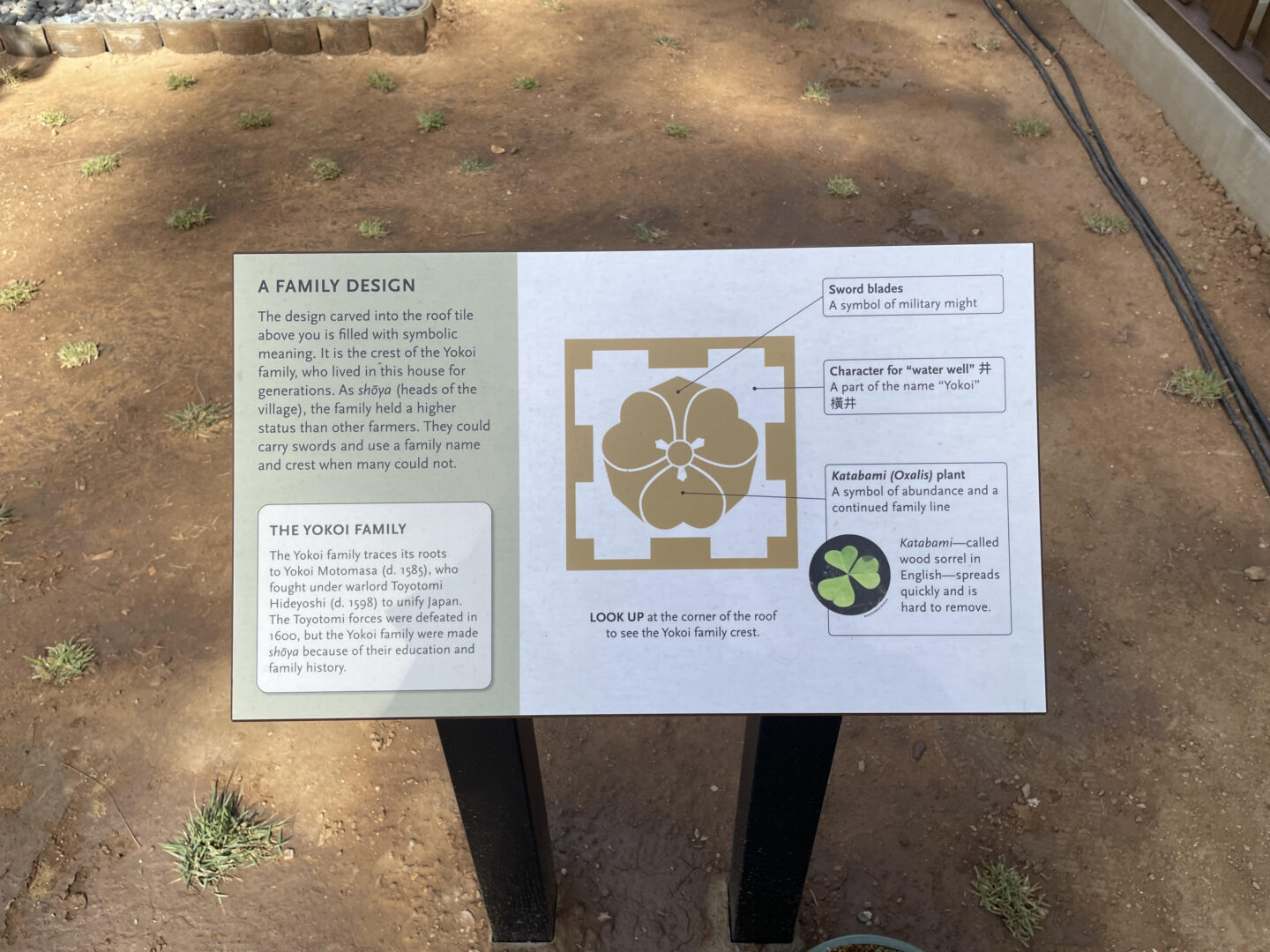
A signage at the house shows the Yokoi family crest. | Photo by Brianna Chu / Hey SoCal

It’s only fitting for the Shōya House to join the distinctive house Henry E. Huntington bought from Pasadena businessman George Turner Marsh that has been at the Japanese Garden, which has such a fascinating history. The Huntington’s information kit gives the following  chronology.                    

The building of the Japanese Garden began in 1911 and was completed in 1912. The garden, which is currently 12 acres, was inspired by the widespread Western fascination with Asian culture in the early 1900s. Henry E. Huntington purchased many of the garden’s plants and ornamental fixtures, as well as the Japanese House, from a failed commercial tea garden in Pasadena, located at the northeast corner of Fair Oaks Avenue and California Boulevard. When The Huntington opened to the public in 1928, the Japanese Garden became a major draw for visitors. Features such as the bell tower and bridge were newly built for the garden by Japanese American craftspeople.

Robert Hori, Gardens Cultural Director and Programs Director. | Photo by Brianna Chu / Hey SoCal

By World War II, staffing shortages – including those resulting from the incarceration of Japanese American employees – and the political climate led to the closure of parts of the Japanese Garden, and the Japanese House fell into disrepair. In the 1950s, members of the San Marino League helped support the refurbishment of the buildings and surrounding landscape.

In 1968, The Huntington expanded the Japanese Garden to include a bonsai collection, which now numbers in the hundreds, and a rock garden, the Zen Court. Since 1990, The Huntington has served as the Southern California site for the Golden State Bonsai Federation.

The ceremonial teahouse, called Seifū-an (the Arbor of Pure Breeze), was built in Kyoto in the 1960s and donated to The Huntington by the Pasadena Buddhist Temple. In 2010, the teahouse made a return trip to Japan for restoration, overseen by Kyoto-based architect Yoshiaki Nakamura (whose father built the original structure). It was then shipped back to San Marino and reassembled.

In 2011, a team of architects with backgrounds in historic renovation, horticulturists, landscape architects, engineers, and Japanese craftsmen undertook a yearlong, large-scale restoration of the historic core of the garden. The project included repairs to the central pond system and water infrastructure, along with increasing pathway accessibility and renovating the original faux bois (false wood) ornamental trellises.

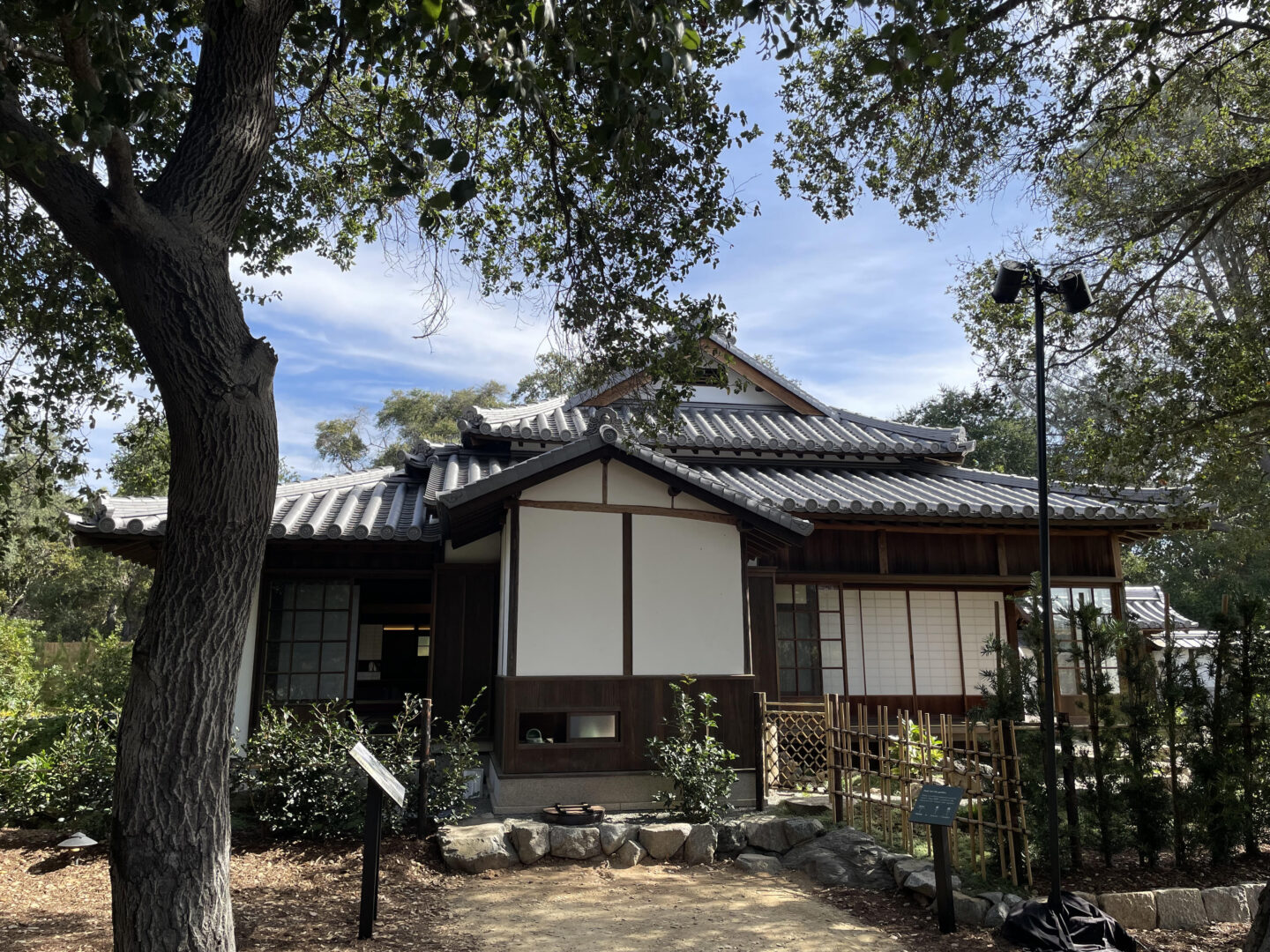
A view of the house from the side. | Photo by Brianna Chu / Hey SoCal

The Japanese Garden continues to be a popular attraction to this day. However, as Lawrence points out, “What was missing was a traditional Japanese residence that could demonstrate the important historical relationship between the Japanese people, their culture, and the landscape. The iconic Japanese house in the original garden provides the idea of a Japanese residence but it  wasn’t really lived in.”

Lawrence clarifies, “The shōya house is completely different. It’s an exquisite example of a village leader’s residence where rural village life can be explored through the lens of 18th century architecture and farming practices. The residence was occupied by one family, generation after generation, over the course of three centuries. Mr. Yokoi is the 19th generation to own the house.”

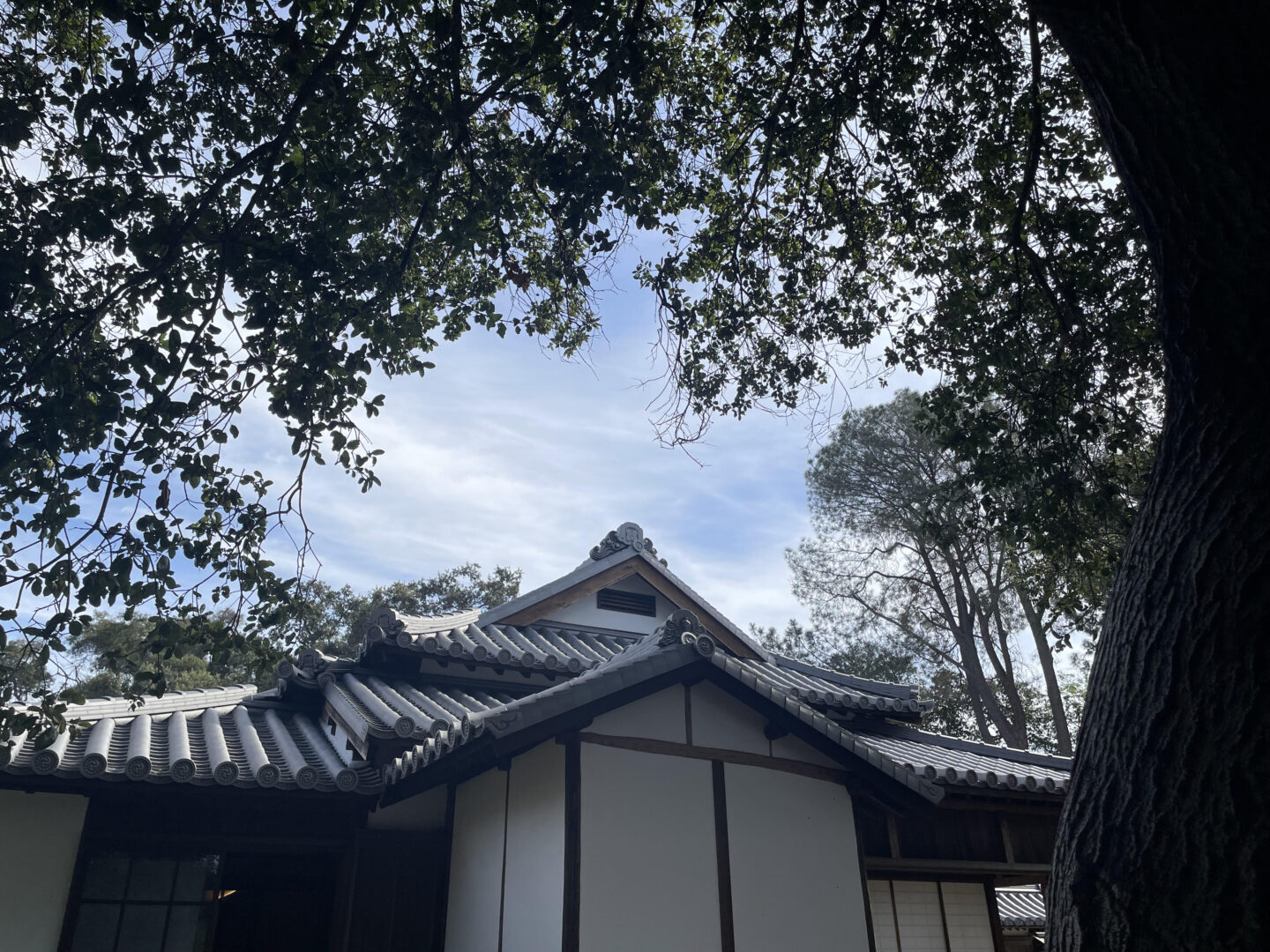
The tile work on the roof. | Photo by Brianna Chu / Hey SoCal

“Today it provides us with a rich aesthetic experience of the beauty of Japanese building art and many insights into what it means to live sustainably on the land,” Lawrence adds. “We were fortunate to have artisans come from Japan to work alongside local architects, engineers, and construction workers to assemble the house here and recreate elements that would have surrounded it at the time when it housed a village leader or shōya. They created the wood and stonework features you see, as well as the roof tiles and plasterwork prioritizing traditions of Japanese carpentry, artisanship, and sensitivity to materials.”

Lawrence concludes by voicing her opinion that this will become a major visitor attraction in Southern California, as well as a primary resource for architects, scholars, students, teachers, and others interested in the complexities and beauty of traditional Japanese design, craftsmanship, and architectural practices. And that visitors it will appreciate the lived experience of what this meant and how it was sustained for 300 years.

Robert Hori, gardens cultural director and programs director, says, “It has really taken an entire village to build the head of a village’s house. It wasn’t just the botanical gardens, everyone at The Huntington has contributed in interpreting the house which will make a full experience for the visitors. They won’t be looking at an exhibit in a museum, they will be in that museum. They’ll be able to participate in rice planting, and see the changes of the season. This is something that exists nowhere else and can only live at The Huntington.”

The doors open so the outdoors and indoors blend seamlessly. | Photo by Joshua White / JWPictures.com. The Huntington Library, Art Museum, and Botanical Gardens

The construction team that undertook this project was headed by Yoshiaki Nakamura of Nakamura Sotoji Komuten, who oversaw the restoration of the teahouse in 2010. Hori discloses, “When Mr. Nakamura first came to The Huntington about 15 years ago, he toured it and he said, ‘Wow, this is something special.’ He saw the resources in the library (each year we have over a thousand scholars) and he said, ‘I want to create something that students, teachers, and researchers can explore and be inspired by.’ He wanted to bring traditional building and garden techniques here at The Huntington so they can be a primary resource for those who are not going to Japan.”

“We have also been blessed to have the partnership of many architects and professionals, including Mike Okamoto (U.S. Architect of Record),” continues Hori. “He has been a valuable partner in reassembling this house. You can imagine the challenges of bringing not just a 300-year-old house and re-erecting it, but bringing the metric system and having it meet U.S. building code. We are likewise fortunate to have Takuhiro Yamada (Hanatoyo Landscape Co. Ltd. (Kyoto, Japan) doing the landscape and really putting together the program.”

The formal garden. | Photo by Brianna Chu / Hey SoCal

“What we’d like to show is the beginning of landscape,” Hori expounds. “And that design starts

with the ability to control water and to move earth – and that’s exactly what a farmer is doing. We want visitors who go on a tour of the house to have the experience of being transported to 18th century Japan.”

Each time Hori gives a tour of the Shōya house, he begins at the terraced agricultural field,     where he notes a whole new animal population has taken as their home. “You’ll notice the terrain is sloped – this is how many of the farms were in Japan because it’s the most efficient way to move water from uphill to downhill.”

Nicole Cavender, Telleen/Jorgensen Director of Botanical Gardens. | Photo by Brianna Chu / Hey SoCal

Throughout the tour Hori impresses on everyone how these sustainability practices were a matter of survival for farmers centuries ago. And that sustainability is one of the biggest challenges we face today globally. 

And it’s an issue that Nicole Cavender, Telleen/Jorgensen Director of the Botanical Gardens, deeply cares about. She states, “I’d like to emphasize one aspect in particular that’s especially near and dear to me – we have here a model of sustainability practices. You’ll see how in this house, in this landscape, we’ve integrated and showcased the historical integration of agricultural systems, how water can be used and recycled. In the front as you come in, you see the agricultural landscape that showcases sustainable practices of using cover crop and companion planting. I’m really excited to be able to share these practices and hope to inspire people to integrate them into their own life.”

View of the private garden | Photo by Joshua White / JWPictures. com. The Huntington Library, Art Museum, and Botanical Gardens

Without hammering our head with it, The Huntington makes a compelling argument for practicing sustainability. By restoring the Shōya house and recreating the landscape which will grow vegetables and various crops that change through the seasons – and showing how the village head and townspeople lived – we will witness for ourselves how extraordinary beautiful the outcome can be. Would that in the foreseeable future, Cavender’s hope that their efforts to persuade us to do as these villagers did in 18th century Japan come to fruition.   

Centuries-old Japanese Heritage Shōya House Opens to the Public Oct. 21 at The Huntington

Also published on 10 October 2023 on Hey SoCal

The exterior of the Yokoi family’s historic family home in Marugame, Japan | Photo by Hiroyuki Nakayama / The Huntington Library, Art Museum, and Botanical Gardens

A 320-year old Japanese Heritage Shōya House from Marugame, Japan, has been carefully and meticulously disassembled and restored then shipped to The Huntington Library, Art Museum, and Botanical Gardens in San Marino, California. Sited on a two-acre lot at the storied Japanese Garden, this remarkable architectural and cultural gem will open to the public on October 21, 2023.

During the Edo or Tokugawa period in Japan – between 1603 and 1867 – a single government ruled under a feudal system. It was marked by a flourishing economy and peaceful times. Samurai warriors, who were no longer necessary to protect their villages, moved to the cities to become artists, teachers, or shōya.

Successive generations of the Yokoi family served as the shōya of a small farming community near Marugame, a city in Japan’s Kagawa prefecture. Acting as an intermediary between the government and the farmers, shōya’s duties included storing the village’s rice yield, collecting taxes, maintaining census records, and documenting town life, as well as settling disputes and enforcing the law. He also ensured that the lands remained productive by preserving seeds and organizing the planting and harvesting. The residence functioned as the local town hall and village square.       

In 2016, Los Angeles residents Yohko and Akira Yokoi offered their historic family home to The Huntington. Representatives of the institution made numerous visits to the structure in Marugame and participated in study sessions with architects in Japan before developing a strategy for moving the house and reconstructing it at The Huntington.

The agricultural fields and the gatehouse | Photo by May S. Ruiz / Hey SoCal

The Huntington raised over $10 million through private donations to accomplish the project. Since 2019, artisans from Japan have been working alongside local architects, engineers, and construction workers to assemble the structures and re-create the traditional wood and stonework features, as well as the roof tiles and plaster work, prioritizing the traditions of Japanese carpentry, artisanship, and sensitivity to materials.

Visitors to The Huntington will get to see the Japanese Heritage Shōya House, a 3,000-square-foot residence built around 1700. A remarkable example of sustainable living, the compound consists of a small garden with a pond, an irrigation canal, agricultural plots, and other elements that closely resemble the compound’s original setting. 

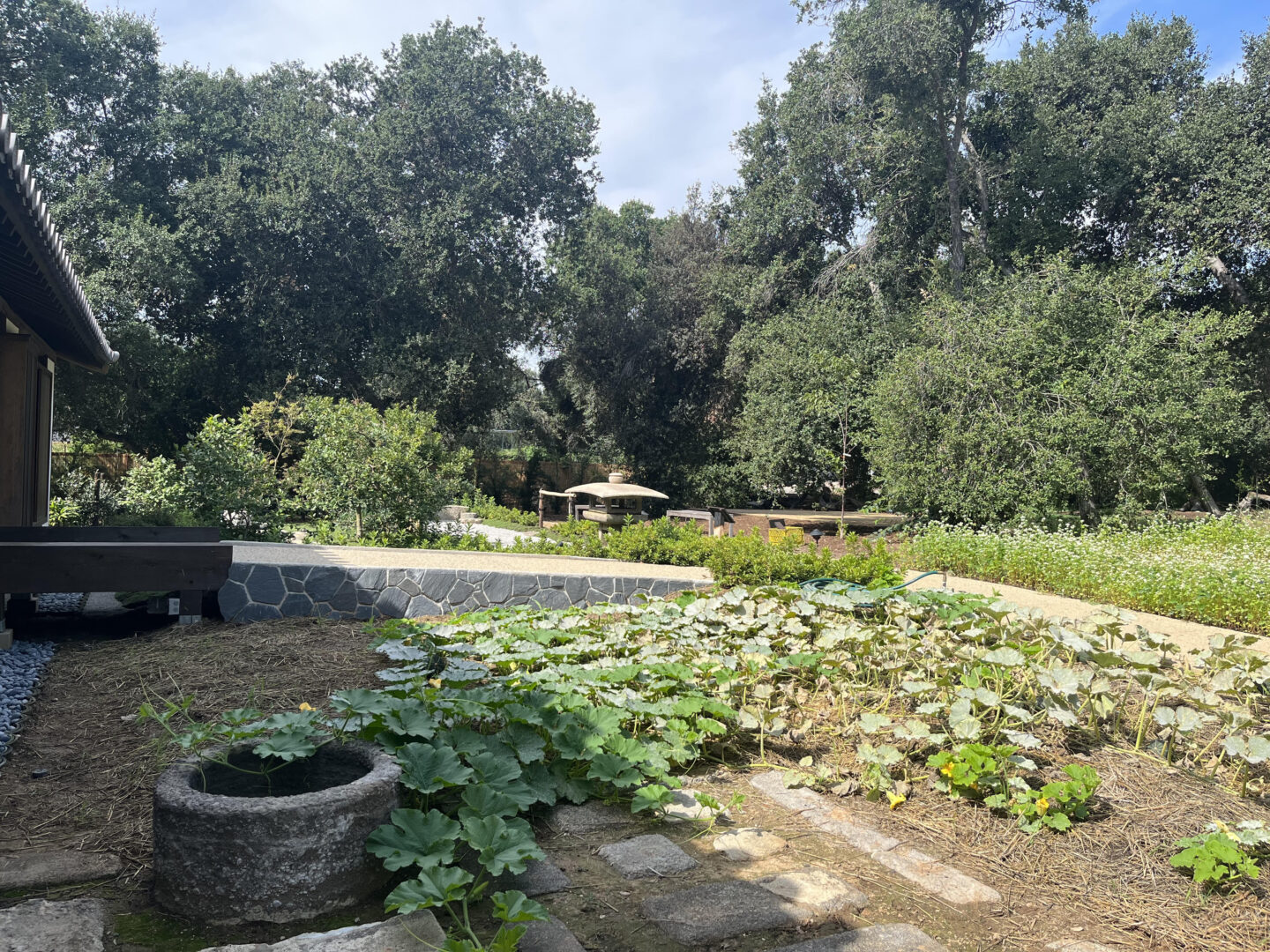
Robert Hori, the gardens cultural director and programs director at The Huntington, generously gives me a tour of the shōya House while he talks about the project. He begins, “Visitors will first view the agricultural fields and the gatehouse. In much of Asia, rice was a staple food and farmers played a very important role. Here we have terraced rice fields on one side and a field growing a variety of crops on the other side. This will give the public a sense of the seasons, the life style of the Edo period in Japan and what the pre-modern way of life was like.”

The gatehouse | Photo by May S. Ruiz / Hey SoCal

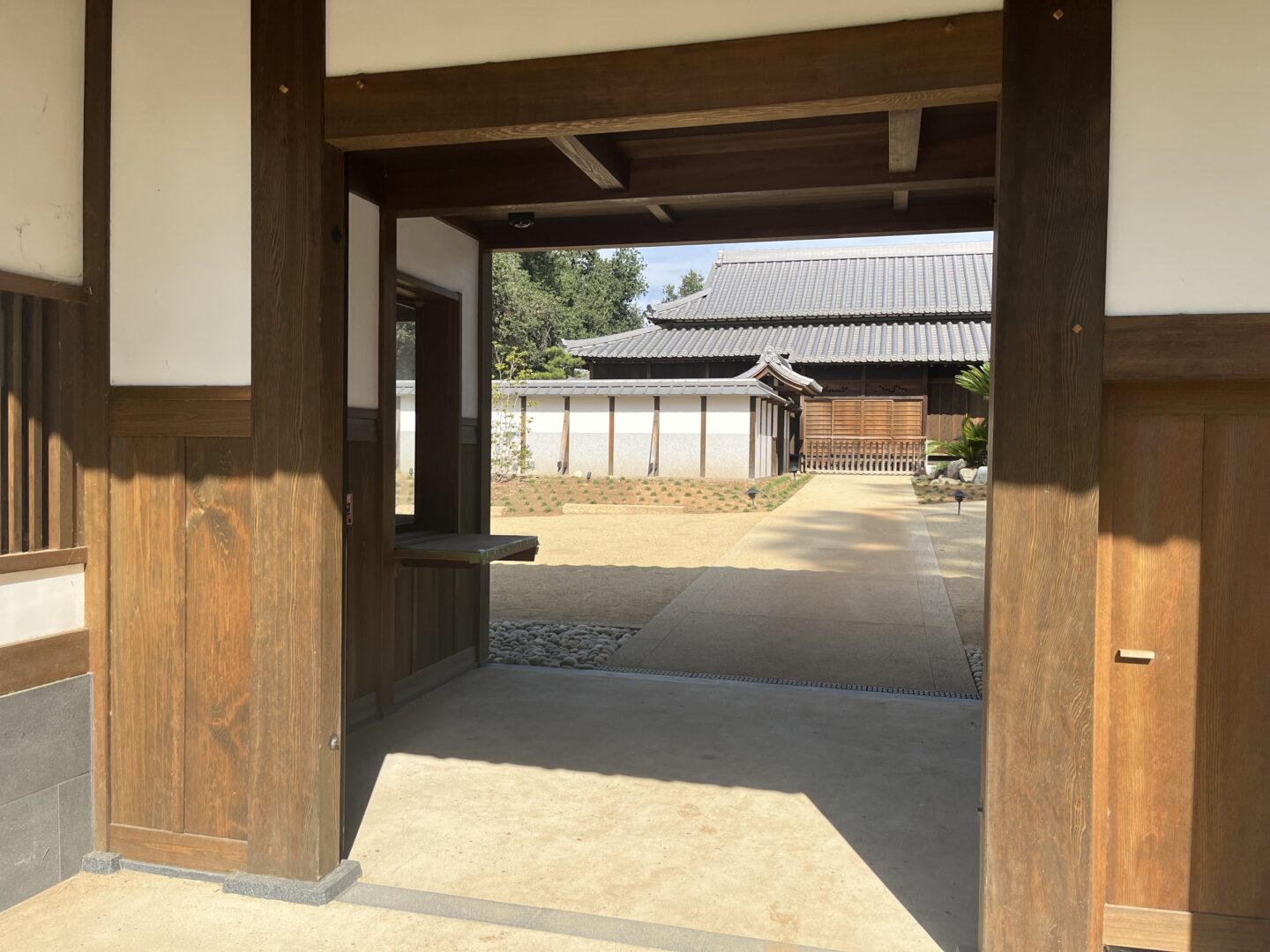
As we reach the gatehouse, Hori says, “This compound was open during the day for business and at night the gates were shut. The gate was built for events and also to protect the house from weather because Japan and much of Asia are susceptible to typhoons. The gatehouse was damaged in a typhoon in1970 so this structure was not original to the house; it’s a replica based on existing models from the same period in Japan and photographs.

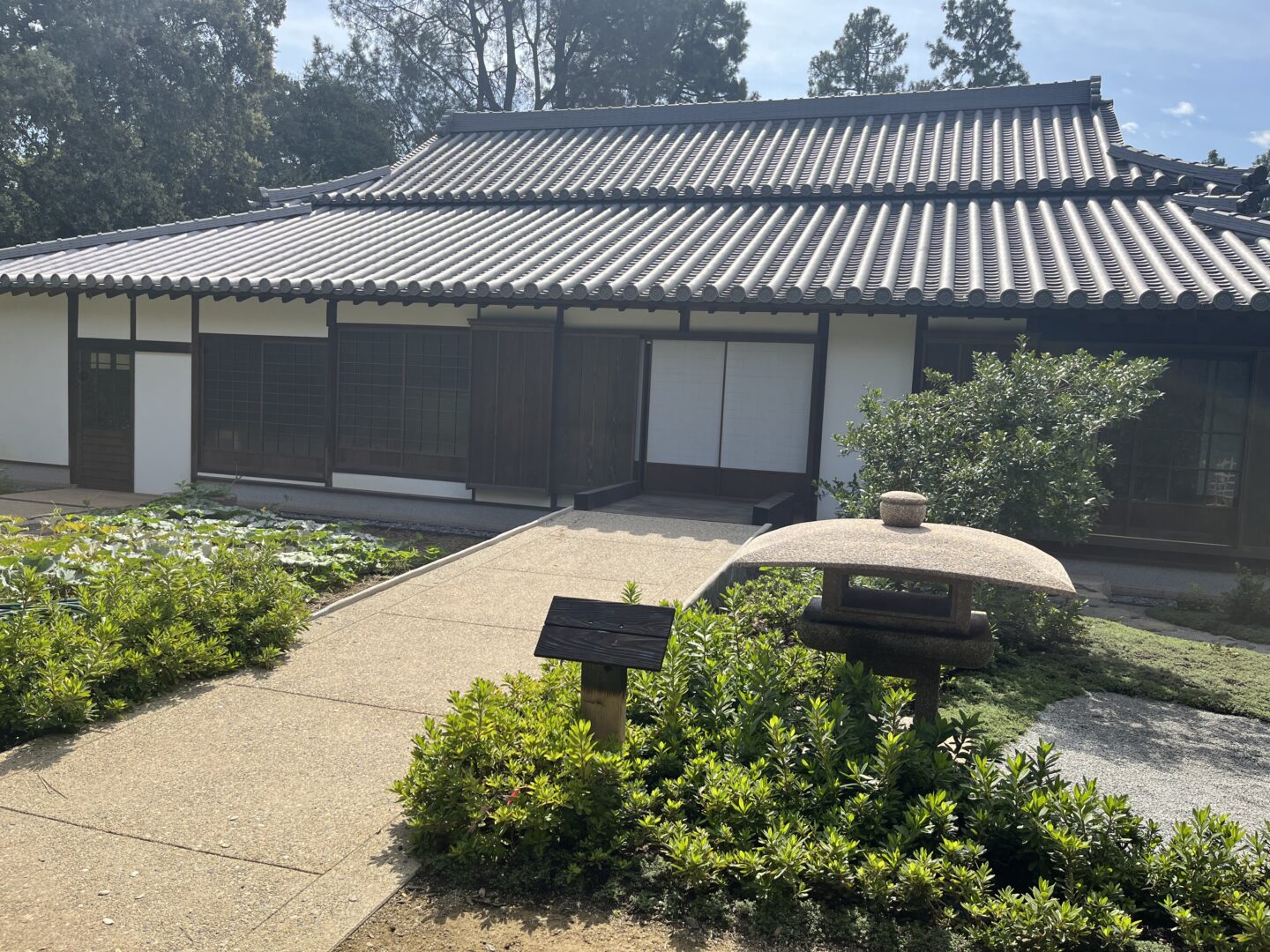
The exterior of the house with the formal entrance | Photo by May S. Ruiz / Hey SoCal

“Inside the gatehouse is a dirt courtyard used for several purposes including drying the crops and where community gatherings – like harvest festivals – might have taken place. The house has two entryways. The formal entrance on the left has sliding panels, and was originally for samurai, dignitaries, and government representatives. Inside the main house, visitors will first see the front rooms, which were used for official functions. The doorway on the right, which Huntington visitors will use, was the everyday entrance for farmers and craftspeople. It has stamped earth floor. The front area consists of public rooms where business was conducted, and the back are the private quarters.”

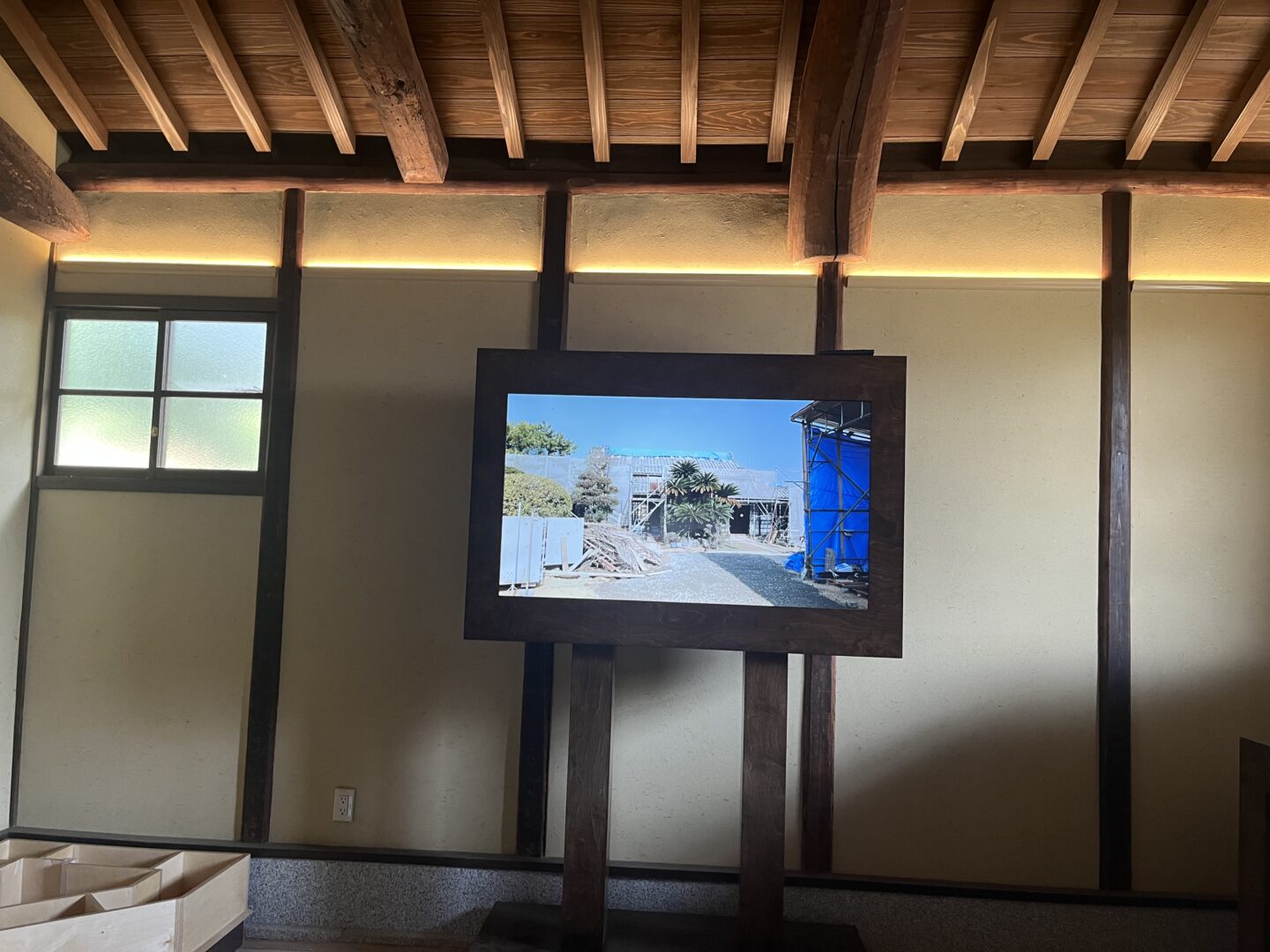
Visitors entering the public rooms can watch a video that shows the disassembly and relocation of the house and its integration with the surroundings at The Huntington. Additionally, visitors will be able to learn about the traditional skills and tools of Japanese carpentry, such as the wood joinery that was used in constructing the house.

Visitors can watch a video about how the house was disassembled in Japan and reconstructed at The Huntington | Photo by May S. Ruiz / Hey SoCal

Hori continues, “I was part of the team that went to Japan in 2016 to look at the house to see if we could move it, how we were going to do it, and what changes had to be made to it so it could be approved. I was there again for part of the process of taking down the house but not for the entire nine months it took to disassemble it. The crew that took it apart inspected each part for any damage, cleaned, and repaired them. The house arrived at The Huntington in January of 2020.

“Everything in the house uses traditional joinery techniques. We had several crews of carpenters, plasterers, roofers, and tilers who came from Japan to work on it. It was a two-year process which was hampered by the pandemic in March of that year. It was difficult to get people to travel so there were periods when people went back and they had to quarantine and that really slowed things down. Additionally, there weren’t that many flights.”

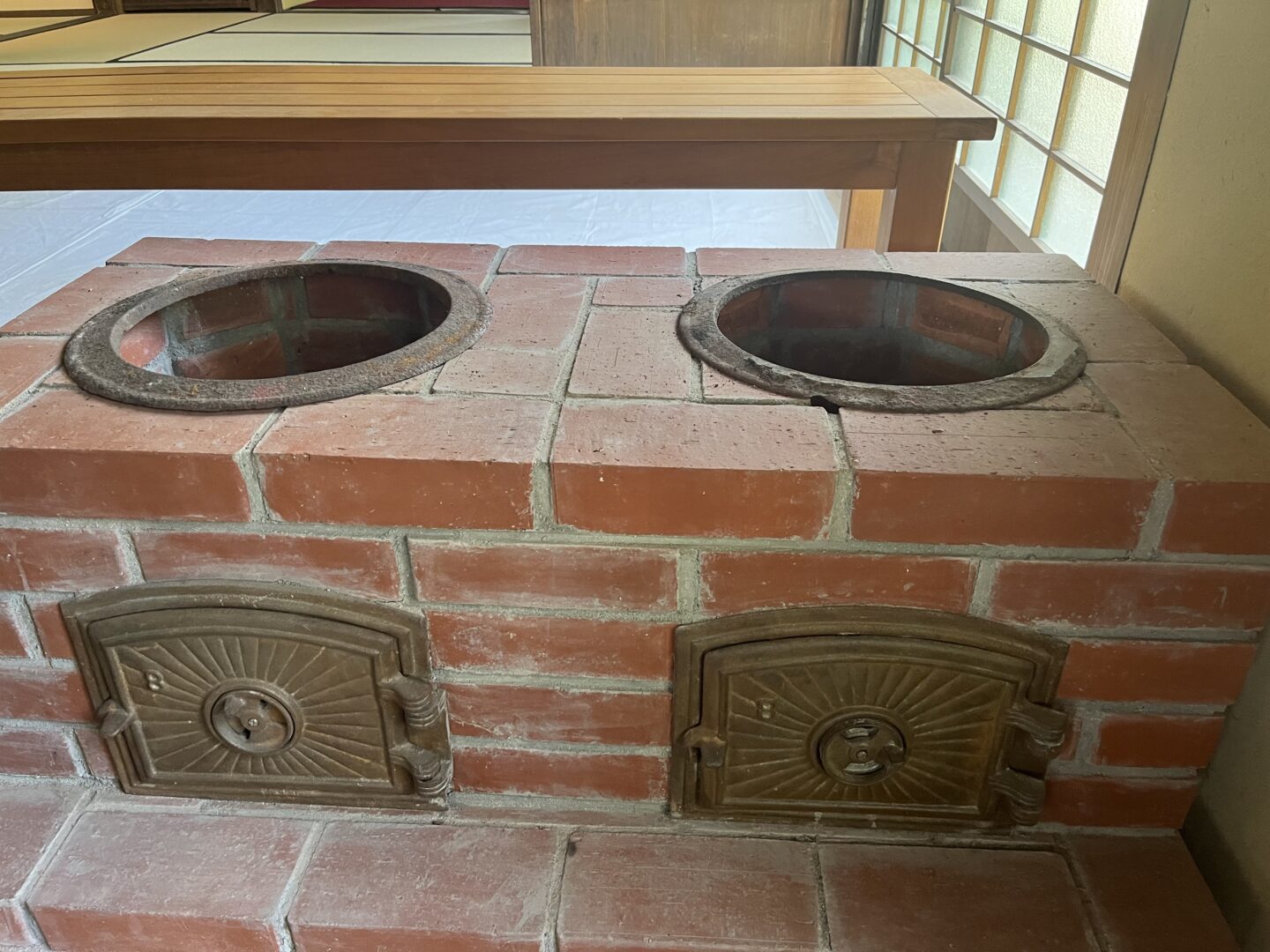
Clay wood fire cooking stove | Photo by May S. Ruiz / Hey SoCal

A large clay wood fire cooking stove is the first thing visitors will see. Hori speculates that it used to cook perhaps as much as 60 cups of rice to feed the people working in the house and also during planting and harvest. These community efforts were spread out over several weeks.

In the kitchen area is a brick stove. Hori says, “We couldn’t move the one original to the house but this is the type of stove they had. The source of water for the kitchen is a well located just outside and there’s a sliding door you can open to access it.”

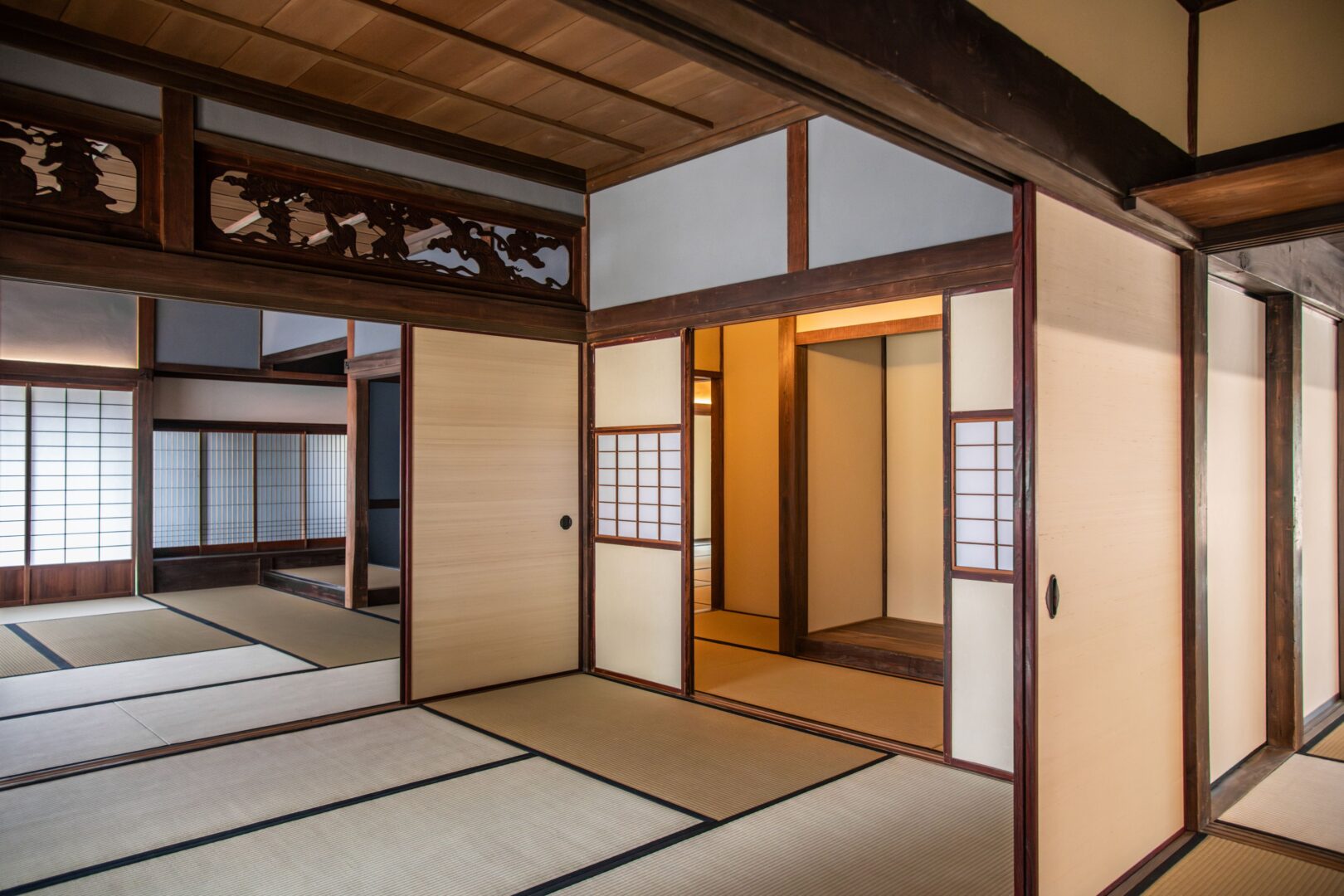
The day room, work space, and sleeping quarters | Photo by May S. Ruiz / Hey SoCal

We then move to the private rooms and we take off our shoes. Hori describes, “This lower level was part of the kitchen which was the center of activity. It was probably where they dried and salted vegetables that would last the whole year. The upper level has a floor covering called tatami, mats that measure three-by-six feet. This was the family’s day room where they conducted their activities – they would eat their meals here, then they would use it as a work space after they put away their dishes. Japanese houses like this didn’t have central heating so everyone stayed close together near the fire.”

As we reach another area, Hori describes, “This was probably where they slept. It would have cabinets with futons or bedrolls, and sliding doors could close off the area at night.”

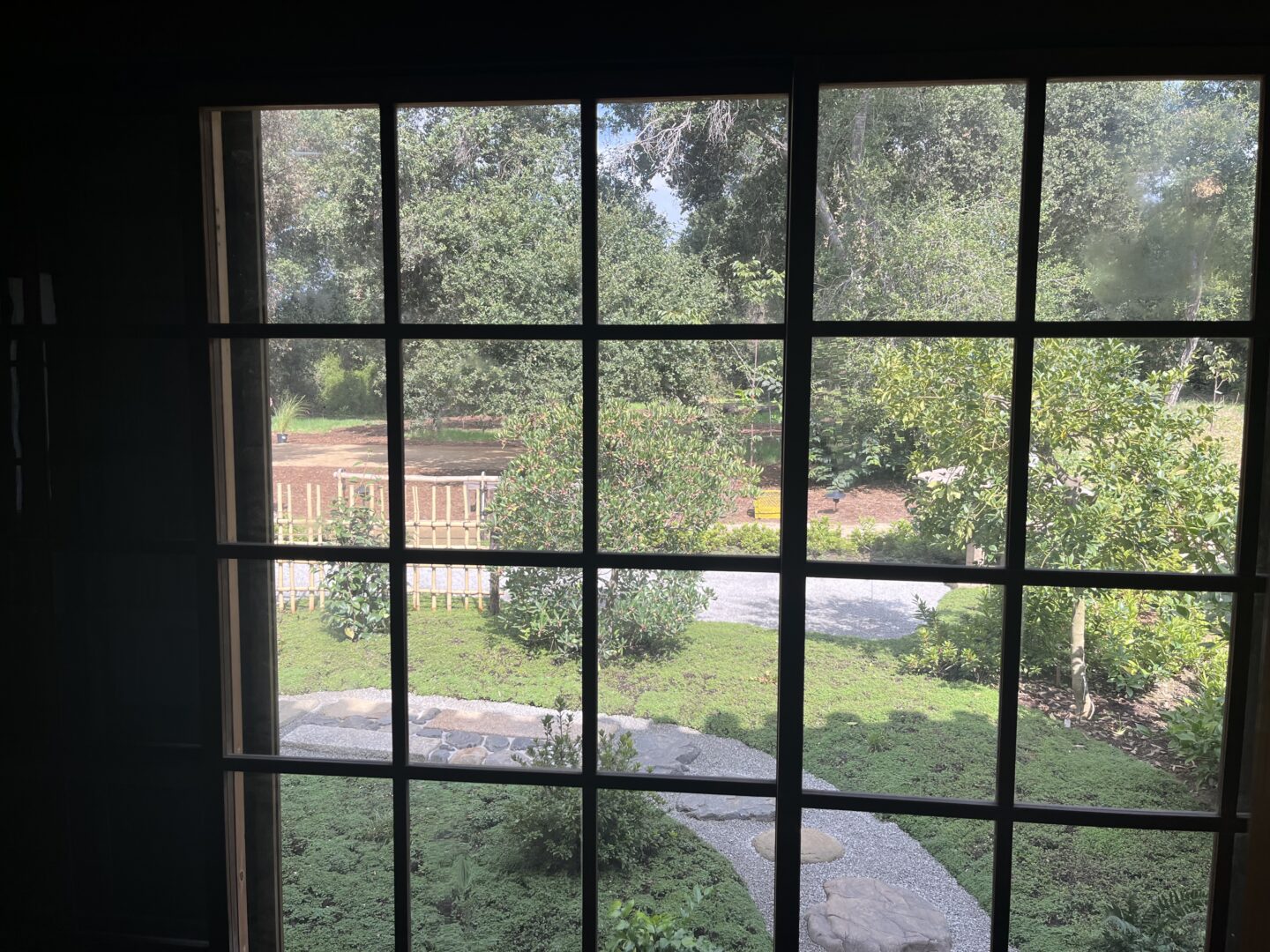
The private garden that can be accessed from the master’s room | Photo by May S. Ruiz / Hey SoCal

In the back is the master’s room. It has a display alcove called a tokonoma where a painting, a scroll, or a flower arrangement can be hung. There’s also a door that opens out into a small private garden.

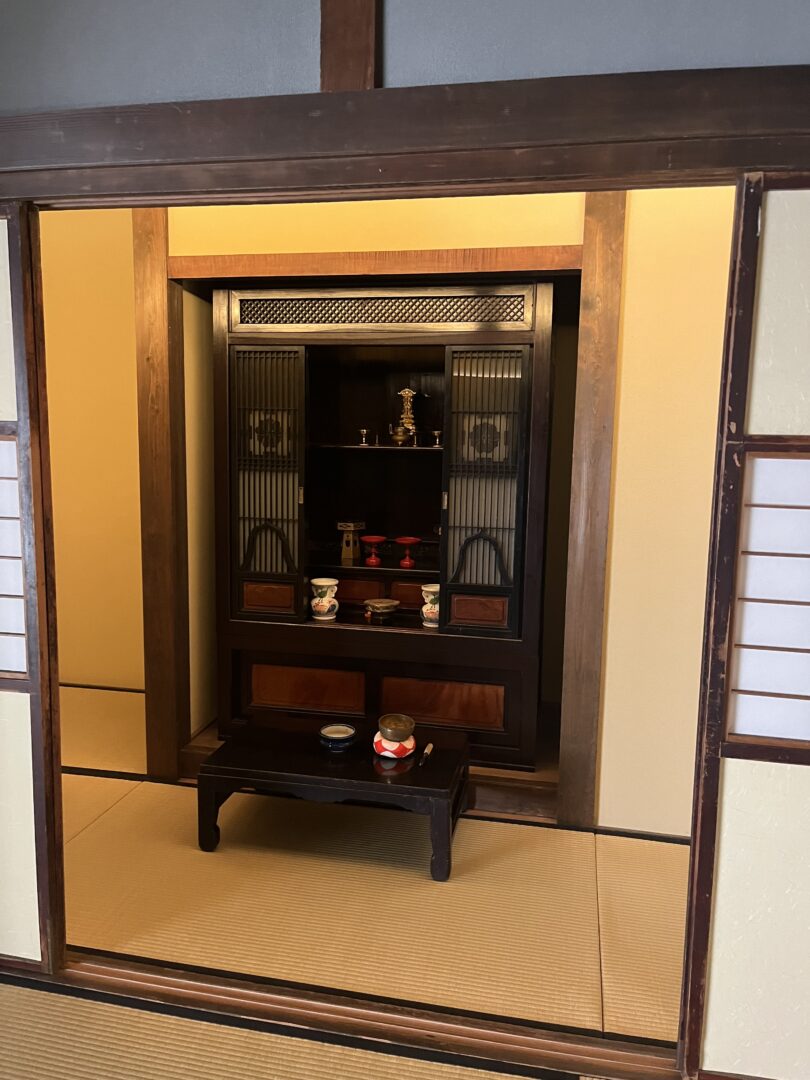
The Buddhist shrine | Photo by May S. Ruiz / Hey SoCal

We then go into the public spaces for dignitaries and the first room we enter has two shrines – one is Shinto and the other next to it is Buddhist. Explains Hori, “They had two religious systems that co-existed and people were both Shinto and Buddhist. Everything in Shinto is considered having a spirit; they worship mountain or forest gods. Buddhism, on the other hand, goes back over 2,500 years and started in India; it spread to China, and then to Japan. Buddhism also has a cultural and writing component from China that includes language and Chinese characters. The Japanese had their own language; they had a word for mountain, which is ‘yama’ like Fujiyama. The approximation in Chinese for mountain is ‘shan’ or ‘san.’ The same concept applies to religion – they have a cosmic god and a Japanese god.”

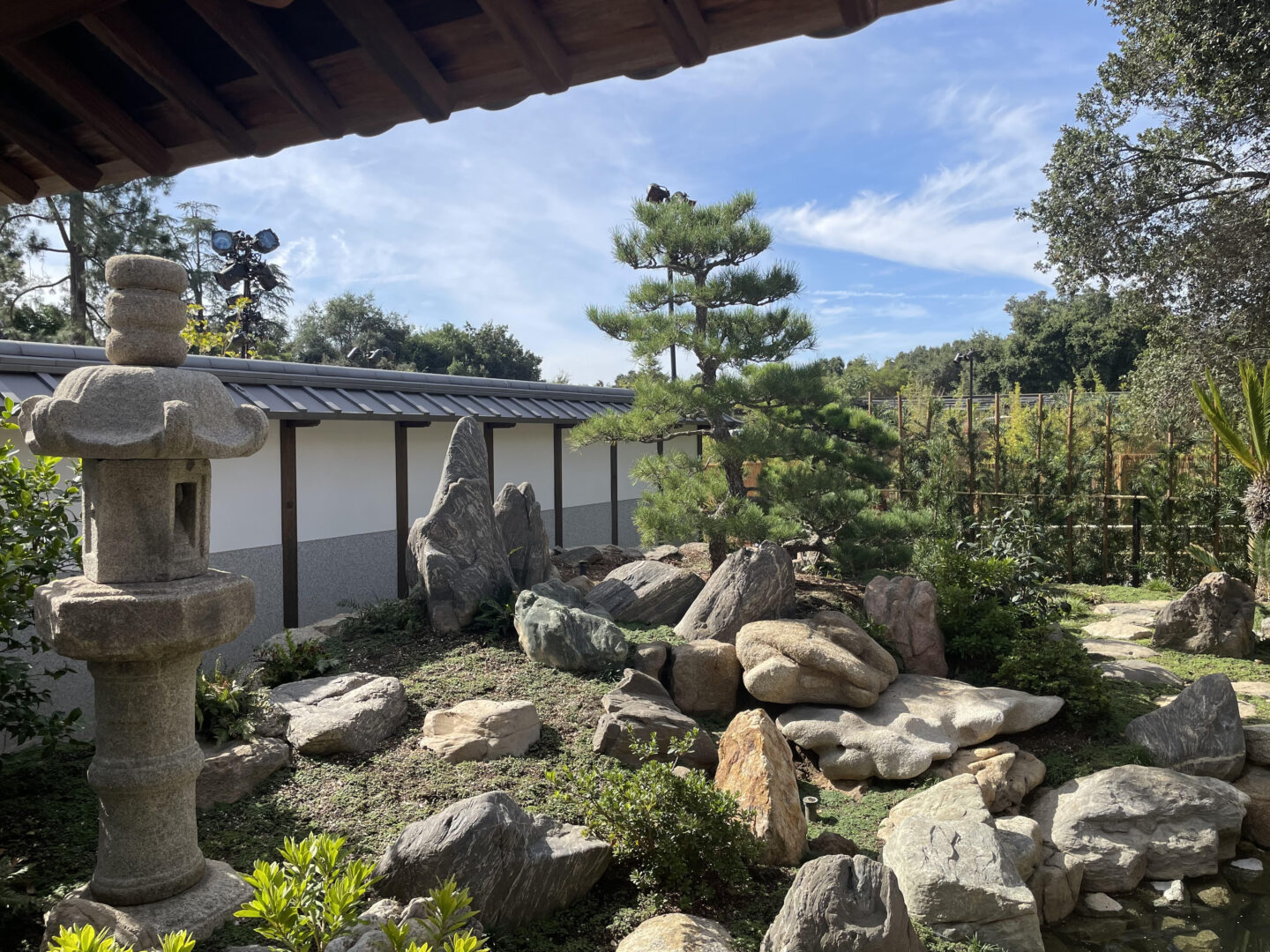
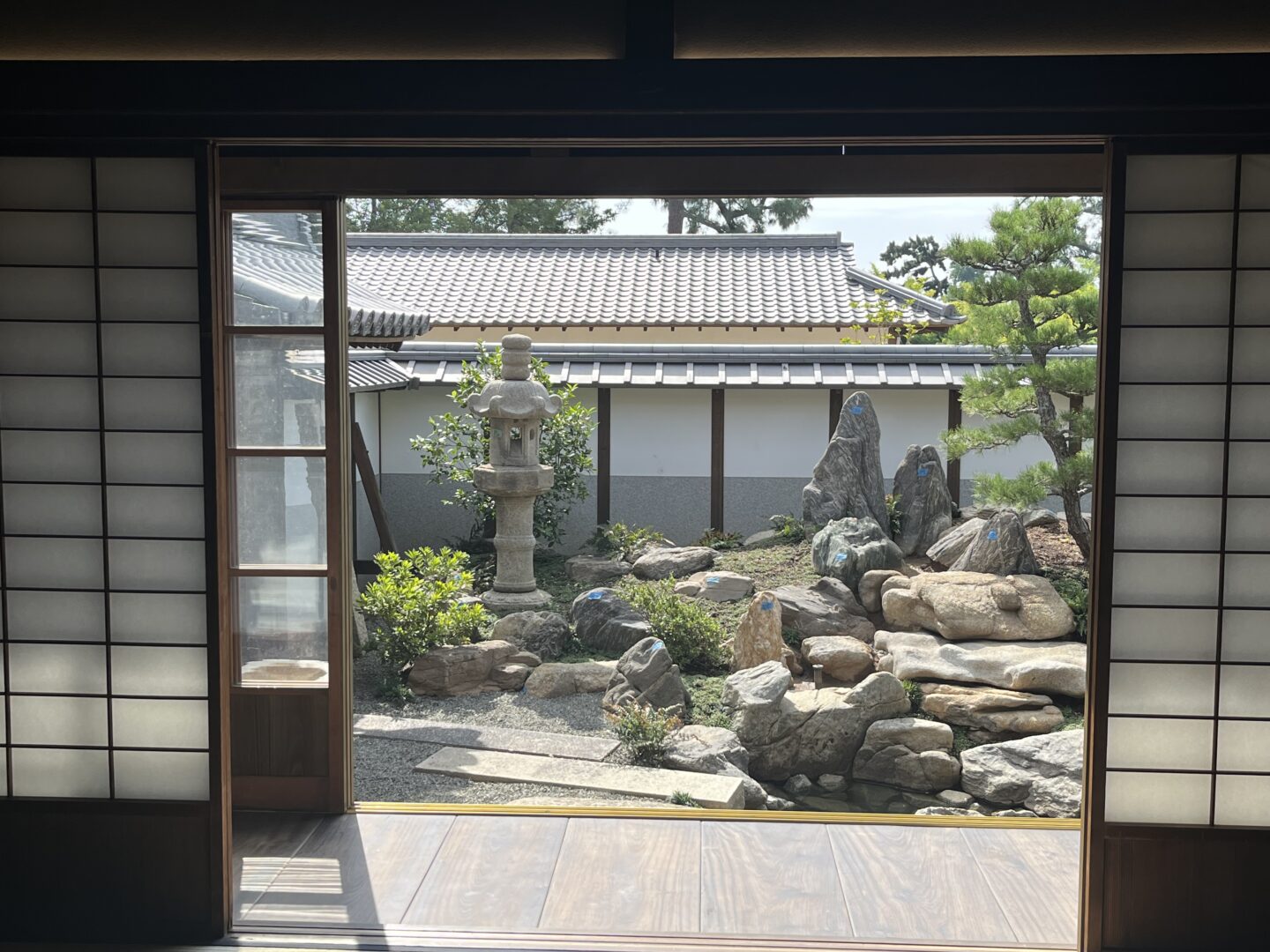
The main room where distinguished guests were received has a tokonoma on the side; it’s similar to the one in the master’s accommodations. A shoji opens to reveal a beautiful formal garden planted with carefully shaped pines and camellias, as well as cycads – considered a symbol of luxury in 18th-century Japan. The rocks in the garden came directly from the original property and were placed in the exact same spots in relation to the house and a koi pond.

The garden and pond in the formal area | Photo by May S. Ruiz / Hey SoCal

I ask what the condition of the house was when they went to Japan to look at it and Hori replies, “The last time it was rebuilt was in the 19th century around 1860 to 1870. It had also been modernized later – they put in electricity and flush toilets. But it hadn’t been lived in for over 30 years; the last person who resided there was the grandmother who passed away in the 1980s. And when a house is unoccupied, several things fall unto disrepair.”

About what challenges they faced after the house arrived here, Hori says, “Our first challenge was how could we construct the house so it passes the building code? We also have earthquakes in California so we had to build it to meet seismic requirements. We’d never done this before so we didn’t know if it was a viable undertaking. And, as far as I know, this is the first house of this size to be built at a public institution. This is the first Japanese house of this age and size in the United States.”

Standard houses in Japan are not this size, clarifies Hori. “Because of their responsibility, the shōya would have bigger dwellings with more amenities. A regular residence wouldn’t have this public area. The typical layout of an ordinary person’s house would have a kitchen, a dayroom/living room/dining room and a sleeping room. If you lived in the city your house might be twelve-by-twelve-square-feet. You ate, worked, and slept in the same room – something we call a studio.”

The vegetable garden in the back of the house | Photo by May S. Ruiz / Hey SoCal

The house and the area surrounding it are models of sustainable living. Hori declares, “They probably didn’t have the word for sustainability but they had the practice in place. If they didn’t lead sustainable life styles, they wouldn’t be alive – it was a matter of survival. The keys to sustainability are reducing waste, reusing, recycling, and repairing. For example, these glass doors don’t line up exactly because they come from different parts of the house. They have been repaired and reused, thus reducing waste.”

“Growing your own food is an example of a sustainable life style,” adds Hori. “Since we are a botanical garden, we tell everyone that farming is the root of ornamental landscapes because it has to do with being able to move earth and control water. In the other gardens – the Chinese Garden or the Japanese Garden – we have ponds and streams, and they’re all part of an irrigation system.”

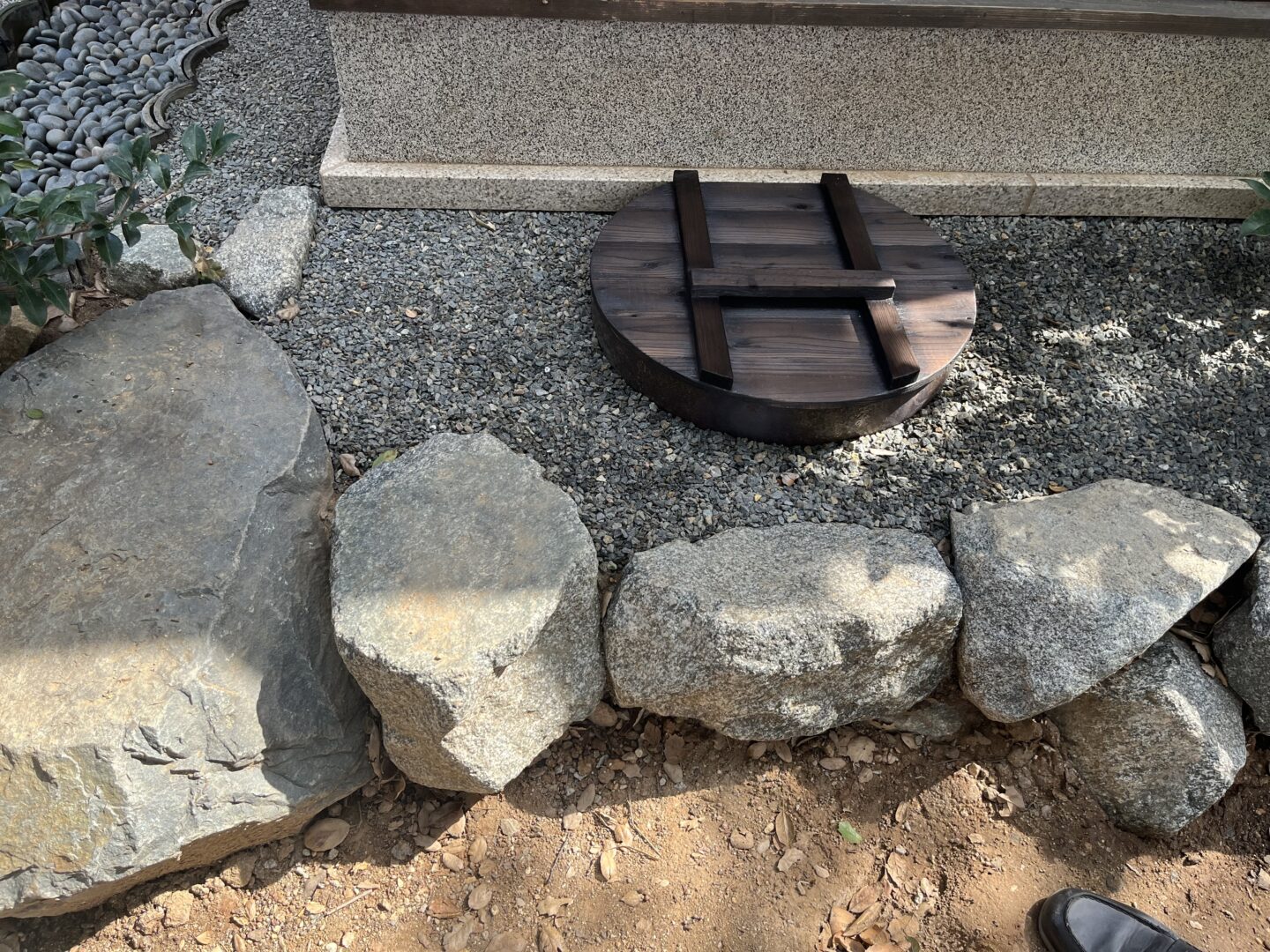
The pit toilet | Photo by May S. Ruiz / Hey SoCal

As we walk to the back of the house Hori shows me a covered circular ground container and says, “Thinking about how we treat waste, we recreated a pit toilet. There’s a real lavatory inside, but having this type of toilet is one of the keys to sustainability – reducing waste. In Japan, China, and much of Asia, they use human waste for fertilizer.”

Hori also discloses that there were two storehouses on the property – one for household items and the other for rice. They haven’t been built but they have the footprint of one of the storage houses.

“Construction of the irrigation canal is underway,” Hori explains when we walk by it. “Japan gets about 100 inches of water from the rain but even in countries with an abundance of water, you have to save the water, control the water, and use it for agriculture; this is part of the agricultural system. In Japan and other Asian countries, they use gravity – they have terraced paddies and fields to move water from the top to the bottom. Using natural forces instead of electricity or a pump is conserving resources.”

The back of the house | Photo by May S. Ruiz / Hey SoCal

“What we’re recreating here is a village – a community,” Hori pronounces. “It is looking at another culture and how people in the past addressed sustainability. And it’s one of the biggest global problems we face today.”

The Yokois made a well-considered decision to endow their shōya house to The Huntington, an institution renowned for preserving historical artifacts and cultural treasures. Under its stewardship, this remnant of history will be protected for centuries to come.

And The Huntington has taken this responsibility a step further by restoring the shōya house and its surroundings to educate us and demonstrate that it’s possible to live sustainably. It’s a lesson we have to heed and practice to help save our planet and ensure not only our survival but also that of future generations.                                         

‘Asian American Experiences in California’ Symposium at The Huntington Invites Introspection

Originally published on 10 April 2023 on Hey SoCal

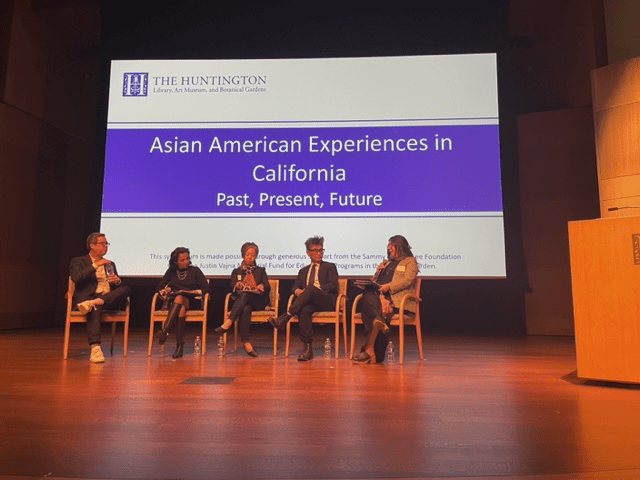
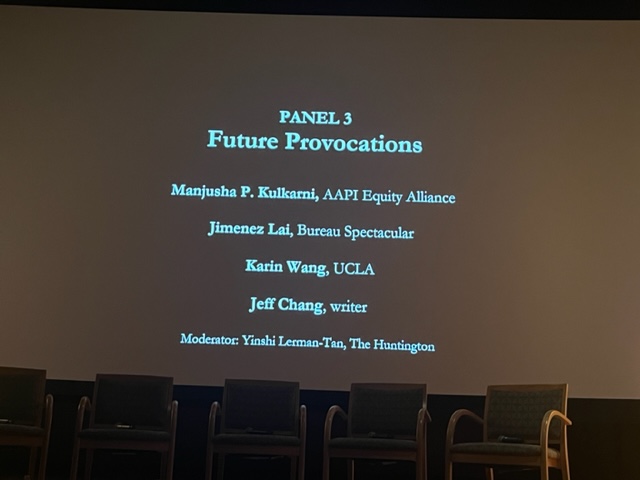
The third panel speakers and The Huntington’s Yinshi Lerman-Tan (far right) | Photo by Brianna Chu / Hey SoCal

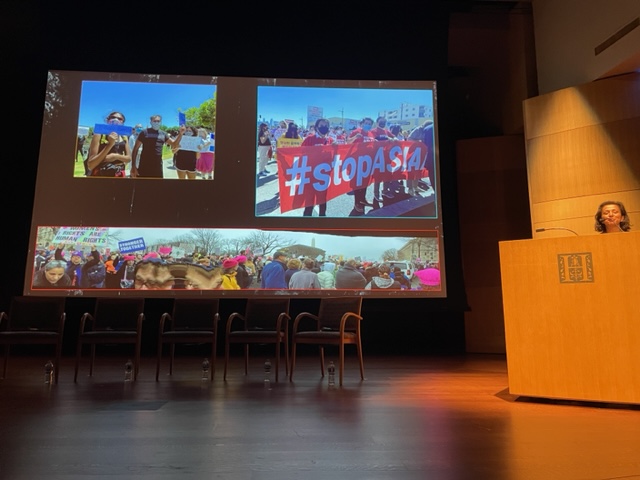
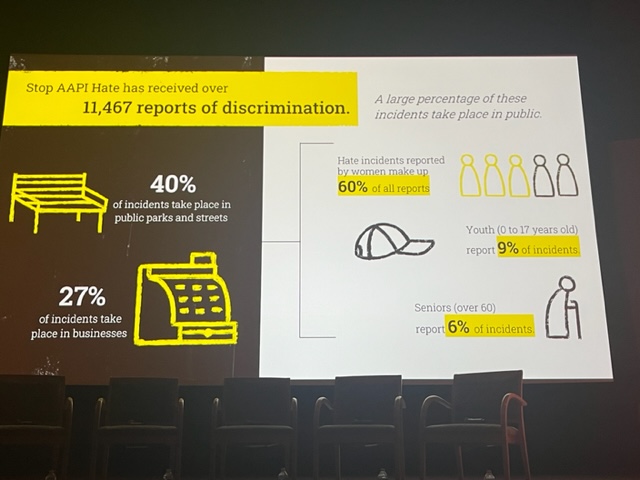
For Asian Americans, who have been largely ignored by society, the events of the past three years that threw them headlong into the spotlight were too overwhelming to contemplate. Surely invisibility would have been preferable to being widely hated and reviled. While racial slurs and violence directed against Asians and Asian Americans didn’t happen only recently, the anti-Asian rhetoric and crimes that erupted during the pandemic were so alarming that they became the catalyst for movements, including Stop AAPI Hate.

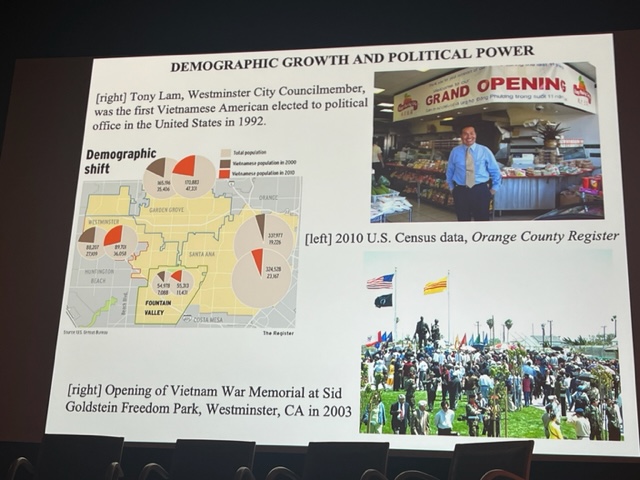
The Huntington Library, Art Museum, and Botanical Gardens in San Marino is at the very center of the Asian American community in the San Gabriel Valley. Its collections have grown and its programming has expanded to reflect the demographic change and the needs of the community it serves. On Saturday, March 4, 2023, it held a day-long symposium titled “Asian American Experiences in California: Past, Present and Future.”

Alice Tsay, Director of Special Projects and Institutional Planning, declared that this series of lectures was two years in the making. Indeed in the two years since The Huntington embarked on this series until it actually transpired, stories related to Asians have dominated headlines.

Simon Li | Photo by Brianna Chu / Hey SoCal

In his introduction and opening remarks, Simon K. C. Li, Huntington trustee, talked about the Monterey Park massacre on the eve of the Lunar New Year, and said, “Reaction among Asians who have witnessed racism is disbelief that we are capable of such violence. Another mass shooting perpetrated by the same man in Alhambra reinforced the thought. Still, it’s a reality — Asians in America live with a sense of vulnerability.”

Li then brought up two issues. The first involves the name Asian American — does it do a disservice in obscuring the wide diversity of the many Asians to reduce the knowledge and complexity that will otherwise lead to great understanding? He said in 1992 the terms Chinese American and Japanese American were much more commonly used. But it didn’t save Vincent Chin, the Chinese American beaten to death in Detroit by two bat-wielding white auto workers angry about the popularity of Japanese cars.  

The other issue is about the role of representation in helping minority communities. Li said it’s a common complaint that we don’t see enough faces like ours in movies, on TV, or in government and politics in the news. But he contended that he’s seen plenty of representation for both Asian Americans and non-American Asians making their name in U.S. politics, in movies, and on television. And he wondered, “Do such talents, such contributions, such celebrity really redound to the ‘normalization’ of Asian communities in America?”

At the end of his remarks, Li asked the panelists to answer two questions and suggest new answers going forward for Asian Americans: “What does it mean to be American? Who has the right to wear that title and to share fully in the promise it implies?” (read Brianna Chu’s response article here)

Gordon Chang | Photo by Brianna Chu / Hey SoCal

The first panel — Historical Roots (pre-1965) — focused on the origins of Asian experience, and anti-Asian racism, in California, with presenters drawing extensively on The Huntington’s Pacific Rim collections.

Gordon Chang, whose talk ‘Beyond Promontory: Chinese Railroad Workers and the Rise of California,’ continues the story of the Chinaman as railroad builders and what happened to them after they finished the transcontinental railways. He touched on the construction of the Tehachapi Loop in 1874.    

An interesting revelation was when Chang debunked the myth that the railroad workers were docile. “In March 1875, the entire workforce tunneling in the Tehachapis went on strike for higher wages just as they did in 1867. They took advantage of the monopoly they had on railroad labor and demanded for improved working conditions.”

Naomi Hirahara | Photo by Brianna Chu / Hey SoCal

Naomi Hirahara’s presentation was “Torri Gate Welcoming Empire: Japanese Immigrant and Nisei Cultural Workers and Pasadena Landscape and Life.” She spoke about her lived experience as a Japanese American in Pasadena. Her father, Sam Hirahara, was a gardener. She said, “Many Japanese American men after World War II were gardeners. A lot of men who were released from the detention camps found it was easy to come over — all they had to do was push a lawn mower and they were in business.”

She also talked about George Turner Marsh, a businessman from Australia who had spent several years in Japan and learned the language. “He went to San Francisco and opened an Asian arts business in the late 1800s. He installed a Japanese house in the 1893 Chicago World Fair in the area that the Japanese government funded, which one of the architectural partners of the firm Greene & Greene saw. Frank Lloyd Wright also saw it as a little boy. This was the introduction to a Japanese aesthetic that perhaps made a lasting impact among American architects.”

Jean Chen Ho talked about the Los Angeles Chinatown Massacre of 1871, the culmination of anti-Chinese sentiment leading to racially motivated violence and for which a memorial is being built.

“According to stories, in the late afternoon of October 24, 1871 a gunfire broke out between two Chinese men from rival tongs on Calle de los Negros, now Los Angeles Street, feuding over a young woman,” Ho began. A white rancher was caught in the crossfire that caused his death. A vigilante mob then gathered to exact revenge for the slain Anglo man and went on to murder 17 Chinese men and one 15-year old boy. The mob also raided a number Chinese businesses of goods and cash, and destroyed property by fire. Newspaper accounts by L.A.’s elite often demonized ‘ruffian and disreputable class’ for the massacre. But what combined these two social sets on that night was white vigilantism that enabled the massacre. This incident put the blame back on the Chinese for the violence they suffered.”

An account of this massacre that night was written 50 years later in his memoir by Robert Maclay Widney who witnessed what happened and was later the presiding judge during the trial of the rioters.  But Ho questioned the credibility of his story where he painted himself a hero, “Where do we place someone like Robert Maclay Widney who had the power to narrate his own story and have its social and material integrity preserved? What about the distorted, destroyed, or otherwise absent narratives from the victims of the massacre as well as those who survived that night of violence? The work that I’m taking up now is to reckon with the speculative possibility that Asian American lives have been previously only seen visible at the very moment they were suddenly extinguished by violence. My next project — a  novel — now requires the intellectual and emotional capaciousness to imagine all that cannot be verified by the archive in order to tell a story about lives that exceed the archive in their sublime and impossible beauty.”                   

Marci Kwon | Photo by Brianna Chu / Hey SoCal

Marci Kwon’s presentation centered on the Asian American Art Initiative at Stanford University, an effort to collect and preserve histories and works of Asian American artists which reflect some of the subjects discussed by the other panelists. It’s a joint effort between the Canter Art Center and Stanford Library’s Special Collections which started in 2016. It came about because when she was trying to put together a syllabus for an Asian American Art history, she couldn’t find one. Thus her challenge was to collect 1,000 pieces of artwork by AAPI artists by 2026.

The second session – Shaping the Present – covered the period from 1965 to the present.

Wendy Cheng, called her talk “Assimilating into Difference: Multiethnic and Multiracial Histories of the San Gabriel Valley.” As Li did, she began her presentation with the Monterey Park mass shooting, “In the days after the shooting, Monterey Park was listed as an Asian American hub. It was a place of possibility for Asian immigrants to make lives and build community. Indeed in 1990, it became the first majority Asian city in the Continental United States; its population is 65% Asian today. But what this characterization can sometimes gloss over, is the incredible multi-ethnic and multi-racial richness of Monterey Park’s history and present — which came about through multiple generations of shared history of struggle and place-making.”

Cheng’s map of the San Gabriel Valley | Photo by May S. Ruiz / Hey SoCal

“In the near 70 interviews I conducted for my book ‘The Changs Next Door to the Diazes’ between 2006 to 2012, I found that those who grew up in Monterey Park and the western San Gabriel Valley developed a distinct regional consciousness about race,” disclosed Cheng. “They usually understood the particulars of each other’s identity. This region’s distinction as an Asian American place is one of its legacies — a home for immigrants and for those who are historically excluded or vilified elsewhere by those who don’t look exactly like them.”

Jane Hong spoke about “Asian American Evangelicals and Southern California Histories” and how they became an important voting bloc for the Republican Party. She attributed this to a couple of developments: the first was the diversification in U.S. population that resulted from the Immigration and Nationality Act of 1965. Japanese Americans made up the majority of Asian Americans for much of the 20th century; Chinese Americans became the most populous by the 1980s; Filipino Americans became the second largest Asian American group in 1990; and, very recently, Indian Americans surpassed the Filipino Americans as the second largest Asian American population.

Hong’s Asian American Evangelicals pie chart | Photo by May S. Ruiz / Hey SoCal

The second development was the marriage between white Evangelicals and the Republican Party. This can be traced to the Moral Majority, a political lobbying group formed in 1979 between Jerry Falwell Senior, the founder and president of Liberty University, and Ronald Reagan. They joined forces around a shared set of issues — opposing abortion, traditional family and marriage defined as between a man and woman, etc. And their influence grew within the Republican Party in the 1980s.

“Late 1960s and 1970s phenomenon Jesus (Free) Movement were largely young, white Americans,” Hong explained. “At the same time, Movement Activist was inspired by Asian American movement whose major tenet is ‘there’s strength in solidarity.’ So instead of calling themselves Japanese, Chinese, Filipino, it was a political act to call yourself Asian American to denote your belief, community, and shared interest. So this is what it means to be Asian American and Christian — integrating racial and individual identity.”    

Oliver Wang’s topic was “The Nisei Week Cruise: Japanese American Car Culture in the 1970s and 80s.”

“So much of our car history has been written by white men so the Nikkei community has been largely forgotten or overlooked,” stated Wang. “A major goal of the exhibit is to write the Nikkei Community back into the stories and histories about how cars have transformed the cultural, economic, and social landscape of the Southland.”

Fred Jiro Fujioka featured prominently in Little Tokyo | Photo by May S. Ruiz / Hey SoCal

Nisei Week began in Little Tokyo in 1934 as a way to encourage cultural pride in community economic development by an emergent second generation of Japanese Americans — the Nisei — who wanted to stake out a space for themselves within a community that up to that point had been largely dominated by their Nikkei parents and their generation,” continued Wang. “It quickly grew to become an annual celebration of the Japanese American community and further anchored Little Tokyo as the center of the Nikkei community in Southern California.”

Wang reported that Nisei Week cruise began to form in the early 1970s. “By the 1980s Nisei Week Cruise became the ‘king of cruises’ and continued to grow in popularity for the next 15 years until the summer of 1988 when it was shut down. But it left a lasting impression — for the people who grew up at that time, cruise was fundamentally a social experience that connected young people with one another. To attend the cruise was to participate in a cultural experience that helped define what it meant to be young and Japanese American for an entire generation.”

Linda Trinh Vo talked about the Vietnamese population in Orange County. She stated, “I titled my talk ‘Crafting Community’ because ‘crafting’ is purposeful – it needed a skill not just ad hoc. There’s an assumption that America rescued the Vietnamese refugees and other Southeast Asians. There’s a whole other discussion we can have about America and their intervention in the war in Vietnam that led to our displacement and then led to our migration or forced migration as asylum seekers and refugees. But our argument is that we saved ourselves. We had social agency — we had to figure out a way to survive, to get out of Vietnam and get resettled in the U.S. At times, we’re looked at as passive victims rather than seen as social agents helping ourselves.

Vo’s slide of Little Saigon | Photo by May S. Ruiz / Hey SoCal

“Today, the Vietnamese population is the largest of Asians in Orange County and also the largest population outside of Vietnam,” declared Vo. “Pre-1975 the only ones here were war or military brides, international students, and military personnel training during the Vietnam War. When the Vietnam War ended, about 120 of them were settled in Camp Pendleton, one of four U.S. camps where refugees settled. But they needed some place to live permanently so they had to find sponsors. Individuals, charities, religious organizations helped to sponsor and settle them in the city of Westminster (and later expanded to Garden Grove) which is today’s Little Saigon.”

The third session – Future Provocations – envisaged the future of Asian Americans from the perspective of the panelists’ field of expertise.

Manjusha P. Kulkarni‘s presentation was “Resistance and Resilience: Asian Americans’ Response to Hate.” She disclosed that since the beginning of the pandemic, Stop AAPI Hate received over 11,467 reports of discrimination. She said, “Policies drive much of the hate — mass deportation of Southeast Asians, programs like the China initiative, the 911 surveillance and profiling of South Asians. What that has led to is the blame game — one in five reported incidents include this kind of scapegoating, like public health which we saw during the bubonic plague where Chinese Americans were blamed for the disease. National security was blamed for the Japanese incarceration and 911 profiling. And economic insecurity and anxiety was the cause of the horrible beating of Vincent Chin.”          

AAPI protest gatherings | Photo by Brianna Chu / Hey SoCal

“As populations are growing, we begin to see ourselves as racialized,” continued Kulkarni. “Civil Rights leader and scholar Lani Guinier wrote about the social ladder when whiteness is at the top and blackness at the bottom. So where does that put Asian Americans in terms of the outsider framing, idea of perpetual foreigner.’ So where are you really from?’ are the questions we get even when we’re third, fourth, and fifth generation. And that leads to questions of loyalty — are we actually Americans?”

Kulkarni then discussed civic engagement, “Since 2020, we are more enthusiastic about voting than we ever had; we see that we play a role in the margin of victory. So it’s absolutely critical that we vote; and engage civically — write to your congressperson, go to meetings at city hall, and run for office. We need more representation across our land if we are to have a powerful voice. I want to leave you with this quote from Grace Lee Boggs, ‘You cannot change any society unless you take responsibility for it, unless you see yourself as belonging to it and responsible for changing it.’”

Jimenez’s installation at Coachella | Photo by Brianna Chu / Hey SoCal

Artist Jimenez Lai showed some photos of the work he’s done over the years. He represented Taiwan at the Venice Biennalle; his works have been displayed at museums and public events, including Coachella. One of his installations in front of City Hall, at Grand Park, is a collaboration with a musician and they conceived a structure like an oversized instrument. They embedded an amplifier so people could whisper their sorrows into it which then get distorted into nonsense — a confession booth of sorts.

Karin Wang spoke about “Asian Americans: Racialization & Privilege.” She began with a slide on Anti-Asian Hate which mirrored Kulkarni’s visual on the number of hate incidents. “What’s interesting is that at the same time that we were being racialized and targeted for violence and hate, Asian Americans are also occupying important spaces of privilege in two professions — Law and Medicine,” she declared. “We need to recognize where we have power and privilege. Lawyers are among the most powerful members of our society — not just lawyer lawyers, but judges, elected officials, people running government agencies.”

AAPI’s reports of discrimination against Asian Americans | Photo by Brianna Chu / Hey SoCal

Wang added, “There are a lot of stereotypes about Asians, one of them being that they are mostly in Medicine. And it is another sector that’s economically and socially advantaged in our society. There are improvements in the number of people of color in medicine on the national level but the majority of doctors are white; the next largest group is Asian and Pacific Islanders; Latinos and blacks are two populations that are underrepresented. It is becoming more racially diverse over time, although it is actually Asian Americans who are taking up a lot of that space.”

“Asian Americans are obviously not white and have never been viewed as white. Yet, we do have some privilege here as a community. So what is the provocation for the future as we move forward as Asian Americans? How are we going to think of ourselves in terms of where we fit in the American racial landscape? What are we going to do to use our positions of privilege in these places where we have it, and advance racial justice and equity not just for Asian Americans but for other communities of color as well,” Wang asked in conclusion.

The last speaker was Jeff Chang, who started his presentation by saying, “I was provoked by what Simon Li asked us to examine. The first: what is the desirability of being called Asian American especially given the anti-Asian violence we’re living through?  And, second, the role of representation. We know that there is representation, but we also recognize that we are nowhere near what the culture industry calls for, which is to create narrative plenitude – the diversity of stories out there.”

“Can we create a narrative of Asian American that can take us to the next 50 years? Chang asked. “Narrative plenitude doesn’t just seem like a call to the white-dominated culture industries and social institutions. But it seems also for us to make better sense of the full diversity of our stories. But at the same time, violence is bringing us all back together. But it’s not that the violence makes us all Chinese, the violence makes us all Asian American. So when we say ‘Stop Asian hate, stop anti-Asian violence!’ we can call this a negative narrative. We’re saying ‘Stop, no more of this!’ But this narrative also has its limits. There’s a danger that we actually lose people to the fears. Is there a positive narrative of Asian American that can bring us together?”

Chang ended his presentation by yet posing these questions: “How do we form this new narrative that’s not just saying ‘No,’ but what can we all say ‘Yes’ to? How do we recognize the harms being perpetrated against us and not re-harm others because of that? But how does that help us think about what we might move to that can lift us all up together?”

Photo by May S. Ruiz / Hey SoCal

This symposium resonated deeply with me. As an Asian American, I related with the experiences some of the panelists described. I’ve lived here for 41 years and, every once in a while, I’m still asked where I’m from. I usually respond “I’m from Pasadena but originally from the Philippines.” Sometimes, though, I turn what might otherwise be an awkward exchange into a subtle teachable moment about the Philippines and Filipinos, and our historical ties to the United States.    

As to Simon Li’s parting questions, there are as many answers as there are perspectives. And here’s mine: those of us who aren’t Americans by birthright but who legally immigrated to this country to build better futures also have the right to be called Americans. Most of us rose above our circumstances not in spite of being ‘foreigners’ but because of it. Most of us were born and raised in places of poverty and hardship and we were taught that education and industry were the means to success.

Because we didn’t come from places of wealth and abundance, we didn’t take for granted the opportunities that were available to us, as most immigrant accounts attest to. The possibilities became seemingly limitless and within reach because we were willing to work hard for them. Failure wasn’t an option — we wanted to ensure that our children didn’t go through the struggles we had to endure.  

But being American comes with responsibility. We have to give back to the country we now call home by engaging with our community and actively seeking out how we can contribute to society. In areas where we have influence, we have to advocate for all people of color and use our voices to speak for those who can’t. At the very least, sharing our stories might help others understand that while we don’t look like them, we have similar hopes and dreams, and are striving for the same happy outcomes.

‘100 Great British Drawings’ Spanning Centuries on Display at The Huntington’s Boone Gallery

Originally published on 30 June 2022 on Hey SoCal

Artworks that trace the practice of drawing in Britain from the 17th through the mid-20th century are featured in an exhibition called “100 Great British Drawings” at The Huntington Library, Art Museum, and Botanical Gardens. On display from June 18 through Sep. 5 in the MaryLou and George Boone Gallery are works of renowned British artists – William Blake, John Constable, Thomas Gainsborough, and J. M. W. Turner, as well as artists of the Pre-Raphaelite Brotherhood and early 20th-century modernism.

Mrs. Grant Knitting (1834) by David Wilkie (1785-1841) | Photo by Brianna Chu / Hey SoCal

“The Huntington is renowned for its incomparable collection of British art, ranging from 15th century silver to the graphic art of Henry Moore, with the most famous works being, of course, our grand manner paintings,” Christina Nielsen, Hannah and Russel Kully Director of the Art Museum, states in a press release. “Thomas Gainsborough’s Blue Boy and Thomas Lawrence’s Pinkie often serve as the poster boy and poster girl for the whole institution. But what most visitors do not realize is that The Huntington is also home to an extensive and remarkable collection of British drawings. This exhibition and catalog, the first to show the range of our British works on paper on such a scale, seek to fill that knowledge gap.”

During the exhibition’s reception and viewing, Nielson remarks, “You’ll see 100 works – some of which have never before been seen – judiciously chosen by Melinda McCurdy, our curator of British Art. But did you know that we have 12,000 British works on paper – prints, drawings, watercolors? These are only the tip of the iceberg. This is really an important step for us as The Huntington makes a priority of giving access to its collection. It’s an extraordinary opportunity to view these treasures of work on paper that are very light sensitive and can only be actually shown in person on a rotating basis every few years for three months at a time. We’ll then continue to make them accessible to scholars and to the public digitally.”

“This has been a long time coming,” Melinda McCurdy states. “We had originally intended for it to open in 2020 as part of The Huntington’s Centennial Celebration. However, the pandemic intervened and we had to put it on hold. We chose 100 representative artworks to show the quality, and the depth and breadth of our collection of British drawings. The hardest part was settling on only 100 and it certainly took a long time to do that. Technically, there are 102 drawings on display – there are a hundred frames but there are 102 drawings.”

100 Great British Drawings Exhibition entrance

McCurdy discloses with a smile, “When the exhibition designer asked what I had in mind for it, I said ‘Just make it pretty.’ And so when it’s 120 degrees outside and you come in, it’s like stepping into a watercolor. That’s actually done on purpose; the color scheme and design of the entire exhibition is based on one watercolor in the exhibition.”

By email, McCurdy explains how she selected the artworks, “It took several months, but I looked at all of our British drawings and considered each of them for condition, historical importance, quality, finish, and how they reflected the character of the collection as a whole in terms of its makeup and strengths. It was fairly easy to narrow it down to the top several hundred, but from that point there were definitely some tough decisions to make. And the decision wasn’t made alone – there was a lot of discussion with colleagues inside and outside the institution. We tried as much as possible to create a balance between subject and medium.”

Wallflower and Tulip (1767) by Matilda Conyers (1698-1793) | Photo by Brianna Chu / Hey SoCal

“While we don’t have immediate plans to do another exhibition exactly like this one, we will definitely use our British drawings collection in future projects, whether as elements of large thematic exhibitions or on their own in special installations,” McCurdy adds.

McCurdy reveals that the exhibition design and color scheme were derived from John Brett’s The Open Sea. “​I had chosen this watercolor as the cover image for the book – its color scheme and composition made it perfect for that – and once that decision was made, it was a natural to continue with it in the larger exhibition design. It’s a fairly recent addition to the collection (2018), so hadn’t been on exhibition here before and was not as well-known as some of our other drawings.”

But while the choice of exhibition design came easily enough to McCurdy, her favorite artwork is less easy to pick. She confesses, “Every time I walk into the gallery I find a new favorite.”

Hayfield (1878) by Helen Allingham(1848-1926) | Photo by Brianna Chu / Hey SoCal

Visitors to the museum would likewise find it difficult to name one artist or artwork that stands out. All the drawings, sketches, and watercolors offer something. McCurdy suggests, “I would recommend visitors spend time with the objects on display. Pick out one or two in each room of the exhibition and look closely for a few minutes. The great thing about drawings is that the more you look, the more details you notice, and the more you can understand how the images were made. Drawing is something most of us can relate to. Its marks on paper. Many of us drew pictures as kids, so there’s already a built-in connection there. Even if the drawing is 200 years old, we can easily imagine the artist swiping a brush dipped in watercolor across a sheet of paper or making a line with a pencil or pen.”

Excursions of Imagination | Photo by May S. Ruiz / Hey SoCal

A companion catalog – Excursions of Imagination – beautifully preserves for posterity this first-ever public exhibition. In the foreword, Nielson divulges that except for a “few key examples, most notably by Blake, Henry and Arabella did not collect drawings. Instead, the superb collection presented here came together thanks to the vision and tenacity of the longtime curator of the art gallery, Dr. Robert R. Wark. He saw an opportunity to build on The Huntington’s strength in British art while forging a new path by acquiring works on paper. Scooping up the Gilbert Davis Collection in 1959, he spent the next three decades purchasing drawings that deeply resonated with other Huntington collecting areas, including botanical illustrations and drawings by children’s book illustrators. … Wark also made a point to buy drawings by women artists.”

In the catalog introduction, McCurdy recognizes Wark’s significant contributions to The Huntington’s vast holdings of British Arts and expounds, “Henry was an avid collector of books, whereas his wife, Arabella, was the driving force behind their important collection of paintings and decorative art. Drawings did not factor largely into their art purchases. In 1910, however, Henry acquired roughly 240 drawings by the late eighteenth-century British satirical artist Thomas Rowlandson from the Philadelphia book dealer Charles Sessler. In the mid-1920s, he purchased two further sets of Rowlandson drawings, also from Sessler: A Tour in a Post Chaise, numbering 69 items and The English Dance of Death, about 100 works. These acquisitions comprise the bulk of The Huntington’s drawings by Rowlandson…. Wark accounts for these important but anomalous acquisitions by the fact that Henry purchased the Rowlandson drawings as part of bound volumes. In other words, he bought them because they were books. Still today, The English Dance of Death series resides within the library rather than the art collections.”  

Lonely Tower (Undated, ca. 1881) by Samuel Palmer (1805-1881) | Photo by Brianna Chu / Hey SoCal

McCurdy offers a comprehensive account of how the ‘Huntington collection’ grew to be the extraordinarily expansive and expertly curated assemblage that it is today. Ann Bermingham’s essay educates readers that “drawing is a journey – an excursion of imagination” then splendidly navigates us through it and, along the way, through the history of British drawing as an art form. The Illustration descriptions by McCurdy and Jessie Fontana-Maisel depict extraordinary detail and proffer fascinating perspective.       

With its eye-pleasing jacket, enlightening information, meticulously formatted pages, and carefully researched entries, Excursions of Imagination is indeed a work of art itself, as McCurdy pronounces. It is an indispensable companion to the 100 Great British Drawings exhibition – a well-articulated representation of the institution’s massive holdings. And long after the show closes, it will remain a fount of knowledge about the incredible collection of British art at The Huntington.  

Mineo Mizuno Site-Specific Installation at The Huntington Now on View

Originally published on 23 June 2022 on Hey SoCal

Thousand Blossoms, Mineo Mizuno. Ceramic | Photo courtesy of The Huntington Library, Art Museum, and Botanical Gardens

Visitors to The Huntington Library, Art Museum, and Botanical Gardens will be delighted to see nature-inspired sculptures created by a contemporary artist intermingling with classical 18th-century pieces at the main gallery.

Three site-specific sculptures which will be on display for two years – Nest (on the loggia), Komorebi, and Thousand Blossoms (inside the gallery) – are the works of Japanese-born California artist, and former Los Angeles resident, Mineo Mizuno. Long known for his ceramic art, he started working with wood seven years ago when he and his wife Minako (who’s also an artist and owns mm project art gallery in Hiroshima, Japan) moved to the Sierra Nevada Mountains.  

Mizuno and Minako, who collaborated with him on this show, graciously show us the artworks and talk about how this installation at the Huntington came about.

“In 2020, I had a show at a gallery in Beverly Hills and some of The Huntington trustees told Christina Nielsen (Hannah and Russel Kully Director of the Art Museum) about it,” Mizuno recalls. “She went and liked what she saw, so she asked to meet with me. She was originally interested in purchasing a piece but decided to give me my own show at The Huntington the more we talked.” 

Even before Nielsen went to that exhibition, though, she was already familiar with Mizuno’s work. She reveals via email, “In fact, we have a Teardrop by Mineo (one of his signature pieces) in our permanent collection, and I walk past it on my way to the office each day. I didn’t know his work previously, but have been a big fan of his work since my first day on the job almost four years ago.”

While Nielsen chose the areas where she wanted Mizuno to create pieces for, she left it up to him to decide what to make. She states, “I never give an artist instructions. I could never conceive of the possibilities the way they do. But there is definitely conversation about what might be logistically possible!”

Nest. Manzanita wood, steel, aluminum, hemp, and ceramic | Photo courtesy of The Huntington Library, Art Museum, and Botanical Gardens

As if to confirm Nielsen’s statement, Mizuno says as we reach the loggia, “This idea came about when I saw this space. I call this Nest but there are actually two of them in one artwork. The thought behind it is that you build your home with the things around you, much like birds do. They’re made from manzanita shrubs that have been chopped down.”

Mizuno retrieved the shrubs to give them a new life that isn’t harmful but instead lends beauty to a space. He explains, “We don’t see manzanita shrubs in Southern California because they need an elevation of about 2,500 to 3,000 to thrive. These shrubs grow everywhere in Sierra Nevada and they’re fire hazards so they have to be constantly cut down. The wood of the shrub has interesting colors – some are light but some are dark colors like red.”

“This is the only time I’ve used a manzanita shrub,” adds Mizuno. “I usually create big wood sculptures made out of oak. California oak is protected, but where we live they’re usually cut down so I’m not using wood from live trees. I get my materials from someone who has a property that’s comprised of a 40-acre ranch and a surrounding 1,500-acre forest with all kinds of cut trees – like oak. But whether they’re manzanita shrubs or oak trees, I’m just recycling them.”

“All the pieces in the installation were built in my studio over time and assembled on site,” Mizuno explains. “I had been building the nest a few years ago and I altered it so that it can withstand the changes in temperature and weather.”  

Minako offers her perspective, “While it’s a limited space physically, because it’s outdoor, I think it’s actually unlimited. The space changes every day – the look of the sky varies, there’s nature growing nearby, different people are around it. Changes have happened since we started building the nests.”
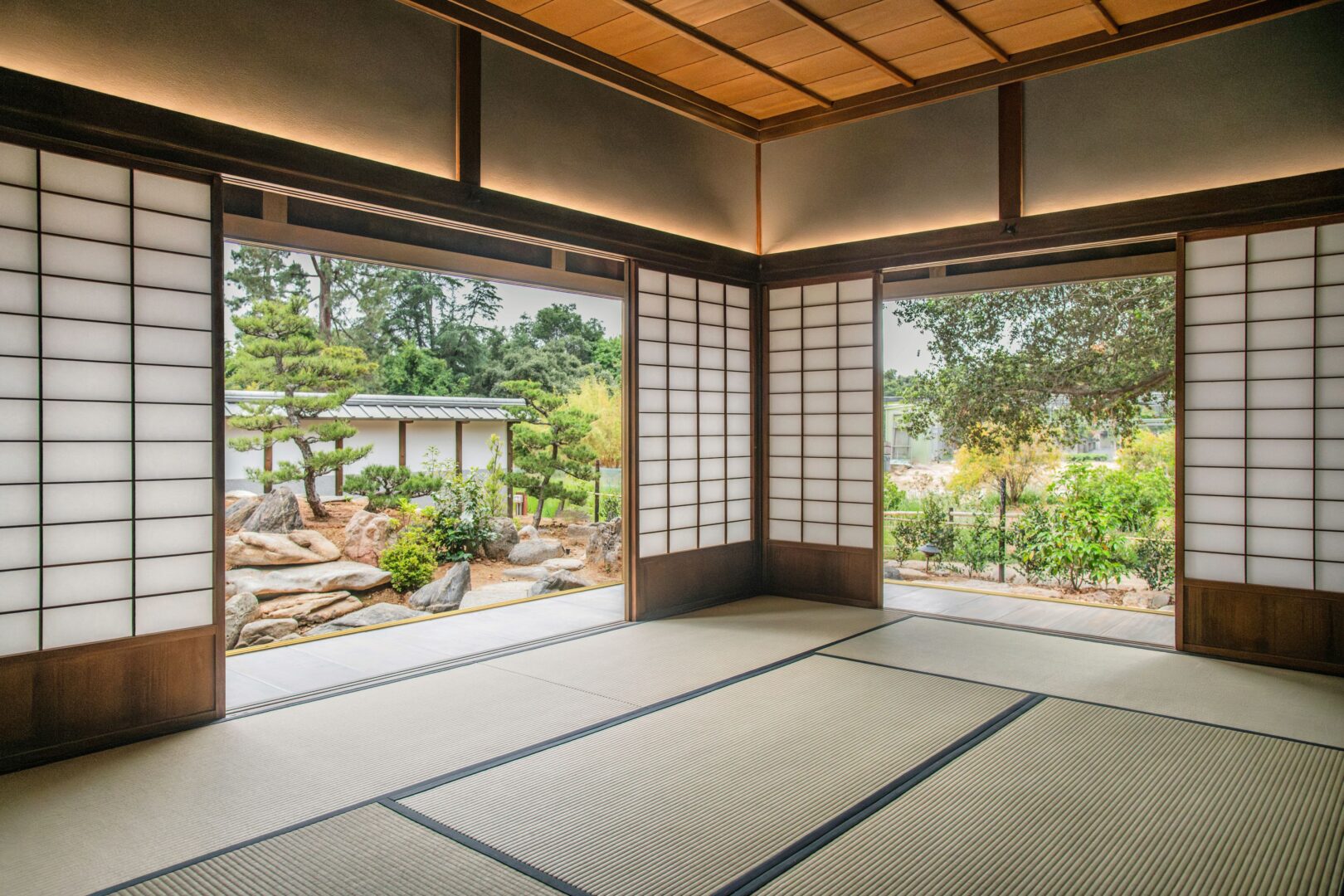
“During most of my career, I used ceramic for my sculptures,” Mizuno discloses. “After our son left for college, we moved to New York City, which was my lifelong dream. However, it didn’t work out that well… two years were long enough, and we moved to the wilderness in Northern California. Because of my environment, my life changed and, with it, my art.”

Komorebi – light of forest. California oak wood and ceramic | Photo courtesy of The Huntington Library, Art Museum, and Botanical Gardens

Dogwood blossoms are the themes of Mizuno’s two other pieces which are displayed inside the art gallery. He says as we reach the first artwork, “When they gave me this space everything was covered in plastic; so I couldn’t see what it looked like. But I knew these two sculptures (a tree nymph and Flora, the ancient Roman goddess of flowering plants) were here. They had planned to remove them to give me the space. But when they took the covering off and I saw the sculptures – one is sitting on an oak stump, and the other is holding a flower garland – I suggested we just move them to the side. So I decided to make a tree from the stump of a fallen oak to match the sculpture that’s already there. Then we scattered ceramic dogwood blossoms near it.”

According to Mizuno dogwood flowers signify hope and rebirth. They grow everywhere in the Sierra Nevadas just as cherry blossoms do in Japan. The ceramic cherry blossoms remind him of the origami pieces his 102-year-old mother makes.

Minako says, “We call this Komorebi, which is the Japanese word for filtered light, sunbeams seen through leaves in the forest. They’re individual ceramic pieces arranged like they fell from the tree and were scattered by the wind. The ceramic blossoms are kept in place on the floor with silicone.”                           
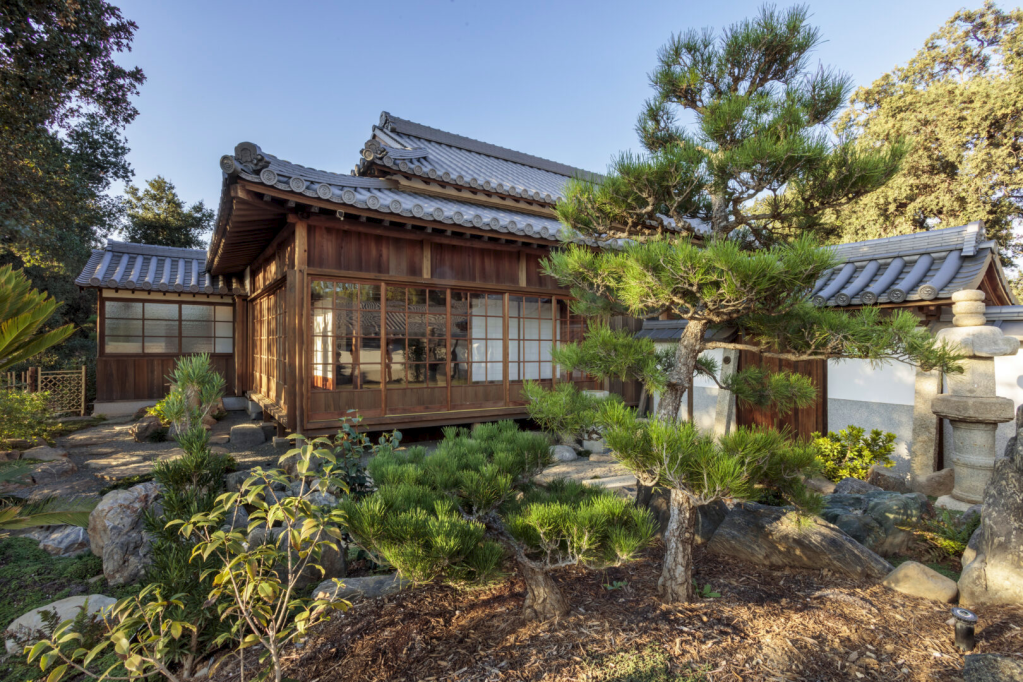
We approach the last sculpture and Mizuno points out, “This is called Thousand Blossoms and is made of 3,000 ceramic dogwood blossoms. Each blossom was hand-made then went in the kiln for firing. We took each one out for glazing then put it back in the kiln. We then used silicone to attach each piece to another.”
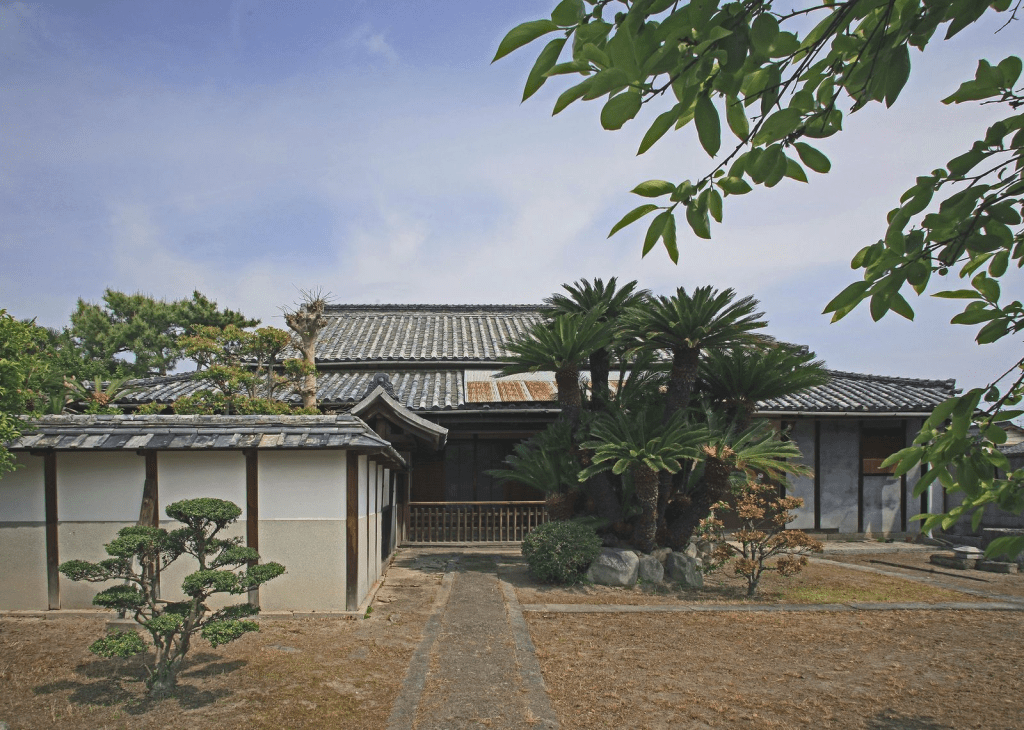
“We made these blossoms during the pandemic – when everyone all over the world was thinking about others, about our health, and life, ” Minako elucidates. “So each dogwood blossom represents one human being. We attached each individual blossom to another to create one piece to signify unity; we wanted to show the power of life. After they were stuck together, we put it inside a frame so we could transport it here. But one piece of dogwood blossom didn’t fit properly. When we got here, laid it on the floor, and removed the frame, some of the blossoms fell on the side. However, we decided to leave them be… people won’t know it wasn’t done on purpose.”

Not only were people who have seen it at The Huntington unaware that some ceramic dogwood blossoms accidentally fell out from one of Mizuno’s artworks, they have also been giving the most enthusiastic reviews. As Nielsen proclaims, “They exceeded my expectations, and I’m delighted to watch visitors discover them. The response has been overwhelmingly positive.”

There are times when unintended actions result in surprising consequences. Sometimes an otherwise unfortunate happenstance only adds dimension to an already beautiful piece of art. It’s almost poetic.