Originally published on 6 October 2016 in the Pasadena Independent, Arcadia Weekly, Monrovia Weekly, and Sierra Madre Weekly
High schools are usually multi-level structures that are populated by two thousand teen-agers hurrying from one classroom to another. While most kids enjoy this daily interaction with classmates and lectures with teachers, there are some to whom this schedule isn’t the right fit for their needs.
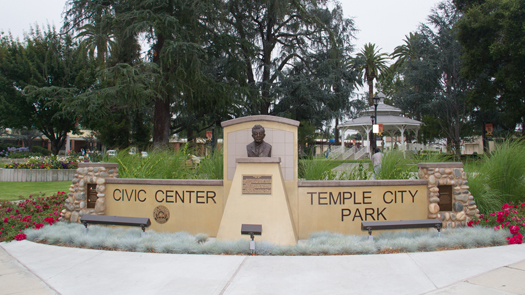
The Temple City Unified School District (TCUSD) is one of the few districts offering students and their families some options for getting a high school education using a different delivery method – the Dr. Doug Sears Learning Center (DDSLC) and the Alternative School.
According to Chris Sewell, principal, “While both are alternative schools, they are two separate institutions, having different accreditations and curricula. The DDSLC is a continuation school serving 10th to 12th graders from TCUSD who might need credit recovery and for those who may not have passed some classes but weren’t able to attend summer school. Students could recoup and maintain credits to be able to transfer back to the high school and graduate on time.”
“Our enrollment fluctuates from one year to the next,” Sewell says. “At one time we had as many as 80 students; we currently have fewer than 50, with four full-time teachers and a counselor. Several things have changed over the years in terms of intervention at the high school so fewer kids are sent to remedial school. The district altered and added services to support students before they reach the point of failing a course.”
Sewell explains, “DDSLC is also another option for students who feel that a comprehensive high school schedule interferes with other things going on in their lives. Some of our students are 18 years old and are working; they would like to pick up more hours and a traditional school doesn’t allow for that. Still some who come here already know they want to start at Pasadena City College (PCC) so this schedule allows them to take a class or two at PCC.”
“The Temple City Alternative School (TCAS), on the other hand, offers online independent study for 9th to 12th grade students,” adds Sewell. “It has the same academic requirements for graduation as a comprehensive high school – four years of English; three years of history and government; two years of science; three years of math and economics; three years of physical education; four years of electives. Those who are planning on applying to UC/CSU have to complete the A-G requirements.”
“The only difference is the delivery method – we have a digital curriculum using APEX Learning. Students have access to their online course 24 hours day; they study at home at a convenient time to do so. Students are required to come in only for an hour once a week to meet face-to-face with Shannon Findley, the supervising teacher,” Sewell says further.
Findley, who came on board during the 2015-2016 schoolyear, says, “I supervise and approve student coursework designed to meet their individual needs and levels. I meet with them regularly to assess their work, discuss progress on an ongoing basis, and revise individual instruction plans when called for. If necessary, I provide mediation which can mean either teaching or counseling. I also have an open computer lab to serve as additional resource for one-on-one tutoring and technology, and to furnish an absorbing learning environment or workplace.”
To explain how she combines APEX Learning and teacher instruction, Findley describes, “The digital curriculum keeps students actively engaged and attentive as they are required to read, watch, listen, inquire, write, discuss, and manipulate. Embedded in the program are multimedia tutorials which give students the opportunity to explore and understand new concepts at their own pace. Whenever necessary, I provide direct instruction or I modify material and assignments to help them become proficient with the concepts.”
With technology a pervasive tool in today’s world, online schools have gained wider acceptance. Sewell points out, “Ten years ago, if someone said he or she was taking a class online, people gave a knowing smile. With more and more prestigious schools offering online courses, the stigma attached to digital study has disappeared. The truth of the matter is that the digital classes can be as rigorous as, if not more rigorous than, coming on campus listening to a lecture and taking notes.”
Kids who attend an alternative school have unique needs that cannot be filled by traditional institutions. Sewell illustrates, “We have students who are serious athletes and their training schedule doesn’t allow them to go to Lemon Avenue (where Temple City High is located) from 8:00 am to 3:00 pm but they want to obtain a high school diploma. The district has given much support – the school is open daily so students can come in and leave any time between 8:00 and 3:00; laptops are available and they can sit in coffee shop-style chairs; the lab is open for them to use. A math teacher comes in from 3:30 to 5:00 twice a week to provide extra help.”
“The 12 students currently attending have direct access to a full-time teacher and a counselor. They can still participate in all the events at Temple City High, like grad night or the homecoming. They can go to the college fair the high school hosts, with the advantage of getting individual and personal attention from the counselor. They are, in fact, better off than the 500 seniors at the traditional high school,” Sewell observes.
Raul Acevedo, who has been the school counselor since 2004, ensures that he provides a welcoming environment for all newcomers, “Each students enrolls into the independent study program due to a variety of reasons – often, although not always, after some challenging experience. Because students have very few adults to interact with, it is important that each interaction is a positive one. So building that initial rapport is key.”
Pasadena City College Photo taken online
“Within three domain areas – academic, personal/social, and college/career – I give students the support they need towards attaining knowledge, setting goals, and follow-through for individual success. While the majority of our alternative school students are on a college prep track, some may not be. The challenge then is to develop the college and career readiness mindset and behavior within those students,” Acevedo expounds.
“I provide orientation; schedule classes based on students’ transcript review, grade level, and oral interest survey to select elective courses; monitor progress throughout the term; check-in and follow up with students on their goals and plans. I make sure I know if they intend to stay in independent study or transfer back to the high school; if they have post-secondary plans, including attending Pasadena City College (PCC).
“During our first few interactions, college counseling occurs when I ask students about their goals. But the process begins in earnest in junior year and culminates in senior year. I assist in their school research, relative to the courses they have in mind; I guide them through the college and financial aid (FAFSA) applications, and I help find scholarships.
“Being the counselor for DDSLC, I combine certain activities with our alternative program students, like visiting local community colleges. I usually take students in my car and visit PCC and Citrus College; another teacher drives his own car to take more students, when needed.
“Our students also attend fairs including: PCC Career Technical Education Fair; the annual Citrus College Theatre Performing Arts Open House; and the National Hispanic College Fair, which provides a platform for dozens of colleges and universities nationwide to connect with students (last year’s fair was at Loyola Marymount University).
“During the 2015-2016 school year, three seniors graduated and are now attending community colleges – Brandon Johnson is at Citrus College and plans to major in accounting with the hope of becoming an FBI accountant; Charles Osborne is pursuing a political science degree at PCC on a full tuition scholarship from AJ Wang; and Lu Jiang is currently at PCC but intends to transfer to the Art Center of Pasadena,” Acevedo says.
Everyone who comes through their doors is expected to do well and succeed, “The onus is on the student to have self-motivation and drive because they have more independence – it’s so easy to be a slacker,” Sewell warns. “But if they can manage this well, it will serve as a skill that helps them transition to college, to a career, and to life.” From that perspective, an alternative school offers some very attractive reasons for students to deviate from traditional learning. But as Sewell enthusiastically proclaims, “In the year 2016, what’s traditional? Technology has changed all that.” Indeed it has!
 A San Gabriel Valley Inquirer