Originally published on 13 May 2019 in the Pasadena Independent, Arcadia Weekly, and Monrovia Weekly
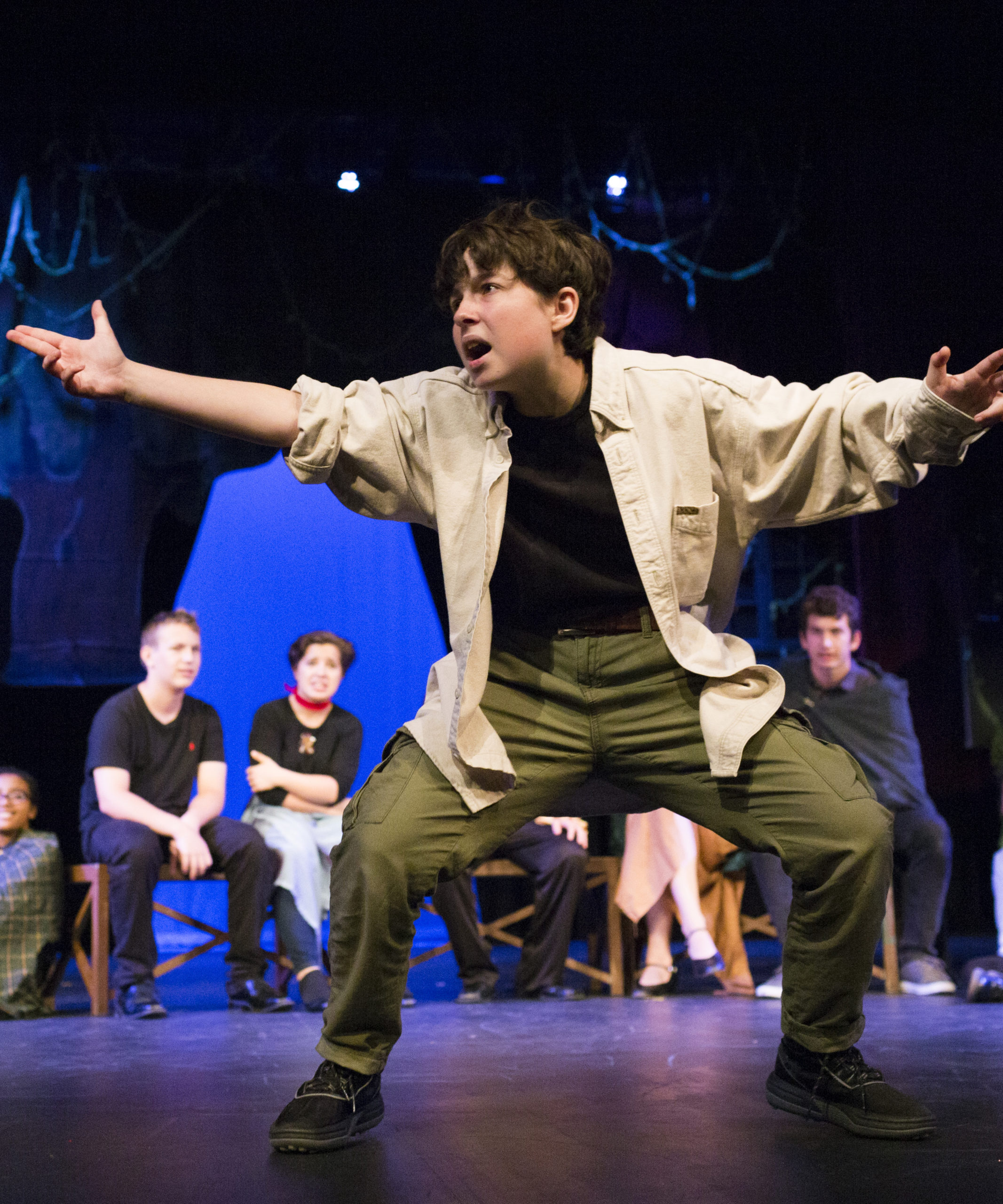
A Noise Within’s (ANW) ‘Summer With Shakespeare’ acting camp will once again be open from June 17 to July 19, 2019 and children don’t have to be aspiring actors to attend it. The most important skills that they will gain, in fact, are those that help them in their day-to-day life.
“Our focus is social learning and the soft skills which are going to help our students succeed as they get older, regardless of whether or not acting is a passion of theirs,” emphasizes Alicia Green, ANW’s Director of Education and Community Outreach. “Those include empathy, self-confidence, team-building, compromise, public speaking skills – the things that are really going to help them stand out in the current climate of technology where most kids are so used to working on their computer instead of interacting with others. These are inherent in a theatre class or theatre camp.”
“And if kids are interested in pursuing theatre, it’s an incredible place to train,” Green adds. “We’re a professional repertory theatre and all our instructors are working artists in their craft who have pedagogical backgrounds as well. However, we also have a lot of kids who are just interested in exploring the texts or because it’s fun for them and they enjoy being here. I don’t even think that they always know the soft skills they are developing. They come for the friendships that they’ve made. Sometimes, too, they come back because this is a place where they feel good about themselves. Truly, there are so many reasons we have such a high return rate with our students. It’s one thing to go to camp and have fun all day with your friends but it’s another to make it so meaningful that kids come back year after year.”

Parents, whose children have gone to the ‘Summer with Shakespeare’ camp, only have high praise for the program. Green gets several gratifying feedback including, “Thank you so much for providing a wonderful camp experience for my five-year-old daughter. She came home the first day reciting Shakespeare and was excited to go every day. As a parent, I was really impressed by how it wasn’t just a singing and dancing camp; she learned a lot about all aspects of Shakespeare!”
“It’s a really well-run program, with enough structure for those who need it but freedom and flexibility to make it fun,” another parent points out. “The kids really learn about theatre and acting in a fun, productive atmosphere. It’s also great that it happens in a real theatre space.”
One Dad says, “The proof is in the pudding. As I sat in the audience watching the effects that a summer of A Noise Within had had on my 13-year old daughter, I was – in a word – becalmed. It was wonderful that she was appreciated so much and given a hefty amount of responsibility (read trust) onstage. We will be forever grateful for this summer!”
“Your children will be challenged, encouraged, nurtured, and leave with a broad range of skills and a new level of confidence,” is how one parent puts it.
Campers themselves have amazing testimonials to share. One of them claims, “‘Summer with Shakespeare’ was a life-changing experience I will never forget!”
Another camper enthuses, “I love this camp!!! They actually taught me stuff about acting and teamwork! ‘Summer With Shakespeare’ helped me achieve my goals and encouraged me to get out of my comfort zone and also taught me how to do things, such as making a prop or a costume!”

The five-week camp is open for children who are as young as 3 all the way to 18 years old – from pre-school to high school. Green describes the different options students have.
“If you’re in high school you’ll perform ‘Julius Caesar.’ And in that five weeks, from beginning to end, their goal is to self-produce every aspect it takes to do a play. They do their own set, costumes, text work, swords. There will be movement, light, and sound elements. They will then perform on our stage with their sets, costumes, and everything they’ve developed in those five weeks.
“We have an identical program for middle school. This year they’ll be doing ‘Romeo and Juliet,’ and it’s the same exact thing – sets, costumes, props, etc. Everything is really on them, we provide the skills, material, and support that they need. But the expectation is that they’re responsible for building the set and making their costume. The finished product looks like kids made it instead of it looking like we have professional technicians come in. And that’s part of the plan. The kids are really proud of what they’ve accomplished – this is theirs and they’re going to present what is theirs at the end of the five weeks.”
Green continues, “We also have weekly camp options and every week has a theme. For each week that has a theme, there will not be a performative element. We’re very much process over product. There’s an open house at the end of every themed week so that parents can come in and observe and see what their kids have been doing for the past week.
“Week 1 is Comedy. They’ll do commedia and focus on the comedic text – they’ll sing, dance, and have a great time. Week 2 is Tragedy. We incorporate swords, stage combat, ‘Macbeth,’ ‘Hamlet,’ and the tragic text. Kids love this week because, you know, who doesn’t love a good tragedy? Week 3 is Histories and Romances. We keep the swords, but we throw in a little bit more – it’s a combo week. Weeks 4 and 5, for the weekly option, will have the same production. For ages 6 to 9 and 10 to 13 – those two weeks are a more condensed, less intense version of the five weeks. They’ll make their set and costumes, and at the end of those two weeks they’ll perform on our stage.”

“We have our pre-school week, which is incredible!,” effuses Green. “I’ve never had such feedback from parents so surprised that their 3-year-old was reciting Shakespeare a year later. Kids are still developing language and that’s something that’s so magical about doing a Shakespeare camp with kids. Adults tend to find Shakespeare intimidating. It’s different for kids because they’re still learning language, books, and texts in school. So if we don’t make it scary, they’re not scared of it. They’ll approach it with a great deal of excitement, they’ll learn the origins of language, and they’ll get to play with characters. Something that’s so great about doing camp here at A Noise Within is we’re a classical repertory company. We’re doing the plays that have permeated history for hundreds of years because they resonate with us as humans. Kids get these texts because they understand what the characters are going through. For instance, they meet characters who get jealous of somebody. They see what that feels like and what the repercussions of that are. These are all things that permeate all of Shakespeare’s texts and it’s really exciting to grasp that natural connection. We’re not only helping kids by learning Shakespeare which is great for them in school, but by building soft skills like empathy, and becoming better humans in the process.”
“It’s definitely a natural pathway for children who want to be actors, too,” clarifies Green. “Rafael Goldstein, one of our resident artists, was one student from years back, who transitioned from ‘Summer with Shakespeare’ camp to the ANW stage. Sam Christian has been doing ‘Summer with Shakespeare’ now for six years, I believe, and he was in ‘Raisin in the Sun’ last season. This past season, he was in ‘Rosencrantz and Guildenstern Are Dead’ and he just finished ‘Argonautika.’ And a lot of our summer camp students do end up with our ‘Christmas Carol’ for all the young people’s roles.”
So let your kids have a grand time learning how to sword-fight this summer! The skills they acquire are guaranteed to stay with them long after the summer months. And they will look back to that time with both pleasure and gratitude.


 A San Gabriel Valley Inquirer