Going on ‘The Journey’ From Home

Originally published on 19 October 2020 in the Pasadena Independent, Arcadia Weekly, and Monrovia Weekly
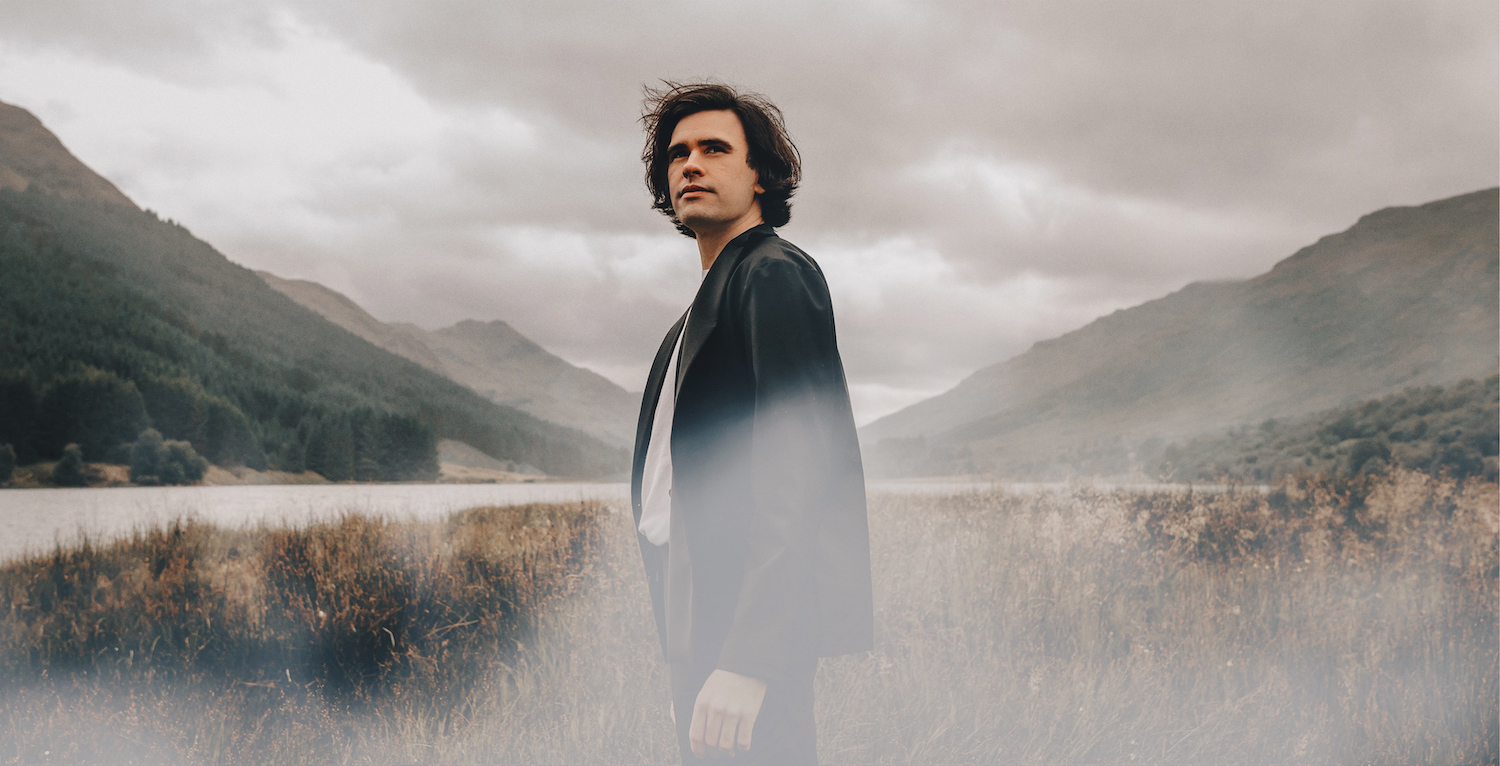
 
Scott Silven in ‘The Journey’ | Photo by David Wilkinson/Empirical Photography / The Broad Stage

Wouldn’t it be great to travel 5,000 miles and see the breathtaking beauty of Scotland during lockdown? With some modern technology and illusion techniques, we can take in all the magic this land has to offer from our very own living room.

The Broad Stage has co-commissioned the West Coast premiere of a virtual event called ‘The Journey’, created and performed by illusionist and mentalist Scott Silven. From Oct. 20 through Nov. 15, Silven will take us along with him when he goes back to his beloved country. This immersive and intimate show promises to be quite a different experience where 30 participants per show will feel transported to a different place and time.

According to The Broad’s publicity material, Silven tells a long-forgotten story that reveals mysteries of the mind and unlocks the secrets of his glorious Scottish homeland. Through incredible illusions and feats of imagination, ‘The Journey’ explores the sense of home and the transformative power of place. We’ll then discover the path that connects us to Silven’s past, our own present, and a collective future.

It all sounds quite intriguing so I interview Silven by email to find out more about him and the show. I ask him when and how he got interested in illusion and magic, and he says, “I have a couple of defining moments from my childhood that stand out to me. The first echoes back to my grandfather: he took a piece of candy that I’d signed my name on, vanished it, and made it appear in a sealed matchbox on the table. He then immediately shared the secret with me — it was embarrassingly simple, but I was instantly captivated by him taking something ordinary and creating something extraordinary from it.

“The second is a little less specific: the experience of growing up in Scotland — which is a place where myth and mystery is woven into the fabric of its identity. So being connected to those stories and surroundings as a kid really instilled a sense of wonder and imagination in me. Thankfully, my parents were incredibly supportive in allowing me to follow my creative pursuits.”

As anyone who has read Harry Potter knows, there is a school for wizards. There is, however, none for mere mortals wanting to learn magic. As Silven confirms, “I’m afraid there’s nothing as exciting as a general school of magic, but I wish there was! It’s a very solitary craft which I started at a really young age. There are books that you can read, skills you can source, but the world of illusion is a meritocracy in that the more you learn and show an interest in it, the more you’re able to engage with mentors who will teach you esoteric secrets.”

I inquire how he became a professional illusionist and Silven answers, “I think the focus for me has always been to create my own work. I studied theatre in Edinburgh, Scotland, and while I was there I took part in the Edinburgh Fringe Festival — the biggest arts festival in the world — which allowed me to put my work in front of lots of international producers and was lucky enough to sign with an agent and move to London. From there I worked on establishing my craft and then signed with American management before making the move to the U.S.A. My focus was never becoming an illusionist in particular, but to create interesting and impossible experiences that audiences can relate with. I think that helped my work stand out in some way and is probably the reason why it’s connected with audiences across the world.”

“I have a core production team that I collaborate with, but then I like to engage with additional crew from local venues depending on the state or country I’m performing in,” continues Silven. “It’s really wonderful to connect with creatives across the world and share my work with them.”
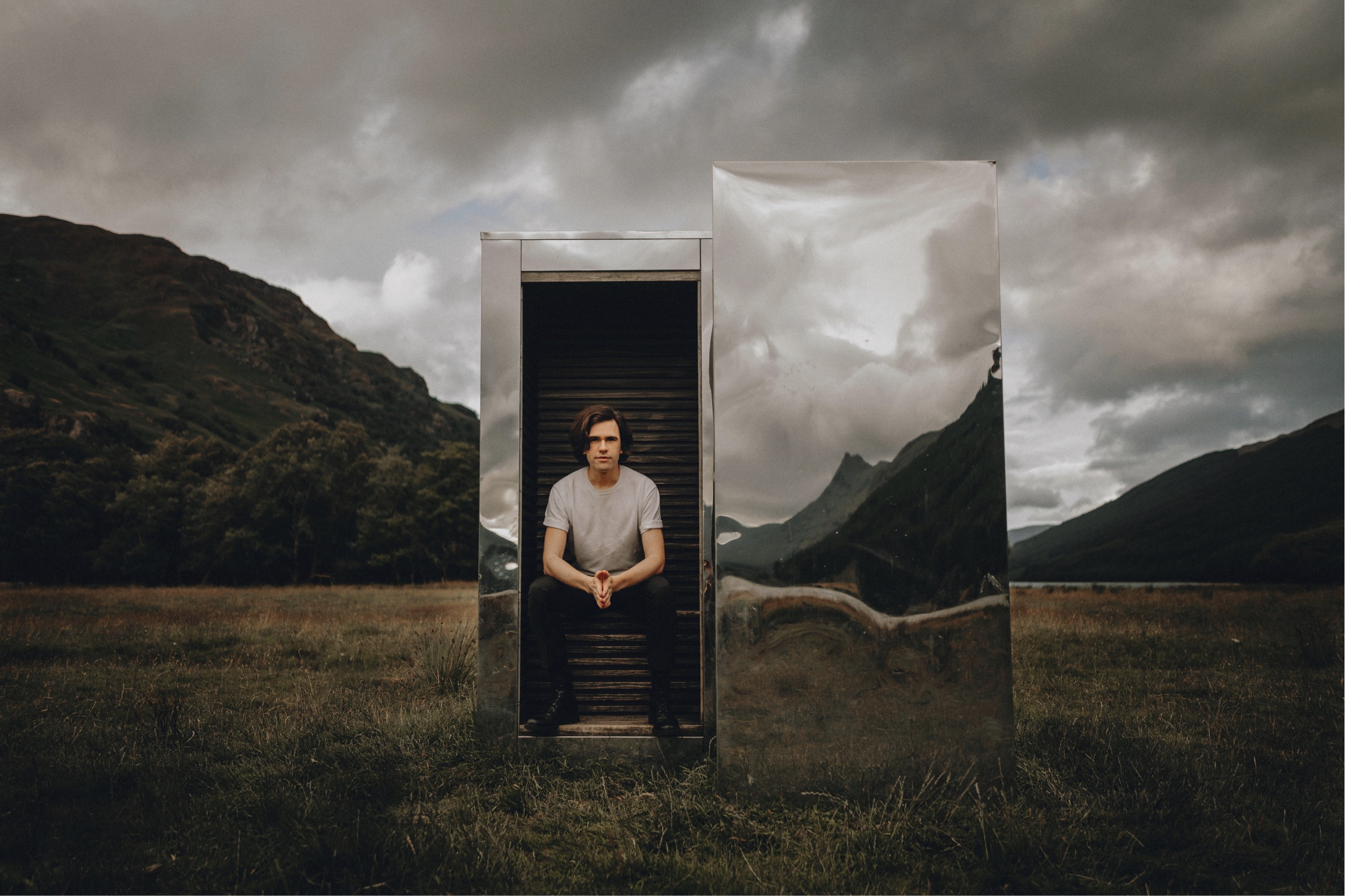
Scott Silven in ‘The Journey’ | Photo by David Wilkinson/Empirical Photography / The Broad Stage

Unlike his previous shows, ‘The Journey’ uses Scotland as the backdrop in an immersive experience. Silven says, “Memory and nostalgia form a big part of my work, and Scotland was such a formative part of my childhood and what I do today — as I mentioned, the mythical landscape provides constant inspiration for me. Serendipitously, returning back to Scotland made me recognize the power of home and place and how that stays with us, and I knew I wanted to create an experience that would ask an audience the same questions. I began creating the experience based around the landscape and myths of my childhood and discovered that I wanted to take my audience on a virtual adventure from their home to mine in rural Scotland, and to use their imaginations and memories as the guide on ‘The Journey.’

“It’s an entirely live experience, as well as being interactive and immersive, with the audience’s input directly affecting elements of the show. By combining breakthrough technology, projection mapping, high definition visuals, and stereo sound to help tell my story, we have hopefully created something audiences will have never experienced in the online realm before. The challenges of the online format have allowed unique opportunities to connect with the audience on a deeper level that I wouldn’t otherwise be able to do in a live environment. We send the audience exclusive advance content that they can interact with before they engage with the experience. As well as this, there’s something very powerful about audience members sitting in the comfort of their own homes. They are asked to bring objects of meaning and purpose to them to the performance itself, which I hope makes it a far more personal and powerful experience than sitting in the usual darkened space of a theatre.”

‘The Journey’ is Silven’s debut performance on the West Coast. It’s unfortunate that we have been deprived of his physical presence, but he quickly assures, “I’ve been privileged enough to complete three world tours and I adore the West Coast — it’s one of my favorite places to visit. I’m looking forward to returning in the near future and already have plans to perform live as soon as we are able to.”

Finally, I inquire how many shows he does each year and if there has been one particularly significant or memorable place or event for him. Silven responds, “I usually have a pretty packed schedule where I perform on stage and screen; I typically do around 500 shows a year across the world. That’s what is particularly interesting about this format, in that I’m able to perform a ‘digital world tour,’ where anyone in the world can come and engage with my work. It’s one of the unique elements of moving from a live setting to an entirely online format.”

“I have so many wonderful moments from all my shows. Some that stand out to me are my first shows in New York. It was meant to be a four-week run but was extended and ran for many months. It really helped connect my work with American audiences and facilitated the step to move to New York City permanently — a childhood dream. Since then the opportunity to travel, where one week you’re doing shows in Seattle and the next you’re doing shows in Sydney, is perhaps the most memorable and important luxury my work has given me. I’m hugely excited to be bringing ‘The Journey’ to the Broad Stage for its West Coast premiere — I’ve hopefully crafted an experience that audiences will never have seen in the online realm before, and I can’t wait for them to experience it,” concludes Silven.

Maybe the lockdown isn’t an altogether unfortunate circumstance after all. Because of it, we have this fantastic opportunity to go on a virtual journey with a master illusionist to one of the most hauntingly beautiful places on earth.            
A Walking Tour of St Andrews and Edinburgh in Scotland (United Kingdom)

Originally published on 28 August 2017 in the Pasadena Independent, Arcadia Weekly, and Monrovia Weekly

There was a time when my awareness of Scotland was very much limited to Scotch whisky, for which I have neither a fondness nor taste.  However, I do know several people who enjoy the single malt variety so you might say I appreciate Scotch by osmosis.

Five years ago, though, I visited Scotland for the first time and that experience gave me a bit more knowledge about this beautiful country (other than that of producing James Bond and Scotch).  Two weeks ago, I went back for my third visit.  As I did on my first venture, I went to Edinburgh and St Andrews.

Edinburgh, located in Lothian on the Firth of Forth’s southern shore, is the capital of Scotland.  Besides being home to the Scottish Parliament and the seat of the monarchy in Scotland, it is the second most populous city in Scotland and the seventh most populous in the United Kingdom.

From Edinburgh Airport, a visitor can board the tram then get off on either Haymarket or Waverley station to get into the city.  Of course, taking a taxi might be the best option especially if you have a lot of luggage to tote.

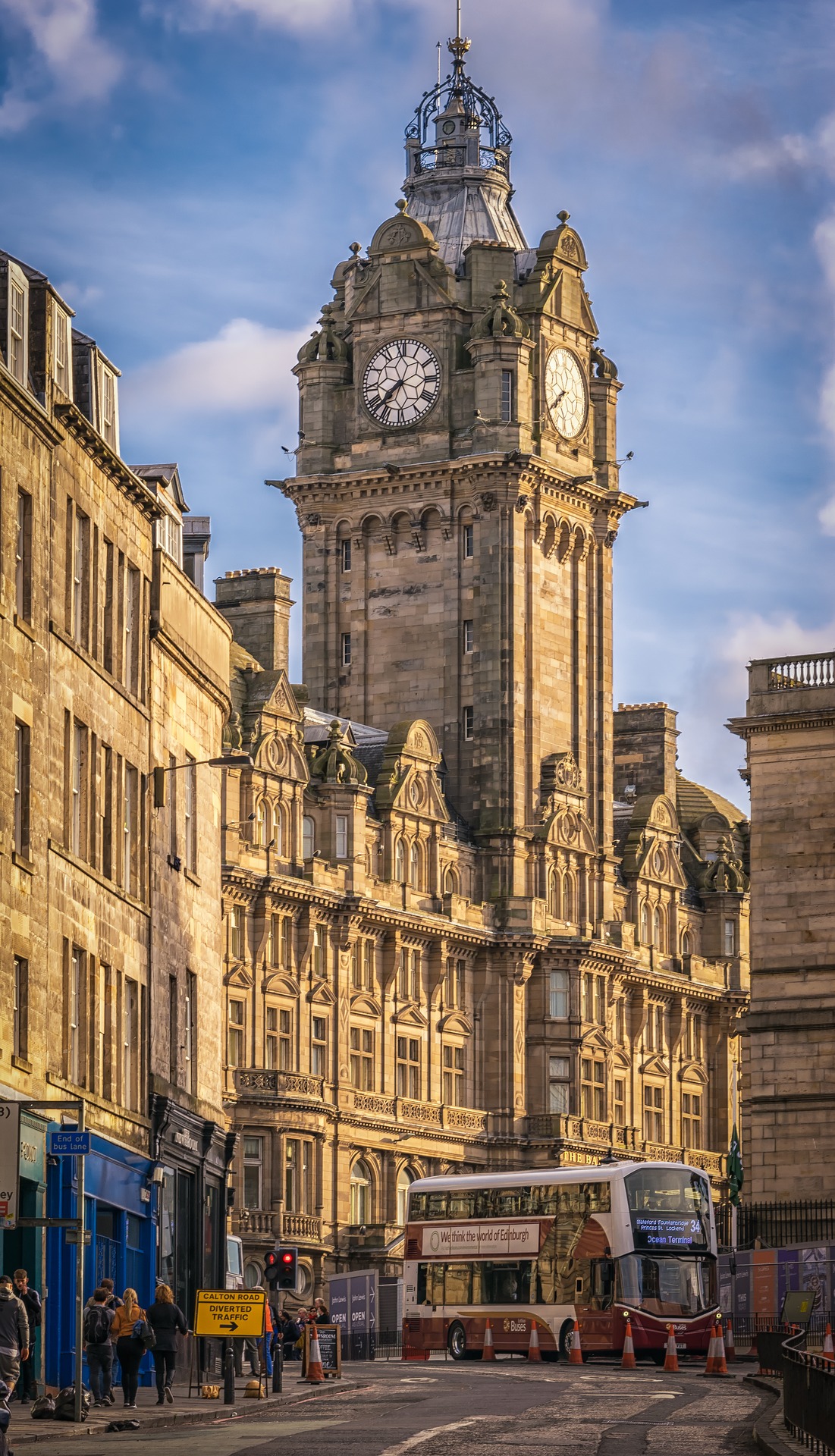
Balmoral Hotel is immediately outside the entrance to Waverley Station.

The city has several hotel choices to accommodate one’s budget.  If you plan on staying close to Waverley Station, there is the Victorian-style Balmoral Hotel, a structure so recognizable with its majestic clock tower.  It is located on the east end of Princes Street and is an excellent starting point from which to start your sight-seeing.

This being a walking tour of Edinburgh, I concentrated on the town center – mainly Princes Street and adjoining thoroughfares.  And you can’t properly claim to have visited this picturesque  city without an excursion to Edinburgh Castle.

An imposing fortress sitting on top of Castle Rock, Edinburgh Castle is the edifice that is most associated with the city.  It was a principal royal residence from the 11th century until the early 17th century; it provided comfortable living quarters to the reigning monarch and a repository for royal treasures and registers.

From Princes Street, I walked up the Royal Mile to the esplanade.  There is a Gatehouse at the head of it, and the road leads up to Half Moon Battery and the Farewell Battery, to the Portcullis Gate and Argyle Tower.

There are several historical structures here – the Governor’s House, the New Barracks, the National War Museum of Scotland, the Upper Ward or Citadel, St Margaret’s Chapel, the Mons Meg, the Queen Anne Building, and so on.

The Royal Palace began as an extension to David’s Tower.  It comprises the former royal apartments; the King’s Dining Room; the Birth Chamber or Mary Room; the Great Hall; and the Crown Room, built in 1615 to house the Honours of Scotland – the crown, the sceptre, and the sword.  To the south of the palace is the Register House, built in the 1540s to accommodate state archives.

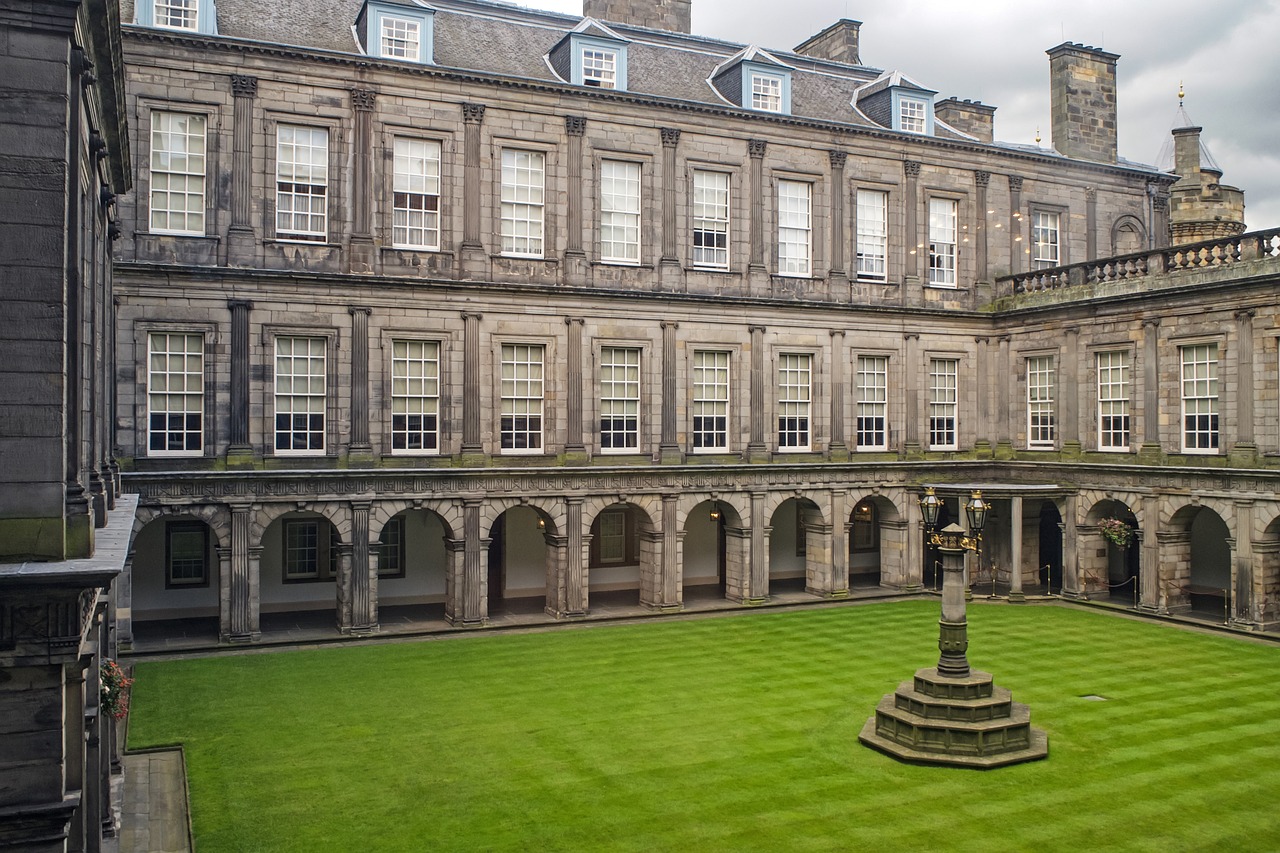
Palace of Holyroodhouse.

At the end of the Royal Mile, on the opposite end to Edinburgh Castle, stands the Palace of Holyroodhouse, the official residence of the British monarch in Scotland.  It is the setting for state occasions and official engagements.

Tour guides will be quick to point out that Holyrood Palace is not Queen Elizabeth II’s residence; it is where she stays for a week at the beginning of summer for official ceremonies.  The queen’s home in Scotland is Balmoral Castle in Aberdeenshire.

American television viewers who have never been to Edinburgh learned about Holyrood Palace during Season I of ‘Outlander’ whose main characters, Claire and Jamie Fraser, joined Bonnie Prince Charles in his efforts to claim the throne of Great Britain for his father.  He set up court here for six weeks in 1745 and the palace became the symbolic residence of the Stuart prince in his Scottish capital.

There are so many landmarks to take in depending on how long you’re staying – the Scottish Parliament, Scottish National Gallery, St. Giles Cathedral, The Real Mary King’s Close, the Edinburgh Zoo, etc.  As I come here every year, I select only one or two sightseeing expeditions during each stay.

Edinburgh has the most gorgeous skyline and a perfect perch from which to see the capital in all its splendor is the esplanade of Edinburgh Castle. During August, though, it is filled with viewing stands for people to watch the Royal Edinburgh Military Tattoo in the evenings.  It is one of Scotland’s greatest events staged on the esplanade of the castle and if you’re here in August it is a spectacular event you shouldn’t miss.

As I was determined to get a bird’s eye view, I took in the sights from the Edinburgh Ferris wheel.  From high up I observed the entire city below and, as always, I found it breathtaking.

This being August, the Edinburgh International Festival and Edinburgh Festival Fringe were in full swing; flyers for the many theatre performances and art shows were plastered everywhere I looked.  Fringe buskers entertained from every available street space; coffee shops, restaurants, stores selling all sorts of Scottish items – from a small key chain to a full kilt ensemble as a memento of your Gaelic experience – bustled with tourists.

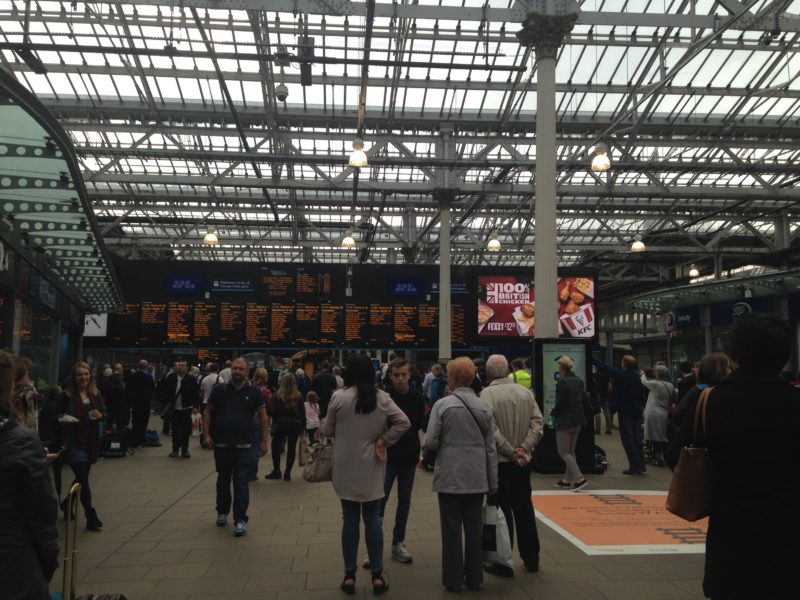
At Waverley Station.

Having had my fill of Edinburgh, I boarded the Scott Rail from Waverly Station to St Andrews, a seaside town about 30 miles northeast of Edinburgh.  The train going to Aberdeen makes a stop at Leuchars and this was where I hopped in a cab that took me to the town center.

Even those who aren’t golf aficionados know that St Andrews is the birthplace of golf, where it was first played in the 15thcentury.   It is home to the iconic Old Course where, to this day, the British Open is held every five years.

I can confidently say that St Andrews has mainly two kinds of visitors – golfers who flock into town during the summer months and students who populate it from fall through spring.  It really is a small place with three major thoroughfares: North; Market; and South Streets.

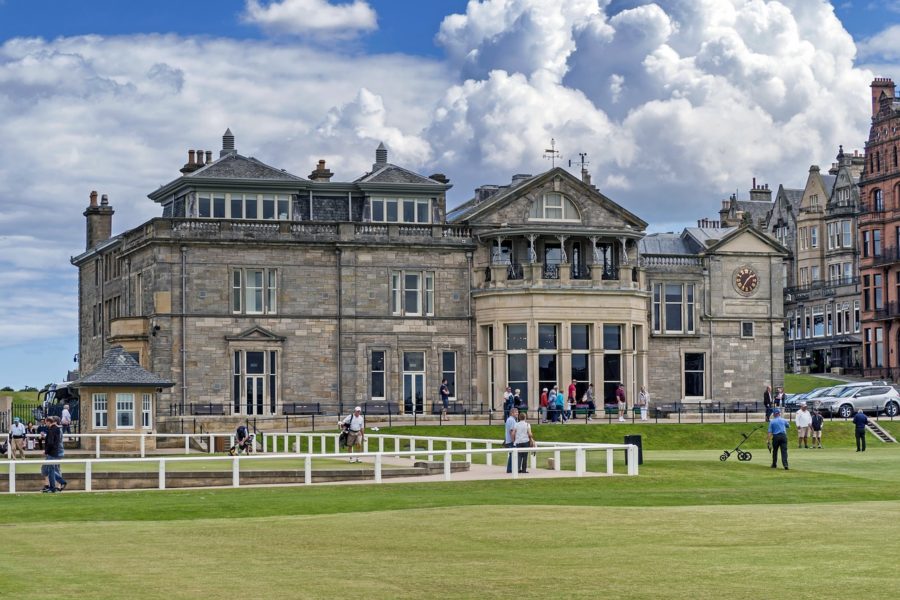
Tourists usually start their excursion at the Royal and Ancient Golf Club, the world’s oldest association for the sport.  Established in May 1754, its membership has grown to about 2,500 worldwide and is regarded as the governing authority in the United Kingdom and beyond.

The Royal and Ancient Golf Club.

Of course, one could never miss the much-celebrated Old Course, Swilcan Bridge, and Hell Bunker.  They are, after all, the images people usually conjure when they think of St Andrews.

Golfers consider going to the Old Course significant in itself; yet its most noteworthy feature is that despite its lofty reputation it is actually open to the public.  Obtaining a tee time isn’t an impossible feat as long as you have a suitable handicap (24 for men and 36 for women).  However, due to its immense popularity, booking the Old Course involves employing a few strategies.

St Andrews is also home to the oldest university in Scotland and third oldest in the United Kingdom.  Founded in 1413, the University of St Andrews has been ranked by the University League Table third in overall academic excellence behind Cambridge and Oxford.

The University of St Andrews doesn’t really have a campus – its buildings are spread all over  town.  If you’re visiting during term – Martinmas semester (early September to mid-December) and Candlemas semester (late January to the end of May) – you’ll probably find yourself strolling alongside students hurrying off to their lecture or tutorial.

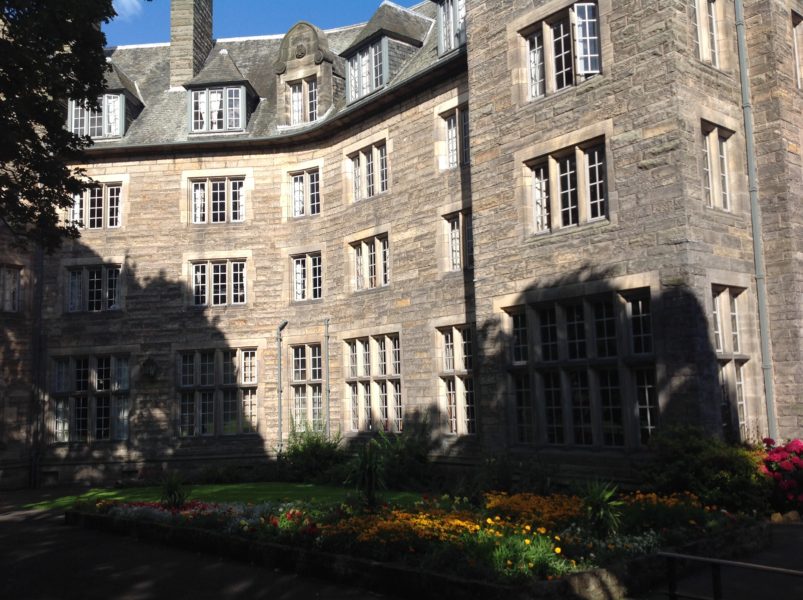
I find all the university’s stone-clad structures awe-inspiring – from St Salvator’s Hall to St Mary’s College.  How wonderful it must feel to be going to school in such stunning surroundings!

St Salvator’s Hall.

Other in-town attractions I would suggest visiting are: British Golf Museum, St Andrews Cathedral, Scotland’s National Aquarium and Inchcolm Abbey, and the Botanical Garden.

All these delightful places in Edinburgh and St Andrews offer the grace and old-world grandeur of times past.  They are a reminder of an age of civility and gentility – an escape we sorely need given our current fractured society.