
Originally published on 17 September 2015 in the Pasadena Independent, Arcadia Weekly, Monrovia Weekly, and Sierra Madre Weekly
“Duarte is poised to be a model for work-based learning that transcends socio-economics, race and culture. We have 21st century learning going on, connecting students with college and career opportunities,” states Dr. Allan Mucerino, newly installed Superintendent of Duarte Unified School District (DUSD).
Barely three months into his term of office, Mucerino has held numerous talks, attended several symposia, and established additional partnerships with organizations to expand on the many programs already in place. He came to Duarte on the first of July to occupy the post vacated by Dr. Terry Nichols, who retired at the end of June. And while Mucerino is cognizant of the great responsibility he has undertaken, he is confident that his expertise and past experience, coupled with all the district resources, will serve him well.
“We have several wonderful projects in place – a collaboration with City of Hope that has created SEPA (Science Education Partnership Award); an Early College Program established with Citrus College; the Pathways in Technology with City of Hope and Citrus College; a mentoring program called STEP (Shoulder-Tapped Empowered Proteges); and LIFI (Latino International Film Institute) – all of which give our students opportunities to not only acquire classroom education but also practical training,” Mucerino explains.
In addition to those excellent programs, Maxwell Elementary recently received its International Baccalaureate designation – a distinction that makes it a much sought-after school. A $19,000 Advancement Grant from Los Angeles County “Arts for All” was awarded to the district, augmenting their arts funding through Mr. Holland’s Opus Foundation.
As he hit the ground running, Mucerino immersed himself into enlarging the building blocks already begun by his predecessor. He says, “Using Linked Learning as a framework, I am looking to get in on the stackable certification movement.” He wants to expand on the Early College Program by collaborating with community colleges to create stackable certifications, giving secondary school students the option to take courses on their campus to earn a certificate for a particular career while in high school.
As Mucerino further expounds, “Someone can take a nursing course beginning in high school and earn a certification as a CNA (nursing assistant). He or she can take further studies to stack additional certifications from LVN (licensed vocational nurse), to RN (registered nurse), to a BA in Nursing with our higher education partners. Earning certifications in high school provides students with employable education and skills. We aim to prepare all of our students for college, but this approach readies graduates for the work force if higher learning is not an immediate option, for one reason or another.”
Mucerino is also looking to collaborate further with the community colleges to offer capstone classes in high school. He says, “as part of our College and Career readiness in STEM fields, I would like to see classes that focus on one specific industry woven throughout. So as students satisfy the A-G requirements, they can study a particular course of interest progressing each year. An internship with our business partners in the community, will cap their senior year.”
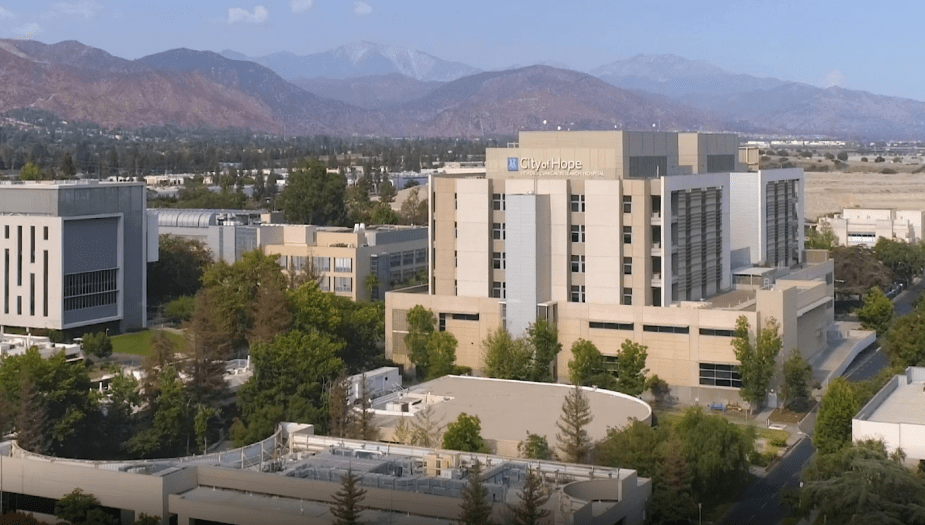
Of notable interest to Mucerino is the Healthcare Workforce Initiative. He is involved in a healthcare minority consortium to help develop youth for healthcare professions. As the recipient in 2012 of the Science Education Partnership Award supported by the National Institutes of Health, DUSD is in an unparalleled position to take full advantage of the partnership between City of Hope (COH) and the San Gabriel Valley, and the SEPA Collaborative. This grant established a two-stage research education program for rising high school juniors and seniors. It gives students solid background in the theory and practice of science as they conduct real discovery research.
SEPA also led to a professional development agenda for K-12 teachers. Workshops for elementary, middle and high school teachers educate them on skills and techniques for critical reading of science texts. There are also workshops focusing on implementation strategies for the K-8 Genetics curriculum, which are aligned Next Generation Science Standards (NGSS) and Common Core State Standards (CCSS). The grant also provides for a K-12 education program. This involves visits to classrooms by COH scientists and field trips top COH by 2nd, 5th and 8th grade students designed to get them interested in research and applying for summer research program during their high school years.
According to Mucerino the healthcare sector is paramount in DUSD. The district’s STEM Academies have made it possible for more students to pursue health careers. While Duarte previously only had a handful of students doing summer work, there are now hundreds of them working in the various hospitals in the region. He points out that Jeff Radsick, Biotech teacher at Duarte High School, who oversees the summer program, is constantly looking for internship opportunities. Ann Miller, Senior Director for Talent Acquisition and Workforce Development at City of Hope, works closely with the district in encouraging students to consider a career in the healthcare and biomedical fields.
There are countless programs offered in Duarte schools and partnerships the district has formed through the years. Not only do these opportunities put DUSD on the leading edge of work-based learning, they also prepare students to fill the one million STEM jobs that will become available in 2025. What better incentive could there be for children to attend school?
 A San Gabriel Valley Inquirer