February College Search Guide

Originally published on 4 February 2022 on Hey SoCal
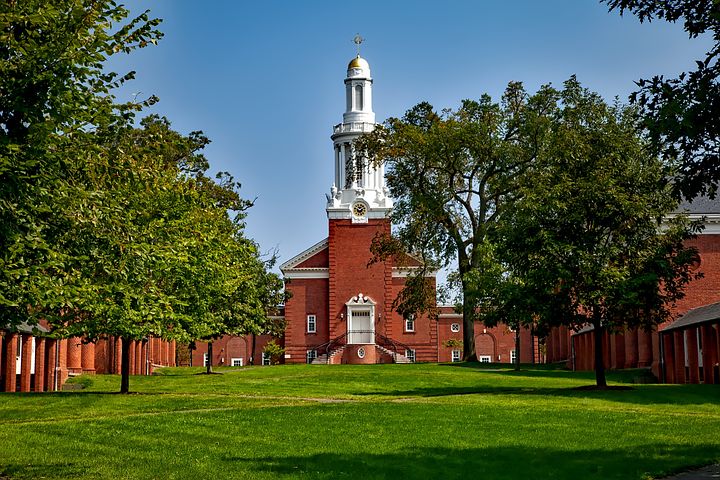
Yale University | Courtesy Photo

The road to college

It has been almost two years since the pandemic started, and the past holiday season brought on another surge in the infection rate. The U.S. currently has 8.17 million cases – 2.59 million in Los Angeles County – 95 percent of which is due to the omicron variant, according to the CDC and as reported on Bloomberg. Hospitals and health care workers are once more stretched to their limits.

Covid has touched everyone’s life and has caused adverse effects, the extent of which we have yet to find out. But the one certainty is that students suffered the most – they experienced major achievement gaps and significant setbacks during the 2020-2021 school year with mostly remote learning, based on a study released on Jan. 7 by the California Department of Education.

Schools and teachers are overwhelmed just as much as students and their parents. Fortunately, there are several tutoring services available if you and your children require help with school work. Find one which offers options that fit your children’s specific need and your family’s budget. A company called Mundo Academy provides excellent tutoring services in the Pasadena and San Gabriel Valley area. Likewise, some high school and college students have created free tutoring services and learning platforms to help children during the coronavirus pandemic. Two of these organizations include Sailors Learning and Wave Learning Festival.                     

If you’re exhausted, as most of us are at this time, please reach out for assistance. The CDC has put together a resource kit for parents, divided by age group, to help them ensure their children’s well-being. The site also has links to other resources that cover various concerns. Another CDC website is dedicated to helping parents manage stress during the coronavirus pandemic.           

Meanwhile, COVID-19 has resulted in changes to the college application process. The biggest upheaval was doing away with standardized testing by a majority of schools. The Cal State system recently announced that they are joining the UCs in eliminating the SAT and ACT. And then the College Board announced on Jan. 25 that the SAT will be given online exclusively beginning in 2024 in the United States and in 2023 in other countries.         

| Courtesy Photo

FRESHMAN

Your children are well into the second semester of 9th grade and are now fully engaged in the academic life at their school. With grades as the only benchmark for an applicant’s merit for acceptance, the student’s GPA is the single most important component of their college application. If their first semester marks need improvement, now is the time to turn things around.

Admissions officers will be interested to know what extra-curricular activities your children managed to accomplish during the pandemic – whether they were on campus or remote learning. Encourage your children to find virtual volunteer work or earn online certificates to put on their resumé. Hopefully, this time next year we’ll have some normalcy in our lives and students can take up some of the activities they have put on hold.              

SOPHOMORE

Your children need to really understand and learn the courses they’re taking so that the final grades on their transcript are the best they could earn. The schools they will be applying to will only see the grades in their three years in high school. If their first semester grades weren’t stellar, they need to improve this semester. They need to meet with their grade class dean to make sure their grades and courses are on the right track for graduation. While the SAT and ACT will not be required by many universities, AP scores are still being used as a gauge of college readiness and your children should register for the tests (www.collegeboard.com; www.act.org).

JUNIOR

I cannot emphasize this enough – junior year is the last complete year that college admissions officers will be looking at when your children send their application. They need to maintain their good grades and the pursuits that replaced their extra-curricular activities. If they had good study habits back in 9th grade and have established a routine, they shouldn’t be feeling overwhelmed right now.    

For most students, meeting frequently with their school counselors isn’t always a possibility. In some high schools where there are as many as 400 seniors to four full-time counselors, a junior may not even get any face-to-face time with a counselor. This puts the onus on your children to be very resourceful, take the initiative in gathering their research material, and plan their course of action as they embark on the college application process. This was a pre-pandemic fact that has become all the more glaring with Covid. Seek the services of an independent counselor if you need help.      

Meanwhile, as the parent of a junior, you should also make sure your child is on track – has taken all the courses the high school requires for graduation and is taking all the courses to complete the UC and Cal State requirements.                

You and your children should do a virtual college tour and consider doing an actual campus visit either during the spring break or in the summer. They might also want to make a phone call or have a Zoom chat with a current student to learn more about the school. More often than not, current college students and alums are happy to talk about their alma mater.    

| Photo courtesy of Eliott Reyna for Unsplash

SENIOR

Your children should not take for granted that they are all done with schoolwork because they have sent in their college application. Don’t let them succumb to ‘senioritis’ – they still have to submit their final transcript. Unlike last school year when teachers cut students a lot of slack because of the pandemic, they are more strict now that everyone has settled to the ‘new normal.’ Universities can rescind their acceptance if admissions officers see a drastic drop in the student’s grades. In fact, a single lower mark can trigger some questions. Moreover, third-quarter grades are critical in case they are waitlisted. And, in the unfortunate event they realize the school they were accepted to isn’t the right fit for them, senior-year grades will be crucial if they decide to apply for a transfer.

Additionally, seniors need to be mindful of their social activities. Schools are tech-savvy – they check social media profiles of students they have accepted and can rescind that offer if they find unacceptable behavior. Your children should be mindful of what may end up online.         

If your children have received new awards or commendations, or have accomplished something significant since they sent in their college application, they should email this important update to the admissions officer or the area representative of the school they applied to.

Your children should confirm with the colleges to make sure they have all the documents they require. They should continue applying for scholarships (www.scholarships.com; www.collegexpress.com; www.scholarships360.org, www.fastweb.com, www.studentaid.ed.gov) and getting their FAFSA (www.fafsa.ed.gov) ready for submission. I was recently alerted about scholarship scams by an organization called Comparitech.com, which I’m including in this college guide. 

The months following the end of the college application process are usually as anxiety-ridden for seniors as well as parents. While everyone has breathed a sigh of relief that the mad rush is over, the waiting period is just as nerve-wracking. In the next few weeks, some college decisions will be trickling in.

Remind your children to be careful how they share their good news as their friends might be getting some bad news at the same time. If they have been accepted to their ‘safety school’ but aren’t planning on attending it, they should resist the urge to boast about it as it might be someone else’s ‘dream school.’

Most of all, your children need to be patient – the answer will eventually arrive and nothing can hurry it up. Colleges notify at different times and in different ways. They shouldn’t read into the timing of the decision letters; their friends getting good news early doesn’t necessarily mean a bad outcome for them.       
March College Search Guide

Originally published on 1 March 2021 in the Pasadena Independent, Arcadia Weekly, and Monrovia Weekly

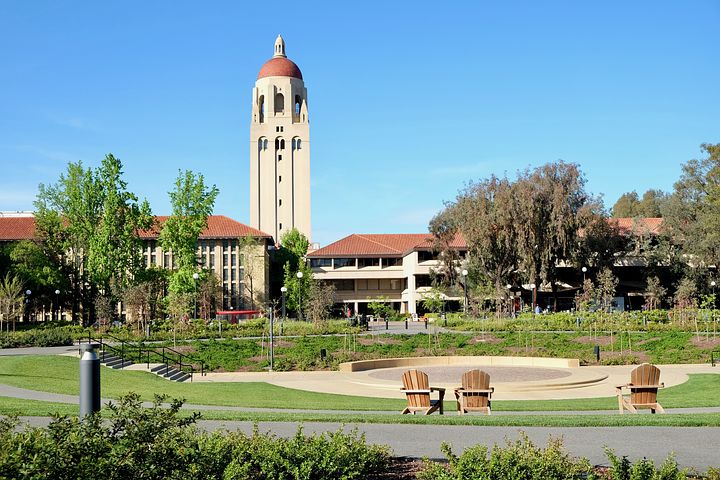
Stanford University | Courtesy Photo

The road to college

This month marks a year since the coronavirus pandemic became widespread and lockdown began. I wish I could say that we might see some light at the end of the tunnel but, sadly, that could still be months away. The U.S. has surpassed 500,000 COVID-19 deaths, more than in two world wars and the Vietnam war combined. While there are now three approved vaccines to help fight the coronavirus, there is very limited supply and rollout is being staggered. The latest vaccination update issued by the L.A. County Public Health Department has listed the sectors eligible for inoculation beginning March 1, they include workers in food and agriculture, education and childcare, and emergency services and first responders.

At the same time, government officials and school districts are announcing plans to reopen school campuses in early April. However, teachers’ unions are refusing to let their members go back to classrooms until they have been vaccinated. But private schools in California and the San Gabriel Valley have found ways to ensure their teachers’ and students’ safety and are now open for in-person learning. It only shows that the children who are more adversely affected by remote learning — those in low-income and racially diverse households — and who would most benefit from a return to classrooms, are not being served.      

Inequity in access to education goes all the way to the college level and first came into the spotlight during the spring of 2019’s bribery scandal. And now the pandemic has exposed a trend in college admissions. According to the New York Times’ education briefing, selective schools — including California’s UC system and Penn State — saw double-digit surges in applications due to standardized test scores being waived this admissions cycle. Harvard University had a record-setting 42% increase and the entire Ivy League had to extend its notification by a week to give admissions officers time to read and process applications.

On the other hand, many state schools and small private colleges suffered double-digit drops in applications and enrollments. Many institutions outside the top-tier have been struggling for years and the pandemic just made it worse. The N.Y. Times report further said American colleges and universities have endured losses of more than $120 billion and a few have shut down permanently. The institutions still operating often have to make up the difference by cutting services and programs that provide the tools, resources, and support which many low-income and first-generation students need to complete their degrees.                                                                

But let me get back to the purpose of this college search guide. If your children are now attending in-person classes, you must be so relieved after a year of practically having to home-school them. They might have to play catch-up, though. Whether your kids are still remote-learning or on campus, there are several tutoring services available if they require help with school work. Find one which offers options that fit your children’s specific need and your family’s budget. A company called Mundo Academy provides excellent tutoring services in the Pasadena and San Gabriel Valley area. Likewise, some high school and college students have created free tutoring services and learning platforms to help children during the coronavirus pandemic. Two of these organizations include Sailors Learning and Wave Learning Festival.                     

If your children are still distance-learning, you must be exhausted balancing home-schooling and working. Please reach out for assistance. The CDC has put together a resource kit for parents, divided by age group, to help them ensure their children’s well-being. The site also has links to other resources that cover various concerns. Another CDC webpage is dedicated to helping parents manage stress during the coronavirus pandemic.           

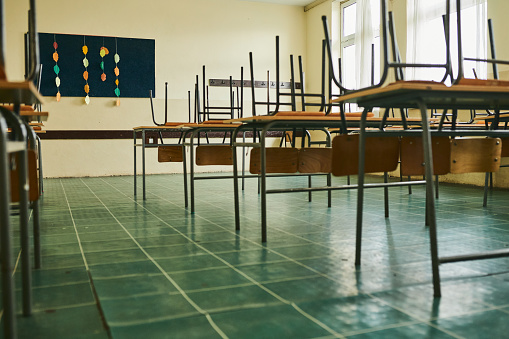
Empty classroom with chairs on the table during COVID-19 pandemic

FRESHMAN

Your children should have all their grades on track. They need to concentrate on maintaining good study habits now to be better equipped to handle the rigors of the workload in the coming years. If they haven’t been reading much, they should seriously consider taking up reading as a hobby during spring break to help them increase their vocabulary — it will come in handy when they write all the supplemental essays many universities require.   

It’s also a good time for your children to consult their class dean regarding summer activities – academic enrichment programs, volunteer work, or part-time employment. College admissions officers are looking for students who explored their passions while getting good grades.

Admissions officers will not expect your children to have extra-curricular activities during the  coronavirus pandemic. However, they will be interested to know how students spent their time outside of remote learning. Encourage your children to find virtual volunteer work or earn online certificates to put on their curriculum vitae. Hopefully, this time next year we’ll have some normalcy in our lives and students can resume some of the activities they have put on hold.              

SOPHOMORE

Tenth graders who are taking AP courses need to register for the AP exams administered in May.  While there is a slew of small independent tutoring schools offering courses to prepare for the AP tests, some children do not need to take on this additional burden on their already busy schedules. Your children have enough on their plate with the intensive homework associated with an advanced placement course. That said, your kids will still have to show competence on the AP exams as all scores are submitted to the College Board; all the colleges to which your children apply will see the AP scores.

Students with protective masks sitting in school desks in their classroom. School desks are marked with a cross to mark a place where sitting is not allowed to maintain social distance during corona virus.

JUNIOR

Spring break is usually the time when juniors visit various campuses. Years before the pandemic, my daughter’s school had an organized tour and students had a prepared college visit checklist with a page or several pages allotted for each school. They had to write their overall impressions.

In-person college visits may not be available during the pandemic so make sure you and your children do a virtual tour or a webinar. Many universities offer a live virtual tour where someone takes you around the campus on FaceTime or Zoom. There’s usually an admissions officer on hand to answer questions. And, as in pre-pandemic years, you and your children need to make an appointment to attend the tour.        

Even when tours are conducted virtually, you can still ask some of the questions you normally would during an in-person visit. Here are a few examples: What is the advising system for freshmen? Are there opportunities for independent/study abroad? Is there guaranteed housing for four years? What are the dining options? What safety measures and precautions are offered by the school during the pandemic?

Especially during the pandemic, it’s advisable to arrange to speak with a current student about campus life. Here are some questions to ask: Do students stay on campus or do they leave on weekends? Are students practicing healthy campus lifestyles, like limiting parties? Even before the pandemic, these parties led to excessive drinking and wild behavior; these gatherings could be super spreaders of COVID-19.        

One major concern for parents and children should be security on campus (Can outsiders gain access to the library, the fitness center or student union? Are there video cameras around the school periphery?). Of course, the most serious threat to students’ well-being may actually be within the confines of the institution. This topic has become part of the national conversation and some universities are addressing the topic up front. I, personally, would want to know if officials have safeguards in place to prevent such crime from occurring. Do administrators disclose information about it or do they hide and blur the facts? What consequences does the school impose on perpetrators?

SENIOR

You and your children should research all scholarships and grants available to them. Many colleges offer merit scholarships to applicants with excellent academic records to motivate them to matriculate. The package usually includes the full cost of tuition and fees and may also cover room and board.

Universities also extend need-based grants to applicants who demonstrate a financial hardship. These reduce the cost of a college education and do not need to be repaid. Your children should complete the Federal Application for Federal Student Aid. Other schools may also require a college-specific financial aid application.

Some useful websites to help you get started in your research include: CollegeXpress; FastwebNational Merit Scholarship Corporation; Scholarships.com; Scholarships360; and Student Aid on the Web.

As I expounded on last month, some colleges will be sending out decision letters sometime in March or April. Your children should keep their wits about them as they await word from the colleges they applied to. 

After the marathon they finished, your children may be quite restless and anxious to know if they have been accepted to their school of choice. Remind them to use this quiet time productively by keeping their focus on academics and their grades. They should still engage in other worthwhile activities like arts. 

Tell your children that they may be getting letters of rejection from some schools. While you might be more disappointed than your son or daughter, avoid showing it as that sends the wrong message. Not being accepted to their first choice isn’t the end of the world. In fact, while it may not seem like it at first, that rejection usually turns out to be a blessing in disguise — in most cases, they end up in the school that is the right fit for them.