September College Search Guide

Originally published on 1 September 2021 on Hey SoCal

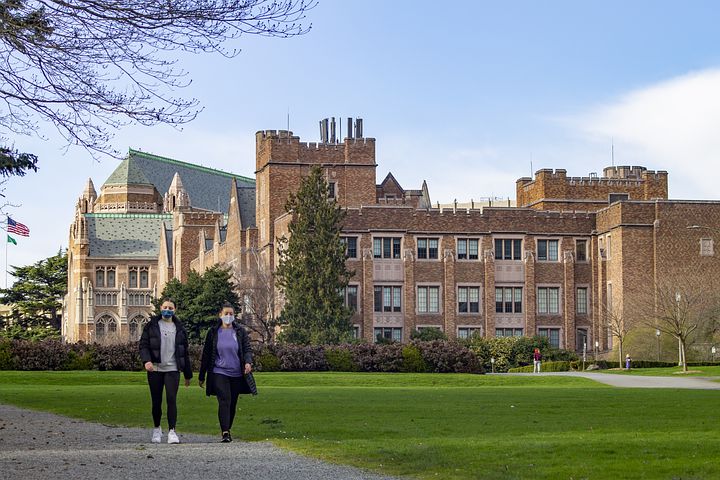
Duke University | Courtesy Photo

The road to college

Amidst the ongoing debate about the constitutionality of requiring every eligible student to be vaccinated or agree to weekly COVID-19 testing (Pasadena Unified School District was one of the first districts whose board approved the mandate), all schools in the San Gabriel Valley are now open for in-person classes.

With the troubling surge in infection cases from the Delta variant, it should be a welcome relief for administrators, teachers, parents, and other vaccinated students. The move could help bring some normalcy to our children’s school life. These students would like to resume the kind of learning that virtual classes could not replicate.    

Before I launch into the college guide, let me first touch on a topic that oftentimes causes family discord. School counselors tell their students to follow their passion when it comes to deciding what to pursue in college. That makes a lot of sense because people generally learn better when they’re studying something they are interested in. However, we also hear about research that finds STEM degrees are the most valuable, with the liberal arts the least valuable, to employers. Parents, anxious about their children’s earning potential, career future, and over-all financial stability, then discourage their children from taking liberal arts in college and push their children into the STEM field.

Employers, on the other hand, emphasize that they’re looking for applicants with excellent communication skills even when the job isn’t STEM-related. The conflicting information is enough to make anyone’s head spin. The one thing researchers and career advisors agree on is that earning a college degree will pay off in the long run. So whether your children are looking to get an engineering degree or are more interested in the humanities, the important thing is for you to support your children’s choice and help them be ready for college.                        

And that brings us to the College Guide. School administrators and counselors preach to their students that the college application process doesn’t start until the spring of their junior year and, therefore, they should just have fun and enjoy high school. While I agree that they won’t be applying until their senior year, the admissions process really begins on the first day of ninth grade. The components of their application is a compilation of their activities and accomplishments during their four years in high school. Hence, I advocate that your children start planning early on. Doing so makes a world of difference in their college search outcome.

FRESHMAN

Instill in your children good time management and organizational skills early on. High school is so much busier than what they’ve been through yet. These skills will help them have a happy, productive, and successful four-year experience.

If your children didn’t develop good study habits in lower and middle school, they need to buckle up and be serious about academics. Encourage them to immerse themselves in the culture of their high school and get involved in various extra-curricular activities that support their interests, and which they can carry on into the next three years.

Your children should find the time to meet with their school’s counselor to map out a four-year curriculum that meets all the requirements for graduating and going into college. Most colleges or universities require: four years of English; four years of mathematics; four years of science with advanced work in at least one of the three disciplines — biology, chemistry, physics; four years of a world language; three years of history, including American and European.   

They should take the most challenging courses they can handle. If their high school offers Advanced Placement (AP) subjects in ninth grade and your children decide to take the course, they have to be ready to take the exams after they complete it. Colleges usually only recognize 4s and 5s to show competency. Highly selective institutions also expect As on AP courses on students’ transcripts. 

I cannot emphasize enough that your children’s GPA is the single, most important component of their transcript. With several universities, like the UC and Cal State systems, dropping the SAT, students’ grades could very well be the determining factor for college-readiness.       

SOPHOMORE

By this time, your children should be fully transitioned into high school. They should be picking up where they left off — taking AP courses, working on extra-curricular activities they identified in their freshman year, etc.  

Practice exams for standardized tests are given in your children’s sophomore year so make sure they are registered for the PSAT (capacity is limited because of COVID-19 concerns so check to ascertain testing dates and that sites are open). Taking these tests will help them identify their weaknesses and study for them. Several companies and organizations offer test preparation courses (ACT: www.act.org; PSAT: www.collegeboard.com; Educational Testing Service: www.ets.org; Kaplan: www.kaplan.com; National Association for College Admission Counseling: www.nacacnet.org; The Princeton Review: www.princetonreview.com).

It may seem too early to do this, but your children can start looking at colleges that offer courses in their fields of interest. Or they can begin considering all possible options, if they haven’t determined what they are thinking of taking in college.

JUNIOR

This is a very hectic, even stressful, time in your children’s high school life. It is also the last complete year that college admissions officers will see your students’ grades and accomplishments. It is a critical year for them; they need to put the effort to show admission officers that they are capable of doing the work and are qualified for admission to the school to which they will be applying. If your children are thinking of applying to universities through early action/decision, their junior year grades and work will be all the more significant.

Aside from the rigors of school and extra-curricular activities, there are standardized tests to take. Your children should be taking the Preliminary SAT/National Merit Scholarship Qualifying Test (PSAT/NMSQT) early next month. I would like to remind parents not to put extra pressure on their children as they get ready for the standardize exams — they are stressed enough as it is, and a higher-than-average SAT score does not guarantee admission to their dream university.        

Normally, colleges and universities would be holding College Fairs on various high school campuses around this time. Your children’s school should update you if either in-person or virtual fairs will be held.        
SENIOR

It is going to be a marathon for your children! If your children are applying for early action/decision, they should have taken all the standardized exams required by the university during their summer after junior year. 

Make it a point to attend your children’s ‘Back to School Night’ – counselors will probably be giving parents information about the college applications that will be starting in earnest.  

The organizational skills that I have been talking about since your children entered ninth grade will be put to the test during their senior year. Encourage your children to create a calendar with standardized testing dates, counselor meeting schedules, and application deadlines. 

Your children should have a binder with separate sections for each college or university and a log of what needs to be accomplished for each, like: required standardized tests (SAT or ACT, SAT II grades; AP test scores, etc.); writing supplement; how many letters of recommendation they require; application fee; application deadlines..      

Ideally, you and your children have visited the colleges (even if you did it virtually) they are thinking of applying to. One of the first things they have to do is finalize the list of colleges and universities to which they will send applications. Eight was the norm when my daughter was applying, but students now are sending in 12 or more applications. This new normal, though, has only added to the competitiveness of the process. I would suggest limiting it to12 because applying to more schools doesn’t make a university with a 4% admission rate a more reachable goal.  

They should be ready to write their personal statement. If teacher recommendations are being sent to the schools instead of emailed, your children should also have provided stamped envelopes to the teachers.   

If you are applying for financial aid, be aware that the Free Application for Federal Student Aid FAFSA submission date starts on October 1st to align with the college admissions schedule. 

Research all scholarships available. Some online sites include: CollegeXpress; Fastweb; and Scholarships.com. Many schools use Naviance, which also provides students information about scholarships and assistance on how to apply.

It goes without saying that as busy as your children are when they go through the college application process, they should also get the best grades they are capable of. The colleges to which they are applying will require their first quarter grades if they’re looking to gain admission through early action or early decision.     

One factor that makes the college admissions process really stressful for parents is the feeling of not knowing what’s happening. School counselors generally only have time to meet exclusively with students, so parents feel shut out. However, there are books you can read to help demystify this process. A book I would recommend is called “Getting In! the Zinch Guide to College Admissions and Financial Aid in the Digital Age” by Steve Cohen, Anne Dwane, Paulo de Oliveira, and Michael Muska.

The professional guidance and insight the authors of this book provide will give you the ability to help your children navigate this complicated process. Use the book constructively; do not make it another source of stress for yourself and your children.

A book by Frank Bruni called “Where You Go Is Not Who You’ll Be” is a great read for both parents and students who are in the middle of college applications. It will help keep your expectations realistic and relieve your children of the pressure to get into the most selective universities.   
PEF’s Teacher Grant Program and Other Initiatives Support PUSD

Originally published on 16 December 2020 in the Pasadena Independent, Arcadia Weekly, and Monrovia Weekly

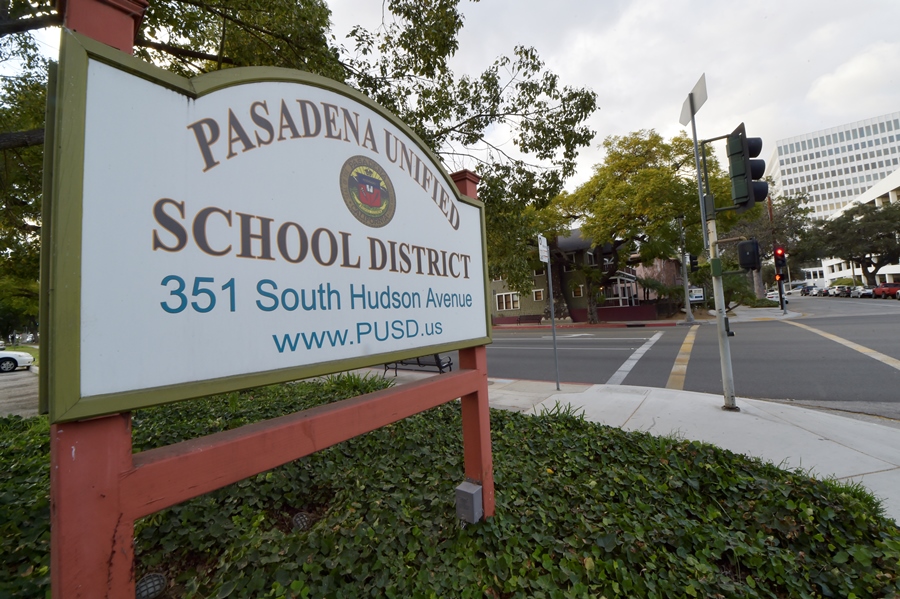
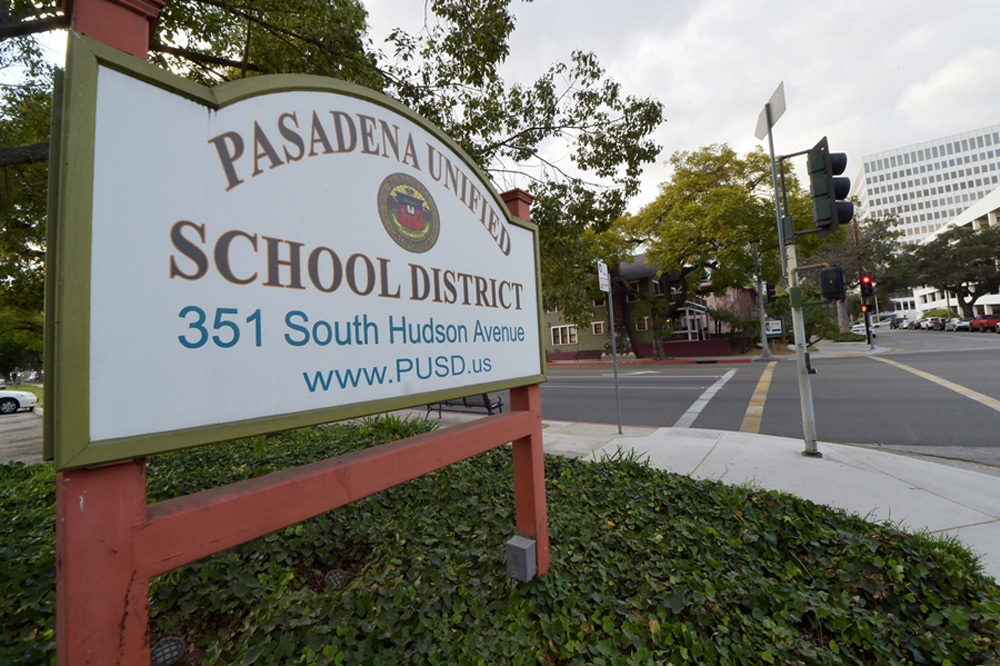
Pasadena Unified School District Office | Photo by Terry Miller / Beacon Media News

Nine months into the coronavirus pandemic, COVID-19 continues to challenge school systems, teachers, and students. Distance learning, while it’s better than not having any kind of learning at all, isn’t effectively reaching all students.

Fortunately for students in the Pasadena Unified School District (PUSD), administrators reacted quickly following the lockdown restrictions. Within two weeks, remote learning was in place — hotspots were provided for families with no internet access and iPads and chrome books were sent to students’ homes (read related article here). All that, however, doesn’t guarantee student success. As teachers would tell you, it’s hard enough engaging students when they’re in the classroom; remote learning presents more complications.

It is in this area where the Pasadena Educational Foundation (PEF) comes in. For almost 50 years, PEF has been a PUSD partner with a mission to support, enhance, and supplement the programs, initiatives, and priorities of the school district. It created the Teacher Grant Program to help bring more creativity, innovation, and inspiration into PUSD classrooms by providing the resources needed to help teachers and principals take their creative projects from idea to reality and enhance the classroom experience for their students. This year, 181 educators received awards representing 124 unique proposals from every school in the district — many of them addressed the unique resource needs of distance learning.  

Three special honors were given to recipients whose proposals exemplified the qualities embodied by the individual after whom the award is named.  

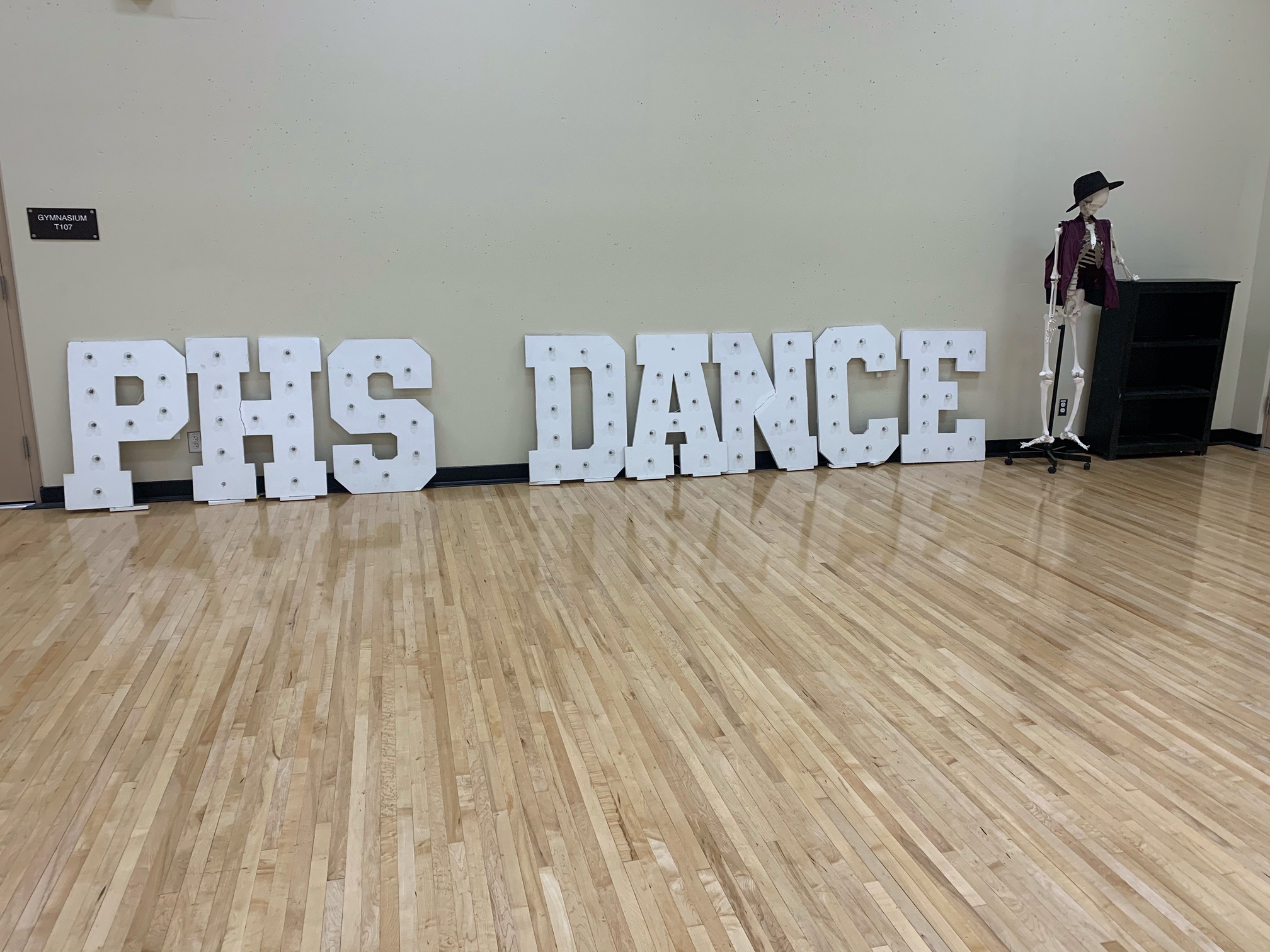
The Calvin Hunt Arts Award was created in memory of Calvin Hunt who, as director of the Alvin Ailey American Dance Theatre, took dancers all over the world as cultural ambassadors. This award promotes and supports dedicated teachers enhancing arts education in PUSD. It went to Pasadena High School’s (PHS) Hillary Temple, who proposed a dance room download.  

Pasadena High School’s dance classroom | Photo courtesy of PHS

This is Temple’s second year teaching all levels at PHS. Interviewed via email, she relates the challenges she’s encountered during remote learning and how she overcomes them. “Some of them include technology/WiFi issues for students or myself, lack of ability to communicate, and not being able to see the kids at all times. I think the key to overcoming teaching dance online would be to just have an open mind, trust your students, and laugh things off. It’s not going to be perfect because these are unprecedented times, so we have to make the best of it, still challenge our students and laugh at ourselves or the technology when it’s acting up.”

Asked about her Teacher Grant proposal, Temple says, “We just got a new dance room at PHS and it’s beautiful. However, there were no furniture, white boards, projector, etc. I am doing a ‘dance room download’ to bring the room up to date and to give our students the most amazing dance program I can.”

Hillary Temple | Photo courtesy of PHS

With the purchase of a television and sound system, students would be able to use their computers to broadcast their ideas and thoughts and become leaders via tech in the classroom through assignments and presentations. In addition, this will upgrade the dance room to standards used at most Cal State and UC classrooms to enhance the experience of a beginning dancer.

“I am super proud of my students and learning dance at home,” Temple hastens to add. “Learning how to dance, in general, is difficult. With the added stress of not knowing which way I’m truly facing, not being able to hear me or the music well, not having a mirror, etc., the kids are doing really well and they are dialed in. I feel blessed to have such motivated students who are making the best of my class — they are awesome.”

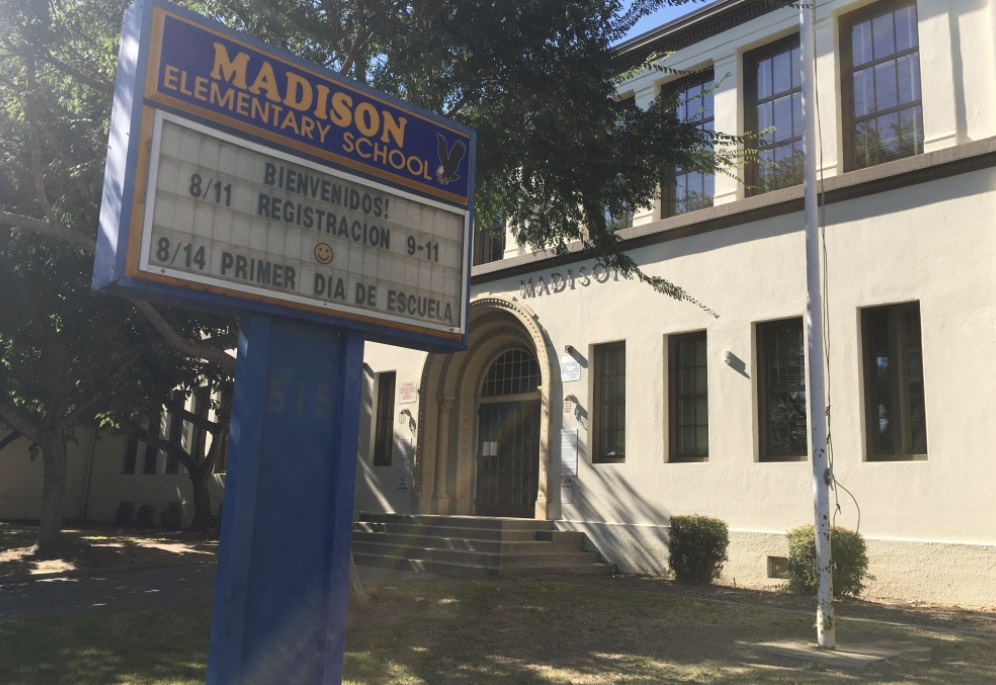
The Jarratt Brunson Memorial Award for Literacy honors the late Jarratt Brunson, the PEF founder who initiated the Teacher Grant Program. It goes to the proposal that best reflects Jarratt’s passion for reading and early literacy. This year it was given to Kathryn Marquez at Madison Elementary School who proposed Libros Para Todos! (Books for All!).

Madison Elementary School | Photo by Kathryn Marquez / Madison Elementary

Marquez, a first grade teacher at Madison Elementary School, relates, “My previous school closed at the end of the last school year, so this is my first year at Madison. It has been challenging to join a new school while learning to teach remotely using new mediums. Sometimes, technology refuses to cooperate! What makes it worth it is getting to know my students and developing relationships with them.”

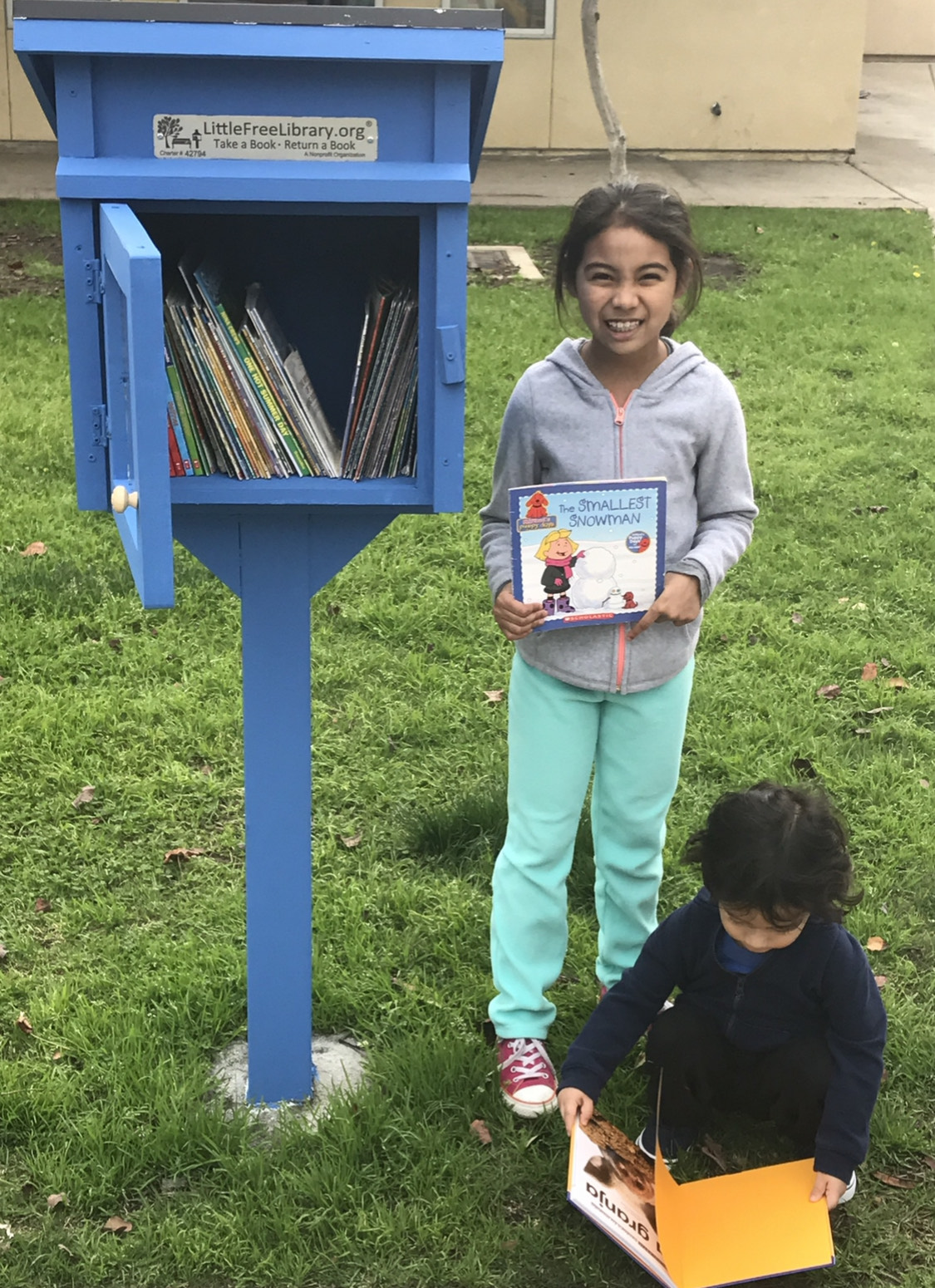
“When I taught at Jefferson, I applied for and received the Jarratt Brunson Grant for Literacy, which enabled me to have four Little Free Libraries installed around the school,” continues Marquez. “LFLs are known around the world for their philosophy of Take a Book…Return a Book. I brought one of the libraries with me to Madison, where it is waiting to be installed. To my astonishment, I have been awarded this prestigious grant once again!

“I will be ordering a large selection of Spanish language and bilingual books to distribute to our school community. In this time of a pandemic that has so upended our lives, while students have no access to our school library, it is my goal to put books into the hands of families for whom Spanish is their home language. As they finish with the stories, they can return them to the LFL and choose a different one. It is my dearest hope that multiple generations share and enjoy these books.”

Little Free Library at Madison Elementary | Photo by Kathryn Marquez / Madison Elementary

The Kathy Onoye Principal Award goes to the PUSD administrator whose proposal best exemplifies their role in inspiring leadership. The 2020 winner is Angela Baxter of Willard IB which received two grants: a Schoolwide Grant – Grade Level Ukuleles and a Teacher Grant – Set of iPads for song writing and infomercials connected to students’ IB units of inquiry.

Linda Wittry, the teacher who proposed the projects, has been at Willard Magnet for 31 years as IB coordinator, working with teachers in designing and implementing the six inquiry units taught at each grade as part of the International Baccalaureate Primary Years Program.

Being outside the classroom has freed Wittry to set a schedule that helps her support various programs and projects for the school. She organizes monthly assemblies, musicals, and events, including the International Fashion Show, International Dance Festival, Rock and Roll Day, and Hispanic Heritage Assembly with a mariachi band. Additionally, as extra music instructor, she teaches first grade keyboards, second grade recorders, third grade ukuleles, fourth grade guitar, fifth grade keys, guitar, rock band.

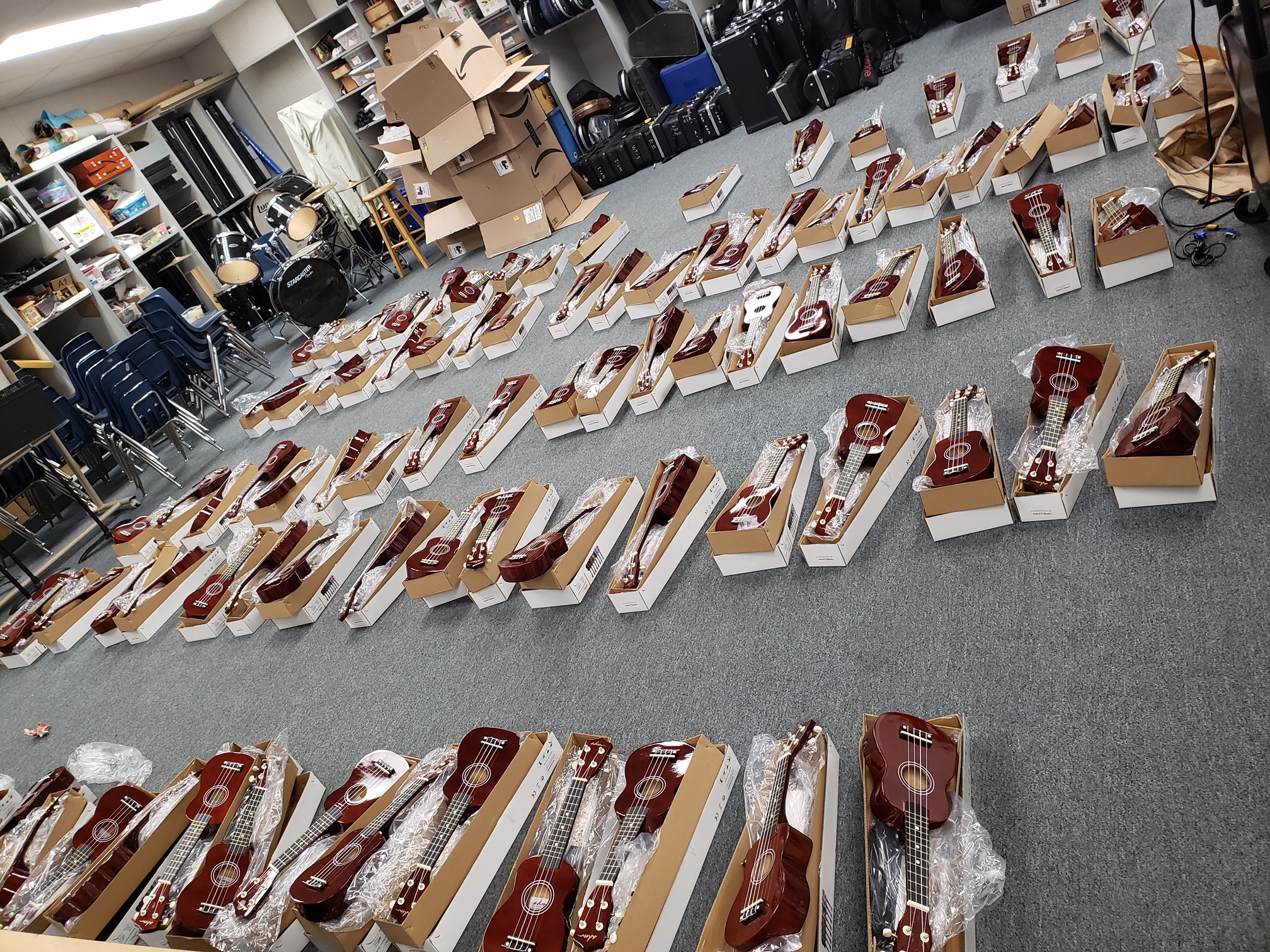
The pandemic posed a problem, though. Says Wittry, “Having enough instruments for students to check out and not to share when back on campus was a challenge. So I proposed getting a grade level set of ukuleles to be used by third and fourth grade students during different times of the school year and, ultimately, for all students to have access to instrumental music.” 

Ukuleles for all at Willard IB | Photo by Linda Wittry / Willard IB

As Wittry explained in her proposal, the far-reaching purpose of the project is to maximize musical experiences for children through the use of a grade level set of ukuleles during distance learning and beyond. The project will provide grade level ukulele experiences for all fourth graders during distance learning; provide ukulele experiences for each grade level team three-five in the year following distance learning; create a long term contemporary ukulele course for all third graders at Willard; create a generation of students that can play multiple musical instruments; equip students with the ability to become proficient at: playing rhythms, chords, and songs on the ukulele; and give students the opportunity to invent and create their own songs individually or in cooperative groups.

For the iPad Song Teacher Grant, Wittry proposed purchasing a set of iPads and, with a Garage Bank app, provide opportunities for Willard’s second to fifth grade students to create music and music videos, write original songs, and produce infomercials. Moreover, these tools will give students another creative format to present to the class their research findings related to their IB course.  

Tournament of Roses President Robert Miller | Photo courtesy of Tournament of Roses

PEF’s Teacher Grant is made possible through donations from the College Football Playoff (CFP) Foundation and the Pasadena Tournament of Roses Association (TofR). Speaking with me by phone, Dr. Robert Miller, TofR’s president and chairman of the Board, declares, “Investing in our community has long been one of the association’s  principal goals. Particularly this year, given the suffering that is taking place during the pandemic, we felt it was important to increase our presence and profile, and to continue to contribute to our community. PEF, which has been a long-time supporter of PUSD, remains one of the organizations we want to work closely with in promoting public education in the city of Pasadena.   

“Education has been one of the sectors most impacted by the pandemic. But despite all the challenges, PUSD teachers have adapted quite well. They found creative ways to engage their students and I think they deserve our support more than ever. They continue to rise to the challenge of keeping students learning in a difficult environment.”

States Miller, “It’s incredibly satisfying to see where our donation goes. It’s being used to fund remote dance and music performance classes, art exhibits, science experiments — we’re giving take-home art and science supplies; we’re furnishing ukuleles and percussion instruments; we’re equipping art teachers with cameras to record and the technology to play back their performances, and document cameras for books and demonstrations; we’re providing books in Spanish, French, and Mandarin. Our donation benefits thousands of students in Pasadena, Altadena, and Sierra Madre.”    

Miller, along with PUSD Superintendent Dr. Brian McDonald, presented the grant to the teachers during a drive-thru celebration and parade. He enthuses, “I was particularly honored and pleased that I had the opportunity to welcome and meet the educators who received the award. They were incredibly enthusiastic. I was amazed how many showed up to receive the grant in person, who arrived in wonderfully decorated cars. It made me feel good to know that there are dedicated teachers here who give of themselves in ways that are far beyond what we expect and what they earn; they care deeply for their students. It is just one of the honors I have as TofR president — to represent our 935 members and say ‘thank you for your incredible service.’ It was a wonderful experience.”

At the helm of PEF is Dr. Patrick Conyers, who has been the executive director for 10 years. He graciously agrees to be interviewed by email to expound on his functions, the organization’s activities, and its future goals.

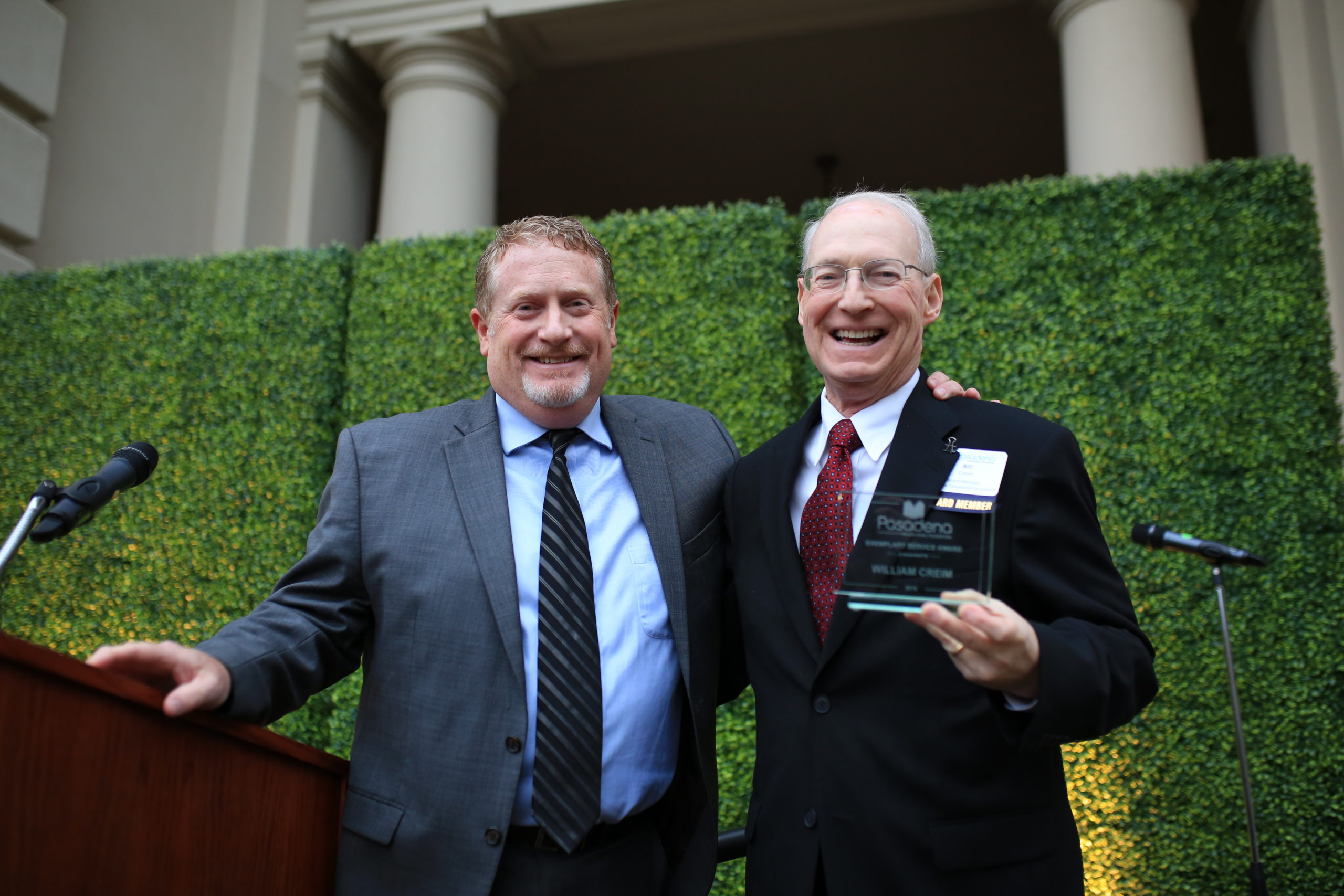
Patrick Conyers (left) with PEF board member Bill Creim | Photo courtesy of Pasadena Educational Foundation

Having read on his LinkedIn profile that he was the director of development at two Pasadena organizations, I inquire how those previous posts benefited PEF and its mission. Conyers replies, “I was Director of Development at Southern California Public Radio (KPCC) and, before that, the Pasadena Museum of History. I learned a great deal about the nonprofit world and philanthropy in our community from Bill Davis, CEO, and Mark Crowley, general manager, at SCPR, and from Jeannette O’Malley, PMH’s executive director. I learned how to set aggressive goals for a charitable organization, and meet those goals. Both organizations have an entrepreneurial spirit, which is something I’d like to think PEF has as well.”

Asked if he introduced new initiatives when he first came on board, Conyers answers, “PEF was a venerable and effective organization when I arrived. The organization, through the leadership of my predecessor, Joan Fauvre, and the rest of the Board and staff of PEF, was making a positive impact in the educational experience of PUSD students. My charge was to grow the organization, so we could be still more impactful. Sometimes, that effort at growth meant paring back some activities, so we could focus more energy on the most important programs and initiatives.

“Other times, what was needed was to grow already successful programs (like finding more funding and partners to expand the Teacher Grant Program, and increasing our capacity to serve more students in our Summer Enrichment Program). We have launched new programs during my tenure, too, and I am very proud we’ve been able to do that successfully. Programs like the App Academy, an innovative four-year computer science program at Pasadena High, and the Pasadena Math Academy, an accelerated math program for gifted PUSD math students in grades five to 12, have been great successes, and display an effective partnership among PEF, PUSD, and community members willing to give of their time, expertise, and financial resources to launch and grow new and engaging educational programs.”

In his 10 years’ leadership, Conyers thinks the most significant shift that has taken place is the growing awareness that prevailing views about Pasadena schools don’t reflect reality. He explains, “For too long, there has been a ‘perception gap.’ Many people in the community are holding on to outdated and inaccurate beliefs about the quality of education in our schools when, in truth, reality outpaces perception. The Board and staff of PEF have worked diligently to provide information that has helped shrink that perception gap. We know that by encouraging people to look for themselves and hear from educators and see the impact that community support is making, the gap would inevitably go away. The shrinking of that gap has been accelerated by excellent partners, including former Mayor Terry Tornek, partnering organizations like PEN, College Access Plan (CAP), Collaborate PASadena, Young & Healthy, and others, and enthusiastic parents, educators, and engaged community members. The recent successful passing of Measures J and O are testaments to the recognition our community has for the importance of quality, well-funded public education.’

I ask Conyers if there’s a project he started which has flourished and expanded and he says, “Our Realtor Initiative is something I am very proud of, but I wouldn’t say that I started it. A group of our Board members (Lorna Miller, Dawn O’Keeffe, George Brumder) recognized how  important area realtors are in welcoming families to the community and informing them about public/private school options. But they also knew that what was needed wasn’t just feeding information to realtors, which they in turn could pass along to clients; we needed to hear from realtors themselves about what they knew/didn’t know, what they needed to be informed, and how they preferred having information shared with them. Over the past several years, through our Realtor Initiative, we have built and grown positive relationships with area realty offices and with PFAR (Pasadena Foothill Association of Realtors). There is a Realtor Certification that PFAR awards to agents who have taken a short, informative course about PUSD schools and programs. I’m grateful that a second generation of PEF Board members, namely Del Lile and Jennifer Miyake-Trapp, have taken over leadership of this initiative on the PEF side, as well as Monica Lopez, from our staff. The program itself has been featured in scholarly publications and videos, and we have had countless discussions with organizations like ours from around the country, who are wanting to start a similar effort.”

Pasadena Unified School District | Photo by Terry Miller / Beacon Media News

Among the various programs that the PEF has created is one called ‘My Masterpieces,’ (read My Masterpieces series here) which has a huge impact on young students. I ask Conyers if there is a singular initiative that has the most lasting influence on students.

“My Masterpieces is an excellent program, and one that other communities would not be able to replicate,” Conyers pronounces. “It involves many wonderful partners, who are combining their expertise and energies for the benefit of our community’s public school students. We’ll never know how many students had their eyes and futures opened to them through a visit to the Armory, or The Huntington, or Norton Simon. Much of the work in education is, of course, aspirational — open doors, provide opportunities, spark imaginations, and help young people find and release their immense potential. 

“I also think our Teacher Grant program is having enormous influence. This year alone we were able to give grants to teachers and/or principals at every PUSD school. A couple years ago we awarded the Kathy Onoye Principal’s Award to Brian Stanley, the outstanding principal at Rose City Continuation High School, which enabled him to renovate a room on campus into a library; the next year, we awarded his school another grant to help purchase additional books to fill out the shelves. As with all the programs we do, we don’t always know the impact our work has on an individual student, but I have to believe more books in more students’ hands is having a profoundly positive impact.”

Given how the pandemic has affected the economy and people’s pocketbooks, I inquire if that changed the way PEF raised funds and how it allocated them. “Our mission is to support, enhance, and supplement the programs, initiatives, and priorities of the PUSD,” clarifies Conyers. “To that end, our work has traditionally focused on providing resources to teachers and administrators to amplify the good work they are already doing, and to enable innovative new programs to get off the ground. When the pandemic hit, we recognized that there were significant impediments that could make basic learning more difficult for many students in our community. The safety and well-being of PUSD students and staff became our priority. We created a Response Fund, and have been grateful for the many individuals and foundations that have generously contributed. The Response Fund was created to help distribute meals to area families (our volunteers helped to distribute more than 660 thousand meals), to help students with tech and connectivity needs, and to enable us to print nearly 2,000 face shields on 3D printers that we distributed to PUSD Food Services, custodial staff, and to community partners like the Rose Bowl Aquatics Center and Children’s Hospital LA.”

I ask what lessons were learned and how those can help PEF in the future, and Conyers says, “We are hearing from our PUSD colleagues that the pandemic and distance-learning are widening the gap between families with means and those without. We are committed to helping the district in every way we can to provide equitable resources and educational opportunities to every PUSD student.”

Through its numerous initiatives, PEF has done much to help students in the district. However, the work is far from finished. Conyers declares, “I think it’s time for our community, and our nation too, to have a dialogue about public education. Educating the young people of our community and helping them to be responsible citizens, critical thinkers, and practiced problem solvers is a responsibility we have for them. We need to renew our commitment to public education and devote our resources and energy that young people deserve. I’d like PEF to lead the effort to creating that dialogue in our community.”

Lastly, Conyers imparts, “If there was one thing I would like people to remember when they look back at my stewardship, it would be that our schools are stronger because of the hard work of PEF and its supporters.”

Altadena Arts Magnet School Aspires to Greatness

Originally published on 9 March 2020 in the Pasadena Independent, Arcadia Weekly, and Monrovia Weekly

Dr. Benita Scheckel with student-created art | Photo by May S. Ruiz / Beacon Media News

Nestled at the foot of the San Gabriel Mountains in Altadena is Altadena Elementary School, established in 1903 from what used to be a trolley stop for the Mount Lowe Trail. Known today as Altadena Arts Magnet School, it is the premier dual language and arts school in the San Gabriel Valley.

That renown, however, is fairly new. The school languished for a few years after its principal left and it became the lowest-rated in the district. It took a grant, a curriculum change, and the guidance of Dr. Benita Scheckel to transform the school into a model of excellence in a relatively short period of time.      

A former actress and opera singer, Scheckel came to the Pasadena Unified School District (PUSD) in 2007 and taught English, drama, and music at Blair IB Magnet School. In 2015, she decided she wanted to go into administration; she got placed as assistant principal for Student Support Services at Marshall Fundamental School.

Scheckel picks up the story, “From there, I applied to Altadena Elementary School when it had just applied for the five-year arts magnet grant. We didn’t know then if we were going to get it, but I took a leap of faith that this would become an arts magnet school. At the same time, it became a French dual language immersion school and I had some experience in that area so I felt it was a dream place to work at.”

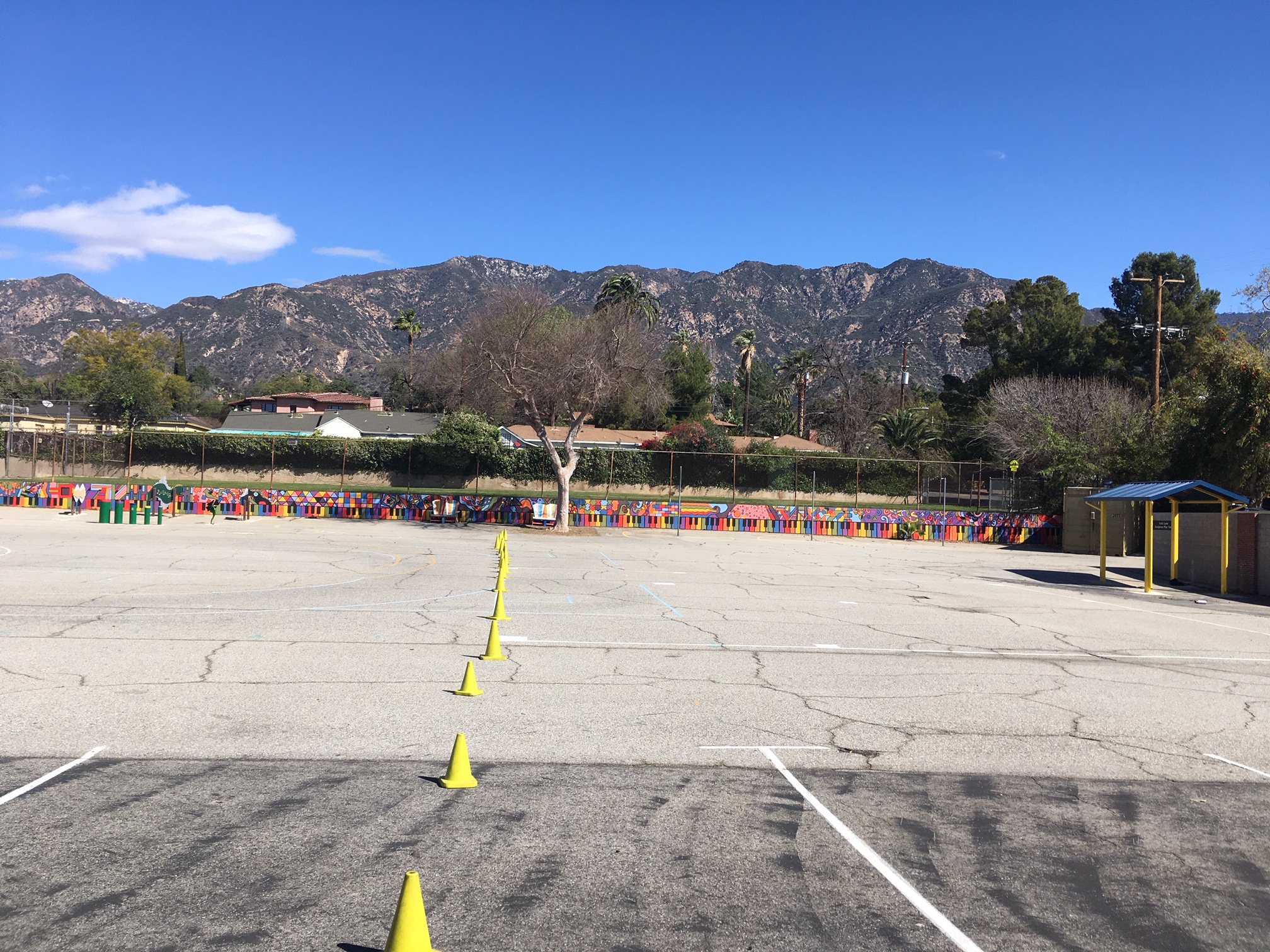
The school playground has an unimpeded view of the San Gabriel mountains; a new kiln will be installed in the shed with the blue roof on the right | Photo by May S. Ruiz / Beacon Media News

“It was once a wonderful school of 600 students and they had a long-time principal for 20 years,” relates Dr. Scheckel. “As PUSD began to attract more charter and private schools, the principal left and then the school went under construction. There was a period of instability – they had five principals in three years, enrollment declined from 600 to just under 200, there was low staff morale, and they had very low test scores – it was the lowest performing elementary school in the district.

“I looked at that first year as a chance to get to know the culture and climate and to infuse the school with as much positivity, enthusiasm, and vision. I set out to uplift the staff and support the teachers so that they can begin doing the amazing work they used to do that they weren’t able to do through the years of not having solid leadership.”

Continues Dr. Scheckel, “Before the school year started, the first couple of weeks I was here, I sat down for a two-and-a-half-hour meeting with the entire staff. Having just gotten here, I knew they didn’t trust me initially, so I asked teachers who they trusted and respected. I also met each staff member individually for a half hour. From those meetings and being on campus, I was able to figure out who they trusted and those were the people I put in the leadership team.

“Being used to secondary school, where there’s an assistant principal of curriculum and an assistant principal of discipline, I installed an instructional leadership team consisting of an instructional coach, a coach for discipline, and myself. I also created an extended leadership team – this includes our arts teacher, TOSA (teacher on special assignment), and our magnet grant coordinator.

“Then I brought in ‘Capturing Kids’ Hearts,’ a systemic reform program which our grant pays for. It provides many hours of professional development to teachers and staff around building a relational culture – student to student, teacher to teacher, staff to staff. I spent a lot of our money, resources, and energy forming a relational campus, where people don’t just shut their door and not relate to others but instead get together and hang out, appreciate each other and feel safe.”

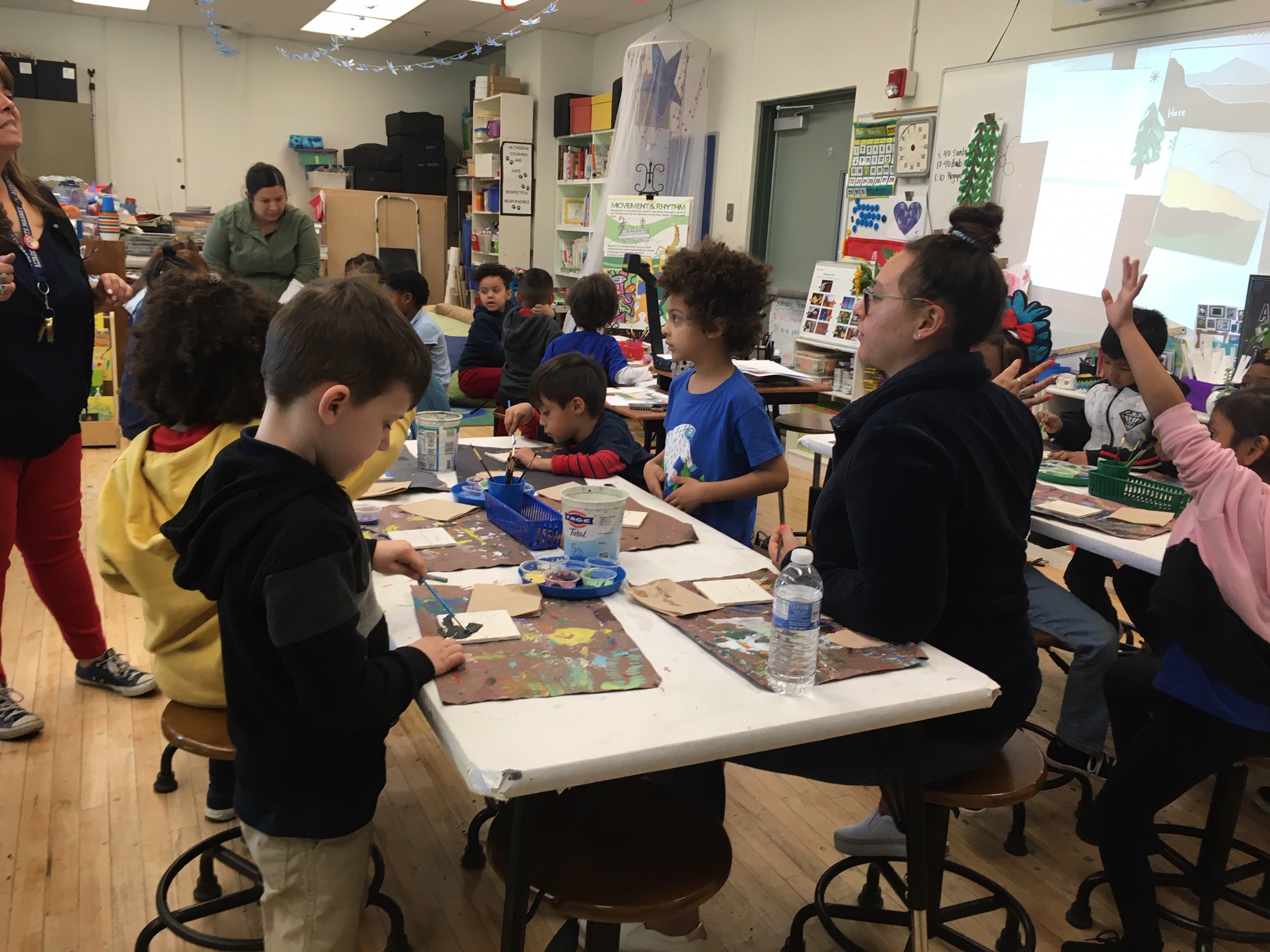
Students working on an art project | Photo by May S. Ruiz / Beacon Media News

“Now we have a thriving school – our enrollment is increasing daily,” Scheckel says, beaming with pride. “We closed last school year with 228 students and today we’re at 287. When we came back from winter break, in January and February, 20 students enrolled. Along with enrollment, test scores are up. We’ve increased our math and English scores exponentially – we’re no longer the lowest performing school. We have arts infused into everything we do. Our students receive up to 12 hours per week of discrete art and arts integrated instruction – it runs similar to a conservatory, which is very unusual for an elementary school where normally kids stay in the classroom and do an art project.

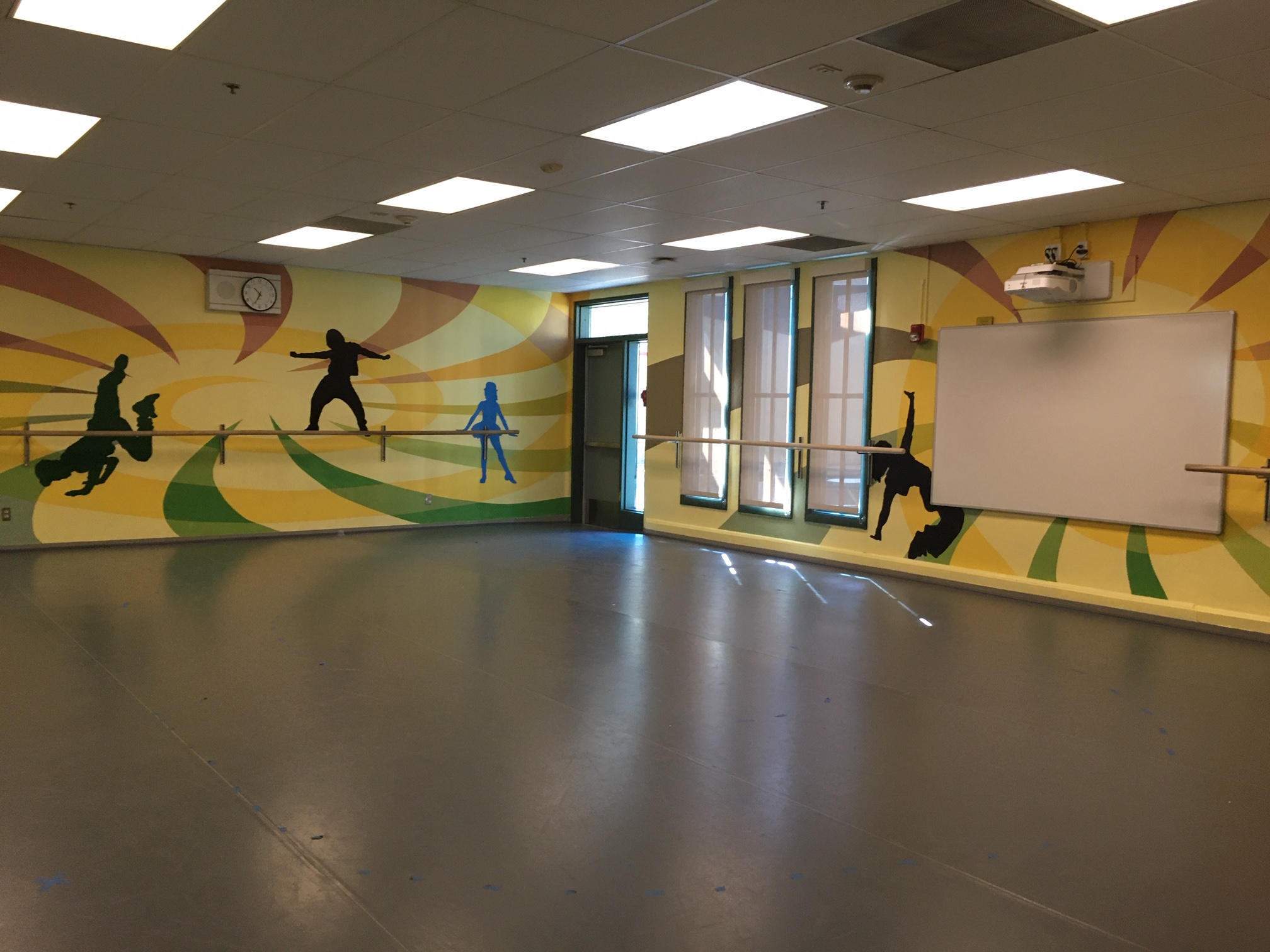
“Here, students go to dance, art, music, media arts, and theatre arts classes taught by professionals in that specific field. We have designated arts spaces – we have a state-of-the-art Marley dance floor, fully sprung so that it doesn’t hurt their joints, with ballet barres and mirrors; a black box theatre; a music studio; an art studio, and so on. To complement the dedicated spaces, we have a curriculum that’s structured like a conservatory. All students attend every art class so teachers have had to look at the schedule – take out the time students would have their recess and lunch, and when they’re in art class, and figure out how to teach the core curriculum in that time. I was nervous about it at first but they have done a beautiful job. It’s taken out any wasted time, transitions are tightened. Also, the teachers are following the students to all the art classes so that they can learn how to do these things when we switch to our built-in sustainability plan when the grant expires.”

Scheckel then came up with another great idea. She discloses, “With the grant, we decided we were going to build art spaces out of the classrooms. I thought I needed to bring a little bit of community awareness, community buy-in, and a little glitz and glamour to our campus. I reached out to some local celebrities and community leaders and asked them if we could name these spaces for them. Fortunately, they said yes.”

The Lula Washington Dance Studio | Photo by May S. Ruiz / Beacon Media News

And so, on Wednesday, March 11, Altadena Arts Magnet School will hold a special ribbon cutting and studio dedication event where the art spaces will be named for distinguished arts personalities. The star studded festivities, with Supervisor Kathryn Barger in attendance, will be held from 6 to 8 p.m. and will feature a special performance by vocal artist Lynn Fiddmont.        

“We’ll have a red carpet and a photographer,” says Scheckel. “The Muir Jazz Band will play and we’ll walk around and unveil these seven art spaces – the Matthew Lillard Black Box Theatre; Patrice Rushen Music Studio; Lula Washington Dance Studio; Keni Arts Art Studio; Artis Lane Sculpture Play Yard and Kiln; Bettye Holliday Art Gallery; and the MonteCedro and Dr. Eunice Elizabeth Nash Arts Garden.”

“I would like students to be inspired by knowing that each room is connected to someone who’s really working in that profession,” explains Scheckel. “So every time a student walks into the Patrice Rushin Music Studio I want them to be able to look around and think ‘I could be a four-time Grammy-nominated musician; I can be just like Patrice.’ I’m hoping that the celebrity name will maybe add a little pixie dust to the space, a little inspiration for the children.”

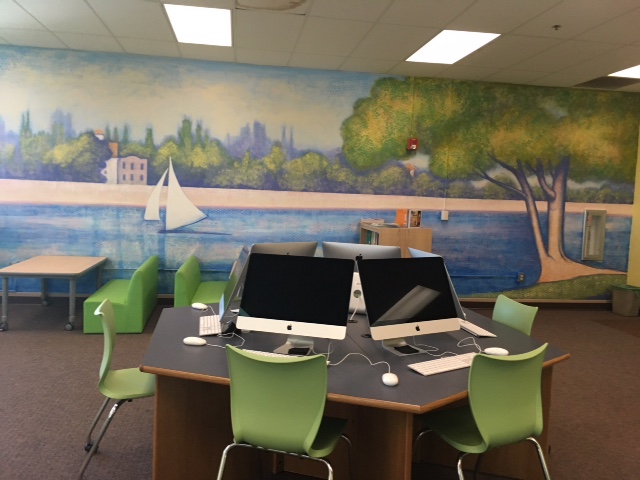
A beautiful mural graces the learning space | Photo by May S. Ruiz / Beacon Media New

Three years into Scheckel’s stewardship, Altadena Arts Magnet School is the only elementary school where little children are travelling throughout the day like middle- and high-schoolers. It has earned a distinct reputation in the area, something she revels in, and not without a sense of relief mixed with wonder.      

“It’s incredible!” enthuses Scheckel. “The first year I was very nervous all the time. It was my first principalship and I was worried; I wanted to be certain I do things correctly and make as few mistakes as possible. Now, this third year feels like ‘we’re okay, we’re cooking with gas.’ Everybody knows what the vision is, the team is phenomenal, everybody’s moving in the right direction.

“It’s amazing what you can do with a school if you add love, grit, and a solid vision for greatness. I think if you have those three things, you can really turn a school around. And we have achieved that. We can’t believe it when families try to come to us from Glendale or La Canada. They’re leaving La Canada schools to come and be a part of our school! Our tours have 40 people on them. There are pregnant mothers who are crying because they think there won’t be space when their baby comes. How fascinating!”

Dr. Scheckel is only just beginning and there’s no stopping her. And students at Altadena Arts Magnet School are the lucky beneficiaries of this indefatigable principal’s grand vision.