Radical Histories: Chicano Prints from the Smithsonian American Art Museum Exhibit Opens at the Huntington

Also published on 13 November 2025 on Hey SoCal
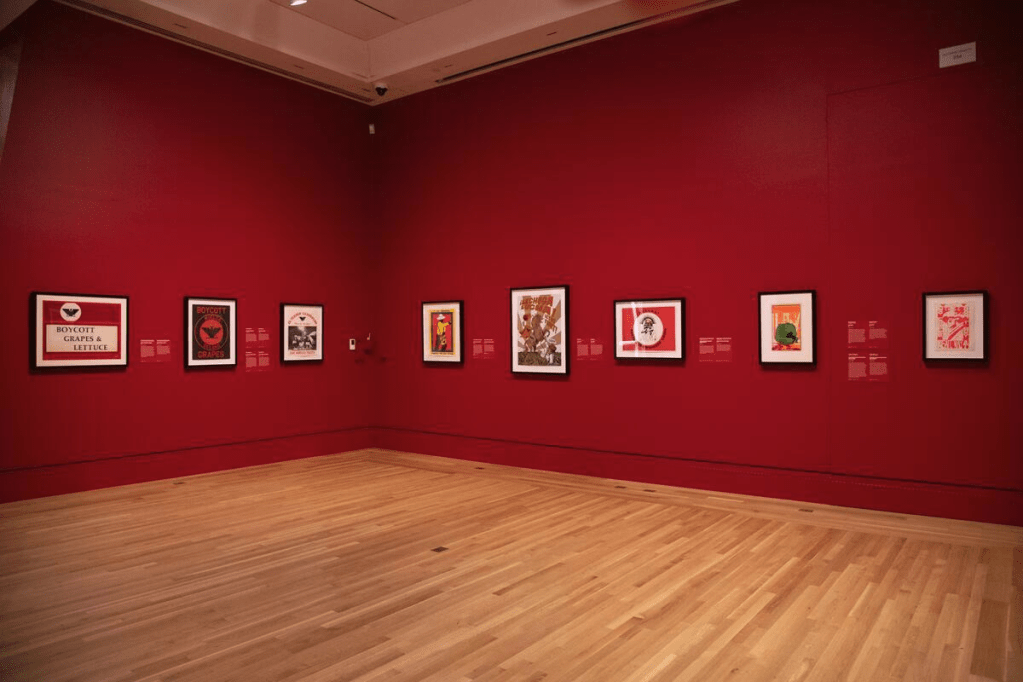
Installation photo courtesy of The Huntington

“Radical Histories: Chicano Prints from the Smithsonian American Art Museum,” makes its West Coast debut at The Huntington’s Marylou and George Boone Gallery from Nov. 16 to March 2. Curated by E. Carmen Ramos, forming acting chief curator and curator of Latinx art at the Smithsonian American Art Museum, the exhibition features 60 dynamic works by nearly 40 artists and collectives that trace more than six decades of Chicano printing as a form of resistance, community building and cultural reclamation.

Commencing with the late 1960s Delano Grape Strike, the precursor to the United Farm Workers (UFW) labor union, the prints in “Radical Histories” depict momentous events in the history of community activism and the formation of collective identity. Chicano artists used silkscreens, posters, and offset prints to mobilize communities – often with barbed wit, lively colors, and evident urgency.

The exhibition is arranged in five thematic sections: “Together We Fight,” “¡Guerra No!” (No War!), “Violent Divisions,” “Rethinking América,” and “Changemakers.” Each section highlights how Chicano artists have used the accessible and reproducible medium of printmaking to confront injustice, affirm cultural identity, and engage in transformative storytelling.
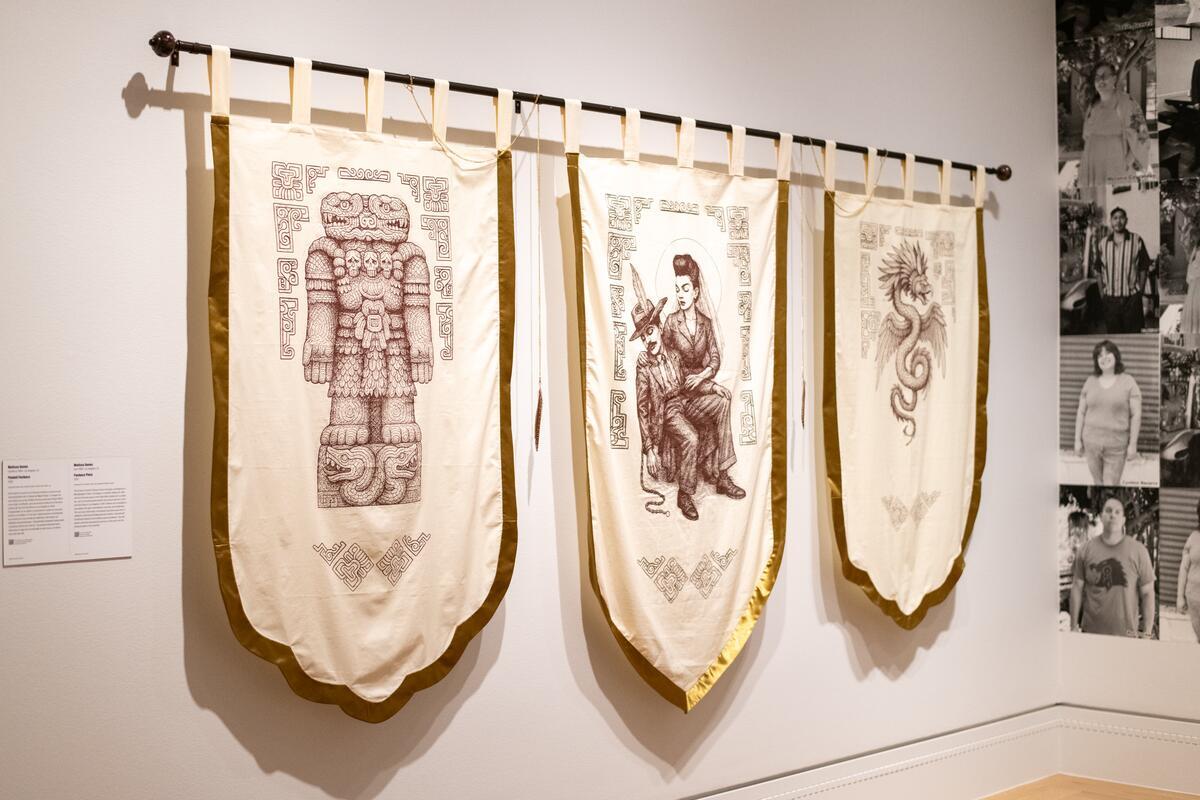
Installation photo courtesy of The Huntington

Section 1: Together We Fight

The opening section explores how the UFW, cofounded by César Chávez and Dolores Huerta, collaborated with visual and performance artists to support the fight for farmworkers’ rights. Key labor actions inspired a wave of Chicano art that functioned as both political expression and tangible solidarity. Artists adopted the UFW’s iconic black eagle, embedding it in posters, prints, and murals that raised awareness and helped fund the movement. The union’s visual language extended beyond its own campaigns, appearing in advocacy materials for the Texas Farm Workers Union and the Cannery Workers Committee in Sacramento.

Section 2: ¡Guerra No! (No War!)

Since the 1960s, Chicano graphic art has played a vital role in advancing antiwar resistance. These works serve as rallying cries, counternarratives to mainstream media, and spaces of reflection. Chicano artists have used print and poster art to critically examine U.S. military interventions in Vietnam, El Salvador, Chile, Iraq, and elsewhere.

Section 3: Violent Divisions

The U.S.-Mexico border has been a central theme in Chicano art. Printmaking has enabled Chicano artists to raise awareness about the experiences of immigrant communities because it is affordable and prints are easily distributed. Recurring iconography – such as the monarch butterfly, a symbol of natural migration – challenges the notion of geopolitical boundaries. Figures like the Virgin of Guadalupe and ancient Mesoamerican goddesses appear as powerful cultural symbols.

Section 4: Rethinking América

This section presents works that broaden historical narratives by including perspectives rooted in resistance and cultural reclamation. The artists drew inspiration from revolutionary figures and movements to create narratives that center Mexican American and Indigenous perspectives. Using mapmaking and record forms like the ancient Mesoamerican codex, Chicano artists also created speculative past and present narratives to reimagine social landscapes.
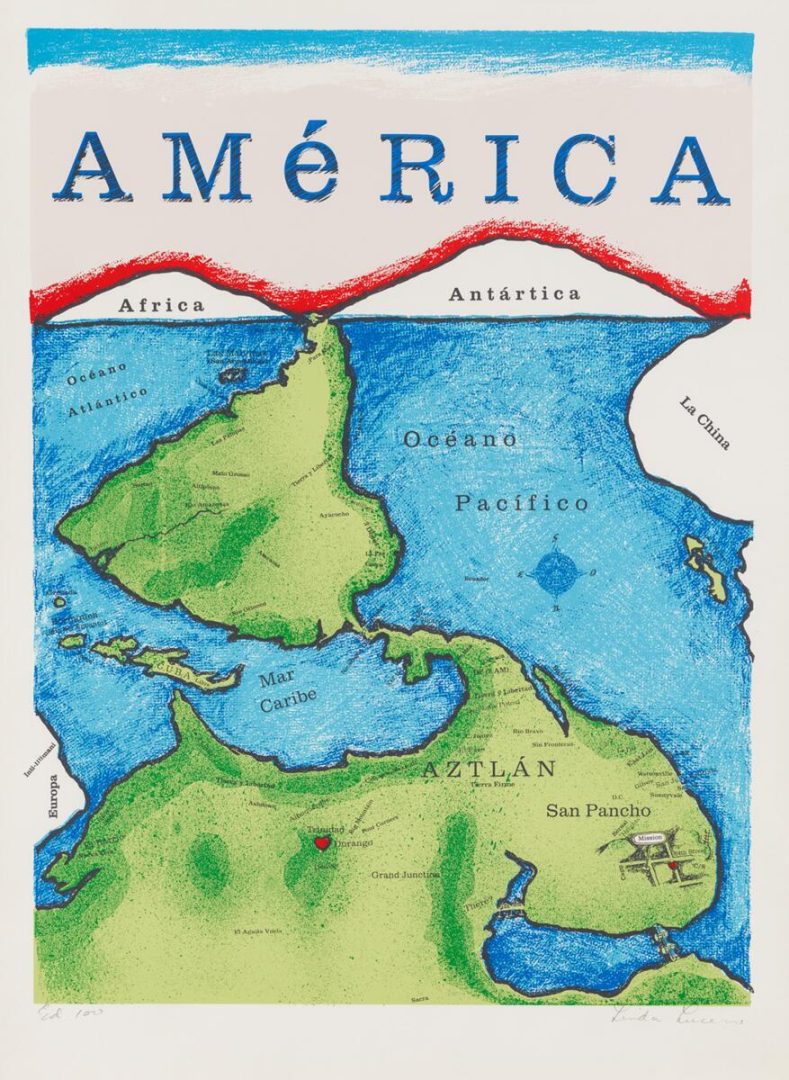
Linda Zamora Lucero, América, 1986, screenprint on paper, Smithsonian American Art Museum, Gift of Gilberto Cardenas and Dolores Garcia. | Photo courtesy of The Huntington

Section 5: Changemakers

Portraiture is a cornerstone of Chicano art, used to educate audiences and celebrate both cultural icons and overlooked figures. Artists often base their portraits on documentary photographs, transforming black-and-white images into vivid prints that honor the subject’s life and legacy. Featured changemakers include political prisoners, activist leaders, attorneys, actors, and artists—individuals who challenged the status quo and shaped history.

By email, Dennis Carr, Virginia Steele Scott Chief Curator of American art, and Angélica Becerra, Bradford and Christine Mishler Associate Curator of American Art – also the venue curators –  discuss the exhibition’s origins, its relevance, and viewer takeaways.

“Radical Histories was organized by the Smithsonian American Art Museum to highlight the central role Chicano artists have played in shaping American visual culture,” begins Carr. “The exhibition began touring nationally in 2022 following its debut at the Smithsonian American Art Museum, and The Huntington is presenting its first West Coast exhibition.”

“While the core exhibition is drawn from SAAM’s collection, our presentation places particular emphasis on Los Angeles as a vital center of Chicano printmaking,” Carr clarifies. “To honor that history, The Huntington commissioned a new mural by Los Angeles–based artist Melissa Govea, created in collaboration with Self Help Graphics & Art, a community print studio that has supported Chicanx and Latinx artists since 1973.”  
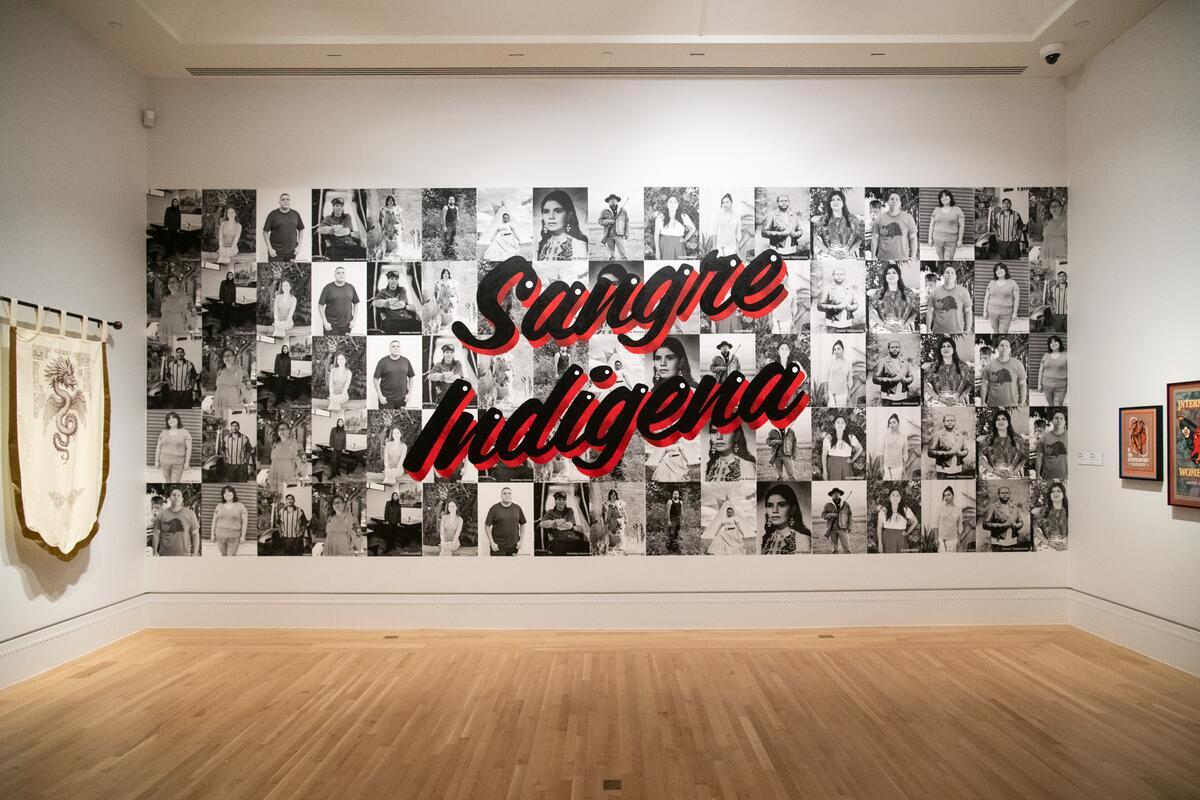
Melissa Govea’s mural. | Photo courtesy of The Huntington

“Through this partnership, we commissioned Melissa Govea, a Los Angeles–based artist who is Chicana and Purépecha,” explains Carr. “Govea began her career as a muralist and is known for work that honors community, ancestry, and cultural memory. Rather than giving her a specific direction, we invited her to respond to the themes of the exhibition. The result is a dedicated gallery featuring a new mural, a sculptural installation, and print-based works that together reflect multiple dimensions of her practice. This marks the first time her work has been presented in a museum context.

“Her mural, titled ‘Sangre Indígena’ (Indigenous Blood), draws on portraits of friends, collaborators, and cultural leaders who have shaped her life. The work recognizes the generations of artists, organizers, and knowledge-keepers who came before her, while affirming the presence, agency, and creativity of those shaping Los Angeles today.”  
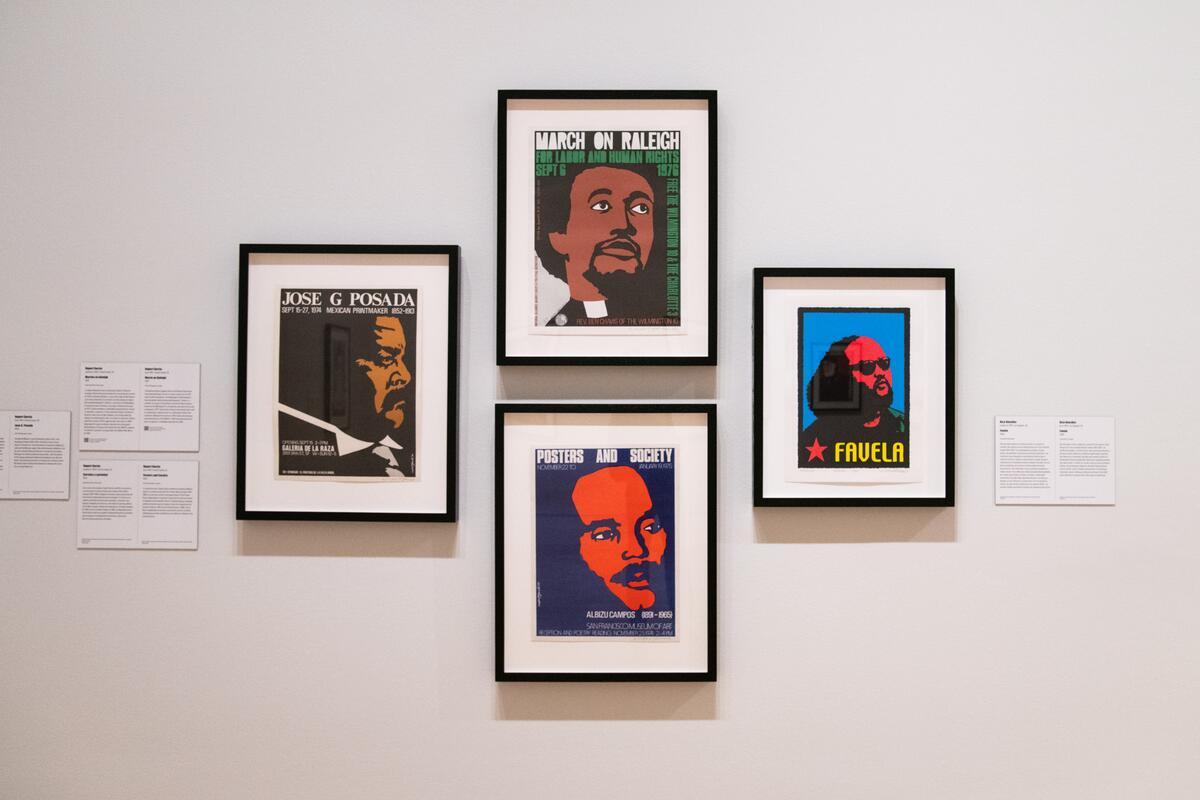
Installation Photo courtesy of The Huntington

It would be an oversimplification to say how many works in the exhibition are from L.A. artists, as Becerra explains.    

“Many artists in ‘Radical Histories’ have deep ties to Los Angeles, whether they lived, studied, printed, organized, or collaborated here. The most meaningful connection is through Self Help Graphics & Art, which offered open studio access, mentorship, and a  collaborative printmaking environment to generations of Chicano and Latinx artists.

“Artists such as Barbara Carrasco and Ernesto Yerena Montejano continue to live and work in L.A., and their practices remain rooted in local community networks. So rather than thinking in terms of birthplace alone, it’s more accurate to say that Los Angeles is one of the central homes of Chicano printmaking, and the exhibition reflects that history.”
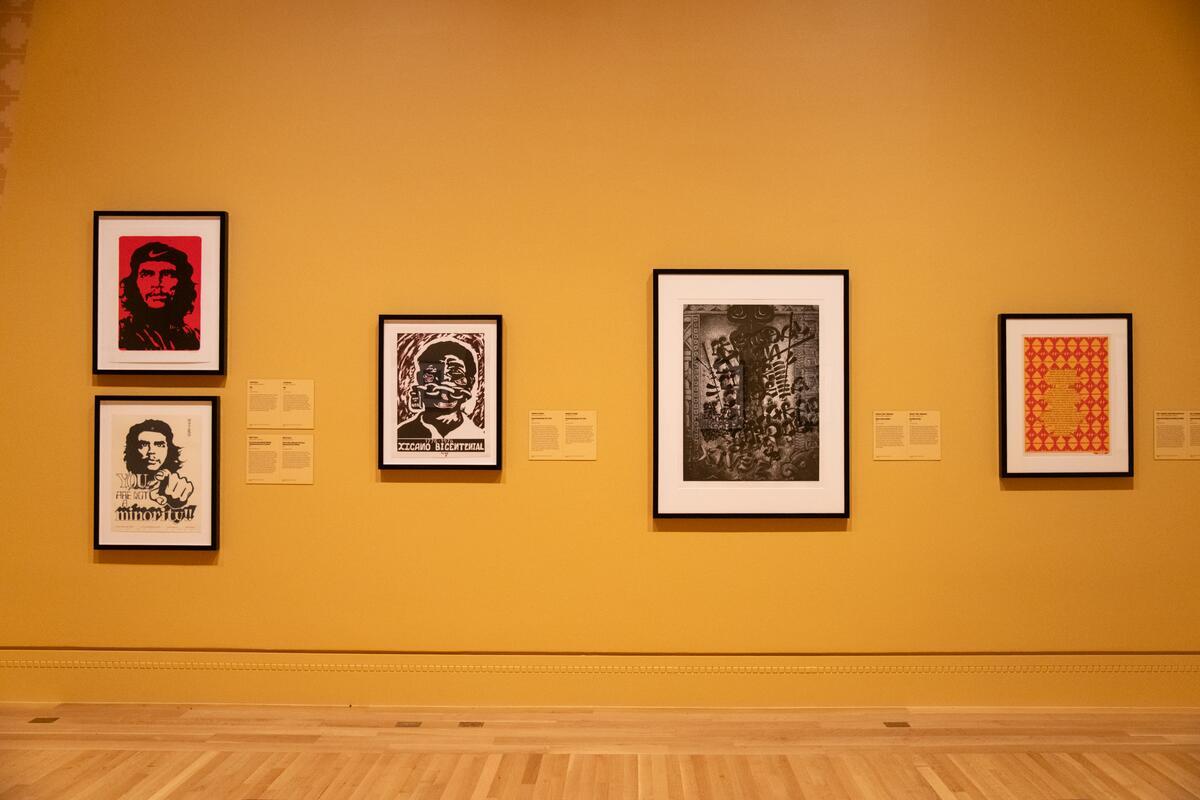
Installation photo courtesy of The Huntington

Asked if the exhibition has taken greater meaning now with ICE raids targeting Hispanic communities and looking Hispanic or Latino is enough to get one handcuffed and thrown into a detention camp, Becerra replies, “The themes in ‘Radical Histories’ are both longstanding and timely. Chicano printmakers have historically used posters and prints to address labor injustice, state violence, displacement, and the struggle for belonging – issues that continue to resonate today.”

Becerra says further, “What museums like The Huntington can offer is space: a place to look closely, process, reflect, and connect personal experience to shared history. These works remind us that art has always been a tool of community care and resistance.” 

As for the viewer takeway, Carr states, “We hope visitors come away with a deeper understanding of how Chicano artists have used printmaking to organize, to tell stories, to build community, and to assert cultural identity. And we hope they see that art is not separate from daily life – it is a tool for resilience and collective meaning-making.”

“In addition to the exhibition itself, The Huntington will host public programs, bilingual gallery talks, and hands-on workshops in collaboration with local artists and partners,” adds Carr. “A major highlight will be Historias Radicales: Latinx Identity and History in Southern California, a two-day conference on December 5–6, connecting the exhibition to The Huntington’s co

Ontario Museum Exhibitions Celebrate Printmaking as Voice for Community Issues

Also published on 2 January 2025 on Hey SoCal

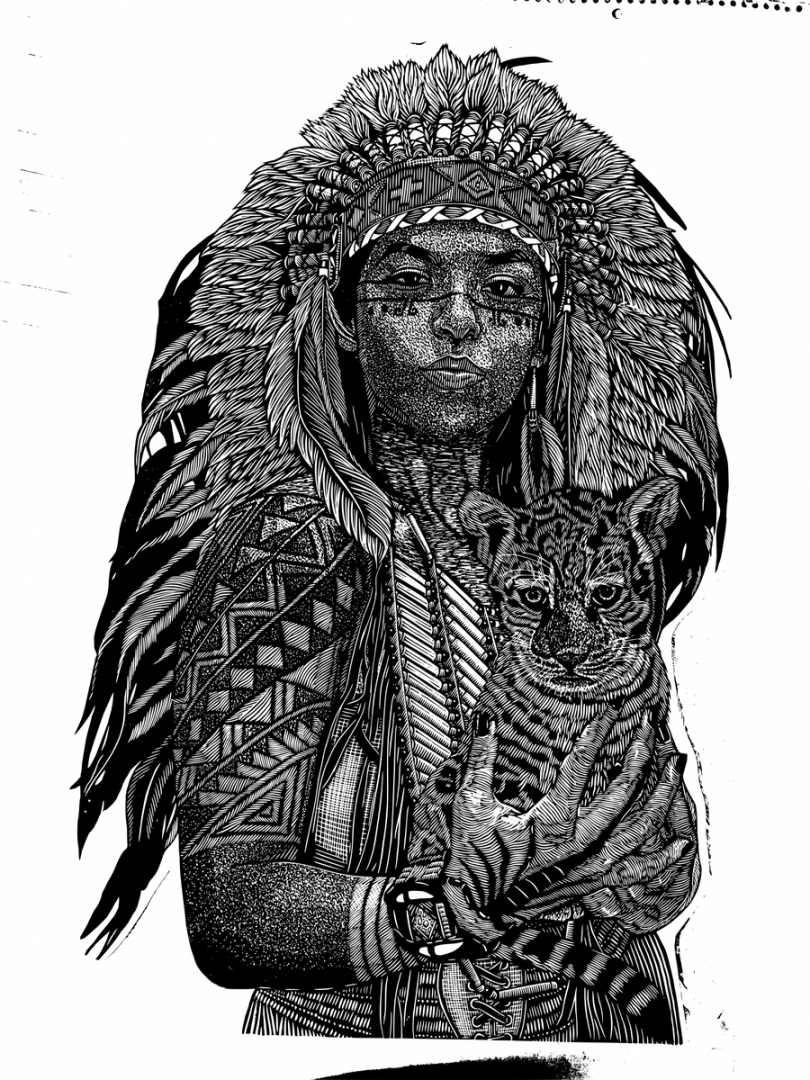
Briar Rosa’s “Queen III” in the “Centered in Ink Exhibition.” | Photo courtesy of the Ontario Museum of History & Art

Ontario Museum of History & Art (OMHA) presents two exhibitions that portray community issues and cultural stories. “Mission Gráfica: Reflecting a Community in Print” and “Centered in Ink: Printmaking in the Inland Empire” will open concurrently on Thursday, January 9, and will run through March 9, 2025.

A community reception will be held on Saturday, January 11, from 2 to 4 p.m., with light refreshments and a chance to meet the artists from Centered in Ink. Additionally, OMHA will host an artist talk with featured artists from the exhibitions on Saturday, February 1, from 2 to 3 p.m.

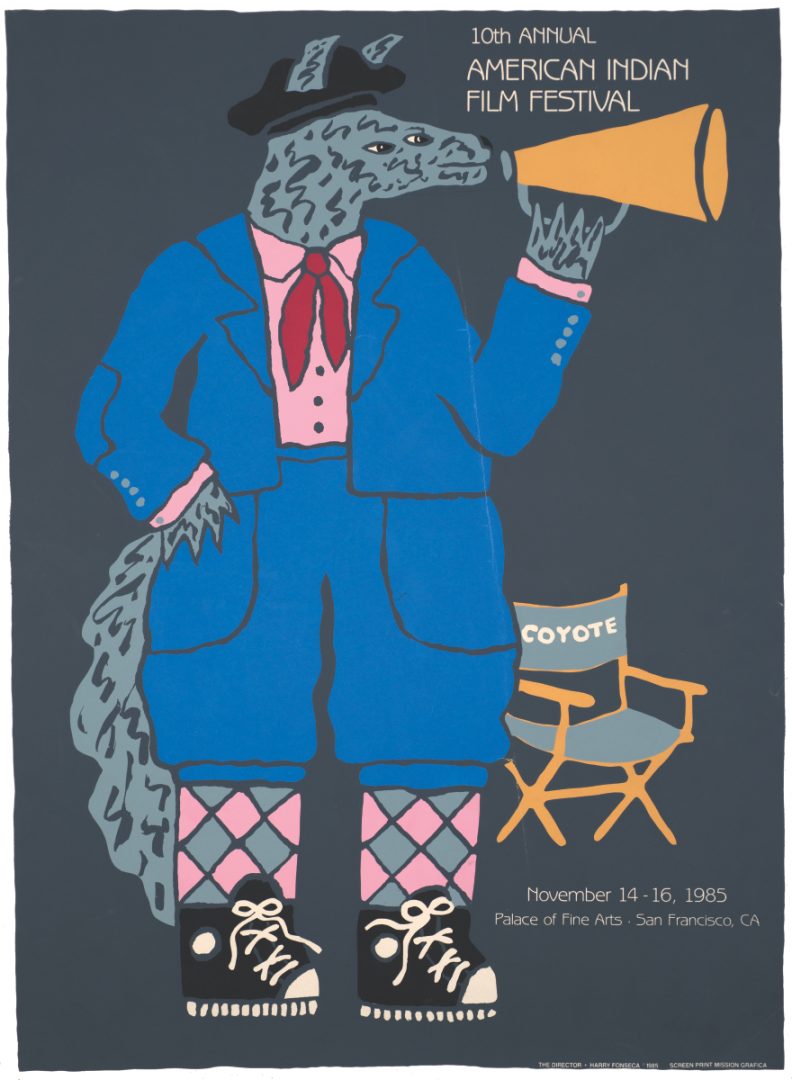
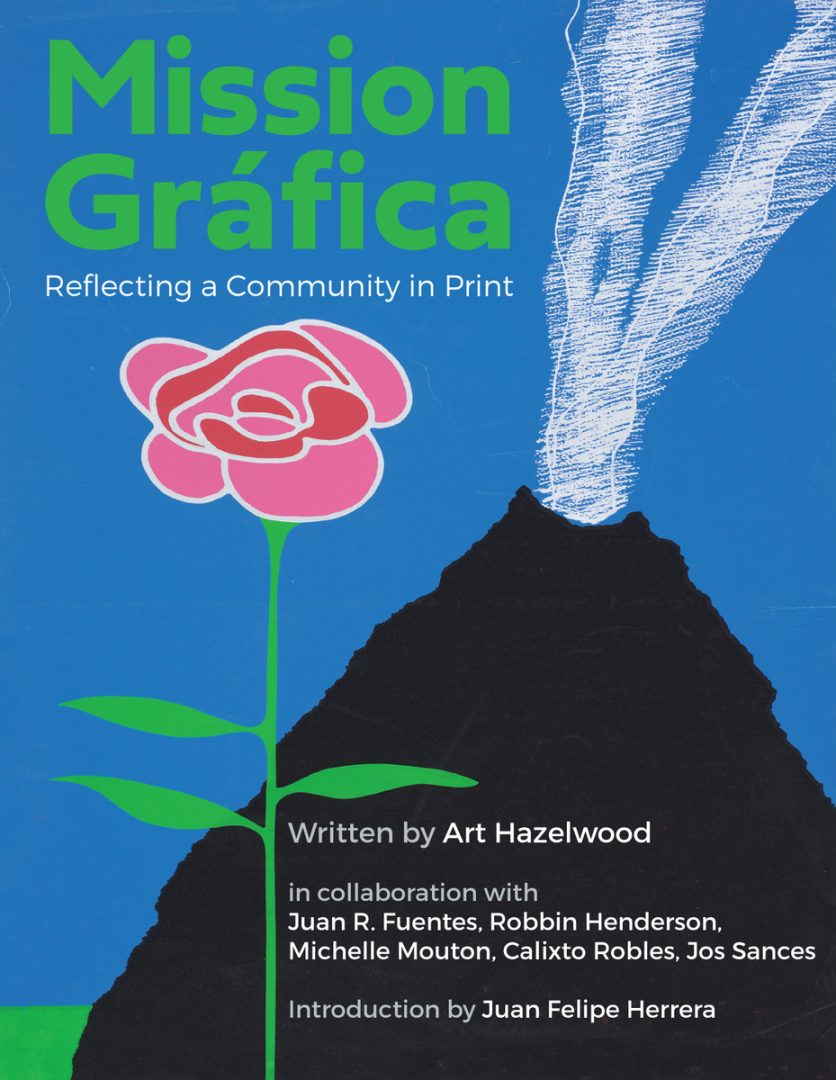
Mission Gráfica poster / Photo courtesy of Ontario Museum of History & Art

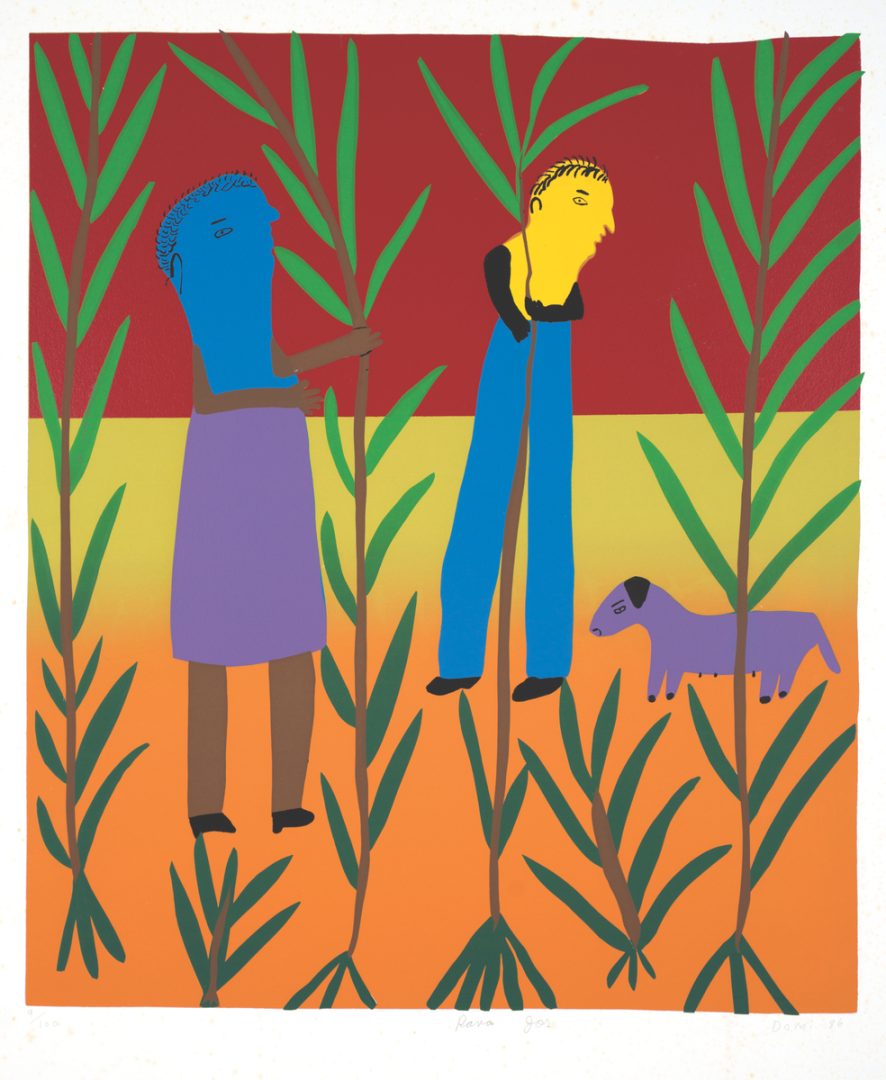
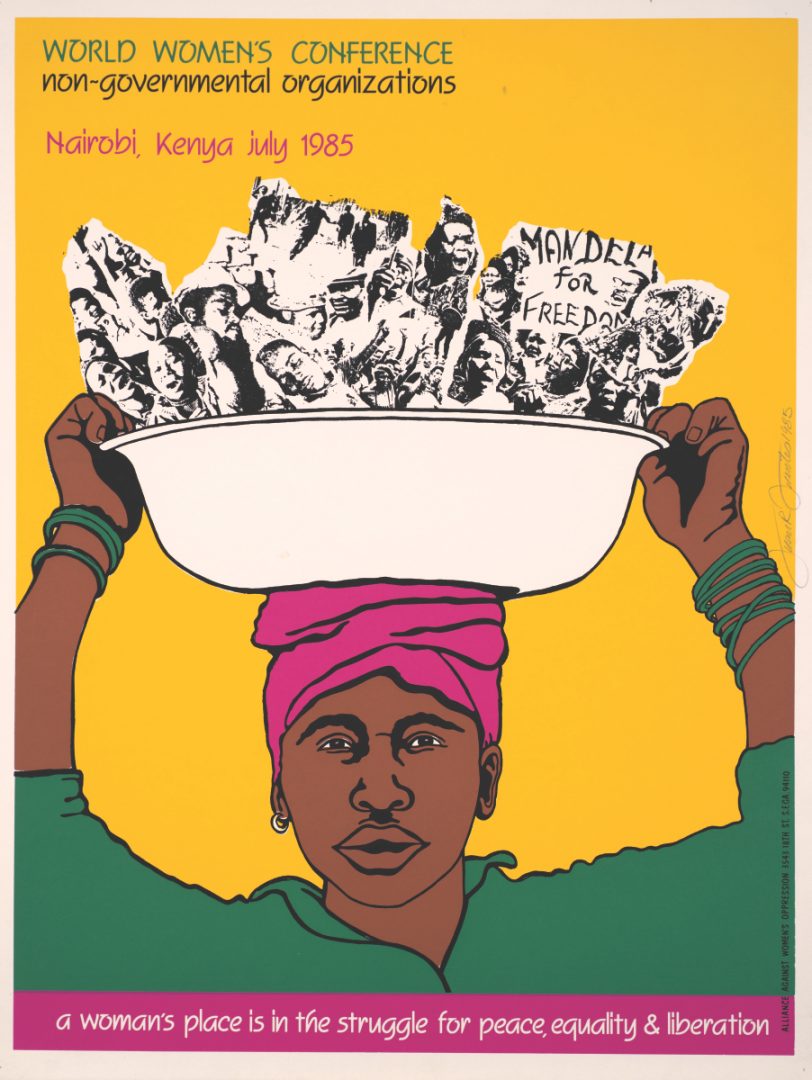
Mission Gráfica: Reflecting a Community in Print” is a touring exhibition developed in partnership with the San Francisco Public Library that features dozens of screenprints from Mission Gráfica, a community print center of diversity and cultural ferment in San Francisco. Founded in 1982 as part of the Mission Cultural Center, Mission Gráfica became the most sought-after political poster center in the Bay Area in the 1980s. Designed to capture attention on the street, the posters urged political action as well as celebrated culture and life.

This exhibition reflects a variety of styles, approaches, and sensibilities from non-professional and emerging artists to well-known figures such as Carmen Lomas Garza, Nancy Hom, Rupert Garcia, Mildred Howard, Jean La Marr, Ester Hernandez, Michael Roman, and the San Francisco Print Collective. It will explore themes of U.S. Imperialism, gender inequality and women’s empowerment, cultural celebrations, Indigenous America, and more – many of which continue to resonate today.

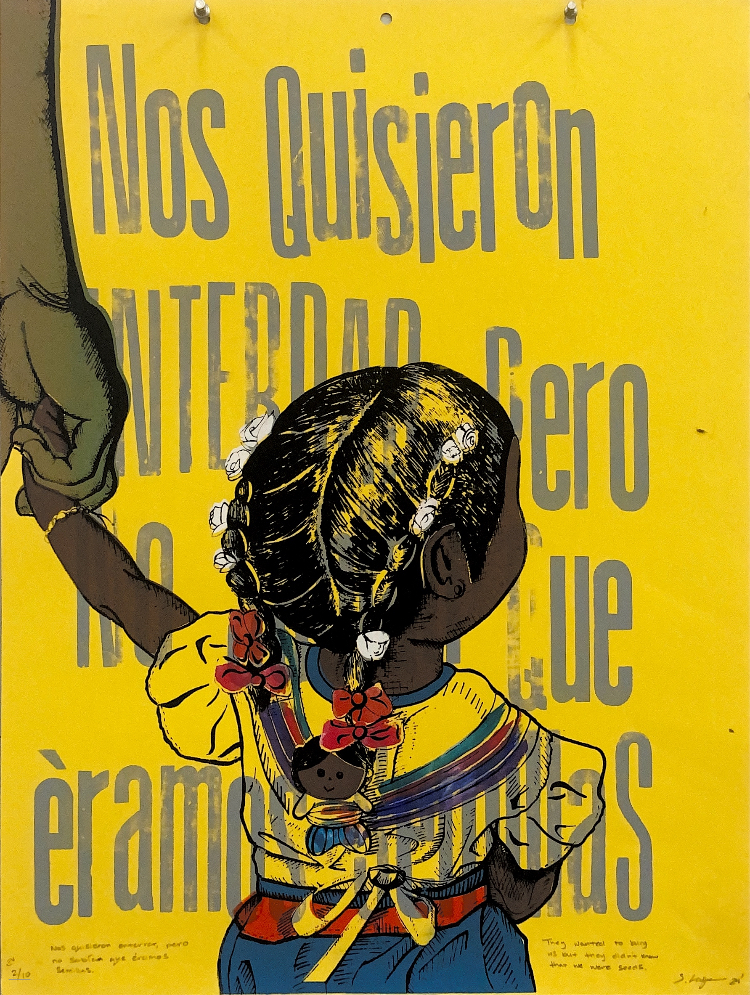
Stephanie Lagos. Mixed media screenprint / Photo courtesy of Ontario Museum of History & Art

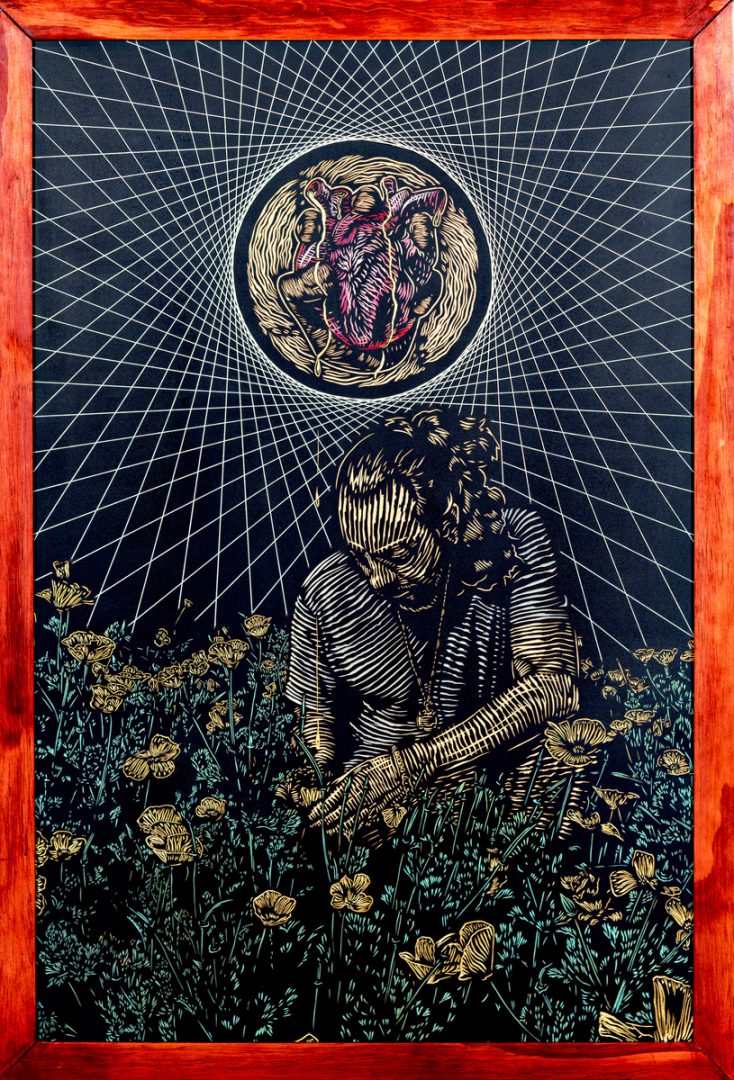
Its companion exhibition, “Centered in Ink: Printmaking in the Inland Empire,” will showcase a diverse array of printmakers and screen printers of the Inland Empire who employ their artistic skills to address pressing community issues and ignite conversations that resound with viewers. Using their printmaking practices to create powerful visual statements, the artists delve into thought-provoking themes such as identity, activism, and environmental awareness. Participating artists include Briar Rosa, Adam Aguilar, L.Akinyi, Micah Amaro, BA Soul, Kenia Cruz, Cesar Garcia, Jorge Heredia, Duan Kellum, Stephanie Lagos, Eduardo Raul Muñoz-Villagaña, Erick Revollo-Paz, and Sarah Vazquez.

Twenty seven prints from Mission Gráfica and thirty artworks for Centered in Ink will be exhibited in the museum’s North Wing Galleries.

Mission Gráfica screenprint / Photo courtesy of Ontario Museum of History & Art

Samantha Herrera, exhibition curator, says by email that the two shows were purposefully meant to run together. “Centered in Ink was planned to pair with Mission Gráfica. With most of the traveling exhibits we host, we try to complement them with the Inland Empire’s fascinating history and exciting art communities.”

“We searched in our local art community for a similar group of printmakers working together at a local art center who were producing artwork with a socially conscious theme and providing an outlet for creativity to the community at large,” Herrera says further.

“I wasn’t familiar with the Mission Gráfica art collective until recently. But I did recognize some of its artists, such as Esther Hernandez, from my studies of the Chicano rights movement in college,” discloses Herrera. “During that period, Esther’s work centered on themes of women’s rights and the struggles of Chicano farmworkers, using her art to amplify their voices and issues.”

Mission Gráfica screenprint / Photo courtesy of Ontario Museum of History & Art

“The printmakers we are featuring in Centered in Ink, all have connections to the Garcia Center for the Arts in the city of San Bernardino, similar to the artists in Mission Grafica, hosted by the Mission Cultural Center of Latino Arts in San Francisco,” explains Herrera. “Most of the local printmakers we are presenting are influenced by the Oaxaca woodcut print art form, originating from the Mexican state of Oaxaca.”

Local participating artists include:

Jacob Adame (Briar Rosa)

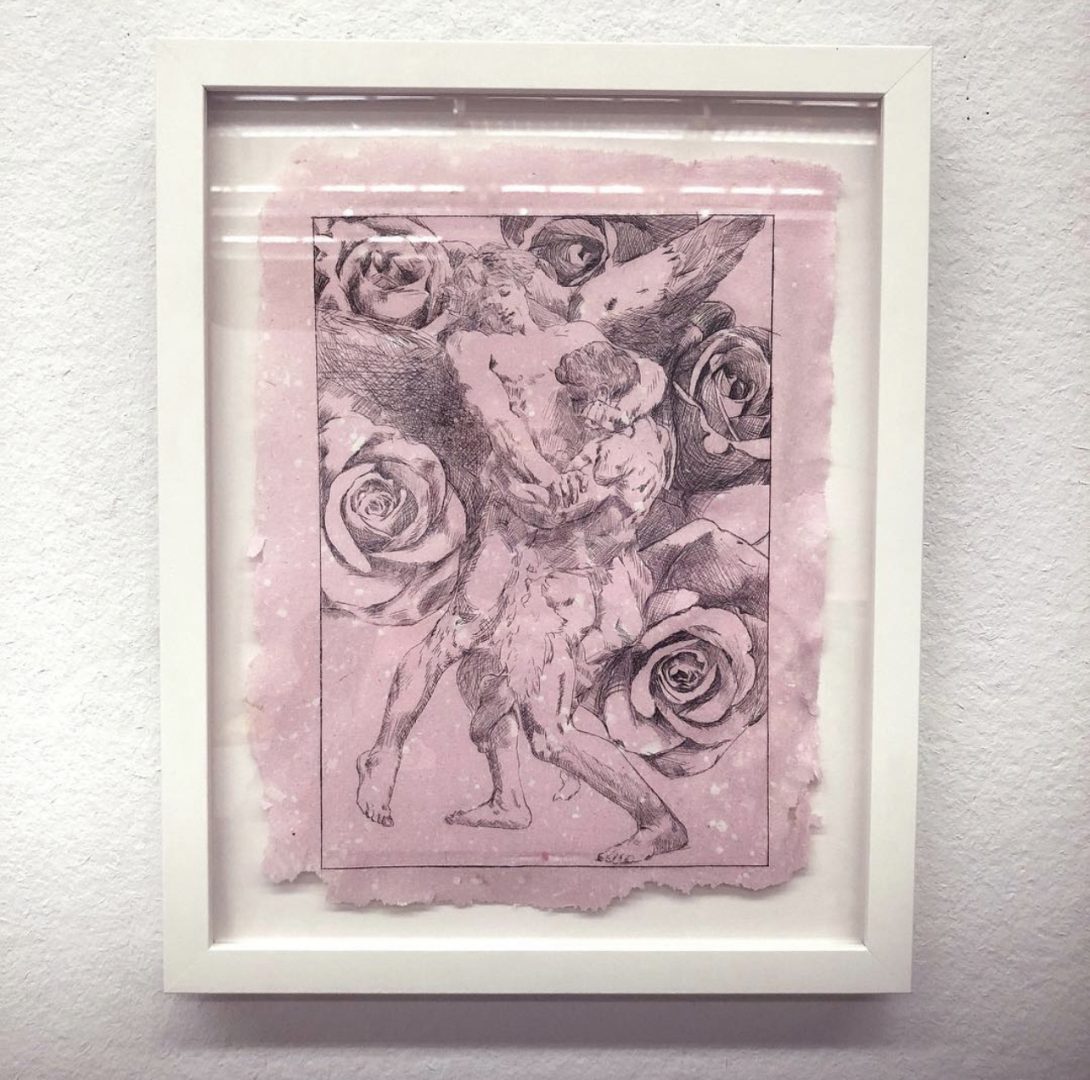
Briar Rosa works with various mediums to make paintings, sculptures, drawings, and prints. Their work has developed into exploring the figure and its historical relationship with symbolism.

Briar Rosa. Hover When we Weep / Photo courtesy of Ontario Museum of History & Art

Adam Aguilar

Adam Aguilar is a printmaker and multidisciplinary artist from the Inland Empire. He has worked displayed in Inland Empire galleries and museums.

Adam Aguilar. Nectar Fields / Photo courtesy of Ontario Museum of History & Art

Lilian Owiti (L Akinyi)

L. Akinyi is an interdisciplinary artist currently working to bridge the cultural landscapes of their upbringing in Nairobi to the diverse influences of the Inland Empire, where they currently live and work. Through their practice, Akinyi explores their own internal world, themes of identity, migration and the interplay between traditional and contemporary spiritual practices from her African/diasporic lens.

Micah Amaro

Micah Amaro is a San Bernardino artist who focuses on character design through colorful and expressive BIPOC illustrations. She has demonstrated her versatility by branching out into different mediums, such as printmaking with the collective Grafica Nocturna. Over the years, she has worked with many organizations, such as the Locatora Radio podcast and Arts Connection.

Mission Gráfica screenprint / Photo courtesy of Ontario Museum of History & Art

Brenda Angel (BA Soul)

An artist born and raised in San Bernardino, California, BA Soul expresses her creativity through paint, fabric, illustration, and murals. Inspired by her culture and the beauty of nature, she connects deeply with others through her art.

Kenia Cruz

Kenia Cruz is an interdisciplinary artist raised in Los Angeles and the Inland Empire, whose practice is currently focused on printmaking. She holds a Bachelor of Arts degree in Art with a concentration in Visual Studies from Cal State San Bernardino and is now pursuing a master’s degree in education with an emphasis on art at the University of Redlands.

Cesar Garcia

Cesar Garcia is a craftsman based in San Bernardino, who prefers working with printmaking techniques such as xylography, pyrography, stencil and airbrushing. He believes art is a powerful tool to create awareness about what is happening around us and reflects the times we live in.

Cesar Garcia. Untitled / Photo courtesy of Ontario Museum of History & Art

Jorge Heredia (Osvaldo Heredia)

Osvaldo Heredia is a first-generation Salvadoran Mexican, born in Downtown Los Angeles and now primarily working in San Bernardino. Heredia is a graduate of Cal State San Bernardino and a former Director of the Garcia Center for the Arts, where he led and contributed to many community projects, with the goal of empowering the community.

Duan Kellum

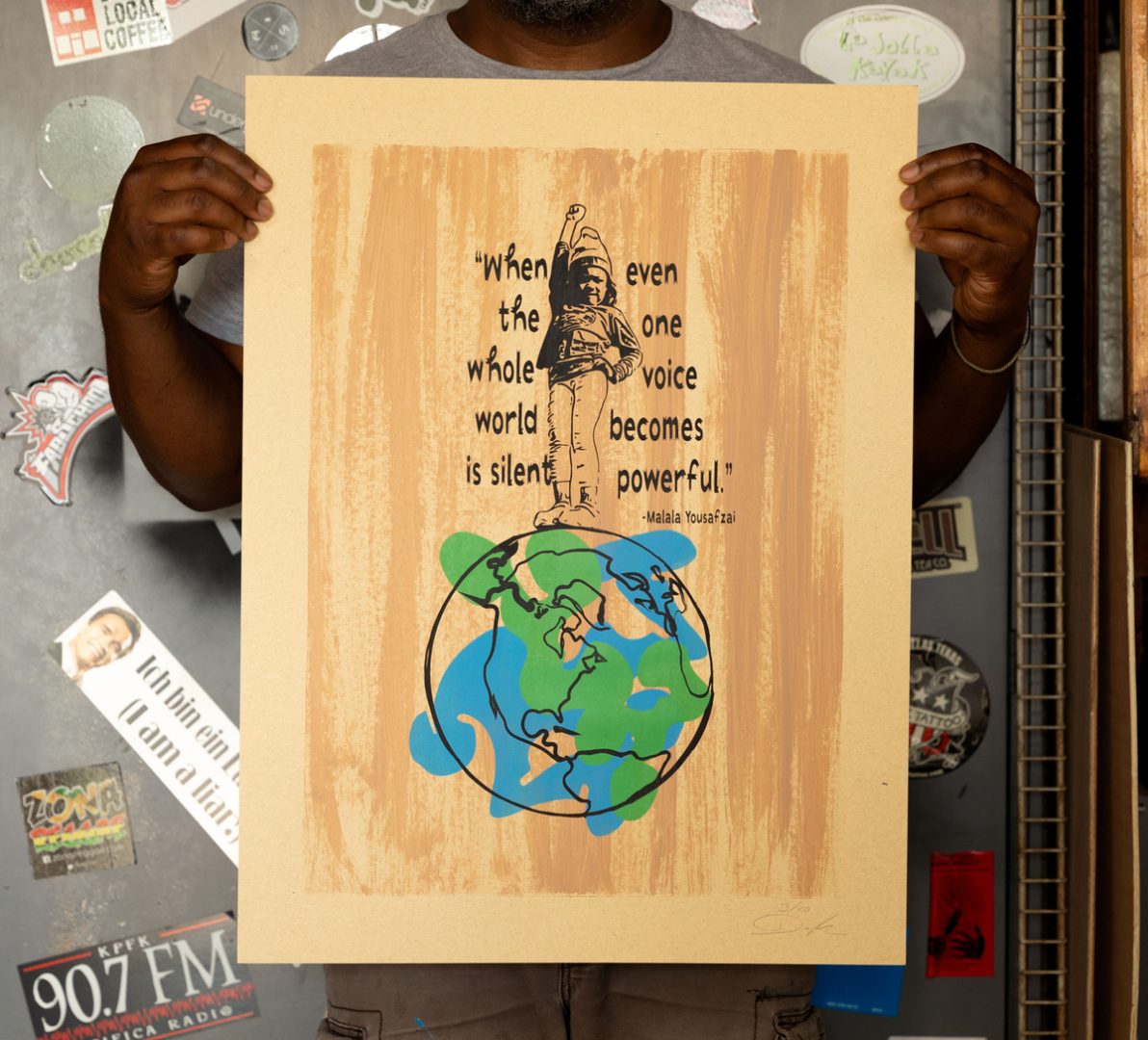
Born in Trenton, New Jersey, Duan Kellum is an educator, artist and activist. Kellum’s predominant mediums are screen- printing and stenciling.

Duan Kellum. Sal’s World / Photo courtesy of Ontario Museum of History & Art

Stephanie Lagos

Stephanie Lagos is a versatile artist based in the Inland Empire, exploring their Mexican Honduran heritage through various mediums, including painting, ceramics, drawing, and printmaking. Their work reflects a deep connection to their roots and cultural identity, pushing the boundaries of Eurocentric ideas in art.

Erick Revollo-Paz

Erick Revollo-Paz is an artist born in Mexico and raised in Southern California. After graduating from California State San Bernardino, Revollo-Paz developed a passion for art, specifically within printmaking practices.

Sarah Vazquez

Sarah Vazquez is a visual artist from San Bernardino, California, who works across various mediums and has been focused on printmaking since 2018. Her work is emotionally driven as she explores themes of identity, connection, and healing. Vazquez is an advocate for accessible art education and a member of the Grafica Nocturna printmaking collective.

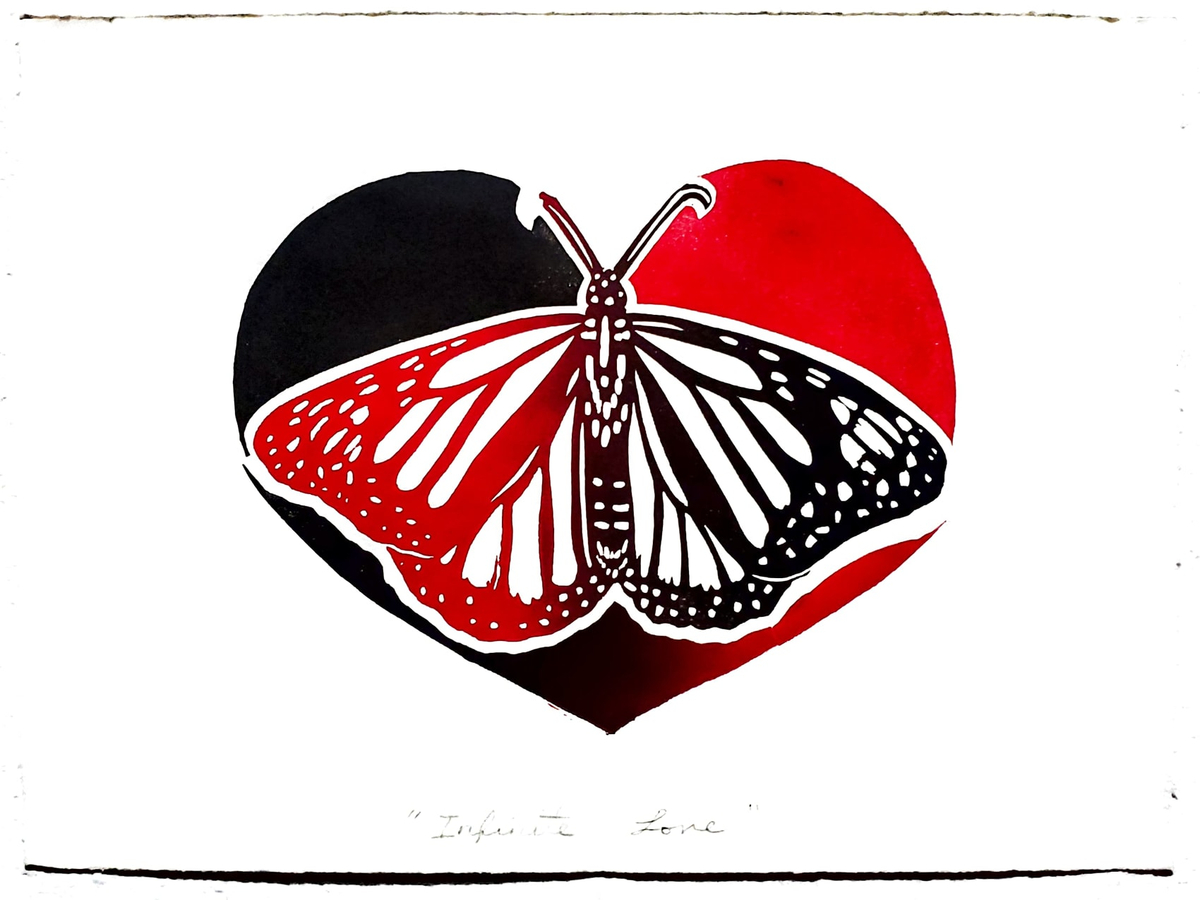
Sarah Vazquez. Infinite Love / Photo courtesy of Museum of History & Art

Herrera declares, “Through their creative process, the artists in both exhibitions reflect various styles, approaches, and sensibilities. They explore societal struggles, weaving personal narratives into broader discussions that connect the individual to their community. These works spark dialogue on identity, place, and belonging, using diverse materials and symbols to share stories and encourage reflection. We hope the work resonates with you as much as it did with us and continues to inspire dialogue among members of the Inland Empire community.”

Through the decades and spanning cultures, artists have spoken their truths and effected social reform. Would that we, who view this exhibition, engage with their works and act on what we learn.