PEF’s Teacher Grant Program and Other Initiatives Support PUSD

Originally published on 16 December 2020 in the Pasadena Independent, Arcadia Weekly, and Monrovia Weekly
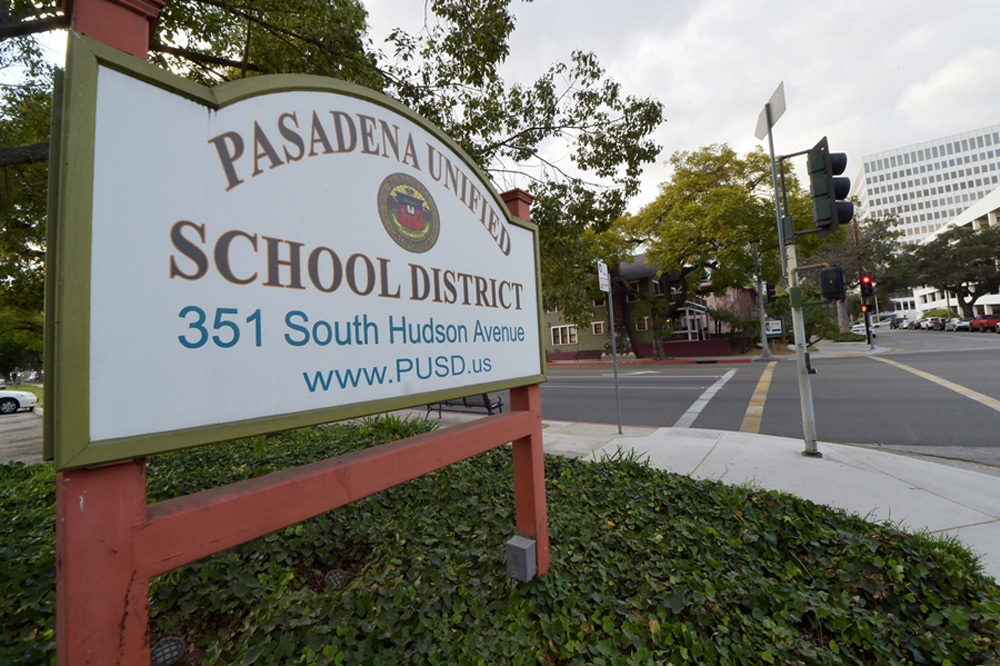
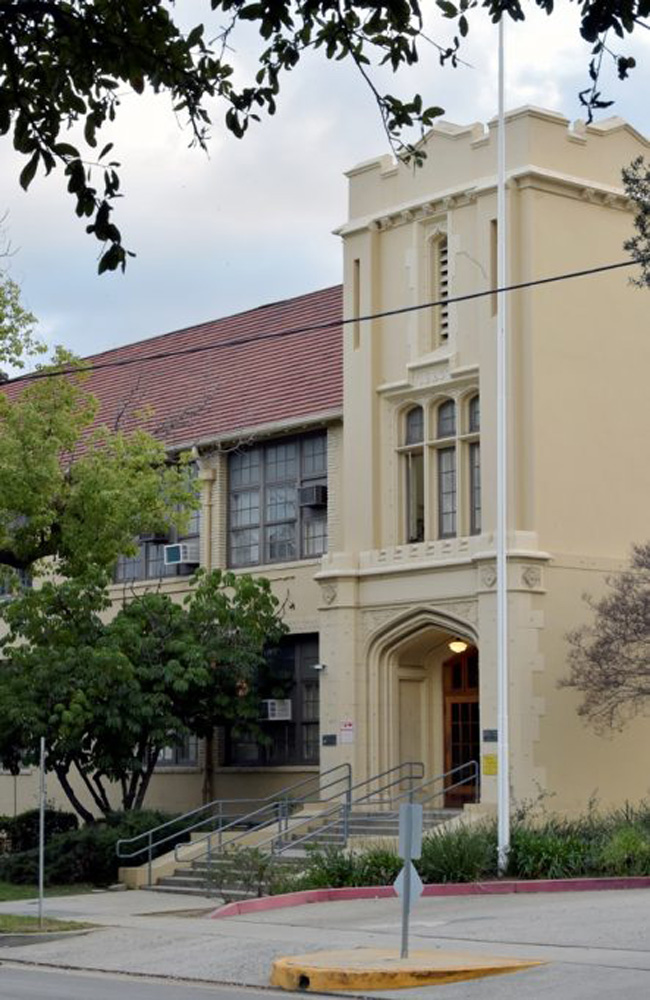
Pasadena Unified School District Office | Photo by Terry Miller / Beacon Media News

Nine months into the coronavirus pandemic, COVID-19 continues to challenge school systems, teachers, and students. Distance learning, while it’s better than not having any kind of learning at all, isn’t effectively reaching all students.

Fortunately for students in the Pasadena Unified School District (PUSD), administrators reacted quickly following the lockdown restrictions. Within two weeks, remote learning was in place — hotspots were provided for families with no internet access and iPads and chrome books were sent to students’ homes (read related article here). All that, however, doesn’t guarantee student success. As teachers would tell you, it’s hard enough engaging students when they’re in the classroom; remote learning presents more complications.

It is in this area where the Pasadena Educational Foundation (PEF) comes in. For almost 50 years, PEF has been a PUSD partner with a mission to support, enhance, and supplement the programs, initiatives, and priorities of the school district. It created the Teacher Grant Program to help bring more creativity, innovation, and inspiration into PUSD classrooms by providing the resources needed to help teachers and principals take their creative projects from idea to reality and enhance the classroom experience for their students. This year, 181 educators received awards representing 124 unique proposals from every school in the district — many of them addressed the unique resource needs of distance learning.  

Three special honors were given to recipients whose proposals exemplified the qualities embodied by the individual after whom the award is named.  

The Calvin Hunt Arts Award was created in memory of Calvin Hunt who, as director of the Alvin Ailey American Dance Theatre, took dancers all over the world as cultural ambassadors. This award promotes and supports dedicated teachers enhancing arts education in PUSD. It went to Pasadena High School’s (PHS) Hillary Temple, who proposed a dance room download.  
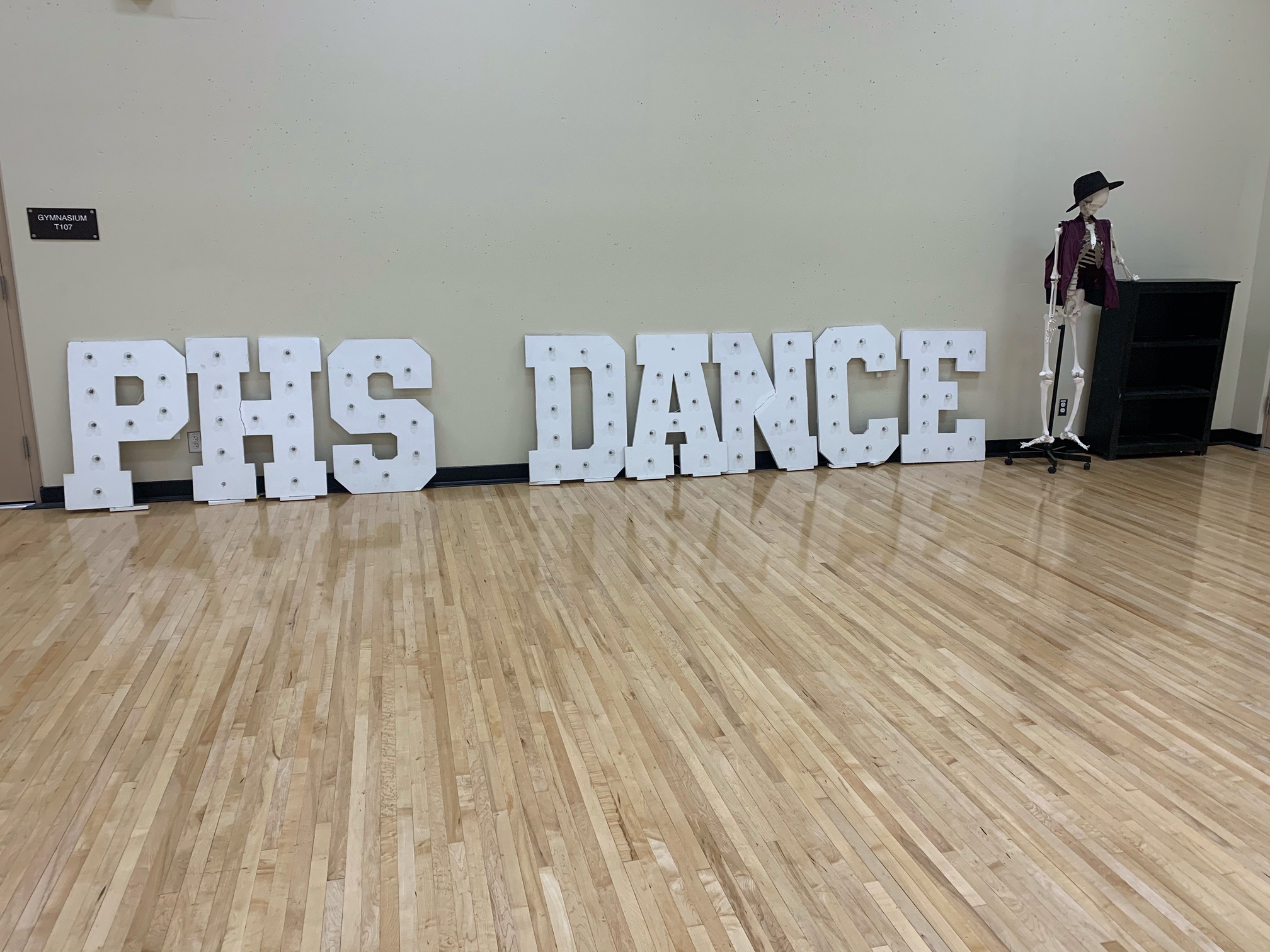
Pasadena High School’s dance classroom | Photo courtesy of PHS

This is Temple’s second year teaching all levels at PHS. Interviewed via email, she relates the challenges she’s encountered during remote learning and how she overcomes them. “Some of them include technology/WiFi issues for students or myself, lack of ability to communicate, and not being able to see the kids at all times. I think the key to overcoming teaching dance online would be to just have an open mind, trust your students, and laugh things off. It’s not going to be perfect because these are unprecedented times, so we have to make the best of it, still challenge our students and laugh at ourselves or the technology when it’s acting up.”

Asked about her Teacher Grant proposal, Temple says, “We just got a new dance room at PHS and it’s beautiful. However, there were no furniture, white boards, projector, etc. I am doing a ‘dance room download’ to bring the room up to date and to give our students the most amazing dance program I can.”

Hillary Temple | Photo courtesy of PHS

With the purchase of a television and sound system, students would be able to use their computers to broadcast their ideas and thoughts and become leaders via tech in the classroom through assignments and presentations. In addition, this will upgrade the dance room to standards used at most Cal State and UC classrooms to enhance the experience of a beginning dancer.

“I am super proud of my students and learning dance at home,” Temple hastens to add. “Learning how to dance, in general, is difficult. With the added stress of not knowing which way I’m truly facing, not being able to hear me or the music well, not having a mirror, etc., the kids are doing really well and they are dialed in. I feel blessed to have such motivated students who are making the best of my class — they are awesome.”

The Jarratt Brunson Memorial Award for Literacy honors the late Jarratt Brunson, the PEF founder who initiated the Teacher Grant Program. It goes to the proposal that best reflects Jarratt’s passion for reading and early literacy. This year it was given to Kathryn Marquez at Madison Elementary School who proposed Libros Para Todos! (Books for All!).
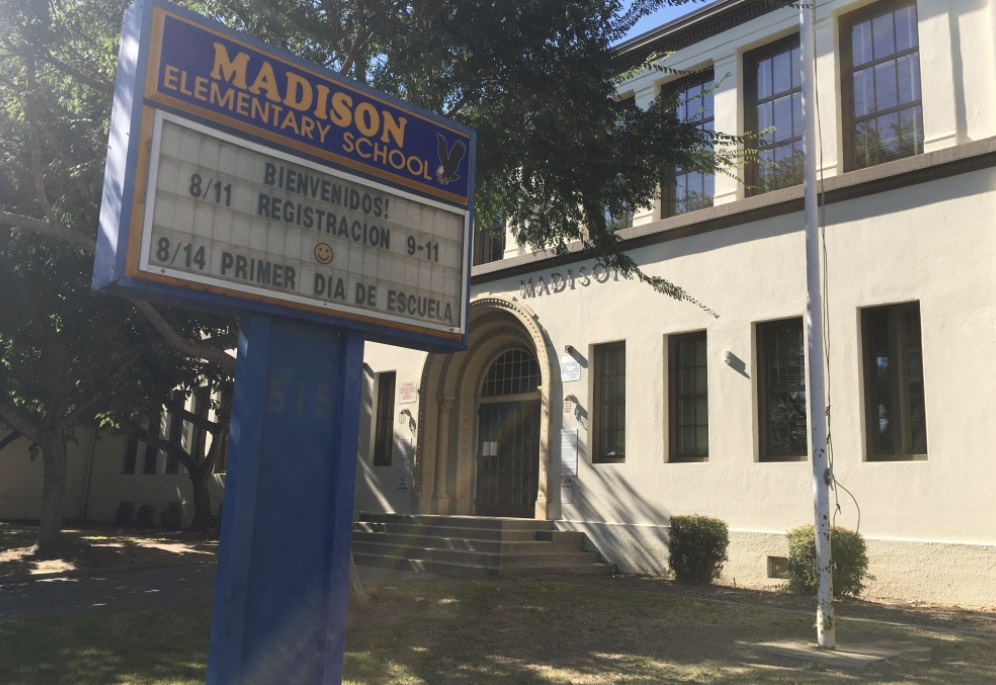
Madison Elementary School | Photo by Kathryn Marquez / Madison Elementary

Marquez, a first grade teacher at Madison Elementary School, relates, “My previous school closed at the end of the last school year, so this is my first year at Madison. It has been challenging to join a new school while learning to teach remotely using new mediums. Sometimes, technology refuses to cooperate! What makes it worth it is getting to know my students and developing relationships with them.”

“When I taught at Jefferson, I applied for and received the Jarratt Brunson Grant for Literacy, which enabled me to have four Little Free Libraries installed around the school,” continues Marquez. “LFLs are known around the world for their philosophy of Take a Book…Return a Book. I brought one of the libraries with me to Madison, where it is waiting to be installed. To my astonishment, I have been awarded this prestigious grant once again!

“I will be ordering a large selection of Spanish language and bilingual books to distribute to our school community. In this time of a pandemic that has so upended our lives, while students have no access to our school library, it is my goal to put books into the hands of families for whom Spanish is their home language. As they finish with the stories, they can return them to the LFL and choose a different one. It is my dearest hope that multiple generations share and enjoy these books.”
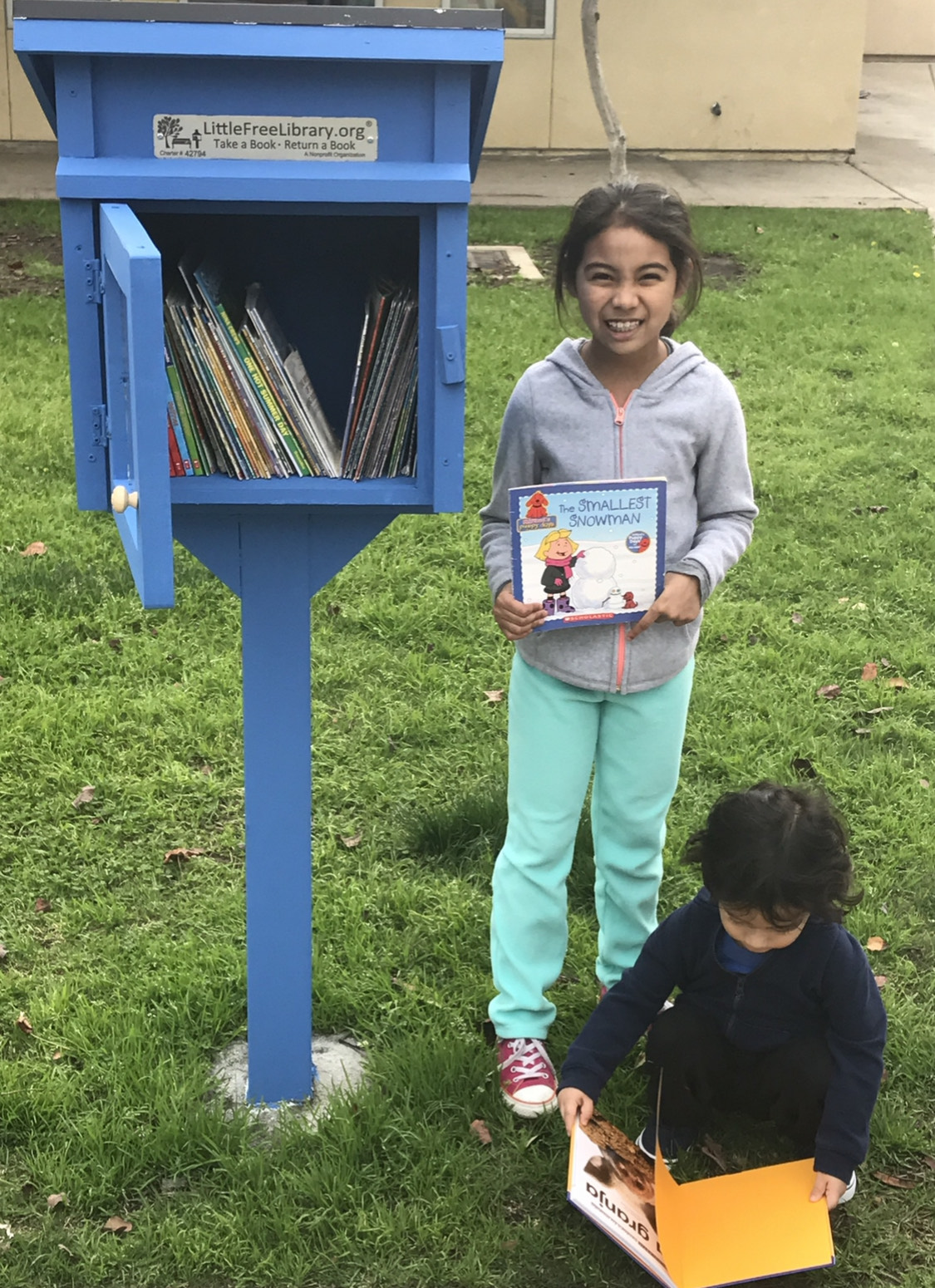
Little Free Library at Madison Elementary | Photo by Kathryn Marquez / Madison Elementary

The Kathy Onoye Principal Award goes to the PUSD administrator whose proposal best exemplifies their role in inspiring leadership. The 2020 winner is Angela Baxter of Willard IB which received two grants: a Schoolwide Grant – Grade Level Ukuleles and a Teacher Grant – Set of iPads for song writing and infomercials connected to students’ IB units of inquiry.

Linda Wittry, the teacher who proposed the projects, has been at Willard Magnet for 31 years as IB coordinator, working with teachers in designing and implementing the six inquiry units taught at each grade as part of the International Baccalaureate Primary Years Program.

Being outside the classroom has freed Wittry to set a schedule that helps her support various programs and projects for the school. She organizes monthly assemblies, musicals, and events, including the International Fashion Show, International Dance Festival, Rock and Roll Day, and Hispanic Heritage Assembly with a mariachi band. Additionally, as extra music instructor, she teaches first grade keyboards, second grade recorders, third grade ukuleles, fourth grade guitar, fifth grade keys, guitar, rock band.

The pandemic posed a problem, though. Says Wittry, “Having enough instruments for students to check out and not to share when back on campus was a challenge. So I proposed getting a grade level set of ukuleles to be used by third and fourth grade students during different times of the school year and, ultimately, for all students to have access to instrumental music.” 
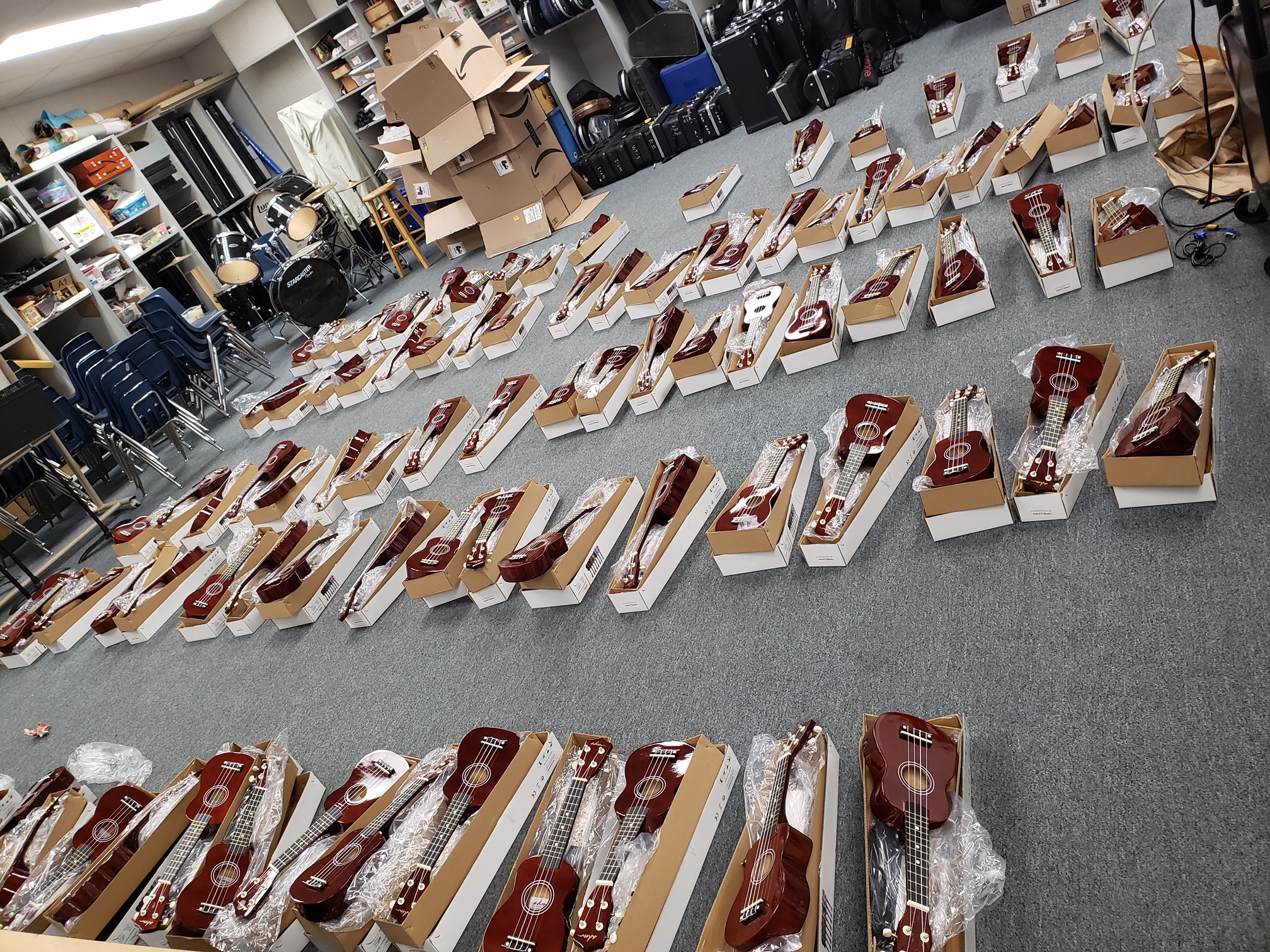
Ukuleles for all at Willard IB | Photo by Linda Wittry / Willard IB

As Wittry explained in her proposal, the far-reaching purpose of the project is to maximize musical experiences for children through the use of a grade level set of ukuleles during distance learning and beyond. The project will provide grade level ukulele experiences for all fourth graders during distance learning; provide ukulele experiences for each grade level team three-five in the year following distance learning; create a long term contemporary ukulele course for all third graders at Willard; create a generation of students that can play multiple musical instruments; equip students with the ability to become proficient at: playing rhythms, chords, and songs on the ukulele; and give students the opportunity to invent and create their own songs individually or in cooperative groups.

For the iPad Song Teacher Grant, Wittry proposed purchasing a set of iPads and, with a Garage Bank app, provide opportunities for Willard’s second to fifth grade students to create music and music videos, write original songs, and produce infomercials. Moreover, these tools will give students another creative format to present to the class their research findings related to their IB course.  
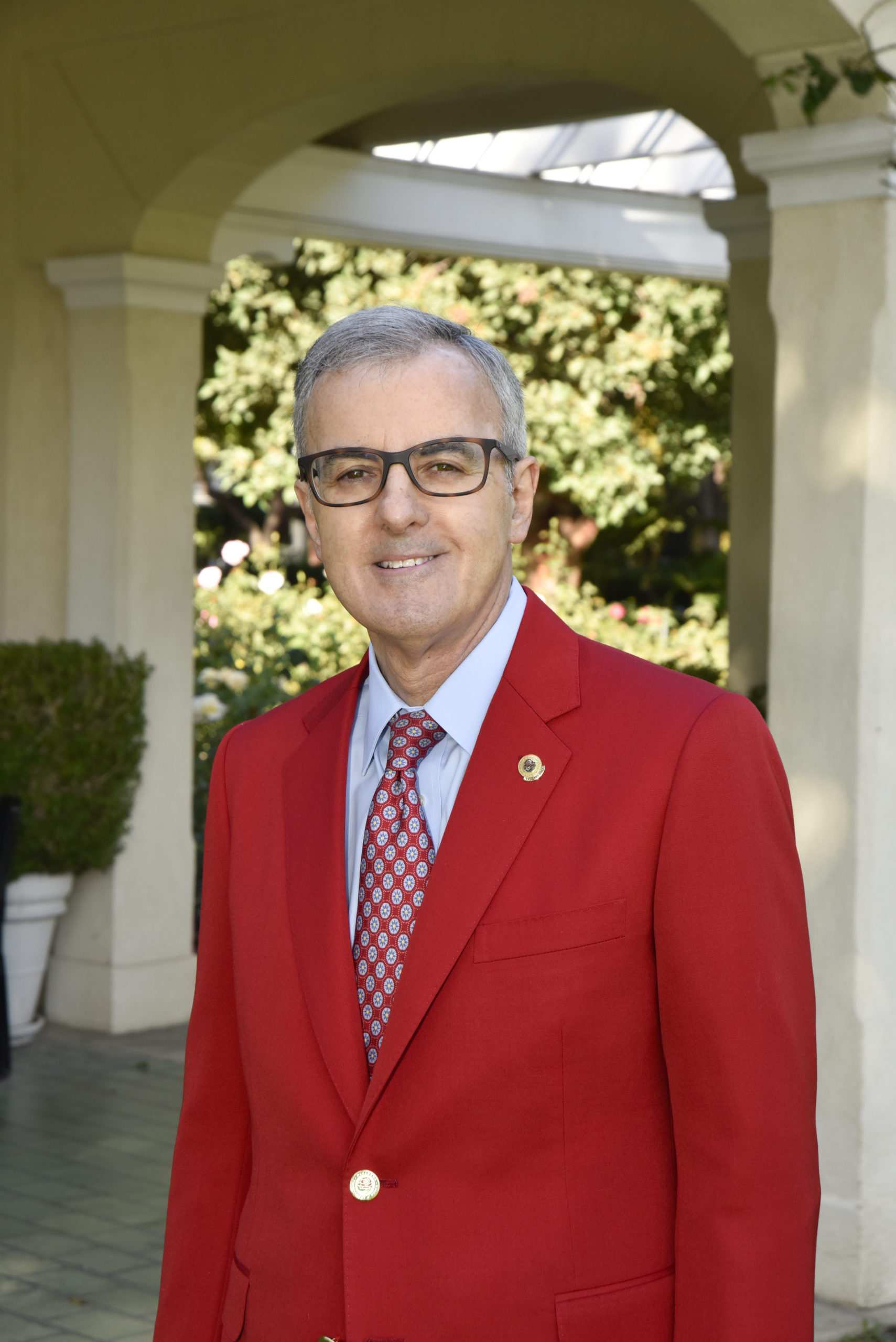
Tournament of Roses President Robert Miller | Photo courtesy of Tournament of Roses

PEF’s Teacher Grant is made possible through donations from the College Football Playoff (CFP) Foundation and the Pasadena Tournament of Roses Association (TofR). Speaking with me by phone, Dr. Robert Miller, TofR’s president and chairman of the Board, declares, “Investing in our community has long been one of the association’s  principal goals. Particularly this year, given the suffering that is taking place during the pandemic, we felt it was important to increase our presence and profile, and to continue to contribute to our community. PEF, which has been a long-time supporter of PUSD, remains one of the organizations we want to work closely with in promoting public education in the city of Pasadena.   

“Education has been one of the sectors most impacted by the pandemic. But despite all the challenges, PUSD teachers have adapted quite well. They found creative ways to engage their students and I think they deserve our support more than ever. They continue to rise to the challenge of keeping students learning in a difficult environment.”

States Miller, “It’s incredibly satisfying to see where our donation goes. It’s being used to fund remote dance and music performance classes, art exhibits, science experiments — we’re giving take-home art and science supplies; we’re furnishing ukuleles and percussion instruments; we’re equipping art teachers with cameras to record and the technology to play back their performances, and document cameras for books and demonstrations; we’re providing books in Spanish, French, and Mandarin. Our donation benefits thousands of students in Pasadena, Altadena, and Sierra Madre.”    

Miller, along with PUSD Superintendent Dr. Brian McDonald, presented the grant to the teachers during a drive-thru celebration and parade. He enthuses, “I was particularly honored and pleased that I had the opportunity to welcome and meet the educators who received the award. They were incredibly enthusiastic. I was amazed how many showed up to receive the grant in person, who arrived in wonderfully decorated cars. It made me feel good to know that there are dedicated teachers here who give of themselves in ways that are far beyond what we expect and what they earn; they care deeply for their students. It is just one of the honors I have as TofR president — to represent our 935 members and say ‘thank you for your incredible service.’ It was a wonderful experience.”

At the helm of PEF is Dr. Patrick Conyers, who has been the executive director for 10 years. He graciously agrees to be interviewed by email to expound on his functions, the organization’s activities, and its future goals.
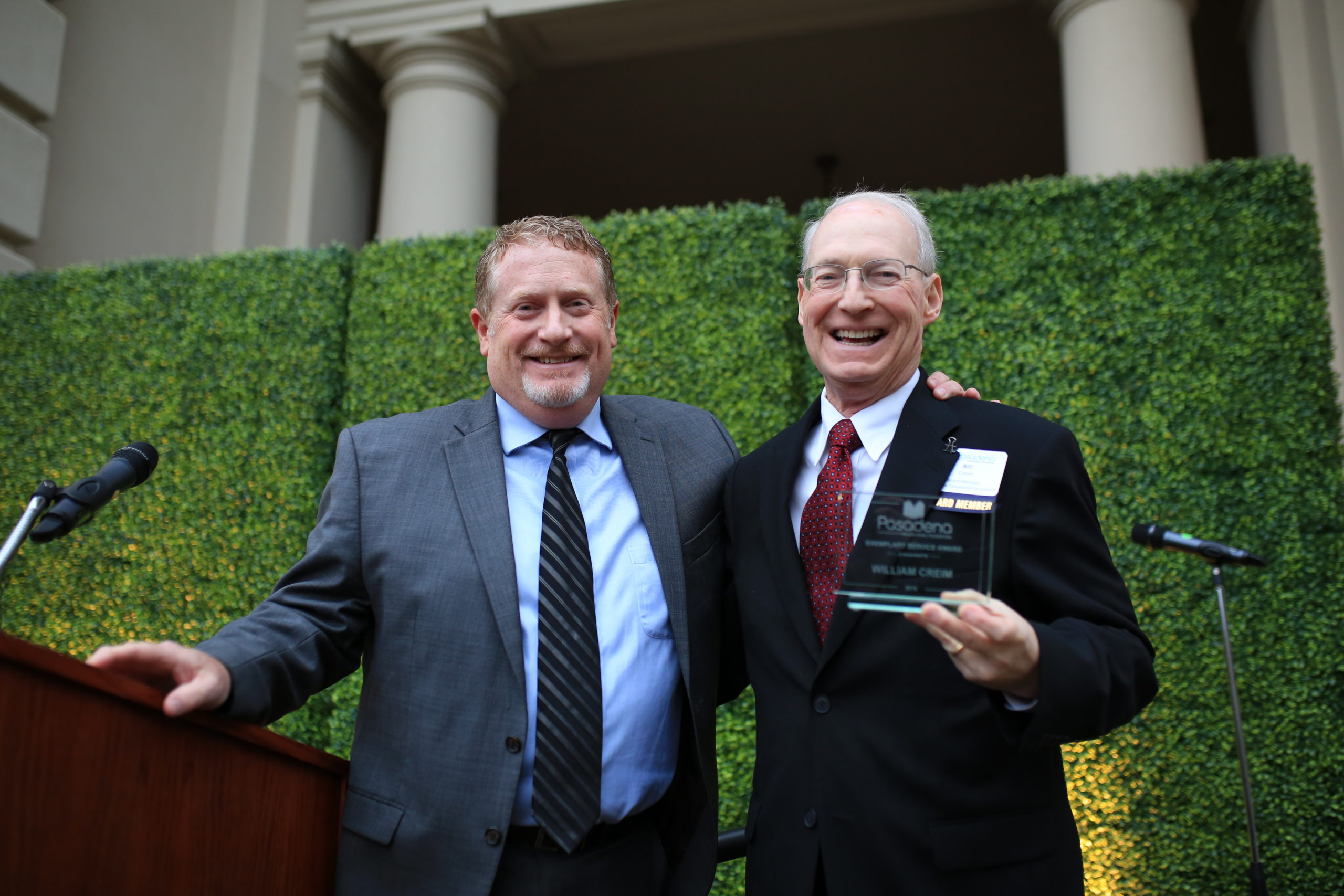
Patrick Conyers (left) with PEF board member Bill Creim | Photo courtesy of Pasadena Educational Foundation

Having read on his LinkedIn profile that he was the director of development at two Pasadena organizations, I inquire how those previous posts benefited PEF and its mission. Conyers replies, “I was Director of Development at Southern California Public Radio (KPCC) and, before that, the Pasadena Museum of History. I learned a great deal about the nonprofit world and philanthropy in our community from Bill Davis, CEO, and Mark Crowley, general manager, at SCPR, and from Jeannette O’Malley, PMH’s executive director. I learned how to set aggressive goals for a charitable organization, and meet those goals. Both organizations have an entrepreneurial spirit, which is something I’d like to think PEF has as well.”

Asked if he introduced new initiatives when he first came on board, Conyers answers, “PEF was a venerable and effective organization when I arrived. The organization, through the leadership of my predecessor, Joan Fauvre, and the rest of the Board and staff of PEF, was making a positive impact in the educational experience of PUSD students. My charge was to grow the organization, so we could be still more impactful. Sometimes, that effort at growth meant paring back some activities, so we could focus more energy on the most important programs and initiatives.

“Other times, what was needed was to grow already successful programs (like finding more funding and partners to expand the Teacher Grant Program, and increasing our capacity to serve more students in our Summer Enrichment Program). We have launched new programs during my tenure, too, and I am very proud we’ve been able to do that successfully. Programs like the App Academy, an innovative four-year computer science program at Pasadena High, and the Pasadena Math Academy, an accelerated math program for gifted PUSD math students in grades five to 12, have been great successes, and display an effective partnership among PEF, PUSD, and community members willing to give of their time, expertise, and financial resources to launch and grow new and engaging educational programs.”

In his 10 years’ leadership, Conyers thinks the most significant shift that has taken place is the growing awareness that prevailing views about Pasadena schools don’t reflect reality. He explains, “For too long, there has been a ‘perception gap.’ Many people in the community are holding on to outdated and inaccurate beliefs about the quality of education in our schools when, in truth, reality outpaces perception. The Board and staff of PEF have worked diligently to provide information that has helped shrink that perception gap. We know that by encouraging people to look for themselves and hear from educators and see the impact that community support is making, the gap would inevitably go away. The shrinking of that gap has been accelerated by excellent partners, including former Mayor Terry Tornek, partnering organizations like PEN, College Access Plan (CAP), Collaborate PASadena, Young & Healthy, and others, and enthusiastic parents, educators, and engaged community members. The recent successful passing of Measures J and O are testaments to the recognition our community has for the importance of quality, well-funded public education.’

I ask Conyers if there’s a project he started which has flourished and expanded and he says, “Our Realtor Initiative is something I am very proud of, but I wouldn’t say that I started it. A group of our Board members (Lorna Miller, Dawn O’Keeffe, George Brumder) recognized how  important area realtors are in welcoming families to the community and informing them about public/private school options. But they also knew that what was needed wasn’t just feeding information to realtors, which they in turn could pass along to clients; we needed to hear from realtors themselves about what they knew/didn’t know, what they needed to be informed, and how they preferred having information shared with them. Over the past several years, through our Realtor Initiative, we have built and grown positive relationships with area realty offices and with PFAR (Pasadena Foothill Association of Realtors). There is a Realtor Certification that PFAR awards to agents who have taken a short, informative course about PUSD schools and programs. I’m grateful that a second generation of PEF Board members, namely Del Lile and Jennifer Miyake-Trapp, have taken over leadership of this initiative on the PEF side, as well as Monica Lopez, from our staff. The program itself has been featured in scholarly publications and videos, and we have had countless discussions with organizations like ours from around the country, who are wanting to start a similar effort.”
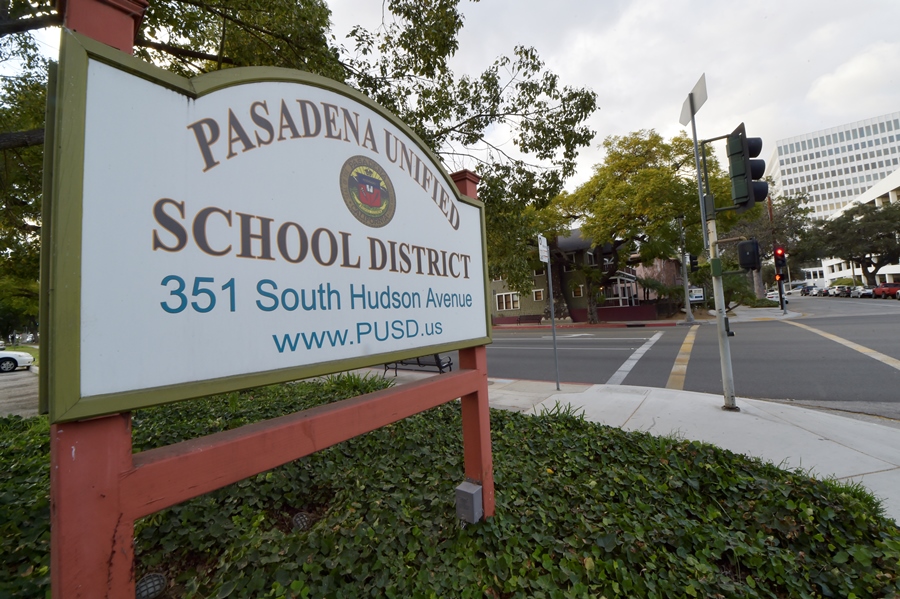
Pasadena Unified School District | Photo by Terry Miller / Beacon Media News

Among the various programs that the PEF has created is one called ‘My Masterpieces,’ (read My Masterpieces series here) which has a huge impact on young students. I ask Conyers if there is a singular initiative that has the most lasting influence on students.

“My Masterpieces is an excellent program, and one that other communities would not be able to replicate,” Conyers pronounces. “It involves many wonderful partners, who are combining their expertise and energies for the benefit of our community’s public school students. We’ll never know how many students had their eyes and futures opened to them through a visit to the Armory, or The Huntington, or Norton Simon. Much of the work in education is, of course, aspirational — open doors, provide opportunities, spark imaginations, and help young people find and release their immense potential. 

“I also think our Teacher Grant program is having enormous influence. This year alone we were able to give grants to teachers and/or principals at every PUSD school. A couple years ago we awarded the Kathy Onoye Principal’s Award to Brian Stanley, the outstanding principal at Rose City Continuation High School, which enabled him to renovate a room on campus into a library; the next year, we awarded his school another grant to help purchase additional books to fill out the shelves. As with all the programs we do, we don’t always know the impact our work has on an individual student, but I have to believe more books in more students’ hands is having a profoundly positive impact.”

Given how the pandemic has affected the economy and people’s pocketbooks, I inquire if that changed the way PEF raised funds and how it allocated them. “Our mission is to support, enhance, and supplement the programs, initiatives, and priorities of the PUSD,” clarifies Conyers. “To that end, our work has traditionally focused on providing resources to teachers and administrators to amplify the good work they are already doing, and to enable innovative new programs to get off the ground. When the pandemic hit, we recognized that there were significant impediments that could make basic learning more difficult for many students in our community. The safety and well-being of PUSD students and staff became our priority. We created a Response Fund, and have been grateful for the many individuals and foundations that have generously contributed. The Response Fund was created to help distribute meals to area families (our volunteers helped to distribute more than 660 thousand meals), to help students with tech and connectivity needs, and to enable us to print nearly 2,000 face shields on 3D printers that we distributed to PUSD Food Services, custodial staff, and to community partners like the Rose Bowl Aquatics Center and Children’s Hospital LA.”

I ask what lessons were learned and how those can help PEF in the future, and Conyers says, “We are hearing from our PUSD colleagues that the pandemic and distance-learning are widening the gap between families with means and those without. We are committed to helping the district in every way we can to provide equitable resources and educational opportunities to every PUSD student.”

Through its numerous initiatives, PEF has done much to help students in the district. However, the work is far from finished. Conyers declares, “I think it’s time for our community, and our nation too, to have a dialogue about public education. Educating the young people of our community and helping them to be responsible citizens, critical thinkers, and practiced problem solvers is a responsibility we have for them. We need to renew our commitment to public education and devote our resources and energy that young people deserve. I’d like PEF to lead the effort to creating that dialogue in our community.”

Lastly, Conyers imparts, “If there was one thing I would like people to remember when they look back at my stewardship, it would be that our schools are stronger because of the hard work of PEF and its supporters.”
No Boundaries in Art and Talent at PUSD

Originally published on 9 March 2017 in the Pasadena Independent, Arcadia Weekly, and Monrovia Weekly

There is no shortage of artistic talent among Pasadena students as the upcoming 12th annual ‘No Boundaries’ will once again prove.

Scheduled to open on Friday, March 10, which coincides with ArtNight Pasadena, and running through March19, at The Shops on Lake Avenue, this art exhibition provides a platform for young artists in the Pasadena Unified School District (PUSD) to showcase their two- and three-dimensional art. Presented free to the public, gallery hours are Monday to Friday, from 3 to 6 pm; Saturday and Sunday from 1 to 4 pm. 

The exhibition is also a host site during ArtNight Pasadena on Friday, March 10. ‘No Boundaries 12’ is housed in a commercial space on 345 S. Lake Avenue lent for the occasion by Merlone Geier Partners as a giveback to the community. It will be a shuttle stop during the citywide free evening of art, music, and entertainment when Pasadena’s most prominent arts and cultural institutions open their doors.

ArtNight Pasadena, sponsored by the City of Pasadena Arts & Culture Commission and the Division of Cultural Affairs, is an ongoing partnership between the city and local cultural institutions. Twice each year, many of the city’s non-profit arts and cultural establishments open on a Friday night to provide a variety of art, culture, and music to the public free of charge.           

According to Jennifer Olson, District Arts Education Coordinator for PUSD, the first ‘No Boundaries’ was started by a former Pasadena high school teacher, Alex Schultz, and the former PUSD District Arts Coordinator, Marshall Ayers. It has always been a group effort involving Arts teachers, community arts partners, parents, and volunteers.

Olson relates, “The first year it was just middle and high school student work and it was all put up in one night in the wind tunnel at Art Center. The next year the District Arts Office decided to include every school, and the structure was set that informs how we still do it today. There is an arts representative designated at each school who selects between 12 and 32 artwork per school, depending on the size of the school and whether it is an elementary, middle or high school.”

All 26 PUSD schools submit their highest quality work which are organized visually (2D, 3D, video), rather than thematically. The exhibit is a monumental undertaking given the number of students and schools involved. 

“It is a gargantuan effort!,” Olson agrees wholeheartedly. “We started accepting delivery of artwork February 2, and the exhibition doesn’t open until March 10. So there are several weeks of registrar work – entering all the student information and statements – mounting all the artworks, and then of course building out the space, curating the art pieces, hanging the show, marketing, and event planning.” 

Continues Olson, “For many years we have had a district arts team/community arts team, and this is a major endeavour undertaken by that group. We also work with the Pasadena Educational Foundation to help us find volunteers to help with all aspects.”

“‘No Boundaries’ is a true community effort,” proclaims Olson.“We work side-by-side with our community arts partners, teachers, and parents to make this exhibition happen. By that, I mean if you walk in on any given day during installation, these folks are the people painting the pedestals, nailing up the student statements, and installing the promotional posters.”

Rochelle Branch, manager of the Cultural Affairs Division of the Pasadena Planning and Development, created ‘Bridging Boundaries’ in 2007 as an offshoot of ‘No Boundaries’ to expand access and highlight the collaboration between the City of Pasadena, and PUSD’s Arts Education. She says, “‘Bridging Boundaries’ references the connection between the city and PUSD, but also the geographic location of what we call the Student Art Wall which is near City Hall bridge.”

“Arts Commissioners and a member of the community attend the installation of the PUSD’s ‘No Boundaries’ exhibition and select artworks based on high artistic quality and merit,” Branch explains. “They provide a small tag that says ‘Arts & Culture Commission selection awardee for Bridging Boundaries Exhibition’. Everyone who goes to ‘No Boundaries’ will see the selected art.”

“When ‘No Boundaries’ ends on March 19, the selected pieces are taken to a professional framer and mounted in two installments at ‘Bridging Boundaries’ exhibition hall outside City Hall Council Chambers,” adds Branch. “The city contracts with Pasadena-based artist, Denise Seider, to curate ‘No Boundaries’ and ‘Bridging Boundaries’. For about five months, each student group will have its artwork up for public viewing.”

“Students get back their artwork professionally framed and get city-wide acknowledgement of the quality of their piece. They get to come with their families and friends and see their creation outside of City Hall,” Branch concludes.
          

Olson shares that sentiment when she declares, “The greatest joy of this project is seeing students come in with their family members, bursting with pride when they find their artwork and they see that it is professionally displayed like a ‘real artist’”.

This joint collaboration – among the City, PUSD, and Pasadena’s arts and cultural organizations – celebrates, showcases, and shares students’ artistic talents with the entire community. But more than public recognition, these young talented students’ self-satisfaction in their accomplishments may be the greatest reward of all.             

My Masterpieces Series: USC Pacific Asia Museum

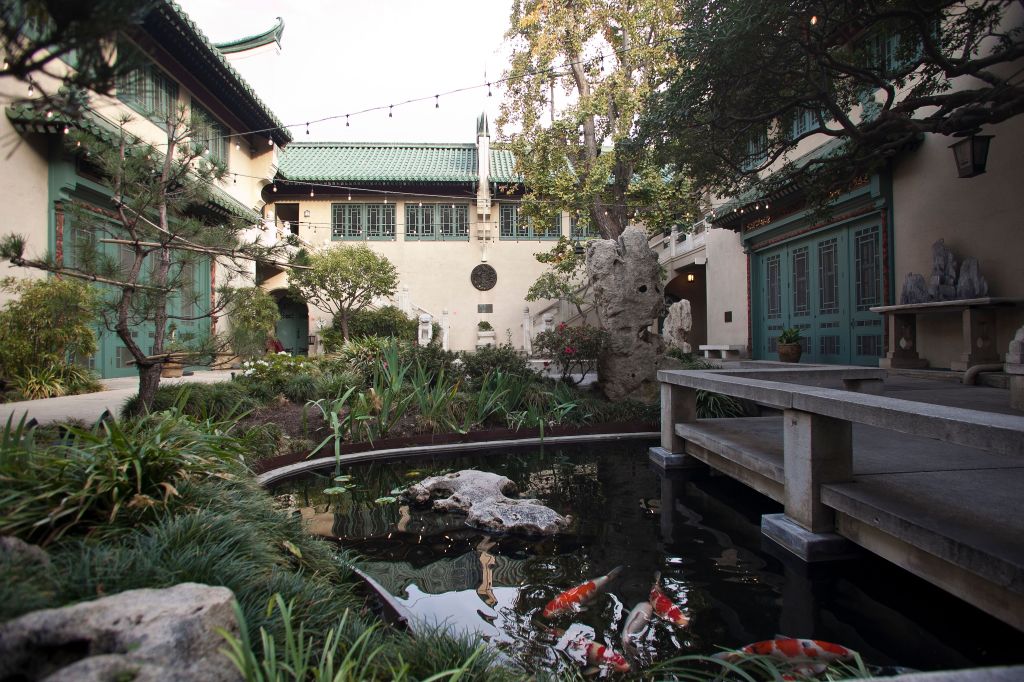
The koi pond and garden at USC Pacific Asia Museum | Photo by May S. Ruiz

Originally published on 22 October 2015 in the Pasadena Independent, Arcadia Weekly, Monrovia Weekly, and Sierra Madre Weekly

Ensconced in a nondescript corner on North Los Robles Avenue and Union Street in Pasadena is a foundation that holds some of the most valuable treasures in Asian artifacts. It’s the USC Pacific Asia Museum, which used to house the Pasadena Art Museum, and then became Pacific Asia Museum in 1971. In 2013, University of Southern California (USC) partnered with the institution to become a vital resource for education and cultural heritage.

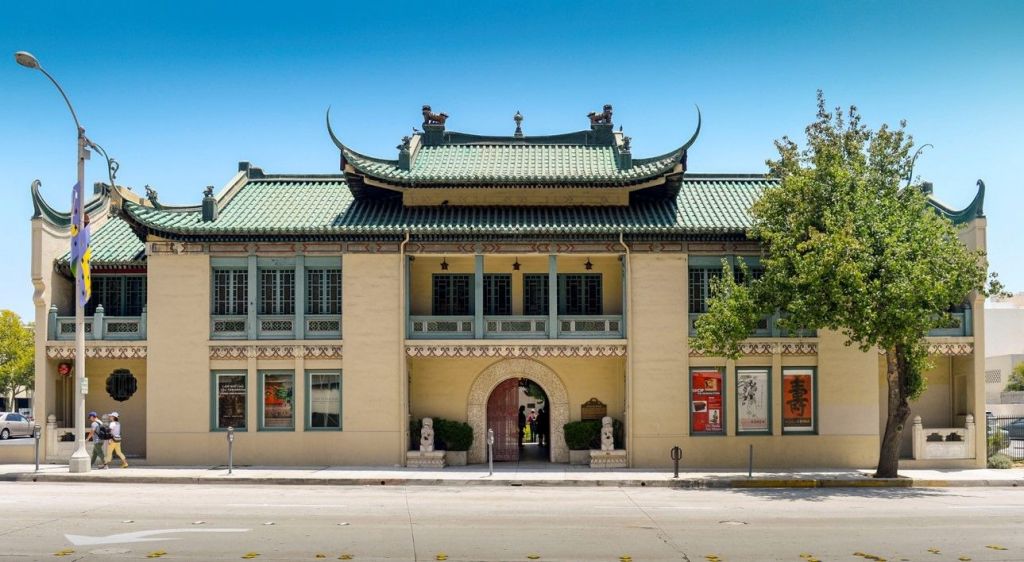
Enter its handsome arched entrance, however, and you will be transported to another place and time. The transformation is so unexpected it’s breathtaking. The charming courtyard garden with a koi pond, rock sculpture, and natural plantings reflecting the changing seasons, take center stage while a Chinese Qing dynasty-inspired mansion wraps around it. The Pasadena architectural firm of Marston Van Pelt and Maybury built it as a grand residence in 1924 to exact specifications from California transplant, Grace Nicholson, a pioneering art collector and entrepreneur from Philadelphia.

This historic home also became the center for the arts in Pasadena and was host to several cultural organizations. The first floor served as a gallery where Ms. Nicholson displayed and sold American Indian and Oriental art objects. On the second floor were more galleries, an exhibition auditorium, and Ms. Nicholson’s private quarters. 

Today it is the foremost exhibitor of Asian art collections in Southern California. It is also the destination for Pasadena 6th graders’ My Masterpieces field trip where specially-trained docents conduct tours and hold workshops. 

Michael Fritzen, Head of Education and Public Program for USC Pacific Asia Museum, who took over this post five months ago, is ably assisted by Program Specialist, Becky Sun, in planning an interactive and hands-on two-hour visit. He says, “Our My Masterpieces Program for the Pasadena Unified School District (PUSD)/Pasadena Educational Foundation (PEF) is focused on the inquiry method. Students are asked questions about the pieces they see; they aren’t just dragged through the museum and told massive amounts of facts. They stop, look and reflect about a particular artifact. Aligned with the state Common Core standards, this visit is aimed at enhancing students’ classroom discussions in their World History course. We ensure that what they see and experience add depth to their understanding of the world, and of Asia, in particular.”

This tour is designed to lead 6th graders along the Silk Road. It moves through the collection, spotlights certain artifacts, and ultimately fashions a coherent historical fabric woven from threads that connect all the different countries in Asia – Japan, China, Korea, Vietnam – as students travel on the Silk Road. 

Grace Nicholson’s previous residence now houses USC Pacific Asia Museum

According to Sun the tour is divided into two parts. While one docent tours a group of students, another docent involves the students in a hands-on workshop. She says, “Our workshops are taught by Asian experts in different fields including calligraphy, brush painting, origami.”

Fritzen adds, “We provide authentic materials for students to employ during the workshop. If they’re working on calligraphy, for instance, they are using brushes, ink blocks, and rice paper made specifically for that art form. The work they produce will match what they see in the museum – it will have the look, smell, and texture of the original art. The art activity makes what they see in the gallery come to life and gives them a better understanding of what the artist went through to make the product. We try to create an experience that cannot be replicated in the classroom so that they leave with lasting memories of their visit.”

“My Masterpieces introduces Asian art and culture to kids from all over Pasadena who have never had occasion to visit the museum; it helps them understand why a particular tapestry or sculpture is unique and preservable,” continues Fritzen. “We hope that the visit inspires enthusiasm and passion in young people so that they later become visitors, members, donors, and collectors of art. The field trip includes a family pass for six people. That students actually redeem those passes proves that it makes a deep impression to them.”

Through their programs and events, USC Pacific Asia Museum follows its mission and vision unique to the museum – to further intercultural understanding through the arts of Asia and the Pacific Islands.

According to Fritzen, the museum recently featured a Harvest Moon Festival which showed how this is celebrated not only in China, but also in Japan, Korea, and Vietnam. The institution endeavors to showcase countries which are not usually at the forefront because they don’t have enough representation. 

With that in mind, USC Pacific Asia Museum will host in December a show featuring the art and culture of the Philippines. It may be the first time others will learn about this group of islands in the Pacific beyond the nightly news report of the country being in dire need of assistance, after being hit by devastating typhoons . Maybe it will help engender public interest in the countless natural wonders unique to the Philippines – beautiful coastlines, white sandy beaches, majestic mountains, lush countryside, exotic foods, and warm people.

If USC Pacific Asia Museum were to enlighten even just one mind about the abundant treasures to be found across the vast Pacific Ocean, it would have served the purpose it has set out for itself. 

My Masterpieces Series: Pasadena Museum of History

Originally published on 15 October 2015 in the Pasadena Independent, Arcadia Weekly, Monrovia Weekly, and Sierra Madre Weekly

Brad Macneil, Education Program Coordinator at the Pasadena Museum of History (PMH), is readying once more for this year’s My Masterpieces Program. Every Tuesday and Thursday, beginning this month until the end of the school year, he and his team of volunteers will be welcoming 4th graders from all the public schools in Pasadena for a two-hour art class and activity at the Fenyes Mansion. 

According to Mr. Macneil, this program originated from a pilot test collaboration among the Pasadena Unified School District (PUSD), Pasadena Educational Foundation (PEF) and different cultural institutions, with input from teachers. He says, “It was important that we involved the teachers. We made sure they felt it was their program too so we asked them to write the curriculum for it.”

For My Masterpieces, PMH provides students and teachers with the Museum publication Painting the Beautiful as background material for their visit.Students also complete a lesson in class to prepare them for the field trip and learn some basics in art education. During their visit, they learn about the mansion and other members of the family, and explore what life was like in the early 1900s.      

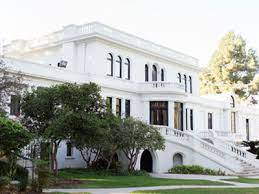
The Fenyes Mansion, which is also home to PMH, is a Beaux Arts residence built in the early 1900s as a winter home for Eva and Dr. Adalbert Fenyes. Macneil adds, “At the time Pasadena was a winter resort that attracted artists to the area because of its landscape which they painted.  They later sold these paintings to the wealthy visitors. A leader of that art community was Benjamin Brown, a famous landscape painter. He was a friend of Eva and he created some of the portraits and landscape paintings that still hang today in the mansion. Eva became a patron of Pasadena’s flourishing art colony and invited various artists to her studio or to go out into the foothills for creative material.”          

“The inspiration for the mansion field trip is Eva’s life and her love for the arts,” explains  Macneil. “Each visiting class is divided into three groups – art critics, artists, film makers – that   rotate to do different 30-minute activities led by a PMH volunteer. The art critics take a tour of the mansion and look at Eva’s art collection which they have seen in the book Painting the Beautiful. Using art terms and vocabulary, students discuss what they like or don’t like about a painting. They talk about the techniques the artist used to get certain effects.”

Macneil continues, “The artists head outside to the fountain, which has been depicted in painting by a well-known artist named Richard Miller. Volunteers give students a brief instruction: their task is to capture the spirit of the fountain as best they could using the pencil and pad they are provided. It’s very surprising how 4th graders can quietly concentrate on their sketches during the entire 30 minutes.  And more amazing is what they come up with!”

The Fenyes Mansion

The film makers go out in the garden. Macneil says, “Eva was not only interested in the arts, she was also fascinated by the technology involved in moving pictures. So for our film makers, we pick the actors, camera person, and director who will take part in creating a silent movie called A Thief in the Park. They learn not only techniques in movie-making, but more importantly, the value of collaboration. Teachers have great fun taking photos of the finished students’ work on their Smart Phones to show later in class. It’s probably the most popular thing we do – it’s exhausting and it needs several volunteers.”

PMH serves 3,000 4th grade students a year in the My Masterpieces program, using funds raised by the Paloheimo Foundation. But the organization could use more volunteers to help keep it running. Volunteers can be college-age or older and will lead tours Tuesday through Friday.  Anyone who has patience, enthusiasm, a sense of humor, and is interested in volunteering can call PMH at (626) 577-1660.

According to Jennifer Olson, District Arts Education Coordinator for PUSD, My Masterpieces started during the 2008-2009 school year. It began serving only four schools, then expanded by four to five schools annually until eventually all of Pasadena’s 18 schools became part of it. It aims not only to provide arts education and a cultural experience for all children, but also to help them feel at home at any of the arts organizations in their community. They found that so many students in the Pasadena Unified don’t usually go to museums with their families because there are too many barriers including cost and transportation. This program removes those impediments and invites all Pasadena families to experience the arts in their community.

A class visit to the Fenyes Mansion leaves a truly lasting impression in the minds of young students. According to Macneil, several of PMH’s Junior Docents (7th and 8th graders in Pasadena public and private schools giving tours to 3rd graders in the PUSD) first saw the mansion during their My Masterpieces Program visit in 4th grade. And it was what encouraged them to later become Junior Docents.

The Pasadena Museum of History’s motto is ‘History Matters.  Help us Pass it On’. The My Masterpieces program breathes life into that adage.

My Masterpieces Series: The Huntington Library, Art Museum, and Botanical Gardens

Virginia Steele Scott Galleries of American Art | Courtesy Photo

Originally published on 8 October 2015 in the Pasadena Independent, Arcadia Weekly, Monrovia Weekly, and Sierra Madre Weekly

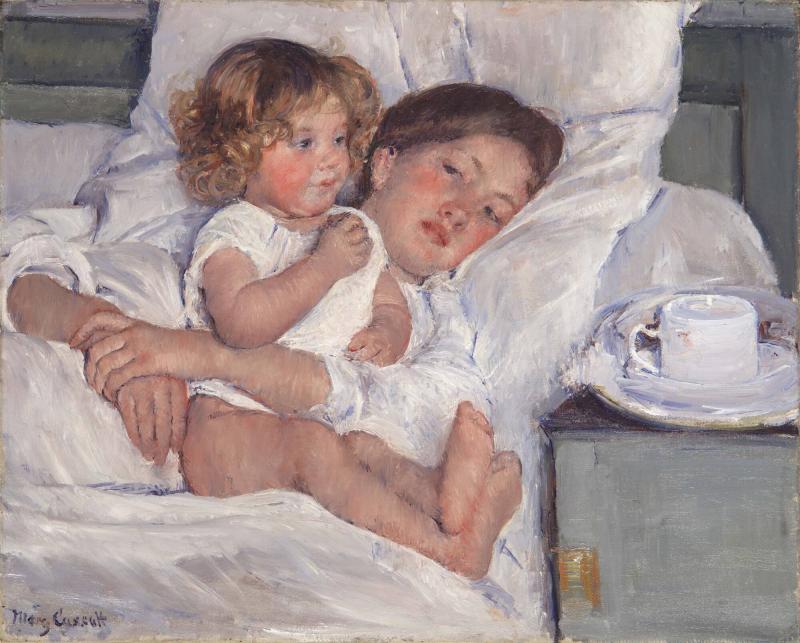
A group of lively 1st graders enters the double doors of The Huntington’s Virginia Steele Scott Galleries of American Art. As they are ushered into the foyer, all eyes alight upon Mary Cassatt’s 1897 painting, Breakfast in Bed. There is an audible gasp and a collective exclamation – “It’s Mary Cassatt!”

That this sense of awe, mixed with recognition, comes from 1st graders is why Guy Fish, Senior Manager for Art Education at The Huntington Library, Art Collections and Botanical Gardens, thinks Pasadena Unified School District’s (PUSD) and Pasadena Educational Foundation’s (PEF) My Masterpieces Program is in itself a treasure. He says, “That’s exactly what we’re trying to do! The program inspires passion and a love for art.”

Fish explains The Huntington’s collaboration further, “We were one of the co-developers of this pilot program; it is unique in its goal of stirring emotion, fostering knowledge and advancing understanding of the arts among schoolchildren. We are scaffolding and building these kinds of relationship with artwork. And we take seriously our charge of laying the Humanities foundation for young kids. We have a very important role to play; imagine if we didn’t do this and these kids go on to the 2nd grade program without this starting point.”

According to Fish, The Huntington’s focus for the one-hour field trip is to teach children the value of a museum experience. Each class is divided into small groups and a docent introduces the children to Henry and Arabella Huntington’s life as they tour the mansion.  Docents for the My Masterpieces Program are specially trained on how to make the visit fun and interesting.

To prepare the kids for their tour, teachers discuss in class the three paintings that they will see at The Huntington. They talk about these pieces of art and by the time the children come here, they’re already seeded with curiosity to see the actual painting – their visit adds another layer of meaning to the lesson.

“As our students are 1st graders, we focus on the theme of caring, while showing them the principles of line, shape, color and texture. Every artwork we choose to analyze portrays how this message is exemplified. One of the paintings they study is called The Clavering Children, a work of 18th century English painter George Romney. It encapsulates the basic concepts of art – warm and cool colors, line, texture and shape. It also shows a boy and a girl caring for each other and their animals … something most kids would relate to,” Fish further elaborates.

Another piece of artwork children look at during their field trip is called The Last Gleanings, an 1895 oil on canvas masterpiece created by French painter Jules-Adolphe Breton. It depicts a harvest scene, one of several paintings Breton produced that illustrates his love for the countryside.  To PUSD’s 1st graders, the painting shows caring for the land. 

Courtesy Photo

But it is American painter Mary Cassatt’s 1897 Breakfast in Bed that makes the biggest impression in these young children’s minds. An oil on canvas work showing a mother with her young child, painted in light colors, it is one of a recurring theme in Cassatt’s body of work. 

Early this year, The Huntington inaugurated the new Visitors Center that features four multi-room classrooms, among other things. According to Fish, they are thinking of adding a new component to their My Masterpieces program in January making use of those classrooms. He’s currently working on a plan to expand their program beyond kids analyzing artwork, but maybe creating their own. They now have the facilities to make that happen.      

An award-winning program, My Masterpieces received the prestigious CAMMY Award from the California Association of Museums in 2012. In 2010, it was also recognized by the California School Board with the Golden Bell Award. It was established during the 2008-2009 school year as a collaboration between teachers and various cultural organizations to bring about a high level of engagement among students.

It is this spirit of collaboration that proves My Masterpieces to be a worthwhile endeavor for The Huntington. As Fish explains, “It reinforces our commitment to our long-term partnerships; our work has matured into a deep relationship with PUSD. It also allowed us to systematize our school engagement. It was the springboard for The Huntington’s Teacher and School Programs, which developed the curriculum that supports the Common Core standards. The art course  offered by the My Masterpieces program isn’t far from the project-based learning promoted by the Common Core. Using the resources available at The Huntington, teachers from K-12th grade choose from 12 programs to provide students appreciation, engagement, and understanding of various subjects.”

The Huntington’s My Masterpieces field trip occurs during regular public viewing days. Visitors from far-flung countries as well as local tourists, together with PUSD’s 1st grade students, spend their day admiring the wealth of treasures this beloved institution has to offer. Arabella Huntington would have been delighted to know that Mary Cassatt’s Breakfast in Bed elicits as much appreciation from the youngest guests as from learned art aficionados.       

Pasadena Educational Foundation’s Summer Enrichment Program

Pasadena Educational Foundation at PUSD | Photo by Terry Miller / Beacon Media News

Originally published on 12 March 2015 in the Pasadena Independent, Arcadia Weekly, Monrovia Weekly, and Sierra Madre Weekly

The Pasadena Educational Foundation, a community-based non-profit organization, was established in 1971 to support, enhance, and supplement the programs, initiatives, and priorities of the Pasadena Unified School District. Twelve years ago began offering a summer enrichment program for students in Pasadena and neighboring cities. Its slate of classes combines academic, athletic and art subjects designed to engage children in a fun and stress-free environment. The half-day schedule leaves students ample time to enjoy their summer break while keeping their minds ready for the school year ahead.

For PEF’s new Program Manager, Jamie Powell, and Marketing Director, Monica Bosserman Lopez, the summer program actually began in the fall, just as students were settling into the new school year. Teachers were lined up and they submitted proposals for what subjects they are planning to teach, last October. In December, Powell had the roster of classes; in February, brochures were printed and the first outreach effort launched.  

The success of PEF’s programs ensures its return every year and with it, now locations may be added.  The program runs from June 15 through July 16, Monday through Thursday. For incoming kindergarten and 1st grade students, there is a self-contained class that runs all three blocks. For 2nd through 8th graders, they have a choice of three blocks. High schoolers have one block to choose a prep course. The K-8 programs are from 8 am – 12pm; 9-12 programs are from 9 am – 12 pm.

This year’s participating schools are: Don Benito Fundamental (K-6); Franklin Elementary (K-6); McKinley (K-8); San Rafael Elementary (K-6); and PUSD headquarters (9-12). Online enrollment registration (www.pased.org/summer) is going on now until May 29 and you can view available classes in real time. As classes fill quickly, you need to register right away. If you’re applying for scholarships, you can also apply online with proof of eligibility and it’s at first-come, first-serve basis.

Tuition for the summer programs are:  PUSD students (K-8) $420 for the first student; non-PUSD student (K-8) $500 for the first student; PUSD student (9-12) $250 for the first student; non-PUSD student (9-12) $300 for the first student. Each additional sibling student gets a $25 discount; there may be an additional materials fee for some classes. Tuition balances must be paid in full by May 29.

According to Powell and Lopez, two exciting classes available this year are 3-D Printing and Robotics (Beginner, Intermediate and Advanced), both offered at McKinley. Robotics and 3-D Printing are also offered at Don Benito. Language Immersion Program in Spanish is available at Franklin and San Rafael; and Mandarin is offered at Don Benito.

For teachers taking part in the summer program, it is an opportunity for them to indulge in a favorite hobby, like doll-making, and to share that interest with a roomful of young learners. Still for some teachers, it is a chance to expand on lessons and subjects that don’t fit in the regular school year.  

PEF’s summer curriculum fills and addresses the needs of all students, ranging in age from four years to 18 years old. With a wide range of courses on offer, children are sure to find an activity that piques their interest and passion. 

Introduction to kindergarten classes prepare young children for school with language arts, math, art and music. Introduction to first grade eases the transition from kindergarten to first grade through thematic activities in reading, writing, and math. 

A quick glance at PEF’s brochure reveals a potpourri of useful classes for elementary and middle-schoolers. For those struggling with writing, a tool like Thinking Maps helps students  get organized in a fun way. In the language arts, students can learn writing in several genres including fiction, non-fiction, and poetry. Meanwhile, book lovers and reluctant readers alike can take a Book Club class. Round table discussions explore characters, plot, theme, conflict, and resolution.

In the field of Visual Art, an art studio class exposes students to drawing, painting, collage, printmaking, and sculpture to help them create their own original artwork. Dual emphasis on technique and creative expression is taken in this class. In Performing Art, there is creative dance — from ballet, to jazz, to modern; theatre class touches on acting exercise, improv and pantomime. Music classes in violin, recorder and ukulele are offered.

Craft classes in jewelry-making, knitting, embroidery, and folk-art dolls have students working with a variety of threads, yarns and needles.

On the STEM (Science, Technology, Engineering and Math) program, students can take marine biology, botany, physical science, space engineering, algebra or computers. In Math City, future urban planners learn, apply, and combine geometry with money skills to design, purchase, build and measure a neighborhood of a model city. They then make money by renting the spaces in their finished construction.

To keep students active and healthy, athletic activities like golf, soccer, and tennis, are offered. For the culinary inclined, cooking is taught along with nutrition, using math and science. They learn to prepare food using basic recipes from various cultures and get to taste their creation.

For high-schoolers, the summer program offers test prep classes in SAT and ACT, provided through another non-profit organization, College Access Plan (CAP). Students get instruction on all three SAT areas (Critical Thinking, Math, and Writing) using video, online, and in-person content delivery. The program will also help prepare kids for the college application process with workshops on choosing colleges, scholarships and personal statement. 

A Graphic Design class is also available for high-schoolers, which incorporates design and 3-D printing. Using software programs like Adobe Photoshop, Adobe Illustrator, Adobe InDesign and 3-D modeling software, students explore the world of graphic design in a creative environment.

With all these courses on offer for Pasadena’s youth, they can spend their summer productively, while enjoying their various pursuits. What a great time to be a student in Pasadena!