Radical Histories: Chicano Prints from the Smithsonian American Art Museum Exhibit Opens at the Huntington

Also published on 13 November 2025 on Hey SoCal

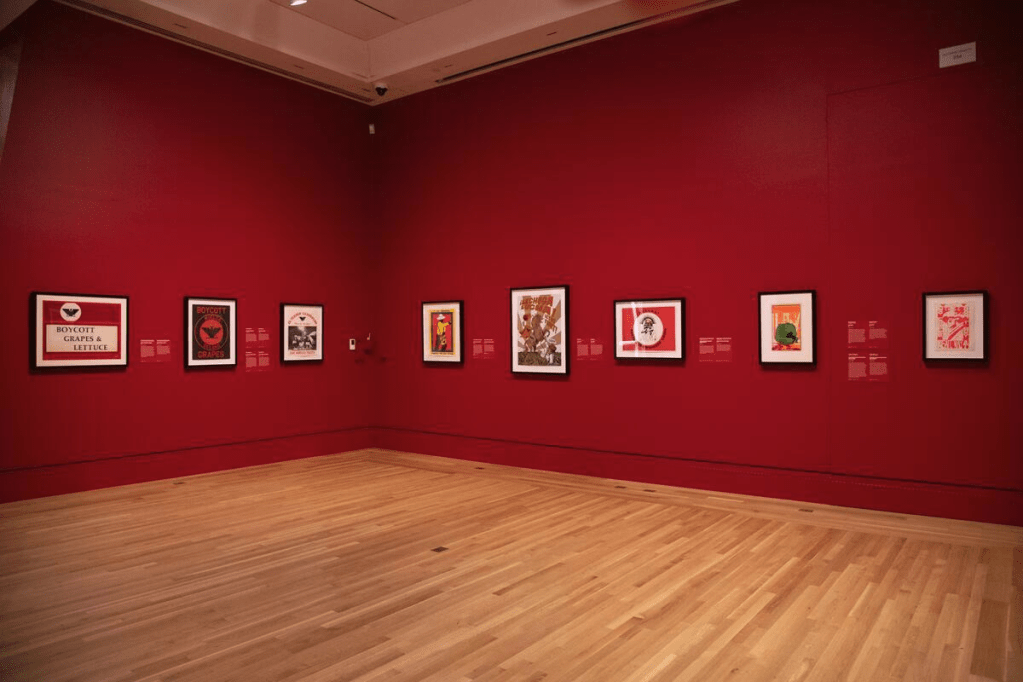
Installation photo courtesy of The Huntington

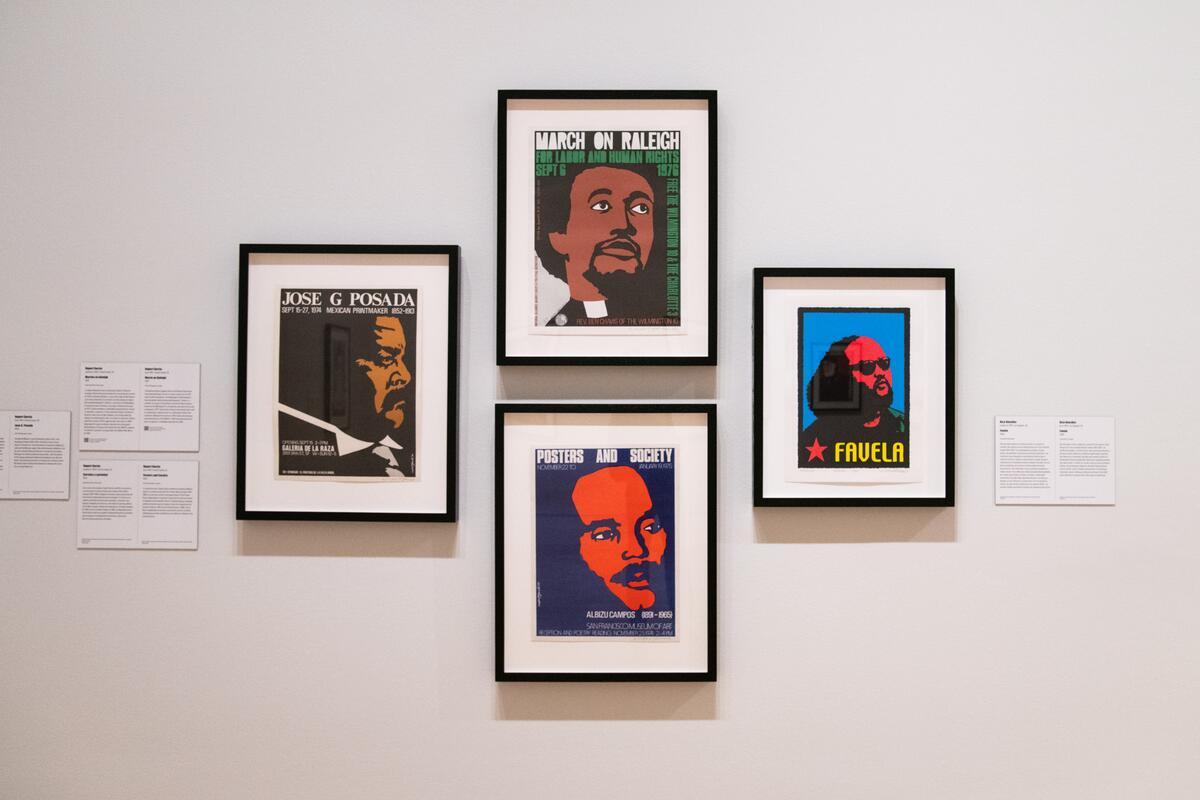
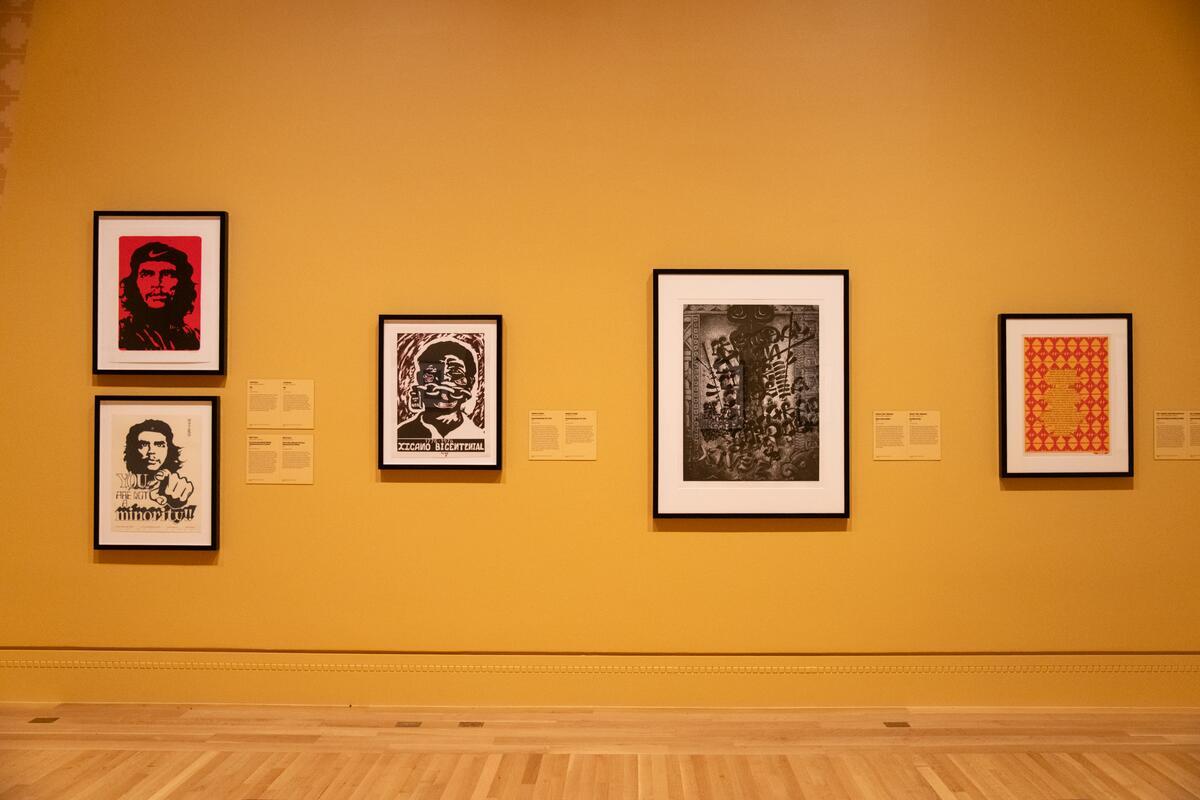
“Radical Histories: Chicano Prints from the Smithsonian American Art Museum,” makes its West Coast debut at The Huntington’s Marylou and George Boone Gallery from Nov. 16 to March 2. Curated by E. Carmen Ramos, forming acting chief curator and curator of Latinx art at the Smithsonian American Art Museum, the exhibition features 60 dynamic works by nearly 40 artists and collectives that trace more than six decades of Chicano printing as a form of resistance, community building and cultural reclamation.

Commencing with the late 1960s Delano Grape Strike, the precursor to the United Farm Workers (UFW) labor union, the prints in “Radical Histories” depict momentous events in the history of community activism and the formation of collective identity. Chicano artists used silkscreens, posters, and offset prints to mobilize communities – often with barbed wit, lively colors, and evident urgency.

The exhibition is arranged in five thematic sections: “Together We Fight,” “¡Guerra No!” (No War!), “Violent Divisions,” “Rethinking América,” and “Changemakers.” Each section highlights how Chicano artists have used the accessible and reproducible medium of printmaking to confront injustice, affirm cultural identity, and engage in transformative storytelling.

Installation photo courtesy of The Huntington

Section 1: Together We Fight

The opening section explores how the UFW, cofounded by César Chávez and Dolores Huerta, collaborated with visual and performance artists to support the fight for farmworkers’ rights. Key labor actions inspired a wave of Chicano art that functioned as both political expression and tangible solidarity. Artists adopted the UFW’s iconic black eagle, embedding it in posters, prints, and murals that raised awareness and helped fund the movement. The union’s visual language extended beyond its own campaigns, appearing in advocacy materials for the Texas Farm Workers Union and the Cannery Workers Committee in Sacramento.

Section 2: ¡Guerra No! (No War!)

Since the 1960s, Chicano graphic art has played a vital role in advancing antiwar resistance. These works serve as rallying cries, counternarratives to mainstream media, and spaces of reflection. Chicano artists have used print and poster art to critically examine U.S. military interventions in Vietnam, El Salvador, Chile, Iraq, and elsewhere.

Section 3: Violent Divisions

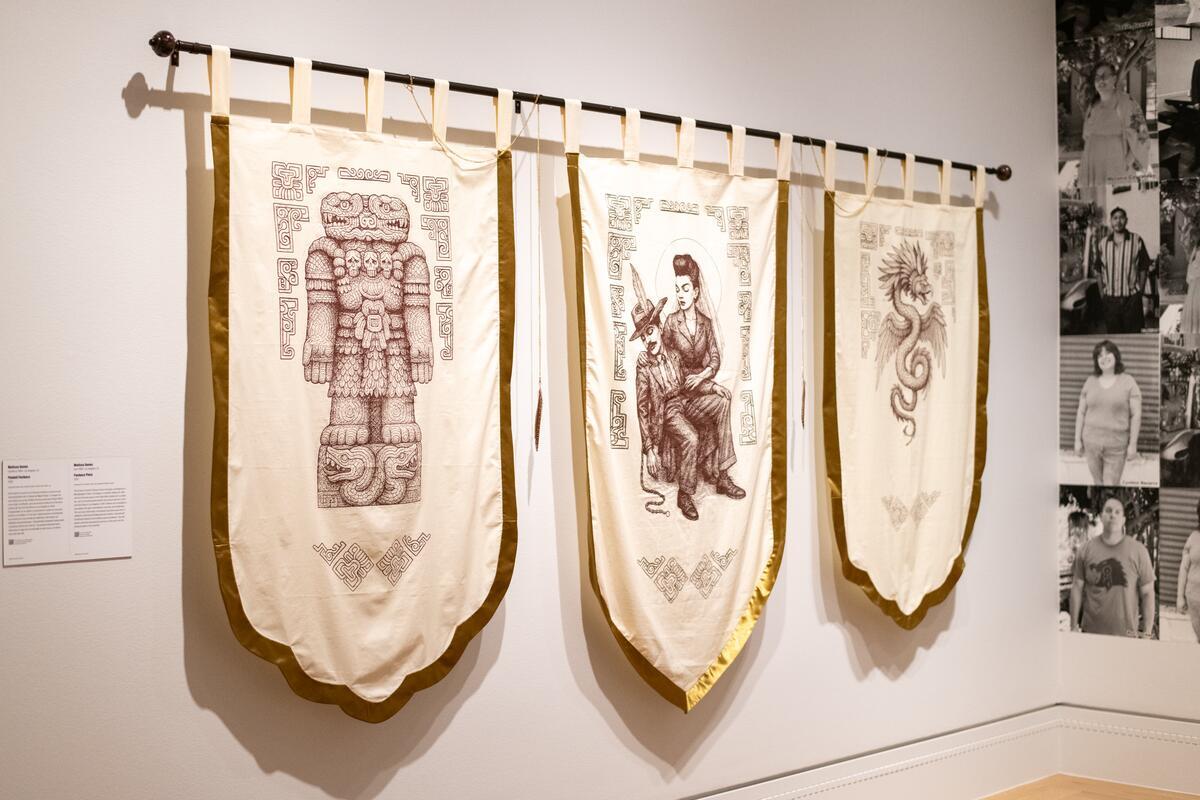
The U.S.-Mexico border has been a central theme in Chicano art. Printmaking has enabled Chicano artists to raise awareness about the experiences of immigrant communities because it is affordable and prints are easily distributed. Recurring iconography – such as the monarch butterfly, a symbol of natural migration – challenges the notion of geopolitical boundaries. Figures like the Virgin of Guadalupe and ancient Mesoamerican goddesses appear as powerful cultural symbols.

Section 4: Rethinking América

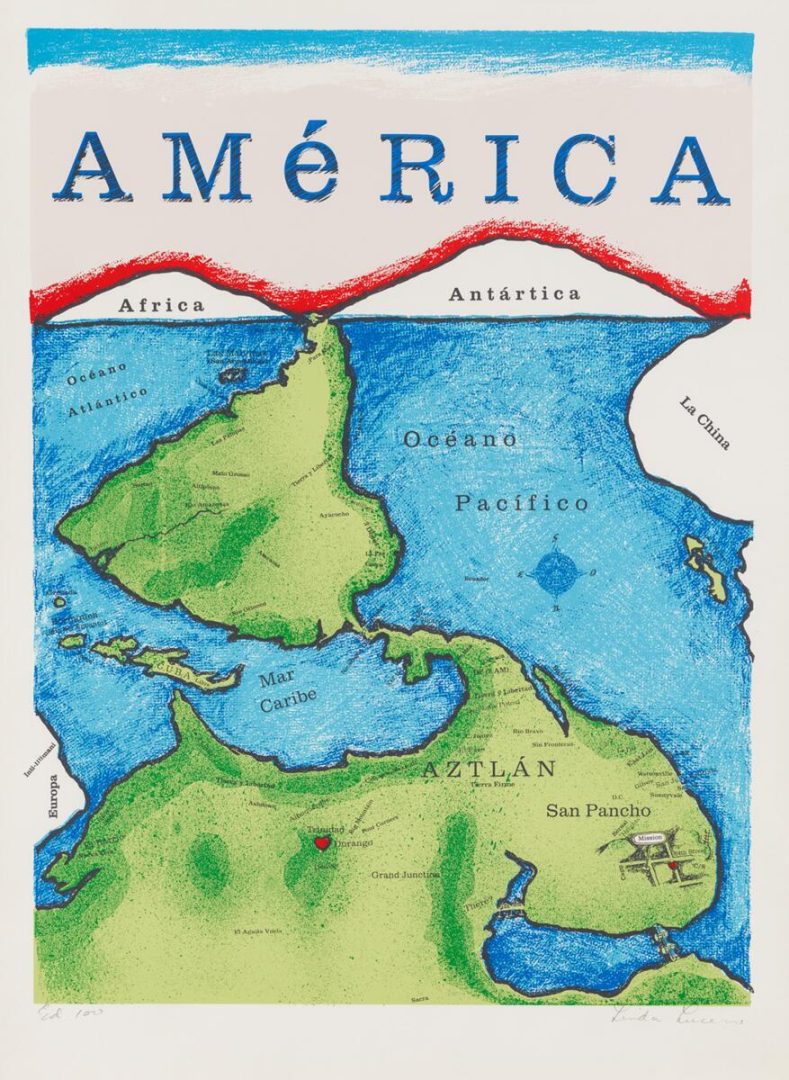
This section presents works that broaden historical narratives by including perspectives rooted in resistance and cultural reclamation. The artists drew inspiration from revolutionary figures and movements to create narratives that center Mexican American and Indigenous perspectives. Using mapmaking and record forms like the ancient Mesoamerican codex, Chicano artists also created speculative past and present narratives to reimagine social landscapes.

Linda Zamora Lucero, América, 1986, screenprint on paper, Smithsonian American Art Museum, Gift of Gilberto Cardenas and Dolores Garcia. | Photo courtesy of The Huntington

Section 5: Changemakers

Portraiture is a cornerstone of Chicano art, used to educate audiences and celebrate both cultural icons and overlooked figures. Artists often base their portraits on documentary photographs, transforming black-and-white images into vivid prints that honor the subject’s life and legacy. Featured changemakers include political prisoners, activist leaders, attorneys, actors, and artists—individuals who challenged the status quo and shaped history.

By email, Dennis Carr, Virginia Steele Scott Chief Curator of American art, and Angélica Becerra, Bradford and Christine Mishler Associate Curator of American Art – also the venue curators –  discuss the exhibition’s origins, its relevance, and viewer takeaways.

“Radical Histories was organized by the Smithsonian American Art Museum to highlight the central role Chicano artists have played in shaping American visual culture,” begins Carr. “The exhibition began touring nationally in 2022 following its debut at the Smithsonian American Art Museum, and The Huntington is presenting its first West Coast exhibition.”

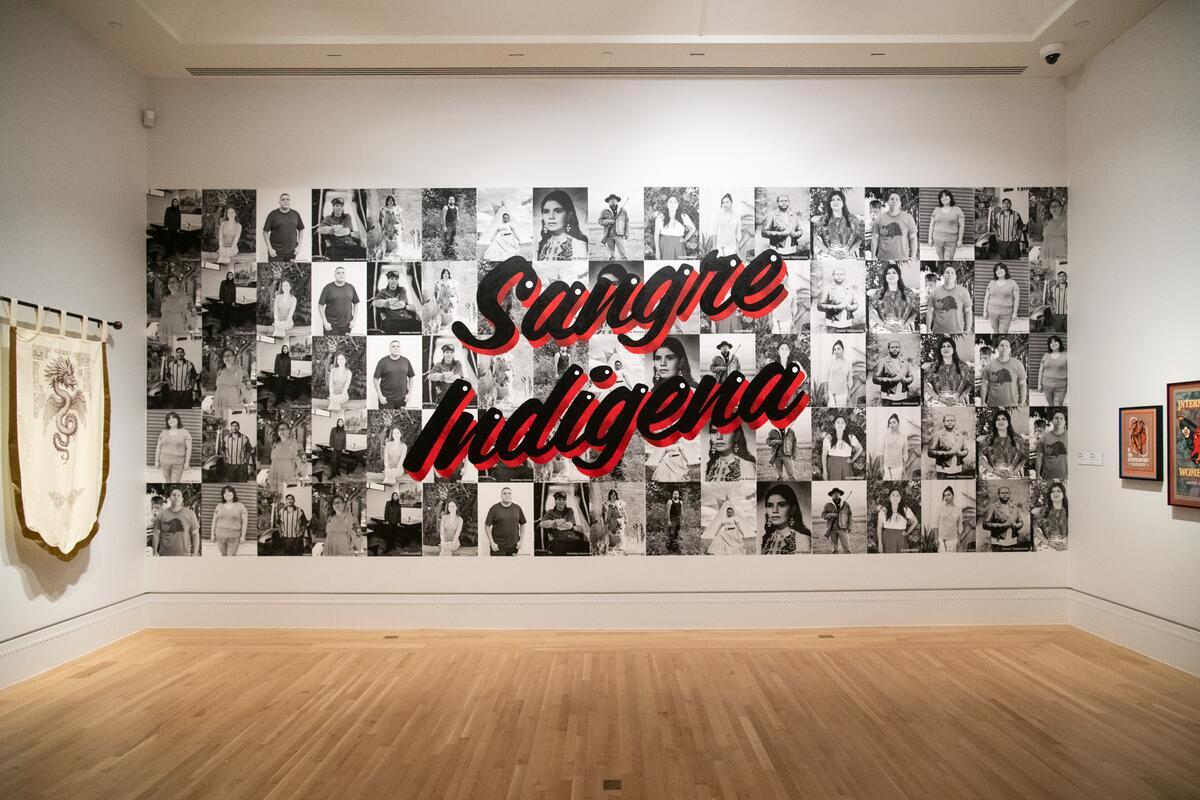
“While the core exhibition is drawn from SAAM’s collection, our presentation places particular emphasis on Los Angeles as a vital center of Chicano printmaking,” Carr clarifies. “To honor that history, The Huntington commissioned a new mural by Los Angeles–based artist Melissa Govea, created in collaboration with Self Help Graphics & Art, a community print studio that has supported Chicanx and Latinx artists since 1973.”  

Melissa Govea’s mural. | Photo courtesy of The Huntington

“Through this partnership, we commissioned Melissa Govea, a Los Angeles–based artist who is Chicana and Purépecha,” explains Carr. “Govea began her career as a muralist and is known for work that honors community, ancestry, and cultural memory. Rather than giving her a specific direction, we invited her to respond to the themes of the exhibition. The result is a dedicated gallery featuring a new mural, a sculptural installation, and print-based works that together reflect multiple dimensions of her practice. This marks the first time her work has been presented in a museum context.

“Her mural, titled ‘Sangre Indígena’ (Indigenous Blood), draws on portraits of friends, collaborators, and cultural leaders who have shaped her life. The work recognizes the generations of artists, organizers, and knowledge-keepers who came before her, while affirming the presence, agency, and creativity of those shaping Los Angeles today.”  

Installation Photo courtesy of The Huntington

It would be an oversimplification to say how many works in the exhibition are from L.A. artists, as Becerra explains.    

“Many artists in ‘Radical Histories’ have deep ties to Los Angeles, whether they lived, studied, printed, organized, or collaborated here. The most meaningful connection is through Self Help Graphics & Art, which offered open studio access, mentorship, and a  collaborative printmaking environment to generations of Chicano and Latinx artists.

“Artists such as Barbara Carrasco and Ernesto Yerena Montejano continue to live and work in L.A., and their practices remain rooted in local community networks. So rather than thinking in terms of birthplace alone, it’s more accurate to say that Los Angeles is one of the central homes of Chicano printmaking, and the exhibition reflects that history.”

Installation photo courtesy of The Huntington

Asked if the exhibition has taken greater meaning now with ICE raids targeting Hispanic communities and looking Hispanic or Latino is enough to get one handcuffed and thrown into a detention camp, Becerra replies, “The themes in ‘Radical Histories’ are both longstanding and timely. Chicano printmakers have historically used posters and prints to address labor injustice, state violence, displacement, and the struggle for belonging – issues that continue to resonate today.”

Becerra says further, “What museums like The Huntington can offer is space: a place to look closely, process, reflect, and connect personal experience to shared history. These works remind us that art has always been a tool of community care and resistance.” 

As for the viewer takeway, Carr states, “We hope visitors come away with a deeper understanding of how Chicano artists have used printmaking to organize, to tell stories, to build community, and to assert cultural identity. And we hope they see that art is not separate from daily life – it is a tool for resilience and collective meaning-making.”

“In addition to the exhibition itself, The Huntington will host public programs, bilingual gallery talks, and hands-on workshops in collaboration with local artists and partners,” adds Carr. “A major highlight will be Historias Radicales: Latinx Identity and History in Southern California, a two-day conference on December 5–6, connecting the exhibition to The Huntington’s co

“Wang Mansheng: Without Us” Exhibition Captivates Visitors to The Huntington

Also published on 22 May 2025 on Hey SoCal

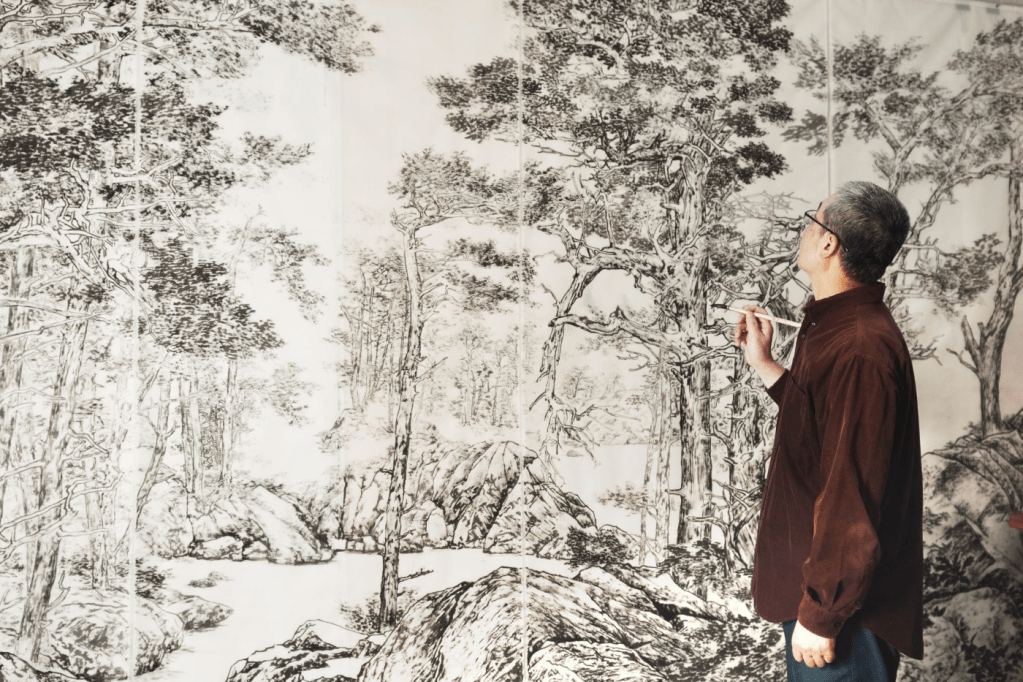
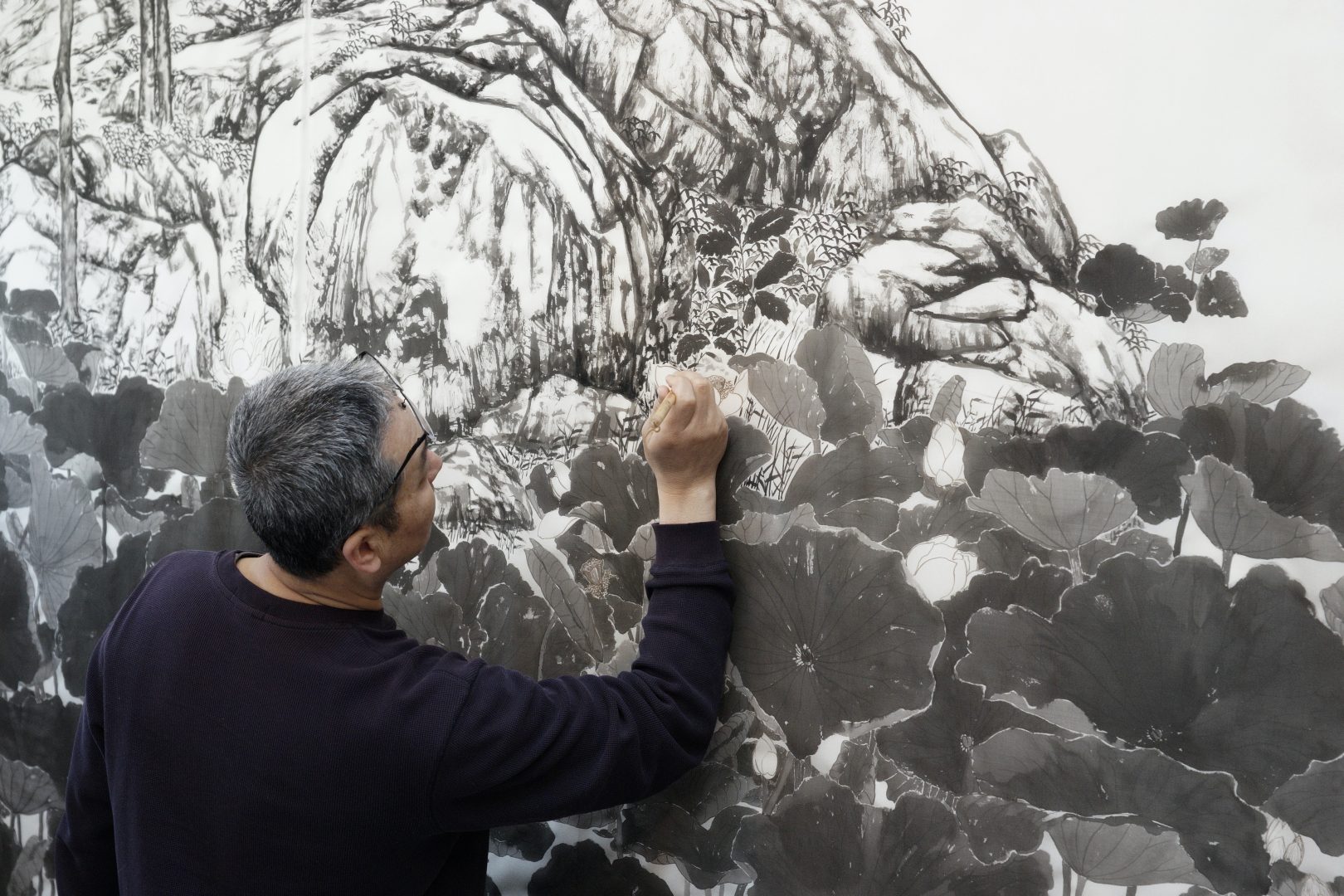
Mansheng Wang works on “Without Us.” | Photo courtesy of Mansheng Wang/The Huntington

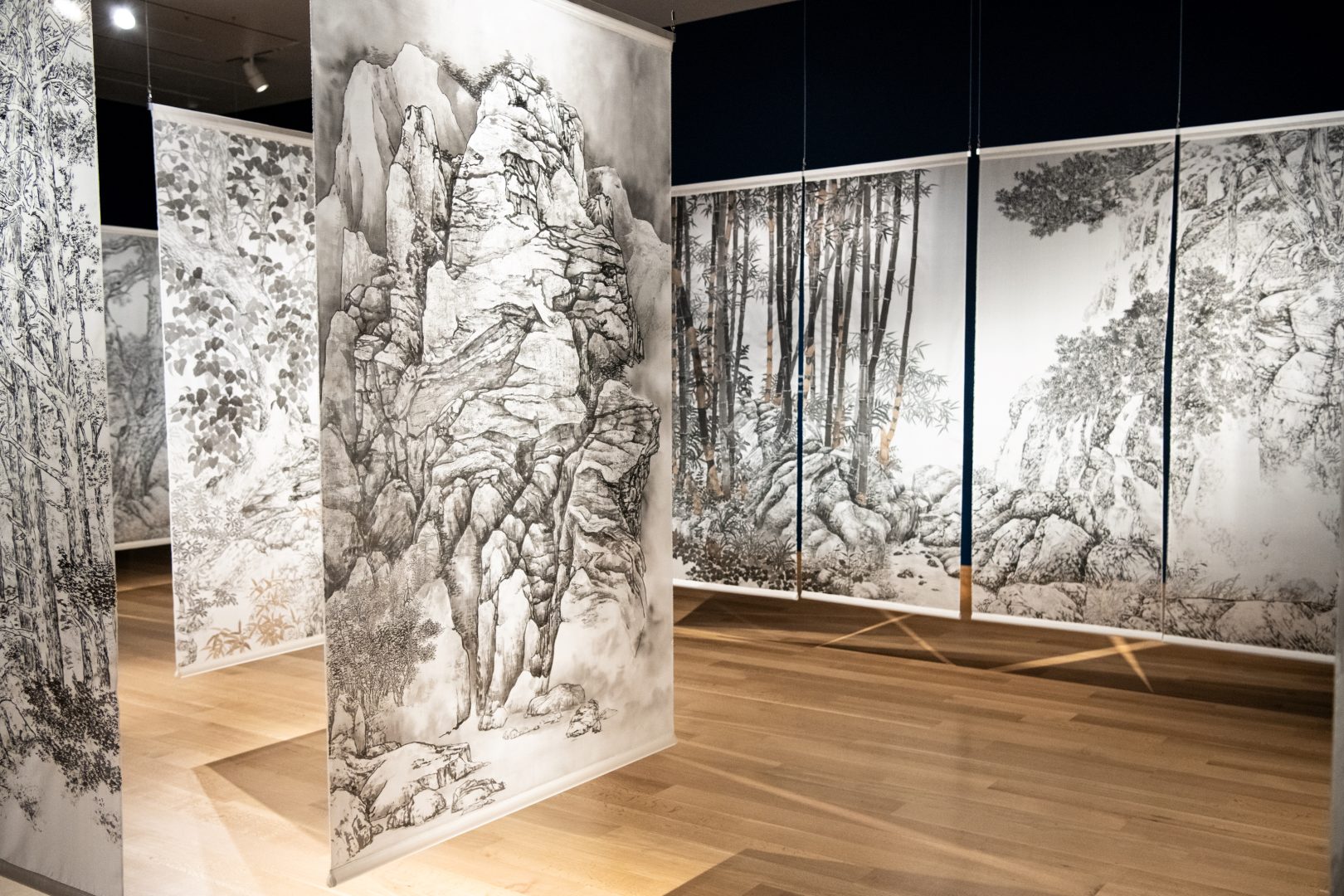
Wang Mansheng: Without Us,” an immersive installation that explores the interconnections between humans, flora, and fauna through contemporary art and classical concepts of nature, unveiled at The Huntington on May 17. On view through Aug. 4, 2025 in the Studio for Lodging the Mind 寓意齋 – a gallery within The Huntington’s renowned Chinese Garden – the exhibition features 22 hand-painted delicate silk panels that invite visitors to enter a luminous, meditative landscape.

Created by Mansheng Wang, the 2025 Cheng Family Foundation Visiting Artist in the Chinese Garden, the paintings in traditional and black walnut ink depict intricate scenes of trees, rocks, water, and other natural elements – some inspired by The Huntington’s Chinese Garden, Liu Fang Yuan 流芳園, the Garden of Flowing Fragrance.

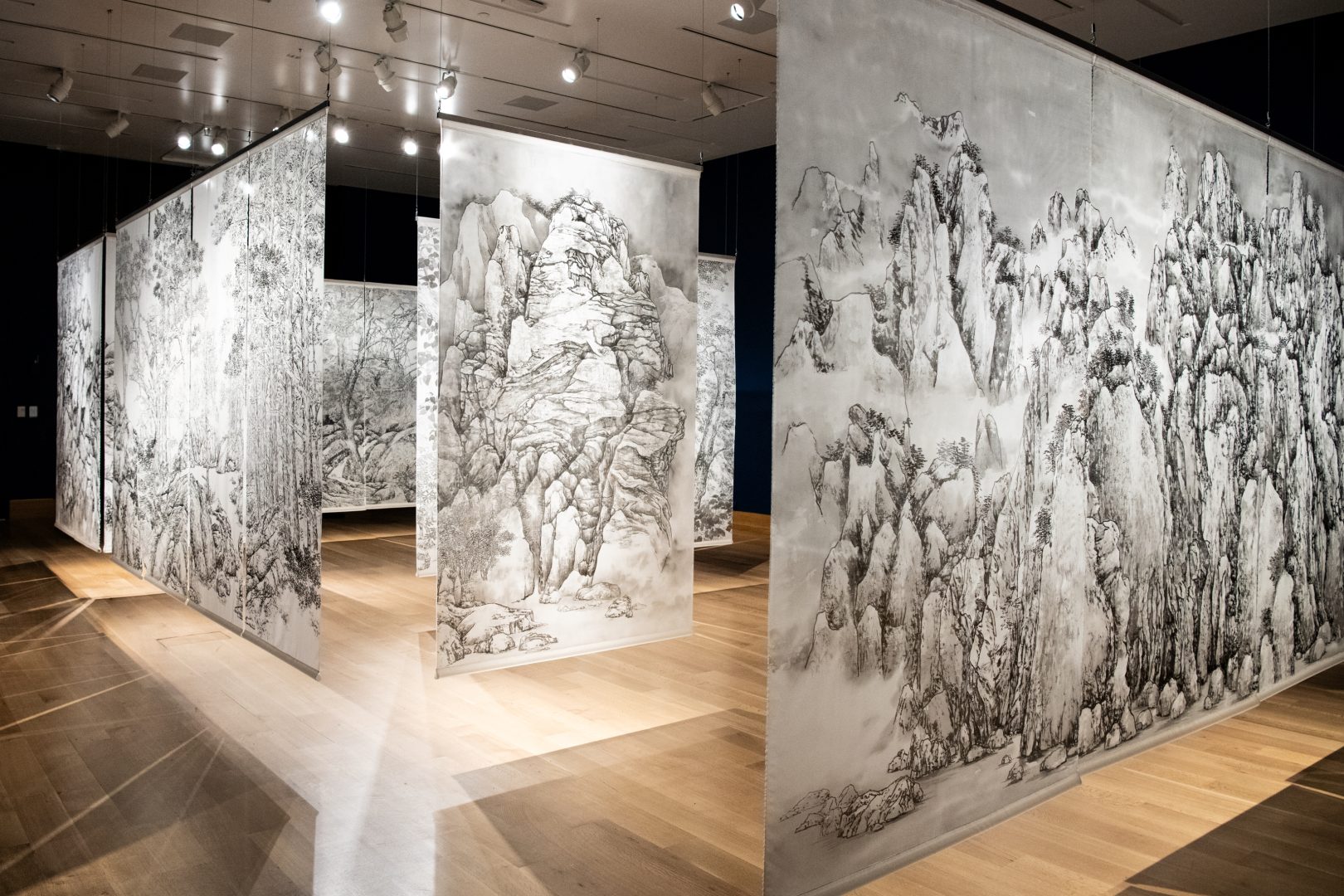
The panels – arranged in singles, diptychs, triptychs, and a quadtych – are Wang’s vision of the natural world. Suspended from the gallery’s ceiling, they invite visitors to animate the installation as they walk around and become part of the landscape.

Installation view of “Wang Mansheng: Without Us.” | Photo by Linnea Stephan / The Huntington

Wang isn’t a stranger to the Chinese Garden at The Huntington; he has participated in several calligraphy shows, but this is his first solo exhibition at the gallery. During a walkthrough of the installation, he recounts his initial conversation with Phillip E. Bloom – curator of the exhibition, the June and Simon K.C. Li Curator of the Chinese Garden, and the director of the Center for East Asian Garden Studies – his vision for the installation, and his work process.  

“In 2020, Phillip invited me to be The Huntington’s Visiting Artist at the Chinese Garden and I was thrilled!” began Wang. “I like to put my hands in the soil and I’ve been gardening almost 30 years. Coming to The Huntington for the first time about 10 years ago felt like being in heaven; I was so jealous of all the gardeners who work in this beautiful place.”

“Phillip was already familiar with my work, which is primarily about nature,” continues Wang. “Doing a larger-scale project was something we had discussed for some time, but everything was delayed by the pandemic. That extra time actually allowed me space to think and prepare. In early 2024, Phillip confirmed that an exhibition would be possible, so I wrote a proposal for an installation with silk panels. He liked the idea, and we introduced it to the Huntington exhibition team.”

The exhibition’s title comes from a unique perspective. Wang explains, “’Without Us’ imagines a world without humans. Of course, gardens are man-made. I’d visited the Huntington several times over the years to study its rich variety of trees and plants. ‘Without Us’ includes inspiration from these wonderful collections but the work’s scope is broader in that it incorporates my experiences in traveling and hiking in many different places.” 

Installation view of “Wang Mansheng: Without Us.” | Photo by Linnea Stephan / The Huntington

“Right before working on this exhibition, I did a show at the Philadelphia Museum of Art,” relates Wang. “Because of the pandemic I couldn’t bring the paintings back to China to mount them so the works were displayed on unmounted silk. And that sparked the idea to use transparent silk and hang the paintings in the middle of the gallery to make it more interesting.”

“To prepare for this installation, I created a small model of the works,” Wang says further. “I chose very thin silk so visitors can view the paintings from both sides – it created an extra angle to view nature. I used narrow, tall panels for mountain peaks and broader sets for a lotus pond or an expanse of woods and hills. You walk in and view an almost three-dimensional landscape and see details – tress, plants, animals, insects, birds. Some are from a distance, like the lake and a far-away mountain. Because of the light there’s slight movement, making the installation magical and dreamlike. ”                     

He transformed his Hudson Valley studio to prepare and work on the paintings. Describes Wang, “I built a large wall with moving wood panels so I could change the size of the board. Then I installed metal sheets on the wood and covered them with silk canvas. I used magnet to keep the silk in place because its thin and slippery. I hadn’t used much silk in my work until recently so I took notes and wrote my experience – like how the brush felt on it. Most of the time I worked on the wall, but I used too much ink and it would drip and stain the wall. So I would sometimes move the canvas on a large table.”  

“The work also required me to step back at least ten feet away after a few brushstrokes – even after adding just two leaves to it. I used three ladders with various height to reach different areas; I had to keep going up and down the ladder and stepping back to view the whole picture. I put in a lot of steps, it was like working out in the gym,” Wang says with a chuckle.

Mansheng Wang working on “Without Us.” | Image courtesy of the artist / The Huntington

Originally, Wang planned to paint 28 panels, but he had to scale it down to 22 to fit the gallery space and allow visitors sufficient distance to view the artworks. He started thinking about what he wanted to paint and began practice work in 2020. But the actual painting only commenced in 2024 and ended early this year.

The first two panels in the exhibition are his tribute to the silkworm. Enlightens Wang, “This is the first painting I worked on in 2022. It’s called ‘The Silkworm and the Mulberry Tree’ and is my homage to the silkworm. The silk industry is a major component of China’s economy. Chinese people have been writing on silk for 6,000 years and this material is very valuable to them – it’s their source of livelihood.”

Visitors to the gallery will walk around the silk panels as they would on a trail leading up to the peak of the mountain. Wang says, “After you hike through the landscape and walk up this mountain, you think you’ve reached the summit. But there are more peaks beyond and you see a cascading waterfall, creating a large body of water and running through all the 22 panels in different forms – a smaller waterfall, stream, creek, lake, and even the mist on the mountain.” 

‘Without Us’ is Wang’s exhortation for us to consider the consequences of our actions – the harm they inflict on our planet. “When I was little we were taught that we are superior beings because we can make tools,” expounds Wang. “As I got older, I realized how the growth of technology gives humans greater power to cause damage to nature. While we used shovels and saws before, we can now utilize machines to cut down a 200-year-old tree in minutes. Even more worrying is that we’re able to create nuclear weapons which could ultimately destroy ourselves and this earth.”

Installation view of “Wang Mansheng: Without Us.” | Photo by Linnea Stephan / The Huntington

Through his exhibition Wang also wants to remind us of the importance of water and conserving this precious resource. He declares, “These plants and animals are what makes earth special – and it’s all because of water. It’s what nourishes us and keeps all these beautiful things in nature alive. But people are the ones using it the most – we drink it, we cook our food, we take showers, we flush our toilets, we wash our cars, and so on. And we all know that California has constant water shortage and is prone to drought. On top of that, we pollute the water.”

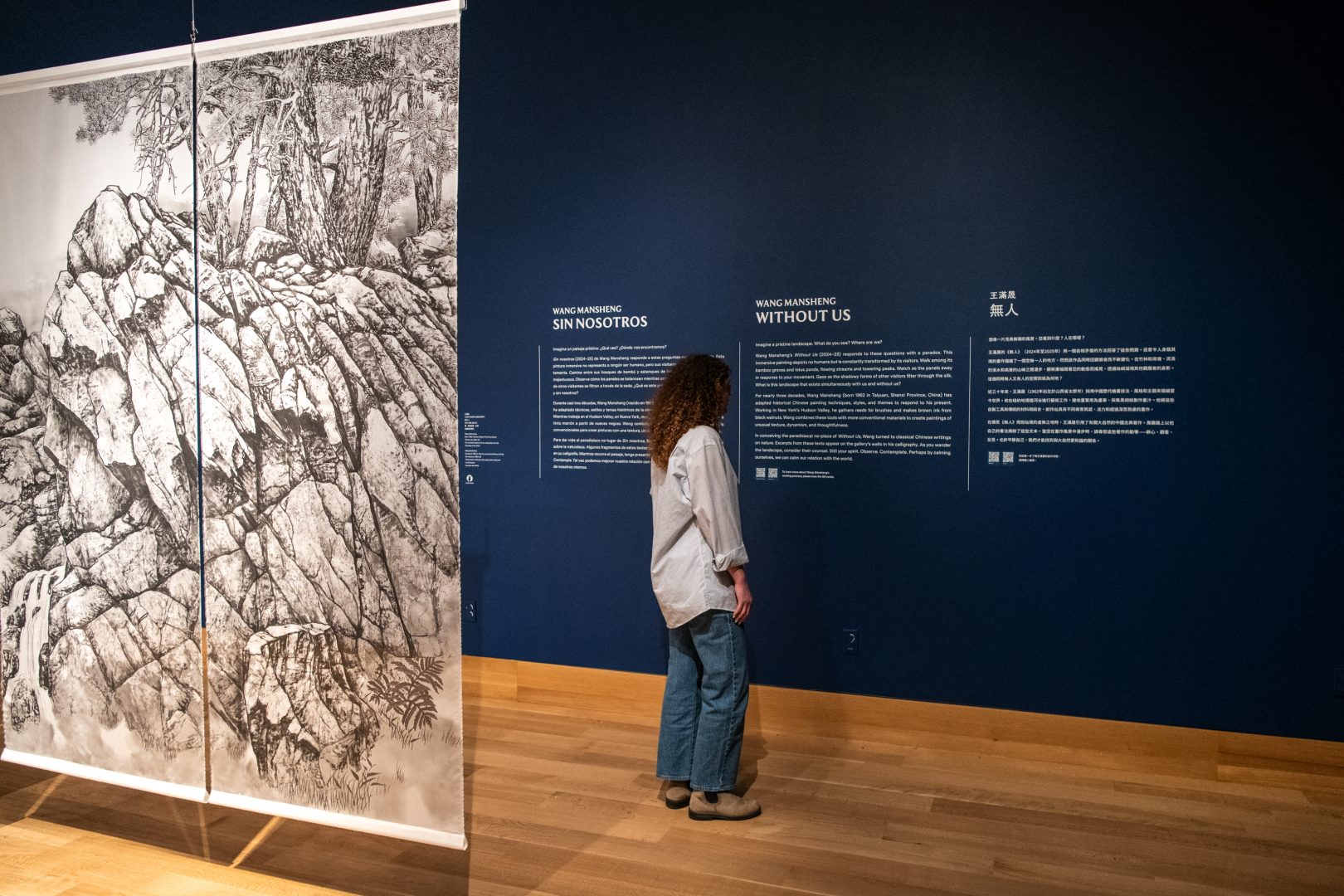
On the walls of the gallery, visitors will find excerpts copied from Wang’s calligraphy taken from classical Chinese literature, featuring the writings of scholars, poets, and philosophers, including Confucius 孔子 (551–479 BCE), Zhuangzi 莊子 (4th century BCE), and Laozi 老子 (6th century BCE). Many of the passages refer to the ancient Chinese concept of guan 觀 – to observe and appreciate nature by emptying the mind and allowing the natural world to enter.

“As you walk through the space, you get a different angle to look in and view the area,” explains Wang. “I hope people who come to see the paintings also read the texts to enjoy and be inspired by. Moreover, the texts provide viewpoints from which to observe the paintings.”     

Lastly, Wang clarifies, “Although the title of this piece is ‘Without Us,’ many people were involved. They encouraged me along the way and helped with the details needed to realize this project, from the curatorial team to the preparators and installation team to the registrars, security staff, and many more. I am grateful for their enthusiasm, support, and guidance.”

Installation view of “Wang Mansheng: Without Us.” | Photo by Linnea Stephan / The Huntington

Mansheng Wang joins a remarkable company of visiting artists in The Huntington’s program, as Bloom reveals when he speaks about the initiative. “In 2012 we received a gift from the Cheng Family Foundation to endow a program to bring in artists to the Chinese Garden every year or two to create a new work in response to the site. We have hosted musicians, playwrights, performance artists, and now painters. The most recent before Mansheng was someone named Zheng Bo, who is a performance artist. He created a series of exercises and led visitors in doing them in the garden.”

Suspending artworks from the ceiling isn’t something totally new, discloses Bloom. “It’s the first time we’re hanging artworks from the ceiling but in our last exhibition called ‘Growing and Knowing in the Gardens of China,’ we had a reproduction of an artwork hang from the ceiling but it served more as a spatial divider. That was the first time we used this hanging system, which was practice for this installation. Our experts knew what to do.”

Asked if an artist is given a mandate on what to create, Bloom replies, “Each time is different. Of course, we have some sense of the artist’s work beforehand. Through a series of conversations, we come up with a project. The one major exception was when we commissioned an artist specifically to make a video that’s permanently on display in the restaurant in the garden, but which we’ve also shown in some exhibitions. In this case, Mansheng and I came up with a project that would fit the gallery.”                                                                             

Installation view of “Wang Mansheng: Without Us.” | Photo by Linnea Stephan / The Huntington

“Mansheng has a very scholarly approach to painting, which I admire,” pronounces Bloom. “He knows the history of painting so well, and he responds to art history in very thoughtful ways in his works. Visually, I love the sense of dynamism in his paintings of rocks and trees, which he creates in part by using brushes that he himself makes from reeds. But most importantly, perhaps, he and his wife Helena Kolenda are wonderful people. It is very pleasant to work with them, and to talk with them about art, nature, and society.”

“We have been discussing this project for about five years, so I had some sense of what the project would involve,” Bloom states. “He sent me updates regularly on his progress, including photos and videos. I was amazed by the detail of the works as well as by how completely they immerse a viewer. But it was not until we installed them in the gallery that I really could feel how successful and compelling ‘Without Us’ actually is.”

Bloom expresses what he thinks people will find engaging about the silk panels. “I think visitors will be struck by how beautiful the installation is. When you enter the gallery, it almost feels as though you have entered a lantern. The silk is so perfectly illuminated, and the light interacts with the ink and silk in such striking ways.”

“But more importantly, as visitors actually take time to look at the panels, they really will feel as though they are walking through a pristine, natural paradise – a world that humans have not disturbed. However, by walking through the panels, visitors themselves will disturb that world: the panels sway in response to visitors’ movement,” concludes Bloom. “I think it is impossible not to interact with this artwork without reflecting simultaneously on how spectacular nature is and how deeply we humans are intertwined with it.”

Pasadena Artist Shares her Journey through her Art

Also published on 20 October 2023 on Hey SoCal

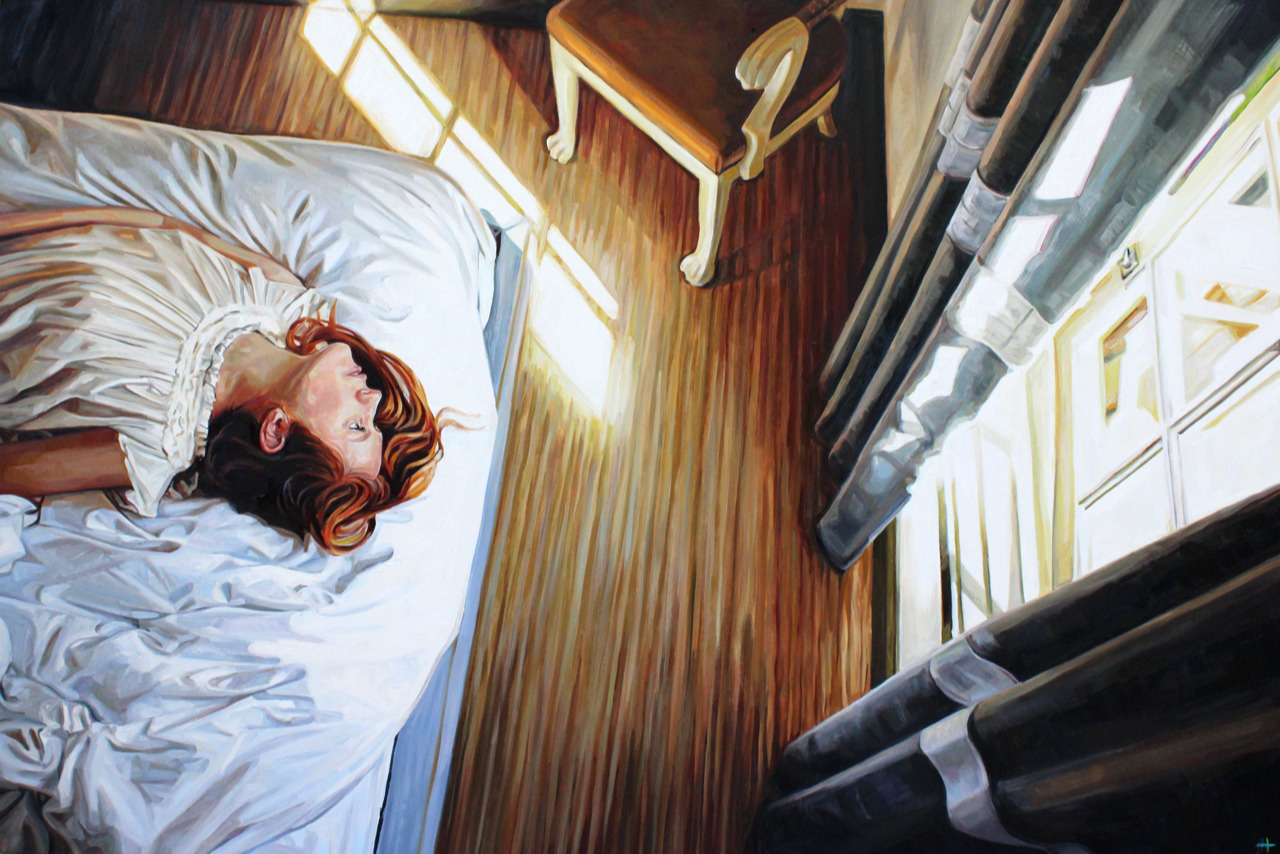
“Plumb Line” 48 x 72 oil on panel | Photo courtesy of Heather Horton

Canadian-born painter Heather Horton has been an artist all her life; she received her Master’s degree in Illustration from Sheridan College. But it was only when she joined Abbozzo Gallery in 2004 that she began exhibiting her works regularly. She has held solo and group shows over the years and her recent solo exhibition “Love Story” was held in Toronto, Ontario in September 2020.

In 2019, Horton met her future husband Joss Whedon in Los Angeles. When they decided to leave Ontario for warmer climes, they relocated to the United States in 2021. Then the couple moved to California on L.A.’s west side – Santa Monica – before eventually settling down in Pasadena in May last year. She discloses, “We had heard great things about the city, and we have been so delighted with our decision to move here. Lots of greenery, interesting architecture, an active art scene, and we appreciate that it has a serenity to it that we find inspiring. We look forward to exploring the city more as time goes by!”

Heather Horton | Courtesy Photo

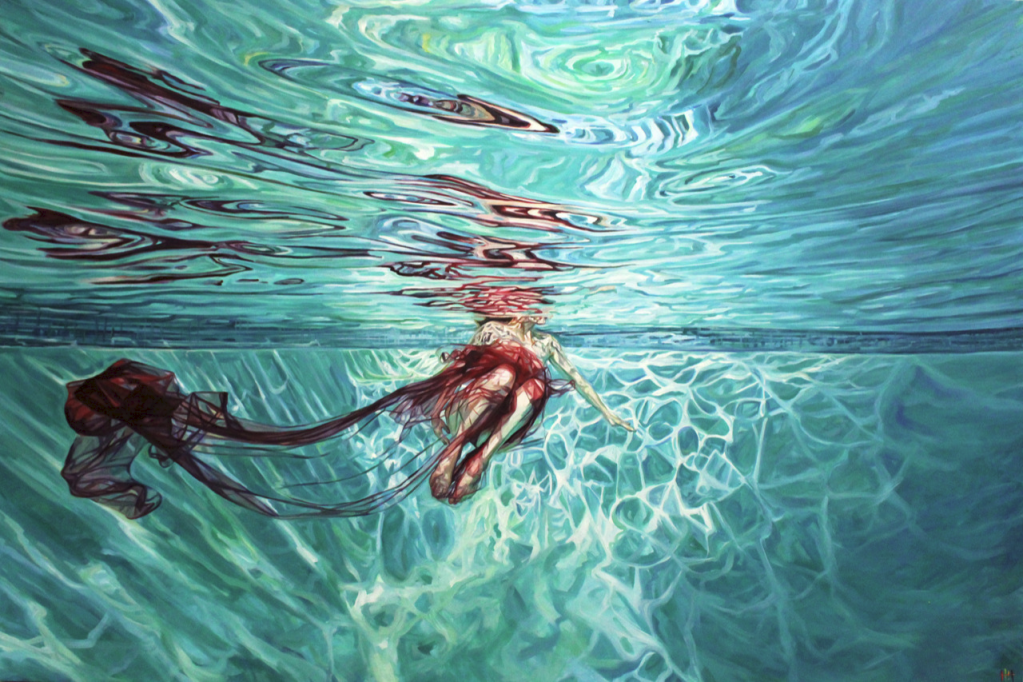
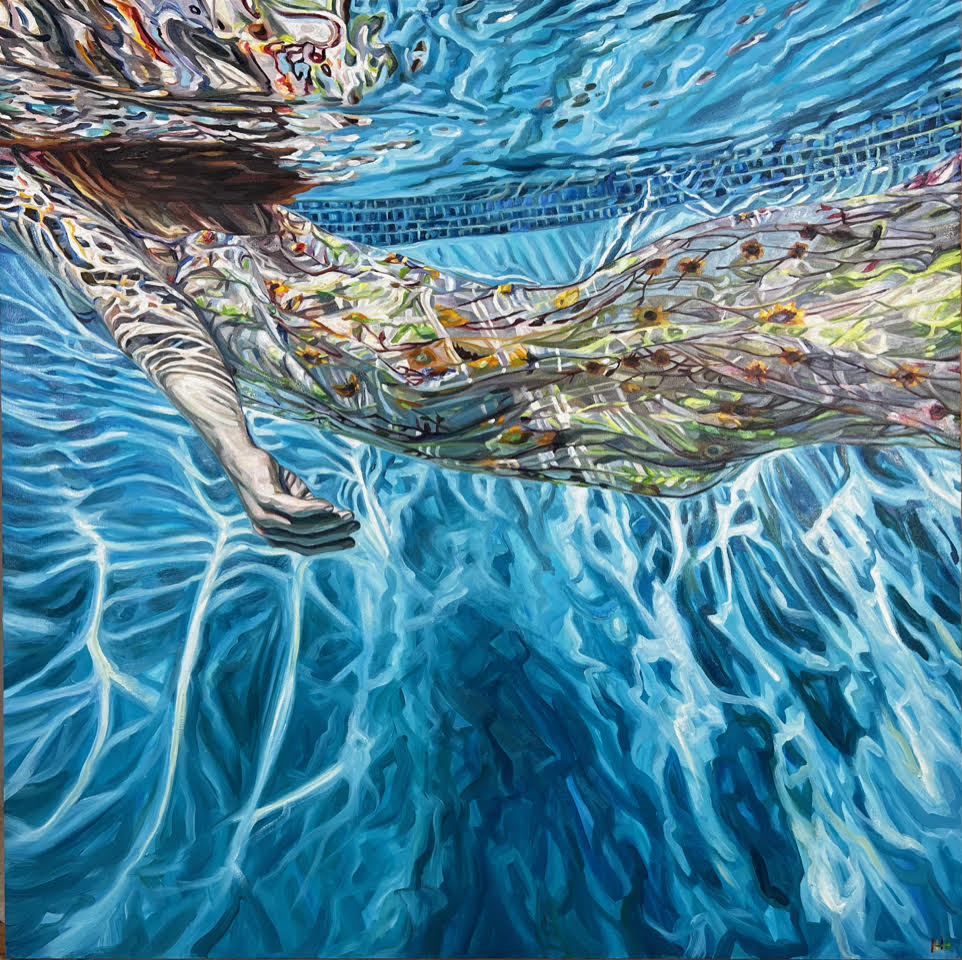
And it’s here that Horton continues to practice her craft – taking photos of friends underwater in their pool and using the pictures as the basis for the oil paintings in this exhibition. Her 16th solo show “Immersion,” will be on display at Whimsy Pasadena in Old Town through Sunday, October 22. She will be painting live onsite at the gallery on Thursday, Friday and Saturday (October 19, 20, and 21) from 11am to 5pm to let the public in on her creative process and talk to visitors about her journey.

“Immersion” is an autobiographical journey of resilience. It investigates the internal complexities within simple moments: exploring trauma, womanhood, deep pain, and deeper gratitude. The exhibition introduces over 30 new oil paintings, which breathe new life into Horton’s renowned water series. It transports us beneath the surface into a twilight fantasia of luminous tranquility. Within these artworks, fabric, flesh, and liquid merge and nearly dissolve into one another, all bathed in the spellbinding interplay of wild and languid light from above.

“Madrona” 24 x 36 oil on panel | Photo courtesy of Heather Horton

Additionally, “Immersion” chronicles the evolution of Heather’s relationship with her own body, a journey that has traversed years of battling anorexia and depression, ultimately culminating in newfound confidence and grace, despite the challenges posed by major spinal surgery last spring.

Having endured a tumultuous childhood, Horton has long used art as a way of finding order in a life marked by subtle chaos. Her troubled past instilled in her a strong sense of self-reliance and a heightened awareness of emotions and movement. Her portraits and figures reflect a sense of fragility, often showing subjects who avert their gaze, are depicted from behind, or appear with their heads just above a surface we can’t quite grasp.

Horton’s art captures the world with a sense of wonder that avoids becoming overly sentimental or prescriptive. Instead, she encourages viewers to embark on their own journeys and find their own interpretations.

“The Chameleon” 30 x 30 oil on panel | Photo courtesy of Heather Horton

“I’m hoping that the viewers might be moved by the work, on a small level, or from a deeper place, as there are themes of floating, immersion but also surgery, health challenges, transitions, and introspection within,” states Horton. “If viewers see the work and are glad they did, or it moves them to reach out to someone they love and tell them so, or write a letter to a friend or someone in need, that would be amazing to me. Just showing the work to friends and people in the community and beyond brings a great feeling of peace and great emotion. After so much work, and surgery, and challenges, but also excitement, I’m excited to enjoy a bit of repose, reconnect and take a few deep breaths before submerging again into new worlds.”

After the exhibition ends, a portfolio of “Immersion” is set to be immortalized on the moon as a part of Samuel Peralta’s visionary Lunar Codex time capsule project. Horton’s artistic expressions reflect the experiences of countless women today, and her legacy is destined to span generations in these time capsules immortalized on the moon. It is such a fitting outcome for a painter whose works should live on beyond earth for eons to come.

Join Pasadena Artist Jim Barry on ‘An Art Walk on the Silk Road’

Originally published on 17 March 2023 on Hey SoCal

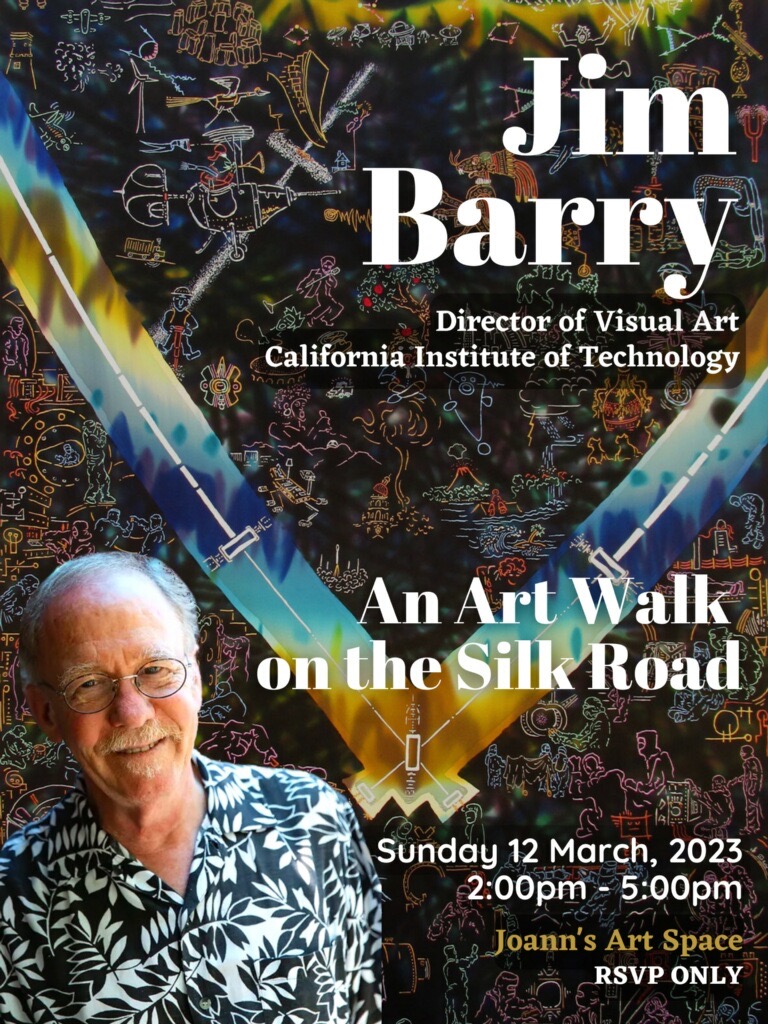
On March 12, Joann’s Art Space at 1745 Orlando Rd. in San Marino opened a solo exhibition featuring the artwork of Jim Barry, the Visual Art Director at California Institute of Technology (Caltech). His pieces are available for purchase and can be viewed by appointment only until April 11, 2023, by calling (626) 999-1777.

The invitation to Barry’s solo exhibition | Photo courtesy of Joann’s Art Space

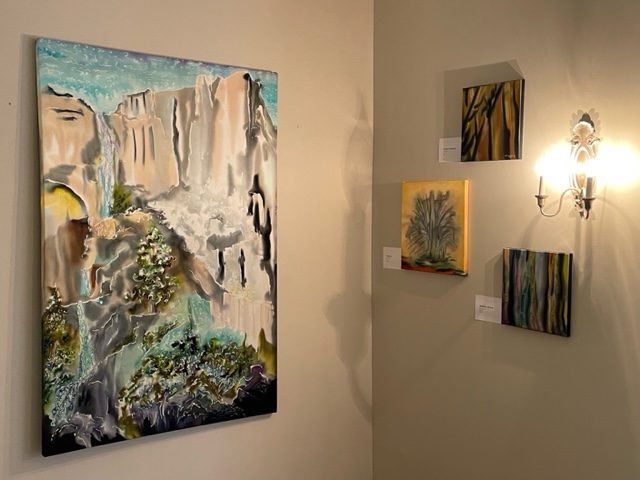
Called “An Art Walk on the Silk Road,” the exhibition features 79 silk paintings divided by themes: Science, Dance, Landscape, and Africa. In the landscapes are a number of pieces of Chinese scholar, viewing stones, and bonsai or pénjǐng.

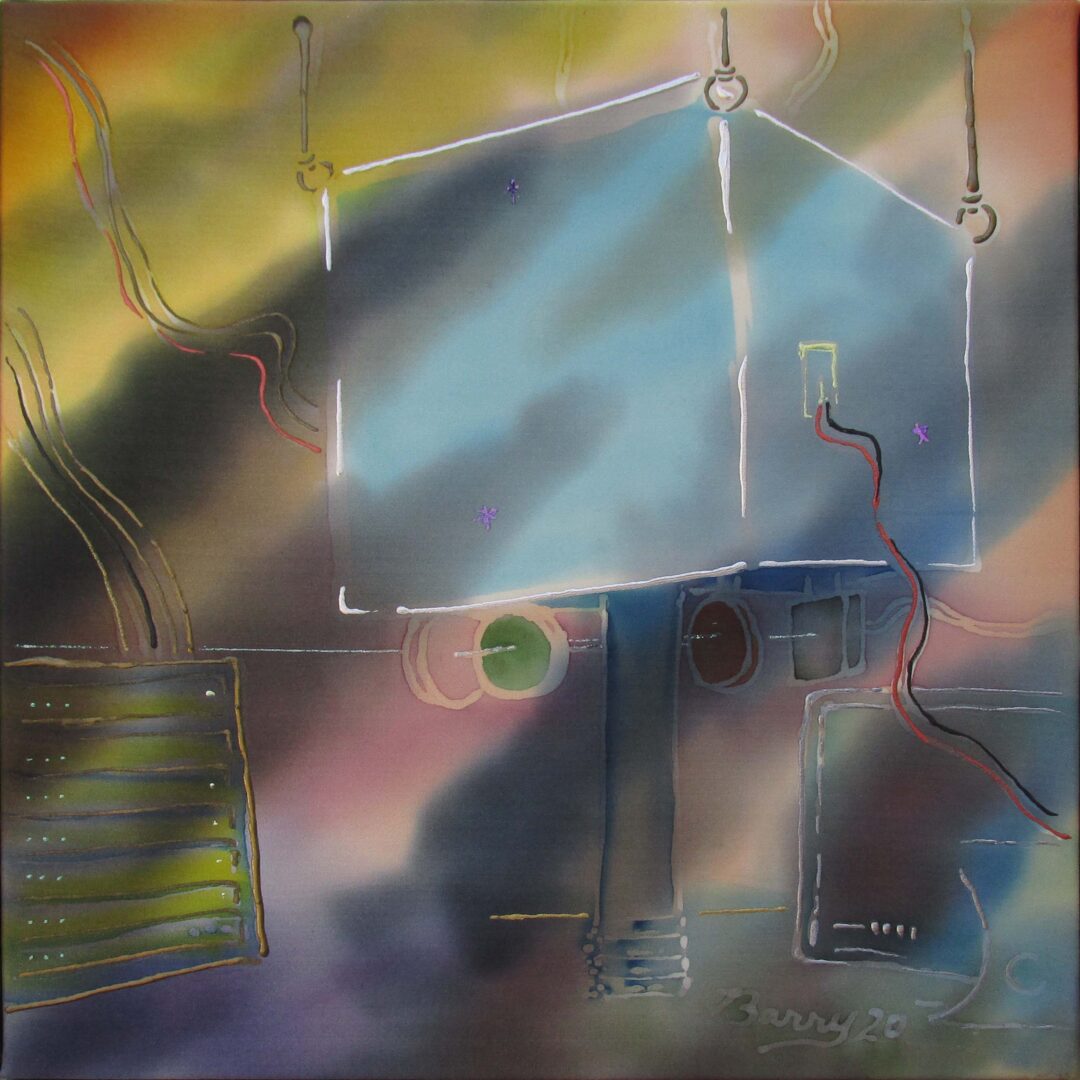
In Science, he shows “Scientist’s Dream” a desktop room temperature detector for dark matter. It uses an interferometer for calibration and gas inside a chamber. Detection of dark matter is evident by the purple sparks in the chamber. This dream is just that, though — far beyond today’s technology.

‘Scientist’s Dream’ | Photo by Sean Yang / Joann’s Art Space

The poster features the LIGO project for detecting black hole collisions, a depiction of project teams, noise the machine needs to filter, and the global human history of observatories with examples from China, Korea, England, Egypt, Peru, etc.

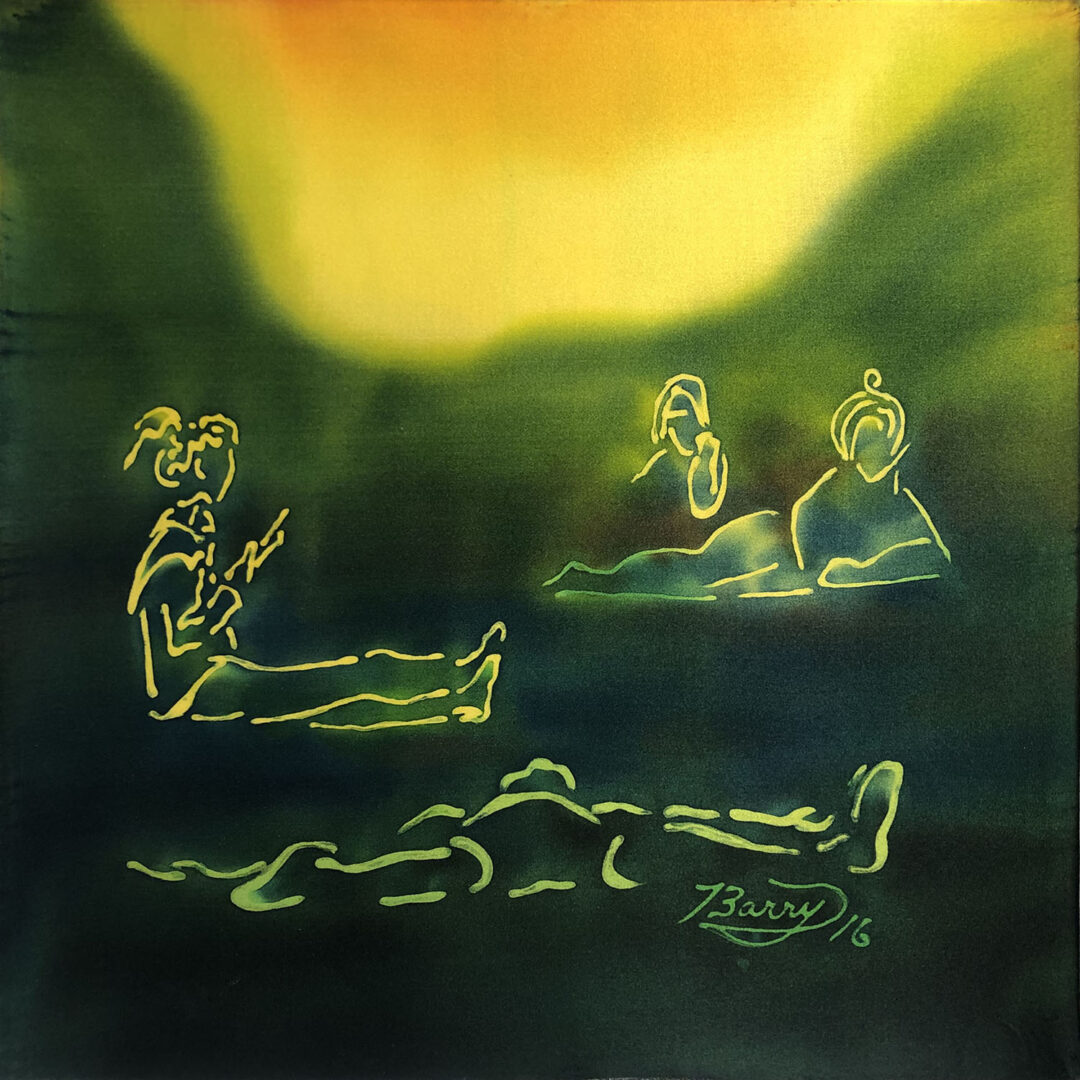
The dance pictures feature hip-hop dancers Barry sketched while they developed their routines.

A long time Caltech academic, Barry has been teaching classes at Caltech since 1987 – the year students changed the Hollywood sign to read ‘Caltech’ for a day. His courses include Silk Painting, some Silkscreen, and Drawing and Painting with Figure Drawing. He has also been instrumental in creating new virtual reality tools and interactive spaces with Santiago Lombeyda at the Center for Data-Driven Discovery (CDDD).

Because his grandmother was a painter, visual art had been his passion at an early age. He didn’t think of it seriously as a future career, however, and instead, he pursued a Bachelor’s degree that related to his interest in African life and culture. He received BA degrees in Cultural Anthropology, focusing on Africa and Black Studies with an emphasis on Race Relations, from the University of California Santa Barbara.

‘Resting Dancers’ | Photo by Sean Yang / Joann’s Art Space

Graciously agreeing to be interviewed by email and phone, Barry answers questions about how painting and teaching became his twin vocations. He relates, “I decided to go to West Africa after college. I was already interested in African life and culture; being able to explore many areas deepened my knowledge and led to more specific destinations such as Oualata, Mauritania, and the Dogon Country in Mali. I applied to graduate school to study Sociology at the University of Ibadan and I was accepted two years later, but had problems getting a visa.”

Barry continues, “So I went to Senegal. I arrived during an important ‘flowering’ of modern Senegalese painting driven in part by the President, Leopold Senghor, who was a well-known writer and poet. I met Senegalese artists and found my chosen medium, batik on cotton, was sought after but not well established. I shared a studio with the artist/painter, Aissa Dione — who’s now a textile artist — on the island of Goréé. My art started to sell and I traveled out to other countries putting up exhibits, leaving them to travel to small villages and interesting historic cultural centers often in remote areas.”

“That was what I’ve always wanted to do and I abandoned my plan to attend graduate school,” Barry discloses. “I remained in Senegal for four months, then spent two months in Gambia working in a batik cooperative, Gena Bess. I returned to Dakar for the larger Senegalese art community and market. After some time I began further travels to Mauritania and Mali and did shows with the cooperation of French and American cultural centers. The work I showed included Batik, Etchings, Watercolors, and pencil sketches.”

“Due to my interest in Anthropology, I learned greetings in the different languages I encountered. It was easy to make friends while I was traveling alone on public transportation. People far into the countryside respected the occupation of an artist and it was not unusual to get good advice from people who might have never entered a museum,” says Barry.

Jim Barry explains ‘Gurunsi Kitchen’ | Photo by Sean Yang / Joann’s Art Space

In 1981 Barry returned to the United States, and while visiting the Armory Center for the Arts he was invited to teach there. “It went really well; I was apparently good at teaching!” he marvels. “That eventually led to a job at Polytechnic School (Caltech’s sister school) a few years later, teaching a Perspective course for sixth graders. Then Caltech conducted a search for a teacher when the institution was seeking to reintroduce its Visual Art program after a long hiatus and I got the part-time job while still working as a teacher at Poly.”

While he held two teaching posts, though, he continued to paint. He held several exhibitions during return trips to West Africa.

Barry started silk painting after three decades of doing batik. “I refined and invented so many techniques that everything became highly complex. I felt I had painted myself into a corner,” he jokes.

“At an international Batik Conference in Boston, I was introduced to silk painting from Japan at a level I could appreciate and learn from,” Barry explains. “By transitioning I left behind the more toxic chemicals I had been working with on cotton since Africa. My silk painting has little in common with traditional Chinese artwork in that dye thickeners are not used. In many cases, it is closer to wet-on-wet watercolor but can be scaled larger.”

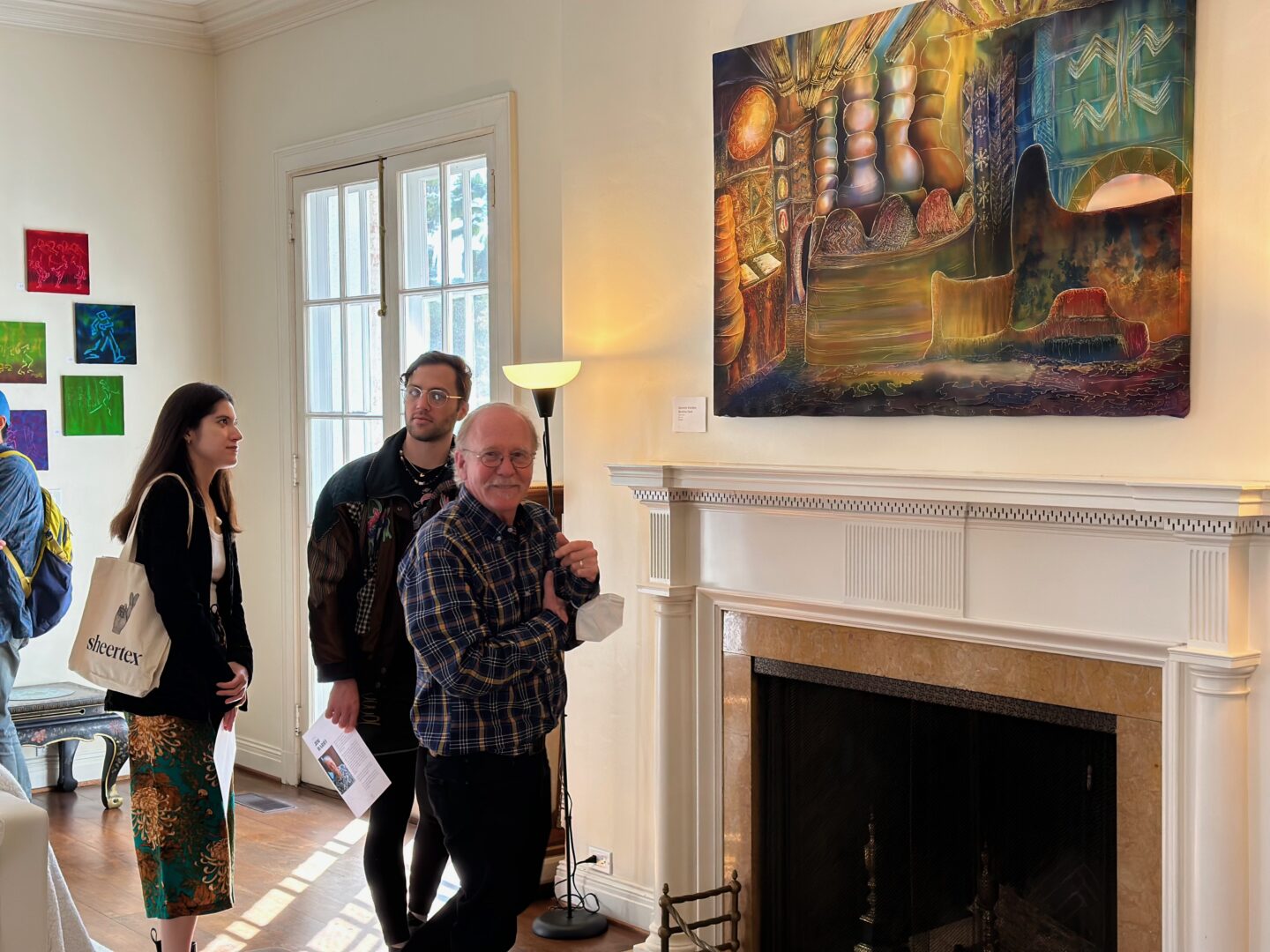
Large and small paintings at the exhibition | Photo by Sean Yang / Joann’s Art Space

Asked to describe his process, Barry replies, “Some pictures start with sketches from my daily sketchbook, transition to more drawings, then quick watercolors in preparation for a final large piece. Others begin with a color abstract that gets drawn into with the gutta resist (like wax), then more color, more gutta, etc., until I have achieved my goal or occasionally give up. There is no erasure in silk painting.”

“I like to paint and design both in the studio and in plein air,” explains Barry. “Taking photographs is rarely helpful to me. I will take them for information, but they are seldom used.” As to his painting style, he says, “I prefer to get my lines ‘right’ but enjoy playing with color. I rarely paint a blue sky in that it conveys no emotion.”

Gurunsi Backyard | Photo by Sean Yang / Joann’s Art Space

All of Barry’s paintings are done for the purpose of selling them and he doesn’t have a favorite painting that he never plans to sell.

Barry divulges, “While in Dakar, I had a complex painting of a flying turtle over Africa inspired by a mask statue. I made hand-colored etchings of it and tried to keep the original. Someone bought one of the etchings, and when I mentioned that I had the batik, he wanted that. I insisted it was not for sale; if it were, the price would be a certain multiple of the etching. Though he still wanted it at that, I would not sell. Later in the day, he returned saying he would make it ‘hard on me’ and offered me double. I sold it immediately! Then I asked what he did. It turns out he helps install airports in Africa.”

For someone who has neither a degree in painting nor teaching, Barry has definitely succeeded in both endeavors. And no matter how having a full-time job keeps him busy most days, he always finds the opportunity and time for his passion. As he pronounces, “Perhaps it’s an obsession. Painting is like a sport; one learns mostly by practicing and thinking about it on the field.” Spoken like a philosopher too.