‘The Judas Kiss’ Premieres at Boston Court Pasadena

Originally published on 21 February 2019 in the Pasadena Independent, Arcadia Weekly, and Monrovia Weekly

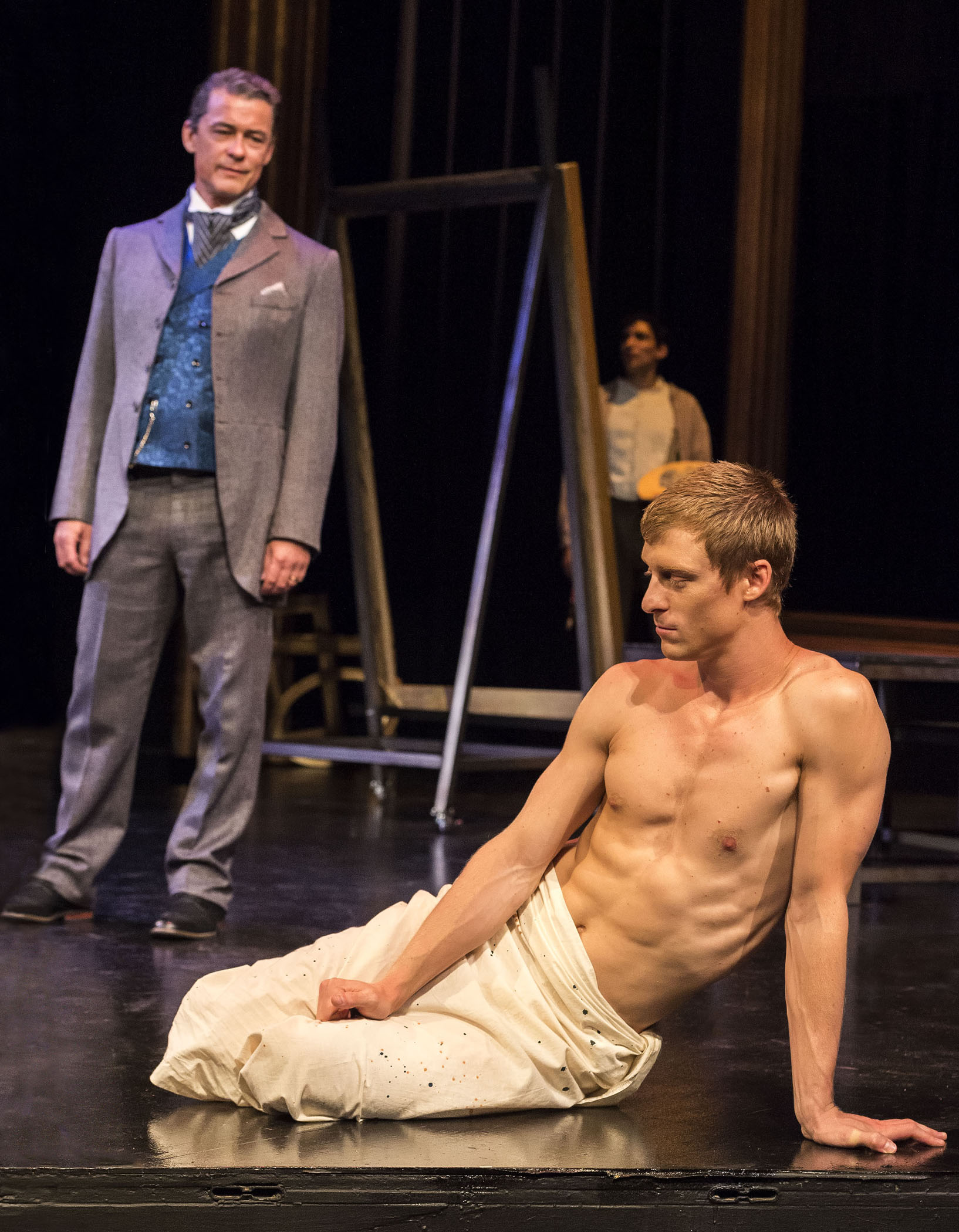
Rob Nagle (left) as Oscar Wilde and Colin Bates (right) as Lord Alfred ‘Bosie’ Douglas| Photo by Jenny Graham / Boston Court Pasadena

Boston Court Pasadena launches its 2019 season with a rarely staged production of David Hare’s ‘The Judas Kiss’ from February 15 through March 24. This S. Mark Taper Foundation-sponsored play tells the story of Oscar Wilde’s love for Lord Alfred ‘Bosie’ Douglas and follows his downfall through a brutal trial and life in exile.

‘The Judas Kiss’ stars Rob Nagle (Oscar Wilde), Colin Bates (Lord Alfred ‘Bosie’ Douglas), Darius de la Cruz (Robert Ross), Will Dixon (Sandy Moffatt), Matthew Campbell Dowling (Arthur Wellesley), Mara Klein (Phoebe Cane), and Kurt Kanazawa (Galileo Masconi).

Artistic Director Michael Michetti, at the heels of his recent success directing his adaptation of Wilde’s ‘The Picture of Dorian Gray’ at A Noise Within, helms this play that examines a literary icon who continues to hold onto his passionate ideals of love and beauty even as his life falls apart.

Michetti, chatting with us about his fascination with the Irish playwright on a recent afternoon, clarifies how he found himself directing an Oscar Wilde play and a play about Oscar Wilde in succession.

“It’s not strictly by design, yet it’s not accidental either,” Michetti begins. “While preparing for ‘A Picture of Dorian Gray,’ I was re-reading a lot of Oscar Wilde and a lot of things about him. This David Hare play is one I’ve loved for years, so out of curiosity I pulled it off the shelf and re-read it. And I fell in love with it again. This was around the time that we were trying to refine our season here at Boston Court. We were talking about balancing our offerings and I kept thinking maybe this is the right play, so I suggested it.”

Asked what draws him to Oscar Wilde plays, Michetti responds “A lot of things really. I’ve always been captivated by his plays. Then I became enthralled with his short stories, children’s stories, and poems. And, of course, as a historical figure I found him interesting so I read several biographies about him, and his letters which reveal so much about him.

“But one thing I always felt was that, in most of his writing, including his letters, which were probably the most personal, he was always wearing different masks .. . that he was somewhat obscured by his wit, his cleverness, and his brilliant use of language. The sense of who the man was has always been a mystery to me. That’s what I love about this play – I think David Hare has crafted a very complex portrait of this man. He did a lot of research and, however conjectural it was, I think the play is pretty accurate to he was and the struggles he was going through.”
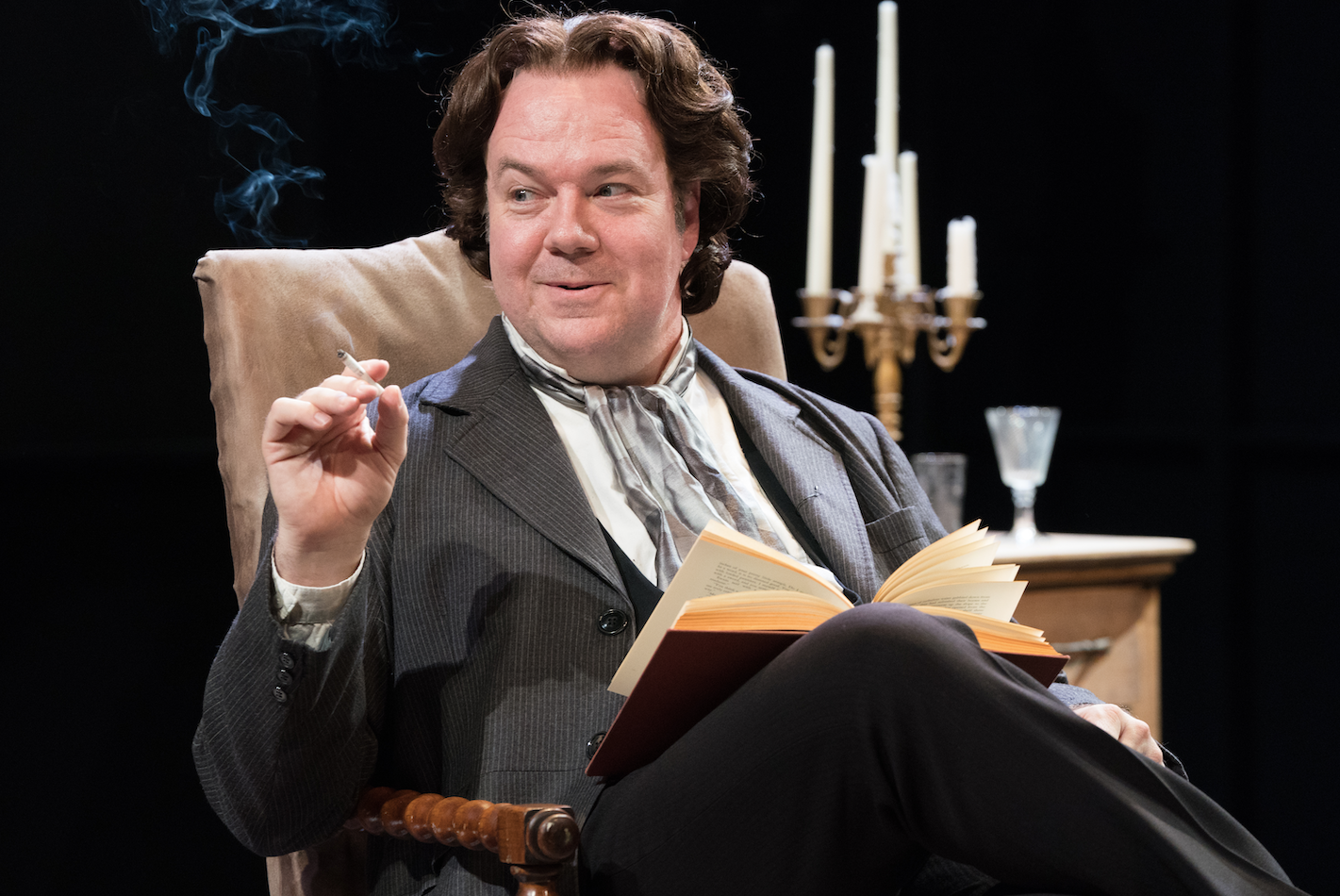
Rob Nagle | Photo by Jenny Graham / Boston Court Pasadena

“It’s very biographical,” continues Michetti. “The play takes place during two key moments in his life. The first act happens on the day he dropped his ill-advised libel suit against the Marquess of Queensberry who had accused him of sodomy. A warrant has been issued for his arrest, the police have delayed arresting him, and he’s trying to decide whether he should flee. Robbie wants him to run but Bosie wants him to stay and stand trial.

“The second act occurs two years later, after his release from prison. He’s exiled and penniless; he and Bosie are renting a villa in Naples and they’re out of money. Each of their families has offered them an allowance of income but, in both cases, it comes with conditions. And, again, Oscar has to make a decision.”

“While ‘The Judas Kiss’ was first produced in 1998, it hasn’t been performed often,” Michetti explains. “The original production starred a miscast Liam Neeson. The arguments for him playing the lead role were that he’s a brilliant Irishman and he’s tall, as Oscar Wilde was. But it didn’t get a good reception.

“Because it wasn’t successful, a lot of people dismissed the play itself. It languished for a long time and only a couple of productions were done in the United States. It was revived in London a few years years ago with Rupert Everett and it went on stage Off-Broadway in New York. There hasn’t been a lot of high-profile productions since and, to the best of our knowledge, this is the first time it’s being done in Los Angeles.

“It has always saddened me that this play’s reputation is not greater than it is. And so I hope we will be able to crack that in this production. There’s one element which makes us poised to be able to do it. While the stakes in both acts are very high, the drama isn’t; there are no big dramatic car chases and action events. It’s all underneath – it’s in the little conflicts and resolutions, choices and decisions, and the resistance to make choices. The fact that we’re in such an intimate theatre allows us to play those with subtlety and honesty. It allows our audience  to see in those delicate nuances the drama of this play.”

(Left to right): Darius de la Cruz, Rob Nagle, and Colin Bates | Photo by Jenny Graham / Boston Court Pasadena

Michetti adds, “The challenge is that dramaturgically, Oscar is obviously the protagonist in the play and Bosie is the antagonist – the one who has caused a lot of hurt in Oscar’s life. But I think it’s critical that we understand what it is about Bosie that Oscar loves so he doesn’t look like a fool for being so devoted to him for so long.”

Because this play is close to his heart, Michetti had a hand in casting the characters for it. He discloses, “The role of Oscar Wilde is a challenging one and I knew going into it that I would need someone remarkable. There’s an L.A. artist whom I’ve known and loved for years, he’s been a friend and a colleague, but I’ve never done a full production with him, only readings previously and his name is Rob Nagle.

“When we were talking about this, Rob was one of the first people who came to mind. And rather than going through an audition process, I began teasing Rob the idea of this role. It turned out he knew the play. Rob is a big, dynamic man and because of that, he’s always playing a villainous character. But he’s the most generous, kind-hearted human being you could possibly meet. And this play is tapping a lot of things I don’t think he often gets the opportunity to play. I’m thrilled to say that my faith in him was well placed because he can be so brilliant in this role.

“It’s quite interesting that Colin Bates, who was just my Dorian Gray, is Bosie. There’s this fascinating parallel because in ‘Picture of Dorian Gray,’ which he wrote in 1890, Wilde wrote about this beautiful younger man who destroys the life of an older artist and the next year he met Bosie. It just seems preordained! Colin and I talked about ‘Was it that he had a type?’ ‘Was it a self-fulfilling prophecy?’ or ‘Was it some sense of fulfilling a martyrdom complex?’ I don’t know exactly what it was, it may have been a little of all those, but it was intriguing to see Colin in the role that is the real life counterpoint to the fictitious character he just played.”

Rob Nagle (left) and Darius de la Cruz (right) as Robbie Ross | Photo by Jenny Graham / Boston Court Pasadena

Michetti adds, “There’s a third character in the play, Robbie Ross, who was Oscar’s first male lover. He was Oscar’s lifelong friend who remained devoted to him throughout his life. Robbie was the one who wrote to him and visited him in prison, the one who met him when he was released from prison and found a home for him to live in afterwards, and the one who was there at his deathbed. Oscar made him his literary executor and he spent the rest of his life making sure the works of Oscar Wilde were published and continued on.

“But there’s a captivating triangulation that happens between the three of them, as often happens. Robbie is very judgmental of Bosie and his influence on Oscar, and he’s trying to get at Oscar for what he thinks are the right choices for him. And to do that he’s trying to get Oscar to face that fact that he has fallen in love with someone who wasn’t worthy of his love. That’s always a tricky thing.

“Any time in real life we try to intercede in that way, it rarely goes well. There’s something about that that feels relatable and human. I relate a lot to Robbie in many ways. I’ve had dear friends who have been in relationships that I think aren’t the best for them and I’ve made impassioned arguments as to why they’d be better off making another choice, as Robbie makes to Oscar. But I’ve also heard impassioned arguments back, as Oscar makes to Robbie, as to why this is none of his business.”

One could argue that Oscar Wilde’s genius comes from all the events in his life. Concurs Michetti, “I think this play will give people a new lens as to who he was. For somebody whom we know for his witty aphorisms, Oscar was a very complex man, and sometimes in conflict with himself. There are things that he writes where he states a matter of fact one thing and then, almost in the next sentence, contradicts himself.  He was a complicated man and love is complicated, and particularly love in relationships that have conflict in them.”

“All of these circumstances in ‘The Judas Kiss’ were similar to what is in ‘The Picture of Dorian Gray.’ Oscar Wilde wrote about what he knew and while he wrote it in a dramatic, sensational form, he actually did live it. I think this play humanizes him and gives us a window to understanding who the man was. Audiences will recognize the darker notes underneath his works.”

It’s been said that art imitates life; Oscar Wilde personified the adage. It must be why we find his works utterly mesmerizing.

‘A Picture of Dorian Gray’ Depicts the Outcomes of Disregard for Consequences

Originally published on 24 September 2018 in the Pasadena Independent, Arcadia Weekly, and Monrovia Weekly

Dorian Gray | Courtesy photo / A Noise Within

‘A Picture of Dorian Gray,’ a play adapted from Oscar Wilde’s novella ‘The Picture of Dorian Gray,’ goes on stage from September 23 to November 16 at A Noise Within in Pasadena. Adapted and directed by Boston Court Pasadena’s Co-Artistic Director, Michael Michetti, its three main characters are Colin Bates as Dorian Gray, Frederick Stuart as Lord Henry Wotton, and Amin El Gamal as Basil Hallward.

Wilde’s Dorian Gray is so entranced by the beauty of his own portrait that he sells his soul to preserve his youth and pays a price. Michetti’s adaptation, first produced at Boston Court Pasadena in 2006, explores the idolization of beauty and youth in an intimate, psychological journey. Avoiding the Gothic horror approach to the tale altogether, it follows instead the consequences of Dorian’s hedonistic lifestyle.

Explains Michetti of the remount, “When I did ‘A Picture of Dorian Gray’ 12 years ago at Boston Court, it was really successful and I was very proud of it. But I really didn’t think I was done with it and I thought this would be an opportunity to come back to it.

“The theatre space and timing are different. It’s a new collaboration with a whole new set of actors, with specific experiences and talents they bring to the production. However, the political and thematic content we’re dealing with now are the same things I was interested in exploring 12 years ago. That said, several things have transpired since – for one, gays have achieved marriage equality. So this play is thematically timely to me.

“The script has basically the same approach and ideas; I’ve added some things but not significant ones. Part of what this adaptation is embracing in the Oscar Wilde original is Dorian’s sexual orientation, an aspect many adaptations have erased. In fact, there wasn’t any hint of it in the 1945 film version. That was one of the things that was important for me to restore.”

“A lot of the people who read the novella thought of it as a Gothic horror story,” Michetti adds. “However, I think that was the least interesting part of the story. There’s obviously a supernatural and dark element to it but, for me, Wilde wrote a very psychologically truthful tale about what it was like to pursue pleasure without regard to the consequences. Because Dorian has great privilege of wealthy and beauty, it’s easier for him to get the things he wants in life. He spends a great part of his life causing damage to people.

“Following its dramaturgy, this is a cautionary tale. At the end of the novel, Dorian grasps that the toll of leading such hedonistic life was too great and he decides, too late, to make a change. But he definitely is realizing the consequences of his past behavior, is regretting it, and is atoning for it. It’s a reminder that we should stop to consider the people around us and the contributions we’re making to humankind.”

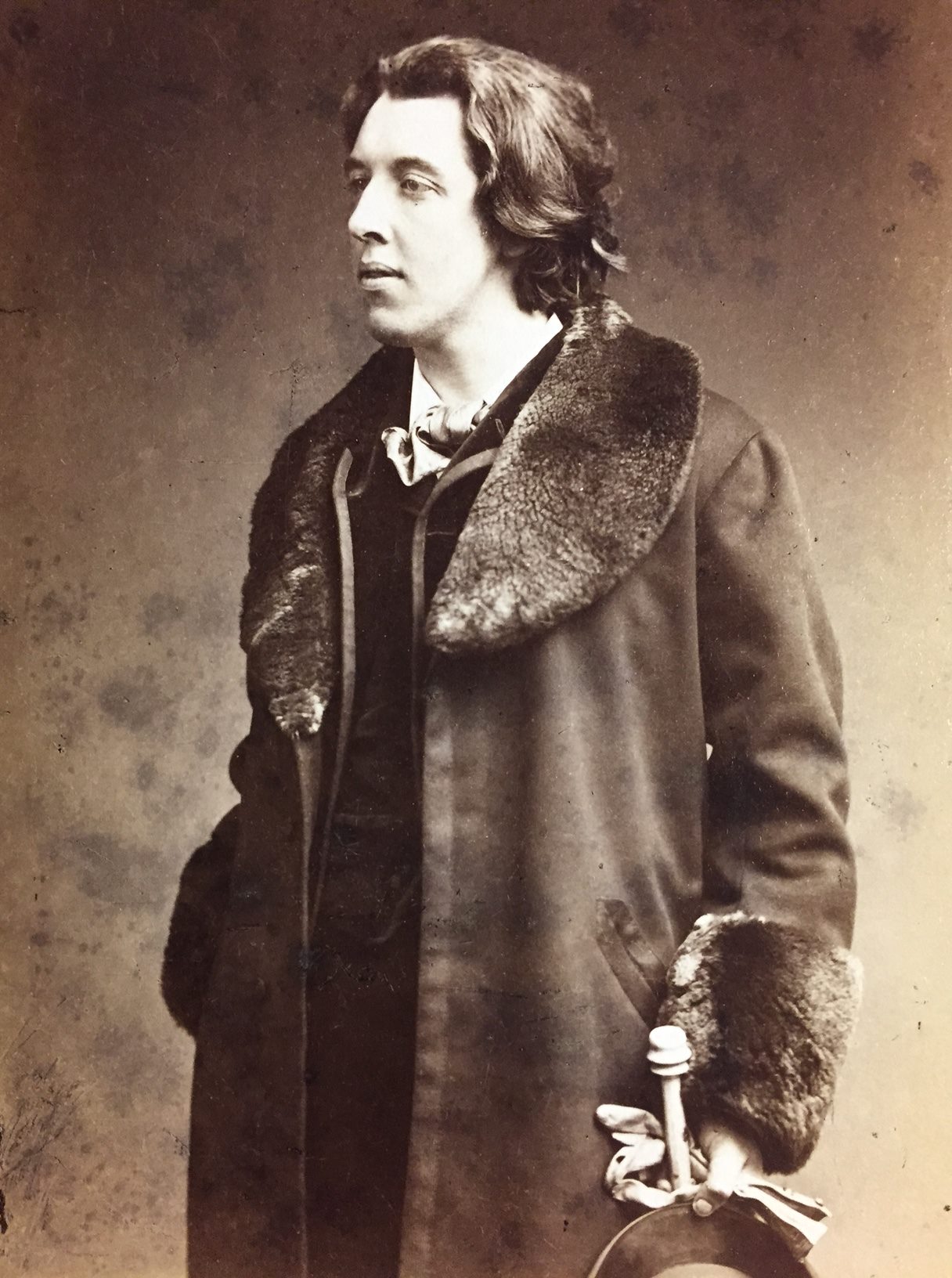
A Portrait of Oscar Wilde | Courtesy photo

“Here’s an  interesting point – pursuit of pleasure, acquisition of beautiful things, appreciation of beauty – those were components of the aestheticism in the late 1870s,” Michetti expounds. “Aestheticism values art more than social and political themes: art for art’s sake. Oscar Wilde was considered one of the most prominent proponents of it. He was, at the time, a big celebrity who embraced it and became the public face for the movement.

“The aesthetic movement is a hedonistic approach to life. So while the novel’s protagonist is pursing these things, Oscar Wilde is saying there’s a price to pay for following these theories to their logical end.”

Oscar Wilde once said  that ‘Dorian Gray’s’ three central characters are all aspects of himself: “Basil Hallward is what I think I am; Lord Henry what the world thinks of me; Dorian is what I would like to be – in other ages, perhaps.”

Michetti finds Wilde’s description fascinating. “There is something thought-provoking about the three characters as a triumvirate. Within that, Harry is the proponent of the movement and he stands by it to the end. He says we can’t change, we are who we are; and he doesn’t want Dorian to change because he believes aestheticism is worth pursing at whatever cost. Meanwhile, Basil is destroyed in the course of the play. And Dorian is the one who develops a conscience and decides to change.

“There are three actors playing the three different characters who are all aspects of Oscar Wilde. There’s that remarkable bond they carry with them during all that time. They are people who care very much for one another.

“When the play begins Harry and Basil have been long-time friends, they were in school together. Basil meets and falls for Dorian and introduces him to Harry – it’s a triangle with connections as well as conflicts. As soon as Harry comes into Dorian’s life, Basil becomes a third wheel. We have talked a lot with the three actors about the fact that there are reflecting and mirroring between them, yet the characteristics of the actors and the characters are very distinctive.

“Basil and Dorian are contrasts in a lot of ways. Dramaturgically and psychologically, Basil is the embodiment of Dorian’s conscience – he’s the one who wants Dorian to behave righteously, to take responsibility for his actions, and to lead an honest and fulfilling life. Dorian reaches a point of being so fearful of the consequences that he avoids Basil and their friendship suffers for it. Ultimately, I think, the reason for Dorian’s big conversion is the recognition that killing Basil is a big loss and he has a lot of guilt over that. He comes to an appreciation for what Basil wants for him to see in the world.”

Michetti continues, “The second metaphor in the story is Dorian’s portrait which is both aging and taking on the physical manifestation of his sins so that he isn’t affected.  I find that symbolism a little too simple because even though his appearance isn’t affected, Dorian has guilt and fear beneath. But there’s something addictive about his continuing pursuit of pleasure, beauty, and experiences. It’s almost that of an addict getting a high for a while, then he crashes, and he begins again. That is very much the cycle that Dorian is deeply in.”

This adaptation of ‘A Picture of Dorian Gray’ does not show the portrait at all, which could be a tough sell to the audience who can’t actually see it.

Michael Michetti | Courtesy photo / A Noise Within

“The reason I decided not to have the picture is that, in most adaptations, when the portrait is shown and the effect it’s had on it, the whole revelation is a little cheesy to me,” rationalizes Michetti. “I never got convinced because it should be terrifying and it always fell short of what I had imagined. And then, too, how grotesque could you make it so we could understand his moral decay and give it the right impact?

“Previous adaptations emphasized the horror aspects instead of the psychological feature. There is undeniably a supernatural element to it; you can’t tell the story without that. However, I didn’t really want to be focusing on that but on the humanity of it. I think the audience will hear the story in a different way because of how we’re framing it. And focusing on the psychological instead of the supernatural is what makes that possible. I hope that our audiences understand that kind of storytelling and find it dynamic and compelling.”

Michetti says further, “The story has universal themes. I think we are all guilty of the things that Dorian does – we all want to stay young, we all feel that sense of loss when we begin to age, we all seek pleasure to try to numb the feelings of fear or failure. While Dorian is an antihero, we can relate to him and we see ourselves reflected in him. We may not go to the extreme that he does, but we comprehend some of the temptations he had. I would like our audience to treat it as an admonition to make different choices because we see how badly Dorian’s life ends.

“At the same time, I hope that, in the adaptation of the play and the depiction of the character, we find him appealing and relatable before we find his behavior repellent. While Dorian doesn’t begin as the shining example of magnanimity, he is a very relatable person before he begins his decline.

“Finally, I would like people, who feel they know the story, to be taken aback – to think they heard it in a new way. I would like to make them recognize other aspects of it they had not previously been conscious of, or didn’t know were there. For me it all comes back to the appreciation of Wilde and how inspired this novel is, how deeply he understands humanity. That we can use his words and tell the story that feels fresh and relevant in the 21st century is surprising for a work that’s 125 years old.”

Basil is played by Amin El Gamal, whom Michetti had not previously worked with. He states, “Amin has auditioned for me before and I’ve seen his work as a fan. He was definitely the first person I thought of.”

Basil (back) paints a portrait of Dorian (foreground) as Harry looks on | Photo by Craig Schwartz

El Gamal confesses, “I never read the book in school and didn’t come across it until after college. I have never been in a production of Dorian Gray before but I know the trope about the picture that ages.

“It was very insightful of Michael to have thought of me in the role of Basil. He’s a character I think I relate to strongly, although I’ve never seen productions where the characteristics brought out in this adaptation were showcased. I was really excited to be approached for a role where I can share my existential qualities, which I was surprised that Michael has perceived.

“When he sent the script to me, I was astonished and, quite frankly, I felt exposed. But it has also been a delight because my goal as a person of color is not to play my ethnicity but to use my resources and my qualities as a person as the basis for my art. I felt that Michael acknowledged that. I was disappointed that I couldn’t do it because the script came too late – I was already committed to another project.”

Interjects Michetti, “I cast another actor but he dropped out. So I approached Amin again and, by that time, his project had fallen apart. So this feels like fate.”

“As excited as I was to play this character, I was also afraid of what that psyche would unearth for me,” El Gamal continues. “Fortunately, the process has been fruitful. I really feel that an actor’s main tool is his life experience, but there are times when I have to use my imagination. This play really required that creativity.

“I’m very sensitive to the fact that people can be like Basil or Harry. I can certainly relate to both Harry’s wanting to pursue his goals with enthusiasm in the same way that I appreciate Basil’s sense of morality. But there has to be a balance to not be overburdened with the morals and live life to the fullest.”

“Michael challenged me to find more complexity in the characters,” discloses El Gamal. “He didn’t want us to depict Basil and Harry as the angel and the devil on Dorian’s shoulder. That the evil and the good are not too far apart, there’s a grey area where a person can be both. Basil certainly isn’t perfect. Both characters had an important role in Dorian’s life – if it wasn’t for Basil, he wouldn’t have met Harry.”

“Basil is very passive in the beginning of the story,” says El Gamal of his character. “When Dorian starts pursuing worldly pleasures, he pulls away – he leaves the country and isn’t a part of Dorian’s life for a while. He goes through a drought in his art after Dorian basically abandoned their relationship. He might have resorted to drug and substance abuse, he’s alone and lonely. Although he still has a deep love for Dorian and when he sees the deterioration of the portrait, he stages an intervention.

“But through it all, he’s not a victim. His character arc is hopeful – he’s planning on opening a studio in Paris where he would create his next masterpiece – despite its sad ending. It was a productive life cut short. I hope I am able to convey everything that is going on with Basil.”

“Oscar Wilde anticipated homosexuality as an identity, the idea of two men being in love,” marvels El Gamal. “Basil embodies that identity at a time when that wasn’t recognized.”

In his depiction of Basil, El Gamal wants the audience to leave the theatre with something to reflect on. “I think in today’s social media and selfie-obsessed culture, people can feel disposable and we can forget to be respectful and communicative. I hope Basil, as a sort of advocate for kindness and basic human decency, reminds audiences to take a little better care of themselves and each other.”

Would that El Gamal’s wish is realized and the moral Michetti advances in ‘A Picture of Dorian Gray’ is heeded to make us a deliberate and thoughtful society.