Originally published on 3 November 2016 in the Pasadena Independent, Arcadia Weekly, Monrovia Weekly, and Sierra Madre Weekly
Farmscape, which started out as a small company offering backyard vegetable growing service to Pasadena residents, is slowly spreading the urban farming concept to large businesses whose names most people recognize.
This evolution has been an organic process which began when a handful of young college students collaborated on what seemed like an ambitious project.
When Dan Allen was 21 years old, one of his old high school pals was writing an analysis paper for Pomona College about environmental challenges to the biosphere. It just happens that this friend is also a day trader, has made a great deal of money, and would like to do something about it.
Relates Allen, “He wanted to identify the problem and solve it which, looking back, is a naïve and noble objective at once. But we were 20, maybe 21 years old so that made sense at the time; we were young idealists and optimists who wanted to make the world a better place. I moved from where I was then staying in D.C. out to California, and together with two other childhood buddies from Iowa, we turned a school paper into a business plan and created Farmscape in 2009.”
Seven years later, Farmscape has a staff of 30 and operates from an office in Eagle Rock that has an outdoor space for growing produce. It maintains urban farms for 30 public and private schools, several restaurants, and a multitude of residential clients in the Los Angeles area. It also has branched out to Northern California which caters to a mostly corporate clientele that counts the San Francisco 49ers ball club, the Giants stadium, and Oracle as customers. And Allen is all of 31 years old.
Says Allen, “Our clients enjoyed the vegetable garden experience with their kids; our subsequent expansion into schools, therefore, was an organic growth. The most satisfying aspect of this business endeavor is the experiential part. It’s working with partners or clients who are inspired by the garden in some way. Our educational program instills in young children a love of the outdoors and nature. I make it a point to hire people who have backgrounds and skills specific to the project they’re working on. Farmscape’s horticulturist, Melissa Gutierrez, has a great speaking and teaching style. She’s able to build rapport with young kindergartners and get them to taste what they’re growing in the al fresco classrooms.”
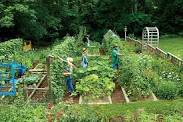
Farmscape teachers hold workshops at 30 L.A. area schools including Clairbourn, an independent pre-K to eighth grade institution in San Gabriel; Valentine Elementary in the San Marino Unified District; and Oak Knoll Kinderhouse Montessori in Pasadena.
Continues Allen, “Then some restaurateurs heard about Farmscape and reached out to us. One them is Chef Niki Nakayama, who used to live in San Gabriel, but has since moved closer to her restaurant, n/naka, in Culver City. She grows the vegetables she uses on her upscale Japanese tasting menus in her backyard garden. Another client is Providence, Chef Michael Cimarusti’s innovative seafood restaurant in Melrose.
The Jonathan Club in downtown L.A. is also a client. It has a 5th floor rooftop garden from which the chef and sous chef harvest their vegetables every morning. Farmscape also has raised beds at the Los Angeles County Museum of Art (LACMA) which provide extraordinary seasonal fare for its Ray’s and Stark Bar.”
“It’s great to work with varied clients because they’re the ones pushing us on to different approaches to growing produce,” claims Allen. With homes and schools, our farmers emphasize that ‘it tastes amazing’ – they don’t lecture on the health benefits. But it’s the restaurants who push us on flavors – they want great tasting produce than what they might otherwise have access to.”
Now the Los Angeles office is extending its reach to include multi-housing projects and Allen works with several developers in the area to include vegetable garden amenities in their buildings. Farmscape currently maintains a vegetable garden at the Abbot Lofts (in Abbot Kinney) in Venice. The company’s garden is also on display for clients to enjoy at the Traina Developers office in Northridge.
A most inspired move proved to be opening a Farmscape branch in Oakland, California in February 2014. Lara Hermanson, who declares she’s the company’s second hire, heads that division which currently has eight employees. She is responsible for generating all new business for Northern California and beyond. Once she lands a project, she brings it back to the office and the install team takes over. From there, the maintenance crew takes care of the garden’s weekly maintenance.
Hermanson says it was her idea to expand, “I pushed to open in Northern California because I thought it made good financial sense and would lead to more interesting work. There’s a real energy and commitment to innovation; people here like having cool stuff. This has proven true for us – we have more leeway to do better, more creative projects. While L.A. is committed to healthy eating and living, the conversation here is further along. People are past vegetable gardens, they’re into improved water systems, they’re ready to live completely off the grid. It’s easier to close deals here because I don’t have to sell the concept.”
“Most of our Oakland business is corporate,” Hermanson reveals. “Our largest client is Levi Stadium where the San Francisco 49ers play. It has a 4,500 sq. ft. rooftop farm from which the kitchen harvests the produce that’s divided among its various restaurants.”
While she has accomplished quite a lot in the short time she’s been in the Northern California office, Hermanson has her sights on some big names in the area. “I use Apple and Google all day so it would be really awesome if they can be Farmscape clients,” she says.
That wish isn’t too farfetched. As Allen has said, Farmscape’s growth has been very organic. It has taken root and, in time, it will spread far and wide.
 A San Gabriel Valley Inquirer