Local Opera Virtuoso Leads the Verdi Chorus

Originally published on 2 April 2019 in the Pasadena Independent, Arcadia Weekly, and Monrovia Weekly

Anne Marie Ketchum during rehearsal | Courtesy photo / Verdi Chorus

It might surprise some people to know that the Pasadena City College (PCC) has an opera music program. In fact, PCC’s administrators themselves didn’t think to offer the course until Anne Marie Ketchum, a full-time faculty teacher, established it.

Ketchum, a South Pasadena resident, is also the master behind the Santa Monica-based Verdi Chorus, which is celebrating its 36th season with a Spring Concert ‘L’Amore e la Vita’ (Love and Life). It will hold two performances at First United Methodist Church in Santa Monica on April 6 and 7, 2019.

A few weeks before Verdi Chorus’s spring concert, Ketchum sat down with us to talk about her two major endeavors.

“I started teaching at PCC in 1981 where we had a song and dance group that performed with the big band, which became the musical theatre workshop. But my love was classical music and I found there was an awful lot of interest among the students. The administrators had no clue, they thought the kids wouldn’t be interested. So I set them straight and started the opera music program, which became an immediate success. It grew to the point that we were doing major productions once a year. We did a workshop program in the fall and a full opera production in the spring – sometimes it was a series of one-acts and at other times it was a full opera. We did ‘The Magic Flute,’ ‘The Marriage of Figaro,’ ‘Merry Widow,’ and many other well-known operas. The last one we did was ‘Tales of Hoffman.’”

Continues Ketchum, “I taught at PCC for 34 years and, in fact, just recently retired. I enjoyed teaching, but it was time to change my focus and do other things. And I was lucky enough to be able to retire at an age when I could still do that. I wanted to make sure that the opera program continued, so, along with some of my colleagues, we made a push to engage someone to replace me as opera director. They hired Maria Fortuna Dean and she’s doing a wonderful job keeping that program robust.”
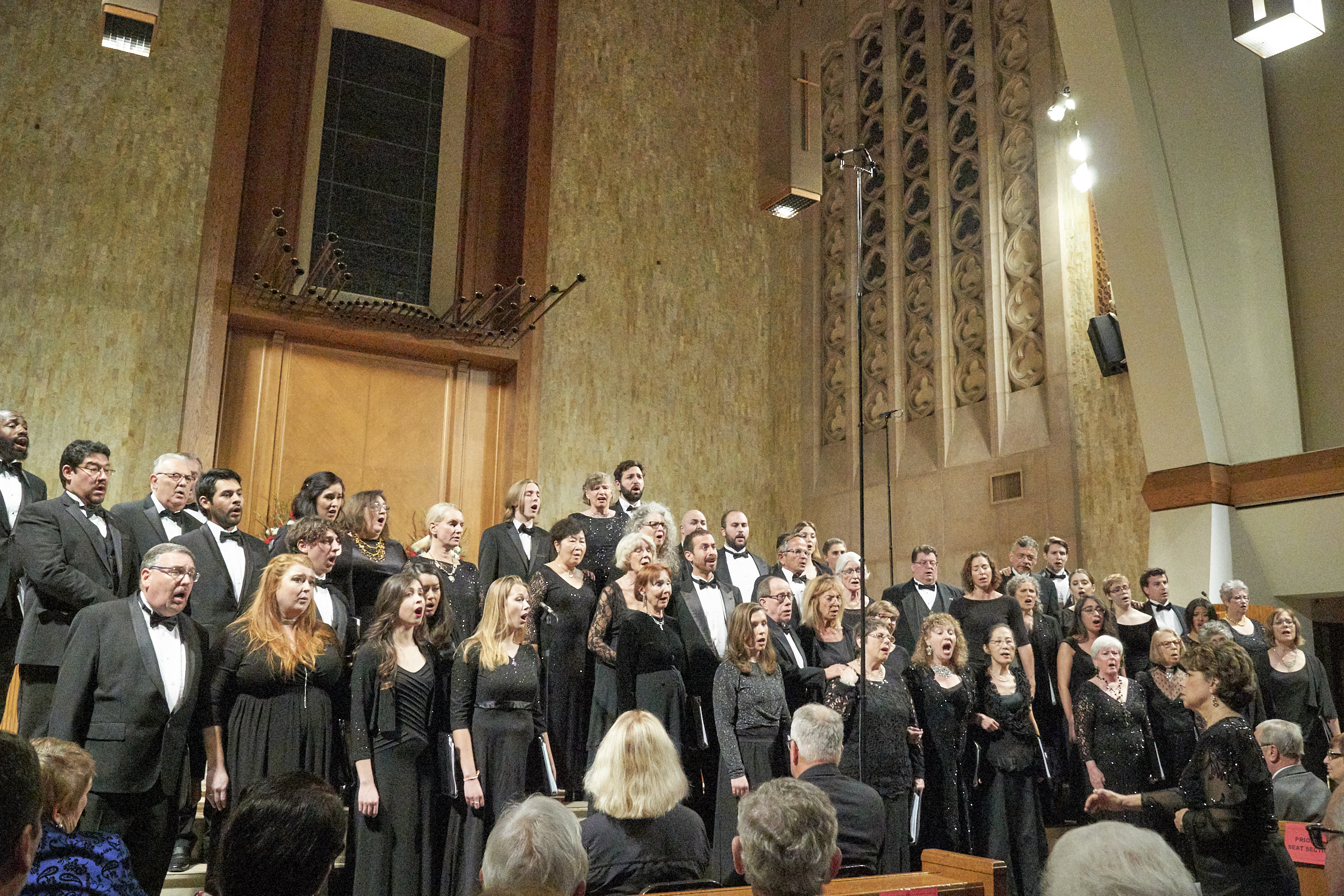
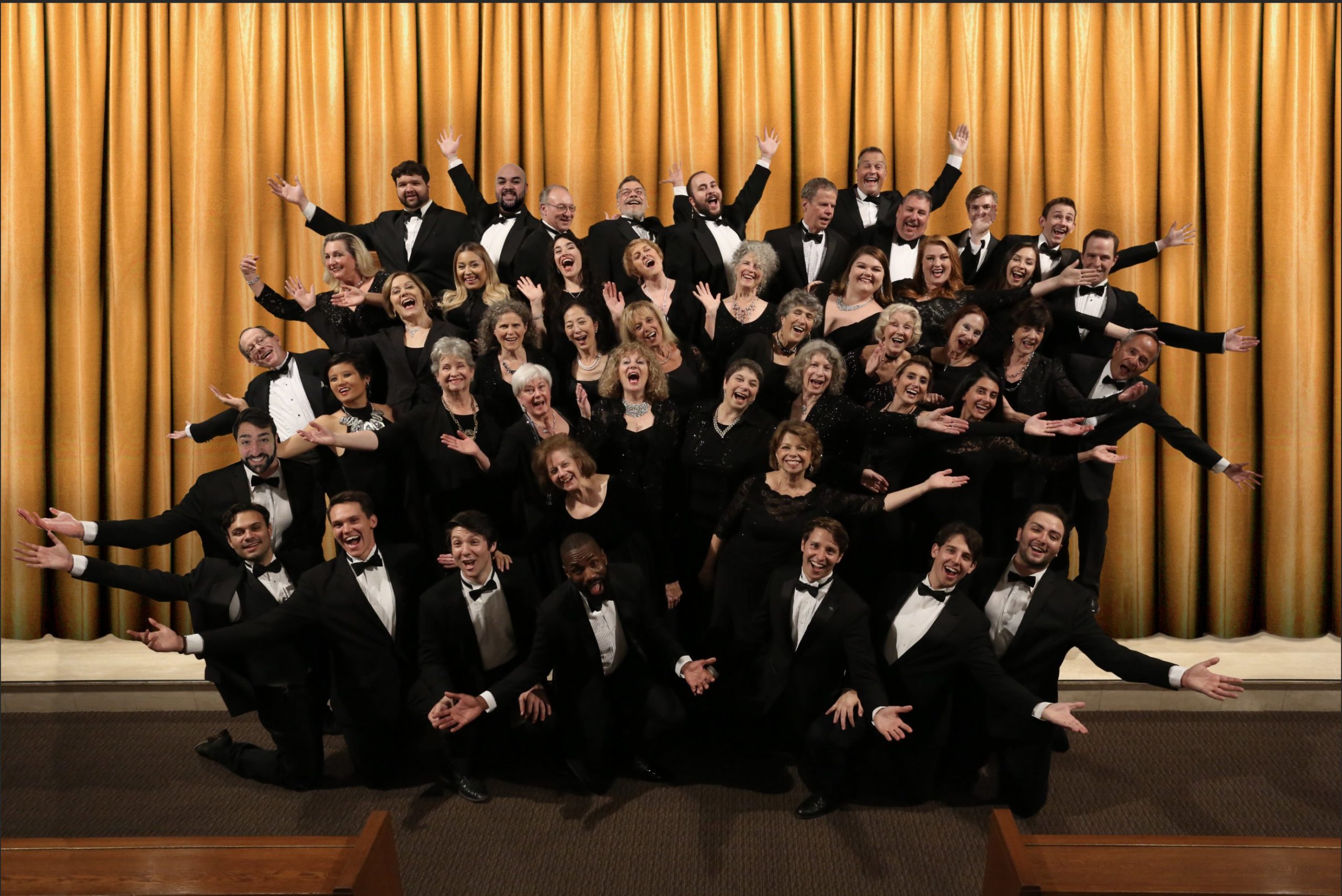
The Verdi Chorus | Courtesy photo

At the time Ketchum was teaching at PCC, she was also an opera singer at a dining place in Santa Monica called The Verdi Restaurant. She recalls, “The Verdi Restaurant was a beautiful place with elegant décor, served delicious Italian food, and had dinner shows. I was one of about 25 opera singers who would sing three or four songs. On any given night, we would do a show of opera arias, duets, etc., and then a late night performance of Broadway hits.

“The owners of the restaurant decided it would be a good idea to form a chorus made up of patrons. They asked me to lead it because I had some conducting experience – having done my undergraduate degree in choral conducting. The professional singers from the restaurant, like me, did solos with the patrons who were part of the chorus. Every time the chorus sang the restaurant had a full house because all their friends and relatives came. They loved it so much that when the restaurant closed, the chorus didn’t want to quit. Consequently, several of them got together and raised some money to keep it going. They asked me if I wanted to head the group and I said yes, with the stipulation that we auditioned everybody. It wasn’t something we did then because the owners of the restaurant didn’t want to turn anyone away. But when I took over, I thought it was important to elevate the quality of our show. My other condition was that they take care of all the business and leave all of the artistic decisions to me. It’s highly unusual for an arts organization to give its artistic director complete control, but they agreed. Thus, in 1983, Verdi Chorus was born.

“We found various places to perform until we finally ended up at the First Methodist Church in Santa Monica. We grew into a huge company of strong singers and good musicians of all ages from every walk of life and every place on earth. I have 15 section leaders – which is also very unusual in a group like this – of young, paid opera singers to sing with the group and to do some of the small solos.”

The section leaders, named the Walter Fox Singers after the family who donated the funds to maintain it, became an offshoot of the Verdi Chorus. These are young, serious-minded talents who are pursuing a career in opera. Describes Ketchum, “Most of them are either opera students in the universities, or grad students, or those who have just graduated and starting careers. This gives them an opportunity to learn music that they might not have learned, probably because as a young singer they don’t do all the big heavy singing. We’re doing Verdi, Puccini, and some of the big opera; this also gives them the chance to sing solos, which they may not have gotten to do in school. It’s like a launching pad for them.”

Asked if she has helped start someone’s career in opera this way, Ketchum responds, “Yes, as a matter of fact, there’s one that comes to mind – Babatunde Akinboboye who’s from Nigeria. We call him Bobby and he was a Walter Fox singer for several sessions. He’s done marvelous work and has flourished. Another one is David Childs, who was with us for several sessions a year ago, and is now going to Rabbinical School. He’s going to become cantor and I think he’s just absolutely perfect for that. There are several who have gone in various directions in music.”
(Left to right): Returning soloists Nathan Granner and Jamie Chamberlin with Anne Marie Ketchum and her husband Aurelio de la Vega | Courtesy photo / Verdi Chorus

Verdi Chorus’s ‘L’Amore e la Vita’ features two returning soloists, Nathan Granner and Jamie Chamberlin, for whom this year’s performance marks a particularly happy occasion. Ketchum elucidates, “When they sang with us last season, the Sunday matinee culminated with Nathan proposing marriage to Jamie onstage, to the delight and surprise of the audience and Jamie. She not only accepted, but did so with several high Cs! To have them back as husband and wife, and heralded by Verdi Chorus with ‘Si celebri alfine’ from Verdi’s ‘I Vespri Siciliani,’ seems wonderfully right! I’m also thrilled to have the wonderful Danielle Marcelle Bond, who I am a huge fan of, joining us. Additionally, I’m delighted to welcome back Roberto Perlas Gomez, one of our favorite baritones and part of the Verdi Chorus family. The fact that these four incredible soloists are also connected as dear friends makes having all of them together for this concert even more special.”

The longevity and success of Verdi Chorus seems incredible given the general belief that opera isn’t mainstream and is a niche. Making it accessible and appealing to a larger population could prove to be challenge. While Ketchum agrees with that assumption, she contends, “Sure, there is a wide swath of the populace that’s clueless about opera. But I have to say that people who love opera are often fanatical about it. They champion it wholeheartedly and go to great lengths to support it. Furthermore, our chorus members and Walter Fox Singers are involved in many things in their daily lives and meet other people. Through simple word of mouth, people are finding out about us. But we are also very consciously doing a lot to actively promote the work that we do – we now have a PR company that publicizes us, we’re on social media like Facebook and Twitter.

“One other thing I want to point out is that our ticket prices are much lower than other opera events. In many instances, someone will come to the concert and get turned on to opera because of that. It’s not as expensive, it’s a one-night thing, and it’s a couple of hours. We don’t have sets and we’re not in costumes, yet there’s something powerful and lyrical in the acting and the soloists’ performance. It’s different from your normal choral music because there’s so much going on, it’s exciting and magnificent. Opera might be one of the most complex of the performing arts. Opera is theatre – there’s passion and intrigue, comedy and tragedy, and everything in between – and that’s why the art has survived over a long period of time.”

This weekend, let the Verdi Chorus transport you into another world for a celebration of love and life. For opera allows us to escape the monotony of our mundane life even as it mirrors its confounding complexities.
Arcadia Tenor is a Featured Soloist in the Verdi Chorus 35th Anniversary Concert

Originally published on 5 November 2018 in the Pasadena Independent, Arcadia Weekly, and Monrovia Weekly

A peacock in the L.A. County Arboretum in Arcadia

Tenor Todd Wilander grew up in Arcadia, attended Arcadia High School in the late 1980s, then went to California State University in Los Angeles (Cal State). Little did he know then that he would be traveling the globe, performing the works of venerated opera composers in world-famous concert halls.

Wilander is one of four featured guest soloists in the Verdi Chorus 35th anniversary season which culminates with its Fall 2018 concert ‘Passione! Opera!’ for two performances only at the First United Methodist Church in Santa Monica on November 10 and 11 at 7:30 pm. He has been praised by the New York Times for his ‘brave, vocally assured portrayals,’ and he has returned for eight seasons, thus far, with The Metropolitan Opera.

Tracing his extraordinary path that led to opera, Wilander recalls, “At Arcadia High, I was a member of ‘Chanteurs,’ which was like a ‘Glee’ group; we wore sequined vests and we sang show tunes and rock n’ roll. I also sang in the Arcadia Presbyterian church choir with my mom and grandma – I was a back-up singer with a bunch of adults, not really knowing what I was doing but I had a big voice and a natural talent.

“Dr. Thomas Miyake, who was the choir conductor and head of church music at the Arcadia Presbyterian Church, was also a professor in Music Studies and the Choir Director at Cal State. When I was looking at colleges for my undergrad work, he mentioned that he could get me a scholarship if I was interested in attending Cal State.

“At Cal State I was encouraged by Professor Pollyanne Baxter and the school pianist, Twyla Meyer, who I still see often. Both became my biggest academic supporters.

“I also became active in student politics – I was the president of the student body made up of 20,000 students. Political science had also been an interest and that gave me the opportunity to meet Bill Clinton and Pete Wilson. However, I decided to pursue singing and went to Northwestern University in Chicago to earn my Master’s degree.”

“From Chicago, I moved to Kansas City,” continues Wilander. “It was while I was there that I tried out for The Metropolitan Opera competition which it holds ever year. I made the first round then I went to New York with 25 other competing singers. The next round whittled it down to ten competitors, until five winners were chosen and I was one of them.

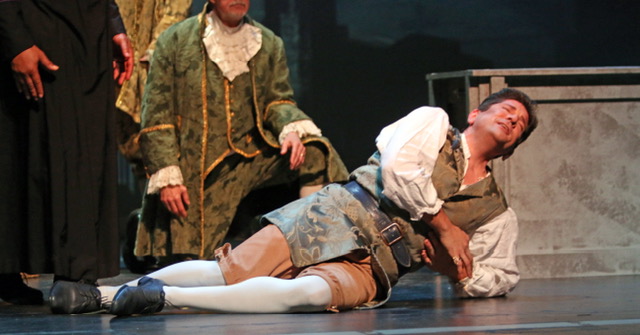
From the opera ‘Lucia di Lammermoor’ by Donizetti, singing the role of Edgardo, with the Boheme Opera of New Jersey | Courtesy photo / Boheme Opera

“Winning a competition by The Metropolitan Opera in 2000 was a big deal as it opened many doors. The next year I won a foundation competition and moved to Berlin where I lived and worked for three years; I was in my 20s. That led to performances in Italy and elsewhere in the world.”

In the years hence, Wilander has performed in 20 countries. And if this year’s engagements were any indication, he could be looking forward to seeing many more places.

“I was in San Francisco in January, San Luis Obispo in February, Alaska in March, Mississippi in April, then in Barbados for a week, and Germany for two months,” Wilander details. “I came back here and did a concert for my stepmom Marilynne held at the First Methodist Church in Pasadena, where she has been a member of for 50 years. I just finished an opera in New Hampshire.”

Wilander’s association with Verdi Chorus began almost two decades ago. He relates, “I knew Anne Marie Ketchum, Verdi Chorus’s conductor and founding artistic director, when I was a Cal State undergrad. She was in charge of the Pasadena City College (PCC) opera theater program at that time. Someone told me they were doing a Bernstein/Gershwin revue and they needed some male tenors so I called her up. To this day, I think fondly of that concert because those two composers are such geniuses.

“Anne Marie and I became friends and we would get in touch from time to time. Around 2013, we met for lunch and she told me about Verdi Chorus. She said they hold two big concerts a year and invited me to be a tenor soloist; I think this will be my fourth time with the group.”

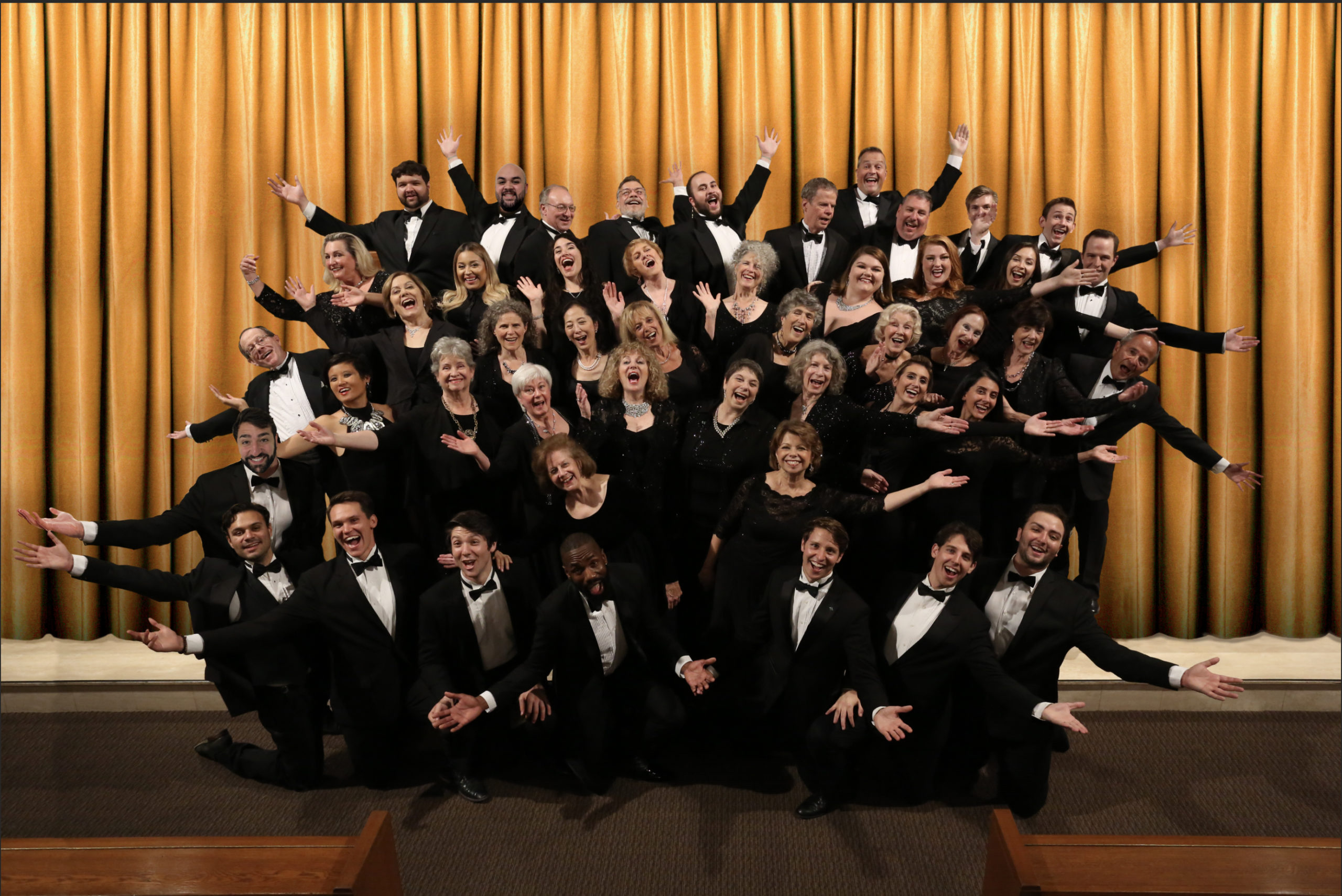
The Verdi Chorus | Courtesy photo / Tim Berreth

The Verdi Chorus was founded in 1983 at the Verdi Restaurant in Santa Monica. When the restaurant closed in 1991, the Verdi Chorus continued. It is the only choral group in Southern California that focuses primarily on the dramatic and diverse music of the opera chorus. Every Monday night, over 50 singers from every walk of life, ranging in age from 18 to 80, gather together to become the Verdi Chorus.

“This concert is a great opportunity for people to hear a wide variety of the Top Ten Opera,” Wilander describes. “It’s not a full stage A to Z production – we’ll do selections from Verdi’s ‘Aida’ and Boito’s ‘Mephistopheles.’ We’ll do a big chunk of ‘The Tales of Hoffman’ by Offenbach and ‘Samson and Delilah’ by Saint-Saens. So it’s French, German, and Italian.”

“There will be no orchestra, only a piano. While it’s not the same thing as an opera in the sense that the performers will be in tuxedos and gowns, I will still be able to do a limited amount of acting a role. So it’s really about making music with the voice and connecting with the pianist and the audience.”

Opera takes Wilander all over the world and he lives full-time in Manhattan, where he’s had an apartment in Washington Heights for the past ten years. But when he isn’t touring, he returns to Arcadia and picks up where he left off.

“I’m an only child and my parents have always been very supportive of me and my career,” Wilander discloses. “My mom was a huge influence in my life as a musician and as a human being. She always encouraged me to follow my passions and to do my best to make the world a better place. A few days before she passed away in 2010, she told me that every time I perform on stage and feel the spotlight following me, ‘Just know that it is me, beaming down on you from the heavens with grandma. Our hearts are full of pride that you’re sharing with everyone your God-given gifts.’ I still think of her words daily and am continually grateful.

“Her service was held at Lake Avenue (Congregational) Church in Pasadena. About 80 choir members sang and it was absolutely beautiful. Every Christmas I come back to sing with the Lake Avenue choir led by Worship Music Director Duane Funderburk.

“To this day, I stay with my dad when I’m in town. And with my mom gone, he makes sure I know that he is behind me emotionally, financially, and spiritually. Having that unconditional support is a blessing in this kind of work with such highs and lows. You could be performing in front of 2,000 people only to go back to a hotel and be by yourself. There are no groupies for opera singers.”

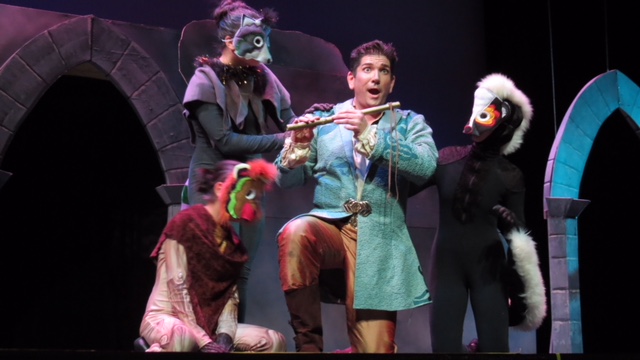
Todd Wilander as Tamino in Mozart’s ‘Magic Flute’ at Opera Fairbanks, Alaska | Courtesy photo / Opera Fairbanks

“There are gratifying moments, however,” Wilander quickly adds. “Like when someone says to me ‘Your passion made me feel something,’ or ‘That song was what my father listened to,’ or ‘Even if you were singing in French, I followed your character so well I understood his heartache.’”

Asked if he has a favorite opera, Wilander quips, “My funny answer is ‘the next job I’ll be doing.’ Clever remarks aside, I’ve had the most success with Italian composers like Donizetti, who wrote ‘L’elisir d’amore’ (The Elixir of Love). He composed operas about English Royals – ‘Elisabetta,’ ‘Anna Bolena’ ‘Maria Stuarda.’ I love historical operas. While he embellished here and there, his operas were pretty accurate.

“Now that I’m older and my voice has settled more, I can sing a lot of Donizetti’s works. In the same way that now I can do Wagner … which is great because his works are harder to cast. Twenty-year olds can’t possibly sing Wagner or they’ll ruin their vocal chords. Singers have to move on to the operas as they gain age and wisdom and emotional connectedness with the character.

“I can execute more Verdi and Puccini and I can project against a 60-piece orchestra, that’s very lush and big. Opera singers don’t wear microphones so shows are usually not held on consecutive evenings to give us time to rest our voice.”

Todd Wilander singing the title role of Hoffman in the opera ‘Tales of Hoffman,’ by Offenbach, at Opera North summer festival | Courtesy photo / Opera North

Wilander has sung in so many operas but every new role still induces the same thrill as when he first started out. He happily divulges, “My next big engagement will be with Opera New Jersey in March when I get to be Radames in Verdi’s ‘Aida.’ Then in April, I will be with the Tampa Bay Opera in Florida to sing in Puccini’s ‘La Boheme’ as Rodolfo. Other opportunities coming up include a concert in Germany and other New York concerts in the Spring. I don’t have a dream role but there are some roles I would like to perform again; and I’d love to do ‘Tosca’ one day.”

What the future holds can sometimes be a complete surprise as in Wilander’s case. “I didn’t grow up with opera; my parents didn’t either. They took me to The Ahmanson in downtown L.A. and we watched musical theater. I’d only sung Latin in Church when I was young. My love for opera started in college, but even then Cal State didn’t have an opera program.

“But opera has been a part of who I am as a person and I can’t imagine life without it. After all these years, I am still amazed at how each live performance is different because anything can happen. There was one concert when I slipped and slid across the entire length of the stage, but I didn’t skip a beat singing. There are nights when someone would be in remarkable form, or a singer would be struggling, or someone had a fight with his girlfriend so his head would be in a bad place. But all those emotions could be transferred to the words you’re singing.

“Opera is such a wonderful art form that imbues all kinds of sensations and experiences. It isn’t just a bunch of people in costume, singing in a foreign language. It transports audiences to places – fighting wars, falling in love, being rejected – to make the characters and stories a part of them.”

“There’s a reason that opera has lasted over 400 years – because it tells a story of love, passion, betrayal, anger, of human emotions every one of us goes through each day. And, in the world we live in today, it’s good to be reminded that there’s more than what we see on CNN and Fox News. There’s more humanity and love to go around.”

‘The Man Who Mistook his Wife for a Hat’ Fascinates at Caltech

Originally published on 5 March 2018 in the Pasadena Independent, Arcadia Weekly, and Monrovia Weekly

The human brain works in such complex ways and each one’s thought process is different based on their environment that there’s no predicting what a person would do or how an individual would react to a stimulus at any given moment. However inaccurate that statement might sound to an expert, what’s indisputable is how fascinating it must be to study how our minds operate and what happens when they don’t function as they should.

Dr. Oliver Sacks, a British neurologist, spent his life studying the human brain and shared his knowledge and findings with the world. He authored and published best-selling case histories about his experiences involving his patients’ disorders. His book ‘Awakenings’ was the subject of a documentary made for British television series Discovery. It was later adapted for the screen and became a film which starred Robin Williams and Robert de Niro.

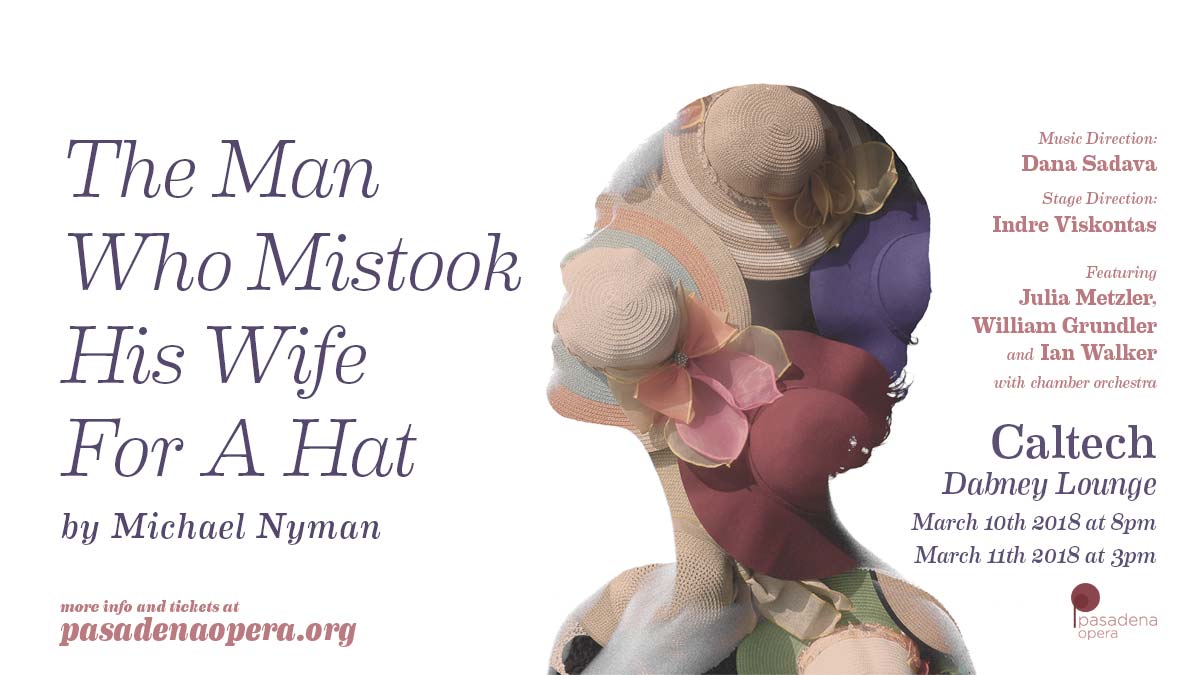
‘The Man Who Mistook his Wife for a Hat,’ Dr. Sacks’s case study about a man who couldn’t decipher what his eyes were seeing (medically known as visual agnosia), was the subject of a 1986 opera by Michael Nyman. It will enthrall Pasadena audiences when it debuts at the Dabney Lounge and Gardens at Caltech on Saturday, March 10 at 8:00 pm and on Sunday, March 11 at 3:00 pm.

Presented by the Pasadena Opera, ‘The Man Who Mistook his Wife for a Hat’ will be stage directed by Dr. Indre Viskontas with music conducted by Dana Sadava. Soprano Julia Metzler,  plays the role of Mrs. P; baritone Ian Walker plays Mr. P; and tenor William Grundler is Dr. Sacks. Pasadena Opera was established in 2014 by Dana Sadava (Artistic Director) and Indre Viskontas, (Creative Director) to revolutionize the presentation and perception of opera. Together they have a mission to provide contemporary theatre experiences the resonate with the community while maintaining the highest standards of artistic excellence.

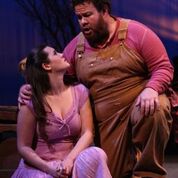
Chelsea Basler and James Callon in Pasadena Opera’s 2016 production of Susannah | Courtesy photo / Brian Biery

Viskontas says, “We like to tell stories with a social conscience that are compelling and touch on issues relevant to the times we live in. While we don’t have a mandate to perpetuate feminism, our last two shows featured female characters. ‘Susannah,’ a story about a beautiful woman who attracted a lot of men predated the #MeToo movement. It was a commentary on how women are sometimes misjudged because of their physical looks. Last year we presented ‘Cosi fan tutte’ which, loosely translated, means ‘Women are fickle’ and denigrates women.”

Their process for choosing which shows to put on commences during a lunch when they list all the operas they find interesting. Viskontas elaborates, “We come up with a ‘wish’ list then narrow it down to what we want to do next year and why. We try to be inspired by what’s going on in the country at the moment.”

Sadava relates her own method, “I walk around the city. I visit the San Francisco Music Library thumbing through scores, discovering new pieces, listening to recordings. Then I make my long list and short list. I find this process of choosing our next show very exciting.”

“There isn’t one particular opera that I am dreaming to put on,” explains Sadava. “My favorite thing to do is working with composers on new pieces. For our first production, we chose ‘Candide’ because it’s exuberant and involves a lot of people. It’s also in English and it’s by Bernstein, who’s one of my favorite composers. So I thought it made a statement in a lot of ways. For our next production we commissioned a new opera based on the story by Angela Carter called ‘The Bloody Chamber’ by Daniel Felsenfeld with a libretto by Elizabeth Isadora Gold. We’re planning it as a Halloween show.”

For ‘The Man Who Mistook his Wife for a Hat’ Sadava and Viskontas chose three performers who have an affinity to the area. The singers who make up the only three characters are all Los Angeles residents.

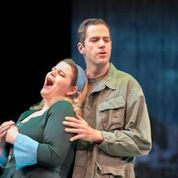
Julia Metzler and Jonathan Beyer in Pasadena Opera’s 2017 production of Cosi fan tutte | Courtesy photo / Carin Yates

Soprano Julia Metzler grew up in Glendale, a city about six miles west of Pasadena. She was the  winner of the Metropolitan Opera Competition’s western region finals. She graduated from the San Francisco Conservatory of Music with a bachelor’s degree in music and gained her master’s degree in voice from UCLA.

Having professionally performed in her late teens, Metzler has built an impressive resume. Recent roles include Fiordiligi in ‘Cosi fan tutte’ (Pasadena Opera), Micaela in Bizet’s ‘La Tragedie de Carmen’ (UCLA Opera), the title role in Gustav Holst’s ‘Savitri’ (Pasadena Pro Musica),and Lady Billows in ‘Albert Herring’ (Repertory Opera Company).

Additionally Metzler has performed and been interviewed on NPR’s ‘From the Top.’ She was also featured in the HBO miniseries ‘Masterclass,’ in which she had the opportunity to coach with Placido Domingo.

Metzler says, “Everyone in my family is a musician so I grew up with music. We had a violin store in Glendale and I played the instrument as a child. Sometimes I worked in the store helping kids try out violins.

When I was about 18 or 19, I started singing professionally but my interest in it started earlier than that. Music is ingrained in me; there wasn’t any one defining moment when I realized singing was my calling.”

“I have been a singing waitress in Italian restaurants,” recounts Metzler. “I try to work with as many different companies as I possibly can; I recently did small parts with L.A. Opera. I have just come back from China where I sang nationalistic songs for a televised performance. I will be traveling to New York to compete in the National Metropolitan Opera Awards and I’m very excited about that.”

Metzler pronounces, “I’m very lucky to be employed in a profession I am passionate about and travel wherever my art takes me. I have been involved in amazing productions and hope to one day get my dream role, Tosca.”

Sadava used to call Pasadena home. She reminisces, “I grew up in Pasadena so it has been a huge playground for me. I went to high school and college here. It’s a very sophisticated but open place so I’ve always had an eye on it as somewhere I’d love to come back to one day. We started this company as a tribute to the city of my youth.

Dana Sadava | Courtesy Photo

It was when I was attending Caltech that I had a carpe diem moment and decided to switch from engineering to music. I thought I could always go back to rocket science but I have to try doing music professionally and that’s what I did. I was thrilled to meet Indre and in her I found a kindred spirit. She and I both have parts of our brains firing out all at once; we just work well together. We have a kind of sixth sense about what we need to do and how it’s going to go.”

While Sadava has an engineering degree, music has always been a part of her life. She originally trained as a pianist and studied with Dorothy Hwang at Colburn School, Sanford Margolis at Oberlin Conservatory of Music, and Gabriel Chodos at the Aspen Music Festival. She was with the Disney Young Musician’s Symphony Orchestra and was seen on the Disney Channel when she was eleven years old.

As a Caltech student Sadava pursued her love for the arts, appearing as a piano soloist with the Caltech-Occidental Symphony and playing chamber music. She went to the University of Michigan for a master’s degree in orchestra conducting and studied with Kenneth Kiesler on a merit scholarship.

Sadava has been a professional conductor for the past eight years and has toured all over the United States, Canada, and Ireland. She is currently also the Artistic Director of the Community Women’s Orchestra in Oakland. She has recently been hired by the San Francisco Conservatory of Music to work on a project with their opera department.

A Toronto native, Viskontas earned her PhD from UCLA in neuroscience with particular emphasis on how the brain  changes when one learns new things. She received her master’s degree from the San Francisco Conservatory of Music where she met Sadava.

“It would have been more convenient for us to establish our company somewhere else,” Viskontas declares. “But because of Pasadena’s unique profile it became the most logical place for us. It is a beautiful city where there is a big support for the arts. With its world-class university, it is the center of education and technology. Opera, the way we present is, uses ground-breaking technology and new ideas. Besides, it didn’t have an opera company so we wanted to fill that gap.”

Indre Viskontas | Courtesy Photo

Viskontas happily mixes music with neuroscience. She says. “I teach Psychology courses at the University of San Francisco but I spend a lot of my time bringing science to the public. I like doing one or two projects a year. I did a couple of lecture series with The Great Courses (12 Essential Scientific Concepts and Brain Myths Exploded); a TV show on the Oprah Winfrey Network called Miracle Detective as well as a few web series. I write and host two podcasts, Cadence: What Music Tells us About the Mind and Inquiring Minds about science and society. I just finished writing a book on music and the brain which will be published by Chronicle in 2019.

I have sung in several companies and have done a whole bunch of bizarre projects. While I still sing on occasion with other companies, now I mainly work on projects involving Pasadena Opera or chamber music. I work often with a string quartet on vocal chamber music (Vocallective.com). I’m also working on a project to investigate what aspects of musical performance can elicit empathy in audiences (www.TheEnsembleProject.com).

‘The Man Who Mistook is Wife for a Hat’ is an amazing story about the power of music and the ways we should approach neurological problems. Dr. Sacks shows us that there’s a lot doctors could learn from their patients about the brain. To have this idea and to be able to present them in my favorite art form is something I had wanted to do for a long time. It is also a very personal project for me; he and I worked together on a venture called Musicophilia. He was my mentor and I wanted to honor his passing in a significant way.”

“He might have had trouble connecting with the larger world, but he always managed to reach even the most elusive patients with his unassuming manner and keen ability to get to the heart of their experience,” continues Viskontas. “I’m thrilled to have the opportunity to share his genius with our audience.”

For Sadava, ‘The Man Who Mistook His Wife for a Hat’ is a fulfillment of a long-dreamed of production. She reveals, “I have been looking forward to presenting Nyman’s beautifully minimalist score weaved with the accessible melodies of Robert Schumann, whose music is a remedy for the patient’s ailing mind. The sparseness of the score gives the audience time to digest the profound insights the Oliver Sacks poetically presents.”

Viskontas expresses it succinctly when she pronounces, “We boastfully and arrogantly think that opera is the height of theatre. Storytelling is what we do – in the grand form of opera.”

At the turn of the 20th century, Pasadena saw the flourishing of the arts and the blossoming of technology which inspired solar astronomer and visionary George Ellery Hale to develop the city as a scientific and cultural destination. It’s only fitting that ‘The Man Who Mistook his Wife for a Hat’ is set here where, more than a century later, arts and culture still mesh seamlessly with innovation and technology.