“On This Side of the World,” an East West Players presentation, held its opening day at David Henry Hwang Theater on May 14. It is a joint creation of Paulo K. Tiról, who wrote the music and lyrics, and Noam Shapiro, who directed it. Featuring an ensemble of the most accomplished Filipino actors and performers in Southern California, this world premiere marks the first time a musical about Filipino immigrants written by one himself has been staged.
With a one-way ticket to the United States and a suitcase full of stories, a woman leaves her native Philippines and flies 8,491 miles across the Pacific Ocean to build a new life in New York. Her 17-hour journey, which begins when she boards a Philippine Airlines flight in Manila, is the subject of “On This Side of the World.”
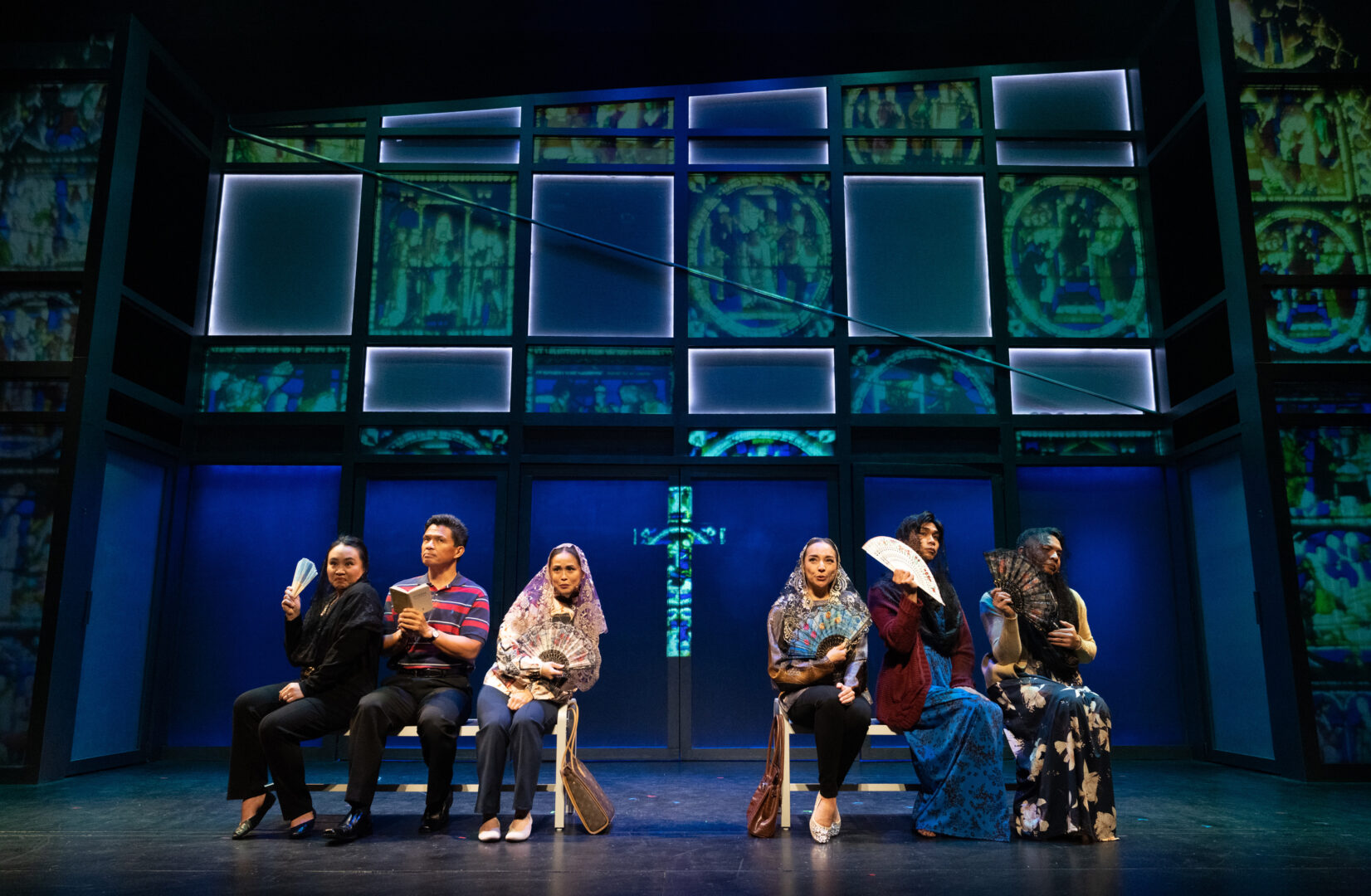
The cast performs ‘Ay! Amerika’ | Photo by Jenny Graham / East West Players
In this musical, a woman replays each story collected from immigrants who came before her – tales of overseas workers, young lovers, and gossipy church ladies; snapshots of undocumented immigrants, millennial princesses, and first-generation Americans. Running approximately two-and-a-half hours that includes a 15-minute intermission, it offers its audience insight about Filipinos as it provides great entertainment.
While I am a Filipino immigrant, I’ve been in the United States for 41 years and four decades of those years as a Pasadena resident. In all that time, I haven’t visited my native country and I feel more Pasadenan than Manileña. But the show brought back a flood of memories of my years growing up in a Manila suburb.
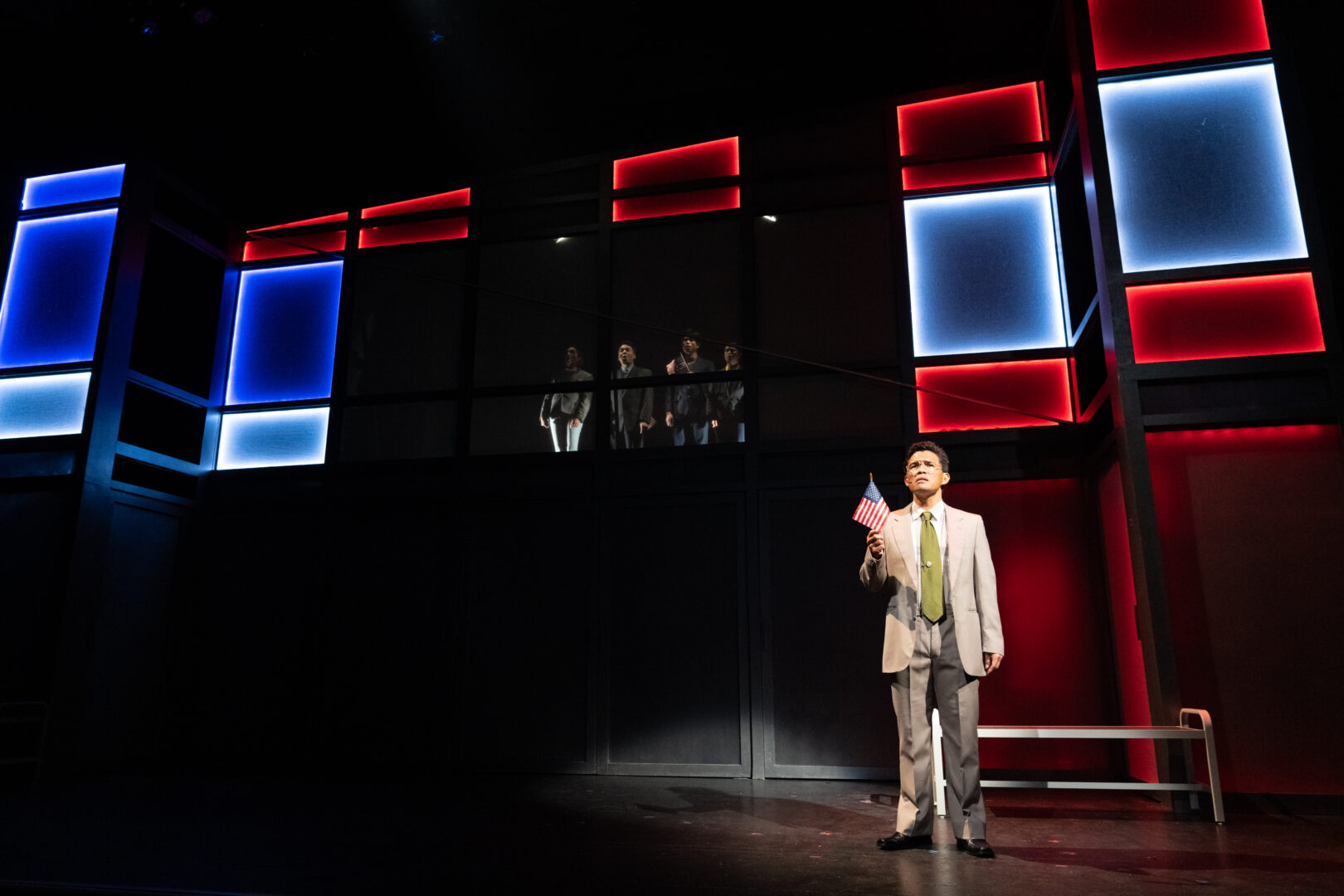
Michael C. Palma as Mr. Legarda performs ‘Proud’ with the cast | Photo by Jenny Graham / East West Players
One of the songs – ‘Lantern in the Window’ – sung by Cassie Simone as Kayla, is about the lantern that’s unmistakably Filipino. We call it ‘parol’ and it hangs in every window at Christmas. As poor a country as the Philippines is, Filipinos live large at Christmastime and spend a lot of money buying presents. We also usher in the holidays way earlier than most. In the U. S., Christmas season starts the day after Thanksgiving; in the Philippines, all the malls have decorations up and Christmas songs are played in September!
Of all the Filipino traditions, it’s the Christmas midnight mass I miss the most. And I’m embarrassed to say that it isn’t because of the service, but the food. As children, my two sisters and I attended ‘simbang gabi’ during Christmas week because there would be food vendors selling an assortment of rice-based sweets we call ‘kakanin.’ The aroma emanating from the food stalls surrounding the church patio was more than a small distraction – we could think of nothing else but hurrying out as soon as the priest utters ‘Go in peace’ to have some ‘bibingka,’ ‘puto,’ ‘kutchinta,’ or ‘palitaw.’ Even now, I could practically smell and savor the scrumptious food! The festive spread that my mom would have laid out on the dining table after we got back from the Christmas eve mass, or ‘misa de gallo,’ is also something that’s not easily recreated in California.
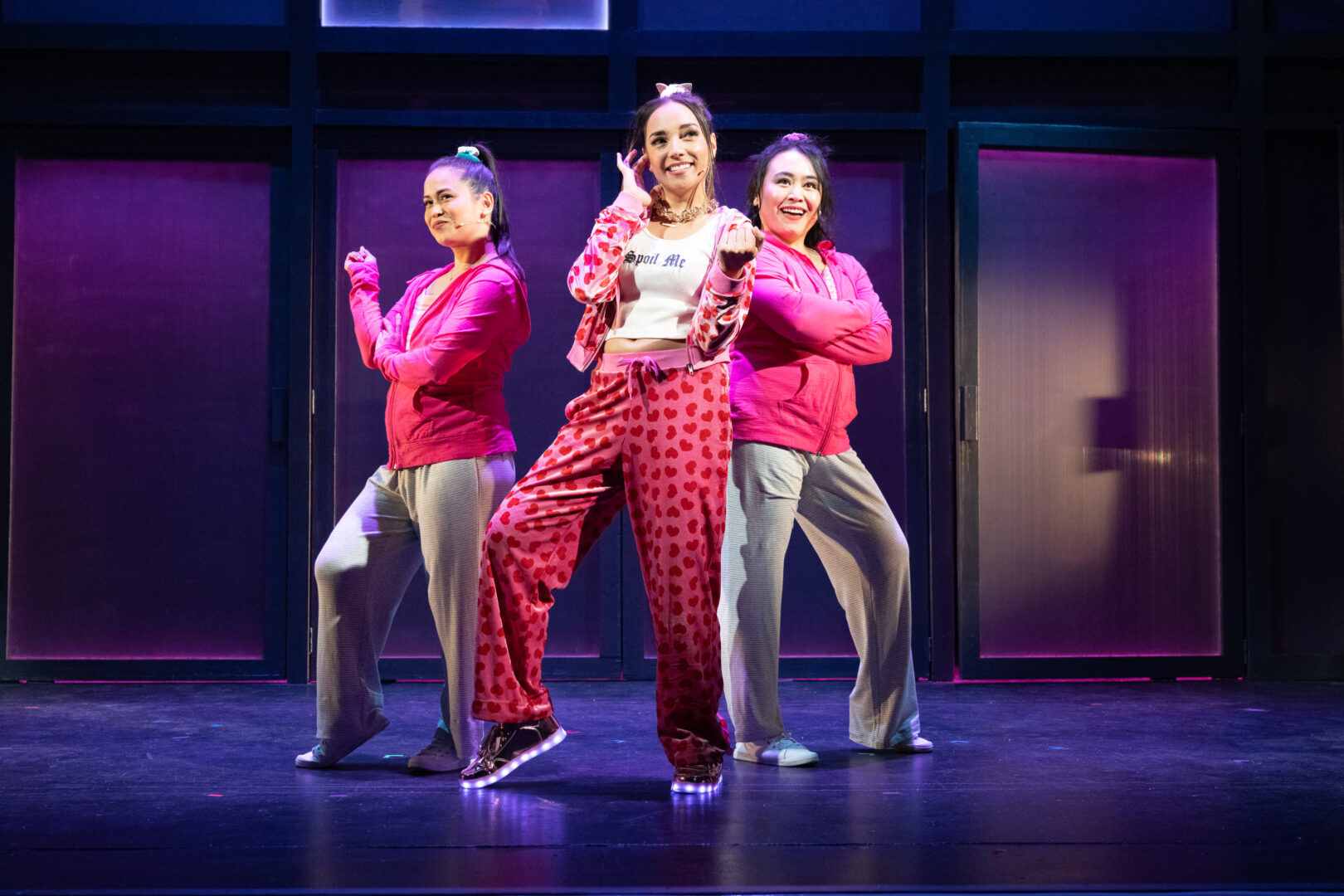
Cassie Simone as Dee-Dee (center) performs ‘Yaya’ with Zandi de Jesus (left) and Andrea Somera (right) | Photo by Jenny Graham / East West Players
The stories Tiról tells through the songs are faithful to all Filipino immigrants’ experiences and I will mention a few that stand out for me. Michael Palma’s ‘Cool Tito’ works tirelessly just so he can send money and ‘balikbayan’ boxes full of toys and the latest electronic gadgets and athletic shoes to nieces and nephews back home. He maxes out credit cards at Christmas to buy every item on the list. Never mind that he has to spend the next three months working double shift to pay off his debt and cover the finance charge it incurred.
‘Yaya’ reminds me of the shock many Filipinos feel when they first arrive in the United States and find out they have to do all the housework themselves. Cassie Simone’s portrayal as Dee-Dee, the brat who’s wailing for her ‘yaya,’ is quite hilarious.
The song ‘Ay! Amerika’ is as side-splittingly funny as it is a spot-on depiction of just how judgmental Filipinos can be. Maritess and Marivic, as portrayed by Zandi de Jesus and Cassie Simone, are models for the quintessential holier-than-thou women who gossip with glee about the ill-fated choices and misfortunes of people they knew from back home. They sing that such scandalous events can only happen in America. It’s a comical scene – the ensemble intones ‘wa-wa-wa-wa’ in prayer, and the audience when I watched the show chanted along.
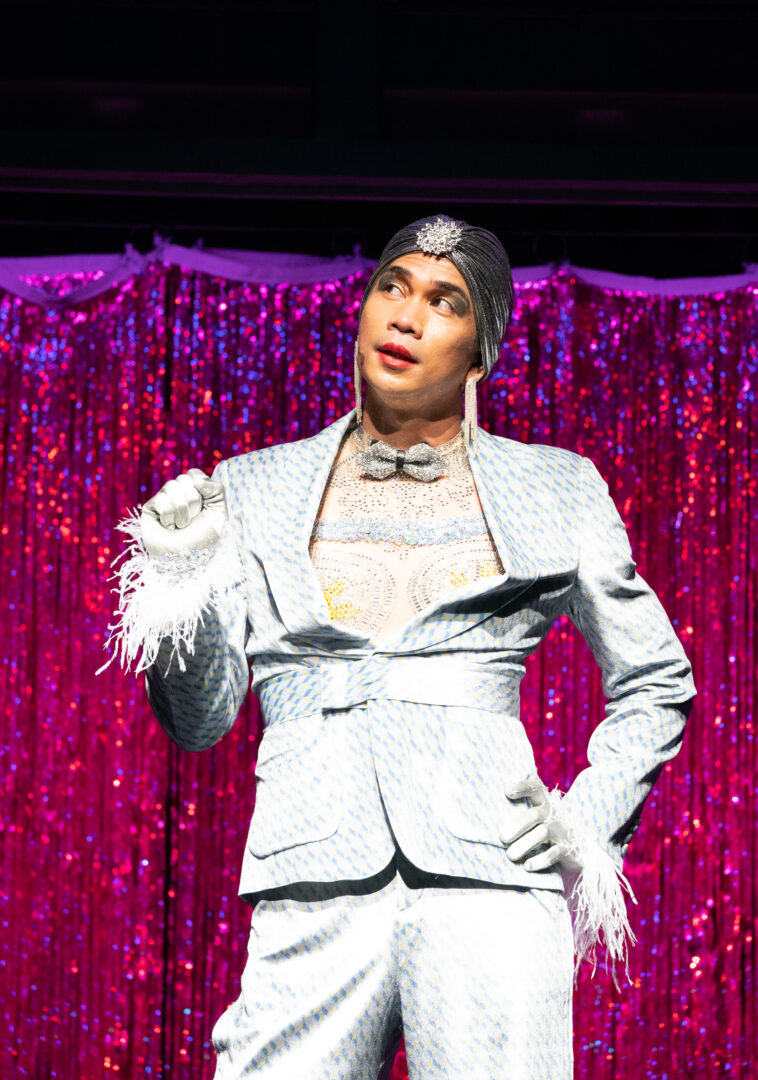
Steven-Adam Agdeppa as Miggy performs ‘Rice Queens’ | Photo by Jenny Graham / East West Players
But the performance that brought the house down was Steven-Adam Agdeppa’s, ‘Rice Queens.’ The audience absolutely loved him as Miggy in drag and they demonstrated it clearly. They cheered and whistled. Someone even threw a dollar bill on the stage.
‘My Mother is an Immigrant,’ sung by Andrea Somera as Brianna, is a song that will reduce all mothers to tears. They will deeply connect with it. At the start of the song, Brianna bemoans that she doesn’t fit in at school because her mother is an immigrant; that her mother expects her to get excellent grades and makes her go to art classes and take piano lessons. And her mother thinks she’s extraordinary.
By the end of the song, Brianna is a fully grown adult and says she turned out to be ordinary. And, contrary to how she felt about her mom in the beginning, Brianna looks back with appreciation for her mother. She hopes to raise her future child with as much love as her mother has for her, that she now recognizes.
Coincidentally, my daughter’s name is also Brianna. And, while I wasn’t a tiger mom – a label that a lot of the Asian parents I know wear as a badge of honor – I admit my academic expectations when she was in school were ridiculous. I also thought she was extraordinary and now that she’s in her 20s I still think she’s a remarkable human being.
All the songs in “On This Side of the World” are noteworthy but ‘My Mother is an Immigrant’ speaks to me the most.
Andrea Somera as Brianna performs ‘My Mother is an Immigrant’ | Photo by Jenny Graham /East West Players
I interviewed Tiról and Shapiro when they were just two weeks into rehearsal and they said work in a musical never ends, that it’s ongoing. In the story I wrote, the plane was bound for Los Angeles – a 14-hour flight and 8,000 miles from the Philippines. I don’t know if they decided on that final destination because the New York skyline, which they use as backdrop, is more impressive. Or maybe they thought that since the plane originated from Ninoy Aquino International Airport it’s only fitting that the destination in America be John F. Kennedy International instead of LAX. After all, the Philippine airport is named after a slain hero and icon so only a disembarkation site bearing the moniker of an assassinated American president will do.
But whatever and however they may have deviated from their initial idea, this iteration of “On This Side of the World” is a beautifully presented, well-thought-out production. The show reflects all that is good and admirable about Filipinos and Filipino immigrants, as well as the bad and disgraceful about us. The performers are superb actors and singers who can wow any audience – and when I watched it, the majority of those in attendance were non-Filipinos. But they were fully captivated and engaged throughout and indicated their approval with a rousing applause and an enthusiastic standing ovation at the end of the show.
Tiról deserves acknowledgment and praise for blazing the trail for aspiring Filipino musical theatre writers and creators. To Shapiro we owe a debt of gratitude for taking a leap of faith when he helped Tiról get this dream project realized.
The success of “On This Side of the World” can only advance the talents of Filipino performers who have, until now, mostly played insignificant roles in Hollywood films and Broadway shows. It can only give Tiról a foothold in the performing arts and make it easier for other Filipino playwrights to get their work staged. It can only pave the way for a more equitable future for all Asians in America.
Originally published on 26 April 2023 on Hey SoCal
With a one-way ticket to the United States and a suitcase full of stories, a woman leaves her native Philippines and flies 8,000 miles across the Pacific Ocean to build a new life. Her 14-hour flight journey is the subject of “On This Side of the World” premiering at the David Henry Hwang Theater on May 11 and running through June 4, 2023. Presented by East West Players, it is the joint creation of Paulo K. Tiról, who wrote the music and lyrics, and Noam Shapiro, who directs. It features an ensemble of the most accomplished Filipino actors and performers in Southern California.
Interviewed by phone, Tiról and Shapiro graciously talk about how a simple grad school course exercise became a musical embarking on its world premiere, answer questions about their collaboration, and disclose future projects.
“I was at NYU doing my Masters in Musical Theatre Writing in 2013 and for one class, the assignment was to choose a community which would inspire songs that I would write over two years,” Tiról begins. “I chose Filipino immigrants because I was one myself. At the same time, I didn’t know any other Filipino immigrant composers writing about the Filipino immigrant experience. And I have lots of immigrant friends whose stories I could ‘steal’ to turn into songs.”
The cast of ‘On This Side of the World’ | East West Players
In this musical, a woman replays each story collected from immigrants who came before her — tales of overseas workers, young lovers, and gossipy church ladies; snapshots of undocumented immigrants, millennial princesses and first-generation Americans — which was inspired by Tiról’s own experience. (read my review here)
“After a 12-year corporate career in Manila, I decided to immigrate to the U.S. in 2011. It was scary; my life was going to change and I didn’t know what to expect. So I contacted all my immigrant friends in the U.S. and I asked them what their stories were like. I collected and wrote their stories and, on my own one-way ticket flight from Manila to Boston, which was my first city here, I replayed them. And that was the structure for the musical,” explains Tiról.
That structure, however, didn’t get assembled until Shapiro collaborated with him. In fact, this show might never have been mounted if it were not for a chance meeting.
“There was a lot of discouragement from 2013, when I first started writing the songs, to 2018,” reveals Tiról. “I had been pitching and trying to get the attention of New York Asian American theatre community, Filipino American artists, hoping to find collaborators and had no luck. It was when I met Noam in 2018 that things started to happen.”
Shapiro recalls how he met Tiról and what caught his attention, “At a presentation of new musical theatre at the Public Theater in New York City in 2018, Paulo showcased one of his songs from ‘On This Side of the World’ called ‘Light of the Home.’ It’s about three overseas workers in home healthcare services and how they have learned in Filipino culture to be a light of the home, to care for their loved ones who are family. But they made the difficult decision to come to the U.S. so they can send money to care for their families back home. The music, lyrics, and characters were unlike anything I’d ever heard. I’m not Filipino, but my mom is an immigrant so that resonated with me. I wrote in my program next to Paulo’s name ‘I got chills.’”
“He literally just sent me an email saying ‘I’d like to meet you, talk, and learn more,’ Tiról adds. “We exchanged a few emails and then had a three-hour conversation, after which he said, ‘I’d like to help you finish this show and get it produced.’ I was floored! At the time he made that pronouncement, the show was only half-written; it was really a gamble on his part.”
Noam Shapiro (left) and Paul K. Tiról (right) in residence at the Catwalk Art Institute in Catskill, New York | East West Players
And an artistic partnership was launched. “The show used to have a libretto, or spoken dialog, but we changed that,” states Shapiro. “I worked with Paulo in selecting the order of the 29 songs he wrote so that they tell a cohesive story. Together we came up with the story arc following this one woman who is coming to the U.S. to start a new job as a teacher in order to support her family. She meets five other Filipino immigrants on the plane who inspire her to reflect on all the different stories she collected prior to leaving the Philippines about other immigrants before her. She has a notebook with her where she wrote these stories and each time she meets someone, she turns to the page in her notebook that has the corresponding story and that story comes to life. And over the course of the 14-hour flight, her journey from anxiety and fear to that of optimism and hope unfolds.”
Getting a musical from development to production takes years — the process is rife with obstacles to surmount. “They cost anywhere between $6 million and $11 million to produce and you never know whether they’re going to be successful,” explains Tiról. “So many musicals on Broadway close prematurely, which is why these days most of them are restaging or tried-and-tested classics. Or the new ones are adaptations of Hollywood blockbusters, bestselling novels, or cartoons. I’m really grateful to Noam because he took a chance on this musical. And over the years we’ve been fortunate to have had organizations who’d taken a risk on it. East West Players chose to program this musical in this season. It’s challenging finding supporters and people who will back you and we’re very lucky with what we’ve found.”
“We were able to present the show in 2019 for the first time and it was called ‘A Workshop Production,” Shapiro expounds. “That means we had some costumes, sets, and lights, but not a whole production. We did the show in a tiny 65-seat upstairs theatre in downtown New York City when it was about two-thirds complete and we’ve added several songs since. A big springboard for this show after the workshop production came through the National Alliance for Musical Theatre (NAMT) which has an annual festival of new musical theatre works. In 2020, we were selected out of 330 applications for this festival and we presented three songs from ‘On This Side of the World’ in a virtual format. From that opportunity, several different theaters on the West Coast — including East West Players — heard about the show, took an interest, and supported us over the last three years to bring the show to production.”
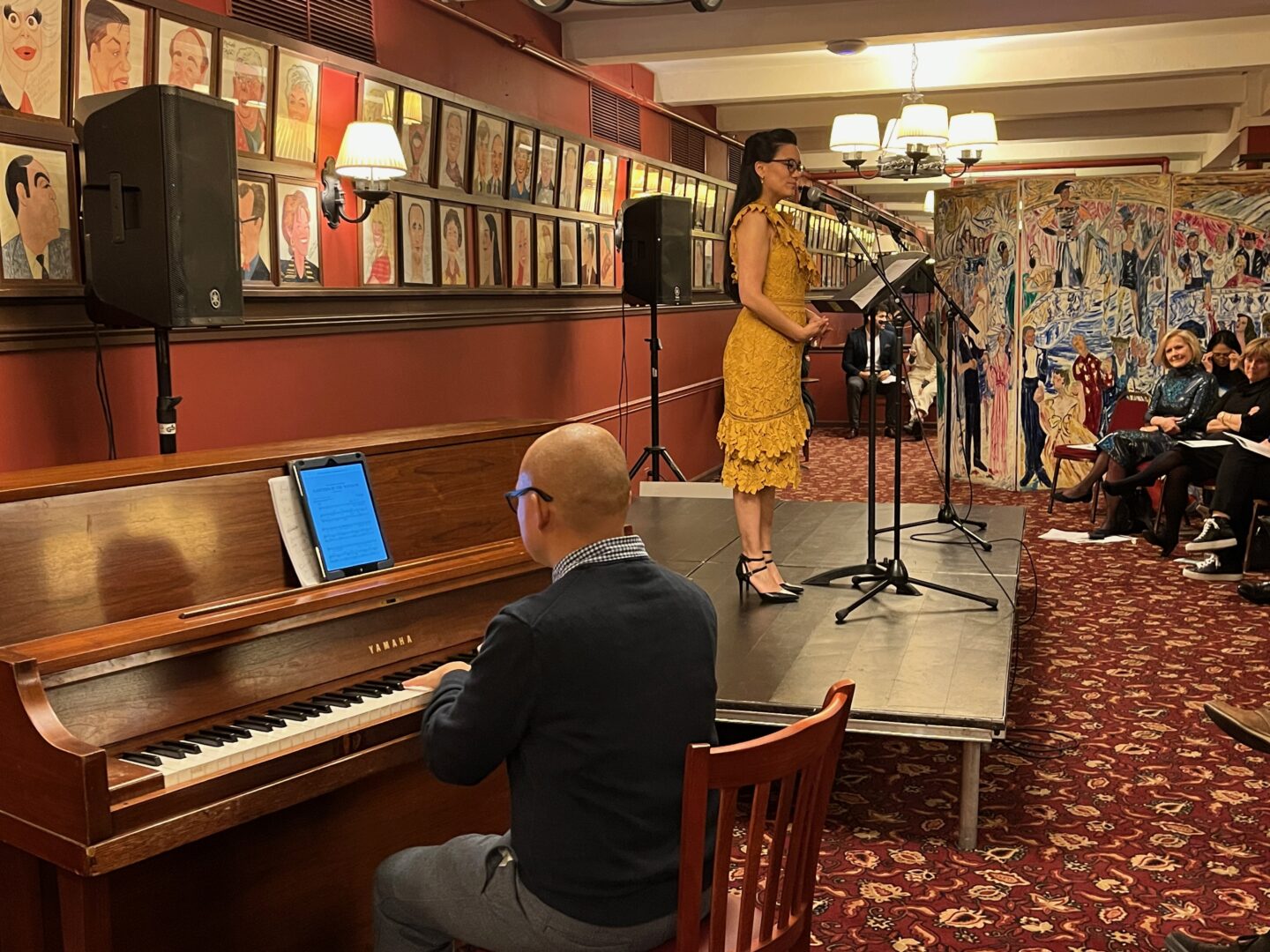
Paulo K. Tiról accompanies Diane Phelan at the annual fundraiser of the Rhinebeck Writers Retreat at Sardi’s in New York City. Dianne starred as Cinderella in ‘Into the Woods’ on Broadway, and is currently on the show’s national tour which will end in L.A. in July 2023 | East West Players
“One other challenge is that many people like a single story, follow one character as they go from A to B to C to D. And this musical is a story about stories – it’s about how stories give us strength to move forward courageously in our lives and become our fullest selves. And it took some convincing to get theaters to buy into that idea. So we’re really grateful for not only East West Players but also the NAMT. We participated in the Rhinebeck Writer’s Retreat, the Catwalk Art Institute’s summer residency, and a developmental reading at Musical Theatre West. Prior to NAMT, the show was developed by Three Hares Theater, Access Theater, and Prospect Theater Company. All these people believed in us and the show. There’s an expression that ‘it takes a village’ and that’s really true for bringing a new musical from page to stage.”
There’s a misconception that all Filipino men are with the U.S. Navy and all the women are nurses, or maids, or caregivers. And while this musical features some Filipinos as healthcare workers, it has more characters than that. “We wanted to change the belief that Filipinos are one-dimensional navy enlistees or health care workers. Apart from dispelling that notion, we also wanted to give actors more opportunity to portray characters that are three-dimensional, who are fleshed-out, interesting, and complicated,” declares Tiról.
Shapiro illustrates, “One of my favorite songs in this show is called ‘Leading Man’ and it’s about a Filipino actor who was very successful back in Manila who came to the U.S. to break into show business in Hollywood or on Broadway. But he keeps getting offered either ‘extra’ roles or non-speaking parts, or traditional Asian American characters in ‘Miss Saigon’ and ‘The King and I.’ All he wants to do is play a leading character, to play someone in a prestige drama or a lead romantic character in a comedy. This musical provides an answer to that character’s wish by giving six actors the opportunity to play comedic and dramatic roles, to sing so many different styles, to demonstrate all that they can do and, hopefully, expand the theatre canon of the roles available to AAPI actors.”
“The cast we’ve assembled are phenomenally talented, generous, and hard-working,” Tiról enthuses. “It’s not an easy show. There’s a lot of music — and it’s not easy music — but they’re pouring so much work and love into it.”
A staged reading of ‘On This Side of the World’ presented by East West Players in July 2022 | East West Players
One of the actors is Mike Palma, who is also associate artistic of Cold Tofu Improv. He describes his early childhood in L.A. “I was born and raised in Silver Lake and when I was growing up, we had a back house that we rented out. An immigrant family who had just arrived from the Philippines moved in it and lived there for about nine years. They had little kids who didn’t speak a lick of English. I was an only child who was being brought up in Tagalog by my grandparents and my mom, so I was able to use what I knew and got to expand my Tagalog vocabulary to communicate with them.”
Filipinos are a music-loving people, as Palma’s family and upbringing prove. He reminisces, “My mom was always singing in the house while she did house chores and I mimicked that. Then my uncle arrived from the Philippines and lived with us for a couple of years. He was constantly singing and playing guitar, and he would invite me to sing with him. Then, lo and behold, he joined a Filipino choir in L.A.”
Palma continues, “When I was about seven or eight years old, a really famous theatre group from the Philippines came to LA. to stage the zarzuela called ‘Walang Sugat,’ which was apparently a really big deal in Filipino theatre. It was all in Tagalog and had a cast of the most famous Filipino actors. The director was Bernardo Bernardo and the lead actress was Fides Cuyugan.
“This theatre company hired the choir, which my uncle was a part of, and I would sing the songs with him. Then I got hired when they were looking for a little boy to play one of the pivotal characters. In the role, I was accidentally shot and was rescued by the hero, the show’s lead actor. There was a pivotal song “Bayan Ko’ — I didn’t know then the levity of this song — and I sang that every single night. We toured that show all over California, at Lincoln Center in New York, and in Canada. That was the last bit of acting I did.”
It was in the 1990s when Palma consciously decided he wanted to be an actor and he explains why, “I rarely saw an Asian face on TV or in film and I would say to myself, ‘Man, I could do that!’ But I never really did anything about it. Then in 1998, I was cast in another play and my career as a ‘professional actor’ ramped up from there. I took acting classes — one of my mentors and close friend was Domingo (Dom) Magwili — who held lessons at a Japanese community center right off the 101 freeway on Vermont. And then in 2002, East West Players Theatre Group had a two-to-three-week summer conservatory. Despite the enormous cost for me back then, I enrolled. It offered several courses — dance, voice, acting, improv, tai chi. The dance instructor was Kay Cole, who originated one of the roles in Chorus Line on Broadway.”
Noam Shapiro and Paulo K Tiról at the first rehearsal for the world premiere of ‘On This Side of the World’ at East West Players in L.A. on April 23, 2023 | Photo by Gavin Pak / East West Players
In “On This Side of the World,” Palma plays the baritone roles — Abe, Tito, Miko, and Mr. Legarda — and the ensemble. He says, “Paulo’s music is so challengingly beautiful that I’m listening to it all the time, more so than the other musicals I’ve been in. The words are so deep and layered, the melodies are beautiful. This is my first time working with Paulo and it’s been a great experience.”
Palma says further, “In the span of my career, I’ve worked with down-to-earth, supportive, loving people. Paulo and Noam are so giving. Their rehearsals are very free — there’s a lot of creativity and improv. Noam is one of those directors who’ll let you find your character and your process versus someone who gives it to you. He might have an idea but he’ll let you discover it and maybe what you find expounds upon that and you both come up with something better than the original thought.”
“This musical is going to hit upon everything you grew up with — the stories that you’ve seen as a child or a young adult,” Palma concludes. “Even on day one when we heard the songs, we said ‘Oh yeah, we did that!’ or ‘We saw that.’ There were mentions of the ‘balikbayan’ boxes, chismis, people talking in church, and, of course, there’s food. If you’re Filipino, it’s going to touch all of your senses, and all the memories and experiences you have as a Filipino or as a Filipino American. But this immigrant story relates to all ethnicities and any culture so you don’t have to be Filipino. You’re going to experience all the trials and tribulations of someone who goes into another country. It’s presented in a way you’ll understand and relate to, and you’ll love it! Besides all that, the music is great!”
That sentiment is echoed by Shapiro when he talks about their hopes for this show. “Our dream is that more and more people see ‘On This Side of the World’ and are touched by these characters’ stories. Whether that is a tour, or other new and unique productions mounted in other cities, we’d be excited by those opportunities. One of our other dreams is to travel up and down several states on the West Coast with large Filipino communities, and then eventually be able to bring the show back to New York and the East Coast.”
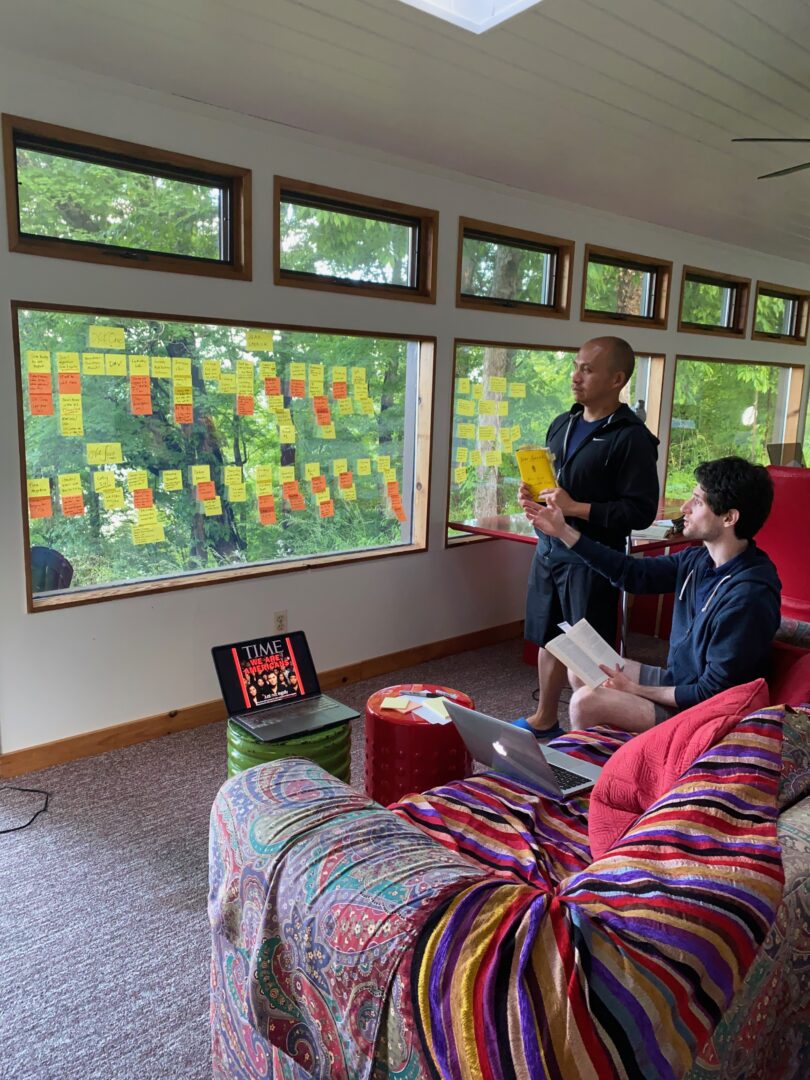
Paulo K. Tiról and Noam Shapiro work on their musical adaptation of Jose Antonio Vargas’s memoir ‘Dear America’ while in residence at the Catwalk Art Institute in Upstate New York in May 2022 | East West Players
Tiról and Shapiro work so well together that future collaborations are sure to follow. And Tiról confirms, “We’ve already started our second project. Right around the time when Noam was wondering ‘what are we going to work on next?’ we met Filipino American journalist and activist Jose Antonio Vargas.”
“Jose expressed interest in becoming a supporter after someone shared with him the songs on ‘On This Side of the World,’” Shapiro relates. “To prepare for our meeting with him, we read the memoir ‘Dear America’ and we both turned to each other and said ‘This would make an amazing musical.’ So at the end of our conversation with him, we asked if we could adapt his memoir to a musical and he agreed!”
“It’s still in the early stages and it isn’t going to be complete for a while because we’ve been focusing on ‘On This Side of the World.’ But we got his permission in late 2021 and we have a draft of a handful of scenes and songs. It takes a long time to develop a musical but over the next two or three years, we’ll see this new musical come to light,” assures Tiról.
Audiences can likewise be assured that the music and story will reflect how all Filipinos and Filipino immigrants get through hardships. They are a people seemingly unaffected by Asian pessimism. In the face of adversity and their daily struggles, Filipinos smile and sing their troubles away. No matter how bleak their circumstances, they look forward to tomorrow — confident that the new day will bring renewed hope and ever more possibilities.



 A San Gabriel Valley Inquirer