Originally published on 17 January 2019 in the Pasadena Independent, Arcadia Weekly, and Monrovia Weekly
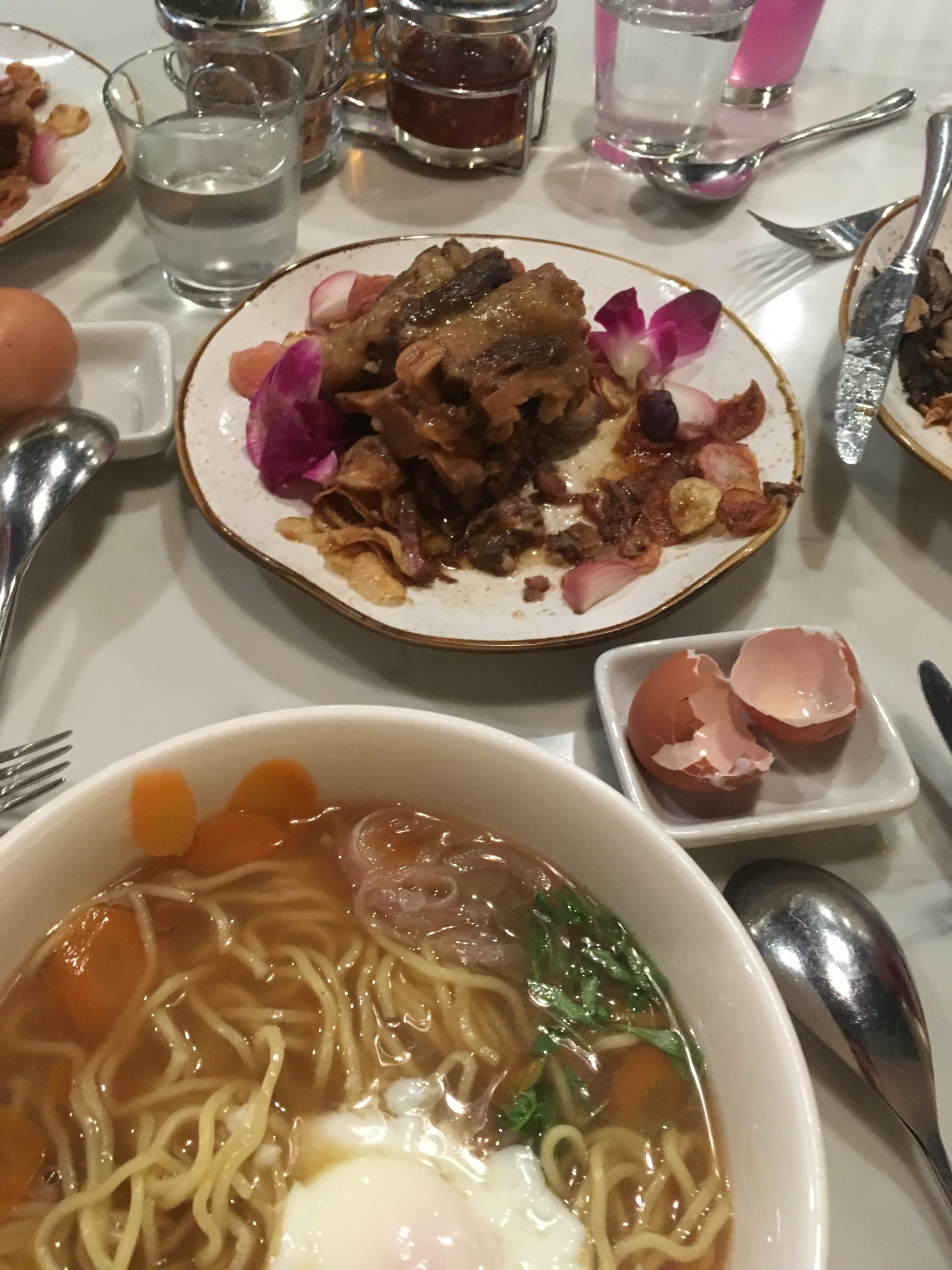
Bone Kettle’s St Helen’s braised oxtail with ramen noodles is the perfect comfort food | Photo by Brianna Chu
By Brianna Chu
Last year, May and I were invited to a PR mixer at the Bone Kettle, a Southeast Asian restaurant and bar in Old Pasadena, and the food was, as hoped for, simply amazing. I loved it so much that I revisited the restaurant last week with my family for lunch to try their full menu on for size. Sure, the food at the mixer was good, but they knew they were throwing an event for the Press. How good was their food normally? And what hadn’t I tried yet?
At their opening time of 11:30 am, there were available tables everywhere in the young, modern space, and we easily got a great booth in the main dining area. Over the next hour, though, tables began to fill up rather quickly for a random weekday. Service was fast, too – our main courses were served almost immediately after we finished devouring our appetizer, and their staff were friendly and helpful.
An important note to future diners: the lunch and dinner menus vary slightly. The succulent oxtail dumplings that I was looking forward to were reserved as an appetizer for the dinner menu. Luckily, however, the amazingly juicy and yet perfectly crunchy fried chicken wings with Thai chilis, sweet sauce, and lime did appear on the lunch menu – and tasted just as wonderful as they had previously. I spotted some familiar appetizers like the fluffy kroket, spicy papaya salad, and fried oxtail tips, which we sadly did not sample again since we all wanted to save enough room for the main dishes.
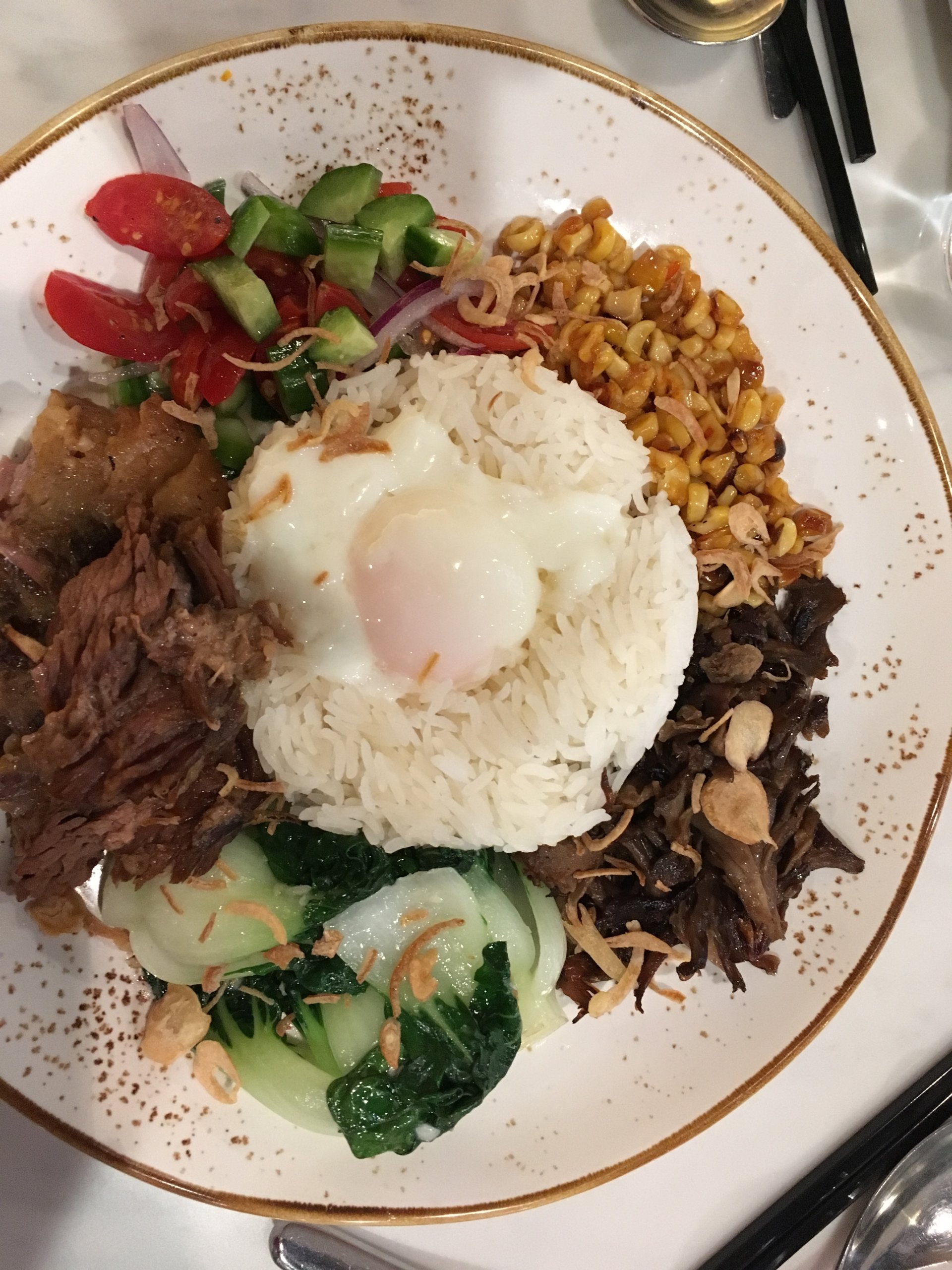
May opted for a rice plate with their fatty beef brisket – it was reportedly excellent, and presented beautifully. Vibrant vegetables and delicious meat haloed a rice plateau that featured a soft poached egg nestled at its center. It was a balanced, delicious plate for about $19-20, though prices vary on your protein choice, from tempeh to varying meats.
The fatty beef brisket rice plate is as delicious as it looks | Photo by Brianna Chu
My fiancé and I both immediately gravitated towards their broth options, though. The restaurant is called the Bone Kettle, after all! We both knew that we had to try their 24 hour, slow-cooked, St Helen’s braised oxtail, served with five ounces of fresh ramen, basil, cilantro, and sliced heirloom carrots, with the addition of a cheeky poached egg (for an extra $2, but I love eggs in my soup). At $24 for the large oxtail, noodles, and broth, I felt the meal was worth the price, especially given that the oxtail was the most expensive protein option for the broth.
As ever, the Bone Kettle’s presentation was impeccable. The oxtail was served on its own plate with crispy fried shallots and edible flowers, and the flavorful, succulent meat could be readily pulled off the bone with our chopsticks. May immediately tried some of my oxtail, and after her first bite, reached for another with the excited declaration that: “This is SO good!”
The bowls of noodles initially arrived broth-less, and a server came swiftly out with a pitcher of broth. Our soft poached eggs came still in their shells on a soy sauce dish for us to break open and serve into our broth when we pleased. I can happily confirm that I was as captivated by their broth this time around as I was the first! I left comfortably full, and even took home some leftover oxtail.
I wanted to check out the restaurant on my own time (and dime) to see whether I would enjoy the food and atmosphere just as much, and the Bone Kettle did not disappoint. I highly recommend the restaurant to everyone, as there are options for meat-eaters and vegans alike.
Brianna Chu, a guest opinion writer for Beacon Media, was born and raised in Pasadena. She loves to cook and to eat, is a lifelong viewer of Food Network, and enthusiastically introduced the tradition of Thanksgiving dinners to her British and European friends while earning her degree at the University of St Andrews.
Originally published on 28 December 2018 in the Pasadena Independent, Arcadia Weekly, and Monrovia Weekly
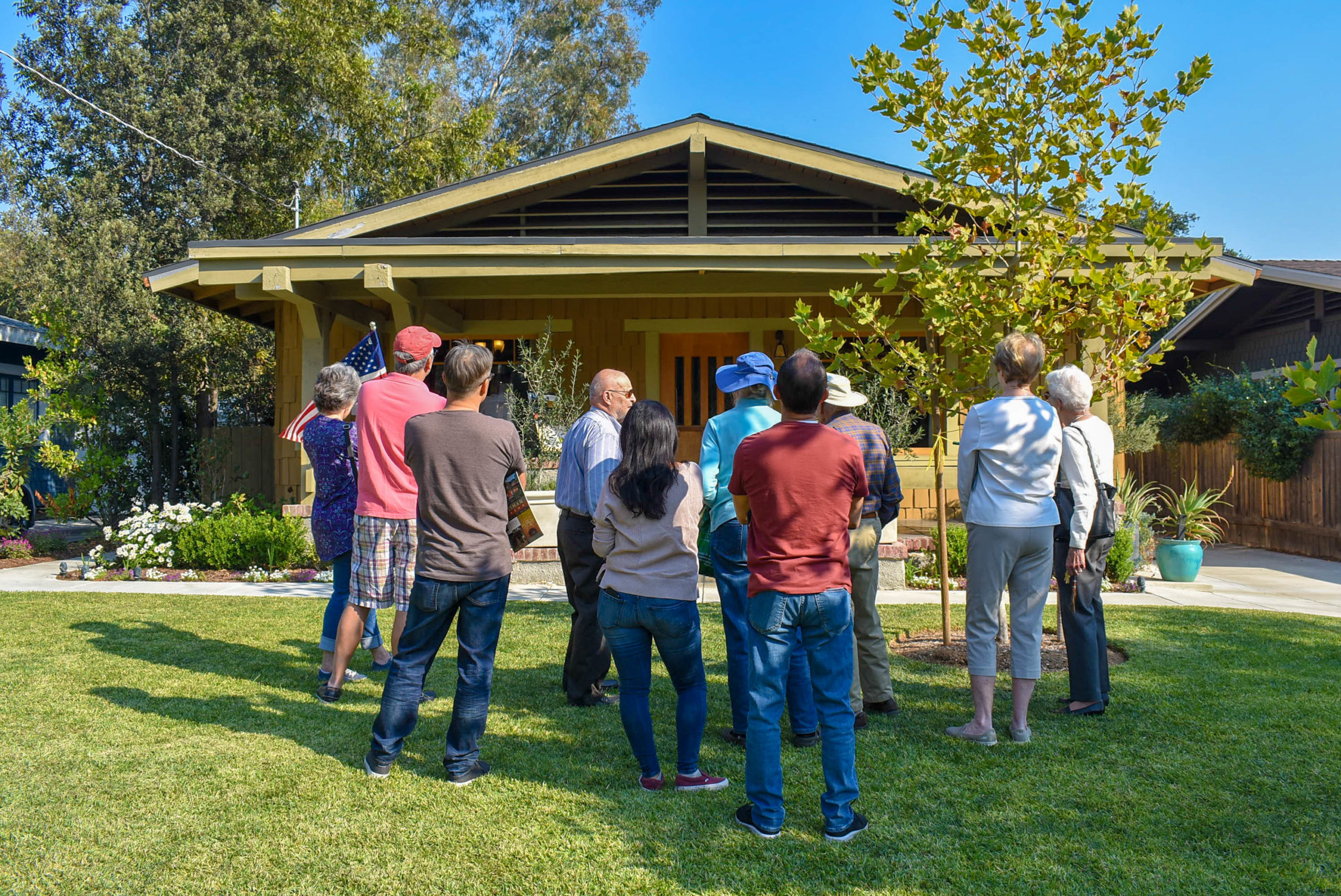
2018 Craftsman Weekend Asian Influence Tour | Courtesy photo / Pasadena Heritage
Old Pasadena is a bustling place that has become a dining, shopping, and entertainment destination for people of all ages. There was a time, however, when this corner of the city was a rundown area and no one had reason to wander into it. And were it not for the Pasadena Heritage, the city’s original downtown and its historic buildings would have disappeared altogether.
Patty Judy, Pasadena Heritage’s Education Director, describes, “In 1977 concerned citizens from various walks of life were seeing some of the historic structures in the city being demolished or being threatened for demolition to make room for generic properties and large corporate buildings. The plan to bulldoze Old Pasadena, including structures there like the Parsons headquarters, was of particular interest to them. Additionally, they noticed that neighborhoods were endangered – craftsman houses were being torn down, new development were sprouting, and the climate of the area was changing.
“It should be noted that this was also the time when the National Historic Preservation Association and California Preservation Foundation were being established. So there was a movement already going on throughout the country which sort of filtered its way here.
“Bill Ellinger, who was an architectural historian working oversees and came back and saw what was happening, and Claire Bogaard, whose husband Bill would later become Pasadena’s mayor, were two of those who actively advocated for an organization to preserve the city’s architectural treasures. As I heard it, someone said ‘Anyone who wants to join us can come to Claire’s house and they will be the first board.’ They adjourned to the dining room and that was their first board meeting. Thus, Pasadena Heritage was born.
Historic architect William W. Ellinger III Old House lecture | Courtesy photo / Pasadena Heritage
“They raised money by having tours of neighborhoods like Prospect Park and Old Pasadena – they did a little bit of advertising, set a table on the street, and people just walked up. They didn’t presell tours as we do now. For the Colorado Street Bridge, it started as a bridge party to raise funds; today it’s a celebration party.”
Many of us aren’t aware of Pasadena Heritage’s existence at all, which is regrettable because its impact on our surroundings is sweeping. As Judy elaborates, “People don’t understand why Pasadena looks the way it does and how much that has to do with our influence. I think it might be a shock for people to know how many meetings we go to with the City or how many times we meet with developers and how much sway we have.
“On the other hand, some people think we can do more than we actually can. We hear people ask why we allow developers to construct new condominiums or apartments in a particular location. They don’t understand that zoning laws allow such construction and we can’t legally bar them from building.”
Indeed, the organization’s breadth of involvement in Pasadena’s environs is too staggering for a single article to encompass. But several of its noteworthy accomplishments are highlighted here.
Pasadena Heritage’s first National Register of Historic Places Nomination in 1978 was for the Civic Center; including City Hall, the Central Library, the Civic Auditorium, the former YMCA and YWCA, and other historic buildings in the 1925 Bennett Plan that envisioned Pasadena as ‘The Athens of the West.’
The following year the organization saved its first endangered house – the Parsons House, designed by Alfred and Arthur Heineman – which was moved to Altadena and restored. In 1982 it spearheaded Pasadena’s adoption of the Landmark District Ordinance. Neighborhoods can apply for special status and design guidelines to protect their history and character. This local landmark designation is the best way structures can be ensured of protection from being destroyed.
It lobbied to save the Main Post Office on Colorado Blvd. in 1983 when the Lincoln Avenue postal facility was proposed. In 1984 one of Pasadena’s oldest bungalow courts, Gartz Court, was set to be demolished and Pasadena Heritage stepped in. It partnered with the City and moved the six-unit construction to a new location. The charming Myron Hunt-designed building was restored and updated and sold as affordable housing.
“In 1985 we adopted a Greene & Greene Initiative when an out-of-state buyer stripped the Robert R. Blacker House of its custom light fixtures,” states Judy. “We had to get an emergency ordinance that resulted in strengthening the city’s zoning with added protections for Greene & Greene structures. A higher level of designation – the Historic Treasure (now Historic Monument) – was also created to protect interior features.”
The Huntington Hotel is now the Langham Pasadena | Courtesy photo / Pasadena Heritage
As much as Pasadena Heritage would like to preserve all historic structures, the interest of the building’s owners could prevail. One such occurrence took place in 1986 when the demolition of Huntington Hotel on South Oak Knoll Avenue, which dates back to 1906, was being discussed. Pasadena Heritage nominated it to the National Register of Historic Places. While the hotel was eligible, it was not officially listed because the owners objected. A local referendum narrowly approved a new hotel and the historic tower was demolished in 1988.
However, Pasadena Heritage enjoyed numerous other victories. Judy recounts, “In 1993 the Castle Green Exterior Restoration and Historic Structure Report, funded by a $693,000 grant to Pasadena Heritage from the State Office of Historic Preservation, was completed and won a California Preservation award. The Report is still used to guide restoration of the former hotel, which has been converted as privately owned condominiums, and our easement protects the building.
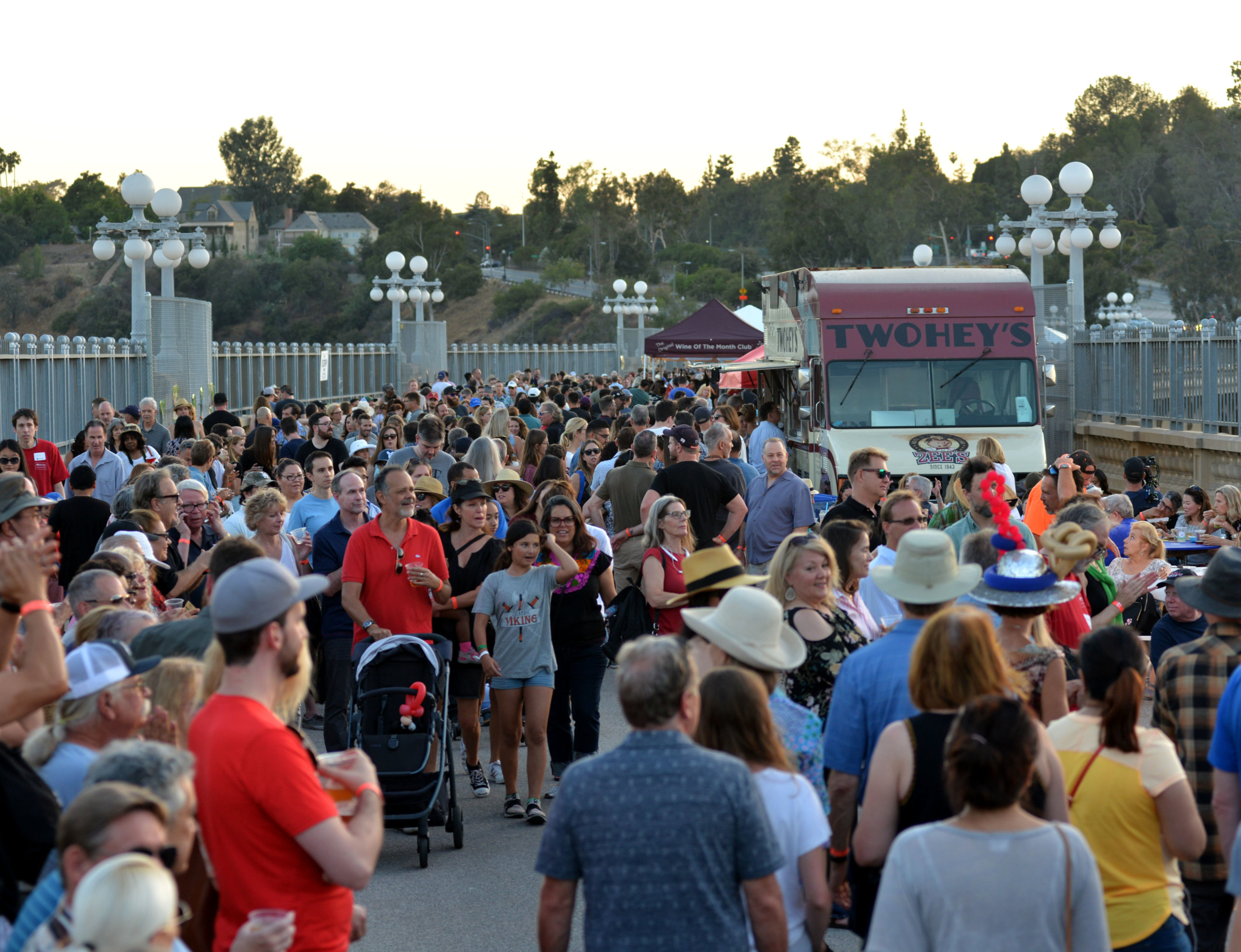
“In December of that year, the Colorado Street Bridge officially reopened after a three-year project to seismically upgrade, repair, and restore it. In July 1994, Pasadena Heritage’s famous party on the bridge returned after a four-year hiatus, and record crowds turned out to celebrate.”
The organization was the recipient of a plaudit in 1995 when Old Pasadena received one of the first Great American Main Street Awards from the National Trust for Historic Preservation. It also won support from the State Office of Historic Preservation to save the last 12 Vista del Arroyo Bungalows remaining along the east bank of the Arroyo.
In 1996 Pasadena Heritage moved to the 1893 Madison House on South St. John Avenue which was received as a bequest. Two years later it established Heritage Housing Partners (HHP) as a subsidiary affiliate to purchase, rehabilitate, and resell historic homes as affordable housing. This effort was supported by the National Trust for Historic Preservation, which had fostered a similar program in the East and the South.
Heritage Housing Partners began work in 2000 on the 1910 Merrill House designed by Greene & Greene, the fourth single-family home it rehabbed. The house, the former residence of Samuel Merrill, an important early environmentalist, was obtained from the bank at a deep discount and allowed for a larger restoration budget.
In 2001 Pasadena Heritage’s efforts helped save a cluster of 1928 Spanish Colonial Revival commercial buildings on Green Street at Madison Avenue from demolition and subsequently became home to the California School of Culinary Arts.
“We started noticing that some mid-century architecture were also in danger,” Judy adds. “Normally the National Trust doesn’t consider something as historic until it’s 50 years old but in 2001 we asked for a special exception for the 1958 Stuart Pharmaceutical Co. building. We got it listed on the National Register when it was acquired by the MTA and was going to be converted into a parking lot. Happily, it is now a local historic landmark and is occupied by A Noise Within, the renowned classic repertory theater company.”
The expansion of the Pasadena Convention Center was the focus of Pasadena Heritage’s attention in 2003 because its centerpiece is the Civic Auditorium. It participated in the development of a new design concept that complemented the building.
In 2005 the organization strongly opposed plans to attract the NFL to take over the Rose Bowl because the project would destroy the original National Landmark stadium. The City Council rejected the NFL plan in June, but supporters managed to put the issue on the ballot in 2006. Fortunately, a massive community effort led to its ultimate defeat.
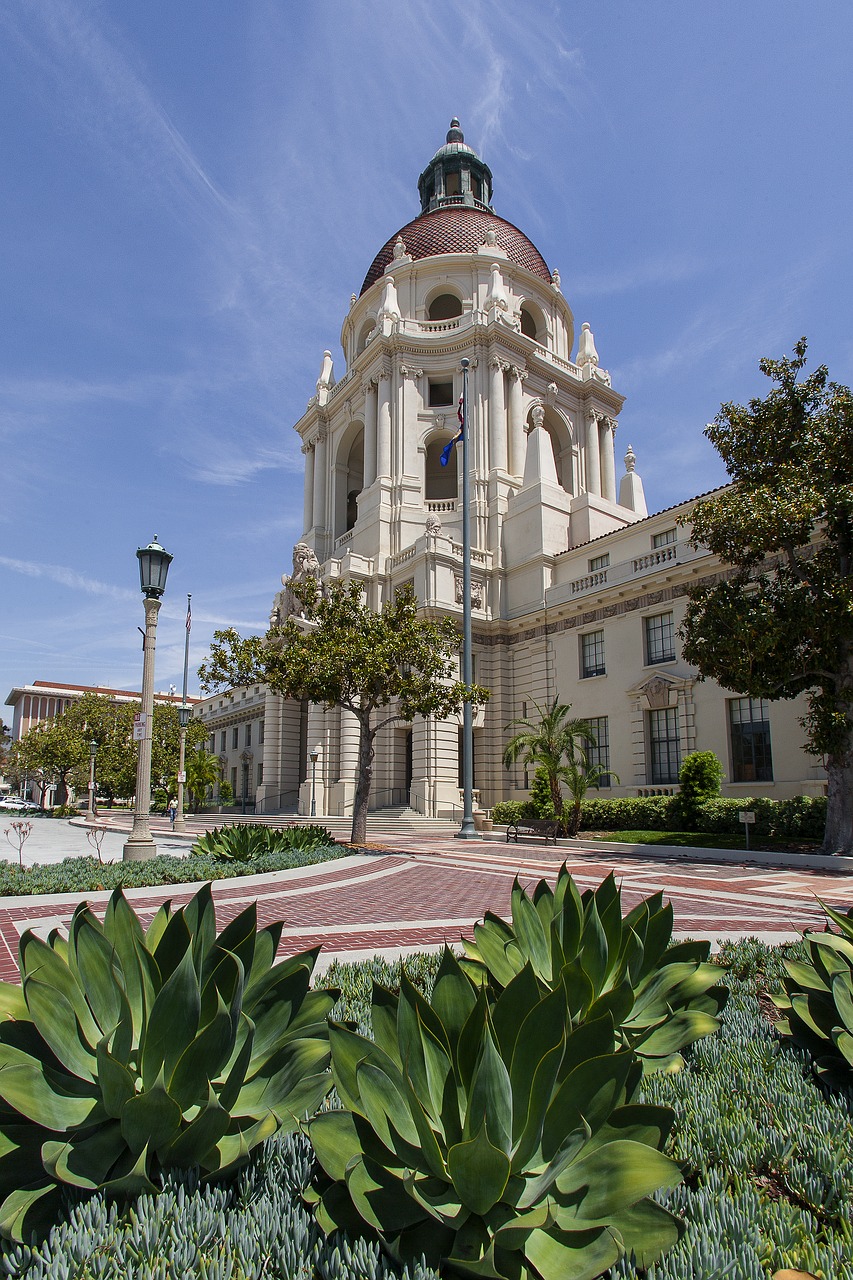
The Pasadena City Hall | Courtesy photo
Pasadena City Hall was once again in the spotlight in 2007 when it reopened after extensive seismic upgrade and restoration work. Pasadena Heritage was involved in the planning for the massive undertaking and served on the project oversight committee.
One of the structures Pasadena Heritage has been watching closely was the YWCA. Judy relates, “Since our founding, we’ve urged the restoration of the former YWCA. We felt it was important principally because it was designed by Julia Morgan, who had a prolific career. She designed more than 700 buildings in California, most notably the Hearst Castle in San Simeon. She also did the Fairmont in San Francisco, the Berkeley City Club, the Riverside Art Museum, the Hollywood Studio Club, the Herald-Examiner Building in Downtown L.A., among many others.
“Neglect over the years had kept the building on our Preservation Watch List. In 2010 the city finally took the major step of invoking eminent domain and then moved forward to secure and stabilize it while completing the lengthy acquisition process.
“Then in 2014, the YWCA was under review to become a Kimpton Hotel, a great adaptive use for the historic building. However, the proposal met with controversy because the adjacent green space would be built upon. It remains on our Advocacy Watch list to this day.”
Judy clarifies “Our goal is not to stop new development but to make sure that it is consistent with the look of the neighborhood. For example, there’s a new development in El Molino which is next to a turn of the century Victorian home. We wanted to have a green space between houses so we sat down with the developers and they redesigned the project to fit with the historic structures in the area.”
“HGTV is our biggest enemy,” confesses Judy. “They want to update historic buildings, although in doing so they take out what makes the structure important. They just tear down all the walls in the house, but they’re there for a reason. While we can’t dictate what homeowners should do in the house’s interior, we try to educate the owner of a historic home.
“Recently, there was a house that was purchased by a celebrity who wants to change all the windows so our Preservation Director met with them to tell them which ones they can change and which ones they can’t, and why. We try to get there before they get the permit to make any alterations.”
There is never a dearth of new projects and one that Pasadena Heritage will be keeping an eye on is the Fuller Seminary. According to Judy, since the seminary’s sale, they’ve had meetings with the Women’s Club and the University Club because they will be affected when the development starts. Another upcoming project is the First Congregational Church on Walnut and Los Robles. The organization has had conversations with the new owners about how much of the building will have to be preserved.
The Rose Bowl | Courtesy photo
“It’s not only the old part of the city that we have an interest in as we have proven when we intervened in Stuart Pharmaceutical’s plight,” Judy points out. “We’ve been watching East Pasadena. In fact, we’ve held commercial tours there because there are several mid-century buildings in the area. And we’re thinking of maybe doing a ‘60s Tour’ at some point. The Neptune and Thomas-designed Avon Building on East Foothill Blvd has been sold to Home Depot and we have urged the retention of the 1947 building.
“The Space Bank site, also on East Foothill Blvd., which is eligible as an historic district due to its association with Cold War-era weapons research, has received City approval. The developer, Trammel Crow, has agreed to mitigation measures that include retention of some historic features and interpretive displays.
“The ‘Ability First’ building on Kinneloa was designed by a very prominent mid-century architect and they’re planning on doing new development. My daughter works there and the director knows I’m with Pasadena Heritage. So he asked how involved we were going to be and I said ‘Well, we’re going to have an eye on it and we’d appreciate it if you could include this person and this person in the early stages.’
“We didn’t ignore East Pasadena at all. In fact, sometime in the 1990s we produced a video called ‘East Pasadena.’ We know there are several interesting communities in that locale like Chapman Woods. We’ve also been working in the Hastings Ranch area, developing an Awareness Project but we have yet to figure out what it’s going to be. Some of the homes there look similar to each other and we’re trying to decide if we could do a home tour there. But be assured that we’re there and we’re attempting to get more people interested.”
To make everything happen, Pasadena Heritage has a large support group: six full-time staff members; a board of 17 people; several committees; and hundreds of volunteers. It holds several events in any given year including The Craftsman Weekend, which is the longest and consists of bus and walking tours, workshops, lectures, receptions, and Contemporary and Antique Decorative Arts and Furnishings sale. The Bridge Party is a one-day activity and most of the other events are two- to three-hour tours or presentations. It hosts a Summer Gala during the years when there’s no Bridge Party.
“Since 1977 the Neighborhood Walking Tour have been the bread-and-butter events for us,” Judy discloses. “These tours are limited to the exterior, except during Craftsman Weekend when we try to get at least one homeowner to show us the inside, which is always a treat for our guests. Every once in a while we get a surprise when a homeowner invites us to come in and to see their new fireplace. With the Old Pasadena Walking Tour we have an arrangement with Castle Green to show their lobby and the first floor.”
Judy mentions that The Pasadena Architectural Legacy Walking Tours – Hillcrest Neighborhood and the Civic Center District that includes City Hall, Pasadena Library, and Civic Auditorium – will take place this Saturday, December 30.
She then remembers, “We recently held a Fountains Tour, which is really fascinating. We found out there are 16 or 17 fountains within walking distance of each other – two Batchelder tile drinking fountains by the YMCA/YWCA; one at the Civic Center; one next to the police station; one outside the Library; a fountain landscape at the Pasadena Mutual Savings and Loan Building at Garfield across Union designed by Ruth Shellhorn who also created the central landscaping at Disneyland; one at the courtyard of Western Assets Plaza; one at Westin Hotel. And then there was that Batchelder tile fountain that Pasadena Heritage saved from a home, which just sat in Claire Bogaard’s garage for a long time, and is now at Plaza Las Fuentes.”
Judy has been Pasadena Heritage’s Education Director for 10 years and a volunteer for 20. In that time she says the most difficult thing she’s had to do is to convince homeowners that their house is significant enough that other people would want to see it. She says, “A lot of houses in Pasadena have architectural importance and it’s my job to tell them why. Although I’m not an expert, I’m just a fan, I have enough contacts like historians, researchers, and architects who have the knowledge and expertise to show them what makes their home remarkable.”
2018 Pasadena Heritage Colorado Street Bridge party | Courtesy photo / Pasadena Heritage
Throughout its 40-year history, Pasadena Heritage has achieved several milestones. It marked the 20th anniversary of its Craftsman Weekend in 2011. In 2012, it celebrated ‘35 Years of Preservation’ as the theme of the summer’s Colorado Street Bridge Party. Last year, it commemorated the four decades of its founding and co-hosted a very successful California Historic Preservation Conference scheduled with multiple programs throughout the year. A major ‘40 Years Celebration’ was held in October of 2017 in the original Exhibition Hall at the Civic Auditorium.
Its yearly Educational Programs and Architectural Legacy Tours have gained a massive following, drawing visitors from across the country. The newly created Old Pasadena Pub Crawl, which was sold out soon as it was announced, will be offered every month starting next year.
When Claire Bogaard and other caring citizens decided to put their heads together to save Old Pasadena from demolition all those years ago, they did not foresee how that singular resolve would affect the most extraordinary projects that uphold the integrity of structures.
And the work hasn’t ebbed – there are ever more buildings needing to be rescued from the wrecking ball. Today Pasadena Heritage continues its mandate of protecting the city’s rich architectural history and preserving the landmarks that make Pasadena the unique and charming place that we’re proud to call our home.
Originally published on 20 November 2018 in the Pasadena Independent, Arcadia Weekly, and Monrovia Weekly
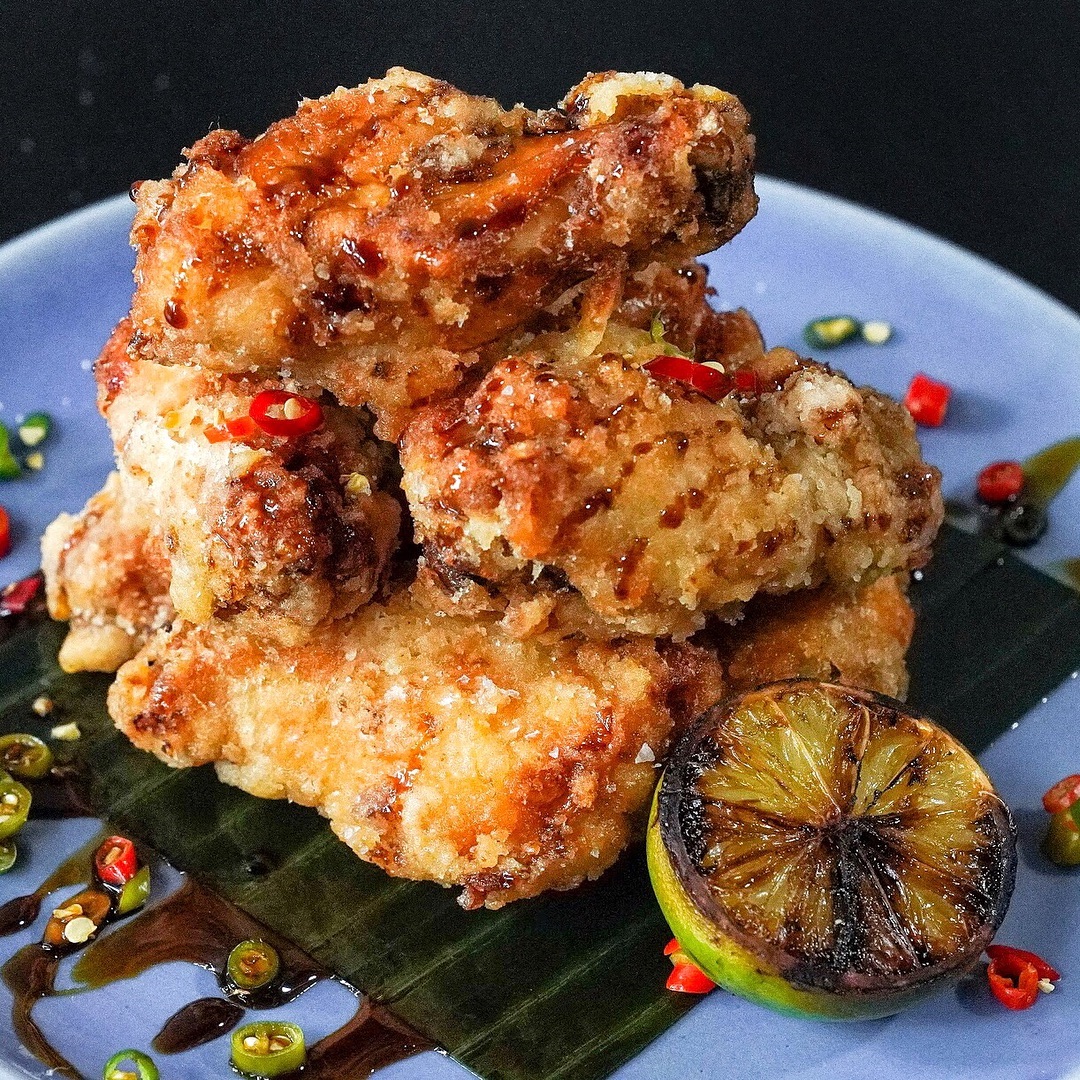
The chicken wings are a favorite among diners at Bone Kettle | Courtesy photo
By Brianna Chu and May S. Ruiz
Old Pasadena is a commercial district on the westernmost part of the city comprising 22 blocks where an eclectic mix of enterprises happily co-exist. There are museums and hotels, hotels converted into residential apartments and office spaces. There are a multitude of businesses – clothing retailers and coffee shops, dining venues and dress accessories stores, cosmetics shops and cinemas, jewelry and kitchen stores, nightclubs and sports bars, tech-selling stores and telecommunications service providers – housed in beautifully restored, historic buildings. You name it, it’s there.
Bone Kettle, an Indonesian fusion restaurant on North Raymond Avenue, has recently joined the numerous food establishments in this melting pot Pasadenans refer to as Old Town. It is co-owned by the Tjahyadi Brothers, Eric and Executive Chef Erwin, who immigrated to the San Gabriel Valley from Indonesia with their parents over two decades ago. They arrived with practically only the clothes on their back, except for an English dictionary to help them get by in their adopted country, and a few Indonesian cookbooks to remind them of home.
After 20 years, Chef Erwin went back to Indonesia on a quest of self-discovery. Through his travels in his birthplace, he reconnected with his childhood as he once more smelled the fragrance of spices that flavored the complex dishes he grew up with.
That reminder of his heritage inspired Chef Erwin to open a restaurant which deliciously blends heirloom recipes from his mother’s and grandmother’s cookbooks with local California ingredients and French classical techniques. His training at Le Cordon Bleu in Pasadena and apprenticeships under Wolfgang Puck and Trey Foshee have prepared him for the intricacies of creating unforgettable dishes. Thus, Bone Kettle was born.
Chef Erwin | Courtesy photo
“Living in the San Gabriel Valley, we would frequent Pasadena,” Chef Erwin informs us by email on his choice of restaurant location. “And it’s always been a dream to open in Old Town. It’s charming and rich in history; we love all the old buildings. Being here makes us feel like we’re part of not only a community but of something bigger.
“Because of the emergence of ever more Asian restaurants in Pasadena, we felt the city is prime for our food. At the same time, we felt compelled to represent our cuisine in our own authentic voice and perspective.”
And the community has been exceptionally welcoming, discloses Chef Erwin. “The reaction has been positive and overwhelmingly warm. We love it when customers are able to make a very personal connection and relate the cooking experience with their own. They appreciate that Bone Kettle is a family-run restaurant for Pasadena families and friends. In turn, we are enjoying getting to know our diners and making new friends.
“We want our patrons to remember their dinner at Bone Kettle as something that reflects the highest standards of quality food, with imaginative dishes of great flavors,” adds Chef Erwin. “I hope that through the food we serve, they see that we passionately care about the guest experience. And that, ultimately, we are able to tell our story.
Brianna’s review below speaks to Chef Erwin’s love of food and culinary mastery.
When my old high school friends and I met up after we all graduated to share our experiences over the past four years, we noticed that despite the disparate locations in which we studied, all of us missed the range of food available here in Los Angeles County. Even just in the Pasadena area, we do not lack for diversity of cuisines; the Bone Kettle in Old Town exemplifies the broad variety of food which we enjoy.
Bone Kettle’s modern interior | Courtesy photo
You can expect an Indonesian and Southeast Asian food experience when coming to the Bone Kettle, a small, family-owned restaurant and bar with a modern and chic atmosphere on Raymond Avenue. It’s only about a year and a half old, and full of surprising contrasts. While it has a young and modern feel not only in its decor, but also by its playlist – when we came in, there was relaxed electronic music softly playing – the restaurant feels homey and comfortable, too, as the head chef’s father served us plates that his son had just made, explaining to us what the dish was.
May and I aren’t particularly big fans of alcohol, so we ordered two non-alcoholic drinks: the dragonfruit lychee lemonade, and a raspberry and yuzu drink. The dragonfruit lemonade tastes entirely like lychee and dragonfruit, which definitely brought me back to my childhood eating dragonfruit and lychee jellies. The raspberry and yuzu drink was a gorgeous ombré of light lilac into deep magenta and tasted as close to candy as actual fruit can, while also having an incredibly refreshing and fragrant taste.
We were pleasantly bombarded with samples of many of Bone Kettle’s small sharing plates. Shortly after we sat down, two dishes were placed on our table. While slightly spicy, the papaya and shrimp salad was also tangy and delightfully crunchy. Tips of salty, fall-off-the-bone tender oxtail with freshly fried and crisp slices of potato followed, in perfect contrast to the salad.
One of the restaurant’s favorites, the oxtail dumpling, is understandably popular. The dumpling was served in deeply savory and rich but also slightly acidic sauce, complementing the succulent oxtail dumpling, whose filling dripped with au jus and marinade.
The oxtail dumplings are rich in flavor | Courtesy photo
Their kroket are fluffy and delicate, filled with an incredibly smooth paste of beef with pieces of carrot and peas, but surprisingly, it was served in hoisin sauce. The combination dumbfounded me; I could never have imagined that these two things would ever taste great together, let alone be found in the same dish, but I was pleasantly surprised by the depth that the hoisin sauce brought to the lighter, more one-toned kroket.
I managed to snag a bite of deeply umami and also somehow cheesy tartare, which was served on a shrimp cracker; after which, we were treated to shots of the restaurant’s famous bone broth – incredibly rich but eminently drinkable. Every sip is clearly imbued with the incredible flavor of bone marrow. This is not a broth that is merely a vessel for other ingredients – it has its own flavor that demands attention. When waiters circled back with second rounds of bone broth, hands from all tables immediately reached towards the tray for seconds.
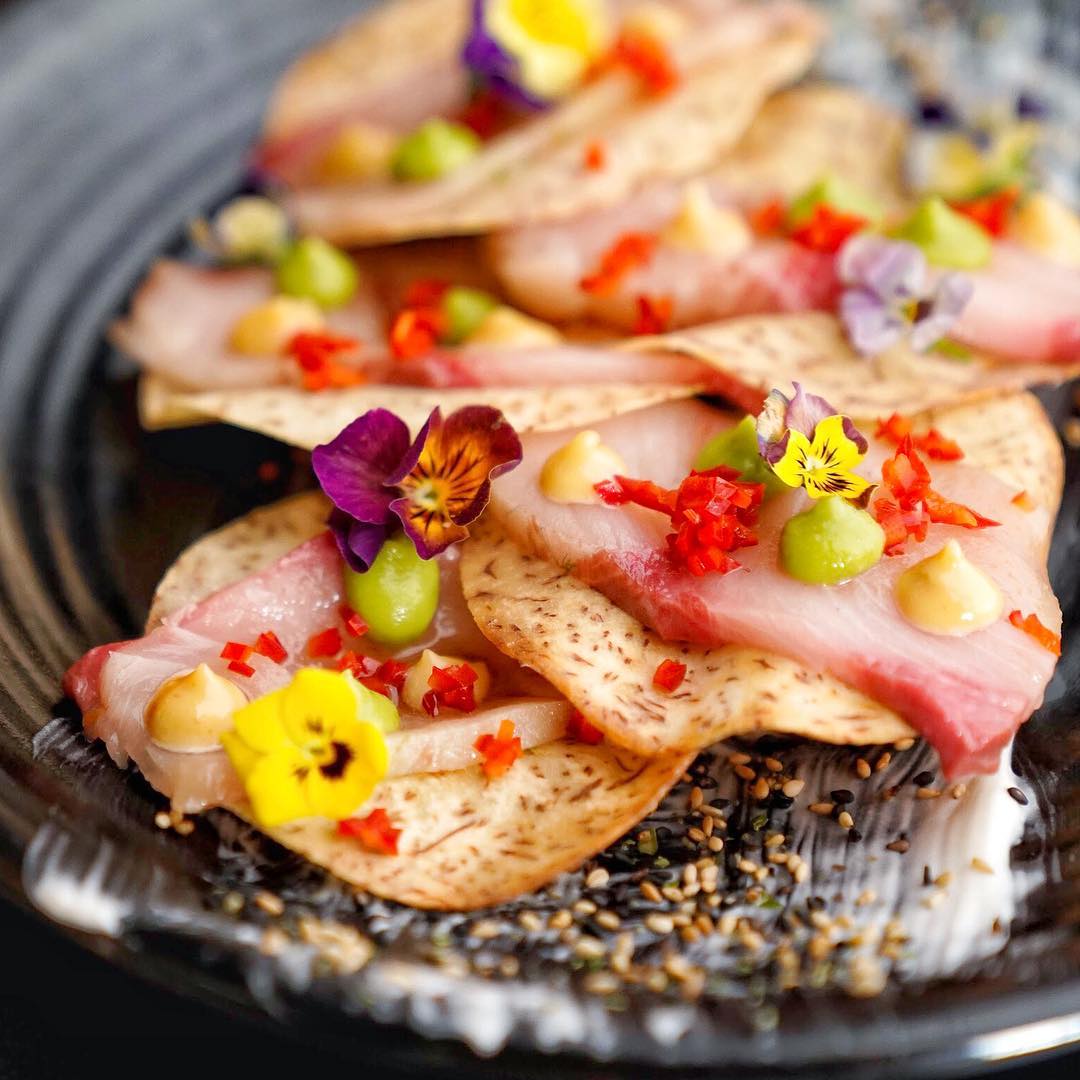
Even more irresistible bites followed: Hamachi crudo with green onions and peppers and fried chicken wings. The sweetness of the fresh yellowtail made the crudo light and addictive, with a light pop of heat from the peppers. I had my eye on the tray as it went around the room and I unabashedly took the last one when it was offered.
The hamachi crudo with green onions and peppers | Courtesy photo
The fried chicken wings with Thai chilis and a sweet sauce are another of the Bone Kettle’s popular dishes, for a reason – the wing was perfectly crispy, the sweetness from the sauce woken up by the kick of the Thai chili, and the chicken was juicy and perfectly cooked. May started volunteering me to take every leftover sample of food they brought out. I protested, but mostly out of pride…
A third round of broth came out – and it was gone in a matter of seconds. As I drank the broth, I marveled at its richness, but as soon as I finished a sip, I noticed how light it was and immediately reached for more.
The penultimate appetizer was a Rendang rice fritter with a filling of short rib, slow cooked for 15 hours, and cheese. The cheese really shone through, and the pulled short rib was pillow-soft. In the cross-section of my bite, I could see each individual grain of rice used to make the coating. The rice was crispy on the outside, and not too soft within, maintaining the structural integrity of each grain of rice for some texture.
The rendang rice fritter has a filling of short ribs slow cooked for 15 hours | Courtesy Photo
The finale: a platter of drier, crunchy coconut-braised fried chicken with a spicy salsa made from an unusual set of vegetables.
As the restaurant is sandwiched between a burger joint and a barbecue place, some might think that the Bone Kettle would struggle to compete with such classic American favorites. However, I’d argue that the Bone Kettle is perfectly situated to exemplify the diversity of flavors in Southern California.
The Bone Kettle is the kind of place where I’d want to take my girlfriends to on a weekend for some good food, and catch up on our weeks. I can’t wait to go back and see what more delights they have to offer on their full menu!
Brianna Chu, a guest opinion writer for Beacon Media, was born and raised in Pasadena. She loves to cook and to eat, is a lifelong viewer of Food Network, and enthusiastically introduced the tradition of Thanksgiving dinners to her British and European friends while earning her degree at the University of St Andrews. While they absolutely hated going around the table and saying what they were grateful for every year, they also loved the excuse to get together and feast with friends enough to endure it anyway.
Originally published on 19 November 2018 in the Pasadena Independent, Arcadia Weekly, and Monrovia Weekly
The chicken pot pie and salted caramel pecan pie, served in pie tins, and a cup of latte | Photo by May S. Ruiz / Beacon Media News
By Brianna Chu and May S. Ruiz
The Pie Hole, located at the Indiana Colony in Old Pasadena, serves up the kinds of pies that are not found at regular cafés, diners, or restaurants. That’s because the items on its menu were created by Becky Grasley who comes from a long line of bakers and cooks in rural Pennsylvania, where pie is a way of life.
Grasley and the other women in her family showed their love through baking and marked the seasons with the pies they made. She continued this tradition with her own children, using recipes that have been passed on from one generation to the next. She baked pies after school and took them to the fair, where her apple pie won the blue ribbon.
Years later, when her children were grown, Grasly spent a Thanksgiving weekend baking countless pies for friends and family at a remote cabin. And her life-long dream of opening up a pie shop got closer to actuality.
With co-founder Sean Brennan, whose restaurant experience balanced her pie-making skills, Grasley established their first eating place in October 2011, at the Arts District in Los Angeles known as Bloom Square, in honor of a local legend and activist who owned a neighborhood convenience store. They named it The Pie Hole and it became an instant hit.
Brennan, speaking with us via e-mail, answers questions that range from where they choose to open shop to how they keep the standards in all locations. “From a real estate perspective, we look for terrific neighborhoods that don’t have great pie restaurants. Realistically, our regulars tell us where they want us to be. People invite us all the time, on social media and at our restaurants, to come to their neighborhood. And Pasadena is a perfect example – we had so many fans visiting our Arts District restaurant asking us to open in Pasadena, so we did.”
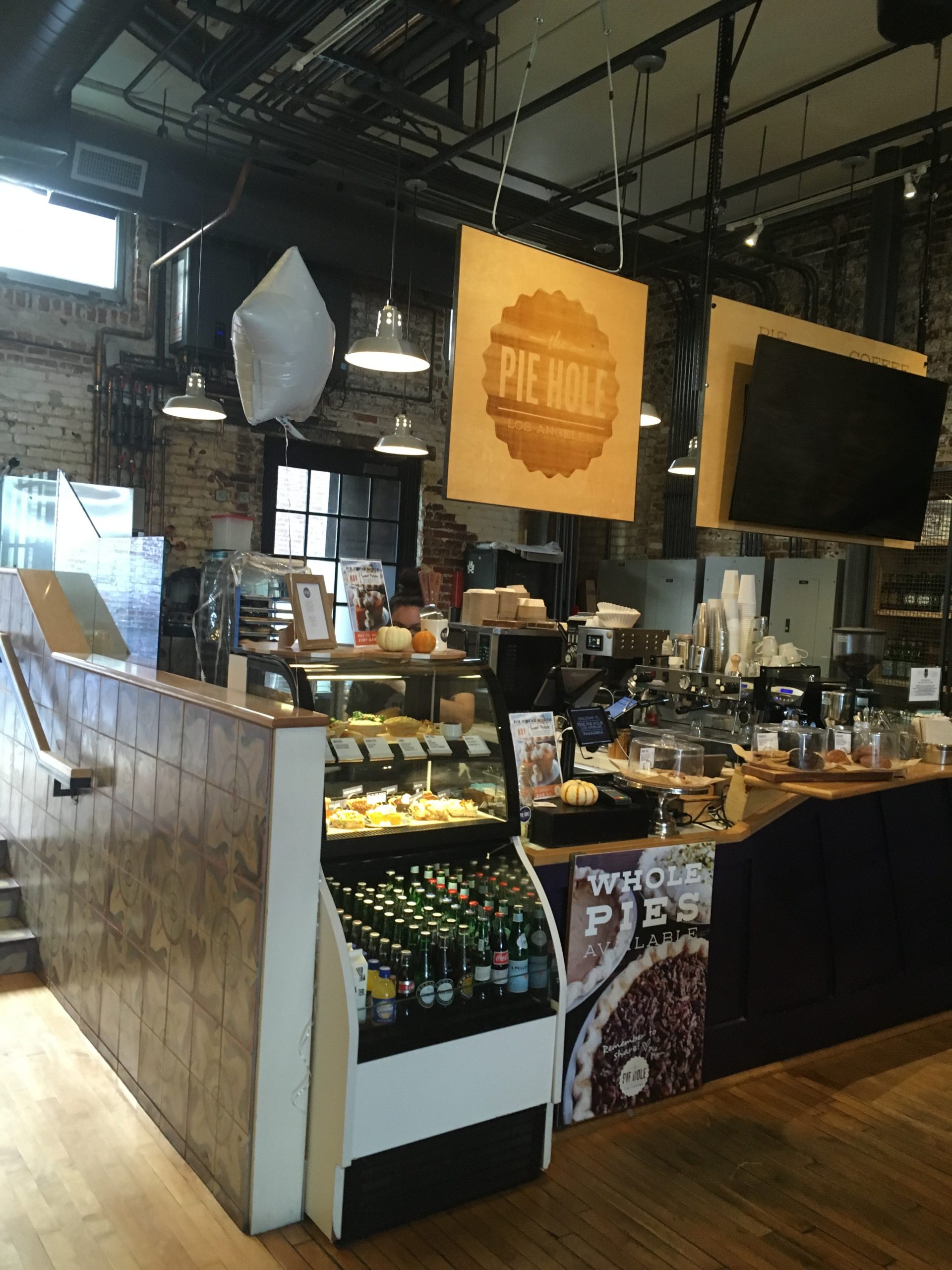
The Pie Hole in Old Pasadena | Photo by Brianna Chu / Beacon Media News
Word about The Pie Hole spread and to date there are ten locations – eight in the Los Angeles area and two in Tokyo, Japan. The Arts District, Hollywood, and Pasadena locations are owned by Grasley and Brennan and the others are either franchises or licensing agreements.
“Whether they’re owned by The Pie Hole or franchises, all of our restaurants are teams and they undergo a rigorous training program,” Brennan points out. “We start with selecting the right people – those who love coffee and pie. We always have open lines of communication and a great collaborative culture. Our chefs in Japan are constantly talking with our chefs in L.A. We also spend a lot of time visiting all of our restaurants to make sure everything is up to our standards.”
Ensuring that the quality is maintained means all pies are made with the same ingredients and undergo the same process in all their restaurants. Their founder’s recipe for Mom’s Apple Crumble, for instance, contains two pounds of Granny Smith apples. The Earl Grey Tea pie, infused white chocolate mousse with a layer of dark chocolate ganache and salted pistachios, is a house invention and a masterpiece that takes 24 hours to make.
Besides signature pot pies, individual pot pies, and hand pies, the restaurant offers galettes, breakfast quiches, and salads. Hot and iced coffee – either espresso or their own specialty blend, specialty and seasonal specialty lattes – are wonderful accompaniments to all the food items.
“We have mostly the same menu at all of the restaurants, using our Arts District shop as a culinary incubator where we test new recipes and pies,” explains Brennan. “However, we regularly add new pies and specialty coffee drinks, including the Pie of the Month and Drink of the Month. The November pie of the month is a sweet potato pie with brown butter sage in a butter crust, topped with marshmallows; the drink is spicy mocha made with our signature house blend, chocolate syrup, and ground ancho chili pepper.”
However much her business has grown, Grasley isn’t about to stop there just yet. She would like to add more locations and novel items. The Pie Hole is now open for breakfast with its new breakfast pies. Most recently, in time for pie season, it introduced Pie Holes – small, round, two-bite pies perfect for a quick snack and eating on the go. Available in four flavors, they are priced at $1.00 each or $12.00 for a baker’s dozen.
Brianna’s review below provides highlights about The Pie Hole’s food and ambience.
Tucked into the back corner of Indiana Colony’s marketplace space, The Pie Hole sits amidst the company of a juice bar, an ice cream vendor, and a tea and herb-selling stall. It’s the kind of place that seems geared towards attracting young adults who want the ready availability of caffeine, food, and WiFi of a Starbucks, but with a hipper vibe.
The café was kind enough to offer us each a savory and sweet pie, along with a drink of our choice. May opted for the classic latte and I chose a cold brew coffee; we were both very pleased with our coffees, May especially. I was given both sugar and simple syrup to sweeten my cold brew, which was a thoughtful touch.
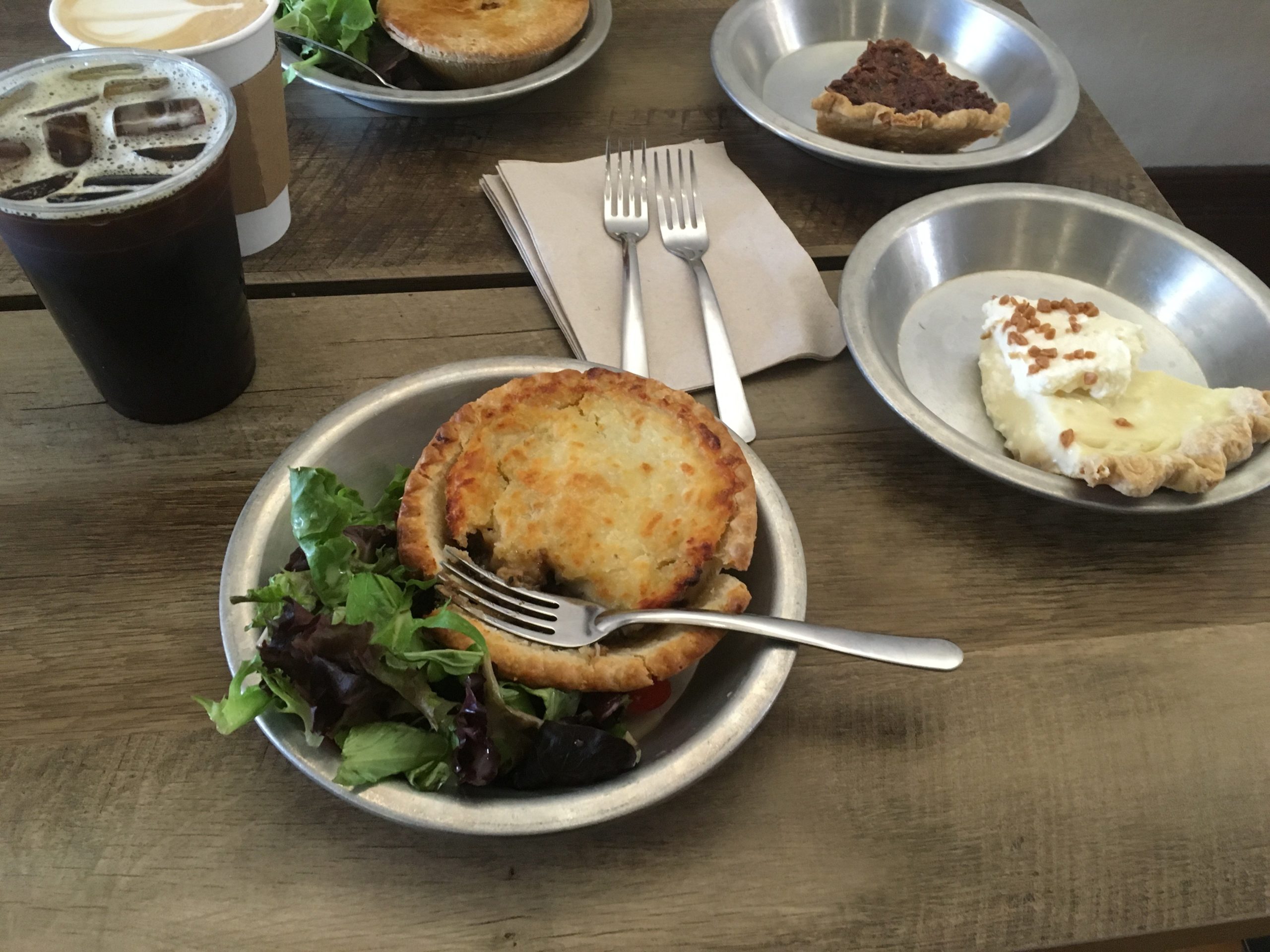
Shepherd’s pie, banana cream pie, and cold brew coffee | Photo by Brianna Chu / Beacon Media News
We sampled some classic pies, the chicken cornbread and shepherd’s pie, and May picked the salted caramel pecan for her dessert while I selected the banana cream. The staff were friendly and helpful, and we received our food shortly after ordering.
Each pie was served in a metal pie tin, which emphasized the hip vibe – there’s a growing trend of restaurants using unorthodox objects in lieu of plates, and the trend is polarizing, to say the least, but I felt that in this case it actually made sense.
The Pie Hole’s chicken pot pie is a twist on the classic, what with the cornbread incorporated into their filling and the inclusion of red bell peppers instead of the staple carrots and peas. I hesitate to opine on the chicken pot pie, as I enjoy the traditional chicken pot pie and the red bell pepper isn’t quite my taste, but I will say that I couldn’t quite pick out the cornbread in their filling.
Their shepherd’s pie is more along the lines of the classic, complete with a topping of mashed potatoes. Perhaps it was just a fluke of the batches, but we found that the shepherd’s pie tasted a tad too salty for our palate, becoming less easy to eat after running out of the accompanying side salad to temper it; and the salted caramel pecan pie fell a little on the sweet side for May.
However, the banana cream pie was everything I hoped for; a big plus for me was that the pudding tasted homemade, without the slight aftertaste of the store-bought variety. The banana slices were visible and texturally present in the pie, and the shards of toffee on top provided a welcome pop of sweetness and textural contrast. The consistent high point, for me, was the pie crusts – which were dependably buttery, flaky, and everything I’ve come to expect in a good pie crust.
The newly introduced, snack-sized pie holes | Photo by May S. Ruiz / Beacon Media News
Two weeks after we initially visited, we were invited back to experience their newest offering – the rather fitting pie hole. Self-enclosed mini pie bites, these pie holes currently come in four flavors: caramel apple, blueberry, Mexican chocolate, and Nutella. For me, each pie hole is about a four bite proportion, a perfectly snack-able size.
Both the caramel apple and blueberry were excellent, slightly warm, and not too sweet – and I’m not even much of a caramel fan, either. The Mexican chocolate and Nutella bites were definitely much sweeter, but they were also served cold, so they were on the hard side. Like our last visit, the drinks were great – May loved her salted caramel latte, and my pumpkin pie latte was exactly what I thought it would be – the Pie Hole’s smoother and classier version of the popular Pumpkin Spice latte.
All in all, I would consider returning; and in fall, an afternoon outing in Old Pasadena definitely benefits from a good slice of pie.
Brianna Chu, a guest opinion writer for Beacon Media, was born and raised in Pasadena. She loves to cook and to eat, is a lifelong viewer of Food Network, and enthusiastically introduced the tradition of Thanksgiving dinners to her British and European friends while earning her degree at the University of St Andrews. While they absolutely hated going around the table and saying what they were grateful for every year, they also loved the excuse to get together and feast with friends enough to endure it anyway.








 A San Gabriel Valley Inquirer