Norton Simon Museum Celebrates 50th Anniversary

Also published on 20 October 2025 on Hey SoCal

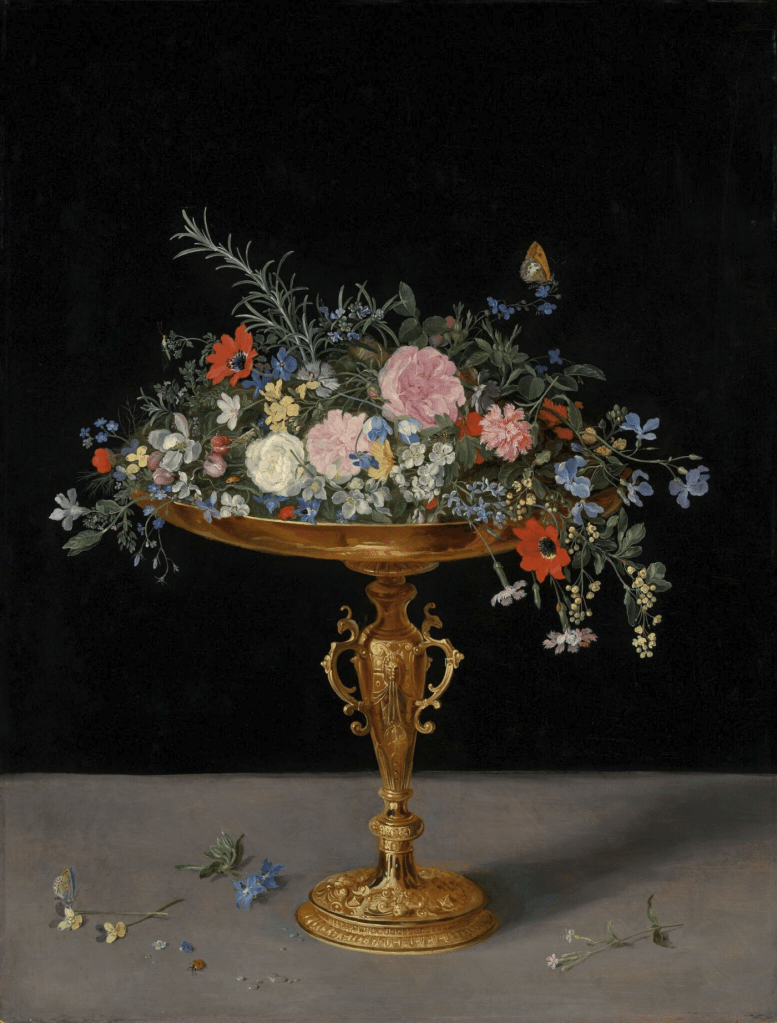
Jan Brueghel the Younger. Flowers in a Gilt Tazza, c. 1620. | Photo courtesy of The Norton Simon Foundation

October 24, 2025 marks the 50th anniversary when the Pasadena Art Museum was renamed Norton Simon Museum. It is only fitting then that 50 years to the day, the museum will debut the exhibition called “Gold: Enduring Power, Sacred Craft.” On view in the lower level exhibition wing through February 16, 2026, it explores the artistic and cultural function of gold in 57 objects drawn from the museum’s American and European and South and Southeast Asian collections.

The objects in this exhibition were crafted from metal excavated from mines across three continents and transported over vast regions, often in the form of currency. In the hands of trained craftspeople, this processed gold was transformed into jewelry that adorned Roman patrician women or spun into thread that was then woven into textiles for elite patrons in Europe and Asia.

Co-curated by Maggie Bell, Norton Simon Museum’s associate curator, and Lakshika Senarath Gamage, assistant curator, “Gold: Enduring Power, Sacred Craft” being the exhibition during the 50th anniversary celebration came about serendipitously. They had been contemplating to collaborate on an exhibition that would bring the Asian collection and the American and European collection together. When they began this project two years ago, they realized there was a common element in the artwork they were looking at.

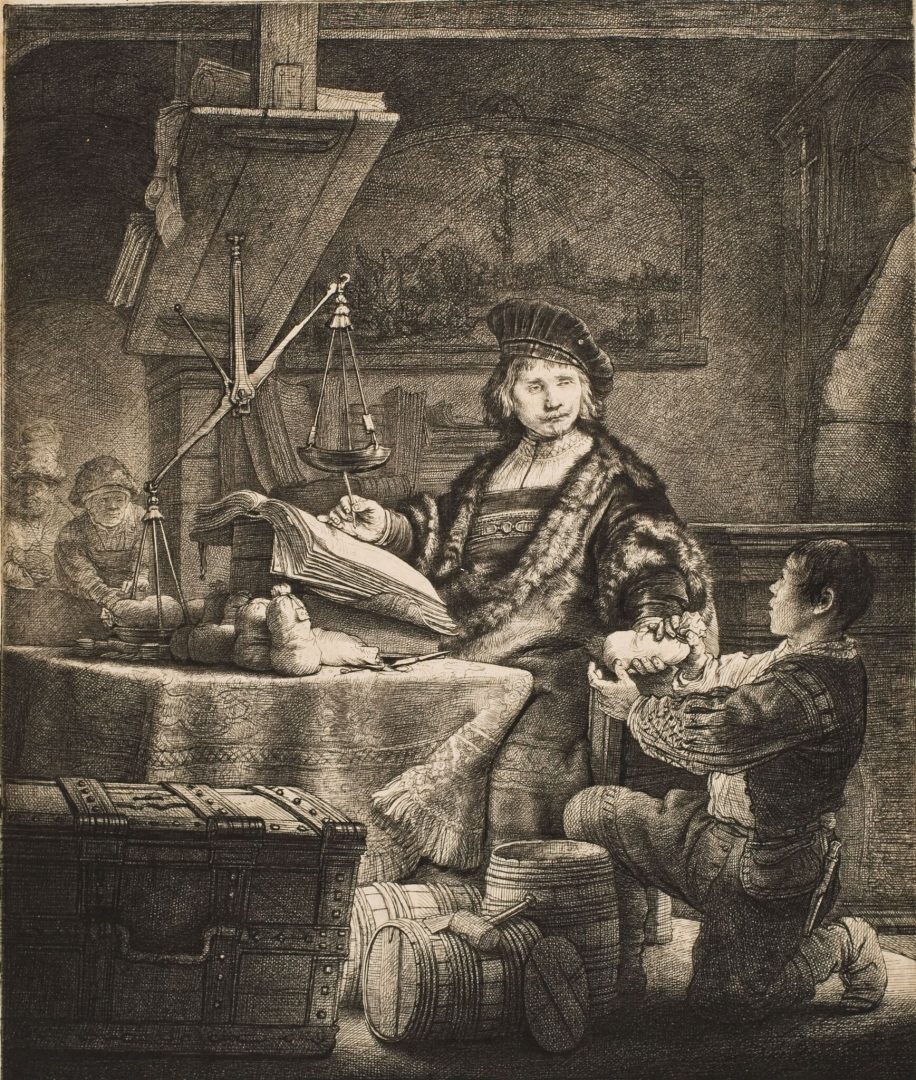
Rembrandt van Rijn, The Goldweigher, 1639. | Photo courtesy of The Norton Simon Foundation

“As we were looking at the objects in our collections, a theme emerged and we realized we talk about gold across mediums – tapestries, sculptures, painting, works on paper – as an opportunity to get to know and celebrate the collection,” Bell begins. “We systematically went through all the objects that had gold as a medium. At the same time we started thinking about the way gold as a metal interacted with other medium and also what gold means symbolically, even to representations of gold in thread or in paint. There are so many ways to approach this subject. There are things in the exhibition which don’t actually have gold in them but evoke ideas and associations with gold.”

Later in the process they realized the exhibition they had been planning was going to be completed around the same time as the museum’s 50th anniversary celebration. And it was a happy coincidence because the milestone is traditionally symbolized by gold.     

“With the story we wanted to tell together, we started with about 200 possible objects,” continues Bell. “We got to know these objects and started doing research. And one of the best things that happened in the process is that I learned so much from Lakshika about her collection and the stories and themes that we can tell together. In conversation with each other and through research we narrowed them down. There were only a certain number of objects that would tell that story clearly and we consolidated them to the 57 that visitors will see in the exhibition.”

“We want to explore gold as a medium but also as an idea,” Bell states. “We want to show the ways in which gold as a material physically does endure for millennia, hence the title. Also, it has a grasp on our imagination globally; visitors will see in the geographical range of these objects that gold really has so much power as a medium.”                                                             

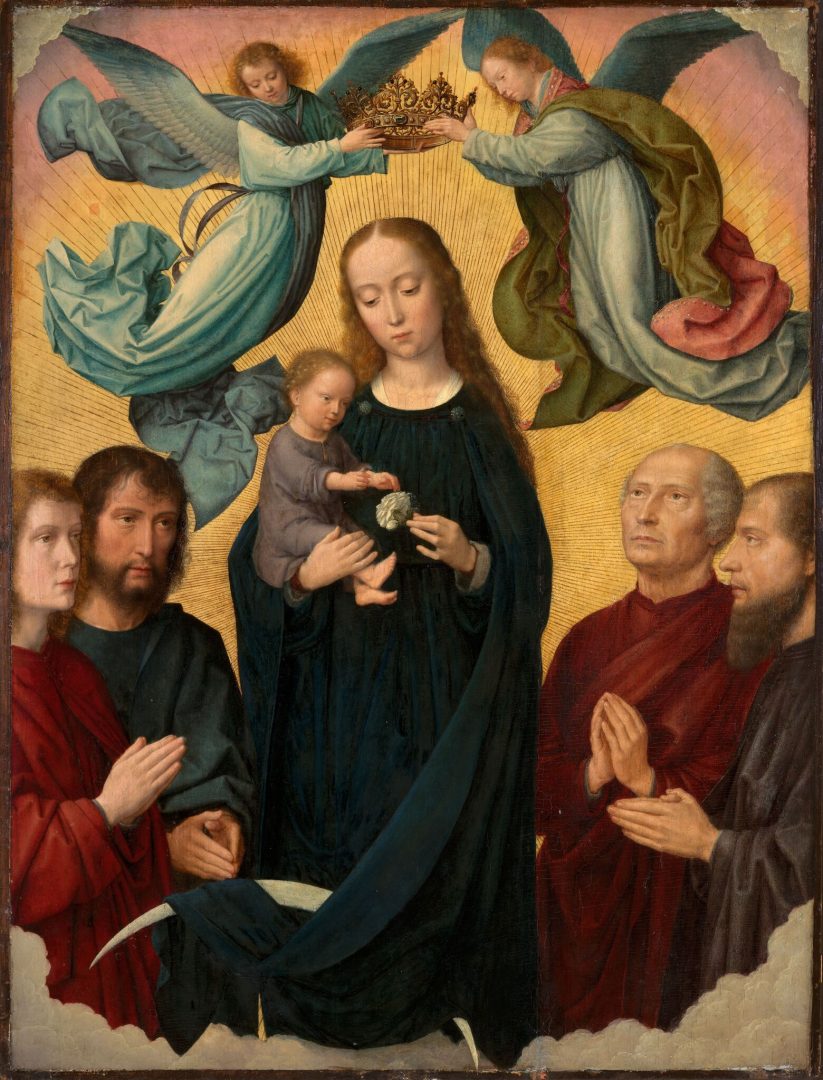
Gerard David, The Coronation of the Virgin, Maria in Sole, c. 1515. | Photo courtesy of The Norton Simon Foundation

The exhibition is divided into three themes: power, devotion, and adornment. The 57 objects represent about 17 countries across four continents, spanning from 1000 BCE to the 20th century.

“Through these works we explore how gold traveled across land and sea, how it was crafted, and how it has been imbued with special meaning, particularly with devotion,” explains Gamage. “This is possibly the first time South and Southeast Asian art are displayed together with American and European collection in the special exhibitions galleries. I do want to emphasize that this is not a comprehensive picture of gold because we are drawing solely from the Norton Simon Museum collection and these objects were mostly sourced by Norton Simon himself.”

Museumgoers will find a clean, front-facing plan and objects displayed on tables in the center instead of against the wall. The first gallery focuses on power, the second on devotion, and the third contains jewelry and the smallest objects. Interior walls and display stands are painted red, inspired by a lot of the images in the space. The lighting will be different in each gallery.

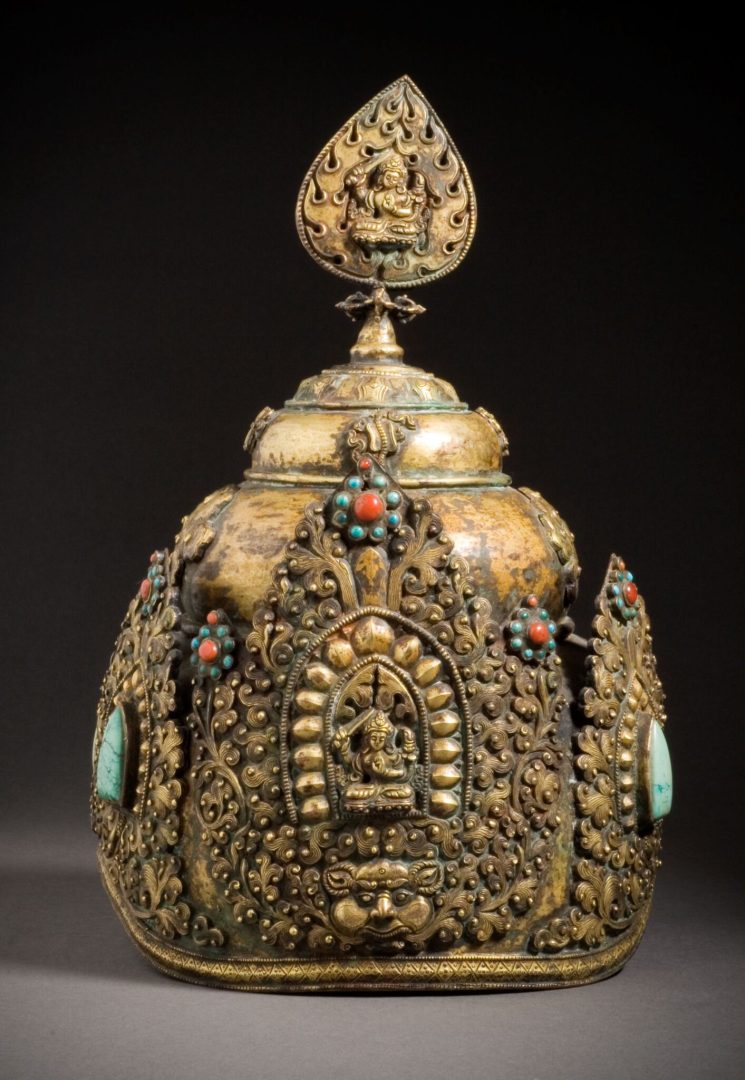
Asia: China, Tibet, Headdress, 20th century. Gold Metal with semiprecious stones. | Photo courtesy of The Norton Simon Foundation

Gamage elaborates, “Visitors won’t see any artwork on the peripheral walls and it’s a deliberate design choice to give prominence to the objects. Maggie and I worked very closely with the designers to create an exhibition that felt meaningful to visitors. The layout allows them to create their own pathways and gives them the freedom as they walk around to see these connections with their own eyes. And rather than separating them into just Asian and European, we wanted the objects to have interesting sightlines so visitors can see Asian objects visually interacting with American and European objects. That highlights function and meaning, whereas a division by geography and time loses those meaningful trajectories.”

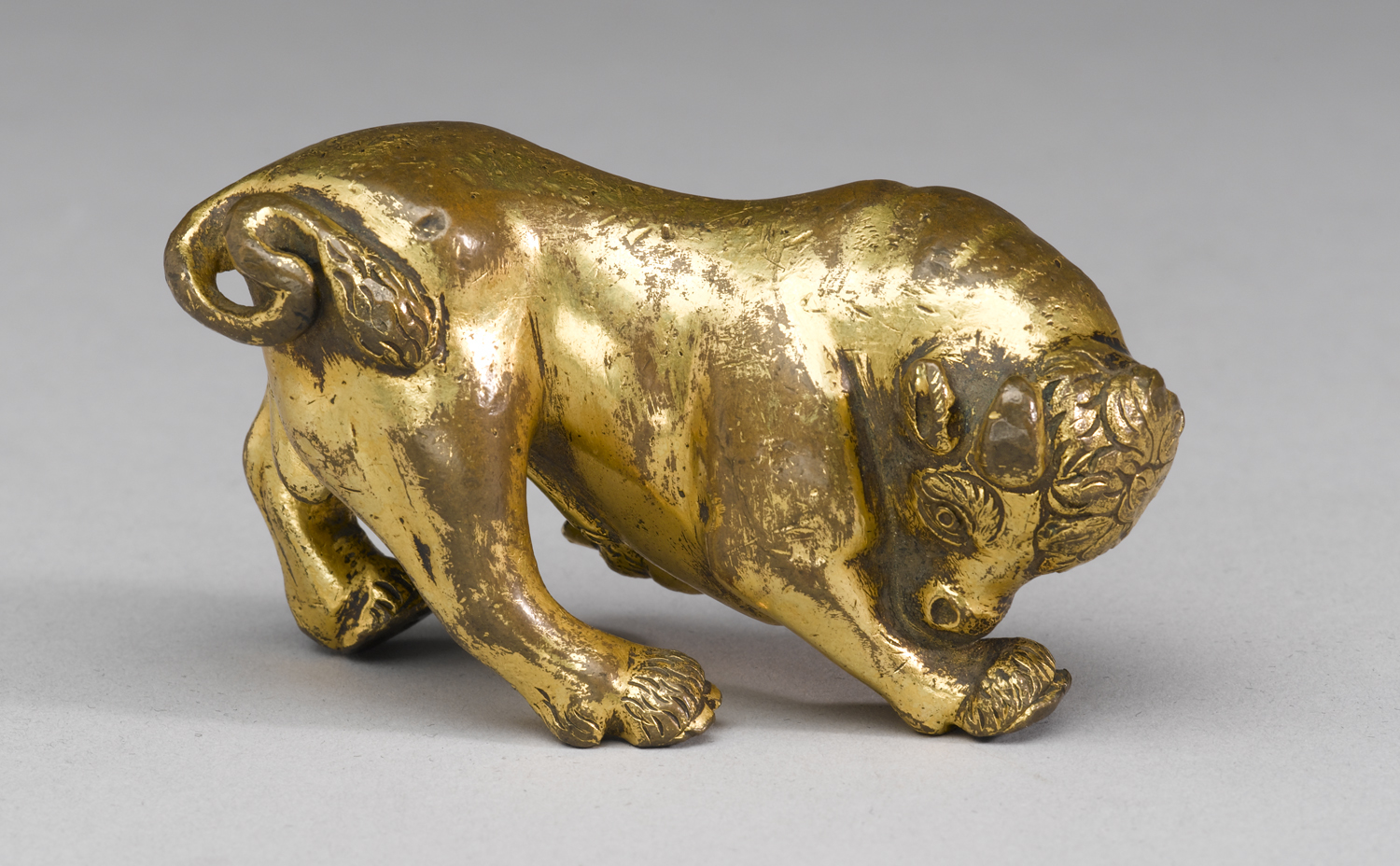
A map at the entrance indicates where the objects originated and where the gold came from. In the first gallery, the very first object visitors will see is a bovine sculpture from 18th century China.

Asia: China, Tibet; Asia, Nepal, Bovine, 18th-19th century. Gilt-copper alloy. | Photo courtesy of The Norton Simon Foundation

“We chose this because it is associated with strength, power, and resilience, and possibly tied to ancient Chinese feng shui tradition,” explains Gamage. “The function is not exactly known because not much research has been done about this object. The practice itself remains unclear but the charging bull has long been viewed as an auspicious symbol of prosperity and abundance.”         

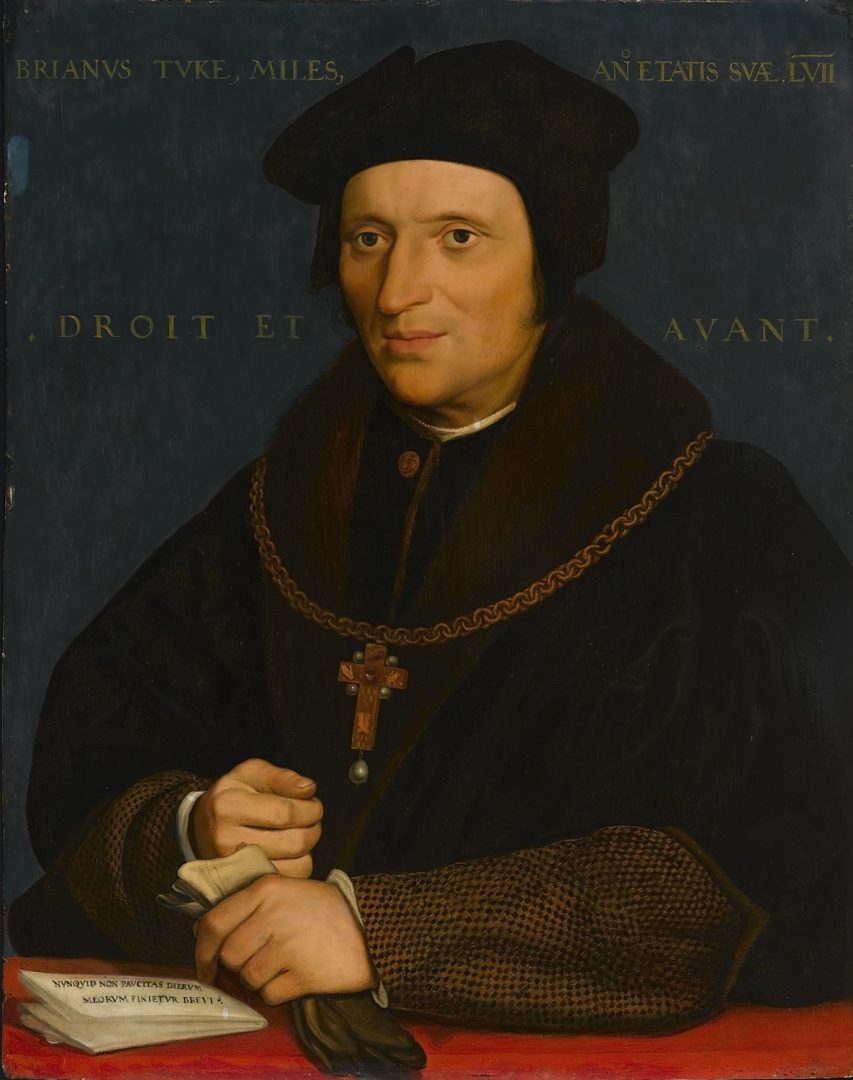
One of the foremost European objects in the first gallery that addresses the power of gold – both as an economic material as well as a symbolic medium – is a portrait of Sir Bryan Tuke, who was appointed treasurer and secretary of Henry VIII’s royal household in 1528.

“This is a copy after a painting by Hans Holbein the Younger, a German artist primarily for the court of Henry VIII,” Bell describes. “Holbein was both a painter and a jeweler and was renowned for designing jewelry for Henry VIII and his wives, and incorporating those designs into the portraits he did of the people in Henry VIII’s court. Because Holbein was a 16th century artist and this was done in the 17th century, it’s possible that Tuke’s descendants commissioned the new portrait to hang in their home as a reminder of their own connections to the Court of Henry VIII in the previous century.”

Hans Holbein the Younger, Portrait of Sir Bryan Tuke, c. 1527. | Photo courtesy of The Norton Simon Foundation

“It’s very true to the original Holbein portrait especially in the way that the cross jewelry is hanging around Bryan Tuke’s shoulders,” explains Bell. “It’s very conceivable that Tuke designed this hefty gold cross himself. I really like this image because a treasurer gets the economic power of gold; it also has an interesting symbolism around the use of gold in this portrait. When this was painted Tuke had just recovered from a really serious illness. It has additional meaning because gold was associated with longevity and good health since it never tarnished.”

In the second gallery, objects on devotion and the sacred role of gold in making art are displayed.

“It was a really fascinating theme to think through with Lakshika because gold has different meanings in Christianity, Buddhism, and Hinduism that is very complex,” Bell declares. “For example, in the Christian tradition, gold is incorporated into images of religious figures as a way to honor them. But it also becomes a bit tricky because poverty is such an ideal in Christianity, so integrating gold undermines the value of poverty as a Christian virtue.

“But in Buddhism, there is the tradition of genuine sacrifice that comes from giving gold as a gift. It was really interesting to think through those ideas with Lakshika in terms of using gold to craft religious images and the different symbolic and devotional implications that they have.”

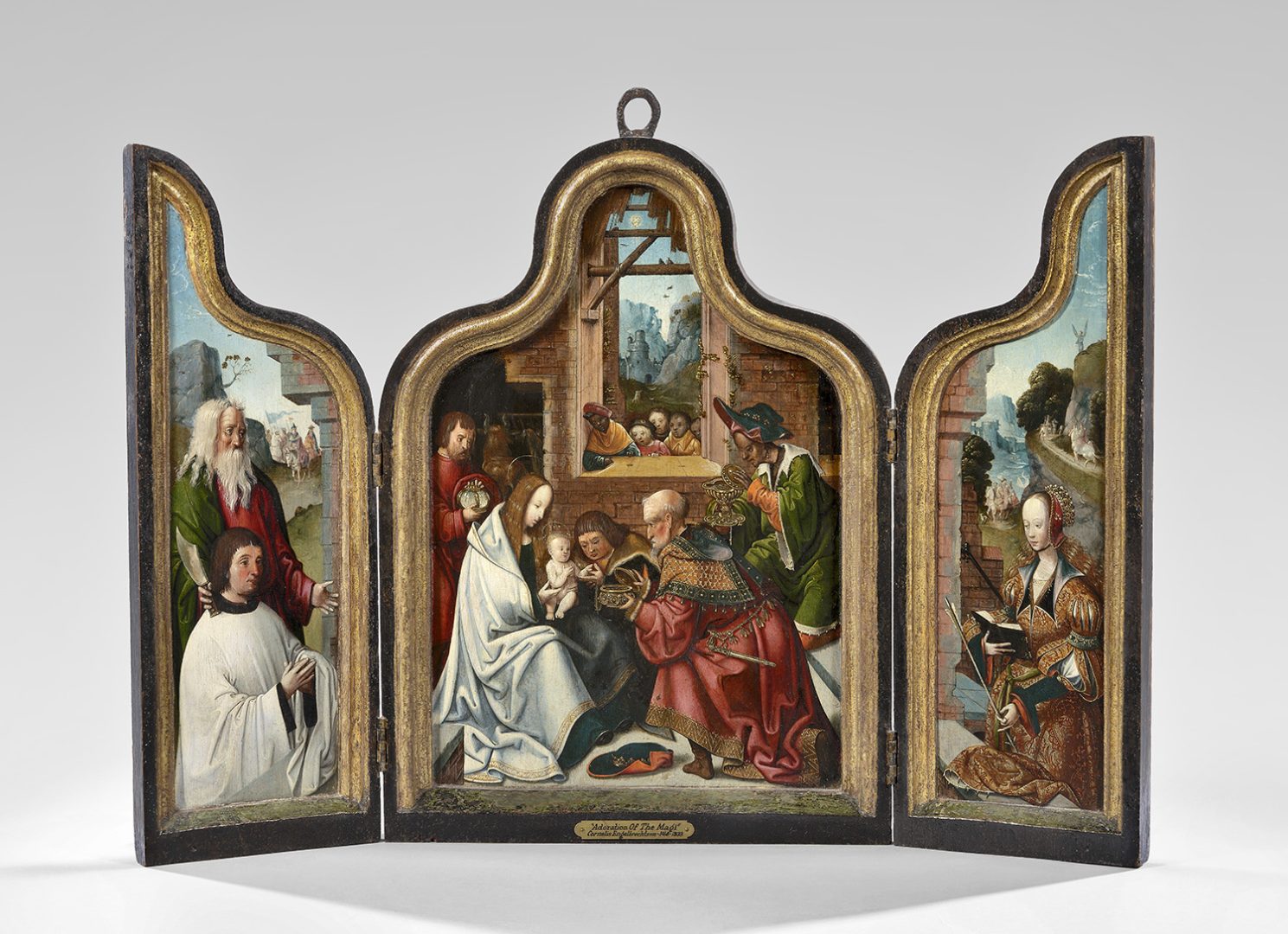
Workshop of Cornelis Engebrechtsz, The Adoration of the Magi, c. 1520. | Photo courtesy of The Norton Simon Foundation

One of the first European displays in the second gallery is a painting called “The Adoration of the Magi.” It is a scene showing the three kings who traveled from the four known corners of the world – Asia, Europe, and Africa – to honor the Son of God with extravagant gifts of frankincense, myrrh, and gold..  

“What I found interesting that I didn’t realize, is that in a lot of these images from the 16th and 17th century, Christ is shown interacting with this pot of gold,” says Bell. “I find that thought-provoking because, at the same time. the Holy Family was also honored for their poverty. Christ was born in a manger, surrounded by farm animals but he was being honored with gold and he’s reaching out for the gold, and in some paintings even holding the gold coin.”

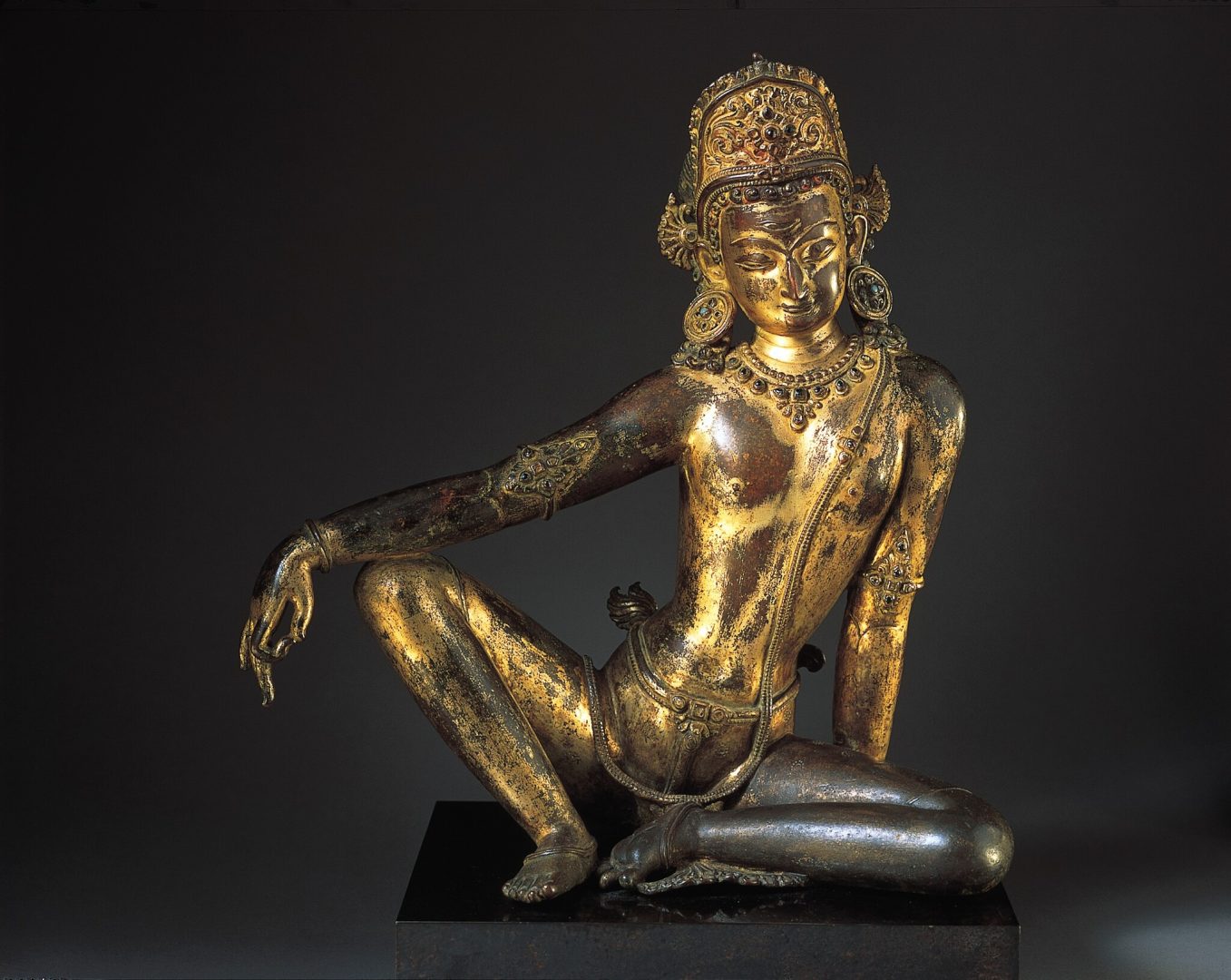
A South Asian object in the second gallery is the sculpture of Indra – the Hindu god of storms, thunder, and lightning, and was historically the king of gods.   

Asia: Nepal, Indra, 13th century. Gilt bronze. | Photo courtesy of The Norton Simon Foundation

Gamage states, “Indra is in this particular posture called the ‘Royal Ease.’ He wears a very distinctive Nepalese crown and he also has a horizontal third eye that clearly tells us that this is the god Indra. There are various ceremonies that are very specific to the veneration of Indra, particularly in the Kathmandu Valley in Nepal.”

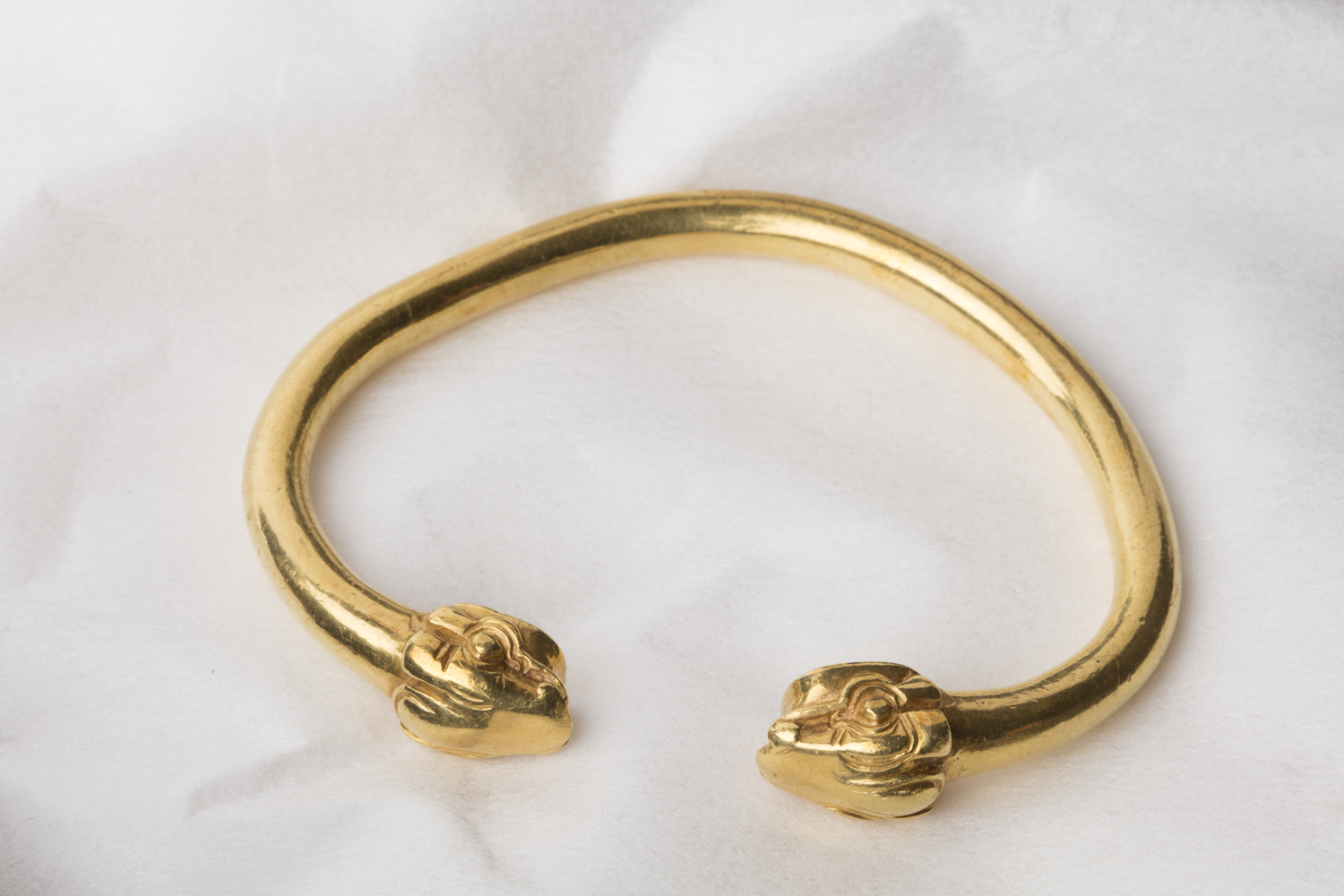
In the third gallery, called adornment, objects are mostly jewelry. The one object from the Asian collection is a bracelet made of pure gold dated 1000 BCE – the oldest object in the exhibition.  It is from the Uragu Kingdom, which is modern Turkey, Armenia, and part of Iraq. 

Asia: Urartu, Bracelet with Animal Head Terminals, c. 1000 BC. Gold. | Photo courtesy of The Norton Simon Foundation

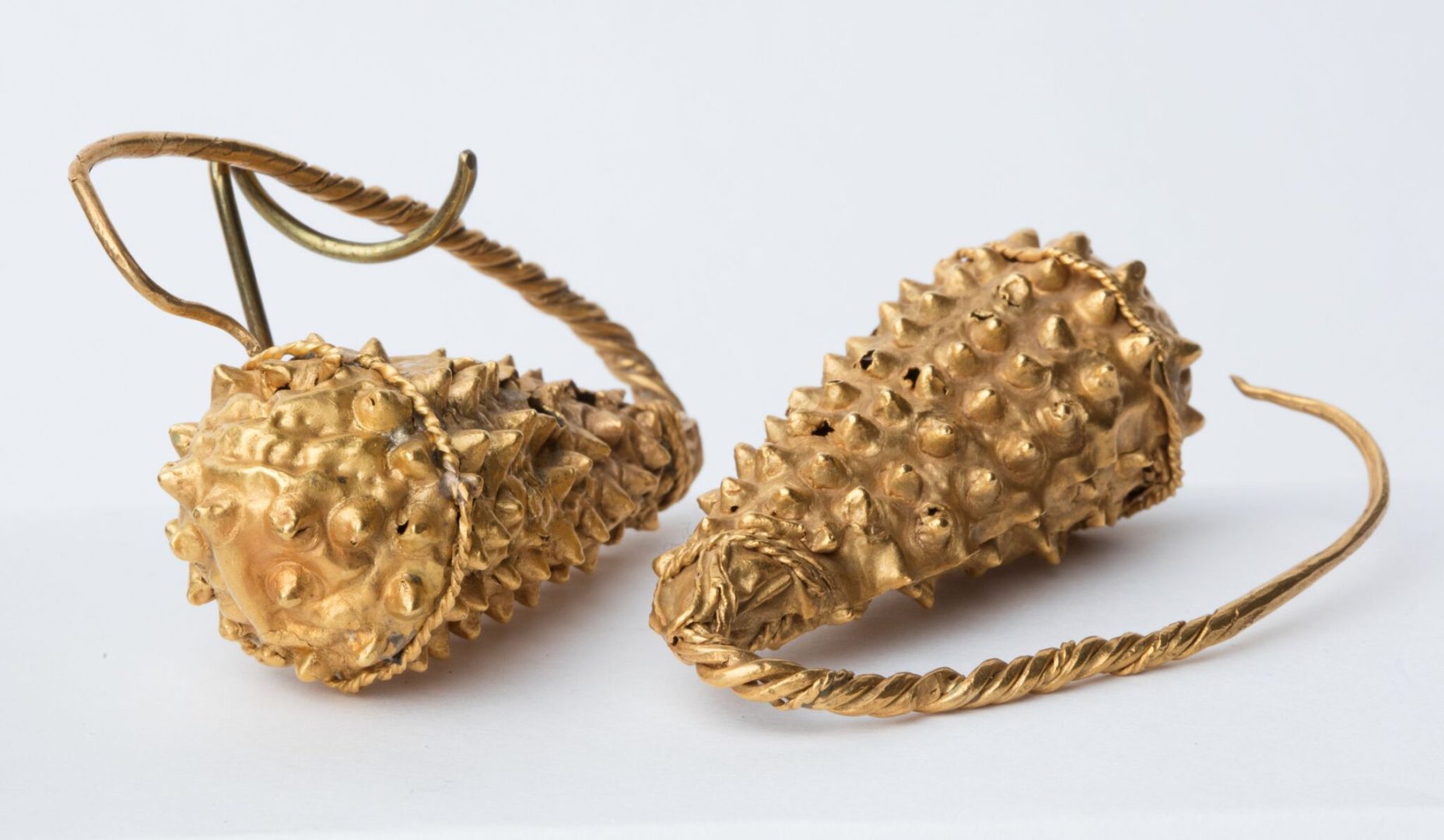
“We have an eclectic group of ancient European objects,” enthuses Bell. “There are two Egyptian cats that we’re really excited about. These were on trend for collectors in the 1960s. We have figurines of various goddesses decorated in gold in someone’s home as talismans. We have this fantastic pair of earrings which are hollow inside but made of pure gold. They’re beautiful! It’s a testament to the power of gold – it doesn’t tarnish even after millennia. We were desperately trying to find photos of Jennifer Jones, Norton Simon’s second wife, wearing these to some events. But we have not been able to verify this.”

Europe: Roman, Pair of Earrings, 3rd century CE. Gold. | Photo courtesy of The Norton Simon Foundation

The Gold exhibition will feature four technical stations, created by the museum’s conservator, behind the two large tapestries. Bell expounds on the reason for this.

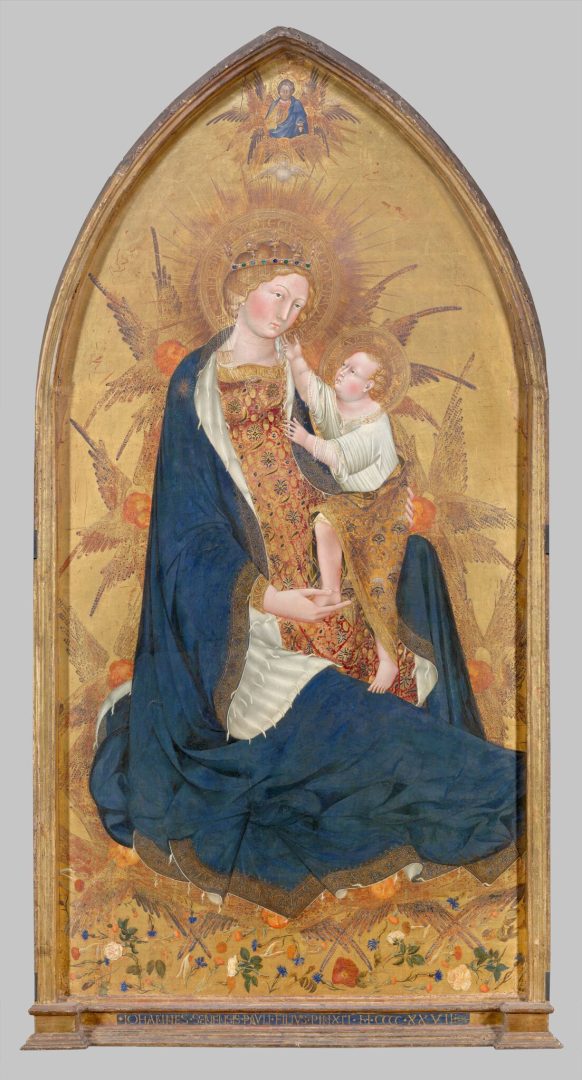
“We’re thinking about gold as a material and we had no idea about the many ways gold can be manipulated to become ink, paint, thread, leaf, or something you can melt. There are so many things you can do with gold. It’s alchemical in a real sense. We kind of condensed them into these four major techniques that you see throughout the show: gold leaf on painted wood panel, gold threads, gold paint, and gilded cast metal – which is the majority of the work that Lakshika is displaying from the South and Southeast Asian collection. So we’re very grateful to our conservator and we hope they will enhance the exhibition experience for our visitors.”

Giovanni di Paolo, Branchini Madonna, 1427. Tempera and gold leaf on panel. | Photo courtesy of The Norton Simon Foundation

Asked if they learned something when they worked on the exhibition they didn’t know before, Bell replies, “Training our eyes to recognize the different techniques was a skill I didn’t have before. That was something we acquired through looking at objects to get a sense of ways that gold paint or gold leaf could be applied. And also, just understanding the complexity of gold as the material resource in the world. What’s it meant to get from a mine or a river into the hands of the artist is extraordinarily difficult to understand, and I was very humbled by that research.”

Gamage echoes Bell’s sentiment  “One of the most interesting things I learned is a very deep appreciation for those artists who used gold in magical ways we would never even have imagined. For example, to see how gold was coiled and wrapped around another thread and how it was used in a tapestry, cut silk embroidery; or in painting as gold leaf. Today, we have this state-of-the-art technology and are capable of so many modern and technological marvels. But to know that humans were capable of such intricate and extraordinary artistry was deeply humbling, to mimic Maggie’s words. That level of technical expertise and finesse they had – and that they did by hand – is something that still amazes me.”

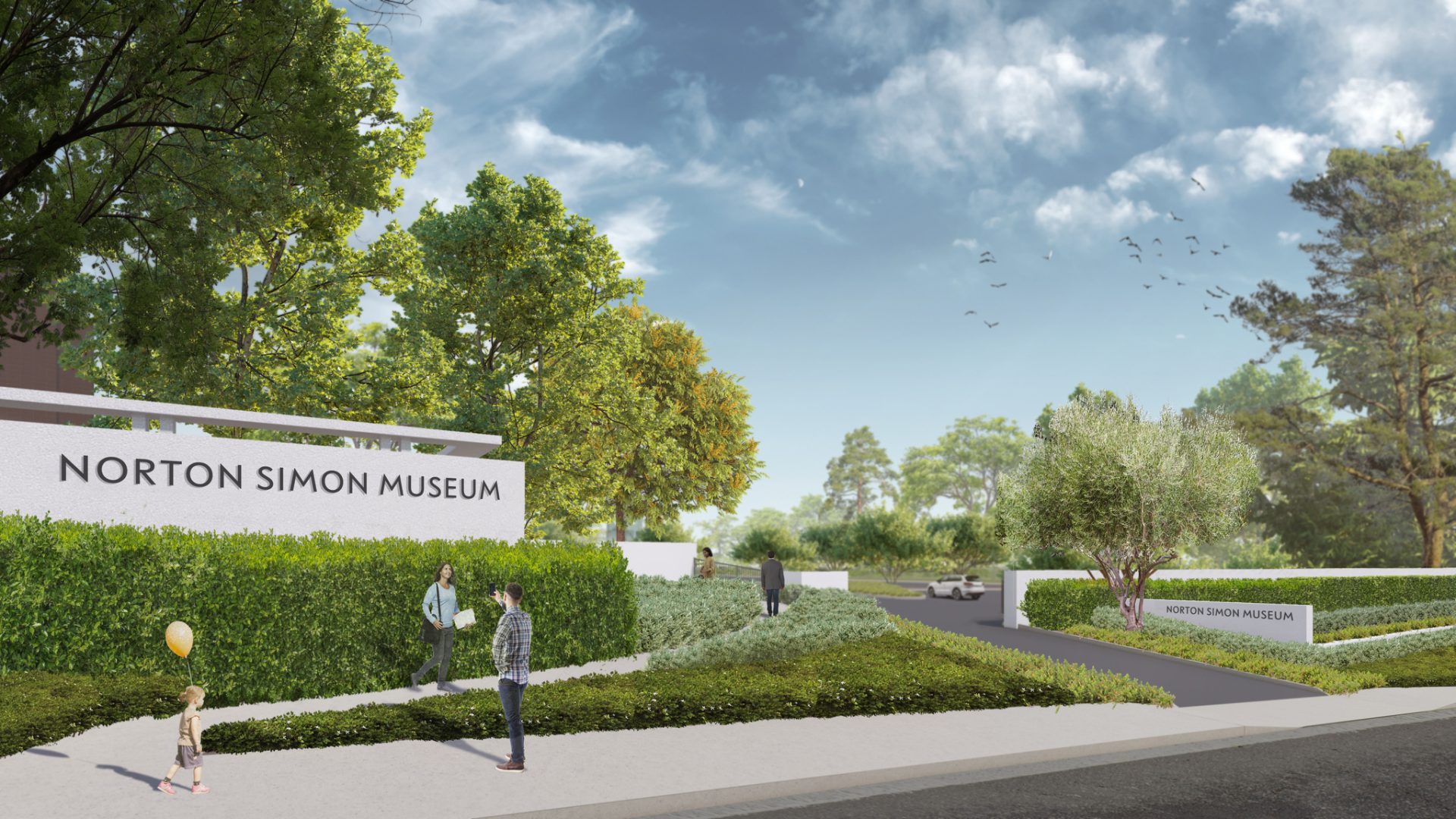
Rendering of the Norton Simon Museum’s main entrance and pedestrian walkway. | Image courtesy of ARG and SWA

The Norton Simon Museum’s 50th anniversary celebration will include a community weekend, which is free to the public, to be held on November 7, 8, and 9. There will be exhibitions, various activities, live music, and the unveiling of the improvement project.

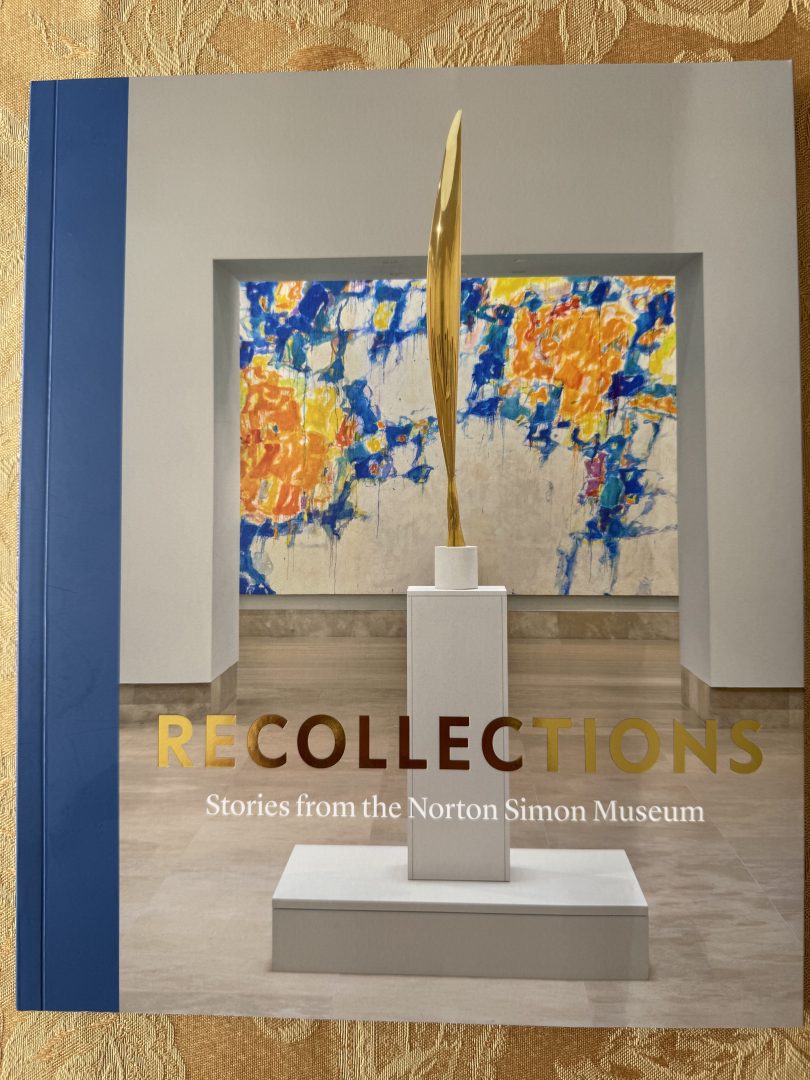
A book called “Recollections: Stories from the Norton Simon Museum” is also available for purchase. A fascinating read, it contains essays penned by former and current staff about some of the paintings, sculptures, and artworks in the museum’s holdings. 

In the book’s introduction, Emily Talbot, Vice President of Collections and Chief Curator, recalls the museum’s history. Maggie Bell traces Tiepolo’s “Allegory of Virtue and Nobility’s” acquisition and journey to Pasadena. Talbot lets us in on the little-known friendship between Norton Simon and abstract expressionist artist Helen Frankenthaler. Dana Reeb’s essay informs us Simon amassed one of the largest and most important Goya print collections in the world. Likewise, Lakshika Senarath Gamage reveals how Simon assembled the largest body of Chola period bronzes that allowed him to wield the most influence in this area of the art market.

Recollections. | Photo by May S. Ruiz / Hey SoCal

Rachel Daphne Weiss explores the collaborative purchase of Poussin’s “The Holy Family with the Infant St. John the Baptist and St. Elizabeth” between Simon and the Getty. Leslie Denk writes about Cary Grant’s gift to the museum of Diego Rivera’s painting “The Flower Vendor.” Gloria Williams Sander gives us an insider look at how the right frames present paintings to their best effect. Bell’s second essay sheds light on how the West Coast exhibition “Radical P.A.S.T.: Contemporary Art and Music in Pasadena, 1960-1974” explored Pasadena’s role as a generative hotbed of contemporary art. John Griswold, Head of Conservation and Installation, discusses the museum’s collaborative approach to conservation.

Gloria Williams Sander reflects on the moment Photography became accepted in the art world as a medium worthy of collecting and exhibiting. Alexandra Kaczenski uncovers the legacy of Printmaking in Los Angeles. Gamage’s second essay examines Architect Frank Gehry and Los Angeles County Museum of Art Curator Pratapaditya Pal’s vision for the Asian galleries and the arrangement of the objects displayed within. The last essay by Griswold and Talbot talks about the Norton Simon Museum’s loan exchange program, which gives museumgoers the opportunity to view significant artworks from the National Gallery of Art in Washington, DC, the Art Institute of Chicago, and the Musée d’Orsay.   

Norton Simon’s extraordinary art collection has been a Pasadena treasure since its founding. It has magnificently lived up to the purpose Simon envisioned when he assembled one of the finest European and South and Southeast Asian masterpieces in the world. In the capable hands of the museum’s stewards and curators, Simon’s legacy will continue to enrich our lives and flourish well into the next 50 years.  

Norton Simon Museum Enhances Exterior Grounds as it Marks 50th Anniversary

Also published on 8 May 2025 on Hey SoCal

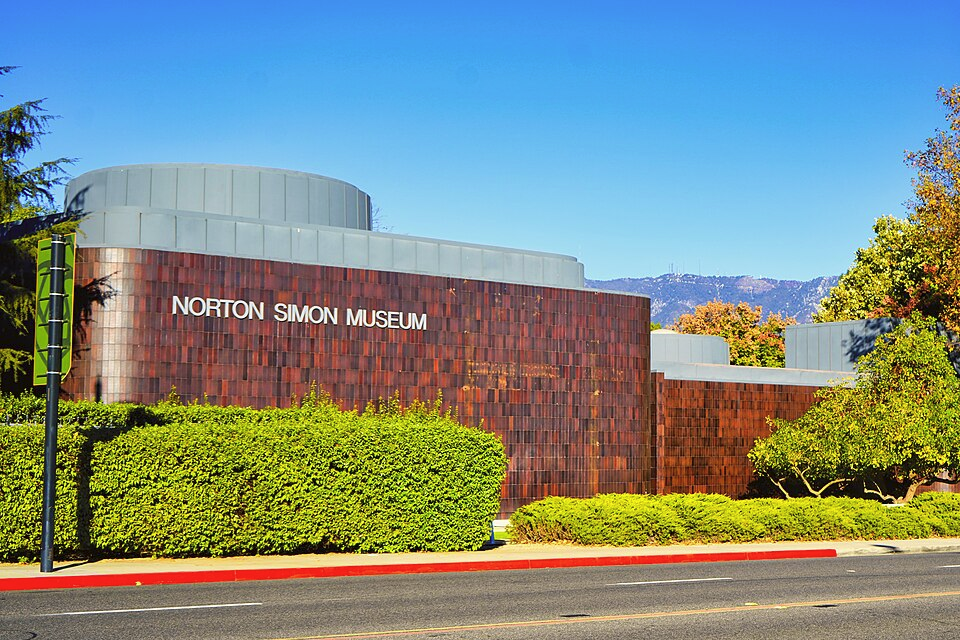
The Norton Simon Museum in Pasadena. | Photo courtesy of Tony Mariotti/Wikimedia Commons (CC BY 2.0)

The facade of the Norton Simon Museum is known to millions of television viewers around the world as the backdrop of Pasadena’s annual Rose Parade. With the beautiful San Gabriel Mountains behind it and flower-bedecked floats traveling along Colorado Boulevard on a sunny winter morning, it is an iconic image that once enticed countless people to move to Southern California, and still draws several thousand tourists to the city.      

As the museum celebrates its 50th anniversary, it is undergoing an exterior renovation project to make it more inviting for these television viewers and people on the grandstands to come in and discover the treasures found within.

During a recent tour of Norton Simon Museum, Leslie Denk, vice president of external affairs, talks about the captivating man behind the institution’s magnificent collection, the history of the museum and the exterior improvement project.

Gallery entrance. | Photo courtesy of the Norton Simon Museum

Norton Simon was originally from Portland, Oregon,” Denk begins. “When he was in his late teens, he and his family moved to Los Angeles. He started to think about business and with a small loan, he took over Hunt’s Food, which was called something else back then. He was really known for identifying businesses with potential but weren’t financially successful and then turning them around. Some of the businesses in his conglomerate include Avis Car Rental, Canada Dry Corporation, McCalls Publishing and, of course, Hunt’s Food where he really made a name for himself.”

While Simon always knew he wanted to become a business man, his first art acquisition was happenstance. Relates Denk, “As the story goes, in the early 1950s he and his first wife were living in Larchmont Village in L.A. and his wife hired a decorator to revamp their home. The decorator brought in works of art that didn’t speak to him. He had his regular haircuts at the barber shop in the Ambassador Hotel on Wilshire Blvd. where there was an art gallery. One day in 1954, he popped in at the gallery and ended up purchasing a few works of art. As a former senior curator who was hired as a young person by Simon described, ‘it was like an olive coming out of a bottle – he could never put the olives back in.’”

Today the Norton Simon Museum boasts a collection of 12,000 paintings, sculptures, and works on paper. Its collection of European paintings and sculpture, which spans the Renaissance to the 20th century, includes the finest collection of Impressionist and Post-Impressionist art on the West Coast.

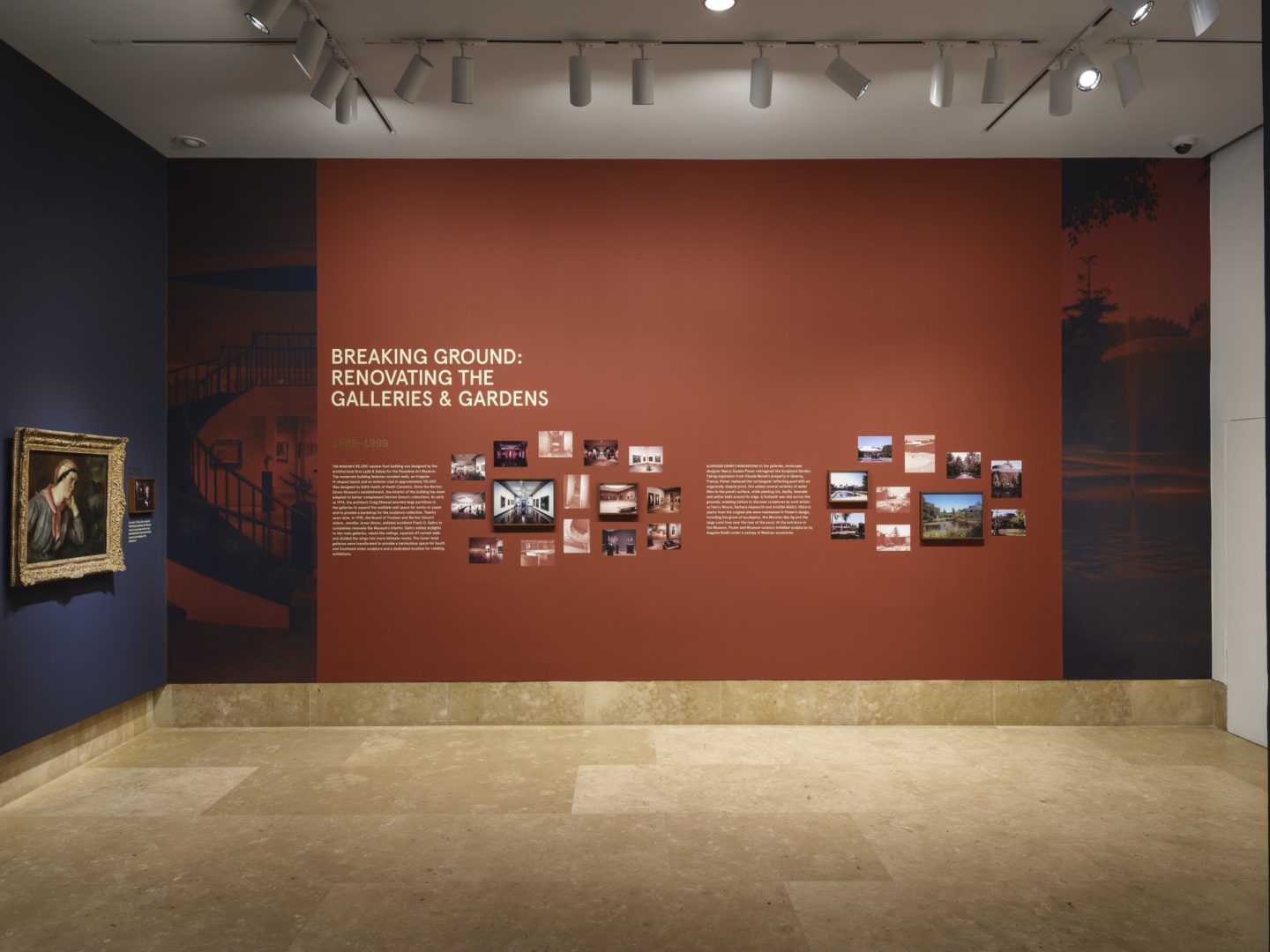
Retrospect Exhibition Installation. | Photo courtesy of the Norton Simon Museum

It’s a staggering number considering Simon was personally involved and didn’t have a team acquiring artwork on his behalf. A self-created capitalist, he approached art acquisition like a business — purchasing an artwork and selling it when the value increased to procure more.

Before he acquired the building to display his collection, most of Simon’s art was traveling. Denk said, “He had a program called Museum Without Walls where he would send portions of his collection to other museums around the country. A lot were held at LACMA for many years too. He also had them at his businesses — several large monumental sculpture were at his corporate campus — and at his homes where he had a really interesting way of storing his art collection. He kept them in something similar to a vault where he had racks to hang them. It was an important part of his acquisition strategy to live with the paintings; he wanted to spend time with the artwork to see how he felt about it before he would commit to purchasing it.”      

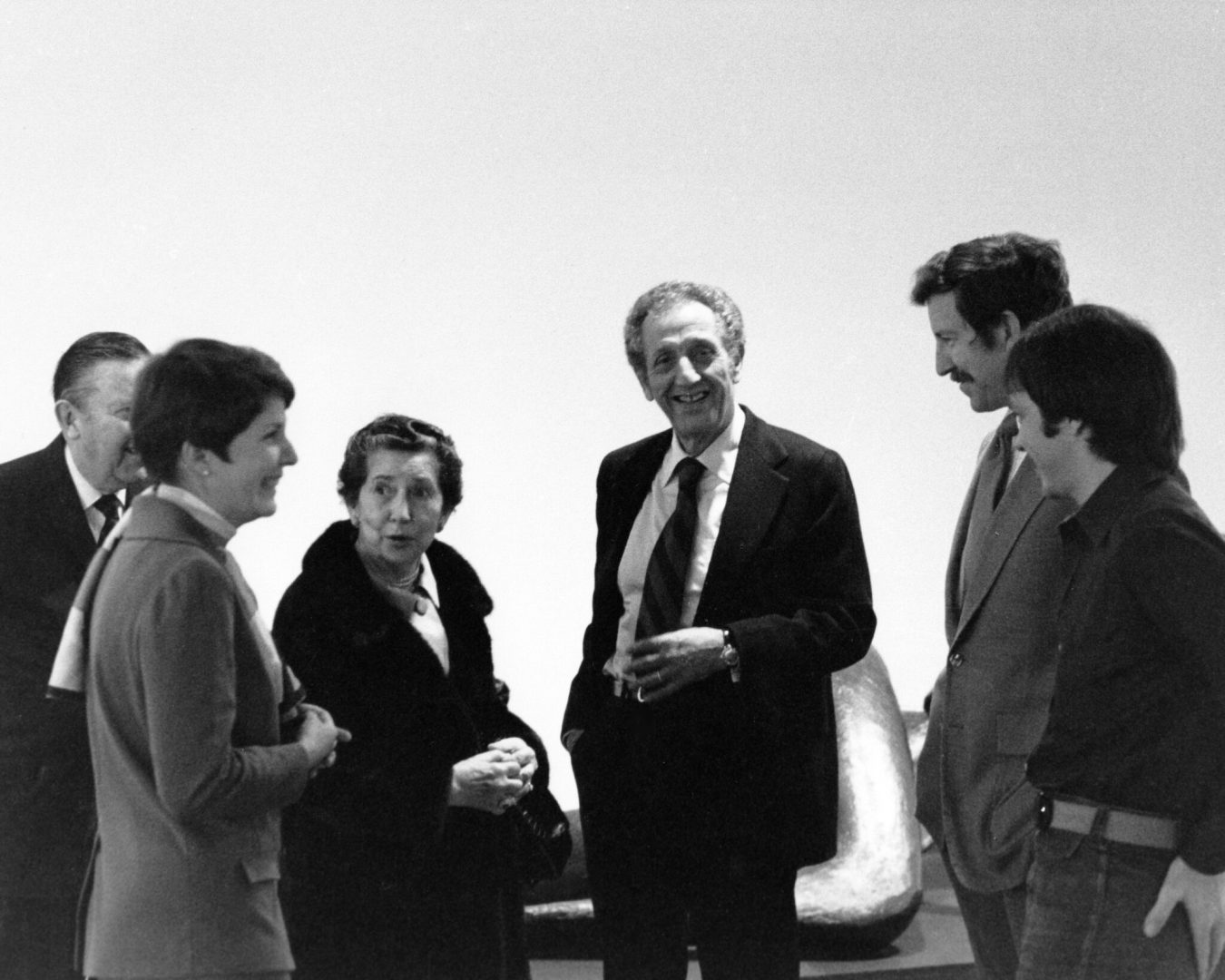
Norton SImon, third from right. | Photo courtesy of the Norton Simon Museum

Norton Simon Museum’s history is intertwined with that of Pasadena Art Museum’s. Denk reveals, “This building was actually built in the late 1960s by the Pasadena Art Museum which was the first modern and contemporary art museum in the Los Angeles area. They did some groundbreaking exhibitions in the 1950s and 1960s and they wanted to expand and relocate from their site on Los Robles. This land was owned by the city and they were able to build this structure. It opened in 1969, but they ran into a lot of financial difficulty.”

“They eventually struck a deal where Simon assumed control of the building and their collection, paid off their debts, and did some repairs,” Denk continues. “We debuted this museum in October 1975 and it was renamed Norton Simon Museum. When Simon took over, he quickly  realized the museum is the backdrop of the parade. He negotiated to have the bleachers moved, he enlarged the museum’s letterings, and commissioned the rose placard on the front of the building. It’s a wonderful tradition that we’re happy to be part of.”

The building was designed for a contemporary art collection, with curved walls outside and similarly shaped interior. “After Simon’s death in 1993, his widow and the Board of Trustees decided to do a remodel of the interior galleries and they hired Frank O. Gehry,” states Denk. “He raised the ceilings, added the skylights, squared off the walls, and created new gallery spaces appropriate to the Simon collection.”

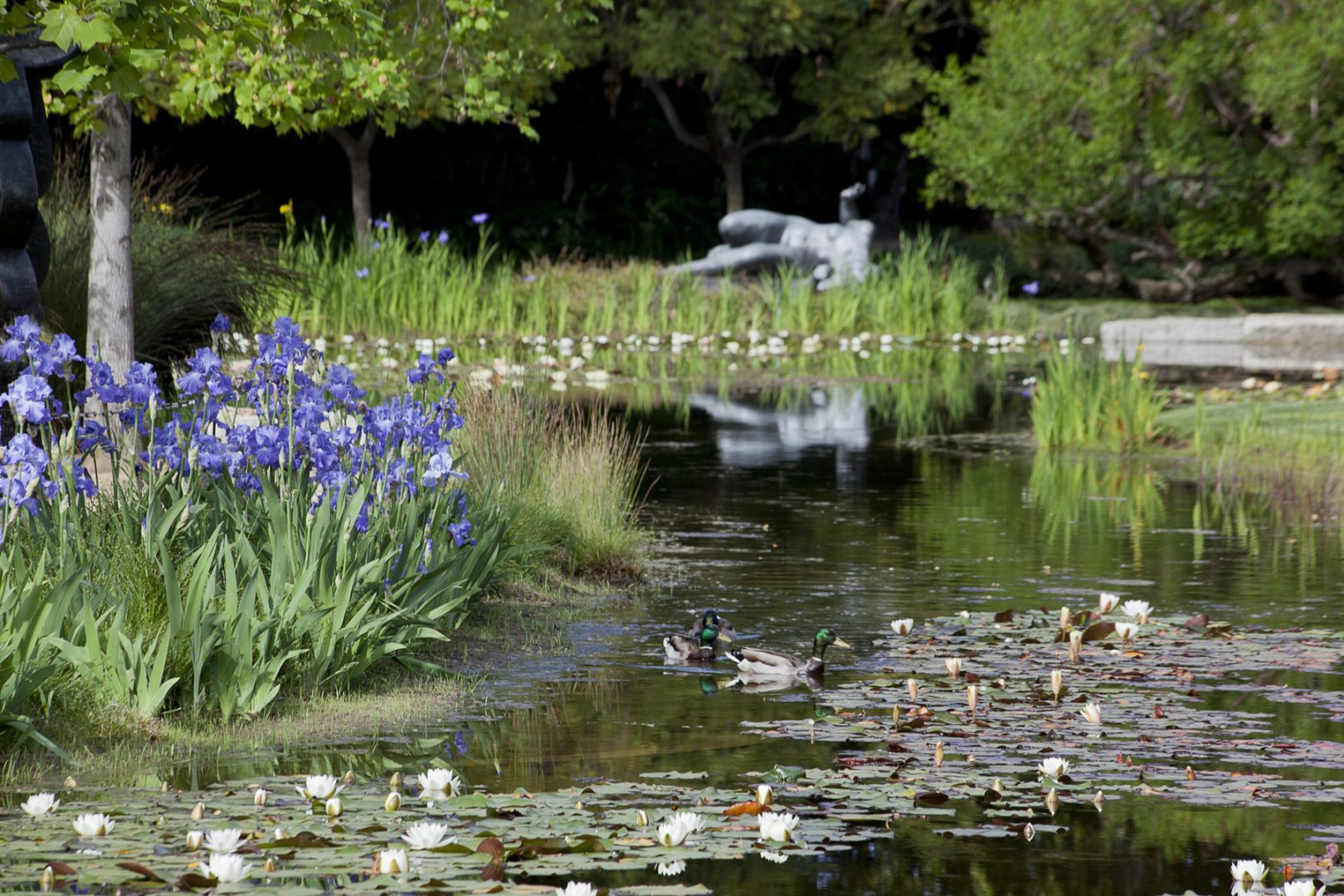
The pond in the sculpture garden. | Photo courtesy of the Norton Simon Museum

“At the same time, the sculpture garden was reenvisioned by landscape designer Nancy Goslee Power,” Denk says further. “The previous garden had been pretty minimalist and modernist — with a lot of turf, a long rectilinear fountain, and sparse plantings. When Jennifer Jones Simon hired Nancy, she asked her to create a romantic space to better reflect the collection and was a nod to Monet’s gardens. So Nancy patterned it after Japanese strolling gardens and it became a real highlight for visitors to the museum.”   

Organized chronologically on an H pattern, the European collection is the first stop on our tour of the galleries.    

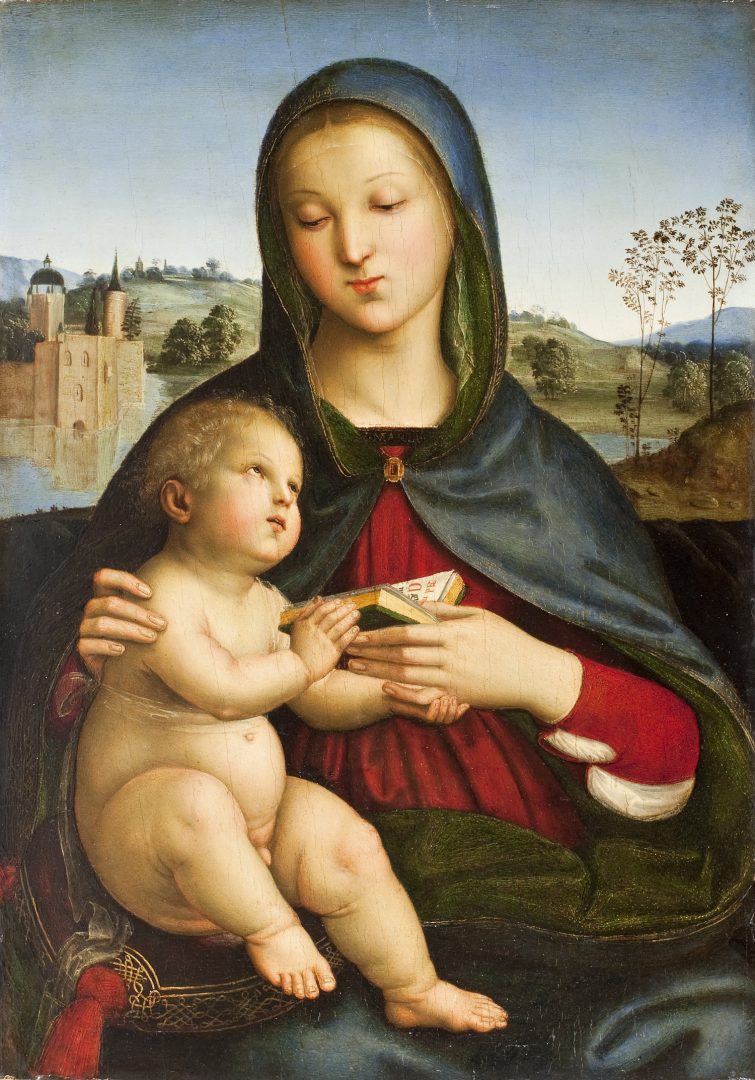
“We have the only painting by Raphael west of Washington, D.C. — it’s one of the unique things people may not know about the Norton Simon Museum,” Denk discloses. “As part of our 50th anniversary, we selected 50 works of art throughout the museum, including this ‘Madonna and Child with Book’ and put labels that highlighted recent research or other projects that we’ve done, like conservation work, so people can learn a little bit more about how to care for and interpret the collection.“ 

Raphael (Raffaelo Sanzio, Italian, 1483-1520)
“Madonna and Child with Book,” c. 1502-03 oil on panel. | Photo courtesy of the Norton Simon Foundation

Denk leads me to the next piece saying, “This is our wonderful ‘Still Life with Lemons, Oranges, and a Rose’ painted by Baroque Spanish artist Francisco de Zurbarán. It is the only signed and dated still life by this great master of the school of Seville. It was lent to the Prado last year and it will be a highlight of a Zurbarán major exhibition coming up in the next year or two. A scholar once referred to it as the ‘Mona Lisa of Still Life.’”

As we enter the theater, Denk explains, “Our theater seats almost 300 people and we screen films, host lectures, stage performances here year-round. In 2001, it was refurbished by Arthur Gensler Jr. & Associates Inc. We do about 10 lectures, four performances, and approximately 25 films a year. A week from today, we’re starting a film series directed by previous directors of the board that will run through July as part of our 50th anniversary celebration.”

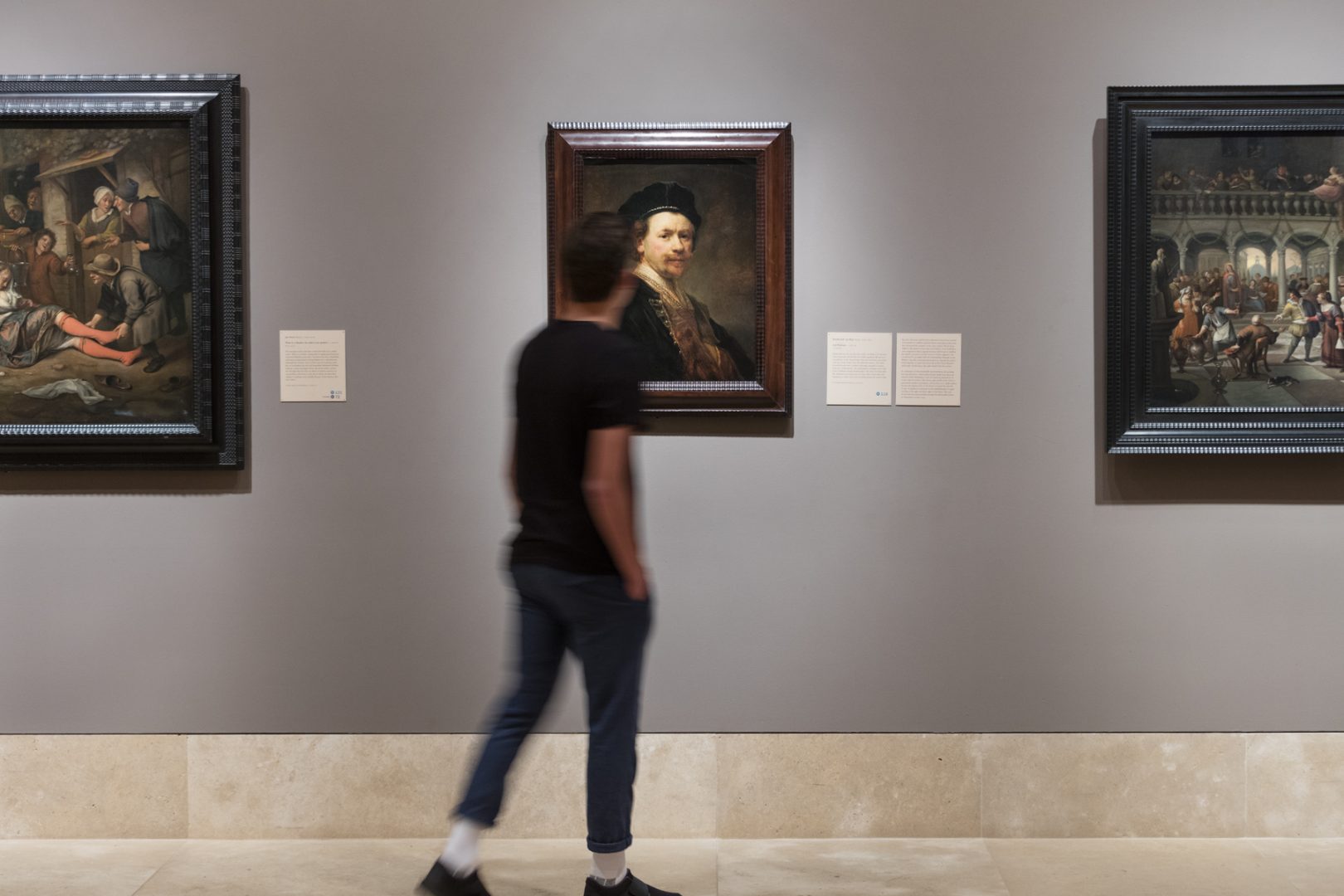
Rembrandt’s “Self-portrait.” | Photo courtesy of the Norton Simon Museum

When we reach the 17th century Dutch wing, Denk remarks, “Here we display three paintings by Rembrandt – ‘Portrait of a Boy,’ ‘Self-portrait,’ and ‘Portrait of a Bearded Man in a Wide-Brimmed Hat.’ We have a huge and significant Rembrandt print collection and sometimes we organize smaller exhibitions for it. Ten years ago we had a rare Rembrandt print show.”

In the French and Italian 18th century collection, the museum has a notable selection of French paintings that include works by Jean-Siméon Chardin, Jean-Baptiste Greuze, and Jean-Honoré Fragonard; Italian masterpieces by artists like Giovanni Battista Tiepolo.  

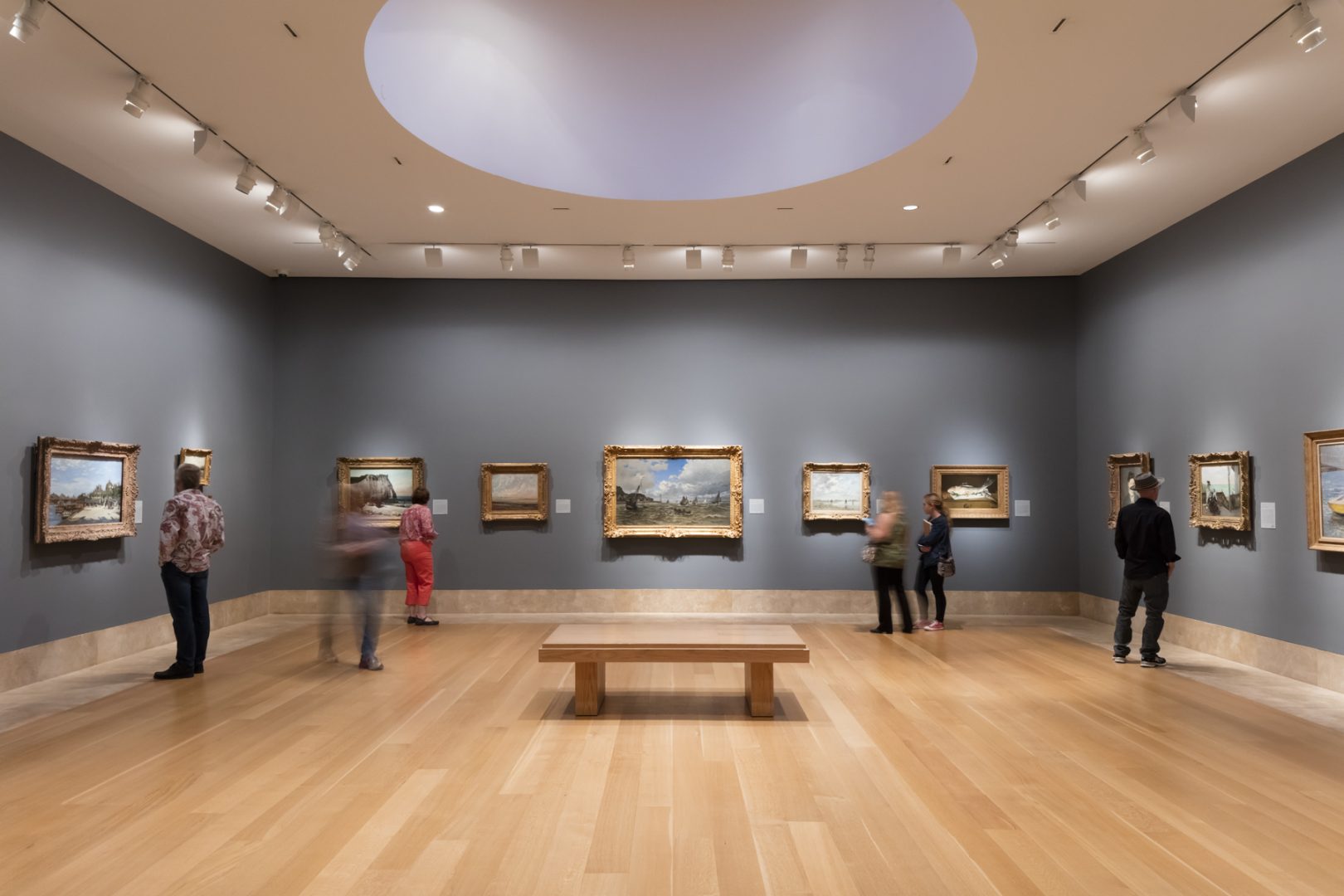
Impressionism Gallery. | Photo courtesy of the Norton Simon Museum

We reach the 19th century collection and Denk declares, “This is probably the most well-known among our artworks and this period was the origins of his art collecting. As he became more immersed in the art world he began collecting other genres and forms. We have this incredible Van Gogh ‘Portrait of a Peasant,’ which is certainly iconic of the collection. ‘Mulberry Tree’ by Van Gogh is also a real knockout. We have a pretty significant Van Gogh collection — the biggest in Southern California.”

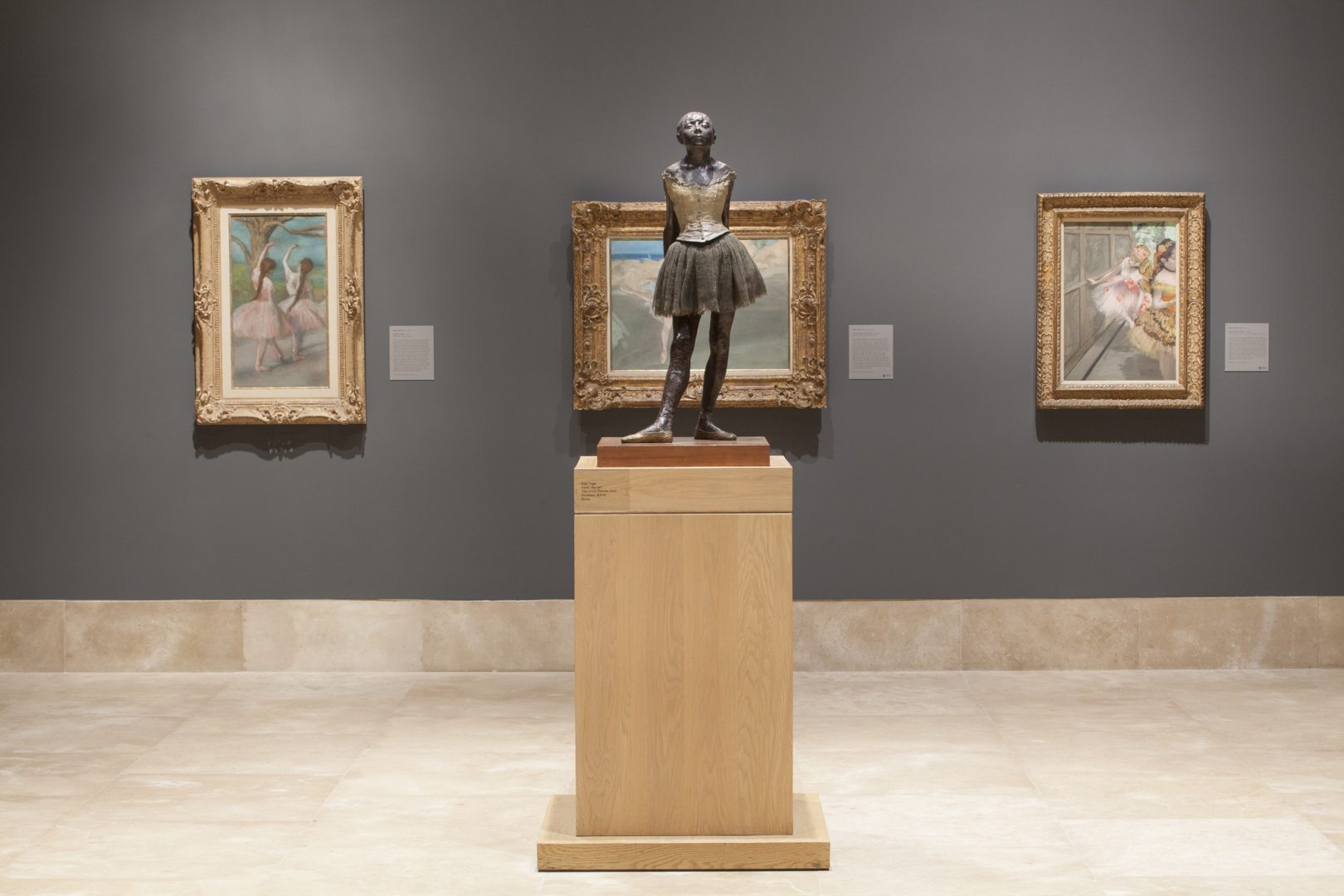
Degas’s “Little Dancer Aged Fourteen.” | Photo courtesy of the Norton Simon Museum

Simon was fascinated by Edgar Degas and the museum has a wonderful collection of his works, including a little sculpture. Claude Monet is another crowd-pleaser and they have a few of his paintings. ‘The Ragpicker’ by Édouard Manet, is one of the highlights of their 19th century collection.

The museum’s pastel collection is in a dimly-lit space to protect the works. Degas’s small sculpture ‘Little Dancer Aged Fourteen’ is also kept in here because her skirt is material and also has sensitivity to light.

In the 20th century collection section, Denk points out a painting called ‘The Traveler’ by Liubov Popova — a Russian artist who died very young.

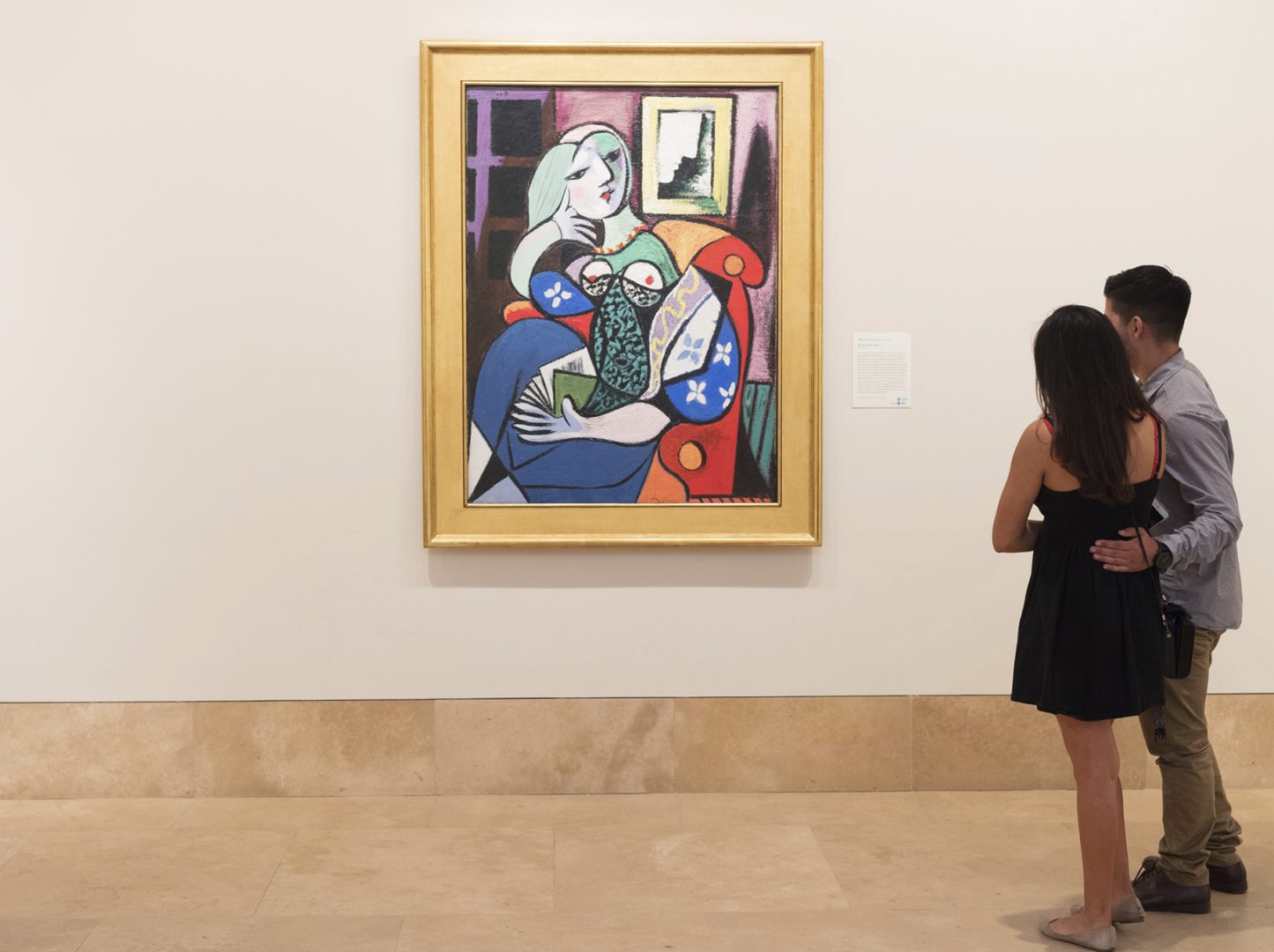
Picasso’s “Woman with a Book.” | Photo courtesy of the Norton Simon Museum

“Simon loved Picasso,” Denk pronounces. “We have various works here and a print collection. This is his ‘Woman with a Book’ — it’s one of the most celebrated likenesses of his lover Marie-Thérèse Walter and is another well-known work of art in the collection.

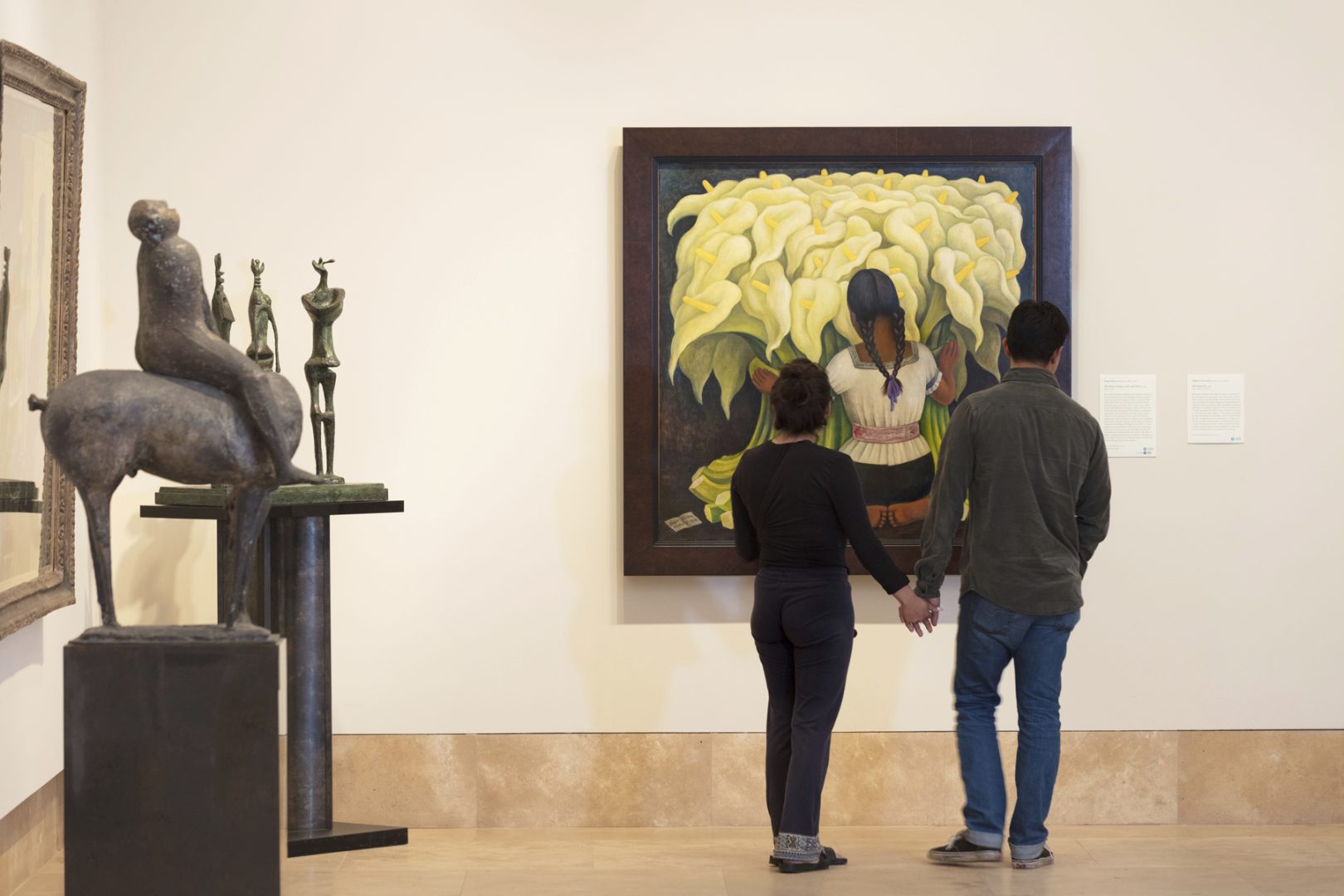
“This is a great artwork by Diego Rivera — ‘The Flower Vendor’ painted in 1941 — that was donated by Cary Grant to the museum,” says Denk. “That’s another fun little story that we’re highlighting for the anniversary because he served on the Board of Trustees. Diego Rivera did a series of similar paintings and this is one of them.”

Diego Rivera’s “The Flower Vendor” was a gift from actor Cary Grant. | Photo courtesy of the Norton Simon Museum

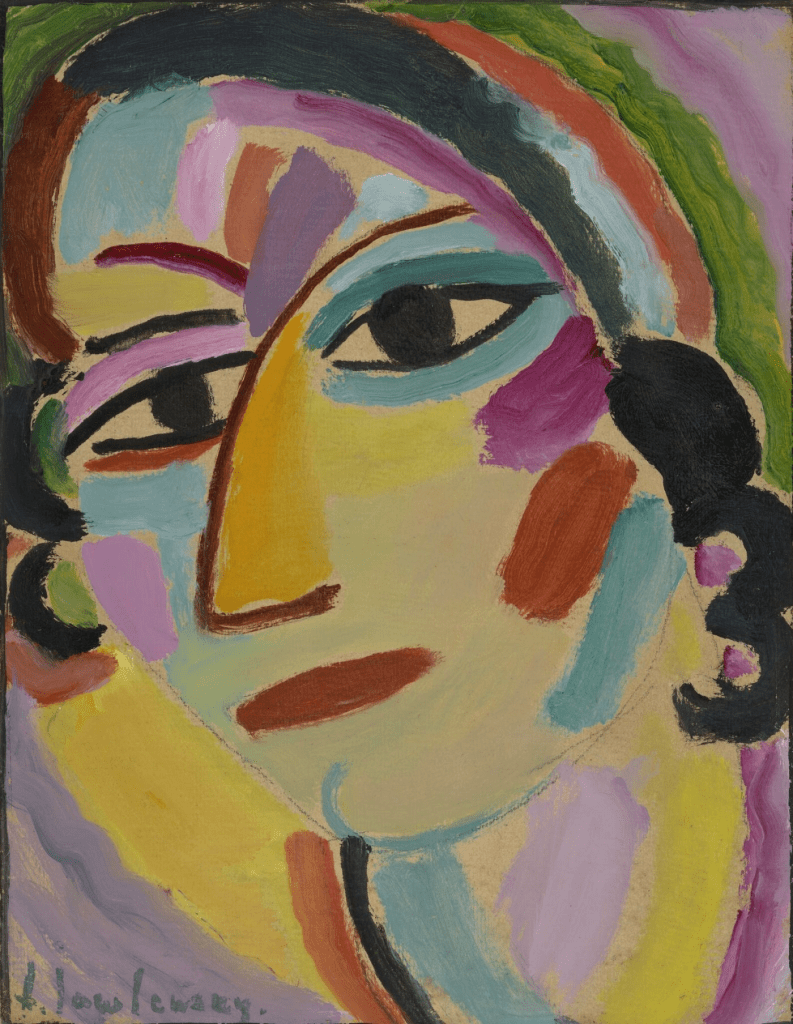
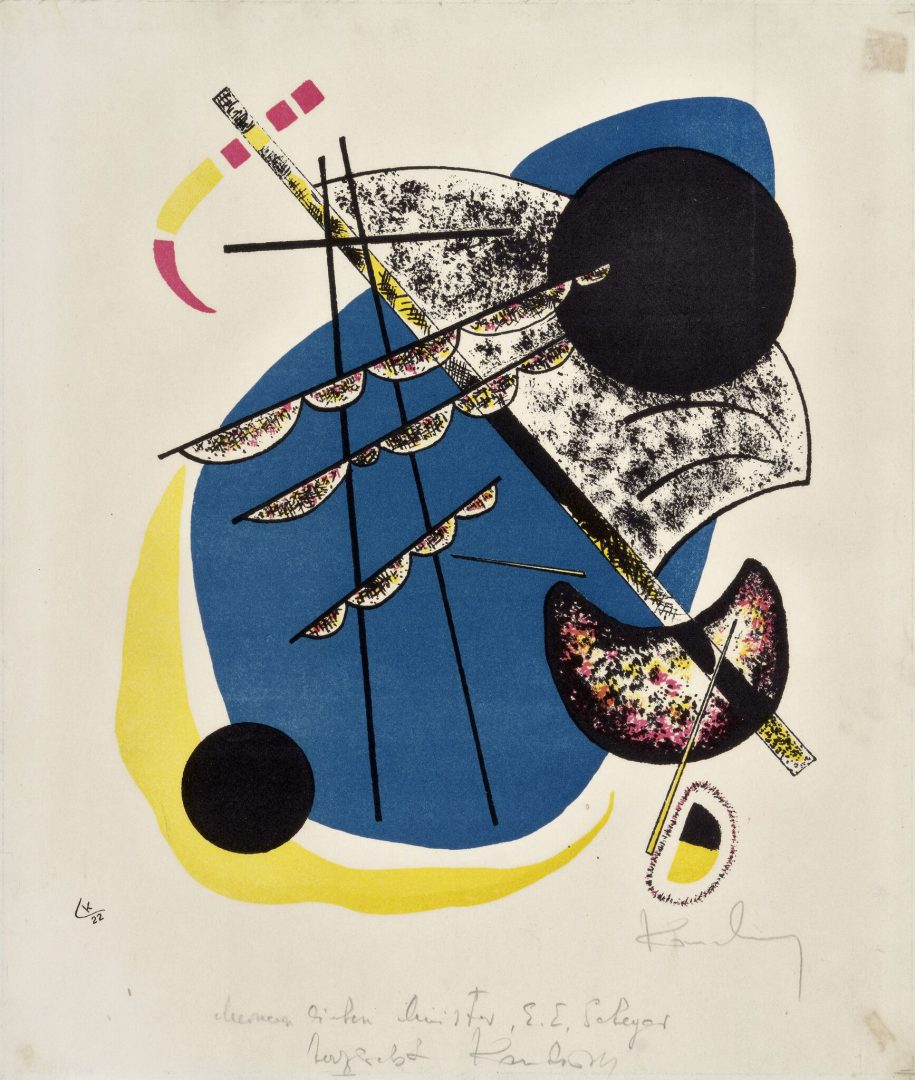
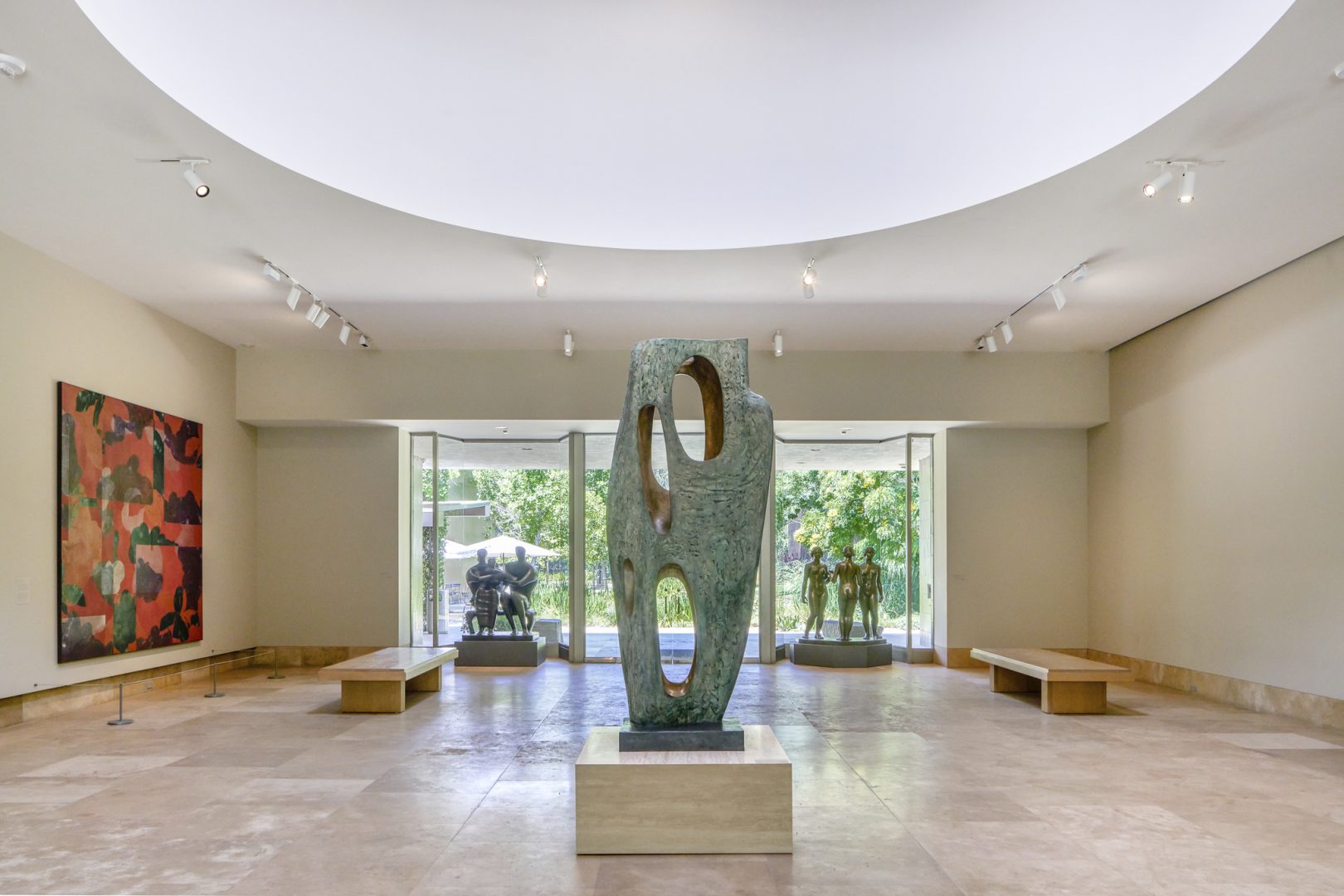
A number of works in the Modern Art gallery are from the Pasadena Art Museum, including  those of the “Blue Four” — Lyonel Feininger, Alexei Jawlensky, Paul Klee, and Vassily Kandinsky. Constantin Brancusi’s sculpture called “Bird in Space” commands the most prominent spot beneath the skylight. Other art pieces include an Alberto Giacometti sculpture called “Tall Figure IV” from 1960 and Barbara Hepworth’s “Four-Square (Walk Through).”

From the Modern Art gallery, we walk downstairs to the lower level gallery which houses South and Southeast Asian Art.

“In 1971, Simon met and married Jennifer Jones who was an Academy Award-winning actress,” Denk explains. “They went to Hawaii for their honeymoon but he wasn’t a beach kind of guy and he got bored. So she suggested they move on to India. While he was there he started visiting museums and became excited about South Asian art. His collection later expanded to include Southeast Asia.”

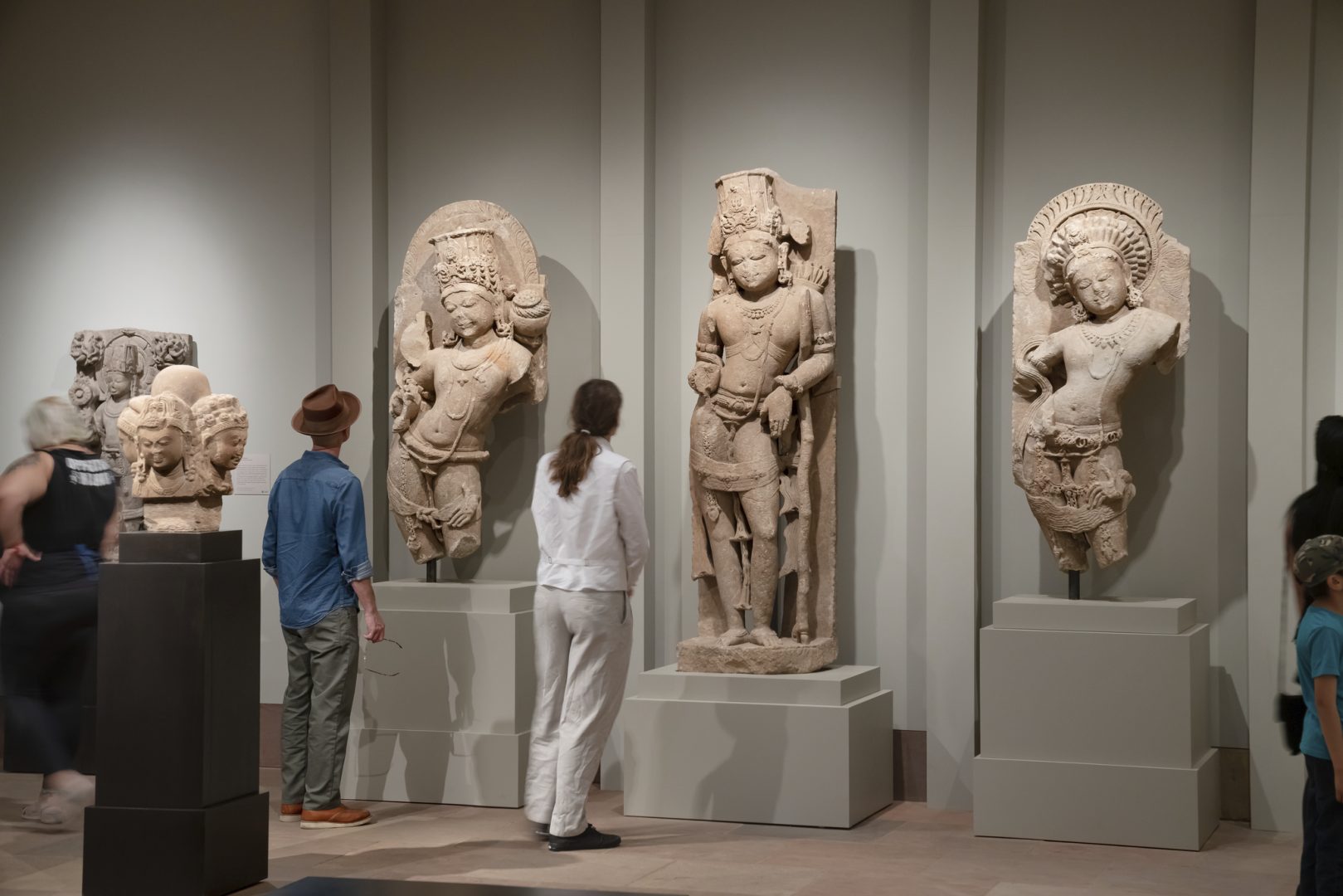
The Asian collection. | Photo courtesy of Norton Simon Museum

The Asian collection was previously showcased in the main gallery but was moved here during the remodel with Gehry. It has three exhibition wings where temporary shows are held. It will be the site for the museum’s 50th anniversary exhibition called “Gold.” The café has been moved here since the start of the renovation work.

Donning hard hats and neon vests, we then explore the outdoor grounds where the renovation is going on.  

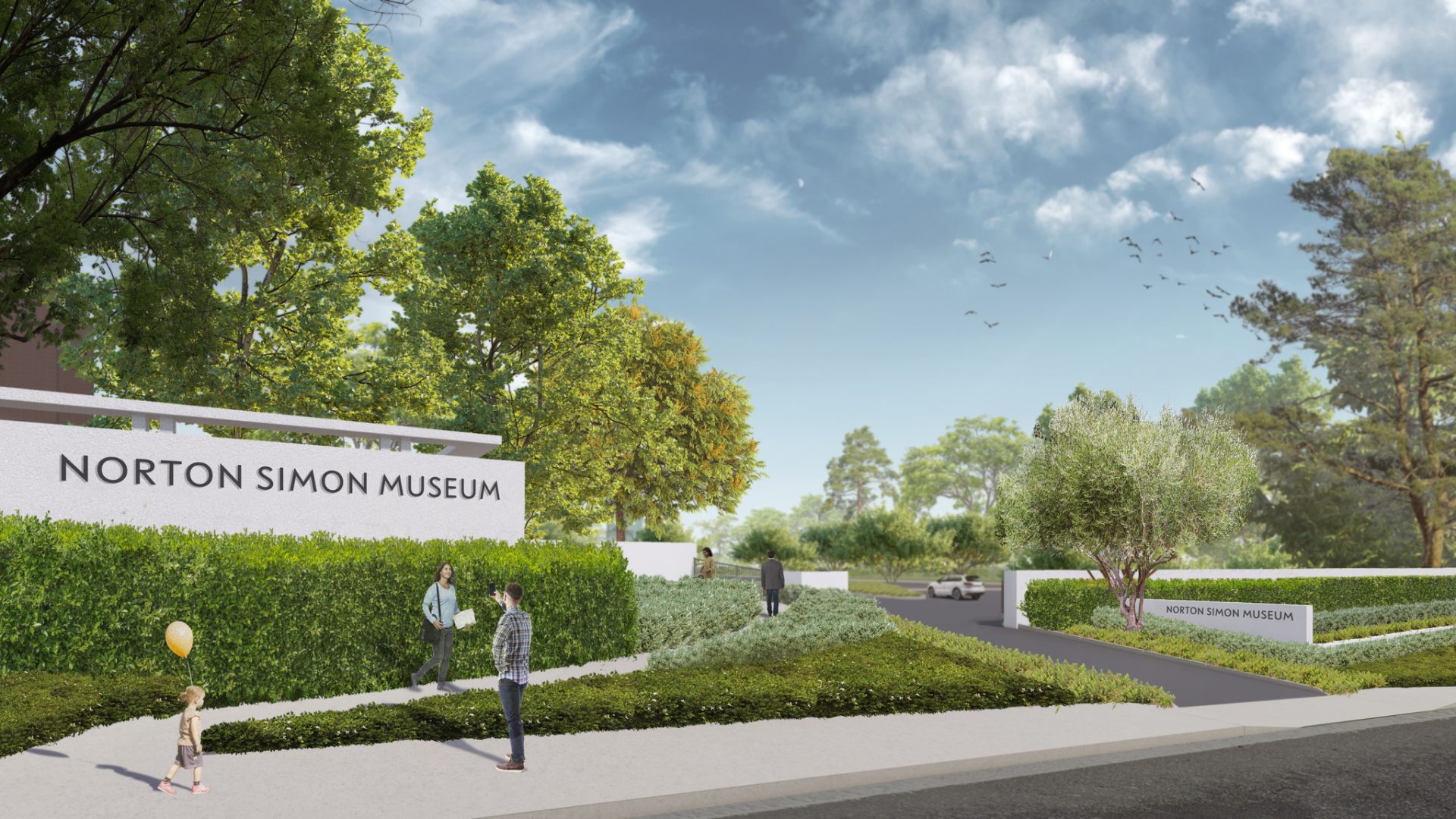
“This exterior remodel has been in conversation for more than ten years,” Denk expounds. “Since 2021, we have been working on the conceptual and pre-design phases. The early part of the project was to make the exterior of the building more inviting for passers-by to want to come in, to make the main entrance more visible, to refurbish our tile — to create a better street presence, if you will. We’ll construct new pedestrian path and a fresh sign which will run parallel to the driveway. Our east driveway will be more visible as well. We’ll also have the ability to close our gates and protect the campus.”

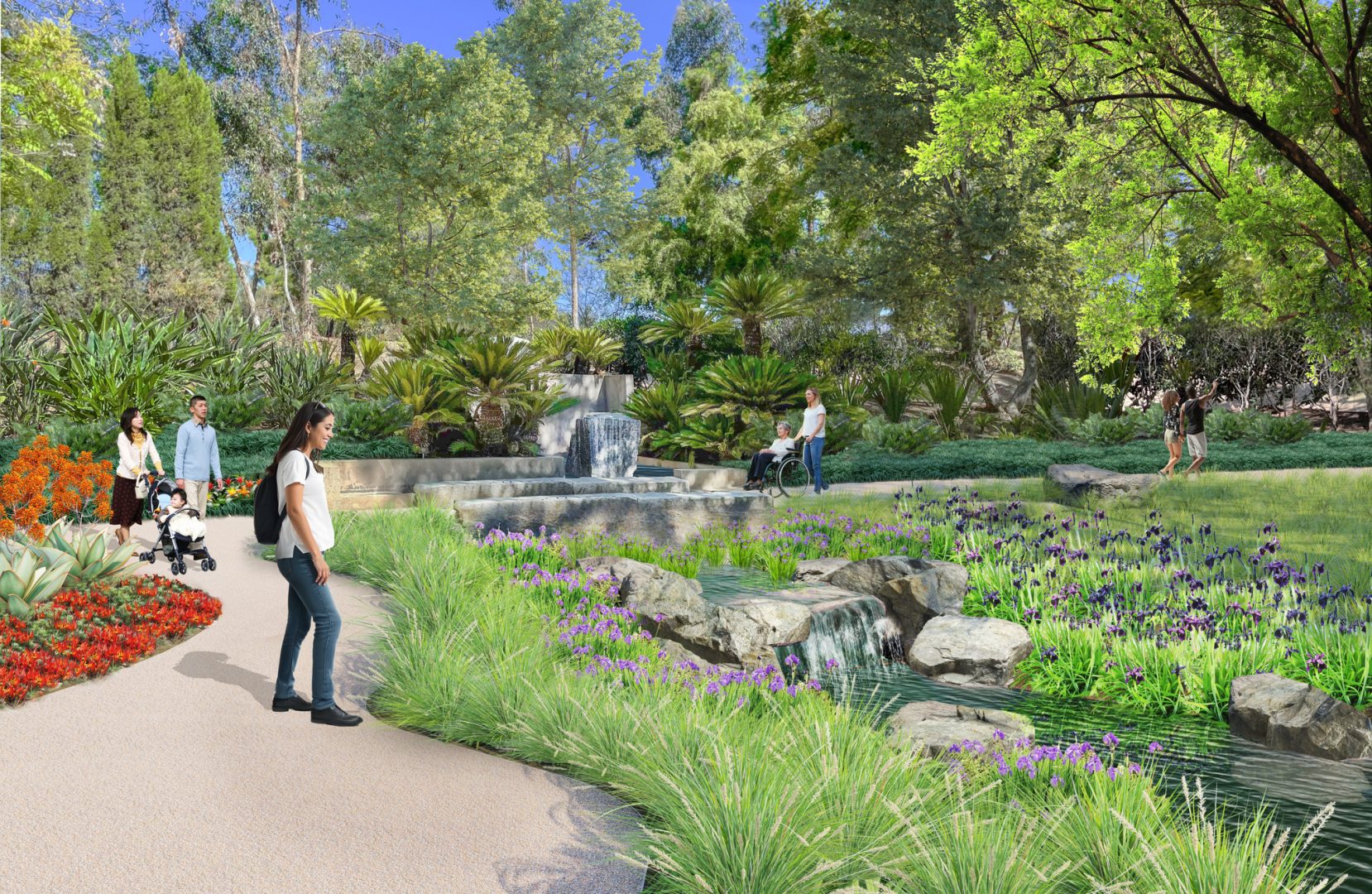
Rendering of the Norton Simon Museum’s Sculpture Garden. | Image courtesy of ARG and SWA

The sculpture garden and pond – a favorite of visitors to the museum – are getting updated. Says Denk, “Our sculpture garden is 25 years old and the liner at the bottom of the pond was past its lifespan so we knew this was a good opportunity to drain the pond and rebuild it. We’ll make the pond smaller and reposition it away from the building to make it easier for people to navigate the area during busy exhibition openings and events.

“We’re redoing all the paths and hardscaping and adding more seating. People love our garden and I want to promise our visitors that it will look a lot like it did. We’re not trying to redesign the garden or change the original concept of it being a lush and romantic special place,” Denk assures.

Heath tile. | Photo courtesy of the Norton Simon Museum

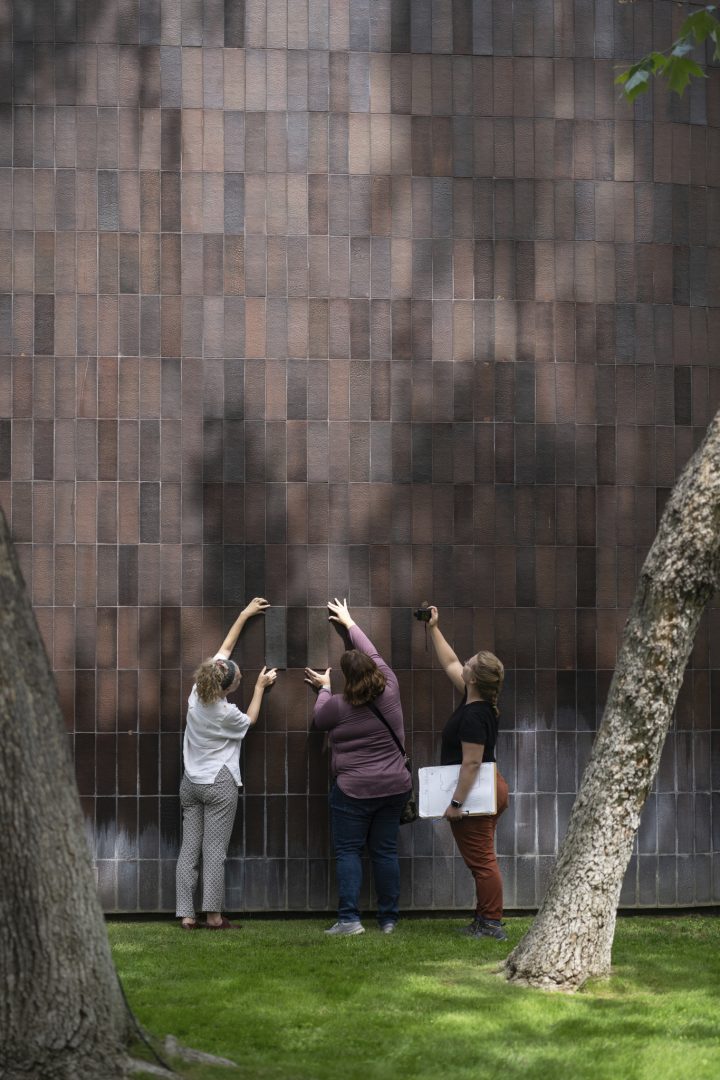
The most recognizable feature of the Norton Simon Museum is the structure’s distinct tile-clad façade created by San Francisco-based Heath Ceramics. With 115,000 tiles on the building, the significant commission launched Edith Heath’s tile business.   

According to Denk the tile had never been cleaned before other than the occasional spot cleaning and rain. Part of this project is working with architectural restorers to undertake a conservation treatment and touching up little blemishes. Heath is also recreating the tile for missing areas.

Additionally, a solid wall will be built around Colorado Blvd. and Orange Grove to help reduce the noise from the street. A big olive tree will be planted to catch people’s eyes. Along the south lawn three light pole banners which will have details from objects from the collection will be erected. Drivers will get a glimpse of Van Gogh’s ‘Portrait of a Peasant’ or Picasso’s “Woman with a Book.” “The Thinker” will be relocated near the pedestrian path away from the trees to make it more visible. 

Rendering of the Norton Simon Museum’s main entrance and pedestrian walkway | Image courtesy of ARG and SWA

The architectural firm that’s leading the project design is Architectural Resources Group. Denk explains how they made the choice, “We interviewed a couple of different architectural firms and we really liked Architectural Resources Group because they are preservation-focused. Even though we’re not a historic site we have a lot of iconic elements like the tile and podium wall. We knew that they would come to this project with sensitivity for maintaining a lot of the physical elements of our site that are so important to us, especially being the backdrop of the parade.”

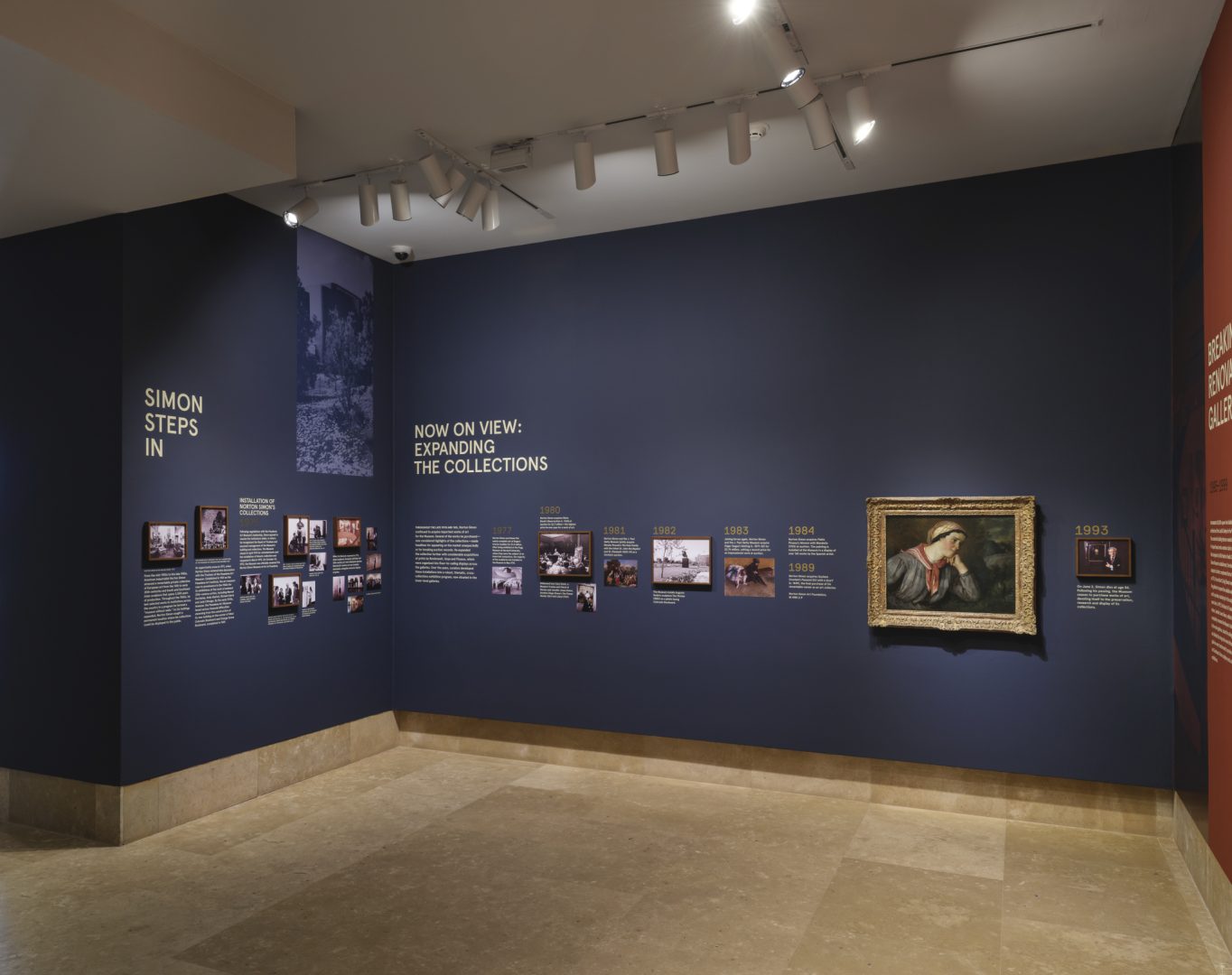
While they had hoped to complete the renovation sooner, Denk is hopeful it will wrap up in time for the October celebration. She says, “We had a soft launch in February with the opening of the ‘Retrospect’ exhibition, the ‘50 Objects’ on our website, and a program series — lectures and tours that highlight the museum’s history.”

“But our big moment of celebration will be in October,” Denk emphasizes. “The actual date of the name change to the Norton Simon Museum was October 24, 1975. That’s the day we’re opening the ‘Gold’ exhibition and the following Saturday we’re planning to have a community festival. It would be a great opportunity for people who haven’t been to the museum to see it and for others to rediscover it.”

A “Retrospect” exhibit installation. | Photo courtesy of the Norton Simon Museum

Norton Simon Museum hosts approximately 8,000 school groups from the Pasadena Unified School District and schools throughout the area every Monday, Thursday and Friday morning. The museum also welcomes 150,000 visitors per year, 70% of whom are local and 30% from Southern California, other states and abroad.     

The museum has become an integral part of Pasadena’s Rose Parade so they adjust their hours for it. They’re closed on the day of the parade and they add more open days so people can come when they’re here for the annual event. They also make sure they have something exciting for visitors to see — whether it’s a special loan or an interesting exhibition — on top of their exceptional collection.

In the 50 years since Norton Simon Museum’s establishment, it has distinguished itself as a tourist destination and the place where art enthusiasts can find extraordinary artworks. With the completed renovation project, this rare gem in Pasadena will certainly shine ever