My Masterpieces Series: USC Pacific Asia Museum

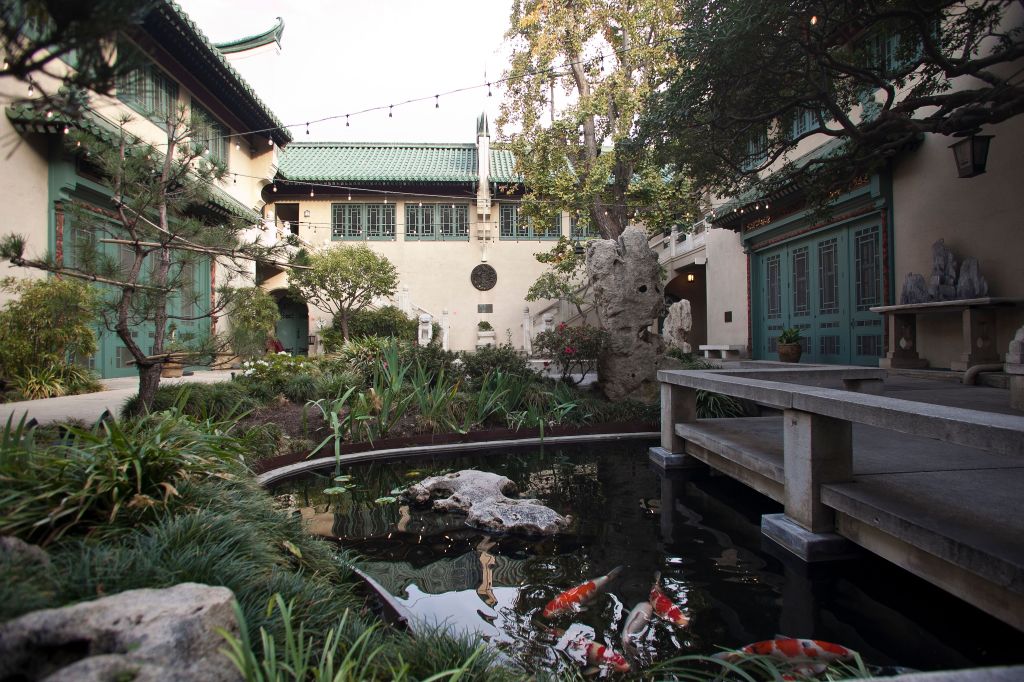
The koi pond and garden at USC Pacific Asia Museum | Photo by May S. Ruiz

Originally published on 22 October 2015 in the Pasadena Independent, Arcadia Weekly, Monrovia Weekly, and Sierra Madre Weekly

Ensconced in a nondescript corner on North Los Robles Avenue and Union Street in Pasadena is a foundation that holds some of the most valuable treasures in Asian artifacts. It’s the USC Pacific Asia Museum, which used to house the Pasadena Art Museum, and then became Pacific Asia Museum in 1971. In 2013, University of Southern California (USC) partnered with the institution to become a vital resource for education and cultural heritage.

Enter its handsome arched entrance, however, and you will be transported to another place and time. The transformation is so unexpected it’s breathtaking. The charming courtyard garden with a koi pond, rock sculpture, and natural plantings reflecting the changing seasons, take center stage while a Chinese Qing dynasty-inspired mansion wraps around it. The Pasadena architectural firm of Marston Van Pelt and Maybury built it as a grand residence in 1924 to exact specifications from California transplant, Grace Nicholson, a pioneering art collector and entrepreneur from Philadelphia.

This historic home also became the center for the arts in Pasadena and was host to several cultural organizations. The first floor served as a gallery where Ms. Nicholson displayed and sold American Indian and Oriental art objects. On the second floor were more galleries, an exhibition auditorium, and Ms. Nicholson’s private quarters. 

Today it is the foremost exhibitor of Asian art collections in Southern California. It is also the destination for Pasadena 6th graders’ My Masterpieces field trip where specially-trained docents conduct tours and hold workshops. 

Michael Fritzen, Head of Education and Public Program for USC Pacific Asia Museum, who took over this post five months ago, is ably assisted by Program Specialist, Becky Sun, in planning an interactive and hands-on two-hour visit. He says, “Our My Masterpieces Program for the Pasadena Unified School District (PUSD)/Pasadena Educational Foundation (PEF) is focused on the inquiry method. Students are asked questions about the pieces they see; they aren’t just dragged through the museum and told massive amounts of facts. They stop, look and reflect about a particular artifact. Aligned with the state Common Core standards, this visit is aimed at enhancing students’ classroom discussions in their World History course. We ensure that what they see and experience add depth to their understanding of the world, and of Asia, in particular.”

This tour is designed to lead 6th graders along the Silk Road. It moves through the collection, spotlights certain artifacts, and ultimately fashions a coherent historical fabric woven from threads that connect all the different countries in Asia – Japan, China, Korea, Vietnam – as students travel on the Silk Road. 
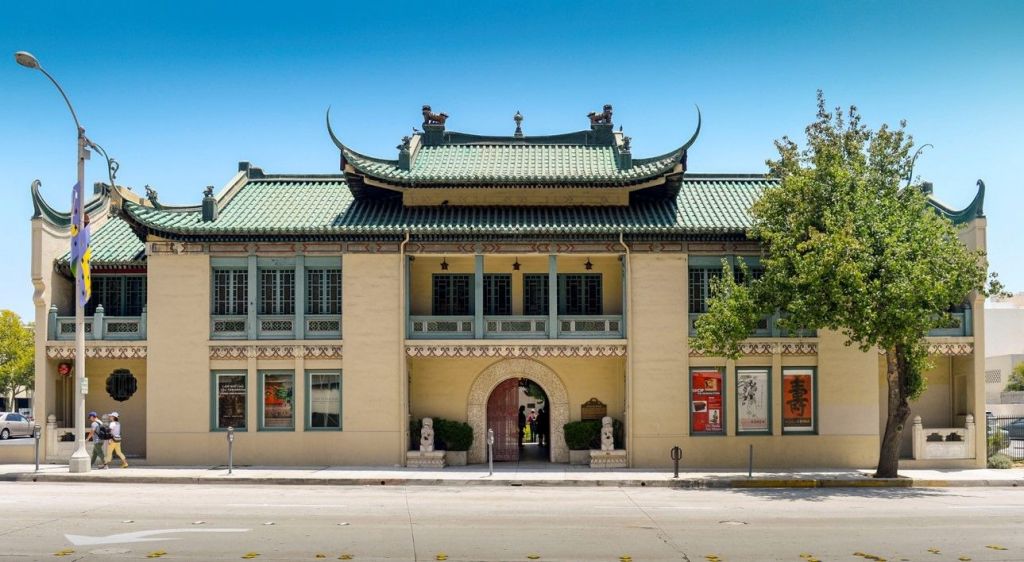
Grace Nicholson’s previous residence now houses USC Pacific Asia Museum

According to Sun the tour is divided into two parts. While one docent tours a group of students, another docent involves the students in a hands-on workshop. She says, “Our workshops are taught by Asian experts in different fields including calligraphy, brush painting, origami.”

Fritzen adds, “We provide authentic materials for students to employ during the workshop. If they’re working on calligraphy, for instance, they are using brushes, ink blocks, and rice paper made specifically for that art form. The work they produce will match what they see in the museum – it will have the look, smell, and texture of the original art. The art activity makes what they see in the gallery come to life and gives them a better understanding of what the artist went through to make the product. We try to create an experience that cannot be replicated in the classroom so that they leave with lasting memories of their visit.”

“My Masterpieces introduces Asian art and culture to kids from all over Pasadena who have never had occasion to visit the museum; it helps them understand why a particular tapestry or sculpture is unique and preservable,” continues Fritzen. “We hope that the visit inspires enthusiasm and passion in young people so that they later become visitors, members, donors, and collectors of art. The field trip includes a family pass for six people. That students actually redeem those passes proves that it makes a deep impression to them.”

Through their programs and events, USC Pacific Asia Museum follows its mission and vision unique to the museum – to further intercultural understanding through the arts of Asia and the Pacific Islands.

According to Fritzen, the museum recently featured a Harvest Moon Festival which showed how this is celebrated not only in China, but also in Japan, Korea, and Vietnam. The institution endeavors to showcase countries which are not usually at the forefront because they don’t have enough representation. 

With that in mind, USC Pacific Asia Museum will host in December a show featuring the art and culture of the Philippines. It may be the first time others will learn about this group of islands in the Pacific beyond the nightly news report of the country being in dire need of assistance, after being hit by devastating typhoons . Maybe it will help engender public interest in the countless natural wonders unique to the Philippines – beautiful coastlines, white sandy beaches, majestic mountains, lush countryside, exotic foods, and warm people.

If USC Pacific Asia Museum were to enlighten even just one mind about the abundant treasures to be found across the vast Pacific Ocean, it would have served the purpose it has set out for itself. 

My Masterpieces Series: Pasadena Museum of History

Originally published on 15 October 2015 in the Pasadena Independent, Arcadia Weekly, Monrovia Weekly, and Sierra Madre Weekly

Brad Macneil, Education Program Coordinator at the Pasadena Museum of History (PMH), is readying once more for this year’s My Masterpieces Program. Every Tuesday and Thursday, beginning this month until the end of the school year, he and his team of volunteers will be welcoming 4th graders from all the public schools in Pasadena for a two-hour art class and activity at the Fenyes Mansion. 

According to Mr. Macneil, this program originated from a pilot test collaboration among the Pasadena Unified School District (PUSD), Pasadena Educational Foundation (PEF) and different cultural institutions, with input from teachers. He says, “It was important that we involved the teachers. We made sure they felt it was their program too so we asked them to write the curriculum for it.”

For My Masterpieces, PMH provides students and teachers with the Museum publication Painting the Beautiful as background material for their visit.Students also complete a lesson in class to prepare them for the field trip and learn some basics in art education. During their visit, they learn about the mansion and other members of the family, and explore what life was like in the early 1900s.      

The Fenyes Mansion, which is also home to PMH, is a Beaux Arts residence built in the early 1900s as a winter home for Eva and Dr. Adalbert Fenyes. Macneil adds, “At the time Pasadena was a winter resort that attracted artists to the area because of its landscape which they painted.  They later sold these paintings to the wealthy visitors. A leader of that art community was Benjamin Brown, a famous landscape painter. He was a friend of Eva and he created some of the portraits and landscape paintings that still hang today in the mansion. Eva became a patron of Pasadena’s flourishing art colony and invited various artists to her studio or to go out into the foothills for creative material.”          

“The inspiration for the mansion field trip is Eva’s life and her love for the arts,” explains  Macneil. “Each visiting class is divided into three groups – art critics, artists, film makers – that   rotate to do different 30-minute activities led by a PMH volunteer. The art critics take a tour of the mansion and look at Eva’s art collection which they have seen in the book Painting the Beautiful. Using art terms and vocabulary, students discuss what they like or don’t like about a painting. They talk about the techniques the artist used to get certain effects.”

Macneil continues, “The artists head outside to the fountain, which has been depicted in painting by a well-known artist named Richard Miller. Volunteers give students a brief instruction: their task is to capture the spirit of the fountain as best they could using the pencil and pad they are provided. It’s very surprising how 4th graders can quietly concentrate on their sketches during the entire 30 minutes.  And more amazing is what they come up with!”

The Fenyes Mansion

The film makers go out in the garden. Macneil says, “Eva was not only interested in the arts, she was also fascinated by the technology involved in moving pictures. So for our film makers, we pick the actors, camera person, and director who will take part in creating a silent movie called A Thief in the Park. They learn not only techniques in movie-making, but more importantly, the value of collaboration. Teachers have great fun taking photos of the finished students’ work on their Smart Phones to show later in class. It’s probably the most popular thing we do – it’s exhausting and it needs several volunteers.”

PMH serves 3,000 4th grade students a year in the My Masterpieces program, using funds raised by the Paloheimo Foundation. But the organization could use more volunteers to help keep it running. Volunteers can be college-age or older and will lead tours Tuesday through Friday.  Anyone who has patience, enthusiasm, a sense of humor, and is interested in volunteering can call PMH at (626) 577-1660.

According to Jennifer Olson, District Arts Education Coordinator for PUSD, My Masterpieces started during the 2008-2009 school year. It began serving only four schools, then expanded by four to five schools annually until eventually all of Pasadena’s 18 schools became part of it. It aims not only to provide arts education and a cultural experience for all children, but also to help them feel at home at any of the arts organizations in their community. They found that so many students in the Pasadena Unified don’t usually go to museums with their families because there are too many barriers including cost and transportation. This program removes those impediments and invites all Pasadena families to experience the arts in their community.

A class visit to the Fenyes Mansion leaves a truly lasting impression in the minds of young students. According to Macneil, several of PMH’s Junior Docents (7th and 8th graders in Pasadena public and private schools giving tours to 3rd graders in the PUSD) first saw the mansion during their My Masterpieces Program visit in 4th grade. And it was what encouraged them to later become Junior Docents.

The Pasadena Museum of History’s motto is ‘History Matters.  Help us Pass it On’. The My Masterpieces program breathes life into that adage.

My Masterpieces Series: The Huntington Library, Art Museum, and Botanical Gardens

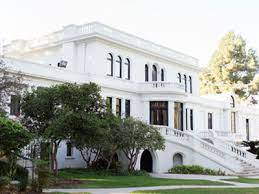
Virginia Steele Scott Galleries of American Art | Courtesy Photo

Originally published on 8 October 2015 in the Pasadena Independent, Arcadia Weekly, Monrovia Weekly, and Sierra Madre Weekly

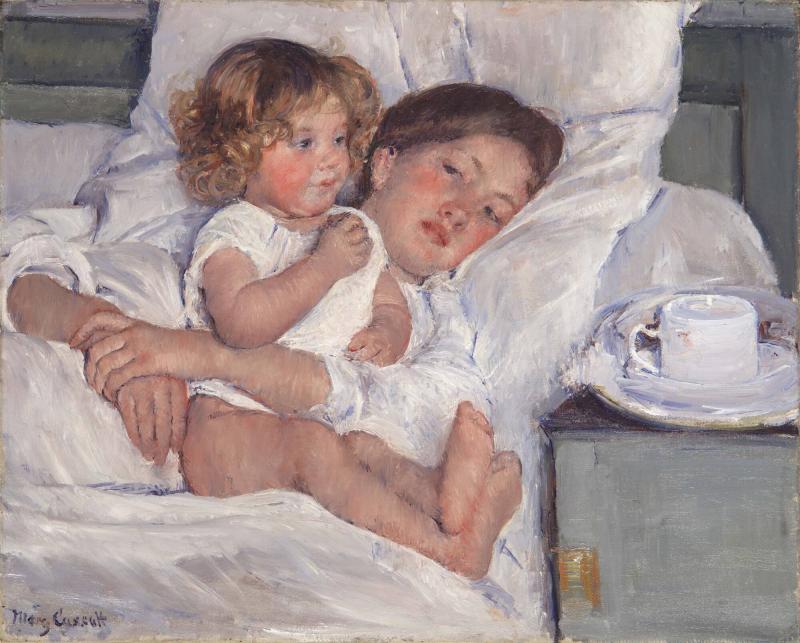
A group of lively 1st graders enters the double doors of The Huntington’s Virginia Steele Scott Galleries of American Art. As they are ushered into the foyer, all eyes alight upon Mary Cassatt’s 1897 painting, Breakfast in Bed. There is an audible gasp and a collective exclamation – “It’s Mary Cassatt!”

That this sense of awe, mixed with recognition, comes from 1st graders is why Guy Fish, Senior Manager for Art Education at The Huntington Library, Art Collections and Botanical Gardens, thinks Pasadena Unified School District’s (PUSD) and Pasadena Educational Foundation’s (PEF) My Masterpieces Program is in itself a treasure. He says, “That’s exactly what we’re trying to do! The program inspires passion and a love for art.”

Fish explains The Huntington’s collaboration further, “We were one of the co-developers of this pilot program; it is unique in its goal of stirring emotion, fostering knowledge and advancing understanding of the arts among schoolchildren. We are scaffolding and building these kinds of relationship with artwork. And we take seriously our charge of laying the Humanities foundation for young kids. We have a very important role to play; imagine if we didn’t do this and these kids go on to the 2nd grade program without this starting point.”

According to Fish, The Huntington’s focus for the one-hour field trip is to teach children the value of a museum experience. Each class is divided into small groups and a docent introduces the children to Henry and Arabella Huntington’s life as they tour the mansion.  Docents for the My Masterpieces Program are specially trained on how to make the visit fun and interesting.

To prepare the kids for their tour, teachers discuss in class the three paintings that they will see at The Huntington. They talk about these pieces of art and by the time the children come here, they’re already seeded with curiosity to see the actual painting – their visit adds another layer of meaning to the lesson.

“As our students are 1st graders, we focus on the theme of caring, while showing them the principles of line, shape, color and texture. Every artwork we choose to analyze portrays how this message is exemplified. One of the paintings they study is called The Clavering Children, a work of 18th century English painter George Romney. It encapsulates the basic concepts of art – warm and cool colors, line, texture and shape. It also shows a boy and a girl caring for each other and their animals … something most kids would relate to,” Fish further elaborates.

Another piece of artwork children look at during their field trip is called The Last Gleanings, an 1895 oil on canvas masterpiece created by French painter Jules-Adolphe Breton. It depicts a harvest scene, one of several paintings Breton produced that illustrates his love for the countryside.  To PUSD’s 1st graders, the painting shows caring for the land. 

Courtesy Photo

But it is American painter Mary Cassatt’s 1897 Breakfast in Bed that makes the biggest impression in these young children’s minds. An oil on canvas work showing a mother with her young child, painted in light colors, it is one of a recurring theme in Cassatt’s body of work. 

Early this year, The Huntington inaugurated the new Visitors Center that features four multi-room classrooms, among other things. According to Fish, they are thinking of adding a new component to their My Masterpieces program in January making use of those classrooms. He’s currently working on a plan to expand their program beyond kids analyzing artwork, but maybe creating their own. They now have the facilities to make that happen.      

An award-winning program, My Masterpieces received the prestigious CAMMY Award from the California Association of Museums in 2012. In 2010, it was also recognized by the California School Board with the Golden Bell Award. It was established during the 2008-2009 school year as a collaboration between teachers and various cultural organizations to bring about a high level of engagement among students.

It is this spirit of collaboration that proves My Masterpieces to be a worthwhile endeavor for The Huntington. As Fish explains, “It reinforces our commitment to our long-term partnerships; our work has matured into a deep relationship with PUSD. It also allowed us to systematize our school engagement. It was the springboard for The Huntington’s Teacher and School Programs, which developed the curriculum that supports the Common Core standards. The art course  offered by the My Masterpieces program isn’t far from the project-based learning promoted by the Common Core. Using the resources available at The Huntington, teachers from K-12th grade choose from 12 programs to provide students appreciation, engagement, and understanding of various subjects.”

The Huntington’s My Masterpieces field trip occurs during regular public viewing days. Visitors from far-flung countries as well as local tourists, together with PUSD’s 1st grade students, spend their day admiring the wealth of treasures this beloved institution has to offer. Arabella Huntington would have been delighted to know that Mary Cassatt’s Breakfast in Bed elicits as much appreciation from the youngest guests as from learned art aficionados.