‘Ragtime: The Musical’ Goes on Stage at the Pasadena Playhouse

Originally published on 11 February 2019 in the Pasadena Independent, Arcadia Weekly, and Monrovia Weekly

‘Ragtime’ ensemble | Photo by Nick Agro / Pasadena Playhouse

The Pasadena Playhouse is presenting one of its most lavish productions yet – ‘Ragtime: The Musical.’ Directed by David Lee, with choreography by Mark Esposito and musical direction by Darryl Archibald, it is on stage from Tuesday, February 5 through Sunday, March 3, 2019.

Danny Feldman, The Playhouse’s indefatigable Producing Artistic Director, chats with us during the busiest day of rehearsal week, and tells us why he chose ‘Ragtime.’

“This 1997 musical was based on an E.L. Doctorow book written in the mid-1970s. It premiered at the Shubert Theatre in Century City before it was on Broadway. I saw ‘Ragtime’ 21 years ago and it was one of the most incredible shows I’d ever seen. It was a new production but it felt like this old-fashioned epic – with a lot of people, so much dancing, and a large orchestra. I fell in love with it!”

“About a year and a half ago, when I was planning this slot, I knew I wanted to do a big, splashy show for my second season,” continues Feldman. “We hadn’t done something like that in a while and I kept coming back to it. While the book was published in 1975 and the musical was first produced two decades later, ‘Ragtime’ felt tremendously relevant – like it was written today.

“The show deals with America at a decisive moment in our history, right after the turn of the century up until World War I. It was a time when America was going through radical change – when we were trying to figure out who we were, striving to get along with one another, and considering what kind of country we wanted to be.

“Then I realized we were in another one of these moments. We’re again asking ourselves ‘What is America about?,’ ‘How are we moving forward?’ There’s a great deal of clash and conflict right now. ‘Ragtime: The Musical’ explores that conflict – not today’s, but that at the turn of the century, yet there are so many parallels to it. I suspect that people who are watching the show, who’ve seen it before or even those who’ve never seen it before now, will think we altered it to make it about today. But we didn’t change a word!”
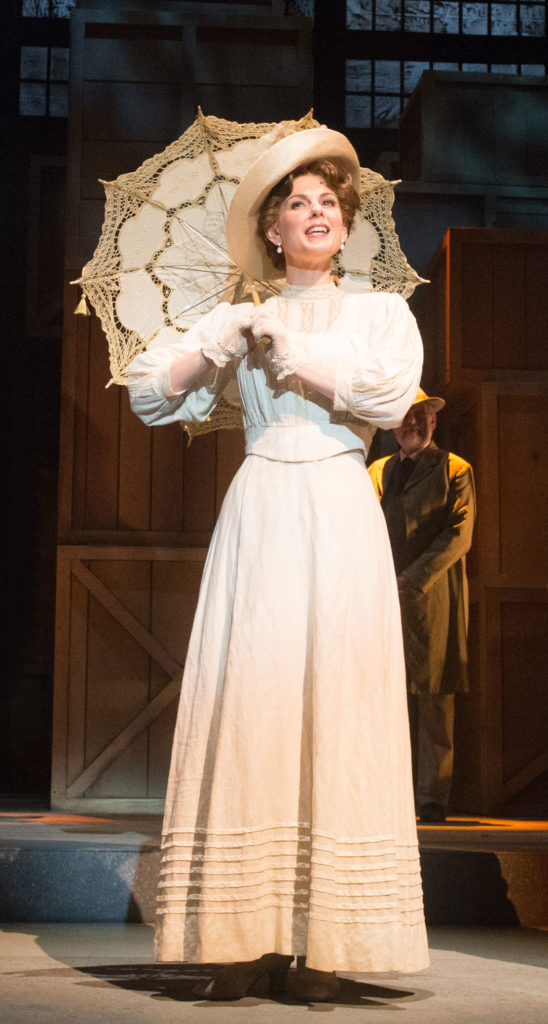
Shannon Warne as Mother | Photo by Jenny Graham / Pasadena Playhouse

Explains Feldman, “One of the through lines in the show was about women standing up for themselves, redefining their relationship in the household, and finding value. Then there was the African-American family who suffered a hate crime perpetrated against them, representing the theme of justice and fighting for what’s right. The third family we’re following personifies Jewish immigrants coming through Ellis Island, what they faced as outsiders, and how Americans treated them.

“These same issues are in the news every day! It’s not a play about 2019 but in many ways it is a play about 2019. And, like any masterpiece or great piece of art, when looked at over time through a new lens, we see different things in it. And with ‘Ragtime’ we’ll find distinct aspects in it today, given where we’re at. As serious as I make it sound, though, it’s also wildly entertaining. It’s a brilliantly constructed show full of sentiment and laughs; it hits you in the heart and the gut all at once. It is, ultimately, an American story that’s uplifting and hopeful. I think it has the power to move people deeply.

“It’s these things all rolled into one great night of theatre. And it’s not done a lot because it’s a pretty big undertaking. It has a 16-piece orchestra and a 21-person cast. We’re jumping all over New York in terms of locations in the story.”

The sheer enormity of the show makes for a truly amazing experience for the audience. Says Feldman, “Our stage is as big as that of a Broadway’s but our seating area isn’t; the Shubert Theatre, I think, had over 2,000 seats. But that’s great because watching that size musical in a 650-seat venue gives you a more intimate experience – you’re really connecting with what’s happening on stage.

“Watching rehearsals, I’m reminded that the combined resonance created by 21 actors with big voices and an orchestra is so powerful, particularly when they’re singing this beautiful score; it knocks you over. It’s pretty exciting! The experience you’ll have sitting in this theatre hearing 40 musicians and actors singing at you, I don’t know where else you get that.”

Asked if he’s making a statement with this show, Feldman replies with a thunderous “Yes! I’m glad you’re listening! The Pasadena Playhouse creates audacious shows. Sometimes it’s in the form of ‘Bordertown Now’ which is the culture of what’s going on today. Sometimes it’s a big celebrity doing a play here. But sometimes it’s a big, bold, ambitious musical. I think everything I try to program and create here has a sense of adventure and boldness in it. I want our audiences, whenever they come here, to be surprised by something we’re doing and to really feel something they’re not used to feeling. This show is in line with all our other ambitious projects.”

“The next play we have coming up, ‘Tiny, Beautiful Things,’ is just as bold in a very different way. I think the impact of a show as grand as ‘Ragtime’ and the intimacy of a little production like ‘Tiny, Beautiful Things’ will demonstrate what we’ve already done since I’ve been here, and what we’re constantly trying to accomplish – that to be a whole theatre experience you need the big and the bold as much as the small and the quiet. And they’re equally powerful.”

Coalhouse and Crew (from left: Candace J. Washington, Clifton Duncan, Cornelius Jones, Jr., and Bryce Charles) | Photo by Jenny Graham / Pasadena Playhouse

Throughout its hundred-year history, the Pasadena Playhouse has retained its core mission. Reiterates Feldman, “A lot of the theatre people go to see are national tours – ‘Hello Dolly’ or ‘Jersey Boys,’ for instance. They’re great! I see all of them and I love them all. I’m a huge fan of bringing in all these big Broadway musicals for people to enjoy. But we’re different here, we don’t see the show in New York and decide we’d rent the sets and the costumes and bring the show here as part of a tour stop.

“However, I don’t want to come off as being negative about national tours and theatres that do. To have a healthy theatre ecosystem, you need those who are building it by themselves and others who are bringing it in; those are necessary components for an interesting cultural landscape.

“My goal is to have as many people as possible see our work. If, in the future, someone sees our show and says ‘Let’s take it to other places’ that would be delightful, but that’s not why we exist. We exist to serve this community. That’s been our mission for a hundred years and we’re continuing to do that. It’s what the Pasadena Playhouse is all about.

“We’re proud that ‘Ragtime’ is made here; it’s pretty much like growing organic grapes. We start with a blank page where people come together and say, ‘For four weeks, we’re going to tell this story on this stage in a big, bold way.’ It is created of, by, and for this community. And that’s what makes it extra special.”

The stories of the three families we’re following in ‘Ragtime’ unfold in New York, yet they could very well happen here. Feldman asserts, “While we have a unique history in Pasadena, we also have conversations about race and instances of segregation. I think Americans, as a culture, don’t want to talk about the troubled parts of our past. We have a way of thinking ‘We know this happened in our past and it’s shameful. But that was the past, it’s not now.’ That’s something we explored in ‘Hold These Truths,’ a play we did about the Japanese internment camps during the anniversary of the imprisonment.

“To me, the reason theatre looks back at history isn’t to shame anyone, but to learn from things we’ve done in the past. Because, whether we like it or not, that’s part of who we are as a people. A production like ‘Ragtime’ speaks to our past as if to say ‘Let’s unpack this.’ There are moments that are uncomfortable. But the goal, particularly with ‘Ragtime,’ is not to dwell in it for the sake of dwelling in it. It’s to show, in many ways, how far we have come and how far we have yet to go. Our job as a theatre, and mine as an Artistic Director, isn’t to prescribe that for people but to put the work out there and let people take from it what they will.”

If audiences, after watching ‘Ragtime’ at the Pasadena Playhouse, examine their own failings and resolve to be better human beings, then theatre will have served a higher purpose than merely entertained. And that would, indeed, be a noble feat.
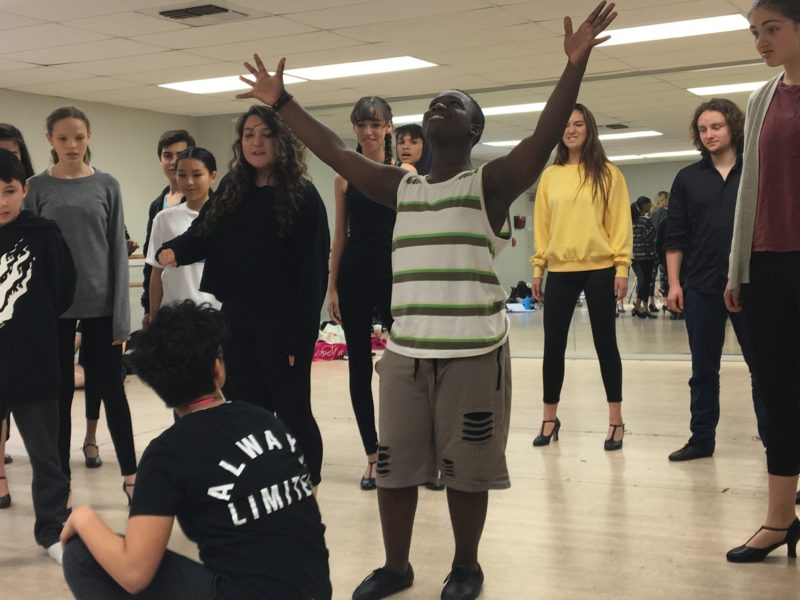
CSArts-SGV Production of ‘Pippin’ at Arcadia Performing Arts Center

Originally published on 2 January 2018 in the Pasadena Independent, Arcadia Weekly, and Monrovia Weekly

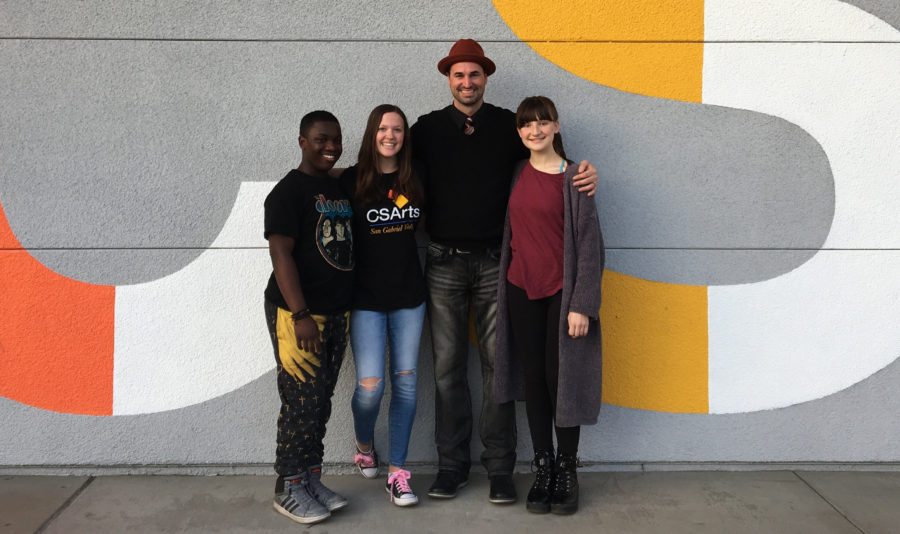
Jay Wallace (third from left) is shown with (left to right) Christian Dorey, Jessie Ellico Franks, and Lily Annino | Courtesy Photo

Pioneering students at California School of the Arts-San Gabriel Valley (CSArts-SGV) will display what they’ve learned, as well as their natural talents, when they present an all-school performance of the celebrated musical ‘Pippin’ at the Arcadia Performing Arts Center on January 11 to 13, 2018.

Filled with dance, humor, and soaring songs by Stephen Schwartz (‘Corner of the Sky’, ‘Magic Do’, and ‘Glory’), ‘Pippin’ tells the story of a young person’s journey to find his place in the world. This original production is set with a unique and imaginative steampunk aesthetic, offering a relevant edge and visceral quality that will leave the audience questioning what it truly means to be extraordinary.

Erik Altemus, an OCSA (CSArts-SGV’s sister school) alumnus who was an original cast member of the 2013 Tony Award-winning Broadway revival of ‘Pippin’, came on campus during a master class and rehearsals leading up to the show.

It was a significant occasion for all the conservatory students who had the opportunity to hear Altemus speak about his experience auditioning for parts and how he finally realized his passion for the performance arts.

One student for whom Altemus’s words hit home was Christian Dorey, a ninth grader from Covina, who has the role of the leading player. He says, “Back in August when the show was announced during a CSArts-SGV growth retreat, I felt a spark within me. I was quite excited and decided that I wanted to be part of this show.  To set myself apart from the other talented people who were also trying out for the same part as I, I practiced my audition song for quite a while – I made sure I was conveying the spirit of the song and staying in the right key.

It was a lucky coincidence that I sang ‘Corner of the Sky’ for a musical revue in middle school.  I already knew the story of ‘Pippin’ and its characters, so I felt I already knew the essence of the characters. I also did my research and for my audition I chose the song from a another show choreographed by Bob Fosse.”

“Students went through a separate dancing and singing audition for an amazing casting panel. I chose to do the movement/dance audition first and it was to the opening number of the show, ‘Magic to do’. When I went to the song audition, I sang 16 bars of ‘Willkommen’ from ‘Cabaret’. I got a callback for the role of leading player and all potential candidates sang 16 bars of ‘Simple Joys’. The next day, the cast list was posted and I got an email that I had been chosen for the role I had been hoping for,” states an ecstatic Dorey.

Sierra Madre resident and ninth grader, Jessie Ellico Franks, is playing a starring role in this musical. She echoes  what Dorey says, “It was a very well executed process that began with a vocal and dance audition which then moved onto callbacks. They had us read sides for certain characters and, if needed, sing a song from the show. It was nerve-wracking of a good kind and an easy process at the same time.

To prepare for the audition, I searched through repertoire books to see if there was a song that fit a character from the show I was interested in and one that was suitable and showed my voice range and acting abilities. For the dance call, I made sure I was warmed up and calm. And I made sure I had a water bottle with me!”

The choice of ‘Pippin’ came about intentionally. Explains Jay Wallace, CSArts-SGV’s Chair of Theatre, “Selecting the inaugural musical for our school was quite the deliberation. There were many considerations. We certainly wanted to mount a production that would set us apart from many traditional high schools. But, we needed to make sure that the show would be accessible to our student body, as well as accommodating to our current talent pool.

I wanted something with a bit of flare and energy. And something with an undercurrent of substance and carries a level of relevance. ‘Pippin’ provides so many creative opportunities. To a certain extent, it is a blank canvas. This show allows us to craft our own unique impression and perspective of the universal story of the search for one’s voice and purpose in life.

‘Pippin’ also allowed us the chance to provide multiple performance opportunities for singers, dancers, and actors. It is truly an ensemble production and that was an important priority. I was not looking for a star vehicle for our first production.”

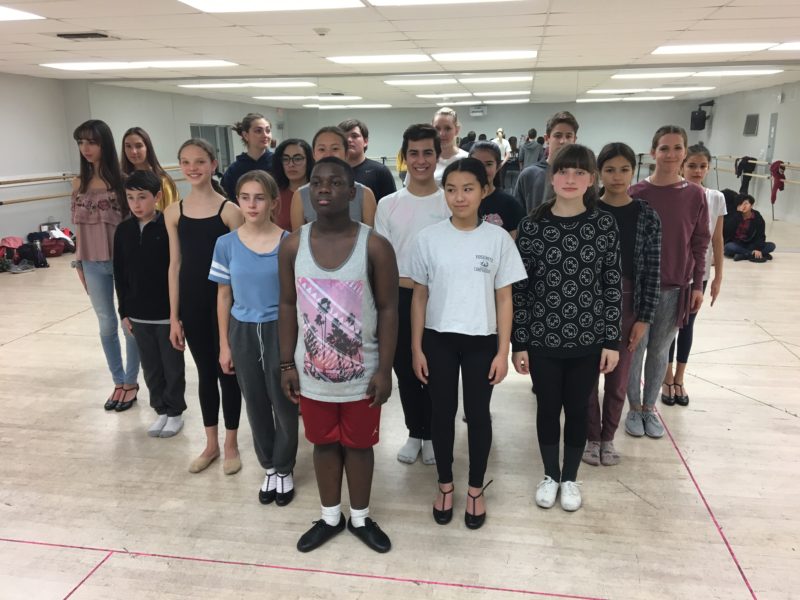
CSArts-SGV students in formation during “Pippin” rehearsal | Courtesy Photo

This reasoning is a reflection of the school’s mission. Wallace states, “As Chair of Theatre, I lead the Acting and Musical Theatre Conservatories. Collectively, we are an ensemble of creative, empathetic, and collaborative storytellers growing together as artists and individuals.  Empowered through musical expression and dynamic storytelling, our collaborative and goal-oriented performers will excel as professionals on stage and screen and impact society as innovative, passionate leaders. Culture is the highest priority and provides a challenging but nurturing environment for students to find their creative voice, build self-confidence, and develop into exceptional performers.”

Accomplishing its lofty objective requires a daily regimen for its students to adhere to – a full  day of academic courses followed by two Conservatory courses. Acting and Musical Theatre students take four courses in their field of study per semester. They are also enrolled in year-round Acting Technique classes. Musical Theatre students attend a year-round Musical Theatre Repertoire and Technique course.

Additionally, there are classes that provide diverse opportunities for students to explore and develop specific skill sets. They get the chance to work with high echelon Master Artists who visit CSArts-SGV conservatories to inspire the next generation of artists. Students involved in a main-stage performance rehearse each evening until 8:30. A typical rehearsal production process lasts six to eight weeks that culminates in a presentation of their work for audiences.

This combination of a disciplined artistic program and rigorous academic schedule necessitates a balancing act for students. As Franks explains, “Quite a few people who aren’t aware of how conservatory-type schools work have asked me how I do it. And my answer is ‘motivation.’  If I don’t do well academically, I will not be able to take part in events that involve my art within my school. I am for my art, so I want to be a part of it as much as I possibly can.

I would like to attend a college in the future and high grades will help in that goal. So that motivates me to get my work done on time, to make sure it is executed in a way that shows my knowledge of the subject, and the end-product is something I am proud of.”

“My hope is that this school betters me both as a performer and a human being. The classes I am taking have already taught me so much about my craft – some information might have been things I had already learned but some are completely new – and I want to keep learning more!

So far this school is a dream come true for me. And while there are a few things which could be better, one has to make allowances for the fact that it is a brand-new school and it needs time to hit its stride. I hope good things are yet to come. But as long as I leave senior year proud of the work I produced and the performer I have become, I’ll be as happy as a dog with a bone!,” Franks concludes.

Dorey offers another aspect to the CSArts-SGV experience, “The teachers are extremely understanding of our busy schedules. They recognize the extent of my involvement not only in my conservatory classes but also in the musical production and in the performing group, FUSION. They have given me extended times to turn in and finish assignments.

I am very happy with what I have accomplished, so far. I have the most amazing teachers who are focused on what we are doing and who see our passion. They realize that this is what we want to do. But I’m still awestruck  at the amount of time into what they’re doing with us. They truly want to not only make us into the best performers but the best people we can be.”

“There is a big emphasis on acceptance at CSArts-SGV,” Dorey says further. “The thing I love is that they don’t pick favorites here. All of us are treated equally as people and as performers. It is an environment that allows us to find ourselves.”

Christian Dorey, leading player, during rehearsal | Courtesy Photo

Lily Annino, an 11th grader from Arcadia, is a Musical Theatre student and assistant to the creative team. She has learned how to navigate this world, “I utilize office hours – 30 minutes between academic and conservatory hours – a lot. Sometimes I use my lunch time to finish work.  I make sure to get all homework done the evening it’s assigned so I don’t have to worry about it on a day with different blocks.”

“I like what I’ve seen and done at CSArts-SGV,” appraises Annino. “There are so many very hard-working, professional students who are determined to make their experiences at this school matter. I expect that I will leave school fully prepared to audition for professional theatre companies and productions. And in the long run, help me grow into a well-rounded and professional individual.”

It certainly looks like Annino has already made a positive impact. Wallace describes her as “offering ideas, dictating notes, and generally bringing a wonderful spirit to the room.”

That is quite a validation coming from Wallace, who has spent the past 12 years working alongside the directors of the Orange County School of the Arts (OCSA) Acting and Musical Theatre Conservatories. Widely recognized as a leading school for the arts, whose alumni have gone on to achieve great fame on Broadway, television and in films, OCSA opened a sister school in the San Gabriel Valley to give the same opportunities to students in the region who are passionate in the arts.

“OCSA provides an excellent foundational model to align our programs after,” Wallace declares. “We share similarities in relation to curricular offerings. Each Conservatory proffers a comprehensive and progressive program designed to provide training in the specific areas of focus related to either Musical Theatre of Acting. We are looking to produce versatile, balanced, and informed young artists in these two fields of interest.

However, we are also striving to create our own CSArts-SGV Musical Theatre and Acting Conservatory identities. This will be crafted through our cultural approach as well as our production selections.

Through our production of ‘Pippin,’ we are establishing our own specific aesthetic by looking at the story stylistically through the lens of Steampunk. Our inaugural Acting Conservatory show was ‘The Yellow Boat,’ a powerful, dramatic piece based on a true story that carries a message with significant social impact.

It’s important to me that we create a healthy balance between entertainment and content that is socially aware. Likewise, it’s imperative that students are exposed to a wide variety of styles, genres, playwrights, and composers.”

The school location also provides a different atmosphere. States Wallace, “OCSA’s campus is in a much more urban environment. There is also a bit more sophistication due to longevity. CSArts-SGV’s locale tends to be a bit edgier and energetic while having a more traditional campus setting. Both campuses thrive off passion for the arts and a desire to achieve excellence. As our conservatories evolve, the sophistication will take hold.”

Wallace asserts, “We expect our Musical Theatre and Acting Conservatory students to be their best each day. We are an ensemble growing together as artists and individuals. We must always be prepared, be willing to take risks in our work, support one another, and value each opportunity. This is just the beginning of the journey. But, I look forward to seeing every one of  these young artists to achieve their true potential.”

Those confident words are a source of inspiration for Annino, Dorsey, and Franks. They are an assurance that through their individual hard work and concerted efforts they will one day realize their dreams.  Aspiring to greatness is, after all, what compels everyone to do their best.