Also published on 23 February 2026 on Hey SoCal
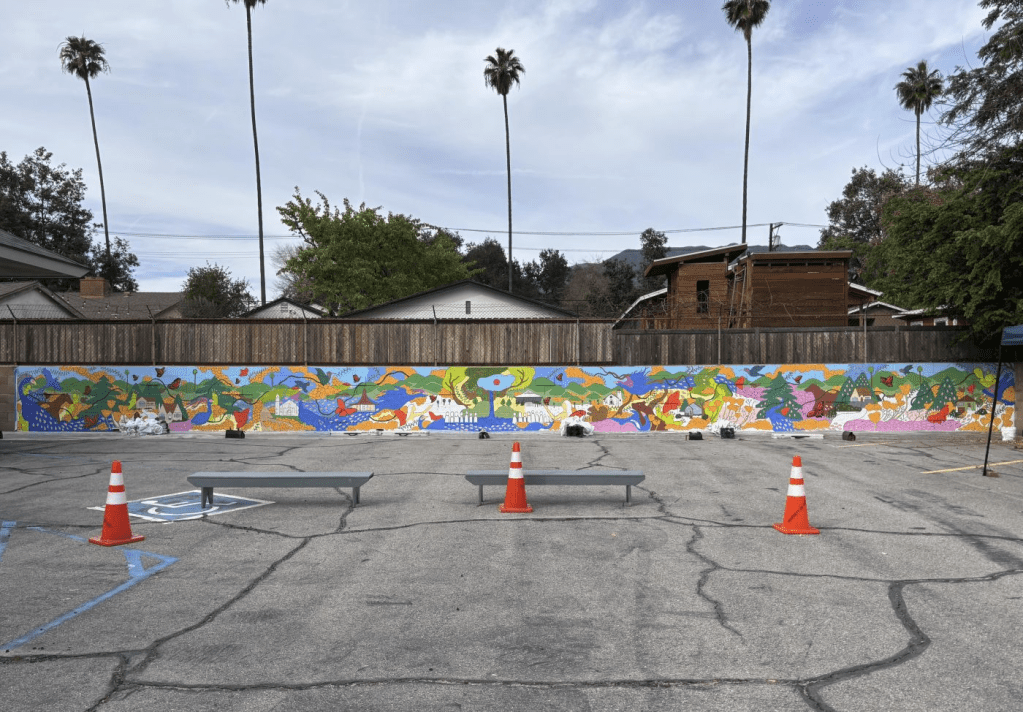
The Healing and Hope Mural painting in progress. | Photo courtesy of Miki Yokoyama / Pasadena Buddhist Temple
The Eaton Fire killed 19 people, destroyed over 9,000 structures, and brought untold grief to the community. More than a year later, displaced Altadena and Pasadena residents are still reeling from the trauma. There are constant reminders of what they lost and memories of that fateful day are still fresh in their mind.
As much anguish as the Eaton Fire wrought, there have also been many instances of a community coming together in their shared experience. The most recent of such moments is a group painting initiated by Miki Yokoyama who created a mural at the Pasadena Buddhist Temple. The brainchild of Kyoko Gibbs, wife of the temple’s spiritual leader Reverend Gregory Gibbs, the mural symbolizes what she thinks everyone needs – healing and hope.
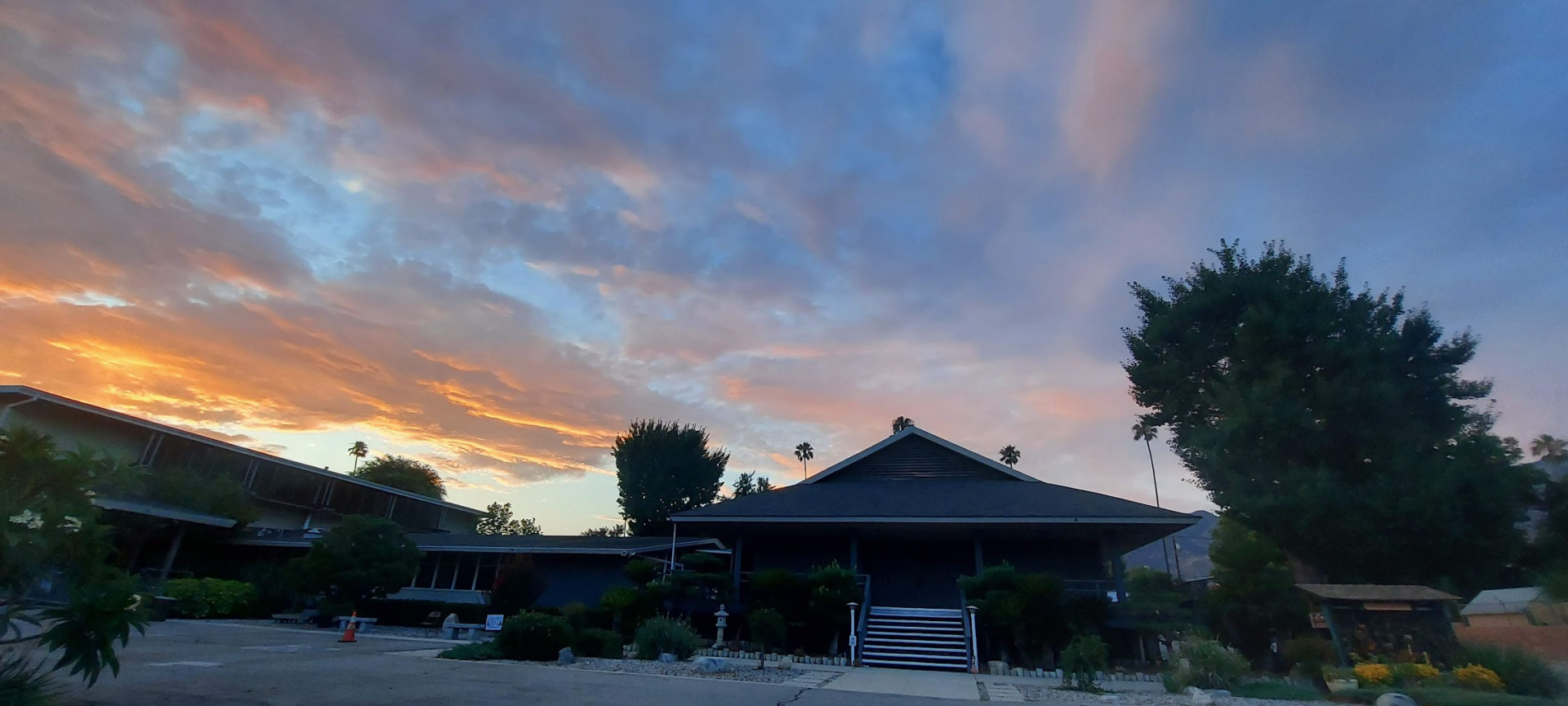
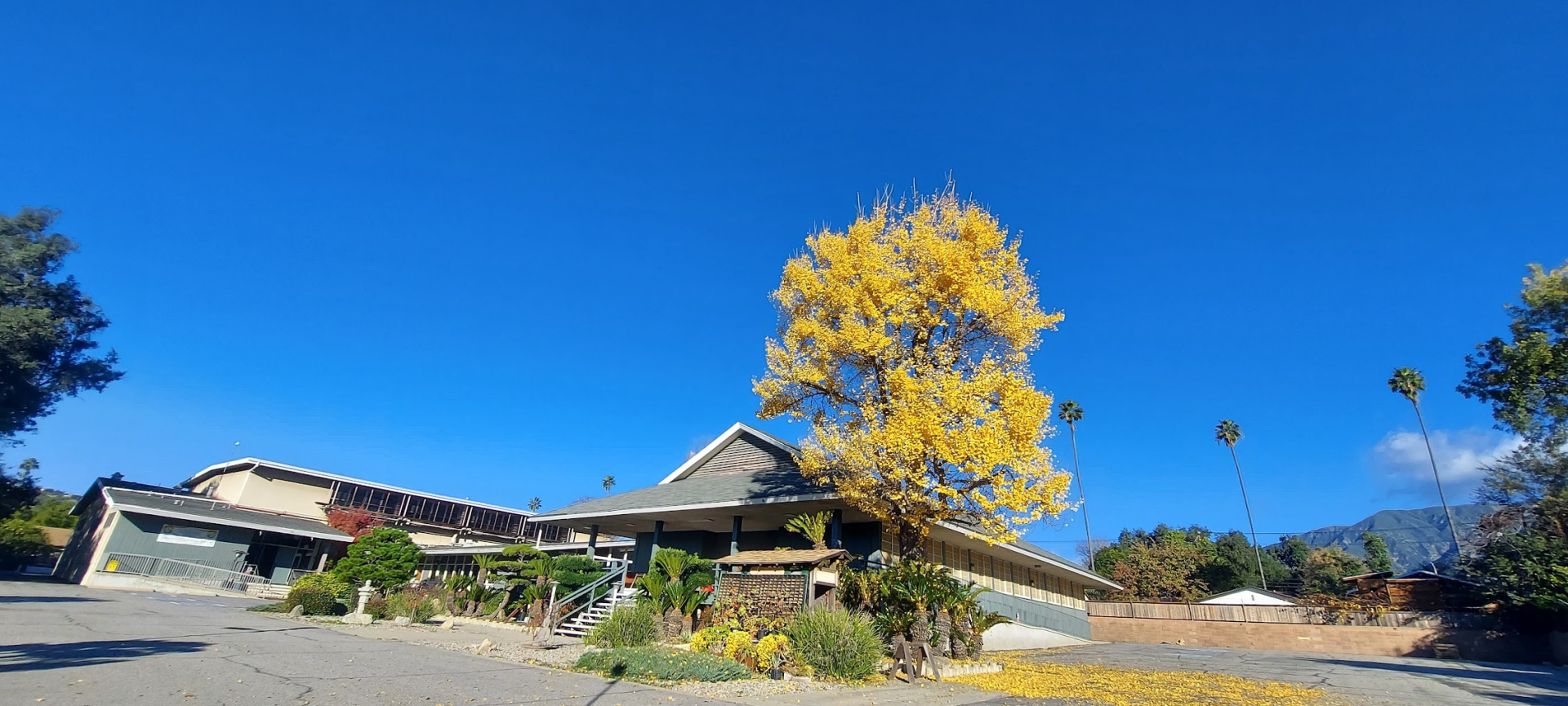
The temple almost became a casualty of the fire had it not been for the bravery of neighbors who put out the flames. Gibbs recalls, “Greg and I, along with our younger son, live in the temple residence, so we followed the evacuation order in the very early morning of Jan. 7 and drove to a hotel. Watching the news at the hotel, we recognized the temple’s neighbors getting burned down despite the efforts of firefighters. Feeling urged to return to the temple, we drove back there to find our ‘heroes’ and some other temple members trying to extinguish the flames that had landed between the tea garden and the edge of the main building, Hondo.”
“As we heard and learned about the temple members, associated friends, and neighbors’ loss and damage due to the fire, we were deeply hurt – not just physically but also emotionally,” continues Gibbs. “No words were spoken; we cried while holding and hugging them.”
Immediately, the temple community collaborated on events and efforts to help fire survivors. “Since two days after the fire, the restaurants in Little Tokyo (Azay and Far Bar) and San Gabriel (Yama Sushi), Little Tokyo Service Center, Keiro, Pasadena Japanese Cultural Institute, and the churches and temple in the affected Altadena and Pasadena areas, along with many others such as Buddhist Churches of America, Tanaka Farms, King’s Bakery, Go For Broke, and many more, have stepped up to the plate. Each individual person and organization gave them a hand in a selfless and compassionate way. As we continue to move forward, I am truly grateful for everyone’s kindness.”
The Gibbses themselves have been the recipient of people’s generosity. “During the remediation process for all the temple facilities, we needed to relocate to the temple’s friends’ house for about two months,” Gibbs says. “We were so fortunate to receive their kind offer. The temple is now fully restored and I am very thankful for those two temple board members who tirelessly worked with the insurance and intensive cleaning companies.”
For its part, the temple raised and distributed close to $90,000 to fire victims and actively continues to raise funds for them. “On the first anniversary of the fire, we presented them with a card and a small monetary gift. We wanted them to know that we are thinking of them. Additionally, we will be holding a White Elephant Sale, which opens to them first for free before the general public. We will also have a Girls’ Day Celebration with the tea ceremony, which they will be invited to join. More financial support will be distributed soon from the social welfare committee of Buddhist Churches of America (Pasadena Buddhist Temple is a part of BCA).”
Another activity that took place one year after the Eaton Fire was the creation of a mural. Recalls Gibbs, “As the first anniversary of the fire approached, I was thinking about what we – as the whole affected community – could do to help heal and inspire hope. Then, SOGs (Sons of Gardeners), who volunteer twice a week to maintain the temple grounds, were discussing painting a concrete section of the ramp outside. And it hit me with the idea of creating a mural instead of just painting. I brought up this concept with them and shared it with the temple board, and they all rallied behind it right away!”
“Fortunately, Keiro, which has been a financial supporter of activities and events for fire survivors, also agreed to continue its support,” Gibbs says further. “I knew who I needed to ask to lead the mural designs – Miki. She isn’t a member of the temple but I met her through the meal program for fire survivors.”
In mid-November, Gibbs reached out to Yokoyama and proposed crafting a mural and inviting the participation of those who had lost their homes in the fire as a way to help restore the town. They discussed what kind of wall painting they wanted to create and developed the concept together. To signify what it represents, they called it Healing and Hope Mural.
The Eaton Fire decimated Yokoyama’s home and all her artwork, and wreaked havoc on her mental health. She discloses, “The emotional shock was immense; I struggled with symptoms of PTSD for a long time. During the first year after the disaster, I believe that painting truly saved me. Now, through this project, I find healing in creating together with the temple community and others who were also affected by the disaster. Realizing that I am not alone and receiving strength from everyone involved fills me with deep gratitude.”
Yokoyama describes how she transferred the painting – measuring approximately 70 feet long by 56 inches tall – on the wall. “I first created a rough sketch on paper and then projected it onto the wall. However, many of the finer details will be added freehand while looking at the actual wall. From here, I plan to add more delicate lines and dots to develop the piece further.”
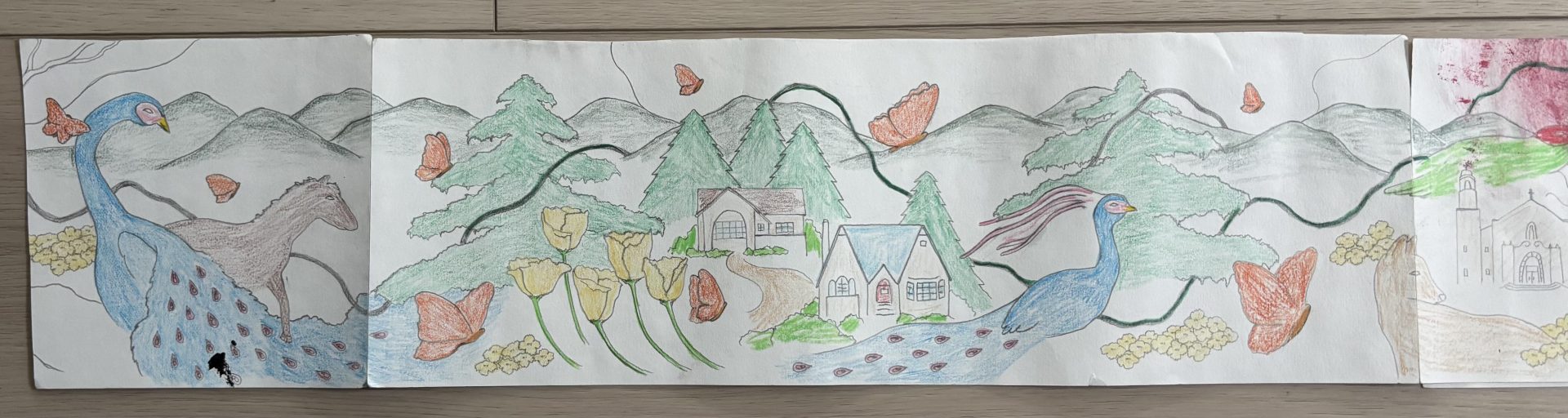
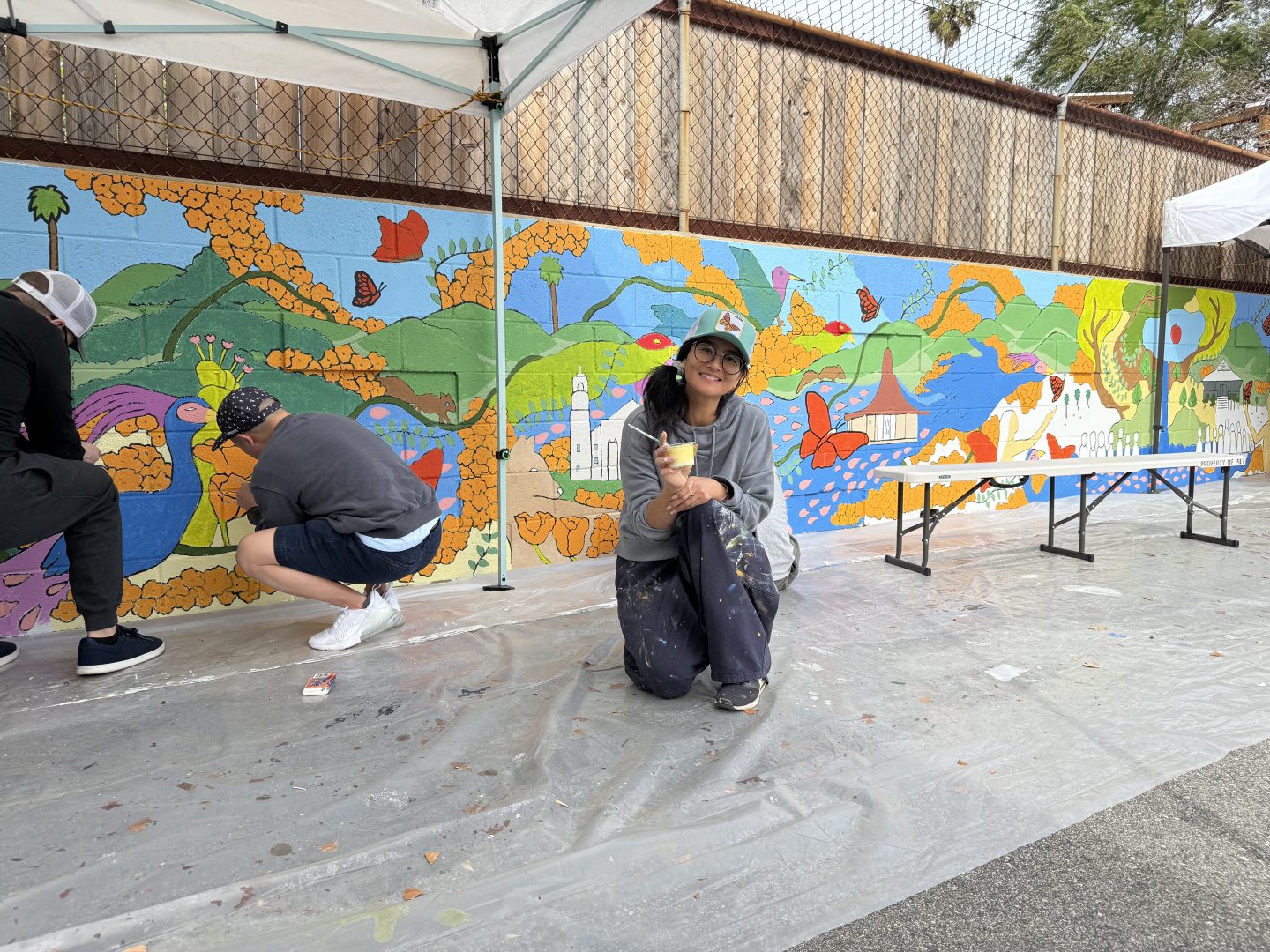
“This project is open to everyone, regardless of artistic experience,” explains Yokoyama. “Before we began painting together, I prepared the mural by drawing the outlines in black ink. Although I predetermined the colors, my hope is simply that everyone enjoys the process. I tell participants that it is perfectly fine if they paint outside the lines or even cover the black outlines. I will make any necessary corrections afterward, so everyone is free to add color as they wish.”
“At present, the mural is about halfway complete,” Yokoyama adds. “Much of the white space has been filled, and the next steps are to apply a second layer to the lighter areas of ink, retrace the black outlines, and then add finer lines and dots. By layering these delicate details, I hope to bring greater depth and subtlety to the work. Even if it takes time, I am committed to leaving behind the best possible piece.”
“As we continue working together with the community – shaping it according to our shared intentions – I am also excited to see how the mural will ultimately come together,” Yokoyama says further. “I am very much looking forward to its completion.”
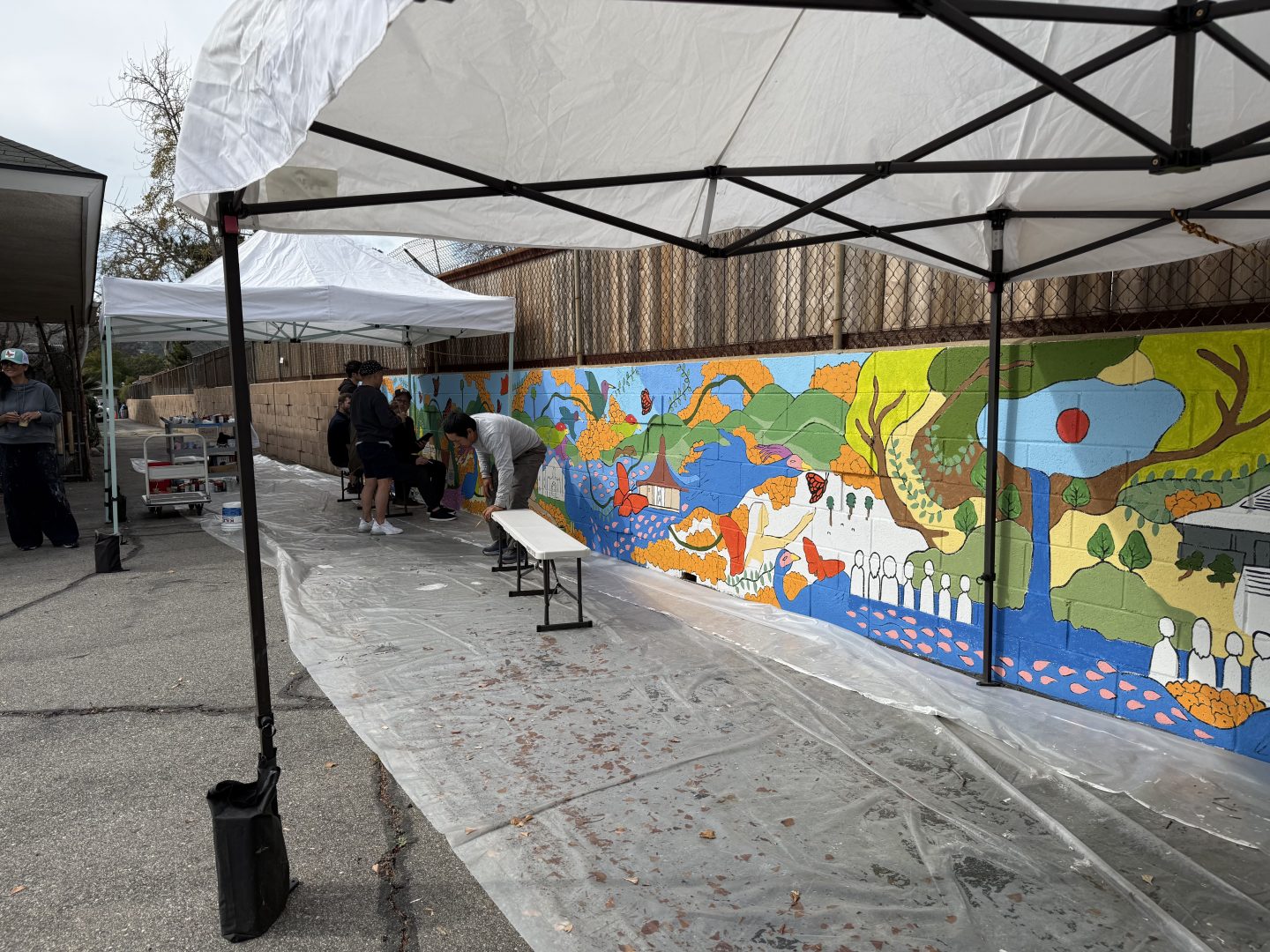
When the mural is completed, people will recognize the animals and flowers they see in their town. And since Altadena is renowned for Christmas Tree Lane, Yokoyama incorporated Deodar Cedar trees in the artwork. The two churches along Lincoln Avenue – First Presbyterian Church of Altadena and Sacred Heart Catholic Church – as well as Altadena Community Church on Lake Avenue, are also depicted. Millard Falls Trailhead is portrayed in the center of the painting.
One of the Eaton Fire survivors who went to the temple to paint heard about it through her mom who is a member of the temple. She asks that her name not be mentioned but graciously agrees to talk about her participation.
“Miki was there and she showed me where to paint, provided paint and brush, and instructions,” she begins. “I painted the windows on the house light blue as she instructed. She explained that it was okay to paint over lines as these will be repainted after the color is applied; the community painters are adding color and the artists are adding detail. While I was there one of the artists was refining with details. She used a Q-tip to add white spots to a red butterfly. The mural is a representation of the local community and the hope that exists in the Eaton Fire area to rebuild the physical and emotional aspects of the community.”
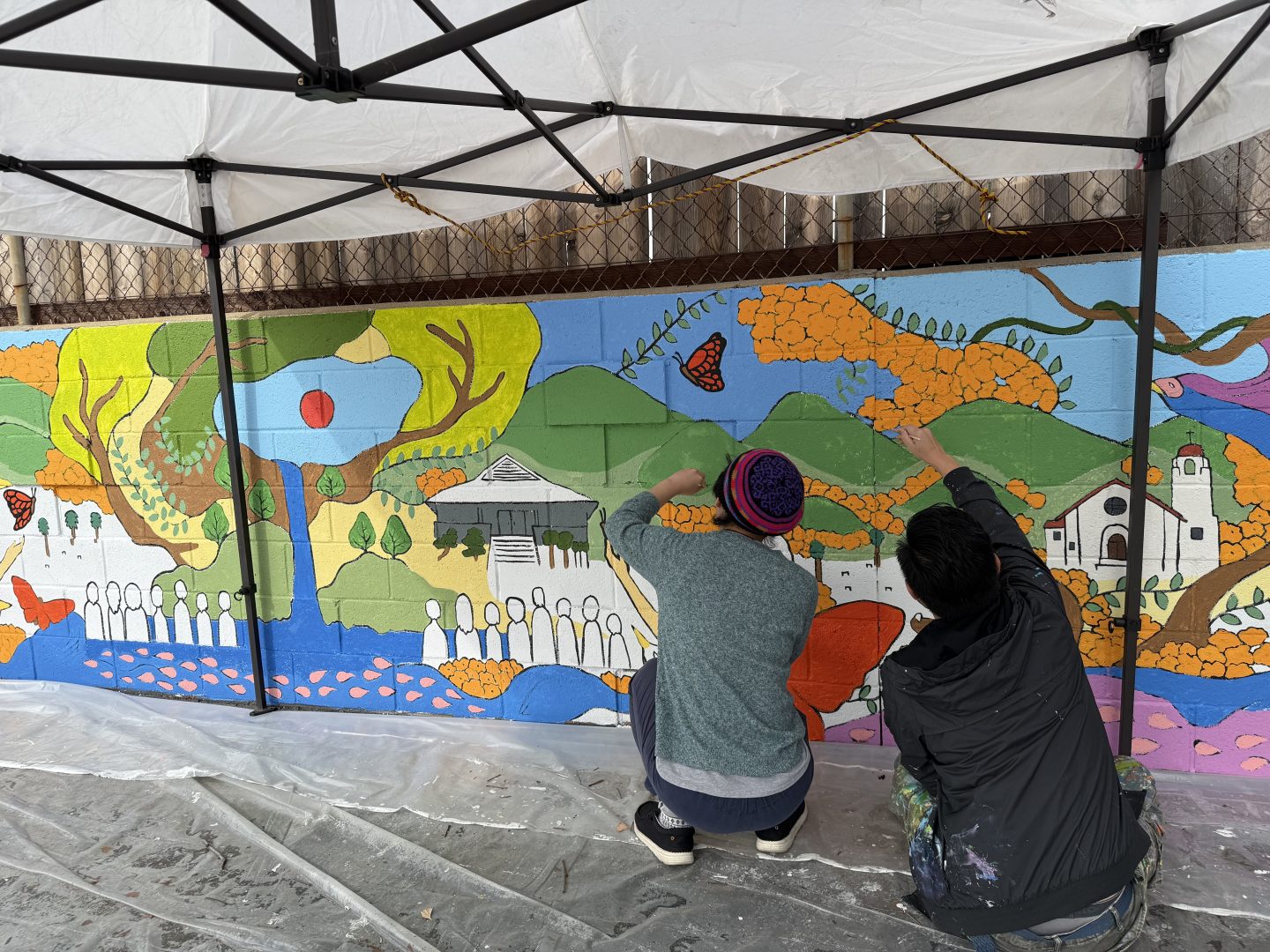
Painting the mural offered a brief respite from her daily stresses in the aftermath of the fire. She says, “The consequences of the fire a year later are still part of a continuing domino effect in various ways that will remain for many years. Growth and hope are also results of this effect. Projects and institutions such as the Pasadena Buddhist Temple bring the community together for positive focus and forward momentum.”
It is exactly what compelled Gibbs to come up with a community endeavor. She declares, “Through this experience – coloring in the mural while chatting with others or working quietly – I would like all to feel connected and empowered. You are not alone. We are stronger together.”
 A San Gabriel Valley Inquirer