Restored Shōya House at The Huntington Demonstrates Sustainable Living Practices

Also published on 20 October 2023 on Hey SoCal
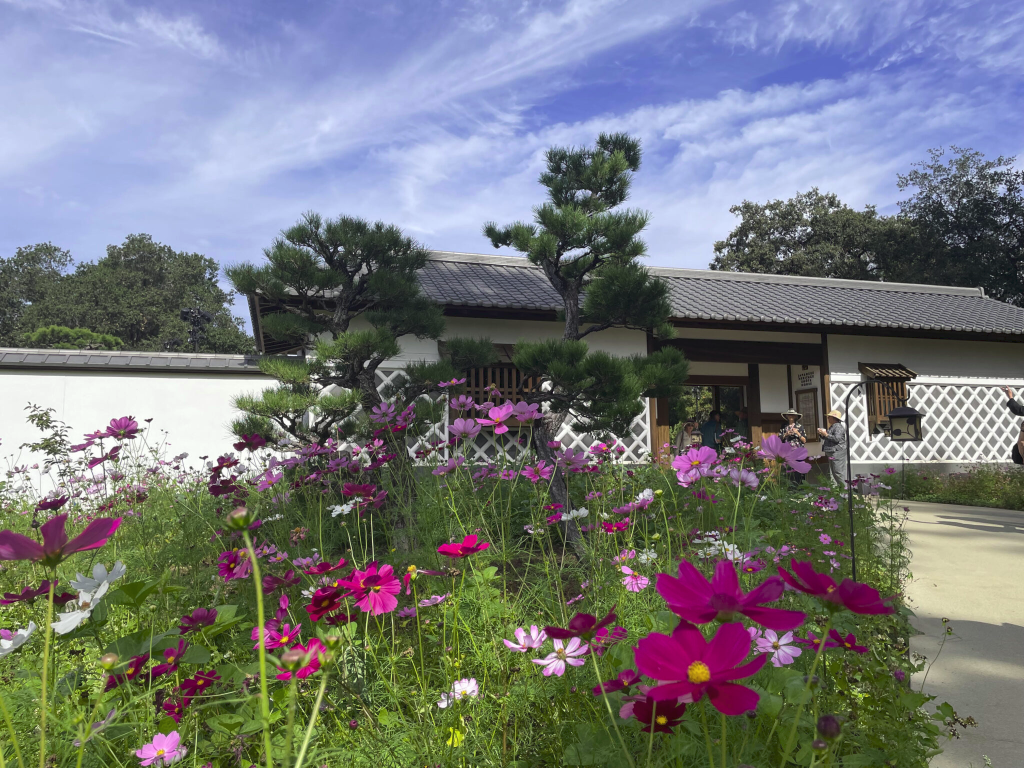
Flowers bloom outside the gatehouse. | Photo by Brianna Chu / Hey SoCal.com

Wouldn’t it be incredible to practically step back in time and experience what it was like to live in a rural village in 18th century Japan? Starting on October 21, visitors to The Huntington Library, Art Museum, and Botanical Gardens will have that unique opportunity when the Shōya House opens at the Japanese Garden (read previous article about the Shōya House here).   

During the press opening held on Friday, October 13, Karen Lawrence, president of The Huntington expressed her gratitude for the generosity of the Yokoi family who gifted their ancestral home to the beloved institution.
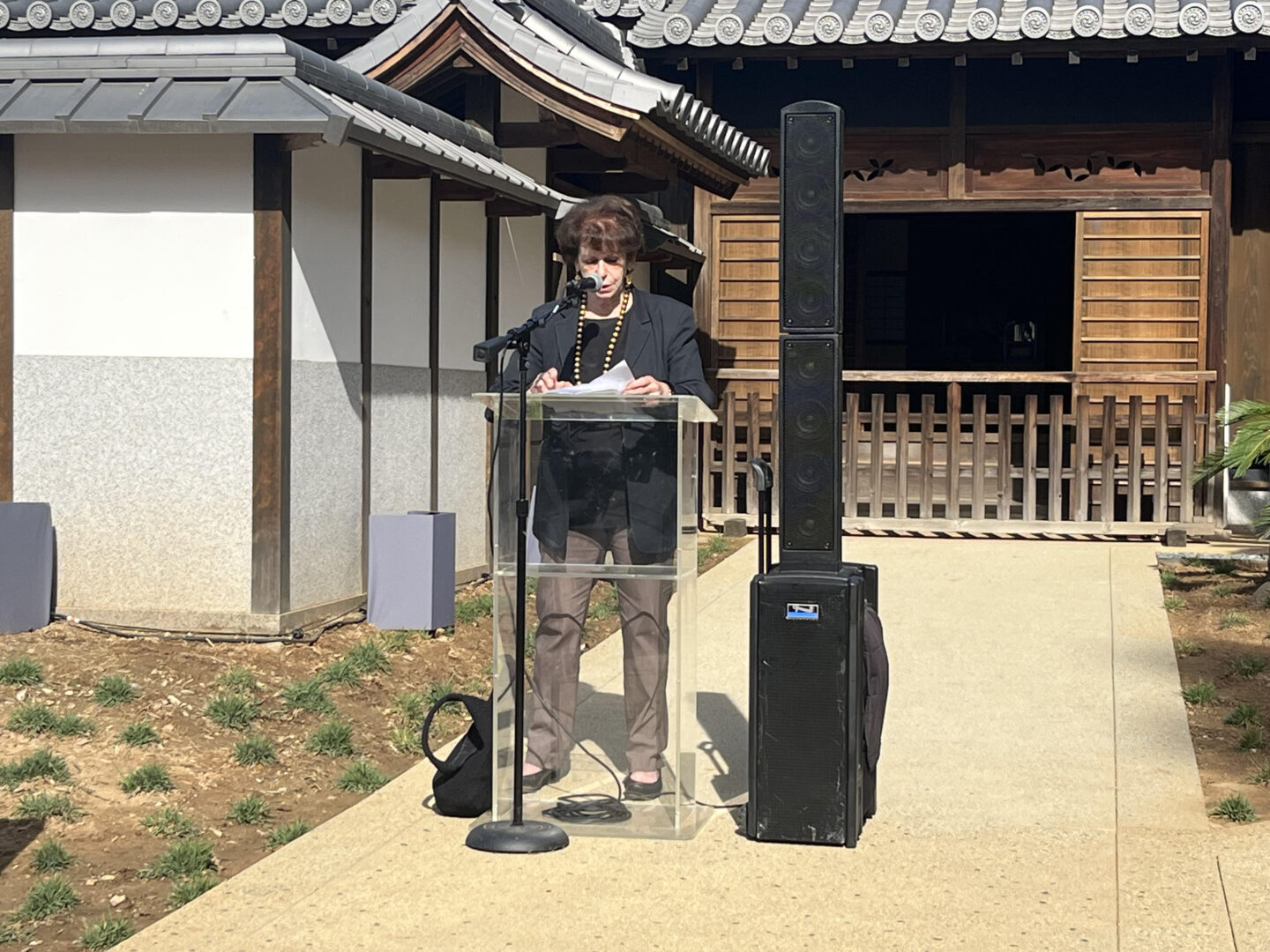
Karen Lawrence, president of The Huntington Library, Art Museum, and Botanical Gardens. | Photo by Brianna Chu / Hey SoCal

Lawrence remarks about this exceptional new destination at The Huntington. “This restored residential compound is truly a masterpiece and it offers a glimpse of life in rural Japan some 300 years ago. It’s the only example of this kind of architecture in the U.S. and its presence here wouldn’t have been possible without the generosity of the Yokoi family.”

“In Japan, the house was disassembled, restored, disassembled again, and shipped to us at The Huntington,” Lawrence adds. “Once the components of the house arrived, it was up to The Huntington to rebuild and provide context, including recreating the landscape and gatehouse.”
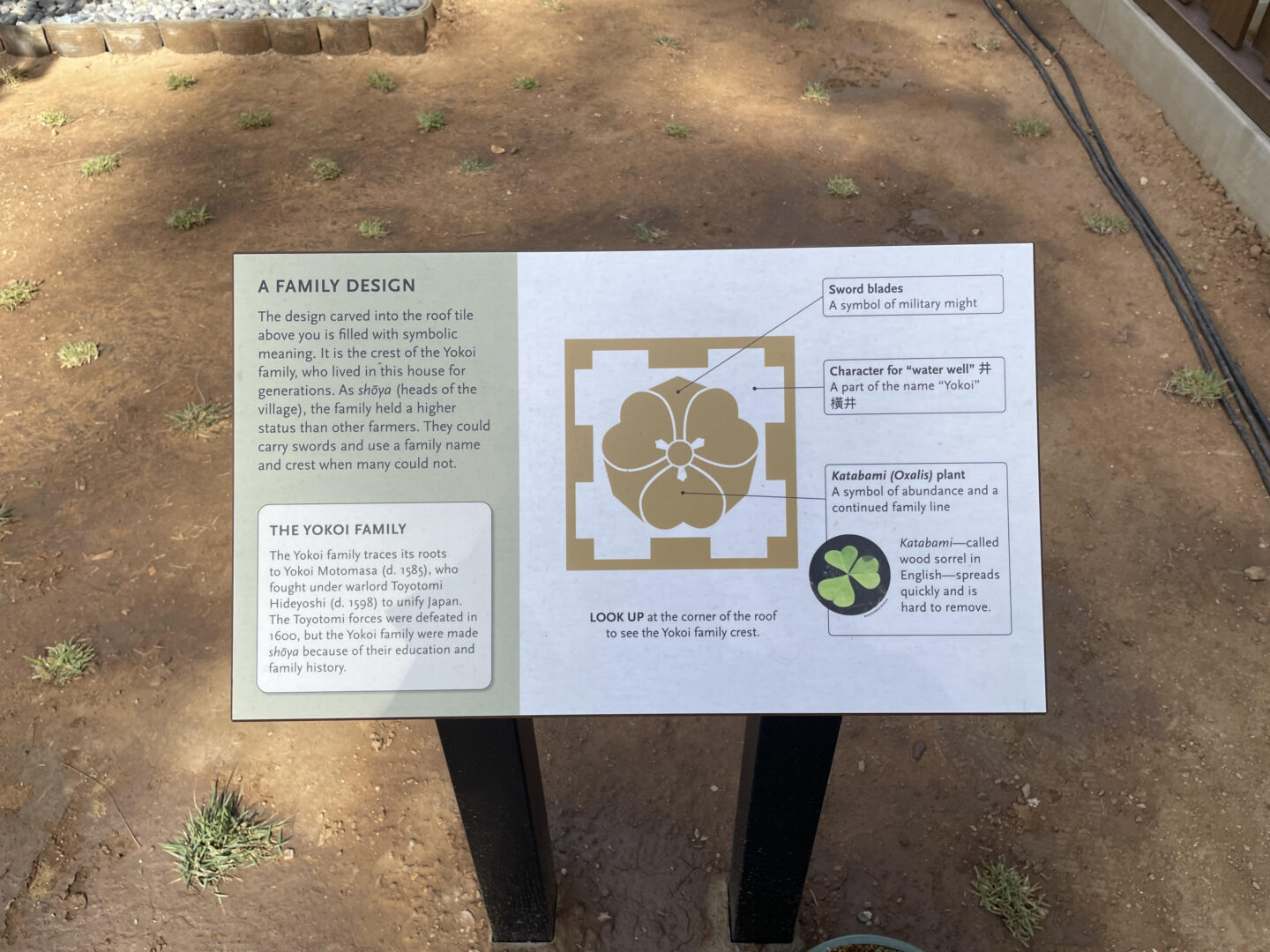
A signage at the house shows the Yokoi family crest. | Photo by Brianna Chu / Hey SoCal

It’s only fitting for the Shōya House to join the distinctive house Henry E. Huntington bought from Pasadena businessman George Turner Marsh that has been at the Japanese Garden, which has such a fascinating history. The Huntington’s information kit gives the following  chronology.                    

The building of the Japanese Garden began in 1911 and was completed in 1912. The garden, which is currently 12 acres, was inspired by the widespread Western fascination with Asian culture in the early 1900s. Henry E. Huntington purchased many of the garden’s plants and ornamental fixtures, as well as the Japanese House, from a failed commercial tea garden in Pasadena, located at the northeast corner of Fair Oaks Avenue and California Boulevard. When The Huntington opened to the public in 1928, the Japanese Garden became a major draw for visitors. Features such as the bell tower and bridge were newly built for the garden by Japanese American craftspeople.
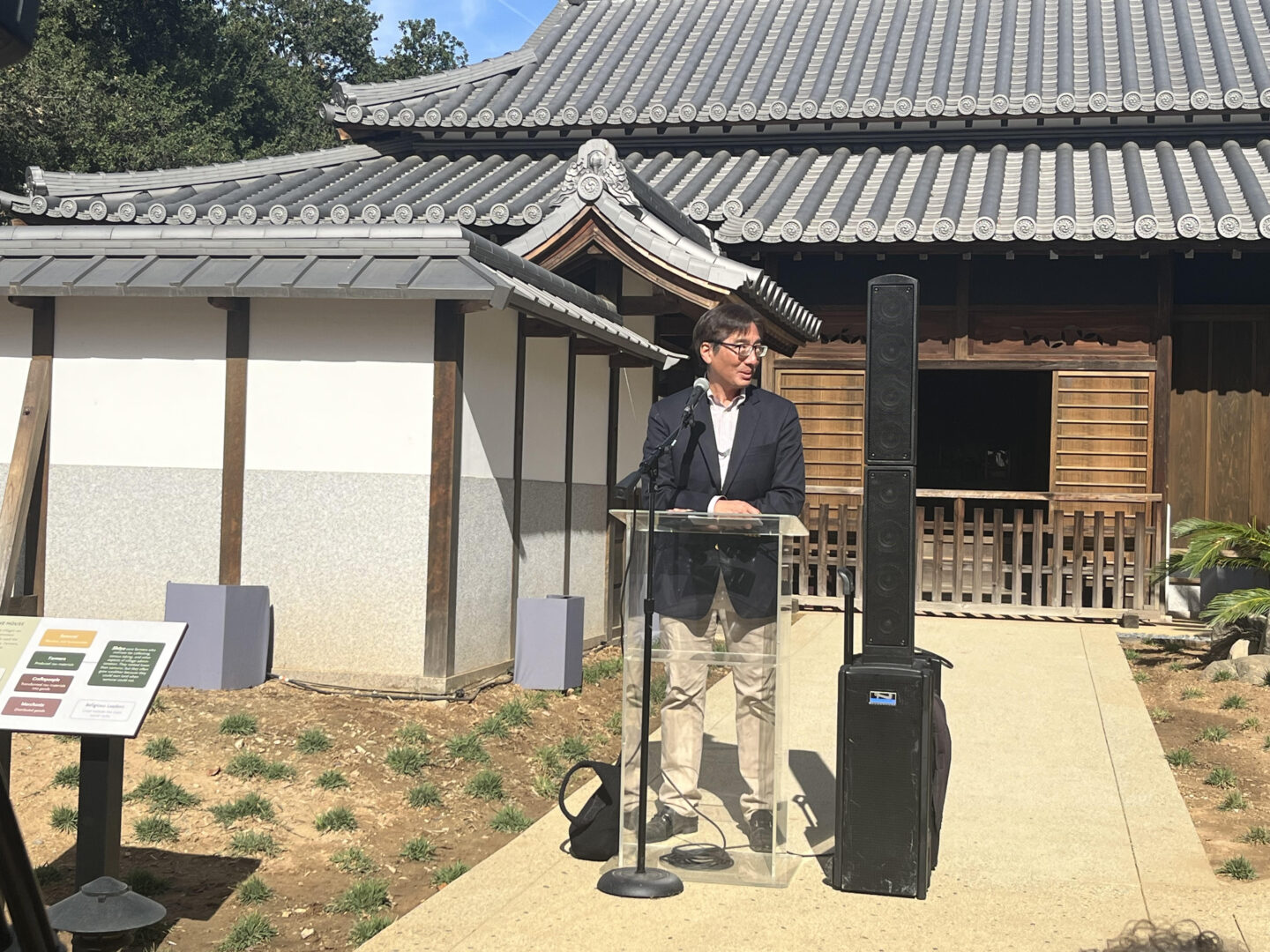
Robert Hori, Gardens Cultural Director and Programs Director. | Photo by Brianna Chu / Hey SoCal

By World War II, staffing shortages – including those resulting from the incarceration of Japanese American employees – and the political climate led to the closure of parts of the Japanese Garden, and the Japanese House fell into disrepair. In the 1950s, members of the San Marino League helped support the refurbishment of the buildings and surrounding landscape.

In 1968, The Huntington expanded the Japanese Garden to include a bonsai collection, which now numbers in the hundreds, and a rock garden, the Zen Court. Since 1990, The Huntington has served as the Southern California site for the Golden State Bonsai Federation.

The ceremonial teahouse, called Seifū-an (the Arbor of Pure Breeze), was built in Kyoto in the 1960s and donated to The Huntington by the Pasadena Buddhist Temple. In 2010, the teahouse made a return trip to Japan for restoration, overseen by Kyoto-based architect Yoshiaki Nakamura (whose father built the original structure). It was then shipped back to San Marino and reassembled.

In 2011, a team of architects with backgrounds in historic renovation, horticulturists, landscape architects, engineers, and Japanese craftsmen undertook a yearlong, large-scale restoration of the historic core of the garden. The project included repairs to the central pond system and water infrastructure, along with increasing pathway accessibility and renovating the original faux bois (false wood) ornamental trellises.
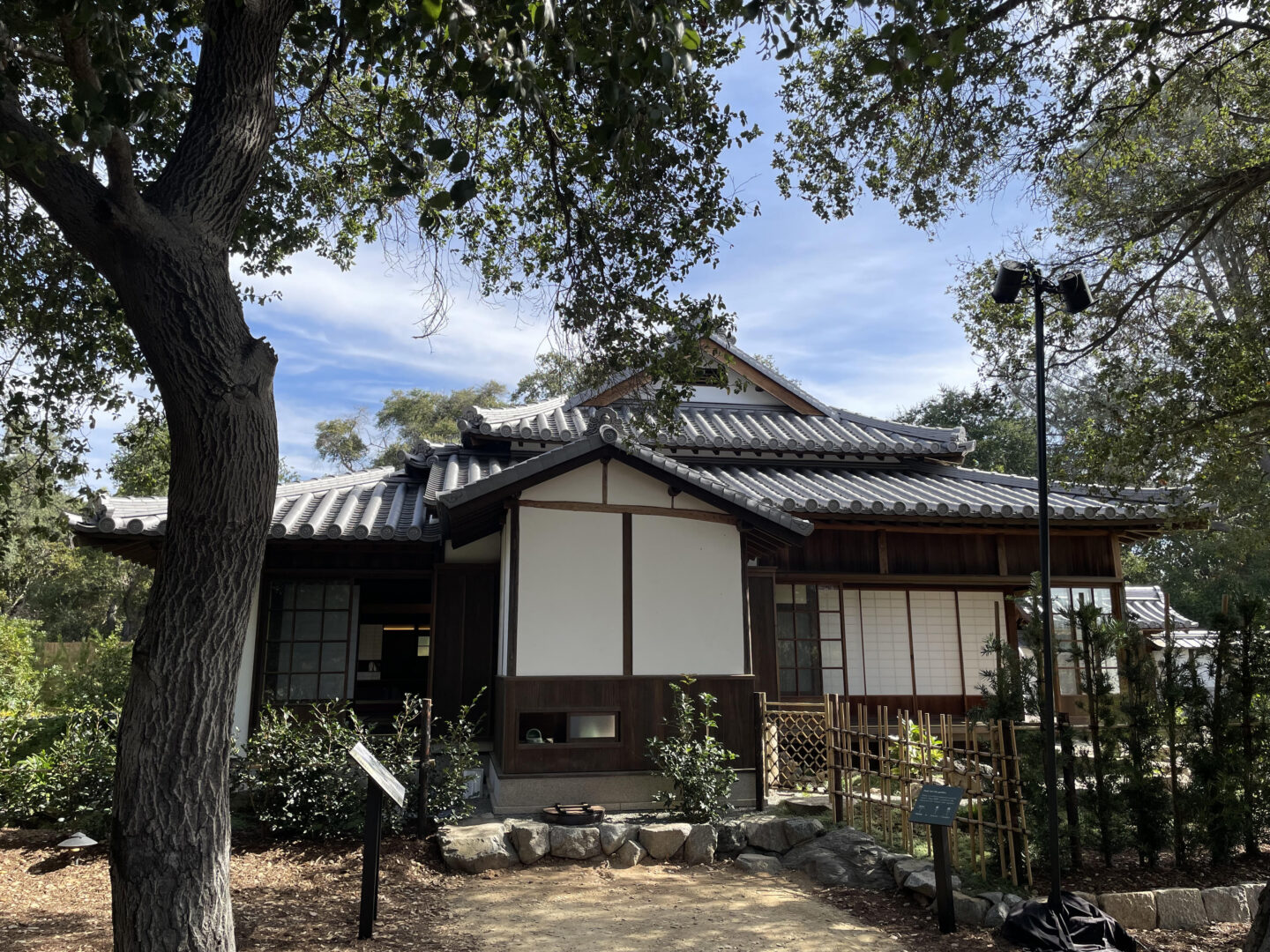
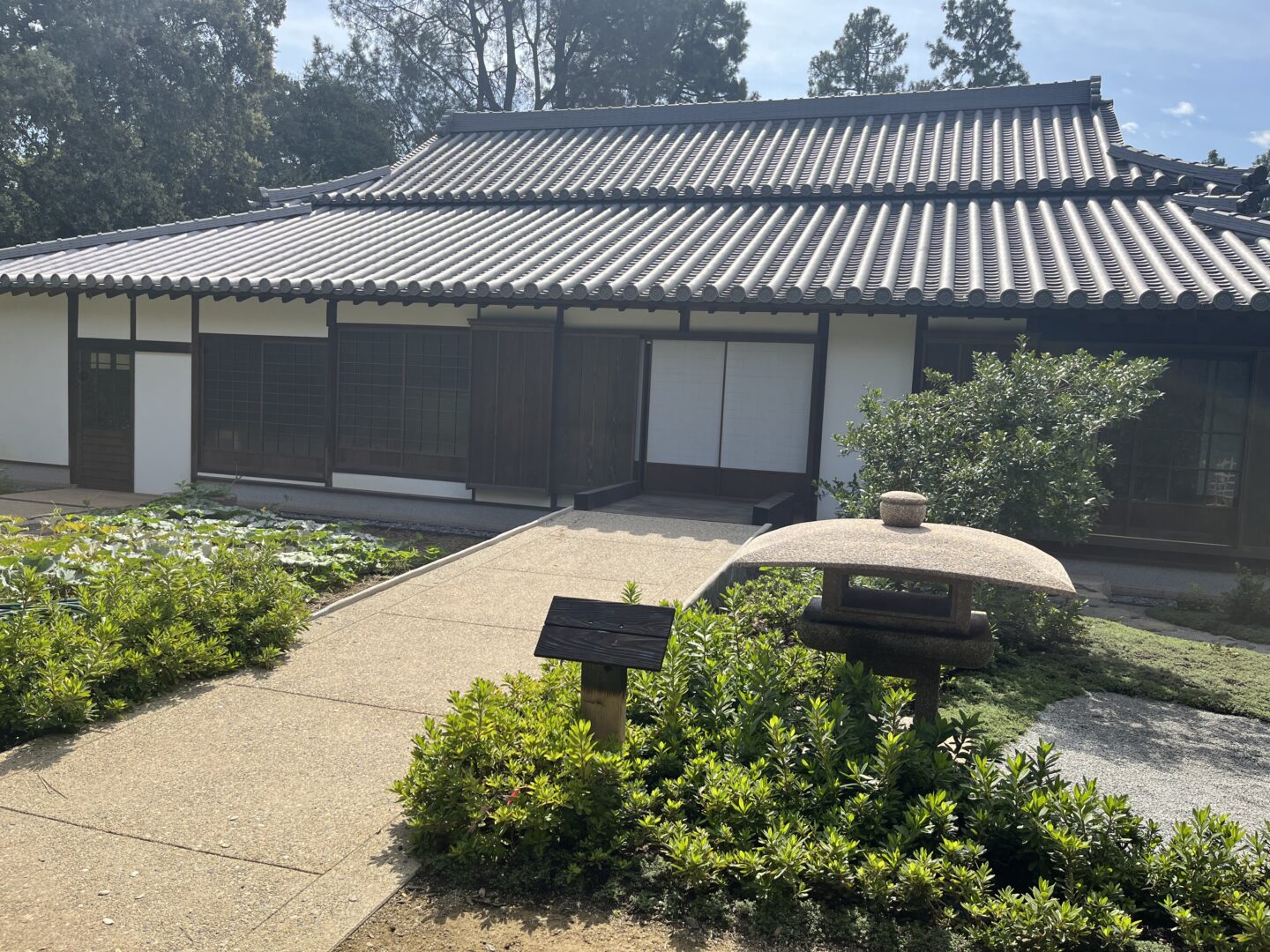
A view of the house from the side. | Photo by Brianna Chu / Hey SoCal

The Japanese Garden continues to be a popular attraction to this day. However, as Lawrence points out, “What was missing was a traditional Japanese residence that could demonstrate the important historical relationship between the Japanese people, their culture, and the landscape. The iconic Japanese house in the original garden provides the idea of a Japanese residence but it  wasn’t really lived in.”

Lawrence clarifies, “The shōya house is completely different. It’s an exquisite example of a village leader’s residence where rural village life can be explored through the lens of 18th century architecture and farming practices. The residence was occupied by one family, generation after generation, over the course of three centuries. Mr. Yokoi is the 19th generation to own the house.”
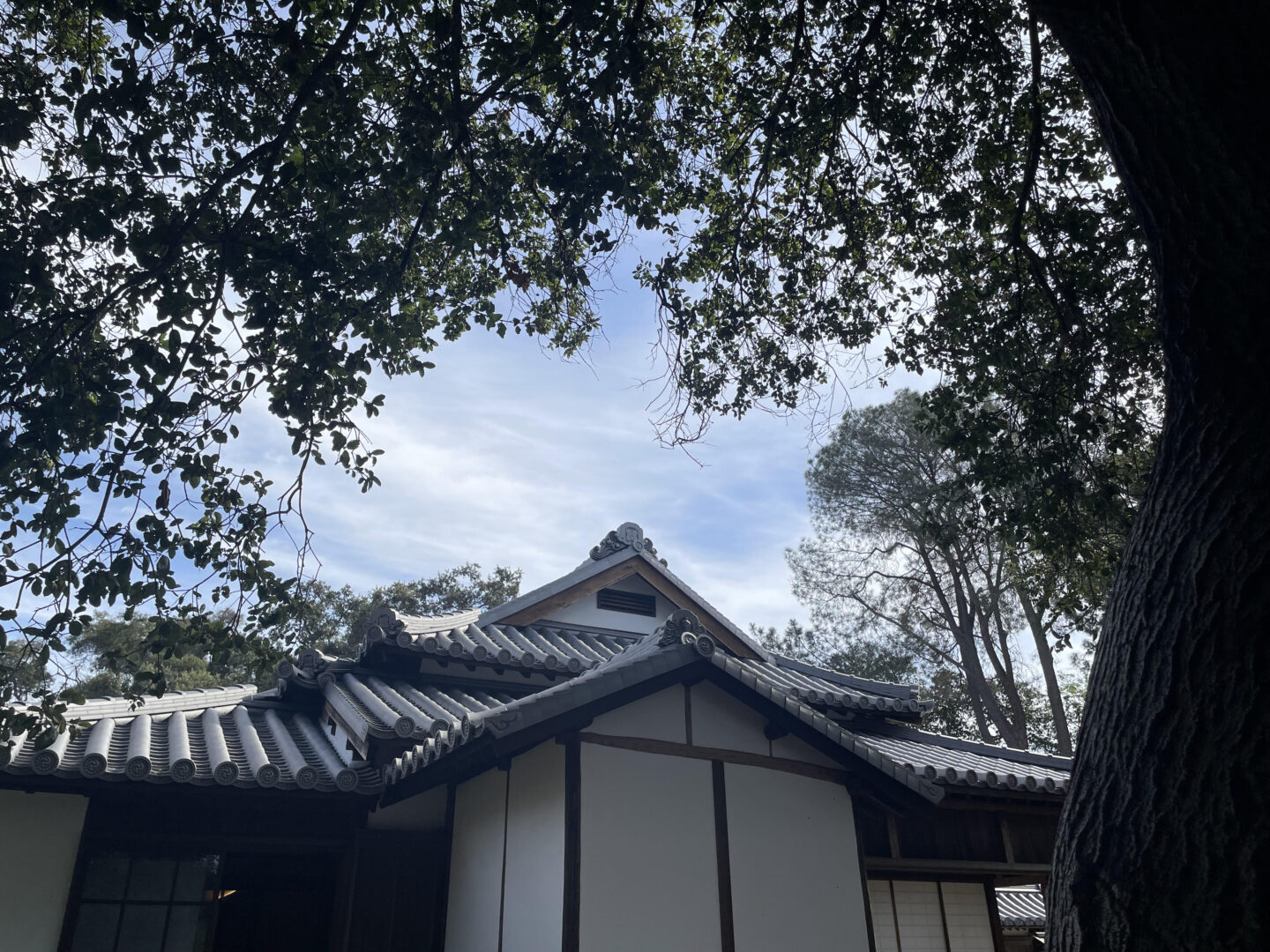
The tile work on the roof. | Photo by Brianna Chu / Hey SoCal

“Today it provides us with a rich aesthetic experience of the beauty of Japanese building art and many insights into what it means to live sustainably on the land,” Lawrence adds. “We were fortunate to have artisans come from Japan to work alongside local architects, engineers, and construction workers to assemble the house here and recreate elements that would have surrounded it at the time when it housed a village leader or shōya. They created the wood and stonework features you see, as well as the roof tiles and plasterwork prioritizing traditions of Japanese carpentry, artisanship, and sensitivity to materials.”

Lawrence concludes by voicing her opinion that this will become a major visitor attraction in Southern California, as well as a primary resource for architects, scholars, students, teachers, and others interested in the complexities and beauty of traditional Japanese design, craftsmanship, and architectural practices. And that visitors it will appreciate the lived experience of what this meant and how it was sustained for 300 years.

Robert Hori, gardens cultural director and programs director, says, “It has really taken an entire village to build the head of a village’s house. It wasn’t just the botanical gardens, everyone at The Huntington has contributed in interpreting the house which will make a full experience for the visitors. They won’t be looking at an exhibit in a museum, they will be in that museum. They’ll be able to participate in rice planting, and see the changes of the season. This is something that exists nowhere else and can only live at The Huntington.”
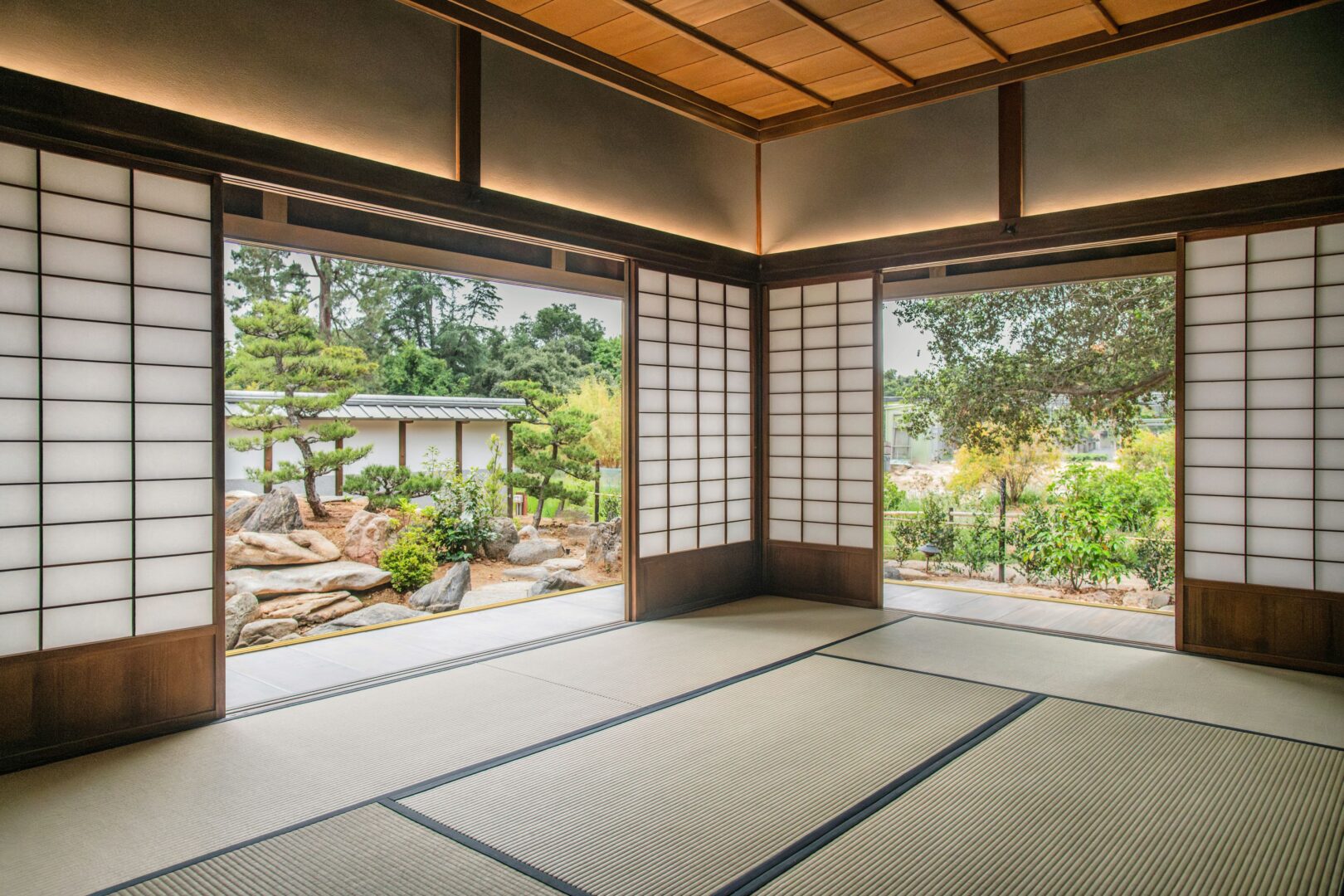
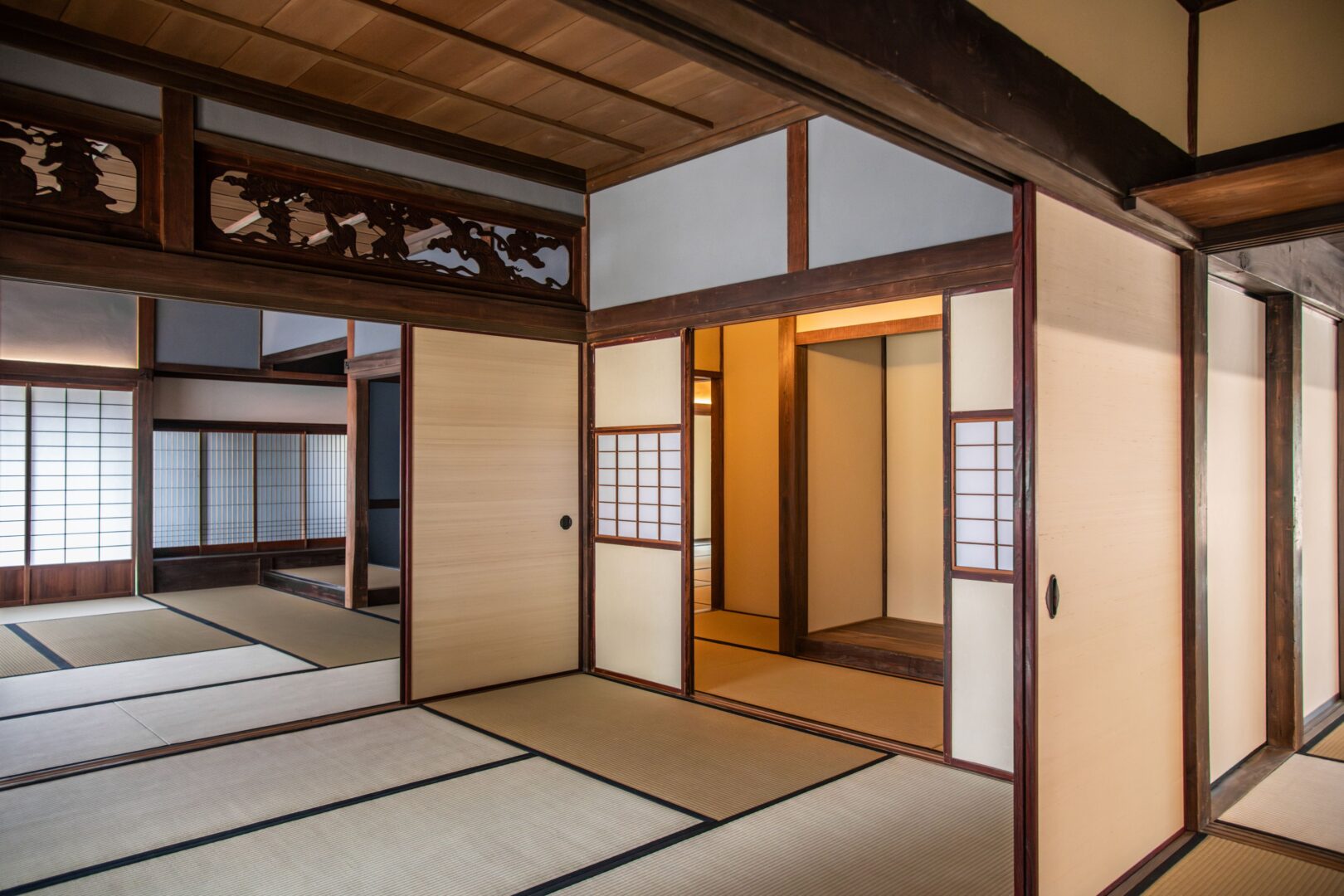
The doors open so the outdoors and indoors blend seamlessly. | Photo by Joshua White / JWPictures.com. The Huntington Library, Art Museum, and Botanical Gardens

The construction team that undertook this project was headed by Yoshiaki Nakamura of Nakamura Sotoji Komuten, who oversaw the restoration of the teahouse in 2010. Hori discloses, “When Mr. Nakamura first came to The Huntington about 15 years ago, he toured it and he said, ‘Wow, this is something special.’ He saw the resources in the library (each year we have over a thousand scholars) and he said, ‘I want to create something that students, teachers, and researchers can explore and be inspired by.’ He wanted to bring traditional building and garden techniques here at The Huntington so they can be a primary resource for those who are not going to Japan.”

“We have also been blessed to have the partnership of many architects and professionals, including Mike Okamoto (U.S. Architect of Record),” continues Hori. “He has been a valuable partner in reassembling this house. You can imagine the challenges of bringing not just a 300-year-old house and re-erecting it, but bringing the metric system and having it meet U.S. building code. We are likewise fortunate to have Takuhiro Yamada (Hanatoyo Landscape Co. Ltd. (Kyoto, Japan) doing the landscape and really putting together the program.”
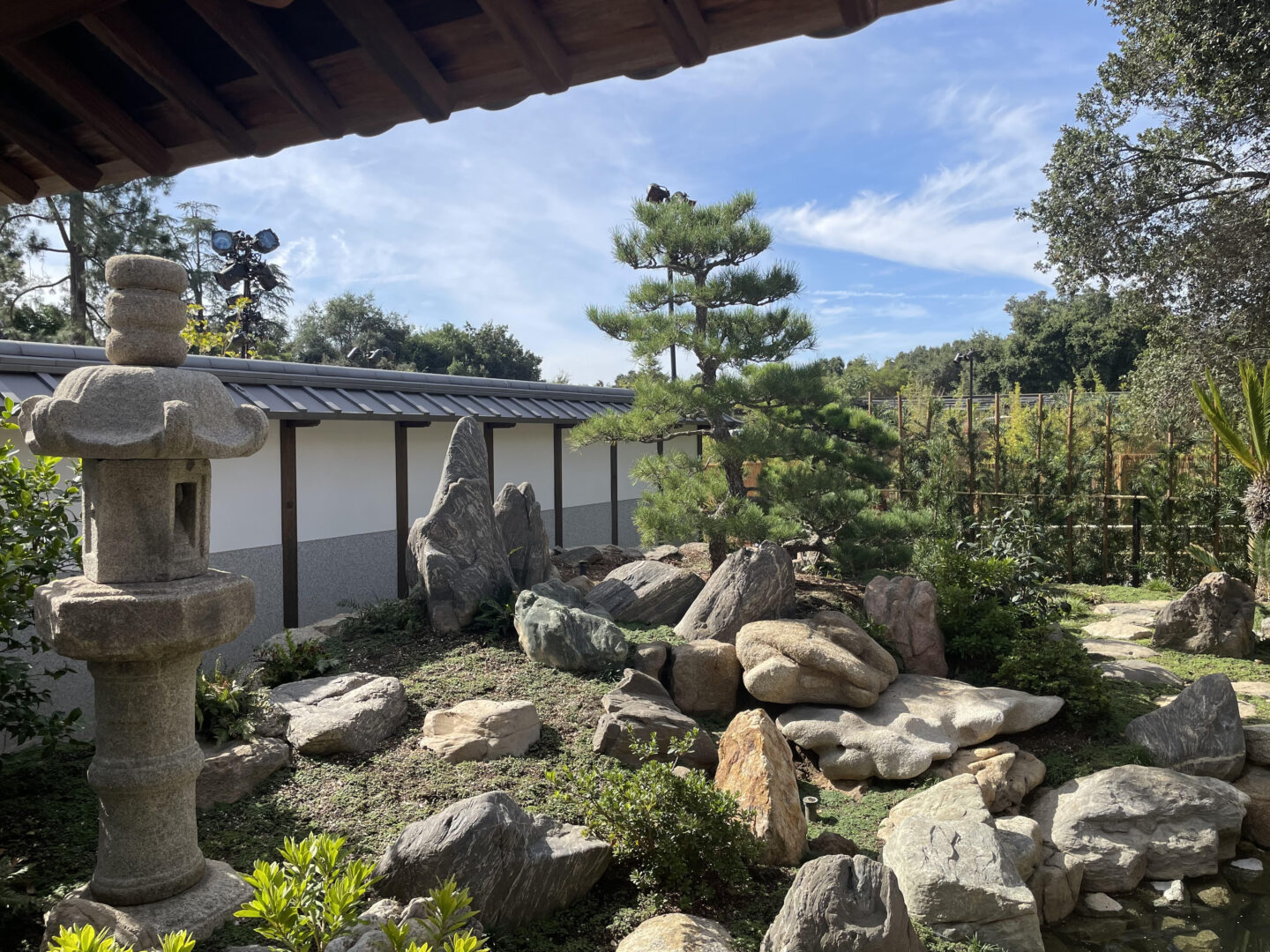
The formal garden. | Photo by Brianna Chu / Hey SoCal

“What we’d like to show is the beginning of landscape,” Hori expounds. “And that design starts

with the ability to control water and to move earth – and that’s exactly what a farmer is doing. We want visitors who go on a tour of the house to have the experience of being transported to 18th century Japan.”

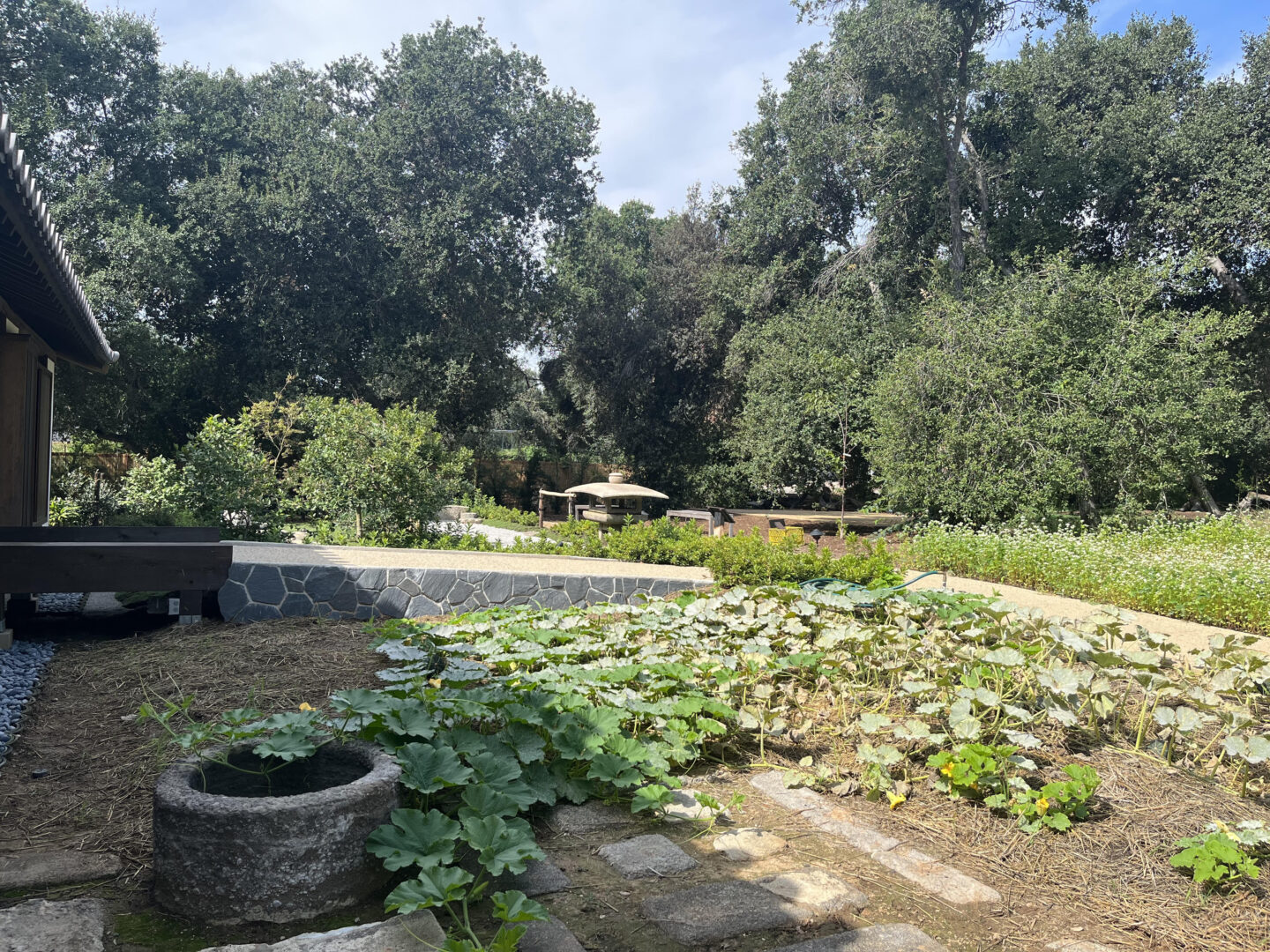
Each time Hori gives a tour of the Shōya house, he begins at the terraced agricultural field,     where he notes a whole new animal population has taken as their home. “You’ll notice the terrain is sloped – this is how many of the farms were in Japan because it’s the most efficient way to move water from uphill to downhill.”
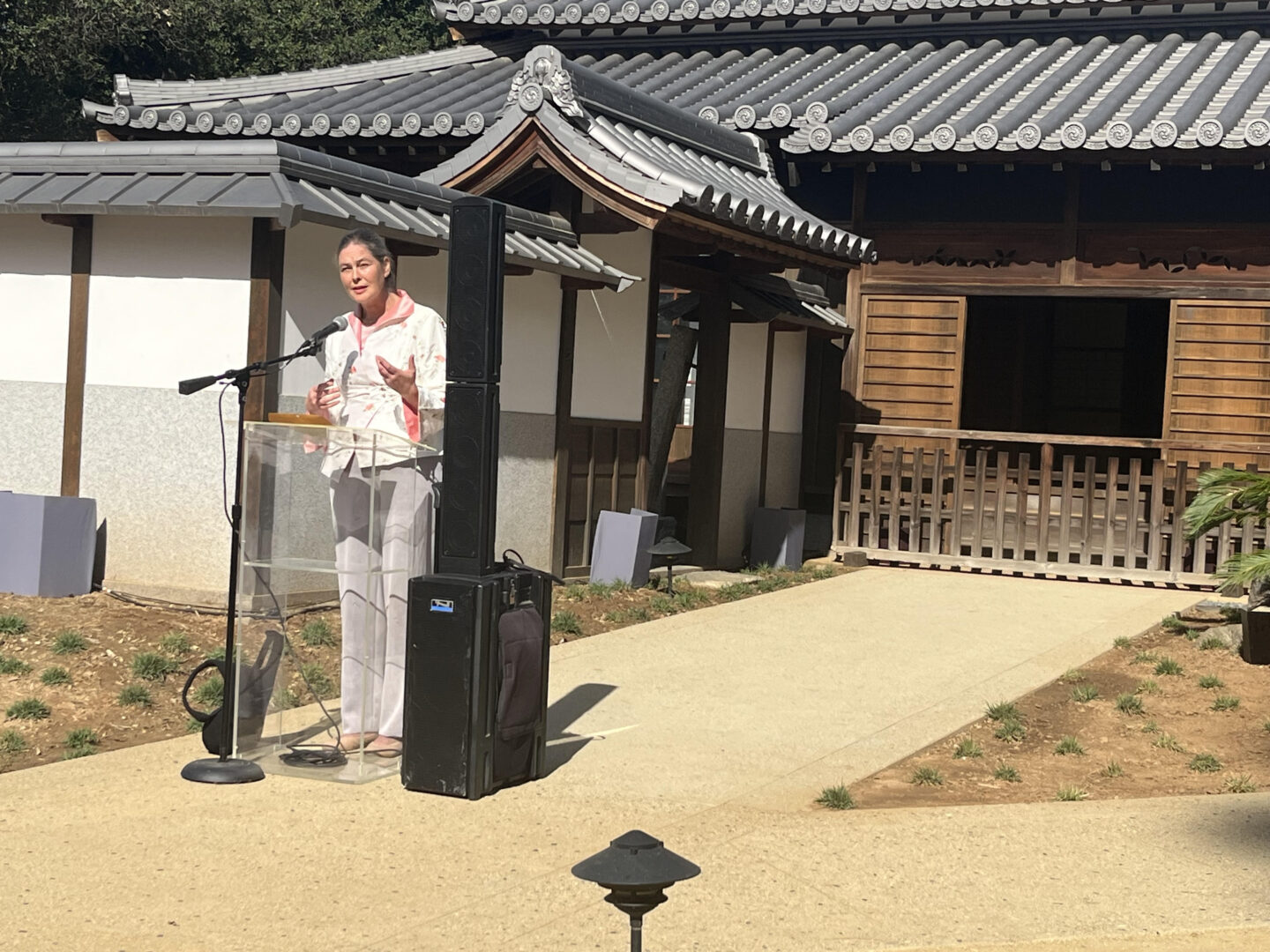
Nicole Cavender, Telleen/Jorgensen Director of Botanical Gardens. | Photo by Brianna Chu / Hey SoCal

Throughout the tour Hori impresses on everyone how these sustainability practices were a matter of survival for farmers centuries ago. And that sustainability is one of the biggest challenges we face today globally. 

And it’s an issue that Nicole Cavender, Telleen/Jorgensen Director of the Botanical Gardens, deeply cares about. She states, “I’d like to emphasize one aspect in particular that’s especially near and dear to me – we have here a model of sustainability practices. You’ll see how in this house, in this landscape, we’ve integrated and showcased the historical integration of agricultural systems, how water can be used and recycled. In the front as you come in, you see the agricultural landscape that showcases sustainable practices of using cover crop and companion planting. I’m really excited to be able to share these practices and hope to inspire people to integrate them into their own life.”
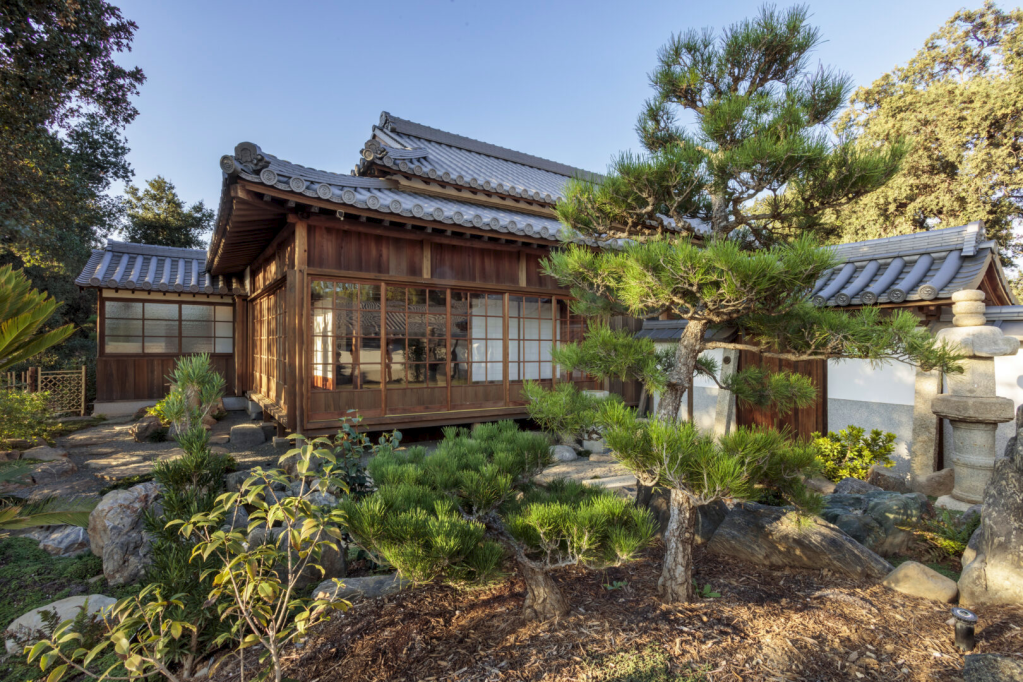
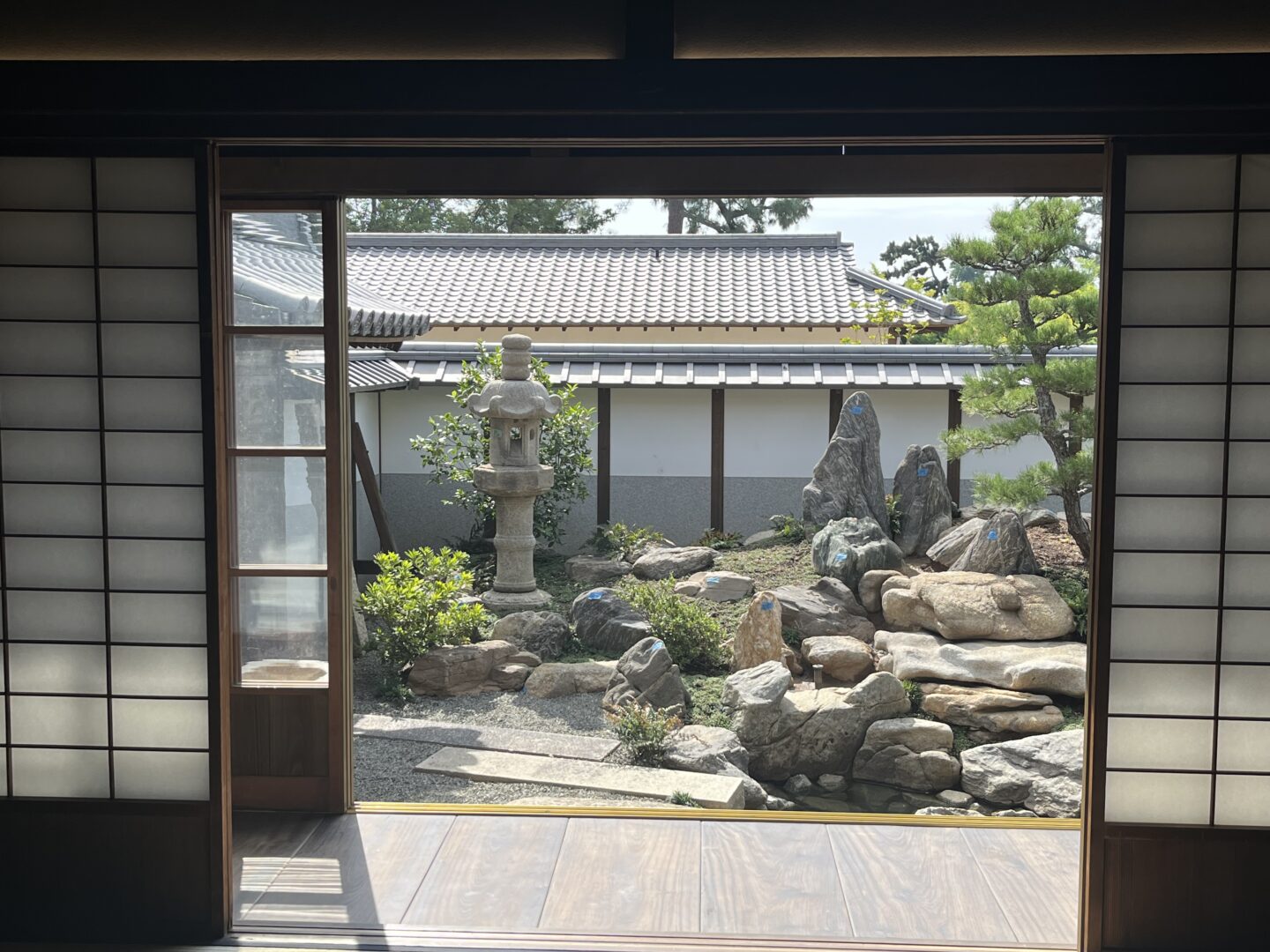
View of the private garden | Photo by Joshua White / JWPictures. com. The Huntington Library, Art Museum, and Botanical Gardens

Without hammering our head with it, The Huntington makes a compelling argument for practicing sustainability. By restoring the Shōya house and recreating the landscape which will grow vegetables and various crops that change through the seasons – and showing how the village head and townspeople lived – we will witness for ourselves how extraordinary beautiful the outcome can be. Would that in the foreseeable future, Cavender’s hope that their efforts to persuade us to do as these villagers did in 18th century Japan come to fruition.   
Centuries-old Japanese Heritage Shōya House Opens to the Public Oct. 21 at The Huntington

Also published on 10 October 2023 on Hey SoCal

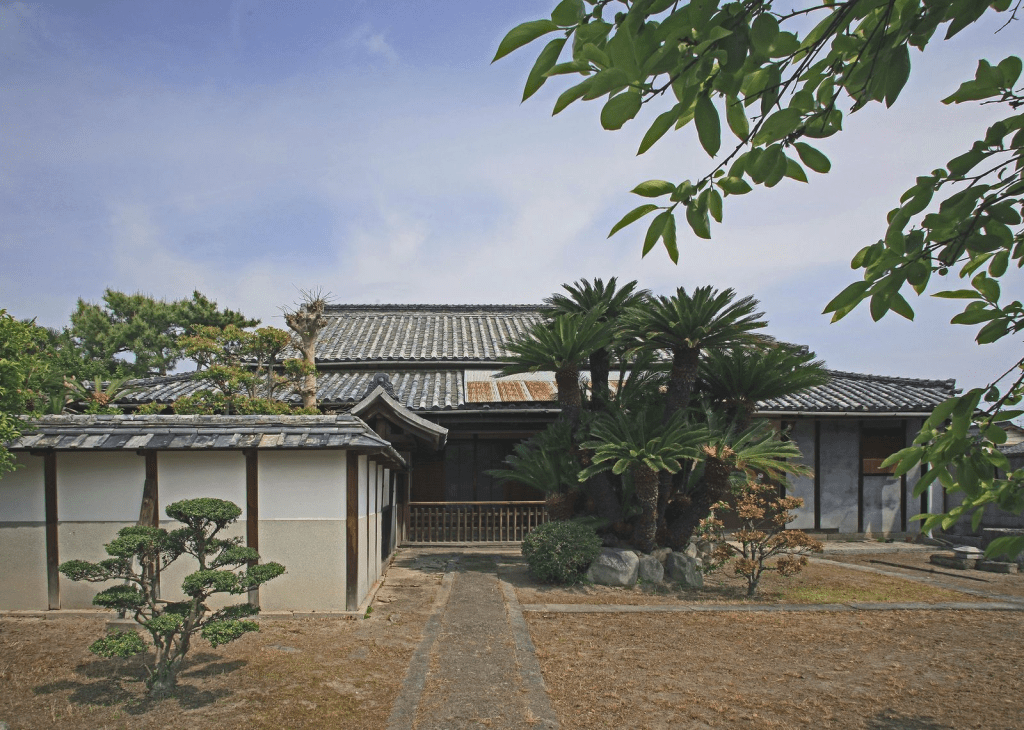
The exterior of the Yokoi family’s historic family home in Marugame, Japan | Photo by Hiroyuki Nakayama / The Huntington Library, Art Museum, and Botanical Gardens

A 320-year old Japanese Heritage Shōya House from Marugame, Japan, has been carefully and meticulously disassembled and restored then shipped to The Huntington Library, Art Museum, and Botanical Gardens in San Marino, California. Sited on a two-acre lot at the storied Japanese Garden, this remarkable architectural and cultural gem will open to the public on October 21, 2023.

During the Edo or Tokugawa period in Japan – between 1603 and 1867 – a single government ruled under a feudal system. It was marked by a flourishing economy and peaceful times. Samurai warriors, who were no longer necessary to protect their villages, moved to the cities to become artists, teachers, or shōya.

Successive generations of the Yokoi family served as the shōya of a small farming community near Marugame, a city in Japan’s Kagawa prefecture. Acting as an intermediary between the government and the farmers, shōya’s duties included storing the village’s rice yield, collecting taxes, maintaining census records, and documenting town life, as well as settling disputes and enforcing the law. He also ensured that the lands remained productive by preserving seeds and organizing the planting and harvesting. The residence functioned as the local town hall and village square.       

In 2016, Los Angeles residents Yohko and Akira Yokoi offered their historic family home to The Huntington. Representatives of the institution made numerous visits to the structure in Marugame and participated in study sessions with architects in Japan before developing a strategy for moving the house and reconstructing it at The Huntington.

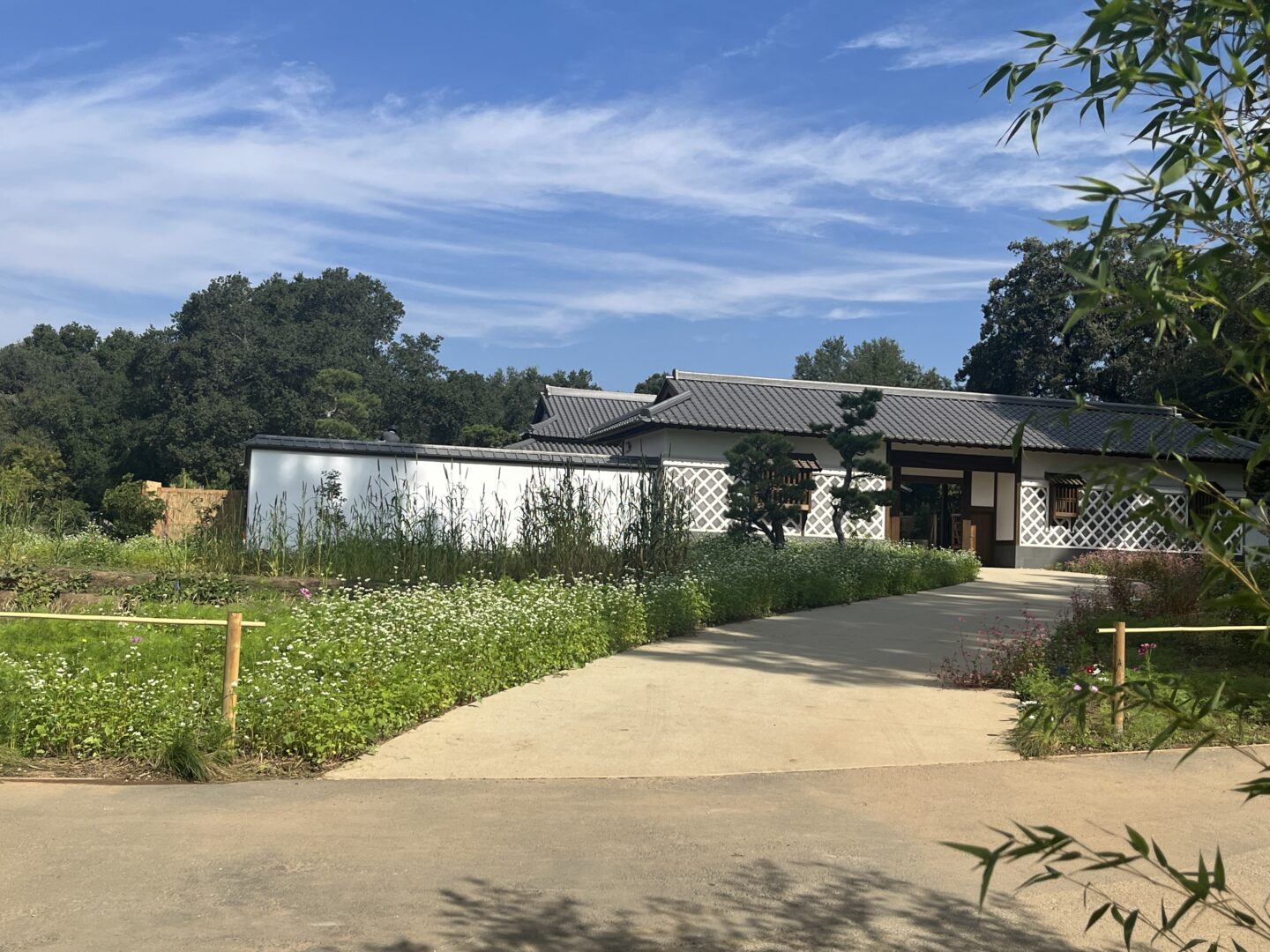
The agricultural fields and the gatehouse | Photo by May S. Ruiz / Hey SoCal

The Huntington raised over $10 million through private donations to accomplish the project. Since 2019, artisans from Japan have been working alongside local architects, engineers, and construction workers to assemble the structures and re-create the traditional wood and stonework features, as well as the roof tiles and plaster work, prioritizing the traditions of Japanese carpentry, artisanship, and sensitivity to materials.

Visitors to The Huntington will get to see the Japanese Heritage Shōya House, a 3,000-square-foot residence built around 1700. A remarkable example of sustainable living, the compound consists of a small garden with a pond, an irrigation canal, agricultural plots, and other elements that closely resemble the compound’s original setting. 

Robert Hori, the gardens cultural director and programs director at The Huntington, generously gives me a tour of the shōya House while he talks about the project. He begins, “Visitors will first view the agricultural fields and the gatehouse. In much of Asia, rice was a staple food and farmers played a very important role. Here we have terraced rice fields on one side and a field growing a variety of crops on the other side. This will give the public a sense of the seasons, the life style of the Edo period in Japan and what the pre-modern way of life was like.”

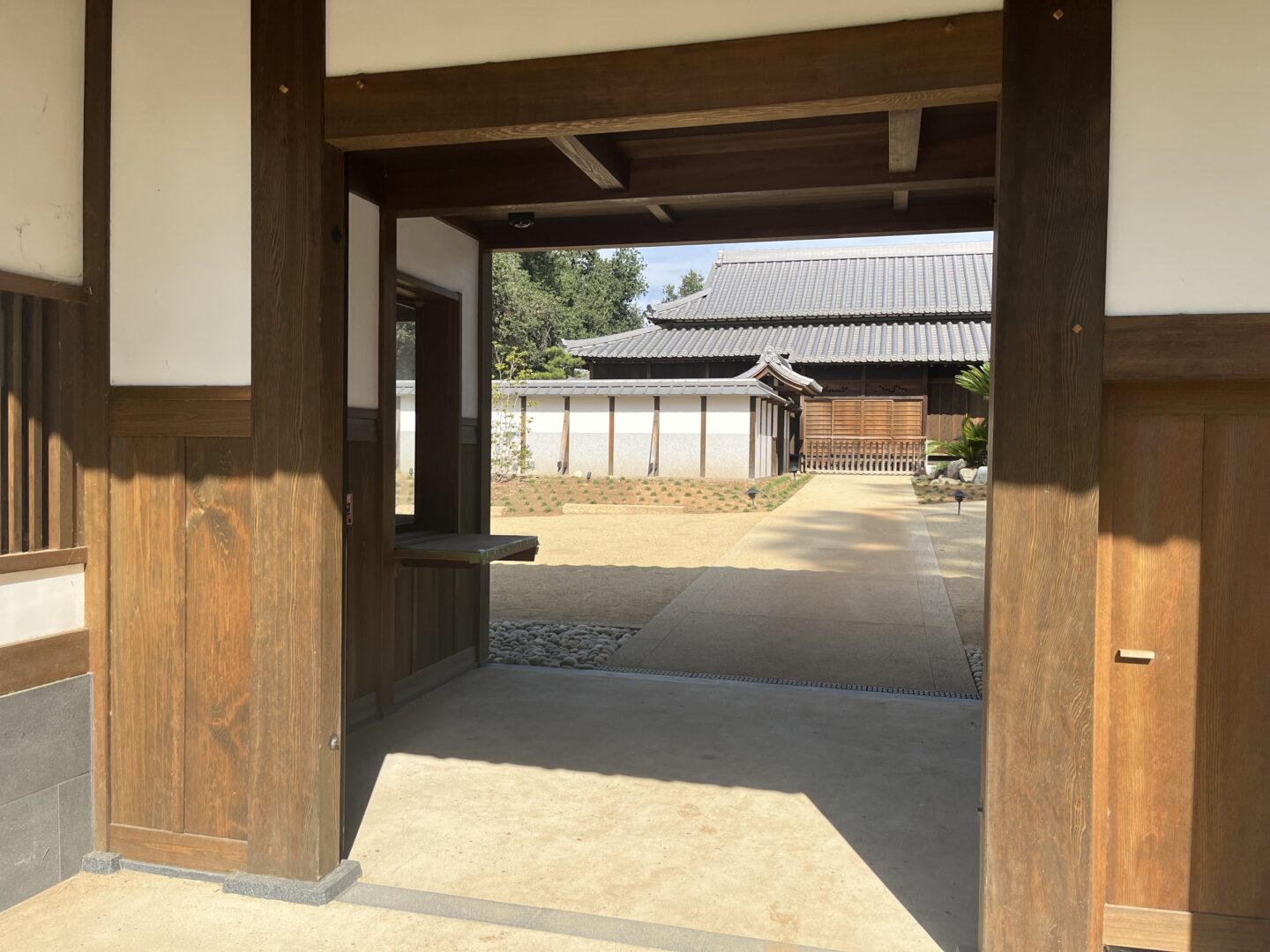
The gatehouse | Photo by May S. Ruiz / Hey SoCal

As we reach the gatehouse, Hori says, “This compound was open during the day for business and at night the gates were shut. The gate was built for events and also to protect the house from weather because Japan and much of Asia are susceptible to typhoons. The gatehouse was damaged in a typhoon in1970 so this structure was not original to the house; it’s a replica based on existing models from the same period in Japan and photographs.

The exterior of the house with the formal entrance | Photo by May S. Ruiz / Hey SoCal

“Inside the gatehouse is a dirt courtyard used for several purposes including drying the crops and where community gatherings – like harvest festivals – might have taken place. The house has two entryways. The formal entrance on the left has sliding panels, and was originally for samurai, dignitaries, and government representatives. Inside the main house, visitors will first see the front rooms, which were used for official functions. The doorway on the right, which Huntington visitors will use, was the everyday entrance for farmers and craftspeople. It has stamped earth floor. The front area consists of public rooms where business was conducted, and the back are the private quarters.”

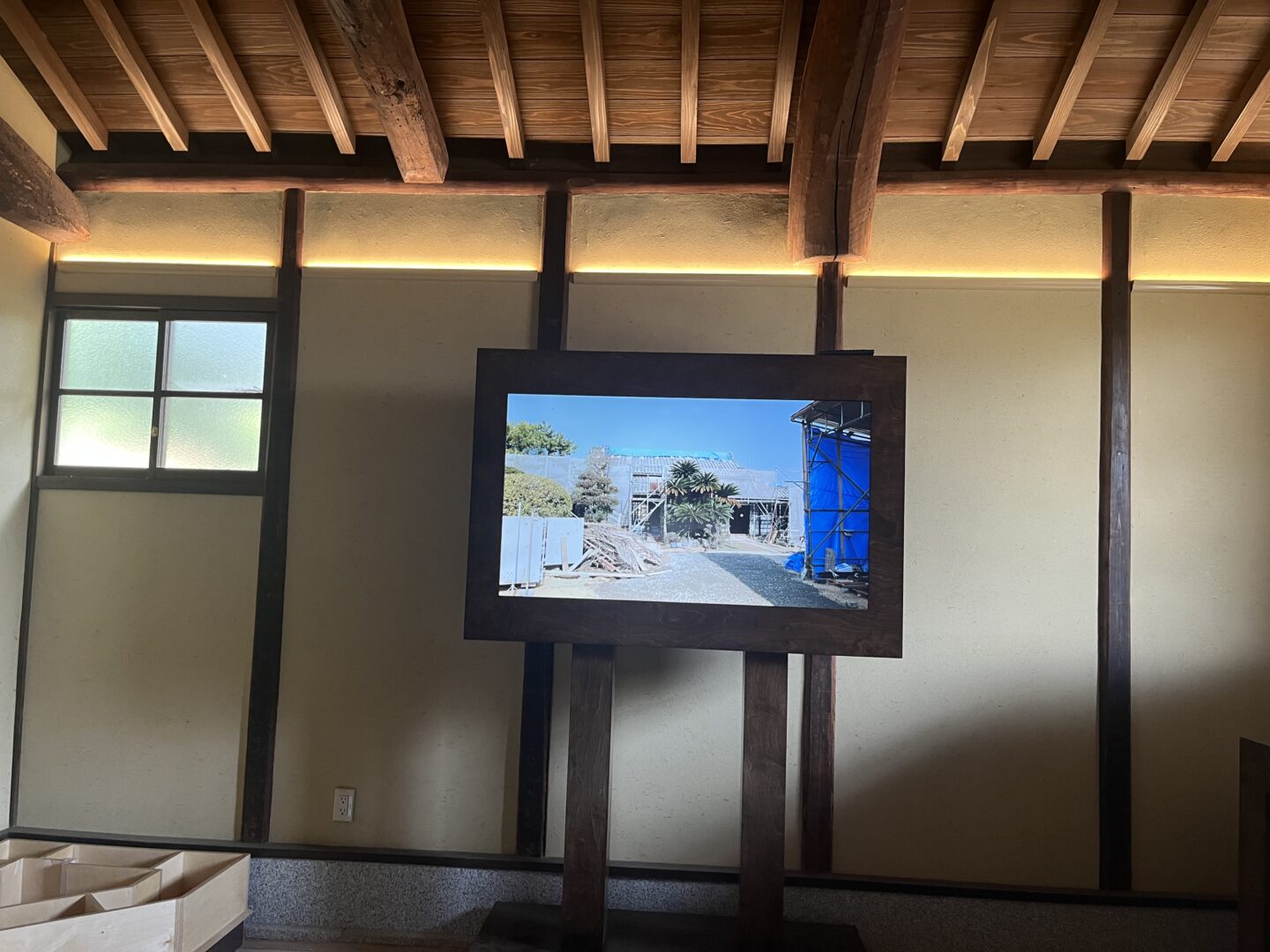
Visitors entering the public rooms can watch a video that shows the disassembly and relocation of the house and its integration with the surroundings at The Huntington. Additionally, visitors will be able to learn about the traditional skills and tools of Japanese carpentry, such as the wood joinery that was used in constructing the house.

Visitors can watch a video about how the house was disassembled in Japan and reconstructed at The Huntington | Photo by May S. Ruiz / Hey SoCal

Hori continues, “I was part of the team that went to Japan in 2016 to look at the house to see if we could move it, how we were going to do it, and what changes had to be made to it so it could be approved. I was there again for part of the process of taking down the house but not for the entire nine months it took to disassemble it. The crew that took it apart inspected each part for any damage, cleaned, and repaired them. The house arrived at The Huntington in January of 2020.

“Everything in the house uses traditional joinery techniques. We had several crews of carpenters, plasterers, roofers, and tilers who came from Japan to work on it. It was a two-year process which was hampered by the pandemic in March of that year. It was difficult to get people to travel so there were periods when people went back and they had to quarantine and that really slowed things down. Additionally, there weren’t that many flights.”

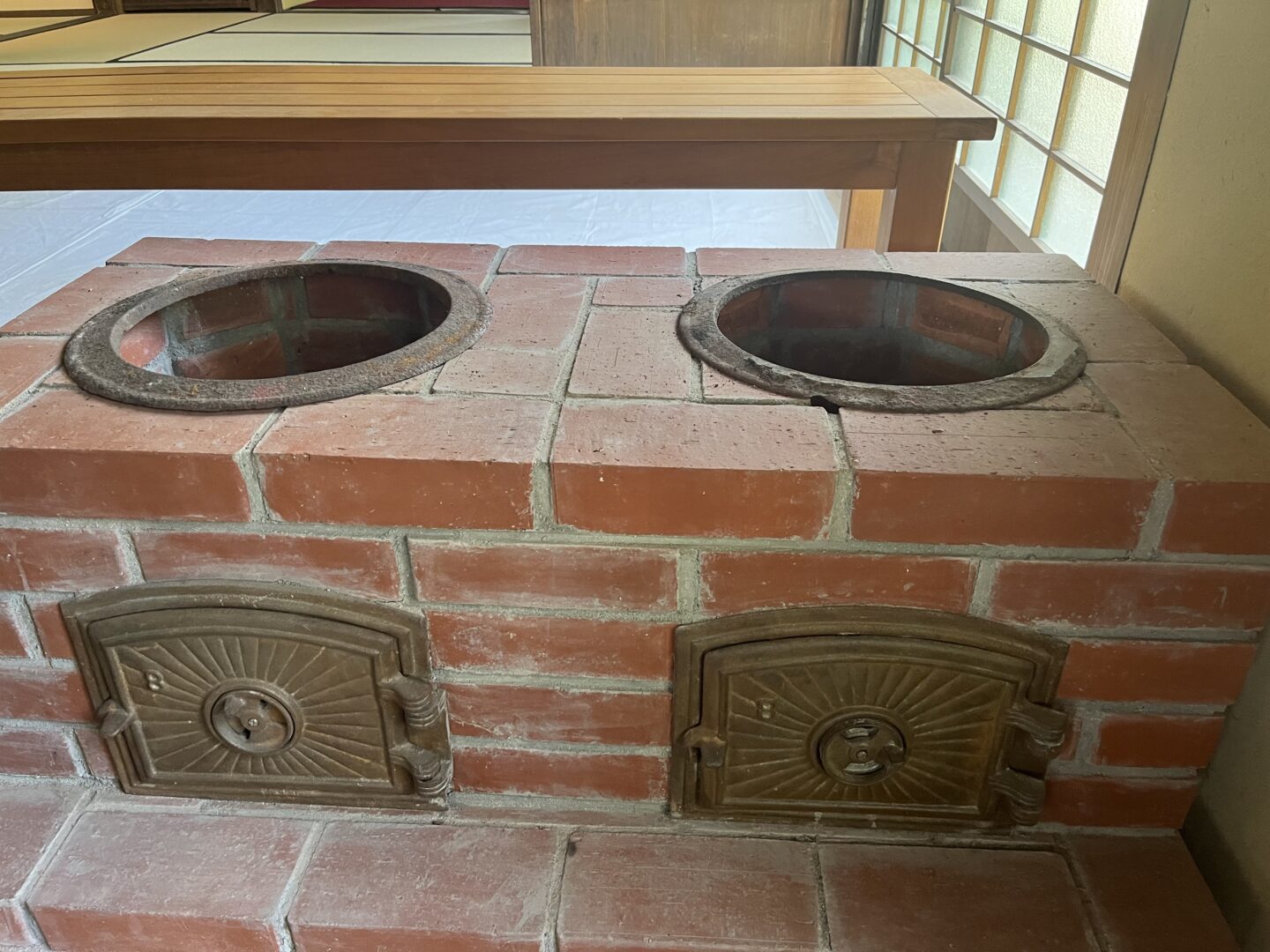
Clay wood fire cooking stove | Photo by May S. Ruiz / Hey SoCal

A large clay wood fire cooking stove is the first thing visitors will see. Hori speculates that it used to cook perhaps as much as 60 cups of rice to feed the people working in the house and also during planting and harvest. These community efforts were spread out over several weeks.

In the kitchen area is a brick stove. Hori says, “We couldn’t move the one original to the house but this is the type of stove they had. The source of water for the kitchen is a well located just outside and there’s a sliding door you can open to access it.”

The day room, work space, and sleeping quarters | Photo by May S. Ruiz / Hey SoCal

We then move to the private rooms and we take off our shoes. Hori describes, “This lower level was part of the kitchen which was the center of activity. It was probably where they dried and salted vegetables that would last the whole year. The upper level has a floor covering called tatami, mats that measure three-by-six feet. This was the family’s day room where they conducted their activities – they would eat their meals here, then they would use it as a work space after they put away their dishes. Japanese houses like this didn’t have central heating so everyone stayed close together near the fire.”

As we reach another area, Hori describes, “This was probably where they slept. It would have cabinets with futons or bedrolls, and sliding doors could close off the area at night.”

The private garden that can be accessed from the master’s room | Photo by May S. Ruiz / Hey SoCal

In the back is the master’s room. It has a display alcove called a tokonoma where a painting, a scroll, or a flower arrangement can be hung. There’s also a door that opens out into a small private garden.

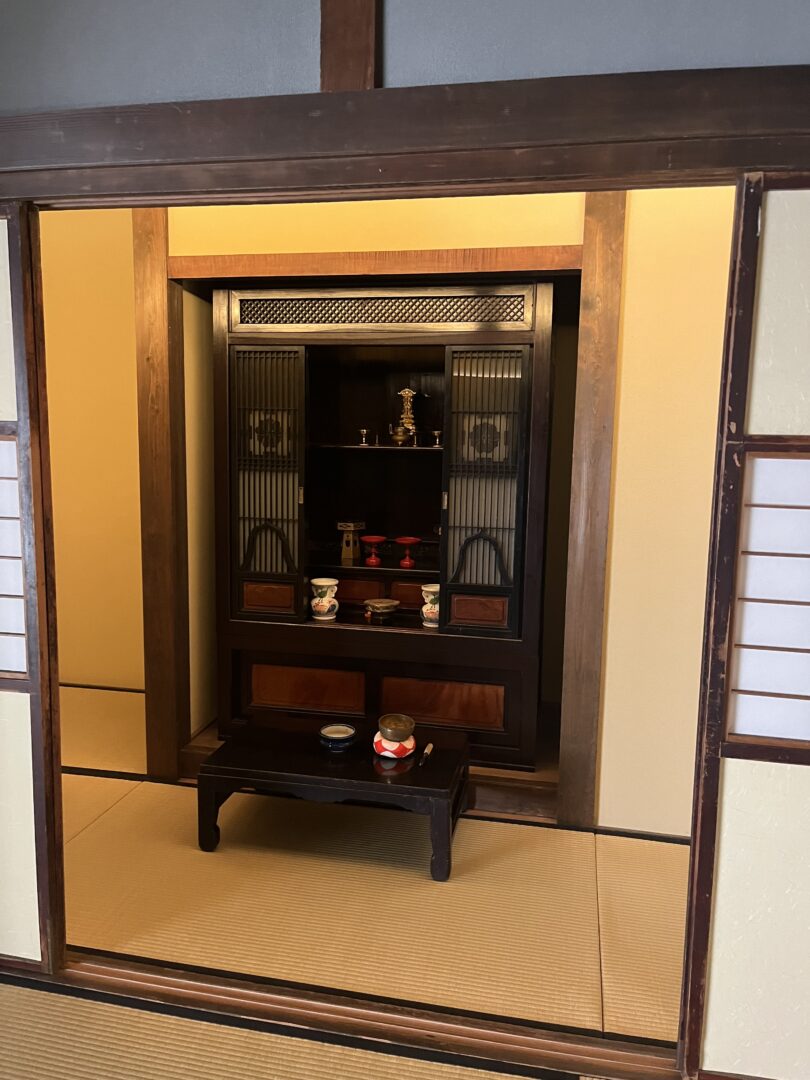
The Buddhist shrine | Photo by May S. Ruiz / Hey SoCal

We then go into the public spaces for dignitaries and the first room we enter has two shrines – one is Shinto and the other next to it is Buddhist. Explains Hori, “They had two religious systems that co-existed and people were both Shinto and Buddhist. Everything in Shinto is considered having a spirit; they worship mountain or forest gods. Buddhism, on the other hand, goes back over 2,500 years and started in India; it spread to China, and then to Japan. Buddhism also has a cultural and writing component from China that includes language and Chinese characters. The Japanese had their own language; they had a word for mountain, which is ‘yama’ like Fujiyama. The approximation in Chinese for mountain is ‘shan’ or ‘san.’ The same concept applies to religion – they have a cosmic god and a Japanese god.”

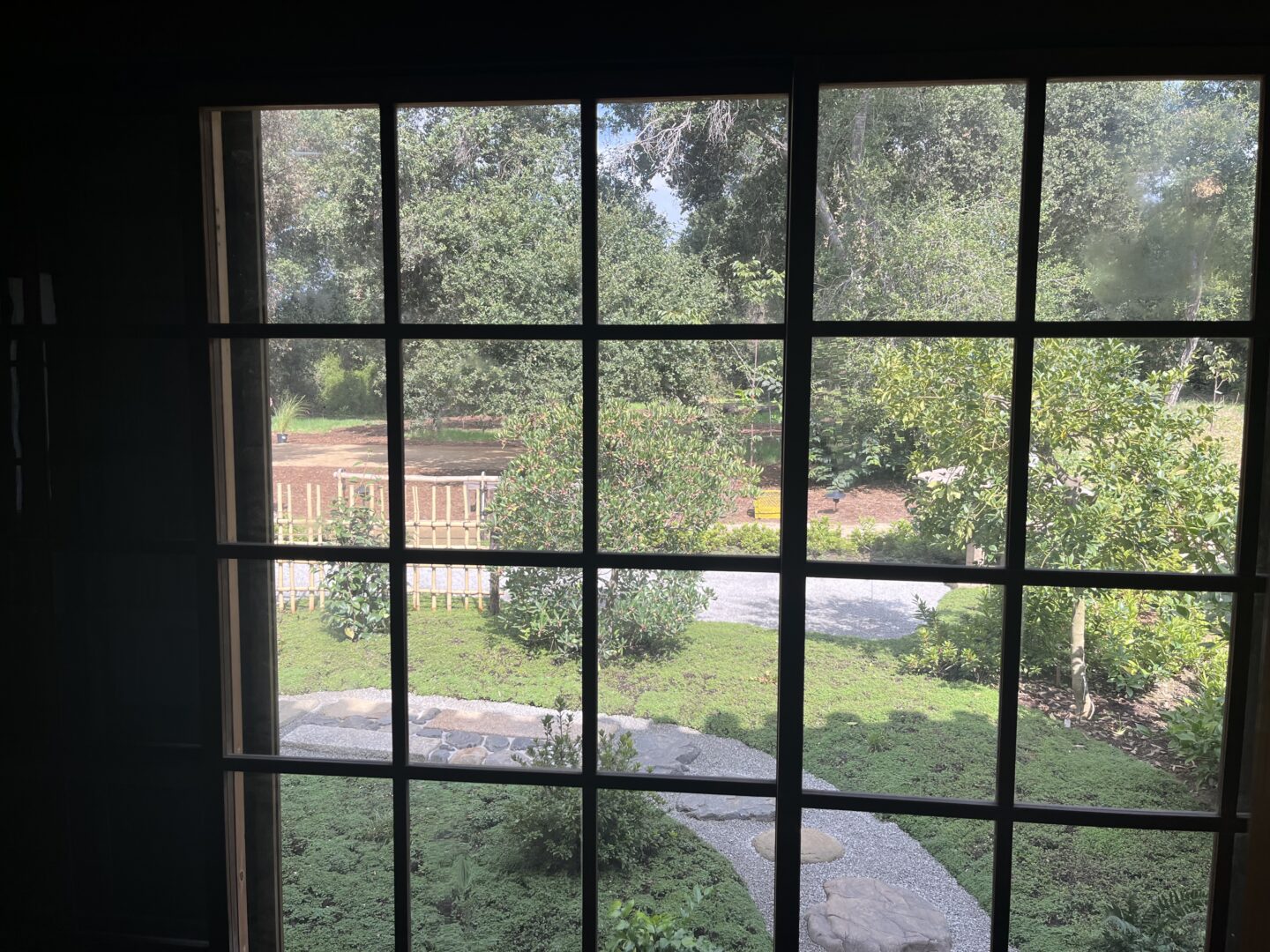
The main room where distinguished guests were received has a tokonoma on the side; it’s similar to the one in the master’s accommodations. A shoji opens to reveal a beautiful formal garden planted with carefully shaped pines and camellias, as well as cycads – considered a symbol of luxury in 18th-century Japan. The rocks in the garden came directly from the original property and were placed in the exact same spots in relation to the house and a koi pond.

The garden and pond in the formal area | Photo by May S. Ruiz / Hey SoCal

I ask what the condition of the house was when they went to Japan to look at it and Hori replies, “The last time it was rebuilt was in the 19th century around 1860 to 1870. It had also been modernized later – they put in electricity and flush toilets. But it hadn’t been lived in for over 30 years; the last person who resided there was the grandmother who passed away in the 1980s. And when a house is unoccupied, several things fall unto disrepair.”

About what challenges they faced after the house arrived here, Hori says, “Our first challenge was how could we construct the house so it passes the building code? We also have earthquakes in California so we had to build it to meet seismic requirements. We’d never done this before so we didn’t know if it was a viable undertaking. And, as far as I know, this is the first house of this size to be built at a public institution. This is the first Japanese house of this age and size in the United States.”

Standard houses in Japan are not this size, clarifies Hori. “Because of their responsibility, the shōya would have bigger dwellings with more amenities. A regular residence wouldn’t have this public area. The typical layout of an ordinary person’s house would have a kitchen, a dayroom/living room/dining room and a sleeping room. If you lived in the city your house might be twelve-by-twelve-square-feet. You ate, worked, and slept in the same room – something we call a studio.”

The vegetable garden in the back of the house | Photo by May S. Ruiz / Hey SoCal

The house and the area surrounding it are models of sustainable living. Hori declares, “They probably didn’t have the word for sustainability but they had the practice in place. If they didn’t lead sustainable life styles, they wouldn’t be alive – it was a matter of survival. The keys to sustainability are reducing waste, reusing, recycling, and repairing. For example, these glass doors don’t line up exactly because they come from different parts of the house. They have been repaired and reused, thus reducing waste.”

“Growing your own food is an example of a sustainable life style,” adds Hori. “Since we are a botanical garden, we tell everyone that farming is the root of ornamental landscapes because it has to do with being able to move earth and control water. In the other gardens – the Chinese Garden or the Japanese Garden – we have ponds and streams, and they’re all part of an irrigation system.”

The pit toilet | Photo by May S. Ruiz / Hey SoCal

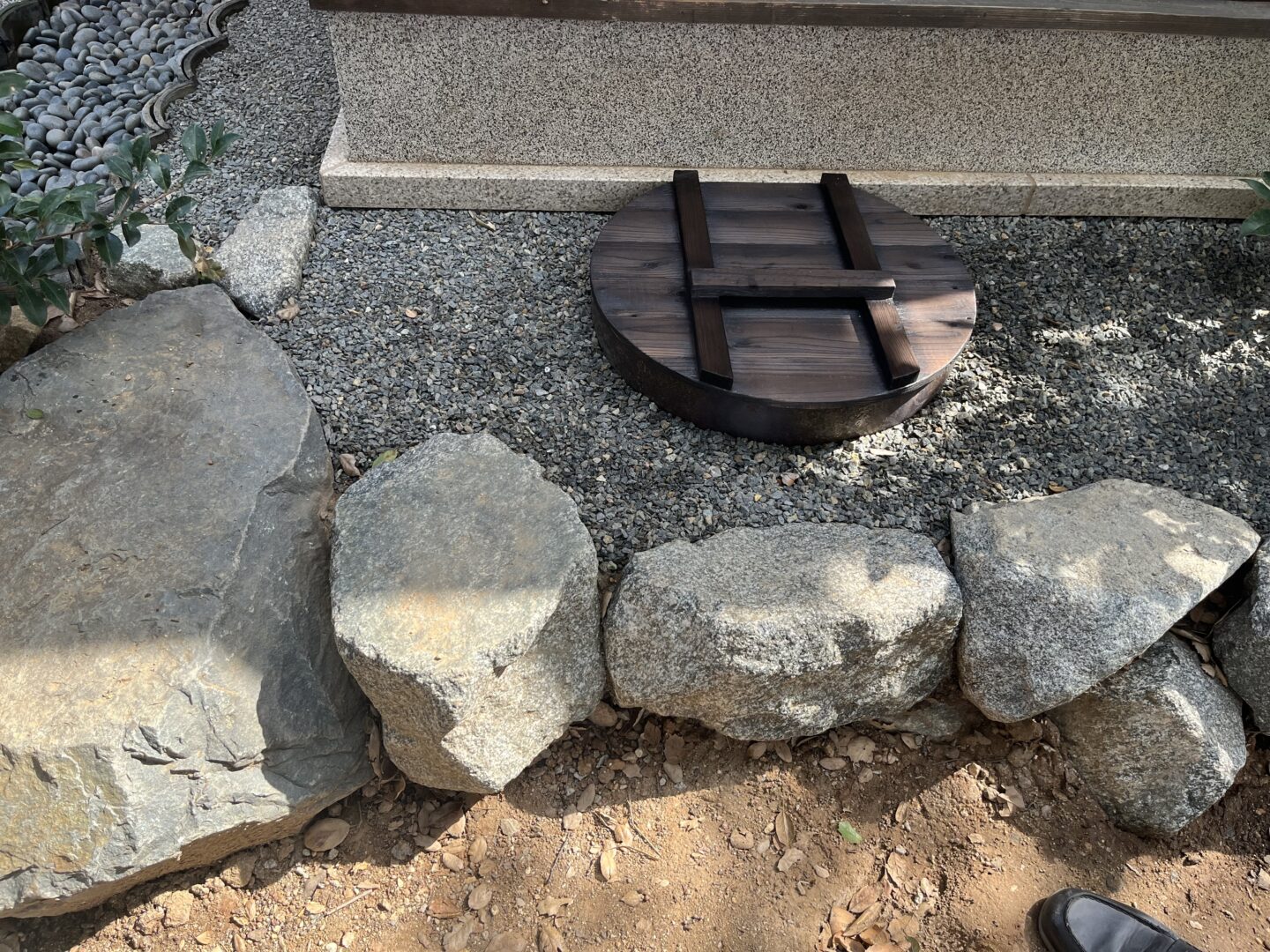
As we walk to the back of the house Hori shows me a covered circular ground container and says, “Thinking about how we treat waste, we recreated a pit toilet. There’s a real lavatory inside, but having this type of toilet is one of the keys to sustainability – reducing waste. In Japan, China, and much of Asia, they use human waste for fertilizer.”

Hori also discloses that there were two storehouses on the property – one for household items and the other for rice. They haven’t been built but they have the footprint of one of the storage houses.

“Construction of the irrigation canal is underway,” Hori explains when we walk by it. “Japan gets about 100 inches of water from the rain but even in countries with an abundance of water, you have to save the water, control the water, and use it for agriculture; this is part of the agricultural system. In Japan and other Asian countries, they use gravity – they have terraced paddies and fields to move water from the top to the bottom. Using natural forces instead of electricity or a pump is conserving resources.”

The back of the house | Photo by May S. Ruiz / Hey SoCal

“What we’re recreating here is a village – a community,” Hori pronounces. “It is looking at another culture and how people in the past addressed sustainability. And it’s one of the biggest global problems we face today.”

The Yokois made a well-considered decision to endow their shōya house to The Huntington, an institution renowned for preserving historical artifacts and cultural treasures. Under its stewardship, this remnant of history will be protected for centuries to come.

And The Huntington has taken this responsibility a step further by restoring the shōya house and its surroundings to educate us and demonstrate that it’s possible to live sustainably. It’s a lesson we have to heed and practice to help save our planet and ensure not only our survival but also that of future generations.