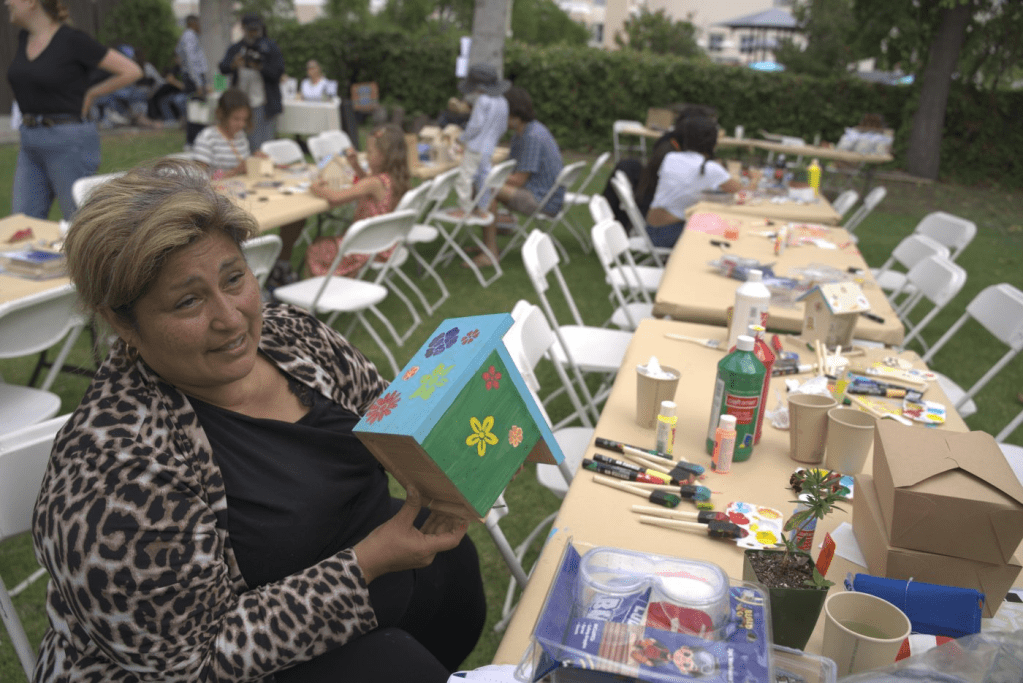
A brunch attendee shows off her handiwork. | Photo courtesy of Day One
Day One, a non-profit organization in Pasadena, held an Altadena Community Brunch and DIY Workshops for Recovery and Sustainable Living on Sunday, September 28. Hosted by its Resiliency Studio, the event took place from 11 am to 2 pm at the Day One Lawn on 175 N. Euclid Avenue in Pasadena.
One of the many associations in the Eaton Fire Collaborative working together to support families affected by the fire, Day One focuses on youth empowerment, healthy cities, and policy development. Local government assistance also comes in various ways – including opportunities to collaborate on community events and initiatives.
This past Sunday’s Resiliency Studio Brunch and DIY Workshops was a free, family friendly event that combined a community connection through food with hands-on workshops that support recovery and sustainable living following the Eaton Fire.
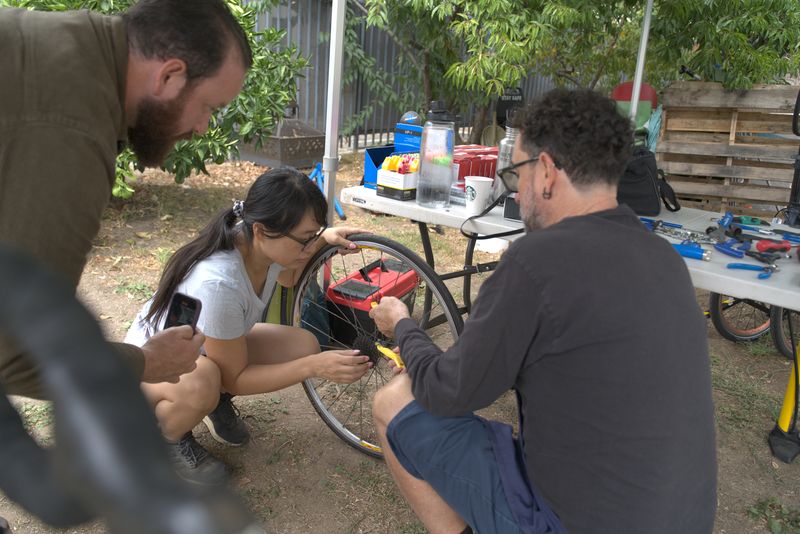
Bicycle repair demonstration. | Photo courtesy of Day One
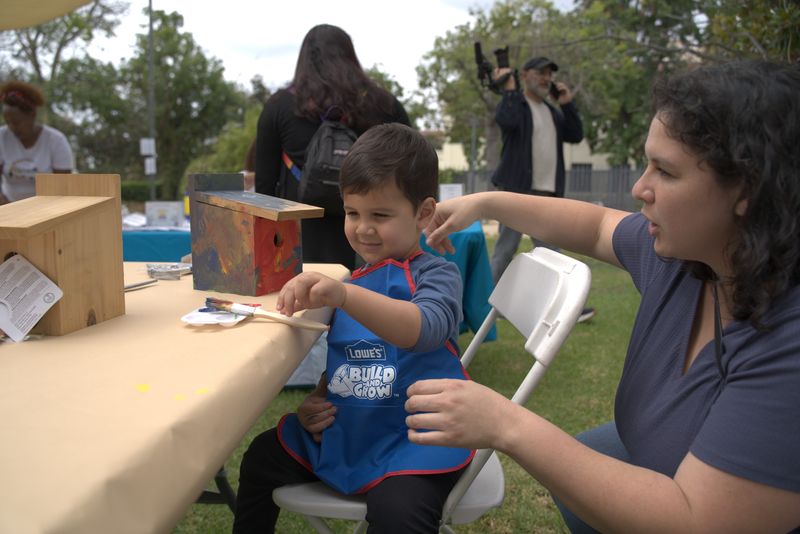
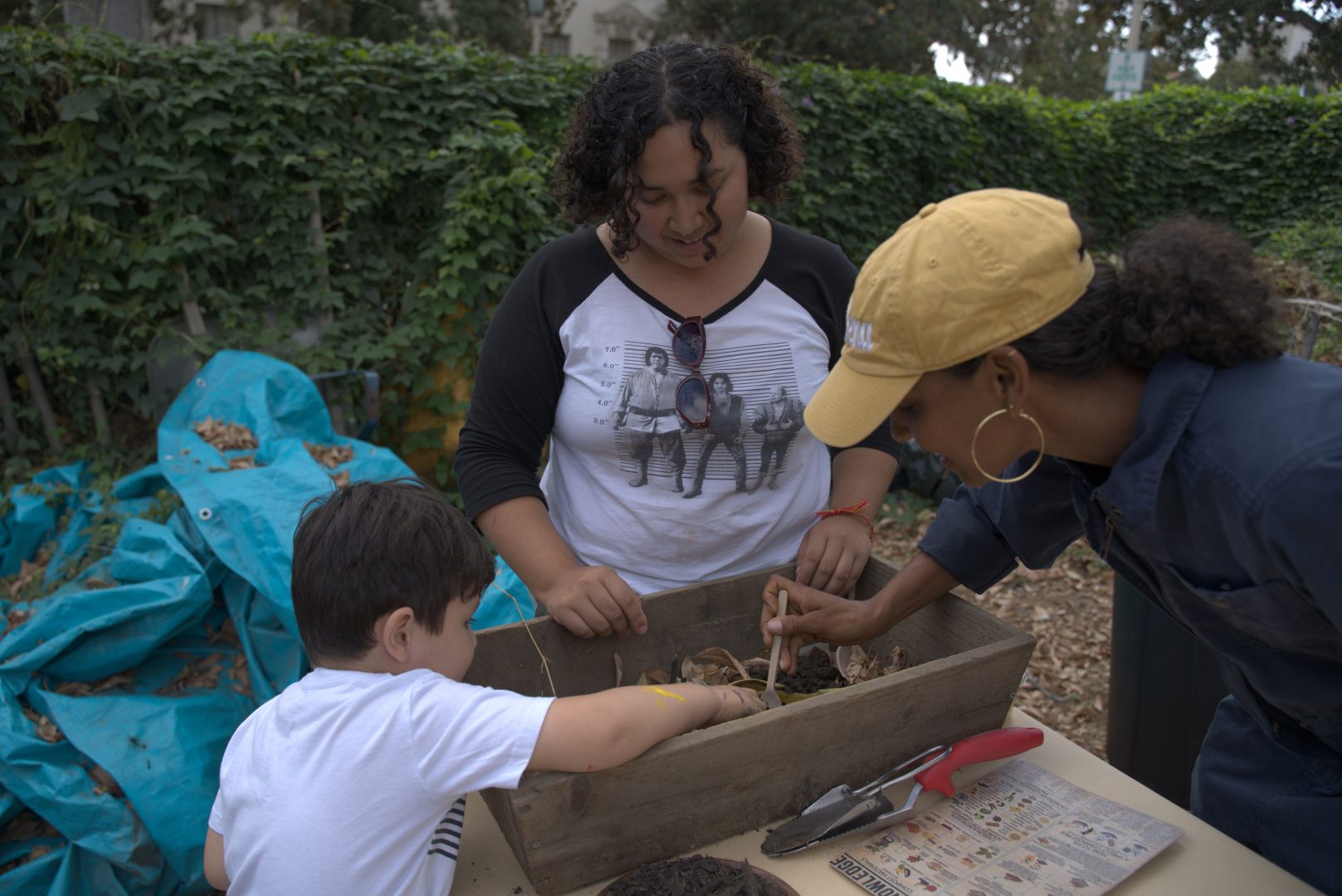
Workshops included: bike care and repair for affordable, eco-friendly mobility; composting and soil health to restore land and grow food after fire; healthy cooking with energy-efficient appliances; DIY rain gardens and rain capture systems; wildlife-friendly landscaping with native plants and birdhouse building. But the event was about more than skills – it’s about neighbors coming together to rebuild stronger, healthier, and more resilient.
“The Resiliency Studio began as a vision for a hub where families could learn about sustainability,” explained Nancy Verdin, Day One’s Director of Environmental Education and Engagement. “In the aftermath of the Eaton Fire, we reimagined how this hub could directly support families in rebuilding with sustainable strategies.”
Verdin said further, “The workshops are led by a mix of community partners (such as Community Compound, Crop Swap LA, Pulse Arts, Altadena Farmers Market), Day One staff with expertise in advocacy, public health policy and community engagement, and skilled volunteers such as bike mechanics. Together, they bring a diverse range of knowledge and experience to support our community.“
Birdhouse building. | Photo courtesy of Day One
According to Verdin, Day One has 30 years of experience working alongside residents, young people, elected officials, and other stakeholders to strengthen and build healthy, vibrant communities by advancing public health, advocating for public policies, meaningfully engaging youth, and igniting community-level and behavioral change. Comprised of a team of 24 employees, the organization is primarily grant-funded through local, state, and federal sources.
“Our programming focuses on public health, youth leadership, community engagement, and advocacy,” Verdin emphasized. “We offer youth leadership programs, provide drug prevention and education, and lead local efforts in transportation and environmental policy. Our Resiliency Studio events, however, bring together fire-impacted families as well as other local residents who want to learn more about sustainable rebuilding and recovery. Attendees come from both Pasadena and surrounding communities. We want participants to leave knowing that sustainability is tangible and within reach. As families rebuild, we hope to inspire them to imagine and implement sustainable solutions that strengthen resilience for the future.”
Composting. | Photo courtesy of Day One
“The Legacy Project Resiliency Studio Brunch was a meaningful day for our community,” declared Verdin. “Families and partners came together for hands-on workshops and resources provided by Altadena Farmers Market, Crop Swap LA, Pulse Art, Community Compound, and Oak Tree Comics, alongside our dedicated Day One staff and volunteers. Activities included bike repair, composting, cooking, native plants, and birdhouse-making, each designed to give families practical tools and strategies for sustainable rebuilding.”
“This work was supported by U.S. Greenbuild, who provided the seed funding that helped us create the Resiliency Studio,” Verdin said. “That effort has now evolved into the Collaboratory, a broader vision that brings together many organizations dedicated to supporting fire-impacted families with long-term recovery resources. With the generous contribution from Lowe’s, we are now able to provide tangible tools that will remain available to the community as they continue rebuilding.”
“It was a powerful reminder that resilience is built not only through tools and resources, but also through partnerships and community connection,” concluded Verdin.
Last Sunday’s brunch was quite a success! It would be gratifying for the Day One team if a good number of people came away encouraged by the connections they made and buoyed by the skills they gained. How heartening it would be if they left with renewed confidence that the resolve and spirit of Altadenans have not been scorched by the fire and that they w
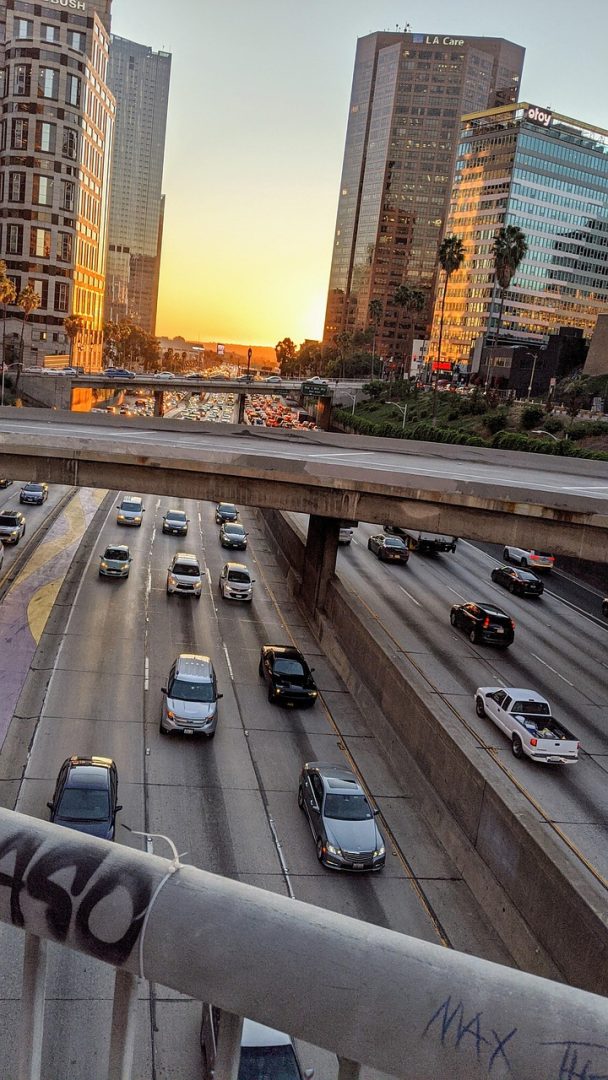
In L.A. County, freeways are a ubiquitous part of our surroundings. It’s hard to imagine a time when we traveled the expanse of the region on city streets. As population increased and more cars traversed the roads, freeways were constructed to make driving safer for people and areas more accessible.
The 110 Freeway, more popularly known as the Pasadena Freeway, is one of the oldest (if not the first) freeways in the United States. The first section – the Arroyo Seco Parkway – opened to traffic in 1938 and the rest of the throughway opened in 1940. Today, there are several freeway interchanges that connect Los Angeles to various parts of California and to other states.
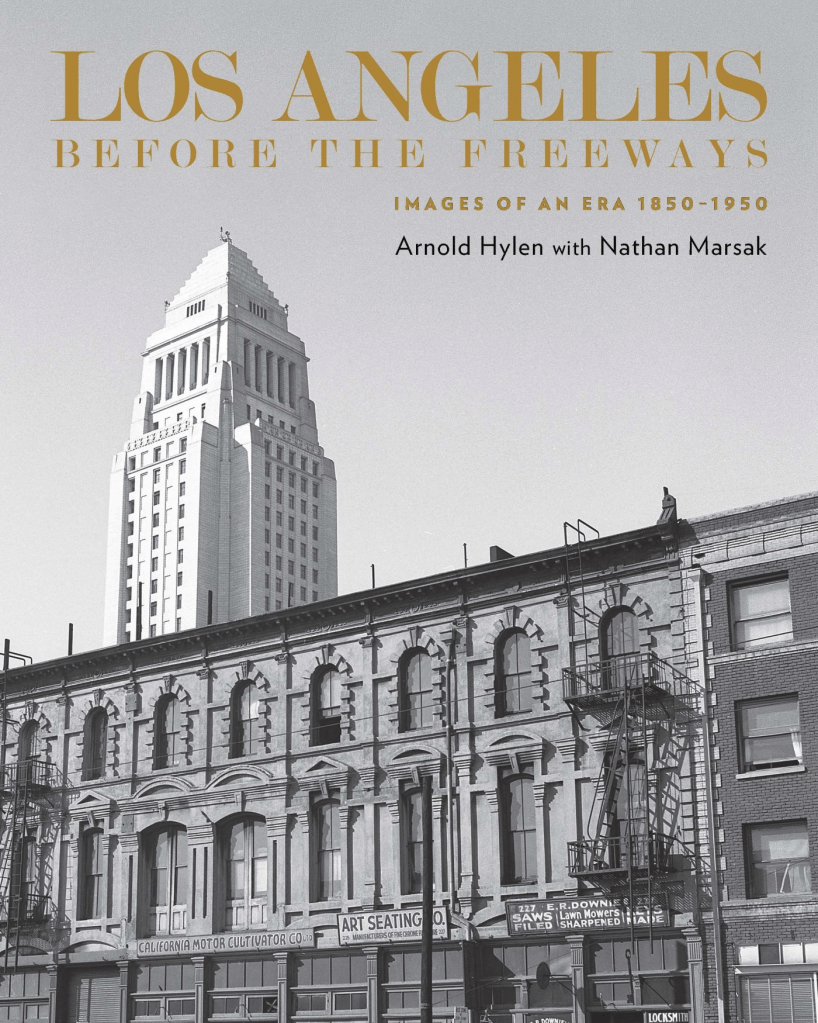
Countless buildings were demolished to make way for the construction of these freeways. The book “Los Angeles Before the Freeways: Images of An Era 1850-1950” gives a lush, visual tour of a Los Angeles that no longer exists – one of elegant office buildings and stately mansions that were razed in the name of “progress.” Originally published by Dawson’s Book Shop in 1981, it has become a cult classic among L.A.’s architectural historians.
Photo courtesy of Pixabay
Gorgeous black-and-white photos from Arnold Hylen that capture a forgotten era are showcased in the book. It has an original essay by the photographer that provides historical background and context for the time period. This new edition from Angel City Press, to be released on March 25, contains additional, never-before-seen photographs from Hylen and newly unearthed information from historian Nathan Marsak on these lost architectural treasures.
The stunning photography recalls an era when downtown Los Angeles was unspoiled by wide-scale redevelopment and retained much of its original character. Each page offers a glimpse of what the city used to be, before some of its architectural jewels were destroyed for the newer, more modern city that would soon follow.
Marsak graciously agreed to be interviewed by email about how he became an L.A. historian – despite not being a native Angeleno – and the upcoming book “Los Angeles Before the Freeways” and why it’s important to get it republished.
“I was born and raised in Santa Barbara, and Los Angeles was like a weird, distant backyard,” he began. “Our television stations were all out of L.A. so I became obsessed with, for example, commercials for Zachary All and Cal Worthington. Then we’d go to LA and it was so different from the picture-perfect neighborhoods of Santa Barbara; in the 1970s Los Angeles was pretty treeless, covered in billboards, blanketed in smog. Like a dying civilization, but with so many insane neon signs, so much bizarre architecture. The whole of the city was fantastical like Disneyland, albeit a giant, grimy, dystopic version of Disneyland.”
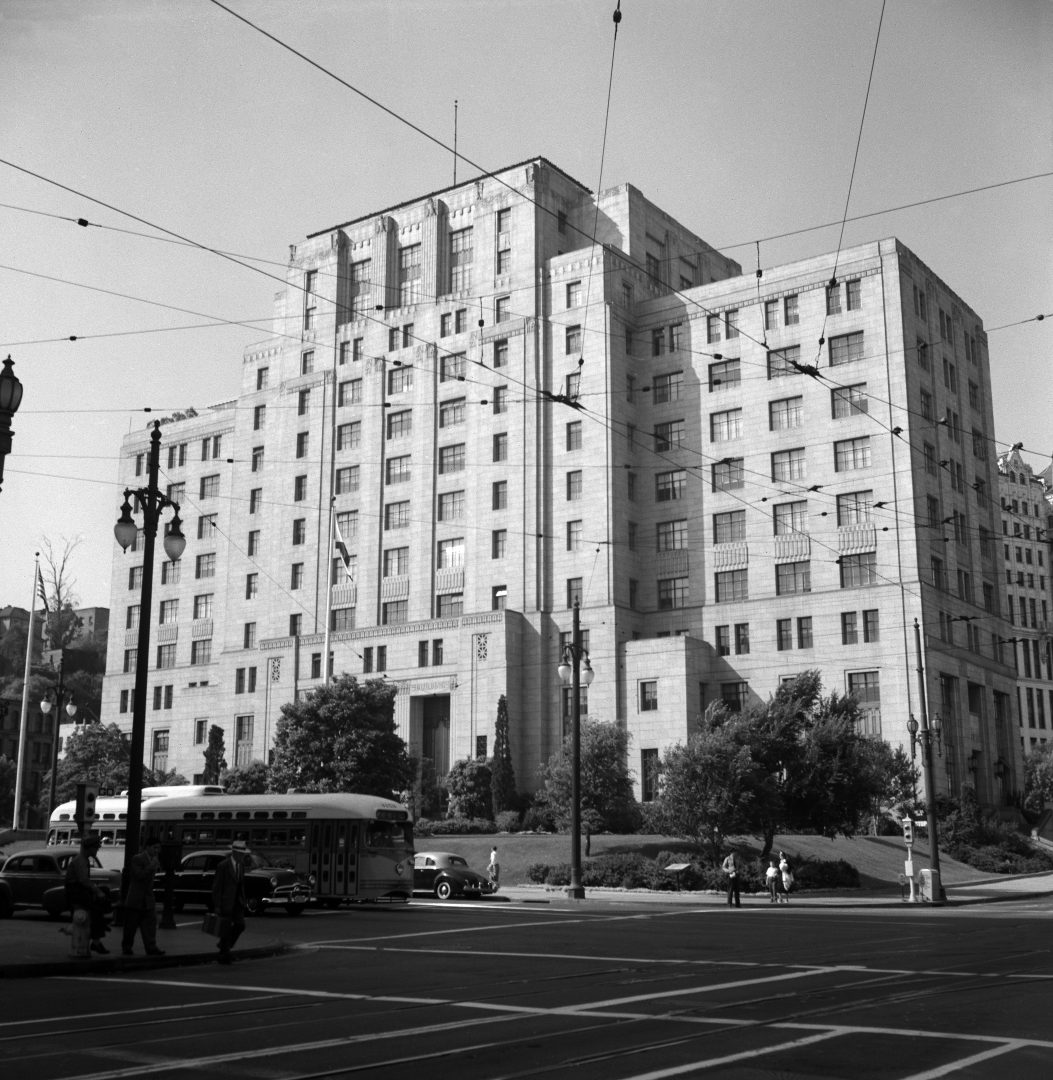
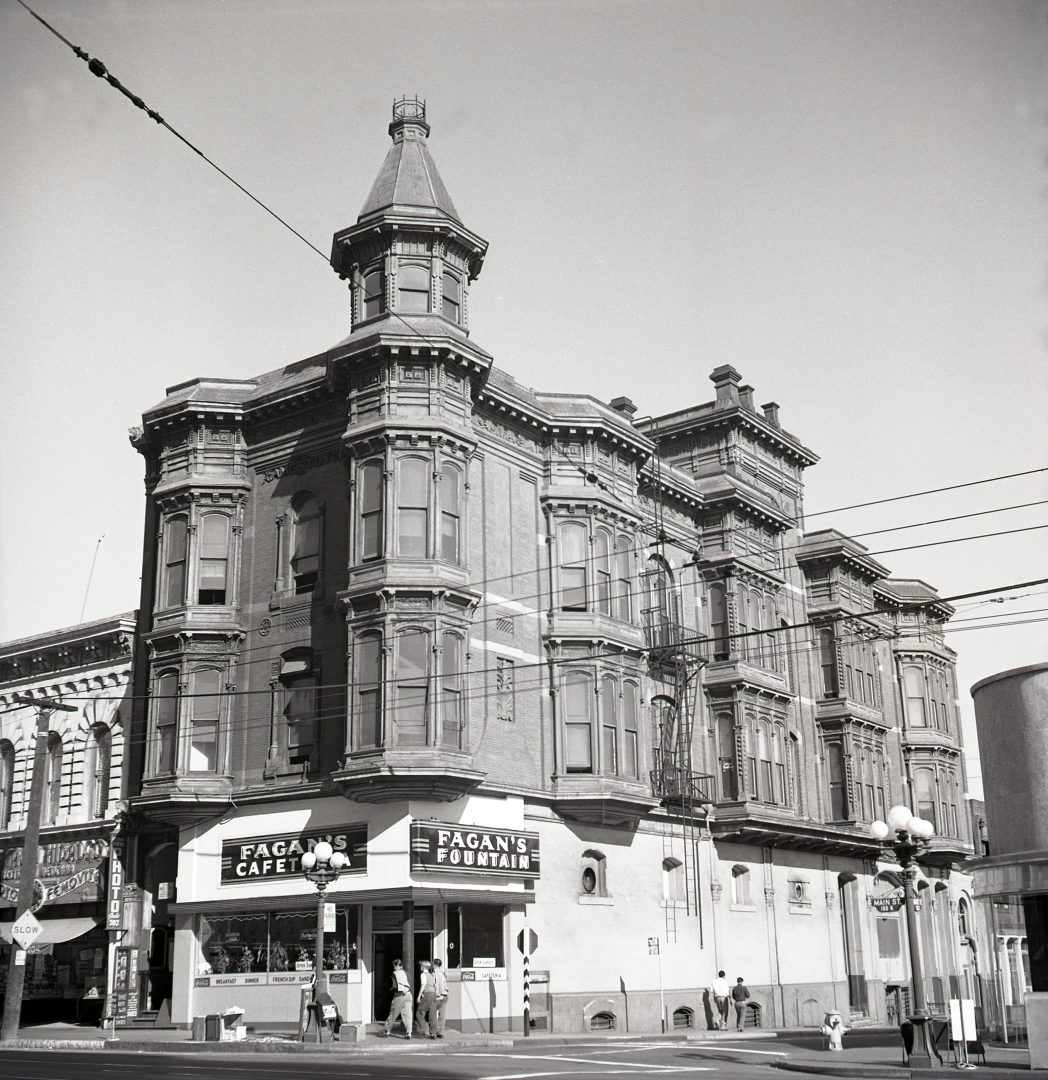
California State Building on First Street. | Photo by Arnold Hylen / Courtesy of Angel City Press
The career choice, however, was preordained. Marsak explained, “My father was a historian and I follow in his footsteps. While other parents took their kids to baseball games, I was being led through Florentine museums or the cathedrals of France. I would have been destined to become a historian no matter where I landed, but I’m very glad my home became Los Angeles.”
Taking up roots in L.A., though, wasn’t always part of Marsak’s plans. He disclosed, “In the early 1990s, I was out in Wisconsin, going to graduate school and doing architectural history. But the lure of Southern California pulled me back, especially after I saw the ’92 riots on TV. I packed my things, and read Raymond Chandler and James Ellroy to acquaint myself with my new home, and moved to East Hollywood and began looking for ‘Old L.A.’
“Sometime in the mid-90s, I was in a downtown bar talking up the old timers about lost Los Angeles and one of them said ‘you know there was a guy who took photos all around here back in the fifties, and he published a coupla books of them’ — referring of course to Arnold Hylen – and I immediately began combing the bookstores until I found Hylen’s 1976 Bunker Hill book, and his 1981 Los Angeles Before the Freeways.”
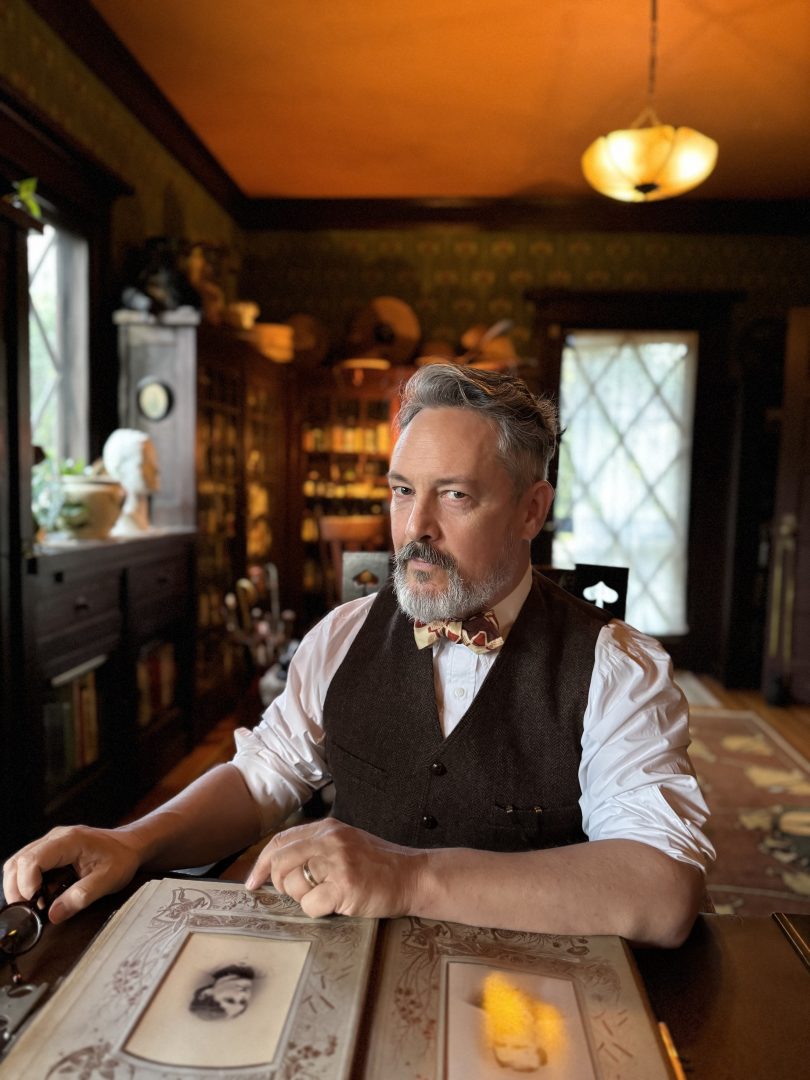
L.A. historian Nathan Marsak / Photo courtesy of Angel City Press
And reading those books became the impetus to discover the architectural history of his adopted home.
“I loved Hylen’s Freeways book, and used to drive around with it on my lap like a Thomas Guide of phantom Los Angeles,” said Marsak. “And because so few copies existed – Dawson’s Book Shop only printed 600 of them in 1981 – I made it my mission to reprint it.”
“But for all of Hylen’s groundbreaking research, as included in his indispensable essay, there were unanswered questions,” continued Marsak. “I wanted to flesh out the buildings with the addition of their architects and construction dates. Naturally, as well, I wanted the images to be larger, and clearer, and that would require being in possession of the original negatives, which I finally managed to purchase in 2016. Each negative strip had three images, so sometimes there were alternate angles or shots of something not in the book. I was thrilled to be able to include some of those never-before-seen captures.”
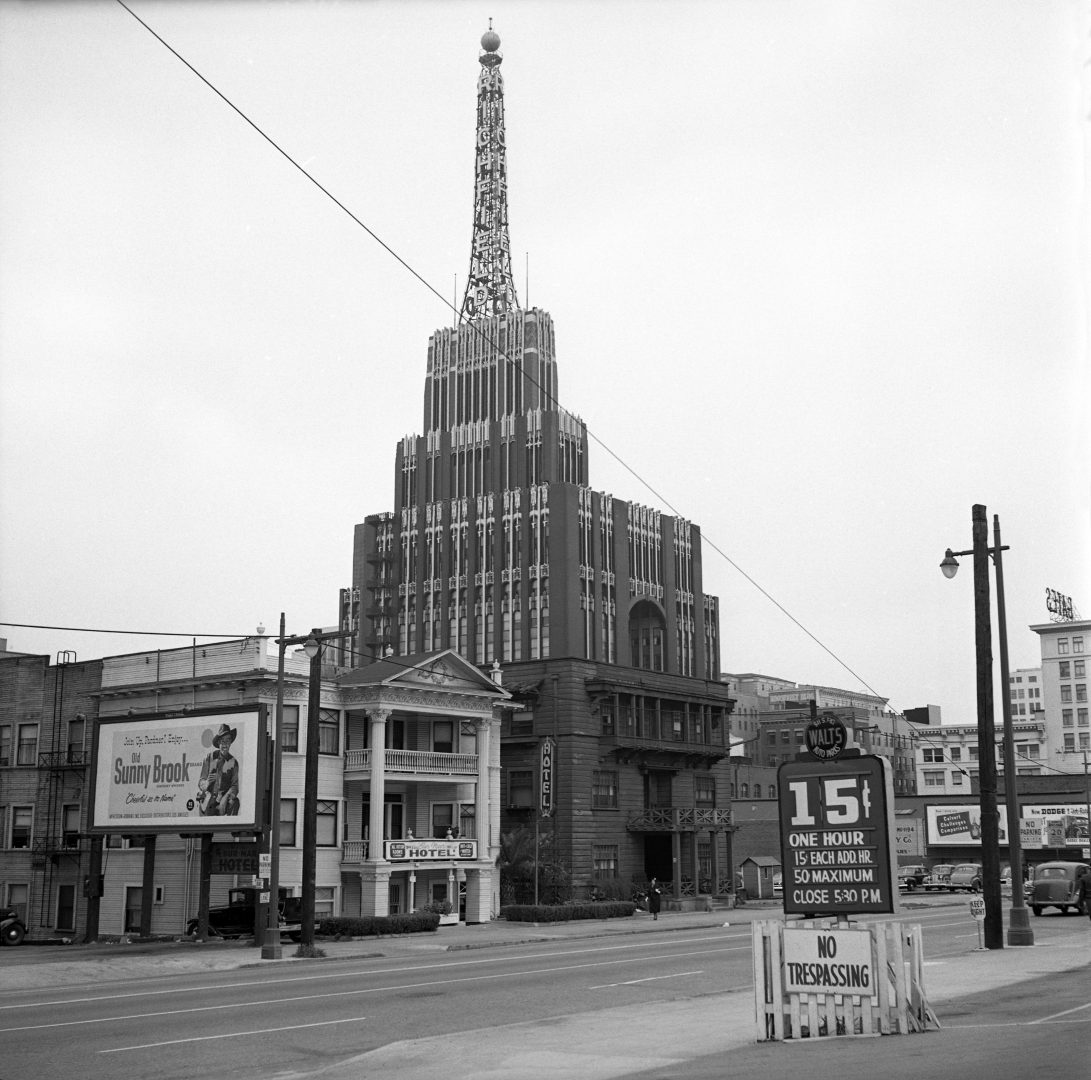
Amestoy Block on Main and Market | Photo by Arnold Hylen / Courtesy of Angel City Press
The original version of Hylen’s book contained 116 photos and the expanded new edition of “Los Angeles Before the Freeways” has 143 images. Hylen began taking photographs downtown about 1950. The majority of his output occurred between 1955-1960, but there are images in the new book that date to as late as 1979, according to Marsak.
“This is not a book about buildings that were only lost to freeways,” Marsak clarified. “It also includes some structures that were demolished when the Hollywood Freeway made its easterly path through Fort Moore hill, and of course there are some images of the Harbor Freeway as it was constructed west of Bunker Hill. But most of the structures contained herein were lost to parking lots, or the expansion of the Civic Center. An accurate number for how many structures were razed because of freeway construction would be difficult to gauge, but a safe bet is about 1,000.”
The road to getting the book republished was long. Marsak related, “I established contact with Hylen’s family about 2006, and by the time I acquired rights and negatives, in 2016, I was already working on my Bunker Hill book for Angel City Press, so ‘Freeways’ took a back burner. I began writing the captions and scanning the ‘Freeways’ negatives in early 2022, which was about two years of work before I handed Angel City Press a completed manuscript in 2024.”
Marsak added, “I hope readers take away that there were first-rate domestic and commercial structures by top-flight architects in the 19th century. Naturally, the fact that the majority of the structures featured have been wiped away, I also hope causes readers to become active with preservation in their communities.”
Through this book, Marsak would also like us to have a better appreciation for the city.
“There’s more to Victorian L.A. than just the Queen Anne houses on Carroll Avenue or at Heritage Square – which are great, don’t get me wrong! – but we once had an incredible collection of Romanesque Revival, Italianate, and other styles blanketing the city in general, downtown in particular,” emphasized Marsak.
Unfortunately, these magnificent edifices didn’t survive the wrecking ball and – but for the images in the book – no trace of their past existence remains.
“Very few people in postwar America were interested in architectural salvage from Victorian buildings,” Marsak lamented. “The Magic Castle, though, utilized parts of structures for its fanciful interior. And of course, most famously, two houses from Bunker Hill were moved to Montecito Heights as the first structures in the Heritage Square project. But they were sadly burned to the ground not long after their relocation.”
It’s a disgrace that the inspired works of eminent architects had to be sacrificed in the service of building something as pedestrian as a parking lot. Fortunately, we’re now repurposing the ruins of significant structures. Many interior decorators and designers are sourcing demolished materials to integrate into new construction to imbue character and a distinctive look. It’s one way to ensure that torn down buildings are given a second life
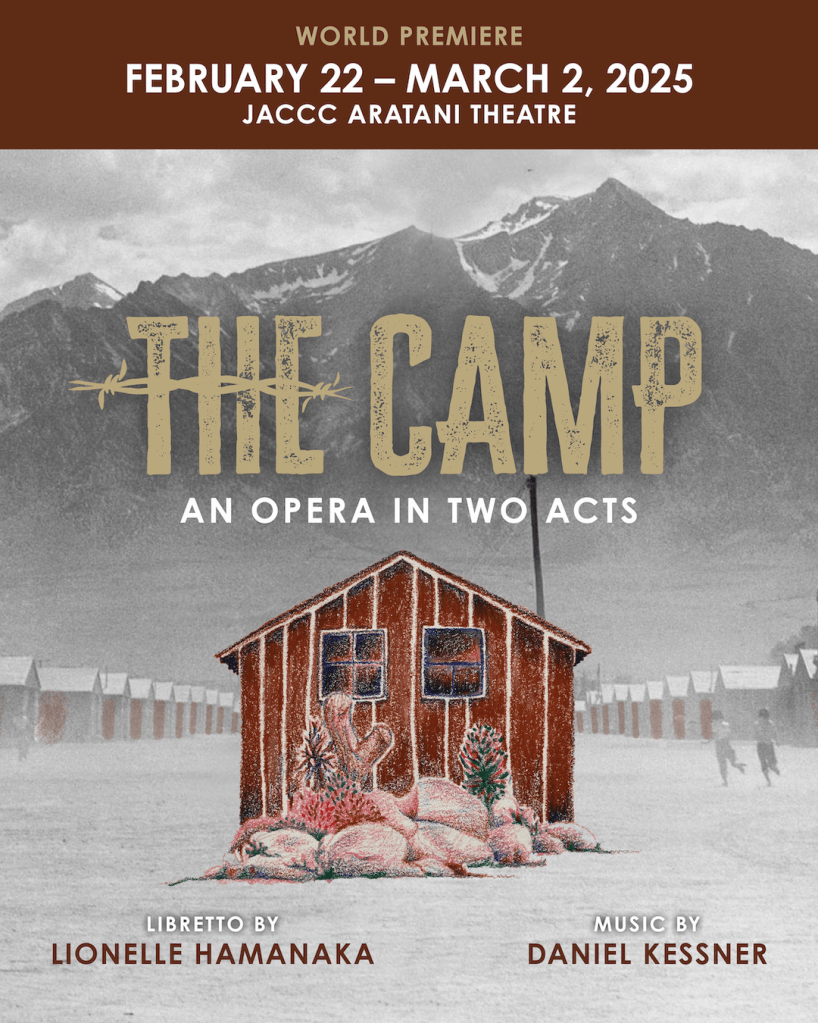
Graphic design and illustration by Azuda Oda. Original photo of Manzanar, California by Dorothea Lange, 1942 / Photo courtesy of “The Camp”
In 1942 President Franklin D. Roosevelt issued an Executive Order that gave the U.S. army authority to compel 120,000 Japanese Americans believed to be security risks, to sell their homes and dispose of their possessions, and send them to ten concentration camps across the country.
This internment of Japanese American men, women, and children – one of the darkest moments in U.S. history – is the topic of an opera called “The Camp.” It will make its world premiere on February 22, 23 and March 1, 2, 2025 at JACCC (Japanese American Cultural & Community Center), which is within blocks of where 83 years ago families were loaded on buses and sent to the camps.
“The Camp” tells the moving story of the Shimono family, Japanese Americans forcibly removed from their suburban home in Southern California. After Mas, a fisherman and the head of the household, is arrested by the FBI on suspicion of espionage, the family is reunited in a desolate incarceration camp. As the family struggles to survive the emotional and physical toll of their wrongful imprisonment, this poignant, new opera illuminates the remarkable strength of familial bonds and the power of collective resistance in the face of injustice.
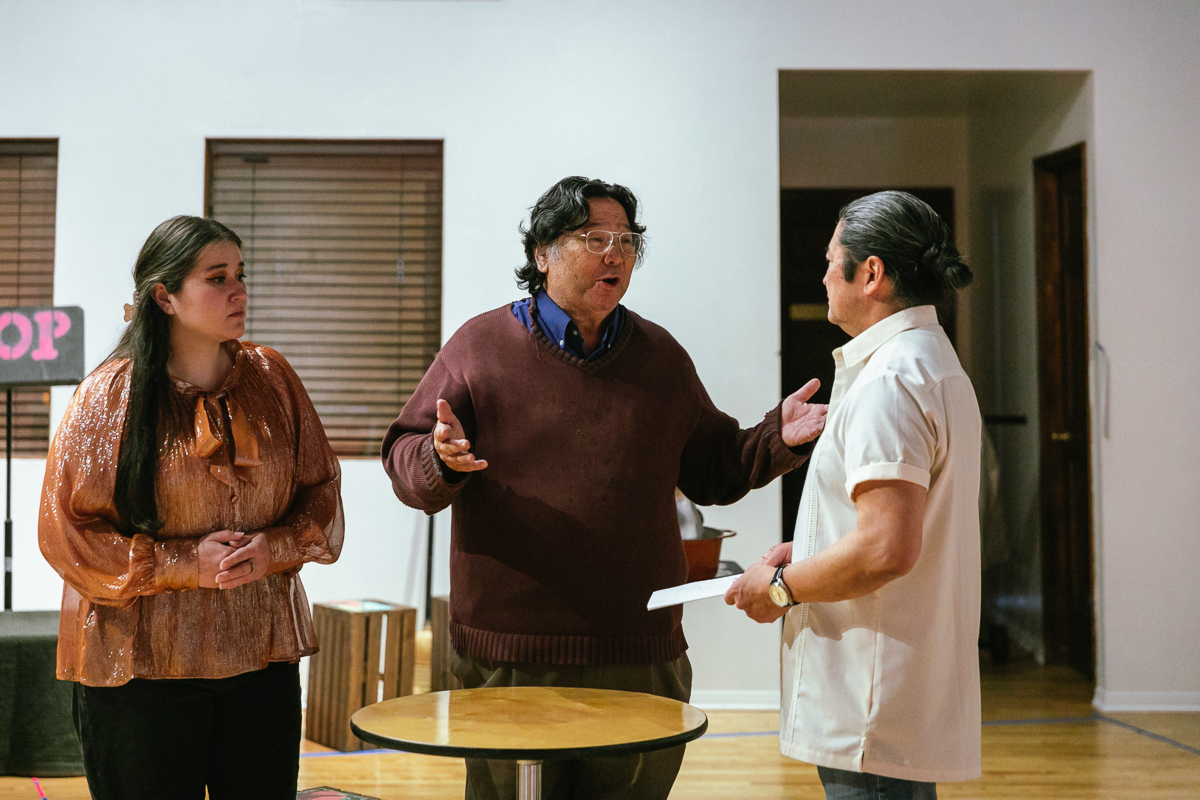
Pictured from left: Alexandra Bass, Steven Moritsugu, and Roberto Perlas Gómez | Photo by Mae Koo / The Camp
Presented in partnership with JACCC, “The Camp” is a collaboration between librettist Lionelle Hamanaka, composer Daniel Kessner, and director Diana Wyenn. It features an intergenerational cast of eleven singers and a 22-member orchestra led by conductor Steven F. Hofer. The associate director is John Miasaki, joined by artistic consultant Anne Marie Ketchum de la Vega, scenic designer Yuri Okahana-Benson, lighting designer Pablo Santiago, costume designer Kathleen Qui, and properties designer Brittany White to complete the creative staff.
The cast of eleven is headed by leading Los Angeles area vocalists – bass-baritone Roberto Perlas Gómez as Mas Shimono; mezzo-soprano Shu Tran as Haruko Shimono; and soprano Tiffany Ho as Suzy Shimono. With Habin Kim as Rebecca Shimono, Patrick Tsoi-A-Sue as Nobu, Krishna Raman as the Commentator, FBI Agent, and PFC Parker, Sarah Wang as Mrs. Hosaka, Steve Moritsugu as Tana, Dennis Rupp as Edwards and Reverend, Hisato Masuyama as Kenji and Jamie Sanderson as Taylor.
Speaking with me by phone just two weeks after the Palisades and Eaton Fires, New York-based Lionelle Hamanaka precedes the interview by thoughtfully inquiring after my safety and well-being. She then likens the displacement the fires caused with what happened during World War II.
Sarah Z. Wang and Krishna Raman | Photo by Mae Koo / The Camp
“I was looking at the population of the U.S. in 1945 compared to today,” begins Hamanaka. “In 2020 the U.S. population was 329 million, in 1945 it was 139 million – 120,00 Japanese Americans were displaced in 1942 because they were incarcerated and today about 200,000 California – specifically L.A. area – residents were evacuated because of the fires. A slightly higher percentage was displaced in 1942 than from the fire. Sixty percent of the residents lost their property or had to sell it in a week. I think the Japanese American population has in its collective memory a comparable tragedy to the one in California. It’s a horrible thing that it happened at all.”
Hamanaka, a sansei whose parents were incarcerated at the Arkansas Jerome War Relocation Center, wasn’t born yet during World War II. Her mother was in her late teens and had two kids while her father was about 20 years old and had graduated from Fresno State College when they met at the camp.
Like many people who endured the horrors of the Japanese American internment, her parents didn’t tell her or her siblings about their experience. Recalls Hamanaka, “I found out at 12 years old through my social studies teacher in class. Most Japanese Americans didn’t tell their kids because they didn’t want them to be burdened with a negative self-image.”
Roberto Perlas Gómez and Tiffany Ho | Photo by Mae Koo / The Camp
Learning about the camps changed Hamanaka’s entire life; she says she felt traumatized and never got over it.
I ask her how she moved forward from that revelation and she replies, “I had a very different background. I think when we were little, my dad used to read us passages from classical literature, including the works of Shakespeare, E.E. Cummings, and other writers. Even though we didn’t understand all the words, we actually memorized a lot of poems and passages when we were 3 and 4 years old. ”
“My father was an actor,” Hamanaka continues. “He was a very friendly guy and he used to have a salon in our apartment – as miserable as it was – on the Lower East Side. Because we lived where one-sixth of all Americans have passed through, it’s a very universal place. While it was segregated, my father’s circle wasn’t. He was friends with Isamu Yamaguchi and James Baldwin. Later he became friends with Mako, who was a very important actor. We had racially and sexually integrated salons at our house and I think that gave a healthy balance to the trauma that my parents had lived through.”
Hamanaka went to the Japanese American National Museum to get the records about the camp where her parents, half-brother, and half-sister were imprisoned. “The Camp” integrates people’s experience from the various camps and the stories she had heard and read.
Hisato Masuyama and Roberto Perlas Gómez | Photo by Mae Koo / The Camp
“My mother was imprisoned in Santa Anita Race Track, a local assembly point where she was in a horse stall for nine months, before she and others were transported to permanent camps. I referred to it in a dialogue in the opera,” discloses Hamanaka.
Prior to writing this opera, Hamanaka has had exposure to people’s work related to the concentration camps. She explains, “I’ve read important works of literature written about the camps, including a book called ‘No-No Boy’ by John Okada. The topic has been covered in a musical on Broadway; I’ve seen George Takei’s ‘Allegiance,’ which was very good. An opera will appeal to a different audience. I think all segments of the population should be exposed to our history but nobody knows that history unless it’s available.”
According to Hamanaka, “The Camp” is a passion project for her and the others involved in it. “I used to be a jazz singer and now I’m a playwright. I think when you’re an artist you feel it’s necessary to express yourself. In the United States there’s no support for artists, therefore, there has to be a pretty compelling reason.”
“I think culture is a decisive factor in determining consciousness. Because as human beings, we have words and we are able to tell stories. I’m a minority woman and I live in the 20th and 21st century. I’m Japanese American and we went through this experience – it’s a pivotal part of my life. Otherwise I wouldn’t have written these works that I have already done. We live in a segregated society and world; we’re divided nationally according to class and race. Within our country we’re segregated according to nationalities and generations, and so forth,” Hamanaka expounds.
Tiffany Ho and Patrick Tsoi-a-Sue | Photo by Mae Koo / The Camp
“Culture is a way of people seeking understanding and education, of ending segregation, of having compassion and all of the virtues that are described in all religious work and oral literature from the beginning of time,” continues Hamanaka. “Therefore, it’s a need; it’s part of our identity as a species.
“Because when there’s no understanding, when there’s segregation, when there’s class, national, racial, and sexual antagonism, we wind up killing each other. It’s like the teachers used to say – use your words. I used to use music, now I’m using words. I was very lucky to meet Daniel Kessner on Facebook and do this project with such an acclaimed composer.”
Hamanaka concludes, “I hope to some small extent I reflect the character of my people in that struggle and the struggle against racism in this country. Because we’re under attack right now and we need to have a big united front. If even one person or child who sees and hears the opera decides they’re going to do something and not be afraid, it is a victory.”
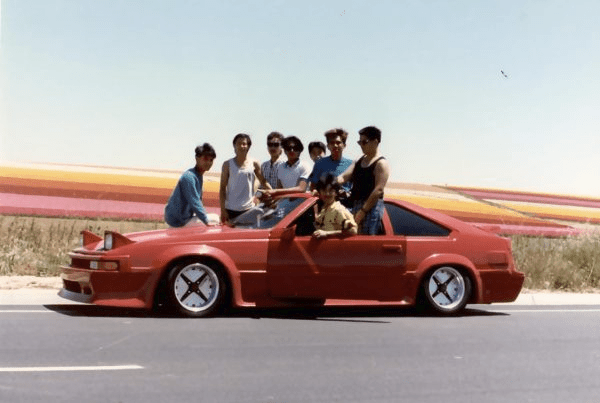
Teens in a flower field / Photo courtesy of Hank Wu
In the final days leading up to the Fall of Saigon on April 30, 1975, U.S. diplomats organized the massive evacuation of American and South Vietnamese citizens in an operation called Operation Frequent Wind. The capture of Saigon by North Vietnam and the Viet Cong, which marked the end of the Vietnam War, was a humiliating failure of American foreign policy in Southeast Asia.
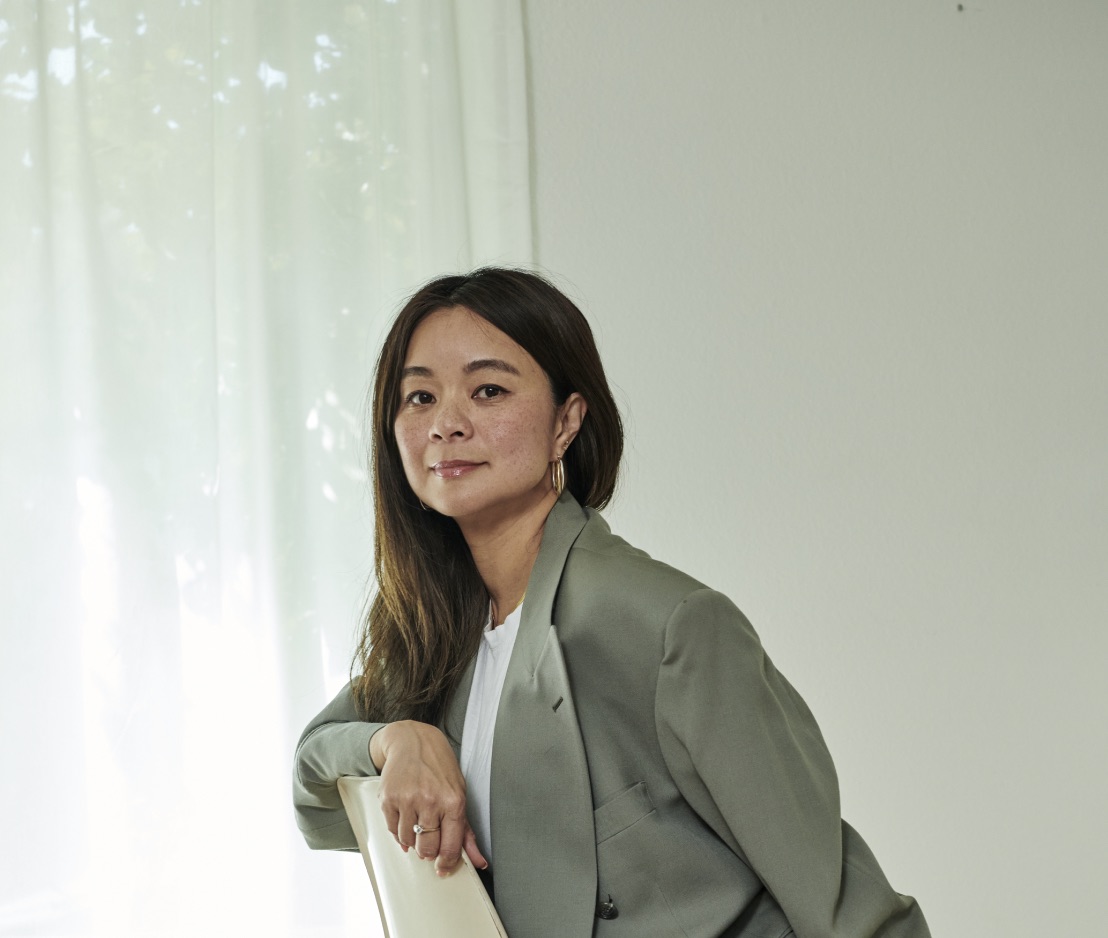
Elizabeth Ai, a Chinese-Vietnamese-American writer, filmmaker, and producer who was born and raised in Alhambra, in the western San Gabriel Valley, documents the stories of the people who were transplanted here in the aftermath of the Vietnam war.
Ai’s film documentary “New Wave” and companion book “New Wave: Rebellion and Reinvention in the Vietnamese Diaspora” shine a light on the music that saved the 1.5 generation – refugees who were born in Vietnam but were raised in the United States. Many of these young people in Southern California found a new life and a new identity in New Wave music, a type of Euro Disco that became enormously popular in this community.
The idea for the film was conceived in Ai’s head in 2018 when she was pregnant with her daughter. She reveals that it started out as a documentary focused on the Vietnamese as a way to leave something for her daughter. She was trying to save the memories of this community before they disappeared but, in time, it all blurred into her own family history. As people shared their stories, she discovered how much they mirrored her own.
“New Wave,” the film, begins with a news clip showing the arrival of close to 160,00 Indo-Chinese refugees who first settled in Camp Pendleton and other settlements. It centers on the lived experience of Ai’s two main interviewees Ian Nguyen and Lynda Trang Đài – prominent artists of the music genre when the young refugees came of age in the 1980s – and her own.
Ian Nguyen, who goes by the professional name DJ BPM, is one of the remaining New Wave artists. He describes what it was like to live in a new country; they shared a house with four different families. It was through one of the teenage boys that he discovered New Wave music. With its steady disco beat, electronic drums, and synthesizer, it seemed ahead of its time.
Several record stores in Chinatown started carrying cassette tapes and vinyl records of the music which sounds like today’s Depeche Mode. They called it New Wave and the name stuck; in the 1980s it was played at all Vietnamese supermarkets and restaurants.
Nguyen started deejaying in L.A., Orange County, and San Diego; he has been a New Wave DJ and concert producer for almost 40 years.
After his daughter was born, Nguyen decided to try to rebuild a relationship with his father. He went to visit his dad in the nursing home and, at his father’s request, he drove around to show him the houses he used to live in. It turned out to be a very emotional reunion because it was the first time he hugged his father.
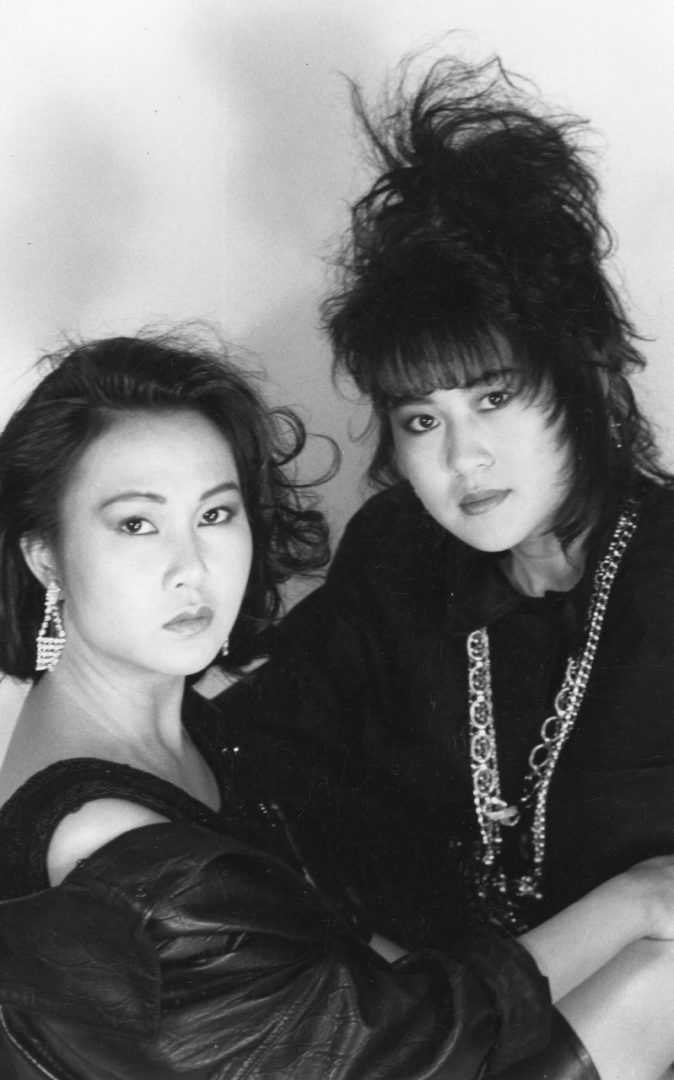
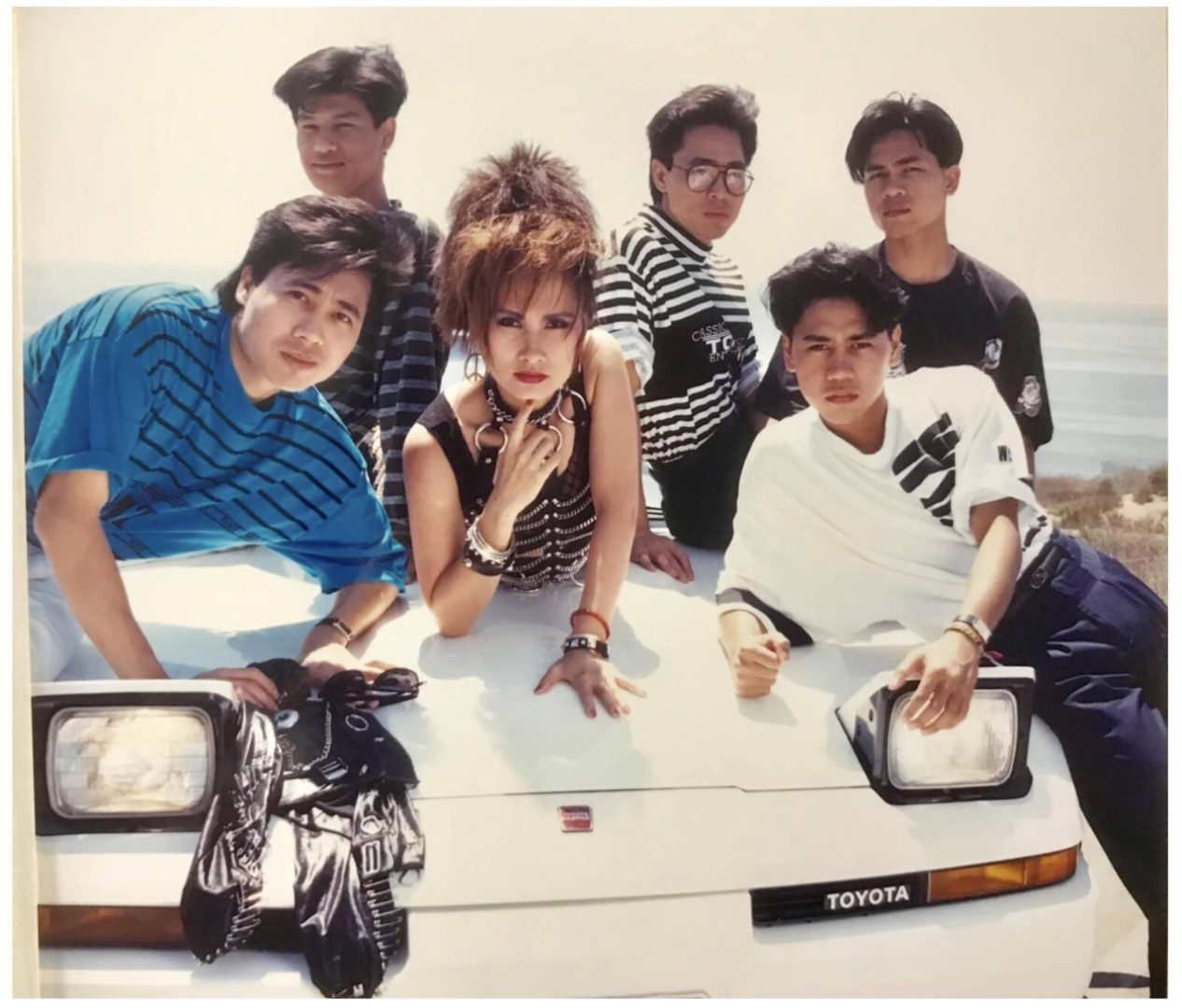
Women in Black | Photo courtesy of Thai Tai / “New Wave: Rebellion and Reinvention in the Vietnamese Diaspora”
New Wave singer Lynda Trang Đài, is called the Vietnamese Madonna. When she arrived here, she says she saw white, black, and Hispanic singers, but no Vietnamese artists – and she dreamed of being the first. She started out singing at community events.
It was when she was a high school senior that Đài began singing professionally on weekends at night clubs. During one of her weekend gigs she was discovered by a Vietnamese TV producer of a show called Paris by Night, a variety program which catered to the Vietnamese in Paris. For some, it was the only way to see other Vietnamese people; for another generation, it was a way to dream about their homeland.
Her show debuted on the same week as her high school graduation and “Give me your Love Tonight” was the song that launched her career. Young people loved Đài’s revolutionary music and the Lyndaholics became her loyal followers.
Đài became internationally famous and performed in Australia, New Caledonia, Moscow, Poland, Hungary, the Czech Republic, Norway, Finland, England, Germany, Italy, and all over Asia. After several years of collaboration, the producers of Paris by Night put on Đài’s final performance. It was the end of her TV career.
Shortly after that, Đài had a baby. To earn a living she opened a sandwich shop, which she ran while still touring with her husband Tommy who was also a singer. Because they were gone so much they didn’t spend a lot of time with their son, who grew up resenting their career and employment choices.
In the film, Ai discloses that Đài reminds her of her mom, Lan. She was very good at what she did and she broke the rules about what it meant to be a traditional Vietnamese woman. Behind her stage persona was someone who took care of her family and provided for them.
Like Đài, Lan was the sole breadwinner for their entire family. She was pushed by her own parents to take care of her 12 siblings. She came to America but ended up divorcing her husband and becoming a single mom. She worked day and night so she could pay for the mortgage and the cars, and send money to relatives back in Vietnam. And when these relatives came here, she helped them start new lives. She put them through school and bought them cars; she purchased a house for her grandparents and even funded their gambling hobby.
Elizabeth Ai | Photo by Yudi Echevarria / “New Wave: Rebellion and Reinvention in the Vietnamese Diaspora”
Because her mom was moving from one nail salon to another trying to build an empire, Ai was practically raised by surrogate parents – her Aunt Myra, her mother’s sister, and a rebellious uncle. She and her brother lived with their grandparents. They saw very little of their mom and they eventually became estranged.
Ten years after Ai last saw Lan, she reunited with her mom, who lives in Jackson Hole, Wyoming. She took her little daughter there to meet her grandmother for the first time. The audience can feel the tension between Ai and her mom as she expresses how she felt abandoned as a young child. It’s no longer a film about the Vietnamese people and how they coped in their new environment, but of the filmmaker’s personal journey and her courageous decision to confront her own buried trauma.
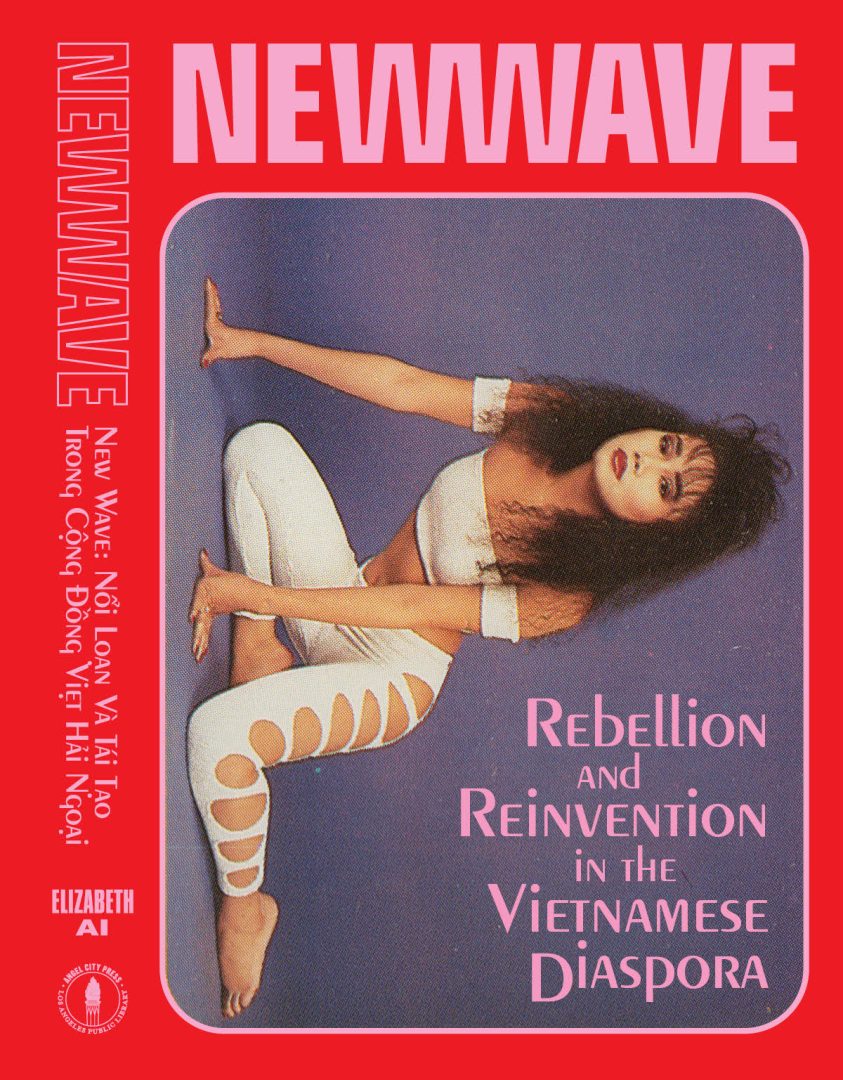
“New Wave: Rebellion and Reinvention in the Vietnamese Diaspora,” the film’s companion book, contains essays by Elizabeth Ai, Thúy Đinh, Thúy Võ Đặng, Thao Ha, Lan Duong, Eric Nguyen, Carolyn Huynh, Julia Huỳnh, Thuy Tran, Paul Quốc Trần, and Trace Le. It is a story of joy and youthful defiance, showing how young Vietnamese refugees reinvented themselves in the West through music, fashion, and community.
Speaking by phone, Ai discusses the film and the book, and people’s reaction to the documentary.
“Featuring Lynda Trang Đài was a no brainer,” Ai declares. “She’s the Vietnamese Madonna so I had to have her in the film. DJ BPM was someone I met randomly at a night club where my team and I went to for revival parties. He was a big fan of the New Wave music, not necessarily Lynda but of the Euro-disco artists. He used to deejay music at garage parties. They had to import this music in and he was one of the original people on the scene listening to the music. He collected these New Wave vinyl records when he was a teenager until he was in his 50s.”
Ai mentions in the film that her life changed when she had a baby and that made the big difference on how the documentary evolved.
“Beyond the Asian American community, I really wanted to touch on the theme of parent and child relationship,” explains Ai. “I don’t know if everyone wants to be a parent, but each one of us is someone’s child and we understand the friction and tension. You don’t have to be an immigrant or a refugee, or a child of a refugee, to understand what it feels like to not belong sometimes. But I do feel that the barriers, the challenges, and the obstacles become greater as a refugee or an immigrant – as somebody who is of two different worlds and cultures.”
“I feel that as a theme, the relationship between a child and a parent is universal,” continues Ai. “We’re fighting for our identities and sometimes our parents don’t understand or have their own obligations and circumstances. I think, for me, having had the privilege to be a parent on my own terms really made it even more intense the need to be able to share a part of my story with my daughter.”
Ai says, “A lot of people thought I would be going into Vietnam war stories. But for me it was more important to talk about that time when my uncle and aunties – the people who raised me – were the ones navigating this space with so much complexity and struggle. We always look at the adults who are learning English at night and working three different jobs. At the same time, it’s very challenging to be a young person in this world trying to figure out who you are.”
Book cover photo courtesy of “New Wave: Rebellion and Reinvention in the Vietnamese Diaspora”
The pandemic happened in the middle of filming so Ai and her team largely paused production throughout 2020 and 2021, prompting a start to their Instagram page to crowdsource archival material. It was also how the companion book came about.
“I got so many archives from the community with our social media, on Instagram, and our crowd sourcing that I felt it was necessary to share some of the documents that didn’t go into the film in this different medium,” explains Ai. “So that if people didn’t see the film, they could find the material in a different way. In the same token, it’s something that I felt was necessary because we don’t see these archives of us being saved by western, White American media. They don’t preserve our history.”
The authors who contributed essays in the book wrote about belonging. Ai clarifies, “The sense of wanting to belong and having their own world that they can build. Between all the other essays and my contributions, it really was to show that for so long we have been kept out of the narrative that we see on TV, or in film, or in books.”
Ai says further, “I really believe that both the film and the book are acts of community preservation and community film- and book-making. It’s really important to me to acknowledge all the people who contributed – even the act of taking a photograph and saving it – so that we could share it in this way.”
While Ai’s family – her maternal grandparents, parents, and her mom’s siblings – were refugees, she was not. And she thinks it’s because of it, not in spite of it, that she’s more involved in her ethnic community much more than immigrants are.
“Our whole life, we had the obligation to assimilate,” reasons Ai. “When we become adults we ask ourselves why we haven’t been more immersed in this world. It’s imperative that we realize all of this white-washing of culture. I’m in my 40s and as a teenager all I ever saw on magazine covers were white women; it was the most radical thing when you finally saw a black woman on the cover of a magazine or in a film.”
“But it’s still rare to see an Asian person in the media, so now we get to change that narrative,” Ai adds. “It’s beautiful to see this reclamation happening among Asian Americans in the global diaspora. Even though we were displaced by American wars happening in our country, we could still reclaim our heritage. I think we all still want to be very much connected to our ancestry; this is our cultural inheritance. I see a lot of young people in their 20s doing it and I’m as proud of them as much as I’m inspired by them.”
Quoc Si and The Magic | Photo courtesy of Quoc Si / “New Wave: Rebellion and Reinvention in the Vietnamese Diaspora”
Those who’ve seen the film are not only asking questions, but also sharing their family dynamics as well as the challenges they have to overcome.
“That’s what the problem is with this model minority myth,” Ai pronounces. “We’re all perceived as crazy rich Asians who do great in school. But that’s not true across all our diasporas; that’s not true for all cultures, not Chinese, or Japanese, or Korean, or Filipino. Everybody struggles and it’s very harmful to have these stereotypes because that becomes the expectation. Then people believe that you don’t need help or that you don’t have problems. The misconception that ripples through the community is that we’re all doctors and lawyers.”
“It’s important to have these conversations – with each other, with our parents, with our children. And as artists, to tell the stories and to say that we worked hard and we struggled, and there’s pain in the community when we appear to be successful. I think that to have humanity is to see the full scope of what it is for each one of us,’ emphasizes Ai.
“New Wave” had its world premiere in New York at the Tribeca Film Festival in June where it won a Special Jury Award for Best New Documentary Director. It will be playing in over 20 film festivals before the end of the year. Since Tribeca the film has been shown in California – in L.A., Orange County, and San Diego – and all over the United States. It has likewise been screened in Germany, Poland, and other countries.
A majority of the audience at the Vietnamese Film Festival were Vietnamese but the people who have attended the screening and have come out to support it have not been exclusively Asian Americans.
It’s heartening that the Vietnamese community and, by extension, Southeast Asians are having this opportunity to be seen and heard as “New Wave” tours the country and the globe. It’s one more step taken on the long road towards belonging and inclusion.
In 1919 D.W. Griffith directed Hollywood’s first onscreen interracial love story between a white woman and a Chinese man. The movie was “Broken Blossoms” and the lovers were played by Lillian Gish as Lucy Burrows and Richard Barthelmess, in yellow face make up, as Cheng Huan.
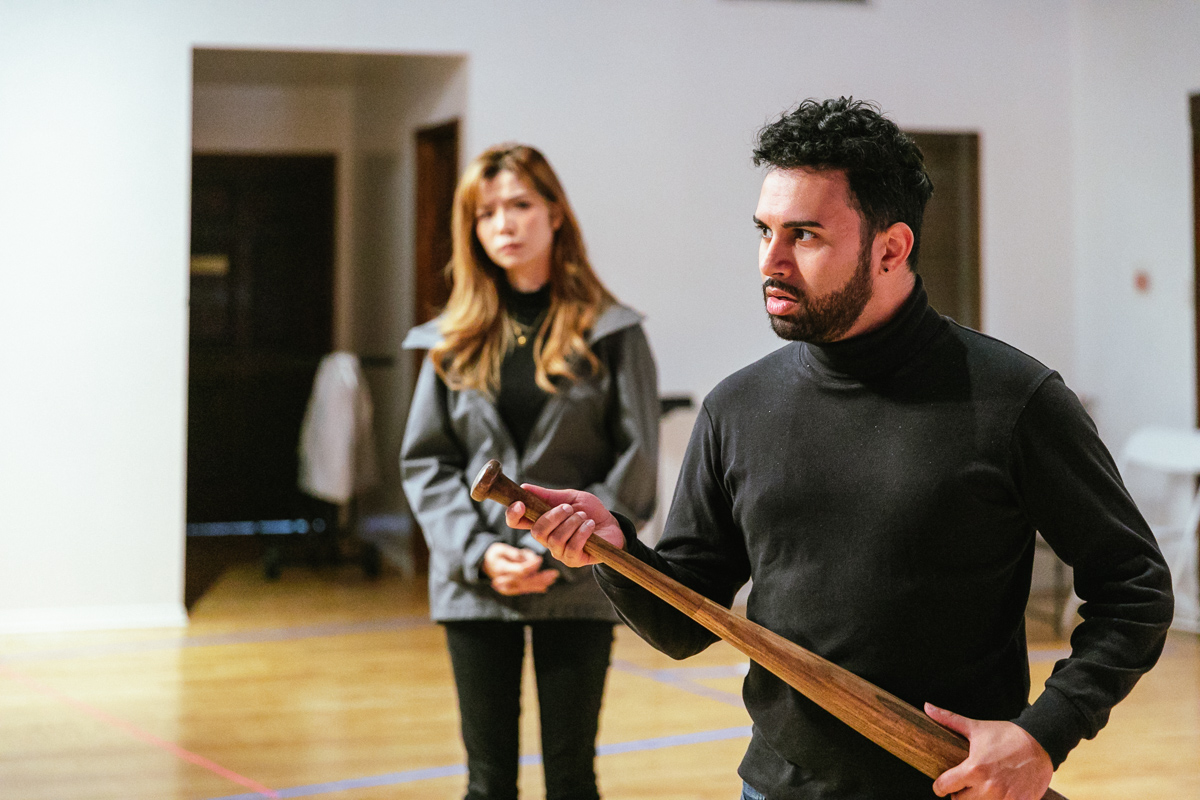
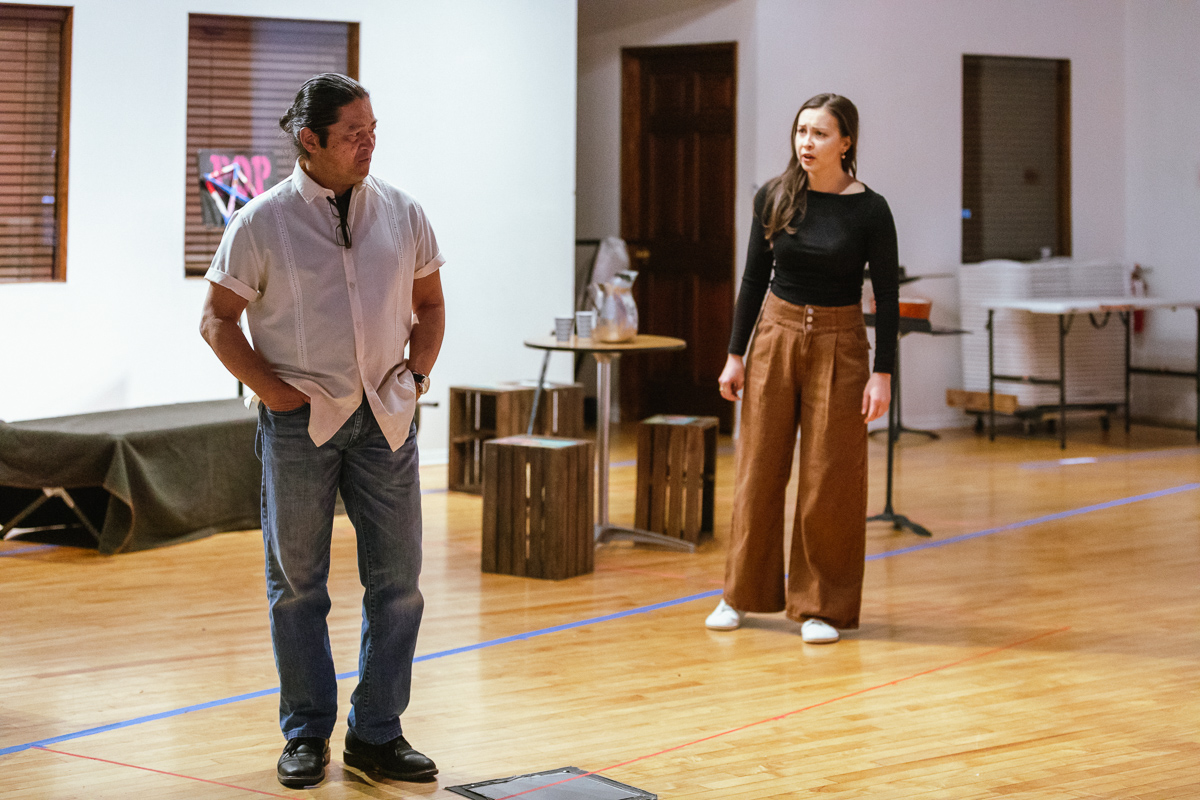
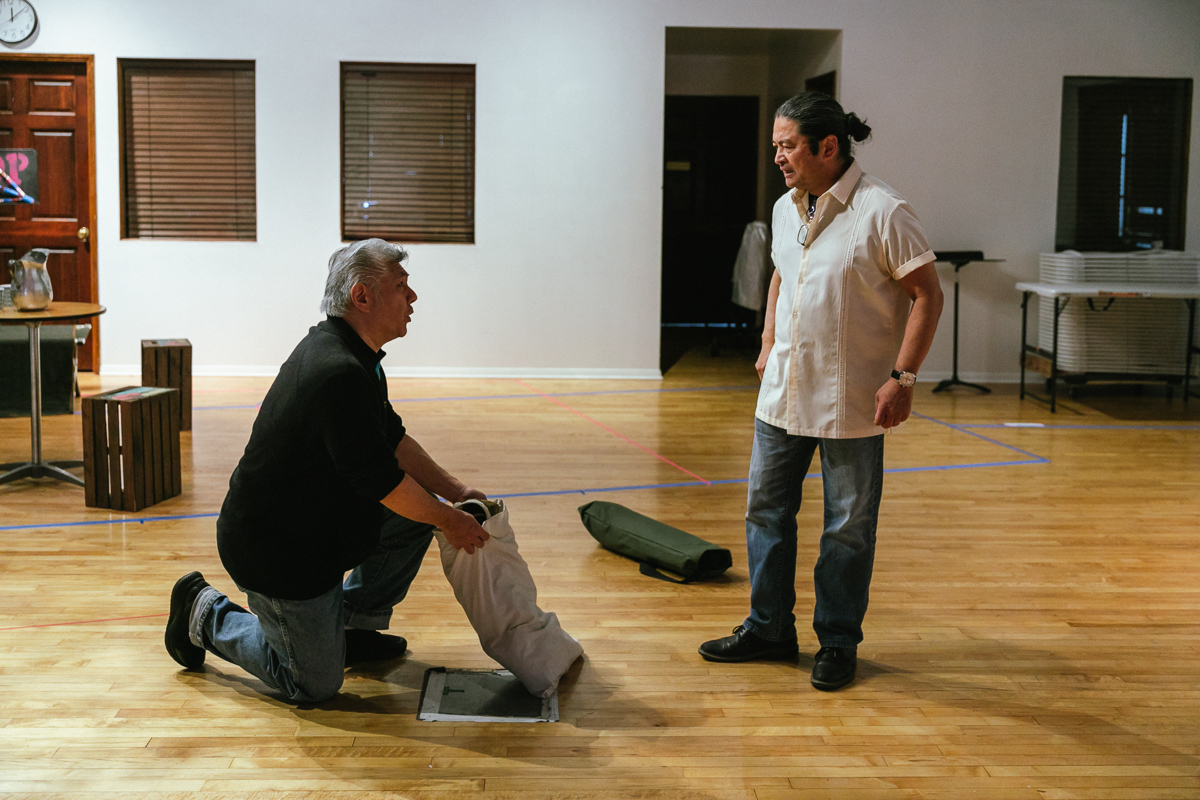
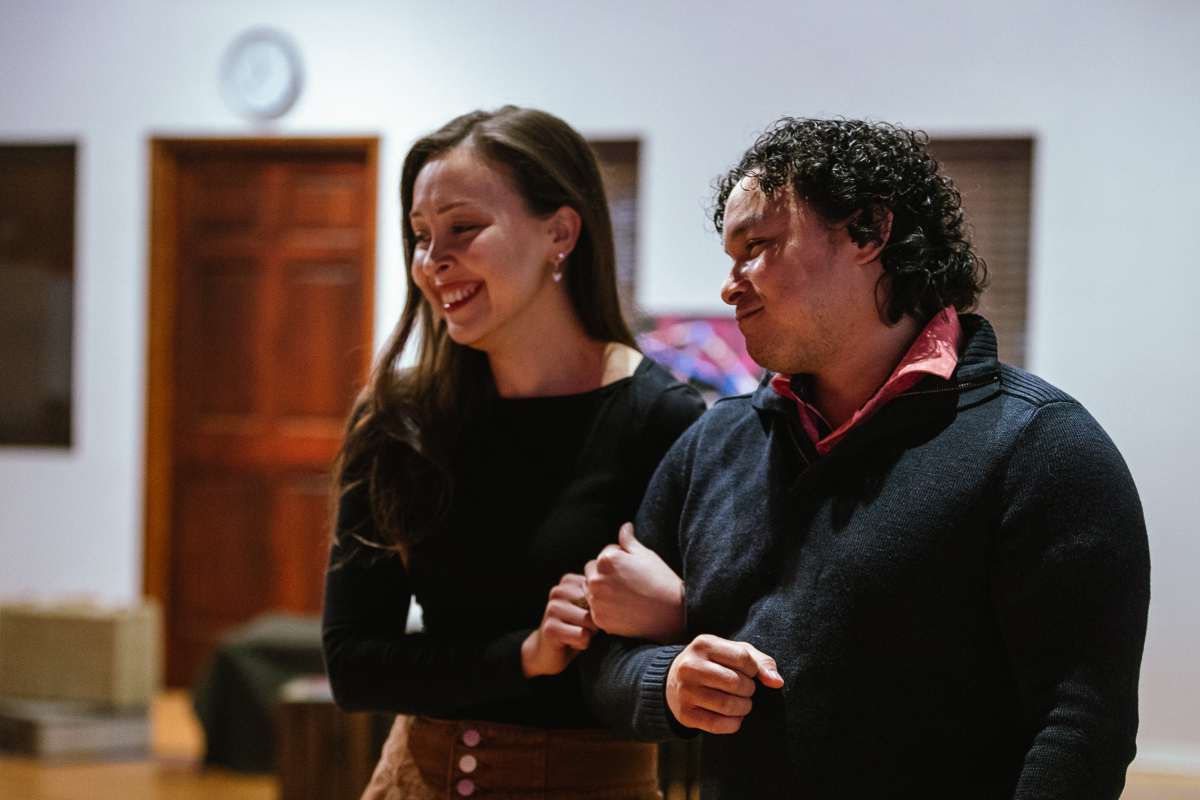
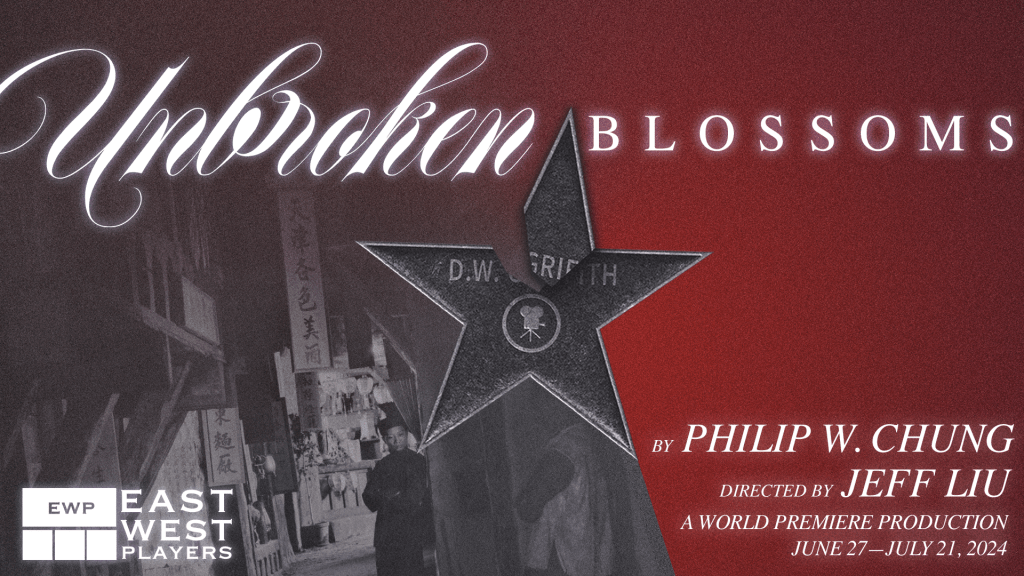
What went on behind the scenes is the subject of East West Players’ next World Premiere play “Unbroken Blossoms” — a historical reimagining of the making of this actual boundary-breaking Hollywood classic — written by Philip W. Chung and directed by Jeff Liu.
“Unbroken Blossoms” follows two Chinese American consultants who are hired for the movie “Broken Blossoms” — Moon, an idealistic family man and James, a cynical, aspiring filmmaker — as they contend with the inflated ego of the film’s director D.W. Griffith, who is hoping to disprove criticisms of racism after the release of his controversial Civil War epic “The Birth of a Nation.”
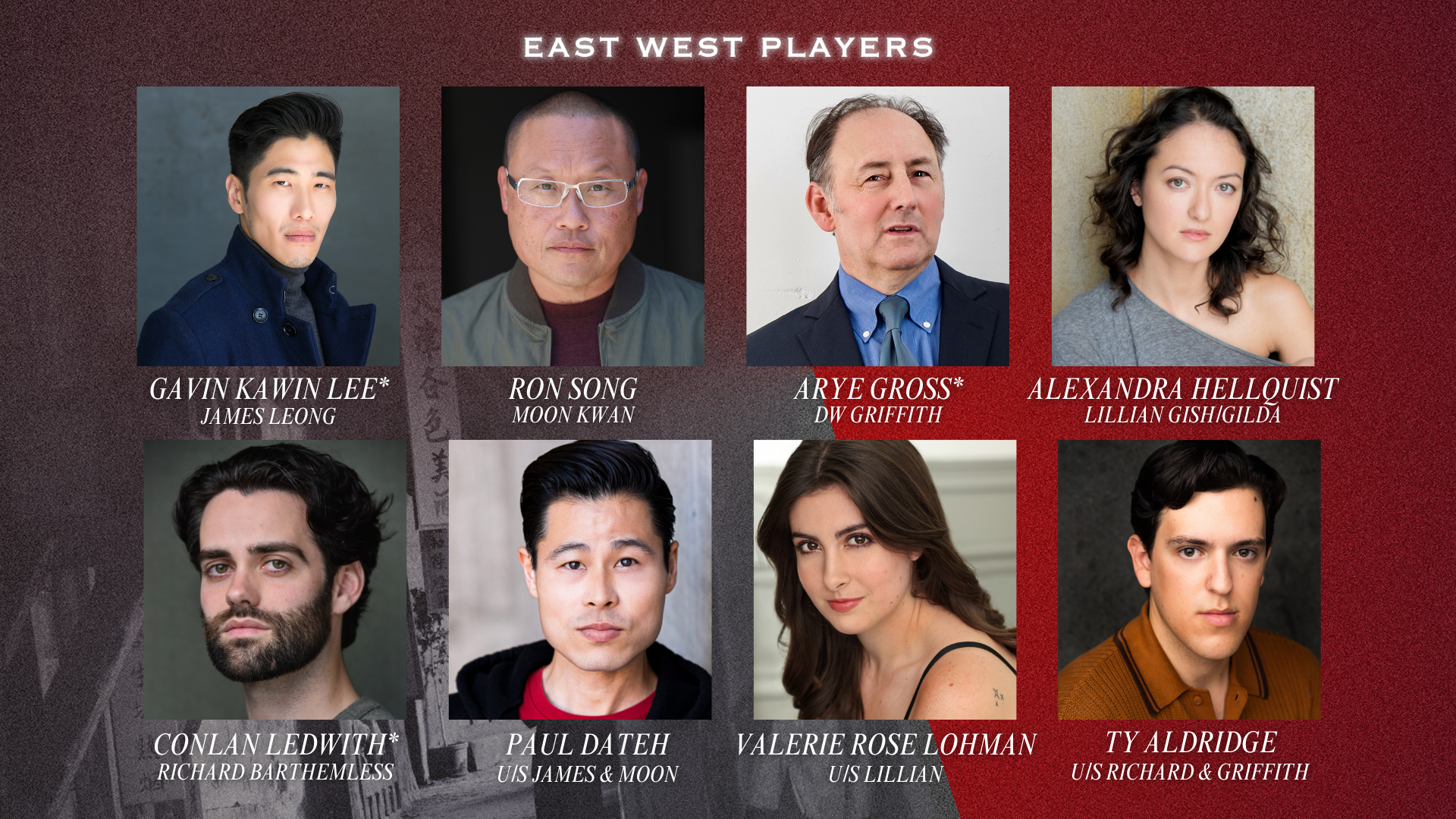
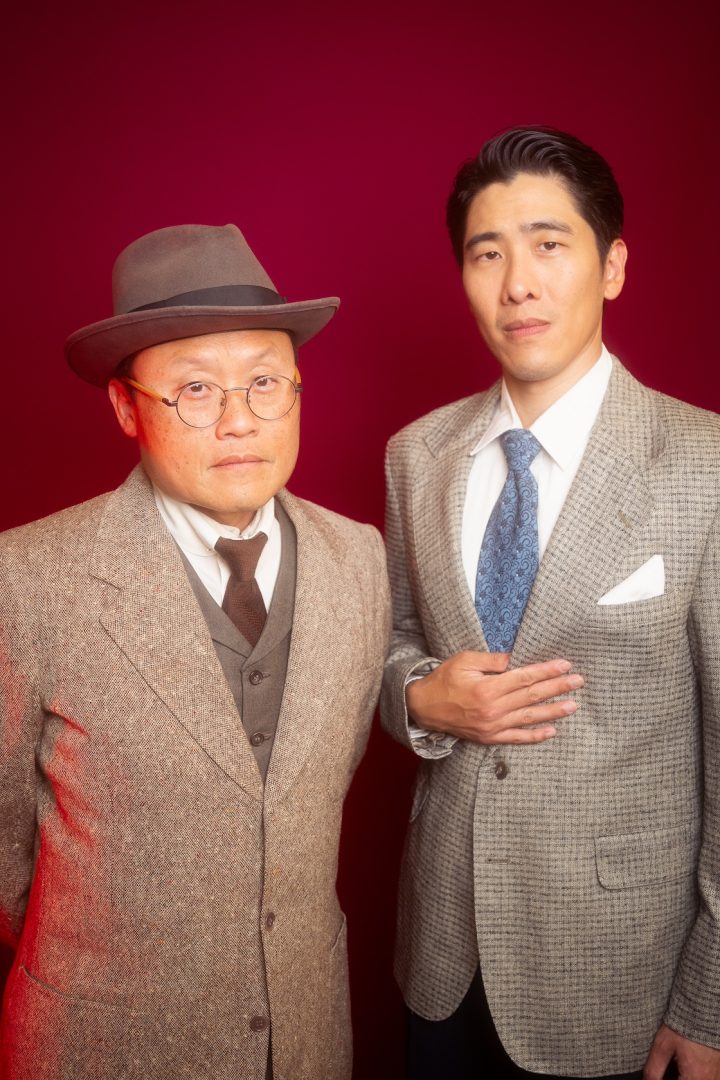
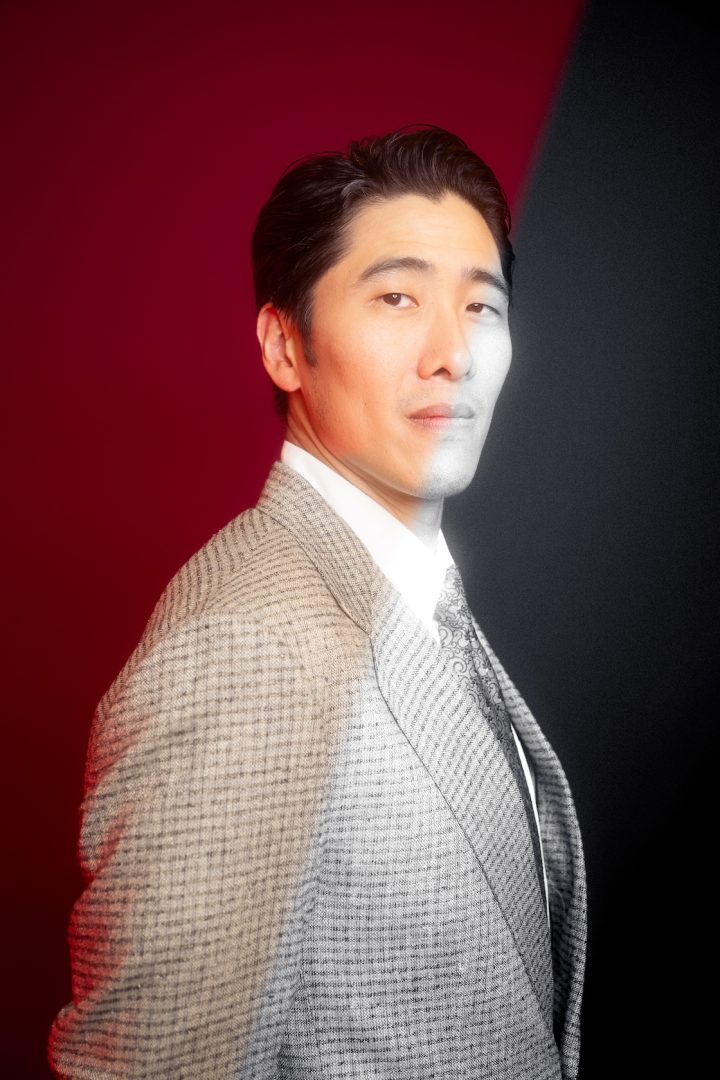
Based on real events, this story of the suppressed voices behind the silent film “Broken Blossoms” reveals a historical conflict just behind the silver screen. “Unbroken Blossoms” goes on stage from June 27 through July 21 at the David Henry Hwang Theatre in downtown Los Angeles. The cast includes Gavin Kawin Lee as James Leong, Ron Song as Moon Kwan, Arye Gross as D.W. Griffith, Alexandra Hellquist as Lillian Gish/Gilda, and Conlan Ledwith as Richard Barthelmess.
The cast of “Unbroken Blossoms.” | Photos courtesy of East West Players
Speaking by phone, Chung explains the genesis of the play. “I’m fascinated by Hollywood history so I’ve read about D.W. Griffith; he is considered the godfather of cinema. His film ‘Birth of a Nation’ is hailed as one of the first and greatest films of all time. But it’s also a movie that makes heroes out of the Ku Klux Klan. It says something about America that the film which defined Hollywood — it introduced new forms and techniques about the craft — had KKK as protagonists. I thought it was interesting.”
“Studying his career I realized that he made ‘Broken Blossoms,’ one of the first ‘positive’ interracial relationships in Hollywood films, after that.” Chung continues. “But, of course, it was 1919 and it was a white man in yellow face makeup playing a Chinese character. I watched the movie and from today’s point of view it’s very dated and offensive because of the stereotypes. So one has to look at it from the historical context. For that time, this was a progressive movie — it was arguing for this relationship between a white woman and Chinese man. They were clearly trying to do something that wasn’t the usual negative depiction of Chinese people. The intent might have been good but, because of the limitations at that time, the result was still problematic.”
“And then I found out during my research that he hired two Chinese American consultants for the movie — James Leong and Moon Kwan,” Chung adds. “They were both real people and went on to have long careers working in Hollywood films. But we don’t really know much about that history and a lot of it is forgotten. That got me thinking about what it might have been like to work on this movie at a time when the Chinese were being portrayed but not in an authentic way. ‘Unbroken Blossoms’ tries to explore both sides of that dichotomy. It’s an imagining of what transpired from their point of view.”
Chung finished writing a draft of “Unbroken Blossoms” in 2015 and the play had a public reading of it at the Japanese American National Museum with East West Players and Visual Communications. He put it away after that and worked on other projects. It was during the pandemic that he revisited and reworked the play.
Philip W. Chung. | Photo by TJ Ramirez/East West Players
“The world has changed a lot since I wrote ‘Unbroken Blossoms’ in 2015,” explains Chung. “The play is set in 1919 in Los Angeles during the Spanish flu pandemic. It was very similar to COVID: people were wearing masks and there were several race riots — black versus white — and anti-Asian violence all over the country. Those were the things in my play, but when I wrote in 2015 those were events that happened in the past. I wanted to explore that parallel between now and 1919 more closely than I did in the original version. The fact that the play feels more relevant now than it did back in 2015 is strangely disappointing in a way, because it shows that history is repeating itself and we didn’t learn from past experience.”
That Chung called his play “Unbroken Blossoms” hints at something hopeful, though. He discloses the idea behind the title. “The white woman and Chinese man in the 1919 film are broken blossoms. Each has tragedies in their lives that prevent them from being a whole person. I thought it would be interesting if the play was the opposite of that. Is there a way to become unbroken — specifically in this case — if the portrayal of being Asian is a broken version of ourselves that we see from Hollywood? Is there a way beyond that?”
Ron Song, left, and Gavin K. Lee. | Photo by TJ Ramirez East West Players
Gavin Lee, who plays James Leong, heard about Chung’s play in February through “Unbroken Blossoms” director Jeff Liu. He says, “I had worked with Jeff before and he asked me if I was interested in reading a new play. He sent me the script and I thought it was pretty visceral. There are many elements in the play, like the misogynistic laws at that time, that got me angry. But they are obviously meant to have that effect. There are some scenes that were difficult to read — particularly the part where Moon gets mistaken for me and he gets brutally beaten. They can’t tell the difference between the two Chinese men.”
“Anyone who watches the play will definitely feel for the two Chinese consultants,” states Lee. “They have vastly different viewpoints. My character is very cynical. Already he knows the filmmakers don’t really care about them or their opinions; they were only hired because the producers want to look good. My character understands that whole process and he’s just trying to get something out of it. Moon, on the other hand, really believes he’s there to be a consultant. I feel like he’s the one the audience will root for.”
“Moon and James poke at each other because Moon believes he’s helping to make the characters be more authentic and represented in this film,” Lee relates. “James, on the other hand, believes the only way the film can be more authentic is if it has an actual Chinese actors instead of white actors portraying Chinese people. So Moon laughs at what James is trying to do; he thinks it’s unrealistic and wishful thinking.”
Two weeks into rehearsals, Lee reconsiders his initial reaction about his character. “When I first read the play, I saw James as being cynical. The more I work on it, though, I’m finding parts in which his love, passion, and hope show through his sardonic exterior, which is fun to play. I’m not sure if this was the intention of the author, Philip Chung, or if it’s just a character trait I had to apply myself to get more grounded in it. But it does make me want to root for James more. While he seems cynical, James’s ultimate goal is to learn from a renowned director so he can make films that are true to Chinese people.”
Gavin K. Lee. | Photo by TJ Ramirez/East West Players
Lee didn’t set out to be in theater. He reveals, “I had always been into math and sciences — or at least that was what I thought. I was on a pre-med track going into college and I had taken the MCAT. But about ten years ago, I decided that medical school wasn’t for me. I had switched from pre-med to teaching and was living in Korea then. I took an interest in acting after reading career guide books and taking personality tests which showed it was the best career for me. I thought it was strange, but I tried it out on a web series. I had no training so I was awful. As bad as I felt about my acting, though, I actually loved doing it.”
“So I moved back to the U.S. and almost immediately I signed up for acting classes,” Lee says. “I went to the Beverly Hills Playhouse and took a course on scene study. Then I did my first play in 2016. I have also done some TV and film but theatre has become a strong passion for me.”
“I feel that there’s better representation in theatre than TV or film. But that’s only my opinion and it’s based on my lived experience,” Lee clarifies. “I get audition calls for roles for open casting. In fact, I have another audition to play a British character. I think theatregoers are more accepting seeing a non-white actor portraying a traditionally white character.”
As for the audience takeaway, Lee opines, “Whether people believe one viewpoint or another, any good play will have them contemplating the repercussions of what they saw. Some people may disagree with the message of the play but I definitely think people will come out after seeing the play feeling a flurry of emotions — which is why we do theatre. There’s comedy in it, obviously drama, anger, which is one of the feelings I had when I read Philip Chung’s play. Ideally, some people will leave the theatre hopeful that because times have changed in the last hundred years, it will continue to do so for the better.”
While it’s unfortunate that Chung didn’t find much information about Moon and James and their experience, it’s also propitious. Having a blank canvas accorded him the freedom to create nuanced, complex characters and the engrossing plot that make Unbroken Blossoms compelling theater.
 A San Gabriel Valley Inquirer