Pasadena Author Delves into One of California’s Last Public Hangings

Also published on 3 September 2025 on Hey SoCal
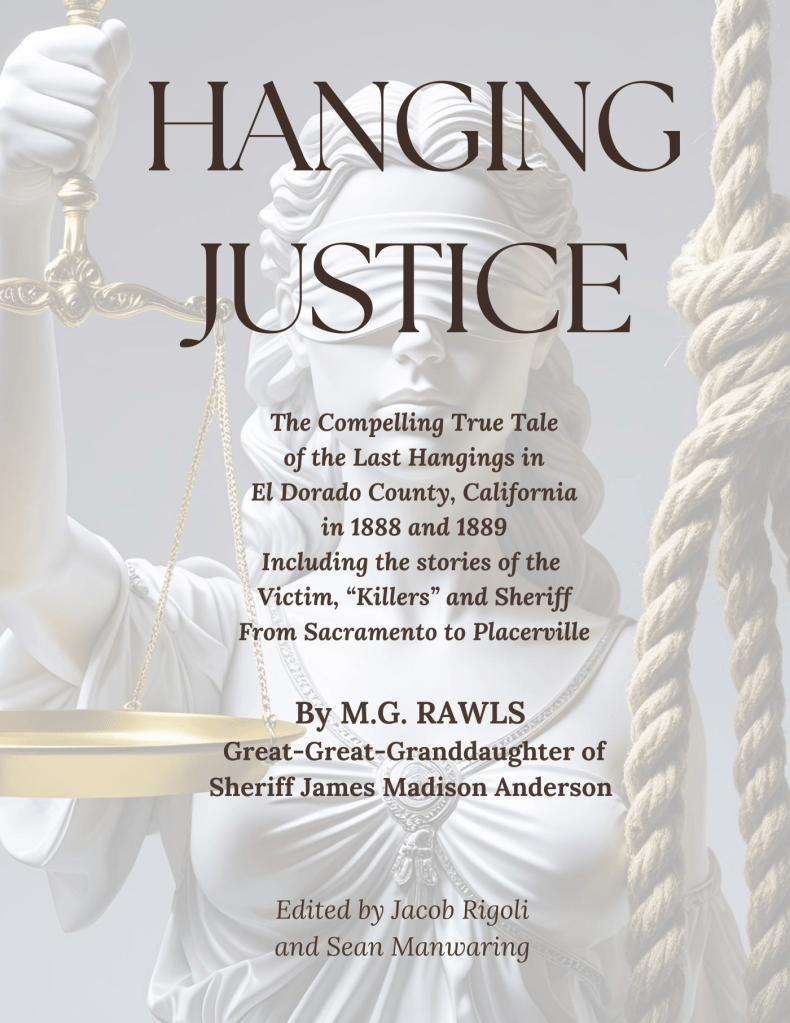
Image courtesy of M. G. Rawls

Public executions aren’t exactly pleasant subjects to write a book about. But for M.G. Rawls, a retired Pasadena lawyer and author of the young adult fantasy trilogy “The Sorts of Pasadena Hollow,” it was a compelling topic that had captivated her for decades. Rawls’s great-great-grandfather, James Madison Anderson, was the El Dorado County sheriff who carried out one of the last public hangings in California towards the end of the 1880s. For years, the thought that an injustice might have been done weighed heavily on him.

In her book “Hanging Justice,” scheduled to publish in October, Rawls delves into this event and gives readers an intimate look at the victim, the killers, the crime, and the hangings. She chronicles the details of the case and then reaches her own conclusions about this long-forgotten and rarely discussed episode in Placerville’s past. She will give an author book talk sponsored by the El Dorado Historical Society on Friday, October 17 from 6 to 7:30 pm at the Morning Star Lodge (also known as the Odd Fellows Lodge) in Placerville.     

Based on newspaper articles at the time, a reputedly wealthy farmer John Lowell was murdered on March 24, 1888 during a robbery at his ranch near Mormon Island in El Dorado County. Three men were convicted of first degree murder – John Henry Meyers, a 27-year-old immigrant from Germany; John Olsen, a 24-year-old Norwegian native immigrant; and William Drager, a 41-year-old immigrant from Germany.

Meyers was hanged on November 30, 1888, but Olsen and Drager’s execution on the same day was stayed pending appeal. Coverage of the arrests, trial, and hangings was a local sensation. Dozens of newspaper articles ranging from the Sacramento Bee to the San Francisco Examiner recounted the gory details. Hundreds of spectators observed Meyer’s hanging, that gave it a circus-like atmosphere.

Olsen and Drager – who steadfastly claimed throughout the trial that they weren’t involved in the plot to kill Lowell – were hanged on October 16, 1889. Sheriff Anderson limited the observers to the minimum required by law and had canvas draped over the courtyard to keep out as many prying eyes as possible.
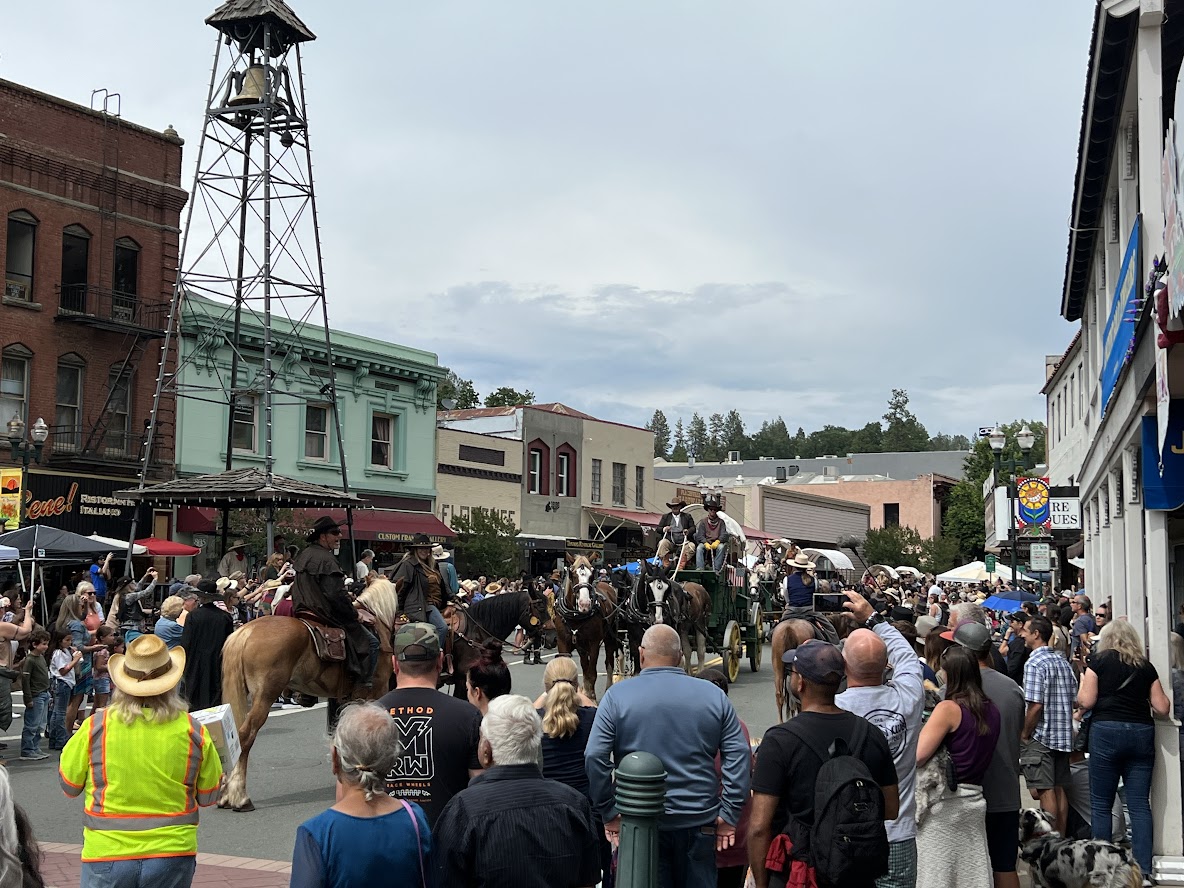
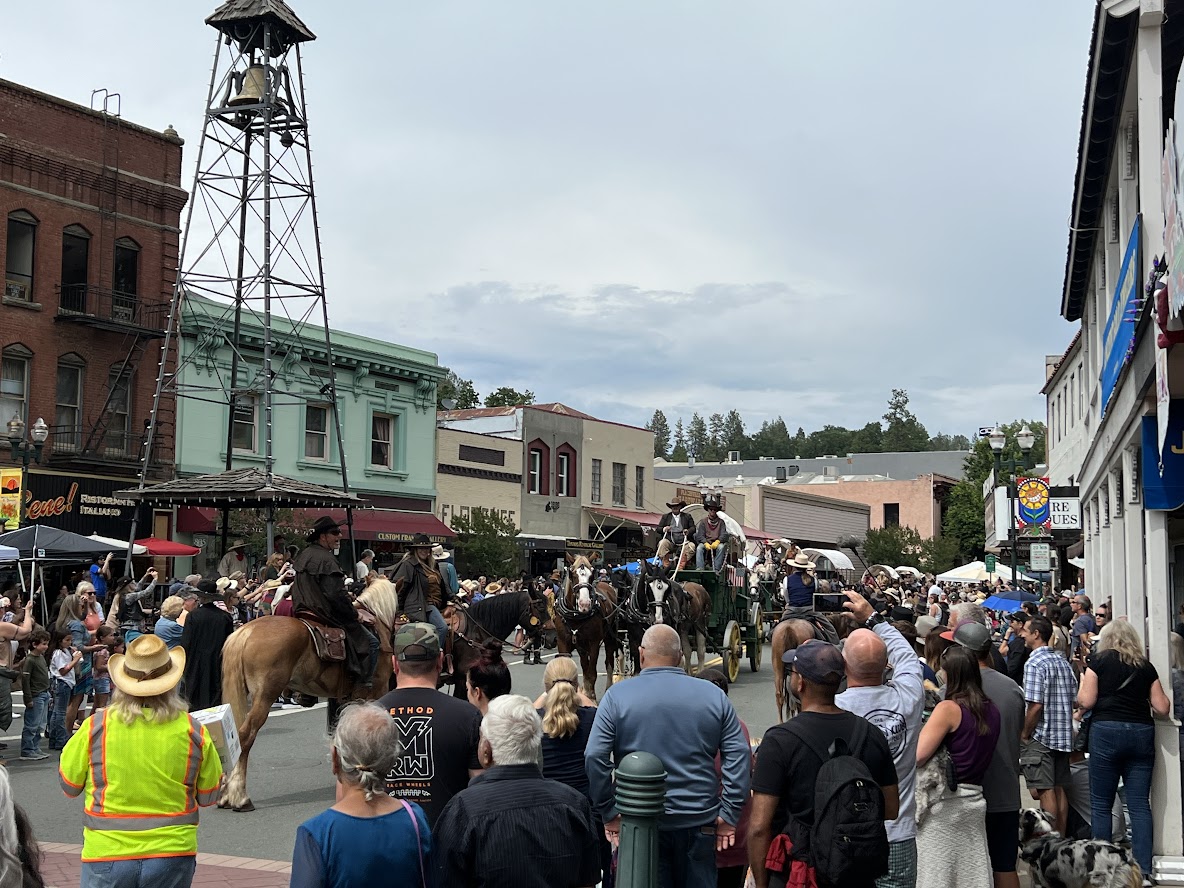
The Placerville Wagon Trail Event in 2023. | Photo courtesy of ‘Save the Graves’

Hangings were not uncommon in the United States back then; Placerville had been referred to as “hangtown” since the Gold Rush days. However, Olsen and Drager’s sentence galvanized the whole town into action because Placerville residents felt they had not been complicit in the murder, and the death penalty was too harsh for their actual crime.

Over 425 townspeople – including the district attorney who prosecuted the case, the sheriff, and nine of the 12 jurors – signed a petition requesting the sentence be reduced to life imprisonment.

The men had been model prisoners and were ready to accept their fate. Moreover, the victim –  John Lowell – allegedly was of dubious character, having made many enemies and was himself accused of murder just a couple of years before. Olsen and Drager’s attorneys worked diligently to save them, even hand-delivering the petition and request for a pardon to Governor Waterman in Sacramento. Still, the petition was rejected, and the pardon turned down. For a long time, the townspeople wondered whether Olsen and Drager should have been executed.

Rawls’s grandmother had previously written about this event; but she was determined to find out more. She scoured through hundreds of old newspapers online and did extensive research at the Huntington Library in San Marino, the El Dorado Historical Society, the Center for Sacramento History, and the California State Archives. She traveled to Auburn, New Hampshire, to look at family documents and photos that her aunt and uncle have meticulously preserved.

By email, Rawls talks about what made her author “Hanging Justice,” what she learned from her exhaustive investigation, and the reader takeaway.
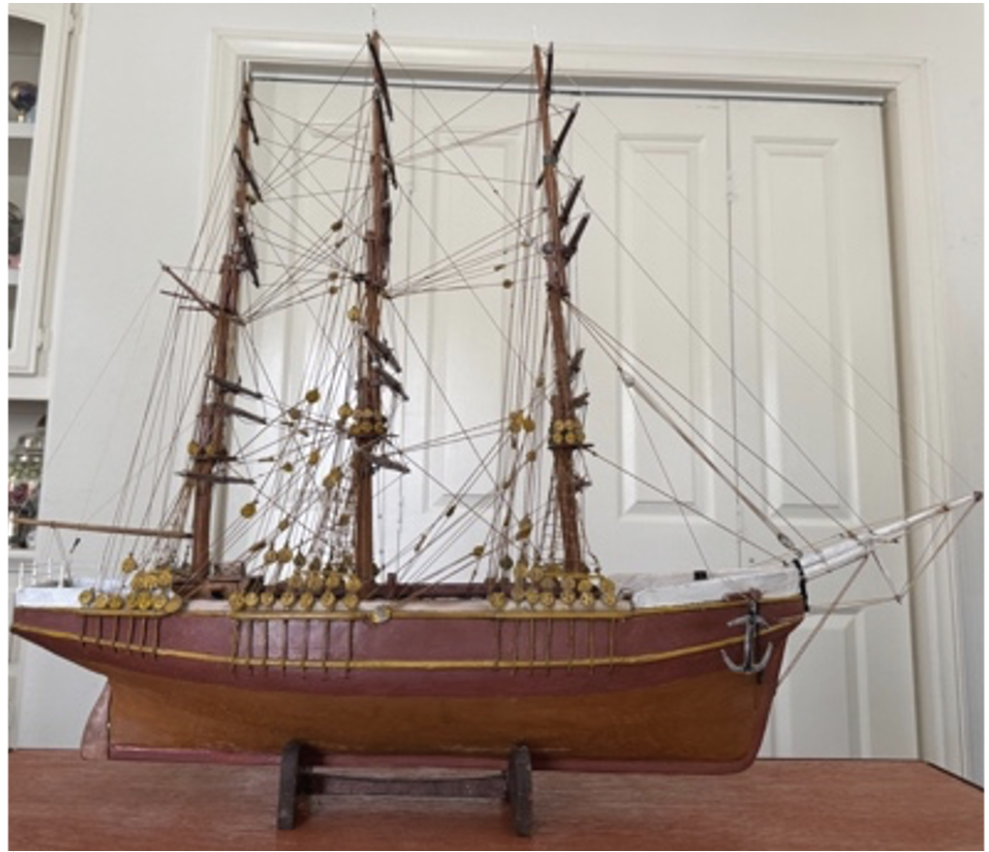
Model clipper ship ‘the Mountain Queen”. | Photo courtesy of M.G. Rawls

“In 1970, my grandmother wrote a community college paper about the last hangings in El Dorado County in 1888 and 1889 for which she got a B+,” recounts Rawls. “She’d played with a small model clipper ship called the Mountain Queen, crafted by two of the three hanged men while they were in jail. Sailors by trade, the two men made the miniature ship for her grandfather, my great-great-grandfather, Sheriff James Madison Anderson. It was their way of thanking him for taking care of them while their appeals were pending. They looked up to him like a father, yet he would be the one to hang them. My grandmother gave me the Mountain Queen, and I display it on a table in our living room as a relic of the event.”

It would take a while, though, before Rawls started writing the book. She discloses, “I’d had the story in my head for years, as I’m guessing many writers do, but didn’t start in earnest until about four years ago, just after I’d finished writing the third book in a young adult fiction shape-shifting trilogy – a series which combined my love for the local animals with California history. It was a natural transition for me since I love history and had experience doing research with my fiction books.”

Asked if the event haunted her family, Rawls replies, “I know that Sheriff Anderson and Marcus Bennett were emotionally torn about the executions of two of the men. Both felt that these men should have received a life sentence instead of death. Other than that, except for my grandmother, who was probably more intrigued than haunted, I don’t know what the rest of my family thought. But for the model clipper ship and my grandmother’s college paper, it is doubtful this story would have survived.”
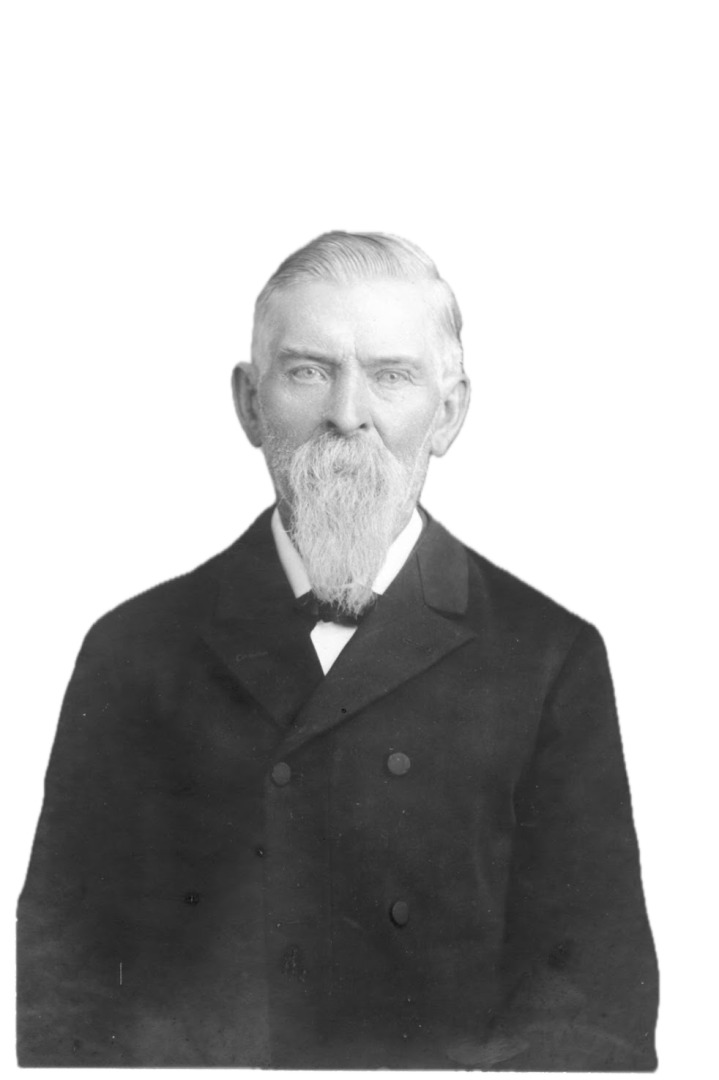
Sheriff James Madison Anderson. | Photo courtesy of M. G. Rawls

In the course of her investigation, Rawls learned a few things that she hadn’t previously known and unearthed some personally meaningful finds.    

“I knew that my great-great-grandfather, James Madison Anderson, was sheriff of El Dorado County from 1886 to 1890, so I was aware that he was generally in charge of the men,” states Rawls. “Still, I didn’t fully understand his specific role in the hangings until I read the contemporary newspaper accounts. Furthermore, until I started researching, I didn’t grasp that it was my great-uncle, Marcus Percival Bennett, Sheriff Anderson’s son-in-law, who was the district attorney prosecuting the case. I can only imagine the discussions that the two men must have had over the trial and hangings.”

“There were many surprising discoveries, made possible through the numerous institutions that I visited, family members who opened up their collections, and the hundreds of newspapers I pored over online,” Rawls continues. “I learned that the ‘victim,’ farmer and rancher John Lowell, was hated by many, and there were probably dozens who wanted to see him dead. But of course, you take your victim as you find him. I also learned that the State of California keeps all the files in death penalty cases and that anyone can access them in person through the California State Archives.”

“And lucky for me, despite a fire that burned down the El Dorado County courthouse in 1910, the El Dorado County Historical Museum had the preliminary examination records and original exhibits” adds Rawls. “While most of the records at the museum were in cursive and at times challenging to read, nonetheless, holding these documents, I found myself transported back to the period.”
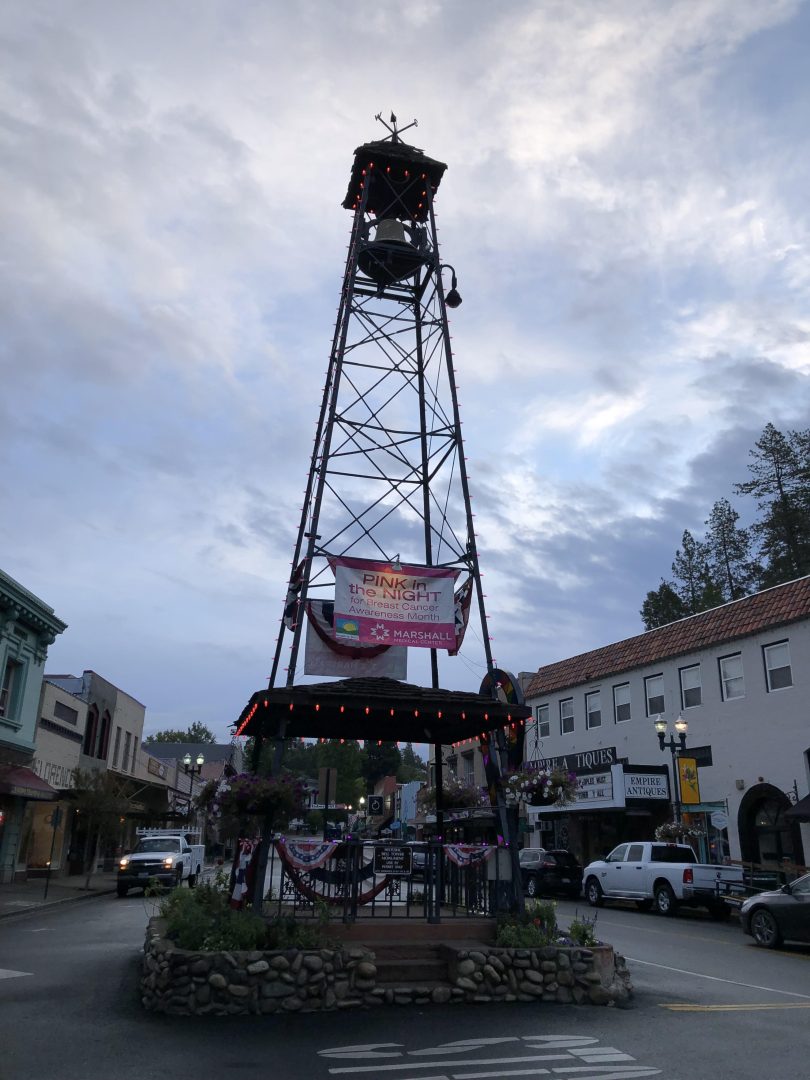
The iconic Placerville Bell Tower. | Photo courtesy of M.G. Rawls

The fantasy novels Rawls previously penned flexed her imagination and creative thinking. Writing a historical non-fiction, it seems, proved to be an adventure that was just as fun and pleasurable for her.

“While I did a lot of research for my fiction books, ‘Hanging Justice’ necessarily required exponentially more,” Rawls reveals. “Still, the research institutions and historical places visited and friends made along the way more than made up for the time spent. Plus, I like researching. For me, it’s detective work – with bits and pieces in various sources to be put together like a puzzle.”

Although that’s not to say that it was without its challenges. Declares Rawls, “This is my first non-fiction book, so accuracy was necessary. Besides, while it’s unconventional, I was determined to use footnotes instead of endnotes so the reader wouldn’t have to keep turning to the back. I’ve tried to make the story interesting, too.”

Writing “Hanging Justice” was a revelatory experience for Rawls as well.  

“Placerville is known as ‘Hangtown’ for the vigilante-driven hangings that occurred during the gold rush period, starting in 1849, after the discovery of gold by James W. Marshall in nearby Coloma, California, the previous year,” Rawls explains. “’Hanging Justice’ includes the telling of a particularly abhorrent hanging in 1852, when an ‘assemblage’ stormed the jail in Coloma and two men – one white and one black – were forcibly taken and hanged. The original account is in the El Dorado County Archives at the Huntington Library.”

A gold mine in El Dorado County. | Photo courtesy of Pixabay

“As highlighted in my book, the hangings for the killing of John Lowell were not the result of vigilantism,” clarifies Rawls. “They were legal executions after due process of law. Plus, like my great-great grandfather and great-uncle, many of the townspeople did not want two of the men to be executed. In my view, despite the circumstances surrounding these last hangings, Placerville had transformed into a lawful community and was determined to give these defendants a proper trial. The trial transcript in this case was over 600 pages, and the three men were represented by Placerville’s finest. Though in the end, Placerville’s best wasn’t good enough.”

This book isn’t your everyday read but Rawls thinks there’s valuable takeaway for someone who buys and peruses it.    

“‘Hanging Justice’ lays bare the factual and legal groundwork for what happened,” Rawls describes. “But I hope the book also allows the reader to reach their own conclusions as to whether justice was rendered by the hangings. Personally, I found the victim’s own trial for murder several years earlier and the legal issues surrounding two of the men’s appeals fascinating. But then I’m a bit of a nerd when it comes to history.”

“Family stories worth keeping can be very fragile and will disappear if not written down,” pronounces Rawls. “The process of saving them can be both unifying and rewarding. In my case, despite the dark topic, this story has brought me together with cousins and friends I didn’t know I had, including the townspeople of Placerville. So I would urge readers to pursue their own family stories.”

During her countless trips to Placerville, Rawls learned that residents there today didn’t know about this particular event. As she worked on her book, she made it her mission to uncover all the documented facts so she could retell the story of what transpired over a century ago. It is a significant piece of their community’s history.        
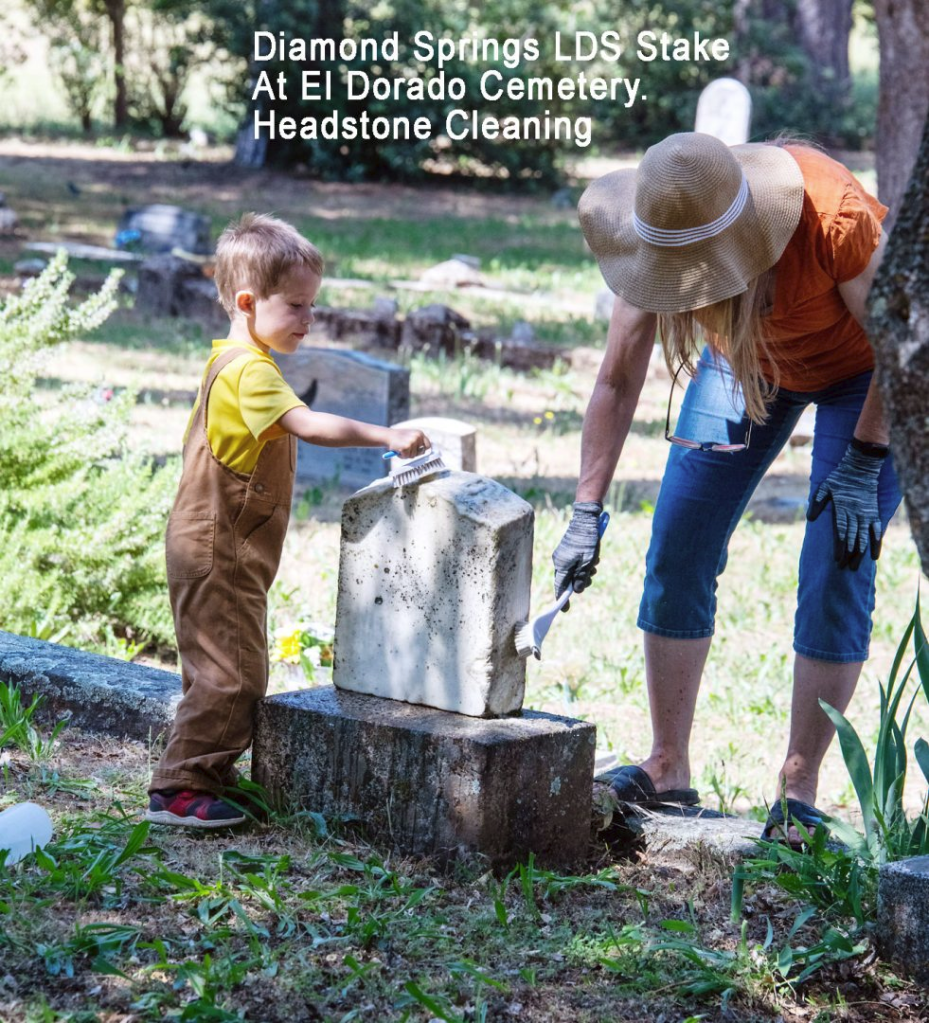
Save the Graves in El Dorado County Tells Long-forgotten Stories

Also published on 30 September 2024 on Hey SoCal

Photo courtesy of Mike Roberts | Save the Graves

El Dorado County is famously recognized as the place where California’s Gold Rush began. According to historical accounts, on January 24, 1848, James W. Marshall discovered gold on the south fork of the American River in the valley known to the Nisenan Indians as Cullumah (beautiful valley). That momentous instance not only helped shape California’s future, it reinvigorated the country’s economy as well.    

Courtesy photo

Towards the end of the 1880s another historical, albeit little-known, event transpired in El Dorado County – the public hangings that sent shock waves across Placerville.

Based on newspapers articles at the time, a reputedly wealthy farmer John Lowell was murdered on March 24, 1888 during a robbery at his ranch near Mormon Island in El Dorado County. Three men were convicted of first degree murder – John Henry Meyer, a 27-year-old immigrant from Germany; John Olson, a 24-year-old Norwegian native immigrant; and William Drager, a 41-year-old immigrant from Germany.

Meyer was hanged on November 30, 1888. Olson and Drager – who steadfastly claimed throughout the trial that they weren’t involved in the murder of Lowell – were hanged on October 16, 1889. These were the last legal hangings and among the last public executions in California.   

Hangings were not uncommon in the United States back then; Placerville had been referred to as “hangtown” since the Gold Rush days. However, Olson and Drager’s sentence galvanized the whole town into action because Placerville residents felt they had not been complicit in the murder, and the death penalty was too harsh for their actual crime.

Courtesy photo

Over 425 townspeople – including the district attorney who prosecuted the case, the sheriff, and nine of the 12 jurors – signed a petition requesting the sentence be reduced to life imprisonment. It was, however, rejected and the pardon turned down. It fell upon El Dorado County sheriff James Madison Anderson to carry out the sentence and, for years, that an injustice might have been done weighed heavily on him.

His great-great-granddaughter M.G. Rawls – a retired Pasadena lawyer and author of fantasy trilogy books “The Sorts of Pasadena Hollow” – delves into this event and gives readers an intimate look at the victim, the killers, the crime, and the hangings. She chronicles the details of the case and then reaches her own conclusions about this long-forgotten and rarely discussed episode in Placerville’s past in her book called “Hanging Justice,” scheduled to publish in October 2025.

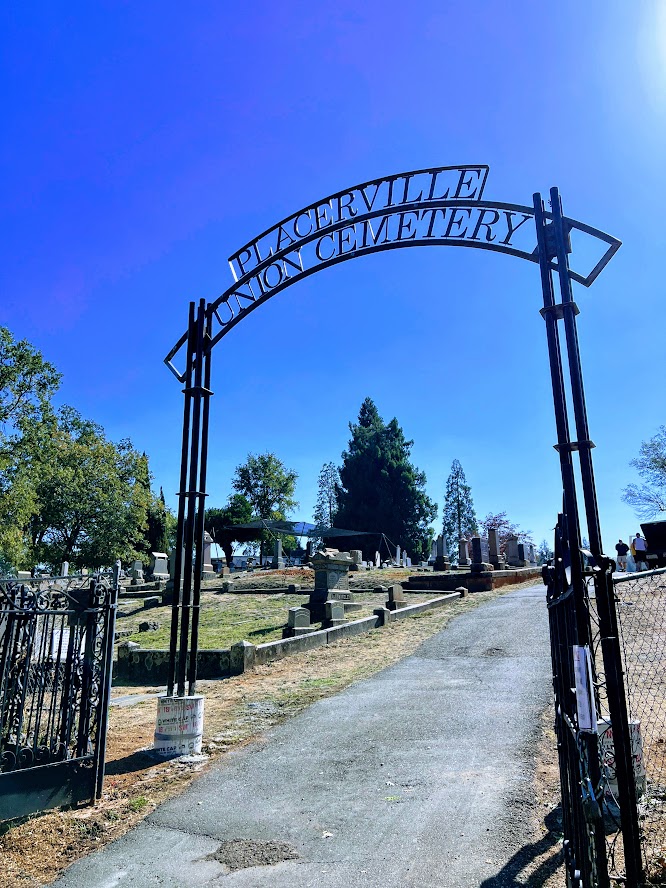
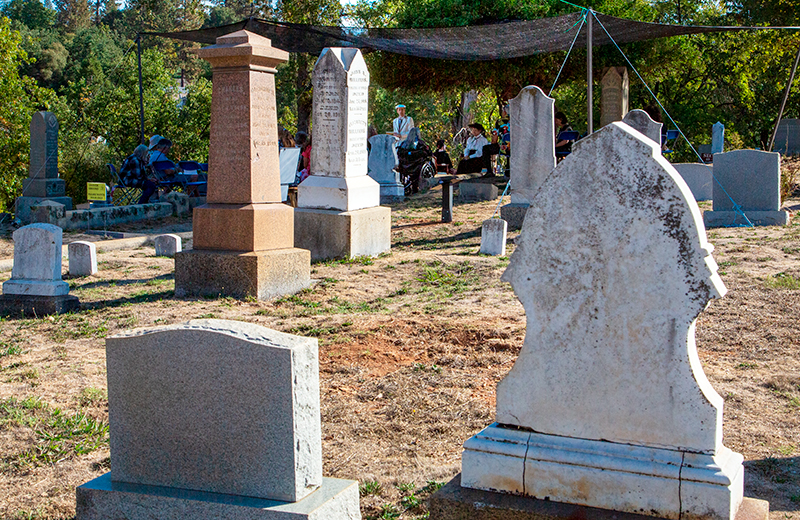
In the course of her extensive research, Rawls traveled to El Dorado County several times and visited the gravesites of her ancestors at Placerville Union Cemetery. During one of her trips there she found out about Save the Graves.

Placerville Wagon Train Event 2023 | Photo courtesy of Save the Graves

Conceived in 2019 by Mike Roberts and his wife Michele Martin, Save the Graves is a non-profit organization with a mission to restore, preserve, and celebrate El Dorado County’s historic cemetery and the stories they contain.

Speaking by phone, Roberts begins just as he does all his talks about Save the Graves. “Some people discover at some point in their lives that they have a peculiar fondness for old cemeteries. And I am one of those people. I’ve always been fascinated by them and drawn to them. It turned out there’s a word for people like us — taphophiles.”

“When I was walking my dog one day, I came upon this cemetery near my home and realized that what was once a beautiful place had gone to seed,” Roberts recounts. “No one was cutting the grass and the trash cans were overflowing. There’s so much history beneath these headstones yet no one was taking an interest in preserving it. So I took it upon myself to do that.”

New signage at Placervile Union Cemetery | Photo courtesy of Save the Graves

Roberts explains, “There are several ‘Friends of’ organizations in several cities, so I tried to create ‘Friends of Union Cemetery.’ To attract people into joining the group, I wrote a piece about the history of Union Cemetery, had it published in the local paper, and apprised readers that I was holding a couple of formation meetings and gave the times and dates.”

“One of those people who showed up was a retired PR executive for a utilities company who told me he was part of something similar to this in Long Beach called Save the Graves. The Historical Society was involved and they did theatrical portrayals of local historical characters buried in the cemetery. They researched and wrote scripts; the actors rehearsed and wore costumes authentic to the era. They charged money for the performances which people loved  because they learned about the town’s history; that enabled them to raise funds to restore the cemetery. He had already committed to do some work for the Placerville Park but offered to help as soon as he finished that project,” recalls Roberts.

“I had forgotten about it until he called me two years later and asked if I was still interested in collaborating,” Roberts continues. “Coincidentally, a theatre professional he had previously performed with in Long Beach had just arrived in Placerville and he recruited him to get involved. They got us a grant and the three of us partnered up and launched our first production. As challenging as it was to stage a show at a cemetery, we pulled it off and it was very well received in the community. We held the second production and then we had a pandemic.”

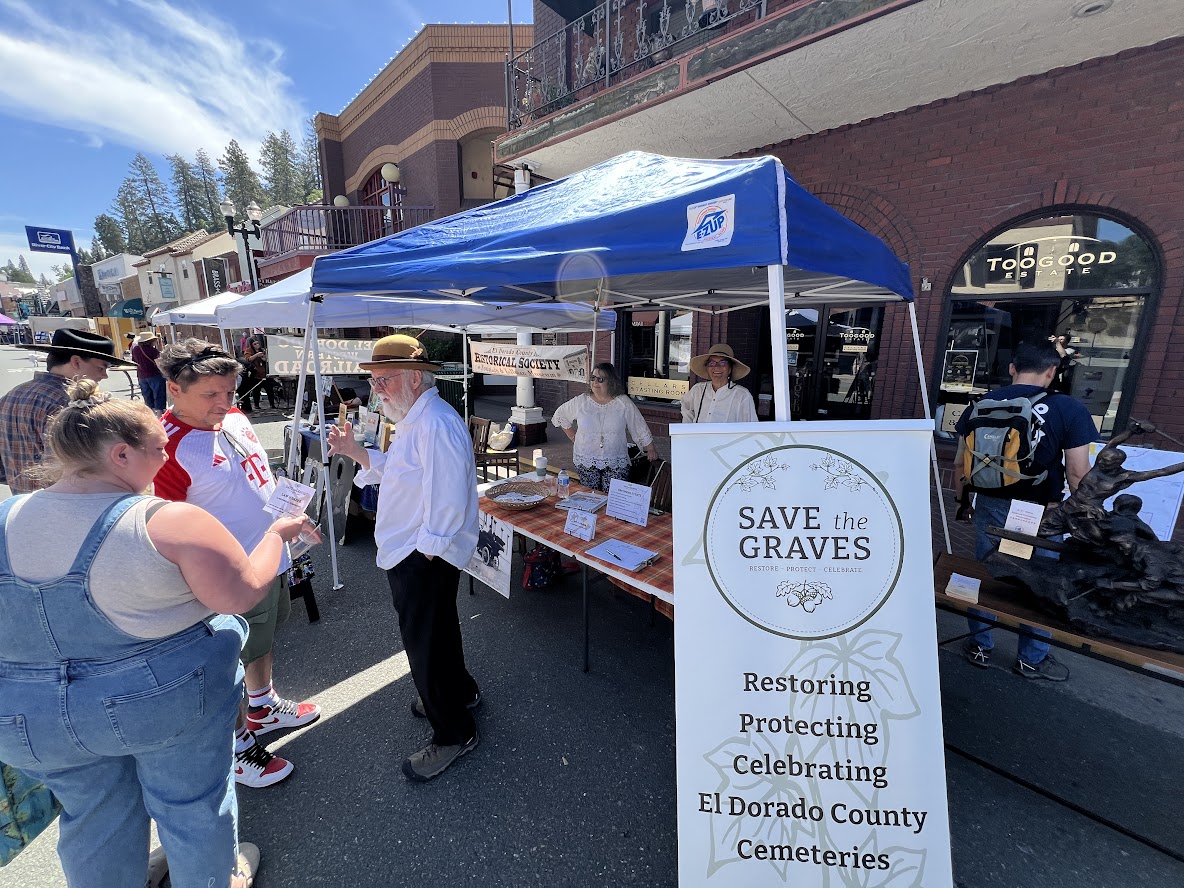
Mike Roberts (in white shirt and black trousers) at a Save the Graves booth | Photo courtesy of Save the Graves

These two gentlemen Roberts teamed up with eventually moved on to do theatrical productions elsewhere, leaving Roberts to focus on his original objective.        

Says Roberts, “I was everywhere doing fundraising and cemetery improvement projects, running volunteer groups, as well as doing repair and restoration work myself. What bothered me most were the broken headstones. The county that managed the cemetery wouldn’t let me touch anything because of the liability. Heaven forbid the county gets sued by someone because I cleaned their ancestor’s grave! So I circumvented a potential lawsuit by checking the genealogy of the people buried there and choosing to repair the headstones of those with no relatives in Placerville.”

Using money they’d raised, Roberts paid $3,000 to a sympathetic local cemetery operator who agreed to get 18 of the headstones off the ground. And that made a huge difference. Instead of merely explaining to people what he was trying to accomplish, it gave him something concrete to show when he asked for donations. It also made fundraising easier the following year.

According to Roberts, the real fundraising vehicle is the program for the annual event. They started out with a four-page leaflet and last year they printed a 48-page magazine with a glossy cover and inside were advertisements about local shops and proprietors interspersed with the schedule of activities.

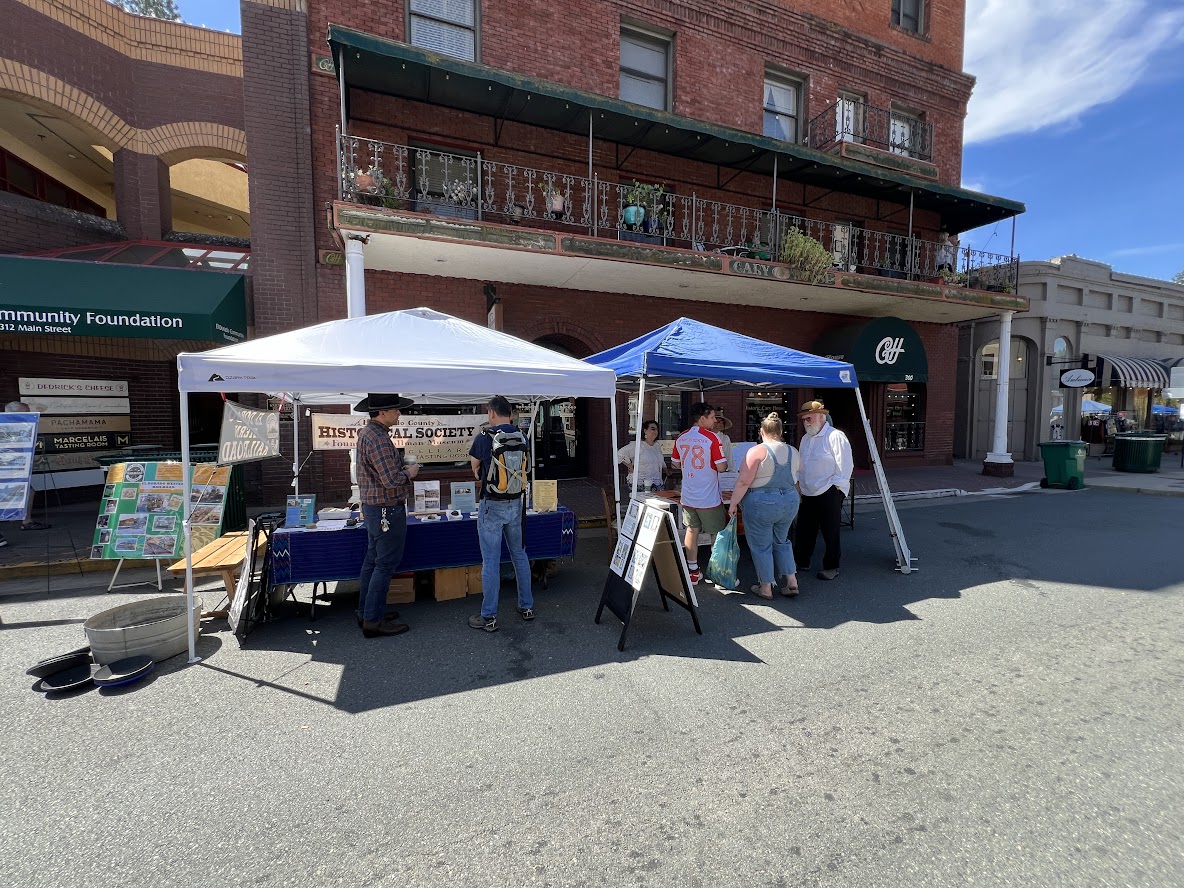
A Historical Society booth at a Placerville event | Photo courtesy of Save the Graves

These days, when Roberts tries to sell advertising space he’s asked about readership and circulation figures, which makes him laugh. He no longer has to do door-to-door solicitations; he reaches out by email. But when he does go out to see potential advertisers, he’s always wholeheartedly welcomed. People comment on how beautiful the cemetery looks.

In the six years since he and Martin established Save the Graves, Roberts has become something of a local luminary. He attends the downtown merchants association meetings and listens to some of the problems they encounter and helps find solutions. He has been giving two-hour talks about Save the Graves before various groups.

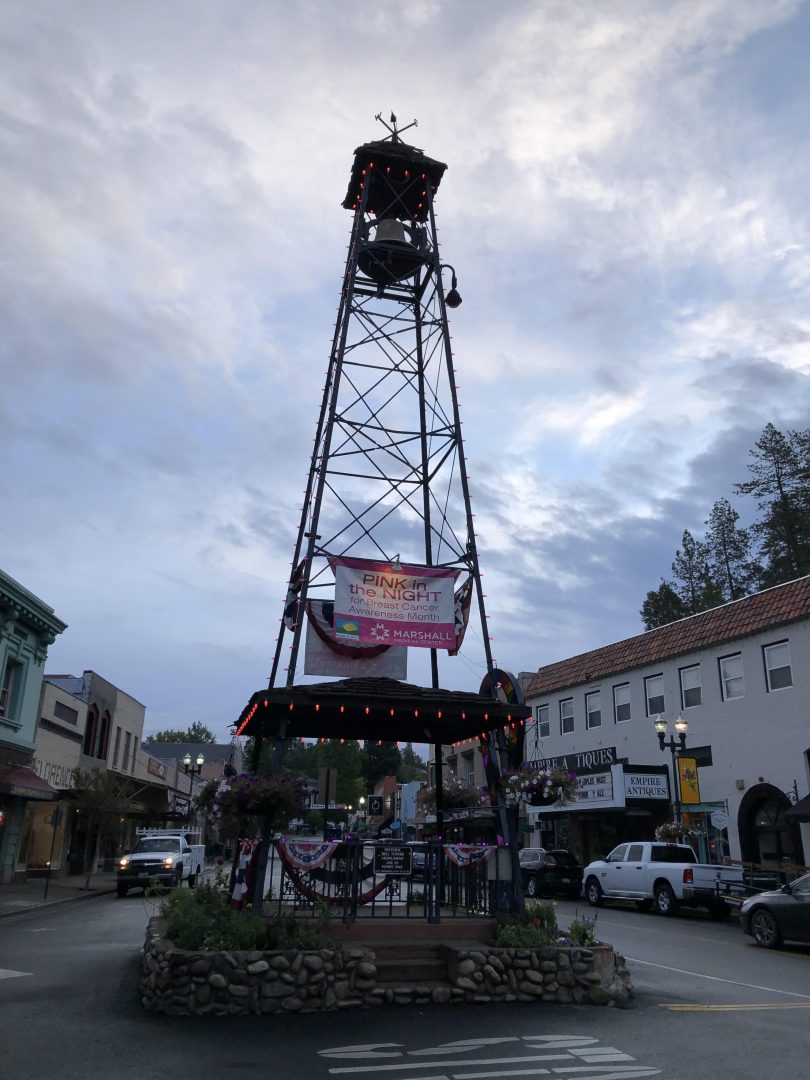
Placerville bell tower | Photo by M.G. Rawls / Save the Graves

“Last year we incorporated Save the Graves as a non-profit organization and that enabled us to apply for funding and we got our first big one – a $5,000 grant,” Roberts says happily. “The County Board of Supervisors gave us $10,000. We’ve been receiving donations from many people in the community, I’m so humbled. This year one of the descendants of a Placerville sheriff also sent us money. I didn’t know we had prominent historical figures in our town – we’d lost track of them.”

“We now have the luxury of having the money to take care of the cemetery,” declares Roberts. “The headstone cleaning can be done by volunteers so the funds go into fixing more complicated issues, like accessibility and terrain problems, crumbling copings along the walkways, etc. We’ve gotten a lot of damaging lichens out of old headstones and we’ve posted all sorts of interpretive signs that tell stories of these places to engage people who wander through.”

“Save the Graves is as much about building community as it is about fixing the cemetery,” Roberts emphasizes. “Historic cemeteries strengthen the fabric of our community by building  connections between people. Part of that requires that you know something about those who are buried – and we accomplish that through our theatrical productions, biographical stories we post, and a Find the Grave QR code the general public can scan with their smart phones. We’re building connections to the people who are here now and to the place they live – that’s community. It starts to grow and we eventually connect with each other.”  

“Placerville’s demographics are shifting with folks from big, congested cities moving in because they can buy an acre of land and enjoy nature and wildlife. And guess what else they like – old cemeteries! And they’re willing to help out,” Roberts enthuses.      

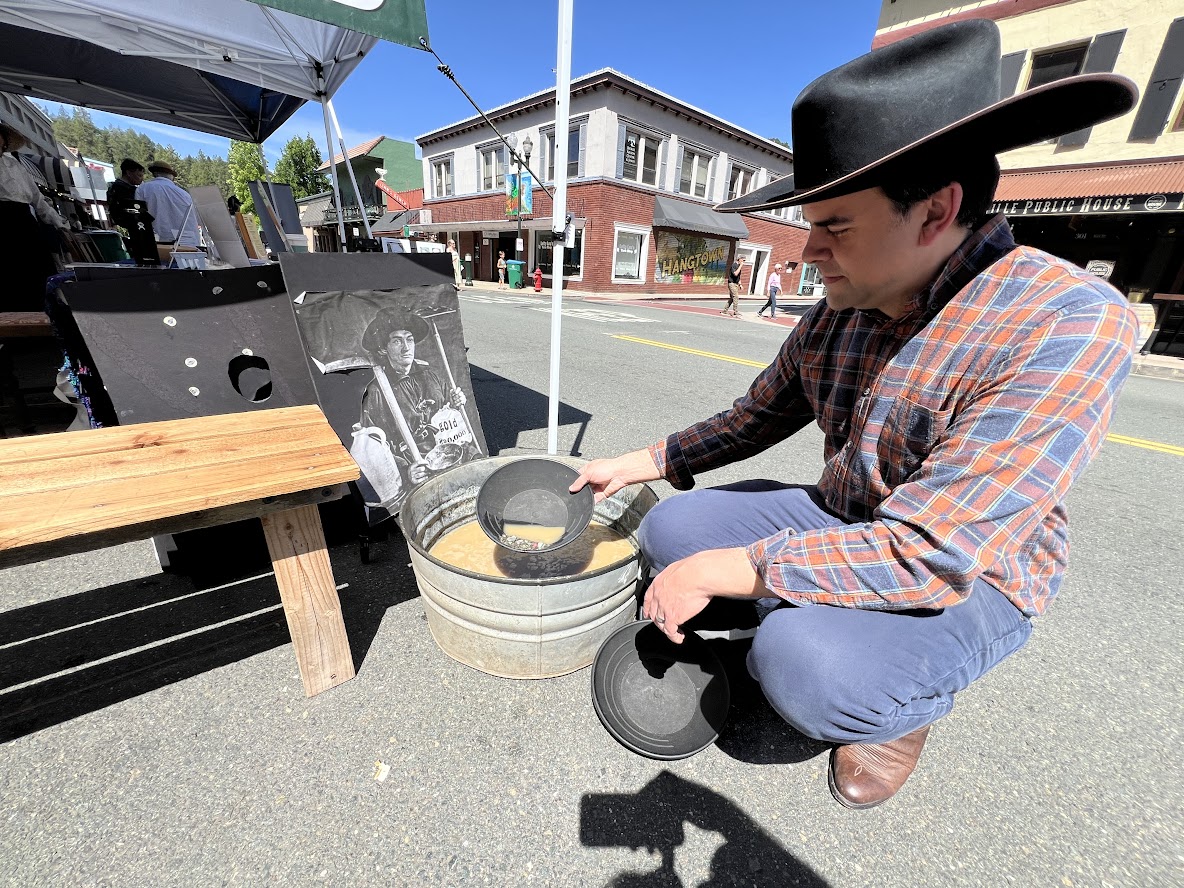
Vendor showing gold flakes panned in Placerville | Photo of courtesy Save the Graves

Two of those transplants to Placerville are Jacob Rigoli and Sean Manwaring with whom Rawls  got acquainted when she went to see the house her great grandfather used to live in – which they now owned.     

Relates Manwaring, “Jacob and I first met Meg in October 2021. At that time we were restoring the historic residence colloquially known as ‘Judge Thompson House,’ named after her great grandfather, Superior Court Justice George Thompson. It was also the childhood home of her grandmother Virginia Thompson Gregg. Before that, her great-great-grandparents lived in the circa 1862 home, making it the residence of three generations of her family. Her mother and uncles visited the home in their youth with her grandmother.”

“It was Meg who introduced us to Save the Graves,” Manwaring clarifies. “The following year, we joined the planning committee and assisted with the annual event and fundraiser. Although I’m not a Placerville native, I grew up in Northern California, frequently visiting old mining camps and Gold Rush towns with my family. I have fond memories of Placerville. Like her, my husband Jacob and I are descendants of pioneers who arrived in California either just before or during the Gold Rush.”

“We quickly bonded with Meg over our shared enthusiasm and deep appreciation for all things related to early California history. Since then, she has become a dear friend, and we truly understand her passion for preserving her family’s legacy,” states Manwaring.

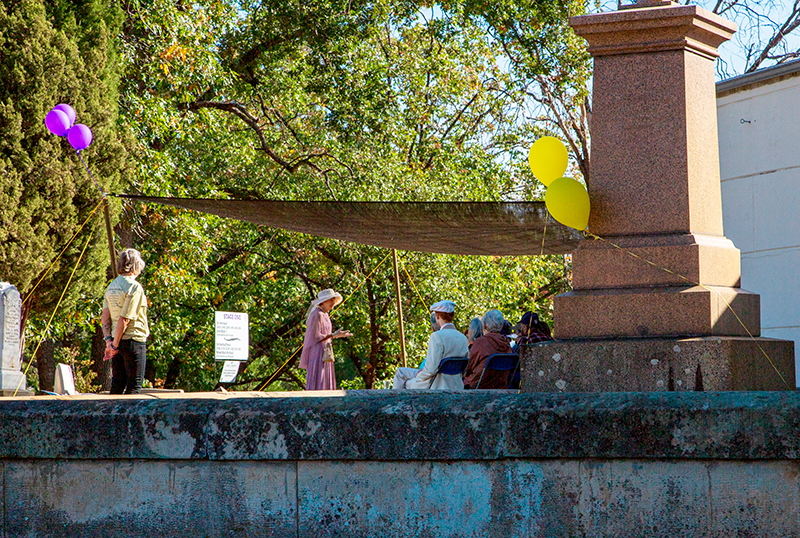
2023 Save the Graves theatrical performance | Photo courtesy of Save the Graves

“The work of Save the Graves is vital in preserving not only our local history but also the stories of California’s pioneering women,” informs Manwaring. “Last year, we featured one such remarkable figure: Mollie Wilcox Hurd. Born in Placerville in 1870, Mollie’s life took an unexpected turn when she married Frank Stoddard, nephew of Elizabeth Stoddard Huntington, the first wife of Central Pacific Railroad magnate Collis P. Huntington.”

Collis P. Huntington’s nephew, Henry Huntington, and his wife Arabella founded Huntington Library, Art Museum, and Botanical Gardens – a beloved institution in the San Gabriel Valley in Southern California.    

“Frank’s family connections and career in the railroad industry propelled Mollie into the elite social circles of Los Angeles,” Manwaring continues. “While in Los Angeles, she served as President of the Los Angeles Florence Crittenton Home, which was established to help women and children in need. Beyond raising their two children, Mollie dedicated herself to philanthropic endeavors, particularly advocating for women’s and children’s rights. She played a pivotal role in securing state legislation requiring fathers to pay child support regardless of marital status.”

Mollie and Frank Stoddard were married for 25 years. Following her divorce from him and after their children had grown, she married her old friend – Los Angeles area senator, Henry M. Hurd. She remained deeply connected to her Placerville relatives. She was a founding member of the Placerville Shakespeare Club, generously bequeathing a donation to build their historic building upon her death in 1929. Mollie and Senator Hurd are both buried in the Placerville Union Cemetery.

A 2023 Save the Graves theatrical performance | Photo courtesy of Save the Graves

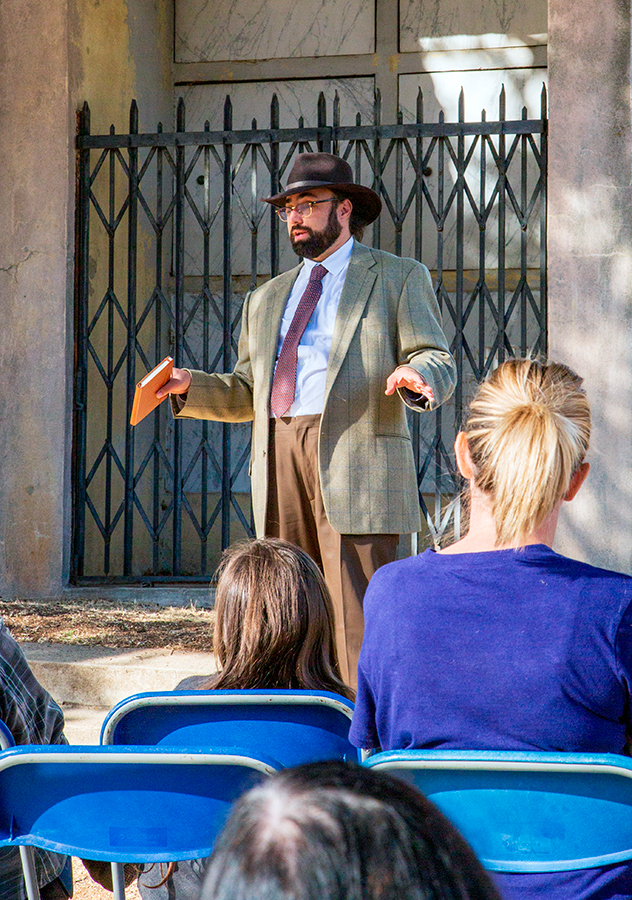
“This year’s show called ‘Law and Order, to be held on October 19, will focus on four notable crimes that occurred in El Dorado County between 1855 and 1903,” Manwaring explains. “Each crime will be presented through historical portrayals, featuring two key figures – ranging from perpetrators to victims, and from law enforcement to members of the press. Attendees will gain insight on both the community and the justice system.”

Describes Manwaring, “The portrayals are historically accurate and performed graveside – often near the burial sites of the pioneers being depicted – and actors wear period costume. One featured crime is the John Lowell murder of 1888, in which Meg’s great-great-grandfather Sheriff James Madison Anderson testified during the trial and guarded the accused. Additionally, her great-great-uncle, Marcus Percival Bennett, served as the district attorney. The case haunted both men for years.”

“Jacob and I contributed to the research and organization for this year’s event,” Manwaring adds. “He will serve as a stage manager and I’ll portray Marcus Bennett. We are just two of the many volunteers who help put on this annual event at Placerville Union Cemetery. Mike and Michelle are the driving force behind the fundraiser that helps preserve the cemetery and the stories of those buried there.”

Save the Graves performance is usually held near the grave site of the historical person being honored | Photo courtesy of Save the Graves

“Meg’s research has unearthed a forgotten story,” pronounces Manwaring. “It’s fascinating to discover the events that shaped the townspeople and the motivations of those involved in the John Lowell murder trial. She’s helping our community discover this important chapter in our history.”

Indeed a significant event transpired over a century ago at Placerville that residents there today may know nothing about. Roberts admitted as much when he said he didn’t know about Sheriff Anderson. But through the organization he and Martin created, they are learning about these episodes in their local history and making them unforgettable.