Originally published on 19 July 2018 in the Pasadena Independent, Arcadia Weekly, and Monrovia Weekly

Mention St Andrews, Scotland, and most people would automatically think of golf. It is, after all, popularly known as the birthplace of this sport where it was first played in the 15th century. To this day the British Open is held on The Old Course every five years.
Golfer Bobby Jones once proclaimed, “I could take out of my life everything except my experiences at St Andrews and I would still have a rich, full life.” That may be a bit of an exaggeration, though. Celebrated golfer Jack Nicklaus put it in better perspective when he said, “If you’re going to be a player people will remember, you have to win The Open at St Andrews.”
After his first Open victory at St Andrews in 2000, Tiger Woods famously declared, “It may be years before I fully appreciate it, but I am inclined to believe that winning The Open at the Home of Golf is the ultimate achievement in the sport.”
Countless superlatives that can be uttered relating to the golf experience on this picturesque coastal town 30 miles northeast of Edinburgh and they would all be true. Golf enthusiasts have consistently included St Andrews on their bucket list.
Aside from the iconic Old Course, players can enjoy the New Course, Balgove Course, Castle Course, Eden Course, Jubilee Course, Kingsbarns Golf Links, Strathtyrum Course, and the Fairmont St Andrews. With so many venues to choose from, they could practically play a round on a different course each day for two weeks without having to travel more than 30 minutes to reach one.
Professional golf is a lucrative business that gets support from major sponsors and draws an elite following. St Andrews Links run five annual tournaments throughout the year, including the St Andrews Links Trophy, and host the St Rule Trophy, the Alfred Dunhill Links Championship, and The Open Championship.
During the summer months, non-professional players from all over the world flock into town. Golf is a big part of the daily lives of St Andrews residents; each one of them is touched by the sport in one way or another.
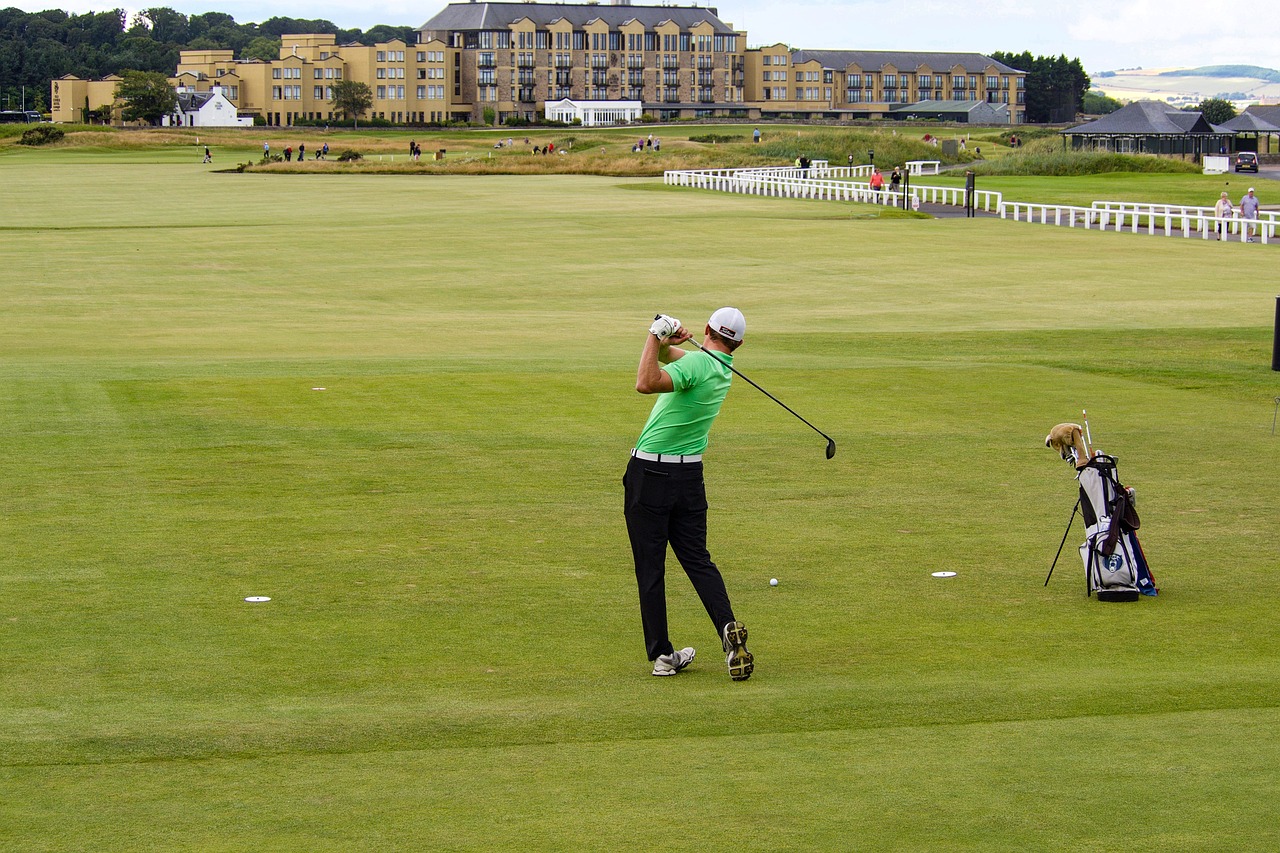
Limo chauffeurs, as well as cab and shuttle drivers, have numerous memorable stories about how many golfers and golf clubs they have transported from the Edinburgh airport to St Andrews. Every pub and tavern owner has served tankards of ale or glasses of Scotch whisky to the most famous golf luminaries, whether in celebration of a championship win or in commiseration for an upsetting loss. All hoteliers and B&B proprietors have warmly hosted these perennial visitors to their charming enclave.
But golf isn’t everything that St Andrews has to offer. It is also home to the University of St Andrews, the first and most ancient university in Scotland and the third oldest in the English-speaking world after Oxford and Cambridge. And while I don’t have first-hand knowledge as regards the importance of golf to life in St Andrews, I have a bit more perspective about what the school means to locals.
Founded in 1413, the University of St Andrews has consistently ranked third in academic excellence, behind Cambridge and Oxford, and first in student happiness in the United Kingdom. Presiding over this year’s graduation ceremony, Principal and Vice Chancellor Sally Mapstone also pronounced St Andrews as among the most modern and forward-looking universities.
While some might refute that claim, what’s indisputable is that St Andrews is the most international of all the universities in the U.K., which may partly explain why it is contemporary and in-step with the times. When my daughter and I visited it in 2013 during her college search, our student tour guide said 135 nationalities are represented – one-third of the student body come from Scotland, another third hail from England, and the last third are from around the globe.
Americans make up the largest group of international students, and each state is represented by two students. This last bit of information was demonstrated to us over a year later when my daughter was at the University Store to buy school supplies right before freshers’ (as incoming students are called; or freshmen as they’re referred to in the United States) week. Upon hearing my daughter’s American accent, the cashier inquired where she’s from and when she said “California,” he immediately said, “So you’re the second one; the first Californian was here the other day.”

During term time students make up approximately one third of the total population and because the university doesn’t really have a school campus, its buildings are scattered across town. The school and its students are such an integral part of the community. One out of every five residents has some connection to the school, whether as faculty or staff or as a worker in restaurants, grocery stores, retailers, and clothes shops catering to students and university personnel.
If you’re a tourist while school is in session, you will most definitely bump into students as they hurry off to their lectures or tutorials when you make your way to the ruins of St Andrews Castle or Cathedral. They are most probably sitting only a few feet away from you as you take in the majesty and splendor of sunset on the West Sands.
It’s a small town and everyone knows everyone else. Locals have as their neighbors students who are leasing the flat next door. The owner of the local cab company told us that there are only a hundred taxis in St Andrews and all cab drivers recognize the students by face. He assured us that they all treat these young people like their own children, “If ever students are too drunk to walk home we’ll drive them to their flat even if they have no money on them. They can just pay us the fare the next time they see us.” The legal drinking age in Scotland is 18 years old so intoxicated students are not an uncommon sight.
Students get the special treatment at The Botanic Garden, which is open all year and offers free admission to those with a valid student ID. University students mingle with locals as school traditions are celebrated all over town – whether it’s the Raisin Weekend during freshers’ week, the Gaudie Walk to East Sands, or the May Dip on the North Sea – and they’re all part of the daily affairs at St Andrews.
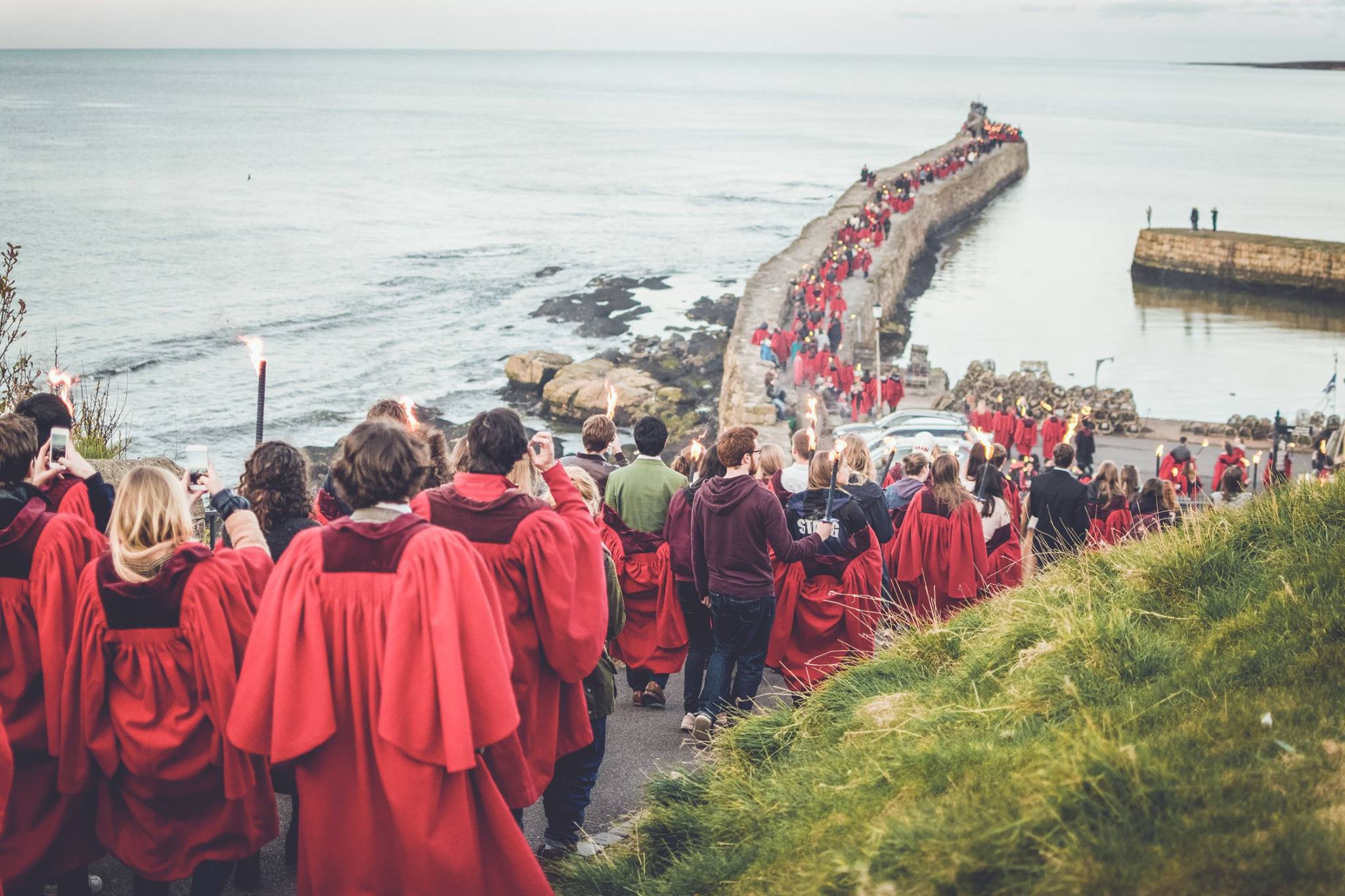
Academic dress, which is both distinctive and ubiquitous, is central to university life. In earlier days, students wore the red gown so tavern owners could identify them when they came round for a pint. Nowadays, it is worn to chapel services, formal dinners in the residential halls, meetings of the Union Debating Society, by student ambassadors who give guided tours and, most noticeably, for the traditional pier walk.
At no other time have students been lavished as much attention and affection than during graduation week which, this year, was from the 26th to the 29th of June. The entire town takes part in the excitement of the students and their families. A portion of North Street is closed for 15 minutes twice a day for the academic procession after the morning and afternoon ceremonies. The bells of St Salvator’s chapel are likewise on full peal and can be heard a mile out for an hour after each ceremony. Several restaurants offer prix fixe menus during graduation week. There is a palpable euphoric feel in the air at this joyous period.
This is also one of the busiest seasons at St Andrews when every single hotel room is booked and all bed and breakfast establishments are at full occupancy. Pam Izatt, a past president of the St Andrews B&B Association, says, “If your child is attending the University of St Andrews, reserve your accommodations two years in advance of graduation because they go fast. You’ll end up staying in Dundee or even Edinburgh otherwise.”
And graduation is the one occasion no University of St Andrews parent should ever miss. Unlike most American university commencement ceremonies which are conducted in large venues to accommodate thousands, it is an intimate affair at this ancient school where graduation is held at Younger Hall which has a capacity of 969 people.
It is a tradition that began in 1696 but the current form of graduation followed today is from the 1860s. In the past, the ceremony took place in the University Library but as the university grew it needed a larger venue and Younger Hall was built.
Two ceremonies are held for four days during graduation week, at 10:30 a.m. and at 2 p.m. Not everyone can be accommodated at Younger Hall but family and friends can watch the graduation from two screening rooms where the ceremony is streamed live.
Graduands occupy the first several rows at the front of Younger Hall, with parents and families filling the remaining seats and those upstairs in the balcony. The university chaplain opens the ceremony and the academic procession enters the hall led by six men carrying maces that symbolize the university’s colleges. They are followed by various faculty heads, with the Principal and Vice Chancellor, Sally Mapstone, and the Chancellor Lord Campbell of Pittenween bringing up the rear.
The graduation ceremony I attended was presided by Mapstone who told us about the history of Younger Hall and explained the ritual, “It is the major celebratory occasion in our academic year at St Andrews and is a part of a tradition that allows for transformation. It is when scholars become masters and masters become doctors. It marks a particular rite of passage for our students when they become something they were not before. Graduations give us permission to change while recording what we stand for and establishing connections between generations.”
The conferment of a degree transpires when Mapstone says in Latin, “I raise you to the rank of Master of Arts and to symbolize this I place upon you this hat” to the first graduand. She then uses the shortened Latin phrase “et super te,” which means “and upon you, too” to the rest of the graduands.
According to Mapstone, the cap which touches the head of the graduate was long thought to have come from the trousers originally worn by St Andrews’ most famous 16th century student John Knox, the major proponent of Reformation in Scotland. He also, among other things, blew the first trumpet blast against the monstrous regiment of women. Happily, she notes, researchers found that this particular cap was purchased for the doctoral graduation of Sir John Arbuthnot, the Scottish physician and satirist who graduated in 1696, and this cap has been used since.
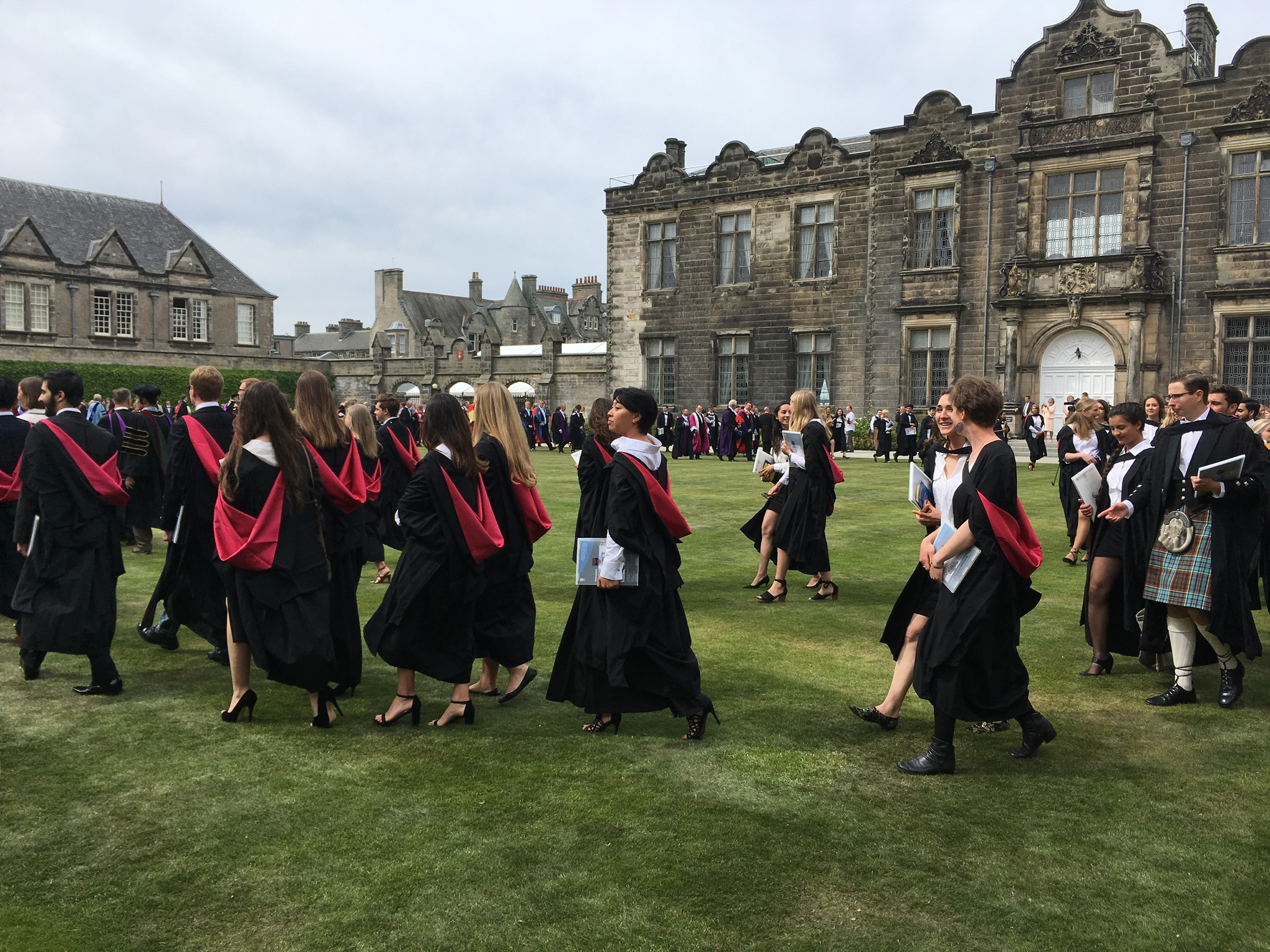
After the ceremony, new graduates join the academic procession which emerges from Younger Hall into North Street and then to St Salvator’s quad accompanied by the ringing of St Salvator’s chapel bells. Graduates take several turns around the quad while family and friends cheer their accomplishment.
A University of St Andrews graduation is the perfect capstone to students’ four years of diligent academic studies coupled with dynamic involvement in campus activities. It is a ceremony that is as solemn as it is stirring, and as moving as it is impressive. It is indeed a rite-of-passage worthy of the pomp and ceremony it is accorded.
In equal measure, golfers and students support the economy of this town as well as contribute to the local color. St Andrews is certainly abuzz and alive with their presence. And anyone who has been fortunate enough to visit this stunningly beautiful spot in Scotland fully appreciates how they have enriched the St Andrews experience.

 A San Gabriel Valley Inquirer