July College Search Guide

Originally published on 2 July 2021 on Hey SoCal

Clemson University | Courtesy Photo

The road to college

Your children have just weathered what is possibly the greatest upheaval in their young lives. The coronavirus crisis has affected all of us in ways we’ve never before experienced. But  summer has brought with it renewed energy as the economy reopens and people resume their usual activities.

Many seniors actually enjoyed in-person proms and graduations, all rites-of-passage not to be missed. There are also promising data from Challenger, Gray, & Christmas that suggest summer jobs will be plentiful this year.

As we cautiously get back to normal, or the new normal, encourage your children to focus on the main objective during their high school years – build impressive resumes to look attractive to admissions officers. They should be in some enjoyable classes, recreational camps, or professional internships to spend their time productively. There are test-prep courses students can take during summer to get them ready for all the standardized exams required for their college application. Today’s high school kids want to be as good as, if not better than, their classmates. Nowhere is this cutthroat competition more apparent than in the western San Gabriel Valley where a record number of students are getting perfect scores on the APs, ACTs, and SATs.  

RISING FRESHMEN

High School is going to be an exciting phase in your children’s academic life – especially after having spent a year-and-a-half of remote learning. Having completed middle school and their tween years where they found their identity, they are now ready to assert themselves in this new environment.

If your children have not shown much interest in reading during their elementary or middle school years, you need to encourage them to spend this month reading – just for the sheer pleasure of it. Persuade them to look for different authors and genres, familiarizing themselves with various styles and themes will help them find their own voice. Reading will expand their vocabulary as they gain maturity in their writing and that will prepare them for composing their personal statement. They need to practice writing essays, a staple in high school courses. Brianna Chu, a writer for Hey SoCal and tutor at Mundo Academy, wrote a blog on essay writing which your children might find useful.   

Now is the time for your children to start developing time management and study skills that will help them succeed in high school. A recently published article “A Review of New Research on Study Skills and Time Management Benefits” also written by Brianna Chu, delves into these topics.

RISING SOPHOMORES

As mentioned above, summer is an opportune time for reading. Encourage your children to spend part of their day to this pleasurable and educational pursuit.

Now that the economy has reopened, your children should find an enrichment program or perform community service work related to something they are passionate about. Sustained effort and interest in one particular cause show that your children are sincere, and not just padding their resumes.

If your children are so inclined, they can start researching colleges. They can go online and get virtual campus tours of most colleges or universities.

RISING JUNIORS

Your children should be preparing themselves for one of the busiest years of their high school career. They should be immersed in community service work, professional internships, and enrichment programs. Likewise, they can research colleges and go online to get virtual campus tours. This will also give your children some idea about the college application process.

Summer is the perfect time for them to read extensively to expand their vocabulary and prepare them for writing their essay for the college application.

RISING SENIORS

This is the year that will test your and your children’s mettle. Be prepared for the marathon (which actually started in the spring of their junior year). They should still be continuing the community service work they began back in their freshman year, getting an internship, or looking for avenues to use their talent.

If your children didn’t get the chance to do an in-person college visit, this summer would be the perfect opportunity to do so if you’re all fully vaccinated. I’m sure that, like the majority of us who have felt cooped-up during the pandemic, you’re excited to pack your bags and travel. When my daughter was applying to colleges, we incorporated the campus tours with our summer vacation.       

They should also be thinking about their personal statement. Likewise, some universities require a supplementary essay specific to them, with topics that range from the practical to the philosophical. Admissions officers are constantly on the lookout for something fresh and original in applicants’ compositions. However, it requires a certain amount of creativity and proficient writing skill to come up with a treatise that will impress seasoned readers.          

That said, your children might also find some time to actually enjoy this summer before they get swallowed up by the vortex of college applications. 

COLLEGE-BOUND STUDENTS

Unless your children are spending this summer agonizing because they’re waitlisted at their first choice school, they must be very excited to have completed high school and are anxiously looking forward to the next phase of their education. By this time, they should have put in the deposit on the college they plan to attend. Some colleges will be sending out the procedures for class registrations, information on housing, meal specifics, and such other details to the incoming class.

Let your children take the lead on the college moving arrangements and only offer guidance when they ask for it. In all likelihood, your children will be moving away from home, maybe going to the other side of the country. They need to practice being on their own and the preparations for moving will be a good place to start.

If your children will be attending a university across the Atlantic, as my daughter did, there is a whole set of preparations you have to attend to. Applying for a student visa should be your priority as it could take a month to secure. You and your college-bound student need to communicate closely with the school as their requirements may differ greatly from those of American universities.

Email or call the university to know when to wire the tuition and other college fees. Make sure your student has the necessary information on how to register for classes, how to apply for housing, and what essentials to bring to school. Research where to find items – including beddings (sizes are different from what’s standard here) and small electric appliances (voltage and shape of plug are different) – that your student will need. Knowing beforehand what stores you have to visit saves time. 

Going to school in another country takes more preparation, so make sure you have enough time to spend helping your children settle into their new environment. When my daughter left for college in the U.K., we arrived there three weeks prior to ‘freshers week.’ We opened her bank accounts, shopped for household items, and familiarized ourselves with the area (nearest grocery stores and hospital to her housing, for instance).           

For most parents, sending their children away to college across the country is difficult enough. Letting 18-year olds live on their own 5,000 miles away for four years is almost unthinkable. It takes a great deal of courage, on your part and your children’s, to make that plunge. But you’ll find that they grow into confident, responsible, and self-reliant adults and it was the best decision you both made.             
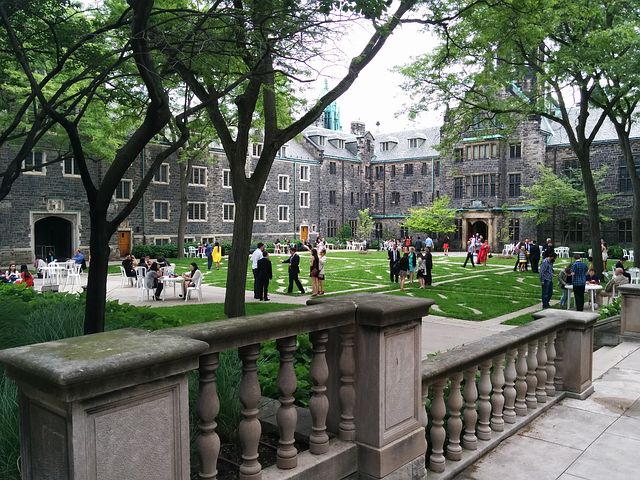
college campus

At this juncture, let me address another situation. If your children weren’t accepted to any school they applied to, then they have to decide if they want to attend a community college. Most of these institutions will accept new students close to enrolment time. Some of them have arrangements with the UC system so graduates can attend a UC school for their junior and senior year. This has the double advantage of ensuring your children get a college diploma from a four-year university and saving on the cost of their education.

There are some instances when your children might gain admission during the spring term to their first-choice school (this scenario happens if the university wants to keep their ranking and your children did not receive a perfect SAT score but they met all the other requirements for admission. If your children have highly desirable qualities that will enhance the university’s student body, they will wait until after their school has been ranked so your kids’ SAT scores will no longer affect their place). Confer with your children’s college counselor about how to accomplish this.

Some college applicants who are on waitlist on their dream university, ask to be deferred (this will only work if your children met all the academic qualifications for admission to the school with only the problem of the university not having the space for your student this year). 

Of course, there is the option to take a gap year after high school. Last year, many students deferred going to college because they felt that paying a full tuition isn’t worth the price when schools may not reopen their campuses and classes may be held remotely. Waiting until campuses reopen offers them the full experience of freshman year.

In a strange twist, The New York Times education Briefing reported two weeks ago that “law schools experienced a surge in applicants over the past year, driven by a mixture of factors, including the coronavirus pandemic, the presidential election and the Black Lives Matter movement. To ease the load, many schools have promised that scholarships will be in place for students if they choose to defer. A few are offering financial incentives. Duke promised $5,000 to students who accepted a ‘binding deferral’ and promised to go next year. Columbia University also dangled money in front of some students: $30,000 if they deferred. The school focused on recent graduates and also offered some career placement help, like two sessions with a career counselor and a list of open jobs.”

Pre-pandemic, one of my daughter’s classmates used her gap year performing charity work in Africa. This noble use of a gap year can help your children stand out in a sea of similar-looking applicants. Several universities consider this as a major boost in an applicant’s resume. Admissions officers tend to see the student in better light – this person has some tangible experience to bring in and, therefore, adds to the school make-up.

Whether your high school graduate is going directly to college, going by the community college route, or taking a gap year, recognize their decision as a first step towards their independence.  

The Gap Year Option for Everyone

Originally published on 22 June 2020 in the Pasadena Independent, Arcadia Weekly, and Monrovia Weekly

| Courtesy photo

Until a few short years ago, the gap year was a British tradition – when a high school graduate spends a year before going off to college to pursue an interest or to work on a humanitarian project in another part of the world – we in America had only heard or read about. Then, ever so slowly, the idea took hold here among the wealthy. The coronavirus pandemic, however, made taking a gap year a realistic, even practical, option for students if school campuses aren’t going to be open in the fall.

An organization called Mind the Gap, was founded by Abby Brody to address the range  of shortcomings in higher education and as a result of the need to bridge the chasm between what students learn in school and life skills they need in the real world. Its 15-week semester, called LIFE READY Program, will launch in September this year.   

Brody expands on this via email, “The cracks in the traditional path of higher education have turned into more extensive and exposed gaps during the COVID-19 pandemic. We have been studying the crisis in higher education for the past two years and the research is clear: gap year students have an advantage (in school and life), but this advantage has previously been for the privileged – we are changing this in real time. In being passionate about our mission we realized quickly we were on to something huge when the A-list of educators jumped (and continue to jump) at the chance to be a part of our team.

“We all share the spirit that gap semesters/years must be part of the narrative of education for all, and that means beyond the elite. Going directly to college and making the large financial commitment required may not be in the best interest of all students, irrespective of their financial means. At Mind the Gap we know it’s scary to step off the hamster wheel of our country’s established education system, but, alone especially, it’s just not serving most best. Having the gift of time and experience beyond the walls of a classroom is an outsized advantage. LIFE READY, our gap year program is step one in our journey to create alternative pathways that allow our youth to find happiness and success. It is no longer one size fits all.”

Continues Brody, “We think it is an absurd expectation to think that high school graduates are ready to pick a major or make the most of this experience from the current K-12 education. How can they? Life, up to this point, has been ‘school, after school, homework.’ Repeat. They study, they take a test, they forget. Repeat. And school alone reflects little of the reality of life.

“COVID did not create the issues we are seeing in higher education today, but it has absolutely put a bright spotlight on it and accelerated change (and, but many, understanding and acceptance of that change). Parents and students should be questioning the ‘path’ of our education system. The student debt crisis is very real. The workplace of tomorrow is different than today and the skills required no longer fit in ‘majors.’ We are being challenged to think differently and not all march down a singular path that has less than ideal outcomes for many. Our youth and the world need better, now more than ever.”

Abby Brody | Courtesy photo / Mind the Gap

“We are the first gap year program created by education researchers and experts with the proper lens for filling the systemic gaps between school and life,” Brody declares. “As mentioned, we have extensively studied the ‘why’ students are failing for the past two years and as a team have decades of experience working with this age group. Our team is the best of the best and has a track record of creating successful startups in the education space. David Dunbar, lead curriculum designer, created City Term, one of the most transformative educational experiences. Ivan Cestero, Clair Sellers, and I were founding members of Avenues: The World School. Our work at Avenues was to rethink K-12 education. We’ve done it before, we are doing it again – and in a major way.”

The course being offered by Mind the Gap, however, has a hefty price tag of $5,000 per semester, which could be a major deterrent for the many families who are financially strapped and are the most adversely affected by the coronavirus pandemic.

“We are planning in early July to add a variety of a-la-carte options for, say, the devoted gymnast who is using her gap semester to focus first on that, and second on becoming life ready,” says Brody. “We are realists, and we get that this new, new world does not offer only binaries. In addition, we are considering, based primarily on early indications of interest, offering second and third cohorts during the first semester starting in a staggered manner as we have capped our registration at 300 persons and while the quality of programming and experience is paramount, we feel we can bring that plus offer more broadly the curriculum to those who might have a bit different timing and/or needs.

“Further, we are expecting to open up registration via sponsorships/scholarships in time for Fall 2020 so that we are accessible by virtually anyone who has graduated high school in the past five years who really wants in! For our LIFE SET academies (which will launch in the future), our recipe is simple. Value of degree costs less than the degree.”

Abby Brody | Courtesy photo / Mind the Gap

“This is not school,” clarifies Brody. “While we could partner with a community college like others have, it’s always at an additional cost and we don’t want to walk away from our mission that is student focused. And we don’t just want to bring college bound students into our program. At Mind the Gap we are okay saying out loud that college does not serve everyone. Our graduates may go straight into the workforce or go into a vocational setting.”

“We will be leveraging a collaborative learning platform called jigsaw,” Brody explains. “This platform is not a lecture platform like how most distant learning is looking online with ‘Zoom’ class. Our platform allows ‘Fellows’ to customize their screen to have documents, videos, chats and live speaker views at the same time. We chose this platform as it facilitates collaborative work which we value and mirrors how we think.

“Most work is live on this platform. There will be pre-recorded videos for life hacks, but these are interviews with professionals in the field. No lectures. We are anti lecture! We know based on brain science that we learn through stories and the act of doing, not passive listening. So all of our videos are narratives of professionals in the field telling their stories. How they got where they are.”

Adds Brody, “The LIFE READY program is always in the now. We plan on changing every semester to meet the need of the day. Therefore this fall we will touch on public policy and governance inspired by the Black Lives Matter movement. We also use our student ambassadors to pilot our thinking wanting to make sure that we are choosing topics of interest. The course topics are less important to us. We use the topics to teach the meta skills of the workforce: critical thinking, etc. all topics this fall are taught through an impact lens as impact is core to the ideals of Gen Z!”

The whole rationale behind Mind the Gap is to teach students lessons and skills not being provided by institutions of higher learning and is not to be confused as a means to get hired by the organizations they partner with. Elucidates Brody, “We think ‘Fellow-First’ and believe in their personal journey. The gap space should be purely about that, a time to discover who you are and where you want to go. While we will have partnerships with companies as part of the curriculum, it is not with the lens of future employment.

“However, company partnerships will play a huge role in our LIFE SET academies that we are launching in the future. These will be vocational settings and we hope to create these academies in careers that are not being served by the current higher education system. For us, that equation is simple. If the cost of a degree is less than the market value of the degree then that vocation is not being served by traditional four-year institutions. A great example is teaching! We have a teacher shortage in the United States because of this reality.

“Our plan (and words we live by, too) starting with Gap, is: Life Ready, Set, Go. LIFE READY (gap time), LIFE SET (vocational education for vocations not served by current four-year institutions), LIFE GO (ongoing professional development and networking).”

Only two years ago, educators and counselors believed that a four-year college degree was worth being in debt for – because the alternative was not viable for a balanced life. (Read related article here) It’s ironic that the coronavirus pandemic, which upended life as we know it, is also fortuitously uprooting long-practiced models of how we prepare students for life beyond the classroom.      

July College Search Guide

Originally published on 5 July 2019 in the Pasadena Independent, Arcadia Weekly, and Monrovia Weekly

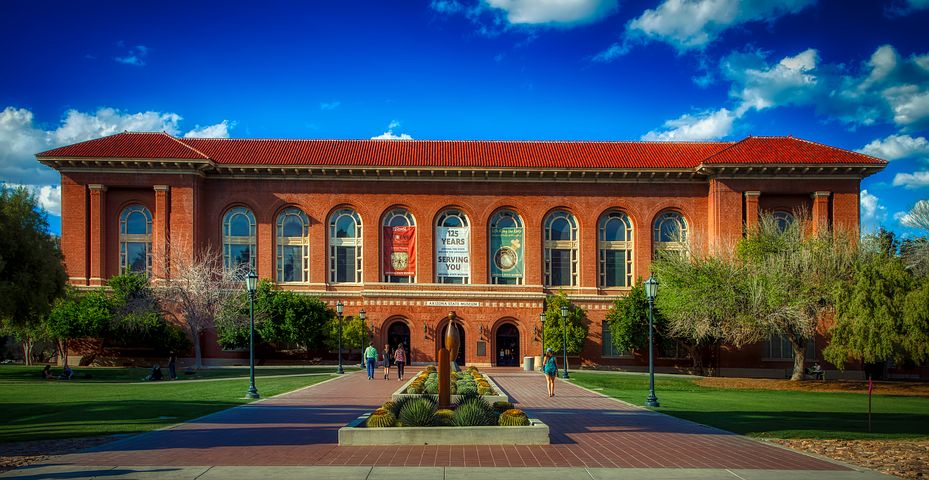
University of Arizona | Courtesy Photo

The road to college

We in Pasadena know it’s the middle of summer when temperatures are soaring in the triple digits, and many of us are looking for ways to beat the heat.

Summer was traditionally when teen-agers found jobs flipping burgers at fast food joints, cashiering at retail stores, or working as lifeguards at Southland beaches. However, as I mentioned last month, today’s teenagers are busy pursuing summer enrichment activities or internships. These seasonal occupations are either being taken by older people who are working past retirement age or young foreigners who come to the country on a work-study visa.

This is a lost opportunity; getting a summer job is an important component because employers are looking for work experience from applicants, even from those fresh out of college. It shows that they are responsible and have been successful in the workplace.       

That said, there’s the reality that your children are facing – build impressive resumes to look attractive to admissions officers. They should be in some enjoyable classes, recreational camps, or professional internships to spend their time productively. There are test-prep courses students can take during summer to get them ready for all the standardized exams required for their college application. Today’s high school kids want to be as good as, if not better than, their classmates. Nowhere is this cutthroat competition more apparent than in the western San Gabriel Valley where a record number of students are getting perfect scores on the APs, ACTs, and SATs.   

There is an abundance of things to do during the summer months. There is absolutely no excuse for boredom and inertia.

RISING FRESHMAN

High School is going to be an exciting phase in your children’s academic life. Having completed middle school and their tween years where they found their identity, they are now ready to assert themselves in this new environment.

If your children had not shown much interest in reading during their elementary or middle school years, you need to encourage them to spend this month reading – just for the sheer pleasure of it.  Persuade them to look for different authors and genres, familiarizing themselves with various styles and themes would help them find their own voice. Reading would expand their vocabulary as they gain maturity in their writing and that would prepare them for composing their personal statement.

RISING SOPHOMORE

As mentioned above, summer is an opportune time for reading. Encourage your children to spend part of their day to this pleasurable and educational pursuit.

Your children should find an enrichment program or perform community service work related to something they are passionate about. Sustained effort and interest in one particular cause show that your children are sincere, and not just padding their resumes.

If your children are so inclined, they can start researching colleges. Nowadays, they can go online and get virtual campus tours of most colleges or universities.

RISING JUNIOR

Your children should be preparing themselves for one of the busiest years of their high school career. They should be immersed in community service work, professional internships and enrichment programs. Some students enroll in test-prep courses during the summer months to get them ready for PSAT and SAT. They can attend one of the many schools offering these courses with some of their friends to make it less of a chore.

They can likewise start researching colleges and going online to get virtual college campus tours.  This would also give your children some idea about the college application process.

Summer is the perfect time for them to read extensively to expand their vocabulary and prepare them for writing their essay for the college application.

RISING SENIORS

This is the year that would test your and your children’s mettle. Be prepared for the marathon (which actually started in the spring of their junior year).  

They should still be continuing the community service work they began back in their freshman year, getting an internship, or looking for avenues to use their talent.

If your children did not visit the schools to which they are applying, this summer would be a good time to take that trip. It would help them narrow down their list to a more realistic number of applications. 

They should also be thinking about their personal statement. Some universities also require a supplementary essay specific to them, with topics that range from the practical to the philosophical. Admissions officers are constantly on the lookout for something fresh and original in applicants’ compositions. However, it requires a certain amount of creativity and proficient writing skill to come up with a treatise that would impress seasoned readers.          

That said, your children might also find some time to actually enjoy this summer before they get swallowed up by the vortex of college applications. 

COLLEGE-BOUND SENIORS

Unless your children are spending this summer agonizing because they’re waitlisted at their first choice school, they must be very excited to have completed high school and are anxiously looking forward to the next phase of their education. By this time, they should have put in the deposit on the college they plan to attend. Some colleges would be sending out the procedures for class registrations, information on housing, meal specifics, and such other details to the incoming class.

Let your children take the lead on the college moving arrangements and only offer guidance when they ask for it. In all likelihood, your children would be moving away from home, maybe going to the other side of the country. They would need to practice being on their own and the preparations for moving would be a good place to start.

If your children will be attending a university across the Atlantic, as my daughter did, there is a whole set of preparations you have to attend to. Applying for a student visa should be your priority as it could take a month to secure. You and your college-bound student need to communicate closely with the school as their requirements may differ greatly from those of American universities.

Email or call the university to know when to wire the tuition and other college fees. Make sure your student has the necessary information on how to register for classes, how to apply for housing, what essentials to bring to school, where to find items that your student would need.

Going to school in another country would take more preparation so make sure you have enough time to spend helping your student settle into his or her new environment. 

At this juncture, let me address another situation. If your children weren’t accepted to any school they applied to, then they would need to decide if they want to attend a community college.  Most of these institutions will accept new students close to enrolment time. Some of them have arrangements with the UC system so graduates can attend a UC school for their junior and senior year. This has the double advantage of ensuring your children get a college diploma from a four-year university and saving on the cost of their education.

There could also be some instances when your children could gain admission during the spring term to their first choice school (this scenario happens if the school wants to keep their school ranking and your children did not receive a perfect SAT score but they met all the other requirements for admission. If your children have highly desirable qualities that will enhance their student body, they will wait until after their school has been ranked so your kids’ SAT scores will no longer affect their place). Confer with your children’s college counselor about how to accomplish this.

Some college applicants who are on waitlist on their dream university, ask to be deferred (this would only work if your children met all the academic qualifications for admission to the school with only the problem of the university not having the space for your student this year). 

Of course, there is the option to take a gap year after high school. Europeans have traditionally done this and it is a growing trend among American students. They spend a year pursuing activities that employ their skills and talents. One of my daughter’s classmates used it performing charity work in Africa. This alternative could help your children stand out in a sea of similar-looking applicants. Several universities consider this as a major boost in an applicant’s resume. Admissions officers tend to see the student in better light – this person has some tangible experience to bring in and, therefore, adds to the school make-up.

So whether your high school graduate is going directly to college, going by the community college route or taking a gap year, recognize their decision as a first step towards their independence.